Theology

‘Bothsidesism’ About Hamas Is a Moral Failure

Israelis and Palestinians are equally beloved of God. But there’s no moral ambiguity about the genocidal evil of Hamas.

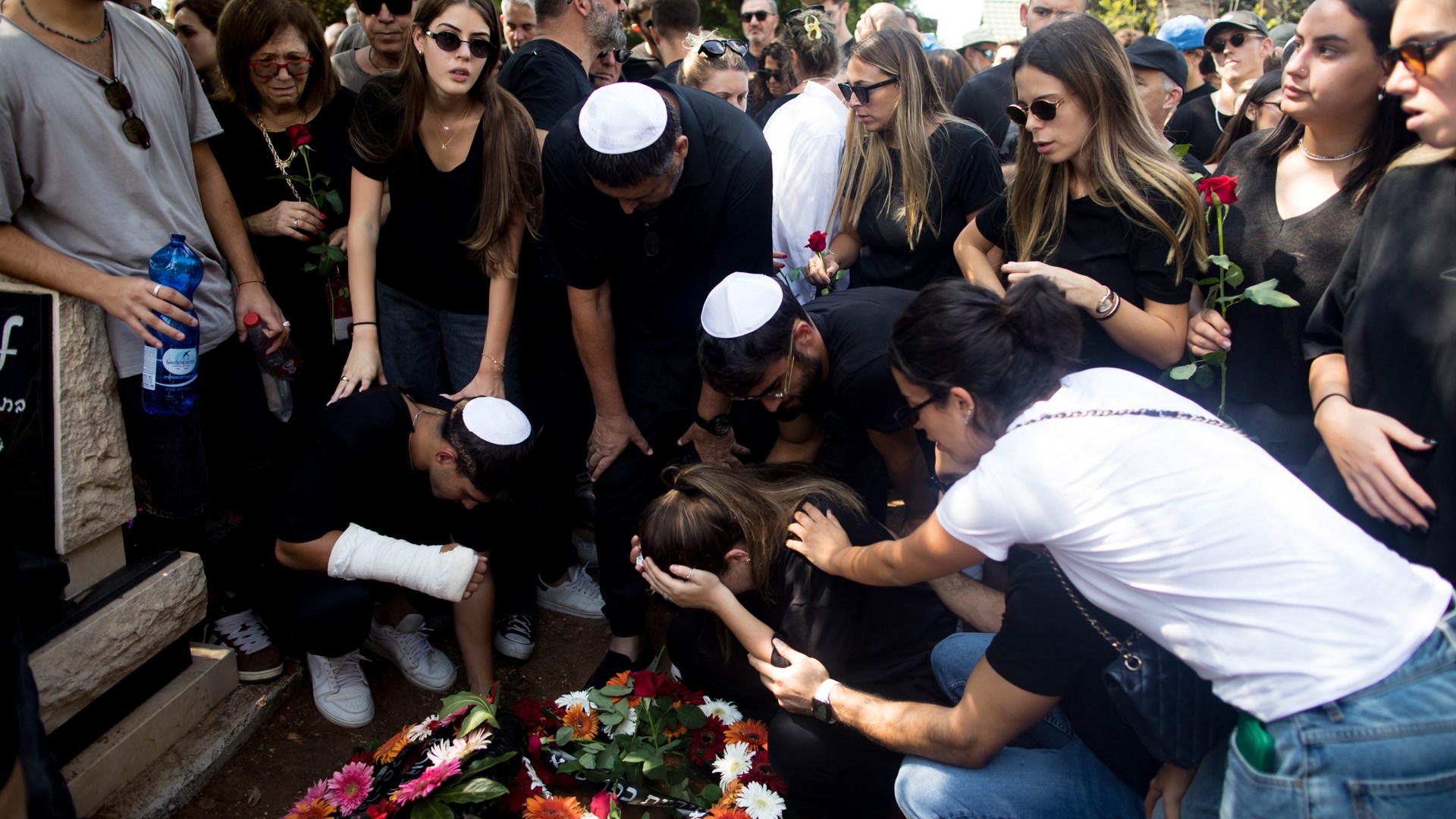
Family and friends mourn the loss of a loved one who was murdered by Hamas at a festival.

Family and friends mourn the loss of a loved one who was murdered by Hamas at a festival.

Christianity Today October 12, 2023
Amir Levy / Stringer / Getty

This piece was adapted from Russell Moore’s newsletter. Subscribe here.

Sometimes certain moments in history reveal in minutes what was concealed for decades. And sometimes those moments of revelation come with hearing oneself say the words, “Yes, but …” or “But what about …”

The aftermath of the Hamas terrorist attack on Israel is not one of those times. In this case, saying who is to blame—and who is not—is not factually or morally difficult at all.

“Bothsidesism” is an imprecise label, much like deconstruction or evangelicalism. There are several senses in which an appeal to “both sides” of the reality here are completely right. For one, both sides—all sides—are human beings created in the image of God. We ought to care about the lives and deaths of Israelis and of Palestinians in the West Bank, in Gaza, or anywhere else. An Israeli life is of no more value in the eyes of God than a Palestinian life, and vice versa.

“Both sides” also refers rightly to who is harmed by this atrocity, and the inevitable war to follow. Hamas is killing and destroying the futures of both Israelis and of Palestinians, as the inimitable Mona Charen wisely wrote. That’s one of the reasons we shouldn’t think of this as a war between Israel and “the Palestinians,” but, exactly as Israel defined it, a war on Hamas, in response to a vicious and unprecedented attack.

“Both sides” is also perfectly appropriate when it comes to working for and hoping for a better future for both Israelis and for Palestinians. That rules out the unthinking acceptance of anything the modern state of Israel does (God certainly didn’t accept everything even biblical Israel did!). And it rules out chanting “From the River to the Sea” in Times Square, just as it rules out any viewpoint or program that would see Israel completely eradicated. We want “both sides” (here referring to Israelis and Palestinians, not to Hamas) to thrive and to co-exist.

All of that is far different from the kind of “both sides” language that has been used in some conversations about the morality of the Hamas attack. Hamas targeted innocent civilians. Hamas butchered young people dancing at a music festival. Hamas murdered elderly people and toddlers and babies, reportedly in the most sadistic ways imaginable. There is no “contextualization” needed to condemn that, to recognize Israelis (and innocent Palestinians) as victims here, with Hamas as the evildoer. As President Biden put it, “full stop.”

This is one of the quickest ways to recognize if you have outsourced your conscience to some ideology or sect: If your first response to seeing obvious immorality or injustice is some version of, Well, obviously that’s bad, and no one supports it, but do you know what the victims did?—then you are in a morally dangerous place. That way lies hackery.

How do you know if that’s you?

I do not agree with the philosopher John Rawls on much, but one of the popular appropriations of his thought can be helpful here.

The “veil of ignorance” argument asks what sort of political order you would want to construct if you were planning it, completely unaware of where you would be in the social system. If you didn’t know whether you would be desperately poor or incredibly rich, what sort of social safety net would you want? What sort of tax policy?

There are, of course, clear limits to this. We don’t, in fact, exist as disembodied beings planning the world we’ll inhabit ahead of time. And our imaginations come out of our psyches, so they are quite able to deceive us.

It’s easy for me, for example, to say in 2023 that I would have refused to fight for the Confederacy if I lived at the time of my ancestors. But I can’t know how my mind and conscience would have been shaped if I had lived in 1861 Mississippi. I really hope that if I had lived in 1930s Germany, I would have stood with Karl Barth and Dietrich Bonhoeffer with the Confessing Church against the morally and theologically debased “German Christian” movement. But how do I know how my heart could have bewitched me if I were there?

The exercise, limited as it is, can help us think through whether our choices may be shaped more by cultural assumptions or political ideologies than biblical convictions and the guidance of the Holy Spirit. In a given situation, try to imagine how you would react if you saw the same thing being done by (or to) whatever you deem to be “the other side.” Take a sentence and switch the names involved. Would you respond differently? Why?

Again, we can trick ourselves—but at least this helps us stop, if only for a moment, and interrogate our own motives.

We see repeatedly in Scripture the “court prophets” who testify only what a ruler wants to hear (1 Kings 22:1–28), without considering the moral implications. And we see what happened to the prophets who would not do so, but let their “yes” be “yes” and their “no” be “no.” It is possible, though, to be a court prophet to one’s own heart. We may even find ourselves telling our own consciences to “never again prophesy at Bethel, for it is the king’s sanctuary, and it is a temple of the kingdom” (Amos 7:13, ESV).

No matter how you look at it, there is no justifying the killing of unarmed non-combatants. There is no justifying setting bodies aflame or reportedly beheading babies and toddlers. To do so would be to look past obvious moral atrocities to prioritize a distorted version of bothsidesism. It would be a moral failure.

For those of you who are Americans, I don’t think many of us would have responded to September 11 by suggesting we side with al-Qaeda, or that “both sides” ought to call a ceasefire. And not many of us would have responded to Pearl Harbor by noting that the United States Congress really shouldn’t have provoked this by passing the Lend-Lease Act.

There are lots of morally ambiguous questions—that’s why I would give my ethics students case studies where sometimes I didn’t even know the “right” answer. Even biblically grounded Christians of the exact same theological tradition will find situations in which we genuinely don’t know what is the morally right decision. In those situations, we have competing goods, and it’s hard to see how to do the right thing without also doing something wrong.

But this is not one of those situations.

Hamas is genocidally evil. They and their co-conspirators are solely responsible for their actions. Whatever our views on Middle East policy, whatever our thoughts on military strategy, let’s not be afraid to say that. And let’s not forget our God’s justice and mercy overcomes the wickedness of man.

Russell Moore is the editor in chief at Christianity Today and leads its Public Theology Project.

Books
Review

Why Is One Jewish Family the Subject of So Many Conspiracy Theories?

A new book charts the centuries-long history of the Rothschilds and recurring waves of antisemitism.

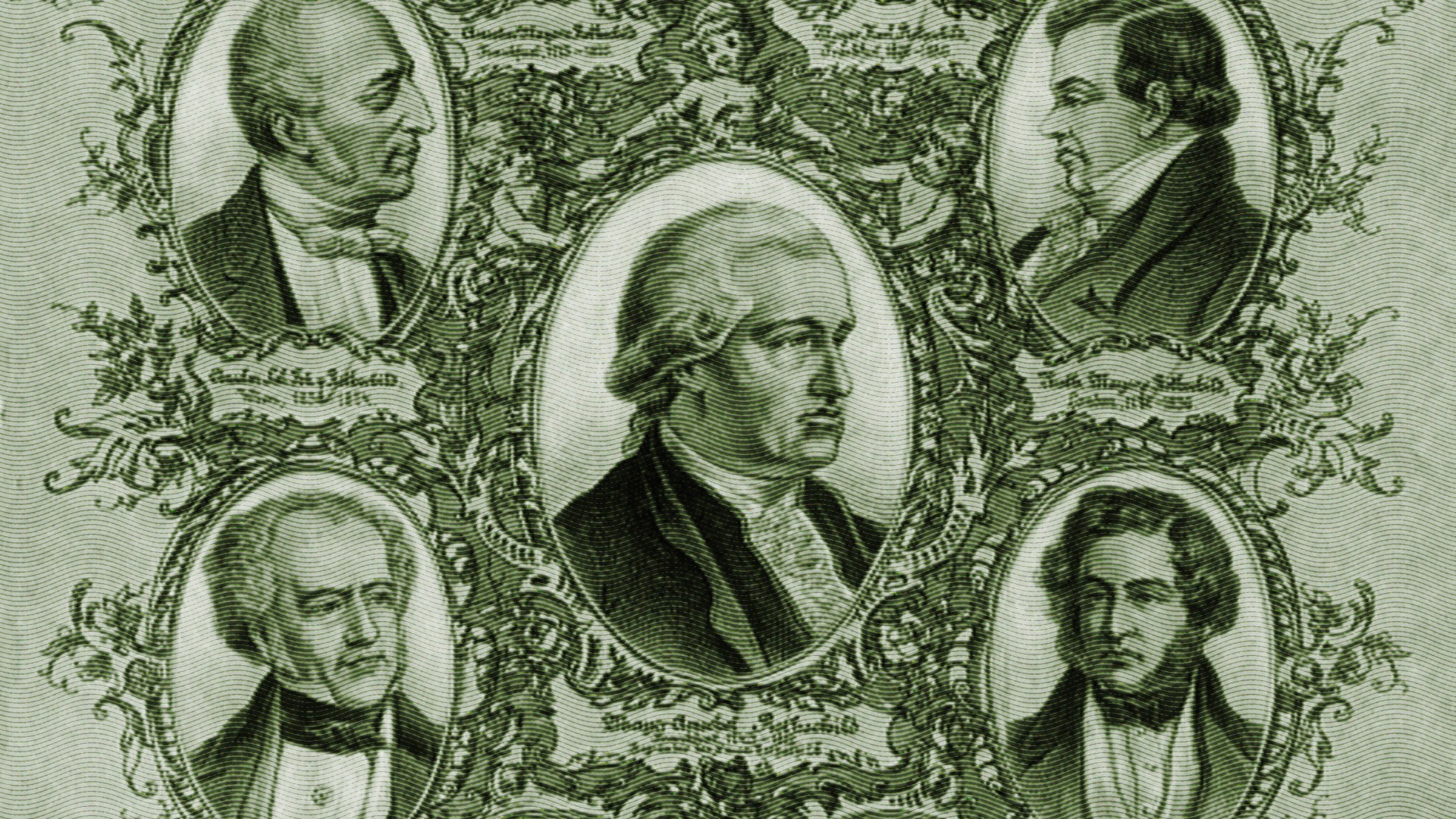
Mayer Amschel Rothschild (center) with other members of his family.

Mayer Amschel Rothschild (center) with other members of his family.

Christianity Today October 12, 2023
Illustration by Christianity Today / Source Images: WikiMedia Commons

My first encounter with the Rothschild name happened in a thrift store. I was maybe nine years old and ran across a little wool dress coat just my size. The tag said “Rothschild,” and when I showed my find to my mother, her eyes lit up. “The Rothschilds are very famous and wealthy,” I remember her saying. “That’s probably a very nice coat.”

Jewish Space Lasers: The Rothschilds and 200 Years of Conspiracy Theories

I don’t remember how nice it was, and at the time I didn’t know enough to wonder whether the Rothschilds, whose company made my coat, were connected to those Rothschilds, the remarkably successful banking family whose name is a longstanding byword among conspiracy theorists and antisemites. I think I wore it under the impression that the child in Rothschild was a family tribute (Roth’s child), or perhaps a nod to their sale of children’s attire.

But the seam in the word is not after the S but before it: roth-schild, from the German for “red shield.” It’s a reference to a marking on the home where Mayer Amschel Rothschild lived as he founded the family dynasty in the 18th century. By day, he served in the court of the princely House of Hesse, and at night, he returned to the cramped quarters of the Judengasse, Frankfurt’s prison-like, one-street ghetto in which Christian authorities literally locked the local Jewish population every night and every Lord’s Day.

That’s but one small piece of the history covered in Jewish Space Lasers: The Rothschilds and 200 Years of Conspiracy Theories, a new release from journalist Mike Rothschild, who is—as the delightfully clever cover notes—“no relation” of those Rothschilds. The subtitle undersells the scope of the work, which traces the family’s history from 1565 to present and examines the global development of Jewish tropes, legends, and conspiracy theories along the way.

The Rothschild allure

“It is a sprawling story, told over centuries and continents,” as Rothschild writes in his introduction, replete with “fake Russian counts, Parisian pamphlet wars, lizard people,” and so much more. Thus does Jewish Space Lasers cover everything from the Judengasse to the Battle of Waterloo to the titular lasers—the idea, pitched in a 2018 Facebook post by Georgia Republican Marjorie Taylor Greene before she ran for Congress, that a California wildfire was the result of a Rothschild-involved conspiracy to advance green energy projects and, of course, make gobs of money.

Rothschild promises early on that his book is “not a biography of the Rothschilds, nor is it a deep archival study of their various business ventures,” nor “an examination of the political and societal forces at play” in the many ways the Rothschilds have affected world history. It’s a promise he doesn’t quite keep and perhaps couldn’t have: To effectively reject the idea “that Jews control everything, and that the Rothschilds are the ‘Kings of the Jews’” requires quite a lot of biography, archival study, and examination of the political and societal forces. And if Jewish Space Lasers bogs down in detail, this, too, is encouraged by the subject matter—the book is repetitive, but so are the conspiracy theories.

But negative perceptions of the Rothschilds are not all Rothschild has in view. Perhaps the most pleasant surprise of Jewish Space Lasers was its peek inside Jewish culture around the storied family. “For many Jews, the Rothschilds have been a beacon of hope in dark times, a reminder that anything is possible with unity and a steadfast devotion to family and tradition,” Rothschild explains. “They were heroes who fought tenaciously for the freedom of other Jews, while never giving in to the temptations of conversion and assimilation.”

The Rothschild allure was as much about their faithfulness and generosity as their aspirational wealth—but the wealth was part of it too. For example, the source text for Tevye’s “If I were a rich man” refrain in Fiddler on the Roof originally read “If I were a Rothschild.” And Tevye’s goals there are bigger than three staircases. “If I were Rothschild I would do away with war altogether,” he muses. “You will ask how? With money, of course.”

I knew going into Jewish Space Lasers that money would be a big part of the story. It’s impossible not to anticipate that, if you have any knowledge of our culture’s stereotype of Jewish people as—in the phrase of the first chapter’s title—“greedy, cheap, and blessed.” And I knew, too, that centuries of gross and officially sanctioned antisemitism would come into it; the history of how some European Jews came to be bankers was already familiar.

But much of what Rothschild recounts was new to me, supplying a remedy for an ignorance both happy and untenable: happy because it came from a lack of exposure to explicit antisemitism; untenable because antisemitism is persistent and pernicious, and because it is difficult to push back against evil if you fail to recognize it when you see it.

New extremists and old tropes

One place we see the evil of antisemitism, of course, is in church history. Though Rothschild has a light touch in connecting antisemitism with Christianity, never painting with too broad a brush, the bulk of his tale is set in Christendom Europe. Even outside overt misuses of our faith to oppress Jewish people, then, the story of the West’s antisemitism is undeniably a story about people who at least professed Christianity, whatever was in their hearts.

This history—of expulsions and pogroms, blood libel and other slanders, forced conversions and baptisms—is galling and repulsive. It’s also absurd, because the core of our faith is that God became man and, as Rothschild observes, that man was Jewish.

Christian antisemitism can only exist through blatant rejection of God’s commands (Eph. 2:11–22) and scandalously stupid misreadings of Scripture (Rom 1:16, 3:29, Gal. 3:28). But there’s no escaping the fact that it has existed, and not only in centuries past. Greene, the space-lasers theorist and a sitting member of Congress with a large, popular following, professes an evangelical faith, having been baptized at the Atlanta-area North Point Community Church in 2011. In his 1991 book The New World Order, the late Pat Robertson, erstwhile head of the Christian Coalition, cited explicitly antisemitic works—books with chapter titles like “The Real Jewish Peril”—to posit a conspiracy of malevolent global domination, with the Rothschilds in on the scheme.

Are things getting any better? Considering the present and future state of antisemitism, Rothschild takes a dim view in the book and online, where he greeted this week’s news of war in Israel with worry for how it will affect Jews worldwide, because, “[h]istorically, whatever can be blamed on Jews will be, no matter their nationality.”

This century has seen a disturbing “resurgence of public and unapologetic antisemitism,” he argues in Jewish Space Lasers. Today, “new extremists are espousing the same hateful tropes that were once relegated to being fodder for fringe pamphlets and whispered accusations. But now they aren’t fringe, and they aren’t whispering,” Rothschild contends. “They are a danger to everyone. And they’ll never stop—because they never have.”

I hope he’s wrong in that prediction, and I wonder if he hopes it too. After all, why write a book-length debunking of hundreds of years of antisemitic theorizing unless you have some hope that it will help? Not, perhaps, to the point of persuading confirmed antisemites, but at least to educate the rest of us and shock us well away from a hateful path that too many have trod.

Bonnie Kristian is the editorial director of ideas and books at Christianity Today.

News

Christians Tried to Ban Witchcraft Accusations in Ghana. Politicians Almost Agreed.

(UPDATED) President declines to sign legislation. Bill’s sponsor calls Nana Akufo-Addo’s rationale “unfathomable.”

A widow accused of being a witch living in exile in a witch camp in Ghana.

A widow accused of being a witch living in exile in a witch camp in Ghana.

Christianity Today October 11, 2023
Pacific Press / Contributor / Getty

Update (December 6, 2023): Ghana president Nana Akufo-Addo has refused to sign a bill criminalizing witchcraft accusations that passed through the Parliament of Ghana unanimously in July.

“The contents of these bills have my support,” the president said in a letter read to parliament on Monday, “but we need to ensure that they are enacted in line with established constitutional and legislative processes.”

Francis Xavier Sosu, the member of parliament (MP) who introduced the bill, said he was “shocked” and “very, very flabbergasted” about the president’s rationale.

“I must say that those reasons are quite strange, incongruous, untenable, and unfathomable,” Sosu told Joy News. “I think that the president is not acting in good faith on this bill.”

While MPs can introduce bills in parliament, Akufo-Addo argues that given the nature of this bill, the executive was responsible for introducing it. When the witchcraft bill was introduced by a private member (Sosu), it violated one of the articles of the constitution, he said.

"Any legislation we pass must be in complete alignment with the provisions of our Constitution,” the president said. “I intend to have the bill reintroduced to Parliament on my behalf in due course.”

Sosu believes that his bill went through all the proper procedural processes.

“Since the passage of this bill, while we were waiting for a Presidential assent, three more women have died on account of witchcraft accusation,” he told Graphic Online.

The vetoed legislation threatens accusers with five years in prison and declares that the accuser must also financially compensate the person he or she accused, including for legal fees and counseling.

——

[Original post date: October 11, 2023]

During the last week of September, news broke that a 60-year-old woman had been killed at her home in northern Ghana by a young male relative.

“All that I know is that she is suspected of witchcraft,” Zakari Iddi, the woman’s brother-in-law, told Citi Newsroom.

The murder comes on the heels of recent efforts by Christian leaders and the Ghanaian government to protect the lives of those like the victim, often older or elderly women, who have been accused of witchcraft and been subsequently abused, exiled, or killed.

This year, the Parliament of Ghana unanimously passed a bill criminalizing all witchcraft accusations. The legislation threatens accusers with five years in prison and declares that the accuser must also financially compensate the person he or she accused (including for legal fees and counseling).

The bill was introduced by parliamentarian Francis Xavier Sosu, who grew up seeing people—who he often believed were just struggling with mental illness—accused of witchcraft, beaten up, and attacked.

“I recall that it got to a point I was not too sure whether the bill will be passed or not, but I had to call people to go into prayer and raise some prayer altars,” said Sosu. “[Passing this bill is] an incursion into some demonic world using legislation, so it required prayers, intercession.”

‘Lives are at stake’

In 2010, five men, including an evangelical pastor, set an old woman accused of witchcraft on fire. Despite widespread condemnation from those outside the country and the Ghanaian government, the country returned to “business as usual,” said John Azumah, founding executive director of The Sanneh Institute, an organization that studies religion in Africa.

In July 2020, a similar death occurred through lynching. In response, the Ghana Pentecostal and Charismatic Council (GPCC) called for new laws about how to better take care of the more than 2,000 widows who had been exiled over allegations of working with demons.

The Sanneh Institute petitioned the president and other top government officials to ban witch accusations, close “so-called witch camps” in the northern region, create safe houses, and set up a victim support fund. They also partnered with other organizations as part of the Coalition Against Witchcraft Accusations (CAWA), an umbrella group that also includes Songtaba, Women International League for Peace and Freedom, ActionAid Ghana, Legal Resources Centre, and Amnesty International.

While many Christian leaders celebrated Parliament’s passing of the bill, senior pastors who run deliverance ministries have expressed concern to Sosu that it may curb their work, as they have taught their junior pastors that making witchcraft accusations is allowable if the name of the accused person is not said aloud.

After the bill passed in July, some pastors banded together to mount a campaign against it, said Azumah. But he hasn’t seen their opposition as threatening.

“We know the president will sign this bill in the blink of an eye because he supports it,” he said. “The speaker of parliament … is passionately against this practice, and he wants the bill to be passed.”

Nevertheless, despite this high-level support, the bill has yet to be signed into law. According to Ghana’s constitution, bills passed by Parliament must be signed by the president within seven days, unless he refers the bill to the citizen advisory board for consideration and comments.

In this instance, Sosu says the majority leader, who did not attend the vote, has delayed the bill because of amendments he is seeking to make—an intervention Azumah called “very unusual.”

Since then, Parliament has since recessed.

CT reached out to majority leader Osei Kyei-Mensah-Bonsu as well as several of those opposed to the bill but did not hear back by press time.

“Any day that it delays in the signing of this bill into law is a day for the torture of these women to continue. Just last week another woman has been killed,” said commissioner Joseph Whittal, of the Commission on Human Rights and Administrative Justice, at the end of September. He emphasized how critical it was for the president to pass the bill “as soon as possible, because lives are at stake.”

Deliverance from witches and demons

Long part of African traditional beliefs and superstitions, Christians have often addressed witchcraft through prayer meetings and deliverance sessions. (71 percent of Ghanaian identify as Christian, and nearly a third are Pentecostal.)

Even today, more than 90 percent of Ghanaian Christians believe witchcraft is a problem in the country, and more than half have visited a Pentecostal prayer camp to ask for deliverance from witches and demons, according to a study by former GPCC president Opoku Onyinah.

But when Protestant missionaries arrived in the 19th century, their theology often clashed with these understandings, failing to acknowledge the importance of the supernatural in the African traditional worldview.

“Historic mission Christianity has generally been dismissive of African traditional worldviews on the reality of demons and witchcraft as figments of people’s imagination,” wrote J. Kwabena Asamoah-Gyadu, a Ghanaian Pentecostal scholar. “Pentecostalism, on the other hand, evokes powerful responses in Africa because it affirms the ‘enchanted’ worldview of indigenous peoples by taking these views seriously, and presenting an interventionist theology through which the fears and insecurities of African Christians are dealt with.”

Prophetic and deliverance ministries seem to have found a point of mediation between African indigenous worldviews and biblical stories of healing, deliverance, and prophetic guidance, according to scholar and church leader Christian Tsekpoe. In this way, “perceived life-threatening fears could be dealt with through prophetic utterances, healing and exorcism,” he wrote.

Today in Africa, “successful Christian ministry (i.e., ministry with significant personal relevance and impact) is impossible unless one takes into account the supernatural evil implied by the word ‘witchcraft,’” Asamoah-Gyadu wrote. He believes the growth of African Independent or Initiated Churches in the early 20th century corresponded to the “inability of Western missions to come to terms with the reality of supernatural evil, especially witchcraft, and to articulate a Christian pastoral response to it.”

Nonetheless, Tsekpoe said that Pentecostal churches face a major challenge: the abuse of prophetic and deliverance ministries. He believes “charlatans” and the “unemployed who have strong personalities” can “easily claim spiritual encounters and exploit innocent people.”

What would Jesus do?

Though witchcraft suggests the cosmic forces of good and evil, accusations can often be invoked over mundane and personal reasons. Azumah says that as women have begun to become more economically independent, men who have felt threatened or slighted have increasingly accused women of witchcraft.

It’s “an age-old conspiracy to keep women in their ‘place,’” he continued. In contrast, he’s observed that when men are accused of witchcraft, it’s often rationalized that they’re using this for “good” purposes. He believes this thinking is a “very troubling, gender-based, misogynistic mindset” that Ghanaians should challenge.

Witchcraft accusations are a widespread issue in Ghana, but they are more likely to affect the northern part of the country, including the Dagomba and Konkomba communities, which suffer from poverty, underdevelopment, and lack of education. The region is also home to many families who practice polygamy, creating situations that can breed jealousy and strife between wives.

“If you have two women, or three women, or four women, and one woman’s children are doing well, and the other woman’s children are not doing well, the other women will [accuse her of using] witchcraft to steal the fortunes and the wisdom of their children and give [them] to her children.”

But even if an accusation starts as a result of a dispute between family or friends, the parties may then end up consulting deliverance ministries, where the violence and dehumanizing treatment can come into play.

“What I am against and am opposed to is going out there to accuse people and malign people and damage their reputations … that can even lead to causing them harm or their murders,” said Azumah. “If you really believe that there are witches who are after you, as a good Christian, you should take it to prayer, and you should deal with it in the context of spiritual warfare.”

The role of the local pastor is to care for individuals who are victims of the devil’s oppression, he adds.

Sosu, who has previously worked with deliverance ministries, similarly says that, rather than accusing someone as a witch, Christians who are afraid a witch is pursuing them should fast and pray. As for Christian leaders, they should follow the example of Jesus, who cast out demons but did so without accusing the individual.

A final important element is the individual’s own relationship with God.

“The power at the believer’s disposal, which makes him or her a child of God, must be the focus, and not witchcraft power,” wrote Ghanaian Pentecostal leader Kwasi Atta Agyapong “What emerges clearly from the ministry of those who subscribe to the excesses in the witchcraft beliefs is the ignorance of their identity in Christ.”

News

Amid Israel-Hamas War, Local Christians Seek Righteous Anger and Gospel Hope

As terrorism leads to thousands of deaths, Palestinian evangelicals and Messianic Jews share astonishment, grief, and prayer for peace and justice.

Left: Casualties from the Israeli forces fighting against the Islamist Hamas militants. Right: The aftermath of the Israeli airstrikes on Gaza.

Left: Casualties from the Israeli forces fighting against the Islamist Hamas militants. Right: The aftermath of the Israeli airstrikes on Gaza.

Christianity Today October 11, 2023
picture alliance / Ahmad Hasaballah / Stringer / Getty / Edits by CT

With at least 1,200 Israelis and 1,100 Palestinians slain, it is not simply the Israel-Hamas war’s stunning casualty total that has outraged the world, but also the brutality of Hamas.

More than 200 youth were killed at a concert festival, villages and farms were raided and terrorized, and an estimated 150 hostages have been threatened with death if Israeli air strikes on the coastal strip do not cease.

With such cessation unlikely, casualty numbers will most assuredly increase.

Israel has called up 360,000 reservists, poised to begin a ground campaign into Gaza. Consistent with military strategy to meet terrorism with overwhelming force, past conflicts in the beleaguered 25-mile strip have previously produced striking totals, including 2014 clashes that resulted in 73 Israeli and 2,100 Palestinian deaths.

All the while, many Israelis have lived in fear. Since the September 2005 unilateral Israeli withdrawal from Gaza, the Jewish Virtual Library has counted 334 terrorism deaths and at least 20,648 rockets and mortars launched into Israeli territory.

Amid the stark tallies, there are signs of balance between local believers across the ethnic divide. Christianity Today interviewed three Messianic Jews, three Palestinian evangelicals, and two Gazan Christians currently outside their native strip.

Shared astonishment

“The level of hatred and evil displayed in these acts is truly shocking,” said Eli Birnbaum, a branch director for Jews for Jesus in Tel Aviv and Jerusalem. “It is unlike anything we have seen in decades and has deeply shaken the population.”

Attacks in his neighborhood have been so intense, he said, that people are remaining indoors. In constant communication with family, friends, and 50 full-time staff members, he said his community is doing its best to stay connected and offer encouragement.

On the Saturday of the attack, Birnbaum’s congregation came together to pray. Unsure of what to do, they distributed prayer sheets for the safe return of hostages. Some members simply lit candles.

Jews for Jesus collected supplies for displaced families and soldiers at the border.

At least one Messianic Jew has died for his nation. David Ratner was called a war hero by his commander, saving the lives of five fellow soldiers as their post was stormed by 400 Hamas fighters. Shot in the neck, he continued in combat for the next eight hours.

Birnbaum counseled his children to stand strong against the desire for hatred. He challenged Israelis to seek justice without vengeance. And he asked everyone to remain genuinely concerned for Jew and Palestinian alike—while praying for Gaza and its liberation from Hamas.

“What can we do to represent the Lord as our nation is in crisis?” he asked. “Please pray for us, that we choose wisely how to shine his light in a very dark place right now.”

Grace Al-Zoughbi, a Palestinian theological educator, is also searching for his light.

“The church is trying to cling to any glimmers of hope it can find,” she said. “The situation is deeply disturbing, the atrocities appalling.”

She also was shocked by rocket fire, landing from the opposite direction near her home in Bethlehem. Families rushed to the grocery store to stock up on goods, fearful of escalation. Representative of an already struggling population under lockdown, she said the loss of tourism will further devastate the economy as the church seeks to help as much as possible.

Its immediate reaction was fervent prayer to end the conflict.

“Lord, take all the evil, smash it as glass, and grind it to nothing,” Al-Zoughbi pleaded. “In this we hold our hope, that one day soon your ways will prevail.”

She asked believers on both sides to be peacemakers. She asked international Christians to avoid “evil misrepresentations.” And for herself, she focused on Psalm 122: Pray for the peace of Jerusalem. May all who love you be secure.

Shared distance

Hanna Massad, the former pastor of Gaza Baptist Church, turned himself to the terse psalm that follows: Have mercy on us, Lord, have mercy on us, for we have endured no end of contempt (123:3).

Following 30 years of service as the first locally born pastor, Massad left after the 2007 violence that included attacks on his church and the kidnapping and murder of a youth worker in the affiliated Christian bookstore. He has experienced militancy firsthand, and understands the Israeli fear.

Now a United States citizen, in addition to weekly trauma counseling over Zoom and near daily interaction with church members, he takes three trips a year back to Gaza for aid distribution and overall encouragement.

His last visit ended two weeks ago, with slightly better Israeli treatment than normal, he says. Seeking reciprocity with the US for visa-less entry, border authorities have smoothed procedures for dual US-Palestinian citizens. Coming through Jericho, the security wait was only one hour this time.

“We are not treated with common dignity,” Massad said, “but according to the document we carry.”

For most Palestinians, he continued, it is with humiliation. Under blockade since 2007, 50 percent of the population of Gaza is unemployed, 65 percent live below the poverty line, and only 17,000 of 2.3 million people are allowed to seek work in Israel. The number vacillates according to changing policy, and their checkpoint treatment is far more intense. The rest are stuck.

“It is a big prison,” Massad said. “And usually, every visit finds things a little worse than before.”

And now with the war, Israel has stated it will cut off Gaza’s electricity and water supply. The frustration accumulates; while his father once hoped for a Palestinian state, Massad said he is now age 60 and wonders if it will ever happen. But local Christians do not support violence from either side.

“This is not the dignity we are looking for,” Massad said. “Our example is Jesus. And whenever anyone truly encounters him, God fills that heart with love for all humanity.”

Even when one’s home is destroyed.

Fellow Gazan Khalil Sayegh’s family apartment was hit by an Israeli rocket. They now take refuge in one of the strip’s three churches, displaced along with 250,000 others sheltered in schools or other facilities. The World Health Organization called for the establishment of a humanitarian corridor.

“They barely made it out,” he said, “assuming that home was their safest option.”

Currently in the US, Sayegh is part of the Agora Initiative to work jointly with other Palestinians and Israelis to promote a culture of constitutional democracy. He said he was pleased to see Americans condemn Hamas’s attacks. At the same time, he says he felt disappointed that his people’s suffering was so easily dismissed.

Sayegh’s biblical text of comfort is Psalm 73, where the psalmist nearly gives into his envy of the prosperous wicked: You destroy all who are unfaithful to you. But as for me, it is good to be near God. I have made the Sovereign Lord my refuge.

And in this peace, his message is clear.

“Do not give into hate, tribalism, or revenge,” Sayegh said. “Work hard to end not only this bloody round of violence, but the structural injustice of the occupation, so that we may live in peace.”

Shared anger

Jaime Cowen, a Messianic Jewish lawyer, is incensed at structural changes threatening Israel that preceded the war. Since his return as prime minister with a far-right coalition that includes former Jewish terrorists, he said, Benjamin Netanyahu has divided the country by trying to upend Israel’s judicial system.

And while trying to portray himself as a peacemaker with the greater Arab world, Netanyahu further inflamed the marginalized Palestinian community at home by authorizing more illegal settlements.

“Something was bound to give, and this time it did,” Cowen said in a video statement. “This is a very dangerous time for the country.”

He prays for the quick defeat of Hamas, which may have been motivated to thwart Netanyahu’s outreach to Saudi Arabia. But the real threat lies to the north, he said, with Hezbollah’s thousands of precision missiles ready to reach the farthest Israeli cities. Once this war is over, Cowen wants the government to resign and a commission to determine what caused this administration’s “colossal” failures in intelligence and military preparedness.

“Until then, there is deep sadness and anger,” he said, “over the horrific loss of life in innocent Jewish families.”

Palestinian evangelicals have volunteered to help. The Convention of Evangelical Churches in Israel announced that any displaced Messianic believer is welcome to stay with its member families.

“What can we as Arab Palestinian Christian citizens of Israel provide in a time like this?” the convention’s chairman, Botrus Mansour, preached at his church in Nazareth. “The answer is Jesus.”

From his safe northern locale—needing only to verify his shelter is ready—he was planning a message on church governance before the war shifted his focus. Much of the service was spent in prayer, and he encouraged the faithful with a quote from Francis of Assisi: Make me a tool for your peace. Despite the difficult feelings within them, Christians must be peacemakers.

Even as they fume—in multiple directions.

“People are angry about the brutal attack of Hamas,” said Mansour. “But they also feel that violence will continue as long as there is no just solution to the conflict.”

Like Cowen, he prays that God will replace current leaders. And he also shares a common comforting scripture, Lamentations 3:22–23: Because of the Lord’s great love we are not consumed, for his compassions never fail. They are new every morning; great is your faithfulness.

Shared gospel

“Nothing about this situation is right or good,” said Lisa Loden, a Messianic Jewish member of the Bethlehem Institute of Peace and Justice. “But there is a strong desire to see the Lord use these events to draw people to himself.”

Living in the coastal city of Netanya, north of Tel Aviv, Loden co-leads a believing congregation that has already organized many prayer gatherings since the war began. They asked God’s mercy on civilians in both Israel and Gaza. They prayed for their leaders, the hostages, and those who lost loved ones.

They prayed for a quick end to the conflict, for justice, and for Christians on both sides not to disengage from each other. She also issued a plea to believers around the world, watching on.

“Do not quickly take a side,” Loden asked. “But enter into real dialogue and seek a solution to this intractable conflict.”

From Ramallah, pastor Munir Kakish, president of the Council of Local Evangelical Churches in the Holy Land, spoke similarly.

“Pray for both sides,” he said. “We cannot see his purposes, but he is sovereign.”

His church was full, as he gave his stressed congregation a message on prayer accompanied by hymns that emphasized the peace of God. Some families emigrated from Gaza and are worried about their relatives who remain.

In the meantime, afraid an Israeli incursion into Gaza will trigger a West Bank uprising and a subsequent city-wide lockdown, Kakish also made sure to stock up on goods and worked with a local grocer to prepare food packages.

There may be many casualties to come.

But his final word concerned geography. The fight for territory misses the point.

“If either side takes land from the Mediterranean all the way to the Pacific, but does not have Jesus, it is nothing,” he said. “They still need Jesus.”

Jeremy Weber contributed additional reporting.

News

‘Sound of Freedom’ Star Tim Ballard Accused of Preying on Staff on Undercover Missions

In a lawsuit five women allege the anti-trafficking hero sexually assaulted them, raising the question of whether ministries should engage in such off-the-grid operations.

Tim Ballard attends the premiere of "Sound of Freedom" in June.

Tim Ballard attends the premiere of "Sound of Freedom" in June.

Christianity Today October 11, 2023
Photo by Fred Hayes/Getty Images for Angel Studios

Tim Ballard, the star figure depicted in the summer hit movie Sound of Freedom, has been accused of battery and sexual assault by women who worked alongside him in anti-trafficking rescue operations.

In a lawsuit filed this week in Utah, five unnamed women share detailed accounts of their experiences with Ballard. The film, which was released by the faith-based distributor Angel Studios, depicts the dramatic rescues that his organization, Operation Underground Railroad (O.U.R.), became known for.

The women say that Ballard—a fellow Mormon and married father of nine—would pressure them into pretending they were a couple, signing a non-disclosure agreement once they agreed, and performing sexual acts, supposedly as a way to fool traffickers. But the women­ said he would also assault them when they were alone while describing his actions as “training” for pretending to be a couple on an operation. Ballard has denied the allegations.

One woman said that during her first meeting with Ballard, he explained the sexual acts she would need to act out with him in detail. “I would have to be willing to do these things in order to save children,” she stated in the lawsuit.

The women allege in various instances that he asked them to describe their sex lives and to prove to him that they could sexually arouse him. They also described his insistence that this “couples ruse” was a “revelation from God,” that Mormon leadership had approved it, and that the women had been “carefully selected to save lives in a very unique way that God has trusted us to do.”

While trafficking rescue operations can involve covert identities, experts say this alleged behavior would not be acceptable. Suzanne Lewis-Johnson, a former FBI agent and a Christian who worked on child trafficking cases in Ohio for a decade, reviewed the lawsuit against Ballard.

“I ran operations in this arena. They did not look like that,” she said. “There’s nothing normal about what I read in the lawsuit.”

She said no law enforcement operation would require sex acts to do a rescue, and that coercing staff to engage in sex acts in their jobs could itself be considered forced labor under federal trafficking statutes.

Most US anti-trafficking ministries do not center their work around covert rescue operations, but they often find that volunteers expect that kind of work because they have seen it depicted in movies.

Christian audiences flocked to Sound of Freedom this summer, a movie that raked in $184 million at the US box office, more than the latest in the Mission: Impossible and Indiana Jones franchises. In recent decades the fight against human trafficking has sparked increasing support and funding from evangelicals, with Christian groups describing anti-trafficking work as a new “abolitionist” movement.

The movie is centered on Ballard’s story of leaving work as an agent at the Department of Homeland Security to catch child traffickers himself. What the lawsuit alleges is that the sting operations Ballard became known for were often tools for his own sexual gratification, where he would take female staff to massage parlors and strip clubs as part of training and operations. The women describe him pressuring them into sexual encounters and nudity in strip clubs and massage parlors with escorts, as well as groping them and engaging in other sexual activity.

“I kept thinking about how he had this government background and that they had probably taught him these techniques and that I should trust him,” said one of the women in a statement.

The lawsuit says the women did not have previous experience in such operations, but got into the work at O.U.R. because of a personal passion to fight trafficking, and then were almost immediately recruited to act as Ballard’s girlfriend. They said they had confided vulnerabilities to Ballard, like one woman being a rape survivor or another being a single mom.

The women say that O.U.R. provided little accountability for Ballard, that he misused organizational funds, and that two of their marriages ended because of his actions. They said they were shut out of rescue missions if they rejected Ballard’s advances.

The lawsuit accuses O.U.R. of negligence after learning of the allegations and letting Ballard resign quietly ahead of Sound of Freedom’s release. That allowed the organization to use Ballard’s “face and the worldwide opening tour of Sound of Freedom to raise money,” the lawsuit alleges. One woman who accuses Ballard of sexual assault in the lawsuit said she met him at an early screening of the movie.

Ballard resigned from O.U.R. in late June 2023, shortly before Sound of Freedom’s theatrical release on July 4, but that was not publicized until after the film’s release.

In September, the Church of Jesus Christ of Latter-day Saints released a rare statement, saying that Ballard had “betrayed” his friendship with the church’s acting president, M. Russell Ballard, by using the president’s name for “personal advantage and activity regarded as morally unacceptable.” The statement did not specify what the morally unacceptable behavior was.

Vice has also reported allegations against Ballard, as well as The Blaze, a media organization founded by one of Ballard’s biggest boosters, Glenn Beck. Beck has recently distanced himself from Ballard because of the allegations, saying he was “duped” by him. Ballard has been considering a Senate run to take retiring Sen. Mitt Romney’s seat.

Following these media reports, Ballard released a statement saying, “During my time at O.U.R., I designed strict guidelines for myself and our operators in the field. Sexual contact was prohibited, and I led by example. Given our meticulous attention to this issue, any suggestion of inappropriate sexual contact is categorically false.”

O.U.R. did not respond to a request for comment, but stated to Vice that it had previously commissioned a law firm to conduct a third-party investigation, that Ballard resigned, and that it “does not tolerate sexual harassment or discrimination by anyone in its organization.”

Following his resignation, Ballard started The Spear Fund, another anti-trafficking organization where he is now listed as a “senior advisor.”

In a statement, the organization’s attorney Mark Eisenhut said, “The Spear Fund did not exist during the time of the alleged conduct and had nothing to do with it. Mr. Ballard vehemently denies the allegations brought by these unnamed women. He looks forward to vindicating his name in the courts where evidence, and not unsubstantiated accusations in the media, decides the outcome.”

Whatever the outcome of the case, Lewis-Johnson, the former FBI agent, thinks Christian ministries should not do covert rescue operations themselves, because they lack consistent professional protocols and accountability.

She understands frustrations with law enforcement, because “we don’t see the system doing what we think it should.” But she said the alternative shouldn’t be to set up a less accountable organization to carry out such operations.

“It’s why I have such strong feelings that these things should not be done in a ministry context,” she said. “We don’t get to make it up as we go along. The stakes are so high.”

News

‘We Do Need Healing’: What First Nation Christians Make of Australia’s Indigenous Representation Referendum

(UPDATED) Leaders want a seat at the table. Not all are sure about changing the Constitution.

A sign of the Australian Aboriginal Flag referencing the 2023 Australian Indigenous Voice referendum.

A sign of the Australian Aboriginal Flag referencing the 2023 Australian Indigenous Voice referendum.

Christianity Today October 11, 2023
William West / Contributor / Getty

Update (October 18, 2023): Australians voted “no” to the Voice referendum on October 14. Across the country, 60.4 percent chose this option while 39.6 percent voted “yes.”

The outcome was “shocking and devastating for Australia’s First Nations people,” said Anne Pattel-Gray, who voted “yes.”

“If we were ever unsure of how Australians felt about its First Nations people, it is very clear that we don’t matter and that this country is extremely racist towards us.”

“Lies and untruths” about Indigenous peoples is the “new normal,” said Raymond Minnecon, who also voted “yes.” He cited Ephesians 6:12: “For our struggle is not against flesh and blood, but against the rulers, against the authorities, against the powers of this dark world, and against the spiritual forces of evil in the heavenly realms.”

“I would like to say to the ‘yes’ voters [to] please let this pass” and focus on addressing “real issues” in Australia, such as poverty and sexual and alcohol abuse, among both Indigenous and nonindigenous peoples, said James Dargin, who voted “no.”

Brooke Prentis, who declined to reveal her vote, is planning to call Australian Christians to join her in creating a Truth, Justice, and Conciliation commission. “Through 250 years of injustice and disadvantage, I continue to hold out my hand in friendship to nonindigenous Australians and ask you to walk with me for a better Australia,” she wrote in a statement.

“I pray you join me in building an Australia we build together, an Australia built on Truth, Justice, Love, and Hope.”

—————

Aboriginal and Torres Strait Islander peoples in Australia were not granted citizenship until 1963. And they were not counted in the census until 1967.

To Brooke Prentis, the former CEO of the Christian social justice organization Common Grace, these numbers aren’t just dates and statistics. As a woman from the Wakka Wakka people of southwest Queensland, they’re a part of what she calls her “living memories.” Australia’s upcoming Voice referendum will be yet another milestone etched in Prentis’s mind. On October 14, the country will vote “yes” or “no” to amendments in the Constitution that would recognize Aboriginal and Torres Strait Islander peoples (a broad term for people hailing from 274 small islands between the state of Queensland and Papua New Guinea) as the First Peoples of Australia. If the Voice referendum is passed, the Constitution will be amended to include language that calls for the formation of a body called the Aboriginal and Torres Strait Islander Voice. It will also state that this Voice may make representations to the Parliament and the executive government of the Commonwealth on matters relating to Indigenous Australians; and that Parliament has the power to influence what the Voice looks like.

These constitutional changes are one of the calls to action in the Uluru Statement from the Heart, which was crafted in 2017 after dialogues with Indigenous peoples across the country.

Aboriginal and Torres Strait Islander peoples comprise 3.8 percent of the Australian population. Just over half (54%) identify as Christian according to the 2016 census, but they face challenges within their own First Nations communities and also from the larger Australian Christian community.

“For a long time, I’ve been the only Aboriginal theologian in the country,” said Anne Pattel-Gray, a descendant of the Bidjara nation and head of the Victoria-based University of Divinity’s School of Indigenous Studies. Many Indigenous believers “have been excluded from theological education through mainstream or denominational seminaries,” she added.

Indigenous Christian communities are experiencing mixed reactions to the Voice, say the Aboriginal pastors and leaders CT interviewed. Many lamented the factious ways in which Christians have engaged on the topic and the spike in racism that First Nation peoples have experienced in the midst of the campaigns.

“What I have called for from Christians [particularly], and all peoples in these lands now called Australia during this time, is to listen with love and compassion. That’s what I’ve seen missing from the campaigns, the debates, how people are talking to each other,” said Prentis, who declined to reveal what her vote would be for.

Where history and future collide

Some Indigenous Christian leaders are unequivocal about voting “yes” to the Voice referendum, especially in how it seeks to address historical injustice against their peoples.

“To be recognized in our Australian Constitution would be really significant as the First Peoples of this land,” said Pattel-Gray.

“It will be recognizing all of those omissions of history where terra nullius [Latin for “nobody’s land”] was the basis on which colonization and invasion took place, where we didn’t belong here. We weren’t here.”

Pattel-Gray also emphasized the importance of having permanent Indigenous representation in the government. “For over 200 centuries, Aboriginal people have been silenced, marginalized in this country, and our voices have not been heard,” she said. Having a Voice in Parliament would help First Nations peoples “influence and have a say about what kind of future and destiny we would like to create, where our children have an opportunity to prosper and to be nurtured,” she added.

Indigenous children’s health and education are two of the foremost issues that Pattel-Gray hopes the government can address if the Voice is included in the Constitution.

The Indigenous child mortality rate was twice that of nonindigenous children in 2018, and the average Indigenous student is around two-and-a-half years behind the average nonindigenous one.

“We are called to be Christ’s ambassadors. … We Christians need to remember that we’ve been given a mandate to uphold, and how we do that now, with integrity, is yet to be seen,” she said.

A land of one’s own

Raymond Minnecon, a descendant of the Kabi Kabi and Gurang Gurang nations of southeast Queensland, echoed Pattel-Gray’s views, saying that his Christian faith is “fundamental” to how he will be voting this Saturday.

“The Bible says, ‘Blessed are the peacemakers, for they shall be called the sons of God.’ We’re the peacemakers in this business. We’re not the ones trying to antagonize,” said the co-pastor of Scarred Tree Indigenous Ministries at St. John’s Anglican church in Glebe, Sydney.

Minnecon also sees the Voice as a means of self-determination for Aboriginal and Torres Strait Islander peoples. “To us as Christians, we should be saying this is a fundamental, God-given right, not [only] a human right. He gave us this voice. He gave us our language, he gave us our culture, he gave us our land.”

The Uluru Statement is “an invitation of transformational forgiveness offered to those who benefit directly from the dispossession of our country, culture and spirituality,” said Glenn Loughrey, a Melbourne-based Wiradjuri man and chair of the National Aboriginal and Torres Strait Islander Anglican Council (NATSIAC) in a Q&A with Eternity News.

“Those comprising the church are asked to accept this invitation and its accompanying offer of forgiveness from First Nations people as an opportunity for redemption,” Loughrey said.

But James Dargin, who pastors New Wine Life Church in Unanderra, Wollongong and is from the Wiradjuri peoples in central New South Wales, is choosing to vote “no.” One reason is because he holds a different view of land ownership.

“We have had decades of land rights, the 2008 National Apology, a national curriculum that elevates Indigenous issues, a dozen significant Indigenous dates annually, and Welcomes to Country everywhere we go. For many Indigenous Australians like me (James), these initiatives are already more than enough. Some even find it tiring or patronizing,” Dargin wrote in Australian Christian news outlet The Daily Declaration with co-author Kurt Wahlburg.

“If the ‘yes’ Voice get[s] in, we lose our sovereignty and [the] UN will control the land of Australia,” Dargin told CT. Aboriginal and Torres Strait Islanders are still recognized as original owners of the land, but if they are included in the Constitution, it will mean they have ceded their sovereignty and that all Australians, including Indigenous peoples, will lose their properties and houses under Native title and will no longer be classed as owners or businesses, he explained.

“I believe our prime minister is using the Voice for distraction so he [can] focus on Australia becoming a Republic country,” he also said.

Dargin’s view represents one strand of thought in the “no” camp, which believes that if the Voice referendum passes, Indigenous sovereignty of their self-determination and control over their affairs would be lost. A similar argument is held by the Blak Sovereign Movement, a group of Indigenous elders, academics, activists, and community workers who believe that Indigenous peoples are the only sovereigns of the land and that the Voice is “a vehicle of unwanted constitutional recognition” that attempts to “rule over us and our lands”.

Besides this, there are three other prevailing viewpoints that Indigenous peoples in the “no” camp ascribe to, explains Prentis. One view contends that the formulation of a treaty should come before incorporating an Indigenous voice in Parliament, like what occurred in Canada. Another thinks that the Voice is powerless because it would only be an advisory body to Parliament and the government. Yet another regards the Voice as a means of division between Indigenous and nonindigenous peoples, which is what leading Indigenous “no” campaigner and Catholic businessman Nyunggai Warren Mundine is promoting.

“For real reconciliation, it’s not enough that Australia as a nation says sorry, but Indigenous people also need to forgive Australia as a nation,” wrote Mundine, a member of the Bundjalung, Gumbaynggirr, and Yuin peoples. “As Aboriginals, we have a choice—to continue to feel angry, or to draw a line in history and not be captive to the past.”

In Mundine’s view, the Uluru Statement “presents a radical and divisive vision of Australia,” and the Voice re-introduces racial segregation into the Constitution, casting Aboriginal people as “one homogenized race” even though they comprise many different nations, and is “built on a lie” that Indigenous Australians do not possess a voice.

“The only person who can better your life is not the government, not the Voice. It’s you,” Mundine said, regarding his hopes for Aboriginal people in a campaign video.

The Uluru Statement’s ultimate goal is to establish a treaty, which refers to reparations that will likely be a fixed percentage of the nation’s GDP paid to Indigenous peoples, Dargin and Mahlburg also wrote. However, receiving more money as a form of reparations may not improve circumstances, and developing better management of existing funds could be a better solution, they argued.

“What if the Voice represents just a subset of Indigenous Australians, who have a special interest in keeping a spirit of resentment alive? … What if reconciliation efforts are undermined by an unwillingness to forgive?”

With outstretched hands

Whichever way the Voice vote swings, Indigenous leaders told CT that they have observed and experienced more racism this year than in years past.

In one recent incident, Indigenous senator Lidia Thorpe of the Blak Sovereign Movement received a video of a man claiming to be from a neo-Nazi group. He burned the Aboriginal flag and made racist comments about First Nations peoples.

Prentis has been subject to racist attacks over the past year. “A couple of those [incidents] have hurt me very, very badly, and even made me scared for my own safety and property,” she said.

For Indigenous believers, what may add another layer of hurt is how the flames of racial hatred may be stoked by fellow siblings in Christ. Some Christians have made statements that Indigenous peoples are demanding their land back and will take “everything they’ve built,” which is “absolute rubbish” to Pattel-Gray.

“People who believe that really don’t understand what the Voice is about or the referendum. It is not about reprisal. It’s not about lashing out. It’s about the grace of God being extended to this nation, to recognize us and to hear our voice, and nothing more,” she said.

While reparations are necessary, Australia has a long way to go before this can be realized, say most of the Indigenous leaders CT spoke with.

“What we’ve tried to do in Australia for the last three decades is reconciliation with no justice,” said Pattel-Gray.

Reconciliation needs to take place first before reparations can occur, said Prentis. However, these efforts may be undermined because “reparations have been weaponized” by the “no” campaign: “It’s fed into this myth and stereotyp[ed] nonindigenous Australians’ minds that we get all this money: we get free cars, free house, free education. We’ve never gotten anything free. It’s a complete lie,” she said.

Prentis is already looking past the outcome of the Voice referendum to the ongoing work that lies before her in advocating reconciliation—or friendship, as she prefers to call it—between Indigenous and nonindigenous people. In her view, this needs to happen before reparations can truly take place.

“We do need to understand the true history of these lands now called Australia. We need Aboriginal people to stop dying too young and too early. And we do need healing, and the only way we can do that is by journeying together. In the church, it's to understand, What does it truly mean to love your Aboriginal neighbor as yourself?” she said.

“[This] will take a humbling, a relearning, and for our hearts to be in rhythm with each other.”

When talking about reparations, Minnecon looks to the story of Zaccheus the tax collector, who said, “If I have cheated anybody out of anything, I will pay back four times the amount” (Luke 19:8).

“Reconciliation is a daily activity. It’s a verb,” said Minnecon.

News

Fellowship of Christian Athletes Let Back in San Jose Schools After Court Rejects District’s ‘Double Standard’

Ninth Circuit ruling boosts First Amendment protections for faith groups denied campus access.

Christianity Today October 10, 2023
Abigail Keenan / Unsplash

Serving as the Bay Area director for the Fellowship of Christian Athletes (FCA), Rigo Lopez didn’t expect that his work would involve court depositions and early morning emails with lawyers. Or that he’d have to pray for and defend students whose teachers campaigned against their club and its convictions.

But Monday marks a long-awaited milestone in the Christian organization’s legal fight in California. FCA learned it can finally return to San Jose public schools—four years after losing its official recognition over its faith statement and a month after a significant First Amendment ruling in federal appeals court.

Following major religious liberty decisions at the Supreme Court, the FCA ruling offers a new precedent for free exercise protections. “It makes other cases much more likely to succeed,” according to Becket senior counsel Daniel Blomberg, part of the legal team for FCA along with the Christian Legal Society’s Center For Law & Religious Freedom.

FCA’s case was the latest in a string of lawsuits over campus access for Christian clubs. The Christian Legal Society at UC Hastings, the Chinese Student Christian Fellowship at the University of Iowa, and InterVarsity Christian Fellowship at Tufts, Vanderbilt, Wayne State, and Cal State have gone through similar fights.

After almost 20 years in operation in San Jose local schools, FCA was similarly denied approval as a student club in 2019, when it was declared in violation of district-wide nondiscrimination policies. A teacher at one school, Pioneer High, had campaigned against the club’s “anti-gay prerequisites,” since FCA’s faith statement for student leaders included a line about God instituting marriage between a man and a woman.

Following the pandemic, the San Jose school district officially adopted an “all comers” policy, which also barred faith statements: Approved clubs could not discriminate in membership or leadership. So FCA filed suit on First Amendment grounds, pointing out that other clubs hold their own requirements around identity or ideology without punishment.

Last month, the Ninth Circuit backed what many of these student organizations have been saying all along: that it’s unfair to subject people of faith to unequal treatment, whether or not the policies in question called out religious groups in particular.

“The Court’s 100+ page opinion overturned a major prior precedent and is a ringing endorsement of the [First Amendment] rights of students with implications well beyond high school campuses,” tweeted attorney Casey Mattox, vice president for legal and judicial strategy at Americans for Prosperity.

A lower court had previously sided with the San Jose school district, saying its policies did not target the Christian club and rejecting FCA’s plea for an injunction to meet as its case proceeded. The Ninth Circuit—the largest federal appeals court in the country—heard the case earlier this year and overruled the decision on September 13, citing the “merits of [the FCA’s] free exercise claims.”

“The District, rather than treating FCA like comparable secular student groups whose membership was limited based on criteria including sex, race, ethnicity, and gender identity, penalized it based on its religious beliefs,” the majority opinion said. “Because the Constitution prohibits such a double standard—even in the absence of any motive to do so—we reverse the district court’s denial of FCA’s motion for a preliminary injunction.”

Ed Whelan of the Ethics and Public Policy Center noted that “FCA had a very good draw,” with nine Republican appointees among the randomly selected judges for the “en banc” panel that reviewed the case on appeal. Ninth Circuit ruled 9–2, with both Democratic appointees dissenting.

In the majority opinion, judge Consuelo Callahan referenced 2021 Supreme Court decisions on behalf of a Catholic foster agency (Fulton v. City of Philadelphia) and Californians who wanted to worship at home during the pandemic (Tandon v. Newsom).

Previous rulings allowed for neutral, “generally applicable” laws that happened to restrict religious activities, under the Smith precedent. But justices ruling in these more recent cases clarified how even broad policies can unconstitutionally target religious expression when the government applies them selectively.

In Fulton, justices held that “the mere existence of government discretion is enough to render a policy not generally applicable.” In Tandon, treating “any comparable secular activity more favorably than religious exercise” kept a law from being “neutral and generally applicable.”

For the FCA case, the San Jose school district allowed exceptions for other clubs to restrict membership—like Senior Women or the South Asian Heritage Club—but didn’t allow the Christian group to hold faith requirements for its leaders.

“Time and time again, the label of ‘all comers’ has been slapped on policies that are anything but, in an effort to engage in viewpoint discrimination in a manner that might fool courts, but which certainly chills the expression of students in both high school and college,” wrote Robert Shibley, an attorney and senior fellow at The Foundation for Individual Rights and Expression, a free speech advocacy group.

The Ninth Circuit’s FCA decision “makes that harder to get away with, which can only benefit the individual rights of everyone at public colleges and high schools,” he said.

Blomberg said the students in the FCA case also showed a “remarkable” level of grace when faced with severe hostility in their school setting, where classmates protested FCA meetings with signs and formed a Satanic Temple Club to mock FCA after it lost its recognition as a student group.

The support of a national organization meant that FCA could undergo the legal fight and be ready to return; another Christian club who didn’t meet the district requirements no longer exists, he said.

“FCA is excited to be able to get back to serving our campuses,” Lopez said in a statement. “Our FCA teams have long enjoyed strong relationships with teachers and students in the past, and we are looking forward to that again.”

News

Billions in Federal Aid Helped Christian Orgs Survive the Pandemic

A CT analysis of federal data shows that ministries received about $7 billion in forgiven PPP loans, with about a third of US churches receiving funding.

Lawndale Christian Health Center served its neighborhood through the pandemic with the help of $5.6 million in PPP funding.

Lawndale Christian Health Center served its neighborhood through the pandemic with the help of $5.6 million in PPP funding.

Christianity Today October 10, 2023
Courtesy of Lawndale Christian Health Center

During the COVID-19 pandemic, the US government provided an unusual lifeline to tens of thousands of Christian organizations and churches through forgiven Paycheck Protection Program (PPP) loans under the CARES Act.

That aid amounted to roughly $7 billion in forgiven loans, according to an analysis of federal data by Christianity Today. Most of that funding—about $5 billion—went to churches. Federal aid has gone directly to churches before, in the form of disaster assistance, for example, but rarely at this level.

A new study on the impact of COVID-19 on the American church from Arbor Research Group and ChurchSalary, a ministry of Christianity Today, estimates that slightly more than one-third of all US churches received a PPP loan of some kind. (Almost all of those loans were forgiven, though there were rare instances of churches repaying the federal government.)

The individual loans to Christian organizations ranged from a few hundred dollars to over $10 million. Heritage Christian Services, a Christian organization serving those with disabilities, received one of the largest forgiven loans at about $10 million. Life.Church in Oklahoma received about $7 million.

Some ministries did not seek the aid because they wondered about future conditions attached to it. Steve Smith, the administrative bishop for the New York state Church of God in Christ, told CT that some of his pastors in the state worried there might “be some attachment later on that will have negative effects,” he said.

Early in the pandemic, both Christian financial advisor Dave Ramsey and Crown Financial Ministries’ CEO Chuck Bentley urged churches not to take the PPP money. Ramsey argued it allowed the government into the “management” of churches, which turned out to not be the case in this instance.

A pastor whose church took PPP funding, Mike Vaughn, told CT in 2020 that the program was “a worthwhile exception to the general rule” that his church shouldn’t take money from the government.

The goal of the CARES Act—established during the Trump administration in the early pandemic days of 2020—was to help small businesses and organizations retain staff amid COVID-19 lockdowns. Staff compensation is the largest part of the average church budget, and survey respondents who received PPP aid told ChurchSalary that their churches would have struggled to retain staff without the grants.

The survey by ChurchSalary also showed that for people in ministry who were laid off, more than 40 percent were still looking for similar work in 2023.

Eighty percent of the churches that reported receiving outside financial assistance during the pandemic said it came in the form of a PPP loan. Churches receiving PPP funds tended to be older and larger or were led by older pastors, according to the ChurchSalary study, and tended to be in large cities rather than in rural areas by a wide margin.

The PPP aid is little acknowledged by ministries themselves. Almost no Christian nonprofits returned requests for comment on the aid they received, even when it was in the millions. Some ministries that defied government health orders regarding COVID-19 also took PPP funding.

But a few were happy to share what the aid did for their organizations.

“It helped us out a great deal,” said James Brooks, the CEO of Chicago-based Lawndale Christian Health Center (LCHC), which received $5.6 million in the form of a forgiven loan.

Lawndale serves roughly 70,000 patients a year, most of them Medicaid recipients or uninsured.

Between March 2020 and December 2021, LCHC conducted 41,000 COVID-19 tests. Their staff set up vaccine clinics on the west side of Chicago, and also went door to door with the vaccine.

Though the organization works in health care and remained busy through the pandemic, Brooks said that without the extra PPP support, they would have had to lay off staff who worked on ancillary ministries that were shut down—like a café that the organization runs. Instead, LCHC redirected those people to other roles and new projects.

One new outreach that LCHC staff were able to do was to manage a downtown hotel for 259 unhoused individuals, at the city of Chicago’s request. Lawndale helped those who were high-risk to isolate in the hotel and provided medical care for chronic conditions around the clock. The hotel operation also offered services for substance abuse and mental health.

A 2021 study of Lawndale’s work at the hotel found that the high-risk individuals had a “significant reduction” in contracting COVID-19 compared to those in city shelters, and they had better health indicators like lower hypertension and glycemic control. Most of the participants entered housing upon leaving the hotel.

“Our staff did a wonderful job. It was a hard time, but we saw the hand of God at work,” said Brooks. None of the LCHC staff died from COVID-19. “Every day they came in risking their lives to share the love of Jesus.”

Some legal scholars questioned the validity of the PPP program for religious organizations, calling it “the quiet demise of the separation of church and state.” But no significant constitutional case has moved forward against the aid to religious groups.

The US Small Business Administration, which manages the program, put out a paper explaining why faith-based organizations were eligible for the program, saying that an “otherwise eligible organization” shouldn’t be “disqualified” from loans just for being religious.

Religious recipients noted that the government had ordered the COVID-19 closures of their churches and schools, so it made sense to them that they could receive the same aid that every other closed business (even strip clubs) received.

Stanley Carlson-Thies, the founder of the Institutional Religious Freedom Alliance, argued in an email to CT that the program was clearly constitutional, and “the alternative would have been to single out for disfavored treatment certain religious organizations—like a fire department fights fires in every building except religious facilities.”

The government provides grants to religious organizations for other things like historic preservation, disaster recovery, and protecting buildings (like synagogues) from hate crimes, he noted.

“This kind of equal treatment is well established in constitutional analysis and in federal law, although sometimes new challenges come up and have to be taken on individually,” he said.

PPP loans helped many organizations keep the lights on, but some millions went to organizations that did shutter later—like Alliance University and The King’s College.

Of the governing member schools in the Council for Christian Colleges and Universities (CCCU), more than half received forgiven loans adding up to $174 million in aid. Houston Christian University (formerly Houston Baptist University), for example, received one of the largest amounts at $6.5 million in forgiven loans. The school did not respond to a request for comment.

Organizations with more than 500 employees were not eligible for PPP loans, a rule that excluded CCCU member Union University in Tennessee, for example, from the program.

Christian colleges could also receive PPP loan forgiveness for expenditures to expand remote learning. Philip Dearborn, the president of the Association for Biblical Higher Education (ABHE), a Christian accreditor for about 200 institutions, said he watched ABHE schools take advantage of that.

“The technology they purchased met the immediate COVID-impacted demands and now, post-COVID, is being leveraged to continue developing and expanding delivery methodologies beyond the traditional face-to-face classroom,” he said in an email.

While some schools went remote with their federal funding, organizations like Lawndale became more involved face-to-face with their community through the funding.

Lawndale’s roots are in its neighborhood, having been born out of a neighborhood church, Lawndale Community Church. CEO Brooks’s father and grandfather were both pastors in the community. He lives there, as well as most staff.

“One of our values is proximity,” said Brooks. “That means being close to the pain. We use the John 1:14 text, ‘The Word became flesh and dwelt among us.’ … I like how Eugene Peterson puts it: ‘The Word became flesh … and moved into the neighborhood.’” Even in a pandemic, he said, the ministry was never “remote.”

The Gospel Comes with a Kids’ Potty

Child-sized toilets at church tell kids they’re welcome. Why are they so rare?

Christianity Today October 10, 2023
Catherine Falls Commercial / Getty

Every Sunday, I load up my cargo bike with our two girls, their snacks, a few spare diapers, board books about Jesus, and finally, a bright pink potty. Toilet training has gone as well as can be expected, but my little girl is still too small to use a grown-up toilet.

I can see how much easier it is for her to use the child-sized, real-plumbing toilets at her school, but we don’t have the same option at church or at home. It’s made me take a speculative look at the bathroom in our house, wondering what it would cost to install one and how many children I’d need to have for it to be “worth it.” I’ve seen grab bars for stability in other families’ bathrooms, even when no one in their home is currently injured or elderly, and I think a small toilet would be a similar sign of welcome. A hospitable home is one that can accommodate a variety of guests, with a range of bodily abilities and needs.

What about a hospitable church? Though church buildings are a public space, they’re exempt from the disability accommodations covered by the Americans with Disabilities Act (ADA). And anyway, the physical needs of children—and pregnant women, for that matter—aren’t covered by the ADA, for though they may entail similar challenges of accessibility, neither childhood nor pregnancy are legal disabilities.

But even without a legal mandate, church should be a place where children’s needs are met. “Let the little children come to me, and do not hinder them, for the kingdom of heaven belongs to such as these,” Jesus said (Matt. 19:14). And we try, but our efforts are usually more behavioral, like tolerating noise in the pews, than structural, like reconsidering the overall design of the church.

Yet, after her preschool, church is the most child-dense place my three-year-old goes. And a church will keep hosting children for as long as it’s open, while I expect I’d have to remove a child-sized toilet from my home if we decided to sell. We’re happy to have a lively, family-filled parish that’s very welcoming of children’s joy (and their noise). So if there’s no accommodation here, why not?

There’s no national survey on children’s toilets in church buildings, of course. But I raised the question to my X (formerly Twitter) followers in an informal poll, and most respondents said their church has no specific bathroom accommodations for little children. Few said their church has a training potty—the kind you empty into the toilet—and even fewer reported their congregation has a real, tiny toilet hooked up to the plumbing. But in many of those cases, the toilet was often there because the church operates a childcare center in the same complex, which raises the question of whether it would’ve been installed for the congregation alone.

Revealingly, when I asked a follow-up question about whether respondents would consider asking their pastor or priest about adding a training potty—or if they’d stealth-donate it and hope everyone assumed it was official—people favored secrecy by a 2:1 margin.

Whether that was because the donation wouldn't feel like a big deal or because it might be rejected, these results accurately reflect where many church communities land on this question.

When churches are built or renovated, they often bring in someone like Will Seath, a project architect with McCrery Architects, a firm based in Washington, DC, with an expertise in the design of Catholic churches. Seath has never encountered a community that considered adding a child-sized toilet, he told me in an interview by phone. On the contrary, most clients try to minimize bathrooms because they’re the most expensive rooms per square foot. Churches usually want the fewest possible toilets required by law, and a working child-sized toilet costs money but doesn’t count toward that official tally.

For Rev. Topher Endress, who pastors a Christian Church (Disciples of Christ) community in Columbia, Missouri, adding accessibility is often a matter of iterative change. He serves in an older stone building, where congregants in wheelchairs can’t come up to the altar. It’s a problem Endress hasn’t yet been able to fix, but he has trimmed pews across the church, making space for wheelchairs. Now, congregants with mobility aids can pray throughout the sanctuary instead of being relegated to a special section in the back.

Endress thinks children face obstacles parallel to those of disabled congregants—their bodies are treated as aberrant and unexpected—though he’s hesitant to draw too direct an analogy. “I think it’s a really helpful frame,” he said, “but I think it’s unhelpful to name it,” because, for people with disabilities, comparisons to children can feel less like solidarity and more like dismissal or condescension. “People treat people with disabilities as if they were developmentally a child,” Endress said. “Any linkage between children and disability feels a little bit fraught.”

His PhD was on disability and ecclesiology, and Endress moves easily from theory to practice. On the phone with me, he gamely began exploring the bathrooms, checking how family-friendly they were. The sinks had cutouts to make them accessible for wheelchair users, he said, and little stools were tucked underneath for children. But to find a child-sized toilet, families would need to go to the attached preschool.

Endress began musing about adding toilet seats that have a special, child-sized attachment, and, like my X respondents, he leaned toward a stealth approach. “If I were making the switch,” he told me, “it would just be something I would do, and probably not tell anyone, and they would be fine with it.”

If a congregant wanted to make the proposal, though, the process would be more formal. They’d send the property committee an email, and there would be a meeting to decide.

Would it be approved? I tested how easily this kind of accommodation might be secured at my own parish, asking a priest if I could donate a little toilet stepladder, which gives children stairs to reach the top of the potty, and a smaller, more proportional seat for when they get there. He politely declined.

The entryway toilet is already a difficult place to manage, he told me, with the wrong things getting flushed and too-frequent calls to the plumber. Adding anything new felt like borrowing trouble.

So, for now, the little potty will keep riding with us. During Mass, I leave it at the back of the church, right next to the narthex bathroom, and make sure it’s appropriately emptied and cleaned. If another parent finds it and assumes it’s an official act of church hospitality, I won’t correct them.

Leah Libresco Sargeant is the author of Building the Benedict Option. She runs the Substack community Other Feminisms.

News

Died: Loren Cunningham, Who Launched Millions on Short-Term Missions

YWAM founder saw “waves” of young people carrying the gospel to every nation.

Christianity Today October 9, 2023
Courtesy of Youth With a Mission / edits by Rick Szuecs

Loren Cunningham, the charismatic visionary who launched Youth With a Mission (YWAM) and mobilized millions of young people for short-term trips, died on Friday morning. He was 88.

When he was only 20, Cunningham was praying and saw an image of a map, but the map was moving. Waves were crashing on the shores of every continent, receding, and then crashing again. The picture appeared to him like “a mental movie,” he would later say, and as he looked closer, the waves were young people, “kids my age and even younger,” fulfilling the Great Commission to “go into all the world and preach the gospel to all creation” (Mark 16:15).

The vision became the core idea for YWAM. The organization has called it “a God-initiated, destiny-defining, foundational covenant from God to birth a new missions movement.”

According to Cunningham, it took him a few years to understand what he’d seen. But it ultimately empowered him to “deregulate” missions, sending more people, more quickly, to more places where they could “proclaim the truth of God and display His love.”

YWAM (pronounced WHY-wham) currently operates in more than 2,000 locations in nearly 200 nations. The organization stopped counting how many young people it sent on short-term missions in 2010, when the total number was around 4.5 million.

“What I like about the spirit of YWAM is being willing to charge hell with a squirt gun,” Steve Douglass told CT a few years before he died, when he was president of Campus Crusade for Christ International (now Cru).

Kris Vallotton, a senior leader at the prominent charismatic Bethel Church in Redding, California, said on Friday that YWAM is “probably the greatest missionary organization in the history of the world.” He called Cunningham “one of the greatest heroes of faith in modern history.”

Evangelist Franklin Graham offered a similar assessment.

“What an incredible life this man lived,” the president of Samaritan’s Purse wrote on social media. “Loren allowed God to use him, and he was a force for the Gospel for decades.”

Cunningham was born on June 30, 1935, in Taft, California, but in his first memories, he was in a tent somewhere in Arizona. He, his parents, and his older sister were making adobe bricks by hand to build a small Pentecostal church.

Hearing from God

Tom and Jewell Cunningham were both ordained Assemblies of God ministers and both second-generation Pentecostal evangelists. Jewell learned to preach as a child traveling from brush arbor to brush arbor in Oklahoma, Texas, and Arkansas. When the couple first got married, they lived in their car while preaching on the streets of Tyler, Texas.

The couple taught their three children to sacrifice personal comfort for the sake of the gospel and to listen to God personally. In his later years, Loren Cunningham remembered learning that the leading of the Spirit could be a matter of life or death. Once, his father was preaching on the street in a Southern California town when his mother suddenly said, “We have to go now. God said we have to go now!”

As the family drove away, an earthquake shook the town and a pile of bricks fell on the sidewalk where they had been standing.

“If God has something important to tell you,” Jewell Cunningham said, “he will speak to you directly.”

The young Cunningham first heard God when he was six and later recalled it was a regular, sometimes daily experience by the time he was nine. When he was 13, he received a call to ministry while praying in a brush arbor in Arkansas with several cousins. They prayed for several hours on a Monday night, and Cunningham felt like he’d been touched by God.

“God just broke through and made the call very clear to me,” he later said. “I had no doubt in my mind I was called to preach.”

To celebrate, his mother took him to town and bought him new shoes, quoting Romans 10:15: “How beautiful are the feet of them that preach the gospel” (KJV). Cunningham preached his first sermon at his uncle’s church that Thursday.

He had his first experience with mission work when he was 18, traveling to Mexico over Easter with a group of young men to witness door to door and preach on the street in the predominantly Catholic country. Cunningham ended the trip in the hospital with dysentery, but considered it a success because 20 people had kneeled in the street to profess that Jesus Christ is Lord.

The next year, Cunningham attended Central Bible College, an Assemblies of God school in Springfield, Missouri. He and three other students formed a gospel quartet called The Liberators, and traveled the country singing and preaching. During a trip to the Caribbean in 1956, he had his vision of waves of young people a few days before his 21st birthday.

“God speaks in your language,” he would jokingly tell televangelist Pat Robertson in 2022, “and I was a surfer as a teenager in California and I saw these waves.”

Cunningham initially thought that maybe the vision meant he should be involved in teaching or teacher training. He graduated from Central in 1957 with degrees in Bible and Christian education and went to the University of Southern California for a master’s in education.

The failure of Bible schools

As Cunningham worked on a thesis about Bible schools, however, he became disillusioned. He looked at 72 institutions around the world and found that few, if any, were having a significant impact on world evangelization. The majority of graduates were not even going into ministry—much less becoming the kind of missionaries who could carry the gospel to the ends of the earth.

At the same time, Cunningham started doing youth ministry with the Assemblies of God in Southern California, where his father was now an assistant superintendent with a focus on church planting and missions. But Cunningham became disillusioned with that too.

“The young people were all so bright and eager,” he told Charisma magazine in 1985. “But I had to admit that most of the activities I planned for them were empty. They missed the heart of the young people because they had no challenge. That’s what we all long for, especially in our teens and early 20s. The big challenge.”

Cunningham found he was good at firing up young people and convincing them to do bold things for the gospel, but then there was nothing for them to do. The Assemblies of God said if they wanted to be missionaries, they needed to go to school and get about seven years of education and training.

“By which time,” Cunningham complained, “most would have forgotten their fiery zeal.”

He started experimenting with short-term missions, taking about 100 young Pentecostals to Hawaii over spring break in 1960. There were challenges—many of the young people treated the trip like spring break—but Cunningham became convinced this was the new model for global evangelism. Young people would get fired up and go on short trips, paying their own way or raising their own funds, and telling everyone in the world about Jesus.

That summer, Cunningham took a trip to scout sites where young missionaries might go. He went to Japan, Hong Kong, Thailand, Cambodia, India, Pakistan, Egypt, Lebanon, Jordan, Israel, Turkey, Greece, Scandinavia, and Great Britain. He started making big plans for 1961.

The leadership of the Assemblies of God, however, thought his plans were too big. The denomination offered to put him on salary to launch a youth missions program, but they wanted to start more modestly.

As Cunningham later recalled the conversation, he was told, “You can continue with your vision, Loren, but you’ll be taking out a more manageable number—say 10 or 20 young people a year.”

He protested that his vision was “much, much bigger than 20 people a year and very much larger than any one denomination.” Remembering what his parents taught him about hearing from God personally, Cunningham decided to leave the Assemblies of God and go out on his own. YWAM was officially incorporated in the state of California in February 1961.

In the first few years, however, YWAM did not manage to get 20 young people per year to go on short-term missions—or even 10.

Darlene Cunningham implements the vision

When Cunningham met a young woman named Darlene Scratch in 1962, the struggling missionary organization was sending out about five annually. But Scratch, who had herself dreamed of cross-cultural ministry after her uncle was imprisoned for missionary work in Communist China, saw some ways to implement the YWAM vision practically. Cunningham married her the following year and declared her, ever after, the co-founder.

“There never would have been anything lasting without Darlene,” he said.

In 1964, she arranged a “Summer of Service” in the Bahamas and the Dominican Republic. Nearly 150 young American Christians signed up. When they returned to the US in time for school in the fall, they reported thousands of conversions and some miraculous healings.

YWAM then organized trips to Mexico, Puerto Rico, and the Virgin Islands. And then, in 1966, they had 90 people on 17 teams in the Caribbean and another 25 in five large postal trucks driving through Mexico, Guatemala, Nicaragua, and Honduras. All of the missionaries were young, raised their own funds, and didn’t let training requirements dampen their zeal.

There were, of course, numerous challenges and many basic mistakes in those early years. More than one vehicle got stuck in the mud on an impassable road. One early flyer misspelled Christ, inviting young people to spend their summer representing “Chist.” The YWAMers learned to trust God, pray, and figure it out.

And reports of the challenges actually drew more young people.

“You’re going to sleep on the floors, eat food that’s different, suffer hot and sticky climates, and be surrounded by mosquitoes,” Cunningham told them. “You’re going to come up emotionally drained and spiritually attacked. But it’s part of growing us up in the Lord.”

A laboratory for evangelism

By 1968, YWAM had 30 full-time staff and 1,200 short-term missionaries. The organization decided a little training would be helpful and launched a school in a hotel in Switzerland. The first teachers included Cunningham’s parents, evangelical apologist Francis Schaeffer, mechanical engineer and lay theologian Harry Conn, and the Scottish evangelist Duncan Campbell.

“It is not a Bible school,” Cunningham explained, “but a laboratory for evangelism.”

YWAM launched more schools, ultimately operating University of the Nations in more than 600 locations. One leader said they were the “wave machine” producing the waves of young people that Cunningham had seen in his vision. The schools offer evangelism training but also degrees in sports and fitness, science and technology, education, communication, and art.

Cunningham said he had a revelation about seven classrooms, each corresponding to the seven spheres of society that Christians needed to impact to bring about change.

He went to tell his friend, Cru founder Bill Bright, about this revelation in 1975. But before he could say anything, Bright announced he’d had a revelation and produced a basically identical list of seven spheres. A few weeks later, Cunningham heard Schaeffer make a very similar argument about taking dominion for Christ over these seven different areas: family, religion, education, media, art, economics, and government.

The idea was later popularized by Bethel pastor Bill Johnson and others as the “Seven Mountain Mandate.” It became the theological basis for many American charismatics to embrace Donald Trump.

Cunningham, however, did not get involved in politics. He saw the seven spheres as a framework for evangelism and “Great Commission strategies.”

By the time Cunningham turned 50 in 1985, YWAM was sending out more than 15,000 young people on short-term trips every year. The ministry operated in 1,100 locations in 170 nations. And yet the visionary leader was convinced, as he wrote in his first book, that those young people were “only a fraction of a fraction of what was needed” and that “the laborers were still few, very few.”

He continued to focus on growing, expanding, and innovating.

Accusations of spiritual abuse

YWAM has faced criticism for the way it treated the “waves” of young people. In the 1980s, veteran staff member Gregory Robertson said the ministry was abusive and manipulative. People who disagreed with leadership were told they were rebelling against God or even demon possessed, he claimed.

More recently, former YWAMers have posted videos on social media claiming they were spiritually abused.

“These things happen at every single base,” one woman said. “Their ability to ‘hear God’s voice’ always trumps your own connection to the Holy Spirit.”

YWAM did not formally respond to the accusations, but a leader in the UK said some young leaders probably did act inappropriately.

“That’s going to happen when we’re committed to the call of mobilizing young people into all the world,” the leader said at the time. “They’re going to make some of the mistakes that I made when I was 18 and 19 and 20 years old.”

He also noted that abuse happens in many contexts, and argued YWAM’s track record was better than most.

The ministry’s decentralized model leaves oversight in local hands. Complaints did not go to Cunningham, as he didn’t manage training or on-the-ground operations, but focused on the big picture. His job, as he saw it, was to open the floodgates of potential missionaries.

In 1999, Cunningham traveled to Libya and became the first missionary to go to every nation in the world, as well as 150 islands and territories.

When COVID-19 and then cancer restricted his travel in the last few years of his life, Cunningham started using Zoom to speak with people on every continent. He spoke often of the need for more Bible translations in more languages, and urged people to “live ‘full on’ for Jesus.”

“It’s been a great life,” he said. “I’d say to anyone … have a purpose. Have a call. Make sure that you are doing it for God and His purposes. He is love and you must show His love.”

Cunningham is survived by his wife Darlene and their children Karen and David. A memorial service is planned in Hawaii on November 4.

Apple PodcastsDown ArrowDown ArrowDown Arrowarrow_left_altLeft ArrowLeft ArrowRight ArrowRight ArrowRight Arrowarrow_up_altUp ArrowUp ArrowAvailable at Amazoncaret-downCloseCloseEmailEmailExpandExpandExternalExternalFacebookfacebook-squareGiftGiftGooglegoogleGoogle KeephamburgerInstagraminstagram-squareLinkLinklinkedin-squareListenListenListenChristianity TodayCT Creative Studio Logologo_orgMegaphoneMenuMenupausePinterestPlayPlayPocketPodcastRSSRSSSaveSaveSaveSearchSearchsearchSpotifyStitcherTelegramTable of ContentsTable of Contentstwitter-squareWhatsAppXYouTubeYouTube