News

Neither Snow Nor Rain Nor Sabbath: Supreme Court Delivers a Victory to Christian Postal Worker

Update: Justices unanimously side with an evangelical who argued for accommodation of his Sabbatarian beliefs.

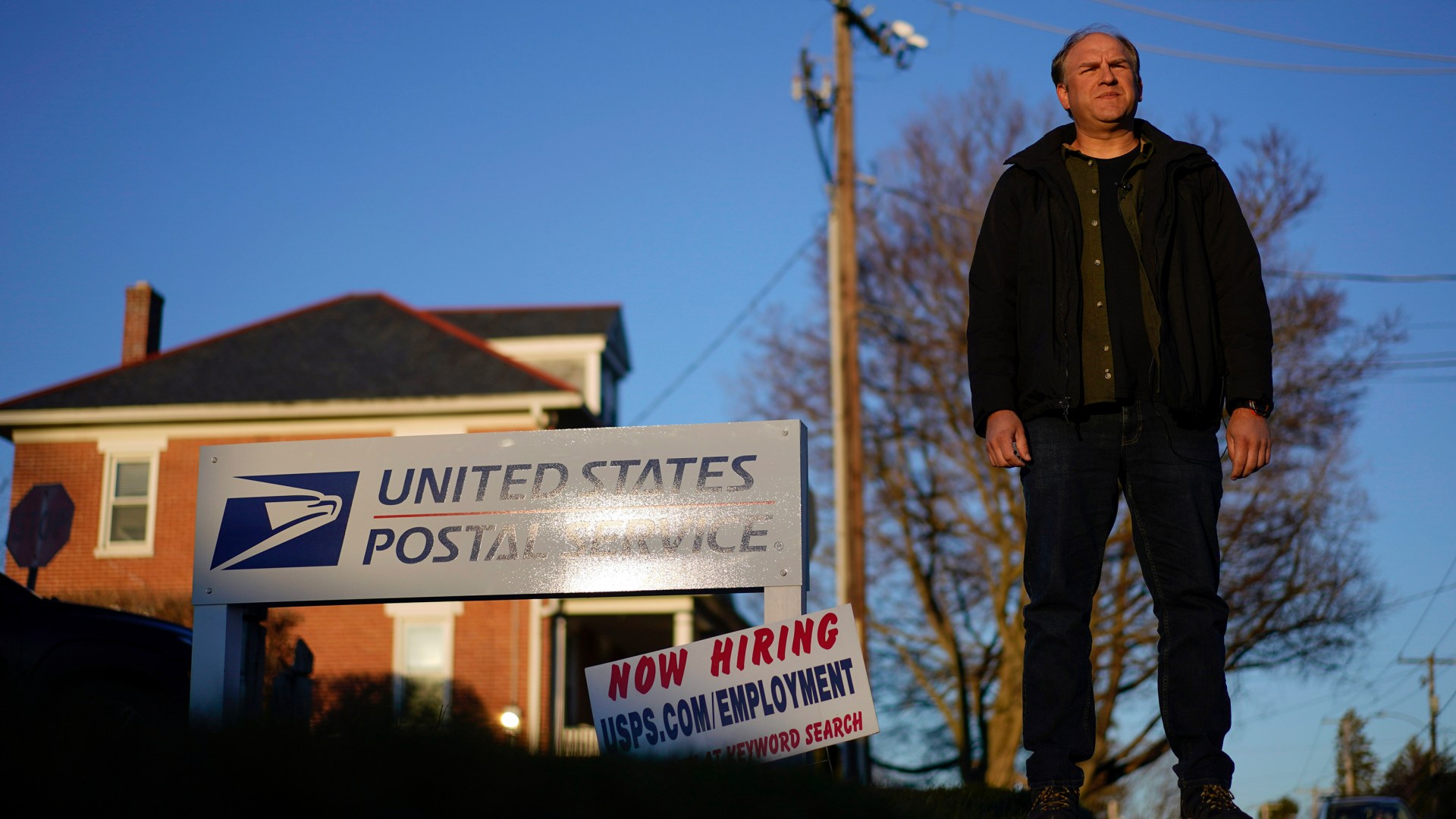
Gerald Groff, a former postal worker whose case will be argued before the Supreme Court, stands during a television interview near a "Now Hiring" sign posted at the roadside at the United State Postal Service.

Gerald Groff, a former postal worker whose case will be argued before the Supreme Court, stands during a television interview near a "Now Hiring" sign posted at the roadside at the United State Postal Service.

Christianity Today June 29, 2023
Carolyn Kaster / AP Images

Update (June 29, 2023): The Supreme Court ruled unanimously in favor of a Pennsylvania postal worker who lost his job for refusing to take Sunday delivery shifts due to his Christian observance of the Sabbath.

The court’s opinion, written by justice Samuel Alito, held that accommodating Gerald Groff’s religious practice did not provide an “undue burden” on postal operations, which expanded to Sundays for Amazon delivery.

“An employer who fails to provide an accommodation has a defense only if the hardship is ‘undue,’” the court stated on Thursday. “Faced with an accommodation request like Groff’s, it would not be enough for an employer to conclude that forcing other employees to work overtime would constitute an undue hardship.”

Groff’s counsel with the law firm First Liberty celebrated the ruling as a victory for religious liberty, and Groff said in a statement, “I hope this decision allows others to be able to maintain their convictions without living in fear of losing their jobs because of what they believe.”

Maybe if Gerald Groff had only asked for one Sunday off, that would have been okay. Or he could have just asked for part of Sunday, shifting his schedule to deliver the mail after church, and that would have been fine too.

But Groff was a Sabbatarian, refusing to deliver mail any Sunday or any part of a Sunday. According to solicitor general Elizabeth B. Prelogar, that meant it was “unwarranted” and “inappropriate” for him to ask the United States Postal Service to accommodate his ongoing, every-week religious commitment.

“It’s about the nature of the accommodation,” Prelogar told the US Supreme Court during oral arguments in Groff v. Dejoy on Tuesday. “You’re just excusing someone from doing part of their job.”

The attorney representing the evangelical postal worker protested that wasn’t the right way to think about religious accommodations. The mail carrier wasn’t shirking. There were just limits on his time, because of his faith.

“It’s not a get-out-of-work free card,” attorney Aaron Streett said. “He offered to work Saturdays and non-Sunday holidays.”

The court will now have to consider when an employer has to accommodate an employee’s religious practice. In the Equal Employment Opportunity Act of 1972, Congress said that employers have to be accommodating—as long as that doesn’t cause “undue hardship” to their businesses. A few years later, in Trans World Airlines v. Hardison, the Supreme Court ruled that a “hardship” meant anything “more than a de minimis cost,” using the Latin for “minimum” or “trifling.”

The nine justices and two lawyers debated that 46-year-old ruling for more than an hour, questioning whether that standard was good and whether the court should even make that call.

“For decades, this has been the rule,” justice Elena Kagan said. “Congress has had that opportunity to change it. Congress has not done so.”

Some of the justices indicated that out of respect for precedent, the standard for religious accommodations should be left alone. The attorney representing Groff countered that the court had made a mess of the “undue burden” standard, and now it is the court’s job to clean it up.

The “de minimis test makes a mockery of the English language,” Streett argued. “The court can and should construe ‘undue hardschip’ according to its plain text to mean significant difficulty or exopense.”

The justices did not seem convinced, however, that just clarifying the linguistic formulation of the rule would really solve the problem. One said the court could not provide “a full manual” dealing with every situation. Another pointed out that “hardship” would look different for different businesses, depending on the company, its size, and the specific request. Even paying employees an extra $1 an hour to cover for Groff on Sunday shifts could shut the post office down, the justices said.

“What’s clear to me after all this discussion,” Justice Sonia Sotomayor concluded, “is that as much as we might want to provide absolute clarity, there is none we can give, is there? Because it’s all contextual.”

Mail carrier was committed to keeping his Sabbath

When Groff started working as a fill-in mail carrier in Quarryville, Pennsylvania, in 2012, just south of Lancaster, the context didn’t require Sunday mail delivery at all. The post office didn’t deliver on Sundays. It hadn’t for 100 years.

Groff nonetheless let his bosses and coworkers know he was a committed Christian who had seriously considered becoming a missionary. On Sundays, he and his family attended the Lancaster campus of a multisite nondenominational church. The rest of the week, he drove his Honda CR-V from mailbox to mailbox, hitting 500 to 800 a day, depending on the route.

“I just really enjoyed the job from the very beginning,” Groff told the Associated Press. “You get to be out in the countryside, in the fresh air. … It’s a beautiful place to live and work and I just really enjoyed it and planned to make a career of it unless God called me back to the mission field somewhere.”

Things changed in 2013, when Amazon asked the USPS to deliver its packages on Sundays. The company, which started as an online marketplace for books, had expanded into what one journalist that year named “The Everything Store.” Amazon earned $274 million in 2013 and was touting the successes of streaming video, an updated e-reader, and the web services that it provided to everyone from Instagram to the CIA.

But the tech giant also kept delivering packages. It fact, it was shipping more than ever to more and more people. CEO Jeff Bezos noted in his 2013 annual report to shareholders that through the Prime membership program, Amazon promised two-day delivery to millions across the country and tens of millions around the world. Amazon was developing bike messenger corps in India, experimenting with drone deliveries in the US, and asking for a special delivery deal with the USPS. The company got what it asked for.

“It’s a good time to be an Amazon customer,” Bezos said. “You can now … have packages delivered to your door even on Sundays.”

Change didn’t come to middle Pennsylvania immediately. Groff continued delivering mail during the week and taking Sundays to honor the Sabbath, and no one asked him to change until 2016. Then the postal hub in Lancaster started making Sunday deliveries. At first it was voluntary, according to court records. But there weren’t enough carriers, and soon everyone was assigned to Sunday shifts on a rotating basis.

Groff could see there was going to be a problem, so he asked to transfer to a more rural post office. He was reassigned to Holtwood, Pennsylvania, an unincorporated township on the Susquehanna River about 50 miles south of Harrisburg.

It didn’t matter. Amazon kept expanding—even to Holtwood. In 2017, the mail carriers there were told they too would have to work on Sundays. Groff made a deal with another postal worker to take all his Sunday shifts, so he could practice his faith. But when the coworker got hurt in mid-December that year, no one else wanted to cover for Groff every single weekend.

According to court documents, Groff formally requested a religious accommodation to allow him not to work on the day he considered the Sabbath.

The head of the post office offered to let Groff start later, so he could go to church in the morning, but Groff said that wouldn’t work. He had to rest the entire day on Sunday. The post office head, according to the subsequent lawsuit, also said Groff could take another day as his Sabbath if he wanted. Groff said it had to be Sunday. He wouldn’t work on Sunday.

He was scheduled to deliver mail that day anyway. He chose not to show up and filed another request for religious accommodation.

The “requests were never formally granted or denied,” Groff’s lawyer noted in the subsequent lawsuit, “but in practice, they were denied.”

This caused some turmoil in the post office. One mail carrier quit. Another filed a grievance through his union, complaining of unfair treatment.

A reporter asked Groff outside the Supreme Court on Tuesday what he would say to the coworkers who felt burdened, having to cover for him. They probably wanted to go to church too, or maybe their kids’ Little League games. How would he respond to them?

“What I would say is, I honestly don’t know,” Groff said.

In January 2018, Groff was suspended for seven days. He was told it was discipline for his misconduct. He still refused to show up on Sundays and was suspended for two full weeks. After that, he resigned and filed suit.

“We really can’t go back and change what happened to me,” Groff told the AP. But people “shouldn’t have to choose between their job and their faith” and a court ruling could help others in that kind of situation.

Religious minorities hit hardest

There are others in the US who struggle to win religious accommodations. And they are not, for the most part, white evangelicals.

“Such discrimination disproportionately affects minority communities,” lawyers representing Sikhs and Muslims wrote in a friend-of-the-court brief filed with the Supreme Court on behalf of Groff’s case. “The issues at stake in this case relate directly to the right of practitioners of minority faiths in America to avail themselves of employment opportunities on equal terms.”

In one federal case, a company said it couldn’t hire a Sikh man because it might make customers uncomfortable. That was considered sufficient, under the current standard.

A Muslim employee wasn’t allowed to take a meal break at sunset during Ramadan, to break his fast, because the accommodation could cause other employees to resent him. The company didn’t offer any evidence for this assertion, but just argued that the religious accommodation could, hypothetically, impact morale. That was also considered acceptable by federal courts.

In the 1990s, Sears refused to hire Seventh-day Adventist technicians, saying that Saturday was the busiest day for appliance repairs. Religious liberty lawyers pointed out that Sears records showed the busiest day was actually Tuesday. According to the federal court, the factual inaccuracy about the expected hardship of hiring Seventh-day Adventists did not undercut the company’s claim there would be some hardship. The court ruled Sears didn’t have to hire Sabbatarians.

According to a Jewish legal group, “The reported litigated cases are a small tip of a huge iceberg.”

The solicitor general argued to the Supreme Court on Tuesday that the few cases cited by religious minorities didn’t give the full picture. Lower courts don’t always side with employers against religious employees, she said, and while each case is specific and the case law is complicated, authorities have done a good job over the last 46 years “drawing the right lines.”

“It’s just incorrect to say that there’s not a substantial amount of protection” for religious workers, Prelogar said.

Some legal groups filing friend-of-the-court briefs in the case went even further, arguing that any change to the religious accommodation rules would be unfair to businesses. American Atheists urged the justices to respect the rights of the “employer to organize an effective and efficient shift schedule to meet its staffing needs.”

The group also claimed that any accommodation for religious observances undermined the First Amendment guarantee that Congress shall make no law respecting an establishment of religion.

The Freedom from Religion Foundation warned that if the post office accommodates a mail carrier who doesn’t want to work on Sunday, then other businesses will have to accommodate all sorts of unreasonable demands.

“This includes religious claims related to employees denigrating LGBTQ+ persons, ingesting controlled substances, proselytizing in the workplace, sharing opinions on abortion, [not] transporting alcohol, and [not] working with someone of the opposite sex,” the group wrote. “The list is endless and will continue to evolve over time.”

The court is not, however, considering requiring accommodation for every religious practice in every workplace. The justices have to decide on the rule for determining when accommodations should be required. Is any hardship more than a minimum or a trifle too much?

Justice Neil Gorsuch, who has been the deciding vote in a number of close cases the past few years, suggested the simplest thing to do might be to reject the “de minimis” language the court used in 1977, and return to the language of “undue hardship.”

“Some courts have taken this de minimis language and run with it … and that’s wrong. And we all agree that’s wrong,” Gorsuch said. “Maybe we could do a good day’s work and put a period at the end of it by saying that that is not the law.”

The Supreme Court is expected to rule before the justices recess for the summer.

News

Died: Reiji Oyama, Bible Translator Who Repented for Japan’s Wartime Sins

The humble pastor made the Word easy to understand for modern Japanese and sought to heal the “bitter enmity” with Korea.

Christianity Today June 29, 2023
Photo Courtesy of A3

Reiji Oyama, the translator of the Modern Japanese Bible and one of the founders of the Japan Evangelical Association, died on May 16 at the age of 96 in Tokyo.

He started translating the Bible in 1960, beginning with the letter to Philemon and moving on to publishing the entire New Testament in Japanese in 1978. In Japanese, it was known as Gendaijin no Seisho or “Bible for Modern Man.” But Oyama preferred using this English title: “The Understandable Bible.”

He believed most people don’t read the Bible because they think it is too difficult. The difficulty is not the Bible itself, though, but how it has been translated, Oyama said. He argued that most Japanese versions of Scripture strove for faithfulness to the biblical text but, unfortunately, disregarded cultural differences.

Oyama believed that it was important that the meaning of the biblical text, as revealed to its original audience, should be equally clear in the Japanese language. As a result, his translations were often paraphrases rather than word-for-word translations.

“My father showed me the honest, humble faith of a child every day,” his daughter Megumi Okano said at his funeral. “I can see the faith of a humble little child who accepts what is taught by the Bible and believes that it is true.”

Reiji Oyama was born in Tokyo on January 15, 1927. His father, Tōji, was a manager at the Mitsukoshi department store and later opened a used bookstore, while his mother, Ikuko, was a housewife. When World War II began, Oyama became a high school cadet in the Japanese Imperial Army Accounting Academy, which trained elite officers in college-level courses, martial arts, and horsemanship.

After the war, Oyama entered Waseda University and began learning English at a church’s Bible class. His Christian friend, US army sergeant Henry Ikemoto, persistently asked him to attend an evangelistic event called G.I. Gospel Hour. Oyama declined repeatedly until he ran out of excuses and decided to attend even though he felt unwell. That evening, he listened to Japanese preacher Ugo Nakata speak about the cross of Christ, and when he prayed for people there to be healed, Oyama felt his fever go away immediately. The 19-year-old gave his life to Christ on November 30, 1946.

“When I came to know that I was a sinner, I was convinced that all my sins had been forgiven by the Lord,” he later said.

When Waseda University began having classes on Sundays due to a classroom shortage, Oyama decided to start holding Bible studies on campus so that believers could still worship God on Sundays. These meetings became the Christian Student Association (Kirisutosha Gakusei Kai or KGK), which is part of the International Fellowship of Evangelical Students (IFES) today. Oyama’s evangelistic efforts during this time led to the baptism of seven people–including the woman who would later become his wife, Michiko Hirayama. Subsequently, he also led his parents to the Lord.

Upon graduation, Oyama felt called to become a pastor during a personal devotion one morning. He decided to study at Tokyo Christian Theological Seminary and founded the Takadanobaba Bible Church, now known as the Biblical Church of Tokyo (Seisho Kirisuto Kyokai), in 1953.

“His life was anchored in that church which he founded as a young man, [where he preached] the gospel in street-side meetings after the war, and which he served throughout his life,” wrote Lausanne Movement’s honorary chairman Doug Birdsall in a tribute.

Making Jesus’ name known to the Japanese people was Oyama’s top priority. His children realized this too. “He was a person who lived by the words of Matthew 6:33 and put God first,” said Okano in her eulogy.

“My father was very loyal to God and was a hard worker. When I was little, I thought that my father was working hard for God and I shouldn’t get in his way. So, even though I was rarely taken out to play somewhere, I had no complaints.”

Oyama’s commitment to spreading the gospel in Japan also took the form of multiple Bible translations of Scripture that often paraphrased the original Hebrew and Greek texts. Translations of the entire Bible were published in 1983 and 1988.

He sought to translate from “the believer’s point of view” because God’s salvation is revealed through the Bible, wrote Doron B. Cohen, lecturer of Japanese Christian history at Doshisha University in Kyoto. In Psalm 23, for example, Oyama used “his heart” instead of “his name’s sake” in verse 3. There is no mention of rod or staff in verse 4, and “full cup” turns into “full breast.” God is portrayed as a senshi or warrior in the same verse. For the angel’s message to Mary in Luke 1:35 (“The Holy Spirit will come on you”), Oyama rendered it as "The high God will create life in you” in Japanese.

Not everyone appreciated his creative approach to translating the Word.

Oyama took “dynamic equivalence to an ‘extreme’ by giving priority to the supposed message at the expense of the literal meaning of the original text,” wrote Cohen. The Japanese translation of Luke 1:35, meanwhile, “could be used against the pre-existence and incarnation of Christ!” said Baptist College of Ministry professor John R. Himes.

Today, his Modern Japanese Bible translation (Gendaiyaku Seisho) is ranked 44th on Amazon’s list of Japanese Christian Bibles. “It’s easy to understand… and extremely easy to read,” one reviewer commented. “I think it's a Bible that is easy to apply to devotions and preparation for messages,” wrote another reviewer.

Oyama’s pastoral heart was not bound solely to producing Japanese translations of Scripture for believers. He authored more than a hundred books, including theological discussions on the truth about Christianity and what happens after death, as well as commentaries on most books of the Bible. He also established the Tokyo Graduate School of Theology in 1969 to train up new pastors and church leaders.

Then, something happened in 1956 that would set him on a decades-long journey of post-war reconciliation. “While I was reading Matthew 5:23-24…the Lord showed me I was to start a movement to apologize for our sins,” Oyama recounted. “I know during the over one hundred years of its modern history Japan has trampled on the people of Asia, leaving them with bitter enmity towards the Japanese people.”

His first trip outside of Japan was to the Philippines. “I am sending you to go and wash the feet of the Filipino people… and to attempt a reconciliation by the Love of God,” Oyama felt the Lord say to him. There, Oyama held four months of evangelistic meetings and was “the first Japanese missionary to come to the Philippines since World War II,” CT reported in 1959.

Oyama also recognized the devastating impacts of Japan colonizing Korea from 1910 to 1945. One event in particular stood out to him: when Japanese soldiers attacked the men of a Korean village in retaliation for participating in anti-Japanese demonstrations on April 15, 1919. The soldiers herded the villagers into the Cheamni Church, shot them, and set the church on fire.

The Japanese pastor decided to raise funds to rebuild the church after it was burned down, and collected 10 million yen (about $70,000) from Japanese Christians to support its restoration. When a ceremony was held to commence the rebuilding efforts in 1959, however, victims of the 1919 massacre protested the use of Japanese money and only relented when they heard that the project would include the construction of a museum to commemorate the lives lost.

On the 100th anniversary of the massacre in 2019, Oyama returned to Cheamni Church. Along with 16 other Japanese Christians, he bowed on the floor of the church and apologized for the incident.

“Lord, this church is where the worst case was committed by Japanese officials during the colonial period,” he prayed. “Japanese politicians, however, have never apologized for this. It’s natural to apologize if you do something wrong. Lord, please forgive us, Japanese people.”

Oyama continued to seek opportunities for reconciliation after helping to set up the Japanese Evangelical Association in 1968. The seeds of this alliance were planted a year earlier during a Billy Graham International Convention in Tokyo attended by 200,000 Japanese people.

At a global missions conference in Tokyo in 2010, he publicly apologized for Japan’s colonization of other Asian countries such as Mongolia, Taiwan, and China. “Japan repeatedly killed, murdered, stole, robbed, raped – just humiliated her neighbors,” he said. “Therefore, as a Japanese, I really want to express my feelings of repentance.”

“He went to all the places that the Japanese imperial army had gone to make amends for the atrocities the army had carried out,” said his daughter-in-law Kathy Oyama.

In his twilight years, Oyama embarked on another evangelistic pursuit: YouTuber. His channel, “Lunrun Grandpa,” (or “happy old man” in Japanese) launched when he was 93 years old and has close to 9,000 subscribers.

Oyama was “always trying to be cutting-edge,” said Kathy. “He was one of the first preachers to start Christian radio in Japan. He was doing broadcasts in the middle of the night. They were so good that people would stay up for it.”

Some of the 120 videos on Oyama’s YouTube channel focused on practical subjects such as choosing a spouse and how to deal with anger and anxiety. His most-watched video with 80,000 views is a two-minute-long clip in which Oyama shared encouraging words to people who were feeling hopeless and despondent.

The bulk of his video content, however, examined matters of the Christian faith in his characteristically gentle demeanor. Topics ranged from explaining what “born again” means and his time spent pioneering evangelism in Japan. He didn’t shy away from commenting on suicide and sex from a pastoral perspective, either.

On May 16, Oyama met with staff from Tokyo Graduate School of Theology, the school he founded, and visitors from an American seminary to discuss partnering together on a Doctor of Ministry (DMin) program. While having lunch together, he closed his eyes, gave a small smile, and passed away. The official cause of death was aspiration. “It seemed like the time he was allotted [on earth] happened to end in that moment,” Kathy said. “I imagine he was at this restaurant, closed his eyes to blink, and woke up in heaven. He was living a full life of service literally until the very end.”

Oyama was preceded in death by his wife, Michiko, and leaves behind five children, 11 grandchildren, and 7 great-grandchildren.

Editor’s note: CT now offers dozens of select articles in Japanese, as part of CT Global’s 2,500+ translations across 10+ languages.

Theology

Colonialism Brought Evangelicalism to the Philippines. Churches Are Now Untangling the Two.

Five Filipino Christian leaders weigh in on the American church’s influence on worship, culture, and politics.

A missionary in the Philippines circa 1935

A missionary in the Philippines circa 1935

Christianity Today June 28, 2023
WikiMedia Commons

The Philippines boasts of being the only Christian nation in Asia. Filipino Catholics make up 80 percent of the population while evangelicals make up another 3 percent.

The country’s large Christian population today is the result of 300 years of Spanish rule, which brought Catholicism to the Philippine archipelago. Then the United States colonized the Philippines for about 50 years until 1946. During this time, Americans introduced a universal education system, the English language, and Protestantism.

As a result, American evangelicalism has an outsized influence on the Filipino church today. From churches’ adoption of English-language Bibles and Hillsong worship songs to the embrace of US-based Christian NGOs working in the country’s urban slums and rural areas, Filipino evangelicals often look to their American counterparts to understand their relation to God.

CT interviewed five Filipino Christian pastors and ministry leaders in the Philippines and its diaspora to examine how American evangelicalism has shaped their view of politics, liturgy, culture, and gender, as well as what living under the painful reality of their country’s colonial past is like as a Filipino believer. (Answers have been edited and shortened for clarity.)

Obed Relliquette, lead pastor of Crusade Bible Church in Quezon City, Philippines:

The brand of Christianity in the Philippines is American. It has a long, deep root in our country. This is why I almost cannot distinguish what is culturally and theologically American or Filipino.

I studied in the Febias College of Bible, which American G.I.s founded in the 1940s and led until the ’70s. The church I grew up in was influenced by Americans who were pragmatic and democratic. Our church polity was patterned after that kind of government.

We are used to debating with one another in the church. Each individual is given equal rights to express his or her opinion on a given topic before arriving at a decision. It is very American. Meanwhile, the indigenous way of determining the will of Bathala—the highest god in Philippine mythology—involves slaughtering a chicken to see what the color of the liver is to know if he says yes or no.

My church’s liturgical practices are very American. We have Scripture reading, prayer, singing, and preaching in that order. Lately, we’ve become more contemporary—by singing Hillsong songs and the like—but once a month, we use Tagalog praise songs during the service.

Our American brothers taught us to approach, study, and teach the Bible. We are very grateful for that. Now, we can expound on the Word of God and exegete the Bible and apply it to our lives.

Sadly, however, American evangelicalism has erased ethnic culture, particularly in Antipolo and Baguio in Central and Northern Luzon respectively. Their traditional dances were totally erased because American culture labeled them as animist. They were used for spirit worship, so the missionaries decided they must be discarded as evil.

I am hopeful that we will have our own brand of evangelicalism as some Filipino theologians are working on contextualizing the faith. Although some of them are called “compromisers” for adapting theology to our culture, they believe that there is a huge gap between American culture and Filipino culture and that the Bible becomes effective when it speaks to our context.

Lito Villoria, pastor of Greenhills Christian Fellowship South Metro in Las Piñas, Philippines:

I studied at Dallas Theological Seminary and Southwest Baptist Theological Seminary. Everything I learned was impacted by American evangelicalism. The way I think about theology is most likely shaped by it because I studied there.

There are some lessons that can be learned from American Christianity. But there are other lessons that cannot be applied into our cultural context. At our church, we preach in English because that’s what some congregants of the church prefer. But we are not tied to it since we also adjust to conversational Filipino when we preach. In all aspects of ministry, the main question is, “Will it fit the culture in the Philippines?”

Some people follow American authors and theologians with the tendency to idolize them without going to the Scriptures themselves. We need to be wise, to listen, to critique, and to evaluate their teaching and get principles that are applicable to us. Let us filter what is biblical and discern the cultural influences that may be at play.

American missionaries have very good intentions, but they are not aware that they are imposing American culture here. They need to be discerning as well. It’s best for missionaries to teach principles that Filipino churches can use in their context instead of handing out materials that are not really applicable in our context.

As church leaders, we need to know what God wants us to do. We need to ask the Holy Spirit for guidance. The first resource that we must be looking at is Scripture. God has a purpose for every local church. The success of the church is not dependent on the number of people or how wealthy the church is. The church that is successful is one that does what God wants them to do in their local context.

Omega Diadem Danganan, lecturer at De La Salle University in Manila, Philippines:

We see the effects of American evangelicalism in the lives of Iraya Mangyans, an indigenous group in Mindoro. Based on my research, missionaries introduced Christian beliefs to the animist Mangyans, bringing with them their American cultural beliefs and practices and integrating them into the Philippines.

Early missionaries used different strategies to reach the Mangyans, focusing on uplifting their well-being and enriching their quality of life. They did this to gain the trust of indigenous peoples.

At the time, indigenous peoples were being looked down on by Tagalog lowland counterparts who were trying to abuse, harass, and belittle them. The missionaries wanted them to receive an education and the knowledge of how to make a living. They also taught them about spirituality, religion, and the Lord.

These evangelistic efforts have caused a transformation in the Mangyans’ lives. The children started to go to school and learned how to speak English instead of working in kaingin (a process of burning trees for cultivation purposes) and the rice fields.

But this comes at a cost. Young Mangyans have assimilated into this Western culture which has educated them. How can elders preserve their culture when the youth leave for decent jobs to earn a living? How does one preserve culture without also jeopardizing or forgetting Christian teachings?

To this day, there is still the borrowing of cultures in the Philippines. We sing English hymns from the West. We have ordinances borrowed from American evangelicals, such as holding communion in our church every first Sunday of the month. We also emphasize missions by remembering the work of missionaries every third Sunday and allot specific offerings for mission work.

But Filipinos still need to find ways to make church more Filipino so that they can resonate with it more. For instance, evangelical missions organization SEND International invited local Filipino church leaders to translate a hymnal so that they can worship in their mother tongue.

Muriel Orevillo-Montenegro, former dean of Silliman University Divinity School, author of The Jesus of Asian Women, in Negros Oriental, Philippines:

My grandparents from both sides of the family were the first Protestant converts in Bohol. They were baptized by a missionary who was also a medical doctor and established a hospital. Evangelicals set up schools and hospitals. They even started Silliman University as a school for boys, where I later taught.

American evangelicalism is deeply rooted here in the Philippines because of well-meaning missionaries who came not with the sword but with guns and the Bible. In my opinion, they were aware of the United States’ colonialist project, but were unaware that they were acting as tools of the state.

American evangelicalism shows up in how Filipino Christians think about the death of Jesus on the cross. The West introduced us to the prosperity gospel, and whether or not we subscribe to it, this has caused us to become self-centered. It makes us myopic in terms of looking at our country’s situation. But Christ was crucified because it was the consequence of his ministry. He did not run away from the risk. This is crucial in our Christology because we have a responsibility for social justice.

Another negative influence of American evangelicalism is the theological thinking about women. Most evangelical churches in the Philippines do not not give women leadership roles. There is a stereotype of women in the church: they clean, decorate, cook. They can teach at Sunday school and sing in the choir. Although they are present in the church council, they are hardly elected as chairs. We have to empower women to think and connect with Jesus’s teachings in the gospels.

It is good that women are given a place in the Filipino church when they take up the role of Martha, whether it is in cooking, cleaning, or being hospitable. But I hope that the Martha and Mary inside each woman is balanced. I hope to see women who preach and women who focus on motherhood. After all, in the wedding in Cana, the disciples do not see that Mary is the one who draws out the gift of Jesus turning water into wine.

Gabriel J. Catanus, director of the Filipino American Ministry Initiative at Fuller Theological Seminary, lead pastor of Garden City Covenant Church in Chicago:

The American way of Christianity, first with mainline Protestantism and the modernist and fundamentalist split in the United States, spread to the Philippines. American theologies in the late 1800s and early 1900s, influenced by dispensationalism, were taught to many Filipino evangelicals. They hold certain beliefs about Israel, the end times, and the role of the United States in world history.

American evangelical churches have shaped a lot of Filipino evangelical Christians to embrace both evangelicalism and Americanism at the same time. The colonial mentality is very present in their loyalty to America. It manifests in who pastors trust. It’s normal for Filipino evangelicals throughout the diaspora to view well-known white American pastors as the standard, whether it’s John McArthur or John Piper. To challenge them seems unthinkable.

Out of all Asian Americans, Filipino Americans had the second highest level of support for Donald Trump. This has caused many problems in our churches, especially for young Filipino Americans who want to support Black Lives Matter or rights for immigrants and refugees. This causes white progressivism to disciple younger people, urging them to embrace critical perspectives without a desire for Christian faithfulness. But we need people who are able to take an informed and critical perspective from within the Filipino community of faith with genuine love and care for the congregation.

Meanwhile, many first-generation Filipinos came to the United States through labor migration or their service to the US Navy and feel a sense of utang na loob (a debt of one’s inner self) to the country. Many escaped martial law in the Philippines, and that has shaped their desire to be a part of a more free electoral process. Many Filipinos who have lived in America for the past 40 years have assimilated out of necessity. It is a threat to talk about decolonizing because you are asking them to challenge the very currents and forces that enable them to enjoy a better standard of living. We view decolonizing as the opposite of faithfulness. But the Christian faith needs to be nuanced.

We have to appreciate the faith of our elders even though we disagree with their positions. We recognize the damage done by colonialism and the struggle of reconnecting to our ancestors. Yet, there is so much about the beauty of our culture and our identity, even in the diaspora, that remains alive through our families.

Church Life

4 New Releases from Indie Worship Artists

From joyful big-band tunes to aching psalms, from Dallas to down under, local musicians bring depth and diversity to our praise.

Christianity Today June 27, 2023
Illustration by Christianity Today / Source Images: Pexels

While big-name megachurch outlets produce the bulk of music sung on Sunday mornings, independent musicians across churches, denominations, and musical styles are writing their own songs for their community to sing together—and maybe ours one day too.

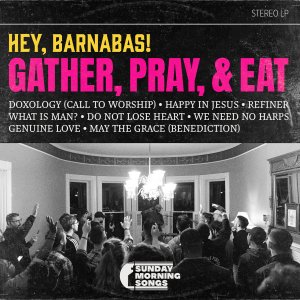
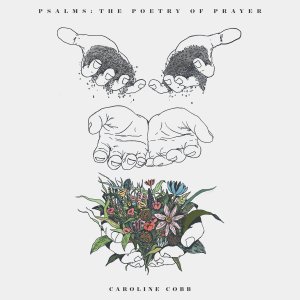
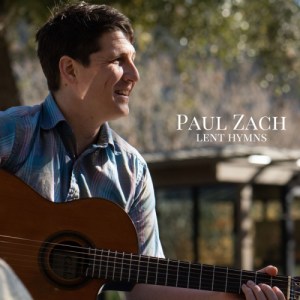
Four recent releases by independent artists—Gather, Pray, and Eat by Hey Barnabas! and Sunday Morning Songs; A Table by Saint Augustine’s Music; Psalms: The Poetry of Prayer by Caroline Cobb; and Lent Hymns by Paul Zach—offer new music to accompany and facilitate worshipful celebration, intimacy, mourning, thanksgiving, and supplication.

These independent worship artists have a foot in both worlds: They write for their local congregations but also hope that their songs reach worshipers they’ll never meet.

“We want to create music that’s unique to our community, but we sing to the world,” said Chloe Williams, a vocalist and songwriter in Saint Augustine’s Music. “We’re not trying to replicate anything, we’re not trying to be the next best thing; we’re just trying to be faithful.”

Independent artists add diversity and depth to the repertoire of music available to the church, providing space for collaboration and contributions from a broader community of songwriters.

“We want to create a table, not another platform,” said Eric McAllister, creative director of the worship collective Sunday Morning Songs.

https://open.spotify.com/embed/playlist/2ZQ6xzijlcIuMKsKbs0KXX?si=2657952b0acf4866

Gather, Pray, and Eat

Eric McAllister is creative director of Sunday Mornings Songs and director of music and liturgy at High Pointe Baptist Church in Austin. He describes congregational singing as a joyful feast with family and friends.

“Singing together and eating together, even as someone burns the potatoes or puts too much dressing on the salad, or a couple of us are out of tune—once we move past these discomforts, there is a sweet intimacy that can grow, if we let it.”

Gather, Pray, and Eat is the result of a crowd-funded convening of over 50 musicians—forming the massive studio band Hey Barnabas!—to record an album of contemporary gospel worship originals.

McAllister has a vision for worship that is informed by Scripture and grounded in the local. His internship experience with Sovereign Grace Music from 2010 to 2011 instilled a love for modern hymnody with theologically dense text and inspired him to create music that grows out of that genre but reflects the voices of his community.

“I write with an open Bible and an open membership directory,” McAllister said. “We’re hoping to grow classic hymnody and move that in a direction that is more diverse in how it sounds, the language, the idioms.”

The vocal lines on tracks like “Happy in Jesus” are tuneful and memorable, and the whole album is full of rich poetry and stirring instrumental arrangements.

The first single from the album, “What is Man” (written by Dorothy Scott), rivals any classic hymn in the scope and depth of its text. Adapted from Job, the lyrics describe the creativity and power of God, punctuated by the refrain:

As we think of his deeds, all the work of his hands, in humility we ask, “What is man?

“What is Man” is powerful, prayerful, and likely a little intimidating for leaders and musicians whose churches don’t usually have a full choir and band. But McAllister intended the music on Gather, Pray, and Eat to be adaptable and singable for a church of any size.

“We test-ran each song around a table, a capella, and at worship nights in living rooms,” McAllister said (he doesn’t have a musical ensemble of 50 on a usual Sunday morning either).

McAllister has made the chord and number charts freely available via the Sunday Morning Songs Instagram page.

A Table

Saint Augustine’s Music is the music ministry of Saint Augustine’s Church, an Anglican congregation of about 400 people in Auckland, New Zealand.

They released their first EP, A Table, track by track, with the fourth and final release on June 30. The first three tracks, “Here and Now,” “As I Am Still,” and “To Be Like You” are available on streaming services.

Worship leaders and aspiring songwriters trying to build a culture of creativity in their churches can look to Saint Augustine’s Music as a model. The group collaborates to write music that fits the capacities and gifts in their congregation, crafting songs that suit small, intimate spaces and large auditoriums.

“We are just replicating what we do on Sunday morning, to the best of our abilities, which is the best offering,” said vocalist and worship leader Chloe Williams.

The song “As I Am Still” is prayerful and simple, consisting of a verse, pre-chorus, and chorus that build and diminish, never reaching an ultimate, triumphant moment but instead reflecting the natural ups and downs one might experience in a time of expectant prayer.

The lyrics “silence the deafening noise / quiet the storm with your voice / I will wait for you to speak” invite worshipers in whatever season or state of mind to listen and wait, whether for comfort, guidance, or peace.

Chord charts for the songs on A Table are available on Saint Augustine’s Music’s Instagram page.

Psalms: The Poetry of Prayer

Caroline Cobb in Dallas describes her songwriting as “storytelling work.” Her newest album, a collection of psalm settings, took shape as Cobb found comfort in their poetry during the pandemic and after the death of her father in 2021.

“It was part songwriting, part personal devotion,” Cobb said, describing her process. “When you work your way through the Psalms day after day, it’s like [John] Calvin said, ‘an anatomy of the soul.’”

Much like the Book of Psalms, Cobb’s collection of settings reflects the emotional disorientation of singing a song of uncontainable joy in one moment and crying out a prayer of frustration in the next. But for Cobb, the unifying story of Scripture is the antidote to that emotional whiplash.

“I wanted to find psalms that were full of joy and thanksgiving and lament. The light is so much more beautiful for having allowed yourself the ache of the dark.”

There is heartache and darkness in Psalms: The Poetry of Prayer. The despairing but soulful verses in the setting of Psalm 102, “Don’t Hide Your Face,” voice frustration and overwhelm, giving way to the acknowledgment of God on the throne.

The setting of Psalm 92 is the polar opposite. “Good to Give Thanks” is cheerful and infectious, employing horns and a danceable groove. Listening and singing along, one can’t help but realize how seldom we embrace playful, uninhibited joy in our worship.

“A lot of people ask if it’s a kid song,” Cobb said, laughing. “We just had a ton of fun not taking ourselves too seriously.”

The song is a collaboration with artist Wendell Kimbrough, who cowrote and recorded it for the album.

Cobb wrote some of the psalm settings with congregational singing in mind, like “Shepherd, Walk Beside Me” (Psalm 23) and “I Love Your Word” (Psalm 119). Others, she intended to be devotional and meditative. But Cobb’s focus on storytelling undergirds the whole album.

“The hope for it is that people could rehearse and remember and kind of respond to God's big story, whatever they're doing in a day.”

Chord charts and lead sheets for the music on the album are available on Cobb’s website.

Lent Hymns

“There are plenty of songs for Easter Sunday, plenty of victorious songs out there,” said Paul Zach, a songwriter and worship leader in Charlottesville, who also writes and records with The Porter’s Gate.

Zach’s Lenten album is a collection of originals and mainstays unified by the mourning, waiting, and lament that accompany the season.

“I hope the songs I’m singing are an honest reflection of the anger, the joy, the sorrow, and everything in between,” Zach said.

There is a relative abundance of music for Easter Sunday and a limited selection for Lent. A search of songs sorted by theme on the charts of Christian Copyright and Licensing International (CCLI) finds 2,229 tagged for Easter Sunday and only 220 for Lent (36 for “Weeping”).

Although the season of Lent was months ago, the songs on Lent Hymns offer worshipers a musical repertoire that isn’t necessarily tied to one season.

Songs like “From the Dust” humbly voice acknowledgement of human fragility. The lyrics are starkly honest about the human condition and grounded in the hope found in an eternal God:

From the dust we came,
to the dust we shall return
God everlasting,
age unto age the same,
we are a moment,
then like a breath we fade.

Even though Zach created the album for Lent, he describes the collection not primarily as sad and mournful, but as gentle and honest.

“I want this to be a gentle companion,” Zach said. “I hope we can sing songs that show the kindness of God, that we are under the tender mercy of God.”

Chord charts for the music on Lent Hymns are available on Zach’s website.

News
Wire Story

For Worship Bands, Auto-Tune Covers a Multitude of Sins

In the livestreaming era, church sound booths are upping their game.

Christianity Today June 27, 2023
Courtesy of Aliane Schwartzhaupt / Unsplash

According to the Prophet Isaiah, grass withers, flowers fade, but God’s word endures.

In the age of social media, so do the mistakes of church musicians.

Play the wrong chord, forget the words to a song or sing an off note, and a worship leader or singer may find themselves featured in Facebook videos or Instagram accounts like “Worship Fails” for years.

As a result, said Marc Jolicoeur, worship and creative pastor at Moncton Wesleyan Church in Moncton, New Brunswick, Canada, churches like his have paid more attention to how their music sounds online. That includes using Auto-Tune or other pitch-correcting software.

Widely used in the recording industry to smooth out the rough edges of vocalists, pitch correction has become fairly common in congregations.

The pitch correction process feeds the sounds sung into a microphone into a processor that aligns the singer’s pitches with pure versions of the note.

In worship contexts, pitch correction makes it easier for less talented or less rehearsed singers to still help lead congregational singing, said Jolicoeur. If they make small mistakes, they can be corrected easily.

Churches are also more aware of hitting the right notes because their services are going out on livestreams. People attending a service in person, said Jolicoeur, often have a better experience—the congregation’s singing resounds in the actual church building; those at home only hear what’s going into microphones and coming out of their computer speakers.

A 2023 study of online worship from Pew Research found that while remote worshippers rate online sermons and sermons they hear in person about the same, there’s a drop-off when it comes to music. Sixty-nine percent of those surveyed said they were extremely satisfied or very satisfied with music at in-person services. That dropped to 54 percent for those who attended online.

Drew Small, a former megachurch audio engineer who now works in marketing, compared it to spell check for singers. Or the kind of bumpers used to help kids learn how to bowl.

“You still need to try and throw a strike,” he said. “But the bumpers help you from going into the gutter.”

COVID-19 also promoted the use of Auto-Tune because many church musicians found themselves suddenly in charge of producing services to be streamed online. That meant getting up to speed with the latest technology, such as pitch-tuning, which has become increasingly affordable for churches.

Small said he first became aware of Auto-Tune, developed by Antares Audio Technologies and introduced in 1997—while working more than a decade ago as an engineer at Bethel Church in Redding, California, home to some of the most popular worship music used in congregations.

A group of musicians from another church singing at Bethel, he recalled, insisted that the church provide pitch correction for its singers during services.

“They didn’t want people’s worship experience to be hampered by a background vocalist who had a cold and couldn’t quite hit the notes or someone who sang a little flat,” he said.

At the time, said Small, he was working on broadcasting services and the church wanted to make sure it sanded the rough edges before the sound was sent out on the internet.

At first, using pitch correction during live services, Small said, gave him pause.

He came around because pitch correction allowed the church more flexibility in choosing singers and worship team members, knowing they didn’t have to give perfect performances every time. Since the church had multiple services, pitch correction also made it easier for singers to get through a weekend’s worth of services, even if they got tired, he said.

Small said he is well aware that pitch-tuning, which can make singers sound artificial, could backfire if overused.

“A good auto-tune is something you really never notice,” he said. “It wasn’t like we were trying to make someone be more talented than they actually are.”

Travis Ham, worship pastor at Bear Creek Bible Church near Fort Worth, Texas, said he was skeptical about using tuning tools for worship bands, such as an in-ear click-track, which helps musicians keep time during songs.

“It almost felt like cheating,” said Ham, who studied music at the University of North Texas.

Ham said he adopted a click-track after working with a volunteer drummer who had a tendency to speed up whenever the music got loud—a not uncommon occurrence. Using a click-track solved the problem and made the whole group play tighter. That success opened his mind about pitch-tuning.

The tools help “regular people who want to serve God,” he said, as part of the church’s worship team. Not everyone is convinced that using pitch-tuning is a good idea.

Ryan Flanigan, a longtime church musician who is now an artist in residence at Baylor University, worries that pitch-tuning is one more sign that church musicians are trying to aspire to be performers—rather than leading people in worship.

He said he spent years using all the latest tools to conjure one emotional experience after another—always looking for the next big things or trying to emulate popular megachurch worship bands. Then he gave up.

“Where does it end?” he said.

Flanigan, who records what he calls liturgical folk music, said he’s scaled back to a simpler approach. Being authentic, he said, means embracing imperfection.

Adam Perez, assistant professor of worship studies at Belmont University in Nashville, Tennessee, has similar concerns about worship leaders trying to be something they are not. He worries that churches will become “karaoke franchises” of megachurches.

“The more you can do to sound not like yourself and more like a recording has been a long contemporary worship issue,” he said.

In his classes, Perez said that he teaches his students about the latest technology and tries to inspire them to lead their churches to a more authentic style of worship—one that comes naturally from their churches rather than emulating someone else.

He also warns them about romanticizing the past, saying that there were problems even when people sang hymns without pitch correction or the latest technology. People sang too loud or too off-key or too fast—and probably could have used a little help.

“We are constantly trying to do this better,” he said.

Theology

My Church, My Choice

How the modern concept of self-creation turns Christian community into personal identity.

Christianity Today June 27, 2023
Illustration by Mallory Rentsch / Source Images: Unsplash

The recent death of pastor-theologian Tim Keller sparked nostalgia for my young, restless days as part of the Young, Restless, and Reformed (YRR) movement he helped lead.

As someone raised in Christian fundamentalism, it offered me a kind of holy rebellion where free grace, contemporary music, and cultural engagement came packaged with God’s glory and power. But two decades on, I find myself less Young, Restless, and Reformed and more Old, Tired, and Reorienting.

I can’t help but wonder how I got from here to there. What path led me from the traditions of my childhood to and through other ones? How much of my spiritual path was chosen, and how much was given? Was my spiritual life “begotten or made”? The idea that our faith journeys are larger than our choices challenges the very spirituality most of us take for granted. A committed personal relationship with God is a feature of most modern expressions of Christianity. My 17-year-old son, for example, finds it anathema that children could be baptized against their will. He’s not making a theological claim so much as an anthropological one, informed by a larger American culture that assumes self-creation through choice. In fairness to him, the majority of low church traditions—including the one I was reared in—hold this same individualist assumption. Commitment to personal conversion and voluntary association may also explain why nondenominational churches now represent the largest segment of American Protestants.

These churches are deeply and inexhaustibly modern, not because of their sneakers and fog machines, but because they align with our contemporary understanding of choice. Without a denominational progenitor, they embody self-determination and self-creation at an organizational level.

However, modern Christians don’t necessarily reject older traditions. When a friend of mine recently confessed that he was contemplating Anglicanism, another wondered out loud, “Isn’t that what it means to be evangelical these days?” These traditions fill a void in modern life by offering a sense of belonging to something larger than ourselves.

As Catholic priest Henri Nouwen writes in The Wounded Healer, modern humans are a “generation without fathers,” rootless and unbound. For many, then, returning to more ancient practices is a way to find home. That’s been true for me. My discovery of the Reformed doctrines of the 16th century helped give me some theological roots. But in an irony for the ages, revisiting premodern spaces happens by the very modern means of personal choice. Even as we Christian leaders decry church shopping as consumeristic, we still teach people to practice it. We teach them that the richness and realness of their spiritual lives correspond with their choices. In doing so, we’ve all but guaranteed that their Christian walks become a never-ending search for the next true thing. Having begun by choice, they are made perfect by choice. In an even stranger irony, the churches we choose to associate with can become a way to project our identities into the world. Our own religious biographies get reduced to linear sets of decisions that explain our current spiritual state. To riff on Robert Frost, we came to a fork in the road, and whatever path we chose made all the difference. But as I reflect on my own journey, I doubt the role that personal choice played in it—not because I lacked agency but because Providence delivered my choices to me as a closed set. They were limited by knowledge and what was possible at a given moment in time. (If one doesn’t live near a Lutheran church, for example, the odds of converting to Lutheranism are drastically reduced.) Instead of reflecting on my past through the lens of what I chose, I’m thinking more about what was given to me. Along with Nouwen, I’m conceiving of my faith as “the acceptance of centuries-old traditions [rather than] an attitude which grows from within.” This framework has freed me to see my spiritual story with a detachment that allows me to evaluate it more honestly. Since my path is no longer a statement about myself, I can weigh and consider it. I can honor the good, true, and beautiful while rejecting the bad and ugly.

This act of differentiation is particularly important for those who come from dysfunctional or spiritually toxic spaces. As documentaries like Shiny Happy People and The Secrets of Hillsong catalog the sins of unhealthy evangelical movements, they’ve set off a public reckoning. Historian Kristin Du Mez, reflecting on the popularity of these series and her own book, Jesus and John Wayne, notes that “for insiders, it’s helped them understand their world and can give some clarity for moving forward.” I see similar dynamics at play in the recent Southern Baptist Convention (SBC) vote to ensure the role of “pastor/elder/overseer is limited to men.” While the stance of the Convention was never in doubt, even staunch complementarians like Denny Burk were surprised by the speed and intensity of the change. In public responses, commentators outside the Convention wondered why women stay in it. Some went so far as to suggest that complementarian women are functionally in abusive relationships and can’t leave because they’re being controlled. Others called women complicit in their own oppression. In other words, outsiders were asking, “Why do women choose to be there?” From my perspective, these responses place too much weight on individual choice. Many women—including those who disagree with the Convention’s stance—stay in the SBC because that’s where they have been placed. They may stay forever, or they may not. Some are wrestling right now with whether to leave their SBC-aligned churches, while others will never ponder the question.

However, their choices are not the point. Their spiritual journeys and ours are part of a larger matrix of converging forces, traditions, and beliefs. We have to navigate them faithfully and honestly, but we don’t do so alone or strictly by our own wills. Yes, we have agency over our faith stories, but by decentralizing the role of choice, we’re released of its paralyzing power. In my own faith life, accepting the givenness of my past spiritual journey has allowed me to make peace with its winding contours and move into the future with confidence. By relinquishing control over my past, I simultaneously relinquish control over my future. And because I didn’t cut the path I’ve taken to this point, I’m free to follow wherever God is leading me now.

All of us can take heart that something larger than our own decisions is at work. Just as God birthed us into certain spaces, he can call us to live in others. In that process, we can surrender ourselves and our choices to him, knowing that he’ll guide our wandering days on the earth.

Hannah Anderson is the author of Made for More, All That’s Good, and Humble Roots: How Humility Grounds and Nourishes Your Soul.

News
Wire Story

Biden Administration Drops HHS ‘Transgender Mandate’

Evangelicals in medicine won’t be subjected to the contested federal requirement that faced years of legal backlash.

Christianity Today June 26, 2023
Prixel Creative / Lightstock

The Biden administration will not appeal an Eighth Circuit Court of Appeals decision from December 2022 that blocked the so-called transgender mandate.

The mandate was an attempt by the Biden administration to define sex to include “gender identity” for the purposes of Health and Human Services (HHS) regulations. Critics say the rule would have required doctors, clinics, and hospitals to perform procedures to which they object and insurance companies to pay for such procedures.

The Southern Baptist Convention’s Ethics and Religious Liberty Commission (ERLC) president Brent Leatherwood welcomed the news.

“The Biden administration’s decision to back down from the transgender mandate marks a significant victory in safeguarding the rights of medical professionals to operate in a manner consistent with their deepest held beliefs,” Leatherwood said in written comments.

“This is an important development we should take note of because it not only represents a win for conscience rights but also furthers efforts to shield vulnerable individuals who should never become pawns in the sexual revolution.”

The rule was first introduced in 2016 during the Obama administration’s implementation of a portion of the Affordable Care Act.

According to the ERLC, the 2016 HHS rule required doctors to perform gender-transition procedures for any child referred by a mental health professional, even if the doctor believed the treatment or hormone therapy could harm the child.’

Becket, a religious liberty law group, has shepherded lawsuits filed by medical groups opposed to the rule, as those suits have made their way through the courts.

“After multiple defeats in court, the federal government has thrown in the towel on its controversial, medically unsupported transgender mandate,” said Luke Goodrich, vice president and senior counsel at Becket.

“Doctors take a solemn oath to ‘do no harm,’ and they can’t keep that oath if the federal government is forcing them to perform harmful, irreversible procedures against their conscience and medical expertise.

“These religious doctors and hospitals provide vital care to patients in need, including millions of dollars in free and low-cost care to the elderly, poor, and underserved. This is a win for patients, conscience, and common sense.”

In 2016, a District Court held in Franciscan Alliance v. Burwell that HHS erroneously interpreted “sex” under Title IX—that the final rule was arbitrary and capricious since Title IX “unambiguously refers to the biological and anatomical differences between male and female students as determined at their birth.”

That ruling also said the rule’s lack of a religious exemption likely violated the Religious Freedom and Restoration Act (RFRA) and the Administrative Procedure Act (APA).

Four years later, the Trump administration reverted back to the original meaning of the term “sex.”

But just days after, a 6-3 Supreme Court ruling authored by Justice Gorsuch in Bostock v. Clayton County expanded the definition of “sex” to include “sexual orientation” and “gender identity” for the purposes of employment discrimination under Title VII of the Civil Rights Act of 1964.

No More Pentecost Monday? French-Speaking Evangelicals Debate Defense of Christian Holidays.

Proposal to secularize the civic calendar prompts controversy.

Christianity Today June 26, 2023
Paul Rysz / Unsplashed

Debates about the place of Christianity in public life regularly resurface in Europe. Recently, after the Pentecost Monday holiday, the mayor of Grenoble, France, sparked controversy when he argued French society has evolved beyond religious days off. Pointing to the large number of secular people who dont follow the church calendar and Muslims who celebrate different religious days, Éric Piolle proposed removing Christian holidays from the civic calendar.

The French currently celebrate Easter Monday, Ascension Day, Pentecost Monday, the Assumption of the Virgin Mary, All Saints Day, and Christmas. Those days off could be replaced, Piolle said, by days to commemorate key moments in French history.

We asked five evangelical leaders from French-speaking Europe: Should Christians embrace proposals to replace public religious holidays with secular ones?

Pierre-Sovann Chauny, systematic theology professor at the Faculté Jean Calvin, Aix-en-Provence:

No. Removing Christian religious feasts from the civil calendar should be rejected. We need to maintain an awareness of what French history owes to Christianity and should continue to emphasize the public character of the spiritual life of Christians. These holidays also provide Christians with opportunities to bear witness throughout the year to the life, death, resurrection, and reign of Christ. Finally, the existence of these holidays consolidates our religious freedom. Their removal could, on the contrary, be a step toward persecution.

Fabien Fourcasse, pastor of the Evangelical Baptist Church of Amiens:

I'd say no. It’s our tradition. Besides that, the presence of religious holidays on the calendar expresses something of God's plan for society. Too often, believers confine themselves to God's plan for the individual. By celebrating these holidays publicly, we indicate that God has a plan for the whole of creation: humankind, but also animals, plants, minerals, and so on. But promoting the presence of Christianity in the public sphere calls on believers to proclaim and live according to God’s plan, and allow more people to know Christ.

Victoria Déclaudure, author and Assemblies of God pastor in Angers:

I’d say yes. No biblical text requires evangelical believers to celebrate any particular day. Some of the proposed secular holidays, such as the celebration of the end of slavery or the advance of women’s rights, would resonate very positively with the gospel. It’s hard to imagine doing away with Christmas or Easter, though, which are deeply rooted in European culture and history, and which are celebrated by everyone according to their own sensibilities.

Jean-René Moret, author and pastor of the Evangelical Church of Cologny, Switzerland:

Yes. There are no mandatory holidays for Christians, according to the New Testament. Following Paul, one can consider all days as equal, or pay attention to particular days (Rom. 14:5). The situation where Christians have been able to determine the calendar of entire societies is atypical; our mission is not to maintain it. On the other hand, where possible, we should insist that believers of different faiths be allowed to take the days off they need for religious holidays.

Gilles Boucomont, author and Protestant United Church of France pastor in Paris-Belleville:

Let’s reevangelize the country instead of fighting over days! Massive de-Christianization means that having mainly Christian dates for public holidays seems out of step with the realities of French society. Only 10 percent of Christians are somewhat devout, and some of these holidays don’t even unite all French Christians, like August 15, celebrating the Assumption of Mary, and Ascension Thursday, which isn’t even celebrated by Catholics in other countries, like Spain.

Theology

There Is an ‘I’ in ‘Testify’

Self-centered testimonies have been abused. But not sharing our story can be equally selfish.

Christianity Today June 23, 2023
Illustration by Mallory Rentsch / Source Images: Getty

I miss the word I.

Some have sworn off saying “I” because we’ve abused it. Instead of listening, we’ve spoken for others as if our personal experience is universal. The word I can be shamed and scrutinized: Who are you to center yourself? and What makes your personal anecdotes relevant or reliable? In other circles, Christians overreacted to the extreme of a hyper-individualistic faith by leaning toward a hyper-collectivized vision of religious belief.

Yet the reality is that healthy faith communities are made up of a diverse array of individuals who each have unique, distinct, and personal experiences of God. And perhaps what people crave most today is the language we often keep to ourselves—our stories of direct encounter with God.

Eugene Peterson says that the “language of personal intimacy and relationship” is “our primary language,” which we “use to express and develop our human condition.” Thus “we must become proficient” in “the speech of love and response and intimacy.”

While the language of information and motivation “are no less important in the life of faith,” he says, they become “thin and gaunt” if not embedded in personal language. Informative talk can be “reduced to list making,” while motivational talk can be “reduced to crass manipulations”—both of which keep us from actual shared life with God and one another.

While it might seem selfless to avoid using I, there’s a surprising kind of ego in never sharing our own experience. To withhold our own stories is to withhold intimacy and opportunities for deeper interpersonal connection. In fact, sharing our individual testimonies can be a selfless act in service of our communities and the world.

To avoid saying “I believe” is to forget that our beliefs are shaped in community. To never say “I need” is to underestimate the generosity of others. While “I” language can become self-centered, to avoid it entirely can become a different kind of self-centeredness.

As a writer and pastor, I’m most uncomfortable obeying God when he asks me to risk saying “I.” And, at the same time, the most transcendent moments I’ve experienced have been possible because someone else took that risk.

So, I’m a convert to first person—uncomfortable but converted. And I’m encouraged to discover we’re part of a rich tradition that honors a first-person faith.

I’ve been moved by Augustine’s courage to speak “I” to God with tender intimacy: “Say to my soul, ‘I myself am your rescue.’ Say it in such a way that I hear it.” And when I wonder, Is it okay to long for God to speak to my soul? I am reminded of Augustine’s petition. By the end of his Confessions, I am thinking no longer of Augustine but of his God.

I’m drawn in by Teresa of Avila, who boldly wrote, “I had a vision which I will share with you now.” While I’ve never had a vision like hers, her story rings true with the God I know. And when I wonder if God really engages us, I recall Teresa’s visions and choose to trust the mysterious prompts from the Source outside my own imagination.

I can see myself in Thomas Merton’s autobiography: “I was in my room. It was night. The light was on. … And now I think for the first time in my whole life I really began to pray—praying not with my lips … but praying out of the very roots of my life and of my being.” For a faith hero like Merton to invite me into his room and prayers assures me that the same God is present with me in my own room and prayers.

Although their contexts are nothing like mine, I find my hunger for God in their hunger, my wrestling in theirs. I need to watch the lives of others, to hear their fears, and to be invited behind the scenes of their perseverance in the faith. In fact, it’s often easier to believe in the God who’s at work in someone else’s story.

Because these and other first-person testimonies have strengthened my faith, it’s with obedience and hospitality that I choose to not keep my stories to myself.

Withholding my testimony may seem humble, but perhaps it’s a sign that I think my story belongs only to me. Maybe it denies the reality that I owe all I am and all I have to God—and that every lesson I learn is not for my sake alone. And so, it’s the sense of connection to God and to others that presses me to share my own small self in this way. For when individuals choose to share their lives with one another, they truly become a community.

In the New Testament, Paul is my hero because he is unashamed to speak of his faith in the first person. As an apostle, Paul had the authority to speak for God—and yet he so often spoke out of his own humanity: I was in need; I have suffered; I press on; I want you to know.

In his second letter to the church in Corinth, Paul uses I with passion: “I was given … I pleaded with the Lord. … I delight … I love … I fear” (2 Cor. 12). He also confesses both “I am weak” and “I am strong.” And while he says “I know” in many of his letters, he’s also not afraid to say “I do not know” (2 Cor. 12:2–3). “I hope” is one of Paul’s most common assertions—but even more often, he says “I want.”

Paul’s intention is not to talk about himself for the sake of it but to embody the truth of God. He trusts that even in this one, ordinary life, something of God can reveal itself. This is no less than a healthy Christology—that as God became human in the person of Jesus Christ, he invites us to allow him to become human in us.

Such an invitation is exhilarating, terrifying, and way too close for comfort. We would rather climb up into sycamore trees to get a glimpse at God from a safe distance (Luke 19:4). But Jesus calls us down to look in our eyes and say, I’m coming to your house today.

As much as we think we want to meet God in person, it’s much easier to talk about God than to talk directly to a personal God who wants to be welcomed into our homes. But when we take the risk to let God draw near to us, we can share our encounters with the world. And when we testify—saying “I” from a life lived with God—it points not to us but to him.

Scripture tells us that Christians overcome by the blood of the Lamb and the word of our testimony (Rev. 12:11). Perhaps the blood of the Lamb is powerful precisely because it was so personal—that is, in the person of Christ. And maybe that’s what makes our testimonies so potent: Their origin in a human heart empowers them to connect with another heart.

A testimony is not merely “‘telling your story’ or ‘using personal illustrations,’” homiletics professor Anna Carter Florence says, but “both a narration of events and a confession of belief: we tell what we have seen and heard, and we confess what we believe about it.”

This kind of personal speech is vital not only for our mutual edification but also for our witness to the world. In a post-everything age, it’s meaningful to offer our small stories of Someone outside us taking us by surprise. The unique voice we owe to the world is one that grows out of our engagement with a transcendent God who shows up in our human lives.

Theologian Andrew Root describes what happens when a pastor shares another family’s story of encountering God with his congregation: “There was a paradox here, because it wasn’t about them, but it had everything to do with them. It was about the God who moved directly in their lives. It was about their witness now coming to the entire congregation (and from the congregation to the world) of an encounter with the God who is God.”

The people and places where faith is flourishing today are not necessarily those with the most persuasive arguments, the most articulate theology, the biggest churches, or the best ministry strategies.

Rather, daily spiritual renewal is happening wherever humans are willing to take the risk to open their lives to God and to one another. The revival of our personal faith and renewal of our communities may be waiting for us to stop working so hard for big, public things, to attend to the small ways God works in our ordinary lives and declare them to this world starved for the mysteries of God.

Mandy Smith is pastor of St Lucia Uniting Church in Brisbane, Australia, and the author of The Vulnerable Pastor: How Human Limitations Empower Our Ministry, Unfettered: Imagining a Childlike Faith Beyond the Baggage of Western Culture, and a forthcoming book due to be released by NavPress, Fall 2024.

How We Stay in Church Matters as Much as Why

Spiritual abuse survivors who join a new congregation still need to heal from their hurt.

Christianity Today June 23, 2023
Denys Amaro / Unsplash

People are leaving the church today for numerous reasons—from spiritual or sexual abuse by leaders, church division, legalism, or hyper-politicization. A recent Barna survey found that two of the top sources of doubt for most believers are negative past experiences with a religious institution and the hypocrisy of religious people.

But not all who’ve had a bad experience with a faith community choose to leave church or Christianity altogether. Some remain in the congregation that wounded them, often held there by treasured relationships or a sense of loyalty to the institution. Others attempt to hit the reset button by starting afresh in a new church, denomination, or tradition.

In any case, those past wounds don’t disappear. In fact, new church experiences layered on top of old may exacerbate the pain for some of those who stay. Today’s pews are full of people who bear scars—or still-oozing wounds—from church hurt. We often talk about why people should stay in church, but sometimes that’s the wrong question. Instead, I think we need to talk more about how we stay in church.

I’ve had to answer this question for myself as a survivor of church hurt. I’m now attending a different congregation, but the journey to stay connected to the local church in the wake of the abuse hasn’t been easy.

I’m also learning from how others have navigated their relationship with the local church after being wounded by their brothers and sisters in Christ. And what I’ve found is that those who choose to stay connected to a local faith community despite their trauma have wise insights about trust, forgiveness, and discernment—which are valuable not just for those who’ve been hurt, but for the entire body of Christ.

Name and claim the specifics of your church hurt.

When it comes to processing church hurt, it helps to know that you are not alone and that others have had similar experiences. But it’s equally important to identify the source of your own trauma and separate it from other abuse narratives in the church at large.

Rachel Baker, a pastor’s wife, described her thought process after a painful experience in a previous congregation: “In order to begin the process of healing and forgiving it became imperative that I pinpointed the ‘who’ behind the hurt. Once I was able to identify ‘who’ had actually done the hurting I was able to separate them from the church as a whole. Suddenly, I wasn’t really experiencing ‘church hurt’ but rather ‘relational hurt.’”

That distinction can be very helpful. A shattered relationship with another church member can leave deep wounds and spill over into other friendships in the congregation. That kind of hurt may be a part of a larger constellation of damaged relations that swirl around a spiritually abusive leader—or it may be limited to a struggle between two individuals. That’s why it’s important to identify the source and scope of the hurt.

But for many, this pinpointing isn’t possible. While not every experience of church hurt leads to religious trauma, repeated patterns of moral injury and spiritual abuse is far more pervasive than an isolated relational breakdown.

One woman told me she saw many instances of male leaders misusing their power, lying, and hiding immorality. Now she struggles to keep her heart open, combating cynicism and the urge to withdraw. She credits her time spent with a licensed professional counselor as instrumental in helping her stay connected to church. “There’s been a great deal of weeping, confessing my own sinful responses, and opting for obedience over despair,” she said.

There is a rise in awareness in some church circles of the need for congregations to become trauma-informed to better minister to survivors of spiritual abuse.

In the early years after my own experience of spiritual abuse, Christian counseling and sessions with a mature spiritual director helped me acknowledge and process my pain and begin healing—and learn how to deal with the bad advice I was getting from others.

A few well-meaning friends met my confusion, anger, and sadness with clichés like, “Well, you know there’s no such thing as a perfect church! And even if there were, you or I would ruin it the moment we walked in the door.” I’d already read the Epistles and knew the Bible was full of case studies of imperfect churches.

But a good counselor helped me understand that this kind of response is a form of spiritual bypassing that wasn’t meant to comfort me as much as it was aimed at easing the discomfort my pain caused them. A similar instinct influenced Job’s friends in their (wrong) responses to his suffering.

Instead, holistic healing from church hurt requires honestly acknowledging the nature and extent of our pain—instead of trying to “move on” too quickly from it.

In a bonus episode of The Rise and Fall of Mars Hill podcast, Mike Cosper interviews Christian therapist Aundi Kolber, who studies the effects of spiritual trauma on our bodies—referencing work like Bessel van der Kolk’s influential book The Body Keeps the Score. “We carry the scars, we carry the harm. … And at some point, I do believe the body says, Enough,” Kolber said. “I believe that is the grace of God.”

As Russell Moore notes, the same thing can happen in the body of Christ as a whole: “What is not repaired is repeated—and what is not reformed cannot be revived.”

Change churches, denominations, or traditions.

For many survivors, however, the primary reason they end up staying in church is because they join a different congregation, denomination, or tradition.

Spiritual abuse can often reshape our priorities, perspective, and preferences. For instance, if a survivor was harmed by a narcissistic leader or a flashy megachurch, he or she might seek out a local church with a decentralized leadership structure or a smaller, simpler congregation. Or survivors from a corporate church setting might look for a community that operates more like a family than a business.

Yet others were burned by churches that presented themselves as healthy families on the outside but were dysfunctional on the inside. And unfortunately, solid doctrine alone does not automatically create a healthy spiritual community.

Counselor Jeff VanVonderen reminds us that the New Testament’s model for a healthy church is a place of support, love, and space to be in process. He suggests observing how members interact with one other to identify whether it is a strong community or whether it is a potential petri dish for spiritual abuse.

Wendy Alsup was a part of the now-defunct nondenominational Mars Hill multisite megachurch in Seattle. More than a decade later, she now lives in another part of the country and attends a small denominational church plant.

“I simply have maturity and wisdom now about what kind of leader to look for that I didn't have years ago,” Alsup said. “I used to be enamored by dynamic preaching and fast growth. Those things make me nervous now … I have no use for big Sunday morning productions and can barely stand to be a part of them anymore.”

Even still, there are many survivors who left abusive congregations but have not yet found or joined another church home for various reasons, including the pandemic. In fact, as Mike Moore says in a piece for CT, these chaotic past few years have left many believers stuck in “ecclesial purgatory,” uncertain on how to reengage with church.

After seven years at a rural church ruled by a narcissistic pastor, someone I know visited another church in town with her husband shortly before COVID-19 struck. After so many lonely years at their previous congregation, this former missionary couple had hoped to finally enjoy an embodied community. But due to some serious health issues, they’ve been unable to attend in-person services.

I asked my friend what keeps them connected to the church and nourished spiritually, and she listed several things. Beyond watching Sunday services and communicating with the leadership team of their local church, they fellowship with long-time spiritual friends and take advantage of the variety of teaching and devotional material available online.

“We believe that there is something powerful about our faithful connection to a local church body, even when that church body is not necessarily faithful to us,” she said. “We believe God can be doing a work in us and through us despite what we see and experience, and despite the hurts. It’s hard. It’s painful. We wish it was different. But we persevere.”

In the early days of my own church hurt, when attending Sunday services felt too fraught for me, I maintained connection with the body of Christ by joining a community Bible study and seeking out other ways to serve God alongside fellow believers. My goal wasn’t to leave the church for good, but to figure out how I could stay.

And while I was seeking God’s wisdom in moving forward, I knew I had to guard my heart against bitterness toward my former church and engage in the ongoing work of forgiveness—partly so I wouldn’t bring that baggage with me into my next community.

Trust looks different in the wake of church hurt.

Yet even if we can locate our trauma, process it in therapy, and find a new congregation where we feel comfortable, staying in church may still leave us survivors with a defensive posture toward future church leaders.

This emotional distance is meant to act as an early warning system in recognizing power abuse before it can cause us harm. Such self-protection can come from the wisdom of lived experience, but it can also be a barrier to future growth and new relationships. This is the delicate balancing act survivors must navigate on a long-term basis.

And while we may never be able to reclaim the kind of innocent trust and rosy optimism we once had, there are ways to master our mistrust.

Years ago, a former pastor with a painful story of church hurt told me that instead of trying to mute the voice of his inner skeptic, he’d learned to manage it—by acknowledging it as a form of self-protection against future harm. And when we welcome our inner critic to church with us, we can actually “right-size” that voice's influence far more effectively than if we try to ignore or silence it. This, in turn, will help us remain present to God and those around us instead of staying emotionally distant.

For survivors, it can also help to remember that our sensitivity and discernment can actually serve the mission of the church in the long run.

“Women and men of courage are stepping forward to say, ‘This is not Christ’s vision of the church, of leadership, of relationships.’ They are demanding more of us as leaders,” pastoral care professional Chuck DeGroat noted in a CT interview. “They are willing to do the hard work of dismantling toxic systems and relationships, of naming harmful realities, of moving toward hope and truth in love.”

One man told me he had an insider’s view of a corrupt pastor’s financial misconduct and abuse of power before resigning from his position as elder. “I no longer automatically trust or respect anybody just because they have a title, position, or influence.” He’s attending a new church—albeit with little involvement beyond Sunday services—but he remains hypervigilant for signs of power abuse.

And while he often considers making a quiet exit from his current church, he has chosen to stay: “I know I will answer to the Head of the church, and his suffering greatly outstrips my own.”

“I don’t want to use my experience with ‘Ezekiel 34 shepherds’ as an excuse to disengage from Jesus,” said another friend who left her staff position at a mid-sized church after a painful, protracted conflict. “The thought of forsaking Jesus himself makes me cry.” Her words reveal the importance of pursuing deeper connection to Christ despite—or perhaps precisely because of—the grief she continues to process in prayer.

The apostle Paul emphasized Christ’s headship to at least two struggling congregations. His prayer in Ephesians 1:18–23 emphasized that the resurrected Jesus holds all of the authority and dominion over every human institution and government—even at a time when the predominant culture told a different story.

In his letter to the Colossian church—which was under attack from false teachers who preached a different gospel—Paul affirms that Christ “is the head of the body, the church; he is the beginning and the firstborn from among the dead, so that in everything he might have the supremacy.” (Col. 1:18)

Survivors know better than most that not everything that happens in a congregation reflects Jesus’ character and authority. But remembering that Christ is the Head of his Church offers us clarity and perspective on the actions of our local body of believers. As pastor Benjamin Vrbicek says, our hyperawareness of “bad shepherds” points to a “deeper longing for good shepherds—and ultimately, the Good Shepherd.”

Scripture makes it clear that God doesn’t have a Plan B if his church fails him—even though we’ve failed in countless stunning and terrible ways over the past two millennia. Our spiritual fathers and mothers in the faith remind us through the ages that the church will always need reformation. And that reformation includes those of us who’ve been hurt.

Michelle Van Loon is the author of seven books, including Becoming Sage: Cultivating Meaning, Purpose, and Spirituality in Midlife.

Apple PodcastsDown ArrowDown ArrowDown Arrowarrow_left_altLeft ArrowLeft ArrowRight ArrowRight ArrowRight Arrowarrow_up_altUp ArrowUp ArrowAvailable at Amazoncaret-downCloseCloseEmailEmailExpandExpandExternalExternalFacebookfacebook-squareGiftGiftGooglegoogleGoogle KeephamburgerInstagraminstagram-squareLinkLinklinkedin-squareListenListenListenChristianity TodayCT Creative Studio Logologo_orgMegaphoneMenuMenupausePinterestPlayPlayPocketPodcastRSSRSSSaveSaveSaveSearchSearchsearchSpotifyStitcherTelegramTable of ContentsTable of Contentstwitter-squareWhatsAppXYouTubeYouTube