Books

Sammi Cheng: ‘Not Having a Smooth Path Allowed Me to Be Gentler and More Humble’

The Hong Kong Christian actress and singer experienced God’s grace in depression and marital crisis and grew in her acting career

Sammi Cheng received the award from Andy Lau

Sammi Cheng received the award from Andy Lau

Christianity Today April 28, 2023
China News Service / Contributor / Getty

“I give today’s glory and praise to God. I want to thank God for not giving me a smooth path, because only without a smooth path have I better learned to be humble and gentle.”

On April 16, 2023, Sammi Cheng won the Best Actress and Best Original Film Song Awards for her part in the movie Lost Love at the 41st Hong Kong Film Awards, and she thanked God in her acceptance speech. Over the past 20 years, Cheng has been nominated six times for Best Actress without winning. She looked excited and moved as she stepped up to the stage to accept the award.

Though Cheng is not the only Christian among the many Hong Kong entertainers, she is indeed a special one. At a time when many Christian entertainers have left the public view for various reasons or even abandoned their faith, she never seemed far from us. Not only has she been present for the growth of our generation of Hong Kongers, but she has also let us witness her own transformation.

Those days of smooth paths

Chotto matte yo…” (Do not pour out your love at once). “Chotto” (“Wait”) is a Cantonese pop song cover of a Japanese song. (“Chotto matte means “wait a minute” in Japanese.) Cheng performed the song with cool dance moves and in cutting-edge fashion in the 1990s, beginning her path to Cantopop Queen. She won third place in a contest as an up-and-coming singer and, within a few years of starting her career, captivated the attention of music fans with this particular song, winning over many Hong Kong youth in the day.

Later on, Cheng switched label companies and came out with many familiar hits, such as “Miss You,” “Can’t Let You Go,” “Understanding,” and “Forever Beautiful.” Her album sales quickly reached multiplatinum levels (over a hundred thousand sold). Movies for which she was the main actress, such as Feel 100%, Needing You, and other romantic comedies, were well loved and had good box office sales. Excelling at both singing and acting, her career reached height after height in the ’90s.

But because she rose too quickly, she was given the nickname “Stinky Face,” referring to the fact that she often threw tantrums and that her behavior was unbearable. In later interviews, Cheng acknowledged that she had a terrible attitude back in the day and offended many people and that she felt sorry for that. The days of smooth sailing brought her fame and income, but she did not expect that unprecedented success would cause her to fall into a bottomless pit.

Encountering God in depression

Fighting to keep her career at its peak, Cheng accepted a role in the film Everlasting Regret, hoping to use this opportunity to transform her image. She held her performance to extremely high standards, but this pressure slowly pushed her to a breaking point. She said she felt herself being consumed by a nameless terror and sorrow and felt helpless in the face of life events, yet she had to continue pretending to be strong.

After completing the movie, she was unable to work and quietly disappeared for three years. During that time, rumors spread that she was terminally ill. When she looked back on this experience afterward, she said she knew at the time she was in a terrible situation but was unable to do anything about it. At one point, she “didn’t look in the mirror for a month and could go seven days without showering.” She described it as “living in a little wooden box, with only yourself alone; it felt as if you couldn’t breathe and couldn’t smell what the outside world was like.”

In this dark valley of her life, Cheng heard a voice telling her to pray. So she prayed for God to help her and save her. After a couple months, she miraculously met a friend who brought her to a Bible study at church. This began her path to restructuring her life, and she slowly walked out of the shadow of depression. In 2007, she officially joined the church through baptism.

In her baptism testimony, she wrote, “God used close to 1,000 days to let me thoroughly reflect on my past. I have seen clearly the reality of success and money. Though they can perhaps build up my existence, they cannot at all fulfill my life. Life should have a higher value, and I have found clear direction and orientation in God’s Word.”

An intruder in a fairy-tale marriage

It is not hard to write a stirring testimony, but a person’s beliefs cannot be separated from the testimony of their actions. After returning to public life, Cheng seemed different than before. She was full of energy—not only holding concerts but also coming out with a brand-new gospel album Faith, so people could get to know the Christian faith. She served as ambassador for different charity organizations, such as World Vision and Doctors Without Borders, raising donations for them and serving as a volunteer herself. These life changes were observed not only by her fans but also by her old boyfriend Andy Hui, who had broken up with her several years before.

Sammi and Andy had known each other since they first started out in show business and developed a romance that lasted more than 10 years. Fans considered them a perfect couple in the music industry. When they announced their breakup in 2004, many people were greatly disappointed.

In a 2009 concert, Cheng not only invited Hui as a guest singer but also sang “Do Not Awaken Love,” a song representing a Christian view of love: “Do not be surprised that we have not embraced. / God has taught me to wait. / Only when feelings flow as quiet waters / Will I promise you to spend a lifetime in exchange for love.” Fans wondered whether she and Andy Hui were back in a relationship.

They finally heard the good news in 2011: Sammi and Andy were together again. After two years of dating, they officially married, and Andy Hui joined the church through baptism in 2017.

Everyone thought it would be a fairy-tale ending now that they had married after many years of coming together and falling apart. But in 2019, the media released footage of Hui being intimate with actress Jacqueline Wong in a car, causing a citywide uproar. Hui held a press conference after the video leak and apologized to everyone for his actions, promising to reflect on his wrongs.

Two days after the event, Cheng still had not offered a response. Her fans were worried about her condition. Faced with her husband’s infidelity, she finally chose to forgive and to stand together with her husband.

On Instagram she shared 1 Corinthians 13:7 (NLT) in English: “Love never gives up, never loses faith, is always hopeful, and endures through every circumstance.” She also wrote, “Happiness is not simply one smooth and happy event after another. There are also trials, and there is experiencing the highs and lows together, so that deep affections can guide the husband and wife forward. They must enter each other’s hearts, look clearly at each other’s weaknesses, not give up on oneself, not give up on the other, correct each other, and remind each other. Through the trials of marriage, I truly believe that experience and guidance will help us get back on the right path, and our lives will be renewed.”

She acknowledged that “it is a most difficult time” but said she and her husband relied on prayer as a help and attempted to endure this trial together, doing all they could to repair the relationship.

Half a year after the incident, the media shared footage of Sammi and Andy buying snacks together at a grocery store. The storm had passed, and the sun once again shone on their relationship. Later, when Sammi was asked in an interview how she got through that trying time, she answered, “Any of my decisions are closely related to my faith and values system. Of course, forgiveness, understanding, and repairing relationships are good choices, but it may not be suitable in the same way for every couple.”

‘We All Grew This Way’

After she experienced depression and her husband’s infidelity, audiences’ love for Cheng only increased. This is likely because she did not cover up the difficulties in her journey but let us see that she was a flesh-and-blood entertainer with a relatable image.

She later came out with the song “We All Grew This Way,” which resonated with many. The lyrics say,

Who is without fear on this earth?

Who is without heartbreak?

Who is without regrets?

Every year we adapt, every year we age,

And wisdom is the distilled essence of experience.

Sammi Cheng succeeded in convincing her audience with her own life experience.

In recent years , she has attempted many new things in her work—breaking out of boxes to interact with new people, such as working with the philosophical group Corrupt the Youth, and acting in roles she had never attempted before. In her award-winning film Lost Love, Sammi Cheng played the role of a foster mother. She did not take any pay for this role , so that she could help a new director complete his work.

In this stage of life, perhaps she understands her own ability and limitations. Her past experiences have served as nourishment for her acting, allowing her to truly shine in this movie. All who have seen the film look at her with fresh eyes. And her pre-depression dream of becoming a serious actor has quietly come true.

Without a smooth path, but because of faith, we can become gentler and more mature. Though we walk more slowly, we can enjoy the scenery along the way. Thank you, Sammi Cheng, for being transparent about your struggles, for modeling forgiveness and grace, and for showing us the growth of an excellent entertainer.

Karen Wong lives in Hong Kong and loves to write. She is a believer who struggles with parenthood, thinks theologically, and constantly hopes in the gospel.

Translation by Christine Emmert

Theology

Bridging Sydney’s Churches and Southeast Asian Buddhists

A Thai-Chinese Australian works to help Christians better engage the invisible migrants in their midst.

Christianity Today April 27, 2023
Illustration by Mallory Rentsch / Source Images: Unsplash

Sydney is Australia’s second most populous city, with about 4.8 million people, and has one of the largest multicultural populations in the world—nearly half of its residents were born overseas. Based on the 2021 census, a little less than a quarter of the population is of Asian ancestry and 4 percent identify as Buddhists.

Yet Sydney churches don’t know how to connect with Buddhist-background immigrants in the city, especially those from Southeast Asia, according to Sage, a Thai-Chinese Australian woman ministering to the population. (Sage asked CT not to use her real name as it could impact her ministry.)

As someone with a foot in both worlds, Sage is working with Anglican churches in Sydney to bridge the divide and help them learn how to build trust within their communities and empower Buddhist-background believers. Her experience in this burgeoning ministry provides insights to Christians in the West who want to better engage Southeast Asian Buddhists. Below is a Q&A that has been edited and shortened for clarity.

Can you tell me about your background?

I’m part of two diasporas: I am of Chinese descent, and my mother is a Chinese-background Thai. I was born and raised in Australia by her and my Australian father. My father passed away early in my life, so I was really raised in Australia by someone in the Buddhist diaspora.

I wasn’t raised religiously Buddhist, but at the same time, I managed to inherit a lot of the worldview themes through my mom’s parenting. I think the biggest thing in classic Theravada Buddhism is the idea that there is only yourself to rely on and it’s a very lonely thing. You can go to the temple, but the worldview is that only through your own ethical practice can you be lifted into higher levels of rebirth and out of the suffering of the world. I think because of that, my mum’s always been someone who has refused help, who’s always relied on herself and taught me to do the same.

I grew up not knowing anything about Jesus, despite being in Australia. I didn’t have any real exposure to Christianity until I was 16 when my Christian friend invited me to her Chinese church. It didn’t take long between first experiencing Christian community and finding true inclusion there: People would fight to wash up my dishes and include me in games. That led me to want to know what they were singing about and who they were singing to.

My friend shared the gospel with me with a tract called Two Ways to Live. But I found it too confronting, and I didn’t like that. It was too abrupt, and it made no sense for me to convert so quickly. I also knew it would be a betrayal for my family, although at that time I didn’t know just how bad it would be.

So three months later, you became a Christian through this Chinese church. Can you explain how that was received by your mother?

It caused a lot of rupture in my family. Not over big things or doctrine, but over things like missing family dinner on Sundays, which was the only night my mom had free in a week as she ran a restaurant to put food on the table. When I invited my mother to church, she would freeze in the doorway. No one else’s parents did that. They might not come to church or politely come on Christmas and Easter, but no one else’s mother would freeze.

Later I came to better understand where my mother was coming from: Thailand’s the only country in the region that was not colonized. The gospel is viewed as foreign, and Thai people have this real inner strength to not contaminate themselves with that foreignness. Then her Chinese background reminds her of the Cultural Revolution when people were cut off from their families for participating in religion. All of those fears were there for her. And every commitment I made toward Jesus was just stabbing that wound deeper.

During this really challenging period of early faith, I had the riches of good discipleship and a campus ministry that gave me a solid understanding of the Bible. But I found myself asking the question “Why is it so hard to bring my mum to church?”

To find the answer, I started going to a small Thai Christian fellowship in our city. Through meeting other Thai Christians, I began to understand that my struggles with my family are common among Thai people who become Christians. It was a huge comfort to learn that it wasn’t my fault or my own personal failings that my family responded in this way.
Through the influences of that Thai fellowship, my mum and I now have a strong relationship. I needed a combination of Chinese, Thai, and Western churches for a well-rounded discipleship.

How did you begin to focus on Thai outreach in your ministry?

I started doing campus ministry after graduating college and felt challenged to serve less-reached and less-resourced people groups. That led me to look around and find that the less-reached group was my own.

Missions have been particularly hard in Thailand: Despite 200 years of Protestant missions in the country, only 1 percent of the country is Christian. There’s something about the soil that has prevented the gospel from taking root in the way it has in other parts of the world. Part of that is the way that the gospel is still seen as foreign. Foreign missionaries also made it worse by not contextualizing the gospel to locals.

I sought training through the Anglican Church in Sydney on how to relate to Buddhists, but it didn’t exist. They had trainings for Muslims but not for Buddhists. There still isn’t this type of training—I’m working to invent it.

This points back to a bigger global problem: Christians haven’t worked out how to engage well with Buddhists. What I’ve found is that the best way to learn is by listening to the voices of Christians from Buddhist backgrounds and amplifying those voices. That’s how I started this ministry: It was an unmet need.

If traditional evangelism doesn’t work for people from a Buddhist background, what is effective?

With that small Thai fellowship, I started doing small group Bible studies in Thai women’s homes using Oral Bible Storytelling. Because it was not a church setting, my family felt more comfortable sitting in occasionally. My mum might come along, but she wouldn’t join the Bible study. She’d listen while cooking dinner with someone else’s mum. And that would never have happened in a church.

Even though I’m not a native Thai speaker, I’d use simple Thai to help everyone understand. I’d use a lot of gestures and make it like a drama to make it memorable. And that was really good for a while. But then I realized we needed to not just do ministry on the margins but try and get the mainstream church to see that need and to respond to it contextually as well.

How did you pivot from a more personal ministry to a ministry with a larger scope?

That’s been the harder part of this. When you do ministry on the margin, you’re replicating the migrant experience. Southeast Asian migrants are accustomed to different powers rising and falling. When your country’s not in power, your best survival strategy is to stay on the sidelines and not disturb the peace. And that’s what Southeast Asian migrants do in Sydney. That’s why churches don’t have good engagement with these groups: The migrants make themselves invisible to survive.

If I’d kept running those Bible studies in homes, I would have kept my head down, kept myself invisible, and probably burnt out. But it would have been emotionally less demanding than what I’ve actually done.

I realized the scope of the problem was not just my mum, not just my city. It wasn’t even just Australia being far away from Asia. It was actually global. The global church has a problem engaging with Buddhists.

And I think one of the reasons is that we were missing the voices of Southeast Asian Buddhist-background Christians. We need to change the perspective and posture of local mainstream Australian churches. We can’t keep Buddhists in our blind spots. So what I’m doing is a coaching program where I meet with churches in parts of Sydney where there is a high concentration of people from Southeast Asian Buddhist backgrounds.

Do you have any examples of how Thai Christians have helped the local church become more welcoming to Thais?

There’s a woman named Joy whom I met 10 years ago in the Thai fellowship and studied the Bible with. She joined a ministry several years ago teaching English in a local church in Sydney. There’s nothing about this church that would attract Thai people to come, but it’s near Sydney’s central business district next to a train line. This is helpful, as a lot of Thai people commute on public transportation.

Through her connections in the Thai community, Joy made the church a safe place for people to come and learn English. In the past four years, 200 to 300 Thai people have come to the class—people who would never have otherwise stepped into a church building.

She’s broken the barriers down through relationships. What we need is for the local church to trust someone like her and support her. The challenge now is the Thai people are in the church building, but they’re not part of the core church ministries. And Joy wants them to be.

Joy said, “Look, the way I became a Christian is someone stayed with me after English class and spent extra time to help me with my English. During that time, they shared the gospel with me, and I asked questions about it.” She asked the English class teachers, “We’ve got six students in our class who want to stay behind. Is there anyone who would stay with them?” And she got no responses. She was devastated.

Our problem in Sydney isn’t that we don’t know how to explain the gospel, but our problem is that we don’t see or connect with people from other backgrounds all that often and all that well. And because we don’t have those relationships, we don’t have Christians engaging in the conversation about how to connect with other cultures.

How can Christians speak into this Buddhist worldview?

We need to understand that when Buddhists look at Christians, they aren’t interested in their doctrine as much as the ethical quality of their lives. They want to know, “Do you live a good life?” And if you do, you’ll be respectable in their eyes. It’s not what you say you believe but what you act on that’s important. Only then will you warrant a hearing.

I think the second thing is to build a relationship. It’s long term and high investment. I became a Christian through a friendship; I wanted to hear about the gospel because I liked my friend. When we connect with Buddhist communities, we connect with them in their suffering and also when they’re not suffering. We show personal care that is absent in the strict Theravada Buddhist.

In Theravada Buddhism, there is no caring, sovereign God; there is only karma. There is only being bandied about by the winds; there’s only uncertainty. So having a personal relationship is its own kind of witness that is distinctive from the worldview of karma.

Buddhists from Southeast Asia live with a constant fear that terrible things will happen. One way that you can speak into this belief is by walking with people. For instance, I have a friendship with a Thai couple that I’ve known for the past 10 years. I constantly help them with filling in forms for welfare payments. And they know that if they reach out, I will make time to be with them and fill in the same form over and over. I’m with them in their suffering.

From a Buddhist perspective, there is no God to be with them in their suffering. So that’s why they need to do good (or “make merit”) to get themselves out of their predicament. Whereas in the Christian worldview, there’s a lot that the Christian community does to relieve suffering. This will resonate with Southeast Asians’ commitment to the community due to their collectivist culture. And later, if they’re willing, it can help point them to a God who is with them in suffering.

My Church Band Raised a Hallelujah on Netflix’s ‘Beef’

LA pastor Jason Min talks about worshiping on set and the bigger conversations the series spurred about the Korean American church.

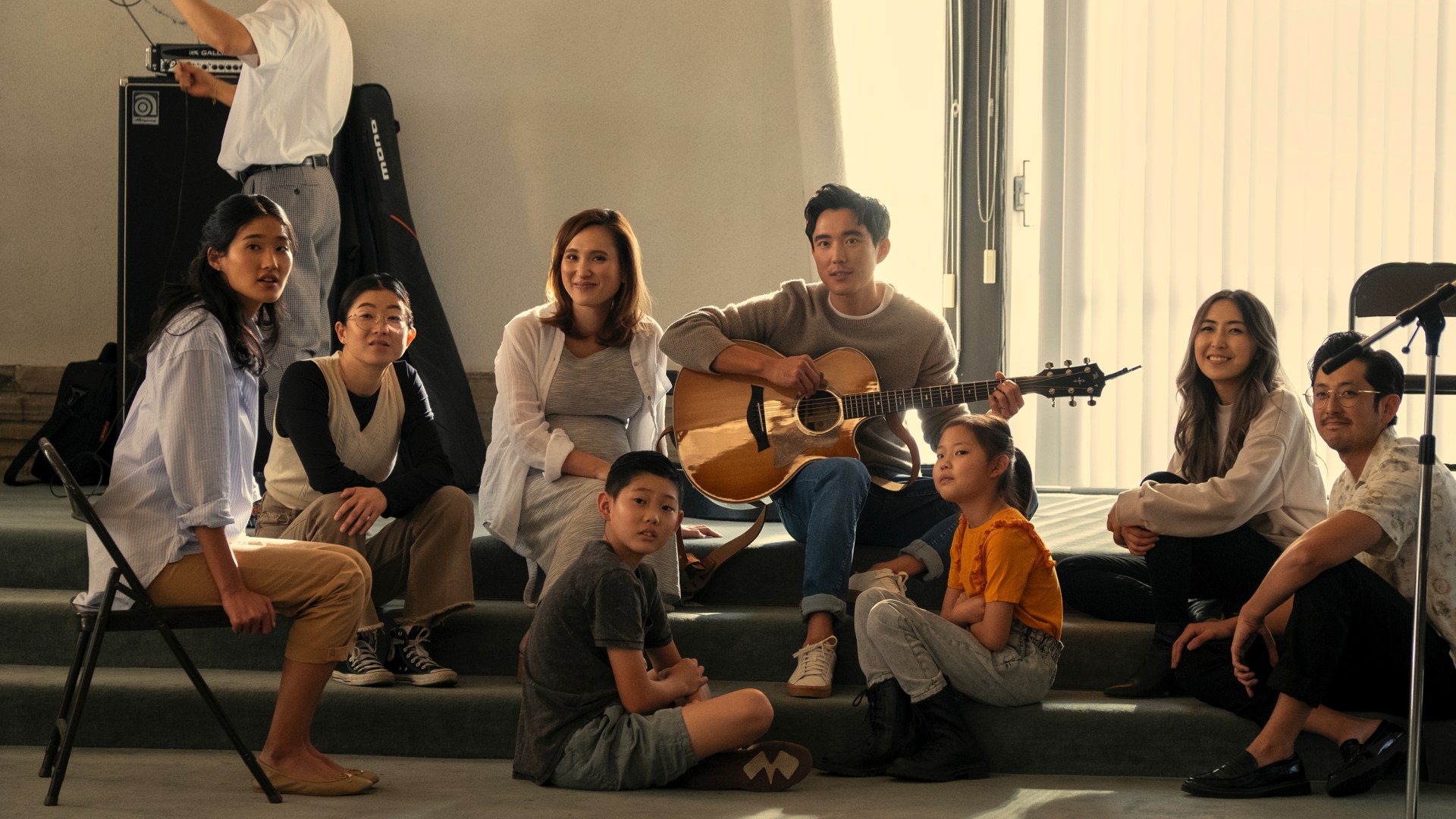
Pastor Jason Min (furthest right) appeared in the show as a member of the worship band.

Pastor Jason Min (furthest right) appeared in the show as a member of the worship band.

Christianity Today April 27, 2023
Andrew Cooper / Netflix © 2023

Netflix’s miniseries Beef has been making waves for its uncomfortably accurate depiction of the Korean American church experience.

The show tells the story of struggling contract worker Danny Cho (played by Steven Yeun) and successful business owner Amy Lau (Ali Wong) who get into a road rage altercation. Rather than turn the other cheek, the two swear revenge on each other.

The Korean American church comes into play early in the show’s third episode. Danny goes to church after deciding against setting Amy’s car on fire (which only escalates from there). As he enters the service, the band’s arrangement of “O Come to the Altar” overwhelms him, and he breaks down in tears. A pastor takes notice and then comes over to pray for him. The show features other contemporary worship songs such as “Raise a Hallelujah” and “Amazing Grace.”

Pastor Jason Min, lead pastor of Citizens LA, an Asian American church in the heart of Los Angeles, had a role in crafting the music for those church scenes. His brother, actor Justin H. Min, is in the cast.

Min and other Korean Americans see that the authenticity in its portrayals extends beyond just music. In an article for NBC, Minjung Noh, a scholar in Christianity and gender, said that the show also captured elements of “misogyny and patriarchy” in the Korean church.

In one scene, after Danny has become integrated as a praise band leader, his mother tells him to introduce his younger brother Paul to some girls at the church. Noh shared how often in the Korean American church, you go to church to meet women, and the women aren’t in leadership but rather supporting roles.” (Offscreen, the show’s creators have also had to address controversy around one of its actors who told a story about rape.)

Jason Min sees Beef as a springboard for conversations among Korean Americans about the harm they experienced in church contexts.

“We can’t even start to repair something that you haven’t been courageous enough to name yet. This is the beginning of the conversation,” he said to Christianity Today. “The beauty of Beef, at the very least, is that it has been a great portal to have these conversations, even the critical ones about the church.”

He spoke to CT about his involvement in the show, its depictions of the Korean American church experience, and ways the show can serve as a reckoning for the church.

This conversation has been edited for length and clarity.

I didn’t catch this on the first watch, but in the show, you appear onscreen as a praise band team member. What was the process of you getting involved with Beef?

Yeah, so Sonny (showrunner Lee Sung Jin) is my best friend from college. I’ve had a front-row seat to his entire journey in Hollywood. A few years ago, he called me up and told me he was working on this new show called Beef and that he was building the church into the show.

He wanted the praise band leader to be played by my younger brother (Justin H. Min), and originally, he had me in a consulting capacity. He had me meet with his writers to answer questions they had about the church. As a pastor that was an interesting exercise for me because you realize how much we do in the (Korean American) church that we think is normal, but people outside the church are like “What are you doing? Why is that?”

Exactly.

It was funny. Sonny had them watch our church’s live streams and listen to our sermons. Once he decided they were going to incorporate actual worship music in it, then he asked me to arrange the worship music for the show. I agreed to all that while not really knowing how the church was going to be portrayed. Both Sonny and Steven grew up in the church, and at some point in the process, one of them said that they didn’t want the church scenes to be parodies. They were like “If those church scenes make certain people cringe, smirk, or laugh, at the very least they’re cringing at something that’s authentic.”

They wanted a real worship team to do this, and Sonny thought I should be on it. He asked if I had any suggestions for who the worship team members should be, so I brought on our Citizens worship team. In the end, it ended up being a meta experience for me. I’m standing next to my brother on set, and I’m with our worship team, but then you have all these cameras around.

The only thing I [told] Sonny multiple times was I didn’t want to do this if this was going to caricature the church. I think our involvement in [the show] was precisely because that’s not what they wanted to do.

Did you feel a pressure in helping push back against a certain narrative about how Christians or how the Korean American church experience is depicted in the media?

The band and I made a conscious decision that we were just going to worship. We’re not going to try to be different or do anything outside of what we would normally do. And if people watching walk away saying that that church is weird or church is this or that, with a clear conscience we can say, “But we at least gave them an authentic expression of what we do on a week-to-week basis.”

Interesting. So, if people liked what they saw in Beef and want more, all they have to do is come to Citizens LA right?

[Laughing] Yes.

You talked about how you and the band just tried to replicate what you do every Sunday, but now there were cameras, you had to do multiple takes, you’re with your brother. … What were some of the nuts and bolts of filming during those days?

For myself, having never been on a set like that, it was strange to be in worship and then to hear someone yell, “Cut!” and then stop and then do the same thing again.

The praise songs that are featured are “O Come to the Altar,” “Raise a Hallelujah,” and “Amazing Grace.” How did you go about the process of including those songs?

That’s a funny story. Sonny has been out of the church game for a while. When he originally showed me the songs he wanted to feature, I told him, like, “Bro, we haven’t sung those songs in over a decade.” I asked him if he was trying to portray a church in the early 2000s, but he said that he wanted to present a modern-day OC (Orange County) church.

We did want a song that would tug a little bit on the heartstrings, and we wanted it modern enough but not so new that it was unfamiliar. I remember sending Sonny three or four songs. “Way Maker” might have been one of them. “O Come to the Altar” was the one he wanted. Even with “Raise a Hallelujah,” he wanted a very specific song. I knew the scene that it was going to be in, and it needed to have a little bit of that suburban cheese element in it, sort of upbeat and celebratory.

For “Amazing Grace,” I think we knew we wanted to have Steven sing that a cappella, and then Sonny asked if we could turn it into something really over the top.

Was there an impact on you or the crew when shooting these spiritual and emotionally charged scenes?

I think so many people had the same experience we did, you know, and I think even some of the background actors there who had left the church or who hadn’t been in church since childhood—they almost had the same experience as Steven’s character had in that moment. I talked to so many people after who said, “I felt something.” And maybe just like Steven’s character in the show, that was all it was: a moment. Maybe it didn’t lead to significant transformation.

I think a lot of people at that moment were trying to process what it was. Was it just a wave of emotionalism? What I love about this, though, is that it just reminded me so much of my own experience growing up in the church. I go to a retreat, and I experience something that I feel like is the Holy Spirit, but there’s a lot of processing there where you’re like Okay, was that the Holy Spirit? Was that just a beautiful chord progression? Was it just my emotions? Was it just my sleep deprivation? Was it all of the above? I’m not sure, but I think those church scenes in the show captured the complexity of that.

Why do you think those scenes resonated with so many people?

Going into this, I really thought that that scene would not resonate with anyone other than a very small, niche group of people.

I’m sure everyone has a different answer for this, but I think on some level … I think it was emotional because, especially for Korean Americans who’ve grown up in the church, who’ve had what feels like almost a universal experience, we’ve never seen our experience reflected or mirrored, like, anywhere. So, even just the impact of seeing something that is so close to you and something that is such a part of your story and lived experience mirrored for you is just so powerful.

Seeing the impact that scene has had on so many people showed me how important it is for these stories to be told, both good parts of it and the bad parts of it. I think for others maybe who haven’t experienced that specific moment, at the very least what I think Sonny and the team did so well was they created an authentic experience.

I think people will always resonate with authenticity. Maybe they don’t even know exactly why they’re resonating with it. In the end that authenticity, even though it’s not everyone’s lived experience, will speak volumes and will transcend what a person’s experienced personally.

That’s what’s been interesting. While the church scenes in Beef have been praised for their authenticity, it has also triggered some who feel that the church (and especially praise music) is a site of emotional manipulation and the ways the Korean American church is culpable in a lot of that. As a praise leader yourself, do you think this is accurate? Or what nuance might be missing?

I am grateful that people have shared honestly. I think so much of our experience in the church (and I say this as a pastor) has been manipulative. At the very least, those who have told me that they have been triggered by those scenes have used them as a good avenue for conversation about their experiences.

To address the idea that the Asian American church was just a whole bunch of emotional manipulation—I mentioned this also on the Off the Pulpit podcast, but Jason Chu, a friend of mine who is a musician, created a video about this exact thing. He said that all art is manipulation. All artists are trying to make you feel something, whether it’s music or preaching or any element of church. So much of it is trying to connect the head and the heart.

If you’re asking if we are being manipulated in church, I would say yes we are. Yet we’re being manipulated everywhere. We’re being manipulated every time we go to a concert, a museum, whenever we experience any kind of art. What he said was so poignant because the question was not whether you are being manipulated but do you trust the person who is creating? Do you trust them to be moving you in a direction you actually want to go?

I think a lot of times churches do use manipulation to get you to fill that offering basket or submit to authority. Those are the moments where manipulation becomes harmful and traumatic for people.

Every time I go to preach a sermon, I wouldn’t want to use the word manipulation, but I am praying that I can present the gospel in a compelling way that takes it from just being pure content and head knowledge to something that resonates in your heart.

It reminds me of what you shared in that Off the Pulpit episode about how we shouldn’t necessarily shy away from our emotions when practicing faith … and that the rejection of emotion may be a byproduct in some way of Asian American assimilation to a type of mind-driven, logical, and rational Christianity perpetuated by white Christians.

Yeah, and what I loved about Beef was that it revealed all those suppressed parts of the Asian American experience, both inside and outside the church. You just realize how uncomfortable our generation, our culture, has been with expressing emotions.

How similarly do you feel like the way the church is depicted in Beef matches with your experience as a pastor for Citizens LA?

The church itself was probably different from what Citizens is, but I would say that was a perfect depiction of the church I grew up in. There was something so familiar and nostalgic about that space.

I think one key difference is that in the show itself, Steven’s character, Danny, was clearly the outsider, whereas in the church most people were homegrown. Part of being a city church that is a little bit different is that LA attracts people from all over the place. It’s a very transient community. We’re not a church that most people grew up in, and we aren’t connected to a Korean congregation. We don’t have our own church building; we meet in a high school in LA. So, I think just the environment and the kinds of people who attend just already make it a slightly different kind of church.

I’ve also been looking and following the discourse surrounding the show post-release. Another aspect that Beef gets right is capturing the misogyny and patriarchy in the Korean church—as well as the hypocrisy, I might add. I’m thinking about this amid the controversy surrounding David Choe too. Do you think more work can or needs to be done to change these types of patterns in the Korean American church? As a pastor, how are you navigating the question of reconciling and embracing certain aspects of Korean culture without perpetuating harm?

Oh yeah, a thousand percent. You realize how much of the way the second-generation Korean American church does ministry has been a reaction to our parents’ generation, but that culture and DNA is everywhere. It might be less overt but in subtle ways that patriarchal, misogynistic culture is still prevalent. We’re very aware of that.

At Citizens, so much of our ministry seems to resonate with people that have deconstructed and are maybe coming back to the church for the first time. We’re very cognizant of the fact that there’s what feels like an entire generation of Korean American Christians who need healing from that. So much of our ministry is empowering women to lead. Our staff is actually predominantly female.

In the same way that you go into marriage with so many of the scripts from your family of origin, we know that a lot of people come to church with predetermined scripts from their past church experiences. So much of what we’ve been trying to do is to re-parent our congregation and to create a safe space for them to heal. The beauty of Beef, at the very least, is that it has been a great portal to have these conversations—even the critical ones about the church.

Someone shared with me the article that was published in NBC Asian America. They were discouraged because they were worried it painted a negative picture of the church. My response, though, was that we can’t even start to repair something that you haven’t been courageous enough to name yet. This is the beginning of the conversation.

When I read through Scripture, who are the prophets most criticizing? It was the people of God; it was themselves, you know? And I think the last five years have shone a light and exposed many of the problems with the capital C church. I think the Asian American church—and I have felt [this] for a while—is in for a reckoning too. I think it’s about time the light is shone on the Asian American church and together we not only are courageous enough to repent for the ways that we have done a lot of harm and misrepresented Jesus but also to take real steps to pave a new path forward.

Zachary Lee is the online editorial assistant at Sojourners and a freelance writer covering the intersection between faith and media.

Church Life

Jesus Is Calling … on Netflix’s ‘Beef’

The tearful worship prompted good and bad memories from growing up in Korean American Christianity—and a needed discussion on church hurt.

Steven Yeun as Danny in Beef.

Steven Yeun as Danny in Beef.

Christianity Today April 27, 2023
Andrew Cooper / Netflix © 2023

Are you hurting and broken within? Overwhelmed by the weight of your sin? Jesus is calling…”

I’ve sung these lyrics from “O Come to the Altar” countless times. I’ve heard the song at church, at conferences, in my car … but never did I expect to hear it on a hit Netflix show.

It wasn’t just the song. The entire church scene from Beef felt pulled from my life. As the worship band sang, the camera panned through the room to reveal congregants with their eyes closed and hands raised, a sea of black hair swaying in a rhythm that I knew all too well.

The sanctuary was well worn and outdated, the kind of space that could easily be converted into a multipurpose room. Mismatched chairs in rows served as pews, and the tilted commercial vertical blinds didn’t really block out the light. The doughnuts after the service were all too familiar. The only way it could’ve been better is if they had eaten rice, kimchi, and bean sprout or radish soup.

In the Netflix dark comedy Beef—currently the most popular show on the platform—actor Steven Yeun costars as Danny Cho, a struggling contractor who gets involved in a road rage incident. He’s had a hard life, and in a rock-bottom moment, he walks into a church sanctuary. Danny feels out of place in a room that aesthetically is anything but conducive to worship, yet he gets immersed in the communal praise around him. He cries, and a pastor comes to pray over him.

The worship hit especially close to home for me; not only did it remind me of nearly every Korean American immigrant church I attended growing up, but I also used to serve at the Los Angeles church whose band appears in the show. Hearing lyrics about God’s grace extended to us in our brokenness was so familiar that it felt exposing, nostalgic, and even embarrassing at the same time. The experience was so authentic, it almost felt contrived.

For many who grew up in the Korean American church—or in Asian American Christian communities whose church experiences were shaped by Korean American Protestantism—the worship scenes from Beef were instantly recognizable and generated a visceral response. And the reactions proved to be a bit of a Rorschach test.

For some, the scene evoked fond memories of growing up in the church in the 1970s, ’80s, ’90s, or 2000s. It brought to mind those powerful spiritual moments at church that marked their weeks, months, or even years. It brought them back to a time and space where they felt like they truly belonged—a place of shared culture and shared faith.

Viewers who knew these kinds of churches may have longed for the communities they had growing up, imperfect but loving in their fellowship. One Korean American pastor friend shared that it reminded him of the moment he said yes to Jesus in college, even though he grew up as a pastor’s kid.

Others saw Danny’s tearful visit to the church more negatively. They remembered the ways they were manipulated by church leaders, disillusioned by a performative spirituality, and hurt by the people they were told to trust. The church sanctuary in Beef took them back to spaces where they were ostracized, exploited, and even abused—toxic and traumatizing places that they have worked hard to escape.

One reason the worship scenes felt real to us and could immediately trigger our memories may be that the worship was real. That’s what Citizens LA pastor Jason Min, whose praise band played for the church scenes, shared with me.

By Min’s account, they were actually leading worship before the cameras, not performing or pretending to do so. Many of the extras in the congregation came from Citizens LA church, and they worshiped like they do each Sunday morning. I know because they were my worship band when I lived in LA.

Their worship in Beef resonated before it even aired. The show has an all-Asian cast, and many of those who were working on the set or in the background commented that the worship set scenes impacted them.

Min told me that people at the filming commented on the peace they felt or said that singing the lyrics to “O Come to the Altar” a hundred times did something to them. They shared that they didn’t know whether it meant they would go to church or go back to church but that they would be sitting with what they experienced for some time.

How could the same scene lead to such different conclusions? The different responses to the worship in Beef reflect the complexity and complications of the church that we often fail to hold in tension. The same community can embody both faithfulness and failure. Good and evil can coexist among us and within us, and there can be holes in our holiness.

Despite our best intentions and efforts, the expressions of church that have blessed so many people have also left many others broken. This is something that we are challenged to reckon with, both for the sake of those whom the church has harmed and neglected to heal and for the church’s witness going forward.

The people who cringe at the portrayal of worship in the show are not just critics on the internet. They are people we once sung and served beside, who are brokenhearted to leave behind a faith that once meant so much; they are the youth in our community who have little patience for performance, edifice, or cover-up.

I serve as the executive director of TENx10, an initiative at Fuller to make faith matter more for 10 million young people over the next 10 years. Research by the Pinetops Foundation projects that a million young people will walk away from Christianity every year, putting the faith in a minority within the next 30 years.

I also serve as the president of the Asian American Christian Collaborative, and while Asian Americans are the fastest-growing racial demographic in the United States, our Christian affiliation has already dropped around 8 percent within the past decade.

Korean Americans—who make up about a third of the Asian American evangelical population, despite being just a tenth of the Asian American population more broadly—are seeing some of the most significant decline. I’m still surprised and saddened when someone I never thought would walk away from the church tells me that they just don’t believe and don’t know if they’ve ever believed. Much of the time, they’ve seen hypocrisy and failure to self-reflect within the church—and found more meaningful community outside it.

Faced with growing numbers leaving the faith, our options aren’t just to build a fortress or to burn everything down. We know that with enough humility, repentance, faith, courage, and conviction, we can make space to cultivate more of the blessed and address the broken.

Instead of villainizing those who are questioning, doubting, or “deconstructing” their faith (or even walking away), the church should be a place that embraces them. We can create ample space for concerns—after all, Jesus never turned someone away for asking an earnest question, though he did confound the religious leaders who tried to box him in.

We must work together to discern and address the things that have left so many devastated and wounded: hypocrisy from leaders and legalistic theology. This means making appropriate adjustments while remaining faithful to what is true, pressing into the pain instead of moving away from it.

There are pastors, elders, deacons, and entire church communities who are seeking to find ways to “do church” in a way that accounts for the hurting, wounded, skeptical, and cynical because they understand that God is big enough for it all.

Leaders have become more aware of the language and terminology they use around those navigating church hurt. Rather than expecting or forcing participation, we can set up gatherings to explain the purpose of what we do and invite people to participate if they are ready. Leaders in these setups can preserve gospel truths in their teachings while letting people choose how to engage and making room to hear out their pain and wariness.

The church needs to find better ways to address its failures and brokenness while maintaining its commitment to what is good, true, and beautiful. We need to press into all that makes faith true to Christ and what God calls Christians to be. We need to develop a place that can truly care for those who are “hurting and broken within.”

Part of that means creating more avenues to explore and interrogate the factors that have shaped us and our communities. In a small way, by creating a realistic window into the Korean American church experience, Beef has placed a mirror before the church and sparked a much-needed discussion that I hope we continue.

Raymond Chang is the president of the Asian American Christian Collaborative and the executive director for the TENx10 Collaboration, an initiative of the Fuller Youth Institute at Fuller Seminary. He lives in the Chicagoland area with his wife, Jessica, and daughter and speaks throughout the country on issues pertaining to Christianity and culture and to race and faith.

Theology

Gratitude Changes Our Desires

Christians worship a strange Giver who gives strange gifts in strange ways.

Christianity Today April 26, 2023
Illustration by Mallory Rentsch / Source Images: Pexels

Gratitude is all the rage these days.

Since the mid-2000s, when the writings of positive psychologist Robert Emmons got the train rolling, a veritable industry has sprung up around the study of gratitude. A number of research projects, special academic journal issues, reference books, and entire scholarly monographs are devoted to the topic. There are also hundreds of journals, phone apps, and podcasts offering practical advice on how one can lead a grateful life.

Christians should welcome all of this. We are, after all, supposed to be a grateful people, perhaps the most grateful of everyone. And considering the malaise of post-pandemic life, our embittered political polarization, and the vitriolic cancel culture today—it’s hard to imagine a better time for us to double down on the value of gratitude.

For Christians, of course, gratitude should begin and end with our thankfulness to God. And yet many of us do not experience this with the kind of frequency, intensity, and durability that seem appropriate given how extraordinary God’s benefits are.

Why do we struggle to be consistently grateful to God, even when we believe—or at least say we believe—that God is our ultimate and incomparable benefactor?

One problem is inattention. We may know in an abstract sense that God is the greatest Giver, but until we start paying attention to where God’s gifts show up, we’re not likely to experience gratitude. Another issue is resentment. We know God is often good to us, but we’re also mad when God doesn’t give us what we want, so we withhold our gratitude.

Paying more attention and dealing with our resentment are crucial if we are to grow in our gratitude toward God. But even when we are trying to be attentive and even when we are not angry at God, it can still be difficult to live in a posture of consistent gratitude.

The positive psychology movement often presupposes that we already know what to be grateful for; all that is lacking is our attention and effort. But gratitude to God is not the sort of thing that springs naturally from the human heart.

Think about the features that really trigger your spontaneous gratitude response. We experience thankfulness most spontaneously and intensely when a giver unpredictably and at great personal cost bestows us with a benefit that quenches some desire we had.

Yet God’s benevolence to us stretches every part of this common context for gratitude to the breaking point. For while the form of God’s kindness to us can be unexpected, he is bound to be omnibenevolent by his very nature—unlike our friends and spouses. In other words, why should we be surprised when God blesses us?

Not only that, but unlike our human loved ones, God is not limited by time, energy, money, or knowledge—and so in what sense does it really cost God to be generous toward us?

We can also be critical of the fact that God can give us a gift but still maintain a claim over it. For instance, God may cure our cancer tomorrow only to permit it to return in six months.

As the life of Job attests, even God’s blessings may at any moment turn to tragedies. “The Lord gives and the Lord takes away,” as Job puts it (1:21 NET). This means that if our gratitude is only of the “count your blessings” variety, we are sure to end up cursing God, just like Job’s wife urged.

But most confusing of all is that God can sometimes give us what we do not desire: “gifts” that no one longs for—like trials and tribulations, which Paul says God uses to grow our faith.

When we consider thankfulness to God only in the context of stereotypical interpersonal gratitude experiences, we end up focusing on his “daily blessings”—like good health, good job, beautiful family. But this mindset risks turning God into a cosmic vending machine whose primary role is to give us what we want.

Instead, Paul says he has learned to be grateful and content “whatever the circumstances” (Phil. 4:11)—speaking of his suffering for Christ (1:29–30; 3:10) in the same breath. This reveals a striking difference between the goods of God’s kingdom and those of this world.

Paul further encourages the Christians in Philippi to think of these qualities as gifts: “Whatever is true, whatever is noble, whatever is right, whatever is pure, whatever is lovely, whatever is admirable—if anything is excellent or praiseworthy—think about such things” (4:8).

Therefore, biblical gratitude is shaped by what God considers to be lovely, true, honorable, just, and worthy of praise. As John Chrysostom explains in his sermon on Philippians, “What means, ‘whatsoever things are lovely’? Lovely to the faithful, lovely to God.”

Such gifts of the kingdom give us everything we need to be God’s friends forever—but they are often very different from the kinds of blessings the world values. Jesus speaks of this when he praises God the Father for hiding the kingdom of heaven from “the wise and learned” and revealing it to “little children” (Matt. 11:25).

Often, the gifts of God are neither simple nor straightforward. In fact, they can destabilize us and reveal our basic fragility, emptiness, neediness, and waywardness. Because of this, it takes work to cultivate gratitude toward God. As Jen Pollock Michel argues in Teach Us to Want, this is part of a larger process by which we learn to develop “holy desire” in alignment with Christ.

In a Christmas sermon, theologian Samuel Wells once preached that God was the ultimate materialist because he reverses our petty desires for toys and trinkets into a sacred longing for God-with-us in the embodied, material Jesus.

When Paul says, “Whatever you do, … do it all in the name of the Lord Jesus, giving thanks” (Col. 3:17), he is grounding gratitude beyond the gift of creation and in the gift of our new life in Jesus Christ. As Michael Gorman notes, Paul taught that the whole of the Christian life must be renewed “in the image of Christ,” including our gratitude for God’s unconventional gifts.

Only a transformed life—one that Paul describes as being “in Christ” (2 Cor. 5:17)—can create in us a new set of eternal desires and a different disposition of gratitude.

So, it is not that Christians are supposed to be more grateful than the average person but that following Jesus allows us to be grateful for the unexpected gifts of God—which may surprise, upset, and confound the gratitude of an unbelieving world and even baffle us in our flesh.

Thus, Christian gratitude is the mark of a new life empowered by the Spirit as we are trained and transformed–sometimes painfully–into people with strange desires who can receive and delight in strange gifts offered in strange ways by a strange God.

This is a whole new way of being in the world. As Barth says, “Gratitude is to be understood not only as a quality and an activity but as the very being and essence” of the Christian.

At its heart, Christian gratitude is first and foremost learning to receive ourselves from God. And Christianity itself is extended training in how to be grateful for who we are at our core: needy creatures who live by grace. This is a gift—but a difficult one to receive with gratitude.

When we learn to receive our lives as gifts from God, we begin to see more clearly what God finds commendable. This, in turn, allows us to appreciate a new way of being pleased and to identify and enjoy what is excellent and praiseworthy in a whole new light.

Kent Dunnington is professor of philosophy at Biola University in La Mirada, California. Benjamin Wayman is the James F. and Leona N. Andrews Chair in Christian Unity at Greenville University in Greenville, Illinois.

News

18 Christian Colleges Closed Since the Start of COVID-19

Enrollment numbers, financial challenges, and the pandemic spelled the end.

Christianity Today April 26, 2023
Matthew Hatcher/Getty Images

Iowa Wesleyan University freshman Emma Soukup started crying when she heard the news that her school, a 181-year-old United Methodist institution, would close at the end of this semester.

She told the Des Moines Register it felt like a tornado devastated her home. She called her dad. “I don’t know what to do,” she told him.

She is not the only one.

A new study from Higher Ed Dive found three dozen colleges and universities have closed or merged since the start of the COVID-19 pandemic. Eighteen of them are Christian, including Methodist, Lutheran, Roman Catholic, Baptist, Church of Christ, and Independent Christian Church institutions. One minute they were there—seemingly as solid as the buildings, invested with the mission of integrating faith and learning, full of students’ hopes and ambitions—and then they were gone.

The schools were all small and struggling before COVID-19. They faced devastating demographic shifts, declining enrollment, internal conflict exacerbated by ongoing crises, and, most of all, unrelenting financial challenges. Some would have certainly closed even without a global health crisis. For others, the coronavirus was the last stiff breeze that blew them over the edge.

“Small institutions are resilient or they wouldn’t still be in existence,” said David Fincher, head of Central Christian College of the Bible, which absorbed St. Louis Christian College in 2022. “At the end of the day, though, there’s only so much resiliency gets you when there’s a perfect storm.”

In Michigan’s Upper Peninsula, a mainline Lutheran university saw the storm rising in high school statistics. Fewer and fewer students attended the region’s schools, reflecting broader Michigan trends, and fewer and fewer graduated. Among those who did remain in the region and did graduate high school, only a shrinking number expressed interest in going to college.

Finlandia University, founded in 1896 by Lutheran loggers and copper miners, announced last month that it would close in 2023.

The Christian schools that have closed since the start of the pandemic were all small—some very small. Many people on those campuses appreciated the size and the intimacy it created for their communities. But it also made them vulnerable to any enrollment decline.

MacMurray College, a Methodist-affiliated school in Illinois, had 736 students in 1980. One of the people who attended back then told the Detroit Free Press that he loved that.

“You could know almost everyone on campus,” he said. “It was nice to go to someplace small and really find myself.”

MacMurray’s enrollment numbers dropped to around 630 in the 2010s, putting the school’s finances in a perilous position. In 2015, with 570 students, the school brought in just a little bit more than it cost to operate. The following year, with 552 students, MacMurray ended up in the red, with a $1.7 million shortfall.

Things got only worse after that.

“You have to have a clear long-term strategy,” said David Fitz, a former MacMurray political science professor who took a position in the administration in the early 2000s. “I’m not sure the college ever did that well. We moved from crisis to crisis and managed well, until we couldn’t and then it had to close.”

A last-minute effort to reimagine the school, overhauling MacMurray’s curriculum to focus more on career training and striking a deal with a developer to buy the property and lease it back to the university, ended when the crisis of COVID-19 overwhelmed everything.

“Shortly after we announced we were closing, I remember walking across campus and seeing a woman sitting on the chapel steps crying,” president Beverly Rodgers said. “She told me she had been married there. There’s an emotional attachment to the buildings, to the campus. It’s very sad we had to close it.”

A lot of schools found the pandemic “made an already tough situation unsustainable,” as Robert Callahan, president of Holy Family College in Wisconsin, put it. The Catholic school had seen a slight uptick in enrollment. The administration was hoping they had turned a corner. But the COVID-19 crisis was too much.

Presentation College, a Catholic school in South Dakota, met a similar end. The administration had sharply discounted tuition to try to increase enrollment. The school ended up losing about 35 cents for every dollar of tuition money that came in, while drastically cutting spending. The painful efforts seemed, in a few hopeful moments, like they might work.

“We streamlined leadership, renegotiated vendor contracts, reduced operating budgets, really brought down our budgets to about two and a half million dollars—and things were starting to look better. … Things were turning around,” president Paula Langteau told South Dakota Public Broadcasting. “At that time, as you know, COVID hit.”

For some schools, however, COVID-19 seemed like it could be a blessing in disguise, an odd but very welcome answer to prayer. Across the country, higher education institutions received about $40 billion from the federal government. Many received additional money from state and local governments.

The administration at Iowa Wesleyan asked the governor for $12 million in federal relief funds. When the request was turned down, though, their hopes were dashed for the last time. The governor didn’t want to spend the one-time funding on ongoing operational expenses, and an independent accounting firm determined the relief money would not fix the school’s financial problems, which included a $26.1 million debt owed to the U.S. Department of Agriculture.

The trustees said they had done “considerable exploration of all feasible strategic alternatives” but not come up with a workable plan. They voted to close the school in May 2023.

Financial problems have a way of getting worse at small Christian colleges. Ohio Valley University, a Church of Christ school in West Virginia, had long carried heavy debt and became dependent on debt to finance basic operations. Even more troubling, $6 million was borrowed from individuals connected to the institutions. Some of those loans came with high interest rates and terms that allowed creditors to call for repayment at any time.

Over the years, financial panics became commonplace.

“Don’t you dare borrow any money from individuals,’” a board member on the finance committee said in the 2010s. “You must live within your debts. You must address all of your employees, faculty, and whatnot so that you have a balanced budget. I do not want to see any more private debt.”

The practice continued, though. And plans to mine the West Virginia property for coal that was theoretically worth $10 million never quite came to fruition.

Eventually, the school couldn’t pay for basic operations. In 2020, a judge ordered Ohio Valley to pay $1.2 million it owed to a former food vendor. When a software system used to store student data and records broke, it became public that the school had not paid for authorized use. In 2021, it stopped paying faculty and staff until an anonymous donor committed $900,000 to take care of the salaries around Christmas.

The school shuttered at the end of the year.

However inevitable the end of a Christian college appears, at the end, the loss is still immense and devastating to those who gave their hearts and lives to the school.

“We know this was the right decision,” said W. Mark Tew, president of Judson College, when the Baptist school decided to shut down for good in 2021. “But there is not a person here whose heart isn’t broken over this.”

After the final crisis comes, nothing remains of the once-solid institution but the transcripts of graduates now bereft of their alma mater, the debts still owed, and the odds and ends that go for sale at auction.

Judson, a 183-year-old women’s college, was reduced to 1,300 lots listed on High As the Sky Auction Company’s website.

“Rare books,” an advertisement said, “artwork, furniture, … collectibles and much more.”

News

Alliance University’s Financial Woes Threaten Accreditation

The school formerly known as Nyack College has had money troubles for years. But school leadership is optimistic with rising enrollment.

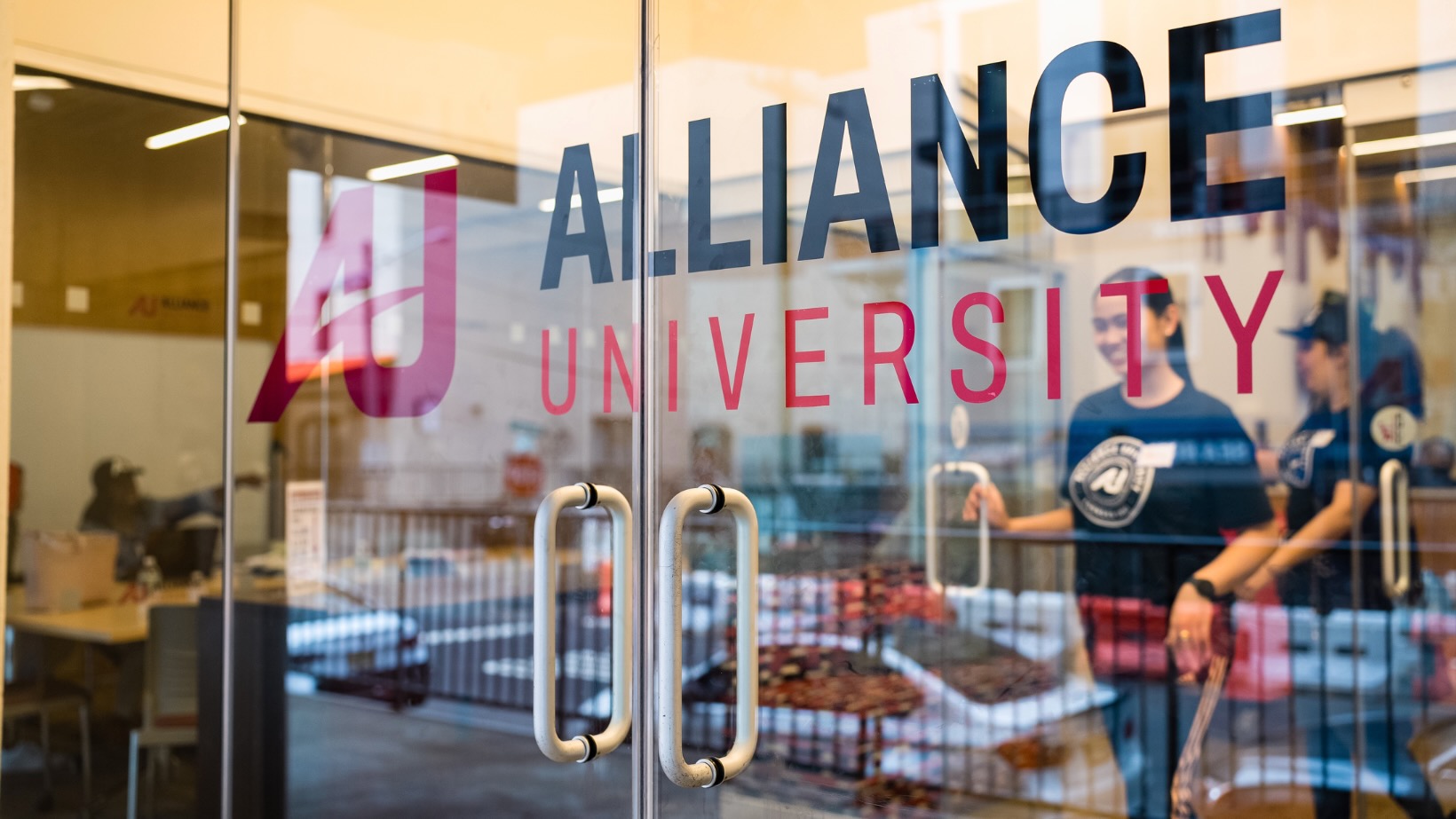
Alliance University's campus in lower Manhattan.

Alliance University's campus in lower Manhattan.

Christianity Today April 26, 2023
Courtesy of Alliance University

Update (July 1): After losing its accreditation, Alliance University (Nyack College) announced it will close on August 31 after 140 years of serving the Christian & Missionary Alliance and New York City.

Alliance University, known until a name change in 2022 as Nyack College, faces the loss of its accreditation due to financial troubles, after a 2022 audit cast doubt on the school as a “going concern.” Accreditors visited the Manhattan campus on Monday, and a June hearing will determine the school’s accreditation status.

The Middle States Commission on Higher Education (MSCHE) recently placed Alliance on “show cause” status, meaning the school must show why its accreditation should not be revoked. MSCHE also placed The King’s College in this status last month, threatening the only two historically evangelical colleges in Manhattan—and the only two Council for Christian Colleges & Universities (CCCU) members in New York City—with removal of accreditation at the same time. The schools’ troubles are part of a larger crisis in Christian higher education.

Alliance’s auditors in 2022 noted “recurring losses in net assets” and “recurring negative cash flows from operations” that caused them to doubt its ability to continue. MSCHE put Alliance on probation in June 2022 just before the school’s audit was released.

But an audit of the school in 2017 also warned of a failing institution, and Alliance has survived the years since of declining enrollment and a pandemic. It has been coming out of its financial free fall, especially with support from its parent denomination, the Christian and Missionary Alliance (C&MA).

Enrollment last year was up 12 percent, and the school expects to have a positive cash flow for the first time in a decade next year, Alliance’s president Rajan Mathews told CT. Applications for next year are up significantly, and the school cut $4 million from its budget, Mathews added. The school has about $33 million in operating expenses.

The escalation from the accreditor was a “surprise,” Mathews said, since retention is improving, fundraising is up, and the school has financial backing from its denomination.

“We have a cautiously optimistic forecast for next year,” Mathews said. “We felt that Middle States should have given us a little more time to prove the pudding. … We thought we had about two years. We were putting in place all the improvements.”

A historic C&MA school founded in 1882 to train missionaries, Alliance is one of the most ethnically diverse Christian colleges in the United States, with a student population that this year is 34 percent Latino, 30 percent Black, 11 percent international, and 9 percent Asian.

Most Alliance students come from New York City’s five boroughs, and 45 percent receive Pell grants, which means they have exceptional financial need. Almost half of the students are the first in their families to attend college.

Many churches in the New York area are led by Alliance graduates, including Pastor A. R. Bernard (an Alliance Theological Seminary alumnus) at the largest evangelical church in the city. Another alum, Pastor Gil Monrose, is the head of the New York mayor’s faith-based office.

Pastor A. B. Simpson started the C&MA denomination in New York in the 1880s after leaving his Presbyterian church that would not accept Italian immigrants. A century later, members of the denomination started a refugee resettlement effort that later fueled the launch of World Relief’s resettlement program. Afghan refugees now are students at Alliance University.

Alliance has had significant annual deficits for about a decade, at one point operating as much as $12 million in the red.

In 2019 tax filings, the school was creaking under $85 million in debt, mostly mortgages. It was trying to sell its historic Rockland County, New York, campus while moving classes to a new property in lower Manhattan. The school had decided a few years before that a campus based in Rockland was not “financially viable.”

Enrollment and retention were patchy in 2019 because the school went back and forth about when all classes would move to Manhattan instead of Rockland. Classes began in full in Manhattan in spring 2020, just when the pandemic hit.

The pandemic brought a significant drop in enrollment, which put the school in a “downward spiral,” said Mathews. Enrollment in undergraduate and graduate programs has fallen from a peak in 2010–2011 of 3,369 to 1,944 currently.

“The student population we focus on suffered the most during COVID[-19],” he said, because they are often economically disadvantaged.

In 2020, the school finally sold the Rockland campus, bringing $28 million in gains on the sale, which was used to pay down debt, the 2022 audit shows. That left the school with $51 million in debts, according to the audit, bringing it much closer to balancing with its assets.

The full mortgage on the school’s Manhattan property is due in 2026, but the property is appraised at $85 million now, according to the 2022 audit.

Mathews—a telecom executive who worked in India, Afghanistan, and the US—was named president in May 2021. Coming from a business background, he’s learned that with the “six-month sale cycle” in academia, he has to wait longer to see what works than he did in business.

“The lead time to correct everything is much longer in academia,” he said.

The King’s College, just around the corner from Alliance, faces threat of closure at the end of this school year. Alliance has a very different set of circumstances, and its leadership expects that the school will continue.

Alliance (1,944 students) is larger than King’s (384 students) and has a denomination backing it. King’s has instead had the backing of a for-profit online education company, Primacorp, as well as a board with four Primacorp appointees. But King’s recently announced it was cutting ties with Primacorp, removing the Primacorp board members, and bringing in eight new board members.

Both schools received federal Paycheck Protection Program loans that were forgiven—King’s received $1.8 million, and Alliance received $2.8 million.

Alliance has had a more stable board and has avoided the dramatic presidential turnovers that have characterized King’s, where one former president, Dinesh D’Souza, was convicted of federal corruption charges.

Alliance is discussing whether it could sell two floors of its lower Manhattan building, because it doesn’t need them all. Last year Alliance offered a floor and a half to King’s “on very attractive terms,” said Mathews, “and they refused.”

“It would have made all the sense in the world for us and King’s to play well together,” he said. “For some reason we did not get a lot of cooperation from King’s. … But their board makes their own decisions.”

King’s said in a statement that it was open to collaborations with other schools, “especially with good schools like Alliance University. In this case, it was not a fiscally prudent decision for the college to pursue at the time.”

King’s describes itself on its website as “the only Christian liberal arts college in New York City.”

King’s has been working to secure transfer agreements for students in the event of closure. As part of this “show cause” status with accreditors, Alliance is also required to have a “teach out” plan for students, in case they need to finish their education elsewhere. But the school does not think that will happen, projecting another increase in enrollment next year.

Mathews attributed the rise in enrollment to the school investing in a database to target its audience more effectively instead of relying on churches and word of mouth. The school offers online education, but it requires undergraduates to do most work in person.

The accrediting agency will have a hearing concerning Alliance on June 21, and Alliance leadership expects a decision soon after that.

News

What Are Evangelical Voters in Iowa Focusing On: Everything

The world feels out of control. They want someone who will fix it.

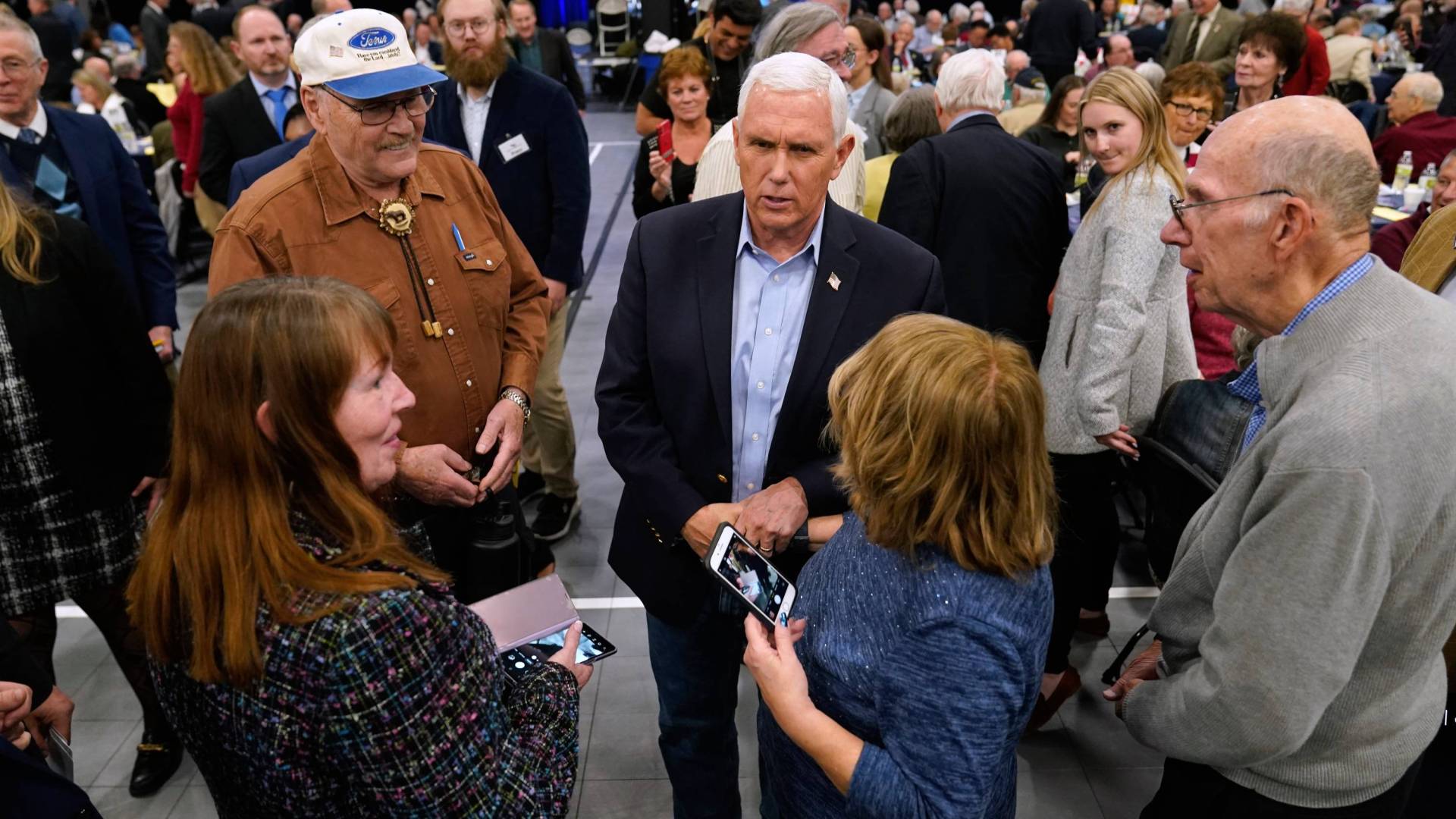
Former Vice President Mike Pence at the Iowa Faith and Freedom Coalition Spring Kick-Off.

Former Vice President Mike Pence at the Iowa Faith and Freedom Coalition Spring Kick-Off.

Christianity Today April 25, 2023
Charlie Neibergall / AP Photo

Sitting in rows of rectangular tables and eating boxed dinners from Chick-fil-A, over a thousand evangelicals in Iowa got their first look at 2024 Republican presidential hopefuls.

The Iowa Faith and Freedom Coalition’s Spring Kick-off event on Saturday represented the first cattle call of the year, a forum for GOP candidates to court an indispensable voting bloc.

From the podium, candidates celebrated recent anti-abortion victories in the states and in the legal system. Former vice president Mike Pence, Sen. Tim Scott of South Carolina, and former Arkansas governor Asa Hutchinson spoke of the importance of religious liberty, decried “wokeness,” and expressed concern over the southern border and the threat of China’s economic ascendance.

The audience paid attention as the politicians recounted their faith experiences and emphasized their commitments to conservative values, but many voters had no top-of-mind policy issue they wanted the candidates to address. A small exhibition gallery off the main event hall housed display booths for candidates, local businesses, and advocacy groups focusing on issues like abortion and parental rights.

“I’ll be honest; it’s hard to pick one,” said Kevin Branstetter, a 56-year-old project manager from Waukee. “I just want somebody who is going to tell me the truth.”

When asked what she is most concerned about this election cycle, Jolene Rosebeck, a former teacher from Waukee, said, “Everything.”

Other Iowans at the event echoed the view that there are too many important issues and crises; they just want someone who can fix things. For many evangelicals, the ideal person for that job is still former president Donald Trump, who offered a message over video. (Florida Gov. Ron DeSantis did not attend.)

Jacob Taylor, a 24-year-old lighting tech from Oskaloosa, is hopeful for a strong leader who will address top issues like gender, inflation, trade, energy independence, foreign policy, and abortion.

“Christians always think that you should have a nice person that you’re voting for, that plays nice with everyone,” Taylor said. “I had friends that didn’t like Trump because of the things he would say. He was putting America first. He didn’t put up with any … I guess ‘BS’ is what I’ll say.”

Although there was no singular policy concern on the minds of the state’s evangelicals, the themes of fear and uncertainty permeated remarks from the microphone and comments by those in the audience.

Some attendees didn’t mention favoring any particular candidate but expressed worries about the threats facing the country and the perceived failures of the current administration. Speakers framed appeals to Christian faith and the example of Christ with embattled rhetoric about the Left or the media.

Cris Christenson, treasurer of the Iowa Faith and Freedom Coalition (IFFC), encouraged the audience to look to Jesus as a guide for how to act during the event and to “not let the press divide us.”

“Our motto is ‘What would Jesus say and do in this room tonight?’ What would he do if he was sitting in a chair next to you? Don’t give in to the media,” Christenson said.

In his remarks at the beginning of the event, David Barker, a member of the Iowa Board of Regents and of the Iowa GOP’s central committee, speculated about a frightening future under “leftist” control, in which “you tell your electric car to take you to church, [and] it might say, ‘I’m afraid I can’t do that,’ if your church is on the wrong list.”

Although the IFFC event is billed as one of the largest gathering of conservative evangelicals in the state, spiritual language throughout the event, from attendees and speakers, was broad. References to “conservative values” were more frequent than references to Christian values or beliefs.

When asked how faith informs their approach to political engagement, some were most comfortable speaking broadly about morals and principles.

“If you have faith, moral issues are going to be important to you as a politician,” said Elizabeth Horn, a 24-year-old from Newton. “My faith says that there are some things we should not do. You have to be principled and stand for certain things.”

“I’m a born-again Christian,” said Jacob Taylor, who attends a small nondenominational church. “If you can choose someone who is a believer in office, that’s really important. But if you don’t get that choice, even someone who has a respect for God—that can be a unifying thing, an anchor.”

The most explicitly “evangelical” message of the evening came from Pence, who quoted John 3:16 and briefly shared his testimony—the story of his conversion to Christ at a Christian music festival at Asbury University in Wilmore, Kentucky. Hutchinson name-dropped evangelical mainstays John MacArthur and Chuck Swindoll.

The chaotic Iowa caucuses of 2020 contributed to the Democratic Party’s decision to reconfigure its primary schedule for the 2024 presidential contest. But the GOP appears committed to maintaining Iowa’s “first in the nation” status as the field grows crowded.

Iowa’s evangelical voters have not chosen the eventual GOP nominee in the last few election cycles, but they do usually determine which Republican candidate wins the Iowa caucus. Caucusing Republicans delivered Mike Huckabee’s victory in 2008, Rick Santorum’s in 2012, and Ted Cruz’s in 2016.

Iowa serves as an early testing ground for the messaging to GOP voters. As issues prove to have mobilizing power among the state’s Republican voters (especially among its evangelical bloc), they will shape how candidates position themselves and refine their stump speeches in coming months.

Steve Scheffler, IFFC’s president, said in his opening remarks, “Today’s society is crazy versus normal.” Conversations with event attendees reflected the same alarm conveyed by the speakers.

George Kurtinitis, a retired IT project manager, is preoccupied by the specter of global conflict. “We’re escalating toward nuclear war. I grew up during the Cold War. I used to think, That will never happen. Now here we are again.”

Kurtinitis, seated next to his 13-year-old grandson, listed concerns about border security, public health, government overreach, education, and foreign policy. “It’s all spiraling out of control,” he said.

Even though attendees most readily discussed their personal anxieties, they did articulate concerns in a few recurrent areas: foreign policy and gender.

During the Q&A, Mike Pence voiced his unequivocal support for continued US aid to Ukraine in its conflict with Russia, quickly pivoting to insist that a strong leader would be able to support Ukraine, rebuild the economy, and secure the borders simultaneously.

Pence’s remarks about Ukraine were met with a lukewarm response from the room. Many in the audience said they hoped the US would soon end its financial and material assistance to Ukraine.

“They’re using our resources,” said Keven Arrowsmith of Waukee, who would like to see the US decisively end its involvement in the conflict.

Some argued that Ukraine is hopelessly corrupt and authoritarian, saying that Ukrainian president Volodymyr Zelenskyy routinely arrests clerics and raids churches. (Such claims have been platformed in outlets like Fox News.)

“I think it’s a huge scam,” said George Kurtinitis. “They keep saying, ‘We’re trying to save this democracy,’ but he [Zelenskyy] is a dictator.”

Madonna Johnson also wants to see the US withdraw its support of Ukraine, saying that the money is being pocketed by the wealthy and powerful in the country.

“They’re eating oysters and caviar over there,” said Johnson, an insurance broker from West Des Moines.

While Pence’s commitment to the fight in Ukraine didn’t receive warm applause, his position on gender issues seemed to draw attention and support.

“The battle over gender ideology is a battle for religious freedom,” Pence said.

Iowa governor Kim Reynolds also raised the issue of transgender rights in her opening speech, delivered via video, celebrating recent legislation in Iowa that bans gender-affirming medical care for minors and requires students to use school bathrooms that align with their biological sex.

Multiple attendees mentioned their concern about schools helping students transition from one gender to another without parental consent.

“It’s incomprehensible to me that we would let anyone outside the family be involved in such personal things,” Kevin Branstetter said.

Pence was recently in eastern Iowa in support of a lawsuit against the Linn-Mar school district in the Cedar Rapids area. The suit addresses a policy that allows students to adopt new pronouns and new names without involving their parents.

Pence and other speakers at the event placed parental rights and transgender rights under the umbrella of “religious liberty,” making the case that these issues are part of a bigger battle to make sure that Christians can live according to their beliefs without constraint or interference.

Trump, Pence, Hutchinson, and others touted their pro-life positions, with Hutchinson claiming that he helped make Arkansas “the most pro-life state.”

Although candidates made sure to foreground their pro-life bona fides, abortion seemed to be a peripheral issue for some attendees in light of the Supreme Court’s decision to overturn Roe v. Wade.

“The pro-life issue is a big deal,” said Jacob Taylor. “But that’s pretty much back with the states now.”

Abortion is currently legal in Iowa up to 20 weeks. Earlier in April, the Iowa Supreme Court heard arguments concerning Governor Reynolds’s request to reinstate a fetal heartbeat law. The court is expected to issue its decision in June.

For many of the likely voters at the IFFC’s Spring Kick-off, issues were less important than posture. Those feeling fearful and distrustful seem to want a leader who will speak to that anxiety and reassure them that the country’s direction can be changed.

News

Barely Anyone Reads the Bible in Germany. So Why Are Luther Bibles Selling So Well?

A revised edition of Reformer’s translation ranked among 2022 bestsellers.

A woman walks past The painting "Luther Preaching from the Pulpit" by Alexandre Struys on exhibition in Eisenach to celebrate the 500th anniversary of Luther's translation of the Bible.

A woman walks past The painting "Luther Preaching from the Pulpit" by Alexandre Struys on exhibition in Eisenach to celebrate the 500th anniversary of Luther's translation of the Bible.

Christianity Today April 25, 2023
Sean Gallup/Getty Images

Only 4 percent of Germans say they read the Bible every day, according to a poll conducted by Insa-Consulere and the German Christian news agency IDEA. A full 70 percent say they never read it at all.

And yet in 2022—500 years after its initial publication—Martin Luther’s German translation of the Scripture was a bestseller once again. The German Bible Society (Deutsche Bibelgesellschaft), based in Stuttgart, sold 130,000 copies last year.

This could, perhaps, presage a resurgence of Bible reading, but Christoph Rösel, the Bible society’s general secretary, would be surprised if that’s the case. It’s more likely, he said, that people care about the historic importance of the Bible for German language and literature. They buy it out of curiosity and respect.

“It is and will remain a classic,” he said. “Our understanding of the world and nature, our art, literature and music, our annual holidays have all been shaped by Luther’s Bible and the religious practice derived from it over the centuries.”

Just don’t ask too many questions about what that Bible says.

“People may not know it much,” Rösel explains, “beyond the parts they already have in their head.”

The German language is peppered with idioms from Luther’s translation, like better an end with horror than a horror without end” (Ps. 73:18–19) and “growing with his pounds” (Luke 19:11–27). Every day, people use words developed by the 16th-century Reformer to express the holy text in workable, common language—vocabulary like bloodhound, baptism of fire, and heart’s content.

And the language itself owes a debt to Luther.

“Luther’s translation of the Bible contributed to the development of a common German written, literary, and stage language,” Jochen Birkenmeier, director and curator at the Lutherhaus (Luther House) museum in Eisenach, told the Central German Broadcasting network.

The Reformer drafted his New Testament translation over the course of 11 weeks in the winter of 1521–1522, while hiding from authorities in a castle in Eisenach. After he was declared a heretic and a criminal, he decided to translate the Scripture, going back to the Greek source material, which was older than the Latin translation the Catholic church used.

Luther published his translation in September 1522, earning the book the nickname “September Testament.” Experts say the striking style and wide availability (thanks to the cutting-edge technology of the printing press) kindled the flames of the Protestant Reformation—and transformed the German language.

Luther often complained that even people who lived only a few miles apart had difficulty understanding each other because there was no general, or official, German language. He developed a “Bible German,” which could be understood across dialects and served as the basis for Hochdeutsch, or “high German."

“His great achievement was to infuse his Bible language with an extraordinary poetic power and beauty that later translations of the Bible have never equaled,” Birkenmeier said.

The Lutherhaus curator points to the translation of the Christmas story in the Gospel of Luke as an example of Luther’s literary skill. He used catchy rhythms and some alliteration to “make the birth of Christ ring out and help to remember what is heard—like in a song,” Birkenmeier said.

Despite those strengths and its immediate popularity, Luther himself never regarded his translation as "finished.” He released his first version in September 1522 and issued the first revision three months later. He published the full Bible, including the Old and New Testaments and the Apocrypha, in 1534. As his understanding of the Bible evolved, Luther continued to adjust his translation for the rest of his life. His final authorized version appeared in 1545, just months before his death in 1546.

The German Bible Society has continued to rework the text in recent years.

“Although the text we have today goes back to Luther’s translation work, our knowledge of biblical studies has grown, as has the German language,” Rösel said. “So time and again it became necessary to carefully adapt the wording of the Luther Bible to these changes.”

The Luther Bible has been officially revised four times in partnership with the German Protestant Church: in 1892, 1912, 1984, and 2017. Each time, the translation was thoroughly reviewed by scholars and church officials, making sure it was accurate and could connect with German-speaking people.

The German Bible Society also released another version recently. It’s called the Basic Bible and is billed as a translation for the 21st century, with clearer language, shorter sentences, and a more contemporary structure and flow. It is designed to be a “Bible for all generations,” Rösel explained.

When the complete version came out in 2021, people bought 215,000 copies. It sold an additional 100,000 the following year, which is considered quite good, though it was surpassed by the 2017 edition of the Luther Bible.

The Bible Society and the state-privileged German Protestant Church have also been trying novel ways to connect with a German public that is increasingly disinterested in Scripture’s religious relevance.

Last year, the Bible Society partnered with the International Martin Luther Foundation and others to invite three prize-winning authors to the castle where Luther worked in Eisenach. Iris Wolff, Uwe Kolbe, and Senthuran Varatharajah each spent four weeks in “inner dialogue with Luther’s Bible,” producing diary-like texts engaging with the Reformer, his translation, and their shared language.

The Bible Society also partnered with designer Manfred Rieker to reproduce “the longest Bible in the world” in Eisenach. The Wiedmann Bible is made up of 3,333 pictures painted by Willy Wiedmann, a multidisciplinary postwar artist. The display stretched over 131 separate panels for more than a mile.

Kathi Blumenthal, a local resident, was one of many who walked that path up to the castle to look at the scriptural artwork. She told CT that she is not religious but “you don't have to be a Christian to benefit from reading the Bible.”

She reads the Bible occasionally, she said, for inspiration.

“It’s a treasury of human experiences and insights that remain relevant today,” she said.

Blumenthal actually bought a Bible recently: the new, revised edition of the translation that Luther first published 501 years ago.

News

After Fasting Deaths, Kenyan Police Find Dozens Buried on Preacher’s Property

Christians and politicians are once again calling for authorities to protect citizens from dangerous faith leaders.

Police search the property near the coastal city of Malindi in southern Kenya where dozens of bodies have been found in shallow graves.

Police search the property near the coastal city of Malindi in southern Kenya where dozens of bodies have been found in shallow graves.

Christianity Today April 24, 2023
AP Photo

In the forest compound owned by the founder of Good News International Church, Kenyan police have discovered dozens of starving people and 65 bodies buried in unmarked graves. They arrested two people who weren’t starving: the church’s leader, Paul Mackenzie, and Mackenzie’s ministry partner, pastor Zablon Wa Yesu.

Since Friday, authorities searching Mackenzie’s land outside the coastal town of Malindi have exhumed bodies in shallow graves, including mass burials with as many as seven people—men, women, and children.

The investigation follows the police rescue of 15 members of Mackenzie’s congregation from the property earlier this month. Their fasting was so severe that four died before they reached the hospital. Others continued to refuse food despite being emaciated.

Police believe the victims are acting at the direction of Mackenzie, an end times preacher who promised them heaven if they starved to death.

Christians in Kenya have longed for a solution to regulate the spate of fraudulent preachers in their country. Mackenzie’s high-profile case has once again alarmed them, their politicians, and their neighbors, upset at the fatal consequences to manipulative, cultish practices by leaders who claim to be pastors.

Police found nine more starving people on Monday, when they arrested Yesu, who was reading a Bible on the property. Yesu said he wasn’t fasting but had a planned to in June. Authorities have not yet released details on the condition of the bodies or how long they have been buried.

The horrific discoveries at Mackenzie’s property have reignited the call for the government to ensure illegal and dangerous activity cannot use religious freedom as a cover.

Kenyan president William Ruto, the country’s first evangelical head of state, likened Mackenzie’s use of religion to terrorism and condemned “people who want to use religion to advance a shady and unacceptable ideology.”

Interior minister Kithure Kindiki responded, “This horrendous blight on our conscience must lead not only to the most severe punishment of the perpetrator(s) of the atrocity on so many innocent souls, but tighter regulation (including self-regulation) of every church, mosque, temple or synagogue going forward.”

Mackenzie was arrested on April 15 and began his own hunger strike then. It is the third time he has faced charges around the deaths of children. The most recent was in March, after two children starved.

“It is alleged that the children starved under his instructions,” said Japhet Koome, inspector general of police. “He told them to fast to the point of death to meet their maker.”

Mackenzie, who was released on bond for the previous arrests, denies wrongdoing and claims his church shut down four years ago.

He founded Good News International in 2003 and claimed a congregation of a thousand in Malindi around a decade ago. “The mission of this ministry is to nurture the faithful holistically in all matters of Christian spirituality as we prepare for the second coming of Jesus Christ through teaching and evangelism,” according to the church’s old website.

The pastor grew his ministry with a daily TV show called End Times Messages. His program was pulled around 2018, when Mackenzie was accused of “radicalizing school children” by teaching them that education is evil.

The church reportedly moved to the Shakahola Forest last year, where Mackenzie had amassed 800 acres of land.

Critics speculate that the pastor had encouraged his dying members to deed their land to him. Prosecutor Vivian Kambaga said the police is also investigating allegations of money laundering around the acquisition of the forest property.

Evangelicals in Kenya have been eager to partner with the government to address preachers who peddle dangerous theology and engage in fraud.

“People are selling their property, taking money to the pastor. It looks like it was a church but a program this pastor was using to steal from his followers,” said Chris Kinyanjui, secretary general of Kenya’s National Council of Churches. “And he is not alone. There are many others.”

Leaders of the group condemned Mackenzie, though his congregation was not a member.

The council called on citizens to avoid churches that do not have a proper governance structure, refuse to meet in the open, or rely on a pastor to pray for members instead of being encouraged to pray to God themselves.

Apple PodcastsDown ArrowDown ArrowDown Arrowarrow_left_altLeft ArrowLeft ArrowRight ArrowRight ArrowRight Arrowarrow_up_altUp ArrowUp ArrowAvailable at Amazoncaret-downCloseCloseEmailEmailExpandExpandExternalExternalFacebookfacebook-squareGiftGiftGooglegoogleGoogle KeephamburgerInstagraminstagram-squareLinkLinklinkedin-squareListenListenListenChristianity TodayCT Creative Studio Logologo_orgMegaphoneMenuMenupausePinterestPlayPlayPocketPodcastRSSRSSSaveSaveSaveSearchSearchsearchSpotifyStitcherTelegramTable of ContentsTable of Contentstwitter-squareWhatsAppXYouTubeYouTube