Ideas

RFK Jr.’s Weird Evangelical Appeal Is on Shaky Ground

Staff Editor

His hostility to established authority attracts some Christian voters. But on policy and personal history alike, it’s an uncomfortable fit.

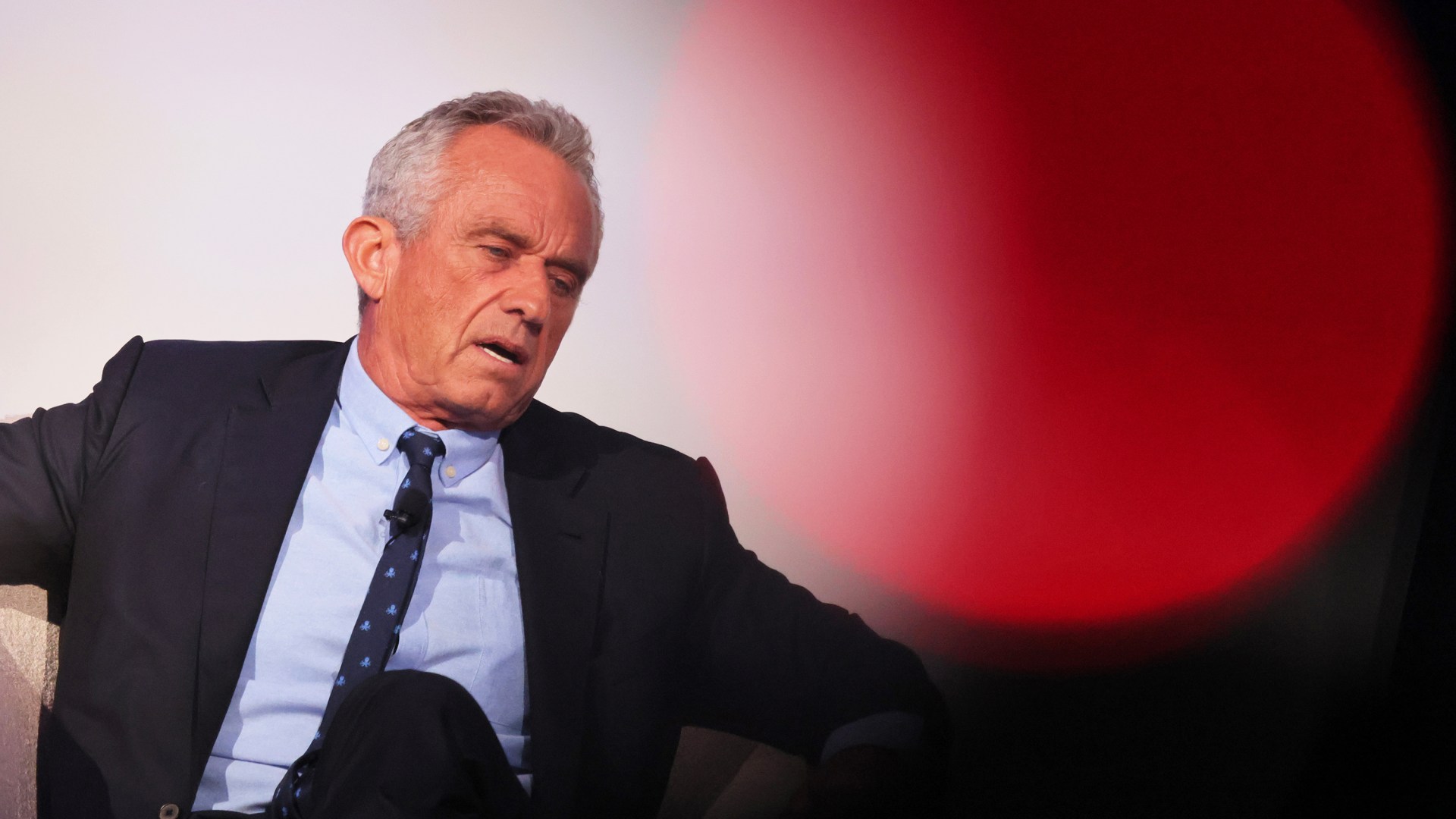
Robert F. Kennedy Jr.

Robert F. Kennedy Jr.

Christianity Today August 9, 2023
Michael M. Santiago / Staff / Getty

There’s not much of a Democratic presidential primary race for 2024. President Joe Biden leads the field with the support of two-thirds of Democratic voters, and the Democratic Party won’t hold any debates. Democrats’ primary voting next spring is likely to be little more than a formality.

But if any declared Democratic candidate has a real chance of unseating Biden, it’s Robert F. Kennedy Jr., who’s polling around 14 percent among Democrats and has brought in a respectable fundraising haul. Curiously, though, Kennedy seems to be finding a core constituency outside his party: He’s increasingly popular on the right, raking in GOP donor cash, being floated as an aisle-crossing cabinet or vice presidential pick, and posting strikingly high favorability ratings with Republican voters.

Statistically, that means RFK Jr. is increasingly popular among white evangelicals too. (He’s certainly popular with my evangelical relatives of the boomer generation.) Part of that may be nothing more than mid-century nostalgia—but, in my observation, nostalgia isn’t the rationale RFK Jr. fans tend to cite.

They like his anti-establishment vibes, his hostility to the same institutional authorities his supporters already distrust. RFK Jr. hails from the most insider family in American politics and he’s closely tied to influential figures in Hollywood. And yet he has successfully cast himself as that most desirable figure in right-of-center politics today: The Outsider, skeptical and freewheeling, ever irreverent toward institutional pieties and dismissive of—as we’d have said in his father’s era—The Man.

But that’s the problem: Anti-establishment vibes aren’t reason enough to support a politician. And if we look past those vibes to policy and personal history alike, Kennedy is a strange bedfellow for evangelicals.

Let’s start with his policies. While he’s presented himself as a victim of and champion against censorship, Kennedy is far from a First Amendment purist. As Reason’s Matt Welch has documented in a rundown of RFK Jr.’s more authoritarian tendencies, Kennedy has called for criminal consequences for those who dare to disagree with him on climate change.

In 2014, for example, he said the Koch brothers (industrialists and major political donors, generally to libertarian and Republican causes) “should be in jail … enjoying three hots and a cot at The Hague.” Politicians who share their climate views, he added, are “contemptible human beings,” and there ought to be “a law that you can punish them under” for their global warming wrong-think.

A month later, Kennedy penned an article calling for an “attorney general with particularly potent glands [to] revoke the charters” of center-right think tanks AEI and CEI—by which he meant that they and other conservative nonprofits should be forcibly shuttered by the federal government for their beliefs.

Then there’s abortion. While evangelicals remain significantly more pro-life than the public at-large, Kennedy has abandoned older pro-life convictions to declare himself pro-choice. “I don’t think there’s anyone in this country who has worked harder for medical freedom, for bodily autonomy, than me,” he told New Hampshire voters this summer. He’s unwilling, he said, to let the government tell “a woman to bring a child to term that she doesn’t want.” Though he allowed that abortions are tragic, and that third-trimester abortions should be ended “in other ways,” Kennedy was clear that banning abortion was the “worst solution” for “decisions that should belong to a woman.”

Beyond these and other policy differences, RFK Jr.’s personal life deserves a mention too. Though Catholic, his comments on God and Christian theology are confused. He has leveled the “great books of [organized] religions” as equal moral authorities and described conversion as a process of imagining God as a perpetual hall monitor. He’s also named creation, not Jesus (Col. 1:15–20), as God’s greatest revelation. And, in an echo of former president Donald Trump’s infamous biography, Kennedy, too, is thrice married, a detail that once would’ve mattered in evangelicals’ political decisions.

What seems to matter instead—perhaps supremely—for many RFK Jr. supporters is his anti-establishment bent, and the appeal of Kennedy’s posture of suspicion is easy enough to understand. Skepticism of authority is perhaps the deepest American political instinct. Though expressed differently across ideological lines, it’s ever-present and often a very healthy habit of mind: A willingness to scrutinize the pronouncements of power is necessary for good self-government.

And if this cynicism has become overgrown in the last few years, well, that’s understandable too. American trust in institutions and experts was already in decline, and mishandling of pandemic policy may have given it a permanently low ceiling. Two years of noble lies, official hypocrisy, and politics repackaged as capital-S Science did real damage to many Americans’ inclination to give authorities the benefit of the doubt.

Still, “understandable” is not the same as “right.” We can and should maintain a healthy skepticism of concentrated power, but that doesn’t mean spreading a blanket cynicism toward institutional authorities or a reflexive doubt of real expertise.

We constantly rely on experts to keep our complex society reasonably functional, and many of the social troubles we all bemoan—loneliness, alienation, political violence and fragmentation—are linked to the breakdown of communal institutional life, including the life of the church.

Authority can undoubtedly be a dangerous thing, but it is not an inherently bad thing. Scripture repeatedly calls Christians to submit to authority (e.g., Rom. 13:1–7, 1 Pet. 2:13)—whenever doing so does not conflict with God’s higher commands (Acts 5:29, Rom. 13:8–10)—and, like many tools, authority can be wielded for both good and ill.

But forming political alliances on anti-establishment vibes alone doesn’t make that crucial distinction. It has ample energy for tearing down, but little thought for what we might rebuild. And after an unsettled political decade, we should be wary of taking up whatever sledgehammer comes to hand.

Bonnie Kristian is editorial director of ideas and books at Christianity Today.

News

Despite Trump’s Indictments, Evangelicals Continue to Back His 2024 Run

Many evangelicals have stuck with the former president through his legal troubles, moral failings, and public indiscretions.

Trump supporters pray at a campaign rally in New Hampshire.

Trump supporters pray at a campaign rally in New Hampshire.

Christianity Today August 9, 2023
Robert F. Bukaty / AP

On the eve of former president Donald Trump’s indictment on charges that he attempted to overturn the presidential election of 2020, Franklin Graham, head of the Billy Graham Evangelistic Association and Samaritan’s Purse, appeared on Greta Van Susteren’s show on Newsmax to share his take.

“It’s a sad day for America,” Graham said.

The indictment—the third Trump has faced in the span of four months—“is an attempt to … inflict enough political wounds on this man to where it will be impossible for him to run” for president in 2024, Graham said.

According to Graham, this is but the latest attempt by Democrats to discredit Trump. First, there was Robert Mueller’s investigation on whether Trump colluded with Russia in the 2016 election. Then, a probe into the Trump Organization’s tax returns, and finally, accusations of sexual harassment by women that “seem to come out of the woodwork.”

Next week Trump may face yet more charges in Georgia for attempting to interfere in the presidential election of 2020. The investigation has taken nearly two and a half years and could bring charges to nearly 20 people.

After all the scandals Trump faced in his presidency and beyond, is he still susceptible to “political wounds”?

Trump’s political career has been morally fraught from the start, and a plurality of evangelical supporters stuck with him through the Access Hollywood tape, the white supremacist Unite the Right rally in Charlottesville, revelations of Trump paying hush money to Stormy Daniels, his impeachments, and the Capitol insurrection.

Some conservative evangelicals may be turned off by Trump’s legal fights and pivot to a different GOP candidate in 2024, said John Fea, a professor of American history at Messiah University. But “most conservative evangelicals gave up on the politics of character in 2016” and still consider their relationship to Trump as a pragmatic bargain.

“They have maintained their contractual relationship with Donald Trump. This means that they will essentially ignore his moral failings and his criminal indictments in exchange for Supreme Court justices, anti-abortion laws, religious liberty (as they define it), anti-‘woke’ classrooms, and the possibility of overturning Obergefell v. Hodges,” Fea said via email. “Little has changed in eight years.”

Trump’s defenders extend beyond his closest acolytes. According to a New York Times/Siena College poll from July, 76 percent of self-identified white evangelicals believe the former president has not committed any serious federal crimes.

Like Graham, Tony Suarez, a pastor and the chief operating officer of the National Hispanic Christian Leadership Conference, also dismissed the latest charges against Trump as “games” played by Democrats to try to block his presidential bid, Religion News Service reported.

Richard Land, the former president of Southern Evangelical Seminary and executive editor of The Christian Post, called the indictment a “jihad” by the Department of Justice against Trump.

Others who do not support Trump’s third bid for the presidency also have raised concerns that Trump’s indictment is politically motivated. In a recent article, Albert Mohler, president of The Southern Baptist Theological Seminary, questioned the legal reasoning behind the charges.

“Lying and manipulating and conspiring to gain political goals is, let’s be honest, pretty much a bipartisan enterprise in politics, and especially in the Oval Office. This does not justify any moral wrong, but there is a huge difference between moral wrong and criminal wrongdoing,” Mohler wrote in World.

According to an Ipsos/ABC News poll, most Americans believe the charges are serious, but are divided on whether Trump should be charged with a crime. Nearly half think the charges are politically motivated.

After his indictment in the spring, Republican support for his White House run swelled in the polls, with 81 percent of white evangelicals maintaining a favorable view of the former president.

Robert P. Jones, president of the pollster group PRRI, notes that white evangelicals also seem to have developed a higher tolerance for political misbehavior.

In 2011, PRRI asked Americans whether “an elected official who commits an immoral act in their personal life can still behave ethically and fulfill their duties in their public and professional life.” That year only 30 percent agreed with the statement, but in 2016 when Trump won the GOP nomination, their share spiked to 72 percent—a number that remained largely unchanged in 2020 when PRRI asked the question again.

Another factor likely influencing evangelicals’ view of Trump’s indictment is the upcoming presidential election. In the minds of many evangelicals, Trump is the only viable candidate who can stand against President Joe Biden.

According to the Times/Siena poll, 62 percent of white evangelicals said they believed Trump could defeat Biden, compared to just 28 percent who said Florida governor Ron DeSantis could do so.

But among some evangelicals, Trump’s sway may be slightly weaker. In Iowa, where the first caucus for the GOP nomination will be held, Trump has the support of 50 percent of white evangelical voters, compared to 56 percent nationwide, according to other Times/Siena polls. DeSantis, Trump’s strongest rival, is also polling better in Iowa than nationwide.

Bob Vander Plaats, president of The Family Leader, an Iowa-based organization that recently hosted an evangelical forum for the GOP nominees, is one evangelical who wants the Republican Party to move beyond Trump. In a recent exchange with conservative radio host Todd Starnes about whether presidential candidates should attend church, Vander Plaats brought up Trump’s character.

“The problem people of Faith have with [Trump] isn’t Church attendance. Has everything to do with the ‘fruits of the Spirit,’” Vander Plaats posted on Twitter (now X).

Vander Plaats closed his post with a hashtag that seemed to reference Matthew 7:16, a passage where Jesus warns his disciples about false prophets.

Among Trump’s GOP rivals, his indictment seems to have barely caused any ripples. Most avoided mentioning Trump or the charges at an event on Sunday in Iowa—except Mike Pence, who took the opportunity last week to launch a new product for his campaign.

For $30, supporters of the former vice president can now buy T-shirts emblazoned with “Too Honest,” a jab apparently aimed at Trump after he told Pence, “You’re too honest,” when he refused to help overturn the election results of 2020.

Church Life

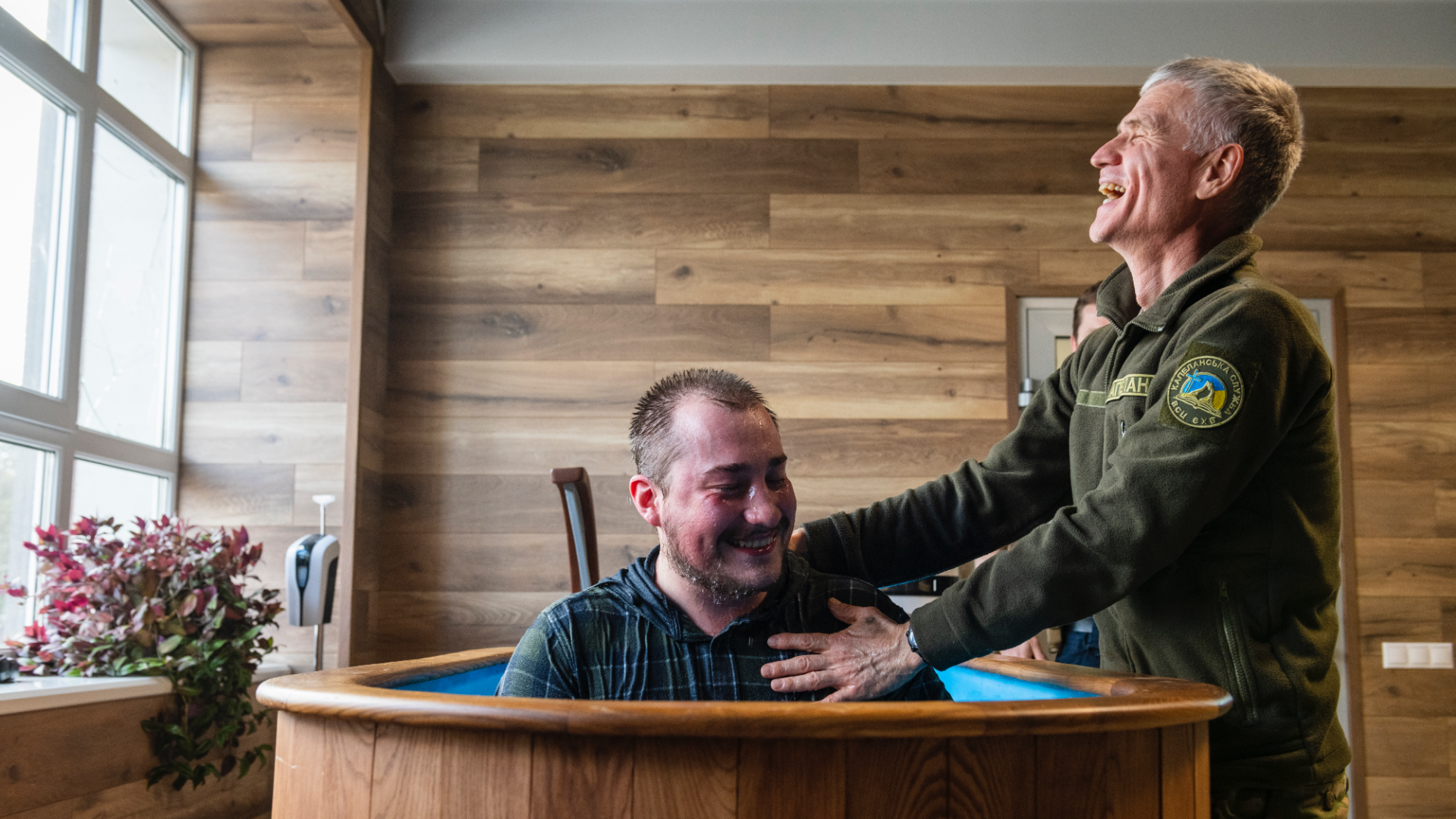
Putting Their Prayers on the Line, Evangelical Chaplains Minister on Multiple Fronts in Ukraine

New rules integrate pastors into the military to help with physical and spiritual needs as fighting continues.

Christianity Today August 9, 2023
Joel Carillet

Of all the dangers of war, I didn’t think about speeding until I was in a car of evangelical chaplains departing the besieged city of Bakhmut, Ukraine. It makes sense. A slow car is an easier target. We were not a slow car.

But the speed is also a testament to the urgency these chaplains feel. There is so much to do. There aren’t enough hours in a day. And the need grows with the war.

There were no chaplains in the Ukrainian military before. Pastors and priests would sometimes embed in a unit as civilians, but nothing formal. That changed with the invasion. Facing an existential crisis as a nation has made many in Ukraine turn to religion. Fighting in the cities, suburbs, and countryside has turned soldiers’ thoughts to timeless things, prompting many to ask for chaplains. There are people who are hungry and hurting and alone. The chaplains are not going to drive slow.

The Ukrainian Chaplaincy Service was established in March. The first 30 who were trained were Ukrainian Orthodox, Eastern-rite Catholic, and evangelical. Only about 2 percent of the country is evangelical, but many Baptist, Pentecostal, and free church pastors across the country have volunteered to minister as chaplains.

By July, the Ukrainian military had 160 official chaplains. There are still a lot of volunteers too.

Vasily Povorozniuk, pastor of Compass Church in Zhytomyr, is a volunteer. He drives more than 500 miles to the front to care for soldiers and the people who live near the shifting battle lines. Povorozniuk is a former military man who points to Cornelius, the Roman centurion sent by an angel to the apostle Peter (Acts 10), as a model for his ministry. It was a soldier and his family and friends who were able to take the message of Jesus Christ to the pagans, Povorozniuk says. How many non-Christians can he and his family and friends reach in Ukraine if they are willing to not worry too much about safety?

He’s been joined on many trips by deacons from his church, and now some of them make their own visits to the front, as well as minister to the growing number of widows and their children.

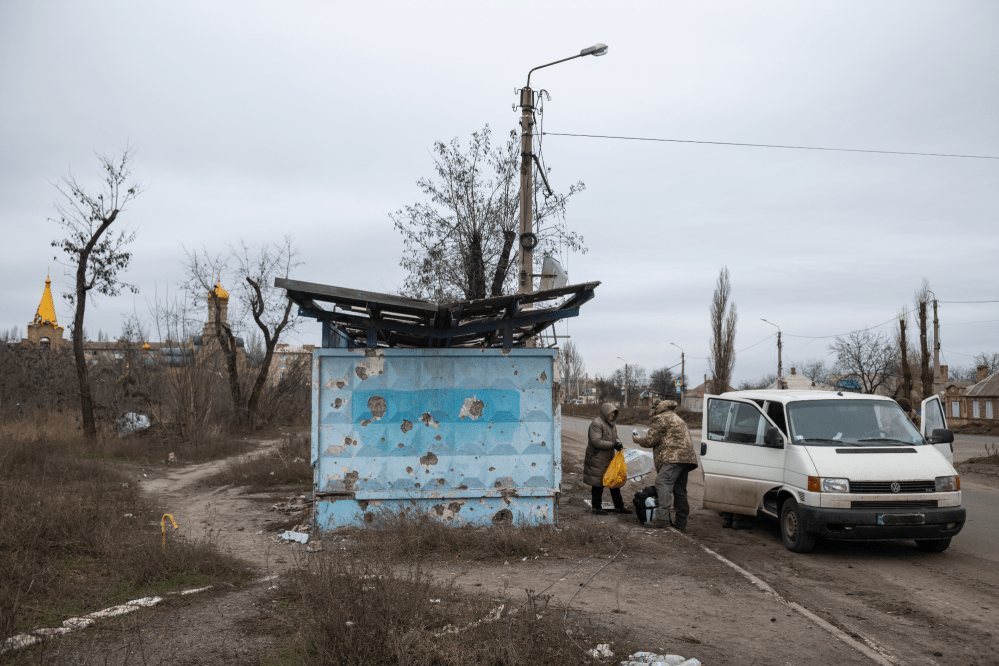
Chaplains from different evangelical churches join together to drive hundreds of miles with a van full of supplies. They offer groceries to those in war-torn areas.Joel Carillet
Chaplains from different evangelical churches join together to drive hundreds of miles with a van full of supplies. They offer groceries to those in war-torn areas.

When Povorozniuk and several other chaplains head into Bakhmut for a three-day visit, they go without a strict itinerary. They will visit the family of a local pastor who chose not to evacuate, bringing them supplies. They make a pastoral visit to a church member stationed in a nearby town. And they will help whoever they see on the road.

The back of their van is filled with food and other necessities, and when they pass a civilian, often an elderly person, they pull over and hand a bag of items through the window. When they pass a couple of soldiers struggling with a shredded tire, they stop to see if a spare tire in their own vehicle will work. When they pass a tank where crew are fixing a mechanical issue, they stop to offer greetings and a snack.

They will also minister at a stabilization point, where wounded soldiers are treated before being sent to hospitals further from the front. They bring food and supplies, and set up a coffee machine. When doctors or soldiers ask for prayer, they put a hand on their shoulders and pray. When a soldier is pronounced dead and, under a tree, is stripped of his winter gear and boots before being placed in a body bag, they stand over the body and help those present offer a few words up to God.

They will be back in their respective cities in time for church on Sunday. This is another reason for the speed. Imagine ministering at a church in Cincinnati and then driving to New York City to minister in a war zone and then getting back to Cincinnati by Sunday morning.

In that car full of evangelical chaplains, I thought we would slow down when we got clear of the front, away from the danger. We never did. They never do.

Evangelical chaplains at a stabilization point minister to the wounded and the medics with prayers and supplies.Joel Carillet
Evangelical chaplains at a stabilization point minister to the wounded and the medics with prayers and supplies.
There are now about 160 official chaplains in the Ukrainian military. Many of them are evangelical pastors.Joel Carillet
There are now about 160 official chaplains in the Ukrainian military. Many of them are evangelical pastors.

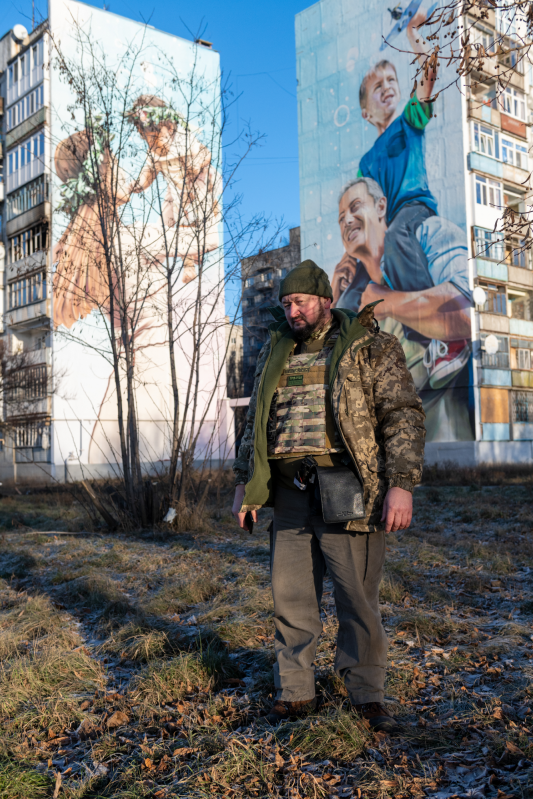
Zhenia Yevheniy Bondarenko has been volunteering as a chaplain since 2014, when armed conflict began as Russian-backed separatist seized territory in eastern Ukraine. In those early days, he was simply a church pastor bringing food and prayer to military personnel at checkpoints and lonely outposts located not that far from his hometown. Almost a decade later, some of the junior officers he had ministered to are now senior men in the military, and their relationship continues. He also carries in his heart the many who are no longer here.

Driving through the countryside between Mykolaiv and Kherson, Bondarenko talks about ministering to soldiers in war—the terrifying thunder of bombardment and what it is like to be with soldiers in such violent, fragile circumstances.

There were no chaplains in the Ukrainian military before the Russian invasion. The first officially joined in March 2023.Joel Carillet
There were no chaplains in the Ukrainian military before the Russian invasion. The first officially joined in March 2023.
Zhenia Yevheniy Bondarenko has been volunteering as a chaplain since in 2014.Joel Carillet
Zhenia Yevheniy Bondarenko has been volunteering as a chaplain since in 2014.

Bondarenko has developed relationships with many civilians in these heavily damaged villages. He stops with a team at one house to put a temporary cover on a destroyed roof. He stops at another to deliver groceries. At a third, he checks to see why a woman he met and helped months ago is not replying to his messages.

The woman’s only son, a soldier, was killed last year, and she moved to this region to be near his grave. He fears that something has happened to her too. He finds the house, parks the car, knocks on the gate, and an elderly couple open it. They tell him that she was killed in an accident.

In so many ways, chaplains bear witness to tragedy. They carry it with them as they speed to the next person to pray with.

“The motto of chaplains is ‘Being there,’ God’s presence,” one of the first official chaplains in Ukraine told the Associated Press. “This is the mission of the chaplain.”

Joel Carillet is a freelance photographer based in Florida.

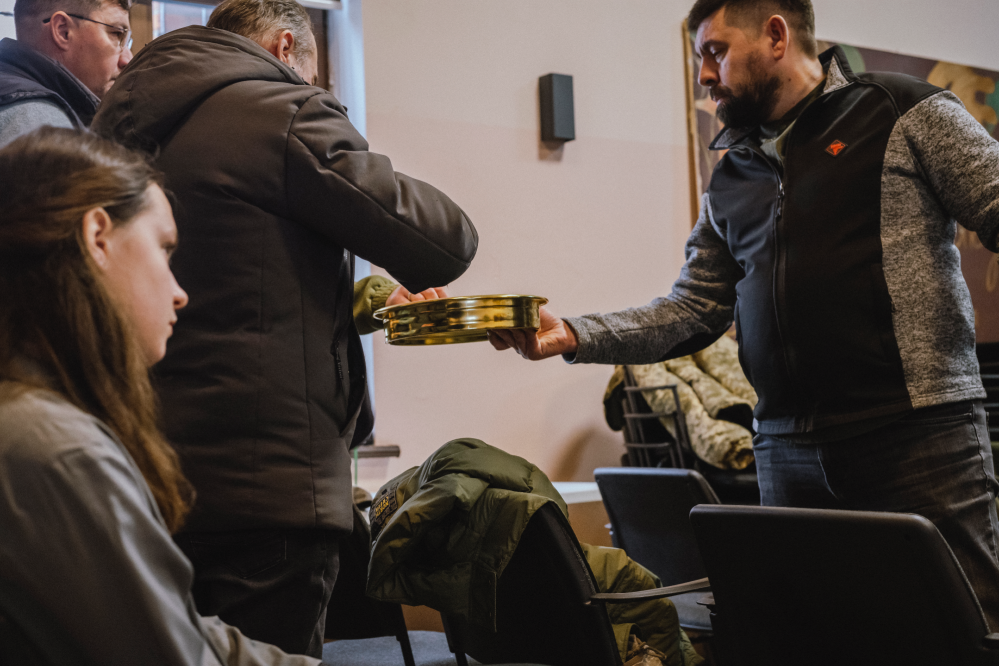
Evangelical ministers serve each other communion at a conference for volunteer chaplains.Joel Carillet
Evangelical ministers serve each other communion at a conference for volunteer chaplains.
Theology

Don’t Let the ‘Back-to-School Rush’ Diminish Your Humanity

Whenever we enter a new season of life, we must care for our souls in the process.

Christianity Today August 8, 2023
Note Thanun / Unsplash

The beginning of a new school year can bring relief or disappointment, or both. As a mom of three young children, I’m looking forward to the return of familiar school-year routines—and I’m also dreading the return of early morning tardy bells. My kids feel their own ambivalence: It’s exciting to get a new lunchbox, but scary to walk into a new classroom full of people.

Almost all transitions create a subtle (or not so subtle) cocktail of emotions. But transition times are often so busy that we don’t attend to our interior lives in the flurry of tasks and deadlines. The result is a kind of survival mode that runs on adrenaline and cultivates numbness. Last August, I Tweeted a summary of my family’s first three days of school: Day 1—“Everything is awesome!” Day 2—“Everything is terrible!” Day 3— “Where am I?”

In the modern West, we value productivity and efficiency. A “successful” start to the school year looks like securing all the items on every supply list and making it to all the meet-the-teacher events on time and intact. Some of us thrive on these kinds of tasks. Others of us feel defeated and frazzled by them.

But for all of us, the busyness of transitions can mask the slower, deeper work of spiritual formation that new seasons call forth in us and in our relationships. In other words, survival mode can only serve us up to a point. It might help us cope (and get those supply lists taken care of) but it cannot steward our hearts.

As Christians, we have access to a different, more layered mindset to help us navigate the back-to-school rush. Instead of merely focusing on external routines and benchmarks, we can prepare for the intangible work of soul care that the stresses of transition will bring. We can embrace spiritual practices that cultivate grace, both for ourselves and for those in our care.

Managing change usually involves emphasizing the positives. Leaders of people and organizations cast a vision for what can be, and we invite others into an exciting new future. But change also involves loss. A family moving to a new house means saying goodbye to a familiar place. A church calling a new pastor means actualizing the departure of a previous leader. A child starting a new school year means the end of slower summer days.

It's tempting to suppress or minimize the losses that accompany change, especially if those losses don’t seem very significant. We don’t want to seem ungrateful for the good new things ahead or lose momentum when leading others toward the future. But ignoring grief is counter-intuitive because repressed sadness prevents us from entering freely into joy.

It might feel safer to distract our children from their sorrow. But when we give them space to name and process their grief—even over small things like the end of summer or the absence of a favorite classmate—we honor their humanity and help them live more integrated lives.

Making room for grief doesn’t necessarily need to be complex or serious. Sometimes it looks like simply validating a child’s feelings when they express a complaint or lament, rather than immediately attempting to redirect it. Sometimes it looks like offering the same permission to ourselves—to name what’s hard without qualification or a positive spin.

Other times, sadness can be drawn out through conversation. My oldest child was three when we moved from Virginia to South Carolina to be closer to my extended family. As we packed up our house, I’d ask him, “How do you feel about moving to a new home?” He usually replied, “A little bit happy and a little bit sad.” That became an oft-repeated phrase for us over the next few months and gave us a framework for parsing out what felt happy and what felt sad about our big move.

Feelings aside, transitions like starting school (especially new ones) can also cause stress. When people living in close proximity are all stressed, we should expect friction. Fuses will be short. Offenses will happen. This might seem obvious, but it’s easy to forget in the moment when a child is melting down because he wanted triangle-shaped sandwich halves, not squares (even though he specifically requested squares).

Setting our expectations in advance prepares us to respond with grace toward others in our households—or our carpool lines or our cubicles—who are processing significant changes in their daily routines.

But even with realistic expectations, we will still fail. So we must be prepared to practice repentance and reconciliation. We must be ready to say “I’m sorry” and “I forgive you” a lot during stressful life transitions. In some ways, this practice is liberating. It frees us from any expectation to be perfect and evokes gratitude for the God of grace.

When James wrote, Confess your sins to one another that you may be healed (5:16), he was referring primarily to physical healing. But interpersonal healing also takes place when we are freed from the pressure to be flawless. This is particularly important in the era of mommy bloggers and other social media influencers modeling their seemingly perfect family lives.

When we practice repentance and reconciliation in our homes, we create a culture of grace. This begins with modeling it ourselves. Apologizing to our children in humility demonstrates our shared need for a Savior. We lead the way in illustrating that when “we confess our sins, [God] is faithful and just and will forgive us our sins and purify us of all unrighteousness” (1 John 1:9).

My kids and I pray “sorry prayers” as part of our bedtime liturgy, and it has been formative for me to do this alongside them. Sometimes when I confess my sin, they want more details: “What did you say in a mean voice to Daddy?” Other times they are probably not even listening. But this simple practice has helped me to see myself as their equal, a co-heir of the grace God gives to all his children.

Often after an argument and its resolution, someone in my house realizes that they need a snack, or a hug, or a nap. Sometimes if we address those needs on the front end, the argument is avoided altogether. The summer-to-school season comes with times of heightened stress and transition, and attending to basic physical needs is especially important.

My college pastor used to advise us not to make any big decisions when we were tired, hungry, or cold. It became a kind of joke among my friends, but now as a parent, I understand this maxim on a new level. We are material beings: Our emotional, mental, and even physical health is integrally connected to bodily processes like nutrition and sleep. It might seem spiritual to deny or minimize this, but when God made us from the dust of the earth, he called it “very good” (Gen. 1:31).

Tish Harrison Warren writes,

We are not gnostics. We worship a God who was fully incarnate. He ate lunch, skinned his knees, and felt tired. Yet, it’s so easy to think that the really spiritual things are cognitive, not bodily. We need to believe the gospel in our brains, read Christian books, pray with words, feel worship in our hearts. But if we are to live lives of discipleship, we must do so first in our bodies.

And so, after a long day at school or work, sometimes the most spiritually mature thing to do is to sit down and eat a snack or go to bed early. This is part of how we care for others and for ourselves. In a world that valorizes overwork and burnout, embracing our limits is a subversive act. And in a world that promotes disembodiment, honoring the physical needs of our children is an act of discipleship.

When we attend to our feelings, our relationships, and our bodies—without shame or condemnation—we steward the gifts God gave us. We remember what he said of our humanity: “It is very good.”

Hannah King is an Anglican priest and writer serving at Village Church in Greenville, SC.

Books
Review

The Surprising Staying Power of Dispensationalism

As a school of theology, it’s in decline. As a cultural and political force, it’s more influential than ever.

Christianity Today August 8, 2023
Illustration by Mallory Rentsch / Source Images: WikiMedia Commons / Getty

My father traveled from Texas to Minnesota for my seminary graduation. At some pre-ceremony gathering, he was chatting with my adviser about the latter’s work in biblical hermeneutics. “But,” he asked, befuddled, “don’t you just sort of read the Bible and understand it? Doesn’t it just mean what it says?”

The Rise and Fall of Dispensationalism: How the Evangelical Battle over the End Times Shaped a Nation

The Rise and Fall of Dispensationalism: How the Evangelical Battle over the End Times Shaped a Nation

Wm. B. Eerdmans

400 pages

Seven years later, Republican presidential candidate Nikki Haley kicked off her campaign with a speech prefaced by televangelist, author, and activist John Hagee. Opening with a prayer, he praised Haley, who’s seeking to be commander-in-chief of the United States, as a “defender of Israel.”

And around the same time, I was working on an article about American evangelicals’ skepticism of human-caused climate change. The inevitable question I had to address: Do evangelicals think it’s okay to abuse the earth because we’re all just waiting around for the Rapture? As Fox News host Sean Hannity said in 2022, “If [the world] really [is] gonna end in 12 years, to hell with it all! Let’s have one big party for the last 10 years, and then we’ll all go home and see Jesus.”

The link between these three vignettes is the subject of Daniel G. Hummel’s astute new history, The Rise and Fall of Dispensationalism: How the Evangelical Battle over the End Times Shaped a Nation. Dispensationalism is commonly characterized as an eschatology, but as Hummel demonstrates in his two-century survey of its ecclesial, scholarly, political, and cultural development, “the end times are just one dimension of the theology of dispensationalism and its wider legacy.”

The ”plain meaning” model of biblical interpretation my father invoked, Hagee’s assumption that support for the state of Israel is a key qualification for the American presidency, and the widespread perception that evangelicals don’t care about a planet we expect to burn—if anything like that is familiar, Hummel says, “then you’ve seen patterns of thinking that have been deeply shaped by dispensationalism.”

Rise and Fall’s claim is ambitious: Hummel contends that dispensationalism shaped not just American fundamentalism or evangelicalism but the United States as a whole. To this day, he writes, dispensationalism remains “one of America’s most resilient and popular religious traditions, one that taught Christians to wait with anticipation for a coming kingdom of God that would wipe away the warring kingdoms of men, but not just yet.”

But it has also moved well outside church walls—so much so that “Americans of many backgrounds” have “an essentially premillennial vision of the future,” a secularized expectation of “declining social cohesion and rising existential threats that [will] end in era-defining catastrophe.” As a formal school of theology, dispensationalism has sharply declined in the last 50 years. But as a cultural and political force, its influence is stronger than ever. In that sense, we’re all dispensationalists now.

Five pieces

Rise and Fall is detailed but not difficult. Hummel writes in clear prose accessible to lay readers, and his interest in dispensationalism isn’t merely academic. Raised in a family whose theology shelves were stocked with dispensationalist authors, he now works for a Christian academic organization at the University of Wisconsin-Madison and has published here at CT.

Though not without authorial perspective, then, this is not a polemical work. Nor does it take the tone of the cultured anthropologist braving the fundamentalist hinterlands. Hummel is never contemptuous toward his subjects, but he makes no attempt to salvage ideas from ties to dispensationalism that their adherents might find embarrassing. Rise and Fall is a workmanlike book, and its “great contribution,” as Scandal of the Evangelical Mind author Mark A. Noll writes in a glowing foreword, “is to take a story that ‘everyone knows’ and show that what ‘everyone knows’ has barely scratched the surface.”

That story begins by delineating the scope of dispensationalism as a theology. In Hummel’s sketch, it includes five big pieces, with its distinct eschatological timeline—rapture, tribulation, antichrist, divine preservation of a remnant of Israel, the Second Coming, Armageddon, the binding of Satan, Christ’s 1,000-year reign from Jerusalem, a second defeat of Satan, the final judgment, and a blessed eternity with God—only the flashiest.

What are the other pieces? Dispensationalism takes its name from the piece that has proven least influential in American culture writ large: its theory of time, which divides human history into “a series of dispensations that inevitably ended with the failure of humans to fulfill their obligations to God.” (In most tellings, there are seven dispensations total, and we’re at the bottom of the sixth.) Closely linked to that is the system’s theory of humanity, which is strictly divided into God’s two peoples—the church and Israel, their respective heavenly and earthly purposes forever distinct—and “the nations,” who are everyone else.

Dispensationalism includes, too, “a unique biblical hermeneutic.” However, this evolved over time, from early investment “in symbolical, allegorical, and typological readings of Scripture” to an insistence on “plain,” “commonsense,” or “literal” readings of the 20th and 21st centuries that tend “to equate nonliteral readings of prophetic passages with a rejection of inerrancy.”

And dispensationalism has a distinct theory of salvation, the piece that alone may rival its eschatology in how it dominates popular conceptions of evangelicalism. This “free grace” model calls to mind praying a one-time “sinner’s prayer” or “accepting Jesus into your heart” at the revivalist’s feet. As Hummel explains, it “lowered the bar of salvation to little more than a onetime mental assent to the proposition that Jesus is Savior,” and it overwhelmed “broader American understandings of being ‘born again.’”

With this description in place, Hummel turns to his history proper. He traces the development of dispensationalism from Plymouth Brethren preachers like John Nelson Darby in rural Ireland through institutional churches like Chicago’s Moody complex in the Reconstruction Era and the Gilded Age to fundamentalist-liberal controversies of the early-20th century and the mid-century rise of what we now call evangelicalism. (CT has a few cameos, and CT founder Billy Graham makes an extended appearance.)

The latter half of this timeline, from around 1920 onward, will likely be of greatest interest to most readers, or at least to those approaching the book as observers of evangelicalism today. Stocked with many characters still actively shaping the nation, it’s a devastating account of dispensationalism’s commercialization. The popularized dispensationalism most Americans now know was fashioned, Hummel argues, “not by theologians but by the theologically uninterested or illiterate,” with deleterious effects for the evangelical movement and American society as a whole.

Dispensationalism’s political consistency across decades is particularly striking. The very term conservative as a preferred political and theological label, long since part of the furniture, has dispensationalist roots. The concept of the “world system”—an older generation of dispensationalists’ term for “the interlocking institutions, organizations, and structural powers helmed by elites that ran the world”—has gone a hundred years unchanged. Evangelist Billy Sunday’s 1918 insistence that “no man can be true to his God without being true to his country” would slide neatly into many Republican stump speeches in 2024. Pentecostal preacher Aimee Semple McPherson beat the God’s Not Dead franchise to the punch in 1923 with a sermon entitled “Trial of the Modern Liberalist College Professor versus the Lord Jesus Christ.”

Even the latest vogue in right-wing conspiracism—You’ll own nothing. And you’ll be happy. You will eat the bugs. You will live in the pod.—was prefigured by Left Behind author Tim LaHaye in 1983, who charged that the goal of “the Illuminati, Bilderbergers, Council on Foreign Relations, and, more recently, the Trilateral Commission” was “to reduce the standard of living in our country so that someday the citizens of America will voluntarily merge with the Soviet Union.” Pop dispensationalism gave “cosmic meaning to the mobilization of Christian voters” in prior generations, Hummel observes, and does the same today.

Three questions

Hummel’s concluding chapters bring his account into very recent memory, and they left me with three big questions: one he raised and two I wish he’d at least briefly addressed.

First in the latter category is a matter of history. Hummel makes clear that the question of theological precedent has long been a point of contention around dispensationalism generally and the doctrine of the Rapture specifically. From the very beginning, Darby “insisted [his innovations] were recoveries rather than novelties,” and into the late-20th century, dispensationalists and their critics alike “charged the other with lacking premodern precedents … with both sides claiming support in the early fathers.”

As Hummel notes, the late Christian reconstructionist Gary North promoted research “attempting to discredit the origins of the rapture by tracing them to a mentally unstable teenage girl, Margaret MacDonald, who saw visions in 1830, and from whom John Nelson Darby purportedly stole the idea of an imminent rapture.” Hummel labels that origin story a “conspiracy theory [that] nonpartial experts found … unlikely,” but he doesn’t clarify how Darby hit on the idea of the Rapture or to what extent claims of its long theological pedigree have merit.

Second, Hummel documents how past political upheavals played a role in shifting the dominant American perspective on the end times. For example, the “days of postmillennial consensus [among American Christians] ended in the 1860s,” he writes, as “many evangelicals who experienced the [Civil War] and its aftermath” decided that “correcting modern social ills [was] too difficult an endeavor and, in any case, a secondary task to evangelization.” Conversely, some in the early Religious Right, believing political victory was within reach, “rejected an imminent rapture and future kingdom as antithetical to urgent political organizing.”

But Hummel doesn’t explore whether some comparable shift may be looming as Christian nationalism and other illiberal mindsets gain currency. If you have new hope of establishing explicitly Christian governance, if you believe (as former President Donald Trump said in March) the next presidential election is “the final battle” for America, if you sincerely expect to “take back” your country, is there room for the Rapture in your 10-year plan? Sociologist Samuel Perry has speculated on Twitter that “we could see an increase in post-millennialism in Christian Right circles as post-mil provides better rationale for Christian nationalist goals than the dominant pre-mil view.” Hummel’s perspective would be a valuable contribution to that discussion. [Author’s note: I was able to speak with both Perry and Hummel for a CT column on this subject after writing this review but before its publication.]

Finally, Rise and Fall ends with a challenging observation:

In the wake of [scholastic] dispensationalism’s collapse, the eschatological sight of the American church has blurred. “Good!” skeptical readers might exclaim—better a vague vision than a false one. And yet the story of dispensationalism does not allow for such an easy judgment.

The theological void left by dispensationalism—one of only a few sustained attempts to create a fundamentalist theological system in the twentieth century—has not remained empty. Evangelicals, and Americans more broadly, have only multiplied doomsday speculation since the collapse of dispensational theology in the 1990s. Its remnants in pop dispensationalism have been thrust into an ocean of raging American apocalypticisms that includes doomsayers of the Anthropocene, Replacement Theory extremists, QAnon trolls, techno pessimists, and neo-Malthusians.

For all the problems that theological apocalypticism posed in the twentieth century, it is likely that irreligious apocalypticism in the twenty-first will prove to be even more disruptive.

As one of those skeptical readers, this is the question I’ll have to mull: Are American Christians better off after dispensationalism’s fall than before it?

That is, have we moved on to a faithfully, productively vague vision of the end times, or did we plunge into a multiplicity of false visions instead? And do we sincerely look forward to Christ’s return, however the timeline may run? Whatever their faults, the dispensationalists never failed to say with fervor, “Come, Lord Jesus.”

Bonnie Kristian is editorial director of ideas and books at Christianity Today. She is the author of Untrustworthy: The Knowledge Crisis Breaking Our Brains, Polluting Our Politics, and Corrupting Christian Community.

Church Life

Comedian Leanne Morgan Says God Wants Us to Laugh

With her Southern accent, self-deprecation, and funny family stories, the 57-year-old mom and grandmother wants to use standup to bless audiences.

Leanne Morgan

Leanne Morgan

Christianity Today August 8, 2023
Courtesy of Leanne Morgan

After 22 years in standup comedy, Leanne Morgan is having a breakout year. She completed a 100-city comedy tour, her first Netflix special ranked in the platform’s top 10, and she landed a part in her first movie (a forthcoming Amazon release starring Reese Witherspoon and Will Ferrell), fitting this interview into her Atlanta filming schedule.

But just a few years ago, the 57-year-old mother and grandmother was on the brink of quitting comedy altogether. “I told my husband, ‘Should I just bow out and start a mercantile business?’”

Morgan, with her trademark Tennessee drawl and shock of long blond hair (“yesterday’s set hair”), had come close to several sitcom deals and was on the verge of a 50-city tour in 2020 when the pandemic shut everything down. But she felt called to persevere.

“I prayed about it and God never shut the door,” she told CT. “He knew so much better than I did.”

Instead, Morgan began offering “porch talks” on Facebook during the early months of COVID-19, wearing no makeup and relaying anecdotes about living in close quarters with her husband, running down the garbage man, and making Jell-O salads for her elderly parents.

She signed off each porch talk by saying, “Don’t worry—everything’s going to be alright!” Followers found comfort in her relatable pandemic struggles, zingy humor, and funny comedy clips.

Morgan’s mostly-PG material fits in with clean comedy circles and is featured in Dry Bar Comedy, the popular platform launched by Angel Studios (then VidAngel) in 2017. Andrew Stanley, son of Atlanta megachurch pastor Andy Stanley, often opens for her.

As a Christian, Morgan sees her comedy as a way to share joy and light with a world badly in need of it. “Right before I walk on the stage I say, ‘God, somebody needs to laugh today. Please let me be a blessing.’”

She often shares anecdotes about her family, like this bit about recovering from hernia surgery: “God forbid I get sick with something bad, because my husband and children would let me die. I laid up in the bed for three days and nobody checked on me. I finally hobbled over to the top of the stairs and yelled down, ‘Are we going to eat anything?’ … All I could hear is somebody rummaging through my purse.”

Her tales of parenthood and church casserole meal-trains stick out compared to the darker stories in typical standup sets. But when touring in Los Angeles this year, some younger, edgier comedians sharing stories of drugs and addiction heard her show and asked for a hug afterward.

“People say I’m like a warm blanket,” said Morgan, a mother of three and grandmother of two. She is quick to laugh and touches your arm as she speaks. “We [deal with] hard stuff all the time, and people just want to hear something familiar and safe.” (Later, she urges this writer to “do a beef stroganoff in a Crock-Pot” to survive swim team season.)

The Washington Post wrote that Morgan and her opening act Karen Morgan “dwell in intimate moments” that create a quick rapport with the audience. “Their humor tilts toward gentle. It’s deeply ‘bless her heart’ and the many nuanced deployments of that phrase. The person they mock most is themselves, with family a close second.”

Morgan grew up in Adams, Tennessee, a 500-person city along the Kentucky state line that centered around church, crops, and family. “Church was our community,” she said, remembering Sunday-school outings and youth group adventures at Adams United Methodist Church.

But in college at the University of Tennessee, she was “not living right” and lost herself in the process. “Jesus never left me,” she said. “I left him but he didn’t leave me.”

After marrying and having children, she was drawn back to faith. “I would read them Max Lucado’s The Crippled Lamb and bawl my eyes out, and my little daughter would say, ‘Mommy, are you okay?’”

When her husband was transferred to San Antonio, her family began attending Lucado’s Oak Hills Church, and “the people there were on fire,” she said. In addition to her spiritual journey in Texas, she honed her comedic skills through open mic nights in Austin’s bustling comedy clubs—one more providential step on her career path that she would only see in retrospect.

Today, Morgan’s standup is a boon for comedy club owners, who appreciate her ability to attract a unique clientele. Her shows sometimes draw three generations attending together, or 80- and 90-year-olds attending a comedy show for the first time.

Though she’s known for mostly clean comedy, she makes jokes about the reality of her difficult earlier years. “It’s like when Johnny Cash traveled with Billy Graham. He would talk about prison and real life,” she said.

She finds that some struggle to hold standup comedy and Christianity in tension. “Some people said, ‘She was a Christian, but now she’s a comedian,’” said Morgan. “It hurt my feelings.”

https://www.instagram.com/p/Cl4n3gWLJ-f/

But most of her fans, especially women, relate to her perspective and stories around motherhood, marriage, and the challenges of menopause. Her Netflix special, which released in April, is titled I’m Every Woman. (It includes some lighthearted stories from the bedroom and is rated TV-14.)

“I think it’s helping women feel seen and heard,” she said. “Your life is not over at 40, though we’re told to feel that way. It’s never too late.”

With that message in mind, Morgan named her new 100-city tour “Just Getting Started.”

Her online community, with more than three million social media followers, continues to grow, and thousands post to celebrate each career milestone with her. Morgan regularly pops in with recipes and videos with her family, sometimes asking for church recommendations when she travels.

Several months ago, she shared that she would begin filming a movie—You’re Cordially Invitedwith Will Ferrell and Reese Witherspoon, a fellow Tennessee native she had met at a Country Music Awards (CMA) party years ago. “Their production team called and asked me to do a table read,” said Morgan. “And I said, ‘What’s a table read?’”

It’s been an extraordinary chain of events for a small-town girl who dreamed of going to Hollywood as a teenager but has found herself rooted in motherhood and marriage in East Tennessee for the past few decades. She now believes those experiences are what help her connect with her audience.

“That was God’s plan for me all along,” she said. “When I heard about the movie I thought, ‘Is this not a blessing from heaven?’” In 2024 Morgan will release her first book, What in the World? a collection of funny essays about having children and breaking into comedy.

These opportunities are propelling Morgan into career success she never imagined, but she’s finding that her perspective has shifted with age.

“There was a time when I thought fame would be fun,” said Morgan, who misses her family during long stints of touring. “But now other things encourage me. People come up to me and tell me I helped them get through chemo, or the pandemic, or their husband’s death. It wasn’t about me, but they were able to escape life for a bit.”

She’s convinced that comedy is good for the soul.

“I think God wants us to laugh and to have a good time. He wants us to be hopeful.”

Church Life

A ‘Stubborn’ Child, She Became a Missionary to Those Stereotyped as Such.

How Florida’s Brenda Carter decided to spend 30 years of her life serving the Hakka people in Taiwan.

Brenda Carter (middle) serving and ministering to the Hakka people in Taiwan.

Brenda Carter (middle) serving and ministering to the Hakka people in Taiwan.

Christianity Today August 7, 2023
Courtesy of Brenda Carter / Edits by CT

Deep in the countryside of Miaoli County, Taiwan, Brenda Carter has lived among the Hakka people for more than 30 years. Part of the Chinese Han population, the Hakka trace their lineage back to northern China. Their name is a nod to their migration south and can be translated as “guest worker” or “sojourner.” The four million Hakka in Taiwan make up about 15 percent of the country’s population.

A native of Florida, Carter describes her role in the community as a “matchmaker,” a title she uses intentionally—as well as non-traditionally.

“I am not here as a preacher. I am here as a matchmaker. The job of a matchmaker is to introduce two people, giving them a chance to get to know each other and build a relationship. But the matchmaker cannot force them,” said Carter. “I came to give people the opportunity to get to know the God who created and loves them, to build a beautiful relationship with God.”

In the past, some Hakka people traditionally lived in tulou, which are large, circular residences often three to four stories high. Multiple generations lived within a unit and the largest could hold up to 800 people.

“The Hakka community is like their tulou buildings. To protect themselves, there are very few windows facing outward, and it is difficult for outsiders to fight their way in,” she said. “But rather than saying the Hakka community is hard soil for the gospel, perhaps we ought to say that they are a neglected community.”

A love of the people

Carter first came to Taiwan in 1986 and spent two years teaching alongside numerous foreign missionaries at Christ ’s College Taipei. But her heart was for those the school was not already reaching.

Christian leaders soon explained to her that reaching the Hakka people with the gospel was challenging, and that society often stereotyped the community as stubborn. As a girl, Carter’s father had always said the same of her, so she wondered if encountering the Hakka community was God’s intention all along. “God very naturally turned my heart towards Sanyi,” she said, referring to one of Taiwan’s main Hakka settlements.

Carter returned to America for a year to raise funds and came back to Taiwan at the end of 1989. She studied Mandarin at National Taiwan Normal University, where part of her new routine included twice-a-week trips to Hakka communities, building relationships by teaching English.

After going back and forth for a year and a half, Carter, along with several Hakka friends, moved to Sanyi to assist a missionary couple there. In 1993, Carter joined the staff of Sanyi Hakka Church, a non-denominational congregation that was specifically trying to make inroads with the community.

At the beginning of her time in Taiwan, Carter lived with a Christian Hakka friend while continuing to learn Chinese. Although the friend was a Christian, her mother had raised her family with traditional folk beliefs, and the friend and her mother had only ever spoken about faith in the Mandarin language, never in Hakka.

One day, Carter challenged her friend to pray with her mother in Hakka. The mother was moved to tears. “Your God understands Hakka too?” she asked. Carter realized then the importance of prayer and worship in one’s heart language—and regretted not being fluent in the language herself.

Today, many churches in Hakka communities no longer hold services in their native tongue. Many local pastors cannot speak the language, and many church attendees can’t understand it. But in rural areas, however, Carter says that when churches don’t offer Hakka services, more non-Hakka end up attending who aren’t able to help or serve Hakka people, and local Hakka people end up viewing Christianity as a non-Hakka faith.

“The heart language of many of the older people is still Hakka,” she said.

In the early days of her “matchmaking” ministry, Carter insisted that her church translate from Mandarin to Hakka. But because so many Hakka are comfortable in Mandarin, translation to Hakka has gradually decreased, much to Carter’s disappointment.

Twenty-five years ago, Carter had been trying to share the gospel with a 70-year-old Hakka neighbor. One Sunday, this neighbor unexpectedly came to church by himself, but the service that day happened to have no Hakka translation. The minute he heard Mandarin, he turned around to leave. Carter did her best to convince him to stay, but he responded, “I thought you were a Hakka church,” and left.

Resilience through trials

Sanyi is well-known for its woodcarving industry, a trade that the Japanese built up during their occupation of Taiwan (1885–1945) through training locals. This craft has since become part of Hakka livelihood and is sometimes tied to folk religion and ancestral worship.

For this reason, converting to Christianity presents the Hakka with an agonizing decision. Many people appreciate the gospel after hearing it, says Carter, but once they consider the pressures they will have to face, they back away, because the cost is too great.

No matter the environment, Carter diligently continues the work of sowing the gospel. She was fairly introverted as a child, and was so quiet compared to her five siblings that people would forget she was present. But her mission work has forced her to constantly think about how to build relationships and share the gospel with people. Over time, God has given her the ability to start conversations with anyone. “Even when you’re first meeting her, she feels like a longtime friend,” said Juma Wu, who participated in Carter ’s Bible study group for several years and now works with her on the church’s staff. “Over half the old people in Sanyi know her.”

Carter’s personality, however, can’t always save her from conflict.

Around 20 years ago, Carter nearly left her post over conflict with her coworkers. At that time, God turned her attention to Jesus, she says, through the words of Isaiah 53:5: “But he was pierced for our transgressions, he was crushed for our iniquities.”

During times of conflict with coworkers, Carter could initially only see their “wrongs” and her “rights.” But God finally broke down her self-righteous heart. Carter says she realized that even if she was in the right, if she lacked love and the fruit of the Spirit, she was still in the wrong before God.

“I realized that for many years, I was seeking to accomplish spiritual things by the efforts of my flesh. But Christians are 100 percent reliant on Jesus to accomplish our all,” said Carter. “When I want to prove that I am right or defend myself, and so establish my righteousness, then I am casting aside the gospel and Jesus, and have an attitude of building righteousness through works.”

Carter says that the Holy Spirit has helped continually remind her that, because of the gospel, she can face her true self and doesn’t need to defend or justify herself. She’s told critics, “If you truly knew me, you would know that I am much worse than you just said.” The sense of security that comes with this perspective has also offered her the confidence and humility to acknowledge to others her own helplessness and pride.

Carter’s many years of serving people who didn’t want to leave behind their cultural practices, of experiencing difficulties with coworkers, and of dealing with her own personal trials has made her better able to sympathize with other people ’s struggles.

Today, when she teaches Taiwanese preachers, she always begins by asking, “Do you describe your ministry as peaceful, light, and easy?”

If the answer is no, she reminds them of Jesus’ words: “Come to me, all you who are weary and burdened, and I will give you rest” (Matt. 11:28).

In the same passage, Jesus describes his yoke as easy and his burden as light. When asked why Christians sometimes don’t experience this, Carter responded, “Because we have not turned our hearts to God alone. We want to avoid or escape trials, but many things that try us are also molding us, so that we become more and more like Jesus.”

Contextualizing honor and respect

Carter believes that missions happens most effectively by honoring Hakka culture and values. But this is not always easy. Carter and fellow Christian leaders have faced the difficult challenge of contextualizing the Christian faith while respecting Hakka values.

For example, Hakka funerals—which have elements of Taoism, Buddhism, folk religion, and ancestral worship—are an important part of the culture. Respect for one ’s ancestors is a Chinese tradition, and the Hakka people particularly esteem their ancestors.

But Carter realized that Hakka Christians were falling short in their funereal duties. Early on, she heard rural elders complain that Christian funerals were “done minimally and hastily.”

“Funerals do not need to cost a lot of money, but they must have dignity,” she said.

In attempts to contextualize, some church families have added Christian lyrics to Hakka funeral songs. Like non-Christian Hakkas, they also follow the tradition of building ling peng (a temporary structure erected outside a home during times for mourning). By playing the modified songs in the ling peng, relatives can hear the praise music without entering a church service.

Leading up to the burial, the refrigerated coffin is kept in the family living room, and Carter will use those one or two weeks to spend time with the family. Traditionally, mourners are not allowed to sleep when keeping vigil, so Carter intentionally visits at midnight to stay up with the family.

“That is the best time to visit and share the gospel, because no one else dares come,” she said. It is a rare occasion for the whole family to be present, and she can lead them to share more deeply with each other about more serious matters.

And during the Qingming Festival, a springtime holiday where families traditionally visit loved ones’ tombs, Carter endorses the Hakka rites of pouring water, offering flowers, and lighting candles to remember one ’s ancestors and honor God.

Although some Christians object, believing it excessively emphasizes local tradition, Carter thinks that “using such ceremonies help people feel a sense of solemnness. It does not go against the Bible, and non-Christians are willing to participate, so Christians then have the opportunity to share the gospel.”

Decades of diverse service

Carter’s love for the Hakka has taken many shapes and forms during her over 30 years of ministry. In her first years, she started English classes to build relationships with local residents. Rather than using the school fees as income, she established an emergency fund for the church, which was used to pay church workers and support missionary ministry for several years.

Yang Yumin, a former Hakka pastor at Sanyi Hakka Church, affirms Carter’s effort and diligence, and believes this is why she has been able to gather many people into the church. “Teacher Carter played the role of a mother, bringing up her children. The church stumbled forward for many years, and it was truly not easy to hold fast.”

In 2000, Carter was part of a group that founded the Christian Hakka Seminary, where she still teaches from time to time. Additionally, she encourages and accompanies Hakka missionaries abroad and helps train local workers. During summer and winter breaks, Carter travels to different Hakka communities, mobilizing young people to evangelize.

As a missionary, Carter embodies the Matthew 10:8 concept, “freely you have received, freely give.” She keeps her house—affectionately known as “Brenda’s hostel”—open for others, including for short-term missions teams. And she keeps a transportation card loaded with the equivalent of about $100 in her car, so that whoever is using her car can easily pay parking fees.

Carter’s life testifies to the love of Christ, who loved her first so that she could love the Hakka people. Carter may have served as a matchmaker by introducing the Hakka to the gospel, but she was also matched to them.

This article has been edited from an article first published in Taiwan Church News.

English translation by Christine Emmert

News
Wire Story

After Another Kidnapping, Many Haitian Christians Can’t Travel, Work, or Worship Safely

The threat of gang violence around Port-au-Prince continues to disrupt ministry.

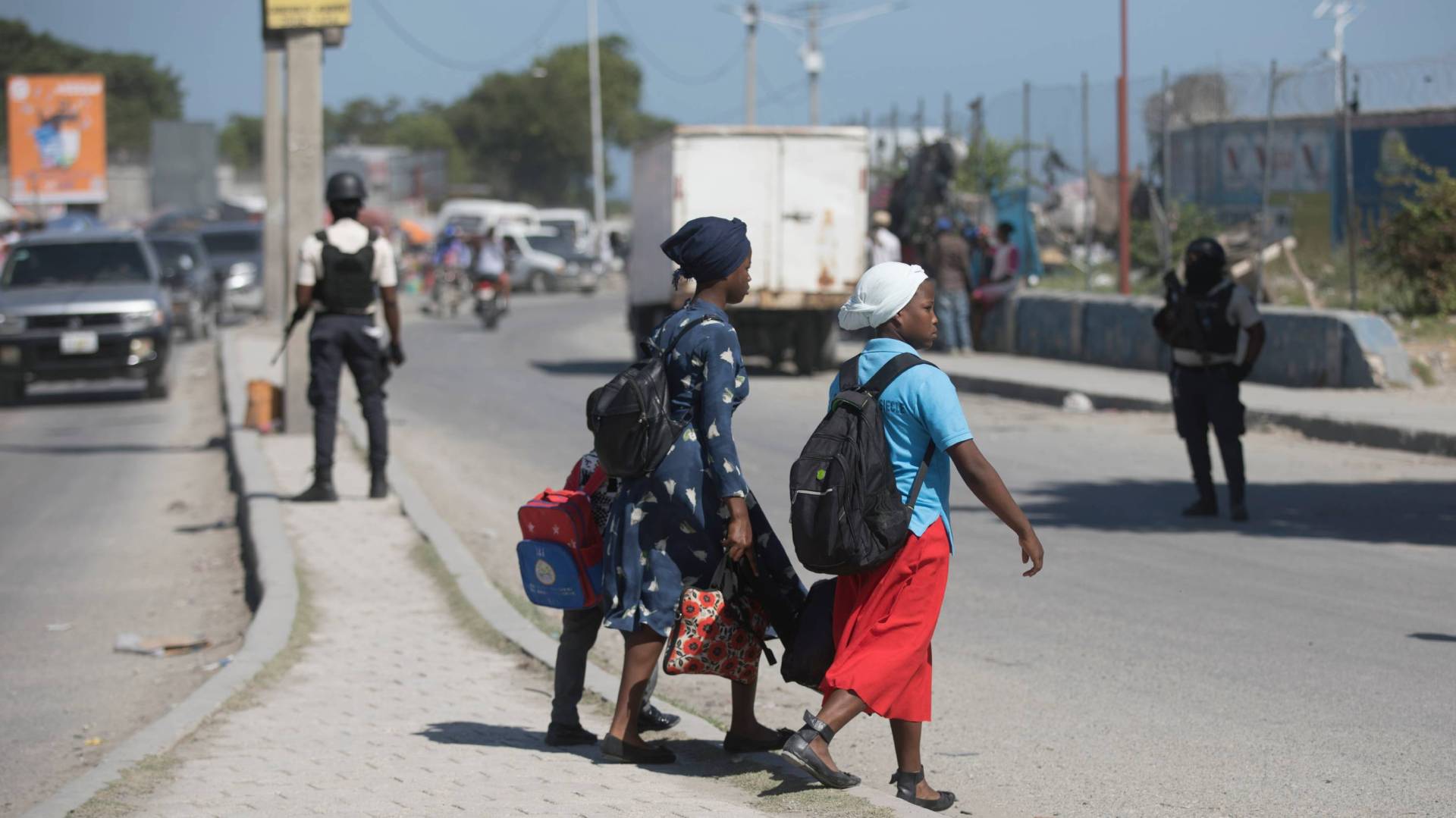
Police patrol the streets in Port-au-Prince, Haiti.

Police patrol the streets in Port-au-Prince, Haiti.

Christianity Today August 7, 2023
Odelyn Joseph / AP

Pastor Samson Doreliens ministers “right in the middle of the violence in Port-au-Prince,” the site of the July 27th kidnapping of an American nurse and her daughter who remain missing.

The 600 active congregants of the Evangelical Baptist Mission of South Haiti (MEBSH) Church of Cote Plage are torn by the gang violence that has overtaken the city, Doreliens told Baptist Press.

“Some are drawn closer to God because they believe it is God only who can do something to take the pain away,” he said of the congregation. “Others are discouraged, questioning why God is letting all kinds of things happen to the country: violence, natural disasters, etc.”

Florida Baptist Haitian Fellowship President Jackson Voltaire helped organize the Baptist Missionary Confraternity of Haiti (Confraternitè Missionaire Baptiste d’Haiti) (CMBH), a convention of hundreds of churches spread across six regions there.

Those in the Western Region including Port-au-Prince worship under tremendous safety risks, he said, while those in rural communities can minister more freely.

“They hold worship services with a great deal of difficulty,” he said. “But thank God that’s happening mainly in the metropolitan areas where Port-au-Prince is. In that region, the Western Region, we have hundreds of churches operating, but again … with great difficulty.”

Attendance has dropped at the MEBSH Church of Cote Plage, Doreliens said, where many members have lost their jobs or simply can’t travel to work amid the violence. Sunday offerings are donated to the poor and widows.

Churches have reduced the frequency of worship services and Bible study and have cancelled evening events. Community outreach continues only with the risk of pastors being kidnapped or shot, Voltaire said, but many remain hopeful. “Out of the many conversations I have with the pastors,” Voltaire told Baptist Press, “and not only with the pastors, I would say the Haitian people in general, they are very hopeful. And if you consider it, the country cannot go any lower than the way it is now.”

In addition to such highly publicized kidnappings as that of El Roi Haiti ministry nurse Alix Dorsainvil and her daughter, numerous kidnappings occur daily in the capital city, Voltaire said. Gangs who control the city typically kidnap residents for ransom while pressuring families to remain silent.

Dorsainvil, a nurse who relocated from New Hampshire to work for the ministry whose director is her husband, is being held under a $1 million ransom, area residents told the Associated Press.

El Roi Haiti continues to pray for Dorsainvil’s release as the US State Departments and others actively seek her freedom.

“Many tears have been shed this week but we, together with our team, are working and praying continuously to bring them home safely, and we continue to hold onto hope,” the ministry blogged August 3.

“We are so thankful for the very knowledgeable and experienced professionals God has brought together to complete the task of securing their freedom.”

While Haiti remains under a “do not travel advisory” from the US State Department, Voltaire said many pastors look forward to the day when Southern Baptists can return to Haiti.

“There’s hope because God is in Haiti as well. And I am sure that there are things that the Haitian people themselves need to do,” Voltaire said, referencing 2 Chronicles 7:14.

He encouraged Southern Baptists to be patient and be prepared to return to Haiti when violence subsides.

“As far as the CMBH, as far as the Florida Haitian Baptist Fellowship, we are organizing ourselves in a way that whenever God allows the missions to resume, when the greater Southern Baptist family is ready to come to Haiti, they will come to a much better, more productive environment where we can do ministry and really impact that side of the island for the Lord.”

News

Britain’s ‘Soul Survivor’ Generation Grapples with Mike Pilavachi Scandal

Amid an investigation, Christians are wondering: Did a popular youth leader’s “vulnerability and self-deprecation” avert skepticism and accountability?

Mike Pilavachi at Soul Survivor Watford

Mike Pilavachi at Soul Survivor Watford

Christianity Today August 4, 2023
Screengrab / Soul Survivor

The last Soul Survivor festival, led by popular British evangelist Mike Pilavachi, marked the end of an era.

What began as a gathering of around 2,000 young people at a campsite in southwest England had grown into a movement of tens of thousands, with 32,500 people—mostly teens—attending the final event in 2019.

Pilavachi was the founder and figurehead of Soul Survivor and the driving force behind a movement that had embraced charismatic gifts and inspired a generation of young Brits to pursue Christianity in an age when the country’s churches struggled to retain teenage worshippers.

Before this year, the first line in a recent statement from the youth ministry charity Youthscape would have read as a tribute to his legacy: “Mike Pilavachi’s influence is such that a significant proportion of Christians in the UK and beyond will feel some connection to the ministry of Soul Survivor.”

Instead, it was a warning. As the Church of England conducts a safeguarding investigation into allegations against Pilavachi, Youthscape issued a 2,600-word guide to help leaders respond.

“This news is likely to be disorientating,” the charity wrote. “It could be causing us to question memories or experiences of the festivals we hold dear. We might feel disappointed, angry, or betrayed hearing that someone we trust is under investigation in this way.”

Pilavachi’s case comes as the church faces growing scrutiny over its safeguarding policies and response to abuse, with a string of leaders facing accusations spanning decades.

The claims against Pilavachi first became public in May, when British media published accounts from men who said Pilavachi massaged, straddled, and wrestled with them and others as teens.

Some had been involved in a gap-year program as interns. Alleged victims also described the emotional torment of falling out of favor with Pilavachi, an influential ministry leader.

“Young men were being picked up then discarded year after year. Like me, they would leave feeling like it was them who had messed up,” one said. “Mike had the power to break your career … The only doors that would open for you were the ones that he opened for you to go through. For a teenager, it was emotionally devastating.”

It is unclear what spurred the reporting of allegations to the Church of England this year. The church initially described the allegations as “non-recent,” but the qualifier was later removed. Some said that concerns had been raised as early as 2004.

Pilavachi resigned in July from his church, Soul Survivor Watford, seeking “forgiveness from any whom I have hurt,” but declined to comment further.

Pilavachi was ordained in the Church of England in 2012. The allegations against him follow high-profile cases of clergy who have used their position to abuse boys and young men in church. A few years ago, evangelical leader Jonathan Fletcher, who had served for 30 years at Emmanuel Church, Wimbledon, faced allegations of massages and naked beatings. A review of the church’s handling of his case underscored the risk of spiritual abuse by church leaders, noting that “the issue of consent requires further legislative scrutiny in contexts where there is a significant imbalance of power and/or status and/or age, including in a religious context.”

Pilavachi began his ministry as a youth leader at St. Andrew’s Church, a charismatic evangelical church in Chorleywood. He opened a café—Dregs—to reach young people. That ministry grew into a congregation of its own, Soul Survivor, which opened at a warehouse in nearby Watford.

While the average churchgoer in the United Kingdom is over 60, Soul Survivor Watford bucked Anglican trends and stereotypes. It was a congregation full of teens, led by high-energy lay leaders like Pilavachi. The vicar at St. Andrew’s, the Rt. Rev. David Pytches, was Pilavachi’s mentor and the church maintained a connection to Soul Survivor.

In Watford, the two pastors who led alongside Pilavachi—Andy Croft and Ali Martin—have known Pilavachi since they were teenagers. Croft, Soul Survivor’s senior pastor, was one of Pilavachi’s interns, while Ali Martin, assistant pastor, participated in a leadership and discipleship program after attending the first festival in 1993. Both were suspended in June, with a statement from Soul Survivor stating that this related to “concerns over the handling of allegations.”

The response to the allegations against Pilavachi has reflected the silos within the broader Church of England—charismatic evangelicals were immediately shocked and shaken by the news and some Anglicans were unaware of Pilavachi’s ministry at all.

Within the Church of England, charismatic revival, with its emphasis on baptism with the Holy Spirit and spiritual gifts such as speaking in tongues, has been a major influence in recent decades. The Archbishop of Canterbury is among those shaped by it. But it has not been universally welcomed. Some Anglicans are sympathetic to Joseph Butler, the 18th-century bishop of Bristol, who told John Wesley that “the pretending to extraordinary revelations and gifts of the Holy Ghost is a horrid thing, a very horrid thing.”

The debate came before the Church of England’s General Synod in 1981, with critics concerned that the charismatic movement was divisive and represented a “flight from the rational and intellectual.” But it was also celebrated for having transformed parishes, making worship “warm, vibrant and meaningful for many Christians who had previously felt coolness and aridity.”

In Pilavachi’s case, his ministry was heavily influenced by John Wimber, the American Vineyard leader and “signs and wonders” evangelist who made his first of several trips to the UK in 1981.

In the same year that the Synod was debating the charismatic movement, this American visitor was having a dramatic impact on leading evangelical parishes in the country, including St. Andrew’s in Chorleywood, his first stop.

The vicar, David Pytches, said there was “holy chaos,” with people falling down in the pews. A later visit transformed life at Holy Trinity, Brompton, home of the Alpha course, and now a major church-planting force in the Church of England.

Pilavachi’s first encounter occurred two years later in 1983, when Wimber addressed a worship conference in London. Pilavachi recalled in his book For the Audience of One being “totally unhinged” by the singing. “I spent a whole part of the week just crying and sniffling my way through songs … Many of the songs were incredibly simple and yet totally intimate. As I worshipped, I found healing for my soul. Intimacy set me free.”

In the years to come, this approach to worship would become central to Soul Survivor’s ministry. Soul Survivor has served as a stable for musicians worldwide, including Matt Redman and Tim Hughes. (Last month Redman commented on the Pilavachi allegations, revealing that he had “experienced first-hand the harmful behaviors that have been described.”)

If music was one part of Wimber’s impact, the other was a theology that democratized supernatural ministry. Among Wimber’s mottos was “Everyone gets to play.” This was the approach that Pilavachi adopted in ministry, preaching that the gifts of the Holy Spirit were for all of God’s people, and encouraging young people to pray for one another accordingly.

While he was careful to speak about the dangers of “hype” and encouraged simple prayers and waiting on God, this ministry could have dramatic outward effects from crying to shouting and falling down. It was also a key part of what drew young people to Soul Survivor.

“Soul Survivor is one of the most tangible times where I have been able to meet with God and have seen other people meet with God,” one young festival-goer told the Church Times at the final 2019 gathering.

On stage, Pilavachi was a captivating speaker, combining an easy informality and deadpan wit—often entailing self-deprecating confessions—with passionate exposition of Scripture and unabashed accounts of his own relationship with Jesus. In many ways, he defied expectations of Christian celebrity leaders.

In My First Trousers, a book on growing in faith that is part-memoir, Pilavachi described himself as a “swollen-bellied and gently maturing afro-haired bloke from Harrow,” a London suburb.

In the same book, he wrote that it was “vital that we Christians perform regular safety checks on ourselves,” adding that his own friends “know I want them to tell me anything they notice about my attitudes or behaviour which worries them.”

“Mike was not thought to be a Christian celebrity,” wrote Lucy Sixsmith, a PhD student at the University of Cambridge, in a blog reflecting on her own experiences of Soul Survivor.

“Vulnerability, self-deprecation: that was Mike’s thing … Mike’s audiences heard about the brokenness in his youth that led him to Jesus, the bouts of depression that hit during and after the summer festivals, his loneliness, his occasional habit of hiding from his friends … Soul Survivor seemed to be the genuine article. Mike Pilavachi did not seem to be a Christian celebrity.”

She went on to suggest that “vulnerability could be toxic, a place to hide, a way to deflect scepticism: if a Christian celebrity sends himself up or strategically reveals some struggle or other, we all ask fewer questions about what power he has in fact, for all his gentleness.”

Hers is one of a growing number of stories being shared online of Soul Survivor and Pilavachi. Former staff members, interns, congregation members, and festival-goers have turned to the internet to process their memories and thoughts amid the Church of England’s investigation. This has included reflections that have gone beyond the specific allegations to explore the nature of charismatic ministry.

In its guide to healthy discussions with young people, Youthscape suggests, “If the allegations are true, it doesn't undermine everything that happened at the festivals, programmes or church … If you have had an experience of God through Soul Survivor, and this seemed real to you, you don't have to abandon it, whichever humans were involved in leading at the time.”

But others have questioned this. Luke Larner, an Anglican priest who served on the “prayer and prophecy team” at the summer festivals, has asked: “What if the intense experiences, what if the incredible emotional highs of being in a big top with thousands of other young people, what if the overwhelming desire to be something bigger than ourselves, what if hearing a ‘mission from God’—what if it wasn’t real? What if it wasn’t God? What would that mean?

While Christians await the report, it is these accounts that are driving discussion within the Church of England about what happened at Soul Survivor and what the implications are for youth ministry and safeguarding in the future.

Though some had never heard of Pilavachi, they have now, and with so many of the church’s youngest worshippers having experienced his ministry, they are forcing the conversation beyond its silos.

Ideas

What If Churches Ask for More and No One Says Yes?

Staff Editor

Jake Meador has a provocative proposal for reversing dechurching. But it may not be that simple.

Christianity Today August 4, 2023
Pearl / Lightstock

More than 1 in 10 Americans—around 40 million of us—stopped attending church in the last 25 years.

New research using cell phone location data suggests weekly church attendance (defined as 36 weeks of the 47 studied) is at just 3 percent. And even where church attendance has rebounded since pandemic shutdowns, congregational involvement still lags.

A shift of this scale is impossible to ignore, but it’s certainly possible to misunderstand.

What if there’s an explanation we’ve overlooked, asked author and Mere Orthodoxy editor Jake Meador at The Atlantic last week—a reason apart from the usual headline-making factors like church corruption, abuse, and theological differences?

Drawing on The Great Dechurching, a forthcoming book from pastors Jim Davis, Michael Graham, and Ryan P. Burge, Meador argues that “the defining problem driving out most people who leave is … just how American life works in the 21st century.”

Everyone is busy. Job hours are long and unpredictable. Finances are precarious. The kids have soccer. The baby’s not sleeping through the night. The grandparents need more help around the house. A friend is visiting. I’m tired.

“Contemporary America simply isn’t set up to promote mutuality, care, or common life,” Meador summarizes, so we’re “lonely, anxious, and uncertain of how to live in community with other people.” Forever in the red on time and energy, we don’t spare any of our resources for church.

If that’s true, a church’s first impulse might be to make membership easier, to demand less of overbusy congregants so they’ll still show up. But maybe “the problem isn’t that churches are asking too much of their members,” Meador proposes, “but that they aren’t asking nearly enough.”

It’s a provocative idea, and on Instagram and the network formerly known as Twitter, Atlantic readers were duly provoked. Though the article acknowledged the role of “religious abuse and more general moral corruption” in dechurching, social media comments highlighted these factors again and again, often in connection to evangelicals’ politics, insisting Meador was missing this more fundamental point.

“Child abuse? Cover-ups? Multi-billion-dollar organizations that pay no taxes? Lies, racism and hypocrisy?” said one Instagram reply with hundreds of likes. “Nah … you’re right … we’re just ‘too busy.’”

If Meador and his less-generous readers (and, likely, nonreaders) are talking past each other, perhaps it’s because Meador assumes a conviction that not everyone shares: that for all its difficulties—practical, relational, and ethical—church is necessary and good.

I share this conviction too. But if I set it aside, I can see why Meador’s argument would fail to persuade not only those who hate the church for its sins but also those who feel little to nothing about church at all.

Meador’s vision of “asking more,” it’s important to note, is overwhelmingly relational. It’s less about doing more than about being more to each other—rejecting the standard American life, atomized and in thrall to workism from kindergarten on. He argues that the church could become a thicker “community marked by sincere love,” a stronger “safety net in the harsh American economy,” and a consistent reminder that humans are more than the many entries in our calendars.

Yet even this proposal of an increased demand from our local church “may seem like a tough sell in an era of dechurching,” Meador admits. “If people are already leaving—especially if they are leaving because they feel too busy and burned out to attend church regularly—why would they want to be part of a church that asks so much of them?”

His answer is that Christians need, as always, to be transformed (Rom. 12:1–2). In our context, he argues, we should become the sort of people who reject a too-busy life in which church is just another item on our to-do list—one frequently left unchecked: “We could be a witness to another way of life outside conventionally American measures of success. Churches could model better, truer sorts of communities, ones in which the hungry are fed, the weak are lifted up, and the proud are cast down.”

We certainly could, and I agree with him in principle. But this logic works in practice only if we’re already committed to the notion that attending church is necessary and good, that it’s worth sticking around—including when we don’t particularly feel like staying.

Without that foundational assumption, we probably won’t be willing to say yes even if our church were to start asking more of us. Why take the kids out of soccer to make time for small group unless small group matters so much more? We won’t be disposed to do more with church and, crucially, to do less outside church unless we’re already deeply committed to the unique importance of church.

And I don’t think most professing American Christians are. Four days after the Atlantic article, The Wall Street Journal published an examination of middle-aged Americans’ disproportionate decline in church attendance over the last three years. Its data supports Meador’s argument, but its interviews evince this assumption gap I’ve described.

“When you got faith, you got faith,” one interviewee, Marlon Eddins, told the Journal. “I just don’t think going every Sunday makes you who you are.”

But that’s just it: For Christians, going every Sunday significantly does make you who you are. Extenuating circumstances aside, routine participation in communal Christian life is the primary location of our worship and discipleship. It shapes our personalities, our social lives, our attention, and our desires.

And if you don’t think about church this way—if it’s merely an optional gathering that can be regularly skipped in favor of nice weather or a ball game on TV, as polling shows it is for many Americans—then when your church asks for more, your answer will likely be a tired “nah,” if you bother to reply at all.

There’s something of a chicken-and-egg problem here: If church doesn’t ask enough of you to inspire real commitment, you won’t think it’s that important. But if you don’t think church is that important, it can’t realistically ask enough of you to make you really commit.

Perhaps, following Meador, the church should simply ask more of us anyway and leave the rest up to God who gives the increase (1 Cor. 3:6). And maybe, whatever happens, there are two reasons to hope.

First, if you’re disappointed over the church’s failures, it means you have some investment in the church. The fact that those commenters on Meador’s post are angry means at least they aren’t indifferent. And second, even when we are indifferent, apathetic, or overscheduled—even when we’re very mediocre followers of Jesus, seeds choked with worries in thorny American ground (Matt. 13:22)—God can still make us grow.

Bonnie Kristian is editorial director of ideas and books at Christianity Today.

addApple PodcastsDown ArrowDown ArrowDown Arrowarrow_left_altLeft ArrowLeft ArrowRight ArrowRight ArrowRight Arrowarrow_up_altUp ArrowUp ArrowAvailable at Amazoncaret-downCloseCloseellipseEmailEmailExpandExpandExternalExternalFacebookfacebook-squarefolderGiftGiftGooglegoogleGoogle KeephamburgerInstagraminstagram-squareLinkLinklinkedin-squareListenListenListenChristianity TodayCT Creative Studio Logologo_orgMegaphoneMenuMenupausePinterestPlayPlayPocketPodcastprintremoveRSSRSSSaveSavesaveSearchSearchsearchSpotifyStitcherTelegramTable of ContentsTable of Contentstwitter-squareWhatsAppXYouTubeYouTube