News

Legal Advocates Eye Next Big Victory for Religious Liberty

After a string of victories at the Supreme Court, focus turns to one major precedent that could be overturned.

Steps to the United States Supreme Court, Washington DC, America

Steps to the United States Supreme Court, Washington DC, America

Christianity Today July 20, 2023
Courtesy of Joe Daniel Price

It is an auspicious time for advocates of religious liberty in the United States. Consider what they have accomplished at the Supreme Court over the past year: They defended the right of Americans to express their faith while on the clock for a public school district (Kennedy v. Bremerton School District), affirmed the right of religious schools to use government vouchers (Carson v. Makin), heightened the standards protecting workplace accommodations for religious beliefs (Groff v. DeJoy), and expanded free speech protections for business owners who don’t want to make statements that go against their religious beliefs (303 Creative LLC v. Elenis).

What’s left to win? If you ask experts closely following the developments on the legal battlefield, they invariably give the same answer: Employment Division v. Smith.

“I predict that religious liberty advocates will ramp up their attack on Smith,” said Carl Esbeck, a professor of law at the University of Missouri. “They understand that 303 Creative was a wonderful victory, but it was a halfway victory. It only protects speech … so if they want full protection under the First Amendment free exercise clause, they need Smith reversed.”

In fact, it’s already begun. First Liberty and Alliance Defending Freedom, two religious liberty law groups, have already petitioned the Supreme Court to hear cases that call for Smith to be overruled.

To understand why Smith matters, one has to go back more than three decades. In the late 1980s, two counselors from a rehabilitation center in Oregon were fired after they ingested peyote as part of a Native American religious ceremony. The counselors applied for unemployment but were denied by the state because their firing was due to misconduct, as the hallucinogenic was illegal in Oregon. They appealed to the Supreme Court, arguing drug use should be protected when it’s done as part of a religious ritual. But they lost their case. The court ruled in Employment Division v. Smith that a law does not violate the First Amendment’s free exercise of religion clause if it is “neutral” and “generally applicable.”

To permit religious exceptions, the late justice Antonin Scalia wrote in his majority opinion, “would be to make the professed doctrines of religious belief superior to the law of the land, and in effect to permit every citizen to become a law unto himself.”

He added, “Any society adopting such a system would be courting anarchy.”

Religious liberty advocates were not happy with the decision and were confounded that Scalia, a stalwart conservative justice, would issue a ruling that, as Daniel Bennett, who teaches political science at John Brown University, explains, “tips the scales in favor of the state” at the expense of religious believers.

Smith, ever since it was decided back in 1990, has been one of the more confounding Supreme Court decisions for conservatives, especially those who value religious freedom rights,” Bennett said.

The ruling prompted a bipartisan group from Congress to pass the Religious Freedom Restoration Act in 1993, which prohibits the government from imposing an undue burden on a person’s free exercise of religion. About 23 states have adopted state-level versions of the legislation as well. Federally, however, Smith is still a guiding precedent and shapes how courts interpret the legal limits of religious activity.

“The biggest critique that religious freedom folks have with Smith is that it puts a lot less burden on the state to demonstrate why a regulation is justified,” Bennet said.

Thomas Berg, the James L. Oberstar Professor of Law and Public Policy at the University of St. Thomas, explains it another way: Smith “no longer protects free exercise as a fundamental right, but simply, it protects from irrational or arbitrary conduct by the government.”

Religious liberty advocates have targeted Smith before. The most recent serious challenge was Fulton v. City of Philadelphia. In that case, the Supreme Court ruled in favor of a Catholic foster services agency that had been denied a contract by the city of Philadelphia for refusing to place children in same-sex homes. But chief justice John Roberts sidestepped the larger question of overturning the Smith precedent in the majority opinion.

Justices Samuel Alito, Clarence Thomas, and Neil Gorsuch called for Smith to be overturned in a separate, concurring opinion. In a second concurring opinion, justices Amy Coney Barrett and Brett Kavanaugh also questioned whether Smith offers adequate protections against religious discrimination.

“Several justices think that protection is too little, but they haven’t yet settled on an alternative and so haven’t taken the step of overruling that rule of Smith,” Berg said.

Andrew Lewis, an associate professor in the School of Public Affairs at the University of Cincinnati, says that overturning Smith would raise questions about to what extent religious beliefs can provide exceptions to laws and regulations. For example, could people refuse to wear seat belts for religious reasons? Or to pay taxes that go towards the military? Or maybe Christian truck drivers would have the right to refuse to deliver goods that go against their faith, such as alcohol and tobacco.

“If you overturn Smith, does it give religious groups a free pass on all kinds of laws? So the trouble is figuring out where they will draw the lines,” Lewis said.

Some religious rights advocates favor a return to a test established in Sherbert v. Verner, a Supreme Court decision from 1963. The test argued the state had to demonstrate a compelling interest before it could justify placing a legal burden on someone’s religious beliefs or practices. The state was also required to find the least restrictive means possible to meet its legitimate goal.

That move might shift the legal ground on some expected legal clashes. About 20 states, plus Washington, DC, have passed laws that prohibit businesses from discriminating against LGBT customers. They were designed to be neutral and generally applicable, but may not meet Sherbert’s “least restrictive” standard.

Lewis, who has studied the political polarization of the Supreme Court, says Smith has gotten caught up in America’s culture wars. Originally, the case was about a religious minority seeking an accommodation from the law. Now it involves the rights of large, dominant groups such as evangelicals and Catholics, who are opposed to some social changes like the increase in the acceptance of LGBT people. He worries that the polarization will undermine broad American support for religious liberty.

“You have to be careful that religious liberty is not just an issue for one side of the political aisle or that is championed only by one side. We need to make sure that it has value and importance for how we live together and how we protect freedom and protect against overreach,” Lewis said.

For Christians, Bennett says, the most important thing is to be consistent on religious freedom, especially in a pluralistic society that is becoming less observant.

“It behooves us to have a public square that is respectful and open to different competing conceptions of the good, so the gospel can flourish authentically in those environments,” Bennett said.

If one of the cases challenging Smith does get to the Supreme Court, there is a chance the justices will overturn the precedent. According to a statistical study of the Roberts court published in 2021, the current Supreme Court has ruled in favor of religious organizations 81 percent of the time. Previous courts, dating back to the 1950s, sided with religious liberty plaintiffs in about half of all cases.

With a growing list of Supreme Court victories, religious liberty advocates see an opportunity.

Theology

What Happens When Both Sides Secularize

The antidote to cultural Christianity on the Left and Right is true Anglicanism and Pentecostalism.

Christianity Today July 20, 2023
Illustration by Christianity Today / Source Images: Unsplash / Getty / Lightstock

This piece was adapted from Russell Moore’s newsletter. Subscribe here.

In my new book (releasing Tuesday!), I mention a conversation I had years ago with an older man in ministry whom I respected. We had seen a string of what’s euphemistically called “moral failures” with pastors in our church tradition. I made some comment about their having “lost their ministries.”

But the older man corrected me. “Oh, they’ll be back,” he said. “After a scandal, blue-collar pastors become Pentecostals and white-collar pastors become Episcopalian.”

This was tongue-in-cheek, of course. This man and I could both name countless pastors in our tradition who, mid-career, had joined a Pentecostal church or sought ordination in the Episcopal church. These folks just changed their minds about liturgy or spiritual gifts or a thousand other factors.

This man also wasn’t talking about the mainstream of the Anglican Communion or of global Pentecostalism (such as the Assemblies of God). He meant, specifically, the most progressive environs of the Episcopal church in the USA and the most populist and extreme areas of prosperity-gospel Pentecostalism. Those places, he argued, were more tolerant of clerical misbehavior—though for very different reasons.

I’ve lived long enough to see that my denomination is hardly different when it comes to morally compromised people making a hasty comeback. Still, what sticks out to me is not the literal reality of this man’s statement so much as the metaphor of it all—a metaphor that explains a good bit of what’s going on in our current American social crisis.

We are not headed toward the religious “awakening” of a “moral majority” as envisioned by the previous generation’s Religious Right. We’re also not secularizing to just short of Norway the way some secular progressives predicted. Instead, we might just be hearing a secularized echo of the worst caricatures of white-collar Episcopalians and blue-collar Pentecostals.

A generation ago, Diane Knippers, leader of the more conservative evangelical wing of the Episcopal Church (USA), warned that the reason her church was “more vulnerable to ethical revisionism” than other Protestant churches was not theology but social class. “Episcopalians tend to represent the urban well-off,” she wrote. “They listen to NPR, not Fox. They go to elite universities, not community colleges. They value liturgical niceties over theological substance.”

So, Knippers argued, when “white flight” came to American cities, Episcopal congregations had three choices: “move to the suburbs, … transform themselves to include ethnic minorities, immigrants, and the poor; or reach out to the remaining well-off urbanites.” The third, she said, was the most comfortable option for them—rendering the centers of influence within American Episcopal life out of touch with the rest of America and subject to the winds of ideology most represented in elite, affluent urban centers.

And when asked about the bleeding out of members from the Episcopal church nearly 20 years ago, the then-presiding bishop of the church said it was because Episcopalians were “better educated and tend to reproduce at lower rates” than other churches.

This seems to parallel much of what is happening in the left wing of secularization in the country right now. Increasingly, progressives in this country find themselves urban and affluent, disconnected not only from the much-discussed “white working class” but from working-class African Americans and Hispanic Americans as well.

At the same time, though, the secularizing Right seems to be taking on key aspects of prosperity-gospel Pentecostalism. In the 1980s, the country was rocked by a series of scandals in this wing of evangelicalism—such as the meltdown of the PTL ministry of Jim and Tammy Faye Bakker, with emerging stories of shocking sexual behavior combined with accounts of lavish displays of wealth (such as an air-conditioned doghouse).

“PTL was basically a place where every day was Sunday and every night was Saturday night,” one insider said. “If you live in that kind of atmosphere, Saturday night kind of stuff is going to happen.”

Despite serving time in prison, Jim Bakker was back relatively soon—with an entire set of “prophecies” of jaw-dropping events that never seemed to happen and sales of dried food supplies for people’s bunkers in preparation. Sunday morning or Saturday night, bank receipts never stop.

In some of these sectors, the disconnect of personal character from public ministry has seemed to become not a scandal to be covered but a test of loyalty to be passed. When people attack a prosperity-gospel evangelist for flying around in a private jet or for being on her third marriage, followers might see it as a sign that this leader is making “all the right enemies.” Circling in protection around the leader then becomes a sign of who’s in and who’s out.

That’s why crazy statements aren’t necessarily a hindrance to this sort of ministry but sometimes a church-growth strategy. Suddenly the guy criticized for saying that COVID-19 was a hoax or that his opponents are part of a witch cabal is labeled a modern-day Polycarp figure, who’s standing up for Jesus despite the threat of lions or flame. The spectacle is what draws the crowd, but the drama is what keeps them there—even when the result is a “burned-over district” of cynicism after the enthusiasm has waned.

In a secularizing time, one can get all of that—the personality cults, the conspiracy theories, the “touch not mine anointed” loyalty tests, the “being a character” replacement for having character—without a church or even a ministry. The whole world can be a prosperity-gospel radio talk show: all the resentment and prophecy, without Jesus or the Bible, except when needed to distinguish “real America” from the libs.

What’s the way out of all this? Ironically enough, it might just be Anglicans and Pentecostals. By this, I don’t mean the extremes of their caricatures—and certainly not their secularized echoes—but real, genuine Anglicanism and Pentecostalism.

There’s a reason that, worldwide, both the Anglican Communion and the Pentecostal movement are growing. Anglicanism at its best conveys Christianity with a connectedness to the generations before and a reverence and awe of God in worship. Pentecostalism at its best shakes up dead, lifeless nominalism with joy and a fresh expectation of what the Spirit can do.

The church needs both of these—and a world devoid of Good News needs both too.

Russell Moore is the editor in chief at Christianity Today and leads its Public Theology Project.

News
Wire Story

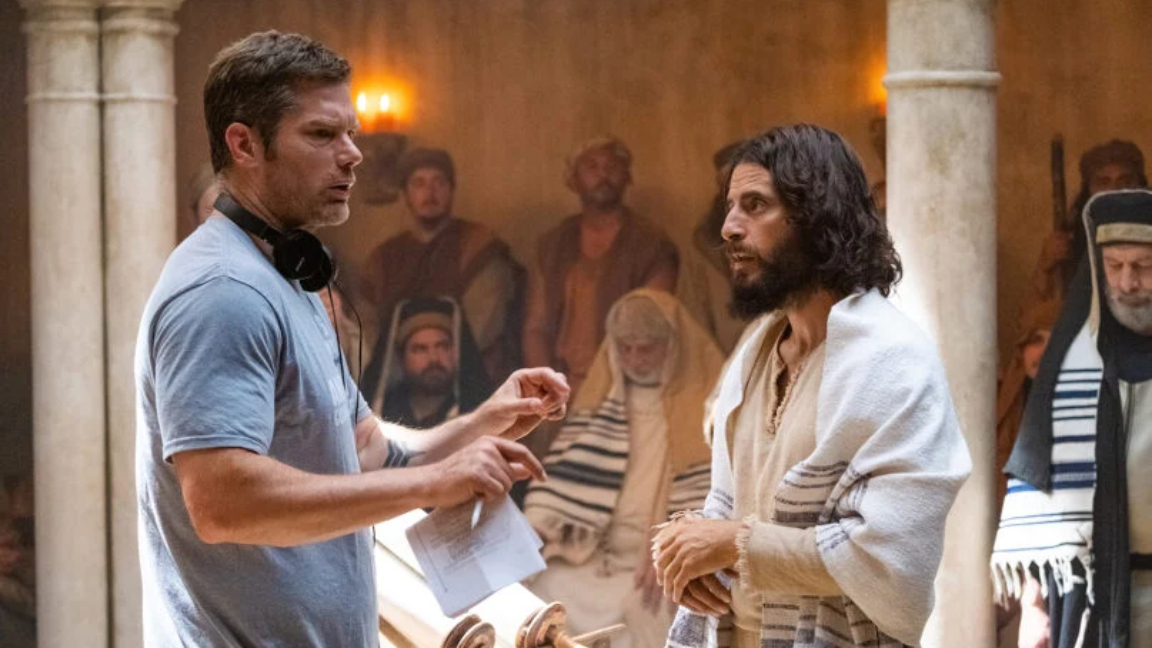
‘The Chosen’ Will Film Through Hollywood Strike with Indie Show Exemption

The crowdfunded show received approval writers’ and actors’ unions to wrap on Season 4.

Director Dallas Jenkins and actor ‘Jonathan Roumie’ on set of The Chosen.

Director Dallas Jenkins and actor ‘Jonathan Roumie’ on set of The Chosen.

Christianity Today July 19, 2023
Courtesy of The Chosen

The wildly popular series based on the life of Jesus Christ has crossed what its creator dubbed a “Red Sea Moment” after a labor strike threatened to halt the filming for Season 4 of The Chosen.

On Friday (July 14), director and co-writer Dallas Jenkins sent an email telling viewers The Chosen hadn’t yet received an exemption to continue filming during the strike by the Screen Actors Guild-American Federation of Television and Radio Artists. “This is very expensive, unfortunately, and especially frustrating because we’ve only got two weeks of filming left. Let’s pray we can get back on schedule quickly.”

Jenkins also tagged SAG-AFTRA in an Instagram post, urging the labor union to approve an exemption waiver. “We’re the good guys; we’ve treated your actors well. Please take the few minutes to approve our application so your actors can get back to work getting paid for the last two weeks of a season they want to finish.”

After one day of filming without the cast, on Sunday afternoon, the show’s official Twitter account announced it had been approved for a waiver and would resume filming on Monday. The account also noted Season 4 is “entirely independent and 100% funded by donations.”

“We’ve worked hard to accommodate all of SAG’s requests and their interim agreement. We appreciate their recognition of us as an independent as well as their hard work in this process,” Jenkins said in a statement provided to Religion News Service.

The Chosen was able to secure an exemption to continue filming because it is not affiliated with the Alliance of Motion Picture and Television Producers, the group representing studios such as Netflix, Walt Disney Studios, and Warner Bros. in the contract negotiations. Jenkins told RNS The Chosen decided against associating with AMPTP because of the show’s limited scope. Still, all of the show’s cast members—including Jesus actor Jonathan Roumie—belong to the Screen Actors Guild. A spokesperson for The Chosen confirmed with RNS via email that in opting for the exemption, The Chosen agreed to be retroactively obligated to the contract terms that will be agreed upon between AMPTP and SAG-AFTRA when the strike ends.

Previous seasons of the crowdfunded show, which has gained over 520 million views worldwide, are available for free on the show’s website and app, as well as on heavyweight streaming platforms such as Netflix and Amazon. In May, Lionsgate acquired distribution rights for The Chosen, and on Sunday, The CW, a national TV network, began a weekly broadcast of the show’s first three seasons.

As Season 4 resumed filming in Utah, the show became the first TV series to secure an interim agreement to film during the strike, to the best of The Chosen’s knowledge.

“Everyone’s thrilled to be at work, especially with two weeks left. We’re so close to being done, everyone was eager to finish,” Jenkins told RNS.

There is no official release date for the fourth season yet, but a spokesperson said it’s currently looking like early 2024.

“We were already done filming Episodes 1-4, so these last two weeks allow us to complete Episodes 5-8,” said Jenkins. “Some of the most emotional and impactful moments come in what we’re now filming, so I’m glad we didn’t have to delay it!”

Theology

Why Mercy Triumphs over Judgment

As Christians, our righteous anger at sin must never surpass our compassion for sinners.

Christianity Today July 19, 2023
Michael Blann / Getty / Edits by CT

In the Square of Saint Petersburg, a young Fyodor Dostoevsky stood shivering in the snow alongside fellow convicts, arrested for belonging to a literary circle considered treasonous.

A priest carrying a cross led the convicts in a procession, arranging them in lines while their sentence was read—death by firing squad. But at the last second, a horseman arrived with a prearranged message from the tsar: Instead of execution, Nicholas “mercifully” commuted their sentences to hard labor.

While boarding the convict train to the work camp in Siberia, Dostoevsky was given a copy of the only book he was permitted to read in prison: the New Testament. Over the next four years of his incarceration, he’d consider the injustices of 19th-century Russia in light of Christ’s mercy.

Dostoevsky sought to understand how mercy restores human hearts—indeed, all of creation—into the righteous image of God. He wrote, “There are souls that in their narrowness blame the whole world. But overwhelm such a soul with mercy, give it love, and it will curse what it has done, for there are so many germs of good in it. The soul will expand and behold how merciful God is, and how beautiful and just people are.”

The need for mercy is just as relevant today—but it can be difficult to offer in a world worthy of judgment.

When our eyes are opened to God’s kingdom, we recognize injustices in the world that didn’t occur to us before. Hungering for the right ordering of life, we feel irritated by the fallen condition of humanity. We get unsettled, maybe indignant, or perhaps infuriated by the forms of wickedness and oppression we see around us.

As a result, anger can often be the besetting sin of those who crave justice. “Hot indignation seizes me,” says the psalmist, “because of the wicked, who forsake your law” (Ps. 119:53, ESV throughout).

This indignation arises from a legitimate source. The more we recognize the true, the good, and the beautiful—and the more we hunger for them—the more inclined we are to get mad at the false, the bad, and the ugly. The more we walk in the light, the more naturally disturbed we become by moral darkness (Titus 1:15; 1 Pet. 4:1–6).

This is certainly and rightly true of anger directed at evil—at the tyrant who attacks innocent people, the scam artists who prey on the elderly, or the trusted authority figures who abuse children. These examples of “righteous anger” reflect the heart of God, holy outrage that refuses to allow evil to prevail. And yet our anger will always be imperfect because it can never capture the fullness of God’s purity. Indeed, as the Lord says, “Vengeance is mine, I will repay” (Rom 12:19).

Bitter anger and opposition to the darkness—what some today might call the outrage of cancel culture—must never become our normal mode of operation as Christians. Instead, God ultimately calls us to pursue redemption, “for the anger of man does not produce the righteousness of God” (James 1:20). It is God’s kindness that leads us to repentance (Rom. 2:4), and “mercy triumphs over judgment” (James 2:13). “The wisdom from above,” after all, “is first pure, then peaceable, gentle, open to reason, full of mercy and good fruits, impartial and sincere” (James 3:17).

This was precisely the message of Dostoevsky’s classic work The Brothers Karamazov, wherein the main character Ivan represents the spiteful punishment and retribution of the world’s “justice”—which stands in implacable opposition to Christ’s gospel of mercy. In Dostoevsky’s own words, such a spirit of vengeance “glaringly contrasts with Christ’s gospel of all-reconciling and all-forgiving love and the hope of infinite mercy for the sinner who repents.” For the Russian novelist, this is what distinguishes the City of God from the City of Man: the impartation of divine mercy.

Consider also the character Javert from Victor Hugo’s Les Misérables, the police inspector whose narrow interpretation of justice became weaponized. Driven by a pharisaical commitment to the letter of the law, he couldn’t overlook the slightest infraction. Javert failed to understand that the law is always a means toward a greater end—that is, toward redemption—not an end unto itself.

Aleksandr Solzhenitsyn strikes this note when he writes, “A society which is based on the letter of the law and never reaches any higher is taking very scarce advantage of the high level of human possibilities.” Even worse, such a society deprives itself of its most profound need for mercy.

In her book The Beatitudes through the Ages, Rebekah Eklund makes this connection from the teaching of Ambrose of Milan (339–397), who promoted mercy as the natural and necessary outflow of justice. Quoting from Psalm 111:9, he writes that “he has given to the poor; his righteousness endures forever.” Likewise, Augustine (354–430) saw the two in an organic relationship: “The way you treat your beggar [at your door] is the way God treats his.”

God is full of mercy, and he bestows this fullness on his children. It is no accident that when the Lord of glory appeared to Moses on Mount Sinai and revealed his divine character, he chose to say of himself, “The Lord, the Lord, a God merciful and gracious, slow to anger, and abounding in steadfast love and faithfulness” (Ex. 34:6).

It’s stunning. Of all the qualities God might have stressed—his holiness, sovereignty, or almighty power—he chose to highlight his tender heart of compassion. As mercy is of central importance to God, so it must be for us. “Be merciful,” Jesus says, “even as your Father is merciful” (Luke 6:36).

We are merciful not because God started the process and then leaves us to finish it by the power of our wills. Rather, each step of the way, God melts our self-reliance and feeds our faith until we desire him above all. It is a project of mercy in which Christ continually says, “Come to me, all who labor and are heavy laden, and I will give you rest” (Matt. 11:28). The Lord leads us with “cords of kindness” and with “the bands of love” (Hos. 11:4).

And when we truly experience God’s mercy, we are driven to share it with others.

I once asked my friend Cecilia Horn, a godly woman and earnest evangelist, how she cultivates an enthusiasm for sharing the good news. I’ll never forget her response: “For many years, I was lost and without hope, like a prisoner living in a dark cave. Then, one day, God called me out from the shadows into the brightness of the noonday sun. At once, I looked heavenward and started blinking, trying to get perspective on the wonder of God’s mercy. I continue to blink in grateful amazement that deepens my faith and compels me to share the good news with others.”

Remembering our former days of loneliness and shame—when we were once alienated from Christ and strangers to his divine promises, “having no hope and without God in the world” (Eph. 2:12)—dilates the eyes of our hearts and cultivates a deeper appreciation for the gift of mercy.

With the global church we cry, Kyrie eleison, “Lord, have mercy!” This is the starting point and foundation of our calling—for before we can show mercy to others, we must encounter it for ourselves.

Adapted from chapter 5, “The Face of Mercy,” from The Upside Down Kingdom: Wisdom for Life from the Beatitudes, by Chris Castaldo from Crossway.

Chris Castaldo (PhD, London School of Theology) is the lead pastor at New Covenant Church in Naperville, Illinois.

Church Life

Canada Incarcerated Her Japanese Neighbors, So She Moved with Them

Sunday school teacher Margaret Ridgway’s wartime ministry had a significant impact on the next generation of missionaries and pastors.

Christianity Today July 19, 2023
Illustration by Mallory Rentsch / Source Images: WikiMedia Commons

On a warm spring day in 1942, Margaret Ridgway believed she heard God telling her to leave her home in Vancouver, Canada, and move to a Japanese internment camp.

Ridgway was on her knees in the kitchen, praying before an open Bible, when the prophet Haggai’s words leaped off the page: “Go up to the mountain … build the house; and I will take pleasure in it, and I will be glorified. … I am with you. … Fear ye not” (1:8; 2:4–5, KJV).

“God had spoken,” she declared.

“I had no doubt now that He was calling me to leave my ‘ceiled house’—the security of my home, my church, and my familiar surroundings—and follow my Japanese friends who were deprived of their homes and their livelihoods and were being sent to makeshift quarters in the narrow valleys of the Kootenay and Slocan Rivers,” she wrote.

Ridgway’s heart and passion for the Japanese Canadians in Vancouver prior to the war had prepared her well to face this tumultuous period in Canadian history. Her life story would come to reflect a deep commitment toward sharing the love of Christ with the Japanese people.

“If it weren’t for Margaret, we wouldn’t be here,” said retired Toronto pastor Stan Yokota. “She was the only person who went to be among the Japanese to start an evangelical church.”

Venturing into the unknown

Margaret Ridgway was born on May 31, 1915, in Regina, Saskatchewan. After her father’s untimely death when she was three years old, her family eventually relocated to Vancouver. She felt led to reach out to Japanese people well before the Second World War began, according to Ed Yoshida, former pastor of Wesley Chapel Japanese Church in Toronto.

Ridgway grew up in a Baptist home. After accepting Christ as a teenager, she became friends with L. C. Harry and his wife, who were missionaries sent by the England-based organization Japan Evangelistic Band. The Harrys asked Ridgway to help out in Sunday school for Japanese children living in the Celtic Cannery and other cannery settlements around the city.

Ridgway grew increasingly convinced that her life’s mission would be evangelizing to the Japanese people. When Harry later became ill, Ridgway prayed that God would empower her to take over his work.

The harvest was certainly plentiful: Japanese immigrants first arrived in Canada in the 19th century to pursue financial opportunities overseas. Many settled in fishing villages in coastal cities like Vancouver or on farms and alongside lumber mills situated further inland.

Still, the Japanese people struggled to assimilate into Canadian society. Anti-Asian racism was rampant during this time. A mob ravaged predominantly Japanese and Chinese areas in Vancouver to protest against immigrants, who they felt were stealing their jobs, and lobbied the government to halt immigration from Asia.

The Canadian government’s head tax on Chinese immigrants, which was levied in 1885, did not apply to the Japanese. By the early 20th century, more than 20,000 Japanese people, who mainly worked as fishermen and farmers, had settled in Canada. However, they were not permitted to vote, hold public office, or take on professional jobs. (Second-generation Japanese Canadians faced similar prejudices and received the right to vote only in 1949.)

Margaret RidgwayIllustration by Mallory Rentsch / Source Images: Courtesy of Nori Kanashiro
Margaret Ridgway

The bombing of Pearl Harbor on December 7, 1941, brought Ridgway’s Sunday school classes to an abrupt halt. Though no blood had been shed in Canada, the country had a close political relationship with the US. Thus, after the US declared war on Japan, Canada immediately followed its neighbor, and when the US decided to incarcerate immigrants from Japan and citizens of Japanese descent, Canada adopted a similar policy.

Consequently, Canadian government officials forced many Japanese who were living along the west coast of British Columbia to move to abandoned ghost towns in the province’s interior. In all, more than 20,000 Japanese people—including a majority who were naturalized citizens or Canadian by birth—were forced to move to these remote internment camps. The government separated fathers and sons over 18 from their families and sent them to labor in remote road camps, while it transported mothers and children to isolated towns in the province’s mountainous region.

Amid these dismal wartime days, God’s hand seemed far away. But Ridgway’s faith in God spurred her into action.

Upon hearing God’s voice through the prophet Haggai, Ridgway rose from the kitchen floor with “a feeling of exultation and yet of solemnity.” Weeks later, she received further confirmation of her new mission through her pastor: “Margaret, I believe God has laid this burden on your heart and you should go. We will give you a commissioning service and will urge our friends to back you in prayer.”

Ridgway’s destination: Kaslo, an abandoned town that had been the center of activity in the heyday of the silver mining boom that swept British Columbia’s Kootenay region in the late 1800s.

When she stepped off the bus, several Japanese friends welcomed her. “They were hungry for fellowship with other Christians and had no place to meet as they were living in such crowded quarters—two families in one small hotel room.

“One lady told me she had gone to the mountainside to pray, there being no other place where she could be alone,” Ridgway recounted.

Rebuilding community

Ridgway settled into a tiny, abandoned summer cottage. Later that week, five Japanese women paid her a visit one afternoon. “Although they were permitted to bring so little luggage with them when they left the coast, all had their Bibles and all but one had brought their hymn books,” Ridgway wrote.

“Each read some portion of Scripture that had been made precious to their hearts in those difficult days. Tears flowed as we prayed together.”

The women’s fellowship started meeting twice a week. “A Happy Hour Bible Club for boys and girls and a Bible and Handcraft Club for young women soon followed,” providing her with ample opportunities to evangelize.

“These [gatherings] were answers to prayer, for I am naturally a shy person. Each morning I would pray, ‘Lord, guide me. Give me the words to say and the courage to say them.’ And He did,” said Ridgway.

Opportunities to pray for the infirm and the sick in the internment camps were numerous. God’s miraculous provision for physical needs was evident, and Ridgway’s efforts to preach the saving knowledge of Christ to children, youth, and adults resulted in many responding to the invitation of the gospel.

In one instance, a Japanese woman asked Ridgway to pray for a man who had suffered a stroke and was paralyzed from the neck down. “Neither he nor his wife were Christians. I prayed for wisdom and accompanied the lady to the hotel,” Ridgway recounted.

Incarcerated workers in CanadaIllustration by Mallory Rentsch / Source Images: WikiMedia Commons
Incarcerated workers in Canada

“There we read the story of the paralytic who was let down from the roof at Jesus’ feet and I pointed out that spiritual healing was our primary need and then the physical. We then laid hands on the invalid and prayed.”

Over the next two weeks, the man’s health improved. “His face was radiant as he recounted his steady improvement from the time we first prayed for him,” Ridgway wrote.

Between 1943 and 1946, Ridgway’s ministry in British Columbia’s internment camps grew as Japanese believers took on leadership roles in evangelism efforts. Ridgway also took part in youth rallies in the neighboring province of Alberta. These often drew between 60 and 80 Japanese young people who traveled for miles to worship God together.

As Ridgway later wrote, “I was to have a part in building God’s house there, not a building made with hands, but one composed of living stones. He would be glorified and ‘the glory of this latter house’ would be ‘greater than the former’—His work in Vancouver which we were having to abandon.”

Because of Ridgway’s dedication to serve as a witness to the gospel in the internment camps, the Okanagan Valley, and Alberta, scores of Japanese youth gave their lives to the Lord. Many would go on to Bible schools and seminaries to become pastors and missionaries at home and abroad.

Yokota, the Toronto pastor, grew up in a Sunday school that was run by a believer who had accepted Christ after attending one of Ridgway’s evangelistic conferences. After becoming a pastor, Yokota assisted fellow Japanese missionaries Hiko and Ethel Kinoshita to plant a church, which exists today as the Japanese Gospel Church of Toronto.

Machiko Budai was two years old when Ridgway invited her family to attend a church in Vancouver. “My parents were not Buddhist [or part of another religion], so they allowed us to go to Sunday school at a very early age,” Budai said.

On one occasion, Ridgway waited hours for Budai’s teenage sister, Mary, to come home and confronted her about the importance of receiving Christ in her life. Mary laughed in Ridgway’s face, but Ridgway was persistent. “God brought my sister Mary to himself, and she later became a missionary in Japan,” Budai said.

Besides Mary, many of Budai’s older siblings also serve as missionaries in Japan and Brazil, which is home to the largest community of Japanese people outside Japan. “Margaret was very instrumental in bringing our families the gospel,” said Budai.

Journeying on

After the Second World War ended, Ridgway continued to minister to Japanese Canadians in British Columbia and Alberta.

In 1945, Japanese families who were interned in British Columbia’s interior were permitted to leave their confined surroundings if they chose to go east of the Canadian Rockies or repatriate to Japan. A majority chose the former, especially since British Columbia did not permit Japanese Canadians to return to the Vancouver area until 1949.

In the postwar era, many Japanese Canadians continued to face discrimination. Finding employment and housing was difficult, especially in the larger cities. Children and youth often wished they had been born with brown or blond hair, not black. Many Japanese Canadians felt like they had to do better than others to prove that they were trustworthy and deserving of employment.

Ironically, Japan was making an unprecedented rapid recovery during this period, to the point that they became global leaders in technological research and development in a few short decades. Japan’s reputation was held in high regard, and Canadian society gradually became more accepting of people with Japanese heritage.

As more and more Japanese Canadians left the interior for other parts of the country, Ridgway’s outreach efforts experienced several changes. In the fall of 1946, her ministry was formally organized and named the Canadian Japanese Mission (CJM).

Over time, Ridgway’s ministry has undergone several changes in name and purpose. From engaging missionaries to spread the gospel and planting churches in cities like Vancouver, Calgary, Edmonton, Winnipeg, and Toronto, the CJM today serves as an umbrella organization providing support to 17 churches and fellowship groups across the country.

Ridgway retired in 1980 and died in 2004. Her friend and fellow missionary Mary Holdcroft described her as a “walking dictionary” of all things concerning the CJM, in a tribute to Ridgway published in the CJM Reporter’s Spring 2005 issue.

Ridgway herself had a sobering yet hopeful perspective about her life’s work: “Much has happened since these early beginnings. … We have made mistakes through the years—some of them grievous indeed,” she wrote in 1978.

“Again and again we have been made aware that we are nothing but earthen vessels and that what has proved of lasting value has been of God and not of us.”

The presence of many active Japanese Canadian churches testifies to Ridgway’s faithfulness and persistence, says Yokota.

“Margaret was the key to many evangelical churches today in Canada. We have churches from Victoria to Halifax now that are connected with the Canadian Japanese Ministries, and they’re all evangelical. That certainly is a real legacy of what Margaret started before the war.”

Nori Kanashiro is the former general director of CJM. Isabel Ong is Christianity Today’s associate Asia editor.

News

Indian Politicians Promised Relief for Persecuted Christians. So Far, So Good.

A new government in Karnataka has pledged millions of dollars for religious minorities and to repeal a controversial anti-conversion law.

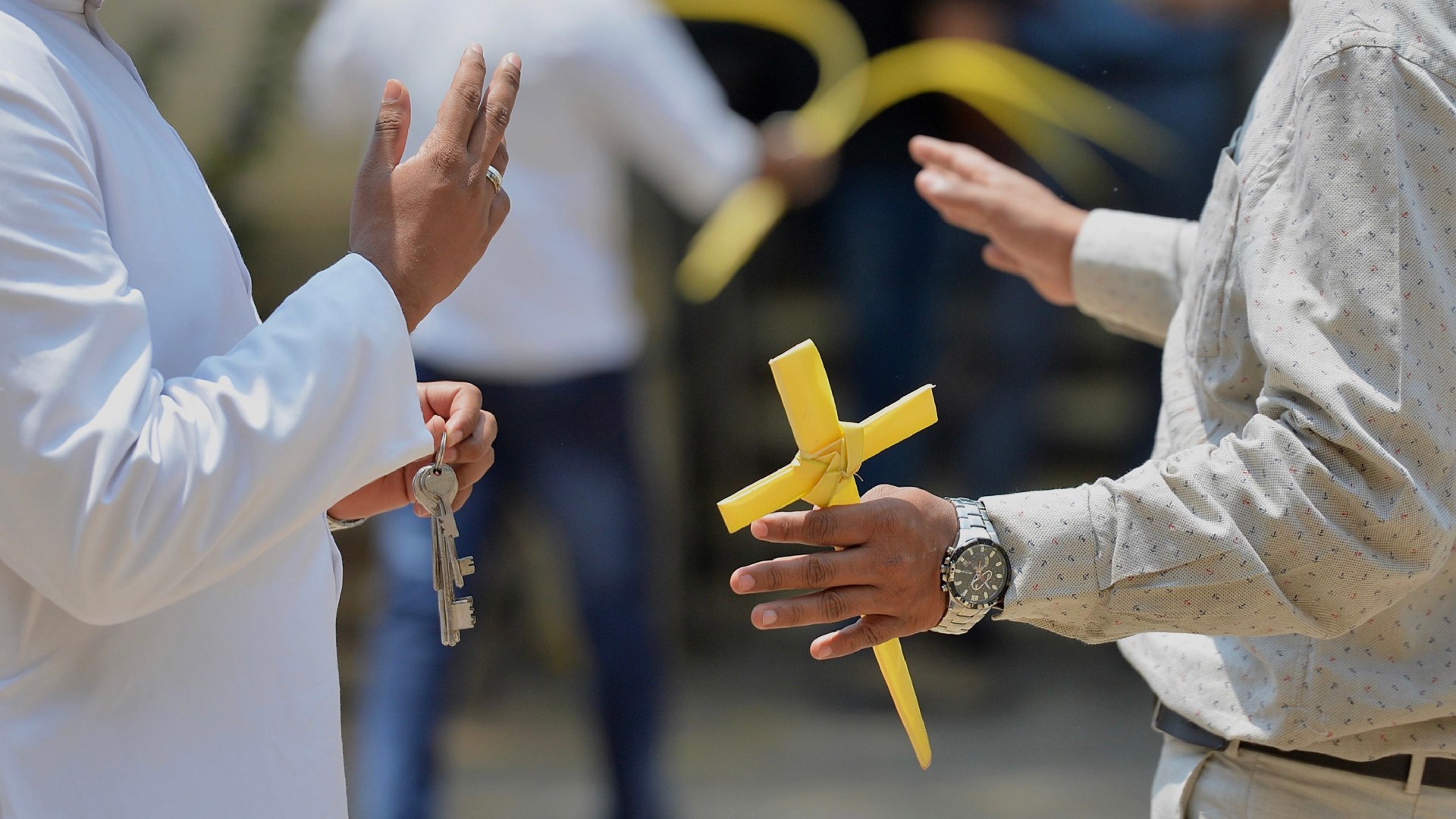
A Christian devotee holds a holy cross made out of palm leaf as he speaks with a pastor in India.

A Christian devotee holds a holy cross made out of palm leaf as he speaks with a pastor in India.

Christianity Today July 18, 2023
Manjunath Kiran / Getty

As recently as 2021, the southern India state of Karnataka recorded more than 30 cases of violence against Christians and their property. As recently as 2022, its government used a legislative loophole to pass an anticonversion law.

But this month, Christians are rejoicing after a newly elected state government has announced a significant financial investment in the community and promised to repeal the anticonversion law.

“There is evident change in the approach of the government,” said Atul Aghamkar, the national director of the Evangelical Fellowship of India’s National Center for Urban Transformation, based out of Bengaluru, the capital of Karnataka. “That will make a big difference.”

The election, which saw the highest voter turnout the state has ever recorded, saw the India National Congress (INC) party win 135 seats, well over the 113-threshold needed to win a majority and form a government. Within weeks of the election, it had allocated ₹100 crores (approximately $12 million USD) to establish the Karnataka State Christian Development Corporation (KSCDC) last week.

The KSCDC will be composed of members from the Christian community who will decide what projects to fund, which can range from church maintenance to community education to social work to old-age homes or orphanages, said Archbishop Peter Machado from the Archdiocese of Bangalore.

Christianity in Karnataka


Karnataka has a Christian population of 1.1 million, which accounts for 1.87 percent of the total population of the state, according to the 2011 census. Christians are spread across different parts of the state, with seven districts having a significant concentration: Bengaluru Urban, South Kanara, Udupi, North Kanara, Bidar, Mysuru, and Kolar.

Christians in Karnataka come from various language groups, including Tulu, Konkani, Kannada, Tamil, Telugu, and Malayalam. Most Christians belong to the Roman Catholic Church, while others are affiliated with Protestant denominations and Eastern Orthodox traditions, such as the Syrian Orthodox Church and its Protestant offshoot, the Mar Thoma Church.

“We are looking forward to improvements in education opportunities, health care, employment, and overall advancement,” said T. Thomas, the leader of the Belgaum Pastors and Christian Leaders Association.

Along with making this provision for Christians, the Karnataka chief minister also announced a slew of measures for other religious minorities. The budget allocates ₹25 crore ($3 million USD) for Jain pilgrimage centers, ₹25 crore ($3 million USD) for the redevelopment of the largest Sikh shrine in Bengaluru, and ₹50 crore ($6 million USD) for Muslims.

In addition, the government has allocated ₹360 crore (nearly $44 million USD) to develop minority communities.

The government is setting aside additional funds to subsidize religious minority students’ education, provide interest-free loans for them to pursue graduate and post-graduate degrees in foreign schools, and develop a coaching program to help them prepare for entrance exams.

Machado applauded the government for granting measures to each community not only to advance religious purposes but also to socially empower the community.

“These efforts to improve the state of minorities reflects the government’s commitment to inclusivity and well-being for all communities in the state,” said Machado.

Recent years have been harsh for many Christians in Karnataka. Under the Hindu nationalist Bharatiya Janata Party (BJP) government, which won the highest number of seats in the 2018 election, the situation became so adverse that a report from the United Christian Forum, Association for Protection of Civil Rights, and United Against Hate, ranked the state third in the country in terms of highest attacks on the Christian community.

“It is clear and obvious that an atmosphere of fear and apprehension prevails in the Christian community and its grassroots religious clergy because of a systematic targeting through a vicious and malicious hate campaign,” stated a December 2021 report from the Evangelical Fellowship of India. “It is equally obvious that those involved in carrying out this hate campaign and fear mongering enjoy protection and possibly support of elements in the political and law and order apparatus on the state.”

Critics had also accused the BJP of pushing its Hindu nationalist agenda by changing content in school textbooks to promote its ideology and by passing the anticonversion law.

Though the previous administration had proposed the creation of a Christian development corporation (that they later abandoned), they had told Christian leaders that they could forget about a withdrawal of the anticonversion legislation.

“The delegation [of Christian leaders] was told instead that the government is going to make the anticonversion law stricter and in line with the toughest anticonversion law in Uttar Pradesh,” said Aghamkar. “That was a very strong signal that there was a clear opposition.”

In anticipation of this year’s elections, Christians organized a large rally against the anticonversion legislation, one of the largest protests by the faith group that the state has ever seen. Christian leaders say they shared with the community their concerns about the BJP government’s treatment of religious minorities and organized a significant prayer movement.

“Christian bodies wholeheartedly stood behind the Congress party, which in its manifesto had promised the repeal of several controversial laws, including the anticonversion law, and the result was that the Congress got an overwhelming majority in the assembly,” said Thomas. “This new posture of the government could be a way of expressing gratitude for the support, feel some Christian leaders.”

One early piece of evidence of this gratitude is that Siddaramaiah, the chief minister, traveled to meet the archbishop and other Christian leaders and thank them for the Christian support, instead of summoning them to his office.

“There is evident change in the approach of the government. That will make a big difference,” said Aghamkar.

Christian leaders also believe that the government’s friendliness toward the church will quiet the presence of right-wing mobs. For years, groups have harassed churches and believers by entering the church premises and disrupting church services, said Thomas. Meanwhile, authorities have overlooked attacks on church properties and house churches while detaining Christians and at times arresting them on false allegations of forceful or fraudulent conversions.

“These mobs hunted Christians and booked them under the anticonversion law with false and baseless cases and just to throw them in prison and harass them,” he said.

On the other hand, the current government, Thomas says, has warned the police against promoting a Hindu nationalist agenda.

“These elements are now scared because the state is under Congress government. It has been heard that the government has ordered the police that if these fringe elements are found causing trouble, they must be arrested immediately,” he said.

A. C. Michael, the national coordinator of United Christian Forum, India, applauded the new government’s initiatives but warned the Christian community to remain watchful.

“There are visible efforts taken by the new Karnataka government which may help maintain peace in the state,” he said. “But the opposition is capable of doing its bit to create an unwanted atmosphere of hatred among communities.”

News

Soul Survivor Founder Resigns Amid Ongoing Investigation

Matt Redman and more than 100 others have accused Mike Pilavachi of physical and spiritual abuse.

Mike Pilavachi speaks at a Soul Survivor event.

Mike Pilavachi speaks at a Soul Survivor event.

Christianity Today July 18, 2023
Screengrab / Soul Survivor

An evangelical who was once praised for his work with young people in the United Kingdom has resigned from ministry in the middle of a Church of England investigation into allegations of “inappropriate intimate relationships” with interns.

Mike Pilavachi, founder of a popular church north of London called Soul Survivor and an associated summer festival that drew up to 30,000 young people every year for 27 years, stepped down last week. He said he wanted to ask forgiveness “from any whom I have hurt during the course of my ministry” but would not tolerate “a trial by media or social media.”

Pilavachi is accused of giving full-bodied oil massages to young men stripped down to their underwear and engaging in vigorous wrestling matches that would end with him pinning and straddling 18-to-21-year-olds who were taking a gap year to learn about ministry. The allegations span three decades, with some coming as recently as 2020. That same year, he was given an award by Anglican archbishop Justin Welby for “outstanding contribution to evangelism and discipleship amongst young people.”

More than 100 people have now come forward to accuse Pilavachi of physical and spiritual abuse, according to The Telegraph, which first reported the allegations in April.

Worship leader Matt Redman, who cowrote “10,000 Reasons (Bless the Lord),” “The Heart of Worship,” and “Our God,” has publicly identified himself as one of the victims.

“I myself experienced firsthand the harmful behaviours that have been described,” Redman wrote on Facebook. “I have spent years trying to fully heal from my time at Soul Survivor.”

Redman met Pilavachi during his traumatic childhood and rose to prominence as a worship leader with Soul Survivor. He said he previously reported his experiences to church leaders but was “ignored, patronised or gaslit.” Now that many allegations are public, he urged the parish leadership, the diocese, and the Church of England safeguarding team to do better.

“Accountability is so key in these moments,” Redman said. “It simply cannot be that if a ministry is particularly fruitful, or a leader is particularly gifted, or we ourselves have benefitted from that ministry, then we are willing to turn a blind-eye to the mistreatment of others under their care.”

Some abuse survivors and victim advocates have raised concerns about the Church of England’s investigation. They’ve asked for an independent third party to take over. The British evangelical magazine Premier Christianity reports the case has contributed to a widespread “safeguarding crisis,” and many have lost trust in the church’s “ability to do justice in cases of abuse.”

The parish’s trustees insist that they are “seeking a just, truthful and transparent outcome.”

Two men who previously worked with Pilavachi have publicly said allegations of inappropriate conduct were reported to church leaders at least as early as 2004 but were not taken seriously.

Writer Chris Bullivant, who edited a magazine for Soul Survivor from 2000 to 2005, said he relayed an allegation of an inappropriate relationship that was dismissed out of hand by an executive director. Paul Martin, who founded a Soul Survivor church in the US, said he reported allegations too and was assured it was being investigated.

“In my mind, I felt absolved a bit, like, ‘Okay, they’re handling it now,’” Martin told The Telegraph.

When Pilavachi continued to occupy a position of authority, Martin assumed he’d been cleared of any wrongdoing and it was probably an honest misunderstanding. Perhaps he had inadvertently crossed a line or just needed to be reminded “to make the effort to have more adult relationships.”

“It was naturally expected that leadership had done its job,” Martin said. “I expected that measures were put in place to ensure any confusion or misconduct was dealt with.”

Martin went on the record with The Telegraph in May, after the Church of England National Safeguarding Team, the trustees of the parish, and the parish’s diocese jointly released a vague statement saying they were looking into “concerns” about Pilavachi that could not be further specified. The church authorities asked people not to discuss the issue or speculate about what had happened.

“We would like to stress that the police are not involved; this is not a criminal investigation and Mike has not been suspended,” the statement said. “It is also not currently a clergy disciplinary matter .”

Another statement was released two and a half weeks later noting that the scope of the allegations might be larger than was first implied. A statement after that said Pilavachi was suspended and “this more decisive action should have been made earlier.”

According to The Telegraph, Pilavachi was long known to have special relationships with favorite interns—good-looking, athletic young men jokingly called “Pilly boys” and “Mike’s boys” within Soul Survivor. The ministry mentees seemed, too, to get cast off semiregularly and replaced by a new crop of handsome young men.

Pilavachi had “this incredible capacity to draw people in and make them feel special,” one former intern explained. “It was like an elliptical orbit, he’d pull people in and then fling them out.”

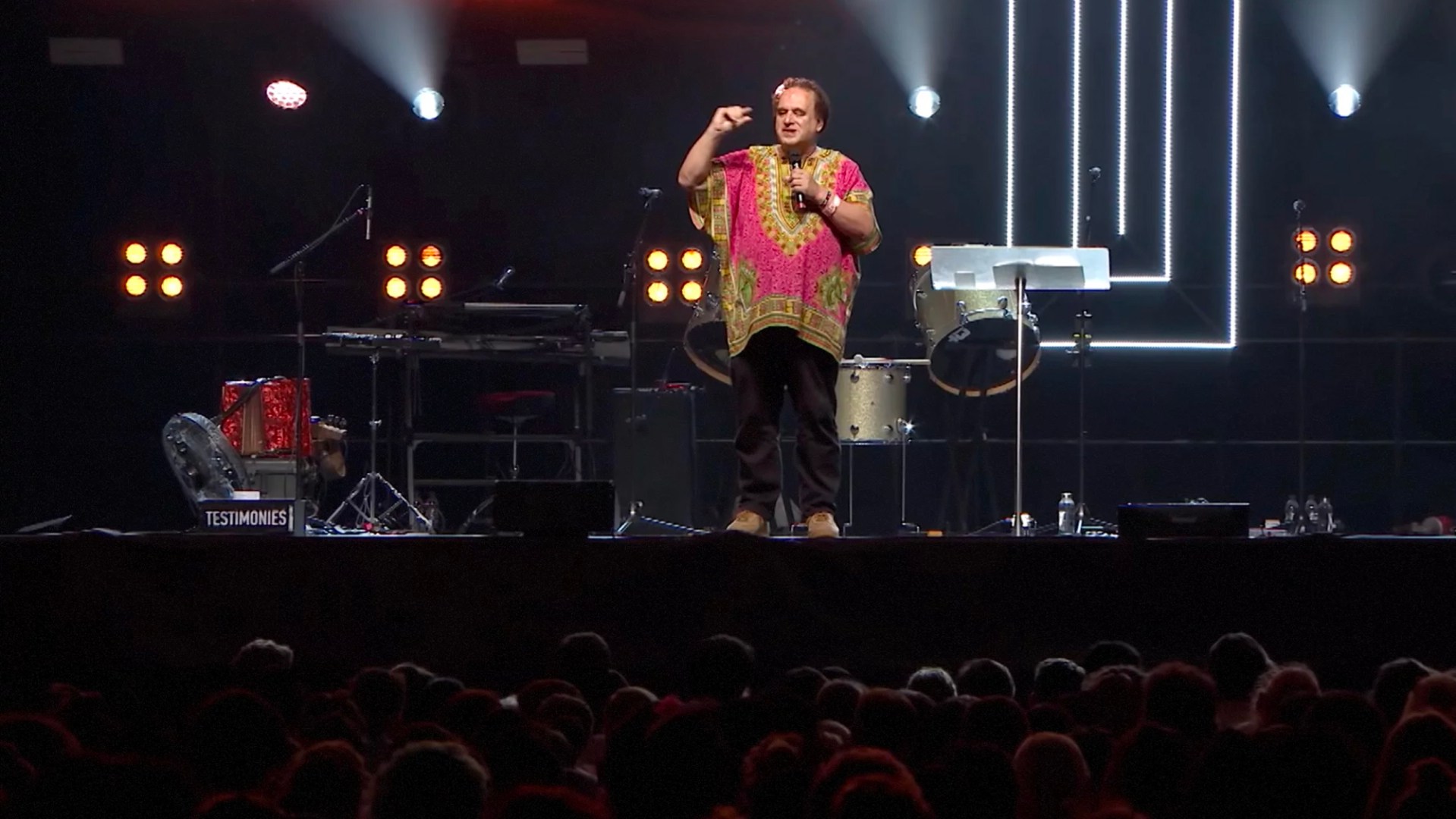
Pilavachi was widely regarded as a charismatic person who could bring fresh life into the Church of England. He was different from staid, respectable Anglican clerics, but that was seen as a good thing. He started as a youth minister, founded Soul Survivor in 1992, and the festival the year after. He was ordained in 2013. Pilavachi was charming and funny and people were riveted by his sermons and stories. He wore colorful tie-dyed dashikis when he spoke. And he talked with some frequency about being celibate, saying he had never slept with anyone, “animal, vegetable, or mineral.”

Pilavachi was charismatic in the sense that he believed the Spirit works in the world today and spoke about discerning what God was doing or saying. Many around him felt Pilavachi had a “direct dial to God.”

He was also charismatic in the sense that he seemed to effortlessly draw people to him. He made people feel special. Young men in particular.

“I didn’t want to do anything that would jeopardise our new relationship,” said one, who told The Telegraph he was encouraged to strip down to his underwear in Pilavachi’s bedroom and then received a massage that “went too far up the inner thigh.” He was 18 or 19 at the time; Pilavachi was in his 40s.

“He was an idol of mine,” said the man, whose name has been withheld by The Telegraph. “Who was I to question him? I was like putty in his hands, really.”

Another recalled that Pilavachi had control over every aspect of his life as he trained with Soul Survivor. Pleasing Pilavachi seemed critical to his future career in worship music.

“He was the pastor of my church. He was the head of the festivals and the events. He was the gatekeeper of my music publisher: Survivor Records. Every element of my life had Mike’s hand on it,” the man wrote. “I felt trapped.”

Pilavachi’s resignation will not end the official inquiry, according to the Church of England. There is no timeline for the conclusion of the investigation, and the safeguarding team is still open to hearing from survivors.

Those hurt by Pilavachi said his statement didn’t provide them any closure, either.

“These are not the words of someone who appreciates the scope and depth of the pain and trauma they’ve inflicted,” said David Gate, an American poet and songwriter who has credits on multiple Soul Survivor albums. “It also has the temerity to suggest that he would be a victim himself of ‘trial by social media,’ continuing his decades long practice of making himself the wounded party of any criticism in order to elicit sympathy and deflect from his actions.

“This statement makes me incredibly sad.”

Books
Review

Early Americans Read the Bible in a Way That Nearly Destroyed America

Mark Noll surveys the effects of an “independence-first” approach to Scripture.

Christianity Today July 18, 2023
Illustration by Christianity Today / Source Images: WikiMedia Commons

Thomas Paine threw gasoline-soaked ink on the fiery spirit of American independence by publishing his pamphlet Common Sense six months before the Declaration of Independence in 1776. Upon independence from King George III, Paine promised, “The birthday of a new world is at hand.”

America's Book: The Rise and Decline of a Bible Civilization, 1794-1911

America's Book: The Rise and Decline of a Bible Civilization, 1794-1911

Oxford University Press, USA

864 pages

This new world would be born free from a king. Citing the Gospel of Matthew, the Book of Judges, and 1 Samuel 8 (where Israel demands to be ruled royally like other nations), Paine argued that “the Almighty hath here entered his protest against monarchical government.” Common Sense was an enormous success; over 100,000 copies sold within months. You know the rest of the story about 1776: America echoed Paine’s call and claimed independence.

Eighteen years later, Paine authored more advice for his devoted readers. In 1794, he published the first of three parts of The Age of Reason, in which he trumpeted his deist beliefs about the Bible. It too was an immediate bestseller. As Paine declared on the opening page, “I believe in one God, and no more.” He added, “I do not believe in … any church that I know of. My own mind is my own church. … [Churches are] human inventions set up to terrify and enslave mankind, and monopolize power and profit.” Paine dissected the Bible, book by book, concluding, “Search not the book called the Scripture, which any human hand might make, but the Scripture called the Creation.”

As Mark Noll explains in America’s Book: The Rise and Decline of a Bible Civilization, 1794–1911, figures like Paine were instrumental in shaping America’s commitment to independence, which in turned shaped how its people engaged the Bible. In Paine’s mind, and in the minds of many of his contemporaries, Americans had the right to use the Bible however they saw fit, lest they bite the hand—independence—that fed them their freedom.

A tool to guide independent citizens

Noll is a preeminent historian of American Christianity who spent 27 years at Wheaton College before finishing his career at the University of Notre Dame. America’s Book picks up where Noll left off in his 2016 publication In the Beginning Was the Word: The Bible in American Public Life, 1492–1783, which examined the Bible’s impact on American politics from Christopher Columbus to the signing of the Treaty of Paris. America’s Book develops several themes explored in Noll’s earlier work: the influence of Paine, the prevalence of the King James Bible, the tendency of Americans to imagine themselves as a type of Israel, their habit of enlisting Scripture to support republican and democratic principles—and the intersection of slavery with all this and more.

Noll organizes his 30 chapters in six parts. The first part lays the groundwork to help readers understand the first of Noll’s two main arguments: America’s commitment to independence shaped how Americans utilized the Bible from the very beginning.

How do you govern a nation of independent free citizens? Noll explains that part of the answer is in “voluntary reliance on Scripture”—with special emphasis on “voluntary.” He adds, “While Scripture remained indispensable for personal religion and church order, it also became the tool for ensuring the well-being of a free people in a free society.” In early America the Bible was a tool to guide independent citizens. Noll quotes an early historian of the Bible in America, who wrote in 1844, “Nothing but the Bible can make men the willing subjects of law; they must first acquiesce with submission to the government of God before they can yield a willing obedience to the requirements of human governments.”

Part two shows how the Bible emerged seemingly everywhere in the new republic. American towns, mountains, and children were given biblical, and often Old Testament, names—embracing the sense of America as a new Israel. Meanwhile, an astonishing number of King James Bibles filled churches and homes, aided by the creation of the American Bible Society.

Noll’s second primary argument emerges in the third and fourth parts of the book: An independence-first approach to the Bible that prioritizes proof-texting and “Bible only” reasoning ended up fracturing America when its politicians, pastors, and citizens could not agree on what the Bible taught regarding slavery. These fractures surfaced in the Missouri Compromise (1820), Denmark Vesey’s attempted uprising (1822), William Lloyd Garrison’s Liberator magazine calling for immediate emancipation (1831), Nat Turner’s slave revolt (1831), and ruptures among Northern and Southern Methodists and Baptists (1845). Independent interpretation of the Bible allowed for Joseph Smith’s reinterpretation in The Book of Mormon (1830), Bible-based calculations of the timing of Christ’s return among Millerites (1843), and new views regarding the rights of women.

The climax of the book arrives when Noll shows that America’s failure to agree on what the Bible taught about slavery fractured the nation completely in the Civil War. As Noll explains, “when arguments over Scripture and slavery exposed conflicting opinions about what common sense revealed, American Protestant theology began to divide, as it remains divided to this day.”

Noll provides exhaustive details of the arguments made for proslavery and antislavery readings of the Bible. He admits that he changed his mind regarding which side provided stronger arguments to the people of that era. In his 2006 book The Civil War as a Theological Crisis, Noll had contended that the proslavery position won greater support on account of its simplicity. His current book reexamines previous evidence and draws on new materials, the weight of which convinced him that the antislavery argument should have been sufficient to carry the day.

I admire Noll’s willingness, as a senior scholar, to reconsider the evidence and reverse his previous conclusion. And he does well to specify what he might have told antebellum Bible interpreters regarding slavery, explaining “what could have been the strongest weapon in their arsenal”: If “Americans claimed to follow the Bible alone, or even the Bible as the chief witness alongside other authorities, and Scripture contained almost no examples of African slaves—and no credible directives that only Africans should be enslaved—the proslavery arguments should not have enjoyed the importance they so obviously did enjoy.”

Declining influence

The final two parts of the book document the place of the Bible in the 50 years after the Civil War. Noll argues that the place of the Bible declined in America because white Protestants “created a popular perception that religion had nothing reliable or coherent to say about the greatest American issue of the nineteenth century,” meaning slavery. Near the dawn of the 20th century, as some Protestants insisted on the inerrant nature of the Bible as a hermeneutical starting point, fewer Americans were listening. Between increased immigration among non-Protestant groups and the catastrophe of the Civil War, Noll writes, “English-speaking white Protestants no longer controlled public space.”

In 1911, the 300th anniversary of the creation of the King James Bible was celebrated in London, New York, and Chicago. Commemorations featured remarks from the British prime minister, national ambassadors, President William Howard Taft, and King George V. Looking back, their words functioned as eulogies for the prominent role the Bible once played in England and America. Noll believes that near the turn of the 20th century, “large numbers also turned away entirely from religious guides in favor of social authorities or complete preoccupation with life in this world.”

There is plenty to chew on in Noll’s meaty book, which runs over 800 pages. While reading it, I formed three questions that I hope Noll’s future writing might discuss or inspire others to address.

Noll rightly argues that Americans made their arguments, good and bad, “not because they were stupid but because they lived with a different universe of assumptions.” So, I ask first, how can Americans become more aware of how our current assumptions about democracy and independence influence the way we use and interpret our Bibles? Second, how might a new era of Americans cultivate Christian virtue if history has shown us that we are unlikely to come to any consensus on interpreting Scripture? And third, might Noll continue his project in a third book that picks up after 1911 to help us understand how Americans have engaged the Bible in the last century? I hope he does.

Sean McGever is area director for Paradise Valley Arizona Young Life and an adjunct professor at Grand Canyon University. He speaks, teaches, and ministers across the United States, Canada, and the UK. His books include Born Again: The Evangelical Theology of Conversion in John Wesley and George Whitefield.

Theology

Ancient Chinese Sacrificial Rituals Resemble Those of the Israelites. Does This Matter?

What Jesus’ death means for how I make sense of my culture’s traditional religious practices.

Christianity Today July 18, 2023
Feng Li / Staff / Getty

If you ever visit the Temple of Heaven in Beijing—ancient China’s largest center for high-level rituals—you might be struck by its lack of Buddhist and Taoist idols. The design of the Chinese place of worship displays some of the characteristics of the ancient Chinese tradition of ritual sacrifice to heaven, which seem to bear many similarities to the rituals for worshiping God recorded by Moses in the Pentateuch of the Old Testament.

No known records exist suggesting that Judaism inspired Chinese spirituality. In fact, a second-century B.C. Confucian classic, The Rites of Zhou (周禮 Zhouli), records these acts of worship, and archaeologists have discovered the bronze ritual vessels with Chinese characters depicting sacrifices of animals such as ox and sheep, confirming that these practices are thousands of years old.

Conducted by the royals until the end of the imperial dynasties in the early 20th century, these official rituals gradually drifted from their Confucian origins. But as a Chinese Christian, rather than grieve this separation, I’m grateful that I know Jesus, whose death supersedes these ancient sacrifices and whose resurrection offers redemption for eternity.

The will of heaven

In 1982, the Chinese American scholar Ray Huang released 1587: A Year of No Significance (萬曆十五年). The bestselling book highlighted the Ming dynasty’s religious practices, including a famous example from 1585 of an emperor using the Temple of Heaven to pray for rain. After months of drought, Emperor Wanli fasted for three days before leading his officials from the imperial palace to the temple and holding a special ceremony for the weather change. Upon arriving at the Temple of Heaven, the Ming dynasty emperor knelt on the lowest step of the Circular Mound Altar, burned the sacrificed animals, prayed, offered incense, and prostrated to the “God of the Highest Heaven” (皇天上帝 huang tian shang di). (上帝 or shang di are the characters used for “God” in many Chinese versions of the Bible.)

After the ritual, Wanli spoke to his officials at the Altar of Heaven. He explained that he believed the great drought had come because he and his officials had failed to be virtuous and had allowed corrupt officials to exploit commoners. As he understood it, this behavior disturbed heaven’s harmony and caused heaven to withhold rain. To show he understood heaven’s will and intention, the emperor expressed remorse over his own moral failure and his expectation that the corrupt officials would repent and change their ways. The emperor’s act of worship offers a window into how Chinese spirituality understood the relationship between heaven and earth.

In his remarks to his officials, Wanli used a name for God that had been adopted in a 1538 ceremony performed by his grandfather, Emperor Jiajing. To reinforce his legitimacy to the throne (as he was only a nephew to his predecessor, who had died without a male heir), Jiajing replaced the name God of the Vast Heaven (昊天上帝, hao tian shang di)—which had been used for several thousand years—with God of the Highest Heaven (皇天上帝, huang tian shang di).

Although both huang (皇) and hao (昊) contain the meaning of “grand, great, or magnificent,” huang (皇) is more frequently used in the words related to the royal family (皇室) or the emperor (huang di, 皇帝), underscoring a close connection between heaven and the royal power. Through this name change, then, the emperor was elevating his own authority over heaven, which at that time was regarded as the most symbolic and powerful source in Confucian politics.

As part of the 1538 sacrificial ceremony, officials sang 11 songs of praise to this God. One of these was titled “The Coming of God” and included a description of the beginning of the universe reminiscent of the first chapter of Genesis:

Of old in the beginning, there was the great chaos, without form and dark. The five elements [planets] had not begun to revolve, nor the sun and the moon to shine. In the midst thereof there existed neither forms nor sound. Thou, O spiritual Sovereign, camest forth in Thy presidency, and first didst divide the grosser parts from the purer. Thou madest heaven; Thou madest earth; Thou madest man. All things with their reproducing power got their being.

‘To the God of heaven’

Despite their newer venue, the practices of these emperors were similar to rituals initiated by people from the Western Zhou (1045–771 B.C.) dynasty, which also reflected the various animal sacrifices described in the Book of Exodus.

Ancient Israelites’ burnt offerings, sin offerings, and peace offerings all involved the butchering of unblemished animals—bulls, sheep or goats, doves or pigeons, depending on the sacrifice. After the animal was killed, the priest burned its carcass. As part of sin offerings, priests sprinkled the animal’s blood on the altar, representing the washing of the believer’s sins with the blood of the sacrifice. Priests also butchered cattle and sheep as part of ancient Chinese rituals of sacrifice to heaven.

By the time of the Ming dynasty, the annual ritual sacrifice to heaven was considered a great ceremony. Five days before the sacrifice, the emperor himself would go to the place where sacrificial animals were kept and personally study their appearances and states of health, ensuring that the animals were unblemished and without defect.

Afterward, the emperor fasted and purified himself for three to five days leading up to the ceremony, before burning the selected animals as part of the event. People hoped that the smoke from the burning animals would rise up to the God of heaven so that he would send down blessings. The Confucian classic Shijing (Classic of Poetry), whose earliest contributions date back to the 11th century B.C., contains a hymn with the line “The fragrance of the sacrifice rises; the God of heaven is surrounded by the fragrance; how wonderful is the fragrance!” After describing the entire process of the ritual, the last line says, “After Houji established the sacrifice ceremony (to heaven), people no longer feel guilt.”

The Shijing commentary suggests that the Zhou people began sacrificing to the God of heaven to “no longer feel guilt for their sin,” to express respect of the divine, to seek his protection, and to pray for peace and prosperity for the country.

The real sacrificial lamb

Under the surface of these cosmetic similarities lie nuanced differences in the meanings of Israelite sacrifices in the Old Testament and ancient Chinese ritual sacrifices to heaven. The former sought God’s forgiveness and pardon. In contrast, the original motivation for the latter was to stop feeling guilt for sin—and even this goal was gradually de-emphasized over time.

China had established an official ritual system since before the time of Confucius (551–479 B.C.). But while the philosopher affirmed these practices, he also held that human beings could transform the world by observing five particular virtues. This focus on the temporal greatly influenced Chinese society. Over time, royal authority slowly transferred from the “will of heaven” to political succession ostensibly based on virtue.

Yet how does the ethical system of Confucianism interact with the entire Confucian system of ritual, including ritual sacrifice to heaven? And how do the will of heaven and the virtue of humanity interact with each other? The Confucian classic Mencius, Lilou II, which dates back to when Chinese leaders still practiced sacrifices regularly, said, “Though a man is evil, if he fasts and cleanses himself, he might yet offer sacrifices to God.” In other words, whether through fasting and cleansing or by slaughtering the cattle or sheep and burning sacrifices to heaven, in the ancient Chinese worldview there was no permanent way to solve humanity’s sinful nature.

How do we as Christians look at the sacrifice ceremony to God? In the Book of Hebrews, the author explores at length the relationship between the Old Testament sacrificial rituals and Christ on the cross.

Hebrews 9:8 says, “The way into the Most Holy Place had not yet been disclosed as long as the first tabernacle was still functioning.” According to the writer of Hebrews, then, before Jesus’ birth and crucifixion, the Hebrews’ sacrificial rituals could not take lasting effect. The high priest’s sacrifices in the Most Holy Place could not truly and completely remove people’s sins. Instead, his actions only foreshadowed what was to come through Christ.

For humanity to indeed be rid of sin, we had to wait for our only truly effective sacrificial lamb—Jesus, whose death tore the tabernacle curtain separating human beings and God. Because of this, people can now enter the Holy of Holies and meet God when covered by Jesus’ blood.

If we trace the source of the traditional Chinese characters, we can find the origin of the butchering of cattle and sheep for sacrifice to the heavenly God. The Chinese character for “ritual” (禮) has a radical on the left representing an altar (示) and a container (“豆”) on the bottom right; above the container is a representation of the offering.

Shuowen Jiezi, an early and authoritative Chinese dictionary, defines the word ritual (禮) as “serving the divine in order to prosper.” And the word for righteousness (義) has a lamb on the top, with “a hand holding a weapon in order to kill the sheep” on the bottom—literally meaning people can become righteous by butchering the lamb. According to the writer of Hebrews, the ancient Israelites’ sacrifice ceremonies foreshadow the coming of Jesus as the real Lamb for atoning human beings’ sins.

I personally believe that these ancient Chinese rituals foreshadow Christ in a common grace sense and that their presence serves as a reminder that he is the sacrificial Lamb of God offered on behalf of all. Yet we believe that the blood of Jesus Christ not only saves us from feeling guilty but also redeems us from our sins. We all have personal access to Jesus, not mediated by an emperor or priest. Thanks be to the true God of the highest heaven!

Jixun Hu has a master of divinity from Garrett-Evangelical Theological Seminary and is a minister of East Bergen Christian Church in New Jersey.

News
Wire Story

6 Reasons Bedside Baptist and Church of the Holy Comforter Are So Popular

Survey examines how weather, sports, and sleep affect if and when churchgoers go to church.

Christianity Today July 17, 2023
Josh Applegate / Unsplash

Jesus said the gates of hell will not prevail against His church, but sleet and hail will keep many churchgoers out of the pew on a Sunday. In fact, some may even skip to get a little extra sleep or watch their favorite team.

A Lifeway Research study of U.S. adults who attend a religious service at a Protestant or non-denominational church at least monthly finds several reasons some will miss church at least once a year.

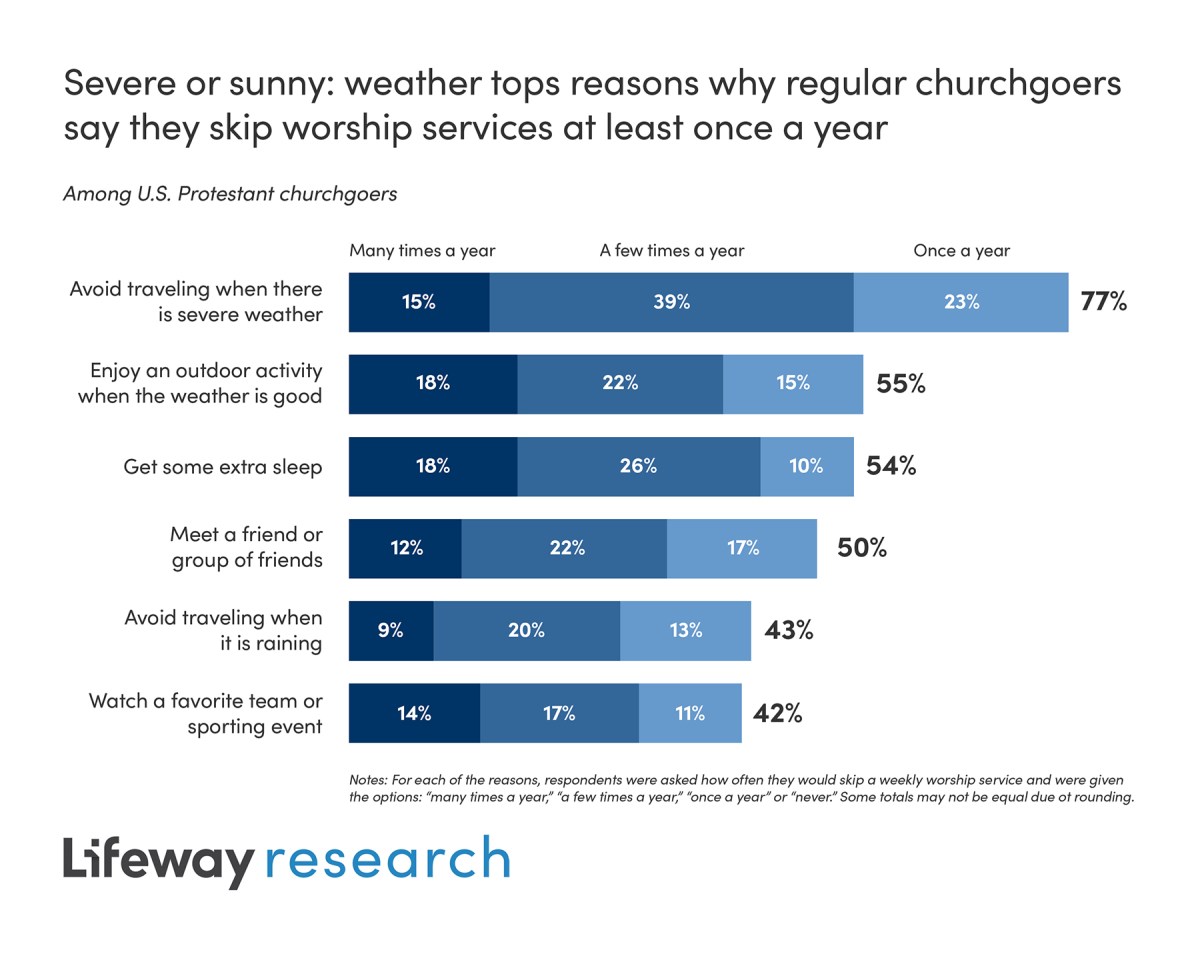
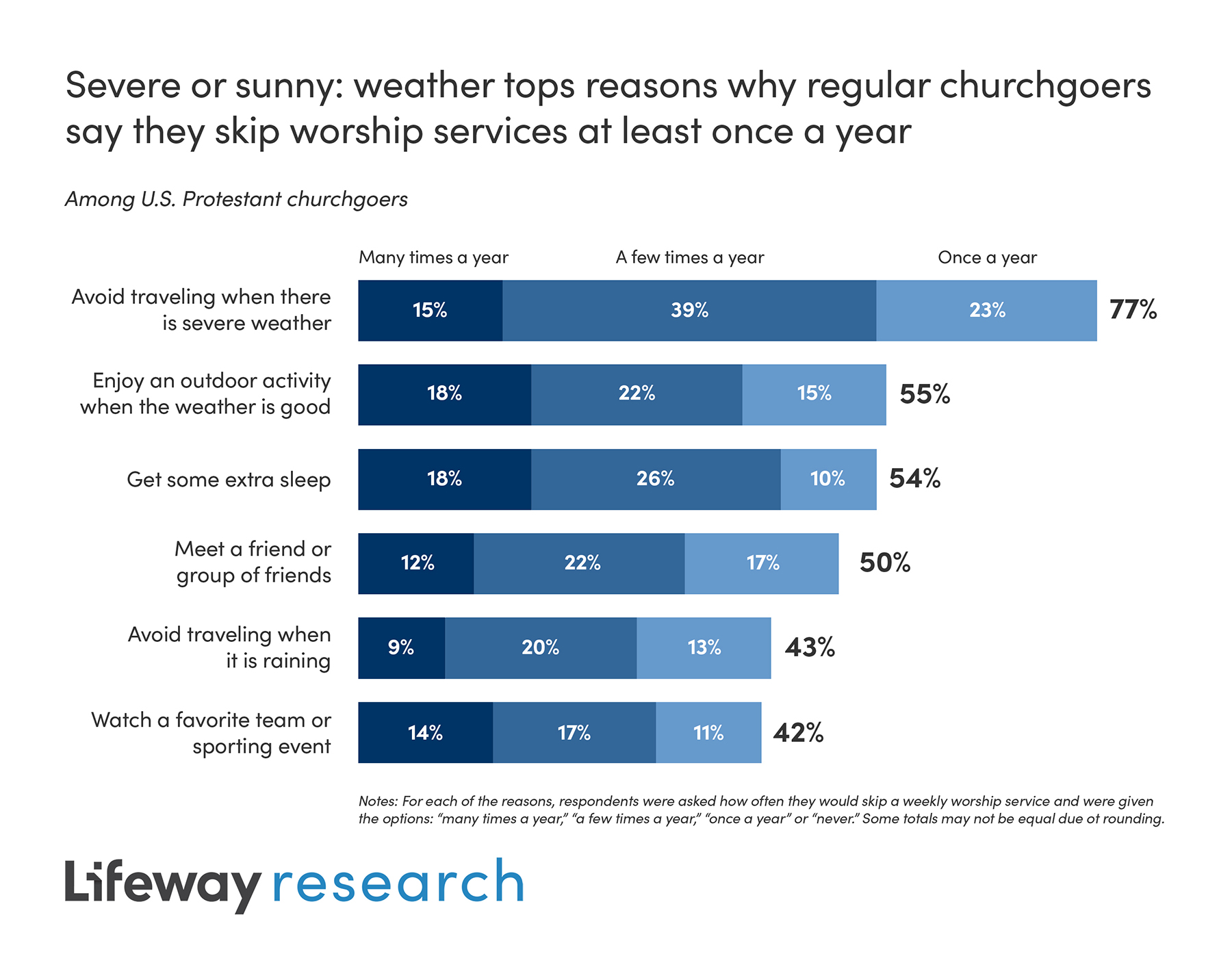
Respondents were asked how often they would skip a weekly worship service for six different scenarios—to avoid severe weather, to enjoy an outdoor activity in good weather, to get extra sleep, to meet friends, to avoid traveling when it’s raining, or to watch sports.

One in 10 Protestant churchgoers (11%) say they would never skip for any of these reasons. Twice as many (22%) say they would never skip due to the five options besides severe weather situations.

“Churchgoers are not on autopilot. Each week they are faced with a choice of whether to attend church, and there is more than one tradeoff when it comes to this decision,” said Scott McConnell, executive director of Lifeway Research.

Lifeway Research

Severe and sunny weather-related absences

Most regular churchgoers say they would miss a weekly worship service at least once a year to avoid traveling in severe weather (77%), to enjoy an outdoor activity (55%), or to get some extra sleep (54%). Half (50%) would do so to meet a friend or group of friends. Fewer say they’d skip to not have to travel when it was raining (43%) or to watch a sporting event or their favorite team (42%).

“Sometimes churchgoers conclude it’s safer to skip church and not be on the roads,” said McConnell. “But many will also skip church if they feel they have a better option.”

More than 3 in 4 churchgoers (77%) would skip church if there were snow, ice, a tornado watch, or other severe weather, including 23 percent who would do so once a year, 39 percent a few times a year, and 15 percent many times a year. Almost a quarter (23%) say they would never intentionally miss a worship service for this.

On the opposite end of the weather spectrum, most churchgoers (55%) say they would miss weekly worship at least occasionally to enjoy an outdoor activity during nice weather. For 15 percent, they’d do so once a year, 22 percent say a few times a year and 18 percent would skip many times a year. Still, 45 percent say they’d never miss church to go outside during good weather.

Other reasons for skipping services

More than half (54%) of churchgoers say they’d miss church to stay in bed a little longer, including 10 percent who say they would skip once a year to get some extra sleep, 26 percent a few times a year and 18 percent many times a year. Sleep is never a reason to miss for 46 percent of U.S. churchgoers.

Churchgoers are even split on missing a service to meet friends. Half (50%) would do so, including 17 percent once a year, 22 percent a few times a year, and 12 percent many times a year. Half (50%) say they’d never skip a weekly worship service to meet a friend or group of friends.

Most U.S. Protestant churchgoers say rain won’t keep them away. But 43 percent say they may miss church to avoid traveling during rainy weather. For 13 percent, they’d miss once a year, 20 percent say a few times a year, and 9 percent say many times a year. Almost 3 in 5 (57%) would never skip a worship service because it was raining.

Despite major sporting events often happening on Sundays, watching sports is the least likely of the six reasons churchgoers say would cause them to skip church. Slightly more than 2 in 5 (42%) say they’d miss a worship service to watch a sporting event or their favorite team, including 11 percent who say once a year, 17 percent a few times a year, and 14 percent many times a year. For 58 percent of US Protestant churchgoers, sports would never cause them to miss church.

“There is a good reason some churches are in the habit of noting the weather conditions when they record their worship attendance,” said McConnell. “The weather, both good and bad, is part of the decision-making process for many churchgoers.”

Different groups, different reasons

Some churchgoers are more likely to skip for specific reasons. Churchgoers in the Midwest are the least likely to say they’ll miss many times a year to watch sports (8%). Men (46%) are more likely to say they’d stay home to watch their favorite team at least once a year than women (39%), while women (47%) are more likely to miss because of rain than men (37%).

Those under 50 are more likely to miss worship services to enjoy an outdoor activity and meet friends than those 50 and older. In addition, the younger a churchgoer is, the more likely they are to stay in bed and sleep on Sunday mornings at least occasionally.

Perhaps unsurprisingly, churchgoers who attend four times a month or more are less likely to say they’d ever miss for any of the six options than those who attend one to three times a month. Also, evangelicals by belief are less likely to say they would skip for any of the listed reasons than those without such theological convictions.

Additionally, the oldest group of churchgoers (65+) and those of other ethnicities (not white, Hispanic, or African American) are frequently among the least likely to say they’d miss for those reasons.

Denominationally, Presbyterians are among the least likely to say they’d ever miss church for any of the reasons. Meanwhile, Methodist churchgoers are among the most likely to say they would skip at least once a year for each of the six reasons. Those who attend Restorationist movement congregations are also among the most likely to miss services for five of the six options at least occasionally.

For more information, view the complete report.

addApple PodcastsDown ArrowDown ArrowDown Arrowarrow_left_altLeft ArrowLeft ArrowRight ArrowRight ArrowRight Arrowarrow_up_altUp ArrowUp ArrowAvailable at Amazoncaret-downCloseCloseellipseEmailEmailExpandExpandExternalExternalFacebookfacebook-squarefolderGiftGiftGooglegoogleGoogle KeephamburgerInstagraminstagram-squareLinkLinklinkedin-squareListenListenListenChristianity TodayCT Creative Studio Logologo_orgMegaphoneMenuMenupausePinterestPlayPlayPocketPodcastprintremoveRSSRSSSaveSavesaveSearchSearchsearchSpotifyStitcherTelegramTable of ContentsTable of Contentstwitter-squareWhatsAppXYouTubeYouTube