Seeing Jesus, They Knew

An Advent reading for December 24.

Stephen Crotts

Week 4: Immanuel


As we journey through the events surrounding the Nativity, we contemplate the Incarnation. Jesus—the Mighty God, the Prince of Peace, the Light of the World—became flesh and dwelt among us. As Isaiah’s prophecy foretold, he is “God with us.” Jesus is Immanuel.

Read Luke 2:22–40

Parenting is hard, and first-time parenting brings an added weight of difficulty. Everything is new—from feeling those first flutters of life in the womb to holding and seeing your child for the first time to the first bath, first feedings, first words, first steps. There are so many firsts!

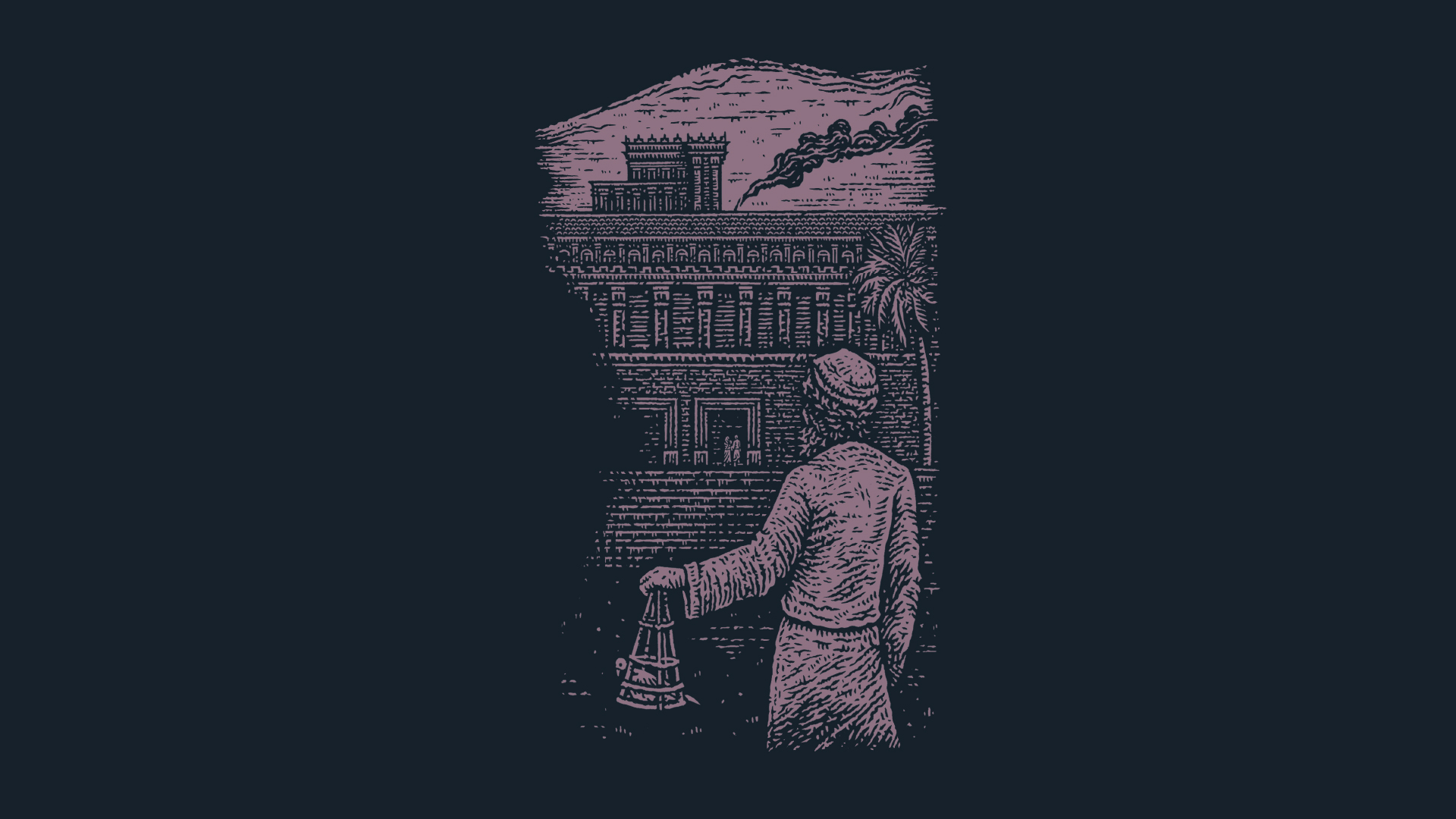
Imagine what it was like for Joseph and Mary, traveling with their newborn from Bethlehem to Jerusalem. The trip would’ve taken a few hours on foot. In faithful obedience, they traveled for the first time as brand-new parents, participating in the custom of dedicating themselves and their child back to God.

All went according to custom until the righteous and devout Simeon arrived. He’d been waiting for the deliverance of Israel, and entering the temple courts, he experienced a first. In that moment, God fulfilled his promise that Simeon would live to see the Messiah. Seeing the infant Jesus, he knew.

And Simeon didn’t just see him—Simeon held him. In that moment, Simeon tangibly understood that God’s salvation foretold by the prophets would be not only global in scale but also intimate and personal. Salvation itself was embodied in the cooing and wiggling infant in his arms. As Simeon worshiped and spoke of God’s salvation, Mary and Joseph marveled, likely remembering the angels’ instruction that they should name their child Jesus, a name that spoke of God’s salvation.

While Simeon spoke to Mary, Anna came up to them and confirmed Simeon’s prophetic song of worship by praising God herself. For decades, Anna’s entire life had centered on worshiping God, praying, and fasting. Seeing Jesus, Anna knew. She knew this was the child they’d been awaiting for the redemption of God’s people, so she spoke of Jesus to all who would listen. The promised light for the nations had arrived.

In Mary and Joseph, in Simeon and Anna, we see snapshots of what devotion to God and righteous living looks like. We see obedience and faith, discipline and dedication, anticipation and worship. They saw Immanuel. They held Immanuel. They knew Immanuel. They spoke of Immanuel.

As we celebrate Immanuel this Advent, let’s walk in faithful obedience like Mary and Joseph. Let’s practice being devoted, upright, and worshipful like Simeon. Let’s pray, fast, and speak of Jesus to all who will hear like Anna. There is redemption in no other name.

Kristie Anyabwile is the author of Literarily: How Understanding Bible Genres Transforms Bible Study and the editor of His Testimonies, My Heritage.
Ponder Luke 2:22–40.
What’s most compelling to you about the stories of Simeon and Anna? How does their example—and that of Mary and Joseph—encourage and inspire you this Christmas Eve?

Christmas Day

An Advent reading for December 25.

Stephen Crotts

Read Isaiah 7:14 and 9:1–7

“For to us a child is born, to us a son is given, and the government will be on his shoulders. And he will be called Wonderful Counselor, Mighty God, Everlasting Father, Prince of Peace. Of the greatness of his government and peace there will be no end. He will reign on David’s throne and over his kingdom, establishing and upholding it with justice and righteousness from that time on and forever.”

Isaiah 9:6–7

Celebrate Jesus’ birth with joy.

Light of the World, Hope of the Nations

A devotional reading for Epiphany.

Stephen Crotts

Read Matthew 2:1–12 and Isaiah 49:6; 60:3

Throughout history, humans have looked up to the night sky to search for signs from above. That proclivity has led many to worship the stars and celestial bodies. In Genesis 1, the terms sun and moon are not used; they are instead described as the greater and lesser lights (v. 16), likely to avoid the names commonly evoked in idol worship in the ancient Near East.

Yet God would soon use that same human search for signs in the stars to reveal his covenant: He commanded Abraham to look up and witness the innumerable stars, foreshadowing the blessing of his progeny to the nations.Hundreds of years later, however, when the children of Abraham were exiled to Babylon, it appeared that the darkness of the nations had devoured the light. Hope appeared to be lost.

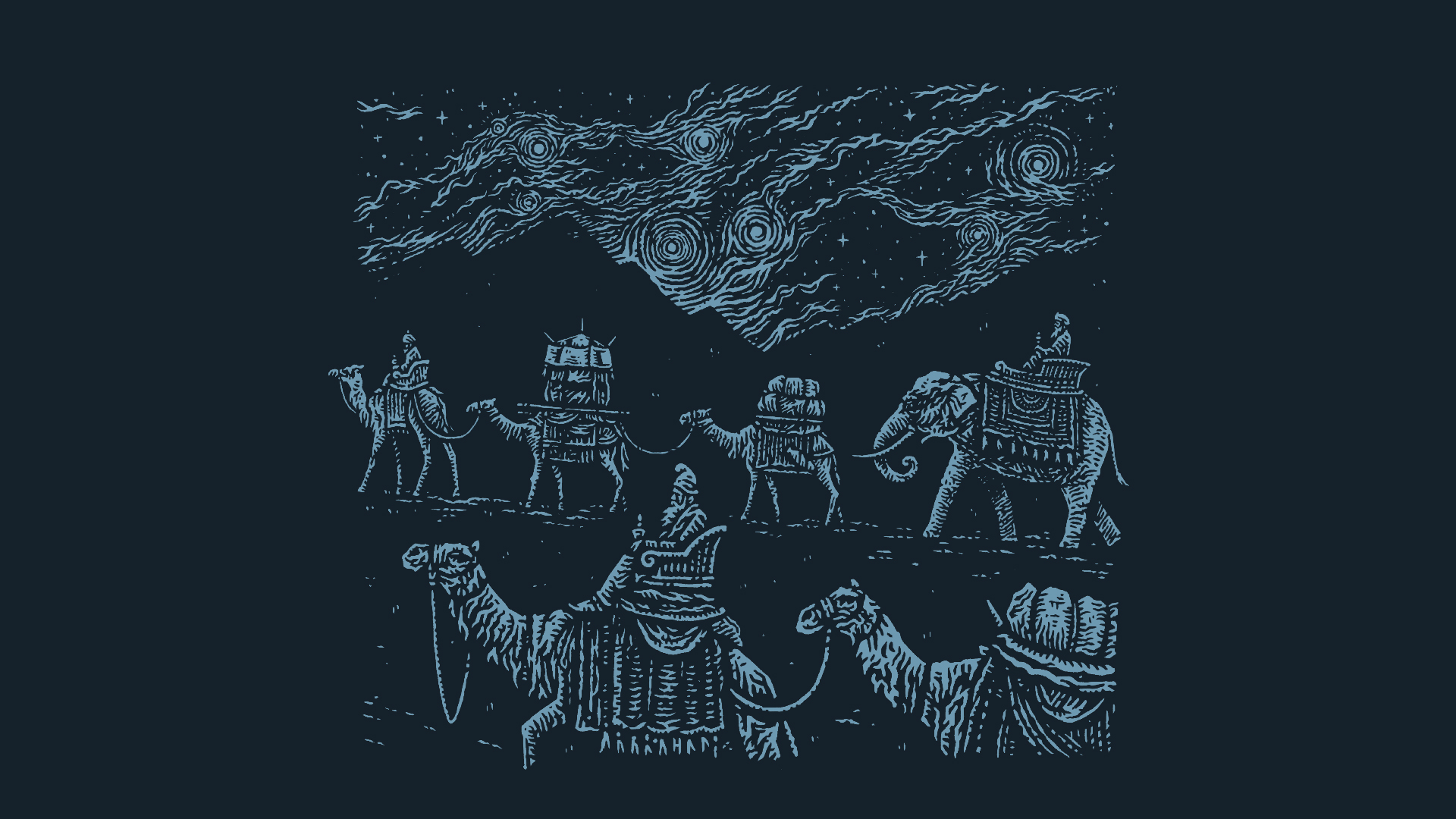
But in Matthew 2, we find an unexpected redemptive reversal! We meet the Magi—from an elite class known for astrology (and idolatry) and likely from the same region where God’s people had been exiled—whose study of the skies led them to faith in the promise of Abraham. Had the stories passed down from Daniel and the exiles in Babylon finally come to pass? Likely venturing on the same 900-mile journey from ancient Babylon to Jerusalem that the returning exiles had made so many years before, the Magi sought an answer to a single question: “Where is the one who has been born king of the Jews?”

Their inquiry revealed a deep spiritual yearning: “We saw his star … and have come to worship him.” Their journey was a fulfillment of Isaiah’s prophetic vision and a foretaste of what was to come: “I will make you as a light for the nations, that my salvation may reach to the end of the earth” (49:6, ESV). The “lesser light” of the star pointed the Magi to the “greater light” in the little town of Bethlehem, bright enough to enlighten the nations. The light came into the world, and the darkness did not conquer it.

The light of the Epiphany—the appearance of God in the arrival of Jesus—continues to offer hope to all nations groping in the dark for divine truth. And as the Magi show us, this is news too good to keep to ourselves! These wise men from the East continue to teach us that we too must travel far and wide to share the news that Jesus is the Light of the World and the hope of the nations. As Scripture tells us: “You are a chosen people, a royal priesthood, a holy nation, God’s special possession, that you may declare the praises of him who called you out of darkness into his wonderful light” (1 Pet. 2:9).

Rasool Berry serves as teaching pastor at The Bridge Church in Brooklyn, New York. He is also the host of the Where Ya From? podcast.

Reflect on Matthew 2:1–12 and Isaiah 49:6; 60:3.
What does the visit of the Magi reveal about Jesus’ identity and purpose? How is the Spirit prompting you to respond to Jesus, the Light of the World?

A Path Through the Wilderness

An Advent reading for November 28.

Stephen Crotts

The infant wrapped in swaddling clothes and laid in a manger is the glorious Creator and sustainer of all things. We hear of his power and might in the teachings of John the Baptist. We anticipate his promised return and his ultimate reign. Jesus is the Mighty God.

Advent Week 1: The Mighty God

Read Isaiah 40:1–5 and Malachi 3:1–4; 4:5–6

In Isaiah 40, we find the Israelites deported to a strange land—exiled and captive in ancient Babylon. The city was located about an hour south of modern-day Baghdad, Iraq, and was considered the center of Mesopotamian civilization, a cosmopolitan desert city of hanging gardens that was famous for Hammurabi and his code. But God’s people didn’t want to remain stranded here. They wanted to go home, back to Jerusalem. Yet they were far, far away from home with no hope of return.

In this no-hope-possible context, they experienced an inbreaking of God’s grace. “Comfort,” the prophet cried—a Hebrew word with connotations of courage and strength. His message was something akin to “Be comforted, have hope! This is not the end. You are going to see and experience something you could never have imagined in your wilderness life.” Like their ancient ancestors who had experienced miraculous provision and deliverance in the Egyptian wilderness, they too would see God make a path through the wilderness for them.

Pairing Isaiah 40:1–5 with Malachi 3:1–4 and 4:5–6, we see God’s promise to send a messenger to prepare the hearts of his people for deliverance. They would be cleansed as through fire so that they might see God, themselves, and the world more clearly. In this deliverance, that which had been torn apart through exile, like familial relationships, would one day be stitched back together (Mal. 4:5–6).

God kept his word; eventually the Israelites returned to Jerusalem. Yet this return was not the end of the prophecy. Centuries later, another prophet, John the Baptist, would clear the path for the Mighty God, our Lord Jesus Christ, to save his people from their exilic existence—exiled from God and one another due to sin. John would soften people’s hearts for Christ’s arrival.

And there is another layer of fulfillment of Malachi’s prophecy (3:1–4): It points toward Jesus’ second coming when we will be refined—made pure—as all things are made new (see Rev. 21:5).

Fantastic deliverances in hopeless situations are not relegated to ancient history. Almighty God pulls off spectacular feats of deliverance daily. Indeed, God appears when all hope seems lost. We can trust in the mightiness of God. And, during Advent, we’re reminded to trust the Promised One who came to us as a newborn babe yet held all the power and might of the universe and beyond in his tiny hands!

Are you in the wilderness in need of deliverance—in need of God in his might to intervene? We may not know how or when deliverance may come, but it will come. God always comes. Ask God to prepare your heart for his arrival and the deliverance that always comes with it.

Marlena Graves is assistant professor of spiritual formation at Northeastern Seminary. She is the author of several books, including The Way Up Is Down.

Contemplate Isaiah 40:1–5 and Malachi 3:1–4; 4:5–6.


How do you see God’s might in these promises? In their layers of fulfillment? How do these passages resonate with your own longings and desires?

True Cleansing

An Advent reading for November 29.

Stephen Crotts

The infant wrapped in swaddling clothes and laid in a manger is the glorious Creator and sustainer of all things. We hear of his power and might in the teachings of John the Baptist. We anticipate his promised return and his ultimate reign. Jesus is the Mighty God.

Advent Week 1: The Mighty God

Read Matthew 3:1–12

If we’re honest, at first glance John the Baptist is about the worst hype man you could imagine. He’s dressed in a belted hair shirt and eats locusts. As he comes into the wilderness of Judea, he begins to preach. We could certainly imagine a proclamation of the coming Messiah that would tickle the ears a bit more. He could remind people of the great promises associated with the Messiah—that the Messiah will bring justice, provide healing, offer stability. He could tell them the good news.

John, however, does something quite different. He says, “Repent, for the kingdom of heaven has come near,” and through Matthew’s use of the quotation from Isaiah 40:3, we see that John tells the people with familiar and authoritative words to “make straight their paths”—or “straighten up” (see also John 1:23). John starts with what might be considered the bad news, really; he tells them that they need to change.

And many of them listen. How is this strange man so successful in ministry? Matthew gives us hints. He offers a selective description of John, and each detail is loaded with significance. His hair shirt with a leather belt? The attire of Elijah. His locusts and honey? The meal of the poor. Matthew presents this man in the style of the prophets of old, as an authoritative man of God who declares the word of the Lord.

The people approach John for cleansing—ritual washing that symbolizes their repentance—but he promises that more effective cleansing is coming. This cleansing from the Lord will come via “the Holy Spirit and fire.”

As John continues to explain the ministry of the coming one, his metaphors help us understand what it means to be baptized in Spirit and fire. It is purification (in part) through separating out what is good from what is bad. John uses the agricultural metaphor we see in places like Psalm 1, a process well known to his audience. Farmers would use a winnowing fork to throw grain in the air. The heavy, edible parts would fall to the ground, but the chaff was lighter and generally would blow away. If any extra chaff was left over after this, the farmer would separate it out and burn it.

This is a more permanent cleansing than a washing, and I think that’s precisely the point. The people’s baptism by John is significant, but without the accompanying work of the Spirit, its effects are temporary. With just the baptism of John, they will need to wash again, but the work of Jesus through the Spirit is effective for all time.

Madison N. Pierce is associate professor of New Testament at Western Theological Seminary. Her books include Divine Discourse in the Epistle to the Hebrews.

Reflect on Matthew 3:1–12


How would you describe John’s message? Why is it good news? In prayer, consider what John’s words emphasize about Jesus’ power and purpose.

A Light Has Dawned

An Advent reading for December 11.

Stephen Crotts

Week 3: The Light of the World


Scripture uses the motif of darkness and light to describe the Promised One—and Jesus identified himself as this prophesied light. In him, we experience salvation and spiritual illumination. But Jesus is not only the light for us as individuals—he is a light for all nations. Jesus is the Light of the World.

Read Isaiah 8:21–9:7

Growing up in a small town in Alaska, I was well acquainted with darkness. In the depths of the winter, a mere few hours of sunlight each day would quickly give way to the long, unforgiving nights. And the effects of the darkness went beyond the inconvenience of shoveling the driveway under artificial light. The lack of light brought about a lack of hope. The long winters of Alaska produce isolation, depression, and sometimes despair. In the darkness, there is no vision, no direction, and no purpose.

Isaiah 8 tells of a time when Israel was well acquainted with darkness. Under the threat of invasion by an international superpower (Assyria), God’s people were in a place of fear and dread. Rather than turning to God as their hope, they doubled down on their fear by embracing conspiracies and consulting with occultic mediums (vv. 12, 19), which led them only deeper into utter darkness.

And yet, amid this distress, the prophet Isaiah proclaims that “the people walking in darkness have seen a great light.” Despite their own attempts to claw their way out of the darkness, a light has dawned upon them. What is this light? Who could bring hope amid utter darkness? Isaiah declares, “For to us a child is born.”

While a child is certainly no match for the Assyrian military, this child is different. This son will grow up to be a king who will rule with righteousness and justice. Though he will reign from David’s throne, his kingdom will extend to the ends of the earth and will be established for all of eternity. Through this anointed child, not only will the light shine amid the darkness, but the light will overcome it.

The promise given by Isaiah was ultimately fulfilled hundreds of years later when a child, a son, was born under the threat of another international superpower. Jesus is the Light of the World. And while our world still remains in utter gloom, the light of the gospel shines bright amid the darkness. For this king reigns with grace and rules with love. Of his kingdom, there will be no end.

The winters in Alaska were harsh. But I have not told you about the summers. At the height of summer in Alaska, there is daylight 24 hours a day. No darkness. All light. So much joy. When Christ returns, he will make all things new. And the Book of Revelation tells us that in the new creation, there will be no need for the sun (22:5), for the glory of God will shine brighter than a thousand suns! We will walk in the light and experience the pure joy of Christ’s kingdom forevermore.

Jeremy Treat is a pastor at Reality LA and an adjunct professor at Biola University. He is the author of Seek First and The Crucified King.

Consider Isaiah 8:21–9:7.
How does the historical context of this great promise impact your understanding? How does it speak into our context today?

Salvation and Love

An Advent reading for December 12.

Stephen Crotts

Week 3: The Light of the World


Scripture uses the motif of darkness and light to describe the Promised One—and Jesus identified himself as this prophesied light. In him, we experience salvation and spiritual illumination. But Jesus is not only the light for us as individuals—he is a light for all nations. Jesus is the Light of the World.

Read Isaiah 42:1–14; 49:1–15; and 60:1–3

We have all experienced what it is like to wake up in darkness—that moment when we are grasping for the light so that we can see the world around us clearly. Perhaps like me, you never fully grew out of that fear of the dark. Darkness is a universal fear because it can create spaces of danger, whereas light guides us toward safety. Especially before the invention of electric lights, darkness meant that a person was more likely to experience an attack by enemies or dangerous animals.

It should not surprise us, then, that light is a powerful metaphor for safety and salvation in Isaiah as he describes God’s servant fulfilling this role. We see this idea in the New Testament as Jesus is described as the “light of the world” (John 8:12; 9:5), echoing the descriptions of God’s servant as the light of salvation for the whole world in Isaiah 42, 49, and 60.

Isaiah places two ideas next to one another as he pictures God’s servant: God’s global salvation and God’s deep intimacy. On the one hand, the servant will bring salvation on a global scale. Like the light of the sun that reaches across the earth from end to end, God’s servant will bring salvation to all people, every tribe, every nation (42:6; 49:6; 60:3). This salvation is multiethnic, multicultural, and available for all.

On the other hand, when Isaiah depicts this salvation—the servant’s global light—he also anchors this vast vision in God’s deep intimacy. This God formed the servant within his mother’s womb (49:5), labors like a woman giving birth for his people’s salvation (42:14), and remembers his people like a nursing mother who remembers her baby at her breast (49:15).

We likewise see this combination of global salvation and personal intimacy in Jesus. Jesus is the one who brings a kind of light that honors the covenant God made with his people (42:6). This light gives freedom to those experiencing captivity (42:7) and draws nations and kings out of their darkness to Jesus’ light (60:2–3).

Jesus’ light also provides personal and specific hope to those who have been sitting in dark dungeons awaiting their release and to those experiencing blindness (42:7). This light both shines across vast expanses around the world and peeks into the smallest crannies of our individual homes. This is the Jesus we await during Advent: the gleaming light illuminating and encouraging those all around the globe, and the candle glowing in each of our lives, reminding us of God’s nearness.

Beth Stovell teaches Old Testament at Ambrose Seminary. She is the coeditor of Theodicy and Hope in the Book of the Twelve and the author of the forthcoming commentaries Minor Prophets I and II.

Ponder Isaiah 42:1–14; 49:1–15; and 60:1–3.
How do you see the global nature of God’s light in these passages? Where do you see its intimacy? How do you see both in Jesus?

The Light Leading Us Home

An Advent reading for December 13.

Stephen Crotts

Week 3: The Light of the World


Scripture uses the motif of darkness and light to describe the Promised One—and Jesus identified himself as this prophesied light. In him, we experience salvation and spiritual illumination. But Jesus is not only the light for us as individuals—he is a light for all nations. Jesus is the Light of the World.

Read John 8:12

The 19th-century English painter J.  M. W. Turner was renowned for his stunning use of light. Stare long enough at pieces like Snow Storm, Frosty Morning, and—my personal favorite—Fishermen at Sea, and one gets the sense that Turner was painting with fire as much as oil and watercolors. Pastor and artist Michael Milton notes, “In Turner there is not merely light, but light leading the viewer in search of meaning.” In the artwork of this master, light is not the end—it is an invitation toward hope, beauty, and meaning itself.

Walking around our neighborhood on cold evenings during the Advent season, we are dazzled by arrays of Christmas lights. In recent years, seeing them through the eyes of my two young children has awakened something in me I’d lost to the subtle and insidious cynicism that often sets in with age: longing. Light is a wonderment because of its promise that there’s something brilliant veiled behind the darkness, waiting to be found, pulsing with life, on the brink of unfolding before us.

In John 8:12, “when Jesus spoke again to the people, he said, ‘I am the light of the world. Whoever follows me will never walk in darkness, but will have the light of life.’” The words alone are poetic enough, but this wasn’t just a catchy metaphor. In announcing himself to be the Light of the World, in this particular place and at this particular time, Jesus was making a bold and beautiful declaration about what’s veiled behind the darkness—and more importantly, about his own ability and willingness to get us there.

Jesus spoke these words during the Feast of Tabernacles, a weeklong Jewish festival centered on celebrating the Exodus, when God led his people out of slavery in Egypt and into freedom in the Promised Land. During their long journey through the wilderness, Yahweh had revealed himself to the people as a pillar of cloud by day and a pillar of fire by night (Ex. 13:21–22; 40:38). To remember this act of divine guidance during the Feast of Tabernacles, in the temple courts flames were lit atop two 75-foot-tall pillars to symbolize the pillar of light in Exodus. It is in this very setting that Jesus stands in the temple courts—likely in the light of these pillars—and declares, “I am the light of the world.”

Jesus is the light guiding us through the wilderness of our despair, our pain, our loss. He is the light undoing the darkness of our fear, our anxiety, our uncertainty. He is the great Light of the World, leading us home.

Jay Y. Kim serves as lead pastor at WestGate Church. He’s the author of Analog Church and Analog Christian and lives in Silicon Valley with his family.

Reflect on John 8:12. Optional: Also read John 9:5 and 12:46.
What do you imagine Jesus’ first hearers thought or wondered when Jesus said this? How does the context of the Feast of Tabernacles enrich your understanding of his claim?

A Frightening and Freeing Light

An Advent reading for December 14.

Stephen Crotts

Week 3: The Light of the World


Scripture uses the motif of darkness and light to describe the Promised One—and Jesus identified himself as this prophesied light. In him, we experience salvation and spiritual illumination. But Jesus is not only the light for us as individuals—he is a light for all nations. Jesus is the Light of the World.

Read John 3:16–21

“For God so loved the world that he …”

Chances are, you can finish the line without a second thought. John 3:16 is arguably the most famous verse in the Bible—but it doesn’t stand alone. Though the rest of the passage in this third chapter of John’s gospel receives far less fanfare, it offers us a sobering and hopeful truth:

Light has come into the world, but people loved darkness instead of light. … But whoever lives by the truth comes into the light, so that it may be seen plainly that what they have done has been done in the sight of God. (vv. 19, 21)

Human experience is the paradoxical commingling of the love of darkness and the need for light. And this reality isn’t just true out there, among the sinful masses. This is true right here—in my heart, mind, and soul, and in yours. The apostle Paul aptly describes this pervasive and universal tension: “I do not understand what I do. For what I want to do I do not do, but what I hate I do” (Rom. 7:15). We’ve all been there. We still are.

Light can both expose and illuminate, making it simultaneously frightening and freeing. American physicist Richard Feynman said, “The first principle is that you must not fool yourself—and you are the easiest person to fool.” If he was right—and I believe he was—then this frightening and freeing light is exactly what we need. This light exposes our pride and illuminates our shame, which have both stricken us since the very beginning of the human story.

In the Genesis creation narrative, God created a good world and placed Adam and Eve at its center, as his image-bearers, called to bring the earth’s good potential to bear. But when the first humans sinned against God, it was because they came to believe the lie that they could be “like God” (Gen. 3:5). This is pride. And where does pride inevitably lead? Straight toward shame. “I was afraid because I was naked; so I hid,” the man said (3:10).

Jesus, the Light, has come to free us from the darkness of pride and shame. The light has come to tell us the truth—that we are forgiven, accepted, loved. The light has come to undo the catastrophe of the Fall and to enact God’s good new world, where we can all belong.

Jay Y. Kim serves as lead pastor at WestGate Church. He’s the author of Analog Church and Analog Christian and lives in Silicon Valley with his family.

Meditate on John 3:16–21.
How is God’s light frightening? How is it freeing? In what ways does the broader context of verse 16 deepen your understanding of Jesus’ identity and purpose?

Delivered from Darkness

An Advent reading for December 15.

Stephen Crotts

Week 3: The Light of the World


Scripture uses the motif of darkness and light to describe the Promised One—and Jesus identified himself as this prophesied light. In him, we experience salvation and spiritual illumination. But Jesus is not only the light for us as individuals—he is a light for all nations. Jesus is the Light of the World.

Read Colossians 1:9–14 and 1 Peter 2:9

It’s a natural instinct to fear the dark. We know that bad things happen under cover of darkness. The same is true of spiritual darkness. Scripture tells us that the domain of darkness is where fruitless deeds reside and where ungodliness and evil dwell (Eph. 5:8–12). If we’re under the control of darkness, we have no fellowship with God (1 John 1:5–7).

But Jesus came to deliver those blinded by darkness—to deliver us! Now, as people who dwell in the light of Christ, we strive to walk in a manner suitable for those who follow Jesus. We walk worshipfully, giving thanks for the great inheritance we have as coheirs with Christ.

In the beginning, God declared, “Let there be light,” bringing day into existence (Gen. 1:3). God also declares, “Let there be light” in our own lives, referring not to the cosmos but to the light of the gospel in our hearts that enables us to see the glory of Christ (2 Cor. 4:6). The Light of the World himself stepped down into the darkness of this world, into the darkness of our hearts, and opened our eyes so that we could declare the praises of him who called us out of darkness and into his wonderful light. In that light, there is righteousness, peace, and joy.

As citizens of Christ’s kingdom of light, we have redemption, forgiveness, and fellowship with God. He made us—who once relished the darkness—his treasured possession.

God chose a people who would be his very own and reflect his holy character. He chose a people who would both embrace and transcend ethnic distinctions, declaring his praises within the beautiful diversity of his family. He chose a people to whom he would give the full privileges and blessings of the priesthood of believers—that is, direct access to God’s very presence. The veil that once prohibited us from drawing near to God was torn so that “a new and living way” would open to us through Christ (Heb. 10:20). He chose a people whom he would welcome in his presence at all times—a people who would declare his praises as we offer individual and corporate spiritual sacrifices to God.

This Advent season, we celebrate the Promised One who delivered us from darkness, who called us into his wonderful light so that we might bask in the Son and declare his praises.

Kristie Anyabwile is the author of Literarily: How Understanding Bible Genres Transforms Bible Study and the editor of His Testimonies, My Heritage.

Contemplate Colossians 1:9–14 and 1 Peter 2:9.

What does it mean for you to live as part of the kingdom of light? How has Jesus, the Light, brought you understanding and purpose?

Apple PodcastsDown ArrowDown ArrowDown Arrowarrow_left_altLeft ArrowLeft ArrowRight ArrowRight ArrowRight Arrowarrow_up_altUp ArrowUp ArrowAvailable at Amazoncaret-downCloseCloseEmailEmailExpandExpandExternalExternalFacebookfacebook-squareGiftGiftGooglegoogleGoogle KeephamburgerInstagraminstagram-squareLinkLinklinkedin-squareListenListenListenChristianity TodayCT Creative Studio Logologo_orgMegaphoneMenuMenupausePinterestPlayPlayPocketPodcastRSSRSSSaveSaveSaveSearchSearchsearchSpotifyStitcherTelegramTable of ContentsTable of Contentstwitter-squareWhatsAppXYouTubeYouTube