Theology

World Weary in the Garden of Gethsemane

We must put to death the idea that we were ever the ones in control.

Illustration by Bethany Cochran / George Seurat / Wikimedia Commons

He withdrew about a stone’s throw beyond them, knelt down and prayed, “Father, if you are willing, take this cup from me; yet not my will, but yours be done.” — Luke 22:41-42

I find the Germans have a word that perfectly encapsulates a particular feeling that’s been lingering within me lately. They call this one weltschmerz, while the French refer to it as the mal du siècle. Though foreign to me, these words describe a very familiar feeling: a melancholy ache in the pit of my stomach when I realize the world is not as it should be—that selfishness and greed pervade the nations, that humans are capable of indescribable acts of violence against each other, that the most terrible things can happen without cause or reason.

Today, I sat with a friend whose daughter died last year at just 11 days old. The death of a child is a pain so unbearable that it’s terrifying to look this grief in the eye, even from a distance. That we live in a world where such a thing can happen is a heartache that looms under the surface for many of us. Weltschmerz describes this realization—an epiphany of sorts where we resonate with what philosopher Frederick C. Beiser defines as “a mood of weariness or sadness about life arising from the acute awareness of evil and suffering.”

Perhaps it was a feeling that was easier to ignore before, when rolling cable news banners and social media alerts did not invade our safe spaces. For many of us, the badness feels ever-present now and the shadow of world-weariness is able to grow until it feels suffocating in a way that was not possible before.

Like many other millennials, I have been gripped by an acute sense that the world is getting worse, with disaster around every corner. From climate catastrophes to polarization and political unrest to economic uncertainty, we have been forced to confront our own helplessness.

I am someone who likes to fix things. If I see a problem or witness someone suffering, I can’t help but try to come to the rescue. I have grown addicted to the affirmation that comes with playing the hero. But part of the discomfort of weltschmerz is the realization that I can’t mend the world’s brokenness. I am subject to its precarity, incapable of standing above it. Its wholeness does not lie in my hands.

During this season of Lent that leads up to Easter, I feel we must put to death the idea that we were ever the ones in control. We need to put to death a self-reliance that wrongly suggests we might be able to fix the world rather than relying on God, the only one who is able to make things right. As St. Augustine writes in his Confessions: “But you, Lord, ruler of heaven and earth, turn to your own purposes the deep torrents. You order the turbulent flux of the centuries. Even from the fury of one soul you brought healing to another.”

And yet, despite God’s omnipotence, Jesus wept. The incarnate God in human form stands alongside us as we bear witness to the pain and suffering of this world. Through Lent, we remember Jesus’ arrival at Bethany in the days before his death, where Martha and Mary are in despair, angry at him for having let their brother Lazarus die. Jesus stands with them in their emotional turmoil and makes their pain his own. He weeps with them. And in the garden of Gethsemane, as Jesus begs that the cup of suffering and death be taken from him, he is in such anguish that his sweat falls like drops of blood. Not polite and containable tears but a torment that rises from the depths of his soul. This is a God who weeps—a God who ugly-cries. God is intimately acquainted with the ache of weltschmerz.

How then shall we live in light of the knowledge that the world is not as it should be, that we are not omnipotent, but that God is? Few have said it better than Mr. Rogers: “I'm fairly convinced that the Kingdom of God is for the broken-hearted. You write of 'powerlessness.' Join the club, we are not in control. God is.”

We could be forgiven for responding with apathy in the face of this world-weariness, giving in with a shrug of the shoulders to the understanding that “everything is futile,” as we read in Ecclesiastes. But we know that the wrongness of the world will be made right through the arrival of the kingdom of God. We know that we should not grieve as those who have no hope (1 Thess. 4:13).

Recognizing that we live in the now and the not yet of the kingdom of God, we cling to the eschatological hope that all will be made new. After Jesus’s crucifixion comes his resurrection. The light breaks into the darkness. The veil of suffering, darkness, and despair is torn in two.

As we put to death our self-sufficiency and self-reliance when it comes to the idea that we alone can fix the brokenness of this world, surrendering to something—or someone— greater, we reject the futile apathy of the hopeless. Jesus in the Garden still prays in the middle of his pain and anguish. Jesus does not give up on relationship.

The Artist’s MotherGeorge Seurat / Wikimedia Commons](https://s3-us-west-2.amazonaws.com/secure.notion-static.com/9c381fe2-9143-41b3-9a96-e694496306db/The_Artists_Mother_188283_Georges_Seurat_.jpeg) The Artist’s Mother by George Seurat / Wikimedia Commons
The Artist’s Mother

God is in control, but we too can play our part. Rather than wallowing in weltschmerz, we can take up God’s invitation to be colaborers in building the kingdom. Instead of being paralyzed into inaction and apathy, we can do something—even the smallest of things—to offer glimmers of wholeness, of shalom.

My friend who experienced the tragic death of her baby daughter last year has chosen to do something rather than resign herself to the existential apathy of unimaginable loss. She and her husband have raised thousands for the hospital where their daughter died that will go towards rooms that other parents can stay in during the first few days of their child being admitted.

This is what hope looks like in the face of world-weariness. Fervent prayers through the anguish in the Garden of Gethsemane. Action instead of apathy, love instead of hate, prayer instead of silence; and ultimately recognizing that despite the familiar ache of weltschmerz that lurks just beneath the surface, we can choose hope instead of despair because of what Christ did on the cross. As Jesus said: “I have told you these things, so that in me you may have peace. In this world you will have trouble. But take heart! I have overcome the world” (John 16:33).

Reflection Questions:


1. Is the concept of

weltschmerz

—“a mood of weariness or sadness about life arising from the acute awareness of evil and suffering”—one that is familiar to you? When have you most felt it

2. What might surrendering to God’s sovereignty in the midst of any suffering that you are going through look like practically?

3. During Lent, how might you take part in acts of kindness or service to others that might bring light into the darkness or demonstrate God’s kingdom?

Chine McDonald is a writer, broadcaster, and author of God Is Not a White Man: And Other Revelations. She is the director of Theos, the UK’s leading religion and society think tank.

This article is part of New Life Rising which features articles and Bible study sessions reflecting on the meaning of Jesus’ death and resurrection. Learn more about this special issue that can be used during Lent, the Easter season, or any time of year at http://orderct.com/lent.

Against the Lenten Frenzy

Few questions haunt pastors as much as: “What makes a worship gathering successful?”

Poor Artist’s Cupboard / Fallen Tree

Poor Artist’s Cupboard / Fallen Tree

Charles Bird King / Alexandre Calame / National Gallery of Art Open Access / Edits by Christianity Today

Create in me a pure heart, O God, and renew a steadfast spirit within me. Do not cast me from your presence or take your Holy Spirit from me. — Psalm 51:12-14

I can think of few questions that have haunted pastors as much as this one: “What makes a worship gathering successful?”

It’s easy enough to offer up a theologically sound response, but the stressful frenzy of activity within church leadership meetings preceding the season of Easter suggests that these answers rarely satisfy. Even as many of us ministering in contemporary evangelical spaces prepare to lead our churches in worship and through the Word, we likely know the tension between quiet, faithful labor and attempts to sanctify our own ambitions. Many of us understand how difficult it can be to plan for the church we have while trying to ignore the thought of the church we desire. Bigger, louder, more unique content to push—definitions of success for the church and its gatherings start to look familiar, worldly, unimaginative.

This ministerial irony is often loudest during the season of Lent. While millions of believers all over the world begin to embark on a spiritual journey of quiet, strenuous preparation leading up to Easter, many of their pastors are assembling teams to facilitate grand ideas that might draw record-setting crowds. The “Super Bowl Sunday” of the modern church calendar is marked to proclaim the victory of Christ, but with that date comes very specific ideas of success and uniquely heavy burdens required to achieve them. Budgets skyrocket. The number of required volunteers jumps. The joyful Easter celebration for the congregation can feel more like an exhausted, finish-line collapse for the staff and teams that facilitate it.

This price is worth paying when the measure of success is simply “more.” After all, the surge in attendance around Easter is a real phenomenon, and that requires thoughtful preparation and appropriate strategizing. Some churches find the gloom and weight of the Lenten season to be an obstacle to their Easter plans, and dismiss it entirely. I have heard Lent referred to as “Catholic” by contemporary evangelicals, or labeled as the product of dying denominations and their antiquated liturgical traditions. After all, the year is new. People are hopeful. Why burden the beginning of their annual race with the heaviness of sustained introspection? Why ground the momentum of early Spring with difficult contemplation and risk spoiling the party in April?

Much of this thinking stems from the not unreasonable desire for a church that is culturally relevant. How can we hope to reach those who find themselves in a hurried, noisy world with a season of stillness and quiet? Internally, we might value the practices of confession and fasting, but how could these strange fires possibly spark hearts in a darkened world? Lest I sound like I’m shouting from a hypocritical pulpit, I assure you that in each context of my vocational ministry, this is a tension I’ve felt year after year in leading worship and planning services. The challenge of reconciling Easter preparation both as a follower and as a pastor is one I have failed in many times. For church leaders, somewhere along the way, the goal of being culturally relevant became separate and superior to the aim of being culturally resonant.

The celebration of Easter has come to mean something very specific: it’s when we play our loudest songs and feature our biggest and most frequent services of the year. Where our attention is directed, so too are our budgets and passions.

Eventually this approach is going to cause the goalposts to move significantly. Compared with the display of our Easter gatherings, the message embedded within them can start to dull. Many pastors I have spoken to have expressed the quiet shame of trying to wring something unique and special out of a story they feel has been told hundreds of times—and often told better at churches down the street or online. That might sound shocking to read as a layperson, but I suspect ministers who read this are at least familiar with the sentiment. Where success has meant ingenuity and spectacle, imaginations have become exhausted. Much like parents putting on a birthday party for their toddler, all the work involved leaves little room to pause and celebrate.

The Lent-averse impulses of Easter event planners are not wrong. The task of making Lent culturally relevant in this kind of environment is practically impossible. So be it! It is the strangeness of Lent—its stubborn slowness amid the year’s fresh rush of activity, its invitation to confession when pride and faith in self are at their highest—that makes it so powerful and potentially so resonant, in both the culture we are trying to reach and the culture we are fostering within our congregations.

Fallen TreeAlexandre Calame / National Gallery of Art Open Access
Fallen Tree

It might seem like I am advocating for a diminished Easter celebration. Quite the opposite. It is the journey of Lent that places Easter in the brightest light. It is the countercultural movement offered in confession and sacrifice that makes the path that Christ walked for us so clear in our hearts and minds and pews. Of all Sundays, Easter should be the highest note we hit in our church calendars, not simply a weekend to survive with painted smiles and gritted teeth. It is joy blooming large. But without facing the reality of bondage, without staring a broken world in its face, of what value is Easter’s liberation? Without confronting the temptations of our flesh and the failures of our sins, what hope is there for inspiring redemptive imaginations with the story of the gospel? If we cannot slow ourselves and lighten our burdens enough to savor the gift of the Cross, why should we expect to effectively communicate to lost friends and family the joy of Christ’s resurrection?

If Easter has quietly lost some of its luster among pastors and leaders because of wayward expectations and rhythms, Lent can offer more than a corrective. It can provide us with a chance to rekindle a first love. In his book on the season, Great Lent, Alexander Schmemann writes:

The liturgical traditions of the Church, all its cycles and services, exist, first of all, in order to help us recover the vision and the taste of that new life which we so easily lose and betray, so that we may repent and return to it. How can we love and desire something we do not know? How can we put above everything else in our life something which we have not seen and enjoyed?

The countercultural nature of Lent is precisely the point. Lent is a spiritual cleanse ahead of a transformed way of living and being with God. In this season we have a chance to let false gods die so that Christ might rise high in us.

What makes a worship gathering successful? Surely it is one where Jesus is clearly presented, enjoyed, thanked, praised. It is one where all the hungry—guest and minister alike—can find rest at the table that the Lord has prepared. If we are willing to take the invitation Lent offers, to slow down and let go of errant ambitions or exhausting rhythms, we might encounter the kind of joy we have been longing for in the Easter celebration—the kind it was always meant to provide.

Reflection Questions:


1. In his moment of confession in Psalm 51, David’s yearning was for God to clean his heart. Lent invites us to enter the same space to make the same plea. As David opens his heart for examination, he prays specifically for joy and willingness. Looking into your own life, where might your expectations or priorities reveal different sources of joy or a hesitance to follow where God is leading and working?

2. In Psalm 51 (v. 17), David sees the act of praise pouring out from a contrite heart. Why do you think Christians often see praise and contrition as opposite ends of the devotional spectrum? How might deepening God’s preferred sacrifice of brokenness during the season of Lent amplify your shouts of praise in Easter?

Caleb Saenz is pastor of spiritual formation at Alamo Community Church in San Antonio, Texas, where he and his family will be planting The Garden later this year. He is currently pursuing a degree at the Institute of Worship Studies in Jacksonville, Florida.

This article is part of New Life Rising which features articles and Bible study sessions reflecting on the meaning of Jesus’ death and resurrection. Learn more about this special issue that can be used during Lent, the Easter season, or any time of year at http://orderct.com/lent.

Theology

The Ever-Present Memento Mori

How to remember that we must die on Ash Wednesday.

Edits by Christianity Today / Philips Gysels / Emile Bernard / Wikimedia Commons

He must become greater; I must become less. — John 3:30

Whenever anyone entered my childhood home in upstate New York, they would see two framed black-and-white photographs on our dining room table. If they were perceptive, they would sense that ours was a home connected to eternity, in irrevocable and irreparable ways. The photographs were of my 37-year old mother, Hanna, and 10-year-old sister, Esther.

My mother died from a massive brain aneurysm when I was one year old, just seven days after giving birth to her eighth child. Five years to the day after Mom’s death, my sister Esther died of osteosarcoma.

After the loss of his soulmate, my bereaved father began a tradition of setting a place for my mother at every family meal. This would continue even after Dad remarried, and for as long as we kids lived at home. We always placed Mom’s portrait—she’s holding a rose and smiling—above the plate. After my sister’s death, her picture joined Mom’s. We set that place for them regardless of how many guests we’d invited; and if someone happened to join us spontaneously, we’d welcome them to “use Mom and Esther’s place.”

In this way, and without realizing it, I was raised with a daily practice of memento mori. Latin for “remember that you must die,” memento mori is a symbolic reminder of the inevitability of death. Though as a child I could not have articulated it, I knew intuitively that by enshrining our mother’s and sister’s memory, we were acknowledging both the finality of their absence and the thinness of the veil keeping us apart. Some of my closest friends would later tell me it gave them pause every time they entered our house: two dearly loved family members were not there in body, but certainly present in spirit.

Growing up in the Bruderhof church community, which has a tradition of acknowledging the cloud of witnesses of Hebrews 12 as part of our living faith, I simply took for granted that those who had died remained part of the same eternal church of which we who went on living were a small part. My child’s heart, which had experienced deep loss very early, took comfort and inspiration from these words by German pastor and theologian C. F. Blumhardt in Now is Eternity which were often shared as a reminder of the transcendent nature of the church:

We must vie with those in heaven. Our task is to give light on earth, in earthly weakness; theirs is to give light in heaven, in eternal brightness. Who will do more? Let us be watchful, lest we are someday put to shame. It is the same race, though we are stationed at different posts, and the same goal. Let us press on together: they carrying out their duty above; we doing ours below.

It was a matter of course to me that my mother and sister (and numerous other departed loved ones) were linked to our here-and-now reality; I perceived them as a loving, guiding presence, never far from me.

That feeling has stayed with me, though I left the home in which I was raised a long time ago. In the years since, we’ve buried my father and stepmother. On their anniversaries or on special occasions, their photos grace the wall of my own home, in northern New South Wales, Australia. Beside them are occasional pictures of my mom, my sister, and my husband’s dad. There are no empty places at our table, but the lives of those I’ve loved who have gone on ahead inspire me every day. And I will always be grateful to my father for the lesson he taught me and my siblings: accepting and honoring the reality of death is a life-giving practice. Rather than agitate, it reassures. Rather than scare, it secures. It makes grief into a gift that provides a framework for a more fulfilled living.

Now, as I celebrate my twentieth Eastertide in Australia, I reflect on how natural it is to fear decay and loss—whether physical, moral, political, or relational. And how, at the same time, the season of Lent and Easter reminds us that sometimes things must die in order to bear a new fullness of life.

We mark Easter in autumn in the Southern Hemisphere, and the landscape around me becomes at this time of year a visible memento mori: it is the season of dying back and shedding and slouching toward winter rest. Gone are the snowdrops, crocuses, cherry blossoms, fluffy chicks, and hatching butterflies that gladdened my childhood Easters with new-life symbols and accessible resurrection motifs. Instead, I’m left with the peeling bark of regenerating eucalyptus trees, falling leaves from the deciduous varieties we’ve planted, departing songbirds, and shortening days. Easter in Australia asks me to enter into a deeper time of contemplation on the true meaning of Jesus’s words, “Very truly I tell you, unless a kernel of wheat falls to the ground and dies, it remains only a single seed. But if it dies, it produces many seeds” (John 12:24).

What is the “kernel of wheat” we should be willing to let die at this moment in history? This question should confront each of us personally, and all of us collectively, as a global church. We live in a time when, across so many of our communities, isolation and division have fueled the death of comforting connections and rich spiritual traditions and left us grasping for guiding handholds that just don’t seem to be there anymore. Or we chase after leaders (ecclesiastical and civic) whose charisma lures us in, and, all too often, is its own reward. We love our Jesus risen, not crucified and dying; exalted, not broken and entombed. We celebrate the harvest, but shun the sacrifice.

“He must become greater; I must become less” (John 3:30). John the Baptist throws down the gauntlet, and shows us a place to start. Do we dare to use ourselves up, to our last breath, in service to Christ and to our “fellow-passengers to the grave,” as Charles Dickens put it, content to cross this earth-bridge without leaving a visible and heroic legacy? In a time when everyone has a voice on a vociferous platform of their choosing, are we content to sit with those in the margins, and simply to listen?

In my church, we sing the much-loved song “The Wisp of Straw” by Georg Johannes Gick at both Christmas and Easter, and it goes to the heart of the mystery of dying so that we might live. The song is written in the voice of a wisp of straw, grateful to have helped make a manger bed for the holy child. But that is not all:

When you bless the great broad world to its very end,
I shall be a ripened field
waiting for your hand.
Before you die for all men’s sake on the lifted cross,
I shall be the bread you break
to redeem our loss.

The ground wheat that forms the broken bread of the Eucharist, and the crushed grapes that blend into its wine, ask us to reject all that is glamorous and self-aggrandizing, to dispense with efficient models driven by numbers, growth, and slick marketing. Our Lord’s last deed of love before he died and the first after his resurrection were inglorious acts of service: he washed his disciples’ feet; he cooked them breakfast. The risen Christ asks us to go and live, walk, and grieve beside his wounded and weary brothers and sisters—and, when our time is up, to be joyfully content never to be spoken of again, knowing the work is God’s, not ours.

Theologian Eberhard Arnold put it like this in his essay “Obstacles” from Called to Community: “Only to the degree that all our own power is dismantled will God be able to give the fruits of the spirit and build up his kingdom through us, in us, and among us. There is no other way.”

As a global church, as a local congregation, as spiritual individuals, may we embrace the daily dying to self as our memento mori to lead us to deeper living and loving in this life, and into the one to come.

Then, released from the obsessive, primal drive to be recognized and feted, to be immortalized among mortals, we will truly be able to comprehend Jesus’ words that follow his analogy of a kernel of wheat dying in order to prosper: “Anyone who loves their life will lose it, while anyone who hates their life in this world will keep it for eternal life” (John 12:25).

Reflection Questions


1. What are you holding on to that you may need to let go of in order for Jesus to become greater in your life?

2. If you’re tempted to pursue unhealthy recognition, how might you redirect your energies toward acts of service that may go unnoticed?

3. Choose one way that you are able to embrace a daily practice or awareness of memento mori in order to live a life more fully grounded in the life to come.

Norann Voll is a farmer’s daughter from New York, and now lives at the Danthonia Bruderhof in rural Australia with her husband, Chris, and three sons. She writes for Plough on discipleship, motherhood, and feeding people.

This article is part of New Life Rising which features articles and Bible study sessions reflecting on the meaning of Jesus’ death and resurrection. Learn more about this special issue that can be used during Lent, the Easter season, or any time of year at http://orderct.com/lent.

Theology

Dying to the Indispensable Self

Perhaps we need to hear Jesus’ words as a command to deny our default ways of valuing and measuring the self.

Illustration by Bethany Cochran

Reader’s Note: This article discusses the topic of suicide.

Then he said to them all: “Whoever wants to be my disciple must deny themselves and take up their cross daily and follow me. For whoever wants to save their life will lose it, but whoever loses their life for me will save it.” — Luke 9:23-24

For a Christian, the obvious answer to the question “what needs to die?” is “the self.” As Jesus tells his disciples, “If anyone would come after me, let him deny himself and take up his cross daily and follow me” (Luke 9:23, ESV). We tend to hear this as a command to deny the disordered appetites and desires of the self, and there is surely some truth to that. But perhaps we need to hear Jesus’ words in a more radical way: as a command to deny our default ways of valuing and measuring the self. In a technological age obsessed with metrics that chart our physical activity, intellectual productivity, emotional health, and overall impact, denying the self as a measurable entity—an entity whose worth can be quantified and so judged to be ineffective or effective, insignificant or impactful, dispensable or indispensable—sounds radical indeed.

Yet the arrangement of Luke’s Gospel points us toward this way of reading Jesus’ words. Just a few verses after the disciples hear these instructions, they are arguing over “which of them was the greatest.” Jesus responds by taking a child on his lap and pointing toward a different view of the self: “He who is least among you all is the one who is great” (Luke 9:48, ESV). This paradox, one that lies at the heart of the kingdom of God, suggests that if I die to a vision of my self as great or essential, I may be freed to live faithfully in childlike wonder and gratitude.

In his wry self-help book Lost in the Cosmos, Walker Percy offers a thought experiment relating to suicide that might help us feel the radical weight of Jesus’ command to deny the self. Percy does not take the reality of suicide lightly: his grandfather and father committed suicide, and Percy believes his mother’s death in a car accident was also a suicide. While suicide can seem like the ultimate denial of self-worth, Percy frames it differently. In response to the rise of depression and suicide in the 1980s—problems that have only grown more endemic in recent years—Percy invites an imagined suicidal patient to consider that perhaps “you are depressed because you have every reason to be depressed. … You live in a deranged age—more deranged than usual, because despite great scientific and technological advances, man has not the faintest idea of who he is or what he is doing.”

Percy’s prescription for such deep-seated despair is not to deny the many valid reasons for despair. Rather, Percy seeks to relinquish the myth of the indispensable self. The potential suicide must confess: I am not essential. Percy invites his patient to imagine the aftermath of suicide. He enumerates the likely consequences of this act on family members, neighbors, and coworkers. Despite the disruptions death causes, “in a surprisingly short time, everyone is back in the rut of his own self as if you had never existed.” Hence the result of the thought experiment: “You are not indispensable, after all.”

For Percy, this realization should lift an immense burden from the patient’s shoulders: “Why not live, instead of dying? You are free to do so. You are like a prisoner released from the cell of his life.” Everyone else may still be “worried sick … over status, saving face, self-esteem, national rivalries, boredom, anxiety, depression from which they seek relief mainly in wars and the natural catastrophes which regularly overtake their neighbors.” But the ex-suicide has been set free from these burdens of a measurable self. Percy’s point is that the intrinsic value of our lives does not stem from our productivity or efficacy or perceived importance; when we die to these ways of measuring the self we may be freed to receive life as an immeasurable gift.

Percy concludes with two vignettes that contrast a non-suicide, still struggling against the temptation to end his life in despair, with an ex-suicide, who has entertained the possibility of suicide and has embraced his dispensability:

The non-suicide is a little traveling suck of care, sucking care with him from the past and being sucked toward care in the future. His breath is high in his chest.

The ex-suicide opens his front door, sits down on the steps, and laughs. Since he has the option of being dead, he has nothing to lose by being alive. It is good to be alive. He goes to work because he doesn't have to.

Percy may falsely diminish the real consequences of someone’s death. Surely the loss of any human person is felt acutely by family members and loved ones, and though life may go on, it is irrevocably altered. Nevertheless, his deeper point remains: if we let go of the measurable self, we are freed to receive the given self, and this exchange has profound implications for how we live. In particular, relinquishing the measurable self dethrones the idol of greatness—and its mirror image: paralyzing futility—and allows us to live faithfully without worrying about our potential impact or significance.

Winter Scene in MoonlightHenry Farrer / Wikimedia Commons
Winter Scene in Moonlight

If we cling to the myth that we are indispensable, we—both as individuals and institutions—will be tempted by any technology or political movement that promises to extend our reach and make us more effective. If we think that success depends on our efforts, we will turn to the thought leaders and celebrities that have achieved apparent greatness. What productivity hack do they use? What app enables them to maximize their reach? What political strategy have they followed? Aspirations to greatness can justify all manner of means.

This is precisely the temptation that Jesus faced at the outset of his ministry when the Devil came to him in the wilderness. Jesus is offered authority over all the kingdoms of the world if he will merely worship the Devil (Luke 4:6–7). Jesus could have achieved the goal of his earthly mission without having to undergo the suffering and indignity of the passion. That seems a lot more efficient! But his mission also entailed fidelity and obedience to the Father, obedience that led him to Gethsemane and Golgotha. During our own Lenten journey, we have the opportunity to withdraw—to fast from food or social media or other means that we rely on to live high-impact lifestyles—and reflect on whether the tools we use to be effective are in fact aligned with the way of the Cross, the way of self-denial, the way of Jesus.

The flip side of this obsession with efficacy is a pervasive sense of futility and despair: some other person or institution will always seem more successful than us. And even if we resist the temptation to compare ourselves with others, the problems of our deranged age loom, daunting us with their size and overwhelming all our puny efforts. To use the lingo of a culture that affirms and celebrates the measurable self, no life hack will enable you to “leverage” your assets to “make a difference” or “impact” problems like climate change or racism or religious decline. This sense of futility can induce paralyzing despair.

But if we follow Jesus and deny the self, we receive the childlike wonder and vitality of Percy’s ex-suicide. To cast this attitude in terms of my previous examples, realizing you don’t have to fix climate change frees you to joyfully tend your garden. Realizing you don’t have to eradicate racism frees you to listen to a friend from a different racial background. Realizing you don’t have to turn back the moral decline of culture frees you to invite some neighborhood kids over for a bonfire. Realizing you don’t have to save the world frees you to love your neighbor.

This profound denial of self-importance gives us the confidence we need to pursue fidelity rather than impact, obedience rather than efficacy. Such contrasting standards profoundly affect how we decide which career path to choose, which political strategy to follow, which technology to adopt in our churches, and which patterns of life we adopt.

There is nothing inherently wrong with being efficient or influential. But neither are these inherently good. And if we view our work or our institutions as irreplaceable, we’ll strive endlessly to extend their reach. By contrast, if we work as ex-suicides, we’ll work in a spirit of gratitude. As the Sabbatarian rhythms remind us, we did not create the world or redeem it from bondage; our work merely participates in the work that God has already accomplished.

If Jesus did not consider “equality with God something to be used to his own advantage,” if Jesus “made himself nothing,” how much more should we relinquish our sense of self-importance (Phil. 2:6–7)? God does not need me to accomplish his purposes. I am utterly dispensable. Jesus holds up children as exemplars of this attitude: children are maddeningly—or delightfully—inefficient (Luke 9:47–48; 18:15–17). They do no essential work and often impede the “productivity” of others. As such they remind us that we need to die to our visions of greatness and receive the kingdom of God with the gratitude, wonder, and joy of a little child—or an ex-suicide.

Let us live because we have died. Let us tend our gardens, care for our families, love our neighbors, and set to work because we have died to the measurable self and received the given self.

“If you are thinking about suicide, please call the National Suicide Prevention Lifeline at 800-273-TALK (8255).”

Reflection Questions:


1. What are the implications of Jesus’ command to receive the kingdom of God like a child?

2. What could it look like to embrace Jesus’ call to be the least rather than the greatest?

3. How might we share the joy of the ex-suicide with those weighed down by anxiety and depression?

Jeff Bilbro is an associate professor of English at Grove City College. His latest books include Reading the Times: A Literary and Theological Inquiry into the News and Loving God’s Wildness: the Christian Roots of Ecological Ethics in American Literature.

This article is part of New Life Rising which features articles and Bible study sessions reflecting on the meaning of Jesus’ death and resurrection. Learn more about this special issue that can be used during Lent, the Easter season, or any time of year at http://orderct.com/lent.

Theology

Descending the Summit of Success

How often do we make regular choices that uplift a worldly narrative of success?

The Connecticut Valley

The Connecticut Valley

Thomas Chambers / National Gallery of Art Open Access / Edits by Christianity Today

For a little while they are exalted, and then they are gone; they are brought low and gathered up like all others; they are cut off like heads of grain. — Job 24:24

About a month before my wedding, I started to have dreams that I was dying. I called my sister who has a master’s degree in counseling and she assured me that it did not mean I had chosen the wrong life partner à la So I Married an Axe Murderer, but that people often dream of death when embarking on a radical life change. The death signifies the ending of one season and the start of something new. My psyche was mourning my singleness. But this death of my old life also brought great hope for what was to come. As I reflect on our current moment, I want us to dream of death again, in the hopes of resurrection. I believe we need to let die our notion of success in the church but especially in our lives.

Etymologically, the word “success” comes from the Latin successus, meaning an advance or ascent. One might visualize a mountain, perhaps utilizing the metaphor from David Brooks’s 2019 book, The Second Mountain, where one achieves personal and professional accolades and accomplishments. Brooks recalls with regret that this frenetic climb up that first mountain deformed him into “a certain sort of person: aloof, invulnerable and uncommunicative … I sidestepped the responsibilities of relationship.” This mountain of success is a lonely place. Victors of its summit include billionaires who indulge in space travel, but also pastors who build up their celebrity platforms, and any of us who define happiness by position, prestige, or power.

We might think that this is not like us: we do not pursue fame and riches. But how often do we make regular decisions and choices that uplift a worldly narrative of success? Do we push our children not to excel but to “get good grades?” Do we accept the promotion at work, even though it will mean a loss of time with our family and friends? Do we censor our small talk or social media profiles to highlight the successful parts of our story? In my conversations with educators, pastors, policy makers, and so forth, I am constantly aware that the evaluation, reputation, or impact report is at the forefront of their thoughts. Success must be tallied and measured, despite our faith that the Lord plants and sows much fruit unseen.

Recently I attended a conference where I spotted a friend and ran to embrace him. He was talking to a woman that I did not know. I said hello, but she stayed seated. I tried to include her in the conversation and find out about her, but it was only when my friend introduced me with an off-handed list of my awards and publications did she stand and pay attention to me. Such a response made me want to retch. If she would not stand to talk to me without my resume, then she should not stand because of any false idea of my merits.

Walker Percy once quipped, “You can get all A’s and still flunk life.” How can we kill off this widespread assumption that success matters? In the Bible, the life of success showcases a dire warning: King Saul, King David, King Solomon. It is the life of the prophets who failed to be heard that God exalts: Isaiah, Jeremiah, Ezekiel. Or, the life of the biggest failure, in the eyes of the world, Jesus Christ, whose ministry led to execution at the hands of those he came to serve. Throughout church tradition, apostles and saints imitate this failure, becoming martyrs, ascetics, forgotten servants of God. Why then do we, in the 21st century, perpetually turn to false ambitions, and how might we let them die?

Mountain Landscape with BridgeThomas Gainsborough / National Gallery of Art Open Access
Mountain Landscape with Bridge

“The dead man lay, as dead men always lie, in a specially heavy way”—so begins Leo Tolstoy’s The Death of Ivan Ilych. The title gives the plot away; we already know the story is about our main character’s demise. We should care about Ivan’s death because his life sounds too cannily like our own. As death approaches, Ivan realizes he “had been going downhill” while he imagined the whole time he “was going up”: “I was going up in public opinion, but to the same extent life was ebbing away.” Ivan had been ascending a fake mountain of success. He owned a home that appeared rich with “all the things people of a certain class have in order to resemble other people of that class.” The author hints that Ivan’s successful life is built on a rather flimsy foundation. The happiness that he attains comes in the form of fitting in, seeming to be like others, which means owning what others own.

When Ivan realizes that he will die, he screams in terror, moans, and protests. Ivan does not want to die; he cannot die. Ivan is not ready for death. In the throes of suffering, “the question suddenly occurred to him: ‘What if my whole life has been wrong?’" As Ivan ponders this revelation, he sees that the “scarcely noticeable impulses which he had immediately suppressed, might have been the real thing, and all the rest false. And his professional duties and the whole arrangement of his life and of his family, and all his social and official interests, might all have been false.” Only in facing death does Ivan see all his success as smoke and mirrors, while the real things he ignored.

Ivan is transformed by the hope that, though he lived in pursuit of false ideals, he may die well. He watches his son kiss his hand, and his wife with “undried tears on her nose,” and he empathizes with them. He wants to care for their pain more than his own. He tries to say, “Forgive me,” but merely utters “Forego.” With this new revelation of what matters, Ivan’s fear of death is conquered. The old mountain dissolves into dust. Light replaces death, and joy overcomes pain.

In Brooks’ conversion memoir, there is another mountain to climb, past the smaller peak of success—what Brooks calls the “Second Mountain.” For Brooks, the first mountain offers fleeting happiness, which he contrasts with the joy at the summit of the second mountain:

Happiness comes from accomplishments; joy comes from offering gifts. Happiness fades; we get used to the things that used to make us happy. Joy doesn’t fade. To live with joy is to live with wonder, gratitude and hope. People who are on the second mountain have been transformed.

In Ivan Ilych, we witness this beautiful transformation. Although we have heard these truths before, we continue living as though the first mountain of success is the real summit. But that mountain must die in our eyes. Only the mountains of Sinai, Tabor, and Golgotha are the real places. These mountains must rise up, the holy destinations of our life, which we must ascend. To climb those heights, we need to forego our dreams of success. For these second mountains, as modeled by our beautiful Savior, require not ambition but obedience, transfiguration, and death.

Reflection Questions:


1. How do you define “success”? From what sources do you draw your definition: Scripture, the church teachings, family and friends who modeled it?

2. Where do you find yourself slipping into decisions made by the world’s definition of success?

3. If you could list your success on your tombstone, how would you phrase it in one line?

Jessica Hooten Wilson is the inaugural Seaver College Scholar of Liberal Arts at Pepperdine University and Senior Fellow at Trinity Forum. She is the author of several books, most recently The Scandal of Holiness: Renewing Your Imagination in the Company of Literary Saints.

This article is part of New Life Rising which features articles and Bible study sessions reflecting on the meaning of Jesus’ death and resurrection. Learn more about this special issue that can be used during Lent, the Easter season, or any time of year at http://orderct.com/lent.

Theology

My Last Supper with the Family of God

In response to our weakness, Christ serves us his final meal.

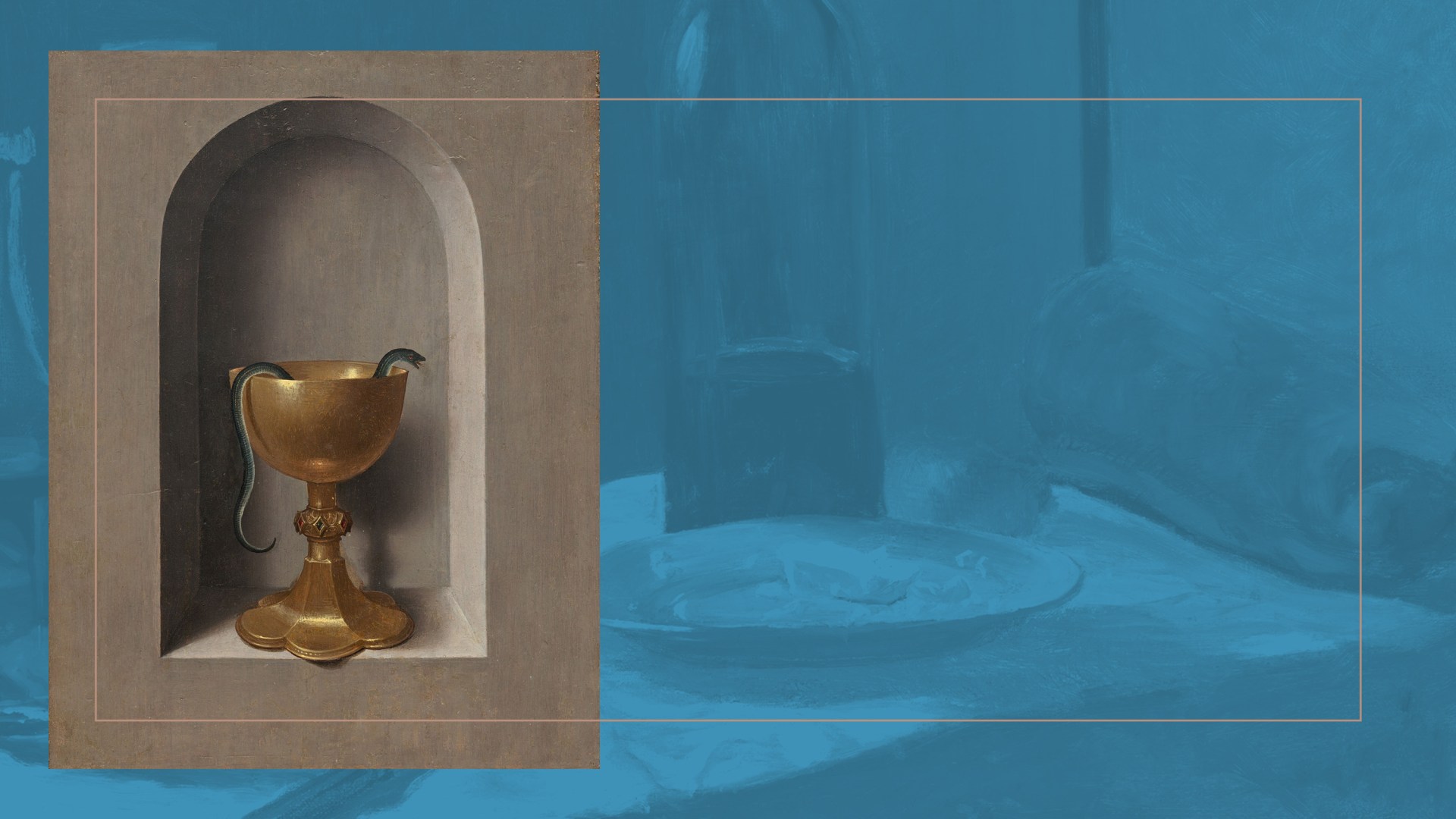
Chalice of Saint John the Evangelist

Chalice of Saint John the Evangelist

Hans Memling / Claude Monet / National Gallery of Art Open Access / Edits by Christianity Today

All This is from God, who reconciled us to himself through Christ and gave us the ministry for reconciliation: that God was reconciling the world to himself in Christ.
— 2 Corinthians 5:16-19

The last time I took the bread and the cup was on Ash Wednesday of 2020. There was already tension in the room accumulated from years of religiously charged political activity, and we were only at the beginning of an election cycle which would overlap with a pandemic, an insurrection, and a national confrontation with white supremacy.

If you’ve attended church with any regularity over the past few years, you probably know what it feels like to swallow crackers and juice while taking mental inventory of the things you resent about life in the body of Christ. If you’ve never done this, I’m happy for you. If, like me, you’ve seen your relationships buckle under the weight of ongoing racial reckonings, the slog of pandemic life, and the acrimonies of a politically polarized culture, you may need strategies to maintain a prayerful posture until the end of a communion service.

Here’s what I often do: I look around the room and imagine I am casting a contemporary retelling of the story of Joseph in Genesis. Joseph is born into a family chosen by God, then expelled from the household and sold into slavery by his jealous brothers. When I'm in church trying to sublimate my anger, I ask myself, who here in these pews would get to play Joseph? And who would get to play his treacherous family?

Having felt wronged by large swathes of the American church, I usually envision myself as Joseph. My recent history with the family of God involves ideologically divided faith communities, attempts at racial conciliation, and an ensuing conflagration that ruined my relationships and left me streaming breakup albums at home every Sunday morning. I like to cast myself as the misunderstood protagonist in a narrative—true in many respects—where Western Christians reject the call to biblical justice, leaving believers of color standing outside the family circle.

This isn’t the only way I could tell the story, or the only way it could be cast. Another narrative of these same years involves fragile congregations struggling to weather a pandemic, the innate difficulty of broaching historically fraught topics, and a group of well-intentioned people underestimating the costs of justice work. In this narrative— also true— the church is not a conflagration, but a smoldering wick trying to survive the shifting winds of time and culture.

The last few years of political and personal upheaval have repeatedly driven me to the Bible for comfort. I want it to organize my thinking about our cultural moment, which usually means I want it to clarify who is a friend and who is an enemy. In America, where we often invoke Scripture to frame politics as apocalyptic confrontations between good and evil, this is a common approach to the Word of God. Unfortunately for those of us who like to nurse our grudges, prolonged exposure to the Bible muddles these categories.

The longer you think about the life of Joseph, the harder it is to divide the characters—both in the story and in your own life—into morally distinct groups. Joseph, who seems heroic to me in his youth, starts to appear villainous in middle age. He emerges from his trials as a governor of Egypt, which is how he encounters his family seeking aid during a time of famine. He recognizes them, they don’t recognize him, and he takes the opportunity to settle the score.

Joseph hides his silver divination cup in a bag of grain and gives it to his brothers. Just as he expects, they find it on their way home, anticipate accusations of theft, and fear for their lives. The brothers return to grovel and Joseph pretends to be unmoved by their begging. Now the hero of the story seems to be behaving maliciously, using his status as a high-ranking official in a violent empire to harass his family. If, like me, you originally cast yourself as Joseph, at this point you are probably rethinking your decision.

As the story moves towards its denouement it only becomes harder to tell which characters are supposed to be good and which are supposed to be evil. In the middle of returning the cup, Joseph’s brother Judah becomes the first to confess their family’s lifetime of wrongdoing: a lost son, a grieving father, a household warped by decades of hurt. Joseph is unable to maintain his composure and starts to cry, revealing his true identity. The brothers, who were callous and violent as young men, have grown humble with age, and their repentance opens up the possibility for reconciliation at the end of the story.

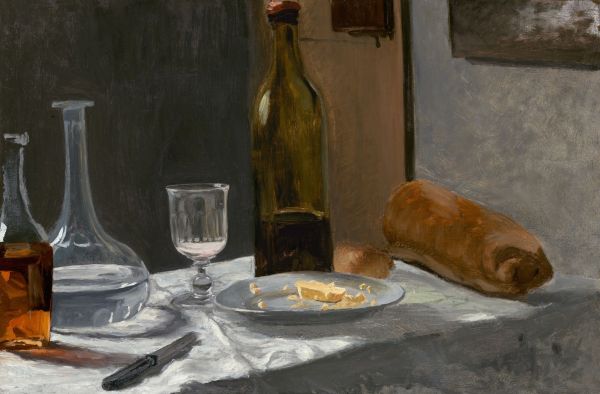
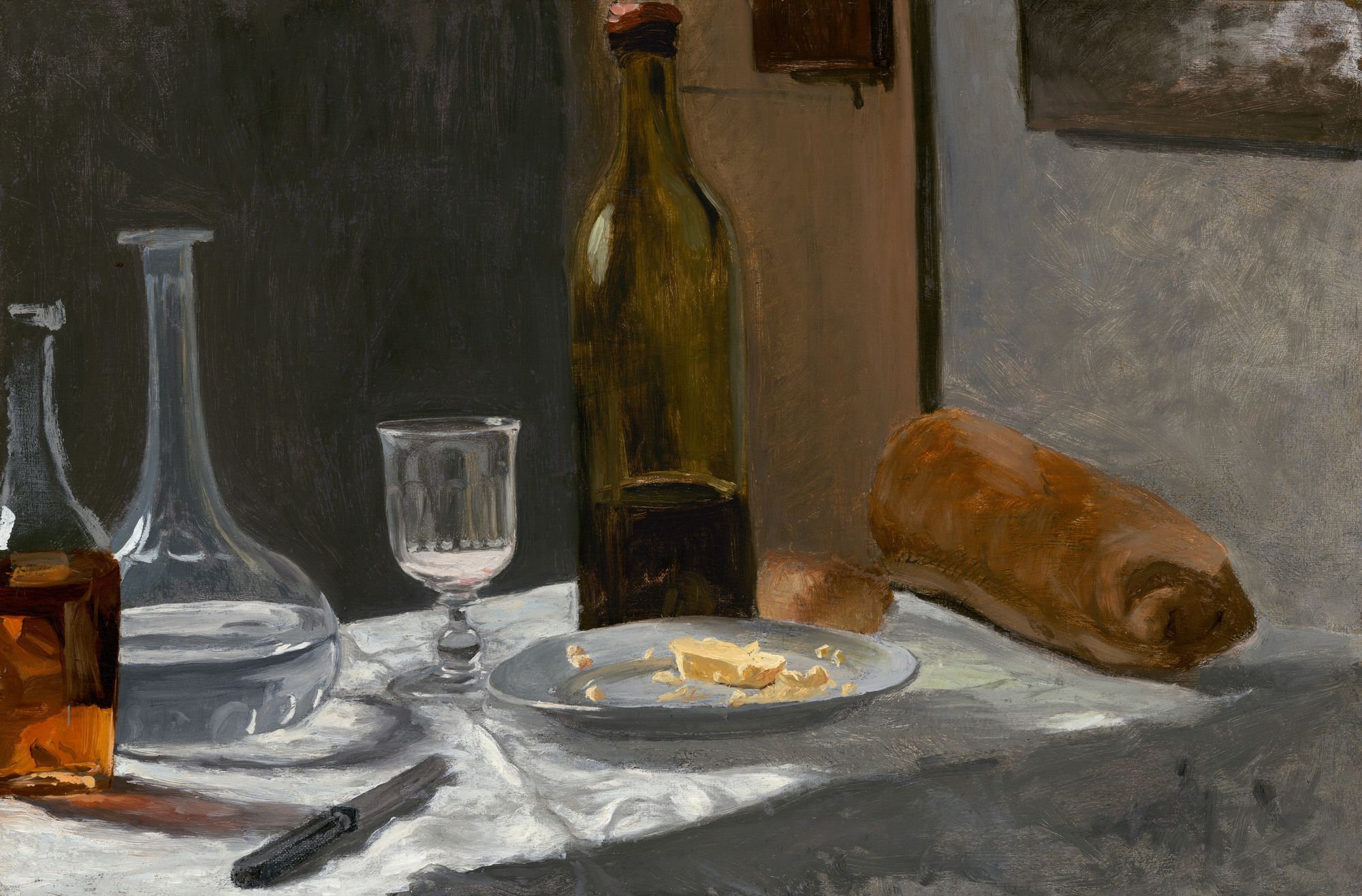
Still Life with Bottle, Carafe, Bread, and WineClaude Monet / National Gallery of Art Open Access
Still Life with Bottle, Carafe, Bread, and Wine

For those of us who are tired of complexity and the challenges of navigating through a confusing cultural moment, this outcome feels disappointing. The whole point of my obsession with the Joseph story, frankly, is to use the Bible to tell me who to blame for the church’s continued failures.

On the evening of my last communion our congregation read its customary passage for the occasion: “The Lord Jesus, on the night he was betrayed, took bread, and when he had given thanks, he broke it and said, ‘This is my body, which is for you; do this in remembrance of me’” (1 Cor. 11:23–24).

I’d joined the service hoping for a sign that my relationships could recover from what then felt like an unendurable amount of political and religious disagreement, but these words did not feel comforting. They made me wonder whether Jesus was administering communion as an encouragement or a warning. Who offers you their flesh and blood as sustenance unless they think you’re about to need all the help you can get?

Before going to the cross, Jesus tells his followers to love one another and abide in him, a simple command which might be impossible to obey. He anticipates the difficulty, understanding that the hunger to be right, the hunger to be on the winning side—whatever hungers animate my mind games—will tempt all of us to carve up his body and brutalize one another instead. In response to our weakness, he serves a supernatural meal that is eaten by those of us who are attempting to do as he asked, given at a price that corresponds to the magnitude of our need, satiating and exposing us at the same time.

By the end of the service I am sobbing. Of course we find it hard to get along; communion is based on the reality that none of us have the strength to repair our mutually inflicted wounds. Later, when these relationships finally dissolve in the aftershocks of 2021, I will lie awake at night and think about the part I played in their destruction.

I also think about what comes after the cup and the grain, the bread and the wine. For Jesus, there is a crucifixion, and for some of his followers, there is a visit to the site of his broken body. It is the latter cast of characters that stays on my mind every Sunday now that I’ve resumed attending church, where I usually sit in the back of the sanctuary with a coffee and donut in hand, and eat slowly as I wait for the resurrection to come.

Reflection Questions:


1. Who are the people in your local or broader church whom you find most objectionable, problematic, or threatening?

2. In what ways are you regarding them from a worldly point of view? In what ways can you invite the Holy Spirit to refine your understanding of them?

3. What is a single step you can take, with the help of the Holy Spirit, towards sharing Christ’s ministry of reconciliation within your local body?

Yi Ning Chiu is a writer based in the San Fransisco Bay Area. Her reporting and criticism have appeared in Relevant Magazine, Teen Vogue, and Ekstasis.

This article is part of New Life Rising which features articles and Bible study sessions reflecting on the meaning of Jesus’ death and resurrection. Learn more about this special issue that can be used during Lent, the Easter season, or any time of year at http://orderct.com/lent.

Theology

Exiles All the Way Home

We all yearn for the miraculous movement from wilderness to safety, and exile to belonging.

Empty Tomb

Empty Tomb

Illustration by Bethany Cochran

And if I go and prepare a place for you, I will come back and take you to be with me that you also may be where I am. You know the way to the place where I am going.

— John 14:3–4

Not long ago, a friend at our church lost her husband of fifty-plus years unexpectedly during the pandemic. She was not allowed to be by his bedside as he passed away in the hospital, and she could not hold a proper funeral for him. She returned alone to the empty house that she had recently bought with him, boxes still packed up from the move. The warmth and promise of a cozy retirement home had frosted over with the chill of a tomb.

Home is more than a physical building—it is a place of permanent belonging, often shared with those we love. Jesus, knowing that his death is near, promises his disciples that he is going ahead to prepare a place for them in his Father’s house (John 14:2–4). Why, I have often wondered, does he promise this in particular?

Perhaps one answer is that his promise draws out an important theme for his disciples, who were part of a people whose narrative identity was marked by periods of exile and sojourning. The disciples may not have been desert wanderers like their forefathers, but they had left everything to follow the One who had no place to lay his head. The promise of an eternal home must have resonated deeply with them.

Today, as Jesus’ disciples, his promise resonates with us too. In the season of Lent and all through the year, in a myriad of ways we also yearn for the miraculous movement from wilderness to safety, exile to belonging, sojourning to home.

One way this longing has been expressed by the church is through the liturgical calendar. Over the centuries, the church has appropriately linked Lent with the desert, the epitome of exile. For example, the collect for the first Sunday of Lent in The Book of Common Prayer focuses on Christ’s desert temptations, and the daily office readings for the season are saturated with passages from Exodus, Deuteronomy, Jeremiah, and the latter half of Genesis, pointing to the Israelites’ long history of sojourning and later uprooting. In this season, churches all over the world are meditating on what it means to point our feet homeward.

In my own life, the longing for home was imprinted on me from birth. My mother immigrated to the US from South Korea with my father in the 1980s, carrying only what could fit inside her suitcase. She left everything behind—her parents, personal aspirations, the ability to communicate, all that is familiar—and spent most of her days alone in a small apartment, losing hope and clumps of hair to debilitating depression. I was born not long after. Each year on my birthday when I have miyeok-guk (seaweed soup) in honor of my mother, as the Korean people have done for centuries, I think of how the taste evokes tears.

On the other hand, my husband’s family has lived for over a hundred years on the same eight-thousand-acre farm in the Oklahoma panhandle. In the house built by my husband’s grandparents, the quilts stitched by the hands of great-great-great-grandmothers, pieced together from old dresses and work shirts, gently warm our sleeping children at night, the sixth and precious generation.

My husband and I and our children live in Michigan, however, and we make it to the farm once a year at best. Each year the groundwater levels dip lower, another storefront in town goes empty, and more of the property turns into sand. It is heart-wrenching to realize we could become the last generations to have memories of this place. Even here, where permanence once seemed so sure, the loss of home finds us.

I suspect that each one of us, in our own ways, knows what it means to lose our sense of home and to long for a time and place when we were safe in our belonging. Sometimes our homes are taken from us physically, as when a hurricane tears through the backyard, war comes to the doorstep, or a thief breaks in. Sometimes we can be sitting in our very own living rooms and feel a devastating loss, as when abuse threatens our safety, a family member passes away, or a rift widens between ourselves and a loved one. Even our spiritual homes—our churches, small groups, and ministries—can be taken from us to leave us abandoned and alone. Even if we somehow manage to never experience losses like these, the reality is that on this side of heaven, we are all exiles in the face of death. In the end, we all must leave our earthly home.

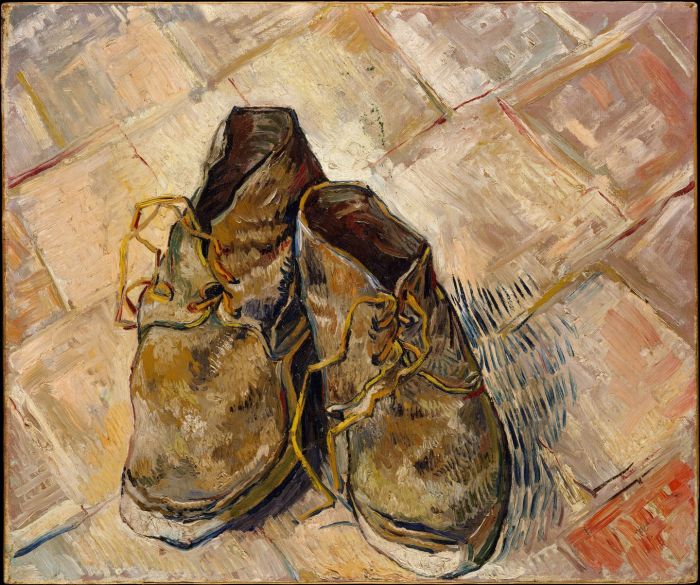
ShoesVincent Van Gogh / Wikimedia Commons
Shoes

If death is the ultimate exile, Easter is the ultimate promise of homegoing. For though it is true we are a people familiar with homesickness, we are also a people among whom God dwells. Just as the wandering Israelites had the presence of God to go with them, we also have a risen Savior who says, “I will be with you always.”

Recently my widowed friend has started something she calls Monday Manna. From the depths of her sorrow, she has emerged to put on a pot of soup, bake a loaf of bread, and invite friends over each week as an act of gratitude. Her face glows over the pages of the worn Bible as she reads to us and prays, her smile an expression born from ashes. To eat at her table is to glimpse a time when death and tears and exile will be no more. Even now, the stone is slowly rolling and the angel is hovering over the tomb.

The pioneer forefathers of my husband’s family lashed the clock to the wagon and plodded off in search of something better, as did my own parents. They thirsted for the milk and honey that come with the desert sand, and they swallowed it all with resolute hearts. Now the sixth generation has come to visit, running across the prairie and startling the grasshoppers, and a late summer rain paints the fields green for another day. Meanwhile, my parents—the lonely immigrant couple—find a church where they commit their lives to Christ beside friends who become like family. In joining their lives to Jesus, they become the means through which many others become a part of Christ’s family over the years—including me. The story continues.

No eye has seen and no ear has heard, but we can guess that our Eastered home with Jesus will taste something like a bowl of my mother’s miyeok-guk and feel like an old quilt pulled close. It will be like seeing the beloved squint-eyed grandfathers standing at the plow once more, turning to embrace us. It will be like sitting around a table with laughing, cherished people, like watching a smile bloom on the widow’s face. It will be like coming home.

“Blessed are those whose strength is in you, in whose heart are the highways to Zion,” sing the sons of Korah in Psalm 84 (ESV). “As they go through the Valley of Baca, they make it a place of springs.” Easter means that our longings for home are not aimless and fruitless. Our hearts are paved with the way to our Father’s house. Like the Israelites, like the disciples, like all who come before us, we have only to keep walking⁠. And as we walk we find that Christ, who walks beside us, makes our footsteps to water the earth.

Reflection Questions:


1. In what ways have you felt the sting of exile or the loss of home in your own life?

2. What is one prayer request you can bring before God so that present darkness might be pierced with Easter light?

3. Like the widow in the essay, how might you “water the earth” as you walk through present circumstances?

Sara Kyoungah White serves as the senior editor on staff with the Lausanne Movement. She lives in Grand Rapids, Michigan, with her family.

This article is part of New Life Rising which features articles and Bible study sessions reflecting on the meaning of Jesus’ death and resurrection. Learn more about this special issue that can be used during Lent, the Easter season, or any time of year at http://orderct.com/lent.

Theology

A Waste of Time, a Work of Love

The dawn of Easter reminds us that what the world might see as a waste can actually be a wonder.

Titian Ramsay Peale / National Gallery of Art Open Access / Paul Cezanne / Wikimedia Commons / Edits by Christianity Today

Surely your goodness and love will follow me all the days of my life, and I will dwell in the house of the Lord forever. — Psalm 23:6

Have we wasted our lives? That’s the question that recently wandered through my pre-coffee morning mind. Upon waking, I was caught in the churchy sludge of discouragement that can occasionally befall anyone in ministry—or someone who is married to a minister.

There are more years behind us in church ministry than ahead. This I do not grieve, yet. Sadness will probably arrive later when my husband, Brent, steps away from the pulpit and tugs off his collar. That morning, though, I questioned what we had to show for the 30 years so far, the 11 churches we’ve been a part of in some way or another, and all the fresh starts with their associated goodbyes and hellos?

There is plenty that is good and right about this life and this church; we have been moved by the love of Jesus and how his people warm each other and the world with the particular kind of love that is a miracle of the church, beautiful across the whole world. Through the years, we’ve been part of congregations serving up this warmth through free home renovation projects, parenting talks, youth group laser tag lock-ins, plays and concerts, sales and symphonies, refugee sponsorship, Friday night dinners, soup lunches, hot turkey on platters on Christmas Day, the Alpha program in all its possible forms, traditional services and contemporary music and this and that and the other, all dreamed up for the sake of the specific communities in which we found ourselves.

Most of the time (I think), church offered its love with no churchy strings attached. Hands were full and opened wide, eager to be emptied. But sometimes beneath the layer of love—at least for me—was a barely concealed desire to reach people so that our churches can be bigger and therefore better, and better and therefore bigger. To be that church. To be a success in creativity and numbers and volume and impact. To puff up and spread ourselves out.

Of this I repent. This, I set down. Any honest evaluation of why we do what we do will almost always lead us to some kind of repentance. I look around this altar and see that I am not alone here on my knees. Of this we can surely repent, not of growth itself, but of growth for growth’s sake.

At a recent church breakfast, I admired the necklace of a fellow church lady, strung from wooden beads with tiny carved elephants. It looked like it had been carefully chosen at a market stall full of carvings and batiks, as a remembrance of a wonderful trip. “I love it,” I told her. “Thank you,” she said, touching the jewelery. As she opened her mouth to continue the conversation, my friend, who is growing a little more fragile with age, found herself at a loss.

“I can’t think of the word,” she said, tapping the head of one little elephant.

“Would you like me to help you?” I offered.

“No, thank you,” she said. “I’d rather come up with it myself.” With a tiny elephant between her fingers, my friend rummaged through the drawers and looked behind the doors of her mind for her lost word. We waited. It might have made sense to change the subject, but that felt disrespectful to the work in which she was engaged. Moments passed. We still stood in silence. Eventually, we were called to eat. We smiled at each other, shrugged, and went off to get in line.

Our conversation was not productive. We didn’t solve a single thing. We parted and I went to find the croissants and the crabapple jam. Technically, and counting by the clock, it was not a success. But at church, a waste of time can be a work of love.

A few weeks later I stood at the back of the sanctuary during communion and watched people come and go, as I like to do. People walk down the side aisles to receive, and then return to their seats via the middle aisle with its residues of taped x marks on the red carpet from the spacing restrictions of former days.

And there was that same parishioner, making her way back to her seat up the middle aisle, holding a wafer in her cupped hands to consume when she was seated again, one of the few COVID-y rules we still had back then. Behind her were dozens of parishioners who had slowed their pace to match hers, so as not to overtake her. She was not rushed. She smiled, likely oblivious to the small crowd swelling up behind her. This was a very slow parade. The congregation was gentle behind her, as a holy accompaniment. I warmed and smiled to just watch it.

In that scene before me, I witnessed the church successful in one of its best and holy ways. There was the church beautiful in its slower, patient gait for love’s sake alone. The church can offer this rare gift to its own beloved and beleaguered people, but also to whomever we meet and have the privilege of walking beside and behind for Jesus’ sake.

Every year, the dawn of Easter reminds us that what the world might see as a waste can actually be a wonder. What looked to everyone else like a messiah failing was the Messiah fulfilling the most holy journey. Death is life, and a tomb emptied of its body is full of a promise that will turn everything inside out and right side up. Easter is the most flamboyant and subversive of hopes, a peacock wandering past our window during the last gasps of a Canadian winter. Success looks different from the world’s version, here where we stand in the Church humble and magnificent.

Easter proves once and forever that Jesus is with us on this long, slow, certain walk that may not ever look successful, but is so very faithful, and is, yes, a holy accompaniment.

Reflection Questions:


1. We don’t usually consider the well-known and beloved Psalm 23 as a model for how we can treat each other and our neighbors, and yet it can provide an example of how Jesus accompanies us in our times of need. How does it demonstrate how we might act toward and be with each other?

2. What would it look like to walk with someone through their darkest valleys, staying attentive and present even though it’s so difficult?

3. What table can we prepare for the people in our lives? Who can we accompany now?

Karen Stiller is the author of The Minister’s Wife: a memoir of faith, doubt, friendship, loneliness, forgiveness and more, and editor of Faith Today magazine.

This article is part of New Life Rising which features articles and Bible study sessions reflecting on the meaning of Jesus’ death and resurrection. Learn more about this special issue that can be used during Lent, the Easter season, or any time of year at http://orderct.com/lent.

Theology

Alive Upon Arrival

Jesus, when he rose from the grave, was mistaken for a gardener. It is my favorite story.

Illustration by Bethany Cochran

I will make rivers flow on barren heights, and springs within the valleys. I will turn the desert into pools of water, and the parched ground into springs. — Isaiah 41:17-18

It is often when conditions seem the most damp and dark, when the rain has poured and patience runs thin, that green shoots of new life will begin to emerge. The seed that has died and been buried is the one that will emerge on the other side of decay in a multiplication of life.

I held the desiccated bundle of plant matter in my hand and looked up at my friend who had just given it to me. “What is it?” I asked, while turning it over to see bits of dirt still dried onto tendrils that seemed to have once been roots. Lyndon Penner, my dear friend who has written books about gardening in the harsh extremes of the Canadian prairies, looked down at the crispy mass and smiled. “It holds a secret,” he said, “it’s alive, and it’s my gift to you.” It sure didn’t look alive. I gave the stems a squeeze, and though it felt dead, no leaves crumbled—a hint that not all was as it seemed.

The False Rose of Jericho is neither a rose nor from Jericho. It’s a type of clubmoss which, when faced with worsening conditions, will dry out, shrink down, detach from the soil, and roll up into a baseball-sized bale of brittle waste. It’s not green, and to my untrained eye, it is perfectly dead. While some call it a “stone plant” with good reason (it is sold in our local gem store), it’s also called “resurrection moss” because even after several years, it will reveal a secret. We gathered our girls around a little dish with water and set the brown tumbleweed inside. “Pour some water on top, too. Let it know it’s safe to wake up,” Lyndon suggested. Within hours it unfurled like a baby stretching for first breaths and turned a deep vibrant green. We were in awe. When I asked Lyndon what was going on, he touched the still unfolding edge and explained that this plant’s vascular system isn’t like those of other plants: “It’s made differently. It’s made to revive.”

Gardeners like Lyndon have a nuanced sense of what is alive and what is dead. A tree that falls to the forest floor may carry more life in death than when it was alive. The biomass of a dead tree becomes host to a network of bacteria, fungi, plants, insects and animals, and even the empty space it leaves in the forest canopy makes room for new light to fuel fresh sprouts and the next generation of growth. Seeds and bulbs hold more promise for the future than the aging plants that made them. What is dead, sapless, and blowing about in a garden may be the stuff of new life next year. In fact, some seeds only crack open and sprout after a forest fire rages through: it’s a bewildering mystery that entangles hope and loss together in a knot that only patience can unravel.

The mystery of the church is similar and a re-enchanted imagination might reveal what it has been all along. The story of the church is a rebus word puzzle that spells out the cruciform story of our life. It should not surprise us that God’s community would undergo rebirth through the seasonal rhythms of buried seed and revived emergence. Isaiah 41 speaks to the dust-choked thirst of God’s people, who are much like tumbleweeds—detached, delicate and unsure—and that image gives shape to our own uncertainty. Still there is a resonance of hope, even through the most dire language: “I’ve picked you. I haven’t dropped you. Don’t panic. I’m with you.” (Isaiah 41:9–10 MSG).

The church contracts when it is not able to grow, and will come alive when it has rediscovered the source of its life. In my experience, the church was made to thrive under two conditions that Jesus set out for us: love of God and love of neighbor. If the church is not rooted in these healthy conditions, it will retract and may appear desiccated and frail, until it finds conditions to root again. I have called this the “safety valve” of the church; when the church is not rooted in what it was made for, it will be unable to thrive, even if there is a veneer of growth and success. Could a church that does not love its neighbor truly be called a church? Built into it is both the mechanism for its contraction, and the vascular system for its rebirth. This is good news. It certainly is for the clubmoss. Instead of dying, it closes shop, shuts down, and waits patiently.

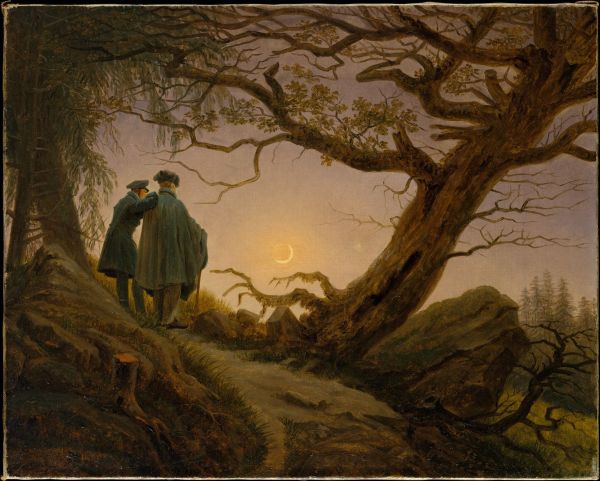
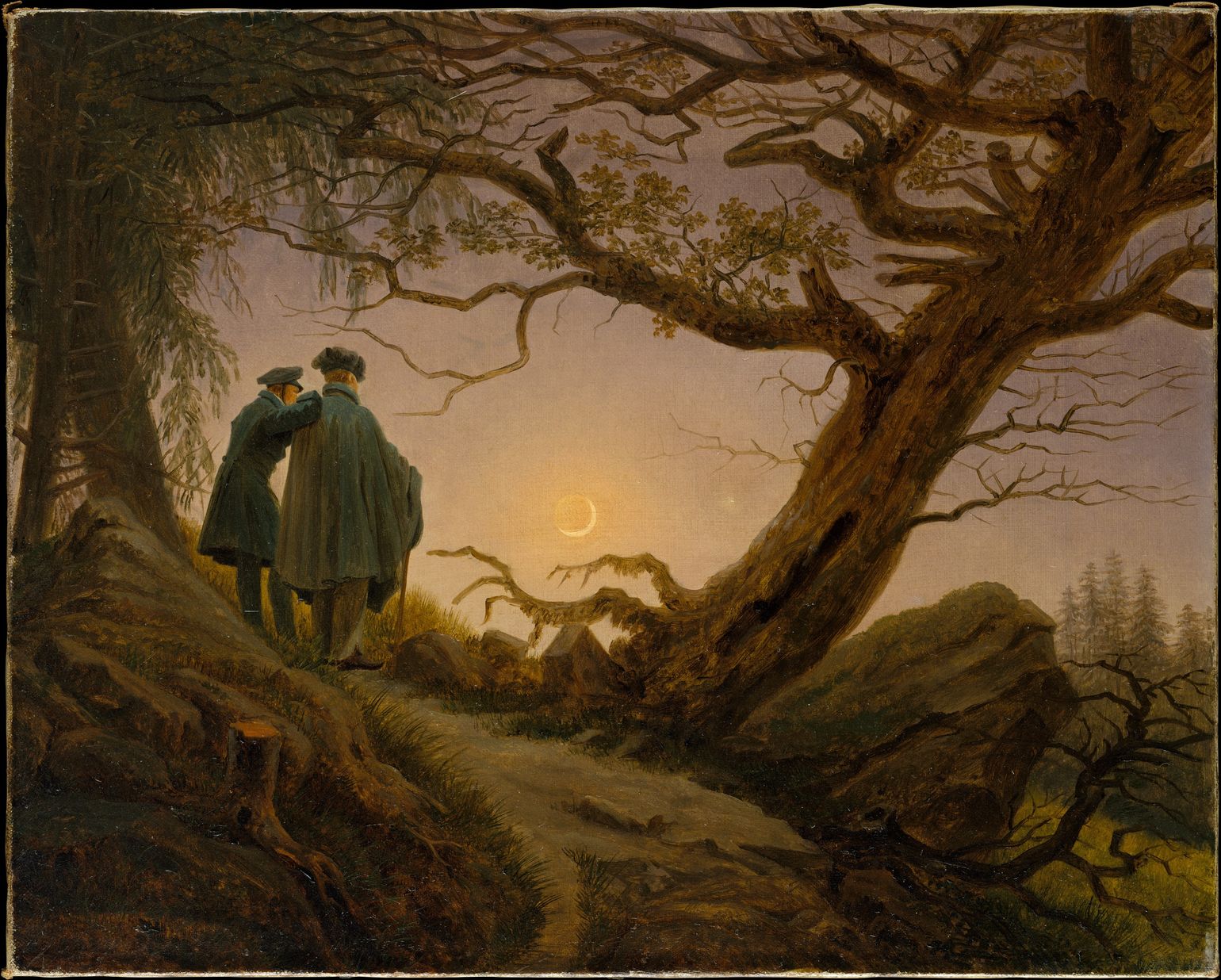
Two Men Contemplating the MoonCaspar David Friedrich / Wikimedia Commons
Two Men Contemplating the Moon

The poet Malcolm Guite captures the patient paradox of tumbling away on the wind, offering the words of “In praise of decay”:

So much is deadly in the shiny new,
Persistent plastic choking out our life,
The landfill of each ego’s empty stuff,
Where poison and possession still accrue.
So praise Him in the old and mouldering,
In pale gold leaf-fall losing shape and edge,
In mottled compost rustling and rich,
From which the stuff of life is still unfolding.

Pray that we learn the lost arts of our past,
The arts of letting go and sowing seeds,
That secrets of the lowly and the least
Might save us from the dreadful things that last.

Canadian singer-songwriter Steve Bell wrote a song of the same name borrowing from the theme, and reflects:

Perhaps it’s not so bad that things decay
That ocean breakers ebb and flow away
That light ascends then settles at the ending of the day
That beating hearts can stop and start again.

As the parish pastor at Lake Ridge Community Church in Chestermere, Alberta, and the Royal Canadian Mounted Police chaplain in my city, my work is to attend to the presence of God amid the fragile seasonal rhythms of loss and life. I gather up and tenderly try to hold the desiccated and bunched-up experiences of my neighbors, and wonder with them at the possibility of life. Is there any green here? Is there any hope of resurrection after all we have seen? Cynicism, fear, anxiety, and anger are not far from the edges of this search; they are blunt tools we wield when we face great sorrow. We are humans who have within us the godly instinct to push against the darkness, but our implements of rage do not till the ground with hope. Life does not come by force.

Jesus, when he rose from the grave, was mistaken for a gardener. It is my favorite story. “Jesus asked her, ‘Woman, why are you crying? Who is it you are looking for?’ Thinking he was the gardener, she said, ‘Sir, if you have carried him away, tell me where you have put him, and I will get him.’ Jesus said to her, ‘Mary.’ She turned toward him and cried out … ” I enter into this intimate moment in John 20 because here Jesus meets a broken world, one collapsed in on itself, reeling from the death on Golgotha’s hill. Here, below it, seems to be Jesus’s first resurrection act of love: he is caught gardening. The one who tells stories of seeds and weeds, and was there at the start of the world, is here apparently fussing about in a cemetery garden, fingernails pulling back the gravel, clearing space and wondering at growth, as any gardener tends to do. Jesus, palms pressed in the dust of this world he loves, becomes for me the most beautiful and hopeful picture of life for the church.

In recent weeks, my hands have opened doors for those on their way to jail, carefully received a homemade noose finally surrendered in tears, and held the hands of a person awaiting surgery. I’ve also made snacks for the neighborhood kids, poured gallons of coffee with those who have stories to share, and flipped through papers in yet another committee meeting. We are frail, limited, and unsure—uprooted and searching for water, but it is here that we discover that we are made of something else. Our hands are made to tend at soil level. Close to the ground is where death and life meet.

Religions, corporations and empires are worried sick about death. They fire, hire, merge, and force their will to ensure that they stay alive. Jesus was put on a cross by those who found him to be too much a risk to their life. He was not a threat to their life; he was offering them life.

We are people who walk in the way of Jesus. The church is made for the resurrection life, and to give ourselves away in love for our neighbors. We have a knowing, founded in the depths of Christ, that being last, lost, used up, and dried up is not the end of us. Outside the tomb of Lazarus, Jesus drew close to Martha to reveal the Easter mystery: “I am the resurrection and the life. Anyone who believes in me will live, even after dying” (John 11:25, NLT). Even in death, we live. It’s how we were made.

Reflection Questions:


1. Human life is full of paradox, we are at the same time fragile and resilient, limited and eternal. How do you carry the paradox of being a human that is also made in God’s image? How does the incarnation, death, and resurrection of Jesus help us in this?

2. Preston suggests that there is a “safety valve” in the church, that if it is not living as intended to love God and neighbor, it will go dormant until conditions change. In what ways has the church in history been protected by its inherent ability to retract, reroot, reform, and regrow? What do you see?

3. Preston writes, “some seeds only crack open and sprout after a forest fire rages through: it’s a bewildering mystery that entangles hope and loss together in a knot that only patience can unravel.” What patient posture does Jesus model, and invite us into?

Preston Pouteaux is the pastor of Lake Ridge Community Church in Chestermere, Alberta, and is the author of several books, including The Bees of Rainbow Falls: Finding Faith, Imagination, and Delight in your Neighborhood.

This article is part of New Life Rising which features articles and Bible study sessions reflecting on the meaning of Jesus’ death and resurrection. Learn more about this special issue that can be used during Lent, the Easter season, or any time of year at http://orderct.com/lent.

Theology

The Sobriety of Forever

During Easter, considering your death will lead you to bright horizons.

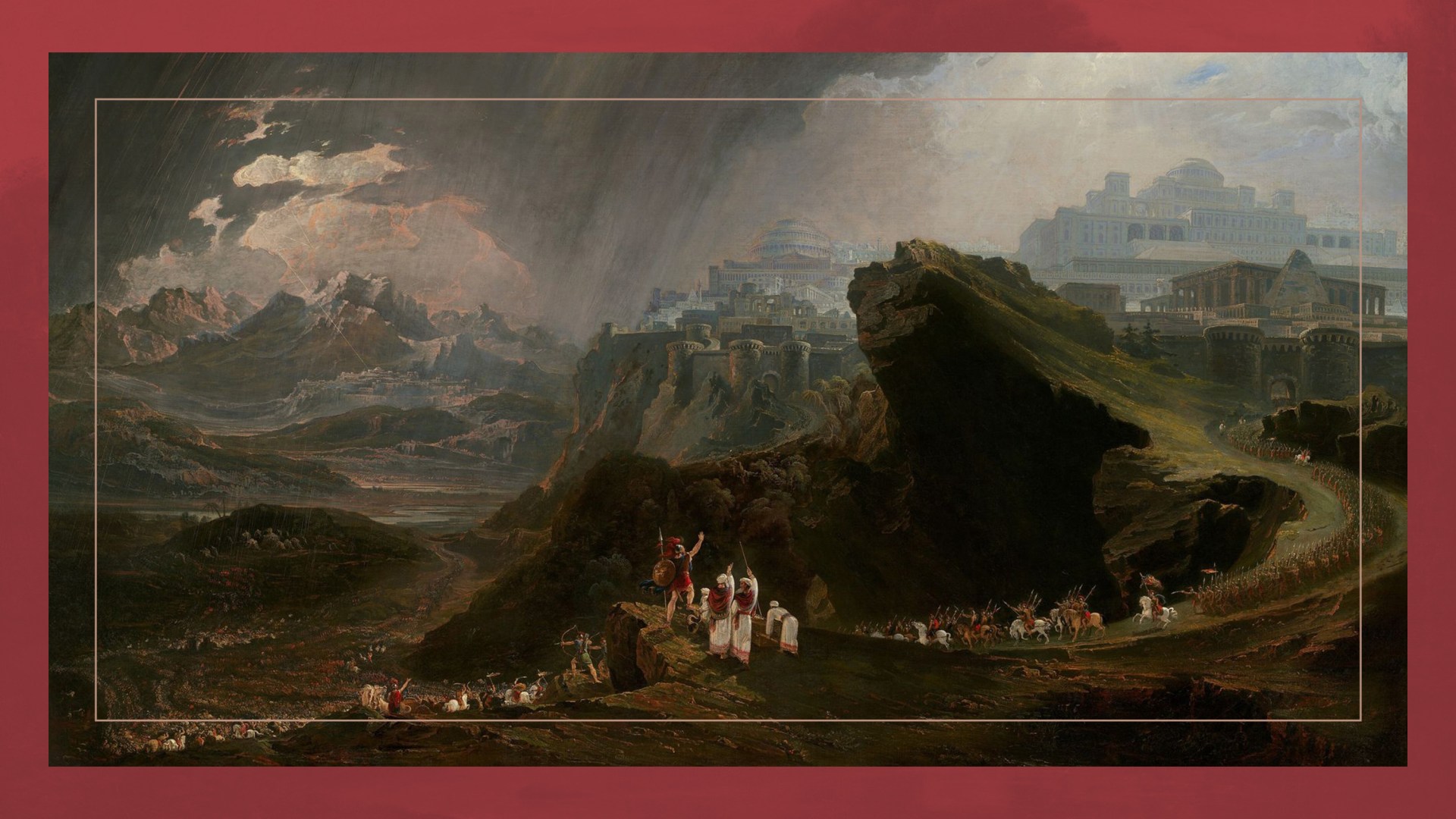
Joshua Commanding the Sun to Stand Still upon Gibeon

Joshua Commanding the Sun to Stand Still upon Gibeon

John Martin / National Gallery of Art Open Access

Therefore we do not lose heart. Though outwardly we are wasting away, yet inwardly we are being renewed day by day. For our light and momentary troubles are achieving for us an eternal glory that far outweighs them all. — 2 Corinthians 4:16-17

At the ripe old age of five years old I came up with my own version of a memento mori. It was totally by chance—there was no real backstory other than a curious (adopted) kid struggling to make sense of his existence. The experience is memorable because it was so traumatic. You can imagine for yourself what happens when a kid lies in his bed and stares into the dark repeating the phrase, “forever, and ever, and ever, and ever, and ever, and ever, and ever…”

If that scenario causes you to feel a pang of sympathy, thank you. I’d exasperate myself to the point of hysteria, jump out of bed and run downstairs and into the arms of my concerned mother. I was inconsolable, babbling on and on about “forever” and “eternity.” This would become a habit, but the first few times were as alarming to her as they were to me. So, with the Andy Griffith show on in the background, my mom would try to answer my one and only question: “What happens when we die?” Like any caring mother, she would mention “heaven” and “God” and "being good” and on and on until I’d finally calm down and go back to bed. Yet, no matter how hard she tried, I never heard an answer that truly satisfied the potent mix of fear and curiosity.

Thankfully, my trips downstairs subsided as time passed, but my obsession with the question did not. It wasn’t until nearly two decades later that I found the answer I sought. It turns out my mom was onto something: a proper understanding of death is undoubtedly linked to the concepts of God and heaven and the Bible— it just takes a lot of searching to get down to the nitty-gritty.

The fact is that people die, dreams die, love dies, habits die, animals die, plants die, even the main character dies. Death is essential: “Kill your darlings” says the writer William Faulkner, “Death smiles at us” say the warriors of Gladiator, “‘Til death do us part” say the lovers on their wedding day. Death plays a major role in every aspect of life so why is it such a profound struggle for humanity to come to grips with memento mori, or, the inevitability of our death?

What is ironic, however, is that while we may flee from the reality of our own mortality, we are obsessed with death. Death in entertainment is big business. We are captivated by stories of serial killers, assassins, vampires, zombies, wars—anything to do with death, whether in a book or on a screen, and we are hooked. Every one of us has a morbid sense of curiosity that fuels a deep-seated subconscious impulse to relentlessly search for answers about death. The paradox lies in the fact that if the conversation is about our own death or that of someone we love, we dodge the subject, but if it’s someone else’s death we're talking about, we can’t look away.

The fascination with and avoidance of death is not exclusive to the modern era, writers for millennia have been compelled by the subject. In fact, throughout literary history death is often crowned, “the great antagonist.” We have been asking the same question since the beginning of time.

In every culture there are certain elements that limit our ability to have a proper understanding of death. In a culture of affluence, we are often sheltered from death in a unique way. The richer a community, the more we use material possessions to distract ourselves from the things we fear. The inimitable preacher and theologian Charles Haddon Spurgeon once said as he toured the luxurious home of a congregant, “These are the kinds of things that make dying hard.” When we have plentiful resources we can alleviate, or at a minimum, soften the harsh realities of life. When we have no immediate needs, we have no will to investigate deeper things and the last thing we want to do is engage with a concept like memento mori. Why be reminded of the one thing I can't resolve?

There is certainly nothing new under the sun when it comes to our love-hate relationship with mortality, particularly when it comes to our vanity. We tell ourselves, it’s not what’s on the outside that matters, it’s who we are on the inside. If the health and beauty industry is any indication of where our real values are, then those who have focused a bit more time on the “inside” are way behind. Physical health is certainly very important—however, when our physical health becomes our identity, we lose sight of heaven. There is no subject more threatening than death to someone who is terrified of aging.

Yet, no matter how many miles we run, laps we swim, or how much Botox we inject, there’s no escape: death ultimately finds each of us. Despite all of our efforts, mortality knocks on our door: our eyes dim, our hair thins, our waist thickens, our muscles shrink, we sag more, sleep less, and remember very little. As we age we feel the temperature drop and the air pressure increase, we hear the leaves quake as the tempest called death looms on the horizon. The Psalmist describes it as “anguish of the grave,” writing of the great and incomprehensible abyss where “the cords of death entangled me / the anguish of the grave came over me; / I was overcome by distress and sorrow” (Ps. 116:3).

So take heart, our problem isn't that we experience fear in light of death— everyone does. The potential for harm and good is in how we respond to this fear. A healthy view of death can be very helpful in the way we view this life. As we embrace our mortality, our ability to see changes. Our dimming earthly eyes actually become clearer as they focus on eternity. Memento mori fosters that kind of vision. As the apostle Paul put it: So we fix our eyes not on what is seen, but on what is unseen, since what is seen is temporary, but what is unseen is eternal” (2 Cor. 4:18).

When I consider my traumatic “death quest” as a youngster, I am so deeply grateful that at 19 years old I found an answer that changed me and the course of my life. Some of the fearful unknowns about mortality have never fully gone away—in fact, I can still feel dread when I try to wrap my head around “forever.” However, today the focus of my attention is first, a confession; second, a new question; and third, a request. The confession is simple: “Lord, I am worried about what I have, I am concerned about how I look, and I’m anxious about my future.” The question is practical: “Lord, how shall I live today in light of spending eternity with you?” And the request: “Lord help me actually see what is truly important so I can do what’s most important in your sight.”

This Easter, as you experience the world around you, our hope is that you consider the day of your death. We trust that the theme of memento mori will lead you to new places with bright horizons. After all, what is hovering out on that horizon isn’t a storm, but rather the throngs of saints who have gone before us, waiting to welcome us into eternity.

Reflection Questions:


1. Have you ever had a startling experience coming face to face with your own mortality?

2. What fears can you confess to God? What concerns can you bring to the cross?

3. As you consider your life and death, do you sense any stirring about what the Lord sees as most important in your life?

Erik Petrik is the chief creative officer at Christianity Today. He and his wife Kelli have five grown kids and live in Edwards, Colorado.

This article is part of New Life Rising which features articles and Bible study sessions reflecting on the meaning of Jesus’ death and resurrection. Learn more about this special issue that can be used during Lent, the Easter season, or any time of year at http://orderct.com/lent.

addApple PodcastsDown ArrowDown ArrowDown Arrowarrow_left_altLeft ArrowLeft ArrowRight ArrowRight ArrowRight Arrowarrow_up_altUp ArrowUp ArrowAvailable at Amazoncaret-downCloseCloseellipseEmailEmailExpandExpandExternalExternalFacebookfacebook-squarefolderGiftGiftGooglegoogleGoogle KeephamburgerInstagraminstagram-squareLinkLinklinkedin-squareListenListenListenChristianity TodayCT Creative Studio Logologo_orgMegaphoneMenuMenupausePinterestPlayPlayPocketPodcastprintremoveRSSRSSSaveSavesaveSearchSearchsearchSpotifyStitcherTelegramTable of ContentsTable of Contentstwitter-squareWhatsAppXYouTubeYouTube