Books
Review

All the World’s Not a Stage

In a culture given to performative virtue, we need reminders that God delights in hidden righteousness.

Illustration by Abigail Erickson / Source Images: Getty

A member of our church went to jail for several years. Suffice it to say that he’d done bad things. His incarceration, however, caught our congregation by surprise. No one would have suspected him of living a double life—even those who lived with him. In sorrow, he now tells me how he had mastered a pantomime of Christian piety, the kind of social gestures and grammar that appear to manifest a genuine faith.

The Secret Place of Thunder: Trading Our Need to Be Noticed for a Hidden Life with Christ

The Secret Place of Thunder: Trading Our Need to Be Noticed for a Hidden Life with Christ

HarperCollins Children's Books

192 pages

Our church member was an extreme case of hypocrisy. But as one who often preaches and prays in public, I too know something of the pull toward performative piety.

Pastor and author John Starke also knows these pressures and writes about them with transparency in his latest book, The Secret Place of Thunder: Trading Our Need to Be Noticed for a Hidden Life with Christ. The title may cause you to picture Starke as some kind of modern monastic. Yet he pastors a church in Manhattan, with its fast-paced life and exorbitant living costs. If a hidden life with Christ can abide there, it can abide, I assume, anywhere.

You may not be a pastor or live under an urban grind, but you likely know these same pressures in your Christian community. “The longer you are in faith communities,” writes Starke, “the more you learn what it looks like to be humble—what facial expression to make, how to carry yourself, what words to say, how to be seen without looking like you want to be seen.” This drive to perform can come from modern cultural pressures, but also from the desires of our own hearts. “This impulse toward performative living isn’t new,” Starke writes, “or else Jesus wouldn’t have warned against it in the Sermon on the Mount.”

The title of the book comes from Psalm 81:7, which celebrates God’s activity in the Exodus: “In distress you called, and I delivered you; I answered you in the secret place of thunder” (ESV). For all the literal and metaphorical thunder on display in the plagues and lawgiving that accompanied God’s delivery of Israel from captivity, this psalm speaks to another side of his relationship with his people: the hiddenness of his still, small voice and what Revelation refers to as “hidden manna” (2:17).

Throughout the book, Starke expounds New Testament passages that emphasize themes of hiddenness, calling attention, for instance, to the God who sees in secret (Matt. 6:6) and the grain of wheat that must die before it lives (John 12:24). In exploring this agrarian metaphor and others used by Christ, Starke shows how farm life has more cultural transcendence than we often appreciate. To say it another way, perhaps Jesus wasn’t just speaking in terms familiar to his first audience. Had he instead come to our modern world, he might have still spoken more about vines and branches than tech and Wi-Fi.

Starke’s writing style offers bits of memoir—snapshots of times when he experienced the beauty of life with Christ in spiritually dry seasons. He also speaks to the challenges of life with Christ, recalling busy seasons of attending graduate school and planting a church while having a second job and raising young children.

“By the time the church could cover my full salary and I could quit my second job,” he writes, “I was weary and burned-out. It took a while for my body to learn that I wasn’t working two jobs. At times, as I played with my kids, I would suddenly panic and feel for my phone, trying to remember if I had gotten everything done, responded to all the emails, and returned all the calls to ensure that I let down as few people as possible. It would be a while before I felt normal again.”

I appreciated the honesty Starke shows in passages like this. Some Christian authors can resemble commercials for prescription drugs, which often skate through potential side effects in hurried, breathless sentences meant to stave off lawsuits. But Starke acknowledges that the way of Jesus, while better, is also harder. In refreshing ways, The Secret Place of Thunder repeatedly encourages readers to count the cost.

“Going from a performative life to a hidden one with Christ,” writes Starke, “can be lonely, confusing, and disorienting.” Elsewhere he observes, “The way from a performative life to a life hidden in Christ is death. And it feels like death too.” Near the end of the book, he even describes it as “paschal death”—an intentional sacrifice we must choose.

There’s a line in Ray Bradbury’s classic Fahrenheit 451 in which a character describes how the image of Jesus has been distorted to such an extent that he resembles a “regular peppermint stick … all sugar crystal and saccharine.” In other words, he’s been remade as a celebrity used to make commercials for consumer products. In contrast, Starke writes, “If you remain with Christ, resisting the performative life, you will feel tension, pressure, and pain. Jesus is clear that life with him is a cruciform life.”

Starke also does a good job critiquing our secular culture of self-help and our preoccupation with optimizing our lives. He shows how in Western culture we’re bombarded with success stories of those who “overcame their difficulties by their grit, skills, gifts, resources, or education.”

I would have preferred more engagement with the streams of Western Christianity, not merely Western culture, that tend to mimic these themes. This would have made the book more polemical, but not needlessly so. Christians must see that the enticements of a performative life come not merely from outside our camp, but from within it as well. Jesus critiqued the religious leaders of his day who loved the praise of men, sounded trumpets, and received their reward in full (Matt. 6:1–6).

Our church member who went to jail had to learn hiddenness by necessity, while most Christians get to learn it by invitation. But all Christians exhausted by the performative life need the reminder that when we pray a silent prayer in the forest—a prayer with no sound and fury and no one posting about it on social media—our heavenly Father who sees in secret will reward us. Indeed, as Starke points out, his seeing is the reward.

Benjamin Vrbicek is the lead pastor at Community Evangelical Free Church in Harrisburg, Pennsylvania, the managing editor for Gospel-Centered Discipleship, and the author of several books.

Books

David Platt: We Take the Gospel to the Nations, as the Nations

The Great Commission strikes at the heart of an Americanized gospel.

Illustration by Abigail Erickson / Source Images: Getty

Over ten years ago, David Platt wrote his bestseller Radical, which encouraged American Christians to disentangle their faith from the American dream. In the years since, he and the church he pastors, McLean Bible Church in metro Washington, DC, have navigated their fair share of political and cultural tensions, including contentious elections, pandemic-era divisions, and debates on racial injustice. In Don’t Hold Back: Leaving Behind the American Gospel to Follow Jesus Fully, Platt reframes these events for discouraged leaders and disillusioned believers alike. Author Kaitlyn Schiess spoke with Platt about what he’s learned pastoring a church through treacherous political waters.

Don't Hold Back: Leaving Behind the American Gospel to Follow Jesus Fully

How has pastoring in the DC area shaped the kind of book you wanted to write?

Over recent years, our church has been at the epicenter of so many things, and not just because we’re in the nation’s capital but because we have over a hundred nations represented, which makes for a diversity of backgrounds, perspectives, and convictions. Trying to hold all that together around Jesus has changed me in good ways, because it’s helped me see how inclined I am to prefer people or things a certain way. The question becomes: How can I lay aside some of my preferences and convictions on things that are less clear in God’s Word?

The subtitle for Radical mentions reclaiming faith from the “American Dream,” while the subtitle for this book speaks of the “American Gospel.” Why the change in phrasing?

Ten-plus years after writing Radical, I’m convinced that the unhealth goes a lot deeper. It’s not just an American dream that has consumed our lives as Christians but an American gospel that has hijacked our hearts. We’ve equated American ideals, values, and power with the gospel in such a way that we’re in danger of losing the actual gospel, the way of Jesus.

Instead of eagerly uniting around Jesus, we are quick to divide over personal and political convictions. Instead of enjoying the multiethnic beauty that Jesus has made possible through the Cross, we are still segregating by skin color. At its core, the disillusionment and discouragement we’ve seen in the church is a direct outcome of a faulty gospel.

What would you say to people who view this book as another mushy-middle, “third way” approach that recognizes political problems but avoids strong stances?

There’s a way to fight for what matters most and hold fast to God’s Word without sacrificing love for one another and the world around us. We don’t have to fight with each other in the body of Christ. We fight for each other, realizing that we’re going to disagree on a variety of things that are not clear and direct in God’s Word.

I’m not saying that these secondary matters are unimportant—only that we need to remain focused on what is infinitely, eternally important, like that fact that billions of people around the world have never heard the gospel. I’m not in any way for loosening our convictions around the authority and sufficiency of God’s Word. But we need to separate them from secondary and tertiary matters, so we can live for what matters most.

How can Scripture be a shared authority and a source of common ground when our conflicts are so often rooted in differing interpretations?

I’m idealistic enough to believe that if true followers of Jesus sit down with their Bibles open, pray together, and humbly seek God’s will together, then they can unite around core Christian commitments, even where there are disagreements on lesser matters.

To give one example: Part of our journey as a church over the past few years has been reckoning with Ahmaud Arbery, George Floyd, and other episodes of racial injustice. For weeks, hundreds of our folks walked through praying, fasting, and studying what Scripture has to say about the gospel, the church, justice, and race. We started with the gospel and the church, so that before we got to justice or race, we had established a solid foundation of underlying unity.

At the end of the day people could say: I still don’t agree with you, but I understand you’re my brother or sister in Christ, and I understand how you arrived at your opinion. I love seeing that work out, but it doesn’t come automatically. It takes time, patience, and humility.

American Christians are known for prioritizing the nuclear family in public life, but you focus on how the New Testament redefines “family” in the context of the church. Has our misunderstanding of family contributed to our political idolatry?

To be clear: The Bible warns us to be very serious in our convictions about man and woman, marriage and family. But back to this picture of the church as family. This is a big part of the terminology in our church. When you enter the lobby, a sign says, “When you’re here, you’re home.” We have the phrase “We’re family in Christ” posted in multiple languages.

We try to emphasize family as the body of Christ in a way that supersedes ethnicity, country, politics, or matters of personal preference. We have the same Father, the same Savior, the same Word, and the same mission in the world. Which leads to some good family discussions and disagreements about other things, even as we’re united at the deepest level.

One of your prescriptions is for people to cultivate “community on earth as it is in heaven.” How can we seek that kind of community when our churches are often polarized, divided, and unhealthy?

I don’t know if it’s possible in every circumstance or setting. But it’s possible, period. We see it in the Bible, with Jews and Gentiles coming together, and there are many examples today.

Hold out hope—Jesus does make this possible. At the same time, realize what it takes to heed all the Bible’s “one another” commands. It means struggling to bear with some people, just as they might struggle to bear with you or me.

Most people aren’t in charge of a church or denomination, but they do have friendships, either within a church or among believers elsewhere. We can love each other and care for each other, not lob grenades at each other. This is what we’re destined for in heaven, so let’s live like it’s our destiny here.

Some Christians will worry that the history of missions from America is a history of exporting the “American Gospel” rather than challenging it. When American values are tightly joined with the gospel at home, can we faithfully bring it abroad?

This hits at the point of the book. As long as we’re exporting an “American gospel,” then I would be skeptical too. But we’ve got a biblical gospel centered on Jesus, his Word, and his love for the world. And if we don’t want to make him known among the nations, then I think we’ve missed the point of what it means to follow Jesus.

The Great Commission strikes at the heart of racial prejudice or pride. It goes hand in hand with doing justice. As believers, we go to all the nations, as the nations. As we make disciples of the nations, we’re going to encounter a lot of needs: orphans, widows, and refugees; poverty, sex trafficking, and the destruction of war. We live to do justice, which involves proclaiming the just King of the universe. That’s the greatestinjustice of all: that so many don’t know King Jesus.

As long as we have an American gospel, missions makes no sense—or is really unhealthy. But if we have a biblical gospel, then it’s nonnegotiable.

Can Bubble Tea Bring Gen Z into the Chinese Church?

The beloved drink is both an attraction and a generational divide.

Once a month, Nick Konkoli heads to Living Water Tea House in Chicago’s Little Italy to host a free tea appreciation event. During the two-hour “Communitea” sessions, Konkoli and others pour two to five types of fragrant tea into delicate teacups for guests, explaining each one’s origins and components.

The tea shop’s founder, Jiang Shaolong, launched Living Water in 2020 with just this kind of event in mind. The pastor of a Chinese church, Jiang hoped to provide a social space and reach out to Chinese students and young professionals in the area. The teahouse began in 2015 in a converted storage room at his church and soon became a sort of community center that demanded a larger, more public venue.

Jiang met Konkoli more than a year ago, and the two built a friendship around their shared interests in tea, music, and photography. Konkoli, who is not a Christian, was not fazed to be operating in a ministry space.

“It wasn’t a shock when he told me he was a pastor,” Konkoli said. “Anyone who wants to be a pastor wants to create community.”

Despite the hot tea of Konkoli’s tastings, Living Water mostly sells cold bubble tea. Jiang operates the shop as an Instagram-worthy extension of his church, a space to facilitate spiritual conversations. He designed it to be similar to other bubble tea shops that have become popular in US cities with large Asian populations. It has warm lighting, minimalist decor, and a gallery wall displaying exquisitely handmade teaware. Its menu offers a wide range of flavors like osmanthus oolong milk tea and chrysanthemum pu-erh tea.

The shop exemplifies the ways ministries are using bubble tea to open doors for evangelism in the United States and Canada. From Toronto to Chicago to New York, Asian church leaders are sitting down with young adults, in particular, over cups of the colorful beverage.

Bubble tea, or “boba” tea, originated in Taiwan in the 1980s and gets its name from the round, black tapioca balls that are added to the flavored, sweetened, tea-based drink. Drinks may be fruity—mango or peach with black tea, for instance—or they may be richer, incorporating chocolate or hazelnut. The beverage has grown rapidly in popularity around the world and is projected by Allied Market Research to be a $4 billion industry by 2027.

While in North American church circles, the phrase “grab a cup of coffee” is nearly synonymous with sitting down for a spiritual talk, Asian ministry leaders say their communities need something different: a cup of tea. And not just any tea. Traditional hot tea may appeal to older generations, but millennials and Gen Z favor bubble tea.

Jiang, who graduated from North Park Theological Seminary and leads the Chinese congregation at New Life Community Church (NLCC) in Chicago’s Bridgeport neighborhood, appreciates traditional Chinese tea with no sugar or milk. On a bright Sunday afternoon last June, NLCC’s English and Chinese congregations held a joint worship service in a park. Jiang and the church’s campus pastor, Luke Dudenhofer, preached the sermon together while sitting at a small table where two cups of fragrant Chinese tea had been served. “Tea is a connector of humanity,” Dudenhofer said.

But Jiang wanted to figure out how to serve the Chinese students and young professionals around him. He wasn’t interested in joining the third-wave coffee shop movement, where churches set up hip coffee joints as places to share the gospel. He wanted to make bubble tea.

It didn’t take him long to master making the tea. Jiang said his mother owned a high-end hotel in China, and she passed on to him her gifts for cooking, tea culture, and hospitality. He designed every drink on Living Water’s menu.

Jiang is a tea history enthusiast as well. He loves to talk about the encounter ancient Japanese tea culture had with Christianity: In the 16th century, Japan’s most famous tea master, Sen no Rikyū, may have been significantly influenced by the Catholicism introduced to Japan by Jesuit missionaries. The aesthetics and philosophy of tea ceremony that he developed incorporate multiple elements inspired by Catholic rituals. Rikyū’s seven disciples built further on his chanoyu, or “Way of Tea,” and two of them, along with possibly Rikyū’s wife and daughters, converted to Catholicism.

Likewise, tea has been at the heart of Chinese culture for centuries. Chinese tea practices have been designated by the United Nations as part of the “Intangible Cultural Heritage of Humanity.” China has promoted traditional hot tea as a symbol of nationalism in an era when Shanghai has more coffee shops than any city in the world. (In contrast to Chinese tea, an online prodemocracy movement born from the 2019 Hong Kong protests branded itself the Milk Tea Alliance.)

“Some might think that having tea is old-fashioned, but a lot of people are still into it in China and abroad,” Jiang said. “In China, people meet at a teahouse every day to share stories and swap resources.”

Tea is traditionally considered one of the seven basic grocery items of Chinese life (along with rice, salt, oil, firewood, soy sauce, and vinegar). Chinese cities are dotted with old-style teahouses where retired people chat, listen to folk storytelling, and play mahjong, and where businesspeople negotiate deals over snacks and cups of hot tea. And while bubble tea dominates among China’s youth, some craft teahouses are finding ways to make hot tea hip again.

To appreciate the centrality of tea to ministry in China, consider the story of pastor Wang Yi.

Wang, a legal scholar and well-known internet writer, befriended a Chinese American evangelist online and met with him in a teahouse in the southwestern city of Chengdu. Wang later converted to Christianity and went on to become an influential pastor and a Christian celebrity in Western media. Eventually, he invited the evangelist to a packed Chengdu teahouse to give a public talk on science and Christianity.

Wang’s congregation, the Early Rain Covenant Church, was constantly harassed by police. They often intimidated Wang by summoning him to he cha, or to “have a cup of tea” with them. At the end of 2019, Wang was sentenced to nine years in prison, and the government forced the church building to close in 2018. Years later, some church members tried to gather for Sunday worship at a teahouse and were harassed when the teahouse was raided by police.

Abigail Erickson

Few things at Living Water Tea House are overtly Christian, apart from its name. But even that, Jiang said, “is a natural bridge between Christianity and Chinese culture.”

“Living water” is not only a biblical reference from Jesus’ meeting with the Samaritan woman by the well. In a classic poem, Song Dynasty (12th century) philosopher and poet Zhu Xi used “living water” as a metaphor for renewing the mind: “How can the canal be so clear and fresh? Because it has living water from the source.”

Jiang’s goal for the tea shop is unapologetically evangelical. He aims to create a “middle ground” for young Chinese immigrants who might feel uncomfortable going to church. It’s why he decided on a location near the University of Illinois Chicago. (He hopes to eventually add a location in the suburb of Naperville.) Early this year, he closed the shop temporarily to install equipment to help make bubble tea and free him to do more ministry.

Living Water hosts Gen Z-friendly events like book clubs and live synthesized music performances. The shop is one of various venues for a weekly YouTube livestream, “All Things Tea House,” in which young Chinese students and professionals, both Christian and non-Christian, converse on topics ranging from women’s rights in China to toxic masculinity in Chinese churches to Christianity and Chinese culture to gun violence in the United States.

For Lucy Liu, a Beijing native who attended NLCC while working as a data analyst in Chicago, the livestreams and book clubs are a refreshing change from the culture of many Chinese churches where, she said, simply discussing ideas such as “women’s rights can be regarded as ‘leftist and liberal.’”

She has found them especially helpful in formulating her identity as a Chinese Christian woman.

“As a Chinese woman, I’m expected to sacrifice for my family and put my husband first,” she said. “As a Christian woman, I want to live out my faith and not lose myself. I’m getting married soon, but I am not going to give myself up. I want to honor both God and family at the same time.”

Approximately 200–300 people tune in to the livestreams, and hot-button topics can send viewership to more than 1,000.

Jiang, however, is not interested in increasing its audience: “Rather than holding a successful, well-received show, we want to open a window into real life, to expose our wounds and challenges, and remember the grace of God in day-to-day life. We never intended for this livestream to be a popular success. It will always contain awkward and unprepared conversations, because that’s life.”

Dudenhofer said Jiang’s organic online approach reflects a broader attitude toward church that is more attractive to younger Chinese seekers. “Most Chinese churches are very hierarchical, and things are slow to change there,” Dudenhofer said. “But to Shaolong, church should be more flexible and adapt to the next generation. I love his heart for ministry.”

Abigail Erickson

Jiang and Dudenhofer are in good company. Other ministry leaders across North America use bubble tea and Chinese tea culture to evangelize.

InterVarsity Christian Fellowship campus minister Stephan Teng created “Boba Jesus” in 2019 to make space for conversations about faith and life on campus. The cartoon rendering of a bearded, robed Jesus holding a cup of bubble tea came out of a T-shirt contest at Cornell University, where Teng wanted to develop an outreach resource that would communicate the Good News to Asian American students. He set up booths, gave away stickers and bubble tea, and posed the thought to those who approached him, “If Jesus wanted to have bubble tea with you, what question would you ask him?”

Besides appealing to Asian Americans, Boba Jesus has also “opened up conversations” with international students from China, Indonesia, and Mongolia, Teng said.

Teng, who moved to Indiana University in 2022, says campus ministers at other schools have asked to use Boba Jesus. He also started an online store where people can buy T-shirts and hoodies featuring the tea-sipping, brown-skinned Christ.

Then there is Crimson Teas, a teahouse in Toronto’s bustling Chinatown district. Its founder, Phillip Chan, opened it in 2016 after reading that certain types of tea, such as pu-erh and black tea, help reduce the risk of kidney failure and other diseases. To that end, Chan does not put sugar in any of his teas or sell bubble tea.

But Chan’s larger purpose is to operate the shop as a form of ministry. Crimson Teas hosted weekly church services from 2016 to 2020, until the COVID-19 pandemic curtailed the gatherings.

On Sundays at 9 a.m. and 11 a.m., members of Christ the King Anglican Church congregated at the restaurant, sang worship songs, and took Communion as people walked past and peered curiously through the teahouse’s front windows.

“We had quite a lot of interest among people who would not call themselves Christian,” said Marion Karasiuk, who was a deacon at the time. By her estimate, approximately half of the congregation at the time was of Asian descent, many of them international students at the nearby University of Toronto.

Kee Hua Soo, a Chinese Singaporean who attended church at Crimson Teas before moving away, said tea was a key factor in attracting other Asians to check out the teahouse: “For them, tea is a taste of home. It provided a sense of comfort. It was like a home away from home.”

Kee attributes the inviting atmosphere to the owner. “Phillip did not hide his faith. That is outreach in itself,” Kee said. “He would say, ‘If you want to find out more, we have a church service here on Sunday.’”

Meeting at a tea shop to talk about God, Kee said, is a lot less intimidating than going to church.

“Phillip didn’t push the gospel, but it was a space that people felt free to ask questions about the gospel,” he said. “There were folks who were not Christian that were open enough to attend service once or twice.”

Abigail Erickson

For ministers like Jiang, outreach through bubble tea is about more than just catering to the tastes of youth. Younger, more educated Chinese students and professionals in the United States have markedly different worldviews than the immigrants of earlier generations. Evangelism efforts, in his view, must adapt.

“How do we introduce church to the modern generation?” Jiang said. “The Logos, or Word of God, is the same. How it’s incarnated is something we should figure out.”

There were ways to do ministry with the “Tiananmen generation,” which came to America carrying broken hearts and political disillusionment after the 1989 Tiananmen Square protests and massacre. They were often poor students who relied on university scholarships and worked in Chinese restaurants. They appreciated Chinese churches’ help with things like free food before Bible studies or after Sunday worship. They were mostly shaped by materialistic atheism and scientism, so they wanted to debate Christians on subjects such as evolution and creation.

But today’s young Chinese students mostly come from well-off families. They don’t need the church to give them rides or used furniture. They can pay their own way at Chinese restaurants, supermarkets, and karaoke bars, and they would probably choose nightlife with friends over a Friday night Bible study. They are more postmodern and less interested in arguing with Christians about whether Christianity conflicts with science.

Many leaders in diaspora Chinese churches today are from the Tiananmen generation. They feel the generation gap, but few know how to bridge it and bring Gen Z to Christ, Jiang said.

The rise of modern nationalism in China has also made the task more difficult. “The Chinese government has successfully brainwashed the younger generation to believe that Christianity is the weapon of the West,” Jiang said. “That’s one of the major reasons why it’s become so hard to invite these young people to church.”

At the same time, Jiang sees Gen Z’s spiritual scarcity and need for faith. “They feel unsatisfied with materialism, nationalism, and technological developments,” he said. “Many of them experience mental health challenges like depression and bipolar disorder. Their spiritual needs have become deeper and more obvious.”

Living Water hopes to address these needs in creative ways. Jiang calls the teahouse and his livestreaming approach “multidimensional ministry.” He envisions young Chinese people experiencing a spiritual awakening through a shared appreciation for art, beauty, and music, as well as through the pursuit of social justice and racial equity in a space they feel to be safe and warm.

“At Living Water, people can find Christians to talk to, for whom there are no disrespectful questions,” Dudenhofer observed. “They can say, ‘I don’t believe in God.’ Relationships are key for the younger generation. They don’t want to be your project. They don’t want you to convert them. They want a friend.”

Liu agreed. “There is definitely more interest in attending the livestream conversations than attending church,” she said. “I knew someone who was not interested in going to church, but when she heard about the conversation we planned to have on communism and women’s rights, she was keen to attend.”

Jiang’s primary focus for the tea shop is not to make a profit but to create a seeker-friendly environment. He hopes to someday bring the Living Water model to other university campuses, and that college students who graduate and leave Chicago will take with them the practice of pouring tea and conversing about faith with non-Christians.

“This teahouse is like a temple,” he said. “The ministry of God can happen anywhere. We just need to cooperate with God and work in community.”

And for Jiang, part of serving in the temple is a commitment to being a skillful tea master. He believes that Christians should be professional—if God calls them to make tea, they should make delicious, excellent tea.

“Whatever you do, you carry a light,” he said. “The aroma of Christ is in your products, service, and environment, and it will naturally make people wonder about Jesus.”

Isabel Ong is CT’s associate Asia editor. Sean Cheng is CT’s Asia editor.

Theology

Beware Our Tower of Babel

The Genesis 11 story is about pride, but not in the way we think.

Illustration by Jared Boggess

In this Close Reading series, biblical scholars reflect on a passage in their area of expertise that has been formational in their own discipleship and continues to speak to them today.

As I was growing up in church, the account of the Tower of Babel (Gen. 11:1–9) always aroused my curiosity. An artist’s rendition was among the few pictures in my Bible, and I spent many a sermon pondering it. The picture was colorful and vibrant, depicting a crowded and lively scene of human industry—smoke arising from countless kilns, oxen and men carrying heavy loads of brick, and workers using scaffolding and ropes to build a structure many stories high.

Years later, in my doctoral work, I decided to do my dissertation on this passage that thrived in popular imagination but was underserved in academic treatments. It is an amazing story—pivotal, yet often misunderstood. It is one of those stories that assumes a significant amount of cultural knowledge on the part of the reader, without which we intuitively impose our modern assumptions that can lead to skewed interpretation.

Today, and for centuries in the past, the common interpretation of this passage has been that the builders were attempting to storm the heavens, not unlike the Titans of Greek mythology, with any variety of intentions depending on the imagination of the interpreter. They were judged guilty of the gross sin of pride and, in some readings, of refusing to fill the earth, thus disobeying the command of Genesis 1:28. The inevitable lesson warns against the dangers of overweening pride, the hubris of ambition, and the folly of disobedience.

To be sure, humans are guilty of such wayward behaviors, but in this interpretation, the tower is reduced to a metaphor of rebellion and overreaching. I felt that something important was missing.

I eventually came to the conclusion that such a reading, despite its long tenure in Christian and Jewish interpretation, doesn’t stand up when subjected to close scrutiny, including recent knowledge gleaned from ancient Mesopotamian texts. This story is about something more.

Both potential offenses of the builders—pride and disobedience—begin to look like shaky explanations when examined closely. Genesis 11:4 reads, “Come, let us build ourselves a city, with a tower that reaches to the heavens, so that we may make a name for ourselves; otherwise we will be scattered over the face of the whole earth.”

People “make a name” for themselves through anything that would cause them to be remembered in future generations. Making a name is a phrase that speaks of honor and admirable reputation. In the Old Testament, it is used most often to refer to God making a name for himself—a great name that enhances his reputation (see Isa. 63:14; Neh. 9:10). On a few occasions, it refers to God making a name for someone (like Abram in Gen. 12:2 or David in 2 Sam. 7:9 and 1 Chron. 17:8). It is always positive.

Illustration by Jared Boggess

Genesis 11 is the only time in Scripture where people are making a name for themselves, but that does not mean it is inherently an offensive act. When we add information we find in other ancient Near Eastern texts (such as The Epic of Gilgamesh and The Epic of Etana), we learn that wanting to make a name for oneself is an honorable endeavor, characterized by good deeds and great accomplishments. The most common way that people made a name for themselves in the ancient world was by having children; your descendants were the ones who would remember you when you were gone. We have no evidence to substantiate the idea that “making a name” was inherently a bad thing in the ancient world—though in today’s culture we may be inclined to think of it as egotistical. In the ancient world it was like having a legacy.

When we turn our attention to their desire not to scatter, again we find little evidence of offense. Genesis 1:28 is explicitly a blessing, not a command to scatter that the builders later disobey. A blessing cannot be disobeyed because it carries no obligation. It is true that, grammatically, the verse is an imperative, but in Hebrew, imperatives have many functions besides command. In this verse, the filling of the earth is a result clause that indicates unlimited permission to be fruitful and multiply.

It is true that in Genesis 11, the people do not want to scatter—but that is not the same as not wanting to fill the earth. They are family, and families resist scattering. We see the same reluctance in the story of Abram and Lot (Gen. 13). In Genesis 11, reluctance to scatter is what motivates them to look for a solution, which is logically found in urbanization.

If wanting a legacy (making a name) and desire for community (reluctance to scatter) are normal and unobjectionable, we are then left to start from scratch to figure out what this passage is all about. If we limit the Tower of Babel account to a moral lesson about pride or disobedience, we miss out on the deeper understanding it offers us about God and our relationship with him. Starting with an investigation of the ancient world can provide new direction.

As I began my research, two important elements emerged to illuminate this passage of Scripture and revitalize its interpretation. The first is that almost all interpreters now recognize that towers such as the one described here are called ziggurats and—most importantly—now know why they were built.

Ziggurats were not built for people to ascend to heaven but rather for the god to descend from heaven.

In ancient Near Eastern culture, ziggurats were an important part of a temple complex. They were built next to the temples and were considered sacred space reserved for the gods. They were not built for people to ascend to heaven but rather for the god to descend from heaven. The idea was that the tower provided a convenience by which the god could make a grand entrance into the temple where he would be worshiped.

Once we have that information, we cannot help but notice that at the very center of the account in Genesis 11, God comes down (v. 5)—yet he is not pleased. The people were not aiming to make a name for themselves due to pride; they likely believed that they were making a name for themselves by providing a means for God to come down and be worshiped. So what is the problem here? Why is God displeased? Furthermore, since we are not building ziggurats today, what would this passage mean to us now?

Here we need to factor in the other element that we have learned about ziggurats. The god was believed to come down and enter the temple to receive worship, and in the ancient Near East, worship consisted of rituals designed to meet the supposed needs of the gods. Babylonians, among others, believed that the gods had needs—food, housing, clothing, and so on—and that the gods had created people to meet those needs. That is all the gods cared about.

The religious practice in this system was not defined by faith or doctrine, by ethics or theology; it was essentially defined as the care and feeding of the gods. The result of this mentality was a codependence in a symbiotic relationship between gods and humans that was entirely transactional: People would take care of the gods, and the gods would protect the people and bring them prosperity. Success was to be found in finding favor with a god, and favor was found by meeting his needs—indeed, his every whim. Pampered deities made for flourishing cities.

This helps us see why the people in Genesis 11 believed that building the city with its tower would make a name for themselves. They would make a god beholden to them, they would flourish, and their fame would spread—they would be people favored by a god.

The problem was not that they wanted to make a name for themselves. The problem was that they were exploiting a relationship with God to do so. And that is something with which we might be able to identify. Constructing sacred spaces should be motivated by wanting to make God’s name great, not by wanting to make our name great. How many of our great endeavors in the church—our programs, our building projects, our far-reaching podcasts, our great crowds of people—are focused on our glory and success rather than God’s?

In my desire to be an attentive and faithful interpreter, I have learned that narratives in the Bible are not best read in isolation. The narrators link them together as they pursue their literary and theological purposes. The account of the Tower of Babel brings to conclusion a sequence of narratives in Genesis 1–11 and also provides the link to the very different sort of narratives that follow in the remainder of the book.

Genesis 1 establishes the presence of God at Creation, a point that is clarified in Exodus 20:8–11. When God rested on the seventh day, he did not simply cease (shabbat in Hebrew); rather, he took his seat on his throne (his “rest”; see Ps. 132:14). The Garden of Eden describes people dwelling in sacred space. We regularly lament that their access to God’s presence was cut off in Genesis 3.

What we may neglect to see is that in chapter 11, the builders are launching an initiative to reestablish God’s presence among them. Only after many years of study did I make the connection that, after God rejects their misguided and selfish initiative to realize his presence, the next chapter launches what stands as God’s counterinitiative: the covenant offered to Abram.

Remarkably for the ancient world, this covenant is not premised on the idea that God has needs. He offers the same sorts of benefits to Abram that gods offered in the ancient world—he offers to make Abram’s name great. But there is an incredible difference: This offer is not based on codependent transactionalism. The covenant offers a different way of being in relationship with God.

Though the narratives in Genesis 1–11 are often seen as “offense stories,” an alternative reading suggested by theologian J. Harvey Walton is that they represent inadequate strategies by which people attempt to bring order for themselves through means common in the ancient world. For example, being like God (Gen. 3), establishing a family (Gen. 2), developing civilization (Gen. 4), city-building, and exploiting the favor of God all prove inadequate for establishing lasting order. God had made humans in his image to work alongside of him in bringing his order. Yet humans decided they would rather be independent contractors bringing order for themselves.

Genesis 1–11 tracks inadequate models for finding order, much as Ecclesiastes tracks inadequate models for resolving meaninglessness. In contrast to these human attempts to find order, Genesis then offers the covenant as the means to establish order.

This understanding forms a strong link between Genesis 1–11 and Genesis 12–50 in that humanity’s inadequate attempts serve as prelude to the only successful path: a relationship with God through a covenant not based on mutual need, one that eventually reestablishes the presence of God (in the tabernacle and the temple), God’s means of bringing order through his people.

If there is an offense in Genesis 11, it is found in the selfish motivations of the people thinking that they could profit and build a reputation by pampering God. But perhaps even more important is the idea that, once again, peoples’ attempts to produce order for themselves by their own efforts and for their own benefit are doomed to fail. God offers the only path to order, and it is through proper relationship with him. He is the source and center of order. So it has always been, and so shall it always be.

In light of this exegesis of the biblical text and understanding of its ancient Near Eastern context, how should we think about the Tower of Babel account? How can our understanding ripple through our lives as followers of Jesus?

God’s plans and purposes have always been to be in relationship with and to dwell among the people he created.

Certainly this passage provokes us to realize that, as often as our approach to God reeks of transactionalism, such thinking deserves no quarter in our understanding of our relationship with him. Potential gain in this life or the next should never be the prime motivator of our faith—God is worthy, and that alone should suffice for us to be committed to him in every aspect of life. I am daily challenged by the reality that God does not need my gifts, my attention, my prayers, my worship, or my companionship. I am in his debt, not he in mine.

Further, we should acknowledge that as much as civilization and culture can be instruments of order, they can also be disruptive. We cannot rely on them to bring ultimate order to our lives or our world. We find rest (order) by taking on the yoke of Christ, not by having all of our insecurities and trials resolved to our satisfaction.

This passage—and all of Genesis—also reminds us that God has planned from the beginning to be with us. We need to have an “Immanuel theology”—“God with us” reflects his desire and our privilege. Immanuel is not just a Christmas story. God’s plans and purposes have always been to be in relationship with and to dwell among the people he created. This was initiated in the Garden of Eden and reflected in the purpose of the temple. It exploded into a new reality in the Incarnation and reached unimagined heights at Pentecost, when Babel was reversed and people spread throughout the world, not in the aftermath of a failed project but with the presence of God within them.

We long for the culmination of these plans and purposes in the new creation: “Look! God’s dwelling place is now among the people, and he will dwell with them. They will be his people, and God himself will be with them and be their God” (Rev. 21:3).

The Tower of Babel account plays its role in Genesis to help us understand what it means to be a follower of God—to be one who has chosen to be a participant in God’s plans and purposes. It is no surprise that this is what Jesus asked of his followers: to give up their own desires and pathways to follow him. His name is to be hallowed, not our own; his will be done, not our own; his kingdom come, not our own.

I am personally challenged to be a true follower of Jesus by adopting these perspectives about the nature of my faith and the reason for my commitment to Christ. The Bible story that fascinated me as a young boy continues to speak to me many decades later, though I understand its message in very different terms. I am personally challenged by it to live as a true follower of Jesus by daily reminding myself that my faith is not about me—it is about the God I seek to serve.

John Walton is professor of Old Testament at Wheaton College and the author of numerous books, including Ancient Near Eastern Thought and the Old Testament and, forthcoming, Wisdom for Faithful Reading: Principles and Practices for Old Testament Interpretation.

Ideas

Words Are Holy. So Why Don’t We Talk Like They Are?

Christians should cherish words in a disposable age.

Illustration by Michael Hirshon

When I was a boy, a whole room of my grandmother’s home was dedicated to her library. Thousands of books filled dark, neat shelves. Art deco prints from Maxfield Parrish lined the walls with images of ruined pillars and children lounging in blue sunsets. An antique bronze of Hermes, god of language, faced the door, right hand raised to heaven, face cast upward. That library was not only a place of knowledge or entertainment; it was almost sacred. Standing on thick carpet, one breathed quietly the smell of aged paper. Each word held there was precious.

Christianity joyfully affirms that language is worthy of such honor. After all, “In the beginning was the Word,” John 1:1 states, and the theme of word can be traced brilliantly through the entire Bible. Christians, extending the Jewish tradition, have been known for ages as “people of the Book.” What happens when we write and speak is something holy.

But today, we live in a crisis of language. Not only is the sacred nature of our words largely forgotten, but language is becoming degraded. In a world of significant social, ecological, and spiritual crisis, this may seem like a low priority. But healthy language, like clean air or water, is something we take for granted until it is gone. And if language falls, so do uncountable other things upon which human well-being depends.

This crisis has been growing for many decades. In 1946, George Orwell, novelist and one of the great defenders of language, opened his essay “Politics and the English Language” with “Most people who bother with the matter at all would admit that the English language is in a bad way, but it is generally assumed that we cannot by conscious action do anything about it.” Orwell did something, of course (including writing the unforgettable 1984), but the form of the crisis is something he might not have easily foreseen.

Like Orwell predicted, political language (“designed to make lies sound truthful and murder respectable and to give an appearance of solidity to pure wind”) is still a threat, visible anywhere words are warped to propaganda (often as simple as loaded phrases like wokeism or alternative facts). But in the same way that social surveillance is more consensual and boring than Orwell’s Big Brother, so the great threat to language is not from a shadowy politburo. It is from the sheer disposability of words as part of a general glut of information. Words are everywhere. What is everywhere must not be precious. Language becomes disposable.

And we are throwing it away. The American Academy of Arts and Sciences noted that between 2003 and 2018, the amount of time Americans spent reading for pleasure fell to an average of 16 minutes per day, compared with 2 hours and 50 minutes watching television. Numbers from 2021–2022 indicate that the average time spent on social media is 2 hours and 27 minutes. Sustained, thoughtful engagement with well-crafted language is becoming a cultural rarity.

Serious effects follow as we lose our discernment and grip on healthy language. Mind games reminiscent of Orwell’s Animal Farm (“All animals are equal but some animals are more equal than others”) play out all around us. As one example: Social forces might, say, rename murder as killing, specify a particular sort of killing as euthanasia, rebrand euthanasia as medical assistance in dying, contract that to the more palatable MAID, and then state that it is simply health care. Discussion ended. Language which ought to promote nuanced dialogue is appropriated to reduce it.

The decay is deeper than politics (Right and Left are guilty), government (our advertising culture is as corrosive to healthy language as the state-sponsored propaganda of autocratic regimes), or any generation or demographic group. It is in Ivy League academia, on AM radio talk shows, throughout the frenetic dopamine hit of TikTok. The decay is not simply a secular problem. Puffed up, manipulative language is a long-held habit for many popular church leaders. Most of us take it all in stride.

But we can change things. Artist Makoto Fujimura eloquently describes the Christian mission in society as “culture care.” We are called, with Jesus, to love our neighbors in every domain of life. In keeping with the oldest blessings of God (Gen. 1:28 and 2:19), we are called to use language to “name” the world with love, to encourage the flourishing diversity of creation and humanity that is our divine blessing.

What then can we do? We can cherish language as an act of radical, countercultural love. I pick that word carefully: cherish. It came into Middle English from Old French (the root of cher), and further back still from Latin’s carus, whose sense of “dearness” remains today in charity and caress. To cherish is to hold dear, to tend, to protect. To care. To so sense the preciousness of someone or something that taking them or it for granted is unthinkable.

This cherishing is for all of us and will take the simple, everyday form of care for our words. We must stop taking words for granted. We must be more thoughtful about each message, each email, every conversation over coffee. We must rekindle our delight in language. We must rediscover great poetry and rich story, and make and buy and read good and beautiful books, rejecting twaddle.

We must hold those who speak and preach to high standards. Our prayers must become careful, simple. As we cease to be passive consumers of processed or manipulative language, we can reclaim our status as namers in the holy Adamic sense—actively participating in the daily life of the Word.

We must reject disposable language in all its forms with an energy we may have forgotten. As an editor of books, I have found several tools useful, such as avoiding cliché in preaching, praying, and writing; learning to recognize jargon that obscures meaning or pushes others away; and allowing myself to fall in love with the sheer power and beauty of healthy language.

This is all part of a great, lifelong act of cherishing. It is care—for words, for neighbor, for our cultures. It is a worthy object, maybe even a form of worship.

And as we remember the sacredness and vital importance of language for our lives, we may find ourselves becoming more. More aware. More spiritually buoyant. More thoughtful. More attentive. More generous in spirit. More hospitable to perspectives other than our own. More discerning in what passes the doors of eye and ear. More like that eternal Word who has spoken us, who wishes us to speak and sing through all eternity.

Paul J. Pastor is senior acquisitions editor for Zondervan and the author of several books, most recently Bower Lodge: Poems. Speaking Out is CT’s guest opinion column.

News

With Gossip of the Gospel, the Church Grows in Nepal

Conversions credited to women evangelists sharing the good news one-on-one in conversations.

Women worship at a church in Nepal.

Women worship at a church in Nepal.

Photo by Surinder Kaur

Tanuja Ghale saw a young woman on the street in Kathmandu, the capital of Nepal, and told her she was beautiful.

The woman started weeping.

“Her husband had beaten her the same morning and told her that she was the worst woman in the world,” Ghale, an evangelist who owns a salon, told CT later that day. “When I tell women, ‘You are so beautiful,’ they are shocked and want to know what beauty I see in them that their loved ones have never seen or acknowledged. It is then that they are ready to hear about the God who loves them unconditionally.”

Christianity is growing rapidly in Nepal, the Himalayan nation located between India and Tibet. And the spread of Christianity in the majority-Hindu country is largely credited to women like Ghale.

“Women are the ones who have carried the gospel. They have been the church planters,” said Dilli Ram Paudel, the general secretary of the Nepal Christian Society. “One of the major sources of growth in the Nepalese church are women who ‘gossip’ the gospel in their everyday lives, thus bringing many to the saving knowledge of Jesus Christ.”

In 1951, when modern-day Nepal was founded, there were no known Christians in the country. Proselytizing and conversion were prohibited. The first Protestant church was established a year later, though, by Nepali Christians from India. Unlike in many countries, Nepal’s first churches were not led by Western missionaries. Nepali believers led the way.

By the early 1970s, there were about 500 baptized Christians in the country. Evangelism carried a possible criminal sentence of three years in prison—successful evangelism, six—but Christians continued to tell people about Jesus. By 1990, when a democratic reform movement decriminalized conversion, there were an estimated 50,000 Christians in the country.

In 2022, the Nepal Christian Community Survey counted roughly 800,000 believers, out of a total population of 30.5 million, gathering in about 8,000 congregations. An estimated 75 percent of those Christians are women.

“Women are the ones who sustain our churches,” said Suman Dongol, a leader of the Koinonia Patan church in Kathmandu. “Most of the women in our church are evangelists. They bring in new people and are very active in carrying the gospel to others.”

Evangelism may have been inadvertently facilitated by Nepali culture. Churches offered a relatively egalitarian alternative to caste and gender hierarchies. And while men traditionally went to work growing rice and other grains, women interacted with each other at common wells, in the marketplace, and while doing daily chores. Christian women saw these interactions as opportunities for sharing the gospel.

The economic landscape has changed in recent years. Today nearly 80 percent of Nepali women work outside the home. However, as Christian women have taken hourly employment, pursued careers in corporate workplaces, and started their own small businesses, they have continued to evangelize. Many say they have found even more ways to connect with other women and use these spaces to share about Jesus.

Reshma Williams, a Christian who lives in Kathmandu and has been evangelizing for 21 years, said it is common for women to talk to each other about personal and family struggles. She has had deep conversations with women in buses, taxis, restaurants, and dance bars.

“Whenever, wherever God opens the door, I share,” she said. “I try to look for the opportunity to share a testimony. If a topic comes up about fear, I immediately think, Do I know any testimony about fear? How God released me or freed somebody I know from fear? I try to bring God into the topic that comes up, and that’s how I start to share.”

The evangelism often leads to Bible studies, women’s fellowships, and church plants. Almost all of the planting is done by women, evangelical leaders said. In fact, church planting is seen as a very maternal act in Nepal and is typically described as a mother giving birth to a daughter. Most of the evangelical churches in Nepal are not organized into denominations. They are independent and connect to each other matrilineally, in mother-daughter, sister-sister, and granddaughter-grandmother relationships.

Each evangelical church in the country keeps count of its chori mandali, or “daughter churches.” Koinonia Patan has more than 100 daughter churches. Prasoon Preritiya Church, where the general secretary of the Nepal Christian Society attends in Kathmandu, has 36.

Few of the churches are pastored by women, though, or regularly have women preach from the pulpit. Some evangelical leaders would like to see that change.

“Everywhere you find that it is basically the women who are taking initiative for the gospel,” said Manoj Pradhan, director of the leadership training department for Nepal Christian Fellowship. “God is raising women and bringing them to the forefront, calling them into ministerial leadership roles. … I am very hopeful that women will be seen as ordained ministers, but it might take some time.”

The Christian women of Nepal, however, are not waiting for permission to evangelize. As a salon owner and in her daily life in Kathmandu, Ghale talks to women who come in for her services and women she sees on the street. Sometimes she goes to women’s shelters. Sometimes to the red-light district. She confesses that not everyone is ready to listen to what she has to say. Sometimes people outright reject the gospel. In those cases, she tries to get the women to come to her home for tea.

“I stay in touch with them,” Ghale said. “But above all, we pray for them. … Women have prayed a lot with fasting for their leaders, for families, for Nepali society, and it is because of their prayers the evangelical movement in Nepal has grown.”

Ghale frequently finds the stereotypical women’s topic of beauty opens people to hear about God’s love. She tells women, “God has created you in his own image, you are beautiful, and you are precious.” And she tells them about Psalm 139:13–14, which says, “You created my inmost being; you knit me together in my mother’s womb. I praise you because I am fearfully and wonderfully made.”

Whatever their husbands or boyfriends think, whatever society says, this is the truth, Ghale says. God sees that they are beautiful, and so does she.

That’s how the gospel spreads in Nepal: one woman to another, talking about family, talking about griefs and burdens, talking about beauty.

“Their lives are automatically transformed,” Ghale told CT, “and when their lives are transformed, the difference is noticeable.”

Surinder Kaur is CT’s South Asia editor.

News

Israeli Academics Question Archaeological Discoveries

And other news briefs from around the world.

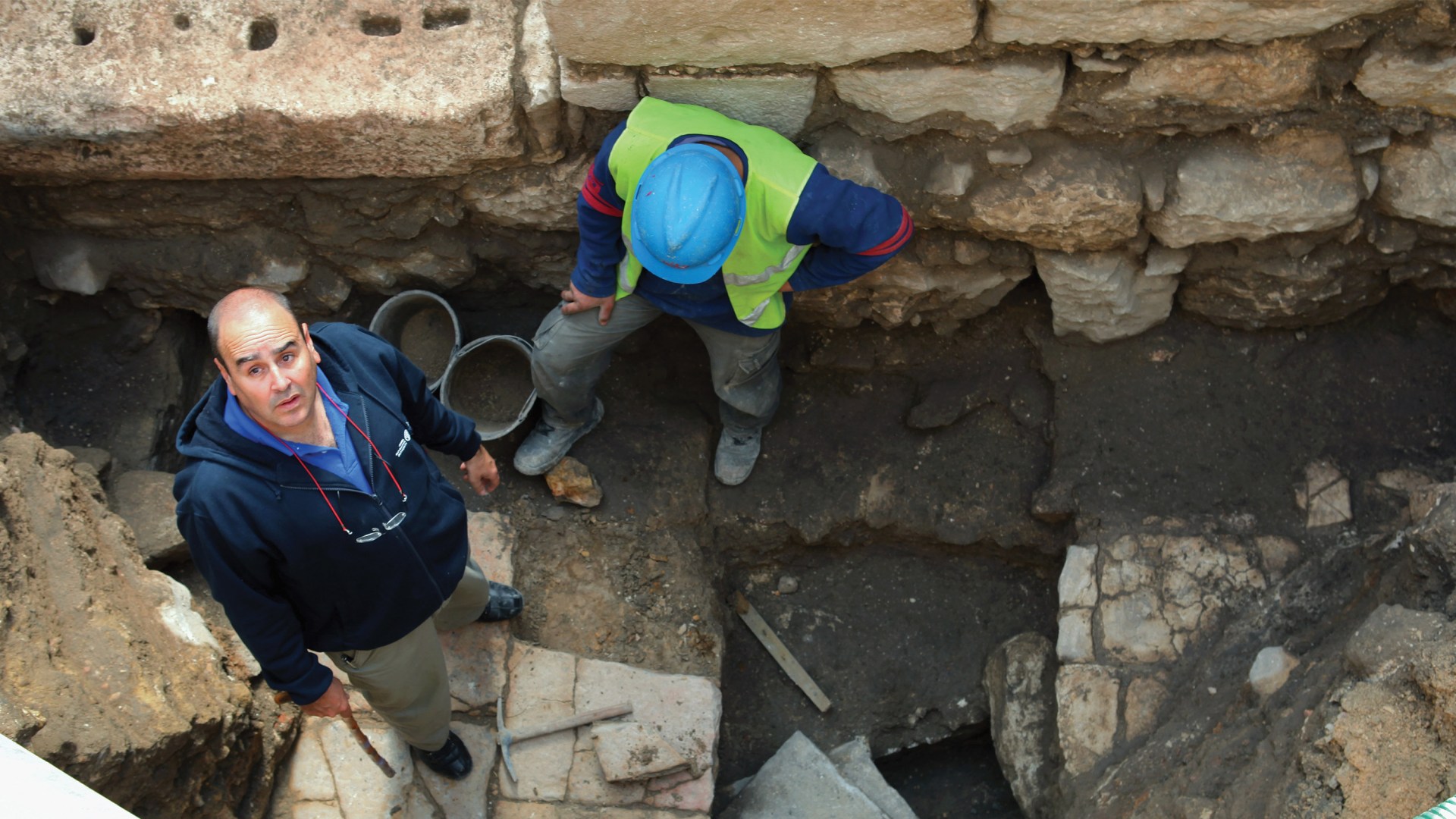
Archaeologists stand by excavation in Jerusalem, Israel.

Archaeologists stand by excavation in Jerusalem, Israel.

Getty / David Silverman

Thirty-four Israeli scholars have signed a statement protesting the announcement of biblical archaeological discoveries before proper peer review. Gershon Galil, an emeritus professor, said he is the target of the statement but his critics are just jealous. In March 2022, Galil claimed to have discovered a “curse tablet” that contained the oldest known Hebrew writing and the name Yahweh. He has refused to share a high-quality photo with scholars. In December, he claimed to have deciphered five new inscriptions from the reign of King Hezekiah, which he called “actually the earliest manuscripts of the Bible.” He made the announcement on TV and shared only one photo with researchers. “It’s like saying you’ve disproved Einstein’s theory of relativity,” one scholar complained, “but you’ll only publish the findings on Saturday Night Live. ”

Sudan: Pastor called a witch

The pastor of the Sudan Presbyterian Evangelical Church in El Hasahisa, Al Jazirah state, was arrested on charges of witchcraft. According to local Christians, Abdalla Haron Sulieman prayed for his mother to be healed of an infection. When she was healed, local Muslims started flocking to the church and authorities stepped in. Sudanese Christians have worried about religious freedom since a military coup in October.

Nigeria: Churches preaching election peace and cooperation

The Nigeria Evangelical Fellowship called on all candidates in the 2023 election to denounce violence and commit to preaching peace. There have been more than 50 attacks on the offices of the Independent National Electoral Commission, and ongoing violence continues to claim the lives of about 400 Christians per month. Labor Party candidate Peter Obi, who has pledged “to build a nation where everyone will be respected” and “stop the killing and start the healing,” was ahead in preelection polls.

Vietnam: Christmas visitor arrested

Religious freedom advocate Y An Hdrue was arrested while attempting to attend a Christmas Eve service at an Evangelical Church of Christ in the Dak Lak province. Traffic police claimed his driver’s license was fake and held him in custody for 10 hours, Y An Hdrue said. He was questioned by officers who refused to give their names and seized his phone, which contained evidence of alleged human rights violations. Authorities claim the church, primarily made up of indigenous Ede people, seeks to establish a separatist religious state in the central highlands. There is no evidence that is true.

Australia: Hillsong founder goes on trial

A judge heard 13 days of testimony in the trial of Hillsong founder Brian Houston, who is accused of failing to report his father Frank’s pedophilia in 1999. Houston claims he has a reasonable excuse, because the victim was an adult by the time Houston knew about the crime and did not want the incident reported. There were also many other people who knew, including several police officers in the church and the pastors of other churches, and they did not report it either. One pastor who knew and also failed to report was simultaneously convicted of sexual assault in a separate trial. Attorneys in Houston’s case will submit their closing arguments in June.

United States: MDiv degrees decline

The number of seminarians pursuing a master of divinity degree is now equal with the number pursuing a master of arts degree. This is the first time this has happened since the Association of Theological Schools started tracking enrollment in 1975. MDiv degrees, which typically require training in biblical languages, are down by about 9 percentage points since 2018. John Kutsko, former executive director of the Society of Biblical Literature and one of the editors who oversaw the recent update of the New Revised Standard Version, told The Christian Century he is concerned about a shortage of biblical language scholars by 2050.

United Kingdom: Chaplain decries king’s multiculturalism

The former chaplain of the late Queen Elizabeth II warned that King Charles III could destroy the British monarchy if he abandons his role as defender of the faith and acts, instead, as defender of all faiths. “I don’t think the monarchy can float if it becomes a multicultural and multireligious monarchy,” said Gavin Ashenden, who served as royal chaplain from 2008 to 2017 but has since left the Church of England and become Roman Catholic. Charles, in his first Christmas speech, urged his subjects to celebrate light overcoming darkness, “whatever faith you have, or whether you have none.”

France: Pastor convicted for failure to report abuse

A pastor in Orléans has received a 12-month suspended sentence for failing to report historical sexual abuse confessed to him by a member of his congregation. The pastor, who has not been named in the press, did report the crimes but waited four years. He claimed he didn’t know the extent of the abuse, which included the rapes of two boys. “I didn’t dig into it,” he told the court. “Maybe that was my mistake.” The abuser eventually received a 16-year sentence. French law protected the secrecy of the confessional until 2019, but only for Catholics and Anglicans, who see confession as a sacrament.

Bulgaria: Evangelicals win in human rights court

The European Court of Human Rights ruled that a Bulgarian city violated the religious rights of an evangelical group when it warned school administrators the Christians were “carrying out a massive campaign of agitation, tricking new members, and disuniting the Bulgarian nation.” The lawsuit was advanced by Alliance Defending Freedom International, which has won more than 1,500 cases in 104 countries since 2010. Bulgaria may choose to ignore the ruling, however, as the European court has no enforcement authority.

News

Evangelicals Outgrow Catholics in Central America

“Nondenominational believers” rank close behind.

Churchgoers attend a mass.

Churchgoers attend a mass.

Getty / Jorge Salvador Cabrera

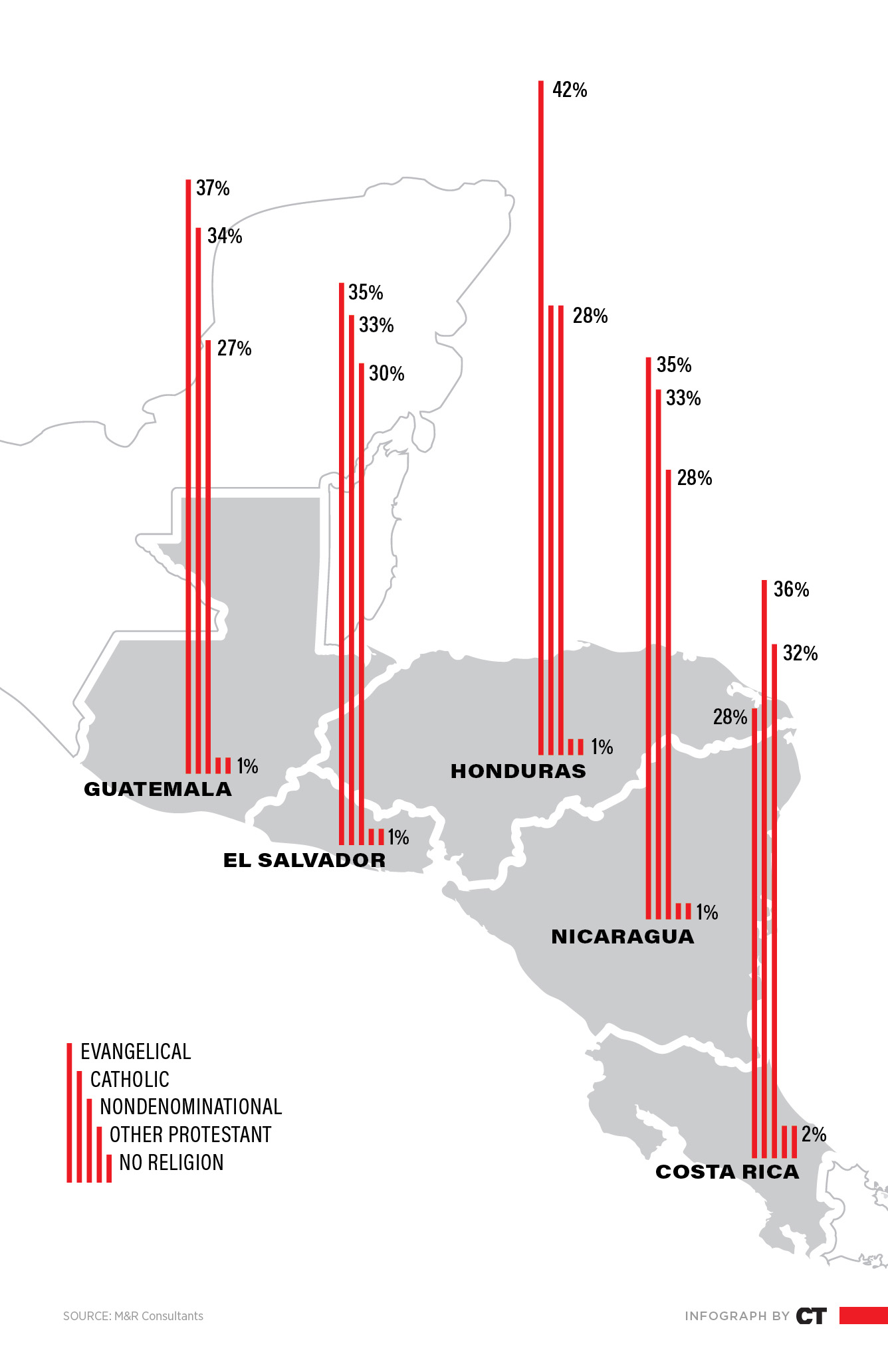
Evangelicalism is now the largest religious demographic in Central America, according to a poll of about 4,000 people in five countries. More than a third of people from Guatemala, Honduras, El Salvador, Nicaragua, and Costa Rica told researchers from M&R Consultants that they are evangelical, while another 29 percent said they are creyente sin denominación (nondenominational believers).

Only about a third of people in the region said they were Catholic—down from about 60 percent in the 1970s. Some scholars have attributed the shift to internal Catholic conflict and the long fallout from the church’s political affiliations on the extreme right and left, along with the disruptions of urbanization.

Evangelical theologian Samuel Escobar, noting the trend in an interview in 2006, said Catholics who moved to Central American cities found empowerment in their evangelical conversion. “Their decision to accept Christ meant a change in patterns of behavior which helped people to reorient their lives,” he said.

According to sociologist Ariel Goldstein, who is critical of evangelical involvement in the regions’ politics, evangelicals grow because they adapt to local customs, have clergy who live close to the people, innovate, use social media, meet practical needs, and create community.

News

Church Planting After the Fall (of the Berlin Wall)

Three generations after East Germany rejected Christianity, group of prayerful believers now see an opportunity.

A view of remains of the Berlin Wall.

A view of remains of the Berlin Wall.

Getty / Frank Hoensch

When Aaron Köhler tries to talk to people in Cottbus, Germany, about Jesus, church, and faith, he can’t assume they know what he’s talking about.

Many in the city near the Polish border don’t know anything about Christianity. Köhler has had people ask him whether Christmas and Easter are Christian holidays, and if so, what they’re about. One time, he talked to someone at a local market who wasn’t familiar with the name Jesus. The person had never even heard it, that they could recall.

“That was crazy for me. In the ‘land of the Reformation,’ in a supposedly ‘Christian country,’ these people don’t even know the basic basics,” said Köhler, copastor of a church plant called Mittendrin (“In the Middle”).

According to the most recent data from Germany’s Federal Agency for Civic Education, more than 60 percent of Germans identify as Christian. A little more than a quarter say they have no religion.

Zoom in a little closer, though, and stark regional differences emerge. In the western part of the country—which includes Hamburg, Munich, Cologne, Frankfurt, Stuttgart, and Düsseldorf—three-quarters of the population identify as Christian. But in the east, the region that was a Soviet Union satellite state from 1949 to 1990, only a quarter of Germans are Christian, with nearly 70 percent identifying themselves as nicht gläubig, or nonbelievers.

Christianity is, of course, declining in much of formerly Protestant Europe. But eastern Germany stands out, even compared with other rapidly secularizing nations. Here, large swaths of the population have had no serious contact with Christianity for three generations.

“For decades, there was no prayer, no Bible at home, no church attendance,” Köhler said. “After all these years, people don’t know what they don’t know.”

The regional differences are easily traced to the division of the country after its defeat in World War II. The French, British, and American-controlled sectors in the west merged into the German Federal Republic in 1949. The Soviet-controlled East formed the German Democratic Republic, a socialist state with totalitarian leaders who suppressed religion. Although the efforts to stamp out faith were not as harsh in East Germany as they were in some areas of the Soviet Bloc, the effects were profound, according to sociologists Detlef Pollack and Gergely Rosta.

The Christian population in East Germany fell from about 90 percent in 1949 to only 30 percent in 1990. When the Cold War ended, the Berlin Wall dividing the historic capital city came down and the country was reunited. But Christianity in the former East just kept shrinking.

Simon Tarry, a British-born church planter with Newfrontiers, a network of evangelical, charismatic churches, said official statistics actually paint a rosier picture than the reality. Even for many of the one out of four who say they are Christian in the East, little to nothing in their lives resembles a vibrant faith.

“The scales of measurement are membership where people pay their church tax for marriage and baptism purposes,” he said. “Germany is equivalent to an unreached people group. You might think of the 10/40 Window, places in Asia or the Middle East. But a lot of places in Germany and Northern Europe are much more ‘unreached’ than elsewhere in the world.”

Newfrontiers has two church plants in the East, both in the Berlin area. The network has had more success in the West, like the Frankfurt area where Tarry is helping plant a church.

“It’s incredibly hard work to plant a church in Germany. It’s incredibly discouraging at times. It feels like really hard ground,” he said.

For evangelical church planters, this presents an incredible challenge. But also, because they are church planters, they see opportunities.

“There are really many opportunities,” said Dominik Lorenz, a church planter with the Union of Free Evangelical Churches in Vogtland, a hilly region in the eastern state of Saxony. “These people are looking for a second chance.”

There are no firm numbers on how many church planting initiatives have launched in the East since the fall of the Berlin Wall. None of the church planters who spoke to CT knew of a complete count. But church planters are there, talking to people about Jesus and attempting to live out their trust in the gospel.

The idea of people making any life decisions around church is so strange and countercultural, Lorenz said, that it piques curiosity and opens doors. He joined Herzfabrik (“Heart Factory”) in 2017. The plant was started the year before by Daniel Rudolph and a team of 11 people sent out by the Union of Free Evangelical Churches in Germany.

“While everyone withdraws in fear, we build bridges for encounters,” Lorenz said. “While many people look only to their own, we give generously. This relationship dynamic of the gospel, which is lived in everyday life, in homes, in families, in the workplace, has an enormous appeal here.”

In a region with around 70,000 inhabitants, Herzfabrik now has 120 members and an additional 250 people and 80 children who regularly attend services. Some of these are part of the 17 percent of the population who already identified as Protestant or “another Christian religion” in the official survey, but the church has focused on reaching nonbelievers. The staff talks about the temptation to pay too much attention to the needs and frustrations of Christians and “losing sight of those who are truly lost.”

That’s really the harder task for evangelicals in eastern Germany, according to Joel Ernst, a church planter in training with Mittendrin in Cottbus.

“You need patience here in East Germany,” he said. “It takes a long time for a skeptic to become a follower of Jesus. You need to know more than just the facts of these people’s lives, but feel the pain of it. The reality of it. Getting to know people in a deep way.”

Growing up in church in the western part of the country, Ernst said, he was shaped by a “church growth” mindset. He’s had to unlearn that in his training in Cottbus.

“If you have that model in mind and come to East Germany to plant a church, you’re going to end up frustrated quite quickly,” he said. “Being with people who have forgotten they’ve forgotten God challenged my view of what church culture is [supposed to be].”

At the same time, church planters in the region say they’ve had to adjust their view of nonreligious people. Tobias Klement, who grew up in western Germany, expected people to be hostile to Christianity when he joined Köhler to plant a church in Cottbus.

What he found, instead, was a mix of ignorance and indifference. People didn’t know the basic basics—or why they should care.

“It’s just not relevant to their lives,” he said. “They did not actively decide to be atheist. It’s just a normal thing.”

Klement and Köhler say they have learned that the work of spreading the gospel in eastern Germany will be slow. But they’re in it for the long haul.

“The Reformation didn’t happen in a day,” Köhler said. “And that’s what we are working and praying for here in Cottbus and East Germany: that God would come here and start a second reformation.”

Ken Chitwood is a writer and scholar of global religion living in Germany.

News

Mississippi Evangelicals Prepare to Welcome Dobbs Babies

Christians open their arms to the 5,000 children state officials expect to be born now that Roe v. Wade has been overturned.

Illustration by Donna Grethen

Betty Hodge knows what it’s like to have an unplanned pregnancy. And she knows what it’s like to have the father of the unborn child push for an abortion. She’s been there.

But she didn’t seriously consider terminating her pregnancy, because, she said, she didn’t feel alone.

“Thankfully I had a family that was supportive,” Hodge said. She now works at a pregnancy resource center in Jackson, Mississippi, so she can provide that same support for other mothers in need.

These days, she sees a lot of them.

The United States Supreme Court overturned Roe v. Wade last year, allowing the state of Mississippi to pass a law banning all abortions except to save the life of the mother or in cases of rape or incest that have been reported to police. The clinic that gave its name to the Dobbs v. Jackson Women’s Health Organization case shut down in July. It was the state’s only abortion provider, so while women may still travel to Florida, New York, or Illinois to terminate a pregnancy, abortion has effectively ended in the Magnolia State.

The state health office estimates this will result in an additional 5,000 babies being born in Mississippi in 2023. The pro-life movement there is eager to celebrate each of these precious lives, but they’re also aware of other upsetting statistics: Mississippi has the highest rate of preterm births—over 30 percent more than the national average. The state has the highest infant mortality rate in the US, with nearly 9 of every 1,000 babies dying. And for the infants who live to be toddlers, 28 percent will live in poverty.

Hodge doesn’t shy away from these hard facts. For her, this is part of the work of being pro-life.

“Just because it’s illegal, it didn’t end the reason and the fear that was driving [women] to abortion,” she said.

She believes, however, that pro-life Christians can effect deeper change.

“We can help women keep their babies,” she said. “We can really help women and help children.”

Hodge has been doing this for five years now. She started a chapter of Embrace Grace, a 12-week program that supports single parents and women facing unplanned pregnancies, at her church in 2019. The Pointe Church in Brandon, Mississippi, was only the second in the Jackson metro area to offer the program, but Hodge started to spread the word—coaching and coaxing churches to open their doors and their hearts. Sometimes pro-life Christians don’t realize how offering a meal or a little childcare can make a difference.

“It’s really to come alongside women and see where they’re at and do a mentorship and just invite them into your life,” she said.

At the same time, Christians have to learn to put aside middle-class concerns about respectability that they’re used to, Hodge said, if they’re going to be pro-life like this.

“You have to be ready for the f-bomb to come out of a mouth,” Hodge tells the women she meets at evangelical churches. “You’ve got to be ready for someone to come in here in a short, short skirt.”

Hodge was hired by the Center for Pregnancy Choices. The clinic offers practical support to empower a woman to choose life and is committed to “walk with her through her journey beyond her decision to parent.” Part of Hodge’s time is spent working with churches and helping them start Embrace Grace groups. There are now about 20 churches involved.

Virginia doctor John Bruchalski used to perform abortions before he felt convicted that it was wrong because he had a moral obligation to both the mother and the unborn child. He believes these kinds of efforts will really build a culture of life. Christians should celebrate the Dobbs decision, he said, but also be realistic about what the courts can and cannot do.

“Hearts don’t get changed by political laws,” he said. “They will save lives, for sure. We know that tens of thousands of infants since Dobbs have been saved. But you don’t change hearts that way.”

At his obstetrics and gynecology clinic, Bruchalski has decided to offer services to women regardless of income. A large percentage of the patients he sees have no insurance, and the costs are covered by Divine Mercy Care, a Christian nonprofit that supports 12 pro-life women’s health care clinics across the US.

He’s been operating his clinic since 1994 but believes it is more important than ever, after Dobbs, to find clear and practical ways to help women and children. The pro-life movement has to double down on love and personal sacrifice, Bruchalski said.

“If we don’t examine our own consciences now, if we’re happy with the status quo and say, ‘We’ve done enough,’ I think it’s a big mistake, because the Enemy never sleeps,” he said.

Back in Mississippi, Anja Baker says she sees that happening: The pro-life movement is doubling down and actively working to help the babies born because of Dobbs.

“There are so many people doing so many things,” she said. “It’s a completely opposite narrative from the one that ‘there’s nobody and there’s nothing.’ I think the Enemy wants us to feel isolated when we’re in crisis.”

Baker is the Mississippi coordinator for Her Plan, a Susan B. Anthony Pro-Life America project launched in Virginia in 2019 to cultivate networks of organizations that care for pregnant women, new mothers, and their children. Her Plan focuses on “abortion triggers”—factors that cause women to pursue abortions—and finding organizations that can meet those needs, including health care, financial assistance, legal support, and childcare.

As a 27-year-old mom with a child with complex needs, Baker is acutely aware of the fears and challenges that mothers face in Mississippi.

“I understand that things aren’t just straightforward,” she said.

At the same time, there’s more help available than most people realize, even in Mississippi. Baker has a list of 140 different churches and organizations that are stepping up to help. And Her Plan is a relatively new project.

“We’re going to take a state like Mississippi—a state that gets picked on by the media and pop culture—and we’re going to make it the champion of hope and life, hospitality and generosity,” Baker said.

One of the churches Her Plan is working with is Crossgates Baptist, a megachurch with 5,000 regular attenders in the Jackson area. Sydney Charlton, who serves in the missions department, said that the work of offering hospitality and generosity is often really simple.

“We’ve got moms who call,” she said, “and they’re just trying to figure out how to put food on the table.”

It reminds her of the command of Proverbs 3:27: “Do not withhold good from those to whom it is due, when it is in your power to act.” That’s what she’s trying to do in Mississippi.

“You can’t always help, but a lot of times, people just need groceries, or help with a utility bill, and a little bit of hope and encouragement that God and God’s people really do care,” she said.

And with the state expecting 5,000 more babies in 2023, she sees an opportunity to put pro-life beliefs into practice and show that Christians care.

“If we’re going to say we stand for life, then it’s pertinent for us to stand up and say we don’t just care about the unborn child,” she said. “As a church, we have an opportunity to make a difference.”

Adam MacInnis is a reporter in Canada.

addApple PodcastsDown ArrowDown ArrowDown Arrowarrow_left_altLeft ArrowLeft ArrowRight ArrowRight ArrowRight Arrowarrow_up_altUp ArrowUp ArrowAvailable at Amazoncaret-downCloseCloseellipseEmailEmailExpandExpandExternalExternalFacebookfacebook-squarefolderGiftGiftGooglegoogleGoogle KeephamburgerInstagraminstagram-squareLinkLinklinkedin-squareListenListenListenChristianity TodayCT Creative Studio Logologo_orgMegaphoneMenuMenupausePinterestPlayPlayPocketPodcastprintremoveRSSRSSSaveSavesaveSearchSearchsearchSpotifyStitcherTelegramTable of ContentsTable of Contentstwitter-squareWhatsAppXYouTubeYouTube