Cover Story

Christianity Today’s 2023 Book Awards

Our picks for the books most likely to shape evangelical life, thought, and culture.

Illustration and Lettering by Chidy Wayne

[Editor’s note: The 2024 CT Book Awards are now live! They can be found here.]

When my alarm buzzes on the morning of an especially busy day, I often respond with a strange lack of urgency. A low rumble of dread builds as I ponder all the chores, errands, or work tasks that need completing. But instead of resolving to get up and get cracking, I linger in bed, nearly paralyzed by the weight of responsibility. I know what I need to do, but for some reason I can’t summon the willpower to do it.

Something similar plays out in the lives of many Christians, according to Uche Anizor, a professor at Biola University’s Talbot School of Theology. They know they’re supposed to love God, study Scripture, and pursue a life of holiness, but they can’t escape the clutches of spiritual indifference. In Overcoming Apathy: Gospel Hope for Those Who Struggle to Care, Anizor appeals to lukewarm believers, not with an accusing glare or a motivational speaker’s bullhorn, but with the compassion of someone who has fought this battle himself.

It’s a worthy choice for CT’s Book of the Year. Across the board, the judges who read and evaluated it commended Anizor for putting his finger on a problem that routinely flies under the radar, even as it sinks so many of God’s people into a spiritual quagmire.

Like Overcoming Apathy, all of our Book Awards winners have the capacity to awaken slumbering souls, whether they ring out with theological wisdom, literary beauty, pastoral warmth, or everyday encouragement. Don’t sleep on any of them. —Matt Reynolds, CT books editor

Apologetics & Evangelism
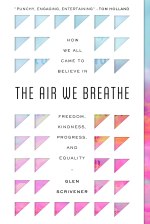
The Air We Breathe: How We All Came to Believe in Freedom, Kindness, Progress, and Equality

Glen Scrivener | The Good Book Company

The Air We Breathe is a book for this moment. Western society increasingly seeks to break free from its Christian moorings, yet at the same time it holds in high regard such values as equality, freedom, science, and compassion. Scrivener shows that these values (and more) are in fact thoroughly Christian. They appear self-evident to our 21st-century thinking, but they were certainly not the norm in the ancient world. Scrivener writes in an engaging and powerfully persuasive way, connecting with key cultural reference points from the past and present and combining apologetic arguments with compelling appeals to believers and seekers alike. His book is honest, eloquent, and at times shocking, but all in the interest of getting to the heart of the matter. —Sharon Dirckx, freelance speaker, author, and adjunct lecturer at the Oxford Centre for Christian Apologetics

Award of Merit
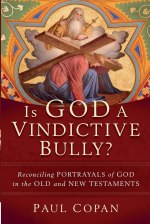
Is God a Vindictive Bully?: Reconciling Portrayals of God in the Old and New Testaments

Paul Copan | Baker Academic

Many Christians struggle to understand how a loving God could command some of the things he commands, and this book is the best single volume on the subject. Its scope is amazing. Most of us are familiar with what Copan calls “critics from without,” namely those, like Richard Dawkins, who argue that the God revealed in the Old Testament is evil. Copan forcefully answers their charges. But the real challenge today comes from “critics from within,” those who want to “unhitch” the Old Testament from the New, or worse, who wonder if the God of the Old Testament is different from the God of the New. Copan addresses questions about polygamy, “divine smitings,” foreign slaves, the Canaanite conquest, and much, much more. His work is well argued, discerning, and refreshing. —Clay Jones, chairman of the board of Ratio Christi

Finalists

Why Believe?: A Reasoned Approach to Christianity

Neil Shenvi | Crossway

Logic and the Way of Jesus: Thinking Critically and Christianly

Travis Dickinson | B&H

Biblical Studies
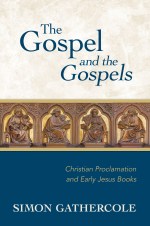
The Gospel and the Gospels: Christian Proclamation and Early Jesus Books

Simon Gathercole | Eerdmans

People are surprised when they first hear there are other gospels besides Matthew, Mark, Luke, and John. Why are these not in our Bibles? Various arguments have been proposed. One of the top New Testament scholars in the world, Simon Gathercole, brings all canonical and noncanonical gospels together and argues that the four canonical gospels share key theological elements that differentiate them: Jesus’ messiahship, his death, his resurrection, and his fulfillment of the Old Testament. While this book is geared toward scholars, it is an important argument for differentiating the canonical gospels from all the others. —Patrick Schreiner, associate professor of New Testament and biblical theology at Midwestern Baptist Theological Seminary

Award of Merit
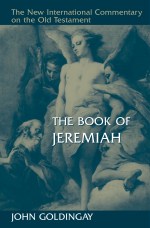
The Book of Jeremiah

John Goldingay | Eerdmans

While it is difficult to get excited about a Bible commentary these days, Goldingay’s volume is a treasure trove of explorations into the text, traditions, and theology of the Book of Jeremiah. As a modern commentary, this volume interacts with an enormous amount of recent research and reveals Goldingay’s years of Old Testament scholarship. Without a doubt, The Book of Jeremiah will be a new standard reference for all researching and teaching the message of the Weeping Prophet. —William R. Osborne, associate professor of biblical and theological studies at College of the Ozarks

Finalists

The Samaritan Woman’s Story: Reconsidering John 4 After #ChurchToo

Caryn A. Reeder | IVP Academic

The Gospel of John: A Theological Commentary

David F. Ford | Baker Academic

Bible & Devotional
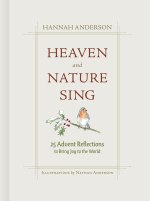
Heaven and Nature Sing: 25 Advent Reflections to Bring Joy to the World

Hannah Anderson | B&H

Written with creative eloquence, this book invites readers to pause and reflect on the hope, faith, joy, and love communicated through the coming of our Savior. Anderson uses ordinary, everyday moments as a lens through which to gain insight into parts of the Advent story we often overlook. While each devotional runs only a few pages, all are full of wisdom. In a time when Christmas tends to be tainted by commercialism, Heaven and Nature Sing is a breath of fresh air. —Elizabeth Woodson, author and Bible teacher

Award of Merit
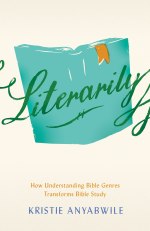
Literarily: How Understanding Bible Genres Transforms Bible Study

Kristie Anyabwile | Moody

Gaining tools to understand the Bible can feel like getting your prescription glasses updated: Things you didn’t realize you were missing suddenly emerge to your joy. That’s what happens when one uses the strategies Anyabwile recommends in this book. Her accessible writing is a helpful starting point for understanding the various forms of writing we find in the Scriptures, and her warm and passionate tone reminds us that our goal is not just knowledge, but transformation under the Word. —Taylor Turkington, author and director of BibleEquipping

Finalists

Scribes and Scripture: The Amazing Story of How We Got the Bible

John D. Meade and Peter J. Gurry | Crossway

Sheltering Mercy: Prayers Inspired by the Psalms

Ryan Whitaker Smith and Dan Wilt | Brazos Press

Children
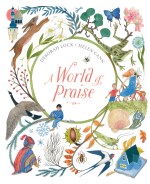
A World of Praise

Deborah Lock | Eerdmans

There’s beauty in this book, not only in its captivating pictures, but in its affection for the places and people that span God’s world. It makes us marvel at the earthly home God has created for us and long for the day Jesus returns to make it all flawlessly, sparklingly his. This book has a song-like quality. It’s a carol to the Lord of all the earth. Read it alongside a psalm that sings of how the world bursts with the Creator’s glory. Or read it alongside the prophets, who gaze at distant lands with the good news that the Savior is coming to restore all beauty and be the delight of all nations. —Jack Klumpenhower, author of Show Them Jesus: Teaching the Gospel to Kids

Award of Merit

How to Fight Racism Young Reader’s Edition: A Guide to Standing Up for Racial Justice

Jemar Tisby | Zonderkidz

How to Fight Racism gives a challenging overview of the history of racism in the US, opening the eyes of young people to the inequalities and segregation existing today. With practical advice and inspiring stories, Tisby empowers children to engage with the reality of racism and change things for the future. It’s great to see a book encouraging young people to seek out relationships across racial divides, armed with the humility of Christ’s example and the truth that all people are made in God’s image. —Steph Williams, children’s writer, illustrator, and graphic designer

Finalists

Bare Tree and Little Wind: A Story for Holy Week

Mitali Perkins | WaterBrook

Fly High: Understanding Grief with God’s Help

Michelle Medlock Adams and Janet K. Johnson | End Game Press

Young Adults

Who Am I and Why Do I Matter?

Chris Morphew | The Good Book Company

In the latest installment in his Big Questions series, Morphew asks—and answers—what are perhaps the primary questions adolescents wrestle with: Who am I? Why do I matter? Relatable and accessible, the book never talks down to its young readers. Rather, their concerns are taken seriously, whether fitting in with friends, grappling with social media, or simply wondering if they can be themselves without social repercussions. Morphew takes readers back to Scripture, offering examples from the Bible and plenty of reminders that we are made in God’s image, that we have worth based on that simple fact, and that we are called to follow Christ. Even better, he offers the hope of the gospel, so that past mistakes don’t define current self-worth or the future. —Betsy Farquhar, managing editor and staff writer at Redeemed Reader

Award of Merit

The Dragon and the Stone (The Dream Keeper Saga, Book 1)

Kathryn Butler | Crossway

With nods to Narnia and The Neverending Story, Butler has crafted a portal fantasy adventure with charm and wisdom for middle-grade readers. After encountering a dragon slurping chili in her kitchen one afternoon, main character Lily McKinley is led by the creature into the Realm, a new dimension where dreams live and the nightmarish Shrouds threaten at every turn. It’s a timeless formula, and Butler captures the high-stakes quest with a confident knowledge of her own world, as well as humor and a truly engaging voice. —Glenn McCarty, author of the Tumbleweed Thompson series

Finalists

You’re the Worst Person in the World: Why It’s the Best News Ever that You Don’t Have It Together, You Aren’t Enough, and You Can’t Fix It on Your Own

Scarlet Hiltibidal | B&H

Your New Playlist: The Student’s Guide to Tapping into the Superpower of Mindset

Jon Acuff | Baker

Christian Living & Spiritual Formation
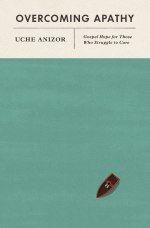
Overcoming Apathy: Gospel Hope for Those Who Struggle to Care

Uche Anizor | Crossway

One of the more surprising temptations I’ve experienced in recent years isn’t toward overt or egregious sin, but toward numb inaction. In a postpandemic world where politics are polarized and the news cycle constantly yells, “Fire!”, many followers of Christ are too overwhelmed to care. We’re paralyzed and unsure how to hold all the sorrows in our hearts. Anizor graciously meets Christians in their apathy, helping readers discover the origin of their own numbness and offering gospel-rooted reasons for renewed passion. He challenges us to love deeper, with a Christlike affection that throws off apathy and propels us to action. —Emily Jensen, cofounder and content director of Risen Motherhood

(Read CT’s interview with Uche Anizor.)

Award of Merit
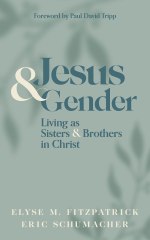
Jesus and Gender: Living as Sisters and Brothers in Christ

Elyse Fitzpatrick and Eric Schumacher | Lexham Press

Jesus and Gender is an incredibly timely book. There is much debate in evangelical circles surrounding the roles of men and women in the church, with complementarianism and egalitarianism the two common categories. But Fitzpatrick and Schumacher tackle the subject with fresh language, calling us to be “Christic” men and women who seek to “cooperate together for [God’s] glory” rather than “compete for glory amongst themselves.” —Vance Pitman, president of Send Network and founding pastor of Hope Church Las Vegas

(Read CT’s review of Jesus and Gender.)

Finalists

Good and Beautiful and Kind: Becoming Whole in a Fractured World

Rich Villodas | WaterBrook

(Read an excerpt from Good and Beautiful and Kind.)

How to Inhabit Time: Understanding the Past, Facing the Future, Living Faithfully Now

James K. A. Smith | Brazos Press

Church & Pastoral Leadership
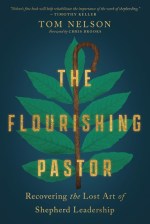
The Flourishing Pastor: Recovering the Lost Art of Shepherd Leadership

Tom Nelson | InterVarsity Press

Without attempting to be novel or imposing unreasonable expectations, Nelson sets out to recover what he considers the lost art, among pastors, of shepherd leadership. Refreshingly, he doesn’t come off as superior or the lone expert in the field. He admits mistakes in his personal walk, ministry habits, and pastoral labors. I found plenty of pastoral encouragement, practices to ponder, and workable habits for shepherd leadership. —Phil Newton, director of pastoral care and mentoring for the Pillar Network

Award of Merit (TIE)
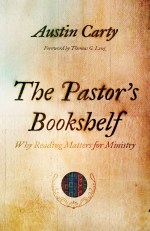
The Pastor’s Bookshelf: Why Reading Matters for Ministry

Austin Carty | Eerdmans

As a lifelong reader, I’ve seen the value and richness that come from reading widely and deeply. A pastor whose mind and heart are formed by deep engagement with books can understand and communicate capital-T truth more clearly, creatively, and insightfully. By giving pastors permission to include reading as part of their regular schedules, Carty offers the gift of slowing down to think deeply and the opportunity for timeless spiritual themes to take root in their hearts. This is a recipe for greater wisdom, empathy, and love—qualities that in turn benefit the people God has called them to shepherd. —Kelley Mathews, author and editor
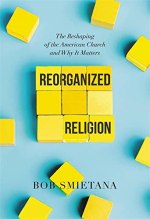
Reorganized Religion: The Reshaping of the American Church and Why It Matters

Bob Smietana | Worthy

Smietana helps church leaders face the sobering reality of the religious landscape in which they serve. Drawing on statistics and real-life stories, he demonstrates the waning influence of organized religion in many people’s lives. Alongside pictures of churches in decline, however, he shows us churches that have turned the corner toward growth and relevance in their communities. And he reminds us of the positive contributions churches make in American life and the negative impact our culture will experience as they decline or cease to exist. —Michael Duduit, dean of Clamp Divinity School and executive editor of Preaching magazine

Finalist

On Earth as in Heaven: Theopolis Fundamentals

Peter J. Leithart | Lexham

Culture & the Arts
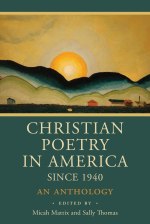
Christian Poetry in America Since 1940: An Anthology

Edited by Micah Mattix and Sally Thomas | Iron Pen

I was very impressed with this anthology, which has a detailed and thoughtful introduction, helpful introductions to each poet, a few well-placed and appropriate footnotes, and amazingly good poems: challenging, diverse, and unsentimental. There is a great balance between famous and lesser-known poets, denominational backgrounds, and formal and free-verse poetry. A colleague of mine, who teaches on Christianity and literature, told me he has never encountered a resource like this and that he would find it very useful for his class. —Eleanor Nickel, English professor and program director at Fresno Pacific University

Award of Merit
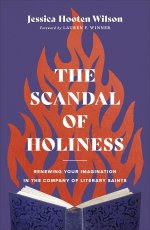
The Scandal of Holiness: Renewing Your Imagination in the Company of Literary Saints

Jessica Hooten Wilson | Brazos Press

Wilson deftly plows the fertile field of literature, wonder, and the Christian mind. The book reads as both journal and love letter to her own past and her passion for literature. Her chapters brim with wonderment and awe, and I enjoyed the feeling of longing to read the books she celebrates. In the hands of another author, this book could have felt academic and stuffy. But Wilson’s prose is elegant and clear while retaining the warmth of a voice inviting you to come sit by the fire and listen to a story. —John Hendrix, illustrator and children’s author

(Read an excerpt from The Scandal of Holiness.)

Finalists

A Supreme Love: The Music of Jazz and the Hope of the Gospel

William Edgar | IVP Academic

(Read CT’s review of A Supreme Love.)

Reading Black Books: How African American Literature Can Make Our Faith More Whole and Just

Claude Atcho | Brazos Press

(Read CT’s interview with Claude Atcho.)

Fiction

Count the Nights by Stars

Michelle Shocklee | Tyndale

In this dual-timeline novel, Shocklee tackles challenging topics like immigration, discrimination, and human trafficking with grace and hope, and her vivid use of historical detail adds intrigue to the story. Her writing is smooth and engaging, and I found myself pulled into the storylines of both time periods, which rarely happens with books of this sort. The way this book opens hearts and minds to the trauma experienced by victims of human trafficking is truly commendable. —Christina Suzann Nelson, author of What Happens Next , Shaped by the Waves , and other novels

Award of Merit

The Book of Susan

Melanie Hutsell | Paraclete

My reaction to this book might be biased by the fact that I watched the wife of a close friend endure the anguish of being diagnosed with bipolar disorder after the birth of their first child, an experience that shattered their marriage. The Book of Susan stirred memories of that time, reminding me how vital it is to embrace compassion and tenderness toward those suffering the ravages of this illness. Hutsell’s writing is raw, real, and beautiful. While taking us inside a journey few can truly understand, she guides readers into the reality that all of us are flawed, bruised, and broken. Within that admission, there is hope and the chance for healing. —James L. Rubart, novelist and professional marketer

Finalists

Absolute Music

Jonathan Geltner | Slant

The Baxters

Karen Kingsbury | Atria Books

History & Biography

An Odd Cross to Bear: A Biography of Ruth Bell Graham

Anne Blue Wills | Eerdmans

This is historical biography at its finest. Wills has a profound empathy for Ruth Graham, born of meticulous research and the insights of gifted scholarship. Graham was a critic of second-wave feminism, and yet, as Wills shows, she also “devised her own ethic of Christian womanhood, characterized by ‘adjusting’ to” her famous evangelist husband. This concept of “adjustment” becomes a central thread of the book, not only clarifying how Graham negotiated her own womanhood but also illuminating the complex relationship between evangelical womanhood and feminism. Both moving and captivating, An Odd Cross to Bear will be the standard work on Ruth Graham in her own right, as well as essential reading for anyone wishing to better understand Billy Graham, Ruth Graham, and their movement. —Sarah Irving-Stonebraker, associate professor of history and Western civilization at Australian Catholic University

Award of Merit

Denmark Vesey’s Bible: The Thwarted Revolt That Put Slavery and Scripture on Trial

Jeremy Schipper | Princeton University Press

Schipper’s book offers a concise but comprehensive look at how the Bible was litigated by enslaved people and white slaveholders before, during, and after Denmark Vesey’s planned 19th-century slave rebellion. It was common, in early American history, for debates on morality and criminality to involve dueling interpretations of Scripture, and Schipper illustrates how biblical language was co-opted by whites not only to strengthen slavery in the abstract but also to aid white legal responses to Vesey and his coconspirators. —Miles Smith IV, assistant professor of history at Hillsdale College

(Read CT’s review of Denmark Vesey’s Bible.)

Finalists

A History of Contemporary Praise & Worship: Understanding the Ideas That Reshaped the Protestant Church

Lester Ruth and Lim Swee Hong | Baker Academic

Cotton Mather’s Spanish Lessons: A Story of Language, Race, and Belonging in the Early Americas

Kirsten Silva Gruesz | Harvard University Press

Marriage & Family
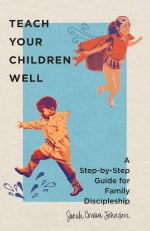
Teach Your Children Well: A Step-by-Step Guide for Family Discipleship

Sarah Cowan Johnson | InterVarsity Press

No parents can guarantee their children will walk in faithfulness to Christ. Our children’s eternal souls are first and foremost in the hands of God. But God, in his sovereign design, has not only given parents children, but given children parents. Johnson encourages and challenges parents with the call to be the primary disciplers of their children. She offers practical help supported by experience, research, and Scripture alike. —Curtis Solomon, assistant professor of biblical counseling at Boyce College

Award of Merit
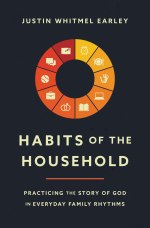
Habits of the Household: Practicing the Story of God in Everyday Family Rhythms

Justin Whitmel Earley | Zondervan

There is no shortage of parenting books on the market, but Earley manages to break through the noise and offer a timely (and timeless) appeal to the power of liturgy within the home. The household rhythms and practices he advocates are neither onerous nor ridiculous, but simple ways for parents to lovingly disciple their children through the power of habit. Earley’s humor and honest vulnerability shine through, and the reader has a sense of getting to know his lovely family on each page. I’ll be returning to this book with joy for many seasons. —Jonathan Holmes, founder and executive director of Fieldstone Counseling

Finalists

It Takes More Than Love: A Christian Guide to Navigating the Complexities of Cross-Cultural Adoption

Brittany Salmon | Moody

The Race-Wise Family: Ten Postures to Becoming Households of Healing and Hope

Helen Lee and Michelle Ami Reyes | WaterBrook

Missions & Global Church
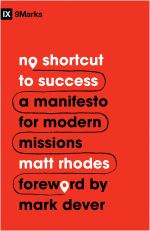
No Shortcut to Success: A Manifesto for Modern Missions

Matt Rhodes | Crossway

This volume provides a thorough appraisal of methods in American missionary circles that have gained massive popularity because they promise a vast harvest of new converts in the shortest possible time, with minimal effort or preparation from the missionaries themselves. For Rhodes, the appeal of these “silver-bullet” formulas reflects a “distaste for professionalism” and the abandonment of the painstaking training associated with earlier Western missionary heroes like William Carey and Adoniram Judson. His assessment is careful but devastating. He weighs in on erroneous obsessions with statistics, disparagement of traditional missionary methods, false or misleading representations of success, and distorted (or defective) biblical understandings of mission work. Most of the book, however, is devoted to making an energetic case for the missionary vocation as a profession, with the Pauline phrase “ambassadors for Christ” as a centerpiece. —Jehu J. Hanciles, director of the World Christianity program at Candler School of Theology and author of Migration and the Making of Global Christianity

Award of Merit
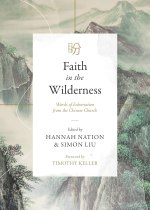
Faith in the Wilderness: Words of Exhortation from the Chinese Church

Edited by Hannah Nation and Simon Liu | Lexham

The Chinese church has long been a model of how to chi ku (eat bitterness) while still walking faithfully with God. This book affirms that in the face of persistent persecution and suffering, the Chinese church, broadly speaking, continues to forge ahead in spreading the gospel throughout China and beyond. The personal reflections gathered here will humble readers and, hopefully, expand their understanding of the global church. There is much to learn from the Chinese church, and Faith in the Wilderness offers a good place to start. —Jamie Sanchez, associate professor of intercultural studies at Biola University

(Read an excerpt from Faith in the Wilderness.)

Finalists

The Realities of Money and Missions: Global Challenges and Case Studies

Edited by Jonathan J. Bonk, Michael G. DiStefano, J. Nelson Jennings, Jinbong Kim, and Jae Hoon Lee | William Carey Publishing

Virtuous Persuasion: A Theology of Christian Mission

Michael Niebauer | Lexham

Politics & Public Life
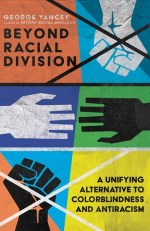
Beyond Racial Division: A Unifying Alternative to Colorblindness and Antiracism

George Yancey | InterVarsity Press

Yancey proposes a compelling alternative to our current racial stalemate that—dare I say it?—actually gives me hope. Instead of touting colorblindness or antiracism, Yancey asks us to consider how we approach this issue instead of focusing on a desired outcome. Attempts to thread the needle between two extremes so often get the worst of both or simply fail spectacularly. They call it the mushy middle for a reason. But Yancey is not mushy. On the contrary, he writes clearly and persuasively, and he advances an argument that is internally coherent and backed by social science. Finally, Yancey writes movingly about his own experiences, demonstrating that he, like all of us, has much to learn. —James E. Bruce, professor of philosophy at John Brown University

(Read CT’s review of Beyond Racial Division.)

Award of Merit

Untrustworthy: The Knowledge Crisis Breaking Our Brains, Polluting Our Politics, and Corrupting Christian Community

Bonnie Kristian | Brazos Press

There is a discernment crisis in pulpits and pews across the nation: We have lost the ability to name truth. In a climate where conspiracy theories and half-truths abound, Kristian writes with piercing insight into the epistemological crisis facing the church and the broader society. She examines the issues that have brought us to this state of affairs and offers wise counsel for navigating our current media and information envi- ronment. —Kathryn Freeman, writer, speaker, and cohost of the podcast Melanated Faith

(Read CT’s review of Untrustworthy.)

Finalists

What Are Christians For?: Life Together at the End of the World

Jake Meador | InterVarsity Press

(Read CT’s review of What Are Christians For?.)

Uncommon Unity: Wisdom for the Church in an Age of Division

Richard Lints | Lexham

(Read CT’s review of Uncommon Unity.)

Theology (popular)

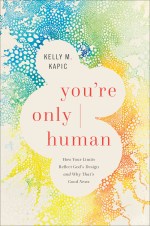
You’re Only Human: How Your Limits Reflect God’s Design and Why That’s Good News

Kelly M. Kapic | Brazos Press

Some theology books offer in-depth treatments of a particular doctrine. Others seek to serve as guides for studying theology. You’re Only Human might seem much more practical than either of these, since it calls us to accept the limitations of being human as good gifts from God. But Kapic manages to convey incredible depth of doctrinal insight and teaching for such a supposedly “practical” book. From the nature of the Incarnation and the proper understanding of Mary to our union with Christ and the work of the Holy Spirit, Kapic covers enormous theological ground with detail and nuance, all while keeping the discussion alive and intimately connected to our own lives. Each chapter could be a book in itself. —Emily G. Wenneborg, Pascal Study Center director and assistant professor at Urbana Theological Seminary

(Read CT’s interview with Kelly Kapic.)

Award of Merit
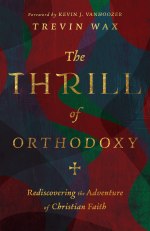
The Thrill of Orthodoxy: Rediscovering the Adventure of Christian Faith

Trevin Wax | InterVarsity Press

This book presents a well-written, accessible, and winsome apologetic for recapturing and embracing the orthodox and historic Christian faith in the modern world. The church desperately needs to read and heed books like this. I plan on using this book in the context of my local congregation. Superb! —Anthony Selvaggio, senior pastor of Rochester Christian Reformed Church

(Read CT’s review of The Thrill of Orthodoxy.)

Finalists

Fruitful Theology: How the Life of the Mind Leads to the Life of the Soul

Ronni Kurtz | B&H

Reading Theology Wisely: A Practical Introduction

Kent Eilers | Eerdmans

Theology (academic)
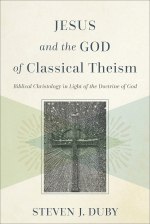
Jesus and the God of Classical Theism: Biblical Christology in Light of the Doctrine of God

Steven J. Duby | Baker Academic

In this erudite and substantial volume, Duby examines New Testament Christology and how it relates to the doctrines of so-called classical theism. It is an important work, especially at a moment in evangelical theology, and in Christian theology more broadly, when contemporary theologians are rediscovering and reappraising the rich resources of the Christian past. Duby interacts with a wide range of sources: ancient philosophers, church fathers, medieval doctors, Reformers, and post-Reformation scholastics, as well as modern theologians and biblical exegetes. But most impressive is Duby’s deep engagement with the text of Scripture itself, which he treats with exegetical care and theological earnestness. —Luke Stamps, professor of biblical and theological studies at Oklahoma Baptist University

Award of Merit
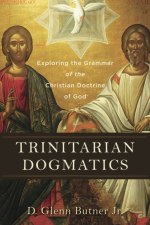
Trinitarian Dogmatics: Exploring the Grammar of the Christian Doctrine of God

D. Glenn Butner Jr. | Baker Academic

This book helpfully lays out the landscape of Trinitarian dogmatics. Butner does a fine job at presenting the major issues and carefully defining the edges of orthodoxy from the vantage points of Scripture, history, and philosophy. He is refreshingly reserved, too, on many difficult issues on which orthodox theologians have historically differed. In that sense, while Butner is clear, persuasive, and convictional, he is also modest in his aims. I predict this book will become standard in the classroom for a long time. The truly curious reader will not walk away empty-handed. —Samuel G. Parkison, assistant professor of theological studies at Gulf Theological Seminary in the United Arab Emirates

(Read CT’s review of Trinitarian Dogmatics.)

Finalists

Justification by the Word: Restoring Sola Fida

Jack D. Kilcrease | Lexham Press

God in Eternity and Time: A New Case for Human Freedom

Robert E. Picirilli | B&H

Book of the Year

Overcoming Apathy: Gospel Hope for Those Who Struggle to Care

Uche Anizor | Crossway

“Meh” may be the spirit of the age in which we live, but it is more than mere indifference—it is a spiritual sickness that infects believers, churches, and cultures alike. Even if we feel like our lives are unending episodes of Seinfeld, that famous “show about nothing,” Anizor calls us from our spiritual slumber to wake up and care again. —Douglas Estes, associate professor of biblical studies and practical theology at Tabor College

Overcoming Apathy addresses an issue that feels quite prevalent in the American church, even if we hardly talk about it. Anizor succeeds in taking a vague, somewhat hard-to-define issue and turning it into a readable, immensely practical book. The real problem, as he observes, is not that believers care too little but that we care about the wrong things, while often showing indifference toward God and matters of the Spirit. I plan on recommending this book to fellow church members. It was refreshing and convicting. —Andrea Burke, women’s ministry director and host of the Good Enough podcast

(Read an excerpt from Overcoming Apathy.)

News

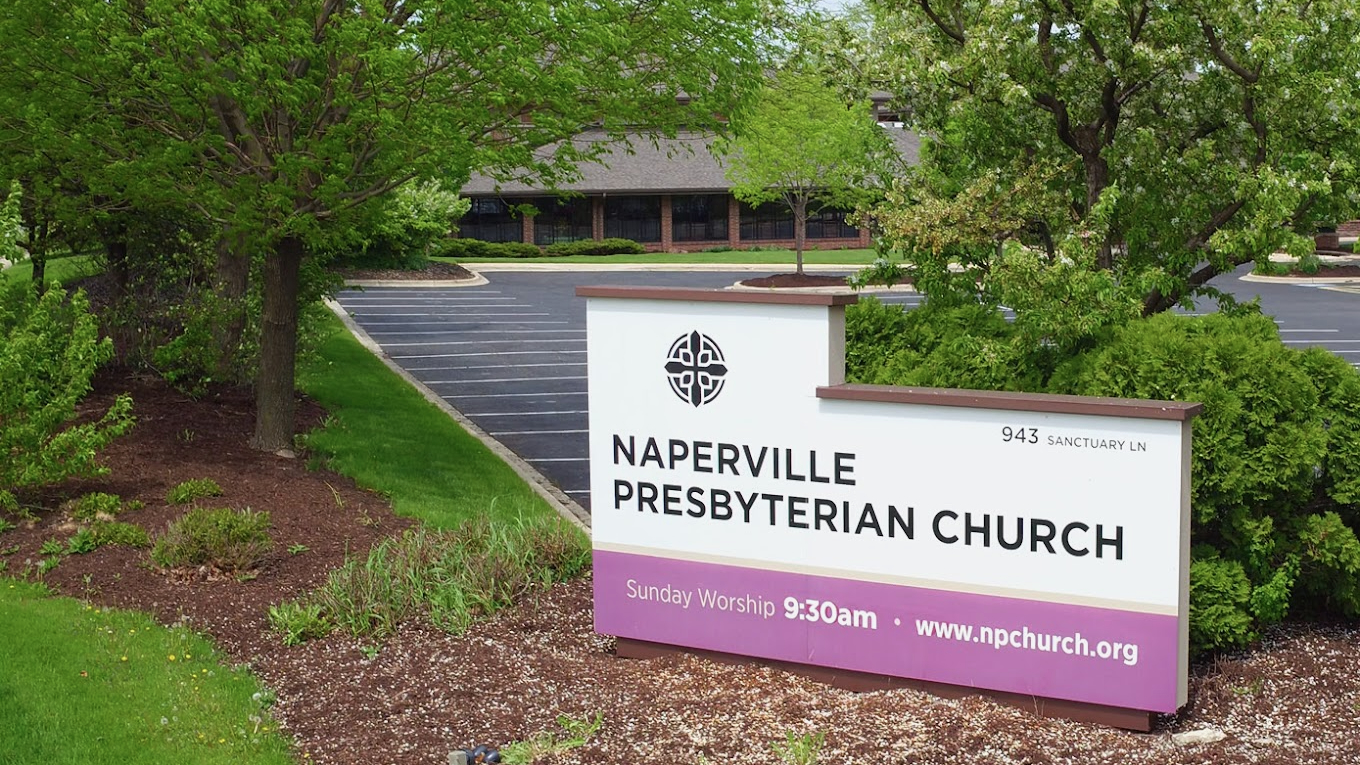
State Finds ‘Substantial Evidence’ for Retaliation Charge at Illinois Church

A firing at Dane Ortlund’s Naperville Presbyterian Church spurred a rare legal determination that could be a useful case study for churches.

Christianity Today December 12, 2022
Courtesy of Naperville Presbyterian Church

A 2021 firing of a female staff member from a Chicago-area church led by pastor and author Dane Ortlund was determined to have “substantial evidence” of retaliation, according to an investigation into alleged discrimination by the state of Illinois.

The former director of operations at Naperville Presbyterian Church, Emily Hyland, said her termination came days after privately complaining to two elders about gender discrimination from Ortlund. At the time, she had worked at the church for eight years, and he had been senior pastor for six months. After her firing, she filed charges over gender discrimination and retaliation at the state agency.

The Illinois Department of Human Rights (IDHR) did not find evidence that the church or Ortlund discriminated against her based on her gender. Evidence shows that “Ortlund … never made any discriminatory remarks directly related to [Hyland’s] sex,” the report said, nor was there evidence of discrimination that rose to the level of a “hostile work environment.”

The church insists that Hyland did not frame her complaint as gender discrimination until after her termination. But the agency found there is “substantial evidence” to support her charge that she was fired “in retaliation for having engaged in prior protected activity.”

Even if there is no “actionable” discrimination found, employers cannot retaliate against an employee for making a report, said employment lawyer Ed Sullivan.

Ortlund, a pastor in the Presbyterian Church in America, is the author of Gentle and Lowly, a bestseller. A longtime member of the Naperville congregation, he became its pastor in October 2020, with Wheaton College president Philip Ryken leading the installation.

Ortlund declined to comment to CT on the allegations, but in the state filing, the church said that Hyland was fired because of “her unwillingness to grow out of insubordination and lack of performance.”

Ortlund became the pastor in October 2020, and he and the associate pastor met with Hyland to discuss their concerns about her job performance in January 2021. She was fired in March 2021.

The state agency report says it is an “uncontested fact” that Hyland reported gender discrimination nine days before her firing. Several days later, Hyland said, the elders shared her complaints with Ortlund, and two days before her firing she and Ortlund met to discuss her complaints. The church said in the report that there was no connection between her complaint about discrimination and her firing.

Hyland said she felt bullied, adding that Ortlund disregarded her experience, micromanaged her, and slowly removed her responsibilities. “I was watching my role disappear in front of me,” she told CT. Ortlund in the case documentation emphatically denied all the charges against him, saying it was a basic dispute over professional performance and that he was never angry or discriminatory toward her.

After her firing, she said she was not treated with adequate pastoral care despite being a longtime member of the church, the elder board (known in the PCA as the session) declined to meet with her, and staff were instructed not to talk to her.

Employment disputes are common, but this case might offer useful lessons for churches in similar disputes–both in terms of legal complexity and in terms of navigating pastoral care of a terminated staffer who is also a church member. Employment lawyers say it’s rare for an agency to issue a finding of substantial evidence of retaliation, making Hyland’s case a significant one.

The state agency through a spokesperson confirmed to CT that it finds a “lack of substantial evidence” in the majority of its cases, but emphasized that employees should not see that as a reason to avoid reporting discrimination.

An IDHR spokesperson, who was not authorized to speak publicly, said on background that in general the agency takes retaliation seriously because even if there is no discrimination, retaliation “creates a culture of silence.” Retaliation is the leading basis for charges at the agency.

At the federal Equal Employment Opportunity Commission (EEOC) in 2021, these types of findings were rare too: Only 2.1 percent of retaliation charges resulted in a finding that there is “reasonable cause” to believe discrimination had occurred. Most charges are dismissed as having “no reasonable cause,” and a smaller percentage are resolved through a process like conciliation before the EEOC makes a determination.

Employees can file charges with state or federal agencies or both, and Hyland filed charges with both the IDHR and the federal EEOC. If the state takes the lead on the charges, then the EEOC usually does not get involved, lawyers said.

Churches are shielded to some extent from employment discrimination litigation because of First Amendment protections on hiring and firing religious staff. The Supreme Court’s unanimous Hosanna Tabor v. EEOC ruling in 2012 established a broad “ministerial exception,” that a teacher at a Christian school counted as a “minister” and therefore could not sue her employer over her firing.

It’s not clear if courts might consider Hyland, who managed church buildings and budgets, to be a “minister.” A more recent Supreme Court ruling broadened the exception to include anyone who is central to the religious organization’s mission.

One of the two elders who fired Hyland alongside Ortlund, Dave Veerman, said he regretted the handling of the firing and said he should have listened to Hyland before taking action. When Ortlund became the pastor, Veerman was excited, he said, because he liked Ortlund’s writing and teaching. Now, Veerman told CT, “I tend to believe Emily’s side of things,” though he thinks Ortlund “wants to do the right thing.”

Veerman, who belonged to Naperville Presbyterian for 36 years and was its longest-serving elder, wrote a statement defending Hyland to the presbytery and has since left the church—though his departure was not directly related to Hyland’s case.

“In church that long, you see a lot of stuff,” he told CT. “Churches are messy at times.”

Veerman was on the personnel committee, made up of three elders. In 2021, when Ortlund came to talk to them about a personnel issue, Veerman was “shocked” when he heard the issue was with Hyland.

“I’ve known Emily as a very competent person,” Veerman said. But he added, “I never worked with her. I’m trying to be supportive of Dane, our new pastor. So we listened to everything, he gave this history of their relationship. … I just took Dane’s word for everything.”

After the meeting, Veerman said he called three or four elders to tell them the plan to fire Hyland and they were all surprised but accepted it.

When Veerman later resigned from the session (the elder board), he apologized to Hyland.

After her firing, Hyland also brought her complaints about Ortlund to the local presbytery in the Chicago area, which investigated. The presbytery concluded in a private action this fall that “the reports from Emily Hyland do not create a strong presumption of guilt against the character” of Ortlund. The presbytery report focused on her professional performance issues as justification for her firing.

Hyland said no one had complained about her work or behavior before Ortlund joined the staff. The firing was devastating to her personally. “It was so catastrophic to lose all my Christian community in Naperville,” she said. “Just gone.”

The presbytery said her legal actions following her firing created a “challenging environment” for church leadership to provide her with “pastoral care.”

Another elder, who has struggled to transition to a new church and asked not to be named, said he felt pushed out of the church after he helped Hyland remove some of her office items from the church following her firing. He said Ortlund was angry with him about helping her move and questioned him extensively about it.

Though his departure a few months later was not directly related to Hyland’s, he said he felt like he was on Ortlund’s bad side after that incident. He no longer attends a PCA church.

In the church’s responses to charges in the state investigation, Ortlund stated the elders believed the “reality” was different than Hyland’s characterizations and that her “unwillingness to grow” made it impossible to continue working together.

Before he became a pastor at Naperville Presbyterian, Ortlund was a publishing executive at Crossway. His hit book Gentle and Lowly is about Christ’s tenderness toward sin and failure. He is a third-generation pastor—the brother of pastor Gavin Ortlund and the son of pastor Ray Ortlund Jr. Naperville Presbyterian, a church of about 500, had been searching for a pastor externally for more than two years before it decided to make Ortlund, a member, its pastor.

Hyland now can either decide in the next 30 days whether the Illinois antidiscrimination agency will pursue a case against the church, whether she will file a suit herself, or whether she’ll pursue mediation.

This article has been updated to clarify language about the IDHR report.

Ideas

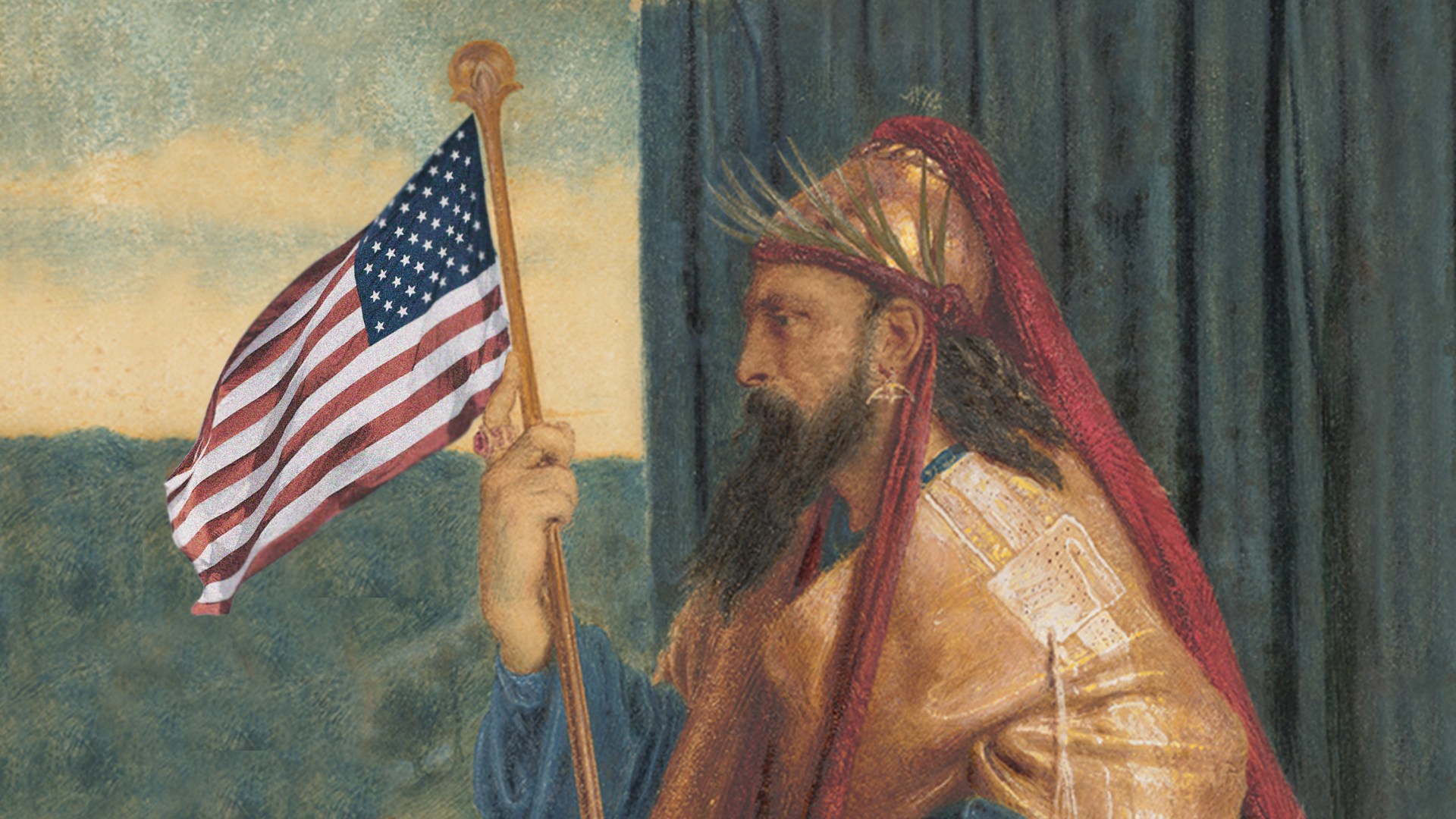
King Solomon’s Advice to Americans in 2023

Staff Editor

Thirty proverbs on power, justice, and politics.

Christianity Today December 9, 2022
Illustration by Mallory Rentsch / Source Images: WikiMedia Commons / Unsplash

The Book of Proverbs can be a humbling or even humiliating read. For every verse that lulls us into self-satisfaction of our righteousness comes another that aims its arrows at our own hearts too.

That incisive wisdom is particularly sharp when applied to election-year politics and our personal habits of political engagement. It’s uncanny enough to make us wonder whether King Solomon had foreseen cable news and Twitter. With another presidential election already underway, here are 30 proverbs for American politics in 2023.

On power

Proverbs doesn’t often directly address the subject of power, which is especially surprising for writings largely attributed to kings. Its authors envisioned a divinely appointed monarchy, a form of government far afield from our system, in which “many rulers” is not the result of rebellion (as in Proverbs 28:2) but constitutional design.

Yet that’s not to suggest the book has nothing to say of power as it works in our political context—far from it. Proverbs cautions us to be humble about our resources and abilities, to avoid grasping at power, and, if we find it in our hands, to remember it is often fleeting. Power can corrupt those who wield it, so we must take care to wield it justly.

Proverbs 16:32

Better a patient person than a warrior,
one with self-control than one who takes a city.

Proverbs 27:1, 24

Do not boast about tomorrow, and a crown is not secure for all generations.

Proverbs 31:4–5

It is not for kings, Lemuel—it is not for kings to drink wine, not for rulers to crave beer, lest they drink and forget what has been decreed, and deprive all the oppressed of their rights.

On tricks and transactions

We tend to think of political debates as arguments about principle and policy: Where are we trying to go? But just as pressing are debates around method: How are we trying to get to that destination? What means are justifiable in pursuit of good ends? What alliances are defensible? What schemes are permissible? What can we trade, and what can we get?

Proverbs takes a dim view of dirty tricks and amoral transactionalism. It insists the ends do not justify the means when the means are wrong. No political win is worth our souls, and our political alliances make a blaring public commentary on our professions of faith. There is an election strategy that appears to be right, but in the end it leads to death.

Proverbs 12:26

The righteous choose their friends carefully, but the way of the wicked leads them astray.

Proverbs 16:8

Better a little with righteousness than much gain with injustice.

Proverbs 16:25

There is a way that appears to be right, but in the end it leads to death.

On lies and statistics

Much of modern politics and political media is a numbers game, and alas, many of us are not very good at math. (The ease of large-scale polling has created a whole new genre of “facts” that are not always terribly factual.)
More broadly, the sheer quantity of reports, data, and truth claims we encounter daily makes it easier than in other eras to be fooled by lies—and to spread them unwittingly. We have more opportunity than ever to distort the truth and plenty of incentive to do it. But power won by falsehood won’t lead to honest governance. Even well-intended lies corrode.

Proverbs 11:1

The Lord detests dishonest scales,
but accurate weights find favor with him.

Proverbs 12:22

The Lord detests lying lips,
but he delights in people who are trustworthy.

Proverbs 29:12

If a ruler listens to lies, all his officials become wicked.

On Twitter

A couple centuries from now, I can imagine a biblical translation committee soberly considering whether the internet slang term troll is the most illuminating translation for several verses in Proverbs that previously used mocker or fool.

Much of Proverbs is devoted to speech and knowledge: how we share and consume information, when to argue and when to ignore, what to believe, when to seek advice, how to be prudent with our words. And its judgment is clear: It is better to keep silent, even on important matters, than to be gullible, foolish, trollish, or cruel. It is often better not to post.

Proverbs 9:7

Whoever corrects a mocker invites insults;
whoever rebukes the wicked incurs abuse.

Proverbs 10:19

Sin is not ended by multiplying words,
but the prudent hold their tongues.

Proverbs 12:8

A person is praised according to their prudence,
and one with a warped mind is despised.

On consequences

Last week, one of our three-year-old twins refused to take some minor instruction and toppled his blocks project as a result. This, I observed, was the consequence of his choices. Hours later, at bath, he lost a toy under the sink after ignoring me again. His brother promptly yelled, “It’s the consequence of his choices!”

Proverbs is less gleeful but no less insistent that unscrupulous choices that seem expedient now will have grim consequences later. Ruthless transactions may bring power, but we will have to pay their price. And more generally, Proverbs indicts our reckless and shortsighted society. We must relearn to do things the hard, slow, right way.

Proverbs 12:11

Those who work their land will have abundant food, but those who chase fantasies have no sense.

Proverbs 26:27

Whoever digs a pit will fall into it; if someone rolls a stone, it will roll back on them.

Proverbs 27:12

The prudent see danger and take refuge, but the simple keep going and pay the penalty.

On heeding counsel

By now the concept of ideological “silos” is widely familiar. But “diversifying your news feed,” a well-intended attempt to get out of the silo, can make matters worse. As Jeffrey Bilbro observes, “seeing analysis from those we disagree with tends to become an exercise in confirmation bias, reminding us how awful such people are.”

Proverbs diagnoses that as a grave political illness; it repeatedly urges us to seek good counsel from multiple perspectives. Intellectual humility grows from exposure to others’ well-considered opinions, and yelling our ideas online while everyone else yells theirs back is not the same as giving and heeding counsel.

Proverbs 11:14

For lack of guidance a nation falls,
but victory is won through many advisers.

Proverbs 12:15

The way of fools seems right to them,
but the wise listen to advice.

Proverbs 13:10

Where there is strife, there is pride, but wisdom is found in those who take advice.

On hope misplaced

Though it never envisions elections, Proverbs understands well the temptation of misplaced political hope. It warns against hoping in powerful and wealthy people as well as in our own plans and expectations. What seems solid now may prove an illusion. What seems invincible may be weak. What seems permanent may be very temporary indeed.

Our timebound perspective is inevitably limited. We cannot see all God is doing and will do, nor can we know all God knows. These limits are extra difficult to keep front of mind during America’s long and dramatic election cycles, but that makes it all the more important to remember our hope is only in Christ.

Proverbs 11:7

Hopes placed in mortals die with them;
all the promise of their power comes to nothing.

Proverbs 16:9

In their hearts humans plan their course,
but the Lord establishes their steps.

Proverbs 29:26

Many seek an audience with a ruler,
but it is from the Lord that one gets justice.

On victory and security

Violent and martial metaphors are a standard part of American politics. Jon Stewart’s The Daily Show was always “eviscerating” some elected official or another. Democrats’ blue line in swing states pictures a frontline in trench warfare, and Republicans love to speak of “retaking our country.”

Proverbs was first heard by people who’d won and lost real battles, and still it teaches that our victory and security are ultimately found in God. If our conception of winning is shaped by Proverbs, it will often be misaligned with conventional political wisdom, especially regarding the treatment of our political enemies.

Proverbs 16:19

Better to be lowly in spirit along with the oppressed
than to share plunder with the proud.

Proverbs 23:18
There is surely a future hope for you,
and your hope will not be cut off.

Proverbs 24:17–18

Do not gloat when your enemy falls; when they stumble, do not let your heart rejoice, or the Lord will see and disapprove and turn his wrath away from them.

On justice

We are fortunate to live in a country where the state asks for our opinions and sometimes takes them into account. This is a historically rare chance for ordinary people to try to advance what we believe is right and prudent, but of course that does not simply mean advancing our personal interests. It ought to include disinterested pursuit of justice.

Reasonable Christians can disagree about what temporal justice looks like and how we can work toward it in our society. But Proverbs reminds us over and over that God’s demand for justice—a demand that concerns our treatment of the poor, oppressed, and unfairly accused—is exceedingly clear.

Proverbs 14:31

Whoever oppresses the poor shows contempt for their Maker, but whoever is kind to the needy honors God.

Proverbs 17:15

Acquitting the guilty and condemning the innocent—
the Lord detests them both.

Proverbs 31:8–9

Speak up for those who cannot speak for themselves, for the rights of all who are destitute. Speak up and judge fairly; defend the rights of the poor and needy.

On love

Love may seem out of place in politics, a place of discord and rivalry even at its best, but love belongs in all aspects of our lives if we are followers of Jesus. Proverbs affirms it is better to have love than wealth and power.

But love is not weak, and loving does not always mean losing. It is love, not might, that makes a king’s rule secure, Proverbs says, and a life of love confers favor and stability. Indeed, the core Christian conviction is that God—whose very character is love—defeated sin and death to free us to a life defined by love (1 John 4:8–9; Heb. 2:14–15; Gal. 5:6, 13). That should show up in our politics too.

Proverbs 3:3–4

Let love and faithfulness never leave you;
bind them around your neck,
write them on the tablet of your heart.
Then you will win favor and a good name
in the sight of God and man.

Proverbs 15:17

Better a small serving of vegetables with love
than a fattened calf with hatred.

Proverbs 20:28

Love and faithfulness keep a king safe; through love his throne is made secure.

Theology

Facing Challenges, Chinese Churches in Europe Look to the Future

Ministries are starting to reach out beyond the diaspora community and pass the faith onto the next generation.

The Good News Charity Service Center established by Cordoba Chinese Christian Church

The Good News Charity Service Center established by Cordoba Chinese Christian Church

Christianity Today December 9, 2022
Courtesy of Lily Zheng

It’s early morning in the small tourist town of Cordoba in Spain. Eugenio Peña, a 76-year-old local, arrived at the Good News Charity Service Center at Platero Pedro de Bares and Carlos III Avenue, ready for his volunteer work at the “Charity Cafeteria” that offers free breakfast to refugees and homeless people. The Center is a ministry established and run by a small Chinese church in Cordoba.

Christian charities run by Chinese churches are extremely rare in Europe. Chinese churches only occupy a small fraction of Europe’s Christian landscape. Ivan Tao, a missionary who has served in the region for two decades, estimated that while there are three million Chinese immigrants in Europe, there are only 350 Chinese churches (including Bible study groups and Christian fellowships) and 200 full-time Chinese preachers.

The lack of churches to worship at isn’t the only problem that Chinese Christians are facing. Many Chinese churches in Europe are also trying to overcome challenges such as a “hometown association” mentality, a commercialist attitude toward church life, and difficulties in transmitting the faith to the younger generation.

Where your treasure is

In Spain, 90 percent of Chinese Christian immigrants are businessmen who have moved overseas with the primary goal of making money. Most hail from Wenzhou and Qingtian in Zhejiang Province and other cities in Fujian Province, which are cities well-known for their local peoples’ tendency to choose immigration over poverty.

The Chinese immigrant church community typically functions as an extended social network for Chinese Christians outside of their families. Even the leadership team of the church has geocentric characteristics: If the church is founded by people from Qingtian or Wenzhou, almost all of the elders are from the same region. The church often feels like meetings of traditional hometown associations among the Chinese diaspora.

The love of money is also a real challenge. Professor Nanlai Cao of China’s Renmin University wrote a 2018 article examining Christian practices among Wenzhou people living in Paris. In it, Cao pointed out that most immigrant Christians from Wenzhou have two core desires: working to earn money and serving the church. How these desires collide in their praxis: “Serving the church” often is translated into giving churches monetary contributions. And while it is never openly mentioned, the selection criteria for nominating elders and deacons in a church may be influenced by the size of their tithes and offerings.

In such a transactional climate, going to church might feel more like attending a corporate networking event than a gathering of like-minded believers. There is little if any conversation around spiritual or biblical topics. Business conflicts that are left unresolved often cause antagonism between families, so much so that they may not speak to each other for the rest of their lives although they worship in the same sanctuary. Once the Sunday service ends, most churchgoers hurry off to run their businesses. Couples also regularly split their time between morning and afternoon services to tend to their shops.

For Chinese diaspora communities of faith, giving money to the church appears to be a manifestation of their religious identity and a path toward redemption. These Chinese Christians may listen to audio sermons, display and read Bibles on their store counters, and keep Chinese house church traditions such as kneeling to utter long prayers with emotional gusto and refraining from eating food containing blood. But they may also hold the conflicting belief that bribery and tax evasion are acceptable when conducting business to ensure profitability amid fierce competition.

Out of a guilty conscience, these Chinese Christians may feel ashamed before God. At the same time, they are unable to risk rejecting these unspoken rules in business dealings—so they double their offerings to the church.

A widening generation gap

Hypocritical approaches to living out the Christian faith have caused generational divides to grow between parent and child. “Many of the second generation of believers in Southern Europe have left the church because of their parents’ inconsistency in living out their faith,” says Luke Zheng, a Chinese missionary based in Europe.

But there is another factor why young Chinese people are moving away from the church and the faith in Europe: a dire lack of kinship. In order to establish themselves in a foreign country and make a living in the business world, first-generation believers often had to leave their children with relatives and friends in China until they became teenagers. Children were consequently “left behind” by their parents for ten years or so and would have become accustomed to their parents sending them money and gifts to make up for their absence.

When these children later reunite with their parents in Europe, it is difficult to establish a sense of closeness. So while some second-generation Chinese believers end up staying at their parents’ churches, more choose to either leave the faith or worship in Spanish-speaking churches.

The absence of an adequate investment in educational opportunities has also inadvertently caused the generation gap to grow. In general, Chinese immigrant families in Spain do not invest much in their children’s education. Dropping out of school after junior high is common. Consequently, while second-generation Chinese living in Europe enjoy a plethora of benefits that their parents did not—such as having legal status, a getting stronger grasp of European language skills, and being well-fed and clothed—many still find it challenging to leave their small circle of Chinese immigrant relationships and enter mainstream European society due to their lack of educational qualifications.

In Germany, conversely, Chinese immigrant families place a high value on education. But the language gap still generates ripples of hurt to believer families and even churches. As the Chinese Biblical Seminary’s newsletter in Barcelona points out, the Chinese language skills of second-generation immigrants in Europe are significantly lower than those of the first generation.

A few Chinese churches in Germany have split, not solely due to doctrinal differences but because these churches have been unable to bridge the language gap that exists between parents and children. The families who left these churches often comprise parents who volunteer enthusiastically in various church ministries, which inadvertently takes precedence—and time—over caring for and being with their children. The years of neglect have borne consequences: These children, who barely speak Chinese, become adults who have no desire to be a part of the church.

Moreover, it is not easy to find an evangelical church in mainstream Europe where second-generation Chinese immigrants would feel comfortable. In Spain, for example, where 60 percent of the population is Roman Catholic, the number of Protestant churches remains small and their size is limited.

Getting out of the ‘hometown association’

Faced with these challenges, Chinese churches in Europe are striving to find ways to break out of a “hometown association” mentality and engage in cross-cultural missions. The Cordoba Chinese Christian Church, which established and runs the Good News Charity Service Center (GNCSC), has made several inroads in these areas.

Lily Zheng, one of the leaders of the Cordoba Chinese Christian Church, told CT that the Chinese population in Cordoba is only about 3,000, and the church congregation is less than 100 people every Sunday.

In 2016, the church established the GNCSC to serve international refugees as well as the homeless, the poor, and the sick. The center is the first registered and licensed charity and cross-cultural mission organization established by a Chinese church in Europe, and it is especially focused on working with local Spanish-speaking churches.

The center now has more than 50 volunteers, all of whom are from local Spanish churches, says Lily Zheng, who works at the church full time but does not draw a salary. Lily is from Wenzhou and used to run a Chinese restaurant, a department store, and a clothing store at different times but responded to God’s call to full-time ministry. She has also been involved in some of the local Spanish churches’ outreach ministries, such as prison ministry and hospital visits.

Free breakfast at the Good News Charity Service CenterCourtesy of Lily Zheng
Free breakfast at the Good News Charity Service Center

The Cordoba Chinese church’s pastor, Xuan Jun, also used to be a businessman. After his conversion and call to ministry, he studied theology, participated in mission work in Africa, and hosted a gospel podcast. When church co -workers started cross-cultural missions through GNCSC, Xuan gave enthusiastic support and became involved himself.

The ministry gives out Bibles in different languages to the people it helps. “In this ministry, helping people with things to eat and drink is not the ultimate goal. The ultimate goal is evangelism,” Xuan told CT. “What we provide is a holistic platform so that more people can not only see that we are a church ministry and that it is a Chinese church doing charitable care, but also read the Bible and hear the gospel, so that they can eventually come to know Jesus Christ. The Chinese church in Europe has a limitation in evangelism. It only reaches out to Chinese people. But we are willing to go one step further and try to engage in cross-cultural mission, even though our church is small and relatively weak.”

Supporting the next generation

The Chinese church in Europe has not given up on the second generation either. It has increasingly shifted its focus to strengthening its youth ministry in recent years.

How second-generation ministry is carried out varies from city to city in Europe, said Xuan. “The needs and the level of commitment of the church will vary from region to region. In big cities where there are more Chinese immigrants and more job opportunities, second-generation ministry can work better. But in small cities with fewer Chinese and few jobs, like ours, second-generation ministry can be difficult to sustain.”

The focus of Xuan’s small church in Cordoba is to establish the next generation in the faith by providing biblical teaching from elementary school to college age. “Then we hope they will continue to find a church to join when they go to work elsewhere in the future, and we would recommend churches to them. This also depends on each child’s situation, and it shows that the faith heritage of the parents in each family is important.”

While some may leave the Chinese church, many of the Chinese youth who remain in the church “have a positive attitude towards faith,” says Luke Zheng.

(Young Christians sang at a 2010 Christmas gathering of a Madrid Chinese Christian Church)

“They are thankful that God led them to leave their original environment and eventually reunite with their parents. Although their parents’ faith and life are sometimes disconnected and their sins may be obvious, they have a deeper understanding of the gospel in their hearts because they see that God has not given up on them. They know it is not through their own hard work but because of God’s mercy and grace that they have become who they are.”

The young generation is also actively exploring new ways of doing church. In Spain, second-generation Chinese Christians are learning about the worship model of Spanish evangelical churches through YouTube and are drawn to these local church pastors’ authenticity and sincerity.

Some Chinese churches in Europe are also placing a greater emphasis on education and closing the language gap. “The Dusseldorf Chinese church I was once a part of started classes and training programs about family and children’s education through the help of a church in Taiwan. I attended training for children’s ministry there three years ago,” said Sun Xiaojie, who now worships at a Chinese church in Ratingen, Germany. “The church also established a separate worship service held in German for second-generation believers a few years ago, which was run by a Chinese German couple.”

Churches are also looking inward to enact change and retain the younger generation within their flocks. Many churches no longer accept cash offerings but only accept bank transfers to prevent corruption. And in a bid to discourage young unmarried couples in Europe from cohabiting, ministries and churches have begun discussions to purchase apartments for Chinese students who cannot afford to rent a room alone.

But the kind of change that is required for Chinese churches to develop a robust generation of young believers goes a lot deeper and may take years, or many more generations of believers, to realize.

“The greatest crisis for immigrant churches is not in external circumstances or economic pressure, but the confirmation of our own identity,” Luke Zheng said. “We need to have the confirmation and confidence in the Lord that our first identity is as followers of Jesus, not as Chinese immigrants, businessmen, elders, founding pastors, or church-building pastors. Our most important identity is in our union with Christ.”

Yi Wan is a Christian writer and a house church member living in China.

Translation by Sean Cheng

Culture

Hallelujah! ‘Messiah’ Sing-Alongs Turn Audience into the Choir

The centuries-old tradition has returned to community theaters after a pandemic hiatus.

Christianity Today December 9, 2022
WIN-Initiative/Neleman / Getty Images

If you attend this year’s performance of Handel’s Messiah by the Des Moines Community Orchestra, you’ll walk into the sanctuary of Grace United Methodist Church and notice the orchestra, of course. But there’s no choir.

Isn’t Messiah famous for the exhilarating “Hallelujah” chorus? What about “For Unto Us a Child Is Born”?

This time, the choir is you—the audience, that is. You can borrow a score, and there are even markings among the seats to divide the audience by vocal part—soprano, alto, tenor, and bass, though sitting in your section is optional.

Messiah sing-alongs, also known as “Scratch Messiahs,” are a long-standing tradition in the United Kingdom and United States, dating back to the first half of the 19th century. Attendees get to step in and cocreate a centuries-old musical work that tells the story of Christ’s life from incarnation to resurrection.

For the Des Moines orchestra and many other community groups and ensembles around the country, this year is bringing a return of the tradition after a two-year pandemic hiatus.

“There’s nothing like conducting it,” said Carl Johnson, the conductor of the Des Moines Community Orchestra for the past 20 years. “It’s so big and powerful. And you look out at the audience, the looks on their faces … that’s worth it.”

Handel’s Messiah premiered in Dublin on April 13, 1742, as a charity concert benefiting two hospitals and prisoners’ debt relief. Although the work is now associated with Christmas, it is historically linked to Easter: Handel conducted annual Easter performances of Messiah at the Foundling Hospital in London beginning in 1749.

By 1742, Handel had already written several sacred oratorios, including Saul, Israel in Egypt, and Esther. Oratorios, unlike operas, are not theatrically staged. In a sacred oratorio, the “action” is usually imagined as soloists deliver recitative (a section of “speech-like” vocal delivery) and arias. Sometimes soloists represent individual characters in a drama; sometimes the content of the oratorio is not straightforwardly narrative or plot driven.

In Handel’s Messiah, there is a very loose narrative structure, but there are no characters or explicitly depicted scenes. The story unfolds entirely through the singing of Scripture around the foretelling of Christ, his life, and his resurrection. The first section begins with Isaiah 40:1-3; the tenor soloist offers the first words in the piece, singing, “Comfort ye, comfort ye my people, saith your God.”

Throughout the work, the soloists and choir voice the prophets Isaiah, Malachi, and Haggai; the angels in the Christmas story; John the Baptist; the psalmist; Paul; and the heavenly choir in Revelation. The “drama” is all in the music. There are soaring, emphatic choruses like “Hallelujah” and solemn moments as in the minor, fugal chorus of “And With His Stripes We Are Healed.”

In Part III, the chorus “Since by Man Came Death” begins with a hushed passage before a sudden, triumphal entry of the organ and exuberantly loud proclamation from the choir, “By man came also the resurrection of the dead!”

The music of each chorus and aria is written to convey and even instill a particular affect associated with the text being sung. The best-known passages from the work are triumphant and stirring, but the whole thing together guides the performers and audience through a range of emotions as the music and words narrate the story of Christ.

A few days after the premiere of Messiah, the reviewer for the Dublin Journal wrote:

Words are wanting to express the exquisite delight it afforded to the admiring, crowded audience. The sublime, the grand, and the tender, adapted to the most elevated, majestic, and moving words, conspired to transport and charm the ravished heart and ear.

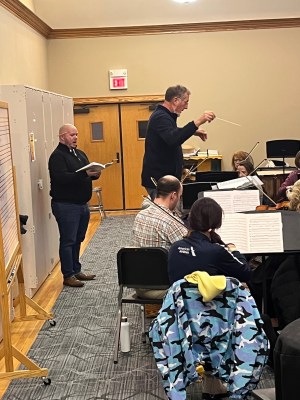
Des Moines Community OrchestraKelsey Kramer McGinnis
Des Moines Community Orchestra

The Des Moines Symphony Orchestra has been hosting Messiah sing-alongs since 1978. Over the past two years, fans asked, “When will it come back? Could the orchestra do a streamed performance? Perhaps something socially distanced?” But it didn’t seem right to perform without the communal element of singing together.

“I didn’t think it was a good idea to have a whole bunch of strangers filling up the church space, singing near each other,” said Johnson.

During a frigid night in November, the ensemble gathered for their last weeknight rehearsal before the December 4 show. The musicians hurried through the dark parking lot, clutching coats, scores, and instruments, before making their way up the maze of stairs to the multipurpose room. Chad Sonka, the bass soloist for this year’s performance, drove 45 minutes to rehearse his selections with the orchestra.

Across the country, groups in Huntsville, Alabama; Pasadena, California; Gainesville, Georgia; Alexandria, Minnesota; and many others have also held evening rehearsals, making sure they have enough scores for the audience and hoping that the audience/choir will have at least a few tenors.

When Handel’s oratorios were rising in prominence in the 1740s, English writer Horace Walpole wrote, sarcastically, “The oratorios thrive abundantly—for my part, they give me an idea of heaven, where everybody is to sing whether they have voices or not.”

Walpole meant this to be an unkind comparison to Italian opera, which was more fashionable and boasted world-famous singers who weren’t interested in the more humble sacred oratorio. One reason for Handel’s increased interest in oratorios over operas later in his career was the fact that opera had become prohibitively expensive to produce.

The first time I read Walpole’s letter, I didn’t catch his joke. I thought he was sincere.

What Walpole meant as a jab about the simplicity and accessibility of oratorio seemed to me a high compliment. What a feat—to compose a beloved work that is accessible to performers of varied skill levels, contains moments of grandeur worthy of an opera hall, and relies on nothing but Scripture for its lyrical content.

But popular operas of the time were all about spectacle: elaborate scenery and costuming; narrative drama centered on romance, violence, and power struggle; and vocal writing to showcase the virtuosity of star singers. Sacred oratorios were a stripped-down genre with tamer subject matter, appropriate for the religious settings (often churches) in which they were performed.

The vocal and orchestral writing in Handel’s Messiah is restrained, compared to the operas of his peers, which in part may be why the tradition of sing-along or “scratch” Messiah performances is so enduring.

“The vocal parts are not impossible, but they are demanding enough,” said Johnson. “The choral parts are possible for amateurs. A professional chorus will sound more polished, but I don’t know if that necessarily makes it better.”

Des Moines Community OrchestraKelsey Kramer McGinnis
Des Moines Community Orchestra

Not every singer in the audience/choir will be able to sing the vocal parts in the score. Not everyone in the audience will be able to read the score. And that’s okay. Not everyone can sing every hymn or worship song on a given Sunday. (Chris Tomlin has an impressive vocal range.)

“There’s something about the community involvement,” Johnson told CT. “It’s such a wonderful opportunity to be in a room where everyone is making music. There’s nothing like that.”

If you like the idea of singing the story of Christ this Advent season, from foretelling to resurrection, consider seeing whether a community orchestra or choir near you is hosting a Messiah sing-along. No training or rehearsal necessary.

And you don’t have to sing. Listeners are welcome too. But you may find it difficult not to join in singing “Hallelujah” and especially “Worthy Is the Lamb,” the closing chorus:

Worthy is the Lamb that was slain, and hath redeemed us to God by His blood, to receive power, and riches, and wisdom, and strength, and honor, and glory, and blessing. …

Blessing and honor, glory and power, be unto Him, be unto Him that sitteth upon the throne, and unto the Lamb, for ever and ever. … Amen.

Christianity Today Receives $1 Million Grant to Serve Preachers and Their Churches

FOR IMMEDIATE RELEASE

Contact: Cory Whitehead
Phone: 630.384.7223
E-mail: cwhitehead@christianitytoday.com

Carol Stream, IL December 8, 2022 – Christianity Today has received a grant of $1,000,000 from Lilly Endowment Inc. to equip preachers in bringing their message to life and create opportunities for them to engage God, their peers, their congregations, and the world through them. The grant will fund efforts through Christianity Today’s popular digital resource, PreachingToday.com.

Since 1999, PreachingToday.com has supported and equipped preachers to fulfill their vital calling of preaching that helps to develop healthy churches and flourishing communities.

Christianity Today’s Publisher Jacob Walsh shared, “Our recent research showed the growing unique challenges and incredible demands of this role in our cultural climate. Thanks to the generosity of Lilly Endowment, we will be able to take what we’ve heard and develop content that meets the needs of the moment, with an emphasis on resources and tools that will make a lasting spiritual impact and foster a greater sense of community and shared learning for preachers.”

This PreachingToday.com project is being funded through Lilly Endowment’s Compelling Preaching Initiative. Christianity Today is one of 32 organizations receiving funding in an invitational round of grants for the initiative, which is designed to help Christian pastors strengthen their abilities to proclaim the gospel in more engaging and effective ways.

“We are excited about the work that these organizations will do to foster and support preaching that better inspires, encourages and guides people to come to know and love God and to live out their Christian faith more fully,” said Christopher L. Coble, Lilly Endowment’s vice president for religion. “Their programs will serve a significant number of aspiring and current preachers who are working to reach and engage increasingly diverse audiences both within and beyond congregations.”

The Compelling Preaching Initiative is part of the Endowment’s longstanding interest in supporting projects that help to nurture the religious lives of individuals and families and foster the growth and vitality of Christian congregations in the United States.

# # #

About Lilly Endowment

Lilly Endowment Inc. is a private philanthropic foundation created in 1937 by J.K. Lilly Sr. and his sons Eli and J.K. Jr. through gifts of stock in their pharmaceutical business, Eli Lilly and Company. While those gifts remain the financial bedrock of the Endowment, it is a separate entity from the company, with a distinct governing board, staff and location. In keeping with the founders’ wishes, the Endowment supports the causes of community development, education and religion and maintains a special commitment to its hometown, Indianapolis, and home state, Indiana. The principal aim of the Endowment’s religion grantmaking is to deepen and enrich the lives of Christians in the United States, primarily by seeking out and supporting efforts that enhance the vitality of congregations and strengthen the pastoral and lay leadership of Christian communities. In addition, the Endowment also seeks to improve public understanding of diverse religious traditions by supporting fair and accurate portrayals of the role religion plays in the United States and across the globe.

About PreachingToday.com

PreachingToday.com is a resource from Christianity Today that seeks to inspire preachers to cultivate their craft in order to faithfully and creatively proclaim God’s word. Through Preaching Today, preachers communicate the gospel in all its richness and power and the church is matured through the inspired preaching of God’s word.

News

Taiwan’s False Hope for Hong Kongers Disillusions Fleeing Christians

How a church is enduring uncertainty and disappointment as many struggle to find a home.

Christianity Today December 8, 2022
Edits by Christianity Today / Source Images: NurPhoto / Laurel Chor / Stringer / Getty

Since Wong Siu-yung opened a church for Hong Kong Christians in Taiwan last year, it attracted more than three dozen attendees. But in that time the only Cantonese-speaking church on the island has faced significant turnover.

A few congregants returned to their previous residence. But most of the 10 who departed moved to the United Kingdom.

“I watched them all give up and leave Taiwan,” Wong said. “Relocating for the second time in such a short period of time is very difficult.”

This week, Wong himself joined the exodus. The 48-year-old pastor boarded a flight Thursday to Nottingham, England, hopeful about making a new home more than 6,000 miles away. This wasn’t a journey Wong had anticipated when he left Hong Kong for Taiwan in July 2020. At the time, his involvement in the 2019 pro-democracy protests had made him a potential government target, so he decided to leave his homeland immediately.

Taiwan initially promised to provide “settlement and care” to thousands of Hong Kongers like Wong. But in the months since, the government has made it increasingly difficult for Hong Kongers to gain permanent residency, preventing many from working and settling on the island. Government officials fear that allowing Hong Kongers to resettle in Taiwan could provoke China and open the door to Chinese Communist Party (CCP) infiltrators.

Wong and his congregation have faced roadblock after roadblock: After selling their homes in Hong Kong, quitting their jobs, and pulling their kids out of school, they arrived in Taiwan to find the requirements to gain residency changed and their cases stuck in limbo. “Hong Kongers have fallen for [the Taiwanese government’s] great scam of the century,” Wong said.

Tired of the ongoing uncertainty, they’ve joined the growing group of Hong Kongers in Taiwan leaving for Britain, which has provided them a pathway to citizenship. In total, Wong knows of about 50 Hong Kongers who have embarked on this second migration.

Still, Wong says he sees God’s hand at work during his time in Taiwan building a close-knit church community, bringing nonbelievers to faith, and showing the shortfalls in placing his hope on a government—even a democratic one.

“Christians shouldn’t have an overly romanticized or naive view of worldly political systems,” Wong said. “Christians need to know their hope is only in God.”

Seeking refuge in Taiwan

After China tightened its grip on Hong Kong in June 2020 with a far-reaching national security law, many Hong Kongers seeking greater freedoms turned their sights toward Taiwan.

The self-governed island was a quick one-hour flight away from Hong Kong, which would allow family members to visit. The climate, culture, and language were familiar: Although Cantonese is spoken in Hong Kong and Mandarin in Taiwan, the written language is the same, and Mandarin is taught in Hong Kong schools.

Most importantly, democratic Taiwan had publicly welcomed Hong Kongers fleeing the city. As a result, more than 27,000 Hong Kongers arrived in Taiwan on temporary visas between 2019 and 2021, according to Taiwan’s government.

Wong decided to leave Hong Kong shortly after helping to publish a statement declaring the Hong Kong church’s allegiance to Jesus over the Hong Kong government. A state-run newspaper claimed that he and the other organizers had incited secession and subversion under the newly enacted national security law. The punishment for those crimes was up to a decade in prison.

Huang Tsung-sen, a Taiwanese pastor well known for his support of the Hong Kong prodemocracy protests, encouraged Wong to come to Taiwan. His church, Chi-nan Presbyterian Church in Taipei, needed a Cantonese-speaking pastor for a group of Hong Kongers who had started attending.

Wong took him up on the offer. As more students and families moved to Taiwan, the church grew from 30 to 100 people within several months. It was there that Hong Konger Florence Cheang professed faith in Christ and was baptized. Although she has shared the frustration of finding herself in immigration limbo in Taiwan, she has been grateful for the church’s support. “I can share with them about everything,” Cheang said. She noted that without them, “I dare not imagine what my situation would be, being here alone.”

Yet Wong wasn’t able to make any long-term plans in Taiwan. He arrived in Taiwan on a special visa given to those who face persecution in Hong Kong. Although this allowed him and his wife to stay in Taiwan, they weren’t allowed to work or access Taiwan’s national health care. After six months, he applied for a religious visa typically used by Buddhist monks, which allowed the couple to stay three years and access health care but still didn’t allow them to work.

Wong preached on a volunteer basis both due to his legal status and because the Presbyterian Church in Taiwan (PCT) required their pastors to graduate from the denomination’s seminaries. To make ends meet, Wong preached and taught lectures on an online ministry to Hong Kongers called Glorious Worship.

Tensions began to build between Wong and Chi-nan church as he began to realize the Cantonese congregation wasn’t treated as an official part of the church. “We felt more and more that in the church, not everyone was like Pastor Huang in supporting Hong Kongers,” Wong remembered.

So the pastor decided to start an independent Hong Kong church in Tamsui, a seaside district 15 miles north of Taipei where many Hong Kongers now reside.

Supporting exiled Hong Kongers is a sensitive topic in Taiwan’s churches. Congregations are made up of members with diverse political beliefs: Some support Hong Kong’s prodemocracy protests while others side more with China. In order to prevent conflict, most churches skirt political topics.

Due to these concerns, Wong struggled to find a local church willing to rent its building to this new church plant. Some turned him down while others ghosted his requests. Wong brought up his search with his professor at the PCT seminary where he was taking classes, and the professor reached out to a friend who pastored a church in Tamsui. The pastor agreed to allow Wong’s new church to meet in their building on Sunday afternoons. After delays due to a COVID-19 outbreak in May, Hong Kong Church in Tamsui held its first meeting in September 2021.

Speaking from their hearts

Wong found that in a short amount of time, this community of Hong Kong transplants had grown closer than the church he had pastored in Hong Kong for 20 years.

“Even though [members of my previous church] knew each other for more than a dozen years, we felt that when we are in a small group, we can’t speak frankly,” Wong said. “If we speak what is in our hearts and we’re with people from a different camp, we would start to argue.”

But the Hong Kongers who come to Hong Kong Church in Tamsui had left their homeland for the same reason. In sermons, small groups, and prayers, Wong and his copastor Hung Kwok Him could talk about their homeland’s current situation and members could finally speak openly.

Kat Wong (no relation), a former member of the church, agreed, saying that the proestablishment contingent at her church made it hard for her to openly admit that she supported the protests.

“Here, everyone can speak openly and freely,” she said. She’s glad that the pastors’ sermons incorporate Christian faith in everyday life. “I agree with Pastor Wong who says Christians need to speak out about injustice; we can’t say, ‘Let’s not discuss these unjust things.’”

Kat Wong believes another aspect that binds congregants together is their shared experience of leaving their homes and struggling to gain residency in Taiwan. Kat Wong, who had worked as a nurse in Hong Kong, was initially told by Taiwan immigration officials that if she came to Taiwan on a professional visa, she would just need to stay in the county for one year before she could apply for residency.

Yet during that year she was faced with contradictory rules: Her visa didn’t allow her to work, but the government wanted proof she was contributing to Taiwan. So she took pottery classes, volunteered, and took trips to learn about Taiwan’s history. According to the immigration official in charge of her case, that wasn’t enough. If a local company would hire her, they could sponsor a work permit, they told her.

So through a Taiwanese friend, she found a newly opened home for older adults that would be willing to hire Kat as she had experience working with that demographic. Yet the Ministry of Labor claimed she couldn’t work in the home because she didn’t have a Taiwan nursing license. When the home agreed to let her work in a management position, officials again countered that it wouldn’t work as the visa she entered Taiwan with didn’t state a background in management.

“If I lived here another year, I’m not certain that I would get residency,” she said. In March, Kat Wong moved to Manchester, England, to live with her son.

Wong’s own attempt to get permanent residency through a professional visa resulted in numerous changes and contradictory requirements. At one point the immigration official asked if he had won any awards in the past year to prove he contributed to Taiwan society and listed as an example “the Nobel Prize.”

A way station for Hong Kongers

As it became clear Hong Kongers were not welcome in Taiwan, Wong began to change the way he viewed his role as the pastor of a Hong Kong church in Taiwan. Initially, he wanted to help his fellow Hong Kongers settle in their new home and find ways to serve their local community. Now he sees the church as a way station for travelers passing through.

“We don’t know how long you’ll stay, we don’t know when you’ll leave, we don’t know where you are going,” Wong said. “If you come just once, we will shepherd you. … One day when you leave, we will bless you.”

Wong made it a point to give each congregant leaving Taiwan a proper sendoff and blessing as many weren’t afforded that luxury when they quietly and swiftly left Hong Kong.

Wong said that after arriving in Nottingham, he plans to find a “normal” job, noting that he’d even be willing to work at McDonald’s. He’s dealing with PTSD from the tense past year in Hong Kong and weariness from the uncertainty in Taiwan. Hung will take over pastoring Hong Kong Church in Tamsui.

Wong sees God’s hand in the past two years in Taiwan, even if it didn’t end up as he expected. He says that God taught him not to romanticize any worldly political system but that his only hope is in God.

“In the past few years, Hong Kong faced many unhappy things,” Wong said. “So we want to go to Taiwan, US, Canada, UK, and we bring with us this false idea that everything we experienced in Hong Kong was bad, so the opposite must be good.”

Yet after living in Taiwan, Wong learned that even countries that hold up noble ideals like democracy and human rights have their weaknesses. “We need to better understand how political systems align with our kingdom values and areas where it’s very different,” he said. “When we face a political power, we need to be clear headed and keep our distance.”

Taiwan’s refugee dilemma

While a majority of Taiwanese people and president Tsai Ing-wen’s administration are supportive of Hong Kong’s prodemocracy protests, one challenge Taiwan faced in allowing Hong Kongers to settle is its lack of a refugee law. In addition, Taiwan is not part of the United Nations, meaning the UN refugee agency can’t operate on the island.

Passing a refugee law that includes dissidents from Hong Kong or China could lead to serious retribution from China. So the Taiwan government instead deals with refugees on a case-to-case basis. Hong Kongers can come to Taiwan on certain visas, but the challenge has been gaining permanent residency to make Taiwan their home.

In May, lawmakers delayed indefinitely a plan to allow those from Hong Kong and Macao to receive permanent residency after five years in Taiwan on work permits. Some pointed to concerns that the scheme could open the door to CCP agents now that Hong Kong is controlled by Beijing.

The fear of infiltration led Taiwan’s Interior Ministry in August 2020 to require extra review of the residency applications of Hong Kongers with connections to China, including if they ever worked at a school or hospital (as they are considered public institutions).

Reports have found Taiwan often cited these concerns as a reason to reject their application, yet Taiwan claimed it was only trying to prevent fraudulent cases.

Wong, the pastor of the Hong Kong church, and others noted the only people they’ve seen get residency are those who married Taiwanese spouses, previously graduated from Taiwan universities, or came to Taiwan before 2020. Most are stuck in limbo.

Ideas

Why ‘Persecuted’ Is Not the Best Way to Describe Christians in the Gulf

While restrictions on religion remain, most Arab nations pass the tolerance test enough for Christian ministry to continue.

Christian worshipers attend a Mass led by Pope Francis at the Zayed Sports City Stadium in Abu Dhabi, United Arab Emirates, in 2019.

Christian worshipers attend a Mass led by Pope Francis at the Zayed Sports City Stadium in Abu Dhabi, United Arab Emirates, in 2019.

Christianity Today December 7, 2022
Karim Sahib / AFP / Getty Images

In November, officials in the United Arab Emirates (UAE) made a surprise announcement. Discovered among the white-hot sand dunes of Siniyah Island were the ruins of a 1,400-year-old Christian monastery, likely predating the rise of Islam.

Historians say that as Islam grew in influence in the seventh century, conversions to the new religion created what became the Arabian Peninsula of today. Tracing their lineage back centuries, Saudis, Emiratis, Qataris, Bahrainis, Omanis, and Yemenis today uniformly follow the creed of Muhammad.

The ancient monastery, however novel, is a relic of the past.

But what may be more surprising to many is that the modern Gulf is a mosaic of the present. Thriving Christian communities exist among the millions of migrant workers in the region. Church buildings are bursting at the seams, overflowing into rented hotels and movie theaters. Pope Francis has even visited—twice, including last month.

What explains this under-appreciated dynamic, in a region commonly understood to be a bastion of persecution? And in contrast, as Gulf nations tout their “tolerance,” what does it mean in reality?

The Arabian—or Persian—Gulf, located in western Asia between Iran and Saudi Arabia, is an extension of the Indian Ocean. Most of its neighboring peoples are Arabs, with Arabic as their official language, though dialects distinguish one region from another.

The nomenclature is controversial. Iran, the most-populous country adjacent to these waters with over 85 million citizens, has throughout its history designated the region as the Persian Gulf. Modern scholarship and historical records agree, going back at least 2,500 years to the time of the powerful Pars Empire.

But the nationalism of most of the Arab countries challenges the Iranian position and insists on designating it the Arabian Gulf. The 1958 coup of Abdulkarim Ghasem in Iraq, followed by anti-Iranian feelings in the region after Iran and Egypt ceased all diplomatic relations in 1960, led to a general Arab acceptance of Arabian Gulf over the alternate usage.

Six of the seven countries on the peninsula—variously structured as kingdoms, emirates, sultanates, or states—formed the Gulf Cooperation Council (GCC) in Abu Dhabi, UAE, in 1981. The aim of the GCC is to foster peace and security in the region and to develop economic relations among the member countries.

Alongside archaeological evidence, Syriac sources of the Church of the East, also known as the Nestorian Church, show that even after Muhammad conquered Mecca in 629, churches remained active in the region until disappearing in the late ninth century.

The Christian presence re-entered the Gulf with the first colonial ventures of the Portuguese in 1497, the establishment of the East India Company in 1600 by the British, the Dutch East India Company in 1602, and the American Arabian Mission in 1889. The Reformed Church in America (RCA) took over the Mission in 1894 and built the first schools for boys in 1905 and the first proper hospital in 1913.

In his analysis of local missionary ministry, Evangelism in the Region of the Arabian Gulf, Kuwaiti author Abdul Malik Al Tamimi asserts that the preaching of the gospel bore no fruit since no indigenous Christian community emerged. Still, a foundation for the future was laid since thousands of travelers, businessmen, and migrants from the Middle East and other places arrived in the Gulf and some of them established churches. But the fact remains that conversions among locals are not documented.

There is no single good explanation for this, wrote RCA missionary Lewis Scudder in The Arabian Mission’s Story. But he proposes that the missionaries’ success is evident in the remarkable acceptance that local populations afforded their service institutions, impacted by their Christian philanthropy and devotion.

Presently, the church in the Gulf is mainly expatriate. The region is rich in natural resources and has attracted many nationalities and ethnic groups, seeking employment and business opportunities. Nearly all Christian traditions exist in the Gulf, but the Catholic Church constitutes the biggest community.

Seventeen Gulf cities provide government land for more than 40 church buildings. Even though churches cannot own land, they have a certain degree of assurance from local authorities that the government will not take these properties back.

This privilege, however, is not extended to all denominations, which means that different ecclesial traditions share the same space. This “forced ecumenism” produces some wonderful examples of cooperation—and sometimes rivalry—as congregants learn to live together with a shared voice toward government officials, seeking a fruitful ministry among migrant workers.

But if foreign believers possess a general freedom of religion, local expressions are largely curtailed. Present laws in the Gulf do not allow the proselytization of Muslims. And although most Christian-background communities hold their worship services inside walled compounds, these are the only locations where scriptures and biblical literature may be distributed.

Bishop Paul Hinder, the papal envoy to the Arabian Peninsula, put it this way prior to Pope Francis’ November visit: “Religious liberty inside Bahrain is perhaps the best in the Arab world. Even if everything isn’t ideal, there can be conversions [to Christianity], which aren’t at least officially punished like in other countries.”

Indeed, the degree of freedom in the Arabian Gulf varies, led by Bahrain and followed by Kuwait, UAE, Oman, and Qatar. For example, the Al Amana Center in Oman, an ecumenical and interfaith organization, has a long legacy of Christians working with their Muslim hosts and neighbors from different faiths. The Ministry of Tolerance and Coexistence, established in the UAE in 2016, spreads these values among the different communities in the emirates. And that same year, the Bible Society in the Gulf (BSG) began participating in the prestigious Bahrain Book Fair, the only Christian entity among the 380 participating publishers.

“Our Muslim communities need organizations like you to help them know and understand the Christian faith and learn how to coexist with each other,” said one visitor to the BSG booth. “Your presence here shows the significance of living in harmony with different faiths and to understand each other more.”

Similarly, the degree of restrictions imposed upon the Christian presence is different in each country. Saudi Arabia, for example, prohibits Christian communities from building churches, even occasionally cracking down on private worship spaces. Recent socio-economic and political reforms in the kingdom, however, lead many to hope that such restrictions may soon be reviewed and eased.

During his visit to Bahrain, Pope Francis said, “It is not enough to grant permits and recognize freedom of worship. It is necessary to achieve true freedom of religion.” His words underline the fact that “true freedom of religion” in the Gulf is still something that needs to be achieved.

The question is how.

I have been working in the Arabian Gulf for more than three decades. When I was appointed as BSG general secretary in 1990, following ten years of service in Beirut, my Lebanese mentor gave me essential perspective.

“You will be moving to a region which is very different than Lebanon, where Christians do not enjoy the freedom we have here,” he said. “You need a different strategy, especially for Bible work.”

Following his advice, we exercised care and caution, focusing on developing good relationships with the authorities. We began by importing only a couple hundred Bibles at a time—and always through legal channels.

Last year, the Bible Society distributed over 55,000 scriptures through 12 centers in five countries of the Arabian Peninsula.

Bill Schwartz, former archdeacon of the Anglican Diocese of Cyprus and the Gulf, believes the Christian presence in the Gulf is winning respect for Christianity by contributing to Gulf society at large. In both formal and informal interfaith dialogue, expatriate communities maintain good relations with Muslims in schools, universities, hospitals, and the workplace—and even in the home, as millions of domestic workers care for families and children.

As Christian ministry leaders, the investment of time and energy in building relationships—however bumpy along the way—has been worth it. Full freedom can be achieved only through trust, confidence, and mutual respect.

Until then, tolerance—with all its limitations—is the right word to describe the state of Christianity in the Gulf. Broad labels like persecution are not only counterproductive but fail to describe the reality of millions of Christian migrant workers—or the relationships they have with their government hosts. In nurturing these, improvements in religious freedom will come.

Then the Arabic greeting of familial welcome in the Gulf—Hayyakum Allah—will be the true description, with hospitality and friendship cherished as cultural norms throughout the region.

Hrayr Jebejian is general secretary of the Bible Society in the Gulf.

Speaking Out is Christianity Today’s guest opinion column and (unlike an editorial) does not necessarily represent the opinion of the publication.

Theology

Come Thou Long Expected Judgment

Advent prepares us for the Incarnation, but also for the gift of God’s final justice.

Christianity Today December 7, 2022
Illustration by Mallory Rentsch / Source Images: Prixel Creative / Lightstock

A few days ago, I walked into a New Age, vegan grocery store in my Austin neighborhood and noticed something strange: an Advent calendar for sale. As far as I can tell, the store owners have not suddenly become interested in readying their customers for the feast of the Incarnation.

The awkward presence of the Advent calendar in a store devoted mostly to the healing power of mushrooms and crystals is part of the larger secularization of the season of Advent, now purring along to the same commercial hum as secular Christmas. The plethora of Advent calendar themes—from Legos, bath bombs, and teas, all the way up the price scale to Tiffany jewelry—indicates that the season has been overtaken in the long consumerist march from Black Friday to Christmas Day.

I’m not opposed to Advent calendars per se . Of the three “comings” of Christ—the Incarnation, his arrival by the Holy Spirit in the church, and his final coming as king and judge—Advent calendars can help us with the first two. But not the third. Yet, as Fleming Rutledge and others have written, it’s precisely Christ’s third advent that has always been the primary focus of this season of the church calendar. He will return “to judge the living and the dead,” as the Apostles’ Creed says.

When the early Christians began to pray, fast, and give alms in the four Sundays before Christmas, they were mostly preparing themselves to receive in glory the one who had first become their savior in the manger.

From the fourth century onward, hope for the coming judgment of Christ was embedded in the shape of the season. Advent hope is preeminently about hope for the return of Jesus. Even now, in the Advent liturgies of the Anglican, Roman Catholic, and Orthodox churches, the prayers and Scripture readings have a laser-like focus on the judgment of Christ that is to come.

This message doesn’t align with the affected excitement and coziness of secular Advent or Christmas. Who’s to blame for that? By no means do I want to minimize the role that commercialization has played in undermining the sober character of the season. But I think the greater culprit—in addition to the sheer forgetfulness of tradition that plagues Western Christians—is a loss of confidence that the final judgment of Christ is actually good news and therefore something for believers to look forward to.

The people known for enthusiastically preaching the return of Christ in judgment are generally known for being angry and antagonistic toward those they regard as heretics and nonbelievers. Among “missional” pastors who are culture affirming, devoted to social justice, and committed to creation care, I can count on one hand the number of sermons I’ve heard about how the judgment of Jesus is good news.

Why is it, then, that the Christians who gave us the season of Advent had no such difficulty? It’s because they were filled with joy and hope as they meditated on the coming of Jesus in glory and judgment. The early Christians were not cruel, sadistic misanthropes, gleefully looking at their unbelieving neighbors and fantasizing about how their blood would run in the streets when Jesus returned.

Of course, they were concerned about the eternal destiny of their neighbors and about their personal renewal in Jesus. The judgment of Christ was not about consigning the non-Christian mass of humanity to hell. It was primarily a final victory over the three cosmic enemies of Christ—sin, death, and the Devil, according to Martin Luther.

Christ’s triumph over these powers underscored the certainty that God’s creation was being slowly but inexorably liberated from bondage. Humanity was incrementally being elevated and ennobled—an “animal that is being deified,” in the striking phrase of Gregory of Nazianzus.

The early church proclaimed that the Son of God had not simply taken on a body. He had assumed human nature itself and set the whole human race on a new footing. The Incarnation initiated a process that silently and almost imperceptibly reshaped the personhood of those who had never even heard of Christ—and also those who adamantly rejected him.

For the early Christians, then, salvation was corporate and collective before it was individual. It was a refashioning of humanity itself that reverberated into each person’s life.

Augustine understood this concept well. In a homily on the 96th psalm, he writes that Adam fell and broke into a thousand pieces that filled the earth with dissensions, wars, and hatred, “but the Divine Mercy gathered up the fragments from every side, forged them in the fire of love and welded into one what had been broken. That was a work which this Artist knew how to do. … He who remade was himself the Maker; he who refashioned was himself the Fashioner.”

The completion of this process demands that every knee should bow, every tongue confess that Jesus is Lord, and all his enemies—especially sin, death, and the Devil—be judged and put in subjection to his kingship.

For the early church, salvation was a deliverance that had already happened and was continuously, invisibly altering the shape of reality, not a sales pitch to one’s neighbors for a product they were unlikely to want. The Incarnation, the life of Christ, his defeat of death on the cross, the harrowing of hell, the Resurrection, the Ascension, his intercession at the right hand of God—these were the events that had unleashed the kingdom of God on the earth. In that context, the final judgment of Christ was something to hope for, be ever ready for, and be worthy of.

Through the centuries, many Christians have affirmed that the destiny of the cosmos itself, even plant and animal life, is to be elevated and transfigured along with humanity.

“Just as a bronze vessel that has become old and useless becomes new again when a metalworker melts it in the fire and recasts it,” wrote St. Symeon the New Theologian in the tenth century, “in the same way also the creation, having become old and useless because of our sins, … will appear new, incomparably brighter than it is now. Do you see how all creatures are to be renewed by fire?”

In a famous sermon, John Wesley declared that “the whole brute creation will, then, undoubtedly, be restored, not only to the vigor, strength and swiftness which they had at their creation, but to a far higher degree of each than they ever enjoyed. They will be restored, not only to that measure of understanding which they had in paradise, but to a degree of it as much higher than that, as the understanding of an elephant is beyond that of a worm.”

It makes you wonder: Are the talking animals of Narnia and the ents of Middle Earth merely fairy tales, or were Lewis and Tolkien in some way giving voice to the patristic hope that the entire cosmos would be transfigured in Christ?

Christian Advent departs from secular Advent to the extent that we recover these themes from the early church. It becomes the season of hope for us insofar as we recover our confidence that the return of Christ and his judgment over sin, death, and evil is good news.

As we open our Advent calendars and light our candles, then, Advent can remind us that Christ comes to judge the earth so that we may be revealed as what we are: sons and daughters of the living God, perfected and transfigured along with the whole of creation that Christ came to save.

Jonathan Warren Pagán is an Anglican priest living and serving in Austin, Texas.

Ideas

Is Europe Post-Christian or Pre-Revival?

As a missionary to this “prodigal continent,” here’s how I see church planting, the prayer movement, and diaspora churches making a difference.

Christianity Today December 6, 2022
Illustration by Mallory Rentsch / Source Images: Unsplash / Getty

Post-Christian. Secular. A prodigal continent. These are some of the words often used to describe Christianity in Europe.

Yet, a growing number of voices believe God is not done with Europe.

“Renewed spiritual hunger, new stirring of prayer, fresh expressions of the church, [and] migrant churches restoring faith” are signs of hope in our continent today, writes former Europe YWAM director Jeff Fountain.

Could it be that, in the midst of this spiritual desert, God might be springing new streams of living waters, or even seeds for revival?

It would certainly not be the first time that God changes the narrative of a continent.

Only decades ago, Protestants described Latin America as a mission field. Today, it's become a mission force, and the Brazilian church sends the second most missionaries in the world. In 1900, Africa was home to about nine million Christians. Who could ever have imagined that by the 2020s there would be half a billion Christians on the continent?

But the missional challenges for Christians in Europe are overwhelming.

“Europe is one of the toughest regions in the world in which to bear witness to Christ. The combination of the three-headed monster of secularism, pluralism and materialism make Christian witness difficult across the Continent,” says Lindsay Brown, former general secretary of IFES (International Fellowship of Evangelical Students).

The old continent has a complex and unique history with the Christian faith.

“No other continent has been exposed to Christianity for such a prolonged period and in such an extensive way,” wrote Jim Memory, the Lausanne Europe co-regional director, in the Europe 2021 Missiological Report. “Yet just as Europe was the first continent to be Christianized, it was also the first to be de-Christianized.” As Fountain points out, the continent has been fundamentally shaped by the gospel, “but paradoxically, also by its rejection.”

As a 12-year missionary and church planter in Rome, I’ve seen these realities firsthand.

After being raised in Latin America and educated in North America, when I moved to Europe and started to share my faith with people around me, it was clear I faced a new level of skepticism. There seemed to be a cloud of unbelief and pessimism, and an underlying assumption that God is not real.

Even so, in our day, “an extraordinary re-evangelisation of Europe is taking place,” wrote Memory in his report. Here are five ways we are seeing God move throughout the continent.

1. Diaspora churches

The missional paradigm shift described by Samuel Escobar—“from the West to the Rest” to “from everywhere to everyone”—is perhaps more evident in Europe than anywhere else in the world.

As the 2021 missiological report explains:

Latin-American migrants have planted thousands of churches in Spain, Portugal and beyond over the last thirty years. It is difficult to find a major European city that does not have a large Spanish speaking and/or Brazilian congregation. Similarly, Chinese churches can be found almost everywhere. African-initiated Pentecostal churches number in the thousands in Britain alone.

The contribution of migrant churches to the evangelization of Europeans was also a central theme in Lausanne Europe’s 2021 gathering, which equipped native-born Europeans to be more intentional in helping diaspora Christians reach the local populations and migrant leaders to contextualize so they can be more effective in reaching Europeans, beyond people of their own nationalities.

2. Church planting

Church planting has been also accelerating in Europe through various networks, denominations, and mission agencies. In France, for example, the National Council of French Evangelicals (CNEF) has set a goal of establishing evangelical church for every 10,000 people. The church planting movement in France saw, on average, one church be planted every seven days or so over the last few years.

“We want to move the church in Europe from decline and plateauing into growth,” said Øystein Gjerme, leader of M4 Europe, a movement with a vision to see one church planted every day in Europe. Last year, Exponential Europe, a vibrant church planting movement working in partnership with other key church planting networks like City to City and established mission agencies like Greater Europe Mission, hosted round tables of church planters in 30 different countries.

3. The prayer movement

The late revival historian J. Edwin Orr said that “whenever God is ready to do something new with his people, he always sets them to praying.”

For the last two decades, the 24/7 prayer movement has seen the birth of 22,000 prayer rooms in 78 nations, the majority of them in Europe.

The beginning of this movement traces back to when its founder, Pete Greig, had a powerful experience. Around two decades ago, Greig, then a recent university graduate, was praying for the nations of Europe one night while walking on the cliffs of Cape St. Vincent, Portugal. In the midst of his intercession, he writes in Red Moon Rising, he had a vision of young Europeans moving, “a mysterious, faceless army silently awaiting for orders.”’ The imagery reminded him of Ezekiel 37. “You see bones? I see an army,” he wrote in a poem that later went viral.

One house of prayer in Augsburg, Germany, has had continuous prayer, day and night, for 11 years, or 110,000 hours.

4. Increased Christian unity

The war in Ukraine has fostered unprecedented collaboration between mission agencies. The Christian Ukraine Collaboration brought together leaders of various organizations, some who have never met before, “to handle the complexity and scope of this massive humanitarian crisis,” writes Matthew Pascall. Networks like the European Leadership Forum, the European Evangelical Alliance, and the Lausanne Movement have strengthened unity and collaboration.

In charismatic circles, a historic coalition of 29 denominations and mission agencies in Norway brought together 9,000 young people, the largest Christian cross-denominational gathering in over 20 years, for The Send Norway. In the past decade, other charismatic ministries like Awakening Europe have also filled stadiums in the Netherlands, Austria, and Sweden, bringing together several local churches and Christian organizations.

5. The next generation

This May, 13,000 teens and young adults from all over Germany came together for Christival, a conference organized by a nondenominational network with historical roots in the Jesus Movement. Initiatives like these lead me to believe that God is raising a new generation of Europeans longing for authentic encounters with Jesus.

“We see an emerging generation arising that is not ashamed of the gospel. It is like a small cloud in the horizon, like Elijah saw before the rain in I King 18,” said Andreas Nordli, the director of The Send Norway.

I was personally surprised to see the hunger among university students in Europe for a fresh move of God. In 2019, Revive Europe, the movement I have the privilege of leading, brought together 3,000 university students from 68 nations to pray for a revival among their peers. Students continue to lift up this desire to God through weekly prayer meetings in Berlin and gatherings with up to 400 students in Belfast. In recent months, we’ve been inspired by seeing Croatian students attend packed Alpha courses in Zagreb and baptize eight of their friends.

“The new generation seemed to be more aware of the emptiness of a purely materialistic lifestyle,” said Luke Greenwood, the European director of Steiger, a young-people-focused missions ministry. “They are increasingly open to spiritual conversations, prayer, and especially looking for a community to belong to.’’

What’s next?

We see in Scripture again and again that in the darkest of times, when the people of God turn to him with all their hearts, God hears their prayers. Might God have a revival in store for the continent?

“I do think that Europe is ready for a revival. A breath of fresh air in tired lungs,” says the newly appointed general secretary of the European Evangelical Alliance, Connie Duarte. “Young European Christians are joining together for prayer and asking the Holy Spirit to wake up Europeans and remind them of their spiritual heritage.’’

Tim Keller notes that when revival happens, “sleepy Christians wake up, nominal Christians get converted and hard to reach get dramatically brought to faith.’’ This is very much needed in Europe. J. I. Packer goes as far to say that “without revival in the church, there is really no hope for the Western world at all.’’

Even if some long for revival, many times European leaders are understandably skeptical when hearing stories of God moving or reading similar reflections of a possible new movement of God in Europe. Indeed, the topic of revival has been discussed for years, but we have not yet seen the kind of move some have been hoping for.

And yet, in Genesis 18, Sarah laughs at the entrance of the tent when listening to three visitors tell she would give birth to a son within a year. Last year, French evangelist Raphael Anzenberger reminded the attendees at the Lausanne Europe Gathering of this story, for this can often be our posture when hearing of the possibility of God breathing new life in this old continent.

Could it be that post-Christian will not be Europe’s final word? If some say that Christianity in some parts of Europe seems to be dead, well, we happen to serve a God who is the resurrection business.

As Lindsay Brown, the former international director of the Lausanne Movement, puts it, “Across the continent we see lights flickering in the darkness through many wonderful ministries. Please pray with us that God, through the Holy Spirit, would fan these flickering lights into the flame of revival.”

Sarah Breuel is the director of Revive Europe and serves on the board of directors of the Lausanne Movement.

addApple PodcastsDown ArrowDown ArrowDown Arrowarrow_left_altLeft ArrowLeft ArrowRight ArrowRight ArrowRight Arrowarrow_up_altUp ArrowUp ArrowAvailable at Amazoncaret-downCloseCloseellipseEmailEmailExpandExpandExternalExternalFacebookfacebook-squarefolderGiftGiftGooglegoogleGoogle KeephamburgerInstagraminstagram-squareLinkLinklinkedin-squareListenListenListenChristianity TodayCT Creative Studio Logologo_orgMegaphoneMenuMenupausePinterestPlayPlayPocketPodcastprintremoveRSSRSSSaveSavesaveSearchSearchsearchSpotifyStitcherTelegramTable of ContentsTable of Contentstwitter-squareWhatsAppXYouTubeYouTube