Theology

We Still Need the Nuclear Family

Married parents and their kids have a calling that needs to be expanded, not obliterated.

Christianity Today September 22, 2022
Illustration by Mallory Rentsch / Source Images: WikiMedia Commons

In pockets of Western Protestant culture, the image of a happy, put-together family unit has become an idol. Many of our church programming budgets are directed toward attracting young families, and those members who aren’t inside a traditional family unit are keenly aware of their status.

Singles become a problem to fix or fix up. Lone parents are pitied, and older unmarried adults get relegated to seniors’ clubs, widow support groups, or some other socially palliative program.

Christian authors are taking notice and rightly challenging how we think about marriage, family, and singleness in the church. For example, an excerpt from author Sam Allberry’s book 7 Myths about Singleness recently appeared in Plough magazine, detailing how singles and families with children benefit when they integrate their lives.

Allberry argues that nuclear families are too privatized and insulated from those around them. Other public figures like David Brooks have recently made similar claims.

Although Allberry’s insights are spot-on, editors at Plough added a subtitle that seems to move beyond his position. Their choice of phrasing reflects a sentiment I’ve observed among fellow Christians: “The concept of the nuclear family does a disservice to singles and families, and it’s not consistent with New Testament teachings.”

Nuclear family is increasingly wielded as a pejorative term and almost always used without a clear definition. Sometimes the term encapsulates gender roles with a breadwinner father and a homemaker mother. Other times it’s meant to describe the middle-class, suburban lifestyle. Allberry uses the phrase in reference to self-sufficient, sequestered families who are isolated from extended family and community.

Irrespective of those various interpretations, the married-parent unit is still fundamental to the concept. Christian critics of that unit may have valid observations, but they need to be careful not to confuse a distorted version of family (or bad practice) with the basic principle of family (the idea itself).

To dismiss the married-parent family structure as passé is what author and student of psychology Rob Henderson has termed a luxury belief—an opinion that is fashionable among elites but disastrous in practice for the lower classes. New York Times columnist Ross Douthat and sociologist Brad Wilcox have made similar claims.

Data suggests that fewer young adults are marrying and if they do, it’s typically at older ages. Western family structure is diversifying, and the portion of adults living alone is increasing. While marriage is declining, it’s falling far faster among lower-income people.

The so-called “marriage advantage” has been well documented for decades. Married adults generally enjoy better health and are more likely to pool income, invest and save, and leverage those benefits for their children. Kids with married parents generally have better economic and educational outcomes than their peers.

That advantage doesn’t mean everyone should get hitched, nor should we think of marriage as a panacea. But family instability must be taken seriously. The institution of marriage, in particular, requires the support of other institutions like the church in order to thrive.

“The sexual revolution has come and gone, and it’s left us with no governing norms of family life, no guiding values, no articulated ideals,” writes David Brooks in The Atlantic. “On this most central issue, our shared culture often has nothing relevant to say—and so for decades things have been falling apart.”

I would add that the sexual revolution also damaged our understanding of friendship. For Christians, thankfully, the church has something to say about that and about how we structure our lives in community with one another. While an absence of cultural norms and the mistaken idolization of family have damaged the body of Christ, Scripture offers a clear and simple solution: the reclamation of family and singleness as vocations.

As author and lecturer David Goa reminds us, the family is the primary spiritual community whose vocation is grounded in the call to holiness. That countercultural vocation includes nurturing parents and children toward union with Christ for the sake of the life of the world. It’s both inward and outward facing.

When the Christian family loses that calling, it becomes an end in itself. But at its best, the family is a community open to the adoption and inclusion of others.

Many Christians are culturally conditioned to view companionship and self-actualization as the primary purposes of marriage. Of course, it does provide companionship. But it’s also a covenantal relationship with voluntary sacrifices and limits, where passions and behaviors are supposed to be oriented toward a greater purpose.

The “institutional” model of marriage “seeks to integrate sex, parenthood, economic cooperation, and emotional intimacy into a permanent union,” writes Wilcox.

That doesn’t mean married-parent families are private, impenetrable fortresses. But nonetheless, we shouldn’t dilute the importance of their distinct role in both the church and society.

Scripture itself uses familial language to convey how we’re to treat one another within the church. In 1 Timothy 5, Paul instructs his protégé to speak to older men and women in the same manner a son speaks to a father or mother and to treat younger men and women as brothers and sisters (vv. 1–2).

The vocational family is a model (although not the only model) for relational interactions in community. We engage with the body of believers, respecting that family and church are distinct but overlapping spheres. Like other social spaces, the married-parent unit has its own distinct identity, duty, and prerogative but also maintains a posture of openness and hospitality.

Embracing family as a vocation challenges the privatization of that unit, but it also guards against the cultural notion that family is whatever we make of it for as long as it’s convenient. A vocational view of family and singleness invites the integration of the two and provides space for both to bless each other.

I’ve seen this play out in my own life.

My wife’s mom, dad, and uncle Al were a constant presence in her life growing up in a small northern Ontario town far from extended family. Uncle Al’s grinning face graces cherished photo albums from decades of Christmas dinners and family events, even after he and my in-laws moved to separate cities.

When my wife and I married, we were serving in youth ministry in a city several hours from Uncle Al. Once while chatting with a student in our program who had recently moved to town, we learned she also had an Uncle Al. As our conversation continued, we realized we shared the same Uncle Al.

Although he’s family to us, he is neither biologically related to my wife nor to the student in our ministry. Al, who never married, befriended my newlywed in-laws at church during the early 1970s. My father-in-law and Al became fast friends, and then Al integrated into family life.

A similar story had played out in the life of the new student in our youth ministry when Al relocated to her hometown. In fact, he has been an important figure in the lives of several families over the decades and a friend and mentor to many young adults.

In our family, the affectionate term uncle fittingly expresses his presence in the rhythms of our shared life. Even now, Al continues to be an important part of our kids’ world.

The local church community was a significant force in the formation and flourishing of these friendships—both ours and others’. Al generously sought them out, for sure. But the church provided the space and opportunity for those expansive relationships.

At a time when demographics are shifting and family life in North America continues to diversify, healthy developed communities will continue to rely on families and singles living vocationally and doing so together.

We need to move beyond an idolized family without neglecting a clear vision for married-parent units. And we need more Uncle Als—for the sake of families, singles, and a unified body of Christ.

Peter Jon Mitchell is family program director at Cardus, a nonpartisan think tank.

Theology

The Rise of the Evangelical Heretic

Even among the faithful, Christian orthodoxy has taken a backseat to cultural and political tribalism.

Christianity Today September 22, 2022
Illustration by Mallory Rentsch / Source Images: Unsplash

As my colleague Stefani McDade reported earlier this week, Lifeway Research released a survey conducted for Ligonier Ministries. It concludes that a shockingly high percentage of American evangelicals hold beliefs about Jesus and salvation that every wing of the Christian church would define as heresy.

If these results are accurate, what does that mean for where American evangelical Christianity is headed?

To recap, the survey showed that evangelical respondents expressed a confusing and sometimes incoherent mix of beliefs. Most affirmed the Trinity, but 73 percent at least partially agreed with the statement that “Jesus was the first and greatest being created by God the Father,” which is, of course, the teaching of the heretic Arius.

I’m generally a little skeptical of these sorts of surveys, since they often seem to filter out those who believe but can’t articulate their beliefs in abstract terms. I’m not sure that any of my childhood Sunday school teachers would have agreed with a survey statement that “justification is by faith alone,” even though they all believed that. That said, Lifeway seems to have accounted for and filtered through many of those research problems.

I suspect most of us, though, are not surprised by the results. Today’s American evangelical Christianity seems to be more focused on hunting heretics internally than perhaps in any other generation. The difference, however, is that excommunications are happening not over theological views but over partisan politics or the latest social media debates.

I’ve always found it a bit disconcerting to see fellow evangelicals embrace Christian leaders who teach heretical views of the Trinity or embrace the prosperity gospel but seek exile for those who don’t vote the same way or fail to feign outrage over clickbait controversies.

But something more seems to be going on here—something involving an overall stealth secularization of conservative evangelicalism. What worries me isn’t so much that evangelical Christians can’t articulate Christian orthodoxy in a survey. It’s that, to many of them, Christian orthodoxy seems boring and irrelevant compared to claiming religious status for already-existing political, cultural, or ethnonational tribes.

Several years ago, a combative atheist wrote that his fellow atheists should drop the word atheism because it gave too much weight to theism. The ultimate goal, he argued, was not to spread atheism but to emphasize that belief in God is so lacking in credibility that it doesn’t deserves to be seriously entertained.

His arguments included no little sarcasm about the perceived stupidity of Christianity, along with strategies to move people away from their supernatural “myths” toward what he saw as realism—a world without God.

That same atheist spoke at a recent pastors’ conference. He has appeared in videos by evangelical groups to accuse other evangelicals of being “woke” and—in an unacknowledged, dizzying irony—of denying the sufficiency of Scripture. In his view, the dividing line between the “sheep” and the “goats” is the “correct” view on political causes, not belief in Christ or fidelity to the gospel.

I suppose the atheist’s strategy works in the long run. There’s no need to talk people out of believing in God or in preaching Christ and him crucified when the focus has shifted to politics. In that sense, theism—and Christianity itself—indeed cannot be taken seriously enough to oppose.

Interestingly enough, the Lifeway survey shows no such lack of orthodoxy when it comes to ethical questions about human life or sexuality. Is that because churches do a good job of catechizing people in a “biblical worldview” in those areas? Maybe. Or maybe these issues are at the forefront because they’re often discussed in a political or cultural context rather than a strictly theological one.

Some who (rightly) see troubling trends in surveys like these would argue that we need more theology books and conferences, along with more small groups, on systematic theology in our churches. I wonder, though, if the problem is bigger than that. Maybe rather than an information problem, we have an affections problem. Maybe before we have a theology problem, we have a priorities problem.

The missing piece right now is not so much the ability to articulate doctrines but a more fundamental literacy of Scripture. My fellow systematic theologians often chafe at “we need to get back to the Bible” talk, pointing instead to an ignorance of the Christian creedal tradition and of church history.

We saw that kind of imbalance in evangelical scholarship a few years ago, when interpreting the Bible without reflecting on the Council of Nicaea led some theologians to reject basic Christian doctrines such as the eternal generation of Christ.

That concern is fair, but it doesn’t go far enough.

New Testament scholar David Nienhuis makes the point that we have a generation of “Bible quoters, not Bible readers.” Sometimes even the most theologically inclined people know how to use the Bible in debate both inside and outside the church over controversies on gender, predestination, and so forth. But they don’t know the difference between Melchizedek and Mordecai, between Josiah and Jehoshaphat. They see the actual storyline of Scripture as a “minor” detail.

The Bible does far more than answer questions posed to it by current controversies, and far more than just undergird doctrine. The Bible shapes and forms its hearers. The Word of God does not return void. It reorients our priorities and our intuitions—even before we know they need adjusting. We as the church and as families need many different ministries and gifts—but maybe Awana Bible memorization classes or Sunday school “Sword drills” are more important than worldview conferences.

When Jesus was tempted by the Devil in the wilderness, he responded with Scripture. But he was not just using proof texts against false teaching. By citing those particular passages from Deuteronomy, Jesus showed that he knew what the Devil was up to—tempting him to seek food, protection, and glory from somewhere other than God, just as the Israelites had been tempted to do in the time of Moses.

The people of God had failed in the wilderness before; the Son of God would not.

Jesus—the only Son of God, begotten not made, Light from Light, true God from true God, of the same essence as the Father, incarnate by the Holy Spirit and the virgin Mary—knew his Book and knew what mattered. If we don’t follow his lead, we might have our “values” right-side up and our theology upside down.

Russell Moore is the editor-in-chief at Christianity Today.

News

At Gracepoint Ministries, ‘Whole-Life Discipleship’ Took Its Toll

As the predominantly Asian American church network expands to dozens of college towns, former members come forward with claims of spiritual abuse.

People walk through Sproul Plaza on the UC Berkeley campus.

People walk through Sproul Plaza on the UC Berkeley campus.

Christianity Today September 22, 2022
Edits by Christianity Today / Source Image: Justin Sullivan / Getty

Update (August 15, 2023): Gracepoint Ministries, formerly Gracepoint Church, has rebranded as Acts2 Network. The group’s website states that “the scope of our ministries is such that our original local church’s name no longer adequately captures who we are.” The church's highly coordinated top-down organization structure will shift to a more “locally-led, centrally-supported model” while still maintaining its “core DNA.”

The ministry has also clarified expectations around its “Way of Life,” which includes a “default position of support” for leaders and adopting a “common calendar.” Noting that Pastor Ed Kang and his wife, Kelly, are now in their 60s, the ministry says it is “restructuring to prepare for a future transition to the next generation of leaders.”

Gracepoint Church checks all the boxes of a college ministry success story.

Founded in 1981 around the concept of whole-life discipleship, the church—then known as Berkland Baptist—established itself as a home for Asian American students attending the University of California, Berkeley. With the mission to plant “an Acts 2 church in every college town,” Gracepoint stands out among the loose network of predominantly Asian American college churches that pepper campuses across the West Coast and beyond.

Located on over 60 campuses, it has launched church plants in 35 cities nationwide, as well as one in Taiwan, with 15 new churches planted in 2021 alone.

At campus clubs like Klesis and Acts2Fellowship, Gracepoint pushes college students to wrestle with tough questions and pursue church mentorship. At graduation, it encourages young Christians to live life on mission by joining staff at one of its campuses or helping launch a new one. Staying at Gracepoint has a strong appeal, echoing the coming-of-age films that ask, Why can’t college last forever?

“I guess you could say we were just a bunch of people who enjoyed college life so much that we never left it,” the church quips in a promotional video.

“I think people experience a spiritual vibrancy and potency and just a warmth and depth of relationship with God that they haven’t experienced elsewhere,” said Michael Kim, a member at the church’s Santa Barbara campus who was raised at Gracepoint. “For serving members, it’s high pressure, high labor, high toil, but high gratification.”

But many who were involved in Gracepoint say the church’s desire to pursue radical living, coupled with the pace of its ministry, has come at a cost—its members.

“They do good, but the process in which they enforce that good is spiritually abusive,” said Joshua Mun, a former member who grew up attending the Berkeley church and served at various Gracepoint church plants throughout his 20s.

Thirty-two former Gracepoint members who spoke with Christianity Today for this story described a culture that was “controlling” and “coercive” for the sake of ministry efficiency.

Members said they were manipulated into confessing sins, screamed at by leaders, and overloaded with obligations to the point of illness. To keep members focused on mission work, Gracepoint effectively restricted dating, media consumption, and pet ownership. Leaders directed staff on how to arrange their homes, where to shop for clothes, and what cars to drive.

“My leader’s words were like the words of God,” said Mun, who left the church last year due in part to anxiety. “I viewed God as this incredibly sensitive, temperamental, judgmental being. I’m one sin away from him dropping the hammer and smiting me, because that’s what my leaders were representing to me.”

Gracepoint has faced decades of criticism from members who left its ranks, but allegations drew new attention last year on a channel of the message board site Reddit. Posters allege they were belittled by church leaders, encouraged to take on credit card debt to fund ministry expenses, and slandered after choosing to leave the church.

“I am very sorry for those who feel they have experienced harm under our ministry,” wrote Ed Kang, the church’s senior pastor and network leader, in an email response to questions sent by CT. Kang said he would be “eager to hear from them so that we can seek healing, apologize when necessary, and seek reconciliation.”

A regional director for the church, Daniel Kim (no relation to Michael Kim), shared his contact information on the forum, asking those looking for “personal reconciliation” to reach out. He told CT that eight people have contacted him since he first posted in April 2021.

Over the course of CT reporting this article, Gracepoint has begun to rethink aspects of its ministry style and implement reforms. Kang told CT the church is focusing on “dialing down the excellence” in response to internal reflection and public criticism.

“One conclusion was that a lot of our relationships have been disrupted because of our church planting efforts,” Kang said. “We have been too task oriented, trying to do a lot with fewer people and thinned-out relationships.”

Yet even when acknowledging former members’ hurt, leaders have prioritized the damage they’ve done to Gracepoint’s ministry by making their grievances public.

On a new church podcast launched last month, Isaiah Kang, Ed’s son, said anonymous posters are “not messengers from heaven.” He added, “Whatever else may be true—you may be wronged, you probably were wronged—that doesn’t make what you do right.”

While college ministries like InterVarsity and Asian American Christian Fellowship were launching programs to serve a growing wave of Asian immigrants and second-generation Asian Americans, Rebekah and Paul Kim (no relation to the other Kims) planted a church to minister to Korean Americans at UC Berkeley in 1981. On the border of Berkeley and Oakland, the church was named Berkland Baptist.

Berkland members bonded as both Christians and Korean Americans, often referring to older church members by Korean honorifics—hyung for older brother and noona for older sister.

“One of the things that’s good about the Korean culture is that when someone wants you close to them, they make you part of their family,” said a former longtime Berkland member who asked not to be named due to his close ties with Gracepoint leadership. “You’re not just a fellow brother in Christ; you are really my brother. You’re my true family. Those kinds of values were considered essential as part of the church.”

That familial attitude tied into the church’s model of whole-life discipleship. Like many college ministries where young adults commit to codes of conduct, accountability, and community obligations, Berkland attracted Asian American students with its strict but tight-knit ministry philosophy.

They joined the church, paired with disciplers for mentorship, fervently studied Scripture, and evangelized on their campuses, seeing more added to the church. (Because of the church’s focus on college ministry, leaders discouraged members from inviting coworkers or neighbors who were out of college.)

By getting involved in Berkland, and later Gracepoint, students were expected to forgo the typical liberties associated with college life. The church’s guidelines were enforced not as rules but as “stances” and “values.”

Undergraduate students were discouraged from dating and, in some cases, forced to break up. (The church is reconsidering its stance against dating, Kang said.) When disciplers approved of a dating relationship, both parties were still expected to keep it private. Half a dozen former members recalled learning that couples were together only upon receiving wedding invitations.

When they became part of the ministry team, Gracepoint members were required to install internet filtering software like Covenant Eyes on their devices. Leaders could track screen time not just to check for pornography but also to discourage users from listening to K-pop or watching too much ESPN. Kang told CT the church tries to mitigate “the effects of the media-entertainment complex and tech companies” and has historically discouraged the use of televisions and social media.

According to Len Tang, director of the Church Planting Initiative at Fuller Theological Seminary, high-pressure churches like Gracepoint often enforce a “methodological purity” within their ministry.

“A methodological purity might say that college ministry must be done in a specific way. You have to disciple them in a particular way, or you need to isolate them or separate them from certain influences,” Tang said.

Young members were being discipled to follow not only the Bible but also the church’s culture—what was acceptable, what was lauded by their leaders as signs of their devotion. And when they violated those expectations, often unknowingly, the results could be explosive.

Paul Lee said his pastor at UC Riverside called to yell at him for having coffee with a female friend on staff, which he had done before but didn’t know was frowned on. “He jumped so quickly to scolding me, really making sure I was in this posture of shame,” Lee said.

Documents from 2011 taught church leaders to rebuke members “so that the person gets to have proper fear toward God & proper shock over what he has done,” with the trainer modeling screaming and slamming the table, according to former staff. Kang said such rebukes are infrequent and such training couldn’t be used now with the “anxiety and emotional fragility” of today’s generation.

These outbursts shamed members for not following the standards of their community. But what might have felt like conviction from God at the moment they later saw as the leaders’ aggression.

One Thanksgiving, Austin Lee (no relation to Paul) was berated for not tithing enough after moving cross-country to help plant a church at the University of North Carolina without consistent employment. Pastor Richard Tjhen told CT he became “agitated and annoyed” because Austin Lee was defensive during their conversation. Tjhen said that his own actions were “totally inappropriate and not our church policy.”

“I realized I was never going to be able to prove that I was taking my sins seriously.”

Members under discipline could be asked to refrain from serving in ministries and even attending services. But their restoration hinged on the whims of Gracepoint leaders, with the process sometimes dragging out and involving assignments to repent with written reflections and confessions. Kang said that a “period of withdrawal” from ministry can be appropriate, but the practice of writing reflections has tapered off over the years.

The Berkland network disbanded in 2006, and the Berkeley and Davis churches rebranded as Gracepoint, eventually planting churches in college cities and towns beyond California. Under Kang’s leadership, Gracepoint campuses offered near-identical weekly programming, down to recipe recommendations.

Commitment to church ordered all of life: Tabulated spreadsheets organized staff schedules by the hour, often stretching late into evenings and weekends. Members realized their schedules were no longer their own. They were expected to ask permission to go on vacation or visit their families, former members said.

“I had a strained relationship with my parents,” said Martin Loekito, who was a member of Gracepoint’s Davis church for 14 years. “I could never spend time with them without feeling like I needed to get away, like I needed to be back at church.”

Another former member, Elaine Huang, said church leaders called her “selfish” when she opted to visit her parents in Taiwan the summer after her graduation from UC Berkeley in the early 2010s. Arguing that her parents were already saved and therefore required less of her attention, Huang’s leaders convinced her to cut her months-long trip short to participate in the church’s fall outreach.

For Loekito and others, the church’s warning of idolizing the family carried into married life. Loekito said his eldest daughter spent large portions of her early childhood at the church’s babysitting ministry while he and his wife were participating in events.

“When we left [the church], she was a year and a half old, and I kind of felt like it was a lost time,” he said, recollecting on missing his daughter’s first words and steps. “Just having dinner, everyone at the same table—that was very rare.”

Years of “whole-life discipleship” took a toll. Paul Lee, the former Riverside church member, experienced “physically debilitating” stress that caused stomachaches, headaches, and frequent panic attacks. Despite bringing his symptoms to his leaders, he said he was not allowed to step back from most of his church responsibilities.

“I think it was at that point when I realized that [the church] really did not care for my well-being,” Lee said. “They cared more that I was staying and being a productive sort of functioning member.”

In his CT response, Kang said the church has implemented changes including a monthly “sabbath week” when members are required to break from all formal ministry.

In an internal survey of 1,004 Gracepoint members late last year, 37 percent viewed the church primarily as a family, 34 percent viewed it as an army, and 29 percent viewed it as a factory.

Whole-life discipleship did in fact extend to every area of life. According to emails from former leaders, members were asked to change their wardrobe (“I think I need to get some odd clothes out of [this member’s] closet too so she doesn’t get tempted to keep wearing them.”), dietary habits (“I found out [that you] regularly eat late at night. I think you need to really curb that. I have noticed that you are looking more and more unhealthy lately.”), and living spaces (“I was appalled once again to hear that your house has been like a pig sty. … Either your life is out of control or you are extremely lazy or you are extremely selfish.”).

Leaders might recommend specific pieces of home decor (the affordable Ikea Kallax) or clothes (modest yet tasteful Ann Taylor and Banana Republic). Members even purchased similar vehicles—the Nissan Quest or Honda Odyssey, affordable minivans that could easily transport students and ministry supplies.

37% of Gracepoint members viewed the church primarily as a family, 34% viewed it as an army, and 29% viewed it as a factory.

While oversight and granular life advice can be part of college formation and discipleship, Gracepoint’s influence grew more intrusive as members remained at the church. One member who attended Gracepoint Berkeley for 22 years worried that her involvement stunted her maturity.

“One of the things I’m learning now that I’m out [of the church] is that I can actually make my own decisions without checking with somebody, asking for permission, being afraid that I’ll get in trouble,” she said. “I know it sounds weird. This is what a 20-year-old would realize, but here I am at 40 just realizing this now.”

Evangelical ministries eager for holistic, 24/7, “all-of-life” discipleship have sometimes crossed boundaries into spiritual abuse, where members feel coerced and manipulated rather than guided and mentored. In 2020, Acts 29 CEO Steve Timmis was removed from leadership for his level of bullying and control. The charismatic shepherding movement of the 1970s and ’80s ended with former leaders disavowing their own intrusive practices. (Former Berkland members said founder Rebekah Kim was trained by University Bible Fellowship, a Korean offshoot of the shepherding movement.)

Six ex-Gracepoint staff said mental breakdowns contributed to their decisions to leave the church and, for some, the faith. Last year, Pete Nguyen left Gracepoint after experiencing severe depression and suicidal thoughts while attending.

Huang, the UC Berkeley student, said a church leader told her that her suicidal thoughts were because she didn’t “love God enough.” She said this response pushed her to walk away from Christianity. The leader, Suzanne Suh, said she did not recall the conversation but “would not talk to someone who is suicidal using this type of approach or using these kinds of words.”

A former UC Santa Barbara student said her declining well-being—depression and an eating disorder relapse—was seen as evidence of her unrepentance after she crossed a physical boundary with her boyfriend. She was asked to write reflections and was repeatedly told that she had not seen the full reality of her sin.

“These constant assessments about me being unrepentant—they didn’t reflect what I was actually thinking and feeling,” said Noelle, who is also an abuse survivor and asked CT not to use her last name due to her job as a teacher. “I realized I was never going to be able to prove that I was taking my sins seriously.”

Online criticism of the church’s high-pressure environment did not start with the Reddit posts. Anonymous blogs including Twisted Gracepoint and The Truth about Gracepoint Church circulated online in the 2000s.

Emails obtained by CT show that Gracepoint maintained its own blogs to compete with those critiquing the church. Over the years, church members were told to avoid driving traffic to the online criticism and were instead encouraged to protect the church’s “online reputation.” At times, Gracepoint leaders asked staff and members to search and click on church webpages or positive blog posts at least three times a day to improve Google search rankings.

Church leaders were also encouraged to write positive Yelp reviews—and sometimes report negative ones. Both practices remain, especially in the ramp-up to fall quarter.

Gracepoint’s training documents teach staff to explain why the church’s “hierarchical leadership” is “not authoritarian” or why negative perception of the church’s culture of rebuke is “overblown” due to “an emotionally fragile generation.” Weary of internal programs being leaked, leaders asked members to periodically delete “sensitive” recordings and emails containing talks and trainings or to watch them under supervision.

https://www.instagram.com/p/ChiBPgqJyip/

An FAQ page on Gracepoint’s website answered the question “Is Gracepoint a Cult?”—“Nope, not really”—while dismissing “Reddit trolls” and touting its Southern Baptist affiliation. (Kang previously sat on the advisory board for Send Network, the church planting arm of the Southern Baptists’ North American Mission Board. Vance Pitman, the network’s president, has lauded Kang’s “kingdom leadership.”)

Some critics are taking their concerns offline. Several parents of former and current members, worried that the church is distancing them from their children, have raised concerns about the church’s fellowship groups to leaders at UC campuses and Biola University.

The University of San Francisco revoked the recognition status of Gracepoint’s Klesis fellowship in May 2021 because it “did not meet the requirements to be a USF affiliated ministry, misrepresented its relationship with Gracepoint Church, and continued to have contact with students” following an interim suspension issued in March. Kang confirmed the church no longer operates on the campus, though some students still attend the San Francisco location. He was unsure how the group may have misrepresented itself to the university.

For those who have left, connecting with other former members in person and online has helped their transition out of the church. Loekito, who left in 2019, said that the discussion has allowed him and his wife to process their experience, but reacclimating to a new church has been hard.

“My regrets are mostly about the people that I ministered to when I had no right to be called a minister,” Loekito said. “Some of them left, and I was able to reconnect with them and say I’m sorry for what I did to them. But the worst is those who are still there, young people who I told to defy their parents and throw away their ambitions and throw away their future to join the [Gracepoint] cause.”

Some former members said their departures were mischaracterized within the organization, with current attendees saying that those who left did so to “pursue the world” by purchasing pets or getting Disneyland passes.

“It feels like the bridge is being burnt from the other end,” said Mun. “I’m not going to negate the truth that God reached me through Gracepoint, but it doesn’t mean that Gracepoint is God’s heaven on earth.”

Gracepoint continues its evangelism efforts for the fall semester. Rebranding as Gracepoint Ministries, it has expanded Area Youth Ministry, a parachurch organization meant to evangelize middle- and high-school students and supplement church youth groups. The group operates in 24 cities, and according to Kang, Gracepoint staff are now split between college and noncollege ministries.

Nguyen, who left in 2021 after attending Gracepoint for a decade, has spoken at length with his former leaders at the Riverside and Pomona campuses, as well as with Daniel Kim, about the ways he felt wronged.

“If they really examine things, they really could change,” he said, “but I just don’t think they’re willing to let go of a lot of the practices they’ve been holding on to.”

During an April 2021 sermon on one of the Beatitudes, Kang told the church not to be discouraged by their online critics; Jesus himself warned that detractors would “utter all kinds of evil against you falsely” (Matt. 5:11, ESV).

“Clearly people who are posting are either genuinely grieved and wounded or so narcissistic that some small evil or injustice or wrong done to them is something utterly outrageous and they can’t move on,” Kang said.

“One thing that we must not do is be persuaded by criticism that there’s something wrong with us.”

Curtis Yee is a faith and culture reporter in Sacramento, California.

Church Life

Should the Church Ally Itself with Any Particular Candidate?

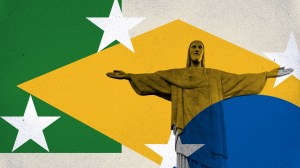
Question 3 of Christianity Today’s roundtable on the Brazil 2022 election.

Christianity Today September 21, 2022
Illustration by Rick Szuecs / Source Images: José Cruz / Fábio Rodrigues Pozzebom / Agencia Brasil / Buda Mendes / Staff / Getty

The Bible shows us that part of our prophetic role as God’s people is to denounce evil and warn people about divine justice (2 Sam. 12). In light of this instruction, do you think the church should ally itself with any particular candidate?

Guilherme De Carvalho: Due to their institutional character and political function as “embassies of Christ’s kingdom,” as Jonathan Leeman puts it in Political Church, churches should not ally themselves with any candidate, as such an alliance confuses their mission with the temporal realms. But this does not mean that Christians should not act organically in defense of candidates and important issues. This is Abraham Kuyper’s view: Institutionally, the church remains separate from the state; organically, however, it participates in everything. Or, as Brazilian sociologist Paul Freston says, “religion and politics, yes; church and state, no.”

As for the church’s prophetic role, the subject is long—I think it’s more accurate to say that we have an apostolic mission, and that mission involves much more than just “prophesying,” in the sense of acting as a critical observatory of secular politics.

Iza Vicente: I do not believe that the church should give institutional support to any candidate, considering that within congregations and communities there is a plurality of opinions and political views on various factors that are part of the political debate, such as the state’s role, the economy, or education. This form of support often leads Christians who are not aligned with the candidate being supported to feel left out or betrayed. Some may even be excluded by their congregations or choose to leave because of this pressure.

Ziel Machado: No. The separation of church and state is an achievement, a civilizational advance. Any regression in this process is a disservice to the nation, the country, the church, and also the cause of the gospel. The Christian’s commitment is to Christ, not to agenda A, B, or C. The Christian must, in obedience to Christ, approve what is good and reproach what is bad, no matter the politician.

The church often approaches power, seduced by the idea that it can convert it. But history shows us that every time, the church instead ends up validating the status quo, becoming an accomplice of abuses, compromising the purity of the gospel, scandalizing its members, and allying itself with an agenda of power.

The power the church needs is the power of the Holy Spirit, the power to be witnesses of the truth. Therefore, this prophetic tradition consists in telling the truth in the name of God, in suffering for the truth in the name of God, and in never giving up the truth in the name of God. To do this, the church cannot be committed to this or that candidate.

Jacira Monteiro: Not at all. From the moment the church allies itself with any specific candidate, this undermines its commitment to being a prophetic voice—the voice that denounces evil and preaches the Lord’s judgment on the wicked. This is what we have seen in the current Brazilian evangelical church: leaders who are silent about—or try to justify—iniquitous and repugnant acts of the current manager of the executive power because they have surrendered to his project and are no longer able to denounce evil.

Go back to the lead article.

Ricardo Barbosa: In the Old Testament, although they sometimes prophesied against other kings and nations, prophets usually spoke in God’s name to God’s people, Israel. During the New Testament period, we have emperors who were cruel toward Christians and non-Christians. But we find virtually no passages in the New Testament denouncing the wickedness of the Roman emperors. Jesus denounces the hypocrisy of the Jewish leaders but says little—almost nothing—in relation to the civil authorities. On the other hand, we find not only exhortations and warnings addressed to the people of God but also a recommendation to submit to civil authorities.

So what conclusions should we draw from these differing approaches? First, we urgently need prophets who denounce evil in the church and among the people of God, who exhort the church to be the people God desires and to fulfill its vocation to be salt and light in the world in which we live.

Second, the prophetic word is directed inward and toward the people of God. Nevertheless, nothing prevents social and political evil from being denounced. Yet we have to be careful not to want to remove the “beam” that is in the eyes of others (here, politicians) without first clearing out the speck that is in our eye.

Another risk is being partial and reductionist. The evils in a society come from many sources. The powers (principalities and powers) act not only through politics but also in all spheres: in politics (involving the three powers, in our case), in the financial system, in advertising and the media, in education, just to name a few examples. If we intend to denounce evil, we must first identify the powers that act in order to denounce them.

All of this touches on the next question: Should the church ally itself with any particular candidate? Personally, I would say no, as this violates the historical principle of separation of church and state and compromises, as it has, the witness of the church, especially when it needs to denounce evil. However, it is necessary to recognize that churches are guaranteed, by law, the right to take a political stand if they want to. While I do not agree with this decision, it is up to each local community or even the denomination.

Read our guests’ bio in the lead article.

Church Life

What Should Influence Christians’ Political Priorities?

Question 4 of Christianity Today’s roundtable on the Brazil 2022 election.

Christianity Today September 21, 2022
Illustration by Rick Szuecs / Source Image: Yuri Figueiredo / Unsplash

As evangelicals emerge as a politically strong constituency, what should influence their political priorities?

Guilherme De Carvalho: Above all, a solid Christian social doctrine based on the Bible and in dialogue with the theological tradition. Topics such as the biblical creational order, including its elevated view of the human person, family, and work, need to be understood and contextualized for today’s culture. Christians should grapple with several questions: the nature of political authority, the political meaning of the Exodus, the social ethics of Torah, the biblical prophetism and the economy of grace in the New Testament. These issues should structure our agendas.

Unfortunately, evangelicals have not proactively set a biblical agenda. Instead, in the desperation for relevance, we haven’t acted in a principled way and have become religious mirrors to the secular political debate.

I don’t see a problem with evangelicals electing people who represent their worldview—that’s part of democracy. But I believe that they should prioritize candidates with a vision focused on the “common good,” not just on the protection of their own group. A “Christian” policy that only thinks about how to protect the interests of the Christian community would be the very denial of the Christian mission.

Iza Vicente: It’s not a simple question, because evangelicals can have different positions on the complexity of issues that are in the public arena. Despite this, I believe that defending religious freedom, along with strengthening democratic institutions and protecting the vulnerable, should be priorities of any evangelical in politics.

Go back to the lead article.

Ziel Machado: A commitment to the justice and to the ethics of the kingdom of God as expressed in the Sermon on the Mount, especially in the Beatitudes. Furthermore, a hopeful realism that recognizes the reality of sin in history but also knows the power of love, the work of redemption, and the expectations of a new heaven and a new earth.

Jacira Monteiro: Social well-being and shalom (harmonious peace). Evangelicals must have, as God has, a special concern for justice and actions that benefit the most vulnerable. Evangelicals should especially be concerned about those that no one in the other spectra of society cares about.

Ricardo Barbosa: Commitment to the common good. It is not about the private good of each one but about what is common to all, such as education, health, safety, work, housing, food, or the environment. Some issues have become far more politically prominent in recent decades, especially those of a moral nature, like gender ideology, drugs, abortion, family.

Read our guests’ bio in the lead article.

Church Life

Is the Pulpit an Appropriate Place to Discuss Politics?

Question 9 of Christianity Today’s roundtable on the Brazil 2022 election.

Christianity Today September 21, 2022
Illustration by Rick Szuecs / Source Image: Wagner Meier / Stringer / Getty

Is the pulpit an appropriate place to discuss politics?

Guilherme De Carvalho: The pulpit is an appropriate place for teaching biblical social doctrine and, where appropriate, the biblical foundations for a Christian political theology. But for party politics, no way! The believer needs to have the assurance that the Word of God will reign in the pulpit of his church. Pastors should not give the pulpit to candidates or politicians nor use the pulpit to declare their voting intentions or to recommend political parties.

Iza Vicente: The pulpit is a place to preach the gospel. That is not to say, however, that the church cannot foster spaces for discussion and reflection on politics, which is quite different from candidates receiving a blessing or prayer from the pulpit, which is often actually an endorsement. I’m a city council member. During the campaign, I never stepped into the pulpit of my church to present myself as the best option for evangelicals.

Go back to the lead article.

Ziel Machado: The pulpit is the place to feed the people of God and to teach them to live as God wants. So, at some point, politics will appear in the pulpit, as the Word of God relates to all of life.

The problem is not the politics itself but how politics appear in the pulpit. The pulpit is not an electoral platform. Therefore, every time the pulpit is used as a platform, it will be compromised. When that happens, God’s name is being taken in vain. In addition, it might be understood as a crime by the electoral justice system.

Jacira Monteiro: The church is a place to discuss politics, because Christians are in the polis and we are all political beings. However, on what the Bible is silent, we Christians must not speculate or invent. The Bible is neither left nor right, and its view of society is far superior to any human models. So, yes, we should talk about politics, but not by violating the conscience of our brothers and sisters.

Ricardo Barbosa: The pulpit of the church belongs to the Word of God.

Read our guests’ bio in the lead article.

Church Life

How Does Bolsonaro Approach Evangelicals Differently Compared to Previous Presidents?

Question 2 of Christianity Today’s roundtable on the Brazil 2022 election.

Christianity Today September 21, 2022
Illustration by Rick Szuecs / Source Image: Fernando Frazão / Agencia Brasil

How does Bolsonaro approach evangelicals compared to previous presidents?

Guilherme De Carvalho: Bolsonaro has openly identified himself as a representative of evangelicals, making it the first time a presidency has not treated evangelicals as “others.” And he has managed to do this even without being evangelical. His success illuminates a problem that I have pointed out for some time: Our cultural elites have not yet granted Brazilian citizenship to the evangelical movement.

Iza Vicente: Bolsonaro has achieved what many religious leaders have never achieved: uniting various evangelical segments from the most diverse denominations and traditions. Such union happened not because of unity in Christ but because of the fear Bolsonarista propaganda fostered in the evangelical environment and because of the thirst for power and recognition of most evangelical leaders. Even as the evangelical community continues to grow numerically and the movement has begun to form its own voting bloc—both of these things happening without any kind of systematic persecution—Bolsonaro has used fallacies and vacuous speeches to indicate that societal changes involving the civil rights of minorities would hurt the values that evangelicals hold dear and that having a supposedly Christian president would mitigate these effects.

Ziel Machado: Bolsonaro has more ties to the evangelical community. His wife is evangelical, and an evangelical pastor officiated their marriage. Thus, his ties to evangelicals predate his political ties. They are bonds of friendship, of someone who sympathizes with and identifies with Christian values. So it’s not just a political strategy. It has become a political strategy, but these ties predate their political use.

Previous presidents did not have this same proximity to the evangelical world and have treated interactions with evangelicals like they were following a campaign strategy. By this I do not mean that this attitude is invalid or inappropriate. In fact, a straightforward political approach can be more ethical than an affective approach intertwined with murky values.

Go back to the lead article.

Jacira Monteiro: Bolsonaro has manipulated and co-opted Christians, offering himself as the only salvation against the Left, against the Worker’s Party (Partidos Trabalhistas or PT). He presented himself as a messiah. He took important issues for Christians, like abortion and the family, and made them the basis of his campaign. He also played (and continues to play) a two-sided game: “Either I am the president and I will free you from evil, from Satan—namely, from the PT and the Left—or Brazil returns to darkness.” All the while, his campaign employs aggressive and polarizing language.

Ricardo Barbosa: Ever since evangelicals’ numerical growth has made them a political force, politicians have sought to get closer to this group and win their votes, often visiting churches or participating in religious events.

According to data from anthropologist Juliano Spyer’s book O Povo de Deus (The Power of God), in the 1970s, evangelicals represented only 5 percent of Brazilians. Today they are a third of the adult population of the country, and they continue to grow. It seems to me that of the presidents from Fernando Henrique Cardoso (1995–2002) to Bolsonaro, Bolsonaro has best identified himself with a significant portion of Christians (evangelicals and Catholics) through his language and by defending values like the traditional family and patriotism and opposing gender ideologies. A large part of the Brazilian Christian electorate care deeply about these same values.

Read our guests’ bio in the lead article.

Church Life

Does Bolsonaro Believe in His Own Campaign Slogan?

Question 1 of Christianity Today’s roundtable on the Brazil 2022 election.

Christianity Today September 21, 2022
Illustration by Rick Szuecs / Source Image: Antonio Cruz / Agencia Brasil

Incumbent president Jair Bolsonaro’s campaign slogan is “Brazil above everything, God above everyone.” Do you see this as something he really believes in?

Guilherme de Carvalho: In my judgment and based on my conversations with people with access to the president, I believe he really believes in that slogan. He is not faking this—at least, not consciously. The issue is that he has no understanding of God and what such a slogan would actually imply for the nation. His reason for choosing this slogan is evident: to communicate with the practicing Catholic and evangelical populations whose values are ignored by our cultural elites.

Sadly, Bolsonaro has a distorted understanding of God and the gospel, and this causes him to take God’s name in vain, associating it with his personal project. But this is not new; we live in a country that practices a widespread and distorted cultural Christianity. The average Brazilian talks about God all the time, despite not knowing what he is talking about.

The Left also tries, at times, to use the name of God, but it is not very convincing, as everyone sees that it is a farce. In the case of Bolsonaro, it is more difficult to show the mistake, precisely because he believes what he says.

Iza Vicente: Although it is impossible to know the deepest beliefs of a person, including Bolsonaro, I understand that the slogan adopted by Bolsonarism is born not from a genuine conviction of the sovereignty and magnitude of God but as a marketing lure to capture the feeling of faith present in most Brazilians. It is also an authoritative and theocratic signal, because by emphasizing the “God [who is] above everyone” as an imperative of strength, Bolsonaro forgets the God who was also among us, being the servant of all.

Ziel Machado: Whoever turns God into a political canvasser is running a serious risk of taking God’s name in vain.

During the pandemic, Bolsonaro mocked people for dying of COVID-19 and struggling to breathe. To me, these actions did not demonstrate a knowledge of or a relationship with the biblical God.

It is possible that Bolsonaro believes what he says, but comparing what he says with his acts of mercy—which don’t exist—amounts to taking God’s name in vain and portrays an unbiblical image of God. And a politician whose policies have repeatedly shown a lack of empathy for the pain of the people is not referring to the loving and compassionate God of Scripture.

Go back to the lead article.

Jacira Monteiro: This slogan is political propaganda, not a belief Bolsonaro holds. Evangelicals are targets of conquest by politicians, as they comprise a considerable portion of the national vote. Under the presumption of being a Christian (although his Christianity is certainly not the same as that of the Bible or Jesus Christ), Bolsonaro won over evangelical Christians, manipulating them with his “Christian” slogan.

However, God himself said that we must “give back to Caesar what is Caesar’s, and to God what is God’s” (Matt. 22:21). The separation of state and church is a biblical principle. The Christian who seeks political power and manipulates Christians for that purpose has not understood the teachings of Jesus and is in sin.

Regarding the second part of the slogan, it is obvious that we, as Brazilians, must love Brazil and fight for the common good. But blind patriotism is not a Christian thing, for the Bible says our homeland is in heaven (1 Pet. 2:11; Phil. 3:20), not here on earth. Brazil must not be above all but must serve all. As Christians we are called to serve, not dominate, and a “Christian” president should know that.

Ricardo Barbosa: Generally, the slogan of a political campaign or a government works as a form of publicity, an affirmation of values and expectations. Bolsonaro’s slogan is this. I imagine he chose to affirm values such as faith, religion, homeland, or patriotism. But I have no way of answering the question of whether or not he believes in this slogan. It is a question that only he can answer.

Read our guests’ bio in the lead article.

Church Life

How Can Christians Hold Politicians Accountable on Corruption?

Question 6 of Christianity Today’s roundtable on the Brazil 2022 election.

Christianity Today September 21, 2022
Illustration by Rick Szuecs / Source Image: Pearl / Lightstock

The last leftist government was deposed by an impeachment process based on allegations of corruption. Recently, the minister of education in the Bolsonaro government was arrested on the same type of charge. How can Christians hold politicians accountable on corruption?

Guilherme De Carvalho: Holding politicians accountable is the duty of Christians, without a doubt. But given the systemic problems in our country, it is clear that verbal demands against corruption by Christians are insufficient and “prophesying” on Twitter is useless. It is necessary to support candidates who introduce effective anti-corruption bills in the legislature.

A practical path would be to create an evangelical political oversight team that would hold politicians accountable on corruption and other issues. But something like that would need an anchor in Christian political theology, something few people have today. Many of the politicized believers are ideological copies of a secular militancy.

Iza Vicente: To demand transparent and ethical political practices, it is necessary that the support or vote of the evangelical is not based on unconditional devotion, idolatry, or on the idea that the elected candidate is inerrant, infallible, and “sent from God” to represent the evangelicals. However, demanding best practices in the fight against corruption and accountability, through a due legal process, is the duty and right of every citizen, and we evangelicals have to take a more active role in this regard.

Ziel Machado: Our public witness must be supported by a life of commitment to holiness.

I’m saddened by the instances of corruption in which Christians have been involved, although I also believe in forgiveness, reconciliation, and restoration. More than regret, however, situations like these should make us ask, “How can we, as a church, prevent things like this from happening?”

Perhaps we should ask God to raise up, in the midst of the evangelical community, professional politicians who are prepared to act with integrity in the public square, who know the responsibility they have to their fellow Brazilians, and who are accountable for their political practice to the church. We know of only some isolated experiences of Christians in politics who make a practice of being accountable to their constituents.

The principle to be followed is outlined in 2 Corinthians 8: 21, where Paul writes that he is “taking pains to do what is right, not only in the eyes of the Lord but also in the eyes of man.” Integrity is an important value that the Christian cannot give up.

Go back to the lead article.

Jacira Monteiro: Christians, like all other citizens, must demand that the corrupt be removed from their positions and held accountable—either through impeachment or even imprisonment, depending on the seriousness of the act. As the Word of God says, “when the sentence for a crime is not quickly carried out, people’s hearts are filled with schemes to do wrong” (Ecc. 8:11). If there is no punishment for the wicked, there is an incentive, a free pass, for that sin to be repeated. It doesn’t help shalom; it doesn’t help society flourish.

Barbosa: I will disregard the initial comment and answer only the question “How can Christians hold politicians accountable?

There are laws and institutions to fight and prevent corruption. If they don’t work properly (and unfortunately they often haven’t), we should look for an institutional means to improve the system. This mainly involves choosing our representatives in the National Congress and in state and municipal chambers. They are the ones who can legislate in favor of changes in the judicial system.

In addition to demanding that politicians be held accountable, we must do our own homework. We must practice transparency in our churches. We need to be responsible citizens in our work and with the use of public resources. Corruption is present in the actions and decisions of all spheres of society.

Read our guests’ bio in the lead article.

Church Life

When It Comes to Politics, What Mistakes Should Evangelicals Avoid Making?

Question 5 of Christianity Today’s roundtable on the Brazil 2022 election.

Christianity Today September 21, 2022
Illustration by Rick Szuecs / Source Image: Marcello Casal Jr / Agencia Brasil

When it comes to politics, what mistakes should evangelicals avoid making?

Guilherme De Carvalho: First, putting the interests of the denomination or the evangelical community above the common good. Christianity is precisely the faith that leads us to self-forgetfulness—that is, to an attitude of not thinking only about yourself and your personal interests.

Second, we need to avoid letting ourselves be fooled by the “apocalyptic packing” where, when faced with a threatened future, the believer “converts” to the agenda of a candidate of the Left or the Right. The candidate can then manipulate this believer through rhetoric such as “Otherwise the PT will come back!” or “Otherwise fascism wins!” When Christians give up building and developing a positive political agenda based on Christian principles of social doctrine and uncritically embrace the agenda of a savior warlord, they betray their faith.

Iza Vicente: One of the biggest mistakes is putting all your hope in authoritarian political agendas and endorsing figures who weaken the public witness of the church. Another is politicizing faith and sacralizing politics. This means instrumentalizing the faith for merely political ends, as well as thinking that the only way the church can contribute to the common good is through the dominion and control of the spaces of power and that there are envoys anointed for this messianic and heroic task. We should revisit these assumptions.

Ziel Machado: We cannot confuse numbers with representative capacity. Evangelicals have grown to a significant size, and the number of evangelical votes is quite significant. However, is the magnitude of evangelicals proportional to our ability to contribute as citizens? No, it is not.

The church trains people to evangelize and sing in the choir but not how to responsibly engage in politics. We need to train ourselves to have an adequate participation in civil society. Our calling is to be a blessing to all.

Go back to the lead article.

Jacira Monteiro: The mistake of exchanging our biblical values for political power. Evangelicals must especially avoid making indiscriminate use of the Word of God, through weak or distorted exegesis and hermeneutics, to support policies, especially those that go against the Word of God itself.

Ricardo Barbosa: Creating a religious state and making the church a political arm of any party or candidate are the biggest mistakes evangelicals can make. Although many try to justify the creation of a religious state, we do not find anything in the Bible that justifies this. As citizens and Christians, we can and should participate in public life and contribute to a more just society, but not create a religious government or allow the church to be used for political/ideological purposes. That doesn’t mean we can’t have religious politicians. Yes, we can, but let them be servants of the nation and promoters of the common good.

Read our guests’ bio in the lead article.

Apple PodcastsDown ArrowDown ArrowDown Arrowarrow_left_altLeft ArrowLeft ArrowRight ArrowRight ArrowRight Arrowarrow_up_altUp ArrowUp ArrowAvailable at Amazoncaret-downCloseCloseEmailEmailExpandExpandExternalExternalFacebookfacebook-squareGiftGiftGooglegoogleGoogle KeephamburgerInstagraminstagram-squareLinkLinklinkedin-squareListenListenListenChristianity TodayCT Creative Studio Logologo_orgMegaphoneMenuMenupausePinterestPlayPlayPocketPodcastRSSRSSSaveSaveSaveSearchSearchsearchSpotifyStitcherTelegramTable of ContentsTable of Contentstwitter-squareWhatsAppXYouTubeYouTube