News

Candace Cameron Bure Has a New Home for the Holidays

The evangelical actor faces recent pushback for her decision to leave Hallmark for Great American Family, whose Christmas movies will center on “traditional marriage.”

Christianity Today November 18, 2022
Courtesy of Great American Media

The Hallmark Channel turned holiday movies into a festive, feel-good, and always snowy empire. But this year, the network lost one of its queens of Christmas to new competition.

Candace Cameron Bure left Hallmark for Great American Family, founded in 2021 by former Hallmark executive Bill Abbott.

“I knew that the people behind Great American Family were Christians that love the Lord,” she said. “And [they] wanted to promote faith programming and good family entertainment.”

Bure—an outspoken evangelical with her own line of DaySpring Bible devotionals, a son at Liberty University, and a brother who also brings faith to Hollywood—was drawn to the new network’s focus on faith and family programming.

The switch comes just as Hallmark gears up to launch its first Christmas rom-com centered on a same-sex couple, but Bure said her departure was not a response to the LGBT representation on the network. She stated that her contract at Hallmark was up and that Great American Family presented a new opportunity for her.

When Bure recently told the Wall Street Journal that she thinks the new network “will keep traditional marriage at the core” rather than feature same-sex couples, she received a wave of criticism from celebrities like dancer JoJo Siwa and country singer Maren Morris.

“I have a simple message: I love you anyway,” Bure responded to critics in a post on Instagram this week. “To everyone reading this, of any race, creed, sexuality, or political party, including those who have tried to bully me with name-calling, I love you.”

Her “traditional marriage” comment sparked deeper discussion about the two networks. Abbott had left the Hallmark Channel’s parent company, Crown Media, after a debate over whether to run commercials featuring a same-sex wedding. He has also said that his departure was unrelated to the controversy.

During Abbott’s tenure at Crown Media, he saw low-budget Christmas movies—for all their predictability and cheesiness—turn into big business.

Hallmark Channel’s annual lineup of dozens of holiday originals (31 this year) has put the network at the top for female viewers and weekend programming. It brought in $148 million, more revenue than any other cable or broadcast channel in November and December last year. Comfortingly familiar and family friendly, the movies have wide appeal, including among Christian viewers.

The Hallmark Channel, which boasts over 1 million subscribers, is readily available on streaming platforms and cable packages. Great American Family is currently harder to find, though it is available as a Hulu or Sling add-on, among other options.

Bure appeared in 29 Hallmark movies between 2008 and 2021. Playing “Holly” in Hallmark’s Moonlight & Mistletoe was her reentry to TV after a decade away. She also starred in one of its biggest holiday hits, Switched for Christmas. (She said in September she still plans to partner with Hallmark on her DaySpring line.)

Great American Family has 18 original holiday movies in its lineup this year, telling the stories of all kinds of women—a caterer, an ice skater, a farmer, an advertising executive, a travel blogger, a singer, and a restaurant owner—who find love in festive settings at Christmas. Bure stars as the busy mom of teenagers in A Christmas…Present.

https://www.instagram.com/p/Ck1T0LEJeFv/

Even before the new network launch, the popularity of cheery Christmas rom-coms had already spilled over to other platforms like Netflix, Amazon Prime, and Lifetime. Great American Family’s messaging around “faith, family and country” seems poised to attract conservative Christians—including those who would be uninterested in watching a same-sex couple on Hallmark.

Great American Family is airing Christmas movies 24 hours a day from October 21 to Christmas, rivaling Hallmark’s Countdown to Christmas programming.

The network has contracted with several actors with ties to Bure, including her former Full House costars Lori Loughlin and Andrea Barber and Wonder Years star Danica McKellar, who has begun to visit Bure’s church, Shepherd Church in Los Angeles.

Abbott contends that “spiritual or faith-based content is grossly underserved.” Regarding the potential for same-sex romance storylines, he said in Deadline, “It’s certainly the year 2022, so we’re aware of the trends. There’s no whiteboard that says, ‘Yes, this’ or ‘No, we’ll never go here.'”

Advertisers are drawn to the audience at the new network. Great American Family has doubled its pricing and number of ad commitments this year, according to chief revenue officer Kristen Roberts.

The rise of Great American Family accompanies other faith-based media platforms in the entertainment marketplace. The Daily Wire podcast network, which appeals to many conservative Christians, is in the top 10 on the charts, and Christian children’s programming like Minno Kids and Yippee were created as alternatives to mainstream platforms. While they don’t have the reach of secular counterparts, Pure Flix and FaithStream TV continue to market family and faith programming.

Though Bure continues to face pushback for moving to a network whose movies focus on traditional marriage, fans have stuck up for her.

Faith-based journalist and Bure friend Billy Hallowell writes in the Washington Times that Bure “didn’t compromise truth but also never sacrificed love in expressing her values.”

“Create your own network if you dislike the network someone else is helping to build,” wrote conservative Christian radio host Dana Loesch, pushing against Bure critics. “The eight billionth person was just born this week, so there’s no shortage of eyeballs. … I’ll be watching.”

On Instagram, Bure expressed her desire for inclusion since “I’ve never been interested in proselytizing through my storytelling, but in celebrating God’s greatness in our lives through the stories I tell.”

“God’s love and God’s compassion is front and center. All of that comes from the LOVE that God himself showered upon humanity when he gave the gift of joy and forgiveness on the first Christmas morning 2000 years ago,” she told followers. “It is why I love Christmas stories and sharing true joy and true peace with millions of people around the world.”


News

Kanakuk Sued for Alleged Fraud in Abuse Settlement

Survivor claims the camp misled his family by withholding prior knowledge of his predator’s pattern of misconduct.

Christianity Today November 18, 2022
Ben White / Lightstock

Update (April 28, 2023): A Missouri judge ruled Tuesday that an abuse victim’s fraud case against Kanakuk Kamps and founder Joe White can move forward. Kanakuk argued that the charge should be dismissed based on statute of limitations and its prior settlement, but the Taney County Circuit Court denied its claims. Logan Yandell is the first victim to sue the camp for fraud.

Yandell says that when his family entered a settlement with the organization in 2010, leaders concealed their knowledge of predatory behavior and misconduct by counselor Pete Newman, who is currently serving a prison term of two life sentences plus 30 years for his sexual abuse of children. Kanakuk victims have also joined lobbying efforts to extend the statute of limitations in Missouri for adults who were abused as children.

Logan Yandell is one of a string of young men who attended Kanakuk Kamps in the 2000s, who were groomed and abused by a popular counselor, and who later signed confidential settlements, adding a layer of legal restrictions to the anguish they suffered in the aftermath.

Their accounts of being sexually abused by a trusted leader who cloaked nudity, masturbation, and molestation in camp fun and Christian teachings have slowly come to light more than a decade after serial abuser Pete Newman went to prison. Some victims have opened up in recent news coverage and survivor testimonies; others revealed details in anonymous “John Doe” lawsuits.

Yandell and his family did not know all these stories when they settled back in 2010—not that at least dozens of Kanakuk campers had been through the sexual abuse he had and not that others had reported Newman’s inappropriate behavior to the camp years earlier, raising concerns about sleepovers, skinny dipping, and naked four-wheeling.

Now, 27-year-old Yandell believes the settlement he and his parents agreed to is fraudulent. In a lawsuit filed this week in Missouri, Yandell claims Kanakuk misled his family.

“Neither Logan nor his parents would have agreed to the settlement terms if not for the Defendants’ false statements,” said Brian Kent, one of the lawyers representing the family in the suit. “The Yandells were told that Kanakuk had no prior knowledge of Newman’s sexual exploitation of children. The representations made by Defendants regarding prior knowledge of Newman’s patterns of sexually abusing minors were blatantly false.”

This is believed to be the first abuse lawsuit to bring fraud allegations against the Branson, Missouri, camp. The suit also names its CEO, Joe White, and its insurer, Westchester Fire Insurance Company.

In a statement to CT on Friday, Kanakuk Kamps said its policy is not to comment on pending litigation, but that “we continue to pray for all who have been affected by Pete Newman’s behavior.”

Kanakuk has previously stated that the camp acted immediately, that its leaders were tricked by a “rogue employee” and knew nothing of Newman’s abuse prior to 2009, when he confessed and was arrested. The camp’s webpage on Newman’s case and its abuse response refers to “deception” more than a dozen times.

“Pete Newman was a master of deception—fooling not only Kanakuk but also his friends, neighbors, and even his own family. As soon as Kanakuk became aware of abuse, we took action, including immediate termination, and subsequently reported him to authorities,” the camp says. “Prior to this, no one on Kanakuk staff believed that Pete Newman was abusing or had abused kids.”

Logan Yandell at age 9

The Yandells heard a similar explanation when they settled with Kanakuk the year after Newman left the camp for two life sentences plus thirty years in a prison cell. But in 2021 and 2022, a yearslong reporting project by Nancy French has uncovered earlier evidence.

Through French’s articles at The Dispatch—written with her husband, lawyer and senior editor David French—they learned that Newman’s supervisor, Will Cunningham, recommended he be fired in 2003 for nudity around campers.

Instead, Newman stayed on for six more years, rising to assistant director and later a director at Kanakuk’s K-Kountry camp in Branson.

It was during that time, from 2005 to 2008, that Logan Yandell says he was groomed and abused by Newman. By his final camp stay at age 15, Yandell had gone to Kanakuk summer after summer for over half his life.

Before his arrest, Newman had been a beloved figure at Kanakuk, fun-loving and personal. He kept in touch with campers and spent time with them between sessions during recruiting tours and mission trips. Survivor testimonies have since revealed that abuse took place then too.

Logan Yandell’s father, Greg Yandell, wrote Joe White earlier this year to criticize the Kanakuk CEO’s initial response to his son’s reports of abuse. Nancy French quoted the letter in a May 2022 article for the Springfield (Missouri) News-Leader:

The night I learned that my son had been abused for over three years at your camp, in multiple states, overseas, and in my own home by Pete Newman, I called you. I point blank asked you … if you knew of any previous signs or situations that indicated that Newman had abused young boys, or had acted in an inappropriate way around young boys.

Your immediate and direct answer to me was “I had no idea. I had never seen anything that caused me concern. I am just as shocked as anyone.” … I have since learned you lied to me, Joe.

Yandell’s lawsuit says that Kanakuk “knew, or should have known, that Newman was committing crimes of sexual misconduct and engaging in illegal behavior with children” as early as 1999, when a report complained that Newman swam and four-wheeled with boys while naked.

White said in a 2012 deposition that the camp chalked up the inappropriate behavior to immaturity and poor judgement, that “it was like two drops of water in a cascade of appreciation and outstanding character, outstanding example, outstanding role model. He was just drowned out by that.”

Apologies and NDAs

White is the second-generation leader of the nearly 100-year-old camp, which ranks among the top Christian summer camps in the country and has tallied over a half million campers in its history. He’s also an evangelical author and speaker who boasts an endorsement from James Dobson.

White has apologized to victims and families and extended an invitation for face-to-face reconciliation.

The organization has not undergone a third-party investigation beyond the police inquiry into Newman, and it hasn’t indicated that any leaders have been fired or penalized over the camp’s response, though after recent coverage, White was removed as a contributor on the Focus on the Family website, Ministry Watch noted.

One of the reasons Kanakuk’s abuse response remains a relevant story for evangelicals, said Ministry Watch president Warren Cole Smith, is because “many of the people, including Joe White, who made the decision to look the other way are still in leadership.”

And, according to media reports and survivor accounts, Kanakuk has been affiliated with known abusers beyond Newman.

Kanakuk implemented what it says is a more robust protection policy that incorporated the lessons learned in the wake of Newman’s abuse. It has defended itself against allegations of coverup from watchdog organizations, journalists (Vice won an Emmy this year for its Kanakuk coverage), and groups such as Facts About Kanakuk, which collects survivor stories and advocates for victims to be released from non-disparagement agreements (NDAs).

The camp’s website refers to Facts About Kanakuk as a “coordinated attack” and dismisses its documentation as misleading and defamatory. Kanakuk says it anticipates future “publicity stunts” designed to “disrupt our ministry operations” and that “we are prepared to defend our people and this ministry against such a cancel-culture mentality.”

“If somebody is suggesting that victims are doing more harm by filing lawsuits, I think that’s comical. Lawsuits force people to be transparent and make real change,” said Kent, a survivor of clergy sexual abuse whose firm, Laffey, Bucci & Kent, specializes in representing victims. “If they are saying, ‘We want to be responsible,’ they can accept responsibility in the lawsuit. What their position is during the litigation will be telling as to whether or not their words are truly meaningful.”

Regarding NDAs, Kanakuk has stated that “we failed to recognize the restrictions—both real and perceived—that many victims are under.” The camp says it supports victims’ rights to share their stories, though specific terms of settlements must remain confidential.

Logan Yandell
Logan Yandell

Victims have still worried about the scope of the NDAs. If his suit is successful and the agreement is negated, Logan Yandell will no longer be subject to the NDA from more than a decade ago.

Nancy French said one victim told her his NDA restricted him from speaking with the media, and another, who hadn’t signed an NDA, was threatened with legal action if he shared his testimony in church. Others under the agreements, including Logan Yandell, said they believed they couldn’t even talk about their abuse in counseling and therapy.

“I’m technically not allowed to tell a therapist, when that’s what the settlement money was supposed to be used for. It certainly has hindered the healing process,” Yandell told French.

“I struggled a lot longer with substance abuse disorders. … Many days I really wished I never woke up and would ‘self-medicate,’ but I never did overdose, somehow,” he said. “When I was younger and when things were harder, I had a contingency plan for how I planned [to die].”

Since 2010, victims including Yandell have settled out of court with Kanakuk. In this week’s filing, Yandell asked for a trial by jury so the court can determine what damages he could be owed after allegedly being misled by Kanakuk in his original settlement.

Trey Carlock, a fellow Newman victim who settled a “John Doe” lawsuit with Kanakuk, died by suicide three years ago at age 28. His sister told CT she commends the Yandell for their efforts to pursue justice.

“For Kanakuk victims like my late brother Trey, the alleged fraud was deadly. He was silenced to his grave. To see no accountability or justice exacerbates the heartbreak,” said Elizabeth Carlock Phillips.

“It’s time for Joe White and his followers to face the facts of what Kanakuk knew and when regarding Pete Newman’s patterns of abuse. Defrauding victims to protect an institution is not aligned with the Christian faith, and those who proclaim Christ should be especially outraged that this has gone on for so long.”

Facts About Kanakuk has received reports of 160 alleged cases of abuse spanning a couple dozen accused perpetrators in the year and a half since it launched.

The community supports “all survivors of Kanakuk, including the Yandells, in their efforts to seek justice after learning of the abuse and fraudulent attempts to cover it up at Kanakuk,” said Scott Hastings, Locke Lord LLP attorney representing No More Victims, the group that runs the site. “Since its founding, [Facts About Kanakuk]’s goal has been to provide a forum where victims and their families may speak freely and feel seen, believed and supported. At a minimum, [Facts About Kanakuk] wants their pain, suffering, silencing, and deaths to be acknowledged.”

Though a few churches have cut ties with the camp over its abuse response, Kanakuk continues to welcome around 20,000 kids a summer. The Evangelical Council for Financial Accountability (ECFA) website has a profile page for Kanakuk Kamps, though it’s not a member. It belongs to the Christian Camp and Conference Association. Its risk and safety director, Rick Braschler, is involved with the Evangelical Council for Abuse Prevention (ECAP).

“It is disappointing that these watchdog orgs like ECFA and ECAP have not extended more oversight and more scrutiny,” Smith at Ministry Watch said.

Protection policies

Braschler has promoted the Kanakuk Child Protection Plan (CPP) beyond the camp’s own programs to train more than 1,600 leaders to “create a measurable, systematic plan for safeguarding youth, detecting perpetrators, and sustaining the organization.”

“We’ve traveled the country openly sharing what happened here and the steps we’ve taken to help prevent this from occurring again. More than 600 organizations have been trained in the CPP to date,” Kanakuk writes. “Our primary focus has been to ensure victims have the support they need to heal and recover, and we continue to work tirelessly to ensure this never happens again at Kanakuk. Our CPP is woven throughout the organization and impacts almost every aspect of our operations.”

Facts About Kanakuk commissioned an external review of Kanakuk’s April 2022 revision of its CPP. Two safeguarding experts, former UNICEF chief of child protection Susan L. Bissell and consultant Sarah J. Stevenson, concluded that it was missing a clear reporting framework and a clear purpose.

“It seems, on one hand, to be a policy and procedure manual. On the other hand, it seems like a platform for training other organizations,” they said in their report, which was obtained by CT. They called the CPP “insufficient and inadequate.”

Even under Kanakuk’s former policies, Newman’s nudity around kids should have been grounds for dismissal, and further violations have occurred after the new plan.

“We can’t trust their child protection plan now because we have it well documented that either it doesn’t work or the plan that would work if implemented well is not being implemented well because of this relaxed atmosphere and attitudes toward pedophilia,” Nancy French said.

https://twitter.com/NancyAFrench/status/1542283497284444161

Multiple experts in child protection told CT that there is no one gold standard for policies, since safeguarding requirements and legal procedures can vary by municipality and ministry setting.

Rahel Bayar, a former sex crimes and child abuse prosecutor and consultant who works with religious camps, emphasized the importance of recognizing emotional boundaries, not just physical ones.

A counselor “going out as a maverick and taking it upon themselves to share private information” can “blur every boundary,” said Bayar, regarding the faith-based camp landscape in general and not Kanakuk in particular. Such boundary-crossing can build up a sense of hero worship or a savior complex at the camp—which can be a red flag for grooming behavior.

She also talked about the need to act definitively against violators. “When it comes to sexual abuse with kids, crossing boundaries and violating policies, there’s no place in the conversation for keeping [a perpetrator]. You can’t have a perpetrator undergoing repentance in the setting where they victimized a child.”

Yandell’s case filing corresponds with the United Nations’ first World Day for the Prevention of and Healing from Child Sexual Exploitation, Abuse and Violence.

It also comes days after Congress passed new legislation limiting NDAs used to silence abuse victims. The law wouldn’t apply to NDAs like Yandell’s, which are signed as settlements after abuse has taken place, but advocates are hopeful for future legislation to offer greater legal protections for those abused as children. ChildUSAdvocacy is among the groups pushing for greater child-protection and victims-rights laws, including efforts to extend statutes of limitations for underage victims.

In the meantime, Newman’s victims are continuing to come forward. Last July, Nancy French shared the story of Mike Breaux, a Louisiana man who contacted the camp in 2021 about abuse from two decades before, only to learn that there were dozens of other victims and his abuser had been convicted—and some of the same leaders remained at Kanakuk.

“I feel like we uncovered, as David wrote, ‘the greatest evangelical sex scandal that no one’s ever heard of,’ but now that they’ve heard of it, no one seems to care,” Nancy French said.

“There will be a day when justice will be served and every tear will be dried, but it is not this day, and I can only be a signpost as a Christian pointing to that future and pointing to the importance of justice.”

CT’s Church Law & Tax has training and resources on protecting children and youth in ministry settings and how leaders can properly respond to allegations of abuse.

This article has been updated to reflect that Kanakuk is not a current member of ECFA.

Culture

Where Angels Fear to Tread: Writing A TV Show About Jesus

The screenwriters for “The Chosen” wanted a main character who is not like Superman.

Chosen screenwriters Ryan Swanson, left, and Tyler Thompson on the Texas set for the feeding of the 5,000 scene.

Chosen screenwriters Ryan Swanson, left, and Tyler Thompson on the Texas set for the feeding of the 5,000 scene.

Christianity Today November 18, 2022
Courtesy of The Chosen

Ryan Swanson and Tyler Thompson, along with director Dallas Jenkins , write the hit show The Chosen, a drama about Jesus’ life through the eyes of his disciples that has millions of views and has been translated into more than 50 languages. The show’s third season premieres November 18, with four more seasons planned.

Jenkins is usually the public face of the show, but CT spoke with Swanson and Thompson at the show’s production location in Midlothian, Texas, this summer when they were shooting their version of the biblical story of Jesus feeding the 5,000 for season 3. The thousands of extras were all fans of the show who contributed to the crowdfunded show or who won a raffle (see our coverage of the shoot here).

You have some experience in Hollywood. How does it make you feel that the Hollywood gatekeepers like Variety haven’t acknowledged the show much?

Tyler Thompson: I don’t take it personally that they haven’t. They have good reason to be suspicious of it, because it doesn’t really make sense—the whole business model, the app of it all. It hasn’t been a large acknowledgment in the Hollywood press, but we do know it’s being discussed in the boardrooms.

Ryan Swanson: If it was blowing up, it doesn’t feel like it would hit us for a while.

Tyler Thompson: Yeah, there’s the show, and then there’s all the noise around the show. The Bible study booklets, calendars, and documentaries—we stay isolated from the social media hype.

Ryan Swanson: It has been nice in a lot of ways to grow at our own pace.

Tyler Thompson: We have our very tight writers’ room of three. And there are many outside forces speaking into it, but it’s really just us.

So you have shielded yourselves a little bit from the Christian industrial complex?

Tyler Thompson: We don’t cater to that complex. We just make what we think is a good show with professional actors who are Middle Eastern and people of color, and we hire professional [directors of photography] and professional crew.

Evangelicals are arguing all the time, but it seems like you have been able to mostly avoid being the center of controversy—if you don’t read the comments section.

Tyler Thompson: The world is a great place if you never read the comments.

Ryan Swanson: I don’t know how these [evangelical] arguments go. I grew up in a Swedish Lutheran house: We go to church and we do church bazaars and sell cube steaks. And then I went to work in Hollywood. But the show revolves around events from the Bible, and we don’t take a didactic approach.

Tyler Thompson: Right, it’s not preaching. You can extract meaning. People can sense when they’re being manipulated or told to believe a certain thing. The Chosen, it’s just entertainment. It’s about character and plot and story.

Ryan Swanson: It’s never our organizing principle: How can we do this differently, how can we turn Christianity on its head? The source material, it’s immovable.

Tyler Thompson: And it’s not pushing a particular theology. If there’s any theology that we’re trying to amplify, I would say it’s a less-heightened Christology.

Some people have this very high Christology, like, there’s no way Jesus would have prepared for a sermon. But I’m here to emphasize Jesus’ humanity. We’ve portrayed Jesus as a very relatable character who cracks jokes, makes fart noises to entertain kids. And most people love that, but some people think that that’s irreverent. We just want to portray something that was very human.

I did notice Jesus laughs a lot in the show.

Tyler Thompson: We’re not telling people this is what happened. But if we’re talking about someone who’s fully God and fully man, then all these emotions are there. He displayed all these other emotions: fear in the Garden of Gethsemane, saying, Let this cup pass from me. He’s effectively saying, I don’t want to do this, is there another way? That’s a very human emotion. He expresses disappointment in his friends: You couldn’t wait up and watch with me one hour.

Ryan Swanson: He cursed a tree because he was angry.

What made you want to bring a more human Christology to the show?

Tyler Thompson: I think our hatred of Superman. We all agree that Superman is the worst superhero—

Ryan Swanson: —to write, as writers! He always needs a proxy to suffer. So Lois has to be in trouble, or Metropolis.

At the end of the day, we’re setting up the scripts to service Dallas’s vision. And although we write as a team, Dallas does run the show.

How do you approach character development?

Ryan Swanson: What do we know that might suggest or insinuate some motive: fear, vulnerability, or strength? In the case of Philip, who had previously followed John the Baptist, we started to imagine, “Okay, he’s done this before. He’s probably seen some of the hairier stuff than what these disciples have seen. He’ll be an old hand.” What we know from Scripture, we’re limited.

Ryan Swanson: [To Thompson] Do you remember that document that Dallas had sent us early on?

Tyler Thompson: A document with what we know about each disciple. Peter was so directly called by Jesus, and then you have somebody like Simon the Zealot about whom three words are written and those words are “Simon the Zealot.”

When you’re thinking about character development, we know that all our Jewish characters grew up with their necks under the boot of Rome. They have generations of trauma in Judaism that needs no explanation: Egypt and the slavery and the exile in Babylon. So we don’t have to make up a trauma backstory, because it’s generational. And it’s very much passed down in their liturgy.

Does it cut off any career opportunities for you to work on a Christian show?

Ryan Swanson: Maybe. At the beginning it was unknown; there was risk for everybody involved. Every working [Hollywood] professional is branded as something.

It sounds cheesy, but this has felt like home. Dallas has never strung me along. He introduced me to Tyler, who’s been a better writing partner than I could have ever imagined.

I’ve put my faith in the people who are behind the project. Even when I had no idea how the marketing was gonna work, how this app was going to work—every time, it’s been proven to me that everybody does their job better than me. Except my job, that is the only job I’m qualified to do.

Tyler Thompson: Someone asked me the other day how it’s funded. And I was like, I don’t know. I don’t understand the funding model.

Speaking of which, you’re surrounded by people who donated to the show right now. What’s it like to be on set with thousands of fans?

Ryan Swanson: I can walk through here; no one knows who I am.

Tyler Thompson: That’s the best part about being a writer, is that you get to do your creative work in solitude. And people don’t conflate you with your work. Those actors, they’re recognizable all over the world now. And people can conflate Matthew and Paras [Patel] or Jonathan [Roumie] and Jesus. People don’t scrutinize our lives the way that the actors are scrutinized.

Do you have a favorite episode you worked on?

Ryan Swanson: It’s actually the same episode for both of us: season 1, episode 2. We realized we were both seeing the same movie in our heads—that final coda, where we check in with all the characters, all the Shabbat dinners.

It’s one thing to crank out a spec script, where you might have a bunch of ideas and the promise of a series. This episode, we had to buck up and write a series based on the pilot we introduced. And so that one felt like, “Hey, we can do this.” We found that every season since, that episode 2 is a kind of place where the storylines get galvanized.

Tyler Thompson: In our life, it’s been infamously always the hardest one to write. Six is really hard. So two and six.

Ryan Swanson: If it’s eight episodes, the second one is the end of act 1, and then episode 6 is the end of act 2. So you have to start to wrap something up, a choice is made, the road behind them closes off, point of no return is reached.

How do the three of you write together?

Ryan Swanson: We’re an assembly line. We plot out the whole season at a retreat, and then parse that out to eight increments. And then I peel off and do an outline.

Tyler Thompson: Then I write a first draft off the outline. I hand off to Ryan, and he works on it, and then it gets handed off to Dallas. Meanwhile, as soon as I hand off episode 2 to Ryan, then I’m working on episode 3. And Dallas is working on episode 1.

Ryan Swanson: And by Dallas’s pass, there’s words from all three of us.

Tyler Thompson: After Dallas, the drafts go to our three biblical consultants. And then we get back pages and pages and pages of notes!

What feedback do you get from your biblical consultants?

Ryan Swanson: Divine pronoun!

Tyler Thompson: A lot of capitalizing His. The scripts eventually are used in the subtitling process. And there’s a huge swath of Americans still hanging onto the divine pronoun. And when they watch it with the subtitles on, people have screenshots: “So proud of The Chosen for using the divine pronoun.” It’s a whole thing.

Ryan Swanson: The bigger notes—sometimes they’re great. These are all learned scholars, and well-intended notes. But we don’t always use them.

Tyler Thompson: Sometimes we’re like, “Great, thank you. We’ll fix it.” And then other times, you’re like, “Thanks for pointing that out; this is a plausible fiction. So we’re going to put this town 10 miles north of where you’re saying it should be.” They point out geographical problems with roads and north, south, east, west stuff. We do our best with that.

We’re not a church, we’re not a ministry, we’re not a Bible study. We’re just entertainment. If they send a note that’s like, “This is blatantly so unbiblical,” we would really pay attention to that. But we’ve never really gotten into much trouble, because we’re so careful.

Ryan Swanson: We’re certainly never ill-intentioned but ignorance can do as much harm as bad intentions if we don’t at least try to understand. So that’s why we bring the scholars in.

Sometimes you have to say, “We made a choice for a show.” We can’t have the intention that, this line is going to save somebody or it’s going to lift somebody up at their lowest moment, which is feedback we have heard.

Tyler Thompson: Ryan always says the answer can never be “Because God.” There has to be some very human and plot-related things that lead characters to their decisions.

The first two episodes of the third season of The Chosen are in theaters Friday, for five days. All episodes, as usual, will be free and available on The Chosen ’s app.

Ideas

Everything You Need to Know About the Respect for Marriage Act

The law recently advanced by the US Senate doesn’t deny religious liberty to those who support traditional unions.

Christianity Today November 17, 2022
Samuel Corum / Stringer / Getty

This week, the Senate advanced the Respect for Marriage Act (RMA). The law tries to balance the unquestionable goodness of traditional marriage with America’s changing views on same-sex relationships. Some conservatives will undoubtedly treat the act as a loss. But others will take the view that, in a morally pluralistic society, a few concessions yield a win for the common good. I’m one of them.

The history of RMA goes back to late June, when the Supreme Court’s Dobbs decision overruled its predecessor Roe v. Wade. Buried in a concurring opinion by justice Clarence Thomas was his suggestion that the court make a clean sweep of things by reconsidering the 2015 Obergefell decision finding a constitutional right to gay marriage. That comment unsettled the tens of thousands of Americans who had entered same-sex unions, which in conservative states are dependent on Obergefell remaining good law.

In response, the US House passed the Respect for Marriage Act, or H.R. 8404. But it failed to safeguard religious liberty for churches, universities, and other institutions that believe in traditional marriage.

Rather than just say no to RMA, a small collective of faith groups moved quickly in the Senate to see if the act could be brought into balance. A few senators from both parties who were keen on doing just that helped. After adding in a measure of religious liberty protections, the Senate substitute of the House bill passed the higher chamber earlier this week, 62–37.

In order of significance, here’s what you need to know about the Respect for Marriage Act:

Section 6(b) of RMA recognizes that religious nonprofits and their personnel have a statutory right to decline any involvement with a marriage solemnization or celebration—including a same-sex one. This federal right would preempt any state or local law to the contrary. It means clergy can refuse to officiate a gay wedding. A church can decline to be the venue for these unions. A Christian college can deny use of its chapel for the same reason, and a Christian summer camp can refuse use of its lake and nearby pavilion, as well.

This section of the act only deals with nonprofits and therefore doesn’t address ongoing litigation over for-profit Christian wedding vendors—photographers, bakers, florists, dressmakers, and others. However, RMA doesn’t harm wedding vendors. It’s simply silent and leaves the matter for resolution in the courts. (One of these wedding vendor cases—303 Creative, LLC v. Elenisis about to be argued before the US Supreme Court.)

Section 6(a) of RMA states that nothing in the act diminishes any existing federal right to freedom of religion or protection of conscience. For example, the Religious Freedom Restoration Act of 1993 goes untouched by RMA, and so do many religious exemptions in civil rights legislation.

Section 3 repeals the 1996 Defense of Marriage Act (DOMA), which prohibited federal recognition of same-sex marriage. But the Supreme Court already struck down DOMA in 2013, so this part of RMA does nothing except remove an already-dead law from the US Code.

Sections 4 and 5 state that if a marriage is valid when entered into in one state, that same union (including a same-sex one) must be recognized as valid in all other states. But this too is already the law. The US Constitution requires that “full faith and credit” be given to the public acts and records of one state to its sister states.

What’s new here: Section 4 goes on to make that right enforceable by the attorney general against state officials in federal court. However, by way of Obergefell, that right is already enforceable in court by the injured couple.

Section 5 provides that wherever federal law takes into account marital status, the government will regard as valid any marriage that’s regarded as valid by one of the states. But here again, this right is already the law, as declared by president Barack Obama shortly after the Supreme Court’s decision in Obergefell. Now it’s the law according to RMA.

What’s new here: Now that RMA has the legislative backing of Congress, no Supreme Court reversal of Obergefell would dislodge the validity of a same-sex marriage or the government benefits, tax breaks, and other gains that go with it. But in my view, it's very unlikely, anyway, that Obergefell will ever get overturned.

Finally, Section 7 makes it clear that marriages addressed in the act cannot be polygamous. This same part of RMA also issues a useful reminder to all parties of the Act’s limited scope. It reassures married couples (including same-sex ones) of income tax breaks and social security benefits that flow from their marital status. But RMA has no impact on federal law “not arising from a marriage.”

Does a religious organization’s tax-exempt status with the IRS arise from a marriage? No. Does a religious school’s accreditation arise from a marriage? No. Does a religious employer’s exemption from civil rights employment antidiscrimination statutes arise from a marriage? Again, the answer is no. Churches, Christian colleges, K-12 religious schools, and faith-based social service providers can take comfort in these boundary lines.

All in all, RMA is a modest but good day’s work. It shows that religious liberty champions and LGBT advocates can work together for the common good. It says to the original House bill, “If a bill is about us, it has to be with us.” And it shows that Congress can still legislate, not just be a gaggle of egos who go to Washington to perform but never fix.

Carl H. Esbeck is the R. B. Price Professor of Law Emeritus at the University of Missouri.

Speaking Out is Christianity Today’s guest opinion column and (unlike an editorial) does not necessarily represent the opinion of the publication.

Christianity Today Models How to Live Out One’s Faith in the World’

Entrepreneur and investor Tim Jenkins reads widely. Here’s what impresses him about CT.

'Christianity Today Models How to Live Out One's Faith in the World'
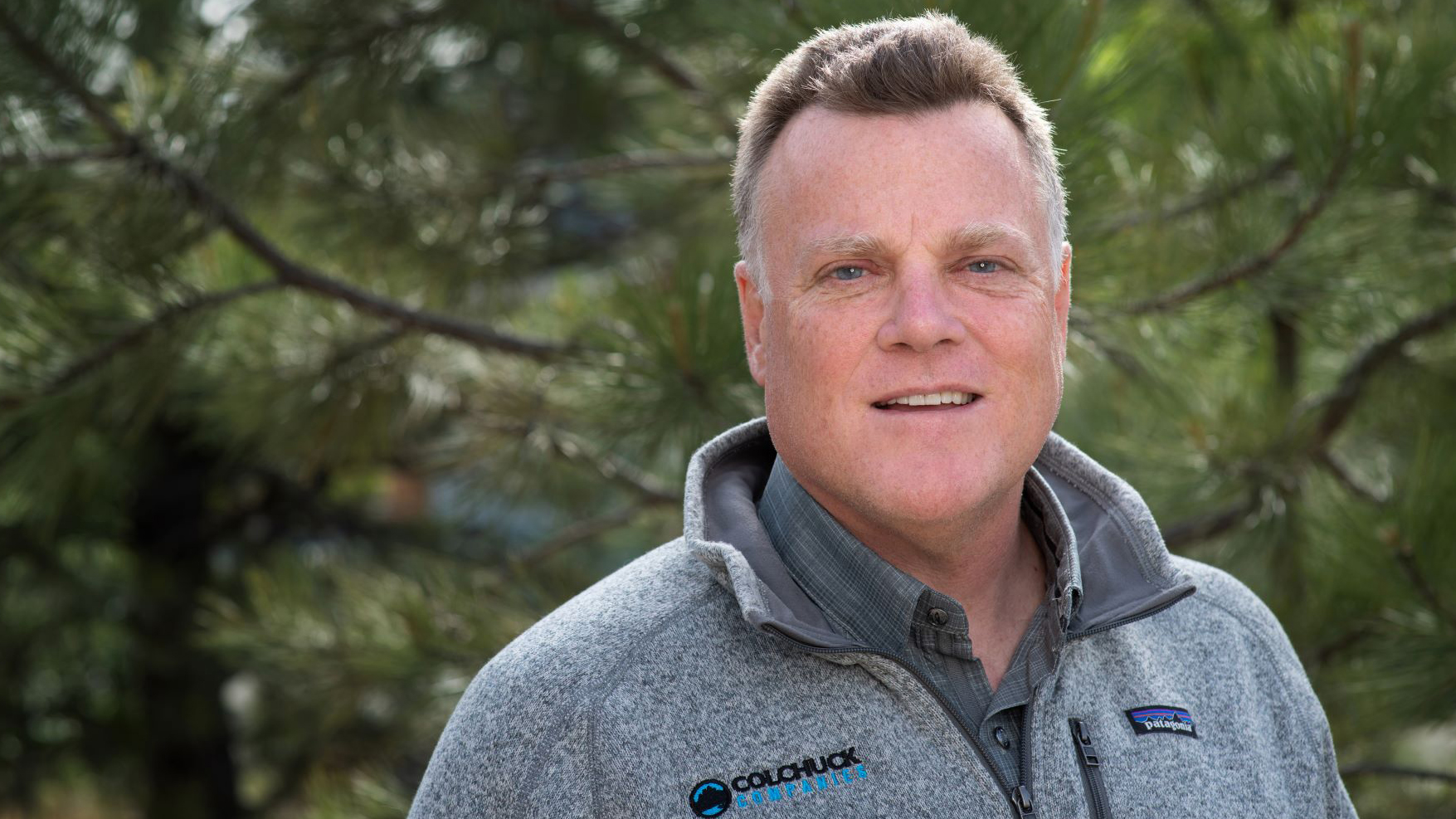
Photo courtesy of Timothy Jenkins

Early in his career, Tim Jenkins became friends with a colleague who traveled often for work, racking up thousands of airline miles. But rather than redeem the miles for his own enjoyment, the friend had other plans. He used his miles to take a young fatherless boy he mentored to Disneyland.

“My friend’s willingness to sacrifice for others opened my eyes to how selfish I was,” said Tim, who met his wife Christina at the same company. The generosity of her lifestyle also impressed Tim, but she told him they couldn’t date unless he came to church with her.

So Tim, then 25, followed her to church. On Easter Sunday a few months later, he accepted Christ.

“It ’s not like I become a saint overnight,” he said. “I certainly had some bad personality traits like arrogance and selfishness.

“Yet I knew something was different after that Easter Sunday,” he said. “My friends noticed that I was beginning to care more about them than me. My eyes opened to how I had treated people before. I had more remorse. I felt bad about how self-centered I was.”

Today, Tim has been a Christian for more than 30 years, striving to live his faith out in the corporate and nonprofit world in the Pacific Northwest. Christianity Today entered his orbit about a decade ago after he joined the board of a large Christian ministry and thought reading it might better equip him for his role.

“It was great from the first issue I read,” Tim said. “I appreciated that CT was apolitical, unlike a lot of the Christian movement that had been hijacked by those seeking political power. Instead, CT was interested in modeling how to live out one’s faith in the world. I appreciated both the biblical perspective and intellectual rigor.”

Tim reads CT consistently and sometimes uses articles as the basis of the devotionals he leads, citing recent essays “What Should We Do If Our Compassion Runs Out?” and “My Boss Is a Jewish Construction Worker.”

“I actually took the [latter] article to the men ’s group I lead,” Tim said. “It helped us understand what a ‘carpentry’ profession meant in an ancient context. Understanding how Jesus likely interacted with others in his professional life—and how others likely saw him at the time—provided some amazing nuance and stoked some rich conversation in our group. The article helped us to understand Jesus more fully.”

Beyond Tim’s passion for CT, his love of journalism has led him to begin giving regularly to CT’s ministry.

“Reading widely is one way I gain an edge as a businessperson, so when there ’s a periodical that consistently adds value to my work, I try to support them financially,” he said. “I regularly read about 15 different print magazines and newspapers and a similar number of electronic newsletters. I’ve been told that I have a uniquely broad strategic mindset, and when people ask me why, I tell them I read a lot. I appreciate the role of journalism in a free society, both to hold those in power accountable and for expanding our worldviews.”

Tim grew up in the Bay Area and went to college at the University of Washington before attending business school at the University of Chicago. He started with the company that is now known as Accenture before he founded the consulting firm Point B after returning to Washington state. After selling the company to its employees in 2014, he shifted to a career as a private investor and now spends much of his time identifying purposeful investment opportunities and providing advice to other founders.

“CT is a voice that needs to be heard, because it helps the church ground itself in the essentials. CT is a moderating voice that turns people toward Jesus versus toward a particular cultural or political point of view,” he said.

“The world wants the church to take sides in the political world. But we need to understand that our identity does not come from our nationality, our politics, or our sexuality. Technically, I am a citizen of the United States, but I’m an alien in the world. My true citizenship is in God’s kingdom,” he said. “It ’s important for folks to interpret the world through a kingdom-focused lens, and CT helps me do that.”

Morgan Lee is global media manager at CT.

News

Died: Michael Gerson, Speechwriter Who Crafted Faith-Inspired Language for George W. Bush

The one-time theology student believed politics should have “heroic ambition,” and speeches should be written, on occasion, for the angels.

Christianity Today November 17, 2022
Courtesy Michael Gerson / edits by Rick Szuecs

Michael Gerson, an evangelical columnist and speechwriter who believed politics could have noble and moral purpose, died on Thursday at the age of 58. He was diagnosed with kidney cancer in 2013.

Gerson crafted the language of faith-inspired politics for president George W. Bush from 1999 to 2006. He fused a theological vision of moral purpose with a practical policy agenda—and in the process produced some of the era’s most memorable phrases, including “armies of compassion” and “axis of evil.”

He gave Bush’s speeches about compassionate conservatism and moral internationalism their rhetorical framework: starting with the “inexorable” call of the historical moment, adding the demands of duty and conscience, naming the various temptations that could lead the American people astray, and ending with a clarion call to do the right but difficult thing, forging forward with “confident hope.”

Even when key lines or the bulk of a speech was written by someone else in the White House, a colleague recalled, “Mike’s conceptual architecture was always indispensable.”

In the days after the 9/11 terrorist attacks, Gerson was described as “the man whose words helped steady the nation.” A few years later, Time magazine named him one of the country’s most influential evangelicals.

He believed the work of writing speeches was a high calling.

“On most days,” he once said, “you are writing for the next day’s headlines. In a few moments, you are writing for American history. … And then there may come a time, once or twice, when you are writing for the angels.”

Gerson was born into an evangelical family in New Jersey on May 15, 1964. His father was a dairy engineer who developed ice cream flavors, and his mother was an artist. They moved to St. Louis when Gerson was 10.

The young Gerson got interested in politics a few years later, during Jimmy Carter’s insurgent presidential campaign. He liked how forthright Carter was about his Christian faith and saw him as a contrast to the corruption in Richard Nixon’s White House.

Gerson went to a Christian high school and then headed to Georgetown University to study politics and foreign policy, but he decided after a year that he was on the wrong track. He transferred to Wheaton College, where he earned a B.A. in Bible and theology.

He planned to go to Fuller Theological Seminary when he graduated and pursue academic theology. But in his senior year, he got a call from Chuck Colson, Nixon’s self-proclaimed “hatchet man” who had gone through a religious experience and come out a born-again evangelical. Colson had read a column Gerson wrote on Mother Teresa and invited him to come to Washington, DC, to help him write Kingdoms in Conflict.

After a few years with Colson, Gerson decided he didn’t have to choose between faith and politics. He could take the theology he cared about so much and apply it to the public square.

“His heart was really in a spiritual kind of politics,” a colleague once told the Los Angeles Times. “He was very committed to the notion of uplifting the country.”

In a book he wrote with friend and fellow evangelical columnist Pete Wehner, Gerson said he came to believe that “politics is the realm of necessity; politics is the realm of hope and possibility; politics can be the realm of nobility.”

Gerson went to work for Republican senator Dan Coats from Indiana, a fellow Wheaton grad he called the most decent and humble man in national politics. He served as his communications director until the 1996 presidential campaign, when he left to work as a junior speechwriter for Republican candidate Bob Dole.

From both men, he said, he learned “a conservatism of the common good that argues that we need to orient our policies towards people that might not even vote for us.”

Gerson was asked to help the governor of Texas run for president in 1999. Friends and colleagues later joked that he recounted the story as if it were the calling of an apostle. “It was a pretty persuasive conversation,” Gerson recalled. He especially liked Bush’s plans for education and faith-based welfare reform.

“I think evangelicals were naturally attracted to Bush as somebody who shared many of their priorities,” he told CT. “He brought a broader agenda than the traditional conservative issues. He was capable not just of doing a traditional Republican economic agenda but also of doing the HIV/AIDS initiative.”

After the attacks of 9/11 Gerson’s main focus, like the president’s, shifted from domestic to foreign policy. He was at home writing a speech about how the government could encourage “communities of character” when he heard the first reports of the attack. On his way into the White House, he saw a plane crash into the Pentagon, killing 125.

Gerson was influential in developing the argument for the invasion of Iraq as part of the task force working on the communications strategy. When top officials wondered how to make the case for invasion, despite the lack of evidence that Iraqi was connected with the terrorists responsible for 9/11 or that Saddam Hussein had weapons of mass destruction, Gerson suggested the line “We don't want the smoking gun to be a mushroom cloud.”

Secretary of state Condoleezza Rice used it on CNN a few days later. Intelligence reports about nuclear weapons programs, along with evidence of weapons of mass destruction and secret support for al-Qaida, all ultimately proved to be false.

In his memoir, published in 2007, he wrote that he grew angry when he was forced to reckon with the fact that the assessment of Iraqi threat had been so wrong. But he couldn’t say anything in the White House because “the issue was covered in a blanket of silence.”

He remained convinced that conservatives, despite some big mistakes, should pursue bold political visions at home and abroad. They should have “heroic ambitions.”

When asked for examples, Gerson most often pointed to the president's Emergency Plan for AIDS Relief. In 2003, only about 40,000 people on the entire continent of Africa were receiving antiretroviral drugs to treat HIV/AIDS. In five years, the US government program delivered treatment to two million people.

“Memories I’ll really take away are being in Namibia,” Gerson told CT, “meeting this little 6-year-old, HIV-positive girl whose parents had named her ‘There is no good in the world,’ because they assumed she was going to die. And then seeing a perfectly healthy little girl because of the President's Emergency Plan for AIDS Relief …. That’s a vivid experience.”

After leaving the White House, Gerson took a job writing a column for The Washington Post. He continued until the month before he died, writing his last few pieces on racism in the Republican Party, the value of public service, and the need to fight COVID-19 with global health efforts.

Gerson frequently criticized evangelicals and conservatives in his columns, writing about how appalled he was at Christian support for Donald Trump, for example, or about how the nation needed “Republican vertebrates” with a backbone for bravery.

But he also, as time went on, wrote more intimately about his life. Some of his most popular columns were about taking a child to college and his love for his dog.

Gerson also, often, returned to the theme of faith. Writing a few days before Christmas 2021 about the problem of resentment in contemporary politics, he talked about the need for faith, hope, and love in the public square. He argued that if the Christmas story is true, “it is a story that can reorient every human story.” And for those who couldn’t quite believe it, he urged them to look around: “There is an almost infinite number of ways other than angelic choirs that God announces his arrival.”

Gerson spoke openly of his illness and some struggles with mental health. In a much-noted sermon at the National Cathedral in 2019, he talked about being hospitalized for depression and how faith, along with medicine and therapy, had carried him through. He’d learned, he said, to choose hope.

“Fate may do what it wants,” he said. “But this much is settled. In our right minds, we know that love is at the heart of all things.”

Gerson is survived by his wife, Dawn, and their two sons, Michael and Nicholas.

CT Is On My Prayer Radar

Featuring Beth Moore, Author and Founder of Living Proof Ministries

Beth recently realized that CT is an “extremely important publication for these times” and began committing to partnership in prayer and support.

I Feel At Home With CT

Featuring Beth Moore, Author and Founder of Living Proof Ministries

Beth sees CT and its readers as willing to grapple with the harder things in the church and the world, and she is both challenged and encouraged by the Christian thinkers she finds through CT.

Theology

Trump Won’t Divide the Church This Time (and That’s Not Necessarily Good News)

Cynicism and cruelty are even worse than division.

Christianity Today November 17, 2022
Drew Angerer / Getty

After Donald Trump announced this week that he’s running for president in 2024, many of my fellow evangelical Christians started bracing for more upheaval in their congregations and denominations. The situation is especially troubling because many of us haven’t yet recovered from the first Trump era.

But what if this time around, we don’t see the same levels of contention and division? And what if the potential quiet isn’t actually good news?

Upon hearing about Trump’s announcement, a contact of mine told me about the trouble in his own family. “We’ve already fought about this for seven years,” he said. “How much more can we take?” (I’m not even sure whether this person is a Trump supporter or opponent.)

Y’all know where I stand on this issue. But even many of those who disagree with me lament the fact that families are estranged, churches have split, denominations have been ripped apart, and friendships are gone—all because of politics. And now here we go again.

I wonder, though, whether the most dangerous thing might not be the arguments themselves but rather the absence of arguments.

After all, one of the most traumatic aspects of 2016 to 2021 was the sense of betrayal felt by people on almost every side of the divide. One Black Christian told me that the Sunday after Election Day in 2016, she left a church service in tears because she knew most people in her predominantly white evangelical church had voted for Trump.

“How can they say they are for me and my family and yet be for that?” she asked.

Much of the heated personal conflicts over Trump and Trumpism were caused by the vertigo that happens when people ostensibly in the same “tribe” turn to one another and say, “I don’t even know who you are anymore!”

Trump supporters often turn to Trump dissenters and ask: “Don’t you want conservative judges? Don’t you want a fighter?” Those of us who don’t support Trump say to those who do, “Didn’t you tell us that character matters? Do you really believe he’s fit for office?”

These conversations may still happen this time around, but in smaller circles where former Trump advocates feel they can’t support him anymore or former opponents decide to start backing him.

But most people know what to expect—not just from one another but also from Trump. This will be true in 2024 much more than it was in 2016 or in 2020.

The first time around, I could often assume that people really didn’t see what I was seeing. Maybe they thought that Trump’s worst features were just performative and that he’d govern differently. Or maybe they presumed the “guardrails would hold,” protected by constitutional institutions or by the “grownups in the room” around him.

But we know now how things turned out. We all saw January 6 and everything leading up to and from it. Either we think those events were a threat to the constitutional order, or we don’t.

This time, there will probably be less internal fighting in local churches over Trump because no one really expects the other side to be convinced. Many churches have “sorted” themselves out over political issues (and related questions about COVID-19 precautions, Black Lives Matter, and #MeToo).

Some of the multiethnic churches I saw most divided over these matters aren’t multiethnic anymore. Some of the multigenerational churches I saw wrenched over these issues aren’t multigenerational anymore.

In those situations, the 2024 presidential election might seem much less divisive than the last two elections because those who disagree are now gone from the church. The divisions are already formed, and for many people, they seem intractably permanent.

What’s more significant, though, is how the Trump era has already changed all of us.

Several months ago, I was talking to a college-age evangelical Christian. I mentioned that many pastors are exhausted and discouraged right now and that many of them wrongly assumed the time of upheaval would eventually return to “normal.” The young man responded by telling me he doesn’t really remember national life before it was like this.

“I don’t even know what ‘normal’ is,” he said.

Think about how accustomed we are to personal insults and “trolling”—not just from bad actors on the internet but from people in leadership. The new owner of Twitter trolls his own advertisers, stockholders, and employees. Denominational meetings and church gatherings often operate in much the same way—with leaders making statements meant to cause outrage.

We’re used to it.

Moreover, the Overton window has shifted to the point where some evangelicals can embrace white nationalist viewpoints like the great replacement theory. Their overtly segregationist ideas now result in discipline not for themselves but for those calling out the bad ideas.

Several years ago, during all the world-shaking, an older Christian leader pulled me aside with this advice: “Make sure you deal with your anger.” I responded that I wasn’t angry at all and that I really felt no ill will toward any of the people who had hurt me. He said, “What if you’re just numb?”

What if we’re just numb?

Many are bracing for more political tumult. But what if it doesn’t happen? What if our churches are more tranquil than ever? And what if that’s not so much because we’ve made peace with Donald Trump but because we’ve become like him?

In the recent midterm elections, millennials and Generation Z defied historic precedent and showed up to vote. In overwhelming numbers, they rejected election deniers in key battleground states. If we don’t see these same voters in our churches or hear their pushback in our faith communities, it likely means they’re already gone or they’ve already given up.

Perhaps I’m wrong. Maybe 2024 will be just as church-dividing and family-splitting as 2016 and 2020. Or maybe I’m wrong because we’ve reached a new level of maturity and wisdom in sorting through our divisions. But what if we’ve just adapted? What if all of us—no matter what we think of Donald Trump—are too exhausted and cynical to even be divided?

Asking these questions might be the first step to finding a different way.

Russell Moore is editor in chief at Christianity Today.

Theology

A Requiem for the Twitter I Once Knew

The social media platform has birthed key movements and conversations. Here’s what I’ll miss if it dies or changes form.

Christianity Today November 17, 2022
Illustration by Mallory Rentsch / Source Images: Getty

When billionaire Elon Musk assumed leadership of Twitter in late October, I was ambivalent. When top executives left almost immediately and Musk made dramatic layoffs, I began to feel nervous. But then came a new verification system that quickly failed and cost companies billions of dollars.

Now, two weeks later, I find myself deeply saddened by the chaos he continues to unleash. Unlike the entrepreneur’s other ventures (Tesla or SpaceX), Twitter is not a tech company. It’s a community.

Twitter Inc. may own and maintain the land on which we live, but users are what make it great. And leading that kind of community means understanding how people—not just systems—work. It means learning how to cultivate space to let people thrive. When I first joined Twitter ten years ago, I was a stay-at-home mom to small children, a pastor’s wife in a rural community, and a hobby blogger. My tweets reflected my life: comments about my kids, the church, gardening, and sometimes the latest evangelical controversy. (In late 2012, it happened to be Rachel Held Evans’s A Year of Biblical Womanhood.) While other moms gathered on Facebook and Instagram, I found a home on “the bird site.” There, I discovered ideas and debates that were shaping culture and the church. Had these conversations transpired in person, my place, age, socioeconomic status, educational status, and domestic life would have limited my ability to engage. But Twitter’s digital public square invited me in to them.

As Chinese artist and activist Ai Weiwei put it in 2010, “Twitter is the people’s tool, the tool of the ordinary people, people who have no other resources.”

Soon enough, I found myself talking with top scholars, experts in their fields, and new friends from all around the world. Somewhere along the line, I learned to thread tweets and discovered the joys of microblogging.

Today, I am the author of five books. I’m regularly invited to speak around the country and the world. And as of last August, I returned to divinity school. None of that would have happened without Twitter. But even as I look over my current feed, the light touch remains. I’m still a mom and still involved in ministry. I live in the same place I did ten years ago. I occasionally get swept up in the latest controversy, but for the most part, Twitter is a delightfully diverse place that challenges and encourages me.

A conversation about the nature of the Trinity can quickly give way to sharing a pie crust recipe. My feed includes updates from medieval scholars, investigative journalists, and Welsh sheep farmers. I have DM conversations that have been going on for a long time. Over the years, Twitter has challenged my understanding of the world by granting me proximity to people and stories I wouldn’t necessarily have encountered in my own circles. In 2013, I learned of the brutalities committed by abortion doctor Kermit Gosnell, despite the media’s hesitation to cover them. In 2019, I experienced true grief at the passing of Evans, whom I’d first met through online disagreement but whose deep humanity bridged our divides. And it was on Twitter that someone patiently explained the nature of systemic racism to me. Some users worry about how Twitter flattens the norms of engagement. After all, if you walk into a university or a church, you won’t have access to professors and pastors in the same way you do on social media. In the words of Atlantic writer Charlie Warzel, I too “got at least one job because I was overzealous and presumptuous enough to start interjecting myself into conversations I probably had no business in.” But for me, that’s exactly the genius of Twitter: Folks outside the institutional establishment can worm their way into the conversation. Folks who don’t live around other Christians can find community. And folks who have no way of making their voices heard suddenly can.

Twitter’s accessibility is also why it became a place for reform movements like #MeToo and #ChurchToo. Just as the invention of the printing press led to the Protestant Reformation, platforms like Twitter have allowed people to question the status quo and bring abuses to light.

If I’m honest, my sadness about Twitter’s current disarray probably has less to do with the platform itself and more to do with how it reflects the disarray of our larger society. The past few years have brought immeasurable grief as we’ve watched communities and relationships be torn apart by those responsible to steward them. Instead of cultivating places where people can flourish, leaders have fought to control them. Instead of protecting the most vulnerable, leaders have protected themselves. And instead of building bridges to cross divides, leaders have burnt them down. As parents, pastors, business leaders, and civil servants, none of us “own” the communities we lead. However, we are responsible to cultivate environments that allow others to flourish in whatever God has called them to do. As Genesis 2 puts it, stewardship is the responsibility to “tend and keep” the garden by cultivating, supporting, and protecting the growth that’s already naturally happening (v. 15, NKJV). For over a decade, Twitter has been that place for me. In God’s providence, this unique platform gave me the infrastructure I needed to develop my voice as a writer and my vocation in God’s kingdom.

I don’t know what the future holds for Twitter, but if and when it falls—or more likely, when it becomes uninhabitable—I’ll grieve it the same way I’ve grieved the loss of other communities: grateful for the time we had together, deeply saddened by our parting, and hopeful that God will provide the structures we need to do his good work.

Hannah Anderson is the author of Made for More, All That’s Good, and Humble Roots: How Humility Grounds and Nourishes Your Soul.

addApple PodcastsDown ArrowDown ArrowDown Arrowarrow_left_altLeft ArrowLeft ArrowRight ArrowRight ArrowRight Arrowarrow_up_altUp ArrowUp ArrowAvailable at Amazoncaret-downCloseCloseellipseEmailEmailExpandExpandExternalExternalFacebookfacebook-squarefolderGiftGiftGooglegoogleGoogle KeephamburgerInstagraminstagram-squareLinkLinklinkedin-squareListenListenListenChristianity TodayCT Creative Studio Logologo_orgMegaphoneMenuMenupausePinterestPlayPlayPocketPodcastprintremoveRSSRSSSaveSavesaveSearchSearchsearchSpotifyStitcherTelegramTable of ContentsTable of Contentstwitter-squareWhatsAppXYouTubeYouTube