Theology

The Body of Christ Keeps Score

Only revival with reformation can heal the American church from its spiritual trauma.

Christianity Today August 4, 2022
Jonathan Schoeps / Lightstock

This piece was adapted from Russell Moore’s newsletter. Subscribe here.

This past week’s bonus episode of CT’s The Rise and Fall of Mars Hill podcast featured a conversation between my colleague Mike Cosper and therapist Aundi Kolber about the effects spiritual trauma can have on one’s body.

The dialogue has haunted me ever since because it’s prompted me to ask whether American Christianity has experienced collectively how some experience trauma individually—and whether that might provoke us to consider what we are asking for when we pray for “revival.”

In the interview, Mike asked how someone who has experienced a spiritually toxic environment could begin to heal. Kolber—referencing work such as Bessel van der Kolk’s influential book The Body Keeps the Score—says she begins not with how a traumatized person thinks about a situation but, first, with what that person’s body is showing.

That’s because, she argues, we can numb our perception to realities that we don’t know how to make sense of. But, she says, the nervous system often points the way—signaling that something is wrong by manifesting a variety of symptoms, sometimes long before the mind is ready to acknowledge that there might be a problem.

It’s important to recognize this, Kolber says, and to not speed through healing from trauma. Often people want a checklist of ways to recover from a horrible situation—including spiritual abuse or trauma—so they can “move on” quickly with their lives.

But the path to healing is not so simple, she argues. It usually requires a slower, more deliberate attempt at grounding and sorting through what happened. This is important because, as Kolber puts it, “what is not repaired is repeated.”

How many of us have seen this dynamic at work in toxic family situations? Sometimes a person from a horrible background will seek out someone else—perhaps a spouse, a friend, or even a pastor—who carries out the very same sorts of abusive behavior.

Kolber suggests that is because we often default to what feels familiar. And those who haven’t yet confronted just how abnormal their past situations were might well repeat the same scenarios over and over—and never detect the warning signs.

This happens not just with families but with churches too.

Right before I listened to this episode, I had coffee with a pastor friend and colleague, Ray Ortlund, who referenced a line from A. W. Tozer that I had never heard before, a line that jarred me at first.

Tozer—one of the 20th century’s most respected evangelical advocates of a “deeper life” spirituality and of the necessity of revival—suggested that maybe the American church should stop seeking revival.

“A religion, even popular Christianity, could enjoy a boom altogether divorced from the transforming power of the Holy Spirit and so leave the church of the next generation worse off than it would have been if the boom had never occurred,” Tozer wrote in 1957.

“I believe that the imperative need of the day is not simply revival, but a radical reformation that will go to the root of our moral and spiritual maladies and deal with causes rather than with consequences, with the disease rather than with symptoms.”

“It is my considered opinion that under the present circumstances we do not want revival at all,” Tozer wrote. “A widespread revival of the kind of Christianity we know today in America might prove to be a moral tragedy from which we would not recover in a hundred years.”

This would not have surprised me had it come from the kind of antirevivalists I’ve encountered throughout the years—those for whom, it seems, every form of emotional experience is suspect in favor of doctrinal syllogisms and almost any mass evangelism efforts are suspected of being marketing or manipulation. But that wasn’t Tozer.

I was also taken aback because revival is precisely what I think the American church needs. The older I get, the more I can see the best gifts that a return to the evangelical revivalism of the past could offer the church.

To be sure, some of that is nostalgia. I grew up singing songs like “Revive Us Again” and “Send the Light” Sunday after Sunday, in a church that was not embarrassed to pray for revival (or to schedule revival meetings on the calendar, but that’s another story).

When we look at the wreckage that is American evangelical Christianity right now—the splintered churches and fractured friendships, the leadership scandals and revelations of abuse, the politicization and grievance-based identity politics, and the ambitious hackery often disguised as culture wars—is it not obvious that we need revival?

When we see people disgusted with and harmed by our very own churches, people who wonder whether there’s anything spiritually real, why on earth would we not hope for revival?

I believe we still should—but only a revival of the right kind.

To me, what Tozer was warning about seems oddly like the much more modern idea of trauma repetition. If by “revival” we mean is a resurgence of American Christianity—with all the numbers, influence, programs, and reputation the church once had—the results could indeed be catastrophic.

Jesus warned the religious leadership of his time: “Woe to you, teachers of the law and Pharisees, you hypocrites! You travel over land and sea to win a single convert, and when you have succeeded, you make them twice as much a child of hell as you are” (Matt. 23:15).

Jesus’ point—after laying bare the ways the religious leaders were lifelessly mimicking religion and exploiting the piety of their followers—was that “reviving” or expanding such lifelessness makes a terrible situation even worse.

In the Bible, revival is tied to the idea of resurrection—from the classic passage of the wind breathing life into the valley of dry bones (Ezek. 37) and onward.

But not everything that continues life is resurrection. God placed the fiery sword at the entrance of Eden to “guard the way to the tree of life” (Gen. 3:24) precisely because he did not want a twisted, fallen humanity to live forever in that state of death.

An undying humanity without spiritual life is not resurrection life, after all. It’s a zombie story—the corrupted and decayed body is animated and without an endpoint but still horrifically dead.

Many high school students have read the short story “The Monkey’s Paw,” about the wish for a dead loved one to be brought back to life. The terror comes about because that person is indeed made alive, but just as he is—a decomposing nightmare. The Bible points us to a Holy Spirit revival, not to a Monkey’s Paw revival.

In other words, the church needs revival, but only the kind that comes from the Spirit. And that will require that we honestly see just how much we’ve normalized things that are abnormal. Resurrection comes, but not unless what has passed away is buried (John 12:24).

If true revival—not just a resurgence of the status quo—does not come, we will end up repeating the things that have led us to our present crisis. We will end up as Jesus warned the church at Sardis: “You have a reputation of being alive, but you are dead” (Rev. 3:1).

Healing can and does come. Those who have lived through trauma shouldn’t believe the lie that they are irreparably “broken” and that all they can ever experience is reliving their trauma (or carrying it out on others).

As Kolber points out, those cycles and experiences can be replaced with life and health and a new start. But that can’t be done without paying attention to what has happened in the past—even if one’s body keeps the score when the mind cannot and the soul feels what the brain can’t process.

The same can happen for a church. But it does not involve doing the same things over again with a new cast of characters. Nor does it mean tossing everything aside and choosing the mirror image of the same problems, just from a reverse direction. It means, as Jesus said, that we should “wake up! Strengthen what remains and is about to die” (Rev. 3:2).

What is not repaired is repeated—and what is not reformed cannot be revived.

Russell Moore leads the Public Theology Project at Christianity Today.

News

Foursquare Abuse Response Ignites Fight over Transparency

An investigation found a “culture of unchecked power” at a Virginia college. Denominational leadership has declined to speak about it publicly.

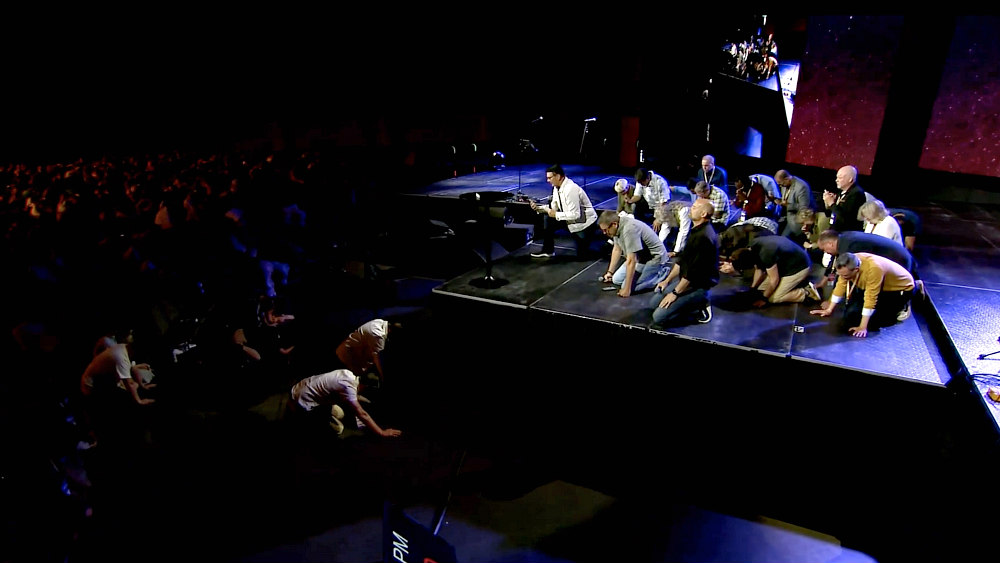
Church leaders at Foursquare’s annual gathering repent of the “family dysfunction” that has led to abusive leadership.

Church leaders at Foursquare’s annual gathering repent of the “family dysfunction” that has led to abusive leadership.

Christianity Today August 4, 2022
Screengrab / Foursquare Connection 2022

The International Church of the Foursquare Gospel has suspended a safeguarding team that was working with students who accused a former college president of manipulation, bullying, and harassment.

Members of the team—along with Foursquare ministers and former students at the affiliated school in Christiansburg, Virginia—were raising questions about how the Pentecostal denomination handled a third-party investigation into the allegations. Godly Response to Abuse in the Christian Environment (GRACE) found that Mike Larkin, president of Ignite Life Pacific University, misused his authority and that Foursquare failed to set up adequate structures of oversight and accountability.

But at the denomination’s national convention in June, ministers demanded to know why they hadn’t heard any specifics about GRACE’s report. They criticized board members for not taking abuse seriously enough and voted to recommend the 11-member safeguarding team be given more power and freedom from board interference. In late July, the board informed the team their work would be put on pause.

Larkin, a Los Angeles cop who became a charismatic minister in the 1980s, was a prominent figure in The Foursquare Church until he resigned from the Virginia school in 2019. Starting in the late 1990s, he served in the national leadership of the 100-year-old Pentecostal denomination with an estimated 255,000 regular attenders. Then Larkin turned his attention to discipleship and education. He launched Ignite at the flagship Foursquare school in Southern California in 2008. He called it a “reproducible, hands-on ministry where discipleship, academics, global ministry and local community outreach are all synchronized together.”

In 2011, the program moved to Christiansburg, Virginia, and became Ignite Academy. It later became Ignite Life Pacific College, then Ignite Life Pacific University and, today, Life Pacific University-Virginia, a satellite campus for the California school.

As he built the discipleship-focused education program, Larkin exerted a tremendous authority over students’ lives, the GRACE investigation shows. And he pushed and pressured them to give him control.

“The whole place was a competition for Mike’s attention, getting him to like you,” one former student told CT. “He would say, ‘I can snap my fingers and get you a job in Foursquare like that.’ He could guarantee you a job, because he had so many connections, or he could make sure you would never get a job. He threatened us with that all the time.”

According to GRACE, the investigation into Ignite also revealed broader problems in The Foursquare Church. The Pentecostal denomination has a “culture where there is unchecked power … ripe for misconduct,” the report said. And there is a charismatic theology of inspired leadership that can work against accountability and oversight.

“There’s a mentality of, ‘We don’t cover up, but we do cover leaders,’” former Foursquare vice president Tammy Dunahoo explained to investigators, according to a copy of the GRACE report obtained by CT. “We’ve had this ‘touch not mine anointed’ [approach]. … It has covered up a lot of stuff” (Ps. 105:15, KJV).

A former Ignite student speaking to investigators put it more bluntly: “Pastors are allowed to do whatever they want,” she said, “and do it in the name of God.”

Questions at the annual convention

The GRACE investigation concluded in February 2021. No. 1 on its list of recommendations: Foursquare should “respond to this report transparently and in a way that honors victims.”

More than a year later, as thousands of ministers gathered in Orlando, Florida, for the denomination’s annual meeting, Foursquare had not made any public statement about the investigation or acknowledged that anything went wrong at the Virginia school, which serves 100 to 200 students. Some at the convention expressed confusion about what had happened to Larkin—who had a high profile at past gatherings—and others raised concerns about reports he’d been paid $99,000 in severance.

“It’s not clear to me what happened,” Brian Butler, a Florida pastor, told CT. Butler, who identified himself as a friend of one of the victims of sexual harassment, asked who authorized the severance payment during an open forum with Foursquare board members. He was not happy with the answers.

“They were vague. They were evasive. They were defensive answers,” he said. “I was not very satisfied.”

Foursquare spokesman Brad Abare objected to the idea that the denomination hasn’t been forthcoming.

“The posture has been a sense of transparency—as much as possible,” he told CT.

Abare pointed to the three sessions at the convention devoted to the topic of pastoral abuse and open question-and-answer with board members.

At the annual meeting, the denomination’s national leaders talked about being open about faults and shortcomings. They described Foursquare as a family and said families needed to talk about issues and get stuff “out in the open.” And in one public session, recorded and posted online, the president and board members got on their knees on stage to ask God’s forgiveness.

“We have a family dysfunction,” Randy Remington, president of Foursquare, told the gathered ministers, noting the denomination will celebrate its 100th anniversary in 2023. “We have a family system that has allowed certain kinds of behaviors to go on for a long time. And the manifestation of that primarily has been in heavy handed, abusive—spiritually, emotionally abusive leadership. … We’re in a moment where God is saying, ‘I want you to tear down an idol.’”

The Foursquare Church board also released a statement of corporate repentance, saying, among other things, that the denomination “will not allow leaders to leave uncontested when there is clear evidence of abusive leadership.”

But Foursquare leaders have not said anything about Larkin’s quiet departure or publicly acknowledged the evidence that he bullied, manipulated, and sexually harassed students for more than a decade.

“They have gone totally silent,” said Heidi Cooper, a Foursquare minister who accused Larkin of sending her inappropriate, sexualized messages. “There hasn’t been one person from Foursquare leadership to even reach out to see how I’m doing since the convention. They also have still given no apology whatsoever to the Ignite community. I thought maybe they would handle the Ignite community differently, but it’s even worse.”

Students tried to get Foursquare to do something

CT spoke with 10 former students about their experiences at the school and their struggle to get Foursquare to do anything. They spoke on the condition that CT not publish their names, out of fear of retaliation against them or their families.

Larkin did not return multiple emails and phone calls requesting comment.

Some former students told CT they had been working with the Foursquare safeguarding team, an ad hoc group organized to respond to the issues raised by the GRACE investigation, before it was put on pause. They trusted the team leader, Foursquare minister Paul Kuzma, and had started conversations with him about having therapy sessions paid for by Foursquare.

Then in July 2022, the denomination’s board suddenly suspended the safeguarding team and sent former students an email inviting them to submit a request for a meeting with a board committee. The email said, “We hope that this serves as a tangible expression of our deep affection and genuine regard for the health and wellbeing of every person who lived, studied, or worked on the school campus.”

For the former students who spoke to CT, it did not seem like tangible evidence of genuine regard. It seemed like a new hurdle in an impossible process to get the denomination to care.

They have, over the years, reported Larkin’s behavior to Life Pacific University faculty and administrators, Ignite board members, Foursquare pastors, district supervisors, and national leaders. They never got anyone to open an investigation.

“Foursquare knew about it, and they did nothing,” one former student told CT. “That’s what makes me really really mad. They knew about this and turned a blind eye.”

Some students were told to submit to their spiritual authority. Others, that some people just weren’t a good fit for the discipleship-education model at Ignite. One was given a copy of a book to read on spiritual abuse.

The former students struggle, even years later, to understand why the denomination didn’t provide any substantial oversight of Ignite and why Larkin was allowed such complete control over the administration, teaching, chapel services, and spiritual discipleship of students at the school.

“If there had been proper checks and balances in place, Mike Larkin absolutely would not have been allowed to do what he was allowed to do,” said one student who left the school in 2019.

Another told CT that she begged leaders at the main campus of Life Pacific University in San Dimas, California, to do something a decade earlier, in 2009. She said they pointed to Larkin’s personal charisma and their understanding of charismatic authority.

“They kept saying ‘Mike is ordained by God. We have to side with Mike because Mike is ordained by God. Don’t talk against a leader, that’s sinful,’” she recalled. “And he was handsome. He was tall and handsome and an ex–police officer, and if Mike liked you, it was like Jesus Christ himself liked you.”

More invasive than they expected

The students who went to Ignite were invested in the idea of growing as Christians. Many of them came from Foursquare churches and hoped to become Foursquare ministers. The program they found in Virginia, however, was more invasive and more controlling than they expected.

At the start of school, former students said, the president would pull new students into his office for a private conversation. He asked female students about their relationship with their fathers, their dating history, and whether or not they had had sex.

“He would always ask about your relationships, your history,” one woman said. “And he asked, ‘How far would you go?’ I remember thinking, I guess this is normal?

Another, asked whether she was a virgin by the college president, recalled wondering, Is he allowed to have that information?

Larkin, in addition to his responsibilities running the school, also involved himself in students’ current romantic relationships, former students said. He would tell them whether he thought they should break up or get married, and when they got married, how quickly they should have children. He told several female students he understood why their boyfriends were attracted to them and made suggestions for how they could be more attractive to him.

He urged some women to dye their hair blond so they would look like Foursquare founder Aimee Semple McPherson.

“He’d say, ‘You’d be prettier if you lost weight’ and ‘You’d be prettier if you were blonde,’” one student recalled. “‘Have you thought about dying your hair?’”

Larkin also frequently used students in examples during his twice-weekly chapel sermons, sharing personal information told to him or another school authority in private. While he didn’t normally use students’ names, students at the small school often knew who he was talking about. He would describe students’ mental health issues, their struggles with school, struggles with sin, struggles with authority, and difficulty accepting his direction as God’s will for their lives.

Once, when several students decided to drop out, Larkin coached a staff member to preach a sermon in chapel on listening to God, former students said. The sermon illustrations included details shared only in private.

“They said anyone who is leaving is a liar,” recalled a student who was there. “Either you lied then about God calling you to Ignite or you’re lying because you’re running away now. One of the girls started sobbing in the middle of the sermon. I was just so angry.”

When students didn’t listen to Larkin or, worse, defied his authority, he would resort to anger. Students recalled bouts of yelling, screaming, and swearing. When two couples who were told they couldn’t date were caught going out as a group, Larkin pulled them aside, said, “This is how you made me feel,” and flipped them off.

When students made fun of Larkin and his wife with a meme, the college president screamed and threatened to take each of them into the parking lot to fist fight them. He said he wanted to cause them bodily harm for betraying him and that they were like Satan.

When one student recounted the story to GRACE, he said he couldn’t recall everything Larkin said but there was “an astronomical amount of cussing.”

Larkin told the investigators he didn’t say those things and they were “out of character” for him, but he regretted “those scenarios where I lowered myself to the level of peer.”

Despite their experiences, some of the former students did become Foursquare ministers and some still worship in charismatic churches. For others, though, the experience took a spiritual toll.

“I can’t go into a church,” one told CT. “The two times I tried, I had a panic attack both times. I can’t imagine sitting through a sermon and not feeling like I’m being manipulated.”

The students’ distress, stories of graduates leaving the faith, and reports of Larkin’s controlling behavior didn’t prompt national leaders to provide any additional oversight. In 2019, then-president Glenn Burris praised Larkin on the stage at the denomination’s annual gathering. He spoke about how the Virginia school was a fulfillment of prophecy.

GRACE found one occasion where the denomination insisted on increased oversight of Ignite. Foursquare put its own representatives on the Virginia school’s board of directors. The reason wasn’t abuse of authority or crossing lines with students, but Larkin’s failure to grow the school and develop its programs as quickly as he promised.

“Mike’s a very charismatic, visionary leader, but he just doesn’t follow through,” Burris explained to investigators. “The vision is just bigger than he’s able to produce.”

Foursquare leadership investigates Larkin

The denomination finally moved to investigate Larkin later in 2019, when Heidi Cooper, a Foursquare minister, told the vice president of the denomination, Tammy Dunahoo, that she would no longer serve as an occasional guest speaker at Ignite. She explained that Larkin had said sexually inappropriate things to her.

The comments, exchanged over Facebook Messenger over several years, included Larkin calling her a “hot drummer girl,” complimenting a dress, complimenting her feet, saying he’d like to give her a foot massage, saying he’d like to see her drunk, and saying that he missed her. Cooper said she didn’t know what Larkin intended and for a long time convinced herself the comments were awkward but not sexual harassment.

Cooper’s report prompted Dunahoo and Burris to interview Cooper and her husband, Jim, and then confront Larkin. Larkin denied being inappropriate and then insisted the conversations were consensual, according to the GRACE report. He attempted to argue Heidi was “no innocent party.” When the two top leaders pointed out that Larkin was the spiritual authority, however, he agreed he’d been stupid and apologized.

“I am asking for your forgiveness,” Larkin wrote in a letter obtained by GRACE and included in the report. “I understand that regardless of my intention, things that I said triggered confusion and caused pain.”

He stepped down at the end of 2019. Later, when interviewed by GRACE, however, he said he had taken more than his fair share of responsibility.

“If I’m the scapegoat in this, I’m the scapegoat in this and I accept it,” he told investigators. “Locker room talk. It wasn’t vulgar. It was never vulgar. And I’ll tell you something else too: It was never sexual.”

GRACE interviewed 28 people over the course of several months and submitted a 29-page report to the Foursquare board. Investigators concluded that Larkin abused his authority and “at minimum … crossed professional boundaries as a pastor.” The board reviewed the report and voted that it agreed with the findings in January 2021. Larkin’s credentials were revoked, and the board approved a draft of a public statement about the investigation.

The statement, obtained by CT, said there was an “unhealthy leadership culture” at Ignite, which “commonly exhibited toxicity, emotional misconduct, verbal aggression, and sexual harassment.” The board took responsibility for a lack of oversight and announced the formation of the safeguarding team, which would be led by Paul Kuzma and include Heidi and Jim Cooper.

No public statement

In the next three months, however, the board changed its decision. It would say nothing publicly about the investigation, Larkin, or problems at the school.

In a letter to the Coopers obtained by CT, the board said it would have to “agree to disagree” with Foursquare ministers who believed transparency was an important part of fixing a culture of abuse.

“Publicly making a statement about specific people or situations is not the way forward for Foursquare,” the letter said.

At the annual convention at the end of May and start of June 2022, ministers asked questions about Larkin and GRACE’s investigation, according to multiple people who were there. Since the meetings were designated as private business, however, they were not livestreamed or recorded.

The meetings were sometimes tense, those who attended said. At a question-and-answer session with the board, one board member said on stage that the denomination could not respond to everyone who was ever offended. Kuzma, the head of the safeguarding committee, responded that they weren’t talking about offense, but abuse. Some ministers in the room cheered and applauded.

In open session, the convention body passed a motion recommending the board empower the safeguarding team to operate without board or staff interference. It passed overwhelmingly, people in attendance said. It was not binding, however. The convention can only make recommendations to the board.

The following month, the 11 members of the safeguarding team were notified that their work would be “paused,” with roles and makeup of the team reevaluated. Foursquare then announced that a new board task force would be overseeing the denomination’s “journey toward health, free of leadership abuse.”

According to the denomination’s spokesman, the move to reevaluate and reorganize the safeguarding team was in keeping with the “spirit of the motion” passed at the convention, despite the clause about interference.

“The idea is not taking away the potential for victim advocacy and support,” Abare said. “The idea is to get the board to design the structure and just to get their head and hands around how this is going to be designed.”

Leadership has, according to Abare, made abuse a high priority in the past few years. The church’s concern for victims should be apparent.

“Our whole focus for the last few years has been ‘more and growing leaders,’ but it only works if the more and growing leaders are healthy,” he said. “We don’t want to multiply an unhealthy culture.”

Brian Butler, the minister who is friends with Jim and Heidi Cooper and asked about the $99,000 paid to Larkin, wasn’t happy with the decision. The denomination should be transparent, he said. He believes Foursquare national leadership isn’t living up to what it teaches.

“They’re looking at a corporate level,” he told CT. “They’re putting their reputation over everything—over their relationship with the Coopers, the victims from the school, and their relationship with the Lord.”

Loving our Kentucky Neighbors as Ourselves

The recent flooding crisis in my home state is an opportunity to serve our sisters and brothers like never before.

A rescue team from the Jackson Fire Department assists people out of floodwaters downtown in Jackson, Kentucky.

A rescue team from the Jackson Fire Department assists people out of floodwaters downtown in Jackson, Kentucky.

Christianity Today August 3, 2022
Michael Swensen / Stringer / Getty

In recent days, severe floods have devastated several communities in the hills and mountains of Southeastern Kentucky—where I was born, raised, and lived for 19 years.

Several of the towns and communities where I once played sports, attended school, went to church, hung out with friends, and traveled—places where I still have close family, friends, and former neighbors—are now experiencing incomprehensible suffering.

Not only have precious lives been lost, but schools are flooded, homes destroyed, livelihoods ruined, businesses upended, and local church structures broken or demolished. With the death toll on the rise, numerous residents still missing, and even more rain expected in the days to come, the floods have worsened an already tenuous social and economic situation for many.

On the one hand, I’m trying to heed Paul’s exhortation to “pray continually” for the residents in my native land. On the other hand, as Paul says in Romans 8:26, I “do not know what [I] ought to pray for” because the suffering is so immense.

My heart is broken and filled with grief knowing that so many residents have lost everything. Nevertheless, I cry out to God to shine his mercy and grace and meet all their needs out of his abundance, through the kindness and generosity of his image bearers.

My home church in Hindman, Kentucky—one of the towns significantly impacted by the recent floods—taught me the gospel of Jesus Christ many years ago when I was a young Christian, modeling the importance of trusting God and honoring Christ in all circumstances in life.

The faithful saints in our congregation taught me rich truths that impacted me early in my young Christian faith and continue to sustain my and my family’s faith today. One such truth is found in that famous Baptist hymn: “Trust and obey, for there’s no other way / To be happy in Jesus, but to trust and obey.”

As a Christian New Testament scholar and a minister of the gospel of Jesus Christ, I know the Bible teaches that God cares deeply about the well-being of his creation and about those whom he created in his image (Gen. 1–2). I also know that creation currently groans in agony, eagerly awaiting its redemption, and that this redemption will come when Jesus returns (Rom. 8:19–23).

I know that when Jesus comes a second time, God promises to renew this creation in Christ—to bring a new creation down from heaven and restore everything Adam and Eve lost in the Garden of Eden when they sinned (Gen. 3:15; Isa. 65:17–25). I firmly believe these biblical truths, and I have committed my life to them.

In times like these, however, I cannot help but ask the unresolved question that I and so many ask or think whenever bad things happen to good people: “Why, God?” Why would a good and loving God allow two natural disasters to plague Kentucky in a matter of months?

Last December, deadly tornadoes swept through the western part of the state, and now hundreds of people in Eastern Kentucky are losing life and property to record flooding. The cries for help, increase in death toll, and multitude of uncertainties that many from my native land now face have stirred feelings of anger, fear, sadness, and grief, as well as unanswerable questions—a sense of deep lament analogous to the ones we read in Ecclesiastes and the Psalms.

I am currently preparing to travel from Louisville, where I’ve lived for the past 23 years, to serve residents impacted by the floods in Eastern Kentucky. In the meantime, I’ve heard of numerous efforts in my city and across the country to help our neighbors there. Not only that, but many fellow residents in Eastern Kentucky—along with people all over the world—are taking the opportunity to help those impacted by the disaster as they can.

These efforts add needed joy to my sorrow and remind me of an important lesson we often forget in times of grief—a truth I learned from my church in Eastern Kentucky many years ago: that believers are called to love God and love our neighbors, our fellow image bearers, as ourselves.

In Luke 10:25–37, Jesus teaches a powerful message about loving one’s neighbor as oneself in response to a theological test regarding eternal life from an expert in the law of Moses. In response to “What must I do to inherit eternal life?” (v. 25), Jesus confirms that one must love God and love neighbor as oneself (vv. 27–28).

Jesus’ point isn’t that loving one’s neighbor grants one eternal life, as the Gospel of John clearly states that eternal life comes only to those who put their faith in Jesus. Rather, his point is that those who love God will also love their neighbors.

Paul makes the same case to the churches of Galatia. He emphatically says we are justified by faith alone in Christ alone (Gal. 2:16). Yet he also strongly states those who have been justified by faith alone in Christ alone must love their neighbors as themselves and manifest the fruit of the Spirit, one of which is love (5:13–14, 22).

But Jesus’ answer does not satisfy the expert in the Mosaic law, and so he asks, “Who is my neighbor?” Jesus responds with the story of the Good Samaritan who sacrificially helped a wounded man on the road traveling from Jerusalem to Jericho.

This is a powerful parable for many reasons, particularly given the hostile history between Jews and Samaritans and their social estrangement. It tells us that Christ’s followers are called to love our neighbors as ourselves and that every human being is our neighbor—not just those who live in our neighborhoods or with whom we might have much in common.

Likewise, many Eastern Kentuckians—who themselves have lost much or everything—are loving their neighbors well and beautifully illustrating the essence of the Good Samaritan story. Such men and women, many of them devout Christians, are demonstrating a resilient commitment to their faith and their homeland in the face of great loss and devastation.

I have heard heartbreaking yet inspiring stories of love, personal sacrifice, heroism, and renewed trust in Christ amid profound loss and pain. These beautiful stories of faith, family, friendships, and neighborly love emerge daily in the face of unbearable grief, tragedy, and trauma.

There were many economic challenges in Eastern Kentucky prior to these floods, and there will be even more in the days ahead. Resources are few in many places throughout the area, yet generosity, compassion, kindness, and love are in abundance there. Such a contrast shows the world that the good people of Eastern Kentucky know how to love their neighbors as themselves, even in times of great loss.

These image bearers in Eastern Kentucky represent the very best of what it means to love our neighbors as ourselves. However, they will continue to need the love of their neighbors from all over the nation in the many days, months, and years to come.

Eastern Kentucky needs our prayers, but it also needs significant financial, material, and structural support. The economic obstacles now facing many of its residents will be impossible for them to bear by themselves, especially those who have lost absolutely everything.

I humbly ask on behalf of my homeland for people across the country to think of ways they can support and love our neighbors in Eastern Kentucky as they try to rebuild their lives in the coming days, weeks, months, and years. As one of my family members—a resident in one of the hardest-hit counties in the area—recently said to me, “Every little bit helps.”

Jarvis J. Williams, PhD, is an associate professor of New Testament interpretation at the Southern Baptist Theological Seminary.

News

With an Eye to Mission and Money, More Evangelical Universities Go Green

New financing mechanisms reduce the cost of reducing emissions.

Workers install a solar panel.

Workers install a solar panel.

Christianity Today August 3, 2022
Alex Wong / Getty Images

There are two reasons to put solar panels on the roofs of Calvin University.

One, renewable energy can provide power for the private Christian campus in Grand Rapids, Michigan, without adding to the atmospheric concentrations of carbon dioxide, methane, chlorofluorocarbons, and nitrous oxide that are driving climate change.

Two, it will save the school some money.

At Calvin, the environmental reason is primary. The budgetary help is a bonus.

“I think taking care of the planet is a prerequisite to being a Christian,” Tim Fennema, vice president for administration and finance, told CT. “And as a Christian university, it’s something we want to do.”

Calvin is on a mission to be carbon neutral by 2057. The school got a little closer last month when it announced a partnership with the Indiana-based Sun FundED to come up with a plan to install solar arrays on university buildings, offsetting the high-carbon energy sources Calvin currently uses to heat, cool, and power the campus.

Solar panels on top of the buildings will be a visible sign to the Calvin community that they’re taking environmental concerns seriously, according to Fennema.

That sign is economically feasible because of advancements in the financing of renewable energy projects. Calvin won’t have to go into debt or ask donors to raise the funds for alternative energy. Sun FundED, a private company backed by venture capital, is a tax-equity investment. It will provide the solar power array to Calvin with no upfront costs and then leverage tax credits that aren’t available to the nonprofit educational institution.

“It allows us to do it on a larger scale on campus than we could have ever done by ourselves,” Fennema said.

The school will pay Sun FundED a service fee that covers the company’s costs, and Sun FundED will pass the benefits of the tax credits to investors.

“When the equity investor comes in, they’re getting all of their tax credits, so they’re offsetting their tax exposure and they’re getting all of the depreciation in year one,” Sun FundED cofounder Kelly Hipskind explained. “They’re essentially right out of the gate making their money back.”

Investors will receive a portion of the profits in subsequent years, while Calvin, like other institutions that have done this, will pay less in service fees than it would have for fossil-fuel-generated electricity.

The system, according to Hipskind, is designed to address the environmental issue and cost management concerns while still benefiting investors.

As a Christian businessman who is concerned about climate change, Hipskind believes it’s possible to meet the needs of the market and the environment. Both his parents were teachers, so he also knew challenges educational institutions face. Thinking about those three factors together led him and his business partner, Patrick Poer, to launch a for-profit company providing solar power for schools.

He recalls it, now, a bit like Genesis 1:3:

“And God said, ‘Hey, how about solar?’” Hipskind joked. “I heard at the dinner table the needs and challenges of education, and then we said, ‘How can we impact the classroom and the bottom line?’”

Sun FundED, founded in 2018, is currently working with about 50 educational institutions in various stages of the path to solar energy. Hipskind estimates the systems they’ve installed have already saved educational institutions about $50 million.

The environmental savings are harder to put a figure on, but for Christian colleges and universities, they seem more significant.

“We know that it can help lower costs and keep tuition affordable for our students in the long run—or at least be an aid in that. But also we know it’s just the right thing to do from an environmental standpoint,” said John Jones, vice president for operations at Indiana Wesleyan University (IWU).

The evangelical school in Marion, Indiana, started looking at solar in earnest in 2019. Like Calvin, IWU officials were concerned about the initial outlay and whether renewable energy would be affordable. But administrators were motivated by a concern for creation and encouraged by student demands that the school take climate change seriously.

“We know that people that are going to walk our campuses in the future are going to expect that,” Jones said. “We need to be prepared for that.”

With Sun FundED’s plan, going green seemed like the right thing to do not only in the long term but also right away. The school has 2.3 million square feet of buildings and could save $1 million the first year the solar panels are in operation.

“It takes a lot of energy to run this campus. Anything we can do to minimize that cost is helpful,” Jones said.

IWU is currently working with Sun FundED to map out which buildings will best work for solar arrays. They are also considering creating a solar farm—a field of panels absorbing energy from the sun—on university property.

While Jones is eager to see these plans become a reality and pleased with the progress thus far, there have been some roadblocks on the way. In Grant County, where the university is located, there have been some questions and concerns from the community and objections from the local utility companies.

“Solar is somewhat new to our county, so there are a lot of emotions around solar and concerns about solar,” Jones said. “Some of them are real concerns, and some of them … may not have any legs.”

Some in the community don’t like the idea of a solar field taking up space that could be used to grow crops. Others have raised issues about how property values will be impacted by solar panel fields in their backyard. Some residents worry the panels will reflect light (though they are designed to absorb it) and cause a glare.

Jones, other university officials, and advocates for solar energy are doing their best to answer those concerns and advocate for alternative power. Talking to the community unfamiliar with solar energy is part of the process.

Jones is confident Grant County residents will be persuaded, like he’s been persuaded, that this is the best way forward.

“It is the future, so not doing something with renewable energy … is probably shortsighted on anybody’s part,” he said.

In Mechanicsburg, Pennsylvania, Messiah University is seeing the results of renewable energy right now. The school has reduced its carbon emissions by 38 percent since 2008.

“We’re inching up towards the 40 percent reduction mark,” Brandon Hoover, Messiah’s director of sustainability, told CT. “We have a goal of 50 percent reduction by 2025.”

Creation care has been a priority at the school for nearly a decade. The university has signed onto the American College and University Presidents’ Climate Commitment, which includes a goal of complete carbon neutrality by 2050.

The speed of this transition is historic, Hoover said. Previous transitions in energy sources—from wood to coal or wind to steam power—have taken humans around 100 years.

“What we’re talking about doing is making that transition in 30 years,” Hoover said. “It’s never been done before.”

But it does seem possible with rapid advancements in technology. And right now it’s actually saving the school money. Messiah pays less for utilities than it did eight years ago, despite adding about 90,000 square feet of buildings. The staff has developed a solar thermal system that heats the water for 500 students who live on campus and paid close attention to energy efficiency.

“The savings are there,” said Messiah’s facility services director Bradley Markley.

And that’s just a bonus.

The school is also fulfilling its Christian mission. At Messiah, concern about climate change connects to the school’s Brethren tradition, with its historic commitment to peace. Climate change and energy shortages lead to violence, Hoover said. According to the UN, an annual average of 21.5 million people have been displaced by extreme weather events since 2008, and if weather extremes worsen as expected, the consequences for human suffering could be dire.

Christ’s call for his followers to be peacemakers also applies to creation care.

“We see reconciliation as not just between people and people, but people and place,” Hoover said.

Across the country, more Christian schools are working out plans to become that kind of place—where reconciliation shines like the sun, absorbed into solar panels on university roofs.

Dalit Christians Fill the Indian Church’s Pews. Not Its Pulpits.

Persistent caste discrimination holds believers from India’s most vulnerable community back.

Indian Dalit Christians sit in the rain during a protest for equal rights.

Indian Dalit Christians sit in the rain during a protest for equal rights.

Christianity Today August 3, 2022
Raveendran / Staff / Getty

Prem Chand has led a church for Dalit and non-Dalit Christians in India’s most populous state of Uttar Pradesh for years. But despite his title and experience, he’s learned one painful lesson over and over.

“A Dalit always stays a Dalit, an outcast, even if he is educated or has a good economic status,” he said. “Both believers and nonbelievers do not respect a Dalit pastor as they would a high-caste Hindu convert pastor.”

Despite making up a significant number of the Christian population—both Catholic and Protestant—Dalit Christians have historically been shut out from church leadership. As Chand knows firsthand, many Christian Dalits face persistent caste discrimination in their congregations. Outside the church, the government denies them affirmative action benefits available to Hindu Dalits, keeping millions of believers stymied in poverty and shut out from formal education.

To this day, Christians from different castes worship in different locations and bury their dead in separate graveyards in some Southern Indian congregations. Dalit believers face less overt discrimination in the northern and central parts of the country, if only because many Christians in these regions are from the Dalit or Tribal background themselves. Yet a discriminatory line remains, even though some parts of community life are shared.

“For generations people have been living following the set rules of caste, and it does not leave an individual even after they start to follow Christ,” said Chand. “Even after many years of faith and associating superficially with Dalits, when it comes to marrying their children, high-caste Christians will search for brides and grooms who belong to their own castes and not go for intercaste marriages.”

Efforts are being made to address the discrimination, but no church or Christian leader has committed to any binding resolutions. These are only individual church efforts, and there is yet a long way to go.

“When a Dalit hears [Genesis 1:27], it is the first time in their entire life that they feel like a human,” said Ram Surat, an activist and Dalit scholar, who prefers to be addressed as a Balijan or Mulnivasi Christian (see sidebar). “But it is heart wrenching when a Dalit converts to Christianity to gain dignity and to get away from the grip of untouchability and the caste system but finds that she or he continues to face discrimination, thus marginalizing them twice with respect to both caste and religion.”


The word itself comes from the Sanskrit word , which means “broken or scattered,” and refers to the oppression that the so-called untouchables or outcasts faced.

“Essentially Dalit is a self-designated term and is an assertion of an anticaste position, of identity and of struggle against the oppression in a society marred by Brahmanical caste system,” said Ram Surat.

Prior to independence, the government referred to the community as the Scheduled Caste.

Today, while many choose to self-identify as Dalit, some in the community prefer words like the political term (the majority) or (original natives of the land). Followers of the ideology of 19th-century Hindu social reformer Jyotiba Phule refer to themselves as , after King Bali, whom Phule used as a symbol against caste discrimination and exploitation.

Left out

Numerous Indian Christians come from Dalit and Tribal backgrounds, many drawn to the gospel as a means of fleeing the Hindu social order’s oppressive caste system.

In 2008, a government report by the National Commission for Minorities stated that 2.4 million Dalits are Christians but added, “Most scholars and activists put the proportion at between 50 and 75 percent of all Indian Christians, although it is not possible to corroborate these claims in any decisive manner due to the difficulty of the category being officially unrecognized.” Today, Dalits make up one third of India’s Christian population, according to Pew Research Center data released in 2021.

For years, Indians from other castes considered Dalits so impure that their touch or even shadow was said to pollute other groups in the Hindu social order—a belief that justified expelling them from public life. Though the practice of untouchability was legally abolished by the Constitution of India, it continues to be practiced in India today and manifests itself in regular physical and structural violence against the Dalits.

Every 18 minutes, a crime is committed against a Dalit, leading to a disproportionate number of Dalit murder, rape, and arson victims. More than half the children in the community are malnourished, and 83 per 1,000 children die before their first birthday, noted a Catholic Bishops’ Conference of India (CBCI) report from 2016.

Dalit households often lack basic facilities like access to water, denied to them by the high castes living in the vicinity, notes the report. Public health workers refuse to visit Dalit homes. Police stations often refuse entry for Dalits, and they are made to sit separately while eating in school or at public gatherings.

In an attempt to circumvent such discrimination, many Dalits (from all religious backgrounds) have exchanged their easily recognizable surnames for more caste-neutral or high-caste ones. After changing their names, many move away from the areas where they grew up to avoid being identified.

While the Indian Constitution officially offers affirmation action (or reservations) to Dalits, these measures apply only to Dalits from Hindu, Buddhist, or Sikh communities and exclude Christians and Muslims.

In 2008, one government agency published a report arguing for equal treatment for all Dalit members. Several Christian bodies, like the CBCI, had petitioned the Supreme Court to demand justice for Dalit Christians and Muslims so reservation benefits could be restored. Filed in 2004, the petition is still pending.

“As of today, Dalit Christians lack education, equal opportunities, and most do not own any agricultural land,” said Bishop Pradeep Kumar Samantaroy of the Church of North India (CNI).

Though many Dalit Christians have embraced the faith for generations, conversion to Christianity has brought little change in their social or economic status—something that even the Supreme Court of India observed.

“Conversion does not change one’s status or caste, though the heart and mind may change,” said Surat. “I do not notice any economic leaps in the lives of Dalit converts. They should be getting reservations.”

An unequal church life

Throughout the history of the Indian Church, Christian leaders such as Saint Devasahayam, theologians Arvind P. Nirmal and James Massey, and others have been on the forefront of challenging these abuses.

Yet, according to Surat, most Christians, especially those not from the Dalit community, find it embarrassing to admit that caste discrimination is present in the church and Christian community at large.

Mahesh (who asked to be referred to only by his first name) is a Dalit pastor who leads 32 prayer houses in four locations in the eastern state of Bihar and works exclusively among the Dalit community. He says that he rarely shares the gospel with the non-Dalits.

“They hear the gospel and get convinced. But when they come to attend church services, they are not able to accept the fact that Christ equalizes them with the Dalit sitting next to them, and thus they stop coming to church,” he said.

The fact that the church radically upends non-Dalits’ social circle makes it very challenging to do evangelism to this community, says Sanjay Kumar, a Dalit pastor who serves in the states of Uttar Pradesh and Bihar.

“They are hesitant as to how the villagers and their nonbelieving families would react to their faith in Christ,” he said. “They directly say that ‘accepting Christ would mean that we will have to rub shoulders with the Dalit-background believers, intermarry, and such a binding is problematic for us.’”

In recent years, because of the rise of Dalit theology and rights movements within the church, Christian leaders in mainline churches, like the Methodist Church in India and CNI in Delhi, have sought for more equality in church life.

“There is no distinction in the sitting arrangements in the church or eating arrangements. Neither is the church hesitant in giving them church memberships,” said Surat. But “though there is certainly an improvement, it is not sufficient.”

Whose problem to solve?

Protestant Christian leaders in India acknowledge Dalit presence and participation in leadership roles but confess that many of them are not comfortable identifying themselves publicly as Dalit. Some, however, like former CNI bishop Karam Masih, proudly wear their Dalit identity and are activists for the cause.

“If I start to name pastors and leaders from Dalit background, I can go on with a long list, but I would not like to name anybody unless they themselves are comfortable in accepting and identifying with their roots,” said Surat.

Dalit representation in Catholic leadership is tiny. “Of the country’s 31 archbishops, only two are Dalits, and of the 215 bishops, only 11 are Dalits,” Crux noted in a recent report.

Still, many cheered when, earlier this year, Pope Francis nominated Anthony Poola, the previous Archbishop of Hyderabad, to become the Catholic church’s first Dalit cardinal.

“This is good news for Dalit Catholics and for the entire Church in India,” Poola told AsiaNews.

For years, few non-Dalit Christians have seen lack of Dalit leadership representation as a problem, says Samantaroy, pointing out the lack of initiative by the Christian community at large in bridging the gap.

“The church has neglected their own community by only seeking support from the government and from outside. We [Christians] have prime institutions both in health care and education serving the country, but many of our own Dalit Christians did not have access to such education,” he said. “I don’t see that we have made conscious efforts to groom Dalits to leadership.”

Conscious efforts have begun in churches to build up Dalit leadership, but nearly every change exists only at the individual level, says S. Duraiswamy, the senior pastor at Chennai Diocese of the Evangelical Church of India.

“In the local church committees, we make sure that Dalits are included in church decision-making committees and that there is a balance between the Dalit representation and others,” he said.

A growing number of Dalit Christians are seeking higher education, cognizant that university is often a vehicle of upward mobility at least within the Christian community.

At Baring Union Christian College in Punjab, “five years ago there were less than 25 total Dalit students receiving formal training in the college, but today we have 100 Dalit students,” said Samantaroy.

Many of the new independent churches and house churches throughout India are being led by Christians from Dalit background, but their experiences continue to point toward discrimination.

Congregations under Dalit pastoral leadership may struggle to stay afloat because their congregations are economically weak themselves and lack support from outside the church, says Chand.

Chand once approached a high-caste believer for some work-related advice.

“That man asked me my name and confirmed from me if I was a Dalit. Immediately his way of talking with me changed. When I tried to place my views before him as we discussed, he said, ‘Will you [a Dalit] teach me now?’” said Chand.

There’s little hope for a strong Indian church if the disunity among Dalit Christians and their non-Dalit counterparts persists, says Surat.

“If [this discrimination] continues to exist, then church will not make any progress. When they come together [to] the table to discuss the [Christian] community-related larger issues, they would be divided,” he said. “The division based on caste is very dangerous. It will divide the church and make it very weak.”

Announcing Christianity Today’s 2022 International Essay Contest

We’re looking for wisdom, perspective, and theological understanding from those writing in Spanish, Portuguese, Chinese, Indonesian, and French.

Christianity Today August 3, 2022
Illustration by Rick Szuecs / Source Images: Ron Lach / Pexels / Flickr / CCO

At Christianity Today, we believe that God’s Word has specific truths for the challenges and struggles we’re confronting in this day and age. Further, we recognize that each culture reads the Bible through a particular lens and offers unique insights into how we can understand it. We have much to learn from believers of different cultural backgrounds and how they analyze and apply Scripture in their respective contexts.

With this in mind, we’re announcing our second-annual international essay contest. We want those who write in Portuguese, Spanish, French, Indonesian, or Chinese to send us your thoughts in that language. The articles will be judged by three to five Christian leaders and theologians from regions that speak this language. The winning essays will then be translated into English and published on Christianity Today’s website in both languages.

This year, we’re asking writers to pick a verse, chapter, or story from Genesis, Job, 1 or 2 Corinthians, or Colossians and apply it to an issue that you or your society is facing in your specific context. In particular, we are looking for a strong reverence for Scripture in combination with a fresh, surprising application of this verse. The piece should exhort your neighbors and fellow citizens. Writers should also be mindful that it will be read by the global church.

We’re interested in reading unique arguments that communicate the gospel's perspective on a particular issue in a generous and thoughtful tone and will make readers eager to open up their Bibles and read more. First-person articles should apply your personal experience to a broader concept of faith and biblical truth.

Prizes

We will have one winner in each language: Spanish, Portuguese, French, Bahasa Indonesian. We will have one winner for simplified Chinese and one winner for traditional Chinese.

This year’s contest winners will win $250 and a three-year Christianity Today print and online subscription. They will also have their essay published on Christianity Today’s website.

If your submission does not win, we may still publish it. In submitting your piece, you agree to have your essay considered by Christianity Today’s editors for future publication.

Details and submission information for the following languages:

Theology

Just Laws Alone Won’t Save Us

In this polarized moment, strong legislation isn’t a substitute for wise and discerning leaders.

Christianity Today August 3, 2022
Illustration by Mallory Rentsch / Source Images: WikiMedia Commons

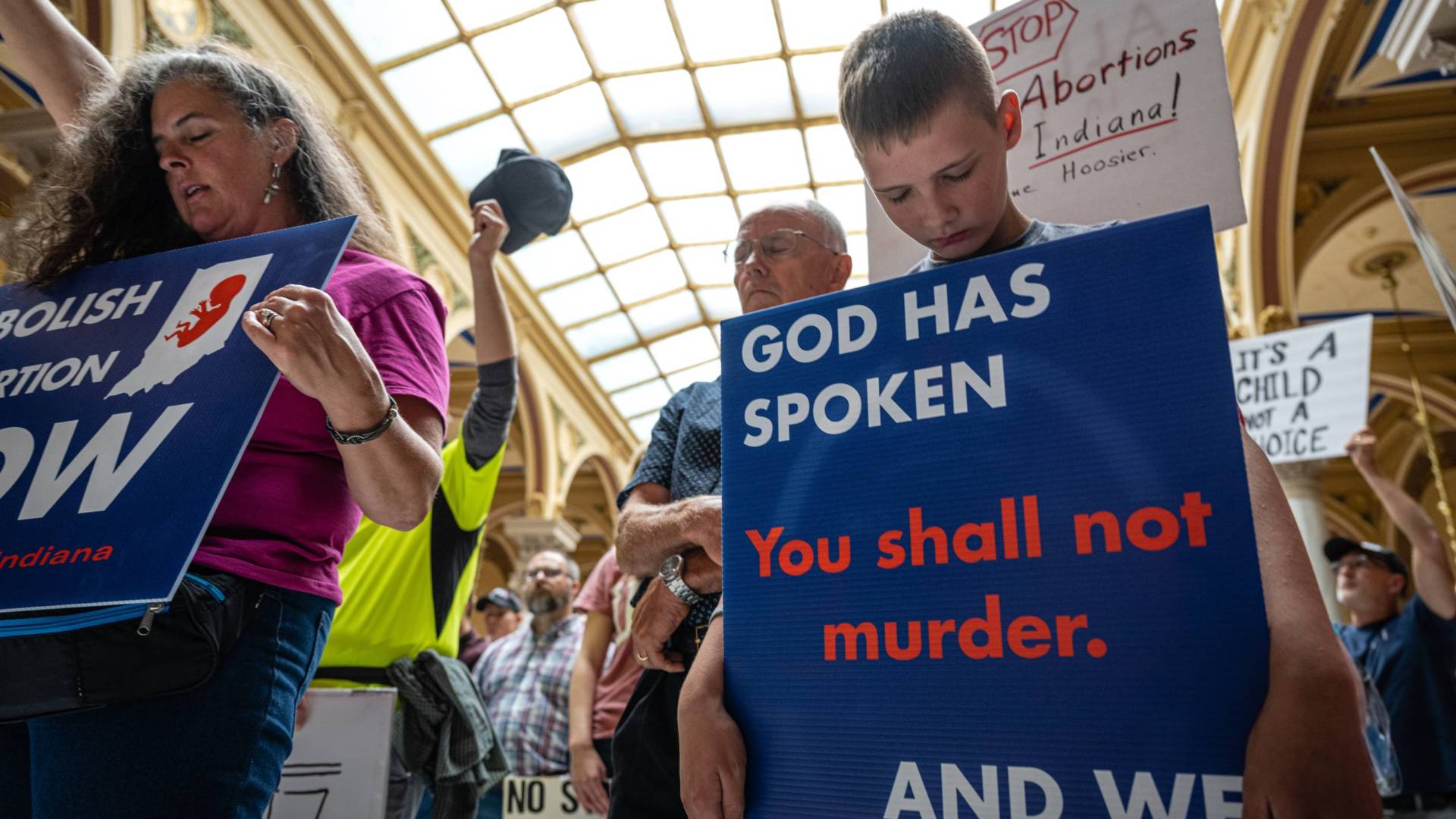
This month, the United States Senate is considering a bill to protect same-sex couples’ right to marry. Seven years have passed since the historic Obergefell decision, so these initiatives might look like grandstanding or redundant efforts. But in late June, the Supreme Court overturned the 1973 Roe v. Wade ruling, hinting at the possibility of revisiting other cases.

The Dobbs ruling unleashed a flurry of legislation, as lawmakers rush to codify questions that had previously been settled through the courts. While Democrats at the federal level are working to enshrine same-sex marriage, Republicans in conservative states are working to restrict and prohibit elective abortion.

A political environment that didn’t seem like it could get any more polarized suddenly has.

The swell of policy initiatives has also highlighted the need for discerning leaders—those who know not just how to win elections and judicial seats but how best to rule. Leaders like King Solomon.

Solomon assumes the throne of Israel after a season of political instability that included an attempted coup, a contested transfer of power, a political rival refusing to concede defeat, family drama, and hefty doses of palace intrigue. According to 2 Chronicles 1:1, Solomon eventually “strengthen[s] his hold on his kingdom” (CSB).

But once in power, he faces a new dilemma and asks himself: Once I secure the ability to reign, how should I reign? Once I gain power, what do I do with it?

Rather than lean on his own understanding, Solomon seeks the face of God, offering burnt sacrifices to inquire before the Lord. In response, God promises to grant him whatever he wants. Solomon famously asks for wisdom and knowledge:

Now, Lord God, let your promise to my father David be confirmed. … Give me wisdom and knowledge, that I may lead this people, for who is able to govern this great people of yours? (2 Chron. 1:9–10)

Solomon’s request is striking in part because he seems to understand that ruling is not simply a matter of implementing your own agenda or creating laws that enshrine certain positions. As king, Solomon is responsible to govern, and to do so, he needs a different set of skills than the ones that got him into power.

He knows that wisdom is more than holding the right positions. It involves knowing how to wield power for the good of the nation. It means applying policy in a lived context that has hundreds of variables and complications. And it means shepherding a group of people through the unknown.

Consider the most famous example of Solomon’s wisdom. First Kings 3 tells the story of two mothers who bring a case before him. Both had recently given birth, but one of the babies had died in the night. Both are now claiming to be the mother of the living child.

As the women stand arguing before him, Solomon calls for a sword. “Cut the living child in two,” he orders, “and give half to one and half to the other” (v. 25). Hearing this, one woman begs the king to stop and relinquishes her claim, preferring the child be alive in her rival’s arms than massacred. The other woman is unfazed by the gruesomeness of Solomon’s solution.

Suddenly, the real mother is revealed. And Solomon’s wisdom is also exposed. He understands not just the law but human nature; he reaches a just ruling by going beyond the law to the truth not fully captured by the law.

In our polarized age, part of the reason we don’t have wise leaders is because we often settle for law when we need something more. While enacting and adjudicating just laws is necessary work, it’s also limited work and not sufficient on its own.

Even more startling, a society so deeply convinced of the sufficiency of lawmaking will soon find itself content with a legalistic approach to other areas of life, counting on law to accomplish what only wisdom can.

Unfortunately, that method can neither establish goodness nor adequately punish evil. After all, if law is our hope, those who keep themselves within its letter cannot be condemned even if their actions harm others.

While our legislative systems play an essential, irreplaceable role, we need something beyond law. We need something beyond ourselves. We need what only God can give.

In James 1, the apostle writes, “If any of you lacks wisdom, you should ask God, who gives generously to all without finding fault, and it will be given to you” (v. 5).

Echoing the request of Solomon, we would do well to fall on our faces before God and humbly beg him for the wisdom we need as a nation in this moment. This is especially true for those of us who follow Jesus Christ, the wisdom of God made flesh.

Hannah Anderson is the author of Made for More, All That’s Good, and Humble Roots: How Humility Grounds and Nourishes Your Soul.

Ideas

White Southern Evangelicals Are Leaving the Church

Contributor

Data suggests that, when their attendance drops, these nominal Christians become hyper-individualistic, devoted to law and order, cynical about systems, and distrustful of others.

Christianity Today August 2, 2022
Illustration by Mallory Rentsch / Source Images: Brett Holmes Photography / sterlsev / Getty

What happens to American politics and culture when white Southerners in the Bible Belt quit attending church? What religious views do they adopt? How do they vote? And will the mass exodus from church that already seems to be occurring in the South make the country less politically polarized—or more?

These questions are particularly relevant this summer because of two major news developments: the sex abuse crisis in the Southern Baptist Convention and the reversal of Roe v. Wade, which led to state restrictions that made abortion almost completely illegal the South and Midwest.

Twenty years ago, revelations of the Catholic church’s sex abuse crisis accelerated a massive exodus of white northeastern Catholics that was already well underway, and it contributed to a secularization of New England culture and politics. A region that up until the late 20th century had some of the nation’s strictest policies on abortion and divorce became a leader in expanding abortion access and legalizing same-sex marriage.

The same phenomenon occurred more recently in Ireland, in the wake of that country’s clerical sex abuse crisis. A nation that had some of the highest church attendance rates and strictest abortion and marriage policies in Europe legalized both abortion and same-sex marriage, even as church attendance rates plummeted.

It might be easy to imagine, then, that something similar could occur in the southern Bible Belt. As in New England immediately before news of the Catholic church’s sex abuse crisis broke, church attendance rates in the South were already falling before the SBC crisis was fully publicized.

Already, 30 percent of Southern Baptists “seldom” or “never” attend church, according to the Pew Research Center’s Religious Landscape Survey. The southern Bible Belt is quickly becoming a region of unchurched or lapsed Protestants who may still hang onto their evangelical identity to some extent but who don’t think going to church is necessary.

But these de-churched Protestants are not adopting the political views of de-churched Catholics in the northeast. Instead, they remain strongly individualistic Republicans who still oppose abortion, even if some of their other views differ from those of their churched counterparts. A careful study of these non-churchgoing white Southerners might offer a clue as to what southern politics will look like during the next decade.

What the data shows

I did a careful analysis of data from the 2018 General Social Survey (GSS) to find out the political and religious views of unchurched southern whites who still identify as Protestant. The GSS asks thousands of respondents from across the country a wide range of questions about politics, religion, social views, and behavior.

By running the data through a “similar statistical software program” (SPSS), it’s possible to isolate responses for particular groups of people—say, white male Protestants in the Southeast who attend church only once a year or less, or New England Catholics who attend church weekly and vote Democratic.

The survey includes more than a hundred questions on a wide range of topics, so if one wanted to look at the questions, say, about racial attitudes or prayer practices, it’s easy to compare the differences between particular groups of people. Political scientists and other social science researchers do this all the time. (As a historian, I hadn’t done much of this analysis until recently, but I’m now finding it a very useful tool in my research.)

What do the 2018 GSS data reveal about white Southerners who still identify as Protestant but who never attend church or go no more than once a year?

First, they’re numerous: According to the GSS survey, 45 percent of white Southerners self-reported attending church no more than once a year. If “lapsed evangelical Protestant” were a denomination, it would be by far the largest religious body in the South.

Second, they’re not Democrats. Among the non-churchgoers (or once-a-year attenders) who voted in the 2016 election, support for Donald Trump outnumbered support for Hillary Clinton by more than 2 to 1.

They’re also deeply committed to “colorblind” conservatism and the politics of law and order. Sixty-six percent said that the courts in their area did not deal “harshly enough” with criminals; only 11 percent said the courts dealt “too harshly.” Seventy-seven percent agreed that it was “sometimes necessary to discipline a child with a good, hard spanking.”

They opposed “preferential hiring” for Blacks by a margin of more than 4 to 1. Likewise, by a margin of more than 4 to 1, they agreed with this statement: “Irish, Italians, Jewish, and many other minorities overcame prejudice and worked their way up. Blacks should do the same.” When asked why Blacks, on average, had “worse jobs, income, and housing than white people,” nearly half said it was because they “just don’t have the motivation or willpower to pull themselves out of poverty.”

They were deeply suspicious of most institutions, including medicine, government, labor unions, religious organizations, and especially the media. Sixty-five percent said they had “hardly any” confidence in the press. The only institution in which they expressed strong confidence was the military; 72 percent said they had a “great deal” of confidence in the military.

Although they strongly supported legalizing marijuana and saw nothing morally wrong with homosexuality or premarital sex, the same was not true of abortion. Sixty-two percent opposed the legalization of elective abortion. A majority said the Supreme Court had acted wrongly in ruling against classroom prayer in public schools.

Excepting views on marijuana and sex, most of these sentiments were also shared by white evangelicals in the South who regularly attended church. Even beliefs about the Bible did not differ too much between those who regularly attended church and those who did not. Eighty-nine percent said the Bible was the inspired Word of God; only 8 percent considered it a book of “fables” and “legends.” Nearly one-third said the Bible was to be “taken literally, word for word.”

In short, the white Protestants in the South who don’t attend church anymore haven’t changed their politics or most of their religious beliefs. They’re still generally fundamentalistic when it comes to the Bible, and they’re still strong law-and-order, pro-military Republicans who believe in a Southern civil religion where people are free to pray in schools but not get abortions.

They still identify as Protestant Christians—and, based on other surveys, they probably still call themselves “evangelical” (although the GSS survey didn’t ask directly about that). But their understanding of evangelical Protestant Christianity has taken away most of the grace and left behind a deeply suspicious individualism, where law and order and self-defense are paramount.

Conservative individualism without trust

This strong individualism is apparent in areas where they most clearly differ from their churchgoing counterparts.

First, sexual responsibility. Even while retaining their opposition to abortion, white Protestants in the South who go to church no more than once a year have rejected traditional evangelical teaching about premarital heterosexual sex. Sixty-eight percent said premarital sex between a man and a woman was “not wrong at all.”

By contrast, only 21 percent of white Protestant Southerners who attended church weekly or more thought that heterosexual premarital sex was “not wrong at all,” and 50 percent said it was “always wrong.” Those who never (or hardly ever) attended church overwhelmingly favored marijuana legalization, while a majority of those who attended church weekly did not.

But perhaps the most interesting contrast came in the area of personal trust in other people.

When asked, “Do you think most people would try to take advantage of you if they got a chance or would they try to be fair?” 54 percent of white Protestant southerners who attended church no more than once a year said that most people would try to take advantage of them.

In response to the question “Would you say that most of the time people try to be helpful or that they are mostly just looking out for themselves?” 58 percent said the latter.

The responses from white Southern Protestants who attended church every week were almost the direct opposite. Sixty-two percent said that most people would “try to be fair” rather than take advantage of them, and 57 percent said that most of the time people “try to be helpful.” Those who attended church weekly were also more likely to vote than those who hardly ever attended.

It seems, therefore, that when white Southerners stop attending church, they don’t lose the church’s political conservatism, moralism, or individualism. Instead, they become hyper-individualistic, strongly devoted to law and order, and overwhelmingly politically conservative (if they vote at all). But they’re also cynical and distrustful of others.

Why de-churched white Southern evangelicals stay conservative

Why did Northerners become more politically liberal when they left church, while white Southerners have remained just as politically conservative and individualistic as ever? Perhaps it’s because when people leave church, they retain the political ideology and moral orientation they imbibed from their religious community, even if it survives only in a distorted form.

The liberal Democratic politics of the northeast reflect the theology of communal obligations that both mainline Protestant denominations and the Catholic Church championed for most of the 20th century. Even when people there have left the church, they’ve retained those political sensibilities in secularized form.

By contrast, the Bible Belt draws on a Southern white individualism that is even older than Southern evangelicalism. When whites there leave church, they don’t usually become political liberals. Instead, the individualistic moralism they have imbibed from their regional milieu survives in secularized form.

Contrary to popular stereotypes about religion’s polarizing effects, Southern churches may actually temper these inclinations at times. To be sure, the majority of Southern white churches have encouraged the Republican political ideology that contributed to Donald Trump’s election as president and the maintenance of structural racism.

But at the same time, even the most politically conservative churches have promoted a sense of community that encourages people to be concerned for others and trusting of them. They have encouraged sexual fidelity and have frowned on self-indulgence, especially when it comes to alcohol and marijuana.

When people leave church, they retain that moralism—at least insofar as it pertains to other people—but lose the sense of self-sacrifice and trust in others. They keep their Bible, their gun, their pro-life pin, and their MAGA hat, but also pick up a condom and a marijuana joint and lose whatever willingness they had to care for other people in community.

For decades, many pundits have warned about the political dangers of a Southern Christian Right that was intent on blurring the boundaries of church and state. But whatever those dangers might have been, perhaps the greater threat to democracy in the South right now is a de-churched populist Right that is just as angry about efforts to correct racial injustice and even more individualistic.

Whether we call it “evangelical” or simply “Southern populist,” this post-church Southern Protestant Right is not going to go away just because the Southern Baptist Convention loses members. In fact, it’s likely to become stronger than ever.

Daniel K. Williams is a professor of history at the University of West Georgia and the author of Defenders of the Unborn: The Pro-Life Movement Before Roe v. Wade. A version of this piece originally appeared at The Anxious Bench at Patheos. Republished with permission.

Books
Review

This Side of Eden, the Ideal Bookstore Doesn’t Exist

As a longtime Christian bookseller, I figured I’d enjoy a fellow bookseller’s ode to browsing, buying, and reading. Here’s why it left me feeling conflicted.

Christianity Today August 2, 2022
Illustration by Mallory Rentsch / Source Images: WikiMedia Commons / Francais a Londres / Unsplash

When the book In Praise of Good Bookstores released earlier this year, I started hearing from bookish friends and customers of Hearts & Minds, the Pennsylvania bookstore my wife and I have run together for almost 40 years. They would send us links to an interview with the author, Jeff Deutsch, a bookstore manager himself.

In Praise of Good Bookstores

In Praise of Good Bookstores

Princeton University Press

216 pages

$12.97

For many, the conversation evoked memories and hopes of one of the great pleasures this side of Eden: browsing a well-stocked and interesting bookstore. Naturally, as a longtime bookseller, I shared the interview and devoured the book. But I’ll admit that Deutsch’s perspectives made me a bit uneasy, and I am still trying to decipher my curious reaction toward a book most friends figured I’d commend unreservedly. This side of Eden, few things are as simple as they seem.

Scale and status

In Praise of Good Bookstores gives a fascinating account of a former Jewish kid who grew up to love books and bookselling, and Deutsch waxes eloquent about the joy of connecting book and reader. He offers an intellectually stimulating essay that will appeal to those who like books about books, the reading life, and publishing-world curiosities.

For many CT readers, In Praise of Good Bookstores would no doubt fit seamlessly alongside such titles as Karen Swallow Prior’s On Reading Well, Alan Jacobs’s Breaking Bread with the Dead, Jessica Hooten Wilson’s The Scandal of Holiness, and Claude Atcho’s Reading Black Books. Deutsch is as learned as any of those authors, and his obvious passion for books is contagious.

What makes Deutsch’s book stand out (despite an oddly tacky cover) is his status as a bookseller. Like the best of our trade, he is mostly self-taught and exceedingly eclectic in his reading habits, a practitioner of what John Milton called “promiscuous reading.” As the title indicates, Deutsch is offering not only a paean to the reading life, but also to the book-browsing life. In a real bookstore.

So, what’s not to love?

Well, for starters, I think I was jealous. As would be the majority of bookstore owners, booksellers, and frankly, bookstore fans. When Deutsch describes his well-stocked and eccentric store, the legendary Seminary Co-op, set in a tony neighborhood near Hyde Park in Chicago, it is at once charming, vast, busy with book-buying customers, and just a bit intimidating. Who are these apparently important authors of literature, philosophy, poetry, religion, economics, and history that roll off his tongue, whose signature volumes are readily available in his jam-packed store? And what kind of customers—besides the famous ones—buy these substantive books? How does the store afford all that space, all that inventory?

Most of us who run indie bookstores, frankly, are not surviving so well these days. And those of us offering uniquely Christian literature are doing even worse. Deutsch properly resists overcommercializing the bookseller’s vocation, and he gives the obligatory nod to our famously low margins. He knows how hard it is to make a living selling the blocks of paper and ink that we so cherish. Since most booksellers are constrained by what is ingloriously called “the market,” they will be a bit demoralized by The Seminary Co-op’s remarkable inventory, scale, and status.

After all, Deutsch can manage a store that is so “impeccably curated” (as one admirer described it) in large part because of his prime location and exceptionally well-educated customer base. I love our ordinary folk in our ordinary small town and never cease to be amazed at what people do read, but the “good bookstore” that Deutsch celebrates is, well, not like most.

Truth be told, I’m also a little jealous that, in the store he manages, Deutsch carries very few items apart from the books themselves. A few decades ago, the major Family Book Stores chain rebranded itself as Family Christian Stores to better reflect the range of products it was selling. Against that backdrop, the high-minded, bookish purity of the Seminary Co-op strikes me as nearly a prophetic witness against the shallowness and superficiality of our culture. Closer to home, the vision of a well-stocked bookstore evokes the tragedy of what Mark Noll famously named “the scandal of the evangelical mind.”

It’s no wonder there are very few evangelical-minded bookstores that offer anything even close to the sort of well-curated, stimulating, and artful selection praised by Deutsch; too many of our people seem not to have been taught or nurtured in their discipleship to be people of the book. Leave aside the odd ways in which evangelical Christian authors (and their publishers and publicists) routinely promote Amazon, quickening the decline of the Christian bookstore industry; the bigger issue is that many evangelicals would rather lay down their hard-earned cash for celebrity worship albums or self-help DVDs than browse the shelves of a serious bookstore.

In our store, for instance, we have large sections of books offering Christian perspectives on nursing, engineering, art, business, education, law, media studies, and the like. Christ is, after all, Lord of these areas, and we are called to serve him in all that we do. The virtue of intellectual curiosity, particularly as it relates to the relationship between faith and public life, simply isn’t cultivated in most churches. I suspect many otherwise fine Christian people would be bored in a reader’s paradise like the ones Deutsch describes.

At times, the grandness of In Praise of Good Bookstores inspired me to renew my vocational vows. Yet even as a bookseller of 40 years, there were moments that felt like reading an exotic ethnography of a rare tribe with exquisitely interesting customs and values in their exceptional habitat. Who are these strange people?

The slow browse

Despite its name, the beloved Seminary Co-op is no longer a seminary bookstore or even theologically oriented. Yet it’s hard to come away from In Praise of Good Bookstores without suspecting that Deutsch makes an idol out of books, learning, and the joy of human discovery.

I believe God honors the writing and reading of books (we are to love him with all our minds, after all), and the Bible affirms what some might call secular learning. Creation actually speaks, as Job 12 and Psalm 19 attest, so learning from good science and social science is a Christian duty. “All truth is God’s truth,” as the late Wheaton College philosopher Arthur Holmes declared in a book by the same name. My wife and I have staked our livelihoods on that claim, despite the confusion it has caused some of our customers, who might wonder why a Christian bookstore would carry books about film or art or environmental science or urban design.

Still, it is disconcerting when Deutsch calls his shop a “book-lined house of worship.” He insists that we “make our own canon” of essential books and, like his hero Walt Whitman, disapproves of submission to any deeper authority or tradition. As Whitman advised in a preface to his poetry collection Leaves of Grass, “Take off your hat to nothing known or unknown or to any man or number of men.” He encouraged his readers to “re-examine all you have been told at school or church or in any book,” and “dismiss whatever insults your own soul.” Deutsch preaches this gospel of free inquiry, quoting Virginia Woolf’s counsel to “take no advice, to follow your own instincts, to use your own reason, to come to your own conclusions.”

For Deutsch, the bookstore offers a “spirit of freedom.” Well, sure. Nobody wants to be told what they have to think, and for all the churches fretting these days about the holdings of local libraries or the content of school curricula, few wise leaders want to get into the business of book-banning. Still, this “spirit of freedom” is only one way to think about books, one that prioritizes self-actualization and the cultivation of one’s individualized worldview.

It is fascinating (and ironic) that Deutsch was raised as a conservative Jew, and his book has glorious sections describing the communal reading habits at Shul and the celebrations of those who were learning together under the umbrella of a coherent religious tradition. My fear is that his upbeat celebration of the individual book buyer’s autonomy erodes the truths that matter most, leaving each reader to discover them on their own. The bookstore, on this model, is something like a cafeteria. Some serve better food than others, but the invitation is more or less identical: “Eat up! Enjoy whatever you want.”

And yet, the freedom-thinking extremes of Whitman or Woolf aside, Deutsch is doubtlessly noble in envisioning a well-stocked and curated store as a place for serendipity and discovery. In fact, he sounds almost neo-monastic in his observation that the best bookstores invite people to the best sort of browsing and bookish consideration, actually summoning forth a renewed view of time itself, about which he waxes almost spiritually. You don’t get this from one-click Amazon shopping or the cheapo remainder stores:

The good bookstore fosters the expenditure of a certain kind of time: the slow browse. It is the time we take, for instance, to single out which Clarice Lispector novel we would like to read next. Or the time we take when our eye is first caught by the curious cover of Saint Augustine’s Confessions on the front table, to read the jacket copy of the book and the first few pages: “Who will grant me repose?”

Deutsch continues with a long paragraph of other imagined curiosities (most almost laughably highbrow) found in a very good bookstore, nicely describing titles and authors the browser notices, the things she talks about with the bookseller behind the desk, and what said bookseller is most impressed by lately. It is all quite glorious, almost luminous. He evokes a sense of the holy, calling such moments “thin places.”

“Such discoveries take time,” he writes. “They happen by being in that space where we let ourselves submit to aimlessness. Sometimes the spine of a book will catch our eye as we are making our way to the register and we’ll grab it on impulse, then buy it on good authority of the bookseller.”

All of this assumes, of course, that browsers have the free time and disposable income for such unplanned purchases. And that the bookseller loves books and is as well informed as this studious, open-minded book buyer. At The Seminary Co-op Store, that may be the case. Not so, everywhere else.

Still, where there is conviviality among a group of browsers loyal to a team of wise booksellers in a given good place, something akin to community can emerge, and Deutsch cites older writers celebrating the bookshops that invite a commingling of various sorts of folks. He mentions a patron who reflects on the notable kindness found among the community of bookstore supporters.

We, too, have seen that; we are grateful to our own shoppers who have become, as one of our early slogans had it, “more than a customer.” I’m inspired when Deutsch writes, “It makes me happy to think of wandering through the aisles as a journey of kindness, one that takes us beyond the narrow limits of the self.” Yet this aspiration also strikes me as idealistic. We’ve seen ugly debates develop on site; even Christian bookstores experience rudeness and dishonesty.

Even so, I don’t want to dismiss Deutsch’s celebration of the communities formed around bookstores. In her recent book Imagining Our Neighbors as Ourselves: How Art Shapes Empathy, Mary McCampbell explores how empathy develops, showing how narrative art—stories, poems, songs, movies, and certainly novels—can help us cultivate a biblical ethic of loving our neighbors. Serious reading, it can be argued, deepens our awareness of others and their unique lives.

A labor of love

Deutsch is also correct, I think, in imagining the local bookstore as part of the public square. The very diversity of titles on offer, which appeal to different sorts of readers, all loyal to the same local bookstore, facilitates a kind of deliberative spirit. As he puts it, “This diversity of viewpoints needn’t separate and splinter us.” Instead, “this sort of public discourse in the public square of the bookstore can bind us together, creating a more civic-minded populace.”

Few booksellers get rich creating these kinds of places. Deutsch rails against Amazon only a bit, although he does cite an old H. L. Mencken piece, “Lo, the Poor Bookseller,” which could’ve been written yesterday. For those of us called to this vocation, it is a labor of love. Hopefully this book, dense and learned as it is, will inspire many to love more deeply the printed page and honor more intentionally the bookseller who sets the table for your hospitable encounters.

Describing reopening The Seminary Co-op’s doors after the worst of the pandemic a year ago, Deutsch writes:

Bookstores are roused by their patrons; it is the encounter that fulfills a bookstore’s purpose. Reopening the doors in June 2021 felt like a resuscitation first, then a revival. If an argument ends when a bookstore closes, what argument is continued when a bookstore remains open?

Ultimately, I wish Deutsch had made his book a bit more personal, a bit warmer, and a little less erudite. I wish, too, that he had leavened it with a few fun stories. For that missing element, we may have to take up the handful of novels set in bookstores or turn to other volumes by bookseller raconteurs. Like pastors, or maybe like bartenders, we hear a lot; most of us have seen it all. The job is more than curating and hosting the best books, and it is that “more” that I struggled to find in Deutsch’s intellectually vivid tribute to his book-lined spaces.

Byron Borger owns and operates Hearts & Minds bookstore in Dallastown, Pennsylvania, with his wife, Beth.

News

When ‘Pro-Life’ Isn’t Enough: Abortion ‘Abolitionists’ Speak Up

Most Christians in the movement disagree with a vocal minority that pushes to criminalize women and opposes legal measures short of outright bans.

Christianity Today August 1, 2022
Jon Cherry / Getty Images

The overturning of Roe v. Wade has brought new attention to a small but growing group of pro-life Christians who identify as “abortion abolitionists.”

This vocal minority rejects incremental steps toward outlawing abortion and reserves strong criticism for those who accept anything other than a federal ban equipped with criminal penalties for all involved.

“The very foundation of the gospel is the law of God,” said Tom Ascol, the president of Founders Ministries, in a recent documentary from abolitionist group End Abortion Now. “God defines what’s sin: You shall not murder. And that’s true from the moment of conception until the natural ending of life.”

Ascol is also a pastor who ran for president of the Southern Baptist Convention (SBC) in June. For two years in a row, abolitionists like Ascol spoke up at the SBC’s annual meeting to push the denomination to take an abolitionist stance.

In 2021, they proposed a rigid resolution for “immediate abolition of abortion without exception or compromise.” It passed only when amended to allow for an “incremental approach,” the opposite of what they wanted. This year’s proposal was not brought for a vote, though several pastors criticized the SBC’s Ethics and Religious Liberty (ERLC) Commission’s campaign to make abortion not just illegal but “unthinkable.”

The move to entirely abolish abortion, rather than cut back or adjust laws to restrict the procedure, is inspired by slavery abolitionists like William Wilberforce, who was monumental in ending Britain’s participation in the slave trade in 1807. As a whole, many pro-lifers (not just abolitionists) view abortion as parallel to slavery, in that it treats a particular kind of human being as less than human and undeserving of human rights.

The pro-life movement has long contained differing strategies and approaches to the common goal of ending abortion. Before this year’s Dobbs decision, some pro-lifers pushed to prioritize the kinds of state bans not at risk of being shot down by the Court under Roe v. Wade, others wanted to see more restrictive but legally risky “heartbeat bans” move forward on principle, and an abolitionist minority considered more “incrementalist” moves—anything short of an outright ban—as immoral compromise.

Without Roe limiting the states, abolitionists have become more outspoken and strident. Christians in the pro-life movement also want to see abortion eliminated but are largely in favor of the intermediary legal steps.

“We believe that if full abolition of abortion is possible, then ‘incrementalist’ and ‘abolition’ mean the exact same thing,” said Emily Albrecht, a speaker with the Equal Rights Institute (ERI).

She noted that abolitionists seek laws that would “cause society to backtrack because they will easily turn into injunctions … and go to the Supreme Court.” (Already, abortion bans in several states have been temporarily blocked by lawsuits.)

Most pro-life Christians also want to address the societal factors that lead to abortion and care for women as the “second victims” when they choose to abort. Abolitionists, however, are more likely to see them as perpetrators, along with the abortionists who perform the procedures. Some abolitionists also reject humane exceptions, like abortion permitted to save the mother’s life.

“Many women who have abortions are pressured to abort by abusive partners, by family members, or through dire economic circumstances,” said Chelsey Youman, senior legislative director for the Human Coalition, a national pro-life organization. “These women need care, compassion, and support, not punishment.”

The abortion industry, which disproportionately impacts vulnerable demographics (Black women, for example, abort at four times the rate of white women), is the target of pro-lifers’ ire.

“They should be held to account for taking advantage of vulnerable women, as well as abusive partners who push them to abort,” said Youman.

SBC leaders made it clear at this year’s meeting that they do not support criminal penalties against women. “You are not going to get me to say I want to throw mothers behind bars,” said Brent Leatherwood, acting president of ERLC.

Leatherwood’s comments align with the dominant narrative of the pro-life movement, which has always been compassion and care for pre- and post-abortive women. Abortion abolitionists, however, say this position is “heretical,” “not Christian,” and that incremental attempts to eliminate abortion are “unbiblical.”

“It’s not a personal feeling; it’s a moral absolute,” said Dave Arcudi, a self-identified abortion abolitionist from South Dakota, in an interview with Christianity Today. “We are not making religious decisions but [scientific ones].”

Some, like Arcudi, aren’t part of a specific abolitionist organization but prefer the terminology in positioning themselves in the fight against abortion. Arcudi also noted that he holds abortionists, not women, criminally responsible for pregnancy termination.

Gregory Diacogiannis, a 38-year-old from Idaho, said he shifted from self-identifying as “pro-life” to “abortion abolitionist” because the former phrasing was too passive. “We should stop using euphemisms and be forthright with what our goals are,” Diacogiannis told CT. “The complete and total end to abortion. Period.”

Though he is an abolitionist, Diacogiannis said he doesn’t hold to the view that women should be charged with a crime either. Many in the movement do support holding women responsible in the name of “equal justice,” however.

Equal justice is a prevailing phrase in the movement, a call to provide consistent application of the Christian belief that every human being bears God’s image and deserves legal protection. That’s what Alan Maricle, a representative of the group Abolish Human Abortion, said he stands for in holding women accountable.

Maricle told CT that mothers shouldn’t be treated as “helpless, innocent victims.” Rather, they must take responsibility for their actions. Maricle viewed the Supreme Court’s overturning of Roe v. Wade not as victory but as “an ongoing demonstration of tyranny and wickedness,” given they didn’t abolish abortion completely.

“They should have said abortion is murder and nobody is allowed to murder anyone according to the Constitution and the law of God,” he said. “Instead, they say states can decide if they want to allow murder within their borders.”

Pro-life representatives are quick to push back against the abortion abolition narrative. National Right to Life, one the nation’s largest pro-life organizations, published a public letter signed by over 70 pro-life allies in May declaring that “criminalizing women is antithetical” to the pro-life charge and that women are victims of “a callous industry created to take lives”—an industry that also denies abortion’s devastating physical and psychological consequences for women.

It’s important to note that prior to 1973’s Roe, state laws did not criminalize women who had abortions. Juries of that time considered them “victims” and sought only to punish abortion providers, so the view of abortive mothers as criminals is rather new.

And though the country has seen more than 63 million abortions since Roe, both grassroots and political pro-life activists have helped lower the annual rate nearly every year since the early 1980s through incrementalist laws and tactics.

The SBC’s decision not to allow the abolition resolution to the floor this year shows their resistance, which is important given their massive influence as the largest non-Catholic denomination in the country. Prominent SBC pastor and professor Denny Burk urged Christians away from abolitionists, noting the group’s statement that positions contrary to their own are a “compromise with evil.”

“The ultimate goal is the abolition of abortion,” Burk and seven other academics wrote in a joint essay in Public Discourse. “But even if we can’t reach that goal today, we are going to take as much ground as we can today and tomorrow and every day until we achieve total victory.”

The abolitionist stance for criminalizing the actions of abortive mothers is perhaps the most controversial of positions—one that the majority of pro-lifers reject. Pew Research Center found that only 14 percent of Americans would support jail time for a woman in the case of an illegal abortion.

“In our desire for justice for the child, we can’t forget to see the needs of the woman and her value as a person,” said Lauren Green McAfee, founder of Stand For Life and a CT board member. “Seeing the mother as the villain does not uphold and apply a full understanding of the imago Dei.”

Despite the strong difference in opinion regarding how to eliminate abortion, some pro-lifers retreat from criticizing allies in the comprehensive anti-abortion movement. They worry disunity may distract from the ultimate goal of fewer abortions. Some told CT they even were concerned about highlighting abolitionists in news coverage.

Though there are no prominent, national pro-life groups that support abolitionist tactics, abolitionists’ influence could grow in light of the Supreme Court’s recent decision. Experts say they’ll be looking for how abolitionist stances influence pro-life platforms in coming elections.

Apple PodcastsDown ArrowDown ArrowDown Arrowarrow_left_altLeft ArrowLeft ArrowRight ArrowRight ArrowRight Arrowarrow_up_altUp ArrowUp ArrowAvailable at Amazoncaret-downCloseCloseEmailEmailExpandExpandExternalExternalFacebookfacebook-squareGiftGiftGooglegoogleGoogle KeephamburgerInstagraminstagram-squareLinkLinklinkedin-squareListenListenListenChristianity TodayCT Creative Studio Logologo_orgMegaphoneMenuMenupausePinterestPlayPlayPocketPodcastRSSRSSSaveSaveSaveSearchSearchsearchSpotifyStitcherTelegramTable of ContentsTable of Contentstwitter-squareWhatsAppXYouTubeYouTube