How Do You Translate ‘Filled with the Holy Spirit’?

Pentecost let everyone hear the gospel in their first language. Bible translators work to give others that intimate experience too.

Christianity Today June 3, 2022
Illustration by Mallory Rentsch / Source Images: WikiMedia Commons

Pentecost reveals a God who understands that language is more than communication.

Just days after Jesus’ death and resurrection, the Holy Spirit arrives, and with him, the apostles’ ability to speak in other languages. Diasporic visitors from as far away as today’s Iraq, Libya, and Italy suddenly can hear the gospel in their mother tongues. Hearing about Jesus in this intimate way surprises and amazes the listeners in Jerusalem and viscerally reinforces the personal nature of Jesus’ mission. (The fact that these visitors likely understood Jerusalem’s prevailing languages of Greek or Aramaic further underscores this.)

Yet the church was slow to adopt this message of Pentecost when it came to translating Scripture. Yes, they translated the Bible, but predominantly into Latin, Koine Greek, Ge'ez, Coptic, or Church Slavonic—languages that, over time, became the domain of just a few.

This first changed during the Reformation, and then again with the advent of Bible societies in the 19th century and with translation organizations such as Wycliffe Bible Translators in the 20th century. Today, more than 3,500 languages have at least a portion of the Bible translated into their language (a huge jump from about 2,000 languages just 20 years ago!).

The explosion of modern Bible translations amplifies the ongoing story of Pentecost, a grace that becomes most apparent when we’re able to unearth the riches of these translations and share their treasures beyond their original target audiences.

A couple of those gems can be found in Acts 2:4, the verse that reports on the lifting of that language barrier: “They were all filled with the Holy Spirit. Then they began to speak in other languages which the Holy Spirit made them able to speak” (NLV).

Holy Spirit or Holy Ghost?

Since 1885, the year of the first major revision of the King James Version, all major English Bible translations have used the term “Holy Spirit,” and yet the older “Holy Ghost” has maintained its enormous staying power. Practical reasons include the continued use of the original King James Version (KJV) and the use of “Holy Ghost” in nonbiblical texts, including “The Doxology.” But it also reveals the stubbornness of language—and language speakers. Of course, there is nothing wrong with “Holy Ghost” as a term—which brings us to a second insight. English has built its vocabulary by rather unashamedly borrowing from many languages, creating sometimes fascinating constellations of synonyms. Ghost comes from the Old English gāst, which originally meant “breath” or “good or bad spirit,” and spirit comes from the Latin spiritus, which means “breath” or “supernatural immaterial creature.”

So why did the 19th-century revisers of the KJV change “ghost” to “spirit” when they used to mean essentially the same thing? In the revisers’ opinion, “ghost” had transitioned to refer too strongly to the spirit of a dead person—perhaps in response to the popularity of Victorian mediums and seances—thus running the risk of implying that the Holy Spirit was the haunting ghost of a deceased god.

If language changes over time and you have a treasure chest like English, why not adjust? Other languages with more limited vocabularies didn’t have that same freedom, so German, Dutch, and Afrikaans, for instance, still use a form of ghost today (Geist, Geest, and Gees, respectively).

Holy Spirit: he, she, or …?

Many languages use grammatical genders that should not be confused with biological genders, especially because the genders for identical terms can vary so much from one language to another (like the word sun, which has the grammatically feminine gender in German and the male in Spanish, and the word moon, which is the opposite in the respective languages).

But if the biological gender is inherently necessary for a noun (man, woman, bull), in most cases it matches the grammatical gender. This becomes complicated with Spirit, however, where the original languages use the neuter term Pneûma in Greek and the feminine word ruach in Hebrew.

Before A.D. 400, Classical Syriac (also known as Syrian Aramaic), a language related to Hebrew, used a term—Ruhä—that required a feminine grammatical gender. Around 400, however, a change started to emerge. When referring to the Holy Spirit, Spirit was now construed as masculine, even though it was contrary to the rules of the language (wind or lower-cased spirit continued to require a feminine gender). In this case, the language speakers seemed to have complied with the grammatical violation.

Other language speakers were not as compliant. In Asháninka, for example, a language spoken in Brazil and Peru, the term for spirit began as feminine and was artificially changed to masculine for the Holy Spirit. Asháninka speakers simply refused to accept the change in practice, however, and the Bible translators were eventually forced to change it back to its true grammatical gender. Upon further research, though, the translation team failed to detect any perceptible difference in the speakers’ understanding of the nature of the Holy Spirit.

For some languages, the classification of nouns goes beyond gender. In Bantu languages—a very large language family spoken in Central and South Africa—nouns belong to between 15 and 18 different classes. In Swahili, the word Roho for “Spirit” should have been in the noun class for loan words (traveling to Swahili via Arabic), but early translators felt it was too risky to have Spirit be misunderstood as an inanimate object. So although it was grammatically incorrect, they placed Roho in the first class of nouns specifically reserved for people—and Swahili speakers accepted it.

In the case of Lamba, another Bantu language, the translators did not want to take any such liberties. Umupasi Uswetelele, Lamba’s term for “Holy Spirit,” belonged linguistically to the noun class also used for trees and plants, making it a non-person, grammatically speaking. And that's where it remains today. But its meaning is apparently unambiguous because, according to linguist C. M. Doke, “numerous references in the Scriptures … establish that the Holy Spirit is a person, the third person of the Trinity.”

A recent example of the intersection between language and theology is in a language with a long tradition in Bible translation. Swedish used to have three genders (masculine, feminine, and neuter), but modern Swedish uses only two genders (common [utrum] and neuter). Until the Bibel 2000, “Holy Spirit” was translated as helige Ande, which is masculine. With the merging of the masculine and feminine genders into the common gender, it is now translated as the common-gendered heliga ande, matching the more widely used gender-equal-language practice in Sweden.

So what’s the bottom line with Holy Spirit and gender? Certainly, the Holy Spirit transcends our distinctions of male, female, or whatever other kind of classification a language might offer.
Translating ‘Holy Spirit’ in traditionally non-Christian cultures

The late Eugene Nida—a towering figure in the history of Bible translation and linguistics who was highly respected in secular academia—said in regard to languages without any Christian tradition, “Undoubtedly no word has given quite so much trouble to the Bible translator as spirit.” Although this quote dates back to 1961, the difficulties in finding the right term continue in the ongoing encounter between Christianity and new cultures.

Myriad stories exist where these translation struggles and successes are the direct result of initial failures. One such was the translation of Holy Spirit into Ditammari of Togo as “pure air”—a term Christian translators used to delineate from “impure air,” which in traditional beliefs referred to unclean spirits. Early Bible readers misunderstood this as the air that we breathe, so translators eventually changed it to “air of God.”

Another wonderful translation is Biyax Utux Baraw or “Power of God” in Seediq (spoken in Taiwan). I especially like the translation choice made in Western Highland Chatino (spoken in the Mexican state of Oaxaca). Here, Holy Spirit is rendered as Tyi'i Ndiose or “God’s perfect heart,” a description that touches my heart (imperfect as it may be).

When examining linguistic choices like this, it’s important to keep in mind that they were not made by the translation team because they had the most exotic and exciting ring to them. Rather, their research showed that other word choices, even those that seemed to be more immediate matches, had connotations that would be confusing at best or misleading at worst.

‘Filled’ with the Holy Spirit

The first sentence of Acts 2:4 includes these words in most English translations: “filled with the Holy Spirit.” I have spoken to fellow Christians who confided in me that they don't really know what this means. Yes, they believe in God the Father. They believe that he sent Jesus, his Son, to die on the cross for our sins, and that by believing in him they can have everlasting life.

But the Holy Spirit? They believe in him as far as Scripture testifies about him, but they haven’t experienced the Spirit’s presence in their lives. They’re not even talking about ecstatic experiences—simply the assurance that the Holy Spirit lives within them, or that they are “filled with the Holy Spirit.”

Words are keys to defining our world. Especially with something as intangible and yet experiential as “being filled with the Spirit,” it might be of tremendous help to those who are not sensing the Holy Spirit’s presence in their lives to use a different metaphor. While all languages are completely capable, they describe perceptions of reality in slightly different ways.

And what may seem to be a limitation may open unique opportunities. For example, as Nida attests in the 1972 Handbook on the Acts of the Apostles: “In many languages people are not regarded as ‘empty,’ [and can therefore not] be filled.”

Bible translations in languages with this “limitation” have discovered a treasure trove of alternative descriptions for the Spirit’s activity in human beings (as you can see here)— including “the Spirit filling one’s heart” (Yamba, spoken in Cameroon) or “the Spirit filling one’s head and heart” (Isthmus Mixe), “the Holy Spirit coming to be completely with one” (Rincón Zapotec, which with Isthmus Mixe are spoken in Oaxaca, Mexico), and “walking with the Holy Spirit” (Eastern Highland Otomi, spoken in central Mexico).

My favorites come from two unrelated languages in Peru. The Shipibo-Conibo translators chose “the Holy Spirit permeates one” (as medicine), and the Yanesha ’ translators employed “wear the Holy Spirit,” because for them “filling” didn’t make sense. “Wearing” fit better in their traditional belief system.

What should our response be to alternate translations like these? We can either examine them as linguistic curiosities, or we can allow them to probe our own imperfect hearts—to see whether they can help us grow. We may recognize that we might very well “wear” the Holy Spirit, that we might “walk” with the Spirit, that the Holy Spirit “comes to be completely with us,” that the Spirit “permeates” us as much as a medicine that dissolves in our bloodstream and enters every nook and cranny of our body.

God’s cup of grace overflows in his continuation of the Pentecost miracle through Bible translations in thousands of languages. And when reverse-translated into English, these versions have the power to open our eyes and astonish us, much like those first listeners in Jerusalem.

Jost Zetzsche is a professional translator who lives on the Oregon coast. Since 2016 he has been curating United Bible Society’s Translation Insights and Perspectives (TIPs) tool. His latest book is Encountering Bare-Bones Christianity.

News

Rick Warren Reveals Successor, Retirement Date as Saddleback Church Pastor

Echo Church’s Andy Wood will take over for the well-known pastor and author on September 12.

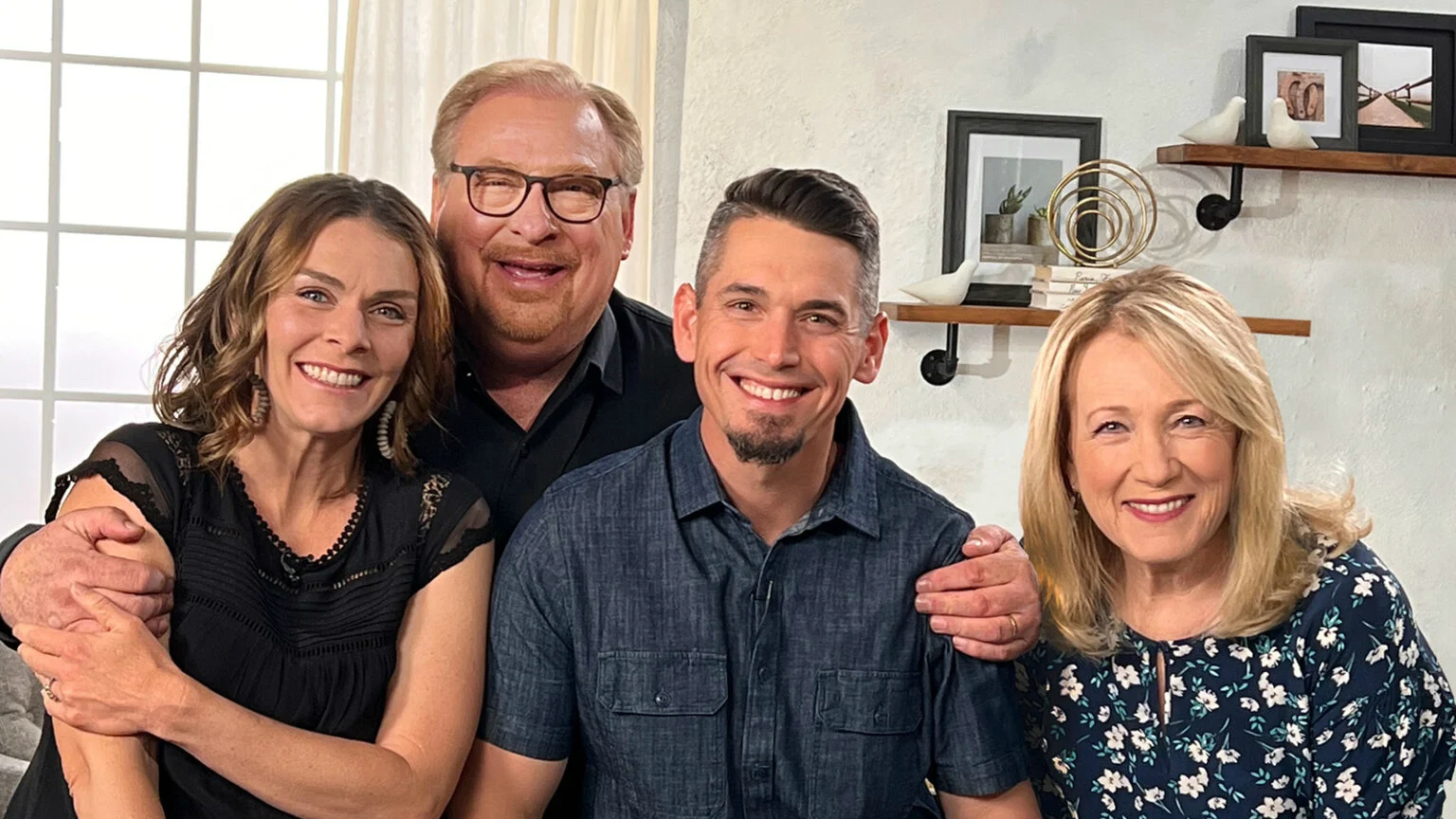
Stacie Wood (from left), Rick Warren, Andy Wood, and Kay Warren.

Stacie Wood (from left), Rick Warren, Andy Wood, and Kay Warren.

Christianity Today June 2, 2022
Courtesy of A. Larry Ross

After more than four decades, the pastor of one of the largest and most influential churches in the United States is ready to step down.

And he has named a young couple to take his place.

“This afternoon, at our all-staff meeting held at the Lake Forest campus, I was finally able to publicly announce that we have found God’s couple to lead our congregation, and that they have agreed to come!” Saddleback Church pastor Rick Warren told his Orange County, California, congregation in an email on Thursday.

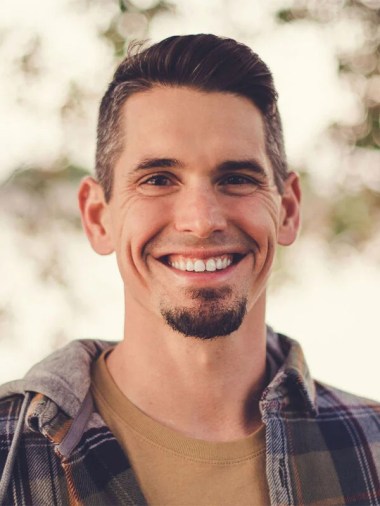
Today’s email included a link to a video featuring Warren and his wife, Kay, along with Andy and Stacie Wood of Echo Church in San Jose, California. Andy Wood, 40, is currently Echo’s lead pastor, while Stacie Wood is a teaching pastor. They will have the same roles at Saddleback.

Founded in 2008 as South Bay Church, Echo now has four campuses and draws about 3,000 people to weekly services. Like Saddleback, Echo has ties to the Southern Baptist Convention, though neither church uses the word Baptist in its name. A graduate of Southwestern Baptist Theological Seminary, Andy Wood has also worked with church planters through the SBC’s North American Mission Board.

“Kay and I believe so much in this couple,” Warren said in a statement announcing the transition. “We love them so much, and we are confident that God has prepared and chosen them to take up the baton and run the next leg of the Saddleback marathon.”

The search for a new pastor began last summer, in part because of ongoing health problems for Warren. He told the church last year that he has spinal myoclonus, which causes tremors and blurred vision, and that it has worsened in recent years.

Pastor Andy Wood of Echo Church has been chosen as Rick Warren's successor at Saddleback.
Pastor Andy Wood of Echo Church has been chosen as Rick Warren’s successor at Saddleback.

Saddleback leaders spoke with about 100 potential candidates before settling on Wood, who preached at the church earlier this year.

Wood plans to step down as pastor of Echo Church at the end of June and will move to Orange County to begin the transition. The first step will be a conversation between the Warrens and the Woods over Father’s Day weekend. In August, the couple will begin attending Saddleback.

The church will celebrate Warren’s ministry during the first few weekends in September. Wood’s first official day as pastor will be September 12.

“For decades, we have admired and respected Pastor Rick and Kay Warren and their work through the Purpose Driven Church model has been critical,” Wood said in a statement. ”We’ve been so blessed by their friendship, and after months of prayer and seeking counsel from others, we believe that God has called us together to step into serving at Saddleback Church.”

In the email to the Saddleback congregation, Warren said he and Kay were filled with love and gratitude for the church and quoted a New Testament verse about fighting the good fight and finishing the race.

“Now it is time for us to pass the torch on to a new generation who will love, lead, and pastor our church family in the decades ahead,” he wrote.

In May 2021, Saddleback made headlines after ordaining three female staffers as pastors—a controversial step for Southern Baptists. The SBC’s statement of faith limits the office of pastor “to men as qualified by Scripture.” But Southern Baptists disagree over whether that applies only to the church’s senior pastor or whether it bars any women from having the title of pastor. They also disagree over whether women can preach in a Sunday service.

At the SBC’s annual meeting, Saddleback was reported to the Credentials Committee, which is charged with deciding whether or not a church is in “friendly cooperation” with the denomination. Though some churches have left the SBC after naming women as pastor, the denomination has never officially removed any church for having a female pastor.

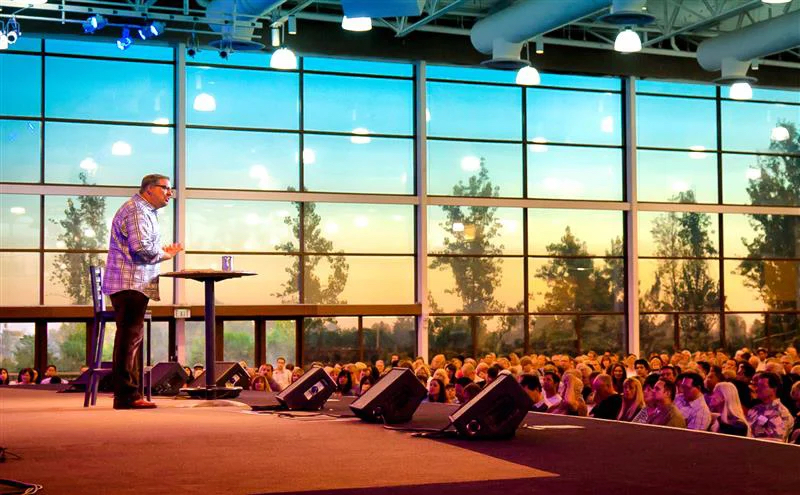
Filling Warren’s shoes will be a challenging task, as the current Saddleback pastor has long been one of the most influential Christian leaders in the country, shaping everything from how pastors dress to how they organize and start new churches.

Scott Thumma, director of the Hartford Institute for Religion Research at Hartford International University, said megachurch transitions are often a challenge. The higher a megachurch pastor’s profile, the more difficult it is to replace that person.

While megachurches can continue after a founding pastor leaves, it’s not an easy transition.

“It will not be the same place without Warren,” Thumma said.

Wood’s success, Thumma said, will depend in part on whether Warren can let go of the church and allow a new pastor to take over and chart his own course. But Thumma observed that Warren has taken steps in the past to allow others to lead at Saddleback. He does not preach every Sunday and has been what Thumma called “a thoughtful leader.”

Thumma said the Warrens have been a positive model of what pastors can be during what is a difficult time for church leaders. They’ve avoided scandal and have been honest about their struggles. For the most part, they’ve avoided the culture wars and partisan feuds that have caused many to lose faith in religious leaders.

Pastor Rick Warren preaches at Saddleback Church in California.

Warren’s retirement will mark the end of a remarkable career in ministry.

After graduating from Southwestern Baptist Theological Seminary in December 1979, Warren and his wife, along with a 4-month-old baby, packed up their belongings and moved to the Saddleback Valley in Orange County, California, then one of the fastest-growing communities in the United States.

In his 1995 book, “The Purpose Driven Church,” Warren described poring over demographic and census data in the summer of 1979, searching out the right place to start a new church—stopping only to call his wife a few times a day to see if she had gone into labor.

One day, Warren said, he had a revelation after seeing the data on Saddleback Valley, saying God spoke to him and told him to plant a church there.

“It didn’t matter that I had no money, no members, and had never even seen the place,” he wrote. “From that moment on, our destination was a settled issue. God had shown me where he was going to make some waves, and I was going to have the ride of a lifetime.”

The church launched on Easter Sunday 1980, with a crowd of about 200 people in a rented space at the Laguna Hills High School in Orange County, and never looked back.

By 1992, the church had grown to 6,000 and bought a 74-acre site the church still calls home. The church is now one of the largest congregations in the country, drawing more than 23,000 worshipers meeting in more than a dozen locations.

The church, though Southern Baptist, downplayed culture war battles and eschewed traditional church culture for a more casual, come-as-you-are approach to worship—one newcomers could easily embrace. In the early days, Warren was known for preaching in a Hawaiian shirt—prompting a new fashion trend among pastors.

Saddleback also was the birthplace of Celebrate Recovery, a Christian 12-step inspired program to help people deal with their “hurts, hang-ups and habits.” The program has been adopted by tens of thousands of churches around the country.

Warren became a household name in 2002 with the publication of The Purpose Driven Life, a runaway bestseller. The success of the book allowed him to “reverse tithe” by giving away most of his income. In the mid-2000s, prompted in large part by Kay, Warren and the church became active in responding to the global AIDS pandemic and to addressing poverty overseas, in particular in war-torn Rwanda. He later also wrote a popular diet book called The Daniel Plan, prompted by his own weight loss.

Though conservative, Warren has avoided some of the partisanship associated with evangelical pastors. In 2008, he hosted a presidential candidate forum with Barack Obama and John McCain, then rivals for the presidency, and later gave the invocation at Obama’s first inauguration.

In 2013, Warren’s youngest son, Matthew, died at 27 after years of struggle with mental illness. The family shared openly about their loss and, in the years after Matthew’s death, have become advocates for addressing mental health and ministering to those affected by suicide.

From his early days of starting Saddleback, Warren hoped to spend his entire ministry at the church. One of his heroes as a young pastor was W. A. Criswell, who spent five decades as pastor of First Baptist Church in Dallas, and Warren hoped to emulate Criswell’s tenure.

“It was my promise to God and to you, God’s people,” Warren said last summer. “It was my way of saying: ‘You don’t need to worry about me leaving when times get tough for you. I’m here for the duration. I’m going to give my life to this church. I’m going to stick with you,’ and I kept the promise.”

Theology

Why We Shouldn’t ‘Move On’ From Horror

Growing numb to tragedy is a natural instinct—and one we should resist as Christians.

Christianity Today June 2, 2022
Brandon Bell / Staff / Getty

This piece was adapted from Russell Moore’s newsletter. Subscribe here.

Even after several years of unpredicted chaos and suffering, the last three weeks have hit hard.

A white nationalist terrorist gunned down nearly a dozen Black shoppers in a Buffalo supermarket. Another shooter attacked a Taiwanese congregation during a Sunday luncheon. And then another brutally murdered 19 children and two adults at a school in Uvalde, Texas.

After each of these horrors, people often ask, “How long until something is done?” And yet, the sad truth in light of all these atrocities is the declining attention span of the American people.

Axios points to research on the sustained attention of the public—showing that horrors like the Sandy Hook shooting or the Parkland school shooting do not rally the nation’s attention beyond a matter of days. Some might suggest that the country is numb to such tragedies since they happen with such frequency compared to the rest of the world.

But Axios argues that what we are seeing is a people not necessarily numb to horror but overwhelmed by it. The sheer weight of all these incidents can lead to a shutdown in many people, in which they simply give up trying to comprehend it all and move on to something else.

In some ways, the country’s response is similar to how individuals sometimes respond to trauma in their own lives. One reason the book The Body Keeps the Score sells so many copies is because it explains a reality that many people experience. Even after we try to forget an awful event—or numb ourselves with alcohol or drugs or career advancement or something else—our response often shows up in other physical or neurological ways. The mind may forget, the argument goes, but the body remembers.

Sustained attention is so difficult with trauma and tragedy because we don’t want to think about such darkness. There’s a reason why most people turn their heads away when they see a mangled body in a car accident along the highway. We would rather pretend that such horrors don’t, or can’t, happen. And we do this not just with the terrors in the world but with our own personal apocalypse—our impending death.

Blaise Pascal argued that we all know we are going to die, so we try everything we can to distract ourselves from that reality. This conclusion, of course, was anticipated by the writer of Ecclesiastes—who admitted his own search for fulfillment through work, wealth, pleasure, and wisdom, only to find these to be nothing more than vain pursuits.

The writer of Hebrews further revealed that this submerged fear of death is precisely the power that the devil has over us (Heb. 2:14–15). To keep from acknowledging that we are perishable flesh, we pursue fleshly desires with abandon—in a way that just leads to more death (Rom. 8:5–13).

The root of our focus on triviality, pleasure, and diversion is not so much hedonism as it is fear (Rom. 8:15). We are afraid of death, so we look for idols to protect us from that—or at least to numb us to its reality (Gal. 4:8–9).

Our tendency to become overwhelmed in the aftermath of so many horrors is heightened by our sense of powerlessness. Even when we identify actions that could curb the problem, we know that almost nothing is accomplished in a civic and political system as broken as ours. And so, many of us simply “move on.”

This principle has a personal parallel too. How many of us have descended into patterns and habits we know to be wrong and self-destructive because we have given up on pursuing virtue and health? Once a person concludes that he or she is a “lost cause,” with no hope for change, the path ahead is bleak.

Yet a response of overwhelmed numbness can lead to more people getting hurt. Jesus continually confronts us about the ways that we want to look away from the hurting, whistle past injustice, and make the suffering invisible. The sores of Lazarus were no doubt unsettling to the rich man who passed by him each day at his gate (Luke 16:20).

It was easier for the leaders to accuse the blind man of bearing punishment for his own sin than to acknowledge that blindness can happen (John 9). In fact, these leaders were so callous to the blind man’s plight that the problem, for them, became not his suffering but his healing.

We are indeed overwhelmed by much darkness, all around us and inside us. Sometimes we will disagree on the exact steps to take to address the problems. And there will always be powerful forces around who don’t want us to address them at all. So, we just “move on” until the next horror—after which we will move on again.

As the people of Jesus, we dare not fall prey to that tendency. Jesus, after all, is the one who never turned away from even the most terrifying realities—leprosy, bleeding, and suffering of all sorts. One of the most remarkable things about Jesus is not just that he healed those who bore great difficulty but that he saw them in the first place. He sees us.

Jesus moves on, but not without carrying a wounded sheep on his back. We should go and do likewise.

Russell Moore leads the Public Theology Project at Christianity Today.

News

SBC Task Force Asks for ‘Ministry Check’ Website, Other Reforms to Stop Sexual Abuse

Churches and state conventions would not be required to use resources.

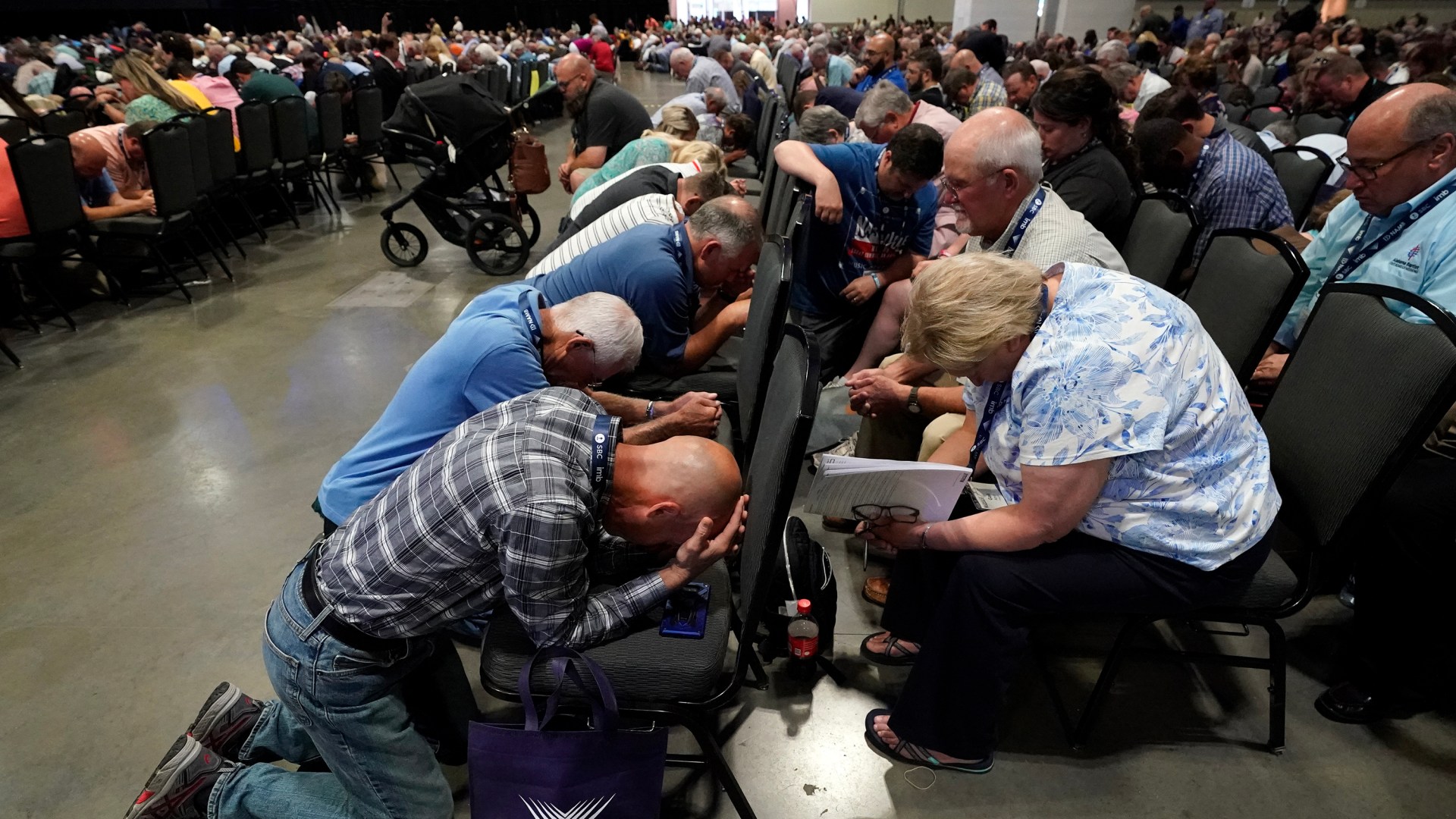
Southern Baptists pray in Nashville at the 2021 annual meeting.

Southern Baptists pray in Nashville at the 2021 annual meeting.

Christianity Today June 2, 2022
Mark Humphrey / AP Images

A Southern Baptist task force has asked the denomination to set up a “Ministry Check” website to track abusive pastors, church employees and volunteers, and to spend millions on reforms to prevent abuse. Most of the suggested reforms are voluntary and some could involve years of study and preparation, prompting a skeptical response from some abuse survivors and advocates.

Other suggested reforms, released on Wednesday, include hiring a national staff person who would receive reports of abuse and forward them to church leaders for a response; increasing training for churches; doing background checks on the trustees who oversee Southern Baptist entities; and encouraging state conventions to consider hiring staff to respond to abuse allegations.

The requests are part of a series of recommendations from the Southern Baptist Convention’s sexual abuse task force, which oversaw a recent investigation into how leaders in the 13.7 million-member convention have responded to abuse.

That investigation found that leaders of the SBC’s Executive Committee had shown callous disregard for abuse survivors—often demonizing or ignoring them—while working at all costs to protect the denomination from liability.

In response to the report, the task force has proposed two sets of recommendations.

The first set of requests—made to the Executive Committee, state conventions and other Baptist entities—are voluntary. That may make them ineffective, said Christa Brown, an abuse survivor and longtime activist, who called the task force’s recommendations disappointing.

“I don’t give much credence to suggestions and requests because they are toothless,” she said.

The task force will also ask local church representatives, known as messengers, to approve an abuse reform implementation task force during the SBC’s annual meeting in June. That task force would study abuse reforms recommended by Guidepost Solutions, the firm that ran the abuse investigation, and then report back in 2023. Among the Guidepost suggestions is creating a fund to care for survivors.

“They are kicking the can down the road,” said Brown. “I am gutted.”

If approved, the task force would serve for three years and would act “as a resource in abuse prevention, crisis response, and survivor care to Baptist bodies who voluntarily seek assistance.”

The task force would also work with the SBC’s Executive Committee and Credentials Committee, which has the power to kick churches that mishandle abuse out of the SBC.

Indiana pastor Todd Benkert, who played a key role in getting the abuse investigation approved during the 2021 SBC annual meeting, supports the recommendations, calling them a good first step toward addressing abuse.

He said it was important for messengers to approve the recommendations at this year’s meeting. Benkert said the success of those recommendations may be determined by the outcome of the SBC presidential race. Implementing any reform will take time and intentionality, he said.

“It won’t make any difference to vote for a new task force if we don’t also vote for a president that is willing to appoint people that support reform,” he said.

The current task force will report to the SBC annual meeting and then its mandate will expire. A new task force, if approved, would be appointed by whoever wins the 2022 presidential race.

“Over the course of the EC investigation, it has become clear to the Sexual Abuse Task Force that the process of implementing meaningful change in the Southern Baptist Convention in the area of sex abuse is beyond the scope of this current Task Force,” the report said.

The task force will also ask messengers to approve the Ministry Check website and a $3 million change to the SBC budget to pay for reforms.

Churches and other SBC ministries would report names of those who have been “convicted or had a civil judgment against them for sexual abuse” for inclusion on the website. Those ministries and churches could also submit names of those who have been “credibly accused” after an independent investigation.

If those Baptist groups are unwilling or unable to hire an independent investigator—and if state conventions or local associations cannot help—then abuse allegations could be forwarded to the staff coordinator for the website and an investigation could be paid for out of national SBC funds.

“The website will be established and maintained through an independent firm, selected by the Credentials Committee in consultation with the ARITF, and funded by the sexual abuse allocation request,” according to the recommendations.

The recommendations cite a 2004 study that found a high rate of recidivism among sex offenders.

“One of the problems in our churches is the ability of abusers to move from one church to another to perpetuate their abuse,” the task force said in its recommendations. “This often happens because churches don’t have the means to communicate with one another.”

One of the first responses to the recommendations came from Tom Ascol, a Florida pastor and leading candidate for SBC president. Ascol has been critical of the task force, claiming in a candidate forum that it had become “politicized” and saying local churches should handle any misconduct by SBC leaders.

“I am reading through the SATF recommendations for #SBC22 & looking for any Scripture reference & can’t find one, not even in the rationales,” he said on Twitter. “Did I simply overlook them?”

Tom Buck, a Texas pastor and Ascol supporter, said on social media that some of the task force recommendations are unbiblical.

Phillip Bethancourt, pastor of Central Church in College Station, Texas, and a former executive vice president of the SBC’s Ethics and Religious Liberty Commission, tweeted his support for the recommendations.

“These are common sense first steps we should take in Anaheim,” he said.

https://twitter.com/pbethancourt/status/1532036632190279680

Robin Hadaway, another candidate for SBC president, said the recommendations “seem reasonable and wise.”

“I felt like the recommendations that they just announced are wise and are something that should be positively considered by the messengers,” he said of the delegates who will attend the upcoming annual meeting.

In a video posted on social media, Texas pastor Bart Barber, another presidential candidate, said it was important to follow the direction set during last year’s annual meeting and reaffirmed his support for the task force and investigation.

He said that the proposed task force was crucial in responding to abuse, saying it would help determine whether the SBC becomes “healthier or not in responding to and preventing sex abuse in Southern Baptist churches.”

In 2007, SBC messengers asked the SBC’s Executive Committee to look into the possibility of setting up a database of abusers. Even though the SBC’s lawyers said it was possible, according to the Guidepost report, Executive Committee staff opposed the idea.

The idea was eventually rejected by the Executive Committee in 2008, but staffers there kept a secret list of hundreds of abusers for years.

The SBC Executive Committee plans to meet this week.

Adelle Banks contributed to this report.

How CT is Helping Christians Around the World Tell Their Stories

The Globe Issue, CT’s newest endeavor, immerses readers in the stories of how God’s people are shaping their communities worldwide.

How CT is Helping Christians Around the World Tell Their Stories

When Timothy Dalrymple, Christianity Today’s president and CEO, joined the ministry three years ago, he shared a vision of how he believes CT is called to be a storyteller of the global church. That vision sparked the idea for The Globe Issue.

To tell the stories of the global church is a major undertaking. Finding and sharing stories from Christians around the world has taken nearly a year. By engaging with organizations like World Vision, International Justice Mission, and OMF International, inquiring about the stories they were hearing on the ground, Conor Sweetman, creative lead for special projects, was able to connect with international seminaries, local ministries, and individual followers of Jesus all around the world. Once connected, Conor set up a way for people to send in personal essays that told stories of what it means to be a Christian in their specific corner of the globe.

From the beginning, the goal of The Globe Issue has been different than that of CT magazine. While Christianity Today focuses on informing its readers, The Globe Issue offers readers an expanded spiritual and emotional lens and a capacious, captivating vision of how men and women are following the call of Christ all around the planet.

The look and feel of The Globe Issue will be different from CT magazine as well. The deluxe hardcover edition will be a linen-bound, gold-embossed coffee table book that is available for preorder now and will ship in September 2022. The digital component of The Globe Issue includes expanded visual elements like striking photographs from around the world, audio components in the stories, interactive illustrations, and more.

“All of the new elements aim toward immersive and new platforms and ways of storytelling,” Conor said. “We take telling these stories seriously, and all the technological aspects aid that.”

Conor went on to explain how one of the goals with The Globe Issue was to try new and exciting ways to convey narrative. With his work on Ekstasis over the years, Conor brought a focus to The Globe Issue that elevates a poetic and artistic storytelling experience.

The Globe Issue also includes two types of story formats: contemplations and chronicles.

Contemplations are stories told through the eyes of the person writing them. These come from personal experiences and reflect on the inward journey of faith. Chronicles are written by a third party, offering a broader contextual look at stories unfolding in the communities around them.

After spreading the word about the project over the course of three months, Conor received more than 100 story submissions from more than 30 countries. From that point, it was a meticulous editorial process to figure out what would eventually make it into The Globe Issue.

In the end, the editorial team included 20 stories from 18 different countries around the world. Conor explains,

My hope for The Globe Issue is that it will share stories across the world, where the work of missionaries, organizations, and individuals is seen in their small examples of the grandeur of God, where they are the opposite of trite or cliché. They are beautiful. We should train ourselves to be drawn to them. We can easily dumb things down and make them into sound bites, but God is working dramatically across the world, and he is so much bigger than what we see around us.

The work of The Globe Issue will expand the work CT is doing around the world. It tells the stories of the global church through voices based around the world, even as CT grows a global presence through hiring globally focused staff, such as a new a global storytelling journalist and a CT Asia editor to expand its global reporting footprint. CT also continues to grow its translation efforts.

You can experience The Globe Issue for yourself by visiting Globe.ChristianityToday.com, where you can view the articles online or download a digital copy, or by preordering the deluxe hardcover edition.

We hope you enjoy this dazzling glimpse of the depth and breadth of the kingdom of God all around the planet.

Caitlin Edwards is marketing and sales manager at Christianity Today.

News

Australia Had a Pentecostal Prime Minister. Did It Matter?

As Scott Morrison steps down, evangelicals assess the way he brought religion into politics.

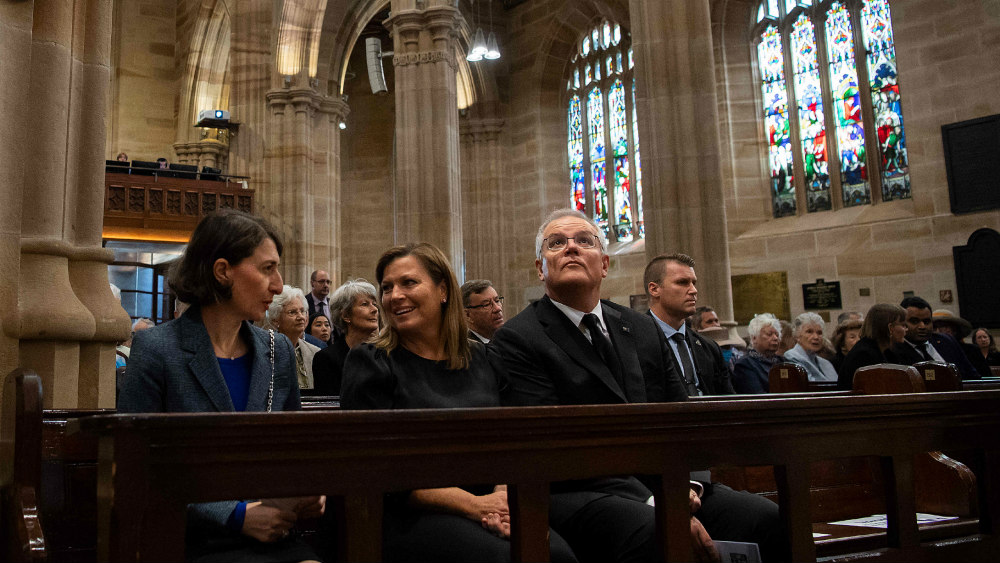
Scott Morrison, center, attends a worship service at an Anglican cathedral in Sydney.

Scott Morrison, center, attends a worship service at an Anglican cathedral in Sydney.

Christianity Today June 1, 2022
Bianca De Marchi/NCA Newswire - Pool/Getty Images

Scott Morrison went to church. And he invited the journalists along too.

One month before Australia’s federal election in 2019, the prime minister traveled to Horizon Church, a Pentecostal congregation in New South Wales. He closed his eyes, raised his hands, and let the cameras click away.

The images drew a sharp reaction from a public uncomfortable with charismatic worship—and from Christians who saw it as a publicity stunt.

But then Morrison won. His Liberal-National Coalition (LNC)—a center-right party—overcame the predictions of pollsters and secured 77 seats.

“I have always believed in miracles,” he said. “And tonight we've been delivered another one.”

Three years later, Morrison returned to the same church. Again the journalists followed. But this time the election didn’t go his way. The LNC lost to the Labor Party on May 21, and the next day Morrison stood up at Horizon Church and read a few passages from the Bible.

“At the last election, we really understood it was for such a time as this,” he said in an emotional three-minute talk. “And now we understand it was for such a time as that.”

As Morrison leaves office, evangelicals are assessing the way his faith interacted with his politics: how that was covered by the media, how it was viewed by the public, and how they would want Christians to act, as Christians, in the public sphere.

“Morrison’s faith has become a story because he is prominently and publicly Christian, as opposed to many past Christian prime ministers whose faith has been a more private affair,” said Chris Mulherin, an Anglican priest and the executive director of ISCAST (formally, the Institute for the Study of Christianity in an Age of Science and Technology), a group working to strengthen the relationship between faith and science. “Morrison has used his faith believing (rightly, I think) that sincere faith—even Pentecostal faith where he is photographed with hands in the air and eyes closed—is not only attractive to Christians but also to a silent almost-majority who respect religious belief.”

About 60 percent of Australians identify as Christians, according to the 2016 census, but only about 15 percent are connected to a church. In practice, the country’s public spaces are essentially secular, and religious politicians are expected to keep their faith private. It’s uncommon for leaders to even gesture at a generic Christian culture and tradition.

“Nobody in Australia ends speeches by saying ‘God bless Australia,’” said Michael Bird, the academic dean at Ridley College in Melbourne.

Morrison’s public expressions of faith were, for that reason, quite jarring. The national spotlight found him as he spoke about the laying on of hands; receiving a vision from God telling him to run for office; and working behind the scenes to get Hillsong founder Brian Houston an invitation to meet with US President Donald Trump at the White House.

Previous prime ministers, including Kevin Rudd, Tony Abbott, and Malcolm Turnbull, all described themselves as Christians, but some people saw Morrison’s faith as sort of off-putting—or at least questionable.

“He doesn’t keep it purely private, but neither does he wear it on his sleeve,” Bird said. “It comes out from time to time.”

The political value of Morrison’s faith was never exactly clear. If the public exposure of his Pentecostalism was a strategy to garner support, the math didn’t seem to add up. No Australian political party has won the majority of churchgoing voters in the last decade. Though one 2016 survey found that 40 percent of churchgoers supported the LNC, that works out to about 6 of every 10,000 voters. Not exactly an election-winning bloc.

And for most Australian evangelicals, that hasn’t been a goal.

“Australian evangelicals don’t have the numbers to take over a political party,” said John Sandeman, who founded the Australian Christian publication Eternity. “Our desire to impact society is not as politically directed as in the US.”

Instead, Aussie evangelical engagement in politics is shaped by a culture that doesn’t put much faith in politicians, according to Mark Sayers, the senior leader of vision and teaching at Red Church in Victoria.

Mandatory voting laws mean almost everyone goes to the polls on election day, but they rarely feel a strong emotional connection with the person they’re voting for. Australia uses ranked-choice voting in national elections, so voters aren’t even asked to give 100 percent of their support to one person but to just state the order of their preference.

“We are very cynical about politics and deeply suspicious of leadership,” Sayers said. “We are also deeply egalitarian, and due to the ‘tall poppy syndrome,’ we have no time for leaders who lose touch with ordinary people. Australians will punish at the polls a leader regardless of their politics who forgets from where they have come or who is not authentic.”

Some evangelicals also may have not resonated with Morrison’s public expressions of faith because of cultural distinctions between evangelicals and Pentecostals in Australia. Historically, evangelicals in the country have not started new denominations or created a strong, independent subculture. They worshiped in the three quasi-official Protestant churches—Anglican, Methodist, and Presbyterian—or joined one of the smaller Baptist, Churches of Christ, or Seventh-day Adventist churches. Most were culturally moderate, if not mainstream.

Pentecostals, on the other hand, have stood apart. And since the 1980s, these churches and networks of churches have grown rapidly—without ever establishing deep connections with other evangelicals.

“Pentecostalism is the new kid on the block,” said Meredith Lake, author of The Bible in Australia: A Cultural History, “and can appear a bit mystifying.”

But the sharpest criticisms from Christians who disliked the way that Morrison mixed his faith and politics weren’t directed at his charismatic sensibilities. Nor were they focused on his public displays of piety. Christians were frustrated, instead, when they couldn’t see that the prime minister’s being a believer made any difference.

“His own stated position is that ‘the Bible is not a policy handbook,’” Lake said. “My question is, Are his government’s policies any different because Morrison is the leader of his party, rather than another, non-Pentecostal member of the cabinet? Do we see evidence of Morrison’s Pentecostal faith causing a departure from the imperatives of neoliberalism?”

Last fall, a diverse group of Christians asked Morrison to open the country to more refugees from Afghanistan. They appealed to their shared faith, but it didn’t get the results they hoped for.

Tim Costello, executive director of Micah Australia, an international Christian social justice organization, found it frustrating and confusing.

“Scott Morrison in his maiden speech to Parliament in 2008 spoke effusively about his personal faith in Jesus. … He spoke of his debt to pastor Brian Houston. He spoke of his heroes like Bono, Tutu, and Wilberforce and that he wanted to make poverty history and lift Australian Aid,” Costello said. “Then he presided in government overseeing the deepest cuts to Australian Aid, leaving it at its lowest level in our history.”

Evangelicals concerned about climate change had a similar experience. Appealing to their shared faith with the prime minister didn’t seem to help their cause. Common Grace, an evangelical social justice advocacy group, knitted scarves that showed the increase of the average global temperature over the last hundred years, mailed them to their representatives, and asked to meet one on one.

“Many of the conservatives, including Scott Morrison, would not meet with Christians in their local electorate who were gifting them a scarf, and many didn’t even respond when their gifted scarf was mailed to them,” said Brooke Prentis, former CEO of Common Grace. “To know you can’t meet with your local member as a Christian and share what matters to you as a Christian was very disheartening.”

On the other hand, Morrison did at times back issues that evangelicals in Australia cared about, but he couldn’t deliver a victory. Perhaps the most important political fight of Morrison’s career was the fight for a religious freedom bill, which left many evangelicals disappointed.

When Morrison took office in 2018, replacing Turnbull, he was expected to deliver on an LNC promise to pass a religion antidiscrimination bill. The issue had become a concern after Australia legalized same-sex marriage.

“Religious freedom is widely seen as having been a key issue in the 2019 election, which Morrison’s party unexpectedly and decisively won,” said Natasha Moore, a senior research fellow at the Center for Public Christianity.

Despite this mandate, Morrison’s government struggled to turn the religious freedom bill into law. Both Christian conservatives and LGBT advocates greeted the first two drafts of the bill with disdain. The third, introduced last fall, was deemed better by evangelicals but could not command a wide base of support.

“We were portrayed as bigots, haters, etc.,” said David Ould, an Anglican minister in Sydney. “We had been pointing out to the political parties that we’re only asking for what they want for themselves, which is the right to hire people who believe—actually believe—what they stand for. … But it’s been whipped up into hysteria over, you know, gay teenagers and trans teenagers, who apparently we want to just throw out of all the schools.”

Morrison couldn’t maintain control of his own party, and earlier this year five members crossed the aisle to vote with the opposition on an amendment to weaken protections for taxpayer-supported religious schools. Religious groups withdrew their support from the modified bill, and the proposal died. Morrison attempted to revive it in the final month before the 2022 election, as part of the agenda for his next term, but then he went down in defeat.

“The religious discrimination bill failed despite extensive consultation, many rounds of submissions from across the political spectrum, and a strong push from the party in power,” Moore said. “The bill and the whole question became toxic. Little headway was made in convincing the public that this bill was anything other than an attempt to enshrine bigotry.”

In the end, Morrison disappointed the evangelicals who agreed with him on policy, as well as the ones who didn’t. As he leaves office, it’s unclear what future, if any, there will be in Australia for his brand of evangelical politics.

Some evangelicals are asking whether they should reconsider supporting the Labor Party. Others, such as Barney Zwartz, a senior fellow at the Center for Public Christianity, hope Christians can exert influence by being politically independent.

“However counter-intuitive it sounds, Christians should be swinging voters,” he recently wrote in a Melbourne newspaper, “looking at all the parties afresh each time round.”

Morrison, for his part, decided to go back to church and make his last statement as prime minister at Horizon Church. After years of criticism for how he connected faith and politics—whether he should do it at all, do it a different way, or do it more effectively—he pulled up the Bible on his smartphone and read from Micah 7.

“My God will hear me,” he read. “Do not rejoice over me, enemy of mine. Though I fall, I will rise. Though I live in darkness, the Lord is a light for me.”

Church Life

What ‘Pro-Life’ Means in Communist China

The state controls family life. The church still wants to make a difference.

Christianity Today June 1, 2022
Illustration by Mallory Rentsch / Source Images: ArtistGNDphotography / Getty

It was nearly noon in Chengdu, and the early June day had begun to heat up. Several Christians from Early Rain Covenant Church stood in front of a gynecological hospital, handing out pamphlets to people walking past.

The Chinese pro-life activists had gathered for Children’s Day (June 1) and were asking women to refrain from getting an abortion that day. Their pastor, Wang Yi, was supposed to join them. But early on that 2013 morning, police officers had blocked him from leaving his house.

From 2012 to 2016, members of the well-known Reformed congregation took to the streets of Sichuan’s capital on Children’s Day to advocate against abortion. Throughout the year, the church organized anti-abortion public lectures. But activists frequently faced government pushback; police often blocked speakers from leaving their homes or broke into the venue to halt events.

By 2016, the crackdowns seemed to have worked; the anti-abortion event publicity disappeared from WeChat. At the end of 2018, Wang was arrested and jailed and the government banned Early Rain from gathering.

But the government had also changed its tune on abortion. After decades of China pushing its one-child policy, the reality of a low birth rate led to policies encouraging families to have two or three children.

Today, the disbanding of Early Rain and the government’s pivot on abortion have led pro-life Chinese Christians to reflect on the best strategies to protect unborn babies and take care of pregnant women. Though disagreements exist over how this congregation and the greater church have organized around fighting abortion, Early Rain’s courage in proclaiming a pro-life message impressed many in the wider Christian community.

“Most Chinese people, including Christians, lack a basic understanding of life and God’s sovereignty over it,” said Ruth Lu, who returned to Shenzhen after finishing her graduate studies overseas. (With the exception of Wang, Christians in China quoted in this piece have been given pseudonyms for their own safety.)

“The voice that upholds life is precious when most people are used to giving up on life so easily,” Lu added. “It is especially precious because public Christian witness like that of the Christians in Chengdu is a rare occurrence.”

‘A wonderful witness to the gospel’

Early Rain made its case for its pro-life values on theological grounds. Every human being’s “life is made by God and belongs to Him,” says an anti-abortion statement written by Wang. Consequently, “no one has the right to murder God’s creation.” A fetus is a human being from conception, it adds; therefore, the commandment “thou shalt not kill” means “thou shall not abort” when it is applied to the issue of abortion.

Chinese Christians widely agreed with Early Rain on these points. While overseas reports often only highlighted Yi’s church, activities such as the distribution of the anti-abortion pamphlet were an interdenominational ministry that many other churches participated in as well, said Xiao Yu, a Chengdu resident who works for a ministry that helps pregnant women and mothers.

“In the reality of China, such ministry is a wonderful witness to the gospel and one of the significant missions God has given to Christians in China,” she said. “Over the years, this ministry has continued, albeit in a small way. It has saved the lives of many fetuses, and some who have had abortions have heard the gospel and even been baptized.”

Early Rain’s pamphlet also included four demands of the municipal government, hospitals, and Chengdu residents:

  1. Abortion advertisements should be banned outdoors, in the media, in schools, and on buses.
  2. Abortions by minors should require the consent of both parents.
  3. Hospitals should inform those seeking abortions of the alternatives to abortion and all the possible dangers of abortion.
  4. No abortions should be performed on Children’s Day.

Some Christians, however, questioned the efficacy of these demands, as well as Early Rain’s activism practices.

“I admire the brothers and sisters of the Early Rain for their actions in difficult circumstances defending the values of their faith, but I do not necessarily agree with the strategy,” said Shaolong Jiang, who pastors a Mandarin congregation in Chicago. “When a young woman who is already thinking about abortion receives an anti-abortion booklet by the road, the conversation about abortion already happens too late.”

In the numerous conversations Jiang has had with women about abortion, he’s often wished the church was more proactive on this issue. He says his time in the US has shown him the need for a holistic strategy for pro-life activism.

“In the United States, the church has made many efforts to legislate against abortion, but can the church really support women who lack the social resources to have their children?” he said. “Where is the church when these women are facing all the hardships and despair that they need to go through in raising their children alone? What can we do for them?”

While the church in China encourages Christians not to have abortions, it seems to lack the commitment to take on the responsibility of raising the child together, says Hu Yue, who pastors a church in Shanghai. Instead of letting individual families face the consequences of not having an abortion, the church should “let the child be born and then raise it together” with the family.

“[Chinese Christians’] anti-abortion promotion may have overplayed the impact of the government policy, emphasizing systemic sin at the expense of downplaying individual sin,” he said. “Creating the illusion that the official family planning policies are evil and individual abortion is because the woman has no choice.”

A new form of family planning

The Chinese government’s policy change from only one child to actively encouraging and incentivizing couples to have babies presents a new and different challenge to the Christian pro-life witness.

Last August, the Chinese government passed a law officially allowing families to have up to three children. The shift comes as the country’s population grows increasingly old and exits the labor force. But this new “freedom” is unlikely to change many minds; the expense of raising a child and a lack of confidence in marriage leave many young people disinterested in having a family, says Lu.

“What Christians advocate for marriage and childbirth has accidentally become conforming to the policies advocated by the government,” she said. “This, in turn, has ironically led some young people who resent the policy of encouraging childbirth to become resistant to Christian values.”

China’s family planning policies have never held to consistent moral values, says Jiang, pointing to the government’s wild policy swings. Instead, many of these decisions have been made with politics or economics in mind.

Chinese people, including Christians, have generally accepted the presupposition that the government has the right to regulate fertility, says Shi Ming, a house church pastor, who believes that believers should reconsider this position.

Indeed, as Hu points out, policies that encourage more children are also a form of family planning.

Regardless of future government policy, the church has a responsibility to care for those most affected by it.

Recently, during a public chat on the app Clubhouse, a young woman who had chosen to have an abortion asked Jiang what the church could do for her and for women like her.

“As a pastor of a church, my faith and my calling require that I cannot support your choice of abortion or anyone else’s,” Jiang said. “But even if I don’t support abortion, that doesn’t mean our church won’t come alongside women. If you are in my church, we will be there for you to the end.”

News

German Minister Not Guilty of Anti-LGBT Hate Speech

Marriage seminar set up a clash between religious teachings and gay rights, but “alienating” comments are not criminal, court rules.

Christianity Today May 31, 2022
Screengrab / Olaf Latzel

Standing tall in the raised pulpit of the St. Martini congregation in the northern German city of Bremen, Olaf Latzel, 54, cut a stark figure in his black gown and two white preaching tabs.

But it wasn’t his presence that caused a stir in Germany; it was what he had been preaching from that pulpit.

In October 2019, in a marriage seminar for about 30 couples, Latzel commented on what he called the “homolobby.” He attacked homosexuality, calling it “degenerative,” and said, “These criminals are running around everywhere” during the Berlin Pride Parade.

“All this gender s—,” he said, “is an attack against God’s order of creation. It is demonic and satanic.”

The address was posted on YouTube, where the words of the United Protestant Church minister raised a furor. The regional body of the church, which has a quasi-official status in Germany, initiated disciplinary proceedings. The local government launched an investigation and ultimately prosecuted Latzel for hate speech.

Latzel’s case has attracted less international attention than a similar one in Finland, where a politician was prosecuted for tweeting out Bible verses and a Lutheran bishop for publishing a pamphlet on biblical gender roles. But in both, observers saw a long-expected clash, as increasing concerns for the dignity and rights of LGBT people came into conflict with deep commitments to free speech and religious liberty.

This month, however, a German court decided that the Bremen minister is not guilty of inciting hatred against LGBT people.

On May 20, 2022, Judge Hendrik Göhner said that “these statements are more than alienating from a social point of view—especially from one holding such a high office.” However, the theological distinction between human beings and lived practice, Göhner said, can be hard to discern.

While Latzel condemned homosexual practices as well as theories of gender fluidity, he was found to not incite hatred against individuals. The judge reasoned that while the condemnation of homosexuality seemed to him “strange statements,” Latzel was nonetheless not guilty of hate speech.

Latzel’s lawyer said his client is “happy and relieved” about the acquittal.

The ruling overturned a Bremen District Court decision from 2020, which said the minister had committed hate speech and sentenced him to three months in prison, commuted to a fine of €8,100 (about $8,680).

“The presiding judge Ellen Best justified her verdict with the statement that Olaf Latzel incited ‘hatred against homosexuals’ by having the ‘marriage seminar’ put online,” said Regina König, a reporter for the German evangelical outlet ERF Medien. “The judge said it was fearmongering. The fact that the defendant condemned homosexuality from the perspective of the Bible was irrelevant.”

The trial caused a nationwide stir. Amid the furor, Latzel’s church, St. Martini, was tagged with pro-LGBT graffiti.

Supporters of LGBT rights see Latzel’s acquittal as a worrying sign that anti-gay hate speech can hide behind religion. They see churches as havens for bigotry. Protesting outside the court, they held up rainbow-colored signs with slogans like “You can’t pray the gay away.”

One protester told local media, "Latzel is the figurehead of a whole movement of right-wing political evangelical Christians and represents their anti-human values."

Latzel, at the same time, has a small but vocal group of supporters, especially among conservative Christians in the mainline Protestant churches and the free churches in Germany. They hold Latzel up as an example of how LGBT rights threaten to criminalize traditional Christian teaching.

Latzel’s public defense lawyer, Hamburg-based Sascha Böttner, said the prosecution opened a “gateway to restricting freedom of expression.”

He also argued in his defense that the Bremen church had engineered the public conflict because some of the leadership wanted to get rid of Latzel, who is an outspoken and controversial conservative. Latzel garnered international headlines in 2016 when his bombastic sermons were condemned by fellow pastors in the Bremen region.

The regional body of the United Protestant Church suspended its disciplinary proceedings while Latzel was facing criminal charges. Now that those charges have been dismissed, it will revive the internal investigation.

At the same time, the public prosecutor’s office is considering whether to appeal the verdict. In Finland, after the member of parliament was cleared of hate speech charges, prosecutors appealed. Some observers expect the case to go all the way to the European Court of Human Rights.

Whether or not German prosecutors also appeal the ruling clearing Latzel, Berlin-based Catholic theologian Georg Essen said there will likely be more clashes to come.

“The verdict is appropriate from a legal perspective,” Essen, who specializes in constitutional issues and state-church law, told the German Catholic news agency. “The legal hurdles to convicting someone of incitement to hatred are very high. It's not enough to be harsh on or insult someone. There must be a public call for hatred and a threat to public peace—and that must be clear in a court of law.”

But that doesn’t mean it’s the end of the conflict.

“We are living in a situation of social upheaval,” he said. “For about ten years, there has been increased debate on access to marriage for homosexuals and the importance of ‘queer’ identities. Traditional ways of life and gender identities are in flux. It would be strange if there weren't upheavals and conflicts.”

News

‘Thou Shalt Not Kill’: Ukrainian Orthodox Church Ruptures Relations with Russia

Possible manufacture of holy oil a signal of declaration of independence from Moscow patriarchate, while still opposing rival breakaway church.

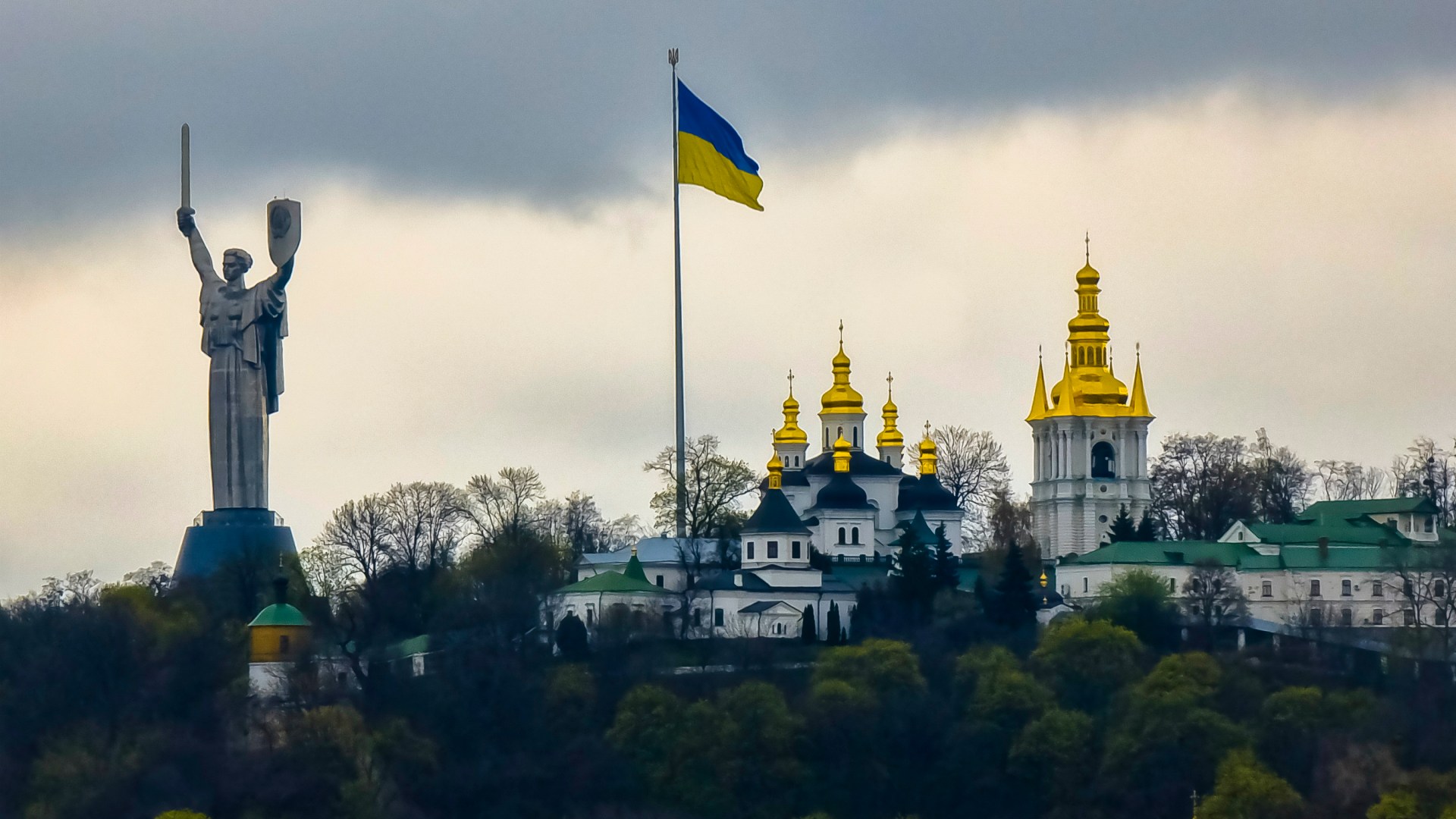
Pechersk Lavra (Monastery of the Caves) in Kyiv, Ukraine.

Pechersk Lavra (Monastery of the Caves) in Kyiv, Ukraine.

Christianity Today May 30, 2022
Artem Hvozdkov / Getty Images

After 93 days of war, the Ukrainian Orthodox Church-Moscow Patriarchate (UOC-MP) has definitively broken with Russia—maybe.

In a council decision taken May 27, the Russian Orthodox Church (ROC)–affiliated body declared its “full self-sufficiency and independence,” condemning the three-month conflict as “a violation of God’s commandment: Thou shalt not kill!

Such a condemnation was not new. The day the invasion began, UOC-MP Metropolitan Onufriy called it a “repetition of the sin of Cain.” But in dry ecclesial language, the statement dropped a bombshell.

It “adopted relevant amendments” and “considered … making Chrism.”

Chrism, the anointing oil of baptism and other liturgical rites, was last made in Ukraine in 1913. Its manufacture is a typical sign of autocephaly, the self-governing of an Orthodox church branch.

Continuing the tone, the UOC-MP reiterated its position.

“We express our disagreement with … Patriarch Kirill of Moscow and All Russia,” it stated of the ROC head, “regarding the war in Ukraine.”

Kirill has consistently supported Russia’s “special military operation.”

In 2018, the breakaway Orthodox Church of Ukraine (OCU) was granted autocephaly by the Ecumenical Patriarch of Constantinople, Bartholomew I. Rejected by Kirill and the UOC-MP, the act formalized the national schism. (A much smaller third Ukrainian Orthodox church joined the OCU.)

The UOC-MP council’s Friday statement continued to echo the ROC rejection. OCU bishops lack apostolic succession, it said, while overseeing the forcible seizure of churches to transfer jurisdiction. The UOC-MP stated a willingness to dialogue with the OCU if these dividing issues could be addressed.

And then, it symbolized division.

The next day during Holy Liturgy, Onufriy referred to Kirill as a fellow primate, not as his hierarch (superior). No mention was made of any connection to the ROC Moscow Patriarchate.

Andrey Shirin said these “unheard of” developments were “truly remarkable.”

“The ongoing war in Ukraine is a crisis on several levels—political, economic, humanitarian,” said the Russian associate professor of divinity at the John Leland Center, a Baptist seminary in Virginia. “This is another chapter in the theological crisis.”

The consequences could be felt “for centuries.”

Onufriy had been trying to keep a middle ground, Shirin said. UOC-MP spokesperson Archbishop Kliment confirmed Saturday there had been pressure from the Ukrainian government to make such a move, but told Agence France-Presse the decision was driven by common worshipers. A poll at the start of the war found 65 percent of UOC-MP members supported Onufriy against the invasion. And in recent weeks, hundreds of UOC-MP priests signed an open letter calling for Kirill to face a religious tribunal.

The Moscow patriarch’s esteem among his Ukrainian flock dropped below 20 percent, down from 50 percent a decade earlier.

Kirill could declare the statement void, Shirin said, and perhaps move to replace Onufriy with a more pliable leader in Ukraine. Or he could try to work with his Kyiv counterpart to preserve whatever unity possible.

Kirill’s first response suggests the latter, said Shirin. Announcing his “full understanding” that Onufriy and his church “should act as wisely as possible today so as not to complicate the lives of their believers,” Kirill warned Sunday against the “spirits of malice” that seek to divide the Orthodox people of Russia and Ukraine.

Cyril Hovorun said the UOC-MP council’s declaration was long overdue.

“The UOC-MP is in a much worse position now than it was in 2018,” said the Ukrainian priest and professor at Stockholm School of Theology. “Society affords it zero trust, many people openly hate it, and those who remain members must continually apologize.”

The only way out is dialogue with the OCU, Hovorun said, which hardline bishops in both churches might try to block. But despite the appearance of an ultimatum, the UOC-MP statement might be an overture.

“There is now a new opportunity for Orthodox unity in Ukraine,” he said. “The May 27 meeting created momentum.”

But for Roman Lunkin, momentum is in the opposite direction.

“The partition of Ukraine has happened,” said the head of the Center for Religious Studies at the Russian Academy of Science. “What was evident at the start of the special operation has now officially taken place in the church sphere. Logically, it will now follow politically.”

Last week, Henry Kissinger, the former US secretary of state, recommended a settlement through Ukraine ceding territory to Russia. In 2014, Russia annexed Crimea and backed separatist rebels who seized control of parts of Ukraine’s eastern Donbas region.

Ukrainian President Volodymyr Zelensky has insisted that peace negotiations begin after restoration of his nation’s sovereign borders. The UN stated 14 million Ukrainians have been displaced from their homes, with 6.6 million refugees now abroad.

Lunkin noted the UOC-MP stating it would respond by establishing dioceses outside Ukraine. But internally, bishops would be given independent authority to guide the church where central leadership is “complicated.”

Lunkin interpreted this simplifying of spheres of influence to mean that churches in occupied areas will be able to determine their own status—meaning de facto governance by the ROC.

“Schism in the church,” he said, “is a schism in the country.”

But is it even a schism?

It may be difficult to tell, noted OrthoChristian.com, until the adopted amendments are revealed. But Nikolai Danilevich, deputy head of the UOC-MP’s Department for External Church Relations, stated Friday on Telegram that as it “disassociated” from the Moscow patriarchate, “in its content, the UOC-MP statutes are now those of an autocephalous church.”

Alexander Webster noted the wording.

“He used odd phrases rather than declaring autocephaly,” said the American archpriest and retired seminary dean in the Russian Orthodox Church Outside Russia. “Dating back to the earliest centuries of Christianity, canon law makes impossible the unilateral pronouncement of independence by any segment of the Orthodox church.”

Archbishop Kliment, who lauded the declaration, elsewhere stated that the UOC-MP did not actually break ties with the ROC. In fact, the church has already been independent for three decades. In 1990, prior to Ukrainian independence from the Soviet Union, the Moscow patriarchate granted self-governorship under its jurisdiction.

ROC spokesman Vladimir Legoyda said Saturday the church has received no formal notice from the UOC-MP. Reportedly, half of UOC-MP dioceses had already stopped mentioning Kirill in their formal prayers.

But at least one significant site has continued. One day after the UOC-MP changed its statutes, a deacon in the Kiev Monastery of the Caves, founded in 1051, prayed for “our great lord and father, His Holiness Patriarch Kirill,” followed by a benediction for Onufriy.

Following Constantinople’s granting of autocephaly to the OCU, a 2018 survey found that 29 percent of Ukrainians identified with the newly independent church, 23 percent said they were “simply Orthodox,” and 13 percent belonged to the Moscow-linked UOC-MP.

By 2020, the figures had shifted to 34 percent OCU, 14 percent UOC-MP. And last month, 74 percent of Ukrainians expressed support for the UOC-MP to sever ties with the ROC (up from 63 percent in early March), with 51 percent supporting an outright ban.

More than 400 parishes have switched allegiances since the invasion.

Webster lamented these developments.

“However egregious or unjustifiable an internecine Orthodox war may be,” he said, “we cannot allow it to fracture the body of Christ.”

Bradley Nassif, former professor of biblical and theological studies at North Park University, noted the “sad irony” of their shared faith.

“The way forward lies within the church’s own gospel, which teaches that healing starts with the humility of self-criticism,” said the author of The Evangelical Theology of the Orthodox Church. “It is summed up in their famous prayer: ‘Lord Jesus Christ, Son of God, have mercy on me, a sinner.’”

Follow CT’s Russia-Ukraine war coverage on Telegram: @ctmagazine (also available in Chinese and Russian).

Select articles are offered in Russian and Ukrainian.

Ideas

The Uvalde School Shooting Sends Me to Matthew 18

Jesus gave specific instructions on caring for the “little ones.” The Texas tragedy suggests the church has gravely fallen short.

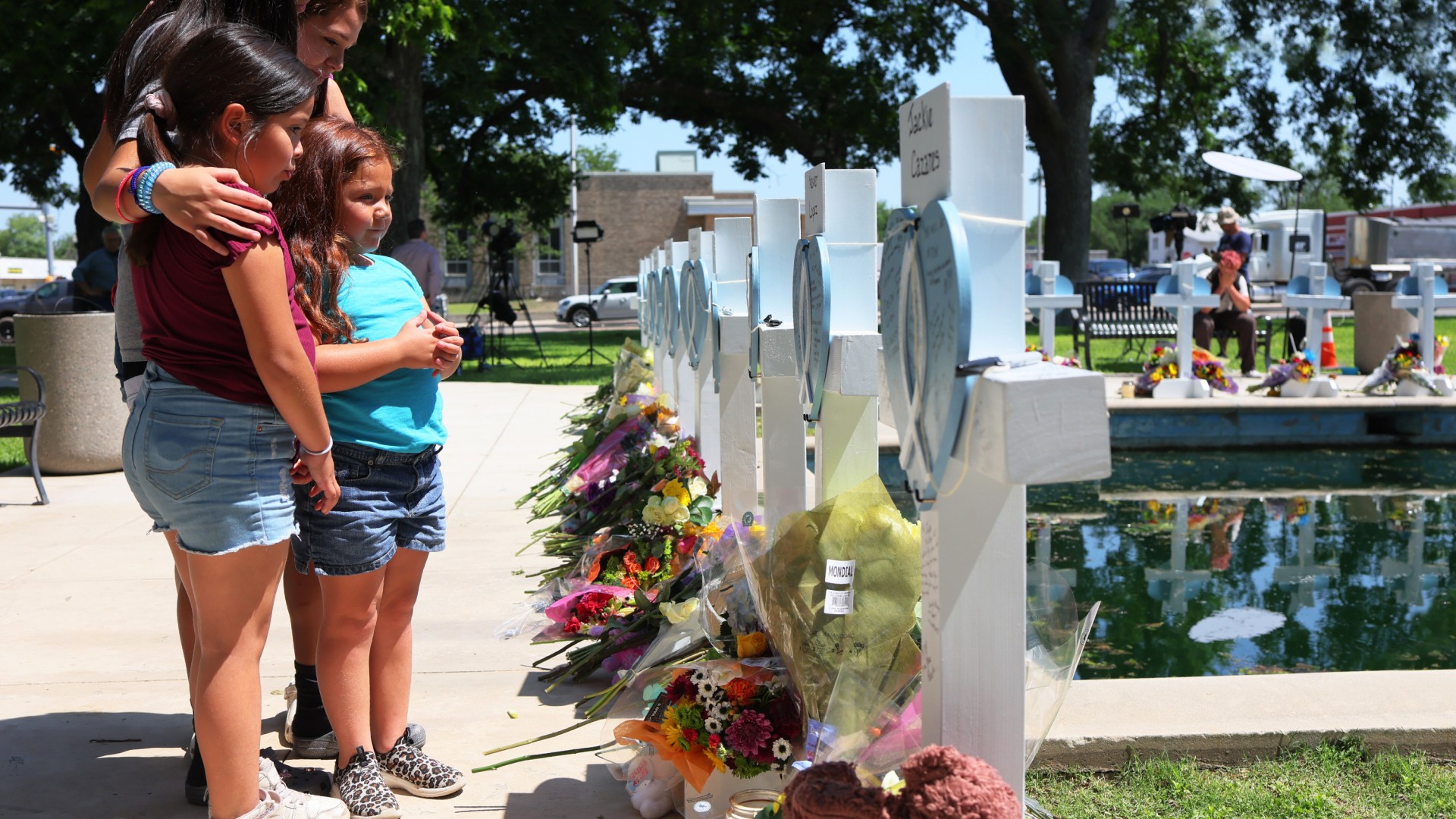
Mourners visit a memorial for a victim's of the mass shooting at an elementary school, in City of Uvalde Town Square.

Mourners visit a memorial for a victim's of the mass shooting at an elementary school, in City of Uvalde Town Square.

Christianity Today May 27, 2022
Michael M. Santiago / Getty

I remember being 10. I had just discovered a passion for soccer and watched the entire World Cup for the first time alongside my father and my brother.

I embarked on my first mission trip with my church that year to the sierras of Chihuahua, Mexico, where I was fascinated by the idea of one day doing ministry full-time.

I remember being 18. I had graduated high school a semester earlier and had moved to Alabama for a few months before starting college in the fall. My family was no longer together, and my mother had to work all the time because she was now a single parent of two kids.

I knew I wanted to leave those difficult experiences behind and study college away from home. Today I can tell you that I did not know much more at 18 than I knew at 10.

As a journalist and minister who has found a home in Texas, I’ve reflected on these stages of my life as I’ve mourned the tragedy currently crushing the Latino community—an additional chapter to our often painful history. As we so dreadfully now know, on Tuesday, 19 children, ages 9, 10, and 11, were murdered by one who had reached 18 a little more than a week earlier.

The victims loved their moms, celebrated first Communions, and made honor roll. They were children who, just like me years ago, might have watched their first World Cup with their dads and brothers later this very year.

The person who murdered these children was a man barely on the other side of childhood—one who, as Brennan Manning writes, was “broken on the wheels of living.” We know only the surface of what Salvador Ramos’s life was like: a parent struggling with drug addiction, bullying that targeted his speech impediment, violence that intensified as he grew older.

As we grieve these outrageous deaths, we know that Christ was not indifferent to children. Matthew 18 and 19 reveal that Jesus, the very embodiment of God, loves and sees them.

These passages show that as we mature in Christ, we are expected not only to become more like children—as the disciples learned when they asked who would be the greatest in God’s kingdom—but also to protect and look after them.

While we struggle to seek solutions to an infuriatingly intractable problem, perhaps one area the church should take care to not neglect is the care and stewardship of the youngest and most vulnerable members of our society.

A little child shall lead them

Matthew 18:1–5

At that time the disciples came to Jesus and asked, “Who, then, is the greatest in the kingdom of heaven?”

He called a little child to him, and placed the child among them. And he said: “Truly I tell you, unless you change and become like little children, you will never enter the kingdom of heaven. Therefore, whoever takes the lowly position of this child is the greatest in the kingdom of heaven. And whoever welcomes one such child in my name welcomes me.

Our culture understands greatness not unlike the culture that Jesus was born into. Wealth. Power. Markers of status that people devote their entire lives to seeking. But Jesus has a different model for those who want to make it in his kingdom: children.

To make his point, Jesus beckons to a child and brings him or her into the circle of disciples. He wants them to consider the child’s smallness, fragility, dependence, humanity and to emulate it. In contrast to his own culture, Jesus’ words and actions tell us that children not only are people but are also the most important members of the eternal and holy kingdom of heaven.

But children are not a prop that Jesus wants to use as an object lesson. Our interactions with them are our interactions with God. Welcoming a child, Jesus says, is welcoming God. Shaping a culture that will hurt children, tear them to the ground, ignore their loneliness, and violate their vulnerability suggests something about how we worship the Lord.

A world where mass shootings of children exist starkly reveals our failure to honor and love the stage of human life God sees as the greatest in the kingdom of heaven.

Woe!

Matthew 18:6

If anyone causes one of these little ones—those who believe in me—to stumble, it would be better for them to have a large millstone hung around their neck and to be drowned in the depths of the sea.

Have we adults in the church ever asked ourselves what we do that causes children to sin? In our conversations about the significance that community has on our spiritual lives, how often do we think about the type of company we offer children? What consequences result from a child growing up in a society that glorifies guns?

How are children impacted by parents leaving homes, society’s normalizing violence, or their experiencing poverty? How are kids hurt by leaders who lie to the parents, by authority figures who don’t trust them, and by elected officials who fail to steward their responsibility well?

The consequences of such dysfunction can destroy children for generations. Just as we see in family systems theory, events and behaviors tend to repeat over and over again, from generation to generation. Learned behaviors are transmitted to the next generation almost with no control or say from the previous generation. Mindsets and understandings are transferred almost involuntarily from elders to children. Our actions become just a mirror reflecting what our ancestors did—and will be done all over again by those who come after us.

The one wandering sheep

Matthew 18:10–14

See that you do not despise one of these little ones. For I tell you that their angels in heaven always see the face of my Father in heaven.

What do you think? If a man owns a hundred sheep, and one of them wanders away, will he not leave the ninety-nine on the hills and go to look for the one that wandered off? And if he finds it, truly I tell you, he is happier about that one sheep than about the ninety-nine that did not wander off. In the same way your Father in heaven is not willing that any of these little ones should perish.

Maybe there are some who grew up without the experiences of being an outcast, a reject. Maybe. But I think most of us remember and understand what it feels like to be alone. What it is like to be pushed away. These verses reveal that Jesus will leave everything behind when looking for the ones who have wandered off.

Our call to imitate Christ clearly commands us to do the same. Perhaps these verses have been said to refer to us when we step away from our faith or simply when we do something we know we should not do.

But to me, these words reveal the heart of Christ for children like Salvador Ramos or Eric Harris and Dylan Klebold. Those lonely, forsaken, and rejected children are out there, and Christ has a heart for them.

Our society takes children, beats them senseless, and then throws them out when they are no longer needed. Is Christ not calling us to go after those who have wandered off because our society has pushed them away?

Too many children grow up in our society neglected or abused by their parents, with few adults equipped to healthily deal with their anger and pain, who take their isolation and search for community and significance in the dark.

For Christians, our task then is to bring these children home. We are not to do this because we ourselves are their saviors or because through us they can experience a new life. And home does not mean our society or our culture or this nation that one day will pass. Our home is Christ’s kingdom.

Jesus loves the little children

Matthew 19:13-15

Then people brought little children to Jesus for him to place his hands on them and pray for them. But the disciples rebuked them.

Jesus said, “Let the little children come to me, and do not hinder them, for the kingdom of heaven belongs to such as these.” When he had placed his hands on them, he went on from there

Mark Madrigal had two cousins shot and wounded in Uvalde and knew a number of the kids who died.

“As a community, we’re together and looking out for everyone’s kids no matter what,” he said.

His attitude reflects the posture that Jesus calls us to. When it comes to children, he doesn’t limit his instructions to family members. The absence of specificity suggests a responsibility to all, including the lonely, the angry, the repressed, the traumatized, the bitter, the unchurched, the church haters, the sad.

While this latest wretched shooting suggests that we have significant work to do, an enveloping posture toward children is something I’ve witnessed firsthand. Growing up in a single-parent home, I received guidance and care from church members, my youth pastor and his leadership team, and several other pastors—helping my faith grow even during a period of intense difficulty. Children who have only one parent or a family member yet also have others committed to walk with them faithfully. Life can be harsh. We need a few who will tenderly and lovingly walk alongside us.

Our nation now carries even more broken children. How will we Christians in the wider church embody our love of God in how we love all the little ones in our communities?

Isa Torres is a minister, writer, and reporter, who lives in North Texas.

Apple PodcastsDown ArrowDown ArrowDown Arrowarrow_left_altLeft ArrowLeft ArrowRight ArrowRight ArrowRight Arrowarrow_up_altUp ArrowUp ArrowAvailable at Amazoncaret-downCloseCloseEmailEmailExpandExpandExternalExternalFacebookfacebook-squareGiftGiftGooglegoogleGoogle KeephamburgerInstagraminstagram-squareLinkLinklinkedin-squareListenListenListenChristianity TodayCT Creative Studio Logologo_orgMegaphoneMenuMenupausePinterestPlayPlayPocketPodcastRSSRSSSaveSaveSaveSearchSearchsearchSpotifyStitcherTelegramTable of ContentsTable of Contentstwitter-squareWhatsAppXYouTubeYouTube