Theology

How to Be Human Like God

Holy Week reminds us to imitate Jesus Christ as the author and perfecter of our faith.

Christianity Today April 12, 2022
Edits by Christianity Today / Source Images: WikiMedia Commons

I’m both young and old enough to remember the WWJD bracelet fad of the ’90s and early 2000s—a daily reminder of what Jesus might do or say in any given situation.

But what some may not remember is that WWJD was not welcomed with uncritical support in all corners of the Christian world. Growing up in evangelical circles, some church leaders claimed it was the wrong question to ask. Others chalked WWJD up to a “cultural Christian” phenomenon—focused on being a better person instead of being saved in spite of yourself.

Modern evangelicals still struggle to prioritize imitating Christ as a scriptural mandate. There are several reasons for this, many of which are bound up in the history of Protestantism, and especially Reformed and modern evangelical theology.

For instance, a 1965 CT cover story explains how—in an effort to resist the liberal deconstruction of the previous century, which promoted a parody of imitating Christ—Protestant neo-orthodox theologians overreacted and eventually eclipsed the doctrine altogether.

To this day, many Christians remain divided over whether our faith is more about believing and sharing the message of what God has done in Christ or about following Jesus in all he taught through word and deed. This often boils down to whether Christians should focus on orthodoxy (right belief) or orthopraxy (right action).

But as Tish Harrison Warren recently pointed out in a piece for CT, there is an additional step that bridges these two: orthopathy—or cultivating the right passions. Orthopathy speaks to matters of the heart, such as what we love and what we desire.

Luke Burgis argued in CT that the reason we love the streaming show The Chosen so much is because human beings are wired for “mimesis,” or imitation. He explains that we ultimately learn to desire through imitation—rather than the other way around.

“We come to want the things that are modeled to us as desirable and valuable,” Burgis says, “not referring primarily to our basic needs—food, shelter, safety—but to the kind of metaphysical desires that people develop to be a certain kind of person.”

For Christians, the ideal person is Jesus, whose life story is narrated in the Gospels.

“We become like the things we imitate,” Burgis says. “To imitate Christ’s desires is to re-order our own—to pattern them on his.”

Imitation is part of the process through which we embrace and embody Christlikeness. More importantly, it is the nature of sanctification—the working out of our salvation—to increasingly reflect the label Christian, or “little Christ,” over the course of our lives.

So how can we recover a holistic biblical vision of imitating Jesus, particularly in an era when Christians are deeply divided over differences in theological emphasis and expression? This Holy Week, leading up to Easter—as we celebrate Christ’s life, death, resurrection, and ascension—seems like a perfect opportunity to revive this discussion.

Being human like God

The Bible proposes a radical notion that human beings can and should be like God. We are created in the “image of God” (Gen. 1:27) and called to “be imitators of God” (Eph. 5:1, ESV).

But in order to know what it means for humans to image or imitate God, we must know what it means to be human and what it means to be like God. Unfortunately, humanity has misunderstood both parts of this equation since the dawn of time.

In the Garden, Adam and Eve were offered a fruit that would make them divine. The phrase “You will be like God,” can also be translated as: “You will be gods.” They soon succumbed to that temptation, reaching out to grasp Satan’s offer of divinity, which promised them the wisdom and agency of an almighty God, accountable only to oneself.

There’s an African proverb: “Never develop an appetite for the fruit of a tree you cannot climb.” Yet that is exactly what Adam and Eve did. They gave in to the desire to escape their human limitations and become gods on earth. The problem was, they didn’t know the first thing about what it meant to live or behave like the God who had created them.

Generation after generation, the human race passed on this cursed appetite for divinity. We continued to build towers ascending to the heavens and fall for other foolhardy schemes and deceptive offers to escape the human condition we were born into.

Science and technology have found incredible ways to improve our quality of life. But there is also a growing trend toward transhumanism in everything from antiaging potions to artificial intelligence; there’s a multitude of modern methods to pursue omniscience, omnipotence, and omnipresence, among other things.

And while these are essential attributes of God’s nature, they are not divine traits human beings were created to image or called to imitate. Moreover, our pursuit of self-deification deceives us into thinking we can somehow escape our humanity.

God did the opposite. Already possessing the invulnerability of divinity, Jesus fully embraced the status of humanity; not just for a lifetime, but for all time. The Incarnation has been likened to a great or wondrous exchange, wherein God became human in Christ so that we might become like God—but in the opposite way of Adam and Eve.

“Because in Adam we mounted up towards equality with God, he descended to be like us, to bring us back to knowledge of himself,” Martin Luther wrote. And “through the regime of his humanity and his flesh, in which we live by faith, he makes us of the same form as himself.”

Only in the person of Jesus can we understand both what it means to be human and what it means to be like God—and every divine-human characteristic we were created to image and called to imitate are fully and perfectly embodied in Christ.

Imaging God by imitating Christ

Imitating Jesus and imaging the Father go hand in hand, since Christ alone incarnates the divine essence of God. All other human beings are born into the world bearing a dim and distorted likeness due to our fallen and sinful state.

Scripture says, “The Son is the image of the invisible God,” (Col. 1:15), “the radiance of God’s glory and the exact representation of his being” (Heb. 1:3)—for “in Christ all the fullness of the Deity lives in bodily form.” (Col. 2:9).

When one of his disciples asked, “Lord, show us the Father and that will be enough for us,” Jesus replied, “Anyone who has seen me has seen the Father” (John 14:8–9). Or as T. F. Torrance said, “There is thus no God behind the back of Jesus Christ, but only this God whose face we see in the face of the Lord Jesus.”

That is, he continues, “there is only the one God who has revealed himself in Jesus Christ in such a way that there is perfect consistency and fidelity between what he reveals of the Father and what the Father is in his unchangeable reality.”

Put a different way, as the former Archbishop of Canterbury Michael Ramsey said, “God is Christlike and in him is no un-Christlikeness at all.”

This means that by imitating Christ, we are reflecting the perfect and complete imago Dei.

In following Jesus’ example—which is only made possible by the power and presence of the Holy Spirit—we can be “filled with all the fullness of God” (Eph. 3:19, ESV). In lifelong sanctification, “we all, who with unveiled faces contemplate the Lord’s glory, are being transformed into his image with ever-increasing glory” (2 Cor. 3:18, emphasis added).

That word contemplate is better translated from the Greek as “beholding as in a mirror,” which emphasizes the ultimate goal of the Christian faith—to look more like Jesus. Indeed, “when Christ appears, we shall be like him, for we shall see him as he is” (1 Jn 3:2); and even though “now we see only a reflection as in a mirror; then we shall see face to face” (1 Cor. 13:12).

Not only are we destined to be “conformed to the image of his Son,” (Rom. 8:29), but through him, human beings are able to “participate in the divine nature” (2 Pet. 1:4). Thus, the call to imitate Jesus speaks to something much deeper than a simple mimicry of his words or actions. It involves actual participation in the person of Christ.

We can only imitate Christ because we abide in him and he abides in the Father (John 14:20) and Christ abides in us through the indwelling of the Spirit. (Eph. 3:16–17). It is only “Christ in you” that is “the hope of glory” (Col. 1:27)—which includes sharing in his divine life, holy nature, eternal inheritance, and close relationship with the Father.

Therefore imitative participation is a kind of inhabitation, wherein the Spirit unites us with Christ and incarnates his character within us—in a process of Christification, if you will.

Embodiment and incorporation

Scripture says the global church is the corporate embodiment of Jesus (1 Cor. 12:27), meaning that those who are in Christ are the new locus of his living presence on earth.

But even though we are already individual members of his body, we are told to behave like it—to “clothe yourselves with the Lord Jesus Christ” (Rom. 13:14), for “this is how we know we are in him: Whoever claims to live in him must live as Jesus did” (1 John 2:5–6).

Embodying the life of Christ should influence every aspect of our being and behavior, as modeled by the Trinity. Just as Jesus did “only what he sees his Father doing” (John 5:19) and the Spirit “will speak only what he hears” (16:13), we are commanded to speak “the very words of God” and to serve “with the strength God provides” (1 Pet. 4:11).

In fact, Jesus made a radical promise: “Very truly I tell you, whoever believes in me will do the works I have been doing, and they will do even greater things than these” (John 14:12).

The key to incorporating Christ is found in Philippians 2:1–11, in which Paul urges believers to be “like-minded, having the same love, being one in spirit and of one mind” in their relationships—to cultivate “the same mindset as Christ Jesus,” who “did not consider equality with God something to be used to his own advantage,” but “made himself nothing by taking the very nature of a servant, being made in human likeness.”

Jesus did not count divine status as something to grasp at, like Adam and Eve at the forbidden fruit. Instead, he humbled himself and became dependent upon God like a child—modeling both loving submission to the Father and sacrificial love of humanity. Likewise, the commands to love God and love people (Matt. 22:37–40) should be the twin passions of our hearts; the orthopathy shaping all other beliefs, desires, and actions.

To do so, we must put to death our self-deifying ambitions and reorient ourselves—body, soul, and spirit—toward reflecting Christ’s likeness. We must allow the Holy Spirit to “Christify” us, both collectively as a unified church body and individually as its members.

By abiding in him and he in us, we can take up our cross and crucify our flesh, serve our neighbors and seek God’s kingdom, enjoy abundant life and bear every fruit of the Spirit. All this so that when we interact with those around us, they will encounter the hope of glory.

Stefani McDade is an associate editor for Christianity Today.

News

Facing Financial Challenges, TEDS Cuts Faculty Positions

The number of full-time students at the evangelical seminary has dropped 44 percent in 20 years.

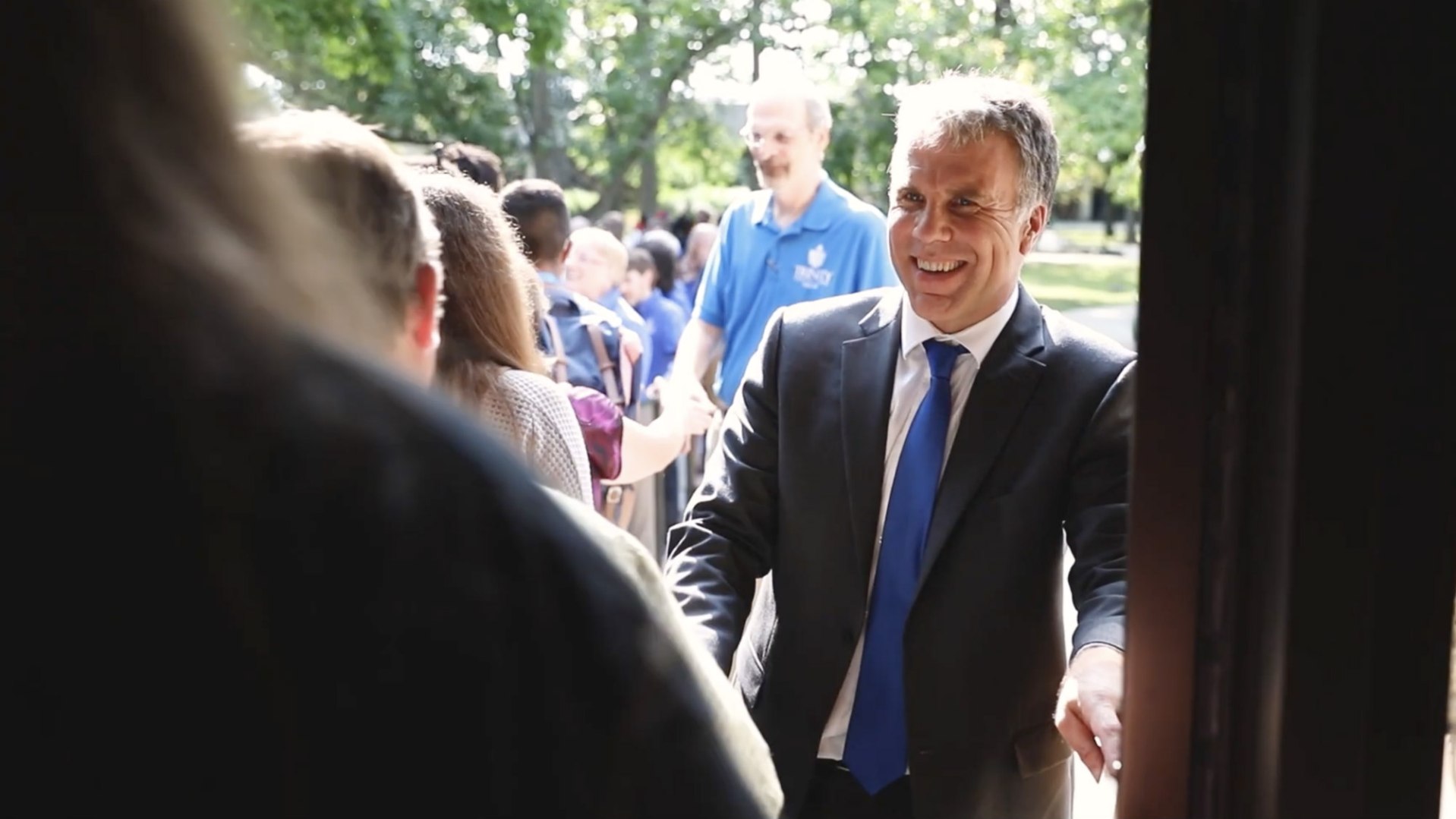
Trinity President Nick Perrin greets students.

Trinity President Nick Perrin greets students.

Christianity Today April 12, 2022
Screengrab / Trinity International University

Trinity Evangelical Divinity School (TEDS) has cut nearly $1 million in spending, hoping to head off financial disaster as the seminary’s enrollment numbers decline.

President Nicholas Perrin told faculty and staff on Thursday that the suburban Chicago seminary has to make some “pretty fundamental changes in how we go about our business plan and mission.”

Trinity International University (TIU)—which includes an undergraduate school with two campuses, a graduate school, and a law school, in addition to the influential evangelical seminary—is concluding the first part of a three-phase process of “creating efficiencies.”

The first phase is focused on the seminary. It includes “reshaping the personnel” so that TEDS can carry out its mission “in a revenue-effective way,” Perrin said in a recording obtained by CT.

TEDS, never a big school, has long had an outsized influence on evangelicalism. The seminary made a name for itself in the defense of the doctrine of biblical inerrancy and served as the birthplace for Sojourners magazine. It was the institutional home for theologians D. A. Carson, Wayne Grudem, Clark H. Pinnock, Kevin Vanhoozer, and Bruce Ware, and has produced scholars such as Scot McKnight, Douglas Moo, Mark Noll, and David F. Wells.

What happens at the Deerfield, Illinois, school reverberates in evangelical institutions across the country.

Last week, the seminary eliminated at least seven faculty positions. A spokesman for the school declined to give exact numbers. Multiple professors, speaking on the condition that they not be named in this article because they are not authorized to speak for TEDS, said two faculty members have taken early retirement, three have accepted positions at other schools, and two have been terminated.

None of the positions are going to be refilled, Perrin told faculty and staff on Thursday. The cuts and other reductions save the seminary $920,000 annually, which is about 6 percent of what it spent on operations in the 2021–2022 school year.

“We need to be an agile institution,” Perrin said. “We need to be an institution that’s ready to pivot, ready to swing, ready to move quickly. We can’t be mired in traditions that we’ve held on to for too long.”

The president added that he was asking faculty and staff to “reimagine your own identity.”

So far, only two of the departing professors have been named publicly. New Testament professor Madison N. Pierce is leaving to join Western Theological Seminary. James M. Arcadi, associate professor of biblical and systemic theology, had his contract severed and is now looking for employment.

“TEDS is in a financial situation that has been described as ‘near catastrophic,’” Arcadi said on social media. “My job is one of many casualties of this situation.”

Spokesman Chris Donato disputed the characterization.

“Trinity is taking proactive steps from a position of financial prudence and not a ‘near catastrophic financial condition,’” he said in an email to CT. “In order to thrive within today’s challenging market realities, universities cannot delay developing a sustainable financial model, while simultaneously addressing the changing needs of students.”

However one describes the financial situation, enrollment data paints a dire picture. The number of full-time seminary students has declined 44 percent in the past 20 years.

In 2002–2003, TEDS had 872 full-time equivalent students enrolled in the seminary, according to Association of Theological Schools data. A decade later, enrollment dipped to 849 full-time equivalent students. When Perrin became the 16th president of TEDS in 2019, the number was down to 642.

Today, TEDS has only 491 full-time equivalent students. The seminary would need another 599 paying the $14,525 tuition and fees to cover its annual $15.8 million operating costs.

The other option would be to increase fundraising. Trinity set a record for fundraising in 2020 with $3.3 million, meeting what Perrin called an “only-God-can-do-this” goal. The seminary still faced a budget shortfall in the spring of 2022.

Other seminaries that serve broad evangelical constituencies are facing similar trends. Gordon-Conwell Theological Seminary has seen a decline of 34 percent in the past two decades. And Fuller Theological Seminary has had full-time equivalent enrollments drop by 48 percent since 2002.

Evangelical seminaries with strong denominational ties have fared better. The Southern Baptist Theological Seminary (SBTS) has had full-time equivalent enrollment increase by 60 percent. At Asbury Theological Seminary, which serves the Wesleyan movement, enrollment has gone up by 14 percent.

Challenges for pan-evangelical institutions

TEDS is affiliated with the Evangelical Free Church of America but has historically positioned itself as a “pan-evangelical” institution. That has been an important part of its identity for many students.

“When I enrolled at TEDS in 1989, it was a place of dynamic conversation about the meaning of evangelical faith in the church and the larger society,” said John Fea, American historian at Messiah University and author of Believe Me: The Evangelical Road to Donald Trump. “We were participating in an intellectually stimulating project that brought the life of the mind to bear on the advancement of God's kingdom in the world.”

Trinity was founded as a 10-week Bible course for Swedish free church pastors in 1897. It became a prominent evangelical institution under the leadership of Kenneth Kantzer in the 1960s. The academic dean (and future CT editor) sought to create an institution that could “combine centrist evangelical theological convictions with a commitment to academic excellence.”

For some students today, that’s still the TEDS ideal.

“I love TEDS,” said Joey Cochran, who completed a PhD in church history at the seminary in 2021. “Evangelicalism needs TEDS to thrive if it is going to have a shot at addressing the ongoing concerns of the ‘scandal of the evangelical mind.’”

Some TEDS faculty say privately that the Trinity administration has not done enough to sell this vision of the seminary and the best part of TEDS has been hidden under a bushel. There is real fear, multiple professors said, that the school will be accused of being “woke.”

But the market for a seminary with broad evangelical appeal may just be shrinking, according to former Trinity president David Dockery.

More megachurches are training their own pastors instead of sending them to seminary. And debates about racism, gender, sexual abuse, and COVID-19 have divided evangelicals so sharply that many no longer trust Kantzer’s vision of an evangelicalism that tolerates lots of differences.

“That was a model from the middle of the 20th century that seemed to work well, but schools that are thriving in the 21st century are more denomination specific,” said Dockery, now a special consultant to the president at Southwestern Baptist Theological Seminary. “For pan-evangelical seminaries like TEDS, Gordon-Conwell, and Fuller, it’s an uphill climb.”

Dockery said that TEDS also faces specific challenges going back decades. The school never had a large endowment or received significant support from Evangelical Free churches.

Trinity has also had a fairly high turnover rate at the top. At Fuller, presidents have served an average of 15 years. At Southern, 18. But Trinity presidents, who are tasked with leading a seminary and the rest of TIU, have served an average of eight years.

“That’s institutional disruption that’s hard to recover from,” Dockery said. He served from 2014 to 2018, stepping down for health reasons.

Perrin started with $1.5 million shortfall

When Perrin accepted an offer to lead Trinity in 2019, the former Wheaton Graduate School dean and New Testament scholar knew TIU and TEDS specifically were facing significant financial challenges.

“My hope is that, as I bathe myself in the Trinity experience, God will give us, as a team, clarity as to how Trinity should be led in the future,” he said in an introduction video posted to the school’s YouTube channel.

In addition to declining enrollment, the school was responsible for a major payment on a 2010 loan used to upgrade student housing and a student life facility. As a result, Perrin faced an annual budget shortfall of about $1.5 million.

The new president eliminated five faculty positions from the undergraduate Bible and ministry department three years ago. Professors from the seminary were assigned to teach undergraduate courses. The school also cut staff from the library, advancement, admissions, information technologies, and maintenance.

In a 2019 email to the faculty obtained by CT, Perrin described financial austerity as “the new reality” at TIU.

The next month, Perrin asked faculty to raise $100,000 by giving 10 percent of their income back to the school from September 2019 to the end of the year. The board agreed to match faculty giving three-to-one, with a target of $400,000.

“Apart from a speedy infusion of external cash resources, we will be ill positioned for achieving either the fiscal stability or the long overdue institution reinvestment we so desperately need,” he wrote. “With such a boon, however, those realities are well within sight though less than guaranteed.”

The faculty unanimously signed on to give back a portion of their income. More than half gave 10 percent.

In 2020, Perrin devoted about 40 percent of his time to fundraising. By the end of the year, the advancement office reported giving of $3.3 million, emails to faculty show.

TEDS also started its first digital marketing campaign and announced its first fully online master of divinity degree. Trinity made improvements to the enrollment process, so emails and phone calls were returned more quickly.

But it wasn’t enough to fix things long term. The number of students enrolled at the seminary still declined. By the fall of 2021, TEDS was again facing a financial crisis. Perrin told faculty and staff it was an opportunity for reassessment. The school shouldn’t change its mission, but it needed to reexamine how it thought it could accomplish its mission.

“Challenging market realities are giving us a new opportunity to think afresh not only about our ‘why’ but also about the ‘how,’” he wrote. “That is, our allocation of our God-given resources.”

In December 2021, a few days before Christmas, Perrin returned to the theme.

“Given Trinity’s lack of success in recent years in achieving a sustainable business model, together with our God-given vocation as stewards, we have a responsibility to examine ourselves as an organization,” he wrote.

‘We’re not off the hook’

The school brought in two consulting firms for a Mission Activation Process Plan, or MAP. Fuller Higher Ed Solutions assessed “capacity and resources” with a series of faculty and staff interviews. BKD CPAs and Advisors assessed the financial sustainability of academic programs with a “a course-level margin analysis” and a market study.

As the consultants researched the profit of Bible courses, faculty were urged not to say anything publicly and wait for the consultants’ final report. They worried about their jobs, the metrics the consultants might come up with, and the impact the changes would have on the character of TEDS.

“There was a lot of euphemistic language and, as the process unfolded, a lot of pleas not to speculate, to trust the process, and not be antagonistic,” one professor said on the condition of anonymity. “The stress on our campus has been palpable. Faculty have felt angry, scared, confused. It has been incredibly time consuming all year.”

The Trinity administration looked at the consultants’ findings and presented a plan to two faculty working groups at the end of February. The seminary working group, made up of five faculty members, negotiated details and reached an agreement with the president and provost on March 14.

The first phase, with seminary faculty reductions, was announced last week.

Perrin also announced a new entity: Trinity Global, “a generator of new educational content,” that will partner with churches around the world to offer seminary certification. Details for Trinity Global will be forthcoming, Perrin said, and there are two more phases of the Mission Activation Plan Process.

Even with Trinity Global and the $920,000 budget reduction, there may be more cuts to come.

Last week, professors at the undergraduate school were waiting to hear how many of their annual contracts were going to be renewed.

“We are not off the hook,” Perrin said Thursday. “There are going to be hard decisions ahead, I can promise you that.”

News

More Programs Train Complementarian Women to Teach Bible

“The study of Scripture and the love of theology can’t be limited to just one of the two genders.”

Christianity Today April 12, 2022
Casey Johnson / Lightstock

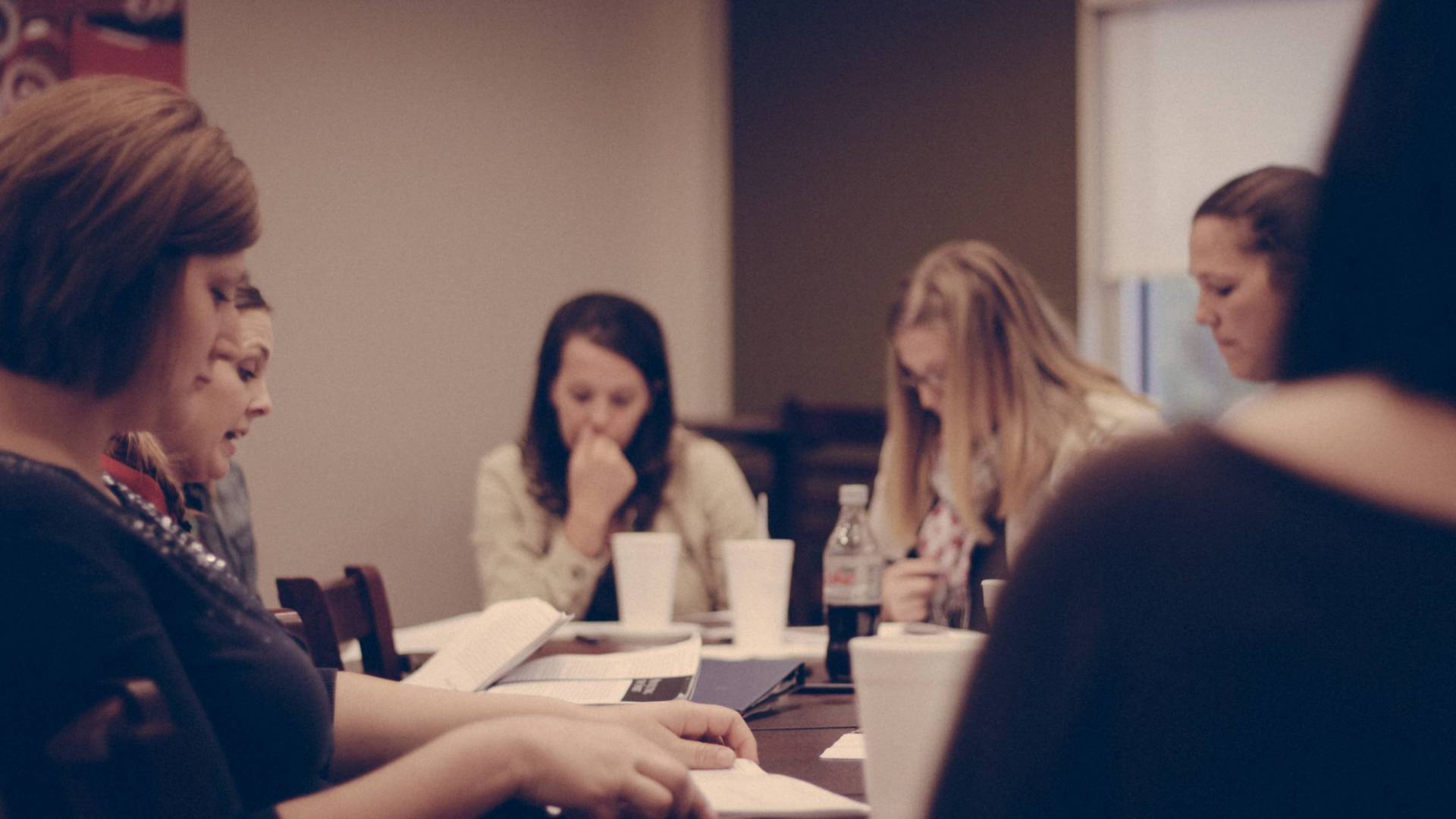
Preparing a message of biblical exposition isn’t a task confined to one gender, even for complementarians. So more programs are training women to teach with their own versions of the preaching classes that have long been reserved for men.

This semester, Southern Baptist Theological Seminary (SBTS) started offering Biblical Exposition for Women. The class is the first of its kind; ever since the Conservative Resurgence in the 1990s, the seminary has made a distinction between preaching classes for men and teaching classes that are open to women.

“God is raising up women with burdens to be equipped to teach,” said Hershael York, dean of the school of theology at SBTS and a preaching professor who teaches the newly formed class. “Having a good hermeneutic, solid exegesis, and putting [a message] in a form people can engage and apply is the same preparation process whether you are a man in the pulpit or a woman teaching a Sunday school class.”

Male and female students in SBTS’s graduate programs can take Christian Teaching, which includes how to design an instructional plan for teaching the Bible and other matters of Christian doctrine and living. For decades, York’s male-only preaching class has helped prepare pastors to preach.

He recently crafted a version for women, which enrolled 90 students this semester. Biblical Exposition for Women, an elective for seminary students, focused on message preparation without the pulpit-ministry training included in the male-only preaching class.

“York’s class is gifting me with the confidence to interpret Scripture and a process to know how to prepare to teach the Scriptures to others,” said Carrie Kahoun, a high school music teacher in Kentucky, who’s enrolled in the class as part of her MA in theological studies.

Hershael York teaches Biblical Exposition for Women at Southern Seminary.

Kahoun attends seminary to strengthen her ability to serve the local church, not through vocational ministry but as an equipped volunteer.

Women at Southern Seminary and several other complementarian programs had similar motivations for learning to teach the Bible. All said they wanted to know how to study God’s Word more deeply. Many want to serve at their local church, some want to teach in the academy, but none had ambitions for pulpit ministry.

“A few radical fringe complementarians say, ‘Oh, look! Southern Baptists are training women pastors!’” York said. “If that’s what the women in the class wanted, they wouldn’t be at Southern.”

The school, like fellow Southern Baptist Convention (SBC) institutions, ascribes to the Baptist Faith and Message, which limits the office of pastor to qualified men, while affirming that “both men and women are gifted for service in the church.”

The Holy Spirit distributes spiritual gifts as he wills (1 Cor. 12:11)—to both men and women (Acts 2:17)—for the common good of the church.

“Sometimes complementarian institutions and pastors act a little bit out of fear that if they equip women, then women will necessarily take on a role that God has not given them. That’s just not true,” said York. “Women who are complementarian in conviction want to [teach] in the proper place with the proper methodology. … The study of Scripture and the love of theology can’t be limited to just one of the two genders.”

Other SBC schools already teach message-preparation classes for women. SBTS’s lag might be due to the faculty’s not recognizing the value and advocating for a Bible exposition class for women—until York’s new course.

For example, Terri Stovall, dean of women at Southwestern Baptist Theological Seminary (SWBTS) helped shape SWBTS’s all-female Intro to Expository Teaching class almost 20 years ago. The school catalog describes the course as focusing on woman-to-woman teaching.

In the past five years, SWBTS also established the Southwestern Women’s Center, the Women’s Leadership Institute, and a chapter of the Society for Women in Scholarship and added Women’s Ministry and Women’s Studies concentrations at the MDiv and MA levels.

“Women coming up haven’t experienced all the cultural boundaries as others before. And I have seen an increase in the conversation about what roles women can fulfill … since I started at Southwestern 20 years ago,” Stovall said.

Seminary enrollment among women is up nearly 20 percent over the past decade, according to figures from the Association of Theological Schools (ATS). SBC seminaries—which include five of the ten largest seminaries in the country—likewise have seen more women in their degree programs.

SWBTS grad Jacki C. King says Southern Baptist churches, under Article VI of the Baptist Faith and Message, have the autonomy to establish where and when women teach. Sandra Glahn, a Dallas Theological Seminary professor, has identified up to five different views on women’s leadership among complementarians.

“I wanted to go to seminary to learn how to better teach the Word,” King said. But when she started at SWBTS, her degree shifted to include sewing coursework (part of the now-defunct homemaking concentration). “I can go to the YMCA or ask a woman at church to teach me sewing.”

She opted to attend a different SBC seminary but finished at SWBTS after the degrees for women shifted back toward equipping women to handle the Scriptures in preparation for ministry.

King is now part of the SBC Women’s Leadership Network, which began in 2019. “In the past, women in SBC leadership felt disconnected and isolated,” said King, who serves on the steering committee. “It’s time to change that.”

Plenty of women serve and lead without a degree, but more are attending Southern Baptist seminaries for formal training.

At Midwestern Baptist Theological Seminary in Kansas City, the number of women in degree programs grew fivefold over the past decade. At Southeastern in Wake Forest, North Carolina, female enrollment is up 88 percent in doctoral programs and 43 percent in master’s programs in the past five years.

New Orleans Baptist Theological Seminary added new Ministry to Women degrees at three levels in Fall 2021: MDiv, MA, and BA. They also launched a ministry wives certificate program and prepareher.com website in 2020 to equip women for ministry.

At the evangelical Dallas Theological Seminary, enrollment has gone from 30 percent to 40 percent female. The Expository Preaching classes have long been available for both men and women—and women may also take Women Teaching Women, a class focused on message preparation that includes women’s ministry skills.

“Seminary taught me how to study the Bible and how to understand authorial intent. Without biblical training, I have seen some incredibly gifted women teach false doctrine,” said DTS grad Jodie Niznik, a Bible study author and the host of the So Much More podcast. “I also know strong women teachers who do not go to seminary, but training women to exegete Scripture, however they receive the training, is essential.”

Some training programs outside the seminary context also teach women how to study and teach the Scriptures. The Charles Simeon Trust, launched in 2001, offers rotating workshops in cities throughout the United States to train women and men to impart the Scriptures to others. They offer teaching workshops for women and preaching workshops for men.

“There is no difference in content. The only difference is instructors,” wrote Colleen McFadden, director of women’s workshops in an email to CT. “Our participants at women's workshops are women Bible teachers, so we like to give them examples of capable and intelligent women who do the same in their churches—instructors who can lead in teaching and training how to teach the Bible.”

And this year, Lifeway—the publishing arm of the SBC—announced the launch of a new academy for women to take courses in Scripture without the same demand of a seminary class.

The program, scheduled to launch in October, is designed for “teachers, entrepreneurs, moms, influencers, students, ministry leaders, and more.”

“Have you ever sat in a Bible study and thought, I’d really like to know more about how this teacher learned all of this? Or maybe you’ve considered going to seminary, but you’re not sure you can commit to homework, a class schedule, or working toward a diploma at this time. Or perhaps you did go to seminary, but it’s been a few years and you’re feeling rusty when it comes to theological terminology and practices,” the announcement read.

“We want to fuel the ministry of women just like you in churches around the world by helping you to treasure biblical truth for yourself.”

Theology

Why Ukraine Calls Upon Michael the Archangel

How the country’s patron saint earned his reputation as a protector.

The Archangel Michael statue in Independence Square in Kyiv, Ukraine.

The Archangel Michael statue in Independence Square in Kyiv, Ukraine.

Christianity Today April 12, 2022
Dmitry Lovetsky / AP Images

Days into the Russian invasion of Ukraine, one Ukrainian Orthodox leader reminded his church where they ought to direct their prayers.

“We perceive today that the archangel Michael, together with the whole heavenly host, is fighting for Ukraine. So many people from throughout Ukraine are turning to me and saying that they saw luminous angels over the land of Ukraine,” said Major Archbishop Sviatoslav Shevchuk of the Ukrainian Greek Catholic Church in Kyiv.

“Today we pray, ‘O archangel Michael and all the powers of heaven, fight for Ukraine! Cast down that devil who is attacking us and killing us, bringing devastation and death!’”

Images and tributes to Michael the archangel, the patron saint of the capital and the country, can be found across Kyiv. And although the brutality of Russia’s attacks has left hundreds dead and sent millions fleeing the border, the Ukrainians have awed the world with their fight, resolve, and perseverance—spurred on in part, perhaps, by their admiration for this mighty archangel of war.

Perhaps the most recognized homage is a gold and bronze statue of the angel on an arch commemorating the Lach Gates in Kyiv’s Independence Square, the city’s primary fortification during the Mongols’ siege of Kyiv in 1240. Brandishing his sword and shield, Michael’s image is on Kyiv’s coat of arms and shows up in many other places around the city. (The Soviet Union briefly replaced the celestial being with chestnut leaves before he returned in 1995.)

Kyiv also boasts a glorious public park, St. Volodymyr (or Vladimir) Hill, which includes a fountain dedicated to St. Michael. Its circular border incorporates dragons spewing water and depicts the city’s major cathedrals and monasteries atop mountains. A large image of Michael appears to be flying over this miniature model of Kyiv, holding forth his shield and sword.

Perhaps the largest physical representation in his honor is found in St. Michael’s Golden-Domed Monastery—a national landmark and the site of the newly formed Orthodox Church of Ukraine, united under the Ecumenical Patriarchate of Constantinople. Parts of the building complex were restored after the Soviets destroyed many of its original structures in 1935.

This reconstruction took decades. The cathedral finished in 1999, but it wasn’t until 2006 that Russia returned the original mosaics and frescoes they had confiscated and stored in Moscow.

This religious complex includes a historic monastery (lavra) whose architecture, especially the golden domes, follows the patterns of both Byzantine and Ukrainian baroque styles. When these religious buildings were renovated—and in some cases, completely rebuilt—many identified this as a glorious moment for the Ukrainian Orthodox faith and the citizens of Kyiv. Some religious leaders interpreted it as a sign of the “unconquered spiritual strength of the Ukrainian people.”

Of angels

The term angel comes from the Greek word angelos. It often translates the Hebrew word for “messenger” but has been found in reference to spiritual beings within the Old Testament. For instance, there are passages in the Septuagint (e.g., Ps. 8:5/MT 8:6; Dan. 3:25/LXX 3:92; and others) when the Greek term angelos is a translation of the Hebrew term for “God.” Starting in the fifth century, Christians began to separate these beings into hierarchies.

The highest forms of spiritual beings were the closest to God and consisted of the seraphim, cherubim, and thrones. The second sphere contained the dominions, virtues, and powers, who were identified as heavenly governors. In the third and lowest level dwelt the principalities, archangels, and angels—who functioned as heavenly guides, protectors, and messengers to earth.

In the New Testament, as I wrote in A Guide to Christian Art, archangels were “present at almost every major event in the life of Jesus, from the Annunciation to Mary to the Resurrection. As the heavenly messengers, guides, and protectors of the church militant on earth, the archangels were symbolic of the Christian tradition, especially in the medieval period.”

In the Old Testament, angels filled God’s heavenly court and were his servants. They were called on, for instance, to guard the entrance to the Garden of Eden, protect the faithful and punish the guilty, and convey divine messages to humanity. The cherubim and seraphim guarded God’s throne, decorated Solomon’s temple, and protected the ark of the covenant.

Michael’s name in Hebrew means “like unto God” or “Who is like unto God?” Some believe he first appears in the Book of Joshua, just prior to the battle of Jericho—where an angel identifies himself to Israel’s leader as “commander of the army of the Lord” and we learn he has a “drawn sword in his hand” (5:13–14).

In the Book of Daniel, in a vision, Gabriel explains that Michael helped him defeat Persian rulers (10:13). Later in that chapter (v. 21) Gabriel identifies Michael as “your prince,” and two chapters later (12:1) “the great prince who protects your people.”

Michael is notably not a prince of any particular place or thing; neither are the other archangels who are likewise identified as “prince” or “saint.” Instead, the term serves as an honorific as God the Father is the King of heaven—hence those who descend from him in positions of power are identified as princes.

In the New Testament, Jude 9 mentions that Michael rescued Moses’ body from Satan. Here he invoked the Lord in his rebuke of the Devil, a rebuke that became a common exorcism formula in later Christian tradition. (The Catholic church uses a special exorcism prayer to Michael.) And in Revelation 12:7–9, after war breaks out in heaven, we learn that Michael and his angels fought Satan and his angels, hurling them down to the earth.

These images of aggression and war gave Michael a reputation among the early church as a fighter. Christians considered Michael a leader of the church militant—in the believers’ perpetual struggle against the Devil and the ongoing fight against persecution.

Patristic texts identify Michael as the pillar of cloud by day and the pillar of fire by night that guided the Hebrews through the Exodus. They further identify Michael as the chief commander of God who annihilated 185,000 Assyrian soldiers (2 Kings 19:35); as the horseman who struck and killed Heliodorus at the temple treasury (2 Maccabees 3:24–26); as the protector of the three Hebrews in the fiery furnace (Dan. 3:22–25); and as the angel who transferred Habbakuk by his hair from Judea to Babylon to take food to Daniel in the lions’ den (Dan. 14:33–37).

Although warfare imagery characterizes much perception of the archangel throughout history, he also has gained a reputation as a dream revealer, miracle worker, and healer. Early examples of Michael’s ability to interpret dreams and heal emerge in Greek magical papyri, where in various spells, the magician invokes angels such as Michael to fulfill personal requests.

According to Orthodox tradition, Constantine built a sanctuary dedicated to the archangel in a village just north of Constantinople. Known as the Michaelion, it became a model for future Orthodox churches.

The location itself became associated with healing waters. Tradition held that Michael helped a man heal his mute daughter by instructing through a dream that she drink from the spring. Both the father and child became Christians. In another incident, Michael restored water to a church and saved it after a group of pagans had cut off its supply. The ensuing spring that arose was said to offer the sick healing and restoration.

Michael is also credited with answering the prayers of Saint Gregory the Great to end a plague tormenting Rome at the end of the sixth century. Gregory saw a vision of Michael sheathing his sword atop the Mausoleum of Hadrian and believed this meant the pandemic had ended. In honor of Michael, Gregory renamed and dedicated the mausoleum to him as Castel Sant’Angelo (Castle of the Holy Angel). A monumental sculpture of Gregory’s vision of Michael sheathing his sword rests atop the building to this day.

Another tradition says that Michael was the conveyer of Christian souls and that he brought Mary a palm branch as the sign of the annunciation of her prayed-for death. It is said that his was one of the voices heard by Joan of Arc. Michael is considered the patron saint of the sick, of soldiers, and of all Christian souls. His name is often invoked in battle and in danger at sea.

Michael’s legacy

Many of the beliefs, traditions, and teachings about Michael began in the earliest centuries of Christianity.

In a time when many believers experienced severe persecution, much of the church believed in an imminent Second Coming, when Christ would return as the leader of heavenly forces to vanquish the Devil and all of God’s enemies on earth. The new kingdom of God would be established in which all Christians would be restored to a perfected form, living in perpetual peace and comfort under the protection of God. Given Michael’s biblical description, historical and literary narratives include him playing a significant role in this apocalyptic confrontation.

After the East and West church schism of 1053, the Catholic church characterized Michael in four primary ways, many of them drawn from his scriptural descriptions.

First, Michael is known as the guardian of the church. Next, he leads God’s armies. As the commander, he battles and triumphs over the power of hell, a fight which occurs cosmically and individually—the internal turmoil a person suffers, torn between good and evil. Michael also weighs souls on Judgement Day, a responsibility that manifests in his iconography, which often incorporates scales and balances. Finally, the church understands Michael as the angel of death, the being who carries deceased souls to heaven. In the moment before a person passes, Michael offers the soul a final chance at redemption. The feast day honoring Michael falls on September 29.

Whereas the Catholic Church tends to emphasize Michael in terms of defeating the Devil in the battle for the Christian soul, Orthodox Christians relate to the archangel by frequently invoking him in prayers for protection from invasion by enemies or civil war and for the defeat of adversaries on the battlefield.

Constantine the Great reported that Michael appeared to him in a vision, intervened in battles, and protected cities from assault. The Russian Orthodox church venerates Michael alongside the Theotokos (Mary) and sees them jointly as God’s armies—especially to protect cities, churches, and monasteries.

While he is often referred to as St. Michael, as they do for many other angelic figures, the Catholic church never formally beatified him. Instead, simply due to his place at God’s side as the leader of heavenly armies against Satan/the Devil/Lucifer, he is recognized as a saint—a holy figure capable of helping Christian souls and even performing miracles with God’s aid. His feast day falls on November 8.

Perhaps not surprisingly, Protestants do not have a consistent view of Michael. Yet this does not suppose that they are unconcerned with angels or Michael’s biblical portrayal. The role of angels secretly ministering or assisting believers throughout their lives has been popularized by evangelicals. Likewise, Pentecostals also acknowledge Michael’s chief role but view him along with all angels as celestial beings who participate in the spiritual conflict between good and evil. However, it is fair to say that most Protestant denominations recognize Michael as an archangel from his biblical episodes. As Billy Graham writes in Angels, “he is the angel above all angels.” Meanwhile, the Anglican and Methodist traditions recognize four archangels: Michael, Raphael, Gabriel, and Uriel.

Some (i.e., Seventh-day Adventists, Jehovah’s Witnesses, and Latter-day Saints) hold particular views including that Michael is one of the manifestations of Jesus (Seventh-day Adventists). In other words, Michael is another name for Jesus in heaven—that is, in his prehuman and post-resurrection existence. Others claim that he is Adam, the Ancient of Days, or the patriarch of the human family (Latter-day Saints).

Artistic representation

The winged beasts guarding the royal palaces of Assyria and Babylonia inspired initial Christian angel iconography. As I write in A Guide to Christian Art:

By the fourth century, angels appeared as male figures, usually without feet and dressed in garments of a white pallium over a tunic. In early Christian art, angels were depicted as wingless, but wings became normative by the fifth century.

By the High Middle Ages, angels were more elegantly garbed (depending on their station in the hierarchies) and appeared to be androgynous. Although the principle of angels being sexless continued, renaissance artists presented them as male figures with fashionably delicate facial features and long hair, dressed in contemporary garments (making them more approachable). As the lines between the angelic spheres became blurred, along with the renaissance adaptation of classical Greco-Roman art, plump little children with wings began showing up in Christian art.

Artistically, Michael has often been depicted in armor, as the chief commander of the heavenly hosts. The archangel wields a sword with one hand. His other hand may hold a complementary or opposing symbol including a spear, shield, branch of a date tree, or white banner (which may or may not include a red cross).

In contrast, Byzantine icons depict Michael sporting an orb in one hand and a staff in the other. At times, he also appears standing on a horizontal body. In his raised left hand Michael holds a baby, symbolizing the person’s soul.

In early Christian and Byzantine art, he wore a winged helmet and sandals and held a caduceus like Mercury (or Hermes). By the early medieval period, Michael was represented as a handsome young man, clad in armor—who carried a sword, spear, lance, or scales and had a dragon or Satan at his feet.

That said, his depictions in Christian art evolved with the developments in artistic style and varied by geographic region.

Furthermore, Ukrainian Orthodox iconography of Michael as the commander of God’s holy army is fused with other images seen and displayed in churches and in public processions. And so, by the time his statues in Kyiv were built, his artistic image reflected both Eastern and Western Christian influences.

Their land’s protector

Nearly two months into the invasion, Russians continue to press Ukraine in a war with serious geopolitical—and religious—stakes. Back in the 980s, the man later known as Vladimir the Great brought together his kingdom of Rus people in a territory containing regions of modern-day Ukraine, Russia, and Belarus. After his own conversion to Christianity, he brought his faith to the region, and Kyiv became the capital of his new Christian empire.

Several centuries later, when the city came under fire in the Mongol attacks, many began to flee to the North. In turn, the Russian Orthodox church began to build its legacy in Moscow. By 1686, the Patriarch of Constantinople—considered within Orthodox leadership to be the first among equals—placed the patriarchate of Kyiv under the ascendant patriarchal church of Moscow. That is, until 2018, when this decision was reversed.

The Russian president, Vladimir Putin, and the Russian Orthodox church authorities in Moscow want to claim the Christianity of Kyiv as their own. (In 2016, Putin erected a statue of Vladimir the Great at the Kremlin, indicating Russia as his true heir.) And yet today, many Ukrainians are praying against this and rallying themselves as they petition Michael, their land’s protector.

As Major Archbishop Sviatoslav Shevchuk declared, “Here in Kyiv we perceive that the patron of our city is the archangel Michael, who with the cry ‘Who is like God?’ cast into the abyss Lucifer—the one who rose up against God’s truth and was the leader of the diabolic armies.”

Diane Apostolos-Cappadona is professor emerita of religious art and cultural history and Haub Director in the Catholic Studies Program at Georgetown University.

Additional research conducted by Rodolfo Galvan Estrada III.

Follow CT’s Russia-Ukraine war coverage on Telegram: @ctmagazine (also available in Chinese and Russian).

Select articles are offered in Russian and Ukrainian.

News

Died: Gerald Coates, New Church Movement Pioneer

He preached a nonreligious Christianity that emphasized authenticity, creativity, and the leading of the Holy Spirit.

Christianity Today April 8, 2022
Pioneer / edits by Rick Szuecs

Gerald Coates, a church leader who envisioned a new way of doing church, free from formality and the trappings of tradition, has died at 78.

Coates was influential in spreading charismatic renewal in the United Kingdom and helped develop the house church movement into the British New Church Movement. Through his preaching, prophesying, and provocations, he pushed Christians to be more creative, be more receptive to the Holy Spirit, and understand themselves more as pioneers than settlers.

“God will not be tied to 17th century language, 18th century hymns, 19th century buildings, and 20th century religious inflexibility,” he once declared. “God is changing his church. We are part of that change!”

Coates co-organized the first March for Jesus in London in 1987 and founded Pioneer, a network of churches that prioritize the presence of God and seek to be catalysts for Christian unity. Currently there are about 60 churches in the network.

“We will be forever grateful to Gerald for birthing Pioneer and creating a family for activists, creatives and those who didn’t always fit in mainstream or conventional church settings,” wrote Pioneer UK leader Ness Wilson and Pioneer international leader Billy Kennedy in a tribute to Coates.

They said that Coates “continued to live up to the name of the network he founded” to the end, “clearing the ground of unnecessary religious baggage and making a way for what God was doing.”

Kennedy described Coates as “part of a small group of dreamers and schemers … who set out to ‘restore the church’” and “preached a brand of non-religious Christianity that offended and delighted in equal measure.”

Evangelical leaders across England mourned the news of his death on April 3.

https://twitter.com/stuartoflincoln/status/1510866401015341058
https://twitter.com/andythefrosty/status/1510866924414156800
https://twitter.com/DanielHarman83/status/1510932295913455616

He was born to George and Evelyn Coates on November 25, 1944, the eldest of three children in Cobham, Surrey, about 17 miles southwest of London. The family was nominally religious. Coates attended a Church of England Sunday school and later recalled deciding he believed in God as he looked up at the stars in the night sky.

He became an evangelical at 11 at an archery summer camp run by Christians. One of the leaders asked the boy if he had accepted Jesus as his savior, and young Gerald lied and said he had. He felt incredibly guilty about his lie, he later told his biographer Ralph Turner, and didn’t really know why he had said that when it wasn’t true. So he went back to the camp leader and asked what he would have to do to accept Jesus as his savior.

He made his commitment to Christ in 1956 during an evening service in a tent stacked with hay bales. Coates prayed to accept Jesus and, repeating the words after a minister, said “From this day forward, please make out of me what you want me to be.”

Coates went home and told his parents “I’ve been born again.” They were politely indifferent, he recalled, viewing his religion as an odd but acceptable hobby.

His commitment to his faith grew deeper in 1965, when his girlfriend, Anona, converted to Christianity and the two were baptized by the Plymouth Brethren. The couple was subsequently married, and Gerald threw himself into street evangelism and youth ministry.

He struggled with the strictures of the Brethren, however. They objected to movies, makeup, and modern fashions, and though Coates himself didn’t mind the rules, he felt they were legalistic and unnecessarily limited his outreach to young people. He also butted heads with the Brethren over the issue of women in ministry.

At the same time, he started exploring the charismatic renewal and gifts of the Spirit. He was intrigued by a Campus Crusade for Christ minister’s reference to “being filled with the Holy Spirit” and moved by In the Day of Thy Power, a book by Arthur Wallis, a Brethren Bible teacher who had what he came to describe as an “‘upon’ experience of the Holy Spirit.”

Coates started reading extensively about revivals, focusing especially on the histories of John and Charles Wesley in Great Britain and Watchman Nee in China.

The youth meeting grew into a house church in 1968, and Coates started Cobham Christian Fellowship. He continued to work two jobs to make ends meet. He was a part-time gas station clerk and part-time postman. As he delivered mail on his bicycle, Coates frequently sang Charles Wesley hymns at the top of his voice. One day, singing “Love Divine, All Loves Excelling,” he unexpectedly broke out in tongues. For the rest of his life, he would be a committed charismatic.

Wallis started organizing independent charismatics in the early 1970s, first bringing together six ministers to covenant with each other to work for the restoration of the New Testament church in the United Kingdom. They jokingly called themselves the “Magnificent Seven.” A few years later, they doubled, becoming the “Fabulous Fourteen.” Coates was one of the 14.

The group believed that “a whole new style of church is being born,” as they stripped away traditions and dogmas and returned to the authentic New Testament way of doing church. They preached that the Holy Spirit was moving in the last days before Christ’s second coming to restore the church to her original purity. God would erase denominational divisions and bring new unity.

The first thing most people noticed about the charismatic house churches was the music. Most worshiped with acoustic guitars and occasional tambourines and developed simple worship choruses that people threw themselves into.

But the changes went beyond musical style. Coates would regularly challenge himself to break his own assumptions of what church looked like. Before one meeting in the 1970s, for example, he got out the bread and Ribena fruit juice and put them on a tablecloth on a table in the center of the room.

“What am I doing?” he asked himself, as he later recalled to his biographer. “This is just repeating the picture in my mind from the Brethren.”

He moved the bread and juice to a shelf on the side of the room and put away the table and cloth.

“Remembering Jesus’ death,” he said, “was never supposed to be a religious ceremony.”

His efforts to get rid of traditions sometimes upset people. He once started munching on the Communion bread before serving everyone else. Another time he suggested stripping all the clergy in England of their credentials and status and “let those with God’s gift get on with what they have to do.” He later insisted he was joking, but it seemed to reflect his true feelings.

Coates said the traditional way of doing things undermined Christian spirituality.

“Authentic spirituality can be summed up in one word—reality. How unreal we have all been in the Church,” he wrote at the time. “This unreality produces a niceness, but not true spiritual life. … It is time to stop pretending, time to stop trying to be a Christian, time to say ‘I’m not what I was by the grace of God and I’m not yet what I will be by his grace, but I am what I am and I’m jolly well going to enjoy being that.’”

This rejection of legalism eventually led to a rift in the Fabulous 14. Some of the independent charismatics were concerned the emphasis on grace would lead to license to sin and general “antinomianism.” In 1976, Wallis wrote a letter to Coates saying he had “no choice but to separate from you” because “grace is being used to cover up license among you” and there was a “demonic or ambitious spirit” in the London-area charismatics.

The letter permanently divided British charismatics, but Coates was able to bring the different groups together again, to a certain extent, in the late 1980s. He and two other charismatic ministers organized a Jesus Walk from Trafalgar Square to Hyde Park in 1987. They planned for 5,000 but 15,000 showed up, attracting public attention and convincing many that revival was imminent in the UK.

In 1988, Coates organized a conference in Sheffield, bringing together a range of charismatic ministers, and proposed that they were all part of a broad “new church” movement. The term replaced “house church,” which Wallis had used in the 1960s and ’70s but which no longer accurately described the independent and experimental churches.

The charismatics were no longer a few unconventional church people in a living room. One British journalist visited a “new church” in a gym in the early 1990s. He was surprised to find the place packed—and not with the folks you’d expect to go to church. He saw “glam girls with glittering teeth,” men with earrings, old guys in paisley shirts, wobbly grandmas, well-behaved children, and not-so-well-behaved children.

“All burst uproariously, come the start of the service, into the first of the evening’s charismatic hymns: ‘Shine Jesus Shine,’” he reported.

Coates wanted the churches to not settle on a new model but keep pushing and keep experimenting. He organized the Pioneer network to encourage the continued efforts to follow the movement of the Holy Spirit. Most Christians are settlers, Coates said, but they would be pioneers, always pushing on to the next frontier.

“The Holy Spirit is on a collision course with all forms of inflexible Christianity,” Coates said. “Denominationalism is sin! It is heresy! There is no way round it.”

Coates is survived by his wife, Anona, and three sons, Paul, Simon, and Jonathan.

News

Pysanky and Prayer: US Churches Use Ukrainian Easter Eggs for Solidarity

Though American churches are trying out the art of making pysanka, Ukrainian Christians say it is not a religious tradition.

Pysanky are intricately designed Ukrainian Easter eggs.

Pysanky are intricately designed Ukrainian Easter eggs.

Christianity Today April 8, 2022
Natalie Fobes / Getty

To do the ancient Ukrainian practice of pysanky, you need a strong, smooth egg and a lot of patience.

North American churches are taking up the delicate egg decorating art form, dating back thousands of years, as a way of showing solidarity with and raising money for war-torn Ukraine ahead of Easter.

A number of Episcopal churches in the United States have hosted pysanky events as a “form of prayer” for Ukraine. A Catholic community in Ontario, Canada, said it would begin doing pysanky on Sunday afternoons as “a contemplative activity offered for our suffering world.” A church in Connecticut planned an afternoon decorating pysanka eggs (pysanka is the singular form of pysanky) combined with a prayer vigil.

Several American churches have interpreted the Ukrainian cultural practice spiritually: that it has the power to keep evil at bay, or that the egg symbolizes new life and Christ’s resurrection, or that it is a “Lenten tradition.”

But according to Ukrainian Christians, the art of pysanky does not have spiritual significance on its own. It is a pre-Christian cultural practice from the region.

Joan Brander, a Ukrainian Canadian pysanky artist who has written books on the art form, told CT she considers the tradition purely Ukrainian with no religious connotation.

Zlata Zubenko, a Ukrainian American and a Christian, also considers the art of pysanky as more of a folk tradition and a symbol of Ukrainian national identity.

Some Ukrainian sources noted that the cultural practice is more associated with Orthodox Easter traditions.

Pastor Michael Cherenkov, who grew up in Ukraine and now pastors a Baptist church in Washington state, said evangelicals don’t usually make pysanka eggs as a religious tradition but it is an Easter symbol within Orthodox Christianity.

Anna Grot, a Ukrainian American who works at the ministry World Challenge, also agreed that if pysanky has any religious significance it is generally considered a more Orthodox tradition. “It’s more a cultural thing that goes back to the times even before Christianity reached Kyiv,” she said.

In addition to churches, art museums across the US are also doing pysanky exhibits. The Ukrainian Museum in New York said pysanky is a way to celebrate Ukrainian culture “at a time when its existence is being threatened.” The Dayton Art Institute in Ohio also recently put up a pysanky display, including a broken one to show how fragile they are.

Since making one egg takes hours, pysanky can be a therapeutic activity when news is overwhelming and the Ukrainian diaspora feels powerless to help their homeland. People often do pysanky together, “kind of like a quilting party where you get together and chat,” said Maryann Bacsik, whose family has made pysanky for generations.

This weekend, Bacsik and her daughter Tamara were hosting a pysanky workshop at their New Jersey church, St. John the Baptist Russian Orthodox Church. Many people in the church are Carpatho-Rusyn, an ethnicity based around southeastern Poland, northeastern Slovakia, and western Ukraine.

Tamara remembers late nights decorating eggs at the home of friends after Vespers services at her church during Lent. She would usually make about a dozen pysanky, and in her church people will exchange pysanky with their friends.

“It’s a tradition that's always been in our church … passed down from the generations that came came over from the old country,” said Tamara. This is the first year the Bacsiks are doing a public workshop at their church, although Maryann has taught pysanky at local schools.

“People in the community are looking for opportunities to … connect somehow with the culture, to understand a little bit more about the history,” said Tamara.

The Pysanky Museum in Kolomyia, Ukraine, has eggs from many regions.

The Bacsiks’ family roots are in the Carpathian Mountains on the Polish side, but after World War II some of their family were forcibly resettled in Ukraine.

Now they also have family living and fighting for Ukraine. A Bacsik cousin was one of the founders of the Pysanky Museum in Kolomyia, Ukraine, close to the Romanian border, that Maryann has visited.

It’s a two-story structure in the shape of a giant pysanka egg. The museum is full of eggs in various pysanky styles from all different regions. The Bacsiks’ relatives have reported that the airstrip there has been bombed, but the museum so far has remained unharmed.

“My cousins have been telling me to remain calm,” said Tamara.

Instead of worrying, the Bacsiks are doing egg decorating and raising money for Ukrainian refugees. Tamara points out that the eggs are a form of self-expression, so people can do religious or political symbolism if they want. Maryann guesses there will be “a lot of aqua and yellow eggs this year.”

Tamara’s usual dozen pysanka eggs for Easter represent a lot of time. The Bacsiks find that crafting an egg takes four to five hours, but the time depends on how intricate the design is.

They haven’t started any eggs yet, but still have some time to finish: Holy Week for Eastern Orthodox traditions is one week later than for Protestants.

To make a pysanka egg, you pick a good raw egg that is smooth and doesn’t have weak spots and then prepare it with a vinegar solution. You hold the egg with a tissue to keep oily fingerprints off it.

To make the designs, you use a writing tool called a kistka which draws hot beeswax onto the egg (pysanka comes from a Ukrainian word meaning “to write”). You start with inscribing the beeswax lines that will preserve the white egg color, and then dip the egg in progressively darker shades of dye, layer after layer.

The beeswax inscriptions seal in whichever color of dye is on the egg—any stray drop of wax will seal in that spot forever. When all the layers of wax and dyeing are done, you melt the wax off with a candle to reveal the colorful design underneath.

“If you hold it too close to the candle, you’ll get a black streak and there goes your beautiful design,” said Tamara.

“It takes a lot of patience,” said Maryann. “It’s easy to drop … a very delicate medium to work with.”

“In addition to the symbolism that you put on the egg,” Tamara added, “I think there’s a lot of symbolism in the process as well.”

At the end when you remove the wax, you drill a hole to flush out the egg—the most “dangerous” part of the process, according to the Bacsiks. Some people leave the egg full, but Maryann noted that those can result in a smelly disintegration in a china cabinet years later.

Despite their fragility, the eggs can last decades. The Bacsiks have pysanky eggs that are 50 years old—ones that Maryann made as a teenager.

“It is pretty intimidating when you first look at it,” said Tamara. “At least one out of five break.

“Some people might not pick up a paintbrush and go paint a painting,” she said. “But if you put an egg in front of them and say, ‘Come to this workshop,’ maybe it’s something that they’ll try.”

Follow CT’s Russia-Ukraine war coverage on Telegram: @ctmagazine (also available in Chinese and Russian).

Select articles are offered in Russian and Ukrainian.

Church Life

The Biggest Mistake the Church Can Make

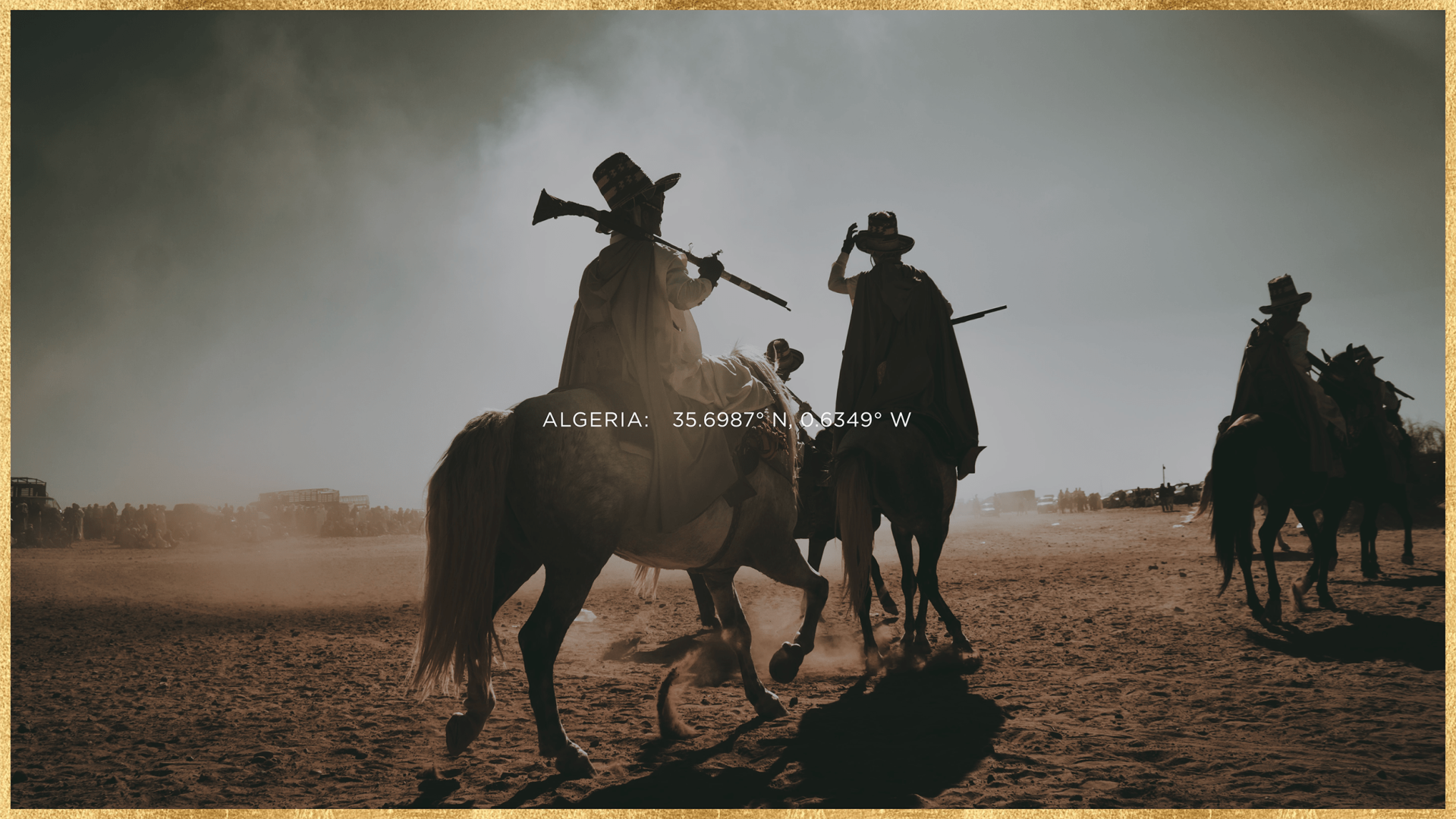
How government restrictions bring revival to Algeria.

Cover Photograph by Daoud Abismail

The courtroom grew still. Pastor Rachid Seighir straightened, awaiting the verdict on his latest appeal. 

His bookshop in Oran City, Algeria, had been closed since 2017, when police confiscated his printing equipment. At the time, he’d been accused of printing and distributing Christian literature. Though the judge had ruled in his favor then and his equipment had been returned, the shop had never reopened. In 2021, the accusation reemerged. Someone had slipped the charge under the door of the church Rachid pastored. He had been fined and sentenced to two years in jail. The church, too, had been closed by the Algerian government.

Now, Rachid’s world hung in the balance. With a short flourish, the judge pronounced the verdict of a one-year suspended sentence and a fine. Rachid released a long, relieved sigh and left the courthouse, deeply thankful to be heading home to his wife and two teenage children rather than to prison. 

With brothers and sisters around the world lifting him up in prayer, Rachid would continue to appeal the accusation, but it wasn’t the first time he’d been in court. In the face of losing his freedom, Rachid understood the cost of actively sharing God’s love in his country.

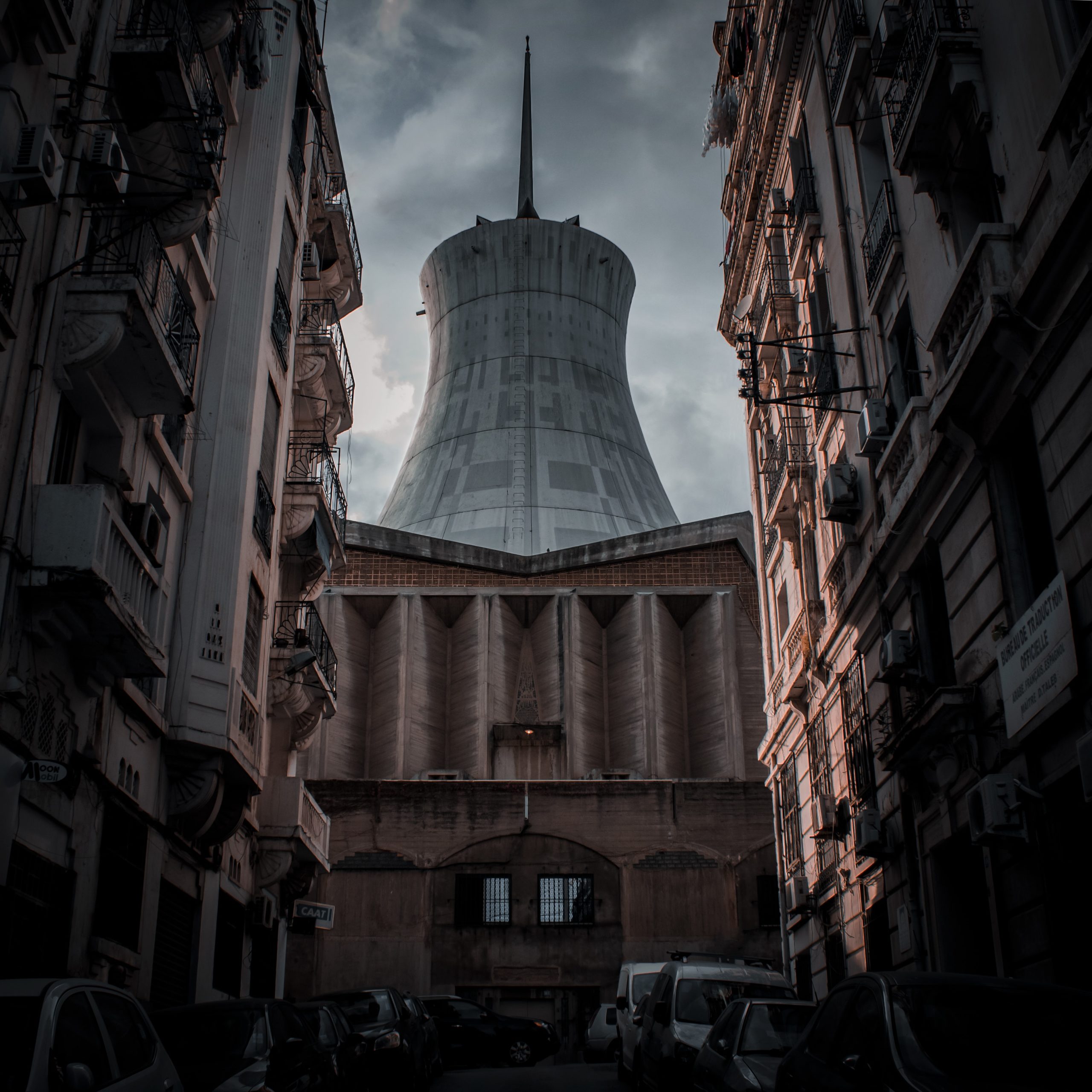
In October 2017, a few years before Rachid’s appeals hearing and before the government mandated harsh restrictions on church gatherings, Algerian Jesus followers outside the coastal city of Oran confronted a red wax seal covering the lock and dripping down the door handle at the House of Hope, a prominent Protestant church and ministry center. According to an order from the governor of Oran, all activities and meetings were to stop immediately at the House of Hope and several other churches scattered across the country.

In September 2018, believers in Algeria, united under the Algerian Protestant Church (EPA), commenced a year of 24/7 prayer and fasting. The following two years brought more troubles: more church closures, more pressure on landowners renting space to Christians, more persecution for individual believers, including prison sentences for those accused of proselytizing. Then the pandemic struck and gave the Algerian government another reason to suppress the gathering of Protestant believers.

Pastor Youssef Ourahmane, vice president of the EPA, and his wife, Hie Tee, are pioneers in the missions training and discipleship movement in Algeria, as well as founders of the House of Hope. They consider the latest forms of persecution “sort of normal,” they say. “We all carry on because we have to continue to stand firm and let the Lord fight for us.”

The Ourahmanes spoke to me on the phone from their home in southern Spain, where they were waiting out travel restrictions. They maintain an apartment in Algeria, which, along with the House of Hope, was sealed in the early days of the church closures. “We made the window into a door,” says Hie Tee. “The Lord gives us the courage and the peace to do what we need to do.”

Persecution, of course, is nothing new for Christendom. Jesus himself was cursed, criticized, condemned, and ultimately crucified—before rising from the dead and ushering in the hope, peace, and assurance of God’s love that believers claim today. Despite facing threats and physical assault, Hie Tee says, “the disciples also went on to share the gospel, and so it has not stopped since then. In the same way, we just carry on—under his protection and his enabling grace and strength and his Holy Spirit. So to him be the glory.”
Youssef agrees. “The biggest mistake the church can make is to give in to fear”—particularly across the Middle East and North Africa, where Jesus followers often face strong societal backlash and persecution for their faith. “So many churches have given in to fear,” he says, “and they have failed to do what God has asked them to do.” 


More than two years since producer Mike Cosper began recording interviews for the show, The Rise and Fall of Mars Hill returns with its most poignant episode yet—a road trip to Seattle to stand in the spaces where Mars Hill Church began.


This epilogue of the critically acclaimed podcast sends Cosper and executive producer Erik Petrik on a trip down memory lane, visiting the buildings and church members who formed the vibrant community that would one day fall apart.


From Seattle living rooms crammed with chairs to an empty sanctuary slated for demolition, discover afresh the mystery of God working in broken places. And, as you see how “time humbles and reveals all,” let the story of Mars Hill compel you toward truth not trends, grace not grandeur. Come, meet the people and places that have remained, marked indelibly with love for the gospel and for Seattle. Meet those who never left.


As this series concludes, a special thanks to: Joy Beth Smith, Andrea Palpant Dilley, Morgan Lee, Russell Moore, Ted Olsen, Daniel Silliman, and Kate Shellnutt. Thank you, especially to Tim Dalrymple and Erik Petrik, Kate Siefker, and to Sarah and the Cosper girls. Thank you to the members of Mars Hill Church, especially, Wendy Alsup, Jesse Bryan, Sutton Turner, Tim Smith, Aaron Gray, Jen Smidt, and Ben Vandermeer.

Before the government’s crackdown on Christian gatherings, worshipers at one of the larger churches situated among the snowcapped mountains of Kabylia—the birthplace of the Algerian revival—used to arrive an hour early to secure seats. Believers gathered quietly and prepared themselves to worship God and welcome the presence of the Holy Spirit. From there, services regularly stretched over three hours. Afterward, people still didn’t want to leave, so they remained and socialized together.

From the first outreach into the region in 1981, when about 30 young men decided to follow Jesus during a football tournament, the light of Christ has sparked life into hundreds of thousands of Algerians, igniting countless house groups and churches. The fledgling church, though acknowledged by the government, has attracted persecution from its inception. Like Rachid, early Algerian believers memorized verses about overcoming fear, understanding they could lose their livelihoods or even their lives for deciding to follow Jesus.

Restrictions to accessing church buildings and places like the Emmanuel Center, a large missions training hub in Kabylia, have impacted evangelistic training as well. Youssef and Hie Tee had dreamed of sending 1,000 Algerian believers to share God’s love in other countries by 2025. “Because of the closure of the church, we have been humbled in many ways,” Hie Tee says. Discipleship and training have endured, albeit on a smaller scale. “The big change that we’re going to pray for is that through this, within the church of Christ in Algeria, there will be people who wake up to mission,” she said. “God is in control, and God is purifying the church and making people seek him.” 

In standing firm, the Algerian church has become an example for other Christians in the region, especially those from Muslim backgrounds. Algerian believers are “all Muslim converts, but they’re not afraid; they’re resisting,” Youssef says. “They’re not only willing to believe, but they’re also willing to suffer.”

That suffering has also garnered international support. Leaders from the United States, France, and Switzerland have intervened on behalf of Algerian believers. Because of persecution, the world has learned more about the circumstances and the bravery of the Algerian church. 

And while Christians in Algeria remain prohibited from meeting together in large groups in church buildings, they still spread the gospel online through expansive social media ministries and internet TV programs airing in Arabic, Kabyle, and French. 

Gathering is a gift, but even when it’s prohibited, God is still working. “Even in the midst of all of this,” says Youssef, “people are still coming to faith.”

Church Life

The Prison Sanctum

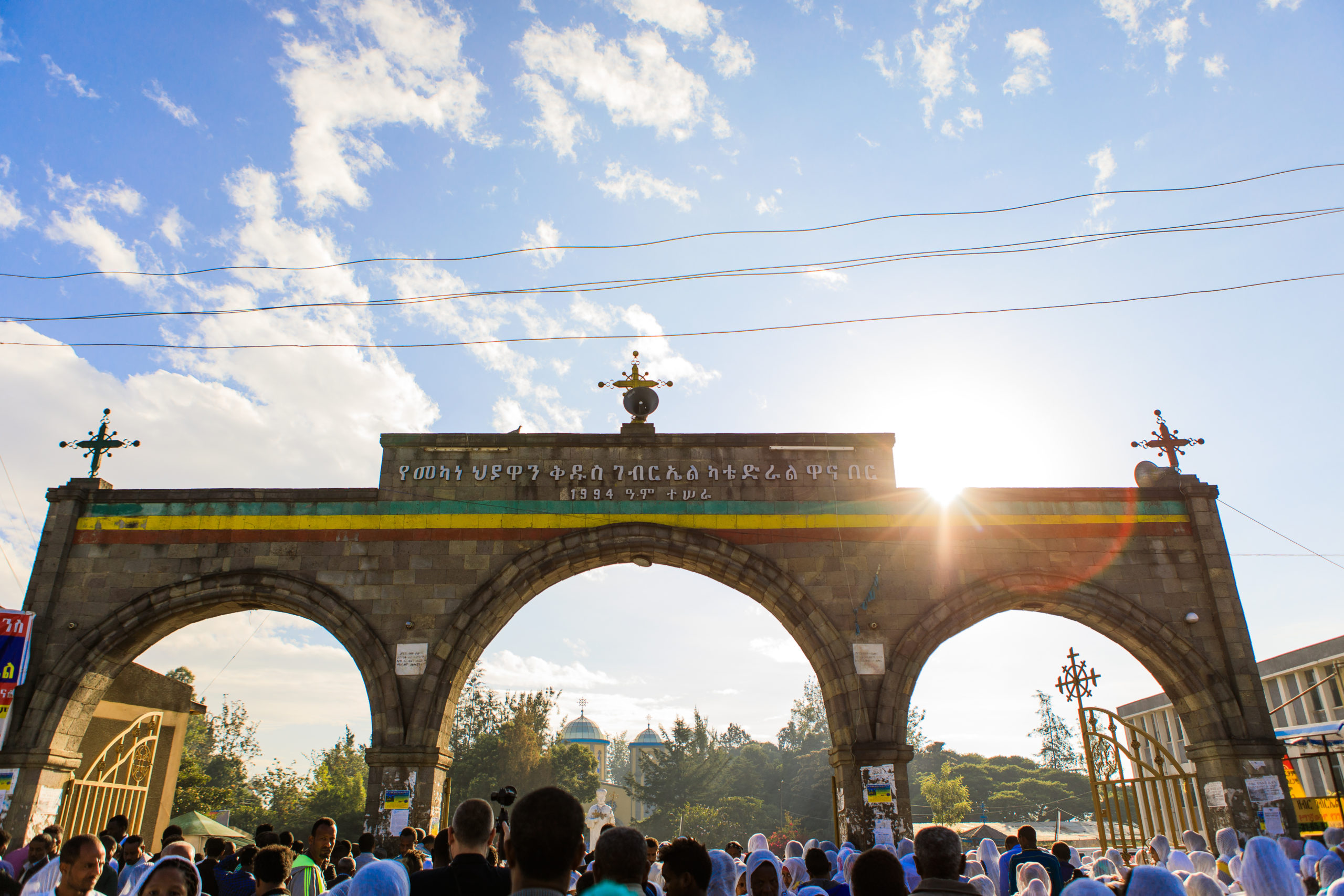
How the kingdom of heaven came to an Ethiopian prison.

Cover Photography by Douglas Nottage | American Bible Society

I did not plan to go to prison today. Yet I watch the red dirt as I walk—how it puffs and gathers on my shoes, seeping inside to turn my toes a brickish hue. I am not looking at the men urinating in the gutters to my left. I am not looking at the rows of eyes watching me from my right. I am not looking up at the guards in the towers with guns turned inward and downward upon the courtyard. I am thinking only about reaching the sanctum of the prison chapel.

At the small shed’s doorframe, I take off my shoes with a slight sense of ceremony and glance at my red-rimmed feet. I am aware that the aged mat I’m stepping onto is the ground of miracles. When my eyes adjust to the dimness—the sun filtering through the fabric walls—I see a teenager with a generous and nervous smile. He’s wearing a simple gray t-shirt and a wooden cross necklace that I’ll later learn he carved for himself. His name is Nesanet. He is about to show me the kingdom of heaven. 

The city of Hawassa gathers around the banks of Lake Awassa in Ethiopia’s Great Rift Valley. Tourists come to see hippos and crocodiles bobbing in the lake, sip coal-boiled coffee, or connect with their Rastafarian roots in nearby Sheshamene. I was there with a video team from the American Bible Society to discover how audio Bibles in Amharic were transforming lives in the region. When we arrived, our local team members told us, “You have to go to the prison. You have to hear what God is doing there.”

I didn’t expect to come face to face with heaven in a maximum-security prison. I knew I might experience a glimpse of it in between the pews of Ethiopia’s sanctuaries, or even in the backseats of the many icon-filled taxis churning around the streets of the city. Prison, however, is where I met Nesanet.

Nesanet was a young man with limited economic opportunities who had resorted to a life of thieving to survive. When things went sideways during a botched job, Nesanet ended up stabbing someone, and this landed him in prison in Awassa—something he told me he thanked God for every day. He felt like God had plucked him off the streets and dropped him into an in-between space where he was confronted with the faith that had long been at the periphery of his existence but never quite real. 

He met his Savior when he heard the Word read aloud from a device called a “Proclaimer,” which is a solar or crank-powered audio Bible reader that looks like a small radio. That day, lying on a mat in the room he shared with ten other men, words straight from God flowed into and through him in a way he’d never known was possible. From that moment on, Nesanet spent hours every day immersing himself in the Bible; as I spoke with him, I saw evidence of his saturation in Scripture. He shared how God was his companion when he was lonely during visitation hours, how God redeemed the monotony of the days with opportunities for worship, and how God compelled him to live differently by doing things like sharing the gifts of soaps and candies he received instead of using them as tools for bartering.

To me, Nesanet seems like he could be a character straight out of the Bible. It’s tempting for those living 2,000 years after Jesus to think of biblical characters as just that, literary abstractions intended to tell a story and teach a lesson. However, in the same way we live out our days in the mundane and glorious alike, these characters were real, corporeal people who lived in the muck of their reality, capturing fleeting glimpses of some redemption beyond themselves. Like Nesanet, like me, like you, they had an idea of what God’s kingdom should be, and they attempted, through their own broken understanding and efforts, to bring heaven to earth. 

This tension, I think, is essential to living our faith. We are souls enlightened with a higher purpose, yet we are also bodies operating in the dirt of a not-yet-new earth. We pray the prayer Jesus taught us—“Your kingdom come, your will be done, on earth as it is in heaven”—but do we consider what this vision of a God-transformed earth requires of us now? The full gospel calls us to transcendent holiness without ridding us of our responsibility to the mess of humanity. Jesus—fully God, fully man—lived this shared priority by example. He prayed to the Father; he washed his friends’ feet. As he grew in his understanding and relationship to Christ, Nesanet cultivated a kingdom mindset that allowed him to live in humility and service—even inside the walls of a prison.
Douglas Nottage | American Bible Society

When I first met him, Nesanet was training for the priesthood while serving his sentence. “We look up to Nesanet, you know,” a younger teenager in the prison told me. “He’s a real role model for us.” No one expects someone carrying the label “criminal” to be a model of redemption, but God often contradicts our logic. When God made Nesanet new, Nesanet trusted the implicit truth of that redemption. He released the memories of what he had done and clung to the promise of who God was re-making him to be. Nesanet’s journey reveals the beautiful challenge of grasping onto the kingdom of God every day and gripping its transformation tightly. 

As our videographers finished their film work for American Bible Society by shooting b-roll footage, we asked Nesanet if he would lead other chapel visitors in a song of praise. He’d been demure all day, but as he began to sing, he exuded a celebratory, almost boisterous spirit of freedom and joy. He stood in a white robe and thumped a drum as the group joined together in worship of their redeemer. As we stopped filming, to our surprise, they didn’t stop singing. We witnessed heaven manifest upon the wooden benches, splash out from the open doorframe, and shimmer across the hot dirt. I like to think the curious men watching from outside could see it. I like to think we saw a little piece of earth remade in heaven’s image that day.

Back in our hotel in Addis Ababa, I rinse my feet in the shower and watched as little red trails slither from my toes down the drain. “You are dirt, and you will return to dirt,” I whisper to no one. Then I hear a low voice that makes me push open the window to listen. A voice reverberates off the half-finished buildings around us, a priest chanting over a loudspeaker in Ge’ez, one of the oldest languages known to Christianity. Some trace the roots of Christianity here all the way back to the Ethiopian eunuch referenced in Acts 8. Perhaps the first Ethiopian Christian is still declaring his baptism into the faith all these centuries later.

At the sound of that ancient hope, I am transported to the day when Nesanet too will speak redemption over the land. In the same way that he heard the Word and it changed everything, he will declare that same truth over and over. He will remind us that this is the kingdom of heaven come home. Even if our earthly eyes can’t quite see it yet.

Church Life

Betty is God’s Favorite

How deeper healing came to a hospital in Kenya.

Cover Photograph by Living Room International

Kibet proudly stood at the gate of Kimbilio Hospice. The sash draped across his chest read “Here to serve.” The message was as out of place on his security guard uniform as the work Kibet and his colleagues do every day in our village.

Kibet knew well that by the time a patient arrived at the gate, they had walked a long and arduous road. Each guest came with a failing body and a unique story, with the pain and suffering and hopes and fears that go along with advanced disease. 

A survivor himself, Kibet understood it was his job—his ministry—to warmly welcome and direct each family bringing their loved one into our care on the shore of the Kipkaren River in Western Kenya.

Combined with abject poverty, the vulnerability of being incurably sick causes people to be overlooked and undervalued. It was for such people that the hospice (kimbilio means “a place to run to” in Swahili) was created. Our desire from the start has been that we might be a community of compassion that reminds people of their worth.  

It was a warm afternoon in December 2004 when I first met Kibet. He was asleep under the shade of a banana tree, covered by a heavy woolen blanket. His feet extended well beyond the length of the foam mattress on which he lay. His body had been ravaged by untreated disease, and little more than a skeletal frame remained.

A neighbor had asked me to check on the man with ugonjwa—“the sickness.” There was much stigma and fear attached to AIDS, and while everyone assumed that was the cause of Kibet’s condition, no one would say the word.

I was a 25-year-old nurse practitioner who had left my job at an HIV unit in Los Angeles four months earlier in order to work in Kenya. By that time in the United States, HIV was mostly treated as a chronic disease. In Kenya, we couldn’t even say the word out loud, let alone access testing or treatment.

It was the conviction that no one should die alone that led me to leave my home and family to move to Kenya. And yet, even when I was able to stay by the side of those who were terminally ill, I had to wrestle with a new conviction that began to emerge in me: no one should die of a preventable and treatable disease because of poverty, geography, or any other reason.

Surprised by my company, Kibet asked for a drink of water. I raised a metal cup to his lips as he gently sipped. In that moment, I predicted his story: I would make routine home visits to care for Kibet and his wife, Karemi. Within weeks, he would die—without a proper diagnosis and without the option of treatment. The community would gather for his burial, and the problem of AIDS would continue its destructive and unchallenged pattern.

I couldn’t see much further than the suffering and pain as I knelt in the red dirt beside Kibet’s dying body. Still, I trusted that God was there, loving both of us. 

A few days later, we discovered an HIV testing and treatment center in a town only 10 miles away. It had recently opened, and when I took Kibet there, I simply thought it was a normal clinic.

As we stepped into a room filled with HIV test kits, nutritional support, and antiretroviral drugs, all I saw was hope. Tears filled my eyes as I realized the dreams I had been dreaming were smaller than God’s plans for Kibet, for Karemi, and for thousands of others in our community. 

After a few months of taking his daily cocktail of dawa—his anti-HIV medications—Kibet, along with many others from our community, experienced what AIDS workers call the Lazarus Effect. People who had appeared to be dead were coming back to life. 

It was not the medicine alone that changed lives. Working alongside a small but committed team of Kenyans who were passionate about the holistic care we provided to patients and their families, our community-based group program witnessed the power of love tearing down walls of fear and shame.

There was Betty, a single mom of two boys, who had grown terribly sick. In many ways, she had given up hope. She would tell the story of a night when she was lying alone in a little mud hut, weak and tired of the constant sickness afflicting her. The grass on the thatched roof was so sparse that she could see the stars. 

That night, Betty cried out to a God she did not know, asking him either to take her life so she could rest or to restore her life, in which case she would live for him. Shortly after, a friend advised her to go for HIV testing, and she learned she was positive. 

Upon meeting Betty, our team listened to her story and embraced her. Simple acts of love and acceptance introduced her to Jesus and, in dramatic ways, transformed her life. Although her physical suffering continued and her prayers for daily bread were literal, Betty’s faith and courage were multiplying.

Months later as we sat in her home, Betty and I talked about life and God. In a way I will never forget, Betty looked me in the eyes and leaned forward, as if to tell me a secret. “I think I am God’s favorite,” she said. 

“Yes Betty, you most definitely are.”

Within five years of getting to know Kibet and Betty, a dream welled up within me to build a hospice where my team and I could serve patients from around Western Kenya who had advanced cancer or HIV/AIDS. In 2009, we founded Living Room International. Soon after, we built Kimbilio Hospice, a 24-bed inpatient facility where we would serve adults as well as children.

Unintentionally yet remarkably, it was located directly across the path from Kibet’s home. He now mans the hospice gate, living proof of the possibility of life on the other side.

Karemi would tell you she believes the vision of Living Room began when we met her husband under the shade of their tree. It all started with simple acts of mercy—one life at a time. 

Richard Foster writes: “Our God is not made of stone. His heart is the most sensitive and tender of all. No act goes unnoticed, no matter how insignificant or small. A cup of cold water is enough to put tears in the eyes of God.” 

What started with Kibet has grown into a life-giving and transformative refuge for thousands throughout Kenya. Each day, our team asks the guiding question: What does it look like to love in this situation? 

We believe that anything done with love is holy to God. And then, imperfectly but wholeheartedly, in Jesus’ name, we love and serve—over and over again. 

Church Life

The Drums of the Witch’s Demise

How one man interferes with the horror of child sacrifice.

Cover Photograph by Nathaniel Tetteh

This story contains content that some may find disturbing

The boys were quick, but the witch doctor was quicker.

Moses and Kato lived in Uganda’s Buikwe district, east of the capital city of Kampala. Kato was the younger of the two, a mere ten years old when he disappeared. He loved singing and racing along the dirt roads pushing an old tire with a stick. 

One afternoon he went with his cousin to buy soap from the trading center. It was New Year’s Eve of 2013. The last time anyone saw him, he was with his uncle. 

Children found his body the next day, five minutes from his home. The area smelled of death. A dog carcass rotted nearby among the bushes. The ground was covered with scrubby grass, putrid yellow fruit, and dried blood. “They chopped him here,” says his grandfather, Farouk. “They put down a log and used a panga (a machete) to chop off his head.” 

Kato’s heart and two fingers were taken. Suspicion fell on the uncle Amim Panda, who was burned to death by an angry mob. 

The world, says Farouk, lost a great light. “I knew his talents,” he says. 

It was around the same time that Moses lost his life. Fifteen years old, he was a school prefect who loved soccer. His 30-year-old mother, Rehema, exhausted from having another baby, sent Moses to buy potatoes. It was the last time she would see him alive. When the boy did not return, his father went to look for him. The family searched throughout the weekend. 

“On Monday, he was nowhere to be seen,” says Rehema. On Tuesday, someone located his shoes. Then Rehema overheard a terrible conversation about a child being found. “I started shaking,” she says. “I was bedridden. I was shivering. I didn’t believe it was true.”

When Moses’ body was found in a sugarcane field, it had been horribly mutilated. The family buried what was left of the body in the family plot.

“After the burial, people said my husband killed Moses,” says Rehema. “They arrested him.” They also arrested another relative staying in the home with the family. With no evidence against them, the two were released.

The Buikwe district is the heart of witchcraft in Uganda. All along its dirt roads, the practice is in plain sight. Inside the doorways of thatched-roofed shrines hang the tools of the trade: animal carcasses, shells from nearby Lake Victoria, and doves cooing softly in their cages. 

Obed Byamugisha works in child protection with World Vision. The witchcraft is not new, he says, but something has changed. “Witchcraft has been there, but child sacrifice is new.” Obed has made it his mission to prevent this evil as often as he can. 

Child sacrifice begins with the mutilation of the individual—intending to use their blood or body parts for ritual purposes. Though the horrendous acts are carried out while the child is still alive, very few survive the mutilation. Recent studies come to the same conclusion that child sacrifice, while present in local mythologies, was not a common occurrence until recently. It’s been reported also in Tanzania, Nigeria, Eswatini, Liberia, Botswana, South Africa, Namibia, Kenya, and Zimbabwe. But in Uganda, the problem is particularly severe. Statistics are hard to find, but research conducted in 25 Ugandan communities by Humane Africa in 2013 suggested that one child is sacrificed each week in those communities alone. A 2014 KidsRights study report suggests that, given poor record keeping, these figures may be just the tip of the iceberg, and “the real scope of the spread of child sacrifice is not yet visible.” 

The question is why.

Heather Houseal is a Florida attorney who has worked alongside Kyampisi Childcare Ministries, a Christian community development organization in Kampala, to track down cases that were dismissed or thrown out.

“Uganda is a wonderful place, filled with beautiful and kind people,” Heather says. “But like any other place in the world, Satan uses evil to influence people and circumstances.”

She says poverty precipitates child sacrifice, turning children into a commodity. “Witch doctors charge hundreds of dollars for a child sacrifice. They convince uneducated, poor people that the only way to ensure they get the results they’re looking for is to sacrifice the most pure and potent subject, a child.”

Heather investigated reports of men who kidnapped children to sell to witch doctors. The kidnappers found the gruesome act addictive. “They felt like evil had overtaken them and they wished they could get out, but they just could not stop.”

Law enforcement often fails to stop child sacrifice, and police say they don’t have enough fuel to reach the locations where child sacrifice has been reported.

Jon Warren | World Vision

 “Reporting mechanisms and record keeping are not superb,” says Heather. “Everything is done on paper. Cases get lost. Families give up on a system that is failing them. Or they become too frightened to testify in the face of such evil.”

Among the people of Uganda, the terms “witch doctor” and “traditional healer” are often used interchangeably. But there is a difference: some witch doctors kill children.

Mukasa David Sayansi and Edwin Kibogo identify themselves as traditional healers, explaining that sacrificing birds, goats, and sheep is normal in the Buikwe district. In the middle of their shrine is a tall wooden pole wrapped in goatskins and bark cloth. Bird nests and a dried pangolin hang from the pole. The interior smells of tobacco and cowhide. Outside the hut are cages filled with doves. Mukasa explains, “We suck the blood out of the doves and sprinkle it over the sick.”

Mukasa and Edwin say witch doctors who kill give all traditional healers a bad name.

“The bad ones,” Mukasa says, “sacrifice children, rape women, and tell lies.” There is a belief in Uganda and the surrounding countries that child sacrifice makes traditional medicine stronger. He says there are two kinds of child sacrifice. The first is for money. 

“The witch doctors who put children under buildings get paid a lot—$25,000,” says Mukasa. Those witch doctors take the heads, hearts, and extremities of children and encase them in the foundations of new businesses to ensure they are successful. They sprinkle the blood of children into fishing boats along the shores of Lake Victoria to guarantee larger catches. The Minister of State for Planning in Uganda, Hon. David Bahati, says that it is disheartening to note that human traffickers in Uganda earn over $30 billion USD per year in trading children and their body parts. “It is abhorrent to hear that someone will make the sacrifice of a child’s life to construct a building so that it can generate a lot of wealth for them,” Bahati says. 

Jon Warren | World Vision

The second kind of child sacrifice is used to break a relationship when the witch doctor has exhausted every other way of trying to heal an illness. Instead of admitting failure, witch doctors ask for something they hope will be impossible: the sacrifice of a child. “After eating a patient’s money,” says Mukasa, “they give excuses.”

Edwin says they ask the sick person to do something unthinkable, such as to bring them the head of a child. “They use it to cut the relationship.”

Jon Warren | World Vision

To stop the carnage in the Buikwe district, Obed and his team devised a sort of “Amber Alert” system adapted to its context. “We use drums when a child is stolen,” he says. Motorbike drivers quickly block the main roads as the drumbeats are amplified by loudspeakers. “It causes a chain reaction in the community. When you hear the drum, you know there’s danger and you immediately rise to search for the child.” 

The system links up faith leaders, the media, response agencies, and the justice system to battle child sacrifice together. It also involves the traditional healers who abhor the practice. In 2012, the districts began to register traditional healers as part of an association to weed out the bad ones. So far 547 have been registered. Otherwise, says Mukasa, “we all carry the same blame.” 

Obed’s Amber Alert system has been a success in the district. To date, he says, it has saved 37 children—and even more where it has been implemented in other communities. 

One of those children is Sharon. It was her brother who saved her. At the time, Sharon was three and David was seven. Their father was a fisherman, and their mother often left the children alone while she worked in other people’s gardens. 

David and Sharon were brushing their teeth under a coffee plant in the front yard when strangers approached. “Two men came here and started calling us,” says David. “I told Sharon to run. I ran.” 

But Sharon could not escape. The men captured her and pressed chloroform to her face to silence her cries. 

David ran until he found a neighbor with a cell phone, who called others, and soon the alarm rang out over the area. Motorcycles blocked the highways. The abductors heard the alert and let Sharon go. Her life had been spared because of the work of Obed. 

As Obed worked tirelessly in Buikwe, World Vision and other nongovernmental organizations pressured lawmakers to enact legislation to protect children.

Finally, in May 2021, the Ugandan parliament passed a law criminalizing child sacrifice. The penalty: life in prison. Watching the proceedings unfold live on TV, Obed screamed with joy. 

A few minutes later, he says, “tears started rolling because I immediately remembered all the men and women I promised that this law would be enacted.” Men like Kato’s grandfather, permanently hunched with grief. Women like Moses’ mother, her brown eyes forever flooded in pain. “These men and women lost their children to child sacrifice,” he says, “and most of them died waiting for the law to be enacted.”

For Obed, this victory is bittersweet. He hopes the new law will save many lives, but the cost has been great. “I carry with me painful scars for the lives of children lost,” he says. “I have their photos. I see them daily. But our goal is what makes us do the work.” 

The goal of delivering children from evil. For the kingdom of heaven belongs to such as these.

Apple PodcastsDown ArrowDown ArrowDown Arrowarrow_left_altLeft ArrowLeft ArrowRight ArrowRight ArrowRight Arrowarrow_up_altUp ArrowUp ArrowAvailable at Amazoncaret-downCloseCloseEmailEmailExpandExpandExternalExternalFacebookfacebook-squareGiftGiftGooglegoogleGoogle KeephamburgerInstagraminstagram-squareLinkLinklinkedin-squareListenListenListenChristianity TodayCT Creative Studio Logologo_orgMegaphoneMenuMenupausePinterestPlayPlayPocketPodcastRSSRSSSaveSaveSaveSearchSearchsearchSpotifyStitcherTelegramTable of ContentsTable of Contentstwitter-squareWhatsAppXYouTubeYouTube