Church Life

Post-Roe America Needs a Forward-Looking Church

The way pro-life Christians care for vulnerable women and children testifies about the coming kingdom.

Christianity Today July 14, 2022
Illustration by Christianity Today / Source Images: Rasmus Svinding / Mbardo / Pexels

This piece was adapted from Russell Moore’s newsletter. Subscribe here.

In the aftermath of the Supreme Court’s Dobbs v. Jackson Women’s Health Organization overturning Roe v. Wade, some people are wondering who’s up and who’s down in terms of getting or claiming power.

And while those kinds of people are usually the loudest, they don’t represent most people who are asking the question “What do we do to carry a pro-life vision into caring for women and children in crisis in our communities?”

For others, the question itself is the problem.

Critics will point out that many of the states most likely to restrict abortion (such as the plaintiff in this case, my home state of Mississippi) also have high rates of infant mortality, higher likelihood of women dying in childbirth, and higher rates of hunger and poverty. They will also emphasize that these states often have the thinnest social safety nets for people in poverty or without health insurance.

Like many others, churches are asking, “How do we care for these women and children?” But those with a cynical view of pro-life Christians see this as a deflection from the issue of government policies that would benefit poor and struggling women and their children—those most vulnerable to the abortion industry.

For some, the cynicism comes from seeing the abortion debate as only a strategy to motivate voters. But the typical pro-life Christian asking about the next steps of ministry is quite likely already working to serve such women and children—whether by giving financial assistance, helping to get children out of the foster care system, or repairing families torn apart by substance abuse.

Typical pro-life Christians are almost never the people “owning” their political or cultural opponents on social media. After all, they’re usually engaged in persuading others to see the value of vulnerable human life and to not give in to the “solutions” offered by the abortion industry or the pressure of a boyfriend or husband or parents who want the “problem” just to go away.

Pro-life believers involved in this work don’t demonize the women they seek to persuade; they serve them.

In any given community, I almost never have to look in different places to find the people who lead the day-by-day work of on-the-ground pro-life ministry and those who help orphaned or hungry children. The same goes for those who care for refugees and immigrants in need of clothing or shelter and who help women escape abusive situations.

Those calling attention to the vulnerable are almost always the very ones who are serving them and equipping others to do the same—and they usually transcend the expected tribal boundary markers to do so.

The cynics might say, “Yes, but that’s not nearly enough,” and that would be fair.

Some people who oppose social safety nets for the poor of various kinds will say, “If the churches were doing their job, we wouldn’t need the government or society to get involved.” In response, the cynics will point to the data—that even if every church were doing everything possible, we would not eradicate poverty—to suggest that such talk is about charity, not policy.

Even aside from such skepticism, the church wanting to care for the poor might look at the same charts and wonder, What can we really do to change any of this? This sense of despair can then lead to inaction and inward focus.

But neither despair nor cynicism is seeing the issue rightly.

Indeed, we need policy changes to better care for vulnerable women and children. Policies like this, radically different in approach, are coming from such divergent sources as democratic socialist Elizabeth Bruenig and Republican U.S. senator Mitt Romney. The merits of these and many other policy reforms will be debated along prudential lines, determining whether they can deliver on the help they promise.

The longer term, though, will require more than even the best solutions policy can bring. It will require convicted consciences that care for the vulnerable people in need—both born and unborn.

Church ministries that help women find alternatives to abortion, assist those women in caring for their children, combat poverty and homelessness, and reform an overburdened and often malfunctioning foster care system are—first and foremost—about serving individual lives.

The key pro-life insight is that a life’s worth is not about power, “viability,” or state of dependence. Each life is, as the saying goes, an entire world. But it is also important to understand the way such care shapes and forms our consciences to pay attention to those we might otherwise keep invisible.

Eboo Patel would not agree with me on the abortion issue, but he does understand how social reform movements work. In his new book, We Need to Build, Patel makes the case that civic institutions at the local level can lead to change at the national level.

He points out the example of Jane Addams’s Hull House, which cared for the poor and immigrants on the West Side of Chicago around the turn of the 20th century. Through Hull House, Patel argues, Addams not only cared for thousands of people, many of them children, but she also led the house to be a kind of “laboratory” that showed the rest of the world what was possible.

“For virtually every problem that they discovered in Chicago, they modeled a concrete solution,” Patel writes. Those who thought adolescents in such environments were doomed to delinquency and crime saw how Hull House changed young people’s lives.

Those who expected people to gather only in saloons saw a different model. Those who thought different ethnic groups or classes could not find common ground saw those tensions overcome at Hull House. Those who thought women didn’t have the intellect to lead saw a thriving example of Addams doing just that.

The fact that local presence can shape consciences by modeling a different reality should not surprise us as Christians. The late theologian (and Christianity Today’s first editor in chief) Carl F. H. Henry argued that the church is called not just to evangelical proclamation but also to evangelical demonstration. The church, he argued, is to “mirror in microcosm” what the future kingdom of God will be like.

“Never is the church more effective in doing so than when she provides a living example in her own ranks of what new life in Christ implies, and never is she more impotent than when she imposes new standards on the world that she herself neglects,” Henry wrote. “A social ethic is not some kind of bureaucratic imposition by the church upon the world, but a mirroring to the world of the joys and benefits of serving the living God.”

That’s what the church of the New Testament did in caring for widows—not just those of the majority culture but those of Greek heritage too (Acts 6:1–7). James, the brother of Jesus, sought justice for the vulnerable poor being harmed (James 5:1–6) and called for the church to embody a picture of the coming kingdom in which the poor are equal heirs by faith (2:1–14). This starts, James wrote, with a choice as seemingly trivial as who sits where in church.

There is real power in churches who not only call the government to do its job in protecting the most vulnerable among us from the womb outward—but who also embody what it means to love in both word and deed those others classify as “problem pregnancies” or “burdens on society.”

Of course, no church can do everything. And learning how to serve people effectively involves failing and persevering in the search for what works. But a church that lives out a pro-life vision consistently and self-sacrificially will be a catalyst—not only for saving and serving countless lives, but also for awakening and reshaping many consciences in the long term.

Russell Moore leads the Public Theology Project at Christianity Today.

News
Wire Story

Archaeologists Uncover First-Known Depictions of Jael and Deborah

The ancient mosaics, identified by the biblical heroine’s telltale tent stake, were discovered during a synagogue excavation in Galilee.

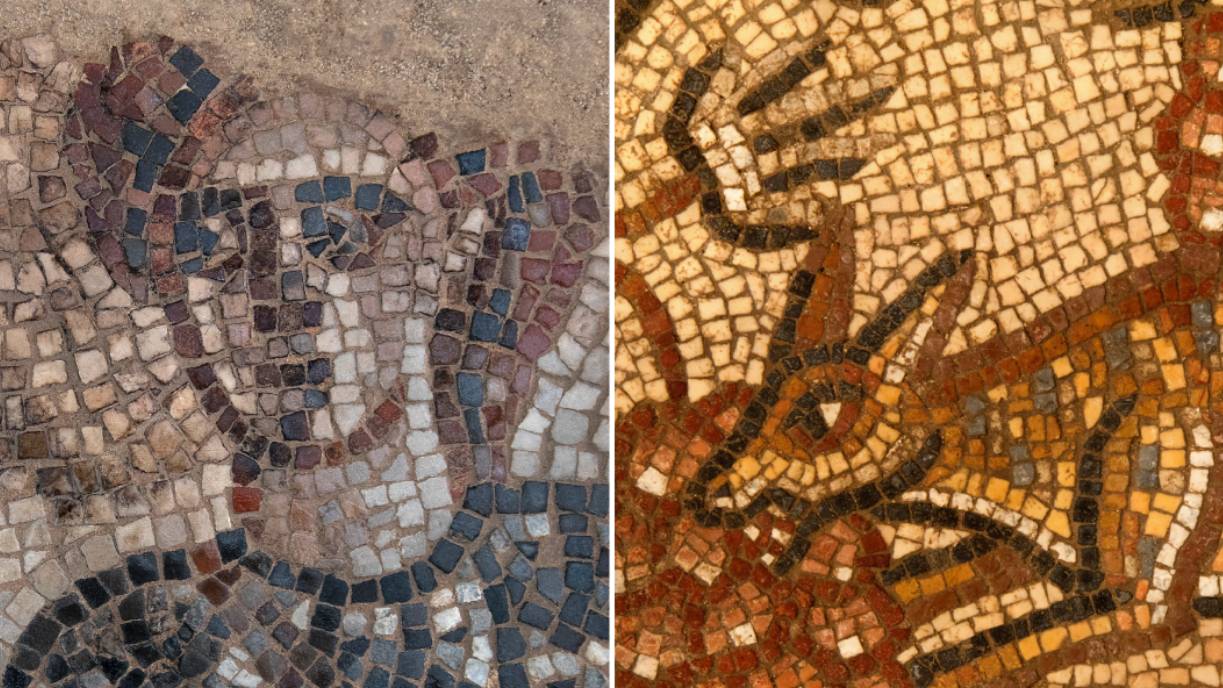
Panels in the synagogue’s floor mosaic included Israelite commander Barak (left) and a fox eating grapes (right).

Panels in the synagogue’s floor mosaic included Israelite commander Barak (left) and a fox eating grapes (right).

Christianity Today July 14, 2022
Jim Haberman / UNC University Communications

The earliest known depiction of biblical heroines Jael and Deborah was discovered at an ancient synagogue in Israel, the University of North Carolina at Chapel Hill announced last week. A rendering of one figure driving a stake through the head of a military general was the initial clue that led the team to identify the figures, according to project director Jodi Magness.

“This is extremely rare,” Magness, an archaeologist and religion professor at UNC-Chapel Hill, told Religion News Service. “I don’t know of any other ancient depictions of these heroines.”

The nearly 1,600-year-old mosaics were uncovered by a team of students and specialists as part of The Huqoq Excavation Project, which resumed its 10th season of excavations this summer at a synagogue in the ancient Jewish village of Huqoq in Lower Galilee. Mosaics were first discovered at the site in 2012, and Magness said the synagogue, which dates to the late fourth or early fifth century, is “unusually large and richly decorated.” In addition to its extensive, relatively well-preserved mosaics, the site is adorned with wall paintings and carved architecture.

The fourth chapter of the Book of Judges tells the story of Deborah, a judge and prophet who conquered the Canaanite army alongside Israelite general Barak. After the victory, the passage says, the Canaanite commander Sisera fled to the tent of Jael, where she drove a tent peg into his temple and killed him.

The newly discovered mosaic panels depicting the heroines are made of local cut stone from Galilee and were found on the floor on the south end of the synagogue’s west aisle. The mosaic is divided into three sections, one with Deborah seated under a palm tree looking at Barak, a second with what appears to be Sisera seated and a third with Jael hammering a peg into a bleeding Sisera.

Magness said it’s impossible to know why this rare image was included but noted that additional mosaics depicting events from the Book of Judges, including renderings of Sampson, are on the south end of the synagogue’s east aisle. According to the UNC-Chapel Hill press release, the events surrounding Jael and Deborah might have taken place in the same geographical region as Huqoq, providing at least one possible reason for the mosaic.

“The value of our discoveries, the value of archaeology, is that it helps fill in the gaps in our information about, in this case, Jews and Judaism in this particular period,” explained Magness. “It shows that there was a very rich and diverse range of views among Jews.”

Magness said rabbinic literature doesn’t include descriptions about figure decoration in synagogues—so the world would never know about these visual embellishments without archaeology.

“Judaism was dynamic through late antiquity. Never was Judaism monolithic,” said Magness. “There’s always been a wide range of Jewish practices, and I think that’s partly what we see.”

These groundbreaking mosaics have been removed from the synagogue for conservation, but Magness hopes to return soon to make additional discoveries. The Huqoq Excavation Project, sponsored by UNC-Chapel Hill, Austin College, Baylor University, Brigham Young University, and the University of Toronto, paused in 2020 and 2021 due to the pandemic and is scheduled to resume next summer.

News
Wire Story

Search Firm: No Systemic Abuse at Saddleback Successor’s Former Church

Elders stand by incoming pastor Andy Wood after follow-up review.

Christianity Today July 14, 2022
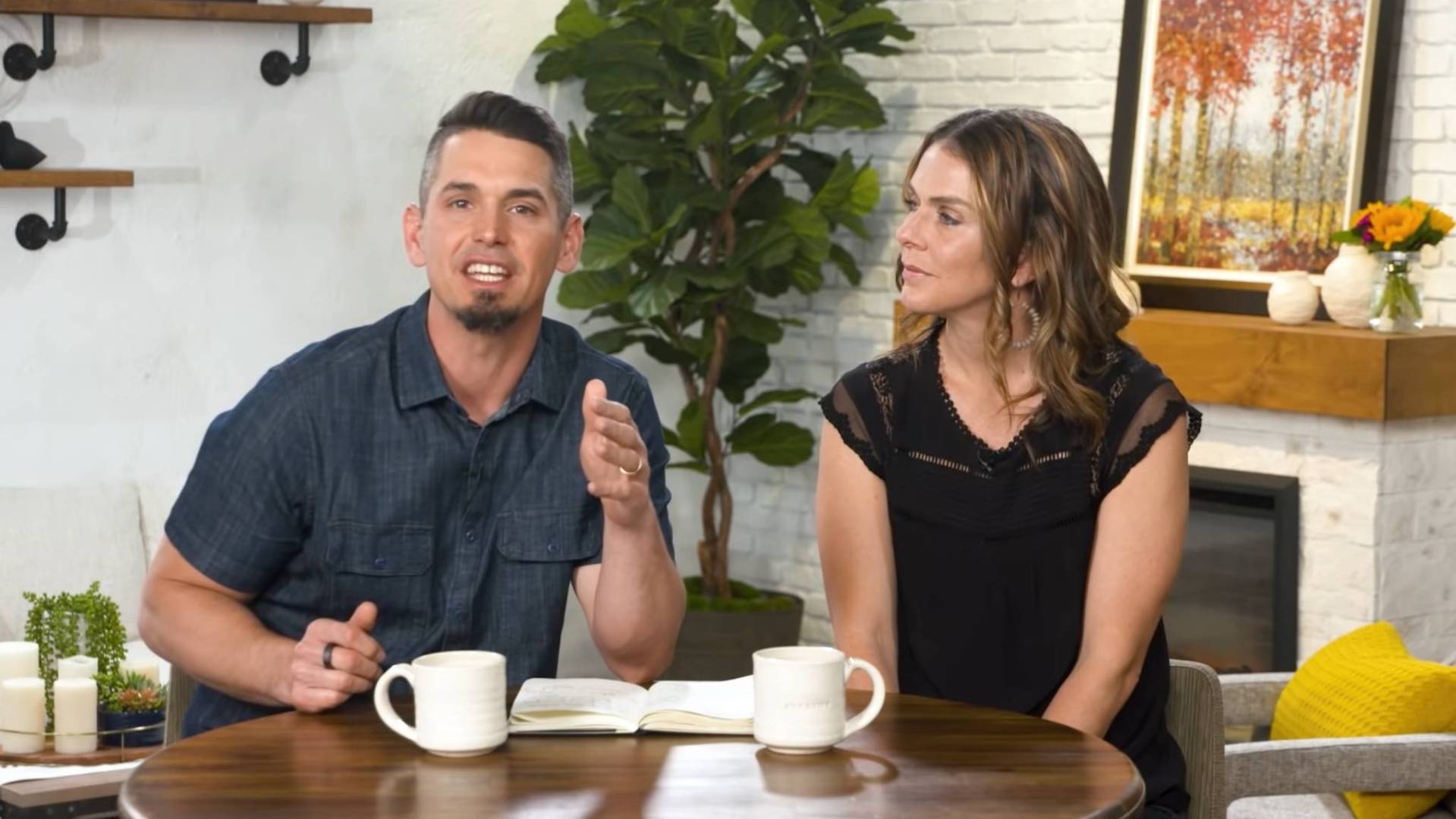
YouTube screenshot / Echo Church

Leaders of one of the nation’s largest and most prominent congregations say their new pastor has been cleared of allegations of abuse at his previous church.

In June, Andy Wood, pastor of Echo Church, a multisite church based in San Jose, California, was named the new pastor at Saddleback Church and the successor to founding pastor and bestselling author Rick Warren.

After the announcement, former staffers at Echo raised concerns about the culture at the church, calling it unhealthy. At least one former staffer referred to Wood as abusive. Questions were also raised about Wood’s decision to have disgraced megachurch pastor Mark Driscoll, founder of the now defunct Mars Hill Church in Seattle, speak at a leadership conference Wood runs.

Wood, his former church, and Saddleback have repeatedly denied any allegations of abuse.

On Monday, Saddleback’s elders sent an email to the congregation of more than 20,000, saying a follow-up investigation by Vanderbloemen, a Christian executive search firm, had cleared Wood. They also said the church had hired a separate firm, Middlebrook Goodspeed, to review Vanderbloemen’s work.

“The team at Vanderbloemen interviewed former employees, former volunteers, peers, and current employees to ask them about their experiences with Andy,” Saddleback elders wrote, citing the two firms. “The sample can be said to be thorough. After our work, we concluded there is no systemic or pattern of abuse under Andy’s leadership, nor was there an individual that we felt was abused.”

The Vanderbloemen report will not be made public, according to a church spokesperson.

Monday’s statement was the second announcement church elders have made backing Wood. Saddleback will move forward with plans for Wood to begin as the new pastor in September, according to the elders. Wood and his wife, Stacie, who will serve as a teaching pastor, recently moved to Southern California, according to the church.

Warren plans to retire in early September.

“We will now turn our attention to planning a celebration of Pastor Rick and Kay’s unprecedented 43-year ministry, and then welcoming Pastor Andy, Stacie, Caedmon, Sammy, and Karis as our newest members of the Saddleback Family,” the elder statement said, referencing the couple and their children.

Echo Church has required former staffers to abide by a confidentiality policy, which is designed to “guard against gossip, sharing passwords publicly, sharing sensitive data, etc. and cultivate a healthy culture,” Grace Tran, director of marketing and communications for Echo Church, told Religion News Service in an email.

When asked repeatedly if former staff members are still bound by the confidentiality policy, Tran did not answer, saying instead that former staffers should talk to Vanderbloemen.

The Saddleback elder statement did not specifically address the culture at Echo Church but did refer to a conflict that occurred at that church, adding that while “disappointment and hurt are not the same as abuse,” they still wanted to act with compassion.

Elders also cited Saddleback’s role in founding a Christian 12-step program known as Celebrate Recovery, which helps people deal with “every kind of hurt, abuse, wound, mistreatment, addiction, or other hurtful issues.”

“We know that we must minister in the REAL world, not the IDEAL world,” the elders wrote. “In our broken world, there will always be conflict, disagreements, and disappointments, so recovery and reconciliation in relationships will always be needed.”

Stacie Wood’s planned role at the church as a teaching pastor may cause trouble for Saddleback in the future. The congregation is part of the Southern Baptist Convention, which bars women from serving in the role of pastor. The megachurch’s status in the convention was already under review after Saddleback ordained three women staffers as pastors last year. Having women preach during worship services is also controversial among Southern Baptists.

Warren made a surprise appearance at the denomination’s annual meeting last month. After he spoke, the committee reviewing Saddleback’s status said it needed more time to make a decision.

Books
Excerpt

My Husband Died Suddenly in the Wilderness

As his widow, I live with grief every day. But I also live in the Good Shepherd’s grip.

Christianity Today July 14, 2022
Chris Meaney / Unsplash

One early morning on our family vacation, my husband, Rob, left our campsite for a long hike in the backcountry of Mount Rainier National Park. He and his hiking partner set out on the trail excited and energized for the path ahead. Both loved hiking and knew how to do it well.

Being in the outdoors was Rob’s favorite way to recreate and connect with God. But his cold and lifeless body returned to the trailhead late that afternoon, airlifted by a helicopter out of the wilderness. That day, marked on the calendar as a highlight of our family trip, became the most sorrowful of our lives.

In a moment, my world changed forever. I am still dumbfounded at the swiftness of death’s destructive work. Rob’s passing ushered me into a harsh and lonely landscape of loss. His sudden, tragic passing erased my plans for the future and set my feet at the trailhead of a new, unwanted path.

For the rest of my days, I will walk with grief. I will travel down a trail nobody wants to take.

I never knew deep grief until I lost Rob. I had suffered other losses but none that broke me so profoundly, none that rearranged the entire order of my life. I will admit, from the very beginning, I have been a reluctant traveler on this new path of sorrow.

Left with four children to raise alone, there is not a moment I do not long for the life I lived before. Rob and I enjoyed 17 imperfectly wonderful years of marriage. Our life together was deeply satisfying. We shared the same passions and dreams. He loved me with all his heart, and I adored him.

As Sorrow and Suffering have beckoned me forward on this grief journey, like Much-Afraid in Hannah Hurnard’s classic book Hinds’ Feet on High Places, I have cried out to Jesus, “I can’t go with them. … I can’t! I can’t! O my Lord Shepherd, why do you do this to me? How can I travel in their company? It is more than I can bear.”

And yet, here I am. I have survived the moment I thought would be the death of me too. I have come to embrace grief as my companion, even if every day I long for her departure. I live in the valley of the shadow of Rob’s death, and yet I also choose to lift my eyes beyond this daily darkness toward horizons that promise flourishing. I have vowed to myself, “I will not die but live, and will proclaim what the Lord has done” (Ps. 118:17).

When I consider the things Rob left behind when he died, the list grows long. Rob left friends, colleagues, and a job in which he found purpose. He left parents and siblings and an extended family who loved him very much. He left our children and me alone to forge a path forward without him.

Rob’s tragic death ended his life in its prime and brought death to our family in its blossoming years. Never again would our sons enjoy Dad as coach for Little League. Never again would his voice rise in a hearty cheer above the crowd at a 4-H competition or dance recital. Our dreams of retirement and empty nesting would never come to be.

When I returned home from his memorial services that summer, from a road trip that had ended in grief, I discovered a little bar of Irish Spring soap on the shelf in my shower. We’d left it behind when we packed for the road. It was too small to be worth bringing along. Rob never returned to use it again. Even his soap he’d left behind.

These losses do not tell the whole story, however, for Rob also left behind a legacy of words. As a journalist and author, Rob made his career in writing. He wrote about business and faith, humanitarian aid and finance. And in what has become an unexpected, exquisite gift, he also wrote about dying.

Early in our marriage, Rob wrote a book called The Art of Dying. His journalistic curiosity and deep faith led him to work in a funeral home. He joined a hospice organization and became a volunteer, visiting with terminally ill patients on the weekends.

In the course of writing the book, Rob discovered that for the last 200 years, death had shifted out of public view. In recent years, most people have died behind closed doors in nursing homes or hospitals. Few families, communities, and churches have attended well to dying people. Few people have prepared for death—their own or those they loved.

For most, until they experienced the death of a close friend or family member, on-screen deaths in movies and video games—broken down into pixels and distanced by the ability to hit the off button—were the only ones they knew.

As Rob worked shifts at the funeral home, he saw similarly poor preparation in those who grieved. Because death was pushed into the shadows, grief was too. Nobody knew what to do, so few people did anything at all. Employers asked bereaved workers to return quickly to their jobs, and communities and churches continued their programs and services as usual.

Rob saw hurting people regularly encouraged to pull themselves together and move on. He saw dying and grieving people struggle in a culture that simply didn’t understand.

His writing about death profoundly shaped our early marriage. I edited The Art of Dying, and over many nights throughout the years, Rob and I talked about dying. Even though we were young, we discussed our end-of-life choices; we outlined our desires and knew each other’s wishes. We compiled our end-of-life documents and bought life insurance. We were committed to being a death-literate couple.

Knowing this, many people have asked me if I was prepared for Rob’s death. I always tell them yes and no. Even though his death came as a surprise, I knew what he wanted. So when he died, I simply executed his wishes to the best of my ability.

Yes, I was prepared. And yet, nothing can prepare you for the agonizing loss of a loved one.

By way of analogy, you can read a biography of Rachmaninoff and listen to hours of his symphony recordings. You can sit in scholarly seminars and engage in discussions of his works. You can know everything there is to know about his music. But as you sit before the piano, your fingers lightly settled on the keys, you find you cannot play a single note of his Piano Concerto No. 2. Not even a bar.

Even with all your knowledge, your brain, heart, and fingers do not know the score. To play, you must learn the notes. And the only way to learn is to practice—in real life.

That’s how I’ve found my grief journey to be: picking through the weeds, bushwhacking through the forest, hunting for signs I was headed in the right direction and trying to learn this new terrain of sorrow. Grief has been a painful education. I’ve had to learn as I go, fumbling and trembling along the way.

From what I have seen, I believe a person can acquire the skills to grieve well. While each loss is unique, I don’t believe we need to stumble blindly along the path of sorrow. Grief brings deep darkness, but we can learn how to navigate it in ways that make our pain more bearable.

As believers, we can face death and grieve with full confidence. Our lives are in the strong and tender grip of our Good Shepherd. Grief may walk with us our whole lives, but our Savior does too.

Clarissa Moll is an award-winning writer, podcaster, and the author of Beyond the Darkness: A Gentle Guide for Living with Grief and Thriving after Loss.

Adapted from Beyond the Darkness by Clarissa Moll. Copyright © 2022. Used by permission of Tyndale House Publishers, a Division of Tyndale House Ministries. All rights reserved.

News

Missionary Pilots Fly Endangered Gazelles to Safety

Christian group works with conservationists in Chad to help antelope on the brink of extinction.

Christianity Today July 14, 2022
Becki Dillingham / Mission Aviation Fellowship International

There are only about 100 dama gazelles left alive in the wild. One of the critically endangered animals is named Becki, after Mission Aviation Fellowship (MAF) pilot Becki Dillingham, who is helping to save the strikingly beautiful creatures with long legs and short curled horns from extinction.

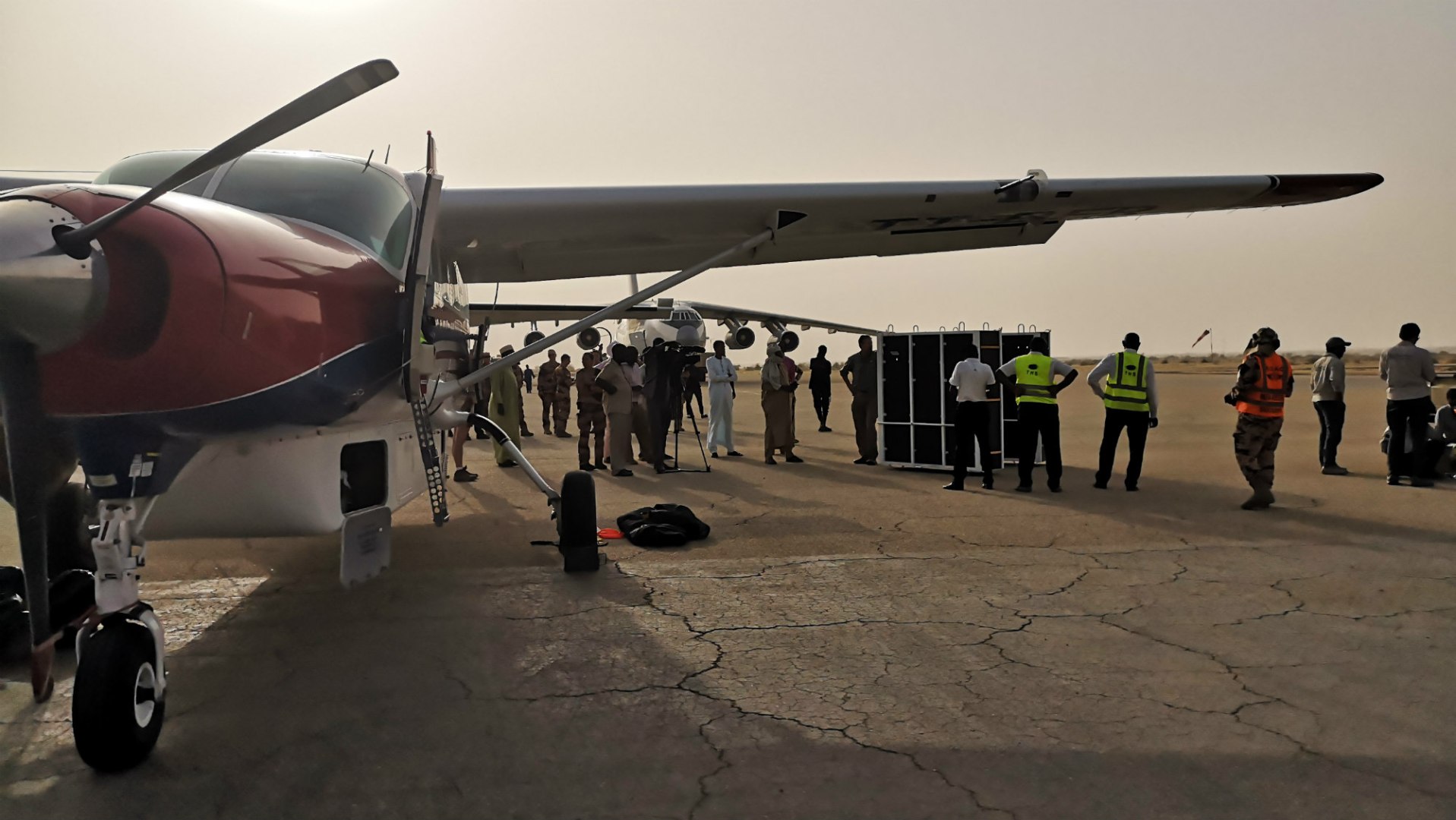
Becki the gazelle was flown across a vast and mostly roadless expanse of desert in a Cessna 182, with her horns sheathed in rubber tubing to keep her from damaging anything during the flight. She was delivered to Ouadi Rimé-Ouadi Achim Game Reserve, a protected grassland roughly the size of Scotland, where she will can thrive and reproduce.

Becki the missionary pilot said she didn’t know she would be doing jobs like this when she arrived in Chad with her husband and two children in 2017. But the UK-trained physicist who had her first flying lesson at age nine nevertheless sees transporting endangered animals as a core part of her calling as a Christian missionary pilot.

“We have what are called five marks of mission, which are pointers as to where we should be going with all of the work that we do,” Dillingham told CT from the MAF base in the Chadian capital N’Djamena. “One of those is creation care—looking after the environment and wildlife.”

Dama gazelles certainly need care. Seen in Africa as symbols of elegance, they once lived in abundant numbers across the Sahel, the arid grasslands that fringe the southern border of the Sahara Desert from the Atlantic Ocean to the Red Sea.

But hunting, regional wars, and habitat loss have driven this antelope species dangerously close to extinction. They now live in only four isolated pockets in Niger and Chad. And those pockets face new dangers and further encroachment all the time.

A dwindling group living in the Manga region near the town of Salal, for example, was quickly losing habitat and then threatened in 2019 by local hunters on motorbikes. Sahara Conservation Fund (SCF), a Paris-based nonprofit that has a dama gazelle program, leaped into action and orchestrated a plan to rescue the animals and move them to the reserve.

SCF got approval from the Chadian government and organized six international conservation groups and MAF to help. MAF pilot Phil Henderson joined the team. After days and days of searching, they tracked three female gazelles in the expansive Manga, tranquilized them, and flew them to safety.

“Every gazelle matters,” John Watkin, the SCF chief executive, told CT.

The three gazelles, including Becki, were put in a large protected enclosure at the Ouadi Rimé-Ouadi Achim Game Reserve. A male was added so they can breed and raise offspring. Becki has had three fawns since the rescue: a female named Shaika, a female named Hiti, and a male named Kallé.

“They will be released back into the wild once they are old enough not to be threatened by jackals and dogs from the nomad camps,” Watkin said.

Some dama gazelles are also being bred in Abu Dhabi, at the Delaika Wildlife Conservation Center. Getting them back to Chad is a challenge, though. It’s a 10-hour flight from Abu Dhabi to Abeche, Chad, and then a difficult 10-hour drive north from there to the reserve.

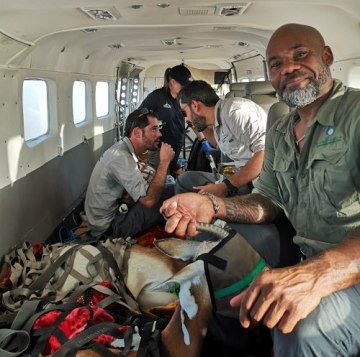
A veterinarian hold the head of a sedated dama gazelle aboard an MAF plane in Chad.

In March, MAF stepped in again to help, transporting three more gazelles in a 35-minute plane ride. Those animals have also been added to the breeding program, which conservationists hope will produce 20 to 30 fawns per year, increasing the total population to about 150.

MAF was formed by World War II veterans who wanted to put their flying skills to good use in peacetime. Most of their work involves supporting evangelists, church planters, and Bible translators in remote places that would otherwise be inaccessible.

But they’ve always helped other people too—whether that’s sick locals who need to fly to an urban hospital or conservationists in need of supplies.

Watkin recalled a time back in the 1990s when he was working on a conservation project in Garamba National Park, in northeast Democratic Republic of Congo, when the country was still known as Zaire. The MAF pilots flew in with regular supplies of fresh food and mail. They provided “a lifeline” to him and his colleagues in the park.

“MAF as an organization has been extraordinarily useful for conservation projects throughout the world,” he said. “It’s always a joy to have them in camp, to be able to share our stories with new people and collaborate.”

MAF has helped conservationists more recently by conducting aerial surveys of endangered animals. In November, the Christian pilots helped conduct a survey of the wildlife in Ouadi Rimé-Ouadi Achim Game Reserve. In addition to dama gazelles, they counted more than 200 scimitar-horned oryx, a species that died out in the wild 30 years ago but has been reintroduced in the reserve.

MAF has also helped with aerial surveys in Zakouma National Park, in the wetter, more forested south of the country, where conservationists protect the elephants that were nearly exterminated by ivory poachers in the early 2000s.

MAF International’s chief executive, Dave Fyock, said wise stewardship of God’s resources has been a value since the beginning of the organization. But the shape of that calling has changed over the years.

“Exactly how one goes about best living out that responsibility is one of regular debate and discussion,” Fyock told CT.

He says MAF pilots draw on God’s command in Genesis to care for creation and see it as one of the five marks of mission, alongside proclamation, teaching, compassion, and justice.

“Working with others to care for endangered animals demonstrates an understanding of who God is and what he has commanded us to do,” he said. “It allows us to celebrate when we help conservationists do something we believe was given to mankind to do.”

It also explains why one of the few endangered dama gazelles in Chad is named Becki.

Theology

The Pro-Life Conviction of the Hodge Brothers

Experiencing death led Hugh and Charles Hodge to fight for the unborn, using science and systematic theology.

Christianity Today July 14, 2022
Illustration by Mallory Rentsch / Source Images: WikiMedia Commons

This article is the final of a four-part series based on the upcoming book by Marvin Olasky and Leah Savas, The Story of Abortion in America: A Street-Level History, 1652–2022.

When two young boys in a family learn that their three older brothers and their father have died of yellow fever, how does that affect their thinking about life and death? In the Hodge family two centuries ago, that consciousness led one brother to become the 19th century’s pioneering pro-life doctor and the other to become a pro-creation theologian who wrote three volumes of systematic theology still read in seminaries today.

The older of the two survivors, Hugh Hodge, graduated from Princeton and the University of Pennsylvania School of Medicine to became ship surgeon on a voyage to India. There, during a deadly cholera epidemic, he saw the Hindu “burning of a widow with her dead husband” atop a funeral pyre. She did not resist when the fire was lit, and he hoped she suffocated from smoke before feeling the flames.

Hodge almost died when the ship nearly sank on the way back to America. For most of the 1820s, Hodge served as doctor of the Philadelphia Almshouse Hospital in the poorest part of the city, where sometimes all went well and other times typhus raged: “Few escaped the poison. … The mortality in the house was great.” Hodge again almost died, but then recovered, joined a Presbyterian church, married, and had seven children.

In the 1830s, Hodge became professor of obstetrics and the diseases of women and children at the University of Pennsylvania. Each fall, Hodge presented an introductory lecture on obstetrics, but he did not speak about abortion until three deaths made him face that misery.

The first death: Hodge’s firstborn, whom he described as “active, cheerful, intelligent,” until “perforation of the bowel” led to sudden demise. Deaths two and three, which received wide newspaper coverage: Eliza Sowers and her never-born child, both victims in 1839 of a surgical abortion.

At a time when many thought of unborn children as lumps of clay during their first four months in the womb, Hodge in his 1839 introductory lecture emphasized that “human existence” commences “from the moment of conception.”

He emphasized pre-birth and post-birth continuity:

The child unborn absorbs nourishment from its parent through the medium of the uterus. After birth, it imbibes the materials for nutrition by means of the mammae, or breasts. There is essentially no difference in its physiological properties, or as to the independent character of its existence.

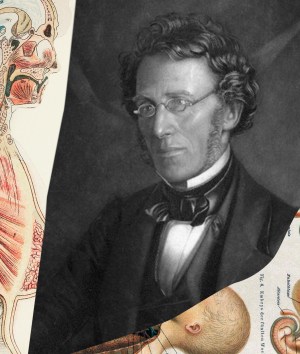
Hugh HodgeIllustration by Mallory Rentsch / Source Images: University Archives and Records Center, University of Pennsylvania / WikiMedia Commons
Hugh Hodge

While Hugh Hodge (1796–1873) was exegeting the unborn child, Charles Hodge (1797–1878) was teaching at Princeton Seminary and becoming known for his Commentary on the Epistle to the Romans. Charles Hodge went on to write other commentaries on Ephesians and 1 and 2 Corinthians. He culminated his publishing career with a three-volume Systematic Theology (1872–3) still used in seminaries and What is Darwinism? (1874), a vigorous critique.

The two brothers ran on parallel tracks, with the older saying an unborn child pointed to intelligent design and the younger expanding that to all creatures great and small. Charles Hodge wrote that Darwinian theory “ascribes to blind, unintelligent causes the wonders of purpose and design which the world everywhere exhibits; and … effectually banishes God from his works.”

Hugh Hodge emphasized medical science but contextualized it in theology:

The existence commenced in the ovary of a woman, mysterious and wonderful as it may be, is but the commencement of a series of changes, each more wonderful and glorious than its predecessor, to which the same identical human being will be subjected, perhaps for eternity.

Death is not the end but the time “when changes will be effected infinitely greater and more mysterious than occur at conception, and during gestation.”

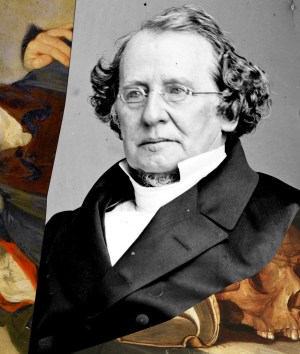
Charles HodgeIllustration by Mallory Rentsch / Source Images: WikiMedia Commons
Charles Hodge

Charles Hodge emphasized theology but contextualized it in a close examination of scientific claims. He wrote of Charles Darwin’s admission “that if one species is derived by slow gradations from another, it would be natural [to find] the connecting links,” yet “such are not to be found.”

What united the two brothers was faith in God’s works of providence, defined as his most holy, wise, and powerful preserving and governing of all his creatures and all their actions. Charles Hodge described how biblical passages “clearly teach (1) That the universe as a whole does not continue in being of itself. It would cease to exist if unsupported by his power. (2) That all creatures … are continued in existence not by any inherent principle of life, but by the will of God.”

The Hodge brothers understood this as a macro-doctrine regarding the immense universe, and a micro-doctrine regarding tiny children. They did not see the beginning of the universe or the beginning of a child as, in the words of Charles Hodge, “ateleological … the result of random occurrences.”

That understanding led to Charles Hodge’s famous conclusion to his last book: “What is Darwinism? It is Atheism. This does not mean … that Mr. Darwin himself and all who adopt his views are atheists; but it means that his theory is atheistic, that the exclusion of design from nature is … tantamount to atheism.”

Hugh Hodge also gave an emphatic declaration: Abortion “is a crime against the natural feelings of man—against the welfare and safety of women—against the peace and prosperity of society—against the divine command, ‘Thou shalt not kill.’ It is murder.”

How relevant is that to today? Depends on what we believe about creation and conception. Both big and little are either a product of chance, or—as the brothers Hodge believed—the work of a Creator. Why did their three older brothers and their father die? That was a mystery. What could they do to preserve life and a reason for living? This was their calling, and ours.

Content adapted from The Story of Abortion in America by Marvin Olasky and Leah Savas, ©2023. Used by permission of Crossway, a publishing ministry of Good News Publishers.

News

When Can a Ministry Count as a Church?

In the case of the Family Research Council, it depends on if you ask the IRS or the US Religion Census.

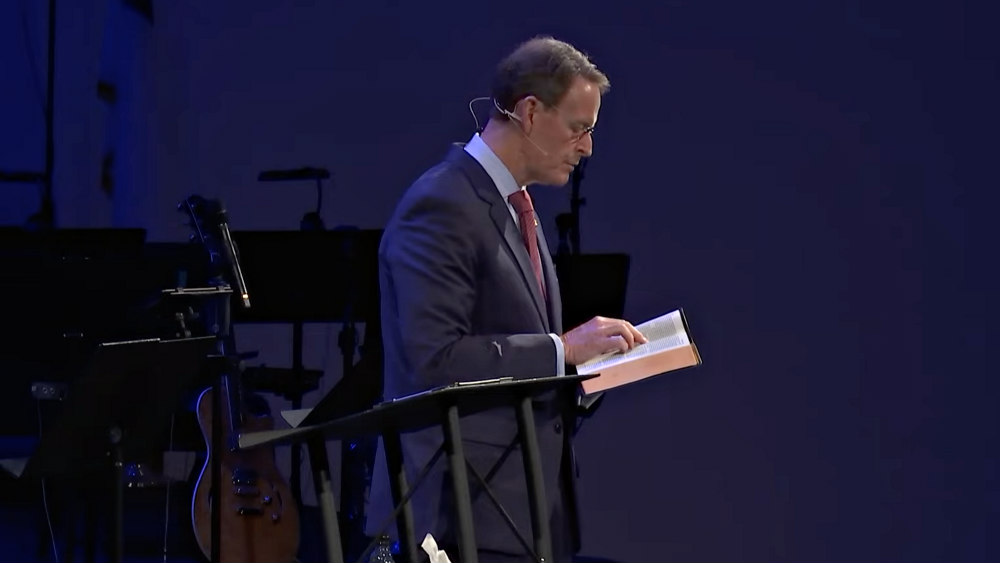
Family Research Council President Tony Perkins speaks in a church in Washington State.

Family Research Council President Tony Perkins speaks in a church in Washington State.

Christianity Today July 13, 2022
Screengrab Westgate Chapel

The research team counting all the nondenominational congregations in America did not add any marks to their tally when a conservative Christian think tank in Washington, DC, declared itself an association of churches.

The reclassification might be meaningful for the IRS, but for the Association of Statisticians of American Religious Bodies (ASARB), it doesn’t count. Literally: The Family Research Council (FRC) will not be included in the US religion census, scheduled for publication this fall.

“We are looking for nondenom congregations/worshiping communities, many of which might not even be registered or 501(c)(3) entities,” said Scott Thumma, director of the Hartford Institute for Religion Research and head of the team counting nondenominational churches for the 2020 US Religion Census. “Family Research Council as well as evangelists, singing groups, mission agencies, resource suppliers, etc., get stripped out even if they claim to be nondenominational. We are only looking for churches.”

The FRC, a family values advocacy organization that spun off of Focus on the Family in 1992, is one of an apparently growing number of parachurch organizations that has asked the IRS to reclassify it as a church or an association of churches. Focus on the Family made the change in 2016, along with the Billy Graham Evangelistic Association (BGEA).

Other evangelical organizations that have received reclassification include Cru, Gideons International, Voice of the Martyrs, Ravi Zacharias International Ministries (RZIM), most major televangelists, Liberty Counsel, the American Family Association, Frontiers, Ethnos 360/New Tribes Mission, The Navigators, and World Vision.

Thumma’s team did not include any of them in its count of 39,430 nondenominational churches in 2020, an increase of nearly 4,000 congregations and 6.5 million people from the 2010 religion census.

The IRS is counting them as churches for tax purposes, however.

Some Christian organizations that have historically been considered parachurch ministries have told the IRS they should be seen, legally, as churches. More started making this argument in the past five years.

In 2016, an executive at the tech company Mozilla was publicly shamed for a donation he made to a political organization opposing same-sex marriage. He was forced to resign, raising concerns among conservative Christian groups that donors could face stiff social consequences for unpopular associations.

“This was done primarily to protect the confidentiality of our donors,” a Focus on the Family spokesman told Ministry Watch in 2020. “In recent years there have been several occasions on which non-profit organizations—on both the right and the left—were targeted for information, including the names and personal details of their donors.”

Unlike many political organizations, religious nonprofits are not required to disclose the names of individual donors. But they are required to fill out and release most of IRS Form 990, which asks for information about the board of directors, leadership, and highest-paid employees.

The 990 can require disclosure of other information as well. The BGEA’s last 990, covering 2014, included an explanation of the evangelistic association’s policies on first-class airline tickets. It also had information about Billy Graham’s health care costs, the housing provided to longtime music director Cliff Barrows, and an additional $100,000 above base salary paid to Franklin Graham.

“You don't have to be a Chicken Little sort of person to be a bit concerned,” World Vision’s chief legal officer Steve McFarland told CT in 2014. “Where is this going to stop? Do we as a religious community want to continue answering ever-increasing questions?”

World Vision has voluntarily continued to submit 990 forms to the IRS, though it is classified as a church. Other organizations, like RZIM, have chosen not to disclose financial information or even the names of board members. Most, like the BGEA, have voluntarily shared financial information on their websites, but kept some details, such as salaries and compensation packages, private.

Reclassification can also protect Christian organizations from audits. The government has special rules limiting IRS agents’ authority to launch an investigation into a church, restricting investigations once they start, and prohibiting repeat investigations for five years.

The BGEA was audited in 2012. Franklin Graham said the Barack Obama administration was targeting the ministry to punish it for publishing ads urging voters to support “candidates who base their decisions on biblical principles and support the nation of Israel.” A BGEA spokesman told The Washington Post that being reclassified as a church made the organization feel better protected from government interference.

Critics, however, say these nonprofits are abusing the system to avoid scrutiny. Senate Finance Committee chairman Sheldon Whitehouse, a Democrat from Rhode Island, told ProPublica he sees this as a problem.

“Form 990 filings provide valuable, and often the only, insight into a tax-exempt organization’s income and spending,” Whitehouse said. “But lax enforcement at the IRS and DOJ encourage more game-playing, which leaves the door wide open for enterprising dark-money schemes to exploit the system further.”

Politically active groups tend to really raise eyebrows when they request reclassification. The ProPublica report, for example, points out that FRC head Tony Perkins has claimed credit for pushing the Republican Party to the right and the organization hosts the Pray Vote Stand Summit, “one of the largest and most influential gatherings for those on the Christian right.”

As a church, the FRC cannot endorse candidates, according to IRS rules, but it can engage in issue advocacy.

Even observers who are basically sympathetic to these evangelical nonprofits have raised concerns about the lack of transparency. Ministry Watch president Warren Cole Smith previously served as the vice president of mission advancement for the Colson Center for Christian Worldview. He’s not opposed to evangelicals getting involved in politics or promoting a family values agenda. Still, he’s concerned about the lack of transparency and the lack of credibility when parachurches claim to be churches.

“I don’t believe that a lot of the organizations that have filed for the church exemption are in fact churches,” Smith told ProPublica. “And I don’t think that they think that they are in fact churches.”

According to the IRS, though, they are, based on 14 “marks” for what the tax revenue agency considers a church.

The IRS used to have a stricter definition. Before 1970, IRS rules said a church was any organization engaged in religious worship and “sacerdotal functions,” the details of which would be specified by the religious organization.

In 1974, the IRS considered clarifying the meaning of “sacerdotal functions.” One proposed definition—never adopted—said the “activities of the organization must include the conduct of religious worship and the celebration of life cycle events such as births, deaths and marriage.”

Ultimately, however, the government decided not to legislate a single definition of “church.” As the Supreme Court explained in St. Martin Evangelical Lutheran Church v. South Dakota in1981, “the great diversity in church structure and organization among religious groups in this country … makes it impossible.”

The IRS, instead, ended up using 14 marks, apparently based on a 1959 IRS ruling on whether or not the Salvation Army was a church. No. 1 is a “distinct legal existence.” Other marks include a written creed or summary of beliefs, regular worship services, distinct ecclesiastical government, trained ministers, and religious instruction for children.

An organization doesn’t have to fit all the criteria, though, and the IRS guidelines also say other factors may be considered.

“The 14 criteria clearly are vague and inadequate,” wrote Richard R. Hammar, senior editor of Church Law & Tax, a Christianity Today publication. “Some apply exclusively to local churches, others do not. And the IRS does not indicate how many criteria an organization must meet in order to be classified as a church. The vagueness of the criteria necessarily means that their application in a particular case will depend on the discretionary judgment of a government employee.”

According to Hammar, the IRS’s main concern has been so-called “mail order churches”—individuals who get ordinations through the postal service, start a church of one, and then try to avoid paying their taxes. At least a dozen people tried to do this in the late 1970s, including a nurse, a boilermaker, and a Presbyterian minister’s son. In each case, the courts decided these were tax-avoidance schemes and not churches, based on the established criteria.

The IRS has accepted the nonprofits seeking reclassification, though, even when the arguments that they fit the definition of a church might seem unusual. Focus on the Family, for example, argued that it has an established place of worship in its combined chapel and cafeteria, called the “chapelteria.” And while the ministry’s lawyer acknowledged that all its employee-ministers were encouraged to participate in other churches besides Focus on the Family, he wrote that “participation in more than one congregation is integral to the idea of Christian fellowship.”

The FRC argued that, as an association of churches, it didn’t have individual members, but affiliated congregations, and the organization itself does have monthly religious meetings.

The IRS approved both organization’s requests for reclassification as churches. The 2020 US religion census, scheduled for publication this fall, won’t count them, though.

The ASARB census takers who count nondenominational churches have had to wrestle with the definition of church over the years. Counting grew complicated as they watched the emergence of multisite churches and discovered congregations that meet in different locations each week or develop other experimental ways of coming together.

Thumma and his team decided that the simplest definition would be “a worshiping community.” For each church on their tally, they tracked down evidence that the congregation met in the real world, really wasn’t connected to a denomination, and “offered worship, or were a worshiping community,” Thumma said.

So for them, Christian think tanks with monthly prayer services don’t count.

News

The British Are Coming: UK Takes Religious Freedom Torch from US

London ministerial and DC summit highlight transatlantic commitment by governments and NGOs to freedom of religion or belief.

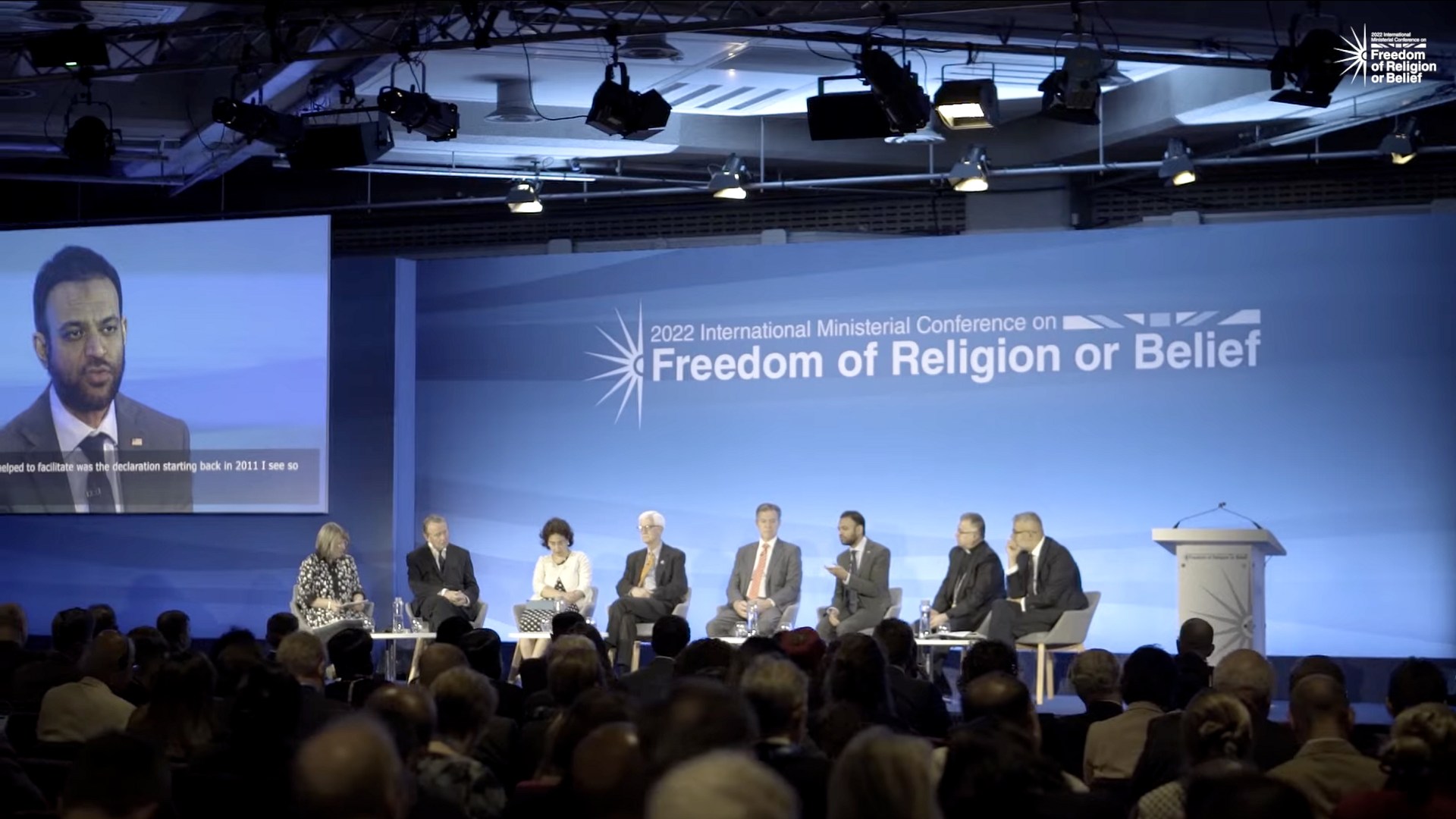
Rashad Hussain, US ambassador-at-large for international religious freedom (IRF), speaks at the Ministerial Conference on Freedom of Religion or Belief (FoRB) in London.

Rashad Hussain, US ambassador-at-large for international religious freedom (IRF), speaks at the Ministerial Conference on Freedom of Religion or Belief (FoRB) in London.

Christianity Today July 13, 2022
FCDO YouTube screenshot

The epicenter of advocacy for international religious freedom (IRF) has crossed the pond. Last week, the United Kingdom hosted the first in-person government ministerial on the issue to be held outside the United States.

Under the Trump administration, the US State Department inaugurated the Ministerial to Advance Religious Freedom in 2018. The event reconvened in Washington in 2019 and the following year moved to Poland, which was forced to conduct proceedings online due to COVID-19. Pandemic distractions prevented Brazil from hosting the ministerial in 2021, but civil society and religious groups rallied to organize the first IRF Summit in DC instead.

In 2020, 27 nations seized the ministerials’ momentum to create the International Religious Freedom or Belief Alliance (IRFBA), centered on Article 18 of the Universal Declaration of Human Rights (UDHR).

Declaring that “everyone has freedom to believe or not believe, to change faith, to meet alone for prayer or corporately for worship,” IRFBA has since grown to include 36 countries, an additional five national “friends,” and two observers—including the UN-designated special rapporteur on freedom of religion or belief (FoRB), the preferred terminology for IRF in Europe.

As IRFBA chair, the UK hosted the Ministerial Conference on Freedom of Religion or Belief on July 5–6 in London.

“Millions of people are being deprived an education or a job or a home or access to justice or liberty, even to life itself,” said Fiona Bruce, the UK prime minister’s special envoy for FoRB, “simply on account of what they believe.”

The UK demonstrated leadership on the issue in 2021, when as chair of the Group of Seven—a political forum of the world’s leading democratic economies—Britain secured the first-ever mention of FoRB as a priority within the G7 official communique.

“The ministerial helped create a heightened global consciousness on FoRB, a cornerstone of all human rights,” said Godfrey Yogarajah, ambassador for religious freedom for the World Evangelical Alliance (WEA). “Where FoRB is violated, all other human rights suffer.”

Hosted at the Queen Elizabeth II Center in Parliament Square, the 2022 ministerial included remarks delivered by Prince Charles and Archbishop of Canterbury Justin Welby. Chief rabbi Ephraim Mirvis spoke on behalf of Britain’s Jews.

Regional foreign minister Tariq Ahmad, a Muslim, delivered a statement welcoming the 500 delegates from more than 100 countries. Sources told CT the UK did an exceptional job integrating the dozens of civil society and religious groups into the official proceedings.

With better coordination—and a wider berth from Americans’ July 4 observance of Independence Day—attendance might have been even larger.

Only a few days before the UK ministerial, the second IRF Summit again invited advocates to Washington. More than 1,000 delegates, representing more than 40 faith traditions, gathered at a DC hotel. With IRF being one of the few issues to transcend the American political divide, video remarks were delivered by Secretary of State Antony Blinken and his predecessor Mike Pompeo, as well as by Speaker of the House Nancy Pelosi (D) and Senator Marco Rubio (R).

IRF Summit executive director Peter Burns said the second gathering wanted to do more than recreate past collaboration. Beyond the many plenary sessions and niche side events, a civil society congress was created and an authors’ track organized to promote topical resources. NBA player Enes Kanter Freedom received an IRF advocacy award and auctioned off his size-16 shoes.

The UK ministerial was a “huge step forward,” said Burns, who served as special assistant to Ambassador Sam Brownback when his IRF office hosted the State Department ministerials.

“Going on the road was always the dream,” said Burns. “Long considered the orphan of human rights issues, concern for religious freedom is finally forcing itself into the international system.”

Bruce, appointed to her envoy position in 2020, apologized via video that she could not attend the DC summit in person due to final preparations for the London ministerial mere days away. But the UK had been “inspired” by the American efforts, and Foreign Secretary Liz Truss paid homage—while noting British seniority.

Calling out abuses in China, Nigeria, and Afghanistan, she cited the Magna Carta and Franklin Roosevelt—whose wife Eleanor was a chief UDHR author—as champions of FoRB.

“Authoritarians and oppressors feel threatened by the freedom of religion or belief, fearing it will encourage people to think freely and question their authority,” she said. “We cannot allow them to win.”

Civil society advocates pledged to hold her and other friendly governments accountable. All attendees were asked to sign a petition for their countries to appoint a FoRB envoy or special ambassador, adequately resourced to ensure national commitment.

Following the gathering, the European Union designated an Italian professor and former MP, Mario Mauro, as its third envoy after a 10-month vacancy.

“Religious freedom must be a central plank of all governments’ domestic and diplomatic policies,” said Danny Webster, director of advocacy for the UK Evangelical Alliance. “But words can only ever mean so much until they are backed up by substantial action and long-term commitment.”

Such sentiments were frequent at both gatherings.

“Religion is the one entity that can stand up to government, that government cannot subdue,” Brownback said at the DC event. “This is a friendship summit—pick a project and work together.”

There were several to choose from.

Wade Kusack, senior fellow for Central Asia at the Institute for Global Engagement, participated with Kazakh politicians at both meetings. He touted the nine cities in Kazakhstan hosting religious freedom roundtables, as well as reforms in the once-derided nation.

The IRF summit was a bottom-up approach, while the UK ministerial was top-down. Both are necessary, he said, but the latter can open doors.

“The blending of government and civil society provides a platform for cross-sectoral relationships,” said Kusack. “It was a great opportunity for foreign officials to gain meaningful and nonthreatening exposure to the FoRB world.”

Taking advantage for the first time was Attalaki, a Tunisian human rights organization founded by evangelical Christians. They spoke with dignitaries about the National Charter for Peaceful Coexistence, signed in February with many of Tunisia’s religious groups, including Sufis, Shiites, and Jews. The three-year, nonofficial document was observed by the North African nation’s Ministry of Religious Affairs, which earlier created a department for minority religions.

“Countries showing improvement have governments who are engaged but also robust civil society activities,” said Nadine Maenza, former chair of the US Commission on International Religious Freedom (USCIRF). “All countries in IRFBA should work together in a super strategic way to incentivize the others.”

Neither Kazakhstan nor Tunisia are members.

The “broad statement” of the UK ministerial was signed by 30 nations. Of note, it did not follow the civil society pledge to appoint special IRF envoys. And there was a distinct orientation: Only three non-Western nations (Israel, Japan, and Kenya) and two Muslim-majority nations (Albania and Bosnia) affixed their signatures.

There was some sentiment that a unique role existed for the two transatlantic hosts. One panel convened in Westminster Abbey queried how the “special relationship” between the US and the UK could advance religious freedom around the globe.

Speakers included Brownback; Rehman Chishti, the former UK special envoy for FoRB; and Philip Mounstephen, the bishop of Truro whose 21 religious-freedom recommendations to the UK government—published in 2019 and evaluated last April—were welcomed by Truss in her opening speech.

Maenza said her closest international partners are mostly from the UK.

Michael Nazir-Ali, the former Anglican bishop of Rochester and now a prelate to Pope Francis, asserted an even closer bond. English and American commitments to religious freedom developed organically, he said, producing the Magna Carta and the Bill of Rights. Too many continentals, however, are heirs of the “radical Enlightenment.”

While “mere reason” can be contested, a mindfulness to tradition has provided a basic of cooperation across the swath of civilizational heritage, he said.

“The European idea is pure rationalism, from which they try to derive human dignity,” said Nazir-Ali. “Our organic tradition comes from the Christian faith.”

The result of the former is a truncation of religious values and culture, he said, which the Anglo-Saxon idea can help overcome. But without it is confusion.

Is FoRB an abstract value or the protection of individual conscience and community belief—public and private? Muslim nations might better participate, he said, if a robust commitment to religious freedom is encouraged from within their faith. (The 2019 ministerial explored “human dignity” as a potential avenue.)

Among the demonstrable unity of advocates were clear points of divergence. Yasonna Laoly, Indonesia’s minister of law and human rights, argued at the IRF summit in favor of his Southeast Asian nation’s blasphemy laws. He was preceded on the DC mainstage by President Alejandro Giammattei of Guatemala, who complained of Western criticism—including from the State Department—for his nation’s pro-life commitments.

And alongside the ministerial’s broad statement were seven other documents of thematic concern. The one advocating for “diverse sexual orientations or gender identities” garnished 22 signatures—with the US absent—before it was removed from the official list.

Overall, however, sources praised the success of both events.

“You can’t find another stage in DC shared by the Family Research Council, the Aspen Institute, Meta, and BYU Law,” said Burns. “This just doesn’t happen, but it can when it comes to international religious freedom—because we can all agree on this fundamental human right.”

As the epicenter moves from Washington to Warsaw to London to Brazil in 2023, sources celebrated the demonstration of diverse commitment. And in keeping with the increasingly blended IRF world, last week the United Nations appointed Nazila Ghanea as its new FoRB special rapporteur.

A professor of international human rights law at Britain’s Oxford University, Ghanea is an Iranian citizen with a focus on the oft-oppressed Bahá'i religious minority.

“It is wonderful moving the ministerial around the world, giving other countries the opportunity to lead on religious freedom,” said Maenza, newly appointed president of the IRF Secretariat, which oversees 26 roundtable groups around the world.

“This is not an American or a British right but a global cause.”

Q+A with Mervyn Thomas, founder president of CSW:

What is your assessment of how the ministerial went and what was accomplished?

I was very pleased to see the ministerial bring together a wide range of policy makers, members of civil society, and others from such a broad spectrum of countries. If we are to achieve our goal of a world in which everyone is free to believe, we need this level of international collaboration and communication. It is not enough for us to operate as isolated countries or organizations; we need to coordinate our efforts.

While I do believe the ministerial was an excellent testament to that, I was disappointed that more countries in which freedom of religion or belief is under threat were not at the table. This is something that I hope can be addressed in future without compromising our commitment to this fundamental human right.

Civil society was fully integrated into this ministerial in a way that has not happened before. It was great to see so many religion or belief groups represented in the panels and seminars, and for the message that freedom of religion or belief is a fundamental human right for everyone, everywhere, to be reiterated time and again throughout the conference.

What did CSW do for the ministerial?

CSW organized and participated in multiple events and seminars, both as part of the main ministerial program and in the Ministerial Fringe, which drew attention to issues in China, Cuba, Eritrea, Myanmar, Nigeria, Pakistan, and other nations. We also facilitated the attendance, either virtually or in person, of speakers from these countries wherever possible in our events. CSW worked closely with the UK FoRB Forum, of which I am currently the chair, in the planning of the ministerial, and was honored to be one of the 12 civil society organisations chosen to have a physical stand at the Fringe.

How did the London ministerial build upon the US ministerials?

The London Ministerial was the first in-person ministerial since 2019. In contrast to previous ministerials, efforts were made to include young people in the main program—in recognition of the vital role the younger generation can play in advancing and maintaining the right to FoRB in the future. The UK Prime Minister’s Special Envoy on freedom of religion or belief championed three key recommendations, among others: to see envoys appointed in other nations to champion FoRB throughout government policy; for FoRB to be mainstreamed in government policy through education of officials and in legislation; and for FoRB literacy in schools to inspire the next generation and to spur change in wider society.

What could still be improved by future ministerials?

I think one of the most important aspects of the global FoRB movement is that we need to engage a new, younger generation of FoRB defenders, those who can carry the torch and keep the momentum going. Further increasing access to the ministerial for civil society and young FoRB defenders will be key to making progress in this area.

More time will also have to be spent encouraging states with mixed records on FoRB to attend. There were definitely times where we were speaking to those who are already in total agreement with us and have worked on FoRB for years and even decades. We now need to be engaging with those who are completely ignorant of FoRB, having conversations with those who may not even agree with our cause, or who may even seek to restrict it, in the hope that we can go from being a movement to a mass movement. The right to freedom of religion or belief is one that every country in the world has recognised in the Universal Declaration of Human Rights and other treaties and covenants. So it’s not a matter of watering this down in rhetoric or practice, but perhaps a focus on sharing what has worked in different regions and what can be learned from one another might be the way to engage reluctant states in some solutions-driven discussions.

In instances where the very word

religion

gives rise to primordial sentiments that tend to militate against FoRB, perhaps an emphasis on the role of this right with regard to respect for human dignity, ensuring equality of citizenship, peace, security, and achievement of the sustainable development goals may provide a more successful approach.

It would also be good to see a more even gender balance at future ministerials, as a large number of panels and plenary events were male-dominated, even though we did have several high-profile female speakers like the UK Prime Minister’s Special Envoy on FoRB Fiona Bruce, the UK Foreign Secretary Liz Truss, former USCIRF Chair Nadine Maenza, and the newly appointed UN Special Rapporteur on FoRB Nazila Ghanea.

Would you like to see UK civil society host its own summit like in the US? What are the odds?

Civil society participation at the ministerial was essential. It is often civil society which has the clearest picture of the situation of FoRB issues on the ground, which can greatly assist parliamentarians and policymakers to formulate effective responses to such issues. So yes, it is vital that civil society organizations like CSW carry on in this spirit of community and cohesion by meeting regularly to share ideas and coordinate strategies. A parallel UK civil society summit would only be effective, however, if policymakers commit to attending and engaging with what civil society has to say. The concept is more established in the US, but there is no reason why the UK could not embark on something similar. However, efforts must still be made to draw civil society ever more into the main ministerial, as it is only by governments, legislators, and civil society working together that these problems can be tackled.

Thoughts on the EU appointing Mario Mauro as special envoy?

There has not been an official confirmation of the appointment of the new EU Special Envoy, so until this occurs I’d prefer not to comment on any possible appointees. However, what I can say is that we at CSW hope there will be some institutional reconfiguring of the role so that it is embedded within the European External Action Service, as an indivisible element of the EU’s wider human rights policy. Alongside proper resourcing of the role so that the envoy can carry out his or her duties effectively, such an institutional change would serve to maintain the focus and prioritisation that FoRB so urgently requires, while also ensuring it is mainstreamed in the EU’s human rights agenda.

Anything else you’d like readers to know about the ministerial and what it leaves CSW thinking about?

Ultimately, while the ministerial was illustrative of the high level of political awareness of FoRB at the moment, it is essential that we do not neglect the many recommendations made in the various seminars and plenary sessions. It would be completely unacceptable for such an event to be forgotten as some kind of talking shop, so now the work of turning this awareness into action begins. It was therefore good to see an extra day added for around 100 members of civil society, parliamentarians, and government to strategize about the way forward. We must maintain pressure on our policy makers. We must continue to work in community with others, and especially with those who come from different nations or adhere to religions or beliefs different to our own, to demonstrate a united front in the pursuit of FoRB for all globally.

News

Evangelical Covenant Church’s First Female President Likes a Challenge

Tammy Swanson-Draheim speaks to CT about the mission ahead for the diverse denomination.

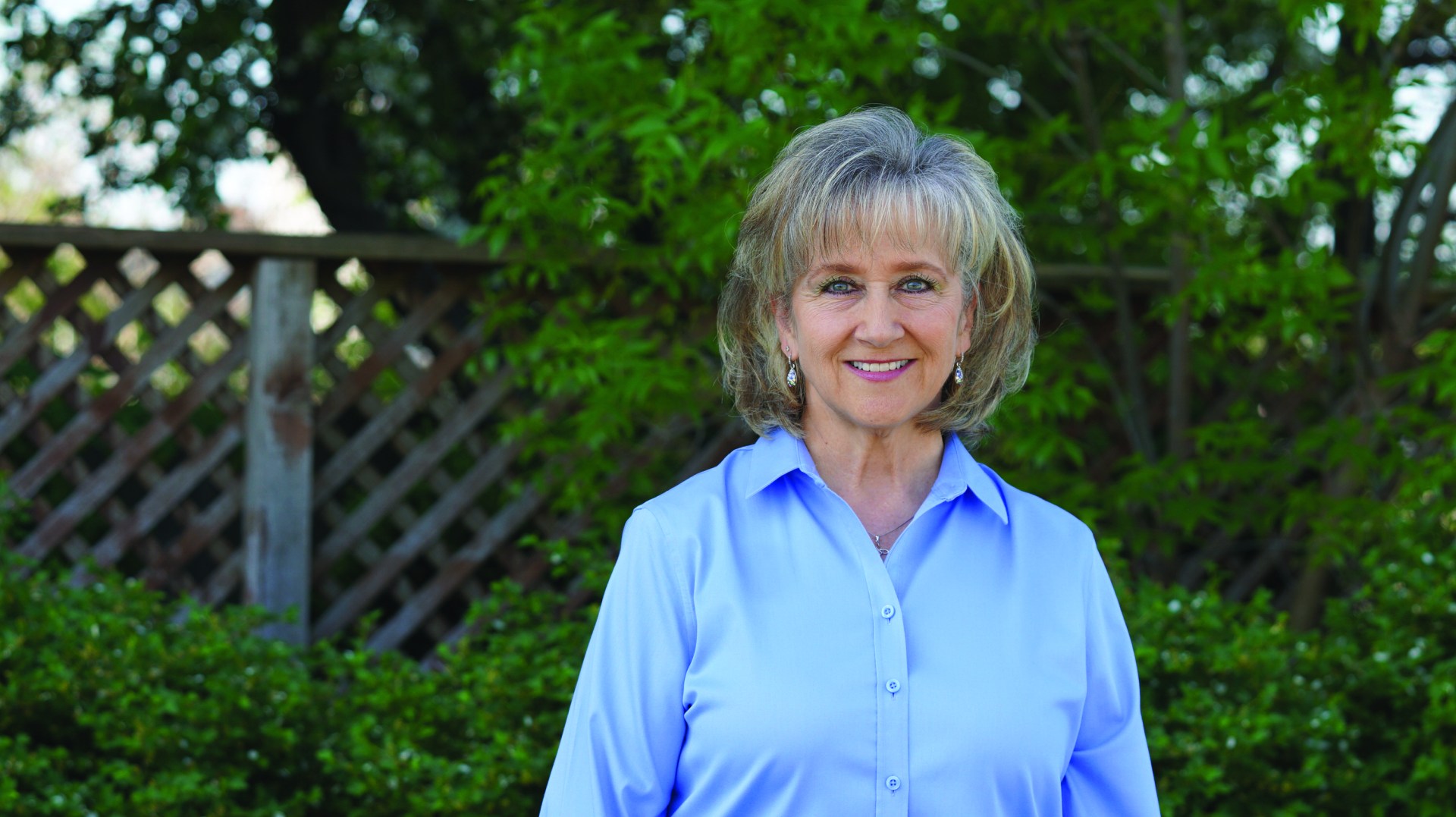
Tammy Swanson-Draheim

Tammy Swanson-Draheim

Christianity Today July 13, 2022
Courtesy of ECC

When Tammy Swanson-Draheim began serving in the Evangelical Covenant Church (ECC), it was difficult for women in ministry to find lead pastor roles in the denomination. Twenty-three years later, she became the first female president in its history.

Over her ministry career, Swanson-Draheim said she was drawn to challenging circumstances that have forced her to rely on God.

“It’s going to sound strange, but I’ve always enjoyed challenges because I think they’re really God’s opportunities,” said Swanson-Draheim, who was elected at the ECC’s 136th annual meeting last month.

“In the challenges, you can’t rely on yourself, but it’s a time to get on your knees. God has always provided, so one of the things that’s poignant about my call is just being attracted to places where there are challenges and being used of God to be part of what he’s doing to resolve them.”

Now, the North Park Theological Seminary alumna will return to the ECC’s headquarters in Chicago to lead the denomination that renewed her faith and inspired her call to ministry.

“Tammy’s appreciation for the diversity of the church and her outstanding leadership skills, heart for relationships and relational health, and belief in our mission are essential qualities that are needed now,” said Steve Dawson, chair of the presidential nominating committee.

Founded in 1885 by Scandinavian immigrants, the ECC spans 850 congregations in the US and Canada and has long been devoted to the mission of making disciples and building a multiethnic, intergenerational church body.

Swanson-Draheim served as a lead pastor in the ECC for eight years and has been the superintendent of the denomination’s Midwest Conference since 2011. She’s the second woman to hold a superintendent title and chaired the Council of Superintendents for the past four years.

Swanson-Draheim, who lives in Omaha, will step into the presidency in September, taking the reins from John Wenrich, who served in that position for the past four years. CT interviewed Swanson-Draheim about her new role and her vision for the denomination’s future.

How did you feel called to go into ministry? Was it a specific moment or more of a gradual realization?

It was a little bit gradual. I really tie it to discipleship. When I had sort of a renewing experience in my life spiritually and the importance that God had in my life rose, I heard from God in a kind of unique incident. I had started attending church and experienced some rejection, and in the midst of that, I just really sensed God speaking to me and saying that I could live with those hurt feelings, or I could decide to do something about that so no one else had to experience it.

I was just coming back to faith after a season away, and I heard God say, “This is something I have for you.” I followed that and enjoyed ministering to people, so I see that as sort of the initial call as a layperson.

I look back at that, because to me when you commit your life to Christ, you have a role in his kingdom ministry. That kind of transpired over time to more opportunities to serve and responsibilities; then it became apparent I was being called into seminary.

What stands out to you as a formative experience or relationship that has prepared you for this new position as president?

Many of the women that came before me, who really paved the way for women in ministry, in a general sense are very formative. One specific person who has been a tremendous mentor to me is Evelyn Johnson.

In my current role as superintendent, I was the second female to be a superintendent. Evelyn was the first. She’s worked across many executive roles in the denomination, and she has graciously poured her life into me, and we talk pretty much every week. She’s just been one of those women who have really poured into me and made it possible for me to be in this position today.

What has it been like to serve as a woman in ministry? Do you feel that being the first woman to serve as president of the Covenant is significant?

I have long been used to paving the way in some of these areas. My predecessor Evelyn Johnson was no longer on the council when I became superintendent. The reality is when God gives me a role that he’s calling me into, I never step into the room and go, Okay, now, I have to remember that I’m female. I walk into the room and think, Well, this is what God’s called me to do.

I think the same is true for the presidency. I am the first president who happens to be female. I say that because I’ll be a president for all the people. It’s very exciting to think that there are boys and girls who will grow up and understand that this is normative in Christ’s church. Women can serve in every capacity, and what a beautiful thing that will be. It’s so tied to my theology of the kingdom and how God created us.

It means a lot because women are encouraged by it who are female clergy, but I think it will reorient some of the thinking of even those who are now young in the pew, growing up and experiencing that. It’s exciting to me that I could be in any way, shape, or form a part of demonstrating that for the whole church.

What are you most excited about as you go into this new role?

Historically we as the Covenant Church are really strong in mission. But like most people in this season, it’s been exhausting with the pandemic and even some of the polarization of things happening in our culture and in politics. Frankly, it’s been exhausting, so I think there’s some need for some healing. I also think it is a prime time to lead out strongly in mission—hit the refresh button on our commitment to God’s mission and make sure that remains a strong priority for us.

I don’t come in with a game plan; I come in with the ability to listen. Listen to people, listen to the movement of the Holy Spirit, and then together collaboratively figure out the best way forward that’s going to really be for God’s glory and neighbors’ good. I’m very much looking forward to how we can continue to move forward with strength and mission.

I’d also say—and this is not necessarily separate but part of it—that we’re a part of a church committed to the multiethnic mosaic. As we go about mission, we do that with the multiethnic mosaic [and] gender equality in mind. Those aren’t add-ons. They’re part of our kingdom theology.

Can Prayer Breakfasts Change Politics? UK Resignations Suggest Yes.

Days before UK Prime Minister Boris Johnson and 50 other politicians in the Conservative Party stepped down, they’d gathered to pray.

Christianity Today July 12, 2022
Justin Tallis / Getty

On July 5, more than 700 MPs, members of the House of Lords, and church leaders met to pray at the National Parliamentary Prayer Breakfast in Westminster, England.

The Reverend Les Isaac spoke to the assembled group: “At the center of our lives is Jesus, and a desire to be like him and to fulfill his purpose here on earth. Many men and women are quietly demonstrating service, humbly and compassionately, for the common good of the community, of society, of their city and their nation.”

At the front table, directly beneath the lectern, was an empty chair. Boris Johnson, the UK’s prime minister, had joined the breakfast but left after the opening song. News had broken that morning of a former senior official contradicting Johnson’s previous denial about whether he knew about allegations of inappropriate behavior from a government minister.

That evening, two of the most senior ministers in the government resigned—Sajid Javid, secretary of state for health, and minutes later Rishi Sunak, chancellor of the exchequer. And within 48 hours, Boris Johnson announced that he would be stepping down as leader of the Conservative Party and therefore also as prime minister.

My colleague sat at a table with Sajid Javid at that breakfast, who stayed throughout. In a statement to the House of Commons on Wednesday, Javid opened by saying, “Yesterday, we began our day together. You, I, my right honorable friend the prime minister, and members from right across this house—when we broke bread together at the parliamentary prayer breakfast.”

“And we listened, all of us, to the words of Reverend Les Isaac, who spoke about the fact that responsibility comes with leadership. The responsibility to serve the interests of others above your own and to seek common ground of your party, your community, and, above all, your country.”

Javid, who has described himself as being of Muslim heritage but not practicing, has since confirmed that it was while listening to this sermon that he decided to resign from the government. This seemed to set off a chain reaction, after which more than 50 other members of the government quit.

While we cannot say for certain whether a single sermon was the catalyst for bringing down a government, it seems to at least be a contributing factor. That said, Javid’s motivations for resignation may well have also been political, as he is currently contesting to replace Johnson for the role of PM.

Most of the politicians who stepped down cited the need to restore integrity in our government. Ever since the criminal investigation into breaches of COVID-19 regulations at the center of government, Boris Johnson’s premiership has frequently seemed on the brink of collapse.

In the UK political system, prayer holds a vital place. Each day, prayers are said at the start of sessions in the Commons and the Lords. In the central lobby, laid into the tiled floor are the words of Psalm 127:1 (in Latin): “Unless the Lord builds the house, the builders labor in vain.”

As an evangelical advocate in the UK, I believe Christians have a particular responsibility to pray for our nation.

I’ve attended several prayer breakfasts over the years, in Westminster and other parliaments of the UK. In March, I joined with many in the Welsh parliament as we prayed for revival in the nation—a prayer that needs answering even more than who is our current prime minister.

We now await what comes next in the UK after the resignations. The UK political system does not directly elect its prime minister; that is simply the person considered best able to command a majority within parliament—in effect, the leader of the largest party.

So, the choice of the next prime minister is in the hands of the Conservative Party. Members of the parliamentary party will vote among themselves and decide the top two candidates, who will then be voted on by the wider party membership over the summer.

This political crisis was unusual because it was not really about policy priorities. Instead, it was a widespread feeling that integrity had seeped out of those leading in the highest offices of public life.

Over the last nine months, a series of political crises have put under scrutiny the motives and integrity of those in the highest political offices. An attempt to change the rules relating to misconduct in public life in autumn 2021, followed by the revelations about parties in Downing Street by those organizing rules prohibiting them, all contributed to a precipitous decline in trust.

Therefore, as we look ahead to the coming leadership election, we should focus on restoring trust and reestablishing truth as a foundation. Isaiah 59:14 says, “So justice is driven back, and righteousness stands at a distance; truth has stumbled in the streets, honesty cannot enter.”

In times of immense political upheaval, even the most modest statements risk echoes of partisan favoring. But standing for justice, advocating righteousness, speaking for truth, and relying on honesty should be a threshold we refuse to dip beneath.

Along with their policy platforms, I’m expecting leadership contenders to make significant plays on how they will lead differently and work to restore trust in government. Words can be incredibly hollow. We’ve all heard apologies that are heavily caveated or subtly shift blame elsewhere.

In the same way that meaningful apologies need to be substantive, commitments to improve how the government operates need to be backed with evidence that is more than just words.

Trust begins with a commitment to truth. It is a sad indictment of too much of public life that we have accepted a dichotomy between the public and private—where someone’s private actions, indiscretions, unfaithfulness, and dishonesty are not considered relevant to their public roles. But someone who can lie to the person closest to him or her can lie to the public.

Integrity is demonstrated by long-term action, not simply by one’s words. We should care about the policies that political leaders advocate and their track records in delivering them. However, just because leaders are effective and hold to political stances that we agree with should not be a free pass for them to behave however they want.

Christian social critic Os Guinness has often spoken of doing the Lord’s work in the Lord’s way: We undermine our witness to Christ if we back expediency and efficacy over integrity. And after all, it was in apparent defeat that Christ triumphed over death.

I suppose we’ll never know the full impact of the words spoken during the recent parliamentary prayer breakfast, whether from the stage or around the tables. Regardless, prayer is a powerful weapon, and we should never underestimate its impact on the life of our nations.

Danny Webster is director of advocacy for the UK Evangelical Alliance, working to represent evangelical Christians to government and inspire them to engage in all areas of public life.

addApple PodcastsDown ArrowDown ArrowDown Arrowarrow_left_altLeft ArrowLeft ArrowRight ArrowRight ArrowRight Arrowarrow_up_altUp ArrowUp ArrowAvailable at Amazoncaret-downCloseCloseellipseEmailEmailExpandExpandExternalExternalFacebookfacebook-squarefolderGiftGiftGooglegoogleGoogle KeephamburgerInstagraminstagram-squareLinkLinklinkedin-squareListenListenListenChristianity TodayCT Creative Studio Logologo_orgMegaphoneMenuMenupausePinterestPlayPlayPocketPodcastprintremoveRSSRSSSaveSavesaveSearchSearchsearchSpotifyStitcherTelegramTable of ContentsTable of Contentstwitter-squareWhatsAppXYouTubeYouTube