Ideas

The Silicon Valley Revival Has Momentum. Next Comes Maturity.

Personal spiritual formation should impact the apps and algorithms we export and the company cultures we create.

Blue circuit lines with a gold glow in the middle.
Christianity Today July 30, 2025
Illustration by Elizabeth Kaye / Source Images: Getty

A recent surge in media coverage—from The New York Times to The Atlantic to The San Francisco Standard—describes a fresh and unexpected curiosity about Jesus among tech workers, founders, and investors. Faith-based gatherings are happening in corporate offices. Prominent leaders are speaking openly about their religious commitments. Public spaces are filling up with worship.

Throughout church history, we’ve seen that movements of God have often begun with similar flashpoints—moments of widespread visibility, cultural disruption, or public repentance. Think of the first Great Awakening, incited by the fiery preaching of Jonathan Edwards; the Azusa Street revival, birthed by one prayer meeting that eventually became three services a day for over three years; or the youthful energy of the Jesus People Movement, which eventually swept through California.

In our efforts with a faith-and-work ministry here in the Bay Area, we’ve been exploring what faithful followers of Christ can do to turn this momentum into maturity. How can leaders in this region respond with both excitement and discernment to what’s being reported? The stakes are high. Because the innovations and companies here often shape how the rest of the country and world lives and thinks, this moment might signify a new, more expansive work of God than we can imagine.

Discipleship in this context must be both theologically grounded and vocationally engaged—not just for personal faithfulness but as a way of stewarding the outsize cultural influence of this region.

In Silicon Valley, we find a unique and contradictory combination of post-Christian disillusionment and pre-Christian openness, hostility toward religion and curiosity about Christ, and fascination with the new alongside a longing for something lasting. Many of us are transplants, drawn to this place of promise where a single idea can change the world. Nothing seems impossible with so much energy and innovation in the air—but at the same time, everyone is weary and running on fumes.

The concept of exilic discipleship, first coined by faith-and-work leader David Kim, offers a helpful framework for addressing these particular cultural realities. Kim describes exilic discipleship as prioritizing “a posture of listening, discernment, and loving engagement with the surrounding community informed by the biblical paradigm of exile.” Others have written about the biblical concept of exile as a helpful framework for Christians in a world that doesn’t share our values.

To understand what exilic discipleship looks like, it’s helpful to study the stories of some of the believers we’ve encountered through our ministry.

One of our board members rose through the ranks in senior product roles at major tech companies, including Meta, Yahoo, Amazon, Roku, and Intel.

While building digital experiences to drive streaming engagement, she grappled with challenges familiar to many Christians in Silicon Valley. At one point, her role required her to optimize for increased viewer screen time, a key product metric. At the same time, as a mother of two young children, she was actively limiting their screen time at home. How does one stay faithful when professional success seems to conflict with personal convictions?

Living as an exile means embracing this constant state of tension. Your internal identity comes into regular conflict with the external demands of your environment. As the old hymn proclaims, “This world is not my home.” And yet Christians are constantly tempted to acculturate by allowing their identity to be shaped by external factors.

The biblical character of Daniel provides an archetypal example of exilic living. Somehow, he managed to succeed in his professional role of making an evil king successful while maintaining a deep sense of personal integrity. We often say, “If Daniel could work for Nebuchadnezzar, you can work for anyone.”

This kind of exilic discipleship requires a humble recognition that there are no easy answers, no simple ethical formulas to fall back on. One believer we know has been censured by human resources for inviting coworkers to a Bible study at her home. After a lengthy process that nearly cost the Christian her job, she continued with the study but stopped inviting coworkers to attend. Another felt terrified to discuss spirituality with his coworker, then discovered over a casual lunch conversation that the coworker and her spouse had been asking ChatGPT to summarize books of the Bible in the evenings.

Rather than leading with either outrage or withdrawal, we seek to help Bay Area Christians cultivate humility, resilience, and a posture of creativity. We want to be engaged but not assimilated, confident but not arrogant, prophetic yet patient.

The goal is not merely survival in a secular workplace but faithful influence—Christians who are equipped to shape company cultures, influence product decisions, and cast a redemptive vision for work and innovation.

The Bay Area reveres a particular kind of Silicon Valley street smarts. We celebrate founders who disrupt systems, hackers whose instincts see options no one considered before, and investors who risk big and win even bigger. Respect is earned through fast-paced failure and success.

And yet while this region is filled with people who can build, scale, and optimize, the bigger challenge is knowing what is worth creating in the first place. How can our work lead to the flourishing of communities? What would it look like to build not just what’s possible but what’s good and true?

We often imagine discipleship as taking place primarily in churches and small groups. But in the Bay Area, skepticism toward institutional religion runs deep: 41 percent of people consider themselves religious while 65 percent consider themselves spiritual. Even though people are hesitant to show up in churches, spiritual curiosity is emerging in unexpected places—in particular, the workplace, with its pressing questions about artificial intelligence, privacy, dignity, and personhood and its demands on employees’ identity, purpose, and worth.

Through discipleship that meets people where they are—in labs, incubators, and boardrooms—workers discover not only the credibility of Christianity but also its relevance to vocation. But this doesn’t happen automatically. It requires, once again, exilic discipleship, a kind of personal spiritual formation that gets expressed in real-life decisions about ethics and leadership.

We hope and pray that this reported momentum is only the beginning in the Bay Area. But we also know that the spark of excitement around Christ that has been lit here can only be kept flickering by the slow, relational, often-invisible work of discipleship—the kind that transforms not just what people believe but how they live, lead, and love. When this happens, exilic disciples will bring the presence of Christ into every workplace.

Maybe that’s the real story unfolding in the Bay Area: not just that people are becoming curious about Christ but that exilic discipleship is already happening—quietly, faithfully, and redemptively.

Of course, the big question isn’t what’s happening now. It’s what might come next.

What if the Bay Area, renowned for its innovative spirit, also became recognized as a place where we Christians learn to navigate the unique tensions of work in the modern age? What if, in addition to exporting apps and algorithms, we also distributed redemptive leadership, theological depth, and vocational integrity?

We believe that’s the story God is writing. And he’s just getting started.

Denise Lee Yohn is a keynote speaker and author on brand leadership. Paul Taylor is a longtime pastor serving as the director of Unify for Transforming the Bay with Christ. Together, they cofounded the Bay Area Center for Faith, Work & Tech.

Church Life

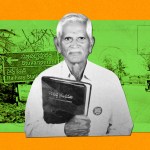
Meet the Indian Gen Z Christians Who Love to Rap

“I knew then this wasn’t entertainment; it was ministry.”

Indian rappers, Joel Salvi and Varsha and Sherin.

Christian Indian rappers, Joel Salvi (left) and Varsha & Sherin (right).

Christianity Today July 30, 2025
Illustration by Mallory Rentsch Tlapek / Source Images: Unsplash, Youtube

On a humid evening in June 2019, 18-year-old Joel Salvi stepped onto the stage inside a dimly lit Catholic church in Pune, a city in India’s Maharashtra state, as nearly 50 teenagers filled the pews, murmuring with anticipation. The moment the beat dropped—deep, thumping bass vibrating the church walls—Salvi grabbed the mic. Rapping in Hindi, he launched into “Mera Khuda Aayega” (“My God Will Come”), his voice cutting through the air with urgency and conviction. With every verse, he urged the crowd to turn to God in moments of despair, as he proclaimed that even in disappointment, the Lord remains faithful.

Afterward, he remembers a young man approaching him in tears. “He felt seen and loved by God for the first time,” Salvi said. “That moment wrecked me. I knew then this wasn’t entertainment; it was ministry.”

Salvi, who comes from in a Christian family in Pune, grew up listening to American Christian rappers such as Lecrae, KB,  Propaganda, Tedashii, and Sho Baraka (who is also the editorial director of CT’s Big Tent Initiative). In 2019, Salvi started writing and performing his own rap songs in churches and Christian concerts.

Today, Salvi is part of the growing number of Christian hip-hop artists in India. With distinct Indian rhythms, languages, and experiences, the pioneers of the art form are pushing against Christians more accustomed to traditional worship-band music, as well as facing the growing anti-Christian sentiment in the Hindu-dominated country. Using social media platforms and rapping at youth group meetings, these artists hope to influence a new generation of Christians.

“I grew up immersed in rhythm and poetry, but it was Christ who gave it purpose,” Salvi said.

India was first introduced to hip-hop in the 1980s through break-dancing films like Beat Street, and it grew in urban hubs like Mumbai, Delhi, and Chennai. In the early 2000s, homegrown artists like Bohemia, Baba Sehgal, and Yo Yo Honey Singh localized hip-hop with regional dialogue and exposure in Bollywood films. More recently, gully rap, a socially conscious style of rap that started in Mumbai, is growing in popularity with rappers like Divine and Naezy.

By 2023, about a third of India’s top 50 songs on the audio streaming platform Spotify were hip-hop, and more than 70 percent of the country’s hip-hop listeners are Gen Z.

Varsha and Sherin Peter, twin sisters who also go by the name Hosanna Twins, said they first discovered the genre through Indian rappers Honey Singh and Raftaar in 2012.

“We were fans, but we sang devotional songs at school,” said Varsha, recalling the Christian school she and her sister attended.

The daughters of a pastor, they decided to start rapping themselves, fusing beat-driven verses with the gospel message. They performed their songs at youth group meetings, churches, and schools. In 2018, Varsha and Sherin released their first single, “Yeshu Naam” (“Jesus’ name”).

Varsha remembers that many in the Christian community were initially shocked to see girls rapping—most well-known rappers in India are male—but others were curious. The sisters viewed the novelty as an opportunity to introduce young people to Jesus.

Their father, Lambert Peter, pastor of Assemblies of God Prarthana Bhawan in Delhi, was also skeptical. Members of their church criticized their endeavor, thinking the music form was unfamiliar or worrying about rap music’s association with sex, drugs, and violence. Others believed worship music should have traditional choirs or acoustic sets.

“I used to think, How can the Lord be glorified through these things?” Peter said. But seeing how rap engaged and transformed young hearts, he embraced it: “God’s name can be glorified through hip‑hop too.”

Today, the sisters are often invited to perform at church youth group meetings and camps, where they seek to encourage Gen Zers, many of whom are dealing with high levels of stress and anxiety, to trust the Lord. For instance, in another popular single, “Kyun Darna”(“Why Fear?”), they sing about God’s presence in both the easy and the hard times. “He is my song in sorrow, in illness, in worries, in adversity,” they rap in Hindi.

The sisters, who now have 13,000 subscribers to their YouTube channel, are each pursuing a master of divinity while leading Hosanna El Shaddai Ministry, a youth outreach in the slums of Delhi, an area notorious for crime, drugs, and prostitution.

“Rap culture is not growing in church fast, but where there’s youth, there is interest—and the church is beginning to understand our culture,” said Lambert Peter, who is now a big supporter of his daughters’ group.

Other Christian rappers, many of whom also rap in Hindi and English, have drawn a following online, including Raushan Bhairamadgi (or RJBMADZ), Roshan Tony, Joy Punekar, Isaac Dailey, Sheldon Bangera, and Prabhu Pammi (who raps in Telugu).

Yet Salvi is one of the best established, with nearly 50,000 followers on Instagram. His first song to go viral, “Yoddha”(Warrior), is based on the verses in Ephesians 6 about putting on the armor of God. Since its release in 2022, the song has garnered over 550,000 views. The exposure led other artists to approach Salvi to collaborate. A year later, he released his first self-produced album, Repent, on YouTube and Spotify.

While the Christian hip-hop movement is steadily growing “online, on the streets, in colleges,” Salvi noted, rapping doesn’t provide a fixed flow of income. Although sometimes the shows he performs at are sponsored, sometimes they aren’t.

Still, he sees the value in his ministry, as he hopes to reach young people all over the country through collaborating with Christian rappers across regions and languages, including Tamil and Marathi. He sees a future where Christian rappers and the church work together to produce songs in more Indian languages.

From his position as a Christian influencer, Salvi noted the importance of accountability; he regularly attends his local Assemblies of God church and meets with spiritual mentors. He said he feels responsible for his followers and makes sure that his song lyrics and social media posts are grounded in the Scriptures.

Beyond seeking acceptance within the church, Christian hip-hop artists exist in an environment where persecution is increasing. In 2024, Christians in India faced 834 attacks nationwide, a jump from 734 a year earlier, according to a report from the United Christian Forum. The actual number is likely much higher, as many may not report due to fear of retaliation. The Evangelical Fellowship of India documented 640 verified incidents in 2024, including 4 murders, church vandalism, forced conversions, and wrongful arrests.

In this context, Christian hip-hop artists see their music as a tool of protest. The Hosanna Twins have positioned their music as gospel‑based resistance to persecution and injustice. Their songs, including “Yeshu Naam” and “Kyun Darna,” contain lyrics about standing firm in Jesus amid societal criticism and spiritual threats.

The sisters have faced this firsthand, as they often receive hateful comments on their YouTube videos calling them anti-Indian or “rice-bag” Christians (a slur alleging they converted for material gains) and blaming them for forcefully converting Hindus to Christianity. Initially, the sisters said, reading the comments would upset them, but as they continued their musical career, they decided to focus on producing quality music and ignoring the comments.

Meanwhile, in Christian rappers RJBMADZ and Suraj Sahoriya’s “Mera Yeshu Yeshu” (“My Jesus Jesus”), they sampled a song that Hindu nationalists turned into a viral meme several years ago to mock Christianity. The artists used the song to rap about the power of God to forgive sins and to save. “Why shouldn’t I sing the name of Jesus? / Why shouldn’t I think of only one name?”

Salvi noted that although his songs don’t mention the persecution directly, he tries to infuse his songs with both “lament and hope.” For instance, in his song “Godfidence,” he raps in Hindi:

Let them say anything; it doesn’t matter.
Whether you hate me or love me,  I know
I will keep walking on God’s path because
The heavenly God sees my heart.

As rap grows in popularity among young people, Christian rappers hope that more will encounter Jesus as they come across the artists’ music online.

“Hip‑hop could be a weapon for truth, healing, and revival,” Salvi said.

Ideas

Jesus People and the Vibe Shift

Contributor

Half a century ago, established churches looked askance at young men newly interested in Jesus. Let us welcome and exhort them today.

Jesus making a 'peace' sign with his fingers.
Christianity Today July 30, 2025
Illustration by Elizabeth Kaye / Source Images: WikiMedia Commons, Pexels

When the hippie movement began in the mid-1960s, it seemed a curiosity. What were the Californians up to this time? 

The rest of the nation was much as it had been throughout the prior decade: staid, traditional, religious, happy to be home from the war and growing young families. But what began as an outgrowth of the smaller beatnik movement spread beyond its (in)famous San Francisco intersection

Soon, college kids across the country were coming home for Thanksgiving with ideas so revolutionary they made the Jazz Age look like a chaperoned prom. The counterculture went mainstream, the sexual revolution was well underway, illicit drug use was increasingly normalized, and the proportion of irreligious Americans—though still small—doubled in a decade.

But then something curious happened: Hippies began to become Christians or, as they put it, “Jesus People.” 

I’ll return to the history in a moment, but first let me tell you why it’s relevant now. As I think about American Christianity’s present “vibe shift”—think apologetics on The Joe Rogan Experiencereports of rising Bible salesa simmering revival among young men, and rumors of new interest in liturgy, tradition, and what the prophet Jeremiah called the “ancient paths” (6:16)—I can’t get the Jesus People out of my head. 

They were both innovative and reactive, breaking with extant churches and popular culture alike. They both influenced the establishment and became the establishment, and I can’t help but suspect their history offers lessons as we consider what the Spirit might be doing in the American church today.

When the Jesus People came to Jesus, they didn’t meet him in prim and proper churches. They didn’t hear about him from collared priests. They learned of Jesus through peers—peers who looked the part. They studied Scripture outside, hair flowing in the wind. They hitchhiked to music festivals. They even worshiped with that instrument of folk singers and pot smokers: the guitar! Some new converts were miraculously healed of drug addictions. Others struggled on, but there was grace for that. Jesus was catching the fish, and the cleaning would come with time.

For some Christians, this was all very uncomfortable. They worried these newcomers were engaged in a distraction, a concession to the counterculture, even a kind of syncretism. The right way forward, some churchgoers thought, was basically to go backward: to shirts and ties, crewcuts and hymns and all that they signified.

But the Jesus People pressed on, and their creative cross-pollination between Pentecostalism, evangelicalism, charismatic Catholicism, and popular culture brought new energy into the American church. Scholar Alvin Reid has found that the Jesus People movement increased baptisms in the Southern Baptist Convention (SBC) more than any other force in history. 

And the SBC was hardly alone in benefiting. If you’ve ever sung along to contemporary worship music, traveled on a short-term mission trip, or been influenced by a campus ministry, you too are likely downstream of the Jesus People.

The movement’s influence wasn’t only cultural, though. With time, it was institutional as well. The enthusiasm of the Jesus People brought a new generation into leadership roles in local churches and, eventually, in many of the most influential and active Christian—and particularly evangelical—organizations in the world. While other branches of the church saw their numbers decline, especially among the young, the Jesus People helped evangelicalism grow, its numbers peaking in the mid-’90s at about 1 in every 3 Americans. The Jesus People movement’s effects are so significant that many scholars believe it should be considered a fourth great awakening, ranked among prior iterations of large-scale American revival.

Now, about today. In some ways, the Jesus People movement was the opposite of the shift we’re seeing now. It was a progressive movement, in tune with popular culture and sensitive to those outside the church. Early projects included homeless ministries and drug rehabilitation outreaches. You might say its flavor was less Romans and more James.

The current vibe shift is more conservative in politicstheology, and lifestyle alike. It’s more interested in catechism than outreach, less James and more Romans. But like the Jesus People, it’s a great movement toward Christian faith. And also like the Jesus People, it’s disproportionately male

Though church leadership has been predominantly male for centuries, at the lay level, this kind of male enthusiasm is a rare thing in Christian history. Indeed, one of the earliest critiques of Christianity came from the pagan philosopher Celsus in the second century. Reeking with misogyny, he sneered that Christianity was a religion not for properly educated men but for women and children.

Our faith’s welcome to women and the powerless is a good thing, to be clear. The Gospel of Luke opens with Mary praising a God who “has brought down rulers from their thrones but has lifted up the humble,” who has “filled the hungry with good things but has sent the rich away empty” (1:52–53). And to this day, Celsus’ charge rings true in many churches. Our faith has nearly always been majority female.

When a revival movement skews male, then, that’s noteworthy. And though the dust hasn’t settled yet, this vibe shift looks like a change substantially among young men—with wide social and political implications. In the past four years, Democratic pollster David Shor said in March, “young people have gone from being the most progressive generation since the baby boomers, and maybe even in some ways more so, to becoming potentially the most conservative generation that we’ve experienced maybe in 50 to 60 years.”

Insofar as this means a revival of churchgoing in America, a return to Scripture, and a rejection of progressive doctrines, we should welcome it. Gen Z Christians who are part of this vibe shift are rejecting ideologies that paint certain races or classes of people as inherently righteous or wicked. Whether they realize it or not, this is a revival of the theology of the imago Dei.

And Gen Z’s consideration—even embrace—of biblical sexual ethics is particularly important. It unites them not only with generations of Christians who have gone before them but also with Christians in the Global South today. It draws them nearer to both the past and the future of the church. As G. K. Chesterton wrote in Orthodoxy, tradition is “the democracy of the dead.” And that vote is a landslide.

On all these matters of faith and practice, older Christians like me should take care to avoid repeating the mistakes the established church made when the Jesus People came around. We should welcome the good of this vibe shift and encourage zoomer Christians bringing a new dedication to their faith.

But we should also give the same reminder that the early church gave a young and zealous Paul: Yes, go and teach good doctrine, but please do “remember the poor” (Gal. 2:10).

As Gen Z swings conservative, it is vital that a biblical understanding of justice is not lost. God commands his people in every generation to “learn to do right; seek justice. Defend the oppressed. Take up the cause of the fatherless; plead the case of the widow” (Isa. 1:17). Attention to injustice is not a progressive cause, and callousness toward the poor and outcast is not a conservative virtue. The Old Testament prophets make this inescapably clear for Christians, as did Jesus (Luke 4:18–21). He is the vine, and we are but the branches. It’s by abiding in him that we bear fruit (John 15:5).

The young men newly coming to church are not yet mature—they need exhortation as much as encouragement. But they are seeking Christ. I pray we’d walk alongside them, love them, and challenge them to read the Prophets alongside the Epistles, to practice pure religion and match faith with deeds (James 1:27, 2:14–20), to be more Peter in Caesarea (Acts 10) than Peter at the fire (Matt. 26:69–75).

Jesus is catching the fish. The cleaning will come with time.

Jordan K. Monson is the author of Katharine Barnwell: How One Woman Revolutionized Modern Missions and is a professor of missions and Old Testament at Huntington University.

News

Afghan Christian Arrested Outside German Church

Mayor of Hamburg says religious communities cannot stand in the way of deportations.

German police check cars for immigrants at the border
Christianity Today July 29, 2025
John MacDougall/AFP via Getty Images

Along the quiet, tree-lined streets and avenues of Berlin’s middle-class Steglitz district, police in plain clothes were staking out a church on Monday.

Their target: an Afghan man living in the basement of Trinity Evangelical Lutheran Church. 

The man didn’t know it, though, and “dared to go a few steps outside of the church on the sidewalk,” pastor Gottfried Martens told CT. The man was immediately arrested.

According to Martens, the man is a Christian convert who will face “immediate danger to life and limb” if he is deported back to Afghanistan. 

The congregation, which is part of the Selbständige Evangelisch-Lutherische Kirche (Independent Evangelical-Lutheran Church), a small denomination connected to Missouri Synod Lutherans in the United States, has welcomed hundreds of Farsi- and Dari-speaking refugees since 2011. According to Martens, many of them have become Christians, and the church is “committed to protecting converted Christians from deportation to their deaths.”

In recent days, that has become a contentious position in Germany.

For more than four decades, churches like Trinity have offered temporary sanctuary and shelter to refugees. Church asylum—Kirchenasyl—has no firm legal basis, but authorities have respected that limit on state power nonetheless. People in Germany commonly see the practice as an expression of long-held Christian and humanitarian values.

But as debates over immigration and asylum roil the country, the practice has become contentious again. Some political leaders are calling for police to go into churches and make arrests. 

On July 15, Hamburg’s mayor, Peter Tschentscher, a center-left Social Democrat, joined a chorus of voices calling the practice into question. In a sharply worded letter, originally reported by the Berliner Zeitung, to his Berlin counterpart, Kai Wegner, a center-right Christian Democrat, Tschentscher accused the Berlin city government of “systematic abuse of church asylum.” The mayor of Hamburg demanded four Afghan refugees currently under church asylum in Germany’s capital be arrested and sent to Hamburg and then to Sweden, where they first entered Europe. 

After processing in Sweden, the men could be deported to Afghanistan. The man staying at Trinity was one of the four named in the letter. 

Tschentscher claims that Hamburg is responsible for the men whose right to remain has already been reviewed and that it is “unacceptable” for churches to get in the way of legitimate government action. Numerous outlets reported the Hamburg Office for Migration had a search warrant in hand and had planned to enter the Berlin church but decided not to.

The number of deportations is on the rise across Germany. And Chancellor Friedrich Merz’s coalition government, which came into office in May, has promised to deport even more people. 

Meanwhile, the number of church asylees has increased significantly, especially in 2024. The Federal Office for Migration and Refugees (BAMF) reports 2,386 people sought asylum in churches last year, up from just 335 in 2020. A spokesperson for the German Protestant church said regional churches have reported a fourfold increase in requests. Government records already show 617 new cases in the first quarter of 2025.

Almost all these asylum seekers are “Dublin cases,” which means the migrants entered Germany from other countries and, according to EU law, are required to go through their asylum procedures in those countries.

Across Europe, some people have advocated stricter enforcement of this requirement, pressuring authorities across the continent to extradite people to their points of entry. 

At the same time, more leaders have argued for sharp limits on the number of refugees. The head of BAMF, Hans-Eckhard Sommer, even questioned whether asylum should be “an individual fundamental right,” as it is currently described in the German Constitution.

At Trinity in Berlin, Martens said the asylees are not a threat but a blessing. 

“We are grateful from the bottom of our hearts for the wonderful people whom Christ himself has led into our church and whom we may serve with our very limited means,” he told CT in 2020. “They will enrich our community and church in the future.” 

He has been continually frustrated—and flabbergasted—at how often the government denies asylum to Christians. Authorities frequently conclude that persecution is not a real threat, despite pressure and threats from family, friends, and the state in their countries of origin. Instead, courts often decide that converts are not really converts but are just trying to find an easy way to stay in Germany, despite church leaders’ testimony to the contrary. 

Martens has personally attested the veracity of the faith of many asylum seekers, only to see the government disregard what he has to say.

“Politicians repeatedly focus their deportation efforts on converted Christian refugees,” he said.

For now, however, Martens has the support of some important politicians in Berlin. Mayor Kai Wegner rejected the mayor of Hamburg’s demands, taking issue with the tone of his counterpart’s letter and standing up for the sanctity of church sanctuaries.

Trinity has some support from Christian leaders as well. Berlin’s Protestant bishop Christian Stäblein has defended the practice of church asylum in general, calling it “a service to society, which is thereby reminded of its foundation of mercy.”

And Martens’s bishop, Hans-Jörg Voigt, stands firmly behind him. 

“The basic question is simple: Can we force baptized people converted to the Christian faith to return to a country ruled by an Islamist?” Voigt said. “Anyone who answers this question with ‘yes’ must of course find a way before his conscience to deal with the fact that these Christians, who have fallen away from Islam in Afghanistan, are expecting death with a probability bordering on certainty.”

Voigt is convinced of the seriousness of the asylees’ conversions. The Berlin church requires a rigorous three-month theology course and an exam before baptism. A third of the asylum seekers who take it do not pass. 

For now, Martens is doing everything he can to protect the baptized men living in Trinity’s basement. With police officers stationed around his parish ready to grab them, he said the storm is far from over. 

“We are still in the middle of a tornado,” he said. 

News

Venezuelan Churches Divided Over March for Jesus Rescheduling

The shift of the event from October to August, ordered by Nicolás Maduro, sparked concern in Christian circles.

An October calendar ripped in half to show an August calendar.
Christianity Today July 29, 2025
Illustration by Elizabeth Kaye / Source Images: Getty

It was never about politics. 

Aristóteles López just wanted Venezuela’s evangelicals to have a public presence. And for years, he provided the space for that. 

From 2004 to 2020, López organized his country’s Marcha para Jesus, obtaining permits and booking speakers for the event, which drew thousands of Christians from across Venezuela to the streets of Caracas each October. 

Ever since Hugo Chavéz came to power in 1999, his supporters and opponents frequently protested, at times violently. Evangelical leaders didn’t seem to be interested in politics at the time; they just wanted an opportunity to publicly pray for a country increasingly divided between socialism and capitalism. 

In April 2004, López, then a youth leader in his local church, met with pastors and ministry leaders at a five-star hotel in Caracas. On the agenda: bringing together the numerous rallies evangelicals were organizing across the country into a single March for Jesus. 

López spent the next several months making phone calls, giving sermons, and organizing meetings with church leaders around the country. On October 12 of that year, his work paid off.

“When the authorities saw that we managed to gather more than 30,000 people on the streets of Caracas in 2012, they wondered who was behind the March for Jesus,” said López. “They accused us of having soldiers and opponents involved, but that was never the case. The march was always characterized by being politically neutral.”

More than 20 years later, evangelicals are still marching. But this year, President Nicolás Maduro—who has been in power since Chávez’s death in 2013—may be attending. At the country’s inaugural National Pastor’s Day in January, while holding hands in unity with the new march organizer, pastor Hugo Díaz, the president announced that he had moved the event to August 2.    

Meanwhile, López will be watching the event from Florida. In 2017, he fled the country after learning that Maduro’s people had plotted to assassinate him. 

A display of unity

At the beginning, Venezuela’s Marcha para Jesus was an expression of unity among Christians. Participants included descendents of Lutherans and Anglicans who arrived in Venezuela in the 1700s, converts of 20th-century American missionaries, and Pentecostals, whose numbers began to skyrocket in the second half of the 20th century. The march even attracted Catholics. 

“I remember one time a nun joined us, marching in her vestments and her rosary and holding a lit candle,” said López. 

By the time López organized his first event, other countries had been holding marches for Jesus for over 15 years; YWAM (Youth With A Mission) organized the inaugural event in London in 1987. 

For years, Venezuela’s march continued to grow, peaking in 2012 when 30,000 filled Libertador Avenue in Caracas. In 2013, Chavez died and Maduro became president, a transition that initially had little effect on the event, which continued to draw thousands of people each October. 

In 2017, López was in Brazil as part of the organizing group of the March for Jesus in Rio de Janeiro when he learned of a plan by the Chavista colectivos—militias that supported Chávez and joined Maduro’s government, harassing everyone they identify as opposition—to attack him and pass it off as an attempted robbery. “Some people have called me a coward for leaving Venezuela like that. But I had to save my wife and children, because as a pastor I know that my first ministry is my family.” 

López continued to organize the march from Miami for several years. But in 2020, he stepped down, and Díaz, the ministry’s accountant and the pastor of the Casa de Vida church in Caracas, took over. 

In his years leading the organization, Díaz has publicly supported the Maduro government, including attending events promoting the Mi Iglesia Bien Equipada program, where the government gives out sound equipment, chairs, or construction material to churches. (As CT reported, political analysts and evangelical leaders perceived this as a government effort to win votes among the country’s growing evangelical population). 

Although it is difficult to gauge how much evangelical support Maduro currently enjoys, these overtures divided the church. On one side are the pastors who accept government aid without showing remorse; on the other, those who avoid receiving this aid or attending religious events organized by the government so they can avoid losing independence.

Díaz’s support of Maduro has seemingly helped the evangelical community cultivate the president’s favor. At the same January meeting where Maduro announced the new date for the march, he also declared it a Patrimonio Inmaterial y Espiritual de la Nación (Intangible Cultural and Spiritual Heritage).

The Consejo Evangélico de Venezuela (CEV, Evangelical Council of Venezuela), though, rebuked Díaz’s decision to invite Maduro to the inaugural National Pastor’s Day and present him with a Bible.   

“We believe in the separation between church and state but also in the civic responsibility of Christians. We do not believe in impositions or initiatives that may be perceived as an attempt to control or manipulate the faith, or serve the promotion of individuals,” said Jose Piñeros, the CEV’s executive director. 

Piñeros recently conducted an extensive interview with Hugo Díaz, where he allowed Díaz to justify the growing government support of Nicolás Maduro for the March for Jesus. 

“We Christians did not lose the date of October 12 when the march moved to the first Saturday of August,” Díaz stated in the interview. “We have gained an additional date, because on October 12 we will declare a national day of fasting and prayer.” 

More than a date change

Maduro’s decision to change the March for Jesus date from October 12 to the first Saturday of August means that evangelicals will no longer be marching on a day when spiritualists celebrate their goddess María Lionza, one of the central figures of the occult arts in the South American country. For years, the Venezuelan Federation of Spiritism, a group of 7,000 members, has organized an annual conference for witches, shamans, and fortune tellers.

Pastor Georges Doumat, who heads the Christian church Apostolic and Prophetic Ministry of the Most High God on Isla Margarita, knows the power of this federation. This touristy locale in the Caribbean, full of luxury hotels, was chosen to host the first national meeting of the Venezuelan Federation of Spiritism last March.  

Aware of the spiritual struggle the country experiences around October 12, Doumat published an opinion column where he explains why it was a mistake to agree to move the March for Jesus to the first Saturday in August.

“The date chosen by ‘March for Jesus’ in Venezuela was well-intentioned. It was like a double act: We filled the streets and avenues of the cities with our prayers, praises, and slogans of faith, and at the same time we faced the satanic movement of groups that invoked their deities that same day,” wrote Pastor Doumat. 

López agrees with Doumat and hopes that this October 12 the evangelicals will go out to march for Jesus as they have been doing nationally since 2004. 

“Hugo says that we did not lose October 12 but that we gained another date on August 2,” said López, obviously upset. “No, no, no. You gave it up on October 12. You left it on a silver platter to these people, to those witches. They are allowing themselves to be manipulated by politicians and dividing rather than uniting the Christian people.”

Hernán Restrepo is a Colombian journalist who lives in Bogotá. Since 2021, he has managed the social media accounts of Christianity Today in Spanish.

News

Billy Graham Evangelistic Association Preps for More European Court Battles

Defense fund will support Christians suing over freedom of speech and freedom of religion.

Franklin Graham preaches in Germany
Christianity Today July 29, 2025
Ying Tang/NurPhoto via Getty Images

The Billy Graham Evangelistic Association (BGEA) is calling it the “war chest.”

The evangelistic association headed by Franklin Graham has a legal fund, started with the damages it won in lawsuits against seven venues in the United Kingdom that canceled BGEA events in 2020. That fund has now grown to $1.25 million, partly due to an influx of cash from Samaritan’s Purse, the humanitarian organization also run by Franklin Graham. The money will help conservative Christians in Europe going to court in freedom-of-speech and freedom-of-religion cases. 

“Considering what is happening in wider Europe,” BGEA general counsel Justin Arnot told CT, “it seemed appropriate to make this assistance available to Christians across the continent.”

Without a war chest and a smart legal strategy, Arnot said Christians are in danger of losing the right to share the gospel in Europe. The BGEA and other conservative groups are afraid that widespread cultural opposition, especially on issues of sexuality and ethics—and new regulation on speech deemed hateful, harmful, or misleading—will erode people’s ability to condemn sin and preach Scripture. 

To date, Christians have won a remarkable series of legal victories in Europe. Graham triumphed in his lawsuits. Activists upset by his past comments on LGBTQ people (“the enemy”) and Islam (“an evil and very wicked religion”) successfully pressured stadiums, conference halls, and theaters to cancel BGEA events, despite signed contracts. The seaside city of Blackpool, England, pulled ads from city buses, citing community complaints and “heightened tension.” Then in 2021, British courts said that was religious discrimination and not allowed under the UK Human Rights Act or the European Convention on Human Rights.

Minister Olaf Latzel triumphed in Germany in 2022, when a court ruled that his comments about homosexuality and LGBTQ people in a church marriage seminar were “strange” and “more than alienating” but not hate speech. He was acquitted on all charges.

A conservative politician and a church leader won in Finland the same year, when a court ruled that the things they said about homosexuality were “offensive, but not hate speech.” The judges found that parliamentarian Päivi Räsänen and Juhana Pohjola, a bishop with the Evangelical Lutheran Mission Diocese of Finland, were not trying to incite hatred but attempting to explain their views of Scripture. According to the court, that is allowed under Finnish and European law, even if people feel denigrated by the particular biblical interpretation. 

Prosecutors appealed, and the case went to trial again in 2023. Räsänen and Pohjola won a second time. Now the case is with Finland’s Supreme Court. 

Yet many conservatives in Europe and the US are concerned about what they see as weakening support for freedom of speech and freedom of religion. In a speech in Munich in February, for example, US vice president JD Vance warned about Europe’s “backslide away from conscience rights” and “retreat … from some of its most fundamental values.”

On the other side of the political spectrum, LGBTQ- and abortion-rights advocates are also sounding the alarm about loss of freedom. But they blame conservative Christian groups, including the BGEA and Alliance Defending Freedom (ADF) International.

Neil Datta, executive director of the European Parliamentary Forum for Sexual and Reproductive Rights, said Christian groups have pushed for and funded debates about abortion access and LGBTQ rights in an attempt to roll back human rights and win power for far-right political parties.

“The scale of financial resources, international coordination, and political integration … is unprecedented,” Datta wrote. “Pushback against decades of progress in gender equality and sexual and reproductive health and rights is at the centre of the far-right’s strategy for gaining power across Europe.” Datta pointed to countries like Poland, Hungary, Slovakia, and Italy, where rollbacks on abortion access and LGBTQ rights have prompted concern from members of the EU parliament.

Datta points to the Vision Network as a critical hub in the coordination of this conservative agenda. The group, co-led by ADF International’s director of strategic relations Sophia Kuby, connects a wide variety of groups and helps them develop legislative and legal strategies around sexuality, abortion, marriage, or access to contraception.

One of those strategies, according to Datta, is to set up “designed provocations to generate a reaction which can then be adjudicated in the courts.”

Datta pointed to debates over UK laws that create buffer zones around abortion clinics in response to Christians’ protests in the form of silent prayer and candlelit vigils. Datta said the zones are necessary to curtail coercion in the guise of religious ritual. ADF International, however, claims prayer is being criminalized and freedom of religion is under threat. The organization is fighting a series of cases related to buffer-zone breaches.

Political scientist Andrea Hatcher, whose research focuses on evangelicals in the UK, said the Christian right doesn’t have the numbers to support a political movement in Europe. Electoral victories, in most places, would be impossible. Court battles, however, can be one way of broadening support. 

“Framing their efforts … as ‘free speech’ is a strategic appeal to a wider, secular audience,” Hatcher said. And each lawsuit leads to more connections with more sympathizers and “well-funded global Christian nationalists.”

The Christian groups taking their cases to court dispute many of these characterizations, of course, and reject the conspiratorial framing. But they do acknowledge they’ve had more victories in court than at the ballot box. And the fight for freedom of speech has been more successful, in recent years, than the fight for the issues that conservative Christians speak about.

“Our work on things like abortion was more and more difficult within institutions that are deeply biased and influenced by the ideological control of our opponents,” said Grégor Puppinck, head of the European Centre for Law and Justice, a Christian conservative think tank. “We must fight to try and help Christians to express themselves … within societies that are increasingly hostile to our values.”

Felix Boellmann, head of ADF’s European advocacy efforts, said the emphasis on litigation is also a response to changing legislation. He pointed to the Digital Services Act, which the EU passed in 2022. Supporters say the law, which regulates online platforms, is critical for tackling “disinformation” and “hate speech.” But the implementation has set the stage for widespread censorship, Boellmann said. 

The result, he said, “will be a tightly controlled internet where the free exchange of ideas is stifled.”

That’s not just bad for conservatives, according to Boellman. It’s bad for all of Europe. “Without open debate you cannot have a free democratic society,” he said.

The BGEA’s defense fund, with its $1.25 million “war chest,” may have a far-reaching impact on European law and politics. The BGEA, however, says the real goal is just making sure that Christians have no restrictions sharing the gospel.

“We know that true hope can only be found in Jesus Christ,” Graham said when the fund was first announced in 2024, “so we need to support one another in getting the good news of Jesus Christ out, whatever it takes.”

Church Life

Pastors Aren’t Politicians

I only talk politics when it helps me attend to deeper concerns among those I serve.

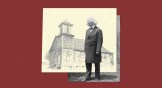
A black and white image of the Capitol building torn away to show a brightly colored photo of a church building.
Christianity Today July 28, 2025
Illustration by Elizabeth Kaye / Source Images: Wikimedia Commons

People want to talk to me about politics. 

These conversations often come out of nowhere—or at least feel like they do. I’m a pastor at a church in the downtown neighborhood of a midsize city, and there are reliably people living on the sidewalk on my way to work. Some are asleep, others peddling, still others in line for a meal. My collar marks me as a member of the clergy, so when they approach me, it’s usually for prayer or practical help.

That’s what I was expecting when a man called me over last fall, soon after Donald Trump had been reelected. “It’s really good versus evil,” he told me, a smile on his face, “and after years of God’s punishment under Joe Biden, we finally have a godly president again.” 

I was surprised but went with it. “Do you think this will make your life better?” I asked. 

“Yeah!” he said. “Trump’s all about freedom and standing up for Christians. We’ll stop being persecuted.”

That wasn’t the only unexpected plunge into political talk I took in that season. In many conversations, more well-to-do folks expressed to me their dread and anxiety over a new Trump administration. They saw his reelection as an existential threat, and perhaps they guessed that as a Canadian living in Texas, I’d be likely to agree. 

They’re right that there’s a lot happening with this administration that worries me. And I certainly don’t deny the real-life import of tariffs, religious liberty law, border enforcement, or any other policy concern.

But I’ve also come to see that when a conversation turns so suddenly and unexpectedly to politics, it’s often about some underlying fear, something far removed from the people and policies in Washington. We project our griefs and frustrations onto political figures and events as a way to talk about our worries without really talking about them. 

In a later conversation with the man near my church, he told me someone had stolen from his encampment. He had so little to begin with and now had even less, and he particularly felt the injustice of it because, he told me, he’d never stolen anything. He felt sad, angry, almost persecuted.

And in those middle-class conversations, if I listen long enough, we’ll sometimes make it beyond politics to something else, like teenage or adult children who have left the church, or a frustration with ugly comments overheard from a neighbor, or ways their churches have changed or declined. 

There are more pressing matters below the surface, but it can feel as if politics is the only conversation we’re allowed to have. Politics is everywhere all the time, and watching the news, reading the news, scrolling through the news—all of it—is a constant drip of anxiety, uncertainty, dread. How do we get past this permissible but miserable conversation to our real troubles?

I’ve decided to put my head in the sand. I’m choosing to be willfully ignorant. When someone talks to me about politics, I don’t have much to contribute, and this tends to move the conversation along to where it ought to go anyway. My hope (and, so far, my experience) is that is averting my sight from the spectacle of political life can open my ears to the hidden concerns of my friends and neighbors.

I recognize I have the luxury to do this. I am a normie. I don’t have a career in politics. I am not working on legislation. As a Canadian, I can’t even vote in federal US elections. My job is not on the line as the president makes sweeping policy changes. I am not afraid for myself or my family. I lead a little life. 

Yet honestly, what good would my attention do? Given the complexity of American life and government, given the sheer vastness of this country, very few people have the ability or resources to make a big difference. For me to hang on every word of the president and his team and his rivals is futile, a waste of mental energy. The possibility that some new legislation or executive order could drastically change my life or the lives of my parishioners is real, but my focused attention has no power to attenuate misfortune that might befall us.

I am not a fundamentalist about this. I still live in the world. I notice headlines. I hear—roughly—what’s going on. 

But I have responsibilities in the real world, in my home and my church. I have a wife and children who need me. We’ve planted a garden. I cook meals and clean up and put my children to bed. I have books to read. I meet with my friends and parishioners to drink coffee and talk. I have lost nothing but anxiety by letting go of the constant pull of political life. It’s no longer dragging me along.

What’s more, my vocation as a priest is not to tell people what I think about politics. They don’t care. It doesn’t help them. What do I know anyway?

Pastors are sometimes advised to “preach with the Bible in one hand and the newspaper in the other,” a quote (probably spuriously) attributed to the theologian Karl Barth. I think this is bad advice. For most Christians in America most of the time, what’s happening in Washington, DC, is not terribly relevant to the daily challenges of living in faith, hope, and love. For most of us, far from the halls of power, politics is but a specter that haunts real life. 

But the Bible is real life. The local church is real life. The people with whom I speak and visit and pray, they are real life. 

That tangible connection determines when I do have to pay attention to politics: when it begins to harm people under my care. And then my role is to help them as best I can. Sure, this involves telling the truth. But more often it involves listening, praying, and helping in practical ways.

Since I stopped paying attention to politics, people still want to talk to me about it. But the conversations go differently now. As Justin Vernon croons in Bon Iver’s new album SABLE, fABLE, “I see things behind things behind things.” I am learning how fears of mortality, worries about the future, and grief over loss can present themselves as political outrage or enthusiasm.

I know that I risk being wrong about everything. But who doesn’t? I ask myself whether this approach is pastoral wisdom or dangerous acquiescence. But I can tell you that it’s bearing good fruit. I have work to do here in this city with the people I know and care about. This is what should be taking my attention, energy, and time.

When the Russian author and dissident Aleksandr Solzhenitsyn was being carted from one gulag to another, he would catch snatches of freedom. In a train station once, he heard people complaining about their jobs, their neighbors, their petty concerns, and all the while swaths of the population were dying or trying not to die in prison. 

He could see there was no way to convey to the free how good their lives were. He didn’t want to cajole or criticize them for not attending to the grave misfortune around them. Nor did he want them to focus less on what was immediately in front of them. Rather, he wished they would be even more intensely focused on life itself and the relationships that sustain it.

“What about the main thing in life, all its riddles?” he asked. And his answer: 

Do not pursue what is illusory—property and position: all that is gained at the expense of your nerves decade after decade, and is confiscated in one fell night. Live with a steady superiority over life—don’t be afraid of misfortune, and do not yearn after happiness; it is, after all, all the same: the bitter doesn’t last forever, and the sweet never fills the cup to overflowing. 
Whatever happens in this presidential term or any term to come, I will still have a family to care for and a church to serve. Even these things are ephemeral. But they are the responsibilities God has given to me. I’m putting on blinders about everything else so I can better see the people in front of me.

Cole Hartin is an Anglican priest serving in Tyler, Texas, and a fellow at the Center for Pastor Theologians.

Theology

To Know Christ, Use Your Sense of Smell

Mary pouring nard on Jesus’ feet isn’t only about extravagant worship.

A person smelling perfume on feet
Christianity Today July 28, 2025
Illustration by Mallory Rentsch Tlapek

Even half asleep at night, I knew when we had reached my grandparents’ house in a rural village in Pyeongtaek, South Korea. I didn’t need to see the gate or hear their voices. The smell of the house, ripe with the memories of summers spent with my grandparents, already told me.

The wardrobe in their bedroom, just past the kitchen and always a little dark, exhaled the scent of warm wood and old drawers, marked by a serene hush. Outside, the wind blew the smell of rice fields—damp, grassy, and faintly sour in the summer heat—through the windows and into the warm, clay-packed floors.

Similar to how I immediately associate these scents with my grandparents’ home, one passage in the Bible illustrates how scent is central to knowing Christ. In John 12, Mary bends low, breaks open a jar, and pours. She does not call Jesus “Lord” or “Rabbi,” and she offers no explanation for her actions. The apostle John simply writes this line: “And the house was filled with the fragrance of the perfume” (v. 3).

Christians today may read this line without recognizing its importance. But when John says that the fragrance filled the house, the detail ought to linger in our imaginations.

Why does this moment feel so vivid, so emotionally charged, even 2,000 years later? John is making a claim: Jesus has just been recognized for who he is, and that recognition has transformed the space. The scent signifies Jesus’ divine presence in a way that is physical, olfactory, and unmistakable.

Here, the scent testifies to who Christ is, like the incense-filled tabernacle that illustrated God’s presence in the Old Testament. To know Christ—to encounter him and be utterly transformed by his presence—does not merely involve intellectual assent. It involves allowing every sphere of our lives to be permeated by Christ and living in a way that spreads “the aroma of the knowledge of him everywhere” (2 Cor. 2:14).

Unlike other moments in Jesus’ ministry, this scene unfolds without divine voices or miraculous signs. No one trembles, no cloud descends, no dove appears. There is no sound from heaven, no confession from Peter, no healing to report.

There is, instead, the smell of an overwhelmingly rich fragrance.

In this passage, knowing Jesus comes not by way of word but by way of smell. Fragrance, rather than doctrinal revelation, becomes the medium of recognition.

Nard was not the kind of scent that floated lightly in the air, like lavender or citrus. It was heavier: A mix of sweet earth, warm wood, and the sharpness of spice, reminiscent of ginger or galangal.

The Roman writer Pliny the Elder described nard as sweet and musty, like damp wood after rain. Dioscorides, a Greek physician, said the best kind of nard has a smell that clings to you, stays in your skin, and lingers long after the jar is empty.

But not all nard was this lovely. Some types, especially the ones that grew in the wet lowlands near the Ganges River, had a sour, almost rotten smell, Dioscorides observed. Traders knew to avoid batches mixed with weeds, which smelled like goats.

The best kind, the one Mary likely used, came from high mountain slopes, where the plant grew slow and strong, its roots soaking in sun and thin air.

John saying that “the house was filled” (eplērōthē in Greek) with the smell of nard echoes the language the Septuagint uses to describe the times God’s glory filled the tabernacle and temple (Ex. 40:34; 1 Kings 8:10–11). The scent filling the house may echo the glory that fills God’s house at its consecration, American theologian Craig Keener suggests.

While John does not explicitly draw on these Old Testament temple narratives, the shared vocabulary in these passages highlights how a space can be wholly permeated by something that illustrates divine presence.

Jewish historian Josephus vividly captures a similar scene at Solomon’s temple dedication, describing incense saturating the air and signaling God’s presence:

Burning an immense quantity of incense … the very air [itself everywhere] round about was so full of these odours, that it met … persons at a great distance; and was an indication of God’s presence: and … of his habitation with them in this newly built and consecrated place, for they did not grow weary either of singing hymns, or of dancing, until they came to the temple.

In John 12, scent quietly affirms an indisputable truth: Something sacred now fills this space.

So when John writes that Lazarus’s house was filled with fragrance, he may be doing more than describing its atmosphere. Here, we witness how Christ can be recognized—and glorified—through scent. The smell of nard would not just linger in the air but impress itself on those present, becoming part of how they remembered this seminal moment—and Jesus.

Not everyone receives the fragrance the same way. One person speaks up, not to name the scent but to question its worth. Judas responds not to the act itself but to the excess of the aroma. He turns to cost. He detects waste.

Judas objects: “Why wasn’t this perfume sold and the money given to the poor? It was worth a year’s wages” (John 12:5). The gospel clarifies that Judas spoke not out of care but out of greed (v. 6). His inability to perceive the meaning of Mary’s act reveals the blindness that often accompanies a utilitarian view of gestures of recognition.

In the cultural imagination of the first century, Mary marks Jesus with a fragrance that signifies both burial and honor. Her act resonates with John’s narrative: Death awaits Jesus, and the scent already affirms his worth.

As Susan Ashbrook Harvey, a professor of history and religion at Brown University, writes in Scenting Salvation, “To smell that odor was to gain the knowledge it contained.” In the ancient Mediterranean world, scent was more than sensation. Fragrance could reveal something of a person’s very nature.

Early Christians came to see smell not just as atmosphere but as a way of knowing, Harvey writes. To encounter a fragrance was, in some cases, to encounter presence. And that presence reveals something about oneself in return. 

Today, we tend to trust what we can explain: what is clear, logical, and stated. We seek doctrine we can categorize and truths we can name. But the living Christ is not a concept to master. He is a person to know and to follow.

The Book of John does not tell us what Mary knew about Jesus, only what she did in his presence. Perhaps that is the point this passage wants to highlight: We say we know who Jesus is, but if that knowing never bears fruit in us—no change, no humility, no costly love—was it truly knowledge at all?

Like the early church, we can harness our sense of smell as a way of knowing Christ intimately. That does not mean that we break open a bottle of our most expensive perfume at church or concoct a special Lord’s Day fragrance for the sanctuary. Rather, we deepen our knowledge of Christ through becoming people who exude his aroma (2 Cor. 2:15). 

Those who love Jesus do not always need to use words. His presence lingers in them, a fragrance that emerges not through ritual smoke but through lives thoroughly shaped by the enduring imprint of knowing Jesus.

Such an aroma is not loud, but it is unmistakable. It smells of mercy, not moral superiority; of humility, not self-righteousness; of love that acts, not merely a voice that speaks. In a world wary of religious pretense, the aroma of Christ is not an argument but a witness, quiet evidence that grace has passed this way.

Faithful witness may not always come in sermons or syllogisms. Sometimes, it comes through a life that quietly bears the fragrance of having known Jesus—like the scent that filled a house and said what no one else could. Like the aroma of Christ: quiet and persistent, a grace that speaks before language and stays after everything else fades.

We get whiffs of the aroma of Christ when we “hold our convictions with confidence and compassion while avoiding the trap of treating every disagreement like a battle to win” in conversations with other believers online, writes Chris Butler from the Center for Christianity & Public Life for CT. Or when we stop asking, “What can I get out of this faith?” and begin to wonder, “What story have I been invited into?” The gospel, after all, is centered on God in Jesus Christ, not on ourselves and what we can gain from God, theologian Andrew Torrance writes for CT.

The aroma of Christ is not something we manufacture. It rises when we forget to be impressive, when we stop trying to win at faith and simply return, again and again, to the Person whom the story is about.

Even now, the smell of my grandparents’ house in South Korea returns to me with startling clarity. The comforting scent of warm wood, sunlit rice fields, and clay floors gently told me what no words ever did: You are safe. You are home.

In some small and sacred way, that is what the fragrance of Christ does still, in John 12 and in these ordinary days. It tells us that he is with us always, to the very end of the age (Matt 28:20).

Bohye Kim teaches biblical studies as an adjunct professor at Paul Quinn College and is a researcher at the H. Milton Haggard Center for New Testament Textual Studies. 

News

As Drugs Slam Nigeria, Christians Push Back

How one ex-addict created a haven.

A man smokes marijuana in Lagos, Nigeria.

A man smokes marijuana in Nigeria.

Christianity Today July 28, 2025
Pius Utomi Ekpei / Getty

Behind a dense bush near Biraidu Community Secondary School in Abocho, Nigeria, students smoked marijuana. One was Samson Ocholi. He was 19.

Ocholi grew up in a devout Christian home, learning Bible stories in Sunday school and serving in The Boys’ Brigade. High school changed everything. At 14, he fell in with friends who introduced him to cigarettes, then marijuana. “Then other things started creeping in,” Ocholi said. “Alcohol, tramadol, codeine, and Rohypnol. Each drug was opening a gate to another.”

Ocholi’s case is not unusual. A National Drug Law Enforcement Agency (NDLEA) survey revealed that 14 million Nigerians—from 15 to 64 years old—abuse drugs. According to a 2024 study, almost 14 percent of high school students in Lagos State have experimented with drugs, and half of those are current users. Governor Babajide Sanwo-Olu called the situation a “malignant cancer” and said, “It is disheartening to witness the spread of drug abuse among our youth, with its grip extending even to our innocent children.”

Nigeria’s NDLEA Act enforces “laws against the cultivation, processing, sale, trafficking and use of hard drugs.” Individuals convicted of using and trafficking these drugs face a sentence of anywhere from seven years to life in prison. But the NDLEA faces an uphill task, given the plentiful supply of drugs.

In 2023 the United Nations Office on Drugs and Crimes reported seizing 57 tons of cocaine on the way to West Africa from 2019 to 2022. The report named West African countries—Benin, Côte d’Ivoire, Ghana, Guinea, Guinea-Bissau, Nigeria, and Senegal—and Central Africa as emerging cocaine-trafficking hubs, with global cocaine production increasing by 35 percent from 2021 to 2022.

One drug common among young people is cheap, synthetic marijuana termed Colorado, locally called colos and sold in nightclubs, on street corners, and at pharmacies. Dealers face little interference from law enforcement.

A 2018 investigation exposed a syndicate fueling Nigeria with codeine, another drug commonly used—at the time, 3 million bottles were consumed daily in the north alone. The investigation showed corrupt pharmacists and distributors illegally selling codeine cough syrup—an addictive opioid—in open markets, bypassing regulations. The health ministry then banned the production and import of codeine-containing cough syrup.

In February 2025, theBBC Africa Eye’s documentary revealed that Aveo Pharmaceuticals, an Indian company, was illegally exporting unlicensed opioids like tapentadol to Nigeria, Ghana, and Côte d’Ivoire. The undercover investigation captured an Aveo director admitting the drug was harmful but saying business was his priority. India’s Food and Drug Administration has since raided the company’s Mumbai warehouse and seized its stock. 

“Everybody has a part to play in fighting most of these nefarious individuals that exploit vulnerable young ones,” said Kenneth Anetor, cofounder of A New Thing Worldwide. For ten years, Anetor’s antidrug nonprofit based in Abuja, Nigeria’s capital, has advocated improved government policies. He also counsels high school students against drug abuse. He acknowledges the societal damage of drug abuse, including the breakdown of families and marriages, but sees drug abuse as a public health challenge, not a moral issue.

For Samson Ocholi it is both. Ocholi entered a university in 2005 while using drugs: “I was no longer serious with my life. I tried several times to quit, but all of that was not working. I was losing my mind.”

A single summer night in 2016 altered Ocholi’s life. A drug dealer’s harsh words frustrated him. “He called me a fool, and that struck me,” Ocholi recalled. That night he cried out: “Oh my God, please, I think I’m tired, because this is not really satisfying. The more I want it, the more I get disgraced.”

Now 42-year-old Ocholi seeks to bring the gospel to those abusing drugs in Nigeria. Through Right Mind Homes, launched in 2021, he is building a community in Abuja for those seeking a drug-free life. His ministry is “for people willing to change,” he told CT. “They are tired, just as I was tired. I was looking for something to rescue me. I was looking for God to rescue me. That’s the kind of people I want to work with.”

At Right Mind Homes, currently housing six men aged 23 to 45, Ocholi seeks to transform their lives by anchoring them in biblical principles. Their days begin with morning devotions, fostering spiritual growth. Badminton, chess, Scrabble, and other activities promote mental and physical well-being.

Ocholi pours his heart into the Bible-based initiative, but it’s no easy road. Convincing a sceptical public is also tough—many see addiction as just a brain disease. But Ocholi believes it’s deeper, like idolatry—worshiping something destructive: “It hurts you and your family, but you don’t care.”

Apple PodcastsDown ArrowDown ArrowDown Arrowarrow_left_altLeft ArrowLeft ArrowRight ArrowRight ArrowRight Arrowarrow_up_altUp ArrowUp ArrowAvailable at Amazoncaret-downCloseCloseEmailEmailExpandExpandExternalExternalFacebookfacebook-squareGiftGiftGooglegoogleGoogle KeephamburgerInstagraminstagram-squareLinkLinklinkedin-squareListenListenListenChristianity TodayCT Creative Studio Logologo_orgMegaphoneMenuMenupausePinterestPlayPlayPocketPodcastRSSRSSSaveSaveSaveSearchSearchsearchSpotifyStitcherTelegramTable of ContentsTable of Contentstwitter-squareWhatsAppXYouTubeYouTube