Ideas

The Scales of Justice Teeter in Human Hands

Staff Editor

Human justice may achieve accountability, and perhaps even recompense, but rarely real restoration.

Christianity Today April 22, 2021
Elijah Nouvelage / Getty Images

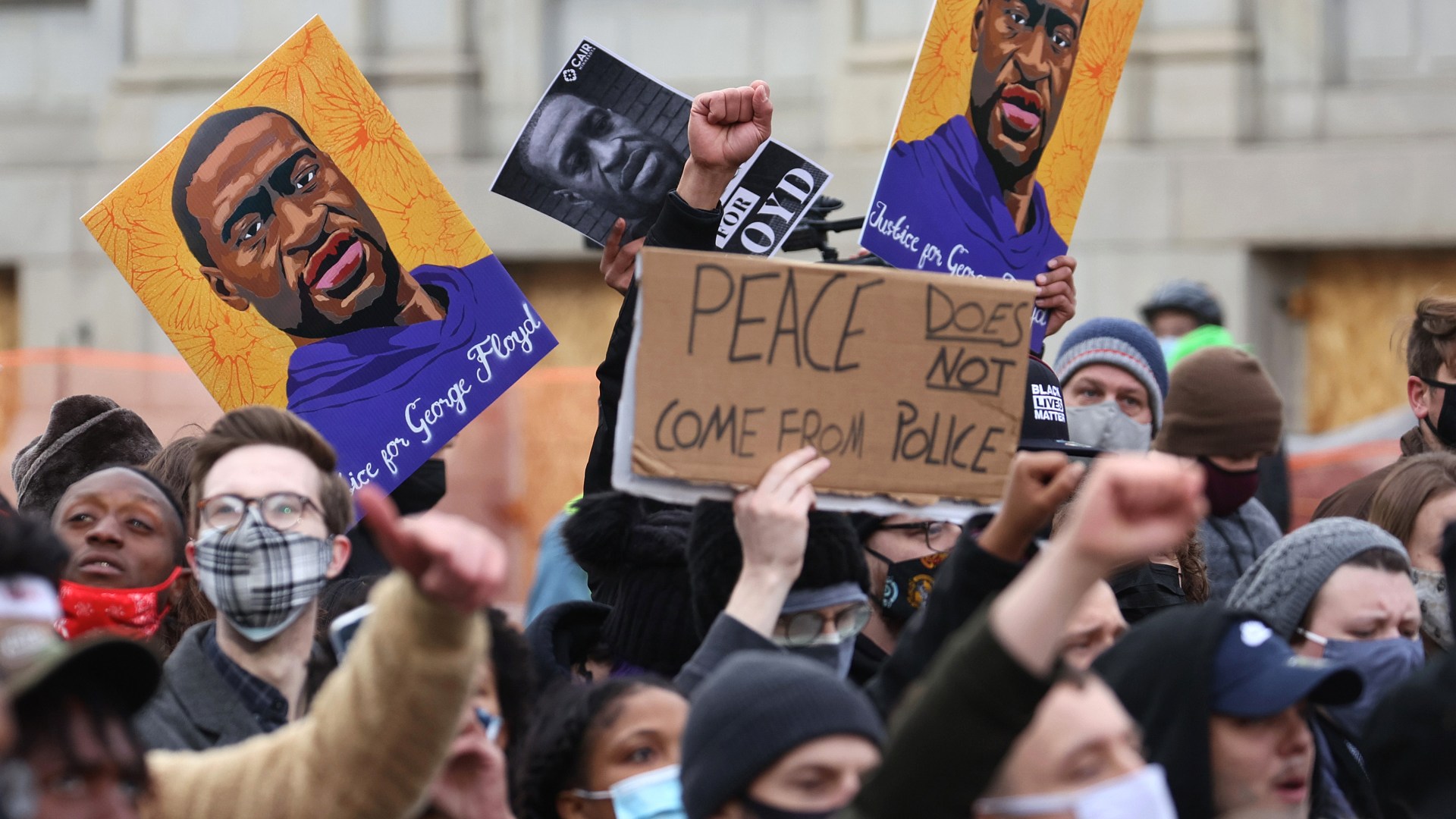
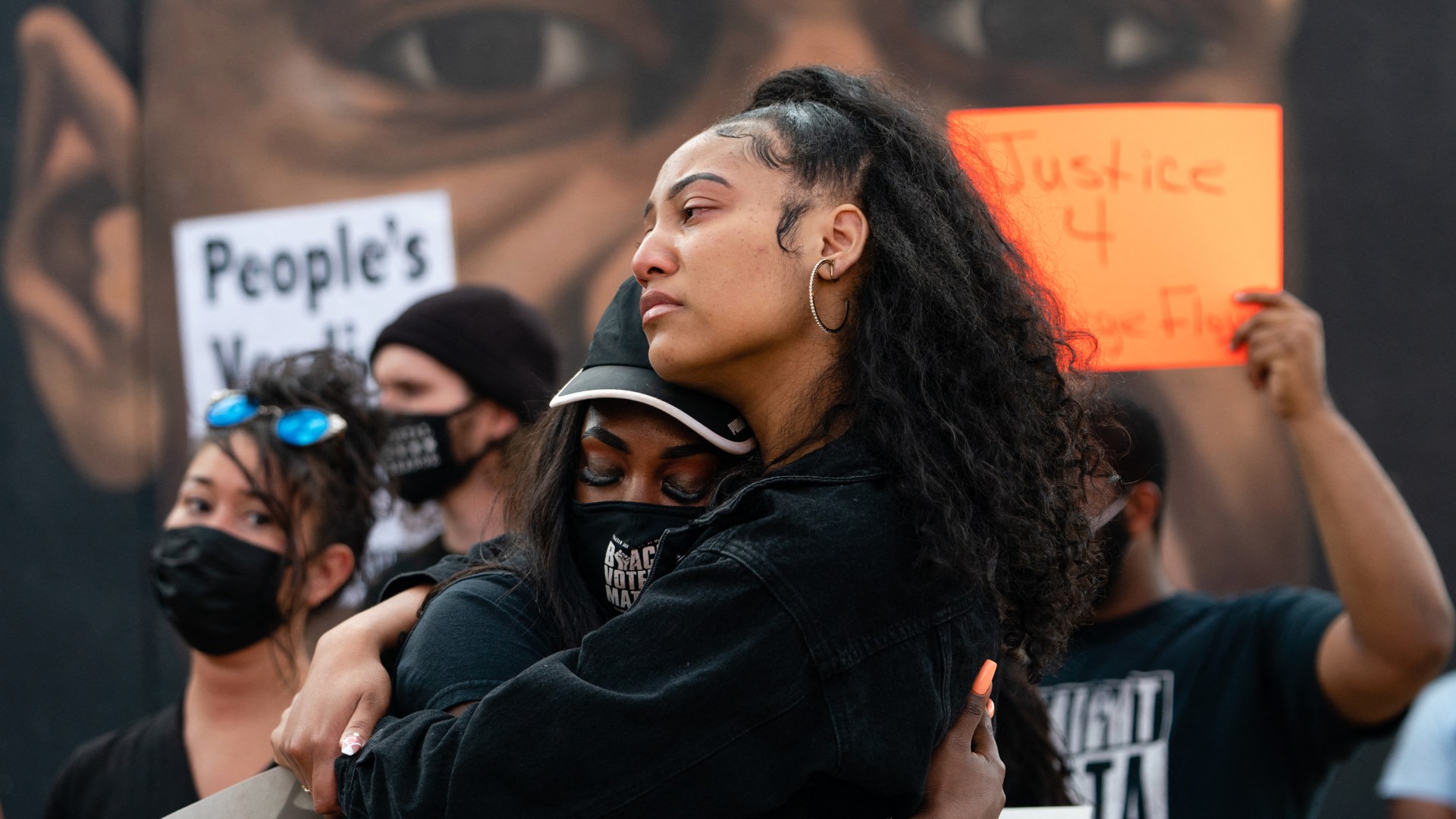
The verdict was not what I expected. I didn’t think former Minneapolis police officer Derek Chauvin would be convicted on all three charges for the death of George Floyd. I wasn’t sure his actions would be legally labeled “murder,” both because of the details of Minnesota law and because we’ve seen the same scenario so many times before without this outcome. Any charges—let alone murder charges, let alone murder convictions—are incredibly rare when police officers kill.

But here we are, with Chauvin found guilty on all counts after just 10 hours of jury deliberation. The Twin Cities were largely quiet Tuesday night. No helicopters hovering overhead, no need for the plywood that reappeared on business windows in recent weeks. There were celebrations in Minneapolis, by the courthouse and at the intersection where Floyd died, and triumphant honks sounded on the main road near my house the moment the verdict was read. Everyone, it seems, heaved a sigh of relief.

The Derek Chauvin decision is a pale sort of justice, with all the shortcomings temporal justice tends to have.

Yet George Floyd is still dead. Some or all of Chauvin’s convictions could be overturned on appeal, and even if they aren’t, this verdict alone won’t transform American policing and our criminal justice system. Tuesday’s decision is a pale sort of justice, with all the shortcomings temporal justice tends to have. It should remind us that, in Christ, we look forward to the bright light of true justice. And it should spur us to action too—to partnering with God in moving toward that true justice to come, knowing our “labor in the Lord is not in vain” (1 Cor. 15:58), no matter how endless or futile it may feel or what the final fate of this case is.

That the Chauvin case reached this point is remarkable in the narrow legal context of Minnesota’s murder statutes and the Minneapolis Police Department’s use-of-force policy. I anticipated writing this column to explain, in part, why a second-degree murder conviction didn’t happen, and I remain a bit stunned that it did.

The specific charge is that Chauvin “cause[d] the death of a human being, without intent to effect the death of any person, while committing or attempting to commit a felony offense.” It’s that final clause I thought could be a sticking point: The offense of which Chauvin was accused is felony assault, but the assault in question was a restraint technique prescribed by the police department handbook until it was revised last year. (Indeed, Chauvin himself had used similar restraints repeatedly in the past, and he was never formally reprimanded for it.) This verdict says what Chauvin did was a felony despite its apparent consistency with his police training. It says “just following orders” is not an excuse.

The cautious part of me is hesitant to think that bold statement will survive if appealed. If it does, however, it could point to a significant shift in how our society thinks about police use of force, especially deadly force, and the rule of law over law enforcement officers. That tantalizing possibility brings me to another remarkable thing about this verdict: that it happened in such an “already/not yet” moment of American criminal justice reform.

On the balance for “already”: This case didn’t end like the 2014 police killing of Eric Garner, to which it was so eerily similar. What Chauvin did was legally given its moral name: “murder.” The past year has produced a long list of policing reforms associated with this case. Americans now overwhelmingly support policies including prohibition of police chokeholds, a national database of police with a record of misconduct (at present, fired officers are often simply rehired by another department), mandatory police body cameras, elimination of mandatory minimum sentencing, and an end to qualified immunity (a Supreme Court–created legal doctrine that makes it difficult to hold police and other government officials accountable for civil rights violations).

On the balance for “not yet”: That this murder happened at all. That police in a suburb of Minneapolis killed Daunte Wright, another unarmed black man, before the Chauvin trial was even complete. That despite public support as high as 91 percent for the reforms I just listed, only a few have happened, patchwork, in some parts of the country, and some are not implemented at all. That there’s no guarantee the next police murder will be handled as this one was. That there is still so much to be done, so much to make our justice system more trustworthy, humane, and fair, particularly for black Americans.
This is the inadequacy of human justice, in which we may achieve accountability and perhaps even recompense but not real restoration. “I know that the Lord secures justice for the poor and upholds the cause of the needy” (Ps. 140:12), but we so often do not. “If you see the poor oppressed in a district, and justice and rights denied, do not be surprised at such things,” says the oft-cynical teacher of Ecclesiastes (5:8), and who—having spent a single day reading headlines—could argue? This is the way of our world while its redemption is not complete, while it is still “subjected to frustration” (Rom. 8:20), while the end has not yet come, while we have not yet seen the final “victory through our Lord Jesus Christ” (1 Cor. 15:24–28, 57). Until then, there is always so much more to be done.

The enormity of the task presents a dual temptation of pessimism or pietism, as Esau McCaulley, a Wheaton College professor of New Testament and author of Reading While Black, wrote in The New York Times shortly after the Chauvin verdict was announced. The pessimism despairs of progress, he said, while the pietism “assumes our only hope is the sweet by and by, in which God swoops in at the end of all things to solve our problems.” Rejecting both embittered striving and passivity, McCaulley counsels “a third way, rooted in the idea that a just God governs the universe” and invites us to join him in his good work.

In this sense, hope is reasonable. Not a naïve hope, imagining the American justice system is magically fixed because one police officer was convicted. Not a fragile hope, floundering whenever “justice is far from us, and righteousness does not reach us” (Isa. 59:9). Ours should be a resilient hope: joyful, prayerful, “always striv[ing] to do what is good for each other and for everyone else” (1 Thess. 5:15). It should be a hope learned following a God who will deliver us from every injustice, from our own wrongdoing, and finally from death itself. It is the hope of Easter—that Christ not only has died and is risen but will come again.

Bonnie Kristian is a columnist at Christianity Today.
News
Wire Story

Prisons Reopen to Ministry with Recent Visits from Lecrae and Justin Bieber

Prison Fellowship’s “Second Chance Month” corresponds with easing of pandemic restrictions at many facilities.

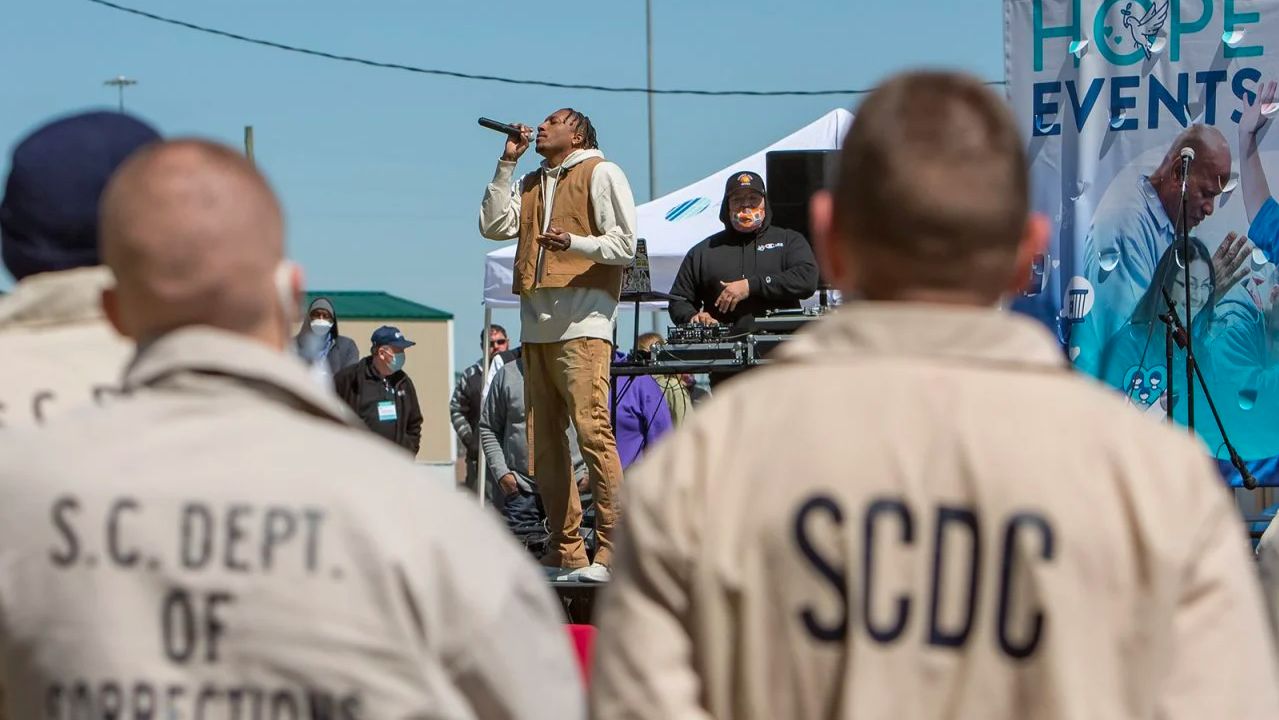
Lecrae performs a Hope Events concert on Good Friday.

Lecrae performs a Hope Events concert on Good Friday.

Christianity Today April 22, 2021
Courtesy of Prison Fellowship

In early April, Christian hip-hop artist Lecrae visited a South Carolina prison, performed six songs and testified about his faith.

Fifteen months ago, the event would have been almost unremarkable, but since then, COVID-19 restrictions have prevented Lecrae from “hanging out” with prisoners, as he had previously done with less social distance after a performance hosted by Prison Fellowship.

“We sometimes do it outside the security fence line and maintain that separation with the men or women on the inside,” said Prison Fellowship President James Ackerman, describing a “Hope Event” the ministry held at a correctional facility in Alabama in September.

Lecrae’s visit this month was a sign that some prisons have begun permitting more in-person religious activities.

“As conditions have improved state by state, some correctional facilities and prisons are opening back up for visitors and ministry purposes,” Jim Forbes, communications director of Prison Fellowship, said in a statement to Religion News Service.

That comes as Prison Fellowship—the largest US nonprofit serving incarcerated people, formerly incarcerated people and their families—celebrates Second Chance Month, aimed at raising awareness of the difficulties faced by people with a criminal record.

The virus has spread through correctional facilities, where social distancing is often not an option, infecting prisoners at a rate three times that of Americans outside prison walls, according to a recent report by The New York Times.

Over the past year, nearly all state-run facilities temporarily have halted outside visitors to help slow that spread, according to Prison Fellowship’s website.

But as vaccines become more widely available and states begin to loosen those restrictions, high-profile Christians like Lecrae, Justin Bieber, and Churchome pastor Judah Smith have been among the first to resume their visits.

Second Chance Month was first recognized by President Donald Trump in 2017. President Joe Biden issued a similar declaration this year, recognizing April as Second Chance Month.

“By focusing on prevention, reentry, and social support, rather than incarceration, we can ensure that America is a land of second chances and opportunity for all people,” Biden’s declaration reads.

Prison Fellowship is celebrating with a number of virtual events, including a prayer service last Saturday and a rebroadcast the following day of its Second Chance Sunday worship service featuring music by musicians from the New York megachurch Hillsong East Coast and a sermon by Pastor Jon Kelly of Chicago West Bible Church. It has also created resources to help churches across the country host their own Second Chance services.

Lecrae is joining the organization for a number of events. Among them is a virtual gala on April 29, where Bryan Stevenson, founder of the Equal Justice Initiative and author of Just Mercy, also is scheduled to speak.

Lecrae, whose father, he has said, was in and out of jail, first got involved with Prison Fellowship in 2019 and has performed at several prisons since then, including the April 2 event in South Carolina.

In a recent interview with Religion News Service, Lecrae said, “Knowing that they’re still human, knowing that they have dignity, worth, that God made them, fearlessly and wonderfully made them” drew him to prison ministry.

Bieber, whose latest album is titled “Justice,” reportedly stopped by a California prison in late March at the invitation of the Anti-Recidivism Coalition, in the company of his wife, Hailey Baldwin, and Smith. While there, they reportedly spoke with members of the Urban Ministry Institute, a prison seminary program, and Bieber announced that he plans to charter buses so inmates’ family members who have been kept away by COVID-19 could come to visit them.

“It was a life-changing experience that I will never forget,” the pop star said in a statement to ABC News Radio. “It was such an honor listening to their stories and seeing how strong their faith is.”

Evangelical Christians took up prison reform as a cause in the past few decades under the influence of Charles Colson, a former aide to President Nixon, who came to faith while serving seven months in Alabama’s Maxwell Prison for Watergate-related crimes.

Colson founded Prison Fellowship in 1976, and the organization has worked with every administration since President Jimmy Carter. It played an instrumental role in crafting the First Step Act, legislation passed in 2018 that focused on reducing recidivism, the number of people who leave prison only to land back in confinement.

More recently Prison Fellowship has supported the proposed Equal Act, which would reduce disparities in cocaine sentences that punish Black Americans more harshly than white Americans.

News

3 Fewer Hot Spots for Trump-Biden Handover on Religious Freedom

USCIRF chair Gayle Manchin explains why 22nd annual report by US watchdog agency reduces tally of offending nations, yet too many on black list still “don’t seem to care.”

Cover of the 2021 annual report by the US Commission on International Religious Freedom (USCIRF).

Cover of the 2021 annual report by the US Commission on International Religious Freedom (USCIRF).

Christianity Today April 21, 2021
USCIRF

As a new administration takes over leadership of America’s commitment to religious freedom worldwide, Gayle Manchin believes President Joe Biden is “very aware” of its importance.

But given global developments, the watchdog work of the US Commission on International Religious Freedom (USCIRF), which she chairs, sometimes feels like “treading water.”

Others agree. For example, an 800-page study released this week by Aid to the Church in Need concludes that 1 in 3 nations of the world do not respect religious freedom.

And in 95 percent of these, the situation is growing worse.

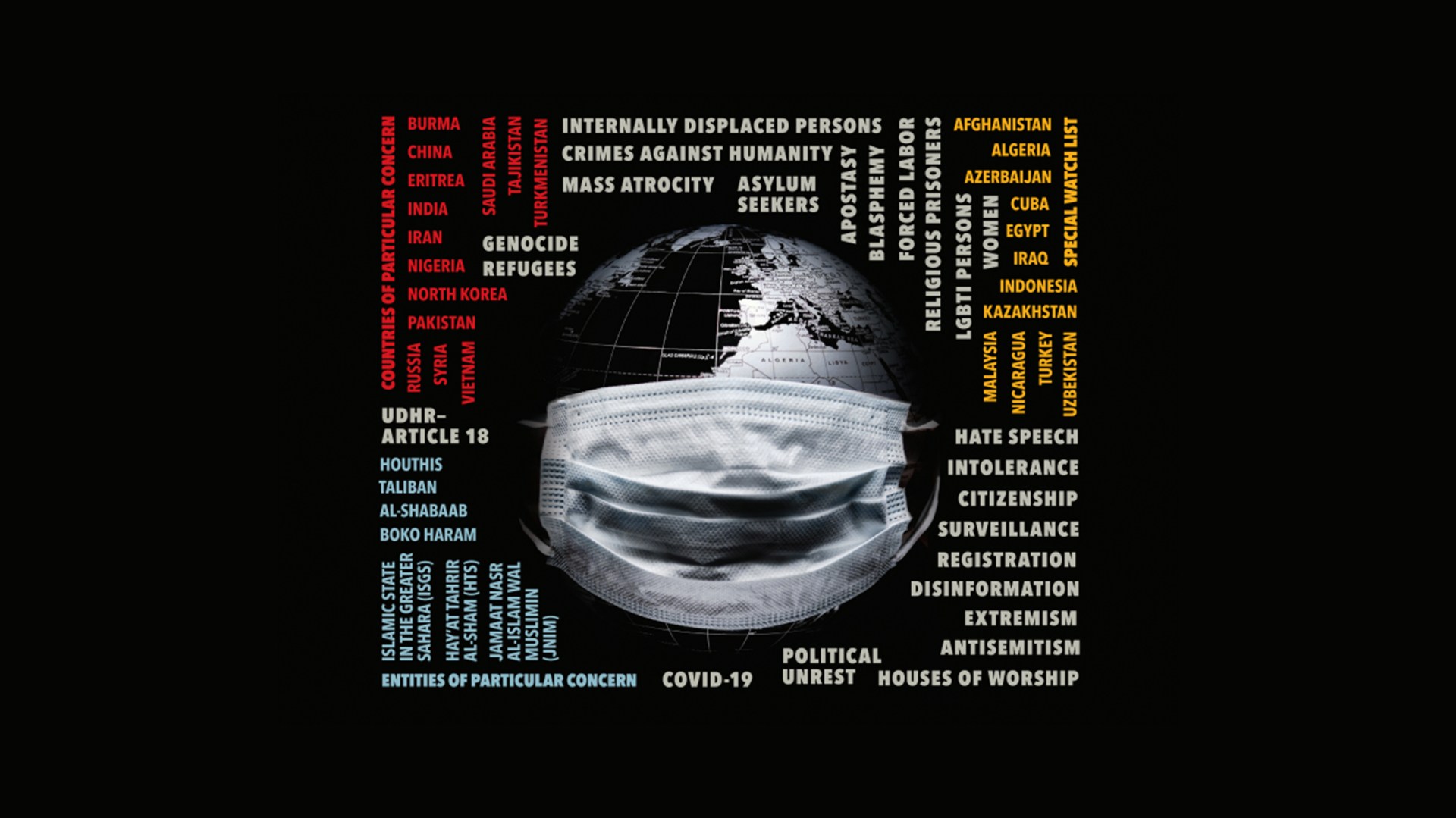
USCIRF, created to provide recommendations to the US government, released its 22nd annual report today. Its analysis identifies significant problems in 26 countries, down from 29 last year. It also marked a surge in worldwide antisemitism.

Following the commission’s advice, last December then-Secretary of State Mike Pompeo announced the designation of Burma [Myanmar], China, Eritrea, Iran, Nigeria, North Korea, Pakistan, Saudi Arabia, Tajikistan, and Turkmenistan as a Country of Particular Concern (CPC).

USCIRF’s 2021 report recommends that new Secretary of State Anthony Blinken add India, Russia, Syria, and Vietnam.

And where the US State Department under the Trump administration added Cuba and Nicaragua to a Special Watch List (SWL), this year USCIRF recommends also including Afghanistan, Algeria, Azerbaijan, Egypt, Indonesia, Iraq, Kazakhstan, Malaysia, Turkey, and Uzbekistan.

Meanwhile, the commission recommends that three nations finally come off the watch list: Bahrain, the Central African Republic, and Sudan.

Shielded from US foreign policy concerns, USCIRF says its mandate allows it to “unflinchingly criticize the records of US allies and adversaries alike” on religious freedom. This is meant as oversight and advice for the State Department, which is not required to accept the commission’s recommendations.

Created as an independent, bipartisan federal commission by the 1998 International Religious Freedom Act (IRFA), USCIRF evaluates the degree to which nations engage in or tolerate “systematic, ongoing, and egregious” violations of religious freedom.

CPC status requires meeting all three descriptors, while SWL status requires two.

Today’s report notes, however, that even when the State Department designates a nation as a CPC, there is regular violation of the IRFA requirement to compel presidential action. Often a simple national security waiver is applied to exempt allied or strategic nations.

USCIRF “urges” the federal government to stop this practice, and to take concrete action.

Following four commission field visits (limited due to COVID-19), seven hearings, and 33 published reports, USCIRF’S 2021 report calls attention to religious freedom violations against all faiths, including:

  • 1 to 3 million Turkic Muslims in Chinese concentration camps
  • 130,000 Muslims in government-run internment camps in Burma
  • 50,000 Christians held in North Korean prison camps
  • 2,500 Yazidi girls and women missing in Iraq
  • 2,000 religious prisoners in Uzbekistan
  • 477 raids conducted against homes of Jehovah’s Witnesses in Russia
  • 240 religious prisoners released on bail in Eritrea
  • 15 houses of worship attacked by non-state actors in Nigeria
  • 9 Yazidi shrines destroyed by Turkish-backed militias in northern Syria
  • 5 targeted killings of Ahmadi Muslims in Pakistan

This year’s report includes a new section highlighting key USCIRF recommendations that the US government has implemented, including: 14 religious freedom violators have been sanctioned under the Global Magnitsky Act; key religious freedom staff positions have been filled at the State Department and the National Security Council; and China’s abuse of its Uighur population has been designated as a genocide.

But it also notes positive developments, including the three nations removed from SWL status:

  • Bahrain, a Sunni Muslim kingdom, took steps to improve treatment of its majority Shiite population, allowing commemoration of the Ashura holiday.
  • The Central African Republic, a Christian-majority nation, successfully implemented a peace agreement that curbed sectarian violence targeting both Christians and Muslims for their religious identities.
  • And Sudan, a Muslim nation emerging from an Islamist dictatorship, passed several laws to improve religious freedom conditions.

Gains are also noted in Egypt, where 388 churches were approved for registration, and in Eritrea, where 240 religious prisoners were released on bail.

USCIRF additionally commended the 32 national members of the International Religious Freedom or Belief Alliance, as well as the 7 countries that adopted the International Holocaust Remembrance Alliance’s “Working Definition of Antisemitism.”

CT spoke with Manchin about USCIRF’s most controversial discussions, how violating nations can improve their standing, and whether the Biden administration will continue the religious freedom emphasis given by former President Donald Trump:

Last year, Nigeria was added as a CPC by the State Department. How did USCIRF’s work contribute to the decision?

USCIRF has a unique ability to focus on religious freedom, while the State Department looks at the relationship with a country in balance. But they take our work very seriously, and know the research and credibility behind it. They watch, and when the information is overwhelming—and when they are comfortable—they will join us in a recommendation.

But I never question when they don’t. There may be details going on that we are not aware of.

So how do you interpret the State Department additions of Cuba and Nicaragua to the SWL? Maybe they are not the most egregious violators of religious freedom, compared to others on the USCIRF list?

Both of these countries are continuing to trend worse. When we are able to travel again, these are nations we will reach out to for a visit, to get a clearer picture of what is going on. There is always a political aspect, from the government’s perspective.

But now that Cuba is without a Castro for the first time, there are things happening that may change. Of course, it could also be toward the negative, so we will continue to monitor.

What nations generated the most controversy and discussion among USCIRF commissioners?

India, which has trended poorly this year. Our discussions are not so much of disagreement, only of understanding. Last year, when we put India on the CPC list, there was controversy within our commission, because some of us believed it did not belong there.

This year, there was total agreement.

China [has] so many areas of discussion. We have to have a very clear understanding of exactly what is happening, that we can verify and validate. It is not only so egregious, but they [Chinese officials] are trying to spread among other nations that what they are doing is okay.

With China’s overall goal of global power, it is very frightening.

The only controversy in our discussions was how far we can move our discussions from the religious issue, to ask corporations to not do business with products made in that Xinjiang region. But it all ties back to the Uighurs and their forced labor camps.

Tell us more about your discussions about Azerbaijan, especially in light of the recent conflict in Nagorno-Karabakh.

Azerbaijan has been one of those countries that has approached a border line of not being on the SWL. But there were some unfortunate trendings this past year, [where] we sensed a hesitancy. There was disagreement. There were some commissioners who thought it was ready to be taken off the list.

But my personal opinion is that when we remove a country from the CPC or SWL, there is a fear that the first reaction will be, “Great, everything’s fine.”

But everything is not fine. Azerbaijan has not proven that it is headed in the right direction, nor that it will continue to raise the level of becoming better. The majority of the group felt this way.

The positive thing is that they [Azerbaijani officials] continue to work with us, and want to dialogue.

Three countries were removed by USCIRF from the watch list. How did they demonstrate that they had crossed the border line?

Bahrain has worked with us every year. They [Bahraini officials] read our report word for word, and come back with a report that attempts to answer every question and issue we raise. But they also realized what they needed to do. We felt that their progress needed to be expounded upon, so we removed them from the SWL.

But we told them: We will continue to monitor. We don’t want you backsliding.

Many of these countries don’t have nice neighbors. They feel threatened every day, so power is very important to them. So the steps they take are very brave. What we impress upon them is that allowing freedom of religion builds a stronger country, with people more loyal and steadfast to support them.

There are two thought processes. Does a government tolerate what is going on, or is the government the perpetrator? At USCIRF, we denounce a nation that tolerates it. The State Department focuses more on if the government itself is doing it.

In the Central African Republic, we see that the government is not tolerating what these groups have done to harass minorities. That is very good, we want to showcase and applaud when a government stands up to rebel groups that burn down churches and harass villages.

They [CAR officials] also have worked with us to know what they must do to get off the list.

And Sudan—what a major example of a total turnaround in their government. You just have to applaud what they are doing, in the part of the world where they exist.

The 2021 report notes a positive development in Eritrea, a major violator of religious freedom for a long time. Are Eritrean officials starting to listen?

Our inability to travel because of COVID has complicated the work and the thought process. But Eritrea is one of the countries that do nothing to make things better, and in fact, everything they [Eritrean officials] do makes them trend more poorly—and they don’t seem to care who’s watching.

This is a problem with all our CPCs.

We are asking countries to release prisoners of conscience because of COVID-19, and that did happen in a few cases. The release in Eritrea is a good thing, but you have to look to see what the motive was. It may have been lifesaving for them.

The countries that care reach out to us—via Zoom this year—to keep us informed and show the information they give us is valid. But these types of nations, who don’t want you to visit, see a time when you can’t visit as a better way to spread misinformation.

How do you view the commitment of the Biden administration? Secretary Blinken has stated there was an “unbalanced” emphasis on religious freedom under President Trump.

I believe that President Biden is very aware of religious freedom as a basic human right, and that he supports it. He has had a lot of issues on his plate since the beginning of his administration, and the situation at the border is hampering him on the refugee numbers, to bring them up.

But I believe he will. I believe he will appoint an ambassador for religious freedom. He will have people in the State Department who will work very closely on the issue, with USCIRF and the countries we deal with.

I think Secretary Blinken’s comment was that the United States is a great believer in all human rights, in the international understanding. But he was not so much bringing down religious freedom, but that we will uplift all human rights, for all people. Religious freedom will still be one of the very basic ones we support—but there will be others.

You and Sam Brownback, former Ambassador at Large for International Religious Freedom, will be hosting a religious freedom summit in Washington this summer, even as the official ministerial meetings moved to Poland last year and to Brazil this year. Do you fear there will be a loss of momentum without direct government involvement?

We are hopeful. We have had bipartisan sponsorship from both the House and the Senate. This has been a crazy time for the president, trying to get settled. But having said that, I think there will be participation from the Biden administration.

The importance of this summit was to keep it going, especially as COVID-19 kept it virtual last year. Where we have had countries coming together to support religious freedom, we want to hang on to it. This summer will have a virtual component, but also in person.

It is a transition between the administrations, holding things together, so that next year the Biden administration can take a stronger role.

Last year as chair, Tony Perkins said it was a time of “tremendous progress” for international religious freedom. How do you describe the current moment, one year later?

The elevation of USCIRF and our work has raised the level of awareness both in America and globally. Yes, I agree with Tony, that with this has come progress.

There are also countries that don’t care. But we have made it a bigger issue.

So it is critical that USCIRF and the State Department remain committed. It will make a difference to people around the world.

Awareness has increased, but this almost sounds more like “treading water.” Is that too negative?

There is always “Did you see this, or that, in this country.” So yes, many times it does feel like you are treading water. The global surge in antisemitism has been horrific—we have to focus on it more. But it has to be balanced with what we are doing.

In many ways, this world is not trending in the way we want it to, for religious freedom.

And yet, you were able to take three countries off the recommendations list.

Yes [smiling]. And we are very happy about this.

We say: We are not Big Brother, watching over you. We are working with you, to maintain and continue to improve religious freedom in your countries.

Ideas

The Derek Chauvin Verdict Is Good. But I’m Still Groaning.

Columnist

Full justice will come when Jesus returns. In the meantime, we fight for a “foretaste of glory divine.”

Christianity Today April 21, 2021
Scott Olson / Getty Images

In the book of Romans, the apostle Paul tells Christians that “the whole creation has been groaning as in the pains of childbirth.” He goes on to say that we “groan inwardly as we wait eagerly for our adoption to sonship, the redemption of our bodies” (8:22–23).

We African Americans understand this inward groaning—the discomfort of waiting for the full redemption of our physical selves. Like all creation, our bodies await renewal because they have borne pain and loss for far too long.

Some of our pain includes violent death at the hands of police officers or vigilantes who are intimidated by our presence and fire their guns, hang us from trees, pound us with their clubs, or crush us with their knees.

Former Minneapolis police officer Derek Chauvin didn’t accept George Floyd’s humanity but instead perceived his body as a threat. Chauvin ignored the onlooking crowd, who shouted at him to stop, and proceeded to drain the life out of Floyd over the course of nine and a half minutes.

The Minneapolis police officer was ostensibly fearful of a man who was already subdued and placed face-down on the ground. Because of the justice system’s track record of accepting police brutality as a necessary part of the job, Chauvin relied on his badge to justify his actions.

Still now, so many Black and brown bodies groan because of the bullets or the pounding they take, even from those entrusted to protect and serve us. Yet even when we are not physically beaten, we still groan. We groan for many different reasons.

There is another cause for groaning in anticipation of redemption: Our bodies are decaying faster than those of our white counterparts. The COVID-19 pandemic highlighted the health disparities already present between white and nonwhite people. And Black and brown folks are carrying so much anxiety that our life expectancy is significantly lower than that of whites.

Due to the stress of being Black and brown in the USA, we are physically less healthy than white people, even when our income levels are the same. We ache and groan simply because of the toll racism takes on our bodies, even when we are not physically under attack. We ache in the pit of our stomachs whenever we see the police cruiser in the rearview mirror, or hear the sirens getting louder.

We ache in our bodies when white people perceive us as being out of our place. We get followed in stores. We get mistaken for “the help.” We get ignored when we should be heeded, and we receive extra attention when we’re minding our own business. We inwardly groan because of slights, microaggressions, and especially encounters with authority figures that often quickly escalate to dangerous altercations.

Our children start to ache and groan early in life because they get suspended or otherwise punished more frequently than white students. Our bodies inwardly groan and eagerly await our adoption because injustice is painful. We ache and groan because our sisters and brothers get killed and we feel powerless. In pain we take to the streets. With groans, we raise our voices in protest and cry, “Black lives matter!”

But rather than receiving support from Christian sisters and brothers, we find that prominent and significant numbers of them demonize our pleas but not the system that crushes us.

It is no surprise that Chauvin’s murderous act was recorded, since we are hyperaware of police activity. And we are grateful for the young woman, Darnella Frazier, who pressed through her pain to record the horror. We ached and groaned for George Floyd, but also for all the other victims, many of whom did not have their brutal encounters recorded.

We held our breath for nearly a year, all the way up until the afternoon of April 20, 2021, when Judge Peter Cahill read the verdict. Chauvin was pronounced guilty of the three charges against him.

Even so, our groans haven’t stopped. Minnesota Attorney General Keith Ellison rightly acknowledged that the guilty verdict did not signal justice but rather accountability, because justice “implies true restoration.”

Indeed, justice means George Floyd would be alive today, because our society would find better ways to live as neighbors. Through love, we’d eliminate much injustice and tackle evil rather than tolerate it.

When I heard the verdict that Chauvin was found guilty, I wept in relief. But my inward groaning hasn’t stopped. The apostle Paul writes that all creation groans, yet we know that some parts are in more agony than others. Of course, our hope is eschatological, which is to say that justice will reach a climactic fulfillment at the end of time when Jesus returns. However, in the meantime, we strive—in the words of an old hymn—for a “foretaste of glory divine.”

We get that foretaste by focusing not only on individual behaviors but also on the unjust systems that exploit, threaten, and endanger anyone, especially those with relatively little societal power.

As we anticipate full redemption, then, let us do the handiwork that God has for us to do (Eph. 2:10). Our good work glorifies God not because we will put an end to all evil but because we might reduce some people’s suffering. Reducing the aches and pains demonstrates the love of a Savior who healed and fed brown bodies to show what the kingdom of God is like.

Pastors

Pastors, Seek Divine Presence Over Performance

How the work of ministry relies on our participation in Christ.

CT Pastors April 21, 2021
Illustration by Mallory Rentsch / Source Images: Larisa Birta / Unsplash / Wynnter / Getty Images

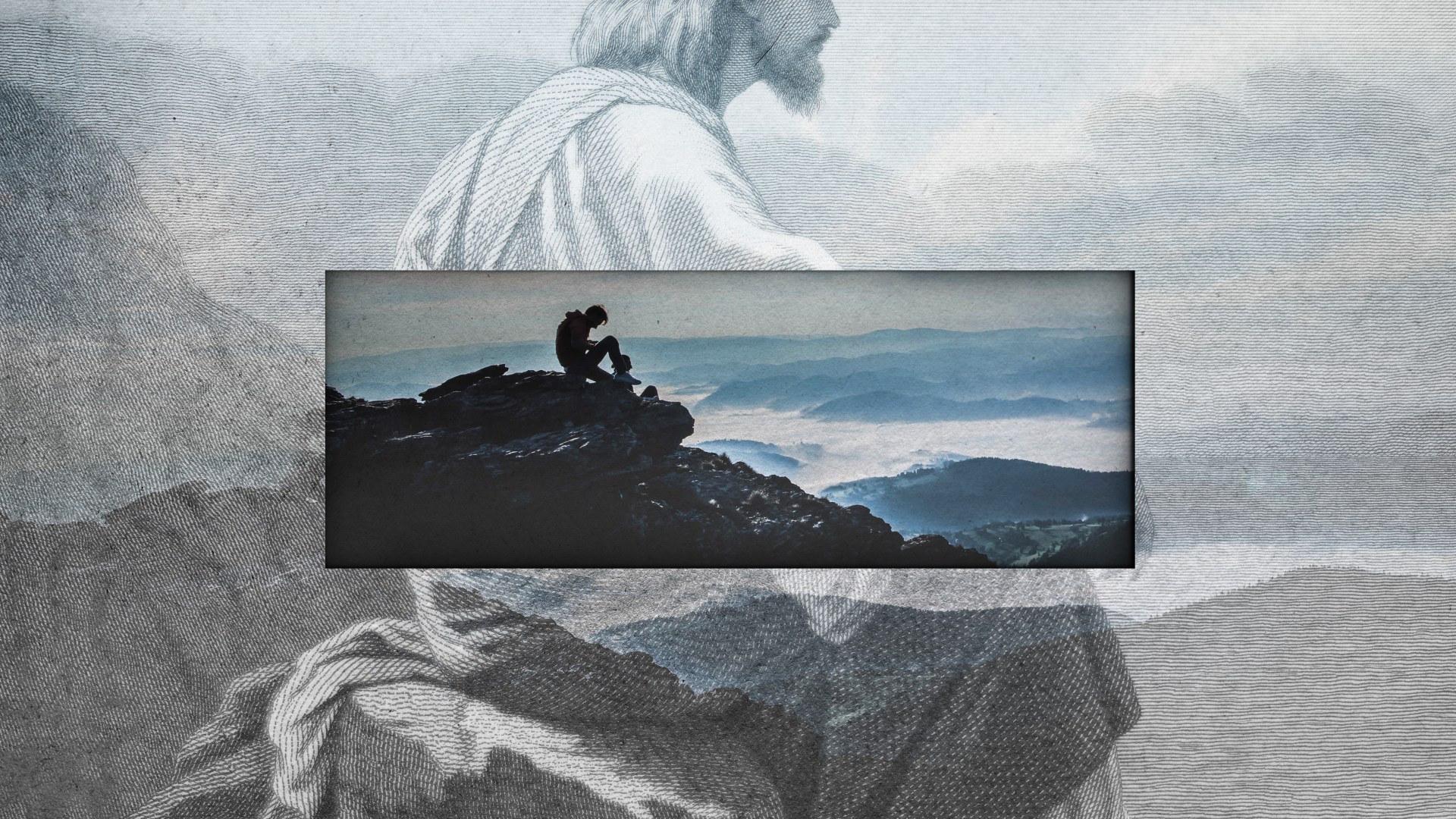
As we pass the anniversary of COVID-19 lockdowns and more churches begin to physically regather, it has been sobering to reflect on this past year of ministry. In August of 2020, I hit a wall. I was physically exhausted, emotionally drained, and not coping well. My wife and I had just planted Bright City Church in September of 2018, so naturally the lockdowns induced fears of whether our congregation would survive the pandemic.

I had dealt with some anxiety and depression in the past, and it was beginning to resurface. I realized that a major source of my anxiety and emotional exhaustion at that time was the pressure I felt to “perform” as a pastor. From how I preached to how impactful our services were to how I led my team, ran meetings, and counseled our people, I constantly assessed my value on the basis of my performance. I had adopted an unsustainable—albeit pervasive—model of ministry.

As I wrestled with this exhaustion, these precious words of Jesus filled my soul: “Remain in me.” Though deceptively simple, they allude to one of the most profound theological realities in all of the New Testament: our participation in Christ.

“Participation in Christ” means we experience Christ’s own relationship to the Father by the power of the Holy Spirit. It could also be said that Christ’s own life is repeated in us. Christ’s relationship to the Father was marked by at least three things—intimacy with the Father (John 1:18), peace in his Father’s presence (John 14), and satisfaction from the Father that brought contentment within himself (John 5:19). As I endured this difficult season of ministry, I began to wonder, “surely this experience of Christ’s own relationship to the Father must have something to say to this drudgery?”

What I discovered for myself is what I am recommending here: Ministry is best understood as the repetition of Christ’s own life in us, and that as pastors, we will be most at rest, most at peace, and most satisfied when we do ministry with a conscious awareness of his presence. In this way, ministry becomes the very context in which we take part in Jesus’ own relationship to the Father.

Jesus often said as much throughout the Gospel of John: “If you really know me, you will know my Father as well” (14:7). “Anyone one who has seen me has seen the Father” (14:9). “If you keep my commands, you will remain in my love just as I have kept my Father’s command and remain in his love” (15:10). Karl Barth put it this way: “As Jesus Christ calls us and is heard by us, He gives us His Holy Spirit in order that His own relationship to His Father may be repeated in us.”

As good as that may sound, there are many obstacles to seeing ministry this way. We drift instead into seeing ministry as defining our identity, establishing our value, a means to achieving our own ends, or relaying our knowledge about God to others.

When ministry is the repetition of Christ’s own relationship to the Father in us, his covenant faithfulness defines our identity, not our performance in the pulpit. The unconditional approval of the divine establishes our value, not the fickle praise of human beings. The freedom of pursuing his ends in ministry replaces the oppression of pursuing our own. The peace of a ministry sustained by the ongoing present action of God replaces the burden of a ministry driven by our efforts. A focus on experiencing knowledge of God ourselves replaces the pressure we feel to adequately communicate knowledge of God to others.

What would ministry look like if we saw it as the repetition of Christ’s own life in our lives?

It would look like replacing the anxiety of a moment with awareness of God’s presence. It means “finding constant pleasure in His divine company,” as Brother Lawrence writes in Practicing the Presence of God. It means believing the revelation Paul received: “My grace is sufficient for you, for my power is made perfect in weakness” (2 Cor. 12:9). It means living in true humility of utter dependence on God.

If what Christ has with the Father is what we want also (intimacy with Father, peace in his presence, and satisfaction from him that brings contentment with ourselves), I can think of three priority changes for such a paradigm shift in ministry.

1. Prioritize intimacy over efficiency

Early in the church planting stages, it was easy to become obsessed with efficiency. How quickly can I get this done? Is there a faster way? What can I delegate? Who can I delegate it to? Intimacy with God, however, leaves little room for our fascination with efficiency.

Intimacy demands time; it is slow. It cannot be hurried or rushed. Intimacy cannot be cultivated when our attention is divided. In the same way, our participation in the Son’s relationship to the Father is something to delight in, to relish, to enjoy. None of these is done best when done fast. And why would we want to? Wouldn’t we rather linger in his presence and be satisfied by peace and intimacy with the Lord? Wouldn’t we rather minister intentionally?

When we prioritize intimacy over efficiency, we discover this truth: Less done with God is still more than I can do on my own.

2. Prioritize presence over performance

The pressure to perform is one of the greatest obstacles to enjoying God’s presence in ministry. It is the internal questioning of “Am I doing a good job?” This redirects attention to ourselves rather than God, and certainly away from the church members in front of us.

When we shift our priority to presence, our preoccupation with self is corrected. We see again those we were sent to serve. We are not preoccupied with our anxious preparation. We commune with the Truth: “God, you have given me everything I need for this moment. I am here for them, not for me. I will do this in your strength, not in my weakness.”

3. Prioritize imitating Jesus over impressing others

Possibly the greatest hurdle to experiencing Christ’s own life is our temptation to focus on impressing others rather than imitating Jesus. In The Selfless Way of Christ: Downward Mobility and the Spiritual Life, Henri Nouwen says, “We act as if visibility and notoriety were the main criteria of the value of what we are doing.” Is my work valuable? Am I valuable if crowds aren’t huge, views aren’t viral, and followers aren’t multiplying?

Nouwen observes that this need to be impressive is tied closely to our selfhood and identity. “To be a person and to be seen, praised, liked and accepted have become nearly the same for many. Who am I when nobody pays attention, says thanks, or recognizes my work?” Unfortunately, the more insecure we become, the more desperately we need to be impressive. This restarts the whole exhausting ministry model: I need to be impressive therefore I must perform even better, and in order to perform better, I must become more efficient. It is a ruthless cycle with little space for rest, peace, presence, and intimacy.

The solution is to imitate the selfless way of Christ in the way of downward mobility, says Nouwen. That is where true freedom is found. Downward mobility was the way of Christ into the world, emptying himself of his divine privilege, and walking among us as a servant (Phil. 2). He moved from strength to weakness, from fullness to emptiness, from robed in glory on a throne to naked on a cross. When we rid ourselves of the oppressive pursuit of impressing others, we are now free to selflessly orient ourselves toward the other.

Participation in Christ is to live in the same trajectory as Christ did in the Incarnation—downward to transform our world. In this pursuit to be nothing, we leave space for God to be all. The greatest freedom in ministry is found when we empty ourselves of all we think we should be, so that he can fill us with what he wants us to be.

Ike Miller is the author of Seeing by the Light and holds a PhD in theology from Trinity Evangelical Divinity School. He is lead pastor of Bright City Church in Durham, North Carolina, where he lives with his wife, Sharon, and their three children.

Testimony

I Laid Down My Islamic Privilege to Preach Jesus Around the World

How a direct descendant of Muhammad met Christ on a crowded Pakistani sidewalk.

Christianity Today April 21, 2021
Courtesy of Dynamis World Ministries / Edits by Christianity Today

I was born in a Sunni Muslim home in Bangladesh, where I learned the meaning of stern discipline from my father, a major general in the military with responsibilities in the intelligence service. We lived on different army bases in elaborate quarters reserved for officers and their families. Servants catered to our every need. The business and political elite of Bangladesh and Pakistan frequented social events in our home.

I grew up attending an Islamic madrasa (religious school), where we studied the Qur’an and learned classical Arabic from an imam. My father could trace his lineage back to the Hashemite Kingdom of Jordan (the name derives from Hashem, grandson of the prophet Muhammad’s great-grandfather). His heritage qualified me as a direct descendant of Islam’s founder.

I was respected for my holy ancestry. Yet my childhood was often painful, especially after my parents divorced and my father remarried unexpectedly. I was eight years old, feeling abandoned and missing my mother.

My stepmother regularly abused me mentally and physically. Screaming curses, she would hit me with a cricket wicket or dig her sharp fingernails into my ears, which caused them to bleed. Sores peppered my body. My father ignored my pleas for help and beat me for supposedly lying about the abuse.

When I turned 13, I joined a prestigious air force college as a cadet aiming at a career like my father’s. However, I left the military in 1975 when I was 21. Unhealed wounds from my childhood sent me into a downhill spiral. Suicidal thoughts haunted me. Then a seemingly random incident changed my life forever.

Willing to die

While walking in Lahore, Pakistan’s second largest city, to buy an electric water heater, I noticed a Caucasian man on a street corner giving out gospel tracts. Wearing scruffy jeans, he looked like a hippie. He was well over six feet tall and stood out from the normal rush of shoppers, honking autos, weaving motorbikes, three-wheeler taxis, donkey carts, and pungent aromas from food vendors. Curious about his demeanor, which radiated inner peace, I approached him and asked, “Who are you, and where are you from?”

He said he was a servant of the Lord Jesus Christ from England. He belonged to a street evangelism team from the Jesus People movement, known for traveling around the world during the 1970s. From my Muslim upbringing, I had only encountered Jesus as a prophet who appeared before Muhammad. And I didn’t believe he had died on a cross—the Jews, we were told, had crucified Judas instead.

After exchanging a few words with this English man—later, I learned his name was Keith—I walked away, about 50 yards or so, before returning. Although I believed in Islam, I wanted to know more about his own faith. Keith told me Christ would set me free and give me a new life. Though I doubted his God was interested in my despair, or even existed, I bowed and prayed to receive Christ on the crowded sidewalk in front of a shoe store.

I sensed this was what I had been waiting for all my life. It felt like a huge boulder had been lifted off my back. I saw everything in technicolor, and I wanted to sing and laugh.

Keith and I arranged to meet the next morning at the Lahore YMCA so I could learn more about the Christian faith. I waited there for several hours, but he never appeared—and he didn’t show up the next day either. Returning to the YMCA on the third day, I sat in the lobby for a while before spotting a couple sorting and arranging the same tracts as Keith had. They were from the same evangelism team, I learned. When I asked about Keith, they told me he had left the country straightaway because of a family emergency. I never saw him again.

After I related my encounter with Keith, we enjoyed a wonderful conversation. They encouraged me by reading from a burgundy leather Bible and asked me to hold it. Initially, I refused because Muslims cannot touch a holy book with unwashed hands.

The couple stressed Luke 9:23–25, where Jesus explains the meaning of denying yourself and taking up your cross. They challenged me: “If you are not willing to die for Jesus, then you are not fit to live for him. He wants you to take up your cross every day.”

I did not realize that within a few weeks, those verses would seriously test my new faith.

Under house arrest

As a new convert, I joined the evangelism team. They discipled me and gave me a pocket-size New Testament to study. I sensed their love and genuine concern. While alone one afternoon, amid a grove of trees away from the congestion, I heard an audible voice: “This is what you will do for the rest of your life. I will take you around the world and you will tell people about Jesus.”

Although fear gripped me, I believed it was God speaking.

By denying Islam, I knew I was courting disgrace from my family and risking an honor killing. At the time, I lived with friends in Lahore who turned furious when I admitted I had accepted Jesus into my life. They wrote to my father, a devout Muslim who prayed five times daily facing Mecca and was discipled by a holy man. Enraged, he rushed to Lahore to confront my apostasy. He enlisted friends to harass me and force me to recant. When that didn’t work, they committed me to a mental facility.

Isolated in the hospital’s psychiatric ward for two weeks, I was sedated and guarded by soldiers. Even so, I gained comfort from covertly reading my smuggled New Testament, and I was able to lead several people to Jesus. God intervened when a psychiatrist verified my sanity and discharged me.

My father was furious. He kept me under house arrest at his home in Multan, in Pakistan’s southern Punjab region. While armed sentries stood guard outside, I was confined for several weeks before I could escape by bus to Christian friends in Lahore. When I learned the police were searching for me, I fled to Karachi to join an evangelism team. Even under duress, my faith grew as I devoured the Bible, memorized Scripture, shared my testimony, and distributed tracts.

Our street evangelism flourished until my father demonstrated his political power in early 1976. The police arrested five of us for anti-Islamic activities. Jammed into a tiny, filthy cell, we slept on vomit-caked blankets on a brick floor and shared a small can for our toilet.

Four of my Christian brothers were from other countries, and they were released within a few days and deported. But my ID card and passport were confiscated. I was warned, “You will leave a Muslim or die.”

The jailers moved me to a ward for political prisoners, where I spent almost one year. Despite the shame and isolation, the Holy Spirit sustained me along with the New Testament I had smuggled in and hidden. The glory of God filled my cell many times. I felt especially encouraged while reading Acts 16:25, which recounts Paul and Silas praying and singing hymns in prison. It was mind-blowing that God counted me worthy to suffer for Jesus.

After threatening my father with litigation in Pakistan’s supreme court, I was released to his control. Under the terms of the settlement, I remained a political prisoner and could not leave the country, own a Bible, or associate with Christians. Living with my father wore me down, especially after getting arrested again for hiding the New Testament under my mattress. (I had occasionally managed to sneak out for fellowship with Christians, despite fearing retribution.)

In 1977, with my father’s pressure to renounce Christianity as relentless as ever—he would threaten to have me beheaded for apostasy—I made the fateful decision to flee Pakistan. There was no other choice.

Underground Christians risked retaliation by hiding me and providing travel funds (I was penniless at the time). They helped me obtain a new passport and visa to Afghanistan. Although the army and police were tracking me, I was able to pass through the Afghan immigration checkpoint, aided by an army officer two Iranian diplomats. I walked across the border in old jeans, lugging a backpack and guitar. The generous Iranians drove me to Kandahar and paid my bus fare to Kabul.

During my seven-month escape journey, God always provided. Openhearted brothers and sisters supported me generously. From Kabul I passed through Turkey, Russia, Belgium, Holland, and finally to Sweden. After I endured some bureaucratic hassles, the government finally granted me political asylum.

Call to missions

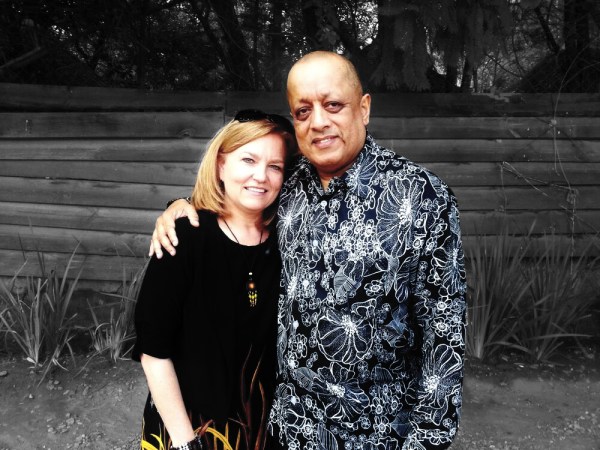
Sweden became my new home. I learned the language and joined an evangelical Lutheran church where I met my wife, Brita, whom I married in 1979. I attended Torchbearers International Bible School in Holsby before moving to Uppsala, where I ministered to Muslim immigrants. Brita worked as a nurse, and I found a janitorial position in an office building. I learned God could use me even while I cleaned bathrooms and floors.

Courtesy of Dynamis World Ministries / Edits by CT

All the while, he was preparing me to fulfill the mission he had revealed back in Lahore, to preach Jesus all over the world. We moved to America for further Bible training and returned to Sweden a year later, after which I taught at the Word of Life Training Center in Uppsala for four years.

I was also active in the church and with InterVarsity Christian Fellowship, doing street evangelism and praying for the sick. My call to missions solidified in 1983 in Poland. I accompanied two couples driving a van there loaded with food for needy families. I was asked to preach at Catholic youth camps. Invitations to return followed, setting the stage for large audiences and many young people making commitments to Christ.

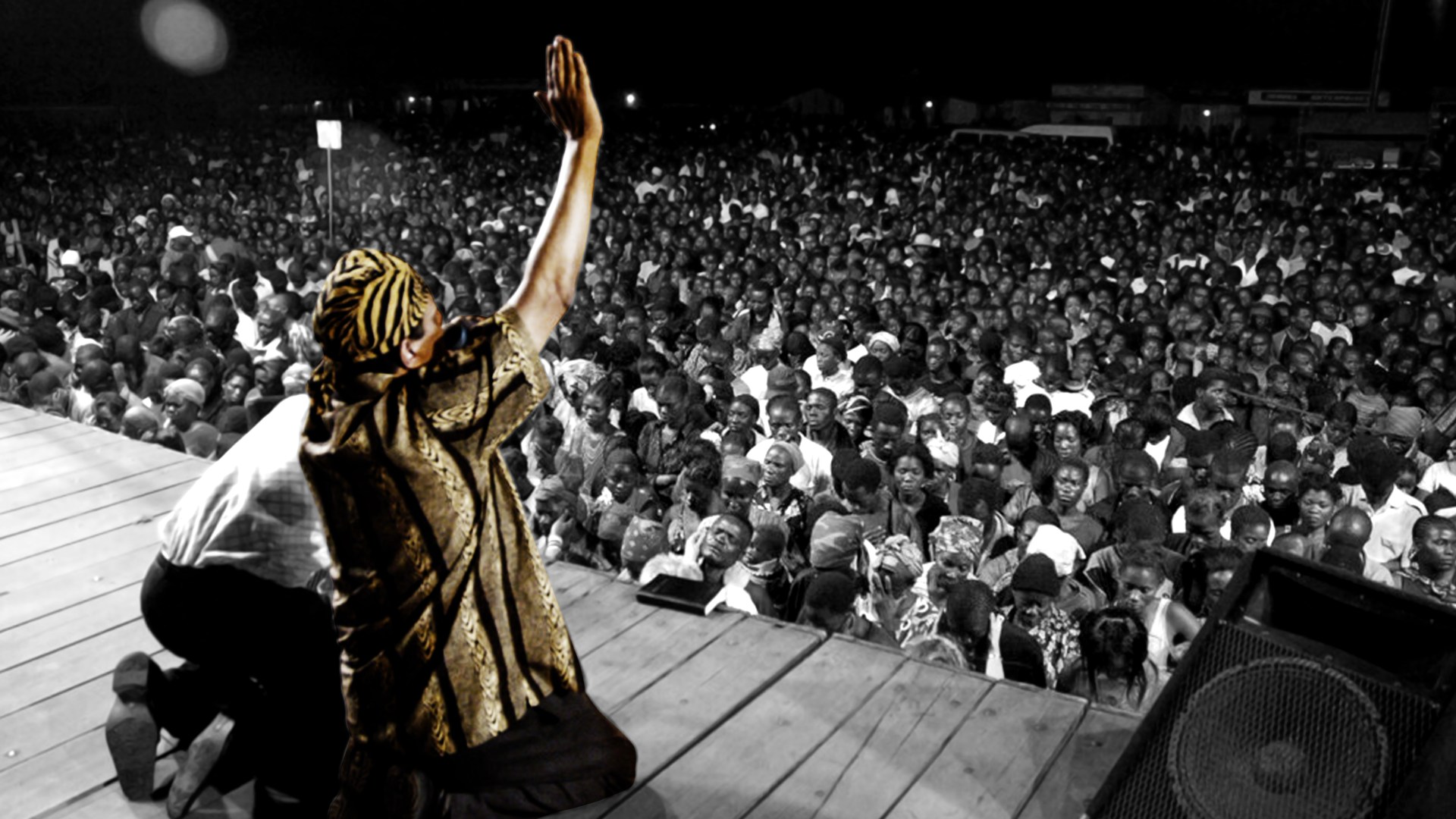
Shortly thereafter, I founded Dynamis World Ministries, a precursor to conducting mass evangelistic meetings in Asia, Africa, and Latin America. In 1993 we moved our headquarters to Lancaster, Pennsylvania. Over the past 40 years I have been privileged to preach in more than 75 nations and plant churches in Asia, Eastern Europe, and Africa.

In the account from John’s gospel of Jesus miraculously feeding the 5,000, the original loaves and fishes come courtesy of an unknown boy (6:9). The story reminds us that God can use even the smallest things—and the unlikeliest people—to dramatic effect. When I first became a Christian, my only ambition was doing street-level evangelism and giving out tracts. I’m humbled to see how God has multiplied these efforts, ensuring that more and more people can taste the Bread of Life.

Christopher Alam is the author of Out of Islam: One Muslim’s Journey to Faith in Christ. Peter K. Johnson is a freelance writer living in Saranac Lake, New York.

News

After Physician-Assisted Suicide Bill, Canadian Evangelicals Reassess

Christians joined disability advocates and UN experts to oppose amendment, but failed to stop it.

Christianity Today April 20, 2021
Nathan Denette / AP Images

Canadian evangelicals are decrying a new law that expands access to physician-assisted suicide to people who are sick or disabled but aren’t dying.

“Many of us are quite heartbroken over this,” said Derek Ross, the executive director of Christian Legal Fellowship. “We’re now dealing with a legal system that is making more and more exceptions to the once exception-less principle that you cannot consent to the harm of having your life ended by another person and that all lives are inherently and equally full of worth and value of dignity.”

Physician-assisted suicide—known popularly as “Medical Assistance in Dying” or MAID—has been legal in Canada since 2016. The law was limited to people who were experiencing what the Criminal Code called a “grievous and irremediable medical condition”: an illness, disease, or disability that causes enduring physical or psychological pain that cannot be relieved in any way the patient accepts. To be eligible, the patient also had to be dying.

But in March, the government passed an amendment to the Criminal Code, Bill C-7, that removed the criteria that someone must be dying to receive MAID. Canada now allows people who have an illness or disability to have a physician-assisted suicide, even if their death is not imminent. People who are dying no longer have to wait 10 days. Canada also plans to allow MAID for people whose only medical condition is a mental illness.

“The law is now presenting death as a medical response to suffering in a wide range of cases—not just when somebody is already dying, but at potentially any stage of their adult life,” Ross said. “Instead of prioritizing supports to help people to live meaningful lives, we’ve prioritized ways to make death more accessible. This is a heartbreaking message.”

Evangelicals joined Canadians from many religious traditions in protesting the expansion of physician-assisted suicide. In October 2020, shortly after the bill was introduced, more than 150 religious leaders signed a public letter detailing their opposition, with Baptists, Wesleyans, and Pentecostals joining their names with Catholic, Eastern Orthodox, Mormon, Jewish, and Muslim leaders.

The most public opposition came from disability organizations. Evangelicals threw their support to those activists, backing their arguments and attempting to raise their visibility.

“We were very intentional about that,” said David Guretzki, executive vice president and resident theologian at the Evangelical Fellowship of Canada (EFC), an organization that represents evangelicals across the country. “The public has a reticence to talk about religion, or they’re nervous when religious groups speak up. We thought it was better on this issue in particular for us to allow the voices of disability advocacy groups to speak and for us to come alongside and support them.”

The EFC, for example, joined Inclusion Canada, the Council of Canadians with Disabilities, the Disabled Women’s Network of Canada, the Canadian Institute for Inclusion and Citizenship, and 120 other organizations supporting disability rights in an open letter to the members of Parliament. The letter endorsed the concerns of United Nations’ human rights experts who wrote that the proposed amendment would violate the Canadian commitment to the Convention on the Rights of Persons with Disabilities.

“From a disability rights perspective,” the UN experts wrote, “there is a grave concern that if assisted dying is made available to all persons with a health condition or impairment, regardless of whether they are close to death, a social assumption might follow (or be subtly reinforced) that is better to be dead than to live with a disability.” the letter says.

A poll commissioned by the faith-based think tank Cardus showed that about a third of the country enthusiastically supports physician-assisted suicide as a basic human right. Nineteen percent oppose. Forty-eight percent are cautiously supportive, but express concern about potential negative impact on vulnerable Canadians. Despite that, and despite the concerted political effort, Bill C-7 passed the House of Commons last month by a vote of 180–149.

Evangelicals aren’t surprised by the result. “Most Christians have come to grips with the fact that we are actually in a pluralistic society in which many of the points of view that they hold are minority perspectives and not majority perspectives,” said Ray Pennings, executive vice president of Cardus.

The next political battle, activists say, will be protecting the rights of doctors and other medical professionals who believe it goes against their religious convictions to participate.

The federal law clearly states that no one should be forced to perform a suicide, but Christian doctors may still be required by their regulatory and licensing colleges to either participate or give a referral, depending on their province or territory they live in, according to Larry Worthen, the executive director of the Christian Medical and Dental Association of Canada.

“Doctors are living in fear of having a complaint against them and being disciplined,” Worthen said. “Doctors are already stressed out because of COVID-19 and concern about their patients and overwork, and you add on top of that fear that the next patient who comes in is going to ask for MAID and report them, and the burden just becomes too great.”

In Ontario, the country’s most-populous province, the courts have said doctors are required to refer patients to medical procedures like physician-assisted suicide or abortion, even if making the referrals violates the doctor’s conscience or goes against their religious beliefs.

According to the EFC, it’s hard to remain optimistic about coming political battles, as the influence of Christian ideas about the value of life decline. About half of Canada identifies as non-religious today, up 30 points in the past 20 years. Only about 20 percent of Canadians attended church at least once a month. But Guretzki said he thinks the situation provides a great opportunity for churches.

“Now that we’ve been pushed out of the center again, much more to the margins, I think we’re actually closer to what the New Testament church was facing,” Guretzki said. “I think we have a chance to learn some new lessons about what it’s like to be a Christian witness when you can’t rely on political or cultural influence to get your message across.”

For church leaders, this means encouraging Christians to love people well and faithfully testify to God’s grace across political differences while still standing up for the vulnerable.

“Our political leaders are not the enemy,” said Steven Jones, president of the Fellowship of Evangelical Baptist Churches in Canada, a denomination with 500 congregations across the country. “For us, they’re the mission field. We love them in the name of Jesus. We need to speak up and let them know there are Canadians that have a different viewpoint.”

Jones said he’s seen more Christians engaging in Canadian politics in recent years, possibly because of a greater sense of marginalization. While some of the energy is focused on religious liberty, and protecting the rights of Christians in society, he said, there needs to be increased concern about marginal social groups who are told their lives are not particularly valuable, Jones said, such as people with disabilities and the elderly.

“We need to be out in the community intentionally coming along and loving people who are marginalized and need the care and love of Jesus,” he said.

Experienced advocates are reminding themselves to stay patient and remain faithful in the face of loses. Victoria Veenstra, justice communications coordinator of the Christian Reformed Church in Canada, said that she views advocacy as a spiritual discipline.

“When we pin all of our hopes on one specific policy, or we expect a policy to change rapidly, we get really burnt out and discouraged,” she said. “We want to see justice now. But if we can keep training ourselves to keep moving towards justice in the long-term, faithfully, steadily, Christ is there with us.”

Veenstra said it’s also important to remember that changing the law is not the only way faithful followers of Jesus can speak up for the value of life.

“This sucks,” she said, “but as Christians, we can still come around people and make MAID a less desirable option.”

Books
Excerpt

It’s Okay to Let Your Mind Wander During Prayer

Those distractions aren’t failures of focus, but opportunities to trust God with the deepest truths of our hearts.

Norbert Kundrak

One evening when I (Kyle) was in seminary, I went with some classmates to a professor’s house. The professor was talking about a pet peeve: when people pray to the wrong person of the Trinity. After a short rant, he suggested we close in prayer. No one spoke a word! After a minute or two, everyone started laughing because we knew what was going on. We had become so self-conscious about praying correctly that no one wanted to pray.

It is all too easy to focus on praying the right way to the detriment of actually praying. But this is where prayer goes to die. If prayer becomes a place to pray about what we think God wants us to pray about and not what is on our hearts, then we simply won’t do it. In the words of Dominican priest Herbert McCabe, “People often complain of ‘distraction’ during prayer. Their mind goes wandering off to other things. This is nearly always due to praying for something you do not really much want; you just think it would be proper and respectable and ‘religious’ to want it.”

When prayer becomes a kind of performance, it is easy to interpret experiences like having our mind wander as failures. But McCabe touches on something profound. Because we have the Spirit of God in our souls, mind-wandering should not be seen as a random act of an undisciplined intellect. Our minds wander because, in Jesus’ words, “where your treasure is, there your heart will be also” (Matt. 6:21). When we come into God’s presence in prayer, we do so with the Spirit present to the deepest truths of our hearts. We should not be surprised that the truth of our hearts begins to percolate and rise to the surface.

Instead of seeing a wandering mind as a failure, then, we should see an opportunity to pray about the deep longings of our souls. We are tempted to do the opposite: to stop praying and start chastising ourselves over an inability to focus or a failure to pray the “right” way. In these moments, we pause our talking with God because we do not think these are the kinds of things God wants us to talk about. They are our problems. They represent our wandering minds and hearts toward idols, worries, and loves. When these thoughts arise, it helps to pray, “Father, look at this. Look at what my heart does in your presence. Lord, deep in my heart, I long for control to calm my fears and anxieties. Lord, help me trust you with these.”

When we pray, we have to avoid trying to fix our lives or giving ourselves a pep talk on how to rightly talk with God. That is not what prayer is, and this is not where our hope is found. Prayers become boring and lifeless when we wrestle with ourselves in our guilt, anxiety, fear, or shame rather than bring them to God.

Kyle Strobel and John Coe, Where Prayer Becomes Real, Baker Books, a division of Baker Publishing Group, © 2021. Used by permission of the publisher. www.bakerpublishinggroup.com

Books

New & Noteworthy Books

Compiled by Matt Reynolds.

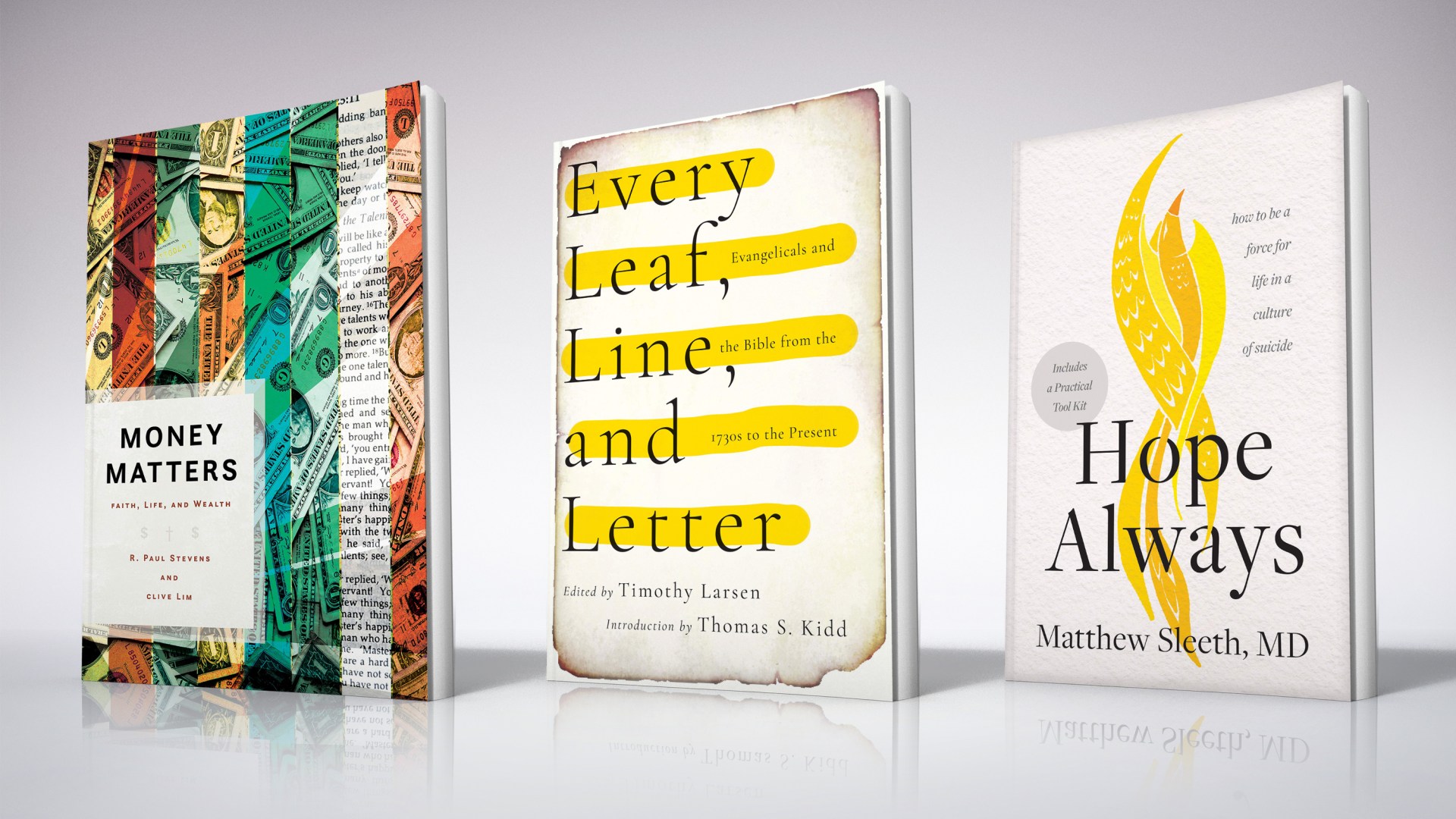
Money Matters: Faith, Life, and Wealth

R. Paul Stevens and Clive Lim (Eerdmans)

Most people devote a good portion of their waking hours to making and spending money—or wishing they could do more of both. How can we handle financial resources in a way that acknowledges the blessings of wealth but avoids idolatrous traps? In Money Matters, two experts on marketplace theology—one (Lim) who grew up poor, and one (Stevens) whose family was well-off—give biblical, historical, and practical guidance on this theme. “Money grabs at the heart,” they write. “It is not neutral. It is a power. It can be a radioactive issue. We want to have money, but money wants to have us.”

Every Leaf, Line, and Letter: Evangelicals and the Bible from the 1730s to the Present

Edited by Timothy Larsen (IVP Academic)

For all of today’s consternation over the meaning of evangelical, no plausible definition can get around the centrality of the Bible: reading it, preaching it, distributing it, and striving to apply its teachings. And this has been true throughout the movement’s modern history, as a diverse range of scholars make clear in this volume. The essays in Every Leaf, Line, and Letter study the changing shape of evangelical “biblicism” across different eras, places, and cultures. As Baylor University historian Thomas Kidd avers in the book’s introduction, “the uses that evangelicals have made of the Bible are almost as varied as evangelicals themselves.”

Hope Always: How to Be a Force for Life in a Culture of Suicide

Matthew Sleeth (Tyndale Momentum)

Between the travails of the COVID-19 era and recent sociological work charting a troubling rise in “deaths of despair,” it’s clear that the specter of suicide hovers over many in today’s world. In Hope Always, former ER doctor Matthew Sleeth writes to stem this tide, drawing on his Christian faith and hands-on hospital experience to marshal the best interventions that the Bible, medicine, and psychology can offer. “I want those who are depressed among us to live,” writes Sleeth. “I want you to be able to help others to live. We who live in the age of suicide are indeed our brother’s and our sister’s keepers.”

Books
Review

Christians Should Be in the News Cycle, but Not of It

How believers can stay up on the day’s events without becoming prisoners of the moment.

Illustration by Dan Bejar

At Bethel University in Minnesota, where I’m a professor of English and journalism, I often teach a course for college seniors called “What Good is Leisure?” (Many students who sign up mistakenly believe they’re in for a restful three-credit experience.) It’s a course about “the architecture of time,” to use Abraham Heschel’s phrase, and my students this year were more responsive than ever to the flabbiness of their calendar.

Reading the Times: A Literary and Theological Inquiry into the News

Reading the Times: A Literary and Theological Inquiry into the News

IVP Academic

200 pages

$12.00

COVID-19 had destroyed the rhythm of their weeks. It had beckoned them to spend hours doom-scrolling on social media, while giving them nothing to look forward to. They felt guilty and frustrated about what T. S. Eliot, in one of his poems, called “the waste sad time / Stretching before and after” their experiences of quarantine.

In reality, the pandemic has merely intensified the challenges of community, attention, and time that Jeffrey Bilbro addresses in his fine new book, Reading the Times. The underlying problem is this: We are learning to love the wrong things. Our news feeds are miseducating our desires. Whether our favorite media lean left or right—and even if we sample from both sides—we are becoming prisoners of the news cycle. Far from achieving the enlightenment we need to interpret our times, we are bloated from bingeing on our daily media buffet.

Although Bilbro’s subtitle is A Literary and Theological Inquiry into the News, he denies that the media is the source of the problem. Instead, he blames the bad habits we bring into our encounters with the news. These habits manifest themselves in three ways: associating too much with those who interpret daily events as we do, rather than with actual communities; developing a taste for sugary, unsubstantial entertainment, rather than giving attention to significant works of art, literature, and journalism; and submitting to the charms of the moment, rather than seeking to understand time within the sweep of God’s divine drama.

These three areas—community, attention, and time—form the three sections of Bilbro’s book. Each section analyzes one area and concludes with practical suggestions, or “liturgies” (as he calls them), to reshape our habits.

Reading and belonging

Reading the Times is written primarily for North American Christians who are concerned and bewildered by the events of the past several years—which probably includes you, right? Bilbro’s style is accessible, and though he drops into the occasional philosophical byway, he shows the way out as well.

We are often told that the solution to our democratic challenges is an improved media. In other words, we need more fact checkers, more diverse sources, higher journalistic standards, or a return to the Fairness Doctrine, which used to require broadcasters to air competing points of view. To be sure, Bilbro helpfully lists the media he trusts at the end of the book. But the surprising heart of his analysis comes in his section on community: “Our thinking,” he writes, “is downstream from our communal belonging. Instead of looking to the news to create better communities, we should be looking to strengthen communities so that they can create better news.”

Bilbro argues convincingly that our media choices create de facto communities—artificial communities, really—and that we need to question our identification with them. He quotes Turkish writer and sociologist Zeynep Tufekci’s observation that “belonging is stronger than facts.”

To illustrate, he observes the travel cruises hosted by media organizations like National Review and NPR. The New York Times beckons you to join “like-minded travelers on journeys around the world.” My Minnesota affiliate of NPR endlessly proclaims its journalistic balance—but my informal 2008 count of cars with a bumper sticker for both Minnesota Public Radio and a presidential candidate showed this result: Obama 26, McCain 0. I just hope they don’t overload the port side during their cruise.

Bilbro claims that we’re susceptible to “alternative facts” when we belong more to our favorite media than to the places and communities where we live. I think he’s right. On the other hand, the role of media in overcoming American individualism and creating public spirit has been noticed as far back as Tocqueville’s Democracy in America (1840), and Bilbro by no means discounts its positive role. He reads The Atlantic, The American Conservative, Christianity Today, First Things, and Commonweal, along with online sources such as the Rabbit Room, Christ and Pop Culture, and Front Porch Republic (where he serves as editor). He listens to NPR, Mars Hill Audio Journal, and The Witness. But he strongly recommends that we also read local media. “The point here is to avoid consuming the news as an isolated spectator,” he writes. Instead, he wants readers to integrate their use of media into their actual involvement with real, local communities.

This brings me to a criticism of his otherwise strong section on community. He writes convincingly that national media have gained power because other forms of communal identity—such as “family, place, ethnic group, [and] religious tradition”—have weakened. For his likely audience, I believe Bilbro could have stressed the foundational element of religion more strongly.

Religion isn’t just one element among many. To simplify an insight from German Catholic philosopher Josef Pieper (whom Bilbro quotes several times): You can’t have a vibrant culture if you separate it entirely from religious practice. To go even further back, sociologist Emile Durkheim thought the very social character of human beings was created by religious observance. Bilbro’s book is deeply biblical and theologically astute. It doesn’t seek to be evangelistic—still less, polemical. Even so, I think this is a favorable time to explain the centrality of religion in our civic formation.

That brings me to time itself, the subject of the central section in Bilbro’s book. The communities to which we belong are also the places where we spend our time. One of his crucial themes is the distinction between two meanings of time, from the Greek words chronos and kairos. The news cycle runs according to chronos, which he explains as the chronological sequence of events. It is sequential and linear, always progressing forward. Kairos refers to the opportune moment for repeated acts, such as planting and harvest. It is cyclical and accommodates little that is new or changing.

Neither of these approaches is complete on its own, he writes: The adherents of chronos believe they can discern a “right side of history”—namely, their own—while cultures shaped solely by kairos often show little care for the day-to-day experiences of their people. Our task as Christians, writes Bilbro, is to read the times in light of “the crucified and risen Word … to discern how [God] might be calling us to participate in his ongoing work of redemption.”

Bilbro’s biblical examplar of such a relation to time is the prophet, who participates in both chronos and kairos but whose ear attends to the Word of God. In the practical, “liturgies” part of this section, he offers suggestions for reviving the liturgical year and the “daily office” of prayer from historic Christian traditions.

I’m surprised that he doesn’t mention the most obvious and accessible mode of reordering time: the revival of Sabbath practice. Jews relish the saying, attributed to the Hebrew writer Ahad Ha’am, that “more than Jews have kept Shabbat, Shabbat has kept the Jews.” This saying holds deep significance for Christians too—not just as individuals but as communities.

My students have responded favorably to books on Sabbath by Abraham Heschel and the Christian spiritual writer Mark Buchanan, but by far their favorite activity from my “Leisure” course is creating a 24-hour, digital-free Sabbath. They use words like “liberated” and “free” to describe their experience, and they inevitably describe richer conversations, more fulfilling exercise and hobbies, and even more satisfying mealtimes.

Redirecting our attention

The other section of Reading the Times centers on “attention.” Coming early in the book, this section asks readers what they are attending to, listening to, and reading. From the very beginning, Bilbro introduces us to great works of literature that he’s been reading and art that he’s been viewing. In some ways, the entire book is a tour of Bilbro’s reading. In this respect, it is similar to Alan Jacobs’s recent book Breaking Bread with the Dead. Both books try to help readers reshape their desires, first by providing a critique of today’s information overload and its tendency to reinforce the prejudices of the present day; and second, by redirecting our attention to works of the past that have prophetic resonance for our day.

Bilbro’s treatment of his key authors and artists is one of the book’s great pleasures. He opens with Henry David Thoreau, who warned that “the mind can be permanently profaned by the habit of attending to trivial things.” Sustained treatments of Thomas Merton, Wendell Berry, Dante, Marc Chagall, and Pieter Bruegel the Elder punctuate the text. Throughout, his engagement with current and past commentators is intelligent, fair, and irenic.

Bilbro closes his analysis with treatments of Frederick Douglass and Dorothy Day. Both founded publications that “sought to create the news from the perspective of [oppressed and marginalized] communities,” he writes. By joining their efforts with those of fellow Christians, they gradually created communities of readers whose shared practices served as faithful, public manifestations of the gospel.

Since I began reading the book, I noticed conversation after conversation in which my friends, colleagues, and students connected the frustrations of the past year to the things vying for their time and attention and to the increased pressures on the communities they love. With Reading the Times, Bilbro has brought those frustrations to the surface, analyzed them well, and given us hopeful ways to confront them.

Daniel E. Ritchie is professor of English and journalism at Bethel University in St. Paul, Minnesota.

Apple PodcastsDown ArrowDown ArrowDown Arrowarrow_left_altLeft ArrowLeft ArrowRight ArrowRight ArrowRight Arrowarrow_up_altUp ArrowUp ArrowAvailable at Amazoncaret-downCloseCloseEmailEmailExpandExpandExternalExternalFacebookfacebook-squareGiftGiftGooglegoogleGoogle KeephamburgerInstagraminstagram-squareLinkLinklinkedin-squareListenListenListenChristianity TodayCT Creative Studio Logologo_orgMegaphoneMenuMenupausePinterestPlayPlayPocketPodcastRSSRSSSaveSaveSaveSearchSearchsearchSpotifyStitcherTelegramTable of ContentsTable of Contentstwitter-squareWhatsAppXYouTubeYouTube