News

Died: H. Eddie Fox, Who Urged Methodists to Share Their Faith

The ministry leader believed declining US churches could be revitalized by hearing Wesleyans “with a different accent.”

Christianity Today July 30, 2021
Courtesy of the Holsten Conference of the UMC / edits by Rick Szuecs

H Eddie Fox, who hoped to renew American Methodism through evangelism and increased connections with global Christianity, died on Wednesday at age 83.

Fox led World Methodist Evangelism for 25 years, teaching, training, and empowering Methodists and Wesleyans to share their faith, and encouraging churches to make evangelism a priority. He pioneered several new initiatives that were popular in United Methodist Church (UMC) congregations, and he helped American churches connect with fellow Wesleyans outside the United States, especially in formerly communist countries after the collapse of the Soviet Union.

From 1989 to 2014, when Fox directed the world evangelism program, Methodists increased around the globe by about 1 million per year, even as the US membership of the UMC declined by about 2 million overall. Fox saw a direct link between the theology of the church and its vitality.

“Wherever the church is faithful to the doctrine, the sound teaching, the Discipline, the way of life—which is the way you order your life—and the spirit, openness to the Holy Spirit, you'll find a church that's dynamic, contagious and alive,” he said when he retired. “And where that is not true, you’ll find a church to be a dead sect, having the form but not the power thereof. That’s been a focus of my ministry. It’s been a call we’ve stood on for many, many years.”

Fox taught more Methodists how to share their faith than any one else in his lifetime, and became, for many, the evangelistic face of Methodism. He also taught at the Billy Graham School of Evangelism at Wheaton College for 15 years.

“He was dynamic and alive with his passion for the gospel, especially evangelism,” said Maxie Dunnam, past president of the World Methodist Council and president emeritus of Asbury Theological Seminary. “There was a sense in which you felt drawn in from the moment you met him.”

Methodists around the world mourned at news of Fox’s death.

“Methodism has lost one of its most prominent encouragers and enablers of evangelism and church growth across the world, and The United Methodist Church in Estonia has lost a dear friend,” said Christian Alsted, a bishop in the Northern Europe and Eurasia Central Conference.

Harold Edward Fox was born in East Tennessee in July 1938. The rural area was known by its creek, rather than nearby town or Pigeon Forge or the county seat of Sevierville, and Fox always told people he was from Waldens Creek.

He was a seventh-generation Methodist. His father, Marshall, and mother, Geneva Perryman Fox, were devout Christians, and the young Eddie could trace his Christian heritage to the 1787, when the American followers of evangelist John Wesley separated from the Church of England and started sending circuit preachers throughout Appalachia.

Fox personally committed his life to Christ at age 9. Then, at a church camp at age 16, he felt a call to ministry. His mother gave him a word of caution.

“You better be sure about that,” she said. “It will be hard any way you do it, but it will be impossible unless God has laid his hand on you.”

Fox was sure, and received a license to preach in 1955 at the age of 17. He went to junior college at Tennessee Wesleyan, then earned a degree from Hiwassee College, where he married Mary Nell Leuty during their senior year. That same year, the future connector of global Methodism saw the ocean for the first time.

When Fox graduated from seminary at the Candler School of Theology at Emory University, he went back to East Tennessee and became a pastor in the Holston Conference. He spent 15 years on the UMC’s Board of Evangelism, and then, in 1989, was asked to lead World Methodist Evangelism.

Like many Methodists at the time, Fox was concerned about the declining membership in the UMC in the US and he wanted to find ways to help churches do more outreach. He became especially passionate about the importance of evangelism, though, when he took a trip to Estonia, which was under the occupation of the Soviet Union.

“I saw people stand for two hours in the worship service,” he said. “I saw people weep just to be taking communion. I wept too.”

He saw a sharp contrast with American Methodists.

“We’ve bought into this idea that religion is a private matter,” Fox told The Tennessean in 1998. “We’re persuasive about most things in our lives—this diet, that movie. But when it comes to faith, we don’t want to interfere, so we don’t ask people to church.”

After the dissolution of the Soviet Union, Fox developed a program connecting American congregations with Methodist churches in former communist countries, starting in Czechoslovakia and Estonia. “Connecting Congregations for Christ” was so popular, it soon expanded to churches in Africa, South and Central America, and Asia. By the time Fox retired, there were 186 connections.

“Churches are going to hear the Word with a different accent,” he said. “Maybe they’ll hear it more clearly.”

At Methodist conferences in the US, Fox started telling a story about a church bell in Varna, Bulgaria. In the 1960s, he said, communist authorities had ordered the local church to remove the bell, so they could no longer summon the area Christians to worship. Three men took it down, but then instead of melting it down for the metal, they buried it in a secret garden.

Forty years later, Fox said, they resurrected the bell, rebuilt the church, and when the building was dedicated by Methodist World Evangelism in September 2002, they rung the bell again.

Fox told American Methodists that they had also buried a bell in their lives and needed to ring it again.

“There are parts of our movement which are in decline, and in denial, who are suffering from ‘truth’ decay,” Fox said. “You have a bell—the name is Jesus—and we are called to be the bell ringers through word, deed, and sign in the world.”

In the 2000s, Fox was briefly embroiled in the UMC controversies over LGBT issues. In 2008 he was on the General Conference committee that recommended the denomination drop the doctrinal statement that “the practice of homosexuality is incompatible with Christian teaching,” and LGBT people should not be allowed in ministry unless they were committed to celibacy. Fox read the minority report, arguing the church should not change its position. The conference rejected the committee’s recommendation.

A few years later, when Fox received a distinguished alumni award from Candler, students opposed to his position on sexual ethics held a protest.

Fox’s main focus, however, was on empowering people to evangelize. He established a faith-sharing initiative, training lay people to talk about Jesus, and wrote the Faith-Sharing New Testament, which now has 850,000 copies in print. He established the Order of the FLAME—Faithful Leaders As Mission Evangelists—for young clergy committed to evangelism, and he took every opportunity he could to empower people who were already actively spreading the gospel.

When Fidel Castro started allowing international religious groups to start connecting with Christians in Cuba, for example, Fox arranged to import more than 400 Chinese bicycles for Methodist pastors.

“I want to give them wheels,” he said, “so they can go faster and do more for the Lord.”

He spoke with an evangelistic passion that the 18th century Appalachian circuit riders who told his ancestors about the gospel would have recognized.

Fox is survived by his wife, Mary, and their three children Gayle, Timothy, and Thomas Fox.
News

This Land Is Your Land, Say More Churches in Canada Than in US

CRC congregations weigh land acknowledgements amid rising awareness of indigenous injustices on both sides of the border.

Christianity Today July 30, 2021
Illustration by Mallory Rentsch / Source Images: WikiMedia Commons / Google Maps

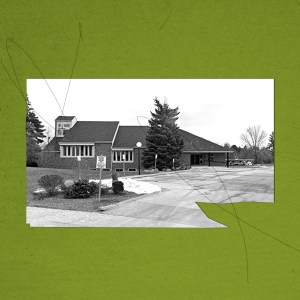
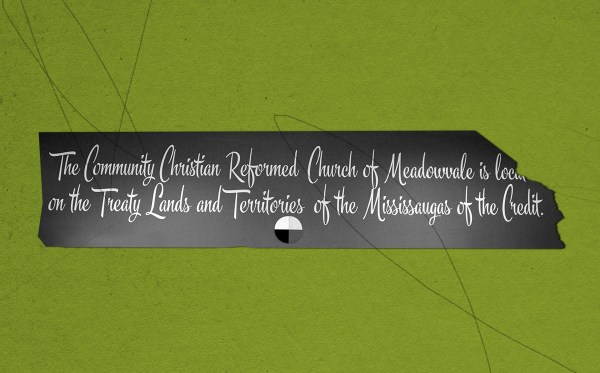
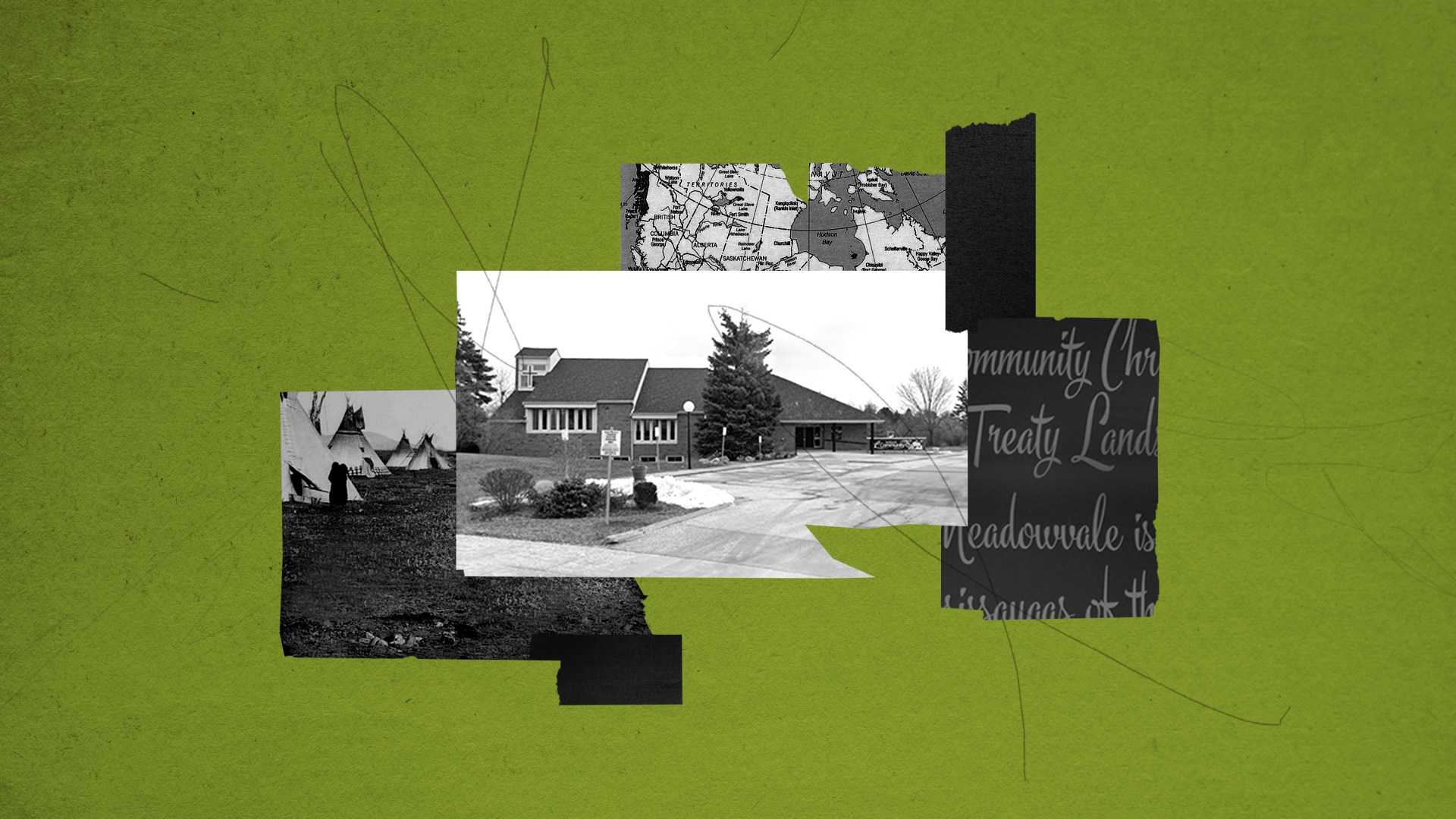
Visitors to a suburban Toronto congregation are greeted in the foyer or from the stage with the following: “The Community Christian Reformed Church of Meadowvale is located on the Treaty lands and traditional Territories of the Mississaugas of the Credit First Nation.”

The statement names the indigenous community that once stewarded the land where the Canadian church stands. But a visitor to one of Meadowvale’s hundreds of fellow American congregations across the border will likely find the practice of such “land acknowledgements” to be wholly unfamiliar.

The discrepancy is part of a larger divergence within the Christian Reformed Church in North America (CRCNA) as the denomination’s 1,000-plus congregations—with one quarter in Canada and three-quarters in the United States—seek to serve amid neighboring cultures and governments moving at very different paces on addressing injustices done to their indigenous peoples.

In Canada, where the native community is known as First Nations, Inuit, and Métis peoples, the abuse that many indigenous students suffered at residential schools was the subject of a national, years-long reckoning through a federally backed Truth and Reconciliation Commission (TRC). In contrast, though many Native Americans in the United States experienced similar trauma, the schools’ aftermath has only recently gained mainstream attention.

“Because of the [TRC] and the things that the government has done, the Canadian church has been encouraged to continue doing the work,” said Viviana Cornejo, the CRCNA’s racial curriculum and instruction specialist. “The United States as a whole is having a hard time dealing with the past. If the country is not able to do that, the CRC is not going to do that either.”

The remains of Canada’s residential schools

In May, dozens of First Nations families had their worst fears confirmed. The remains of 215 students were discovered in unmarked graves on the grounds of a closed residential school in Kamloops, British Columbia. Weeks later, an estimated 600–751 unmarked graves were located at a former school in Marieval, Saskatchewan. And by the end of June, another 182 unmarked graves were found at a former school outside Cranbrook, British Columbia.

The findings provoked intense emotion. More than a dozen Canadian churches were destroyed or damaged by fires. Dozens more were vandalized. Though the attacks appeared connected to the revelation of the graves (given that the Canadian federal government had tapped Christian denominations to run the schools), many of the impacted congregations primarily serve immigrants.

Several cities canceled Canada Day celebrations planned for July 1. People placed teddy bears and shoes at memorials nationwide, creating visual representations of the lost children.

“In an era of reconciliation these precious 215 children should not be a brief emotional blip in the news cycle,” affirmed a statement signed by nine CRCNA leaders, including the denomination’s executive director. “Each one was a precious child and an image bearer of God. As the church—children of the reconciling Christ—tears of sorrow, prayer, and action are critical for the integrity of our reconciliation efforts.”

The statement came with nine suggested action steps, along with a prayer to be read by indigenous and nonindigenous Christians. (Almost two-thirds of Canada’s indigenous population identifies as Christian, according to the 2011 National Household Survey.)

The CRCNA never operated a residential school in Canada. However Roman Catholic, Anglican, Presbyterian, and United churches did. Beginning in the 1980s, hundreds of residential school survivors began to file lawsuits against the Canadian government, ultimately becoming the country’s largest class-action lawsuit. The ensuing settlement agreement, approved in 2006, included payouts to survivors from the denominations and the federal government. Funds from these bodies also paid for the TRC, which ran from 2008 to 2015, allowing survivors to share their stories across the country.

The TRC initiative also culminated in 94 calls to action. The Canadian CRC congregations committed to several, including one that asked faith communities to affirm the United Nations Declaration on the Rights of Indigenous Peoples as a framework for reconciliation. The others called for equity in education for indigenous people and for churches to teach their communities about this history. On the ground, that means Canadian leaders have lobbied on behalf of educational justice issues and have also intentionally educated and resourced CRC congregations on the effects of colonization and residential schools.

“The results of the residential schools created the opportunity for settler acquisition of land and resources in this country,” said Mike Hogeterp, who leads the Centre for Public Dialogue, the denomination’s Canadian public policy arm. “Even though the CRC didn’t run a residential school, we are beneficiaries of the colonial system that the residential schools represented.”

This gesture was far from the denomination’s first touch point with First Nations communities. While the first CRC churches in Canada opened in the early 20th century, the denomination organized and matured in the years following World War II. When many First Nations people began moving off their reservations and into urban areas, the CRCNA starting in the 1980s opened ministry centers in Regina, Winnipeg, and Edmonton.

Community Christian Reformed Church of Meadowvale

Some CRC congregations have initiated relationships on their own. The Toronto Blessing, a charismatic revival that began in 1994, spurred the Meadowvale church to learn the history of its land as part of a “spiritual-mapping exercise” of the city. Several years later, when Meadowvale organized a March for Jesus, the church invited members of the Mississaugas of the Credit First Nation after learning that the tribe had a significant Christian presence on its reserve. (In the early 1800s, Methodist circuit riders spread the gospel to the Mississaugas, a faith which endured.) Church leaders from both Reformed and Wesleyan communities began to pray with each other.

In 2000, Meadowvale organized a conference where members repented for past wrongs toward the Mississaugas. This gesture has deepened into two decades of friendship and partnership. Many church members attended TRC events and organized a community art project to highlight the commission’s findings. A Mississauga chief has now twice invited delegates at CRC events to acknowledge the tribe’s traditional territory. The church erected a sign with the land acknowledgement in 2017.

“By God’s grace, we were able to acknowledge the host peoples of the land before we were acknowledging the land itself,” said Sam Cooper, Meadowvale’s pastor. “For us, it was the relationship that was most important. A land acknowledgement can be a sign of a relationship, but we wanted the substance of that.”

While Meadowvale’s relationship has been somewhat unique among Canadian CRC churches, there is far greater awareness among Canadians of the hardship of indigenous people than when the church first began the work. A 2016 survey found that two-thirds of nonaboriginal Canadians had read or heard about residential schools, compared with only half in 2008.

The Evangelical Fellowship of Canada (EFC) has intentionally sought relationships with the indigenous community since 1994, when it and leaders from World Vision met with more than 30 First Nations and Métis Christians. The following year, the EFC formed an aboriginal task force to strengthen ties and to create relevant educational material for churches.

In the aftermath of the TRC, the EFC announced it was exploring “what it means for us as a broad evangelical community to embrace and enact the principles outlined in the UN Declaration as a framework for reconciliation” and committed to ongoing learning and reconciliation. In 2020, a committee of indigenous and nonindigenous Canadian evangelicals recommended seven specific reconciliation goals, which the EFC accepted.

“It is challenging, often difficult to fathom, especially as a Christian trying to come to terms with what was done in the name of the Christian faith and rationalized within the public square,” wrote EFC president Bruce J. Clemenger in the aftermath of the grave findings. “To come alongside Indigenous sisters and brothers is to listen and ask questions. When we own the shame of what was done in this land to our neighbours and their ancestors, we will be motivated to pray and seek healing for our country.”

In the wake of the TRC, Canadian schools—including private ones—now teach about the history of residential schools. Andrew Beunk, who pastors New Westminster Christian Reformed Church in Burnaby, British Columbia, says his wife serves as a vice principal at a CRC school and that the curriculum additions have been well received.

Though he attended a TRC session and was moved by the stories of survivors, he has felt less comfortable introducing land acknowledgements as part of his church service.

“Since we have no people in the congregation who are part of the indigenous community, we felt in some way that was a bit inauthentic,” said Beunk of the discussion. “Since we don’t have meaningful connections, to just jump on board it felt a little bit disingenuous.”

He also has theological apprehensions.

“As Christians, all the land belongs to God,” he said. “To accent historical and in some cases political differences in a worship service—I have some issue about doing that.”

America’s lack of acknowledgement

Whereas few indigenous leaders hold CRC leadership positions in Canada, Navajo and Zuni pastors can be found in the American Southwest. The denomination’s first missionaries to Native Americans arrived in Arizona in 1896 before pivoting to Gallup, New Mexico, where local CRC congregations today are concentrated. Part of their ministry involved opening a residential school, with a history that often mirrored its Canadian contemporaries.

As Rehoboth Christian School’s website explains:

Although many families were introduced to the Gospel through Rehoboth in its early boarding school days, there were components of the methodology used to present Christ that Rehoboth now laments. Becoming a Christ follower sometimes appeared to be confused with becoming more like a white American. Many aspects of Navajo culture were prohibited, including the speaking of the Navajo language. The boarding school experience for some children resulted in trauma as they lived away from that which was familiar, especially their families.

Still in operation, Rehoboth exists today as a day school. During its centennial in 2003, leaders of the school and of Christian Reformed Home Missions repented for disrespecting the culture and people the institutions had sought to reach. In turn, the head of the Red Mesa classis, the CRC term for a group of neighboring churches, asked forgiveness for his indigenous community’s bitterness toward their Anglo brethren.

In 2012, the CRCNA launched a task force to research the effects of the Doctrine of Discovery on indigenous people in the US and Canada. In 2016, the denomination rejected as heresy this theological framework, which had allowed European Christians to justify taking and ruling over land that was already inhabited by indigenous people. (The Evangelical Covenant Church issued a similar repudiation last month.)

The CRCNA also stated that it recognized “the gospel motivation in response to the Great Commission, as well as the love and grace extended over many years by missionaries sent out by the CRCNA to the Indigenous peoples of Canada and the United States. For this we give God thanks, and honor their dedication.”

The two declarations showcased a tension among US-based CRC congregations. Two New Mexico–based churches serving indigenous communities criticized the task force’s report for selecting “some of the ugliest moments of that past in order to make their accusations against these early missionaries stick.” But others felt that the desire to protect the missionaries came at the expense of telling the stories of those who had suffered as a result of the denomination’s initiatives.

“For my work with the Navajo, the CRC has still not done the right work yet,” said Cornejo, who is based in Michigan. “They need to recognize what they did, recognize how they started, and that they followed the pattern of all the other boarding schools.”

Cornejo’s team has educated various American congregations, often by teaching the Blanket Project, an interactive storytelling tool used on both sides of the border to viscerally illustrate the indigenous experience. After 2016, her team heard from many churches eager to bring it to their communities.

But broad awareness remains a challenge. Far fewer Americans know the full extent of their country’s past and present treatment of Native Americans, and unlike in Canada, land acknowledgements have yet to be normalized. An official apology to Native Americans in 2009 introduced by then Kansas senator Sam Brownback was buried in a defense appropriations bill. (This month, Brownback and Yuchi pastor Negiel Bigpond launched an effort to revive the apology.)

The lack of American awareness could change. In the aftermath of the discovery of the Kamloops graves, US Interior Secretary Deb Haaland announced an investigation into past oversight of Native American boarding schools in order to “uncover the truth about the loss of human life and the lasting consequences” of the institutions, which across the decades forced hundreds of thousands of children from their families and communities.

The resulting report may provide nonindigenous CRC churches the opportunity to engage their congregations around indigenous issues.

Land acknowledgement in the foyer of Community Christian Reformed Church.

“Land acknowledgements are starting points for conversations,” said Shannon Perez, who comes from the Sayisi Dene community and serves as the justice and reconciliation mobilizer for the CRCNA’s Canadian Indigenous Ministry Committee. “Why is it important to understand the land you’re on? The Doctrine of Discovery has engrained on us that indigenous people weren’t on this land before and this land is for the taking. It was free for development without regard for the people that made their life there.

“In doing a land acknowledgement,” she said, “it changes, it disrupts, it challenges that narrative.”

Yet Jose Rayas doesn’t feel like a land acknowledgement would make sense at the Hispanic congregation he leads in El Paso at the Texas border with Mexico.

“It would almost seem like they’re blaming themselves,” said the CRC pastor. “A lot of the mindset that comes out here around the border is ‘Are we really responsible for something that we didn’t do?’

“If you’re talking to people of Hispanic descent,” said Rayas, “they are going to be questioning, ‘What responsibility do I have for something from 500 years ago? I’m still on the land that was taken from my people where my people are living. It doesn’t make sense.’”

Overall, churches who currently don’t have any personal relationships with indigenous peoples shouldn’t be wary of incorporating land acknowledgements, says Carol Bremer-Bennett, who is of Navajo descent and leads World Renew, the CRCNA international relief and development agency.

“Word may get to indigenous people in the area who will hear this is a space that is welcoming,” she said. “They may have visited the church or wanted to connect to it but didn’t see themselves as being an important part or included in the community. You never know where that could go.”

Bremer-Bennett says a land acknowledgement, when “done properly,” recognizes that indigenous peoples remain. “Too often, we’re treated as if we were a people of the past and we no longer … have a significant role in what’s going on today,” she said. “It makes me feel seen.”

The last several months have been hard for many Canadians. In the wake of the discovery of the unmarked graves at former residential schools, dozens of churches have been vandalized or burned to the ground. “These churches represent places of worship for community members as well as gathering spaces for many for various celebrations and times of loss,” the Lower Similkameen Indian Band said in a statement. “It will be felt deeply for those that sought comfort and solace in the Church.”

And yet, Perez considers that even when indigenous people were confronted by news of the graves, their primary response to the injustice was to invite the nonindigenous to grieve alongside them. (As the national chief of the Assembly of First Nations told Canadian media, “To burn things down is not our way. Our way is to build relationships and come together.”)

“In the midst of what could be righteous anger and demand for the extreme because of this injustice, that wasn’t the direction indigenous people took,” said Perez. “From that, we can say that the question of land and restitution is a conversation, but it doesn’t have to be one done in fear. Where do we put our faith? Do we put our faith in the land of wealth, or in the land of God?”

Theology

Simone Biles’s Critics Miss the Bigger Story of Bodily Abuse

Some see the Olympic gymnast as a self-serving athlete. But her withdrawal from competition is a model for how to honor rather than disdain our bodies.

Christianity Today July 29, 2021
Picture Alliance / Contributor / Getty Images

The Olympics always hold surprises, and this first week of competition in Tokyo was no exception. On Tuesday, Simone Biles, captain of the USA Olympic Women’s Gymnastics team and the most decorated American gymnast of all time, withdrew from the team competition after uncharacteristic performances on both the vault and floor.

By Wednesday, Biles had stepped away from the individual all-round competition as well, citing the need to give attention to her mental wellbeing. With an almost guaranteed chance of dominating the games, Biles’s choice models something rare in both competitive sports and broader culture: the humility and courage to say, “Enough is enough.” Although many supported Biles’s decision, others saw her choice as a failure. Conservative media voices like Charlie Kirk, Matt Walsh, and Jenna Ellis deemed her a quitter, equating her focus on “mental health” with a softness or lack of emotional fortitude. They went so far as to accuse her of failing her team and even her country. Others recalled Kerri Strug’s gritty 1996 vault, in which Strug pushed through obvious injury for a second attempt and ultimately led her team to gold.

After all, isn’t the whole point of competitive sports to push the human body to its limits—or past what we believe its limits to be? Even the apostle Paul invokes the metaphor of subjecting the body to rigorous discipline, writing in 1 Corinthians 9 that “everyone who competes in the games goes into strict training. … I strike a blow to my body and make it my slave so that after I have preached to others, I myself will not be disqualified for the prize” (vv. 25–27). Although we are called to discipline our physical (and also spiritual) selves, pushing the human body to its limits doesn’t mean that limits don’t exist. We’re required to have both the wisdom and humility to respect our limitations. But you wouldn’t know this if you were taking your cues from the broader culture of the USA Gymnastics organization (USAG). For decades, the USAG has willfully denied such limits, opting instead to treat athletes as disposable by starving and pushing young bodies to a breaking point, then tossing them aside when they’re of no more use to the team objective.

Indeed, it was within such an abusive culture that Strug achieved her now-famous second vault. It was in this same culture that USAG coaches Bela and Marta Karolyi ran their notorious “ranch”—an official training facility closed in the wake of abuse allegations. It was this same culture that handed off vulnerable, hurting gymnasts to team physician and pedophile Larry Nassar. It was this same culture that covered up Nassar’s abuse, allowing him to continue to assault hundreds of other young gymnasts, including Biles herself.

It’s taken decades, but Biles’s willingness and ability to say no to that culture represents a sea change. As former Olympian and Strug teammate Dominique Moceanu tweeted, “[Biles’s] decision demonstrates that we have a say in our own health—‘a say’ I NEVER felt I had as an Olympian.” In the same Olympic games that garnered Strug a place in history, 14-year-old Moceanu hit her head on the balance beam and fell. Rather than get immediately evaluated by a physician, she continued on in competition. Meanwhile, Strug’s own injury on the vault would end her gymnastics career at the age of 18.

Such stories stand in stark contrast to that of Oksana Chusovitina, the Uzbek gymnast who was celebrated this week for the longevity of her career. Chusovitina finally retired at the age of 46, after competing in an astounding eight Olympics. She began in 1992—five years before Biles was born. And while commentators may chalk her longevity up to her love and commitment to gymnastics, I wonder if the answer is much simpler. Perhaps gymnasts would enjoy longer careers if they weren’t abused to the point where they could no longer compete. That, I would argue, is what Biles’s critics are missing. Soon after her withdrawal, the reality of her story became clearer, and that story is much darker than her detractors suggest. In citing the need to focus on her “mental wellbeing,” Biles mentioned that she was experiencing “a bit of the twisties,” meaning a breakdown in the mind-body connection essential to performing complicated skills. The “twisties,” or aerial disorientation, causes an athlete to lose a sense of her position in the air and can lead to severe injury. It’s also a phenomenon that can be brought on by extreme stress and trauma—the kind Biles herself has endured. “The trouble with the phrase ‘mental health’ is that it’s an abstraction that allows you to sail right straight over what happened to Simone Biles and, in a way, what is still happening to her,” writes Washington Post columnist Sally Jenkins. “To this day, American Olympic officials continue to betray her. They deny that they had a legal duty to protect her and others from rapist-child pornographer Larry Nassar, and they continue to evade accountability in judicial maneuvering. Abuse is a current event for her.” Call it what it is: Simone Biles is an athlete competing under the combined effects of mental, emotional, sexual, and physical trauma. That her mind-body connection chose this moment to misfire should not surprise anyone. But consummate athlete and mature woman that she is, Biles also understands the danger that a disoriented mind poses. Instead of pushing through, she had the courage to reject a culture that would win at any cost and say, “No more.”

What’s damning is how many of us mistook her humility and courage for humiliation, self-serving preservation, or idolatry of personal well-being. None of us can know Biles’ motives. We often don't even understand our own fully. But what we can observe is how she responded to human limitations in a culture that regularly abused them. When we face similar dilemmas—whether in our jobs, ministries, or relationships—we too might have the humility to embrace our own human fragility and the courage to speak truthfully about it. Christ’s incarnation gives us a model for how to honor the very bodies that we so often disdain. Ultimately, it was his willingness to embrace the limits of human flesh—the weakness, the disease, the disorientation—that made our salvation possible. We should not be surprised, then, when embracing our own limits also leads to freedom and life. Paul says in Philippians 4:13, “I can do all this through him who gives me strength.” That line is often invoked to celebrate the triumph of the will, but we might learn to read it in another light. Because in the very next verse, Paul writes this: “Yet it was good of you to share in my troubles.” If humility teaches us to embrace our limits, courage frees us to share them with others. In return, we’re enabled to break cycles of abuse and receive the care we need. On Wednesday night after what critics deemed her biggest failure, Biles tweeted, “The outpouring [of] love [and] support I’ve received has made me realize I’m more than my accomplishments and gymnastics which I never truly believed before.” May we all know the same.

Hannah Anderson is the author of Made for More, All That’s Good, and Humble Roots: How Humility Grounds and Nourishes Your Soul.

News

Bible Museum Must Send One More Artifact Back to Iraq

Update: Judge rules epic of Gilgamesh fragment belongs in Iraq.

Christianity Today July 29, 2021
US Immigration and Customs Enforcement

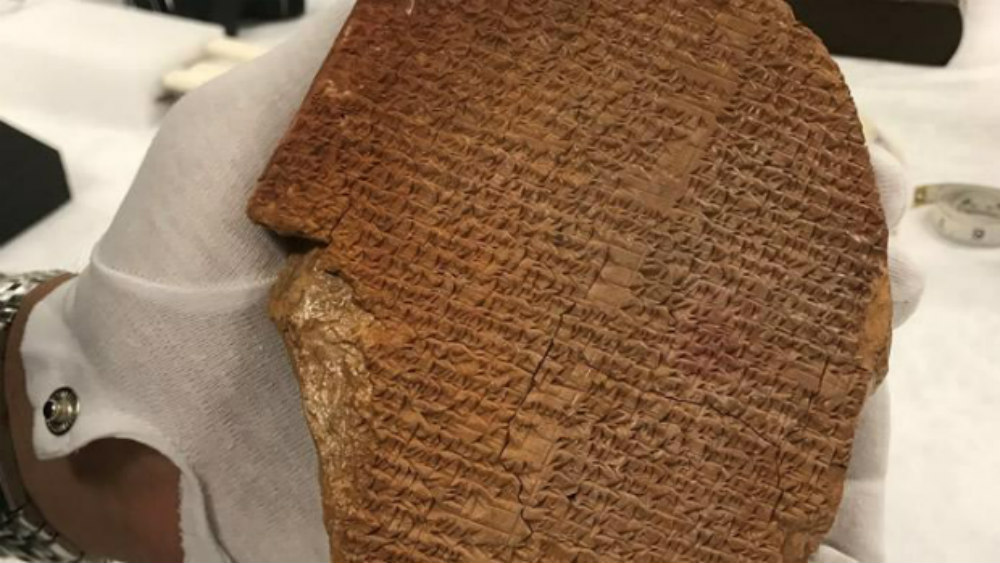
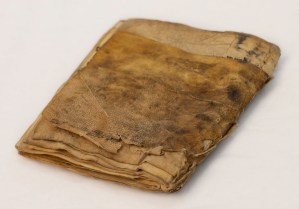
Update (July 29): Two years after federal officials seized the artifact, a judge ordered Hobby Lobby to officially forfeit a rare clay tablet containing a portion of the epic of Gilgamesh. The tablet will be returned to Iraq.

The Bible Museum, which was founded by Hobby Lobby owner and Bible collector Steve Green, has supported efforts to send the item back to its country of origin.

The ancient Mesopotamian text was purchased from Christie’s auction house in 2014 before being put on display in Washington D.C. in 2017. Hobby Lobby is now suing Christie’s, claiming the reputable auction house provided false information and provenance documents making it seem the tablet could be legally purchased, and was not looted during fighting in Iraq.

Hobby Lobby is also returning about 11,500 other antiquities to the Iraqi and Egyptian governments due to incorrect or incomplete documentation. Green has previously said he made a mistake, when he was building a collection for the Museum of the Bible, by trusting unscrupulous dealers.

—–

Original post (May 21, 2020): Another ancient document is causing controversy for the Museum of the Bible after a federal government prosecutor filed a claim that a six-by-five-inch clay tablet was stolen from Iraq. The US Attorney’s Office of Eastern New York says that Hobby Lobby legally purchased the Gilgamesh Dream Tablet for $1.6 million to loan to the museum, but the papers documenting the artifact’s purchase history were false.

“In this case, a major auction house failed to meet its obligations by minimizing its concerns that the provenance of an important Iraqi artifact was fabricated, and withheld from the buyer information that undermined the provenance’s reliability," said US Attorney Richard Donoghue, who filed a foreiture claim on the Gilgamesh tablet on Monday.

In an official statement to Christianity Today, the Museum of the Bible announced it has cooperated with the investigation and is cooperating with authorities to return the tablet to Iraq. The museum also said Hobby Lobby will sue the British auction house that sold it the tablet. The Museum of the Bible identified the auction house as Christie’s.

The clay tablet is a part of the Gilgamesh epic, which tells the story of a great king who battles with gods and tries to discover the secret to eternal life. It is considered one of the world’s first great works of literature, dating to the Sumerian civilization of Mesopotamia of more than 4,000 years ago. The epic is also famous for including a flood narrative with similarities to the biblical story of Noah’s flood. This tablet has been dated to around 1600 BC and contains the account of a dream, which is interpreted by the hero’s mother. Department of Homeland Security agents seized it from the Bible museum in September. It is now being held in a US Customs and Border Protection facility in Queens, New York.

The importation of cultural property from war-torn Iraq has been restricted, since nine museums were looted in 1991 during the turmoil of the Gulf War. According to the US Attorney, the cuneiform tablet was brought into the US illegally from London in 2003 by an unnamed antiquities dealer. It was then sold to another dealer in 2007 with false documents saying it was purchased legitimately in a box of bronze artifacts in 1981. In 2014, Hobby Lobby purchased the tablet from an auction house and donated it to the Museum of the Bible.

Museum officials started to investigate the provenance of the tablet in 2017, in what the US Attorney calls “due diligence research.” According to the US Attorney’s office, museum officials took questions about the item to the auction house, but auction house officials repeated the antiquities dealer’s account of where it was purchased, withholding the falsified provenance letter and the dealer’s name. The museum notified the Iraqi embassy that it had the Gilgamesh tablet and committed itself to independently researching the provenance of the item.

In April, the Museum of the Bible announced it would return 11,500 other clay seals and fragments of papyrus to the Iraqi and Egyptian governments because they did not have complete documentation and may have been looted.

A year ago, the museum agreed to return 13 Egyptian papyrus fragments that were stolen from the University of Oxford. And in 2017, the federal government fined Hobby Lobby and ordered it to return thousands of cuneiform tablets and other objects that were illegally taken from war-torn Iraq and brought into the US by a United Arab Emirates-based dealer who falsely labeled the shipments as ceramic tiles.

“I trusted the wrong people to guide me, and unwittingly dealt with unscrupulous dealers in those early years,” said Steve Green, the president of Hobby Lobby and founder of the Museum of the Bible, in an official statement in March. “My goal was always to protect, preserve, study, and share cultural property with the world. … If I learn of other items in the collection for which another person or entity has a better claim, I will continue to do the right thing with those items.”

News

New Evidence Points to Old Motive in 1985 Church Murders

A South Georgia prosecutor is considering whether two Baptists were killed because they were Black.

Christianity Today July 29, 2021
Google Maps

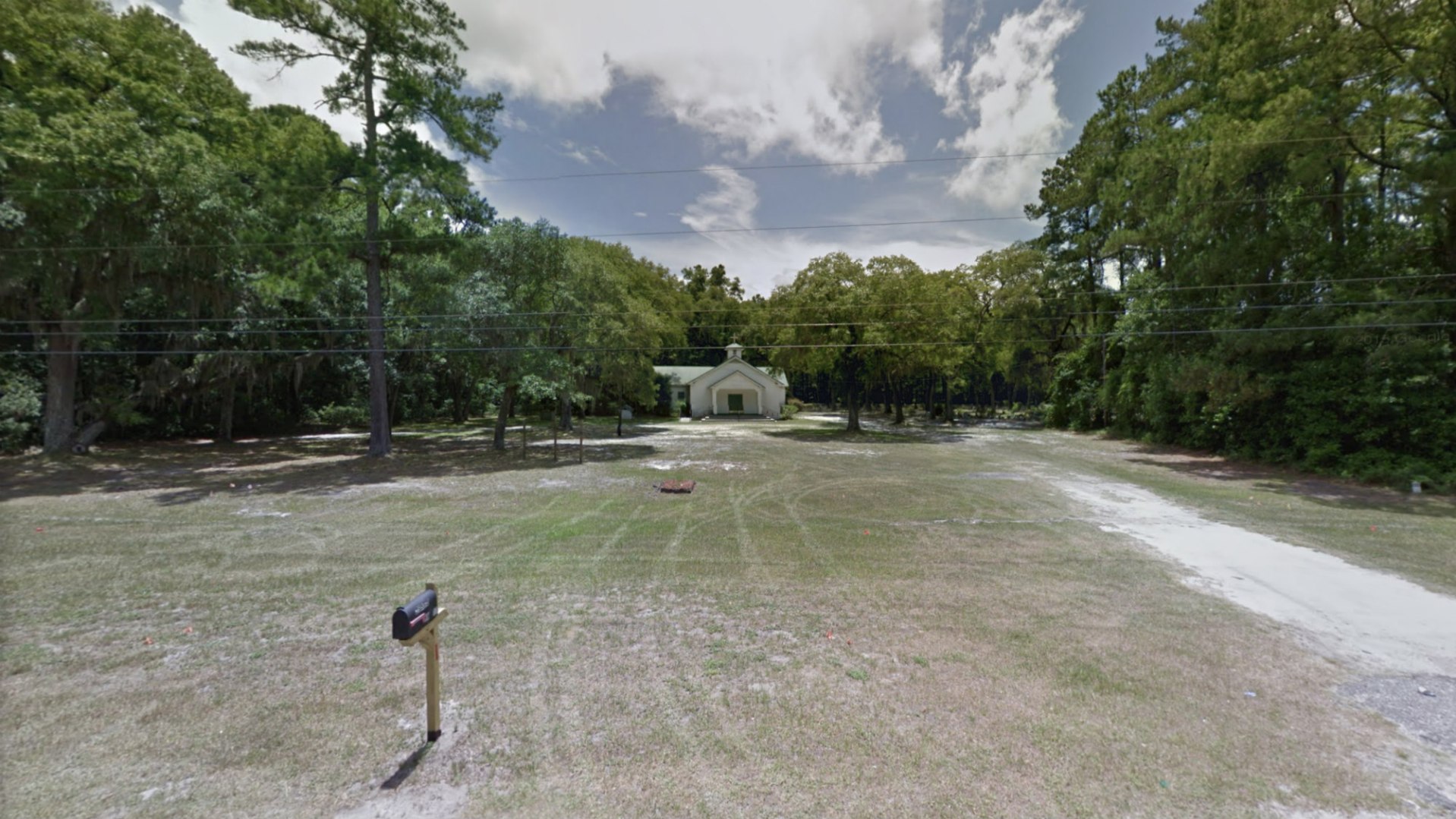
For 36 years, the murder of a Baptist deacon and his wife in the vestibule of their small white church off a two-lane highway in southern Georgia has been attributed to robbery, drugs, or revenge.

But now the district attorney in Glynn County, Georgia, is considering filing new charges and naming a new motive: racism. If the prosecutor decides to try to bring the 1985 homicide to trial in 2021, his office will argue that 66-year-old Harold and 63-year-old Thelma Swain were shot to death because they were Black.

According to District Attorney Keith Higgins’s office, the review is “ongoing,” as the prosecutor considers options and available evidence to make the case.

The new evidence, collected and processed by the Georgia Bureau of Investigation (GBI), showed that the man convicted of the double murder in 2003 was innocent. Dennis Perry was released from prison in July 2020 after two decades of incarceration. Last week, the prosecutor dismissed all further charges, exonerating Perry.

The GBI’s evidence points to another suspect: Erik Sparre. The mitochondrial DNA of two hairs found in the hinge of a distinctive pair of glasses left at the scene were matched to Sparre’s mother’s DNA, meaning they came from Sparre or someone in his matrilineal line.

Sparre also told at least two people he committed the crimes and was once recorded on tape bragging about the murders.

“I’m the motherf— who killed two n— in that church, and I’m going to kill you and the whole damn family if I have to do it in church,” he told an ex-wife while her family taped him, according to the extensive investigation of the Atlanta Journal-Constitution.

One of Sparre’s ex-wives said he was a racist. The other said he was a white supremacist. Both say he told them he committed the murders. He lives on two acres in Waynesville, Georgia, about a half hour from the Swain’s Black Baptist church. Harold Swain was known in the area as the unofficial spokesman for the local Black community.

Sparre, however, told the Atlanta reporter he had nothing to do with the church homicides.

“I don’t have any glasses missing,” he said.

In recent years, violence against people gathering to worship has spurred a whole industry of church security and safety consultants. State and federal lawmakers have looked at ways to increase protection for houses of worship, from bills allowing volunteers to carry concealed guns to the Pray Safe Act, currently under consideration by the US Senate.

Historically, Black churches have been the most vulnerable to violence. Nine Black churches were bombed in the 1950s and ’60s during the civil rights movement. More than two dozen were set on fire in the 1990s. In 2015, a white supremacist killed nine Black people at a Bible study in Charleston, South Carolina. In 2018, a white man tried to shoot people in a Black church in Kentucky and went and killed Black people in a grocery store when he found the church’s doors were locked. And in 2019, a white girl plotted to attack a Black church in Gainesville, Georgia.

Black pastors have also been the historic targets of racist violence, especially if they speak up against it.

In 1985, however, when state and local investigators responded to the double murder of two Black people at Rising Daughter Baptist Church off US-17, they initially suspected robbery.

According to the nine women who were at the church that Monday night for a Bible study and mission meeting, a white man with longish hair came to the door and asked to talk to someone. He pointed at Harold Swain, the only man there.

Swain, a retired pulpwood worker who liked to garden, fish, and help people in the community with small home repairs, set down his Bible in the pew. It was open to Ephesians 3: “I pray that you, being rooted and established in love, may have power, together with all the Lord’s holy people, to grasp how wide and long and high and deep is the love of Christ.”

He went to the door, and the white man shot him four times with a .25-caliber gun.

Thelma Swain rushed to her husband, and the man fired one more shot, killing her.

The two Christians died at the front door of their small church, the wife with her hand on the back of her husband’s head.

The detectives said they thought this was likely a robbery, but Harold Swain had $300 in his pocket, and those who knew him said he would have given a stranger money if asked.

“They were good Christian people. If the man who killed them asked for their help, they would have helped him,” Cynthia Clayton, a social worker who adopted the Swains as uncle and aunt, told a local paper at the time.

“They never hurt anybody,” said Lafane Kight, another person who identified herself as a niece. “They were the sweetest persons in the world.”

The first compelling suspect in the case was a drug trafficker named Donnie Barrentine, arrested across the Florida state line. One of his criminal colleagues told investigators that he had claimed to be God, because “God can give and God can take away” and he had taken away the life of two Black people in a church. Investigators found the Swains had adopted a daughter whose mother had married a Jamaican man who was a federal witness in a drug-trafficking case. They wondered if that was the motive for the killing.

Barrentine had alibi, though. He said he was 245 miles away in Marianna, Florida, when the murder happened, and there was nothing else to connect him to the crime.

The second suspect was Sparre. He grew up in the area, and local law enforcement knew him for his drinking, domestic abuse, and the racial epithets he flung at nonwhite officers. One ex-wife gave investigators a recording of Sparre claiming he killed two Black people in a church, and she also told them he had lost a distinctive pair of glasses, welded together from three different pairs.

That sounded like the glasses found in the church. But Sparre was cleared when his boss from Winn-Dixie called investigators and told them Sparre had been clocked in to stock shelves at the grocery store at the time of the murder and several employees would vouch he was there the whole time.

The case went cold after that, and no one was arrested for 15 years. In 2000, a private investigator hired by the sheriff’s office came up with a third suspect: Dennis Perry.

Perry didn’t wear glasses or have a car to get from his home in Jonesboro, outside Atlanta, to Rising Daughter Baptist Church, about 260 miles south. But he did have a grandfather who lived near the church, and the mother of an ex-girlfriend swore he committed the murders. She even said Perry told her he had killed the couple because the deacon had once laughed at him and he wanted revenge.

In an unrecorded interrogation, the private investigator said Perry confessed to being near the scene of the crime and admitted a gun “could have” gone off. Perry said the man was “putting words in my mouth,” and he wasn’t near the church the day of the murder but several days before. A jury decided to believe the investigator and the state prosecutor. They found Perry guilty, and he was sentenced to two life terms.

The case received renewed attention in 2018 when a longform true-crime podcast, Undisclosed, dedicated a 21-hour season to Perry’s conviction, raising questions about the evidence, the investigation, and the prosecution of the case.

Then an Atlanta Journal-Constitution reporter checked the earlier suspect’s alibi and found that Sparre’s boss at the Winn-Dixie had not called investigators to tell them Sparre was at work. The call was faked.

The Georgia Innocence Project identified the possible DNA evidence from the hair on the glasses and convinced Sparre’s mother to volunteer a sample of her own hair in 2020. It matched, and the Glynn County Superior Court overturned Perry’s conviction and set him free.

The newly elected district attorney, who wasn’t involved in Perry’s prosecution 20 years ago, apologized.

“There are times when seeking justice means righting a wrong,” Keith Higgins said. “The new evidence indicates that someone else murdered Harold and Thelma Swain."

The prosecutor’s office now has to decide whether to bring charges against that other suspect after 36 years. Some key witnesses have died in the intervening years, and a lot of evidence has been lost. Campaigning for the office, Higgins promised more accountability and a better record on racial justice.

Meanwhile at Rising Daughter Baptist Church, Black Christians still gather to sing, pray, and remind each other that the Lord is good.

One Sunday not too long ago, the service was started by another Baptist deacon, Michael Rivers, a member of the local longshoreman’s union. On the steps where a white murderer stood in 1985, Rivers sung out, “I’ve got the devil mad right now.”

And again: “I’ve got the devil mad right now.”

He looked at the Christians gathered at the spot where the Swains’ blood was spilled, probably for no other reason than that they were Black.

“We’ve got the devil mad right now,” he said, “because we’re going to have church today.”

Ashley Hales Thinks Christianity Today Helps Christians Have Better Public Conversations

The writer and podcaster on how the publication cultivates kind and generous dialogue on important issues.

Ashley Hales Thinks Christianity Today Helps Christians Have Better Public Conversations
Lindsey Cram, @lindseycramphoto, LindseyCram.com

Ashley Hales’ relationship with Christianity Today started when she encountered issues of Books & Culture (B&C) in the common area of the Westmont College English department. “I remember leafing through them and being like, ‘I love this. This is what I want to do,’” she said.

Hales wanted to write intellectually about the intersection of faith and culture. And eventually her words ended up first in B&C and later in CT. Hales’ recent writing has examined Christians’ calling to put down roots, a calling that has impacted her personally—with several moves determined according to her husband’s pastoral and campus ministry positions.

“My husband’s job as a church planter means we’ve seen a lot of people leave, and we realized how being a part of a place really mattered. It contributes to our witness in the world,” said Hales. “Getting to know people and love people where they’re at takes time and means we stay put.”

This reality should subsequently inform our theology, says Hales.

“Understanding place is not only important in how we talk about evangelism, but also in understanding how are we discipled, what the values are of the places we live, and how we can encourage and challenge those values in our local churches and our local communities.”

In 2019, she wrote a piece for CT about how the places people live form and shape them.

One idea that Hales wrestled with in “Oh, the Places We’ll Stay” was limits:

We long for rootedness and community, and yet we look for it in the empty promise of limitless space—in technological innovation or the dreams of unfettered freedom from all constraints so we may pursue our pleasure.
Our limits of time, place, and body are constraints that actually help us flourish as humans. They orient us to the fact that we are creatures, not the Creator, and that we are recipients of God’s showing up in the incarnation and his redemption of people, places, and things, not the gods of our own making.

These ideas in turn inspired her latest book, A Spacious Life: Trading Hustle and Hurry for the Goodness of Limits.

“It’s fun to look back and see the thread in the article that inspired this,” said Hales. “CT has been a good place to try out ideas and create conversation.”

After her article published, Hales heard from pastors and church leaders who appreciated her call for rooted discipleship and theology of place.

“I love writing articles because they allow for ideas to easily circulate online to your favorite authors or pastors or thinkers or podcasters and create a tapestry of conversation that way,” she said.

She credits CT’s editorial team for helping her develop her ideas.

“I love that CT editors make my words sound better and they often come up with great headlines to my articles—which I struggle with,” she said. “They also push me to think more deeply. They really do a great job of not only affirming the good work or the good thinking, but then also pushing us writers to be our best.”

Writing is not the only craft that Hales pursues. Over the past couple years, she has hosted a podcast, Finding Holy, which is part of the CT Podcast Network.

“It’s been fun working with Mike Cosper, a friend who now leads CT’s podcasts,” she said. “It’s great building community with other content producers. Feeling like you have colleagues in a very disparate internet age is pretty great.”

During the pandemic, the Hales family moved from Southern California to just outside Boulder, Colorado. While she was writing her first book, Finding Holy in the Suburbs, which also focused on staying put, she asked herself if relocating would invalidate her argument.

Then she considered that although Jesus’ life was constrained largely to one region within Palestine, the Bible also contains stories like those of Abraham, whom God calls to move.

“We all have different callings,” she said. “It’s important as we think about our place and where God calls us to go that when we are in a particular place, to stay, to stay rooted, to jump into the lifeblood of that place. But we also can’t be so wedded to a particular place that we’re not able to have our minds changed or for the Spirit to lead otherwise.”

Years after graduating from Westmont and receiving a PhD in English from the University of Edinburgh, Scotland, Hales still resonates with CT’s editorial mission.

“When ‘culture wars’ pit Christians against one another into opposing camps, we need places like CT to help bridge the gap. We need places of public conversation that are willing to ask the hard questions, to own up to their own mistakes, and move forward with grace,” she said.

Hales believes it’s important that the church has an outlet that creates space for Christians to graciously wrestle with the issues of the day.

“CT holds this line of historic Christian orthodoxy while still being sensitive to the changing winds of culture. It’s a hard place to be in. There aren’t many Christians or denominations or even organizations that are trying to hold a faithful, robust Christian orthodoxy as well as pay attention to the culture in ways that are kind and generous and push back where needed,” said Hales. “That stance of generosity is really where I see CT playing an important role.

Morgan Lee is global media manager at CT.

Theology

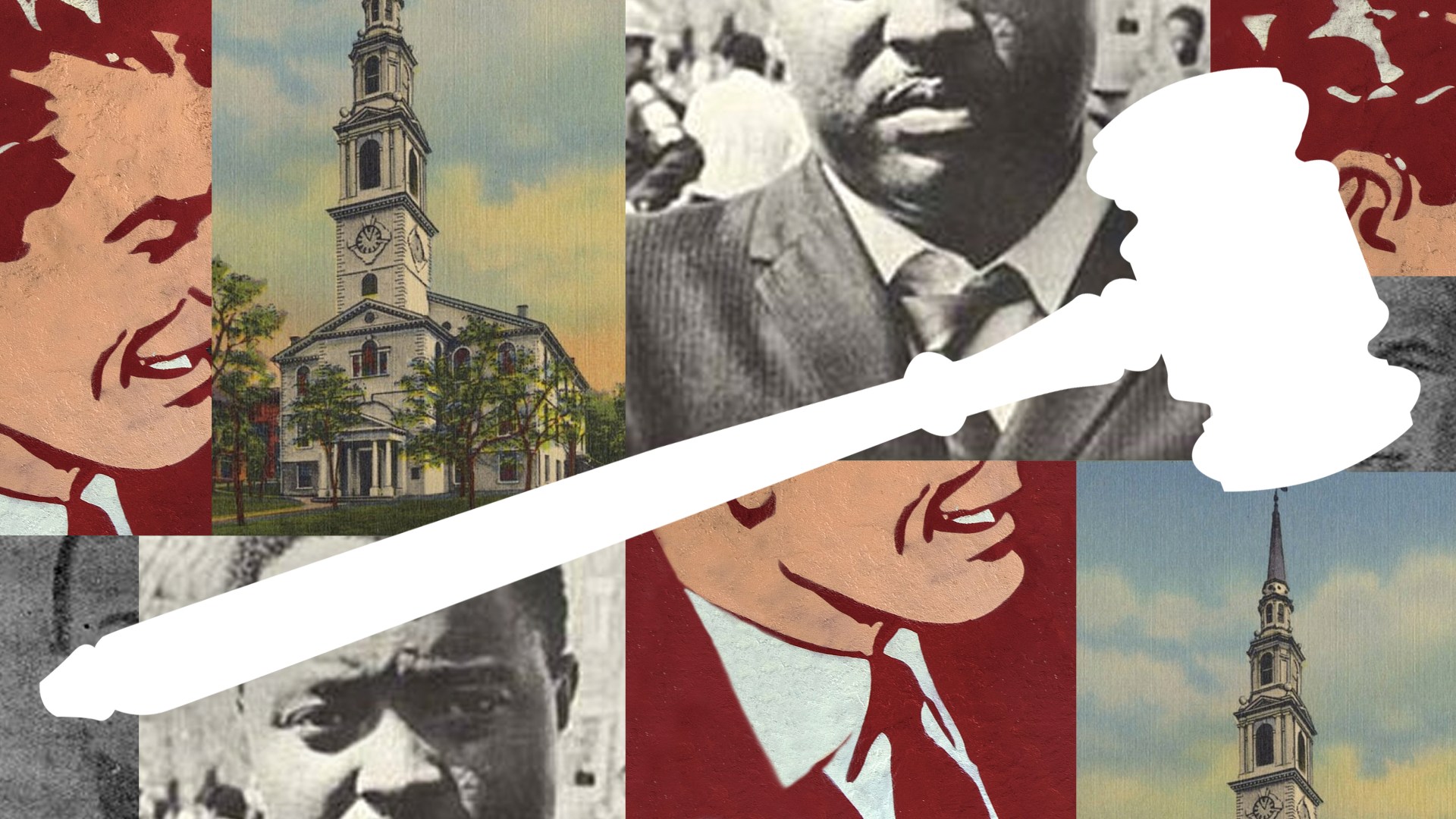
The CRT Debate Distracts from God’s Justice

In the conflict over racial issues, “just preach the gospel” misses the gospel.

Christianity Today July 28, 2021
Illustration by Mallory Rentsch / Source Images: WikiMedia Commons / Tim Mossholder / Unsplash

This piece is the first installment in a two-part series on racial justice debates. Read the second article here.

I remember the World War II stories I was told as a middle school student. Wearing secondhand clothes and sporting an unkempt fade, I sat in a hard wooden desk too small for my growing black body in a classroom full of distracted boys and girls. The air conditioning in Alabama classrooms was unreliable, which meant sweat was an ever-present companion to our education.

The teachers told us impressionable youths that the traumas of both world wars revealed American and British grit. These great nations set aside petty concerns and turned to the needs of others. I was told at that unforgiving desk that nations and individuals discover themselves under pressure. When the fervency of belief encounters the unforgiving realities of suffering, our deepest convictions are unveiled. When cancer invades a human body and stresses a marriage, the true depth of love and commitment becomes clear.

In more recent history, COVID-19 has been a similar pressure and a similar revelation for the United States and its churches. Just as there are tests that reveal a person’s character, there are national trials that make plain what a country is.

What has the COVID-19 pandemic said about the American church? Who have we revealed ourselves to be under pressure? I am talking not about the virus itself. I am talking about the social crisis of the pandemic, which brought to light the ongoing experience of racism and injustice by ethnic minorities in this country.

The church had an opportunity to lead in this area and show the world how our faith allows us to press for better treatment for all. Instead, some decided to litigate the validity of critical race theory. With Black and Asian blood drying on the concrete streets of American cities, some decided to debate the existence of systemic racism. They did not look at the thing itself. Instead, the thing itself became the occasion for a tired dispute. That debate revealed how portions of the church were ill and in need of healing well before the airborne contagion made its way to these shores.

These sick parts of the body of Christ told us to “just preach the gospel.” There are very few things more harmful for Christian cooperation than the weaponization of the gospel against Black and brown cries for justice.

Only in the context of racial injustice are we told to articulate the plan of salvation exclusively. When marriages are struggling, we don’t just preach the gospel to couples. We give them practical tools to love one another better. When parents are looking for clues on how to raise children, we do not simply preach the gospel. We give them Bible-informed tools to parent well.

As all of Paul’s letters make clear, Christian discipleship is about showing how the implications of the gospel spread out in a thousand directions. In the same way, we must show our people how the Christian faith makes a difference in how we respond to the suffering of the world. To do otherwise is a failure of discipleship.

After the lockdown began, I did not gather in a large group until I traveled to Chicago to participate in a protest. It was a hot afternoon, with the heat rebounding off the concrete and on to the masses crowding the streets of Bronzeville.

There were Black, white, Asian, and Latino bodies pressed too close together. Our understanding of the virus was still unfolding, and I was terrified I might get sick. But I went anyway because Ahmaud Arbery, Breonna Taylor, George Floyd, and their grieving families compelled me. I did not know what else to do.

I was hopeful that their deaths would force America to do what Mamie Till wanted in the wake of her son’s murder. When explaining her decision to have an open casket at her son Emmett’s funeral, she said, “Let the people see what they did to my boy.”

The last five years of deaths recorded on video have been America’s open casket, a chance to see what has been happening to Black lives.

In that context, I hoped that churches of all ethnicities would stand in solidarity with Black and brown suffering, not as a manifestation of a worldview antithetical to the gospel, as some claim, but because of what the Law, the Prophets, the Writings, and the entirety of the New Testament call for: compassion toward those who are treated unjustly. Paul calls us to “mourn with those who mourn” (Rom. 12:15).

But to mourn or weep, we must see. Instead, we turned our eyes, both as a church and as a country.

We did not have a national debate on better ways to police our citizens, nor did we consider how to address the raging mental-health crisis that often makes these violent interactions between police and African Americans so tragic.

Some thought it would be easier to label any discussion of racism as “critical race theory” or “wokism” and in so doing make that theory a threat to the republic. In other words, some found it easier to create a new Red Scare instead of tackling the ever-present problem of the color line.

For example, we watched the assault on Asian-run massage parlors in Atlanta and the endless stream of videos depicting unprovoked attacks on Asians and Asian Americans. Those videos visibly displayed the statistical rise in anti-Asian violence. Did we use that opportunity to address the racialized discussion of the COVID-19 virus? Did we finally assess the long-term damage done by common racial myths—ones that hide the poverty of some Asian populations and others that pit Asian Americans against African Americans?

No, we turned the safety of the Asian community into a debate about politically correct speech, as if we could wish away the impact of our words.

In the end, the pandemic test has made plain this truth: The church is not socially or politically ready for all that our modern, interconnected world demands of us. We need to go back to school and finally learn the lessons we have refused to learn. Our mutual hatred and distrust only makes us weaker.

When I got older and left that Alabama school behind, I realized the stories of war told there had glaring omissions or missing points of emphasis. After World War I, we rewarded Black soldiers coming back from trench warfare with a Red Summer instead of a parade. We doubled down on Jim Crow. Yes, we defeated the Nazis in World War II, but we also interned Japanese American citizens on our own soil. The test of world wars occurred not just on battlefields but in communities and cities.

Then and now, the history of this country has been an ongoing attempt to take the rubble of our repeated failures and build out of them a better place for all to lay their heads. The aftermath of the pandemic reminds how that work is more urgent than ever.

Despite our past and present failures, the church can still play a role in leading our nation toward this future, not as partisans acting as apologists for the Right or the Left but as penitents confessing our sins to one another and the world. We can admit all the ways we have failed. Why? Because we believe in a God who forgives sins.

We also believe in a God who says there is something on the other side of confession. We live in an age when politicians and political parties are loath to admit mistakes. They shift blame to the other side because they believe that vulnerability is weakness. In their minds, it’s always better to dehumanize and destroy the other side.

But we know that God won us precisely through his vulnerability, his willingness to be weak. And God’s weakness is stronger than human strength.

I am a father. I wish that meant that I always parented well, that every word spoken to my children was good, beautiful, and true. But I am human. I fail them, and the hardest thing for me to do is look my kids in the eye and say, “Dad was wrong.” But I have to so that they have permission to be wrong, permission to repent, and permission to start again. They know that our family is not made up of saints (the parents) correcting sinners (the children). Instead, their mom and dad have been given something to steward while all of us journey together in life with God.

In this racially fraught day and age, the church faces the same challenge. We can be honest about our fears and failures as a church. We can model a different way and possibly chart a different path, because the tests are not going to get any easier.

In that complex context, it’s fine for us to debate the strengths and weaknesses of theories like CRT. No theory is above reproach. But that debate cannot be used to wish away the more pressing question of justice for the oppressed. I am worried that some are losing the plain teachings of Scripture in an effort to slay the monster created in their own imaginations. It does not have to be this way.

One day, historians will tell the story of the church in this era of pandemic and racial strife. My prayer is that they find in the rubble of these years of suffering a people who bore testimony to the King who never lost sight of those most in need.

Esau McCaulley is an assistant professor of New Testament at Wheaton College and the author of Reading While Black: African American Biblical Interpretation as an Exercise in Hope.

Theology

One Solution to Social Conflict: Tell War Stories. But Tell Them Well.

The book of Samuel shows us how to reconcile our differences through redemptive storytelling.

Christianity Today July 28, 2021
Illustration by Mallory Rentsch / Source Images: WikiMedia Commons / Andrew_Howe / Getty Images

I am a missionary in Croatia, a beautiful country with a very complex past. Twenty-four years ago, when I first came here on a Cru summer missions trip, I found Croats were eager to spend hours in cafés sharing their stories. My new friends spent a lot of time talking about history—10th-century kings, fascists, communists, and their experiences in the War of Independence, which had ended two years before I arrived. The past constantly intruded into conversation.

Coming from the future-oriented culture of Silicon Valley, I was fascinated by their interest in history. But it felt quaint. At the time, I couldn’t imagine how the weight of the past would soon press down on America as well.

We are living in a time of high social conflict. Our arguments are fueled by competing stories. Are we the city on the hill or the most evil nation in history? Was the election stolen, or is that story a fantastic lie? Are the COVID-19 vaccines a huge success or part of a dark conspiracy? Churches are being torn apart as well by competing stories over critical race theory, sexual abuse scandals, and more.

This kind of conflict among believers is all over Scripture. The Bible unflinchingly wades into seemingly irreconcilable stories. Through terse, artful narratives, biblical authors often pushed their original audiences toward healing. For the Israelites, words like Jebusite or Samaritan were not unfamiliar and hard to pronounce. For them, these labels were as controversial as confederate, socialist, or Black Lives Matter are to us.

The Old Testament historical books are likely the first use of narrative (instead of epic verse) to tell national history. They employ a courageous, forthright style to retell painful stories in such a way that enemies could reconcile. The richest example of this is 1 and 2 Samuel.

In this narrative, Israel undergoes two massive transitions: from leadership by judges and prophets to a kingship under Saul, then the transfer of power to the Davidic line. These upheavals created power shifts with lasting generational effects. They were royal Israel’s 1939, 1968, and perhaps 2020—years of great upheaval and change.

In the 20 years I have served as a full-time missionary in Croatia, I have been part of hundreds of conversations about its tortured history—while talking with other dads before soccer games, with business leaders in Bible studies, and with elderly neighbors in my wife’s home village. With those experiences in mind, it’s easy for me to imagine constant arguments between Judahite supporters of David’s rule, Benjamites, and those who preferred the older prophet-judge system.

In 1 and 2 Samuel, these various perspectives are all respected and included. We know Samuel led the nation and heard God’s voice. But—in a detail that goes almost completely unexplored in sermons and commentaries—it is Samuel who triggers the leadership crisis by pushing forward his worthless sons as his heirs. The elders demand a king only in response to Samuel’s catastrophic attempt at nepotism (1 Sam. 8:1–5).

The prophet’s leadership ends in failure. Saul then becomes the first king, sins, and goes mad. But he also saves the people and punishes the enemies of Israel on every side. David replaces him as king and is a man after God’s own heart. But he’s also a murderous sexual assailant.

This is an astonishingly rich narrative. Robert Alter, a professor of Hebrew and comparative literature at the University of California, Berkeley, is convinced that the author of Samuel believed in covenant, prophecy, and election but in such a complex way that “it borders on subversion.” Samuel was written by the victors: supporters of David’s rule. But they would have to be a contender for the Guinness World Record for Most Self-Critical Winner’s Account ever.

NYU law professors Moshe Halbertal and Stephen Holmes argue in The Beginning of Politics: Power in the Biblical Book of Samuel that this complexity makes 1 and 2 Samuel the first politically reflective work in history.

Consider Saul’s desperate appeal to his fellow Benjamites as his kingdom collapses: “Listen, men of Benjamin! Will the son of Jesse give all of you fields and vineyards? Will he make all of you commanders of thousands and commanders of hundreds?” (1 Samuel 22:7). It’s not just Saul or his family that is losing power. His entire tribe is losing its status. Samuel artfully surfaces social and economic dynamics.

Imagine a scroll of Samuel first arriving in a village still divided between nostalgia for Samuel and enthusiasm for a king. As the priest reads it out loud, everyone is on edge. But what happens? I submit that each group winces at times, nods emphatically at others, and is reminded of God’s sovereignty. They probably cast accusatory nods when notorious anecdotes come up. But in the end, all begrudgingly admit that the story was fairly told.

By skillfully incorporating major details from all sides and by affirming God’s sovereignty, these books reconciled God’s people to the Davidic kingship. Think of it as something like a Bronze Age Hamilton.

For the first time in a thousand years, Croatia has the chance to tell its own complex story to its youth. Unfortunately, now that it finally has that opportunity, it is telling a very one-sided version of its history—one that our two sons have been hearing in the public school system for 11 years. Each reversal allows only one side of the story to be told and excludes half the nation.

We all have partial understanding of our own history. For very localized reasons, Croatians were on one side or the other of fascism or communism. Samuel anchors me in the midst of this heartbreak. It reminds me to accept facts from all sides, expect history to be complex, and not scorn people just for their loyalties. It also lets me hopefully proclaim that God is still in control.

For over a decade, I have been connected to a program in Croatia called Renewing Our Minds. It gathers youth from high-conflict nations for a two-week conference focused on peacemaking through the example of Jesus. The genius of the program is that it focuses first on fun and team building so youth discover that their supposed “enemies” are not so different from them. Only then do program leaders introduce the conflicting narratives of history through speakers and media. So many young people have never faced the reality that the other side has a coherent story of its own.

The final part of the conference focuses on rebuilding a better view of “others” through the peacemaking practices of Jesus. By knowing people from a different side, telling their stories, and hearing others’ stories, transformation can begin.

I previously wrote a book chapter about Samuel as a reconciling narrative, based largely on my Croatian context. But that biblical story speaks to every nation, and I submit that it is one of the most important resources for the American church in this moment. Samuel’s subtle message to us is both comforting and painful:

  • First, God understands how sensitive we are to the honor of our people. He is not asking us to despise our ancestors. Their honorable deeds will not be lost, even if they ended up on the wrong side of history. Entire people groups are not scapegoats.
  • Nevertheless, there can be a right and wrong side of history. The South fought in the Civil War to defend slavery and lost, as it deserved to. The North did not initially fight to free slaves and has its own tragic racial history as well. But it was on the right side.
  • God expects us to not avert our eyes from historical events, no matter how ugly. When we see the sins of Israel so clearly in the Old Testament, how can we ignore chattel slavery, violations of treaties with Native American tribes, the Chinese Exclusion Act, and other injustices? How can we expect churches to be healthy if they refuse to be as forthright about their own scandals as the Bible they preach from?
  • Complex history can be truthfully captured by good storytelling. The author of Samuel does not tell us to first read a book on the racial dynamics of Palestine in order to understand the story. He also does not send us down a rabbit hole of conspiracy theorizing. Small details—like Paltiel weeping after Michal or the linen robes Hannah brought to the temple each year for her little boy—open our hearts to how real and fallible our leaders are.
  • In the end, God knows what he is doing and accomplishes his will among the nations. He chooses to give us a country to be formed by and grow to love. And he offers us these amazing biblical tools with which to navigate the seemingly intractable conflicts of our day.

The United States is so many things. It is an amazing democratic experiment, a refuge for the refugee, and home to religious freedom. It also has its own dark, cruel history, particularly with regard to Blacks and Native Americans. God invites us to integrate all these different elements into one reconciling history. He desires for us to both love our nation deeply and fight to hold it accountable.

We need voices like the anonymous author of Samuel, who wrote from inside the king’s court and risked telling the truth in a compelling way so that the nation could begin to heal from its divisions. The author of Samuel shows us how pastors and Christian leaders not only have a prophetic role to play; they also have a role as reconciling storytellers in their churches and communities.

If you lead divided people, this is my proposal: Read through the book of Samuel again. Think of the Benjamites and Judahites as Republicans and Democrats, Blacks and whites, conservatives and progressives (or whatever the two-sided tension is in your own church).

Let the glory and shame of each tribe sink in. Can you be a reconciling storyteller to your own people as they talk about George Floyd, COVID-19, and the 2020 election? Don’t offer conspiracy theories or hot academic concepts they were supposed to have learned five minutes ago. Give them a calm, steady narrative that spares no one and pierces the heart.

Keep it short. Craft it in such a way that both sides are forced to admit you included their perspective. You don’t need to pronounce judgment; rather, speak with confidence that God is still in control of the big picture. Telling the story well is by itself influential and formative. And most importantly, share it in such a way that your community can experience it together. If we can listen to one story together and our children hear their parents admit “That’s fair,” there’s hope that we can move toward reconciliation.

So much is at stake with truthful storytelling. Our people are dying for a lack of a common narrative, discipled toward schism by partisan news sources. If we are too afraid to give them a story they can all accept, even begrudgingly, they will not continue as a community.

The Benjamites were historical “losers,” but they kept alive the memory of the good along with the bad. Eventually, they were reconciled to Judahite rule. That led them to become part of the remnant, not swept away with the northern tribes. (In the divided kingdom period of the Old Testament, the kings of Judah were actually kings over Judah, Benjamin, and much of the Levites.) This story helped save the people of Benjamin from apostasy and destruction.

The Benjamites also never forgot or despised Saul, despite all his flaws. Centuries later, a Benjamite couple in Tarsus proudly named their son after him. We know him better as Paul. He preached the good news that the Messiah, the Lion of Judah, the Son of David, was Jesus crucified and risen from the dead.

That’s the reconciling power of an unflinching, well-told narrative.

Nolan Sharp is a Cru missionary in Croatia working with marketplace leaders.

News
Wire Story

Christian Wedding Site Designer Loses Appeal Case

While a baker from the same state won his challenge, court upholds Colorado anti-discrimination requirements for the owner of a creative agency.

Christianity Today July 27, 2021
Courtesy of ADF Legal

A US appeals court has ruled against a Christian web designer who didn’t want to create wedding websites for same-sex couples and sued to challenge Colorado’s anti-discrimination law, another twist in a series of court rulings nationwide about whether businesses denying services to LGBTQ people amounts to bias or freedom of speech.

A three-judge panel of the 10th US Circuit Court of Appeals in Denver on Monday denied Lorie Smith’s attempt to overturn a lower court ruling throwing out her legal challenge.

The Alliance Defending Freedom, which represents Smith, argued that the law forced her to violate her Christian beliefs.

In the 2–1 ruling, the panel said Colorado had a compelling interest in protecting the “dignity interests” of members of marginalized groups through its law.

The anti-discrimination law is the same one at issue in the case of Colorado baker Jack Phillips that was decided in 2018 by the US Supreme Court.

The high court decided the Colorado Civil Rights Commission had acted with anti-religious bias against Phillips after he refused to bake a cake for two men who were getting married. But it did not rule on the larger issue of whether a business can invoke religious objections to refuse service to LGBTQ people.

The Scottsdale, Arizona-based Alliance Defending Freedom also represented Phillips. Founded in 1994 by Christian leaders concerned about religious freedom, the group said it would appeal Monday’s ruling.

“The government should never force creative professionals to promote a message or cause with which they disagree. That is quintessential free speech and artistic freedom,” the group’s senior counsel, John Bursch, said in a statement.

Lambda Legal, a group that fights for the civil rights of LGBTQ people, had submitted a brief supporting the Colorado law.

“This really isn’t about cake or websites or flowers,” Lambda Legal senior counsel Jennifer C. Pizer said in a statement. “It’s about protecting LGBTQ people and their families from being subjected to slammed doors, service refusals and public humiliation in countless places—from fertility clinics to funeral homes and everywhere in between.”

In arguments before the three-judge panel in November, Chief Judge Timothy Tymkovich asked what Smith would do if she was approached by a straight wedding planner asking her to create four heterosexual wedding sites and one for a same-sex wedding. Kristen Waggoner, a lawyer for the alliance, said Smith would not take that job.

On the site for Smith’s company, 303 Creative, she writes, “As a Christian who believes that God gave me the creative gifts that are expressed through this business, I have always strived to honor Him in how I operate it. … Because of my faith, however, I am selective about the messages that I create or promote – while I will serve anyone I am always careful to avoid communicating ideas or messages, or promoting events, products, services, or organizations, that are inconsistent with my religious beliefs.”

In 2016, Smith had a filed a pre-enforcement legal challenge to the anti-discrimination act. Colorado Solicitor General Eric Olson questioned whether Smith should even be allowed to challenge the law since she had not started offering wedding websites yet.

But if she did, Olson said, her argument would mean she would refuse to create a website for a hypothetical same-sex couple named Alex and Taylor but agree to make the same one for an opposite-sex couple with the same names. He said that would be discrimination under the Colorado Anti-Discrimination Act, which prohibits discrimination on the basis of sexual orientation.

In the case of Phillips, who owns Masterpiece Cakeshop in Lakewood, Olson said the Supreme Court could not agree on whether cakes are a form of expression. However, he said a subjective decision about whether a company’s service amounted to speech was not a workable way of determining discrimination.

Judge Mark Beck Briscoe wrote in Monday’s majority opinion that “we must also consider the grave harms caused when public accommodations discriminate on the basis of race, religion, sex, or sexual orientation. Combatting such discrimination is, like individual autonomy, ‘essential’ to our democratic ideals.”

In his dissent, Tymkovich wrote that “this case illustrates exactly why we have a First Amendment. Properly applied, the Constitution protects Ms. Smith from the government telling her what to say or do.”

In 2019, a divided three-judge panel of the 8th US Circuit Court of Appeals found in favor of two Christian filmmakers who said they should not have to make videos celebrating same-sex marriage under Minnesota’s anti-discrimination law because the videos are a form of speech protected by the First Amendment.

The court reinstated a lawsuit brought by Carl and Angel Larsen of Telescope Media Group in St. Cloud. They also are being represented by Alliance Defending Freedom.

News

Faced with Allegations, Anglicans Want to Change the Trajectory of Abuse Response

Update: Investigation into mishandled case in Wheaton expands with further allegations of abuses of power.

Bishop Stewart Ruch III

Bishop Stewart Ruch III

Christianity Today July 27, 2021
Courtesy of the Anglican Diocese of the Upper Midwest

Update (August 30): Last week, the Anglican Church in North America (ACNA) appointed a team to supervise the third-party investigation into the Diocese of the Upper Midwest’s handling of sexual abuse allegations. The ACNA governing body named four men and four women to the Provincial Response team. Its members include human rights and trial attorneys, a victim advocate, a trauma counselor, and Anglican leaders with experience in disciplinary cases and child safety training. The team will coordinate the care of survivors and have the final say in choosing an investigative firm to conduct the investigation.

The Bishop’s Council—the body leading the Wheaton, Illinois-based diocese during Bishop Stewart Ruch’s leave of absence—has requested that the Provincial Response Team expand its investigation to include new allegations of abuse of power. Five other diocesan leaders are on administrative leave along with Ruch.

—–

Original post (July 27): Priests and parishioners in the Anglican Church in North America (ACNA) are expressing grief and anger over sexual abuse allegations against a lay leader in the Diocese of the Upper Midwest and the revelation that its bishop waited two years to notify churches in the diocese about the reports.

Church leaders and advocates in Illinois and beyond see this case as a chance for the 12-year-old denomination to establish better practices for preventing abuse and to care well for survivors.

After admitting he made “regrettable errors” in the process, Bishop Stewart Ruch III requested a leave of absence this month as the diocese investigates whether he and other diocesan leaders mishandled abuse allegations against Mark Rivera, a former lay leader at Christ Our Light Anglican in Big Rock, Illinois, and longtime member and volunteer at Church of the Resurrection in Wheaton, Illinois. Until his leave, Ruch was a pastor at Church of the Resurrection, the diocesan headquarters.

On July 1, more than 30 female clergy in the ACNA published an open letter expressing support for the survivors and pledging to help the denomination create better processes for responding to abuse allegations with “urgency, compassion, accountability, and transparency.”

The ACNA formed in 2009 when conservative churches broke with the Episcopal Church over disagreements on human sexuality. The denomination has about 1,000 churches and 127,000 members. Because it is still relatively young and small, it has the opportunity to make decisions in these early years to set a precedent for how it will handle cases of abuse. The incidents in the Diocese of the Upper Midwest are the most recent in a string of abuse cases to emerge in the ACNA within the past two years.

“I feel like it’s the Lord’s kindness that this early in our life together we’re having this conversation and have an opportunity to reform our church before this abuse becomes more entrenched and endemic,” said Heather Ghormley, rector at Tree of Life Anglican Church in South Bend, Indiana.

The diocese has hired Grand River Solutions, a California firm that specializes in helping schools deal with Title IX compliance, to conduct a third-party review of abuse allegations. In a letter to the denomination, ACNA Archbishop Foley Beach, the denomination’s highest-ranking leader, said a Provincial Response Team of ACNA leaders would oversee the third-party investigation going forward.

Rivera has been charged with felony child sexual abuse and faces a trial this fall. At least 10 survivors have alleged abuse by Rivera, with victims as young as nine years old.

Ghormley helped organized the open letter signed by the female clergy to ensure that the public scandal received a public response. As someone who has counseled many abuse survivors in her ministry work, Ghormley wanted female victims to know they were seen and heard.

“We wanted them to know there’s a large group of women who have a voice in the denomination saying, ‘We hear you, we care deeply, and we’re not going to ignore what’s just happened,’” she said.

Sandy Oyler is a clinical social worker and a deacon at Church of the Savior in Wheaton. Though Church of the Savior is in a different diocese than Christ Our Light and Church of the Resurrection, Oyler said many of her parishioners have close relationships with people at Resurrection. News that horrendous abuse happened nearby has rattled members.

In their sermons, ACNA pastors in the area have also expressed grief and sorrow alongside their parishioners.

“I have no doubt that the leaders at [Church of the Resurrection] did not intend for this to happen. I do not question their good intentions or sincerity,” Emily McGowin said in a July 10 sermon at Church of the Savior, which is part of the Diocese of Churches for the Sake of Others (C4SO). “But the truth is good intentions and sincerity count for nothing when women and children are being abused and proper actions are not taken to protect them and help them. Sincerity is not a substitute for competency.”

McGowin was also among the female clergy who signed the letter of solidarity.

Esau McCaulley, preaching at All Souls Anglican in Wheaton, which belongs to the Anglican Diocese of Pittsburgh, spoke up to acknowledge those hurting in their community and apologize to survivors, asking to keep them in prayer.

In Ruch’s letter to the diocese sharing the news of the investigation, he had written, “I desire to own where we have not served [victims] as well as we should have and to care for any potential victims who may still come forward” and “We desire to help spur truth, justice and healing throughout our diocese.”

Though this is not the first case of abuse allegations and cover-up to emerge among American Anglicans, it has drawn attention and spurred momentum toward the issue nationwide.

Earlier this month a group of abuse survivors and advocates from inside and outside the ACNA launched #ACNAtoo. The group wants to raise awareness about the pain abuse survivors have experienced and ensure that churches have rigorous policies for reporting and investigating abuse allegations.

The group has issued an open letter to the ACNA archbishop, asking that Ruch be permanently removed from office if an investigation confirms his complicity in covering up allegations. #ACNAtoo has also asked Beach to make public the names of the members of the Provincial Response Team that he said would oversee the investigation and give the #ACNAtoo group an active role in the investigation.

In counseling abuse survivors, Ghormley has heard them express the hope that the ACNA will not simply put in stronger policies about abuse prevention and reporting but provide long-term care for survivors. Advocates wonder, if allegations of abuse come from a child under 10, will the ACNA still care for her when she is 30?

Ghormley also hopes the ACNA will listen to survivors and demonstrate greater transparency when injustice comes to light. Patterns of abuse and harassment have come up in the church before, but this time seems different to her because pastors and leaders are acknowledging the pain of the survivors.

For Oyler the situation has highlighted the urgency of ensuring abuse and cover-up do not take place in her own diocese. She said C4SO is in the process of strengthening its existing abuse prevention and reporting policies.

“Bringing these conversations into the open is huge and important,” she said. “It results in not turning a blind eye to the fact that these things happen and need to be taken seriously.”

The ACNA provides a 57-page sample policy on responding to abuse. It covers the biblical foundation for protecting children; guidelines for screening, training, interacting, monitoring, and reporting; and suggestions on caring for the congregation after allegations of abuse by clergy, staff, or volunteers. The sample policy does not offer specific guidance around when a bishop should notify his diocese of abuse allegations.

Many ACNA dioceses provide child protection and safety plans on their websites. No such plan is publicly available on the Diocese of the Upper Midwest website, though as of this month, the diocese does link to a list of resources around child abuse prevention on its homepage.

Like the sample policy, plans tend to include training for screening volunteers and clergy and recognizing and reporting abuse, guidelines on interactions between children and volunteers, and ways the church should communicate in the event that abuse takes place. Some dioceses have whistleblower policies to protect anyone who observes or experiences sexual harassment in a church setting.

C4SO has a 40-page safety plan with policies for screening, training, interacting with children, monitoring church events, and responding to and reporting abuse, as well as a 24-page manual for child protection.

Ruch wrote in an update to the diocese this spring that he takes responsibilities for oversights in the response process. He said:

When the original allegation came out against Mark in 2019, I mistakenly assumed that the necessary criminal investigation was a sufficient next step. I thought it best to let the county district attorney’s office lead a thorough investigation resulting in a clear ruling. I anticipated that after this process we would inform the diocese of the court’s ruling. I naively expected the trial to occur much sooner than it has.

I have since learned otherwise, in part through conversations with one of the victims. I now understand that when an accusation of this gravity occurs, and when an arrest is made, a safe opportunity for other possible victims to come forward must be created. I apologize for this, dear family of God. We would have cared better for the victims had we hired a firm earlier. My mistake accounts for the significant gap in time between Mark being accused of an offense and this communication to you.

In the past few years alone, there have been several incidents involving sexual misconduct and abuse cover-up among the ACNA.

In 2020, Bishop James Hobby of Pittsburgh resigned for mishandling abuse allegations in his diocese. Bishop Ron Jackson of the Great Lakes Diocese, Ghormley’s diocese, was defrocked in 2020 after pleading guilty to sexual immorality, admitting to years of viewing pornography.

In 2019, GRACE (Godly Response to Abuse in a Christian Environment) found that Eric Dudley, the founder of St. Peter’s Anglican Church in Tallahassee, Florida, engaged in sexual misconduct and harassment toward young men entering the ministry.

That same year, a former priest in the Anglican Diocese of San Joaquin was arrested for sexual misconduct. Bishop Eric Menees had suspended the priest from ministry and hired an independent third party to investigate as soon as Menees received the accusations in 2017.

Ghormley said these incidents, though devastating, are bringing conversations about abuse, transparency, and accountability into the open so that the denomination can develop a strategy of responding well and not letting institutional protectionism take hold.

addApple PodcastsDown ArrowDown ArrowDown Arrowarrow_left_altLeft ArrowLeft ArrowRight ArrowRight ArrowRight Arrowarrow_up_altUp ArrowUp ArrowAvailable at Amazoncaret-downCloseCloseellipseEmailEmailExpandExpandExternalExternalFacebookfacebook-squarefolderGiftGiftGooglegoogleGoogle KeephamburgerInstagraminstagram-squareLinkLinklinkedin-squareListenListenListenChristianity TodayCT Creative Studio Logologo_orgMegaphoneMenuMenupausePinterestPlayPlayPocketPodcastprintremoveRSSRSSSaveSavesaveSearchSearchsearchSpotifyStitcherTelegramTable of ContentsTable of Contentstwitter-squareWhatsAppXYouTubeYouTube