Theology

10 Bible Passages That Help Us Persevere

Study leaders, authors, and scholars share how Scripture has sustained them during difficult times.

Illustration by Sarah Gordon / Source Image: Hitforsa / iStock / Getty

When life feels dark or the way ahead is unclear, God’s Word remains a lamp unto our feet and a light unto our path. Here, ten women reflect on Scripture passages that have strengthened and encouraged them during difficult times.

Jo SaxtonMelissa Zaldivar / Courtesy of Jo Saxton
Jo Saxton

Jo Saxton on Matthew 14:22-36

“Then Peter got down out of the boat, walked on the water and came toward Jesus” (Matt. 14:29).

As a child, I loved this passage. It resonated strongly with me when I realized COVID-19 would change our lives. The rise of the pandemic was like watching a storm brewing: Relatives around the world shared their stories, school was canceled, and my work was canceled or postponed. I read this passage multiple times a day for over a week.

When Peter stepped out of the boat before the storm was still, he walked on the words Jesus said to him. I am challenged to walk on Jesus’ words to me amid life’s storms, even if they don’t make sense. God not only speaks to us through the storms of life, but he also meets with us and speaks to us in the heart of the storm, when we’re at the end of ourselves and all hope is gone.

As a child, I was stunned by the power of God. Now, this passage reminds me of God’s tender kindness, the extraordinary lengths he went to for his friends in need, and how he transformed their lives. Jesus takes time to heal the crowd (vv. 35–36) even though initially he’d avoided the crowd to get some rest. Would I go to extraordinary lengths so my friends could encounter peace, hope, and love?

Saxton is a speaker, leadership coach, and co-host of the podcast Lead Stories. Her books include The Dream of You and Ready to Rise.

Jen WilkinShaun Menary Photography / Courtesy of Jen Wilkin
Jen Wilkin

Jen Wilkin on Psalm 139

“Search me, God, and know my heart; test me and know my anxious thoughts” (Ps. 139:23).

As a young, overwhelmed mom, growing in my awareness of my own limits, I needed a vision of a transcendent God to reorient me. Psalm 139 delivers. “Search me, God,” David wrote. "See if there is any offensive way in me” (vv. 23–24). His worshipful response to meditating on the limitlessness of God is a desire to slay what opposes God. I want to be the same: “Put to death, therefore, whatever belongs to your earthly nature” (Col. 3:5). I want my adoration of God to result in an abhorrence of sin.

In times of difficulty, we tend to look inward or to another person or a created thing for help. Initially, I viewed Psalm 139 as God showing interest in all that made me special. But I was surprised to connect the end of the psalm to the beginning, which asks that God continue searching and knowing, testing me, regarding my anxious thoughts and offensive ways. God reads my sins and weaknesses perfectly, and I should ask him to keep doing that. Healthy human relationships are predicated on honoring one another as image-bearers rather than worshiping or demanding worship from one another. When I put my sin to death, my neighbor benefits. Right love of God leads to right love of self and neighbor.

Wilkin is an author and Bible teacher from Dallas. Her books include Women of the Word and None Like Him.

Jeannine K. BrownTim Brown / Courtesy of Jeannine K. Brown
Jeannine K. Brown

Jeannine K. Brown on Hebrews 12:1-3

“Let us run with perseverance the race marked out for us, fixing our eyes on Jesus” (Heb. 12:1–2).

I love the image of my journey with Christ as a race. We “press on toward the goal” (Phil. 3:14) with passion and with perseverance. It brings to mind Eugene Peterson’s phrase “a long obedience in the same direction.” The author of Hebrews challenges me to shed whatever hinders me in the race (12:1). Moreover, in this race of faith, I have someone on my side who’s fully invested in that same race. In Jesus, God is on our side, and God is by our side.

Recently, I was struck by the language of joy when meditating on this passage. “For the joy set before him,” Jesus endured the suffering and shame of the cross. Jesus, who reveals God to us, is characterized by joy. Additionally, the first line points us back to Hebrews 11. While meditating on this image of a “cloud of witnesses,” I think of my grandmother, whose faith was enlivened at a revival meeting a century ago and who taught me one of her favorite hymns, “Children of the Heavenly Father,” in Swedish. I am not alone in my journey of faith. We are surrounded by faithful others, both past and present. And Jesus, at the center of our faith, is our guide.

Brown is a professor of New Testament at Bethel Seminary and a member of the NIV Committee on Bible Translation. Her most recent book is The Gospels as Stories.

Anjuli Paschall on Mark 10:46-52

“‘What do you want me to do for you?’ Jesus asked him. The blind man said, ‘Rabbi, I want to see’” (Mark 10:51).

Anjuli PaschallJacob Bell / Courtesy of Anjuli Paschall
Anjuli Paschall

I have five kids. When I was struggling, drowning in diapers, a dear friend asked me, “What do you want?” I could tell people what I needed, but I didn’t know what I wanted. I would have a desire—like wanting time alone—and stuff it or suffocate it and then get so angry. I finally grew to understand that for me to love others well, I need to be vulnerable by expressing what I want.

When Bartimaeus gropes his way over to Jesus, they stand face to face. Jesus wants to hear Bartimaeus tell him what he wants. This passage reminds me: God loves me and says, Come over here, get face to face, tell me what you want. It’s vulnerable to tell Jesus what you really, really want. But expressing our wants and longings shows the movement of our hearts, our formation, part of what makes us whole. Speak your greatest heart’s desire to God, whether people tease you, or it’s embarrassing, or it doesn’t make sense. That’s Bartimaeus, right? Even important people told him to be quiet, but he spoke up. May we speak louder like Bartimaeus!

Paschall is a spiritual director and the author of Stay: Discovering Grace, Freedom, and Wholeness Where You Never Imagined Looking.

Carmen Joy ImesCrystal Gillespie / Courtesy of Prairie College
Carmen Joy Imes

Carmen Joy Imes on Psalm 10

“You, God, see the trouble of the afflicted” (Ps. 10:14).

Years ago, I was under a gag order during an investigation. I felt powerless and alone, with no one to advocate for me. Psalm 10:14 was balm to my soul: “You, God, see the trouble of the afflicted; you consider their grief and take it in hand.” I discovered how powerfully the Psalms address the powerless. They gave me words when I did not know how to pray.

Some people struggle with the apparent violence of the Psalms. In my crisis, I discovered that these psalms align with God’s justice. Yes, God is merciful and compassionate, but he also does not leave the guilty unpunished (Ex. 34:6–7). He not only comforts us but is the kind of God who stops the wicked in their tracks before they can do more harm (Ps. 10:15). The Psalms bolstered my trust in a God who fights on my behalf. They also chasten and challenge me not to participate in the oppression of others. Now, when friends feel powerless or abandoned or attacked, I pray the Psalms on their behalf. God does not ask us to put on a happy face; violent psalms like Psalm 10 invite us to come to God with our most desperate prayers.

Imes is professor of Old Testament at Prairie College. She is the author of Bearing God’s Name: Why Sinai Still Matters.

M. Sydney Park on 1 Corinthians 2:1-5

“For I resolved to know nothing while I was with you except Jesus Christ and him crucified” (1 Cor. 2:2).

M. Sydney ParkCourtesy of Beeson Divinity school
M. Sydney Park

This passage is always meaningful, especially in the past two decades as we face a pervasive culture of self-promotion in the evangelical church. Believers seem to have lost sight of the necessary mindset of the church as outlined in Philippians 2:5–11: “Have the same mindset as Christ Jesus: Who … made himself nothing … becoming obedient to death.”

First Corinthians 2:1–5 reminds me of the palpable testimony given to the world by the apostles. Conformity to the world is not inevitable, but true proclamation of the gospel message must come by means other than worldly wisdom. This requires cruciformity not only in ethics and identity (being) but also in our method. Paul reminds us that such complete conformity to Christ crucified necessarily results in the mighty work of the Holy Spirit and the power of God. The only way to love our neighbors as Christ loved us is through self-sacrifice.

Park is a professor at Beeson Divinity School with a focus on New Testament theology, biblical interpretation, and Greek.

Kristie AnyabwileEden Anyabwile / Courtesy of Kristie Anyabwile
Kristie Anyabwile

Kristie Anyabwile on Psalm 18:30

“As for God, his way is perfect: The Lord’s word is flawless; he shields all who take refuge in him” (Ps. 18:30).

Nothing is beyond the reach or the knowledge of God; his way is perfect. Even though this pandemic and its effects are painful and hard for so many people, God doesn’t change. That helps me to put this season in perspective. It ain’t gonna last; it’s not the end. All we see and experience in this life is but a vapor. Nothing and no one can thwart the outworking of God’s providence. He proves true and will effect what he intends to accomplish in our lives and in the world.

The implied imperative in Psalm 18:30 is to seek God for safety and security—but that’s not always easy because we have our own ideas about what we think we need to have a sense of security. Particularly during these coronavirus times, a verse like this exposes our rugged independence and makes us aware of how out of control we really are. This verse challenges me to be fully dependent on the Lord, to seek him for refuge, and to not seek security in the conveniences of this life.

Anyabwile is a Bible teacher and the editor of His Testimonies, My Heritage: Women of Color on the Word of God.

Vaneetha Rendall Risner on Isaiah 43:1-2

Vaneetha RisnerMelanie Wasko Photography / Courtesy of Vaneetha Risner
Vaneetha Risner

“When you pass through the waters, I will be with you” (Isa. 43:2).

When my ex-husband left our family, I was terrified. How would I manage with my disability? Would my daughters walk away from their faith? How would I manage my household on my own? I felt betrayed and alone, my self-image shattered.

I love how Isaiah 43:1–2 tells me that God calls me by name. He tells me not to fear. He redeems me—which gives me worth. This passage reassures me that whatever I go through, God will be with me and my trials won’t overwhelm me: “When you pass through the waters, I will be with you.”

I’ve sensed God’s presence most closely in suffering—a gift he offers to comfort us in pain. That doesn’t mean we won’t struggle, suffer loss, or even die. I have a close friend with ALS who knows all three will happen. What God promises here is that we won’t be overcome with despair. No matter what’s going on around us, we can be sure God will never leave us. He will walk through every fiery trial with us. He will make sure the rivers do not overwhelm us. And with God beside us, we know there is nothing to fear.

Risner writes and speaks on suffering. Her books include The Scars That Have Shaped Me and Walking Through Fire (Thomas Nelson, January 2021).

Chrystal Evans Hurst Pharris Photos / Courtesy of Zondervan
Chrystal Evans Hurst

Chrystal Evans Hurst on Philippians 4:6-7

“Do not be anxious about anything, but in every situation, by prayer and petition, with thanksgiving, present your requests to God” (Phil. 4:6).

My 15-year-old son had a traumatic birth, resulting in nerve damage that led to difficulty in using his right arm his first few months. I was especially anxious and worried during that time—I so badly wanted him to be healed. Peace came over time as I turned to prayer and focused on thinking profitable thoughts—dwelling on what was good and right despite what I couldn’t change.

This passage challenges me to maintain peace by continually coming to God instead of only reactively coming to God when I feel anxiety. If we only focus on the source of anxiety or pain, then we miss the other wonderful things God is doing. Prayer is a weapon, a tool, a source of strength and power.

We don’t have to handle it, or figure everything out on our own, or move mountains in our own strength. We can bring our concerns to God with thanksgiving, ask him for what we want, and then yield to what he wants for us and for those we’re praying for. Prayer will keep our hearts and minds from racing and ease our physical bodies from the havoc stress can wreak on them.

Hurst is a speaker, worship leader, and author. Her books include The 28-Day Prayer Journey and She’s Still There.

Ann Voskamp on Romans 8:31-32

“He who did not spare his own Son, but gave him up for us all—how will he not also, along with him, graciously give us all things?” (Rom. 8:32).

Ann VoskampLevi Voskamp / Courtesy of Ann Voskamp
Ann Voskamp

As farmers, we have been living on the edge for 25 years. Our life requires that we trust God at a really deep level—we have droughts, we have bad weather, and so on. Romans 8:32 is our life verse: “He who did not spare his own Son, but gave him up for us all—how will he not also, along with him, graciously give us all things?” This verse has given us Jesus. He will not necessarily give us what we want, but he will give us what we need. If he gave himself up for us all, gave me everything, then he will give me what I need each moment. It is safe to trust.

Trust is the bridge from yesterday to tomorrow, built with what God has done in the past. In trust, we can walk from the known to the unknown. Today, with what we see happening in terms of many of our livelihoods, it looks like the bridge underneath us is going to give way. But when it seems to give way, we are falling into Christ’s safe arms.

So, in trust, I can live generously toward others, thereby destroying the myth of scarcity. We get to live life given away—a cruciform life—and show the world what it means to live in Christ. Stepping into trust is actually what faith means. If I keep thanking him, it builds all those planks of trust for me to step from the known into the unknown.

Voskamp is a speaker, blogger, and author of several books, including The Broken Way and One Thousand Gifts.

Compiled by Marlena Graves, author of The Way Up Is Down and Beautiful Disaster.

This article is part of “Why Women Love the Bible,” CT’s special issue spotlighting women’s voices on the topic of Scripture engagement. You can download a free pdf of the issue or order print copies for yourself at MoreCT.com/special-issue.


Ideas

Seven Deadly Sins, One Presidential Election

Staff Editor

Pride, envy, greed, and the rest all rear their heads for 2020.

Christianity Today September 16, 2020
Illustration by Rick Szuecs / Source images: Sesame / Getty / Sukmaraga / Angelbi88 / Envato

Sin always seeks an opportunity to push into our lives. Don’t “make room for the devil,” the apostle Paul warns (Eph. 4:27, NRSV throughout). But election season offers Satan sprawling acreage on which to trap and tempt.

One tool Paul and other biblical writers employed to help Christians fend off temptation was the simple act of listing sins we might commit. There are more than a dozen “vice lists” in the New Testament, modeled on the ancient Greco-Roman “ethical catalogue” and covering everything from murder in 1 Timothy 1:9 to Ephesians 5:4’s “obscene, silly, and vulgar talk.”

The best-known vice list arrived later in the Christian tradition. The seven deadly sins—wrath, sloth, pride, envy, greed, gluttony, and lust—as we now list them came to us in the Western church through Thomas Aquinas in the 13th century, Pope Gregory the Great seven centuries prior, and a mystic named Evagrius two centuries before that. These aren’t the “‘deadliest’ sins or the worst crimes against humanity,” explained Calvin College philosophy professor Rebecca DeYoung, who researches virtues and vices, in a brief history of the list. They’re rather “the most familiar, recurring pitfalls everybody deals with sooner or later.” The 2020 election gives occasion to deal with them all.

Wrath is the most obvious, perhaps. Anger itself isn’t a sin, but this wrath is not plain anger. It’s bitterness indulged and accommodated (Eph. 4:26), made into a habit of mind that colors our encounters with those frustrating people on the other side who can’t or won’t see what seems to us the clear moral choice at the ballot box this year. It is equally the tense, twitchy fury I’ve noticed in myself, far too easily summoned over far too little when I’m far too immersed in the political controversy of the day. Wrath is particularly at home on social media, where disguised as righteous anger it “cannot be sated,” as Dorothy L. Sayers wrote, until the offending party is verbally “hounded down, beaten, and trampled on … without restraint and without magnanimity.”

Social media is an election season home to sloth, too, inviting us to spend attention we rightly owe elsewhere on the never-ending stream of campaign news—meaningless horse race snapshots, gaffes we’ll forget in a week, predictions the pundits who made them will forget in a month, and policy promises the candidates who gave them will forget in a year. There’s another sort of election-time sloth, too, a sloth, Sayers said, that is “the sin that believes in nothing, cares for nothing, seeks to know nothing, interferes with nothing.” It doesn’t vote or votes without understanding, abstaining not out of conviction that kingdom work lies elsewhere but out of apathy and insensibility.

The vice opposite that latter sloth is pride, rearing up in certainty of one’s own unassailable political righteousness. This is the pattern of sin that keeps us from seriously entertaining any political perspective other than our own, that assures us we are “not like other people: thieves, rogues,” Democrats, Republicans (Luke 18:11). This temptation is often strongest for those who have recently adopted a new political perspective and retain the convert’s zeal. The Latin word ancient Christians used for “pride” is the discomforting superbia; it is a clever demon, always trying to twist our excellences and virtues into vice.

Envy takes a diagonal spot from pride, popping up in this election as anti-elitism and epistemological crisis. When we are proud, we think ourselves superior. When we are envious, we want no one to be deemed superior to us. Envy accordingly loves debunking and destroying, as Sayers explained; it denies pure motives, cannot fathom true public service, and loves to cry “fake news!” It rejects expertise—“Who are you to say you know better than me?”—over any unwanted advice. At its extremes, in this moment, envy is at work in the pernicious nonsense of QAnon and the callous, indiscriminate destruction of looting.

If envy is a temptation of the have-nots, greed comes for those who have and want more—and certainly I need not tell you every election involves greed. There’s the large-scale greed of PACs, lobbyists, and campaign surrogates, jockeying for favors from the next administration. Among us little people is the greed of a politics grounded solely in self-interest. Greed asks, “How will this help me?” but not “How will it help my neighbor?” The virtue opposed to greed, Aquinas taught, is liberality, the generousness that comes of trusting God (and therefore not a politician, party, or policy) will provide for our needs (Luke 12:22–34).

Many of us could make an adequately well-informed decision on whether or how to vote from a single day of research, deliberation, and prayer in late October. There are legitimate, even virtuous, reasons for greater engagement.

Gluttony may seem an odd sin to find in politics, but it is here as well, even in its most vulgar form. What else, after all, are the drinking games we craft for presidential debates? Excess consumption of political news and commentary is gluttony, too: Consider that many of us could make an adequately well-informed decision on whether or how to vote for president from a single day of research, deliberation, and prayer in late October. There are legitimate, even virtuous, reasons for greater engagement, just as our eating habits necessarily vary. In either case, however, we’ve crossed into gluttony if we’re controlled by our consumption more than it’s controlled by us.

Last is lust, the sexual version of which primarily appears in presidential politics via allegations about candidates’ behavior. In ourselves we are more likely to find lust in its broader sense of inordinate, self-gratifying desire. Power is its favorite political object, and what we have is never enough. A larger majority in Congress, a bigger margin on the Supreme Court, four more years—lust never reaches fulfilment. It feels “[s]harper from each promised staying,” C. S. Lewis wrote in a poem on the seven sins, less satisfied the more it gets. This lust’s seductive whisper tells us every election is the most important in our lifetimes, a thrilling conquest we must get into our grasp.

These vices won’t leave us once the last vote is counted. They’re less discrete acts than habits of being that shape our words and deeds, and they’ll find new expressions after Election Day, both political and private. There never is a respite from sin’s intrusive attempts in this life, but in Christ, all deadliness gets swallowed up in victory (1 Cor. 15:54).

Bonnie Kristian is a columnist at Christianity Today.

News

Evangelicals for Social Action Leaves Behind ‘Evangelical’ Label

The 47-year-old organization sticks with the broader movement’s mission but not its name.

Christianity Today September 15, 2020
Courtesy of Christians for Social Action

Evangelicals for Social Action, the justice-focused group founded by Ron Sider, has called itself “a different kind of evangelical.” As of today, it’s the kind that doesn’t call itself evangelical.

After nearly 50 years, the organization has changed its name to Christians for Social Action, becoming the latest and most prominent example of a move away from the “evangelical” label in the US.

Executive director Nikki Toyama-Szeto cited the shift in identity among the younger, more racially diverse generation of leaders as well as examples of how the historic name had begun to distract from its work.

“Honestly, the name change is an act in hospitality. In some ways, it reflects a change in our audience of what they’re calling themselves. Our audience is still evangelical, it’s post-evangelical, and it’s evangelical-adjacent,” said Toyama-Szeto, who has led the ministry since 2017. “When you have a name like ‘Evangelicals for Social Action,’ you’re limiting yourself to those who self-describe.”

Because of growing political baggage around the name, that pool has become narrower. Plenty of people believe in the core convictions of the faith—and are motivated by them to pursue justice—without calling themselves evangelical anymore.

The election of President Donald Trump, who embraced his white evangelical backing, represents an inflection point for evangelical identity in the US. Fifteen percent of those who considered themselves “evangelical” or “born again” in 2016 had stopped using either label by the following year, according to one voter survey, even though the overall number of evangelicals had held steady.

Princeton University’s longstanding evangelical student ministry dropped the name in 2017, saying it’s “increasingly either confusing, or unknown, or misunderstood to students,” and a growing number of Christian colleges, churches, and charities have been forced to think strategically about when and how to employ their evangelical identity.

“With the current roiling semantics over the world ‘evangelical,’ [Evangelicals for Social Action’s former name] can lead to confusion over what this organization is or isn’t affirming,” said Mark Labberton.

The Fuller Theological Seminary president edited the 2018 book Still Evangelical? and wrote about how the term evolved into a “theo-political brand.” In a statement, he said the group’s name change made sense and offered more clarity.

“Evangelical” carried a political connotation beyond the work of the organization, which focuses on issues like racial justice, poverty, immigration, political engagement, LGBT dialogue, and the environment.

“Having the name has been distracting in our partnership conversations and in our bridge-building within the Christian realm,” said Toyama-Szeto.

What was once a provocative label drawing attention to the fact that evangelicals indeed stood up for justice causes has in recent years become a complicating factor. She recalled how a black church leader got pushback for supporting a group with evangelical in its name.

And living in the Washington, DC, area, Toyama-Szeto said acquaintances would conflate Evangelicals for Social Action with other causes deemed “evangelical,” asking her about its involvement in Israel, even though Evangelicals for Social Action had no work there.

For Toyama-Szeto, the decision to change the name to Christians for Social Action—made after months of prayer, discernment, and discussion—does not represent a rejection of evangelicalism or its evangelical partners. The organization remains committed to a high view of Scripture and bearing witness to the gospel, she said.

Instead, the new name offers a chance for the group to focus and work more effectively on their cause and calling around faith-fueled justice work.

She brought up a question that came up in their discussion, one that others might consider as they wrestle with their own evangelical names or identity statements: What was the invitation from God to their organization?

“I think for some it will be to stand and bear witness to a rich history of church tradition and to stir the imagination” to show what evangelical really means, said Toyama-Szeto. “For us, we felt like if we did that, it would be the one conversation we had with everyone. We were wrestling with, ‘Is that the justice conversation God has for us?’ It felt like overwhelmingly, that was not our invitation.”

Evangelicals for Social Action grew out of the 1973 Chicago Declaration of Evangelical Social Concern, which “challenged evangelicals to emphasize social sins and institutionalized evils as vigorously as they do personal sins.”

For the past 30 years, Evangelicals for Social Action has been headquartered at Eastern University, which is affiliated with the mainline American Baptist Churches USA and the Council for Christian Colleges & Universities.

Ron SiderCourtesy of Christians for Social Action
Ron Sider

Even Sider, the organization’s founder and president emeritus, stood by the evangelical label in the weeks after Trump’s election.

In a piece for CT, he argued that the history of the term overcame any modern qualms and was worth clinging to.

“Popular media learned … that evangelical has often meant unjust and unbiblical,” said the author of Rich Christians in an Age of Hunger. “Over time, we can help the larger society come to a better understanding of what an evangelical is.”

But he also wrote then that Christians must focus first on “faithfulness to Jesus and the Scriptures, not some label,” and has come around in the past four years to believe it’s time for a change. “It was the right name—for a time. But the social environment is so different,” Sider says now.

The question, “Can you be evangelical without calling yourself evangelical?” isn’t uncommon these days. Fellow Christians, organizations, and churches have also had to grapple with the changing social environment where “evangelical,” in some circles, has lost its reputation as a robust, wide-reaching missional movement.

About a quarter of Americans are evangelical Protestants, according to Pew Research. People of color and young people in particular have increasingly grown uncomfortable identifying with a movement some assume is exclusively white, Republican, and fundamentalist. Questions continued to stir around how to define evangelicals and, if evangelicals were not going to use that term, how else they might signal their belief.

From sociologists and historians to ministry leaders, plenty of Christians are discussing those questions in public and working hard to bring evangelicals together—perhaps none as much as the National Association of Evangelicals (NAE), which represents more than 40 denominations and is now led by an Asian American president and African American board chair.

“Some who hold evangelical beliefs may distance themselves from the name due to cultural misunderstanding and confusion. Others may find the term provides an opportunity to explain what ‘evangelical’ means and to share the good news with others,” said Walter Kim, NAE president. “How people identify themselves or their organizations is not theimportant thing. What is important is believing in Jesus Christ as Savior and Lord, taking the Bible seriously and serving him in word and deed.”

Toyama-Szeto said she continues to support the work of the NAE and others working diligently to reclaim the evangelical label.

Through Christians for Social Action, she will let her work define what kind of Christian she is. “In this day and age,” she said, “justice is one of the ways you testify to the character of God.”

Theology

Depression Plunged Me Into Darkness. God Met Me There.

I couldn’t read Scripture anymore, yet God’s Word still nourished me.

Illustration by Sarah Gordon

I woke up one morning, like normal, to prepare breakfast for our familia. After breakfast, my copastor and husband, Rudy, offered to take our girls to school. I hugged and kissed them goodbye, then headed to the bathroom to finish applying my makeup. But as I put on my mascara, a sudden tidal wave of feelings flooded my body—a cross between dread and nausea—and almost knocked me off my feet.

I called our church secretary to tell her that I wasn’t feeling well and would come in around noon. But then, as though I was having an out-of-body experience, I saw myself hit redial. I mumbled, “I’m not coming in. I’m not coming back. I’m going to take a sabbatical or something, maybe a medical leave.” Then I hung up the phone, crawled into bed, and proceeded to have what my grandmother surely would have called a nervous breakdown.

I slept 18 to 20 hours a day for weeks and only awoke out of necessity; even with all that sleep, I still felt exhausted. After a week or so, my husband said, “Baby, I think you need to see a doctor.” So I made an appointment to see a psychiatrist. At the end of our first visit, she gave me a prescription and a diagnosis: “major depressive episode.” Then she said the dreaded words: “In six weeks, you should begin to notice changes for the better.” Six weeks? Oh God, can I live like this for another six weeks?

When everything fell apart in my life, I had to learn for the first time how to be—with myself and with God. The tools and spiritual practices that I’d always leaned on, like corporate worship, fasting, and prayer, were, in that state of mind, totally inaccessible to me. I’d always enjoyed studying the Bible and used to do so for hours, but now I simply couldn’t focus. I couldn’t comprehend the words and I felt too exhausted to even try. Being a pastor made it no easier.

Well-meaning people often said things to my family like “Tell her to read the Word.” I longed for the comfort, wisdom, and insight that the Scripture had always offered me, but in that deep darkness, I wasn’t capable of reading it—the words meant nothing to me.

Then, about six weeks into therapy, God spoke to me: I’ll give you the treasures out of the darkness. That word from God gave me enormous hope. I didn’t feel any different physically—no chills or feelings of love flowed through me. But that word spoke into the depths of my being and became a lifeline for me. I felt as though God was present with me. I began to feel comfort after weeks of disorientation. When I felt discouraged by the formidable sense of being adrift, it was that word that gave me an anchor through the darkness and despair. God’s word spoken that day was now hidden in my heart.

So I took God at his word. Nothing changed in any substantial way; I remained lethargic and physically and mentally depleted for months on end—but now I had an assignment. I was lucid enough to know that if there was treasure to be found, then I would need to live to mine it, to claim it as my own.

As I slowly began to gain more energy, I decided to visit other churches and attend small retreats where I could simply be present without having the responsibilities of a leader. I went with no expectations—I just knew I wanted to be where the Scriptures were being read and meditated on. Those moments became part of my recovery. They gave my heart a quiet place to rest.

I took baby steps and gradually became stronger. Within a year, I was able to read again. I started slowly by resuming my daily devotional. My long time away from the Word made returning to it sweeter than ever. Now, in addition to medication and therapy, I could count on the presence of God’s Word as a true friend and guide.

As I gradually returned to Scripture, I discovered that the lifeline God had given me—I’ll give you the treasures out of the darkness—echoes a passage of God’s Word: Isaiah 45:3. This wellspring of life in my dark trial transformed my thinking as I sat with it and with other bits of Scripture passages, listening in my heart for the messages that were gradually nourishing me, like the ravens feeding Elijah (1 Kings 17:6).

During this time, I began to revisit a spiritual practice I had learned about before but had never fully experienced: lectio divina, an ancient practice of reading and contemplating Scripture. This practice was truly like mining for treasure.

I revisited the truth that embracing even small portions of Scripture can help us see what God sees; it can cultivate within us courage, patience, wisdom, and love to respond to life’s difficulties, tragedies, and even celebrations in ways that promote the kingdom of God. During that season, the Word was marinating in me—over time, it was changing the structure of my being; my ways of believing, thinking, feeling, and doing; and ultimately the way I would show up in the world as a believer after the devastation.

But let me be clear: It took time. The long periods of silence and solitude I experienced, though painful, created space for God to speak to me and for me to hear God speak.

Thankfully that period in my life has come and gone, but the one thing I can tell you for certain is that God’s Word—now that I can read again—remains a constant source of joy, hope, wisdom, comfort, and outright love for me. Since my recovery, my most fond approach to the Word today continues to be lectio divina. This practice helps me cultivate an ear to hear the heart of God, much like the day God spoke so clearly to me. This way of reading Scripture actually reads me in the light of God’s love.

The darkness of depression became the gateway to many treasures in my life. One of the most lasting is my renewed and enduring love for the Word of God.

Juanita Campbell Rasmus is the author of Learning to Be: Finding Your Center After the Bottom Falls Out. A spiritual director and member of the Renovaré ministry team, she copastors the St. John's United Methodist Church in downtown Houston with her husband, Rudy.

This article is part of “Why Women Love the Bible,” CT’s special issue spotlighting women’s voices on the topic of Scripture engagement. You can download a free pdf of the issue or order print copies for yourself at MoreCT.com/special-issue.

News

How Lebanon’s First Female Militant Made Her Fight More Faithful

Jocelyne Khoueiry inspired over 1,500 Christian women to enlist during the civil war, then shifted her efforts from arms to knees.

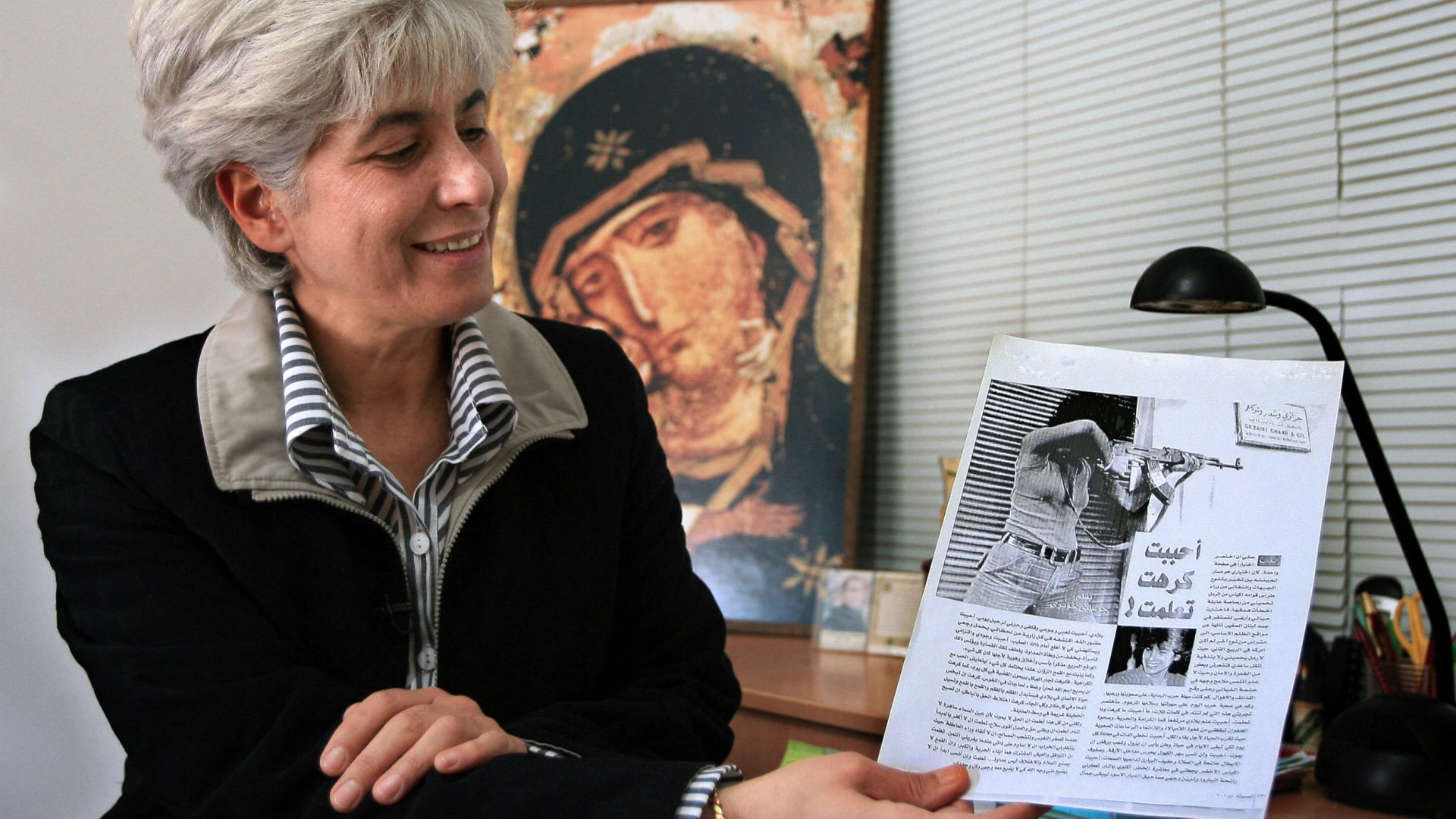
Jocelyne Khoueiry, a former Christian Maronite Phalange party fighter, looks at an iconic picture of herself holding a gun during fighting in downtown Beirut in 1975 at the height of Lebanon's civil war.

Jocelyne Khoueiry, a former Christian Maronite Phalange party fighter, looks at an iconic picture of herself holding a gun during fighting in downtown Beirut in 1975 at the height of Lebanon's civil war.

Christianity Today September 14, 2020
Marwan Naamani / AFP via Getty Images

On July 31, Jocelyne Khoueiry passed away mercifully five days before seeing Beirut destroyed, again. A key player in the civil war that once tore the city apart, she spent the rest of her life trying to stitch it back together, and all of Lebanon with it.

The Beirut explosion on August 4 reminded many of the worst days of the 1975-1990 conflict. The Lebanese capital divided into a Christian east and a Muslim west, alternately shelled by militias and foreign armies vying for control.

But though far smaller in scale than the blast at the port, the deaths caused by Jocelyne’s 1976 hand grenade also shook the nation.

Born as one of two daughters in a Maronite Christian family of ten, Jocelyne grew up across the street from the Beirut headquarters of the Phalange.

Originally a Christian youth movement dedicated to an independent Lebanon, the Phalange took great offense at the state-within-a-state formed by the 300,000 Palestinians who were fleeing war with Israel. The 1969 Cairo agreement gave the refugees sovereignty to organize their own communities and continue the armed struggle, with the blessing—though not involvement—of their host nation.

The Khoueiry family provided some of the earliest fighters to the Phalange Christian militia formed in response, and a not yet 20-year-old Jocelyne enlisted with her brothers. In 1975, the civil war broke out in earnest, and several Lebanese Muslim militias sided with the Palestinians.

Jocelyne was not a practicing Christian; she preferred the Beirut nightlife. But on May 7, 1976, on a routine patrol on the roof of the Regent Hotel, she had a vision. She said the Virgin Mary appeared to her, and she saw herself kneeling in veneration. But she was also overcome with a sense of dread, and prayed that God would protect the six other female fighters stationed there with her.

On the way down from the roof, she saw advancing Palestinian militants.

The Regent sat on a dividing line between mixed and wholly Christian neighborhoods of Beirut, and Jocelyne’s squad was completely alone. While the Phalange militia’s men had anticipated defending a different hotel encampment, a 300-strong regiment of Palestinians attacked the female outpost instead.

The battle lasted six hours. Eventually, Jocelyne risked exposure by climbing back to the roof, and threw down a hand grenade that miraculously killed the Palestinian commander. The militia scattered, and the line was held.

Jocelyne became a legend.

But in the years that followed, she contemplated becoming a nun.

“Nothing was enough for me,” Jocelyne said in a 2012 interview with Zenit. “I wanted to belong to God, and to belong to him totally.”

Various convents, however, turned her down, saying her place was in the world. She began studying theology at the Holy Spirit University to the north of Beirut. But when the fighting intensified in 1980, Bashir Gemayel, the charismatic leader of the Lebanese Forces which united the Phalange and other Christian militias, came recruiting.

Having long remembered her courage, he wanted Jocelyne to head a renewed women’s division. She was determined to turn him down.

But instead, she heard from God again.

“These young soldiers are wandering without a guide,” she sensed God say. “Give them the gospel, and teach them the true faith.”

Within two minutes, she said yes.

And the legend became a scandal.

“We were described as monsters, but the ladies were different,” said Assaad Chaftari, deputy intelligence chief for the Lebanese Forces. “I said no to Bashir, we don’t want them talking to our men—her girls will weaken them.”

But desperate times call for desperate measures.

“I was against women fighting, I was not very happy,” said Raymond Nader, a Lebanese Forces commander. “But deep inside of me, I thought that we needed them—just because we needed fighters.”

And then the scandal became a scourge.

“She instilled in us a sense of fear,” said Chaden Hani, a Muslim from the Druze sect, who as a teenager had to flee her home in the mountains due to the intensity of intercommunal clashes.

“Even their women are fighting—that means it is getting fierce, and shows their hatred toward us.”

But the scourge became an inspiration.

“Jocelyne was my hero,” said Nawal Fares, who enrolled with her at that time. “She was everything I wanted to be as a woman.”

Jocelyne eventually commanded 1,500 women during the war, serving in different capacities, including the front lines. She trained them during the day, and led Bible studies at night. And she set up a team of 30 priests and 12 female spiritual guides, who traveled with the fighters wherever they went.

All were dedicated to “the cause.”

“For us, Lebanon was as holy as God, as we mixed our nationalism and our Christianity,” said Chaftari. “Jocelyne was one of the pioneers who thought about the difference.”

It began in 1985, when Christian infighting soured her on the war. A faction including Chaftari and Nader overthrew the leader of the Lebanese Forces, who was very close to Jocelyne.

She announced her girls were laying down their arms, as politics divided her brothers in faith. Nader pleaded with her to stay with them. Jocelyne angrily rebuked him, telling him to leave with her.

He did not.

In time, Nader’s faction overthrew Chaftari’s. The final years of the civil war pitted Christian against Christian, weakening all. The 1990 Taif Accord humiliated the Christians. Their political powers were curtailed, and while one side’s leader was sent into exile, the other’s was sent to jail.

Instead of saving their country, they lost it.

Jocelyne, meanwhile, had shifted her struggle—from arms to knees.

For two years, she went into a spiritual retreat. Upon emerging, she mobilized anew.

In 1998, she founded the May 31st Movement for Lebanese Women. Dedicated to a Marian spirituality, it aimed to purify their spiritual lives and keep families together.

In 1995, she founded “Yes to Life,” expanding the focus to combat abortion.

And in 2000, she founded the Pope John Paul II Center, to lift up the marginalized.

“Maybe I didn’t choose my way,” Jocelyne told L’Orient-Le Jour in 2015. “I just followed the signs God sent me.”

Jocelyne Khoueiry and Pope John Paul IICourtesy of Shiraz Awad
Jocelyne Khoueiry and Pope John Paul II

Meanwhile, God was also giving signs to her former colleagues in battle.

“After the war, many officers eventually encountered the God of faith, and not just of ideology,” said Fares, who became a leading member of the spiritual formation committee within the May 31st movement.

“And after coming to Jesus, they would go tell Jocelyne.”

In 1994, Nader said he experienced a life-transforming beatific vision. With a new spiritual orientation, he dedicated himself to reconciling once-feuding Christian officers.

It included his own reconciliation with the female colleague he once offended, Jocelyne.

Together they worked to prepare Lebanon for the 1997 visit of Pope John Paul II. And she consulted with him on Lebanon: The Message, the 2007 political project inspired by the celebrated papal statement.

“Lebanon is more than a country,” said the pope. “It is a message of freedom and an example of pluralism, for East and West alike.”

But while Jocelyne and Nader primarily focused their activities on rebuilding Lebanon by healing its Christian population, Chaftari’s vision was more inclusive.

Deemed a traitor at the time of his ouster from the Lebanese Forces, deep spiritual introspection led him to reevaluate his life. As an intelligence officer, Chaftari had given orders to decide if a captured Palestinian would live or die.

In 2000, he became the only Lebanese fighter from any religion to publicly apologize for his role in the war. And it offended even Jocelyne, who despite her reservations still believed in the purity of “the cause.”

In 2014, Chaftari co-founded “Fighters for Peace” to reconcile everyone, Muslim and Christian alike. Three years later, he succeeded with Jocelyne—after she read his book.

Though she never joined his organization, in 2018 Jocelyne went with him to West Beirut—the Muslim quarter—to give a speech on the role of women in peace and war. She joined the daughter of a prominent civil war-era Shiite Muslim leader.

“‘Thank you,’ Jocelyne told me,” Chaftari recalled. “‘You made me cross this fictitious line.’”

Later in her life, Hani traversed an even greater crossing, becoming a follower of Jesus in 2000. Eventually, she forgave the Christians for their conduct in the war. But though she understands “the cause,” it now troubles her for a deeper reason.

“I admire her love for Lebanon as a female patriot,” said Hani. “The blood in her boils in me as well.

“But I still blame the Christians—they had a knowledge of Christ, while we didn’t. There were other ways to fight for Lebanon.”

Jocelyne eventually found them, as did Hani. In 2017, Hani joined Arab Baptist Theological Seminary as their researcher in peacebuilding affairs. She co-leads its “Friendship Network” to bring together lay Christians and Muslims, often from non-integrated areas of Lebanon.

Nader continued his friendship with Jocelyne through the difficult final years when pancreatic cancer confined her mostly to her home. But he recalls how she continually kept up with “her girls,” veterans from the civil war who oversee her organizations.

Chaftari is convinced Jocelyne would have become more active in grassroots interfaith reconciliation, had she not fallen ill. He hopes “her girls” will take up his cause in the years to come.

But even though Jocelyne’s calling was to serve the Christian community of Lebanon, it intersected with the whole. She recalled counseling a Palestinian woman contemplating abortion. Challenging herself, Jocelyne stayed by her side through delivery, and compensated all the lost income from keeping the baby.

“Jocelyne’s faith in Lebanon was in a diverse Lebanon,” said Fares. “She never deviated from this path.

“She was not the same person as a fighter as she was before she died, but her life was an upward progression, toward God.”

Two days after her passing, God honored her original desire: Jocelyne was received and buried as a Carmelite nun.

As she once told an interviewer: “The grace of God does not allow the plagues of war to decide my behavior.

“I felt that I was really free.”

Theology

Fleeing the Oregon Fires Forced Me to Rethink the Future

The exiled Israelites followed a pillar of smoke, one day at a time. Maybe I can do the same.

Christianity Today September 14, 2020
Kevin Jantzer / AP Images

September 10 was supposed to be my first day of teaching online. Almost exactly six months before, I stood in a classroom and asked my students if reports of the coronavirus made them feel afraid. It turned out to be the last conversation we would have face to face. That evening, our governor canceled school, and the remainder of the year was eventually scuttled.

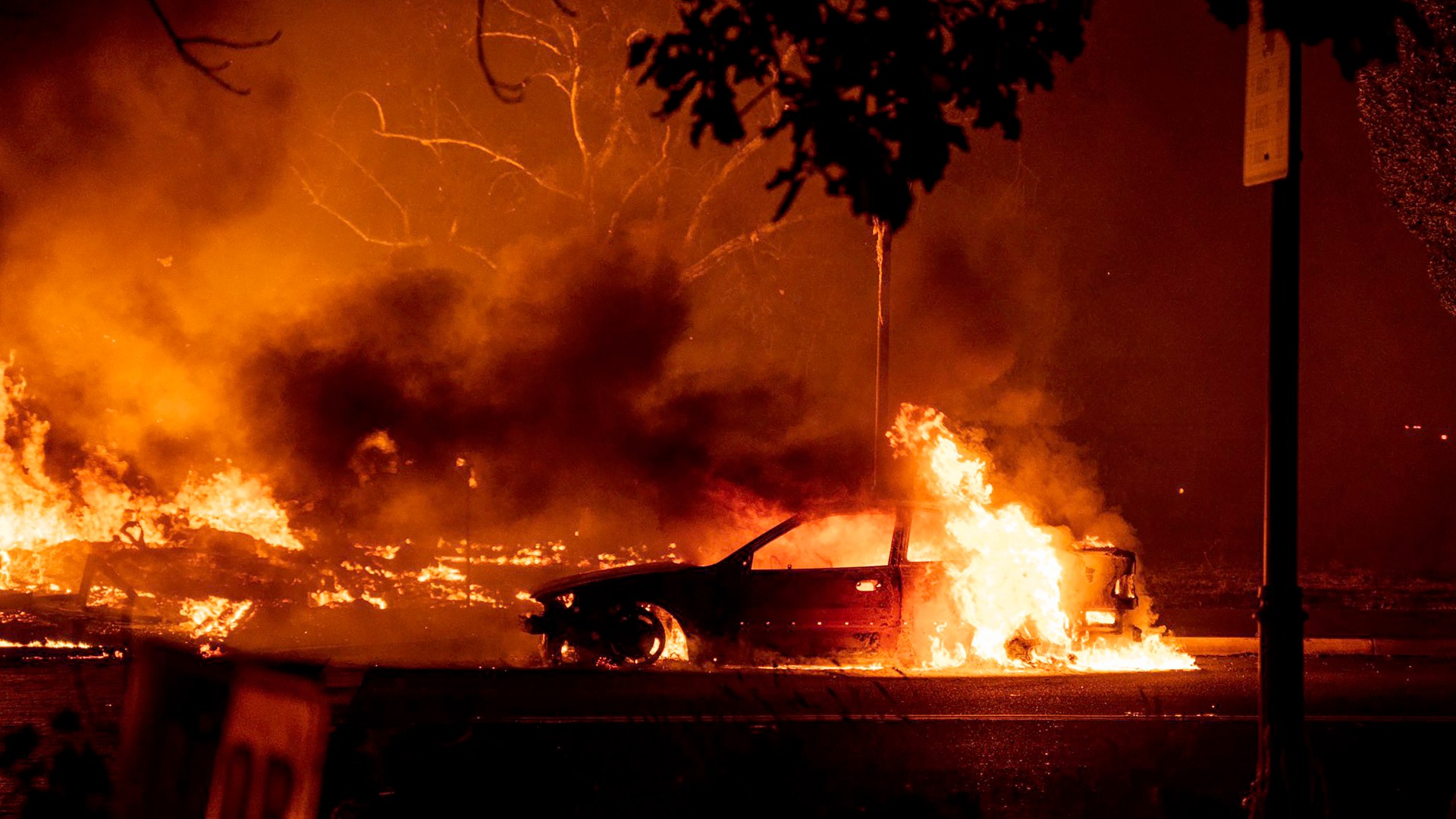
Last week was supposed to be a time to establish connection with a new crop of students and to usher in a new kind of normal with virtual teaching. But late Wednesday afternoon in Clackamas County, Oregon, the color of the air changed. I saw great orange-gray billows piling up over the roof, and the sun looked like a red eye blinking down through the haze.

The next day, smoke poured in, obscuring first the distant hills, then the nearer hills, then the trees at the end of our street. Finally, at 2 o’clock that afternoon, when local officials moved the boundary of the evacuation zone from five miles away to five blocks away and as ash began to drift down onto our laurel hedges, I decided to pack up my kids and go. I filled my car with birth certificates, photo albums, and computers and then drove away, trying to stay ahead of the encroaching flames.

The West Coast fires aren’t the first disaster of this year. As the calamities pile up, my friends and I keep saying to one another, “2020!” As if this year is a one-off. As if, when the calendar turns to January 1, 2021, our troubles will be over. But as the year drags on, I’m finding it harder to hope for the possibility of better times anytime soon. What if 2020 is not an anomaly but a bellwether? What if the problems accumulating now—climate change and racial reckoning, political division and disease control—get worse before they get better?

As I drove up the freeway surrounded by smoke and bumper-to-bumper traffic, unable to see the mountains and trees, unable to see the water under the bridge as we crossed from Oregon into Washington, I thought of the Israelites in the desert, wandering along after the pillar of fire and the cloud of smoke. They’d had a doozy of a year themselves. Some of the plagues had been reserved for the Egyptians, but other hardships had fallen on the Israelites: the late-night escape, the pursuing army, and the walk through the middle of a sea.

When they began to follow God into the desert, they had no idea that 40 years would pass before they emerged. Would it have been better if they had known? Probably not. They didn’t need to see the end from the beginning. All they needed to see was where God led. All they needed to watch was the movement of the cloud. “At the Lord’s command they encamped, and at the Lord’s command they set out” (Num. 9:23).

In these days of 2020, we are all a bit like the ancient Israelites: evacuees from the world as we knew it, headed out into the unknown. We still write things on our calendars, of course. We cast our visions and make our plans. In past years, some of us have gotten away with imagining that the pages of those planners depict the future with accuracy. But 2020 has laid bare the truth that our times have always been in God’s hands. What will happen next year or next week? Will school be canceled by a pandemic or a wildfire? What disaster will strike next? We cannot know.

I used to wonder why God chose to appear to the Israelites by day in a cloud of smoke. A pillar of fire, at least, gives light and heat. Smoke, on the other hand, reduces visibility. It disorients and obfuscates. But on that long freeway drive, I saw the symbolic purpose of smoke: It forces us to admit that we can’t see where we’re going, and it forces us to rely on God.

I’m not suggesting that the wildfires plaguing my beloved home state are a gift from God. No, fires and viruses and all manner of natural disasters are clearly evidence of a sin-sick and groaning creation. But our God is a creative God who works good even from calamity, and trust is the good that I see God working in my own heart in the midst of this terrible year. I’ve learned it the hard way, which might be the only way.

For now, my family and I are far from home. After we crossed the border into Washington and the smoke thinned a bit, we pulled off at a rest stop. There were lots of cars with Oregon plates—cars stacked with Rubbermaid totes that were full, I imagined, of birth certificates and photo albums and computers. One family leaned on the doors of their car, reaching for the five pizza boxes they’d balanced on top. Several of us walked our dogs in the grass. As we passed each other wearing our cotton masks, I could sense what was hidden from view: astonishment and relief, uncertainty and fear.

I feel those same emotions as I think about my family’s transitory life. Out here in the wilderness, I’m learning that I cannot know the future, much less control it. But I can hold God’s hand as I inch into the haze.

Sarah Sanderson has an MFA in creative nonfiction from Seattle Pacific University and teaches creative writing and public speaking to K-12 students near Portland, Oregon. Find more on her blog.

News
Wire Story

Charles Stanley Stepping Down After 50 Years as Pastor

At 87, the longtime First Baptist Atlanta preacher still doesn’t believe in retirement.

Christianity Today September 13, 2020
First Baptist Atlanta / Facebook

In a video announcement following the online service at First Baptist Church in Atlanta on Sunday, longtime pastor Charles Stanley announced his transition to pastor emeritus.

Stanley, who came to First Baptist as an associate pastor in 1969 before being named pastor two years later, informed the church’s board earlier this month of the decision.

“I’m so grateful [God] saw fit to allow me to serve as your pastor for more than 50 years,” he said. “As much as I love being your pastor, I know in my heart this season has come to an end.”

Stanley explained he isn’t retiring, but will focus his energies on In Touch Ministries, which he founded in 1977.

“As you know, I don’t believe in retirement. … I’ll continue to preach the gospel as long as God allows,” he added. “My goal remains the same—to get the truth of the gospel to as many people as possible as quickly as possible in the power of the Holy Spirit to the glory of God.”

[Editor’s note: Stanley said the same in a 2016 interview with CT. “I just to want to be used to the maximum of my potential through the last day of my life,” he said. “I can’t even see myself retiring because I have a message, and I can’t wait to tell it to the whole world.”]

Anthony George will transition from his position of associate pastor, which he accepted in 2012, to senior pastor. In 2017, the church announced a succession plan for Stanley, George, and First Baptist’s pastorate.

He followed Stanley’s comments in the video with some of his own. “Thank you for being strong and of good courage through every battle that you’ve had to fight, through every trial you’ve had to overcome,” said George. “You have stood tall and confident through all these years while at the same time remaining dependent and prayerful before an almighty God.

“Because you were a yielded vessel, the gospel of Jesus Christ—through you—has blanketed this globe. Truly, God has been with you wheresoever you have gone.”

Calling the last eight and a half years “the honor of a lifetime,” George directly addressed Stanley in the video on how the now-pastor emeritus will have a continued presence at the church. “It will be your legacy, sir, that is my standard, the standard that will inspire me to always do my best with God’s help for as long as God gives me to serve here.”

Stanley, who will turn 88 later this month, led First Baptist through a time of rapid growth not long after becoming pastor that eventually strained its space. In 1997, the church sold its properties in downtown Atlanta and relocated to its current location just north of Interstate 285 on North Peachtree Road in Dunwoody. First Baptist currently counts more than 12,000 members and an estimated global viewing audience in the millions.

Stanley’s election as Southern Baptist Convention president in 1984 and reelection in 1985 came during a crucial junction of the Conservative Resurgence. His 1985 election to another one-year term, specifically, has been called a watershed moment for the SBC and came in front of an estimated crowd of 45,519 messengers at the Dallas Convention Center.

Last year, the church held a celebration of Stanley’s 50 years at First Baptist. His children—pastor Andy Stanley of North Point Community Church in Alpharetta, and Becky Stanley Broderson of Dallas—testified about their father, and Georgia Gov. Brian Kemp issued a proclamation in Stanley’s honor.

“The words in this proclamation—I can promise you—cannot do honor and justice to everything that you’ve done,” Kemp stated. “But it is a symbolic gesture on behalf of your state for your service Dr. Stanley. … Thank you for your service and God bless you.”

Stanley issued a final challenge to the congregation in his address today.

“I will do what I’ve encouraged all of you to do,” he said. “I’m going to obey God, and leave all the consequences to him. God bless you all.”

News
Wire Story

Bahrain Makes Peace with Israel, Following United Arab Emirates

Today’s deal will normalize diplomatic, commercial, and security ties. Trump administration hopes more Arab nations soon follow.

US Secretary of State Mike Pompeo held closed-door meetings last month with Bahrain's royal family amid the Trump administration's push for Arab nations to recognize Israel.

US Secretary of State Mike Pompeo held closed-door meetings last month with Bahrain's royal family amid the Trump administration's push for Arab nations to recognize Israel.

Christianity Today September 11, 2020
Bahrain News Agency via AP

Bahrain has become the latest Arab nation to agree to normalize ties with Israel as part of a broader diplomatic push by President Donald Trump and his administration to fully integrate the Jewish state into the Middle East.

Trump announced the agreement on Friday, following a three-way phone call he had with Israeli Prime Minister Benjamin Netanyahu and Bahrain’s King Hamad bin Isa Al Khalifa. The three leaders also issued a brief six-paragraph joint statement, attesting to the deal.

“Another HISTORIC breakthrough today!” Trump tweeted.

The announcement on the 19th anniversary of the Sept. 11, 2001 terrorist attacks came less than a week before Trump hosts a White House ceremony to mark the establishment of full relations between Israel and the United Arab Emirates (UAE). Bahrain’s foreign minister will attend the event.

“There’s no more powerful response to the hatred that spawned 9/11 than this agreement,” Trump told reporters at the White House.

It represents another diplomatic win for Trump less than two months before the presidential election and an opportunity to shore up support among pro-Israel evangelicals. Just last week, Trump announced agreements in principle for Kosovo to recognize Israel and for Serbia to move its embassy from Tel Aviv to Jerusalem.

“This is a historic breakthrough to further peace in the Middle East,” Trump, Netanyahu, and King Hamad said in the statement. “Opening direct dialogue and ties between these two dynamic societies and advanced economies will continue the positive transformation of the Middle East and increase stability, security, and prosperity in the region.”

Like the UAE agreement, Friday’s Bahrain-Israel deal will normalize diplomatic, commercial, security, and other relations between the two countries. Bahrain, along with Saudi Arabia, had already dropped a prohibition on Israeli flights using its airspace. Saudi acquiescence to the agreements has been considered key to the deals.

Trump’s son-in-law and senior adviser Jared Kushner noted that the agreement is the second Israel has reached with an Arab country in 30 days after having made peace with only two Arab nations—Egypt and Jordan—in 72 years of its independence.

“This is very fast,” Kushner told The Associated Press. “The region is responding very favorably to the UAE deal and hopefully it’s a sign that even more will come.”

Netanyahu welcomed the agreement and thanked Trump. “It took us 26 years between the second peace agreement with an Arab country and the third, but only 29 days between the third and the fourth, and there will be more,” he said, referring to the 1994 peace treaty with Jordan and the more recent agreements.

The agreement will likely be seen as a further setback to the Palestinians who tried unsuccessfully to have the Arab League condemn normalization with Israel until they have secured an independent state. That was one of the few cards still held by Palestinians in negotiations as peace talks remain stalled.

The joint statement made passing mention of the Palestinians, saying the parties will continue efforts “to achieve a just, comprehensive, and enduring resolution to the Israeli-Palestinian conflict to enable the Palestinian people to realize their full potential.”

The agreement makes Bahrain the fourth Arab country, after Egypt, Jordan, and the UAE, to have full diplomatic ties with Israel. Other Arab nations believed to be on the cusp of fully recognizing Israel include Oman and Sudan. While tacitly blessing the deals, Saudi Arabia—the regional power player—is not expected to move as quickly.

Like the UAE, Bahrain has never fought a war against Israel and doesn’t share a border with it. But Bahrain, like most of the Arab world, long rejected diplomatic ties with Israel in the absence of a peace deal establishing a Palestinian state on lands captured by Israel in 1967.

The agreement could give a boost to Netanyahu, who was indicted on corruption charges last year. Deals with Gulf Arab states “are the direct result of the policy that I have led for two decades,” namely “peace for peace, peace through strength,” Netanyahu has said.

The Israeli-UAE deal required Israel to halt its contentious plan to annex occupied West Bank land sought by the Palestinians. Telephone calls soon began working between the nations as they continue to discuss other deals, including direct flights.

While the UAE’s population remains small and the federation has no tradition of standing up to the country’s autocracy, Bahrain represents a far-different country.

Just off the coast of Saudi Arabia, the island of Bahrain is among the world’s smallest countries, only about 760 square kilometers (290 square miles). Bahrain’s location in the Persian Gulf long has made it a trading stop and a naval defensive position. The island is home to the US Navy’s 5th Fleet and a recently built British naval base.

Bahrain is acutely aware of threats posed by Iran, an anxiety that comes from Bahrain’s majority Shiite population, despite being ruled since 1783 by the Sunni Al Khalifa family. Iran under Shah Mohammad Reza Pahlavi had pushed to take over the island after the British left, though Bahrainis in 1970 overwhelmingly supported becoming an independent nation and the UN Security Council unanimously backed that.

Since Iran’s 1979 Islamic Revolution, Bahrain’s rulers have blamed Iran for arming militants on the island. Iran denies the accusations, though weapons experts suggest explosives found there bear similarities to others linked to Iran. Israel and Iran view each other as top regional enemies.

Outside of those tensions, Bahrain’s Shiite majority has accused the government of treating them like second-class citizens. The Shiites joined pro-democracy activists in demanding more political freedoms in 2011, as Arab Spring protests swept across the wider Middle East. Saudi and Emirati troops ultimately helped violently put down the demonstrations.

In recent years, Bahrain has cracked down on all dissent, imprisoned activists, and hampered independent reporting on the island. While the Obama administration halted the sale of F-16 fighter jets to Bahrain over human rights concerns, the Trump administration dropped that after coming into office.

Bahrain’s royal family and officials have come out in support of the Israel-UAE agreement. However, civil society groups and others have condemned the move and warned the monarchy not to follow in the UAE’s footsteps—despite Bahrain’s yearslong flirtation with Israel and Jewish leaders. Unlike the Emirates, Jews had a historical presence on the island and some still live there.

In 2017, two prominent US rabbis said Bahrain’s king told them he hoped the Arab boycott of Israel would end. An interfaith group from Bahrain that year also visited Israel, though the state-run Bahrain News Agency later said that it didn’t “represent any official entity” after an uproar erupted on social media.

Bahrain has increasingly relied on support from other nations as it struggles with its debts, particularly neighboring Saudi Arabia. In that way, Bahrain has followed in lockstep with Riyadh, meaning any normalization with Israel likely got the kingdom’s approval though Saudi Arabia has for its part remained silent since the Emirati announcement.

Associated Press writers Aya Batrawy in Dubai, United Arab Emirates, and Ilan Ben Zion and Joseph Krauss in Jerusalem contributed to this report.

Ideas

Keep Calm and Reboot

The Christian disciplines of self-suspicion, forgiveness, and hope all function well. We need to restart our faith in them.

Christianity Today September 11, 2020
Illustration by Rick Szuecs / Source images: Envato Elements

Minneapolis endured two nights of curfew last month due to unrest that erupted after a false report of another black man shot by police. The mayor acted fast to stem the turbulence, not wanting a repeat of the awfulness that happened with George Floyd’s killing and its aftermath. Huddled in my home fairly far from downtown Minneapolis, I prayed for others—in Kenosha and Portland and elsewhere. Nineteen years since 9/11, a nation united has fractured. “We have met the enemy and he is us.

The chasmic political and economic divides in America, driven deeper by a relentless pandemic, seem hopelessly unbridgeable. Our culture and political systems—fueled by the merciless thrill of social media and conspiracy crazies—thrive in the zero-sum game. Only now the online vitriol has spilled onto the streets. Reactions vacillate between the call for police to restore order and worry against police overreach.

The hallmark of free speech and rightful assembly in America relies upon civic order. Civic order relies on a commitment to common good. Theologically, the common good ties to our commitment to all persons made in God’s image (Gen. 1:27) and to the common grace generously and indiscriminately bestowed by God upon the righteous and unrighteous alike (Matt. 5:45).

To the extent the common good untethers from common grace—a doctrine based on God’s undeserved love for all people—goodness perverts into partisanship and subjects to societal whim, market value, individual rights, and personal preference. Once we feel we deserve what we get or are owed what we lack, common goodness turns tribal. We fight to preserve what we’re jealous for and fight against what we envy.

Longtime pundit Andrew Sullivan asserts that American democracy can’t survive “without some general faith in an objective reality and a transcendent divinity. That’s why I suspect a reinvention and reboot for Christianity is an urgent task.”

Christianity, the faith, cannot be reinvented. The divinity of Jesus as God in the flesh, the presence and power of the Holy Spirit, and the Bible’s authority, among other tenets, remain nonnegotiable no matter the urgency.

Christians need to reground ourselves in core distinctives to shake salt and shine light.

However, Christianity as practiced by the faithful could use a reboot—a computer term analogous to theological words such as restoration and reformation. The motto for the Protestant Reformation was Semper reformanda: the church must “always reform.” Christians need to reground ourselves in core distinctives to shake salt and shine light in these viral, vitriolic, and violent times.

Among these core distinctives is the discipline of self-suspicion. I’ve written already about the need as Christians to always assume our own wickedness and wrongdoing—especially when we feel we are right and have done nothing wrong. Virtue requires a continual skepticism of what’s going on inside us, a low-grade leeriness as to the true content of our character. Our hearts can be murky as to motive such that even our very best and brightest intentions dim in the shadow of self-interest (Jer. 17:9; Rom. 7:15). The Reformation’s insistence on total depravity does not indict every human as intrinsically evil but rather insists every aspect of our being is tainted by sin and worthy of suspicion. As sinners, we’re capable of perverting goodness even as we seek to do it.

A second discipline crucial to a reboot is Jesus’ command to love our enemies (Matt. 5:44; Luke 6:27). To love an enemy runs counter to every impulse in our age of outrage. Jesus’ injunction to pray for our persecutors comes off as weak and naive. To respond to meanness with kindness—turning the other cheek, giving up your coat, and going the extra mile—elicits strong objections and cries of cheap grace. But grace always begins with indictment. To forgive is to blame. Step up to any stranger, announce, “I forgive you,” and watch the reaction.

Forgiveness does not demand the suppression of anger. Instead, Christian forgiveness taps into the energy anger generates. If by righteous anger we mean the impassioned hostility against those evils that offend, frustrate, threaten, or endanger, then the cross of Jesus—the passion of Christ—is anger’s fullest and finest expression. The sin Jesus bore—of which we all share guilt—brought down the full fury of heaven. And yet God’s anger against us redeems into an eternal relationship with us. Righteous anger hungers and thirsts for justice; it has love as its lodestar and reconciliation as its endgame. The Scriptures remind us love always protects, always trusts, always hopes, always perseveres (1 Cor. 13:7). Love seeks first the kingdom of God and the goodness of others. Without love, anger is but a cataclysmic explosive set on destruction.

Lastly, a reboot of Christianity should exude a strong confidence in a future yet to be revealed. Christ’s return portends dramatic hope—a Judgment Day when all wrongs are made right and all things are made new, a perpetual nativity of heaven and earth, a home in glory land that outshines the sun. Christians believe in the resurrection of the body and the life everlasting, a new dawn breaking back into our present, a love from which nothing can separate us, a hope that cannot disappoint (Rom. 5:5; 8:39).

Christian hope fosters no illusions of human self-improvement. Self-suspicion abides. We cannot escape our hardships or raise ourselves from the dead. Suffering, rather than meaningless pain or just desserts, translates through the Cross into meaningful redemption and reinforced character. Death, rather than a terrifying end to be feared, becomes the gateway to life everlasting. Resurrection weaves life’s hardships into its beautiful tapestry of new creation, anticipating that day when all things will be made right. Our hope is in God who has already done this, started and finished, beginning and end.

Christian hope is not for a future that may happen but anchored in God for whom the future has happened already. Our sure hope is such a sure thing we can endure whatever troubles come our way in the meantime.

Whenever I watch the 1939 classic The Wizard of Oz, I like how all Dorothy ever wants she finds she’s had all along. In the movie, Oz was all just a dream. In the books, however, Oz is a real place, which is how it is in our book. The ultimate promises of Scripture read like a dream, but the reality it opens to us is more real than we could ever dream. In Christ, all we’d ever want is what we already have. It’s been here among us all along, so good we can taste it already, even as the full banquet awaits (Rev. 19:7–9). “Look, God’s home is now among his people!” (Rev. 21:3, NLT). Yes it is. And as we know, there’s no place like home.

Daniel Harrell is Christianity Today’s editor in chief.

Ideas

The Absence of Injustice Is Not Justice

Contributor

Acting affirmatively on the side of racial justice affirms the truth of the gospel.

Christianity Today September 11, 2020
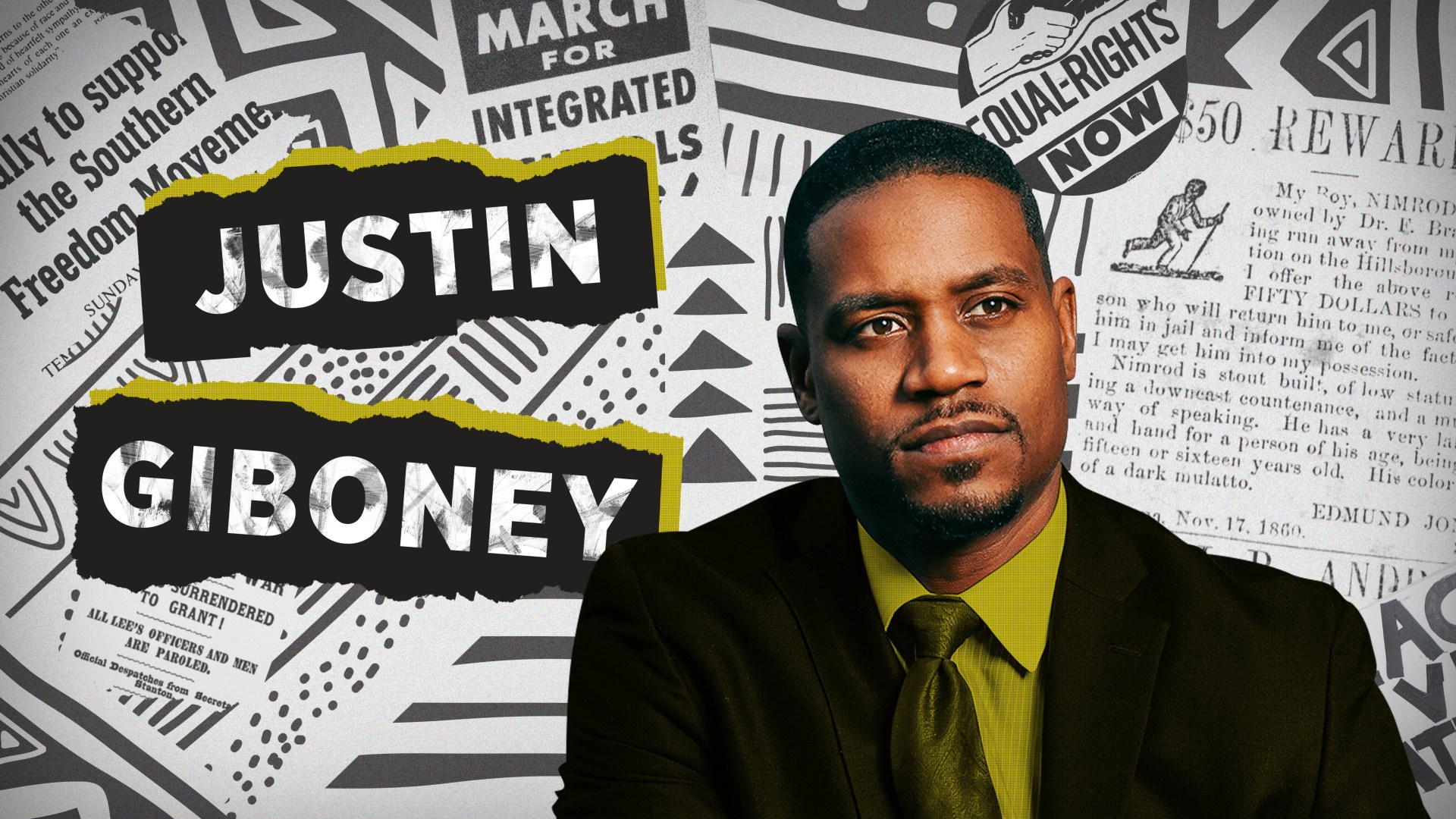
Illustration by Mallory Rentsch / Portrait: Courtesy of Justin Giboney / Background Images: WikiMedia / Unsplash / New York Public Library

Invariably, when grave injustice is exposed in American society, people ask, “Where’s the church?” Maybe there’s something flattering about the question. It’s an acknowledgement of the extraordinary life and words of Jesus Christ and the otherworldly principles of the Christian faith articulated in commands such as “Love your enemies and pray for those who persecute you” (Matt. 5:44). However, the question is more likely intended to shame Christians into action by revealing the stark contrast between our beliefs and practices. Sadly, the question has become mostly rhetorical because there seems to be little to no expectation that churches will do what’s necessary to lead the country toward a more just society on racial issues.

Chance the Rapper, a Grammy Award–winning hip-hop artist, repeated this query in light of recent deaths from racialized violence. Some contend that the question unfairly ignores the tireless work some churches are doing in the community. For example, Christians in Chicago have been feeding low-income residents since the COVID-19 crisis began as well as hosting and participating in demonstrations in response to racialized violence.

But in another way, it’s the right question when you consider the American church as a whole, especially those parts of the church who wield the most power in society. At best, many white evangelicals treat racial justice like an extracurricular activity. At worst, racial justice is framed as a distraction to proclaiming the gospel of Jesus Christ. When mentions of race and justice surface, too many evangelical leaders roll out distorted and extreme examples to make the case against Christian participation in justice efforts. They’ve resigned themselves to being skeptical commentators, experts at finding fault in the efforts of others and unwilling to find inspiration or courage to attack the problem more biblically. When black people ask, “Are you seeing this? Do you see us?” it gets lost in an echo chamber of bad theology, excuses, and bad faith deflections.

However, the Bible tells a much different story, and its principles lead us to a much different conclusion. I don’t contend with the assertion that our primary purpose is to proclaim the gospel, but I do disagree with the conclusion some draw from that assertion. The primacy of the Great Commission doesn’t diminish our obligation to “act justly” (Mic. 6:8). The Bible clearly establishes that God expects we’ll do his bidding and be self-sacrificial in our efforts to uphold justice and moral order. The prophet Isaiah lived at a time when injustice and immorality were pervasive. Isaiah 59:15–16 says,

Truth is nowhere to be found, and whoever shuns evil becomes a prey. The Lord looked and was displeased that there was no justice. He saw that there was no one, he was appalled that there was no one to intervene.

God was disturbed by the fact that his people were not doing the work of justice. He had set a standard and, obviously, intended his people to be purveyors of justice. Instead, his people had grown accustomed to the iniquity in their midst, at peace with injustice and immorality. God grew deeply distressed.

Our duty is more than not perpetuating injustice. We have an affirmative obligation to proactively assert God’s will through acts of justice. To contend otherwise hedges on biblical illiteracy since God continually repeats this requirement (Isa. 59:15–16; Mic. 6:8; Amos 5:23–24; Luke 4:18; 10:25–37). Justice isn’t a lack of injustice. It’s an active affirmative with form and substance of its own.

Racism is indeed a sin and heart issue, but its deadly effects can’t be taken lightly and can be brought to heel by Christian advocacy. Slavery was also a sin issue, but Christian abolitionists decided it was their duty to advocate for the freedom of their brothers and sisters instead of waiting for everyone’s heart to change. The “pray and let God take care of it” cop-out concerning racism is problematic from a biblical perspective. When your child cuts her knee and is bleeding profusely, you don’t just pray and wait. You urgently clean and bandage the wound because God has given you the means to address it. Accordingly, why would one only pray and wait when our brothers and sisters are being terrorized by racial injustice? God uses his servants to do his work, and majority Christians have the social and political capital to dismantle racism in all its forms. In the past, believers like Fannie Lou Hamer and Medgar Evers fought to end segregation and champion the right to vote. More recently, Christian leaders like Dr. CJ Rhodes and Dr. Ligon Duncan advocated for changing the Mississippi state flag.

First John 3:17–18 says, “If anyone has material possessions and sees a brother or sister in need but has no pity on them, how can the love of God be in that person? Dear children, let us not love with words or speech but with actions and in truth.” In the context of racial injustice, it is unfaithful to say we love our brothers and sisters and not act on their behalf when we have the capacity to do so. We must uphold the imperative of prayer, but we can’t use prayer as a cover for not fixing the problems God has placed in our spheres of influence.

If we want to show society that justice isn’t just about an exchange of power or tearing down important institutions, then we must demonstrate it on the ground and provide a hopeful vision.

Christians taking the lead on fixing racial justice would give us the opportunity to counter the distorted versions of justice we often lament. If we want to show society that justice isn’t just about an exchange of power or tearing down important institutions, then we must demonstrate it on the ground. Providing a hopeful vision of justice is much better than avoiding justice due to the misconceptions.

Christians need to bring the same tenacity that we demonstrate when advocating for pro-life and religious liberty to the policy debate about racialized violence. I truly believe that our failure to do so has impeded our ability to create a more diverse coalition around the aforementioned and other issues confronting our world. The failure to uphold Christian values when it comes to race and justice seriously compromises the credibility of Christian conservatives. Tenaciously attacking racial injustice uplifts and endears marginalized groups who, historically, have little reason to trust that majority Christians have their best interest in mind. Doing justice would enable majority Christians to advocate for other issues from higher ground and with better footing. Most importantly, the failure to do justice damages the American church’s ability to evangelize. And if evangelism is to be our first priority, we’d best begin battling injustice, if for no other reason than to prove our faith isn’t dead.

Justin E. Giboney is an attorney, political strategist, president of the AND Campaign, and coauthor of Compassion (&) Conviction: The AND Campaign’s Guide to Faithful Civic Engagement. Follow him on Twitter @JustinEGiboney.

Apple PodcastsDown ArrowDown ArrowDown Arrowarrow_left_altLeft ArrowLeft ArrowRight ArrowRight ArrowRight Arrowarrow_up_altUp ArrowUp ArrowAvailable at Amazoncaret-downCloseCloseEmailEmailExpandExpandExternalExternalFacebookfacebook-squareGiftGiftGooglegoogleGoogle KeephamburgerInstagraminstagram-squareLinkLinklinkedin-squareListenListenListenChristianity TodayCT Creative Studio Logologo_orgMegaphoneMenuMenupausePinterestPlayPlayPocketPodcastRSSRSSSaveSaveSaveSearchSearchsearchSpotifyStitcherTelegramTable of ContentsTable of Contentstwitter-squareWhatsAppXYouTubeYouTube