Theology

Juneteenth Was an Answer to Centuries of Prayer

African Americans asked the Lord for liberation for years. They still do.

Christianity Today June 19, 2020
The New York Public Library

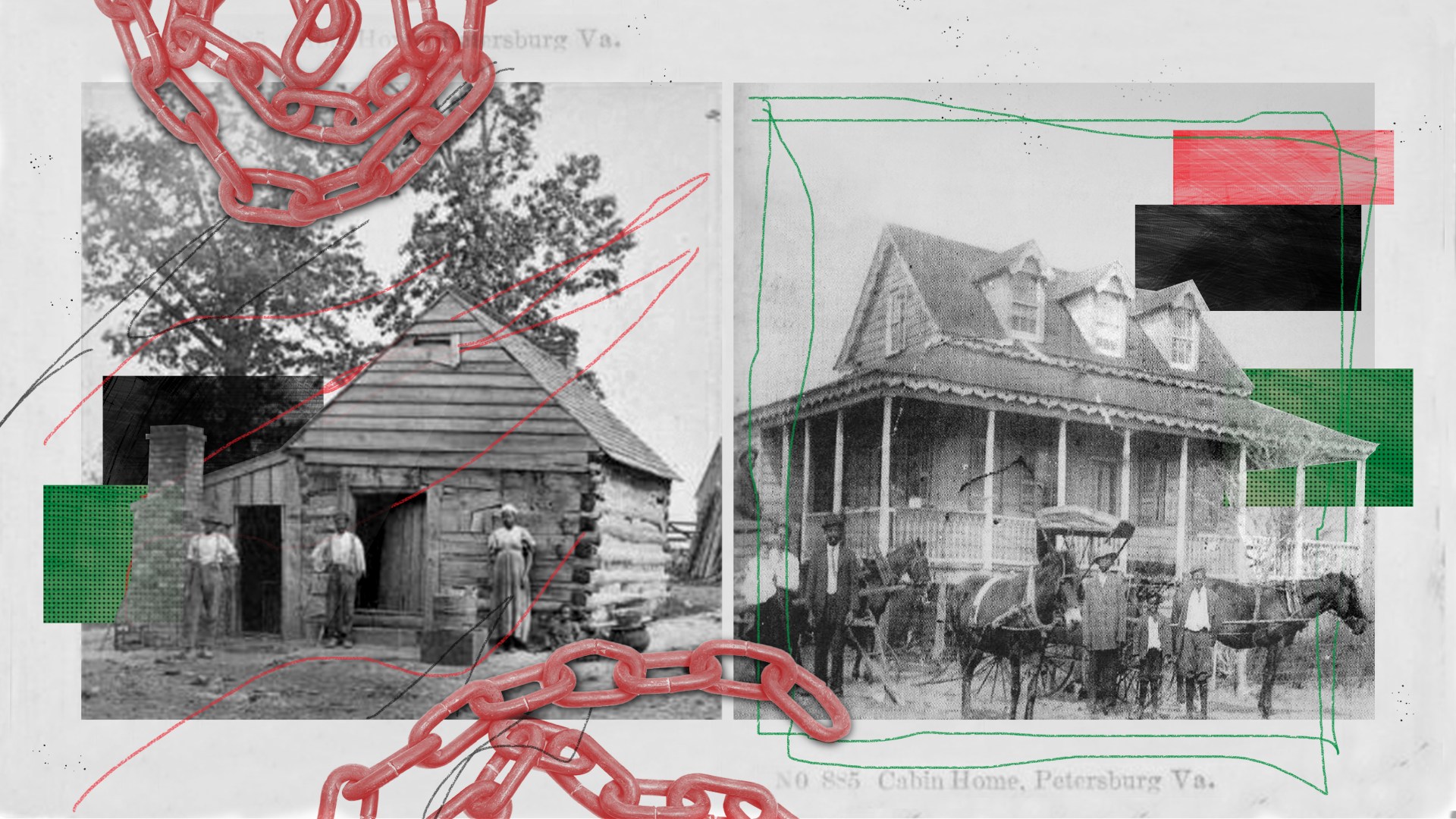
The first celebration of Juneteenth began at the same courthouse in Galveston, on the same date where, one year before, enslaved people in Texas learned that the war was over and they were now free. On these same steps, Union Major General Gordon Granger had read, “The people of Texas are informed that, in accordance with a proclamation from the Executive of the United States, all slaves are free. This involves an absolute equality of personal rights and rights of property between former masters and slaves. …” On this day, June 19, 1866, the Emancipation Proclamation was read out loud, and then those gathered progressed to Methodist Episcopal South (now Reedy Chapel AME Church) for a public prayer meeting.

While history did not record the prayers from this gathering, that the event itself happened was noteworthy. Public prayer meetings by African Americans were rare during slavery. Though independent African American churches in the South existed during the antebellum period, the majority of enslaved African Americans worshipped alongside the people who enslaved them. Slave owners on plantations and farms presided over church services that served their own oppressive purposes. While some enslaved people preached, their sermons sounded as degrading as those of white ministers: Obey your master, don’t steal food, and so on. Enslaved African Americans were keenly aware that this type of preaching was a sham, a mechanism to attempt to keep them docile and complacent in their positions as enslaved persons.

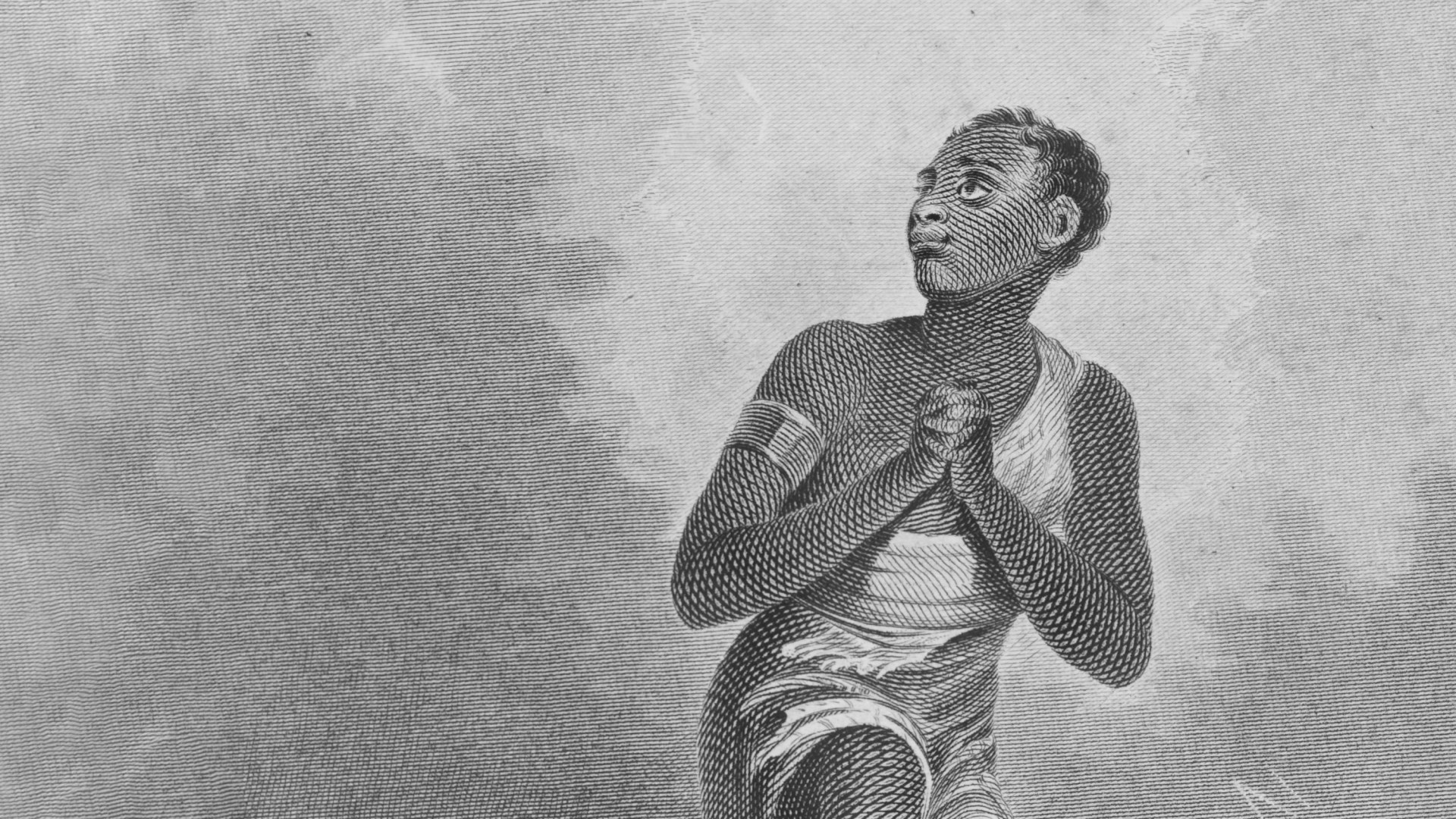
Enslaved African Americans, on the other hand, practiced their faith in organized secret meetings. At these “invisible institutions,” as renowned African American religious historian Albert J. Raboteau later called them, enslaved communities could sing their own songs, preach their own sermons, and pray their own prayers. These meetings were continual acts of resistance against slaveholders’ power and slaveholders’ belief that they had to use Christianity to make slaves obedient. These meetings also signified the lengths that enslaved people went to care for their own souls and the souls of their fellow yoked persons.

Anderson Edwards, a formerly enslaved preacher in Texas, had this to say about what slave masters expected from slave preachers, and how he ministered while away from the master’s watchful eye:

I been preachin’ the Gospel and farmin’ since slavery time. … When I starts preachin’ I couldn’t read or write and had to preach what massa told me and he say tell them n— iffen they obeys the massa they goes to Heaven, but I knowed there’s something better for them, but daren’t tell them ’cept on the sly. That I done lots. I tell ’em iffen they keeps prayin’ the Lord will set ’em free.

Another formerly enslaved man, Wash Wilson, remembered that when enslaved persons would begin to sing “Steal Away to Jesus,” it meant there would be a secret prayer meeting that night, as Raboteau recounts in Slave Religion. He recollected that “De masters … didn’t like dem ’ligious meetin’s, so us natcherly slips off at night, down in de bottoms or somewhere. Sometimes us sing and pray all night.”

These secret prayer meetings put enslaved people in danger. Slaveholders feared the prayers of the enslaved. Owners and overseers believed that enslaved people prayed against them, threatening enslaved African Americans with punishment if they were found attending and holding these prayer meetings. Still, enslaved people used prayer as a weapon to fight for their freedom, believing that God, in his grace, mercy, and kind providence, would deliver them from bondage.

Those prayers continued after the joy of the inaugural Juneteenth gave way to the horror of Jim Crow. In 1900, Reformed pastor and lifelong advocate of African American rights Francis Grimké implored his congregation to pray “to overcome the evil that is in us, to break the fetters of sin … and make us freemen indeed.”
Grimké also encouraged his African American flock to pray for racial progress: “Pray?” he preached from the pulpit of Washington, DC’s Fifteenth Street Presbyterian Church. “Yes, let us pray without ceasing, that God would not only help us to build ourselves up in the great and positive elements that go to make up a true manhood and womanhood, but also that he would help us with his own great might to resist with all the energy of our natures this things which stand in the way of our progress.”

Grimké also implored his congregation “to pray for those oppressing us.” In particular, he directed his church “to pray that God would have mercy upon them; that he would open their blind eyes, that he would show them the error of their ways … and lead them to conform to principles of right, of justice and humanity.” These exhortations exuded the spirit of Juneteenth prayers.

It should be no surprise that this fervent prayer tradition was central to the civil rights movement of the 1950s and 1960s. Coretta Scott King recalled a prayer by her husband, Martin Luther King Jr., during a particularly rough stretch of the Montgomery bus boycott. One night he received a threatening phone call. Upset, he entered his kitchen and prayed, “Lord, I am taking a stand for what I believe is right. The people are looking to me for leadership, and if I stand before them without strength and courage, they will falter. I am at the end of my powers. I have nothing left. I have nothing left. I have come to the point where I can’t face it alone.” She later wrote in Standing in the Need of Prayer: A Celebration of Black Prayer that “when Martin stood up from the table, he was imbued with a new sense of confidence, and he was ready to face anything.”

In his book Juneteenth: A Celebration of Freedom, Charles Taylor includes a “Traditional Juneteenth Prayer.” The prayer is in the style of African American prayer—stylish, poetic, rich in biblical imagery. It opens with familiar words to any person who grew up in an African American church: “Father, I stretch my hand to thee—for no other help I know. Oh, my rose of Sharon, my shelter in the time of storm. My prince of peace, my hope in this harsh land. I bow before you this morning to thank you for watching over us and taking care of us. This morning you touched us and brought us out of the land of slumber, gave us another day—thank you Jesus.” The prayer ends with a ring of the ultimate freedom that lay ahead for every believer, contextualized within African American trial and tribulation:

When I come down to the river of Jordan, hold the river still and let your servant cross over during a calm down. Father, I’ll be looking for that land where Job said the wicked would cease from troubling us and our weary souls would be at rest; over there where a thousand years is but a day in eternity, where I’ll meet with loved ones and where I can sing praises to thee, and I can say with the saints of old, “Free at last, free at last, thank God almighty, I am free at last.” Your servant’s prayer for Christ sake. Amen!

Today, on Juneteenth, the traditional prayer service consists of prayers for the future. This makes sense. In 1865 and 1866, the new freed people likely had unclear notions about the meaning of freedom. It is no mystery that those had prayed for freedom would now pray for their future in freedom.

In recent decades, churches have developed special Juneteenth liturgies. Some of these services draw from the African American Lectionary, where theologian J. Kameron Carter writes,

Juneteenth invites us to reflect upon the fact that during the two-and-a-half-year period between Emancipation Day and Juneteenth, there were still some people of color, people of African descent in the United States, who were still in bondage. They were still functioning as slaves, though legally they were free. Juneteenth, then, was for them a delayed celebration, a delayed enforcement of freedom. It represented a lagging liberation. This time lag of liberation is a metaphor of what it means to exist in the in-between of freedom, in freedom’s now-but-not-yet. In other words, Juneteenth points to the fact that liberation is not a one-time event. It is an ongoing project beckoning us to write the vision of freedom and issue renewed proclamations of “freedom now.” Juneteenth signifies the fact that freedom and liberation is both behind and ahead of us.

In this long moment of anti-black racism that has manifested itself in the killing of Ahmaud Arbery, and the long list of unarmed African Americans killed unjustifiably by police officers, including Eric Garner, Oscar Grant, Alton Sterling, George Floyd, and Breonna Taylor, Juneteenth is a commemoration of African American suffering and overcoming. It is a recognition that the prayers of the suffering and the oppressed can be answered, even if it ultimately takes centuries.

Eric Michael Washington, PhD, is associate professor of history and director of African and African diaspora studies at Calvin University, Grand Rapids, Michigan.

Church Life

The Hidden Figures of the Church

From Fannie Lou Hamer to Breonna Taylor, black women can no longer be erased from the push for racial justice.

Christianity Today June 19, 2020
Illustration by Mallory Rentsch / Source Images: Nikko Tan / Pexels / JD Mason / Houcine Ncib / Unsplash / Robin Gentry / Getty

As evangelical organizations and white pastors speak out with new urgency to declare “black lives matter,” many have in mind the deaths of black men. The high-profile murders of Ahmaud Arbery in Georgia and George Floyd in Minneapolis have spurred a global outcry and shifted something within the church. But in this new iteration of evangelical reckoning with systemic racism and police brutality, there has not been the same attention toward black women—namely, 26-year-old Breonna Taylor, who was killed in March by Louisville police who entered her home unannounced in the middle of the night looking for suspects who were already in custody. The officers responsible have not been charged and are still on the job.

Her story is significant because she is not the only one. In death, Taylor joins an unfortunate sisterhood, including Atatiana Jefferson, Rekia Boyd, Kathryn Johnston, Sandra Bland, and Aiyana Stanley-Jones, to name just a few black women and girls killed by police violence.

The absence of Breonna Taylor from evangelical conversations about racial justice is indicative of a broader issue. Despite being the most religiously devout Christian demographic in the country, black women are underrepresented in almost every significant public facet of evangelical life, from black heroines in church history to black authors in Christian publishing.

In this moment, we are already starting to see an initial spike in attention toward female black voices. But the church cannot make meaningful progress toward racial justice without sustained, intentional efforts to acknowledge black women, our powerful witness, and our contributions to the body of Christ.

Overlooked but Seen by God

Scan the bookshelves for Bible studies written by African American women, and you will typically find two authors (Priscilla Shirer and Jackie Hill Perry).

According to InterVarsity Press editor Edward Gilbreath, “For many years, publishers did not believe there was a market for such books.” Yet, according to the American Bible Society, African Americans are more avid Bible readers than other ethnic groups, with 69 percent turning to Scripture multiple times a year compared to a smaller number of whites (44%) and Hispanics (52%).

Black women often serve as the spiritual center for our families and regularly rank among the most devout demographics in the country. According to the Pew Research Center, black women are most likely to believe in God with absolute certainty (83%), pray daily (79%), and attend church weekly (52%).

“I watched my mom, like a lot of women in the churches I grew up in, raise money for the church and serve as the cornerstone of their churches, their communities, and their families, yet they are denied formal leadership roles,” said Stachelle Bussey, a minister and founder of The Hope Buss, a nonprofit organization based in Louisville.

Part of uplifting black women is listening to us when we say we feel erased.

In evangelical leadership, black women may be brought in for diversity initiatives but not empowered as decision-makers.

“I often find myself feeling as though I need to defend my knowledge, expertise, and leadership ability in both Christian and secular settings due to the pervasive gender and racial prejudices that still exist,” said Shantel Crosby, a leader with Be the Bridge Louisville and a grant administrator in the Louisville mayor’s office.

Kristina Button, a writer for The Witness: A Black Christian Collective, said black women are “relegated to certain stereotypical roles and not given the opportunities to lead in roles we feel called to lead in.”

Black women who have branched out to start ministries on our own risk having our efforts looked over or co-opted. Recently, a well-known male African American pastor launched a racial reconciliation ministry with a name similar to Be the Bridge, popular nonprofit founded by Latasha Morrison.

Morrison was circumspect in discussing the situation, but reiterated that African American men have a special duty to lift the voices of African American women. “Impact over intent,” she said. “Your intent may not be to erase black women, but the impact of certain actions is erasure, and part of uplifting black women is listening to us when we say we feel erased.”

The erasure of black women in the church has a long history, evidenced by the absence of African American women from sermons and Sunday school lessons, even as leaders make efforts to reclaim the legacies of civil rights heroes like Martin Luther King Jr., John Lewis, and Fred Shuttlesworth.

In the proportion of evangelical lessons that reference women at all, we are more likely to hear about the faith of Elisabeth Elliot, Corrie ten Boom, Hannah More, or Ruth Graham than Jo Ann Robinson, Autherine Lucy, Ida B. Wells, or Fannie Lou Hamer.

Even among the women of the Bible, we celebrate the stories of Sarah and Deborah, but what about Hagar, Shiphrah, Puah, and Jael? The depictions of most women in the Bible rarely reflect the reality that all women in the Bible were “women of color,” said Kristie Anyabwile, author of His Testimonies, My Heritage: Women of Color on the Word of God.

The first person to name God in the Bible was an Egyptian woman named Hagar. She called God El-Roi, “the one who sees.” The story of Hagar reminds women of African heritage that they, like Hagar, are seen and valued by God.

A Change Gonna Come

It is easy to get discouraged and feel as though not much has changed since Sojourner Truth boldly asked a group of mostly white suffragettes, “Ain’t I A Woman?” But a change may be on the horizon.

The Gospel Coalition (TGC) just launched a podcast for women called Let’s Talk, where two of the three women co-hosts are black: Jackie Hill Perry and Jasmine Holmes. The audience for TGC is predominately white women, although it has made strides to increase diversity among its writers and conference attendees. In positioning two black women as authorities in Scripture and theology, TGC is helping to expand the imaginations and expectations of its audience of what black women in the church can be. The show ranked No. 1 on the Christian podcast charts its first day.

Moody Publishers recently named Trillia Newbell as an acquisitions editor, making her one of the few black women employed in that role. “[At Moody], I have not had to fight my way to the table—I have a seat and a voice. That kind of freedom and support is important and encouraging as I prayerfully consider authors and topics,” said Newbell, herself the author of a half dozen Christian titles.

Black women matter to God, and therefore they ought to matter to the church.

Last week, following a nationwide push to read and learn from black authors, both Austin Channing Brown and Latasha Morrison had books hit The New York Times best-seller lists.

Cindy Bunch, associate publisher and editorial director for InterVarsity Press, credits the success of Brown’s I’m Still Here for opening new doors for African American Christian women in publishing. “Brown’s [success] has both spurred on publishers to seek out these voices and has encouraged many authors to submit book proposals. We have a long way to go, but I am hopeful that recent events will continue to create space for African American women to write.”

In his painting “Beyond the Myth of Benevolence,” artist Titus Kaphar reveals the portrait of a black woman hidden behind the portrait of Founding Father Thomas Jefferson. In an interview about the painting, Kaphar describes the work as symbolic of the “many black women whose stories have been shrouded by the narratives of our deified founding fathers.”

The church has also failed to fully reveal and celebrate the unseen black women, whose work, sacrifices, and suffering have been woven both into the foundations of this country and church. But even where the church fails to see and value us, “we are seen by the only who matters in the fullness of our humanity and [we] have no reason to be ashamed because God fearfully and wonderfully makes us in our embodied blackness,” says theologian Ekemini Uwan.

By exposing the unseen black woman and her labor, Kaphar exposes the myth of the benevolence of slavery. A myth that pervades much of evangelical public life is that it is benevolent to expect black women to conform to the narrow frames set out not by Scripture, but by men. Yet even those who do conform find their contributions overlooked and undervalued. I realized that the narrow confines were a myth—a distortion of Scripture and a tool to deny my calling.

There was a time when, as a black woman, I felt like I had to make myself fit into spaces to be seen. I worked hard to be softer, to smile more, to shrink so that others would not be threatened or made uncomfortable. Doing so was in some ways a rejection of the good gifts God had given me. It is a much harder, lonelier road to choose to live into your createdness, to occupy all the space God has given you. And yet, we must walk like our foremothers before us.

Ida B. Wells and Fannie Lou Hamer had a testimony the world needed to hear, and even when the church refused to listen, they kept speaking. There is a generation of black female leaders with a divine calling and a testimony that the church of today needs to hear. God hears our cries, God sees our pain. I believe he will answer our prayers.

Black women matter to God, and therefore they ought to matter to the church.

Kathryn Freeman is a master of divinity student at Baylor University’s Truett Seminary. She is a writer, lawyer, and the co-host of the Melanated Faith podcast.

Theology

Another Run at Freedom

Pursuing a future already secured in Christ, can we keep running against racial injustice? Today begins 20 weeks featuring 20 Christian writers of color.

Christianity Today June 19, 2020
Illustration by Mallory Rentsch / Portrait: Courtesy of Vince Bacote / Background Images: WikiMedia / Unsplash / New York Public Library

Today is Juneteenth, commemorating the day in 1865 when Major General Gordon Granger issued General Order Number 3 in Galveston, Texas, “in accordance with a proclamation from the Executive of the United States, all slaves are free.” By June 19, 1865, the “proclamation”—the Emancipation Proclamation—was almost two and a half years old, the Civil War had been over for two months, and the “Executive of the United States,” had been assassinated. Still, the evils associated with slavery would persist. Historian Elizabeth Hayes Turner cites one witness who remarked, “the 19th of June wasn’t the exact day the Negro was freed. But that’s the day they told them that they was free.”

Scroll forward 155 years, and freedom fully proclaimed is not yet fully practiced. Living in Minneapolis in the harsh wake of George Floyd’s death under a police officer’s knee, I’m deadly aware, once again, of the frustrating and infuriating track paved by racism in America. Worldwide protests and renewed calls for justice too long delayed are welcome, but the finish line feels far away. As the pandemic rages, unemployment persists, and an election looms, it will be easy for passion on the part of many to recede. Racial justice is a race Christians run and run, around and around—never quite making the progress we dream.

Nevertheless, Hebrews 12:1 insists we “run with perseverance the race set before us.” Surrounded by “a great cloud of witnesses,” we’re told to “throw off everything that hinders and the sin that so easily entangles.” We persevere because racism persists as sin that not only entangles but dehumanizes and destroys. It is a horrible hindrance and perverse. Freedom from sin comes only in Christ, and thus Hebrews focuses our eyes upon Jesus—“the pioneer and perfecter of faith”—who for joy’s sake endured the Cross and now sits enthroned at the finish line beckoning us onward (12:2). Centuries of faithful black Christians surround and bear witness. In Christ, the race may already be won, but our experience of oneness (Gal. 3:28) has not caught up to reality. Therefore we persevere. Justice is sure, but must be pursued. Christ’s death on the cross secures future victory and compels present-day action. And so Christianity Today commences a 20-week series titled, “Race Set Before Us,” a deliberate riff on Hebrews 12:1. We will feature 20 Christians of color all addressing racial justice and what churches need to know that perhaps they don’t yet understand.

Some will object. “Has not progress been made?” “Don’t all lives matter?” “Why do we need to keep talking about race?” Vincent Bacote, associate professor of theology at Wheaton College and host for this series, acknowledges such questions as fair, but answers unexpectedly.

-Daniel Harrell, editor in chief.

Many minorities would rather talk about anything else. We would much prefer to converse over the joy of sports, music, cinema, the beauty of nature, and many other topics.

But many feel like we have to keep bringing up the topic of race, often in an exhausting effort to get other Christians to see that our concerns are not imaginary. From the personal to the public domain, we keep talking to pursue a life of flourishing in the church and society. There remains not only a need to say, “Racism is part of reality” but also, “We need to construct paths toward fruitful life together in this world.”

I propose we begin not by asking, “Why talk about it?” The reasons for conversation need no explanation. Instead, let’s delve into the deeper questions, for instance, “What is happening within me when my inclination is to resist talking about race?” Or a second: “Is it possible my reluctance to discussing racism emerges from an ideological default setting that enables me to easily categorize and dismiss these conversations?” Or a third: “If I am honest, how much do I really know about all of this?” Or a fourth: “Am I aware of the diversity of views within and among African Americans and other people of color?” Questions of self-examination are critical for all of us in general, but they have particular urgency when it comes to issues of race and justice.

Times of urgency such as we’re experiencing currently bring us to the crossroads of decision: What path should one take? Should we follow the path marked “Least Resistance—Status Quo Ahead” or the proverbial road less traveled marked "Committed Inquiry—Discomfort and Growth Ahead”? The choice is really no choice. We must take the road less traveled. Christianity Today has featured countless articles on race during difficult times in recent American history, but this sustained series seeks to do more than react. We intend to engage in the steady, marathon work required for change.

It would be delightful, if not truly amazing, for a single article to serve as a “shalom pill,” providing the perfect resolution to all of the challenges racism presents. But just as a single moment of conversion does not yield instantaneous transformation into full Christlikeness, no single article (or sermon or conference or encounter) will usher an individual Christian or church into the fullness of sanctification expressed in the relentless love of God and neighbor. The race we run against race requires many runners and many strides. The good news is that in Christ we are assured of victory.

This series will not participate in the politics of guilt, but it will provide a “politics of reckoning.” To reckon is to take up and read, to ask God for eyes to see and ears to hear (Mark 4:23), to understand what the Lord would have happen in our hearts and have us do in the world. To reckon is also to acknowledge that righteousness under God must be done. Justice and peace go hand in hand (Ps. 85:10). Such divine reckoning elicits understanding and empathy, provides vindication and exposes guilt. The politics of reckoning evokes many emotions, but these need not be mere sentiments. Instead, these feelings present opportunities for the Holy Spirit to transform us more and more into disciples who do justice, love mercy and walk humbly with God (Mic. 6:8).

Theology

Facing the Lions of Fatherhood

The ‘roar’ of earthly fathers can be powerful and painful, but God’s roar is louder.

Christianity Today June 19, 2020
Illustration by Rick Szuecs / Source Images: Halfpoint / Envato / Antonino Visalli / Leighton Robinson / Unsplash

Out of all the big cats, lions have the loudest roar (roughly equivalent to a jet flying overhead). And it’s piercing: An adult male lion’s roar can be heard up to five miles away. Adult males of the human species, particularly fathers, find the same to be true: Our roars carry—further than we think or intend. A dad’s voice is powerful. So is its absence. We’re born with a built-in longing for a father’s affection and approval. And even highly flawed dads want to fulfill those longings (Matt. 7:11).

Yet we can’t seem to stop roaring.

The Merriam-Webster dictionary defines a roar as a “loud, deep cry (as of pain or anger).” Our roars consist of the words, actions, and attitudes stemming from our deep places of anger and pain.

We all have them, injured spots where we still feel and act young. Many of them were inflicted by the roars of our own fathers, who were still reeling from their fathers, and their fathers’ fathers. When someone unknowingly bumps against our scars, we react with greater intensity than the present situation warrants. Often, we’re oblivious to what we’re doing or to the cause. We think we’ve left those old hurts and heartaches behind long ago.

But pain left unattended and unexpressed tends to come out sideways. Scripture speaks of “the sins of the fathers” lasting multiple generations. (Num. 14:18) Much of what lingers is the damage caused by sin—damage that compounds and spreads as it gets passed down.

The prophets Ezekiel and Jeremiah both spoke of a proverb they heard people quote regularly: “The fathers eat sour grapes, and the children’s teeth are set on edge.”

Therapists have labeled this “the father wound.” The term refers to more than outright abuse or neglect. Even the most attentive, well-meaning dads find their actions routinely have unintended consequences for their kids. Strong fathers with high expectations have their own way of setting teeth on edge.

Søren Kierkegaard spent his adulthood unpacking the impact his dad—a stern, devoutly Christian man, trying his best and still stumbling—had on him. Kierkegaard described his father in his journals, saying, “his fault did not lie in lack of love, but he mistook a child for an old man.”

When our oldest son was in high school, I often chose to withhold my opinions when I didn’t share his enthusiasm over an idea. I thought it was kinder, knowing how heavy a negative word felt for me when it came from my father.

I didn’t realize my pattern of reticence created a different anxiety. My son couldn’t tell where he stood with me. What I was trying to do backfired: In attempting to parent well, my roar was right there working against me.

All fall short of the glory of God when it comes to fathering. This would be cause for despair if not for one incredible truth: God’s roar is louder. Ezekiel and Jeremiah made this very point. Ezekiel quotes the Lord:

What do you people mean by quoting this proverb about the land of Israel: “The fathers eat sour grapes, and the children's teeth are set on edge”?

As surely as I live, declares the Sovereign Lord, you will no longer quote this proverb in Israel. For every living soul belongs to me, the father as well as the son—both alike belong to me.” (Ezek. 18:2–4)

God is insistent. He can reach us no matter what our earthly dads are like.

Although not a father-child story, one event during the lifetimes of Ezekiel and Jeremiah illustrates this truth. When King Darius took the throne in Babylon, Daniel quickly gained his favor. Feeling threatened by him, the rest of the king’s advisers manipulated the king into feeding Daniel to the lions.

Darius had no idea what his declaration against worshiping other gods would set into motion. Yet the irrevocable decision left Darius powerless to stop the consequences. Many fathers know this nightmare of wanting to take back something we said or did. We watch helplessly as our families suffer the repercussions of what can’t be undone.

Daniel ended up in the den. Countless paintings have portrayed him bravely standing before the hungry beasts. Yet the artists necessarily leave out one significant detail: Daniel was sealed in with the lions in utter darkness. He couldn’t see the terror he faced. Children are inherently in the dark as to their dads’ roars. They are up against generations of pain they can’t begin to see.

The single, life-altering truth for Daniel was this: He was never alone in that darkness. He still had to endure the torment of the unseen. But salvation stood right at his side. This is the one great hope of fathers and children everywhere. Christ stepped into the den of our iniquities, facing our greatest enemies with us and for us. On the cross, he forever shut the mouth of the lion of sin. His presence does not spare us from walking through the valley of the shadow. Yet he doesn’t abandon us either. And that changes everything.

Psalm 22, one of the great Messianic passages, begins with the words of Christ: “My God, My God, why have you forsaken me?” We can also hear Christ’s voice in later verses: “Roaring lions tearing their prey open their mouths wide against me” (v. 13). Christ not only dealt with the consequences of sin, he experienced firsthand what it is like to be in the hellhole of the den. He can identify with all who bear the impact of the human roar because he felt it himself.

This does not diminish the unspeakableness of atrocities committed by fathers against children. Still—the presence of the Lord in the messes we’ve created means the darkness is not as all-powerful as we fear.

The rescue of Daniel proved also to be the rescue of Darius. He assumed the consequences were inevitable until God intervened. That freed Darius to make new choices—choices that show us a way out of situations our roars create. Here are four practical takeaways:

Engage when you can.

The morning after throwing Daniel to the lions, Darius raced back to the den—the location of his horrific failure. Chances were high a grim reality awaited him.

He went straight there anyway.

We would rather not revisit the site of our mistakes with our families. Our shame shouts that it’s too late. But if Darius had not returned to where the harm had been done, he would have missed witnessing Daniel’s resurrection. Courage to stay engaged makes room for the unexpected.

Own what you can.

After discovering Daniel alive, Darius lifted him to safety and threw his accusers in the den. The sweeping severity of the king’s justice may strike us as unnecessarily violent, but the point is this: When Darius identified the influences that had poisoned his relationship with Daniel, he took decisive, swift action to own his mistakes.

It’s easier to offer apologies than to change. Anyone can make a show of remorse. But are we willing to tackle the underlying causes? Owning the effects of our roars may require facing our own stories and father wounds, seeking help to unpack what we can’t see ourselves. Family expert Stephi Wagner wrote, “Pain travels through families until someone is ready to feel it.” We serve future generations when we take on the hard work of addressing our pain.

Celebrate where you can.

Once Daniel was safe, Darius could have retreated from him, too humiliated to be near someone who reminded him of his terrible error. Instead, Darius shifted his attention to celebrating the miraculous way God had worked. The king entered into the goodness of redemption and chose gratitude over self-loathing and regret. And Daniel thrived in the days that followed.

When God rescues in spite of our roars, we don’t have to be sheepish. We can rise above our role in creating the problem and fully share the joy of restoration. His grace is worthy of our delight.

Entrust the rest to God.

When Daniel was with the lions and Darius felt his most helpless, he cried out to Daniel, “May your God, whom you serve continually, rescue you!” (Dan. 6:16) Some relational dynamics are too broken for us to fix, no matter how much we want it. That’s when we are called to the hard work of entrusting the other person to God.

This is not simply giving up. It is deliberately placing those we love most in the care of the God who will be with them in the den when we cannot. There is no higher, better good we can do than acknowledge our own powerlessness and pray for God’s mercy over our children and us.

What a comfort: The God we call Father is that in more than name. He reclaims the word, healing the deepest father wounds. And he listens to all who cry to him for mercy over their own fathering.

Jeff Peabody is a writer and lead pastor of New Day Church in NortheastTacoma, Washington.

Books
Review

Don’t Scoff at ‘Social Justice.’ Don’t Anchor Yourself to It, Either.

Today’s progressive activists have plenty in common with the biblical prophets. But some differences are too vast to ignore.

Christianity Today June 18, 2020
Phil Hearing / Unsplash

Not many soon-to-be parents have the delight of saying, “Grandmother, guess what? You are going to be a great-grandmother!” My own grandmother eventually received four such announcements from me.

The Madness of Crowds: Gender, Race and Identity

The Madness of Crowds: Gender, Race and Identity

Bloomsbury Continuum

288 pages

$16.97

Her response was always the same: “I don’t know why anyone would bring a child into this world.”

She was glad to hold those great-grandchildren in her arms, of course. But her cynical greeting was shaped by the certainty that the world as she knew it was going to hell in a handbasket. The wider church was echoing her concerns. In retracting its anchor from Christian faith and tradition, Western civilization seemed to be cutting itself adrift. Unmoored from religious devotion, our society would hurtle along an inevitable trajectory toward ethical chaos. When I was a kid, the Christian adults I knew believed everyone’s great-grandchildren would inherit a religion-less world of vice and immorality.

They were wrong. Though faith has waned, the culture we now inhabit is fiercely religious. Secular society today is as morally sensitive as the Christendom church ever was. Virtue is championed with religious fervor—and furor.

Ideological Whirlwinds

Douglas Murray opens his book The Madness of Crowds: Gender, Race and Identity with a line from the Catholic philosopher G. K. Chesterton: “The special mark of the modern world is not that it is skeptical, but that it is dogmatic without knowing it.” Perhaps one legacy of a fading Christendom era is that even notionally godless social movements tend to look, feel, and act like religious uprisings, especially in their pious embrace of (reconfigured) virtues. As the secular plows hollow out our collective soul, harbingers of a “new religion” swarm to fill the void.

And for Murray, the “woke” versions of today’s social justice movement bear all the hallmarks of this new secular religious impulse. The Madness of Crowds is an incisive, perceptive, and courageous anatomy of the ideological whirlwinds in which Western societies have been so swiftly engulfed.

Murray offers a sophisticated yet trenchant dismantling of some of the most assertive (and dogmatic) forms of contemporary activism. The four main chapters bear titles that evoke our knottiest topics of public debate: “Gay,” “Women,” “Race,” and “Trans.” Spliced between them are “interludes” on what Murray deems the Marxist foundations underlying certain social justice movements, the glaring absence of forgiveness and reconciliation in their models of “justice,” and the role of social media companies in abetting ideological warfare.

Progressive activists talk of intersectionality, a word meant to show how different struggles on behalf of disfavored groups feed into and reinforce one another. For Murray, the concept of intersectionality is both distracting and false; it contributes to the politicization of everything, which short-circuits any constructive habits of public conversation. In our unforgiving cultural climate, he observes, there are “tripwires” strewn about the landscape, and the moment someone uses terminology even slightly out of date or shows insufficient allegiance to the latest reconfigured idea of virtue, an explosion happens. As the wire is tripped, public shaming begins, careers end, and the internet ensures that the past is never erased.

Of course, there are already plenty of voices eager to cry foul when The New York Times—a self-proclaimed bastion of racial equality—hires a young “social justice warrior” whose Twitter feed is marked with verbal daggers like “#CancelWhitePeople.” There are certainly pundits who would quickly point out that gay activists are behaving in victory as oppressively as their former oppressors. But Murray is not an alt-right radio host or a fundamentalist preacher from my grandmother’s rural North Georgia.

Murray is a British journalist. He is gay. And he is not a Christian. As such, he is unlikely to appear on the roster for Christian conferences and festivals.

Yet The Madness of Crowds is an important book for the church. It cannot become our sole primer for understanding the current cultural moment—like so much diagnostic material on our culture, the book is exhaustive and precise in detailing how one side (the far left) is getting it wrong but comparatively reticent in admitting that the other side (the far right) has warts all its own. And though I think Murray is right to challenge approaches to race relations that accentuate division and demonize “whiteness,” it is difficult to digest all his claims with George Floyd’s “I can’t breathe” ringing in our ears.

The book is perhaps most significant for Christian readers because of Murray’s compelling description of social justice as a religion unto itself, at least in its most extreme forms. It’s only natural to wonder about possible lines of kinship between biblical faith and this secular offshoot. Although earlier generations were often reluctant to support social activism, today we are broadly united in treating the pursuit of justice as an essential part of our gospel witness. We are also desperate for common ground with a secular society, rather than mutual suspicion. Yet just as we ought to avoid trusting any political party to represent the full scope of “Christian values,” we ought to hesitate before pledging ourselves to the brand of “social justice” dominating the headlines.

The Biblical Reservoir

The broader movement derives in no small part from the prophetic tradition of Israel’s Scriptures and the apostolic tradition of the New Testament. The Christian gospel is a proclamation of release, a newsflash that a divine ethical system is bursting out of heaven into the world’s mechanisms of power. Jesus preached and embodied a vision of the last being first, and the first last, that was alien to existing Greco-Roman structures and hierarchies.

Christian leaders in the civil rights movement lowered their buckets deep into these wells. They had detected a groaning for release, a biblical groaning that many privileged and comfortable were unable to hear. These brothers and sisters of color (and their allies) heard the singing of the Israelites in Egypt, the cries of Jeremiah from a hole in the ground, and the songs of weary apostles locked up in prison. From this biblical reservoir they pulled up living water that spilled into rivers of justice—though dams still persisted downstream.

Faithful churches rightly identify with this tradition. They have absorbed Martin Luther King Jr.’s loving critique of the “white moderate” Christian, and they seek to emulate his example of hopeful lament as they confront persistent injustices.

What do the prophets and apostles of Scripture have in common with today’s social justice warriors? Quite a lot, actually. But some differences are too vast to ignore.

The more radical forms of social justice marked by reconfigured virtues, ideas, and practices that the Bible cannot quite accommodate. Take the idea of “identity,” for example. Progressive ideology treats race, gender, sexual orientation, and perhaps even political allegiance as central to understanding who we are. These features are certainly important. But ultimately, a biblical anthropology grounds human identity in our common status as divine image-bearers. Racial discrimination, patriarchal abuse, and violent assault are especially appalling for Christians because the victims bear the imprint of our God.

Radical social justice advocacy also tends to encourage a degree of zealotry that Scripture would never countenance. Evangelicals are well aware, of course, that the church has often used God’s word as a pretext for self-righteousness, public shaming, and pious judgmentalism. But many justice activists indulge in these same vices, often with minimal restraint. Indeed, The Madness of Crowds narrates scene after scene of the movement’s take-no-prisoners aggression against those who dissent from its dogma and tread on its sacred cows. For Murray, the foundation of woke activism is outrage. Its liturgy is worked out via verbal onslaughts on social media. As these displays of fury take center stage, the vital, underappreciated labors of veteran aid workers, NGOs, local agencies, and Christian ministries are often overshadowed, dismissed, or even shamed for being insufficiently progressive.

Undoubtedly, evangelicals have done grave damage to the church’s public witness by aligning too closely and uncritically with certain political forces. We haven’t done ourselves any favors, either, by scoffing at terms like “social justice” without bothering to understand why certain people—people with sincere hearts for justice—might be drawn to that banner. But the alternative can’t be shifting our allegiance from one flawed political movement to another, even if some targeted shifts (in some specific areas) would be a good idea. As The Madness of Crowds makes clear, both the underlying philosophy and the ideological excesses of certain strains of “social justice” should give believers considerable pause.

Generosity and Grace

“I don’t know why anyone would bring a child into this world.”

Perhaps the prophet Amos’s mother said the same thing. And today, many mothers and grandmothers of color may be echoing my own grandmother, yet with greater justification. No mother living amid injustice had greater reason to celebrate the news of a coming birth than Mary of Nazareth. The child she would bring into this world would be its only hope. Even so, he would die violently.

How might we, as the followers of her child, carry on the biblical tradition of justice alongside, and sometimes in partnership with, a rigorously secular social justice movement?

Murray is not writing to answer that question. In fact, his conclusion—though certainly not bereft of constructive wisdom—offers very little in terms of workable solutions. But in reading his book, I was painfully struck by his observation that “we have created a world in which forgiveness has become almost impossible.” He adds:

[W]e seem to live in a world where actions can have consequences we could never have imagined, where guilt and shame are more at hand than ever, and where we have no means whatsoever of redemption.

The great mystery of Christian faith is that the God who cherishes justice (more than any of us) has secured redemption from injustice through an unjust death at the hands of political power and a maddened crowd. I am not sure how it all works—and I know the cross of Christ does not justify injustice.

But as I witness the constant outrage from fellow Christians across social media, often directed at one another—and as passion for “justice” spurs hatred toward “the other” in public spaces—I want to cling all the fiercer to the way of God’s prophets, who were called to righteous anger, yes, but also to divine compassion. Their zeal for condemning wickedness never outweighed their love for a wayward people. In this, they anticipated the example of Jesus, who said of Jerusalem, “you who kill the prophets and stone those sent to you, how often I have longed to gather your children together, as a hen gathers her chicks under her wings” (Matt. 23:37).

This spirit of generosity and grace is missing from much of today’s social justice movement. Perhaps the people of God—recipients of grace beyond measure—can help fill in what it lacks.

Andrew Byers is a lecturer in New Testament at St. John’s College of Durham University, England. His books include TheoMedia: The Media of God and the Digital Age (Cascade Books) and Faith Without Illusions: Following Jesus as a Cynic-Saint (InterVarsity Press). He blogs at hopefulrealism.com.

Ideas

Juneteenth: A Truer Independence Day

Staff Editor

The official end of slavery in America more fully embraces the self-evident truth of all people as created equal.

Christianity Today June 18, 2020
Illustration by Mallory Rentsch / Source Images: The New York Public Library / WikiMedia Commons / Gopfaster / Getty Images

What, to black Americans, is the Fourth of July? To the slave, as Frederick Douglass famously said, it is “a day that reveals to him, more than all other days in the year, the gross injustice and cruelty to which he is the constant victim. To him,” Douglass continued, “your celebration is a sham; your boasted liberty, an unholy license; your national greatness, swelling vanity; your sounds of rejoicing are empty and heartless; your denunciations of tyrants, brass-fronted impudence; your shouts of liberty and equality, hollow mockery; your prayers and hymns, your sermons and thanksgivings, with all your religious parade, and solemnity, are, to him, mere bombast, fraud, deception, impiety, and hypocrisy—a thin veil to cover up crimes which would disgrace a nation of savages.”

Douglass spoke those words in 1852. It would be another 11 years before the Emancipation Proclamation—and two more years after that before news of this liberation reached every state in the rejoined Union. The final announcement came to then-remote Texas on June 19, 1865, and thus was born our nation’s second—and fuller—Independence Day: Juneteenth.

This year, Juneteenth will arrive after weeks of protest of police brutality, endemic unfairness in our justice system, and broader racial injustice too little reckoned with or rectified in our history, governance, and culture. Many white evangelicals, like our white compatriots more generally, are seeking to better understand what it’s like to be black in America—to learn how we can better have “the same mindset as Christ Jesus” “not looking to [our] own interests, but to the interests of others,” our black brothers and sisters (Phil. 2:4-5). Commemorating Juneteenth tomorrow is a good place to begin.

If you are white, as I am, perhaps this is the first you’re hearing of Juneteenth. I learned of it well into adulthood, in 2016, reading the work of my then-colleague, Zuri Davis, who is now an assistant editor at Reason. That was the first year Davis celebrated Juneteenth, too, she told me, the first year of honoring “the Independence Day that actually had me in mind.” Now she marks it annually, in her work and her Catholic faith alike, using “the day to pray for racial reconciliation and economic and personal freedom in black communities.”

For white evangelicals, Juneteenth is a “unique opportunity,” a moment to “question why so many Americans still feel like subclass citizens or outsiders in their own country.”

For white evangelicals, Davis said, Juneteenth is a “unique opportunity,” a moment to “question why so many Americans still feel like subclass citizens or outsiders in their own country” and to “go into black spaces and start a dialogue, rather than wait for their black brothers and sisters to find them.” It is an entrance point, an occasion for education and self-scrutiny—but also communion and joy.

That it comes shortly before the Fourth of July is a chronological accident, but a useful one: We can mark Juneteenth before (or even instead of?) our more limited Independence Day. “Juneteenth helps us understand the history of this country in more honest ways than July 4th ever has,” Drew G. I. Hart, a theology professor at Messiah College and author of Trouble I've Seen and Who Will Be A Witness?, told me in an email interview. “Juneteenth, in contrast, offers a more honest view of the struggle for genuine freedom in the United States, which has often been delayed and denied to black people (and for our indigenous siblings).”

For American Christians in particular, Hart said, Juneteenth “forces us to grapple with what we even mean when we discuss freedom”: Have we allowed a hyper-individualist notion of our personal rights to crowd out “God’s righteousness, which requires justice and mercy for our neighbor”? Have we been careless, selfish, uninterested in learning why Douglass’s exhortations still ring fresh and true for our black neighbors? Have we been indifferent?

Has ours been the religion Douglass decried in 1852: “an empty ceremony, and not a vital principle, requiring active benevolence, justice, love and good will towards man”? Does our faith esteem “sacrifice above mercy; psalm-singing above right doing; solemn meetings above practical righteousness”? Have we been like the Pharisees Jesus rebukes in Matthew 23, the “whitewashed tombs”—clean outside but rotten inside—neglecting the weightier matters of “justice and mercy and faith” (vv. 23, 27, NLT)? Juneteenth is an opening to explore our full history—national, ecclesial, and personal. For churches wondering how to respond to the nationwide protests following the death of George Floyd at the hands of Minneapolis police officers, Juneteenth is a timely opportunity.

This is a holiday with a built-in tension: It celebrates a delayed and, in many ways, incomplete liberation. But it still celebrates and hopes for a future held by God in Christ. Juneteenth “reminds me that my ancestors struggled for more freedom for their children,” Hart said, “and that I am a part of a longer river that has been flowing for generations, not giving up on God’s dream for us,” a dream of freedom, justice, and the flourishing of the biblical shalom, the peace Christ himself is for his people (Eph. 2:14).

In Juneteenth’s tension we may be reminded of the already/not yet of God’s kingdom: Jesus is already victorious over sin, death, and every evil and oppression that besets us, but this victory is not yet fully realized here among us. “We live in this present evil age, and as a result we live in the tension of the already and not yet, meaning that Christ’s kingdom has been inaugurated due to Christ’s advent and finished work of the Cross, but the full manifestation of the kingdom of God hasn’t come yet, and it will not come in its fullness until Christ returns,” explained Ekemini Uwan in a Juneteenth sermon at Citypoint Community Church in Chicago last year. As Christians, she continued, we seek justice now, “which points forward to the perfect justice that will reign when Christ returns.” In celebrating Juneteenth, then, we find a new way to say, “Come, Lord Jesus, come” (Rev. 22:20).

Bonnie Kristian is a columnist at Christianity Today, a contributing editor at The Week, a fellow at Defense Priorities, and the author of A Flexible Faith: Rethinking What It Means to Follow Jesus Today (Hachette).

News

Leaving Liberty

After a decade of declining black enrollment on campus, a tweet set off several recent departures among black students and staff.

Christianity Today June 17, 2020
Illustration by Rick Szuecs / Source Images: Wikimedia Commons / M-imagephotography / OStill / Deagreez / Pollyana Ventura / Getty

A diversity director who builds trust with minority students through campus events. A scholar researching racial disparities in higher education. A divinity school PhD student with a heart for urban apologetics. A national recruiter focusing on applicants of color. A communications professor with a background in African American rhetoric. A rising basketball star who marches for black lives.

These represent a handful of the black members of the Liberty University community who have cut ties with the school over the past three weeks, as majority white institutions across the country are turning new attention to race and diversity.

In interviews with CT, they recounted defending Liberty in the past. But this time, they felt unable to excuse president Jerry Falwell Jr.’s tweet with the Virginia governor’s controversial blackface photo, even after he deleted the post and apologized for the unintended trauma and offense it caused.

To make a political point, Falwell suggested he would wear a COVID-19 mask displaying Gov. Ralph Northam’s controversial 1984 yearbook photo, which showed one college student in blackface and another dressed in Ku Klux Klan robes.

Falwell also sent out tweets in early June condemning George Floyd’s killing and supporting peaceful protestors near Liberty. But black staff members like Keyvon Scott, an outgoing online admissions counselor, believed the moment called for far more.

“If you want to show people what Christians are supposed to do, stand up for the black community,” Scott said. “Stand with people who are hurting and pray for the nation.”

The departing staff and students say frustration over Falwell’s leadership has been swelling for years, particularly among minorities. They told CT that while Falwell doesn’t represent the things they loved about their school, his remarks influence outside perceptions of the Christian university as well as the environment for black students on campus.

Black alumni, including pastors at prominent churches such as McLean Bible and Epiphany Fellowship; ministry leaders such as Be the Bridge founder Latasha Morrison; and professional athletes have said they can no longer endorse the school. At least a half dozen black employees have left. A GoFundMe page launched to aid black employees who want to quit is more than halfway to its $30,000 goal.

As Falwell pointed out to The Washington Post, the numbers of people leaving are still small by Liberty standards; the school includes some 100,000 students on campus and online, 9,000 faculty, and 360,000 graduates.

Though Liberty has faced scrutiny over Falwell’s leadership before, outspoken criticism from within the university has been far less common. With their departures and statements, Liberty’s black minority has led the charge in calling for change for the sake of the community and its Christian witness.

Whether they call it conscience or God’s calling, they see their decision to leave as a moral imperative.

“I could no longer stand at an event, arena, or stage and lie that LU was everything I’d hoped for when I stepped on campus in 2012,” wrote former diversity recruitment specialist Obehi Idiake, thinking back to the black parents who asked him pointedly whether they should send their kids to Liberty.

An alumnus who worked for the school for six years, Idiake stepped down at the start of last year but spoke out for the first time in recent weeks when he joined dozens of black alumni who called for Falwell’s resignation. That call has turned into an online petition with 35,000 signatures.

Liberty’s board of trustees has stood by the president. “We understand these images have been hurtful for a number of our friends to see,” said board chair Jerry Prevo, following a meeting to discuss the tweets last Monday. “We also know him and know him not to be a racist. Nor do we believe that he has been running Liberty University in a way that discriminates against African Americans.”

Many black students have expressed feeling a disconnect between the type of Christian college they expected and the environment they encountered at Liberty. Some associated Liberty not with its Moral Majority roots but its taglines: “the largest Christian university in the world” and “training champions for Christ.”

When Antonia Ingram, a Baton Rouge–area minister, enrolled in a hybrid PhD program for theology and apologetics, she believed a school as big and prestigious as Liberty would offer more diversity of thought and students than her master’s program at Dallas Theological Seminary. Instead, she ended up being the only black woman in many of her classes, and during conversations about church and ministry life, “none of it was speaking to anything I experienced,” she said.

She prayed as the controversy over Falwell played out on social media: “I said, ‘God, you led me here so I could be well-equipped. You didn’t call me to defend a man instead of the Word of God.’” She decided to leave at the end of the semester.

Quan McLaurin, the former director of diversity retention, said political messages from guest speakers influenced how students approach race and social issues and had spurred tension among them.

“It helped to set the tone on campus,” said McLaurin, who spent eight years as a student and staff member. He quit on June 3 and launched the “LUnderground Railroad” GoFundMe. “It was common practice for students and staff alike to use the phrase ‘politically incorrect’ as justification to say whatever racist or insensitive comments they cared to.”

Because popular conservative voices like Charlie Kirk—who appeared at two convocations so far this year—critique concepts like systemic racism, black students struggled to have meaningful conversations around the issue or their experiences. “I often felt like an outsider crying wolf, especially when there was some sort of racial tension in national headlines,” said TJ Davis, who attended Liberty from 2014 to 2018.

Nashville pastor and Liberty graduate Chris Williamson helped organize the June 1 alumni letter suggesting Falwell step down to focus on politics and offering to meet with him “in order to provide counsel on ways for LU to best move forward in these racially charged and divisive times.”

Williamson, who studied at LU in the early ’90s and whose father-in-law is a Liberty trustee, said his concerns grew when his son went to the school. “His experience, compared to mine, was worse from a racial standpoint. He was there when Trayvon Martin was killed,” said Williamson, who leads Strong Tower Bible Church. “I had told him to be careful with what he said. I was fearful for my son being in that kind of environment.”

Black students recounted how the animosity and tension on campus spiked around Barack Obama’s presidency, debates over the Black Lives Matter movement, Donald Trump’s campaign, and most recently, the creation of the Falkirk Center, a conservative think tank named for Falwell and Kirk. In the 10 years since Obama’s election, the percentage of black undergrad enrollment on campus dropped from 13 percent to 4 percent.

As a result, the school resolved to adopt more proactive, race-conscious measures to ensure student diversity. When asked if the blackface tweet controversy or the national attention toward racial injustice would spur new initiatives around race and diversity at Liberty, spokesman Scott Lamb pointed to ongoing efforts under the two-year-old division of Equity and Inclusion.

Lamb declined to provide CT with further comment from Falwell, instead citing a June 8 update to his apology. Greg Dowell—Liberty’s vice president for equity and inclusion, chief diversity officer, and currently the highest-ranking black leader at the school—also turned down an interview request.

Dowell formerly worked as Liberty’s director for minority and international students when he attended divinity school in the late ’80s. He has said that Liberty offers a unique perspective on diversity. “The way that our students are discipled and spoken into—so much Bible, so much public service, so much outreach—that sort of hedges what the world might be taking away in this area of diversity,” he said. “We see things the way God sees things. God looks on the heart.”

McLaurin said Dowell’s preference to derive curricula solely from Scripture prevented McLaurin from implementing new programs designed to improve cultural competency and student dialogue in his role as diversity director.

The Office of Spiritual Development mentioned the responsibility to work against racial injustice in a tribute to Floyd and other black victims, and students have promoted their pastoral counseling resources now available. The Black Christian Student Association told students last week it has been “actively communicating with the administration so we can help the student body in these current times.”

Several Liberty employees, both black and white, described internalized fear over speaking out to disagree with leadership. Some black staff members say they cannot stay in their positions even if leaving comes at significant personal cost.

“These past two weeks have been the most emotionally difficult weeks I've ever experienced in my lifetime. This is not an exaggeration,” wrote Thomas Starchia, the outgoing associate director in the Office of Spiritual Development. He announced his resignation with “heavy, frustrated, yet peaceful heart” on June 5.

Two weeks after Christopher House, an online instructor at Liberty, became the first employee to publicly announce he was leaving his position, a fifth departing employee—strategic and personal communications professor Annette Madlock Gatison—is boxing up her home in Virginia, preparing to move back to the Midwest.

Gatison, who has degrees from Bethel and Howard universities, has no job lined up and isn’t sure whether she’ll be able to find work in higher ed. She said she decided to resign after working two years at the school, citing the “racial trauma” she attributes to the leadership at Liberty. She disagreed with Falwell’s stances and was frustrated by students disillusioned by his example.Gatison was the only African American professor among the five departments in Liberty’s School for Communications and the Arts.

“I came here because this was part of my call,” Gatison said. “Lynchburg? The name alone would have scared me away.” Now she says she senses God calling her to go. “Lord, release me,” she prayed.

Freshman basketball star Asia Todd is giving up a full scholarship at the Division I school. Nearly half a million people watched Todd’s Twitter announcement describing her decision to transfer. “I definitely see God at work here,” she said in an interview. “Do I have enough faith to trust that he will put me in a better position?”

A pastor’s daughter from North Carolina, Todd immediately clicked with the coaching staff at Liberty. She told CT she loved the program and never experienced discrimination during her time on the Flames. “They treat their athletes very well at Liberty,” she said. “It’s kind of like we’re in our own little bubble.”

But her attitude changed when she saw Falwell’s blackface tweet. “It made me come to my senses. There are some things that you can tolerate, and there are some things that you can’t tolerate, and for me, with my moral compass and my personal convictions, racism isn’t one of those things,” she said. She marched in protests following the death of George Floyd, carrying a sign that read, “Stop Killing Us.”

Former NFL running back Rashad Jennings was among the African American leaders and alumni who met with Falwell about the controversy. Alumni Walt Aikens, an NFL free agent who played for the Miami Dolphins, and Eric Green, a Liberty hall of famer who spent 10 seasons playing professionally, signed the June 1 statement saying they would no longer endorse, recruit for, or donate to the school.

The pushback from black alumni extends to the online student body. Educational consultant and instructor Emmanuel Cherilien, who has two advanced degrees from Liberty’s School of Education, worries that when Liberty’s name shows up on black students’ resumes, they’re put in the position of defending their decision to attend.

“If we go there, we’re almost considered a sellout, someone who doesn’t care about the plight of African Americans,” said Cherilien, who finished his PhD in March and chose to no longer sit on dissertation committees due to Falwell’s tweet.

Ingram, the doctoral student from Louisiana who dreamed of studying apologetics under Liberty’s Gary Habermas, said that during her year examining the Resurrection and claims of Christ, her faith deepened beyond what she could have imagined.

But she leaves with stark concerns over whether the lessons that ignited her faith in the divinity school are pulsing through all levels of leadership and all aspects of campus life. She prays that they will.

“God may be also using me in this moment to shed a light on Liberty, so they can be that place to prepare those champions for Christ,” Ingram said. “You say you’re the largest Christian university in the world, but you are missing opportunities to train future champions that can go out and impact the world through whatever passions God has given them. You’re letting us go.”

Ideas

LGBT Rights Ruling Isn’t the Beginning of the End for Religious Liberty

Social conservatives liked Neil Gorsuch before they didn’t. Maybe they were right the first time.

Christianity Today June 17, 2020
Bloomberg / Getty Images

The US Supreme Court ruling in Bostock v. Clayton County, Georgia is not the last word on the conflict between LGBT rights and religious freedom rights. In fact, Bostock could be the first step in breaking the impasse.

The case will certainly have major implications for religious exercise. But contrary to initial reactions, this decision should not be read as a decision that dooms religious liberty in America, but rather as an inevitable step toward something Congress and most state legislatures have thus far been unable to do: crafting a compromise that balances LGBT rights and religious freedom.

Bostock v. Clayton County, Georgia involved a man named Gerald Bostock—by all accounts an exemplary worker with a decade on the job—who was fired for conduct “unbecoming” a government employee shortly after he had started participating in a gay softball league. The Supreme Court was asked to decide whether the 1964 federal law barring employment discrimination “on the basis of sex” protects people who are discriminated against because of sexual orientation and gender identity. And by a 6-3 margin, the court ruled that it does.

Social conservatives were distraught. Robert George described the majority opinion as “sophistical” and the position it endorsed “untenable.” “Hard to overstate the magnitude of this loss for religious conservatives,” added Rod Dreher. Denny Burk said the decision “eviscerated” religious liberty, while Andrew Walker called the opinion “devastating,” adding, “If you're a Christian higher ed institution taking federal monies, buckle up.”

These reactions, while understandable, are premature. Bostock, while a significant decision following 2015’s Obergefell v. Hodges, is limited in what it can tell us about the future of religious freedom. Its implications for future cases involving religious organizations and institutions are real, yes, but for people concerned about the future of religious liberty, there is reason for cautious optimism.

It should be noted, for one thing, that the majority opinion in the case was authored by Neil Gorsuch. His appointment to the Supreme Court was lauded by many of the same people criticizing his ruling now—and it’s possible they were right the first time.

Gorsuch ruled the way he did because of his commitment to the conservative legal philosophy called textualism. This is the philosophy famously embraced by the conservative justice Antonin Scalia. The philosophy says that judges ought not extrapolate principles from laws and rule based on these extrapolations. Nor should they try to imagine the intents of the many lawmakers who bargained and bartered their way to the passage of a bill. Those approaches leave too much leeway for creative interpretation and judicial activism. Judges should rather, according to Scalia and Gorsuch, restrict themselves to the plain, ordinary meaning of the text of the law. They should ask, “What do the words say?” and make limited rulings based on that.

David French notes that Gorsuch’s legal philosophy shaped the whole case. Bostock’s attorneys appeared to make their arguments expressly with Gorsuch in mind.

You can see how textualism works in Gorsuch’s opinion. He dedicates pages of analysis to interpreting the meaning of “sex” and “discrimination” when Title VII of the 1964 law was written. The analysis is cautious and relies on the dictionaries of the era to interpret the ordinary meaning of those terms at the time the statue was being drafted. Gorsuch concludes that “homosexuality and transgender status are inextricably bound up with sex,” as “sex” was understood in 1964, so Title VII necessarily protects sexual orientation and gender identity from employment discrimination.

While other conservative justices disagree with Gorsuch’s textualism in this case—Samuel Alito, notably, calls the decision “preposterous”—there is little reason for people who care about religious liberty to doubt Gorsuch is a legal ally. He has a record, after all, of applying textualism in religious freedom cases. Gorsuch’s concurring opinion in Masterpiece Cakeshop, defending a Christian baker’s right not to make a cake for a same-sex wedding, shows this. In the ruling, as Robert George has explained, he critiques a colleague’s understanding of what a wedding cake is and, importantly in that case, what it means. In doing so, Gorsuch demonstrates that he understands the crucial issues of conscience.

In the Bostock ruling, he writes: “We are also deeply concerned with preserving the promise of the free exercise of religion enshrined in our Constitution.” He explicitly says that religious liberty issues will likely come up for other employees in other cases and there will need to be other rulings.

Gorsuch also indicates his understanding of the issue in some subtle ways. He favorably cites the Hosanna-Tabor case, in which the court unanimously exempted ministers from employment discrimination laws. Gorsuch also calls the Religious Freedom Restoration Act a “super statute, displacing the normal operation of other federal laws,” suggesting that it protect religious liberty in the hypothetical cases worrying religious conservatives post-Bostock.

While defenders of religious freedom have reason to be more concerned after Bostock than before, there is more reason for optimism. Case after case in recent years—Hosanna-Tabor, Hobby Lobby, Holt, Trinity Lutheran, Masterpiece Cakeshop—have protected religious exercise. There is no reason to believe the court is poised to roll back protections for religious liberty. If anything, the appetite exists to expand them.

The controversy at the heart of Bostock has been foreshadowed for decades, intensifying in the years since the court’s landmark gay rights decisions. As a result, there have been efforts at all levels of government to balance LGBT rights with protections for religious freedom. Utah is often held as a standard for such a compromise, as a bipartisan bill of this sort was signed into law in 2015, just months before Obergefell.

At the federal level, however, these measures, commonly called Fairness for All, have stalled. Democrats appear to have consolidated around the Equality Act, which grants legal protections to LGBT Americans without any religious exemptions. At the same time, many religious conservatives do not support Fairness for All, saying any law protecting someone like Bostock from getting fired because of his sexual orientation is unreconcilable with religious liberty. And now, opponents of the Fairness for All proposals are citing Bostock to justify their opposition, saying that once sexual orientation and gender identity are protected, there is no guarantee that religious freedom protections will be maintained.

Given larger cultural trends favoring LGBT rights, recognizing sexual orientation and gender identity under Title VII of the Civil Rights Act may have been inevitable. But the court’s opinion here does not mean it is game over for religious freedom arguments in these disputes. It means that the debate rages on, most likely through the courts.

Despite some of the initial reactions, Bostock could conceivably be the first step in breaking the impasse. Those praising the court for its decision in Bostock will probably criticize related decisions in the future, and those upset today could very well be praising the Court in future cases involving religious freedom. While Fairness for All has not fared well in the legislative process, it is not difficult to see how the basic ideas of the proposal could be enacted via a series of judicial rulings, especially under the current composition of the court. Legal protections for LGBT Americans balanced with religious liberty exemptions may win the day after all.

Our pluralist society guarantees conflict and is dependent on compromise. While this process isn’t always comfortable, Christians should nevertheless come away from Bostock hopeful for the future. This does not deny the necessity of strategic engagement moving forward; such engagement is needed now more than ever. But our engagement must be paired with hope—not a naïve hope in a flawed and fallen political and legal system, but hope in him who has overcome the world.

Daniel Bennett is associate professor of political science at John Brown University. He is also assistant director of the Center for Faith and Flourishing, and is president of Christians in Political Science.

Speaking Out is Christianity Today ’s guest opinion column and (unlike an editorial) does not necessarily represent the opinion of the publication.

How Artificial Super-Intelligence Is Today’s Tower of Babel

Mimicking the human brain might be man’s search for significance in himself.

Christianity Today June 17, 2020
Illustration by Mallory Rentsch / Source Images: WikiMedia Commons / Sarah Dorweiler / Charles Deluvio / Unsplash

In May, Microsoft unveiled a new supercomputer at a developer conference, claiming it’s the fifth most powerful machine in the world. Built in collaboration with OpenAI, the computer is designed to train single massive AI models in self-supervised learning, forgoing the need for human-labeled data sets. These AI models operate in distributed optimization, resulting in significant improvement in both speed and level of intelligence. This is a major step forward in mimicking the human brain, with the ultimate goal of attaining artificial super-intelligence (ASI), a fruitful outcome from Microsoft’s $1 billion investment in OpenAI in July 2019.

Is achieving ASI hubris? Can artificial intelligence created by humans be superior than human intelligence created by God, displaying man’s supremacy, glory, and independence in himself, apart from his Creator?

As a technologist in the field, I am intrigued by the cleverness in designs and algorithms of various AI disciplines advancing the world every day. However, I take issue with making super intelligence that out-performs humans the ultimate goal of AI. First, such an agenda not only faces immense technical limitations, but it also extremely underestimates the intricacy of God’s design in his creation of mankind. Second, such an agenda will incur an expensive opportunity cost to augmented intelligence, the agenda of which is human collaboration, not competition to supersede humans, as a more realistic and practical approach to benefit humanity.

Scientists define artificial intelligence as a machine’s ability to replicate higher-order human cognitive functions , such as learning, reasoning, problem solving, perception, and natural language processing. In a system like this, its engineering goal is to design machines and software capable of intelligent behavior. OpenAI’s daring goal is classified as artificial super-intelligence—a state in which machines become superior to humans across all domains of interests, exceeding human cognition. Some scientists envision ASI as a monolithic, super-intelligent machine called the “singleton,” a single decision-making agency at the highest level of technological superiority, so powerful that no other entity could threaten its existence.

Past progress made this aspiration seem hopeful. In 2016, Google’s DeepMind AlphaGo beat South Korean Go champion Lee Se-dol. In 2011, IBM Watson won US quiz show Jeopardy!, demonstrating AI’s superior performance over humans in processing speed and data-volume. In 1996 and 1997, IBM Deep Blue defeated chess grandmaster Garry Kasparov, demonstrating the machine’s superiority in looking ahead at different possible paths to determine best moves. Do these breakthroughs mean ASI is within reach?

In Genesis 11:1–9, the people of the earth sought to build the Tower of Babel, a monolithic super-state in the land of Shinar. Today, scientists seek to build ASI, a monolithic decision-making agency as a super-intelligent singleton. Similarities between the two transcend time and space. Both are a quest for supremacy of mankind: one with a tower that reaches the heavens, the other with a singleton that is capable of dominating man. Both are quests for self-glory: making a name for themselves, seeking the glory in themselves instead of seeking the glory of God. Both are a quest for independence from God: People would rather trust the creations of their own hands than trust their Creator.

Unmasking the unspoken presumptions

Famous physicist Stephen Hawking believed that when we arrive at ASI, “(AI) will take off on its own, and redesign itself at an ever-increasing rate. Humans, who are limited by slow biological evolution, couldn’t compete and would be superseded.” Hawking presumed that a human is only a brain, no different from a computer. Hawking’s stance, popular within the AI community, presumes (1) evolution, (2) non-existence of God, and (3) humanity as no different from objects.

As a technologist in this field, I operate with a strikingly different set of presumptions that are based on my faith in God and informed by his Word. There are four biblical pillars, I call them, that anchor my presumptions and draw the perimeter within which I explore and formulate my AI points of view.

First, mankind is the image bearer of God. Theologian Anthony A. Hoekema said, “The most distinctive feature of the biblical understanding of man is the teaching that man has been created in the image of God.” This presumption not only asserts the existence of God but also validates the value of people as bearers of God’s image. It states the hierarchical order between God, the Creator and man, the creatures. Any endeavor to defy this hierarchical order is outside the set perimeter. Computer scientists such as David Poole, Alan Mackworth, and others asked among themselves, Just as an artificial pearl is a fake pearl, is artificial intelligence real intelligence?

Second, I consider the divine mandate of mankind to subdue the earth and everything within it (Gen. 1:28), including AI. This presumption guides the AI agenda into submission to mankind and takes issue with an AI agenda seeking to supersede it.

I also rest on a third pillar: Humans are integrated beings—spirit, soul, and body (1 Thess. 5:23)—a striking contrast to Hawking’s presumption on humanity. While AI attempts to digitize a fragment of human intelligence, the human spirit, the imprint of God’s image, the faculty that connects to God, is not within the reach of AI.

Last, I remember that humans are beings of love as God is love (Ps. 8:4–8; Ps. 57:10; Ps. 139:13–18), demonstrated by Jesus, who came to earth to serve (Phil. 2:6–8). Therefore, when we ask “why AI?” the answer is to see AI as a tool to serve and to bless for the benefit of the world.

The ASI singleton: Will mankind arrive?

The inception of AI can be traced back to 1950, when Alan Turing published the landmark paper asking “Can machine think?” and devised the Turing test using humans as his benchmark.

Generally speaking, most AI we think of today has only achieved capability of the first of three stages of AI, as defined by computer scientists. The breakthroughs previously cited, which beat humans in different games, solved specific problem of narrow domain but are incapable of adaptability to derive solutions for problems in diverse contexts. These machines, which rely on humans to feed them data, are called artificial narrow intelligence or ANI. They “learn” by performing statistical analysis over training data to formulate a generalized model that can be used to predict and prescribe. As training data and generalized models accumulate, machines are able to solve problems of broader scope with more precision. But they have limitations. By design, they can only find correlations, not discover causality. Their accuracy depends on the training data’s representativeness of the population data at large. Amazon’s AI hiring engine behaved discriminately against hiring women, illustrating the problem of representativeness in data resulting in bias.

Then, before we even get to a singleton, there is yet another stage to achieve. AI would have to be comparable to humans (artificial general intelligence or AGI). Machines would become capable of self-adaptation, self-understanding, transferring learning to problem contexts not previously exposed. With autonomous control, machine intelligence would be proactive and interactive like humans. While machines can surpass humans in certain areas such as retention and retrieval of knowledge, extracting insights from data in volume, speed, etc., AGI is still considered ambitious, with many challenges before it can claim to be comparable to humans holistically.

For example, emotional AI, formally known as affective computing, can only process and simulate sadness in very limited forms, such as facial recognition and language processing, but is unable to elicit emotions, such as sadness coming from compassion or empathy triggered by a flashed memory of a deceived love one or seeing a starving child.

So, the final echelon of accomplishment of artificial super intelligence is yet far off. A survey of AI experts published in 2016 indicated that there is a 90 percent chance of reaching AGI by 2075 and a 75 percent chance of reaching ASI by 2105. The core question remains: Is arriving at ASI a function of time? Or is it a function of nature? Would 155 years since 1950’s landmark discovery be all it takes for human-created intelligence to become superior than human intelligence created by God? Or is ASI unattainable by nature? Is ASI today’s Tower of Babel, another project of humanity waiting to fail?

Setting an alternate AI trajectory

Not everyone in the AI field shares the ASI presumptions and its agenda. Some doubt the plausibility of the ASI agenda. Others realize that humans are more than their intelligence. Wisdom, as differentiated from intelligence, is uniquely human and superior to intelligence. Intelligence only addresses the what, demonstrated in efficiency, capacity, and accuracy. Wisdom addresses the why, encapsulating the moral compass, discernment, sound judgment, discretion, prudence, understanding, compassion, empathy, intuition, etc. We feel the effects of wisdom: harmony, peace, sense of justice, respect, fruitfulness, righteousness, purity, love, prosperity. Psychologist Mark McMinn further calls out critical wisdom as “embedded in complexity and paradox, requiring exceptional discernment and creativity,” compared to conventional wisdom as “living a good and effective life.” To accomplish the ASI goal to supersede mankind, surpassing human intelligence, even if successful, is insufficient. ASI must also surpass human wisdom, coming from the imprint of God’s image in mankind.

Furthermore, we are free to choose a strikingly better trajectory for AI. If “better” is defined and measured by the number of people benefited and the magnitude of the benefits, then we may assert that blessing humanity is a better AI agenda than creating a singleton to supersede humanity. It is up to us to step up to subdue the earth as beings of love, by creating and applying AI technologies, such as augmented cognition, for the blessings and the betterment of others: better management of resources entrusted to us, healing the sick, offering cognitive relief to the stressed out workforce, and more.

Setting an AI trajectory in alignment with God’s prescribed hierarchical order, with his heart to love and to serve under the lordship of God, gives us access to his divine wisdom for our AI work to bring wise solutions to solve critical problems that are also dear to God’s heart. It is far more intriguing for mankind to be the embodiment of God’s divine wisdom (DW) than AI as the embodiment of mankind’s intelligence. Adding to McMinn’s critical wisdom, divine wisdom is the spirit of mankind receiving God’s revelations, the “secret and hidden wisdom” (1 Cor. 2:7, ESV), the “great and unsearchable things you do not know” (Jer. 33:3), through the Spirit of God that God promised to generously grant to those who call on him and ask in humility.

Joanna Ng is a founder of an AI startup. A former IBMer, she headed up research in IBM Canada and is an IBM Master Inventor; she has 44 patent grants, with 12 pending; and has published 2 computer science books and 20-plus papers.

News

Moody Apologizes Over Historical Blackface Photos

The discovery of “deeply offensive” snapshots from 1974 and 1984 spurs a deeper review of racism at the 134-year-old school.

Christianity Today June 17, 2020
son of thunder / Wikimedia

Decades-old photos depicting white students in blackface in Moody Bible Institute yearbooks have led the leaders to issue an apology and pledge to carefully examine racism in its history and current ministry.

“Regardless of when these photos were taken, or what the intent of the students was at that time, these pictures are shocking and deeply offensive. As senior leadership of Moody Bible Institute, we come together in this letter to deeply apologize for these photos and the underlying ignorance and the racist foundation blackface represents,” wrote Moody president Mark Jobe, addressing the 1974 and 1984 yearbook photos.

“This behavior absolutely does not reflect how we envision our Moody community, which is grounded in God’s Word and the gospel of Jesus Christ,” the statement said. “It also undermines the advancements we have made together in the area of diversity.”

Jobe’s apology comes two weeks after he issued a call for prayer in response to the killing of George Floyd and the racial unrest in Chicago and around the country, and 10 days after Moody leaders shared personal reflections on race in a video for the faculty and staff.

“I am most discouraged, personally, not so much by the violence I see outside, even though I am very discouraged about that. I am most discouraged by once again the lack of the evangelical church, which I am a proud member of, not necessarily taking the lead in solving some of these very, very deep problems,” provost Dwight Perry said in the video.

Perry, the author of Breaking Down Barriers: A Black Evangelical Explains the Black Church, is working with Jobe to review Moody history to ensure the school is “reflecting God’s values” regarding racial issues. It did not include any details of this process, a timeline, or possible outcomes.

Moody has promoted several initiatives and resources around diversity in the years since a 2015 campus controversy over “white privilege.” Posters for an event hosted by a black student group titled “White Like Me” were vandalized, and a theology professor spoke out to suggest the term was unbiblical.

Then-president J. Paul Nyquist released a statement affirming the event, decrying the misunderstanding of white privilege and addressing the need for more ethnic diversity on campus. Moody professor Jamie Janosz wrote for CT at the time of the incident, calling on the campus—whose long history dates back to include civil rights icon Mary McLeod Bethune as an early African American student in the 1890s—to stop putting up defenses and listen.

Black students (like at other majority white evangelical institutions) have continued to report experiencing microaggressions, discrimination, and racial tension on campus, according to accounts published in Relevant Magazine in 2018.

The issue of blackface in college yearbooks reemerged last year around a photo discovered on Virginia Gov. Ralph Northam’s 1984 med school yearbook page. (Liberty University president Jerry Falwell Jr. recently apologized for tweeting a picture of that blackface photo on a COVID-19 mask as a jab at the governor.)

In 2019, USA Today reviewed 900 yearbooks from over 120 institutions and found that “a stunning number” of colleges and universities published photos of students in blackface during the 1970s and 1980s. The report found 200 examples of offensive or racist material at colleges in 25 states. The report did not specifically identify if any of the schools were Christian institutions.

A few examples of contemporary blackface costumes have come across Christian students’ social media feeds in recent years, like a group of Whitworth University soccer players who wore afro wigs and black makeup to dress up like the Jackson 5 in 2015 and a pair of Abilene Christian University students expelled over a blackface Snapchat in 2016.

Apple PodcastsDown ArrowDown ArrowDown Arrowarrow_left_altLeft ArrowLeft ArrowRight ArrowRight ArrowRight Arrowarrow_up_altUp ArrowUp ArrowAvailable at Amazoncaret-downCloseCloseEmailEmailExpandExpandExternalExternalFacebookfacebook-squareGiftGiftGooglegoogleGoogle KeephamburgerInstagraminstagram-squareLinkLinklinkedin-squareListenListenListenChristianity TodayCT Creative Studio Logologo_orgMegaphoneMenuMenupausePinterestPlayPlayPocketPodcastRSSRSSSaveSaveSaveSearchSearchsearchSpotifyStitcherTelegramTable of ContentsTable of Contentstwitter-squareWhatsAppXYouTubeYouTube