News

Died: Joyce Lin, Missionary Pilot Transporting Coronavirus Supplies

The American crashed just months after she started flying in Indonesia.

Christianity Today May 12, 2020
Courtesy of Mission Aviation Fellowship

A 40-year-old American missionary pilot delivering COVID-19 supplies to remote villages died in a plane crash in Indonesia on Tuesday.

Joyce Lin, a pilot with Mission Aviation Fellowship (MAF), was transporting rapid test kits and school supplies to a village in Papua, the easternmost province in the far-flung island chain. She took off from the city of Sentani at 6:27 a.m. and made a distress call two minutes later, MAF spokesman Brad Hoaglun said. A search-and-rescue team found her Kodiak 100 airplane crashed into nearby Lake Sentani and recovered her body from about 40 feet under the water, according to local police.

Lin was an experienced pilot and a certified flight instructor. She completed her first solo flight for MAF in March. Approved to fly to 20 villages (of about 150 served by MAF), she led the drive to procure soap for missionaries and aid workers dealing with the threat of coronavirus and transported medicine, COVID-19 tests, and personal protective equipment across the area.

“We feel a great sense of loss but a great sense of comfort as well, because Joyce was doing what she loved to do and she was faithful to the calling that God had placed on her life,” David Holsten, president of MAF, told Christianity Today. “She gave her life serving the Lord in a way that was impacting others.”

MAF has not had a fatal accident in 23 years, Holsten said. Civil aviation authorities are investigating the cause of the crash. There were no other passengers on board because of coronavirus flight restrictions, according to Hoaglun. Travel remains restricted in Indonesia, but MAF has permission to fly cargo and people facing medical emergencies.

A graduate of the Massachusetts Institute of Technology and Gordon-Conwell Theological Seminary, Lin had planned and trained to become a missionary pilot for a decade. She first interned with MAF in 2010, earned her commercial license in 2015, and moved to Papua in 2019.

“It felt amazing to land the Kodiak on my own for the first time,” she wrote in a support-raising letter in December. “This has been my dream airplane ever since I found out about mission aviation. I landed the Kodiak at both paved and unpaved airstrips and practiced emergency procedures.”

Lin was raised in Colorado and Maryland, the daughter of Taiwanese Christian immigrants. She became a Christian as a child through an outreach program at a local evangelical church. After earning a degree in computer science from MIT and working in IT for a decade, Lin felt called to ministry. At Gordon-Conwell, she discovered missionary aviation: a job that combined her interests in flying, her computer skills, and her call to Christian service.

She was immediately convinced of God’s calling and reoriented her life around the goal of becoming a missionary pilot. In addition to flying supplies to missionaries and humanitarian aid workers in Papua, she helped set up and maintained a computer system to give them access to the internet.

In December, Lin defended the work of the missionaries in a letter to her friends and family back in the United States.

“Before anyone objects to Christians or Westerners changing the way other people live,” she wrote, “it’s important to know that Papua was not a tropical paradise before the arrival of Christian missionaries. Papuan tribes lived to kill one another. … People lived in constant fear of other tribes and the spirit world.”

On one of her first flights for MAF, Lin had to divert to Wamena—the largest town in the Papua highlands—because of bad weather. At the airport, she discovered a woman in need of an emergency evacuation flight for major surgery. All flights were canceled because of the COVID-19 lockdown, but Lin was allowed to fly the woman to Sentani.

Lin saw this as evidence God was using her.

“There is a famous verse that Christians like to quote from Romans 8:28,” she wrote, “which says God is able to work all things together for the good of those he called according to his purpose. As I’ve looked back on my life, it has been cool to see the many ways in which this verse has been true in this calling to serve in Indonesia.”

On Tuesday, a small memorial of red roses was left on the runway in the highlands village where Lin was scheduled to land. “Pilot Joyce Lin,” one card read, “till we meet again.”

Lin is survived by her parents and two sisters.

Editor’s note: You can now read or share this article in Indonesian, Chinese (Simplified or Traditional), Korean, Portuguese, French, and Spanish.

You can also now follow articles like this on our new Telegram channel. Come join us!

Theology

Donald Dayton: The Heart Makes the Theologian

The Wesleyan Methodist scholar pushed for “opening up the ecumenical door” to all traditions.

Christianity Today May 12, 2020
Courtesy of Christian T. Collins Winn

On May 2, the theological world lost one of its most unique voices, the Wesleyan Methodist Church lost one of its most ardent sons, and hundreds of students and colleagues lost one of their fiercest friends.

Donald (“Don”) W. Dayton was by all accounts brilliant, a voracious reader and lover of books, and one of the foremost interpreters of American religious history. Very few scholars produce work that shapes their generation, even fewer break genuinely new ground that has the potential to shape generations to come. Dayton’s work rose to this level of significance. As a scholar, his contributions in both the historiography of evangelicalism and in the historiography and theological interpretation of the Holiness Movement and Pentecostalism have fundamentally altered our interpretation of American religious history.

Not without controversy—in keeping with the nature of any truly groundbreaking perspective—Don Dayton had a striking genius for reading against the grain of accepted scholarship, unlocking alternative construals and opening up new pathways for interpretation and appropriation often taken up by later scholars.

Not without controversy—in keeping with the nature of any truly groundbreaking perspective—Dayton had a striking genius for reading against the grain of accepted scholarship, unlocking alternative construals and opening up new pathways for interpretation and appropriation often taken up by later scholars. Many of his early proposals were rejected by established scholars, only later to be embraced; others continue to wait for the academy to catch up. Don also made major contributions through his extensive ecumenical work, where he advocated for marginal voices and traditions to be taken seriously and given a seat at the table. Moreover, his influence can be discerned in the lives and ongoing scholarship of the hundreds of students whom he mentored with his hallmark generosity and loving patience.

Dayton was born in Chicago on July 25, 1942. His father, Wilber Dayton, launched theological education in the Wesleyan Methodist Church, and Don often traveled with him on his speaking tours, working the projector and endlessly debating the meaning of evangelicalism and the theological legitimacy of inerrancy. Don Dayton earned degrees from Houghton College, Yale Divinity School, the University of Kentucky, and the University of Chicago. Over a 35-year teaching career, he held academic positions at five different seminary institutions and lectured and taught at over 35 institutions on six continents.

The 1960s were a defining period for Don. Through a series of experiences with the civil rights movement—including working with the Mississippi Freedom Democratic Party and the Student Nonviolent Coordinating Committee in 1964—he became deeply committed to social justice. In the early ’70s Dayton stumbled upon the history of 19th century evangelical political radicalism rooted in his tradition. In the pages of what eventually became Sojourners magazine, Don explored that radicalism with a series of articles that turned into his first major contribution, Discovering an Evangelical Heritage.

Don was deeply involved in ecumenical work, serving on the Faith and Order Commission of the National Council of Churches for over 20 years. I met Don in 1998 at the Eighth Assembly of the World Council of Churches in Harare, Zimbabwe. Immediately upon being introduced, Don took an interest in me and my own theological passions. The encounter indelibly altered the course of my life. Upon returning home, I decided not to attend Boston University, where I had been accepted into the doctoral program. I enrolled at Drew University to study with Dayton.

From the start, what struck me most about Don was his profound curiosity and generosity. I have never known anyone with a wider bibliographic knowledge. He could not only cite the literature—especially the obscure literature—but could offer a sophisticated interpretation of its significance, noting its illumination on some larger religious or social dynamic.

His curiosity spilled over into the lives of his colleagues and students. Squeezing into his office at Drew was difficult due to his 10,000 or so volumes filling the room, but he could always make room for students in his life, holding office hours any time of the day at the Drew snack bar, or the local Chinese restaurant. Don was deeply generous to his students. He gave his time, energy, and sometimes even his funds (he often paid out of pocket for graduate students to attend conferences or fly internationally for research).

His generosity extended to encounters, interpretations, and advocacy of religious movements with which he did not personally identify but nevertheless loved. Don shared with me how he would visit Pentecostal institutions to lecture on one of his most famous books, The Theological Roots of Pentecostalism, only to stun his hearers once they discovered he wasn’t a Pentecostal himself.

Don deeply believed that every tradition has a gift to offer to the wider church. Each tradition must be true to itself, and not forced it to fit into preconceived categories. He elaborated in one of his most famous essays, “Yet Another Layer of the Onion; Or Opening Up the Ecumenical Door to Let the Riffraff In,” a response to his experience at the World Council of Churches in 1987. Don’s efforts to “let the riffraff”—among whom he counted himself—into the ecumenical conversation bore good fruit as he, with Mel Robeck, opened up dialogue and permanently altered the relationship between the World Council of Churches and Holiness and Pentecostal churches from around the world.

Don was idiosyncratic, even eccentric, and unafraid to hold his ground. He endured many personal tragedies, but as the old Pietist saying (attributed to August Neander) goes: “The heart makes the theologian.”

For all of his bibliographic knowledge and intellectual brilliance, it was Don’s open, capacious, and empathetic heart which guided his vision and work. He believed that all people needed and deserved a place at the table of fellowship. I hope that he now knows how much we enjoyed sitting at the table with him while he sojourned among us.

Christian Collins Winn is associate professor of theology at the Global Center for Advanced Studies, Dublin, Ireland, and Teaching Minister at Colonial Church in Edina, Minnesota.

News

No Joyful Noise as German Churches Reopen Without Singing

Lockdown measures eased, but Christians struggle with coronavirus restrictions.

Alexander Hassenstein/Getty Images

Alexander Hassenstein/Getty Images

Christianity Today May 12, 2020

Franziska König always enjoys getting a note from her pastor. Even so, she never expected to get one like she did last week.

“The message started out normally, asking me how I am doing,” König said, “how I am fairing in these terrible times and so on.”

Then, her pastor told her that their small evangelical church in Berlin was going to reopen after being closed for weeks due to the COVID-19 pandemic. That was good news.

“But it was weird when he said I would have to make ‘reservations’ for my family to have a spot on Sunday,” said König. “That’s certainly never happened before.”

König and her congregation are not alone in navigating a “new normal” for worship gatherings as lockdown limits ease across Germany.

While Germany’s federal government makes plans for tracing infection chains and reopening public facilities, churches across Germany are developing their own plans for how to restart worship with new regulations such as compulsory face masks, prohibition of physical contact, and restrictions on congregational singing.

Questions about singing, more than anything else, has caused consternation among evangelicals in Germany. Perhaps this comes as no surprise. It was the German reformer Martin Luther, after all, who said that “next to the Word of God, music deserves the highest praise.”

However, Lothar Wieler, the head of Germany’s top health research organization—the Robert Koch Institute (RKI)—strongly advised against communal singing of any kind while there are still fears about the spread of the coronavirus. Wieler explained in the official biweekly COVID-19 press conference that “evidence shows that during singing, the virus drops appear to fly particularly far.”

News reports say that 59 of 78 singers in Berlin’s Protestant cathedral got sick after a choir performance. Farther away, 45 out of 60 members of a Washington state choir contracted COVID-19 and two died, despite taking some precautions during a practice session.

Indeed, experts warn that singing is a “super-spreader.” A 2019 report published in the scientific journal Nature said that particle emission is correlated with the amplitude of vocalization—or loudness—so singing releases more particles than other types of speech or breathing. It even spreads the virus more than coughing.

Some Christians found the new restriction depressing. Philipp Busch, a pastor in a small town in the northernmost district of Germany, isn’t sure it is worth starting worship again with such constraints in place. “Worship with a mask is bad for breathing,” he said, “and without singing [it] is pointless anyway.”

Most churches are finding ways to follow and enforce the regulations. The official German Protestant church is planning services without singing or wind instruments, and the Catholic German Bishops’ Conference has recommended “quiet singing.”

The freikirche, or independent churches, including the congregations associated with the Evangelische Allianz, are being especially cautious. Many evangelicals think singing is too dangerous, and they don’t want to be too quick to reopen, either.

Fabian Glauber, who sometimes worships at Hillsong Berlin, said, “rushing to open the church could be a huge mistake.” Glauber praised the church leaders at Hillsong for their caution.

“Christianity is about life, not risking death for the sake of spirituality,” he said.

In a prerecorded online sermon from May 3 as part of its digital “Sunday experience,” Hillsong Berlin’s lead pastor, Mark Wilkinson, emphasized physical and mental well-being above all else—even gathering for worship.

His church was used to many group activities, such as “celebrating together, getting together on Sundays, taking Communion together, serving together,” Wilkinson said. But, at least for now, Hillsong Berlin’s worship services and other activities remain online through May.

Jörg Sacher, speaking on behalf of the New Apostolic District Church of Southern Germany, said their churches will not return to church services right away either.

“A working group is currently tasked with preparing a careful, gradual opening and resumption of regular services and other church events,” said Sacher. He said they wanted to make sure that the church remains responsible as they return to worship.

Once they can guarantee the highest standards of hygiene and health possible, “then there will be a gradual, careful introduction of services in the presence of others,” he said. In the meantime, they will continue to offer worship via YouTube.

At her church back in Berlin, König has reserved one of the few seats available in the usually packed-to-capacity chapel. In addition, she is getting ready for a less-than-normal return.

“It’s good to hear they are going to reopen the church services, but it will be interesting to see how they regulate it,” she said.

In addition to seat reservations, social distancing, and face masks, her church will have a shortened 40-minute service and no post-church social gathering. When it comes to singing, “that’s hardly possible,” said König, “but we plan to hum or read the songs out loud together behind the face masks.”

“It will be nice to go back to normal fully, if gradually,” she said, “until then, we just thank God for keeping us alive and healthy all this time. It’s been challenging to be alone and isolated, so it will be good to be together again.”

RKI’s vice president, Lars Schaade, told Germans they’re going to need to prepare for a “new normality.”

“We are still at the beginning of the pandemic, the virus is still in Germany,” he said. “There is still a risk to relaxing the rules even further.”

This is why, according to Hillsong’s Wilkinson, “in this season of restriction, it’s important for us all to learn how to adapt and think about the things we can still do together as a local church community.”

“Rather than focusing on what we can’t do, let’s talk about what we can do,” he said. “We can keep on praying. We can stay peaceful. We can stay encouraging each other. We can stay connected to each other and to God and his Word. We can keep trusting our heavenly Father. We can stay full of faith. We can stay generous. We can hold on to God’s promises.”

For now, there won’t be congregational singing. But German evangelicals will, as Wilkinson says, “choose to stay healthy.”

News
Wire Story

What Makes a Minister? Supreme Court Debates Hiring and Firing Protections.

Another case involving Christian teachers challenges the “ministerial exception” that shields religious institutions from certain anti-discrimination lawsuits.

Christianity Today May 12, 2020
Godong / Getty Images

The Supreme Court on Monday seemed divided over how broadly religious institutions including schools, hospitals, and social service centers should be shielded from job discrimination lawsuits by employees.

The court heard arguments by telephone, with the audio available live, for a second week because of the coronavirus pandemic. The court has two days left of scheduled telephone arguments. Tuesday’s arguments are high-profile fights over President Donald Trump’s financial records.

On Monday, the high court heard a case stemming from a unanimous 2012 Supreme Court decision in which the justices said the Constitution prevents ministers from suing their churches for employment discrimination. But the court didn’t rigidly define who counts as a minister.

Lawyer Eric Rassbach, representing two Catholic schools sued by former fifth grade teachers who taught religion among other subjects, told the justices that the women count as ministers exempt from suing.

“If separation of church and state means anything at all, it must mean that government cannot interfere with the church’s decisions about who is authorized to teach its religion,” Rassbach told the justices.

But the court struggled Monday with who should count as a minister, with the court’s four more liberal members expressing concern about broadening the current exception.

Justice Sonia Sotomayor, a member of the court’s liberal wing, told Rassbach that he was seeking an exception that was “broader than is necessary to protect the church.”

Justice Elena Kagan, meanwhile, asked whether a series of people working for religious institutions would count as a minister, including: a math teacher who begins class with a prayer, a nurse who prays with patients, a church organist, and a cook who is not Jewish but prepares kosher meals. No, yes, yes, and no, Rassbach answered.

“What’s the connection, what are we supposed to draw from this?” Kagan asked, expressing concern about how the court should draw the line between who counts as a minister and who does not.

The court’s conservatives, including Justice Clarence Thomas, Justice Neil Gorsuch and Justice Brett Kavanaugh seemed more comfortable giving broad latitude to religious institutions in defining who is a minister.

Thomas, one of several justices who went to Catholic schools growing up, suggested courts should stay out of the issue, asking: “How exactly would … a secular court go about, determining whether an employee’s duties and functions are religious or whether they’re important?”

Five of the justices are Catholic, three are Jewish and Gorsuch attended Catholic schools but now attends a Protestant church.

The case before the justices Monday involves two schools in Southern California. Kristen Biel taught at St. James Catholic School in Torrance and Agnes Morrissey-Berru at Our Lady of Guadalupe in nearby Hermosa Beach. Morrissey-Berru’s teaching contract wasn’t renewed in 2015, when she was in her 60s, after she’d taught more than 15 years at the school. And Biel’s contract wasn’t renewed after she disclosed she had breast cancer and would need time off.

Both sued their former employers, with Morrissey-Berru alleging age discrimination and Biel alleging disability discrimination. A lower court said both lawsuits could go forward, but the schools appealed and have the support of the Trump administration.

Biel died last year at age 54 after a five-year battle with breast cancer. Her husband has represented her side in her place.

Justice Ruth Bader Ginsburg, who has been treated for cancer four times, suggested she’d side with Morrissey-Berru and Biel.

“What I find very disturbing in all this,” Ginsburg said at one point, is “that the person can be fired or refused to be hired for a reason that has absolutely nothing to do with religion, like needing to take care of chemotherapy.”

The court also heard arguments by phone Monday in an appeal by a Native American man who claims state courts have no authority to try him for a crime committed on reservation land that belongs to the Muscogee (Creek) Nation.

The justices considered a case involving the same question a year ago, but Gorsuch didn’t participate because he took part in the case when he served on the appeals court in Denver before becoming a justice in 2017. With only eight justices, the court was apparently evenly divided and so the justices took up a different case so the full group of nine could rule. On Monday, Gorsuch appeared to be a pivotal vote for the view that a large chunk of eastern Oklahoma remains an American Indian reservation.

Associated Press reporter Mark Sherman contributed to this story.

Books

Overcoming the Panes of Loneliness

A pastor identifies three pieces of glass that isolate us from our neighbors and communities.

Christianity Today May 11, 2020
Oliver Rossi / Getty Images

Glass has many uses, most of them morally neutral. It helps us let in sunlight, sharpen our eyesight, see our reflections, and sip our beverages, among other commonplace conveniences. But glass has also enabled a series of social and technological revolutions that fuel increasing isolation from our neighbors and physical surroundings. Eric Jacobsen, senior pastor of First Presbyterian Church in Tacoma, Washington, takes stock of these transformations in Three Pieces of Glass: Why We Feel Lonely in a World Mediated by Screens. Writer Ashley Hales, author of Finding Holy in the Suburbs, spoke with Jacobsen about regaining a sense of place and rebuilding habits of embodied interaction—even during the present pandemic.

Three Pieces of Glass: Why We Feel Lonely in a World Mediated by Screens

Three Pieces of Glass: Why We Feel Lonely in a World Mediated by Screens

Brazos Press

288 pages

$8.00

Can you describe the three “pieces of glass” and how they have contributed to isolating us from people and places?

Let me start with what I would have said before the onset of the pandemic.

I think we’re all fairly aware of the way that smartphones have changed our social interactions and trained us to look at our screens rather than each other’s faces. What I’m trying to do with this book is trace that pattern back to a couple earlier cultural developments that encouraged screen-mediated interaction above face-to-face interaction.

The first of these occurred around 70 years ago, not with the invention of the automobile but with the rise of a culture and an infrastructure in which you really needed to have an automobile to get from place to place. We treat each other differently when we’re driving our cars. You see another driver not as a human being but as a competitor. So the car windshield is the first piece of glass.

This led fairly quickly to the second piece of glass—the television screen—because when we designed a culture around driving everywhere, there were certain practices that went into decline. We weren’t as likely to walk around our neighborhoods and talk with our neighbors. And those neighbors weren’t on their front porches as often, ready to talk, because more homes were oriented toward the back rather than the street.

And so instead of interacting with our neighbors, we moved indoors and started watching television. From there, we started developing something akin to “relationships” with TV characters, which had a kind of corrosive effect on our souls. We would get our emotions wound up and drawn in by these characters, even though we didn’t enjoy real relationships with them. It can be voyeuristic. In some ways, it satisfies our need for human connection, but it also diminishes our impulse to go out and talk to actual people.

The car and the television dealt a one-two punch to our ability and our impulse to connect with one another. Now, there were gaps in this system. You’d still drive to the grocery store and end up talking to someone in line. Or you’d go pick up your kids from school and talk to the parents.

The effect of the smartphone—the third piece of glass—was to combine the worst elements of the first two pieces of glass. We’re really mean to each other on our phones. And we can also behave voyeuristically. We look at heartbreaking and heartwarming stories around the globe, and we ignore the more ordinary person standing two feet in front of us. I want to suggest some ways we might recover the desire and the art of human contact.

Screens can certainly isolate us. But in the current context of our quarantined lives, screen-based interaction is often the only option. How can we use screens for connection during this time?

As my own congregation has shifted into livestreaming services, I’ve been sort of imagining God laughing a bit. We’ve been surprised at our ability to make connections even in that disembodied way. The smartphone has offered an important means of connection. During our livestream, we’ve changed our standard greeting to a text message. I’ll say, “I want you to text someone from our church, ‘The peace of the Lord be with you.’”

So the phone can absolutely be a tool for good. But it really does depend on how I’m using it. If I use my phone to call elderly members of my church and ask how they’re doing, that’s reaching out to others in a helpful way. But it’s just as possible, of course, that I’ll pick up my phone and swipe left to the newsfeed before making that call. This has the tendency of furthering self-isolation; I become wrapped up in a sense of panic, of everything falling apart.

Our phones can be used in so many ways. As Christians, we need to be more nuanced in how we think about its purposes—and more aware of the values and characteristics God is trying to build in us.

You write about the difference between space and place. How does the Bible help us understand that distinction?

When we make a space our own, it becomes a place. The best picture of that is a dorm room before you move in. There’s a bed and a dresser. There’s a desk and blank walls. Nothing’s happened there yet.

But a student living there for a couple of months quickly makes it a place. You put a picture of your girlfriend on the desk. You buy a lamp at Target. You put posters up on the walls. You put up a memo board and write something. You’ve made it a place by inscribing it with your stories. Place is really important to identity formation as humans. It’s important to a sense of flourishing—you can’t live in a hotel room forever.

Banishment from place has always been a consequence of the curse of sin. When Adam and Eve sin, they’re banished from the Garden of Eden. When Cain kills Abel, he’s sent away. The goal of God’s redemptive plan is a particular place: the New Jerusalem, where Christ will reign.

This doesn’t mean God can’t use mere spaces. The wilderness is a kind of space. The Israelites spent time in the wilderness, as did John the Baptist and even Jesus himself. These spaces can be useful for when God needs to speak to us and cleanse our wayward hearts. Right now, as we’re enduring a period of forced isolation, I hope we can receive it as something of a wilderness moment, where we commune with God on a deeper level. Yet we’re always being called back to place.

One of the things we need most right now is to recover a sense of place. How do we connect with one another and build strong relationships? Most of us are aware of loneliness being a problem in modern society. But it’s not simply relational loneliness that leaves us feeling alienated. It’s displacement as well. There’s so much you can do from your home, even in the midst of a pandemic: order groceries, watch every season of any show. It’s all very convenient. But it does lead to a sense of feeling disconnected from the broader community, which only feeds into loneliness.

How do you see an era of social distancing shaping our understanding of place as a theological category?

With everyone taking something of a break from “place” right now, I’m giving myself permission to think about synchronizing time, which is another important factor right now. I’m a big advocate of being together in the same place. But right now, I’m really trying to encourage people to at least try and worship at the same time—even when they have the option of watching a recording later.

I would hope that if we can do this successfully, the longer-term outcome would be a greater desire to be a church in a particular place. We really want to focus on the gathered experience of worshipping together on Sunday morning. But the reality of our culture is that other things compete for that attention. There are youth soccer games on Sunday mornings. There are families traveling. There are shut-ins who can’t come to church, even without the coronavirus. I hope that the idea of synchronizing our time can persist after the virus passes, so that even if you’re physically away from the Sunday morning gathering, you still make it a point to tune into the livestream as it happens.

I don’t believe that virtual relationships are ultimately satisfying. But if a virtual relationship is tethered to a real, embodied relationship, then virtual connection can enhance the relationship rather than diminish it. I hope that when we get back to really being a place-based, embodied congregation, some of that practice that we’ve had being apart will enrich us.

Looking forward to a time after the pandemic subsides, what steps can we take to help repair the damage that screen-centered living has done to our relationships with neighbors and our sense of place?

If we can get through this pandemic and all its restrictions, I think it might remind us of how important it is to have face-to-face connection with one another—and how that’s not fully replaceable through electronic connection.

When things return to normal, or some semblance of normal, one of my hopes is that we’ll make an effort to rebuild our lives more carefully and avoid just filling them with junk and distraction. Maybe we’ll even notice that we appreciated some aspects of the slower pace and realize we want to preserve them. This pandemic has unmasked so many of our idols—so many things we’ve leaned on for our comfort, for distraction. As these idols get stripped away, it really leaves us asking what else there is to stand on. Have we built a more durable foundation?

One defining feature of our modern culture is that it’s allowed us to access different foods, products, and experiences from faraway places. I would hope that we’ll rebuild our lives, to a greater degree, on activities that take place on a more local basis. And I hope that Christians will try to connect not just with other Christians but also with other folks who live nearby, so that together they might create some local traditions.

Thinking about our means of transportation is a really important part of this. Our culture is built around driving everywhere. And for a lot of people, that really is the only option. But walking or riding a bike, where possible, is a great way to stay grounded in the particular features—geographic and otherwise—of the places where we live. It isn’t just for exercise.

I have the luxury of living only about three-quarters of a mile from my workplace, so I commute there primarily by bike. And my experience of commuting is so different from people who drive. I’m aware, for instance, of little hills along this stretch that are easy for drivers to overlook. I notice the coming of spring in different ways because I can see the buds on the trees and smell the flowers blooming. Thinking about how we get from place to place can really help anchor us to our communities.

Ideas

Ahmaud Arbery and the Trauma of Being a Black Runner

I wish the world saw me as a Christian first, not as a threat.

Christianity Today May 8, 2020
FatCamera / Getty Images

I was on my morning run as the sun was rising in the blue California skies. There was hardly anybody out at that time. You learn real young not to run too early in the morning or too late at night.

I guess I forgot the lessons, the safety agenda my parents taught me. They knew what would happen. I brought my identification like my wife tells me to every time I leave. During the run, I wasn’t worried about anything, and I felt good. I couldn’t wait to check my pace on my fitness tracker.

Then it happened. I looked in the distance, and there was this white man on his porch taking photos of me. Every shot he took, I got more confused. I said, “It’s a good morning out here, isn’t it?” as if me being respectable was going to shield me in this situation or get him to finally see me as a human.

He didn’t answer. Here we go again.

My fear quickly turned to rage. I wanted to fight for my dignity in the face of being documented by a stranger and being told I didn’t belong here. Policed by a man standing on his front porch. Right there in Southern California, the ghost of Jim Crow’s “What are you doing here, n—r?” showed up.

But ultimately, I felt powerless. I couldn’t even call the cops because they might’ve mistaken me for the aggressor. This is what black men have to deal with, while others can enjoy their runs. Again and again, year after year. This rage forces me to be angry about our reality and have the faith to believe that better is possible.

But on that day last year, my rage that turned into deep sadness. On the walk home, I stopped, bowed my head, and cried. These were not tears of weakness. I cried because I felt what many of those who looked like me have felt: the violence of an unloving world. He robbed me that day. He stole something from me in his cruelty.

I was a college athlete; now I run and bike. I’ve run half marathons and completed an Ironman. But I can’t enjoy it like I used to. Where is the joy and freedom of getting out on the road, of training my body, when I have to wonder if one day I won’t make it to the end? I’ve been running all my life, and in some ways now, I have to run to keep it. My wife is legit afraid of getting that call: Your husband is dead.

Many believe that cases like the attack on Ahmaud Arbery are isolated. Or that they’re the kind of thing that can only happen in the South. No, this society has been taught anti-blackness. We see it in how they police our movements, criminalize our humanity, and avoid racial reckoning while enjoying the fruit that came from rotten trees—trees from which my ancestors hung lifeless.

Those wounds run deep even as I run today for my future, for my people, and even for my life. It’s a trauma that black Americans are forced to face, the tragic conditions of oppression, the audacity of whiteness. I couldn’t help but wonder: Why do they hate us so much?

The crime and tragedy of being black

Not long before I was accosted during my run last summer, I had written in a journal how I wished that when I stepped out into the world, the people around me would see me as fundamentally Christian. But the truth is that no matter how many Bible verses I quote, how many great books I read and post, how morally excellent I am, what degree I hold, or any other trait that is “successful,” none of that can shield me from the tragedy of being black.

And don’t we know tragedy.

In recent weeks, armed activists have stormed the streets to protest, protected by their whiteness, while innocent and unarmed black people are attacked for living their lives. Arbery’s name joins a long list of black victims who never should have been killed, challenged, or even suspected, people who have done nothing wrong.

We have witnessed once again the public display of what Eddie Glaude calls the “value gap”: the belief that black lives are less valuable than others. The black experience with COVID-19 has revealed inequalities that have been there all along—in health care, power, wealth, education, income, and incarceration.

Arbery ran. He fought for his life, for his blackness, but white rage stole it from him. It’s been two and a half months since he was killed, and his assailants have finally been arrested. When I watched the video, my heart sank. My mind went back to what that man did to me, the pictures, the walk back home, the tears. I made it, but Arbery didn’t. He doesn’t live to tell the story. He cannot be angry or do anything about it. He has become a hashtag, a memory, a prayer. He died alone that day. His last memory was lying on the asphalt.

After his death, the city’s district attorney, George Barnhill, declared that Arbery’s mental health and prior convictions explained his aggression toward an armed man positioned to confront him in the street. Barnhill blamed the victim, not the bloodlust of a lynch crew. The cruelty.

Every year, something reminds us that black lives don’t matter. At this point we are running out of outrage. History shows us that the greatest threats to black lives are white supremacy, white power, and white terrorism. Who will fight for us when we are fighting for ourselves and we still get lynched? Who will hold the murderers to account? How much black blood must be sacrificed to white supremacy? Why must our families be terrorized while they live at peace? These are the questions that find expression in my silent prayers and fearful tears.

As Miroslav Volf wrote about remembering rightly in a violent world, “To remember a wrongdoing is to struggle against it.” To be black and to be Christian is to remember the violence and our dead, to honor them as we look at our children, and to struggle as we ask these questions. It is to remember, as James Cone writes, “God’s message of liberation in an unredeemed and tortured world.”

Memory calls us to work for a better future. It forces us to stand in the world as Christians and do something to change it.

Still waiting for change

We black people want change. Glaude, an African American religion scholar at Princeton, writes, “We have to break the racial habits that give life to the value gap, and that starts with changes in our social and political arrangements.” We need a revolution of value—in government, in our communities, in our personal lives. We have done the work, and we are tired.

People like to say, “This is not the America I know.” We heard it with slavery, Jim Crow, civil rights, the ‘90s, the white backlash to Obama, the brutal murders of children, women, and men in the Black Lives Matter era, and even the white rage in support of Trump. We’ve heard it before. And you know what? Those people are exactly right. The shield of whiteness has protected many from the devastating experience of a world we knew the whole time—one in which white lives and white communities and white pain matter much more than ours. I just wish those thoughts and prayers were prayed against a world that has protected you and killed us.

If our theology today has nothing to say or do about the terror of being black in a world made for whiteness and the tragic structures of oppression, as one of my friends said, “You have nothing to offer black people.”

I’m far less concerned about what people put on a hashtag. Every year comes another hashtag, and every year it keeps happening. I’m more concerned with how we’re advocating in our congregations, families, and board meetings, and with what happens in the ballot box. It is those places where the integrity of love meets the demands of liberation. Now is not the time for quaint phrases, empty calls to unity, or inviting guests to make white people feel good. No. This is not a call to salvation, a belief that whiteness can save us. No, it is killing us. This is a call to liberation and a call to love.

How long do we have to wait for progress? How many have to be brutally murdered before people believe that we are actually telling the truth? What is the cycle of violence and apathy costing us? Why are we the ones who have to believe God has a good plan for us in the future but the best plan for them in the present? How long do we have to endure these types of talks until people realize that white supremacy is not ours to solve but their problem, their children’s problem?

I want my son to survive. I want to know that many of your children will stand up for him when he needs it. I don’t want the fear of him not returning home. I don’t want to tell him how to protect his humanity. I want him to live. I want him to be free as Christ has promised. I want to know that change is going to take place, but history tells another story.

Thank God the final word about black life in America is not death on the lynching tree but redemption found in the cross. The cross was God’s rebuke of abusive power—white power in America—using what Cone calls “powerless love, snatching victory out of defeat.” Cone powerfully argues that the lynching tree is the metaphor for white America’s destruction of black people. Yet God took the evil of the cross and the lynching tree and transformed them both into the triumphant beauty of the divine. God can take pain and transform it into power.

The transformation is what James Baldwin speaks of when he writes, “It demands great spiritual resilience not to hate the hater whose foot is on your neck, and an even greater miracle of perception and charity not to teach your children to hate.” I really don’t know how much more we can take.

We have faith, but we need to fight.

We have prayer, but we need to protest.

We’re trying to love Jesus, yes, but we’re also trying to live.

We’re trying to survive the run. Because some of us don’t.

Danté Stewart is a writer and preacher studying at the Candler School of Theology at Emory University. His previous pieces for CT include “Why We Still Prophesy Hope” and “Martin Luther King Jr.: Exemplar of Hope.

Speaking Out is Christianity Today’s guest opinion column and (unlike an editorial) does not necessarily represent the opinion of the publication.

News
Wire Story

Died: Darrin Patrick, Who Used His Fall and Restoration to Help Struggling Pastors

(UPDATED) The St. Louis pastor spoke up about the difficulties faced by leaders and critiqued “celebrity culture” in ministry.

Christianity Today May 8, 2020
Southeastern Seminary / Flickr

Darrin Patrick, a megachurch pastor, author, and speaker, has died.

Patrick was a teaching pastor at Seacoast Church, a multi-site megachurch based in Mount Pleasant, South Carolina, and the founding pastor of the Journey Church in St. Louis, where he lived.

In a Friday evening update, Seacoast Church stated: “Darrin was target shooting with a friend at the time of his death. An official cause of death has not been released but it appears to be a self-inflicted gunshot wound. No foul play is suspected.”

Patrick’s unexpected death came as a shock to friends and colleagues. Robby Gallaty, pastor of Long Hollow Baptist, in Hendersonville, Tennessee, said that Patrick was scheduled to speak at his church next weekend.

“I just talked to him Tuesday and Wednesday,” said Gallaty. “This is the second close friend I have lost in a year.”

Gallaty first met Patrick in 2015 and had invited him to speak the following year at a men’s ministry event at Long Hollow. Just before the event, he said, Patrick called and said he was leaving the ministry.

At the time, Patrick had been a rising star among Reformed evangelical circles and was serving as vice-president of the Acts 29 church planting network. He was fired from Journey for what church elders called misconduct including “inappropriate meetings, conversations, and phone calls with two women” and an abuse of power.

Despite Patrick’s fall from ministry, the two stayed friends. Patrick admitted his faults and got counseling. He went through a restoration process that lasted 26 months, according to a 2019 blog interview posted at Christianity Today. He returned to the ministry as a preacher but not as a senior pastor of a church.

“You generally don’t see guys bounce back,” said Gallaty.

Gallaty said his friend was “passionate about the Lord” and about helping people grow and overcome adversity and that he will be missed. His sudden passing has hit Gallaty hard.

Last fall he lost his friend, Jarrid Wilson, a pastor and mental health advocate, who took his own life. Now another friend is gone.

“These are two friends who have sat at my dining table,” he said. “Now both are gone.”

Gallaty said pastors are great at helping other people but often don’t know what to do when they struggle. They try to keep up appearances, he said, and try to handle their struggles on their own.

“We don’t feel like we can ask for help,” Gallaty said.

Chris Surratt, a Nashville-based ministry consultant and coach, heard about Patrick’s passing through a late-night text from his brother, Greg, who is pastor at Seacoast.

“My answer was, ‘oh, no,’” said Surratt.

The two met not long after Patrick was ousted from his church and became friends. Both were from St. Louis and had planned this month to go to a St. Louis Cardinals game together before Major League Baseball put its season on hold. Patrick had once been a chaplain for the team and was a longtime fan.

“He was one of those guys I could reach out to when I need someone to talk to,” he said. “He was just a good guy.”

Bob Oesch, a member of Journey Church, said that Patrick had been a great help to him. Despite his failings, Patrick’s influence in St. Louis can still be seen, he said.

“He was good at recognizing leaders and freeing people to lead out of their own strengths,” said Oesch, who 15 years ago, with Patrick’s support, started an innovative program called Theology at the Bottleworks, a monthly discussion group at a local microbrewery. He continues to run it today.

Oesch recalled that Patrick would often ask people who “lived without God in their lives”: “How’s that working for you?”

“And that was a great way of getting people to see the value of putting God in their lives,” Oesch said. “I still call it ‘the Darrin question.’”

Recently, Oesch said he was watching a Journey member’s backyard concert on Instagram—as has become popular during this time of social distancing—when he saw that Patrick had also tuned in. The two exchanged greetings.

“Glad I did,” said Oesch.

Patrick talked about losing his church in a podcast interview that was published this week. He talked about being part of a group of young pastors who became celebrities with book deals, speaking gigs, fame and money but little spiritual maturity.

“It was a recipe for disaster,” he said.

Patrick said his early success led to an obsession with keeping up his image rather than his soul.

“I was spending a lot of energy creating and sustaining my image,” he told podcast host Charles Smith. “It’s so subtle; I am trying to influence people for the gospel — you have to have a social media presence, you have to speak at conferences.”

Patrick said he eventually became isolated from many of his friends when he was pastoring Journey Church.

“I stopped pursuing friendships,” he said. “Another way to say that, I stopped being known. And that was the beginning of the end.”

In the years since his fall, Patrick said he'd spent a great deal of time trying to rebuild friendships. As part of his restoration plan, Patrick also said he apologized to people he had hurt as a pastor.

“Another very impactful part of the plan was the privilege to sit in front of dozens of people, honestly regarding how I had hurt them, and being able to apologize specifically for my sin,” he said in a 2019 interview. “Though incredibly painful, I'm very grateful that I had the opportunity to do that.”

Seacoast Church announced Patrick’s passing in a statement on Friday, calling him a “loved member of the Seacoast family, the teaching team, and pastoral staff.” “God allowed Seacoast to be a part of Darrin’s story in a time when he needed a family," the statement read. “He was a gift to us and we are thankful for the time the Lord gave him to us. His influence and impact cannot be measured. We are surrounding the Patrick family with our prayers and support during this time.”

Ed Stetzer, executive director of the Billy Graham Center at Wheaton College, said he talked to Patrick, a longtime friend, a few weeks ago. They were hatching plans to work together in the future, said Stetzer.

“His last text to me was, ‘let’s do something together,’” said Stetzer.

Stetzer interviewed Patrick and his wife, Amie, and his spiritual mentor, Greg Surratt, about Patrick’s fall and restoration for his blog in 2019. He said Patrick wanted to tell his story so people could learn from his mistakes.

“No failure is ever a success story. But it can be a redemption story. That’s what Darrin wanted people to know.”

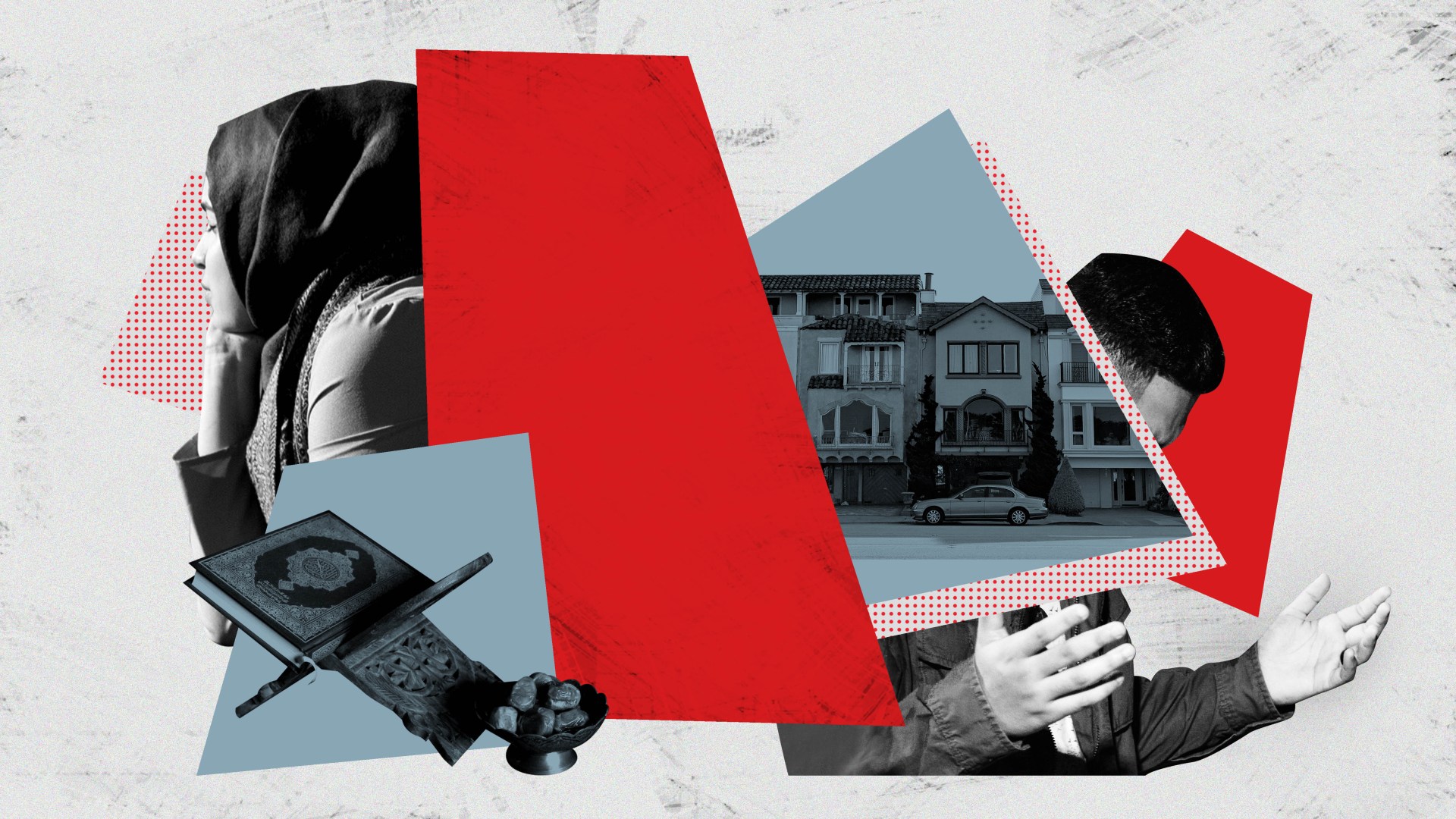
Muslims Are Celebrating Their Biggest Holiday in Isolation. Christians Know What That’s Like.

How believers can reach out and encourage followers of Islam during Ramadan.

Christianity Today May 8, 2020
Illustration by Mallory Rentsch / Source Images: Liz Sanchez-Vegas / Ismael Paramo / Ifrah Akhter /Abdullah Arif / Unsplash

The disruption of Easter festivities, liturgies, and church gatherings due to COVID-19 this year left many Christians disappointed with their inability to properly celebrate the resurrection of Christ. Now, during the Islamic month of Ramadan (April 23–May 23, 2020), many Muslims are experiencing a similar disruption of their annual religious holiday.

Fouad Masri, the founder of Crescent Project and author of Connecting with Muslims: A Guide to Communicating Effectively, believes the pandemic is a unique opportunity for Christians to find common ground with their Muslim friends and neighbors. Originally from Beirut, Masri founded Crescent Project in 1993 with a desire to “nurture transformational relationships” between Christians and Muslims.

Throughout the past decade, the organization estimates that more than 321,000 people have been involved through their ministry experiences and have held 1.5 million conversations about Jesus. CT asked Masri to share how he believes this is a unique opportunity for Muslims and Christians to build relationships.

Can you tell me a little bit about Crescent Project?

Today there are more than 1.6 billion Muslims. Roughly one out of five people is a Muslim. Many Muslims today are seeking—they’re hungry, they’re curious to know about God, eternity, Jesus. Yet many of them live in countries where the gospel is not accessible. Their governments forbid accessibility to the Bible. So in the last 15 years, there has been a huge increase of curiosity for Muslims to know [about Jesus], but there’s no accessibility, or if there is, it’s usually minimal.

On the flip side, most Christians today don’t know how to communicate in an effective way, in a respectful way with their Muslim friends. Our dream is to see followers of Christ moved from avoidance to hospitality. From fear of Muslims to loving Muslims. And from silence to sharing.

Our vision at Crescent Project is that every Muslim has an opportunity to respond to the gospel. We want to see every Muslim have a connection with a follower of Christ because that’s how they can see the true message of Jesus. We started Crescent Project to help Muslims understand the teachings of Jesus and equip Christians to begin a conversation and share the good news with their Muslim friends, neighbors, colleagues.

What is Ramadan, and why is it especially significant to Muslims?

Ramadan, or Ramazan, is the third pillar of Islam that must be practiced by every Muslim. Ramadan is a lunar month and ranges between 28 to 29 days. Ramadan is the month of fasting and feasting for the revelation of the Qur’an because that’s what they believe was revealed during Ramadan.

Muslims are not allowed to eat or drink as long as there’s daylight. Once sunset happens, Muslims are allowed to eat as a community celebrating the coming of the Qur’an. During this month, Muslims spend time listening to the reading of the Qur’an, visiting each other, praying as a group, and eating delicious, exotic meals.

According to Islam, performing the rituals during Ramadan will give you good works that will aid in your attainment of salvation on judgment day. The month of Ramadan ends with Eid al-Fitr, a celebration where Muslims give gifts and end the monthlong fast.

A lot of Christians felt impacted by the shelter-in-place recommendations during Easter due to the coronavirus. How is the pandemic impacting Muslims during Ramadan?

The COVID-19 pandemic has really rocked this planet. It has devastated the country. On top of that, Christians had to deal with it during Easter because we could not congregate. Yet for our faith, it’s about the relationship with Jesus. I can still celebrate Easter. It’d be great to be in a family setting or a church setting, but I can celebrate Easter because it’s my relationship with Jesus. I’m remembering that he rose victorious from the dead, defeating sin, defeating Satan, and defeating death.

However, the same pandemic is hitting the Muslim world. In this month of Ramadan, in many Muslim countries Muslim families are dealing with, How do we practice Ramadan during this month of fasting? Many Muslim families are not gathering together. Many mosques or places of worship are not open or available. Many countries have put curfews on people and forbid travel. It’s disrupting not only the social fabric and communication with each other but also the religious sense of attaining salvation by doing the good works that come with Ramadan.

Added to that, the shelter-in-place regulations in the US are restricting travel. As Christians, we feel for this predicament the Muslims are in. As Christians, we love to be with our families. We like to rejoice together and in our faith. Many Christians have Muslim friends who might be frustrated, anxious, and concerned about this pandemic. As believers with a Savior who loves and cares for all people regardless of background or ethnicity, we are burdened to show the love of Jesus to them.

So how can Christians reach out to their Muslim friends and neighbors during this holiday, especially given social-distancing measures? Can we empathize with them based on our experience of an isolated Easter?

Today more than ever, the Christian virtue of hospitality and welcoming the stranger among us is needed. Christ the Redeemer of all compels us to see Muslim neighbors, colleagues, and classmates as people who need kindness and hospitality in this time of pandemic. We feel for Muslims that their greatest need is for a friend who listens, encourages, and prays for them.

At Crescent Project I’ve seen many Christians rally to show hospitality to Muslim friends. We have been encouraging Christians to pray for Muslims in the month of Ramadan and we have seen an increase of people joining us in prayer through Facebook, through emails, and through chat rooms.

A couple in California took a picture of their family, added their phone number and email, copied it, and put it on the door of every house in their neighborhood with the message that they are willing to help any needs the neighbors have. This family discovered there were five Muslim families in the community who reached out to them, thanked them, and began a conversation with them. Another American couple started praying for the mosque down the street and they reached out to neighbors who needed some groceries.

Hospitality is the best response to reach Muslims during this pandemic. Hospitality begins with a kind word or a request to pray for someone if they have a need. Hospitality can be seen as we greet Muslims—we could use statements like “Ramadan Mubarak” or “God bless you this month.”

Hospitality is also a willingness to share a meal or experience together—welcoming a conversation and a friendship with our Muslim neighbors, friends, and classmates. In some places, we’re allowed to have five people in the house and some places you can’t. But the idea is that we need to be people of action.

What kind of gospel opportunities are there for Christians during this time?

Christians today have a great platform to show Christ’s power during this pandemic. According to Islam, judgment day is coming. All people will be judged by God according to their good works. The Qur’an teaches that on judgment day, a scale will weigh the deeds of all humans, the good works on one side, the bad works on another. Whichever way the scale tips you, that will determine if you are going to live with God in paradise or going to hell, which is a burning fire. The Islamic faith is built on attaining as many good works in your lifetime so then when you arrive on judgment day, you can attain paradise through your individual good works.

A religious system that has work-based salvation demands of its follower complete adherence to the rituals; hence Ramadan during a pandemic creates problems for Muslims who are trying to attain more good works if they cannot perform all the rituals. This failure of performing all the rituals of Ramadan results in fear of being punished by God now on this earth and on judgment day.

This is a stark difference between the teachings of Jesus and the teachings of the Qur’an. While the Qur’an stresses human rituals and healing works to please God, Jesus says, “I will redeem you.” All humans have sinned regardless of religion. And rituals cannot produce righteousness in the sight of God. Christ the Redeemer can change us sinners to be righteous in the sight of a holy God. Therefore, the gospel message today for our Muslim neighbors is that redemption has come in the Savior Jesus.

How can people who don’t have any kind of connection to Muslim communities care for them during this holiday season?

Crescent Project is challenging Christians everywhere to take a step of faith to begin a conversation with a Muslim. You can commit to pray for Muslims every Friday at noon. Friday is when Muslims pray [together], and noon is an easy hour to remember. Why don’t you commit right now as you read this to pray for Muslims, not only in your country but around the globe—that God will send someone to tell them about Jesus.

Crescent Project has online outreach opportunities for people to build bridges with Muslims. We have a couple of testimonies of people talking to Muslims in Iraq, in Syria, in Saudi Arabia—even during this time of Ramadan because they’re thinking about God.

Another way Christians can reach out to the Muslim neighbor is prayer walking. Some Christians have been walking the neighborhoods, praying for each house, especially if they are from Muslim backgrounds. God has opened conversations many times as people walk. An American couple has been walking and praying every day in their neighborhood during quarantine and found that they had a Muslim neighbor from Jordan who had lived there for many years. They kept to the six-feet distance rule but they were able to talk for an extended time. And that led to more conversations as they’ve walked in the neighborhood.

News

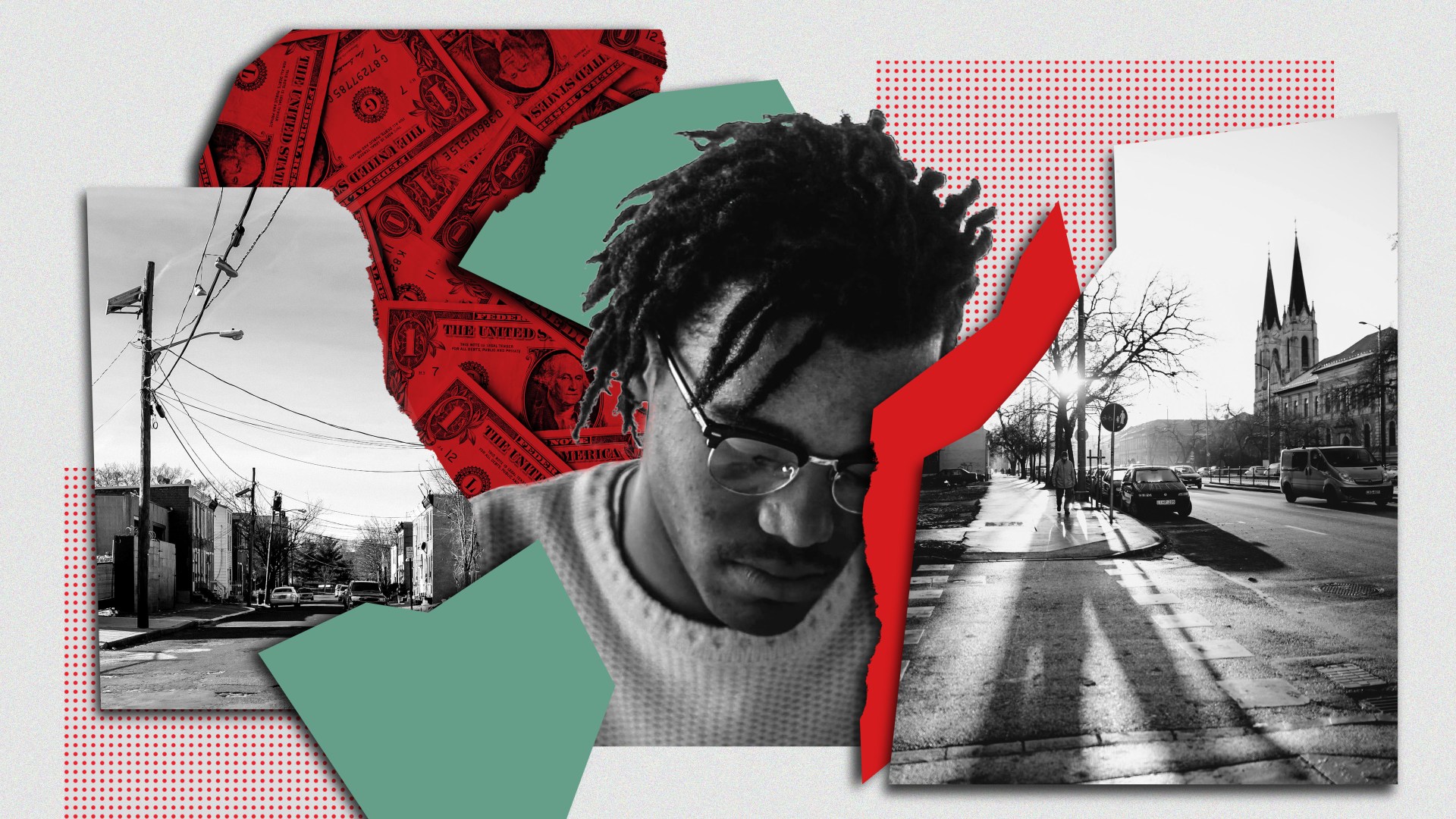
In Inner-City Black Churches: More Grief, Fewer Resources, Stronger Faith

How the pandemic concentrated pressures on small churches—and how the body of Christ is stepping up to help, one $3,000 grant at a time.

Christianity Today May 8, 2020
Illustration by Mallory Rentsch / Source Images: Sharon McCutcheon / Hunter Newton / Andras Vas / Unsplash / Peeterv / Getty Images

Philadelphia pastor Kevin Cropper’s heart sank last month when he saw a message asking for food among the prayer requests emailed to his church.

“It was a request for something tangible, and we didn’t have it,” Cropper said.

His congregation, Ark of Safety Christian Church, had canceled its weekly food distribution since it ran out of donations when it stopped gathering in March. “It makes you feel bad because isn’t that what our mission is? We want to be able to help in this type of crisis, but we need the resources to do it.”

That’s the problem with being a small, inner-city black church during a pandemic. Black adults are more than twice as likely as whites or Hispanic Americans to know someone who has been hospitalized or died due to COVID-19. Their communities are afraid, grieving, and suffering from the virus themselves; and they are far less likely to have the staff, budgets, or space to help as much as they feel called.

“We are in the city. We don’t have acres, we stay close to each other, and it’s very easy to spread the virus,” said Kato Hart Jr., pastor of Hold the Light Ministries, a Church of God in Christ (COGIC) congregation in Detroit.

American counties with a higher-than-average proportion of black residents now account for half of coronavirus cases and 60 percent of deaths. Even in a church of 50, word keeps spreading of which members have lost relatives to the virus: aunties, uncles, grandparents. Hart has lost fellow brothers in ministry, citing a letter from denominational leadership saying 30 COGIC bishops have fallen to COVID-19—including a dozen in Michigan alone.

“We’re in a fight, and we need help. These megachurches, they can kind of make it, but we at these smaller churches … once the tithes and offerings cease, we have a rough time,” said Hart, who takes no salary and pulls from his personal account to keep the ministry going. “But we don’t mind because God made a way where there was no way.”

Recently, Cropper and Hart were among more than 100 pastors whose prayers were answered through the Churches Helping Churches Challenge (CHC), which distributes $3,000 grants to congregations in low-income urban areas. Ark of Safety can now resume its food pantry and cover the utility bills at its building, located at the corner of a line of row houses in West Philadelphia. Hold the Light can keep up on its lease and respond to more of the families reaching out for financial assistance.

Launched by the And Campaign and partners in response to the coronavirus, Churches Helping Churches has rallied over $445,000 so far, with grants going to 126 churches—including dozens of black churches.

“Our churches are primarily located in dense urban areas, which are many of the epicenters of this virus,” said Vincent Mathews Jr., a bishop and international missions president for COGIC, the largest African American Pentecostal denomination, and a board member for Churches Helping Churches.

While about 6 percent of Americans belong to historically black Protestant churches, the share is double to triple that in cities like Philadelphia; Detroit; Memphis; Washington, DC; and Atlanta, according to the Pew Research Center. Most black Protestants have an annual household income under $30,000.

“We’ve always had to exercise a certain kind of economic discipline to get things done without comparable resources,” said David Emmanuel Goatley, who directs the Office of Black Church Studies at Duke Divinity School.

All kinds of churches are feeling the crunch these days. According to LifeWay Research, 40 percent of pastors saw giving drop significantly due to the pandemic. But smaller churches lack the financial cushion to withstand the downfall, particularly in communities where nearly all members have suffered job losses or pay cuts.

“When you talk about churches on the front lines … most often you’re talking about a picture of the small black churches that are struggling to keep doing the Lord’s work with very, very limited resources,” said Republican Senator Tim Scott of South Carolina.

In an interview with CT last month, Scott said he heard about drops in tithes and offerings during regular calls with religious leaders across the state as well as from black church leaders nationwide. He was among the congressional leaders who worked to add provisions for churches and ministries in the federal stimulus plan, including church employees being eligible for unemployment benefits and some measures incentivizing charitable giving.

Just under a quarter of pastors applied for and received Payroll Protection Program grants, according to a LifeWay survey, but there are already some indications that black churches struggled to get the funding.

Smaller congregations were least likely to apply. Most don’t have an accountant—paid or volunteer—to quickly compile the paperwork for the application. The president of the NAACP, which includes representatives from nine major African American denominations, told NPR that many of the black churches that did apply complained about issues with their banks.

The Churches Helping Churches initiative was designed to bypass or supplement federal assistance by getting money to congregations fast (typically five to seven days after they are selected). “The church should be the first to help their brothers and sisters in need,” organizers wrote. “Whatever assistance a society may provide, the Body of Christ should be the first to help.”

Even with all the changes due to the new coronavirus—Facebook Live prayer nights and CashApp collections—inner-city pastors say struggle and sacrifice have been part of their ministry all along. For Cropper at Ark of Safety, it’s just another situation where Christians are called to be “our brother’s keeper,” to do what they can, and to wait on the Lord for provision and restoration.

“We’re a small church 24/7, 365 days a year. We go through this struggle all the time,” he said. “It’s not like we’re new in this. We’ve been in West Philly all our ministry. This is where God has placed us so they would know that there’s a light that shines, and it’s the light of the glorious gospel of the Lord Jesus Christ.”

Despite bearing the disproportionate impact of the outbreak, black believers have demonstrated particular spiritual endurance. In a Pew survey released last week, members of historically black churches were more likely than any other religious tradition to say their faith has been strengthened through the outbreak. More than half (56%) say their faith has become stronger, compared to 35 percent of all Christians and 24 percent of adults overall.

Goatley of Duke Divinity, who wrote the book Were You There?: Godforsakenness in Slave Religion, said the coronavirus pandemic brings up familiar theological commitments in African American church traditions, including “an affirmation that whatever comes our way, God is with us” and a desire to work for justice on behalf of the most vulnerable.

“Historically black churches, when we have been at our best, have networked people to work across sectors and be outward focused,” he said. “We have more of a shared commitment responsibility for communities and well-being. Going forward, we are being called to work in that kind of life-giving way.”

Former entrepreneurs and now church planters Devin and Samantha Westbrook lead Redemption Church in Memphis. As much as they’re grieved by the needs of their community, the Westbrooks are excited for the opportunity to reach out. Nonmembers have been calling and emailing with needs, including a family who lost all their possessions in a fire. The congregation has coordinated helping with groceries, bills, and rent for several families.

In the meantime, the church has grown from gathering 75 people in an elementary school auditorium to drawing well over 1,000 viewers to its weekly livestream. With fewer than 10 people to comply with social distancing restrictions, the team meets at the school to record worship on Sunday mornings.

The Churches Helping Churches grant allowed the Redemption to restore pay to single dads on its staff, men who help produce the services and conduct youth outreach. The church had made 50 percent salary cuts across the board due to the virus.

The Westbrooks know their neighbors in Memphis are wrestling with heavy questions—Where will my next meal come from? Where will my next check come from? What do I do about my relative who passed? What is the city going to do? Where is God in this?—so they are eager to reach more people with gospel hope.

“There is a sense of confidence that comes from knowing that God is going to sustain us even though we don’t see where the help is going to come from,” said Devin Westbrook. “Our help isn’t from the resources but comes from the source.”

Churches Helping Churches is expected to get another boost in funds next week through an online benefit concert featuring Lecrae, Lauren Daigle, Kirk Franklin, TobyMac, and For King and Country.

The program has drawn high-profile support, along with gifts from 500 donors, by evoking the New Testament call to “give to anyone who had need” (Acts 2:45) and that “if one part [of the body] suffers, every part suffers with it” (1 Cor. 12:26).

Iglesia Centro Cristiano de Minneapolis, a Spanish-speaking congregation among the grant recipients, saw tithes drop by 70 percent as their members lost business in construction, cleaning, and restaurants. The $3,000 allows them to help a single mom in their congregation make her rent, as well as to continue to tithing to support other ministries.

Hispanic Americans have been more concerned than other racial groups that they will get the virus and that they will unknowingly spread it to others, Pew reported. With typical programs shut down—for now, no in-person small groups, no backyard Bible clubs, no mission trips to Mexico—pastor Joel Ramirez, his wife Jeanne, and their three sons deliver boxes of food and sing worship songs on church member’s sidewalks. Their favorite right now: “Si Tuvieras Fe Como Un Grano De Mostaza,” or “If You Have Faith Like a Grain of Mustard.”

Mathews, the COGIC leader, expects the current partnerships forming among Christians—big congregations and small, across ethnicities and traditions—will have a lasting impact on the church going forward.“It is a mobilization of the body of Christ helping one another,” said Mathews. “This is a time when the body of Christ is shining and denominational barriers are being demolished.”

As it draws prayers and funds to inner-city churches, the initiative also shines a light on the faithful, sacrificial work these congregations have been doing all along.

“There’s a song in our tradition called, ‘May the Work I’ve Done Speak for Me,’” Goatley said. “But we live in an information age. People assume if you don’t read it in a major news publication, if you don’t see it online, if you don’t see it in a social media thread, nothing is happening.”

Mathews said shortly after he discussed the Churches Helping Churches initiative with And Campaign founder Justin Giboney on Facebook, he heard from a COGIC church pastor who serves in an impoverished neighborhood in the Detroit area.

Was his church interested in applying for a grant? No, the pastor said.

The church sent $3,000. “We have needs,” the pastor told him, “but we feel like we can help someone else.”

Theology

Singing in the Storm With Rain for Roots

The group’s latest album offers a timely message for this global moment.

Christianity Today May 8, 2020
Illustration by Rick Szuecs / Source images: Flo Paris Oakes / Robby Klein / Katy Bowser Hutson

Is a pandemic the best time or the worst time to release an album of children’s music based on the Psalms? Musicians Flo Paris Oakes, Sandra McCracken, and Katy Bowser Hutson hope that All Creatures, the fourth album from their musical collective Rain for Roots, reaches the world at just the right time and offers hope in the midst of a storm. The album explores the emotional range of Israel’s original songbook and points listeners to God’s glory made manifest in creation.

The three Nashville musicians talked with Megan Fowler about their project, which just released.

The three previous Rain for Roots albums have focused on Bible stories, parables, and Advent. What was the inspiration for All Creatures?

McCracken: We started out talking about Psalms, and then all these images of creation were so present in the themes that were coming up. So we started paying attention to that. A secondary theme that emerged was songs, loosely based on Psalms, but then creation and the creatures that we saw calling us into worship. It’s not strictly a praise album, but a praise album by way of the Psalms, by way of the owls and birds.

Hutson: When you say it that way, Sandra, the two themes that kind of run through are, one, there’s so much of seeing how God reveals who he is in the natural world; and two, yes, there’s so much beautiful praise, but there’s also lament and fear. I like that the Psalms are such a great way to display, to young ones in particular, that all of the range of emotions are okay to bring before the face of God.

Oakes: And that God is with us, not just in this spiritual realm, but in our humanity. God is with us in every bit of the physical world.

How do you talk to your kids about hard things in your family’s life or hard things going on in the world?

Oakes: It’s really changed as our children have gotten older, especially with things going on in the world, because they see it. We used to protect them, and now my oldest is 16, so she’s on her way to being an adult. Since they were little, we’ve kept those lines of communication open. Something I have really leaned into is asking a lot of questions. Instead of just telling them, “This is how we should feel now, and this is what’s going on, and here are the answers,” asking them, “I wonder how you feel about all of this right now.”

Right now, we’re asking them, “I wonder if there’s something you’re looking forward to after we’re out in the world again.” We ask them every few days, and their answers change, and it opens up a lot of good conversations. When they were little, I wouldn’t tell them the bad scary news but let them tell me what they knew was going on, and then I’d match what they were talking about. That has been a helpful approach for us.

Katy, three years ago, you received a diagnosis of inflammatory breast cancer. In that context, how did you talk about suffering with your kids?

Hutson: We told them that I had a sickness called cancer. The weird thing was that the sickness didn’t make me feel sick right now, but to get better, I was going to have to go through very hard things. I was going to look sick and be really tired, and my hair was going to fall out. When I told my daughter that my hair was going to come out and my breasts were going to come off, she laughed because she was six.

But part of the beauty of the gospel is that you can’t tell the good news until you’ve told the bad news. You can’t tell children the good news until they know that there’s death and brokenness in the world. There really is death, there really is suffering, and death has been defeated. We try to give our children really good stories. Like Flo said, we didn’t tell them more than they needed to know. They didn’t need to know that death was a real possibility for me, because it was more than they needed to handle at the time, unless that subject came up.

McCracken: You both have a lot of wisdom on this. I think that leading with questions and curiosity has been the theme of Rain for Roots since the beginning. To engage on that level has been a practice for us, partly because we know it’s good for our kids, but mostly because we know it’s the way by which we experience the gospel too. We participate in it not as above them, but having been given this unique role by God to parent our kids and to be in community together.

You’re releasing these songs into a world that is really different from the one in which you wrote them. Do you hear the songs differently now than when you started working on them?

Oakes: I hope this can be a point for people to connect with God and be outside and have a little bit of that being near to God in this time, to know that you’re not alone, even though we are isolated.

McCracken: There’s some good providence in the timing. Most art that we’re experiencing now, we’re all hearing it from a place of receptivity in a way that we wouldn’t have four months ago. I think that’s encouraging, just to see the juxtaposition of springtime, the changing of the seasons, the weather, the invitation to be outside, and the fact that it’s really the only choice you have right now.

A song like “Wisdom and Grace,” punctuated around Psalm 90, teaching us to number our days, is always relevant, and in times like this, it seems a little more electricity is around that. You start thinking about it in a new way.

You have some new collaborators on this album. Sandra, your daughter Carter sings. Flo, your daughter Sera sings. And Sera’s friend Skye Peterson contributes, as well. I’m curious what it’s like when your children and your children’s peers become artistic partners.

Oakes: It’s really sweet for me and for all of us. On the day in the studio when Sera was singing “Wisdom and Grace,” it was hard to not be teary. Not just because her voice is so pretty, but the words. I’m thinking, “This is heavy, but it’s also true.” And there’s something sweet and powerful hearing that from a child, even an older child singing. I’ve enjoyed hearing them grow as the albums grow.

McCracken: Seeing the progression and trying to honor them—it’s a tricky thing to try to navigate raising kids with the social media presence that there is now. We want them to be part and also to protect them. It’s been really fun to see them grow and always to have guests and collaborators with us. Skye has done a lot in the church community as a worship leader. She has a new EP that has come out this year, and it’s beautiful.

What are your hopes for this album?

McCracken: When I think about the work, I think about the faithfulness of being committed to our families, singing with them, leading them, asking questions, and learning by the work of the Spirit. And then the outflow of that, the fruitfulness of that in songs we would do together, is such an additional gift. I’m just happy to see it come out.

Oakes: I hope it would be a comfort to people right now. I feel like it’s a strange time to be putting something out, but on the other hand I just want people to have these songs and to feel the comfort and closeness of God in this time.

Hutson: I think we’re trying to listen in a new climate and see. I’m a little agog at the timing on this. I got a text from Flo, asking, “Is this the best time or the worst time to put out an album?” I think it might be the best time for this album. It feels like something good and beautiful to help people see God’s beauty and character in the middle of a really hard time.

Apple PodcastsDown ArrowDown ArrowDown Arrowarrow_left_altLeft ArrowLeft ArrowRight ArrowRight ArrowRight Arrowarrow_up_altUp ArrowUp ArrowAvailable at Amazoncaret-downCloseCloseEmailEmailExpandExpandExternalExternalFacebookfacebook-squareGiftGiftGooglegoogleGoogle KeephamburgerInstagraminstagram-squareLinkLinklinkedin-squareListenListenListenChristianity TodayCT Creative Studio Logologo_orgMegaphoneMenuMenupausePinterestPlayPlayPocketPodcastRSSRSSSaveSaveSaveSearchSearchsearchSpotifyStitcherTelegramTable of ContentsTable of Contentstwitter-squareWhatsAppXYouTubeYouTube