Theology

If Easter Is Only a Symbol, Then to Hell with It

The empty tomb is evidence that God’s love triumphs over death. That truth endures with or without us.

Christianity Today April 9, 2020
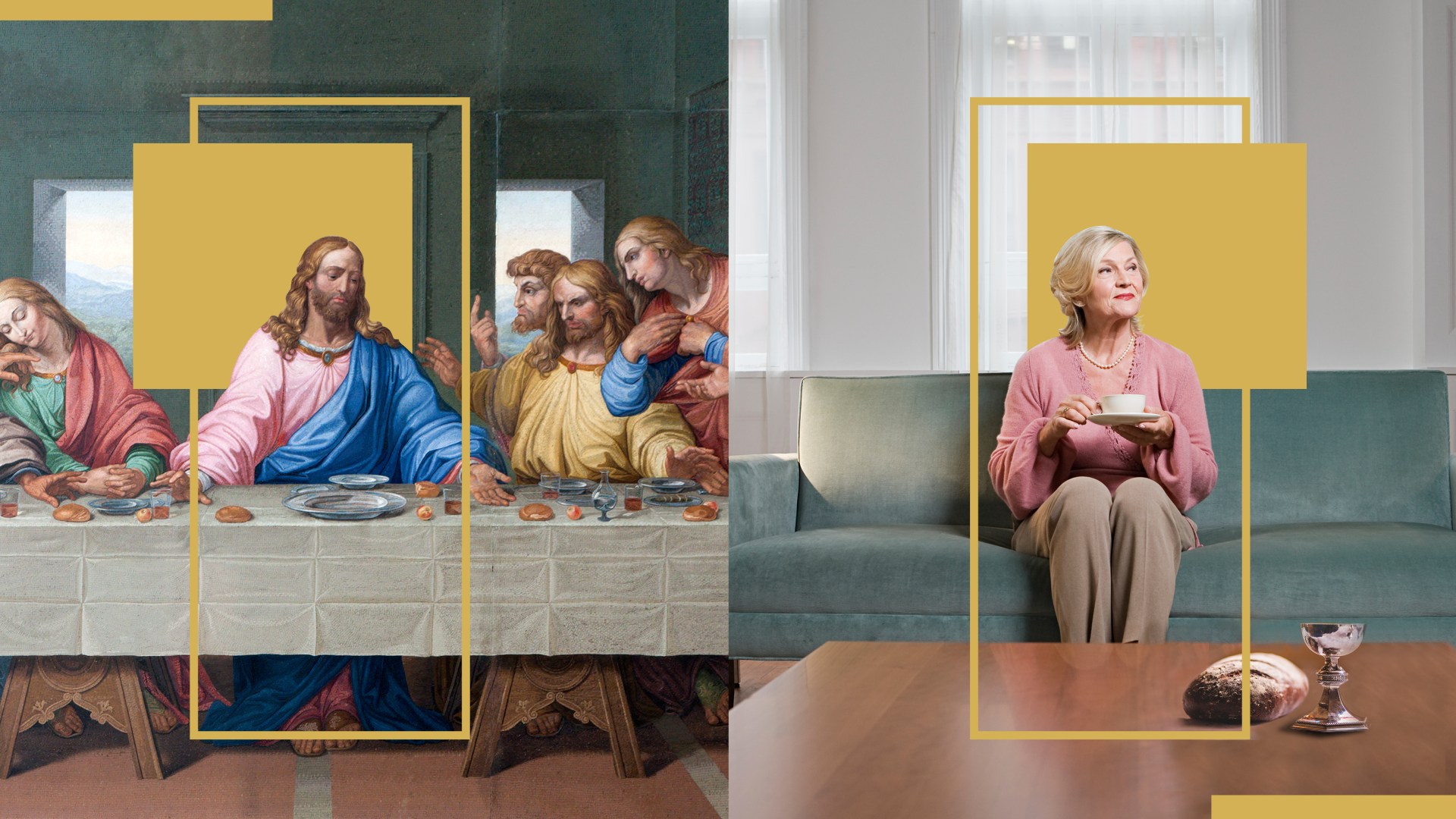
Illustration by Rick Szuecs / Source image: Woodcut after a drawing by Julius Schnorr von Carolsfeld / ZU 09 / Getty

Practicing the liturgical calendar is like participating in immersive theater. Through fasting, feasting, rites, and rituals, we walk into the story of Jesus. In Advent, we lean into longing and wait together for the coming King. At Christmas, we lay babies in makeshift mangers and enter into the Incarnation. During Lent, we smear ashes on our foreheads and remember sin and death. All of it builds to the big moment: Easter Sunday.

For Christians, this is the World Series, the crescendo of the symphony, the climax of the play. This is what we’ve been sitting on the edge of our seats waiting for all year. But this year: nothing. The game is canceled in its final inning. The horn section left in the middle of the concerto. The theater caught fire in the third act.

As a priest, this feels incredibly unsatisfying. Sure, we’ll livestream services. The Word will be proclaimed. But it isn't the same. Something is clearly lost.

And yet, the solid fact remains that Christians do not make Easter through our worship and our calendar. Jesus rose from the dead, and even if it were never acknowledged en masse, it would remain the fixed point around which time itself turns. The truth of the Resurrection is wild and free. It possesses us more than we could ever possess it and rolls on happily with no need of us, never bending to our opinions of it. If the claims of Christianity are true, they are true with or without me. On any given day, my ardent belief or deep skepticism doesn’t alter reality one hair’s breadth.

Believers and skeptics alike often approach the Christian story as if its chief value is personal, subjective, and self-expressive. We come to faith primarily for how it comforts us or helps us cope or lends a sense of belonging. However subtly, we reduce the Resurrection to a symbol or a metaphor. Easter is merely an inspirational tradition, a celebration of rebirth and new life that calls us to the best version of ourselves and helps give meaning to our lives.

But the actualities that we now face in a global pandemic—the overwhelmed hospitals and morgues, the collapsing global economy, and the terrifying fragility of our lives—ought to put an end to any sentimentality about the Resurrection. To borrow the words of Flannery O’Connor, “If it’s a symbol, to hell with it.”

The stakes could not be higher. As a deadly virus speeds its way around the world bringing chaos, destruction, and death, it’s painfully clear that the Resurrection is either the whole hope of the world—the very center of reality—or Christianity is not worth our time.

“Let us not mock God with metaphor, analogy, sidestepping, transcendence; making of the event a parable, a sign painted in the faded credulity of earlier ages,” writes John Updike in his poem “Seven Stanzas at Easter.” If Jesus’ “cells’ dissolution did not reverse, the molecules reknit, the amino acids rekindle, the Church will fall.”

I am a Christian today not because it answers all my questions about the world or about our current suffering. It does not. And not because I think it is a nice, coherent moral order by which to live my life. And not because I grew up this way or have fond feelings about felt boards and hymn sings. And not because it motivates justice or helps me to know how to vote. I am a Christian because I believe in the Resurrection. If it isn’t true, to hell with it.

On the other hand, if Jesus did in fact come back from the dead on a quiet Sunday morning some 2,000 years ago, then everything is changed—our beliefs, our ethics, our politics, our time, our relationships. If it is true, then the resurrection of Jesus is the most determinative fact of the universe, the center point of history. The Resurrection is ultimately truer and more lasting than death or destruction, violence or viruses. It’s truer, too, than our celebration of it, however beautiful, however meager.

That morning in history when Jesus rose, there was no expectation of a resurrection. There was no fanfare. No churches gathering with songs of triumph, no bells ringing, nothing. A few women went out to tend to Jesus’ dead body. His “nobody” disciples were laying low, lost in grief and feeling afraid. The rest of Jerusalem and the wider world had moved on. The sun rose. People went about their business gathering grain and water from wells. They started breakfast.

All of the cosmos was changed, and it was almost entirely overlooked.

This coming Sunday will be quiet too. Nearly 80 percent of Americans are under stay-at-home orders and will continue to be for most of the 50 days of Eastertide. But, in the end, what made Easter morning matter was never the packed sanctuaries, never the hymns or celebrations, rituals or rites. Just as the quietness of that first Easter did not determine if the stone rolled away or not, the locked doors of our local churches don’t determine it either.

The truest fact of the universe this Eastertide is not death tolls, emptied sanctuaries, or overcrowded hospitals. The truest fact of the universe is an empty tomb. The Resurrection is the only evidence that love triumphs over death, weakness prevails over strength, and beauty outlives ashes. If Jesus is risen in actual history, with all the palpability of flesh, fingers, bone, and blood, there is hope that our mourning will be comforted and that death will not have the final word.

Tish Harrison Warren is a priest in the Anglican Church in North America, a member of The Pelican Project, and a writer in residence at Church of the Ascension in Pittsburgh, Pennsylvania. She is the author of Liturgy of the Ordinary and a contributor to the forthcoming book Uncommon Ground: Living Faithfully in a World of Difference.

Want to read or share this in Korean? Now you can!CT also offers 20 prayers to pray during this pandemic, in English, Spanish, Portuguese, French, Korean, and Chinese (simplified and traditional).For translations of other select CT coronavirus articles, click here and look for the yellow links.

Books

Christ Suffered for Our Sins, but He Didn’t Go to Hell for Them

A theologian explores what did (and didn’t) happen on Holy Saturday.

Christianity Today April 9, 2020
WikiMedia Commons

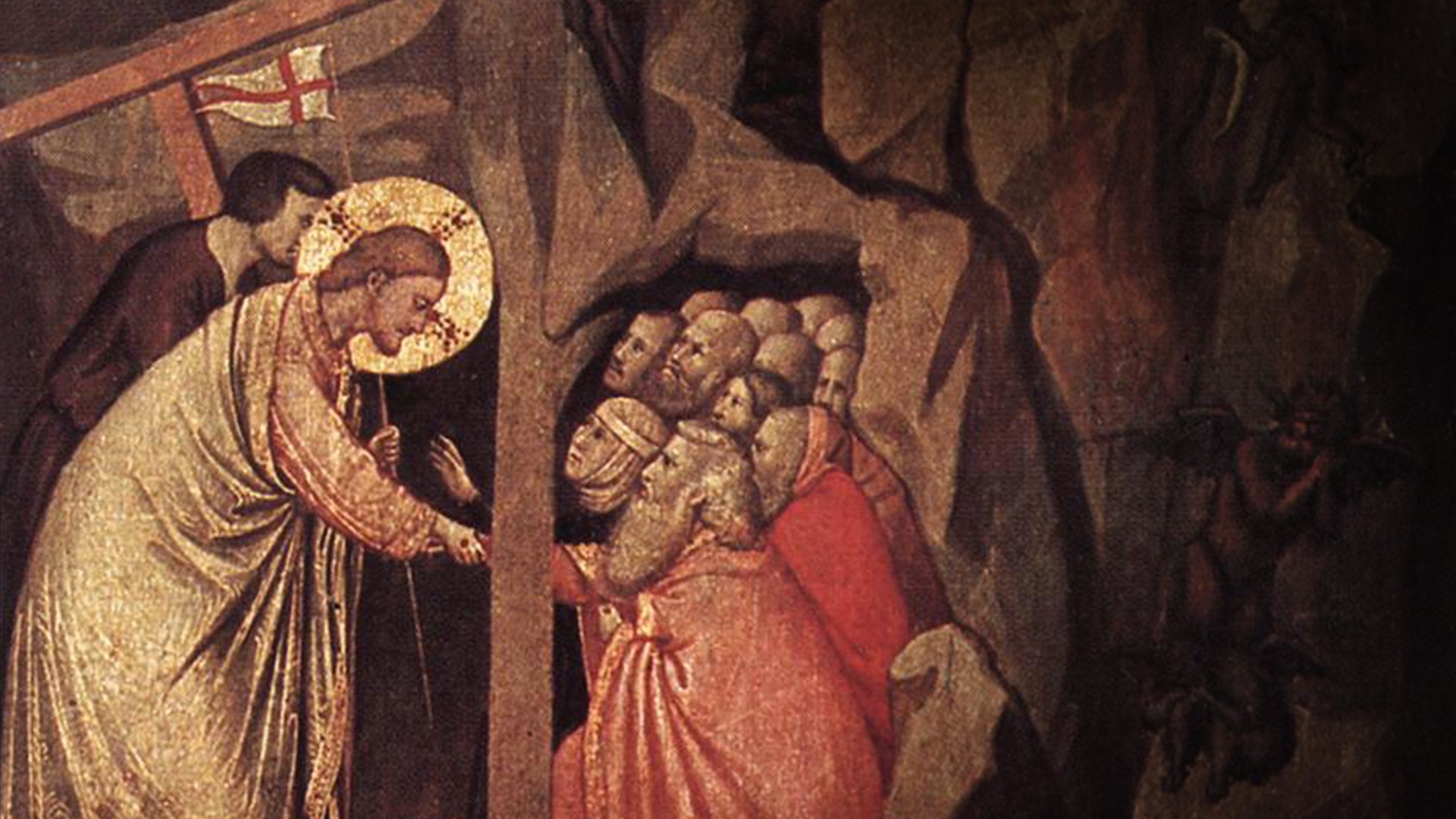
The Apostles’ Creed is one of the signature statements of the Christian faith. At church services around the world, believers recite it without reservation. But there’s one part of the creed that’s apt to generate confusion and suspicion. Sandwiched between its rendering of the events of Good Friday (“He was crucified, died, and was buried”) and Easter Sunday (“The third day he rose again from the dead”) is a perplexing affirmation: that Christ “descended to hell.” Because of their discomfort with this language, evangelicals have often neglected the importance of what Christ accomplished on Holy Saturday.

"He Descended to the Dead": An Evangelical Theology of Holy Saturday

"He Descended to the Dead": An Evangelical Theology of Holy Saturday

IVP Academic

272 pages

$30.00

Matthew Emerson, a biblical theologian teaching at Oklahoma Baptist University, wants to refocus our attention on the time frame between the Crucifixion and the Resurrection. In his book, “He Descended to the Dead”: An Evangelical Theology of Holy Saturday, he gives a multifaceted defense of the doctrine of Christ’s descent and answers some common objections. Brad East, a theology professor at Abilene Christian University, spoke with Emerson about what did (and didn’t) happen on Holy Saturday—and what it all means for our faith.

How would you sum up what happened to Christ, and what he accomplished, during his descent on Holy Saturday?

In the book, I argue that Christ dies a human death, as all humans do. His body is buried, and his soul departs to the place of the dead. So he experiences death just like any human being does. But because he is not only a human being but God in the flesh, his descent to the place of the dead is victorious. While he is there, he proclaims his victory over the powers of death. Then, in his resurrection, he achieves victory over death itself.

Another element of Christ’s victory comes in his releasing of the Old Testament saints from captivity. It’s not that they were in torment or separated from God—only that the object of their hope had finally arrived in the form of the Messiah.

What are some common misconceptions about the doctrine of the descent?

The biggest one is probably the idea that Christ, during his descent, went to hell and was tormented there. A lot of people balk at the language in the Apostles’ Creed, since it seems on the surface to suggest this. But when you take a closer look at history behind the development of the creed, it’s abundantly clear that this was never the intended meaning.

There are two other important cautions to make. First, in no way does Christ’s descent to the dead imply anything like universal salvation. It doesn’t provide a way for everybody in hell to escape it. And second, it doesn’t speak to the creation or perpetuation of purgatory, as the Roman Catholic theologian Hans Urs von Balthasar has suggested. It’s not related to the idea of purgatory in any way.

So often, when I hear evangelicals rejecting the idea of Christ’s descent, what they really want to reject are some of the conclusions and implications that other traditions have drawn. And so it’s important to emphasize: The descent doesn’t mean Christ was tormented in hell, it doesn’t mean universalism, and it doesn’t mean the Roman Catholic view of purgatory, whether we’re talking about the traditional view or the innovative way that Balthasar connects the descent to it.

In the book, you critique John Calvin’s understanding of Christ’s descent. Where, in your view, did Calvin go astray?

It pains me to say this, because among the three magisterial Reformers—Luther, Calvin, and Zwingli—Calvin is one with whom I have the greatest affinity. But Calvin is entirely novel, and I think unpersuasive, in his understanding of Christ’s descent.

According to Calvin, the descent clause refers to Jesus’ physical and spiritual torment on the cross on Good Friday—not to what he accomplished between his death and resurrection. Now, to be clear, as someone who affirms penal substitution as the correct model of atonement, I do believe that Jesus experienced physical and spiritual torment on the cross. He was bearing the wrath of God on behalf of sinners. I’m glad, then, to see Calvin affirming penal substitutionary atonement, but I don’t believe it’s what the descent clause is referring to.

In the book, I mention some possible reasons for Calvin’s innovation in this area, although I admit these are mainly speculative. My hunch is that he’s nervous about affirming the kind of cosmology that includes the notion of an underworld, which can lead in the direction of Roman Catholic ideas about purgatory. But I think he’s guilty of throwing the baby out with the bathwater.

Another, more contemporary figure you critique is the theologian Wayne Grudem. Where would you take issue with his understanding of the descent clause?

In 1991, Grudem wrote an article for the Journal of the Evangelical Theological Society called “He Did Not Descend into Hell: A Plea to Follow Scripture Instead of the Creed.” From the title alone, you get some sense of his objection. Grudem seems to be saying that the Apostles’ Creed has something in it that has misunderstood Scripture or masked what it is really saying.

His main concern, of course, is that people have been misled into thinking that Jesus was tormented in hell on Holy Saturday. I agree with Grudem, of course, about this point. There is no biblical basis for supposing that Jesus was tormented in hell on Holy Saturday. I would argue, however, that the creed was never interpreted to mean this until the 20th century, when Balthasar’s view was influential. Put briefly, Balthasar believes that the descent clause refers to the fact that Christ experienced the visio mortis, the very opposite of the beatific vision. In other words, he’s saying that Christ experienced a kind of existential separation from God, above and beyond the suffering he experienced in his human nature on Good Friday as a substitute for sin.

Like Grudem, I find that view biblically and theologically problematic. Where I disagree with Grudem is in matters of historical interpretation. I believe he is wrong to confuse Balthasar’s 20th-century innovation with the church’s traditional understanding of the Apostles’ Creed and its descent clause.

Another difficulty I have with Grudem’s position is his overreliance on 1 Peter 3:18–22 in understanding Christ’s descent. This passage—in which Peter states that Christ was “put to death in the body but made alive in the Spirit” (v. 18), after which he “went and made proclamation to the imprisoned spirits” (v. 19)—is notoriously difficult to figure out. Some have even taken it to mean that Christ preached in hell, either before his resurrection or afterward.

For what it’s worth, in my book I say that this passage probably refers to Christ’s descent in some way, although I admit I could be wrong. In any event, this is hardly the only passage in Scripture attesting to the fact that Jesus actually died a human death. There’s no reason to understand Christ’s descent through the lens of 1 Peter alone.

Apart from 1 Peter, then, what are some of the passages that help round out the biblical picture of what Christ accomplished in his descent?

The first set of texts to remember are those that discuss Jesus experiencing death as all human beings do. This would include passages like Matthew 12:40 [“For as Jonah was three days and three nights in the belly of a huge fish, so the Son of Man will be three days and three nights in the heart of the earth.”], Acts 2:27 [“Because you will not abandon me to the realm of the dead, you will not let your holy one see decay.”], and Romans 10:6–7 [“But the righteousness that is by faith says: ‘Do not say in your heart, “Who will ascend into heaven?”’ (that is, to bring Christ down) ‘or “Who will descend into the deep?”’ (that is, to bring Christ up from the dead).”]. You could also include the parable of Lazarus and the rich man from Luke 16:19–31 or Jesus’ statement to the thief on the cross: “Truly I tell you, today you will be with me in paradise” [Luke 23:43]. In his own statements about his death, Jesus indicates that he will go to the place of the dead—specifically to the righteous portion of it, paradise.

A second set of verses concerns Jesus proclaiming victory over the powers of death. The main passage in this category is Revelation 1:18, in which Jesus is said to “hold the keys of death and Hades.” The idea is that Jesus, in his descent to the realm of the dead, has invaded enemy territory and come out victorious, taking possession of the powers that death used to hold. You could also mention Matthew 16, which promises that the “gates of Hades will not overcome” the church [v. 18].

A third set of verses speaks of releasing the captives. These are probably some of the toughest to interpret correctly. We’ve already mentioned 1 Peter 3:18–22. Another instance is Ephesians 4:8–10, when Paul quotes from Psalm 68:18, saying that when Christ “ascended on high, he took many captives” [v. 8]. He then asks, “What does ‘he ascended’ mean except that he also descended to the lower, earthly regions?” [v. 9]. In the book, I acknowledge that scholars disagree about the exact meaning of these verses, but I believe there’s a strong argument to be made that Paul is talking about liberating these captives from the underworld or place of the dead, rather than the earth itself.

Let’s emphasize, again, that this isn’t a “second chance” or a “post-death conversion opportunity.” It’s simply a proclamation that Jesus’ victory extends all the way to the lowest regions in the place of the dead, so that everyone “in heaven and on earth and under the earth” might bow before him, as Philippians 2:10 puts it.

As we’ve discussed already, evangelical unease with the doctrine of descent is often a product of unease with the specific wording of the descent clause in the Apostles’ Creed. How do you understand the authority of the historic creeds? Is it possible that parts of them could be in error?

Ultimately, creedal authority is derivative. In other words, the church’s creeds have no authority in and of themselves. They are only authoritative to the extent that they are faithful to Scripture itself. The creeds can be wrong. They are not inerrant and infallible. Yet because of their rootedness in Scripture they have stood the test of time, in different places and across different traditions, and so we’re obliged to give them a certain weight. They’re not one-off events like a pastor’s sermons, which, even if they are faithful to Scripture, don’t bear the weight of the church’s long history.

We should be very cautious, therefore, about wanting to overturn any particular creedal phrase. The better response is to search the Scriptures again, to make sure we’re not missing something.

How does the doctrine of descent help shed light on other essential areas of Christian doctrine?

Christ’s descent has important implications for our doctrine of Christology. Historically speaking, the descent clause was stated in the creeds most explicitly when the church was facing the threat of Apollinarianism. This is the heresy that God the Son assumed a human body but not a human soul. (There’s more to it, of course, but that’s the basic gist.)

But if Christ descended to the place of the dead via his human soul, which is what the descent clause is affirming, then Apollinarianism collapses. When we downplay the descent clause, then, we risk missing out on how the church has understood the human nature of Christ throughout its history. We risk missing out on how the church has understood the Incarnation as a redemption of the whole person, body and soul.

There are implications for the doctrine of humanity as well. If Christ in his humanity is body and soul, then human beings must be body and soul. And if Christ’s descent reveals what death is like for all humans, then it must involve the cessation of life in the body and the departure of the soul to the place of the dead. I’m not necessarily comfortable calling this a “separation” between body and soul, because I still think there is a connection that remains. But Christ’s descent tells us that when we die, we enter into an intermediate state, wherein the soul remains conscious.

Speaking of this intermediate state, you’ve referred before to ancient notions of cosmology that would have influenced people in Bible times as they pondered what happens to the souls of the dead. How do you see Scripture drawing on that cosmology as it depicts where people “go” when they die?

In the ancient world, around the time the New Testament was written, there was an understanding that the world—or, in our terms, the universe—existed in three tiers: the heavens, the earth, and the underworld. The gods live up in the heavens. Human beings live here on earth. And the dead reside in the underworld.

There’s a lot of spatial language attached to this understanding of the world. Different traditions of ancient thought believed that you could enter the underworld through certain access points. A lot of times we have this impression that ancient people were ignorant and unsophisticated about such matters, whereas we are enlightened and scientific.

But I think it’s a mistake to draw this conclusion. I’m far from convinced that a Jewish person of this period would have believed, for instance, that you could literally dig a hole to the underworld. Both the Old and New Testaments use plenty of figurative language to describe where the underworld exists, and the variety of examples leads me to believe that the Jews in this era weren’t imagining it as a “place” in the customary sense of somewhere you can go to by ordinary human means.

Old Testament writers often use metaphorical language to describe invisible spiritual realities. God, who is spirit, is said to have a particular dwelling place, in the heavens or in the temple. In the same way, human souls are thought to “dwell” somewhere particular after death, even though souls don’t take up any physical space. I believe the Scriptures are truthful in how they describe these things, but we need to be careful not to take figurative language as evidence of a belief in physical realms that correspond to the figurative language.

By the time of the New Testament, there is a clear affirmation of an afterlife with different “compartments,” so to speak, for the righteous and the unrighteous. The righteous go to paradise (or Abraham’s bosom), while the unrighteous go somewhere variously described as Gehenna, Hades, Sheol, and the abyss. The righteous are separated from Israel and God physically because their bodies are dead. They can’t praise God in the temple. But that doesn’t mean they are separate from God spiritually. He remains present in the righteous compartment of the place of the dead.

That place is not yet what it will become, because the Messiah isn’t there yet. But that’s precisely what happens in the descent. The Messiah descends in his human soul, and then he rises from the dead in his resurrected body, which necessarily changes the nature of paradise. Those righteous saints from the Old Testament are no longer waiting and hoping, because now the object of their hope—the resurrected Messiah—is present with them in bodily form.

The Old Testament saints have often been pictured, after death, as languishing in a kind of prison, even if they aren’t suffering the pains of hell. What do you make of this rendering?

I certainly believe that death is a prison. There is no escape from that prison apart from Christ’s redemptive work. And so until that work is actually accomplished, the dead remain imprisoned in some sense.

In the book, I tend to play this down somewhat, mainly because evangelicals so often associate Christ’s descent with Roman Catholic notions of purgatory. Catholics use the term Limbus Patrum (or “Limbo,” in common usage) to describe a place where Old Testament saints were kept until Christ came to liberate them. But I’m somewhat uncomfortable with this concept, because it seems to me that this separates those saints from God in more of an existential sense, as if they are in torment while they await the Messiah.

And so, in the book, I’m trying to say, “Look, this is not torment. This is not separation from God.” But yes, death is a prison. And the Old Testament saints are in bondage in some sense until Christ releases them from captivity.

Is there anything else you’d like to say, in closing, about Christ’s descent?

I want to emphasize that the descent clause is an incredibly pastoral clause. It tells us that Jesus experienced death, just like we do. It tells us that Jesus has walked through the valley of the shadow of death, and that he leads the way for us to the other side. He’s risen from the dead and is victorious over death itself. Death has no hold over us. Death isn’t king—Jesus is King. When we understand Christ’s descent, we can see that it’s an incredibly hopeful doctrine.

CT offers 20 prayers to pray during this pandemic, in English, español, português, français, Chinese (simplified or traditional), and Korean.

For translations of other select CT coronavirus articles, click here and look for the yellow links.
Ideas

What Matters Is That We Remember

Jesus’ last Passover was our first Communion.

Christianity Today April 9, 2020
Source Images: James Coleman / Unsplash / Sedmak / Image Source / Getty Images

I’ve come to depend on the University of St Andrews’s time-honored graduation ritual to give sense and order to my academic year. The wearing of gowns, recitation of Latin, and tapping of heads with an ancient cap, these have no intrinsic value. But each year, the principal of the university begins by explaining their meaning, and, infused with renewed significance, the ceremony transforms graduands into graduates.

Graduation is canceled this year due to the pandemic, so alternative means must mark the occasion. Physical presence is important but has never been required—plenty graduate in absentia and receive their diplomas on the authority of the principal’s words.

What happens, though, when ritual requires physical presence?

Christians are poignantly confronting this question during Holy Week. On Maundy Thursday, we traditionally gather to recount the Last Supper and re-enact it by sharing Communion. But during a pandemic, absence alters the ritual.

The Passover

Jesus’ Last Supper with his disciples was a Jewish Passover—a meal always commemorated in person. Passover was a pilgrimage festival, meaning that Jews traveled from all over to Jerusalem to celebrate.

The original Passover was God’s opening act of redemption (Ex. 12). Israelites smeared sacrificial lambs’ blood on their doorposts to be spared from judgment and ate hurried meals from the roasted meat with unleavened bread and bitter herbs. Then God led his liberated people out of Egypt through the wilderness to worship at Mount Sinai. At first, they worshipped remotely. God descended onto the mountain in a terrible thundercloud, and Moses constructed a crowd-control barrier to keep people from deadly judgment (Ex. 19:10-15). But God lifted the barrier with a covenant: Moses read out God’s commands and dashed sacrificial blood on the altar and on the people, saying, “This is the blood of the covenant that the Lord has made with you” (Ex. 24:8).

The sacrifice worked because God infused the ritual with meaning and power. According to Leviticus, blood symbolizes the force of life (Lev. 17:11). Thus, blood and the fatty portions of sacrificial animals ritually applied to the altar as God prescribed achieved atonement (see Leviticus 4). At Sinai, blood applied to the people bound them to God in covenant relationship. Through this ritual, blood was like a powerful detergent to remove the stain of impurity and sin, and God transformed unclean people into his holy own. Consequently, the dark thundercloud gave way to a clear blue sky: Israel’s leaders saw God and worshiped with a shared meal of sacrificial food at the foot of the divine throne (Ex. 24:10-11).

The food and drink flanking Israel’s founding moment marked God’s mercy and presence among his people. They were to keep the Passover perpetually as an embodied and communal ritual because the meal recalled the sacrifice that secured their life and liberation. Children asked its meaning, and parents retold the old, old story of God’s redemption (Ex. 12:25–28).

Israel was required to celebrate the Passover at the temple on the 14th day of the first month (Deut. 16:1–7). But God graciously allowed a makeup day in the second month to include those left out due to geographical distance, ritual impurity, or poor planning (Num. 9:9–13; 2 Chron. 30:1–3, 15–20). Keeping the Passover was crucial, so unnatural circumstances inspired new ways for people to be physically present.

Nevertheless, Israel’s Passover celebrations were patchy at best. The people forgot God’s redemption; sought emancipation; and ultimately, irrevocably, broke the Sinai covenant. God abandoned the temple and exiled Israel from the land. By the time of Jesus, the people had returned, but God had not. So, John the Baptist called Israel back to the wilderness, to reenact their founding Red Sea moment in preparation for a new covenant.

At his last Passover, Jesus sealed the new covenant with his own sacrificial blood. He presided over the table with his disciples and retold the old, old story, but with a new twist. Holding the bread and the drink, he recited Exodus 24:8 to make sense of his pending death: “this is my body … this is my blood of the covenant, poured out for many” (Mark 14:22, 24). Matthew includes “for the forgiveness of sins” (26:28) and Luke “this is the new covenant in my blood” (22:20). Jesus himself became the sacrifice on whom his disciples feasted, the shared meal a physical mediation of God’s new redemption (John 6:53–54). His explanation of the Passover ritual infused his actions with new meaning and the power to transform sinners into a community of saints.

Yet this Last Supper is ultimately realized in another meal. Jesus anticipated a great banquet where he will eat and drink with his followers anew—after his death and resurrection—in God’s presence (Matt. 26:29). Food and drink flank this new founding moment to join the whole of Jesus’ atoning work—his life, death, resurrection, ascension, and exaltation. Paul captures the anticipation to mark our celebrations: “whenever you eat this bread and drink this cup, you proclaim the Lord’s death until he comes” (1 Cor. 11:26, emphasis added).

Communion During Social Distancing

When we cannot be physically present with each other, technology can mediate to connect us virtually as one body for Communion. Author Deanna A. Thompson writes,

… [C]ommuning together virtually with our faith communities can affirm the reality that our bodies are engaged in worship even when we’re participating from our living room, that we’re still connected to the other bodies gathered virtually for worship even when we can only see photos of them online, and that Christ comes to us in the gifts of bread and wine even when our pastors’ Words of Institution are mediated by a screen.

Virtual Communion, while not ideal, may be permissible in an unnatural time. Alternatively, this unnatural time may provide an opportunity corporately to fast from Communion in anticipation of a makeup day. Like the first Passover, Jesus’ Last Supper was borne out of darkness, chaos, and uncertainty. So in our fasting, we might reflect, pray and lament for those who struggle and endure loss.

In any adaptation, we should stoke our appetites by hungering and thirsting for the real thing, like Jesus did.

And when we are all together again, we can throw a party.

Dr. Elizabeth Shively is Senior Lecturer in New Testament and Director of Teaching, University of St. Andrews, Scotland. She serves as a theology advisor for Christianity Today.

Pastors

Invitations to a Homebound Easter

Sorrow, solidarity and seeking more.

CT Pastors April 8, 2020
Illustration by Rick Szuecs / Source Images: Jonas Jacobsson / Unsplash / Prixel Creative / Lightstock

My earliest memories of Easter morning are highly American. I woke to find a basket outside my room filled with candy eggs. I was then directed, along with my siblings, into coordinated pastel clothing and special white shoes. After church I looked forward to more candy, to be found on the annual egg hunt in some backyard or another.

I do not mean to denigrate this. My childhood joy and anticipation of these cultural traditions taught me to experience Easter as a celebration even before I understood the its real meaning. The memories reinforce right feelings of gratitude, warmth, and togetherness. But what happens when our traditions get interrupted? No potlucks, no neighborhood egg hunts, no large family gatherings or outings? Most poignantly of all, how do we cope with the loss of corporate worship on the most important day in the Christian’s year?

The pandemic now forces us to answer these questions. As pastors, realizing our churches will not gather together for Holy Week and Easter is painful. Yet out of our Easter privation, three invitations emerge:

An Invitation to Grieve

Spring 2020 has made its mark on the world as a season of grief. Some grieve the loss of income or proximity to friends and family. Young people grieve the cancellation of high school proms, graduations, and other important rites of passage. Thousands of people around the world grieve the death of a loved one.

By comparison, the loss of gathered worship for Easter feels trivial. But loss invites grief no matter the magnitude. The tangibility of Easter quarantine grants us access to sorrow about other, more ambiguous losses. It grants us permission to grieve our loss of control over school schedules and the welfare of our loved ones; that we can’t hug our neighbors or enjoy a meal out with friends. And rather than trivializing any of these experiences, we can allow our sorrow to increase our compassion for others. This in turn will prepare us as pastors to lead them through their own grief.

We can, and must, acknowledge and mourn the loss of corporate worship on Easter. Our online or otherwise distant connections need not be spun as “just as good.” Easter is lamentably different this year.

Pastors often feel the temptation to be cheerful and optimistic for the sake of their churches. But modeling healthy sorrow is also leadership. We can be permission givers by making space for people to name their grief. This can look like including a short prayer of lament during Sunday worship or encouraging small groups to discuss, “What are you grieving right now?” When we welcome our sadness, we become more acquainted with our Savior, “the man of sorrows” (Is. 53:3).

An Invitation to Solidarity with The Persecuted Church

While our inability to worship corporately is novel, it is the norm for persecuted Christians in countries like Iran, China, and Bangladesh. There, churches endure with unmet longing for togetherness and with little chance to gather in safety and freedom. How many Christians around the world already expected to celebrate Easter quietly and solitarily, even secretly? In a small way, our inability to gather grants us solidarity with their struggle. Ours can be a more global experience of Easter this year, a gift instead of a burden. We can identify with the resurrection as true hope for liberation and the promise of all things made new. Our persecuted brothers and sisters know this already in ways we do not. They can be our worship leaders this Easter.

In my tradition, we pray for the persecuted church every Sunday. These prayers mean more to me now than they did before. They have also become more personal: Now that our services are online, some friends from the global south have been able to join us for worship. The unfortunate reality of livestreamed services has become an avenue for global connection. And the painful reality of our scattered worship can give us empathy for Christians around the world.

This empathy can grow through practices like prayer, storytelling, and partnership. What countries or communities is your church connected with? What has the coronavirus pandemic meant for them? How can you remember them during your Easter worship? How might their example encourage or bless your people?

An Invitation to Eschatological Longing

Right before our parish office closed, I spoke to my boss about the likelihood of canceling public worship on Easter. As the founding pastor of our church, he has walked with our congregation for its whole life. With tears in his eyes, he said, “Whenever we are able to open our doors again—whenever I get to see their faces and place the bread in their hands—it will be the biggest celebration.”

His love for our church is but a shadow of Christ’s love for us. Our desire to be reunited in person is but a taste of Jesus’ longing for our ultimate reunion with him. Even in our Easter worship, we fervently pray, “Come quickly, Lord Jesus.”

Easter is the pinnacle of Christian worship, the definitive crescendo of the gospel. Jesus conquered death and inaugurated new creation. But our quarantined celebration of Easter reminds us that though Christ has risen, we still walk in the valley of the shadow of death and disease in our world. Until then, even our most joyous alleluias are tinged with a holy longing for the day when he returns and we rise with him.

We can embrace this tension by making space for sorrow on Easter this year. And we can encourage our people by locating their sorrow in the context of the larger story: Christ has died, Christ is risen, Christ will come again. One day, He will wipe away every tear from our eyes (Rev. 21:4).

This collect from the Book of Common Prayer gives us the words to pray: “O God our King, by the resurrection of your Son Jesus Christ on the first day of the week, you conquered sin, put death to flight, and gave us the hope of everlasting life: Redeem all our days by this victory; forgive all our sins, banish our fears, make us bold to praise you and to do your will; and steel us to wait for the consummation of your kingdom on the last great Day; through Jesus Christ our Lord.” Amen.

Hannah King is a priest in the Anglican Church in North America, currently serving a parish in Greenville, SC.

Church Life

Rwanda Ministry Brings Genocide Survivors Hope

With their own traumas to bear, Christian survivors find holistic ways to minister to Tutsis.

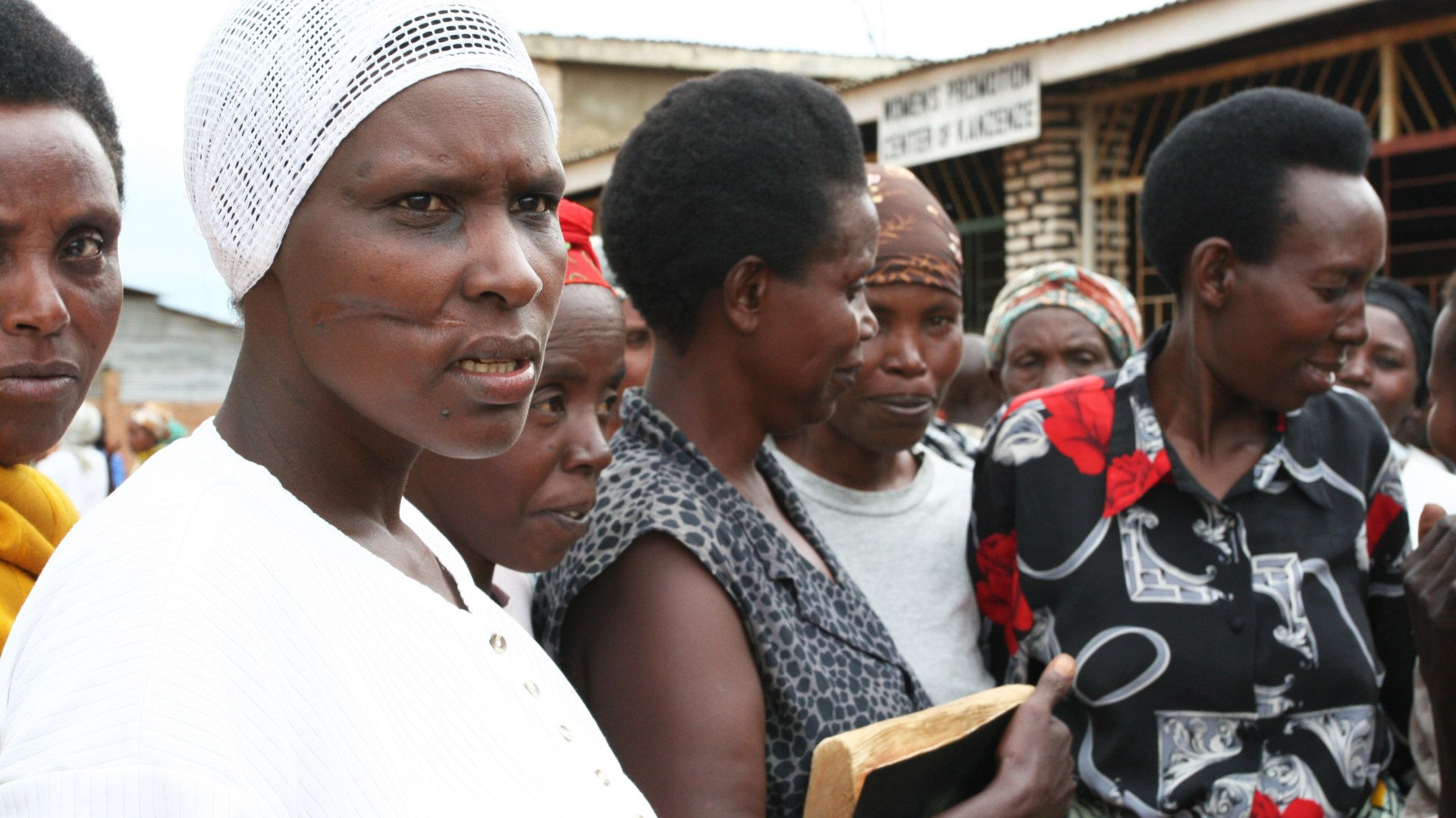
Genocide survivors gather at a Solace Ministries community meeting.

Genocide survivors gather at a Solace Ministries community meeting.

Christianity Today April 8, 2020
Courtesy Donald E. Miller

It was raining ferociously, causing the women and orphans to move away from the open windows to avoid getting wet. The meeting had opened with singing as survivors of the 1994 genocide in Rwanda danced away their sorrows. A teenaged orphan beat time on a drum to the music. Women wore long flowery dresses and beautiful head scarfs. Babies sat on laps; toddlers wandered freely. After the singing, the Solace Ministries director of counseling, “Mama Lambert,” welcomed newcomers—many of whom walked miles to the ministry’s Kigali headquarters. They had come because someone told them it was a place of comfort.

From April through July 1994, an estimated 800,000 Tutsis were killed in the Rwandan Genocide, and many more were left with physical and emotional scars. Solace Ministries started in 1995, growing from intimate gatherings of widows into 56 communities of survivors around the country, serving over 6,000 families last year. Since it began, Solace Ministries has assisted approximately 20,000 people through counseling and spiritual care, education, employment and health. Their medical clinic under the same name serves a client population of more than 50,000 patients a year.

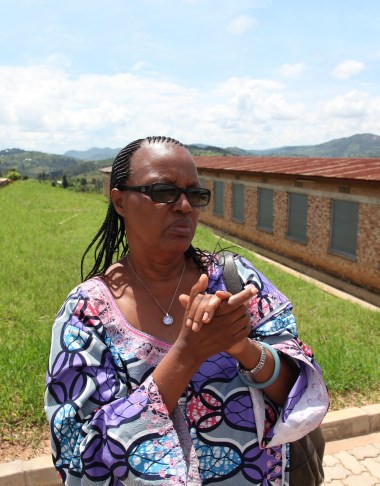
Mama Lambert, whose Rwandan name is Mukarubuga Beata, lost four of her children in the genocide, along with her husband and their home, which was destroyed. The founder of Solace Ministries, Jean Gakwandi, lost his entire extended family, but his immediate family miraculously survived while sheltered in the home of his German teacher.

As my wife, Lorna, and I listened in on the meeting for the next four hours, various survivors rose spontaneously and testified—often tearfully—about their experience during the 100 days of the genocide. The accounts varied but included frequent references to rape, or fleeing to a church for safety, only to have the building attacked by the Hutu militia. A widow described how her baby was bludgeoned to death; she survived because the blood and body parts of victims lying next to her in the church deceived the killers into thinking she was already dead.

Jean Gakwandi sat next to us, translating from the local language of Kinyarwanda to English. When one young orphan boy stood and told of his mother being beheaded and did not shed a tear, Jean whispered that with healing from his PTSD, the tears would flow. After another survivor offered a rambling, incoherent list of various traumatic events, Jean said that, in time, she would hopefully develop a narrative of her life—one that would contextualize the genocide within a larger framework of meaning and purpose.

Searching for faith in the dark

Having spent 15 years interviewing survivors during multiple trips to Rwanda, I have tried to untangle some of the elements that enable survivors to regain their humanity after the genocide.

In researching two major genocides—the Armenian genocide in Turkey in 1915 and more recently the genocide of the Tutsi in Rwanda—I have become convinced that at the heart of survivor trauma is a sense of moral disequilibrium or rupture that violates all norms of civility. The horrors that genocide survivors experience and witness make no sense. There is no way to rationalize them. It is only in the warm embrace of a community, where one feels loved and accepted, that one can begin to create a post-trauma identity.

The problem of theodicy—where was God when all of this happened?—is an issue that troubled many survivors. The deaths of loved ones made no sense. What did connect with survivors after the genocide was when a person reached out in compassion, crying with them, appealing to a God of love who had a purpose for their life. In this regard, Jean Gakwandi and Mama Lambert became agents of the divine.

Jean told me that as a child, he struggled with fear and feelings of worthlessness after his family was attacked in 1959 when the Tutsi king was killed, and again in 1963 following the formation of the Hutu government. He had a remarkable religious experience at age 18, when he turned from being a self-proclaimed atheist to inviting God to take control of his life. He completely gave up drinking, which was his way of dealing with insomnia and self-doubt. He found in the Christian Scriptures a guide to living purposefully.

In early April 1994, Jean’s family hid in a closet as attackers searched the house, shooting randomly through the widows and in their bedrooms. During the genocide, various promises from the Bible gave him hope as his family hid together with a few other Tutsis.

When the genocide ended, Jean said that he felt emotionally numb. But he also felt that he had survived for a reason, and a verse from the book of Isaiah echoed in his ears: “Comfort, comfort my people, says your God” (40:1).

In response, Jean invited a group of widows to gather together to share their stories. Mama Lambert was in this first group of a dozen widows. She was depressed to the point of being suicidal.

Mama LambertCourtesy Donald E. Miller
Mama Lambert

Raised in a Catholic home, Mama Lambert was married, had five children, and worked as a teacher. During the nearly three months of killing, she had carried her infant son, Lambert, on her back.

When she approached Hutu friends, they rejected her, under strict government orders not to harbor Tutsis. One time, a former Hutu student saved her from a lineup of Tutsis about to be slaughtered. On another occasion, in disgust at the absence of God’s intervention, she threw a small Bible she was carrying into the bushes, only to discover some ripe berries where the Bible landed. These berries revived little Lambert, whose name she took after the genocide—the mother of Lambert or, Mama Lambert.

After the genocide, Mama Lambert found solace and comfort in her faith, saying that prayer, both communal and personal, is what gives her sustenance. Neither Jean nor Mama Lambert rationalize the genocide as God’s will. Instead, they believe that they survived for a purpose. I am convinced that part of their own personal healing, day by day, is that they see themselves as agents of God’s comfort to others.

Crafting a community-shaped identity

Initially, people present themselves as a bundle of problems—that is their identity, Jean said. And, indeed, they are oftentimes hungry, sick and struggling with various symptoms of PTSD, such as insomnia, flashback memories, or avoiding their trauma.

Jean said that these problems must be addressed, but equally important is for survivors to gain a sense of personal identity and agency. While individual counseling is important, a new self must be grown in community, in interaction with others.

It is in community that survivors can share each other’s burdens; it is in testifying about one’s experiences that a survivor can release herself from traumatic memories; and it is in community that one can discover new, meaningful roles as a surrogate parent or grandparent to an orphan.

At the heart of Jean and Mama Lambert’s approach to healing is compassion—crying with fellow survivors, listening to them as they reveal experiences that previously were too painful to share and creating a communal structure in which survivors can meet on a regular basis, being supported not just emotionally, but with their physical needs as well. Unlike the many nongovernmental organizations funded and run by first-world countries, Solace Ministries is an indigenous organization, led by individuals who have evolved a program in response to their own need for healing.

Two steps forward, one step back

One day, we journeyed with Mama Lambert to where her house once stood. We saw the lake where her husband’s body was thrown after he was killed. We stood next to the memorial she had built after she recovered the bodies of her two daughters that had been thrown into a pit latrine. We visited a nearby location where several dozen of her Tutsi friends had been killed, including her son.

I asked Jean and Mama Lambert whether they have forgiven the perpetrators of the genocide. They both reject any quick-fix interpretations of forgiveness and believe that forgiveness is a process that often involves a step or two forward and similar steps backward. When forgiveness is not preceded by healing from trauma, it often is accompanied by emotional blunting, where the individual seals over the pain, which then paralyzes them from being able to feel other deep emotions like love and joy.

Forgiveness is not a rational process; when it comes, it is near the end of a long struggle with grief, anger, and loss. Both Jean and Mama Lambert said that it is helpful for survivors to return, as they are emotionally able, to the site where their loved ones were murdered. If they know where the killers buried the bodies, it is important to recover their bones, ritually wash them, and then rebury them with dignity.

Both Jean and Mama Lambert see the value of forgiveness—not for the perpetrator, but for the victim, who potentially experiences a new sense of freedom from the revolving nightmares, flashbacks, and preoccupation with what happened. In their experience at Solace, forgiveness is most difficult for survivors who were raped and continue to struggle physically with the consequences of the genocide.

For survivors who experience heartfelt forgiveness of the perpetrator, it often is perceived as a gift, an act of transcendent grace at the end of a long struggle. And, importantly, forgiveness does not mean forgetting.

How do survivors of war, earthquakes, and genocide—situations where social trauma is so extensive that individual counseling is not possible—regain their humanity? The answer suggested by Solace Ministries is that healing best occurs in a community of fellow survivors who can accept one’s pain—collectively bearing each other’s burdens.

Such a concept is only possible within a compassionate community where God’s love is embodied in the caring acts of people who understand themselves to be agents of a divine purpose. Moral rupture is seldom healed rationally. Moral equilibrium is more easily achieved in the nurturing presence of fellow survivors who understand the pain of genocide and can help carry the burden of their neighbor’s memories.

Donald E. Miller is the Leonard K. Firestone Professor of Religion at the University of Southern California. His forthcoming book, Becoming Human Again: An Oral History of the Rwandan Genocide Against the Tutsi, is based on interviewing hundreds of survivors over the course of 15 years.

Ideas

The Resurrection Has Not Been Canceled

President & CEO

God is always in the business of bringing life out of death.

Christianity Today April 8, 2020
Illustration by Mallory Rentsch / Source Images: saemilee / Getty Images

For today’s musical pairing, listen to Beethoven’s “Ode to Joy,” commonly played on Easter Sunday but here rendered in a distilled, outdoor version. All the songs for this series have been gathered into a Spotify playlist.

“I want to know Christ—yes, to know the power of his resurrection and participation in his sufferings, becoming like him in his death, and so, somehow, attaining to the resurrection from the dead.”Philippians 3:10–11

Meditation 15. 1,495,051 confirmed cases, 87,469 deaths globally.

Sister Benedicta Ward produced the most widely used translations of Sayings of the Desert Fathers and Lives of the Desert Fathers. I studied those works with her at her home in Oxford over the course of a beautiful spring. The books recount the practices and teachings of early Christian hermits and monks who made their homes in the most barren parts of Egypt.

I found myself in those discussions frequently referring to “dying to oneself.” Eventually she lifted her head and held up her hand. “We die to ourselves, yes,” she said. “But only so we can come alive to who we were really made to be, Christ within us.”

It was a gentle rebuke, and passed in a blink. But I have never stopped hearing those words.

In this season of affliction and this Holy Week, we approach the day on which we remember the crucifixion of Jesus Christ. With so much suffering around us and within us, it’s natural and right to reflect on the suffering of our Savior. But even in the darkest of times, we should never stay there. Jesus didn’t.

The Cross by itself is an extraordinary act of love and self-sacrifice. But it cannot be separated from the empty tomb. Apart from the empty tomb, Jesus is not a savior at all. Apart from the empty tomb, the story of the cross would be a story of the death of hope and the defeat of God.

This is not unknown to those of us who are followers of Jesus Christ. We have already experienced a foretaste of the resurrection. We have experienced Christ bringing new life—bringing his life—forth within us. We are, each of us, living proof that God brings life into the dead places. We only truly live when we die and Christ lives in us.

Church doors are closed. Schools are no longer meeting. Businesses are shuttered. Restaurants and cafés are empty, cinema screens are dark, and concert halls are silent. Countless meetings and gatherings, weddings and funerals, conferences and events have been canceled.

The resurrection is not canceled. God is always in the business of bringing life out of death. Jesus emerged from the tomb so that we can do the same—on Easter and every other day. There is nothing in all the world that could have stopped the resurrection of Jesus Christ two thousand years ago, and there is nothing that can stop it today.

We worship the God of empty tombs. We worship the God of resurrections. We implore you, O Lord, bring life out of death again today. Let it start in us.

Sign up for CT Direct and receive these daily meditations—written specifically for those struggling through the coronavirus pandemic—delivered to your inbox daily.

Theology

What Did the Pope Really Say About Confession During COVID-19?

Unpacking Pope Francis’s remarks about ‘taking your sorrows directly to God.’

Christianity Today April 8, 2020
Andrew Medichini / AP Images

The rapid advance of COVID-19 has produced angst among the faithful, as with the rest of society. It has also generated a surge of religious innovation. Many of us pastors have suddenly become iPhone evangelists, streaming gospel messages to our people and anyone else who will listen. My own church, for example, has been increasing its use of technology and just shared its fourth Sunday service on the web.

The Roman Catholic Church, known in recent years for its dynamic development of doctrine and religious modernization, has also been required to pivot in unforeseen ways. Because of the severe impact of COVID-19 on Italy, Pope Francis has canceled his main public appearances to prevent crowds from forming. The pontiff is instead livestreaming various events—much like the growing ranks of innovative pastors here in the US. He has replaced the mandatory Mass with a “virtual parish.” He also offered the possibility of a plenary indulgence, the forgiveness of sins, because of the pandemic.

But some of us Vatican observers are wondering if the changes go beyond form to the very substance of Roman religion. And if they do, how should Protestant believers respond?

Given the inability of most Catholics to leave their homes right now, confessing one’s sins to a priest—mandated by Roman Catholicism for the forgiveness of sins at the Fourth Lateran Council (1215)—is out of the question. So what should Roman Catholics do with their unconfessed sin?

Speak Directly to God

A headline in the Catholic-sponsored Our Sunday Visitor answers, “If you can’t go to confession, take your sorrow directly to God, pope says.” This sounds startlingly like a sentiment a sin-tormented Martin Luther would agree with.

Here’s what Pope Francis stated last week: “If you cannot find a priest to confess to, speak directly with God, your father, and tell him the truth. Say, ‘Lord, I did this, this, this. Forgive me,’ and ask for pardon with all your heart.” But the pope made this statement flanked by an image of Mary and a crucifix thought to have miraculous powers. He prayed for the world at this crucial juncture in the presence of two relics that have accompanied the people of Rome for centuries: the ancient icon of Mary Salus Populi Romani and the miraculous crucifix of San Marcello. Some, however, have noticed the mixed message. His words implied that direct access to God is available through Christ, but the symbols suggested otherwise.

Even so, the pope’s recommendation for the faithful to pray directly to God was couched in language much like that of the late Billy Graham, exalting God’s tender mercy toward His flock. “Return to your father who is waiting for you,” Francis said. “The God of tenderness will heal us; he will heal us of the many, many wounds of life and the many ugly things we have done. Each of us has our own!”

God stands ready and “welcomes every repentant sinner with open arms,” Our Sunday Visitor also reported Francis as saying, adding his words: “It’s like going home.”

Not a ‘Reformation’ for Rome

Though the requirement to confess to a priest was temporarily removed, the pope didn’t remove every obstacle to direct access with God. He said Catholics must still perform an act of contrition and promise to go to confession later. “And immediately you will return to a state of grace with God.”

“As the catechism teaches,” the pope counseled, “you can draw near to God’s forgiveness without having a priest at hand. Think about it. This is the moment.”

The Catechism (CCC N. 1452) speaks of contrition prompted by “a love by which God is loved above all else. …” Well and good. But this raises Martin Luther’s question of how the faithful are to be sure they love God “above all else” to the extent that they are safe in bypassing priestly mediation. Luther himself tried mightily to love God and obsessively confessed his sins, strictly following this standard, and—as he later confessed—he ended up hating God. The task, without the gift of faith, was beyond him. It is beyond each of us. The oft-vacillating love with which we approach God is insufficient.

And if we somehow can go directly to our tenderhearted and welcoming Father to receive forgiveness at this time, during this pandemic, why can’t the faithful do it all the time? It raises the question of whether God’s welcoming, no-strings-attached embrace of prodigals is always available or an option only during emergencies. Innovations such as this might suggest to some that Catholicism’s regulatory religion is less than practical, maybe even unlivable.

There is, of course, a full-orbed body of theology informing the Catholic practice of confession and prayer, a sacramental system that involves particular understandings of the authority and the ministry of Christ through the Roman Church. Nevertheless, the practical question continues to assert itself of how Christian men and women can enter God’s presence and come “home,” in Pope Francis’ words, to the Father’s compassionate embrace.

Talking with Catholic Friends

Rather than seeing the pope’s innovation as an opportunity to score debating points for the Reformation—which clearly isn’t over—we would do well to talk with our Roman Catholic friends and loved ones about why God accepts us.

Divine acceptance is not grounded in the love or inner righteousness that proceeds from our hearts, but in what Christ has done for us. Our Catholic friends have been taught that we must continually cooperate with Christ’s gracious work on the cross to be forgiven, and when we fail to live up to this standard—as all humans will—we are to seek divine absolution as mediated by a priest. Such a thorough system, though well meaning, gives us no assurance, even when it gets modified during a plague.

During this anxious time of sheltering at home, often with loneliness and isolation, we need to be reminded of how the father of the prodigal son noticed his repentant child returning home from a long distance away and with deep compassion ran to him with outstretched arms. This is our heavenly Father, and it’s the direct, unmediated forgiveness that he offers through the “one mediator between God and men, the man Christ Jesus,” who died and rose so that our forgiveness would be certain and permanent (1 Tim. 2:5). As Paul stated so gloriously, “Therefore, since we have been justified by faith, we have peace with God through our Lord Jesus Christ. Through him we have also obtained access by faith into this grace in which we stand, and we rejoice in hope of the glory of God” (Rom. 5:1–2).

The coronavirus pandemic and the Lenten season provide a wonderful opportunity to embody and explain this grace. And our Catholic friends may be more willing to listen. According to the Center for Applied Research in the Apostolate, a Catholic nonprofit affiliated with Georgetown University, only 2 percent of Catholics regularly go to confession—and three-fourths never go or only go less than once a year. Many in the Roman Catholic fold apparently find their religion to be unlivable.

Let’s show them a better, more hopeful way. It won’t take much innovation—just a bit of faith.

Chris Castaldo is lead pastor of New Covenant Church, Naperville, Illinois, and is the author of The Unfinished Reformation: What Unites and Divides Catholics and Protestants after 500 Years (co-written with Gregg Allison), Talking with Catholics about the Gospel: A Guide for Evangelicals, and Holy Ground: Walking with Jesus as a Former Catholic.

Pastors

Pandemic Advice from South Korea: Pastors, Focus on Your Family

“So many pastors’ kids share how they feel neglected in the home. This is a unique time where we are spending large quantities of time with the family.”

CT Pastors April 8, 2020
Cecilie_Arcurs / Getty Images

The statistics and stories about the lives shattered by COVID-19 keep piling up. Sadly, if the experts are correct, the worst days of the pandemic are still ahead. But the US is not the first country to deal with this scourge.

James Byun is the founding senior pastor of Lifespring Church in South Korea, which has been dealing with the pandemic since January. He was born in Seoul, Korea, but immigrated to the United States when he was two years old. After pastoring in Northern California, Dallas, and Washington, DC, God led him and his wife, Heather, to move across the world to plant an international church in South Korea. Although he hardly spoke any Korean, he, Heather, and their four children packed up and moved to South Korea. Today Lifespring Church is a diverse international church located in Songdo, with over 40 nations represented. Maina Mwaura spoke with Byun to learn what might be in store for pastors in America over the next month.

What has life been like in South Korea with the coronavirus?

Life as we know it has changed. People are staying at home and going out only when they need essentials. Schools have closed. Students are studying online. Sporting events have been suspended. Concerts have been canceled. Theatres have closed. Churches have stopped meeting physically. Practically everyone now wears a mask. The economy has been hit, and small businesses have greatly suffered. Life has changed. Perhaps one of the greatest changes is that life has slowed down and has been simplified.

How has your church been affected?

Lifespring made an early decision to go totally online, so we have not been meeting physically since the end of February. It was a heartbreaking decision, but one that we knew we had to make to serve our community and the nation. I have been in ministry for 23 years and have never experienced anything like this. It has made our pastoral staff rethink ministry, and our members have had to adjust as well. Many people in the community struggle with isolation and loneliness during this time, so more than ever, we need to be proactive in reaching and ministering to people.

I think this pandemic has been a wake-up call for all of us. We have seen our church become hungrier and more desperate for God. We have been more unified and God is raising up prayer warriors. There is great hope that God will bring about good through this and that revival is coming.

What are some ways you have experienced God at work during the quarantine?

One of the things that we are seeing is the restoration of families. The work culture in Korea is so demanding that families rarely spend time together. Families have been spending more time together in the past month than perhaps in an entire year. In addition, due to the nature of online worship, worship is now being brought into the home, and God is praised and worshiped in the home. All these factors are leading to families being restored.

The second thing we are seeing is a movement of prayer. People are praying and crying out to God. Desperation tends to make us cry out to God, and this virus has made people desperate. We started a 72-hour prayer chain, and within a few hours of asking, over 300 people signed up to join in prayer.

The third thing we are seeing is an attitude of thanksgiving. We have taken so many things for granted, and they have now been taken away from us, such as going to our favorite restaurants, going to the movies, or worshiping together at church. This experience has made us more thankful.

What advice would you give American pastors wrestling with the reality of the virus?

I would remind them to trust God. He is in control, and we know that he will bring about something good even through this. We live in an age when we can still be connected to people without physically meeting them. People need to hear from their pastors, and we need to pray for people and the world. We have started to contact every single person at our church to check on them. We have close to 2,000 people on our list that we are going through. We have decided to call all the children and students at our church as well. We are checking on them and asking how we can pray for them.

I have committed to pray for about two hours every day for all of these prayer requests that we get. I have a binder of prayer requests that I go through, and I pray for them all. As a pastor, the best way I can serve our people right now is to pray for them. We have also conducted online prayer services and we are currently in the midst of a 72-hour prayer chain to pray for the nation and the world.

I’d encourage pastors to stay active physically, mentally, and spiritually. Some of our staff are working out together using Zoom video conferencing. Some of our staff have been catching up on reading. I have gone through some of my old seminary class notes.

I would also recommend spending quality time with the family. So many pastors’ kids share how they feel neglected in the home. This is a unique time where we are spending large quantities of time with the family. We need to make sure that quantity time turns into quality time. In our home, we have had several “dream-sharing” times with our children. We have designated times for our kids to freely share their dreams with us. It has been so rewarding to hear the dreams on their hearts. I have also imitated Joe Montana, and sometimes Mike Singletary, and played indoor tackle football with my boys. I think this is time for families to be restored, and this family restoration should start in the pastors’ homes.

What have been the primary spiritual needs you have encountered?

The two biggest spiritual needs that we have seen are fear and loneliness.

We have been fighting fear with faith, and we are praying that people will not lose faith in God during this time. However, people start to lose faith when they start to lose hope. So it has been a priority for us to remind people of the hope we have in God’s character and his promise. We have been reminding our members that God has already proved his love for us, and his track record is perfect.

Another big spiritual need is dealing with loneliness. We have been stressing the need for community for years, but all of a sudden, we are telling people to isolate themselves. So, as one can expect, people are struggling with loneliness and depression. We must stress the need for physical isolation but not communal isolation. We need to be very intentional and proactive in reaching and encouraging our folks during this time. We may not be able to meet face to face, but we can call, text, email, and video chat. There are many avenues for us to reach out to people and let them know that they are not alone.

What has surprised you about people’s needs?

I think the biggest surprise has been how much people are willing to sacrifice personal comfort on a micro level to help fight the virus on a macro level. When we talked to one of the members to check on her, she shared that her husband’s work is based in the Daegu area, an area deemed to be a special disaster zone. He usually comes back home every weekend, but ever since the coronavirus hit, he has insisted on not leaving the Daegu area and is isolating himself there even though he is not restricted to stay there. He does not have the virus, but he has not come home for several weeks. He said that he does not want to even accidentally spread the virus to his family or people in other parts of Korea. He has insisted that this is the only way Korea will be able to contain this virus.

Another surprise was when we announced that our services were going online. There were initially some reservations. We did not know how it would be accepted and how worshiping through a computer screen would go. However, not only has the overwhelming majority of our members been faithful in worshiping online with us, but many have also shared that they were touched and blessed through these online services. God uses many different ways to reach his people.

Have you seen God move within your fears and anxieties during this time?

I feared that my family or I would get the virus, and, of course, that fear extended to our church family. Like many people, I had a fear of the unknown.

Prayer is so important in fearful times, and in our prayer times we are reminded how much God loves us. Has he not always loved us? In one of my prayer times, I was reminded of the story in 2 Kings 6 when Elisha’s servant was filled with fear because the enemy was surrounding them. Elisha prayed that his servant’s eyes would be opened and that he would be able to see. His eyes were opened, and he saw mountains of horses and chariots of fire that surrounded Elisha. Prayer allows us to fight fear, and we are able to see that we are not alone. God is with us.

As I was calling all of our members to check up on them, I had a conversation with a four-year-old. I asked her how we could pray for her, and she asked us, “Why did Jesus have to die on the cross?” Right then we were able to share the gospel with her over the phone. Many seeds are being planted right now. Children, students, and adults have been opening up their hearts. This is an incredible season of harvest.

History

Cholera Outbreaks Revealed Power, Prejudice, and Compassion. So Does COVID-19.

At their best, our 19th century predecessors found themselves on the side of the suffering.

Christianity Today April 8, 2020
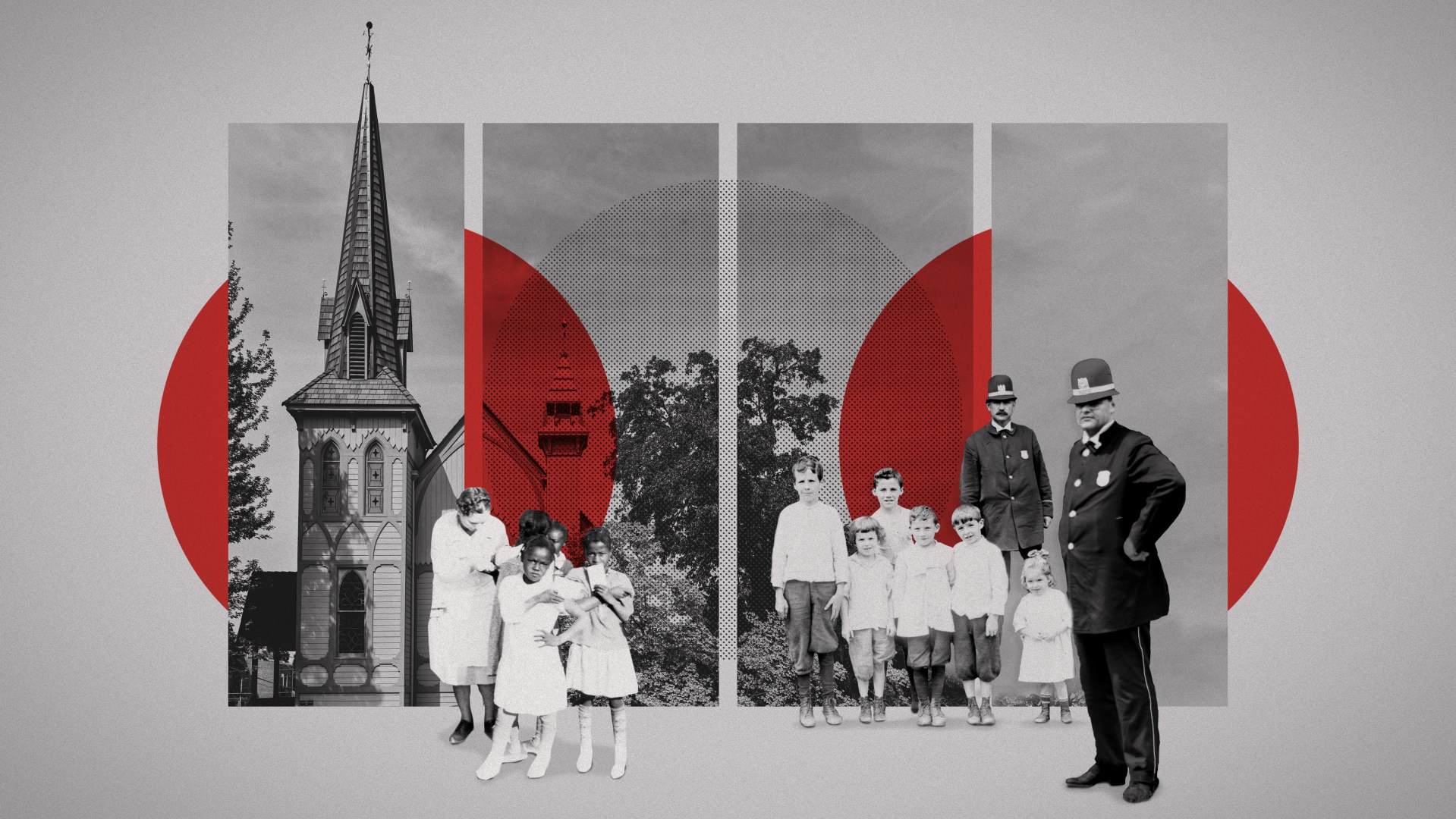
Illustration by Rick Szuecs / Source images: Library of Congress / Mississippi Department of Archives and History

Americans watched anxiously as the pandemic crept toward them, spreading with seeming inevitability from its origin in Asia to Europe and then, crossing the Atlantic, to the United States. When the disease arrived, it brought the country to a halt: Ports closed, storefronts shuttered, and once-bustling downtowns emptied. Churches shut their doors. An eerie quiet fell on American cities.

This describes the scene in the early 1830s, as Americans faced the arrival of cholera—a deadly disease endemic to the Ganges Delta that swept across the globe with devastating effects several times during the 19th century.

Yet the description also fits the first months of 2020. Like antebellum Americans, we fretted about when the disease might arrive on our shores. Like them, we raced to understand the disease—its cause, its cure, and how it might be prevented. Like them, we undertook belated public health interventions even as we worried about the economic consequences of those interventions. And now, just as in the 1830s, American Christians are confronting the pandemic within frameworks provided by their beliefs.

Given these parallels, despite all that has changed in medicine and religion in the intervening 190 years, can Christians learn anything from their antebellum forebearers?

We see in their responses to cholera a common impulse to provide moral meaning to the pandemic. But they varied widely in their approaches to those who suffered the most. Christians with socioeconomic and cultural power were blinded to the plight of the vulnerable by their visions of a disciplined, hard-working Protestant nation. It took Christians on the margins to speak on behalf of the sick, the poor, and the immigrant.

What hindsight enables us to see clearly in the 19th century may serve as a challenge to us today. Pandemics are profound social stressors that reveal fault lines of power and prejudice while also serving as opportunities for selfless love. As the coronavirus raises questions about morality, racism, and economic prosperity, we would do well to ask whether we find ourselves on the side of the suffering.

In his masterful book The Cholera Years, historian Charles E. Rosenberg describes a theological spectrum of Christian responses to cholera. Some Christians interpreted cholera as a divine judgment on the United States, especially on its more profligate citizens. This was in keeping with tradition: Since the arrival of Puritans in the early 17th century, American Protestants had discerned a connection between sin and sickness. Collective illness suggested collective sin, just as personal illness suggested personal sin. Pandemics had thus long prompted fast days dedicated to repentance and prayer.

Antebellum Christians carried on this tradition. When cholera began spreading along the Eastern Seaboard in the 1830s, clergy such as Congregationalist minister Orville Dewey examined what God intended in such a crisis. Taking his cue from contemporary doctors who believed that drinking too much alcohol rendered people vulnerable to the disease, Dewey saw cholera as divine support for the temperance movement. By superintending a pandemic that struck hard drinkers the hardest, surely God blessed the anti-alcohol crusade. Indeed, Dewey was prepared to consider the fatal public health crisis a “beneficent visitation” if it succeeded in impressing upon Americans the perils of strong drink.

Other Christians also perceived God working in cholera, albeit one step removed. To more liberal believers, the disease arose not from miraculous divine judgment but from the normal operation of the laws of nature. Yet, even if it were explicable in scientific terms, cholera still contained a moral lesson. By all accounts, the disease did its worst damage among the poorest residents of American cities. Because many Americans believed poverty arose from personal moral failures, they assumed these sufferers were also the most reprobate. As Thomas Bradford Jr., a lawyer working in Philadelphia at the time, observed, cholera strikes “among the lower classes of people, the intemperate, the licentious, & and the wretched.” To many Protestants, this was no coincidence. The fact that those who lived fast and loose suffered disproportionally from disease simply illustrated the harmony of God’s moral and natural laws. This etiology thus contained an ethic: Live rightly or face the necessary consequences. As cholera dealt death to impoverished Philadelphians, Bradford wrote this of the pandemic: “The city is not moved by it. … They know they can avoid it by prudence in living and care of their persons & families.” The disease could be staved off “by those who have the means and are careful.”

Many of the poor and ostensibly immoral sufferers of cholera had another strike against them: They were Irish Catholic immigrants. This demographic reality—evident during the 1830s and even more pronounced when cholera returned in the late 1840s—only rendered more certain the old association between contagion and foreigner. Even though most doctors in the 1830s did not yet believe cholera was contagious, many Americans could not shake the intuition that the disease spread from person to person. They therefore shut their homes and their hearts to the immigrants just then arriving from Ireland. In the coming decades, the link between cholera and the Irish only fueled the Protestant nativist movement and its anti-Catholic, anti-immigrant animus.

While most Americans during the antebellum era endorsed the Protestant gospel of individual responsibility, some dissenters articulated an alternative ethic. Often speaking from the religious periphery, these people acknowledged that cholera was a disease of poverty, but they interpreted this fact not as a judgment of the poor but as a damnation of the society that impoverished people and thereby made them susceptible to disease. Catholic priests, for example, for whom Irish immigrants were parishioners rather than pariahs, viewed cholera differently than Protestant clergy. Their analyses reflected both the fact that they often ministered to the working classes (and those below) rather than the well-to-do and their theological rejection of liberal individualism. Addressing the cholera pandemic of the late 1840s, Bishop John Baptist Purcell pleaded for adequate housing for the less fortunate residents of Cincinnati. If cholera represented divine reproof, Purcell argued, it was for the sins of “oppression and insensitivity to the wants and the claims of the poor.”

There was yet one more option for Christians confronting cholera: service. When the disease first arrived in American cities, those who could afford to flee did so—along with them many Protestant ministers, who left behind emptied neighborhoods and quieted church bells. Yet many Catholics who had vowed themselves to lives of service stayed to help. When fears of contagion made it difficult for city leaders to secure hospitals for cholera patients and nurses to staff those hospitals, nuns stepped into the breach. Orders such as the Sisters of Charity and the African American Oblate Sisters of Providence created and staffed cholera hospitals throughout the country. Many sisters died in this service.

Whether they gathered in churches to pray in search of the divine meaning of cholera, or, like the formerly enslaved Catholic hairdresser Pierre Toussaint, crossed quarantine barricades to care for the sick, 19th-century Christians confronted cholera with the tools of their faith.

Rosenberg argues that as doctors improved their ability to explain and to prevent cholera—the English physician John Snow determined that the disease was waterborne in 1855, leading to improved sanitary measures—Americans looked less to God and more to public health initiatives to save them from disease. Yet, as recent history demonstrates, medical etiologies hardly preclude religious interpretations. Like their antebellum predecessors, believers today continue to turn to Christianity in the face of a global health crisis. What guidance does their faith provide?

American Protestants still search for evidence of divine reproof in widespread sickness. In a recent sermon, for example, the prominent First Baptist Dallas pastor Robert Jeffress asked whether the coronavirus might be a judgment from God. While he said it would be “presumptuous” to answer definitively, Jeffress nevertheless reminded his congregants that “God judges a nation that permits and celebrates the killing of children” through abortion. Presbyterian minister and activist Liz Theoharis, meanwhile, invoked an apparent connection between biblical plagues and wealth inequality to argue that the coronavirus calls Americans to seek economic and health care justice.

As in the 1830s, Christians are again grappling with the politics of immigration and race that trouble the American response to the pandemic. In recent weeks, President Donald Trump and other Republican politicians insisted on referring to the coronavirus as the “Chinese virus” and similar variants—with the jocular support of evangelical personality Eric Metaxas. Christian critics, meanwhile, pointed to an apparent uptick in anti-Asian racism around the world as evidence that such language is dangerously xenophobic. Korean-born evangelical minister Eugene Cho, for example, said that such language “only instigates blame, racism, and hatred against Asians.”

Christians are also carrying forward the imperative to serve the hurting. During 19th-century cholera pandemics, that service usually meant tending directly to patients. Just so, countless Christians are caring for those struck by the coronavirus through medicine and other ministries, often at great risk to themselves owing to the lack of personal protective equipment. Yet, as Anglican priest and New Testament scholar Esau McCaully argued, for most believers, neighborly love in the midst of the coronavirus might require “not our physical presence, but our absence”: dutifully observing social distancing and hygiene guidelines out of love for those at greatest risk from the disease. As questions about economic recovery begin to dominate headlines, Southern Baptist leader Russell Moore invoked “the sanctity of human life” to urge Christians to continue their public health measures, regardless of the financial consequences, for the sake of the “vulnerable.”

The epidemiology of the coronavirus differs from cholera, yet it presents the same question: How will Christians respond to their community in its time of need? The next weeks and months are likely to reveal more varied Christian responses to the pandemic, just as we saw in the 19th century. However we respond, we can hope for a Christlike legacy: healing the sick, comforting the brokenhearted, and caring for “the least of these.”

Jonathan D. Riddle, Ph.D., is an assistant professor of history at Wheaton College, where he works on the history of religion and medicine.

Ideas

The Price of Faith in a Pandemic

President & CEO

In this Holy Week, in this season of the pandemic, there’s no following Christ without the cross.

Christianity Today April 7, 2020
Illustration by Mallory Rentsch / Source Images: saemilee / Getty Images

For today’s musical pairing, listen to this from Bach’s “Concerto in D Minor” by Víkingur Ólafsson. All the songs for this series have been gathered into a Spotify playlist.

“Large crowds were traveling with Jesus, and turning to them he said: ‘If anyone comes to me and does not hate father and mother, wife and children, brothers and sisters—yes, even their own life—such a person cannot be my disciple. And whoever does not carry their cross and follow me cannot be my disciple.’“‘Suppose one of you wants to build a tower. Won’t you first sit down and estimate the cost to see if you have enough money to complete it? For if you lay the foundation and are not able to finish it, everyone who sees it will ridicule you, saying, ‘This person began to build and wasn’t able to finish.’’”Luke 14:25–30

Meditation 14. 1,412,103 confirmed cases, 81,103 deaths globally.

There are times and places when the church lives in such peace and abundance that faith becomes an inexpensive thing. What cost another generation their lives and livelihoods costs us Sunday mornings and a modest tithe.

The temptation for those of us who wish to invite everyone into the fold of the faithful is to lower the cost of faith even further. Perhaps, we say, faith no longer requires so much sacrifice. Perhaps the time of suffering is past. In fact, there may be no cost to faith at all. Perhaps it’s the opposite. Perhaps faith paves the way to greater health and wealth.

Jesus was never so eager to keep a crowd that he minimized the costs of faith (see John 6:60–66). He could not have been clearer that following him requires enormous sacrifice. “Whoever does not carry their cross and follow me cannot be my disciple.” Every person should count the cost.

Jesus understood something we have forgotten. When we lower the cost of faith, it becomes something other than faith. A cheap counterfeit. An elegant mantle of piety around the shoulders of an essentially secular life. If we lower the cost further still, it becomes something no one values. Eventually no one is willing to “purchase” what seems so common and unremarkable, what requires so little sacrifice.

The Danish philosopher Søren Kierkegaard wrote that the church had become filled with “admirers” when what Christ wants is “imitators.” As we enter into Holy Week as so many are suffering and dying in the pandemic, Jesus does not invite us to be mere admirers of the way he carried his cross nearly two thousand years ago. He invites us to be imitators, to carry our own crosses and follow in his footsteps today.

God may not call us to literal martyrdom. But he does call us to a faith worth living and dying for. He calls us to give our lives, wholly and completely, and follow where he leads.

Faith does not cost us a little. It costs us everything, because it is worth nothing less. The life of faith is costly because it is so extraordinarily valuable.

In the epilogue to Fear and Trembling, one of his most renowned works, Kierkegaard describes a time when the price of spices in Holland had fallen too low. Spice merchants “had a few cargoes sunk in the sea in order to jack up the price.”

Perhaps now amid the pandemic is a time to raise the price again. To recognize that there is no such thing as following Jesus without the cross.

Help us, O Lord, to be imitators and not merely admirers of Jesus. Help us to take up the cross for others, as you took up the cross for us.

Sign up for CT Direct and receive these daily meditations—written specifically for those struggling through the coronavirus pandemic—delivered to your inbox daily.

Apple PodcastsDown ArrowDown ArrowDown Arrowarrow_left_altLeft ArrowLeft ArrowRight ArrowRight ArrowRight Arrowarrow_up_altUp ArrowUp ArrowAvailable at Amazoncaret-downCloseCloseEmailEmailExpandExpandExternalExternalFacebookfacebook-squareGiftGiftGooglegoogleGoogle KeephamburgerInstagraminstagram-squareLinkLinklinkedin-squareListenListenListenChristianity TodayCT Creative Studio Logologo_orgMegaphoneMenuMenupausePinterestPlayPlayPocketPodcastRSSRSSSaveSaveSaveSearchSearchsearchSpotifyStitcherTelegramTable of ContentsTable of Contentstwitter-squareWhatsAppXYouTubeYouTube