News
Wire Story

Pakistan Frees 40 Christians After 5 Years in Prison for ‘Terrorism’

But two of their fellow detainees died while awaiting trial for the riots after Easter suicide attack on Youhanabad church.

Christianity Today January 31, 2020
World Watch Monitor

Forty Pakistani Christians, who’ve been on trial for the murder of two men during a violent protest following Easter suicide attacks on two churches in Youhanabad—a majority-Christian area in Lahore—have been freed by the Lahore Anti-Terrorism Court.

Two others, arrested with them, have already died, allegedly due to a lack of access to medical treatment.

The twin suicide bombings, on March 15, 2015, which killed 17 and injured another 80, were claimed by a splinter group of the Taliban, Jamaat-ul-Ahrar. The death toll would have been much higher if church volunteers on “security duty” had not acted quickly to defend worshippers.

In riots that erupted following the bomb blasts, a mob killed two Muslim men whom they believed had been involved in the attacks. In the end, 42 Christians went on trial for their murder, but two died in prison before 2018. The other 40 have been waiting for their appeal to be heard by the Lahore High Court. Meantime, the group has reached a financial settlement with the families of the two men, which under Pakistani law allows for their acquittal.

The Anti-Terrorism Court announced the verdict on January 29, acquitting all, including those who had died, after recording the statements of the victims’ families, who told the court that they had arrived at an agreement with the suspects and would have no objections over their acquittal.

A local reacted: “As we give thanks as Christians in Pakistan, one cannot get away from the brutal realities of what this means. The journey of physical, emotional, and spiritual healing ahead is a long one. Pray for the right people to be positioned alongside them.

“We also reflect on the lives and deaths of the two [who died in prison]. If they had not, the release of the 40 would not have happened. Their deaths acted as catalysts and became an advocacy bridge for pushing for action and justice.”

Background

In 2015, the Christians of Youhanabad had been angry in the immediate aftermath of the twin suicide attacks on their churches because in 2014, Pakistan’s Supreme Court had ordered the creation of a special police force to protect minority worship places—but this had been later scrapped. Punjab Human Rights and Minority Affairs Minister, Khalil Tahir Sandhu, had said “there was no need of raising another force for this purpose” because the protection of worship places “was quite satisfactory in the Punjab and reasonable security was being provided.”

Napoleon Qayyum, who lived 100 yards from one of the bombed churches, said police were not providing security to the church: “The local police station had been requested to provide a walk-through gate for security, but no such measure was put in place.”

A Catholic nun, Sister Arsene, who had reached one church 30 minutes after it had been bombed, tried to explain to the BBC why the subsequent anger had spilled out of control. “We’re treated as second-class citizens. We’d like the government to give Christians our due place and due right. That’s why the angry youths reacted.”

At the time, there were conflicting reports about the two men set upon by the angry mob. Some reports said the two carried weapons; other reports said they had been firing them.

The two, who had been arrested and put into a police vehicle, were apparently forced out of the vehicle, beaten up, and eventually burned alive on Ferozepur Road. Some social media reported they were suspects thought to have attacked the churches. Other reports said they were, separately, planning to attack another small church in Khaliqnagar, a Christian settlement next to Youhanabad.

However, some days later, they were finally identified as Muhammad Naeem, a local glasscutter, and Babar Nauman, a hosiery worker from Sargodha; it appeared that they had had nothing to do with the church attacks.

News of their murder filled the Pakistani media, somewhat overshadowing the deaths of the 17 Christians and injury to 80 more. As gory images of their lynching ran on TV and more details emerged, for many Pakistanis earlier sympathy with the Christian community slowly turned into animosity. One young Muslim commented on a Facebook post: “Christians (Chuhras) have set on fire two Muslims today. I am only sad about their death.” (“Chuhra” is a pejorative term often used to describe Christians.)

Easter 2015 suicide attacks: repeated in 2016, but foiled in 2017

“The Tehrik-e-Taliban Jamaatul Ahrar accepts responsibility for the [2015] attacks on the churches in Lahore,” its spokesman Ehsanullah Ehsan later told reporters. “We promise that until an Islamic system is put into place in Pakistan, such attacks will continue. If Pakistan’s rulers think they can stop us, they can try.”

In March 2016, on Easter Sunday, the Pakistani Christian community experienced the deadliest terror attack in the history of Punjab—Pakistan’s most populous and most Christian state—when the same Jamaat-ul-Ahrar bombed a popular children’s park in Lahore as families thronged to enjoy their holiday. At least 76 died, many of them children, with over 300 injured.

Christians make up just 2 percent of overwhelmingly Muslim Pakistan. They are somewhat more prevalent in Lahore, which has about 10 million people, about 5 percent of whom are Christian.

At Easter 2017, Pakistan’s security forces said they prevented a “major” terror attack on Christians in Lahore over the same weekend. The police caught the attackers in time, killing one suspect, Ali Tariq, and making two arrests during a Good Friday raid at the Punjab Housing Society in Lahore. Two suicide vests and four grenades were recovered from the scene.

Earlier, police had released a memo warning the city’s residents: “Reliable sources have informed us that two suicide bombers of an unidentified terrorist organisation have entered Lahore with the intention of carrying out attacks in churches or parks on 16/17 April. They have been equipped with suicide jackets and will target areas where the presence of Christians will be high.”

One of those arrested was a 20-year-old woman, Naureen Leghari, who’d gone to join ISIS in Syria. The medical student confessed to returning to Lahore with the intention of carrying out a suicide bombing against a church during Easter 2017, according to an interview broadcast on local television. Police later released her, saying that she had undergone rehabilitation and that ISIS had deceived her.

Prosecutor offered 40 their freedom if they converted to Islam

In May 2017, it came to light that the Lahore deputy district public prosecutor, Syed Anees Shah, had told the 40 Christians that they would be freed if they converted to Islam. He was later found guilty of proselytism and suspended.

Shah was criticised for his alleged comment by Malik Muhammmad Ahmed Khan, then-special assistant to the chief minister of Punjab, who said the offer “is not just shameful but a heinous crime … We are all set to end the extremist mindset and steer the country to a tolerant and moderate society. Therefore, we cannot tolerate anyone in the government machinery with this mindset.”

Pakistan’s Senate Special Committee on Human Rights said almost two years ago that “terrorism charges against the [Christians] arrested should be dropped and they should be tried in civil courts,” as Pakistani newspaper Dawn reported.

At that time, in May 2018, then-Senator Farhatullah Babar said: “[Three] years ago, two churches were targeted in Youhanabad, as a result of which [many] Christian citizens died. People in the area conducted protests to condemn the deaths of their fellow citizens—as is their right. These people were charged with terrorism and have been rotting in jail.”

In September 2013, a suicide bomber had blown himself up outside a 130-year-old church in Peshawar after Sunday Mass, killing around 80.

The group’s acquittal came on the same day that the most well-known Pakistani Christian, Asia Bibi, published her biography in French, Enfin Libre [Free at Long Last], written with French journalist Anne-Isabelle Tollet, author of two previous books with the woman who survived 9 years in prison on false charges of blasphemy.

“You know my story from the media, perhaps you have tried to put yourself in my place to understand what I suffered,” Asia Bibi was quoted saying in a press release announcing the new book. “But you are far from understanding my day-to-day existence in prison, or my new life, and that is why I tell you everything in this book.”


Ideas

3 Ways UK Churches Can Turn Brexit’s Separation into Reintegration

Contributor

Amid the “great divorce” from Europe, British believers have opportunities to model a better blend of faith and politics—with each other and the global body of Christ.

Pro-Brexit supporters wave Union Jack flags at Parliament Square as people prepare for Brexit on January 31, 2020 in London, United Kingdom.

Pro-Brexit supporters wave Union Jack flags at Parliament Square as people prepare for Brexit on January 31, 2020 in London, United Kingdom.

Christianity Today January 31, 2020
Jeff J. Mitchell / Getty Images

Today the UK moves to the point of no return with Brexit.

There will be no marches on the streets to stop it, and no more votes in the Houses of Parliament to delay it. The UK remains a divided kingdom on this issue; however, after the landslide victory of the Conservatives in the general election, there’s been a stoic inevitability that has perhaps dampened the zeal of both Leavers and Remainers.

To mark—not celebrate—the occasion, a commemorative 50-pence coin has been minted, with this inscription: “Peace, prosperity and friendship with all nations.” A bold hope for the UK’s new relationship with the world? Or salt in the wounds for the 48 percent who voted to remain in the European Union?

What does Brexit mean for the church? Considering only 1 in 10 UK Christians told pollsters last month that they have prayed about Brexit, does it make any difference at all? Or does it signal a fracture for many of us between our spiritual lives and our political lives?

I believe Brexit offers us three unique opportunities to reintegrate our faith and politics:

1) An opportunity to model a unity that transcends political diversity

Too often Christians struggle to find a unity in Christ first and in culture and political ideology second. We too easily join in with the polarization of our culture, and our churches end up divided along ethnic, class, and political lines indistinguishable from those of our neighbors. We were called to something higher. We follow the Jesus who welcomed both Levi the tax collector and Simon the Zealot into his family of disciples. These men represented diametrically opposed political visions: One sought to collaborate with the Roman Empire, while the other sought to overthrow it through violent means. Both found challenge and welcome from Christ.

In Christ, there is neither blue nor red, Brexiteer or Remainer. In Christ comes a willingness to see the best in the other’s political vision and to recognize the flaws in our own. In Christ, we might agree that there is a common hope and vision, and accept that we have different tactics in order to get there. In Christ, we choose to see beyond political point scoring and prejudice and instead engage with the best articulation of our opponent’s position.

In Christ, we renounce the cheap, unhelpful stereotypes that see Brexiteers as hard-hearted xenophobes and Remainers as naïve fearmongers. In Christ, we model a unity with our brothers and sisters that overrides our position on Brexit, forgives mistakes in the past, and looks together to the future. In Christ, we can—and should—pray for our political leaders and our political opponents, especially when they are also our spiritual brothers and sisters.

2) An opportunity to model a generous internationalism

Traveling within Europe since the UK’s 2016 decision to leave the EU, I have felt the need to apologize. The referendum result has given the impression that the UK wants a divorce from the wider continent so it can pursue new global bedfellows. Some of the rhetoric has demonized Europe, while the UK has been portrayed as a lone ranger with no interest in contributing to the wider collective good of the European project. The final European Parliament meeting that UK members were eligible to attend saw some colleagues in tears, while others in a group led by Nigel Farage bid farewell by breaking the rules on flag waving and chanting “no more being bullied.” Have we hung our European neighbors out to dry, or have we shot ourselves in the foot? Or is there yet the possibility that the UK could initiate an improved global set of relationships where poorer nations are not excluded and all can benefit?

However it lands, the church within the UK cannot afford to be aligned with any kind of nationalistic separatism. Whatever our relationship with the European Union, we are first and foremost Christians and members of the global body of Christ. Indeed, biblically we recognize that we have more in common with brothers and sisters in Christ in Europe than we have in common with those from the UK who don’t share our Christian faith.

I have long bemoaned how the British church infrequently collaborates at wider European events—unless we are organizing them. It is also unusual for us to have speakers from across the wider continent come and speak in our churches or at our conferences. In these times, when the UK’s role in Europe is open to question and criticism, it is time to double down on our relationship with our neighbors.

This week a letter signed by the leaders of 10 UK-based denominations helpfully declared: “We greatly value the love and friendship of our sisters and brothers in other European churches, and a group of us are writing to them publicly today to assure them that these relationships will continue.” In that spirit, I believe Christians must rise above political lines to urgently and loudly declare that the UK church has not divorced itself from our European brothers and sisters in Christ.

3) An opportunity to renegotiate our relationship with the world

The UK’s foreign policy has always had a complex relationship with world missions. The British Empire on which it was said “the sun never set” was both a blessing and a curse for the church. The national church was arguably the chaplain to an exploitative, brutal conquering force. But the now-international church, with strength and indigenous leadership around the Commonwealth, has been a blessing to the UK.

So where do we go from here? While everyone else is figuring out how to renegotiate their international relationships in light of Brexit and who will have influence and bring good to the world, the church has a unique opportunity to learn from the past and ensure that we lead the way, avoiding the exploitation of others and offering blessing to all nations.

The timing of the referendum result to leave the EU alongside the news headlines of the global refugee crisis was not a coincidence. One of the most well-known advertising campaigns during the referendum was a picture of a large caravan of refugees snaking its way across the European landscape with the caption: “Breaking Point: the EU has failed to protect us all. We must break from the EU and take back control.” Separation from the EU began with the promise of guarding our borders against refugees. When the Brexit withdrawal bill went through the House of Lords, one of the agreed amendments was put forward by Lord Alf Dubs, a veteran politician who had been evacuated from the Nazis on the Kindertransport in 1939 that saw 10,000 Jewish refugee children welcomed to the UK, where they found hope and hospitality. The latest Dubs amendment sought to maintain the rights for refugee children to be reunited with their families. But this seemingly most humane of provisions was voted down in Parliament by the Conservative majority. At the same time, the UK is expressing ambition to be a world leader in the care and resettlement of unaccompanied asylum-seeking children. Thanks to the generosity of a Jewish philanthropist, teenagers who are currently inappropriately housed in refugee camps in Greece, France, and Italy are due to be welcomed in a first-of-its-kind initiative.

Many of the UK’s major cities are wonderfully cosmopolitan. A friend of mine in Birmingham has seen 19 churches planted over the last 10 years with a city-wide collaboration across different denominations. They have seen a wide diversity of ethnicities join majority-white churches as well as ethnicity-specific churches such as an Ethiopian church and a Spanish-speaking congregation. I am keen to see how the UK church will continue to adapt its commitment to international ministry once the changes in our immigration policy become clearer. International student ministry has thrived in Europe in recent years: 31,727 EU nationals came to the UK and 16,561 UK students went to study on the European mainland in 2017 (the most recent data available). This has led to many opportunities, not just for cultural exchange and language learning but also the authentic sharing of Christian faith in nations where often the church is in decline.

In this new post-Brexit Britain, the question remains: Was it just a xenophobic nationalistic reaction, or are we truly ready to seek “peace, prosperity and friendship with all nations”? And will the church just go with the political flow, or will we—as of today—begin to seize the opportunities to promote peace and partnership, blessing the nations around us in the way we offer welcome and hope and dignity to all?

Krish Kandiah is a UK-based speaker and author.

Speaking Out is Christianity Today’s guest opinion column and (unlike an editorial) does not necessarily represent the opinion of the magazine.

Books

Yes, You Can Trust the Four Gospels. Even When They Conflict.

Literary device theory is gaining popularity among scholars. Philosopher Lydia McGrew doesn’t buy it.

Christianity Today January 31, 2020
Courtesy of Lydia McGrew

Recently, a number of New Testament scholars have been very interested in exploring the possibility that the gospel writers might have been using literary devices in their work. Why do some of their accounts differ gospel to gospel? Did they embellish the facts? Did they create stories to make a point? Michael Licona (interviewed by CT on this topic) and other leading scholars are of the mind that some of these literary devices help explain why the gospel writers don’t tell the same exact narrative.

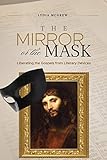
The Mirror or the Mask: Liberating the Gospels from Literary Devices

The Mirror or the Mask: Liberating the Gospels from Literary Devices

Deward Publishing

582 pages

$23.48

Christian philosopher Lydia McGrew is not convinced, however. After writing blog posts critically engaging this theory, she got significant pushback and decided to dive into the research in earnest. The result of that work is her recently published book, The Mirror and the Mask: Liberating the Gospels from Literary Devices (DeWard Publishing), which argues that literary device theory is not only unnecessary for resolving discrepancies but also may do more harm than good.

CT interviewed McGrew to find out why she’s not a fan of this approach to New Testament interpretation.

Tell us about the catalyst for this project.

I noticed that certain approaches to gospel differences and alleged gospel discrepancies were becoming more popular in the evangelical world and especially the apologetics community. I started looking into them, and I realized that these could potentially be quite a problem. My goal in writing this book is to show that the gospel authors were honest, clear reporters who were not deliberately changing the facts but were trying to tell what really happened.

There is a negative and a positive side to that. My concern with the kind of literary devices these scholars are talking about is that they would seriously undermine the reliability of the Gospels, which are our sources for what Jesus did and taught. Obviously, the evangelical scholars who are promoting them don’t think that. It’s not their intention. But I believe that that is the effect.

Why do you think literary device theory will have this effect?

For some scholars, these literary devices involve the gospel authors deliberately and invisibly changing the facts, the dates, adding or altering details, inventing, putting things in Jesus’ mouth, and even in some cases, possibly making up entire incidents. For example, because the temple cleansing in John occurs in a different place in the story, literary device theorists claim John simply moved the event around to fit his message. That’s actually a fairly radical change in the way that most people think of the Gospels. So, I looked into that and investigated it, and I found that the evidence is lacking for those theories and that, on the positive side, there’s a lot of strong evidence that the Gospels are historical reportage and reliable in a very strong, straightforward sense. And I view that as a real win-win for Christianity.

You’re critical of these literary devices theories and claim to represent a reportage model. Can you explain what you mean by that?

Yes, reportage, meaning that this is reported. So I have four things in mind: First, the Gospels come from witnesses either directly or indirectly but not far removed. So, Luke was not a witness, but I believe he talked to witnesses. Second, the authors are trying to tell us what really happened. They’re not deliberately massaging or embellishing the facts, even minor facts for literary or theological reasons.

Third, they’re highly successful in accurately telling us what happened. And fourth, they tried to record what was said in a way that would be recognizable if you were there and understood the relevant language. It doesn’t have to be absolutely verbatim. But if you were there, you would recognize it immediately.

Is it really a problem if the reporting isn’t play by play?

Not really. Here’s an example. You hear some scholars say things like “Ancient people did not always expect things to be narrated in a chronological way.” But does a statement like that mean that it was expected for authors to change when something happened or just that then, as now, they sometimes didn’t say what order things happened in? I might say, “Yesterday I worked on a chapter of my new book and I made dinner.” But that doesn’t necessarily mean that I am saying that it happened in that order.

So the reportage model doesn’t mean that they never narrate out of order, but it does mean that they’re not deliberately changing the time ordering and making an event happen on a day or time when it didn’t happen. That’s a very important nuance.

A maxim for biblical interpretation is that we need to pay attention to context. Scholars who argue in favor of literary devices in New Testament writing claim that in the context of the first century, those devices were seen as perfectly consistent with straightforward historical reporting. How would you respond?

I do a lot of legwork responding to that in the book. I look at the sources on which scholars have based their literary device theories, and I think they are misinterpreting them. I also find lots of evidence that ancient writers wanted accurate historical detail, just like we do.

One chapter of my book is titled “Let Ancient People Speak for Themselves.” In that chapter, I have all these direct quotations from ancient authors on truth and accuracy and history and the importance of historical accuracy. We find these authors saying it’s extremely important for us to be accurate and for historians to write accurate truth like a mirror.

There’s one Christian author that I especially like named Julius Africanus. He directly addresses a literary device theory that someone evidently brought up in his own time—the idea that Matthew and Luke had made up some of the names in Jesus’ genealogy to show that Jesus was prophet, priest, and king and that they weren’t really Jesus’ ancestors. And he [Julius Africanus] completely rejects that by saying “no praise comes to God from that.”

Quite a bit of ink has been spilled arguing about what genre the Gospels fit into. Many scholars are saying that they at least bear strong similarities with ancient biography. What genre would you call the Gospels?

I call the Gospels what the church father Justin Martyr called them: “the memoirs of the apostles.” And he also noted some of them were written by the apostles’ followers; presumably he had Mark and Luke in mind. Yes, they’re biographies in a very broad sense. I think it’s probably fair to say that although they present a very consistent psychological portrait of Jesus, they’re not getting into psychoanalysis the way that we might in a biography written today.

I think that three out of four of the traditional gospel writers had probably never read or even encountered much Greco-Roman literature at all. Luke might have because he was a highly educated Greek, based upon the quality of his Greek. But even there, what he seems to have gotten from historiography would be the highest standards of historical scrupulousness, not an idea that he could be licensed to change the facts.

A lot of research has been done to establish that early Christianity was highly literary. Isn’t it likely that the gospel writers had scribes transcribing for them who might have been more familiar with the literature of the day?

Maybe, but I don’t think there’s any evidence that the gospel authors had these active co-authors or scribes who were saying, “Hey, Matthew, this is what they taught me to do in my Greek rhetoric class.” My research leads me to think the Gospels very much have a mark of being written by individual people with individual minds.

Do you think there’s value in recognizing the contextual “locatedness” of Scripture, even as we critically engage scholars who think we’re completely misreading Scripture and taking it out of context?

Of course, you want to understand the author as he understood himself. I’ve never found anybody saying, “Yes, let’s be anachronistic. Anachronism for the win. Let’s impose our views upon the document.” Absolutely we do want to understand the surrounding context. On the other hand, sometimes God is doing something new in a context. So we need to be willing to say maybe God is revealing something and he’s setting his people aside and apart from their surrounding cultural context. I think that’s certainly true with the monotheism of the ancient Israelites. God says “I’m calling you out from the surrounding people.”

And in Christianity, for example, Jesus claimed he was God, God incarnate. It was shocking when Jesus came and taught his deity: “I and the Father are one.” That’s why they tried to kill him. So I also think we need to be open to the idea that there’s new revelation going on in Scripture. And that can limit the extent to which we say, “Oh no, let’s contextualize this. He couldn’t have been saying that because that would have been too different than the surrounding culture.” Sometimes God is teaching something that is different from the surrounding culture.

You critique the literary device advocates on their lack of and mishandling of evidence to establish their views. What evidence is there in favor of your reportage model?

In my earlier book Hidden in Plain View, I examined one type of important evidence called the argument from undesigned coincidences. These are wonderful puzzle-like places where casual statements in the different Gospels fit together. So for example, Mark mentions that the people at the feeding of the five thousand sat on the green grass. And then John doesn’t use the word green, but he mentions that it was near Passover time, in the spring when things are growing. There’s not always a lot of green grass in that region of the world, so it’s a significant detail. These are little bits that fit together, and neither author appears to be trying to make them fit together and yet they do.

In The Mirror or the Mask I also talk about connections between incidental details in the Gospels and outside information from secular history, archeology, et cetera, even confirmation of the early temple cleansing in John and the comment he reports that the leaders said it “has taken forty-six years to build this temple” (John 2:20). That fits with a comment in Luke and another in Josephus when Herod began building the temple. And the great thing about this is that they confirm details, not just the big picture. So the literary device theorists state the Gospels are correct on the big picture but the authors felt free to change details. I’m finding confirmations of those details. That’s not what you would expect if the authors felt free to change or add those as embellishments.

So, what’s the upshot of all of this? Is there a practical payoff to getting this right? For the pastors who are reading this interview, what do they do with these ideas?

I call what I do “giving scholarly support to common sense.” You’re a pastor, and maybe you went to seminary a long time ago before this stuff was hot, and now you’re being told you need to rethink the way you approach the Bible. I’m here to tell that pastor, “Actually, I think the scholarly investigation supports the way you’re probably preaching the Gospels already, where you’re taking them more or less at face value. And that’s not just a naïve thing to do; that can actually be supported by positive evidence.”

I often suggest that when we read the Gospels, we should use what I call a real-world imagination. And since my previous book Hidden in Plain View came out, I’ve had a number of people tell me how the work I did there has revitalized their reading of the Bible and especially the Gospels, because they’ll say, “Wow, we’re reading these like they really happened.” So this encourages us to pay attention to the details and then say, “How might that have happened?”

Here’s an example. If Jesus said, “I thirst” from the cross, and it’s reported in John but it’s not reported in the synoptic Gospels, Matthew, Mark, and Luke, how might that have happened? The beloved disciple was standing near the cross. He could have heard some things that somebody else didn’t hear. Activating our real-world imagination is incredibly fruitful for biblical literacy.

So what I’m encouraging people to do is just open their Bibles and not to be afraid of that kind of nitty-gritty approach. You don’t have to go read Plutarch unless you want to. But when you encounter discrepancies, you can ask, “How could I use my real-world imagination to try to harmonize these?” And in doing that, we can really rejuvenate our reading of Scripture as we think of these events in a vivid, real way.

CT’s previous coverage of Lydia McGrew includes a book review of Hidden in Plain View: Undesigned Coincidences in the Gospels and Acts.

Church Life

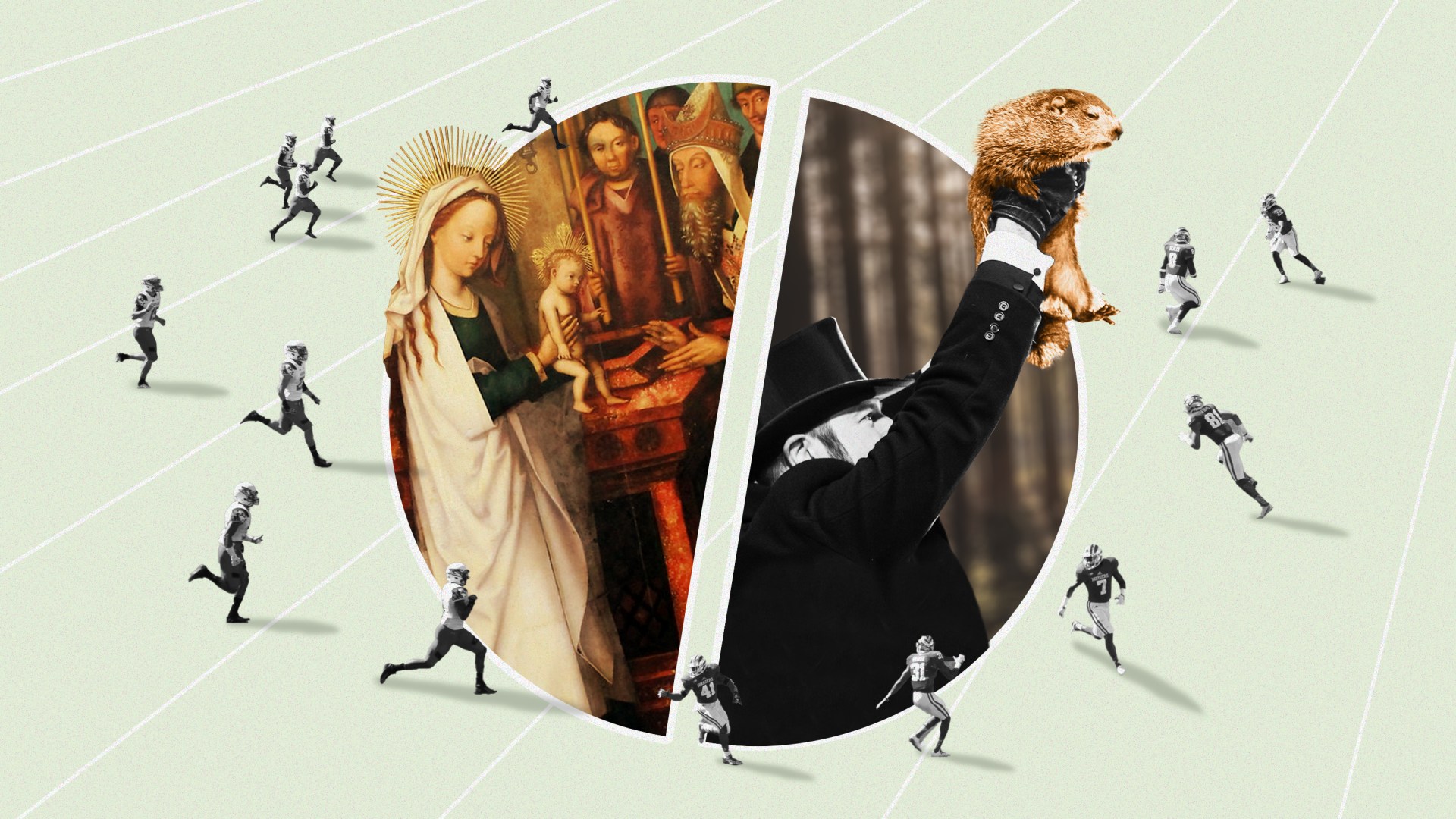
Mary the Priest and Phil the Groundhog Beat Out Super Bowl Hoopla

The real reason February 2 is an occasion for feasting.

Christianity Today January 31, 2020
Illustration by Rick Szuecs / Source images: Foundry / Pixabay / Chris Flook / Creative Commons / Hamburger Kunsthalle

Groundhog Day enthusiasts will tell you that for decades there has only been one groundhog named Punxsutawney Phil, even though groundhogs only live for six years or so. In a similar way, it can feel like there’s always a single distraction in American culture; we just keep switching out the bodies.

Our fresh amusements or outrages are periodically lifted up by the next man with a top hat, making it especially appropriate that the groundhog celebration coincides this year with the pageantry of Super Bowl Sunday. What makes February 2 a strikingly sad illustration of our national propensities is the splendor of what it conceals.

But don’t take my word for it; take Pope Pius IX’s. The definer of papal infallibility and author of the 1864 Syllabus of Errors claimed the Virgin Mary was called “Virgin Priest by the Fathers of the Church.”

The 20th-century priest René Laurentin decided to fact-check this pontifical declaration, just as puzzled readers might do today. Two dissertations later, Laurentin learned the Pope was right—the priesthood of Mary saturates the Christian tradition, and even has biblical basis. Mary is connected, through her kinswoman Elizabeth, to a priestly lineage even higher than Elizabeth’s husband, the priest Zechariah (Luke 1:5, 36). Hence church authorities like Theodore the Studite could say regarding Mary, “Hail daughter, young sacrificial priest,” and Tarasios the Patriarch of Constantinople could call her “the greatest among the high priests.”

Such associations are especially clear in art history, where Mary regularly sports vestments reserved for the clergy. This appears even in mainstream illustrations for the Feast of the Presentation of Jesus in the Temple, celebrated February 2, but which most people only know as “Groundhog Day.”

In classic Byzantine depictions of the event, Mary approaches the altar and offers Jesus over what look like the royal doors through which—in the Orthodox tradition—the sanctified elements emerge. In accordance with the law (Ex. 13:1–2; Luke 2:22­–23), she offers back to God the son she was given as if she were a second Abraham. (In some churches in Cyprus, Mary’s sacrifice and Abraham’s are even depicted in tandem.)

The Feast of the Presentation was celebrated in the West as well, where some say it was used to counteract the annual pagan festivals of Lupercalia or Imbolc. It was also known as Candlemas because it fell in dark winter when artificial light was especially required. Martin Luther, understanding the feast’s biblical basis, suggested Protestants retain it. To those wondering how much longer winter would last, one German folk tradition offered an answer: “If Candlemas is bright and clear, the crops will be damaged, and it will be a bad year.”

Such predictions were also linked to badgers, foxes, or bears in German-speaking Europe; when German settlers came to the United States, specifically to Pennsylvania, this tradition latched on to the groundhog, the sight of whose shadow testified to a “bright and clear” day, and hence a prolonged winter.

We can be sure that neither Mary nor any of the church fathers ever laid eyes on a groundhog, with or without his shadow. A more immediate animal to connect Candlemas to would be the turtledove, which the holy family presented at the temple in place of a lamb because they were poor (Lev. 12:8; Luke 2:24). The terrified doves are highlighted in the center of Lorenzetti’s colorful depiction of the scene. In one haunting Orthodox icon, the offering of Mary’s son and the birds overlap: Jesus’ head is twisted as if he were a sacrificial pigeon, neck snapped for the sin of the world.

Many Americans connect Groundhog Day—via the Bill Murray film of that title—to Nietzsche’s notion of the eternal return. Meanwhile, Mary’s priestly associations, showcased at Candlemas, have only deepened, as more evidence emerges that escaped Laurentin. A fresh translation of the Life of the Virgin has shown that the ministerial Mary was part of mainstream, not heretical, Christianity. Respected scholars such as Moscow’s Alexei Lidov or Maria Evangelatou offer considerable visual evidence for Marian priesthood in Orthodoxy, often centering on the Feast of the Presentation. Ally Kateusz has unearthed material in this regard available in its entirety to the public.

Anglicans like me might wonder whether Mary’s frequent depiction as a priest was a placeholder—one that anticipated the liturgical participation that women enjoy in some quarters today. Others will take shelter under Laurentin’s follow-up volume that attempted to quarantine this evidence under a soft Marian “priesthood of the laity” as opposed to clerical, male priesthood. But most will limit their consideration of this day to football or a weather-predicting rodent.

Learning only about a groundhog on February 2 affords a snapshot of what it is like to grow up in a country where sacred roots are sealed off by a layer of subterranean plastic garden sheeting. Learning only about the groundhog is like reducing Christmas to a creepy rendition of Baby It’s Cold Outside, or trading the Resurrection for a stale marshmallow Peep.

But instead, with the Feast of the Presentation, February 2 reminds us that the essence of Christianity is not clenched fists but open hands of release. “Surrender is the heart of Christian spirituality,” writes David Benner, “because it is the path of Christ.” By offering her son in the temple, Mary anticipates the Crucifixion, and—as Pope John Paul II insisted—she participates in every Christian Eucharist that has reflected it since.

A culture sequestered from this rich understanding of sacrifice will not forget sacrifice—it will just make other sacrifices, to more menacing ends. Take, for example, the Lenape tribe, who originally inhabited Punxsutawney, Pennsylvania—ground zero for Groundhog Day. Perhaps their intuitive understanding of sacrifice is why the Lenape respected, and embraced, the message of evangelical missionaries who announced that the sacrifices of all human cultures had been consummated on Calvary hill.

These Christian Lenape who once called Pennsylvania their home were then caught between American and British forces. As they were pushed westward, in 1782, the Pennsylvania militia met them at their settlement known as Gnadenhütten. Falsely believing these Native Americans had taken part in raids, the militia beat 96 of them to death—women and children included—who sang Christian hymns as they died. It was a tragic and unnecessary sacrifice, one that continues to make America, its soil soaked with the blood of these witnesses, as holy as Pius IX’s martyr-studded Rome.

Americans today appear suspended in a Candlemas moment of sorts, wondering if a deeper winter of division awaits us, with the accompanying demand that we sacrifice our political enemies. Others might find truth in the day’s rodential ritual, realizing winter actually does grow bleaker when our own shadow—our stealth egotism—is spotted at last.

Then there is the exhausted resignation that comes from believing life is a repetitive joke made more tolerable by quirky regional traditions. Anyone anxiously monitoring Super Bowl ads to gauge our national temperature will likely observe these co-mingling moods: resentment, desolation, or the frivolousness born of ennui. An answer to all of them comes from Mary the priest. Hers are among the hands that have raised the final sacrifice—an unexpected winter offering of light.

Matthew J. Milliner (@millinerd ) is associate professor of art history at Wheaton College.

The 49ers Chaplain Went from San Quentin to the Super Bowl

In a winning season, Earl Smith also saw the team grow in faith.

Christianity Today January 31, 2020
Illustration by Mallory Rentsch / Image Sources: Kym Fortino / Courtesy of Simon & Schuster / Susanne Friedrich / Michael Reaves / Stringer / Getty Images

This year’s Super Bowl–bound San Francisco 49ers remind Earl Smith of the family-like unity the Golden State Warriors had when they won the NBA Finals in 2015.

And Smith would know. He serves as the chaplain for both teams.

From society’s perspective, Smith has ministered to the greatest and the least. His work as a chaplain started in California’s San Quentin State Prison, where he witnessed 12 executions and played chess with prisoners including Charles Manson. More recently, it has brought him to the sidelines of professional sports at its peak, celebrating big wins beside celebrity athletes like the Warriors’ Steph Curry.

“By virtue of who these guys are, they are the best of the best,” Smith said in an interview with CT, calling from Miami, where the 49ers play the Kansas City Chiefs in Super Bowl LIV on Sunday. “They’re famous, yet if you allow yourself to be locked in on the fame, you might negate the opportunity to present Christ in a proper way.”

Most weeks during the season, Smith’s work resembles the work of any pastor. He prepares and leads the team Bible study, goes through a book study with the 49ers coaching staff, conducts a Saturday night chapel service, and makes himself available for counseling. Meanwhile, he’s spending his own daily time reading Scripture and meeting with his pastor.

Smith said people will often ask him about which players on the 49ers team are Christians, and in response he likes to ask them which people in church are Christians. His point is clear: “Only Christ knows the true commitment of the heart.”

A graduate of Bishop College and Golden Gate Baptist Theological Seminary, he focuses on spiritual themes that tap into the players’ interests: hope, trust, and accountability. He studied portions of the Lord’s Prayer with them, looked at different ways that David expressed his relationship with God in different Psalms, and talked about what the Lord can do with faith as small as a mustard seed. At the beginning of the season, he gave each player a tiny glass bottle, and with each victory he gave the players a mustard seed to put in their bottles.

This is the 49ers’ seventh Super Bowl appearance, and their second since Smith became the team’s chaplain in 1997.

Chaplaincy is a ministry of presence, of faithfully being there through the highs and lows. While there have been a lot of highs in a winning season, it’s not always a bad game or a bad record that hits the team spiritually.

During his years on the sidelines, Smith has seen losses far more devastating than failure to advance in the playoffs. He recalled a 2005 preseason game when he escorted 49ers lineman Thomas Herrion off the field after a win and prayed with the team in the locker room. When the prayer concluded, Herrion collapsed and died of heart failure. Smith stepped up to support a traumatized team and coaching staff after an unimaginable loss of one of their own.

As team chaplain, he makes a point to get to know a player’s spouse, parents, and children. He inquires about babies who have been born and family members who are unwell. And Smith said he always makes sure players’ parents have his phone number if they ever need him.

“I believe that in any ministry, it’s important not to just focus on the individual with the spotlight, but also those in the shadow,” he said in an interview with CT.

Just last month, third-string quarterback C. J. Beathard learned that his brother, Clayton, had been killed outside a Nashville bar. “There was nothing I could do other than hold [Beathard] while he grieved. I believe that is the presence that you have,” he said. “It’s not what you say, it’s just your presence, and how you’re there.”

Team officials permitted Smith to accompany Beathard to the funeral, where Smith ministered to Beathard’s family. Smith said their faith has buoyed them as they continue to mourn Clayton’s death.

The minister worked as a Protestant chaplain at San Quentin from 1983 to 2006—a calling that came to him after a near-death experience in a gang-related shooting when he was young (which he chronicled in his book, Death Row Chaplain).

A few years ago, Smith brought players inside his old stomping ground to meet the inmates.

The players heard about experiences in the criminal justice system and exhortations on how to leverage their fame.

In 2019, Smith spoke with CT about the importance of giving inmates access to a chaplain in the moments before their executions. “[An] inmate was looking for a way to say ‘bye’ in peace, and because you said, ‘No, you can’t have [the chaplain],’ even in his death, there was no peace,” said Smith. “We often say that when they’re executed there’s going to be closure. Executions don’t bring closure. They just mean someone has died.”

Spending the bulk of his ministry career in prison chaplaincy led Smith—a member of San Francisco Christian Center—to develop a great sense of patience and trust in God to work through him and beyond him. “My role is to share in my faith Christ, and in sharing Christ hope that that person comes to a relationship and grows from that relationship,” he told CT in 2019.

When it comes to ministering to professional athletes, Smith knows the Lord has been at work in their lives before they put on a San Francisco uniform and that the Lord will continue to work in their lives after they leave the team. “Someone plants the seed, someone waters, and God gives the increase. That’s what sports ministry is,” he said.

As the season comes to an end, Smith said some players have kept their bottles of mustard seeds and said how much they mean to them.

“I have seen guys really grow,” he said. “I’ve seen young men who came in searching, who have gone from searching to helping other men that were searching, guys mentoring the walk for others.”

Now he’s ready to hand out one more seed.

News
Wire Story

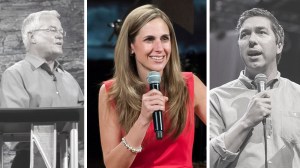
After Bill Hybels, Willow Creek Still Searching for a Successor

After months of delays in the process, the church’s interim pastor announces plans to resign.

Christianity Today January 30, 2020
Mary Fairchild / Flickr

In this series

The search for a new leader at Willow Creek Community Church is back to the drawing board.

Elders at the suburban Chicago megachurch announced Thursday that they have released the two finalists they were considering for the role of senior pastor from the search process.

The elders also announced that acting senior pastor Steve Gillen will step down in March.

The church has been without a permanent senior pastor since pastors Heather Larson and Steve Carter resigned in August 2018 as a result of the church’s mishandling of misconduct allegations against founding pastor Bill Hybels. Its previous elder board also resigned at that time.

Earlier this week, Willow Creek was rocked by news that Hybels’ mentor Gilbert Bilezikian—known widely as “Dr. B”—had been accused of misconduct between 1984 and 1988 by a longtime church member.

Bilezikian denied those allegations to Religion News Service. Church elders, however, said they believe they are true.

Gillen acknowledged the “difficult news about one of our founders and someone who’s had a huge impact on many of our lives” before the midweek service Wednesday on Willow Creek’s main campus in South Barrington, Illinois.

“Truthfully, I don’t want to get into it, because in my sadness, I just want to focus on God. I want to sing songs to him, and I want to one more time in my life acknowledge he is the foundation of my life and he is the foundation of our church,” he said.

Elders had planned to announce a new senior pastor by the end of 2019.

In their update Thursday, they wrote: “While both candidates have strong qualities as pastors, we released both from candidacy. Our consensus was that neither candidate is the long-term leader of Willow Creek; therefore, the search process has continued.”

The elder board is working with Christian executive search firm Vanderbloemen to continue its search for a new senior pastor and already has initial interviews with six “strong” candidates this week, it said.

“Our Willow church family and Christian family at large have prayed that God will give wisdom and guide this decision. We trust that God heard our prayers and that the Holy Spirit is at work in this determination,” it said.

Gillen has served at Willow Creek for 23 years, according to the elders update. He was lead pastor at the church’s North Shore campus before stepping in as acting senior pastor of Willow Creek’s main campus 18 months ago.

The church’s elders said that Gillen’s departure was prompted by the delay in finding a new senior pastor.

“This news is challenging given all that has taken place in the past couple of years,” they said.

News
Wire Story

FBI Accuses Filipino Church of Human Trafficking, Sham Marriages for Fake Charity

Prosecutors say Kingdom of Jesus Christ’s “miracle workers” were trafficking victims. Philippines-based church says fundraising efforts for Children’s Joy Foundation were legitimate.

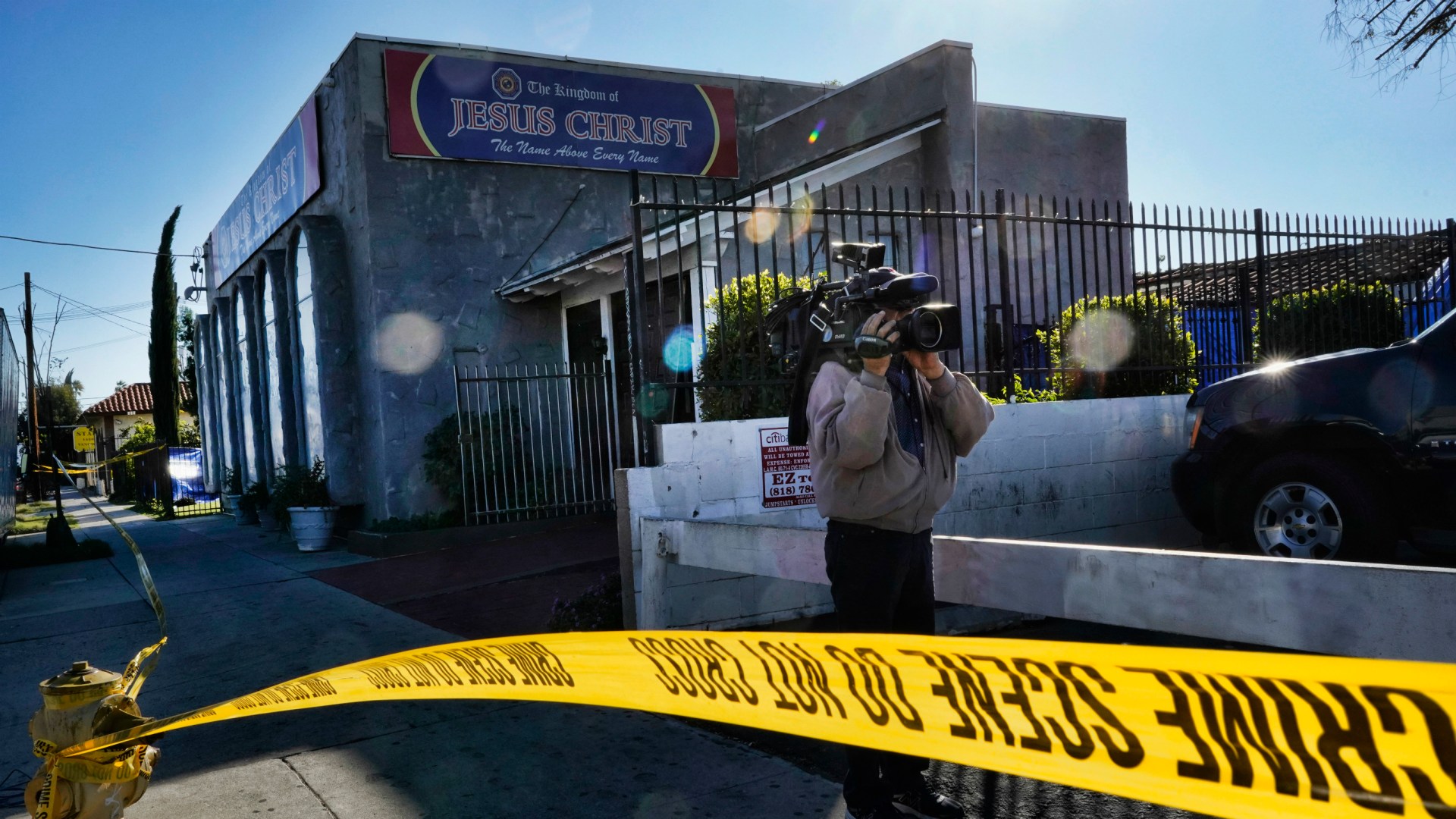
Crime scene tape is seen closing off an area around the grounds of the Kingdom of Jesus Christ Church in the Van Nuys section of Los Angeles on Wednesday, Jan. 29, 2020.

Crime scene tape is seen closing off an area around the grounds of the Kingdom of Jesus Christ Church in the Van Nuys section of Los Angeles on Wednesday, Jan. 29, 2020.

Christianity Today January 30, 2020
Richard Vogel / AP Photo

MANILA, Philippines (AP) — A Philippine religious group on Thursday denied allegations by American law enforcement agents that it was involved in a scheme to trick followers into becoming fundraisers and arrange sham marriages to keep them in the US.

FBI agents raided the Kingdom of Jesus Christ church in Los Angeles on Wednesday in a human trafficking investigation that led to the arrests of three church leaders.

A spokesman for Apollo Quiboloy, the church founder and leader, said former members who had been disciplined for wrongdoing retaliated by breaking off from his church and fabricating information they fed to the FBI in a “grand conspiracy of lies.”

“Their aim, therefore, is to exact revenge, extortion commingled with a brazen but shameless desire to put [Quiboloy] and the [church] as a whole into a quagmire of shame, blatant humiliation, and defeat through trumped-up charges,” lawyer Israelito Torreon said in a statement issued to reporters in southern Philippines’ Davao city.

The church leader ordered an internal audit last year that prompted a trusted officer and other members to leave the group and struck an alliance with “forces” jealous of Quiboloy's rise, Torreon said without elaborating.

“We will face and disprove as utter lies the charges filed against the administrators” of the church in the US, he said.

Workers who managed to escape from the church told the FBI they had been sent across the US soliciting donations for the church’s charity and were beaten and psychologically abused if they didn’t make quotas, according to an affidavit filed in support of the charges.

The immigrants essentially became full-time workers, sometimes referred to as “miracle workers,” in a crusade to raise money for the nonprofit Children’s Joy Foundation USA, which was supposed to benefit poor children in their homeland. But the complaint said most of the money raised was used to finance church operations and the lavish lifestyle of Quiboloy.

The church claims a membership of at least 6 million people and backed the 2016 candidacy of President Rodrigo Duterte, a close friend of Quiboloy. Duterte appeared in the group’s radio and TV program in Davao when he was mayor of the southern port city.

Quiboloy claims to be “the appointed son of God” and last year claimed he stopped a major earthquake from hitting the southern Philippines.

The Los Angeles leader of the Kingdom of Jesus Christ church was arrested on immigration fraud charges along with a worker who seized victims’ passports and another who handled finances, the US attorney’s office said.

Between 2014 and the middle of last year, $20 million was sent back to the church in the Philippines, the FBI said.

“Most of these funds appear to derive from street-level solicitation,” according to the affidavit by FBI Special Agent Anne Wetzel. “Little to no money solicited appears to benefit impoverished or in-need children.”

Guia Cabactulan, 59, the top church official in the US, was arrested in Van Nuys with Marissa Duenas, 41, who allegedly handled fraudulent immigration documents, prosecutors said. Amanda Estopare, 48, who allegedly enforced fundraising quotas, was arrested in Virginia.

Cabactulan and Duenas are expected to make initial court appearances Thursday in US District Court in Santa Ana, said Thom Mrozek, a spokesman for the US attorney in Los Angeles. Estopare was ordered held after a hearing in Norfolk, Virginia, and expected back in court Monday.

Investigators documented 82 sham marriages over 20 years between top fundraisers and church members who were US citizens.

Torreon said church members “give their offerings voluntarily out of their faith and understanding of the biblical teaching concerning religious offerings, as well as their desire to raise money for specific projects, endeavors, and ministry of the kingdom.”

In addition to raiding the church’s Van Nuys compound, agents were searching other Los Angeles-area locations and at two places in Hawaii linked to the church.

Two years ago, a leader of a Hawaii branch of the church was arrested smuggling cash onto a private plane in Honolulu bound for the Philippines with Quiboloy on board, according to court records.

Associated Press journalist Brian Melley in Los Angeles contributed to this report.

Ideas

What Martin Luther Teaches Us About Coronavirus

Is it faithful to flee an epidemic? German reformer’s reflection on the plague can guide Christians in China and everywhere the virus has spread.

Christianity Today January 30, 2020
Betsy Joles / Stringer / Getty Images

From its epicenter in Wuhan, China, the current coronavirus outbreak is stoking fear and disrupting travel and business across the globe. More than 150 people have died from the virus in China alone, and more than 8,000 are infected across 20 countries—exceeding the SARS epidemic in 2003. [Update: As of March 15, more than 3,200 people have died in China, and more than 168,000 have been infected across 120 countries.]

Citizens in Wuhan, a major central city comparable to Chicago, are under lockdown by the government and public activities have come to a standstill, including annual celebrations for Chinese New Year (which began on January 25). Chinese Christians, in Wuhan and China at large, have faced difficult decisions about whether to join the millions of Chinese who return home to visit family (as is customary during the lunar holiday season), to flee from the mainland, or even to gather for regular Sunday services.

But are followers of Jesus right to flee an epidemic when people are suffering and dying?

In the 16th century, German Christians asked theologian Martin Luther for a response to this very question.

In 1527, less than 200 years after the Black Death killed about half the population of Europe, the plague re-emerged in Luther’s own town of Wittenberg and neighboring cities. In his letter “Whether One May Flee from a Deadly Plague,” the famous reformer weighs the responsibilities of ordinary citizens during contagion. His advice serves as a practical guide for Christians confronting infectious disease outbreaks today.

First, Luther argued that anyone who stands in a relationship of service to another has a vocational commitment not to flee. Those in ministry, he wrote, “must remain steadfast before the peril of death.” The sick and dying need a good shepherd who will strengthen and comfort them and administer the sacraments—lest they be denied the Eucharist before their passing. Public officials, including mayors and judges, are to stay and maintain civic order. Public servants, including city-sponsored physicians and police officers, must continue their professional duties. Even parents and guardians have vocational duties toward their children.

Luther did not limit tending the sick to health care professionals. In a time when Wuhan faces a shortage of hospital beds and personnel, his counsel is especially relevant. The city, one of China’s largest with a population of about 11 million, is in the process of rapidly constructing two new hospitals to accommodate growing crowds of coronavirus patients. Lay citizens, without any medical training, may find themselves in a position of providing care to the sick. Luther challenges Christians to see opportunities to tend to the sick as tending to Christ himself (Matt. 25:41–46). Out of love for God emerges the practice of love for neighbor.

But Luther does not encourage his readers to expose themselves recklessly to danger. His letter constantly straddles two competing goods: honoring the sanctity of one’s own life, and honoring the sanctity of those in need. Luther makes it clear that God gives humans a tendency toward self-protection and trusts that they will take care of their bodies (Eph. 5:29; 1 Cor. 12:21–26). “All of us,” he says, “have the responsibility of warding off this poison to the best of our ability because God has commanded us to care for the body.” He defends public health measures such as quarantines and seeking medical attention when available. In fact, Luther proposes that not to do so is to act recklessly. Just as God has gifted humans with their bodies, so too he has gifted the medicines of the earth.

What if a Christian still desires to flee? Luther affirms that this may, in fact, be the believer’s faithful response, provided that their neighbor is not in immediate danger and that they arrange substitutes who will “take care of the sick in their stead and nurse them.” Notably, Luther also reminds readers that salvation is independent of these good works. He ultimately tasks “devout Christians … to come to their own decision and conclusion” whether to flee or to stay during plagues, trusting that they will arrive at a faithful decision through prayer and meditation on the Scriptures. Participation in aiding the sick arises out of grace, not obligation.

However, Luther himself was not afraid. Despite the exhortations of his university colleagues, he stayed behind to minister to the sick and dying. He urged his readers not to be afraid of “some small boil” in the service of neighbors.

Though God’s children face earthly sufferings, those who proclaim faith in Christ share in a heavenly promise of freedom from illness and suffering. In an open letter calling for prayer from Christians around the globe, an anonymous Wuhan pastor affirms “[Christ’s] peace is not to remove us from disaster and death, but rather to have peace in the midst of disaster and death, because Christ has already overcome these things.” Both Luther and the Wuhan pastor express the reality of suffering but recognize that death and suffering do not have the final word.

This week, my grandparents in China messaged me that they are well but are dwelling “like rats” in their apartment, leaving only when necessary. Incidentally, in the Chinese Zodiac system, 2020 is the Year of the Rat—the animal that spread pestilence-carrying fleas across Europe in the 14th century.

My grandparents live west of Wuhan in the province of Sichuan, where more than 100 coronavirus cases have been confirmed. I cannot help but think of them and my other relatives living in China at this time. Hoping to send them masks now out of stock in many stores throughout Asia, my parents and I discovered this week that even US stores have been depleted.

In a climate of fear surrounding the outbreak, I come back to Luther’s letter for guidance. As a medical student and a future physician, I have a clear vocational commitment to caring for the sick—whether they have coronavirus, tuberculosis, or influenza. Precautions I will take, yes. But I am reminded by Luther that they are individuals deserving of care all the same.

“When did we see you sick?” ask the righteous in the parable of the sheep and the goats, to which Jesus responds, “Whatever you did for one of the least of these brothers and sisters of mine, you did for me” (Matt. 25:39–40). If and when the coronavirus encroaches upon our communities, how will we faithfully respond?

Emmy Yang is a Theology, Medicine, and Culture Fellow at Duke Divinity School and a medical student at the Icahn School of Medicine at Mount Sinai.

Books

What If We Don’t Have to Choose Between Evolution and Adam and Eve?

How insights from genealogy can help change the terms of a contentious debate.

Christianity Today January 30, 2020
Source Images: ZU_09 / Man_Half-tube / Getty Images / Ivan Gromov / Unsplash

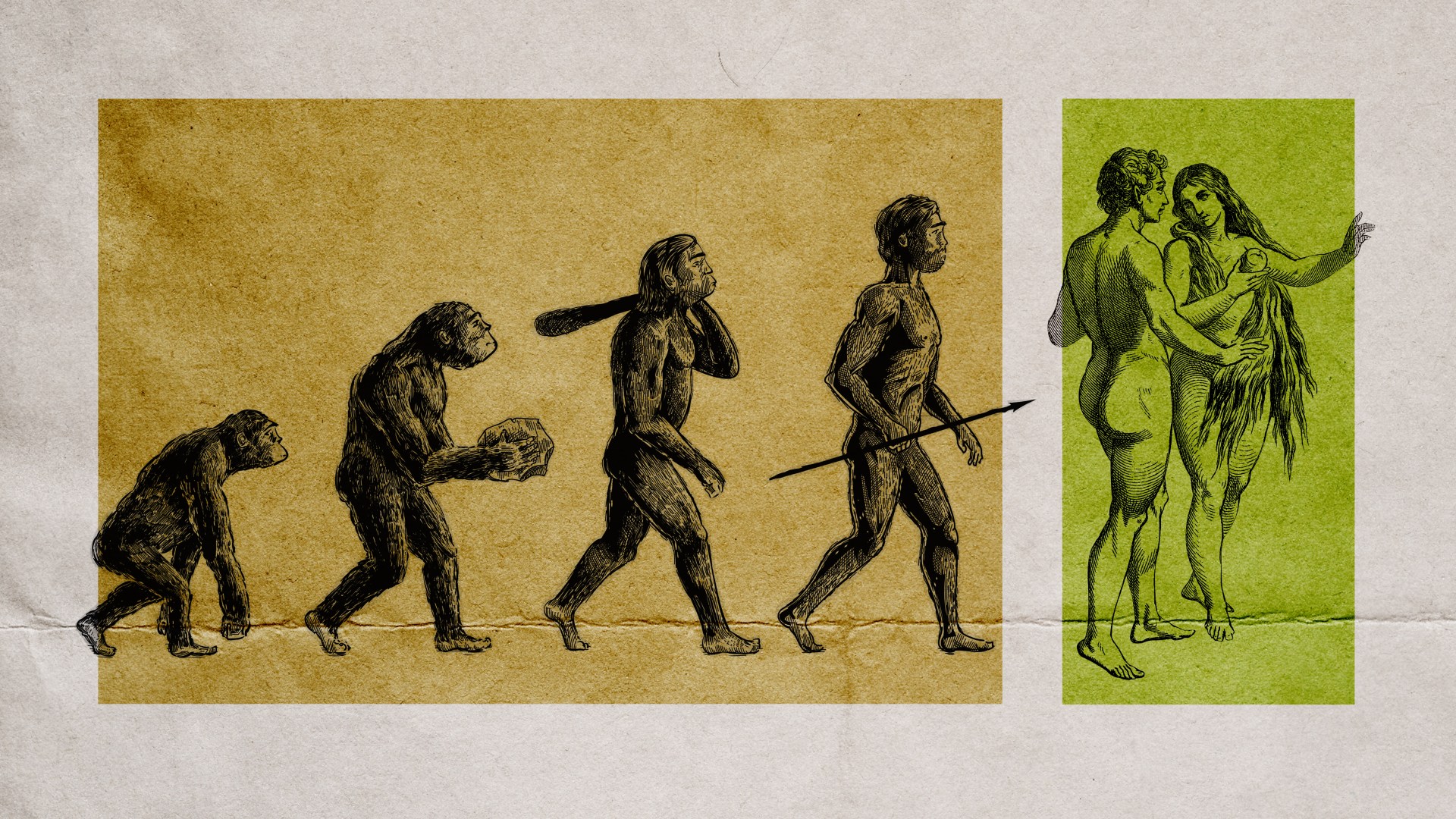
Ever since Charles Darwin proposed his theory of evolution, Christians have struggled to locate Adam and Eve within an evolutionary past. According to the traditional reading of the first chapters of Genesis, God created Adam and Eve directly and all human beings descended from that first couple. Yet many Christians have discarded this belief on the basis of evolutionary science, which holds that human beings, having descended from animals, first appeared on earth as a population rather than a single, divinely created pair.

The Genealogical Adam and Eve: The Surprising Science of Universal Ancestry

The Genealogical Adam and Eve: The Surprising Science of Universal Ancestry

IVP Academic

264 pages

$19.30

S. Joshua Swamidass, a computational biologist at Washington University in St. Louis, wants to change the terms of this contentious debate. In his book, The Genealogical Adam and Eve: The Surprising Science of Universal Ancestry, Swamidass affirms both evolution and the traditional reading of the Genesis creation account. Drawing on findings from his field of computational biology, he contends that the lineage of Adam and Eve should be traced using genealogy rather than genetics. Viewing the origins debate through a genealogical prism, Swamidass presents a scenario in which the special creation of Adam and Eve thousands of years ago happens on a parallel track with evolution.

The Genealogical Adam and Eve carries a wide range of endorsements from theologians, atheist biologists, and believing scientists from across the origins-debate spectrum. CT science editor Rebecca Randall interviewed Swamidass about how his ideas might open new avenues of conversation between science and theology.

What is your research background? How did you come to study the genealogy of Adam and Eve?

I was raised a young-Earth creationist, and I moved to understanding evolutionary science and seeing legitimacy to it. Now, I use artificial intelligence to explore science at the intersection of biology, chemistry, and medicine. As a computational biologist, one of the things I care about is understanding how what we’re learning from the human genome influences our understanding of human origins. Questions of ancestry and origins are one area of focus for me at Peaceful Science, the scholarly community I help lead.

Who is your audience? Who are you trying to reach: young-Earth creationists or evolutionary creationists?

There are three main audiences to whom I’m speaking. One audience is my secular colleagues in science. Most of them aren’t Christians, but they want to effectively engage the public, including the religious public.

The second is nontraditionalists, such as evolutionary creationists at organizations like BioLogos. I’m really trying to encourage them to take a more welcoming approach to traditional theology.

The last group is traditionalists: people who feel committed to a traditional interpretation of Scripture. I’m inviting them to engage with evolutionary science. I realize that many of them think that evolution is a myth. That’s okay. We can still recognize together that evolutionary science isn’t actually in conflict with their beliefs.

Your research is about genealogy, not genetics. Could you explain the difference for those who might interchange those terms? Why is this so key?

There’s been a lot of conflict about how science expresses its understanding of Adam and Eve. It has to do with misunderstanding the word ancestor. We can understand it in the genetic sense, meaning someone we get our DNA from. Or we can mean it in a genealogical sense, meaning someone whose lineage we descend from.

Genetics works in a very nonintuitive way. For example, my parents are both equally 100 percent my genealogical ancestors, and the same is true with my grandparents and great-grandparents. But my parents are each only one half of my genetic ancestry; my grandparents are one quarter; my great-grandparents are one eighth. Genetic ancestry just dilutes to the point where the majority of our genealogical ancestors pass on no DNA.

Why is that important? Scripture doesn’t tell us about genetic ancestry. It does, however, tell us about genealogical ancestry. Historically, we’ve believed that Adam and Eve are the ancestors of everyone. We can ask: Does this mean genetic ancestors or genealogical ancestors? Well, Scripture can’t possibly be talking about genetic ancestry. It has to be talking about genealogical ancestry.

That recognition really opens up an immense amount of space for theology. As Christians, we’ve had a lot of anxiety over what science is telling us about Adam and Eve. But these conflicts are based on what science says about our genetic ancestors. If we focus on genealogical ancestors instead, there might be far less conflict than we first imagined.

Can you outline what evolutionary science has suggested about Adam and Eve up until your research?

My book doesn’t exist to challenge the evolutionary science. The two starting points are: Humans share common ancestry with the great apes. It really looks like God created us through a providentially governed process of common descent. The second idea is: It seems like there’s no moment when our ancestors drop down to a single couple in the last few hundred thousand years.

People have taken those starting points and concluded, first, that the human population never gets down to a single couple; and second, that Adam and Eve, if they existed, must have shown common ancestry with the great apes.

I know it’s a subtle distinction, but what exactly do we mean by human? And what exactly do we mean by ancestor?

If we keep straight what the science is actually saying, the story of Genesis could be true as literally as you could imagine it, with Adam being created by dust and God breathing into his nostrils and Eve being created from his rib. But evolution is happening outside the Garden, and there are people out there who God created in a different way and who end up intermingling with Adam and Eve’s descendants. It’s not actually in conflict with evolutionary science.

In the book, you write on what it means to be human according to science and what it means to be human according to theology. What are some of the possible answers to these questions?

In science, there are a whole range of answers. In a recent book called Adam and the Genome, there’s a commitment to saying that humans must be Homo sapiens. But that’s not even the consensus position of science. Some scientists use the term Homo sapiens to refer to our species, or they expand the Homo genus to include other species like Neanderthals, too. Thinking about humans in that way might just hide the most important part of the conversation under a false sense of certainty. Scientists cannot agree on a precise definition of our species or our genus. As we look back into our past, our vision grows murky.

In theology, sometimes human beings are defined as those made in the image of God. But theologians and interpreters of Scripture can’t find exact agreement what that means either. There are three main views on what it means to bear God’s image: the substantive, which locates the image in our capacities, such as thinking and feeling; the relational, which locates the image in our relationships with one another and with God; and the vocational, which locates the image in our calling to rule over creation. But those simple categorizations hide a lot of complexity and disagreement. Theologians are just as unsettled on the meaning of the image of God as scientists are on the meaning of human.

In my book, I suggest that one valid definition, from the point of view of Scripture, is to define human beings as Adam, Eve, and their descendants. There might be biological humans, fully human, outside the Garden, but Scripture is bound to the story of Adam, Eve, and their lineage. It is not talking about others, even if they have the same degree of biological humanness as us.

This leaves open lots of questions about the meaning of the image of God, the essentials of humanness, and how we think about the possibility of people existing outside the Garden. This possibility has been the subject of conversation for centuries. Scripture suggests they exist, but it’s like they appear in the peripheral vision. It’s a grand invitation for theologians to wonder together about who they could have been.

That’s one of the grand conversations. Let’s have that conversation.

One of the stickier parts of studying this history and thinking about populations living alongside Adam and Eve is that you’re forced to confront objections of racism in our understanding of these humans. What lessons have you learned from wrestling with this personally?

One thing I’ve learned is it’s really common for people to bring race into questions about human origins, often to attack those with whom they disagree. We all inherit that legacy of racism. Origins is often approached from a very whitewashed perspective. It doesn’t really engage the concerns of people of color, who are often underrepresented in the conversations. What I found, as a dark Indian, is that these questions of origins are actually very closely tied to our concerns about our worth and dignity in the world.

This conversation doesn’t have to be so whitewashed. There’s a real value in going back to that history of racism, to uncover it and work through it. There is an opportunity to work through our understanding of justice, mercy, and inheritance in a way that connects with the concerns of African Americans, Indians like myself, and many other people that are so underrepresented in the conversation.

The important thing to emphasize is that the science of origins is solidly against the idea of a biologically distinct race. This is something that really needs to be said more often. We have a better understanding of how we are all connected in one family. Genealogical science makes that clear.

All of the science that supported racism by arguing that we’re all disconnected populations—some of us descending from Adam and Eve, some of us not; some of us with certain biological abilities, and some of us not—that all turns out to be untrue. Some Christians were skeptical of evolution because it appeared to challenge the historical doctrine of monogenesis—the idea that all human beings descended from Adam and Eve. And it turns out that the rival theory, polygenesis, really is false.

Could you define polygenesis?

Polygenesis was a false theory of origins that was often conscripted to provide support for racism. It’s the idea that the humans alive today are divided into biological groups that have been separated in the past and have distinct biological abilities, different theological roles, and varying levels of rights and dignity. That’s just totally false. One of the main reasons people historically rejected evolutionary science is that it seemed to be teaching polygenesis. In fact, for about a century, many scientists would have endorsed that theory. Then, starting in the 1970s, several different lines of evidence cropped up to demonstrate that polygenesis is complete nonsense.

In light of your work, what are some ways that different viewpoints on human origins can come together?

This book reshuffles the deck in many ways. It isn’t a single model for Adam and Eve. Rather, it’s a retelling of the science of origins in a way that makes space for lots of differences. There’s more space in science than we’ve been led to believe.

People from all sides of the conversation are reconfiguring where they stand. There’s an opportunity for a new way forward, to make space for people to come to a less oppositional and more conversational relationship with mainstream science. That’s what to look forward to right now.

One fun question: Personally, I enjoy uncovering family history. I’ve connected with different genetic relatives over the years. What do you think about the rise in popularity of DNA kits? For those interested in ancestry, what can we be thinking about as Christians?

Keep in mind, if you go back a few thousand years, we all share the same family. As Christians, we know that our origins are important. But we also know that what we inherit is more than our DNA. As Christians we should be thinking more broadly about ancestry and specifically about our inheritance. What is it that we inherit—biologically, culturally, physically, societally? When we look at the question through these different lenses, we come upon a wealth of different understandings of things like original sin, justice, and race. We enter into a grand dialogue in theology that’s far richer than any DNA test would be.

News

Bethany Will End International Adoptions

Agency VP: The future of child welfare is local.

Christianity Today January 29, 2020
Westend61 / Getty Images

The largest Christian adoption agency in the United States announced that after 15,000 international adoptions over its 37-year history, it will no longer be bringing children into the US and will instead focus on supporting children in their home countries.

Bethany Christian Services shared in a blog post last week that its international adoption accreditation will expire in 2021, and it will no longer accept new applications.

“Our decision to phase out international adoption is not a criticism of the program, but a reflection of our desire to serve children in their own communities,” wrote Kristi Gleason, the vice president for global services at Bethany.

“The future of adoption is working with local governments, churches, and social services professionals around the world to recruit and support local families for children and to develop and improve effective, safe in-country child welfare systems. Through these efforts, we served more children around the world in 2019 than we previously served in a single year.”

Bethany, like fellow agencies, has seen the orphan care landscape shift and evolve over the years, particularly in the past two decades. International adoptions to the US dropped from nearly 30,000 children in 2004 to just over 4,000 in 2018, after years of historic lows.

The decline is not due to lack of interest from American families—in fact, funding to orphan care ministries has been on the rise. Instead, places like Russia, Guatemala, and Ethiopia have eliminated international adoption, and others are following suit with tighter restrictions and regulations around the practice.

Another factor is that other countries are growing their capacity to care for children in need. Gleason said Bethany “praises God” that child welfare systems are improving so orphaned children need not leave their communities to find a safe and loving home. Working domestically makes Bethany’s involvement more effective and impactful.

“It makes sense to empower local families to care for children in their own community, not just because of the benefits for the children and the community, but also financially,” she said. “For example, the average international adoption for one child through Bethany costs approximately $50,000. With that same amount of money, we can help 50 children in our Africa programs leave an orphanage and find loving foster or adoptive homes nearby.”

Bethany reports partnering with governments in more than 10 countries over the past 30 years to help establish in-country foster care and adoption programs—in some places, the first of their kind.

The move away from international adoptions parallels greater concern from orphan care advocates around prioritizing family unity and a deeper understanding of the childhood trauma that often accompanies adoption. About 1 in 7 Protestants say someone at their church has adopted a child from another country, according to LifeWay Research.

In the US, Bethany has helped care for unaccompanied minors who enter the US and provides foster care and/or adoption programs in 35 states.

As CT previously reported, Christians have also begun to challenge the place of orphanages and institutional care for needy children. Krish Kandiah, who works with children in the UK, recently wrote “The Christian Case Against the Orphanage.”

Earlier this month, Bethany was awarded a $920,000 USAID grant to work with the Ethiopian government to transition children from orphanages to family-based care.

Apple PodcastsDown ArrowDown ArrowDown Arrowarrow_left_altLeft ArrowLeft ArrowRight ArrowRight ArrowRight Arrowarrow_up_altUp ArrowUp ArrowAvailable at Amazoncaret-downCloseCloseEmailEmailExpandExpandExternalExternalFacebookfacebook-squareGiftGiftGooglegoogleGoogle KeephamburgerInstagraminstagram-squareLinkLinklinkedin-squareListenListenListenChristianity TodayCT Creative Studio Logologo_orgMegaphoneMenuMenupausePinterestPlayPlayPocketPodcastRSSRSSSaveSaveSaveSearchSearchsearchSpotifyStitcherTelegramTable of ContentsTable of Contentstwitter-squareWhatsAppXYouTubeYouTube