Theology

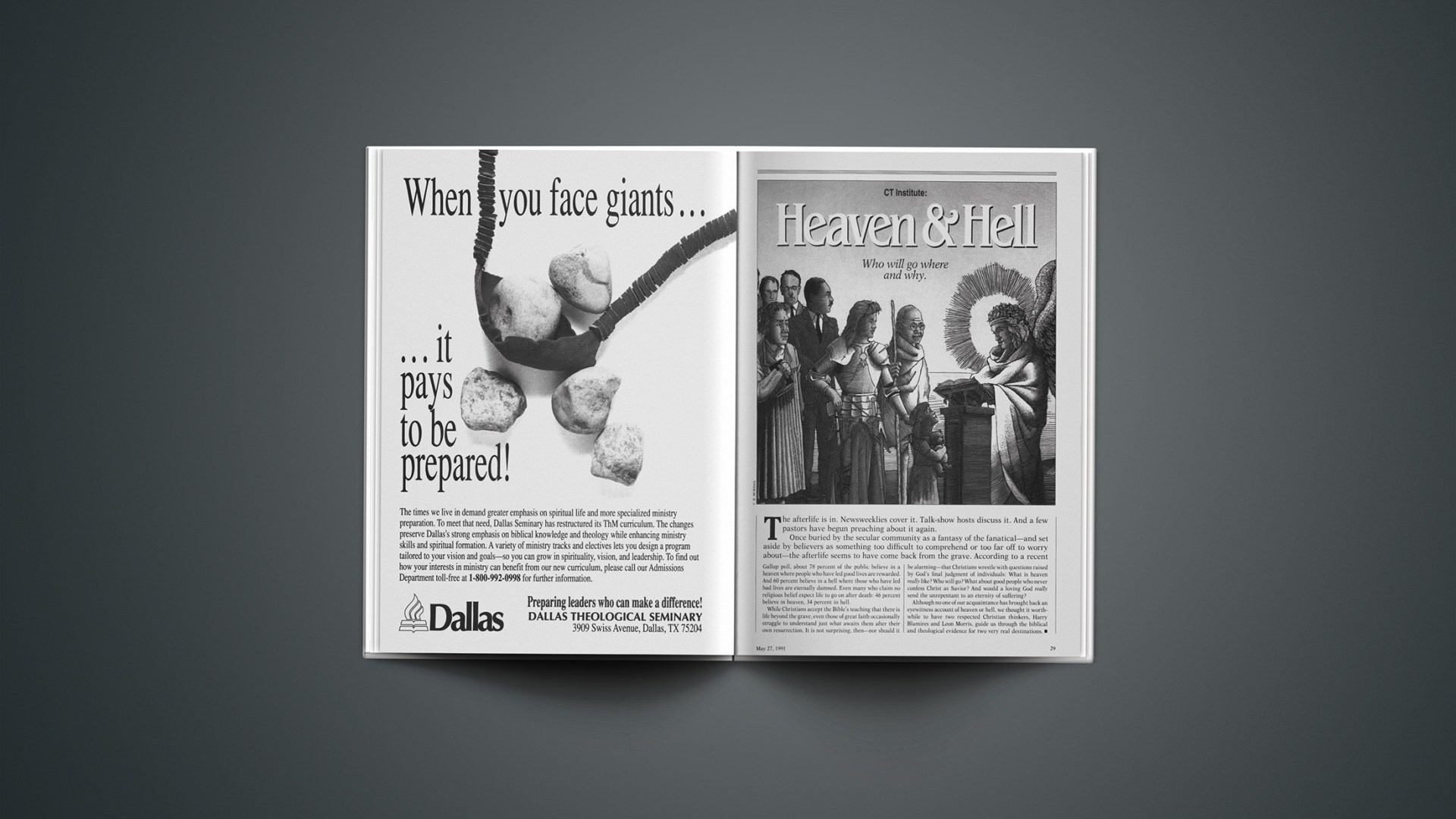
Heaven & Hell: Who Will Go Where and Why

Instead of going to the movies to learn about the afterlife, three theologians look to Scripture for teaching on the reward of the blessed and the fate of the damned.

The afterlife is in. Newsweeklies cover it. Talk-show hosts discuss it. And a few pastors have begun preaching about it again.

Once buried by the secular community as a fantasy of the fanatical—and set aside by believers as something too difficult to comprehend or too far off to worry about—the afterlife seems to have come back from the grave. According to a recent Gallup poll, about 78 percent of the public believe in a heaven where people who have led good lives are rewarded. And 60 percent believe in a hell where those who have led bad lives are eternally damned. Even many who claim no religious belief expect life to go on after death: 46 percent believe in heaven, 34 percent in hell.

While Christians accept the Bible’s teaching that there is life beyond the grave, even those of great faith occasionally struggle to understand just what awaits them after their own resurrection. It is not surprising, then—nor should it be alarming—that Christians wrestle with questions raised by God’s final judgment of individuals: What is heaven really like? Who will go? What about good people who never confess Christ as Savior? And would a loving God really send the unrepentant to an eternity of suffering?

Although no one of our acquaintance has brought back an eyewitness account of heaven or hell, we thought it worthwhile to have two respected Christian thinkers, Harry Blamires and Leon Morris, guide us through the biblical and theological evidence for two very real destinations.


Also in this issue

The CT archives are a rich treasure of biblical wisdom and insight from our past. Some things we would say differently today, and some stances we've changed. But overall, we're amazed at how relevant so much of this content is. We trust that you'll find it a helpful resource.

Our Latest

The Bulletin

Attitudes Toward Israel, Kash Patel’s Lawsuit, and John Mark Comer’s Fame

Clarissa Moll, Russell Moore

Americans’ growing frustrations with Israel, Kash Patel sues The Atlantic for $250 million, and the popularity of John Mark Comer.

News

How a Kidnapping Changed a Theologian’s Mind

Interview by Emmanuel Nwachukwu

An interview with Sunday Bobai Agang about the lessons he learned from his abduction last month.

On America’s 250th, Remember Liberty Denied

Thomas S. Kidd

Three history books on the US slave trade.

News

What Christian Athletes Can’t Do

An NBA player’s fall resurrects an old anxiety: When does talking about faith become “detrimental conduct”?

News

Facing Arrest, Cuban Christian Influencers Continue Call for Freedom

Hannah Herrera

Young people are using social media to spread the gospel and denounce the Communist regime.

Public Theology Project

Against the Casinofication of the Church

The Atlantic’s McKay Coppins told me about problems that feel eerily similar to what I see in the church.

Wire Story

The Religion Gender Gap Among the Young Is Disappearing

Bob Smietana - Religion News Service

Women still dominate church pews, but studies find that devotion among Gen Z women has cooled to levels on par with Gen Z men.

Just War Theory Is Supposed to Be Frustrating

The venerable theological tradition makes war slower, riskier, costlier, and less efficient—and that’s the point.

addApple PodcastsDown ArrowDown ArrowDown Arrowarrow_left_altLeft ArrowLeft ArrowRight ArrowRight ArrowRight Arrowarrow_up_altUp ArrowUp ArrowAvailable at Amazoncaret-downCloseCloseellipseEmailEmailExpandExpandExternalExternalFacebookfacebook-squarefolderGiftGiftGooglegoogleGoogle KeephamburgerInstagraminstagram-squareLinkLinklinkedin-squareListenListenListenChristianity TodayCT Creative Studio Logologo_orgMegaphoneMenuMenupausePinterestPlayPlayPocketPodcastprintremoveRSSRSSSaveSavesaveSearchSearchsearchSpotifyStitcherTelegramTable of ContentsTable of Contentstwitter-squareWhatsAppXYouTubeYouTube