Books

5 Books on How to Give (and Receive) Blessings

Chosen by Tina Boesch, author of ‘Given: The Forgotten Meaning and Practice of Blessing’ (NavPress).

Rémi Walle / Unsplash

Blessing in the Bible and the Life of the Church

Claus Westermann

With the precision of a scholar and the concern of a churchman, Westermann describes the relationship between blessing and salvation in the Old and New Testaments. His investigation reveals blessing as a vital dimension of God’s relationship with his people and an essential aspect of worship and ministry.

The Celtic Way of Prayer: The Recovery of the Religious Imagination

Esther de Waal

In the late 19th century, Alexander Carmichael traveled across Scotland and Wales transcribing traditional blessings, prayers, and hymns passed down orally for generations. Historian Esther de Waal draws from his collection in this beautiful volume. There are blessings for activities as diverse and mundane as traveling, lighting a fire, making a bed, milking, churning, weaving, and sleeping.

Gilead

Marilynne Robinson

Robinson’s novel features a series of confessional letters from an aging pastor, John Ames, to his young son. Within his small-town parish, Ames’s attentiveness, gentleness, and self-deprecating humor endear him to everyone except his estranged godson, Jack. Their strained relationship takes an unexpected turn when he overcomes his prejudice and blesses the prodigal son. The pivotal moment shows how blessing transforms the giver as much as the receiver.

Praying with Paul: A Call to Spiritual Reformation

D. A. Carson

Blessing is a relational form of intercession that seeks the good of others in step with God’s will. In this book, Carson brings theological insight and a healthy dose of pastoral wisdom to an exposition of Paul’s prayers, establishing that our motive for intercession is self-sacrificial love and that our petitions are most meaningful when they align with biblical truth.

To Bless the Space Between Us: A Book of Blessings

John O’Donohue

Poet John O’Donohue’s collection of modern blessings speaks meaningfully into moments of celebration and pain. Blessings for birth, belonging, a new home, and a new job are balanced by blessings for loneliness, loss, failure, addiction, and grief. Though O’Donohue’s blessings are not explicitly Christian, they are informed by Christian faith. Readers drawn to the contemplative tradition will be inspired by these prayers.


Also in this issue

This issue takes new look at our stewardship of fossil fuels (oil, in particular) through the lens of blessing. Climate writer Ken Baake explores principles that apply not only to carbon-based fuels but to technologies and clean energy sources of the future.

Our Latest

The Bulletin

Attitudes Toward Israel, Kash Patel’s Lawsuit, and John Mark Comer’s Fame

Clarissa Moll, Russell Moore

Americans’ growing frustrations with Israel, Kash Patel sues The Atlantic for $250 million, and the popularity of John Mark Comer.

News

How a Kidnapping Changed a Theologian’s Mind

Interview by Emmanuel Nwachukwu

An interview with Sunday Bobai Agang about the lessons he learned from his abduction last month.

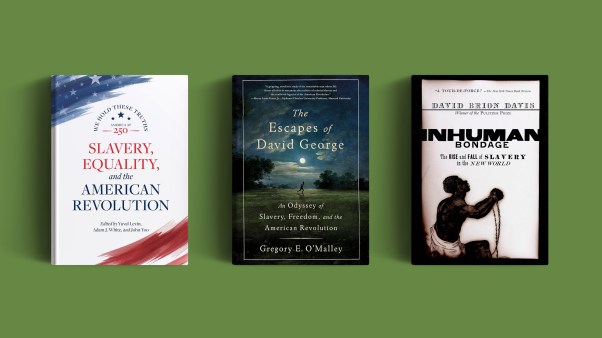
On America’s 250th, Remember Liberty Denied

Thomas S. Kidd

Three history books on the US slave trade.

News

What Christian Athletes Can’t Do

An NBA player’s fall resurrects an old anxiety: When does talking about faith become “detrimental conduct”?

News

Facing Arrest, Cuban Christian Influencers Continue Call for Freedom

Hannah Herrera

Young people are using social media to spread the gospel and denounce the Communist regime.

Public Theology Project

Against the Casinofication of the Church

The Atlantic’s McKay Coppins told me about problems that feel eerily similar to what I see in the church.

Wire Story

The Religion Gender Gap Among the Young Is Disappearing

Bob Smietana - Religion News Service

Women still dominate church pews, but studies find that devotion among Gen Z women has cooled to levels on par with Gen Z men.

Just War Theory Is Supposed to Be Frustrating

The venerable theological tradition makes war slower, riskier, costlier, and less efficient—and that’s the point.

addApple PodcastsDown ArrowDown ArrowDown Arrowarrow_left_altLeft ArrowLeft ArrowRight ArrowRight ArrowRight Arrowarrow_up_altUp ArrowUp ArrowAvailable at Amazoncaret-downCloseCloseellipseEmailEmailExpandExpandExternalExternalFacebookfacebook-squarefolderGiftGiftGooglegoogleGoogle KeephamburgerInstagraminstagram-squareLinkLinklinkedin-squareListenListenListenChristianity TodayCT Creative Studio Logologo_orgMegaphoneMenuMenupausePinterestPlayPlayPocketPodcastprintremoveRSSRSSSaveSavesaveSearchSearchsearchSpotifyStitcherTelegramTable of ContentsTable of Contentstwitter-squareWhatsAppXYouTubeYouTube