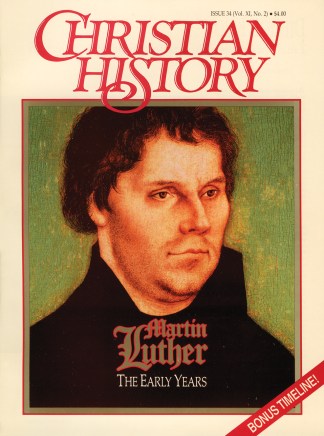

At birth, Martin Luther’s name was Martin Luder. He later changed it to the more academically respectable Luther.
Christopher Columbus set sail when Luther was in grammar school. Michelangelo was completing his Sistine Chapel ceiling as Luther began teaching theology.
Luther had probably eight siblings, yet only one of Luther’s brothers (Jacob) and only three of his sisters survived to adulthood.
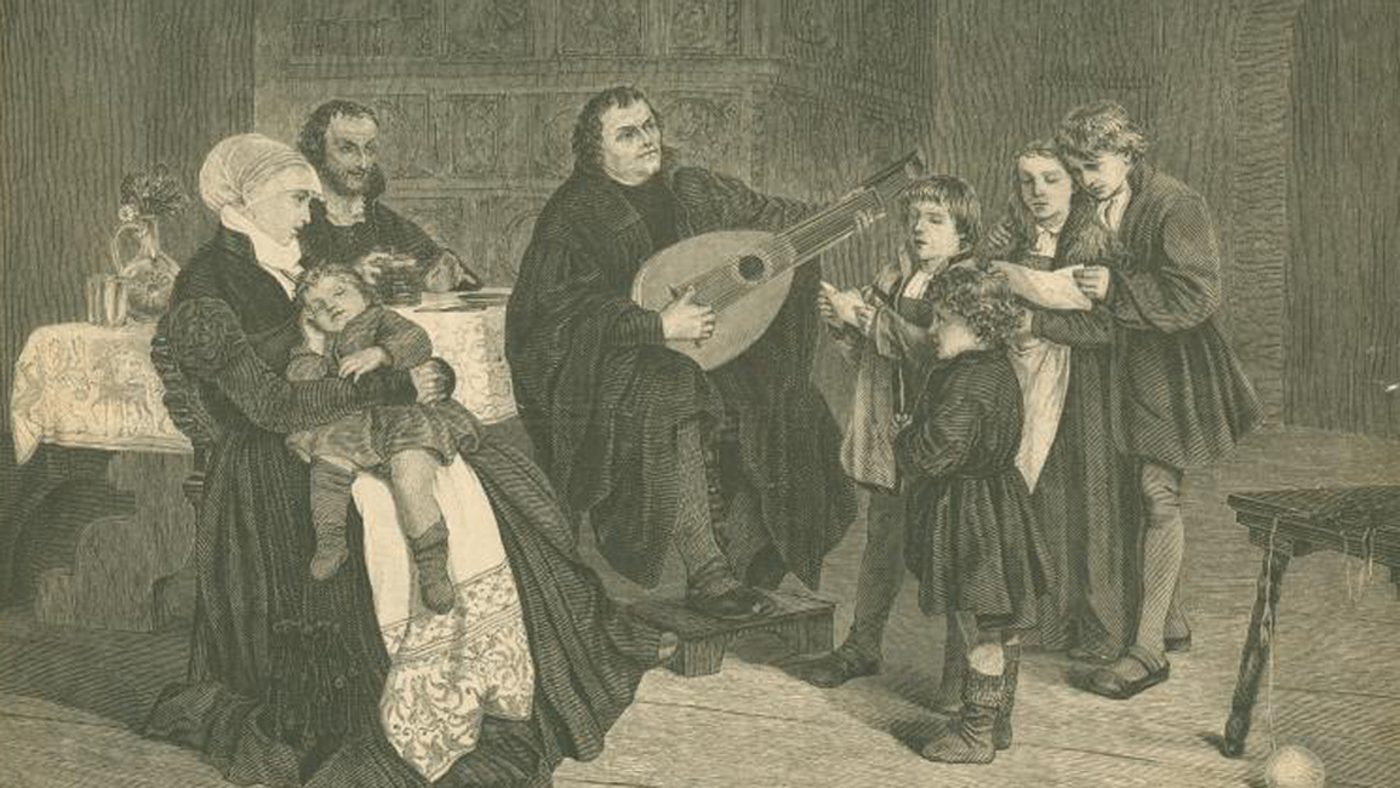
As a schoolboy, Luther preferred music to any other subject, and he became proficient at playing the lute. He gave away his lute when he entered the monastic cloister at age 21.
Before he became a friar, Luther was well on his way to becoming a lawyer. He had earned both his bachelor’s and master’s degrees in the shortest time possible.
While walking back to law school in 1505, Luther encountered a frightening thunderstorm. During the storm he cried out in fear, “Help me, St. Anna! I will become a monk.” He kept his vow.
Early on as a reformer, Luther publicly concluded that penance (the church sacrament involving confession of sin) wasn’t a sacrament at all. Yet he continued to daily confess his sins to another person for most of his life.
Luther once said he had not even seen a Bible until he was 20 years old.
Luther translated Erasmus’s Greek New Testament into German at the headlong rate of more than 1,500 words per day.
Luther publicly criticized the abuse of indulgences more than three years before he published his 95 Theses on the topic.
After 1521, Luther spent the rest of his life as an outlaw.
Luther once supervised 10 monasteries. As a district vicar, he held administrative authority for 10 Augustinian monasteries in Thuringia and Saxony.
When Luther became a priest and celebrated his first Mass, in 1507, he trembled so much he nearly dropped the bread and cup. He became so terrified of the presence of Christ in the sacrament that he tried to run from the altar.
Luther raised so much hostility that it was rumored—and taken seriously for a time by some respected intellectuals of the day—that he was the product of a bathhouse liaison between his mother and the Devil. At the Diet of Worms he was condemned as a “demon in the appearance of a man.”
Luther almost died at age 19. On his way home from school, a dagger pierced his leg, cutting an artery. Only because he was with a friend, who fetched a doctor, was his life saved. Lying at the edge of the road till the doctor came, he cried to the mother of Jesus, “O, Mary, help!” His Wittenberg friends later criticized him for appealing to Mary instead of Jesus.
In 1520 and 1521, Luther was the rage in Germany. Posters of Luther (singlesheet woodcuts) sold out as soon as they went on sale, and many were pinned up in public places.
By the end of his life, Martin Luther wrote 60,000 pages, yet he hoped that “all my books would disappear and the Holy Scriptures alone be read.”
Dr. Herbert K. Jacobsen is pastor of Northwest Covenant Church in Mt. Prospect, Illinois. He serves as adjunct professor of theology at North Park College in Chicago, Illinois, and was formerly professor of biblical and theological studies at Wheaton College, Wheaton, Illinois.
Copyright © 1992 by the author or Christianity Today/Christian History magazine. Click here for reprint information on Christian History.