In this series








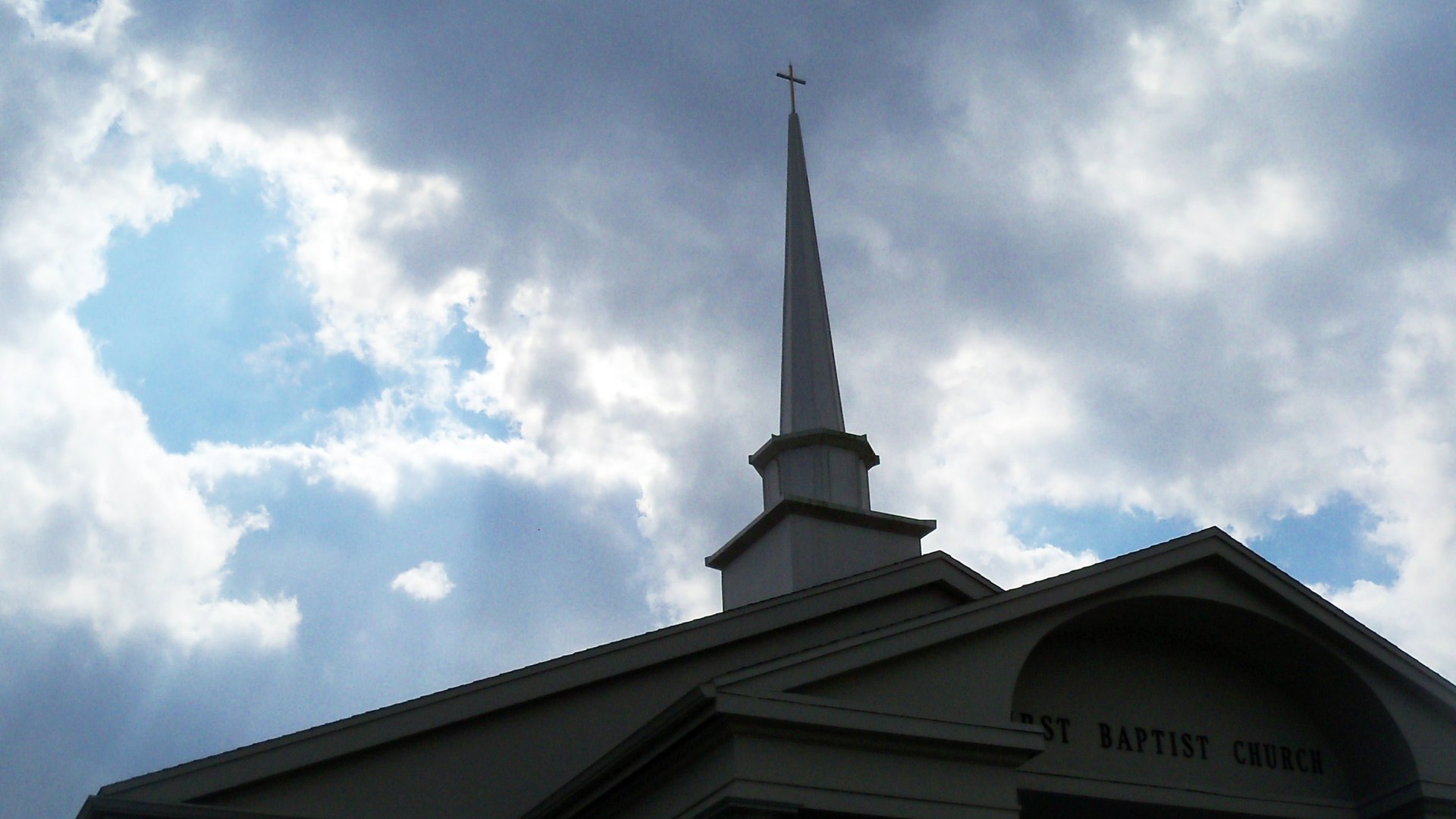
The Southern Baptist Convention (SBC) lost 2 percent of its membership last year—the largest drop in more than a century, according to its annual report.
Certain state conventions did report increases in baptisms and church growth, including in places outside the SBC’s Bible Belt strongholds. But overall, the denomination’s Annual Church Profile—released today by LifeWay Christian Resources and capturing 2019 statistics—shows a trajectory of serious decline and a sharp challenge for leaders concerned about evangelism and retention.
“We have much work to do as Southern Baptists to fulfill the Great Commission in our time,” tweeted Adam Greenway, Southwestern Baptist Theological Seminary president, in response to the report.
The loss of 288,000 church members last year brings total SBC membership to 14.5 million, down from its peak of 16.3 million in 2006. Average worship attendance remained relatively stable at 5.2 million.
Total baptisms, a landmark metric for the denomination, fell by 4 percent to 235,748—the lowest number since World War II. Giving was down slightly to $11.6 billion, after two years of increases. SBC churches spent $1.1 billion on missions.
“These numbers are not able to tell the story of all the evangelistic efforts that many individuals and churches have put in this past year. They do indicate, however, that the efforts of the same number of people in a congregation on average are seeing fewer people come to Christ and being baptized,” said Scott McConnell, executive director of LifeWay Research.
 SBC
SBC“The Southern Baptist Convention is not immune to the increasing secularization among Americans that is seen in more of our children and our neighbors not having interest in coming to Jesus.”
Last year, researcher and statistician Ryan Burge—analyzing other survey data about Southern Baptist identity for CT—found that fewer children who were raised in the SBC remain in the denomination as adults, suggesting that the bigger factor behind the SBC’s decline isn’t the struggle to gain new converts; it’s keeping their own.
Evangelical identity has held steady at just under a quarter of the US population over the past decade, with nondenominational Christianity growing as Protestant denominations experience decline.
The SBC statistics rely on church data compiled by state conventions, representing about 75 percent of churches this year, similar to years past. But without full participation, the annual release totals get challenged by those who say the findings are not representative.
This year, Executive Committee chair Ronnie Floyd—who leads the body in charge of denominational business outside of the SBC Annual Meeting—also called the process into question. For the first time, one state convention didn’t provide membership numbers at all: Oklahoma. The profile used estimates based on previous data to calculate the number of Southern Baptists in the Sooner State.
“We cannot possibly know how best to meet the needs of our 47,500 churches when we only receive needed data from just 75 percent of them,” Floyd told Baptist Press. “Uniformity in our data collection timing, uniformity of the questions asked of our churches, accelerating the response time and increasing the response rate are vitally important for us so that we will have accurate and current data regarding cooperating churches in the SBC.”
The dilemma stems from the structure of the SBC: Churches cooperate with conventions through giving toward missions, but are autonomous in their leadership and decision-making. Any reporting is voluntary.
A similar issue has come up as advocates for abuse victims have challenged the SBC to require churches to provide information on abuse cases. They have urged the denomination to compile a database on known abusers, but leaders state they do not have the oversight to do so. SBC president J. D. Greear has mentioned adding a question to the Annual Church Profile about abuse.
About 12,000 churches did not provide any data about their congregations to the report this year. McConnell has said that he considers the report a snapshot of the SBC, rather than the whole story.
But even that limited snapshot has a clear takeaway for leaders like Floyd.
“It is imperative for our future that evangelism remains the priority of our churches and convention,” he said. “We often find ourselves chasing after the winds of our own preferences, opinions, issues, and social media streams, but we must reimagine a new future together built around a unified Great Commission vision.”
While baptism fell overall, several conventions experienced double-digit growth. Iowa, Minnesota-Wisconsin, Colorado, Utah-Idaho, Northwest (Washington and Oregon), Hawaii, and Puerto Rico all bucked the trend with increases over 30 percent.
In Iowa and Hawaii, they also saw membership growth by more than 20 percent.