News
Wire Story

Can the Southern Baptist ERLC Survive Trump 2.0?

Critics who say the denomination’s public policy agency no longer reflects their convictions could once again put its future up for a vote.

March for Life participants demonstrate in front of the Supreme Court in Washington, DC
Christianity Today May 19, 2025
Bryan Dozier / Middle East Images / Middle East Images via AFP via Getty Images

During their annual meeting in Dallas next month, Southern Baptists will sing, bless missionaries, pass a budget, listen to sermons, and engage in lively debate about a host of issues.

Among those issues: what to do with the denomination’s Ethics and Religious Liberty Commission (ERLC). For nearly a decade, the ERLC has been a source of controversy as the nation’s largest Protestant denomination has navigated the cultural and political divides of the Trump era.

While Southern Baptists, like many evangelicals, have been strong supporters of President Donald Trump in the voting booth, some of the president’s policy decisions and personal conduct have clashed with Baptist ethics and beliefs.

That’s left the ERLC, which speaks to ethical issues and public policy debates, occasionally at odds with the denomination’s 12.7 million members, leading to three attempts to disband or defund the agency over the past decade.

Clint Pressley, president of the Southern Baptist Convention, said he has spoken to a number of Southern Baptists about the ERLC— including Texas megachurch pastor Jack Graham, a past critic of the agency.

Some like what the agency is doing, he said. Others don’t.

While he suspects there will be a motion to close the agency at the denomination’s annual meeting in June, Pressley said the future of the ERLC is not up to him. Even if he had concerns about it, he’s got no power to make a decision. Instead, that power rests with church representatives known as messengers.

“I think those concerns about the ERLC will be answered by the messengers,” said Pressley, pastor of Hickory Grove Baptist Church in Charlotte, North Carolina. “I can’t do anything about the ERLC.”

Pressley added that his role as chair of the SBC’s annual meeting means he cannot take sides in any debate over the ERLC.

In recent months, both the ERLC and its critics have engaged in an online public relations war over the agency’s reputation and future. The Center for Baptist Leadership, a startup activist group with ties to American Reformer magazine, has run a series of articlespodcast episodes, and social media posts critical of the ERLC—primarily for its stances on immigration reform and lack of close ties to the Trump administration.

The ERLC has promoted its ties to House Speaker Mike Johnson, a former ERLC trustee, and its support for defunding Planned Parenthood, as well as its opposition to gender-affirming care for minors and “radical gender ideology.”

“The ERLC team has been diligently working to advocate for Southern Baptist beliefs in the public square while also providing meaningful resources that help our churches navigate today’s cultural challenges and gospel opportunities,” Scott Foshie, chair of the ERLC’s trustees, told RNS in an email. “Southern Baptists have supported an ethics and public policy entity for over a hundred years. We need an effective, responsive ERLC now more than ever.”

Discontent with the ERLC has been festering for years—and much of it dates back to the tenure of former ERLC President Russell Moore, who led the agency from 2013 to 2021. (Editor’s note: Moore is now editor in chief at Christianity Today.)

A popular figure at first, Moore faced intense backlash from Trump allies such as Graham, a former SBC president and pastor of Prestonwood Baptist Church near Dallas, when he refused to back Trump’s first run for presidency and criticized him instead. In 2017, Prestonwood and about 100 other churches withheld their donations to the SBC’s Cooperative Program in protest of Moore’s action. A pair of leaders of the SBC’s Executive Committee also clashed with Moore over his criticism of Trump.

While Moore resigned in 2021, tension over the ERLC has remained a constant in SBC life. The agency has also faced internal conflict — last summer, a former ERLC chair announced that the agency’s president, Brent Leatherwood, had been fired after a social media post praising then-President Joe Biden for dropping his reelection bid. The following day, that chair was ousted and the entity’s board announced Leatherwood was still on the job.

There have been three votes to defund or disband the ERLC since Trump took office the first time—all of them have failed but between a quarter and a third of messengers at the 2024 annual meeting appeared to support closing the agency. The SBC’s rules require two votes in successive annual meetings to shut down an entity such as the ERLC.

Randy Davis, executive director of the Tennessee Mission Board, told Religion News Service in an interview that he still believes the ERLC plays a helpful role for Southern Baptists. He said the ERLC, for example, had worked closely with Tennessee Baptists on issues such as sexuality and gender—Tennessee Baptists, like the ERLC, support a state law that bans gender transition surgery for minors.

Davis doesn’t think the convention floor is the best place to decide the future of the ERLC. Instead, he’d rather a commission be set up to discuss the SBC’s ministry as a whole—and where the ERLC fits into that mission.

“I think Southern Baptists would appreciate that kind of careful collaboration and consideration, rather than being divided on the floor of the convention,” he said.

The ERLC set up a church engagement office after the vote at the 2024 SBC meeting—and encouraged staff to abide by a set of guidelines in deciding what issues the entity should speak to.

“We have sent surveys requesting feedback, hosted pastor calls, led groups of pastors to meet with elected leaders in DC, and intentionally attended events where pastors and other ministry leaders were gathered,” Miles Mullin, an ERLC vice president, said in an email.

Albert Mohler, a former ally of Moore and the ERLC and president of the SBC’s largest seminary, is now among those who have doubt about the entity’s future. Mohler, a former “Never Trumper” turned supporter of the president, told a popular SBC podcast recently that he had “grave doubts” about the usefulness of the ERLC—and that having an entity that addresses controversial cultural issues is “a risky proposition.”

“Other entities and the churches themselves have grave doubts about the utility of the ERLC,” Mohler told the Baptist 21 podcast last month. Mohler added that as the head of an SBC entity, he could not lead any effort to disband the ERLC.

Texas pastor Andrew Hebert said he’d like to see the ERLC limit itself to speaking only about issues that are directly addressed in the denomination’s statement of faith—known as the Baptist Faith & Message—or in recent resolutions passed at the SBC’s annual meeting. He outlined that proposal in a recent article on The Baptist Review, a website that discusses SBC issues and theology. Those boundaries, he said, could help the ERLC from stepping on land mines.

Hebert admits his solution isn’t perfect. For example, the SBC has passed a series of resolutions on immigration that call for both border security and humane treatment of immigrants—praising churches that assist immigrants and refugees—as well as calling for “a just and compassionate path to legal status.” Yet the ERLC has been criticized for its involvement in immigration reform— as well as for refusing to back legislation that would jail women who choose abortions. 

The ERLC will deal with some controversy, Hebert said. But he hopes that for the most part, the ERLC will speak on issues where Southern Baptists have a “broad consensus.”

Something has to change for the ERLC to continue, he said.

“I think the writing is on the wall that there is a trust and credibility issue,” he said. “My motion is an attempt to provide a solution without defunding or disbanding the ERLC.”


Books
Review

Great Books Need More Than Good Apologists

Even the ablest defenses of classical Christian education can lose sight of what gives it life.

A hand pulling a book off of a shelf
Christianity Today May 16, 2025
Illustration by Christianity Today / Source Images: Getty

On a recent weekend, my wife and I found ourselves in an odd place—a library. We’re used to public libraries and used bookstores, but this was different: coffered ceilings; rich built-in shelves filled with aging books; a fireplace framed by gargoyles, settees, and armchairs; and the gentle clink of fine china and cocktail glasses.

Ill at ease, I surveyed the formal scene until I spotted something that made me feel right at home: a portrait of a schoolboy lighting a firecracker with his cigar!

Boys have wanted to blow up classic libraries since the days of Augustine. In his Confessions, the bishop marvels, “Why did I dislike Greek literature? … Homer, as well as Virgil, was a skillful spinner of yarns and he is most delightfully imaginative. Nevertheless, as a boy, I found him little to my taste.”

For generations, schoolteachers have managed to curb naughty students like young Gus. Who’d have predicted the educators would come around to tossing the firecrackers themselves, burning centuries of Western heritage nearly to the ground? Luckily, Louis Markos has a plan to rebuild. In Passing the Torch: An Apology for Classical Christian Education, he defends old books from those who regard them as irrelevant or actively harmful.


Markos, an English professor at Houston Christian University, has tackled a wide range of topics in his books, from Tolkien’s Middle-earth (in On the Shoulders of Hobbits)to Greek philosophy (in From Plato to Christ). In Passing the Torch, he takes on the American education system, which he describes as “broken, ineffective, and in crisis.” His effort begins with two foundational questions often overlooked: What is a student? And what exactly is a student for?
His lengthy introduction characterizes students as many things, including noble creatures, moral agents, and habitual beings. Markos then turns to methods that will “allow us to pass down the wisdom of our culture to our children.” What is meant by “our culture” and “our children”? More on that later.

Part 1 is adversarial, pitting various emphases in classical education against their progressive replacements. In his chapter “Canonical Versus Ideological,” Markos’s argument gathers steam. “The works that are to be learned and propagated,” he writes, “are not to be chosen for their utilitarian or propagandistic value but as ends in themselves.” In this, his perspective echoes Charlotte Mason, a 19th- and 20th-century British education reformer. He describes her philosophy like this: “The teacher must invite the student to feast on the book, to live through its characters, to participate in its struggles and victories. … Children must be taught to love reading for its own sake.”

Entertainment, food, technology, and images all influence a society, but in Markos’s estimation, words have the greatest power to fashion culture. He writes, “A vigorous reading and wrestling with the Great Books provides the best paideia”—a Greek term that suggests comprehensive training in knowledge and character—“for shaping virtuous, morally self-regulating citizens.”

Markos’s best chapter is “Books Versus Textbooks.” It is short, surgical, and desperately needed. It also happens to be the most practical—a small course correction, even for public schools, that would guide educators back toward classical principles. Markos writes,

Too often, schools pay lip service to the canon and then quietly replace the books themselves with textbooks. … In all cases, [textbooks] replace a direct encounter with the Great Books of the past with an ideological filter that ensures that no student or teacher will be confronted or transformed by the wisdom of our ancestors.

It is a question of conviction: Do the Brontës and Jeffersons and Platos of history have the best words? If so, there is no shame in filling class lessons with their words instead of teachers’ words. Basically every classroom and course of study “would be improved,” Markos argues, “if they devoted more time to reading and discussing the actual works.”

Interestingly, Markos believes more time spent in vigorous reading of the Western canon could help cure certain societal ills: “The Greco-Roman, Judeo-Christian tradition … set a high bar for freedom, law, and human dignity. It often fell short of that bar, but when it did it possessed the resources to try again.” A written canon outlives bad actors, giving the next generation a chance to choose more wisely.

In part 2, Markos interacts with several great books, showing how they illuminate the issues at stake when we debate the purpose of education. The greatest benefit of this section is that it provides a catalog of authors and works for educators to prioritize in their own reading—the aforementioned Charlotte Mason, as well as Mortimer Adler, Dorothy Sayers, C. S. Lewis, John Dewey, Neil Postman, and others.

“For students to be engaged fully in their education,” writes Markos, “they must have instilled in them a love and joy for learning. But that instilling can only be accomplished by teachers (and professors) who themselves take love and joy in what they teach.” Do we want students who love reading and writing? It begins with rediscovering our own love.

When was the last time you sat down with a dusty old copy of Augustine’s De Doctrina Christiana or Plato’s Republic? Teaching is an ancient profession, and some of the best thoughts on its practice are waiting on yellowed pages. As Markos puts it, “Rather than fixating on the latest pedagogical trends and technical innovations, we would serve our students best if we exposed them daily to authors and books where eloquence goes hand in hand with truth, with piety, and with love.”

Teaching is a demanding profession, and settling for the predigested opinions of educational authorities can save valuable time. But as the philosopher Jean-Jacques Rousseau warns us in a passage Markos quotes, “If ever you substitute authority for reason in [a person’s] mind, he will stop reasoning and become the victim of other people’s opinions.”

This principle applies even as we consider Markos’s own interpretation of great thinkers. Take John Dewey, for instance, a noted progressive who wrote extensively on the goals of education in democratic societies. We could content ourselves with Markos’s reading of “Dewey’s intent,” “the logical and inevitable upshot of his vision,” and “the clear implication that underlies” a particular piece of his writing. Or we could allow the block quotes in Passing the Torch to direct us toward Dewey’s own words, from which we can make up our own minds. After all, as Markos notes, “if we are virtuous of mind,” his words “can no more hurt us than food can hurt a healthy body.”


Although Markos models lively engagement with a host of educators and texts, my guess is many readers of this apology for Christian education will be struck by the stark absence of scriptural engagement. The omission is deliberate. As Markos explains his approach, “I will follow the model of The Abolition of Man and draw on the wisdom of a wide range of Christian, non-Christian, and pre-Christian thinkers.”

In leaving the Bible largely to one side, Markos aims for broad-minded guidance that both public and private schools can usefully apply. However, I wonder whether this choice to pursue a middle way could narrow his readership, leaving Christians wanting something more scriptural and non-Christians wanting something more general.

This attempt at broad appeal also leads to some confusion when Markos uses pronouns like we and our. Some readers might reasonably assume he means “we Christians,” while others—also with good reason—might infer “we Americans” or “we educators.” Only as Markos’s argument develops does it become obvious that his primary focus is preserving American culture and heritage.

Given how Markos affirms the “centrality of definition to the educational enterprise,” it is surprising to find him largely assuming the meanings of foundational concepts—like the liberal arts, the humanities, and even goodness, truth, and beauty—rather than carefully defining them. One fascinating assumption he seems to share with John Dewey himself is that schools are the gatekeepers of culture. Readers wondering what role families and churches might play in the educational endeavor will need to look elsewhere.

At times, Markos drives so hard at the rational mind that he appears to forget that his readers, like students, have hearts and imaginations waiting to be reached by illustration and story. This imbalance is especially odd given his stated willingness to complement rational appeals with “romantic methods of pedagogy that emphasize experience and the cultivation of imagination, wonder, and awe.” Elsewhere, he doubles down: “Across time and place, the most effective way to teach children to pursue virtue and forsake vice has been to tell them stories.”

Is this not true for adults as well? After all, to use Markos’s words, “We are grown children.” For Passing the Torch to make its best apology, it would spend less time analyzing texts and more time telling stories.


Markos’s book is a worthy introduction to the modern movement for Christian classical education. As I see it, any deficiency in his latest work is common to the movement itself. We’ve reached the point, anyhow, of having more than enough apologies for its approach to forming minds. What the movement needs, most urgently, are habits of dwelling richly within the classical tradition and bringing it alive for others.

Consider an analogy from the realm of baking. I can study famous cookbooks. I can know all the ingredients, understand the logic of combining them this way or that, and memorize the exact internal temperature of a well-baked loaf. I can even study the history of recipes and chefs, learn the science of yeast and gluten structure, and research the best kitchen tools. But if I never put my fists in the dough, I am not a baker.

Cookbooks drive us to cook. Living books drive us to live. Classical circles love analyzing what Markos repeatedly calls the “Great Books,” but when culture is merely studied—even appreciated—it still remains functionally dead. Only when we live within it does it remain an active, burning torch we can pass to the next generation.

This brings us back to where we started—an old library with a cigar-toting schoolboy. It’s located on the second floor of a historic business club in downtown Pittsburgh. Clubs like these are libraries of rituals, patterns, tastes, appreciations, and relationships—in short, culture. How does an old club avoid becoming a museum? By continuing to live in those libraries, trusting they can handle the use.

Will we live in these old books? Specifically, what rituals, patterns, appreciations, and relationships will they cultivate in our homes, churches, and schools? Can 21st-century classical Christian education graduate from writing apologies to becoming communities that walk in the virtues, habits, and “excellencies” of God (1 Pet. 2:9, ESV)?

Homer will outlive our current educational moment. Generations to come will dust off Dante and rediscover his genius. And the Word of God needs no apologies. The question is not whether these Great Books will endure—but whether the classical movement is a firecracker or a flame.

Chad C. Ashby is the founding head of school at The Oaks Academy in Washington, Pennsylvania.

News

Brazilian Evangelicals’ Favorite Politician Accused of Assassination Plot

As former president Jair Bolsonaro heads to trial, Christian nationalist supporters continue to see him as part of a redemptive breakthrough.

Brazil's former president Jair Bolsonaro speaks during a rally in Rio de Janeiro, Brazil.

Brazil's former president Jair Bolsonaro speaks during a rally.

Christianity Today May 16, 2025
Mauro Pimentel / Getty

More than two years after mobs attacked the capital to protest election results, Brazil’s Supreme Court accepted charges last week against seven individuals accused of plotting a coup to overthrow President Luiz Inácio Lula da Silva, who’s commonly known as “Lula.”

In all, 21 people face charges, including military commanders, former ministers, police, and Lula’s predecessor, Jair Bolsonaro, whom investigators have identified as the leader and main beneficiary if the coup had succeeded.

The alleged plot included plans to assassinate then-president-elect Lula, Vice President–elect Geraldo Alckmin, and Supreme Court justice Alexandre de Moraes. If found guilty, Bolsonaro could spend more than 30 years in prison.

So far, the legal proceedings have had little effect on Bolsonaro’s popularity among evangelicals: 44 percent continue to define themselves as “bolsonarists,” compared to about a third of the country overall.

“This almost-messianic shielding of a political figure borders on what theology defines as idolatry,” said theologian Gutierres Fernandes Siqueira, author of Igreja polarizada (Polarized Church).

Many evangelical leaders stop short of declaring Bolsonaro as anointed by God but still see his leadership as good for the church and want him back in power. The court’s verdict, expected by the end of the year, could set the tone for Brazilian politics ahead of the 2026 general elections.

A previous ruling had already rendered Bolsonaro ineligible for public office for eight years, barring him from running next year. But his supporters in Congress have introduced bills to grant amnesty to demonstrators, specifically those charged with crimes related to the attempted coup.

Back on January 8, 2023, Clayton Nunes was one of thousands of Brazilians who broke into the Praça dos Três Poderes—Plaza of Three Powers—to challenge alleged election fraud after Bolsonaro’s reelection defeat. The crowds smashed glass doors and windows, ransacked offices, destroyed artwork, and flooded halls with fire hoses, causing an estimated $4.3 million in damage.

When police began deploying tear gas, Nunes sought shelter inside the Senate. There, he found fellow evangelicals. “I saw people praying and singing the national anthem,” he said. “I ended up joining them.”

In 2018, Bolsonaro won 55 percent of the country’s votes for president, with a backing of 69 percent among evangelicals. The next race, in 2022, Bolsonaro gained 63 percent of the evangelical vote but lost to left-wing Lula.

Authorities detained at least four pastors the day of the January 2023 coup and arrested additional church leaders and a Christian singer after further investigations. Most evangelicals claimed that they were there to pray and intercede for their country and that the violence had been carried out by infiltrators

Nunes pleaded guilty to five charges, including attempted coup and destruction of public property. Last year, a judge ruled the 41-year-old barber from Brasília would spend the next 16 years and six months in prison.

Brazil’s capital attack parallels a similar response by President Donald Trump’s supporters in the US on January 6, 2021. Each riot took place to defend a politician who refused to accept election results, and each drew support from extreme elements of Christian nationalist movements.

Raimundo Barreto, a professor of world Christianity at Princeton Theological Seminary, sees both sets of supporters as motivated by different versions of dominion theology. Some of the Brazilians he interviewed following the 2023 insurrection were striving to gain authority over areas of society they saw as controlled by territorial demons and to redeem what they perceived as a corrupted moral order.

While US Christian nationalism imagines the restoration of the country’s Christian identity, the Brazilian version emphasizes redemption of what some Christian Brazilians see as a “cursed and corrupt nation, estranged from God both spiritually and morally,” Barreto said. “For those who hold this view, the nation’s redemption requires breaking those curses through submission to the lordship of Jesus,” not only spiritually but also politically.

Because of these larger narratives, Trump and Bolsonaro have a level of invincibility among their evangelical bases, even when institutions attempt to hold them accountable.

In response to the growth of Bolsonarism in the churches, a small minority of young people in Brazil began to leave, Barreto said, “because they can’t reconcile their reading of the Bible and their faith with the behavior of those who reject democratic processes, science, and the exercise of secular justice.”

The Brazilian public sees Bolsonaro’s sustained popularity in the wake of controversy, including the coup charges, and blames him for manipulating evangelicals, said anthropologist Juliano Spyer, author of two books on evangelicalism’s growth in Brazil.

“But I’ve been hearing something different from some pastors,” Spyer said. “They acknowledge he’s controversial but believe he’s championing the right causes.”

Similar to some supporters of Trump, the leaders equate Bolsonaro with “the biblical figure of King Cyrus of Persia—who wasn’t part of Israel’s people but was used by God to protect them,” said Barreto.

When he speaks with Christian leaders, Barreto frequently asks them whether Bolsonaro is anointed by God. “Many reply, ‘No, but he is someone who protects the values of the church,’ usually defining those values in a narrow way, mostly focusing on a particular view of family and sexual morality.”

News

Indian and Pakistani Christians Fear War, Not Each Other

South Asian believers prayed for peace as violence between their countries escalated.

The wreckage of an aircraft launched by India that crashed in Wuyan Pampore in Kashmir.

The wreckage of an aircraft that crashed in Wuyan Pampore in Kashmir.

Christianity Today May 15, 2025
Basit Zargar / Getty

Last Thursday night around 3 a.m., a deafening explosion rocked the city of Gujranwala, Pakistan, a two-hour drive away from the Attari-Wagah border crossing.

As the entire city seemed to tremble, cries of confusion filled Sharaz Sharif Alam’s home. His four sons and his elderly parents felt shaken and wondered if they were safe. The city had been in a nationwide blackout for two days, and the streets lay eerily silent.

The family huddled together in a room lit only by battery-powered lights and held each other’s hands as they prayed. Alam started checking in with his church congregants to find out how they were doing.

“There was a strong sense of vulnerability and a quiet fear that something more serious might follow,” said Alam, the general secretary of the Presbyterian Church of Pakistan.

“We prayed—not just for ourselves but for every child left sleepless, for every mother clutching her children, for every Muslim and Christian family across this wounded land longing for dawn.” 

A two-hour drive from the same border crossing, in the city of Pathankot, India, Shiji Benjamin felt as if she was living in a war zone.

The government imposed a strict night curfew last Thursday, ordered shops to shut their doors by evening, and plunged the entire city into a blackout for four nights in a row—no streetlights, no lights at home, nothing.

At night, Benjamin saw bright flashes in the sky followed by loud, “heart-shaking” booms as the Indian military shot down incursive drones. Sometimes, debris from the drones crashed and burned nearby.

“Each sound, each rumble, made our hearts skip a beat,” said Benjamin, the national coordinator for women’s ministry at Indian Evangelical Team. “We didn’t know what would come next or if we would even wake up safe the next morning.” She kept praying with her family and neighbors for protection over their city and for peace to reign.

Fierce clashes between India and Pakistan broke out last week after gunmen from a little-known group, the Resistance Front, killed 26 people, mostly Indian tourists, and wounded a dozen others in India-controlled union territory Jammu and Kashmir on April 22.

India accused the Resistance Front of linkages to Pakistan-based terrorist groups Lashkar-e-Taiba and Jaish-e-Mohammed, but Pakistan dismissed these claims.

In retaliation for the attack, India launched “Operation Sindoor,” a series of military strikes on targets across Pakistan’s Punjab province and Pakistan-administered Kashmir, killing dozens of civilians and destroying infrastructure linked to Pakistani militants. Pakistan struck back with shelling and killed and injured dozens more Indian civilians.

Drone strikes from both countries rained down on homes and neighborhoods over the next few days as fighter jets scrambled in the air to intercept threats amid an increasing civilian casualty count. 

Both countries agreed to a cease-fire brokered by the US last Saturday, with each claiming victory over the other. Several diplomatic measures, such as the suspension of a water-sharing treaty and the closure of airspace and certain border crossings, remain in effect.

​​The mountainous Kashmir region is at the center of this decades-long conflict between the countries—a conflict that began with Partition in 1947, when Britain divided its then colony into Hindu-majority India and Muslim-majority Pakistan.

An estimated 3 million people died from violence, hunger, suicide, and disease when Partition took place, with reports of communal massacres, forced conversions, arson, and sexual violence in Indian provinces like Punjab and Bengal.

Britain’s plan, however, did not specify which country Kashmir would belong to. Both newly independent nations laid claim to the disputed territory, and tensions escalated to an all-out war in 1949. Thereafter, the two countries arrived at a cease-fire, with India taking two-thirds of Kashmir and Pakistan taking the other third. 

Christians in India and Pakistan have also experienced a tumultuous history because of Partition. Prior to this division, roughly half a million Christians lived in the Punjab region. American Presbyterian missionaries established high schools, colleges, and medical dispensaries there in the 19th century.

When Partition occurred, Christians had to choose which part of Punjab to live in: the west, mainly occupied by Muslims, or the east, dominated by Hindus and Sikhs. For Christians, “the decision to opt for either of the new provinces was certainly very daunting,” Pakistani historian Yaqoob Khan Bangash wrote.

In newly formed Pakistan, the government arrested hundreds of Christians on charges of espionage during the 1965 war between India and Pakistan over Kashmir and the 1971 war that led to Bangladesh’s formation as a nation. Muslims in the country often treated Christians harshly, and Christians had to take on menial jobs like city sweeping, left vacant after the Hindu Dalits moved to India.

Christians in India endured similar adversities. Attacks against Christians, from the killing of leaders to the destruction of institutions like churches and schools, grew after the Hindu nationalist Bharatiya Janata Party came into power in 1998, persecuting Christians for their faith and forcing thousands to convert to Hinduism.

Altercations between the two countries have continued to flare up in Kashmir. The last major conflict occurred in 2019 when Pakistan-based extremist group Jaish-e-Mohammed bombed Indian-controlled Kashmir and killed 40 Indian soldiers.

But the small minority of Christians in the majority-Muslim region mostly existed “peaceably” with people of other faiths there, Indian apologist Jacob Daniel wrote in 2020. In the post-Partition era, for instance, author Angela Misri shared that her cousins living in Kashmir received lessons from Hindu, Muslim, Sikh, and Christian teachers.

Nevertheless, Christians in both countries continue to face persecution for their beliefs. Pakistan is ranked second, and India third, on this year’s World Watch List of 20 nations where violence against Christians is more severe.

Meanwhile, tensions between Christians arose in Kashmir a decade ago when foreign missionaries in Kashmir led local Muslims to Christianity, as the locals felt that these conversions were drawing unwanted attention from the government and putting their lives at risk. Rising Hindu nationalism has also prompted attacks against Christians in the region in recent years.

Ujala Hans, who lives in Lahore, Pakistan, has felt the effects of Partition firsthand, as her great-uncle still lives in India. Her parents also lived through the post-Partition years of political turmoil and instability as India and Pakistan grappled for control over Kashmir.

During last week’s conflict, Hans’s mother declared that if God had protected them from harm in the 1971 war between the two countries, he would also protect them this time. But Hans, a pastor, still warned her father not to answer any calls from her great-uncle across the border, fearing that the Pakistani government would think they were spying on behalf of India.

Despite these recent tensions, relationships between Pakistani and Indian Christians have not soured, say the believers CT interviewed.

Hans has cultivated friendships with Indian pastors through her international travels. “We cannot go and visit each other’s country, but when we go to other countries, we are like one family,” she said, citing a shared knowledge of the Urdu and Hindi languages as a way that Christians often establish common ground with one another.

“What I have seen is this: that the Indian church fervently pray[s] for the Pakistani church and they love the Pakistani Christians,” Hans said. 

Recognizing their shared identity in Christ can help Pakistani and Indian Christians to “love beyond borders,” Benjamin said. “When the world sees enmity, we can choose to see shared suffering, shared faith, and shared humanity.”

A sense of solidarity between Indian and Pakistani Christians is not the only unexpected fruit arising from last week’s conflict. The battle has also brought people of different faiths together in Pakistan, Alam said.

Sharaz Sharif Alam (fourth from left) walking shoulder to shoulder with fellow pastors and Muslim imams.Sharaz Sharif Alam
Sharaz Sharif Alam (fourth from left) walking shoulder to shoulder with fellow pastors and Muslim imams.

Although missiles had struck close to Gujranwala and the neighboring city of Muridke, Alam knew he couldn’t remain locked up at home in fear. The day after the explosion rocked his city, he joined an emergency meeting with Christian pastors, Muslim imams, and civil society leaders. They decided to hold an interfaith peace procession last Thursday.

The two-kilometer walk kicked off at 1:30 p.m. local time, beginning and ending at Swift Memorial First Presbyterian Church. Along the way, Alam and a 200-strong crowd shouted slogans like Hum aman chahte hain (“We want peace”) and Pak army zindabad (“Long live Pakistan Army”).

Alam walked shoulder to shoulder with fellow pastors and Muslim imams while Muslim and Christian youth toted large yellow banners bearing messages of interreligious solidarity. He shared Bible verses like Romans 12:18 (“If it is possible, as far as it depends on you, live at peace with everyone”) and Jeremiah 29:7 (“Seek the peace and prosperity of the city to which I have carried you into exile”).

“It was a glimpse of the beloved community, a foretaste of God’s kingdom, where swords are beaten into plowshares and enemies become neighbors,” Alam said.

The day after both countries agreed to a cease-fire, Alam co-led another procession, this time proclaiming thanks to God for preserving Pakistan.

As approximately 200 people marched out from Ghakkar Mandi Presbyterian Church, Romella Robinson, Alam’s wife and an ordained Presbyterian pastor, prayed, “O Lord, let the nations not walk the path of destruction but the path of reconciliation. Teach us to seek peace and pursue it.

Church Life

Anyone Can Bless the Food

Contributor

Sometimes the pastor needs to lead a prayer. But sometimes, ask the new convert or the shy student to talk to God in public.

Young child looking up towards light on a purple background.
Christianity Today May 15, 2025
Illustration by Abigail Erickson / Source images: Getty

The other night I attended a book-launch event for a buzzy new title. As I sat on a fold-down chair in the stands, I felt my mind wander as the president of the sponsoring organization introduced a dean at the university hosting the event, who in turn introduced yet another dignitary, who at last introduced the authors I’d paid $70 to squint at from 500 feet away.

I try to appreciate formal displays of gratitude, and I’ve come to expect pomp and circumstance at highfalutin events. Showing off your friends is a way to show off your influence. 

But I’m troubled by how often I see this kind of thing transpire at Christian gatherings, specifically when it comes to public prayer—before services, Bible studies, congregational meetings, potlucks, missionary sendoffs, or blessings of new ministries.

It happens when leaders extend public invitations to pray. More often than not, the most “qualified” person in the room turns directly to the other most “qualified” person in the room.

Qualified can mean “most spiritual,” and the honor goes to other pastors, worship leaders, or small group heads (in that order). Other times, qualified is synonymous with “upstanding family men,” who are almost always both husbands and dads.

It’s rare, at least in my experience, for a leader to hand the microphone to someone without any title, seminary degree, or personal connection.

There might be good reason for that. Public prayer overlaps with public speaking. Whether by standing in front of a congregation or holding hands at a dinner table, talking to God out loud sets a tone and reiterates theological convictions. Pastors may not want to put someone on the spot—or they might be nervous about what that someone might say.

But when it’s clear that official leaders only trust official leaders to pray for a community, that runs the risk of communicating a value judgment: that the people whose prayers are worthy of being heard aloud must be carefully vetted and possess authority.

Unfortunately, our judgment of who’s worthy often tangles with God’s judgment. The prophet Samuel set his eyes on David’s seven brothers before he realized who God had selected as the future king.

This is not an appeal to relax character standards for Christian leaders. It’s a reminder of our own tendency to have a much narrower view than God does of who he can use. By being intentionally diverse—and thoughtfully “subversive”—in who we ask to pray in public, we help remind others to see people’s potential with God’s eyes.

This kind of inclusivity might make public prayer less of a pious performance, because “regular Christians” don’t have the same burden to prove their pastoral qualifications. Performing is a learned skill, but prayer is not. In one parable, Jesus extols the tax collector who notably would not look to heaven “but beat his breast and said, ‘God, have mercy on me, a sinner.’” That tax collector—not the self-satisfied Pharisee praying at the temple—would go home justified (Luke 18:9–14).

More democratic prayer might also offer a window into the challenges and joys affecting a wider variety of individuals and communities—challenges and joys which may or may not match up with what leaders understand their congregants’ priorities to be.

Theological truths and the unchanging attributes of God resonate with each of us differently. Hearing more people proclaim the particular truths that are viscerally affecting them offers an opportunity for both familiar reminders and new insights.

I was reminded of this while reading a recent essay from a prison chaplain. She recounts inviting a man with burns so severe the guards snidely called him Deadpool to pray for his fellow inmates at the end of a service. The prisoner’s words stunned the room—and left him glowing.

Of course, many people in our congregations who we might ask to pray are shy, or uncertain, or don’t speak the dominant language fluently enough to be confident in their ability. A sporadic invitation to a “regular” Christian might just put pressure on them to master the Christianese of the credentialed believer.

The answer here is prewritten prayers: prayers penned by saints of yesteryear, prayers from contemporary theologians, prayers that are simply passages of Scripture.

I grew up with exclusively extemporaneous prayer, and I used to think written prayers were less genuine—that is, until I realized that written prayers often allow for the formation of a more focused, complete idea. (The Prayer of Saint Francis convicts me each time I read it.)

More importantly, when we need someone to pray over a child before dedication or a Christian before baptism, written prayers help fight the very tendencies that Jesus rebukes when he tells us to talk to God in our rooms, behind closed doors, rather than in synagogues and on street corners (Matthew 6:5–8). At its best, extemporaneous prayer allows a speaker to address the needs and emotions of particular people. But praying off-the-cuff also allows the speakers to make it more about themselves—droning on out of anxiety, quoting Scripture to show off their Bible fluency, raising their voices to heighten the drama and get a reaction.

Scripted prayers, meanwhile, decenter a speaker. They’re more accessible to new believers and second-language learners. They act as a safeguard, preventing any of us from blurting out erroneous theology. It’s all too easy to inadvertently preach the prosperity gospel: We know, God, that this church has been faithful, and because of our faithfulness, you’ve blessed us with a big tithe today and this great meal.

In every church, who prays in public should not depend on gender, title, position, length of time as a Christian, education level, or perceived spiritual depth—because prayer is open to anyone who wants to connect with God. Certainly, leaders pray. But so do the poor, the sinful, the helpless, and the broken.

And hearing even prewritten words in an unfamiliar voice—the shaky voice of a new convert, the surprising timbre from the person who always sits in the back, the oscillating pitch of a teenager—matters. It symbolizes that the church is a different kind of place, in which God uses “the foolish things of the world to shame the wise” (1 Cor. 1:27), establishing a kingdom that doesn’t abide by traditional hierarchies.

Public prayers are opportunities for us to hear the cries of the Christians we are in community with, to demonstrate a different way of doing things. Let’s not squander that.

Morgan Lee is the global managing editor at Christianity Today.

Ideas

One Cheer for Donald Trump

Reflections on the necessity of disruption—and rule of law—from a former White House domestic policy adviser.

A supporter holds up a flag of Donald Trump.
Christianity Today May 15, 2025
Adam Gray / Stringer / Getty

Like many Americans, I was mortified by developments during the Obama and Biden administrations, when government became more controlling, more crusading, and more coercive than anything previously seen in the US. Throughout my career, I have strongly preferred governance that is as unintrusive on daily life as possible. But the recent radicalization of our culture, economy, and government made me much more open to the pugnacious actions of the Trump administration.

For the chaotic moment in which we find ourselves, Trump’s disruptive strategy feels necessary. Destructive cultural radicalism, strangled freedoms, economic decline, and overseas dangers left even many temperamentally conservative citizens like me ready for a dramatic break with the past. Anything to shake off societal sickness and give our body politic a chance to start over in fresh and healthy ways.

Trump is a highly unlikely savior, unanticipated by any of the solons running our country before he arrived, and a sharp break from all prior presidents. He embodies many of the personal qualities our mothers warned us against. But he seems the only contemporary figure capable of clearing blockages, cutting out tumors, and resetting our national health.

Yet burn-it-down approaches to governance are not sustainable over the long run. At some point the government needs to exercise authority in ways that are less jarring and disruptive, more temperate, more deferential to precedent and continuous rule of law. So when common-sense policies and more responsive institutions return in our nation’s capital, sensible Americans of all stripes will say a prayer of gratitude and then hope that our nation’s capital can become a much quieter and more boring place.

A reformed and restored America will need people who respect consensus. People averse to radical change, utopias, or life in armed camps. People who want the state to avoid encroaching on the organic community life of citizens and families. Then we can stop focusing on events in our capital and pour energy instead into our traditional projects of building enterprises and interacting with our neighbors with restraint and forgiveness and generosity.

Government “is force! Like fire, it is a dangerous servant, and a fearful master,” as a quote widely attributed to George Washington puts it. Thomas Jefferson urged that federal rule should be deliberately mild: never high-handed, arrogant, or imperious; modest in scope; and light in its press upon people. “That government is best which governs least,” as the famous Jeffersonian line has it.

There are scads of cautionary examples from history warning that even the most noble and necessary crusades can swing too far into purity campaigns, personality cults, vengefulness, self-indulgence, and tyranny. The most welcome reformers can inadvertently create a terrible mirror image of the wrongs they arrived to overturn. The guillotines in Paris sliced many innocent necks. The Bolsheviks became far more abusive than the czars.

Disrupt and replace is the right mantra when pushing through reforms for which society is starved. But once beyond the national emergency, leaders must shift to more restrained, disciplined, and respectful ways of operating. If there isn’t eventually a transition of this sort, the Trump era could end in flaming hubris and overreach.

Many people are grateful to today’s disruptor in chief for jolting us away from a dangerous abyss. Next we must hope that he and his successors will evolve into more lasting leaders. Our presidents must avoid the arrogance that will eventually undo any leader in a representative republic.

Niccolo Machiavelli was a jaded political strategist in Renaissance Italy who prescribed manipulation, ruthlessness, and deceit to win political battles. He dismissed Christian ethics. His win-at-all-costs, might-makes-right philosophy has been attractive to strongmen like Henry VIII and Joseph Stalin. 

Machiavelli has never been an American favorite. Every political leader, however, has to be more interested in results than theory, so I’m neither surprised nor troubled that there is a spurt of interest in Machiavellian strategy today in Washington. With sensible Americans losing over and over in the culture wars, you can see why rummaging through Italian utilitarianism to find ways of leveling the playing field might have some attraction. Yet I suggest the men and women who govern in America should never do more than dip occasionally and tactically into Machiavelli’s toolbox. 

Administrators of our great representative government must mesh the practical imperatives of princes of power with the deep wisdoms of the Prince of Peace. That is excruciatingly hard. But the unremittingly bellicose have been humbled again and again by the opposing approach of the world’s most successful revolutionary creed: “Do good to those who hate you, bless those who curse you, pray for those who mistreat you. … Do to others as you would have them do to you” (Luke 6:27–28, 31). In a popularly ruled nation, that is the path to lasting trust and authority.

Karl Zinsmeister from 2006 to 2009 was George W. Bush’s chief domestic policy adviser. His new book, My West Wing, expands on these views of Washington resistance to reform.

News

In the Continent with More Christians Than Any Other, China’s Influence Grows

Zimbabwe women and rural workers snap up low-priced three-wheeler EVs.

A poultry farmer in Zimbabwe prepares to go to market on her renewable energy electrical tricycle.

A poultry farmer in Zimbabwe prepares to go to market on her renewable energy electrical tricycle.

Christianity Today May 15, 2025
Jekesai Njikizana / Contributor / Getty

Christianity and Islam are leading competitors for spiritual influence in Africa, and the US and China are leading competitors for diplomatic influence. The US’s President’s Emergency Plan for AIDS Relief (PEPFAR) program has been a humanitarian success in Africa, saving many lives, but it has also won friends for America. China is going about a different way of influencing people: surging ahead in the market for electric three-wheel vehicles. Here’s a report from Nyamapanda, Zimbabwe.  

Marcy Gede sprints around in a cheap, Chinese-made, electric three-wheeler, providing rides to passengers or delivering everything from bottled gas to baby food. A dozen times each day, she loads passengers or goods into the tiny trailer hitched on the back, then cranks up the wheeler’s battery-powered engine. Gede’s trailer can carry one passenger at a time, bags included. Plumes of dust swirl behind her vehicle as she starts down the stony roads of Nyamapanda in rural northeast Zimbabwe. Like scores of other women in the region, this 44-year-old mother is shifting the makeup of Zimbabwe’s rural rideshare and delivery market.

“We are the female Ubers of rural Zimbabwe in a country without Uber,” she told Christianity Today with a laugh.

Chinese electric vehicles (EVs) have enabled a growing network of female riders in Zimbabwe to care for their families. They’ve also reached consumers long neglected by Western and Japanese used-car sellers. By popularizing these small, affordable EVs, Chinese traders have not only benefitted their own businesses and nation but also allowed more gig workers to stake a claim in Africa’s chaotic but growing ride-hail economy.

In 2023, around 803 million Africans lived in rural areas, representing about 55 percent of Africa’s population at the time. Car companies selling traditional gasoline-powered vehicles have long overlooked the needs of rural Africans due to their low purchasing power and dilapidated or nonexistent infrastructure.  

While the relationship between Africans and Chinese residents has been complicated, Gede said, “They are our saviors.”

Chinese dealerships set low prices, making profits by selling large quantities of low-end electric three-wheelers. By doing so, they have gotten ahead of Western and Japanese companies that have “hardly thought of EV wheelers,” according to Carter Mavhiza, a leading auctioneer in Harare, Zimbabwe’s capital.

“Rural women are saying, ‘Look; our communities can’t afford cars, EVs or gasoline ones. Cheap Chinese EV wheelers are our first breakthrough,’” he said.

The Chinese have seen a “massive opening across Africa,” Mavhiza added. He cites the 7.6 million motorcycle exports the US Department of Commerce says China shipped to Africa, Latin America, and Asia in 2022. China surpassed Japan as the world’s largest auto exporter in 2023.

Although few Africans value EVs for their green energy, environment expert Shamiso Mupara said, rural Africans will buy EVs if they provide reliable and affordable transportation.

Mahiza said the cheapest used American or Japanese car would cost around $4,000, and motorcycles $1,400. Chinese traders have priced their EV motorcycles and three-wheelers in the $500–$700 range. They also extend informal credit and offer peer-to-peer lending models, such as loan clubs for rural riders.

Unlike traditional car dealers in urban areas, Chinese dealers don’t demand paystubs, proof of employment, or car insurance from buyers. Instead, they ask rural African women to pool their finances and purchase three-wheeler EVs for each member of the pool, one or two members at a time, Gede explained.

“They can even take small grams [of] gold ore as payment,” she said.

The thousands of Chinese traders living among rural populations in Zimbabwe and Mozambique can see the roads filled with potholes and gullies—conditions that prevent conventional cars and buses from using rural highways. Chinese three-wheelers fill an acute need for transportation to the big cities, where most of the functional hospitals, banks, universities, and food and gas markets are located.

“The Chinese know that their EV wheelers don’t need gasoline to drive and can pass the most rotten roads even in flood times,” Mavhiza said. 

The quality of the vehicles might be questionable, but for now, Gede said she is happy that “the money from EV wheelers is keeping my kids in school.” 

Books
Review

How a Great Pro-Life Hope Disappointed His Allies

As surgeon general under Ronald Reagan, C. Everett Koop traveled in evangelical circles. But the partnership was always uneasy.

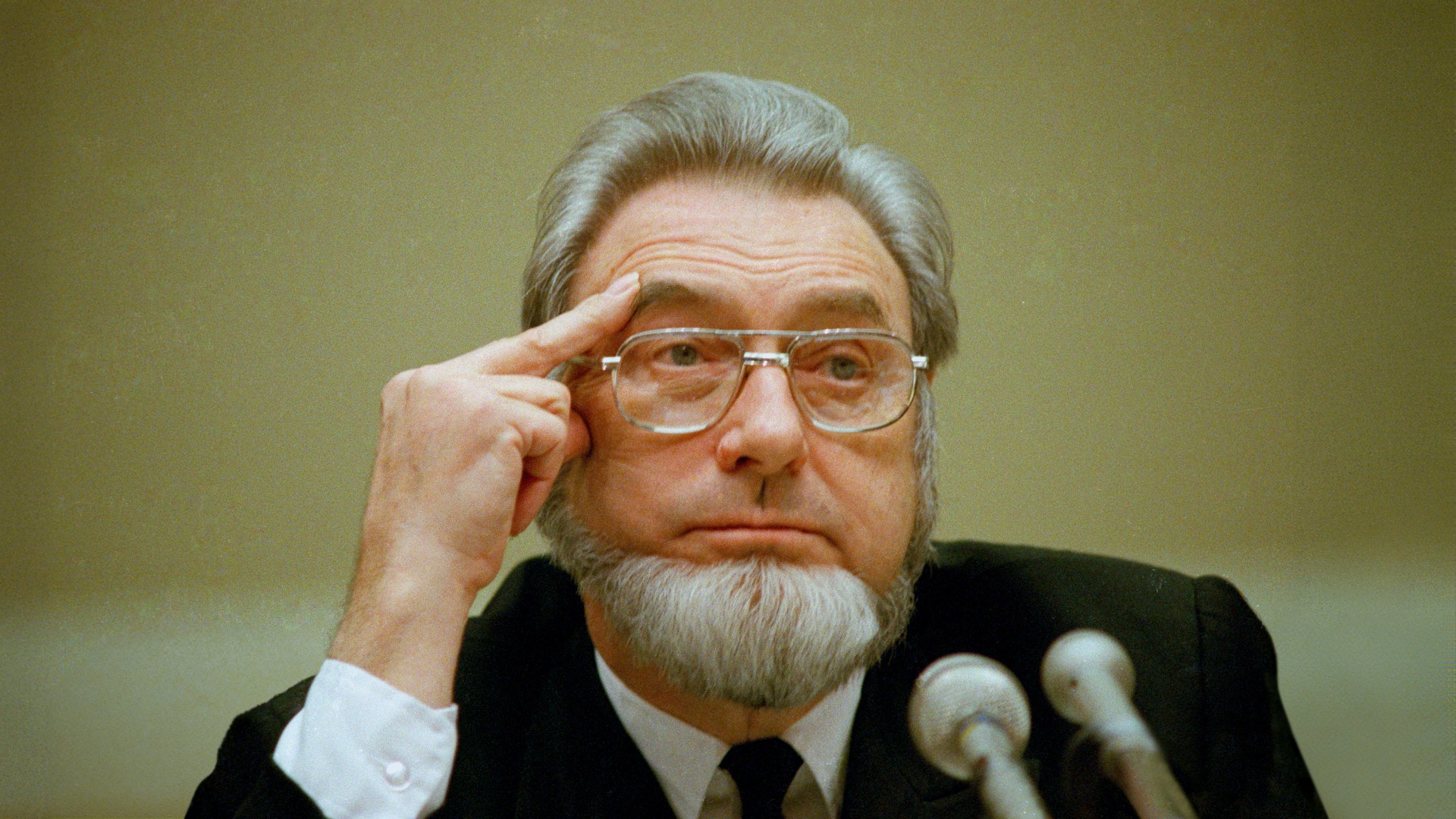
Portrait of C. Everett Koop
Christianity Today May 15, 2025
Bettmann / Contributor / Getty

Of the Christian conservatives whom Ronald Reagan appointed to high office after winning the presidency in 1980, none excited evangelicals like his pick for surgeon general, C. Everett Koop.

Koop, they were sure, was a true believer in the Lord and the pro-life cause. He was a ruling elder at a renowned evangelical church. He had spoken at Wheaton College. He had opposed abortion even in the early 1970s, before most evangelicals had joined the pro-life movement. He was a close friend of Francis Schaeffer and his family. He had even coproduced a pro-life documentary and book with Schaeffer titled Whatever Happened to the Human Race?

Given Koop’s evangelical and pro-life bona fides, his nomination to be surgeon general polarized members of Congress along predictable ideological lines. Pro-choice liberals strongly opposed him, while pro-life Christian conservatives relished the chance to see one of their own in a position of national influence. Amid congressional hearings on the nomination, Senator Ted Kennedy signaled his disdain by blowing cigar smoke in Koop’s face. Liberals like Kennedy stalled Koop’s progress for nine months.  

But when Koop left office in 1989, it was liberals like Kennedy—not Christian conservatives—who praised him most effusively. To the dismay of some pro-life Christians, Koop did almost nothing to address abortion as surgeon general; in fact, it took prodding by the Reagan administration before he issued even a single report on it. Instead, Koop spent most of his political capital fighting smoking and AIDS. Koop’s approach to AIDS especially rankled some conservative culture warriors because his proposed solution was to encourage condom use rather than abstinence alone.

Koop spent the rest of his long life (he remained active until his death in 2013) cultivating alliances with liberals. Though he did not renounce his opposition to abortion, he grew estranged from the pro-life movement. He developed a friendship with Bill and Hillary Clinton since he supported their universal health care plan. And he never fully patched up his strained relationship with conservative evangelicals who thought he had abandoned his principles.


Nigel M. de S. Cameron’s Dr. Koop: The Many Lives of the Surgeon General attempts to make sense of Koop’s many complications and attempts at reinventing himself. Cameron is fascinated with Koop’s charisma and outsize ego, and he treats him as a man of genuinely deep faith—as well as a man with significant flaws and blind spots.

To the consternation of many evangelicals, Koop was never a culture warrior, even though they initially mistook him for one. In fact, he had a strong aversion to culture wars. And despite spending most of life traveling in evangelical circles, his brand of evangelicalism was really a conservative (and thoroughly irenic and pluralist) version of mainline Protestantism. He had a lifelong aversion to both fundamentalists and conservative political ideologues. 

Koop did not grow up in a religiously devout household. During his childhood in Brooklyn, New York, his parents took him to Protestant church services, but faith was not a significant factor in their lives. Still less did it influence Koop’s own life when he became an adult. During his time in medical school and as a young surgeon in Philadelphia, he worked seven days a week—which meant spending every Sunday morning at the hospital. There was no time for God.

But Koop was curious about faith, so he decided to read through the entire New Testament one summer. He was so intrigued that he read through it again. At that point, one of the nurses at his hospital invited him to visit her church, Philadelphia’s Tenth Presbyterian, where evangelical pulpit luminaries Donald Grey Barnhouse and James Montgomery Boice served as pastors. Koop and his wife were drawn to Barnhouse’s intellectually rich exposition of the New Testament, and one day in 1947, he realized that he did believe the gospel.

Even though it belonged at that time to a mainline denomination, Tenth Presbyterian was thoroughly evangelical. It made demands on Koop’s life that he sometimes found uncomfortable.

Koop never entirely acquiesced to these demands, and he certainly never became a fundamentalist. He was happy to adjust his schedule to accommodate church on Sunday mornings. But he could not resist the call of work for the rest of the Sabbath—Koop would regretfully describe himself as a workaholic father, and comments from his children suggest a feeling of distance, even in adulthood. He never seemed to learn the importance of Christian humility; colleagues would routinely mention his “large ego.”

And he refused to give up cocktails. Though most evangelical Presbyterians would eventually become comfortable with consuming alcohol in moderation, that was not the case in the late 1940s and early 1950s. But regardless of the church’s expectations, Koop loved martinis and saw no reason to forego them. For five years, he resisted invitations to join the church, preferring to remain a regular visitor if formal belonging entailed becoming a teetotaler or a Sabbatarian. Eventually, Barnhouse prevailed on Koop to take the membership leap, but Koop ultimately didn’t let it stop him from ordering what he wanted at cocktail parties.

Koop developed close relationships with leading evangelicals, but throughout his life he remained defiantly unwilling to toe the evangelical party line. When Tenth Presbyterian voted to leave the mainline United Presbyterian Church and join the more conservative Presbyterian Church in America, Koop opposed the move. And when evangelicals began linking their faith to the Christian right, Koop refused to follow.

His faith did, however, lead him to develop a deep concern for the poor, and after joining Tenth Presbyterian he began volunteering hours of his time each week to minister to Philadelphia’s homeless. He also developed a deep reverence for human life that guided his medical practice.

He fully embraced Presbyterian views of God’s sovereignty. The death of his young adult son, David, in a climbing accident shook him severely, but he found solace in the belief that all of this was part of God’s sovereign plan. “From the beginning of time,” wrote Koop and his wife, Betty, “God’s plan called for David to climb, to become expert at it; and to die in that particular, awful way.”

Koop’s strong anti-abortion convictions led some people to mistake him for a Christian culture warrior, but this judgment misread the makeup of the early pro-life movement. When Koop embraced the pro-life cause in 1970, its ranks were still overwhelmingly Catholic, with some proponents identifying as liberal Democrats. It had yet to become synonymous with political conservatism or culture-war politics. In fact, few evangelicals were interested in talking about abortion, and no evangelical denomination had yet passed a pro-life resolution.

Koop refused to be pegged as either a conservative or a liberal since he believed that science, not ideology, should guide his work in public health. And he said that he opposed abortion not because of the Bible or Christian theology but because of his duty as a doctor to save human life. At the time, he was surgeon in chief at Children’s Hospital of Philadelphia, and he reasoned that saving children’s lives after they were born committed him to saving their lives before they were born as well.

As long as the pro-life movement kept its distance from conservative politics or the culture wars, Koop was comfortable giving public speeches against abortion and supporting pro-life organizations. But this distance was diminishing around the time of Reagan’s election and Koop’s appointment as surgeon general. At the very moment Koop ascended to a position of political power, he found himself out of step with the movement that had championed his ascent.

Koop was critical of advocacy for anti-abortion laws because he believed that pro-life campaigns should focus on public persuasion rather than legal coercion. And he also believed in following the scientific evidence wherever it led. When the Reagan administration commissioned him to produce a report on the physical and mental health of women who had abortions, Koop stuck to what he thought the data showed, denying any conclusive evidence of substantive effects on women’s well-being. Pro-lifers were dismayed, but Koop thought he was simply following the evidence.


Koop’s greatest contribution as surgeon general may have been his public-relations campaign against tobacco. Perhaps largely because of Koop’s efforts, the 1980s saw the greatest drop in smoking rates of any decade in American history. This was not because of any new awareness that cigarettes could cause lung cancer or other diseases; people in Koop’s position had been saying this since 1964. Instead, the shift occurred because Koop publicized new studies showing the dangers of secondhand smoke. Smokers, it turned out, were potentially harming other people’s health, not only their own. Armed with this new information, airlines, workplaces, and public venues began implementing smoking bans, and smoking rates plummeted.

The achievement made Koop a national celebrity. He earned greater name recognition and greater public trust than any previous surgeon general had earned.

But according to Cameron, Koop did not handle his fame well. He was blind to conflicts of interest. He was sometimes petulant and egotistical. After his moment in the national spotlight, he failed to adjust to life outside it. But his brash self-confidence occasionally opened doors. When he volunteered to campaign for the Clinton health care plan because of his belief that access to affordable health care would save lives, Bill and Hillary Clinton took him up on the offer. Thereafter, he developed a closer relationship with them than with any other president after Reagan.

Koop wanted to be remembered for saving lives, because it was the passion of his entire career. He saved the lives of children through his pioneering work in pediatric surgery, and he attempted to save unborn lives by speaking out against abortion. As surgeon general, he tried to save lives on a national scale by encouraging condom use and launching a public-relations campaign against smoking.

In some of those efforts, Koop had the support of his fellow evangelicals. In other cases, they diverged, especially when certain allies seemed more interested in saving the nation’s Christian identity through politics than in saving the lives of individual image bearers. Yet he persisted in following his own conscience, even when it differed with prevailing trends in evangelicalism. As he said near the end of his life, if history remembered him as the “man who saved more lives than anybody else in the United States,” that legacy that would make him “very happy.”

Daniel K. Williams teaches American history at Ashland University. His forthcoming book is Abortion and America’s Churches: A Religious History of Roe v. Wade.

Editor’s note: Parts of this review have been amended to clarify certain details about Koop’s views, his actions during and after his time as surgeon general, and his relationships with family members.

Theology

How I Learned to Love the Apocalypse

Columnist

Teaching through the Book of Revelation kept me sane in a crazy year.

Beasts and other creatures from Revelation
Christianity Today May 14, 2025
Illustration by Christianity Today / Source Images: WikiMedia Commons

This piece was adapted from Russell Moore’s newsletter. Subscribe here.

When times are dark, people often steady themselves with an escape into a book. Sometimes that means retreating into stories of simpler times or happier places. I recently learned there’s even a genre called “cozy mystery.”

With the bleakness of the news these days, I too found myself seeking refuge in the better, calmer world of a book. The weird thing is that the book is Revelation.

When I first considered teaching through Revelation at my church, I had some qualms. People everywhere are already on edge—reeling from a pandemic, divided by politics, staring down an artificial intelligence revolution that might upend everything—and Revelation is, well, apocalyptic.

Its symbology of beasts, dragons, horsemen, and seals can seem confusing and overwhelming to most people. Plus, the Book of Revelation can be terrifying. It opens with the resurrected Christ sternly rebuking churches, and then gets darker.

I love the book, but I wondered if teaching it in this current moment would feel like showing up to a Sex Addicts Anonymous retreat to lead a study on Song of Solomon.

Maybe I should wait for a less chaotic time, I said to myself. But I’m glad I resisted that temptation to quit before I started. Spending time each week in Revelation—meditating on it, preparing to teach it—has calmed me, steadied my nerves, and even made me happier. Here’s why.

Many treat Revelation as a cryptic message meant for someone else. Some think it was for first-century Christians under Roman persecution. Others, especially in the past century of American Christianity, believe it’s a roadmap for the end times: Wormwood is satellite technology, the mark of the Beast is a QR code, Gog and Magog are China and Russia, and so on.

But Revelation, like all Scripture, is Christ speaking to his church in every generation, in every kind of crisis. Those who have paid close attention to the book across history often identify two central themes: unveiling and overcoming. Both speak directly to my temptations toward cynicism and anxiety, and both offer surprising comfort.

Unveiling, the literal meaning of apocalypse, doesn’t mean vindication. In a time when truth is often defined by power or popularity—even by those who once warned against relativism—many measure truth by the “vibe” or the proximity to influence, whether that’s corporate hierarchies or tech algorithms. In this framework, truth becomes whatever wins in the moment.

Social media and entertainment culture have reinforced the illusion that truth is what goes viral. If a church is growing, it must be faithful. If a political movement polls well, it must be right. In personal conflicts, many assume there will eventually be a moment when the truth comes out and finally vindicates them. But that moment rarely arrives.

The unveiling in Revelation is different. It reveals a deeper reality than metrics. Jesus says to the churches, “I know.” “I know where you dwell, where Satan’s throne is. … You did not deny my faith,” he tells one (2:13, ESV throughout). To another: “You have the reputation of being alive, but you are dead” (3:1).

The Roman Empire appeared to be the apex of history, the ultimate civilization. Yet Revelation unmasks it. What looks like a god is a beast (ch. 13), and Babylon, which seems permanent, collapses in an hour (18:10).

The Christians pressured to conform seem like a scattered, feeble minority, but they are actually part of “a great multitude that no one could number” (7:9). The throne that crucifies them is occupied by a beast, but behind the veil sits a “Lamb who was slain” (5:12).

Overcoming, the other dominant theme, answers the question that haunts many of us: “Yes, but what can we do?” Revelation answers, again and again: Overcome. But not in the way we expect.

The overcomers are not the ones who conquer Rome or subvert Babylon. They are those who refuse to bow. They do not triumph by redirecting the same kind of power for “our side” but by resisting those categories for “winning” altogether. “They have conquered him by the blood of the Lamb and by the word of their testimony, for they loved not their lives even unto death” (12:11).

In Revelation, the real threat to the church isn’t persecution—it’s assimilation. “Do not fear what you are about to suffer” (2:10), Jesus says to one church. The danger is not what the empire can do to Christians, but what Christians will become to avoid suffering.

Jesus downplays external threats, urging endurance. But he warns severely against internal compromise. To lose your life is bearable. To lose your lampstand is not. To be without a head is temporary. To be without Jesus is hell.

When we ask, “What can we do?” in the face of overwhelming evil, we often want a strategy. Sometimes that’s possible and necessary. But more often, the problems are too vast to solve by technique.

You can’t fix “the church.” You can’t save “the world.” But you can call cruelty what it is. You can see idolatry clearly. You can refuse to become a Beast yourself. And Revelation shows us that what stands against the Beast is not a bigger, stronger beast—but a Lamb that is slain.

The unveiling in Revelation is a call to wisdom. “He who has an ear, let him hear what the Spirit says to the churches” (3:6). And the theme of overcoming in Revelation is a call to endurance. It is better to be beheaded than to become a beheader.

Yes, the times are perilous. They always are. Maybe there’s war, famine, or tyranny on the horizon. But behind the veil, the table is being set for a wedding feast. That should strengthen us to stand without fear or despair. It should remind us of the way back to the Tree of Life.

Apocalyptic questions demand apocalyptic answers: Stay awake. Strengthen what remains. Learn to say, “Come, Lord Jesus.” Overcome.

And when you feel anxious or afraid, read something calming and reassuring—like the Book of Revelation.

Russell Moore is the editor in chief at Christianity Today and leads its Public Theology Project.

Ideas

The Fox Will Lie Down with the Hedgehog

Columnist; Contributor

Isaiah Berlin’s intellectual metaphors shed light on church history—and my own theological trajectory.

An illustrated image of a fox and hedgehog standing together.
Christianity Today May 14, 2025
Illustration by Elizabeth Kaye / Source Images: Wikimedia Commons, Pexels

Are you a hedgehog or a fox? In a famous essay, the philosopher Isaiah Berlin posed this question to identify one of the biggest dividing lines among writers and thinkers, and perhaps human beings more generally. He drew the idea from an ancient Greek poet, who had expressed it in the form of a proverb. “The fox knows many things,” wrote Archilochus, “but the hedgehog knows one big thing.”

Some thinkers see the world through a single, overarching vision of reality which gives meaning and significance to all things, incorporating all knowledge and experience. In Berlin’s framing, these are the hedgehogs. Others pick up all sorts of ideas and insights from a wide variety of sources and contexts, moving wherever evidence (or fancy) takes them, often without integrating or even reconciling their ideas with each other. These are the foxes.

Hedgehogs are holists; foxes are pluralists. Hedgehogs have a satisfying explanation of everything, but they can tend toward the fanatical. Foxes see the complexity of the world, but they can be inconsistent and self-contradictory.

Berlin gives plenty of examples from history. Dante, a hedgehog, gave masterful expression to the all-encompassing, coherent worldview of high-medieval Catholicism. Shakespeare, the ultimate Renaissance man, was a fox, toggling between poetry and prose, tragedy and comedy, male and female, philosophy and banter. Plato was a hedgehog who knew one big thing, expressed in his well-known parable of the cave with its famous distinction between reality and mere shadows; Aristotle was a fox who knew many things, which is why his thought is so much harder to summarize.

It is not difficult to apply Berlin’s categories to leading figures of church history. Augustine of Hippo was a hedgehog, one of the greatest who ever lived; few people in history have expressed an overarching vision of reality as coherent as his masterwork, The City of God. Alcuin of York, who lived a few centuries later, was a fox: a mathematician, poet, theologian, and liturgist whose wide-ranging educational syllabus was used for centuries after his death. Desiderius Erasmus, a leading figure in the late-medieval Renaissance, was a fox: brilliant, inventive, polymath, and inconsistent. His near-contemporary Martin Luther, the 16th-century Reformer, was a fiery, zealous hedgehog: a hammer to whom everything looked like a nail.

This is not to say that the disagreements between these individuals should be reduced to matters of style, let alone personality type. The fault lines between Luther and Erasmus, or John Calvin and John Wesley, are far more substantial than that. At the same time, it is not surprising that a hedgehog like Luther would consider a fox like Erasmus to be evasive, slippery, woolly, and compromised. Nor is it surprising that Erasmus, in turn, would find Luther simplistic, doctrinaire, totalizing, and lacking in nuance.

More cautiously, we could reflect on different biblical authors in the same way. Isaiah is a hedgehog, who knows one big thing—that for salvation we need to trust the Lord alone, not armies, payoffs, or idols—and is not afraid to say so. Solomon is a fox, whose insights are wide-ranging and wise but hard to summarize or synthesize into one system. Paul is a hedgehog, whose one big thing—the grace of God in Christ—permeates every letter and virtually every paragraph he wrote. Luke reads more like a fox, whose broad research and distinctive interests (prayer, prophecy, women, the poor, the Spirit, forgiveness, Gentiles, innocence, and so forth) are ideally suited to his task as a historian.

One benefit of recognizing these distinctions is that they help us take authors on their own terms. If hedgehogs apply the tools they learned studying Isaiah or Paul’s letters across the whole of Scripture, they will unintentionally mangle books like Proverbs, Ecclesiastes, or James—just as a fox’s approach to wisdom literature might not translate seamlessly to works of prophecy or epistles.

Another benefit of thinking this way is that it can prompt us to broaden our influences. I am an instinctive hedgehog, drawn to clarity and coherence. So when I started to study theology, I naturally gravitated to fellow hedgehogs like N. T. Wright, John Piper, and Tim Keller. (Knowing one big thing does not mean agreeing on what that one big thing is!) In the last ten years I have spent more time learning from foxes like Peter Leithart, Fleming Rutledge, and Alan Jacobs, who each work with a wide range of ideas that I cannot quite synthesize. I wouldn’t be surprised if the next decade saw me swing back to hedgehogs again.

I like to think our awareness of hedgehog and fox tendencies has other benefits too, such as enhanced creativity and mutual understanding. But mostly, as Berlin himself said, it is an intellectual game, a fun way of thinking about important ideas and the people who came up with them. The focus of Berlin’s essay was the novelist Leo Tolstoy, who was “by nature a fox, but believed in being a hedgehog.” Ten years into writing this column for CT, perhaps the opposite is true of me.

Andrew Wilson is teaching pastor at King’s Church London and author of Remaking the World: How 1776 Created the Post-Christian West.

addApple PodcastsDown ArrowDown ArrowDown Arrowarrow_left_altLeft ArrowLeft ArrowRight ArrowRight ArrowRight Arrowarrow_up_altUp ArrowUp ArrowAvailable at Amazoncaret-downCloseCloseellipseEmailEmailExpandExpandExternalExternalFacebookfacebook-squarefolderGiftGiftGooglegoogleGoogle KeephamburgerInstagraminstagram-squareLinkLinklinkedin-squareListenListenListenChristianity TodayCT Creative Studio Logologo_orgMegaphoneMenuMenupausePinterestPlayPlayPocketPodcastprintremoveRSSRSSSaveSavesaveSearchSearchsearchSpotifyStitcherTelegramTable of ContentsTable of Contentstwitter-squareWhatsAppXYouTubeYouTube