News

Boko Haram Ripped Apart Her Life. A Decade Later, It’s Still Torn.

A Christian widow stranded in a displacement camp works and prays for a better future.

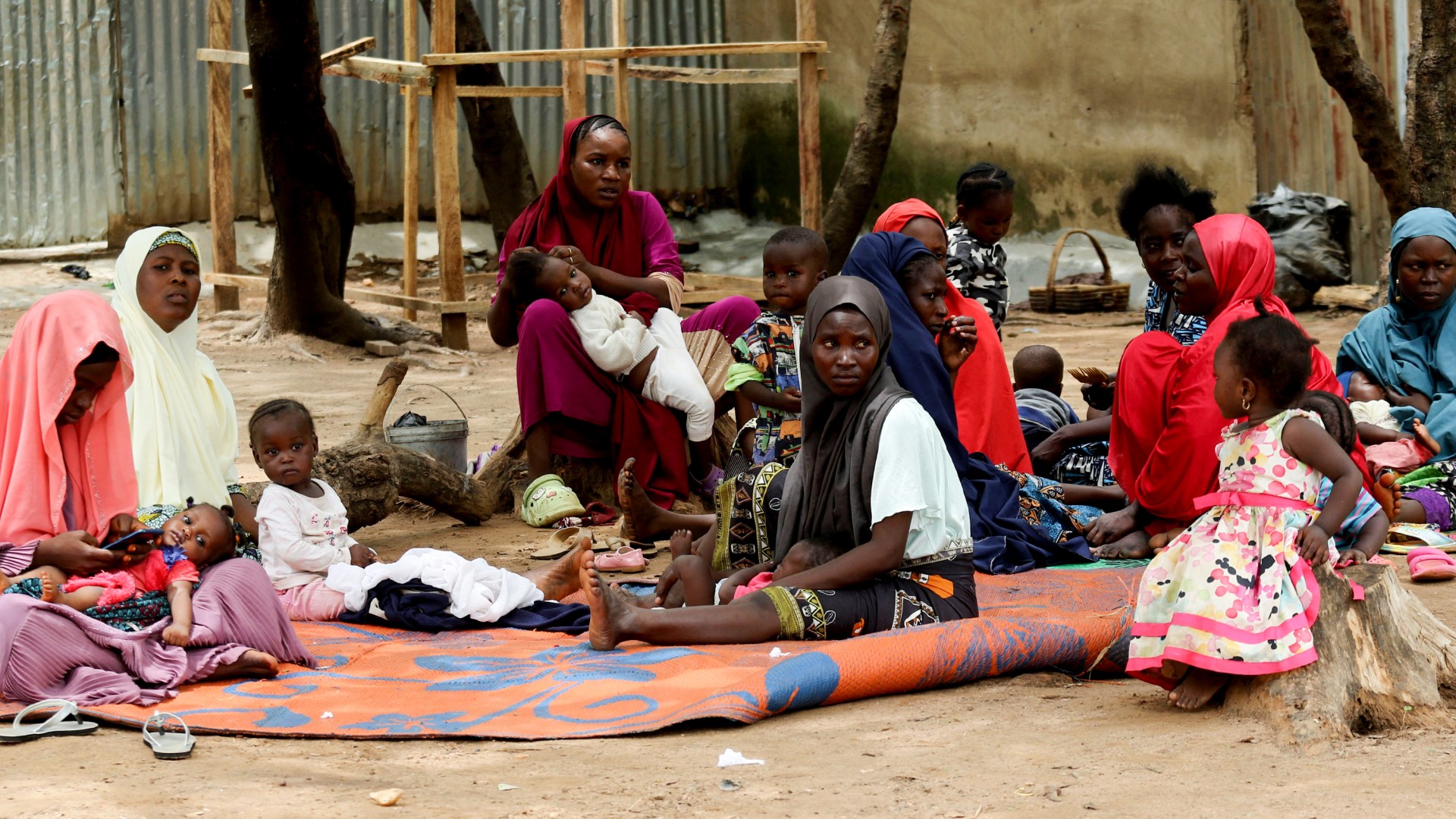
A group of civilians sits on the ground at Durumi Internally Displaced Persons camp in Nigeria.

A group of civilians sits on the ground at Durumi Internally Displaced Persons camp in Nigeria.

Christianity Today May 8, 2025
Anadolu / Getty

Each morning, Jennifer Abraham wakes up before dawn, her breath visible in the chill morning breeze. She picks up her worn wooden broomstick and dustpan to tidy three 15-by-20-foot classrooms, where 500 children ages 6 to 12 will cram in for the day’s lessons. They are in Durumi camp, one of the 18 makeshift shelters set up for Internally Displaced Persons (IDPs) in Abuja, Nigeria. Forty-year-old Abraham stoops as she sweeps plastic bags, crumbs, and dried mud from under old desks and wobbly chairs. “This is how I survive and feed my family,” she said.

In the sprawling Durumi camp, residents face harsh living conditions. Half-roofed, poorly maintained apartments leave the camp’s 2,900 residents exposed to heat and rain—the aftermath of a partial demolition of Durumi in late 2022. The children are thin, their skin pale and fragile from malnutrition. Safe water can come at a cost, and residents scrape by with meager resources.

“There is not enough to go around,” Abraham said.

The lack of toilets forces residents to defecate in the open, putting them at risk for health hazards like cholera and diarrhea. With more than 3.3 million IDPs reported to live in Nigeria, camps like Durumi struggle to meet residents’ basic needs.

Survival in the camps may become even harder for IDPs like Abraham as United Nations aid organizations begin to pull out of Nigeria due to slashed budgets and as US foreign aid cuts create uncertainty among nonprofits. Funding from Nigeria’s National Emergency Management Agency has also dried up.

Under-Secretary-General Tom Fletcher of the UN’s Office for the Coordination of Humanitarian Affairs warned in a letter of “a wave of brutal cuts” driven by a nearly $60 million funding shortfall for 2025. Meanwhile, Nigeria’s government is attempting to make up for a drop in health aid from the United States by approving $200 million in health-related spending. In 2023, the US provided more than $600 million in health aid.

Local foundations in Nigeria, such as Buni Yadi and Betharbel, can’t keep up with growing needs. The continued influx of people fleeing Boko Haram attacks—as well as giving birth within the camps—puts extra pressure on already-stretched resources.

Abraham remembers life before Durumi—when funding shortfalls didn’t threaten survival. She grew up in Nigeria’s northeastern state of Adamawa surrounded by vibrant traditional celebrations and bustling markets. She married Abraham Musa, an Ascot Petroleum Company employee, and built a family with four children—Susan, Margaret, Favour, and Miracle (now 21, 19, 17, and 13, respectively)—in Gwoza, a town in the neighboring state of Borno.

Their lives took a sudden turn when Boko Haram insurgents attacked Gwoza and its surrounding towns in 2014. The insurgents abducted women and children, burned houses, shot and killed hundreds of civilians, and pursued escapees into the bush.

“We left everything behind,” Jennifer Abraham recalled. “Women ran with their babies on their backs. Families were scattered, and some were never united again. For days we hid under trees in the bush, sometimes sneaking into nearby houses to quickly prepare a meal.”

Abraham and her family spent weeks on the run, fleeing hundreds of kilometers away to Durumi. She thought they would rebuild their lives there, but tragedy struck in August 2015 when a group of unidentified men ambushed her husband near the camp. He died in National Hospital Abuja five days later.

“Fleeing Gwoza was painful. But losing my husband was worse. He was my strength in this camp,” she told Christianity Today.

Since then, Abraham has frequently changed jobs—doing everything from trading to cooking to cleaning—to provide for her children and pay for their education. Two of her daughters have graduated from high school and are waiting for college.

“Whenever I feel like giving up, I remember my children,” she said. “My life is more meaningful because of them.” After her husband died, her children became her source of strength. But sometimes even that strength is threatened.

Health care has always been minimal. Nurses and doctors from nonprofits paid periodic visits to the camps with drugs and immunizations for babies. Now their visits have almost disappeared.

In early April, Favour fell ill with malaria, a life-threatening disease common in the camp’s mosquito-infested environment. The hospital turned her away after learning Abraham couldn’t pay the fees.

“I couldn’t afford the drugs this time,” Abraham said. She watched her sick daughter at home, praying for her recovery.

Like many others in the camp, Abraham worries about the loss of resources and how to rise above life in the camp. She doesn’t expect to return home to Gwoza since Boko Haram insurgents continue to attack communities in northern Nigeria. But Abraham said she is determined to leave the camp someday and build a happy home her husband would be proud of.

“I don’t know when,” she said, “but soon, God help me. Soon.”
News

Aid Cuts Could Disrupt Historic Drops in Child and Maternal Mortality

With clinics shutting down and orphanages filling up, Christian health workers worry about worsening health outcomes in Africa.

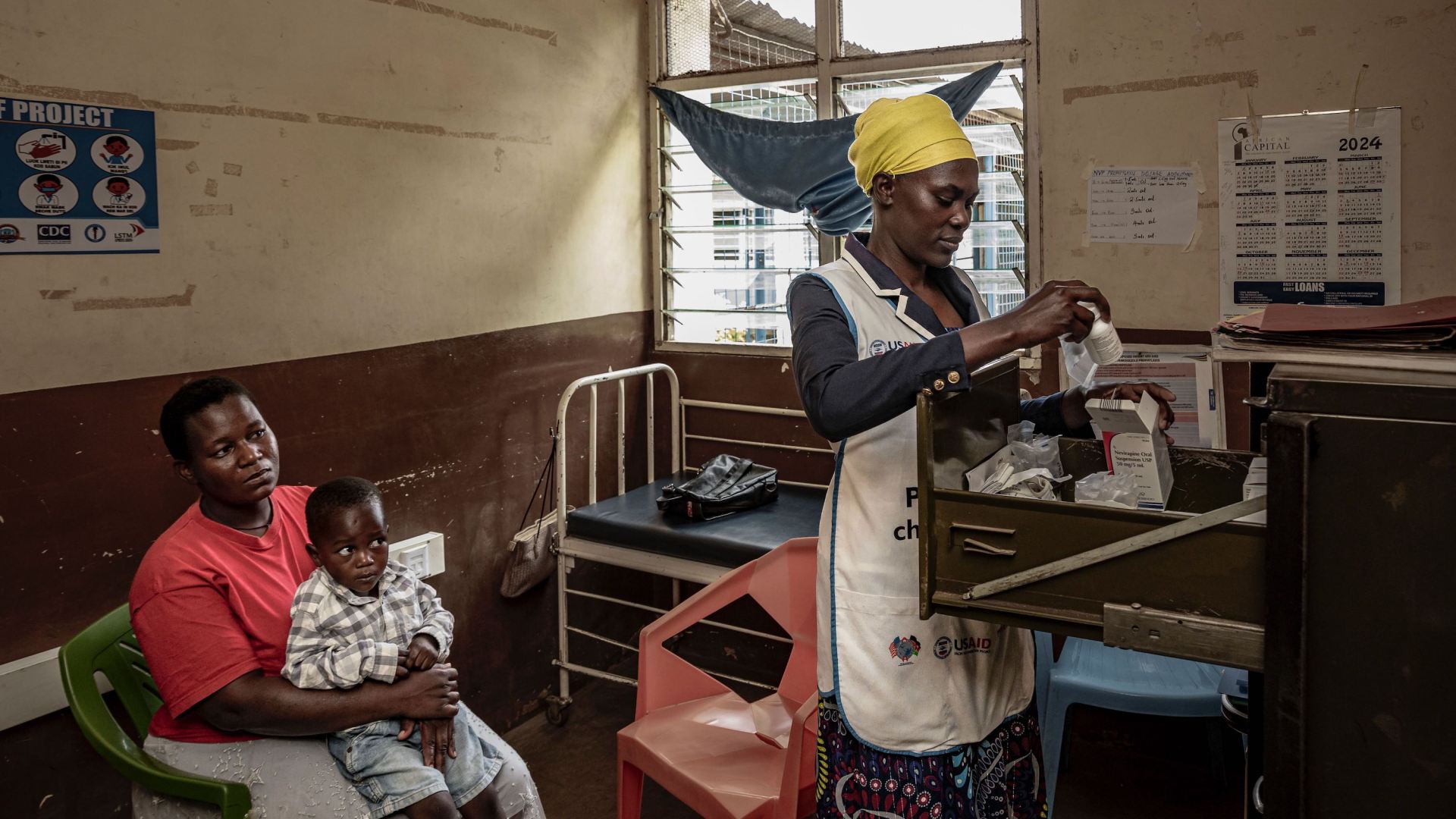
A mother and child await treatment in April at a Kenyan clinic that treats HIV/AIDS. Many such clinics are shuttering after USAID cuts.

A mother and child await treatment in April at a Kenyan clinic that treats HIV/AIDS. Many such clinics are shuttering after USAID cuts.

Christianity Today May 8, 2025
Michel Lunanga / Getty Images

A community health worker in Uganda, after losing his US-funded salary in the foreign aid cuts, continued doing his health-outreach work as a volunteer—and in a rural community he found a very sick child with HIV who had stopped receiving the antiretroviral treatment that keeps him alive and prevents potentially fatal infections from treatable diseases.

The child’s parents had died of HIV, and he had no way to afford transportation to get tested for what could be tuberculosis, according to the Elizabeth Glaser Pediatric AIDS Foundation (EGPAF) which oversees the health worker who found him.

“Just a few months ago, we would have been able to activate, to jump into motion: ‘Here’s this child, what do they need?’” said Catherine Connor, the vice president of public policy at EGPAF, in an interview with CT. EGPAF is a major implementer of the President’s Emergency Plan for AIDS Relief (PEPFAR).

“Instead, we’re stuck, and the tools are no longer there,” said Connor.

Declines in maternal mortality and the mortality of children under five represent some of the biggest health care improvements in the modern era. Globally, fewer children die before their fifth birthday now than any time on record—dropping from 9.9 million deaths in 2000 to 4.8 million in 2023, with the burden of death disproportionately in sub-Saharan Africa.

But nonprofit leaders and Christian health workers now worry the vulnerable populations their organizations worked so hard to protect will suffer worse outcomes as a result of the sudden cutbacks under the Trump administration.

Without the funding their programs had been promised, fewer children under five are getting vaccinated, fewer young patients can access treatment for diseases like HIV/AIDS and malaria, and fewer women are receiving maternal health care, the nonprofit staff reported to CT.

Orphanages in countries with fragile safety nets have started to take in more children, as the children’s biological families can’t provide food and care, according to Christian nonprofits in the field.

In Malawi, one of the poorest countries in the world measured by GDP per capita, both the maternal mortality ratio and the mortality rate for children under five have been cut in half since 2010, according to the World Bank.

“Soon Malawi will start seeing an increased number of under-five mortality rates, an escalation of infections addressed by immunizations, and increased births of children with various medical problems that are prevented through access to vaccines by pregnant women,” said Howard Kasiya, health coordinator for the Evangelical Association of Malawi, one of the country’s largest networks of Christian denominations and organizations.

The association had received US funds to promote HIV testing and prevention through churches. That money’s gone now. In Malawi, 70 percent of rural health care comes through Christian clinics and hospitals, so churches there are deeply integrated in health care for the poor.

Faith-based organizations, local governments, and other nonprofits try to mitigate the cuts, and some donors have stepped up to give.

Shirati Hospital, a Christian hospital in Tanzania, is working to raise $5,000 a month to keep its HIV-positive patients, including children, on medication after the US significantly reduced its HIV funding, according to Dale Ressler, who runs the US-based Friends of Shirati.

In South Sudan, a young nation with a fragile health system and regular food shortages, World Relief centers treat children suffering severe malnutrition. They function as pediatric hospitals, offering 24-7 care from doctors and nurses.

The government contract that funded the salaries for staff at the centers came to an end during the aid freeze this year, so World Relief had to decide which programs it could sustain and which would have to close.

“If you close a stabilization center, you are literally going to be unhooking children from IVs and sending them home,” said Emily Chambers Sharpe, who oversees these health programs at World Relief.

The organization opted to pay staff for now to keep the pediatric units open. Leaders aren’t sure how long World Relief can sustain that cost on its own, and they hope the government will restore some of its funding.

In response to questions about cuts to maternal and child health funding, a State Department spokesperson said in an unsigned statement to CT that the agency is reorienting foreign aid to focus on US national interests.

“This transition is focused on improving accountability and strategic coordination—not eliminating our commitment to vulnerable populations and allies,” the spokesperson stated, listing ongoing support for Uganda’s Ebola outbreak, HIV care and treatment, and emergency assistance in conflict zones.

“Critical, life-saving programs have continued uninterrupted,” the spokesperson said, “as we strengthen how, where, and why we deliver humanitarian aid to ensure it serves those who need it most.”

Aid workers told CT that if the government cuts had not been so sudden, they and local governments would have had time to prepare. The wholesale disruption of systems means a bleeding pregnant woman may no longer have ambulance service to get to a hospital or blood bank. Or a faith-based clinic may remain open to see a sick child but have no way to transport the patient to a facility with the right lab tests.

“Children who experience treatment disruption die much faster than adults,” said Connor, testifying at a recent congressional hearing on PEPFAR.

“I do think we can expect to see increased mortality rates, increased infection, and increased despair if things aren’t corrected,” she said.

The US cut salaries it had financed for many local health workers, which means less outreach and fewer screenings for life-threatening diseases.

“Children don’t bring themselves to the clinics, so you have to find them with their mothers, or you do screening in the community, which is not a priority right now,” Connor told CT in an interview last week. “It’s a recipe for pediatric mortality to go up.”

Faith-based organizations were often the ones focused on orphans and vulnerable children projects under the US Agency for International Development (USAID). Such projects were subject to cuts because they aren’t considered lifesaving. But they are “such a heavy driver of whether these children live or die,” said Connor.

Even though the health cuts have only been in place a few months, some orphanages are already filling up in Malawi, Gabriel Walder, the CEO of the Christian nonprofit Alliance for Children Everywhere (ACE), told CT. ACE works on reunifying children in orphanages with their families through local churches in Zambia, Uganda, and Malawi.

“It’s an ecosystem. … We’re seeing shuttering of services while the scope of the need is increasing,” said Walder.

Even worse, his organization still hasn’t received reimbursement for work it completed last year under its first contract with USAID. It’s smaller than World Relief or World Vision—just a $2.1 million budget—so the organization didn’t have the capacity to bounce back from the missed payments. 

“All the work of ACE continues, but at a much smaller scale,” said Walder.

Many evangelical health organizations also support family planning services (e.g., contraception), which were cut. In Malawi, such cuts will lead to “increased unwanted pregnancies with related increased abortions” and “increased maternal deaths,” said Kasiya.

Courts continue to debate legality of the executive branch cutting congressionally appropriated funds. Aid workers hope some funding could be restored but realize it might not be a priority.

“There are still people in Congress and the State Department … that understand the value of this work,” said Connor from EGPAF. But she’s not sure “how that gets put back in motion after such severe disruption.”

Congressional Republicans raised concerns about 21 abortions that happened in Mozambique under PEPFAR during the Biden administration, in violation of the US law that prohibits foreign aid from funding abortions.

But these cuts to maternal and child health care project a much wider death toll. The disruptions to PEPFAR could cause 1 million children to be infected with HIV by 2030, nearly 500,000 to die, and 2.8 million children to be orphaned, according to a new analysis published in The Lancet medical journal. Some portion of PEPFAR appears likely to be preserved, but Republicans who control Congress now are debating what to keep.

“PEPFAR … cannot and should not be forever,” said HIV/AIDS scientist Mark Dybul, who built PEPFAR under George W. Bush, at a recent congressional hearing on the program’s future. “It is very possible to begin a transition process” to countries taking on their own HIV care.

But he urged a controlled reduction rather than “a rapid retreat that will be a total failure for us on every front.” He added that the elimination of so many USAID positions meant less oversight of remaining aid programs to see that money is spent properly.

“The unfolding reality is that the vulnerability of children is going a lot higher because of the lack of access to services,” said Walder, “because of the shuttering of foreign aid.”

Theology

Love in the Ruins of 2025

Columnist

How Walker Percy’s 1971 end-times novel predicted our current insanity—and how it just might point the way out.

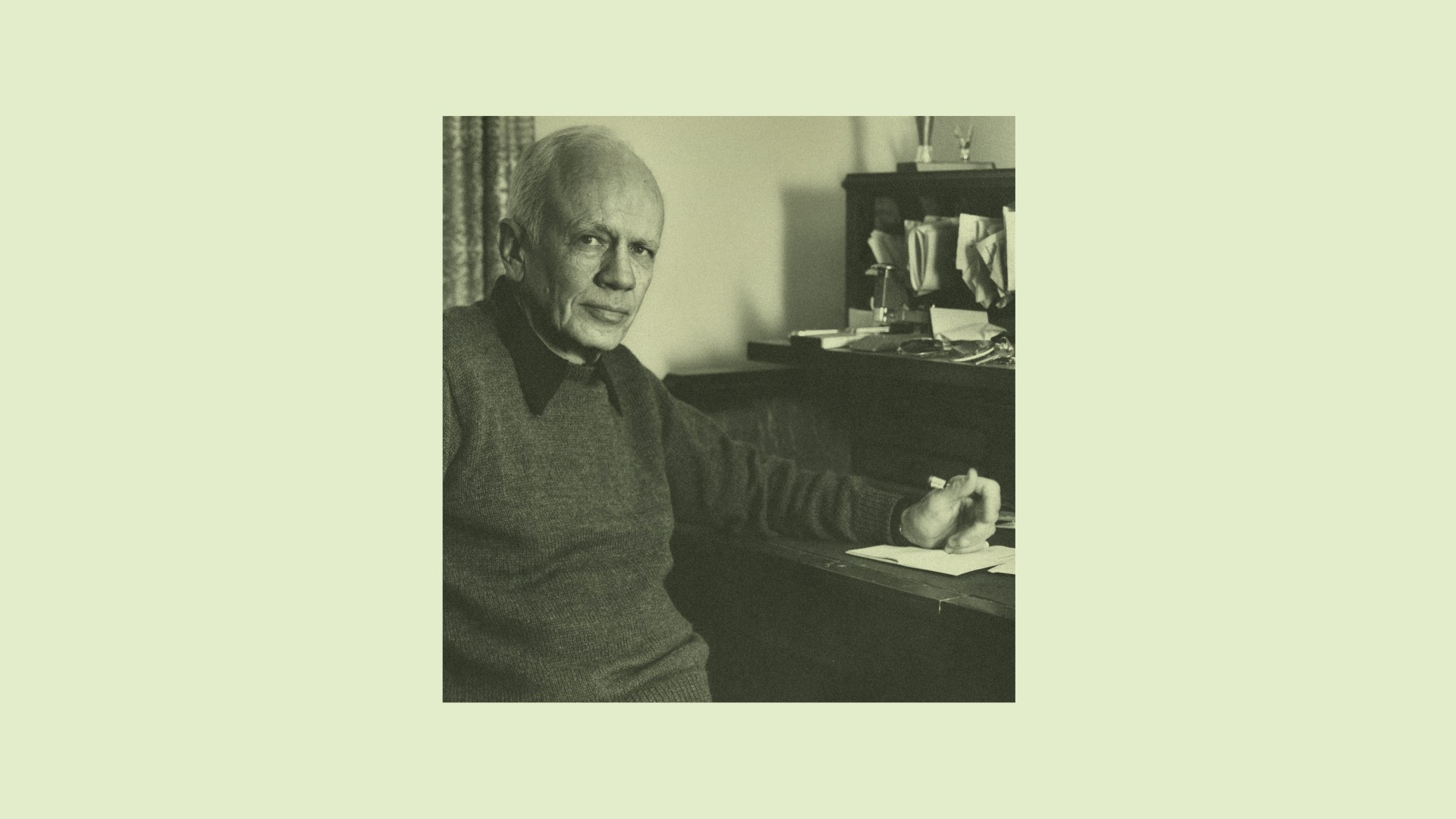
Walker Percy sitting at his desk in his home in Covington, La.

Novelist Walker Percy at his home in Covington, La.

Christianity Today May 7, 2025
Historic New Orleans Collection, 1980.27.23

This piece was adapted from Russell Moore’s newsletter. Subscribe here.

If you’ve ever looked around at the chaos of the current moment and wondered, “Who could have seen this coming?” I have an answer: Walker Percy.

Percy, an American writer, died 35 years ago this week—long before Trump, Twitter, TikTok, or transgender sports debates. But more than half a century ago, he eerily foresaw something like 2025, in which technology, tribalism, and spiritual emptiness converge. If we’re to find our way through the madness, maybe we should listen to what he had to say.

“A serious novel about the destruction of the United States and the end of the world should perform the function of prophecy in reverse,” Percy wrote of his 1971 novel, Love in the Ruins: The Adventures of a Bad Catholic at a Time Near the End of the World. “The novelist writes about the coming end in order to warn about present ills and so avert the end.”

Love in the Ruins is a kind of Narnia, except the children walk through the wardrobe into a post-Christian West with no Aslan in sight. The central threat isn’t nuclear fallout or alien invasion but a nation fractured along the lines we now call red and blue America.

In this “time near the end of the world,” the country is split into a right (self-identified as “Knotheads”), driven by resentment toward minorities and rage at elites, and a left fueled by ideologies of sexual liberation and secularism. Religion becomes politics; politics becomes religion.

The protagonist is Tom More (yes, named after that Thomas More), a psychiatrist, sex-addicted alcoholic, and lapsed Catholic living in a Louisiana suburb after the spiritual and political collapse of America.

More observes that there are left states and right states, left towns and right towns, even left movies and right movies. The center is gone. The younger generation, he says, are would-be totalitarians: “They want either total dogmatic freedom or total dogmatic unfreedom, and the one thing that makes them unhappy is something in between.”

Families are fractured by politics, churches by ideology. More’s Catholic church splinters into three: a booming “American Catholic Church” in Cicero, Illinois, defined by right-wing politics and celebrating “Property Rights Sunday”; a “death-of-God” progressive church, where priests monitor sexual response in scientific labs; and a tiny, irrelevant remnant still loyal to Rome—now politically unintelligible in a world ruled by ideology.

Two characters survey the news:

“There are riots in New Orleans, and riots over here. The students are fighting the National Guard, the Lefts are fighting the Knotheads, the blacks are fighting the whites. The Jews are being persecuted.”

“What are the Christians doing?”

“Nothing.”

The collapse in Love in the Ruins is not just political or cultural—it’s personal. The world is falling apart because people are falling apart. The underlying issue is a civilization that no longer knows what a human being is for. That’s a question politics cannot answer, yet politics has become a surrogate religion for people without a deeper anchor.

Percy’s vision is strikingly familiar: a society beset by mental illness that seems tailored to political tribe.

“Conservatives have begun to fall victim to unseasonable rages, delusions of conspiracies, high blood pressure, and large-bowel complaints,” More observes. “Liberals are more apt to contract sexual impotence, morning terror, and a feeling of abstraction of the self from itself.”

More invents an “ontological lapsometer,” a device meant to diagnose and correct psychological imbalances—massaging rage out of right-wingers’ brains and anxiety out of left-wingers’. It’s treated as a technological fix for what ails us. But More knows better.

The deeper problem is that people now see themselves either as angels—disembodied, limitless, with pure will—or as beasts driven by appetites and enemies. We see it now too. Tech billionaires promise artificial intelligence chatbots to supply friendships we no longer cultivate, authoritarian ideologies rise again, and many political and religious leaders defend or ignore it. The center does not hold.

Percy recognized that religion often seems helpless in such moments. He imagined scientists walking home from the lab on a Sunday morning, passing a church where the door is ajar and a preacher says, “Come, follow me.”

How do the scientists respond? Percy suggested they wouldn’t reject the invitation—because they’re not in the kind of predicament that allows them to even hear it.

“The question is not whether the Good News is no longer relevant,” Percy wrote, “but whether it is possible that man is presently undergoing a tempestuous restructuring of his consciousness which does not presently allow him to take account of the Good News.”
 
So what do we do? The answer is not utopian schemes or dystopian despair. It is, paradoxically, to move deeper into the crisis—until we can feel what’s missing. As Percy put it, the goal is to recover the self “as neither angel nor organism but as a wayfaring creature somewhere in between.”

That requires humility. We can’t fix the world or ourselves. The novel ends not with More’s invention saving the day but with its failure. What was meant to heal only deepens the wound.

And yet More finds a way forward—not through grand solutions but through the small, human steps of humility, connection, and grace. Even recognizing his lack of contrition becomes its own kind of mercy. He stops trying to save the world. He starts to live.

We can begin again only when we are willing to be asked—and to answer—the question “What are you seeking?” In this way, catastrophe becomes the precondition for hope.

Only when we realize we are not “organisms in an environment” to be perfected—or to perfect others—can we begin to feel our cosmic homelessness, which might just point us home. Only when we see that we are in the ruins can we begin to look there for love.

Maybe the world is falling apart. Maybe it always has been. But that doesn’t mean you have to fall apart with it.

Russell Moore is the editor in chief at Christianity Today and leads its Public Theology Project.

News

Inside the Crowded Hospital Full of Congo’s Rape Victims

Dr. Denis Mukwege, a local pastor and surgeon, is a tireless advocate for women and children suffering through war.

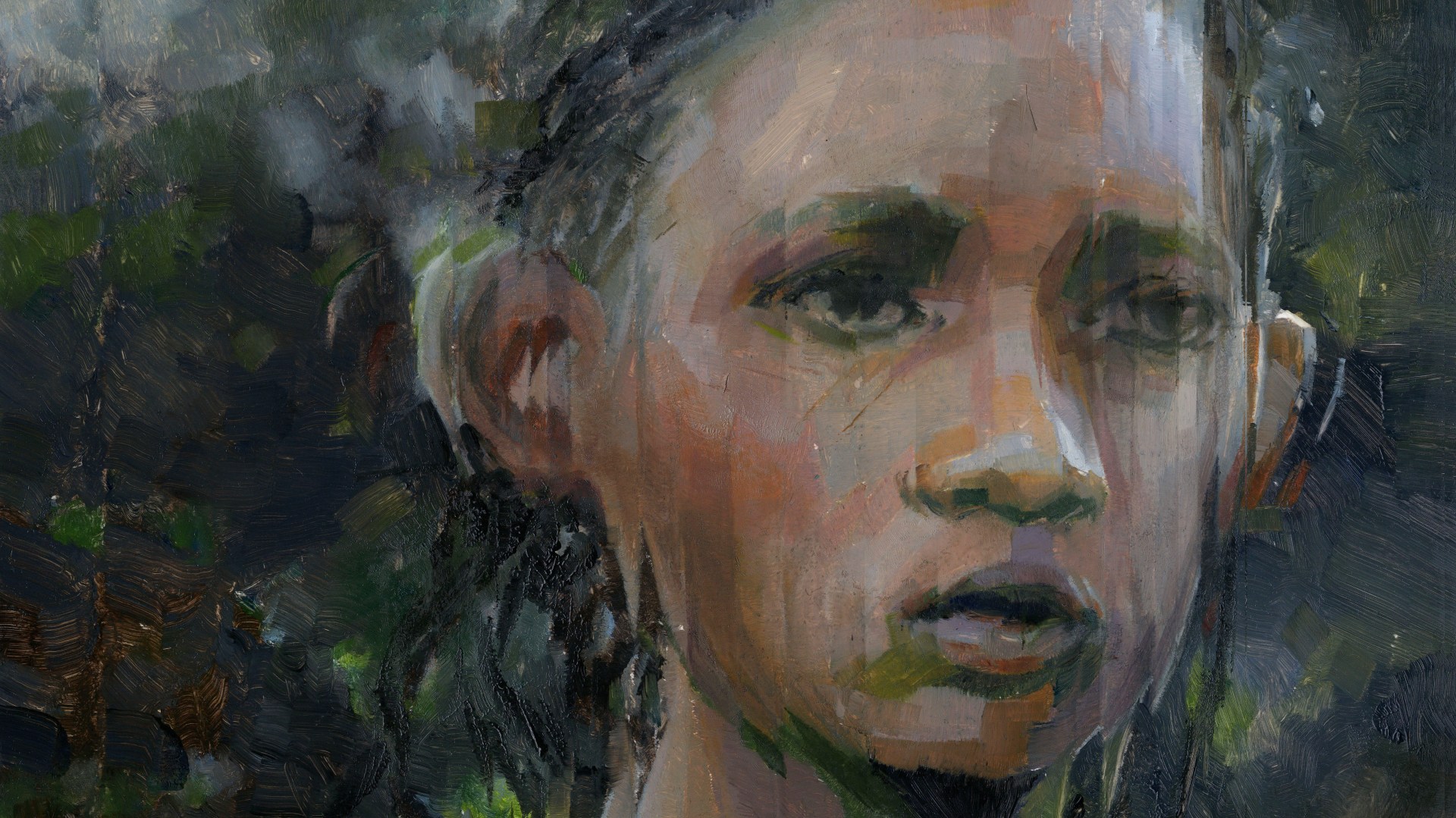
A young girl painted with shaky brushstrokes

Illustration by James Lee Chiahan

Graphic Content Warning: The following article includes discussion of rape and violence.

If you want to meet Dr. Denis Mukwege, you wake up before the sun and ride to the outskirts of Bukavu, dodging sewage gullies and potholes on the dirt road leading to a gated entrance.

Once inside, the first thing you hear at Panzi Hospital in the Democratic Republic of the Congo is a chorus of women, their songs filling the morning air, announcing that chapel has begun. 

From teenagers to the elderly, they line covered walkways around a courtyard edged by tidy flower beds. Some keep time with tin shakers. Others hold sleeping babies or nurse infants. One patient, perhaps 10 or 12 years old, wraps a flowered pagne to hold her newborn to her back. 

“Climb the mountains,” the women sing in Swahili. “Call Jesus, and he will act.”

Mukwege founded Panzi 26 years ago after serving as medical director at a mission hospital that was destroyed by rebels fighting the Congolese army. The ob-gyn built the new hospital to help mothers deliver babies more safely. But his first patient was a woman who had been raped. Many more rape survivors followed. The doctor realized his calling had shifted.

At sunup on this day, with rebel forces again closing in, the women sing of faith and hope. They are among the most recent casualties in what is arguably the deadliest armed conflict since World War II. The violence is centered in Congo’s eastern provinces, near the Rwandan border. Panzi sits on the outskirts of Bukavu, a city of more than 1 million people and the provincial capital of South Kivu. 

After nearly an hour of music, a local pastor shares a message on the “fear nots” from Isaiah 41, weaving between French and Swahili. He concludes, “Don’t be afraid. No one has the last word in your life but God. Walk with God.” 

For more than 30 years, war has ravaged South Kivu’s population. Outside forces, including Rwanda and Uganda, support rebel groups in a pitched battle that’s mostly about monopolizing Congo’s trove of raw minerals essential to technology.

China controls much of the mining and trade, and the United States has pledged millions toward a new export corridor from eastern Africa to the Atlantic Ocean. The AI-fueled thirst for new chip technology runs on cobalt—and the world’s top producer of cobalt is Congo. 

Other conflicts get more headlines, but the war here has strong ties to US and global interests, if measured only in smartphones. Yet many in the developed world know little about this conflict that’s caused more than 5 million deaths and untold atrocities—including widespread sexual violence. Now, Mukwege is on high alert as the region seems poised for another horrific spiral.


On a recent visit to Panzi Hospital, 185 of its 450 patients were receiving treatment for sexual violence. Over the years, Panzi’s doctors and nurses have treated more than 70,000 women for injuries resulting from rape. 

Bonjour, maman,” Mukwege says, smiling and pausing to chat with a mother as she’s helped along the sidewalk.

The doctor won the Nobel Peace Prize in 2018 for his work at the hospital and for bringing global attention to the brutality in Congo. The doctor, who turned 70 this year, is in surgery two days a week and works closely with a team of 50 doctors and more than 100 nurses.

Mukwege was born here in Bukavu, a hilly city hugging the shore of Lake Kivu, just south of the equator. His father was the city’s first Congolese Protestant pastor, and Mukwege is a pastor at his parish church. The third of nine children, he nearly died at birth after a neighbor cut his umbilical cord with a dirty knife. Mukwege has spent his life improving medical care for Congo’s women and children.

He has long worked in the shadow of war. In 1996, Mukwege was the medical director of Lemera Hospital when it came under attack from Congolese rebels and the Rwandan army at the start of the First Congo War. He had left the hospital, 50 miles south of Bukavu, to pick up supplies and returned to discover the rebels had executed three nurses and killed 30 patients in their beds. The soldiers looted the hospital, which had been built by the Swedish Pentecostal mission in the 1950s and run by missionary doctors who’d mentored Mukwege until he took over in 1991. War left the hospital in ruins. 

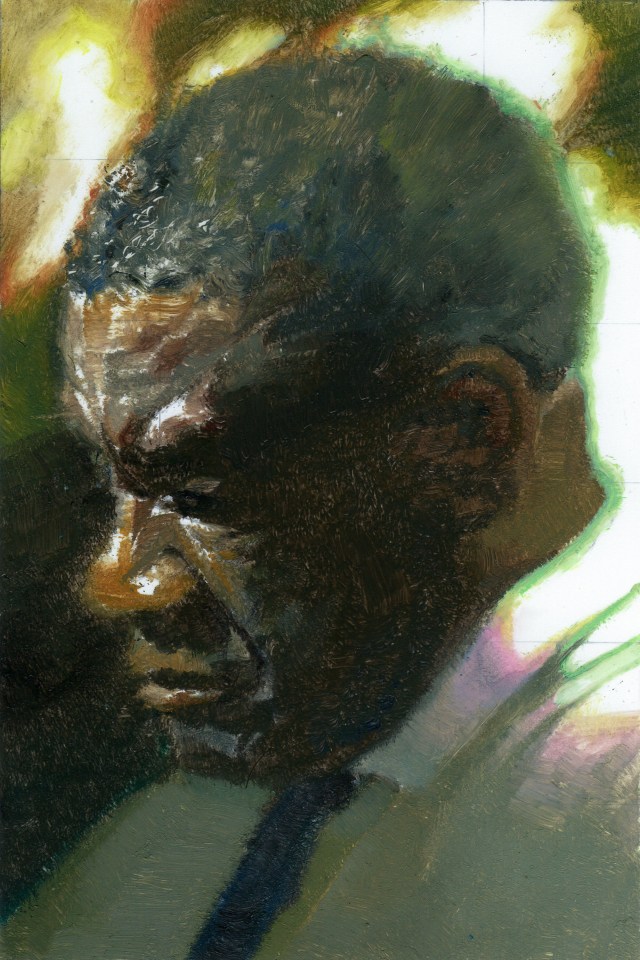
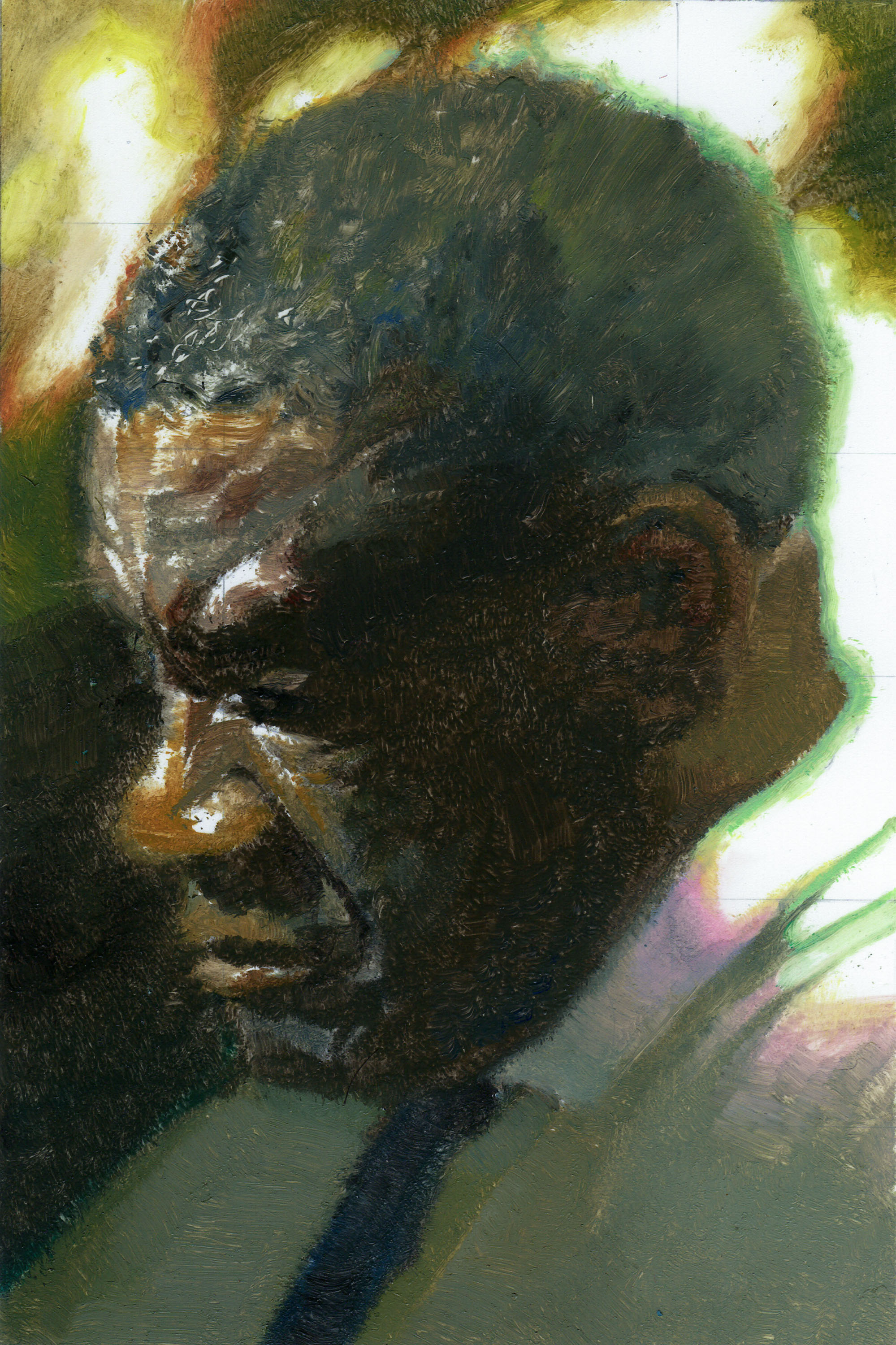
Portrait of Denis MukwegeIllustration by James Lee Chiahan
Denis Mukwege

When he started planning a new hospital to improve maternal care, he secured land in the Panzi neighborhood from his Pentecostal denomination. When the first patient arrived in 1999, she was not a mother in labor but a woman who had been shot and raped by five men. In the first three months of operations, 45 women arrived with injuries from rape. “There was no time to think about, let alone celebrate, the official opening of the hospital,” Mukwege recalled in his 2021 book, The Power of Women: A Doctor’s Journey of Hope and Healing.

Mukwege initially handed off surgeries to a more experienced Finnish doctor. Over time and against Mukwege’s will, he became an expert at caring for survivors of rape. He learned how to surgically repair bladders, genitals, rectums, and other organs damaged not only by male penetration but also by wooden stakes, guns, or other objects. He learned how to treat fistulas—tears between the vagina, bladder, and rectum that won’t heal and lead to crippling pain and leakage, often leaving women ostracized and alone. He learned how to save organs after women were shot in the pelvic area. And he became an expert at identifying the geographical regions where women were attacked just by looking at their wounds. Militias in one area held women to flames, in another area shot them, and in others used bayonets in what appeared to be ritualistic rapes.

Mukwege recalled the horror of those earlier years in his 2018 Nobel lecture. He described an 18-month-old child coming to Panzi Hospital by ambulance after being raped. Mukwege found the nurses sobbing when he arrived. He told the dignitaries assembled in Oslo, “We prayed in silence, ‘My God, tell us what we are seeing isn’t true.’”


The Nobel prize brought the doctor global fame, but his deep local roots make him a beloved figure in Bukavu, where his image appears on buses and billboards. At the hospital, he stands out in a white scrub coat and pants, a head taller than most patients.

The women call him “Papa” and stop to share their troubles with him. On this day, his schedule includes patient consultations, surgery, and meeting with the ambassadors from Germany and Sweden.

Mukwege and Panzi Hospital continue to draw international attention to sexual violence. These horrors spread during prolonged conflicts, and not only in Africa. Rape and sexual torture were prominent features of the October 7, 2023, attacks by Hamas on Israel. Russian soldiers in Ukraine’s Kherson region sexually assaulted women ranging from 19 to 83 years old, according to a UN inquiry. 

Over the past decade, human rights monitors have documented scores of rape cases committed by M23 rebels, who now control most of eastern Congo, as well as by Congolese army soldiers. One UN report stated that rape is “a daily reality from which Congolese women gained no respite.”

Rape as a feature of conquest is an ancient evil. Instances are recorded in the Book of Genesis and are outlawed in the Book of Deuteronomy, with provisions to protect female victims (Deut. 22:22–29). 

Survivors of rape can also experience a sort of living death that plagues them for years after the initial crimes are committed. The physical trauma is often followed by stigma that isolates survivors from husbands, families, and communities. It may make childbirth impossible or impossibly painful. And when soldiers aren’t punished, sexual violence becomes an epidemic. 

The M23 rebels who are committing many of these crimes are part of a Tutsi-led movement backed by Rwanda. They have been advancing this year, battling Congolese forces while leaving thousands dead and more than half a million displaced.

The rebels captured Bukavu in February. In the following weeks, the hospital remained operational, treating injuries and gunshot wounds and delivering 110 babies—a sign of life continuing.

Living under persistent threat isn’t sustainable, Mukwege says. And he isn’t afraid to confront the devastating truth: The powerful entities that plunder the country’s natural resources are to blame for this epidemic of rape. A Belgian surveyor in the late 1800s called this region “a geological scandal” because it’s so rich in prized minerals like cobalt, gold, diamonds, and tin.

Bukavu is 1,000 miles from the capital, Kinshasa, and many of its outlying areas are unreachable by road. That, plus lush geography, allows illicit mineral trades to flourish. Accomplices include neighboring countries and the bottomless global appetite for technology.

Congo’s cobalt and other minerals are essential to powering electric cars, mobile phones, and laptop computers. When sourced directly from Congo, they’re labeled “conflict minerals” subject to disclosure (in the US, tech companies must file with the Securities and Exchange Commission). But most of these minerals are exported via Rwanda to China, the leading consumer of cobalt. The Chinese own mines in Congo outright, and M23 rebels control key areas surrounding the mines.

China—and US-based tech companies relying on Chinese factories—skirts the conflict minerals label by using Rwanda as a transit point for smuggled minerals from Congo. Much of Rwanda’s gold, its largest listed export, also is smuggled from Congo. 

Rwandan forces under now-president Paul Kagame entered Congo after the 1994 Rwandan genocide to rout Hutu génocidaires who sought to escape justice. But Rwanda has stayed for the lucrative trade, with about 4,000 Rwandan troops supporting M23 rebels in the latest offensive.

“Congo is, almost literally, a gold mine for Rwandan businesses,” writes Jason Stearns, senior fellow and founder of the Congo Research Group. “Such profiteering is made possible by the M23, which keeps Congo’s state too weak to stop the theft.” 

War in Congo has become a racket, says Mukwege, “a kind of mafia organization at the international level. Our resources make others rich, while people here can be killed at any time. They can die of starving. We have cities that don’t have water, without law and security. It’s not something done by hazard; it’s done to put people in a situation where they have no choice.”

Mukwege ran for president in 2023 and lost. After making a name for himself advancing what he calls holistic care, he now wants to promote holistic justice. He wants to see rapists and their supporters brought to trial. And he wants to believe the world will take notice.


All these things weigh on Mukwege as he sits down in his office after chapel, flanked by a Bible and a model of the female reproductive organs. “You can feel the responsibility here. It never goes away. If you keep silent, if you don’t talk for them and support them, you become complicit in what is going on. And things are not improving.”

Last year, Mukwege traveled to Silicon Valley to meet with leaders of US tech companies. He says he asked them, “Why do you prefer to get minerals you need from armed groups who are raping and killing people?”

Mukwege’s not interested in boycotting technology. He says it’s about cleaning up supply lines and clearing out foreign-backed militias. He wants those down the supply chain to comprehend the connection between consumerism and what his patients endure.

“We can build bridges, find opportunities for peace, and get minerals and mining clean. Now, it is a dirty business,” he says. “We have to find new leverage to push our politicians.” Mukwege pounds the desk as he talks, frustrated that he sees the problem up close every day and it never becomes less than a horror, while for the rest of the world it’s normalized.

In 2018, he shared the Nobel Peace Prize with Nadia Murad, the Yazidi activist who survived sex slavery at the hands of ISIS captors in Iraq. The award signified new recognition of the problem of sexual violence, he thought.  Instead, “nothing changed, and you have the impression that on the international level, no one cares.” Seven years later, he wonders if the world order has simply grown comfortable with elevating money over humanity. But Mukwege says Christians have a responsibility to care because “this is a thing that destroys families, that destroys churches.”

“I know that God is God, and God is there even if you are going through terrible things. But how can I talk here about the church while women can be raped at any time and not protected?”

Rape survivors at the hospital—who should be focusing on their recovery—face daily fears of violence from M23. As the fighting reached Bukavu earlier this year, the hospital faced “devastating” new violence, it said in a statement, with numbers of sexual violence cases tripling some days. Built as a 125-bed facility, the hospital is often filled far beyond its capacity. Construction is underway on an ambitious project to expand the campus to a regional medical center and teaching hospital.

Alongside caring for rape survivors, Panzi is a referral hospital with general surgery, an emergency wing, HIV treatment clinics, and a busy maternity ward. The hospital delivers about 3,000 healthy babies a year—and achieves a 99 percent live birth rate in a country with one of the worst infant mortality rates in the world.


Panzi is often the only hope for the region’s rape survivors. “Mukwege is the only surgeon within thousands of miles who has the ability to offer treatment,” said Dr. Deborah Rhodes, a leading breast cancer specialist from the US who has trained doctors at Panzi. Too often, she said, “there is nowhere else to go. Patients sometimes walk 5, 10, 15 days to get to the hospital.”

Mukwege has learned that he and his team may not solve the problem of rape, but they can give the survivors hope—and reasons to live.  The staff’s own endurance is tested repeatedly by the prevalence of young patients. In recent months, Mukwege and other doctors treated an eight-year-old rape survivor and one who was just six months old. The infant was raped while her mother was hanging laundry. The mother heard her screams and found her daughter wrapped in bloodied blankets. Doctors at Panzi had to give the baby anesthesia to examine her. Dr. Neema Rukunghu, Panzi’s deputy medical director, was on call that day.

The baby’s parents were “deeply traumatized,” Rukunghu says. Panzi is providing therapy and counseling for them. Doctors worked with police, who identified the perpetrator, a soldier who’d just left the Congolese army. In every case possible, Panzi provides DNA sampling and other evidence. In this case and many others, Rukunghu says, the suspect has disappeared.

Can a child so young recover? “For now, yes, she has healed well,” says Rukunghu, who is herself a mother with young children. “But she is very young, and with this kind of surgery… When she’s a teenager, will she get periods normally? What will we tell her about what happened? And how will that affect her psychologically? These are the things we don’t know. What we do know is that in each case the trauma goes on.”


Some survivors recuperate alongside other patients in the hospital’s general wards, as a way to avoid further stigma. Still, a dedicated wing for those needing special care is usually full, and sometimes women must sleep two to a bed.  Large windows, covered in sheer curtains woven with delicate flowers, suffuse this long room with light. Most of the women in the 40 beds are receiving care or sleeping. A whiteboard by the nurse’s station lists patients. Two are 14 years old and three are 16. One of the girls has a fever; she’s bleeding and anemic. She’s also pregnant.

This teen is one of a growing number of second-generation rape survivors, Rukunghu explains. The girl’s mother waits outside the entrance to the ward. Rukunghu remembers treating her as well, and she speaks with her softly.

About a third of Panzi’s sexual assault survivors are under legal age—18 years old in Congo. Yet girls under 18 make up three-quarters of the pregnancy cases at Panzi that are due to rape. Inside, one of the teen rape survivors rises slowly from her bed to greet Rukunghu, or “Doctor Nene.” She smiles, wearing a dress patterned with bright blue and green flowers.

“She came here with a very large wound, and she was totally traumatized,” Rukunghu says. A month after she had surgery, “It’s amazing now to see her in a dress, to see her laugh.”

Besides surgery and wound care, patients receive post-exposure prophylaxis, which is medication to prevent transmission of HIV and other sexually transmitted infections.

The hospital campus adjoins facilities run by the Panzi Foundation, which provides psychosocial counseling, legal help, skills training and crafts, a school and daycare, and halfway houses for patients who cannot return home.  Long-term patients are assigned a maman chérie—a female volunteer who provides companionship and safe physical touch, an important step toward healing from sexual trauma. Outdoors, these volunteers work with women at picnic tables under a covered patio, weaving baskets and watching movies after lunch. Those in recovery have meals here too. Common areas and communal activities, Rukunghu says, are key to the recovery process.

When Rhodes first learned about the prevalence of sexual violence in Congo and about Panzi’s work, she was employed at Mayo Clinic. She and a team of three surgeons and an operating room nurse from Mayo took vacation time to travel there, bringing new equipment to support surgeons like Rukunghu. “I would not say my work was changed by my time at Panzi,” Rhodes said. “I would say my life was changed. Everyone who went would say that.”

Rhodes worked alongside Mukwege from dawn until as late as midnight, “and what they are able to accomplish with basically no running water, it’s just extraordinary,” she said. “It’s a test of extreme innovation, adaptation, and dedication.” 

Rhodes came away realizing, she said, that Mukwege was certainly one of the great surgeons in the world. But very few surgeons have made the sacrifice he’s made to provide services that would be completely unavailable without him. 

What keeps Mukwege going, he’s quick to say, are his faith and his patients. “I can tell you that the women of Congo are very strong,” he says. “I can’t imagine how they can go through these terrible things and still every morning stand up and say, ‘I want to go on and take care of my family. I want their future even if mine seems over.’”


The workday doesn’t end for Mukwege so much as shift. In late afternoon he changes into a dark business suit, white shirt, and street shoes to attend a worship service at his Pentecostal church across town. He does this most weekdays and is there on Sundays when he is not traveling, aides and visitors like Rhodes confirm. 

On this Wednesday evening, Mukwege spoke to a congregation of about 500 people. He read Scripture and led prayers that included speaking in tongues. He remained on the dais throughout three hours of worship, joined in singing, and introduced a visiting Belgian pastor who gave the sermon that night. Afterward, the doctor greeted friends before returning to the hospital compound in the dark. He was one of several doctors on call for overnight emergencies. 

Mukwege and his wife, Madeleine, moved from their home across the city to live inside Panzi’s gated compound after the doctor escaped an assassination attempt in 2012. Armed men waited for his arrival outside his home while others held two of his daughters inside at gunpoint. They pulled him from the car and appeared ready to shoot him when his longtime bodyguard came from behind the house to stop them. They shot and killed the bodyguard instead, and he collapsed on Mukwege, who says he then passed out. He woke covered in blood, thinking it was his own. The gunmen, perhaps believing they’d killed the doctor, had freed his daughters and taken off.

Mukwege has made other enemies too. Denouncing both Rwandan and Congolese leaders, he’s received multiple death threats. Yet each time these messages or plots become public, his Congolese neighbors turn out in the streets to support him.  

After all these years fighting on behalf of survivors of sexual violence, the doctor has not lost his sense of horror or need for prayer. Even on a casual walk across the hospital campus, he pauses in conversation to eye the gates, wary of rebels and army soldiers closing in. 

Late in the day, his voice cracks and fades as he talks. “When people call or knock on our door to say, ‘We have an emergency,’ and you see it is a baby,” he says, “you don’t have any idea [how it is possible] she can be raped, all her bowels outside. All you can say is, ‘Lord, help me.’ It is unbelievable. Why can this happen?” The next minute, his face softens and his eyes turn bright, because tomorrow is another day. “When I arrive in the mornings and the women are saying, ‘Hello, Papa,’ they want to come with their problems and issues. It’s a blessing for me.”

He implores the global church to pray and to act. And he vows to keep fighting the evil that has overrun his homeland and filled his hospital with patients. “To lose hope? Then I just finish and leave. I’m not ready to do that. I know this country and the people here. … We have people who believe in God, who believe that things can change.” 

Mindy Belz is a freelance writer and the editor of Christianity Today’s 2024 Globe issue.

News

Pentecostal Woman Presides at The Hague

And other news from Christians around the world.

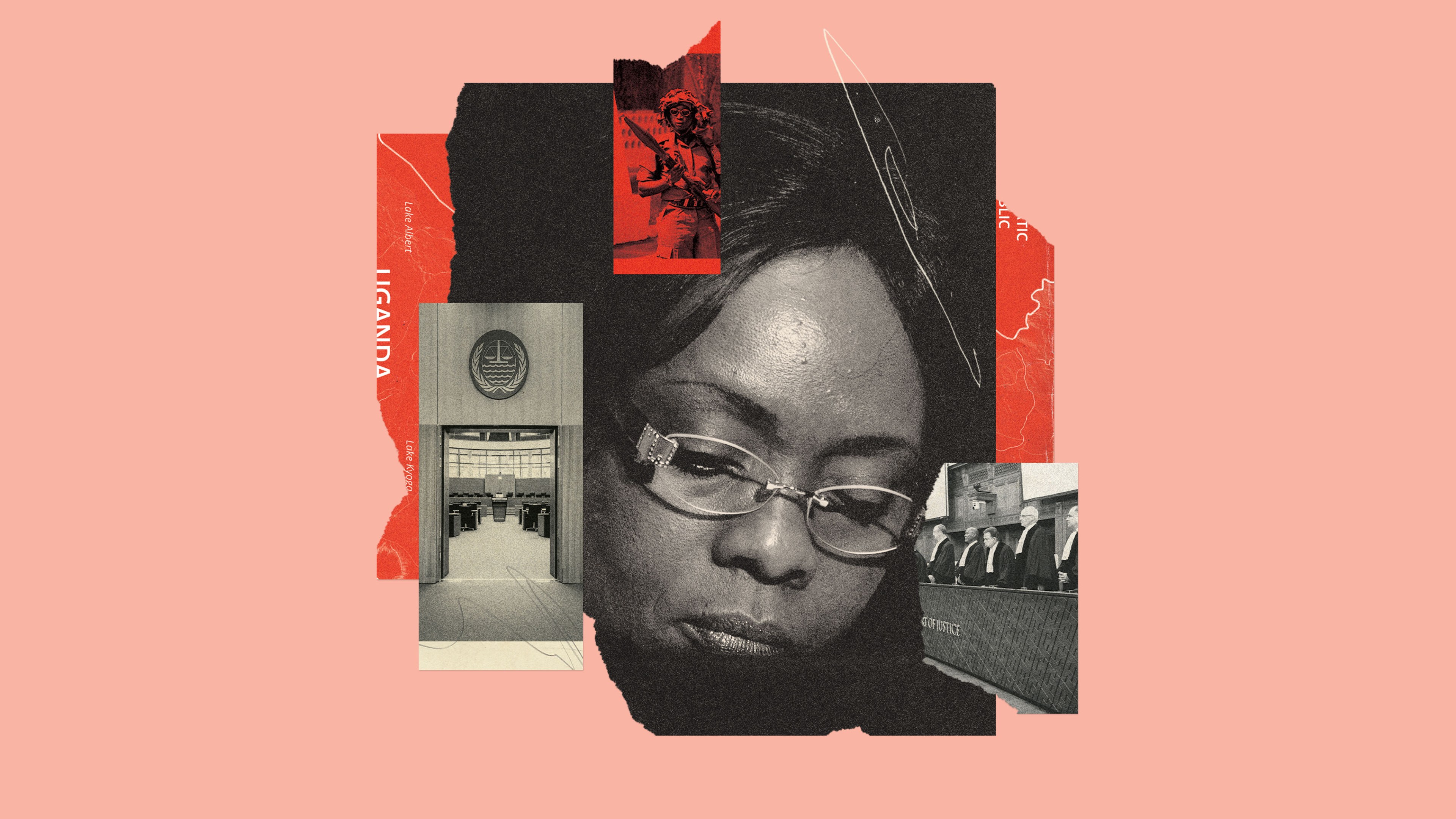
Illustration by Blake Cale

Julia Sebutinde became the first African woman to preside over the United Nations International Court of Justice in The Hague. She previously served on the Supreme Court in Uganda and as a judge on the international tribunal that found Liberian president Charles Taylor guilty of war crimes in Sierra Leone. Sebutinde credits a Pentecostal church founded by a Canadian minister in Uganda with her formation. “I have the chance to practice justice at the world level because of the values I picked up from Watoto Church,” she said in 2014. “The Godly values of integrity, honesty, justice, mercy, empathy, and hard work… account for who I am today and have immensely contributed to my incredible career.” Sebutinde drew criticism last year when she dissented from an opinion accusing Israel of genocide in Gaza. Her interim term of leadership began in January and concluded in March.

British soccer star Marc Guéhi Getty
British soccer star Marc Guéhi got in trouble for adding a Christian message to his rainbow armband.

United Kingdom: Gospel-modified uniform gets reprimand

A British soccer star from the Ivory Coast got in trouble for writing “I ♥ Jesus” on his uniform. Premier League captains were told to wear rainbow armbands as part of a 2024 campaign for LGBTQ inclusion to show that “sport should be a safe place where everyone belongs.” Marc Guéhi, a Christian player for Crystal Palace, added his message in black marker. He was reprimanded by the football association. At the next game, he wrote, “Jesus ♥ You.” No other disciplinary action was taken.

Germany: Evidence of early faith found 

Archaeologists discovered a 1.4-inch silver amulet in Germany underneath the chin of a man who died between AD 230 and 270. Researchers scanned and digitally unrolled the scroll—a process that took six years—and discovered a Latin inscription. It said, “May this means of salvation protect the man who surrenders himself to the will of the Lord Jesus Christ, Son of God, since before Jesus Christ every knee bows.” This is believed to be the oldest archaeological evidence of Christianity north of the Alps. Christianity became established in the region under Constantine in the 300s.

 Italy: Bible reading returns to schools

Education Minister Giuseppe Valditara has announced plans to reintroduce Bible-reading into schools, along with Latin and poetry memorization. Valditara, a member of the populist party Lega, told an Italian newspaper that studying the sacred text is critical to understanding Western history, art, and culture. “We must cultivate the imagination and the ability of children to be amazed, but without losing grammar and the study of the rules,” he said. Critics called the plan “retrograde.” 

Turkey: Assassination case ended

Officials have dropped the investigation of an allegation that intelligence agents recruited a nationalist party youth leader to assassinate three Protestant ministers. Youth leader Tolgahan Aban confessed to the pastor of an Association of Salvation church in 2022 that he planned his assassinations after government agents gave him money for his landscaping business and told him to “kill these people.” Aban said he abandoned the plan after speaking to the father of a nationalist who was convicted for the 2007 murder of three Christian missionaries. The pastor went to police, but the investigation didn’t go anywhere.

Iraq: UN restores church in Mosul

The United Nations has completed the restoration of a historic church, a Catholic convent, and a mosque destroyed by ISIS. The Islamic jihadist group took over Mosul, Iraq’s second largest city, following the US military’s withdrawal in 2011. The church was used for public executions. The UN spent $155 million on the seven-year project, which also provided job training for 1,300 young people. Dozens more churches in the region remain in ruins. 

Pakistan: Seminary head accused of fraud

The head of Pakistan’s oldest seminary has been removed amid allegations of financial fraud. Majid Abel, a Presbyterian minister, reportedly ran building projects without any oversight and did not maintain records of fundraising or payment. Construction was done by companies owned by his brothers and their children, according to an independent investigation commissioned by the Gujranwala Theological Seminary board. One company was paid 9.1 million Pakistani rupees (about $32,000 USD) and another 3.4 million (about $12,000 USD). Abel also got reimbursed without receipts. The seminary was founded in 1877 and serves three Presbyterian denominations.

Russia: Christian singer fined

Singer and songwriter Andrey Buyanov was convicted of 10 separate counts of criticizing Russia’s war against Ukraine. The government said his social media posts, including poems, antiwar songs, and comments on the bravery of people attending democratic activist Alexei Navalny’s funeral, were “extremist.” Buyanov was fined more than 300,000 rubles (about $3,500 USD), the largest fine to date for a critic of the war. 

South Korea: Government asks for missionary’s release

South Korea has officially demanded the release of a missionary given a life sentence of “reform through labour” in North Korea. Choi Chun-gil is believed to be one of three missionaries and more than 50,000 Christ-ians held in North Korean labor camps. Thousands of people from the camps were sent to work in Russia to support the war with Ukraine last year, according to South Korean intelligence. Choi was arrested 10 years ago and forced to confess to espionage, sabotage, and conspiracy to undermine the government, which is a dictatorship. He has had no outside contact since his arrest.

Chile: Pro-life politicians organize

Chilean politicians launched the country’s first pro-life caucus in response to a proposed bill that would loosen restrictions on abortion. Abortion was legalized in 2017, but only in cases of rape, nonviable pregnancies, and to protect the life of the mother. The new bill would allow abortion for any reason in the first 14 weeks. Stephan Schubert, a member of the populist Republican Party, organized politicians from a number of parties. “Life is a fundamental right,” he said. “A truly just society must offer different alternatives to… women who are going through very complex situations.”

United States: Deacon’s 1985 murder solved

The Georgia Bureau of Investigation arrested a man and charged him with the 40-year-old murder of a Black Baptist deacon and his wife. Harold and Thelma Swain, both in their 60s, were killed at Rising Daughter Baptist Church after a midweek Bible study in 1985. The Atlanta Journal-Constitution launched an investigation after a man convicted of the crime in 2003 was exonerated by DNA evidence in 2020. The newspaper found that another suspect, Erik Sparre, had given police an alibi that did not hold up and then told multiple people he had gotten away with the double murder. One ex-wife secretly recorded a confession. Sparre was allegedly motivated by racism.

Christian music stations sold

Salem Media Group has gotten out of the business of contemporary Christian music (CCM). The largest Christian radio company in the US sold its last “Fish” music stations and CCM Magazine. Salem has faced sharp financial challenges in recent years, seeing stock prices fall to about 20 cents per share. The company will recommit itself to Christian and conservative talk formats. The rise of streaming transformed the music industry, but Christian radio has continued to be popular. K-Love and Air1, both owned by Educational Media Foundation, broadcast on 1,000 signals across the US.

Genesis curse wording revised

Editors of the popular English Standard Version (ESV) of the Bible adjusted the wording of Genesis 3:16 in a 2025 update to the text. When the ESV was published in 2001, the text said, “Your desire shall be for your husband, and he shall rule over you.” This was changed in 2016 to read, “Your desire shall be contrary to your husband, but he shall rule over you.” The wording has now been changed back, bringing it into line with other major translations.

Church Life

Right-Size Your Fear

President & CEO

A note from CT’s president in our May/June issue.

An illustration featuring a composite of three images: the sun shining in the sky, the flickering flames of a fire, and the silhouette of three men
Source Images: Viswaprem Anbarasapandian / Unsplash / Adonyi foto / Aj Collins Artistry / Pexels / Edits by CT

We live in an age of anxiety. Family pocketbooks and calendars are stretched to the breaking point. We worry for our children, then worry our children worry too much. We fear for the integrity of the church, for the political fabric of our society; we fear wars and pestilence, climate change and social change—and then we add anxiety atop anxiety, worrying about things over which we have little or no control. 

The media landscape makes matters worse. Blazing headlines about crises scroll across our computer screens and mobile phones. Loudness is lucrative. Panic is profitable. Viciousness goes viral. We find ourselves in a public square filled with caricature artists and conflict entrepreneurs, fear peddlers and scorn merchants who flood the marketplace with counterfeits that make them rich and bankrupt the culture. 

There are genuine causes for anxiety. But Scripture provides perspective. 

For as long as I can remember, my favorite part of the biblical story of the fiery furnace has been what Shadrach, Meshach, and Abednego said before they were thrown into the flames. Hauled in front of Nebuchadnezzar for their refusal to worship him and his gods, they proclaimed, “The God we serve is able to deliver us from [the furnace], and he will deliver us from Your Majesty’s hand.” Then comes the best part: “But even if he does not, we want you to know, Your Majesty, that we will not serve your gods or worship the image of gold you have set up” (Dan. 3:17–18). 

Presumably, the three Hebrew men were afraid. They were not superheroes in capes. The Scriptures present flesh-and-blood human beings with all their flaws and frailty. While their fear was natural, they kept their fears rightly ordered. Their faith overpowered their fear. 

They trusted in the power of God. While they knew God was able to deliver them, actual deliverance was dependent on God’s will. They did not pretend to know the mind of God or precisely what the future would be. This led to their famous words: “But even if he does not” save their bodies, they will remain faithful to him. 

The Book of Hebrews speaks similarly about the faith of Abraham. The call to sacrifice Isaac made little sense, as Isaac was key to God’s covenant promise. Abraham did not know what God would do. Would God rescue Isaac before the sacrifice or after? “Abraham reasoned that God could even raise the dead,” the author says, “and so in a manner of speaking he did receive Isaac back from death” (11:19). Even when he did not understand God’s will, Abraham rested in God’s power and character. Or as Paul says of Abraham in Romans 4:18, “Against all hope, Abraham in hope believed.” Faith does not obliterate fear but can overcome it, giving hope even in the darkest of circumstances. 

That brings us to today. Will the church preserve its integrity and its mission? Will the gospel spread and the kingdom prevail? Will the foundations of our societies founder? Will new technologies save the world or destroy it? Will nations invade nations, asteroids strike the planet, and the climate come unmoored? Will our children endure and flourish, break under the pressures of the modern age, or inherit a world already broken? 

The path before us is uncertain. We trust God delivers his people but do not know whether that deliverance will come in this world or the next. We resolve that whatever happens, even if God does not deliver us in this life, we will remain faithful and true to our convictions. Against all hope, in hope we believe. We trust. We endure. 

Of course, we know the end of the narrative for Shadrach, Meshach, and Abednego. God made himself present in the blazing furnace and delivered them from destruction. Their faithfulness, and God’s deliverance, changed the heart of the king and the story of God’s people in exile. 

Christianity Today is more than a magazine. It’s a community of people in exile who are striving to be faithful even in the face of the fiery furnace. May we be the presence of God to one another. May we remind one another how God delivers his people. And may we encourage one another to hold fast. Whatever it costs us, even if God does not spare us hardship, we will remain faithful to Jesus Christ. 

As we proceed through our One Kingdom Campaign, we invite you to stand with us. In Babylon long ago, where one may have faltered, three stood together, and a fourth appeared among them who shone “like a son of the gods” (Dan. 3:25). There is power in fellowship. When we gather in his name, our Savior is among us. With him, let’s press on and seek the kingdom together.

This article appeared in print in the May/June issue on p. 4 as “Panic is Profitable.”

Timothy Dalrymple is President and CEO of Christianity Today.

Theology

Hear Our Prayer Amid Violence

We ask God to bring justice in Congo and around the world.

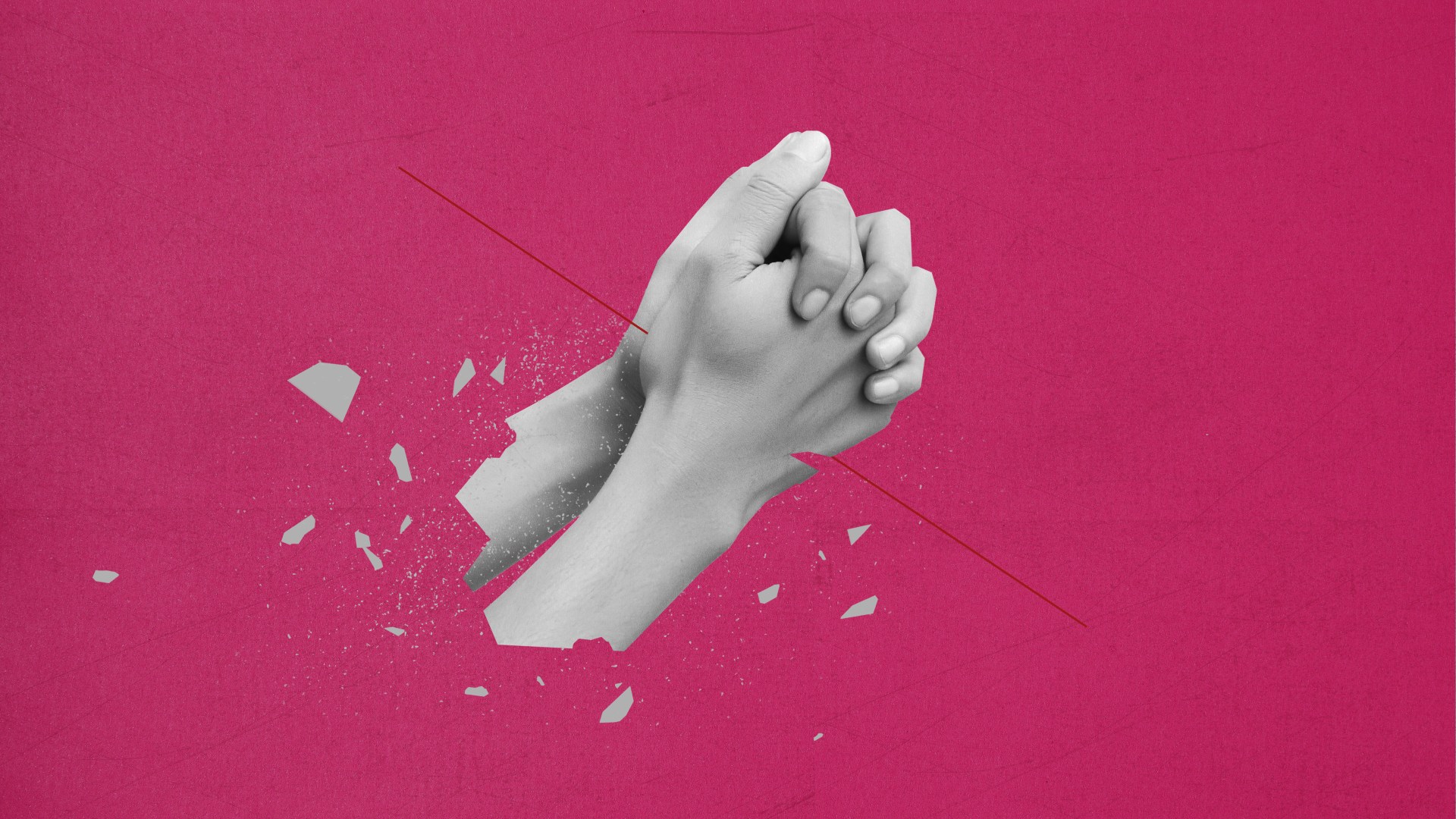
prayer hands
Illustration by Rick Szuecs / Source Images: Envato


This article appeared as a response to Mindy Belz’s article “Inside the Crowded Hospital Full of Congo’s Rape Victims” and petitions God for justice regarding rape victims in the Democratic Republic of the Congo.

Loving and righteous God,
we cry out to you.
Have mercy upon your children.

You say, “Do not fear, for I am with you; 
Do not be dismayed, for I am your God. 
I will strengthen you and help you; 
I will uphold you with my righteous right hand.” 
May those who suffer at the hands of evil be
strengthened, helped, and upheld by you. 

We pray for survivors of abuse, the “walking wounded,”
in the aftermath of the unthinkable. 
Make clear the way for healing of mind, body, and soul. 
Just as you raised Lazarus from the dead, resurrect the “living dead”
in the Democratic Republic of the Congo and, by the power
of the Holy Spirit, create in them new life. 

Bless your servant Denis Mukwege and others
working at Panzi Hospital.
We give you thanks for their faithful service
and loving-kindness.
Grant them a peace that surpasses all understanding.
In the moments of “My God, tell us what we are seeing
isn’t true,” when all hope seems lost,
strengthen them and draw them near to you. 
Turn the eyes of the world to the atrocities
in the DRC. 

May we never grow comfortable hearing stories of evil
and suffering, for it is in the faces of those suffering that we see
your face. Grant us wisdom in how to respond, O God. 
Liberator God, by your mighty power, execute justice for the
oppressed throughout the world, and may we live in the
knowledge that darkness and evil will not prevail;
it is you who will have the last word. 
Come soon, Lord Jesus. Amen.


Kimberly Deckel is a priest in the Anglican Church of North America. She lives in Pflugerville, Texas, with her family and serves at Church of the Cross Austin.

Books
Review

Has Faith Gone Out of Fashion?

A symposium on Christian Smith’s book Why Religion Went Obsolete.

Rocks and buildings crumbling
Illustration by Micha Huigen

In this series

On its face, the term obsolete can sound like an insult. We apply it to technologies, ideas, and institutions that fall out of fashion, often with a mocking air (“Okay, boomer”) or a snarl of disgust (“Good riddance”).

Christian Smith means nothing pejorative with the title of his latest book, Why Religion Went Obsolete: The Demise of Traditional Faith in America. Popular ridicule of religious belief (and believers) certainly factors into the story he tells. But Smith, a distinguished sociologist best known for studying spirituality among teenagers and young adults, has more in mind than atheist attacks and secular sneers.

Why Religion Went Obsolete looks for explanations beneath recent portraits of religious decline. Why have rates of belief and affiliation plummeted among younger Americans? Smith’s answer lies in the development, over decades, of a “Millennial zeitgeist,” his term for the fierce cultural winds whipped up by a perfect storm of social, technological, economic, and political disruptions, all compounded by the failures and misdeeds of religious leaders and organizations. Even if those winds are weakening, Smith suggests, they’ve succeeded in conditioning younger generations to view religion the way digital natives might view a landline phone.

As Smith stresses, obsolete isn’t a synonym for theologically untrue or morally harmful. “Something becomes obsolete,” he observes more prosaically, “when most people feel it is no longer useful or needed because something else has superseded it in function, efficiency, value, or interest.” People don’t relinquish older phones in a rush of hatred or condemnation. They do so because peer groups, product lines, and communications networks nudge them toward the newer model. They flow with the cultural tide.

Smith sees similar patterns playing out among millennials and Gen Zers who reject religion. Yes, some leave in anger. Plenty can cite intellectual and moral objections. But most, perhaps, simply gravitate toward worldviews, lifestyles, and communities that better align with their cultural assumptions.

Because the book reaches into so many subjects and scholarly fields, CT invited three reviewers to assess it from different angles: a political scientist (to weigh its social science claims), a theologian (to reflect on the underlying cultural currents), and a youth ministry expert (to consider the church’s next moves). This symposium, as we’re calling it, closes with Smith’s own response to the reviews. We hope the entire package inspires fresh thoughts, fruitful debates, and fervent prayers for all who brave cultural headwinds to make disciples.

Matt Reynolds, CT senior books editor

Caleb Cambell
Testimony

The Gospel Comes for a Neo-Nazi

A couple’s weekly dinner invitations helped transform me from an embittered skinhead to a senior pastor.

Photography by Jesse Rieser for Christianity Today

One night in high school, I showed up to a house party with some classmates. In the chaos of people mingling and dancing, I spotted a group of tough-looking guys in the corner.

Many of them had their heads shaved. They wore Doc Marten boots and red or white suspenders. It was a local neo-Nazi skinhead crew.

At that time, I was an angsty teenager who didn’t have many friends. I knew the men in the corner were powerful, and they called each other brothers. What’s more, they saw me standing nearby and invited me over, saying, “Hey, bro, come here. Have a beer.” I felt a thrill at being seen and chosen and eagerly took up their offer.

Over the following weeks, they invited me to gatherings, informal hangouts, and rallies around my hometown of Phoenix. Eventually, I shaved my head and donned the uniform of laces, braces, and boots, and the skinheads became my new family.

Mostly we’d party, get drunk, and listen to heavy metal. The majority of the 30 or so members had day jobs—except for the guy with a swastika tattooed on one eye who was always wondering why no one would hire him.

Sometimes we would join or initiate street fights, fiercely defending our own. If we saw a white man walking around with a Black woman, we’d scream expletives and call him a race traitor. At our gatherings, we chanted white supremacist propaganda with references to “Heil Hitler,” proclaiming that white people were superior to all others and that nonwhites should “go back to where they came from.”

When we arrived at parties, we were respected, even feared. I sat in the corner with my group and knew that no one was going to mess with me.

In exchange for this sense of security, I joined a movement that (I know now) made itself a vile threat to others. What started as an antidote to my own insecurities led me to dehumanize others and engage in violence toward people of color and their communities.

But my desire to join this crew did not start by reading Mein Kampf. What drew me was the things the group offered: a sense of strength and inclusion in something greater than myself. The belonging, no matter how flawed, came first. Ideology followed.

Years later, a different invitation to belong led me to Jesus.


I was raised by loving Christian parents. Because of the church I attended as a kid, much of what I perceived to be Christianity was a message of “Don’t do these things or God will punish you.” This list of don’ts included dancing, smoking, drinking alcohol, and watching R-rated movies.

But as I entered junior high in the early ’90s, I noticed that many churchgoers hypocritically did the things on the list of vices. I began to suspect that Christianity was all a scam.

When I visited the house of a pastor and spotted a VHS copy of The Terminator—a forbidden R-rated film—I decided, in my adolescent mind, that this was all the proof I needed to show that Christianity was a hoax. I gave up right then on God and his church.

During my time as a neo-Nazi, however, the same feeling of disillusionment crept in. As I surveyed my skinhead peers, I saw they had no real joy, financial stability, or actual strength.

Instead, they were running from the law, ruining their careers, and destroying their families. The way they lived their lives did not match the promises of their ideology. After a few years in the movement, I grew suspicious that their pledges of safety, belonging, and purpose—which I had embraced—were in fact hollow.

In 2000, federal law officers started rounding up skinheads in the Phoenix area for selling ecstasy, throwing our group into disarray. Many members scattered and left the group. Between that and my growing dissatisfaction, I knew it was time for me to leave too. I stopped attending gatherings, got a new phone, and moved to a different part of town.

A plantPhotography by Jesse Rieser for Christianity Today

I was in my early 20s, alone and aching for something real. Not knowing how to process all of this, I buried my insecurities with a combative stance toward anyone and anything that might threaten me. I had left neo-Nazism behind, but my anger remained and became my armor.

I had a good job and spent much of my time outside of work playing the drums, which I’d picked up in high school. While I still had a sense that God existed, I was resistant to religion in general and Christianity in particular. I didn’t want anything to do with what I perceived to be a hypocritical, self-righteous movement.

At the same time, I knew I couldn’t keep going about my life in isolation. Through that tiny crack in my armor, God began to pursue me—through a phone call from some place called Desert Springs Bible Church.


The lady on the phone had seen my number in the musician section of the local classifieds. She asked if I could fill in as a drummer for the worship team the upcoming Sunday. I thought, Why not? I guess I should do something good.

I expected it to feel unbearably awkward to step back inside a church after all those years, but I was surprised at how the worship team welcomed me without judgment or pretense and how natural it felt to be there. One Sunday became two, then three, and soon I was a part of the regular rotation.

After a time, one of the guys, Seth, invited me over for dinner at his house. I accepted, half expecting him to back out. But when I showed up, he and his wife, Jayme, served me a meal and even had a cold beer ready. That was not what I was expecting. We spent the evening talking and laughing.

They invited me back the next week and the week after that, until these dinners became a weekly ritual. There was no agenda, no pressure—just warm hospitality.

One evening, Seth said, “How about after dinner we talk about what makes you angry about Christianity?”

Oh, I was all in on this. I had a lot of rage and was ready to share it.

He patiently listened as I vented all my frustrations—the hypocrisy of Christians, the failures of pastors, and the shallow faith I’d seen in others. To my surprise, he wasn’t defensive. He nodded and said, “I share some of your concerns. I think Jesus does too.”

Sometimes he’d pull out his Bible and ask me to read a section of the Gospels, asking, “What do you think Jesus would say about this?”

I didn’t know it at the time, but he was discipling me—connecting me to the living Jesus. Gradually, I found that my heart had softened to the message of the gospel.

My anger and resentment lingered, but they began to fade in the light of something new dawning in my life. I found myself liking this Jesus, and I wanted to know more. And the more I knew him, the more I wanted to follow him and be a part of what he was doing in the world.

That was more than 20 years ago. Much to my surprise, four years after that first dinner with Seth, I was asked to join the church staff. I went to seminary, became ordained, and now serve as the lead pastor of the church that welcomed me when I was lost.

I, who was once a skinhead, now lead a congregation committed to the biblical vision of a church made up of people from all races and walks of life. Importantly, at the Spirit’s leading, I have wrestled with the bigotry in my own heart, confessing and repenting both publicly and privately of the ways I took part in racist acts.

God in his mercy has also given me deep friendships with men and women of color, who have extended forgiveness to me, mentored me, and convicted me of sin that I could not (or would not) see without their perspectives.

This transformation—slow but real—began unexpectedly at a table. Seth and Jayme embraced me and modeled Jesus’ love week after week. They honored me by treating me as a friend and showing me how safe it could be to reconsider long-held beliefs and explore who Jesus really was. At their table, I put down my armor and began to take up my cross.

Jesus set exponentially more tables than he flipped. At the tables set by his people, even the broken neo-Nazi can experience God’s grace. And I am grateful to God that I did.

Caleb Campbell is pastor of Desert Springs Bible Church in Phoenix and the author of Disarming Leviathan: Loving Your Christian Nationalist Neighbor.

Theology

The Problem of Panic

Columnist

Where Peter once stood in the place of Pan, we can hear the voice that changes everything.

Pan following a woman on her phone
Illustration by James Walton

Over 40 years ago, filmmaker Steven Spielberg terrified theatergoers with a movie that quickly embedded itself in the American cultural imagination. Like most scary stories, Poltergeist first lulled the audience with the familiar—a suburban home in a newly built housing development. It then disrupted that familiarity by injecting ghosts who are not content to occasionally moan or rattle a chain but create havoc and terror.

The malevolent spirits in Poltergeist upend the entire household and drive the family to the point of insanity. In the end, it’s revealed that the placid neighborhood is built on top of desecrated graves. The poltergeists’ goal is to cause panic, to overload the inhabitants’ limbic systems in order to revert the house to a place of deadness.

As I listened recently to a young Christian describe the way he saw the world around him, I wondered whether the Poltergeist story was a generation too soon, and whether that haunted house could be a metaphor for our present moment.

Discussing the statistics around the mental health crises among his age cohort, this man said that he was less concerned about the medical situations of anxiety and depression among people he knew—because those could be treated—than about the fact that the “whole world seems to be going through a panic attack.” He stopped himself and wondered if panic was the right word.

“It’s like everything is in a crazy cycle,” he continued. “We seem to be bouncing back and forth between panic and boredom.” He stopped again, pondering whether cycle was the right word. “I mean, it makes no sense,” he said. “Everything seems out of control and scary—and boring and dead—at the same time.”

This young man is hardly alone in sensing a kind of bored panic and panicked boredom in the world today. But he is wrong in thinking of boredom and panic as two contradictory realities. In fact, they’re closely related.

In his book Superbloom: How Technologies of Connection Tear Us Apart, Nicholas Carr cites studies demonstrating that the neural pathways of the brain crave dopamine so much that it is “the most insatiable of all drives, outstripping even lust.” A rodent in front of a lever wired to send a pulse through that part of its brain will press that lever to the point of exhaustion and collapse.

Social media algorithms, Carr argues, remove the kind of “friction” that humanity has relied upon to keep this “seeking instinct” in check. The algorithms are programmed to learn what a person is looking for and deliver more and more of it, seemingly world without end, regardless of whether the sensations sought are arousal, fear, disgust, loathing, anger, or plain distraction.

“The real world can’t compete,” Carr writes. “Compared with the programmed delights of the virtual, it feels dull, slow, and, poignantly enough, lifeless.” Thus, the end result of a limbic system that’s always “on” is boredom.

Cistercian monk Thomas Merton scouted out this cultural trend in 1948 when he wrote:

We live in a society whose whole policy is to excite every nerve in the human body and keep it at the highest pitch of artificial tension, to strain every human desire to the limit and to create as many new desires and synthetic passions as possible, in order to cater to them with the products of our factories and printing presses and movie studios and all the rest.

The end result of this artificial tension is the same as what comes after any kind of prolonged panic: paralysis and apathy. The boredom then seeks some semblance of life by stimulating the libido to the point of frenzy, which leads to more boredom, and the process starts again.

A person sitting next to pan looking boredIllustration by James Walton

Panic is exactly the right word to describe our times. And like most words, panic is a kind of fossil record, embedded with meanings that most of us never investigate but that have shaped our use and understanding of the term. The word is haunted by a poltergeist of significance, and to get at it, we must ask whose grave is beneath our feet.


The word panic comes from the ancient Greek god Pan, the deity of shepherds, herds, and wild places. He was known for his libido, seeking to sexually violate nymphs and to inflame the erotic passions of those in contact with him. He represented wild power, the sort of violence that we see in the scarier aspects of nature. He could also soothe and hypnotize by playing his pipes, freezing listeners in place in ecstasy. And maybe most importantly of all, he could induce mind-scrambling fear. He was, in other words, the god of panic.

“Pan’s military weapon is quite unique: it is his loud voice, his panicked scream, carried on the wind,” wrote Jungian psychologist Sharon L. Coggan in 2020.

In the military encampments or on the battlefield, when the whole company is thrown into panicked flight, this is the telltale sign of Pan’s effect. It is “his eerie, disembodied haunting cries” that constitute his arsenal. His weapons are essentially psychological: panic acts to dissolve social bonds and turn members of a mob to savagery.

Another mark of Pan was his “instinct for self-preservation,” notes another Jungian, Sukey Fontelieu. Pan used confusion and surprise attacks to get what he wanted, Fontelieu adds, and “both his enemies and the nymphs typically reacted to his advances with panicky retreats. These two themes, panic and self-preservation, are connected.”

The ancient historian Plutarch recounted how, around the time of Jesus’ birth, sailors heard a voice announcing, “The great Pan is dead!” Ever since, those seeking to describe the disenchantment of a world no longer teeming with gods have repeated Plutarch’s words in lament. If Pan is the god of panic and passion, modernization has been linked to the death of Pan and the beginning of boredom.

For instance, Scottish literary genius Robert Louis Stevenson said in 1881 that modern science “writes of the world as if with the cold finger of a starfish.” The answer to this boredom, he continued, was to reclaim the spirit of Pan, to return “to the old myth, and hear the goat-footed piper making the music which is itself the charm and terror of things.”

Likewise, English novelist D. H. Lawrence argued a century ago that the death of Pan is synonymous with technological progress. We have set out to conquer the universe around us, Lawrence stated, and to a large extent we have succeeded through our efforts.

But “a conquered world is no good to man,” he wrote. “He sits stupefied with boredom upon his conquest.” The answer, Lawrence proposed, was to return to what the ancient pagans meant when they invoked Pan: the idea that everything—all the wildness of the cosmos and of our own natures—is very much alive and active, unpredictable and unconquerable.

Well, if Pan was ever gone, he’s back. Despite the fact that we live in more economic affluence and technological advancement than any generation before us, we also live in a time of generalized anxiety and resentment and fear—seen in our divided politics, our discredited churches, and our angry social media fights.

In our day, the wildness of uncontrolled human impulses and the deadness that comes with technological mastery are not the answers to each other. They are both part of our problem. We are panicking ourselves to boredom and boring ourselves to panic. But why?

Contemporary sociologist Hartmut Rosa argues that much of our problem is that we now expect the world around us—including our own lives—to be predictable, directable, engineerable, and useful. Our smartphones reinforce that. We have access to virtually everything, or at least to everything virtual.

The irony, he explains, is that this expectation of controllability is driving us crazy with “monstrous, frightening forms of uncontrollability.” What we are missing, he says, is what he calls “resonance”—the ability to be spoken to, affected, and changed by what we cannot control.

Pan sneaking up behind a woman on her computerIllustration by James Walton

Think of the sort of delight a child feels, Rosa says, when waking up to the first snow of winter. One could engineer that. The parents could buy snow cannons and blast icy flakes outside the window. But that’s not the same experience. The experiences of looking out onto a mountain range or standing at the foot of a massive waterfall or staring into the eyes of a newborn baby for the first time all find their meaning because they are not predictable, producible, or controllable.

We can now find groups of people online who think exactly as we do or who have interests completely aligned with ours—but we are lonelier than ever. We can converse with an artificially intelligent program and feel as though we’ve found a friend who completely “gets” us or a partner who is deliriously “in love” with us, without the risk and unpredictability of real relationships that can break our hearts. But even the most self-deluded person knows there’s nothing real or alive about it.

Our dual expectations of controllability and resonance leave us with neither, cut off from what could actually give meaning and purpose. We become cold, unaffected by anything and thus numb to wonder, joy, and love. Or we become hot, driven by our libidos and then angry or terrified when the world, our institutions, our culture, our families, our politics, and our religion fail our expectations.

What we expect to control—and can’t—now becomes what Rosa calls a “point of aggression.” And like those who imbibe a little more whiskey to cure their alcoholism or take one more hit of cocaine to end their drug addiction, we think that the way of Pan is our way out of panic.

Bored panic and panicked boredom help clarify why the entire world seems to be throbbing with resentful culture wars—what philosopher Mark Lilla recently called “political nostalgia”: a longing for a supposedly lost golden age that results in raging against those who have supposedly stolen it. Some people with political nostalgia, Lilla writes,

become paralyzed, incapable of taking nourishment from what life still offers, and begin to waste away. Or they feel the coffin closing and panic; adrenaline races to their hearts, and they become capable of anything. The original philosophical question—how should I live?—has little meaning for them. When to live?—that is the question. And Now is not an acceptable answer.


A decade ago, I led a van full of American Christians on a tour of the biblical sites in Israel and Palestine. I couldn’t wait to show them one of my favorite places there: the mountains of what was once known as Caesarea Philippi. There, Jesus said to Peter, “On this rock I will build my church, and the gates of hell shall not prevail against it” (Matt. 16:18, ESV throughout).

Pan wearing a sign saying the the end is nighIllustration by James Walton

As I walked with my tour, I noticed a small group of Europeans dressed in all black, huddled together and murmuring as they looked at the ground. “Are they praying?” I asked our Israeli tour guide.

He laughed and rolled his eyes. “Well, kind of,” he said. “Sometimes Neopagans want to come here because, you know, this used to be a special place for that kind of thing. This is where they once worshiped the god Pan.”

Secularization isn’t evaporating spirituality but rather is rechanneling it, as cultural observers such as Tara Isabella Burton have documented. People, like the Pan worshipers, are finding new spiritual tribes and self-styled rituals and practices, with some seeking to reclaim the “old gods” of ancient paganism.

Part of the attraction is that these spiritualities appear ancient but are also free from any traceable organizational history. Much of the disillusionment with institutions today is due to those organizations’ failures to live up to their own ideals. These spiritualities, on the other hand, have ideals without having to show historically how they impacted structures and communities.

The tour guide made fun of the modern-day Pan worshipers. “It’s all just made up, you know,” he said. “There are no real pagans left. Pan has been dead a long time, and he isn’t coming back.”

The European pop-pagans may have been piecing together a “made-up” spirituality, but they weren’t wrong about part of the meaning of that location. The place is known to Christians as Caesarea Philippi, but its modern name is Banias, an Arabic version of Panias, after the god Pan. The significance of the varied meanings of this place was highlighted in 2020 when an archaeological dig uncovered an ancient Christian church beneath the site dating to the AD 400s.

This is not surprising. After all, it would make sense to build a church where Jesus promised to do so—upon the rock. But the archaeologists found underneath that church yet another structure of worship, this one dating back to about 20 BC: a temple to the god Pan. A scholar explained to the press that the worship of Pan had happened in that place since at least 300 years before Christ.

When Jesus spoke to Peter in Matthew 16, he did so over this ancient site of Pan. Perhaps no chapter in the Bible is more evocative of our current crisis—and not for the reasons many Christians think.

Pan on a swingIllustration by James Walton

Handwringing believers will cap off some expression of panic with the words from verse 18, saying, “But we know that Jesus said the gates of hell will not prevail against the church.” This is usually spoken as a kind of forced hopefulness, similar to telling a grieving widow at a funeral, “Well, at least your husband’s not in pain anymore.” But in so doing, we do to these words what we have too often done to other majestic passages: turn them into decontextualized slogans and thus empty the words of their power.

The truth is that what Jesus said matters as much as where he said it. When Jesus stood in Caesarea Philippi and spoke in Matthew 16:13–28, he knew this was a place of panic, of devotion to the god of the pulsing libido and the raging fist. He also knew that this place now belonged to the house of Herod, whose son Philip named it after himself and the Roman emperor. The place represented what again seem to be opposite poles—the chaos of natural wildness and the control of political power, the panic of nature and the panic of history.

But Jesus recognized that human power and natural wildness are not separate things. They are one. The power of Caesar that crucified Christ is represented later throughout the Book of Revelation as humanity aspiring to ultimate, godlike power and control. But in so doing, the truth of Caesar is revealed to be wild and animalistic—in fact, a beast.

Jesus revealed his own power at Caesarea Philippi. But his power is starkly different from both the way of Caesar and the way of Pan.

Matthew situates the encounter of Jesus with Peter in between two important revelations in Jesus’ ministry: the feeding of the 4,000 and the Transfiguration. It’s a series of tests that reveal a fundamental aspect of the panic-boredom matrix we all now face. In each case, Jesus breaks the power of the panic cycles.

Chapter 16 begins with the Pharisees and Sadducees demanding to see a sign (v. 1). They wanted the question of ultimate meaning to be confirmed and deemed engineerable. But Jesus told them, “An evil and adulterous generation seeks for a sign, but no sign will be given to it except the sign of Jonah” (v. 4).

Similarly, Jesus caught his disciples worried about their lack of bread (v. 7)—a controllable fulfillment for their unmet appetites. But Jesus told them they’d missed the point: “How is it that you fail to understand that I did not speak about bread?” (v. 11).

Then, at the place of Pan, Jesus marked Peter with his new identity as a “rock.” Yet the stability of this rock was immediately thrown into question. Peter responded to the idea of the Cross with the throbbing impulse of self-protection, threatening to fight off anyone who would attempt an arrest of Christ (v. 22). Peter revealed not only that he didn’t really understand what Christ meant but also that he didn’t know himself well enough to know how he would respond in the ultimate crisis.

Peter would have fought anyone who suggested he was a worshiper of Pan or a sycophant of Caesar. In fact, he had been the first disciple to announce—there at Caesarea Philippi—that Jesus is “the Christ, the Son of the living God” (v. 16). But within a paragraph of this profession, Jesus said to him, “Get behind me, Satan!” (v. 23). This was because, Jesus said, Peter was not setting his mind “on the things of God, but on the things of man.”

More specifically, what Peter wanted was to save his life and the life of Jesus—he wanted a defeat of their enemies and for his life to follow the blueprint outlined in his affections, appetites, and intellect. He emanated the hypervigilance of the panicked, relying on a firing limbic system to assert dominance in the face of threat. Jesus, however, said the answer was not in engineering the future or in defeating enemies or even in guarding one’s own life.

Instead, he said this: “Whoever would save his life will lose it, but whoever loses his life for my sake will find it” (v. 25).


At that place of panic at Caesarea Philippi, Jesus was unnervingly tranquil. We might think panic purveyors would suggest that Jesus didn’t know what was coming. But the outside world is too familiar with panic to think that. It can recognize the kind of “confidence” that is really the frantic bravado of Peter and distinguish it from the strange calmness of Jesus.

When the world of Pan and Caesar sees a frenzied, angry, resentful, vengeful movement bearing the name of Jesus, they recognize it for what it is. They can identify it as the same varied-but-empty answer they would give to the question “Who do you say that I am?” (Matt. 16:15). They can see that movement setting its mind on the things of man and not on the things of God.

Unlike Peter and his proposed show of force, Jesus overcame the place of panic with his voice. He spoke, and he was heard. The question “Who do you say that I am?” could not be answered by crowdsourcing or cunning or feats of strength. Answered meaning, fulfilled appetites, overcoming danger, even saving one’s own life, all relied on Jesus’ promise alone—an intangible word that cannot be conjured up or revealed by “flesh and blood” (v. 17).

What Hartmut Rosa and other observers of this age call “resonance” speaks to what the Bible tells us about the reality of the world, like deep calling unto deep (Ps. 42:7). We need a voice like Jesus’ in the midst of our panic, someone outside of our control to break in and awe us like a first snow.

In describing the way of discipleship, Jesus used the imagery of sheep with a shepherd—the very sort of nomadic herds that were supposed to respond to Pan. The voice of the shepherd Jesus, though, does not create panic. It destroys it. And the sheep respond to—resonate with—the shepherd’s voice, following him into an undiscernible and uncontrollable future (John 10:3–5). That can also be scary in its own way, but it’s the kind of scariness that leads us out of, not toward, panic.

Pan hiding in bedIllustration by James Walton

We cannot do much about the panic all around us. We cannot undo the kind of hot panic that manifests itself as political aggression, seeking to divide the world into friends to be rewarded and enemies to be defeated, powering the libido until we see other people as objects to be sexually or economically exploited. We also cannot do much about the cold kind of panic that prompts people to numb themselves to life with substances, achievements, or the burnout of detached cynics who have yielded to despair.

What we can do, though, is make ourselves reachable. We can pray for what Jesus called ears to hear and eyes to see (Matt. 13:15–16). We can cultivate true meaning through worship, prayer, community, and immersion in the Bible.

Such things cannot engineer meaning or holiness by their own power. But they can place us beside Peter where he once stood in the place of Pan. And there, we can hear the voice that changes everything.

That is itself distressing, just as it was for Peter. We want control and reassurance and predictability, even if such things would only leave us with more deadness. Yet the voice is always just ahead of us, calling us onward not by activating our limbic systems but by renewing our minds.

The story is what it always has been. It’s Peter versus Pan. We can choose to save our lives or to lose them, to indulge our appetites or to cultivate longings for something better, to plan our futures or to entrust ourselves to the unknown. We can choose fleeting wins or eternal salvation.

In this whirlwind of our own Caesarea Philippi, we should deafen our ears to the pipes that are playing all around us and listen for a different voice. The question posed to us is neither how to read the signs of the future nor how to defend ourselves from danger. The query before us is “Who do you say that I am?”

Only when we keep that question in mind can we look down and see the solid rock on which we stand—and recognize that this is no place for panic.

Russell Moore is editor in chief at CT.

addApple PodcastsDown ArrowDown ArrowDown Arrowarrow_left_altLeft ArrowLeft ArrowRight ArrowRight ArrowRight Arrowarrow_up_altUp ArrowUp ArrowAvailable at Amazoncaret-downCloseCloseellipseEmailEmailExpandExpandExternalExternalFacebookfacebook-squarefolderGiftGiftGooglegoogleGoogle KeephamburgerInstagraminstagram-squareLinkLinklinkedin-squareListenListenListenChristianity TodayCT Creative Studio Logologo_orgMegaphoneMenuMenupausePinterestPlayPlayPocketPodcastprintremoveRSSRSSSaveSavesaveSearchSearchsearchSpotifyStitcherTelegramTable of ContentsTable of Contentstwitter-squareWhatsAppXYouTubeYouTube