
Theology

Yes, Charisma Has a Place in the Pulpit

But let’s not mistake it for calling.

Illustration by Tim McDonagh

Charisma has fallen on hard times in the church. Or at least some of us have become suspicious of it. The cracks have been showing for a while. Nine years ago, long before Oxford University Press crowned rizz (slang for the kind of charisma that inspires romantic attraction) its 2023 word of the year, Rick Warren observed, “Charisma has absolutely nothing to do with leadership.”

But we all know that it does, don’t we?

We like leaders with dynamic personalities. We are drawn to them, in the church and in politics. For good or ill, charisma is a factor. The charismatic leader is a common feature of the origin stories of many Christian (and non-Christian) organizations and denominations. Many movements trace their beginnings to a larger-than-life personality with a great ambition for God whose effectiveness seems to be due as much to personality as to God’s call.

For example, Scripture says that Saul, Israel’s first king, was “as handsome a young man as could be found anywhere in Israel, and he was a head taller than anyone else” (1 Sam. 9:2). The impression made by Saul’s physical appearance suggested that he would be an ideal king.

Subsequent experience proved otherwise. When the prophet Samuel looked for Saul’s successor among the sons of Jesse, the Lord warned him not to be swayed by such things. “The Lord does not look at the things people look at,” he said. “People look at the outward appearance, but the Lord looks at the heart” (1 Sam. 16:7).

However, when David was brought before him, 1 Samuel 16:12 notes that he was “glowing with health and had a fine appearance and handsome features.”

Charisma, like beauty, is in the eye of the beholder. So there is a cultural dimension to charisma. One reason 1 Samuel emphasized the physical appearance of Saul and David is because the king was also a warrior. People saw the king as a deliverer (1 Sam. 8:19–20). Saul’s height and David’s health contributed to their prowess in battle and made them seem kingly.

Yet Scripture is clear: Any success they experienced was due to more than their natural gifts. It was ultimately a function of charisma in the truest theological sense. They succeeded because the Holy Spirit came upon them in power (1 Sam. 10:10; 11:6; 16:13).

And then they each sinned very publicly. The similar failures of today’s charismatic leaders have made national headlines and become fodder for podcasts and documentaries. Their stories are a blunt reminder that sometimes charisma, like beauty, is only skin deep.

But the familiar trajectory of their story lines also proves that charisma gives a kind of power, whether we want it to or not. We’re just not sure what kind. Is it an authority that comes from God? Or merely a work of the flesh?

Charismatic leaders have been present throughout history. But the ideal of the charismatic leader was brought to the forefront by the 20th-century sociologist Max Weber.

Drawing on the biblical idea of leadership as a gift from God (Rom. 12:8), Weber defined charisma as “a certain quality of an individual person by virtue of which he is set apart from ordinary men and treated as endowed with supernatural, super-human, or at least specifically exceptional powers or qualities.” For Weber, the essence of charisma was a leader’s forceful personality that compelled others to follow.

A strong personality, however, was not the only thing that made such leaders charismatic, according to Weber. Charisma is the result of a collection of traits, including sanctity of character. By Weber’s definition, the combination that makes up charisma is rare.

If a sociological definition of charisma is “power through personality,” the biblical idea of charisma locates the power elsewhere. Charisma, Scripture suggests, is the power of the Holy Spirit granted by the grace of Christ. This God-given power is displayed through (and sometimes in spite of) personality. In this biblical definition, personality is a medium by which God’s power is displayed, not the source of that power.

In this respect, all leadership is charismatic because leadership is a gift from God (the etymology of charisma denotes a gift from God). Not only is the ability to exercise leadership a gift granted to certain individuals, but the individuals are themselves gifts given to the church (Eph. 4:7–13).

This spiritual charisma is not for only a handful of people in the church. God gives the Spirit “to each one … for the common good” (1 Cor. 12:7). The church does have leaders, but its health and success do not depend upon them alone.

The church’s leaders—those who exercise spiritual gifts in its midst as well as those who perform the necessary functions and tasks that enable it to fulfill its mission—all contribute to the Holy Spirit’s charismatic leadership of the church.

The public failure of many dynamic leaders is a reminder of the danger of relying too much on any individual—including ourselves.

When Moses’ father-in-law Jethro saw Moses surrounded by the people as he judged their disputes from morning until evening, he quickly saw the folly of such a leadership model. “What you are doing is not good,” Jethro said.

“You and these people who come to you will only wear yourselves out. The work is too heavy for you; you cannot handle it alone” (Ex. 18:17–18). Jethro’s solution was to disperse the load by sharing the responsibility of judgment with others.

God seems to have confirmed Jethro’s counsel with a similar dispersal of the Holy Spirit when he took “some of the power of the Spirit” that was on Moses and placed it on the elders of Israel (Num. 11:17).

Not only did this action anticipate the shared burden of leadership that we find in the New Testament church; it also foreshadowed the broader outpouring of the Spirit on the Day of Pentecost. Not everyone in the church is called to be a leader. But we all have been granted the gift of the indwelling Spirit (Rom. 8:9).

If the power to lead is ultimately traced to the Holy Spirit, what role does personality play? Is it an asset or an encumbrance?

A common view says that the best leadership style is one where personality disappears. As I wrote in Preaching Today, we hear an echo of this reservation in a prayer I have often heard uttered before a sermon. It goes something like this: “Let my words be forgotten, so that only what comes from you is remembered.” Such prayers mean well but miss the point, not least because it hardly requires an act of God to forget what the preacher says.

In a series of lectures delivered to students at Yale, 19th-century pulpit master Phillips Brooks famously defined preaching as the communication of “truth through personality.” Brooks understood personality to be something more than personal style. It includes the preacher’s character, affections, intellect, and moral being. This is a matter of God working through the whole person.

Leadership is mediated the same way. The qualifications for leadership outlined in 1 Timothy 3 and Titus 1 concentrate on the kind of person being considered more than on the tasks they ought to perform.

Personality matters in leadership. A study of America’s largest churches by Warren Bird and Scott Thumma asserts that, “by and large, megachurch pastors are long-time servants of their churches”—not the abusers or criminals recent headlines have trained us to watch for. “They keep the church’s focus on spiritual vitality, having a clear purpose, and living out that mission.”

The majority of these churches have experienced significant growth through the ministry of a charismatic pastor who served the church for an average of 22 years.

Other research suggests that certain personality factors—the ability to inspire, assertiveness, and agreeableness—enhance the work of church planting.

God works through the nature of people just as he does through natural processes. He can send bread from heaven but mostly provides food through planting and growing. He can heal instantly through a miracle but more often heals through the ministration of doctors and medicine. Christ has provided the church with gifted personalities who teach, lead, and administrate, and this is the usual way he works.

Illustration by Tim McDonagh

Yet it cannot be denied that personal charisma can be a liability as well as an asset. One 2018 study has shown that the more charisma leaders possess, the more effective they are perceived to be by their followers. But this is only true to a certain point. The difficulty is in determining how much charisma is too much.

How can leaders know when they have moved from self-confidence to overconfidence? Unfortunately, this seems to be a lesson usually learned through failure.

Charismatic personalities can be egotistical and narcissistic. Yet no church looking for a pastor says to itself, “Let’s hire a conceited jerk!” In the same way, nobody looking for a church thinks, Where can I find an abusive pastor today? We are drawn to narcissistic leaders because they are attractive.

Narcissistic leaders have a presence. They are exciting. They hold out the promise of great things. Many produce impressive results, at least for a while. Churches hoping for a messianic leader can find the narcissistic style that often attends charismatic leadership very appealing. They tolerate abuse, hoping that the pastor will lead them into the promised land of ministry success.

As is true of every codependent relationship, this one is built upon a dysfunctional system of rewards. Congregations enable narcissistic behavior because they get something from the leaders. Perhaps it is the adrenaline rush of a magnified personality expressed through preaching. Often, it is an ability to attract a crowd.

Churches that tolerate abuse from narcissistic leaders often fear that no one else will be able to produce similar results. Or they worry that the pastor’s departure will hurt attendance. The larger the church, the more difficult it can be to disengage because there seems to be so much at stake. They too often end up developing social systems that reinforce abuse.

Narcissists surround themselves with people who make them feel special. This inner circle experiences a vicarious thrill by being associated with the leader. This association often comes with perks or special treatment, even if that is only access to a perceived celebrity. The result is a codependent loop that blinds those responsible for holding the narcissist accountable, leading them to be complicit in the abuse.

Narcissistic leaders are usually bullies. Such leaders develop organizational cultures marked by fear and punishment. They use the power of their spiritual position to shut down anybody who challenges them. They create a culture that silences objections and penalizes objectors.

There is always a cost to those who challenge narcissistic leaders. Church members who question their agendas or practices are accused of being divisive and undermining God’s plan. In a misapplication of 1 Samuel 26:9 and 11, some warn those who criticize the pastor not to “lay a hand on the Lord’s anointed.” Threats and retaliation are explained away as “church discipline.”

Weber described the process in this way: “The people choose a leader in whom they trust. Then the chosen leader says, ‘Now shut up and obey me.’” This approach sounds uncomfortably like the philosophy of many high-profile church leaders whose strong personalities made them prominent but whose bullying style subsequently brought them into disgrace.

Where, then, should we look to find the ideal leadership personality? This seems like one of those Sunday school questions where the answer is always “Jesus.” Although the Bible outlines standards of character for church leaders, we do not find a single personality type held up as the ideal, either by narrated example or explicit command.

The Bible’s depictions of great (but of course faulty) leaders offer a varied portrait. Moses is not like David, who is not like Paul. One does not get a sense that the Spirit shapes those God uses as leaders into or out of a single personality type. Extroverts, introverts, detailed planners, intuitive responders, dynamic personalities, and retiring types all seem to have a place.

Likewise, Jesus’ choice of apostles hardly reveals a single apostolic type. Taken together, his disciples seem an unlikely group coming from radically different backgrounds with conflicting values and ideals—except perhaps for a shared penchant for missing the point. They were fishermen, Zealots, separatists, and collaborators with the Romans. This belies the uniformity we often see in profiles that describe the ideal leadership personality.

Even if there is a common personality profile for charismatic leaders, most leaders in the Bible do not fall into this category.

Consider Paul and Apollos. Today, we know Paul’s work much better than Apollos’s. But when they were alive, the star power seems to have been on Apollos’s side. By all accounts, he had charisma. A native of the great city of Alexandria, Apollos was “a learned man, with a thorough knowledge of the Scriptures,” as well as someone who “spoke with great fervor” (Acts 18:24–25). These traits garnered Apollos a following in the church of Corinth (1 Cor. 3:4).

Paul also had followers in Corinth. But to some there, Paul’s charisma was limited to his letters. According to 2 Corinthians 10:10, they complained, “His letters are weighty and forceful, but in person he is unimpressive and his speaking amounts to nothing.”

Those who are called to the same task may not perform it in the same way. The examples of leaders like Moses, Peter, and Paul indicate that God prepares leaders’ distinct personalities for the tasks to which they are called. I am convinced that this preparation includes deficits as well as strengths. God calls the foolish, the weak, the brash, and the timid (1 Cor. 1:26–29).

Successful leadership depends upon charisma in the larger, biblical sense of the word. It is a gift that God grants through his Spirit. Leadership abilities, as well as the leaders themselves, are given by God today, just as they were in the Bible. They are as varied in their personalities as any of the leaders we read about in the Bible and just as imperfect.

We would probably prefer to have Jesus alone as our leader. We are longing, I think, for a movement whose only impetus comes from the Spirit rather than as a response to someone’s personality.

Such a thing is certainly possible, but it is not the norm. Most of the time, God works through people. Where there are people, personality is always a factor. The Word who “didst not abhor the Virgin’s womb,” as the ancient hymn declares, does not shrink from revealing himself through the personality of his servants.

The spectacular failure of so many high-profile leaders should make us Christians wary of placing too much stock in the personality of any single individual. The church has no room for personality cults. There is only one Messiah for God’s people, and his name is Jesus.

But that should not make us afraid of personality itself. Personality can be distorted by sin, but it is also God’s primary medium for displaying his image in our lives. Personality is not a liability in leadership. It is the face of the soul.

John Koessler is a writer, podcaster, and retired faculty emeritus at Moody Bible Institute. His latest book is When God Is Silent, published by Lexham Press.


Ideas

Be Still and Come Out of Your Shell

Columnist

To heal divides, God wants to bring us out from hiding.

Juan Silva / Getty

One recent sunny afternoon, I stopped at a park near my son’s school to take a phone call. As I sat down on the edge of Radnor Lake, I noticed a part of the shoreline appear to slowly break off near where I was sitting. It was a giant snapping turtle hidden in the mud, camouflaged in sticks and algae. I must have startled it, because it pushed off for a swim.

I thought about the noisy plans we make while the rest of creation goes about its business. I also wondered: Just as turtles retreat at the possibility of danger, in what ways do we do the same?

Our fears are so varied and constant that we often hide in the safety of the edges, avoiding conflict or controversy. We are anxious about the myriad dangers at our doorstep, whether societal woes or political insecurities.

Especially in this election year, we have allowed our burdens to overwhelm us, and as a consequence the common ground even in our churches has eroded.

We divide over our definitions of moral virtue. We fear falling to the extremes but, in doing so, miss out on the moderate discourse that could bring gospel unity even in our diversity. We want stronger bonds and a brighter future but don’t know how to go about building them.

We prove true the line in T. S. Eliot’s famous poem Burnt Norton: “human kind / Cannot bear very much reality.” So often, we settle for blending in with our surroundings like the turtle.

But Scripture calls us out into deeper waters. Avoiding risk and conflict is not the foundation for real peace; the fear of the Lord is. And his word animates us to pursue it (Ps. 34: 11–14). Christians are called to seek peace and to pray for the cities in which we live (Jer. 29:7).

Unchecked fear keeps us on the run and fuels our disagreements, but God’s power and providence over us allow us to find security in his care. When we look to him, he will deliver us from all our fears and give us wisdom to navigate the complexities we face.

We need wisdom in troubled times. But we cannot conjure it by ourselves. If we seek him, God’s wisdom abounds to us—the same wisdom that enables him to be the one who “breaks the bow and shatters the spear” and “makes wars to cease to the ends of the earth” (Ps. 46:9). These passages outline God’s poetic power, and the psalm concludes with a word to us: “Be still, and know that I am God … I will be exalted in the earth” (v. 10).

In an anxious age, this stillness might just be one of our greatest acts of worship.

Before you watch or read the news, stillness. Before you cast your vote, stillness. Before you make dinner, stillness. To worship God in this way is to point to his faithfulness, past, present, and future. It bolsters our hearts to endure more of this present reality—not as avoiders or cynics but as messengers of hope.

When our anxious fears take their place under the holy fear of the Lord, we become teachable (Prov. 1:7). The fear of the Lord calls us to admit when we’re wrong. The fear of the Lord gives us courage to speak up for what’s right even when it’s unpopular. And the fear of the Lord reminds us that we are not our own but belong to Christ, that he is God and we are not. He draws us out of hiding, engaging us to be ministers of reconciliation (2 Cor. 5:18).

Beside the turtles at Radnor Lake, I listen for the subtle song of creation. I become a student of stillness, as Eliot writes,

at the still point of the turning world …
Where past and future are gathered.

And when I go back to my work of writing songs, I find myself speaking less and noticing more, swimming to deeper waters and hearing the stories of others—whether my musical collaborators, my children, my neighbors, or even my enemies.

In view of God’s mercy and to seek peace, we must seek stillness first and look to the Reconciler who has made us to be reconcilers too. God has come to bring hope and beauty to this wounded world, and we get to play a part.

Ideas

Against the ‘Audience Capture’ of the Church

Columnist

Our message cannot be market tested or manufactured.

Illustration by Abigail Erickson / Source Images: Getty

For some time now, I’ve been intrigued by who whispers what behind closed doors.

When I am with right-wing groups, inevitably someone will look around to make sure we’re alone before voicing concern about the increasing extremism demanded by “the base”—especially regarding white nationalism.

When I’m with a left-wing crowd, someone will quietly shrug at the announce-your-pronouns gender ideologies—the kind that demand saying “pregnant people,” for instance, instead of “pregnant women.”

Debates on these issues are important, but what interests me most is that these concerns are never spoken publicly—only in safe spaces away from the tribes.

Michael Schaffer at Politico summed up this political predicament with a headline: “Liberal Elites Are Scared of Their Employees. Conservative Elites Are Scared of Their Audience.” As Schaffer put it, “On the left, they’re afraid of disaffected underlings organizing on Slack. On the right, they tremble before enraged strangers yelling at TVs.”

People on the left widely distributed an article by Ryan Grim from The Intercept showing progressive organizations in gridlock because young staffers insist their leaders take a policy stance on carbon emissions or Middle East diplomacy.

On the other side, a longtime conservative Republican leader told me he left politics because he was tired of the old men eating breakfast at Hardee’s screaming at him for not supporting Donald Trump enough.

Recent years have shown us this kind of fear is not limited to “elites.” The performatively outraged people those elites are trying to appease often feel just as scared—fearful of not proving themselves ideologically pure enough to stay in the in-group.

Cultural analysts have termed this phenomenon “audience capture.” Once a person offers “red meat” (or vegan soy) to the audience they want to attract, they ultimately end up being captured by that audience—and then expected to continue attacking who or what is deemed the other side. This is how people become hacks. They don’t say what they actually think; they say what they’re supposed to think—and they do so as radically as the mob demands.

This trend would be bad enough if it were limited to institutions or elites. But in a time where virtually everyone has an audience—if only via a social media feed—the results can be demoralizing. The expertise and authority upon which every institution depends—from a Sunday school class to a democratic republic—are swept away.

The stakes are higher for the church. Jesus walked away from audience capture—the demand, for instance, to let the crowd make him a rival king of Caesar (John 6:15) or to be defined by expectations for a continual supply of food (v. 26).

Instead, Jesus spoke of the very thing his followers least wanted—the “difficult” teaching that “unless you eat the flesh of the Son of Man and drink his blood, you have no life in you” (v. 53, ESV throughout).

If he had done otherwise, you and I would not be here. The words he spoke were Spirit and life (v. 63), not the talking points of another Galilean would-be guru or demagogue.

Likewise, the apostle Paul refused to “practice cunning or to tamper with God’s word, but by the open statement of the truth” he would “commend [himself ] to everyone’s conscience in the sight of God” (2 Cor. 4:2).

Evangelical Christianity should be an “anti-elitist” movement. We believe that the gospel and the Bible—not a magisterium—form and reform the church. We seek no one’s permission to preach the Word of God and we believe God will gather his people. But the shadow side of this kind of freedom is the temptation to think that consensus is a sign of truth, or that popularity is a sign of success.

Once we’ve been captured by audience—poll-testing what “itching ears” (2 Tim. 4:3) will hear and remaining silent on what they won’t—we are no longer speaking before God. People will discern who’s carrying a message from someone else and who’s saying what they’re expected to say.

Those who are captured by their audience cannot deliver the real good tidings of great joy—which can’t be market tested and manufactured but can only be spoken, heard, believed, and confessed.

Some fear their audience; others, their constituency. But we should fear only God.

Russell Moore is editor in chief at Christianity Today and leads its Public Theology Project.

Stories We Are Made to Tell

It is easy to be discouraged by division in the United States, but we are called to have a bigger worldview.

Illustration by Elizabeth Kaye / Source Images: Wikimedia Commons / Unsplash / Pexels

Recently I attended an evangelical church in Cairo. I was warmly welcomed and given a headset for real-time translation of the service. It’s the largest evangelical church in the Arab world, with many thousands attending in person and tens of thousands attending remotely each week.

This particular service, for young adults, was filled with beauty. The teaching was biblically sound. The prayer was heartfelt. The worship of 3,000 young Egyptians rose like a flood tide within the walls of the sanctuary.

The Coptic Orthodox Church is the primary Christian communion in Egypt, representing about 10 percent of the population. It traces its roots to the missionary work of Mark the Evangelist.

Evangelicals in Egypt are a minority within a minority, and the police vehicles sitting outside the church were a sobering reminder that many churches there have been torched or bombed in recent decades. CT is partnering with filmmakers to recount how 21 Egyptians in Libya died for their faith in Jesus at the hands of ISIS in 2015.

The story of evangelicals in Egypt is the story of a faith that flourishes even in the harshest environments. It’s the kind of story Christianity Today was made to tell—the kind we tell today more frequently and more powerfully than ever before.

In the March issue, I explained that we have been reexamining and rearticulating who we believe God is calling us to be. The truths we affirm are timeless, yet the ways we affirm them are adapted to each generation. Our calling, we believe today, is to be a storyteller of the global church. Because we yearn for the church and world to love Christ and his kingdom, we advance the stories and ideas of the kingdom in every corner of the planet every day of the year.

It would be easy, especially in an election year, to grow discouraged at the fragmented nature of the church here in America. As members of the global body of Christ, however, we are called to have a wider view.

The vision of this evangelical church in Cairo cites the second chapter of Habakkuk. Verses 13 and 14 read, “Has not the Lord Almighty determined that the people’s labor is only fuel for the fire, that the nations exhaust themselves for nothing? For the earth will be filled with the knowledge of the glory of the Lord as the waters cover the sea.”

Someday, the stories that consume our thoughts and stoke our anxieties will fade into silence. The story that endures is the story of the bride of Christ. That’s the story that will continue into eternity. Thank you for joining us in telling it.

Timothy Dalrymple is CT’s president and CEO.

Unpacking Community

Finding an ecclesial home is one challenge. Living in community is another.

Illustration by Mallory Rentsch Tlapek / Source Images: Getty

As of the past few months, my husband and I have been living in my home state of North Carolina, but we moved to a town that’s new to us. With such a location comes both joy and frustration. The joys include living closer to family, having mini adventures while exploring our metroplex, and making this new-to-us house a home. Among the frustrations are finding new doctors, getting a North Carolina driver’s license, and—of course—unpacking.

Yet one aspect of moving that carries the tension of both joy and frustration is establishing community. That includes getting to know the neighbors and making friends, but I’m mostly referring to engaging with the local church and relearning how to do community there. Finding an ecclesial home is so critical to life for followers of Christ. Every body of believers has its own way of relating internally—among itself—as well as engaging with the community outside of the church.

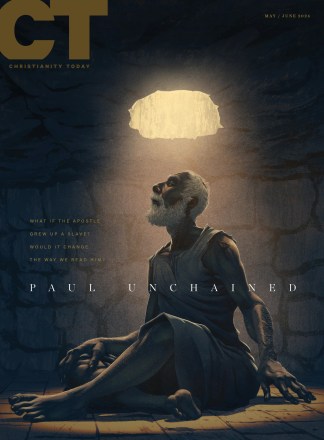
In this May/June issue, CT writers and editors offer ways you, our readers, can engage with people both visible and hidden in plain sight. In the pages that follow, Ericka Andersen brings a feature on the state of women and alcoholism in the church. There are probably women in your own community who have drinking struggles but don’t know how to ask for help and likely feel shame at the prospect of doing so. And we hope this cover story from Jordan Monson and Mark Fairchild gives you a new angle from which to see the apostle Paul and read his letters—whether individually or in community.

We also hope you’re encouraged by these stories and others in the following pages—such as one woman’s account of navigating church conflict and a report that helps us think about how to engage Christians with ADHD in our own faith communities.

God’s plan for the world (A; there is no B) is to be accomplished through the church of Jesus Christ. We pray our work here through these stories can be used by him to continue building it.

Whether you’ve been in the same physical location or church community for decades or God has you in a new place (literally or figuratively), we hope our work invigorates you to go deeper—in the Scriptures and in your own spheres of community.

Joy Allmond is executive editor at CT.

News
Wire Story

Died: Mandisa, ‘Overcomer’ Singer and American Idol Star

The Grammy-winning artist was found dead at her home in Nashville at age 47.

Mandisa

Mandisa

Christianity Today April 19, 2024
Paras Griffin / Getty Images for AFFIRM Films A Sony Company

Grammy Award-winning contemporary Christian singer Mandisa Lynn Hundley, a former Lifeway Christian Resources employee and top-10 American Idol finisher, was found dead Thursday at her Nashville home, her publicist announced on social media.

No cause of death was given.

“We can confirm that yesterday Mandisa was found in her home deceased. At this time we do not know the cause of death or any further details,” according to an official notice posted April 19 on the official X account of the performer known simply as Mandisa.

“We ask for your prayers for her family and closeknit circle of friends during this incredibly difficult time.”

Before finishing in the ninth spot on American Idol’s fifth season in 2005, Mandisa worked for Lifeway as a telephone customer service representative from 2000 to 2003, Lifeway told Baptist Press.

She partnered with the Lifeway women’s ministry team, performing and leading worship at some events, and later performed at Living Proof Live events.

https://twitter.com/BethMooreLPM/status/1781369128428745087

“Our team at Lifeway is heartbroken to hear of the passing of our friend and former co-worker,” Lifeway CEO Ben Mandrell told Baptist Press. “Her teammates recall the joy and kindness she brought to work every day. Our heartfelt prayers are with her family.”

Lakisha Mitchell, the late wife of Southern Baptist pastor Breonus Mitchell, inspired Mandisa’s hit “Overcomer,” the title song of the album that garnered a 2014 Grammy Award for Best Contemporary Christian Music Album. Breonus Mitchell, senior pastor of Mount Gilead Baptist Church in Hermitage, Tennessee, remarried in 2018.

“Obviously we are saddened by her transitioning,” he told Baptist Press. “Mandisa was just a bright light, a bright witness. She was true to her faith, even though she dealt with the depression and the issues with Kisha’s transitioning, she’d just rebound. And I think that song ‘Overcomer’ and her work just epitomize her life, how she’s just been this big overcomer of so many issues.”

Lakisha’s death from breast cancer in 2014 after the album’s success caused Mandisa to spiral into a deep and lengthy depression, which she overcame. But she continued to struggle with her mental health, sharing her issues publicly and in her 2022 book, Out of the Dark: My Journey Through the Shadows to Find God’s Joy.

“She’s just been a tremendous overcomer,” Mitchell said of Mandisa. “The Scriptures say we sorrow not as those who have no hope, and this is the hope we have, that even in the midst of death there is life. We’re saddened, but at the same time celebrate another young life, but a life well-lived.”

Overcomer also snagged Pop/Contemporary Album of the Year at the 2014 Gospel Music Association Dove Awards. Its lead single was certified as a platinum hit by the Recording Industry Association of America and was the title song of the Kendrick Brothers’ 2019 movie by the same title.

The Fisk University graduate sang with the Fisk Jubilee Singers while earning her baccalaureate.

Her 2007 debut album True Beauty gained her first Grammy Award nomination, leading the Top Christian Album chart and rising to No. 43 on the Billboard 200 Album chart.

Many lamented her death.

“Mandisa loved Jesus, and she used her unusually extensive platform to talk about Him at every turn,” K-Love chief media officer David Pierce posted on X. “Her kindness was epic, her smile electric, her voice massive, but it was no match for the size of her heart.

“Mandisa struggled, and she was vulnerable enough to share that with us, which helped us talk about our own struggles. Mandisa’s struggles are over, she is with the God she sang about now.”

News

Kenyan Pastors Are Praying for Haiti. They’re Also Shaping the Police Mission to Save It.

President William Ruto commissioned church leaders to meet with Haitian law enforcement, military representatives, and a gang leader to discuss Kenya’s security mission.

Kenya's first lady, Rachel Ruto, center, participates in a national prayer gathering for Haiti and other countries in downtown Nairobi on April 15.

Kenya's first lady, Rachel Ruto, center, participates in a national prayer gathering for Haiti and other countries in downtown Nairobi on April 15.

Christianity Today April 19, 2024
Courtesy Office of the First Lady of Kenya

Kenya’s leaders aren’t saying much publicly about the security force they plan to send to gang-embattled Haiti. But they’re talking a whole lot with God.

Last month, as armed groups escalated their insurgency in Port-au-Prince and plunged Haiti deeper into a historic humanitarian crisis, pastors advising Kenya’s government met for three days at a hotel in Nairobi to pray.

In a sky-blue conference room at the Weston Hotel, three Kenyan pastors joined Haitian and American ministry leaders and Kenya’s first lady, Rachel Ruto, to plead for divine assistance for the beleaguered Caribbean country. They prayed for the 2,500-person multinational police force Kenya has volunteered to lead to help Haitian law enforcement. At one point, meeting participants told CT, group members wept.

After two days of prayer, the first lady dropped in on an album release party in another part of the Weston, which President William Ruto owns, and announced her office had formed a prayer committee for Haiti. “We cannot allow our police to go to Haiti without prayer,” Rachel Ruto told fans of the Kenyan gospel group 1005 Songs & More.

Kenya agreed last October to spearhead a UN-authorized international security mission to Haiti, but the deployment has faced various delays, including legal challenges and questions about funding.

The prayer marathon was part of a broader effort by the Ruto administration to strategize “a spiritual solution for our police and people of Haiti,” according to the first lady. The initiative, coordinated by the administration’s “faith diplomacy” office, has so far included a national prayer gathering, a 40-day prayer guide for Haiti, and an official fact-finding trip to the United States.

For a government that has been largely tight-lipped about the police mission, the church outreach programs represent one of the most visible ways the administration has engaged the public about the plan. The Rutos, who are outspoken about their evangelical faith, took office in 2022 thanks to what many of the country’s Christians say was divine protection during a disputed election.

“Let us thank the Lord who gave our president such a burden to think about Haiti,” Julius Suubi, a pastor and spiritual advisor to the Rutos, told a crowd of roughly 1,000 pastors at an April 15 prayer service in downtown Nairobi. “Which president in Africa ever thinks about a country outside Africa?”

Earlier this month, the same group of pastors and the first lady’s staff traveled to the United States to meet with church and business leaders, US and Haitian officials, and representatives from law enforcement and the military. They also participated in a Zoom meeting with gang coalition leader Jimmy “Barbeque” Chérizier, according to Serge Musasilwa, a member of the delegation.

Musasilwa, the country director for a ministry in central Kenya called Segera Mission, said the group wanted to hear from people across all sectors of Haitian society, to better understand the challenges Kenya’s police would face. President Ruto commissioned the team to provide context to inform law enforcement and to increase the security mission’s odds of success, he said. The pastors wanted to know what civil society groups and churches say the problems are; they asked about solutions; they inquired about how well trained the gangs are and what motivates them.

The group is scheduled to present its findings to the president this month, in advance of a presidential trip to the United States in May that will include the first state visit by an African president to the White House in 16 years. Ruto, who says his country has a moral obligation to help Haiti, has insisted the security mission is moving forward—despite delays in funding the Biden administration has pledged to underwrite it ($40 million are currently being held up by Republicans in the US Congress).

Musasilwa is optimistic. “It’s going to be a new beginning for the country,” he told CT. But he says the president is eager to avoid mistakes that have plagued previous interventions in Haiti. “If you are guided only by the emotion, or by desperation, the risk is very high that you’ll find yourself on the list of those who failed.”

Part of the fact-finding trip was simply about identifying who is functioning as Haiti’s government. Haiti does not have a single elected official currently in office; the country has named a transitional council that is supposed to appoint a prime minister and prepare for eventual elections, but the council has not yet been sworn in.

For instance, Musasilwa said, he met for six hours with Haiti’s ambassador to Qatar, Francois Guillaume, trying to understand Haiti’s government structure.

“Assume that our forces are in Port-au-Prince today and they arrest one of the gangs,” Musasilwa said. “They would take him where? There is no judiciary.”

The multinational security mission, which many observers had hoped would deploy months ago, has been delayed in part by uncertainty over who exactly Kenyans would be working with. Haiti’s outgoing prime minister, Ariel Henry, signed partnership agreements with Kenya on March 1, shortly before gang attacks closed Haiti’s main international airport and stranded him outside the country.

“As much as we want our troops to come tomorrow, first of all, there’s no government in Haiti, so no order,” said Davis Kisotu, a pastor at an independent Pentecostal church who is close to the Rutos.

Kisotu, like the other Kenyan ministry leaders who traveled in the delegation, serves on the National Prayer Altar, a team in the first lady’s office that oversees church services at the presidential residence and works with pastors across Kenya to pray for government. They are not the only government team making preparations for the mission; Haitian officials have visited Nairobi, and Kenyan law enforcement have met with their Haitian counterparts in Port-au-Prince.

But while bureaucrats in New York and Washington iron out the operational details for the police mission, one of the Prayer Altar team’s jobs is also “to mobilize prayer and the men of God—Haitian pastors, US pastors and Kenya pastors and prayer warriors across the nations.”

To that end, pastors from across the country gathered Monday at the Kenyatta International Convention Centre, a facility nestled beside Kenya’s parliament and supreme court in the heart of Nairobi. The first lady addressed an energetic and supportive crowd as it waved flags and prayed for Kenya, for Israel, and for Haiti.

Other speakers, veering at times into tones fit for a campaign rally, prayed for peace in Haiti and praised President Ruto for his commitment to use Kenyan power as a force for international peace. Asunta Juma, host of Tracing the Mantles, a popular evangelical talk show, declared that Ruto has found favor with many world leaders because God’s favor is upon him. “We elected a leader who is going to provide leadership to the nations of the world,” she said.

The national gathering came at a time when other international church groups are in the midst of their own pushes for concerted prayer for Haiti. Across the United States, mission groups have been emailing and texting supporters with regular prayer requests. Baptist Haiti Mission, whose leadership has consulted with the Ruto administration, wants to draw a million prayer partners into its prayer campaign, which includes weekly livestreams.

In Kenya, the first lady’s faith diplomacy office has so far recruited at least 200 pastors to lead their churches through 40 days of prayer for Haiti, using a prayer guide produced by the National Altar. A copy of the 132-page guide, provided to CT, includes sweeping prayers for healing from the trauma of slavery, for deliverance from the “generational bondage and powers” of witchcraft, for the healing of deforested land, and for God to “flush out gangs and insurgents from their hiding places and deliver them into the hands of the police.”

“There’s something about Haiti that has captured the men and women of God in Kenya,” Suubi, the National Altar member who also leads Highway of Holiness Ministries, told CT.

Not every Christian leader is enamored.

Many Kenyans, including mainline Christians and some evangelicals, oppose their country’s involvement in Haiti. Lawmakers sued to stop it, leading to an injunction by Kenya’s highest court that the administration has tried to work around.

While Kenya’s last two presidents were Roman Catholics, Ruto rose to power with significant help from the country’s charismatic and Pentecostal church communities, many of whom view any criticism of Ruto as spiritual attack.

Sammy Wainaina, former provost of All Saints Cathedral in Nairobi and one of Kenya’s most prominent Anglicans, says the Kenya police are not equipped to deal with the political situation in Haiti.

“Kenya is currently facing a big shortage of police force,” Wainaina said. “Countries like the US should address the problems they have created in Haiti.”

Enoch Opuka, a lecturer on development studies at Africa International University who also happens to have taught Ruto in high school, thinks Haiti’s grinding poverty must be addressed before any other solution can work. Deploy massive amounts of aid, cancel all of Haiti’s debts, and facilitate dialogue between armed groups and government, he said; don’t deploy police.

“You don’t remove hunger by sending soldiers,” Opuka said.

Musasilwa is aware of the criticisms, which is why he says the fact-finding team has focused on listening to people across Haitian society and studying the failures of previous interventions in Haiti.

Among the recommendations in his report, for instance, will be that Kenya help Haiti facilitate a peace and reconciliation conference to bring as many Haitians as possible into conversations about its future—including gangs.

“We are not there to resolve their problems,” Musasilwa said. “We are there to support them in the solutions that fit for them.”

He said he has learned something for certain in his many conversations and his research into what has not worked in Haiti:

“If Kenya wants to succeed in this mission, there is only one key: It’s not to be perceived in one way or another that they are implementing US politics,” Musasilwa said. “That is something to pray for.”

With reporting from Moses Wasamu in Nairobi.

Andy Olsen is senior editor at CT.

Theology

‘Bluey’: A Heavenly Vision of Life Together

The popular kids series reminds parents that playfulness is next to godliness.

Dad and Bingo run around and have fun with Turtleboy in the TV series, Bluey.

Dad and Bingo run around and have fun with Turtleboy in the TV series, Bluey.

Christianity Today April 19, 2024
© Disney, All Rights Reserved

When my oldest daughter, Elaine, was four, I watched her chase a soap bubble around the yard, utterly spellbound, and it struck me as a tiny window into how God must have felt as he watched Adam and Eve encounter each of the animals in Eden. Likewise, when I discovered that my youngest, Olivia, had held a full conversation with me while cutting our kitten’s whiskers under the table, I felt attuned with God’s anger when he flung his judgments at Israel through the prophets.

These kinds of moments, and a thousand others, make raising kids and building a family spiritually illuminating tasks—especially when they ask theologically stimulating questions like “Does Jesus wear undies?” And although the creators of Bluey, an Emmy-awarded animated kids series, seem to have no overtly religious leanings, the show unexpectedly taps into unseen realities.

If you haven’t yet discovered Bluey, let me catch you up. The series, streaming on Disney+, centers around a family of Australian blue heelers: six-year-old Bluey, her younger sister Bingo, Mum (Chilli), and Dad (Bandit). Each episode is less than 10 minutes long and targets a preschool audience—but the popular show draws all ages, and, in 2023, was the second-most acquired streaming program with 43.9 billion minutes consumed.

When the producers announced that a longer episode was slated for season 3, the public grew panicked that the show may be ending (thankfully, it’s not!), revealing just how deeply the series meets a need in our culture—and I think it’s worth exploring why.

The Heelers are just your average Australian family, with no superpowers or high-stakes problems to solve. But through their togetherness, these four transform the ordinary moments of family life into something more. In particular, Bandit and Chilli’s commitment to playing with their kids both inspires and indicts the merely human parents watching—and sometimes even brings us to tears.

But more than that, it’s my belief that Bluey delights and dismays us this way because it’s eschatological, pointing to the type of creative togetherness we’ll all experience one day in the new creation.

Before having kids, I scoured parenting books for effective methodologies; but 11 years in, I often find myself tactically bankrupt. I mean, how exactly do you handle one child’s jealousy that the other child is sick and gets to stay home from school? But the great thing about Bluey is that it acknowledges and solves these kinds of challenges—not through a didactic blueprint but through, of all things, improvisational and imaginative play.

Throughout the show, Bandit and Chilli wholeheartedly enter Bluey and Bingo’s worlds. They join in their children’s games and follow their zany rules assiduously—whether it be freezing when a chord on the “magic” xylophone is struck, diving to save the balloon from falling during “Keepy Uppy,” or acting like robots or sick patients—anything to inhabit the on-the-ground domain where their kids’ ethical and spiritual development is daily being formed.

Unintentional though it may be, the Heelers’ parental play takes seriously Jesus’ words, “Let the children come to me, and do not hinder them, for the kingdom of heaven belongs to such as these” (Matt. 19:14), and even models Christ’s self-effacing humility in meeting us on our level. In both narratives—biblical and animated—the little ones’ stinginess, laziness, fearfulness, cheating, and lots of other juvenile behaviors can be redeemed and transformed.

Take Peter. As Erin Dufault-Hunter, associate professor of Christian ethics at Fuller Theological Seminary and an acquaintance of mine, pointed out to me one day, “After his resurrection, Jesus repeatedly asks Peter, ‘Do you love me?’ (John 21:15–17). It’s a game with words, one that recalls Peter’s braggadocio and betrayal and eventually turns him into a tender shepherd of the church.”

Even though Bandit and Chilli sometimes ask very relatable questions—like “Can’t we play a game where I lie down?”—their near-constant willingness to indulge in their kids’ whimsical antics can also cause many parents to feel inadequate. In a recent podcast about the show, NPR host Stephen Thompson described binge-watching Bluey right after he’d launched his son on his college career. “I don’t think that was good for my emotional health,” he said, presumably because it made him doubt the quality of his parenting when it was already too late.

I, for one, resonate with these insecurities. Truth be told, I’m terrible at playing with my kids like Bandit and Chilli. I’m reminded of myself in a second-season episode called “Let’s Play Octopus.” Bluey has her dalmatian friend Chloe over, and Bandit pretends he’s an octopus capturing the girls as they attempt to steal his treasure. Afterward, when Chloe goes home, she tries to replicate the experience with her own dad—who is, shall we say, a bit too stiff and hyper-rational to pull it off. Exasperated, Chloe exclaims, “You’re not playing it properly,” to which the confused dad replies, “But this is how I play it.” Cross-armed, Chloe quips back, “Bluey’s dad is more fun than you.”

I’m that parent. And I think I’m an unnatural player because, for much of my life, I’ve been focused on being productive—thanks, in part, to the ever-industrious Protestant work ethic. As a working mother, I seek to maximize my day, grasping and collecting each scrap of time like a scarce resource that I can put toward “useful” ends. But beyond my idolatry of efficiency, I’ve struggled with an anemic theology of play. After all, what possible role can childlike play perform that adult-like purposefulness can’t? In short: a big role.

Studies show unstructured play can greatly benefit our kids—nearly half of whom are suffering from a growing mental health crisis. As Courtney Ellis, author of Happy Now: Let Playfulness Lift Your Load and Renew Your Spirit, points out in a piece for CT, “Playfulness is essential to human flourishing” and can be defined as “anything that brings us joy and connection.” This means the benefits of play also extend to enrich the congregational life of the local church family—and our walk of faith.

In his book, Far Too Easily Pleased, Jesuit scholar James V. Schall reminds us that “leisure describes the life of God.” God created the universe not because he felt compelled to or because he lacked something. And as the triune God, the Father created the world together with the Spirit and the Son (Col. 1:15–17)—whipping up magma, mountains, and mammals out of sheer freedom and love. God created the entire inhabited world, in part, for us to rejoice in it and praise him for it (Prov. 8:31).

As Thomas Aquinas said, “God plays. God creates playing. And man should play if he is to live as humanly as possible and to know reality, since it is created by God’s playfulness.”

Joyful play is an indispensable ingredient in making us fully human in his image—which means God can and does use play for our sanctification. Our whole purpose as creatures is, as the Westminster Catechism so aptly summarizes, “To glorify God and enjoy Him forever” (emphasis mine). And if God created play, and all that God created will one day be renewed in the new creation, then we can expect that this kind of uninhibited play awaits us in heaven.

As Felipe do Vale says in another piece for CT, “The resurrection is not a cosmic Etch A Sketch, where God shakes everything to start over; it is a divine commitment to what has already been made and declared very good (Gen. 1:31).” The same God who created the frolicking chimpanzees at the zoo blesses the young children who quite literally ape them. This means our best play times are yet to come—and our earthly glimpses of play speak to an eternity of joy. And while we cannot yet imagine it, I have a feeling the experience will be infinitely better than “Keepy Uppy.”

I know I’ll never parent as well as the fictional Heelers do (although my shining moments might just add up to the length of one Bluey episode)—and my kids probably won’t resolve conflict as effortlessly as Bluey and Bingo seem to (which is why I’m investing in a college fund and a therapy fund for each of the girls).

Still, on a practical level, Bluey challenges me to make room for more spontaneity and creative collaboration with my daughters each day. And as I do, I remember that the utopia it depicts is coming soon: a perfected humanity enjoying complete and creative togetherness for all eternity—along with our self-giving, playful Creator.

Katherine Lee is a poet and a mom working on a memoir about the ways her motherhood has been defined by the women in her family. Her master’s in theology has informed these pursuits in surprising ways.

Books
Review

You Can’t Reach People for Christ While Holding Their Culture at Arm’s Length

A veteran missiologist shares a lifetime of lessons on bringing the gospel into unfamiliar settings.

Christianity Today April 19, 2024

In an important new book, missiologist Darrell Whiteman tells a revealing story about a missionary who had been preaching in a particular community. Without realizing it, the missionary gave offense by wearing expensive shoes in a place where people couldn’t afford shoes of any type. For Whiteman, this anecdote illustrates how much missionaries need to learn—and how many presumptions they might need to abandon—in order to bring the gospel to people in other cultures.

Crossing Cultures with the Gospel: Anthropological Wisdom for Effective Christian Witness

Whiteman’s book Crossing Cultures with the Gospel: Anthropological Wisdom for Effective Christian Witness, challenges his readers—and missionaries in particular—to recognize the possible ethnocentrism in their perspective, which can distort and impede their ability to communicate well across cultural boundaries. As he explains, each culture has its own ways of understanding and coping with the problems of life. All of us understand biblical truths in ways that seem natural to us in our own cultures but not to people who have grown up in other cultures.

In each community, traditions of communication and interaction develop over time, resulting in distinct customs. Every community has its own sense of the past, its own traditions of loyalty and obligation, its own rules of courtesy, and its own conceptions of virtue and honor. If missionaries are to communicate with people who have grown up in other cultures, argues Whiteman, they must lay aside their own presuppositions and cultural conventions and commit to acquiring knowledge of unfamiliar customs and ways of thought.

Watching, listening, and asking questions

The missionary project, as Whiteman reminds us, is to insert the universal message of the gospel “within the very heart of a culture.” As he observes, “Unless the gospel connects deeply with the culture of the people, there will be very little transformation.”

Furthermore, if the gospel makes no sense within a particular community, the people might well distort it to fit their own presuppositions. Whiteman recalls a community in Madang Province of Papua New Guinea, whose members heard the gospel from missionaries and turned it into the claim that after being baptized, blessed by a pastor, and living good lives, their spirits would leave their bodies and go up to heaven three days after dying. Even leaving aside such extreme misinterpretations, it’s likely that a poorly understood message will be regarded as irrelevant, boring, or unimportant. Unfortunately, says Whiteman, “seldom is [the gospel] heard and seen as good news.”

It was firsthand experience that brought Whiteman to the conviction that missionaries need better instruction on communicating within other cultures. After living for two years with missionaries in the Democratic Republic of the Congo, he realized that they had little awareness of how the gospel was reaching the local community. It seemed evident to him that preparation for missionary service ought to include training in cross-cultural communication.

Some people, he notes, spend years taking courses in Bible and theology, but these studies leave them only partially equipped to transmit the gospel to another people. They learn how to interpret biblical passages, but they are unprepared to interpret the situations they will encounter in a strange community.

Before going with his wife to the Solomon Islands and Papua New Guinea, Whiteman completed a PhD in anthropology. After serving abroad several years, he joined the faculty of Asbury Theological Seminary, eventually becoming dean of its E. Stanley Jones School of World Mission and Ministry, where he served for 21 years. Along with his seminary duties, Whiteman worked with many organizations to help aspiring missionaries learn to communicate to people in other cultures. He has traveled broadly, visiting as many as 78 countries to teach missionaries and churches about delivering the gospel across cultural boundaries.

Anyone who wants to do this well, Whiteman says, should be aware of the messages we inevitably convey even without uttering a word. As he writes, “The lions’ share of evangelism is what is spoken nonverbally. The tone of our voice, our lifestyle and our behavior are all communicating volumes of information.” Indeed, what local people see and hear in the behavior of visitors can influence whether they will want to know them or learn from them.

How, then, is the deeply felt sense of God’s love to be brought across the boundary between missionaries and the people they wish to reach? Whiteman recommends a practical method that involves watching, listening, and asking questions.

As an example, he describes one way he came to know some of the beliefs about spirits held by people in his Solomon Islands community. A friend had stopped by for a visit, and after staying a while, he said as he left, “I think it’s safe for me to go home now.” Asked why, the friend explained that he had come from the bush, where malign spirits had attached to him. He had stopped by to allow the spirits to dissipate before going home, where he had a newborn child he wanted to protect from their attacks.

Fundamentally, the cross-cultural project requires following the example of Christ, who allowed himself, as he took on human flesh, to acquire the cultural conventions of a first-century Jewish community. “The Incarnation,” writes Whiteman, “is more than an important theological doctrine about God becoming a human being. It is also a model for cross-cultural ministry. Being incarnational means we empty ourselves of our pride, prejudices, personal agendas, ambitions and lifestyle in order to enter deeply into the world of another culture. Incarnation frequently means downward mobility.”

Some missionaries, Whiteman regrets, never make that transition. He points to a missionary who disliked the food of the people he was supposed to reach, which gave him little chance of being effective. Missionaries can unknowingly offend their host communities by violating their conceptions of correct behavior. For instance, one missionary offended his neighbors by talking to his dog. They believed that humans only talk to other humans, and they wondered what kind of relationship this man had with the dog.

A second conversion

In fact, argues Whiteman, the commitment to incarnational outreach requires a “second conversion.” Beyond their conversion to Christ, missionaries need to experience a “cleansing of unnecessary assumptions about the gospel and the way that it is to be communicated.”

That takes work and time. Whiteman relates the story of one missionary who lived in a Bangladesh community for 18 years before feeling like he understood it well enough to make the gospel appealing to its people.

Whiteman explains the ideal of a “second conversion” like this:

We take our understanding of the gospel, as culturally conditioned as it is, and we develop a relationship with people who are different from us in their culture. We attempt to read the Bible through their eyes and to understand and interpret it from the perspective of their worldview, not our worldview. When this begins to happen, there will no longer be just a one-way arrow pointing from the missionary communicator to the non-Christian receptor. Now arrows will go both directions because the missionary will learn many new things about God when they view life through the lens of their host culture.

Essential to the second conversion, says Whiteman, is humility. Missionaries can come to appreciate the experience and perspective of others by entering into dialogue with them. As they develop friendships, they can become conversant with new ways of thinking and, notably, discover how other people see God in their worlds. As Paul declared, God has not left himself without witness in any society (Acts 14:17).

Whiteman describes the career of a German missionary who saw “the image of God in the Tamil people” of southern India and sought “to lead them to a fuller knowledge of God as revealed in Jesus.” The way that an imprint of God already exists among a people can be a starting point for explaining the gospel. Paul, in his speech on Mars Hill, presented Christ as the unknown God that the Athenians had already been worshipping (Acts 17:22–31).

The book also mentions a missionary in Nigeria who learned an important lesson from a local elder on how his service was perceived. When the missionary exulted in having been sent to these people by God, the elder responded, “We are glad you have come, but it is our Igbo god Chukwu who sent you to us so we could learn more about God, now that you have told us about Jesus.” Whiteman writes that God already has a witness in every culture “at every period of human history.” This makes the missionary project exciting and encouraging; as we see how the gospel becomes meaningful to another people, we “learn more about what God is doing in the world.”

Whiteman stresses that, in the end, the fundamental means of crossing boundaries is friendship. Miscommunication is inevitable when people come together from different cultures, but as Peter says, “love covers over a multitude of sins” (1 Pet. 4:8). Miscues, blunders, and misunderstandings need not derail a relationship if people like each other and enjoy each other’s company. There is no substitute, concludes Whiteman, for kindness, respect, and love—qualities of the Savior who commissioned the missionary enterprise.

Robert Canfield is an emeritus professor of anthropology at Washington University in St. Louis.

Culture

The Best Christian Kids TV Shows, Not Tells

Series like The Wingfeather Saga bring children along for the adventure of following Jesus.

Christianity Today April 19, 2024
Image Source / Getty

I picked up the first book reluctantly. Was I really going to spend my children’s nap time reading children’s fiction? But The Wingfeather Saga had been recommended to me by so many fans that I eventually joined the throngs of Christian adults and kids who’ve enjoyed the series.

From the start, author Andrew Peterson captivated my imagination, building a world I could recognize while pushing the limits of familiarity. Aerwier has a bookshop with a nerdy owner; the three Igby siblings enjoy exploring its packed shelves. So normal! But just across the street is a city prison run by lizard monsters called Fangs. Not so normal.

The Wingfeather books have since been adapted into an animated series; the second season premiered at the beginning of this month, with new episodes released weekly. I remember the Christian animations from my childhood—Bibleman, Psalty the Singing Songbook, and VeggieTales —as either simplistic retellings of Bible stories or moralizing lessons. These shows did a fine job of teaching me what God expected. But they didn’t captivate me with the idea of following Jesus.

The animated Wingfeather, by contrast, is lighthearted and sincere, witty without resorting to gimmicks. It cultivates endearing characters without creating familiar Christian caricatures.

What makes a good Christian children’s show? Here are four things The Wingfeather Saga does well that I hope would be true of any Christian program that I watch with my kids.

The show invites kids along for the adventure.

One of the quickest ways to bore kids is to talk at them. Shows that offer not much more than monologues, telling children what they should think and do, will rarely capture their hearts.

This principle of active participation applies across our discipleship efforts. We find that when kids are invited into the life of the church—praying, reading, and serving—Sunday worship becomes more than rote attendance. When they’re invited into daily rhythms of confession, apologizing, and asking for forgiveness (and when it’s not only asked of them, but expressed to them by an adult who is in the wrong), they grow to see sin and reconciliation differently.

By inviting kids into the life of faith—by taking them along with us, rather than just telling them what to do or think—we are much more likely to capture their hearts, rather than to just dictate their behavior.

Season 2 of The Wingfeather Saga does an incredible job (even better than season 1) of inviting kids to come along for the ride as characters explore, face challenges, and learn lessons. As the adventure unfolds, kids are invited to use their imaginations. They’ll watch wide-eyed as the Igby children encounter a massive sea monster who’s seemingly called out of the deep by the youngest’s singing; they’ll shudder as they’re chased up trees by toothy cows that live in the darkness of the woods. They’ll enter a world of creative play, even as they learn eternal truths about the world, themselves, and God.

The show draws a clear distinction between good and evil.

The Wingfeather Saga has good characters who live honorably and bad characters who prize selfish gain. Evil is represented physically; the oppressive Fangs drip with venom. They delight in taking the lives and livelihoods of innocent Glipwood residents, bringing to mind the one who comes to “steal and kill and destroy” (John 10:10).

At the same time, those who seek to live for the larger kingdom—like the Igby grandfather who’s never forgotten all that the Fangs took from his family—are well-worn and well-traveled, with clear eyes and weathered hands. These characters either recall or learn the freedom that is possible, inching their way toward it even as they work their gardens day after day.

By making good and evil obvious, young viewers are more easily able to conceptualize the two kingdoms at war in Wingfeather, and to connect the lives of the characters they wish to emulate with their own daily experiences. The Igby children rebel against injustice, loyally fight to protect each other, and maintain the good name of their family—worthy virtues for young and old alike.

“Good” doesn’t necessarily mean “tough” or “popular.” The Wingfeather Saga helps kids understand that some of the most courageous characters aren’t the most physically capable, like little sister Leeli, whose mangled leg causes her to limp. Peet the Sock Man’s off-putting personality has estranged him from society; but his valiant efforts to protect and aid the Igby children reveal that he’s merely misunderstood.

The show acknowledges the complexity of the human heart.

Even as we want our kids to understand the world’s moral order, we also want to acknowledge the complexity of the human heart. We all struggle with longings for approval, comfort, and ease, even at the cost of our dignity or another’s well-being. And yet all of us, no matter our failings, can also be redeemed.

In Wingfeather season 2, townspeople grapple with their own self-seeking tendencies; they’re faced with difficult choices between doing what is right, and doing what feels good in the moment. They learn that sometimes leaders are afraid, and that showing bravery in one moment is not a guarantee of bravery in the next.

By resisting oversimplification, we help children understand the temptations they themselves are likely to face—sometimes unsuccessfully. Will they speak out when someone is being treated unfairly, even if it might turn them into the target? Will they risk their own comfort to protect someone they love? Will they welcome those others exclude, willing to be associated with the lowly and outcast? No matter how often they miss the opportunity God has given them, his grace abounds.

The show introduces new questions, even as it answers others.

One of the greatest strengths of The Wingfeather Saga is its ability to lay some essential groundwork about God and human nature while introducing other questions for kids to explore.

Season 2 may leave its young viewers with a sense of confidence in their ability to identify evil. But it may also leave them uneasy about the darkness that hides in all of our hearts. The show might demonstrate that living with integrity often comes with a reward in the end. But is integrity “worthwhile” when the payoff doesn’t seem obvious or inevitable?

One key way that kids grow in their faith is by asking some of these more complicated questions. In the same way that we don’t want to talk at children about who God is, we also don’t want to answer all the questions for them at once. Of course, as parents, caregivers, teachers, or other important adults in their lives, we want to be a source of confident reassurance. But we also want to empower and equip them to do some wondering on their own, without too quickly offering solutions.

Many Christians are understandably hesitant about television as a discipleship tool, and I get it. With two little ones in my care, we intentionally limit screen time and more often than not opt for books over TV.

But there is something powerful that happens when adults and children sit down to enjoy a show together; and that would be my encouragement for those thinking about queuing up Wingfeather or other Christian programming. Follow up your viewing with discussion; listen to the scenes and details that resonated with your kids, and share your favorite parts, too. Formation can happen anywhere—even on the couch.

Amy Gannett is a writer and Bible teacher passionate about equipping Christians to study the Bible through The Bible Study Schoolhouse. She is also the founder of Tiny Theologians, a line of discipleship tools for children.

addApple PodcastsDown ArrowDown ArrowDown Arrowarrow_left_altLeft ArrowLeft ArrowRight ArrowRight ArrowRight Arrowarrow_up_altUp ArrowUp ArrowAvailable at Amazoncaret-downCloseCloseellipseEmailEmailExpandExpandExternalExternalFacebookfacebook-squarefolderGiftGiftGooglegoogleGoogle KeephamburgerInstagraminstagram-squareLinkLinklinkedin-squareListenListenListenChristianity TodayCT Creative Studio Logologo_orgMegaphoneMenuMenupausePinterestPlayPlayPocketPodcastprintremoveRSSRSSSaveSavesaveSearchSearchsearchSpotifyStitcherTelegramTable of ContentsTable of Contentstwitter-squareWhatsAppXYouTubeYouTube