News

Chuck Swindoll Retires from Texas Megachurch

At 89 years old, the Stonebriar Community Church founder says he still believes one never retires from the work of God’s kingdom.

Chuck Swindoll and Jonathan Murphy

Chuck Swindoll and Jonathan Murphy

Christianity Today Updated 20240924
Stonebriar Community Church video announcement / Screengrab

Key Updates

September 24, 2024

Weeks away from turning 90, Chuck Swindoll has preached his final sermon at Stonebriar Community Church. Swindoll announced Sunday that “the time has come” for him to retire from the church he led as senior pastor for 26 years.

The founding pastor of the Frisco, Texas, congregation had transitioned from day-to-day leadership of the church back in May but continued to preach on Sundays. Jonathan Murphy, a preacher and seminary professor from Northern Ireland, succeeded Swindoll as senior pastor.

Swindoll says he and his wife will continue to worship at Stonebriar, and he plans to continue to serve through his radio ministry Insight for Living.

“I’ve always believed that age is merely a number; what truly matters is our commitment to fulfilling the divine purpose laid out before us,” he said in a statement to Stonebriar. “I want to embrace every day, every challenge, and every opportunity to impact lives, because one never retires from the work of God’s kingdom.”

April 12, 2024

Chuck Swindoll has said that pastors “should never retire,” and the 89-year-old won’t be stepping away from the pulpit even as his church welcomes his successor.

Stonebriar Community Church in Frisco, Texas, announced this week that Swindoll will transition to founding pastor, continuing to preach on Sundays, as Jonathan Murphy becomes its senior pastor on May 1.

“This is a very unique way of expanding, of ‘moving into another chapter,’ as we often call it here,” said Swindoll in a video clip alongside Murphy, a Belfast-born preacher who currently serves as chair of pastoral ministries at Dallas Theological Seminary.

With over 60 years in ministry, Swindoll is the oldest megachurch pastor in the country and one of the most influential. He has been vocal about his plans to remain active in ministry until his death.

“One of my great goals in life is to live long enough to where I am in the pulpit, preaching my heart out, and I die on the spot, my chin hits the pulpit—boom!—and I’m down and out,” he said at age 75. “What a way to die.”

In his new role, Swindoll remains Stonebriar’s regular preacher, while Murphy leads day-to-day ministries and fills in to preach when needed, according to the church’s announcement.

“We have the founding pastor being able to continue to preach as long as the Lord would have, and I can have a season as a senior pastor taking responsibility for the staff and caring for them and the ministry direction of the church at large,” said Murphy, who has been a guest preacher at Stonebriar and serves on the board for Swindoll’s long-running radio ministry Insight for Living.

The two have been preparing for the transition for several years, with Swindoll befriending and mentoring Murphy. The church’s elder board began considering him as a senior pastor candidate in 2022 and decided last month to bring him into the new role.

Swindoll will remain an elder, and Murphy will also join the elder board. “At the appropriate time in the future,” the church said, Murphy will also become the church’s primary preacher.

Megachurch researcher Warren Bird and William Vanderbloemen, the authors of Next: Pastoral Succession That Works, have written that an “intentional overlap plan” seems to be the strongest model for transition.

“Today, many long-term pastors experience a period of overlap with their successor as a way to help both the congregation and themselves adjust to the transition. It also allows a safety net if the transition hit unexpected challenges,” Bird, the senior vice president of research at the Evangelical Council for Financial Accountability, told CT. “A ‘known’ leader is often the successor, in this case someone who’s been a guest preacher from a nearby seminary much esteemed by the congregation.”

According to Bird, preaching is often the last duty for an aging pastor to relinquish.

He said that Swindoll’s setup at Stonebriar is similar to other long-serving megachurch pastors in their 80s, such as at First Baptist Atlanta, where Anthony George was announced at Charles Stanley’s successor years before Stanley stepped down at age 87. (Stanley also said he didn’t “believe in retirement” and continued his work at In Touch Ministries.)
The need for pastors to make plans for their successors has only grown more urgent in the US as clergy age; 1 in 4 senior pastors plan to retire by 2030.

Last year, Swindoll suffered a fall, experienced low blood pressure, and underwent an angiogram. He was away from the pulpit in January while recovering from an aortic valve procedure. He turns 90 this fall.

While president of Dallas Theological Seminary (DTS), Swindoll helped found Stonebriar Community Church in 1998. A Texas native, Swindoll had graduated from DTS and began his pastoral career in the Lone Star State in the 1960s.

Stonebriar drew in 1,500 weekly attendees within its first six months; CT dubbed it an “instant megachurch.” At its 25th anniversary in 2023, the nondenominational evangelical church outside Dallas reported 3,700 members, 300,000 square feet of building space, and an annual budget of $17 million.

Swindoll is known for his preaching. He has twice appeared on Baylor University’s rankings of most effective preachers, and a 2010 Lifeway Research survey of Protestant preachers found he was the country’s most influential preacher not named Billy Graham.

Murphy commended Swindoll and his congregation for their love for the word. “We talk about expository preaching, but I love that they’re expository listeners,” he said. “They come ready to hear from God, not to be entertained.”

Despite Swindoll’s remarks that pastors shouldn’t retire, he has also said, “There’s nothing wrong with retirement as long as you don’t stop living for God. You never retire from the Great Commission.”

Culture

In ‘Civil War,’ What You See Is What You Try to Forget

The new dystopian thriller reminds viewers it’s not just what we witness that matters, but how.

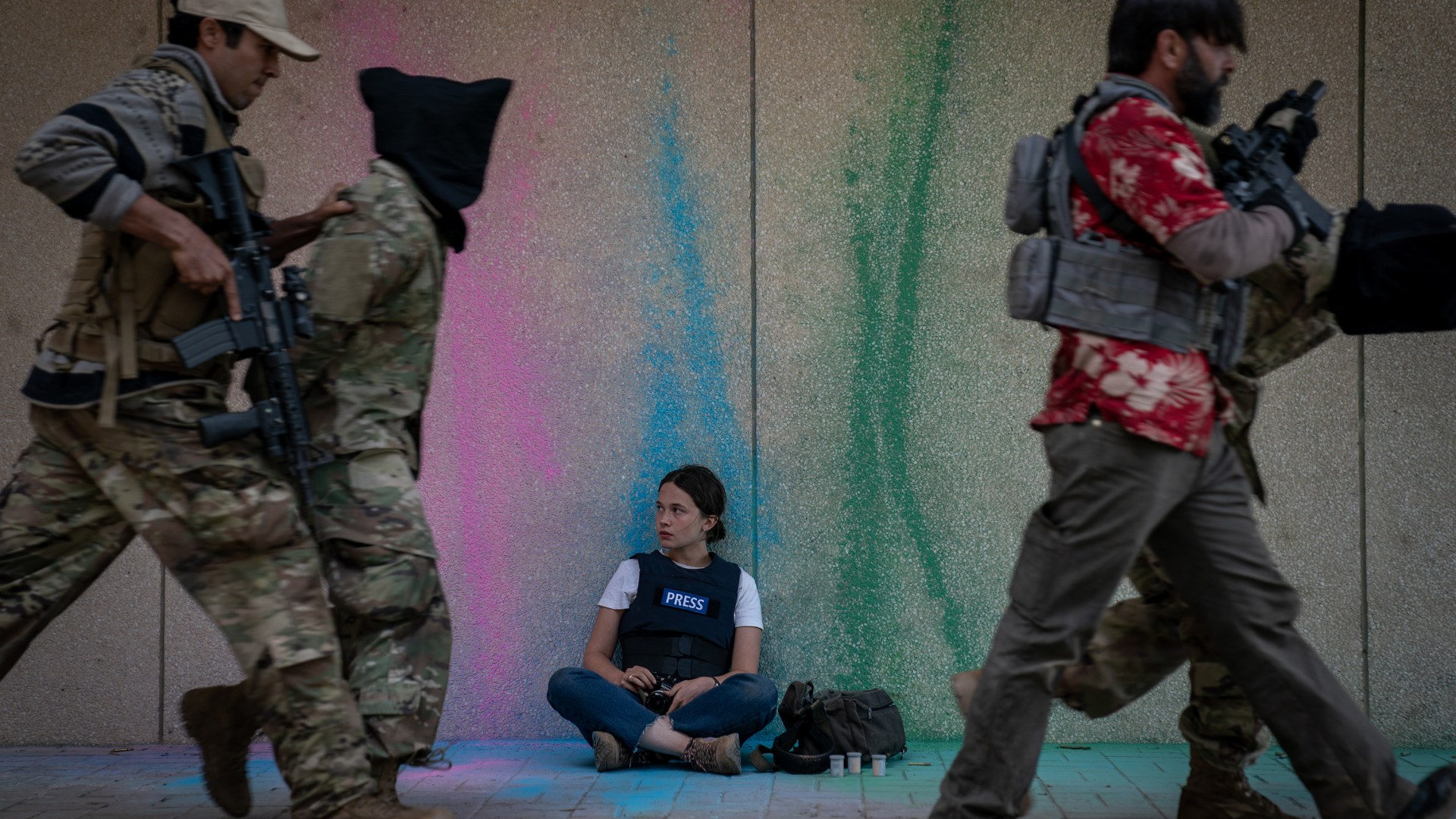
Cailee Spaeny (center) as Jessie in Civil War.

Cailee Spaeny (center) as Jessie in Civil War.

Christianity Today April 12, 2024
Murray Close / Courtesy of A24

There’s nothing more frightening than the sound of a camera shutter in the new film Civil War.

Distributed by A24, the production company behind releases like Everything Everywhere All at Once and Past Lives, the movie depicts the remnants of a United States government battling the Western Forces, an alliance between Texas and California. If you’re looking for reasons—Why these factions? Why now?—you won’t find any answers. The film is frustratingly opaque on logistics, though we’re able to hypothesize based on a few offhand comments. (The unnamed president, played by Nick Offerman, is entering his third term and isn’t gun-shy about using air strikes against American citizens.) Even so, a California that cooperates with Texas seems far-fetched.

For writer/director Alex Garland, our incredulity is the point. “I find it interesting that people would say, ‘These two states could never be together under any circumstances.’ Under any circumstances? Any? Are you sure?” he told The Atlantic. By asking us to accept his premise, Garland forces viewers to consider the ideological divisions we take for granted. Turns out, the why doesn’t matter all that much. Dystopia, no matter how it comes about, is still dystopia.

What is clear, though, is that the war provides an opportunity for journalists, capitalized on by photojournalist Lee (Kirsten Dunst), her Reuters colleague Joel (Wagner Moura), and her mentor, New York Times reporter Sammy (Stephen McKinley Henderson). Their coverage of atrocities shapes our experience of this imagined future. Many of those chilling camera shutter sounds come from Lee, as she documents truly terrible scenes of domestic conflict with ruthless efficiency and pristine technique. It’s jarring to see pictures of military soldiers being executed or a civilian being set on fire with perfect ISO and aperture.

Ever in pursuit of a scoop, the three decide to embark on a road trip from New York to DC, where Lee hopes to photograph the president and Joel hopes to interview him. “We get there before anyone else does,” Lee says. Joel agrees: “Interviewing him is the only story left.” At the last minute, they’re joined by Jessie (Cailee Spaeny), a young photojournalist who idolizes Lee. Together they embark on a tour of the crumbling nation.

With every click, the photographers get more disconnected from the war they’re documenting. Cinematographer Rob Hardy and editor Jake Roberts use recurring shots of each photo’s aftermath to terrifying effect. When the camera falls from Lee’s or Jessie’s face, it’s like a mask coming off.

Whether she’s captured a candid of an abandoned mall or a soldier who’s bled out, Lee’s dispassionate poise is chilling. She’s seen one too many atrocities, and whether for self-preservation or by overexposure, she’s desensitized to the horrors around her.

Young Jessie, however, is different. Whenever she’s done taking a photo, at least at first, audiences see the toll the work takes on her. It’s a tragedy when her empathy gives way to detachment. Each time her camera clicks, her face is less frightened, more stoic.

Civil War is an ode to the harrowing work of war journalists. But the film also pushes back against the notion that the highest virtue a journalist can cultivate is the ability to remain unfazed. While objectivity is imperative, it should be no badge of honor when we’re able to cover the worst of the world and not be moved.

In one painful sequence, after the crew witnesses a wanton act of violence, Lee tells a visibly shaken Jessie, “We record so other people ask.” Lee’s investment in a story ends after the click; she leaves it up to her audience to explore bigger questions about pain and purpose. “You want to be a journalist? That’s the job,” she scolds. One can’t deny the journalists’ commitment to capturing the truth of what they see. But it’s nonetheless disturbing when they do so without emotion.

The psalms of David take the opposite approach to the one modeled in Civil War—all lament, rejoicing, and rage as they interpret the world around them.

In David in Distress: His Portrait Through the Historical Psalms, scholar Vivian L. Johnson identifies certain songs that directly correlate with what’s covered in texts like 1 and 2 Samuel. One of these is Psalm 51, written in the aftermath of David’s rape of Bethsheba and his murder of her husband, Uriah, as recorded in 2 Samuel 11.

Whereas the history in Samuel provides the objective account of what’s happened, the psalm offers an opportunity to flesh out David’s inner, emotional experience. As Johnson writes, “Seldom do the Samuel narratives reveal the private contemplation of David or report his gestures of contrition; in fact, the books of Samuel in general show little reservation in their disclosure of his most egregious deeds.” Psalm 51, she argues, where David details his remorse more fully than in 2 Samuel’s one-line confession “I have sinned against the Lord,” “provid[es] for the reader an elaborate and pious version of what David may have said subsequent to recognizing the gravity of his actions when he murdered the husband of his mistress.”

The role of the psalmist is different from the role of the journalist. But what we see in Civil War reminds us, as does Scripture, of how vulnerable we can be in the face of the world’s hardships. For every record of an atrocity is a journalist who wrestles with bearing witness.

Take, for instance, a Rolling Stone gallery of images from photojournalists in Gaza. The photos are difficult to sift through and only more poignant now that the death toll there has exceeded 33,000 people. The presentation of these photos isn’t careless or salacious; instead, each is accompanied by a contextualizing caption. Photojournalist Ahmed Zakot describes Gaza on October 9, 2023: “I took this picture from the 19th floor of a skyscraper in Gaza. In my 25-year career as a photographer, I never felt such fear and distress. I felt that I was filming a cinematic movie scene, I had to remind myself that it is all too real.”

I can be like Lee. When I see archival photos from history or even images of today’s faraway atrocities, I’m moved to protect myself by keeping it all at arm’s length. It’s no wonder—in our online, overexposed world, ghastly images and testimonies are just a timeline refresh away.

But while dissociation might be understandable, it’s not desirable. That’s true not only of pain but also of joy. There’s Job’s address to God: anger fully expressed rather than circumstances merely accepted. But there’s also the first chapter of Luke, which makes room for Mary’s song.

Whereas other gospels are quick to narrate the events of Jesus’ birth, Luke pauses for a look at Mary’s heart. Her spirit “rejoices in God my Savior”; she can trust in the promises foretold by the angel Gabriel since God has shown his faithfulness “just as he promised our ancestors.” Even as it records the facts, Scripture makes room for lament, celebration, and praise, not stoicism.

Civil War offers a similar reminder. It’s not just what we witness that matters but how. Even as we remind ourselves that “it is all too real,” we remember a loving God who’s present in that reality. May we care for our souls as we look closely at suffering. May we also allow our hearts to break.

Zachary Lee serves as the Managing Editor at The Center for Public Justice. He writes about media, faith, technology, and the environment.

News

Make Nepal Hindu Again: Christians Concerned by Rising Religious Nationalism

Hindutva ideology is crossing the border from India and making ministry more challenging for churches in the former Hindu kingdom.

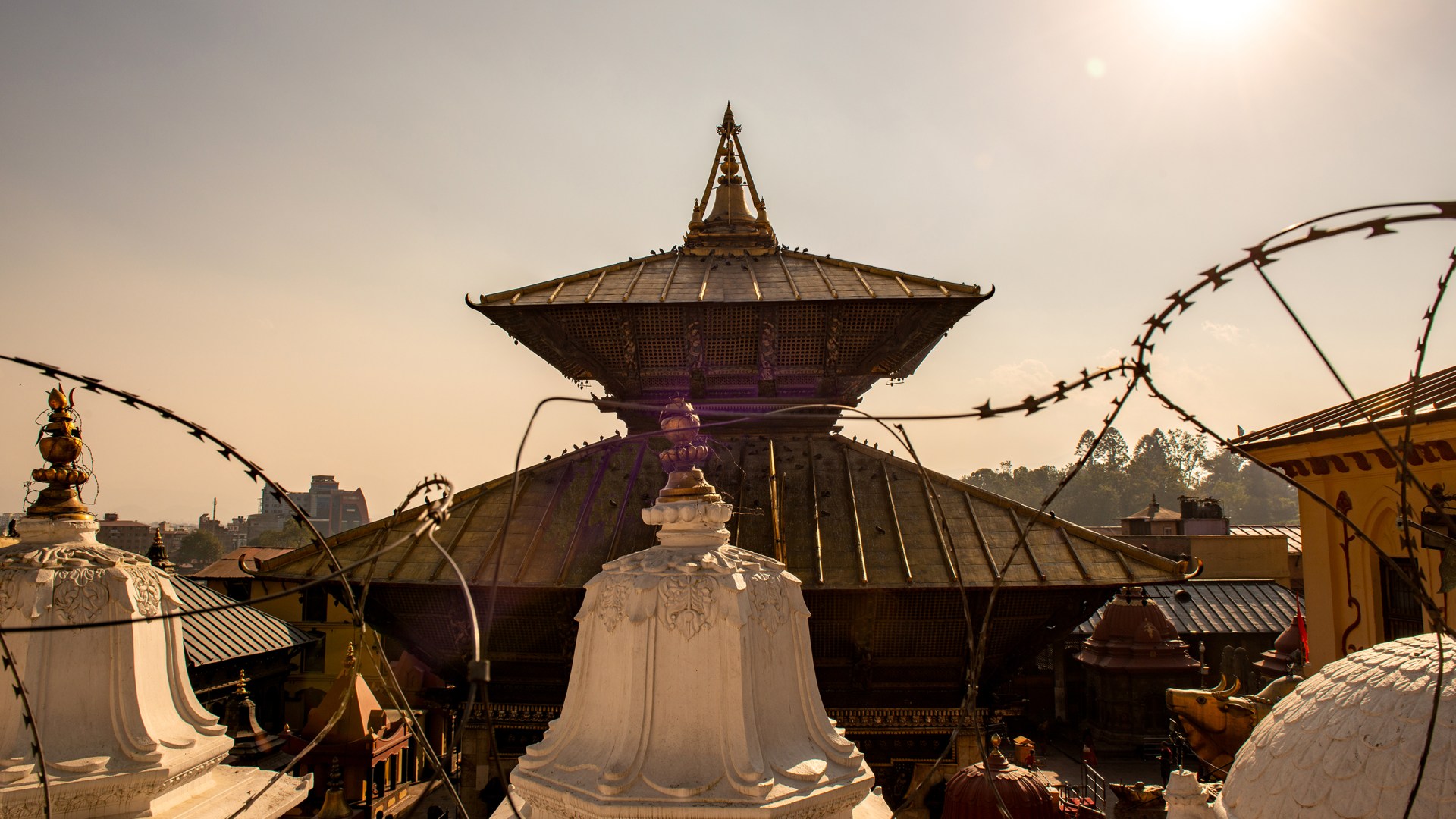
Pashupatinath temple, a sacred Hindu temple, on the banks of the Bagmati River in Kathmandu, Nepal.

Pashupatinath temple, a sacred Hindu temple, on the banks of the Bagmati River in Kathmandu, Nepal.

Christianity Today April 12, 2024
Boy_Anupong / Getty

More than 15 years after Nepal officially became a secular democracy, the former Hindu monarchy may have a religious extremism problem, incited and aggravated by its closest neighbor.

In an “alarming” development, Indian Hindutva ideology and politics have begun to spread throughout the country, as local experts and journalists report. This proliferation has resulted in a recent spate of attacks and restrictions on Christians reported within the country of 30 million.

According to local sources, at least five separate incidents targeting Christians have been reported in March and April of this year.

“The Hindu Swayamsevak Sangh (HSS) in Nepal is rapidly growing. Aiming to protect Hinduism, they degrade Christianity and badmouth us through social media and other sources,” said Kiran Thapa, who was arrested last month for praying for people in Kathmandu.

In March, Thapa and several foreigners, all Christians, were visiting the Pashupatinath Temple, a religious World Heritage Site deeply venerated by local Hindus. When they entered the temple, they came across an elderly couple who were suffering with pain in their knees and back. The group offered to pray for them with the couple’s consent, and they subsequently reported that they were healed. More people then requested prayers from the group and reported being healed.

“I had to request them to come one by one,” said Thapa.

After two monks asked for prayer and then reported that they too had been healed of their physical afflictions, a policeman ordered the Christians to leave the Hindu temple for praying in Jesus' name. As they were leaving, a man with an immobile hand followed the group out. When the Christians prayed for him in the street, having informed him that they could not pray for him in the temple, he also said he had been healed. Despite the miracle occurring outside the temple grounds, the incident angered the same policeman, who then got a senior police official to deal with the matter. According to Thapa, the officer began screaming at Thapa and arrested him.

“They threatened to kill me and bury me as an anonymous corpse near the ghat (riverbed). ‘If the law had not bound my hands, I would have killed you and buried you here,’ the officer told me,” said Thapa.

Thapa spent the next 24 hours in extremely poor jail conditions without a proper place to sit or sleep. The senior inmates made him sit near the toilet while lavatory waste gushed out into the cell, said Thapa.

Authorities released him after the temple management, which had filed a complaint against Thapa that falsely stated he was distributing Bibles, withdrew their complaint at the request of Thapa’s wife.

Several weeks earlier, evangelist Sajan Shrestha mentioned, a video was uploaded on Facebook showing members from HSS, an extremist organization whose name literally translates to “Hindu emperor army,” aggressively bullying Christians. The mob taunted the crowd, calling on them to tear the Bibles. All resisted but one, who tore the Bible and then was forced to trample the torn book under his feet. The extremists then heaped all the Bibles and set them on fire. They surrounded the fire and shouted slogans like “Jai Shri Ram” (Hail, Lord Rama).

“We are so sorry for our brothers who went through all this,” said Shrestha, who himself was harassed, detained, and interrogated by a pro-Hindu journalist and two plainclothes policemen on February 12. Earlier that month, the journalist had found Shrestha’s name after threatening two young Christian women who were distributing tracts in Lalitpur, the country’s fourth most-populous city. After local Christians protested, authorities released him from police custody.

Historically, Hindus in Nepal have been far less aggressive toward non-Hindus than their counterparts in India, Shrestha said. However, he has observed a concerning evolution of attitudes in Terai, a region in southern Nepal close to where the country borders India.

According to Shrestha, in the weeks leading up to India’s national elections, which begin at the end of April, Indian Hindu extremist ideologies seem to be gaining ground. He believes that Indian prime minister Narendra Modi’s Bharatiya Janata Party (BJP) is financially supporting these Nepali Hindu groups to deliberately fuel religious tensions, possibly for political leverage.

In March, seven Australians and four Nepalese were visiting a village in Terai when a Hindu group from another village confronted them aggressively, stating they couldn't be there and accusing them of trying to convert the locals to Christianity. The villagers subsequently called the police, who arrested the entire team.

Further, within hours of their arrest, a mob of around 40 people surrounded the police station, demanding the Christians be charged for preaching in the Hindu-majority area.

After being detained in Kathmandu for three days, the Australians were asked to leave Nepal. However, the government kept the four Nepalese, Adesh Gurung, Bijendra Mukhiya, Phurba Lama, and Siwan Rai, in jail for more than three weeks.

The four men were charged under Nepal's Penal Code adopted in 2015, which prohibits proselytization. More stringent anti-conversion laws were passed in 2017, under which a person can be sentenced to a jail term of up to five years and a fine of up to 50,000 Nepali rupees ($375 USD) as punishment.

“Even though the law states that the fine could be up to 50,000 Nepali rupees, the four Christians were released on a bail bond of 150,000 Nepali rupees each,” said one of the Australians to CT.

However, leading up to their trial, the four will have to return every three months to present themselves in the court while they are out on bail. Once the trial begins, they will have to be present for every court date (which could be once or twice a month) until the verdict.

The vehemence of the mob’s response surprised the Australian missionary, who told CT he had previously visited the Christian homes in the village without issue and intimated that Indian Hindu radicals have been crossing the border and inciting violence.

“This whole region has become more anti-Christian and zealous in trying to get rid of Christians in the last six months. The Hindu extremists are organizing people to report Christians,” he said. “In our case, the host did not report us, but someone reported our presence in the village, and it was surprising to see so many people gathered swiftly, which demonstrates their planning. Their minds are being polarized. The attitude of surrounding us, gathering quickly, and calling the police is coming over from the Indian border—hatred and extreme thinking.”

The HSS—the body promoting Hindutva in Nepal—was founded in the country around 1992 by several Nepali students who had been exposed to the ideology of the Indian Hindu nationalist organization Rashtriya Swayamsevak Sangh (RSS) while studying in India.

Though the HSS has distanced itself from the RSS, the RSS nevertheless considers the HSS its international wing. With 750 branches in 45 countries, the HSS has chapters in English-speaking nations like the UK, the United States, and Canada, as well as European countries like Germany, Norway, Denmark, Finland, and others.

“The HSS is expanding quickly and promotes Hindu nationalism. Sadly, they often depict Christians in a negative light, portraying themselves as the better option. This has resulted in many incidents where Christians are targeted unfairly,” said Thapa.

The HSS is not the only group working to build a Hindu nationalist narrative in Nepal. The Kathmandu Post reported that at least 100 Hindu organizations are currently active in Nepal. The article and others also mention foreign influences, mainly from India, backing the Hindutva movement, adding complexity to Nepal's political landscape.

“There is a massive rise in the pro-Hindu movement across Nepal in the last two to three years,” said an official who spoke to The Kathmandu Post on condition of anonymity alleging that some organizations promoting the Hindu movement in Nepal are volunteer groups while “others have received funds from different sources inside and outside the country.”

While indigenous ethnic Nepalis are not traditionally Hindu, many Hindus have been successful in convincing them that their faith alone protects tribal identity. In contrast, Christians are cast as outsiders trying to erase and undermine local culture.

India and Nepal share strong cultural, social, and economic ties. They signed agreements in 1950 and 1960 to strengthen economic cooperation and promote trade. The open border allows free movement of people and goods, making Nepal one of India's top export destinations. India provides significant foreign investment and development aid to Nepal in areas like education, infrastructure, energy, and rural development. The two countries recently signed a deal allowing the Indian government to directly fund projects in Nepal worth up to 200 million Nepali rupees ($15 million USD), an increase from the previous 50-million-rupee limit per project.

Shrestha said that the Nepali Christian leadership is planning to bring this sudden rise in incidents against the Christian community before the authorities.

“We are planning to visit the prime minister [Pushpa Kamal Dahal] and human rights organizations and alert them about these incidents,” said Shrestha.

Despite the rise of radical Hinduism, Nepal's census shows a significant 68 percent increase in the Christian population in the past decade. The numbers further reveal a small decline in Hinduism and Buddhism followers, compared to the modest growth of the Muslim, Christian, and Kirat communities (indigenous ethnic groups of the Himalayas) compared to the 2011 census.

While Hinduism is still over 80 percent, its share has decreased from 81.3 to 81.19 percent, and Buddhism from 9 to 8.2 percent. Meanwhile, Islam rose from 4.4 to 5.9 percent, Christianity surged from 0.1 to 1.76 percent, and the Kirat community increased from 2.81 to 3.17 percent. (Nepal also has minor religions like Bahai, Bon, Jain, Prakriti, and Sikh.)

Books
Excerpt

Our Faith Is Not Too Fragile for Science

An excerpt from The Sacred Chain: How Understanding Evolution Leads to Deeper Faith.

Christianity Today April 12, 2024
Illustration by Mallory Rentsch Tlapek / Source Images: Getty

I sat by myself at one end of the boardroom, fidgeting with a few notes on the table in front of me. At the other end were about ten older men in suits and ties peering over their tables, arms crossed. It wouldn’t have been difficult for someone just walking in to determine which end of the room held the power.

The Sacred Chain: How Understanding Evolution Leads to Deeper Faith

After my brief opening statement, the rest of our time was set aside for “discussion.” The two-hour meeting felt more like an inquisition. The first questioner hardly let the silence settle after I spoke: “Jim, I went to school with your father. We even went on a mission trip to Mexico together. I’ve known you since you were a kid. What happened to you?”

I’ve replayed this scene in my head a hundred times, varying what I say in an attempt to get my accusers to stand up, shake my hand, and say, “Oh, now we see. That makes sense. Sorry for the trouble.” But every time it ends the same way: I have to give up my position as a tenured professor of philosophy and leave the college I’ve served for 17 years.

My crime? Believing what 99 percent of those who have a PhD in biology or medicine believe: that human beings evolved over time and share common ancestors with every other life form on the planet. But this was a small Christian college, one of the places where evolutionary theory is deemed incompatible with Christian beliefs. And not just incompatible—evolution is considered dangerous. These men believed that hearing anything positive about evolution would make students doubt the Bible. If you can’t believe the creation account in the very first chapter of the Bible, their thinking goes, then why believe any of it?

I do not believe faith is so fragile. I’d already shared with the panel examples of the ways faith and science can not only coexist but actually strengthen each other. But the rhetoric of prominent young-earth creationist groups so unsettled the college leadership that, after questioning me, they changed the official statement of beliefs that faculty have to sign each year.

To be fair, I wasn’t technically fired. I could have stayed if I agreed to the new rules. There are still a few other faculty members there who would admit behind closed doors that they accept evolution. But they can’t teach it as true, like they do photosynthesis or germ theory. They can’t publish scholarly work that defends it. And they certainly can’t have leadership positions in organizations that advocate for evolution—even if that advocacy comes from a Christian viewpoint.

That gatekeeping not only worries but saddens me, because my engagement with science has led me to a deeper, more authentic faith. It troubles me too, because time and again I’ve seen that this kind of hostility toward science leads Christians—especially students asking questions about the faith they inherited—away from Christianity by drawing a line that need not exist.

I do understand why some Christians draw that line, though. I think their logic works something like this: We want to convince people that the Bible can be trusted. When people today pick up a Bible and read a story from Genesis, they might be skeptical that it really could have happened just like the text says. That kind of doubt will eat away at the foundations of scriptural truth and make people doubt other aspects of what the Bible claims. To really counter these doubts, we must show that these stories could have happened just as described. That will convince people that the Bible is telling the truth.

But in practice, I find, it often works the other way around. When we shut down sincere questions about the Bible, we don’t convince people it’s telling the truth. We make them skeptical of our entire faith.

“My church lied to me.” That’s how author Philip Yancey answered on my podcast when I asked whether he was frustrated with how his church conditioned him to think about science. Yancey has written a lot of books critiquing the easy answers given by the Christian community to difficult questions.

He grew up in a fundamentalist church in Atlanta that denied there were ever dinosaurs, and they preached that Black people were cursed and could never be leaders. Yet when Yancey won a summer fellowship at the Centers for Disease Control and Prevention (CDC), he discovered his mentor would be a Black man with a PhD in chemistry. That’s when he realized his church had lied about race. “Lied” is a pretty strong charge, but they were obviously wrong. He went on:

And if they’re wrong about race, maybe they’re wrong about evolution, maybe they’re wrong about the Bible, maybe they’re wrong about Jesus. And it was a huge crisis of faith. And the only way I dealt with it was just to back off from faith for a period of time. It took me—and is taking me—a long period of time to sort out. That’s what I do as a writer, to sort out what is worth keeping and what needs to be shed, because the church doesn’t always get it right. And if you get it wrong on science, if you get it wrong on one of these topics, you are opening the door to people just dispensing with everything that the church taught.

That’s a pretty good description of the way religious organizations push people away when they give scarcely credible answers to sincere questions. There is only a slight difference between answering a question with a far-fetched answer that must certainly be accepted as unquestionably true and not answering the question at all.

Toward the end of my time as a professor, a student came into my office in tears. She had just come from a Bible class where she asked a question about the way our faith tradition typically interpreted some passage. I don’t even remember now which passage, but I do remember the answer she said the professor gave: “You shouldn’t be asking questions like that.”

I wish what that student experienced from a Bible professor and what Yancey experienced from his church were isolated experiences. But I’m afraid they are not, and this habit of putting a swift and definitive end to questions is contributing to the well-documented dechurching of the American people.

One of the big reasons young people walk away from their faith is that their questions are not taken seriously. They have questions specifically about science, but church leaders don’t seem to realize this—or else they give answers that seem bizarre and outlandish compared to mainstream and well-confirmed scientific views.

The result is that people grow up in religious communities with a particular view of science that is so tightly wedded to a particular view of the Bible that it is essentially a package deal. Then, when they get out into the real world (or even just watch a nature documentary) and realize that their view of science is clearly wrong, they throw out the whole package. They dispense “with everything that the church taught,” in the words of Yancey.

Hearing from lots of former students who went down that path made me want to start addressing these topics with my current students, giving them a place to ask questions and showing that science doesn’t have to lead them away from faith. I wanted my students to see that they didn’t have to give up their faith because of science. Proclaiming that message is what led to my departure from the college, but I’m still working to show there is a better way.

Jim Stump is vice president for programs at BioLogos, host of the podcast Language of God, and author of The Sacred Chain: How Understanding Evolution Leads to Deeper Faith.

From the newly released book THE SACRED CHAIN: How Understanding Evolution Leads to Deeper Faith by James Stump. Copyright © 2024 by James Stump. Published by HarperOne, an imprint of HarperCollins Publishers.

News

More Porridge? Senegal Protestants Debate Exchanging Holiday Foods with Muslims

Ngalakh combines baobab fruit and peanuts to end Easter in West African nation, reciprocated by the sharing of meat breaking Ramadan’s fast.

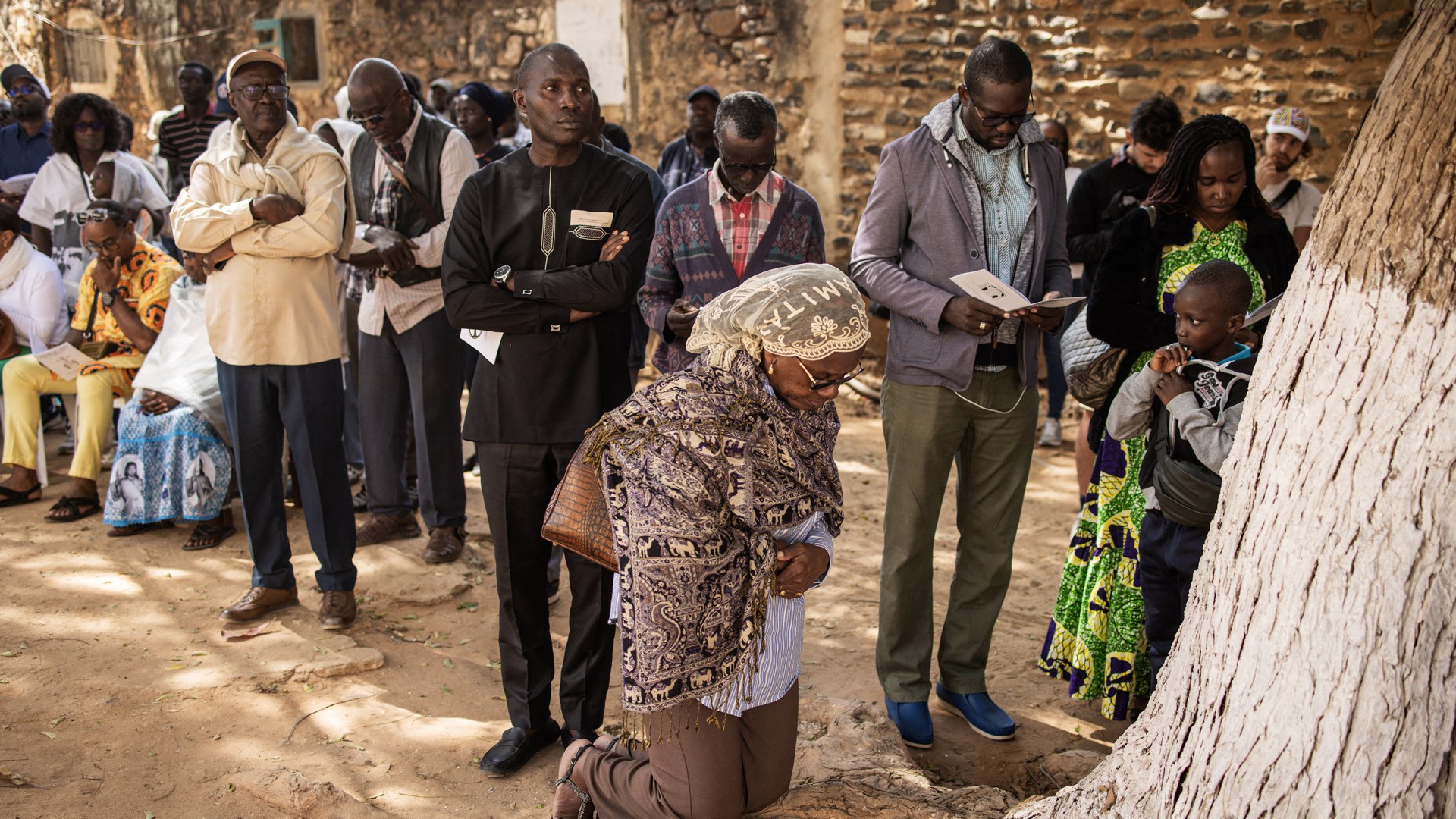
Catholics pray during a Good Friday service outside of St. Charles church in Senegal on March 29, 2024.

Catholics pray during a Good Friday service outside of St. Charles church in Senegal on March 29, 2024.

Christianity Today April 11, 2024
John Wessels / Contributor / Getty

In Senegal, Muslims love to share meat. Christians share porridge.

Ending the monthlong Ramadan fast this week, the faithful in the Muslim-majority West African nation invited Christian friends to celebrate Korite (Eid al-Fitr), focus on forgiveness and reconciliation, and share a wholesome meal of chicken.

A little over two months later during Tabaski (Eid al-Adha), the mutton from sheep slaughtered in commemoration of Abraham’s sacrificing of his son will likewise be distributed to Christian neighbors. (Both feasts follow the lunar calendar and change dates each year.)

But for Christians, the sign of interfaith unity is the porridge-like ngalakh.

“Senegal is a country of terranga—‘hospitality’—and the sense of sharing is very high,” said Mignane Ndour, vice president of the Assemblies of God churches in Senegal. “Porridge has become our means of strengthening relations between Christians and Muslims.”

Sources told CT the holiday treat is highly anticipated.

In the local language, ngalakh means “to make porridge,” and the chilled dessert marks the end of Lent. Between 3 and 5 percent of Senegal’s 18 million people are Christians—the majority Catholic—and families gather to prepare the Easter fare on Good Friday.

Made from peanut cream and monkey bread (the fruit of the famed baobab tree), these core ngalakh ingredients are soaked in water for over an hour before adding the millet flour necessary to thicken the paste. The dessert is then variously seasoned with nutmeg, orange blossom, pineapple, coconut, or raisins.

Tangy and sweet yet savory, the porridge gets its brownish color from the peanut cream.

The Christian community in Senegal traces its origin back to the 15th-century arrival of the Portuguese. And Jacques Seck, a Catholic priest in the capital of Dakar, stated that ngalakh developed during the period of French colonialism as mulatto servant women prepared their masters a meatless meal during the Lenten fast.

Ndour said that over time the tradition extended to Protestants as well.

Its believers numbering only in the thousands, the Protestant Church of Senegal was founded in 1863, becoming more visible in the 1930s. Lutherans came in the 1970s and are the second-largest Christian denomination today, alongside Methodists, Presbyterians, and newer evangelical groups.

But for some, ngalakh is controversial.

“Evangelicals do not share this tradition,” said Pierre Teixeira, editor in chief of Yeesu Le Journal, an interdenominational monthly publication. “But the rare churches that practice it broadcast a film on the gospel before distribution.”

Teixeira, a former Baptist pastor, grew up in a Catholic home in Dakar. Recalling the porridge from his youth, he said it was a symbol of communion that commemorates the death of Jesus on the cross. But today the focus of Senegalese evangelicals is on societal integration. In the past 20 years, the small community has seen an increase in its students at university and efforts by believers to influence the marketplace and political arenas.

Ndour, raised in a Muslim home, believes the two activities are compatible.

“Easter is not simply the feast of Catholics, and ngalakh is the feast of all Senegalese,” he said. “It represents a path of understanding, through religion.”

While Protestants value the practice of terranga, some view an interfaith dessert as an extrabiblical barrier to evangelism that should be dropped as a local tradition. Others, Ndour said, do not distribute the porridge to Muslim neighbors lest they be obliged to reciprocally share in the Muslim Tabaski feast, which they view as prohibited given local interpretation of Paul’s warning about meat sacrificed to idols.

But many cherish the social custom within Senegal’s lauded religious tolerance.

“Ngalakh is a delectable dish meticulously crafted with love and passion,” said Eloi Dogue, vice president of Africa operations for Our Daily Bread Ministries. “It serves as a symbol of unity and goodwill among neighbors, particularly our Muslim friends.”

Islam came to Senegal in the 11th century through trade and spread through a combination of conquest and heartfelt conversion. Rejection of colonialism attracted many locals into Sufi orders emphasizing a mystical interpretation of Islam, which merged Senegalese and Muslim identities.

Other Senegalese interacted closely with the foreign authorities and assimilated their culture. But the French concept of laïcité combined easily with Sufi religious tolerance, and the Senegal constitution’s first article declares the nation to be a “secular, democratic, and social republic.” Its first president was a Catholic, and voluntary religious education at school allows parents—often in mixed marriages—to educate their children in the faith of their choice or none at all.

But Dogue, also international director of Dekina Ministries and former evangelism and missions executive secretary for the Association of Evangelicals in Africa, said the value of ngalakh is not only in coexistence.

“Yes, it is originally a Catholic tradition,” he said. “But it is also a means of fostering outreach and building bridges of understanding, bearing witness about God’s care, love, and goodness.”

Americans, he added, could similarly invite Muslim neighbors over to share their Thanksgiving meals.

Ndour grew up mostly ignorant of ngalakh in his village 95 miles southeast of Dakar. Aware of the local Lutheran mission headquarters, his family belonged to the Mouride Sufi order. He first recalls trying the porridge dish at age 15; however, it was life at university in the capital that introduced him to its true meaning.

But there he was also introduced to the assurance of salvation in Christ. An evangelical pastor shared his faith, and Ndour has been sharing his since. In this, the holiday meal can be used as a bridge.

“Ngalakh opens doors that were previously closed,” he said. “This can then allow us to talk about the true Easter sacrifice—which is Jesus.”

News
Wire Story

Baptists Call on House Speaker Mike Johnson to Stand with Ukraine

Seminary leaders say that the country, where Baptists are the largest Protestant denomination, has lost hundreds of churches in the war with Russia.

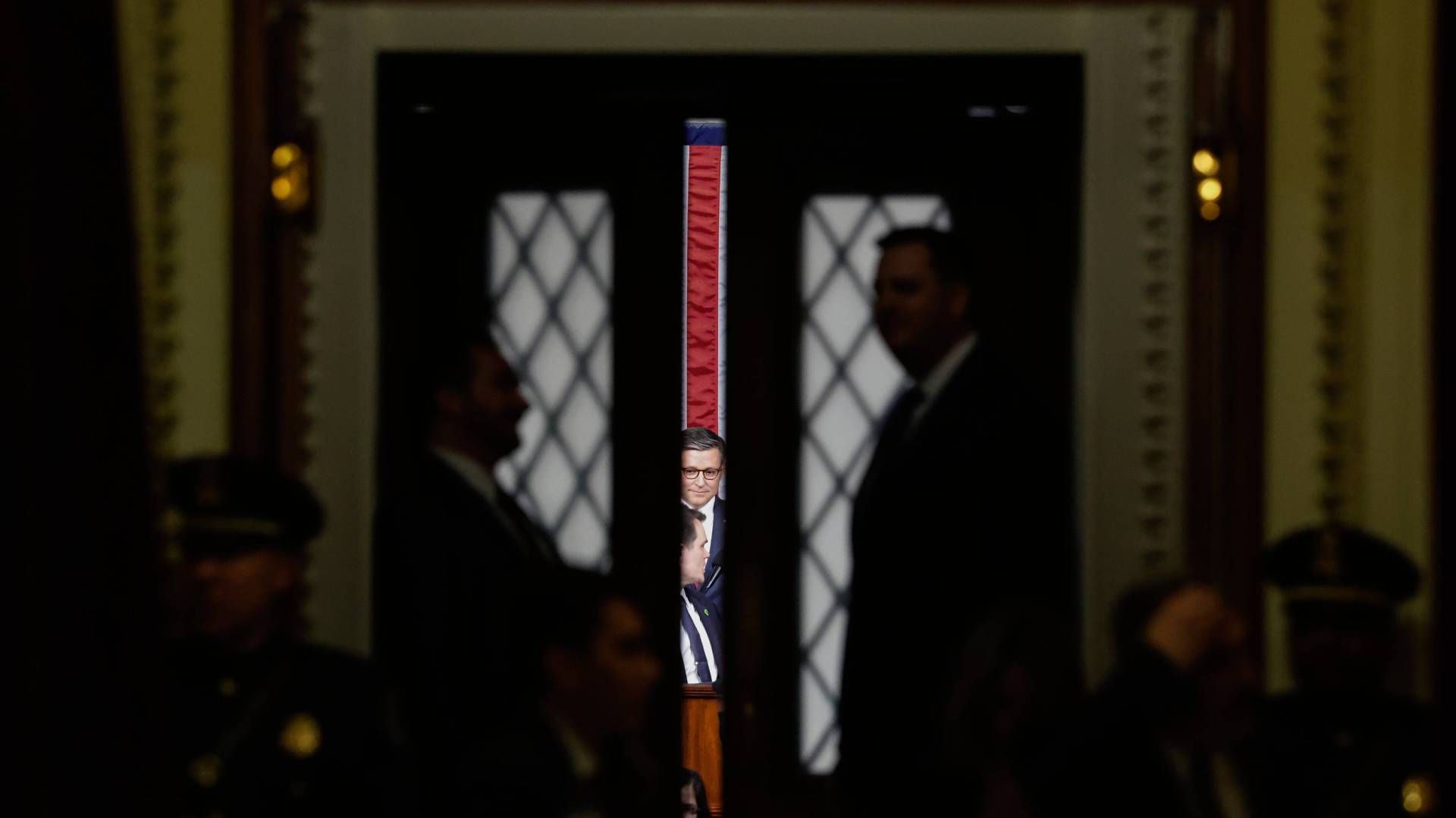
US House Speaker Mike Johnson

US House Speaker Mike Johnson

Christianity Today April 11, 2024
Anna Moneymaker / Getty Images

Southern Baptist leaders have written to US House Speaker Mike Johnson, a member and former official of their denomination, urging him to support Ukraine in Russia’s war against its Eastern European neighbor.

“As you consider efforts to support Ukraine, we humbly ask that you consider the plight of Christians,” wrote the leaders, who either have ties to the SBC’s Southwestern Baptist Theological Seminary or to Ukrainian Baptists. “The Russian government’s decision to invade Ukraine and to target Baptists and other evangelical Christians in Ukraine has been a tragic hallmark of the war.”

The letter, sent Monday, was signed by Daniel Darling, director of the seminary’s Land Center for Cultural Engagement; Richard Land, the namesake of the center and a former president of the Southern Baptist Convention’s Ethics and Religious Liberty Commission (ERLC); Yaroslav Pyzh, president of Ukrainian Baptist Theological Seminary; and Valerii Antoniu, president of the Baptist Union of Ukraine.

Johnson is a former trustee of the ERLC, serving when Land—who also is a former commissioner of the US Commission on International Religious Freedom—was its president.

In February, the Senate passed a $95 billion package for funding Ukraine, Israel and other allies, with $60 billion earmarked for Ukraine. But Johnson, whose tenure as House speaker may rely on his handling of the bill, has yet to schedule a House vote on the funding measure.

Conservatives in the House who oppose funding for Ukraine on “America First” grounds, led by US Rep. Marjorie Taylor Greene of Georgia, have threatened to trigger a vote to remove Johnson from office.

“Speaker Johnson has a really difficult job right now, maybe the most difficult a speaker has ever had,” Darling said in an interview with Religion News Service. “I think he does in his heart want to support Ukraine.”

But Darling noted that Johnson, whose office did not immediately respond to the letter, is trying to balance the differing views of House members.

The Baptist leaders told the speaker in their letter: “We believe that God has put you in this position ‘for such a time as this.’”

Darling said he hopes the letter will serve as an encouragement to Johnson while also ensuring that he and others are aware of religious liberties being violated in areas of Ukraine that Russia has occupied since 2014.

“Evangelicals and Baptists are being mistreated in the Russian-occupied territories significantly,” he said. “We’ve lost probably 300 churches. Pastors are really struggling over there, wherever Russians have taken over.”

Hannah Daniel, the ERLC’s director of public policy, told RNS in a statement that Southern Baptists have long opposed authoritarian regimes’ prohibitions of religious freedom.

“The resolve of our lawmakers to stand with Ukraine has wavered, despite the brutal persecution of Christians, particularly Baptists, the kidnapping of children, and the destruction of churches because of Russia’s unjust and unprovoked invasion of Ukraine,” she said. “Congress must look past any hesitation or obstinance and overcome division to swiftly pass such a package.”

Globally, religious freedom experts are concerned about the war’s effects on Ukraine’s faith communities.

“The Russian military has indiscriminately bombed churches, monasteries, kingdom halls, mosques, synagogues, cemeteries, and other religious sites,” said Nury Turkel, chair of the US Commission on International Religious Freedom, a quasi-governmental watchdog group, at a hearing in March, “and the Russian soldiers have abducted and tortured religious figures because of their leadership role.”

Darling said he and the other signatories realize “the details have to be worked out” but they chose to write to Johnson because of their desire to see continuing congressional and US support of Ukraine, even as Baptist entities have spent millions in donations to support refugees now living outside the war-torn country.

“He has said he’s committed to doing it so I think he will,” Darling added. “But we wanted to encourage him as well and not just be another person just throwing stones at him but to say, hey, we’re supporting you, we care about you.”

Theology

We Are ‘Gods’ Because We are God’s

The Book of John reminds us that Jesus’ humanity makes ours possible.

Christianity Today April 11, 2024
Illustration by Christianity Today / Source Images: WikiMedia Commons

Nearly halfway through John’s Gospel, Jesus tells those gathered in the temple at the Feast of the Dedication, “Is it not written in your Law, ‘I have said you are “gods”’?” (10:34). In effect, Jesus says that Scripture says that God says, “You are gods.” What is Jesus on about?

It really is quite surprising. After all, we read the Scriptures and learn that human beings are not gods—at least, not in the sense that God is God. When the mighty Nebuchadnezzar failed to recognize the difference between human beings and God, he ate grass alongside the oxen until he learned as much (Dan. 4:1–37).

Yet, strange as it seems, Jesus saying “you are gods” tells us something essential about what it means for us—and for Jesus—to be human.

Now recall that, shortly before this statement in John 10, Jesus had said, “I and the Father are one,” and that those who heard him recognized the statement as an offense to God punishable by stoning (vv. 30–31; Lev. 24:10–16).

Their concern was not unfounded. Jesus said this at the Feast of the Dedication, when Jews remembered how God delivered them from Antiochus IV, whose chosen name Epiphanes (meaning either “illustrious” or “manifest”) suggested he thought of himself higher than he should have. So, stones in hand, those gathered around Jesus charged him: “You, a mere man, claim to be God” (v. 33).

Their accusation of blasphemy includes the critical idea that a human being cannot be God. And it is this idea that makes Jesus bring up the time that God called human beings gods:

Is it not written in your law, “I said you are gods?” If [God] called them to whom the word of God came “gods”—and the Scripture cannot be broken—are you saying of him whom the Father consecrated and sent into the world “you are disparaging the divine” because I said, “I am God’s son”? (John 10:34–36, my translation)

Now to us, Jesus’ reply might at first seem like a trick. It’s as though Jesus downplays his claim about being one with the Father by saying that all human beings are, in some manner of speaking, gods! Jesus’ answer can also be read not as a trick but as a profound theological claim: Humanity and divinity are not ultimately incompatible.

If we want to understand Jesus’ larger argument, we must look at the context of the biblical passage he quotes and interprets, which is Psalm 82. This complex psalm envisions God addressing a council of human judges (or deities, or divine kings—scholars today are divided in their interpretation, but the ancients understood this as addressing human beings).

In this psalm, these human judges do not do justice to the poor and needy—a failure that reflects their fundamental lack of knowledge and understanding (vv. 1–5). So God judges them and says, “You are gods; you are all children of the Most High. But you will die like mere mortals and fall like every other ruler” (vv. 6–7, NLT).

These human judges are “gods” in that they can exercise judgment like God does. But whereas God’s judgment is just, wise, and impartial, their judgment is unjust and benefits the wicked. So, these humans will not live forever—as gods are supposed to—but will die as mortals.

Returning now to John’s Gospel, Jesus quotes this psalm within his appeal to those gathered in the temple to judge rightly about his works. He tells them, “Believe the works, that you may know and understand that the Father is in me, and I in the Father” (10:38). This echoes his earlier appeal to those troubled by his healing a paralyzed man on the Sabbath: “Stop judging by mere appearances, but instead judge correctly” (7:24). In this, Jesus affirms our godlike capacity for exercising good judgment and asks us to judge how his works make the case for his oneness with the Father.

The capacity that makes us most godlike is also the one that is supposed to make us know and trust that the Father is in Jesus and that Jesus is in the Father. This is one reason that Jesus reminds his hearers that God called them “gods” when asking them to judge with right judgment about his works.

To be sure, Jesus is not saying we are gods in the way that God is God. The word god in ancient Greek had more range than it does in English now. Ancient Greek philosophers like Plato and Aristotle used the word god to talk about what human beings can make of ourselves when we live in the best possible way. To them, for a human to be like god was to approach immortality, happiness, goodness, and wisdom, among other things.

For John’s Gospel, we are most godlike when, through trust in Jesus, we become God’s children and come to have eternal life (1:12). To put it another way, we are gods because we are God’s.

Sometime after John’s Gospel was written, ancient Jewish interpreters read Psalm 82:6–7 as a story about God making humans immortal like gods, and humans losing their immortality through sin. So it was with Adam and Eve in the Garden of Eden, and so it was when God restored Israel’s immortality by giving them the Law at Sinai, only for them to lose it again after the incident with the golden calf.

Early Christians came to see Psalm 82:6–7 as a story about how God adopted humanity when Jesus gave us “the right to become children of God” (John 1:12). Having become once again “children of the Most High” (Ps. 82:6, NLT), we will no longer die as mere mortals.

And what of Jesus’ humanity? When Jesus quotes Psalm 82, he is establishing a basic compatibility between humanity and divinity. But Jesus is also distinctive among human beings on account of his oneness with the Father. This is not because of what Jesus does of his own accord so much as it is because of what the Father does in him.

In the same breath that Jesus identifies himself as “God’s Son,” he refers to himself as “the one whom the Father set apart as his very own and sent into the world” (10:36). This language of consecration, used as it is during the Feast of the Dedication, is about how God sets Jesus apart for sacrifice, just as new altars are set apart for sacrifice (Num. 7:1–11; 1 Kings 8:63–64). In an astonishing turn, then, Jesus is most distinctive in his oneness with the Father at just the point he is in most solidarity with us, namely, in being mortal.

And this gets at the meaning of Jesus being at once human and divine. It is not that Jesus is superhuman (much less a superhero or a superstar), but that when he lays down his life for us (and takes it up again), it is God’s power at work in him (John 10:17–18).

This brings us full circle to what it means to be the kind of humans that God calls “gods .” When we judge with right judgment about Jesus’ words and works, we see how they purify disciples for love, liberate the afflicted, and bring life to the world (5:1–9). As we ourselves are purified, liberated, and made alive by Jesus, we find ourselves able to love our neighbors in the same way that Jesus loved us. So, in discerning what Jesus is like, we better imagine and embody what our lives with others can become.

Jesus’ image of the vine and branches in John’s Gospel gives us another angle on the continuity between his humanity and ours. Jesus is the vine and his disciples are fruit-bearing branches of the vine (15:1–7). Just as a branch broken off of its vine loses its vitality and capacity to bear fruit, Jesus tells his disciples, “apart from me you can do nothing” (v. 5). But the disciples are not broken, withered branches. They are branches that stay on the vine.

Because Jesus is alive now, we do not need to become Jesus to be like him. The branches need not replace the vine. By God, our lives—our peculiarities, limitations, and all—might become receptive to Jesus’ power the way a fruit-bearing branch is receptive to the power of its vine (vv. 1–8).

The fruit we bear with Jesus is the work of love, and this work takes the shape of Jesus’ crucifixion and resurrection. This is what it means to be God’s children, what it means to have eternal life, what it means to be addressed by God as “gods”: to be human like Jesus. In other words, Jesus’ humanity makes ours possible.

Wil Rogan is assistant professor of biblical studies at Carey Theological College in Vancouver.

Portions of this article are excerpted from Wil Rogan, “Jesus’s Humanity and Ours: John’s Christology and Ancient Views of Self,” in Early High Christology: John among the New Testament Writers, ed. Joel B. Green, Diane G. Chen, and Christopher M. Blumhofer (Minneapolis: Fortress, 2024), 63–74.

News

Some Evangelicals Want a Third-Party Option, Even Without a Chance at Winning

The American Solidarity Party is a small but growing alternative to the Trump-Biden race.

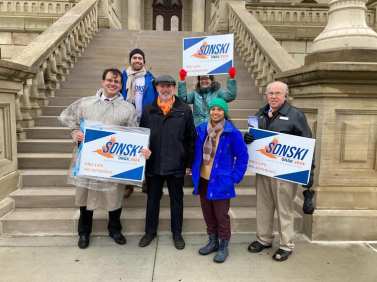
Peter Sonski and Lauren Onak are running on the American Solidarity Party ticket.

Peter Sonski and Lauren Onak are running on the American Solidarity Party ticket.

Christianity Today April 11, 2024
Courtesy of the American Solidarity Party

Charlie Richert would really like to stop voting for his dad.

But in the last couple presidential election cycles, the 30-year-old attorney in Indianapolis has been unable to square his conscience with picking either the Republican or Democratic party nominee, so he’s resorted to writing in a name.

“There’s no way I can escape having my faith inform how I vote,” said Richert, a nondenominational Christian who grew up Republican. “Unfortunately, we’ve been kind of stuck in a doom loop of candidates at the presidential level that I’ve just not felt comfortable voting for.”

This year, he’s not drawn to alternatives like Robert F. Kennedy Jr. or Cornel West. “Maybe I’ll write in Abe Lincoln this year. Sorry to my dad, but a new name to write in would be fun,” he said.

He recalls seeking to convince his classmates in an eighth-grade mock election that they should support Mitt Romney, but his chagrin with the Republican Party’s presidential nominee tracked with the ascension of Donald Trump.

In a year when both major party presidential candidates are viewed unfavorably by a quarter of Americans, many find themselves less excited about the two options at the top of the ticket. But, like Richert, that doesn’t mean they’re ready to go for third-party options.

The third-party candidates running in 2024 span the ideological spectrum, from independents Kennedy and Princeton University professor Cornel West to Green Party candidate Jill Stein. Then there are the more obscure party or candidate options—the Prohibition Party, Andrew Yang’s Forward Party, Maryland politician Jason Palmer, and that man in Texas who changed his name to “Literally Anybody Else.”

Perhaps the most promising third-party attempt, the No Labels Party, drew in funding with its centrist messaging, but its efforts failed before Election Day. The party ended its presidential campaign last week after being unable to find “candidates with a credible path to winning.”

RFK Jr. has emerged as the top third-party candidate this race, polling just under 12 percent, higher than any third-party candidate since businessman Ross Perot in 1992. The son of former attorney general and senator Robert F. Kennedy, his popularity is aided by his high-profile last name.

After failing to make headway in the Democratic primary, Kennedy opted to run as an independent. He is only on the ballot in half a dozen states, but his campaign is on a signature-collection blitz and has vowed to get on the ballots of all 50 states this fall.

Kennedy has said his campaign is “a spoiler for President Biden and President Trump.”

It remains to be seen which major party candidate would be hurt more if Kennedy’s strong polling translates into votes come November. But both parties are taking the threat seriously, with the Democratic National Committee and the Republican National Committee (and Trump himself, for that matter) going after the independent candidate.

“I suspect at least some of the support for RFK Jr. is really just a potholder for the anger and dissatisfaction with Donald Trump and Joe Biden,” said Mark Caleb Smith, a political scientist at Cedarville University in Ohio.

Kennedy is Catholic and at times has appealed to his faith in interviews and on social media. His policies span the ideological and political spectrum, and he’s best known for his environmental activism.

He’s also antiestablishment and was a vocal critic of the COVID-19 pandemic lockdowns and vaccine mandates, and he has criticized the impact that had on the right to religious assembly. He’s pro-choice and believes that the Dobbs v. Jackson decision overturning a national right to abortion was a mistake.

For evangelicals seeking candidates who reflect their values and beliefs more closely than either of the major parties, some have backed indepedent candidates or found new political homes in lesser-known third parties.

Dale Huntington, a 41-year-old pastor of City Life Church in San Diego, California, landed on the American Solidarity Party (ASP), a small but growing Christian party founded in 2011. Its platform is largely shaped by social teaching from Catholic thought.

He found out about the group because of evangelical author and professor Karen Swallow Prior, who is a member of ASP’s advisory board.

“I don’t support the death penalty or abortion. I am largely anti-war and anti-police brutality,” Huntington said. “I would say voting for a third party is choosing to acknowledge the system as it is has become broken.”

Huntington used to alternate between Republican and Democrat tickets but ultimately felt like neither was holistically pro-life.

In 2020, the American Solidarity Party ran its first evangelical presidential nominee—retired teacher and former Evangelical Free Church elder Brian Carroll (whom CT reported on at the time).

Carroll had long had his doubts about the Republican Party’s level of commitment to pro-life policies. But it was the GOP’s hardening on immigration, education, and other issues in 2016 that made him defect entirely.

After that, he went looking for other options. When he stumbled upon the ASP, he said, “[I] read the platform once and I said, ‘Yes, this is it.’”

When Carroll ran, the COVID-19 pandemic and lockdowns made campaigning difficult. It also was a challenge for volunteers to garner signatures during lockdowns. Despite that, they had some success. Last presidential election, the American Solidarity Party made it onto the ballots of 8 states—and received write-in votes in 31 states. They drew over 42,000 votes in total.

“We’d love to double the number,” Marcos Lopez, party chair, told CT.

Ballot access is a huge challenge, he added, for a party facing limited financial resources, a small pool of volunteers, and stringent state requirements to get on the ballot.

Despite challenges, interest in the group is growing. There was a surge in volunteer signups online after Super Tuesday last month, when it became clear that November would bring a Donald Trump and Joe Biden rematch.

Party members acknowledge that winning is not in the cards, but they believe a third option allows Americans who reject the “lesser of two evils” argument to vote in a way that respects their conscience and sends a message.

“Whether you’re Catholic, whether you’re Baptist, whether you’re a nondenominational evangelical, whether you’re Orthodox—anyone who is serious about their faith, and anyone who’s serious about wanting to see these policies grounded in advancing the common good—anyone who wants to see those things happen is willing to come to the table,” Lopez said.

The issue of abortion has been a particular draw for religious individuals, Lopez said. “We’re looking at an issue in November where neither [Republican nor Democrat] candidate really fits the label of pro-life. … In many states we’re going to be the only pro-life option people can vote for, and that’s a very sad reality. But it is a reality, and that makes our work even more important.”

Abortion can be a deal breaker for some evangelicals when it comes to crossing the aisle to support Biden. While the Trump campaign has highlighted pro-life wins (such as the Dobbs decision), Trump has presented a softer approach to the issue in recent days.

On Monday, he said it should be left to the states to carve out individual abortion policies. “At the end of the day, this is all about the will of the people. You must follow your heart, or in many cases, your religion or your faith,” he said in a video statement.

On Thursday, he said in response to a reporter that he would not sign a federal abortion ban.

This year, Peter Sonski, a former editor for the National Catholic Register, is the American Solidarity Party candidate. Sonski, 61, has been a member of both the Democratic and Republican parties throughout his life but was frustrated that neither fully matched his religious convictions.

“We want to protect human life, give it all the protections of the law,” Sonski said of his party. “At the same time, we recognize there are many more things that the government can do—and society in general can do—for women who have needs in pregnancy … health care, expanded child tax credits, better housing options; all of these are factors.”

The father of nine and grandfather of six brings the experience of an elected official to the role: He serves as a school district member for the board of education for Connecticut’s 17th District. He tapped Lauren Onak, a 35-year-old stay-at-home mother and community organizer, as his vice president candidate.

Preparing my annual baccalaureate sermon, I thrashed about for an appropriately generic, one-size-fits-all biblical text for those who don't believe the Bible. I seized upon Numbers 13-14, Moses' sending of the spies into Canaan to scout the Promised Land for the arriving Hebrews.
This class of graduates seemed tentative, unsteady, uncertain of their future in a downsized, devoluted American economy. This seemed the perfect text for a final sermon on their way out of Dear Old Duke.
The Hebrews stand at last on the threshold of the Promised Land. What lies ahead? Two groups of spies are sent out to reconnoiter. At the end of 40 days, they return with their respective reports for Moses and Aaron-a majority report and a minority report.
"The land is plentiful," said the minority, "but the cities are strongly fortified."
"Let's go take the place!" exclaims Caleb. (Caleb means "dog," take it as you will.)
The majority report is more pessimistic. "The people over there, why, they're like giants! Next to them, we looked like grasshoppers!"
The majority report begins by saying that the Canaanites are men, then it says they are big men, finally calling them
"Nephilim" (cf. Gen. 6:1-4). Giants!
Actually, the majority and the minority reports agree to a great extent. The difference lies in the response. Caleb says, "Let's go for it; God is with us!"
But the people of Israel have a different reaction. "We should have died in Egypt! We had it better back in slavery!" they cry. "We're going to die out here, eaten by these Canaanite giants!"
You can see where I was moving with my sermon: Don't worry, graduates: you can do it! We can build cars and computers as well as the Japanese! The economy will get better! Let's go for the Promised Land-or at least a 2 percent higher GNP!
Yet, what interested me in this text was not the Israelites' positive or negative attitudes, nor mine, nor those of the graduates. It was God, the one who had set this story in motion, who caught my attention.
When the Hebrews stop their whining, God gets angry. He says to Moses, loud enough for everyone in Israel to hear, "How long will I have to put up with these people? I'm going to choose a good people to love, then I'm going to kill all of you!" (Num. 14:11-12, author's paraphrase).
Moses tries to reason with the Lord: "You don't want to do that."
God: "I'm God. I can do anything I want."
Moses: "How is it going to look to the Egyptians? You've gone to all this trouble to bring us out of slavery, only to kill us? All the other nations will talk about it. Their gods will say, 'Yahweh is good at liberation, but he can't pull off occupation.' Wasn't it you who said you were 'slow to anger and abounding in steadfast love'?"
God: "All right, all right. But I am not going to let you in until everyone who fell for that lousy report is dead."
Suddenly, I no longer wanted to preach my little, conventional Power of Positive Thinking sermonette on success. I wanted to preach about a God who was large, prickly, anthropomorphic, a lot like us. I wanted to be in the presence of a God who needed mortals like Moses to go up and reason with him, in prayer, to hold him accountable to his promises, a God who had feelings and was capable of being hurt by the people he loved.
This is the God Israel has taught us to love. This is the God who, though often angry with us, never gave up on us; still, despite our fears and disbelief, still loves us, even yet.

William H. Willimon is dean of the chapel and professor of Christian ministry at Duke University, Durham, North Carolina.

Onak was raised a Democrat but defected to the Republican Party due to her interest in the pro-life movement. But a number of things caused her to break with the party, culminating in the birth of a daughter with a rare genetic syndrome and seeing how the social safety net of a “blue state” like Massachusetts benefited her daughter’s special needs.

It was “seeing the importance for this social safety net very much in action and having to push back against this mindset of, if you need help from the government, it makes you somehow weak,” she said.

She joined the American Solidarity Party in 2021, following the chaos of the COVID-19 pandemic and social unrest, believing it offered a “reasonable voice in politics.” At 35, she’s just old enough to join the presidential ticket. She believes her candidacy is important for other disillusioned millennials.

One of those millennials is Bob Stevenson, a 40-year-old pastor in Chicago who found himself frustrated with having to choose which convictions to prioritize when he went to the ballot box.

He felt like he had to pick between unborn babies or immigrants and people in poverty.

“It’s almost like, that’s a red thing or that’s a blue thing. And I’m like, that’s a Christian thing,” Stevenson told CT. Although he said no party is perfect, he found the American Solidarity Party “straddles those concerns in a way that partisan politics don’t. So that was deeply attractive to me.”

Third parties have a tough uphill battle, largely due to the two-party structure that dominates American politics.

“We do have an abundance of third parties,” Smith said. “They just can’t seem to rise to the point where they have a significant impact. Most of that is because the two major parties absorb them.”

But third parties still have an effect: Smith gave the example of the Green Party elevating climate and environmental issues, which resulted in Democrats incorporating more of those concerns into their platform; or Republicans (at least in days past) leaning more libertarian and drawing voters away from the Libertarian Party. Other examples include the abolition of slavery and universal health care.

Smith says that rather than third parties or candidates becoming competitive, major changes in American politics usually happen within the vehicle of a major party. Or, at times, a major party falls by the wayside only to be replaced, such as the Whigs, who were replaced by Republicans.

“It isn’t that a third party rises up and it’s competitive. It’s one of the two major parties just implodes, and then this party steps forward and kind of picks up the pieces and you see something else emerge,” Smith said.

While the framework of Republican and Democratic parties has been in place since 1856, Smith said dissatisfaction with the options is at a “pretty significant and historical” level: “We keep seeing that in primary results on both sides of the aisle—even though the contest has been settled for a long time—that both candidates are getting pretty significant pushback.”

Former South Carolina governor Nikki Haley continues to garner primary votes, despite dropping out after Super Tuesday’s primaries confirmed she had no viable path to the Republican nomination for president. On the Democratic side, progressives organized to lodge protest votes to send a message to Biden in Michigan’s Democratic primary, racking up more than 100,000 “uncommitted” votes.

But that may not translate to large numbers of Americans choosing to send a statement by voting outside the major parties on November 5.

Americans unhappy with their options may be more likely to tune politics out and sit elections out entirely. Those who head to the ballot box despite frustration and alienation from both major parties, Smith noted, “are a fairly small group of people.”

Christians who vote third party are aware that they’re a minority. But they think there are some things more important than making a pragmatic choice. Stevenson said when friends or family found out he planned to vote third party, they looked at him like he had his “head screwed on backwards.”

But he believes that “it’s a way for us to bear witness in the United States where Christians have historically, over the past couple of decades, aligned themselves with a political party and have shown themselves to be political opportunists and pragmatics.”

“I think it’s an opportunity for us to offer a different way. We can be like, actually the way of Jesus doesn’t look like an elephant or a donkey.”

Correction: Brian Carroll had served as an elder in the Evangelical Free Church, not the Evangelical Covenant Church.

A photo of Sean Cheng
Testimony

How a Chinese-Born Research Scientist Became a Daring Online Evangelist

CT’s outgoing Asia editor recalls how God led him to America, toward the Christian faith, onto the internet, and outward to serve the global Chinese church.

Christianity Today April 10, 2024
Courtesy of Sean Cheng

I was born in southwest China, in the Ganzi (Garzê) Tibetan Autonomous Prefecture of Sichuan Province. Only a few days after birth, I was sent to Chengdu, the province’s capital city. My sister and I were raised by our grandmother while my parents, both medical doctors, were sent by the Communist Party to the rural Tibetan area many high mountains away from the city, where children could not get a decent education.

I knew at a very young age that I had to get outstanding grades to enter college and avoid living in the cold and poor mountainous area. I studied hard and excelled in school.

At age 16, I went to Shanghai to study chemistry at Fudan University, one of China’s top schools. This was in the 1980s, after China had opened its door to the world. At this time, Chinese universities were quite liberal and tolerant of free thinking, and Fudan was known as one of the most “Westernized” universities.

In college, I began to rebel against indoctrination into official Communist ideology, and I wanted to learn more about Western thought and culture. But my worldview had been influenced by years of atheist education. I thought I did not believe in anything and had no interest in any religion.

After graduation, I went back to Chengdu and started to work in a research institute as a polymer scientist. After work, I played a lot of mahjong, gambling late into the night, but I was unhappy in my heart. After the crackdown on the student movement in Tiananmen Square in 1989, I was heartbroken and lost. (I witnessed similar forms of violent suppression on the streets of Chengdu.) I sank into deep darkness and hopelessness. I could not find an answer to my heart’s questions, and life became meaningless and unbearably painful. I decided that I would leave China and go to America for graduate study, and I began preparing for the relevant tests.

Meanwhile, I started reading a lot of books on philosophy and religion. Most of the books I found on Christianity treated it negatively, but I also became friends with a few Christians at the “English corner” by the Jinjiang River in the center of Chengdu.

Arriving in America

In 1990, to make some extra money, I went with a British expedition team to the source of the Yangtze River in the Tibetan areas of Sichuan, Gansu, and Qinghai Provinces, serving as their interpreter. Out of 30 people on the team, 27 were Christian, and they used hovercrafts to go upstream on the Yangtze and access remote Tibetan villages, where they would do charity work. I spent more than a month with them on the Tibetan plateau.

We traveled on dangerous roads, braving snowstorms, mudslides, and other forms of severe weather. The team’s official Chinese hosting company, whose primary interest was making money for themselves, created additional difficulties on top of cultural, political, and natural challenges. But I observed how the British Christians prayed when facing adversity, and how they worshiped God joyfully, singing guitar-led hymns in their tent. I was moved by their genuine and selfless love for the Tibetan people, and I found myself wishing for their kind of life and faith.

In the summer of 1992, I received a graduate school admission letter from the University of Alabama, and I waited outside the US consulate in Chengdu for four days and four nights to apply for a student visa. The I-20 paperwork certifying my admission was lost when the school mailed it the first time. I had to make a very expensive international phone call to request another copy, which I finally received on the third day in line outside the consulate.

In August 1992, I arrived in America with $42 in my pocket (that was all my savings—one of my relatives bought me the flight ticket). I was ready to start pursuing the “American dream” of freedom, democracy, happiness, and scientific achievement.

But what I found was salvation in Christ. I joined a Chinese Bible study group on campus and became a Christian soon thereafter. Because I had no car, I relied on Chinese friends to take me around for shopping and other things. Christians from the fellowship offered their help, and on Friday nights they would take me to their Bible study, even though I was there mostly for the Chinese food.

Early on, I often debated with the Christians about theories of creation and evolution. Yet I was increasingly moved by the Christian charity these friends showed to me, especially because of the sharp contrast between Christian love and the “we should hate our enemy” teachings I had absorbed from my Communist education. I realized that their ability to act out sacrificial love came from faith in God, the same faith that inspired the British Christians’ love for the Tibetan people.

I also began to realize the hatred and other darkness in my own heart, and my need for salvation. On a Sunday in October 1992, I was sitting in a pew at Tuscaloosa First Baptist Church. The pastor preached an evangelical sermon about Christ’s cross and God’s love. I was moved to tears. When the pastor asked if anyone would believe in Christ and go forward to the pulpit, I stood and walked to the front, and the pastor held my hands as we prayed. I was baptized in that church only two months after arriving in the US.

Internet evangelism

After I graduated with my master’s degree in 1995, I started working in the US chemical industry, first as a scientist, then as a research and development manager. The work brought me to Arizona, then New Jersey, and then Maryland. At the same time, I grew spiritually and served in local Chinese churches.

It was also in 1995 that I started writing about Christianity on the primitive Chinese internet. Pretty soon I began engaging online with non-believing Chinese intellectuals in China and overseas. This made me one of the earliest Chinese Christian apologists on the internet.

Even though there were only a few online Christians then, Christianity was one of the hottest debate topics on the early forums that sprang up on the Chinese internet during its infancy. Debates about science and Christianity appeared on a list of “Top 10 Chinese Internet News” in 1996 and 1997, and I was one of the few Christians named on the list.

In 1996, I became one of the earliest volunteer coworkers for the ministry Chinese Christian Internet Mission. We uploaded apologetic and evangelistic materials on our website for people in China (the government hadn’t yet erected its “Great Firewall” of censorship). I also started my own personal gospel website, “Jidian’s Links,” in 1998. (Jidian is my penname, and in Chinese it is the name of the biblical figure of Gideon.)

At the end of the1990s, many Chinese online forums became popular. Christians, including myself, were active on those platforms, dialoguing with intellectuals in China about Christian faith. Many influential Chinese intellectuals were involved in such conversations.

When more useful internet platforms such as blogs, Douban, Weibo, Zhihu, and WeChat became popular in the 2000s and 2010s, Chinese Christians quickly took them up for evangelistic purposes. I started writing blogs, gradually expanding my focus beyond apologetics to cover culture and current affairs. In 2012, a collection of my blog essays, The Search and the Return, was published in China. In an official Chinese Communist Youth League journal article published that year, the author called me one of the most influential “internet missionaries” that Chinese youth should be aware of.

Protection and providence

But my evangelism in China was not limited to online writing. Before the Chinese government tightened its control on religions in 2018, there was a golden window of 10 or 15 years when evangelism was possible inside the nation itself. During this period, I went back to China two or three times each year, giving evangelistic “free and public seminars” at Christian bookstores and coffee houses run by house churches while meeting Christians and seekers in many Chinese cities.

In 2011, I became a full-time Christian worker. I joined the Chinese media ministry Overseas Campus Ministries (OCM), based in California, to serve as director of its evangelism division and chief editor of its magazine and media platforms. Through our WeChat account, we reached more than 70,000 subscribers before government censors blocked and deleted it. And we organized a Christian blogger “circle” in China to inspire and foster more Christian authors. I answered nearly 300 faith-related questions on Zhihu before my account was censored in January 2020.

While with OCM, I also served diaspora Chinese churches in North America, Asia, and Europe as a speaker and preacher. In 2019, I joined an international mission organization as a “diaspora and returnee missionary.” In January 2022, I was “seconded” to Christianity Today to serve as Asia editor. In my two years at CT, we have published not only hundreds of Chinese translations from English, but also dozens of articles originally written in Chinese. I will continue to serve the global Chinese churches through my mission work as well as my media ministry.

When I came to the US 32 years ago, my parents expected that I would become an outstanding scientist. I did well as a scientist in the chemical industry, but my parents never anticipated that I would give up that career and become an internet missionary writer and editor. Many of the Chinese forums I frequented no longer exist today, but occasionally I still get direct messages from Chinese Christians who say they knew me through my online presence when they were still atheists. Some have gone on to become full-time ministers or missionaries. They are amazed that I am still actively evangelizing on the internet and through Christian media.

Thinking back on my journey of life, I am more convinced than ever before that I have nothing to boast in except God’s grace. He worked in my heart when I was struggling in China. He led me onto the internet, and into apologetics and missions, in his own timing. My journey has been full of his protection and providence. As one hymn puts it, in words I can heartily affirm, “by his own hand he leadeth me.”

Sean Cheng is a Christian writer, media editor, and diaspora Chinese missionary based in Maryland. In 2022, he published a book in Chinese, Above All Things, on the topic of science and Christianity.

Books

The Church Loses When Our Arts Communities Die

Christian writers and artists need communities of like-minded creatives so we can best serve both the church and the world.

Christianity Today April 10, 2024
Blend Images / Walter Zerla / Getty

I can remember the moment small literary magazines entered my life and established a subtle but dominating influence. I was talking with my dad about some classes I was taking at the end of my undergraduate years, and I shared an idea that had recently popped into my head: “I want to start a magazine. I’ll invite some friends who like to write and are into photography to feature their work. I’ll print 10 or 20 copies and see what happens.”

Surprised, he pointed at a maroon-covered, finely printed journal lying on his desk, the word Image emblazoned across the top. Below the title, a description: Art. Faith. Mystery. As the dean of students at a Christian liberal arts university, he knew his way around a landscape that I was just beginning to roam.

The direction of my life was permanently altered at that moment. I found a world that took seriously the things I loved: faith, books, imagination, the creation of culture, and the development of craft. It lit a fire in my chest. But ten years later, it feels like that world is crumbling—or is at least on quaking ground. In February, Image announced it was shuttering after 35 years of operation for financial reasons—and then, in March, joyfully reversed its announcement after an outpouring of support. Other small magazines and presses haven’t made the same comeback, and Christians in the Visual Arts announced it was disbanding last year.

From my vantage, these closures don’t demonstrate a lack of energy, talent, or interest in arts and literature in the church. In some ways, the arts and faith movement—led by writers, painters, poets, and photographers who live by a drumbeat not usually highlighted in Christian community—seems to be swelling to a crescendo.

But the lack of institutional viability and support is palpable. Major streams that watered the literary and artistic ecosystem of the American church seem to be drying up all at once.

Budding artists and seasoned writers feel left to fend for themselves, as seen in widely discussed reflections from Lore Ferguson Wilbert and Jen Pollock Michel on the publishing world. Creative gatherings for Christians are often difficult to fund and organize; there’s a precarious feeling that their existence must be constantly justified. It’s no coincidence that so much Christian writing today is in a personal and confessional mode—there’s a quiet cry going up from artists in our pews to have genuine spiritual and aesthetic community.

Small magazines can fill that need, serving as “experiential labs and community hubs for rising and established writers and thought leaders,” said Sara Kyoungah White, a former editor at the Lausanne Movement who is now a copyeditor at Christianity Today.

White found community, she told me, in small magazines like CT’s Ekstasis (the magazine that came out of that conversation with my dad), Foreshadow, and Fathom. Writing in those pages allowed her to explore her faith through the kind of nuance and poetry that have grown rare in these didactic times. She could engage with the works of like-minded creatives and re-enter the literary and cultural landscape with a Christocentric lens. Such communities evoked those of artistic and literary greats like Gertrude Stein, Ernest Hemingway, Pablo Picasso, Henri Matisse, and James Joyce, who gathered in the salons of Paris.

But you don’t have to be a writer or artist yourself to benefit from flourishing Christian literary and artistic communities. “The best way to think about literary publications is as part of a larger ecosystem of ideas,” said Paul J. Pastor, senior acquisitions editor at Zondervan, in an interview.

“Any ecologist will tell you that the resilience and vibrancy of an ecosystem depends on the ‘little’ guys just as much as—and sometimes more than—the ‘big’ guys,” explained Pastor. “Just like in a forest, where the ‘keystone species’ holding an ecosystem is often a type of creature overlooked or invisible to most people, so there is a specific and important contribution of the small literary publication that may well be essential and irreplaceable—and only fully seen by the wider collapses that follow when it goes away.”

Without that hindsight, though, institutional support for this kind of community can be a tough sell in the church. A literary magazine may not bring in new converts or keep the church lights on. Why should we financially support work that doesn’t have quantifiable, utilitarian value?

Most succinctly, we should do it to foster a vibrant and beautiful culture in the church. God has embedded a hunger for beauty in the human spirit, and God’s own interest in beauty is evident in his Word. We see it in the artistic call of Bezalel to weave pomegranates with red, purple, and blue thread onto the robes worn into the Holy of Holies (Ex. 28:31–35; 35:30–35); in the masterful poetic structure of the Psalms; in the epic language of apocalypse and prophecy.

As Christians, it is our responsibility to be aware of how we are satiating our hunger for beauty. Are we developing a taste for what is good and an aversion to the acrid flavor of evil? Are we more influenced by beauty that orients us to the strange and unexpected work of God in the world—or by political slogans and self-help books?

The power of the small literary magazine is in its ability to confront us with new ideas, to expand our palates to the overlooked, the strange, the serendipitous, the delightful. This will never be very measurable, but that does not make it unnecessary. “The contributions of ‘small’ writers and literary publications are immense, but their influence can be difficult to trace,” Pastor told me. “You can’t know how an image or idea developed in a poem or short story may awaken something in a reader who, years later, will write or paint or talk or sculpt it out, perhaps for an audience of millions, perhaps just for one person whose life may be saved, and in turn—who knows?”

“But,” he added, “what such artists need, what such a movement needs, always, is a passionate and supportive audience.”

Groundbreaking storytelling requires backing and bulwarks. In the mid-20th century, that looked like “grants, residencies, affiliations, and academic positions.” In the Renaissance, it was elite patronage. Perhaps now, we need a new model to make room for what Anne Snyder, editor of Comment, in an interview called “the necessary wrestling with tougher stuff: arguments, substantive debates, being unafraid to be political when necessary, the hard calls that choosing the Jesus Way necessitates … a combination of cultural chutzpah and a delight in the imago Dei.”

That may seem like a daunting or even risky proposition, but Pastor is hopeful. “There is a new generation producing absolutely remarkable work,” he said, “and while the organizations that support us are fragile, it has always been that way.” A century from now, he predicted, ours will be remembered “as a renewal moment in Christian literature. And all of us get to participate in it.”

The ceaseless work of creation, education, and tending to the depths of the human spirit will continue. But we can advance it with bold and creative institutions tasked with bridging image and word, mind and spirit, for the sake of the church.

Humans will satisfy this hunger for beauty one way or another. As God’s people, we should host the feast.

Conor Sweetman is the director of innovation and collaboration at Christianity Today and editor of Ekstasis.

addApple PodcastsDown ArrowDown ArrowDown Arrowarrow_left_altLeft ArrowLeft ArrowRight ArrowRight ArrowRight Arrowarrow_up_altUp ArrowUp ArrowAvailable at Amazoncaret-downCloseCloseellipseEmailEmailExpandExpandExternalExternalFacebookfacebook-squarefolderGiftGiftGooglegoogleGoogle KeephamburgerInstagraminstagram-squareLinkLinklinkedin-squareListenListenListenChristianity TodayCT Creative Studio Logologo_orgMegaphoneMenuMenupausePinterestPlayPlayPocketPodcastprintremoveRSSRSSSaveSavesaveSearchSearchsearchSpotifyStitcherTelegramTable of ContentsTable of Contentstwitter-squareWhatsAppXYouTubeYouTube