Culture

I Failed to Mature as an Artist—Until I Learned to See

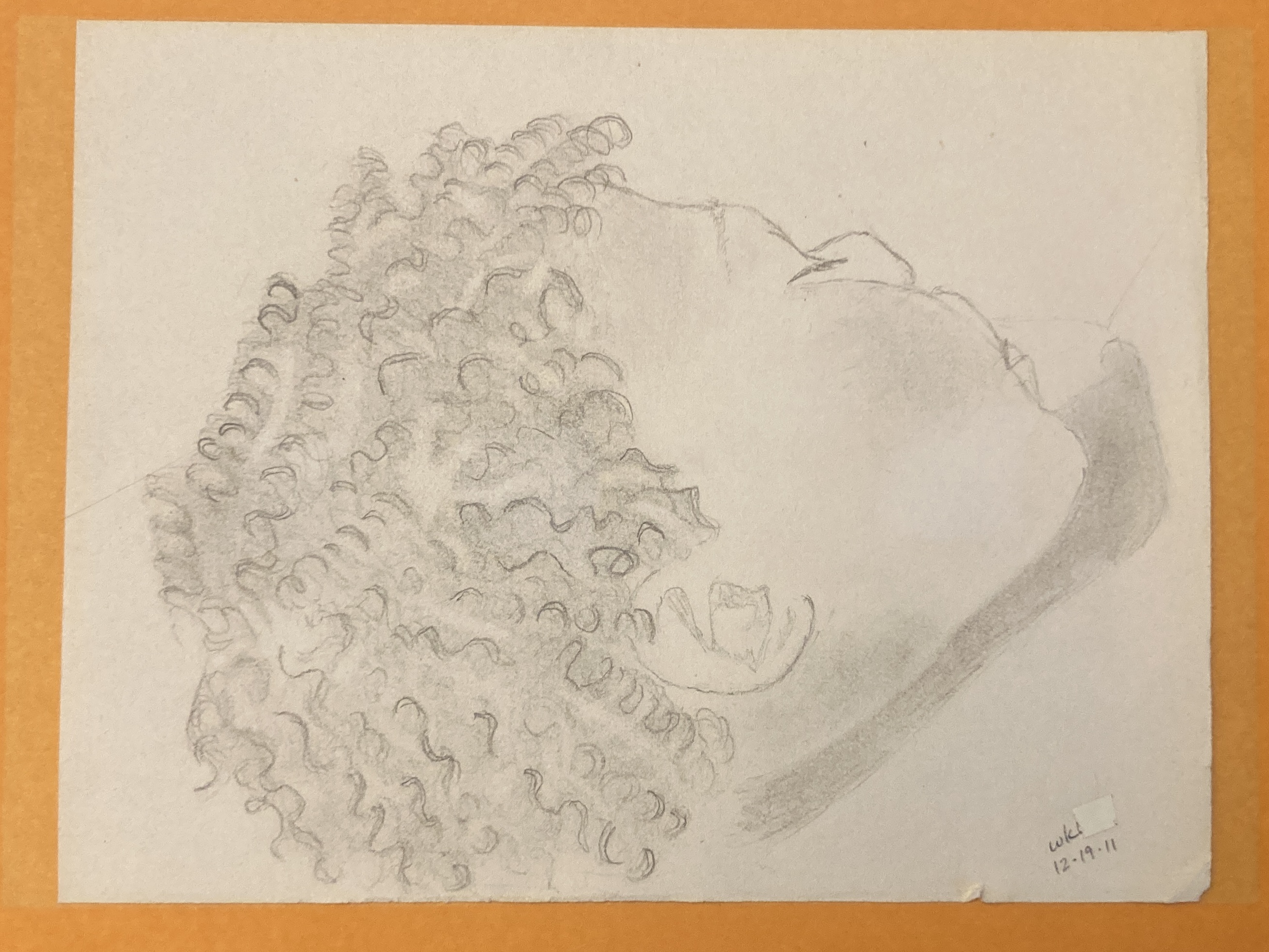
Drawing is a way of entrusting what I can see to the care and attention of God.

An eye and an artist's canvas.
Christianity Today February 4, 2026
Illustration by Elizabeth Kaye / Source Images: Unsplash

My husband and I moved into a low-ceilinged basement apartment on a snowy day in January. The landlord was related to a prominent Nigerian poet, which boded well for our literary future, I thought. Combining our books into a single collection was one of the first tasks of our young marriage.

I was unpacking a box of my husband’s when I pulled out a book I’d never seen before. I stood upright to get a good look: Drawing on the Right Side of the Brain by Betty Edwards.

“What’s this book?” I called to my husband, holding it up.

“From an art class I took,” he said.

I turned it over and read the summary. On the back were before-and-after student drawings. The “afters” were sophisticated self-portraits. I felt a stab of envy.

In preschool, some of my work had gotten my parents excited about my creative potential. They commissioned little ink drawings from me that they cut to size and printed in our family letter at Christmas time. They signed me up for private art classes. I went weekly to a neighborhood studio, where I worked on textured paper with waxy pastels that lay side by side in a neat, boxed array.

I failed to develop as an artist.

There was some household discussion about this. Most of the blame landed on the art teacher—she was apparently not a serious instructor. I was more inclined to chalk it up to my own defects. Privately, I found the whole thing alarming. In class, I didn’t know what was going on. Drawing was not like reading or math, which I had picked up seemingly without effort.

The best I could manage was mimicry. I memorized step-by-step procedures that made it seem like I could draw. My proudest achievement was a little dog-grass-rainbow cartoon that pleased my 8-year-old, anxious-to-succeed heart to no end and that I reproduced for friends and relatives for years. It was flat and trite, but at least it looked like I knew what I was doing.
I never quite learned to draw. That’s not to say I couldn’t draw some when I wanted to.  In school, I drew scenes from Oliver Twist and Watership Down, and I was pleased with them.

But I admired work by people who actually could draw, like my friend Dan. His senior-year art show featured a bold painting of a man whose shouting mouth opened like a tunnel for a twisting road, running out against a fiery turbulent sky. He was even commissioned to paint a tiger on the floor of the basketball court. It was beautiful.

Maybe what I admired most was how the true “art kids” spent time drawing as though it were just as important as classes like chemistry and calculus. Art was fine as a hobby, I thought, like tennis—except I only played after school and on my own time. Drawing wasn’t really something serious to study. It wasn’t going to get me into college or a prestigious career.

“When did you take an art class?” I asked my husband, emerging from my reverie.

“In high school,” he said.

I frowned at this. I had never taken an art class in high school, or any time other than with the neighborhood instructor. I’d never permitted myself to try to learn to draw. I wasn’t sure I could handle it if I turned out to be bad at it.

My husband is very talented, but I had seen enough of his skill set to doubt that he was any more likely than me to excel at drawing. Indignant, I wondered: How come he got to learn to draw in high school, and I didn’t?

Why did you take an art class?” I asked.

“I wanted to,” he said.

I thumbed through the book’s pages and glimpsed a full-page illustration. I stopped to look: Igor Stravinsky by Pablo Picasso, depicted upside down.

Drawing “Igor Stravinsky” upside down, the author explained, was an exercise to help students train their artistic perception. Most of us see with habitual “left brain” patterns that are symbolic, verbalized constructs: Here is an orange; that is a hat. When we learn to draw, these preconceptions often get in the way.

We need a perceptual shift into a more “right-brain” mode that is more interested in shape and tone, lengths of line, arcs of curves, and spatial fit. Learning to draw, Edwards claimed, is mainly about learning to see.

I thought that was interesting. But I had boxes to unpack, studying to do, and a marriage to figure out. I closed the book and put it into the empty place on the shelf.

Twelve years later, I was a mother to three young children who had come to our home on a late summer day from their previous foster family and were now ours for good. Daily life seemed precarious. Simply getting through the day was too much to do most of the time. My husband and I threw ourselves into caring for them. We had a frantic sense that through our individual effort we might be able to undo the damage done in their early childhood and halt the effects of reactive attachment disorder or fetal alcohol syndrome.

By the time the kids were in bed each night, I was depleted and keyed up. Most people in this state probably turn to television, but the idea of lounging there, unproductive, was hateful to me. I felt stunted and wanted to do something “improving.” I wanted to handle physical materials. I pick at my nails in times of stress, and they were a mess now. I needed to keep my hands busy.

So, one day in late fall, I pulled Drawing on the Right Side of the Brain down from the shelf and started reading.

Almost everyone can learn to draw, Edwards says, just like almost everyone can learn to read. If we can just shift out of the symbolic view—what we think we see—to see what is truly there, then we can draw. All it takes is some training in the five perceptual skills,  seeing “edges, spaces, relationships, lights and shadows, and the gestalt”—the coherent whole.

I wanted to see that way.

I got out paper, pencil, and eraser and set to work on Igor Stravinsky upside down. After three quarters of an hour, I made my last stroke and turned the paper right side up. It resembled Picasso’s original. I smiled with satisfaction. Not bad.


Emboldened, I darkened the negative spaces around a wooden chair. I sketched my hand, marking the crevices in my knuckles and the moons of my nailbeds and the curves of my finger pads. I timidly shaded a saltshaker and avocado with hatch marks, then crosshatched them with more confidence.

Drawing people was intimidating. The book warned me about not giving people a “chopped-off skull” by underestimating how big the back of the head is. Even Vincent van Gogh, who learned to draw at age 27, had “problems of proportion” early on, giving people outsized hands and chopped-off skulls. But by age 29, he was a skilled portraitist.

My first portraits were from photographs. I drew my daughters in various poses and then my sister in a three-quarters profile view. I didn’t cut off her skull, but I messed up the placement, and her features were a bit crammed onto the paper. I put it in a frame above my sink, pleased to see her familiar smile in my own pencil marks. When she visited, I showed her.

“Look, I drew you,” I said expectantly.

She glanced at it. “That does not look like me,” she said.

“What do you mean?” I was taken aback. “That looks exactly like you.”

She pursed her lips. We didn’t discuss it further.

When she left, I kept it right where it was. It looked exactly like her, and I liked having her near, even if she didn’t appreciate it.

My husband was a sitting duck as a live model, and I tried to draw him—once while he was leaning back on the sofa with his legs crossed as he talked on the phone with his brother, another time as he typed on his laptop.

These drawings were okay. They didn’t have skull problems, but the mouths didn’t look right. Mouths are hard. If you study them carefully, they are more line-and-shadow than lip, and very unforgiving. The merest dip or lift makes your loved one into a monster or a clown.

In the winter, we traveled to visit family. The children had never flown before. They were anxious and out of sorts to begin with, and the new surroundings only dysregulated them further. They also got sick and spent the week vomiting and running fevers.

On the return trip, I was sad and exhausted from the stress of caregiving. There was bad weather in the northeast, and we got into our seats late in the evening. My daughter badly needed sleep but was nervous and squirmy. I laid her head in my lap and covered her with a jacket. She fell asleep. I sat still for a while, then gingerly reached down for my drawing pad and set about sketching her sleeping face. I traced her round cheek, the delicate arch of her eyebrow, the tiny flare of her eyelashes, the folds of her ear. I was struck with tenderness.

“Absolute unmixed attention is prayer,” writes Simone Weil. I see what she means. That drawing from the airplane, when I see it now, brings me to that exact posture and state of feeling. I see the vulnerable beauty of her little face before me, but I feel also the heft of her body, the care I took not to jostle her, the drone of the jet engines, the gratitude for the gift of her sleep, and the temporary reprieve from worry. I saw her, I believe, somewhat as the Lord himself sees her: beloved and under his care on this difficult, uncertain path of life. And what I have seen will not be taken away.
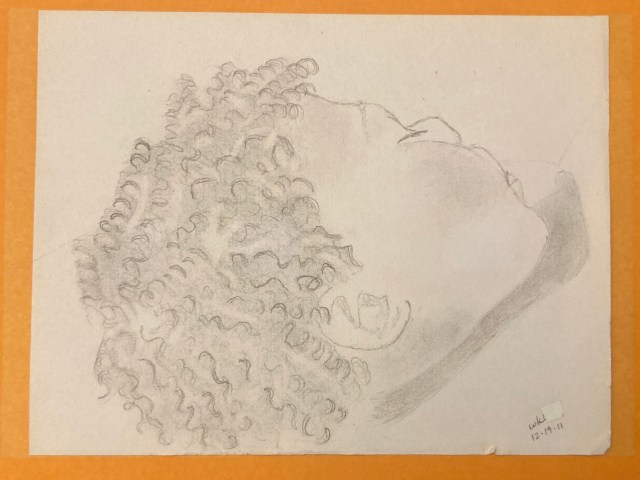
Choosing what to draw is one of my major hang-ups. I want to draw the important and beautiful things—the smooth-skinned faces of my children, my mother’s hands, my dog’s velvety snout, the sweep of cirrus clouds across the sky. But they are complicated. I have neither the skill nor the time to capture them. 

Most instructors say that subjects are all around, and the most ordinary things are great for drawing. Office supplies on your desk. Dishes piled in the sink. The bare trees crossing limbs overhead.

These still-life options are easier because they don’t move. The more compelling scenes are fleeting. Friends alter their postures, cityscapes blur, animals shift, water moves, weather changes.

At church or gathered with friends, in waiting rooms or meetings, in restaurants and on sidewalks, I sometimes sit back and try the perceptual shift. What could I draw? The water glass on the table? The young man bent over his phone? The worshipers standing in song? I case the joint, watching.

Author Wendell Berry’s fictional barber Jayber Crow spends his many slow hours watching his little town. “I was always on the lookout for what could be revealed,” he says. “Sometimes nothing would be, but sometimes I beheld astonishing sights.”

Jesus’ initial call to his disciples is simply Come and see (John 1:39). Jesus requires very few specific tasks of his disciples, but he is insistent that they watch and “see” what he is about.

After Jesus has risen, his disciples realize their salvation is at hand and declare it simply: “We have seen the Lord!” (John 20:25).

I have not yet reached a level that good artists achieve, of being able to draw from memory. I can put down only what is right in front of me—and only if it doesn’t move too fast.

The pastor at our church preached recently on Luke 7. Jesus is reclining at table with Pharisees when a woman walks in to anoint his feet. Everyone is aghast, but Jesus beholds her joyfully. He turns to his host and asks, “Do you see this woman?” (v. 44).

“Well, of course the pharisees saw her,” my pastor said. She was all too visible. They looked and saw scandal. They missed the color and tone, the gestalt of what Christ saw, the hidden power of God’s inbreaking kingdom.

How often do we too fail to mark the signs of his kingdom?

What do I see, pen and paper before me? Do I see and worry about my children’s struggles and careless mistakes? Yes, but I cannot draw them. My son reading a book, the way he looks self-consciously down while talking—these I might draw. I see my daughter tidying the kitchen and the way her smile spreads across her face. I treasure them and ponder them in my heart. Seeing is the way of love. 

In each image I attempt to draw, I am forced to acknowledge how much I must leave unseen. My powers of sight cannot encompass all that is there. I cannot see all the wisps of cloud striating the sky. I cannot draw each filament of curl on my son’s head. I cannot catch the exact lines of amusement in my friend’s smile.

To produce a good drawing, an artist must know when to stop. Art can be ruined by trying to put in too much. I must leave undrawn thousands of snowflakes clumped on the branches of a red cedar, myriad glinting droplets shivering on the twigs of a young maple. These are exquisite beauties that yet must remain undrawn and mostly unseen by all but their Creator.

Drawing is a way of entrusting what I can see to the care and attention of God, who is El Roi, the “God who sees” (Gen. 16:13). The Lord’s seeing is not merely passing notice but rather a powerful activity of loving concern.

When God intervenes in Abraham’s sacrifice of his son Isaac, Abraham looks up and sees a ram nearby, caught by its horns, and offers it in sacrifice instead. He names the place, “The Lord Will Provide.” The verb rendered provide is the Hebrew word for see (Gen. 22:14).

I pray only as I partly see, and the Holy Spirit must see all and intercede for all that needs the Lord’s attention. The cares furrowing my husband’s brow are only partially seen by me, his closest companion. My children’s futures, too, the Lord must provide for. He is the shepherd of their hearts, their lives’ pains and pleasures, and all they must experience and learn.

My drawings are not always as I would wish, yet I am drawn to marvel at the provision of the One Who Sees. He alone will redeem all my errors in perception; and he is healing all things, hidden and visible, whether I can draw them or not.

Wendy Kiyomi is an essayist whose writing on the trials of faith, complexities of adoption, and delights of friendship has appeared in Plough QuarterlyImage JournalChristianity TodayMockingbird, the Englewood Review of Books, and at wendykiyomi.com. She lives in Tacoma with her family and is a 2023 winner of the Zenger Prize for journalistic excellence.
Theology

Jesus Did Not Serve Grape Juice

Contributor

Why reopen debate about what we serve for Communion? Because it matters that we follow God’s commands.

Several abstract wine bottles.
Christianity Today February 4, 2026
Illustration by Elizabeth Kaye / Source Images: Unsplash

When I teach evangelical college students about the practicalities of Communion, I’ll often begin with the Last Supper, with Jesus and the disciples, because it raises some straightforward questions. I’ll ask them: Should we obey Jesus? Should we celebrate the meal as he instituted it? Should we do what he said? Should we use what he used, eating what he ate and drinking what he drank?

Obviously, they respond—but then they catch themselves. On second thought, their churches don’t do that. And it occurs to them that they can’t quite offer an explanation why.

Some of their churches have taught them that the Communion elements don’t matter at all: Cheez-Its and Minute Maid will work in a pinch. Whatever’s on hand can do the job. Why be such a legalist? God doesn’t care. It’s about the intention of your heart.

COVID-19 lockdowns exacerbated this attitude. While most churches fasted from the Lord’s Supper if they couldn’t assemble, some encouraged families and even individuals to “self-serve” at home. Apart from questions of spiritual solemnity, communal ritual, or pastoral authority, the practical matter of what to use was answered by whatever was in the fridge and pantry. I suspect that not a few young people’s assumptions about Communion were formed quite powerfully during that time—and not for the best.

Years after the pandemic, with those unusual circumstances past, Communion is once again little discussed in many Christian circles. This may be because, in certain respects, it is a rare point of relative Christian unity. We disagree over so many things that it is always a joy to be able to say that “all Christians agree” about anything. But regarding the sacraments, happily, all Christians agree about three important things:

First, though we disagree about whether there are more than two sacraments, all Christians agree that there aren’t fewer than two: baptism and Communion. And if you twist their arms, Catholics, Orthodox, and Christians in other “high church” traditions will generally admit that these two are the most important.

Second, all Christians agree that Jesus himself instituted both Communion and baptism and commanded his followers to continue practicing them until his return from heaven.

And third, all Christians agree that the church ought to celebrate baptism and Communion in accordance with God’s will, starting with Jesus’ own words in the Gospels before turning to the teaching and practice of the apostles in the rest of the New Testament.

Now, it’s true that I’ve overstated a little. Some Quakers don’t celebrate Communion; Baptists avoid the word sacrament; and many traditions persist in denying the validity of other Christian groups’ practice of Communion, baptism, or both. We remain divided, even here. I don’t want to gloss over that.

Nevertheless, Christian unity is worth pursuing. Last year I wrote an article for CT in which I called on evangelicals and other Protestants to embrace a higher view of baptism—of its necessity, its efficacy, and its power. I wanted to make the strongest possible case primarily because of what I believe is Scripture’s own teaching, but secondarily to draw divided Christians together. What I didn’t address was baptism’s practice, avoiding entirely the question of sprinkling or dunking babies or adults.

Here I want to do something with Communion, only reversed. That is, instead of discussing the doctrine of the Lord’s Supper, I’d like to address its practice. I want to show you that, whatever we understand to be happening in the meal, our practice of it can converge.

There’s much to discuss here, not least the frequency of the Supper’s celebration as well as its placement and importance in worship. But I’ll limit myself to a single practical question: What should we eat and drink? While this may seem like a minor matter, I hope to convince you it is anything but.

Start in the Upper Room, at the Last Supper of Jesus mere hours before he was betrayed by Judas (Luke 22:12; 1 Cor. 11:23). There’s little doubt that, when Jesus instituted what we call the Lord’s Supper, he and his disciples shared unleavened bread and wine (Mark 14:12–25). 

This was, after all, not just a Passover meal but also the Feast of Unleavened Bread (v. 1; Luke 22:1), and according to the Law of Moses, “if anyone eats what is leavened, from the first day until the seventh day [of the feast], that person shall be cut off from Israel” (Ex. 12:15, ESV). 

Moreover, Jesus refers to having drunk “the fruit of the vine” from the shared cup (Mark 14:25), and this is a biblical shorthand for wine (Num. 18:12; Deut. 18:4; 28:30; Josh. 24:13; Zech. 8:12, ESV).

Most churches, to be sure, are not as casual about the elements as those that allowed Cheez-Its at home in 2020. They use unleavened bread, generally some kind of wafer. But that’s only half of the meal. The other half is the problem: They don’t use wine. This is the sacramental pebble in the evangelical shoe.

By contrast, most of the world’s Christians, including many Protestants, do use wine in Communion. That includes some Methodists, many Presbyterians, and all Lutherans and Anglicans, along with the Orthodox and Catholics. Those who don’t use wine tend to be “low church” evangelicals: Baptists, Pentecostals, Churches of Christ (my own tradition), and a variety of nondenominational believers. Instead of wine, these groups tend to use grape juice.

My students usually hail from these churches, and they’ve never given the grape juice a second thought. So it comes as quite a shock to them to realize, first, that they’re not following Jesus’ stated instructions; and second, that this is a radically new development in church history, having nothing to do with divisions stemming from the Reformation.

Far from being a scriptural or doctrinal matter, grape juice in Communion was introduced by the American temperance movement. It was made possible by Mr. Welch himself, a teetotaling Methodist minister in the late 19th century who pioneered a way of preventing the process of fermentation in the sweet juice squeezed from grapes. This enabled believers who wished to abstain from drinking alcohol to do so every day of the week, Sunday mornings included.

Since then, grape juice as both a drink and a substitute for Communion wine exploded in popularity—here in the States and as an export abroad. There are millions of Christians around the world who now use grape juice in the Lord’s Supper because American missionaries bringing the gospel also brought a novel cultural practice—a product not of centuries-long Christian tradition but of temporary domestic conflict in America over whether drinking alcohol was compatible with following Jesus.

All this raises a fundamental question: If Jesus used wine in his institution of his Supper, does that matter? Did Jesus—does God—care whether what we drink from the Communion cup is fermented? And if he does, why?

The best way to approach these questions is to consider the nature of the elements as symbols. This, too, is a matter about which all Christians agree: Whatever else they may be, the bread and wine are symbols, and what symbols do is symbolize. They are signs, and signs signify. They are significant. They are pregnant with meaning. They are eloquent without words. In and of themselves, they point beyond themselves. They are inaudible arrows, drawing your gaze to what lies beyond them.

Symbols work because of what they are—and because of what they are not. The shape and color of a stop sign are not incidental to its meaning. The number of stars on the American flag is not accidental. And I’ve never heard of someone getting baptized in oil, tar, or urine. Water is a loaded symbol: It is clear, clean, and pure. And even as it’s good for washing, it’s also good for drowning.

These rules about symbols apply to Communion as well. The bread is unleavened because this is the new Passover meal for God’s new covenant people (Luke 22:20). We have been delivered by Jesus from the Pharaoh of sin, death, and the Devil, and this is our sustenance for the journey, at once the bread baked in haste (Ex. 12:8, 33–34) and the manna from heaven in the wilderness (John 6:25–59). It is the bread of the new and final exodus—the Lord’s own body broken for our sake (Luke 9:31; 1 Cor. 11:24). Therefore, 1 Corinthians 5:8 (KJV) instructs, “let us keep the feast”!

If the type of bread is so significant, it would be odd if the contents of the cup were irrelevant. But as it happens, Scripture has much to say about wine. In fact, wine is ubiquitous in the Bible. It’s not usually prescribed, as in 1 Timothy 5:23, but it’s everywhere, in story and prophesy and theology alike. Cutting it out of Communion is almost like cutting out these verses—a teetotaling Jefferson Bible.

There is Melchizedek, the king of Jerusalem and priest of God, who brings out bread and wine to share with Abram (Gen. 14:18)—a type of Christ in every one of these respects (Heb. 5–7). There is the role of wine in libations commanded as drink offerings in the Law (Lev. 23:13; Num. 15:1–10). There is the promise of God to the Israelites that he will richly bless them when they possess the land: “He will love you and bless you and increase your numbers. He will bless the fruit of your womb, the crops of your land—your grain, new wine and olive oil—the calves of your herds and the lambs of your flocks” (Deut. 7:13).

In the Psalms and the Prophets, the language of wine—of vines, vineyards, and winepresses—becomes a symbolic world unto itself. God uses the language of wine to speak of Israel as his beloved and to warn of wrath and judgment—or to do both at once, as in Isaiah 5:1–7. One theologian goes so far as to refer to the extraordinary “oino-theology” of the Bible’s “typology of wine.”

When Jesus—not only the master interpreter of Scripture but its very author—takes up the cup at the Last Supper, he is drawing on all this and much more. And it is crucial to see that none of this is foreign to our own culture today. It’s not merely what wine meant “in Bible times.” 

Compare the symbolism of wine and grape juice for us. The one signifies adulthood, maturity, festivity, and celebration. It’s valuable and, as in Jesus’s own ministry (John 2:1–11), capable of marking an occasion as momentous, meaningful, and memorable.

Grape juice signifies children. Preadolescence. It’s what parents and teachers offer to young kids as a treat instead of water. It’s cheap and mass-produced. No adult goes to a restaurant and asks for a glass of their finest grape juice. No man impresses his date by buying her a bottle of grape juice. A teetotaler wedding might have sparkling grape juice, but even there the juice requires something more to be special.
Biblically, grape juice signifies nothing—except perhaps its eventual transition into wine, as in the Nazirite vows of abstention found in Numbers 6:1-4. And culturally, it signifies worse than nothing—assuming that we want to take our practice of the Supper seriously. And yet for millions of Christians, juice has become an unquestioned substitute for wine, one of the most richly significant and important symbols in all of Scripture.

Jesus instituted both unleavened bread and wine on purpose—that is to say, with purpose. These are signs that, in the Bible and in human culture alike, mean something. And if Jesus did this on purpose, then it remains his purpose now. We don’t have to wonder what the Lord’s will is here. His will is that we use what he used in his institution of the Supper.

And why not? There are no good reasons at the general level for churches to systematically substitute grape juice for wine in Communion. There may be local, person-specific, or missionary situations that raise reasonable questions about exceptions to the rule. But for an exception to work, there has to be a rule. And the rule is—or rather, ought to be—wine.

There’s an irony here that cannot go unremarked. Strict teetotalism and principled abstention from wine as forms of Christian piety have their roots in American evangelicalism. But as I have written at CT, that generational strictness has been loosened in recent decades. All the evangelicals I know now drink—and so do their parents, who once abstained.

Whatever the virtues of this change (and I don’t want to be glib about the downsides, which are all too real), it has produced a bizarre situation in many churches. Evangelical pews are filled with adult believers who drink wine at home but not in the Lord’s Supper. We have perfectly inverted the 19th century: avoiding alcohol only on Sundays.

Surely we can agree that, practically speaking, this is the worst of all possible worlds. At least it made a certain kind of sense for Christians who never drank at home to avoid wine at church too. The present inconsistency is simply too much to bear.

Be that as it may, the reasons to reintroduce wine into Communion practice are not themselves practical but theological, biblical, and ecclesial.

To use wine in the Supper would bring our churches into alignment both with the rest of the global church and with Christian tradition prior to Welch’s grape juice. It would bring them into alignment, too, with Scripture’s rich symbolism of the fruit of the vine. And finally, it would bring them into alignment with—I want to say, obedience to—the teaching and practice of the apostles and of the Lord Jesus himself. 

There is no better reason than that.

Brad East is an associate professor of theology at Abilene Christian University. He is the author of four books, including The Church: A Guide to the People of God and Letters to a Future Saint.

Culture

How A Pastor’s Book Inspired a New Rom-Com

Mike Todd’s book, Relationship Goals, gets a spotlight in a film aimed at both Christian and secular audiences.

Kelly Rowland as Leah Caldwell and Clifford “Method Man” Smith as Jarrett Roy in Relationship Goals.

Kelly Rowland as Leah Caldwell and Clifford “Method Man” Smith as Jarrett Roy in Relationship Goals.

Christianity Today February 4, 2026
Amanda Matlovich / Prime / © Amazon Content Services LLC

When I was in grad school eight years ago, YouTube’s algorithm recommended I watch pastor Mike Todd’s sermon series on relationships, aptly called Relationship Goals.

I hadn’t heard of Todd before, and at that point not a lot of other people had either. He was a young pastor shepherding Transformation Church, which was then a small congregation in Tulsa. When his sermon on relationships went viral, however, that changed.

Many young Christians—particularly those who are Black—were attracted to his approach and delivery. The sermons were biblical, funny, and relevant (especially for those of us who didn’t know what we were doing in our 20s). Todd’s ministry grew into a megachurch, and the sermon series inspired a popular Christian relationship-advice book. After seeing the success, Amazon greenlit an idea by Hollywood producer DeVon Franklin to transform the book into a romantic comedy, released Wednesday on Prime Video.

The roughly 90-minute film—also called Relationship Goals—stars singer and actress Kelly Rowland (of Destiny’s Child fame and Beyonce’s best friend) as Leah Caldwell, an ambitious staffer on a fictional morning show in New York called Better Day USA. Leah has plans to replace her boss as the program’s top producer once he retires. But the network overlords are concerned about her ability to be a team player, and they bring in another candidate to compete for the role.

That decision removes the façade of control Leah felt over her life, which Rowland told me during a brief conversation in January is partly what attracted her to the role. “I go through … [the process] of just letting go, I’d say every other quarter or maybe every quarter,” the singer said.

Leah is disappointed by what’s being asked of her and becomes even more annoyed when she learns she’ll be competing with a well-known TV producer whom she once dated and who cheated on her. To prove to her boss that she can be a team player, she swallows her pride and works with her suave ex, Jarrett Roy, on a Valentine’s Day segment about Todd’s book. Jarrett, played by the rapper Method Man, tells her the book helped him turn away from his player ways.

Viewers will spend most of the movie trying to determine whether Roy’s maturation is genuine and whether Leah’s character will open herself up to love. The film also traces how the book impacts Leah’s two close friends, played by actresses Robin Thede and Annie Gonzalez.

When I sat down for an early preview of the movie, I didn’t have high hopes. The last DeVon Franklin film I watched, produced with Tyler Perry, trafficked in a lot of cliché tropes. I expected Relationship Goals to be more of the same, but I was pleasantly surprised. Rowland’s character is compelling and believable, and the situational humor (especially from Gonzalez’s tired-of-bad-dates character) was good enough to elicit several laughs from my husband and me as we watched the film together.

Method Man, whose real name is Clifford Smith Jr., also delivered a decent performance as Jarrett. The movie could have spent more time teasing out what exactly about the book and faith—which his character says is “hotter than ever”—made Jarrett change how he thinks about relationships. But for a lighthearted romantic comedy, those flaws are forgivable.

That said, Relationship Goals does have explicit Christian elements. It shows the morning-show crew traveling to Tulsa to record an interview with Todd and his wife, Natalie, who portray themselves. The two leading characters also attend a worship service at the real Transformation Church, where Todd gives a brief sermon.

Even with those types of scenes, the writers made sure the film didn’t emphasize Christianity so much that it could turn off secular viewers. “I love love,” Rowland told me. “I love rom-coms. And I love [that] the faith aspect of it … wasn’t force-fed down our throat as much as allowing these characters to be human, honest, and real.”

The movie is heavily marketed toward Christians, and many people who follow Todd will likely check it out. Todd told me he put in his two cents wherever he could. But it’s not a Christian movie per se, he and Franklin said during separate interviews. That point was communicated clearly in one scene (spoiler alert) where the two leads sleep together, and there was no dialogue afterward about the act being wrong, nor any movement to tie up the moral loose ends.

Todd noted he wanted to cast a “wider net” with the movie and appeal to people who weren’t already believers. The goal was “to make a movie that had Christian principles in it [and] that transformed people in their everyday” lives, he said. He wants his preteen daughters to watch it, but not until “a few years from now.”

Haleluya Hadero is the Black church editor at Christianity Today.

News

Bracing for ICE Raids, Haitians Get Temporary Reprieve

A federal judge on Monday extended deportation protections for Haitian immigrants. While they waited for the ruling, pastors in Springfield, Ohio, gathered and prayed.

Faith leaders pray at St. John Missionary Baptist Church in Springfield, Ohio.

Faith leaders pray at St. John Missionary Baptist Church in Springfield, Ohio.

Christianity Today February 3, 2026
AP Photo/Luis Andres Henao

Two songs in, the fire official interrupted. Another 150 volunteers needed to leave the overcrowded church before worship could continue.

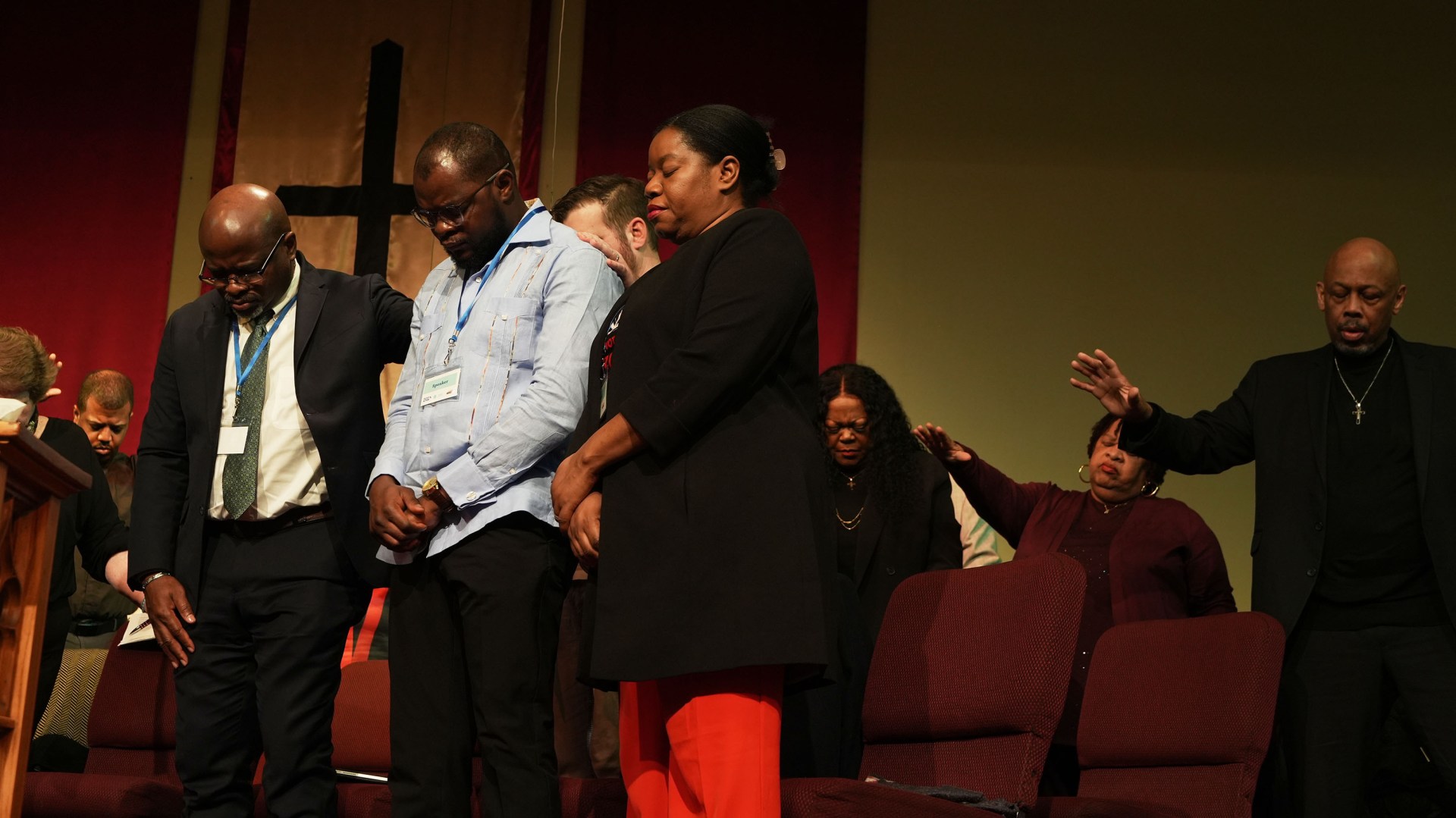
More than 1,000 people descended Monday morning on a special church service in Springfield, Ohio, to sing and pray and wave signs on the day before deportation protections were set to expire for more than 300,000 Haitian immigrants across the United States.

Visitors came from as far away as Florida and Washington, DC. They parked blocks from St. John Missionary Baptist Church, some of them linking arms to steady one another as they traipsed over snow and slush. They spilled out of the sanctuary and into the foyer and out the door.

Tim Voltz, a pastor at Champion City Church, told the crowd it was “a defining moment for our city.”

“This isn’t political talking points,” Voltz said in an interview afterword. “This is real life for us.”

While the country’s largest Haitian communities are in South Florida and New York, central Ohio took an improbable leading role in America’s immigration debate in 2024, after then-presidential candidate Donald Trump and his running mate JD Vance repeated false claims that Haitian immigrants in Springfield were stealing and eating pets.

The ensuing media frenzy—and traumas like dozens of bomb threats—tore the community apart. Before the maelstrom, the city had attracted an estimated 15,000 Haitian immigrants. Most of them had Temporary Protected Status (TPS), a legal designation granted by the US government to groups from countries experiencing armed conflict or other disasters.

The Trump administration ended or attempted to end TPS for more than a million immigrants from different countries last year. Protections for Haitians, the largest remaining group, were set to expire Tuesday night. Organizations across the country called for prayer and support.

Churches and other faith groups in Springfield have spent months preparing for the day Immigration and Customs Enforcement (ICE) agents might amass in their city. They’ve hosted trainings on constitutional rights and have helped hundreds of immigrant residents get passports and birth certificates. They have passed out orange whistles like those that became the soundtrack of Minnesota’s anti-ICE protests.

Roughly 20 Springfield congregations have collaborated to establish safe communication networks and to lay groundwork for emergency food distribution and childcare.

And on Monday, all those preparations culminated in a worship service.

Speakers, mostly local evangelical and mainline pastors, stepped into the pulpit and preached about the immigrants who are everywhere in the biblical narrative. They invoked the kingdom of God and the soon-returning Christ, and they prayed for Haitians to receive an extension of TPS.

Their prayer was answered—but not until everyone had gone home for the night.

Geoff Pipoly, a Chicago attorney representing a class-action suit challenging the Department of Homeland Security’s move to end TPS for Haitians, stood near the back of the sanctuary and joked about the heat from so many people in the room. “Hard to believe it’s winter outside,” he said.

Pipoly was reasonably confident the court would temporarily block the government from deporting Haitians before their protection expired at midnight. He’d had a feeling ever since the oral arguments earlier in January. Judge Ana C. Reyes, of the Federal District Court in Washington, asked the government’s lawyers, facetiously, if they thought Homeland Security secretary Kristi Noem could end TPS for virtually any reason. Could she end it simply because she doesn’t “like vanilla ice cream”?

“Yes, your honor,” they eventually replied.

In the worship service, Pipoly checked his phone constantly. Reyes’s decision was due any moment; he thought he might even see the emailed opinion while the crowd was still gathered, and they could celebrate or mourn together.

While he waited, pastor Carl Ruby spoke from the front. “Welcoming immigrants is as important as welcoming Christ himself,” he said. “Rejecting them is, in Christ’s own teaching, a form of rejecting him.”

Ruby’s congregation, Central Christian Church, sits at the heart of Springfield’s fight for Haitian immigrants. Viles Dorsainvil, a former pastor who runs the Haitian Community Help and Support Center, attends Central. Dorsainvil’s brother, a physician who fled Haiti in 2021 on a tourist visa and now works in Springfield as a registered nurse, is one of the lawsuit’s plaintiffs.

Haiti has, for more than a decade, been on a Dantean descent into ever-more desperate levels of hardship. Thousands of Haitian immigrants were first granted TPS by the Obama administration in 2010, following the earthquake that laid waste to much of Haiti’s capital, Port-au-Prince.

In ensuing years, the government continued extending protections and deeming Haiti unsafe for return. A devastating cholera epidemic triggered the withdrawal of United Nations security forces. Into the power vacuum swept legions of heavily armed gangs that now control an estimated 90 percent of Port-au-Prince and surrounding areas, kidnapping, pillaging, and warring with relative impunity.

During his first administration, President Donald Trump tried unsuccessfully to end TPS protection for Haitians. Following the 2021 assassination of Haitian president Jovenel Moïse and a spiraling hunger crisis, the Biden administration renewed and expanded TPS protections for Haitians already in the United States.

“Temporary protected status exists precisely for a moment like this,” Dorsainvil told the crowd at St. John. He referenced Nehemiah, the Old Testament figure who rebuilt Jerusalem’s crumbling walls.

“In Haiti today, the walls are broken as well—the wall of security, the wall of governance, the wall of basic human dignity,” Dorsainvil said. “Forcing Haitians to return under these conditions is neither safe, humane, nor just. The crisis is real. The suffering is real. And until the walls are built and the people are safe, return is not an option.”

Springfield is divided in opinion on its outsized Haitian community. Immigrants have helped revitalize the city, opening restaurants and small businesses and building homes in a city that had been a poster child for Rust Belt decline.

While the Trump administration insists it seeks to end deportation protections to pursue dangerous criminals, officials in Clark County, where Springfield is located, say they have charged almost no Haitians with violent crimes.

But many residents—Ruby, the Central Christian pastor, calls them “a vocal minority”—see Haitians as burdening public services, slowing down lines in the grocery store, and driving up local rent. In an online survey conducted by a local newspaper, slightly fewer than half of respondents said Springfield would be better off once TPS protections ended.

“It will be nice to get our city back,” wrote one respondent.

In Ohio and elsewhere, Haitians are disproportionally employed in hospitals, senior homes, and home health care. At the church service, Keny Felix, senior pastor of Bethel Evangelical Baptist Church in Miami and head of the Southern Baptist National Haitian Fellowship, reminded the audience that Haitian workers also undergird the travel and hospitality industries, including airports and cruise lines.

“Extending TPS for our Haitian brothers and sisters is not just an economic issue, but it also reflects who we are,” Felix said. “We protect the vulnerable. We do not return people to danger.”

Reyes’s ruling finally arrived in Pipoly’s inbox on Monday evening.

In an unvarnished 83-page opinion that opened with a quote from George Washington, Reyes criticized the government for failing to demonstrate that Haitian TPS holders pose any public harm. She questioned how Noem could conclude that Haiti is safe for return, a legal condition for the cancellation of TPS, when other federal agencies warn that Haiti is unsafe for travel “for any reason.”

Reyes wrote it is likely that Noem “preordained her termination decision … because of hostility to nonwhite immigrants.”

“Secretary Noem, the record to-date shows, does not have the facts on her side—or at least has ignored them. Does not have the law on her side—or at least has ignored it,” the judge wrote.

The decision will almost certainly be appealed, a process that could stretch on for months. A higher court might choose to leave deportation protections in place while it considers the case, or it might choose to lift them.

But for now, Pipoly said, “ICE raids should not start.”

Pastors said Haitians wept at the news Monday night.

The decision will “lower the pressure quite a bit and ease the fear,” Dorsainvil told a reporter on Tuesday. He said he wants to get back to church on Sunday and tell his congregation, “God still speaks today.”

Andy Olsen is senior features writer at Christianity Today.

Ideas

Tearing Apart ‘The Old Thread-bare Lie’

Editor in Chief

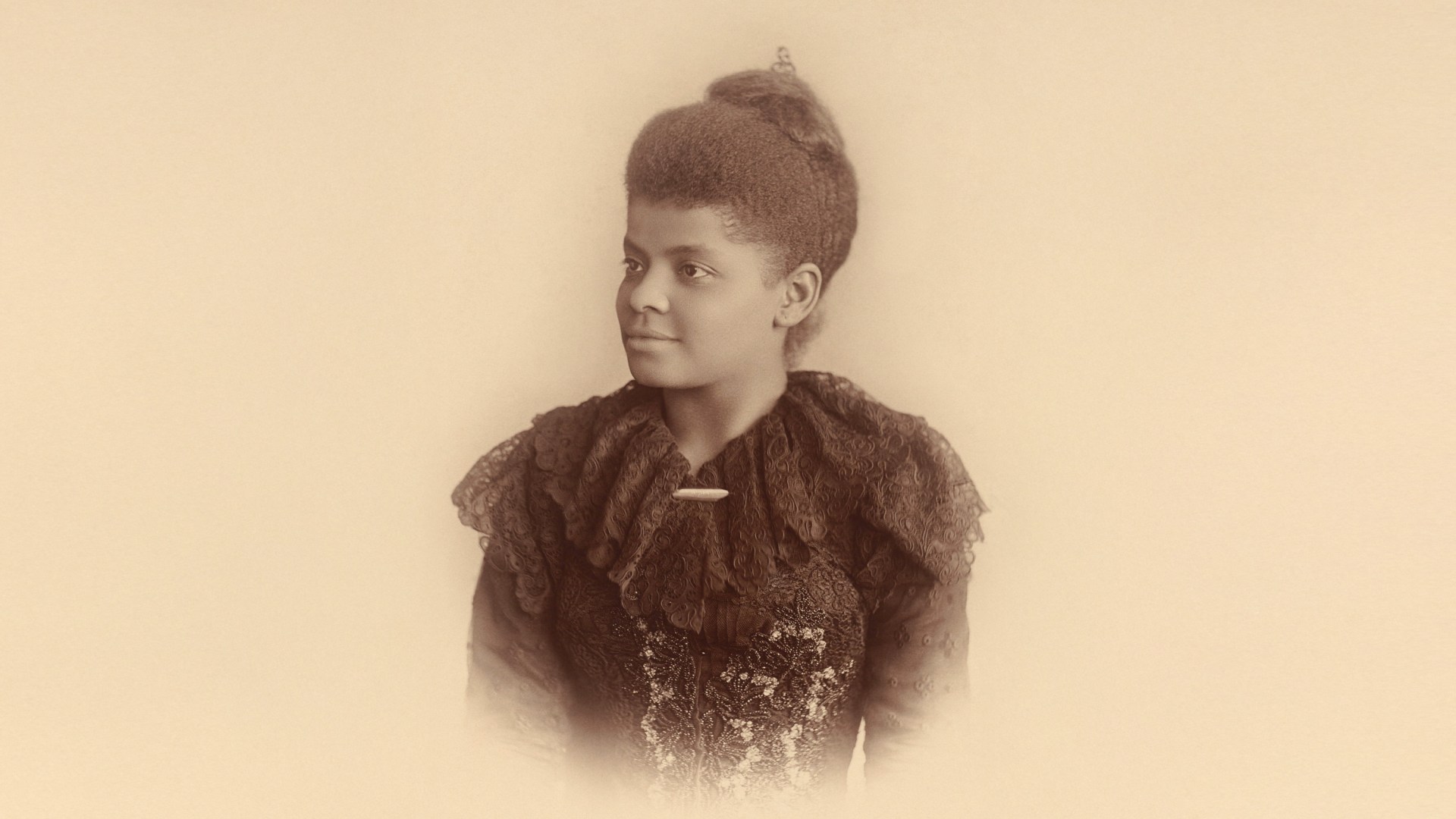
Black journalist Ida B. Wells exposed Southern lynching.

An old photograph of Ida Wells.
Christianity Today February 3, 2026
WikiMedia Commons / Edits by CT

Born into slavery in 1862, Black journalist Ida B. Wells educated herself and, during the late 1880s, wrote for Christian publications “in a plain, common-sense way on the things which concerned our people.” She added, “Knowing that their education was limited, I never used a word of two syllables where one would serve the purpose.”  

Wells described in 1886 her sense of God’s sovereignty: “God is over all and He will, so long as I am in the right, fight my battles.” Her diary in 1887 noted

Today I write these lines with a heart overflowing with thankfulness to My Heavenly Father for His wonderful love and kindness; for his bountiful goodness to me, in that He has not caused me to want, and that I have always been provided with the means to make an honest livelihood.

Wells made her biggest impact in local journalism as part-owner and editor of the Memphis Free Speech and Headlight in 1892 after a mob lynched three Black men. One of them was Thomas Moss, a postal worker, Sunday school teacher, and friend of Wells. She was godmother to one of his children. 

Wells told the real story: A white store owner had maliciously accused Moss and his friends of crimes because their shop, People’s Grocery, had drawn customers away from the white-owned store. Wells recommended in her newspaper that Black people “leave a town which will neither protect our lives and property, nor give us a fair trial in the courts, but takes us out and murders us.” 

Two pastors migrated from the city with their entire congregations. White housekeepers had a hard time hiring maids because many fled to Chicago. Other Black people boycotted the streetcars and walked instead. Officers of the City Railway Company came to the Memphis Free Speech office and pressured Wells to use the paper’s “influence with the colored people to get them to ride on the streetcars again.” Instead, she penned a bold editorial and, foreseeing the reaction, headed to New York.

The editorial began, “Eight negroes lynched since last issue … five on the same old racket—the new alarm about raping white women.” Her most potent paragraph: 

Nobody in this section of the country believes the old thread-bare lie that Negro men rape white women. If Southern white men are not careful, they will overreach themselves and public sentiment will have a reaction; a conclusion will then be reached which will be very damaging to the moral reputation of their women.

The suggestion that some white women lacked virtue brought a sharp reaction from other Memphis newspapers. A Daily Commercial writer huffed, “That a black scoundrel is allowed to live and utter such loathsome and repulsive calumnies is a volume of evidence as to the wonderful patience of Southern whites. But we have had enough of it.” An Evening Scimitar writer proposed “to tie the wretch who utters these calumnies to a stake at the intersection of Main and Madison.”

A mob broke into the Memphis Free Speech office, damaging Wells’s press and vandalizing the building. Wells could not safely return to Memphis. Shestudied accounts from white newspapers along with statistics from the Chicago Tribune, and she wrote an article in The New York Age that documented 878 lynchings from 1883 through the first half of 1892. She criticized lynch mobs but didn’t stop there: “The men and women in the South who disapprove of lynching and remain silent on the perpetration of such outrages, are … accessories before and after the fact.” 

Citing the movement of Black people out of Memphis after the three lynchings, Wells urged Black people to use their economic power to force change. The white Memphis residents who had hoped to shut up Wells instead saw her lynching exposé reach tens of thousands more people than it would have had she stayed in Memphis. The New York Age printed extra copies to send throughout the South, including 1,000 to Memphis. Donors paid to publish the exposé as a pamphlet: “Southern Horrors: Lynch Laws in All Its Phases.”

Wells received a boost from a famous former slave, 75-year-old Frederick Douglass

Brave woman! you have done your people and mine a service which can neither be weighed nor measured. … If American moral sensibility were not hardened by persistent infliction of outrage and crime against colored people, a scream of horror, shame and indignation would rise to Heaven wherever your pamphlet shall be read.

Wells hit the lecture circuit in the Northeast and in England.

Her street-level reports of lynchings reached a wide audience and brought unflattering attention to the practice and to the South, where few spoke out against the evil. It turned out that 1892, the year of Southern Horrors, was the peak year for US lynchings: 231, according to statistics from the Tuskegee Institute. The horror continued but gradually declined. Sadly, while some states passed anti-lynching laws, lynchers were almost never penalized. Congress remained inactive until early in the 20th century, when the House of Representatives passed anti-lynching legislation—which Senate filibusters killed. 

In 1894, Wells moved to Chicago, and the following year she married lawyer and journalist Ferdinand Lee Barnett, a widower with two children from a previous marriage. She added four more children during the next decade and made motherhood her primary occupation. She also established Chicago’s first kindergarten prioritizing Black children, located in an African Methodist Episcopal church, and volunteered with civil rights and women’s suffragist groups. 

She continued some journalistic work and in 1917 wrote investigative reports for The Chicago Defenderon the East St. Louis Race Riot. 

Wells died in 1931 with little recognition from other journalists, but the National Association of Black Journalists and other groups have now established awards in her name. In 2020 she received a Pulitzer Prize special citation “for her outstanding and courageous reporting.” In 2022, Congress passed a federal anti-lynching law as a symbolic way of belatedly recognizing the nearly 6,500 lynchings that took place in the US from 1865 into the first half of the 20th century.

This short account draws from a chapter on Ida B. Wells in Marvin Olasky’s Moral Vision (Simon & Schuster, 2024).

News

European Evangelicals Tailor Anti-Trafficking Ministries

As laws and attitudes on prostitution differ from country to country, so do the focuses of local nonprofits.

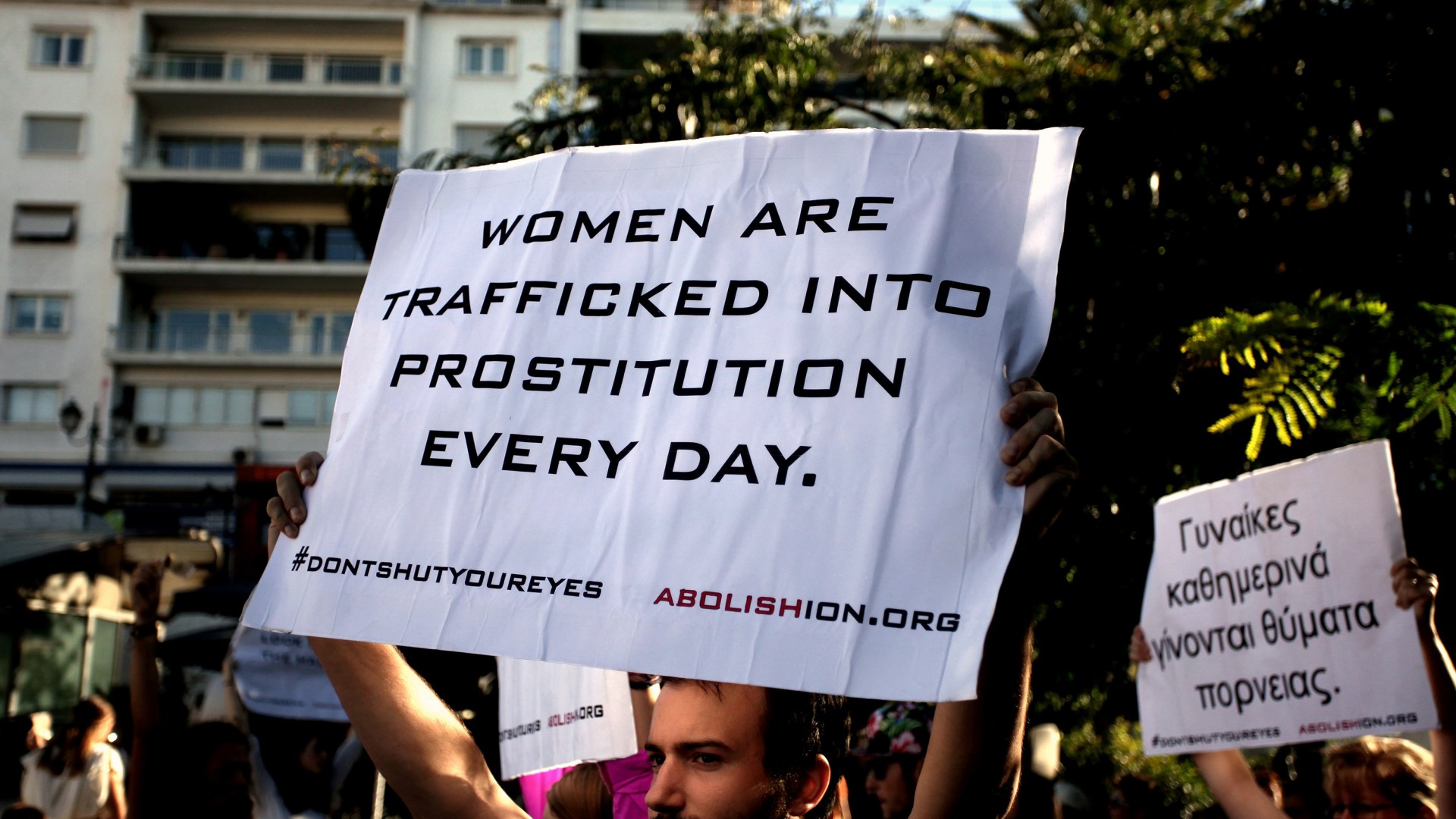
A street performance by Abolishion to raise awareness of human trafficking and sexual slavery in Athens, Greece.
A street performance by Abolishion to raise awareness of human trafficking and sexual slavery in Athens, Greece.

Christianity Today February 3, 2026
NurPhoto / Contributor / Getty

When Cristhina first arrived in Bologna, Italy, more than a decade ago, she was surprised by how public prostitution seemed to be.
Girls stood along suburban roads and in family neighborhoods, sometimes in broad daylight, visibly soliciting passersby in cars and on foot. “They were everywhere,” she recalled. “Downtown, residential areas. Being prostituted out in the open.”

Cristhina, a Colombian who grew up in Florida and studied social work, learned about the realities of abuse and exploitation in the sex industry through her volunteer work in Miami. Feeling called to bring her knowledge and experience to Italy, she moved to Bologna after college in 2013 to join what was then a small outreach to prostitutes at a local church called Nuova Vita (New Life). Cristhina asked to use only her first name due to threats from traffickers, pimps, and the Mafia.

Before she arrived, church members under the leadership of an American missionary approached women on the streets with cups of hot tea, baskets of snacks, and handwritten notes listing helpline numbers and safe houses. Volunteers received training from ministry workers in Greece and the Netherlands.

“The idea was to listen,” Cristhina said. “To befriend them. To share hope and a way out.”

In 2011, the church converted the outreach program into a full-fledged ministry called Vite Trasformate (Transformed Lives), which works with women and children trafficked for sexual exploitation.

“In the evangelical world [of Italy], we were among the first doing outreach in this field,” Cristhina said. “It’s grown since, mainly through the influence of American missionaries.” Cristhina herself received training from a Chicago-based outreach ministry.

Cristhina said the long-standing efforts of evangelical ministries in the United States have been key in apprenticing those on the frontlines in Europe. The European evangelical anti-trafficking movement, which emerged about two decades ago, has now spread to cities like Amsterdam, Rome, Naples, Berlin, and Athens.

Yet these ministries face unique challenges due to the differing legal statuses of prostitution and solicitation across the continent. As a result, they need to tailor their responses country by country.

For example, in Germany prostitution is legalized and regulated as a profession with specific laws. Sweden and France employ the Nordic model, which penalizes the buyer of sex but not the seller. In Lithuania, both buying and selling sex are criminalized.

Italy, Cristhina said, has a sort of legal limbo that offers little clarity or protection. Prostitution exists in a gray zone: Selling sex is allowed, but brothels and solicitation in public (street prostitution) are prohibited. The result, Cristhina said, is that sex workers get caught in a “tolerated and unregulated” trap that allows exploitation to flourish.

“The law provides an easy way out for the government,” she said, with women often punished for being taken advantage of.

This is where ministries like Vite Trasformate step in.

Data on sex work in Europe reveal that sexual exploitation is the most common form of human trafficking reported in the European Union, accounting for nearly half of registered victims in 2024.

Criminal activity involving sex work is often linked to trafficking rings that are highly mobile and prey on people mostly from outside the EU. Traffickers use technology—mostly social media and messaging apps—to identify vulnerable women, build trust with them through fake personas, and lure them with empty promises of jobs, education, or romantic relationships that can quickly turn coercive.

Many of the women Cristhina encounters come from Nigeria or Eastern Europe, some arriving via Mediterranean migrant routes. None of the women she’s met, however, wanted to do this. “Most were coerced,” Cristhina said. “Even when it looks voluntary, they don’t control their money, their movements, their lives.”

Italy’s cultural attitudes, she said, can compound the harm. Some view the women as criminals, others as individuals who have freely chosen prostitution. In her experience, social services frequently fail to recognize coercion or trauma, leading to revictimization. “They are treated like perpetrators when they are victims,” she said.

Cristhina’s ministry responds with practical care: accompanying women to doctor appointments, helping with documents, contacting shelters, and assisting with job training. After the COVID-19 pandemic pushed much of the sex trade indoors and online, Vite Trasformate shifted to phone and digital outreach with existing contacts or women whom volunteers connect with online. This strategy allowed the ministry to encounter new populations, including transgender migrants and women advertised through illegal apartment brothels.

Meanwhile, in Hungary, where prostitution is legal but tightly regulated, Zsuzsa Mecséri-McNamara works with women across four cities through the Christian nonprofit Set Free. She said her teams, much like Cristhina’s ministry in Bologna, focus on local needs.

High-profile cases involving children’s homes have led Mecséri-McNamara and her team to focus on education at schools and care facilities. For instance, news of the Szőlő Street scandal gripped the headlines as a series of revelations exposed widespread and systemic mistreatment of children in state-operated care facilities, including accusations of human trafficking and forced labor. So the Set Free team provides training and raises awareness to prevent young women from being groomed or otherwise lured into prostitution.

“Growing up in a state home, a lack of stability, lack of education, coming from broken families—too many in Hungary are vulnerable to trafficking,” she said.

But Mecséri-McNamara emphasized that national responses must be backed by Europe-wide coordination. Set Free, for example, now spans 14 countries and more than 55 projects, linking prevention, education, and survivor care across borders. Mecséri-McNamara said she could not do her work without drawing on the resources and experience of her partners in Europe and abroad.

This transatlantic evangelical presence has also drawn criticism.

Scholars like religion professor Carly Daniel-Hughes argue that some evangelical groups blur distinctions between trafficking and consensual “sex work,” relying on sensational narratives that fuel moral panic and marginalize prostitutes who emphasize agency or labor rights. She also questions whether evangelical definitions of freedom risk imposing what she considers conservative norms around sexuality and family life.

Cristhina acknowledges the tension but rejects the idea that her work is about moral control. Vite Trasformate’s safe house—opened in 2023, with a second apartment added this year—serves women of all faiths. “We don’t force religion on anyone,” she said. “Each woman has her own story and her own process.” One current resident is Muslim.

Cristhina noted that internally, ministry workers call the people they work with “treasures” to reflect a theological conviction about human worth, not a denial of complexity. “We emphasize what has happened to them,” she said. “Trafficked. Exploited. This is about restoring dignity.”

Gian Luca Derudas, pastor at Nuova Vita, said Vite Trasformate is a “vital” ministry for his church and the city of Bologna. “For 14 years, I have seen the vision grow and take root, bringing real transformation,” he said. “As a church, we have witnessed miracles—women finding freedom, healing, and restored dignity as people created in God’s image.”

As the ministry grows and develops, seeing more women emerge on the other side of exploitation, Derudas said he hopes Vite Trasformate can be an example for churches in other cities to follow.

But rebuilding life after exploitation, Cristhina added, is slow and fragile—especially for older women aging out of prostitution or migrants navigating hostile systems. “Only the strong survive,” she said quietly. “But the gospel changes the way you treat others. And that changes everything.”

Culture

How ChatGPT Revealed a False Diagnosis

A devastating cancer diagnosis wrecked a young couple. But after five years of uncertainty, a chatbot changed everything.

The ChatGPT logo and a woman's profile.
Christianity Today February 3, 2026
Illustration by Elizabeth Kaye / Source Images: Unsplash, WikiMedia Commons

On December 18, 2020, during the COVID-19 shutdowns, a quiet wedding unfolded in a small church in rural Missouri. The pews were almost empty—parents, siblings, and close friends spaced far apart. The rest watched on Zoom as the officiant’s voice carried through the sanctuary:

“Cole, do you take Kiley to be your lawfully wedded wife, to have and to hold, from this day forward …” 

Cole Lemasters was 18, hours removed from his calculus final. Kiley Daniels was 18 too, her hair pinned beneath a simple veil. High school sweethearts, hands clasped and eyes locked and grins wide, this was the kind of couple that might make you wonder, Is this just puppy love?

“… for better or worse, for richer or poorer, in sickness and in health …”

For many couples, those words are abstract promises meant for a distant future. For Cole and Kiley, sickness had already come. 

The July before their wedding, Kiley collapsed from a seizure and was rushed to the hospital. The scans revealed glioblastoma—the same aggressive brain cancer her father was battling. By November, her father had died. In July after Kiley’s seizure, the doctors predicted she herself had only three months left. 

So at 18, Kiley wrote a will, picked out a casket, and planned her wedding.

“… to love and to cherish …” 

Glioblastoma is ruthless. Median survival: 14 to 18 months. Fewer than 10 percent of those diagnosed make it five years. The clock was ticking.

“… till death do you part?”

As the officiant finished his question, Cole—knowing he might not be promising the rest of his life but only the rest of hers—looked at Kiley and smiled: 

“I do.”

After a quick honeymoon in Kansas City, where doctors and family were close, the couple stuck around, living in Kiley’s parents’ basement while waiting for the pandemic to pass.

By spring, life settled into a very fragile routine, but a routine nonetheless. Cole enrolled at the University of Missouri in Columbia, Missouri. Kiley moved with him, working part-time and doing small projects. College didn’t make sense when doctors said she might not outlive the year.

Then again, nothing long-term made sense. They didn’t talk about kids or careers. They learned to live in short intervals, one MRI to the next. “Every three to four months, we repeated the same cycle: scan, wait, pray,” Cole said.

Yet somehow the result was the same every time: no regrowth or recurrence. “By some extraordinary grace,” Cole said, “every scan was showing stability.”

Eventually, those three-month increments turned into a year. Then another. Then another. In 2024, Cole graduated and found a job in Columbia. Kiley, having earned her associate’s degree at Moberly Area Community College, was working part-time as a barista. And in July 2025, she celebrated five years since doctors told her she had three months to live. 

Kiley was a living, breathing miracle. And for the young couple, every day was a day to be grateful.

Yet even in their gratitude, Cole couldn’t shake the thought: How is this possible? Is this truly a miracle? Or a statistical anomaly?

“Less than 1 percent of glioblastoma patients are under 20,” he said. “Only 4 to 7 percent live five years without recurrence. Do the math—that’s a 1 in 20 million chance. Put those together and you’re talking about lightning-strike-odds… but even more rare.”

Cole believed God could do the impossible, but the improbability still gnawed at him. So after Kiley’s latest MRI, he tried something new. Highlighting the radiology report with his cursor, he copied and pasted it into ChatGPT. The chatbot doesn’t always give solid health advice, but Cole hoped the artificial intelligence program could help him untangle the dense verbiage. “Anyone who has had to read one of these reports knows that it can be some of the most cryptic language ever digested,” he said.

The report read like the others, with one slight difference: “There is a tiny, newly developed ovoid enhancing focus within the high left frontal subcortical white matter anterior to the resection cavity with corresponding FLAIR hyperintensity.” 

“Try to make sense of that with a degree in journalism,” Cole quipped. 

ChatGPT explained this as a common side effect of prior treatment. Nothing alarming. But when he asked more questions—about past scans and her original diagnosis—the program suggested a plot twist: Kiley may have been misdiagnosed.

Cole knew this couldn’t be true. Kiley had consulted some of the best experts in the country. There was no way their doctors had run five years of tests and treatments on a misdiagnosis. They would have found this out by now. Right?

His curiosity got the best of him. Feeling as if he was dipping into conspiratorial waters, he asked ChatGPT to elaborate.

It explained that in 2021, a year after Kiley’s diagnosis, the World Health Organization reclassified brain tumors with an IDH1 mutation. If Kiley’s original scan included that mutation, her cancer would no longer be classified as glioblastoma, but IDH-mutant astrocytoma—which would still be serious but far less aggressive.

That sent Cole digging. If he could find Kiley’s initial biopsy report from 2020, he could check to see if she had tested positive for this IDH1 mutation. Fortunately for Cole, his mother-in-law had given him a box of Kiley’s old medical records earlier that week in case he ever needed them. He needed them now. So setting aside his Tuesday evening, he began to dig.

“When the first few pages discussed an appointment for a flu shot she got in 2005,” he said, “I knew I was in for a long evening.”

Page after page went by—five years’ worth of pages about cancer. Five years of confusion, fear, and waiting. Five years of seizure scares and medical bills. Five years of three-month increments. Five years with a death sentence.

For Cole, it felt as if five years had passed that Tuesday night when he pulled another sheaf from the box and found precisely what he was looking for: the initial biopsy. He dusted it off like an archaeologist and began skimming. But it didn’t take long before he realized that, yet again, the report was nothing but medical jargon, too sophisticated for him to understand.

And so he began uploading pages from the report into ChatGPT, one after another, letting the AI sort through the data until, eventually, one hour and 60 pages in, the model located the line he was looking for in the molecular genetics report. The line with the mutation, the line with the answer, the line with the power to change their future. IDH1 R132H mutation—positive.

“My initial reaction was like I was reading some sort of crazy state secret, like aliens were real or that Tupac was alive,” Cole remembers. “Still, I was cautious. Her doctors at the time were experts. But the IDH mutation wasn’t always routinely tested then, and the classification standards differed. So we brought this to her current neuro-oncologist, who confirmed it. … She was indeed misdiagnosed. Not by error but based on what was known at the time.”

For five years, they’d believed Kiley had one of the deadliest cancers known to medicine, with a recurrence rate still above 60 percent even after years of stability. Now they were hearing that her cancer followed a different path. IDH-mutant astrocytoma, a tumor with a median survival of 7 to 15 years, a five-year survival rate near 50 percent, and a recurrence risk under 5 percent after five stable years. 

And Kiley had just hit that five-year mark.

Her treatment plan would now shift from aggressive, end-of-life vigilance to long-term management—fewer emergency assumptions, more measured monitoring, and care aimed at preserving life rather than bracing for its end.

“This doesn’t erase the weight of it all,” Cole said. “The fear, the grief, the exhaustion. Kiley has been living under a sentence she didn’t deserve. But now that sentence is lifted.”

Kiley calls it a “good hurt.” For five years, she lived as if death were always at the door. She planned her funeral. She encouraged others battling glioblastoma. Now she wrestles with the reality that she never had it.

“I still feel a strange survivor’s guilt,” Kiley said. “For a long time, it felt like I had narrowly escaped something deadly. Even now, it’s hard to make sense of being here when others aren’t.”

“God has walked with us every step of this journey,” Cole said.

God was there in the diagnosis. He was there when Kiley’s father passed. He was there on their wedding day and through the five years of waiting. And in a way they never imagined, God even showed up in an AI chatbot—without which that biopsy report, the line that changed everything, would still be buried in a box collecting dust.

And now they see God’s kindness in giving them something they didn’t think they’d ever have: time.

“Her life expectancy is no longer measured in months but in decades,” Cole said. “She can breathe again. We can dream again.”

For the first time in their marriage, they can imagine beyond the next scan, dreaming of a house, careers, even children.

“From the beginning, we believed our story wasn’t just ours,” Cole said. “It’s about asking questions, seeking truth, and trusting that God is still working even when the road seems unchangeable.”

The vows they spoke on their wedding day—“in sickness and in health”—still hold. But they are no longer bound to the same ticking clock.

“I won’t say that ChatGPT saved her life,” Cole said. “But I believe God used it to save our future.”

Luke Simon is the Co-Director of Student Ministries at The Crossing. He is an MDiv student at Covenant Theological Seminary, and his writing has appeared in publications including The Gospel Coalition and Mere Orthodoxy. Luke lives in Columbia, Missouri, with his wife, Gisele.

Books
Review

Women Considering Abortion Need to Hear the Truth

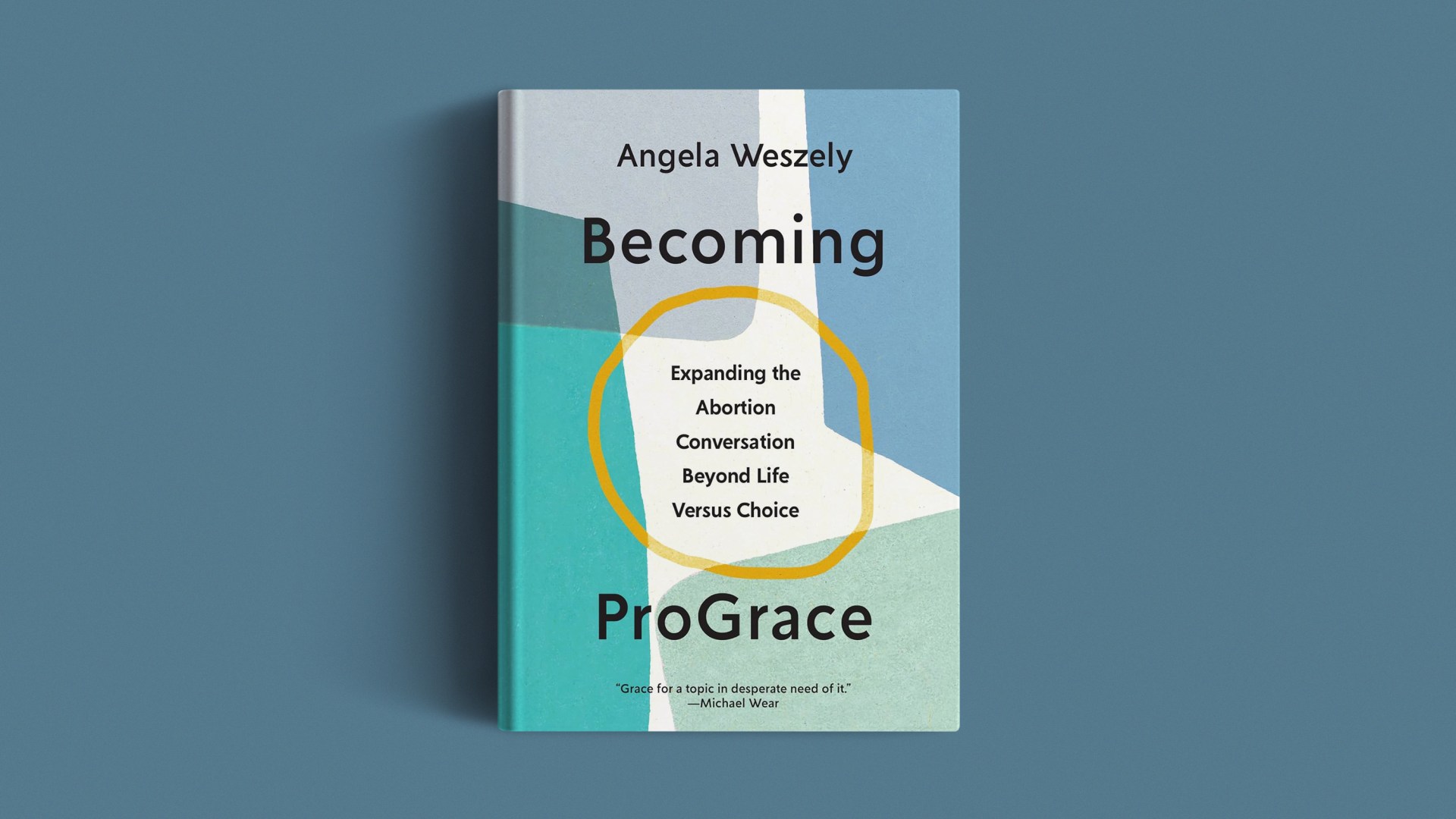
Becoming Pro-Grace rightly challenges churches to greater compassion but fails to reliably promote the rights of unborn children.

The book cover
Christianity Today February 3, 2026
Illustration by Christianity Today / Source Images: Getty, IVP

Data consistently show that most women facing unexpected pregnancies do not turn to their churches for help. Even though 7 in 10 post-abortive women identify as Christian, many say they would never tell a pastor or fellow believer they were considering abortion or seek support from their church afterward. They are twice as likely to report receiving a judgmental response than a compassionate one.

Angela Weszely is cofounder of ProGrace, a ministry that has spent years listening to such women—and she’s increasingly uncomfortable with practices she witnessed in some pro-life pregnancy centers. She felt some centers sought to “persuade or manipulate women regarding their pregnancy decision and religious beliefs,” which she considers unhelpful to women in vulnerable situations. Ultimately, these experiences led her to reevaluate the church’s posture on abortion overall.

In Becoming ProGrace: Expanding the Abortion Conversation Beyond Life Versus Choice, Weszely urges Christians to move away from polarizing political positions when it comes to abortion and instead adopt what she calls a “pro-grace” mindset that gives women and their babies equal significance.

For Weszely, abortion is a “complex moral, political and social issue,” requiring more than a simple life-versus-choice framing. She argues that in pro-life contexts, “a woman’s agency seems to be at odds with a child’s well-being,” which makes it difficult for Christians to genuinely uphold the equal worth of both mother and baby.

Guest writers reinforce this theme in an essay at each chapter’s end. Wheaton College’s Amy Peeler suggests that God honored Mary’s agency when Gabriel announced Jesus’ birth: Gabriel “waits to hear what she says” before departing. Another contributor argues that “part of human dignity is human agency,” even in cases of unintended pregnancy.

Weszely also highlights the profound identity shift that occurs when a woman learns she is pregnant. She quotes one woman who said, “I don’t get to keep my life either way,” capturing the way pregnancy immediately reshapes a person’s future. These moments are among the book’s strongest, helping readers understand why women facing crisis pregnancies often feel scared, isolated, and ashamed.

The chapter on adoption is equally compassionate. Weszely notes that giving a baby up for adoption involves “the death of a woman’s identity and the death of the potential relationship with the child,” which explains why mothers often feel it is more painful than abortion or the choice to parent. She rightly challenges simplistic portrayals of adoption as a tidy, pain-free alternative.

The book cites research showing that many Christian women believe forgiveness does not extend to terminated pregnancies or that church members will gossip about them if they reveal they’re pregnant out of wedlock. Weszely argues that church culture often signals judgment more than grace, leaving women to struggle alone. Her call for churches to become safe, supportive communities even before a pregnancy is an important corrective.

While Weszely highlights genuine failures in Christian discipleship and community, the framework she proposes contains theological and practical weaknesses.

The book includes arguments about agency, most notably Peeler’s claim that Mary’s consent to pregnancy by the Holy Spirit parallels modern questions of reproductive autonomy. Yet this analogy falters. Women (in the vast majority of cases) with unexpected pregnancies have already consented to the possibility of pregnancy by having sex—something Scripture doesn’t treat as an intrusion on agency. If Weszely disagrees with Peeler’s framing, she does not take the opportunity to make that clear.

More importantly, the book doesn’t sufficiently grapple with the fact that another human life is involved, sometimes focusing on the mother’s emotions and experience at the expense of recognizing the reality of the child. Human agency, after all, ends where another person’s life begins. A framework that does not hold this moral reality at the center cannot offer the full Christian truth about abortion. Weszely’s work makes clear that she is committed to the value and dignity of the unborn child, but her messaging here is muddled.

She’s also critical of those who would influence women one way or another in their decision. Weszely writes, “The end goal of our listening is not to influence the people we listen to, but rather to be influenced ourselves by their experience and the connection we share.”

This posture of listening has pastoral value, but taken as the primary guiding principle, it loses the moral guidance necessary for scriptural leadership. Christians are called to listen with humility but also to speak truth in love, especially when a child’s life is at stake. Framing influence as inherently manipulative misunderstands the nature of Christian discipleship.

Helping a woman affirm her child’s life is a good and necessary thing, though Weszely is right that Christians don’t always do this as gently or wisely as we should.

Weszely critiques the church’s “50-year history of communicating a primarily political approach to abortion” and suggests this approach has divided Christians and pushed younger generations away from the faith. She warns that “laws … are not designed to build a community that can facilitate grace-led conversations.” 

Yet she simultaneously encourages Christians to advocate for policies such as paid maternity leave, expanded health care access, and childcare support to reduce the pressures that drive women toward abortion. These suggestions are wise, but they reveal an inconsistency in one of the book’s main arguments: If policy solutions matter for supporting women, they matter just as much for protecting unborn children. Her reluctance to apply her own logic to pro-life legislation leaves a theological and ethical imbalance that the book never resolves.

Weszely also questions pregnancy centers that advertise services without explicitly stating they do not provide abortions. This criticism fails to acknowledge the crucial, sacrificial role these centers play in providing diapers, formula, counseling, clothing, emotional support, and community for women—resources that Planned Parenthood does not provide. 

And while Weszely writes that “grace and truth are not contradictory,” the book suggests that pro-lifers are wrong to bring “an agenda” into conversations with women considering abortion. Weszely is right to call pro-lifers to prioritize listening to women and sharing the truth of God’s love, but her wariness of seeking to persuade or “change the thoughts and behavior of others” may signal to readers that abortion is a morally neutral choice. We can have deep grace for both pre- and post-abortive women without underplaying the truth that abortion takes the life of a child made by God.

To her credit, Weszely pushes Christians to remember what God is for, not only what he is against. She rightly reminds readers that God’s grace makes it possible to leave a life of sin and challenges churches that celebrated Roe v. Wade’s overturning without also mentioning support to vulnerable women as well. 

Compassion alone cannot replace clarity, and empathy cannot replace discipleship, even in those precious few moments available to save the life of an unborn child. Abortion is both political and theological, and Christians must be able to hold both realities without fear or apology.

Even with inconsistencies, Becoming ProGrace contributes meaningfully to the church’s ongoing self-examination. It reminds us that women facing crisis pregnancies need more relational, practical, and spiritual support than many churches currently provide. If the body of Christ can become a place where women already know they—and their babies—are valued, more of them might seek help before choosing abortion. The challenge for the church is not choosing between woman and child but offering compassion and understanding for both. 

Correction (March 9, 2026): This review has been updated to more accurately reflect the book’s argumentation.

Ericka Andersen is a freelance writer living in Indianapolis. She is the author of several books, including Freely Sober: Rethinking Alcohol Through the Lens of Faith.

Books
Excerpt

We Can’t Manifest the Good Life

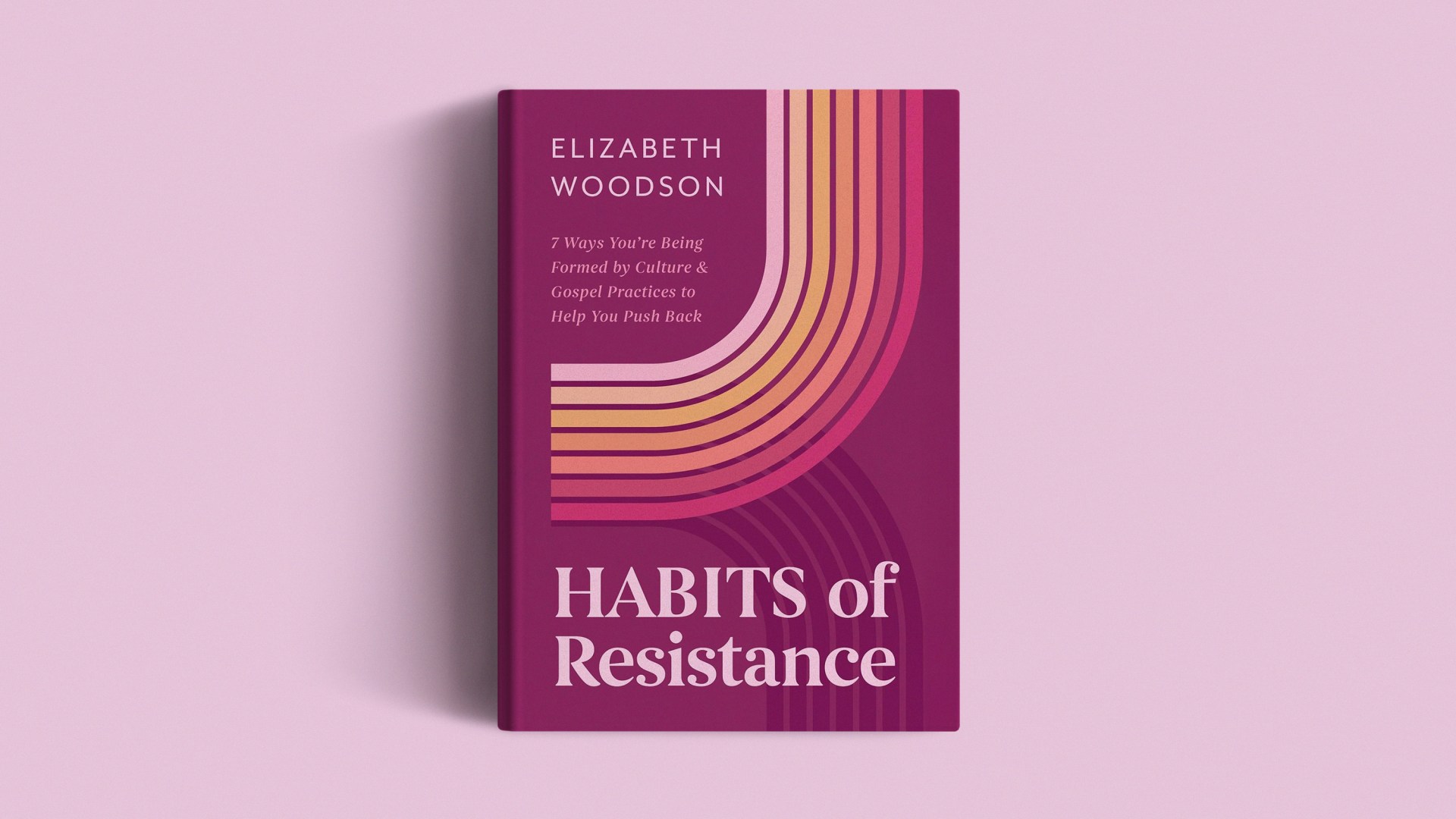
An excerpt from Habits of Resistance: 7 Ways You’re Being Formed by Culture and Gospel Practices to Help You Push Back.

The book cover
Christianity Today February 3, 2026
Illustration by Christianity Today / Source Images: Getty, B&H Books

Each year, the most-used dictionaries—like Merriam-Webster, Dictionary.com, and The Oxford English Dictionary—choose a word of the year. According to Merriam-Webster.com, the word of the year is determined by their lexicographers, the people who compile dictionaries. They analyze a large amount of data to identify words that make an impact on our conversations. The words that make it to the top of the list usually highlight the social trends and global events that defined the year.

While some of the words from the past few years, like demure, relate to a fun viral video, others tell a more interesting story about our habits and the way we try to bring our lives back into a state of peace by controlling them. 

In 2024, the word manifest was searched nearly 130,000 times in the Cambridge Dictionary, making it their word of the year. Manifest is defined as the use of “methods such as visualization and affirmation to help you imagine achieving something you want, in the belief that doing so will make it more likely to happen.”

As a word in our English vernacular, manifest has been around since the early 1300s. However, it was not until the 2020 pandemic that the word’s usage skyrocketed in our global culture. Popularized by celebrities like Simone Biles, Oprah, and Ariana Grande, posts and videos about manifesting spread quickly on social media. Whether it was a new relationship, job, movie role, or Olympic medal, people began explaining their success, using the phrase I manifested this. This then gave rise to different manifestation experts and influencers who, for a small nominal price, could help you learn how to make your dreams reality. 

Connected to other self-help movements like the power of positive thinking and the law of attraction, manifestation invites you to believe that you can turn your dreams into reality through the following steps:

Visualize your desires, being specific about whatever it is that you want.

Ask the universe or a higher power for it, which can happen through prayer, meditation, or a vision board.

Start working towards your goals in “co-creating” with the universe or your higher power. 

Attract your desires by cultivating positivity, using affirmations, or practicing gratitude. 

Here’s the thing: outside of “co-creating” with the universe, these steps are not entirely untrue or unable to bring any positive change to your life. Creating a plan, praying about that plan, and taking intentional steps to accomplish the plan all while remaining positive will sometimes produce the results you want.

The problem is that these steps create a formula of sorts that seems to provide a no-fail plan to achieve our best lives. So much so that when people say, “I manifested this,” it sounds like by the magic of their hard work and good planning they made whatever they wanted to appear. It is as if they are Vanna White from Wheel of Fortune making a letter on the screen appear with the simple touch of a finger. 

But formulas are only as good as their inputs, and manifesting assumes you control all the inputs. 

When our lives are devoid of peace, our culture’s false story of self-empowerment leads us to believe that we can resolve our situation through our own diligence and tenacity. Yet this pathway has hidden costs and advantages that are rarely shared when presented. 

For example, some people who claim to have manifested a profitable business after quitting their 9-to-5 job leave out a few important details. They don’t mention the money they saved up before they quit or the large network they built while still working their 9-to-5 that was used to promote their product. Their well-curated Instagram video and coaching course gives you the impression that all it took was visualization, positivity, and hard work. In reality, a good portion of their success may have come from life circumstances that gave them a unique advantage. 

On the other hand, while being intentional about our life choices can get us closer to our goals, sometimes, no matter how hard we work, things do not go in our favor. We can do all the things to manifest good health and still get cancer. We can try to manifest a spouse and stay single for years. Sadly, when the formula we’ve created doesn’t work, we rarely question the formula, but attribute our failure to user error.

This makes us insecure and fragile, as we turn inward when life goes in an unexpected direction. Instead of blaming the formula for misleading us, we blame ourselves. After ruminating on our inadequacies, we are left wondering, If I can’t work my way out of a difficult situation, then what hope do I have that things will get better?

If this weren’t enough, self-empowerment’s invitation to solve our problems through unlimited information doesn’t include the disclaimer that the people we will learn from might not be telling the truth. While we may have access to all the answers we could ever want, we will still be responsible for deciphering which ones are the best or the most truthful. As we embrace the path of self-education, we will learn a great deal of information but lack the wisdom required to use our knowledge well. Both online and offline, our overconfidence will cause us to misapply our knowledge in ways that are disastrous. 

The false gospel of self-empowerment promises that we can control our lives and thereby attain our own peace, a belief that assumes that on our own we can see well enough to navigate through the world. But the inescapable reality is that our control and our vision are limited because we are limited. No matter how good our plan is, we can never account for the unexpected things life will throw our way. 

What if instead of trusting in our limited abilities to obtain our peace, we trust in the one who is limitless?

Elizabeth Woodson is a Bible teacher, a theologian, an author, and the founder of The Woodson Institute, an organization that equips Christians to understand and grow in their faith.

The following excerpt is from Habits of Resistance: 7 Ways You’re Being Formed By Culture and Gospel Practices to Help You Push Back by author Elizabeth Woodson published by B&H Publishing.

News

How to Organize a Healthy Protest

Pastor and political strategist Chris Butler draws on Martin Luther King Jr.’s wisdom when planning action.

A collage of people protesting.
Christianity Today February 2, 2026
Illustration by Elizabeth Kaye / Source Images: Cosmos

Since federal agents arrived in Minneapolis under direction from the Trump administration to arrest and deport illegal immigrants, protestors have responded with vigor to what they perceive as an invasion of their city and unlawful actions by ICE agents. 

From individuals like Renee Good and Alex Pretti who engaged on city streets with federal agents to the group of protestors who interrupted a worship service at Cities Church in St. Paul, locals are expressing their distaste for the administration’s methods using a variety of tactics. Some track and report ICE movements and actions in neighborhoods. Others meet federal agents with signs, whistles, and chants. Still others gather food to distribute to immigrant families afraid to leave their homes.

To better understand the protests of recent weeks, The Bulletin sat down with pastor and political strategist Chris Butler, who directs Christian civic formation at the Center for Christianity and Public Life. Here are edited excerpts of their conversation in episode 245.


How would you describe what you saw at the protest at Cities Church

Chris Butler: As an organizer and somebody who’s participated in lots of protests, I saw a bad protest action. Creative protest is an important part of our political culture, but this seemed like a tactically and morally bad action.

Russell Moore: I’m not sure how the leaders of this protest wouldn’t have said this action was at least counterproductive; and I would probably agree with them about the shooting of Renee Good, the actions of ICE in Minneapolis. But this was not a well-chosen way to express that. It actually hurts the cause of drawing attention to Renee Good.

Interrupting worship would always be a bad strategy for protests, but that’s especially true when you’re dealing with a time when we’ve had church shootings. At the end of it, we knew what was going on, but nobody would’ve known that at the moment. That’s not a way to decelerate and cause people to actually think reasonably about how we get justice in Minneapolis. 

The pray-in movement during the Civil Rights Movement was a very different kind of protest. The pray-in movements said, “We’re going to participate in worship and pray.” The disruption actually happened from the churches that were attempting to throw them out.

What are the appropriate boundaries for protesting?

Butler: A lot has been lost in our protest and justice culture. I started organizing and doing justice work as a 12-year-old, and I’m grateful for the chance I had to learn from senior citizens and folks who were much older than me. 

A protest action has to be part of a larger process for justice. First, you have to be really clear about what you’re trying to achieve. The goal should be to achieve some kind of concrete improvement in people’s lives. If, for example, we’re trying to de-escalate ICE action in Minneapolis, that needs to be the goal, not just to bring attention to my group because we want the attention.

Then, there are steps in the process. Martin Luther King in his 1963 “Letter from a Birmingham Jail” lays out the process well. He talks about gathering the facts and making sure that there is injustice. Then there’s a step of negotiation and the process of self-purification. If you’re a Christian doing this, that language works well. Even in secular environments in the old days, there was a lot of training and thinking that went into an action. Whatever action we do needs to encourage empathy, not fear; so there’s a lot that needs to come before direct action.

Moore: Dr. King was right about the process of this. He’s also right in saying to the ministers in Birmingham, I’ve spent time talking about the fact that we cannot carry out moral objectives with immoral means. The reverse is true also. You’re going to have people always looking for where the inadequacy is in the way that people are protesting. Because of this, make sure that you are carrying out that protest in a way that is both personally moral and that is actually addressing the consciences of those you’re trying to address. This didn’t do it. 

Butler: If you call a news reporter and say, “Hey, we’re going to pick up the phone and call this church down the road and talk to them about this pastor on their staff with whom we have a conflict,” news reporters aren’t going to show up. That’s not going to get clicks or be on social media. Sometimes, you can get things done in ways that don’t attract social media but win improvements for people in their lives. You want to start in those places. If you can accomplish that without disrupting other people’s lives, then you should. 

How do you gauge the effectiveness of a protest? 

Butler: You have to wait to see the effectiveness of a justice campaign; but the actions that we take, especially when you’re doing direct action, should begin with a goal in mind. For example, your goal might be that a congregation signs a letter rebuking the ICE office. Without a specific goal, it becomes really hard to tell whether a protest was effective or not. 

When you think through the direct action that you’re going to take, you have to ask yourself, How are we going to apply pressure to this person who can give us what we want, in a way that’s actually going to get them to give it to us? Oftentimes, antagonizing that person in outlandish ways won’t get that done. This process creates accountability for us. Way more things are involved in the process of direct action than just showing up in a place and doing a thing. Too many times, in lots of different protest situations that I’ve been privy to in recent times, folks are not taking that robust approach. It’s much more reactionary. 

addApple PodcastsDown ArrowDown ArrowDown Arrowarrow_left_altLeft ArrowLeft ArrowRight ArrowRight ArrowRight Arrowarrow_up_altUp ArrowUp ArrowAvailable at Amazoncaret-downCloseCloseellipseEmailEmailExpandExpandExternalExternalFacebookfacebook-squarefolderGiftGiftGooglegoogleGoogle KeephamburgerInstagraminstagram-squareLinkLinklinkedin-squareListenListenListenChristianity TodayCT Creative Studio Logologo_orgMegaphoneMenuMenupausePinterestPlayPlayPocketPodcastprintremoveRSSRSSSaveSavesaveSearchSearchsearchSpotifyStitcherTelegramTable of ContentsTable of Contentstwitter-squareWhatsAppXYouTubeYouTube