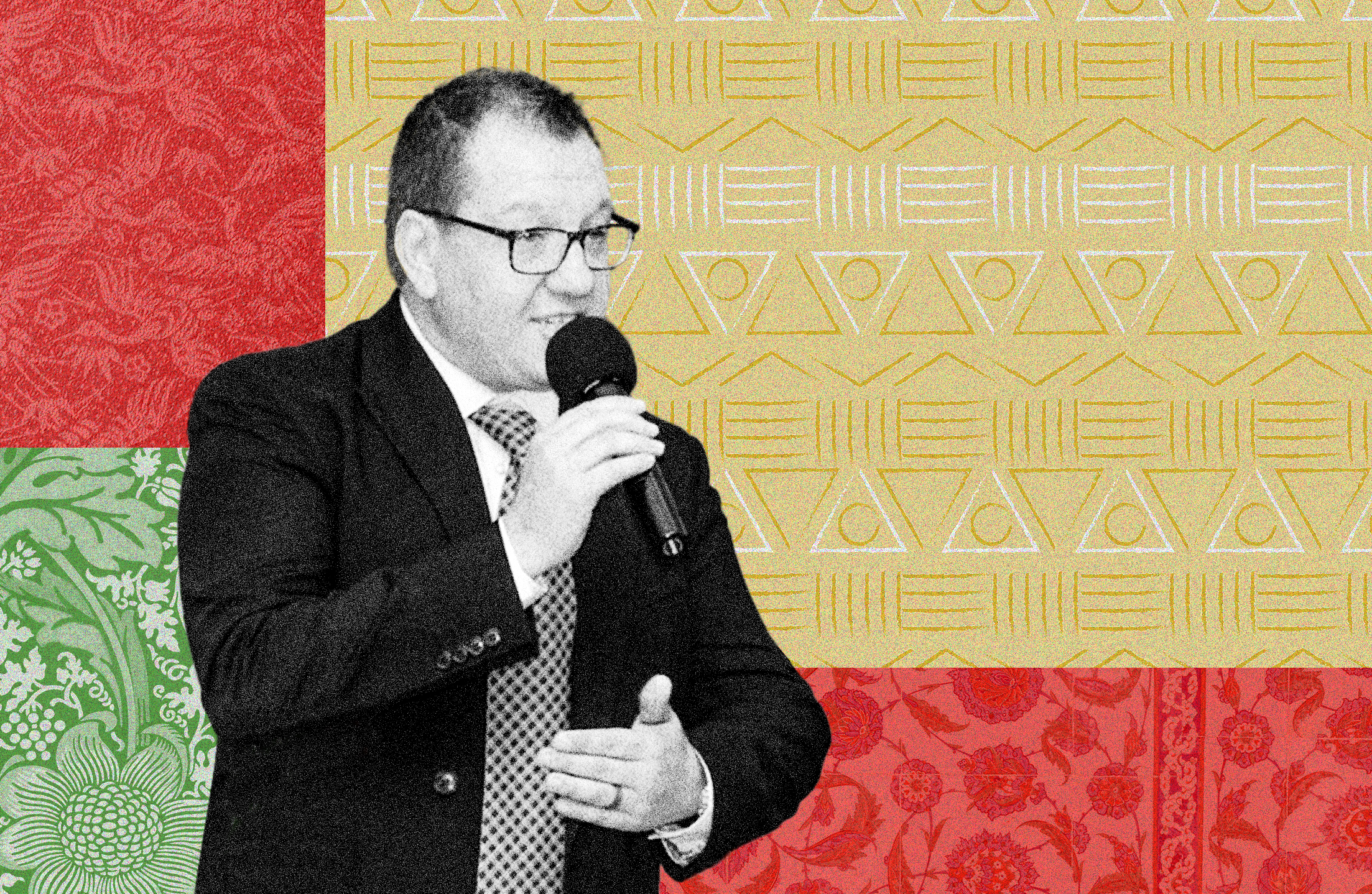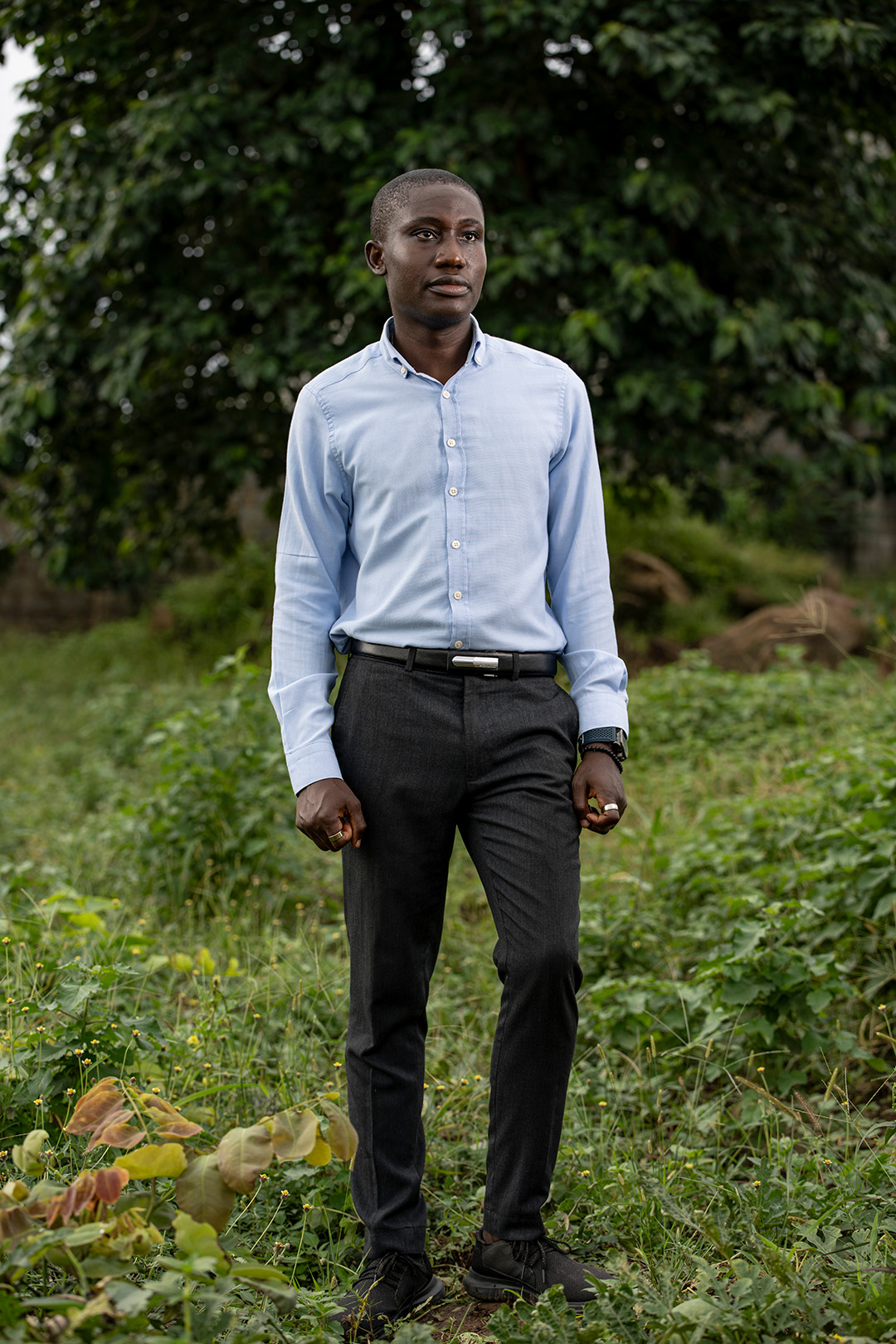
Portrait of Emmanuel Nwachukwe on a foliage background
Testimony

I Found Jesus in Science Class

How God used a skeptical teacher to help me make my faith my own.

Christianity Today August 20, 2025
Photography by Etinosa Yvonne for Christianity Today

“Science is not like God. Science is all fact. God is a myth concocted by primitive men,” my professor thundered during a biochemistry lecture. According to him, God was like a white-bearded magician sitting on the clouds with his magic wand, but science governed the material world and reality.

He said science served as the ultimate arbiter of truth and people had created God from their imaginations. To him, the time had come to abandon God and religion. Although faith might have been useful in the dark ages, he said, we now had a duty as civilized men to embrace truth (science).

These words sent shivers down my spine. I had never heard such brazen attacks on the existence of God. I felt stunned and had no response to his arguments.

I had believed in God all my life—or at least as long as I could recall—but now someone more learned and well-read was challenging that belief. My homeland, Nigeria, is a very religious country. Muslims and Christians each make up about half the population, with a handful of people practicing traditional African religions.

Because belief in God and in the supernatural is common, my first encounter with atheism happened in college. In fact, that was the first time I had even heard the word atheist—and I had no idea what it meant.

Suddenly I had to face the question of whether Christianity was true. If science was at odds with God, creation was a myth, miracles were impossible, and the resurrection of Jesus was a fable, then my foundations would crumble. I would have to probe deeper, to discover ultimate reality.

In 1993, I had the immense privilege of being born to Christian parents who placed faith at the core of their lives and our family. As I grew up, we gathered for regular morning devotions with Bible reading and prayer. Sundays were the heartbeat of our week—a time for worship, reflection, and family.

Our church met in a modest room with a cluster of wooden chairs arranged in rows, used for school programs during weekdays. As I sat through the sermon, my mother gave me small, oval, chocolate-flavored biscuits she had tucked into her purse. I munched them in quiet joy as the pastor preached with words that seemed big and distant to my young mind.

As an 11-year-old, I arrived at Holy Child Catholic Secondary School, a boarding school, clutching my suitcases. The school’s strict routine and strange practices clashed with my Protestant upbringing and personal faith. Bells clanged through the dormitories daily at 5 a.m., then came daily Mass, Latin hymns, rosaries, stations of the cross, and the scent of incense and beeswax candles.

The solemn liturgy the priests chanted captivated me. But as the priests and fellow students offered prayers to Mary and other saints, I wondered: If Jesus is “the only mediator between God and man,” why pray to anyone else? Why appeal to Mary to save those in purgatory?

Although all my life I had known the name of Jesus, I relied on the faith of my parents. Neither attending church nor going to Catholic school would save me. I had to make my faith personal by trusting in Jesus Christ alone. So in 2013, God used my atheist professor to cause me to ask, Is this faith mine or my parents? Do I really believe in this Jesus? Do I know him? Am I known by him?

I needed to know the truth. This led me to Christian apologetics and to a discovery of past and present writers such as C. S. Lewis, R. C. Sproul, Stephen Meyer, John Lennox, and Nancy Pearcey. I devoured their works.

They taught me that science and belief in God aren’t at odds—the supposed conflict is a historic and philosophical myth. In fact, many of the fathers of modern science saw their faith in God as a motivation to pursue science and truth.

“Men became scientific because they expected Law in Nature, and they expected Law in Nature because they believed in a Legislator,” Lewis wrote in Miracles. Real science requires us to assume the universe has regularities or laws we can rely on. This is only possible in a world with an ultimate lawgiver, God.

The apostle Paul declares in Romans 1 that creation and the conscience provide evidence for God. As his creatures, we can know enough to lead us to worship and honor him, so we are without excuse when we don’t (Rom. 1:19–20).

As I wrestled with my questions, I often sat in pastor Ronald Kalifungwa’s study in Lusaka, Zambia. The scent of old and new books, neatly arranged in shelves, enveloped the room. He asked me probing questions and helped me consider whether I had anchored my worldview in Scripture or culture.

Pastor Kalifungwa showed me that Christians and non-Christians may encounter the same facts—say a scientist’s lab results—but our worldviews about human nature, origins, and purpose shape how we interpret them. Worldview influences how we see everything—politics, ethics, science, even communication. My atheistic professor had promoted scientism—the idea that science is the ultimate way to truth—a new idea in Africa.

Later, in a November morning in 2017, I attended the first meeting of the Atheist Society of Nigeria Convention—entitled “The Road to Reason”—at the University of Lagos in Akoka, Yaba. Budding atheists, many of whom had grown up in Christian homes, met to express their frustration with what they saw as the hypocrisy and irrationality of religious people.

I remember wanting to grab each of them and say that although they are right to criticize hypocrisy, Jesus is the one they must turn to. We have nowhere else to go—not science, not atheism, not Mary, not the saints. Nowhere to go but Jesus. He has “the words of eternal life” (John 6:67–69).

In 2018, I moved to Cyprus to pursue my master’s degree and stepped into Lefkoşa Protestant Church, a Reformed Baptist congregation that became my home until 2023. There I discovered the highs and lows of the Christian life: moments when we feel and know God’s presence, and times of discouragement when he feels distant. As I listened and observed struggling church members, their fears and hopes transformed me. Now back in Nigeria, I still don’t have immediate answers to pain or to every question, but I know the cross of Christ provides the only real resolution.

Emmanuel Nwachukwu is a freelance writer and the cofounder of The Late Wire, a media and apologetics organization that promotes Christianity in the Nigerian public square.


Church Life

Confessions of a Reluctant Church Volunteer

“The poor you will always have with you,” Jesus told us. But will there ever be enough volunteers?

A collage of several hands raised.

Illustration by Elizabeth Kaye / Source Images: Getty

Christianity Today August 20, 2025

“The poor you will always have with you,” Jesus told us (Matt. 26:11). But will we ever have enough volunteers?

That question feels particularly pressing now, as political change in Washington is reshaping the provision of many social services in America (and beyond). Many ministries rely on congregants freely offering to be the hands and feet of Jesus, and as program needs grow due to policy shifts, I worry that not enough people will sign up.

I understand why many don’t, of course: We all have troubles of our own. We are busy, and it’s difficult to give away our time. Yet I write as someone who does sign up, someone who has become a kind of “church lady,” albeit a sometimes-conflicted one.

Since my kids went off to high school and later left home, I’ve held off seeking paid employment so I can write, rock climb, travel, and volunteer at church. I’m constantly asking myself whether this is wise. Shouldn’t I be making money to contribute to our household? Plenty of people work full-time and still serve at church. Yet for me it comes down to this: I’m less likely to volunteer my time if I have full-time work.

My husband’s mom, Sue, was my role model in this mode of life. She volunteered at their parish and my husband’s Catholic school when he was young, and that led to both paid and unpaid work at church and charitable organizations when he grew older. She helped open an apartment building for single mothers, a Christian health care center, and a home for people with AIDS—and those are just the things I know about. She died in her late 50s before I realized I needed to ask her about all this.

When I was a 20-something considering my own future, Sue’s way of life seemed bold, so different from “just” staying home with the kids or “just” getting a job if you didn’t have a specific career to pursue, as was the case for me. I wasn’t aware of the strong charity arm of the Catholic church, within which Sue found her volunteering and working opportunities. I simply knew there was something here I admired—something I hadn’t seen modeled in the very small, very conservative, and very poor denomination in which I was raised.

Practical charity was not a strength at most of those churches, and my own mother couldn’t spend her time as Sue did. My dad was a pastor with a meager income, and my mom worked to supplement what he made. When my boys were little, we were able to live on one income, and I seized the opportunity my mother hadn’t had, focusing all my time on mothering and teaching my kids. Even my writing took a back seat to raising and homeschooling them, and the most I did for the church was put together the bulletin.

When the boys grew older and needed less of my time, I cautiously began to say yes to opportunities to help. We’d left the denomination of my childhood and joined a large Anglican church, the church where I remain a member today. I realized I could no longer ignore the call to volunteer at church, and the calls kept on coming.

At first, I read Scripture or helped serve the Lord’s Supper during the service on Sundays and, of course, contributed to the meals ministry, as a good church lady should. Eventually, I found the courage to take on a more demanding challenge: the English as a Second Language (ESL) program, a good fit given my teaching experience. I’ve been teaching adult immigrants English for three years now. I love it, and I love them. They desperately want to learn in a way that many children don’t, and I am privileged to help them.

Working with the international population in ESL classes brought me to a second opportunity: managing a small Christian immigration legal clinic that operates out of our church. The clinic is open just one hour a week at the church, where a volunteer attorney speaks with immigrants and helps determine what legal options to pursue. I respond to emails and schedule appointments, mostly from home.

For a bit over a year, I’ve also been volunteering in our refugee ministry, which has needed much more support since the Trump administration came to office. This work is wild and unpredictable, and walking alongside these families—going shopping or helping them navigate getting a driver’s license or driving to health appointments—often takes twice the time I expect. To plan a simple trip to the grocery store, I need to hold half the day loosely, because I never know what else might come up. 

Truthfully, I mention all this not to put myself forward as a great example to follow. I’m a reluctant volunteer, especially with the refugee ministry. I worry about helping too much. Am I doing it right? Am I walking these refugees toward independence and dignity? (We Americans hold independence dearly.) Am I finding ways for them to experience joy in this new land? Am I building a meaningful relationship with them? I worry my “good enough” isn’t good enough. I see other volunteers in this ministry doing so much more than me to befriend the people they support. 

And those other volunteers aren’t only people who, like me, don’t have formal employment. Some fall into the classic church volunteer demographics: retirees and women who have school-age children and don’t work full-time. But not all. My term church lady is outdated now, as church volunteering looks different today than it did in the 1970s and ’80s, when I was a kid.

In decades past, many churches would have relied in a way that they can’t today on women who did not work outside the home. In 1972, Pew Research reports, husbands were the sole earners in half of American marriages and the primary earners in another third. By 2022, only 23 percent of husbands were sole earners, meaning wives contributed some (or even all) of the household income in the vast majority of these families. Marriage rates are also lower than they used to be, meaning there is a growing number of single people who support themselves as well.

Realistically, then, the volunteer mix is different, and the numbers may be fewer, particularly in the ministries that require significant time commitments. At my church, volunteers are both men and women, various generations, people who work full-time jobs and those who don’t. Yet it seems like a pretty consistent mix, at least in the areas where I help. The people who volunteer are the people who volunteer. Many of the refugee-ministry volunteers are also ESL teachers or serve at church in other ways. Many are repeat volunteers—it’s what we do. 

But we can only do so much. If the volunteering needs were to grow, who would bear the burden of that added work? If our church wanted to develop or expand more ministries, would there be enough people to volunteer enough time? Our church has the physical space and the money for these current ministries and more, but will there ever be enough volunteers to support them?

As it is, I worry about burnout. “Many hands make light work,” as they say, but compared to the numbers that show up on Sundays, the more difficult ministries don’t have that many hands at work. This seems especially true of the intensive ministries that serve communities outside of our church.

Again, I understand all the reasons people don’t sign up. I’ve given those same reasons in the past myself. I still wonder how much time I’m called to give to volunteering—after all, God calls us to other things too.

“Love the Lord your God with all your heart and with all your soul and with all your mind,” and “love your neighbor as yourself” (Matt. 22:37–39). At my church we are reminded of these two greatest commandments every week. I’m caring for my neighbor by volunteering at church—but also as a writer (I hope) and by taking care of my family. Aren’t I? I love the Lord and enjoy him when I do all the things he has called me to do, and that abundant love shapes other areas of my life beyond volunteering. So how much time do I give to church? How do I divvy it up? What gets priority?

Since January, I’ve been supporting one refugee family in particular, one of the nine that arrived in Pittsburgh through this refugee organization that month. It’s a large family, and they’re located in an inconvenient part of the city. I have to go over a bridge and through a tunnel to get to their house, for crying out loud! Sometimes, when a need arises, I wonder, Can’t someone else take care of them this time?

There are few other regular volunteers for this family’s needs, so I’m usually the one to drive them to appointments and grocery store runs and even urgent emergency room visits. And though we don’t speak the same language, I’ve been getting to know them. I’ve begun to care about them, which both alarms me and complicates things. Caring takes up more of my mental space than I’d like. It bleeds into those other spaces that I try to wall off from ministry responsibilities. It makes me feel panicky, as if I’m losing control over my life. 

And I am, in the best sense. “Whoever wants to be my disciple must deny themselves and take up their cross daily and follow me. For whoever wants to save their life will lose it, but whoever loses their life for me will save it” (Luke 9:23–24). 

I was compelled, encouraged, and humbled by my associate rector’s words in a timely sermon on this passage earlier this summer: “There is so much more to being a Christian than this one verse,” he said, “but there is never less. Everyone who follows Jesus must begin here. … No one who follows Jesus ever moves beyond this radical call.” 

Sometimes I wish I could do this work without caring so much. It would be easier. I’d get better sleep. But isn’t that the point of volunteering, of charity, of loving my neighbor? Isn’t that the point of signing up? 

The calling is to do the work, yes. But more so, it is to care: “If I give all my possessions to feed the poor … but do not have love, it profits me nothing” (1 Cor. 13:3, NASB1995). Caring is messy and causes anxiety. Caring is laying your life down for your friend. It’s following Jesus. It’s death to self. It’s picking up your cross. 

Little by little, my heart is changing. When I see this family in need, I am moved with compassion for them. I hope in a Jesus-like way. Now, even if I drag my feet on my way to the car to go to their house, even if I feel that anxious squeeze in my chest, by the time I knock on their door, I’m no longer thinking of myself.

Jen Hemphill is a writer from Pittsburgh finishing up a memoir about rock climbing and motherhood. She writes at Pull-ups in the Basement on Substack.

News

Indian Christians Protest Arrest of Nuns Accused of Human Trafficking

Hindu nationalists “manhandled us, beat us, and outraged our modesty,” says woman traveling with the nuns.

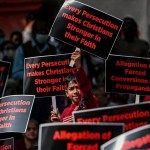
A protest by nuns, priests, Christian leaders, and supporters against the arrest of two nuns on allegations of forcible conversion and trafficking in India.

A protest by nuns, priests, Christian leaders, and supporters against the arrest of two nuns on allegations of forcible conversion and trafficking in India.

Christianity Today August 20, 2025
Shailendra Bhojak / PTI / AP Images

Earlier in August, thousands of protesters, many of them Christians, marched nearly two miles through Narayanpur’s weekly market in India’s state of Chhattisgarh. Catholics, evangelicals, and members of other Protestant groups stood together in solidarity with the two Kerala-based Catholic nuns and a Protestant man from the Gond people group whom local authorities arrested on fraudulent charges of human trafficking and forced conversion.

The three tribal Protestant women at the heart of the case walked among the demonstrators. They claim the Hindu extremists forced them to make false confessions that the nuns had trafficked and converted them to Christianity against their will. Those charges led to the nuns’ imprisonment. Now the three women are demanding justice.

The 3,000 to 4,000 protesters submitted a memorandum to the chief minister of Chhattisgarh, Vishnu Deo Sai, demanding charges against Hindu nationalist activists under India’s anti-caste violence laws.

The massive demonstration reflects a pattern in India’s religious landscape: evangelical Christians rallying to defend Catholics against persecution, and vice versa. Shared threats from Hindu nationalists have reshaped the relationships between India’s Christian communities.

“Every attempt Christians make to do good work is being misunderstood and twisted into accusations of conversion,” said Peter Machado, the Catholic archbishop of Bangalore. “Despite the good work we do in this country through our schools, hospitals, and social centers, instead of being recognized, we are being denigrated.”

He also criticized institutional failures: “We expect police to provide protection, but instead they joined with the accusers rather than defending the sisters.”

It all began July 25 when a local tribal Protestant, Sukhman Mandavi, and three young women between the ages of 19 and 21 arrived at the Durg railway station in central Chhattisgarh to meet with two nuns, Preeti Mary and Vandana Francis. The sisters planned to bring the women by train to their new jobs working in the kitchen of a Catholic hospital in Agra in the nearby state of Uttar Pradesh. The nuns carried written parental consent and proper documentation.

Yet a bystander overheard the conversation between the three women and the ticket collector and contacted local members of Bajrang Dal, a militant Hindu nationalist group.

As the group was about to board the train, several dozen activists surrounded the group. They chanted slogans like “Jai Shri Ram” (“Hail Lord Rama”) and “Bajrang Dal is the pride of the nation” and pulled Mandavi by the ear, slapping him repeatedly on the railway-station platform. The mob pressured the police to detain the group. Police then took them into the station for questioning.

“We went with the permission of our family,” said 19-year-old Sukhmati Mandavi (no relation to Sukhman Mandavi), one of the three tribal women. “We were only going for a job, and that is not a crime. We do not get any jobs here.”

Sukhmati, 19-year-old Lalita Usendi, and 21-year-old Kamleshwari Pradhan all came from impoverished families from the Narayanpur district in Chhattisgarh. Usendi had lost both her parents and was living with a cousin who had previously worked for the nuns.

Hindu nationalists got inside the police station to intimidate the Christians. “If you don’t want to speak, I will smash your face,” said Jyoti Sharma of the Hindu nationalist group Durga Vahini Matrushakti threatened the nuns in a now-viral video.

Sukhmati recalled that “Jyoti Sharma and Bajrang Dal people manhandled us, beat us, and outraged our modesty” and the police did nothing. Sharma, who is female, and about 15 Bajrang Dal men took Sukhmati and the two other young women into a room, where they called them caste-based derogatory names, slapped them, and touched their private parts, Sukhmati said. She noted that Sharma had ordered the men not to record the abuse and physical assault on their phones.

“The men inside the room threatened to rape us if we did not give statements against the nuns and confess before the police that we are being taken forcefully by the nuns,” said Usendi. “Sharma slapped us until we agreed to sign on the document that said an entirely false story about the nuns and Sukhman bhaiya [older brother].”

By then, about 100 to 150 members of Bajrang Dal had stormed the police station. Terrified, Pradhan said they felt they had no choice but to sign the document. Authorities took Sukhman and the nuns to jail while sending the three women to the local Sakhi center, a government-run facility for women affected by violence.

Arun Pannalal, president of the Chhattisgarh Christian Forum and a member of the Church of North India, said that as Sharma interrogated the group, “the policemen in the police station sat as mute spectators, allowing Jyoti Sharma to do as she pleased.” He added that “she tried to slap the nuns, snatched their bags and mobile [phones], rummaging [through] their bags. She threw the Bible—our Holy Book—on the policeman’s table and declared that it was a human trafficking case.”

As news of the incident spread, Catholic leaders received support from Protestant organizations, including National Council of Churches in India, the Evangelical Fellowship of India (EFI), and the Church of South India Synod.

In Andhra Pradesh, nuns and pastors organized a candlelight vigil, though police stopped the demonstration. Political leaders from India’s Christian-majority northeastern states also intervened, with Nagaland deputy chief minister Yanthungo Patton emphasizing that “India, as a democratic and secular country, guarantees every citizen the right to practice their faith without fear or discrimination.”

When a National Investigation Agency court granted the nuns and Mandavi bail after nine days in custody, it delivered a scathing assessment: The case was “primarily based on a mere apprehension and suspicion.” The court noted that two of the three alleged victims had stated they “have been followers of Christianity since childhood,” completely undermining conversion allegations.

The fabricated charges only point to broader persecution patterns affecting India’s Christians. EFI’s Religious Liberty Commission documented 334 incidents targeting Christians so far this year across 22 states and territories. Chhattisgarh recorded 86 incidents, second only to Uttar Pradesh’s 95 cases. The commission concluded that “anti-conversion laws, ostensibly designed to prevent coercive conversions, are being systematically exploited to criminalize legitimate religious activities and social service work.”

Cooperation between Catholics and Protestants is not new. Decades of shared persecution have led to dialogue and cooperation, including initiatives like the National United Christian Forum, which has brought together Protestant and Catholic leaders since 1998.

The legal case against the nuns continues. Questions persist about how Hindu nationalists and local governments are weaponizing anticonversion laws—now active in 11 Indian states—against Christians doing humanitarian work. Such violations “create serious consequences extending beyond immediate victims to entire communities and the constitutional promise of religious freedom,” according to EFI’s Religious Liberty Commission.

The three tribal women sheltered at a private home after their release from the Narayanpur Sakhi center on July 30. “We will fight for justice till the end and will not rest until we get justice,” Sukhmati said.

News

When Putin’s in Town, Alaska’s Slavic Christians Keep Praying for Peace

As political leaders meet over the Ukraine war, Orthodox and Protestant congregations gather to ask God to orchestrate an end to the fighting.

An aerial view of downtown Anchorage, Alaska, with the Chugach Mountains in the background

Downtown Anchorage ahead of the August 15, 2025 summit between Vladimir Putin and Donald Trump.

Christianity Today August 19, 2025
Drew Angerer / AFP via Getty Images

About ten miles from where Donald Trump and Vladimir Putin met in Anchorage on Friday, a man speaking at New Chance Church didn’t even have to mention the presidents—or their countries—as he prayed for the ongoing talks.

Instead, he pointed to Jeremiah 17:7–8 (“Blessed is the one who trusts in the Lord …”), before leading about 20 people gathered for the Friday-night youth service in prayer in Russian.

“Only God knows the outcome,” said the speaker—himself a Ukrainian refugee—through a translator. “We do not rely or hope on some personality. … We rely on the Lord because he can do his work through anyone.”

Ukrainian refugees now compose about 60 percent of New Chance Church, alongside Christians of Belarusian, Moldovan, and Uzbek heritage, said pastor Dmitry Vakulich.

The church meets at a rambling Korean Presbyterian building nestled among modest homes in the west Anchorage neighborhood of Spenard. Its changing demographics shape how the church addresses current events, Vakulich told CT on Sunday, at a potluck celebrating New Chance’s 23rd anniversary.

Church attendees pray for Ukraine and for Russia. For the hurt on both sides. For the seemingly impossible hope of unity and peace. They can’t ignore the issue, especially when the world leaders making headlines come to meet on the other side of town.

Across Alaska, Russia’s cultural influence lingers. Christians from Anchorage to Kodiak have rallied to pray for the summit with Putin on Friday, Trump’s White House talks with Ukrainian president Volodymyr Zelensky on Monday, and ongoing diplomatic efforts to end the war in Ukraine.

Russia has historic and geographic ties to Alaska and controlled Alaska Natives’ land until 1867. Many retained their Orthodox faith, and the state now has one of the highest percentages of Orthodox Christians in the US. The Orthodox Church in America recently canonized its first Native Alaskan saint, a Yupik woman.

Ahead of Trump’s summit with Putin, the state’s top Orthodox leader called for a “three day ascent of prayer for peace,” with local churches holding services last week. The archbishop also met with Putin himself, which Ukrainian Orthodox leaders decried as a “betrayal.”

Since Russia launched the war in 2022, an estimated 1,000 Ukrainian refugees have resettled in Alaska, according to the state’s Catholic Social Services. Some joined churches such as New Chance Church in Anchorage and Word of Life Alaska in Delta Junction, a farming community near Fairbanks.

The Ukrainian, Russian, and Moldovan Christians at Word of Life began fasting and praying as soon as the war began. After Trump announced plans to hold the summit with Putin in Alaska, Word of Life launched a special church chat on the messaging app Viber to pray for the meeting.

“Our main theme is that God will interfere and stop this nonsense,” said pastor Viktor Linnik, who alluded to 1 Timothy 2. “Our main Bible verse is to pray for all the authorities, that God will lead them [in] the right direction.”

Christians who fled the Ukrainian war have paid particular attention to how potential deals might affect their own now-uncertain place in the US. Linnik said those in his congregation are worried about what could happen next.

The current administration suspended the humanitarian program for Ukrainian arrivals, and many fear losing their status amid immigration crackdowns. Had leaders settled on a cease-fire, it could have improved the conditions for Ukrainians returning home.

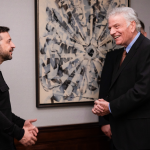
But Trump ended up easing his insistence on a cease-fire after the sit-down with the Russian president. On Monday, Trump said on social media that he has begun arranging a meeting with Putin and Zelensky. He didn’t say whether each had agreed to participate.

A weekly prayer group of Community Baptist Church in Kodiak, which regularly intercedes for Ukraine, brought up the summit with Putin as well as Trump’s conversation with Zelensky and European Union leaders. Not all who come to pray agree politically, but they agree the situation needs prayer.

The church currently supports a Ukrainian missionary who works in his country with soldiers and prisoners of war, but Julie Ball, a member of its prayer group, said, “Whether there is a missionary there or not, I think it is something that we would be praying for.”

Estimated casualties from the war reached 1.4 million this summer. This week, First Lady Melania Trump wrote Putin directly to ask him to protect innocent children.

The Assemblies of God’s Alaska Ministry Network included the summit in a list of prayer requests. The network’s superintendent, Jeremy Davis, said by email that the prayer request went to about 260 “Assemblies of God credentialed ministers who live and serve in Alaska.”

The Evangelical Lutheran Church in America’s Alaska Synod posted a prayer Friday that asked God “for an end to the war in Ukraine—for the silencing of weapons, the healing of shattered lands and lives, and the triumph of justice over domination.”

At New Chance Church, Vakulich is grateful to see community members show up to pray and worship, and he’s thankful for the new leaders the church gained from the surge of immigrants.

Later this month, the church plans to hold a special event to pray for Ukraine and eat borscht. “We try to welcome everybody,” the pastor said. “We want to keep the bridges. We don’t want to burn them.”

With a church like theirs, that makes teaching about the hard work of forgiveness especially important. “There’s a lot of hurt,” he said. “[Sometimes] it’s hard to say, ‘God bless you.’”

And as 18-year-old Moses Vakulich said at the youth service Friday, gratitude matters too. He had opened the Friday night service with the late-1970s praise chorus “Give Thanks,” playing a keyboard as attendees sang in English, then Russian.

Later Moses Vakulich told the group, “When you begin thanking Jesus, the problems don’t change, but your heart does.”

Church Life

The Most Integrated Hour of the Week

Greenford Baptist Church in West London has been multiethnic for three decades. It didn’t happen by accident.

Women singing in church in front of different cultural patterns
Christianity Today August 19, 2025
Illustration by Christianity Today / Source Images: Getty, Unsplash, Flickr

Steve Williams was four years old when his family tried to enter a church in Greenford, West London, and some church members stopped them. “You’ll want to try that church over there,” someone said, pointing down the road. “That’d be good for you to go [to] instead.” 

“We weren’t the right color,” Williams recalled.

It was 1968. The Williams family had just moved to Greenford. Williams was born in West London, but his parents had emigrated from Jamaica as part of the “Windrush Generation” of Caribbeans who arrived in the United Kingdom between 1948 and 1971 to help rebuild post-war Britain. 

His parents didn’t make a fuss when the church shut the door in their faces. They simply walked down the road towards the other church, a nondescript building with a grayish-brown brick exterior and frosty blue-and-white windows. 

That church opened its doors to the Williams family. They became one of only two non-white families at Greenford Baptist Church (GBC), but they found a home there. It’s where Steve Williams was baptized, married, and raised two daughters. Today, he’s 61 years old and serves as an evangelist at GBC. He greets newcomers with a beaming smile: “Welcome to Greenford!” 

Everybody knows Williams, who owns a steel fabrication factory. He’s been part of the church for 57 years—one of the longest-serving members of GBC—and has watched it transform. Williams is still part of an ethnic minority at GBC, but only because today, there is no “majority” in this church.

On any given Sunday, people of about 35 different ethnicities sing and pray together, sometimes in their own languages. Heads bop about during worship: bald and shiny, or wrapped in African headbands, or topped with straight blond hair, or covered with silvery bobs, or spiked into mohawks, or braided in updos, or haloed by natural afros, or bedecked with jet-black weaves. On stage is a giant mosaic of 28 colorful tiles with the word God painted in the first language of various GBC members—Yoruba, Setswana, Arabic, French, Slavic, German, and more.  The church leaders and staff are English, Nigerian, Indian, and Jamaican. 

Inside this gray, forgettable building is something vibrant and memorable—a truly diverse congregation that was multicultural before it was cool. GBC has been multiethnic for about three decades—long enough that members don’t seem to realize how extraordinary their church is, until visitors come and gape.

‘This is a traditional church. And that’s never going to change.’

It all started when Greenford Baptist Church’s new pastor, David Wise—a young milkman turned preacher—personally visited each member of the church.

When Wise first became pastor of GBC in 1987, the superintendent of the Baptist Union of Great Britain, an evangelical denomination in England and Wales, warned him, “This is a traditional church. And that’s never going to change.” 

GBC was a traditional British Baptist church, with an organ, hymn books, and a strong core of graying, devout women who kept the place running.

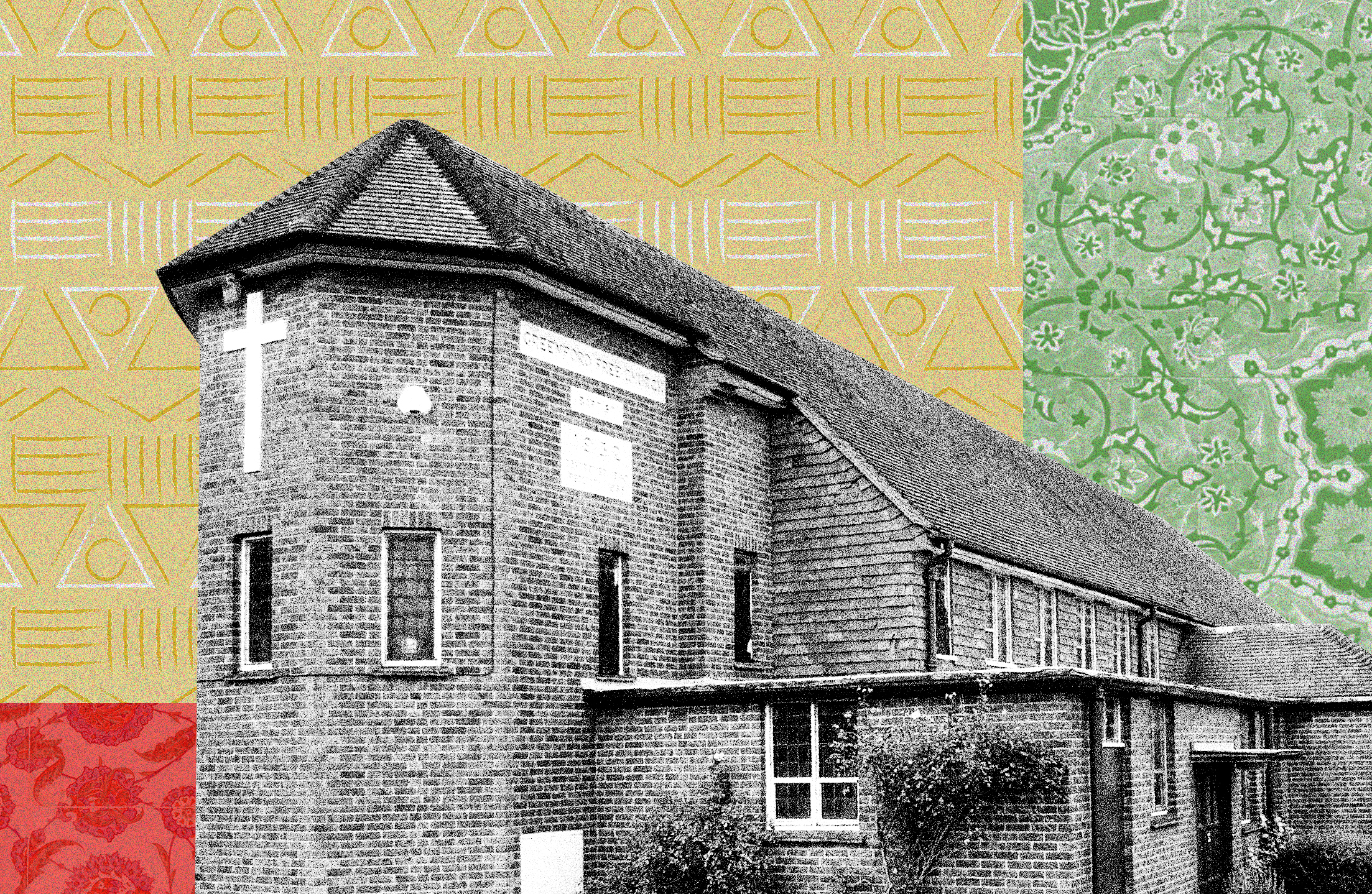
The church began in 1933 as Greenford Free Church. Services took place in a Tudor-style cottage with a gable roof, lattice grids, and square-patterned bay windows. The population in Greenford had jumped from 843 in 1911 to more than 14,000 just 20 years later. Newcomers came for the post-WWI manufacturing jobs, turning the area into an industrial suburb. 

When the first air sirens of WWII blared during Sunday service, members unanimously voted to continue worshiping as usual. A year later, at midnight, bombs destroyed their church building, and many church members lost their homes. They met in a farmer’s corrugated iron outbuilding dubbed “The Tin Tabernacle,” enduring leaks and drips until 1955, when they finished constructing the current church building.

When Wise first visited GBC in the ’80s, the church had an unwelcoming atmosphere. Several people told him how unfriendly GBC felt when they visited. 

Wise arrived with one main vision: “I wanted to see people share life together, care for each other, so church isn’t just a 10 to 12 o’clock on Sunday morning, but about the rest of the week. I wanted a church that’s a community, a family.” 

In 1987, 85 of GBC’s 93 members were white. Six of the eight non-white members were from Jamaica or were children of Jamaicans. There was also an elderly Greek couple who had long since stopped attending. Over the next several years, more foreign-born people started trickling in.

An education in racism

Wise urged members to notice newcomers and welcome them. He modeled hospitality by visiting every member of the church and inviting them over for a meal. But he didn’t take into account the specific challenges immigrants and non-white members faced until he began to hear stories from Black churchgoers.

Greenford Baptist Church in West London.Illustration by Christianity Today / Source Images: Getty, Unsplash, Flickr
Greenford Baptist Church in West London.

One young man told him how other students had tried to beat him up because he was Black. He described feeling on edge whenever he passed a group of white boys on the street, and he told Wise about the racist comments he heard in school.

A young Black woman told Wise she constantly felt “lesser” and “didn’t really belong.” Others told him they were spat upon and harassed in the streets.

Wise was appalled: “Racism was a new issue for me, but it had been an issue for the Black people in church, of which I had no understanding.” 

David Wise grew up in Hampshire, in southeast England. He lived in a council estate (similar to a public housing project in the United States). Everybody he knew was white. 

Then, in 1980, as a newlywed 23-year-old, he and his bride Lesley moved to Southall (about two miles from Greenford), which had the largest Punjabi community in the country. Southall had Britain’s first all-Asian football team, a cinema that played Bollywood films, and shops that sold brinjal, bitter gourd, and chapati flour. 

The Wises browsed the shops in fascination, pointing at knobbly green produce and asking how to cook it. They built up their spice tolerance by frequenting eateries where the rest of the customers had brown skin.  

At the time, Wise delivered milk for a living, and many of his customers were South Asian or Afro-Caribbean. Every day, a Muslim woman made him chai, sweet and milky and spicy. She would set the cup on top of the postbox and watch him from her house, nodding and smiling. She didn’t speak a word of English, but that slurp of tea was a little exchange across religious, cultural, and language barriers. 

The racial tension was as taut as a runner’s calf. In 1976, a far-right gang fatally stabbed an Indian teenager in Southall, but nobody was convicted, which outraged the Asian community. Then one afternoon in 1981, Wise was dropping off milk when some customers warned him: Go home, stay home. Trouble is brewing.

That night, droves of young white skinheads bused over to Southall to attend a concert at an iconic pub, and the local Asian youth braced themselves for a brawl. Hundreds of police officers showed up, cordoning the pub to protect the white youth from the angry crowd, sometimes clubbing the Asians to disperse them, while the white youths shouted racist slogans and made Nazi salutes, smashed the windows of Asian shops, and threw stones at locals. Such harassment was not new to the Asian community, but this time, the younger generation had tired of swallowing their rage. Some threw petrol bombs that burned the pub down. The night ended in fist fights and ashes, with overturned cars and more than 100 people injured, including 61 police officers.

The next morning, on his daily delivery route, Wise surveyed the damage. Dozens of police officers patrolled the streets, and demonstrations went on for days. He was angry about what happened, but to him, it was just another unfortunate event.

“I didn’t have anything to hang it on,” Wise recalled. “I didn’t have any understanding of the history, the background, the British Empire and its legacy. I knew just about nothing.” He could enjoy a spicy curry, but he was ignorant about the daily injustices his immigrant neighbors faced. 

In the summer of 1992, five years into pastoring GBC, Wise decided it was time to learn. During his sabbatical, he spent two months in South Africa to “study multicultural churches and structural racism,” according to the minutes of a church meeting. 

It was a disturbing and uncomfortable two months for Wise. For the first time, he felt conscious of his skin color. Some weeks, he was the only white person for many miles.

Once, a Black South African invited him to an event. They drove together, but Wise entered the house first, and when the people inside saw his face, they screamed. It was their look of sheer terror that rattled Wise: “They knew nothing about me. … A white person [was] coming into the house, and what did that mean to them? Someone’s going to suffer.” 

In Pretoria, he visited a church flagged as a model for multiracial congregations, where both whites and Blacks worshiped together– a beacon of hope in a brutally segregated country. “I’m told this is the best example of a genuinely multiethnic church in South Africa,” he told one Black man he met at that church, and the man laughed.

“This church,” the man replied, “is organized on the basis that white is right. It’s the white way of doing theology, the white way of interpreting the Bible, even down to the food we eat.” Black people, he said, could come along for the ride, but they didn’t have a voice.

Another day, a Black South African took him to visit a Christian radio station near Alexandra, a township in Johannesburg. The staff there were all white. They welcomed Wise warmly but ignored his companion, even though he was standing right next to Wise. “He was just invisible,” Wise recalled. When they got back into their car, the man turned to him and said, “You see how it works?” 

Wise returned to London “shell-shocked.” He had awakened to a racial consciousness that he couldn’t un-know, and he didn’t know what to do with it: “I just felt racked with guilt and powerlessness.”

The next several weeks, Wise reflected on his trip to South Africa and penned a report that he sent to leaders of his church and denomination. In that report he asked, “What constitutes [a] non-racial church?” 

“It is much more than simply having a mix of cultures represented in the congregation,” he wrote: The work has to be intentional, such as creating multiracial leadership, offering worship and preaching styles that reflect the different cultures of the congregation, and affirming all cultures and peoples at every level.

“We must start by recognizing and treating others as fully human, strongly affirming them along with their culture, heritage and perspectives,” he wrote. “We must open up all sorts of opportunities to them. … We need to recognize that creating trust will not be easy because trust has been betrayed often in the past.” 

An attack on one of their own

In 1993, Stephen Lawrence, an 18-year-old Black student, was stabbed to death while waiting for a bus in southeast London. None of the suspects—six white youths—were initially charged.

Four years later, three masked men broke into the house of an Indian family, the Pauls, who were members at GBC. According to the front page of The Baptist Times, the attackers dislocated the father’s shoulder and broke his ribs, battered the mother’s face, and attacked their teenage son so viciously that he needed surgery.

For three years, the Paul family had been enduring verbal racial abuse, racially offensive notes, vandalism, threatening phone calls, and false accusations against their son from their neighbors, according to the spring 1998 edition of The London Monitor. The Pauls had reported these incidents to the police, but they said the police didn’t help. Even after they were physically assaulted, The London Monitor reported, the police response was lethargic.  

For many members of GBC, the national news about the Lawrence case in 1993 was background chatter. But the attack on one of their own shocked them and brought home the reality of racism in their backyard. Wise talked about both cases from the pulpit, and the church collectively prayed for justice. Wise also helped campaign for justice for the Paul family and participated in the Stephen Lawrence inquiry.

Wise said the violence against the Pauls “made clear the reality of racism in our local community and wider society to all at GBC.” One White British man told Wise that when the Stephen Lawrence incident happened, it all felt “slightly remote from us,” but when the Pauls were attacked, “you suddenly realized there is an issue within our society.” The man said it caused him to think seriously about how he viewed and treated people of other ethnicities. 

The incident had a profound impact on Rotimi Awoniyi, another church member. Seeing the church stand behind the Paul family encouraged him: “There’s comfort knowing that should anything like that happen to me, the church is there to support me. I felt that the church was standing up to injustice. I think if the church did not stand up, there was potential for evil to prevail.” That response to injustice led Awoniyi and his wife to plant deep roots at GBC. 

Awoniyi immigrated to Greenford from Nigeria in December 1990 and started attending GBC with his wife in January 1991. They were the first African family at the church. Three decades later, they’re still there. The Awoniyis’ four adult children grew up at GBC. As a long-time leader at GBC, Rotimi Awoniyi helped oversee many of the changes that made the church what it is today. 

At his former church in Nigeria, prayers and worship were loud and fervent. Attending a Baptist church in England for the first time was “a bit of a culture shock,” Awoniyi recalled. Nobody clapped, nobody stomped, nobody raised their hands. But he and his wife were touched when some members of GBC called to check up on them, and when Wise invited them over for lunch. 

Before his sabbatical in South Africa, Wise had changed GBC from a one-pastor model to a plurality of leaders for whom members vote. He developed an 18-month leadership training course to raise these leaders, and in 1995, Awoniyi was the first African to be voted into the leadership team. 

Diversifying GBC’s leadership was a major turning point, Awoniyi said: “People could see that not only is the church diverse, but the leadership team is diverse. They think, I have someone who looks like me at the table who will be able to articulate how I look at things, how I feel about things.”

At the time, Awoniyi had no concept of a multicultural or multiethnic church. He grew up in a church that was made up entirely of Yorubans. Then he heard Wise preach that a local church should reflect the community, that it was unnatural to remain a predominantly white church when the community around it was a mix of Africans, Caribbeans, South Asians, Middle Easterners, Latin Americans, and Eastern Europeans.

Becoming multicultural

In 1999, some Nigerian members led a prayer vigil at GBC that drew upon African traditions. The church held more prayer vigils, and gradually, invited different styles of prayers into Sunday service as well. The church also began holding regular “International Evenings,” in which members brought food, music, and clothes from their mother countries.

The church appointed a part-time prayer coordinator and worship facilitator in 2003 to “integrate and develop multicultural prayer and worship” at GBC. The church invited its members to teach worship songs in their own language and style. There would be a Yoruban number with drums and dancing, or an Egyptian piece in Arabic, or Jamaican reggae-style beats, or a Hindi song sung while sitting on the floor, along with the meditative beats of a tabla drum, bells, and drone sounds. All the lyrics would have English translations.

Wise also changed the way he preached. He pursued a part-time MA in Aspects of Biblical Interpretation so he could preach more effectively to people of other ethnicities. Sometimes he walked around the congregation holding out his mic, asking people for relevant experiences and perspectives based on the scripture passage that Sunday.

Once, someone who had fled Muslim persecution in their home country made derogatory comments about Muslims. But often, such congregational hermeneutics helped broaden and deepen the congregation’s understanding of God’s Word. For example, while studying a passage in Exodus about hospitality, a refugee from Iraq shared how his village welcomed strangers. 

Another significant change was the structure of Sunday service. In March 2004, GBC lengthened its service from about 75 to 150 minutes. Before, service ended strictly at a certain time so people could hurry home to their own activities, but the new service structure gave them more time and freedom to be flexible. The sermon was longer. They added congregational prayer during worship time, in which people shared testimonies, celebratory events such as birthdays and anniversaries, and prayer requests, then pray out loud together.

In between worship and teaching time, they took a break for tea and coffee, and members would chat, welcome newcomers, and pray for one another. Once a month, they had lunch after service. This new structure inspired more connection, creativity, and spontaneity.

The demographics at GBC rapidly changed during those years. In 1995, about 20 percent of church members were nonwhite. Ten years later in 2005, the number had grown to 55 percent. By 2014, about two thirds of the church members were nonwhite. Membership grew from 129 in 1995 to 195 in 2014.

‘It’s in our DNA now’

By the mid-2000s, GBC had gained a national reputation. People across the country came to visit, while conferences and churches invited Wise to speak. In 2010, the first Mosaix conference took place in San Diego, a once-every-three-years gathering focused on the multiethnic church movement. 

That optimism has sputtered since. Many nonwhite churchgoers have left the once-championed multiethnic churches. In 2021, Christianity Today published a cover story by Little Edwards titled “The Multiethnic Church Movement Hasn’t Lived Up to Its Promise.”

“Multiracial churches often celebrate being diverse for diversity’s sake,” she wrote. The number of multiethnic churches have risen in the past two decades, but many have failed to create a space that’s equal, inclusive, and equitable.

Wise, who retired as pastor of GBC in August 2019 and currently consults with churches around the United Kingdom, have also seen many churches in the UK dissolve into conflict and division as they seek to become multiethnic. Wise found that dealing with racial issues at GBC was sometimes like battling the invisible wind—you knew it was there, you could feel it, but you couldn’t quite pin it down. 

Sometimes, that wind looks like a woman calling Wise after Awoniyi prayed during Sunday service for the first time, complaining that she couldn’t understand a word he said. “That’s complete nonsense,” Wise told me. Awoniyi has a slight accent, but his English diction is precise and clear. Soon after, the woman left GBC for another Baptist church that’s mostly white. 

Others also left, sometimes with vague explanations as to why. “People didn’t say, I’m leaving because there are Black people here,” Wise said. “They would say they don’t like the way the church is developing, or the worship.”

In one particularly difficult case, Wise and the church leadership dismissed some long-time worship leaders. Wise said they were hanging onto the old version of GBC and resisting efforts to include nonwhite singers and different cultural styles. It was a tense, stressful time.

For about 30 years, Wise used the imagery of tapestry to cast a vision for GBC, inspired by a paraphrase of Colossians 2:2: “I want you to be woven into a tapestry of love” (MSG).

We are all God’s workmanship (Ephesians 2:10), he preached, through which God reveals himself. God himself is the weaver of the tapestry of GBC, and even the smallest detail on the tapestry adds distinct texture and beauty to the overall art. Everyone contributes; everyone adds value.

The Sunday I visited GBC, they welcomed a new member into the church. Afsaneh is a refugee from Iran, with limited English, and chose GBC as her church because of its inclusive diversity.

That morning, Afsaneh smiled shyly as the current pastor Warren McNeil, who had been going through the Bible with her one-on-one using Google Translate, passed her the mic. “You can speak in whatever language you feel comfortable with,” he told her. She said in English, “Thank you.” And then she continued in Farsi, expressing more gratitude through the language of her heart. 

Pastor Warren McNeilIllustration by Christianity Today / Source Images: Getty, Unsplash, Flickr
The current pastor, Warren McNeil, at Greenford Baptist Church.

When she returned to her seat, Mala, the Indian woman sitting next to her, grasped both her hands, and they squeezed each other, smiling. Mala had been regularly checking up on Afsaneh, helping her with all the practical things she needed to settle into a new country. 

I talked to 10 members of GBC, nine of them members for more than 20 years. To hear them talk about their church, they are clearly proud of it, yet they also seem slightly surprised that people marvel to see them intermingling in a kaleidoscope of accents and dress and hairstyles, instead of self-segregating by ethnicity. 

“I’ve taken it for granted,” said Elizabeth Harries, a slim, blonde staff leader who has been attending GBC since she was six. “We’re unaware of what we’ve got here. It’s not until we go outside or someone comes and asks questions and then you kind of go, ‘Oh. I don’t know. It just happened!’” Of course, Harries knows it didn’t “just happen.” But it’s an indication of how organic multiculturalism has become for GBC.

“It’s in our DNA now,” McNeil told me. “It’s natural for us. We don’t even think about it because we’ve been on a 30-year journey.”

It doesn’t mean cultural miscommunications don’t happen sometimes. In 2018, McNeil made a faux pas: He needed help serving communion, so he gestured to a woman from an African country, using his index finger to make a beckoning sign.

What he didn’t realize was that in her culture, that was a derogatory gesture, something a master would do to a servant. It triggered some memory in the woman, and McNeil noticed she stopped showing up at church after that. When he realized his mistake, he visited her, got down on his knees, and asked for forgiveness. It was merely a cultural misunderstanding, but McNeil knew what it meant for a white man, especially a pastor of authority, to kneel before a Black woman. She forgave him immediately, and they talked it out. Recently, McNeil was at her house, drinking tea and laughing with her and her husband.

McNeil is still struggling about whether GBC can become a tapestry that enfolds everyone. At times, he wonders if there’s room for everybody’s culture except his. It seemed so effortless and celebrated for someone like Awoniyi to express his Nigerian culture, to suddenly break out into a Yoruba song in the middle of worship, but what White British culture can he so proudly and boldly express, without worrying if it’s too … colonial?

“In our society at the moment, being white is damaging. It’s, ‘How dare you? You’re why we’ve got all the problems in the world,’” McNeil told me. “So I feel less than. I have found myself very much struggling to express my own culture.”

In his painstakingly conscious efforts not to be arrogant, he wondered if sometimes he’s gone to the other extreme into white guilt, trying so hard to step into other people’s shoes that he’s lost his own: “Then I don’t become properly part of the tapestry at that point.” He was starting to feel resentful, and that was a dangerous place to be as the pastor of a multicultural church. 

The pandemic provided a spiritual refuge for McNeil. He used the solitude to process his thoughts and emotions before God, and then process it out loud with his wife and trusted close friends. 

For Steve Williams, the church evangelist and son of Jamaican immigrants, it was the reverse. Growing up, all his friends were white. All his girlfriends were white. He didn’t like being different, didn’t think he should be different. As a kid, he told his mother not to cook him Jamaican food anymore. He wanted what the other kids ate. No more curry goat; he wanted sausage rolls. 

Growing up, he sometimes returned home with scrapes and bruises because a gang of white kids had jumped him on the bus or on the streets, mistaking him for South Asian. He started resenting South Asians, blaming them for why he couldn’t walk the streets without looking behind his back. It wasn’t until the last two decades, as he grew with the church in embracing different cultures, Williams realized how much of an identity crisis he had, and the prejudices he had developed against South Asians. He too had to bring all those internal struggles to God. 

Such are the countless instances of invisible, internal work that shaped the community of GBC. The image of a tapestry church sounds beautiful, but in real life, it was often uncomfortable and messy. Not everybody enjoys the sporadic dancing that sometimes happens during worship, while some people feel straightjacketed when the worship and prayers are somber and slow. Some people feel comfortable grabbing people by the face with both hands to show affection, while others would rather shake hands from two feet away. 

But it’s also a taste of heaven on earth, an imperfect image of Revelation 7:9–12, in which “a great multitude that no one could count, from every nation, tribe, people and language” stands before the Lord and worships in one voice.

Sophia Lee is former global staff writer at Christianity Today who is now a stay-at-home mother. She lives in Los Angeles.

Books
Review

A Christian’s First Calling Is Never a Career

Karen Swallow Prior’s new book reframes our understanding of work and vocation.

A figure walking out of a folder into the light.
Christianity Today August 19, 2025
Illustration by Mallory Rentsch Tlapek / Source Images: Getty

I have three adult children. In the last two months, all of them have talked to me about whether they like their jobs enough. Conversations often begin with questions, either explicit or implied, like “Am I passionate about my work?” “Am I paid enough?” “Is my boss helping me grow?” “Is this work meaningful?” and occasionally, “Am I bringing meaning into the world?”

For over a decade, I have professionally taught courses on integrating faith and work. And I discuss the topic frequently at the dinner table. Despite this, my children rarely ask God-centered questions about their work, such as “What might God want me to see about my job?” or “How might God be forming me in the role that I have?” or “How do I bring his goodness into this role?”

Perhaps this reveals some shortcoming in my parenting. But it doubtless reflects a dominant Western narrative of work, especially among the highly educated, where identity and meaning are often closely connected with career performance and satisfaction. (Of course, another equally real narrative exists, which revolves around questions like “Why can’t I get work that pays me enough to live?” or “Why must I be exploited?”)

Of course, young adults aren’t the only ones facing challenging questions about the nature and purpose of work. Each week, headlines about artificial intelligence, automation, and other novel trends in the job environment spark waves of curiosity, fear, and reimagining. Both my husband and I recently felt something of this turbulence as we transitioned out of jobs we thought would take us to the end of our working lives.

So despite my three decades working in the corporate sector, education, and nonprofit leadership—and now as a consultant committed to helping individuals and organizations integrate their faith into their work—I found myself deeply grateful for Karen Swallow Prior’s new book, You Have a Calling: Finding Your Vocation in the True, Good, and Beautiful. Packaged beautifully in a compact 5-by-7-inch format (almost like a stack of study index cards), this little volume delivers an impressive density of insight. Page by page, I discovered rich theological and practical truths, all deeply relevant.

You Have a Calling is clearly written for Christians trying to make sense of their vocation in a world of ever-changing options and mounting burnout. This is not a “career-discernment” manual in the conventional sense. Instead, it aims to reorient the very meaning of vocation through a sacred framework.

Prior covers many angles of vocation and calling in this short book, which could be devoured in one or two sittings but is better savored slowly with a journal in hand. Her decades as a literature professor, along with a lifelong appetite for reading, are evident in her elegant, layered style. She weaves together voices from across the centuries—sacred and secular—pulling from poetry, literature, memoir, philosophy, business psychology, and Scripture. The result is a work that feels both timeless and timely.

In her early chapters, Prior explains why the conversation about calling is both ancient and urgent. Rather than offering groundbreaking ideas, she recovers and simplifies truths as old as dust. She clarifies the differences between paid work and unpaid work, between career and vocation, illustrating the nuanced interplay among all of them. Occasionally, this interweaving of the vocabulary gets confusing, but in the end, readers will come away with a clear understanding of each concept. 

For me, the book’s most meaningful theme is confronting modern cultural narratives about work—especially in the West—and offering a Christ-centered alternative. Prior broadens our existing definitions of calling and work, bringing in theological insights that challenge prevailing notions of how and why we labor. She covers the history of how work has been understood across time.

Perhaps most importantly, Prior reminds us that our vocations are fundamentally about who we are, not which tasks we perform. Early in the book, she powerfully affirms that “the first calling of every human being” is “to bear witness to the God who created the world.” Elsewhere she writes, “Most of our first vocations, in fact, aren’t related to work or career at all.” Our identities as parents, children, siblings, and image-bearers of God all take precedence over any titles and roles in the workplace.

Prior critiques our reigning cultural emphasis on work that inspires passion, brings success, and makes a measurable impact. As she argues, these ideals are distortions of a Christian understanding of vocation. Drawing on the work of author and productivity researcher Cal Newport, she challenges the popular belief that passion precedes purpose. Instead, she posits that meaningful work often grows out of excellence, commitment, and faithfulness.

She also critiques our obsession with finding the “perfect job,” framing it as something of a torment. As such, she elevates quiet and ordinary work, defending its value despite its lack of visibility and glamor. All told, the book seems to suggest that working the right way is more important than finding the right work.

The book culminates with Prior presenting a virtue-based vision of vocation that prioritizes truth, goodness, and beauty—no matter the job or its prestige. While careful to insist that only God embodies these transcendental qualities in full, she helps us appreciate how we participate in his nature whenever we do good work (and do it well). As she writes, “To pursue all three [transcendentals] is to embrace the reality of what it means to be human—and the virtue or excellence of being human. To reject any of these is to diminish our humanity, the essence of which is the very image of God.”

Although I haven’t personally met Prior, I’ve heard her speak—and the style of the book seems to mirror her public presence. The writing is intellectual yet accessible, philosophical yet grounded, and at times whimsical while making serious theological claims. The tone is reflective, pastoral, and wise—never preachy or condescending.

Even so, You Have a Calling may not resonate equally with all audiences. If you’re looking for a practical road map to find your next job, this book probably won’t deliver the punch you seek—even if it does liberate you from the pressure of having to figure it all out. If you are working without much agency in your job choice, and possibly in exploitative conditions for wages that fail to cover basic needs, the book might feel tone-deaf to your reality—even if its theological foundations are solid.

Additionally, those who prefer a straightforward, bullet-point, business style of writing might find the book’s synthesis of sources and stories frustrating. And yet, while Prior’s book is not as deeply formative as some earlier titles in this vein, like Os Guiness’s The Call or Steven Garber’s Visions of Vocation, it is far more approachable in both length and complexity of language. 

All that said, my favorite parts of You Have a Calling were the personal anecdotes Prior sprinkles throughout her narrative. She includes accounts of her own vocational shifts, some of which arose from painful choices to remain true to her convictions. These stories demonstrate that she is not merely theorizing and prescribing but also embodying the message she offers. And they reveal that it often requires costly courage to work in ways that are good, true, and beautiful.

Prior’s book has helped me re-envision how I might approach conversations with my adult children about work. I can better imagine encouraging my eldest daughter to see the beauty her brand-vision strategizing brings into the world. I feel renewed excitement about telling my son that his career in finance involves using numbers to define truth, thus bringing transparency into business. And I can emphasize the inherent goodness of kidney dialysis treatment whenever my youngest daughter feels lost in the sea of clinical data. 

Appeals to beauty, truth, and goodness remind my children—and me as well—that our first call is always to our Caller and to the way he shapes each of us through our work. Kudos to Prior for the integrity of her work and for her deftness in articulating what every Christian needs to hear about calling.

Missy Wallace is the founder of 90Seventeen Consulting and the former managing director of the Global Faith and Work Initiative at Redeemer City to City. She is a coauthor of Faith & Work: Galvanizing Your Church for Everyday Impact.

Theology

Man Does Not Live by Additive-Free Bread Alone

MAHA gets some food concerns right. But Scripture shows us how our eating is meant for much more.

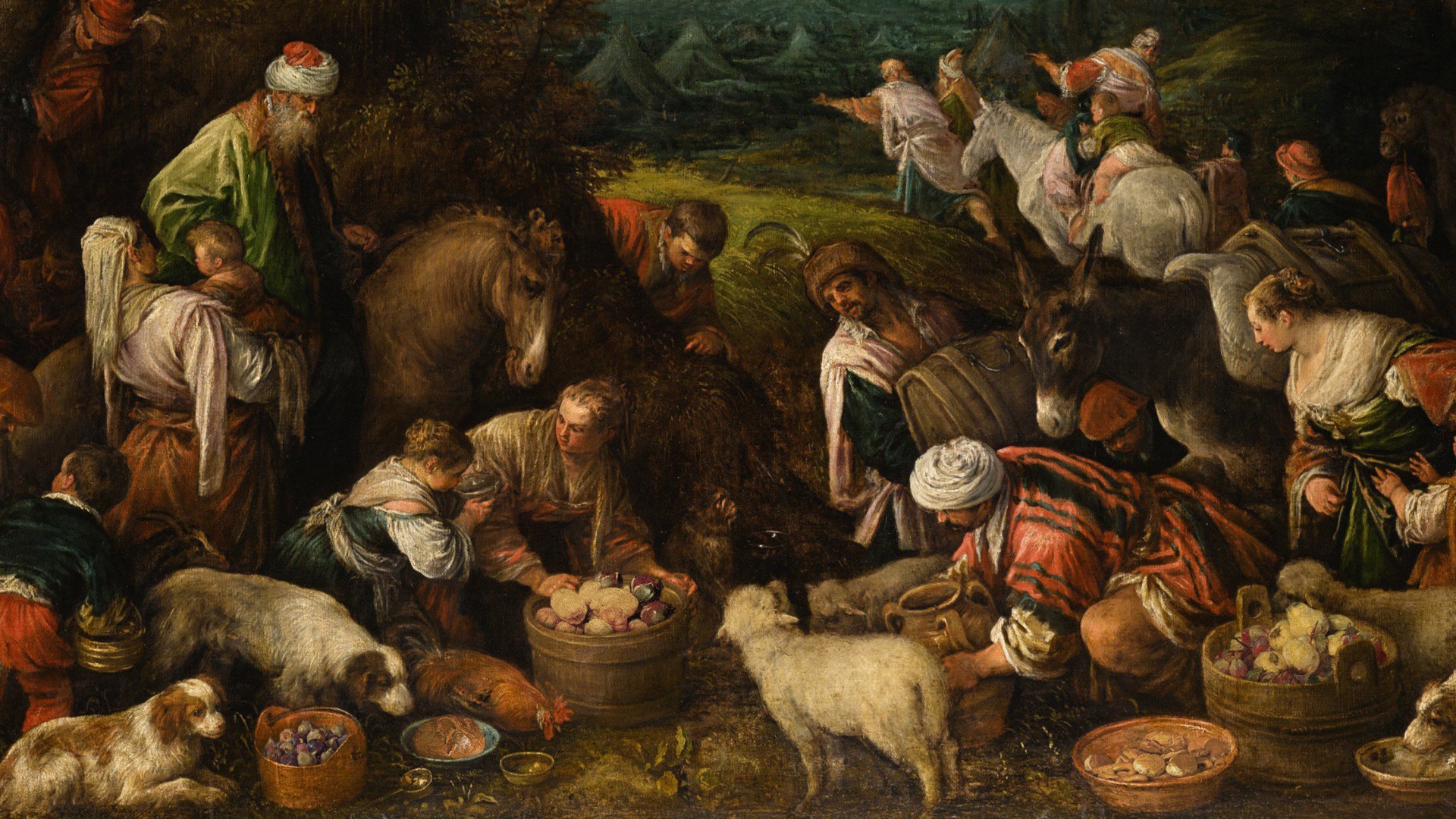
The Israelites in the Desert by Jacopo Bassano

The Israelites in the Desert by Jacopo Bassano

Christianity Today August 19, 2025
WikiMedia Commons / Edits by CT

When Donald Trump ran for president in 2024, the predominant social media chatter among Christians in my demographic was around the Make America Healthy Again (MAHA) movement. The movement’s critiques of America’s food and drug systems brought recognition to a key issue my friends had been wrestling with for some time: concerns around what they’re putting in their bodies and the bodies of their kids.

The movement, led by Robert F. Kennedy Jr., formally articulates itself as an effort to improve childhood chronic disease rates, which often presents as a skepticism toward traditional medicine and an interest in addressing the root causes of chronic illnesses. MAHA has had its fair share of concerned critics. Yet parts of its platform can resonate with all of us: We all care about our health and the health of the ones we love.

MAHA is not the first movement to capture our collective cultural imagination when it comes to food and eating. Climate change activists have promoted vegetarianism or veganism for some time because of environmental concerns. The pharmaceutical industry is pushing new drugs like GLP-1s, originally for treating diabetes, to help people who haven’t been able to lose weight. And Instagram is full of influencers promoting niche supplements and diets (ever heard of Liver King?) to achieve a certain sort of lifestyle and physique.

Each of these movements can come with its own dark sides. Our conversations about diets and meals can too often swerve into the territory of fear. In contrast, a biblically faithful perspective on food is always driven by love—love for God, for creation, and for community.

When I studied food and faith for my master’s thesis, I discovered that the two are inextricably connected in Scripture and most of Christian history. In the Old Testament and the early Jewish tradition, feasting, fasting, and obeying food regulations played an essential part in one’s relationship with God. The Catholic church throughout the medieval era and now (though to a lesser degree) integrates food into its faith practices, like fasting during Lent.

Following the Reformation, however, Protestant groups sensitive to any sort of ritualism have largely shied away from food guidance. In the absence of clear directives from the church, evangelicals today are turning elsewhere.

Not all of MAHA’s claims are wrong. Some specific concerns are rooted in real research, like how ultra-processed foods have been shown to have negative effects on our health. But for Christians, focusing only on these concerns puts us in danger of missing the bigger picture.

Before humans ever cared about how and what we ate, God cared. He pays attention to these things because food is one of the ways through which he shows us his grace and deepens our relationships with himself, with each other, and with the world.

Scripture’s story about food begins in the Garden of Eden, when the very first gift that God gives to humans is sustenance (Gen. 1:28–30), providing them an opportunity to delight in him through even their most basic needs. In Exodus, God uses food as one of the primary means of revealing his identity to the Israelites after he delivers them from their enslavement in Egypt: “Tell [the Israelites], ‘At twilight you will eat meat, and in the morning you will be filled with bread. Then you will know that I am the Lord your God’” (Ex. 16:12, emphasis mine). The miraculous provision of food—and the establishment of feasts and festivals in Leviticus 23—is the means through which the infant nation learns that God is its God and grows in worshiping and trusting him.

In ancient civilizations like Israel, agricultural challenges and their human consequences were obvious to the community, solidifying the idea that all creatures’ well-being connects to and relies upon God. For example, in Scripture, famine regularly ravages communities and even drives narrative action (Gen. 12:10; 26:1; 41–42; Ruth 1:1).

In the Levitical laws, God uses food to teach his people how to interact with each other, with their animals, and with the land. God commands those who work the land to not reap to the very edge of their fields, so that the poor and the foreigner can collect what’s left for themselves, inviting people into dependence on one another (23:22). There are strict regulations around animal eating, a way for the Israelites to recognize their place of power over their livestock and hunted creatures and to ensure that life (represented by blood) is taken seriously (chapter 17). Likewise, God also requires the Israelites to let the land “rest” every seventh year—the number associated with the Sabbath (25:1–7).

Through its careful attention to food and the land, Leviticus establishes the idea that the well-being of the land and animals depends on the Israelites and that the Israelites’ interactions with the nonhuman creation affects their standing with God. Most seriously, the Israelites could be considered clean or unclean before God simply by what they ate (11:24).

According to biblical scholar Ellen Davis, this incessant attention to food in Leviticus teaches us that God sees our own well-being and the well-being of animals and the land as interconnected, and all life as fully dependent on God.

Food was also central to Jesus’ ministry on earth. He provided wine and bread to people in their moments of need (John 2:1–11; Matt. 14:13–21). The Lord’s Prayer’s “Give us today our daily bread” (Matt. 6:11) calls us to rely on God to provide what’s needed from day to day. Later, food is Jesus’ preferred way for the church to remember his redemptive sacrifice (26:26–28) through the Eucharist and to anticipate his second coming.

As Scripture demonstrates, food is one important way we experience the grace of God and anticipate our eternal life with him. But man does not live on bread alone, and simply cleaning up the ingredients in our store-bought loaves will not bring us closer to godliness. Applying a biblical food theology to our modern era requires paying attention to the broader community around us.

In my family’s household, we make it a point to drive to a farm about 30 minutes from our house each month to pick up our meat share, a surprise variety of beef and pork from animals raised on that very farm. With these regular visits, my city kids have come to learn that the chicken in their soup doesn’t come from a package but from the live birds they’re chasing. It’s not the sort of the relationship with animals we’re used to, but it places us right in the web of interconnectedness that Leviticus imagines: chatting with the farmer who raises our animals, walking on the land on which the cows graze, and asking face-to-face questions about how the livestock are treated.

God’s delight in our codependence on one another, himself, and his nonhuman creation is clear from the beginning of Scripture (Gen. 2:18). Purchasing our food from coolers in a climate-controlled supermarket is an isolating task, but my visits to the farm do more than open my eyes to where my food comes from—they put me in relationship with people I otherwise might never meet and let me peek at the good lives of the animals I’d otherwise only know as food.

A food theology based in Scripture also requires me to look beyond my own refrigerator to consider what’s happening around me and to recognize injustices related to food. For example, food deserts are areas with limited access to affordable and nutritious food, usually located in lower-income communities. While I may have access to healthy food (and the freedom to drive an hour once a month to get meat), a compassionate food theology compels me to be sure my neighbors can have access to good food and care for their families and themselves.

A faithful food theology will look different for different people. It may look like regularly inviting friends, strangers, and even enemies to the table, creating new relationships over food to mirror the fellowship of the early church. For others, food will become an opportunity to intentionally and prayerfully engage with God, who faithfully provides them with every bite, even when food feels scarce.

Some people may choose to forgo eating meat out of ethical concerns for the treatment of animals or the climate impact of meat eating. Within immigrant communities, food may be an opportunity to stay connected to family traditions and one’s cultural history, helping people to remember God’s faithfulness across seas and borders. A healthy food theology includes taking the Eucharist regularly and cultivating a conscious, eager anticipation of the messianic banquet, when we will celebrate Jesus’ final victory over sin and death (Rev. 3:20; 19:7–9; 21:2).

Living into a proper food theology also requires going beyond the individual to engage with church communities.

Jennifer Ayres in Good Food encourages churches to consider how US policy has affected small-scale farmers and to look for opportunities to alleviate economic burdens on modern agricultural communities, applying a hyperlocal and systemic perspective to Scripture’s idea of the “least of these.” My church, for example, has put significant effort into developing a food pantry for our neighborhood, making sure everyone in our area has the opportunity to share in communal meals and delight in God’s gift of food.

The beauty and challenge of food theology is that it cannot provide a prescription for perfect eating. But however we live it out, we as the church must recapture how we see food as a spiritual matter. Just as the MAHA movement’s popularity demonstrates, it’s ingrained in us to care about what we eat, and not just because it’s a biological necessity. We desire to find meaning within our food and food systems; this desire both comes from and is met in God. Rather than serving as a political barometer, food is meant to draw us closer to our Creator and to our communities.

MAHA is not the first movement to take ideas infused with truth and motivate them with fear, and it won’t be the last. On this side of the messianic banquet, Christians can and should engage with some of the ideas offered by these ideologies.

But in doing so, we can’t forget that Scripture offers us something far better: a redemptive love that drives out fear (1 John 4:18), strengthens our bonds with one another, and deepens our relationship with the one who created it all.

Abigail Brougher writes about creation, food, and faith. She has an MTS from Calvin Theological Seminary and lives with her husband and young children in West Michigan. More of her work can be found on her Substack, Milk & Honey.

Culture

Maverick City Is Not Diluting Gospel Music

From Thomas A. Dorsey to Andraé Crouch and Kirk Franklin, the worship genre has always integrated new sounds.
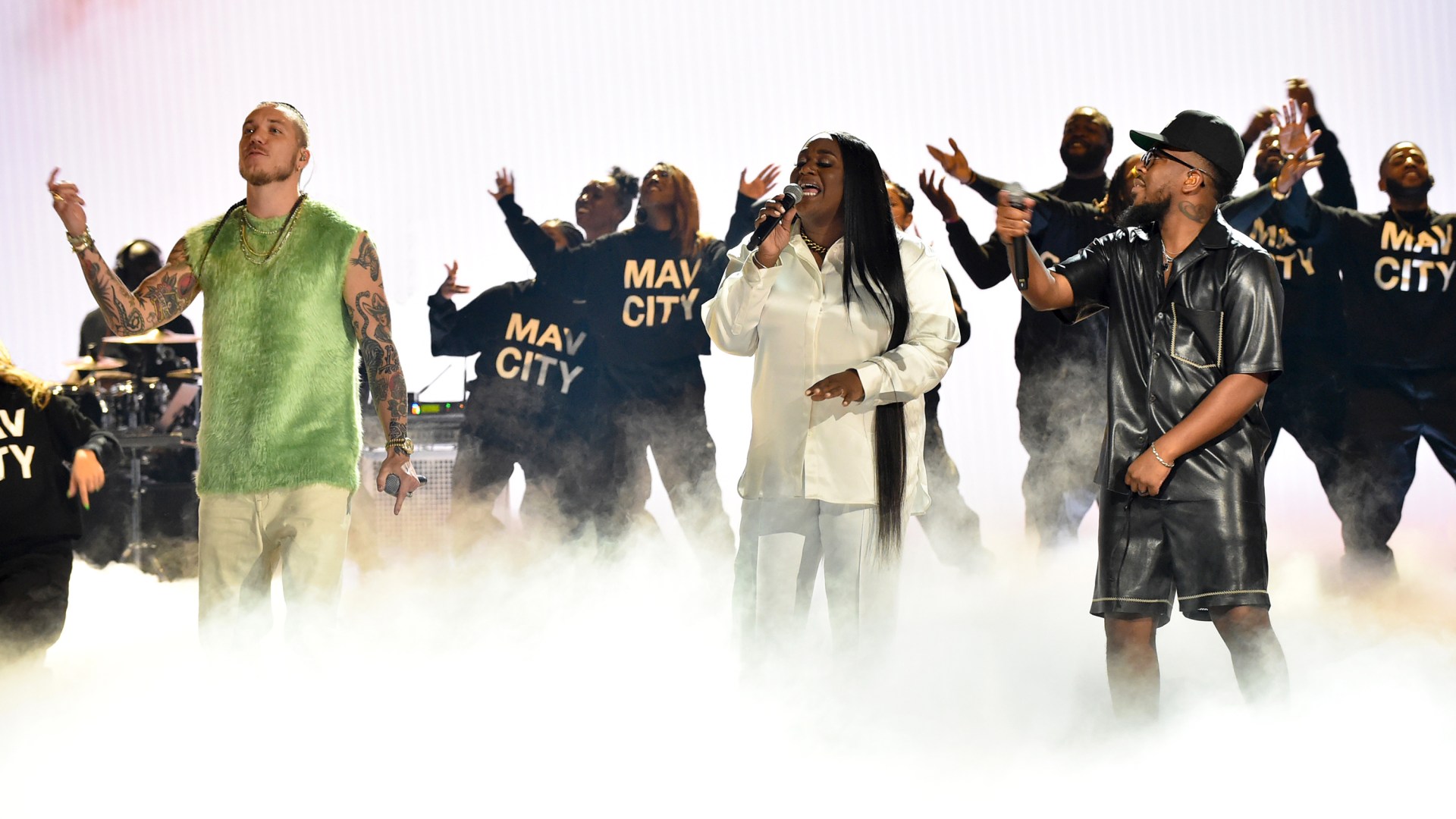
From left to right: Brandon Lake, Naomi Raine, and Chandler Moore of Maverick City Music perform onstage in Los Angeles, California.

From left to right: Brandon Lake, Naomi Raine, and Chandler Moore of Maverick City Music perform onstage in Los Angeles, California.

Christianity Today August 19, 2025
Aaron J. Thornton / Stringer / Getty

When I was a teenager and heard “It Ain’t No New Thing” by Andraé Crouch and The Disciples, I instantly fell in love with the sound. The song, which stood out at the time in the world of gospel music, had a Dixieland feel: pennywhistles blowing, slide trombones moaning, and banjo-pickin’ joy, all fused with lyrics testifying to the movement of God throughout the ages.

In African American gospel music, new sounds and idioms have always emerged, and sometimes they were integrated amid resistance. Lately, this issue has cropped up with Maverick City Music, whose genre-blending approach (gospel plus contemporary Christian music, or CCM) has sparked debates about whether it’s diluting a beloved art form.

Criticisms against the group increased more recently after its cofounder—Norman Gyamfi—said on a podcast that the state of traditional gospel music was “stale,” gospel singers were singing “too hard,” and the entire genre was not evolving with the times. Gyamfi then brought race into the conversation, saying Maverick City Music had been composed of Black people with white writers and producers who were “training them not to over-sing.” His remarks were disrespectful to many in the industry and rightfully deserve criticism. But I also think Maverick City Music haters—who have long argued the musical group is watering down gospel—are wrong too.

From shape-note hymnody to Thomas Dorsey’s blues gospel, Mahalia Jackson’s clarion cry to Kirk Franklin’s hip-hop declarations, gospel music has always been an evolving stream—echoing mercy, resisting oppression, and calling us into human flourishing. Fans often think of the genre in fixed categories: the Negro spirituals, then the songs of Jackson, Crouch, and Franklin. But it has always changed and adapted. And Maverick City—with its swirl of gospel harmonies, hip-hop cadences, jazz voicings, and Pentecostal praise anthems—is just one more extension of that.

The essence of gospel music, as curated by the Black church, has always been the liberating evangelistic message of the good news of Jesus Christ. The late historian Horace Clarence Boyer more particularly defined the genre as music that reflects the personal religious experience of the African American community and uses the musical devices of the church—such as call-and-response, syncopation, improvisation, hand clapping, and foot stomping—to convey the message of the gospel. But composers have continued to expand on these practices.

When World War II was wrapping up in 1945, gospel quartets emerged in Black churches. Two decades later, Andraé Crouch blended Motown polish with Pentecostal fire. Then in 1978, Walter and Tramaine Hawkins expanded gospel’s sonic vocabulary with synthesized string orchestrations and emotional vulnerability. By the ’80s, the genre bore traces of rock, Latin percussion, and mass-choir power. The ’90s gave us the gospel choir God’s Property; Kirk Franklin, who brought holy disruption with hip-hop sensibilities and choir-led chants; and The Gospel According to Jazz, where modal harmonies became a new form of prayer. The 2000s led to the rise of Lecrae and gospel-influenced, theology-rich rap. Now, Maverick City invites us into a new form of worship—decentralized, diverse, and deeply Spirit led. It’s not diluted or worse. Just different.

Kevin Bond, a ten-time Grammy Award–winning producer who worked with Franklin and artist Edwin Hawkins, told me during a recent interview that back in the day, both men were seen “as ahead of their time, often misunderstood and even criticized for challenging gospel music norms.”

“But what we need to realize is that each generation builds on the shoulders of those before it, growing a little taller in the musical spectrum and reaching different audiences,” Bond told me. “The key is never to tear down the previous generation, because doing so weakens our position and drags us lower than we would be if we stood firmly on their shoulders.”

Despite its evolution, the heart of gospel music has never changed. It is a servant of sound doctrine, reaching across generations, genres, and geographies to reconcile all creation to the wise Creator God. And the Holy Spirit, ever faithful and free, breathes across changing tempos.

Gospel music is anchored in the sound of freedom (Gal. 5:1), not only from sin but also from social hierarchies, racial caste systems, and a rigid status quo. It is concerned about not only the freedom from those things but also the freedom to worship, create, and belong. Fans know gospel music has always preached perseverance to weary souls and uplifts without ignoring sorrow, embodying both struggle and hope. Even when artists rise to fame, the best of the genre resists ego and points us back to Christ and a horizontal embrace of humanity.  

In many ways, Maverick City Music continues in this legacy. It’s inclusive, featuring racially diverse, some formerly incarcerated singers, and bilingual worship. The musical group has lifted the sounds of jubilee through a collection of songs dedicated to Negro spirituals. Its performances and covers reflect traditional devices used in gospel, including call-and-response, syncopation, and routine improvisations by lead singer Naomi Raine. But its songs are also fused with pop and rock elements that challenge the traditional gospel barriers, which members—who say they want to break down the “unspoken rules” in the world of Christian music—have openly acknowledged. “You can’t put it in a box,” artist Chandler Moore said of the group’s music in 2020. “It is what it is.”

Despite our proclivities, the gospel of Jesus Christ has always borrowed from our human way of communicating. When gospel music blends languages, collaborates across traditions, and displaces the central mic in favor of the collective voice, it is doing the work of reconciliation at a time when so much divisiveness vies for our attention. It is not fusion for fusion’s sake but the expression of a reconciled humanity.

Too often, this type of musical evolution gets mistaken for theological drift. But the core of gospel music—its fidelity to biblical orthodoxy—remains the same. We should also remember that the songs we love don’t just belong in a genre, but are Sprit-led music. And the Holy Spirit, who led creators of spirituals to embed hidden maps toward freedom, leads today’s singers to put theology within four-part harmonies, Auto-Tune, and free-verse lyrics. So whether it comes in the form of a spiritual, a choir anthem, a symphony, or a Maverick City song, gospel music’s mission has always remained the same: to reconcile, liberate, and profess the good news of Jesus Christ. Let us welcome this new iteration with an open heart.

Stephen Newby is a professor of music at Baylor University, where he also serves as the Lev H. Prichard III Endowed Chair in the Study of Black Worship. Newby is the coauthor of Soon and Very Soon: The Transformative Music and Ministry of Andraé Crouch and the author of Worship Outside the Music Box: Theology of Music & Worship and Multi-Ethnic Worship.

Ideas

Chatbot Cheating in Ethics Class

Contributor

After discovering some students using AI chatbots to write their midterms, I switched to an oral exam—and an explanation of virtue.

A robot hand holding a broken pencil
Christianity Today August 18, 2025
Illustration by Mallory Rentsch Tlapek / Source Images: Getty

I am old enough to remember life—and learning—before the internet. It was an era of studying flash cards, memorizing by rote, outlining questions by hand, and scouring libraries for answers. These practices seem downright archaic to students in my college classroom today. For them, entire worlds have always been available on their phones. 

For decades, search engines have accelerated learning, but now even that kind of research is becoming outdated: In 2022, ChatGPT entered the world. A project of a company called OpenAI, ChatGPT is an artificial intelligence assistant working off a large language model (LLM). It’s a chatbot, digesting and summarizing vast quantities of information to answer queries in human-like sentences. But this program (and others like it: Claude, Google Gemini, and Grok, to name a few) doesn’t think so much as guess what a plausible answer to your question might be. ChatGPT is already one of the most-visited websites on the planet. You may not be using it, but your kids sure are. 

The allure of these AI programs is simple, especially for students. In just seconds they can generate entire research papers. Responding to feedback, they can edit and tweak, building on past interactions to produce better results every time. The ethical and practical problems are legion: copyright disputesecological effectsa possible economic bubble, and plain deceit. Still, for an undergraduate on a deadline, the appeal is obvious.

Last semester, my undergraduate Christian Ethics class was awash with ChatGPT use. The irony of using an LLM to game a Christian ethics course aside, I get it: My class was a general-education, optional course, and almost none of my students had a deep understanding of the discipline of Christian ethics prior to the class. 

It was only after running their midterm essays through the embedded AI detector in our learning management system that I realized how deep the problem went: The detector flagged 7 papers out of 30 that were more than 50 percent constructed using AI tools. 

I had already included a provision in my syllabus prohibiting this kind of thing, but at the time I had no idea what was coming. And in talking with the students who had heavily relied on AI for their midterm papers, I was also surprised to find them fairly candid about using LLMs for schoolwork—and not just in my class but in many others. ChatGPT had, for many, become what memorization was for my college experience: a foundational part of the process, so basic as to be unquestioned.

They understood they had broken a rule by creating midterm papers this way. But they didn’t understand (and I hadn’t realized I needed to explain) why AI use was banned. 

For an ethicist like me, artificial intelligence—and specifically LLMs like ChatGPT—generates lots of fascinating questions. I’d love to know whether AI assistants “dream” or whether a system like ChatGPT can be fed enough Shakespeare that it spits out a new sonnet of real worth. More personally, I wonder how long it will be before ChatGPT runs all us teachers and essayists out of business.

But perhaps most important to explore is whether and how AI use comports with a Christian vision of what it means to be human. Scripture gives no direct commands governing the use of such tools, of course, and humans are notoriously good at finding ways to make efficiency the unspoken metric of our moral deliberations. We will too easily be swayed by AI’s sheer convenience if we do not doggedly orient this conversation around what it means to be good creatures of God. 

What is at stake here, in other words, is a question of virtue: Does this tool lead us away from or toward being God’s good creatures? This is what I’d failed to communicate in the syllabus.

Virtue is not where we’re used to beginning conversations about tools. We’re much more used to asking whether a tool does the job. But not every tool is a good tool. Some make us lazy, and some foster in us a love of not just completing a job but doing it well. 

To tell the difference, we must ask questions about virtue, about character, about what kind of people we are meant to be and how the things we do lead us toward that end. As Paul and the earliest Christians would have understood the word, virtue has to do with how one’s character resonates with the grain of God’s universe, with what one is meant to be as God’s creature. 
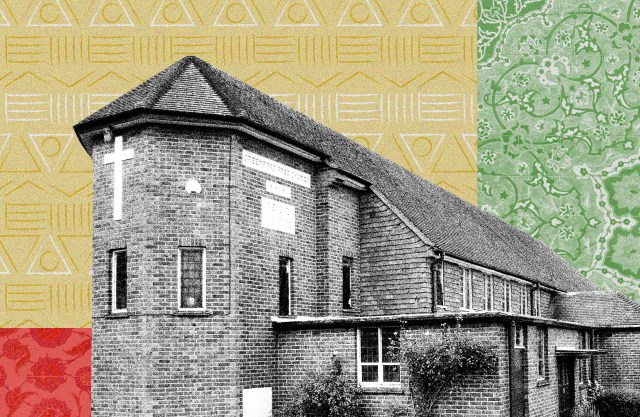
Virtue is entwined with sanctification in Christ, with the transformation of our hearts and souls by God’s grace. It is living in faith, hope, and love by habit. This is God’s gift, but it doesn’t happen overnight, and it doesn’t happen without us cooperating. 
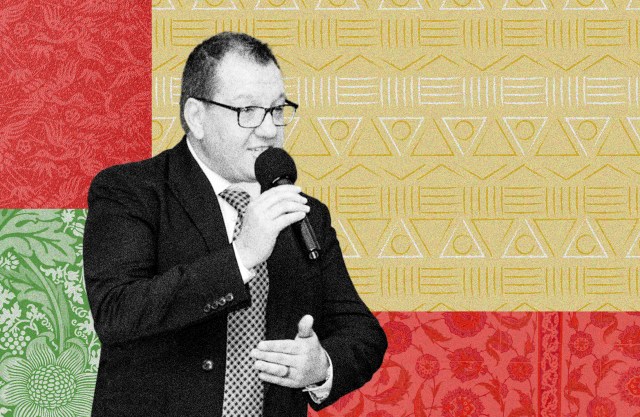
We can speak of virtue as a whole way of being, but in ancient Greek philosophy and much of the Christian tradition, four cardinal virtues—fortitude, prudence, temperance, and justice—have long been used to organize ideas around specific virtues. We can think of them, roughly, like this:

  1. Prudence: knowing how and when to do a thing, neither too early nor too late
  2. Temperance: knowing how much of an action is needed, neither too much nor too little
  3. Fortitude: continuing to do good things in the face of difficulty
  4. Justice: helping good things flourish among people

There are many other virtues too, like gentleness, patience, and generosity, but these four shape how they work and relate to one another. Taken together, they amount to wisdom. This may seem complicated, but if virtue is about reflecting God’s design, then we should not expect it to be simple, easy, or judged according to our personal inclinations or desired results. 

Virtue helps us make sense of biblical commands, for God’s commands cohere to what it means for us to be God’s creatures. Virtue helps us understand and obey those commands not only because they are commanded but also because God’s commands suit the kind of people God has created us to be.

With that in mind, let’s return to the chatbots. Does using an LLM lead us away from or toward being God’s good creatures? Or put another way, does ChatGPT help us become virtuous? I confess I’m skeptical. 

Let’s start with prudence. Because ChatGPT excels at finding patterns and organizing large essays, it undermines my students’ ability to make judgments about the research materials involved. If I write an essay from scratch, I have to weigh evidence and draw conclusions about whether and how to use different possible sources. 

If I let ChatGPT do this work for me, I won’t develop the same intuitive sense of how truth and fact claims fit together or what information is relevant and how. This is a loss of prudence, which includes a sense of nuance we need to rightly navigate the world. (What makes this worse is that LLMs routinely “hallucinate” false information, providing the answer the user is expected to want even if it’s fake. But if I as the user have no familiarity with the material, I’d never know.)

What about temperance?  By making writing and summarizing easy, LLMs speed students to the end of some assignments. But what might have use in limited situations—generating citations or correcting grammar—poses a huge temptation as well. For if it works well enough in those small ways, why not use it in more and more circumstances? Already, AI use by professional academics is spiking, and by one study’s measure, one-third of all students are using it on written assignments—all within three years of ChatGPT’s launch. 

Temperance reminds us that too much of a good thing can cease to be good: Think oversalted soup or overmonitored children. Some things which make life easy can help us in moderation, but against the increasing demands of school life, LLMs are already proving to be one of those things which, once we adopt them, we tend to use without moderation. 

The same ease poses problems for fortitude. The difficulty of learning new skills is part of what makes skills stick and part of how we learn perseverance. Learning—and the moral life in general—should involve struggle. It is in and through struggle that we unlearn bad habits, undo ignorance, and internalize hard-earned insights.

Thus far, ChatGPT seems to have failed on three of the four basic virtues. But perhaps justice requires us to invite everyone to use such an equalizing tool? 

Again, I think the answer must be no. There’s a rudimentary fairness to letting all students use LLMs—but also a deeper injustice. Training students to use and even rely on AI does not give them what they need to flourish intellectually or morally as God’s creatures. This is a severe injustice. As I put it to my students, the problem is less their violation of academic integrity than the fact that they robbed themselves of what was rightfully theirs in the educational process.

After that midterm paper, I decided to scrap the written final in favor of an oral exam. I gave students ten possible questions to study in advance, and then we spent 20 minutes talking about one of them, chosen at random.

The results were fantastic. The students who did well had developed the capacity for nuanced thought, deeply engaged and understood the material, and made connections between topics. Those who had not put in the work did not do well, and they couldn’t rely on AI tools for help.

I was particularly pleased with my conversation with a student who had used an LLM to generate 75 percent of her midterm. She did exceptionally well in the final, and it proved to be a truly pastoral moment. The experience taught her that she didn’t need the LLM to do her argumentation and writing for her. And she came to see that the road of learning—the road of virtue—is slower but ultimately more rewarding. She saw the value in struggle.

In just a few weeks, she’d grown in her ability to make arguments, develop judgments, and work without a tool that had deprived her of the goods of education. This is not yet virtue, for I am not sure that she liked the hard work. But virtue is like Psalm 136, which invites us to praise the Lord’s goodness repeatedly whether we feel like it or not. You repeat a good thing until you get it. And you go through a hard process until, one day, you begin to love not only the result but also the journey.

Myles Werntz is the author of Contesting the Body of Christ: Ecclesiology’s Revolutionary Century. He writes at Taking Off and Landing and teaches at Abilene Christian University.

Books
Review

Christ Renews Our Minds, not Our Brains

A new book argues that some proponents of “neurotheology” misstate the relationship between our bodies and our souls.

A person with a lightbulb for a head
Christianity Today August 18, 2025
Illustration by Mallory Rentsch Tlapek / Source Images: Getty, Unsplash

What exactly am I? And what are you? The nature and essence of human beings is one of the most widely discussed and hotly debated topics not just of our time but arguably of all time.

Are we just advanced apes? Are we just machines one day to be artificially upgraded? Are we souls that will one day break free of our physical confines and float off to some higher state of being? Human beings have asked these questions since antiquity. In recent decades, they have been thrust back into the limelight through the advance of neuroscience and through the claims of scientists like Francis Crick, who suggests that humans are “nothing but a pack of neurons.”

The approach many scientists take, often unquestioningly, presumes that matter (atoms, molecules, and the forces of nature) explains everything—or will do so eventually, given enough time. And this approach carries over to larger questions about human nature. Many neuroscientific authorities argue that all aspects of our being are reducible to the workings of our brains.

Christian apologists often respond to this materialist outlook by showing its insufficiency. We don’t just have a brain, they argue, but also a mind, a self. There is a conscious you and a me that cannot be captured simply by measuring the activity of nonconscious neurons.

Stan W. Wallace is responding to a different kind of argument in his excellent book Have We Lost Our Minds? Neuroscience, Neurotheology, the Soul, and Human Flourishing. He contends that the “you are your brain” view has leaked into Christian thinking, albeit cloaked in spiritual language.

Wallace, president of an academic ministry called Global Scholars, focuses attention on two thinkers in particular: Christian psychiatrist Curt Thompson, author of Anatomy of the Soul: Surprising Connections Between Neuroscience and Spiritual Practices That Can Transform Your Life and Relationships; and spiritual-formation expert Jim Wilder, author of Renovated: God, Dallas Willard, and the Church That Transforms.

For Thompson and Wilder, neuroscience is more than a means to understand the workings of the brain during our spiritual, intellectual, and emotional experiences. In fact, they describe it as the new route to spiritual maturity.

On this view, growing in Christlikeness involves engaging and understanding the workings of our cerebral cortex more than being transformed by the renewing of our minds. As deeply relational beings, we find the key to growth in forming love attachments with God and others. According to Thompson and Wilder, this happens primarily through the brain. Wallace sums up their perspective like this: “In effect, the prefrontal cortex is me, and therefore it must be fully functioning for me to be known and know others in secure and healthy relationships.”

Wallace describes this endeavor as “neurotheology,” which he defines as integrating “the findings of neuroscience” with “the theology of spiritual formation.” He is keen to show that this trendy and seemingly innocuous project is potentially seismic at its core, and he speculates about two potential causes. Either it originates from a lack of philosophical training to understand the distinction between the brain and the mind or soul, or it stems from a belief that humans are not in fact an amalgam of body and soul, brain and mind, or physical and spiritual elements. They are just a body. Just a brain. Just a physical machine. Have We Lost Our Minds? is a response to Christian materialism.

What can we say in return? Brains don’t think. People think using their brains. Brains don’t form love attachments. People choose to love. As Wallace sat down to write his book, it was him doing the writing. Yes, his brain was engaged in the process, and a well-designed imaging study would have captured myriad neural networks at work. But even the most sophisticated measurements could not have captured what he had in mind to write.

People—not brains—write books. This is an important but often misunderstood point. The self, or soul, and the brain are very closely connected. But this doesn’t mean they are identical or conceptually interchangeable. Mind and brain are, in fact, two very distinct entities.

Wallace is well placed to write this book, having completed doctoral studies in philosophy alongside a ministry degree. He deftly navigates both the technical arguments and their application in daily life. He makes clear at the beginning that his aim is not to cast doubt on neuroscience itself. We all benefit from the valuable insights into brain function and human behavior this discipline affords us. In fact, some neuroscientists, such as Andrew Newberg, define neurotheology much more neutrally as “an interdisciplinary field that combines neuroscience and theology” and “explores the relationship between the brain and religious experiences.”

Have We Lost Our Minds? does not critique that kind of neurotheology. Instead, the book responds to a bolder variant that sees neuroscience as the new road to spiritual maturity and human flourishing. This kind of thinking sees biblical references to mind and soul as referring to the brain, even to the point of applying them to Christ himself. For instance, in Anatomy of the Soul, Thompson suggests that “Jesus’ mind … reflects the most integrated prefrontal cortex of any human of any time.” Taken to its logical conclusions, Wallace argues, this thinking is not only false but also potentially capable of leading Christians astray.

In contrast, Wallace argues that a proper understanding of human nature, spiritual formation, and human flourishing ought to come from the combined insights of theology and philosophy, as well as from neuroscience. If humans are made in the image of an immaterial God, then there must be an immaterial dimension to our human makeup, which Wallace—in alignment with J. P. Moreland, Dallas Willard, and others—describes as a soul.

In Willard’s words, a soul is “that in us which combines all the dimensions of the person to form one life.” The Bible regularly refers to an unseen dimension of the self with words like heart, soul, mind, spirit, and inner being. Scripture tells us we are outwardly wasting away but are inwardly being renewed each day (2 Cor. 4:16).

Biblically speaking, then, there are certainly dualities to our human makeup. Wallace’s book revolves around defending what he calls holistic dualism—the belief that body and soul are distinct substances, both of them able to bring about causal change in the world, yet in a deeply integrated way.

As Wallace puts it, “The Scriptures teach that we are a functional unity of soul and body but also an ontological duality, with the soul being the more fundamental aspect of what we are.” He goes on to suggest that this view makes best sense of neuroscientific discovery. Wallace takes time to address misunderstandings about dualism, arguing that the holistic version differs from various predecessors, such as Cartesian dualism (named after René Descartes, known for the iconic phrase “I think, therefore I am”), which infers a much more token interaction between soul and body.

Another key goal for Wallace is in correcting misinterpretations of the late Dallas Willard’s view of humanity. According to Wallace, Wilder and Thompson argue that Willard embraced neurotheology (in the less neutral sense) toward the end of his life. Accordingly, they reframe his view on the soul in physical terms. Wallace cites a remark from Wilder’s book Renovated: “The brain happens to contain a structure whose function is the integration of all internal states and external connections with others.” Thus, when Willard “describes our experience of the soul, … he could hardly have described the cingulate [cortex] in clearer terms.”

Does this reframing do justice to Willard’s position? Apparently not, according to those who knew him well, such as philosopher J. P. Moreland. Wallace gives evidence that Wilder and Thompson misinterpreted Willard’s support of understanding brain function as a wholehearted support of their neurotheology. Wallace notes that Willard never used soul and brain interchangeably. He consistently referred to people as embodied souls.

Have We Lost Our Minds? is well pitched to a nonspecialist audience with short, digestible chapters and helpful summaries. Yet there are also detailed footnotes and a glossary for anyone wanting to go deeper. The first few chapters unpack the relationship between the mind and the brain, showing how and why they are distinct, albeit closely connected. The middle of the book examines the nature of the soul, tracing the influence of Aristotle and Thomas Aquinas to the present day.

The final part of the book focuses on application. What we believe about human nature is so important because it shapes how we love God and others. Wallace portrays materialism (which denies the soul) and Cartesian dualism (which diminishes the body) as two opposing extremes. Holistic dualism, however, offers a “responsible middle way” toward human flourishing.

We are best placed to love God and grow into the likeness of Christ when both body and soul are engaged. Worship, in this view, extends beyond spiritual activities like prayer to encompass embodied practices like fasting and service. On the other hand, spiritual formation is not something we can passively allow our brains to do on our behalf. Brains don’t form love attachments. People do this, which is why the thinking that takes it out of our hands is potentially harmful. The soul and will must choose to engage with God and with the spiritual disciplines that provide the vehicle for transformation.

What does this all mean for loving others? Wallace argues that holistic dualism provides a strong motivation for evangelizing and doing mission work, caring for the vulnerable, pursuing justice, and loving others in the workplace. It truly matters that we adopt a biblical view of the soul and body, because this overflows into who we are and what we do every day.

Have We Lost Our Minds? is a helpful addition to ongoing conversations on human nature. Anyone wanting to think Christianly about neuroscience—what it can and cannot tell us about human nature and spiritual formation—will definitely find it worthwhile.

Sharon Dirckx holds a PhD in neuroimaging from the University of Cambridge. She is a speaker, broadcaster, and author of books, including Am I Just My Brain?

Apple PodcastsDown ArrowDown ArrowDown Arrowarrow_left_altLeft ArrowLeft ArrowRight ArrowRight ArrowRight Arrowarrow_up_altUp ArrowUp ArrowAvailable at Amazoncaret-downCloseCloseEmailEmailExpandExpandExternalExternalFacebookfacebook-squareGiftGiftGooglegoogleGoogle KeephamburgerInstagraminstagram-squareLinkLinklinkedin-squareListenListenListenChristianity TodayCT Creative Studio Logologo_orgMegaphoneMenuMenupausePinterestPlayPlayPocketPodcastRSSRSSSaveSaveSaveSearchSearchsearchSpotifyStitcherTelegramTable of ContentsTable of Contentstwitter-squareWhatsAppXYouTubeYouTube