Theology

Bah, Humbug! But I’ll Echo the Joyous Strains

Staff Editor

I’m not into the hustle and bustle of the Christmas holiday. But I find a vicarious joy in “rejoicing with those who rejoice.”

Christianity Today December 12, 2023
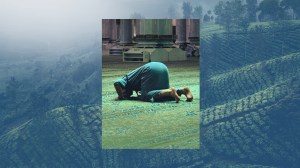
Illustration by Mallory Rentsch / Source Images: Getty

Our culture has a favorite moniker for people who talk about holidays—especially Christmas—the way I do: Scrooge.

I’ve heard it many times, usually in response to my grumbling about the hassles of hanging decorations and sitting through Christmas pageants. That, or taking kids to holiday markets, which for some reason always seem to be held outside, in the cold and dark, in evening hours—during which the youngest, and therefore most eager, attendees absolutely cannot hang.

I grumble most of all about the presents, comestibles aside. Giving presents is nice enough, and receiving them can be too, but the cleaning always gets you in the end. Truly I tell you, the tree and the Advent calendar will pass away, but the 85 stuffed animals and toy trucks that the grandparents insisted on sending will remain underfoot for months—years!—to come.

Perhaps I shouldn’t be grumbling, but I will say that I’m in good company in my discontent with what C. S. Lewis called the “Exmas Rush,” which distracts our minds “from sacred things” and deceives in its promise of merriment. With Lewis, I reject the idea of any duty to “buy and receive masses of junk every winter,” and, like many other Christians, I could do without many of the extra events and obligations.

For all that, I do not adopt the Scrooge name for myself. After all, it’s not that I’m opposed to Christmas; certainly, I’m not opposed to remembering the Incarnation. It’s just that I’d skip most of the associated fuss if left to my own devices. I prefer to borrow language from the apostle Paul, who observed to the Romans that while “one person considers one day more sacred than another,” “another considers every day alike” (14:5).

That’s me—or would be me, if I could get away with it. Yet, at the same time, I do have a sort of vicarious joy in the Christmas season. While I tend to consider every day alike, others do not, and so I see this as a chance to rejoice with those who are rejoicing (Rom. 12:15), to glory in varying sacred traditions, handiwork, and enthusiasm of the saints.

The holidays Paul had in mind, of course, were not Christian celebrations like Christmas. He was thinking of Jewish Sabbaths and festivals, because the Roman church—as the early church father Ambrosiaster put it—had “embraced the faith of Christ, albeit according to the Jewish rite.”

By the time Paul wrote, some Christians in Rome were Gentiles. But the Roman church was most likely founded, argues scholar Douglas Moo in his commentary on Romans, when “Roman Jews, who were converted on the day of Pentecost in Jerusalem (see Acts 2:10), brought their faith in Jesus as the Messiah back with them to their home synagogues.”

Because of this, some Roman Christians (Jewish and Gentile alike) still believed themselves to be “bound by certain ritual requirements of the Mosaic law,” Moo explains, including “major religious festivals.”

This is the context for Romans’ extensive discussion of the Jewish people’s status concerning Christ’s salvation (see chapters 9–11). But while Paul is usually committed to mounting precise arguments when it comes to matters of faith, sin, and righteousness, his position on religious holidays echoes an ambivalence I can recognize and appreciate (see also 1 Cor. 9:19–23). People have different instincts and convictions on this, he says, and everyone “should be fully convinced in their own mind” (Rom. 14:5).

It seems to me that what ultimately matters is not so much how you handle these days as how you interact with God and your neighbor along the way. “Whoever regards one day as special does so to the Lord,” Paul says, but whoever abstains from celebrating also “does so to the Lord and gives thanks to God. For none of us lives for ourselves alone, and none of us dies for ourselves alone” (14:6–7).

And whatever we do about holidays, Paul adds, doing it “to the Lord” significantly means doing it without contempt for fellow Christians who do otherwise (14:10). In fact, as much as he approves of following one’s own inclinations here (14:5, 22), Paul equally encourages us to abandon them if that’s what is required to love our neighbors well: “Let us therefore make every effort,” he writes, “to do what leads to peace and to mutual edification” (14:19).

Christmas celebrations don’t raise the same theological and cultural questions as the days Paul’s first audience was considering. Yet his call to peace and mutual edification seems equally apt. With Lewis, I find many trappings of Christmas to be more inconvenient than worthwhile. That said, I don’t have to make much effort at all to see the hope they bring to others, to appreciate the hard work and care of handing down traditions generation by generation, year by year.

This joy is no less real for being vicarious. Think of Paul’s anticipation of joy to see Timothy’s sincere faith (2 Tim. 1:4–5) or John’s joy “to find some of your children walking in the truth, just as the Father commanded us” (2 John 1:4).

It is akin to what I feel in a great cathedral, looking at its intricate sculpture, metallurgy, and glass—and thinking of the hundreds, or even thousands, of people who spent perhaps their entire lives building such a monument to faith. Their persevering labor is a testimony as much as the beauty it produced.

So too is the labor of Christmas (for, after childhood, labor it mostly is). What I’m inclined to call hassles are joys to others. And if I can catch them from the right angle, in a flash off the brass of sanctuary decorations or the look in a loved one’s eye, they can be joys to me as well.

Bonnie Kristian is the editorial director of ideas and books at Christianity Today.

Theology

Fatalism in Indonesia: Do Christians Also Say ‘Inshallah’?

How the attitude manifests in Indonesia—inside and outside the church.

Christianity Today December 12, 2023
Illustration by Christianity Today / Source Images: Unsplash

In Bahasa Indonesia, there are several expressions that might reflect a fatalistic attitude toward life. Some common phrases are itu sudah takdir (“That is destiny”), itu sudah jalan hidup (“That is the path of life”), or namanya nasib (“The name is fate”). These expressions are often used to accept certain outcomes or situations with a belief that they are predetermined. Another phrase is mau bagaimana lagi?, which can be translated to “What else can we do?” or “How else could it be?” This can convey a sense of resignation and acceptance of circumstances beyond one’s control.

Fatalism in Indonesian culture has multiple sources, including traditional beliefs, cultural practices, and, to some extent, interpretations of religious teachings. While fatalism is not inherently tied to any specific religion, cultural syncretism and the blending of traditional and religious beliefs can contribute to its prevalence.

As Indonesia is the biggest Muslim-populated country, it follows that Islam is a major religious factor for understanding fatalism in Indonesian culture. One example of how Islam shapes fatalistic thinking in Indonesia is how individuals attribute both positive and negative life events to Allah’s divine will. This acceptance of Allah’s plan can lead to a sense of resignation or submission to whatever fate has been ordained, fostering a fatalistic mindset.

Muslims in Indonesia use the term inshallah (“if Allah wills”), as Arab Muslims (and many Arab Christians) do in the Middle East. But Indonesian Christians usually use the Indonesian translation of this Arabic phrase instead: kiranya kehendak Tuhan yang jadi, akin to the English phrase “the Lord willing.”

Attitudes toward destiny or fate can vary significantly among individuals and communities. In many rural areas of Indonesia, traditional cultural practices and beliefs often play a significant role in shaping these perspectives. For example, in rural Javanese communities, there might be a strong adherence to traditional Javanese mysticism (Kejawen) or animistic beliefs, which can contribute to a worldview that emphasizes the role of destiny. In contrast, exposure to diverse ideas and cultures in urban settings, coupled with access to education and information, can contribute to a more secular or individualistic perspective. This may lead to a reduced emphasis on fatalistic beliefs in shaping one’s life path.

Christianity does not inherently promote fatalism, but excessive interpretations of certain theological concepts, such as predestination, may result in fatalistic thinking among some Christian communities in Indonesia.

Fatalism may unconsciously influence aspects of Indonesian evangelicals’ theology. It could impact their understanding of God’s sovereignty, potentially leading to a passive acceptance of challenging circumstances. In the face of suffering or natural disasters, there might be a struggle to reconcile the belief in a loving and powerful God with the fatalistic notion that events are predetermined.

Fatalism can also affect the Indonesian church by potentially hindering proactive engagement in societal issues. If fatalistic attitudes prevail, there might be a tendency to view social problems fatalistically rather than seeking constructive solutions. This can impact the church’s role in advocating for justice, compassion, and societal transformation.

In Indonesia, engagements on societal transformation usually happen collectively. Churches may join together through legally established councils like the Communion of Churches in Indonesia to provide input to the government on social issues related to church well-being or society at large.

Addressing fatalism requires intentional efforts within the church community. Pastors and leaders can emphasize the importance of personal responsibility, active engagement in social issues, and the transformative power of faith. Providing practical guidance on problem solving and encouraging a biblical worldview that values both God’s sovereignty and human agency can help counter fatalistic tendencies.

Two relevant Bible verses for challenging fatalistic thinking could include Proverbs 16:9, “The heart of man plans his way, but the Lord establishes his steps” (ESV), and Romans 8:28, “And we know that for those who love God all things work together for good, for those who are called according to his purpose” (ESV). These two verses from the Old and New Testaments harmonize the tension or the paradox between acknowledging God’s sovereignty and recognizing the importance of human responsibility and action.

Read our contributors’ bios in the series’ lead article, Destiny Is All? How Fatalism Affects Churches Across Asia. (Other articles in this special series are listed to the right on desktop or below on mobile.)

Editor’s note: CT now offers hundreds of articles translated into Indonesian, including a free daily devotional for Advent 2023.

Theology

Fatalism in Sri Lanka: When Karma Makes Suffering Seem Inevitable

How the attitude manifests in Sri Lanka—inside and outside the church.

Christianity Today December 12, 2023
Illustration by Christianity Today / Source Images: Unsplash / WikiMedia Commons

In Sri Lankan culture, fatalistic thinking is shaped by a blend of traditional beliefs, religious practices, and historical experiences.

Buddhism, the predominant religion, often interprets life events through the lens of karma, emphasizing the inevitability of circumstances based on past actions. This can foster fatalistic attitudes as individuals accept their present situations as a consequence of their deeds. The Hindu minority in Sri Lanka also adheres to a belief in the karmic nature of life.

The Christian community, influenced by colonial-era Christianity, may express similar fatalistic notions by attributing life events to destiny, divine will, or predestination.

In 1505, the Portuguese brought Roman Catholicism to Sri Lanka. In 1658, the Dutch, who emphasized the concept of predestination in Calvinist theology, occupied the country. During the colonial era, missionaries from various Christian denominations arrived in Sri Lanka, each with his or her own theological perspective. If individuals were exposed to a form of Christianity that heavily emphasized predestination, which suggests that certain events—including one’s salvation or life circumstances—are predetermined by God and cannot be altered by human actions, it contributed to fatalistic thinking. If this theological perspective was emphasized in missionary teachings, it might have influenced individuals to believe their life circumstances were preordained.

Missionaries also often sought to convert local populations to Christianity by emphasizing the need for salvation and the consequences of sin. If the message focused heavily on the idea of divine judgment and the inevitability of certain outcomes based on one’s actions, it could contribute to fatalistic attitudes. For instance, individuals might come to believe that their suffering or challenges were a result of divine judgment or destiny.

Fatalistic expressions in Sinhala include karume (“karma”); laba upan hati (“it’s the way we are born”); bamba ketu hati (“the way the god has engraved”); deva kematta (“God’s will”); daiwaya (“destined to be so”); pera paw (“past sins”); and purwe kala paw (“sin in the previous life”).

Sri Lankan evangelicals’ approaches to church involvement in sociopolitical and economic issues are mostly divided, reflecting a spectrum of perspectives within the church community. While some evangelicals advocate for active engagement in societal matters, others hold a more reserved or even skeptical stance. The influencing factor for this divide is their theological perspective. Those who advocate liberation theology are more engaged in social issues, while others maintain a reserved or passive approach.

Evangelical Christians in Sri Lanka must address fatalism by promoting critical thinking through education and engaging in theological discussions within the community. Educating the congregation about nuanced perspectives on suffering and divine intervention is a key strategy to counter fatalistic views. By encouraging a more proactive approach, evangelicals can bridge the gap between prayerful reliance on God and practical efforts to address societal issues. Lanka Bible College and Seminary, for instance, is hosting a two-day seminar series to guide local churches in taking intentional actions and steps toward positively influencing and transforming their communities.

Within the rich tapestry of religious and social beliefs in Sri Lanka, a prominent notion asserts that our suffering is intricately tied to the consequences of past sins or karma. However, when we turn our attention to biblical texts like Job and the Beatitudes, a different and alternative perspective on the profound meaning of suffering emerges. In the realm of biblical teachings, suffering is seen not merely as a punitive outcome but rather as a profound aspect of the human experience that can hold deep significance.

These teachings encourage us to seek meaning and understanding in the face of adversity. While there is a belief in prayer for wisdom to descend from above, wisdom literature, particularly the Book of Proverbs, imparts a different wisdom—a wisdom that calls for intentional, active pursuit. It suggests that the journey toward wisdom requires personal commitment and may involve sacrifices, underlining the idea that acquiring wisdom can sometimes come at a personal cost.

In essence, the juxtaposition of cultural beliefs in Sri Lanka and the insights gleaned from these biblical texts invites a reflection on the multifaceted nature of suffering and the active pursuit of wisdom as a transformative and intentional endeavor.

Read our contributors’ bios in the series’ lead article, Destiny Is All? How Fatalism Affects Churches Across Asia. (Other articles in this special series are listed to the right on desktop or below on mobile.)

Theology

Fatalism in Thailand: Do the Fruit of Our Actions Determine Our Personhood?

How the attitude manifests in Thailand—inside and outside the church.

Christianity Today December 12, 2023
Illustration by Christianity Today / Source Images: Unsplash

Fatalism in Thailand primarily arises from a Buddhist worldview and belief in karma.

Thai culture, in general, is influenced by Theravada Buddhism. The central tenet of Buddhism is karma, which means “action” or “deed.” However, in its usual sense, it means the fruit of our action. If we do good, we will receive good. If we do evil, we will receive evil. Forgiveness by some deity does not exist. We must reap what we sow.

How does this express itself in Thai thought? Everything we are and everything that happens to us are a result of karma. We deserve everything that happens, whether good or bad. The major aspects of our present lives are predetermined by the events and our choices in a past life.

The word in Thai for “karma” is often used as a curse word. If something bad happens to another person, they will say kaam (กรรม), meaning that person received what he or she deserved.

A very capable and successful blind missionary friend was consistently denied a missionary visa in Thailand. Thai government officials could not accept that a blind man could ever become a “holy” priest of religion. His blindness was proof that he did something horrible in a past life. His blindness was proof that he was a “bad” person.

This is why most orphanages, outreach to prostitutes, and foundations that help the poor or disadvantaged are Christian organizations. Thai people are often merciful, giving, and caring, but their motivation is to earn merit for themselves so that they may be reborn into a more advantageous setting in the next life.

Christianity exists in stark contrast to the fatalistic views of Buddhism. The gospel really is good news to a person from a Buddhist worldview where no hope exists, apart from a continual series of lifetimes struggling to be free from rebirth into a world of suffering and toil.

Many people want to reject the worldview of karma. Karma is bad news. We must save ourselves. We get what we deserve. Our lives are controlled by karma. Abandoning a karmic worldview for belief in a universe where Jesus loves us and is merciful toward us is uniquely transforming.

However, coming out of a fatalistic worldview can be a hindrance to discipleship and Christian growth.

Thai people resonate with this example I use in my seminary classes: Westerners tend to believe they can do anything, even when they cannot. Westerners do not always evaluate themselves realistically. Westerners believe they can do anything or be anyone they desire. They can be rich, successful, or smart if only they work hard enough.

In contrast, Thai people typically believe they evaluate themselves realistically. They are aware of their own strengths and weaknesses. However, after evaluating themselves, they do not believe they can change or grow. Thai people believe that this is the way they are and that they cannot change.

Another challenge is found in how Thai people come to Christ. According to my research, Thai people do so through attraction and power. They see that Christians are different, loving, accepting, honest, and caring. Converts will also relate that they had a supernatural encounter with God of some sort, answered prayer, a powerful experience of God’s presence, a dream, a vision, or deliverance.

After they make a commitment to Christ, some do not yet think of themselves as sinners in need of repentance. That issue can be a problem; however, we must think of conversion not as an event but as a process of discipleship that continues for the believer’s lifetime.

To challenge fatalistic thinking in Thai culture, I look to Psalm 103, a full lesson in the grace and mercy of Yahweh God. Fatalism and karma have no mercy. One is trapped in their situation without hope or remedy. But in Jesus we have hope, salvation, and a future.

Read our contributors’ bios in the series’ lead article, Destiny Is All? How Fatalism Affects Churches Across Asia. (Other articles in this special series are listed to the right on desktop or below on mobile.)

Theology

Fatalism in South Korea: Being a ‘Gold’ or ‘Dirt’ Spoon Seals Your Fate

How the attitude manifests in South Korea—inside and outside the church.

Christianity Today December 12, 2023
Illustration by Christianity Today / Source Images: Unsplash / Getty

Fatalistic thinking in South Korea mainly comes from Korean shamanism or “Mu-ism.” Korea has had dynasties where Buddhism (the Goryo period) and Confucianism (the Chosun era) dominated, but shamanism is more syncretistically residual. Today, couples go to tarot readers, palm readers, or fate readers to see if they’re a fit or a good match. Even people who go to church are culturally affected or entertain this aspect of “fate.” This is done recreationally and is not a negatively fatalistic practice, even though it’s not something that is recommended or exclusive to South Korea.

Instead of the doctrine of providence, where a triune God who is Creator is also sustainer and is intimately involved in history, Koreans like looking at oon sae (운세), which is figuring out your luck based on your palm or your birthday. Ultimately, this practice connects to fatalism because it involves a belief that there is a locked-in future (i.e., fate) that needs to be discerned, as opposed to the one, true living God guiding us in our lives.

Another way fatalistic attitudes show up is through the phrases gold spoon (금수저) and dirt spoon (흙수저). This refers to the generational influence that one has in the family lineage. To be a gold spoon means that you have come from a very wealthy family in South Korea’s modern context and that you are “good to go” in terms of making it in society. To be a dirt spoon is to come from a family where it is really hard to succeed. In this sense, it’s supposedly guaranteed that you will have a better life if you are the gold spoon as opposed to the dirt spoon.

On suffering and natural disasters, the theology here is very rigidly conservative. In the Itaewon crowd-crush incident, where more than 100 people died, a good number of churches taught that God was punishing people who were there celebrating Halloween. This is an erroneous one-to-one theology: It doesn’t account for Luke 13:1–5 in the sense that there is an overarching groaning and brokenness of the world because of the consequences of sin. That’s more a function of a lack of theology than a positive mixing of fatalism.

On the whole, where fatalism impacts the country most is in terms of South Korea’s economic state and a person’s movability up the social ladder. That’s where the common phrase hell Chosun (헬조선) comes from: People want to leave Korea because it’s so hard and competitive to get a job and live a certain standard of life that they dream of.

People’s hearts are fatalistic in the sense that they feel like there is no positive end possible and that they have no ability to choose their future, which is predetermined. There’s a general sense that there is no hope. Added to that is a huge concern over South Korea’s low fertility rate of 0.78—the lowest in the world. Pastors typically address this issue from a social phenomenon angle, in that it is something to be rectified in the statistics rather than something that also stems from the people’s hearts.

Fatalism in the young generation inside and outside the church thus appears most apparently in housing-market statistics (where homes have incredibly high prices) and the country’s low fertility rate. It comes out in behaviors like envy and competitiveness. Pastors typically address these from a traditional Christian ethical perspective, but whether there are pastors who address them with the contextual savvy specific to the young generation is doubtful. There is growing attention in the Korean church for next-generation ministry, but the methodology and theology that undergird this is nebulous at this point.

Nevertheless, to distinguish fatalism from predestination, Ephesians 2 says that there is a hope and that it is not just random fate at work but God who is guiding us. The basic gospel message of grace and what Christ did is something that needs to be addressed so that people can turn away from themselves or the pursuit of money.

Read our contributors’ bios in the series’ lead article, Destiny Is All? How Fatalism Affects Churches Across Asia. (Other articles in this special series are listed to the right on desktop or below on mobile.)

Theology

Fatalism in India: When a Calvinist Mindset Reflects a Hindu Worldview

How the attitude manifests in India—inside and outside the church.

Christianity Today December 12, 2023
Illustration by Christianity Today / Source Images: Unsplash

The average person, whether Hindu, Muslim, or (often even) Christian, tends to think in fatalistic terms, especially when experiencing challenging circumstances—financial loss, a family member’s illness or death, accidents, or sometimes the birth of yet another girl child instead of the desired son. There is the idea that one must accept one’s fate. In movies and TV shows, an extreme form shows up: Persons in a certain station of life are experiencing the consequences of fate, and that situation should have no humanitarian intervention.

Key sources for fatalism in India are popular Hinduism and, to a lesser extent, Islam. Hindus use the expression “It’s my karma!” Here karma is used negatively and means consequences from bad deeds done in a previous life. When good things happen unexpectedly, the positive expression is “It’s my punya from some previous life!” Punya would be the reward for good deeds done in an earlier reincarnation.

Both Hindus and Muslims use the expression “It’s all written on the forehead.” This is a resignation or acceptance of what happens in life, usually referring to unhappy events. Often this is accompanied with a gesture—beating their palms against their foreheads.

Christians do not usually use these expressions, unless at the popular level. They do, however, osmotically imbibe the fatalistic outlook, expressing it in terms of the irresistibility of divine working: “What to do! This is what God has decided for me.”

This becomes problematic when Christians begin to think they have no agency. I have students in my seminary who polarize the Calvinist-Arminian debate and think they must take one side or the other.

Conservative evangelical theology might locate itself at the “traditional” Calvinist end of the debate, minimizing or disallowing human free will. Everything is credited to the unknowable “sovereignty of God,” whether good or ill, including national election results, a tsunami sweeping the coast, a personal road accident, or a positive COVID-19 test. Certainly, in evangelical pulpits, divine sovereignty or predeterminism more often dominates over human agency and natural or logical cause-and-effect explanations for phenomena. Some conservatives also subscribe to double predestination, where those who reject the gospel are destined to do so. Largely, these beliefs give Christians who do not want to take initiative an excuse to remain passive. And it allows Christians to shrug off responsibility for the consequences of their actions or words, if the worldview is that God has predetermined everything that happens in their lives.

Sermons by conservative pastors will rarely issue a call or command to strive or employ human effort in actively seeking a job or equipping oneself further for a task. Instead, they emphasize that we must wait on God, pray for his leading, and stay within God’s will. This is also more prevalent in poorer and oppressed caste congregations.

To challenge fatalistic thinking in the church, pastors can introspect on the extent to which their Calvinistic mindsets are really an extension of popular Hindu thinking and worldview.

I often challenge fatalistic thinking when teaching Genesis 2–3, which shows how seriously God takes human agency and how he holds humans responsible for their actions. The narratives of Pharaoh and Saul are also grounds for a lively debate on whether these two were fated or flawed. By comparing these narratives with those of heroes in Hindu mythology (especially Karna and Abhimanyu from the Mahabharata epic), we see that Pharaoh and Saul are flawed characters whose human free will brings about their tragic ends.

In this, the narrator’s repeated remark that God hardened Pharaoh’s heart should be read alongside the equally frequent comment that Pharaoh hardened his heart, with the understanding that God only affirms human agency. Indeed, the report that God is the agent for the hardened heart commences only at the sixth plague and is explicit from the eighth plague onward.

Read our contributors’ bios in the series’ lead article, Destiny Is All? How Fatalism Affects Churches Across Asia. (Other articles in this special series are listed to the right on desktop or below on mobile.)

Theology

Fatalism in Hong Kong: Are COVID-19 and China’s Firmer Hand God’s Will?

How the attitude manifests in Hong Kong—inside and outside the church.

Christianity Today December 12, 2023
Illustration by Christianity Today / Source Images: Unsplash

Chinese culture, which is influenced by Taoism and Buddhism, has deep roots in fatalism. Chinese people generally believe in the heavenly predestination of one’s life from birth. Parents are often concerned about when a baby will be born into the world as the date and time are auspiciously determinative of the baby’s future well-being.

They also believe in three interconnected issues related to fatalism, ranging from the most influential to the least: fate, luck, and feng shui. A popular proverb is yi ming, er yun, san fung shui (“fate first, luck second, and feng shui third”). The Chinese traditional belief is that our destiny is 70 percent predetermined by luck and that we can make changes to destiny only to the remaining 30 percent. If a person’s luck is “bad,” feng shui is said to be able to improve his or her situation.

Hong Kong faced unprecedented social unrest in 2019, which was further impacted by the COVID-19 pandemic. The former led to the enactment of the national security law (NSL), and the latter led to an exodus of foreigners due to the government’s overly stringent lockdown policy. Many superstitious businesspeople believed that Hong Kong would face a pivotal moment in its long-lasting prosperity, based on a foretelling from the Purple Star Astrology (紫微斗數), one of the ancient classic writings on fatalism.

Christians’ interpretations and responses to fatalism and events in the last four years have been somewhat polarized. Conservative Christians choose to accept the situation as predestined by God and often base their response on Romans 13. They choose to adjust themselves to the new normal under the NSL, since the government regime is supposed to be ordained by God. On the other end of the spectrum, more progressive Christians were awakened to the saying that God demands compassion and justice. They sympathize with the social movement and base their actions on Micah 6, which talks about speaking up for the oppressed. To them, the suffering Christ is manifested in social unrest, and civil disobedience is considered a righteous act in the name of Christ.

Churches have become highly divisive since then. Certain megachurches have experienced a 30–50 percent reduction in attendance. Questioning what God is doing in Hong Kong, many have chosen to emigrate, stop going to an institutional church, or form new Christian communities.

Recently, church leaders and seminary scholars have started to offer theological explanations of what has been happening in Hong Kong in the last few years and to suggest new ecclesiological frameworks as we advance. One outstanding explanation is that the suffering Christ has manifested in Hong Kong. Like our counterparts in China, God has cast the Christian community out of complacency into suffering so that we would stop trusting our economic prosperity and lean closer to God. God is chastising the church to facilitate its sanctification, and the church may undergo a period of persecution and suffering that it has not experienced in the last 50 years.

There are more discussions about the need to model faithful witness for our counterparts in mainland China amid an unfavorable environment for religions. Certain actions are even gaining momentum. For instance, local churches under particular major denominations must incorporate independently to lessen any impacts on the denomination if challenges from the authorities arise. Others are experimenting with decentralized leadership and pastoring by organizing house-church-style Sunday worship services. There is also the “microchurch” experiment, in which young people are empowered by the church to lead among themselves and even to administer Holy Communion, but not baptism.

While it is a biblical truth that God has an overarching plan for humankind and has determined what the appointed time for everything is, I believe God has also allowed us to partake in the management of the earth and to take responsibility for our decisions in life. We should provide a balanced and comprehensive teaching of the biblical truth. Internally, we have to teach believers based on the Word of God on the subjects of predetermination, free will, and their consequences, as well as how the two ideas are not mutually exclusive. Externally, believers should be equipped to answer the popular belief of fatalism in various schools of thought and to demystify their sources of authority. Fatalism often implicitly requires a concept of work-based salvation, but Christians must share with unbelievers salvation by grace through faith in Christ.

Read our contributors’ bios in the series’ lead article, Destiny Is All? How Fatalism Affects Churches Across Asia. (Other articles in this special series are listed to the right on desktop or below on mobile.)

Theology

Fatalism in Japan: Is Feeling Resigned to the Future a Sign of Wisdom?

How the attitude manifests in Japan—inside and outside the church.

Christianity Today December 12, 2023
Illustration by Christianity Today / Source Images: Unsplash / Getty

Fatalistic thinking is often observed in Japanese culture. In fact, the World Values Survey indicates that Japan is one of the most fatalistic countries among the 64 countries surveyed.

The slang oya-gacha (親ガチャ) reflects such an attitude in a pessimistic sense. Oya means “parent(s),” and gacha is an onomatopoeia for when one turns the handle of a capsule toy machine. This expression signifies that you cannot choose your parents, just as you do not know what kind of toy you will get from the capsule toy machine.

Japan’s growing economic and educational disparity has led younger generations to coin this term, recognizing the significant correlation between their parents and their socioeconomic standing. The expression reflects their fatalistic thinking in that their future is determined by their parents, whom they cannot choose.

However, Japanese culture also expresses fatalistic thinking in a positive manner. For example, one sometimes hears people say nanigoto mo akirame ga kanjin, which means “No matter what, sometimes you just have to give up,” or “Resignation is the first lesson of life.” The expression reflects their wisdom regarding the importance of letting things go and accepting realities in our lives.

History, geography, and culture contribute to fatalistic thinking in my country. First, fatalism is embedded in Japan’s history, as the ruling classes utilized fatalism to justify the class system during the Tokugawa era from the 17th to 19th centuries. Second, Japanese people have learned to incorporate fatalism in their thinking because they live on islands where they face various natural disasters such as earthquakes, typhoons, and landslides. Third, fatalistic thinking—especially among Generation Z—seems to be a response to Japan’s cultural emphasis in its economic situation.

Unlike the period when Japan experienced high economic growth, during which baby boomers were often taught that “hard work pays off” for their future, younger generations feel hopeless about the future, particularly due to a rapidly aging society and a declining birth rate. A survey by the Nippon Foundation shows that only 18.3 percent of Japanese aged 17–19 think that they can change their country and society (compared to 83.4% of Indians; 39.6% of Koreans; 65.6% of Chinese; 50.7% of British; and 65.7% of Americans).

Consequently, a fatalistic attitude is inevitably reflected in the faith and theology of Japanese Christians. For instance, Japanese believers often talk about having faith in relation to waiting in hope, while Christians in the United States frequently articulate faith in relation to being proactive or taking action. Recognizing that realities are hard to change, Japanese Christians often express their faith in terms of putting their trust in the Lord who can intervene in those realities but, at the same time, stand ready to accept God’s providence when things do not go as they wish.

In addition, some Japanese Christians accept the realities of suffering not because their fatalistic thinking forces them to but because they find God’s comfort and presence amid their suffering. For some, fatalistic thinking might sound like acceptance of being a victim of one’s fate. However, Japanese Christians actively seek God in the midst of their suffering while accepting circumstances that cannot be changed. For a prime example of such theology, see Kazoh Kitamori’s Theology of the Pain of God: The First Original Theology From Japan.

The question we should ask is not whether Christians should challenge fatalistic thinking. It is not about free will being right and fatalism being wrong, for Scripture points to both realities. Instead, we should ask how the gospel redeems our thinking.

If Japanese people do not know the gospel, they might think that they are victims of their fates. However, the gospel redeems such a pessimistic idea. Christ sympathizes with people in their suffering and redeems their suffering through his death and resurrection. This is what Paul says in 2 Corinthians 12:9–10 regarding his thorn and weaknesses. He concludes, “Thus, I delight in weaknesses, insults, distresses, persecutions, and difficulties for Christ’s sake. For whenever I am weak, then I am strong” (paraphrase and emphases are mine).

Paul was given his thorn and weaknesses but refused to be victimized by them. Rather, he was willing to carry them for Christ’s sake so that God’s power would be manifested in his life. Thus, believers may feel that they are forced to carry burdens and weaknesses by fate, but these can become a locus of God’s power when they choose to carry them for Christ’s sake.

Read our contributors’ bios in the series’ lead article, Destiny Is All? How Fatalism Affects Churches Across Asia. (Other articles in this special series are listed to the right on desktop or below on mobile.)

Theology

Fatalism in the Philippines: What’s Wrong with Thinking the World Will Just Burn Up?

How this attitude manifests in the Philippines—inside and outside the church.

Christianity Today December 12, 2023
Illustration by Christianity Today / Source Images: Unsplash / Getty

The Philippines was an animistic culture before Islam or Christianity set in. In animistic culture, destiny is tied to the actions or reactions of benevolent and malevolent spirits. Although we try to please and appease spirits, ultimately, their whims determine our destinies in every facet of existence, such as harvest and rainfall.

Although Christianity has become the country’s dominant religion, animistic beliefs run deep in Filipino consciousness. People tend to feel resigned to their current states of affairs and pray without doing anything to address their situations. While some praise Filipinos for their ability to smile during difficult times, this may also be interpreted as a passive surrender to whatever unfortunate thing has befallen them.

Animistic practices are still prevalent among Filipinos, especially in the provinces. We call this phenomenon “folk Christianity,” because people believe in the Christian faith while participating in animistic rituals or because Catholic and animistic beliefs are combined. For instance, during Triumphal Entry Sunday, Catholics bring in leaves to the church, which the priest sprays holy water on. People then put these leaves near the doors of their homes because they believe the leaves will ward off evil spirits and misfortune.

Politically, the Philippines has been a colony since 1521: first by the Spaniards, then the Americans, then the Japanese, and then the Americans. Our independence was given to us, and was not something we fought for, in 1946. This means that for centuries, again, our destiny was not in our hands. We can only accept the circumstances imposed on us by higher powers.

Filipinos often say bahala na, which means “Whatever will be, will be.” The phrase comes from another expression, bathala na (bathala is the name of the highest deity in animistic Filipino faith), which means that people resign themselves to whatever God has given them. This is problematic. Interpreting every experience as something that is imbued with divine origin and thus passively expecting what the divine plans to implement in a person’s life rob a person of initiative, self-direction, and sense of responsibility.

Evangelicals in the Philippines have a critical attitude toward fatalism. Because of the evangelical emphases on free will, responsibility, and activism, we tend to respond to suffering as something that must be addressed for the better, whether in terms of poverty alleviation, community development, or feeding programs. Although the Roman Catholic Church has official arms or organizations that deal with social issues, most Catholics are not engaged; only priests are vocal and active.

In terms of evangelical spirituality, there seems to be a paradoxical dialectic. Individually, Filipinos have a disposition toward fatalism in understanding their personal situations. But communally, perhaps because of the leadership of evangelical pastors who are trained in seminaries that advocate social justice, the church as a whole is not fatalistic.

Nevertheless, one of the potential problems related to fatalistic thinking in the church is the active promotion of premillennialism in some evangelical denominations. Because premillennialism teaches that the world will continuously experience a decline in morality and overall well-being before Christ comes, believers might just take all unfortunate world events as part of the divine plan and interpret attempts to be engaged in environmental care, social justice, and compassionate ministries as acting against the divine timeline.

To address fatalism inside or outside the church, the spiritual leadership of ministers is crucial. Pastors must speak about fatalism as an individual experience and as a communal mentality. Lament is also an appropriate response because it expresses dissatisfaction with the now. Critical sorrow leads to reflection and action.

One Bible passage that challenges fatalistic thinking in my context is the feeding of the 5,000. Here, the disciples thought that the best response to the situation was just to send everyone away because there was nothing they could do about the people’s hunger. But Jesus told them to give the people something to eat (Matt. 14:15–16). God wants us to be proactive in dealing with the current circumstance, whether it is ours or others’.

Read our contributors’ bios in the series’ lead article, Destiny Is All? How Fatalism Affects Churches Across Asia. (Other articles in this special series are listed to the right on desktop or below on mobile.)

Theology

Destiny Is All? How Fatalism Affects Churches Across Asia

Pastors and scholars from Hong Kong, Indonesia, India, Japan, the Philippines, South Korea, Sri Lanka, and Thailand share how fate appears in their pews.

Christianity Today December 12, 2023
Illustration by Christianity Today / Source Images: Unsplash / Getty

Bahala na.

Itu sudah takdir.

Nanigoto mo akirame ga kanjin.

These are some of the popular phrases that people in the Philippines, Indonesia, and Japan use when faced with circumstances they feel resigned to. They’re akin to another common quip: Que sera sera, derived from the Italian for “Whatever will be, will be.”

In other words, these expressions often carry a fatalistic attitude toward life. Fatalism refers to the belief that events that occur are fixed in advance, such that human beings are powerless to change them. While fatalism’s impact and influence may not be overtly discernible, it permeates aspects of culture, whether because of a particular country’s religious roots or its historical and political developments.

This may be especially so in Asia, which is considered one of the most religiously diverse continents in the world. Singapore, Taiwan, Vietnam, South Korea, China, and Hong Kong constitute 6 of the 12 societies worldwide with a “very high degree” of religious diversity, according to the Pew Research Center.

In countries like Thailand, Sri Lanka, and India, a Buddhist or Hindu worldview contributes to the idea of karma, where one’s actions in the present will determine the outcome of one’s future life. In Indonesia, it is Islam that shapes fatalistic thinking (captured by the common phrase “inshallah”). In South Korea, Korean shamanism is a contributing factor toward the widely accepted practice of fortunetelling. In Hong Kong, astrology, luck, and feng shui play a large role in crafting one’s understanding of destiny or fate.

But fatalism isn’t just restricted to cultural and social spaces. It also impacts the ecclesiology and missionality of churches in Asia, which can be gleaned in responses to suffering, natural disasters, or political instability.

Christianity Today interviewed the following pastors and scholars in South, Southeast, and East Asia on how fatalistic thinking shows up in their cultures, what the key sources of fatalism are in their contexts, how fatalism has impacted or influenced their churches, and which Bible verses challenge it. Their responses can be found in this special series’ eight articles, listed to the right on desktop and below on mobile:

Hong Kong KK Ip, senior pastor of EFCC-International Church in Wan Chai

Indonesia Amos Winarto Oei, lecturer in ethics, dogmatics, and history at Sekolah Tinggi Teologi Aletheia in Lawang

India Havilah Dharamraj, head of biblical studies at the South Asia Institute of Advanced Christian Studies in Bengaluru

Japan Kei Hiramatsu, pastor and New Testament professor at Central Bible College in Tokyo

The Philippines Dick O. Eugenio, dean of the School of Leadership and Advanced Studies at Wesleyan University–Philippines in Cabanatuan City

South Korea Paul J. Park, assistant professor of systematic theology at Torch Trinity Graduate University in Seoul

Sri Lanka A. N. Lal Senanayake, president of Lanka Bible College and Seminary in Kandy

Thailand Kelly Hilderbrand, director of DMin program at Bangkok Bible Seminary in Bangkok

Apple PodcastsDown ArrowDown ArrowDown Arrowarrow_left_altLeft ArrowLeft ArrowRight ArrowRight ArrowRight Arrowarrow_up_altUp ArrowUp ArrowAvailable at Amazoncaret-downCloseCloseEmailEmailExpandExpandExternalExternalFacebookfacebook-squareGiftGiftGooglegoogleGoogle KeephamburgerInstagraminstagram-squareLinkLinklinkedin-squareListenListenListenChristianity TodayCT Creative Studio Logologo_orgMegaphoneMenuMenupausePinterestPlayPlayPocketPodcastRSSRSSSaveSaveSaveSearchSearchsearchSpotifyStitcherTelegramTable of ContentsTable of Contentstwitter-squareWhatsAppXYouTubeYouTube