Theology

Are the Prayers of a Righteous Fan Powerful and Effective?

Ministry leaders—and Africa Cup football fanatics—from six nations weigh in on God’s role in sports.

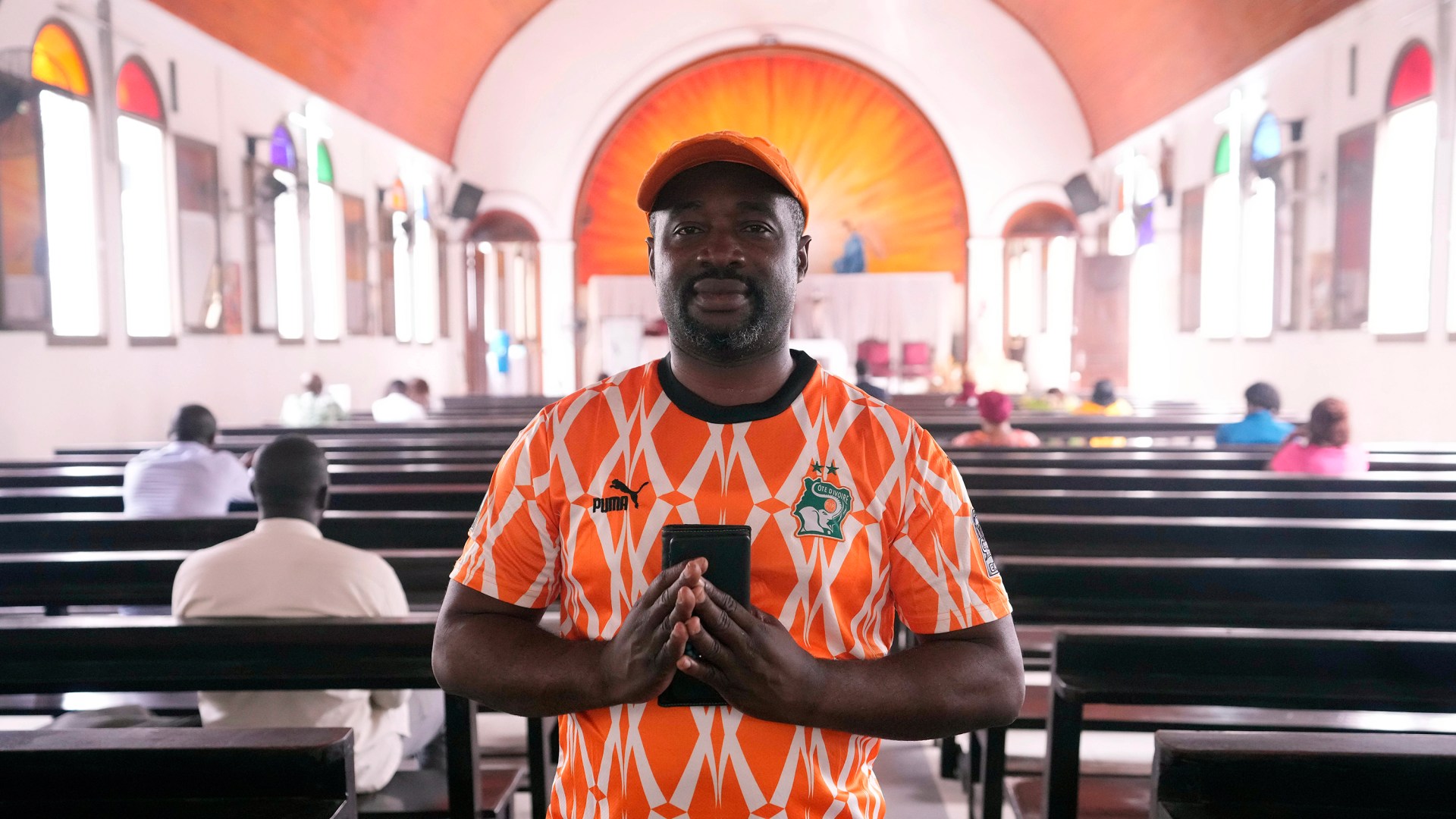
Ivory Coast's seemingly miraculous progression in the Africa Cup of Nations convinced locals that God is on their side.

Ivory Coast's seemingly miraculous progression in the Africa Cup of Nations convinced locals that God is on their side.

Christianity Today February 14, 2024
Sunday Alamba / AP Images

Few saw a third Africa Cup of Nations title in reach for Côte d'Ivoire’s men’s national team when they fired their coach at the beginning of the continent’s biggest football (soccer) tournament. Or when they failed to land their desired next coach. Or when they were the last team that advanced out of the AFCON group round.

But somewhere along the way, as the team surmounted these setbacks and won elimination games in dramatic fashion, Elephants’ fans—Christians and Muslims alike—began to see their prayers as the reasons for their team’s success.

“During games at the tournament, many fans use the halftime break to find a quiet corner or space at the back of the stands to lay down their prayer mats and pray,” noted The Associated Press. “Supporters kneel with their heads bowed in the same direction.”

On Sunday, Côte d'Ivoire (Ivory Coast) beat Nigeria at home 2–1 for the championship, ending a thrilling tournament that included comebacks, overtime, penalties, the suspension of multiple top players, and winning a match where they were down a player for more than half of the game. So maybe these prayers worked?

CT asked African leaders in South Africa, Ghana, Sierra Leone, Togo, Nigeria, and Kenya about how the divine plays a role in victories—and defeats. Does God reward faithful athletes and fans with wins? Does God affect the performance of teams who have fan bases full of people who love Jesus? For teams with numerous Christian athletes, does God bless them with wins?

Responses have been edited for length and clarity and are arranged from yes to no.

Magloire Pilabana, chaplain, Athletes In Action, Togo:

The Ivory Coast team won the Africa Cup in an incredible way. They scored at the last minute in multiple matches. They fired their coach after the first round and later promoted a former player. Some have started to say that the team has gris-gris.

Some say this success is from the prayer of Christians. Some players have said it’s God. But which God? How many players from Ivory Coast are evangelical Christians? How many Ivorian players are there who pay witch doctors? How many pastors have mobilized Christians to pray for their team?

Personally, I believe the victories and qualifications of the Ivorian team have exceeded what a witch doctor can cause. I think that’s why everyone says it’s God.

In my experience with athletes and teams, when athletes believe in Christ, they perform well. If the team has many believers, this helps foster unity and sacrificial behavior because players work together better.

Paul Nyama, national director of Operation Mobilisation, from Sierra Leone, based in Ghana:

Yes, God does reward faithful athletes and fans. This is because 1 Corinthians 15:58 says, “Nothing you do for the Lord is ever useless” (NLT). I emphasize nothing. This includes sports. Therefore, when the sports arena is your evangelism ground, you’re making God happy.

Further, yes, God hears the cries of his children whether for a sickness to be healed or a team to win. God is a caring father; he’s just cool like that.

Finally, Christian players receive both victories and failures, and I believe there are lessons to be learned both ways. God uses all things to work together for our good. Proud players are humbled by defeat. Painful but true.

Abigail Mensah, director of Beautiful Feet, a sports ministry in Ghana:

Yes, I believe that God can bless athletes and fans with wins or victories.

Before I explain my stand, let us agree that God rewards hard work and diligence. These attributes should actually be a part of a faithful follower of Christ. We have many examples of faithful and diligent servants of God for whom God gave spectacular victories.

Let’s talk about faithful Daniel, whom Scripture says was not negligent. Or about Joseph, to whom a promise of victory was declared, yet he worked diligently in his slave master’s house in a such a way that he was put in charge.

Having said that, God declares in his Word that he rewards those who delight in Him (Ps. 37:4). In Psalm 1:1–3, the Bible describes the life of a faithful follower: He bears fruits in its season, and in all that he does, he prospers. Jesus said our heavenly Father knows how to give good gifts to his children (Matt. 7:7–11).

Cassie Carstens, chaplain of the 1995 South African Rugby World Cup winning team and co-founder of the International Sports Leadership School:

Christians live by grace and not reward. God may, can, and does intervene sometimes, not as reward, but with intention to advance his kingdom. The more open the players or fans are to capture the moment (win or lose) to glorify God without gloating, the more Kingdom creativity and energy they apply, the more willing God will be to intervene. Christians live by the principle: whether we eat or drink or whatever we do (sport, labor etc.) we do it all for the glory of God! (1 Cor 10:31).

Osam Temple, a visiting professor from Nigeria currently at Daystar University, Kenya:

Oh, those fervent Nigerians. Amid the tumbling exchange rate of the Naira, rising inflation rates, and growing insecurity, some looked forward to the eventual victory of their beloved team, the Super Eagles, as one possible way God would comfort Nigerians and give them hope this season. And yet Nigeria lost to Côte d'Ivoire on Sunday.

Hilariously, some Nigerian youths prayed earnestly that God would blind eyes of the South African goalkeeper during the semifinal penalty shootout. One pastor regularly posted during Afcon, including one video where he emphatically declared that God had told him that Nigeria would win the cup.

So did God give the cup to Ivory Coast? Did God decide the outcome of the Afcon finals match? Was he swayed by the prayers of Ivorian Christians and ignoring the prayers of his Nigerian children?

Perhaps we should remove God totally from the conversation. But can we do so and still be Christians? Is there anything on earth that is outside God’s knowledge? Is football less important to God than economics, politics, or religion?

God is present in all spheres of life, and he intervenes in the affairs of this world. I also believe that he rewards hard work and answers prayers. We may not exactly know why Ivory Coast lifted that cup. Skills, talents, morale, and strategies all played a role, but there are also many invisible things at play that some may call luck, chance, or God’s providence. God favored Ivory Coast for reasons we may never get to know. We can only see in part and know in part!
Blessing Mpofu, editor in chief, ChurchMag, South Africa:

Football (the proper one) is a perfect example of how, for Africans, everything is spiritual. Nothing is beneath God; if it is important to us, it is worth getting God’s attention. We will seek divine intervention for anything important to us. The spiritual realm is as real as the flags and other paraphernalia we have in our hands as we watch matches.

If our team does not win, it is not God’s fault. There is a reason he might not have allowed the win. It might be us—something we missed. There must be a great purpose, which we do not know now but hope for in the future.

It is not likely that the other team prayed better. Whatever it is, it is for us to figure out. Our faith in God is never shaken, and we will be praying with the same or even greater fervor for the next game.

All in all God is never blamed. When things go our way, it is God, and when they do not, we write it off as not being God’s will for this time.

Moss Ntlha, general secretary of the Evangelical Alliance of South Africa:

Jesus likes to watch a fair game, without any performance enhancing drugs given to the players. I don't see why he would want to turn losers into winners, except if the other side is using some underhand methods to win.

Further, we often learn more by losing, from the standpoint of character building and personal development, than by winning.

Joan Mwangi from Kenya, a volunteer with INcontext International:

I attended the Democratic Republic of Congo’s (DRC) games and prayed that they would win. I believed the DRC’s win would be an encouragement to the entire country that is faced with fighting and killings in Eastern Congo. But I’m limited in my thoughts and desires, and God is sovereign in all his doings.

In the past I would have concluded that God rewards faithful athletes and fans with wins, but as I grow in my walk with God, I understand he rewards the athletes and fans with his faithfulness, aimed at drawing them closer to himself.

Statistically the Nigeria team has more Christians players and many who have boldly professed their faith in God on their social media. We saw them gather to pray before the match and even at the end of the first half, but they lost to Côte d'Ivoire.

At the same time, Côte d'Ivoire has one player, Jean-Michael Seri, who was awarded man of the match when they played with Senegal in the round of 16. He is a believer and has boldly professed his faith and attributed their victory to God.

The biggest challenge that I have seen is we do not have people that help fans and athletes to process whatever outcome of the competition. This makes it quite hard for many to acknowledge God’s goodness in wins and losses unless one is deeply rooted in Christ and has learned that, whatever happens, Christ is glorified and we are to be drawn closer to him.

Ray Mensah, executive director of OneWay Africa, Ghana:

Last week, the Methodist Church of Ghana invited me to speak to their youth leaders on using sports as a tool for evangelism and discipleship.

They plan to start a football league soon in the districts across Ghana. I asked them, “What would happen if the focus of the league is only about winning?” They said there would be lots of fights, bribery, cheating, and even occultism just to win.

Then I asked a second question: “What would God do when two teams both from the Methodist Church are playing and they both as good Christians pray to God, asking for a win? Which team’s prayer should God answer when they are all his children?”

I therefore do not pray for teams to win. If I pray for a team to win and they win, and I pray again and they win a second time, I become like a witch doctor to them as they will always want me to pray for them before they play a match.

When I pray for teams, I therefore pray that they would do their best and bring God glory no matter the results. I pray that they will be safe and have endurance and good attitudes throughout the game.

Desmond Henry, international director of the Global Network of Evangelists for the Luis Palau Association, Johannesburg, South Africa:

The idea that God parcels out victories to the most faithful, setting up a celestial leaderboard of sorts, is a tempting narrative but lacks theological grounding. The Scriptures remind us that while talent and opportunity are divine blessings, humility is the virtue God esteems above all (James 4:6). Viewing sports through this lens helps guard against spiritual pride, which can easily ensnare us, especially when believers compete on the field. Victories in sports should not be seen as a measure of one’s faithfulness or divine favor.

While the fervent prayers of fans and the faith of athletes are important aspects of their spiritual life, it’s essential to recognize that the outcome of a game is not a direct reflection of divine will in terms of victory or defeat. History shows us that faithful athletes and teams experience both, irrespective of their prayers or piety. It’s possible that God works through these events for purposes that extend beyond the immediate outcome, teaching lessons that resonate far deeper than the thrill of victory.

Triumphs can rally a nation together and potentially draw its people closer to God, as a friend recently pointed out to me. Conversely, he also noted the grace shown by a faith-rooted school team in defeat can teach invaluable lessons in resilience and sportsmanship, perhaps glorifying God even more than the win itself.

As followers of Christ, our engagement with sports, whether as participants or fans, should be framed by an understanding that transcends wins and losses. We are called to appreciate the deeper values of unity, kindness, and humility—attributes that can indeed bring glory to God in profound ways. Let’s cheer, play, and live out our faith in the arena of sports with this balanced perspective, remembering that in every high and low, our ultimate aim is to reflect the character and love of Christ.

Church Life

How the Church Can Help Black Women Heal

Being a “strong Black woman” was my badge of honor, until it almost killed me.

Christianity Today February 14, 2024
Gary Parker / Getty / Edits by CT

There are many issues of pressing concern for Black Christians in America, such as ensuring Black lives matter in our churches, reaching Black youth with the gospel, discipling the next generation of Black church leaders, battling white Christian nationalism, and identifying ways the church can address the impact of racial disparities in our country.

But a concern in my own life as a Black Christian woman is examining how the church can help Black women remove the damaging mantle of the “strong Black woman.” Living by this narrative can result in destructive and deadly mental and physical health outcomes for Black women. Add to these negative outcomes the stigma associated with mental health issues such as anxiety and depression, and the result is too many Black women hiding their true concerns for fear of stigmatization.

However, the church is uniquely positioned to help Black women seek both therapeutic and theological support as we face and address our mental health challenges.

Researchers consistently identify three characteristics associated with the strong Black woman framework: emotional restraint, independence, and self-sacrifice. Strength is a badge of honor Black women have worn for generations.

This narrative likely arose from the personal and cultural experiences of Black women (e.g., during the centuries of race-based chattel slavery that saw us maintaining the family structure while enduring abuse and torture) and the societal demands on Black women (e.g., fighting race- and gender-based discrimination during Jim Crow and aiding the civil rights movement). We embraced being strong out of fear of appearing weak.

For too many years, I embraced the ideology of the strong Black woman. She could “bring home the bacon and fry it up in a pan.” She did not need to ask for help because she could do it all—she was a successful wife, mother, professional, ministry leader, volunteer, and friend. She possessed “Black girl magic” and inspired everyone in her sphere of influence. I wanted to be this strong Black woman, so I became her. Like so many of my ancestors, I wore my strength as a badge of honor.

Unfortunately, this strength narrative did not allow for the expression of my vulnerabilities or flaws. Instead, I ignored my legitimate mental health concerns in favor of presenting an image of strength to others. I believed the lie that I could not openly express my struggles with depression and anxiety. I hid my mental health challenges in an effort to maintain the façade of being a woman who had it all together.

Like me, Black women who subscribe to the strong Black woman ideology may experience acute mental health challenges. For example, a recent research study revealed that depression may manifest differently for Black women. According to the study, rather than reporting feelings of sadness and hopelessness, Black women report self-criticism, self-blame, and irritability as the hallmarks of depression.

The findings in this study align with my personal experiences. I did not believe I had the luxury, as a Black woman, of feeling sad or hopeless—especially in my public-facing life—because those realities speak to weakness, not strength. Consequently, I resorted to criticizing and blaming myself for the problems in my life, which only exacerbated my depression and anxiety.

Aligning my life to this ideology was killing me—literally. I sought to personify the strong Black woman at the expense of my mental and physical health. Living by the narrative of being a woman who could suppress her emotions while independently handling tasks for the benefit of others, whether at home, work, church, or in the community, was damaging and dangerous for me.

More than one doctor informed me of the importance of managing my mental health, which was having a direct impact on my physical health. Over several years of living the strong Black woman life, I received multiple diagnoses for maladies that could eventually take my life if I did not get my mental health issues under control.

In 2015 and 2016, I faced a bout of severe depression. The self-blame was constant. I just could not seem to shake off the feelings of exhaustion and defeat. I criticized myself because I had difficulty functioning normally. I put on a fake smile while I was in public and continued to serve in my church and actively participate in ministry as I kept my mental health struggles to myself. I knew there was a stigma about mental illness in many churches, and I honestly did not know how my church family would react if they found out I was struggling with depression and suicidal ideation.

One day in 2016, when someone at church asked me how I was doing, I did not want to be strong anymore. I responded, “I’m struggling with depression.” It was not easy to admit I was struggling, but I was tired of faking it—I was tired of trying to appear to be something I was not. I was not okay, and I realized that was okay.

To my surprise, my honesty and vulnerability that day opened the door to my healing. Here’s why: My church family did not shame or shun me—instead, they embraced and supported me when I needed them most. My pastor and elders rallied around me and encouraged me to seek both spiritual and psychological assistance. I shudder to think what might have happened if I had not received their love and support.

By letting me take off my strong Black woman cape, my church family gave me a chance to live, heal, and see my value beyond an unrealistic and unhealthy pursuit of strength. And they continue to do so when I face setbacks in my mental health journey.

I believe churches, with proper training and resources, can be a source of community and support for Black women—and all women—who need to remove the mantle of strength and replace it with the blessing of empathy and compassion.

According to the National Alliance on Mental Illness (NAMI), each year, 1 in 5 adults experience mental illness, and 1 in 20 adults experience serious mental illness. These statistics reveal a startling reality—our churches are most likely filled with people who are struggling with mental illness. Even as we profess Jesus Christ as our Lord and Savior, we still face anxiety, depression, and a myriad of other psychological challenges because we live in a fallen world.

I want to offer a few ways churches can help Black women who are struggling with mental health issues resulting from subscribing to the strong Black woman narrative.

1. Teach and preach about the reality of mental health issues—that it is okay to not be okay.

The Bible is replete with examples of people facing mental health challenges:

  • Cain was “very angry, and his face was downcast” when God accepted Abel and his gift but did not accept Cain and his gift (Gen. 4:3–5). Cain was disheartened—so much so that he ultimately murdered his brother (Gen. 4:8).
  • After years of barrenness, “in her deep anguish Hannah prayed to the Lord, weeping bitterly,” for a son (1 Sam. 1:10).
  • In Psalm 143, King David expressed his distress: “Come quickly, Lord, and answer me, for my depression deepens. Don’t turn away from me, or I will die” (v. 7, NLT).
  • Jesus said his soul was “overwhelmed with sorrow to the point of death” as he prayed in the Garden of Gethsemane, prior to his crucifixion (Matt. 26:38).

These examples offer an important reminder: Our spirits are sometimes disturbed and devastated by the situations we face because we live in a sin-filled world. The prevalence of anxiety, depression, suicidal ideation, and other challenges in the lives of biblical characters mirrors the reality of these challenges in our modern-day society and churches.

By normalizing mental health concerns, churches will allow Black women to feel less isolated and more comfortable acknowledging their own struggles.

2. Emphasize community as essential to the Christian life.

In Genesis 2:18 and Romans 12:4–5, we learn about the importance of community. God created us for community—to live life together, not in isolation. If a woman knows she can rely on her church community to stand in the gap for her when she’s struggling, then she will be better able to address her mental health concerns.

By letting me honestly express my mental health struggles and showing me it is okay to not be okay, my church family saved my life. I did not feel so alone. Churches can stand in the gap for those who may not be able to pray, seek, or worship God for themselves. Churches have an opportunity to literally save lives.

3. Offer empathy and compassion to Black women who share about their mental health challenges.

The church played a major role in my healing process by allowing me to express my vulnerabilities and by offering me empathy and compassion. I believe the church can serve as an important part of the healing process for so many of my sisters who also need to refuse to play into the strong Black woman narrative.

One way church leaders can show empathy and compassion is by being open about their own mental health issues. Another way is by readily embracing, rather than shunning, a woman who shares her mental health concerns. Churches can provide a safe place for women to remove their superhero capes by offering encouragement and support.

4. Invest time and resources into supporting women who are facing mental health challenges.

Finally, churches can offer local and online psychological resources to its members. I am not suggesting that churches must take on the responsibility of providing mental health services; however, churches can equip themselves to readily offer referrals and lists of resources to members who are facing mental health challenges.

Churches with ministry capacity and financial resources can offer training to their leaders—both ministerial and administrative—on the basics of mental health. Furthermore, those leaders who provide spiritual counseling to church members should receive more extensive training on recognizing mental health concerns. This investment could save lives.

Churches are uniquely positioned to give Black women permission to let go of the strong Black woman narrative and to exchange it for the reality that it’s okay to not be okay. Through community, empathy, and compassion, the church can help women find true healing and identity in Christ.

T. K. Floyd Foutz is an attorney turned Bible teacher. In addition to mentoring and speaking, she teaches Bible studies online and at her local church in San Antonio.

Books
Review

My Students Are Reading John Mark Comer, and Now I Know Why

The popular pastor’s latest works inhabit a fruitful tension between inheriting church tradition and rebuilding it for today’s world.

Christianity Today February 14, 2024
Ray Piedra / Pexels / Edits by CT

I’ll begin with a confession: I was once very skeptical of John Mark Comer.

Practicing the Way: Be with Jesus. Become like him. Do as he did.

Practicing the Way: Be with Jesus. Become like him. Do as he did.

Waterbrook

288 pages

From afar, he seemed like one more polished celebrity pastor turned speaker turned writer, with slick content designed to evoke the Rob Bell aesthetic of yore—and for that reason, to annoy people like me. By “people like me,” most charitably, I mean bookish believers and teachers concerned with orthodoxy. Less charitably, I mean snobs with too many degrees who look down on books sold in airport terminals (and by “down,” I mean “with envy”).

Here’s how I learned the error of my ways: I noticed Comer’s books in the hands of my students. I assumed someone had assigned him; after all, many college students don’t read for any other reason. But no, they were reading him by choice. They were reading him on technology, on spiritual warfare, on sex—on everything. They started asking my opinion of him. I decided I needed to do due diligence if I was going to have an informed answer.

And even with my defenses up, he won me over.

In reverse order, I listened to his books on audio. Yes, they have a striking visual aesthetic and literary style. Yes, he is writing for young professionals in the pews. Yes, he’s a “secular city” evangelical pastor through and through. Pop cultural references abound, as do bipartisan third ways, all governed by a sensitive attunement to the allergies and appetites of Gen Z agnostics starved by society and hungry for the gospel. And?

And nothing. I was wrong. Comer is doing the Lord’s work. My students appear not only to be reading him but to be reading no one else. Once it was Lewis and Chesterton, then Schaeffer and Stott and Packer, and then Piper and Keller. Now it’s Comer’s world, and we’re all just living in it. If it’s true that the typical American adult reads at most only a handful of books per year, then young Christians reading Comer is cause for celebration.

Now, when students tell me they’ve read one of Comer’s books, my response is simple: Why not try another?

Deep catechesis with a light touch

The title of Comer’s latest is Practicing the Way: Be with Jesus. Become like him. Do as he did. It’s his seventh, and it builds on his two previous books The Ruthless Elimination of Hurry (2019) and Live No Lies (2021). If I were preparing a college class or Sunday school series on spiritual disciplines in a digital age, this unofficial trilogy would provide a sturdy foundation. Comer is a master at distilling theological concepts for a general audience, whether Christian (but without much instruction in the faith) or secular (but seeking).

In fact, Comer’s special gift is deep catechesis with a light touch. In his earlier books, he sometimes indulged in the kind of Protestant “decline narrative” that spies a long dark ages reaching from the passing of the apostles to a few centuries (or decades) ago—the sort of rhetoric that implies that we today are rediscovering, reimagining, or restoring a long-lost “original” Christianity. Over time, though, he’s been reading himself into the great tradition.

This is nowhere more evident than in the newest book, whose endnotes might include more references to “catholic” sources (whether Roman, Eastern, or Anglican) than to evangelical ones. I lost count of the times Comer quotes a saint: Isaac of Nineveh, Gregory of Nyssa, Maximus Confessor, Ignatius of Antioch, Ignatius of Loyola, Teresa of Ávila, Benedict, Jerome, and many more. This is most welcome.

Comer is well aware of the tens of millions of Americans who have stopped attending church in recent decades. He’s from the Pacific Northwest, which is to say, from the future. He knows the score. He writes, then, for the sake of a church that is not yet, a church that might develop the backbone to endure in the West. Looking forward, therefore, he looks backward, drawing on the best of church tradition. Given the state of popular Christian culture today, with its influencers and celebrities, its digital brands and breathless innovation, Comer’s model stands apart. He’s willing to trade follows for roots. May his tribe increase!

The thesis of the book is this: Christianity means lifelong apprenticeship to Jesus, and apprenticeship is a practice of tarrying with Jesus, our master and rabbi. “All of Christ’s action is our instruction,” according to Thomas Aquinas. Comer argues that we should take Aquinas at his word. As he puts it, “Apprenticeship to Jesus—that is, following Jesus—is a whole-life process of being with Jesus for the purpose of becoming like him and carrying on his work in the world.” Jesus isn’t looking for adherents of a religion—a mental assent plus a weekly morning obligation in exchange for postmortem amnesty. Granted, not many would defend such a view. Comer suggests, however, that many of us live as if it were true.

“Disciple is a noun, not a verb,” he writes. There are a lot of Christians in America, if we’re to believe the surveys, but in Comer’s view there are few apprentices of Jesus. Besides, he says, “There are no accidental saints.” What does he mean by these claims?

First, that Jesus wants followers of his Way, not a lukewarm “crowd” that claims his name as a cultural marker but can’t bring itself to drop its nets and follow him to Calvary.

Second, that disciple or apprentice is something you are, not something a pastor “does” to you (as in “I wasn’t discipled at my last congregation”). A musician is an identity defined by an activity: learning or mastering some skill or instrument. The same goes for disciples of Jesus.

And third, that the activity of Jesus-apprenticeship isn’t something that happens on its own, much less passively. It’s a practice, and practice makes perfect, here as elsewhere. No one becomes an excellent pianist or mechanic or basketball player without a plan of action. The Holy Spirit produces saints not at random but by a rigorous regimen. These are the spiritual disciplines or, as Comer terms them, the practices of the Way of Jesus. If you want the life Jesus has to offer you, then you must live the way he taught and lived himself, from his baptism to his crucifixion. Your own empty tomb, like his, comes only after a life spent carrying a cross.

A Christianity that builds

The rest of the book unpacks what this looks like when lived out by ordinary people in today’s world. It involves creating time and space (not by adding but by subtracting) in order to “be with Jesus.” Moreover, it involves surrendering oneself to the powerful forming hand of the Spirit on the clay of one’s soul and body, over the years becoming less in thrall to the flesh and more in likeness of the image of Christ. Jesus’ apprentices commit to all this so that his promise in John 14:12 might be fulfilled: “Whoever believes in me will do the works I have been doing, and they will do even greater things than these, because I am going to the Father.”

How? Comer answers: through a Rule of Life.

The book concludes with reflections on, and concrete strategies for, creating and implementing a Rule of Life. The emphasis is on the individual, but Comer urges pastors to organize their churches around a common Rule appropriate to their context. Either way, he identifies nine practices for any Christian Rule: Sabbath, solitude, prayer, fasting, Scripture, community, generosity, service, and witness. Readers are directed to Practicing the Way, a nonprofit Comer founded when he stepped down from his role as pastor a few years back that provides free resources on spiritual formation for churches and small groups.

It’s worth pausing to comment on this. Early in the pandemic, Marc Andreessen, the engineer and venture capitalist, wrote a widely-shared piece called “It’s Time to Build.” Likewise Ezra Klein, founder of Vox and now a writer and podcaster for The New York Times, has called for “a liberalism that builds.” Others have taken up the call in various ways. All agree that our institutions are in disarray, decadence and rot have set in, and a kind of social lethargy or political paralysis has us in its grip. What we need, according to conservative intellectual Yuval Levin, are not platforms for individual performance but strong public institutions, which serve as “durable forms of our common life,” providing “the frameworks and structures of what we do together.”

Comer’s nonprofit is a wise response to this hollowing out of common life—a pattern present in many of our churches. His is a Christianity that builds. To be sure, there is always a danger that any institution might become a platform, hence my initial skepticism of Comer’s work. The internet and social media exacerbate this danger tenfold. But unless we are willing to forgo digital technology entirely, Christians need to build new institutions that harness its power shrewdly for the gospel and the upbuilding of God’s people. Practicing the Way is one model for this venture.

A disappointment, a comment, and a question

I trust it is clear why I hold Comer’s writing in general, and this book in particular, in such high regard. His project is one we should all be collaborating on together. That said, I want to close with a few concerns. Specifically, a disappointment, a comment, and a question.

The disappointment is that, in a book on spiritual formation, the sacraments are missing in action. Take the Eucharist, for instance. In it and by it, Christ feeds us and gives us himself. Comer is no cessationist; he’s as open to the Holy Spirit as they come. If the Spirit continues to work signs and wonders in his people, does he not also make the bread of mortals into the bread of angels?

The comment is this: Community is a noun, not a verb. Comer treats it like a verb, though, encouraging readers to “practice community.” I know what he means, but the problem is twofold. On one hand, it threatens to reduce the church—the chosen people of God, the body and bride of Christ, the beloved family of Abraham—to “needing others for the journey.” The church is no longer the secret mystery and final end of the Lord’s saving work but rather the desired social accompaniment for individual apprentices who can’t “go it alone.”

Seen in this light, on the other hand, the gathering of God’s people to worship him in Word and sacrament becomes one among many coequal elements of spiritual formation, one aspect among others of “doing community” as a Christian. At times, reading Comer, I wanted a good strong dose of Martin Luther on the matchless power of God’s living Word, both audible and visible, to confront, convert, indict, and transform us broken sinners. Against Comer’s wishes, the reader walks away from his book with the sense that apprenticeship is something individuals do while granting it is best when done in community. But this gets things exactly backward. The life and calling and public worship of God’s church precede discipleship. The latter exists, if it does, by participating in the former; the former does not follow from the latter.

As for my question, it concerns the idea of “intentionality.” Comer makes much of this, as do many Christian writers and pastors. I’m less convinced. If, for example, the forces that shape our daily habits are so hard to resist that they require a Rule of Life to counteract them—and I agree with this judgment—isn’t calling on individual believers to form a personal plan of spiritual action just moving the problem one step back? If most Christians are not moral heroes, if they are just trying to get by without losing their faith, is it reasonable to expect them to possess the resolve to audit their spiritual habits, fashion a personalized plan of attack, and execute it?

Like Comer, I believe the church has much to learn from Stanley Hauerwas, James K. A. Smith, and Tish Harrison Warren on the role of habits and “liturgies” in forming our hearts. The fly in the ointment, however, is that the kind of liturgical formation presupposed in Christian history was neither self-starting nor optional nor individually directed. It was a matter of communal obligation imposed by ecclesial authority. It was nonnegotiable, on pain of mortal sin.

You didn’t discern meatless Fridays. If you were Christian, if you were obedient, you did the fast like everyone else. You didn’t decide when to feast. The calendar told you when to do so. Fasting and feasting, sacrament and confession—these were just obligatory. For many they still are. As it happens, this is far more faithful to Aristotle and his insights on the formation of virtue through habit than our present attempts to personalize daily liturgies. We run the risk of DIY spirituality, which is the very thing we want to avoid.

Two quotes from the book illustrate this challenge. One has Comer citing “our vision for a new kind of church,” which he implemented while still a pastor. The other records Comer’s experience of finishing Kallistos Ware’s book on Eastern Orthodoxy: “It felt like coming home.”

These two impulses are at odds with each other. One rethinks church from the ground up; the other receives the church as it is from an authoritative past. The tension between them makes Practicing the Way an unusually resonant and useful resource, even as they quietly pull in different directions.

Consider them as ecclesial types. Is the church the corporate sacrament of salvation, whose liturgy is a foretaste of heaven and whose voice speaks with divine authority? Or is the church the company of disciples, a vanguard of urban contemplatives whose daily life together attests the kingdom of God? To my ears, the second sounds like a kind of spiritual Navy SEALs—elite, ultra, for the special few—whereas the first seems tailormade for normies, deplorables, mediocres, and failures. For the Simon Peters and Sauls, the rich young rulers and Kichijiros.

I’m sure Comer would say this is a false dichotomy: We don’t have to choose between them; that’s just the problem that got us into this mess. He may well be right. But I wonder.

Brad East is an associate professor of theology at Abilene Christian University. His forthcoming book is Letters to a Future Saint: Foundations of Faith for the Spiritually Hungry.

Theology

As Bodies Grow Cold

There is no resurrection without death.

Interior With Crucifx and Nothing Special. 56 x 70

Interior With Crucifx and Nothing Special. 56 x 70

Joel Sheesley

At noon, darkness came over the whole land until three in the afternoon. And at three in the afternoon Jesus cried out in a loud voice, “Eloi, Eloi, lema sabachthani?” (which means “My God, my God, why have you forsaken me?”) — Mark 15:33-34

It can be hard to hope and believe when everything you touch is cold. I’ve been praying about a certain situation for over three years. Recently, it has gotten to the point where I feel like I need to see movement. I haven’t.

Movement brings heat. Movement keeps you warm. Jog in place for a few minutes and you’ll feel your temperature increase. Your blood starts pumping. Your body activates. But how do you pray when your hands grow cold? How do you hold onto hope when everything around you goes still?

I don’t know where you need to see movement. I don’t know how anxious your heart feels. I don’t know if you are waking up in the night because your body is processing what you didn’t have time to confront during the day. I don’t know if it’s been three years of waiting, or ten. But I’ll share with you what I keep saying to myself: surrender to the reality of Easter.

Throughout Jesus’ ministry, the disciples had seen a lot of movement: the blind saw, the lame walked, the sick were healed. Jesus’ teaching drew crowds and made converts. So much had happened in and around them over the span of three years, and they must have felt the heat of it everywhere. And then suddenly, everything went still. On Good Friday, everything went cold.

Good is an Old English term that means “holy.” Good Friday is “Holy Friday,” and on the day we remember the holiness in Christ’s death that made a way for our salvation, there is awe even in stillness. God works even when the blood isn’t pumping. God can move even when everything appears to be deathly still. Today, Good Friday is a symbol of hope for the entire world. But it was also the day before the disciples knew there would be a resurrection. We forget that sometimes: when they saw Jesus nailed to a cross, they did so without understanding the purpose of Calvary.

1 Peter 1:24–25 reads, “‘All people are like grass, and all their glory is like the flowers of the field; the grass withers and the flowers fall, but the word of the Lord endures forever.’ And this is the word that was preached to you.” Right now, if all you can see is withered grass, ask yourself whether it’s okay to sit and wait, as the disciples did. What if, today, we don’t look away from the lament of the Lamb? What if, today, we submit to the silence of Saturday? What if, today, we don’t jump to the joy that followers of God had no idea was coming on Sunday morning? What if, today, we surrender to the holy grief of Friday?

There is no resurrection without death; there is no Sunday morning without Friday night; there is no redemption without the One who redeemed. Trust the methods of heaven.

Maybe like me you are also watching sand pass through an hourglass; the sparse grains certainly don’t look encouraging. Surrender your emotions to the truth of Easter. Let Good Friday be Good Friday. Let death feel like death. Let the air be uncomfortably cold.

And we’ll see each other Sunday morning.

Reflection Questions:


1. How do you hold on to hope when everything around you goes still?
2. What does the symbolism in Easter remind you of and how can you apply it to your own life?

p.p1 {margin: 5.0px 0.0px 0.0px 0.0px; text-align: center; line-height: 9.1px; font: 9.0px Helvetica} Dr. Heather Thompson Day is an interdenominational speaker, an ECPA bestseller, and host of Viral Jesus, a podcast with Christianity Today.

This article is part of Easter in the Everyday, a devotional to help individuals, small groups, and families journey through the 2024 Lent & Easter season. Learn more about this special issue here!

Theology

The Glory of Weightiness

When life is too much to bear, our need for a savior becomes clear.

Kitchen. Gouache on Paper. 2020

Kitchen. Gouache on Paper. 2020

Claire Waterman

But he said to me, “My grace is sufficient for you, for my power is made perfect in weakness.” Therefore I will boast all the more gladly about my weaknesses, so that Christ’s power may rest on me. — 2 Corinthians 12:9

Have you heard the cliché Christian saying that goes, “God won’t give you more than you can handle”? It’s not that there isn’t some truth to this aphorism. 1 Corinthians 10:13 says that “God is faithful; he will not let you be tempted beyond what you can bear.” But it is misguided insofar as it places the emphasis on what we can manage— through our own strength and sufficiency—rather than what God will provide when we inevitably fall short.

I remember the late nights on my cold kitchen floor—my body frail from months without an appetite, rivers of tears, burning cheeks, and the feeling of being alone late into the night, every night. Even at a time of life filled with unexpected breakages, Jesus met me repeatedly on that floor as I cried out for him to reconcile, redeem, and renew. He listened to every spoken and stuttered prayer, my weakness on full display. Each minute felt like a marathon. But with every breath in and out, Jesus invited me into his sufficient grace strengthening my weakness with his perfect power. As the Lord said to the apostle Paul, I felt in my life too: “My grace is sufficient for you, for my power is made perfect in weakness” (2 Cor. 12:9).

Reaching the end of myself was exactly what created space within me for God to enter, and he washed me with his mercy and clothed me with his strength. My utter weakness became the dwelling place for his glory to reside. Yes, just as Paul declared, “Therefore I will boast all the more gladly about my weaknesses, so that Christ’s power may rest on me” (v. 9).

As a fallible human who has experienced suffering that many peers might not share, I know deep in my breath and bones that we are not meant to handle the weight of life’s hardship on our own. If God did indeed give us only what we could handle, there would be no need for a savior beyond ourselves, and the blood-drenched death of Jesus would be needless. The weight of the world’s brokenness would rest squarely on our shoulders as we struggled through the broken relationship that may never be mended, the ongoing illness we never imagined we’d have to bear, and every other unknown set before us.

And yet, if we experience hardships beyond what we can handle, the blood of Jesus is the greatest undeserved gift we could ever receive. Our absolute inability to save ourselves illuminates the reality of our absolute need for a savior.

With Jesus as our Savior, we can take great comfort in knowing his heart is tender toward our pain, as he too endured unimaginable sorrow. His innocence is evidence that he is the only one worthy of being the Sacrificial Lamb for our sins. It is a weighty truth that the one who is innocent must bear the weight and punishment of every sin, yet this is the very reason we must believe Christ when he says his grace is sufficient. The glory of God shines ever brighter when we allow our weaknesses to be a proclamation of his infinite grace, power, and strength.

Even with his sovereign strength, Christ did not reconcile, redeem, or renew the circumstances I once longingly prayed about on the kitchen floor. Instead, what I thought was solid eventually became dust. And yet, I found myself set free—free from the expectation of a life on my terms, where suffering was contained and relationships were guarded. On the other side of self-reliance, I found rest in relationship with Christ—in reconciliation, redemption, and renewal in him, not in my circumstances.

May our weakness—in the darkness of nights spent on the kitchen floor, and in all other places where our fallibility becomes undeniable—be a testament to the strength of Christ our Savior who dwells in the depths and heights. May we trust in his sufficiency, for when we are weak, then we are strong.

Reflection Questions:


1. Is there a moment or season in your life when you felt at the end of yourself (physically, mentally, or spiritually), but Jesus met you in his grace, power, and strength? Share a bit about this experience, and what it taught you about Jesus’ character.

2. In light of the gospel, how can you actively respond with honest delight in the midst of your weaknesses and hardships?

Kaitlyn Rose Leventhal is a professional abstract painter who lives in British Columbia, Canada with her husband and dog.

This article is part of Easter in the Everyday, a devotional to help individuals, small groups, and families journey through the 2024 Lent & Easter season. Learn more about this special issue here!

Theology

To Be Met at the Garden Tomb

Jesus lingers with us in our loss, both during and beyond Easter.

Double Take. Oil on Panel. 24 x 26

Double Take. Oil on Panel. 24 x 26

Cherith Lundin

At this, she turned around and saw Jesus standing there, but she did not realize that it was Jesus. He asked her, “Woman, why are you crying? Who is it you are looking for?” — John 20:14-15

It’s an eternal tension, a quintessential question Christians carry: How do we hold on to joy though this world gives way to grief? As believers, we hinge our hope on Christ’s victory over death. We rejoice in our salvation—the gift of eternal life—yet grief grows wild, runs rampant in this life.

I wake each morning to new mercies, only to reckon with old wounds. I could read you my litany of losses, but I know you have yours too: The estranged daughter. The marriage in need of mending. The new diagnosis. The loved one lost too soon. The house that burned down. The pet that passed away. The love that betrayed you. The crowd that harmed you.

When the resurrected Jesus appeared at the garden tomb, as yet unrecognizable to Mary, he asked her, “Woman, why are you crying?” (John 20:15). Christ, even in his moment of victory, made space for her grief. In this way, is not the Resurrection reminiscent of the Incarnation? That unfathomable mystery that Christ came as a baby, forsaking all power for the sake of propitiation, yes, but also simply for the sake of proximity to us.

Jesus, with the simplicity of a question, makes space for Mary’s sorrow. At the garden tomb—that place of both greenery and grave, of miracle and mourning—Christ’s compassionate moment with Mary demonstrates that we are chosen to know and to be known by him. We are not merely a people to rescue; we are a people, yes, saved and sent out (Mark 3:13–14), but also invited simply to be with him.

On Easter Sunday, I remember the first thing Jesus did after his resurrection. Though the God-man had just been raised to life, he continued to stoop down and stay low. This is how Jesus has always been. He is the Word become flesh, taking on human form to dwell and dine, suffer and celebrate with us. He is our risen Lord, bending an ear to Mary, lingering in the first moments of their reunion at the garden tomb. He is God, standing beside man in the garden at the beginning of time.

This was Mary’s joy when he spoke her name, and she finally recognized and reunited with her Rabboni (John 20:16). This is our joy, too. The risen Jesus brings salvation, and he brings himself. His victory will bring us from graves into glory, and he has come to be with us now, in the garden tomb of life on earth. He meets us, even as loss interlaces all we love and live by, both during the season of Easter and forever beyond. Hallelujah.

Reflection Questions:


1. In this season, how are you holding on to joy though this world gives way to grief?
2. What would you say if Jesus asked you, "Why are you crying?”

Rachel Marie Kang is founder of The Fallow House and is the author of two books.

This article is part of Easter in the Everyday, a devotional to help individuals, small groups, and families journey through the 2024 Lent & Easter season. Learn more about this special issue here!

Theology

The Reflexive Response of Grace

How Jesus reconditions our life even after we fail him.

Bedroom. Acrylic on Wood Panel. 2022

Bedroom. Acrylic on Wood Panel. 2022

Claire Waterman

Jesus said to them, “Come and have breakfast.” None of the disciples dared ask him, “Who are you?” They knew it was the Lord. Jesus came, took the bread and gave it to them, and did the same with the fish. — John 21:12-13

At the turn of the 20th century, a Russian physician named Ivan Pavlov won a Nobel Prize. Dogs naturally salivate at the smell of food, but Pavlov wanted to see if he could cause salivation with another stimulus. As you probably remember from a high school science class, Pavlov rang a bell before feeding the dogs. Eventually, the ringing bell caused the dogs to salivate. Pavlov referred to this as a conditioned reflex.

To one degree or another, all of us are Pavlovian. Over time, we acquire an elaborate set of conditioned reflexes. If someone slaps us on the cheek, our conditioned reflex is to slap back. Or is that just me?

The gospel is all about Jesus reconditioning our reflexes by his grace. The result? We love our enemies, pray for those who persecute us, and bless those who curse us. We turn the other cheek, go the extra mile, and give the shirt off our back. Theologians call these the Six Antitheses, but I like to think of them as six countercultural counter-habits.

No less than six times in the Sermon on the Mount, Jesus says: “You have heard that it was said, but I tell you . . .” (Matt. 7–9). Jesus was reshaping Old Testament mindsets such as “an eye for an eye” (Matt. 5:38). He was challenging our ethic, starting with forgiveness.

Remember in Matthew 18 when Peter asked Jesus how many times we should forgive? He thought he was being generous by suggesting seven. Jesus ups the ante: seventy times seven. It’s on a beach by the Sea of Galilee (John 21) where this idea of forgiveness is personalized for Peter. This is a post-Resurrection appearance, which means it’s post-denial. Peter had denied knowing Jesus not once, not twice, but thrice, and it was after the third denial that the rooster crowed, reminding Peter of Jesus’ prophecy (Matt. 26:75).

Can I make a Pavlovian observation? I wonder if Peter felt a twinge of guilt every time he heard a rooster crow after that. Every single morning, that rude awakening might have reminded Peter of his great failure, until the morning when Jesus reconditioned his reflexes.

Peter was out fishing when Jesus called out across the water: “Throw your net on the right side of the boat and you will find some.” The early morning mist made it impossible to see who said it, but a miraculous catch made it obvious. John said to Peter, “It is the Lord!” (John 21:4–7).

That’s when Peter jumped out of the boat and swam to shore. When he got there, Jesus was frying fish on burning coals. Let’s pause right there—how can we not love a God who makes breakfast on the beach for his disciples?

After breakfast, Jesus asks Peter a question: “Do you love me more than these?” (v. 15). He doesn’t ask it once or twice, but thrice. Coincidence? I think not. Three denials require three reinstatements. This is how and when and where Jesus reconditions Peter’s reflexes.

Have you ever noticed the time of day? John is precise: “Early in the morning” (v. 4). In other words, right around the time the roosters crow. The sound that reminded Peter of his greatest failure—the sound that had produced feelings of guilt—would now produce feelings of gratitude. Jesus did more than recommission Peter. Jesus reconditioned his reflexes with his grace.

Have you ever had someone love you when you least expected it and least deserved it? It’s life-changing, isn’t it? What if we loved others the way God loved us? The gift of Easter reveals that sin without grace equals guilt, but sin plus grace equals deep gratitude that we can carry and express every single morning, afternoon, and night.

We have a tendency to give up on God, but God doesn’t give up on us. He is the God of second, third, and thousandth chances. Even when we feel like we have failed God, this is the God who comes after us, who calls out to us across the water. This is the God who makes breakfast on the beach. This is the God who gives us a new lease on life.

Reflection Questions:


1. In what ways do you see conditioned reflexes operating in your own life or in the lives of people around you?

2. Discuss how Jesus' reinstatement of Peter serves as a powerful example of God's grace, especially after failure.

Mark Batterson is the lead pastor of National Community Church in Washington, DC. He is the New York Times bestselling author of 23 books.

This article is part of Easter in the Everyday, a devotional to help individuals, small groups, and families journey through the 2024 Lent & Easter season. Learn more about this special issue here!

Theology

Were Not Our Hearts Burning Within Us?

God’s mysterious work of consolation and concealment.

Stream in the Woods. Oil on Canvas. 2023

Stream in the Woods. Oil on Canvas. 2023

Elizabeth Bowman

Now that same day two of them were going to a village called Emmaus, about seven miles from Jerusalem. They were talking with each other about everything that had happened.
— Luke 24:13-14

One thing I love about the Bible is its tendency to simultaneously shed light and to obscure, to comfort and confound. We find this unique dynamic at play on the very day that Jesus rises from the dead, when the Gospel of Luke points our attention toward the road to Emmaus. Catching two of Jesus’ unnamed disciples in the middle of a conversation, Luke describes them as being in a state of bewilderment, as they have started to hear rumors of Jesus’ resurrection. As they walk along the road, the two process the heavy events of the last three days and the strange possibilities these new reports contain. Though they were not part of the original Twelve, they seemed to have been close enough to the inner circle to catch wind of the impossible news that Jesus was alive.

Then, things get interesting: “While they were talking and discussing together, Jesus himself drew near and went with them” (Luke 24:15, ESV throughout). The resurrected Jesus interrupts their discussion—but they don’t recognize him. Luke attributes their blindness to a divine intention; Jesus doesn’t reveal himself. He simply walks with them on their long journey, incognito, discussing what’s on their minds.

It would have been a long conversation over the span of the seven miles from Jerusalem to Emmaus. On average, people walk at a pace of three miles per hour, which means Jesus traveled with them for about two and a half hours. He ends up guiding the dialogue into a long, thorough Bible lesson. He makes a case from Scripture for why they were not mistaken about who they hoped Jesus would be. At some point on the journey, a light began to crack in the hearts of this somber pair.

Suddenly, Jesus’ revelation occurs in the blink of an eye—summed up in only two short verses. When they finally arrive in Emmaus, Jesus pretends like he’s going on farther, but they insist he stays, and he does. The three of them sit down at a table, and Jesus takes bread and blesses it. He breaks the bread and gives it to them. Then they see. And then he vanishes.

Jesus vanishes at the exact moment the two disciples recognize him—it is a sweet, fleeting consolation. They’re so overcome with joy that they decide to make the seven mile walk back to Jerusalem then and there, in the dark of night and in the light of faith.

What are we to make of this story? Note the two sad disciples. When they leave Jerusalem, they are disoriented and disappointed, carrying the heavy burden of abandonment. While a larger gathered group waits to see whether Jesus’ resurrection is a reality, Jesus first reveals himself to those who feel alone, discouraged, and hopeless.

And yet, in certain ways, God is still in the business of concealing himself. “Truly you are a God who hides himself,” says the prophet Isaiah (45:15). Perhaps some grace only works in secret. Perhaps some realities and wounds cause us to become so brittle that anything more than the patient, hidden care of God would crumble us like a dried-out leaf, returning us to the dust that we are. Whatever the reasons, we can trust that our Savior is close. The Great Physician is tending to us with gentle attentiveness and precision, and with the slow patience that allows our deepest healing.

Here, I believe we are given a vision of our own story. In this passage, we are given a God’s-eye view of the situation—we know what’s really happening, even as the disciples don’t. Though we don’t have the privilege of this perspective in our day-to-day lives, we do know something now that they didn’t know then. The two disciples thought they were on the road to Emmaus, but they were actually on the road to a table: A table where the living Jesus fed their hungry hearts, healed their deepest wounds, and lit them ablaze in the confounding comfort of the Resurrection. That table is waiting for us too.

Reflection Questions:


1. Do you think you would have stuck around with the other disciples to see about this wild news? Or do you think you would have moved on, like these two disciples? Why or why not?

2. Hindsight is 20/20, especially in our lives with God. Have there been times in your life when God has hidden himself, only to reveal himself or his plan much later in your story?

Jon Guerra is a singer-songwriter based in Austin, TX. He writes devotional music, composes for films, and has released two albums.

This article is part of Easter in the Everyday, a devotional to help individuals, small groups, and families journey through the 2024 Lent & Easter season. Learn more about this special issue here!

Christianity Today Gave One Woman Space to See Where God Wanted Her

“CT meets needs in the culture by being a lighthouse, this beacon people can look to for guidance and thought-provoking dialogue and discussion without being prescriptive.”

Christianity Today Gave One Woman Space to See Where God Wanted Her
Bri Andrini

Elisabeth Armstrong grew up in a family of spiritual giants. Her parents and grandparents were living examples of God’s love and grace—people who had devoted their lives to beautiful and authentic faith. She also was homeschooled and attended a Christian private school, which helped solidify her foundation.

But growing up in the late ’90s and early ’00s with “purity culture” in full swing was confusing. While she was deeply passionate about God and the church, Elisabeth never felt the prescriptions she was hearing—how women should show up in the church, with their families, or in the workplace—resonate.

“I never fit into that box, and I felt so ‘othered’ by the messaging I was hearing in the church,” Elisabeth lamented. “That was tough because I knew I was the way God created me to be, but I didn’t know how I was supposed to fit in.”

Elisabeth is grateful for the way theology was poured into her life, but even with this firm foundation, she still felt lost in church culture.

“I didn’t have the maturity yet to separate how church culture was different from my faith journey or what’s biblical,” Elisabeth recalled. “They may overlap, but they aren’t the same thing.”

In 2015, Elisabeth started working as a journalist. It was an exciting time: Being on the morning shift, there were many fun and joyful stories to tell. However, Elisabeth was more often covering elections or politics—which she saw dividing communities and the country: “I observed the perception of local journalists go from being trusted members of the community to being painted as its enemies. We were often harassed by people from both sides of the aisle who believed we were biased or pushing an agenda.”

She also found herself present for the worst moments of society: mass shootings, crime, abuse, and poverty. As she worked to make sense of what she was seeing, she experienced churches not addressing the issues. “Both churches and church members were often talking about these issues in a really dehumanizing way,” she said. “And I was out interviewing folks who truly needed hope and healing. I needed it myself.”

Elisabeth moved around a lot—three new cities in as many years—which made it hard to be integrated into a church community. She began to feel disconnected. “I felt as though I really didn’t have any faith at that point,” Elisabeth stated. “Despite having this beautiful foundation, I was overwhelmed by my disappointment at how the church showed up in those moments…It was hard for me. I started living in unhealthy ways and stopped investing in my relationships. I wasn’t treating myself or others very well.”

Around this time, Elisabeth returned to Denver and joined Wellspring Church. Wellspring nurtured her as she rediscovered her faith and explored what it meant to live with integrity as a Christian, and it helped her to find a place within the community.

When she stumbled onto CT’s The Rise and Fall of Mars Hill podcast, Elisabeth found more restoration: nuanced conversations around topics she had been exploring since her youth. She realized that beyond her church, there were cultural beacons advising Christians to ask questions and have difficult conversations about important topics.

“I feel like that podcast and having Christianity Today—which is a sort of lighthouse of Christian culture saying, We really need to scrutinize and consider what went on here and what went wrong, particularly when it came to things like gender and marriage, which are so foundational to both the church and God’s plans for how he created us—it was so massive for me.”

The Rise and Fall of Mars Hill gave Elisabeth a path for scrutinizing her history with the church, a cathartic process for her. She realized she wanted that healing process for her friends and even for people she didn’t know who might have had similar experiences. She started donating to Christianity Today so other people her age could have resources to guide them through their questions of faith.

“CT has had a massive influence on my faith in terms of expanding the belief that we aren’t always perfect as a church, we aren’t always going to get it right. There is nuance involved, but God calls us to assess rot in the church, to celebrate beauty, to be wise and discerning,” Elisabeth said. “It made me feel like I could rejoin the capital-C church, not just the church where I went every Sunday.”

Elisabeth also was moving in a different career direction. While working as a journalist in Little Rock, Arkansas, she volunteered in the medical ICU at a university hospital. Elisabeth remembers how most people recovering in the ICU were alone because their loved ones couldn’t get off work or didn’t have the gas money to travel to the hospital.

She gained new eyes for the healthcare disparity across the country, noticing how her community grappled with different social determinants of health like air quality, food deserts, race, gender, language, and economic status. These issues and experiences drove her to study bioethics. She went back to school, earning multiple graduate degrees in medical ethics, drug development, and health policy.

“For me, within my faith journey, I think about how Jesus; wherever he went, would pray for people and then heal them,” Elisabeth said. “He would go to gatherings and teach, and people would be healed. It was a very tangible representation of what Jesus does in our hearts and what he does for us spiritually. It made me want to work in the space.”

After studying bioethics, Elisabeth began working for CommonSpirit Health, then for Meta Reality Labs on its brain-computer interface team, and at Eventide Asset Management as a bioethicist on its biotech team. But one of the best parts for Elisabeth was teaching at Colorado Christian University—which quickly became one of the greatest privileges of her life.

She teaches the capstone course for the premed track, meaning she works with seniors in their last semester. Most students have already had clinical or research experience and have seen firsthand what she discusses with them in the class. They understand how important it is for them to be able to address these issues—to develop a moral framework and a moral voice to advocate within their practices, as well as on a systems level.

Within the field of bioethics, “no one exactly has all the right answers,” Elisabeth said. “It’s very interdisciplinary, and people come to the table with different perspectives. My students have great thoughts, but it’s a journey of wisdom and discernment. So, as I am teaching, I also feel myself being taught by my students.”

For Elisabeth, recent Christianity Today articles often sit at the crux of bioethical issues as seen in the November 2023 cover story on immigration or the December 2023 cover story on embryos and embryo adoption. Elisabeth shared both stories with her students.

“These are really challenging issues,” Elisabeth said. “Having CT to bring into the classroom at a Christian college to give perspectives to parse through these challenging issues, in addition to academic literature, in addition to the Bible, in addition to our philosophical frameworks—it feels important.”

Elisabeth notes that on these types of issues, there can be firm lines drawn and picking sides as opposed to discussing the issues together. She hopes that everyone can instead deeply consider these issues, which she believes are at the heart of what it means to be human. And that’s what Elisabeth loves about CT: She believes that the articles in CT are an invitation to begin these conversations from a place of shared humanity.

“I’ve found CT can be a channel for framing bioethical topics,” Elisabeth said. “If I try to share a bioethics book, people aren’t always interested. But I can share CT articles with people of faith. They are more digestible, and it can start discussions.”

So many different aspects of CT’s coverage have played a pivotal role in Elisabeth’s life—from The Rise and Fall of Mars Hill and Next Gen media (such as content on TikTok) that helped her feel understood and a part of the church to articles on faith and work that have been instructive in how she thinks about vocation. Also, resources around Christian education, like the Christian College Guide and the Higher Education topic section, help her understand the direction in which Christian education is moving.

“I know how CT has met needs in my life,” Elisabeth praised. “It’s played a massive role in who I am and how my faith has turned out, so I feel an enormous amount of gratitude to the folks in administration and the writers at CT. It’s so crazy to me that all these people who I have never met played this role in my life. I am sure there are hundreds, if not thousands, of people like me, who have been similarly blessed by CT.”

Church Life

Florence Li Tim-Oi: The First Woman Priest in the Anglican Communion

The Western church regards her highly, but some Chinese Christians struggle with her affinity for socialist ideology and betrayal of coworkers in Mao’s era.

Christianity Today February 14, 2024
Illustration by Elizabeth Kaye / Source Images: Wikimedia Commons

There have been many devoted female missionaries and Bible teachers in the history of the Chinese church. But the ordaining of woman pastors is still opposed or viewed with reservation in many Chinese churches, both within China and overseas. Surprisingly, however, the first female priest ordained in the global Anglican Communion was Chinese—Florence Li Tim-Oi (1907–1992).

Li Tim-Oi was born in May 1907 in Shek Pai Wan, Hong Kong, during an era of social upheaval and gender bias. She was one of five siblings. Her father, who served as principal of an English government school for over 30 years, had once been invited by Sun Yat-sen to join the revolution to overthrow the Qing Dynasty. Li’s father valued social reform and hoped one of his sons would become a pastor, but none showed interest. Li, however, developed a passion for the Christian faith and a desire to spread the gospel.

Li’s mother attended a girls’ school founded by Catholic nuns. Influenced by her parents, Li developed a strong sense of self-reliance and leadership from an early age. In 1931, she enrolled in Belilios Public School. During an Anglican church ordination ceremony for Hong Kong and Macau, the archdeacon asked if any of the girls were willing to commit to serving the Chinese church. Li immediately responded, “I am here, send me—but do I meet your requirements?”

After graduating from high school in January 1934, Li became the head of Li Shing School in Ap Lei Chau, Hong Kong. That same year, she visited Union Theological College in Guangzhou, where the dean, John Kunkle, encouraged her to pursue theological training. After discussions with the pastor of St. Paul’s Church (her mentor), she left her teaching job to study theology in Guangzhou.

The Sino-Japanese War erupted in 1937, and Guangzhou fell to Japanese occupation in 1938. In that year, Li graduated from seminary and began interning at All Saints’ Church in Kowloon, Hong Kong, serving as an assistant preacher for two years.

In 1940, Li was reassigned to Morrison Chapel of the Anglican Church in Macau, tasked with caring for refugees who had fled to Macau because of the Sino-Japanese War. After the outbreak of the Pacific War the following year and the subsequent fall of Hong Kong, an even greater number of refugees sought refuge in Macau. During this period, the region had a troubled social atmosphere characterized by rampant gambling, alcohol abuse, prostitution, and drug use. At that time, the Anglican Church in Macau did not have a resident priest.

On May 22, 1941, bishop Ronald Owen Hall of the Diocese of Hong Kong and Macau ordained Li as a deaconess. On Easter 1942, she began presiding over the Eucharist in Macau, spreading the gospel among the suffering population.

During the war, many men joined the military and foreign missionaries who were imprisoned in concentration camps. To ensure uninterrupted ministry, the Anglican Church in China decided to break with tradition and ordain a woman priest.

On January 25, 1944, Hall ordained Li as a priest in the Anglican Church of Zhaoqing, located in Guangdong, making her the world’s first female Anglican priest. Hall later developed close relationships with high-rank leaders of the Chinese Communist Party, such as Zhou Enlai. He praised Communism, earning him the nickname of the “Pink Bishop” (the color red symbolizes the Chinese Communist Party).

In 1946, the Archbishop of Canterbury challenged Hall’s decision to ordain Li, offering two options: either Hall would resign or Li would renounce her priesthood. Faced with this choice, Li sought God’s guidance and chose to give up her priestly title, desiring to fulfill God’s will. In her book, Raindrops of My Life: The Memoir of Florence Tim Oi Li, she expressed her willingness to serve the church humbly and without regret, embodying her life philosophy of submission and service without contention.

The next year, Li became the principal at St. Barnabas Anglican Church in Hepu of Guangxi Province, and the following year, she traveled to the United States to visit and learn from Christian schools in the country. Upon returning to China in 1949, she established a maternity home, a kindergarten, and a primary school in Hepu. Two years later, she began pursuing advanced studies in theology at Yenching University. From 1953 to 1954, she taught at Union Theological College in Guangzhou, serving as the dormitory supervisor for female students and assisting with the ministry at Savior’s Church.

During the Great Leap Forward in 1958, Li led theological students and clergy to Jianggao, engaging in various agricultural and animal husbandry activities.

In 1961, she underwent forced ideological education required by the Chinese Communist Party at the Sanyuanli Socialist College and embraced socialism.

This experience seems to have left some “red” traces in Li’s later thoughts and life. In August 1964, Li wrote a letter to the local government exposing Hall’s “imperialistic tendencies” and criticizing him as an “accomplice of imperialism and colonialism.” Ironically, among her accusations against him was the “exceptional ordination of a female priest.” She claimed to write as a counter-imperialist and a patriotic clergy member in line with the spirit of the Three-Self Patriotic Movement. Quite likely, this was a reluctant act of self-protection.

Despite the appearance of loyalty to the CCP, Li was not able to escape persecution. Shortly after the Cultural Revolution began in 1966, Li was assigned to work at the Forward Chemical Factory of the Guangzhou Christian Three-Self Association, handling tasks such as packaging medical syringes and waxing cupboard boxes. On August 25, 1966, Red Guards raided her home, injuring her and seizing valuable possessions. Her home was raided several more times after this incident.

After retiring from the chemical factory in July 1974 with a severe eye disease, Li had other health issues but persevered in physical exercise and recovered. In 1979, as China reformed and opened up, she began teaching English and re-entered church ministry.

In November 1982, Li moved to Toronto, Canada, and served at All Saints Church under reverend Philip Feng’s pastoral care. In 1984 her status as a priest was fully recognized by the Canadian Anglican Church.

1987 was a significant year for Li. On May 9, Geoffrey B. Stephenson of St. John’s Anglican Church in Toronto led a thanksgiving gathering to celebrate her 80th birthday and established an associate church in her name. Additionally, The General Theological Seminary in New York awarded her an honorary doctor of divinity degree, which she accepted with her sister, Li Chi-ching, alongside her.

The following year, Li attended the Lambeth Conference of the Anglican Communion in England as an invited guest.

Li passed away in Toronto on February 26, 1992, at age 85. Anglican communities in the West regard her highly, and some regions have established commemorative days and special gatherings to honor her memory. The Li Tim-Oi Foundation, founded in 1994, aims to support missionary and pastoral work in the Global South.

Huang Yuan Ren is a Christian media editor currently residing in Shaanxi, China.

Translated into English by Ariel Bi

addApple PodcastsDown ArrowDown ArrowDown Arrowarrow_left_altLeft ArrowLeft ArrowRight ArrowRight ArrowRight Arrowarrow_up_altUp ArrowUp ArrowAvailable at Amazoncaret-downCloseCloseellipseEmailEmailExpandExpandExternalExternalFacebookfacebook-squarefolderGiftGiftGooglegoogleGoogle KeephamburgerInstagraminstagram-squareLinkLinklinkedin-squareListenListenListenChristianity TodayCT Creative Studio Logologo_orgMegaphoneMenuMenupausePinterestPlayPlayPocketPodcastprintremoveRSSRSSSaveSavesaveSearchSearchsearchSpotifyStitcherTelegramTable of ContentsTable of Contentstwitter-squareWhatsAppXYouTubeYouTube