Theology

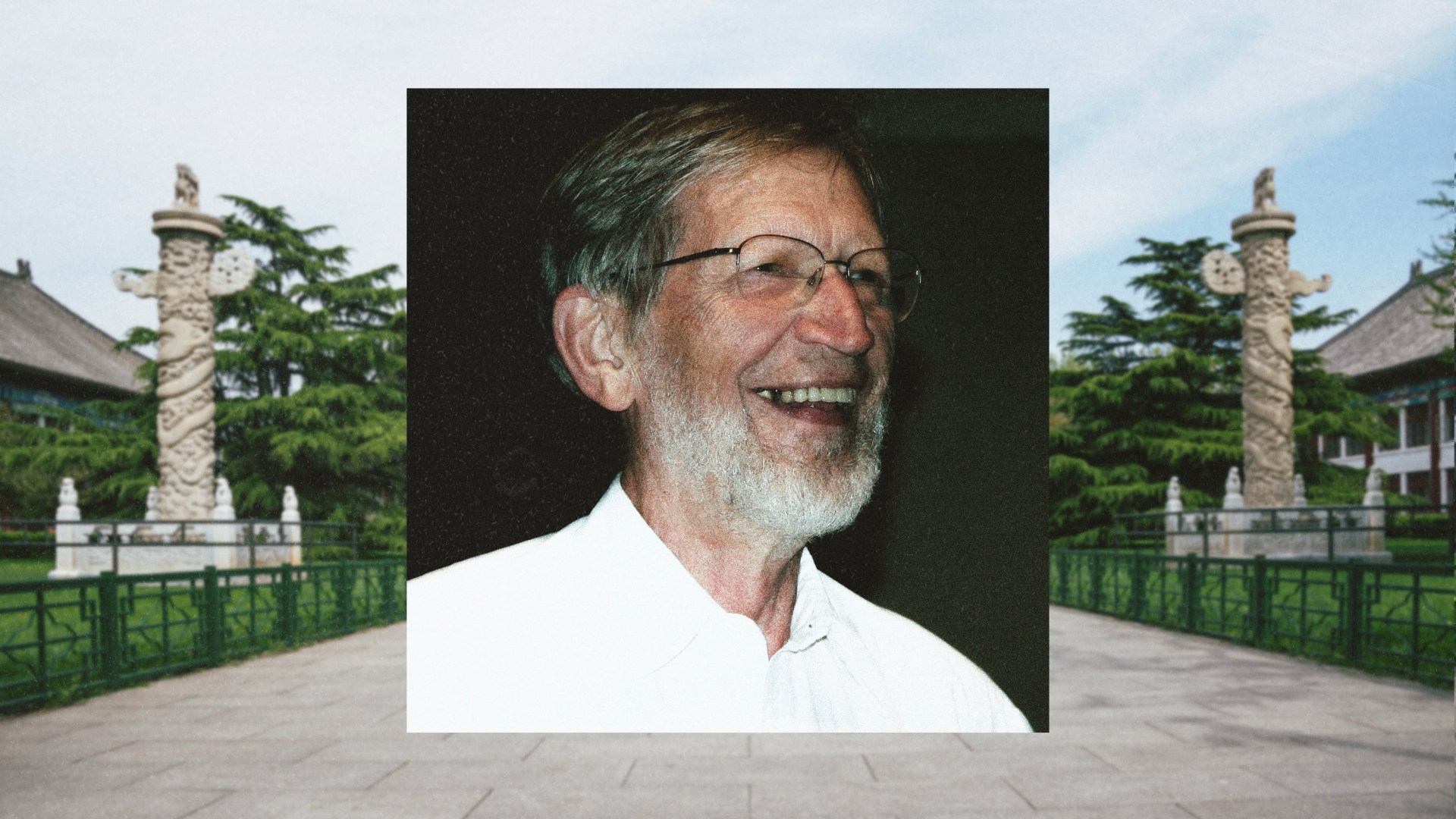
Even Atheist Chinese Scholars Admire Alvin Plantinga

The analytical philosopher’s Reformed epistemology is greatly helpful for Christian apologetics and theological education in China.

Alvin Plantinga

Alvin Plantinga

Christianity Today February 7, 2024
Illustration by Christianity Today / Source Images: WikiMedia Commons / Getty

Alvin Plantinga is perhaps one of the most influential Christian philosophers in the West today. His achievements are staggering: He powerfully argued against the logical problem of evil, launched the renaissance of Christian philosophy, reinvigorated apologetics, and profoundly inspired many Christian scholars.

But what many in the West may not know is that Plantinga is also very well-received by academics in China.

His magnum opus, Warranted Christian Belief (hereafter WCB), was first published in English in 2000 and then translated into Chinese by a team of Chinese scholars, some of whom were atheist philosophers, and published in 2005 by Peking University (the “Chinese Harvard”). The launch of the Chinese edition of WCB was held at the university in celebration of Plantinga’s 70th birthday. I was astonished by the respect and admiration Chinese scholars had for this Dutch-American philosopher.

During the academic symposium following the book launch, an atheist philosopher was appointed to critically respond to Plantinga’s paper. He began his response by saying, “The organizer of this conference owes me no thanks. Alvin Plantinga is my intellectual idol.” Soon, Plantinga’s WCB became one of the best-selling academic books in China. Plantinga later said that his work was even more welcome in China than in the US!

Reformed epistemology benefits apologetics

Plantinga points out in WCB that arguments against the rationality of the Christian faith—which he calls “de jure objections”—are inseparable from arguments against the contents of the faith—which he calls “de facto objections.” This implies that any de jure objections to Christianity should first disprove the veracity of the Christian story, which is notoriously difficult to do.

In fact, the arguments for and against Christianity assume two distinct epistemological stories.

According to the Christian story, the prevalence of religious beliefs demonstrates the benevolent Creator’s desire for human beings to know him—as well as affirming humans’ cognitive mechanism, which God designed for that very purpose. This epistemological story can explain theistic beliefs coherently, and it does not violate any norms of rationality. Hence, Christians are warranted in holding to their beliefs until proven otherwise.

Plantinga’s so-called Reformed epistemology, which draws inspiration from John Calvin and Thomas Reid, is a philosophical elucidation of this epistemological story.

Reformed epistemology claims that belief in God and the gospel are basic, and thus their rationality depends on neither arguments nor proofs. Plantinga does not dismiss the use of theistic arguments, and, in fact, he endorses and develops some of them. But he argues that, the absence of bulletproof arguments notwithstanding, the strength of faith does not depend on the persuasiveness of arguments. Otherwise, most Christians, who are unaware of theistic arguments, would be irrational in their beliefs.

Hence, Reformed epistemology steers a middle way between the excesses of rationalism and fideism, which can respectively lead to elitism and close-mindedness.

Interestingly, Plantinga thinks that Karl Marx, arguably the most authoritative philosopher in China today, can help us see this idea more clearly. Marx believed that socioeconomic factors can render human cognitive faculties dysfunctional or cause them to fail in attaining their purpose. Here we can get the idea that types of beliefs are produced by their corresponding cognitive faculties. Therefore, it is the quality of the relevant cognitive faculties—not external proofs or reasons—that decides the rationality of beliefs.

In other words, so long as our beliefs come from properly functioning faculties, our beliefs are warranted, even though we may not be cognizant of the mechanisms governing those faculties.

Now, returning to the Christian story above, widespread beliefs in God come from an innate faculty (sensus divinitatis) that is sensitive to the knowledge of its creator, but original sin undermines the way this sense functions. Therefore, God—through special revelation and the work of the Holy Spirit—deals with original sin and forms a new faculty of faith, which cultivates belief in the great things of the gospel.

Analytic philosophy helps theological education

Next, I want to dwell more on Plantinga’s use of analytic philosophy in his works—which, I believe, has had a positive impact on theological education in China and in other Chinese communities.

Analytic philosophy lends theology an argumentative rigor, conceptual clarity, logical precision, and critical openness toward sciences. And analytic philosophers are trained to detect ambiguous or inadequate definitions, fallacious arguments, and inconsistent statements. The philosophy’s various tools can thus help believers effectively articulate difficult doctrines—such as the Trinity, the Incarnation, and the Atonement—to those both in the church and outside of it.

Plantinga’s translated works introduced the analytic approach of philosophy to Chinese seminaries in China and other parts of the world. In doing so, he initiated a renaissance of Christian analytic philosophy, which has generated Chinese-speaking analytic thinkers like Kwan Kai Man (关启文), Andrew Ter En Loke (骆德恩), and others whose work benefits Chinese churches and seminaries around the world.

Further, analytic philosophy can facilitate the more apologetic functions of theology, especially since scholars and students of engineering and natural sciences, who likely comprise the bulk of Chinese intellectuals, find the analytic method more intellectually compelling.

Relatively speaking, theological education in Chinese communities is still developing, and analytic tools can help seminarians develop a healthy critical mind that defuses fanaticism and anti-intellectualism. In this age of rampant misinformation and polarization, Chinese seminary educators have become increasingly aware of the importance of logic and critical thinking.

As in the West, Christian theology in the East has been heavily influenced by continental philosophy, and so learning from a different philosophical tradition can enrich theological works with a new perspective and fresh insights. For some years, I have introduced analytic philosophy to seminarians and pastors in Asia and found the analytic method useful—not only for systematic theology and apologetics, but also for more practical courses like hermeneutics, homiletics, and spiritual disciplines.

One basic tool of analytic philosophy is conceptual analysis, which aims to discover the precise meanings of the terms we use.

In his works, Plantinga provides perceptive analyses of several concepts—including God, free will, knowledge, and faith—which help readers see the rationality and appeal of Christian beliefs. Simply speaking, to analyze a concept x is basically to discover the basic components of x. According to his analysis in WCB, for instance, the concept of knowledge contains both the components of true belief and warrant. In other words, one can claim to know God if, and only if, one has a warranted true belief about God. And a belief has warrant if, and only if, it is produced by cognitive faculties that properly function in an appropriate environment.

Conceptual analysis is important, since we can often take our religious concepts for granted. These concepts can be overused and become cliché or even import foreign components and become easily manipulated for non-religious purposes. Those who teach and preach should realize that the scriptural concepts they use may not reflect the original meaning found in the Scriptures—or even if they do, they may not have meant the same thing to the original audience.

These gaps can lead to subtle errors that can increasingly distort Christian doctrine and practices. But armed with solid logic, conceptual analysis can become a disciplined practice of discernment. It can help address problems that vex Christians, such as how to differentiate faith from superstition, faithfulness from dogmatism, hope from wishful thinking, and love from sentimentalism. And by helping believers discover the implications of theological concepts, conceptual analysis can enrich their theological understanding.

According to Plantinga’s free will defense, having libertarian freedom logically entails the ability to do otherwise. Thus, God cannot choose to create a free Adam or Eve without the risk of falling into sin—divine omnipotence does not entail the ability to perform logically impossible actions (e.g., making 1+1=3). For example, God could create a flying human being, but God could not kill himself or commit sins, since doing such things would be impossible for God, as the most perfect being. God’s logic transcends human logic—but if God can violate logic, then God could contradict Godself, which is logically inconceivable.

We sometimes hear that, compared to the Western mind, the Chinese way of thinking is intuitive and non-analytical. But this narrative is challenged by the fact that Chinese philosophers, especially Mohists (Mojia) and the School of Names (Mingjia, “Logician”), were among the earliest proponents of logic and semantic theory in the world. Even Confucius, the most revered philosopher in China, advocated for the rectification of names or terms (zhengming), which can be understood as the examination of concepts. For, he said, “If the names are not rectified, then the words cannot make sense, but if the words do not make sense, then things cannot be established.”

As Wang Anshi, a Confucian from the Song Dynasty, writes: “What scholars debate is about the concepts and their referents; if one can achieve clear consistency between both, then the truth about the world can also be obtained!” While Chinese philosophy is more practically oriented than Western philosophy, the Mohists and the Confucians believe that correct practices are based on the examination and correction of our concepts. For this reason, using Plantinga’s analytical method is not only compatible with Chinese culture, but it can also facilitate the formation of contextual theology in Chinese churches.

Leonard Sidharta (Dai Yongfu) is an associate professor of theology at GETS Theological Seminary.

News

Russia Restricts Churches in Ukraine. Divided Orthodox Critique Both.

Ecumenical Ukrainian delegation to DC summit tells of Russia’s wartime destruction of 630 religious sites, without the input of Moscow-linked church.

The destroyed headquarters of Mission Eurasia in Irpin, Ukraine.

The destroyed headquarters of Mission Eurasia in Irpin, Ukraine.

Christianity Today February 6, 2024
Photo courtesy of Mission Eurasia

Religious freedom is under threat in Ukraine. Some question by whom?

A Ukrainian delegation to last week’s International Religious Freedom Summit in Washington, DC, had a clear answer: Russia. Led by Sergey Rakhuba, president of Mission Eurasia, it presented “Faith Under Fire,” a December report detailing the crimes of war in eastern Ukraine and elsewhere.

“Faith communities are under incredible pressure in occupied territories,” he told CT. “The ideology of the Russian world is to completely monopolize religion.”

International lawyer Robert Amsterdam, however, warned that Ukraine was attempting the same control over one half of its divided Orthodox church.

Initial legislation passed by the Ukrainian parliament in October, he said, threatened to “ban” the historic Ukrainian Orthodox Church (UOC), the branch canonically linked to the Russian Orthodox Church (ROC) patriarchate in Moscow. In response, Amsterdam sent a 25-page dossier to the US, UK, and European Union heads of state on the UOC’s behalf.

“There is now a very serious question mark over whether Ukraine can meet its commitments to human rights and the rule of law,” the dossier stated. “This will have dire ramifications for Ukraine’s entry into the European Union and its place in the Western world.”

The authors of both reports share a common enemy.

Mykhailo Brytsyn, the lead author of the Mission Eurasia report, is a Ukrainian pastor who was previously arrested by the Russians during a worship service in Melitopol, occupied by Russia since March 2022. He was later exiled, and the army seized his church and turned it into a military base. Amsterdam, a Canadian lawyer with offices in DC and London, was also previously arrested in Moscow for defending Russian dissidents and subsequently banned from the country.

The United Nations is monitoring both Russia and Ukraine.

At a November meeting of the body’s security council, the UN assistant secretary general for human rights noted the yet-to-be finalized law in Ukraine and chided the country for failing to properly investigate 10 documented cases of violence at houses of worship, instigated by the Orthodox Church of Ukraine (OCU) against the Moscow-linked UOC.

The OCU was granted autocephaly—national independence—by Ecumenical Patriarch Bartholomew I of Constantinople in 2019, supported by the United States under the principle of religious freedom. But the move was rejected by the ROC, which continued in ecclesial jurisdiction over the UOC.

The UN official, Ilze Brands Kehris, continued her testimony to state that Russia is violating international norms by applying its own law in occupied territory, detailing restrictions on minority believers.

Rakhuba noted that there are many such restrictions.

“This war is not just territorial, it is ideological,” he said. “Religious freedom is missing from Russian terminology.”

We are engaged in a spiritual battle—not a battle fought with bombs and bullets but with the armor of God. It is a deadly serious war, and it is far more important than any of this world’s wars.Despite their rhetoric in the heat of conflict, the vast majority of evangelical Christians clearly understand the difference between spiritual and worldly warfare.The fact is, however, that many aspects of the life God has commanded have serious public and social consequences—for example, “Thou shalt not murder” and the mandate to rear our children “in the nurture and admonition of the Lord.” Because both human life and education issues stand high on the list of political battles being fought in the United States today, every committed Christian feels that obedience to God and conscience requires that he or she do something about these matters. The question is what. Unfortunately, for nearly 2,000 years, earnest Christians have not agreed on the answer.Scripture does, however, give basic guidelines for how we are to relate to government and carry on political activity.1. We are to obey our government and its laws—bad laws as well as good laws, including unjust taxes.2. We make one exception to this obedience: when our government demands that we do something that conflicts with our duty to God.3. We do not have the right as private Christians to take the law into our own hands (no shooting of abortionists, no Boston tea parties). Individual Christians simply should not engage in private violence.4. In the case of a conflict of governments, we have the duty to align ourselves with the government that stands nearest to what is right and good. This judgment may not be easy to make: thus Lincoln labored to preserve the Union while Lee fought for the South.5. We are to seek the liberty and freedom of everyone, knowing that one person’s freedom must always stop where the next person’s begins.6. We are to seek justice and fairness for all, distinguishing between what may be merely “politically correct” and what is really best for all.7. We Christians are citizens of two kingdoms and cannot free ourselves from responsibility to act in both. This is particularly true in democracies. Every election makes us rulers; God will hold us accountable for all the bad laws we fail to speak out against.These broad principles leave unsolved many complicated issues. Yet, if followed, they would solve 99 percent of all the troublesome political issues we face. We dare not let the fact that we don’t have all the answers excuse us from obeying these clear instructions.There is one other what. We must pray daily for our governments, that each will do what is good and just for all. This, too, is a command of God.After the what comes the how—how to battle for the good? The how is often harder than the what, for the divine way of love, outlined in Jesus’ Sermon on the Mount, seems an impossibly high standard. But love is to govern all our actions, including our political life.What does love require? That we aim, not to enhance our interests, but to seek the good of others. Of course, some respond: Love sounds fine, but if you treat people with love, they will simply destroy you. Love is not sentimentalism. It does not simply give what the other person wants. True love is tough love, or, in biblical terms, holy love.It is tragic that Christians find it difficult to embrace the what and how of our God-given duty as citizens. Those who do battle for a just and good society often slip into the cut-throat patterns of worldly warfare. And those who insist we must always follow Christ as the meek and lowly servant often forget that love must be tough. No one could be more tender than our Lord while talking to the woman taken in adultery. But no one could be more stern when rebuking the lawyers and religious leaders of his day.Copyright © 1995 Christianity Today. Click for reprint information.ctcurrmrw5TA015595y

Citing a concept called Russki Mir—“Russian World”—Rakhuba, a Ukrainian who previously worked with the Union of Evangelical Christian Baptists in the Soviet Union, contended that the ROC works hand-in-hand with the Kremlin to marginalize other Christian denominations. Since the invasion, the Russian military authority in the occupied Donbas region has steadily replicated that formula.

Rakhuba described three phases.

In the first, from the February 2022 invasion until April of that year, the Russian army ignored churches in eastern Ukraine as it concentrated on strategic gains. Phase two, which stretched until October, witnessed several “friendly conversations” between officials and the clerics summoned to report. Light threats were made at this time, with inducements offered for cooperation.

Phase three, ongoing since then, has involved the outright seizing of churches.

Protecting the believers still there, the Mission Eurasia report—already outdated in its numbers as the war continues—shielded the names of denominations struggling to maintain their spiritual witness. For one, only 4 of 48 churches were still operational. In a second, only 1 of 20. And a third no longer conducted services in any of its 16 locations.

The report described canceled registrations, personal surveillance, and the kidnapping of religious leaders. It cited another report that counted 12 clerics expelled from the region, another 8 taken prisoner, and 5 killed.

But it is not just religious minorities. OCU priests have been forced to join the ROC. And even some in the Moscow-affiliated UOC have been harassed for refusing to pray for Russian victory.

In May 2022, the UOC announced it was cutting ties with Moscow. Hundreds of Ukrainian priests signed an open letter calling for Patriarch Kirill, the head of the ROC, to face a religious tribunal. The leader of the UOC, Metropolitan Onufriy, called Kirill a fellow primate rather than his religious superior, and stopped mentioning Kirill’s name in liturgical prayer. But reporting—and Ukrainian testimony—stated that not all dioceses have followed suit.

“Coming out of the Soviet period, freedom became a value—a right, not permission,” said Rakhuba. “Ukrainians understand this, but it is not yet part of our DNA.”

The OCU recognizes religious liberty, he continued, but many senior priests in the UOC do not. Some have been openly collaborating with Russia, and Onufriy deposed three top bishops, two of whom fled to Russia. Between February 2022 and October 2023, Ukraine opened 68 criminal proceedings against UOC representatives and found alleged evidence of pro-Russia sentiment at the 11th-century Kyiv–Pechersk Lavra complex, known as the Monastery of the Caves.

The long-term UOC lease to the historical site has not been renewed.

Amsterdam stated that many of the charges against UOC priests are spurious. As many monks refuse to vacate the Lavra, he cites the case of Metropolitan Pavel, detained without bail for allegedly “offending the religious feelings of Ukrainians.”

But Rakhuba’s report shows they have much to be offended at. Alongside violations against individuals and denominations, at least 630 church structures have been damaged or destroyed as of December 1, 2023, according to data from the Institute for Religious Freedom in Kyiv. Occupied Donetsk (146) and Luhansk (83) are the cities with the highest number of affected churches, followed by now-liberated Kherson (78) and then Kyiv (73). The UOC—Ukraine’s largest church—has suffered the most with 187 damaged churches, while the OCU counts 59.

Despite their minority status, evangelicals represent about one-third of the total with 206 cases. Pentecostals (94) and Baptists (60) have the most affected churches; Jehovah’s Witnesses have an additional 110. Furthermore, the theological libraries of Tavriski Christian Institute and Mission Eurasia were deliberately destroyed.

Throughout this century and, indeed, since the founding of our republic, American Christians have aided the poor. Millions of us volunteer our time to help needy individuals and families. Because of this involvement, many of us are keenly aware of the strengths and limitations of the private sector as well as of the need for meaningful reform of governmental efforts to assist and empower the poor.The welfare-reform debate is important to us as Christians because the God revealed in Scripture is deeply concerned with the poor. God judges societies in part by how they care for the poorest, the weakest, and most marginalized.WELFARE REFORMULATIONIn Washington, welfare reform has become highly politicized, which often creates an inhospitable climate to effective policy-making. Nevertheless, what should be clear to all is that we need more than welfare-policy reform.Our country needs a reformulation of the welfare-state concept to “rehumanize” our governmental system of assistance and to achieve a long-lasting reduction in poverty. Welfare programs that move beyond keeping families and individuals at subsistence level should energize and empower the poor by forging new partnerships between government and the private sector. This fresh approach will enable the poor to overcome chronic poverty and revitalize our national welfare programs, which now cost about 1 billion annually. Research has shown that in many cases, people in a crisis initially turn to nonprofit charities before the government. Also, the evidence is increasingly clear that religion-based, nonprofit ministries doing drug rehabilitation, job training, inner-city medical clinics, and so forth produce better results. Why not design new strategies to enable these ministries that are effective to do the job on a larger scale?Rechanneling federal support through such mediating agencies could be less costly and far more effective, provided they remain free of meddlesome federal regulation. Federal support for private agencies could be provided through aggressive tax incentives and vouchers for welfare recipients. We already use vouchers for child-care and housing. Why not expand this for drug rehabilitation and even welfare reform?Baptists and Buddhists, devout believers and devout secularists could all operate nonprofits where vouchers are accepted. Such a voucher program would mean a dramatic change in the federal government’s approach to welfare. By no means, however, does this imply a reduced commitment or responsibility. Private agencies are able to assist the poor without weakening personal responsibility. Yet the scope of this task is too great for these agencies to manage alone.CUTTING TOO DEEPLYIf there are substantial cuts in government spending against poverty, private agencies will be overwhelmed by added cost and logistics of providing aid. Churches and charities should not be expected to cover the difference. Bread for the World has calculated that in order for churches to make up for the proposed cuts in antipoverty spending, each of America’s 350,000 local churches would need to raise an additional 0,000 during the five years of budget cuts. That means a typical church of 100 families would need each of its pledgers to give an additional ,900.In addition, any restructuring of welfare must be accomplished without untoward side effects. The Personal Responsibility Act before the Senate would attempt to reduce the birthrate for welfare recipients by denying welfare benefits to children born to underage mothers or to families that already are receiving welfare. This bill may prompt many women facing pregnancy, especially the young and poor, to the desperate choice of denying life to their children through abortion. We should oppose policies that would increase the number of abortions.By all means, we must reform our disastrous welfare system. God forgive us, however, if, under the guise of reform, we endorse hardhearted neglect of the weakest in our midst.Copyright © 1995 Christianity Today. Click for reprint information.ctcurrmrw5TA018595y

Such information may be crucial to keeping robust American support for the war, stated Razom, a Ukrainian-American human rights organization. Only 28 percent of US evangelicals supported congressional authorization of additional funding for Ukraine last October, compared to 44 percent of all Americans, according to a Razom survey. But when presented “factual information about Russians persecuting Ukrainian believers,” 55 percent of evangelicals said they would be more likely to approve.

Many Ukrainian Orthodox have made their choice clear: 589 communities have transferred from the UOC to the OCU. But of the remaining 8,193 parishes, the vast majority have not officially indicated their separation from Moscow.

Why might it be required?

The current draft of the law passed by the Ukrainian parliament prohibits the activities of religious organizations that are “affiliated with the centers of influence” in an enemy state. Ukraine stated that it is not a ban and that each local entity will be subject to judicial investigation. Revisions may follow, but, alongside the UN, the US Commission on International Religious Freedom expressed “serious concern” that it might become a ban in practice.

But Rakhuba brought many delegates to DC to say otherwise.

“We see the UOC as the ideological—I won’t even say spiritual—arm of the ROC in Ukraine,” he said. “Putin’s propaganda has been spreading in the West.”

Including the Ukrainian Parliament Commissioner for Human Rights and the head of the State Service for Ethnic Affairs and Freedom of Conscience, delegation representatives from the Catholic, Protestant, and Orthodox bodies of Ukraine are keeping focus on the clear offenses of the Russian Federation.

The UOC, however, was not invited.

It was not the first time. Another Ukrainian interfaith delegation visited the US in October, but a senior UOC metropolitan stated that his church was excluded.

Rakhuba does not believe they are sincere in their denunciation of the war and their independence from the ROC. And having a representative from their church in the delegation would disturb his colleagues—as each entity witnesses to the violations committed by the UOC mother church. Kirill, for example, has blessed the war and promised forgiveness of sin to martyred soldiers.

In December, Ukraine placed the Russian patriarch on its wanted list for abetting the conflict.

The next month, the interdenominational Ukrainian Christian Churches (UCC) issued a statement condemning Kirill and ROC Russki Miir ideology. It also expressed support for the position of the interreligious Ukrainian Council of Churches and Religious Organizations (UCCRO) in its worldwide appeal for Christians to pressure their affiliated denominations in Russia against their claims of genocide.

The UOC was not among its 11 signatories.

But it is one of the 16 member bodies of the UCCRO—which only speaks in consensus. Vyacheslav Horpynchuk, bishop of the Ukrainian Lutheran Church, is a member in both groups and does not know if the UOC was invited to sign the UCC statement. Yet it would not surprise him if they were not.

“The UOC needs to work hard to regain the confidence of other Christian leaders,” he said. “If they called Russia to repentance, they would be welcome among us.”

Horpynchuk said the UCCRO meets regularly, usually in person, every three months. Formed in 1996 to keep interfaith peace after the fall of the Soviet Union, it also includes representatives of Ukraine’s Muslims and Jews. Usually the group’s statements pertain to social issues or pending religion-related legislation, but since the Russian invasion, all members, he said, were clear in condemning the attack.

But there were differences in terminology. The UOC spoke of “civil conflict” and “misunderstandings,” while the other member denominations called it a war. This has disturbed some, Horpynchuk said. Christians should speak clearly against sin.

Yet as the war continued, the Moscow-linked body has increasingly brought the council pleas against government discrimination against it. Nonetheless, officially the UOC has lent its support for statements against Russki Miir as the ideology of a “terrorist state” while calling for an international tribunal to prosecute leading officials.

But with the reports of arrests of UOC clerics and of collaboration with Russia in the occupied territories, Horpynchuk thinks the Lavra lease cancellation and the Ukrainian parliament legislation to sever Kremlin relations are “fair.” And to a degree, the disfavor against the UOC is ironic; for years, many in UOC churches have called OCU members “schismatics.”

Unfortunately, the UOC’s political struggle to keep faith with both Moscow and Ukraine has soiled relations, even as they keep formal UCCRO unity.

“The Lord calls us to love, even if it is hard with our brothers in fellowship with Russia,” said Horpynchuk. “But I pray that love spreads throughout Ukraine, for with this we will overcome the enemy.”

One cleric, however, is no longer in fellowship.

Originally in the UOC, Ukrainian priest Cyril Hovorun was transferred by then-Metropolitan Kirill to the ROC in 2009. Since the war, he has been a critic of Russia and was formally defrocked in December for celebrating Communion with Constantinople-aligned churches—though he believes the real reason is political.

As for his formative church, he has mixed feelings.

“The UOC was sincere in distancing from Moscow but not in cutting off relations completely,” said Hovorun. “Its decisions regarding Moscow are easily reversible.”

Analysts have noted that the May 2022 decision may not have actually broken ties with the ROC, as the UOC’s Onufriy had previously appealed for independence of administration, granted by the Moscow patriarchate in 1990 prior to Ukraine’s independence. Hovorun emphasized that there was no canonical judgment to separate—which the UOC cannot unilaterally issue anyway.

Meanwhile, he said that certain prominent UOC bishops continue to pray for Kirill, while few are critical about the ROC taking over UOC churches in occupied territory—as they are the same church.

“Speaking theologically, in Ukraine there is one church with two jurisdictions,” Hovorun said. “The UOC is effectively a bunch of dioceses of the Russian church in Ukraine. How it imagines itself is something else.”

The UOC did not reply to a request for comment.

At the same time, Hovorun sees some in the Ukrainian government pushing to merge the UOC into the OCU. As for the religious freedom implications of the law—it is still pending its final version. Observers will have to wait and see.

But according to Ukrainian churches, per the UCCRO, the offenses of Russia are obvious. And in support of his nation, Rakhuba is keen to present his findings.

“People are terrified that if Russia takes over Ukraine,” he said, “the first thing they will do is intimidate people of faith.”

Editor’s note: CT offers select articles translated into Ukrainian and Russian.

You can also join the 10,600 readers who follow CT on Telegram: @ctmagazine (also available in Russian and Chinese).

Church Life

All Hail the Power of … Stage Lighting?

Contributor

Our congregations should be formed by the Word, not by the flashiest technology.

Christianity Today February 6, 2024
David Rama / Pexels / Edits by CT

Lights.”

I wasn’t sure I heard correctly. I asked the student to repeat his answer.

“Lights.”

Again I was reduced to silence. Clearly I was missing something.

“Do you mean electricity? Like, instead of candles?” I asked uncertainly.

“No,” he replied. “I mean lights—you know, lights.”

And then it dawned on me. The student meant lighting—dimmers, spotlights, colored lights, the whole array of controls for “stage lighting”—what you might find at a stand-up show, theatrical production, or concert.

I had proposed a question to a room of 40 college freshmen: Suppose you traveled to a new city next weekend, and on Sunday morning you chose to visit a church. What would you expect to find?

I often ask this question to begin a discussion about liturgy, the “script” that different traditions follow in their public worship, however “high” or “low” the church in question may be. Students typically think of greeters, ushers, pews, people, preaching, tithing, prayer, Scripture. Sometimes Communion gets a mention. Creed and confession of sins rarely do.

Increasingly, though, students talk about technology: screens, videos, cameras, livestreaming. Other elements are equally technological, though they don’t think of them that way: mics, headsets, multi-piece bands, a complex production with many moving parts. All signs of technological development and adaptation; all relatively new to Christian liturgy; none more than a few generations old, at least in terms of common church usage.

All this came home to me in my student’s honest first thought in response to my question: Lights. When he imagined going to church, when he mentally walked into a Christian house of worship, what came to mind before anything else was a controlled lighting system. Dim lights for quiet meditation, bright lights for benediction, a spotlight for the sermon, varying colors for different band members and their respective solo moments.

From liturgy of Word and sacrament to a theatrical light show. How did we get here?

The first thing to notice about my student’s answer is that it mostly reflects experience in large churches. My students are, in general, Bible Belt evangelicals. Even when they hail from rural or small-town backgrounds, though, their upbringing feels to them like an exception to the rule, and the rule is a well-heeled megachurch with a quality worship “production.” That’s how their feet vote when they move to a bigger town, like Abilene, and the same applies when they move to a major urban area, like Houston or Austin or Dallas–Fort Worth.

But according to recent studies, a super-majority of American churches today have 100 or fewer members. When we think of a typical congregation, then, we should think of one consisting of two or three dozen families. Few congregations of that size have the resources for—or the expectation of—professional lighting. They’re more worried about keeping the lights on at all.

Moreover, while church attendance and membership are both in decline, and while the average church size is barely in the triple digits, a growing share of the overall church-attending population finds itself in large congregations. In other words, as the percentage of Americans who attend church shrinks, those who do attend increasingly frequent bigger churches. This phenomenon distorts what feels like “the average church” and, therefore, what “typical worship” is like.

To afford, maintain, and operate professional lighting of the sort my student had in mind, a church would have to be far above the 90th percentile of American congregational size, which is 250 regular attendees. Yet for my student, as for so many others, this size and its hallmarks are paradigmatic rather than exceptional. They’re just “what church is today,” what one would reasonably expect visiting a random church in a strange city.

This trend is both cause and consequence of churches investing in technologies that make Sunday morning a high-production offering, whether for in-person crowds or for folks who stream from home. Long before COVID-19 but exacerbated by lockdown, many churches have been competing in a kind of techno-liturgical arms race to draw seekers, especially young families and professionals, to the “Sunday morning experience” of high-tech public worship.

For many seasoned evangelicals among the millennial and Zoomer generations, the result—state-of-the-art, high-definition, professional video and audio and music, with smooth transitions and fancy lighting, all frictionless and ready-made for the internet—is simply becoming the norm. It’s what church, or worship, means.

At best, the gospel retains the power to cut through all the noise. At worst, believers receive neither the Lord’s Word nor his body and blood. Instead, they get a cut-rate TED Talk, spiritual but not religious, sandwiched between long sessions of a soft rock concert.

There is no question that ministers at churches like these have been motivated by good intentions. If more people want to hear the gospel and give praise to God, should we not make it possible for them to do so? Should we not build it, praying they will come?

Few would suggest that the mere size of a building is evidence of unfaithfulness, nor would I propose that microphones be abolished in favor of preachers gifted with naturally loud voices. That’s a caricature of so-called Luddite concerns with new technology. Theological questions about technology are more serious than that. For one, they are rarely answerable in advance. They’re discerned on the ground. But they do require discernment. The mere fact that a new technology appears at first to aid in the church’s mission is not sufficient.

We might instead interrogate the nature of Christian worship itself. I asked my students what they would expect, visiting a church for the first time. What should they expect?

The historic answer of the church down through the centuries is that they should expect the liturgy of Word and sacrament. They should know in advance that, with real but limited variations, they will pray, sing, confess their faith, confess their sins, hear the word of the Lord in Scripture, hear the gospel of the Lord in proclamation, and receive the visible word of the Lord’s body and blood, the bread of heaven broken for their salvation. Whatever country they are in, whatever language is spoken, whether visiting a city or a town, a congregation of 5,000 or a parish of 50—this is what should await them.

Notice what is necessary for the celebration of this liturgy: sisters and brothers gathered in the name of Jesus, a leader, the Bible, a little bread and wine. Believers, Scriptures, elements, and a place to bring them together. That’s it. In fact, on a given Sunday morning around the world, you can find them brought together in cathedrals, in houses, in apartments, in strip malls, in cafeterias, in mud huts, out in the open by rivers and under trees, hidden in basements and attics for fear of being found out.

This is the genius of Christian liturgy. Beyond the tools required to produce texts (which long predate the printing press) and food and drink (which are necessary to live), no technology is necessary for the church to worship the Lord in Spirit and in truth. Perhaps, as the case may be, new technologies have the potential to help. But they always have the potential to harm, to distort and misshape.

On one hand, worship is a form of catechesis. It molds our hearts, minds, and imaginations. Young people are right to expect, on a given Sunday, what they have seen and heard on hundreds of previous Sundays. It’s clear to me that the present catechesis has worked, but in all the wrong ways.

Too many evangelicals assume that ordinary worship is what I’ve elsewhere called the tech-church show—a performance in every sense of the word. Not the drama of the Eucharist or the reenactment of the liturgical script but a slick, high-def production. If I am right that this is what many assume is normal, based on its prevalence among larger churches, then my suggestion is that ministers need to go back to the drawing board. Back, I should say, to the time-tested wisdom of Word and sacrament. Call it the ABCs of Christian liturgy.

Recall, on the other hand, who is able to “compete” in this worshiping arms race: large churches in major cities. Who can’t? All the rest of them. That is, at least four-fifths of congregations cannot play the high-tech game.

Given that tens of millions of Americans have left church over the last few decades, this is liturgical malpractice. It’s short-sighted too, given the church’s mission. But above all, it’s a failure of fraternal love.

We don’t want small churches to close their doors. We want churches of every size, in every type of locale, to flourish—just as they are, just where they are. But if the norm is the high-tech production I’ve outlined above, then these churches, even when they are in cities, will continue to die, since they inevitably lack the resources to keep up with the ecclesial Joneses.

Much can be said for a joyful service that communicates both uninhibited and Spirit-filled adoration. But faithful worship is, and therefore should be, something any church can do, regardless of production level.

We must imagine an alternative catechesis—one that, for students like mine, brings to mind first of all the risen Christ: his living Word, his body and blood, his gathered people. The question is: What kind of worship would produce such a thought?

Brad East is an associate professor of theology at Abilene Christian University.

Theology

From Descendants of the Dragon to Heirs of God

Their culture tells them the dragon is transcendent. Their Bibles tell them it’s evil. How should Chinese Christians approach this year’s zodiac animal?

Christianity Today February 6, 2024
Edits by Christianity Today / Source Images: Getty / WikiMedia Commons

The Chinese zodiac marks 2024 as the Year of the Dragon (龙, long). Every 12 years, numerous Chinese families harbor hopes of welcoming a “dragon baby”—because for thousands of years, Chinese culture has held the dragon in high esteem, and many Chinese people identify themselves as “descendants of the dragon” (龙的传人).

However, numerous misunderstandings and fears about the dragon exist among many Chinese Christians, because they believe the Bible regards the creature as satanic. For them, the imaginary creature is either a symbol of nationalism or the Devil incarnate.

This Year of the Dragon, believers would do well to ask: What might it look like for the gospel to transcend Chinese dragon culture? And what would it mean for Chinese believers to transition from identifying as descendants of the dragon to heirs of God?

Not St. George’s dragon

My surname is Long (龙), which means “dragon.” After my conversion to Christianity, numerous Christians advised me to change my surname because it is the same word as dragon in Chinese Bible translations, and Revelation 12:9 states that the dragon is Satan. While these Christians may have been trying to keep me from associating with the Evil One, I found their interpretation to be an oversimplification and a misunderstanding of both the Bible and Chinese culture.

In the first place, there are significant differences between the dragons in Chinese culture and the dragons in Western culture and the Bible (Greek: drakōn), starting with their appearance. The “enormous red dragon” in Revelation possesses “seven heads and ten horns” (Rev. 12:3), whereas the Chinese dragon only has one head and two horns. And Western dragons have wings and can fly, spewing flames from their mouths, while Chinese dragons can ascend through the clouds (without wings) and bring forth wind and rain.

Further, these dragons represent opposing ideas. In the ancient Near East, ancient Greece, and historic Western culture, dragons symbolize evil, violence, disaster, and destruction. But in China and East Asia, dragons symbolize sacredness, nobility, auspiciousness, and blessing. William E. Soothill, a missionary to Wenzhou, China, and professor of Sinology at Oxford University, noted that in China, the dragon is always doing good, while the Western dragon is almost entirely seen as evil—harming people, stealing princesses, and provoking heroes, such as St. George, to slay them.

From the 13th century to the present, various Chinese and foreign scholars have suggested not translating the Chinese character as dragon but instead using phonetic transliterations such as loung or loong. Similarly, Soothill suggested using lung. (In this article, I use the modern Pinyin long.) More specific and accurate translations for the Revelation dragon include e long (“evil dragon”); du long (“poisonous dragon”); and mo she (“demon snake”).

‘Descendants of the dragon’

The first dragon imagery appears in Chinese culture during the Neolithic period (around 8,000 B.C.), made from piles of stones or painted onto pottery. Since then, the dragon has come to be associated in four distinct ways in Chinese history.

First, in prehistoric times, it served as a tribal totem. Then, following the Qin (221–206 B.C.) and Han (202 B.C.–A.D. 220) dynasties, it became a symbol of imperial power. The late Qing dynasty (1644–1912), for example, represented itself with the “Yellow Dragon Flag,” the first national flag of China. Henceforth, the dragon symbolized China as a nation.

Today, the dragon has become a unifying identity marker of Chinese people worldwide, who all regard themselves as children of the long. The song “Descendants of the Dragon” played a pivotal role in shaping and popularizing this understanding.

In 1978, the Taiwanese campus folk singer-songwriter Hou Dejian composed this song to articulate the shared heritage of the people on either side of the Taiwan Strait. As China opened its arms to the world again in the 1980s, embracing reform and progress, the song gained prominence.

In 1988, Hou performed “Descendants of the Dragon” at the CCTV Spring Festival Gala, giving voice to the sentiments of hundreds of millions of Chinese people: “In the ancient East, there is a dragon, its name is China; in the ancient East, there is a group of people, they are all descendants of the dragon.”

This assertion of Chinese identity was far more significant than any religious superstition or idol worship. From the “century of humiliation” to its economic and political rise, the image of the Chinese dragon has evolved dramatically from a “sleeping dragon” to an “awake dragon” to a “mad dragon.”

Putting the dragon in his place

Our dragon discussion gives us the opportunity to consider three of philosopher H. Richard Niebuhr’s five different modes of interaction between the gospel and culture.

The first paradigm posits that the gospel can only be understood by a culture within its specific context. To that end, Christian evangelists seeking to share the gospel in a Chinese context should study the importance of dragons. As the Chinese/Taiwanese Buddhist scholar Nan Huaiji writes, “Chinese culture is a dragon culture. … Our dragon is revered by heaven and man, and represents God in religious concepts.” While this view may be slightly inflated, Christians should try to understand the sanctity and transcendence symbolized by the Chinese dragon.

Similar to the “four living creatures” mentioned in Ezekiel 1 and Revelation 4, dragons are a mashup of various animal forms that represent all creatures and lead people toward transcendence. In the same way, understanding how dragons function in Chinese culture can help create more space for conversations and evangelism.

A second mode of interaction identified by Niebuhr states that the gospel can be at odds with culture. The evil dragon in Revelation 12 originates from the Leviathan in the Old Testament, which often symbolizes gentile powers like the pharaoh of Egypt (Ps. 74:14) and the nations of Assyria and Babylon (Is. 27:1), who are often set as antagonists to the people of God. Similarly, many scholars see the evil dragon and the beast of the sea in Revelation as representing the rule of the Roman Empire and its persecution of God’s people (Rev. 12). As aforementioned, the Chinese dragon also stands for imperial power. Moreover, considering the Chinese authority’s ongoing persecution of the church, Chinese Christians can easily and legitimately identify the “evil dragon” with a hostile political power.

Finally, a third perspective from Niebuhr maintains that the gospel transforms culture. Similar to the Jews’ dream in the first century to revive Israel, the Chinese dream of the 21st century is the grand revival of the Chinese nation, like a dragon soaring. However, as Christians, we know that real revival comes from a revival of faith.

In the words of the classic Chinese text I Ching, “even if the dragon soars in the sky” (飞龙在天), it will eventually become “the mighty dragon who regrets being too aggressive” (亢龙有悔). The Bible says that “every family in heaven and on earth” is named after God (Eph. 3:15). Through faith in Jesus Christ, Chinese people can become descendants of Abraham, the “father of faith.”

By God’s grace, the descendants of the dragon can be adopted by the heavenly Father, become heirs of God in Christ, and receive the abundant inheritance of God’s family. Therefore, the deepest form of love for one’s people and nation is to emulate the apostle Paul, striving to bring the gospel of Christ to his fellow Jews (Rom. 9:3).

“Jews demand signs and Greeks look for wisdom” (1 Cor. 1:22); Americans desire freedom and Chinese people pursue wealth and power. The gospel, which concerns all nations, both challenges and fulfills the pursuits of different cultural groups. The Cross may seem “foolish” and a “stumbling block,” but it is the true miracle, wisdom, freedom, and strength.

Heirs of God by grace

After being ordained as a pastor in 2017, I did not change my surname. Instead, I changed my first name in Chinese to 降恩 (Xiang’en), which means “surrender to God’s grace.” I also decided to reclaim and reinterpret the idea of “descendants of the long” for the Chinese church.

To that end, I have organized and promoted a youth missionary movement in mainland China with the theme of “Heirs” (传人) and written a theme song for it called “Song of the Heirs”:

In the land of God, the descendants of the gospel advance in waves; To the nations, Those who preach the gospel rise up for the Lord.

Chinese Christians are not only receivers of traditional culture but also reformers of contemporary culture and creators of emerging culture. When reflecting on the complex relationship between the gospel and culture, we need a grand and holistic Christian worldview, capable of carrying the gospel’s tolerance of, challenge for, and renewal of culture.

Before Hou Dejian delivered his performance of “Descendants of the Dragon” in 1998, he proclaimed, “Among the 12 zodiac signs, the Chinese hold a special affection for the dragon. This is because, while God created the other 11 animals, the dragon was invented by the Chinese people.”

Whether this is true or not, it is true that the Chinese were created by God and that God’s love encompasses all people. Naturally, the Chinese can appreciate the imagination and culture we have crafted around the long, but if this blinds us to God’s love, then we are prioritizing the trivial over the essential.

In the new heaven and new earth, the imaginary dragon will not make an appearance. But the descendants of God in China will be present, standing among the worshippers from all nations (Rev. 7:9).

Sean Long is a Chinese house church pastor currently pursuing doctoral studies at Wheaton College.

Books
Excerpt

Taking Care of a Grateful Faith

An excerpt on sanctification and conceit from theologian Cornelius Plantinga’s new book, Gratitude: Why Giving Thanks Is the Key to Our Well-Being.

Christianity Today February 6, 2024
Illustration by Elizabeth Kaye / Source Images: Wikimedia Commons / Unsplash / Pexels

As children, we are taught to take care of our pets, take care of our room, take care of our toys. A parent’s voice is always in our head: Don’t leave your toys out in the rain. Don’t forget to walk the dog. Don’t leave stuff all over your room.

Gratitude: Why Giving Thanks Is the Key to Our Well-Being

Gratitude: Why Giving Thanks Is the Key to Our Well-Being

Brazos Press

176 pages

As adults, we learn to care for our families, care for our friends, care for members of our church who need help. The more valuable the goods, the better the care.

So it is with our Christian faith. The work of the Holy Spirit ties us to Jesus Christ from God’s side of the bond. From our side, it’s faith.

Like so much of value in the Christian life, faith is both God’s gift and our calling. There’s no doubt it’s a gift. Jesus taught that “no one can come to me unless the Father who sent me draws them” (John 6:44). But faith is also our calling. Jesus says so with a simple imperative: “Believe in God; believe also in me” (John 14:1).

Every Christian comes to know that this imperative is bigger than we are. We know the drag of doubt and sloth. We know what it’s like to be spiritually depressed—to find the universe emptied of God and our lives emptied of joy. We know how the presence of advanced evil in the world can taint our trust in God’s providence.

So we pray for God to rejuvenate us. We practice spiritual disciplines that centuries of Christian saints have told us will help. We pray when we don’t feel like it. We go on spiritual retreat because we know we should. We meditate on God’s Word, hoping for a ray of light. We take long, slow walks through cemeteries, treading six feet above well-dressed skeletons while soberly reflecting on how—if there is no God and no eternal life—human life simply stops.

All these means are part of traditional spiritual hygiene, and they are all an immeasurable help when it comes to taking good care of our faith.

According to the letters of St. Paul, the centerpiece of such caretaking is mortifying our old nature and vivifying our new one. One of Paul’s central teachings is that we have died and risen with Jesus Christ. We died and rose with Christ when he did because he is the “second Adam,” our representative. We did it again in our baptism, a ceremony that sacramentally binds us to the dying and rising Christ. And we do it every day when we put our sins to death—kill them, mortify them, crucify them—and bring our virtues to life—encourage them, vivify them, “clothe” ourselves with them (Col. 3:5, 12).

Sanctification is God’s work in us. But it’s also our work in us. Scripture says both things. Jesus “cleanses us from all sin” but only if we “walk in the light” (1 John 1:7).

There’s no better way to walk in the light than by putting our sins to death. All serious Christians have experience trying to do it. Suppose my besetting sin is conceit. I am too wily to say it out loud, but I secretly think I’m hot stuff. I think I’m better than others—and if others don’t know it, they should. I might motor along with this superior attitude for years until something jolts me awake.

If it does, I know I have to kill my conceit. I have to yoke my efforts to the purifying work of the Holy Spirit in me. So I meditate on the superlative greatness of God and look at myself by contrast. I meditate on the superlative grace of God and see that I have nothing good that wasn’t given to me. I confess my conceit to God and lament it and beg to be rid of it. I start deliberately praising others, recognizing their gifts and good character. I spend time outdoors where nonhuman creation seems to hum along just fine without paying any attention to me. And I begin to see my conceit as laughable.

How does mortifying my conceit show and strengthen my faith? When I put my conceit to death, I trust God’s Word that doing so is not only right but also healthy. Mortifying oneself is no fun at all. It’s mortifying. But I do it anyway because I trust God that doing it is life-giving, that it will actually make life better.

And it does. As I kill off my conceit, I find that God seems closer to me. Other people seem more interesting to me. Squirrels leaping from branches seem more delightful to me. I’ve broken out of the tiny cabin of my own self-involvement and have found the whole universe comes alive as I turn to it.

When I reflect on this wonderful exercise of dying and rising, I become more grateful for my faith that motivated me to tackle it in the first place. And I want to keep looking for ways to take good care of it.

Cornelius (Neal) Plantinga (PhD, Princeton Theological Seminary) is senior research fellow at the Calvin Institute of Christian Worship and president emeritus of Calvin Theological Seminary in Grand Rapids, Michigan. He is the author of many books, including the Christianity Today Book Award winners Not the Way It's Supposed to Be, Engaging God’s World, and Reading for Preaching.

Content taken from Gratitude by Cornelius Plantinga, ©2024. Used by permission of Brazos Press.

Theology

From Painting Sean Connery to Writing Hit Indonesian Worship Songs

When a hand tremor ended Herry Priyonggo’s career painting movie posters at 22, he turned the pain into singing. Now God has led him back to the canvas.

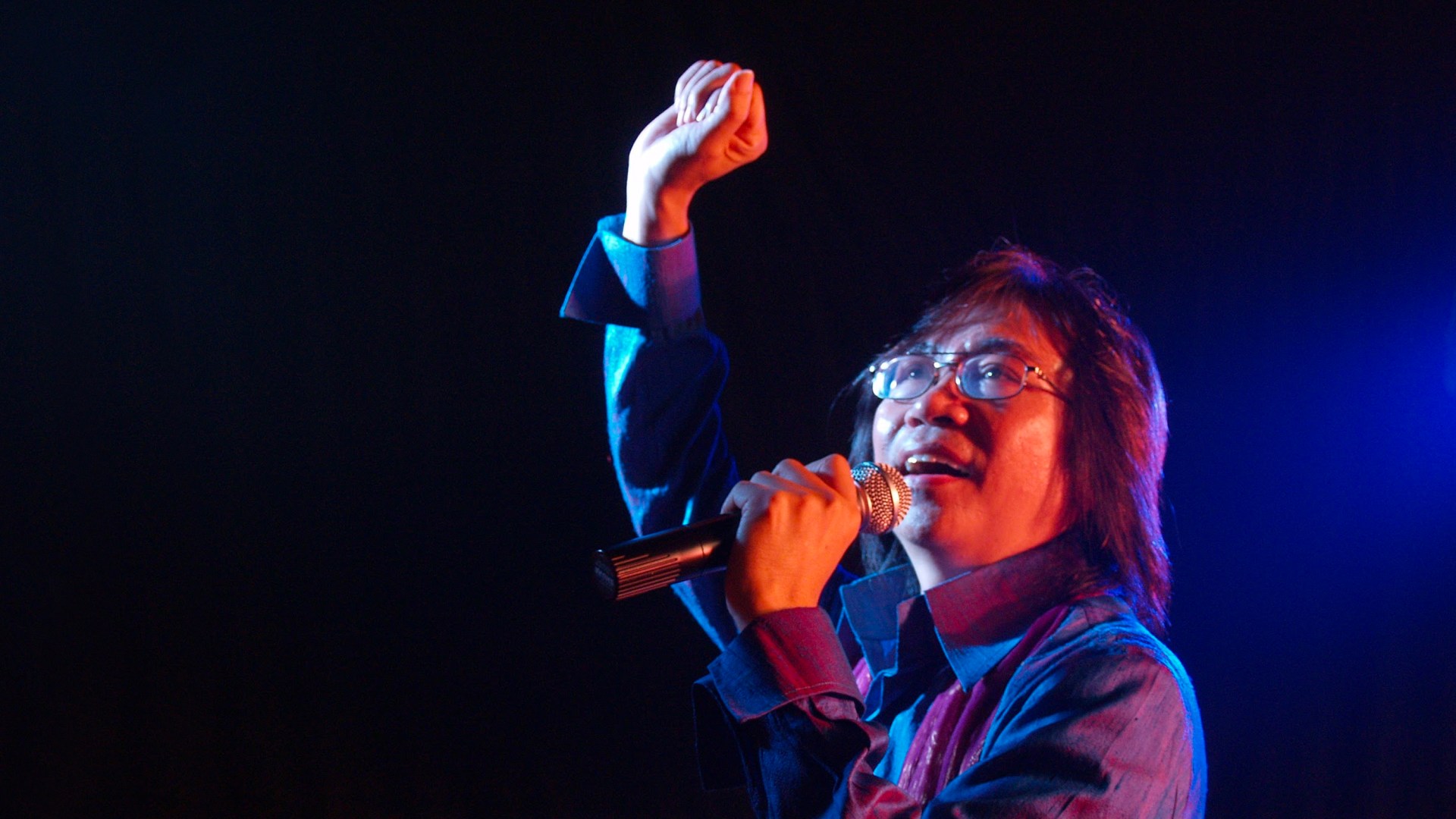
Herry Priyonggo singing for the vocal group, Yerikho.

Herry Priyonggo singing for the vocal group, Yerikho.

Christianity Today February 6, 2024
Courtesy of Herry Priyonggo

At the age of 22, Herry Priyonggo felt he had found his calling. For the past six years, he had grown a reputation as the best movie banner painter in Indonesia in the ’60s and ’70s, with his artwork of famous Hollywood and Hong Kong actors gracing movie theater fronts in Jakarta and other cities. His income supported his family.

But one fateful day in 1975, his right hand failed to cooperate. Every time he picked up the paintbrush, his hand shook uncontrollably. It became impossible to work.

Priyonggo, now 71, remembers going into the bathroom and wrestling with God. He demanded God heal his hand: “If you are indeed almighty, it must be so easy to heal me. If you don’t heal me, I will not believe in you any longer.”

Hour after hour, in the damp and cold bathroom, he poured out all his despair until he was too exhausted and fell asleep.

“When I woke up in the morning, my hand was not healed,” Priyonggo said. “I was very disheartened, but I decided to keep my faith in [God].”

To this day, despite continued prayers and consultations with doctors, Priyonggo has yet to see God answer. Bouts of despair continue to overwhelm him at times. Yet in time he has found a fulfilling life he could never have imagined: a career as a well-known worship music composer and the founder of a music group that has performed in churches all over Indonesia. In his later years, God has allowed him to even return to painting—this time, Christian art.

“The longing for my hand to be healed remains high, even today,” he said. “But I started realizing that God has a much better plan for me. He has opened up other opportunities for me to be a source of blessings for many more people.”

Painter of movie posters

Priyonggo was born into an ethnically Chinese Christian family in Bondowoso in East Java. He started painting at age 12. Soon, he was exhibiting his artwork in bigger cities like Jakarta. A deputy school principal in Jakarta saw his paintings and urged him to move to Jakarta to pursue a career in art. At age 14, Priyonggo moved to the capital.

At the time, Indonesia had started importing films from the US, Hong Kong, and India, as well as producing films nationally. Locals flocked to theaters to see popular Hollywood, Hong Kong, and local actors like Kirk Douglas, Wang Yu, and Chen Pei Pei on the silver screen. To market these attractions, theaters relied on giant hand-painted movie posters.

The then-16-year-old artist felt up for the challenge. Priyonggo approached a local producer and asked him for a commission.

But it was hard for the producer to take the teenager seriously.

“I was wearing shorts,” said Priyonggo, noting his attire, which is considered childish in the culture. “He told me to keep going to school and to enroll in art college … before asking for orders from him.”

Undeterred, Priyonggo decided to show the producer his skills. He painted a 5-by-5-foot poster for the Hong Kong movie The Three Smiles and brought the painting to the man. “He was flabbergasted and started giving painting jobs to me.”

He began juggling his new job while still in high school. “I woke up at five to make sketches for the banner before going to school.” After school, he started painting, sometimes late into the night. He soon became responsible for creating the master poster, which other painters would duplicate for other theaters.

Priyonggo used his earnings to support his family. His parents were teachers in a Chinese school in Bondowoso in the 1960s, but in 1965, Indonesia suffered from a bloody political and social upheaval that led to an intense anti-Chinese and anti-Communist sentiment. The new government severed ties with China and ordered the closure of all Chinese-affiliated schools.

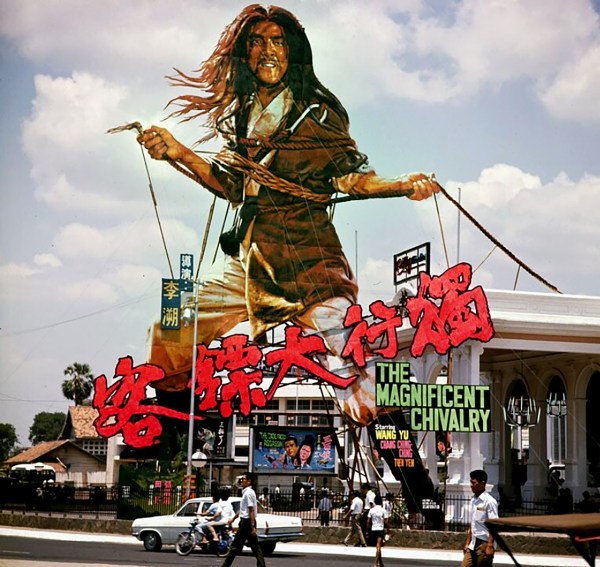
55-foot tall movie billboard of Wang Yu by Herry Priyonggo.Courtesy of Herry Priyonggo
55-foot tall movie billboard of Wang Yu by Herry Priyonggo.

He encouraged his parents and his siblings to move to Jakarta, where they rented a house. Priyonggo, who could complete a large 10-by-16-foot poster in two days, became the primary breadwinner. One time, a producer asked him to create a 55-foot tall movie billboard “where cars could pass between the legs of Wang Yu, a famous Hong Kong actor.” Another time, he painted a 45-foot billboard of Sean Connery for the movie Goldfinger.

Yet at the age of 22, his career abruptly came to an end as his hand began to shake.

Despair leading to new ministry

Priyonggo’s symptoms made little sense to doctors or to Priyonggo. Family and friends wondered if the condition was hereditary or caused by his exposure to paint. Yet medical experts ruled out either explanation. To this day, the exact cause of his tremors is unknown.

But his physical challenges took a toll on his mental health and left Priyonggo mired in despair, taking different medications prescribed by his doctors and actively seeking a miracle. His sister, Herlin Pirena, recalled, “Sometimes Herry even screamed and screamed in his room to release his despair and frustration.”

To find solace from his pain, Priyonggo turned back to his love for sacred music and hymns. As a child, he had often sung at the church with his parents, older brother, and Pirena. “Our family sang about two times every month,” he recalled. “I also often helped my father, who was the choir conductor, prepare the music sheets.”

By 1978, Priyonggo, then 25, had started to make peace with his hand tremors and agreed to conduct his church’s youth choir. This led to the creation of the Yerikho Vocal Group in 1980 with some friends in the church, including Pirena.

Yerikho, which means “Jericho,” started singing at churches and released a worship album. Most of the songs were hymns that Priyonggo arranged, but it also included an original song he composed. The cassette spread among Indonesia’s Christian community and led Priyonggo to write more worship songs.

Yerikho’s songs are often rooted in the Psalms and other passages of Scripture and delve into Priyonggo’s own spiritual journey, full of trials, despair, mercy, and hope. Priyonggo’s songs are sung in Indonesian churches today, including “Jalan Tuhan” (God’s Way), “Tangan Tuhan” (The Hands of God), and “Mazmur 121” (Psalm 121). Priyonggo also produced several musicals, such as Permata untuk Sang Raja (Jewels for the King) and Laki-laki Pilihan (The Chosen One). The last one portrayed the life of Joseph.

“I could not count how many songs I have composed,” Priyonggo said. “There must be several hundreds. But not thousands like Fanny Crosby yet.”

Today, Yerikho still continues to travel and perform in churches, even as members of the band have come and gone. Churches are still booking them in advance: A church in Pontianak, West Kalimantan Province, recently contacted Priyonggo asking Yerikho to perform there in 2025.

Fighting spiritual warfare

Despite his success in music, Priyonggo still struggled with bouts of despair. He noted that his wife, Yanti, with whom he has three children, provided enormous support during those dark times.

He remembers falling into despair in 2018 after he stopped taking the medication that helped control the tremors and anxiety. He wept to his wife, crying out, “I want to give up … I can’t stand it any longer.”

Yanti handed him a guitar and asked him to play the songs Priyonggo penned years ago. They began to sing “Sayap Pujian” (Wings of Praise):

Wings of praise take me up, weathering all the storms of my life … Let me cherish the splendors of your presence in the light of your love … Let me sing the symphony of victory. In my life, you are the only source of my strength. I want to sing psalms and always be grateful, Faithfully believe that you will give me victory over all my misery …

“We sang and sang the song,” Yanti remembered. “And a miracle was indeed happening: Herry recovered from his despair. The Lord freed him through the lyrics of his own songs that he had composed to glorify him.”

Through the hard times, the couple learned to faithfully follow the guidance of the Holy Spirit. “The Lord wants us to have deep spiritual experiences with him,” she noted. “What we have to do is just be faithful. Just obediently do what the Lord wants us to do.”

Their eldest son, Juan Krista Priguna, 34, has seen God’s work in his father’s life. “God allows my father to keep suffering from the shaking hand to show his sovereignty upon us, his children. And, through such pain, we can precisely witness the greatness of God.”

Painting once again

In late 2019, Priyonggo underwent bypass surgery for a heart condition. After the surgery, he suddenly longed to paint again. He decided that if his hand would cooperate, he wanted to dedicate all his paintings to God.

In the midst of the COVID-19 pandemic, the then-68-year-old picked up his paintbrush once again. To control the shaking, he used his left hand to steady his right hand when he painted on the canvas. It was a grueling effort, but after a week, he completed his first painting in more than 40 years, which he called “The Good Shepherd.”

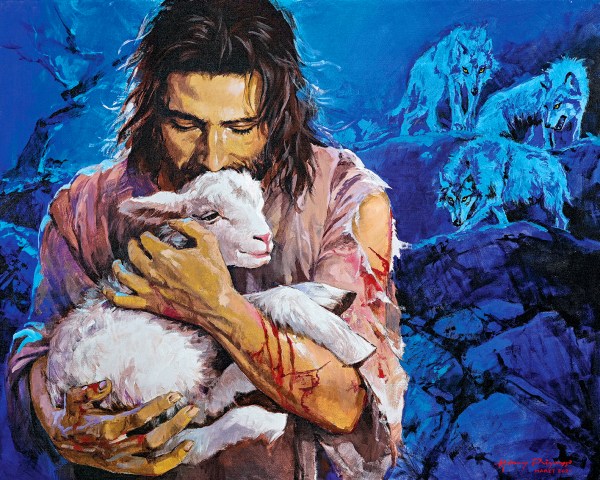
“In the midst of painting it, an idea sprung up to portray three wolves who were about to devour the lamb—and how Jesus had to fight against them to save the stray lamb,” Priyonggo said. In the painting, the wolves are in the background and Jesus has wounds on his arm and a torn robe.

The painting, The Good Shepherd, by Herry PriyonggoCourtesy of Herry Priyonggo
The painting, The Good Shepherd, by Herry Priyonggo

“I was speechless when seeing the painting for the first time,” said Gabriel Goh, then-pastor of Gereja Kristus Yesus Bumi Serpong Damai in South Tangerang. He received the reprint of the painting from a church member for his birthday not long after the painting was completed in 2021.

“I have seen so many paintings of Jesus saving the stray lamb, but this painting deeply touched my heart,” he recalled. “This painting truly represents the dimension of redemption that Jesus has done for us. He has indeed paid such a high price in order to save us sinners.”

Priyonggo is grateful that the Lord has enabled him to paint again and to compose new songs amid all his shortcomings. “I just wonder how God has used my dumb fingers to create the paintings and songs.”

He is now trying to enjoy the slower pace of his life. As a young man, he could finish a painting in just a few days. Yet in the last three years, he has only completed ten paintings.

“I am now taking much more time to explore ideas of what I should paint or compose next, that can glorify the Lord.”

His sister, Pirena, who is now one of the most well-known Christian singers in the country, noted that her brother is like a fragile brush in the hands of God. “It is now so difficult to paint with his shaking hand,” she said. “Therefore, his paintings are genuine evidence of just how marvelous our Lord is.”

Additional reporting by Gouw Liena Winarsih.

News

Died: Letha Dawson Scanzoni, Who Argued Feminism Is Biblical

The author of All We’re Meant to Be faced serious backlash over egalitarian reading of Scripture and her support for LGBTQ affirmation.

Christianity Today February 5, 2024
Letha Scanzoni / edits by Rick Szuecs

Letha Dawson Scanzoni, who launched a biblical feminism movement but lost influence among evangelicals because of her support for LGBTQ affirmation, has died at 88.

With a pair of articles published by Eternity magazine and a follow-up book, coauthored with Eternity editor Nancy Hardesty, Scanzoni pushed evangelicals to rethink what the Bible said about women. She challenged the idea that women’s equality with men and liberation from customs and cultures that devalued women was somehow secular. According to her, it was a biblical idea first.

“Evangelicals have the tradition of taking Scripture very seriously,” Scanzoni once said. “When we looked at Scripture, we saw it not limiting women, but liberating.”

Scanzoni and a small cohort of people who agreed with her started the Evangelical Women’s Caucus in the early 1970s as part of Evangelicals for Social Action, the progressive Christian group that produced the Chicago Declaration, an evangelical call to oppose racism, materialism, militarism, and the forces that produce economic inequality. The women’s caucus convinced the group to include language opposing sexism.

Within a few years, the Evangelical Women’s Caucus (now called Christian Feminism Today or the Evangelical and Ecumenical Women’s Caucus) was hosting independent annual conferences and had about 1,500 members.

A controversy over homosexuality split the group in the 1980s, though, and the Evangelical Women’s Caucus lost about 80 percent of its membership. Scanzoni, who wrote Is the Homosexual My Neighbor? with theologian Virginia Ramey Mollenkott in 1978, stopped getting invitations to speak at evangelical institutions and could no longer publish articles in most evangelical magazines.

Despite her marginalization, Scanzoni continued to identify as an evangelical. And she always insisted her beliefs were based in the Bible.

“She knew Scripture,” biographer Kendra Weddle wrote, “and could quote chapter and verse with the most ardent biblical scholars. But more than that, the Bible was a constant source of inspiration and guidance. She also experienced a vibrant relationship with Christ.”

Emerging church leader Brian McLaren said Scanzoni showed him that faithful commitment to Scripture would almost inevitably lead to conflict with evangelical gatekeepers.

“I watched her take the same biblical texts that the (white male) evangelical gatekeepers used to oppress others and instead use them to liberate,” he wrote. “I think of her first and foremost as a courageous biblical interpreter.”

Scanzoni was born on October 9, 1935, in Pittsburgh and was raised in Mifflintown in central Pennsylvania. Her parents, James and Hilda Dawson, ran a gas station and diner. They worked most Sundays and were not churchgoers, but sent young Letha to church with her best friend, a pastor’s daughter. When she was 11, Scanzoni had a conversion experience and, with the help of the pastor’s wife, answered an altar call at the church.

As she later recalled the experience, there was a lot of talk about sin and repentance. But she only felt overwhelmed by the love of God. Later, she looked at the sky and marveled at the grandeur, in awe of a Creator who cared so deeply and personally for her.

Scanzoni was a talented trombonist and at 16 was accepted into the Eastman School of Music in Rochester, New York. She also started playing for churches and religious rallies, including a Billy Graham evangelistic event. She started to share her testimony as part of her performances and sometimes offered a devotional or led a Bible study. She soon learned that some Christians placed sharp limits on where and how a woman could speak.

The lines weren’t always clear to her, though. Historian Isaac Sharp writes that Scanzoni was once confused when a minister asked her to talk about her faith during a trombone performance for men in prison. She knew the minister didn’t believe women should teach men. He clarified that testimony was not teaching, a distinction that didn’t make sense to Scanzoni.

As a young woman, she also learned she could not always trust her fellow Christians to treat her with basic respect. A man in leadership at the Youth for Christ meeting she attended at Eastman kissed her without her consent.

Scanzoni transferred from Eastman to Moody Bible Institute’s music program in 1954. There, she met and married John Scanzoni and left school before graduating to support her husband’s calling to the ministry and then to graduate school, where he studied the sociology of families.

She helped her husband write several sociology texts and followed him to Bloomington, Indiana, where John got a job teaching at Indiana University. While raising two boys, Scanzoni also began writing articles and books on her own, applying biblical wisdom and sociological insight to modern family life.

She wrote several books—including Youth Looks at Love, Sex and the Single Eye, and Sex Is a Parent Affair, which talked about the best way to teach children about sex. Sex Is a Parent Affair was endorsed by Focus on the Family founder James Dobson, who also wrote the foreword.

Scanzoni didn’t think of herself as a rabble-rouser or a crusading feminist. Nor, she later recalled, did anyone else.

“Most people thought of me as a homemaker, a stay-at-home mom,” she said. “I wasn’t the kind of person who would speak out to boldly challenge theological professors and traditional translations. … I was living my days caring for children and doing freelance writing.”

In 1963, however, Scanzoni got angry over an article published in Eternity magazine. Charles Ryrie, a professor of systematic theology at Dallas Theological Seminary, wrote about women in the church, arguing that “a woman cannot do a man’s job in the church any more than a man can do a woman’s job in the home.”

Scanzoni wrote a response, which quickly grew too long to be an effective letter to the editor. She put it aside but then later returned to it to turn it into an article. Eternity published it in February 1966 under the title “Woman’s Place: Silence or Service?” In it, she argued that “inconsistency coupled with inflexibility produces many problems” for Christian women, many of whom were gifted by the Holy Spirit to meet the needs of the church and to fulfill the Great Commission.

“As the men sit in their theological castles debating women’s proper place,” Scanzoni wrote, “Christian women faithfully toil in the vineyards, uneasy about ‘breaking a commandment of God,’ yet even more fearful lest the work remain undone.”

She followed the piece up two years later with an article on egalitarian marriage, which Eternity titled “Elevate Marriage to Partnership.”

The editor of the piece sent Scanzoni an appreciative note.

“I’ve just finished editing your article, and I’m really impressed with it,” Hardesty wrote. “And I don’t think it’s radical or provocative at all. It’s just right and true and like it should be. But then, I’m only a woman.”

Scanzoni replied with an invitation to coauthor a book, and the two started working on All We’re Meant to Be. The book came out in 1974.

The next year, the Evangelical Women’s Caucus organized its first independent meeting, coordinated by CT editor Cheryl Forbes and two others. Virginia Ramey Mollenkott opened the conference with the declaration, “The Bible supports the central tenets of feminism.”

Some prominent evangelicals disagreed, however, and started raising questions about egalitarian women’s respect for Scripture. They argued that some of the feminists crossed a line and weren’t actually evangelical.

“Some of the most ardent advocates of egalitarianism in marriage over against hierarchy reach their conclusion by directly and deliberately denying that the Bible is the infallible rule of faith and practice. Once they do this, they have ceased to be evangelical,” CT editor Harold Lindsell wrote in 1976. “Anyone who wishes to make a case for egalitarianism in marriage is free to do so. But when he or she denigrates Scripture in the process, that’s too high a price to pay.”

The Evangelical Women’s Caucus continued to grow, however, until it was divided by controversy over LGBTQ Christians. Scanzoni and Mollenkott released a book in 1978, arguing for the full inclusion of LGBTQ people in the church.

The book had started out with a broader focus. They planned to write about the pressing social concerns, with chapters focused on divorce, abortion, censorship, and homosexuality. But then Mollenkott came out to Scanzoni and told her she was a lesbian. As Scanzoni worked through her shock, she came to believe the arguments used for women’s liberation applied to LGBTQ people too.

“She called her approach ‘Love Thy Neighbor,’ where empathy and relationships are centered as opposed to rules or restrictions,” her biographer wrote. “She trusted that God’s love was liberating and this propelled her to the Bible—not away from it.”

For many conservative evangelicals, however, that confirmed the idea that feminism was the start of a slippery slope. The issue erupted at the Evangelical Women’s Caucus in 1978 and again in ’82 and ’84, and then ultimately divided the group in ’86. The organization passed a resolution saying “homosexual people are children of God,” taking “a firm stand in favor of civil rights protection for homosexual persons.”

A wave of resignations followed, and some of those leaving started a competing organization, Christians for Biblical Equality. At the same time, evangelicals opposed to Christian feminism launched the Council on Biblical Manhood and Womanhood. The group was necessary, they said, because of the “increasing prevalence and acceptance of hermeneutical oddities devised to reinterpret the apparently plain meanings of biblical texts.”

Scanzoni, for her part, found herself unwelcome in places she had been welcome before. Invitations to speak at evangelical conferences and colleges stopped coming. Pitches to write for evangelical outlets stopped being accepted. When her book on teaching children about sex was re-released in the 1980s, James Dobson withdrew his endorsement. The message was clear: She was no longer welcome.

“If faithfulness to the authority of the Bible also meant staying within a range of interpretive conclusions set by evangelical power brokers,” historian Isaac Sharp wrote, “evangelical feminists were out of luck.”

Scanzoni didn’t seem especially dismayed by her marginalization in evangelicalism, however. She believed Christ called her to continue writing, teaching, and preaching, and so she did.

“In Luke 4, we’re told that Jesus came into the world to proclaim good news to the poor, freedom for the prisoners, recovery of sight to the blind, and to set the oppressed to freedom,” Scanzoni said. “That is nothing less than a call to justice. That is nothing that each of us can’t have a part of, and each of us can be a little stream feeding into a great river.”

Scanzoni died in Charlotte, North Carolina, on January 9. She is survived by her sons David and Stephen.

News

Sing Holy Forever … or Until TikTok Pulls the Audio

What Universal Music Group’s catalog removal means for our favorites from Hillsong, Kari Jobe, Chris Tomlin, and more.

Christianity Today February 5, 2024
Michael Effendy / Unsplash

Your favorite worship artist may be raising fewer hallelujahs on TikTok now that the world’s largest music company is pulling its entire catalog from the app due to a licensing dispute.

Last week, Universal Music Group (UMC) said it would “cease licensing content” to TikTok and began removing songs and recordings, including Christian worship hits released through Capitol Christian Music Group (CCMG).

The UMG-owned Christian record label has signed and acquired the catalogs of some of today’s most influential Christian musicians: Hillsong, Kari Jobe, Passion, Amy Grant, Anne Wilson, Brooke Ligertwood, Chris Tomlin, Crowder, Mac Powell, Tauren Wells, TobyMac, and We the Kingdom. As CT reported last year, CCMG has claimed to have a 60 percent market share of the top 10 worship songs used in churches.

So along with removing audio from Taylor Swift’s Eras Tour performances, most of Hillsong UNITED’s TikTok profile now has no audio. Several of Chris Tomlin’s videos were muted over the weekend. The removal process takes time and may affect new uploads more than existing video content. The story is still developing, so it remains to be seen how comprehensive UMG’s enforcement will be.

Because TikTok’s algorithm pushes videos with trending audio tracks, many of today’s artists want to see their music go viral on the app; it’s a major platform for exposure to a young, global audience. The move has brought uncertainty to Christian and mainstream musicians alike.

How will this change on TikTok affect the Christian music industry?

As Christian music becomes increasingly enmeshed with the mainstream music industry, artists in the niche will find that their songs, while created to serve the church, are also part of a massive collection of assets and bargaining chips that come into play during these corporate negotiations.

Music by artists signed to UMG labels and imprints will be removed from TikTok in the coming weeks unless the parties end up eventually reaching an agreement. This includes music by CCMG artists as well as other labels under its umbrella, including Motown Gospel, Re:Think, Sparrow Records, and Hillsong Music.

UMG-affiliated artists who are trying to market new music will have to put together a social strategy that doesn’t include TikTok. For artists with a substantial following on the platform—Hillsong Worship has over 440,000 followers, for example, and Kari Jobe, 161,400—that limitation will be frustrating, because their own label will prevent them from posting their music.

@hillsongunited

What’s one way He’s held you as you’ve stepped out in faith? 🌊 #UNITED #fyp #christiantiktok #worship #Oceans

♬ Oceans (Where Feet May Fail) – Hillsong UNITED & TAYA

Wait. Why would UMG want to limit an artist’s ability to promote their own music?

“UMG’s answer to artists is, We’re trying to get you paid more money,” said music marketer Drew Small, who has worked for Bethel, Tooth & Nail Records, and CCMG, and now runs an independent music marketing agency in Nashville.

In its statement on January 30, UMG expressed commitment to its artists and their work: “We will always fight for our artists and songwriters and stand up for the creative and commercial value of music.”

According to UMG, TikTok wants to get away with paying artists a fraction of the value of their work. TikTok’s response accused UMG of putting “their own greed above the interests of their artists and songwriters.” But in the near term, this move hurts artists who are trying to get their music out there and reach new fans.

How important is TikTok to CCM and contemporary worship artists?

In Small’s view, TikTok has not become a consistently powerful promotional tool for Christian artists.

“I don’t see a lot of Christian artists doing successful marketing on Tiktok,” said Small. “Part of the allure of Tiktok is to very affordably drive numbers, giving the perception of success. You can get a lot of traffic for very little money.”

But a strategy built on virality doesn’t work for many artists; it’s not always an effective way to find fans who want to listen to new music and support a musician’s career. Certain Christian artists like Maverick City Music, JWLKRS, Forrest Frank, Hulvey, and Elevation Worship have been able to create wide-reaching content on the platform, but those artists are notable exceptions.

While TikTok isn’t a key marketing tool for most Christian artists, UMG’s ability to remove their music from the platform can feel like a violation, even though the company has the legal right to do so. For artists with minimal administrative and distribution agreements with UMG and its subsidiaries, UMG has control over the use of their songs and recordings, even though the entity may have had almost no involvement in the artist’s career.

For some of these artists, the move feels unfair and extreme because it includes UMG’s entire publishing catalog—over 4 million songs. UMG isn’t just removing master recordings, it’s removing the songs themselves, the compositions. This means that any version of a song in UMG’s catalog, including live versions and covers, can be removed. That includes songs of which UMG controls only a small percentage of rights.

What if I/my church posted a cover of a worship song owned by UMG on TikTok?

It can be muted or removed.

“This is going to affect anyone doing a cover of a UMG-affiliated worship song,” said Small. “No one is getting sued over it, but a lot of people who are just posting for fun are going to see their videos muted or taken down.”

Even small accounts for personal use aren’t exempt, and content that might otherwise fly under the radar may be detected and removed.

Small said that UMG’s recognition software is impressive and will likely catch videos with UMG-owned songs. Even if a creator doesn’t mention the name of the song in the caption or post the lyrics, the automated program can still recognize the tune and structure.

In some cases, said Small, cover videos will simply be muted—the visual will remain posted with no audio. In others, accounts could get multiple “strikes” for content violation and eventually be flagged or suspended.

TikTok is one place where Christians can post their own covers of worship songs and watch videos posted by other amateurs and church musicians. It’s also a platform where worship leaders and industry professionals post ministry-related comedy, share tutorials, offer commentary, and even commiserate over the challenges of the role.

Several videos posted by the popular account “WorshipLeaderProbs” have had the sound removed. A meme with Steve Carell as Michael Scott dancing to a now-unknown Cody Carnes song doesn’t quite land. On Carnes’s TikTok page, the sound has been removed from several videos of the artist performing hit songs like “Firm Foundation” and “Bless God.”

@codycarnesofficial

When everything around me is shaken, I’ve never been more glad that I put my faith in Jesus 🙌🏼🙌🏼

♬ original sound – Cody Carnes

Are there any ways this dispute is uniquely relevant for Christian musicians?

Increased investment in Christian music from the mainstream industry has increased the profile of many Christian musicians globally. The removal of popular CCM and worship music from TikTok is an example of how the industry’s investment and involvement in the niche comes with certain conditions. And this is true for any musician who pursues a contract with a label group like UMG.

The relationship between ministry and business in the Christian music industry is complicated. Worship artists who create music intended to serve the church may suddenly find that their offerings are also being used as bargaining chips and investment opportunities. In some cases, these are artists who signed with small labels that were acquired by UMG long after they started writing music.

“CCMG is becoming a monopoly,” said Small. “Having them withdraw from TikTok is an advantage to every artist on any other label.”

Small is also hopeful that this episode might inspire artists to reconsider the value of creating music that is tailored to platforms like TikTok, which incentivizes artists to create music with short, attention-grabbing hooks and meme-able sound bites. “This is an incentive to create good content, good art, that doesn’t feel like an ad.”

Kelsey Kramer McGinnis is CT’s worship music correspondent. For more about Universal Music Group’s TikTok licensing move, check out reporting by

Vulture, Rolling Stone,

and

Music Business Worldwide

.

Culture

Jesus Freaks in the Taylor Swift Era

Blessed are those who are weird for righteousness’ sake, not just dabbling in baseless conspiracy theories about a pop star and the NFL.

Travis Kelce of the Kansas City Chiefs celebrates with Taylor Swift after a victory against the Baltimore Ravens.

Travis Kelce of the Kansas City Chiefs celebrates with Taylor Swift after a victory against the Baltimore Ravens.

Christianity Today February 5, 2024
Patrick Smith / Staff / Getty

By now, everyone knows Taylor Swift is a government psyop,” wrote right-wing influencer Benny Johnson last week, summing up the buzzy new conspiracy theory that the pop star’s relationship with Kansas City Chiefs player Travis Kelce is a secret plot orchestrated by Democratic mega-donor George Soros to help President Joe Biden get re-elected.

The theory has been touted by figures including erstwhile presidential candidate Vivek Ramaswamy and Fox News host Jesse Watters, and it has occasioned a rash of commentary exploring the increasing weirdness of the Right. American conservatism, in the words of New York Times columnist Ross Douthat, has a self-sabotaging “inability to just be normal.”

The emerging consensus, even among some conservatives like Douthat, is that the Right generally, and the Christian Right specifically, harbors a cultish band of losers and freaks. And a movement that looks at a happy, traditional romance and starts hyperventilating about psyops is not attractive. It pushes educated, high-status moderates with generally conservative dispositions into the arms of the Left.

There’s some truth here. In electoral terms, Republicans have indeed bled support among the educated and affluent, and the idolization of politicians like former president Donald Trump is both morally wrong and politically imprudent. The Right’s culture of victimhood and baseless conspiracy theorizing have gone way too far. This is undeniably destructive and requires serious self-examination and reform.

But for Christians, acknowledging that kind of weirdness shouldn’t keep us from seeing that graver problems in our culture tend to come from elsewhere. We can reject bad, stupid weirdness while being defiantly “weird” for righteousness’ sake.

This weirdness discourse has largely glossed over a key point of context: Many on the secular Left believe absurdities and, far more than the Christian Right, will not hesitate to jam them down people’s throats. Most obvious right now is the claim that men can become women and vice versa, an idea that would have been heralded as farce for most of human history. But in the span of a decade, adherents of gender ideology have come to control many consequential, culture-shaping institutions and so can easily normalize what is not normal. In fact, they’re able to quickly cast any opposition as weirdness—or bigotry.

Issues like the reality of God-given sex have importance well beyond politics, of course, and other lies now widely accepted in our culture, like the morality of abortion, are more difficult to see through and more deeply engrained. It is vital for Christians to be strong and vigilant in resisting these lies—to be willing to be “weird” in defense of truth.

That will require listening to conscience, even when the world threatens to crush us, as it has done to many Christian pharmacists, bakers, and others. It also means we must not prioritize the approval of elites over our principles. Like Paul, we must seek the approval of God, not people (Gal. 1:10), for “no one can serve two masters. Either you will hate the one and love the other, or you will be devoted to the one and despise the other” (Matt. 6:24).

Besides, elite approval is unlikely without complete capitulation—just ask actor Chris Pratt, who came under scrutiny for his church’s views on sexuality. Pratt is in the difficult position of being a Christian in Hollywood, and he is clearly struggling with how to stay in the good graces of both God and the Screen Actors Guild.

However, we must also avoid a mindset that has become too common in some Christian circles: the habit of assuming that every critique is unfair or even “proof” that we are effective champions of truth. Jesus said that the world would oppose us no matter what (John 15:18–25), but we should avoid making ourselves easy targets for allegations of hypocrisy, gullibility, or worse. We must remember that no politician can restore the world; only Christ’s return can do that (Rev. 21:5). And not all opposition is part of an elaborate conspiracy—in fact, though our situation may be worse than at other points in American history, compared to Christians in the Roman Empire or many parts of the world today, we remain free and blessed.

We should also be aware of how we are perceived by the world, not to conform to its lies but to better spread the truth. Taylor Swift is not our ally, but neither is she even close to the biggest problem in our culture, and attacking her is unlikely to yield good fruit.

We can be more creative in crafting narratives too. Instead of going after Swift, for example, point out the conservative values that people of all stripes may find inspiring in her relationship with Kelce and his family. Instead of making ourselves victims of an imagined conspiracy, point out that Swift appears happy in a traditional relationship with a successful, masculine man.

These strategies will only do so much, and many in the world will cast us as outsiders and freaks, whether we pull away like John the Baptist or engage like Jesus (Matt. 11:18–19). As Christians, we know that this is inevitable and that our ways must be different. We know that we will face scorn and mockery as we challenge dangerous lies with “credible” institutional backers. But we also know that we have the truth, and that the truth does not change, regardless of what is in style with our culture’s elite.

Matthew Malec is a research assistant at the Ethics and Public Policy Center.

Church Life

Can the Gospel Come in a Red Envelope?

Chinese church leaders consider how to use the Lunar New Year tradition as an opportunity for evangelism.

Christianity Today February 5, 2024
Stringer / Getty / Edits by CT

Every winter as Lunar New Year (LNY) draws near, Andrea Lee assists her Southern Californian Chinese church, New Life Christian Center, in preparing red envelopes, a traditional Chinese way to give gifts during the holiday.

But these aren’t just any hong bao (红包, “red envelopes”). While they do contain crisp one-dollar bills, they also include bookmarks inscribed with Bible verses designed and printed by the church. Throughout the LNY season, members of the congregation pass these out to newcomers and those attending church-hosted celebrations, which often include a communal meal and a sermon from the pastor.

“This is a way of honoring the Chinese tradition, spreading the feeling of warmth and goodwill to diaspora Chinese,” said Lee, a content manager with ChinaSource. “The elderly in the church are particularly delighted, and the children love it too. The joyful faces of the old, middle aged, and young, all ages, coupled with the pastor’s gospel message and encouragement, fosters a sense of home and belonging.”

In Chinese culture, the color red signifies celebration, and red envelopes symbolize happiness and prosperity. Thus, during the Spring Festival, Chinese individuals often jokingly say to each other, “Gong xi fa cai, hong bao na lai” (恭喜发财,红包拿来), which means, “Congratulations on the good fortune, but give me the red packet first.” Today, a digital version of this playful practice has also moved to the realm of the Chinese social media app WeChat, where people can virtually “snatch” red envelopes.

Generally, red envelope gifting goes only in one direction: from elders to the (unmarried) younger generation, from adults to children, and from the employed to students. The actual sum placed in the red envelope varies. For those who are not particularly close, a nominal amount suffices as a token gesture. Only among relatives or at special occasions, such as company parties where bonuses might be paid to employees, is a substantial cash amount included.

Christians have increasingly appropriated hong bao for gospel ends. In Singapore, a Christian art gift company partnered with local churches to design a series of gospel red envelopes (called “ang paos” in Singapore) showcasing the 37 miracles performed by Jesus. Another business, The Commandment Co., employed “God’s creation” as the theme for their red envelope series, portraying God’s abundant blessings through colorful designs.

To learn more about how Chinese Christians on the mainland and among the diaspora use red envelopes for their ministries, CT spoke with seven pastors and church and ministry leaders across five cities.

Diaspora Chinese

All the leaders of overseas Chinese churches and organizations interviewed by CT affirmed that distributing gospel red envelopes during the Spring Festival is a common practice in their congregations and felt positively toward it.

Agnese Tan, editor-in-chief, Behold magazine, Los Angeles:

Red envelopes are a helpful tool for evangelism, creating a sense of welcome and goodwill. We like to include a 25-cent coin, a one-dollar bill, or a chocolate gold coin inside, which symbolizes blessing and conveys a sense of friendliness.

[As Christians], we know some will come to eat a meal and “take advantage of the church.” But we do this because we are genuinely happy to serve others voluntarily. We do so without expecting gratitude or anything in return and resist complaining that our guests are there just to eat.

James Hwang, former director of the Far East Broadcasting Company’s Chinese division, Los Angeles:

Although my church’s red envelope contains only the symbolic gesture of a dollar, the recipient is still pleased to receive it. Its presence allows the pastor to elaborate on the symbolism of the “renewal of all things” (Rev. 21:5), making a specific Chinese pun (in Chinese, 一元, “one dollar,” can mean “beginning of all things”). Coupled with the eight fu (“blessings”), that is, the Beatitudes, printed in Chinese on the red envelopes, in this context, it embodies the essence of a gospel tract.

Nan Qiu, editor of the Australian edition of The Herald Monthly in Brisbane, Australia:

As Christians, if we remain vigilant and not succumb to the love of money associated with the secular tradition of giving red envelopes, then the distribution of gospel red envelopes can serve as a way to join in the fun, making the Good News more down-to-earth. It’s a practice that can conform to traditional customs as well as serve the purpose of glorifying God and benefiting others.

Karen Wong, Christian writer, Hong Kong:

Note: In Hong Kong, the money contained within the red envelope is referred to as "lai see ” (利是).

At my church, we print lai see envelopes with Bible verses and place a small amount of money inside. Apart from the outer envelope, it is indistinguishable from the ordinary red envelopes distributed among friends and relatives.

I have also heard of non-believer friends who received red envelopes from churches, but when they saw Bible verses inside in addition to the money, they felt uncomfortable because they felt they were being proselytized.

Another disadvantage of the gospel lai see envelope is that recipients may not read the verses or Christian messages—most people discard the paper card or the envelope printed with such words quickly.

Chen Daode, Southern Baptist pastor, Los Angeles:

Red envelopes and the Spring Festival are cultural symbols of the Chinese. Christians express their love for their neighbors with specific items (such as red envelopes) at a specific time (during the Spring Festival), providing an opportunity to build relationships, just like sending out Christmas cards at Christmas.

We shouldn’t expect too much from the evangelistic efforts of the red envelope distribution process. The main purpose of distributing gospel red envelopes is to build relationships and convey goodwill. Therefore, we approach the results of distributing gospel red envelopes with realistic and relaxed expectations.

Mainland China

Pastors and church leaders of Chinese mainland house churches told CT that their churches did not distribute gospel red envelopes during the Spring Festival, and they had not heard of other Chinese house churches doing so. Some of them said they were “not opposed” to this practice, while others said they “would not support” it.

These pastors believe that the difference in attitude toward distributing gospel red envelopes between overseas Chinese Christians and mainland Chinese Christians in house churches is primarily due to cultural differences caused by different environments.

Note: CT interviewed a few pastors and leaders in China and two of them are quoted below.

Han Jianshe (pseudonym for security reasons), pastor of a house church, Shanghai:

Our ministries are the application of our theology in specific situations. I feel that overseas Chinese churches may be influenced by the gospel movement and attach more importance to evangelism. The culture of giving red envelopes can help achieve the goal of “information reaching” and of fulfilling “evangelism KPIs”—the rejection rate is very low, so I can see why this kind of ministry model would be adopted.

However, for domestic churches in China, the general culture of giving red envelopes has declined. In today’s urban culture, accepting red envelopes from strangers usually results in suspicion rather than [being perceived as] a friendly ice-breaker gesture.

From my personal pastoral perspective, we have so many ways to preach the gospel to people, whether from the Sunday pulpit or through daily conversations, charity and mercy ministries, or workplace testimony.

Therefore, carrying out gospel outreach by means of a declining cultural phenomenon is not a good practice. Moreover, the custom of giving red envelopes has a folk religious background, so we are more cautious with this practice (Chinese Christians with a fundamentalist tendency usually oppose “lucky money” because the idea originated from bribing ghosts and gods).

Sean Long, pastor of an urban house church in China currently studying for a doctorate in theology in the United States:

We must be mindful in our approach to the relationship between the gospel, faith, and culture, rather than merely amalgamating them all together.

One potential pitfall of disseminating gospel red envelopes is the risk of materializing the blessings God bestows upon people. Even from the standpoint of Chinese culture, the true beauty of the Lunar New Year celebration lies primarily in the reunion of family and the expression of affection, not in winning money from mahjong or receiving red envelopes. Moreover, from the perspective of Christian faith values, material blessings do not equate to the blessings of the gospel. The greatest blessing God provides us is found in Jesus Christ.

In light of these potential drawbacks of churches distributing red envelopes, I would like to suggest a constructive and innovative idea for utilizing red envelopes in care ministry.

When the church disseminates gospel red envelopes to more effectively embody the gospel spirit of “it is more blessed to give than to receive,” we could use actual money-filled red packets to support and assist those in need, such as refugees and the impoverished and vulnerable.

However, the church would not directly insert money into the red envelopes. Instead, the church would provide the outer casing and include a gospel leaflet or blessing card with Scriptures inside and then distribute these money-less red envelopes to brothers and sisters, who, if moved by the Holy Spirit, would contribute a certain amount of money, and then distribute it to those in need, expressing Christian love.

addApple PodcastsDown ArrowDown ArrowDown Arrowarrow_left_altLeft ArrowLeft ArrowRight ArrowRight ArrowRight Arrowarrow_up_altUp ArrowUp ArrowAvailable at Amazoncaret-downCloseCloseellipseEmailEmailExpandExpandExternalExternalFacebookfacebook-squarefolderGiftGiftGooglegoogleGoogle KeephamburgerInstagraminstagram-squareLinkLinklinkedin-squareListenListenListenChristianity TodayCT Creative Studio Logologo_orgMegaphoneMenuMenupausePinterestPlayPlayPocketPodcastprintremoveRSSRSSSaveSavesaveSearchSearchsearchSpotifyStitcherTelegramTable of ContentsTable of Contentstwitter-squareWhatsAppXYouTubeYouTube