Theology

Single Christian Women Are Much More Than Their Wombs

The early church elevated females for their faith witness, not their fertility. We should do the same today.

Christianity Today September 15, 2023
Maksim Goncharenok / Pexels

Single women are having a rough go of it lately. Their growing numbers are blamed for the rise of “woke” politics, millennial selfishness, and even incel culture. In some Christian circles, single women are reminded (in case they forgot) to marry and have children, even with a gender imbalance among unmarried Christians, and even though they’re discouraged from dating outside the faith.

It’s a numerical bind causing anxiety all around.

Meanwhile, the single Christian women I know are trying to make the best of a complex reality. They seek to serve God with their daily work, invest in friendships and the church, and pursue creative and educational opportunities as they arise. Many of them also try to meet Christian men, dabble with dating apps, and pray.

Their lives are both rich and imperfect. They experience cycles of hope and frustration. For most singles I know, their status is not for lack of trying, or for lack of honoring marriage as such. As sociologist Lyman Stone notes in a recent CT piece, when you ask unmarried Christians today, most of them say they want to get hitched. Even shakshuka girl said as much.

You don’t have to be a Calvinist to affirm that God is present to every person wrestling with unmet desires and quiet griefs, and that God is working out his plans in times of social stability as well as upheaval, decline, and unprecedented change. Far more, people worried about the future of Christendom—or perhaps Western civilization and its declining birth rates—are called to remember the primary way the church will be preserved through the centuries.

In sum: It’s baptism, not just babies. After all, Jesus taught it’s not enough to be born. We are all called to be born again.

History continues to be instructive. Early on, the church grew in numbers because people kept verbally attesting to the risen Christ, and others believed and trusted in him. It grew through gospel proclamation ignited by the flames of Pentecost (Acts 1:8), not by a baby boom among Jesus’ earliest followers.

Women in the early church were elevated for their witness, not their wombs. Compared with Roman and Jewish cultures, Christianity invited unmarried women, young and old, to play a crucial role. They led house churches, funded missionary travels, and studied Greek and Hebrew. Their presence wasn’t a problem to solve but a treasure to mine for evangelistic expansion.

Unmarried women continued to play key roles, even after the Protestant Reformers rightly put marriage and family on a level playing field with monastic celibacy.

If the medieval church with its virgin martyrs and mystical visions is too weird for you, then look to the unmarried women who led global missions—including Harriet Baker, Lottie Moon, and Amy Carmichael—or those like Nannie Helen Burroughs and Mahalia Jackson, who led the Black church and the civil rights movement. Florence Nightingale, Sojourner Truth, Corrie ten Boom, and Sophie Scholl all sacrificed much for the gospel and arguably changed the world.

These women not only serve as role models for single Christians today, over and against a materialistic, me-first story of fulfillment. They also remind all of us, married and single, of where we place our hope.

Paul’s embrace of chosen singleness isn’t to be brushed away as the weird fixation of an intense man who thought the end was nigh. Rather, it reminds every generation of Christians that we always live in the end times—and that marriage is a blessed but penultimate state. As theologian Stanley Hauerwas wrote more than 30 years ago:

Singleness is that practice intrinsic to the church, so that we are reminded as a people we live by hope, not biology. Put simply, singleness reminds the church we grow not through biological ascription but through witness and hospitality to the stranger—who often turns out to be our biological child. As Christians we believe that every Christian in one generation might be called to singleness, yet God will create the church anew. (emphasis mine)

In times of church decline, Christians might be tempted to forget this truth and fall back on natural means of spreading religion. If the discourse around singleness in the church is any indication, we might ask: Does evangelism even work anymore?

The renewed ire over single women speaks to the anxiety of a secular age, when sociologists and pastors alike wonder how long the church will survive, if rates of church attendance and Christian family formation are reasonable predictors of the future.

In these anxious times, single Christian women will feel pressed to take one for the team by marrying and bearing children to perpetuate the faith. After all, babies seem like a better bet than evangelism (even though parents will tell you that raising children in the faith isn’t a surefire bet, since kids are, rather inconveniently, people with wills).

But the implicit message is that single women today should downplay or ignore modern concerns that aren’t going away. Those concerns include compatibility, commensurate levels of education and spiritual maturity, and the desire for physical and emotional safety in marriage.

Women are pressured to pair up with unsuitable and/or un-Christian men, which only increases the risk of divorce. (Anecdotally, I hear many stories of Christians who, owing to purity culture and a church fixation on family, married young only to be unprepared for the storms ahead.)

Far worse, these pressures reduce women’s value to their bodies and their bodies to a religious utility. Needless to say, this approach seems like a bad way to keep single women engaged in the church.

Church leaders are right to keep honoring marriage and family. Both are blessed by God. Both are life paths that spur sanctification and provide care for the vulnerable among us. But that doesn’t mean we should value marriage and family strictly as ways to produce baby Christians.

We are audacious enough to believe that people come to faith by hearing and believing the good news. We know that Christianity grows by supernatural means. And we are confident that the gospel we preach is “the power of God that brings salvation to everyone who believes: first to the Jew, then to the Gentile” (Rom. 1:16).

What’s at stake in this conversation is more than the inclusion of unmarried people in local churches, as important as that is. Troubling data on church attendance and family formation give all Christians, single and married alike, a chance to remember the source of our hope: the Word of God, which renews hearts and minds by the power of the Spirit.

Children are more than data points, and unmarried women are more than their birthing potential. Because of our hope in God’s lordship over all eras of history, including the strange one we’re in, we can see unmarried women not as problems to be solved but as crucial players in God’s ongoing work in the world—just as the church has from the beginning.

Katelyn Beaty is editorial director of Brazos Press, a division of Baker Publishing Group, and the author of Celebrities for Jesus: How Personas, Platforms, and Profits Are Hurting the Church.

Ideas

Myanmar’s Christians: As Our Churches Burn and People Flee, We Need the US’s Help

The Biden administration and the global church can do more to help the Chin people in Myanmar.

Smoke and fire in Thantlang in Chin State caused by shelling from Junta military troops

Smoke and fire in Thantlang in Chin State caused by shelling from Junta military troops

Christianity Today September 15, 2023
STR / Contributor / Getty

On Monday, we will hold a congressional briefing at the Senate offices about the worsening situation facing Christians in Myanmar, particularly the Chin people. We hope that the US government will determine the attacks on Christians in Myanmar as war crimes and crimes against humanity, and that American Christians will speak out for their brothers and sisters in the country.

Christian ethnic minorities in Myanmar (also known as Burma) have long faced religious persecution and ethnic discrimination due to Buddhist nationalism in the country. This has only worsened after the military overthrew Myanmar’s democratically elected government on February 1, 2021. Since then, the military, known as the Tatmadaw, has steadily ramped up violence against its own citizens, firing on unarmed protesters in the streets of Yangon. By the end of 2021, it was waging an all-out war against civilians in the countryside.

Historically, Myanmar’s ethnic and religious minorities have been the targets of the most horrific military atrocities. In 2017 and 2018, the Tatmadaw committed a campaign of ethnic cleansing against the Rohingya people that killed thousands and forced 700,000 to flee to Bangladesh. The Biden administration rightly labeled the Tatmadaw’s actions as genocide and crimes against humanity.

Today, the Tatmadaw specifically targets Christians from ethnic minorities such as the Chin, Kachin, Karen, and Karenni. The Baptist World Alliance, World Council of Churches, Open Doors, and other Christian leaders have called for action on the military junta’s persecution of Christians. It is past time for the Biden administration to ensure accountability, protect Myanmar’s persecuted Christians, and provide support for the democratic resistance.

A Christian people group in a heavily Buddhist nation

Every year since Congress passed the Religious Freedom Act of 1998, the State Department has designated Myanmar as a “Country of Particular Concern” for violations of religious freedom. Buddhists make up 90 percent of the population, according to the 2014 census, while Christians make up 6 percent. Chin State, which is likely more than 85 percent Christian, has faced decades of religious persecution at the hands of the military. This includes arbitrary arrests of Christians, forced labor, rape, and the destruction of churches. In some cases, the military demolished Christian crosses erected by the Chin on mountaintops as an expression of faith and replaced them with Buddhist pagodas.

American Baptist missionaries arrived in Chinland in 1899 and succeeded in converting the first Chin Christians. The Christian faith would continue to spread throughout the community over the coming years, and in 1907, the Chin Hills Baptist Association was founded. Catholicism and other Protestant denominations also took hold, including Presbyterianism, Methodism, and Pentecostalism.

In 1961, Burmese Prime Minister U Nu briefly established Buddhism as the state religion with a nationalist slogan, “to be a Burmese is to be a Buddhist.” Then, after the first coup the following year, the military dictator Ne Win began to discriminate against ethnic minority Christians, nationalizing religious institutions across Myanmar and treating Christianity as a foreign, malign influence. In 1966, the dictatorship deported Robert Johnson, the last American Baptist missionary to the Chin people. Other foreign missionaries were also forced to leave the country. For the past several decades, the Chin National Front (CNF) and their armed wing, the Chin National Army (CNA), have led an armed resistance to seek greater autonomy for its people.

Increased violence since the coup

After the 2021 coup, Chin State quickly emerged as one of Myanmar’s resistance strongholds, with newly formed armed groups such as the Chinland Defense Force and the Chin National Defense Force working alongside veterans of the CNF and CNA to oppose the Tatmadaw. As a result, the Tatmadaw has launched brutal attacks against the state’s civilian population, specifically targeting Christian leaders and places of worship.

The United Nations High Commissioner for Refugees estimates that the violence has forced 55,000 mostly Chin refugees to flee across the border to India, while 47,200 remain internally displaced within the state.

The destruction of Thantlang Town in Chin State was one of the military’s most egregious acts. From late 2021 to early 2022, the Tatmadaw conducted a campaign of mass arson in the town, displacing the entire population of 10,000. On his way to fight the fires, Pastor Cung Biak Hum of Thantlang’s historic Centenary Baptist Church was killed by the military. Soldiers then cut off his finger and stole his wedding ring. In May 2022, the Tatmadaw destroyed Johnson Memorial Baptist Church, built in memory of the aforementioned Robert Johnson. Thantlang Baptist Church, with a congregation of 3,000 worshippers, was occupied and used as a base before being burned to the ground on June 9, 2022.

In total, all but one of the town’s 22 churches were destroyed by the military, including a Catholic church, a Methodist Church, a Presbyterian Church of Myanmar, an Assembly of God church, a Seventh Day Adventist Church, and a United Pentecostal Church. As of 2023, only the Olive Baptist Church has escaped destruction.

On July 16, soldiers based in Mindat in Chin State, the first ethnic minority town to be placed under martial law, assaulted Presbyterian pastor Htang Kay On and abducted three church deacons—Chai Kay, Hon Chway, and Hon Kay. The deacons were arrested on the compound of the Presbyterian Church as they assisted internally displaced people and are presumed dead in Tatmadaw custody.

With large portions of Chin State outside its control, the Tatmadaw has resorted to airstrikes against villages and civilian infrastructure. In August, the military struck Rathlo in northeast Chin State, where the village church was destroyed. In another attack in the nearby town of Hakha days later, the Tatmadaw targeted the historic Hakha Baptist Church compound built by the American missionaries, damaging the senior pastor’s residence.

Beyond Chin State’s Christians

The Tatmadaw has further increased its persecution of Christians across Myanmar. In Sagaing Region, which borders Chin State, the Tatmadaw targeted historic Catholic villages it accused of supporting the resistance. In November 2022, the military burned down hundreds of homes, a church, and a school in the village of Mon Hla, hometown of Cardinal Charles Maung Bo of Yangon and Archbishop Marco Tin Way of Mandalay. In January, the Tatmadaw burned down the 129-year-old Assumption Church in the village of Chan Thar.

Meanwhile, the post-coup court system is “overwhelmingly subservient to the military," according to the human rights group International Commission of Jurists (ICJ). This can be seen in cases of Christians being imprisoned under false charges, such as Thian Lian Sang, a Chin pastor at Falam Baptist Church in Mandalay Region. Authorities sentenced Sang to 23 years in prison on charges of rebellion against the military and providing weapons to rebels on December 7, 2022.

Two days earlier at the Mandalay Airport, the Tatmadaw arrested Hkalam Samson, an ethnic Kachin Christian leader and advocate for religious freedom, on his way to Thailand for medical treatment. Samson had been part of a delegation that met with President Donald Trump at the White House in 2019.

Throughout his detention in a prison in the Kachin state capital of Myitkyina, Samson’s wife reported that the military prevented him from receiving her deliveries of food and medicine. A secret military court sentenced Samson to six years in prison on April 7 on false charges of terrorism, unlawful association, and inciting opposition to the regime. Elsewhere in the Christian areas of Karen and Karenni States, similar persecution continues.

While Christians face special persecution as a religious minority, the Tatmadaw has also destroyed Buddhist places of worship in its campaign of terror against civilians. The ICJ counts at least 94 Buddhist places of worship damaged in the past two years. As with Christian churches, the military has commandeered Buddhist buildings for sacrilegious purposes. In October 2022, the Tatmadaw used a Buddhist monastery in Monywa in Sagaing Region as a detention facility to arbitrarily detain and beat 100 civilians.

How the US can help

What can the Biden administration do to help Myanmar’s Christians? First, the administration should formally designate the Tatmadaw’s atrocities against Christians as war crimes and crimes against humanity. Last year, Secretary of State Antony Blinken made a similar determination of genocide regarding the Tatmadaw’s violent expulsion of the Rohingya in 2017 and 2018. This would be a first step toward accountability for the military junta and could mobilize the international community to take further action, such as sanctions or referral to international legal bodies.

The Biden administration should also make more serious efforts to support Myanmar’s democratic resistance. The 2023 spending bill, which passed with bipartisan support, authorizes the United States to provide pro-democracy forces with up to $136 million in non-lethal aid and humanitarian assistance. The Burma Act of 2022 explicitly names eligible groups such as the National Unity Government (NUG); the Committee Representing Pyidaungsu Hluttaw (CRPH), made up of legislators elected in 2020; the People’s Defense Forces; and the Ethnic Armed Organizations. Yet they have not received significant non-lethal aid.

Finally, while the administration has levied sanctions against key military-controlled banks and the sale of jet fuel for Burmese warplanes, it has refrained from sanctioning other resources that help prop up the Tatmadaw. The United States should also sanction the state-owned Myanma Oil and Gas Enterprise, which helps the junta fund its war crimes through upward of one billion dollars in annual revenue.

For Christians, the global church should advocate for the people of Myanmar. Advocacy was central to the life of the prophets and to the ministry of Jesus. The church’s prophetic and apostolic advocacy means its solidarity with suffering people and its resistance to oppressors for liberation.

Zo Tum Hmung and John Indergaard are the executive director and project and advocacy coordinator, respectively, of the Chin Association of Maryland.

David Thang Moe is a Henry H. Rice Postdoc Associate and lecturer of Southeast Asian Studies at Yale University. As a public theologian and a prophetic advocate for ethnic minorities, he has frequently spoken on Myanmar, Buddhist nationalism, and ethnic conflict at leading universities around the world.

Speaking Out is Christianity Today’s guest opinion column and (unlike an editorial) does not necessarily represent the opinion of the publication.

Inkwell

Pomegranates and Children

Inkwell September 15, 2023
Painting by Dante Gabriel Rosetti

And all those who heard him were astounded
at His understanding and all His answers.
When His parents heard… they were astonished.
Luke 2:47-48

Jewels, you say between giggles to the song each glowing bead
of fruit plays as they fall in plinks against our battered tin bowl.

I thought I’d paid too much for food you might not eat and found
I’d paid too little to have you dig up rubies in this old mind.

I’d been asking for what I kept calling a miracle, God’s audible
voice assuring me I did the good thing, turning my body into a door

for you to walk through. You are more than an answer.
You are giving out gems for lunch. I’d forgotten God

commanded Moses to weave blue, purple too, oh, and scarlet
pomegranates all around the hem of the high priestly robes.

Between each pomegranate a bell hung and sounded a signal
that God’s man was still alive to offer God’s people’s sacrifice.
Bells to hear or not to hear, but pomegranates? For whom to see?

Why such decoration? Why all of this needless beauty?

Your giggling cuts a jingle through the once quiet rooms of my
heart. You eat handfuls of berries I’d forgotten were holy, and use stained
fingers to draw, Jesus only knows what, on the tray between us. What you say
is momma.

Son, one thing you keep offering, you take everything
we’ve imagined plain, material, pick it up between certain fingers

and name it precious, announcing their song in our ears till our eyes
open from the alarm and we’re loosed from our aweless daze.

Son, why have you treated us like this,” teaching us
what we never knew our lives depended on us remembering?

Lindsey is a poet and mother. She studied Writing and Biblical Literature at a small university nearly a decade ago. She writes in the early morning while the rest of the house is asleep. She spends her free time reading with her young sons or gardening with her husband.

News

Morocco Earthquake Moves Marginalized Churches to Christian Charity

Their faith unrecognized by the government, local believers serve displaced neighbors seeking shelter and the will of God.

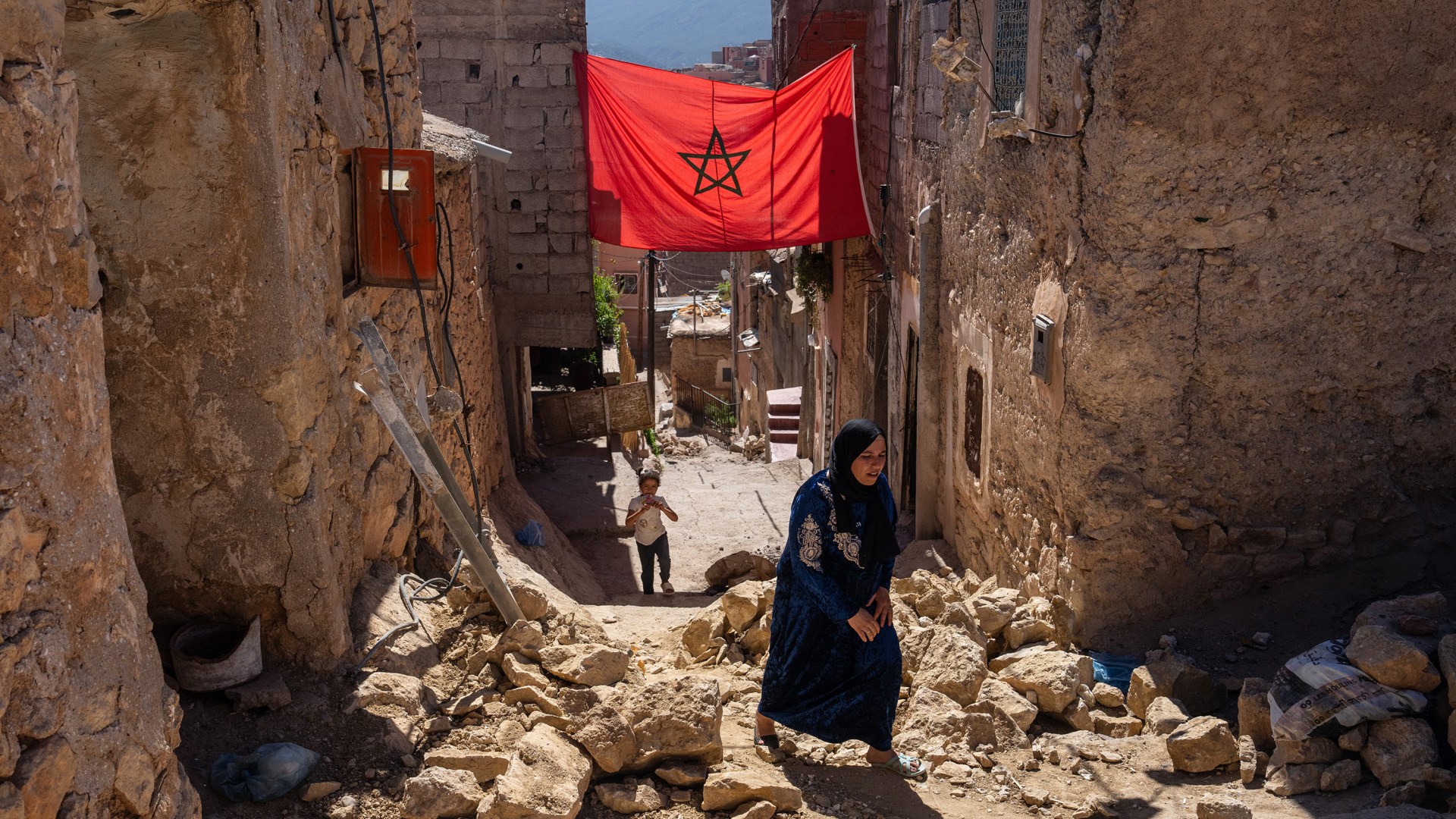
A woman walks past rubble from a building that was damaged during an earthquake in Morocco.

A woman walks past rubble from a building that was damaged during an earthquake in Morocco.

Christianity Today September 15, 2023
Carl Court / Getty

Local and foreign Christians have joined in relief efforts following last week’s massive earthquake in Morocco.

Nearly 3,000 people have died, with more than 5,000 injured. Registering 6.8 on the Richter scale, it is the North African nation’s most powerful quake since 1969 and its deadliest since 1960.

But far from the epicenter near the historic city of Marrakesh, gathered believers all had the same question.

“No one ever asks of disasters, ‘Why did it happen to them?’” said Youssef Ahmed, a senior member of Tangier Northern Church, 350 miles away. “But when it hits you, everyone wants to know God’s will.”

The house church service went much longer than usual.

Although Morocco only recognizes Islam and Judaism as domestic faiths, local believers generally say the government permits them to worship quietly in their homes—under a protective but thorough surveillance. Alcohol and pork, forbidden by sharia, are also freely available in the country. About 15 percent of citizens declare themselves nonreligious, while only 25 percent express trust in clerical leadership.

“We are not restricted in Morocco,” said Ahmed. “Just don’t be a nuisance.”

The latest US State Department report on Morocco indicates that, while “undermining the Islamic religion” is punishable with up to five years in prison, there are no known cases of Christians running afoul of the law.

But that Sunday, the former Muslims had other concerns on their mind.

“Why did it happen? We cannot know. Was it because of sin? We cannot know. Was it a test, like with Job? We cannot know,” said Ahmed, who led the lengthy discussion. “All we know is that God allowed it to happen, and his ways are righteous. We keep our faith in him.”

Encouraged in their walk, they went out to serve.

The congregation is a part of the 36-member Union of Christian Churches, which Ahmed founded in 2010. Congregants traveled south with supplies to see what they could do.

Attempting to reach isolated villages in the Atlas Mountains, where many mud-brick homes were destroyed, they were turned back by roadblocks which permitted only relatives to enter. Continuing on to Jemaa al-Fnaa Square in Marrakesh, they encountered a mass of humanity camped out in fear of continuing aftershocks. They quickly joined in with the multitude of Moroccans—and tourists—distributing water and blankets.

Much of the 9th-century UNESCO World Heritage site was undamaged, including the medieval Kotoubia Mosque which overlooks the square. But a less famous minaret had collapsed, as had portions of the 12th-century city wall. Badly damaged also was the earth-and-stone Tinmel Mosque, built by the Almohad dynasty in an Atlas Mountain valley 60 miles away before the Berber caliphate conquered Marrakesh and moved onward to Spain.

One Moroccan pastor estimates the church today is 80 percent Berber.

Meanwhile, from the southern city of Agadir, 150 miles southwest of the epicenter, Rachid Imounan was also trying to help. As leader of a local network of about 150 Christians, he worked with his community to distribute food, clothes, and medicine, as well as visit the injured in the city hospital. Bold where appropriate, he sought to give a “pleasant spiritual message” about salvation.

“This is what the Bible teaches us, to be together in joy and sorrow,” Imounan said. “We do not have much, but we have spiritual power.”

The Moroccan Association of Human Rights estimates there are 25,000 Christian citizens in the country, according to the US State Department, while foreign leaders estimate an expat community of approximately 10,000 Protestants and 30,000 Roman Catholics.

Last Sunday, Pope Francis joined in solidarity and prayed for earthquake victims.

“We stand with the people of Morocco,” he stated, as the Vatican offered its help.

In 2016, Morocco hosted hundreds of Muslim leaders to issue the Marrakesh Declaration, pledging to protect historic Christian minorities as ISIS ravaged Syria and Iraq. In 2019, Francis visited the kingdom as part of his ongoing outreach to the Muslim world. And hosting a global parliamentarian conference last June, Moroccan king Mohammed VI reiterated his nation’s commitment to ensure the “free exercise of religious worship” to all foreign Christians.

Yesterday, he made a personal $100 million donation to earthquake relief.

Ahmed said the international Protestant churches of Tangiers, Casablanca, and Marrakesh have joined in the overall effort.

So also has People in Mission International (PMI), a Latin American agency working in Muslim nations. In fellowship with many other colleagues, they have set up a base camp to distribute emergency supplies as they raise funds to support the displaced.

“We are trying to be the hands and feet of Jesus, to incarnate his love,” said the PMI field coordinator, requesting anonymity per agency policy. “And in support of the church, day by day we are seeing more unity as expats and local believers work together.”

The latter cannot legally work alone.

“The church is not registered, so it is unable to do official relief,” said Adam Rabati, president of the Union of Moroccan Christians, a grouping of 65 house churches. “We have always been rejected by our families and the conservative society.”

Living 200 miles north of the epicenter in Rabat, he said his village home was also damaged in the earthquake. While his union is also seeking to help the displaced, he has long campaigned to secure official recognition of local Christians and the religious rights of marriage, burial, and children’s education.

And while their situation deteriorated during the previous decade governed by Islamist politicians, Rabati stated that believers will still have to fight for their demands under the liberal government elected in 2021.

Open Doors ranks Morocco No. 29 on its World Watch List of nations where it is hardest to be a Christian, while the law prohibits “shaking the faith of a Muslim.”

A 25-year old second-generation pastor’s daughter, shares Rabati’s opinion. As a student she chafed at having to memorize the Quran and Islamic prayer rituals, and told no one of her real faith.

“Moroccan Christianity is very weak,” she said of the impact of nonrecognition. “We live our faith secretly and worship underground.”

But the earthquake may be pulling some local Christians out of their shell.

Living in Casablanca, her house shook but suffered no material damage. She declined to give her name and the name of her agency for security reasons, but with it and other Christians, she has distributed food, clothes, tents, and other necessities.

Everywhere she goes she encounters mortality. Navigating the near-impassable mountain roads to reach isolated villages, she witnessed other drivers veer off to their death. And then, upon arrival, she is hit with a pungent reality—the stench of decomposing bodies trapped under the rubble.

Relief work keeps her awake until 2 a.m., and for a very specific reason.

“It’s so important for us as Christians to have a positive impact on our society,” she said, “and to show the world who Jesus is.”

The Al Yassamine Association exists for the same reason.

Created in 2007 by Mustafa Soussi, the former Islamist activist wanted his faith in Christ to shine in the world. In application of James 2:26—faith without works is dead—his organization works for sustainable development in the same Moroccan areas devastated by the earthquake. He is from Taroudant, 150 miles south of Marrakesh.

Commonly known for its Christian leadership, Al Yassamine was first on the scene.

Like other believers, Soussi distributed food, clothes, and medicine—going first to the remote areas not yet reached by the government or other aid agencies. But unlike fellow Christians interviewed by CT, his group is registered with the proper authorities, and therefore official.

“We cannot work in earthquake relief in the name of the church,” Soussi said. “But as an association, we have the legal right to help the affected people.”

He employs Muslims side-by-side with Christians, and aids both the same. Less concerned to witness verbally than to embody Matthew 7:16—by their fruit you will know them—Soussi serves not as a believer in Jesus but as a proud citizen, awaiting any question about his faith.

But he has a prevailing motivation.

“My country made me who I am today,” Soussi said. “I want us to understand that Morocco is not only for Muslims.”

Raised in a devout family, his parents and siblings refused to talk to him after his conversion to Christianity in 1994. Nine years later, he and others named their house church after the prophet Job, identifying with the Old Testament character’s patience in the face of great suffering.

But by 2009, Soussi’s family accepted him back—and now even seeks his counsel.

The figure of Job, of course, is a perfect prophet for times of national disaster. And as Ahmed’s colleagues distributed their water to the displaced in Marrakesh, like Soussi, they announced no particular religious distinction.

But they did aim to prompt reflection about God’s will.

“All we told them was: God loves you,” said Ahmed. “But it might open up conversations: If he loves me, why did this happen?”

Some recipients engaged; some did not. With all, the believers sought to act wisely, knowing the government could be watching. But there is no law against talking to people, he said, and actions speak louder than words.

“Muslims are our neighbors,” Ahmed said. “There may not be an impact now, but we are planting a seed.”

News

Wheaton College Releases Report on Its History of Racism

Task force and trustees call for community repentance, starting with a change to the name of the library.

Christianity Today September 14, 2023
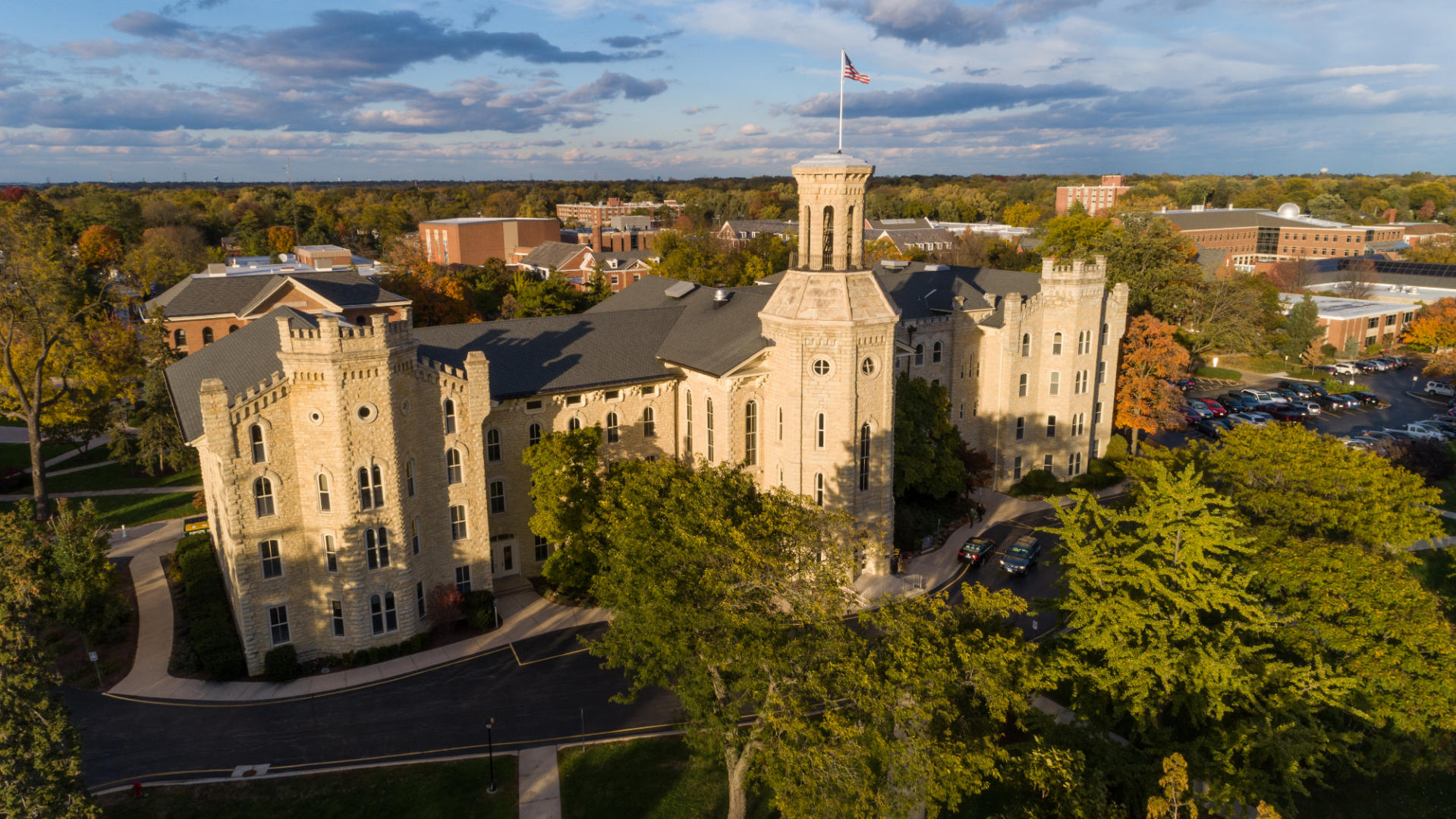
Wheaton College

Wheaton College embraced racist attitudes that “created an inhospitable and sometimes hostile campus environment for persons of color,” according to a 122-page review of the school’s history released by trustees today.

Though the flagship evangelical institution was founded by abolitionists, over the next century and a half it turned away from concerns about racial equality. Even when the school’s leadership knew what was right, they frequently lacked the courage to “take a more vocal role in opposing widespread forms of racism and white supremacy,” the report says, and too often “chose to stay silent, equivocate, or do nothing” about racial injustice.

“We cannot be healed and cannot be reconciled unless and until we repent,” the task force concluded at the end of an 18-month study. “These sins constituted a failure of Christian love; denied the dignity of people made in the image of God; created deep and painful barriers between Christian brothers and sisters; tarnished our witness to the gospel; and prevented us from displaying more fully the beautiful diversity of God’s kingdom.”

President Philip Ryken told CT he believes the report is important and he’s glad the college will be making it publicly available.

“The record of the people of God, in so many ways, is a record of their failures as well as their successes,” he said. “I think we can be more effective in living for Jesus Christ today if we’re aware of the challenges that our brothers and sisters have faced in the past and how they have responded to the challenges and opportunities of their day.”

The historical review was conducted by a 15-member task force of trustees, faculty, staff, students, and alumni. Led by trustee Dale Wong and archivist Katherine Graber, they reconstructed the history of race relations from Wheaton’s founding in 1853 up to the year 2000. The school was started by abolitionist John Cross and then reorganized and renamed by Jonathan Blanchard, who was one of the first ministers to urge president Abraham Lincoln to “let the oppressed go free.”

After that, though, the record was not always stellar. Wheaton leadership showed little concern for Black people in the years after the Civil War, hired no nonwhite faculty, and enrolled only a few nonwhite students, the report found. Minority students who did attend faced overt racism, including students refusing to live or eat alongside them and school-sanctioned blackface performances.

By the 1920s, Wheaton had surrendered any claim to a countercultural position on race, according to the task force report. A new president, J. Oliver Buswell, stopped admitting Black students altogether in 1926. Privately, Buswell said he didn’t think integration was immoral, but he was concerned about too much “social contact” between races.

“I have been trying to dodge this issue,” he wrote to a friend toward the end of his presidency. “I am inclined to think that it would be better in a practical way if colored people would go to their own colored schools.”

Thirty states had laws against interracial relationships at the time, and the US considered amending the constitution to make what was then called “miscegenation” a federal crime. The Wheaton task force noted, however, that Christians should not accept arguments that Buswell and others were just “men of their time.” Historical context is not an excuse for failing to stand up for biblical ideals of equality and human dignity, it said.

“Our goal,” the task force wrote, “is to remind our readers—and ourselves—of how easily our fallen world can shape each of us into its mold.”

Dale Wong, one of the chairs of the task force, said the deep dive into the historical record was sobering.

“We are proud of our history at Wheaton,” he said, “and it’s difficult to understand how that original vision, from that founding by abolitionists, was lost, and how we fell into going along with the culture. That’s something I think we have to deal with.”

The task force found some positive episodes in Wheaton’s history of race relations as well. On several occasions, harkening back to its abolitionist founding, the school sharply broke from culturally accepted racism. During World War II, for example, Wheaton agreed to enroll Japanese and Japanese American students who were facing internment. By 1944, there were more than 20 Japanese students taking classes at the evangelical institution.

President V. Raymond Edman, who took the helm in 1940, also started admitting Black students again around that time and asked the anthropology and sociology department to study race relations on campus. The faculty commission wrote a five-page report in 1960. It strongly rejected any scientific basis for racial hierarchies and called on the college and evangelicals more generally to reject racial discrimination. The anthropology and sociology professors specifically wanted the school to hire Black faculty, recruit minority students, and accept interracial marriages among students.

If implemented, the proposals “would have made Wheaton College a leader among Christian institutions in its rejection of racial prejudice and pursuit of kingdom diversity,” the task force said. Instead, Edman and other Wheaton leaders decided to suppress the report. It was not released.

The school did not hire its first Black full-time professor until the 1980s. It would not make student body diversity a priority until the 1990s.

“Based on the careful research in this historical review, tested against the perfect standard of the Word of God and the high moral calling of a Christ-centered community, we also see specific areas where we need to repent as an institution,” the task force said.

The report cites the Bible’s calls to corporate repentance and lamentation over sin and injustice, including the failures of past generations, citing Isaiah 59:12, Jeremiah 14:7, and Daniel 9:16. It also recommends concrete actions.

The trustees have agreed to some immediate practical steps, starting with a change to the name of the school’s library, which currently honors Buswell. The trustees have instructed the administration to remove his name from all signs and set up a permanent display explaining the history of the school’s discriminatory enrollment practices.

The trustees have also pledged to remain “alert for unjust situations from our history and to pursue relationships where a more complete reconciliation and mutual blessing through repentance may be realized.”

That will involve ongoing assessment of the resources provided to minority students, as well as dialogue with the Lakota Sioux over the college’s ownership of the Black Hills Science Station in South Dakota, which sits on land the Lakota say was stolen. The trustees have advised the administration to “consider biblical approaches to this sensitive and complex issue” and “seek to understand Lakota views of a just remedy.”

The school will also encourage continued collaboration and reconciliation with the Potawatomi, who were forcibly removed from their homes after the federal government under Andrew Jackson declared the land that would later become Wheaton College to be terra nullius, or “nobody’s land.”

Wheaton’s review, which was commissioned in October 2021 and released to trustees in March of this year, follows similar self-interrogations taking place at secular and Christian schools across the country. Many older institutions have recently worked on public acknowledgements of the ways they benefitted from slavery.

Brown University put out a self-critical historical study in 2006, followed by similar efforts at Emory University, the University of Virginia, the University of North Carolina at Chapel Hill, and Harvard University. The Southern Baptist Theological Seminary in Louisville issued a report in 2018 chronicling its historic ties to slavery and defenses of white superiority. Princeton Theological Seminary in New Jersey released a historical audit in 2019. Georgetown University, founded by Jesuits, established a “reconciliation fund” giving $400,000 annually to help the descendants of the people enslaved by the Catholic brothers in Maryland.

Historian Anthea Butler, author of White Evangelical Racism, said she is always skeptical of evangelical efforts to reform themselves, but she’s still encouraged by Wheaton’s effort.

“If you spend this much money and time on a report, you’re serious,” Butler said. “I don’t know if evangelicalism can be saved from its racism, but I commend them, and I really hope they are ready to face the backlash from folks who say this is ‘woke.’”

Wheaton previously revised the wording on a plaque honoring missionary martyrs Jim Elliot and Ed McCully, two Wheaton alumni who died attempting to reach an Indigenous people group in Ecuador. The original campus memorial called the Woarani “savage indians.”

The revision was supported by Kathryn Long, an emerita history professor at Wheaton and the author of an acclaimed study of the missionaries.

“Their actions took place at a certain point in time,” she said. “But we don’t want to leave them there.”

Wheaton has planned town halls for students, faculty, and staff to discuss the task force report tomorrow, followed by more conversations next week, a question-and-answer session for alumni over homecoming weekend, and a symposium in October.

Ryken said he doesn’t know how people will respond to the report, but Christians have to wrestle with their history and be honest about their moral failures.

“Sometimes you see the glory of God more clearly in his redeeming grace for fallen sinners,” he said. “We have lots of examples in Scripture of the people of God wrestling with their past and seeking to understand their past, in some cases celebrating, but also lamenting and repenting. There is a complexity about the past that the Scriptures do not back away from but lean into. And that’s what we want to do too.”

Theology

Church Is Life Together or Not at All

Contributor

It’s time for evangelicals to rediscover Bonhoeffer’s best-known work on the nature of Christian community.

Dietrich Bonhoeffer

Dietrich Bonhoeffer

Christianity Today September 14, 2023
WikiMedia Commons

Dechurching is upon America, and everything from religious abuse to apathy to digital media have been named as culprits. This conversation has created many hypotheses, and as many implausible solutions. But most of the analyses of evangelical dechurching miss the deeper problem: an anemic church theology taught and modeled to churchgoers. The call to dechurching may, in fact, be coming from inside the building.

Daniel Williams wrote recently for CT that many evangelical luminaries were rarely consistent churchgoers themselves, and this was accompanied by a weak ecclesiology. Williams says the problem of dechurching today is not due simply to the poor precedent set by evangelical leaders. The problem is also the bedrock evangelical assumption that the Christian life is ultimately an individual adventure, fundamentally between God and the soul.

Within evangelical circles, whether intentionally or not, church has frequently been treated as an optional facet of the Christian life, primarily as a means to helping each of us live out a personal faith. Church is something that exists to assist one’s individual growth or spiritual experience. But this understanding misses the point, which is that church, as the body of Christ, is intrinsic to the life of faith.

Trying to address the crisis of dechurching by appealing to the practical benefits of the church to the individual is thus to try to revive the very problems which led us here to begin with. Appealing to individual experience is not the way forward. Sin is, from the beginning, a work of division and separation, a turning of a people into scattered individuals, and God’s cure cannot take the form of the disease.

As Gerhard Lohfink has put it, God will have a people, not just a collection of individuals. To be a people is to exist collectively through our prayer, our piety, and our purpose, inseparable from one another. When Scripture commands us to gather, it is because this is how God has called us and who God has called us to be: a new people among the peoples of the world, a holy temple into which individual stones have been joined together (Heb. 10:25; Eph. 2:21).

So, what are churches to do to regain their identity as a people? How do we, in the words of Williams, redeem an evangelical ecclesiology?

Dietrich Bonhoeffer’s Life Together was written in another time of church crisis, when Bonhoeffer was helping to establish a new seminary for the fledgling Confessing Church. The Confessing Church had been established as an alternative to the German National Church, which had altered its confession to include a new clause offering allegiance to the Führer.

In linking itself fully to Adolf Hitler, the National Church attempted to establish itself as a true “church of the people”—certainly a strategy for long-term survival, but at a heretical cost. Though Bonhoeffer’s context is different, challenges to the church’s cultural survival today force us to ask the same question: What is “the church” that we are trying to save?

The church, Bonhoeffer writes, is centered not on individual experience or on the ability of a strong leader to cast a compelling vision. These may sustain churches, but only for a time. Instead, the church in all its practices is meant to be a community—a people who encounters Christ through and with one another, and not merely a group of individuals who live alongside one another.

This community is to be centered on Christ, who is present in its midst. Christ has called each person beyond themselves to be a part of this corporate body. It is Christ alone by which the church survives and succeeds, and Christ alone who calls forth a body centered on being God’s people in the world.

If we come to Bonhoeffer hoping that, by making our churches into communities, they will become successful, we miss his point: that community is what makes it a church at all.

For Bonhoeffer, an individual Christian life is impossible. Because the Spirit has drawn together a body, we encounter Christ through the words we speak to one another, through the Communion we eat together, and through the Scriptures we read and live out alongside each other. The practices which he commends in Life Together are not so much about making the church successful as they are about making the church a community.

But the work of becoming a people does not mean adopting a new program. It means turning our attention once again to the familiar practices of the Christian life—congregational singing, the reading of Scripture, eating together—only with a profounder end in mind: to become a community. In this way, although Life Together is thoroughly practical, it is also deeply theological.

When we read Scripture together, for example, he advises selecting longer passages that remind us of God’s ongoing work among his people, a work which the church of today is grafted into. Such passages focus on the centuries-old story we share with Christians throughout history, as opposed to focusing on a person’s individual context. In particular, he commends the Psalms, the prayerbook of Israel, which direct our attention to the church’s ongoing connection with Israel and to our calling to be a people.

Likewise, when we sing corporately, he commends singing in unison to center our attention not on our individual experiences, but on the reality that God has made us into one people. And when we pray together, Bonhoeffer asks us to pray for those things that concern our common life first, not for those things which belong solely to the individual.

When we scatter throughout the week, there is ample time for Christ to speak to our individual concerns and our personal lives through the Scriptures. But even these times, Bonhoeffer says, are for the edification of the larger body, that we might bring back to the church those things which Christ has given us while we were apart from one another.

A similar ethos applies to how we read Scripture, share meals, and think about missions. If the aim of church practice is that we might be drawn together as a people, then not only does what we do matter, but how we do it.

As Bonhoeffer reminds us, “Christian brotherhood is not an idea which we must realize; it is rather a reality created by God in Christ in which we may participate.” Practices of prayer, singing, and service are not magic pills, but invitations of God into a deeper reality that Christ has made possible.

We invite all the believers among us—not just the excellent readers—to be readers of Scripture. We eat in such a way and in such a time that all can gather. We do missions not to enable people to become religiously affiliated individuals, but to become members of a community where gifts will be called out and where we might receive the words of Christ from others.

In commenting on the reciprocal nature of prayer, Bonhoeffer says what makes it possible for an individual to pray for the group is “the intercession of all the others for him and for his prayer.” He asks, “How could one person pray the prayer of the fellowship without being steadied and upheld in prayer by the fellowship itself?”

Whatever spiritual life the individual has depends first on the community that God in Christ is creating. The church here is not an afterthought: It is the presumption. God is creating a people whose life together in Christ makes possible all our individual journeys into the world.

The Spirit draws us from all places and goes with us into all the world—whether we are gathered or not. But this going out is for the sake of being brought back in. We are meant to be a people whose lives are knit together, not a people who simply make do on our own.

If dechurching is to be addressed, the response cannot be more of the same that led us here. For the church offers us something that cannot be categorized in Maslow’s hierarchy of needs: The church gives us Jesus and makes us part of Christ’s body. And it is in this body that we become Christian, in which we experience the presence of Christ and are changed.

Just as the disciples learned together to hear the voice of Jesus, so also do we. We must not merely revise our faulty evangelical ecclesiology, seeing the church as an additional aid to the needs of a life of faith. Instead, we must abandon such thinking altogether. And if this faulty vision of church is what dechurching leaves behind, then all the better.

Myles Werntz is the author of From Isolation to Community: A Renewed Vision of Christian Life Together. He writes at Christian Ethics in the Wild and teaches at Abilene Christian University.

Theology

More Than Manipur: Tribal Christians Divided by Borders Yet United in Faith

The Kuki share ancestry with the Chin in Myanmar and the Mizo in India’s Mizoram, all of whom have a history of Christianity and turmoil.

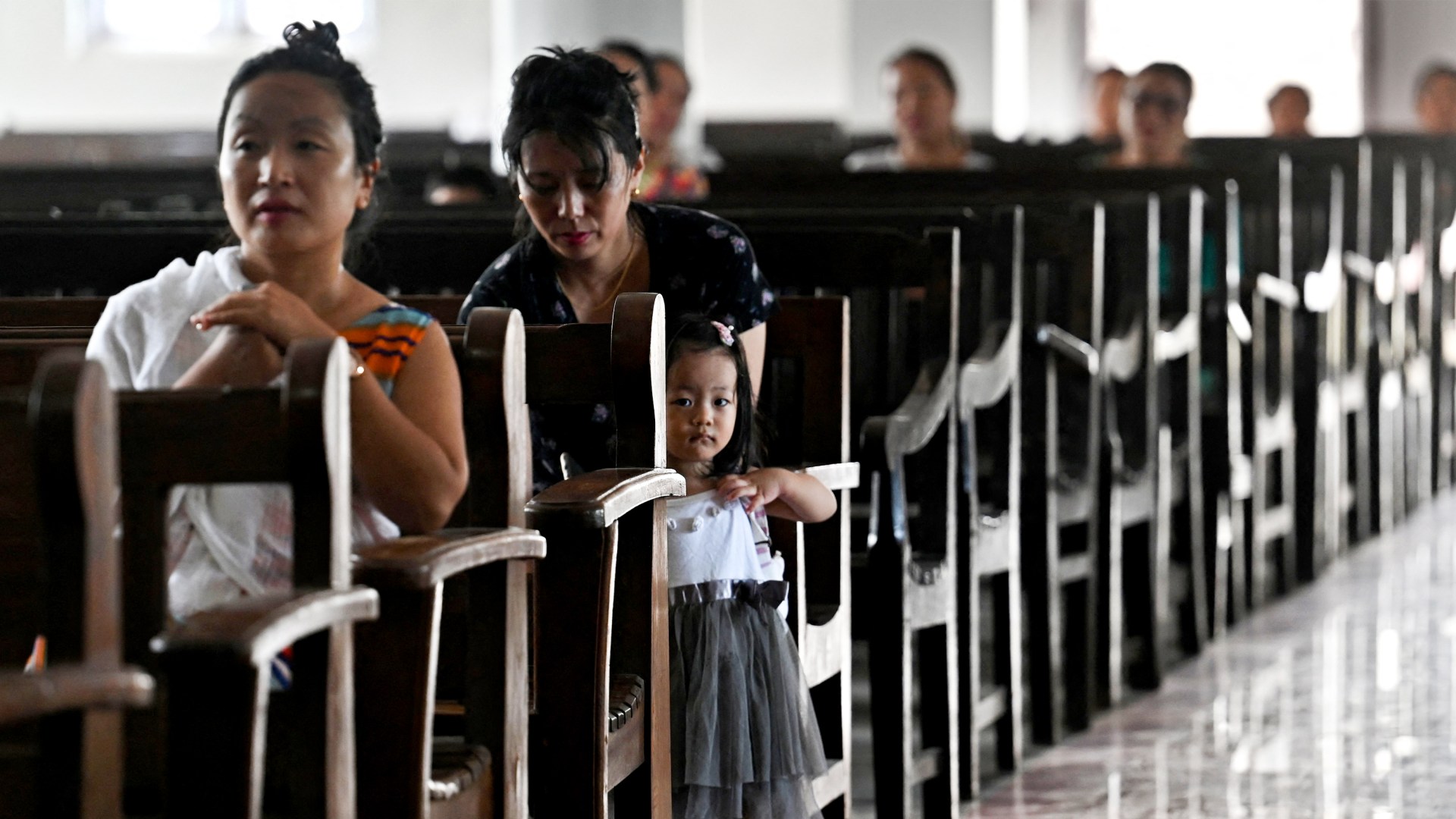
Congregants attending a church in Manipur

Congregants attending a church in Manipur

Christianity Today September 14, 2023
Arun Sankar / Getty

The ongoing attacks against the minority Kuki tribe by violent mobs in the northeastern Indian state of Manipur has brought attention to this mostly Christian people group. Since May, more than 180 people have been killed, hundreds of churches have been destroyed, and thousands have been displaced as the Hindu-majority Meitei people, who live in the lowlands, violently retaliated against the Kuki’s peaceful protests over efforts to give Meitei access to the hill land where they live.

The Kuki people in Manipur share ancestry with the Chin in Myanmar (also known as Burma) and the Mizo in India’s Mizoram state, southwest of Manipur. Due to their encounters with missionaries, nearly all Mizo and Kuki identify as Christians, along with 90 percent of Chin people.

In this Q&A explainer, we will explore the roots of the Chin-Kuki-Mizo people, the ongoing persecution and conflicts these groups face, how they encountered Christianity, and the ways Christianity has changed their society.

How are the Kuki, Chin, and Mizo people related?

They shared the same ancestors, practiced the same religion, and inhabited a swath of hill country in the borderland of modern-day India and Myanmar. In the 1890s, the British divided the land into Chin State in Burma, Mizoram and Manipur states in India, and the Chittagong Hill Tracts in Bangladesh.

Chin-Kuki-Mizo are a Mongol people, and today they speak related but distinct Tibeto-Burman languages. More than one million Chin live in Myanmar, one million Mizo live in Mizoram, half a million Kuki live in Manipur, and tens of thousands of Kuki live in Bangladesh. In addition, due to the ongoing fighting between the Myanmar army and the Chin people, hundreds of thousands of Chin have fled overseas, including 80,000 in the United States.

What kind of ethnic persecution do the Chin face?

When Burma gained its independence in 1948, ethnic minorities including the Chin, Kachin, and Shan were promised equality and self-determination. Yet after the military seized control of the government in 1962, they refused to respect the agreement, leading to ongoing fighting between Chin armed forces and the Burmese army.

After the 2021 military coup, the Chin joined in the armed resistance against the junta. The military attacked towns and villages across China State, burning down Thantlang, a hilltop town, home to 10,000 people. All but one of the 22 churches in the town have been destroyed.

… the Kuki?

The Kuki and Naga (another predominantly Christian tribe) live in the uplands surrounding the Imphal valley, where the Hindu-majority Meitei live. Before the British occupied Manipur, the kingdom of Manipur covered only that small valley, meaning the lowland Meitei never ruled the Kuki or the Naga. After the British left in 1947, Manipur became a part of India and, later in 1972, a state. Seeking their own separate state within India, however, the Kuki started an armed uprising in the 1980s.

The recent ethnic conflict started when a court ruled that the state government should respond to the Meitei’s request for “scheduled tribe” status, which would give it seats in the parliament and state legislatures, affirmative action in education and employment, and property protections. Kukis protested this change, as it would dilute their own status and give the Meitei access to Kuki hill land. In response, violent mobs attacked people and ransacked tribal homes, churches, schools, and hospitals. More than 60,000 people have been displaced.

… the Mizo?

When the British annexed Mizoram in the 1890s, it was an independent country. Then, as India gained independence in 1947, Mizoram was administered as a part of the state of Assam, but the Mizo aspired to regain their independence. They began an armed uprising in 1966. In response to their rebellion, the Indian army attacked cities, towns, and villages across Mizoram, decimating and uprooting nearly all of the rural population. Laldenga, the leader of the uprising, was finally able to secure the formation of a separate Mizoram state in 1987.

What religion did the Chin-Kuki-Mizo people initially practice?

Historically they practiced animism, which required its adherents to appease evil spirits through costly animal sacrifices when people got sick. Buddhism, Hinduism, and Islam never made it to their hilly country. However, Christian missionaries changed the religious landscape in the late 19th century.

How did Christianity reach the Mizo?

British Baptist missionaries James H. Lorrain and Frederick W. Savidge landed in the south of modern-day Mizoram in 1894 and proselytized the Mizo. They created a written script based on the Roman alphabet, introduced modern medicine, began mission schools, and initiated social services, including orphan care. They revolutionized the lives of the Mizo.

A few years later in 1897, Welsh Presbyterian missionaries also came and started evangelizing the Mizo in northern Mizoram. Today, virtually all Mizo are Christians, mostly Presbyterians and Baptists.

… the Kuki?

Missionary William Pettigrew left Scotland and landed in the Imphal valley of Manipur in 1894. While he was raised Anglican, he became a Baptist while in India and joined the American Baptist Foreign Mission Society. He worked with the Kuki in the north and the Naga until 1933 and played a pioneering role in literature, education, religion, and social services for the hill tribes. In 1908, Watkin R. Roberts, a Welsh Presbyterian missionary, started his mission work among the Kuki in the south. Early native Kuki Christians also evangelized their own people, and today nearly all Kuki are Christians, most of them Baptists.

… the Chin?

American Baptist missionaries Arthur and Laura Carson, together with believers from the Karen people group in Myanmar, arrived in the Chin Hills in 1899 and started evangelizing the Chin, who, like the Mizo and Kuki, were illiterate. More missionaries came in the following decades until the mid-1960s, when Burmese military expelled all missionaries from the country. Christians, who are mostly Baptists, now represent about 90 percent of the Chin population. More than half of them became Christians after the 1960s, meaning Chin Christians evangelized their people during and after the missionary period.

Who are some of the most well-known Christian Chin-Kuki-Mizo leaders?

Native church fathers, including Zairema, Simon Pau Khan En, and Tongkhojang Lunkim, made enormous contributions to the life and history of the church among the Chin-Kuki-Mizo.

The first Mizo to graduate college, Zairema (1917–2008) led the Young Mizo Association (YMA), the state’s largest NGO, which promotes Mizo culture, language, and history and helps the poor and vulnerable. He also worked on Bible translation, consulted the state government of Mizoram, served as the moderator of the Mizoram Presbyterian Church, and wrote numerous theology books in both Mizo and English. Zairema is remembered as the conscience of Mizo theology.

Simon Pau Khan En, 78, served as general secretary of the Chin Baptist Convention (CBC), general secretary of the Myanmar Baptist Convention (MBC), and president of the Baptist seminary, the Myanmar Institute of Theology (MIT). He is, however, best known for his academic and popular-level theological articles, which became the foundation for Burmese Christianity.

Tongkhojang Lunkim, who is believed to be 97, is the patriarch of the Kuki Baptist Church. A teacher, preacher, missionary, theologian, and conciliator, Lunkim founded Trulock Theological Seminary and helped translate the Bible into Kuki.

What attracted the Chin-Kuki-Mizo people to Christianity?

Factors influencing their religious conversion included theological similarities between their animistic beliefs and Christianity, such as underlying ideas of life after death, blood sacrifice, and the existence of a Supreme Being. Adopting Christianity also helped them preserve their distance from lowland neighbors who practiced Buddhism (Myanmar), Islam (Bangladesh), and Hinduism (India). Many of the hill people in the borderlands between China and Southeast Asia—the Akha, Kachin, Karen, Lahu, and Wa—also became Christians for this reason. In addition, conversion to Christianity ended the practice of costly animal sacrifices.

How did becoming Christians change the Chin-Kuki-Mizo people?

Since they left animism and became Christians, the Chin-Kuki-Mizo have undergone remarkable changes. Once illiterate and impoverished, they now have their own written languages, schools, and seminaries. Some in the communities have gone on to pursue higher education.

This is largely due to the fact that early missionaries and Christian leaders translated the Bible and hymnals into their languages. Missionaries emphasized the importance of education to the Chin-Kuki-Mizo, so that they could understand the Bible and improve their quality of life. This has become a lasting legacy for the people today. Mizoram, for instance, maintains the second-highest literacy rate in India, and the Mizo play an outsized role in civil services across the country.

Christmas and New Year celebrations replaced old religious services, as modern medicine replaced traditional rituals. Christianity also allowed them to create their own religious organizations and network with the global church, thus ending their isolation. Religious organizations like the Baptist associations provided them with social spaces for annual meetings between representatives from Baptist churches all across the region. And Christianity also played an important part in nurturing the idea of ethnic unity among the various subtribes, who once waged tribal wars against each other.

Early missionaries weren’t perfect—for example, they urged locals to abandon elements of their culture, including dances, songs, and drums associated with their traditional religion. But Christianity’s contributions since then have surpassed their mistakes. Today, Christianity has become intertwined with the Chin-Kuki-Mizo ethnic identity.

How have the Mizo people responded to the persecution of the Chin and Kuki?

More than 50,000 Chin and around 8,000 Kuki have sought refuge in Mizoram, where local churches, non-profits, and individuals embraced and assisted them. Mizo churches and communities also sent donations—medicine, food, clothes, and more—to Lamka, the largest Kuki town in Manipur.

Prime minister Narendra Modi asked Zoramthanga, chief minister of Mizoram, to close the border to prevent Chin refugees from entering India. Yet he defied Modi, keeping the border open. To reduce the burdens of the Mizoram, diaspora Chin churches, families, and individuals in the West have sent millions of dollars to the Mizoram to help refugees there.

In the midst of this suffering, the ethnic, religious, and social ties between the Chin, Kuki, and Mizo remain strong.

Pum Za Mang, who was born in Thantlang, Chin State, is an associate professor of world Christianity at Myanmar Institute of Theology in Yangon and was a research scholar at Luther Seminary.

Editor’s note: The Zomi and Hmar people in India are also a part of Chin-Kuki-Mizo, yet distinct due to their languages. The Zomi have also been majorly impacted by the violence in Manipur.

Books
Excerpt

Esau McCaulley: The Streets Sent Me to the Pulpit

But then my path to preaching took an unexpected turn.

Christianity Today September 14, 2023
Illustration by Christianity Today / Source Images: Unsplash / Getty

My sophomore year of high school, I met a girl at a party. We talked on the phone for a few weeks before finally setting a date to meet up again. She lived in the Lincoln Park projects in Huntsville, Alabama. I relied on her directions when I drove to pick her up, but I couldn’t find her house. Before giving up, I decided to get out and walk, in case she spotted me.

How Far to the Promised Land: One Black Family's Story of Hope and Survival in the American South

That was a mistake. The locals noticed my car circling their block, and a group of young men came over. One of them asked, “Who are you?” His tone invited con­frontation: You have stepped into my territory. Why are you here?

Looking around at the plastic bags blowing in the wind, clothes drying on flimsy lines, weeds amid patches of dirt, I could not see anything worth fighting over. But behind the interroga­tor stood three or four more young men, one with a gun. The weapon changed the stakes of the conversation. It was a question of life or death.

A rush of adrenaline began in my chest. I couldn’t con­trol my rapid heart rate, but I could control my expression, so I adopted a calm exterior.

I had been in this situation before and knew I would have to navigate it so they didn’t feel trapped. I had to be strong but not threatening, certain but not disrespectful.

Who are you? The situation called for a simple statement of my allegiances: I am from Johnson High, and where I live is not your concern. But maybe because there was a gun in­volved, the question turned existential. I thought, Who am I, really? A boy grown into his adult body, now capable of wielding the same violence I’d witnessed from my father? A kid determined to be the opposite of that man? My mother’s hope?

At 16, I was a mix of compet­ing visions and possibilities, with nothing to tie them to­gether. What came next surprised even me.

“I am a Christian,” I responded.

If breath and sound could be chased down, I would have run after my words and dragged them back inside my mouth. But it was too late. I had spoken.

The boys were shocked. I could see it on their faces. They’d wanted me to say I wasn’t from there so they could be justified in resorting to violence. But to hear they were in the presence of a church kid must have thrown them off-balance. In response, they laughed and walked away.

My friends and I used to say, If you scared, go to church—meaning faith was for the weak and the cowardly who found street life too much for them. But it wasn’t fear of a violent outcome that had motivated my confession. I’d had a moment of God-given clarity.

As much as any statement of belief, these moments reveal the role that God plays in our lives. My mom heard God in a hospital room on the way to surgery. Aunt Clarice turned to God when her T-cell counts dropped low. But I did not hear the voice of God in that street exchange. It was more like God erupted out of me from some hidden place I didn’t know existed. For good or ill, I knew that my life was in some sense bound up with my Creator.

Two years later, I met with my pastor, Oscar Montgomery, to tell him I’d been called to preach. When I walked into his office, I found him sitting at a large oak desk covered with books, papers, and an open King James Bible.

After I sat down, the words came tumbling out. I told him I knew about the blood and forgiveness central to Christianity, but I also felt called to talk about what came after—with God as the pillar of fire, leading believers through the desert.

My ministry would be for people search­ing for hope among the rubble. I aimed to appeal to young Black boys and girls considering the same options given to me and carrying traumas like the ones I’d experienced. Many of them had heard and rejected the church’s offer. I wanted to ask them to reconsider that rejection.

My pastor did not seem surprised, recalling how I came from a family of Black preachers. The McCaulleys and Bones tended toward binaries. We chose the church or the streets.

“If I were you, I would try and talk God out of it,” he said with a laugh. “But I know that you won’t. You have always been a determined kid. I’ve watched you struggle with pur­pose most of your life. I trust that you’ve finally found it.”

He explained that, in three months, I would have to give a trial sermon.

“Make sure that you mention the birth, death, Resurrection, and return of Jesus,” he said. “Whatever else you get wrong, get Jesus right.”

A few months later, I ascended into the pulpit of Union Hill Primitive Baptist Church with a six-page sermon, a King James Bible, and a handkerchief, in case I worked up a sweat. But it turned out I was not that type of preacher.

As my sermon wore on, I looked at the audience and saw them waiting for the shouted lines. Jaws dropped open to shout Amen, then closed again. People rose from their seats to clap, then thought better of it.

I didn’t have the pauses for the Amens and Yes, Lords. Despite my extensive preparation, I was still an 18-year-old kid trying to wrestle the idea of God into words, my sermon filled more with questions than applause lines.

I asked myself: Is this what God requires of me, this slow death in front of friends and family?

My grand embarrassment of a sermon occurred on New Year’s Eve. In the Black church, we have a service called “Watch Night,” which recalls December 31, 1862, when the en­slaved waited for the Emancipation Proclamation to go into effect on New Year’s Day, 1863.

In Huntsville, the congregations of several churches gather for a joint service of preaching and music that begins around 9 p.m. and ends around midnight.

As my time came to preach, I prayed as fervently as my teenage heart would allow that God would make me into a proper Black preacher. But five minutes in, my delivery was the same as it had always been. I couldn’t quite capture the imagination of the people I loved, and they didn’t understand me.

It took years for me to realize that I was not a Black preacher in the mode of my grandfather or the generations of Black men and women who preceded him. Essays were forming, but I did not yet know their contents. Books were struggling to get out, but they were obscured from me. The pastors could not see it, and neither could I.

Over time, I came to understand that I had a calling of a different sort: to try to put into words and on paper the varied experi­ences of God in the souls of Black folks. My main arena would not be the boisterous and sacred pulpit of the Black church, but the quiet office. The church had shaped my imagination, and that imagination would carry me into the world of literature and the arts. There, I would try to describe the beauty and travail of Black life in the South.

This excerpt was adapted from How Far to the Promised Land by Esau McCaulley. Copyright © 2023 by Esau McCaulley. All rights reserved. No part of this excerpt may be reproduced or reprinted without permission in writing from the publisher.

Theology

Amazing Grace, How Sweet the Meow

I used to hate cats. Now my pet is a daily reminder of God’s generosity to me.

Christianity Today September 14, 2023
Illustration by Mallory Rentsch / Source Images: WikiMedia Commons / Unsplash

I’ve hated cats all my life. Well, maybe not all my life. My mom has a picture of me, maybe six years old, playing with kittens in my grandpa’s barn, and I remember begging to take that little furball home. But my mom hated cats, and I soon did too.

My husband’s family had a cat, and when we were dating, I shuddered whenever I visited. The creature was unbearably forward and gross. I was convinced the cat tried to kill me one night by sitting on my head while I slept, even though my husband insists she was just being cozy.

My thinking on felines held firm for about two decades. Our sweet dogs were all the pets I ever wanted, while cats, by contrast, were disgusting to me. They walked on tables with their little cat feet. They seemed mysterious and inscrutable.

I rolled all cats together with the evil Snowbell from E. B. White’s Stuart Little: “malevolent, self-absorbed, negative, obstinate, witty, bellicose, evil, loathsome, loquacious, testy, ingenious, narcissistic, kooky, eccentric, relentless, boorish, emotional, loud-mouthed and loco.”

Then our youngest child went full-court press for a pet cat. He sang their praises. Knowing my fears, he researched a cat species bred for their friendliness to both dogs and humans and then found a local veterinarian breeder who raises the things in her home.

His campaign came at an opportune time for him. We were post-COVID, post-lots-of-losses. His older siblings were moving into realms that aren’t yet for him, and I felt like he needed something. Maybe at that moment, I would have given him almost anything. So for the love of my son, I swallowed my apprehension, and we called the breeder and reserved a fluff-some kitten.

That’s the slow part of the story. As soon as I met Dwight (named by my son, for the character in the NBC sitcom The Office), I fell for him.

My love for my son had somewhat prepared me for the transition, but I was changed through my unexpected connection with the cat. I was converted. I became a cat person, in personal relationship with Dwight. (Dwight, of course, is not a person, but I have a personal relationship with him, as I am a person, and so my relationships are personal.) My conversion to cats—or Dwight, more specifically—has informed my view of Christian conversion.

Augustine, who understood human beings to be made up of the deep settings of our wills, said in so many words that we are what we want. Our wills are quite difficult to change. They’re stubborn. They just are.

Why do I love asparagus but not brussels sprouts, a zinnia but not a brown-eyed Susan? These settings, these wantings, pull on us at the core, and we can’t simply decide to switch them out. The will is too personal to be changed at will. I could at least explain to you why I didn’t like cats. But my pull toward zinnias and away from sprouts seems to be without reason—just who I am, without one plea.

If Augustine is right and we are what we want, but what we want is very hard to change, then how do we imagine conversion?

For the Bishop of Hippo, the deepness of our wills means we need supernatural transformation. If I can’t just flip a switch and become a sprouts person, how much less can I simply decide to turn my back on sin and toward God?

Conversion isn’t simply a decision. It’s a revolution and a miracle. Augustine is the great theologian of grace because he emphasizes that our transformation is a gift from God, not something we can ever grab on our own terms.

Dwight the catCourtesy of Beth Felker Jones / Edits by Christianity Today
Dwight the cat

I believe this with all my heart. Grace is not a magic bullet. It isn’t dispensed through an incantation, nor is it a ticket to heaven. It’s a person, Jesus Christ our Lord, with whom we fall in love and by whom we are changed. This doesn’t mean we simply decide on conversion. I didn’t decide on Dwight. But it does mean that conversion doesn’t happen without us. It’s personal, not transactional. Grace is a cat in my lap.

I did not expect this upset in the deep settings of my being. A cat person? Me? But the upset is changing the way I see the world. If I can become a cat person, what else might God change in my life? What other deep-set prejudices am I clinging to? Where else am I blind to the goodness of God? (Please don’t say, “Sprouts.”)

Now that Dwight has changed the deep settings of my will, I marvel at all he is teaching me about grace. Christopher Smart considers his cat Jeoffry as “the servant of the Living God duly and daily serving him,” while the ancient Irish cat Pangur Bán lives out the theology of work alongside his monk friend:

So in peace our task we ply,
Pangur Bán, my cat, and I;
In our arts we find our bliss,
I have mine and he has his.

Like many a cat lover before me, I marvel at Dwight’s wildness—how he’s exactly like a tiger or a puma, save for his petite size. I wonder that this untamed creature should sleep safely next to me, and I remember with a shiver C. S. Lewis’s dictum that Aslan “is not a tame lion.”

I shudder before the majesties of God’s creation. I marvel, too, at the fact that Dwight has decided to live comfortably with my two goofy dogs, lion and lambs together, an ensign of the peaceable kingdom.

I know he’s just a cat, but Dwight startles me every day with the surprise of my conversion, reminding me of the ways I was once blind to so much in God’s beautiful world.

Beth Felker Jones is professor of theology at Northern Seminary and writes at Church Blogmatics, where you can also find links to all things #theologycat.

Dwight offers his thoughts (and makes theological mistakes) on Beth’s social media feeds, where he often shares #CATechesis (a word which means “teaching the faith”) when he’s not too busy helping with a writing deadline.

The Problem with Anti-Anti-Christian Nationalism

Moderate Christian nationalists shouldn’t be smeared. But neither should extremism be defended.

Christianity Today September 13, 2023
Illustration by Abigail Erickson / Source Images: Getty

In the opening pages of his newly published polemic against Christian nationalism, American Idolatry, Christian sociologist Andrew Whitehead describes his unsettling discovery, as a young man, of tension between his identities as a Christian and an American. In his childhood church, the “American flag and the Christian flag at the front of the sanctuary symbolized the close connection between the two,” he writes. “To be one was to be the other,” and finding space between them was “disorienting” and “uncomfortable.”

As Whitehead’s faith matured, he left behind the unconscious Christian nationalism of his youth. But in that same span, a large swath of the American Right—some evangelicals and other professing Christians included—have taken it up, in many cases explicitly adopting the label.

When I began researching my own book on the subject, the term wasn’t in wide use, but it went mainstream in 2021 following the January 6 attack on the US Capitol, where symbols of Christianity mixed freely with political violence. Since then, Christian nationalism has been widely advocated in works such as Stephen Wolfe’s The Case for Christian Nationalism and Rep. Marjorie Taylor Greene’s (R-Ga.) reportedly forthcoming book by the same name. Critique of the belief has accumulated, too, in books like Whitehead’s and mine.

But a troubling third branch of the conversation has also sprouted: anti-anti-Christian nationalism. It’s a branch that should be cut off.

Following the pattern of anti-anti-Trumpism, anti-anti-Christian nationalism is not in favor of its object—or, at least, not openly so. But Christian nationalists and anti-anti-Christian nationalists (CNs) share enemies in common: Anti-anti-CNs busy themselves with warning of the dangers not of Christian nationalism itself but of warning against Christian nationalism.

We critics are at risk, anti-anti-CNs say, of exaggerating the threat, smearing fellow believers, and giving aid and comfort to the secular Left. We are mischaracterizing the church, they charge, caricaturing the average American Christian, and telling the elites exactly what they already believe about “those people.” There is a class component to some of this, pitting salt-of-the-earth regular Christians of the heartland against the sneering, condescending elites of academia and the media out to tar Christianity as an extremist movement.

Daily Wire reporter Megan Basham is a prominent voice in this camp. Critiquing an upcoming event with Southern Baptist Convention President Bart Barber, for example, she laid out low expectations for the panel discussion of the “pernicious rise of Christian nationalism.”

“I think the question is whether they will reflect Christian Nationalism as its proponents would define it, and not the way that secularists who might want to use it for scaremongering would define it,” Basham wrote last month on X (formerly Twitter). “Because misrepresenting what Christian brothers mean when they talk about it in front of unbelievers would obviously be an issue. I have no problem with critiquing it, it just has to be done in good faith. And that title ‘perniciousness’ sure seems to suggest that’s not the aim.”

Her push for fair, charitable representation of opponents’ views is well made (and it is why I spent a chapter defining Christian nationalism in the words of its own advocates before I critiqued it). But Basham’s phrasing here points to a serious flaw in the anti-anti-CN approach: It suggests that Christian nationalism is all but indistinguishable from well-intended God-and-country patriotism, just one of many legitimate political options for American Christians.

This is a false equivalence. Patriotism—an affectionate, open gratitude for the blessings of our life here—is a virtue, which is why is it so important to distinguish it from the vice of nationalism. And it is a vice, though anti-anti-CNs depict Christian nationalism as mainstream, harmless—even beneficial—and peaceful, while they cast the act of warning against Christian nationalism as unfair and counterproductive because of what it slanderously implies about fellow believers.

Anti-anti-CN arguments like Basham’s are plausible to the average conservative American Christian because there’s real ambiguity within Christian nationalism. As in all social movements, Christian nationalism exists along a spectrum. There is a moderate end filled with Christians who love their country but have some confused theology about how church and state relate. These are the people Basham’s post invoked when she talked about misrepresenting fellow Christians.

But there is also, indisputably, an extremist end filled with political agitators who use Christianity to cloak an illiberal, conspiratorial, even violent agenda.

Christian nationalism is increasingly mainstream, but even its moderate form is not benign. It is pernicious: Moderate Christian nationalism is theologically and politically damaging, while extremist Christian nationalism is dangerous in more direct and obvious ways. Describing Christian nationalism as “pernicious” does not preclude describing it fairly, and that is exactly why anti-anti-Christian nationalism is wrong.

Both moderate and extremist Christian nationalism have their scholarly advocates and their populist embodiments. They also share core beliefs about Christianity and America: that America is a “Christian nation”—definitionally marked by Christian values, heritage, norms, symbols, and rhetoric—and that the government should keep it that way.

Beyond conscious belief, Christian nationalism is also an attitude, a stance toward America and the world, a way of situating ourselves and our nation in a moral and theological framework. In this framework, Christianity and America go together: Christian nationalism is a presumption that Christians are America’s first citizens, architects, and guardians and that we have the right to define the nation’s culture and identity. And, crucially, it is an assumption that the government has rightful jurisdiction over the nation’s cultural and religious identity—something our Constitution forbids and, for Christians like me who oppose state-mandated religion, something our faith rejects.

Like any ideology, Christian nationalism can be espoused peacefully or violently. Thus Christian nationalism is both a broad, mainstream phenomenon that encompasses beliefs and practices that are popular and peaceful as well as (I believe) unjust and wrong and an extremist movement that dabbles in unfounded conspiracy theories and political violence.

What does this distinction look like in practice? Moderate Christian nationalism is posting Psalm 33:12 (“Blessed is the nation whose God is the Lord”) on Memorial Day or Independence Day, emblazoned over an American flag. Extreme Christian nationalism is flying the Christian flag and playing worship music while beating police officers and trying to overturn the 2020 election.

Moderate Christian nationalism is the sort found in Rich Lowry’s book, The Case for Nationalism. Extreme Christian nationalism is the sort found in Wolfe’s book.

Moderates are not the people who stormed the Capitol, but they might be the ones who gave Fox News and OANN clicks and ratings every time they ran a story calling into question the 2020 election. They are not the ones attending white nationalist conventions that platform openly racist figures like commentator Nick Fuentes, but perhaps they watch ex-Fox pundit Tucker Carlson, who recently (without evidence) praised Hungary and Russia as examples of Christian nations.

That spectrum is what allows anti-anti-CNs to argue that Christian nationalism is no big deal and that its Christian critics, like Barber (or me), are unfairly smearing siblings in Christ. Christian nationalism is big and broad, and parts of it do look benign and peaceful. Nothing to see here, just some faithful American patriots who love their country. But parts of it are self-evidently extreme and dangerous, and they can’t be dismissed as a minority fringe with no bearing on the moderate majority.

It is precisely this connection that is at issue: The anti-anti-Christian nationalist position overlooks the relationship between extremists and mainstream movements and the responsibility of the latter to police the former.

A more ethically straightforward and politically distant example may help us see more clearly here. For decades, Sinn Féin, a political party in Northern Ireland, acted as the political arm of the Provisional Irish Republican Army (IRA), a terrorist group fighting to end British rule in Northern Ireland. The two groups were formally separate but shared the same goals and, sometimes, overlapping membership. The party pursued Irish irredentism through the political process, including by running for and winning seats in the British and Northern Irish parliaments. The IRA pursued it through tactics more violent than anything that happened on January 6, including intimidation, assassination, and bombings.

Sinn Féin gave political representation to the IRA. And, in practice, the IRA gave Sinn Féin an edge in political bargaining. Sinn Féin could present themselves as moderate compared to the murderers on their side. Sinn Féin could always argue that if they did not get their way, republican frustration would boil over and fuel the IRA’s terrorist campaign.

IRA violence hung like Damocles’ sword over Northern Irish politics. If the political process didn’t produce outcomes favorable to the republican cause, terrorism was always possible. The Sinn Féin–IRA alliance enabled the republican side to have its cake and eat it too: I tried to play fair, but look what you made me do.

Was Sinn Féin morally untainted by the IRA’s terrorism? Of course not. By benefiting from the IRA’s campaign, refusing to cut ties with them, and issuing hollow denunciations unsupported by any concrete action against the terrorist group, Sinn Féin was complicit in the IRA’s extremism—and guilty of mendacity for pretending it wasn’t. The IRA was at least honest about its murder. Sinn Féin used its relative moderation as a shield behind which the IRA was able to grow and operate unchecked.

Christian nationalism on the American Right does not have the terrorist record of Sinn Féin and the IRA. But on a different scale and to different ends, moderate Christian nationalism is similarly a gateway to the more extreme kind.

It is a permission structure that allows alienated and disenfranchised young men to gravitate toward groups, like the Proud Boys, Oath Keepers, and Three Percenters, which have extremists in their membership. The Proud Boys, in particular, use nostalgia for Western Christendom to fuel a racist and seditious movement. Moderate Christian nationalism is the respectable ideology that extremists exploit.

Moderate Christian nationalists are not dominionists or theocrats calling for a repeal of the First Amendment. They do not deserve to be smeared or have the sincerity of their faith called into question. But they do blur Christianity with American identity in a way that functionally excludes many Americans from being counted as full citizens of the nation. They do hold beliefs at odds with our Constitution and basic principles of religious liberty that protect our own worship and practice. These are politically dangerous beliefs, even if never accompanied by a violent deed or thought.

As a lifelong conservative, I support some of the same causes, like the pro-life movement, that moderate Christian nationalists do—which is why I feel a special obligation to examine the plank in our side’s eye. Anti-anti-Christian nationalism is a stance of pointedly ignoring that plank.

By the same logic, moderate Christian nationalists have an obligation to call out the extremists in their ranks. Good leadership requires gatekeeping. If you don’t denounce extremists, you are tacitly running cover for them, giving them legitimacy in exchange for the rhetorical firepower they train on the opposition. If we wink at our side’s extremism while denouncing the other’s, our denunciations will ring hollow as the protestations of unprincipled hypocrites.

We cannot presume we get to cherry-pick the public face of a movement or ideology to which we may subscribe, as if we unilaterally get to say who counts as “us.” Movement membership is significantly self-selected and to some degree found in the eye of the beholder. If we fail to denounce extremists on our side, we are accepting their support. That gives us some share of responsibility for their actions too. If we taste the fruit of sin, we are relying on its roots, even if our hands don’t appear dirty.

Christian nationalism—both the moderate and extremist kind—preaches falsehoods about the relationship between church and state, between the kingdom of God and the United States of America. It is vital to clarify that the gospel of Jesus Christ is not a political ideology (though it does have political implications) or a requirement of authentic American identity.

Extremists have hijacked the language and symbols of our faith to wage a campaign against religious liberty and the rule of law. Every Christian should join against them, especially if they are on our political side.

I love the United States and believe it to be more just and humane than any other great power in history (sadly, a low bar). But America is not a chosen nation; it is not the “nation whose God is the Lord” (Ps. 33:12); and Americans are not the “people who are called by my name” of 2 Chronicles 7:14. All Christians should join in that affirmation.

That is why American Christians have a special duty to lovingly correct Christian nationalism. It is why moderate Christian nationalists have a special duty to denounce extremists in their ranks, even if they remain persuaded of Christian nationalism’s tenets. And it is why we should reject anti-anti-Christian nationalism, politically useful though it may be.

Paul D. Miller is a professor of the practice of international affairs at Georgetown University and a research fellow with the Ethics and Religious Liberty Commission.

Apple PodcastsDown ArrowDown ArrowDown Arrowarrow_left_altLeft ArrowLeft ArrowRight ArrowRight ArrowRight Arrowarrow_up_altUp ArrowUp ArrowAvailable at Amazoncaret-downCloseCloseEmailEmailExpandExpandExternalExternalFacebookfacebook-squareGiftGiftGooglegoogleGoogle KeephamburgerInstagraminstagram-squareLinkLinklinkedin-squareListenListenListenChristianity TodayCT Creative Studio Logologo_orgMegaphoneMenuMenupausePinterestPlayPlayPocketPodcastRSSRSSSaveSaveSaveSearchSearchsearchSpotifyStitcherTelegramTable of ContentsTable of Contentstwitter-squareWhatsAppXYouTubeYouTube