Theology

Finding Joy When the Fig Tree Does Not Bud

The prophet Habakkuk counsels us to trust in God’s promises despite our circumstances.

Christianity Today June 9, 2023
Alexandre Chambon / Unsplash

President George Washington envisioned a nation in which every person would sit under his own vine and fig tree with no one to make them afraid (Mic. 4:4). He dreamed of a people blessed by safety, prosperity, peace, and virtue.

Yet all too often, we claim God’s gracious promises as rights instead of blessings. What happens when “the fig tree does not bud and there are no grapes on the vines” (Hab. 3:17)? Can we still rejoice in the Lord and be joyful in God our Savior (v. 18)?

Even the church I’ve pastored for 12 years, a growing multiethnic congregation in Southern California, began with a death.

We were gifted a property and a handful of precious saints when another church in the Christian & Missionary Alliance denomination closed its doors. That church had boasted a rich heritage of discipleship and missions, but the fruit had fallen off their vine. Some of the congregants were angry to the point of fistfights. Others scribbled down pages of their complaints on a yellow legal pad. Many left and never returned.

They were mourning the loss of a church they had loved for decades and a future that no longer existed, even as we looked forward in anticipation to planting a new church. So during that season, I met with the remnant in their homes and listened to their stories.

We prayed and waited and grieved together beneath that barren fig tree. And by the time we replanted the church, they were some of our strongest supporters. They realized how the death of one church could lead to bountiful harvest in another (John 12:24).

The Book of Habakkuk speaks into our lives when we don’t feel God’s presence, when we don’t understand his ways, and when we don’t know if we can persevere. I’ve found it a helpful guide in counseling congregants through the most difficult seasons of their lives, times of hopelessness and fruitlessness.

In his wrestling with God, we observe the prophet Habakkuk turn from despair in Judah’s circumstances to joyful contentment. As he declared, “Though the fig tree does not bud and there are no grapes on the vines, though the olive crop fails and the field produce no food, though there are no sheep in the pen and no cattle in the stalls, yet I will rejoice in the Lord, I will be joyful in God my Savior” (Hab. 3:17–18).

‘How long, Lord, must I call for help?’

While preaching a sermon series on Habakkuk in 2012, I received a call from a young man in my congregation late one night. “Pastor, I’m thinking about suicide,” he whispered. So I urged him, “Let’s talk. What’s going on?”

He shared how his mother abandoned him and how he feared that God felt absent. I asked what he had been learning from Habakkuk, and we let the prophet, who lived in Judah 600 years before the time of Christ, speak into his situation more than 2,500 years later. We talked for hours into the night, then months into the future, bringing his sorrows to God’s timeless Word.

In Habakkuk’s day, God’s chosen people had become wicked and corrupt. The wealthy in Judah were oppressing the poor, and the rulers had led the people in idolatry. They had abandoned God, and it seemed like God had abandoned them.

So the prophet bellowed in his pain, “How long, Lord, must I call for help, but you do not listen? Or cry out to you, ‘Violence!’ but you do not save?” (1:2)

We too can feel such anguish as a loved one suffers from chronic illness, when a prodigal child leaves the faith, or the unpaid bills keep piling up. Amid life’s tumult, our lament feels unendurably long.

Beneath these unmet expectations, we can also blame the Lord for leaving us. The young man I counseled at times came to me angry about his circumstances, at times anxious about his future. Like the prophet, we don’t understand what God is doing or why he makes us suffer.

Trusting God when we don’t understand

In Habakkuk’s case, the Lord responded to his pleas by showing him what he had prepared, something “that you would not believe, even if you were told” (1:5). He was raising up the pagan nation of Babylon to punish the wicked in Judah by conquering God’s people.

When Habakkuk lamented a second time several verses later, he was more troubled by God’s actions than by his previous inaction. Instead of revival yesterday, God promised wrath tomorrow. Instead of salvation, God would send a slaughter. How could the sovereign God appear to lose control, the personal God seem so aloof, and the eternal God be as dead to his people?

These questions echoed in the mind of my young friend as well. He felt that the God revealed in Scripture seemed set against him. How could a good and loving God allow him to experience such pain? Why did it seem that his oppressors were the only ones who prospered?

Together, we watched Habakkuk wait atop those city walls for the Lord to calm his raging emotions (2:1–3). The prophet resolved to trust the Scriptures instead of circumstances and to let his questions lead him to the God who always answers. Even though he couldn’t comprehend God’s actions, he knew the God who acted. So, like a sentry, the prophet looked out beyond his watchtower—not for the approaching Babylonians, but for God’s fulfillment of his earlier promises: You are chosen. You are loved. You are set apart for redemption.

Every time my young friend came with questions, we dwelt not on his circumstances but on God’s unchanging attributes. Eternal. Personal. Faithful. Sovereign. Merciful. Holy. Transcendent. Trustworthy. We meditated one by one upon those truths until we had stored them in our hearts. Together, we sought to trust that God’s ways are higher than our ways and his thoughts higher than our thoughts (Isa. 55:8–9).

Sometimes, the Lord may curse our fig tree for purposes we do not know (Mark 11:12–25) or take away our shade to expose a sickly heart (Jonah 4). Once for all time, God even sent his Son to die upon a cross for sinners. That happened to the only one who was ever truly good, so that God’s Word would accomplish his sovereign purpose and bring forth the vine of which we are the branches (John 15).

‘I stand in awe of your deeds, Lord’

God responded to the waiting Habakkuk with a song of taunt for Judah’s enemies. Five times God sang judgment over Babylon with a startling “Woe!” (Hab. 2:6–20). Five times, he condemned their idolatry and promised destruction. God’s justice would prevail, even though Babylon seemed triumphant in the moment.

Thus, Habakkuk’s word to God becomes God’s Word for us: “Lord, I have heard of your fame; I stand in awe of your deeds, Lord. Repeat them in our day, in our time make them known; in wrath remember mercy” (3:2).

We too can remember God’s faithfulness as recorded in his Word: his mercy in judgment, his glory in victory, and his miraculous wonder-working power. God’s salvation throughout history guarantees his present help. The God who rescued Israel from Egyptian slavery by carving a path across the Red Sea can deliver us also from our dead ends.

As a pastor, I have wept with men and women whose spouses have left them and with friends who’ve been given just weeks to live. Yet even in those Red Sea moments, we trust our God to do the impossible. Sometimes the fig tree only blossoms in eternal glory, but at other times new life pokes out from once-dead branches in this life.

That young man who wanted to take his life now counsels other men through Scripture. Many of those once-broken marriages now exalt our Lord as Christ. For the very same God who came in power at the exodus would one day come “to seek and to save the lost” (Luke 19:10).

The power of remembrance

Habakkuk concluded his lament with praise to God even though nothing about his circumstances had changed. His city would still be conquered by the Babylonians. The fig tree and vine remained barren. There would be no food or livestock as all of God’s curses for their disobedience overtook them (Deut. 28:15–68). Yet still, the prophet clung to the covenant blessings that would come if they obeyed the voice of the Lord their God. Even if Yahweh should unleash every curse at once, he still promised to stay faithful in the storm.

For “from the barren stump of Jesse, from his roots a Branch will bear fruit” (Isa. 11:1). The end was not the end, but rather the beginning. Many years after Judah’s exile to Babylon, a child would be born in Bethlehem. They would call him Jesus, for he would save his people from their sins. This Messiah, this Christ child, this Savior of the world would bear his Father’s wrath upon the cross. In mercy, God would place our sin on his beloved Son and place Christ’s righteousness on us (2 Cor. 5:21).

The what-ifs that pester our minds are the anthem of our anxiety, causing our fears to spiral in despair. Yet faith in God enables us to replace those thoughts with “even-thoughs.” For if God was faithful in past tragedies, then surely he will carry us today. Even though we do not get promoted—even though there’s still no ring upon our finger—even though we can’t bear children—even though the doctor said cancer—we can claim with the prophet Habakkuk, “Yet I will rejoice in the Lord, I will be joyful in God my Savior” (Hab. 3:18).

The last line of the book reveals that Habakkuk recorded this word from God for corporate worship. The faith-filled praise was not just spoken from the prophet’s lips, but from the entire congregation of God’s children throughout history.

It was also raised from the lips of those precious saints who laid their dying church to rest and continued with us as we replanted a new church. From day one, they rejoiced with us in worship, supported God’s work financially and in prayer, and taught the children of the young families God brought into our fellowship.

Together, we have supported or planted new churches every year of our existence as we celebrate the God who specializes in resurrection. Since then, many of those saints have also continued on to glory, where the fig tree never fails and where they will drink the fruit of the vine for all eternity (Matt. 26:29). Their song of praise in times of barrenness has produced a joyful harvest.

Tom Sugimura is a church planting mentor, counselor, and pastor of New Life Church in Woodland Hills, California. He is the author of Habakkuk: God’s Answers to Life’s Most Difficult Questions.


Church Life

Pastors: Lead Not Your Church into Fear of AI

We can use generative apps for ministry and make our congregations aware of its dangers.

Christianity Today June 8, 2023
Illustration by Mallory Rentsch / Source Images: Getty

As a pastor, most of my emails deal with the usual ministry matters: schedules for Bible study, comments about worship services, or misplaced Tupperware at a recent potluck. But lately, I’ve had several church leaders asking me questions about artificial intelligence (AI).

Some have requested resources on how to leverage its capabilities and avoid its dangers. Others have asked me for advice on how they can help their congregations avoid AI scams, like automated voice clones of their pastors calling to solicit money.

As an author of Redeeming Technology: A Christian Approach to Healthy Digital Habits, a PhD candidate in digital ecclesiology, and a pastor, I think often about emerging technologies and the church.

My Lutheran church tradition is not known for being particularly futuristic or technological—we once looked askance at lightning rods as an impediment to divine providence. But it’s not only Lutherans who are suddenly curious about AI. It seems like everyone is interested in AI today, including many who are worried about its dangers.

Geoffrey Hinton, known as the “godfather” of AI, recently quit his post at Google based on concerns about the lack of policy surrounding it. The Supreme Court recently weighed in on a case about internet regulations of computer algorithms. And hundreds of scientists, tech experts, and industry leaders recently posted a statement warning that AI poses a grave risk to humanity, comparable to pandemics and nuclear war.

Evangelical leaders have also produced statements, and AI experts have weighed in on how it may impact the future of theology and biblical interpretation. As pastors, we can help our congregations think through the potential impact of generative AI, for good and for evil.

For years, various forms of simple AI have been used in ministry: Church workers use it for voice dictation when composing sermons, Bible studies, or emails. Staff use it with remote check cashing for tithes and offerings. And pastors use it when utilizing search engines such as Google or Bing for doing sermon preparation or research.

Previous iterations of machine-learning AI applications could search and learn massive datasets. But behind many recent headlines is a relatively new form of technology known as generative AI, which uses the same mechanisms to create original content—including text, images, videos, or audio. Consumer apps such as ChatGPT, Dall-E, and Murf are all popular generative AI applications, in addition to Bard, Google’s new AI integration.

It is not difficult to imagine how pastors and church leaders can use these tools for the work of daily ministry.

Google products like Docs and Gmail can now assist users with a variety of basic writing tasks. For instance, church staff can type in a few prompts about an open staff position, and the generative AI will create a job description that is nearly ready to post. And since many churches cannot afford to pay for custom graphic design work, image creation applications like Dall-E can help create a logo or supporting images for a sermon series.

The same goes for video. While it once took weeks and a substantial budget to create video content, generative AI platforms like Synthesia enable churches to create this content quickly and with minimal cost. For instance, staff can easily produce high-quality small group Bible study videos with voice-over audio and customized graphics.

Most of these programs help facilitate the ministry of the local church. But others can be more problematic.

Church staff can use AI chatbots to generate content for email correspondence with visitors or congregational newsletters—like a welcome note after someone attends a service and provides an email address. On the other hand, some congregants might be offended if a church leader uses generative AI to create personal messages, particularly if the messages are about sensitive matters.

Pastors or staff members can use ChatGPT to create sermon illustrations or entire sermons based on Bible verses that emphasize specific themes. But doing so can raise questions about plagiarism, authenticity, the creative process of sermon development, and even the nature of preaching itself. As Russell Moore said, “A chatbot can research. A chatbot can write. Perhaps a chatbot can even orate. But a chatbot can’t preach.”

There are also several potential scams church leaders should be aware of and warn their congregations about.

For example, a scammer can access audio content from livestream worship services or sermons posted online and upload the sample audio into a generative AI application (such as Murf, Speechify, or Resemble AI), which learns the tone, cadence, and inflection of a pastor’s voice. This is known as voice cloning. The scammer can then create audio that sounds like the pastor or church leader asking for money and use it to make calls to unsuspecting parishioners.

Some deeper concerns about generative AI are that it will cause massive problems through “deepfakes” or fabricated images and videos of public figures. Scammers out to harm church leaders could make them appear to say or do morally compromising things. Or the opposite problem is also possible—church leaders could engage in morally compromising activities and claim that the evidence is a fabrication.

Fears about massive workforce shifts prompted by generative AI are also emerging. Generative AI poses an existential crisis for fields such as journalism, graphic design, and even law—since AI apps can easily compose legal briefs and judicial rulings. Such occupations, which were once impervious to technology, could someday be replaced by AI. This may prompt anxiety among your parishioners about the future of their careers.

Thus, pastors and church leaders should avoid extremes when engaging with their communities on this topic. Publicly eschewing all forms of AI in the church is problematic, especially since many could already be using some form of this technology unwittingly.

Conversely, church leaders should avoid furtive uses of AI: If you’re unwilling to tell your church that something was composed using ChatGPT, then don’t use it. The best course of action is to foster a proactive and transparent conversation within your congregation about the ethical usage of generative AI.

Pastors can also offer their parishioners some historical context to address some of the contemporary concerns about this emerging technology.

New technology has always been a source of fear, and sometimes more so by Christians. In the 15th and 16th centuries, for example, the printing press was a culturally disruptive technology that many within the church initially feared and rejected—and yet it had an incredible impact on global Christianity. Some argue that Bible software apps of the digital age have had a similar influence on the way we read Scripture today.

I’m of the mind that the short-term panic surrounding generative AI (although not all AI) is overblown. But there will be many ethical implications to address in the long term.

According to media theorist Marshall McLuhan’s four laws of media, a balanced approach to any new technological medium involves considering four key questions: What human function will be enhanced by this technology? What could be made obsolete? What may be retrieved from the past? And if pushed to its limits, how might this new technology reverse previous progress? These four lenses can be helpful when thinking through the potential impact of generative AI as it relates to the church.

On the positive side, content creation done in service of the gospel—which Christians have been doing for generations—might be broadly enhanced by generative AI. Similarly, the church has a long history of relying on subject-matter experts and polymaths. And in some sense, AI retrieves this historical pattern by functioning as a savant in service to the church.

But composition and design work—something churches have also been doing for millennia—could be made obsolete by this new technology. And some fear that if pushed to its limits, AI has the potential to do all our thinking for us and thus reverse the progress of human knowledge, ultimately making the world and the church less human.

Either way, it won’t be long before generative AI technology is woven into the background of our church lives—which is why it’s important to learn how to engage with it wisely rather than try to avoid it altogether.

A. Trevor Sutton is a Lutheran pastor in Lansing, Michigan. His most recent books include Redeeming Technology: A Christian Approach to Healthy Digital Habits (coauthored with Dr. Brian Smith, MD, Concordia Publishing House, 2021).

News

PCA’s 50th Anniversary Comes During a Season of Grief

Presbyterians expect less fight and more fatigue as they gather following the Covenant shooting and the deaths of Harry Reeder and Tim Keller.

2022 PCA General Assembly

2022 PCA General Assembly

Christianity Today June 8, 2023
Photo by Allison Shirreffs / Courtesy of PCA

In his first sermon since the death of his daughter and five others at The Covenant School in Nashville, Chad Scruggs, senior pastor of Covenant Presbyterian Church, referenced Isaiah 40 to describe how his family is coping: “We aren’t yet soaring on wings like eagles. We aren’t yet running without being weary. We’re simply trying to walk without fainting.”

His denomination, the Presbyterian Church in America (PCA), is also grieving. The PCA planned its upcoming general assembly (GA) as a celebration of its 50th anniversary, but leading up to the event, the country’s largest evangelical Presbyterian body has suffered a string of losses, including the Nashville shooting and the deaths of two prominent pastors.

At the end of March, the Covenant attack shook the denomination—no other US Christian school had ever been targeted in such a deadly crime. “In the wake of the horrid loss experienced by our friends at the Covenant School, it is right and good and even Christ-like for disorientation and grief to feel stronger and more formidable than feelings of hope,” wrote PCA pastor and author Scott Sauls in the hours after the shooting.

Six weeks later, Sauls was placed on indefinite leave from his position as pastor of Christ Presbyterian Church in Nashville after the Nashville Presbytery received complaints that Sauls had created an unhealthy work environment. Sauls admitted to the allegations and is undergoing a restoration process set out by the presbytery.

Last month, Presbyterians were shocked to lose two nationally known pastors in a span of 24 hours. On May 18, Harry Reeder, senior pastor of Briarwood Presbyterian Church in Birmingham, was killed in a car accident. The following day, Tim Keller, of Redeemer Church in Manhattan, passed away after a three-year battle with pancreatic cancer.

Reeder and Keller were two of the most influential pastors in the denomination, having joined the PCA at its inception in 1973 and going on to lead two of its largest churches.

“The loss of two pastoral giants, fathers in our denomination, who disagreed on a lot but charitably so, should be a wake-up call to walk into [the general assembly] with the gravity it deserves,” said Brad Edwards, pastor of The Table Church in Lafayette, Colorado.

Though Keller and Reeder shared many theological convictions, they represented different camps within their denomination.

Reeder was a leader in the Gospel Reformation Network (GRN), a group of church leaders within the PCA concerned about theological drift for the denomination away from biblical faithfulness. The GRN questioned involvement in the Revoice conference on sexuality and engagement with critical race theory.

Keller tended to put cultural controversies in perspective by reminding everyone how conservative the PCA’s distinctives are.

“The thought of recent contentiousness continuing unabated feels vain and superfluous in light of what is arguably the end of an era for the PCA,” Edwards said. “I pray we don't squander the opportunity to appreciate their decades of denominational leadership, nor take the very real vacuum of their absence for granted.”

Bryan Chapell, the stated clerk of the PCA, has also called for a spirit of unity in the wake of the recent losses.

“The events of this spring should help us place our differences in proper perspective and proportion so that the priorities of the gospel temper our rhetoric, unite our church, and ignite our witness,” he said.

Like many denominational gatherings, the PCA general assembly is a mix of denominational business, seminars, and worship. The denomination’s seminaries and ministries hold luncheons, pastors network and connect with friends, and everyone dons their exhibit hall swag. Chapell will address the PCA’s grief in his report to the assembly, and the GRN luncheon is expected include a time to mourn Reeder’s passing, as he planned to attend prior to his sudden death.

In recent years the assembly has spent hours debating the denomination’s approach to pastors who are gay and celibate and whether to leave the National Association of Evangelicals. This year’s assembly will again debate overtures about what terms a pastor can use in describing same-sex attraction without disqualifying himself from ministry. The gathering will also consider clarifying its position on critical race theory and the roles of women in corporate worship.

Some pastors have expressed feeling “overture fatigue,” a weariness of endless legislation to amend the PCA’s Book of Church Order.

“The Nashville shooting is really the first event in recent months … that sets the tone for the atmosphere of GA this year,” said Jason Cornwell, a PCA pastor planting North Augusta Fellowship in South Carolina. “Couple this with the fact that I think we're dealing with some overture fatigue, and this likely won’t be as heated of an assembly as recent ones.”

A hymn sing planned as part of the 50th anniversary celebration will take on a more somber dimension given the tragedies of the spring. The event features alumni from Reformed University Fellowship, the PCA’s college ministry, whose chapter at Belmont University in the early 2000s led to the formation of Indelible Grace and helped launch the careers of songwriters like Sandra McCracken.

“It is sobering to have experienced the shooting, the deaths of Tim and Harry,” said Kevin Twit, RUF campus minister at Belmont, who is coordinating the hymn sing. “But actually the goal of Indelible Grace has always been to help us sing songs that are more honest about struggle and more explicit about the gospel.”

He told CT he has always chosen hymns that allow Christians to bring their full range of emotions before God. After a spring of sorrow, that might be what the denomination needs, leaders say—an opportunity to remember God’s faithfulness and look to the hope of the gospel to heal broken hearts and revive spirits for the next 50 years of ministry.

“Just as local congregations express their griefs and pain in worship, I envision the larger church doing the same,” said Robert Browning, chairman of the general assembly host committee in Memphis. “As Christians cry out to God in their prayers of lament and petition, we too will have similar times to express the same.”

News

Died: Pat Robertson, Broadcast Pioneer Who Brought Christian TV to the Mainstream

With CBN, “The 700 Club,” Regent, the Christian Coalition, and a run for president, he changed evangelicals’ place in public life.

Christianity Today June 8, 2023
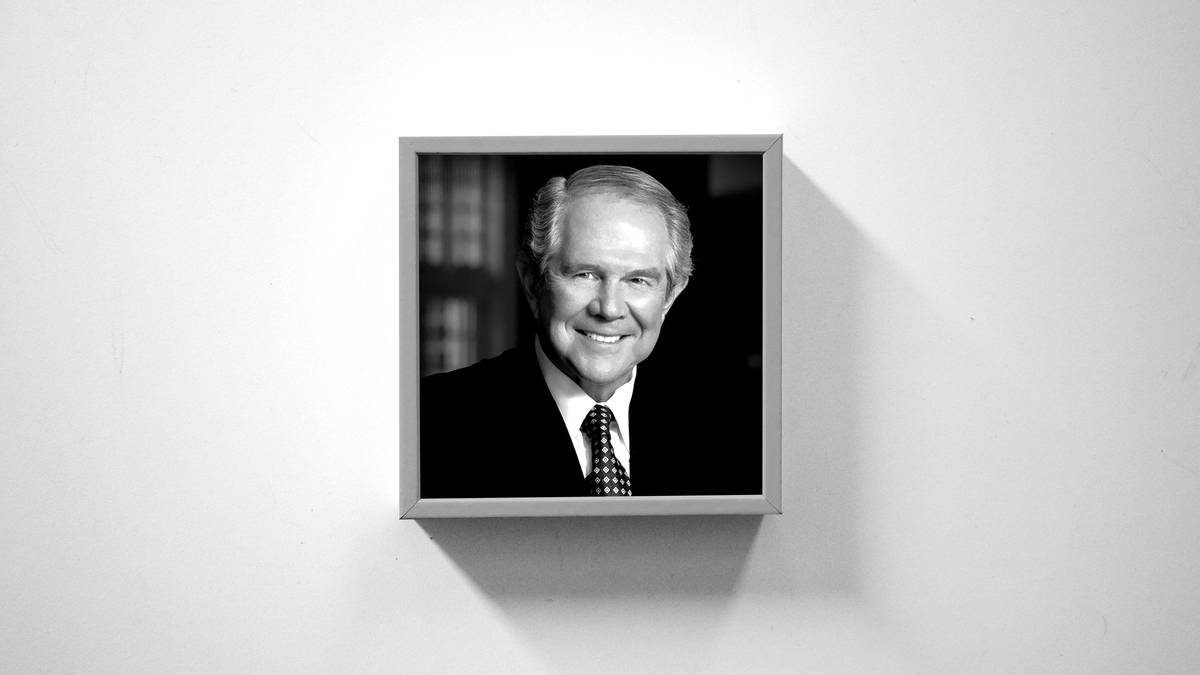
Pat Robertson / edits by Rick Szuecs

Across six decades in front of the camera, Pat Robertson brought his Pentecostal sensibilities and conservative politics into millions of living rooms as the pioneer of Christian television and the leader of the Christian Coalition.

The outspoken broadcaster died Thursday at age 93 in Virginia Beach, Virginia, home to his Christian Broadcasting Network (CBN) and Regent University. Robertson signed off as host of CBN’s flagship program The 700 Club in 2021 at age 91, though he continued to appear on monthly Q&A segments.

During his TV career, the one-time Republican presidential candidate hopeful interviewed five US presidents and dozens of global leaders; prayed for millions of viewers; offered political predictions; and stirred controversy with his off-the-cuff commentary characterizing disasters like hurricanes, earthquakes, and the 9/11 attacks as God’s judgment.

Although his controversial remarks garnered a lot of attention in his later years, Robertson was also among the most influential evangelicals of the 20th century, with an entrepreneurial spirit and a willingness to do whatever he sensed was God’s will.

“Robertson has shaped three major religious developments: the charismatic renewal, Christian TV, and evangelical politics,” CT wrote in a 1996 profile of Robertson. “Together, these developments helped transform evangelicalism from a small, defended backwater to the leading force in American Christianity.”

Before CBN became the broadcasting powerhouse it is today—with a $300 million annual budget and a reach across 174 countries—it was a defunct Virginia television station and a call from God.

There was no successful model for Christian TV when Robertson bought a run-down facility in Portsmouth, Virginia, and launched WYAH-TV (named for Yahweh) in 1961. It aired three hours of programming each night from a single black-and-white camera. Those early years were exhausting, dizzying, and haphazard, but to the Pentecostal businessman, the station felt like a miracle.

CBN’s first telethon launched the “700 Club” in 1963, recruiting 700 viewers to pledge $10 a month to cover the station’s expenses; the show that took its name came three years later.

Robertson kept the station growing with more fundraising, more talent—evangelists Jim and Tammy Bakker joined in ‘65—and new technology. The Praise the Lord (PTL) Network and Trinity Broadcasting Network followed.

Robertson became among the first TV executives to invest in satellite, allowing CBN to broadcast its annual telethon across 18 cities and launch a 24-hour cable network by 1977. Within a decade, CBN was in 9 million homes.

As CT reported in 1982, “CBN began replacing pulpits and King James English with Johnny Carson-style sofas and soap-opera vernacular. Its anchor show, The 700 Club, assumed an upbeat, magazine format, complete with news spots from Washington, D.C. Other programs resemble familiar TV Guide lineups, with a top-quality soap opera, early morning news and chatter, a miniseries on pornography, Wall Street analyses, and entertainment for children.”

While Robertson comfortably made his home on the CBN set, talking prayer and politics with charismatic flair, he had become a different sort of person than he was growing up a Southern Baptist in Lexington, Virginia, restless and largely uninterested in evangelistic faith.

Robertson was born Marion Gordon Robertson in 1930 and was nicknamed “Pat” for how his brother would pat his chubby cheeks. His father, A. Willis Robertson, was a US senator, and Pat Robertson enjoyed an elite education at Washington and Lee University and Yale Law School. He served two years in the Korean War.

After failing the bar exam and quitting a business job in New York, he set out to become a minister, a decision that confused his devout mother back home in Virginia. She connected him with a Dutch missionary named Cornelius Vanderbreggen. Robertson went to dinner with Vanderbreggen in Philadelphia and cringed when he shared a gospel tract with their waiter and read the Bible at the table.

But secretly, Robertson had been studying Scripture and began to sense God speaking to him through it. He made a confession of faith to Vanderbreggen that he later saw as his own conversion “from swinger to saint.” In that moment, he said, he transitioned from religious assent to the existence of God to a saving relationship with his heavenly Father.

He surprised his wife, Dede, with his convert’s zeal—he poured their expensive scotch down the drain; left her pregnant with their second child while he attended a month-long InterVarsity conference; and eventually sold their furniture and moved their family of five into one and a half rooms in a shared apartment in Brooklyn, inspired by Luke 12:33’s command to “sell your possessions and give to the poor.” His first job in ministry was at Bayside Community Church on Long Island.

In his late 20s, Robertson attended Biblical Seminary in Manhattan, joining a group of devoted believers who prayed, fasted, and dedicated themselves to seeking God while ministering among the poor. He went on prayer retreats with classmates who included Eugene Peterson. Robertson and the “Christian Soldiers” preached on street corners when Billy Graham came to the city in 1957. They met with Guideposts editor Ruth Stafford Peale and prayed in tongues for revival, inspiring two seminal books from the charismatic renewal, They Speak with Other Tongues and The Cross and the Switchblade.

“I had now walked into the Book of Acts and was no longer a spectator but an active participant in the works of a miracle-making God,” Robertson said.

Robertson left New York for his Virginia hometown after graduating in 1959. In Lexington, he had the opportunity to preach 15-minute radio segments and learned of a TV station for sale five hours away in Portsmouth. When his family moved down, he didn’t even have a TV set, “just $70 and a vision of establishing the first Christian television network in the United States,” his biography reads. He preached at local churches to get by before the network got running; some would give him a $5 honorarium, and one paid him in a 70-pound bag of soybeans.

Many of Robertson’s ventures follow this pattern of him hearing a call from God and launching a project in response.

“I wanted to be part of God’s plan, and his plan is for world evangelization and to bring millions to the kingdom, and he’s let me be part of it,” Robertson said.

He said God spoke to him over lunch (half a cantaloupe and cottage cheese) to build a school for his glory, and in 1977 he bought 70 acres in Virginia Beach for CBN University, later Regent. Seventy-seven students enrolled in its first year.

The next year at Christmas, he said God spoke to him to “proclaim a simple message of salvation” as he would send his Spirit all over the world and millions would respond. He launched what would become CBN International. Today, 90 percent of the network’s viewers come from outside of the US.

Reading the promise of blessing in Isaiah 58 led him to found the humanitarian charity Operation Blessing in 1978; the ministry has gone on to aid people in 90 countries and territories.

And it was also with God’s call in mind that Robertson entered the political arena. He returned to the Bedford-Stuyvesant brownstone where he had once lived in New York to declare his presidential candidacy in 1987.

Even before his run, Christian viewers recognized Robertson’s interest in politics, some with excitement and some with caution. He’d joked that the Senate, where his father served decades as a conservative southern Democrat, would be a demotion, but the presidency would be a “lateral move” from his post at CBN.

Christianity Today wrote about the early buzz around Robertson’s presidential ambitions in ‘85:

He is intensely interested in educating Christians about public affairs and stirring their enthusiasm for political involvement. He believes America faces a crossroads where family values and faith in God could lose out to statism and hedonism. Running for President will not guarantee Robertson a term in the White House, but it will almost certainly mean that the presidential candidates in 1988 will not be able to dismiss moral issues that matter to Christians.

In the early ’80s, Robertson began dedicating the first half hour of The 700 Club to public affairs, having become increasingly concerned about secularism and threats to religious freedom, like restrictions on prayer in schools. He saw the show’s content shift as a response to government overreach. “It isn’t that we’re getting into politics,” he said. “They’re getting into religion.”

Robertson said he viewed the presidency as a way to continue his calling to serve. Despite a second-place finish in the early Iowa caucuses, he lost on Super Tuesday and dropped out, endorsing George H. W. Bush. After the race, he wrote in The Plan that he saw a deeper purpose in his failed White House run.

Could it be that the reason for my candidacy has been fulfilled in the activation of tens of thousands of evangelical Christians into government? For the first time in recent history, patriotic, pro-family Christians learned the simple techniques of effective party-organizing and successful campaigning. Their presence as an active force in American politics may result ultimately in at least one of America’s major political parties taking on a profoundly Christian outlook in its platforms and party structure.

He built on that momentum by launching the Christian Coalition, which rallied evangelical voters and distributed voting guides to churches starting in 1989. The following year, he also founded a “pro-family, pro-liberty, and pro-life” law firm, the American Center for Law and Justice (ACLJ).

Part of a larger Religious Right movement, the coalition saw that some conservative evangelicals agreed with its conservative positions but remained reticent to declare a Christian stance on issues that didn’t have a clear biblical mandate. It also fought for a decade with the federal government over its nonpartisan guides and eventually lost its tax-exempt status.

Robertson saw himself as an evangelical with a charismatic gift and ecumenical outlook, once saying, “As far as the majesty of worship, I’m an Episcopalian; as far as a belief in the sovereignty of God, I’m Presbyterian; in terms of holiness, I’m a Methodist … in terms of the priesthood of believers and baptism, I’m a Baptist; in terms of the baptism of the Holy Spirit, I’m a Pentecostal, so I’m a little bit of all of them.”

Fellow Christians frequently challenged (or rolled their eyes at) some of the declarations Robertson made on air over the years, as he commented on current events and answered viewers’ questions. He called for the US to assassinate Venezuelan president Hugo Chavez. He defended divorcing a wife with Alzheimer’s. He predicted Donald Trump’s victory and didn’t accept Trump’s 2020 defeat until a week after Joe Biden was declared the winner.

“Pat Robertson was part of a tradition of Christian evangelicals who had a shrewd sense of media as a tool for reaching audiences,” said Michael Longinow, professor of digital journalism and media at Biola University. “His tendency to bring off-the-cuff statements that were incendiary also follows a tradition—albeit tragic—of Christian evangelicals who mingled the gospel with political perspective.”

Love or hate Robertson, his reach is hard to ignore. The 700 Club airs in 97 percent of TV markets in the US and is among the longest-running shows in history.

On his website, Robertson listed “starting companies/financial transactions” as one of his hobbies, and his success in that arena goes beyond CBN. He founded International Family Entertainment Inc., the parent company of the Family Channel, which was sold in 1997 for $1.9 billion. Balancing his financial success and call, Robertson said, “I realized God did not want me to be a billionaire investor. He wanted me as a humble servant who depended on Him and wanted to walk in His ways.”

Robertson’s wife of 67 years, Dede, died in 2022. He is survived by two sons, two daughters, 14 grandchildren, and 23 great-grandchildren. His son Gordon Robertson is CEO of CBN and the host and executive producer of The 700 Club.

Theology

We Believe in the Power of the Gospel, Not the Gospel of Power

The Duggar documentary reminds Christians that we are the generation not of Joshua but of Jesus.

The Duggar Family participates in a musical performance at the Values Voter Summit on September 17, 2010.

The Duggar Family participates in a musical performance at the Values Voter Summit on September 17, 2010.

Christianity Today June 7, 2023
Brendan Hoffman / Stringer / Getty

This piece was adapted from Russell Moore’s newsletter. Subscribe here.

The Amazon Prime docuseries Shiny Happy People: Duggar Family Secrets explores the reality-television homeschooling family and the system that shaped them—Bill Gothard’s Institute in Basic Life Principles—along with the fundamentalist mindset behind it.

Much of what it discusses felt nauseatingly familiar given all that we’ve seen in the last several years. One phrase, however, particularly struck me: the Joshua Generation.

Such was the language used by some sectors of the homeschooling and other movements to indicate the “long game” of training up those who could restore national greatness and steer the country back to a “Christian America.” And as Alex Harris, who was interviewed in the series, points out, some aspects of this idea became a reality.

There’s nothing wrong with preparing students for places of influence in politics (or medicine or business), but the Christian nationalism mixed up in much of the Joshua Generation rhetoric betrays a bigger question: the nature of real power. It seems the Joshua Generation came from a generation that did not know Joshua.

The language in the Book of Joshua alludes to the transition from Moses to his successor. Moses led the people of Israel out of the land of Egypt—and could see the Promised Land from a distance but didn’t enter it. On the other hand, Joshua led the people across the Jordan to defeat the Canaanites and take over the territory God had given them. The modern implications are clear: One generation of American Christians offers up a vision of a Christian America, and the next makes it happen.

Note that in this analogy, the Promised Land is the United States of America and Joshua is the present generation. It’s no coincidence that the “Christian” rally days prior to the January 6 attack on the United States were called the “Jericho March”—echoing the account in the Book of Joshua in which the walls of Jericho city collapsed when the Israelites shouted and blew their trumpets (Josh. 6). God said to Joshua, “See, I have delivered Jericho into your hands, along with its king and its fighting men” (v. 2).

In the Joshua Generation metaphor and other rhetorical tropes like it, the United States is overtaken by the enemies of God—enemies that must be routed to fulfill God’s promise.

In his introduction to the Trinity Forum booklet reprinting Dietrich Bonhoeffer’s Who Stands Fast?, historian Charles Marsh notes that “American Christian institutions have spent vast resources seeking to raise up and nurture an army of elites to engage the culture wars.” And yet, Marsh contends, there is far more actual power—leading to an actual change of minds and conditions—to be found in the examples of wartime theologian Bonhoeffer (who was executed by the Nazis) and in civil rights figure Fannie Lou Hamer (a poor sharecropper in the Jim Crow–era Mississippi Delta).

Bonhoeffer was no withdrawing pietist. After all, his life’s mission culminated in opposing an authoritarian and murderous regime—and confronting the church that collaborated with it and granted it theological legitimacy. But he also was not the kind of “realist” who saw the possibility of a split between private virtue and public leadership, between the inner person and the outward fruits.

“We have been silent witnesses of evil deeds; we have been drenched by many storms; we have learnt the arts of equivocation and pretense; experience has made us suspicious of others and kept us from being truthful and open; intolerable conflicts have worn us down and even made us cynical,” Bonhoeffer wrote.

“Are we still of any use? What we shall need is not geniuses, or cynics, or misanthropes, or clever tacticians, but plain, honest, and straightforward men,” he continued. “Will our inward power of resistance be strong enough, and our honesty with ourselves remorseless enough, for us to find our way back to simplicity and straightforwardness?”

The series Shiny Happy People leaves us with yet one more example of how religion can be used for sexual predation on vulnerable people. The allegations there, some of which have been proven in court, are enraging and gut-wrenching. These cases demonstrate how power, which was said to be all about serving Jesus, was instead wielded for sadism. We are left wondering how people can rail against a decadent culture while using the words of Jesus to destroy lives—in actions so decadent even the secular culture would recoil.

A key subject of the series is Joshua Duggar, who was convicted of possessing child sex abuse materials—the descriptions of which were so awful I had to turn off the television to recover. This same man was once a spokesperson for a family values advocacy organization.

Suppose the Joshua Generation had worked out as planned and all our national institutions of power had Christians at the helm. Would that have effectively turned the culture around—now that we’ve seen some of these very leaders abuse power in Jesus’ name and commit the very same sins they denounce, and sometimes even worse? In some sectors of evangelical America, it seems the only disqualifying character flaw is the failure to hate the right people with the right amount of anger.

What is “power” of any kind if it comes with a loss of moral witness? Nothing.

In this era, Jesus calls his followers not to defeat enemies of flesh and blood but to fight “the spiritual forces of evil in the heavenly realms” (Eph. 6:12). And how do we do that? With the blood of the Lamb and the word of our testimony.

Gospel witness, which is a call to peace with God, and moral witness, which is a demonstration of a regenerated life and a faithful church, are where the greatest power lies.

The Land of Promise is not the United States of America but the “rest” that comes through Jesus (Heb. 4), whose name can be translated as “Joshua” in English. And just as Joshua spied out the Promised Land ahead of time, we’ve heard from a Pioneer behind the veil of eternity (Heb. 6:19–20)—the One who once was dead and is now alive.

True power is not placing interns on Capitol Hill or filling clerkships at the Supreme Court—especially not if what’s behind these efforts is a dead “Christianity” that trades the power of the gospel for the gospel of power.

A Jesus Generation—one that not only uses his name but also lives out his nature—is where the real power lies.

Russell Moore is the editor in chief at Christianity Today and leads its Public Theology Project.

This article has been changed to remove an inaccurate detail about Bonhoeffer’s execution.

Oklahoma Approves First Church-Run Charter School in US

Supporters see it as win for religious freedom and school choice, while opponents are gearing up to challenge its constitutionality.

Christianity Today June 7, 2023
Jonathan Kirn / Getty Images

US courts have long wrestled with the extent to which government funding can be used at private religious schools. And on June 5, 2023, Oklahoma’s five-person Statewide Virtual Charter School Board pushed this much-debated question into new territory by approving plans for a religious charter school—the first in the nation.

Under the proposed charter, St. Isidore of Seville Catholic Virtual School plans to open in the fall of 2024 with up to 500 K-12 students from across the state. The school would be run by the Roman Catholic Archdiocese of Oklahoma City and the Diocese of Tulsa, but, like all charter schools, would be paid for with taxpayer dollars.

School choice advocates have won key cases at the Supreme Court in recent years, opening up more ways for public dollars to support faith-based education. A charter school—privately operated, but publicly funded—would be the most dramatic of these challenges to how the separation of church and state applies to education.

“The approval of any publicly funded religious school is contrary to Oklahoma law and not in the best interest of taxpayers,” Oklahoma Attorney General Gentner Drummond said in a statement after the Monday vote, warning that the board and state will likely face legal challenges.

The key question is not whether a charter would help or harm local education, but whether explicitly religious instruction at charter schools is constitutional, given the First Amendment’s protections against government establishment of religion. Moreover, Oklahoma law requires charter schools to be nonsectarian.

Recent trend

Advocates of expanding public funding to faith-based schools have been encouraged by three recent Supreme Court cases that upheld greater aid to their students.

All three of these cases relied on a legal idea I have written about called the “child benefit test.” Essentially, according to this concept, it is constitutional under some circumstances to provide public funds to students who attend faith-based private schools or their parents—but not directly to the schools, as would happen with Oklahoma’s charter school.

The first of these decisions, 2017’s Trinity Lutheran Church of Columbia v. Comer, dealt with a private Christian preschool that was denied public grants to update its playground. School administrators sued, arguing that denying generally available funding constituted religious discrimination in violation of the First Amendment’s protections for freedom of religion. The high court agreed.

Three years later, Espinoza v. Montana Department of Revenue further opened up government aid to private religious school pupils, relying on Trinity Lutheran. A 5-4 court ruled that Montana’s tax credit program for parents sending their children to independent schools must apply even if those schools are faith-based.

In 2022, the court extended this perspective in a case from Maine, Carson v. Makin. Maine, with its low population density, pays parents in areas lacking their own public schools to either transport their children to nearby public schools or a secular private school. The Supreme Court found that this program should apply to parents without a local public school who wish to send their child to a religious school as well.

Rethinking church and state?

By expanding the boundaries of permissible aid, these three cases have boosted proponents’ hopes for even greater public funding for faith-based schools.

Yet, it is important to keep in mind what likely prompted these changes in the first place: new faces on the Supreme Court. A majority of today’s justices tend to favor an “accommodationists” interpretation of the First Amendment, meaning they largely reject the idea that it demands a “wall of separation” between church and state, so long as the government is not privileging one faith over another.

Nevertheless, the parameters of the “child benefit test” often used to justify greater public funding has been evolving for years. The concept—one that legal scholars use to describe the Supreme Court’s arguments, not a term the court has used itself—first emerged in a 1947 dispute from New Jersey, Everson v. Board of Education. In Everson, the court upheld a state statute that allowed local school boards to transport students to faith-based schools—mostly Roman Catholic ones—reasoning that the students, not the schools themselves, were the primary beneficiaries of state aid.

In another illustrative case, 2002’s Zelman v. Simmons-Harris, the Supreme Court allowed parents whose children attended Cleveland’s public school system, which was then failing state standards, to use public vouchers to attend faith-based schools instead. A majority of justices upheld the program’s constitutionality because, again, students were the primary beneficiaries, not the religious schools themselves.

Eyes on Oklahoma

Today, in what may be the largest expansion of the child benefit test, legislators in various states are considering laws to expand how parents can participate in public education fund programs even if their children attend private religious schools, such as by broadening voucher or tax-credit programs. However, the Oklahoma proposal was the first to consider establishing a charter school with religious instruction and standards.

Charters, which trace their origins to Minnesota in 1991, are publicly funded and part of local school districts, yet free from many regulations, such as standards about curricular content and teacher qualifications. The idea of faith-based charters has attracted proponents for more than 20 years, but they have had little success until Oklahoma’s—which may never materialize, given the potential legal challenges. Americans United for Separation of Church and State has already announced it will “take all possible legal action to fight this decision and defend the separation of church and state that’s promised in both the Oklahoma and US constitutions.”

Even the board that eventually approved St. Isidore, which is responsible for approving the state’s charter schools, was initially skeptical. On April 11, 2023, members unanimously voted to reject the original proposal. However, the board gave organizers 30 days to revise the proposal and try again. The second attempt in June succeeded in a 3-2 vote.

If other states authorize faith-based charters, the new schools will likely be a boon to their religious organizers by facilitating students’ ability to attend. Proponents of charters, whether traditional or faith-based, support them as part of the larger school choice movement that seeks to give parents in failing districts opportunities to move their children into better schools without paying private school tuition.

Faith-based charters are likely to raise headaches for their supporters, too. Because charters must still comply with some state standards, faith-based charters could be subject to greater government oversight about issues such as policies on LGBTQ+ students and staff—a longtime sticking point—or accepting students with disabilities. And it remains to be seen whether proponents of a Catholic charter school would be as supportive if a minority faith group proposed one.

While this legal battle is just heating up, I believe it has the potential to reshape public education as we have known it.

This article originally appeared on The Conversation.

News
Wire Story

Most US Pastors Use Armed Congregants as Church Security

With shootings on the rise, more churches are dropping no-firearms policies and turning to gun-carriers in their flock, survey finds.

Christianity Today June 7, 2023
Pearl / Lightstock

Most churches have some type of security measures in place during worship services. Pastors point to intentional plans and armed church members more than other measures, but compared to three years ago, fewer say they have plans and more say they have gun-carrying congregants.

Numerous fatal shootings have occurred at churches in recent years. In March, an armed assailant killed six people at The Covenant School, a Christian school in Nashville, Tenn. Shootings have also occurred at other places of worship like Jewish synagogues and Sikh temples.

When asked about their protocols when they gather for worship, around 4 in 5 US Protestant pastors (81%) say their church has some type of security measure in place, according to a study from Lifeway Research. Still, more than 1 in 6 (17%) say they don’t use any of the seven potential measures included in the study, and 2 percent aren’t sure.

“Churches are not immune to violence, disputes, domestic disagreements, vandalism and burglary,” said Scott McConnell, executive director of Lifeway Research. “While loving one another is a core Christian teaching, churchgoers still sin, and non-churchgoers are invited and welcomed. So real security risks exist whether a congregation wants to acknowledge them or not.”

Security measures

In terms of security specifics, pastors are most likely to say their congregation has an intentional plan for an active shooter situation (57%). Additionally, most (54%) also say armed church members are part of the measures they have in place.

https://datawrapper.dwcdn.net/KJ1jL

Around a quarter (26%) use radio communication among security personnel, while 1 in 5 say they have a no firearms policy in the building where they meet (21%) or armed private security personnel on site (20%). Fewer have uniformed police officers on church grounds (5%) or metal detectors at entrances to screen for weapons (1%).

“Most churches are small, so security plans often don’t need to be elaborate or expensive,” McConnell said.

Around half of the fatal shootings in churches since 1999 have occurred in the South. Pastors in that region are the least likely to say they don’t use any of the security measures at their churches (12%).

Conversely, they are among the most likely to report their congregation has an intentional plan for an active shooter situation (64%), radio communication among security personnel (34%) and armed private security on site (26%). Additionally, Southern pastors are the most likely to say they have armed church members (65%) and uniformed police officers on site (9%).

More worshipers in attendance often leads to increased security measures. The larger the church, the more likely it is to have armed private security personnel on site and radio communication among security personnel.

Churches with 250 or more in attendance are the most likely to have armed church members (74%) and uniformed police officers on site (27%). Those large congregations are also among the most likely to have an intentional plan for an active shooter situation (74%).

Pastors at churches with worship attendance of fewer than 50 people (29%) are the most likely to say they aren’t using any of the methods of preparation considered in this study.

Mainline pastors (22%) are more likely than evangelical pastors (14%) not to use any of the seven potential ways of security preparation at their churches.

Denominationally, Lutheran (34%) and Presbyterian/Reformed pastors (30%) are at least twice as likely as pastors at non-denominational (14%), Restorationist movement (13%), Pentecostal (12%) or Baptist (8%) churches to say they don’t use any of the security measures.

African American pastors are three times more likely than white pastors to say they have uniformed police officers on site (12 percent v. 4%).

African American pastors are also more likely than white pastors to say part of their security measures includes radio communication among security personnel (37 percent v. 25%) and a no firearms policy in the building where they meet (34 percent v. 21%). Meanwhile, white pastors are more likely than African American pastors to say they have armed church members (56 percent v. 33%).

More guns, less planning

Compared to three years ago, pastors say they’re more likely to be relying on armed churchgoers and less likely to have a no firearms policy for their building. Fewer also say they have an intentional plan for an active shooter, compared to a 2019 Lifeway Research study.

https://datawrapper.dwcdn.net/9Tcqc

Previously, 45 percent of US Protestant pastors said armed church members were part of their congregation’s security measures. Now, more than half (54%) include that in their attempts to keep churchgoers safe. In 2019, 27 percent said they enforced a no firearms policy at their building. That has dropped to 21 percent now.

Churches are also less likely to rely on intentional planning to address potential security threats. In 2019, 62 percent said they had such a plan in place for an active shooting situation. Since then, the percentage of pastors who say that is the case at their church has fallen to 57 percent.

“While churches may have different convictions on how to maintain security, it is surprising that fewer churches have an intentional plan for an active shooter than did in 2019,” McConnell said. “As churches cut back on activities during COVID, this may have been one of the initiatives that did not resume for some churches.”

News

Died: ‘The Hiding Place’ and ‘The Cross and the Switchblade’ Coauthor Elizabeth Sherrill

“She knew how to tell a story with power.”

Christianity Today June 6, 2023
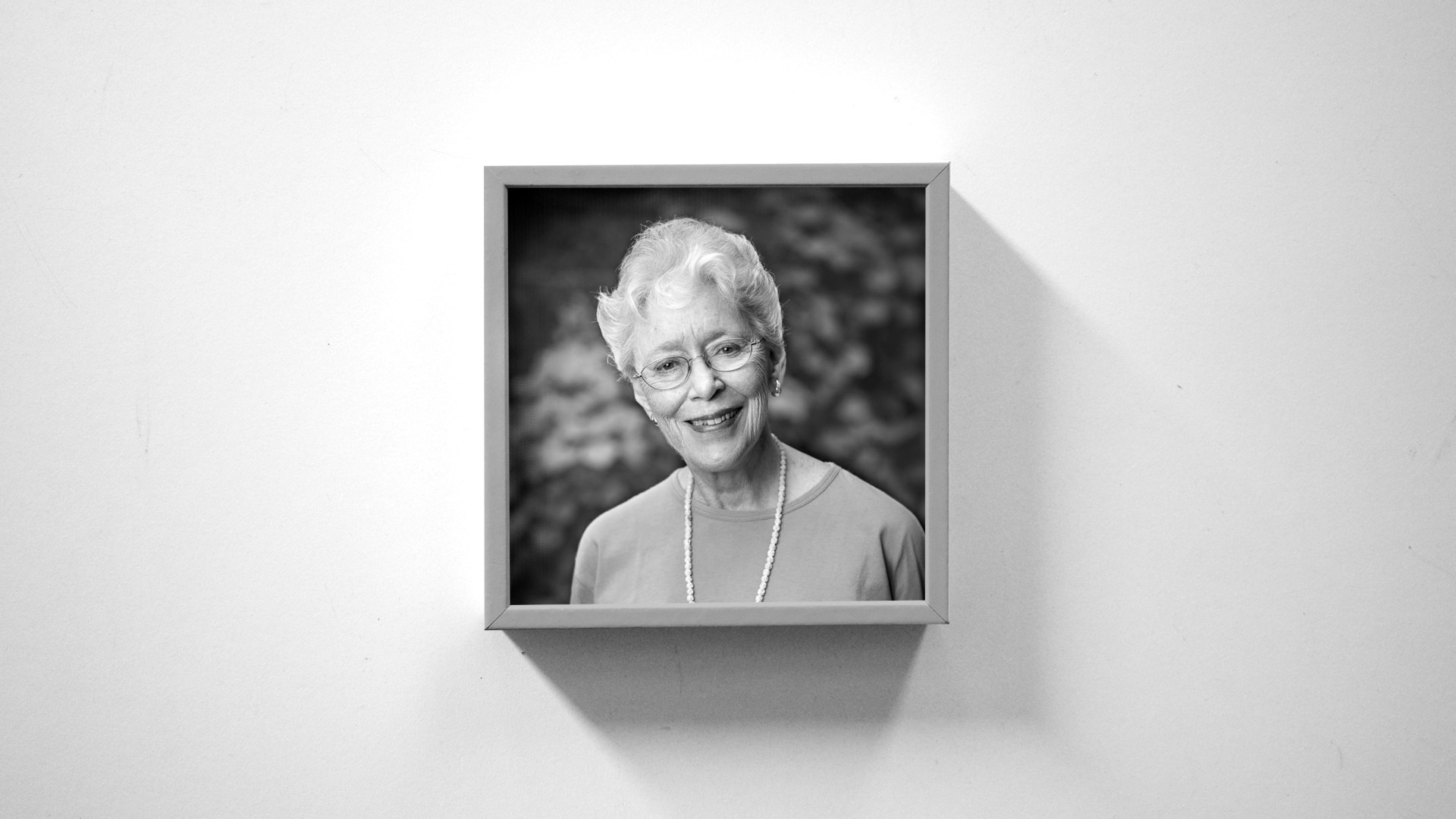
Elizabeth Sherrill / edits by Rick Szuecs

Few evangelicals know Elizabeth Sherrill’s name. But because of her, they know David Wilkerson, Brother Andrew, Corrie ten Boom, and dozens of other modern men and women who overcame by faith. Working closely with her husband John, she reported, wrote, and edited some of the most compelling, popular, and widely influential accounts of contemporary Christians on bookshelves today.

Sherrill had “an uncanny knack for always touching the heart strings,” according to the late Pentecostal leader Jack W. Hayford. She wrote more than 2,000 articles for Guideposts and coauthored more than 30 nonfiction titles. She founded Chosen Books with her husband and edited and published numerous Christian bestsellers, including Chuck Colson’s Born Again, Don Basham’s Deliver Us from Evil, and Bilquis Sheikh’s I Dared to Call Him Father.

Sherrill died in Massachusetts on May 20. She was 95.

“I marveled at the way the books she touched … inspired readers toward belief,” Jeff Crosby, president of the Evangelical Christian Publishers Association, told Publishers Weekly. “Elizabeth’s gifts as a manuscript stylist, editor, and publisher were enormous. She knew how to tell a story with power.”

Sherrill “found a perfect calling,” according to Rick Hamlin, former executive editor of Guideposts, “in coaxing stories out of others and then helping them share their highly personal accounts of God at work in their lives.”

She was born Elizabeth Schindler in Los Angeles, California, on February 14, 1928. She was raised in Scarsdale, New York, in what she recalled was a cold, nonreligious home with parents who got upset when she had any emotions. Her father, a private investigator, thought she should just be happy with what he had provided. Her mother believed “emotions were private affairs and nice people said only nice things.”

“I yearned for heart-to-heart talks,” Sherrill later wrote. “I wanted Mother to ask me not what had happened at school, but how I felt about it. … A gulf of mutual disapproval opened between us.”

Sherrill left home at 19, sailing to Europe on the Queen Elizabeth to attend school at the University of Geneva. During the crossing, a World War II veteran who was five years older than her and had served in the Italian campaign caught her eye. He called her “Tibs” or “Tibby.” Four months later, she and John Sherrill were married in Switzerland.

The couple returned to the United States in 1950—with Elizabeth pregnant and John determined to become a writer.

After struggling for a year as a freelancer, John found a job with a new religious magazine launched by the popular preacher Norman Vincent Peale. Guideposts was an eight-page publication dedicated to stories about the power of faith. Peale, who was writing the Power of Positive Thinking at the time, didn’t really care which faith, as long as it was positive, transformative, and a great story. Neither did John Sherrill. As he confessed to Peale during his interview, his father was a theologian but he himself was not religious. Peale decided that was perfect and hired him to work alongside editors Leonard and Catherine Marshall LeSourd.

John brought his work home and Elizabeth started to edit it. She had a gift for clear prose and clean structure that made his stories better. Within a few months, John convinced Guideposts to hire Elizabeth too, and from that point on they were inseparable collaborators who wrote with one voice.

Sherrill ghostwrote many of her early pieces, telling famous people’s stories of faith under their names, in their personas, but in her distinct style. In one piece as Alfred Hitchcock, for example, Sherrill wrote about “a day of judgement” in the famed director’s early career, before Rear Window, Psycho, or The Birds. “It was almost as if God deliberately delayed success to show me that my efforts at controlling the future were not in His scheme of things,” she wrote as Hitchcock. “I thank Heaven daily that tomorrow does not belong to any man. It belongs to God.”

Sherrill and her husband did not personally have that kind of faith, though. As she described it later, they loved good stories, but had “mountains of intellectual objections” to the idea that Jesus could be Lord and Savior.

Things changed when John was diagnosed with cancer. He had surgery and seemed to be recovering, but then it came back. Catherine LeSourd, his fellow editor at Guideposts, used that opportunity to ask him a question: “Do you believe that Jesus was God?”

Driving home, he stopped at a stop sign and turned to Sherrill.

“I believe that Jesus is God,” he said. “Why do they call it a leap of faith? Alright, I’m going to make that leap.”

The second surgery was successful, and while he was in the hospital recovering, John had a mystical experience of Christ as a glowing light in his room.

Sherrill affirmed her husband’s newfound faith and the incredible impact it had on his life. But she didn’t feel it herself. She was struggling with a clinical depression that completely immobilized her in her mid-20s.

She had always had what she thought of as “attacks,” when she would take a “sudden plunge for no reason into a bottomless sadness.” In 1955, she was overcome with the feeling and went up to a small room in their partially finished attic and locked herself inside.

“And there I lay,” she later wrote, “curled on a cot, the door locked on the world, while a succession of babysitters covered the hours that John was at work.”

Sherrill felt a paralyzing sense of failure. And then when she reminded herself that she was a successful writer, happily married, with two lovely children and another much-wanted baby on the way, she would start to berate herself for being ungrateful, neurotic, and not feeling like she was supposed to feel.

“That’s the terror of depression, the dark mystery that distinguishes it from sorrow,” Sherrill wrote. “Depression can throw its gray pall over us when the sun is brightest.”

John took her to a psychiatrist, who put on her on some medication that helped her achieve a “shaky equilibrium.” The doctor also helped her start talking about her childhood, and how her parents had dealt with her emotions. He told her she had internalized her parents’ rejection.

In an effort to deal with these deep psychic wounds, she turned to religion.

“For the first time in my life I began to read the Bible,” she said. “A new world opened before me! A loving God, visions of strength and joy beyond my wildest hopes. … I can accept myself—delight in myself—because, the Bible tells me, God made me for himself, and can use all the particulars of my history for good. The very things I like least about myself, indeed, may be those he values most.”

Sherrill joined her husband as a member of an Episcopal church. She never stopped suffering attacks of depression, but they grew less frequent and more bearable in time.

When she was doing well, Sherrill loved chasing stories. One time she and John were visiting friends in Boston, for example, and they saw a headline in the newspaper that said, “Man Buried Alive.” The story included the man’s name and the hospital where he’d been taken, and the Sherrills abandoned their vacation, rushed over, and convinced him to let them write his story.

The Sherrills similarly found David Wilkerson through a thirdhand rumor about a Pentecostal preacher who was successfully evangelizing violent gang members in New York City. They produced several pieces about him for Guideposts before deciding they had enough for a book and wrote The Cross and the Switchblade. It was published by a secular press in 1963 and sold 11 million copies in the first 10 years.

The Sherrills’ follow-up book, about a Dutch Christian taking Bibles to Christians in Communist-controlled countries, was also a smash hit. God’s Smuggler sold 10 million copies.

If two bestsellers seemed like a fluke, the couple then wrote a third: The Hiding Place. Sherrill heard Corrie ten Boom talk about losing her family in the Nazi concentration camps, and even though she didn’t understand Dutch, she found the way ten Boom talked incredibly compelling. Here was the next story, an account not only of fighting the Nazis and surviving but also forgiving. It was a story of how faith could overcome even the Holocaust.

Sherrill’s writing relationship with ten Boom was sometimes difficult, though. When they sat down, Sherrill kept asking for detailed descriptions of places and people and ten Boom could only talk in abstractions.

It was, Sherrill would later recall, “like trying to get a blind man to describe the colors of a garden he'd once walked in.”

‘Corrie,’ I would say, ‘describe Mr. Koornstra who got you those extra ration cards.’

‘He was a very brave man.’

‘I know. But what did he look like? Was he tall? Short? Thin—fat? Bald? Did he have a beard?’

‘And with that tone of finality that only Dutch-accented English can convey: ‘He was a man.’

Sherrill found additional sources who could fill in the details, and the book came out in 1971. At the last minute, the Sherrills decided to pull out of their publishing contract and produce the book themselves. They founded Chosen Books and released The Hiding Place as their first title. It sold more than 50 million copies. The book’s most recent appearance on the evangelical bestsellers list was in early May 2023.

When Christianity Today collected a list of the top 50 books that shaped evangelicals in the 20th century, the Sherrills were named more frequently than C. S. Lewis, Billy Graham, J. I. Packer, Phillip Yancey, Tim LaHaye, John Piper, or James Dobson. They occupied three spots on the list and were the editors behind a fourth.

“John and Elizabeth Sherrill may be the most influential Christian authors you know nothing about,” CT reported. “Their specialty: testimonials to the power of God’s Spirit. And, it seems, bestsellers.”

The couple’s most personal testimony of the power of the Holy Spirit came with the publication of They Speak with Other Tongues. The book started as a journalistic investigation of the charismatic movement, but became something different when John started speaking in tongues, which he understood to be a supernatural gift from God.

“It was the floodgate opened,” John later said. “The syllables were all there, ready-formed for my use, more abundant than my earthly lips and tongue could give shape to.”

Sherrill had the same experience later, receiving “a spontaneous outpouring of a heavenly tongue” and speaking in a “fluent and beautiful prayer language.”

The wrote the book together under John’s name and from his first-person perspective. It played a major role in popularizing the charismatic movement and the idea of speaking in tongues among evangelicals.

“Is epochal too strong a word?” asked Ben Kinchlow, cohost with Pat Robertson of The 700 Club. “I think not.”

The couple continued to write, edit, and travel together until John died in 2017. They were planning a trip for their 70th anniversary when he passed. Sherrill received the Kenneth N. Taylor Lifetime Achievement Award from the Evangelical Christian Publishers Association the following year. She accepted it for both of them.

Sherrill is survived by her three children, John Scott Sherrill, Donn Hardwick Sherrill, and Elizabeth Flint, along with eight grandchildren and seven great-grandchildren.

A memorial service was held on June 3 at St. John the Evangelist Episcopal Church in Hingam, Massachusetts.

“We know she is alive in God’s hands,” the priest, Sarah D. Máto, told the friends and family gathered to mourn. “She was very sure of this. She is living in the very place that God prepared just for Tib. Maybe [with] a gold typewriter, who knows?”

John Onwuchekwa Joins CT Team as Director of Leadership Resources

Atlanta-based preacher, author, and entrepreneur will expand the ways CT serves pastors and church leaders.

John Onwuchekwa

John Onwuchekwa

Christianity Today June 6, 2023
Photo by Yvette Glasco / Courtesy of John Onwuchekwa

Christianity Today has hired Atlanta-based author, preacher, and entrepreneur John Onwuchekwa as director of leadership resources. In this role, Onwuchekwa will cast a broader vision to engage and equip pastors and other church leaders in new ways. He will also lead the continual development of content and strategy for CT’s existing church resources, which include influential brands such as Church Law & Tax, PreachingToday.com, and SmallGroups.com. He joined the company on April 24.

Before joining CT, Onwuchekwa compiled a busy and wide-ranging résumé. A graduate of Dallas Theological Seminary, he was one of the founding pastors of Cornerstone Church, as well as cofounder of Portrait Coffee—both in the Historic West End of Atlanta. (“I started the coffee business to empower people in a community that was an opportunity desert,” he says.) The industrious preacher also served as the codirector for content and coaching for the Crete Collective, an organization aimed at strengthening gospel works in distressed and neglected Black and brown communities. He is the author of Prayer: How Praying Together Shapes the Church and We Go On: Finding Purpose in All of Life’s Sorrows and Joys.

“John Onwuchekwa is one of the strongest Christian leaders in America today,” says CT editor-in-chief Russell Moore. “His grounding in Christ and the Scriptures combined with his astounding combination of gifts in preaching, teaching, mission, justice, church leadership, entrepreneurship, and mentoring make him the perfect choice to lead CT Resources into a new future. John is widely respected and widely loved. I am excited to work with John and am elated to have him on our team.”

CT’s editorial chief of staff Joy Allmond adds, “The addition of John to our staff is going to transform the ways we serve the church and its leaders. Along with the many gifts he brings to the table, John’s pastor’s heart and entrepreneurial spirit bring unique and powerful value to CT. It’s going to be exciting to watch how his perspective and experiences inform the vision for CT’s resources ministry.”

Onwuchekwa, the American-born son of Nigerian immigrants, calls himself “a deeply committed storyteller” whose preaching, writing, and entrepreneurship are designed to uplift the often-forgotten lives of those living in society’s margins. He views the call to CT as an exciting next step in his ministry journey.

“I was gripped by [CT president and CEO] Timothy Dalrymple’s vision to elevate the sages and storytellers of the global church,” Onwuchekwa says. “I left pastoring after 16 years because I sensed a vague call to spend more time creating resources and telling stories to that end. I’m excited about creating resources that center the concerns, stories, and even faces of people that have been marginalized for so long—especially in a world where Christianity is becoming increasingly marginalized. There’s a wealth of wisdom to be learned by centering the concerns and lessons of those who have had to lead from the margins for so long. I’m excited to make that work central to what I do and even more central to Christianity Today.”

Onwuchekwa will continue to reside in Atlanta, where he lives with his wife, Shawndra, and their daughter, Ava.

For media inquiries pertaining to this story, please contact media@christianitytoday.com.

Christianity Today was founded by Billy Graham in 1956. In the nearly 70 years since that time, it has served as a flagship publication for the American evangelical movement, serving the church with news, commentary, and resources. An acclaimed and award-winning media ministry, CT elevates the storytellers and sages of the global church. Each month, across a variety of digital and print media, the ministry carries the most important stories and ideas of the kingdom of God to over 4.5 million people all around the planet.

News

Seafarer Ministries See Spiritual Needs in Rough Economic Waters

Merchant marines are still struggling, body and soul, after COVID-19 and supply chain disruptions.

Christianity Today June 6, 2023
Spencer Platt/Getty Images

Gary Roosma can attest to the challenges of organizing a worship service onboard a cargo ship.

It’s a complicated process, reaching out to the rotating cast of captains aboard the ships in the Port of Vancouver, for a congregation of sailors who may or may not even want to gather.

But experience has taught him it’s a worthwhile effort.

He remembers one officer who accosted him with a question.

“Where were you yesterday?” the man said. “We needed you yesterday.”

When Roosma asked why, the sailor explained there was a horrible storm at sea and the captain had sent him to do something on the deck as the waves crashed around them. As he held onto a rail, a massive wave hit the ship and carried the man overboard, out to the open sea.

“I knew I was dead,” the seafarer told Roosma. “All I could think of was ‘Lord, please watch over my family.’ And then I prayed, ‘It would be really nice if you would save me too.’”

At the instant he prayed, the man recalled, a rope brushed across his chest, and he grasped it and held on with every ounce of his strength. He dislocated his arm, but his life was spared.

“We need a service onboard this ship,” the man said, and Roosma, a chaplain at the Port of Vancouver with the Christian Reformed Church (CRC) Ministry to Seafarers agreed to lead them in prayer and worship that day.

Roosma was reminded, yet again, of the point of this unusual ministry. As the psalmist said in Psalm 107, “They that go down to the sea in ships, that do business in great waters; these see the works of the Lord, and his wonders in the deep” (vv. 23–24, KJV). Seafarer ministry chaplains are called to point that out to the men and women working on cargo ships.

Seafarers’ ministries are not new. They’ve been around since the 19th century, and there are now hundreds like the one in Vancouver in ports around the world. Those involved in these ministries say the need has felt especially urgent in recent days, as the shipping industry goes through rough waters, taking a toll on merchant marines.

The shipping industry has always been turbulent, but the challenges in recent years have been especially difficult. COVID-19 restrictions required many seafarers to work longer hours and receive less shore time. Supply chain issues have impacted the world economy, leading to cost spikes and subsequent drops that impact sailors’ livelihoods. Amid all that uncertainty, they’ve also had to cope with the ripple effects of the Russian-Ukraine war.

A 2022 Review of Maritime Transport put out by the United Nations Conference on Trade and Development was aptly named Navigating Stormy Waters.

“In an increasingly unpredictable operating environment,” the report said, “future shipping costs will likely be higher and more volatile than in the past.”

Where most people see “shipping delays” and “economic uncertainty,” maritime ministry chaplains see the people impacted—men and women from around the world trying to provide for their families in a dangerous profession that changes constantly. Each huge vessel transporting cargo around the globe and sustaining the world economy is also temporary home to about 21 souls.

“There are so many hidden workers in economies around the world,” said Jason Zuidema, who lives in Montreal, Quebec, and is currently general secretary for the International Christian Maritime Association and executive director of the North American Maritime Ministry Association. “They are the kind of people we should say thank you to.”

More than 80 percent of the world’s international goods are shipped by sea. But few people grasped the importance of ships to international trade until they saw how delays at ports suddenly wreaked havoc.

“Shipping is a great bellwether,” Zuidema said. “You can basically see what’s happening economically by seeing what’s happening with ships.”

That means the economic challenges that ripple out from the shipping industry directly hit merchant marines. COVID-19, in particular, was very hard on seafarers.

“Seafarers are a hearty group who enjoy each other’s company while on board, but social isolation has impacts on people’s mental well-being and social well-being,” Zuidema said. “These political or economic or health issues have very direct impacts on their lives and livelihoods.”

Even in normal times, though, this job is very spiritually demanding. Because seafarers are away from home for months at a time, it’s hard to be spiritually fed. Internet access is unpredictable at best at sea, so the people working on cargo ships aren’t able to depend on church online or join in worship through Zoom.

For the ministers to seafarers, there are challenges too. Like hospital and airport chaplains, they often cannot establish sustained relationships with the people they minister to. They meet people and try to minister to them in that particular moment, and then they’re gone.

“So many of the most special ministry moments in my life were done for people I don’t even know their names and I never met them again,” Zuidema said. “It can wear people out, and keeping pace with all that is a joy but also a prayer request.”

Sometimes the contact the ministers have with seafarers’ lives seems so insignificant that they really have to have faith that what they do matters. Zuidema remembers, for example, once helping a sailor from India set up an email account. In the moment, it felt more like tech support than the reason he’d gone into ministry. But he met that man again, years later, and the man expressed a deep, deep gratitude.

“It was something that was just … so small to me,” Zuidema said. “For him, this was a reminder … of that one time when he went ashore in Montreal, Canada, and got a tool that served him for the rest of his life.”

Ministering to seafarers can be very practical. Many ministries have helped with access to COVID-19 vaccines and connected sailors with internet or the personal necessities they need after a long time at sea. Offering seafarers that kind of help, though, regularly opens a door to discuss deeper needs.

“We try every time we interact with the sailors to minister to them spiritually,” said Ray Hanna, port chaplain at Lighthouse Harbour Ministries in North Vancouver.

Once that door is open, Hanna said, the chaplains reach an incredible range of people with varied spiritual needs. Hanna estimates that about half of the seafarers that he interacts with are Filipino. Many of them carry a Bible to sea but say they don’t read it very much.

“Instead of having the Word of God nominally in your head or in your dresser drawer,” he encourages them, “it’s time to open it up and read it.”

Other sailors don’t have Bibles and don’t know anything about the gospel.

“I’ve talked to many Chinese seafarers that tell me they’ve never heard the name of Jesus,” Hanna said. “The only name that saves and they’ve never even heard his name. I get goosebumps when I have the opportunity to tell them about the Savior.”

Apple PodcastsDown ArrowDown ArrowDown Arrowarrow_left_altLeft ArrowLeft ArrowRight ArrowRight ArrowRight Arrowarrow_up_altUp ArrowUp ArrowAvailable at Amazoncaret-downCloseCloseEmailEmailExpandExpandExternalExternalFacebookfacebook-squareGiftGiftGooglegoogleGoogle KeephamburgerInstagraminstagram-squareLinkLinklinkedin-squareListenListenListenChristianity TodayCT Creative Studio Logologo_orgMegaphoneMenuMenupausePinterestPlayPlayPocketPodcastRSSRSSSaveSaveSaveSearchSearchsearchSpotifyStitcherTelegramTable of ContentsTable of Contentstwitter-squareWhatsAppXYouTubeYouTube