Books

It’s Eden Somewhere

The late Jimmy Buffett’s songs and the writings of J.R.R. Tolkien both long for a home just beyond reach.

Christianity Today September 8, 2023
Illustration by Christianity Today / Source Images: WikiMedia Commons / Getty

This piece was adapted from Russell Moore’s newsletter. Subscribe here.

One cannot imagine Jimmy Buffett and J. R. R. Tolkien in a room together, sharing a “cheeseburger in paradise” at The Eagle and Child. Tolkien was drawn to “northernness,” to Icelandic myths and elvish languages. Buffett captured the breezy exuberance of Caribbean rum. And yet both merged without rancor into my life from childhood on, somewhere between Middle-earth and Margaritaville.

And then last week, Jimmy Buffett died—on the 50th anniversary of the death of Tolkien. Both of them, I think, have something to remind us about the meaning of mortality.

As I’ve written here before, my wife often tells people that if they really want to know me, they should know that my most listened-to artist is not who they think it is (Johnny Cash); it’s Jimmy Buffett.

That makes sense, of course. Buffett was from Pascagoula, Mississippi, a couple of towns over from my hometown of Biloxi, Mississippi. Buffett and I both went, a generation apart, to the University of Southern Mississippi. Though, his biographer Ryan White notes that he spent more time where the action was: in New Orleans “and its scrappier Gulf Coast neighbor—Biloxi,” a city that White describes as having “scars and a temper and ill-considered tattoos.”

I don’t have much of a temper, and have no tattoos, but the description isn’t really wrong. When Buffett sings “Biloxi,” I feel like I’m home.

My wife says what’s really telling is that the songs I listen to over and over again aren’t the “Don’t Chu-Know” type of cruise-ship party songs. What resonates with me is the melancholy, moody Jimmy Buffett. The songs that have made up my life include “He Went to Paris,” “A Pirate Looks at Forty,” and “Death of an Unpopular Poet,” all of which deal with the fragility of life and the inevitability of death, along with “One Particular Harbour,” “When the Coast Is Clear,” and “Son of a Son of a Sailor,” all of which capture a kind of longing for a just-out-of-reach home.

On a superficial level, Jimmy Buffett music can seem like the opposite of a counting of one’s days. Instead, it can seem like a perpetual adolescence that uses fun to pretend that death will never come—what Blaise Pascal called the kind of “diversions” we employ to divert our consciences from judgment.

That might be an accurate reading of many Jimmy Buffett fans, but not an accurate reading of Jimmy Buffett himself. In “A Pirate Looks at Forty,” for example, Buffett showed the dark side of the aftermath of a life of diversion—of feeling “drowned” and out of place in life. In fact, as White points out, “Margaritaville” only sounds light and fun because Buffett’s the one singing it; the lyrics themselves are less a lifestyle celebration than the kind of cautionary tale one might hear in Kris Kristofferson’s “Sunday Mornin’ Comin’ Down” or George Jones’s “Still Doing Time.”

For someone born on Christmas Day, Buffett had complicated feelings about Jesus. Reacting against what he saw as a cold, judgmental, hypocritical Bible Belt religion, Buffett described his beliefs as a California-like Zen Buddhist pluralism. That doesn’t mean, though, that he escaped any sense of sin and judgment. In fact, “He Went to Paris” is a kind of secularized Judgment Day—the accounting of a human life from youth to death, of someone who was “looking for answers / To questions that bothered him so.”

The same is true with a song he wrote about a life lived on the road, “Stories We Could Tell”:

All the stories we could tell
If it all blows up and goes to hell
I wish that we could sit upon the bed in some motel
Listen to the stories we could tell

Stories only last a little longer than the storyteller, though—unless there’s a bigger Story behind it all. Perhaps that’s why we can see shadows of Eden lurking in Buffett’s lyrics, along with a realization that the shadow of death is still there, that there must be, in some way, a Fall (some people claim that there’s a woman to blame, but I know it’s humanity’s own fault).

Buffett sings in “Son of a Son of a Sailor”:

Where it all ends I can’t fathom my friends
If I knew I might toss out my anchor
So I cruise along always searchin’ for songs
Not a lawyer a thief or a banker
But a son of a son, son of a son,
Son of a son of a sailor

Now, again, I would hardly expect Tolkien to have been anything but horrified by Jimmy Buffett. He was irritated enough when the Daily Telegraph described C. S. Lewis as “ascetic.” “He put away three pints in a very short session we had this morning, and he said he was ‘going short for Lent,’” Tolkien wrote to his son Christopher.

I think Tolkien would have recognized nonetheless how Buffett’s songs are shot through with a kind of longing for Eden. Again to Christopher, Tolkien wrote that, while he saw Genesis as a different type of history than other accounts, he nonetheless believed that Eden did, in fact, exist. “We all long for it, and we are constantly glimpsing it: our whole nature at its best and least corrupted, its gentlest and most humane, is still soaked with the sense of ‘exile,” Tolkien wrote.

In his “happier” songs, Buffett sang about his own kind of Shire—of islands, not highlands. But even so, his fuller work seems to recognize the truth of what Frodo said, when he headed home after all that had happened: “There is no real going back. Though I may come to the Shire, it will not seem the same; for I shall not be the same. I am wounded with knife, sting, and tooth, and a long burden. Where shall I find rest?” In other words, “A Hobbit Looks at Eleventy.”

Those wounds are, in fact, unhealable, but only within the confines of the story. What Tolkien knew, and what Buffett seemed to want to be true, is that the longings themselves point beyond what we can find—whether sailing under the Southern Cross or dancing under fireworks in Hobbiton. Changes in latitudes can force changes in attitudes, but only when the latitudes give way to something beyond what we can find on a map.

Like Buffett, I’ve read lots of books about heroes and crooks, and learned much from both of their styles. One never knows what happens in the last moments of a man’s life, but I hope that Jimmy Buffett found the answers to the questions that bothered him so. I hope that he could see, even from southeast of disorder, that there’s a Father who welcomes home his children—even a prodigal son of a son of a sailor. That Father is preparing a party beyond the imaginations of this life.

I don’t know if Jimmy Buffett ever found that, but I know that you can.

Can you hear the call to a wedding feast, an invitation to walk down the road to the party at the Father’s house? Maybe the time to seek out that eternal party is now. Life is fragile and short, but, well, it’s five o’clock Somewhere.

Russell Moore is the editor in chief at Christianity Today and leads its Public Theology Project.

Singleness Is Not a Sin

But in Scripture, church history, and singles’ own accounts of their lives, it’s usually not a good thing, either.

Christianity Today September 8, 2023
Ahmed Nishaath / Unsplash

Is it a sin to be single?

To a modern ear, the question can sound bizarre—but in many circles of Christianity, especially online, the question of whether young people (especially young women, as in a recent viral TikTok video) are engaged in sinful behavior by being single into their late 20s or 30s is earnestly asked and debated. Yet in other circles, a diametrically different question is asked: Could it be a blessing to be single? Doesn’t Paul say he wishes that everyone could be unmarried as he was (1 Cor. 7:7–8)?

The proximate cause of the debate within Christianity about singleness is not mysterious: The share of people ages 18–35 who are married has fallen from 59 percent in 1978 to 29 percent in 2018. Marriage is coming later in life or not at all, so there are a lot more single adults in society and in many churches. Because marital status is strongly associated with political and religious views (single people are generally more liberal and less religious), many conservative Christians see in the rise of singleness a plausible source of the general turn away from faith in American life.

But for Christian single adults, the story is quite different. Most Christian singles do desire to marry someday; in a survey of regularly church-attending single women under 35, my consulting firm found that the average desired family size was 2.7 children, versus just 2 children for never-attending single women or 2.8 for regularly attending married women. Christian singles have about the same family aspirations as their married peers. They are unmarried not mostly because of a lack of desire but because of factors not strictly within their control: family and churches who discouraged hasty and young marriage, lack of suitable Christian partners, instability in the job market, fears of divorce motivating hyperselectivity, and so on.

To untangle the singleness story, it’s worthwhile to consult a few basic facts. We’ll start by challenging the view that singleness is a sin.

Not a sin at any age

First, in the initial three centuries of Christianity, conversions were disproportionately among women, especially widows, because Christianity did not as aggressively push for remarriage as Roman paganism did.

Second, it’s likely that Christianity discouraged very young child marriages, so parents of teenage girls shielding their daughters from prepubescent unions to much older men were also an early constituent Christian group. Song of Solomon presents a paradigmatic image of married love and is abundantly clear that the bride and groom are similarly young adults (2:2–3), implying that the ideal norm was considerable age similarity. Likewise, in the Book of Ruth, Boaz, an older man, is evidently very surprised at Ruth’s willingness to marry him, given their age gap (3:9–11)—implying again that the ideal among God’s people (if not always the practice) was a close age proximity for married couples. Scripture also explicitly remarks on the 10-year age gap between Abraham and Sarah.

Accordingly, though in Roman society girls as young as 12 were routinely married off to much older men, Christians generally adopted somewhat later marriages for their girls to more similarly aged grooms (although still much younger marriages than we see in modern societies). That means young Christian women and girls were single longer than their pagan counterparts.

Third, because most early Christian churches were house churches and houses were a domestic space where women wielded considerable authority, early Christianity afforded women a uniquely influential status and role. Married women, as matriarchs of their houses, had a particular role in that regard, but ascetic celibate women were also a vital part of early Christian social life.

Fourth, the much-vaunted Proverbs 31 woman is recorded doing many things, including many commercial activities that yield income for the family. Modern gender norms as they relate to employment are not based on a clear biblical precedent; the ideal woman in Scripture makes a quite considerable economic contribution to the household—and not only through keeping house.

Fifth and finally, it is crucial to recognize that the Bible nowhere commands marriage as a universal aim, except insofar as its mandates to multiply operate through marriage. Paul emphatically rejects the notion that marriage is universally commanded (1 Cor. 7:1–16). In the early church, when controversy arose over the status of marriage, even the most pro-marriage advocate (a monk named Jovinian, to whom we’ll return below) did not go so far as to say marriage was commanded. While the Old and New Testaments contain strong exhortations to childbearing for married people (which many, though not all, Christian churches interpret as commands that married couples at least be open to children), there is no similar push for marriage itself.

So, then, the early church was defined by openness to people of many marital statuses and gave women, including a disproportionate number of unmarried women, higher status than in Roman society at large. These norms likely arose from a recognition that Christianity simply did not require people to marry in general and in particular did not require young girls to be married off early or widows to remarry late in life. Paul’s wish that more should be as he was (celibate) even led many early Christians to see marriage as an inferior state.

A pitiable state at any age

The historic debate about the status of marriage is worth spending time on as it, ironically, provides the first strong argument against the idea that singleness might be seen as a blessed estate.

Early Christianity in fact had a large and very public argument about the place of marriage in the church, centered around a figure named Jovinian. Jovinian was proclaimed a heretic, but his beliefs are pretty amicable to many Protestants: He thought that monasticism is not spiritually better than married life, that all are equal in heaven, and that the true church is known by faith, not by visible institutions.

Importantly for our purposes here, the controversy over Jovinianism revolved around the status of marriage. Jovinian argued that marriage was not a lesser status than “virginity.” On the other hand, Jerome (translator of the Latin Vulgate) wrote a blistering critique in which he argued that monasticism was spiritually superior to marriage.

The dispute raged for decades, but the key point is this: In a massive church-wide debate, the only question being debated was whether marriage or monasticism was superior. At no point was singleness—as in, a long unmarried period for people who are not living ascetic lives of church service—even considered as an honorable estate to be mentioned.

Jerome, the great denouncer of marriage superiority, says that monasticism is first in honor, marriage second, and widowhood third. He does not consider singleness a state to be described or ranked. When Jerome and Jovinian debated “virgins,” then, they had in mind ascetic monks, not modern singles. Likewise, when Paul wishes more people were as he was, he does not refer to being unmarried in general; he refers to being unmarried for the sake of the gospel.

Singleness to enable complete commitment to ministry is commended by Paul. But for people who face sexual temptation—and especially people who desire marriage or children—Paul urges a speedy marriage. (Of course, finding a willing partner is perhaps more of a challenge today than in Paul’s day, limiting the options for many young people.)

The key intuition here is simple: Christian vocations are treated as honorable to the extent they help and serve our neighbors. In speaking of Christians whose faith does not motivate them to help and serve their neighbors, James famously calls such faith “dead” and “useless” (James 2:17–20).

Marriage is instituted for mutual service by spouses and joint service to the next generation. Celibacy is instituted for service to the church (not as a requirement for church service but as a possible aid to it). Widows likewise are commanded to be hospitable and helpful to younger people. Unless singleness is clearly defined as a state that has some purpose oriented toward the good of the neighbor (not just incidentally beneficial but purposively so), it is difficult to understand what possible endorsement the status can be given. It is not sinful, but it is not good.

Second, while Paul’s celibate vocation was of great benefit, Christianity mostly grew in its early centuries via births, marriages, and adoptions, not evangelism classically construed. Early Christian new-member classes specifically took pains to teach pagan men to understand their Christian wives’ faith. And because Christianity prohibited abortion, infanticide, and early forms of birth control, Christians had much higher birth rates than pagans.

Early Christian writings are replete with references to babies being present in church—not least because most churches were in houses, at a time when Christian families almost certainly had at least four children each, possibly as many as eight or nine, with likely two to four children surviving to adulthood. Beyond that, Christians adopted children abandoned by pagans, meaning that in addition to their own children, Christian households would also have included many adoptee children. Early Christian churches would have sounded like daycares.

The notion of some Christian singles that their singleness will be very useful for the gospel rests on the fundamental assumption that their evangelism as unmarried individuals will be more spiritually fruitful than the discipling of their children—a very debatable assumption. In almost every generation of Christians for almost all of history, fertility has been a much bigger source of new believers than adult evangelism has.

Third, attitudes toward singleness matter. If churches exhort and encourage marriage, it may impact young people’s willingness to explore relationships with one another. The academic evidence for this is strong: While many factors outside young singles’ control impact their options, one way or another, young people with a greater desire to marry do in fact get married at higher rates. Moreover, religious young people who marry in their early 20s do not have elevated divorce rates.

In other words, while it is understandable that singles facing a dysfunctional dating market would feel put upon by churches exhorting marriage, a big factor driving low marriage rates is that many young people are deprioritizing efforts to find a spouse. Churches have no reason to endorse that deprioritization and are doing the right thing by exhorting young singles to prioritize the pursuit of a spouse.

And finally, while Scripture at no point condemns singleness, it does pity singleness, particularly for women. Widows and virgins (i.e., unmarried women, presumptively virgins in ancient times) are singled out as dependent groups who deserve help and aid on the basis of their vulnerability.

To this very day, public welfare programs and discrimination laws are more generous for women than for men based on precisely the same reasoning: that women are especially vulnerable to various kinds of risks and predations. Because infertility is rarer in young marriages, almost all marriages in ancient times yielded children, so “childless” women were almost always “unmarried” women. Biblical exhortations about caring for the childless, then, also situate single people (especially women) as vulnerable and needing care.

At no point in Scripture is not-yet-married-ness ever treated as anything other than a less-than-desired state; nor should it be, since people who are not yet married agree that being single is less than desirable. In a strange way, there’s a Catch-22: If churches laud and honor singleness and create space for singleness, they are in fact ratifying a state that most single people report they don’t desire for themselves.

The gift of singleness

Here it is necessary to comment on an intermediate position most of us have encountered in our churches: young people who desire marriage, for whom marriage has not yet occurred, and who—in confronting more of their adult lives as singles than they anticipated—are seeking to make something meaningful of their singleness.

They do not see themselves as permanently celibate but are uncomfortable with a family-centric church life, feeling left out or excluded from that life or unfairly pressured to find a spouse. These young adults often speak as if singleness is something that has happened to them, as if they had no choice in the matter; many will even comment that since God has not given them a spouse yet, singleness must be God’s plan for them.

This view contains many debatable elements. First, if it is to be theologically consistent, it can be espoused only by the most strictly Calvinistic of Christian sects. It posits not only that, as regards spiritual righteousness in the eyes of God, all things are foreordained but also that every single happenstance of life is the active plan of God, proper to his nature rather than alien to it. The same theology asserting that God denied a spouse to a person who desires the honorable estate of marriage asserts that children who die prematurely are killed by God. Some churches do have this theology, but many do not.

For Christians who do not espouse this deterministic interpretation of divine sovereignty, the argument that singleness is God’s purpose for someone’s life simply because he or she is not yet married falls apart: Singleness may be the product of mistakes, whether by the person in question or by other people around them. The unsettling question not-yet-married people wrestle with is the possibility that perhaps they are not married because of some choice they themselves made. To respond to this question by affirming singleness is not to offer a reasonable act of inclusion but to concede the entire discussion.

Pastorally, this kind of situation is challenging because every person’s life story is different. Some people did earnestly desire marriage, pursued romantic relationships headed toward marriage, and then were abandoned at the altar. Surely such individuals cannot be faulted. Others say they desire marriage but have not asked anyone of the opposite sex on a date in a decade and spend their evenings on Netflix or video games. Both sets of people may talk of their singleness in similar ways yet have vastly different experiences, which a pastor must navigate with compassion for each in their difference.

But speaking as a sociologist, the latter kind of case arises partly because of the collective choice within Christianity not to set a firmer norm of marriage in early adulthood.

Among the ultra-Orthodox Jews who live down the street from me, young people who desire marriage find spouses rather efficiently. Among our churches, they do not. Likewise, among the Punjabis who live in the neighborhood around my church, marriage is usually arranged and nearly universal by the mid-20s—a fact that is as true for urban, educated Christian Indians as for rural Hindu or Muslim Indians.

Marriage behaviors vary dramatically across social groups within a single economy because marriage norms and values vary. Norms matter, and by more consistently exhorting all young people in a religious community to actively pursue marriage in their 20s, marriage rates in the 20s can in fact be increased.

Speaking dispassionately then, the option many marriage-wanting Christian singles in America seek—to have their singleness accommodated, left unremarked upon, or even recast as a gift from God—is not tenable. Perpetuating a norm of singleness as a neutral state will yield still more singleness, the very thing these singles say they do not want.

Any public marriage norm a church adopts will of necessity have exceptions. This is simply the reality of life in a fallen world. But it must be emphasized here that despite the strong argument that not-yet-married-ness is an unfortunate or pitiable state, it absolutely cannot be characterized as a sinful state. This nuance matters.

What singles want

The reason the nuance matters is that we must keep in mind the actual sides of this debate. The vast majority of singles want to get married.

The most common reasons given for nonmarriage amount to “I haven’t found the right person yet.” A key reason for that is some other singles are not pursuing marriage seriously enough. For singles who want to get married, the best possible scenario is for other singles to get more serious about getting married. The main beneficiaries of a greater emphasis on marriage as an honorable estate—to be consciously and intentionally pursued in early adulthood—are precisely the not-yet-married people who often feel put upon by marriage-centric teaching in churches.

The people who most loudly bemoan single life are usually not people who are married (they often have fond memories of their more-abbreviated single days!) but singles who want to be married. Get on any social media platform and you’ll find that the main people complaining about single life are singles.

To say that nonascetic singleness is an undesirable or pitiable state is not to demean, insult, or condemn not-yet-married people—this is what these young adults say about themselves! Churches exhorting singles to pursue marriage are not heaping burdens on them; they are agreeing with them about what is good, coming alongside them, trying to nudge their potential marriage partners into getting on the same page.

The debate about singleness will intensify as marriage continues to come later and less often. Churches will vary in how they approach it. The long record of history suggests that churches that find ways to help young singles find partners and have children will survive in the long run. Churches that don’t find ways to help in that process will wither away, because no Christian movement has ever been primarily sustained by adult converts long term.

Pastors will face increasingly difficult counseling questions about how to handle singleness. Speaking as a family sociologist, my advice would be this: Proclaim the truth boldly even where it is uncomfortable; dispense mercy and comfort liberally where they are needed.

It is important for churches to establish strong public norms around marriage, forthrightly upholding the honorable status of marriage and exhorting young people to intentionally seek it, not simply wait for it to happen. And when, inevitably, this stance leads to not-yet-married individuals feeling (likely justifiably) that their unique circumstances have not been fully understood, pastors are well within their rights to be compassionate.

There is no contradiction in a pastor publicly advocating for Christians to marry by age 25, noting that wedding later does not help Christian couples avoid divorce or achieve happier marriages, while also privately counseling individuals whose earnest desire for marriage has been thwarted by factors beyond their control that this outcome is not their fault, that they should feel no guilt, and that God is not denying them marriage for inscrutable ends.

Public religious teachings have large effects on the family behaviors of believers. If pastors exhort and encourage marriage and childbearing, these practices will increase. Thus, public teaching should focus on the clear goods of marriage and childbearing.

However, for the many people who earnestly desire marriage, are earnestly pursuing it, and simply cannot find suitable spouses: mercy. Marriage is not commanded.

Because the good of marriage is under attack from a culture that does not value it, it must be defended in public. Yet individual Christian singles bearing the brunt of that cultural attack are not the enemy but the enemy’s target. They should be not condemned but exhorted, not pressured but encouraged, not scolded but supported.

Lyman Stone is a research fellow at the Institute for Family Studies (IFS) and director of research at the population research firm Demographic Intelligence.

News

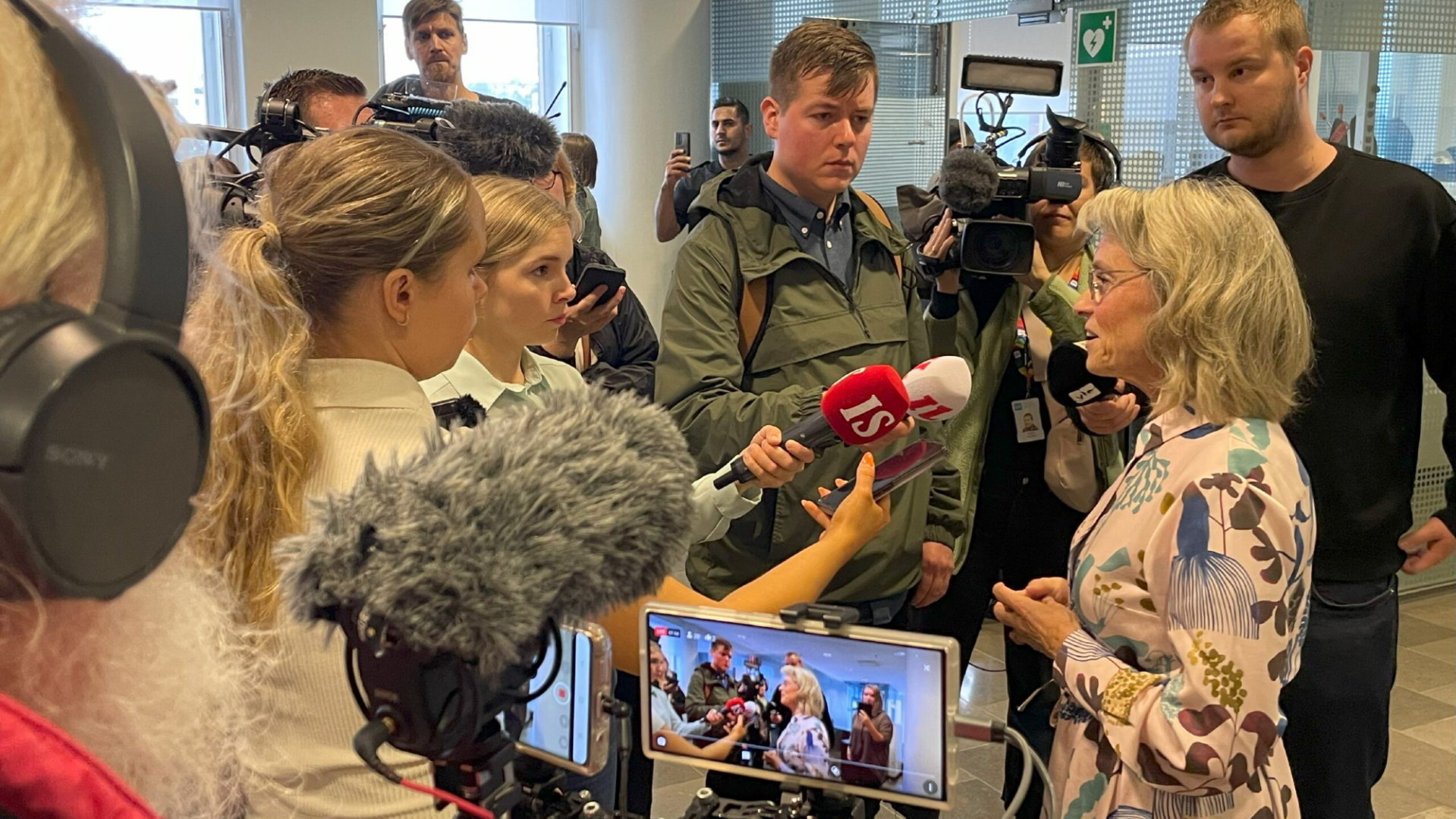
Christian Politician Awaits Finnish Court’s Verdict on Hate Speech Charges—Again

Päivi Räsänen says quoting the Bible should not be a crime in a democracy.

Christianity Today September 8, 2023
Courtesy of ADF

The facts are the same. The arguments, the same. But for two days in an appeals court in Helsinki, prosecution and defense rehashed the arguments that previously cleared Finnish politician Päivi Räsänen and Evangelical Lutheran Mission bishop Juhana Pohjola of charges of criminal incitement against a minority group.

State prosecutors argued there was a mistake last March. They say the district court weighed the evidence incorrectly, setting the threshold for “incitement” too high. According to them, a pamphlet the former minister of the interior published with a conservative Lutheran press in 2004, and comments she made about homosexuality on Twitter and on a national radio show in 2019, should be judged as hate speech.

State prosecutor Anu Mantila says Räsänen’s comments are not only disagreeable and offensive, but harmful.

“Offensive speech has a damaging effect on people,” she said.

Mantila said Räsänen’s statements characterized homosexuality as immoral and as a psychosocial developmental disorder. Räsänen describes same-sex attraction as unhealthy and abnormal—something that requires treatment. According to the state, that “devalues and denigrates homosexuals.”

“If you put all the statements together,” she said, “it is clear that they are derogatory towards homosexuals. Condemning homosexual acts condemns homosexuals as human beings.”

The prosecutor also argued there is no religious defense for that kind of hate speech.

“You can’t say anything under the guise of religion,” Mantila said. “You can cite the Bible, but it is Räsänen’s interpretation and opinion about the Bible verses that are criminal.”

Räsänen, on the other hand, is making a free-speech case.

“You do not need to agree with my beliefs to agree that in a democratic society everyone should have the right to speak freely,” she said. “Freedom of expression and faith are guaranteed in the Finnish constitution and every major human rights treaty.”

The Finnish politician, a leader in the small, center-right Christian Democratic party that is part of the coalition government, also believes her case is critical for the future of religious liberty in Finland.

“If we lose,” she said, “anyone citing or preaching from the Bible or publishing materials on these teachings would face criminal prosecution.”

One of Räsänen’s alleged acts of incitement is a Bible quotation. She posted Romans 1:24–27 on Twitter (now X) to criticize the Evangelical Lutheran Church of Finland for its affiliation with a Helsinki Pride event. The national church does not perform same-sex marriages, but has grown increasingly affirming of LGBT Christians. Räsänen led the opposition against the passage of a law recognizing same-sex marriage in 2017.

Defending her words as simple expressions of biblical teachings on sexuality, Räsänen said the court will now have to decide whether “Christian beliefs are considered a criminal act in modern-day Finland.”

Räsänen’s attorneys see this as a critical religious liberty battle in Europe. She is being represented by the Alliance Defending Freedom (ADF), a legal advocacy group with headquarters in Scottsdale, Arizona, and Vienna, Austria. ADF International’s executive director, Paul Coleman, claims the Finnish government is attempting to use this case to “intimidate others into silence.”

This is exactly what Pohjola, the bishop of a Lutheran church that broke from the state church over beliefs about sexuality, most fears. He said that if the district court’s decision is overturned, his church body’s 2,360 members could be viewed as “criminal.”

This would have a “chilling effect in our society,” he said, “but specifically for my church members who would be guilty by association.”

In the lower court, the judges found that while Räsänen’s words might be offensive, they did not amount to “incitement to hatred,” and should thus be considered legal. The court decided that the purpose of Räsänen’s writing was not to insult or harm LGBT people but to defend what she believed to be the biblical concepts of family and marriage.

During the trial, both parties cited biblical texts so frequently that the court’s chairman had to remind them that the judges would decide the case on the basis of Finnish law and not the Bible. The court also stated in its decision that it is not its job to determine whether a particular interpretation of a scriptural passage is correct.

Räsänen said if she loses in the appeals court, she is willing to take her case to the Supreme Court and then, if need be, to the European Court of Human Rights.

If she wins, however, that will probably be the end of the legal battle. The threshold for appeal is quite low for the Helsinki court; it would be much higher going forward. No case like this has gone to the Finnish Supreme Court before.

“With two decisions in our favor,” attorney Matti Sankamo said, “I doubt we will see this taken up by the Supreme Court.”

The court’s decision is expected in one to three months.

Fall 2023 Partners Impact Report

Thank you to our 2023 partners for making this ministry possible.

Fall 2023 Partners Impact Report

Download the Fall 2023 Partners Impact Report and see how our ministry partners are empowering CT’s next season of ministry. Download now.

The People of Dog: Christians Own More Canines Than Cats

“I think there’s a theological argument there that we’re doing what God designed us to do by taking care of animals.”

Christianity Today September 7, 2023
Illustration by Mallory Rentsch / Source Images: Getty

Three quarters of pet-owning Christians (75%) in the US have dogs, while less than half (43%) possess cats.

That’s according to a Pew Research Center report released this summer. In religious breakouts provided to CT, figures showed that twice as many Christian pet owners (53%) only own dogs while less than a quarter (21%) exclusively own cats. About 1 in 5 (22%) own both. The numbers track with what veterinarian Nancy Moore has observed anecdotally at Christian vet conferences.

“It’s pretty rare, [but] we do get occasional cats,” said Moore, who serves as the southeast region representative for the Christian Veterinary Mission. “I think that the human wants the cat out [and about], but I don’t know if the cat agrees with the human. Cats aren’t notoriously well known for wanting to go into strange places.”

In her own life, Moore is on “Team Cat” (she owns three of them). While she’s thought about being a dog-owner, her busy travel life inhibits that.

Dogs have a constant desire for social company, she said. That requires a special kind of attention. Yet Moore also explained that the dog’s more extroverted nature can reflect that of the church: a culture of life together.

A 2019 report examining how religion predicts pet ownership found that those who attend religious services more often had a higher likelihood of owning fewer pets. Theological affiliation or belief, however, had little to do with pet ownership.

Churchgoers were less likely to own cats, the study showed. However, there was little association between worship attendance and dog ownership.

“On the one hand, certain personality types might simultaneously attract some Americans toward religious participation and away from pets, and cats in particular,” stated the report’s authors, sociologists Samuel Perry and Ryan Burge.

“Alternatively, to the extent that pet ownership is a partial substitute for human bonding and interaction, Americans more deeply embedded within a religious community may have less need (or time) for pets generally, and specifically more independent ‘roommate pets,’ like cats.”

Regardless of what compels Christian pet owners to adopt their feline friends, “Cats Need No Justification” was the argument and headline of one 1988 piece from former CT editor Mary Stewart van Leeuwen.

The annual cost of feeding, vaccinating, and sometimes transporting three cats is still not trivial. I once heard someone assert that it was immoral for Christians to lavish food and care on pets when so many human beings were physically and emotionally starved. … C. S. Lewis would have disagreed. He was certain that animals have more than just a utilitarian function for people.

Some might be under the impression, however, that cats only have utilitarian functions for people. Cats are more likely to keep to themselves throughout the day, only to later come out of nowhere to demand something, says Moore.

“There’s a joke in veterinary medicine: ‘Dogs have masters and cats have servants,’” she said.

Many Christian pet owners go beyond seeing dogs as domestic help—they instead see them as part of the family. Nearly half (48%) said they see their pets as a family member and about equal numbers (49%) said they were part of the family, though not quite a family member.

Cynthia Rhue, who wrote a devotional for Guideposts about her dog Josie’s loyalty, describes her dachshund in non-human terms. About a year after the passing of her “angel,” Rhue discussed Josie’s affection for her in the context of Isaiah 41:10—“So do not fear, for I am with you; do not be dismayed, for I am your God. I will strengthen you and help you; and uphold you with my righteous right hand.”

“When God did not seem near, Josie did not judge, she listened, and she was just the companion I needed in those dark uncertain times,” Rhue wrote.

Part of that comfort stemmed from her pets’ lack of agenda, she said.

“They just loved me because I loved them,” said Rhue, who has also owned a cat. “They were just who they were.”

Julie Buzby, a veterinarian and founder of Dr. Buzby’s ToeGrips, a product that helps dogs avoid slipping, wouldn’t say that dogs “love” to the extent that humans, made in God’s image, can. Rather, a strong sense of respect and dependence on nurturing, she said, may be what it is — something still reflective of unconditional love.

“I don’t think we can classify animals as sinners,” Buzby told CT. “Which really makes it convenient, because I think we can remove the element of sin out of the relationship and it just makes it so sweet. … And I think there’s some element in that that reflects the purity and untainted relationship that we have with God, or that God has with us.”

Some people like Buzby see their pets as a part of God’s hand in their life.

Buzby credits their dog, Zeke, for helping put an end to her son’s night terrors by sleeping beside her son. Much like Rhue, she sees their dogs as irreplaceable companions—a gift from God that plays a role in their life.

“[Pets were] not the only solution, but [they] definitely played a very palliative role in helping our family and members of our family function better and live better,” said Buzby.

The numbers seem to indicate that people with pets tend to live longer, says Burge, who is a political science professor at Eastern Illinois University.

“I think there’s a theological argument there that we’re doing what God designed us to do by taking care of animals,” Burge said. “The original intent of humanity was to take care of animals and nature.”

Increasingly, Americans are choosing to be childless by choice, says Burge. Yet pet ownership suggests that many are still looking for something to care for and potentially indicates an innate desire in humans to care for things.

Nearly two thirds (62%) of Christians own at least one pet—the same percentage as the general population (62%). And just under half (48%) of Christian pet owners in the US said they think there is the right amount of emphasis placed on the wellbeing of pets when thinking about how pets are treated in comparison with people. A lower minority of Christian pet owners (28%) said there is too much emphasis, while others (23%) said there is not enough.

Christian writer Karen Swallow Prior is an animal lover who has occasionally worked with the Humane Society.

In a CT piece from 2011 about animal hoarding, or the practice of taking in too many animals beyond what a household can reasonably care for, she reminded Christians that they should not love animals more than people.

“But nor should we love animals less than we allow fear, greed, covetousness, or pride to rule our lives,” she wrote. “The challenge to love all things as much as they ought to be loved is a challenge for all of us, not just the animal hoarders. We ought to love in proper measure the animals God has placed under our care, and we ought to love our neighbors by helping them to do the same.”

Samantha Saad is CT’s 2023 Habecker Fellow and a student at Taylor University.

Theology

How the Grand Canyon of China Became a Christian Land

British missionary James O. Fraser overcame depression to help give the Lisu a written language, translate the Bible, and make them renowned hymn singers.

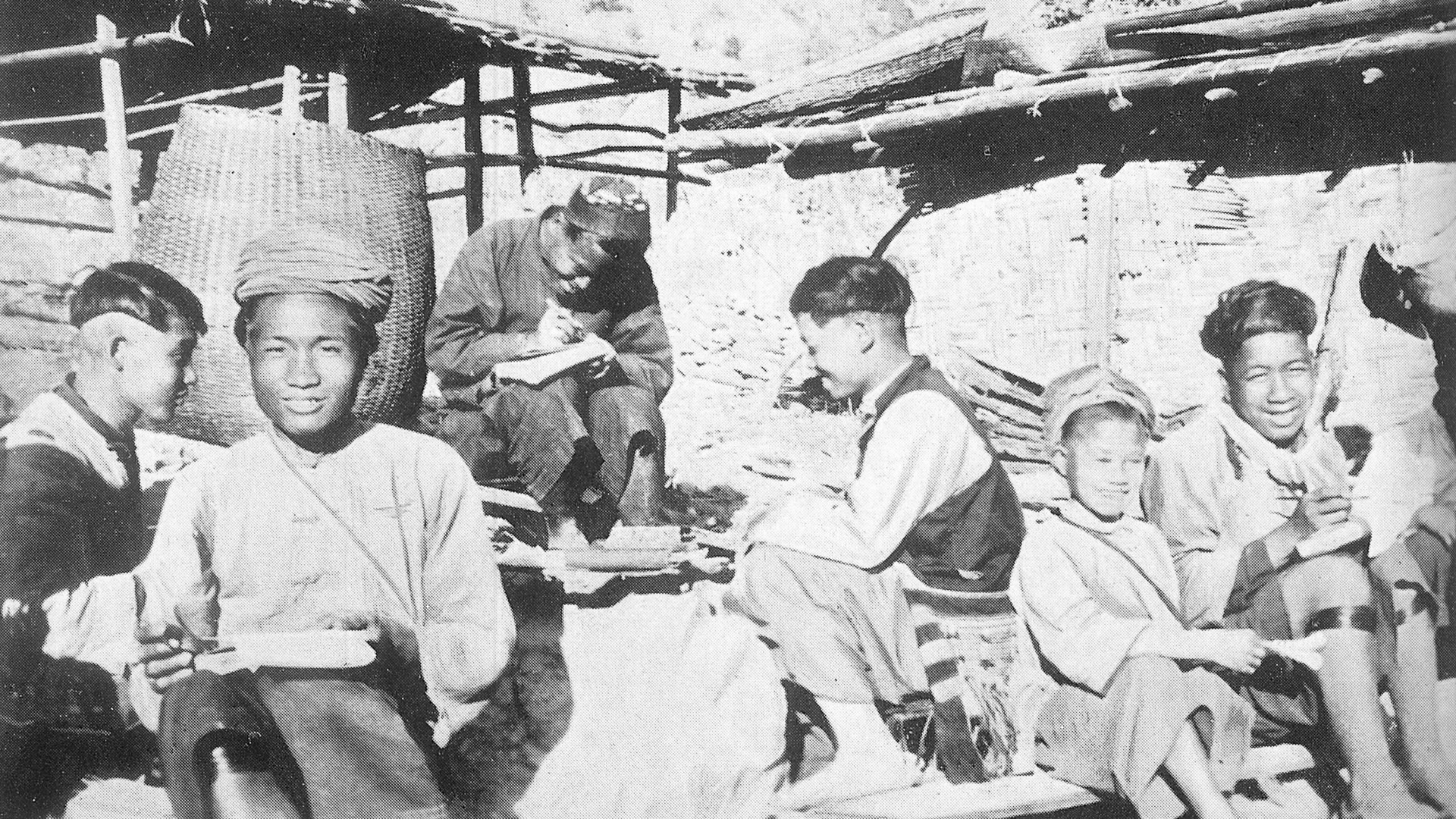
Boys copying Lisu Scriptures.

Boys copying Lisu Scriptures.

Christianity Today September 7, 2023
Courtesy of omf.org

In the remote mountains and ancient forests of China’s Nujiang Grand Canyon, near the Myanmar and Tibet borders in Yunnan province, live the Lisu people (傈僳族).

Mountain rain: A biography of James O. Fraser, pioneer missionary of China (An OMF book)

One of the country’s 55 ethnic minorities, the community of about 900,000 is majority (80%) Christian, and the faith has been present among the people for over a century.

The history of the sowing, germination, flowering, and fruiting of the gospel among the Lisu and the development of their written language trace back to the 1910s, with a missionary from England named James Outram Fraser.

Love at first sight

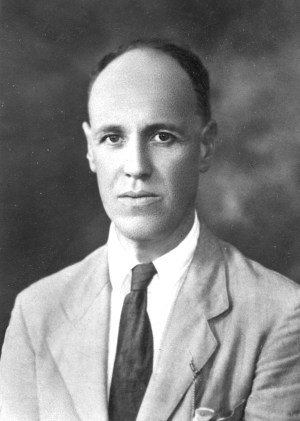
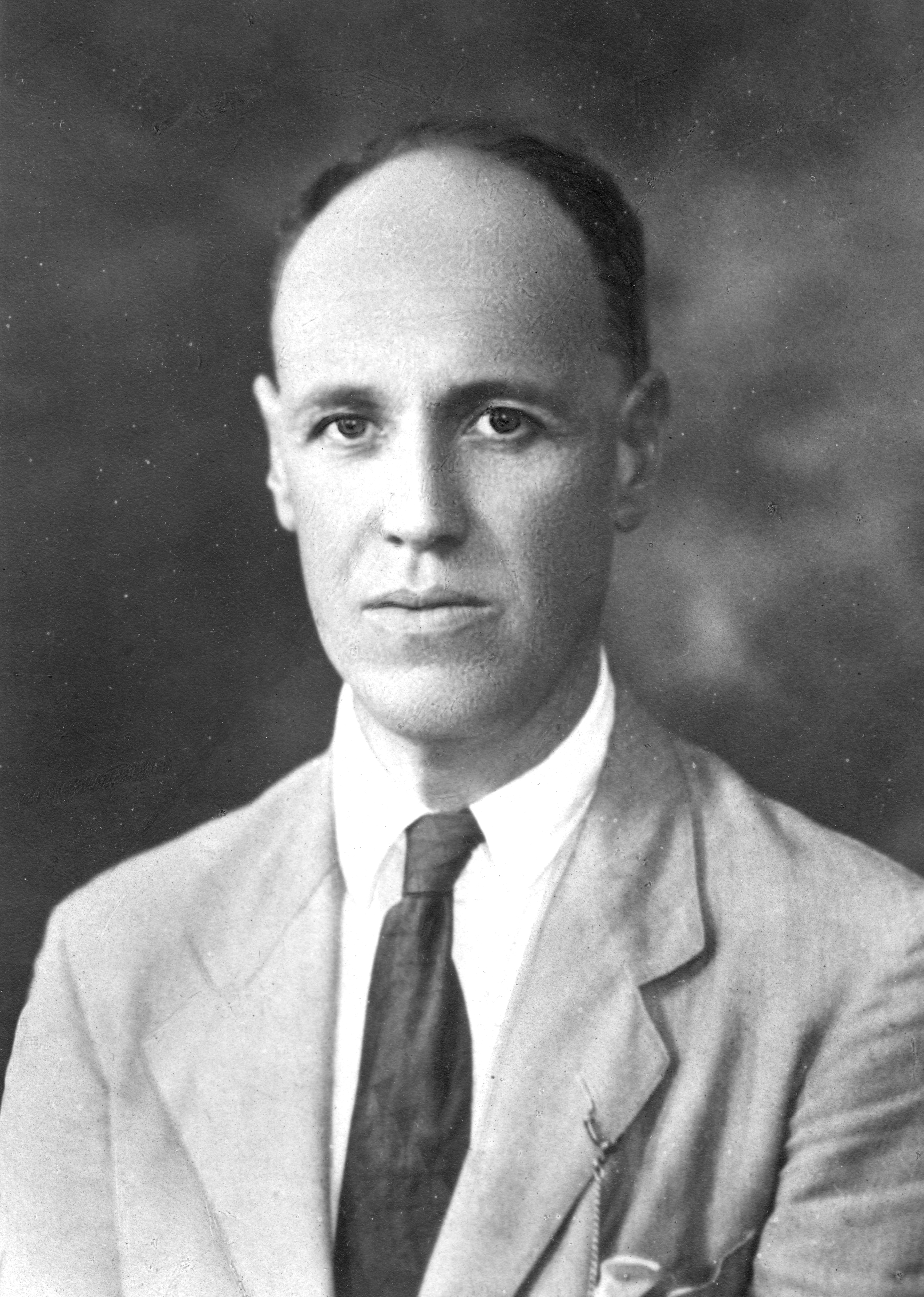
In 1908 at the age of 22, Fraser (Chinese name Fu Neng Ren 富能仁) was a talented student who gave up the promising future of an engineering career to join Hudson Taylor’s China Inland Mission (CIM). His move across the world was inspired by the Student Volunteer Movement as well as by a mission mobilization leaflet one of his Imperial College London schoolmates gave him, which included the following sentences:

If our Master returned today to find millions of people (in China) unevangelized, and looked, as of course He would look, to us for an explanation, I cannot imagine what explanation we should have to give. Of one thing I am certain—that most of the excuses we are accustomed to making with such good conscience now, we shall be wholly ashamed of them.

Convicted and compelled by this argument, Fraser boarded a ship to China in 1910 and disembarked in Tengchong (formerly Tengyueh, a city in Yunnan province and a key stop along the Silk Road).

A hundred years ago, the local ethnic minority Lisu were extremely poor, and their living conditions were miserable. The agricultural method then was “slash and burn.” People lived in raised huts made of woven bamboo and mud, with livestock animals stabled under the floor. They could only afford to eat rice and salty preserved vegetables, without any meat. Fraser often traveled into the mountains by riding a horse or walking to preach the gospel, but the climate there was fickle, and he found it difficult to adapt to the environment. He struggled with physical weakness and his new diet often left him malnourished.

The Chinese language was also difficult to learn. Fraser felt that the language barriers were as limiting as the mountainous landscape of Nujiang, and all the conditions made it almost impossible for him to carry out missionary work. During the hard first few years, one of the most significant sources of encouragement for Fraser was the prayers of his missionary support team back in the UK, which included his mother.

Fraser’s work in Tengyueh started with evangelizing the majority ethnic group, the Han Chinese. He began distributing printed booklets of the Gospel of Mark in Chinese, which he had brought from England.

One day, Fraser lost a copy of the booklet in a city market. A little girl found it and gave it to a literate pastry chef, Master Moh. Moh was moved when he read the gospel and decided to follow Jesus, becoming the first believer in the Nujiang area. Later, the chef hosted the nearby Lisu people at his home and became an important asset to Fraser in evangelizing the minority people.

James O. FraserCourtesy of omf.org
James O. Fraser

When Fraser first saw the Lisu, they were wearing bright tribal costumes and descending from the mountains at the market. He immediately fell in love with this people and was convinced he wanted to preach the gospel to them. “I was very much led out in prayer for these people, right from the beginning. Something seemed to draw me to them,” he later said.

A formidable mountaineer, Fraser often climbed ridges and hiked into the mountains and old forests to share the gospel with the Lisu. The people were happy to receive this tall, quiet, and always smiling Western missionary in their mud huts.

Initially, Fraser could only communicate with the Lisu people in Han Chinese. But both his Chinese and theirs was quite limited, so a lot of gesturing and guessing was involved. Over time, Fraser began the hard work of learning Lisu. When he finally managed to hold a simple conversation in their own language, he, along with local Christians, helped bring several families to Christ.

Encouragement from a small magazine

Despite these initial conversions, numerous missiological challenges and spiritual battles quickly ensued. In general, the Lisu were highly superstitious and afraid of evil spirits, and they offered sacrifices to ghosts. When a newly converted Christian family encountered illness and difficulties in life, they often rejected their new faith. Moreover, many Lisu people regularly struggled with alcoholism and sexual promiscuity. After becoming Christian, it was often difficult for them to move on from their old habits and commit themselves to the faith.

Observing these new Christians’ spiritual struggles and lapses led Fraser into a period of spiritual darkness and depression in the first years of his mission in Nujiang. He suffered setbacks and almost gave up.

One day, during one of his lowest points, he walked a long way to the post office and found he had received a Christian publication from his British Christian friends. Fraser had never read The Overcomer before. The outside of the magazine was already wet from the rain, so he opened it carefully, worried he might rip its pages.

Inside, the magazine talked about trusting in the Lord and resisting the Devil. Fraser carefully read that magazine again and again, and found himself greatly encouraged by the words. “I talked to Satan at that time, using the promises of Scripture as weapons,” Fraser later recalled. “And they worked. Right then, the terrible oppression began to pass away.”

Generations of Christians, including the native Lisu missionaries from the Nujiang area, have been inspired by Fraser’s trust in God and his perseverance in the face of adversity. His example has helped others devote themselves to missions among the Lisu and other ethnic minorities.

The Lisu script and Bible translation

Fraser’s most acclaimed contribution to missions is his translation of the Bible and Christian hymns into the Lisu language. When he first met the Lisu people in Tengyueh, they had no written language of their own. After Fraser learned to speak the language, he began to translate the Bible into Lisu.

At that time, Ba Thaw, a Karen missionary from Myanmar, was also preaching the gospel among the Lisu. Ba Thaw recorded the spoken language using an adaptation of the Latin alphabet, which Fraser further modified. This first written system is now called the “Fraser script” or “Fraser alphabet,” or “old Lisu script.”

After 1949, the new Communist government in China commissioned linguists to invent a new Lisu script, but the old script was already deeply rooted in the hearts of the people. In 1992 the Chinese government recognized the old Lisu script invented by Ba Thaw and Fraser as the official writing system of the Lisu language.

By 1917, less than a decade after arriving in China, Fraser translated the Gospel of Mark. He soon followed with the Gospel of John and a number of hymns. The Lisu people were especially talented in singing, and Fraser, a gifted pianist, was deeply moved every time he heard the Lisu sing hymns in four-part harmony. (Today, tourists to Nujiang cannot help but marvel at the highly gifted singing in the many small Lisu churches throughout the mountainous area.)

Fraser later handed over the work of translating the Lisu Bible to other missionaries who followed his footsteps. Allyn B. (杨思慧) and Leila (宋大成) Cooke, an American missionary couple in Nujiang, worked with Fraser and subsequent workers to complete the New Testament. The Cookes also translated a children’s prayer book and compiled a small Lisu dictionary. In 1968 the Old and New Testaments were officially published in the Lisu language in Hong Kong. It is regarded as one of the most significant events in the history of Christian mission in China.

Fraser’s own mission work benefited from the ministry of Christian literature—articles, pamphlets, and booklets published and distributed for evangelistic or missional purposes. And Fraser himself made a lot of contributions as a talented writer and wordsmith, penning many articles for the missionary journal The Chinese Recorder and CIM’s China’s Millions. In the prayer letters that Fraser regularly sent back to his supporters in the UK, he eloquently described the beauty of the mountains in the south of Yunnan and the simplicity and warm-heartedness of the Lisu people.

He wrote in detail about the difficulties he experienced in his mission work and how he persevered by God’s grace. He recorded his spiritual journey and shared views on spiritual issues (especially prayer). His biography Mountain Rain, written by his daughter Eileen Crossman, contains many quotes from his well-written and sincere prayer letters, which have become precious historical materials. His letters aid us today in learning and emulating the missionary pioneer’s love for unreached people and the spiritual character of being empowered in prayer.

In one of the prayer letters he sent back home, Fraser encouraged Christians in England to pray for mission in China:

Work on our knees. I am feeling more and more that it is after all just the prayers of God’s people that call down blessing upon the work, whether they are directly engaged in it or not. Paul may plant and Apollos water, but it is God who gives the increase, and this increase can be brought down from heaven by believing prayer, whether offered in China or in England. We are, as it were, God’s agents used by Him to do His work, not ours. We do our part, and then can only look to Him, with others, for His blessing. If this is so, then Christians at home can do as much for foreign missions as those actually on the field.

Sean Cheng is CT Asia Editor.

Theology

Pastors, There’s a Ministry in Staying Put

One of the best gifts you can give your church is not leaving too soon.

Christianity Today September 7, 2023
Illustration by Mallory Rentsch / Source Images: Getty

It’s no secret that the pastoral profession is in a state of crisis. Pastors today are burned out, and many reached a breaking point in the past few years. A third have considered quitting ministry, and even those who haven’t are running on empty—not to mention one in four are planning to retire soon.

Pastors today face a multitude of burdens and demands, including the expectation to perform and succeed at a megachurch level, even at smaller churches like mine. Like many shepherds, I often feel a sense of pressure to lead our church to greener pastures, to move us onward and upward.

But other times I realize that simply staying put in the pulpit is itself a victory. Just showing up and being faithful this Sunday and the next, this month and the next, this year and the next, is what God requires of me—of us. Preach another decent sermon, officiate another wedding, bury another beloved saint, and send another dozen emails. And then do it again.

I’ve been the lead pastor of our congregation for the last ten years. In a few weeks, we reach a new milestone: We’re planting our first church. We’ll send 50 people and one associate pastor a few miles down the road with fanfare and blessings. Wonderful, right?

Yet when my beloved associate pastor leaves, it means a sadder milestone for me: Each member of our original staff will have transitioned away from the church. Over the last ten years, they’ve all left for one reason or another, while I’ve stayed. More than a few times, I’ve longed to tag along, because often “the ministry of staying put” feels more like “the ministry of being left.”

Being left, however, has forced me to reckon with haunting questions I would otherwise ignore. For example, Zack Eswine asks in his book The Imperfect Pastor, “If I am bored with ordinary people in ordinary places, then am I not bored with what God delights in?”

During the worst months of COVID-19 and racial tensions in our city, I almost did call it quits, even though I had nowhere to go. At a late-night elder meeting, I was assigned the task of writing another pandemic update letter to our church. The staff and elders didn’t know at the time that I wrestled with whether to send my resignation letter instead. But I chose to stay.

That doesn’t make me a better pastor than those who have made other choices. I know the real issue isn’t so much about staying or going, but obeying God.

Years ago, in another context, I felt called away from a church after only two years. But watching the faithfulness of my boss who stayed at that church—and now having stayed through several hard seasons at my current church—I can testify to the ways God blesses pastors and their congregations when those in leadership weather the storms together.

Paul implies this type of pastoral longevity in his words to Timothy. Timothy was to set an example for his congregation “in speech, in conduct, in love, in faith and in purity” and to devote himself “to the public reading of Scripture, to preaching and to teaching.” Then Paul added the reason for this: “so that everyone may see your progress” (1 Tim. 4:12–13, 15).

In other words, Timothy should stay long enough for his church members to see him improve because they will come to know the grace of God better as they see it grow in their pastors.

True pastoring—the biblical relationship between shepherds and sheep—often takes several years of trust-building. It takes time for a congregation to trust a pastor with weighty personal matters like officiating weddings, counseling in crises, or presiding over funerals.

My friend Shad Baker, senior pastor of Carlisle Evangelical Free Church for nearly twenty years, told me, “I think one of the good things that happens when pastors stay is that they have context to understand complicated situations.”

They are more aware of the dynamics between key families, can mourn with those who struggle with addictions, hurts, and losses, and can celebrate the joys and victories. They know whose cancer is in remission and whose has returned. Pastors can’t acquire the gravity of this intel by reading a briefing.

But more than that, a pastor’s own maturity often comes through endurance. The type of progress Paul exhorts Timothy to display doesn’t merely entail refining his public speaking skills, but improving his habits of repentance and submission to accountability, which require time and practice.

In a section of his book The Jesus Way, Eugene Peterson explores the ministry of Elijah and all the kings and prophets Elijah would anoint. Peterson notes that Elijah “will not see the results of his prophetic work. None of us in this kingdom work ever do.” Then he adds, “We plant sequoias.”

I wouldn’t disagree with Peterson. Ministry leaders draw deep encouragement from such biblical truths. But sometimes when a pastor has a long obedience in the same direction among the same congregation, that pastor does get the joy of seeing ministry seeds become saplings, if not the early makings of sequoias.

Just the other week, our elders took a night away from our regular meeting to celebrate our associate pastor, the one who’s leaving to plant the new church. We played pickleball together and talked trash about whose foot did or didn’t cross into the kitchen on a volley. We also spent time reminiscing. After eight years together, we have plenty for which to be thankful.

But I found myself feeling most thankful for what God did after we endured interpersonal conflicts and burnout. “I’m not sure all of you were here for these moments,” I told them, “but there was a time we almost didn’t make it.”

Yet there we were, a bunch of friends laughing and pretending to be athletes again and telling stories of how God had dwelt among us. And it hit me that none of those sermons or baptisms or retreats we considered highlights would have happened if one or both of us pastors had left.

Maybe you’re a pastor contemplating a transition, or like me, trying to learn how you can stay long-term. Either way, I hope my testimony can encourage you.

Our Christian subculture loves visionary leaders, dynamic pastors, and leveraging momentum. Yet God is teaching me about the ministry of not leaving. Sometimes pastors obey the Spirit by starting that new program. Sometimes pastors launch a new initiative, update the mission statement, or find a new church. More often, however, they obey the Spirit by continuing to show up day after day.

I don’t know how long I will pastor at my current church. I say with Ezekiel, “O Lord God, you know” (37:3, NKJV).

But I do know this isn’t a day for me to quit, but to stay.

Benjamin Vrbicek is the lead pastor at Community Evangelical Free Church in Harrisburg, Pennsylvania, the managing editor for Gospel-Centered Discipleship, and the author of several books.

News

Investigation: Mike Pilavachi ‘Used Spiritual Authority to Control People’

The Church of England concluded that the Soul Survivor founder engaged in spiritual abuse over four decades.

Mike Pilavachi at Soul Survivor Watford

Mike Pilavachi at Soul Survivor Watford

Christianity Today September 7, 2023
Screengrab / Soul Survivor

One of the most influential leaders in British evangelicalism used his spiritual authority to control people, exhibiting “coercive behavior” that led to inappropriate relationships, wrestling, and massages, the Church of England has concluded.

The church’s investigation into allegations of harmful behavior by Mike Pilavachi, the founder of the Soul Survivor youth festival and an ordained minister, was first announced in April.

Although the details were never made public either by Soul Survivor or the Church of England, in recent months national newspapers have published accounts by men who had served as staff members and interns at Soul Survivor. The accounts include allegations that Pilavachi massaged, straddled, and wrestled with the men and others as teens.

On Wednesday, the Church of England media team said that the investigation, carried out by the National Safeguarding Team, had concluded that these concerns were “substantiated” and spanned four decades: from Pilavachi’s time as a youth leader at St. Andrew’s Church in Chorleywood to the present day.

“The overall substantiated concerns are described as an abuse of power relating to his ministry, and spiritual abuse,” the statement read. “It was concluded that he used his spiritual authority to control people and that his coercive and controlling behaviour led to inappropriate relationships, the physical wrestling of youths and massaging of young male interns.”

The statement quoted the definition of spiritual abuse that has been adopted by the House of Bishops (the senior leadership of the Church of England): “a form of emotional and psychological abuse characterised by a systematic pattern of coercive and controlling behaviour in a religious context.’”

The extent of Pilavachi’s influence has meant that the allegations have had a significant impact on British evangelicals. It is now 30 years since Pilavachi founded both the Soul Survivor festival—an annual gathering attended by up to 30,000 young people and youth leaders—and the Soul Survivor church in Watford, a town north of London. Many people have taken to the internet to process either their personal experiences of Soul Survivor or their feelings about the revelations.

Gavin Calver, the CEO of the UK’s Evangelical Alliance, shared a statement on X (formerly Twitter), offering prayers for all affected by Pilavachi’s abuse.

“The longevity and the consistency of the accounts is heart-breaking,” he said, “and like many of you, I’m left with uncomfortable questions as I wrestle through the conflicting realities of the lives transformed by Jesus through Soul Survivor, paired simultaneously with the long-term effects of trauma and pain caused by abuse in the same space.”

Among those who have come forward with allegations is David Gate, a former worship leader at Soul Survivor. In May, he told the Sunday Times that Pilavachi had singled him out as a 16-year-old and told him he was “going to do amazing things for God.”

Wrestling, he said, “was a sign that he liked you—you were one of ‘Mike’s boys’ … Looking back, it must have appeared strange, a 45-year-old, well-built man wrestling on the floor with a 16-year-old boy.”

Pilavachi had “the power to break your career,” he said. “The only doors that would open for you were the ones that he opened for you to go through. For a teenager, it was emotionally devastating.” Like others, he described how Pilavachi related to him in a cycle of praise and attention followed by inattention and indifference.

The conclusion of the investigation isn’t the end of the process for Pilavachi. The National Safeguarding Team is also bringing a complaint against him under the Clergy Discipline Measure (CDM)—the means by which the Church of England handles allegations of serious misconduct.

Pilavachi already resigned as senior pastor of Soul Survivor in July, seeking forgiveness “from any whom I have hurt during the course of my ministry,” and returned his license to the Bishop of St. Albans, meaning that he cannot currently minister in the Church of England.

The most severe sanction that can be imposed by the CDM is prohibition for life from exercising ministry. The Church of England has said that it is “committed to ensuring that relevant safeguarding information is passed on if he were to minister elsewhere both in this country and abroad.” To date, Pilavachi has enjoyed an international ministry, traveling the world to preach at evangelical gatherings.

On Wednesday, Soul Survivor Watford announced that it had commissioned a senior litigator, Fiona Scolding, to lead a “full and independent review” of what had occurred. Some have claimed that top leaders at the church were aware of concerns about Pilavachi as early as 2004.

Soul Survivor Watford confirmed that the church’s senior pastor, Andy Croft, remained suspended. But the suspension of assistant pastor Ali Martin had been lifted, as concerns raised about her had not been substantiated. Both pastors were suspended in June in relation to “concerns over the handling of allegations.”

In its statement, the church said:

There has been a systematic pattern of coercive and controlling behaviour. We are saddened that these behaviours happened in a context that should have provided safety and spiritual support.

We are committed to learning lessons from what has happened and to put in place further practices and procedures that will seek to ensure this kind of behaviour does not happen in the future.

In recent years, spiritual abuse has received more attention in the Church of England, drawing on research by experts including Lisa Oakley, a psychologist who is currently professor of safeguarding and knowledge exchange at the University of Chester.

In 2017, she worked with Justin Humphreys, chief executive of the safeguarding charity Thirtyone:eight, on an online survey seeking to measure the prevalence of spiritual abuse: 1,002 of the 1,591 Christians who replied said that they had personal experience of it.

In 2018, a former vicar in Oxfordshire, Timothy Davis, was convicted by a church tribunal of spiritual abuse against a teenage boy. It was thought to be the first judgment of its kind. Over a period of 18 months, Davis held private Bible study sessions in the victim’s bedroom, putting the victim under what was judged as “unacceptable pressure.”

Evangelicals are starting to take preventative action, although some have raised concerns about the term spiritual abuse and its definition. Next year, an evangelical umbrella organization, Affinity, is due to publish a resource book for churches, Challenging Leaders: Preventing and Investigating Allegations of Pastoral Malpractice.

In the meantime, Calver wrote that these stories of abuses of power are coming up too often and “the evangelical church in the UK must do better.”

“As painful as it is, we must not resist the work of God’s Spirit to bring to light that which has been hidden in the shadows,” he said. “Environments, cultures and structures that allow, and even encourage, abuse to take place must be acknowledged and eradicated.”

News

From Dust to Lunch: Jordanian Christians Decry Cost of Funeral Feast

Tribal hospitality demands feeding the 500. But believers pinched by poverty call for cultural changes that still preserve honor.

A Jordanian woman sitting beside the grave of a relative.

A Jordanian woman sitting beside the grave of a relative.

Christianity Today September 7, 2023
Mohammad Abu Ghosh / AP Images

To honor the dead in Jordan, one must feed the living.

But in solidarity with the poor, leading Jordanian Christians are calling for a change in funeral customs.

Shared with wider Muslim society, certain Christian practices are similar to Western norms. Upon the announcement of death, the bereaved family makes arrangements through the church to conduct a memorial service. The casket is then conveyed to the cemetery, where hymns are sung and the traditional “dust to dust” is prayed over the loved one. And in somber conclusion, a line of condolences forms as the pastor or priest extends the family invitation to take part in a luncheon of remembrance.

But in Jordan, this may involve up to a thousand people.

“Culture requires that if you attend my funeral, I will come to yours,” said Nabeeh Abbassi, president of the Jordanian Baptist Convention. “But that is a lot of food, and increasingly, many cannot afford it.”

An average gathering is between 300 and 600 people, he said. It includes immediate family, extended relatives, and almost all residents of the village or city quarter. In a culture of honor and shame, it would be a great insult not to share in a neighbor’s grief.

The meal is the Jordanian national dish of mansaf, lamb meat served with rice and topped with nuts and a sauce of fermented dried yogurt. The dish is presented on large circular trays, and mourners gather by gender to eat with their right hands while standing.

When Abbassi’s mother died nine years ago, 500 people came to honor her life. Expenses nearly reached $10,000, with only $1,500 due to the funeral. Like many Jordanians, he contributed to a monthly family allotment to cover such costs. But at the time of the funeral, the savings totaled only $700, which the five siblings decided to give to their father.

Generations ago, Abbassi explained, tribal culture involved relatives and clan members coming from great distances for a three-day period of mourning. Before the age of automobiles and restaurants, the hosting family provided hospitality for their guests—but each came with a contribution of coffee, rice, or sugar, with many bringing a live lamb to slaughter. Often, they left behind an excess.

“We keep some of the culture, but neglect the best of it,” Abbassi said. “Living in the 21st century, we are burdened by the 20th—it doesn’t make any sense.”

He advises a change in service time—if held later in the day, people will have already eaten lunch. As many Jordanians live in Amman, the capital, travelers from most outlying cities are no more than an hour away by car.

Honor, however, runs deeper than reciprocity.

“No one wants to be thought of as cheap,” said Daoud Kuttab, an award-winning Palestinian journalist living in Jordan. “And the number of people at a funeral is almost viewed as an indicator of social standing.”

An evangelical, Kuttab is playing a leading role in promoting the boycott of traditional mansaf practices. As editor-in-chief of Milhilard (Salt of the Earth), his coverage seeks to get Christian church and community leaders on record about their stances regarding the funeral customs. So far, the Greek Orthodox archbishop of Sebastia (Samaria) and the Lutheran bishop of Jordan and the Holy Land have indicated their opposition to the pan-Levantine tradition.

Kuttab’s advocacy was actually sparked by a Muslim decision. Noticing how the Shawabkeh clan in northwest Jordan publicly banned the mansaf meal for all but close family relations, he wondered if Christians could do the same.

Survey responses from the partner publication Asha’ir Mesihiya (Christian Tribes) were overwhelmingly positive in favor of reform. But some people nonetheless expressed a cultural unease.

“Share their sorrows, but not their banquets,” wrote Michel Ghawi. “But the matter is not easy—it is a shame if we do not go.”

The issue of reputation is deeply ingrained in Jordanian mentality, a reality affirmed by Ibrahim Nassar, pastor of Church of Glory in Marka, a lower middle-class area in east Amman. The bereaved family must not risk marring the status of the deceased as a generous person, but meanwhile, everyone else is calculating the financial costs and dreading their turn.

“People are in very difficult circumstances economically,” he said. “They are worrying, ‘If my father or mother die, what will I do? Where will I borrow money from? What will I do if the bank doesn’t give me a loan?’”

In 2022 Jordan had an unemployment rate of 23 percent, and the World Food Program stated that the country suffers slow economic growth and an inflation-induced increased cost of living. And according to an Arab Barometer survey, nearly half (48%) of the population reported they sometimes or often run out of food before being able to afford more.

A Muslim friend from a large tribe told Nassar that his family took out a loan of nearly $30,000 to cover the cost of funeral proceedings. But last year, when his own father and uncle died within six months of each other, the Nassar family decided on an alternate custom: They gave the money to the poor.

The practice has been repeated by others.

“Such generosity will address the issue of honor, avoiding whispers of stinginess,” said Imad Shehadeh, president of Jordan Evangelical Theological Seminary. “I’m not sure if it will succeed, but if we can have a string of funerals without mansaf, the idea may really spread.”

But it may risk a perceived eternal reward. For most Jordanian Christians, the funeral meal is a prayer of mercy for the deceased. Especially in the historic Catholic and Orthodox churches, a priest will bid guests to the family home to “eat over the spirit of the departed.”

Evangelical pastors will substitute the language of mercy with a “meal of fellowship,” but many ordinary believers still link the meal to religious obligation.

“It is appointed for man to die once, and then the judgment,” Shehadeh said, quoting Hebrews 9:27. “Calling for mercy after death is unbiblical.”

Bassam Shahatit, a Melkite Greek Catholic priest and head of his denomination’s ecclesiastic court, said that many Christians misunderstand the traditional “God have mercy upon him.” Primarily meant to comfort the family, it places the departed in the hand of God, who is by nature merciful. But whereas some popularly believe that such prayers will impact eternal fate, it is Jesus alone who will judge. The substitute “God comfort your heart,” he said, is scripturally sound and offers better condolence.

Shahatit nonetheless commended the funeral meal in its ideal, as it is based on biblical principle. Weep with those who weep, taught Jesus, for the presence of many guests helps the family to not feel alone in their grief. And in the Old Testament, Abraham similarly hustled to provide generously for his three mysterious visitors in Genesis 18.

Some interpretations see the supernatural guests as a pre-incarnation theophany.

“‘Freely you have received, freely give’—this is Christian spirituality,” said Shahatit, quoting Matthew 10:8. “And when you welcome others to your table, you welcome God.”

Unfortunately, like the misunderstandings around spoken “mercy,” the mansaf has been corrupted by culture. Everyone tries to show off their generosity, while avoiding any appearance of poverty. In solidarity with the poor and middle class, Shahatit favors canceling the tradition—or greatly reforming it.

For example, in Syria, the funeral mansaf has been replaced by mujaddera, a rice dish served with lentils and caramelized onions, thus helping alleviate much of the expense. Due to the deteriorating economic situation, Shahatit said a kilo of meat now costs half the average monthly salary.

Kuttab said that as a smaller religious community, Christians might be better able to reach a collective decision to change funeral culture. But being, on average, slightly wealthier than Muslims, Christians may also be better able to tolerate the costs. As for himself, he will no longer provide for the funeral meal, nor partake in it.

Abbassi, who will put the question to Baptist pastors in an upcoming convention gathering, wavered only slightly in his resolve. Family obligations are strong, he admitted, but to pick and choose which funerals he attends would show an ungodly favoritism. A group decision provides protection for all.

But who will go first?

“As pastors, we have to encourage the families to stop the tradition,” Abbassi said. “And if more and more people make this choice, the custom will fade away.”

Additional reporting contributed by Heather Surls. The Arabic translation of this CT article was provided by Milhilard after publication.

All the Lonely People in the Building

Hulu’s whodunit is stubbornly pro-community in an isolated age.

Left to Right: Oliver (Martin Short), Mabel (Selena Gomez) and Charles (Steve Martin) in Only Murders in the Building.

Left to Right: Oliver (Martin Short), Mabel (Selena Gomez) and Charles (Steve Martin) in Only Murders in the Building.

Christianity Today September 6, 2023
Craig Blankenhorn / Hulu

In August of 2021, the COVID-19 pandemic was in its 18th month. It had shaped a presidential election, transformed our vocabulary and social lives, and taken more than 600,000 lives. The Delta variant was starting to surge, and for large swaths of the country, it was clear normalcy wouldn’t return any time soon.

That same month, a new television series premiered on Hulu with an unlikely trio of stars: Selena Gomez, Steve Martin, and Martin Short—a millennial pop icon and two comedy legends from her grandfather’s generation. The show was Only Murders in the Building, a whodunit about three New York City neighbors making a true-crime podcast.

The premise was inevitable. True crime consistently draws huge podcast audiences, so it was just a matter of time before podcasters came to TV, much like TV producers (The Larry Sanders Show, 30 Rock) and journalists (The Mary Tyler Moore Show, Murphy Brown, The Newsroom) did in an earlier era. What wasn’t inevitable, however, was Only Murders’ comedy and pathos—as well as its intense and timely interest in what it looks like to stubbornly choose community with flawed and frustrating people in an isolating age.

Only Murders’ primary hook is the punchy, insult-driven dialogue between Martin and Short. It echoes the caustic manner of Don Rickles, as if every conversation is happening at a roast or a Vegas dinner theater, and it manages to both shock and charm. Martin’s Charles-Haden Savage and Short’s Oliver Putnam relentlessly mock each other’s failed careers and relationships, old age and physical appearance, and bad taste in clothes and art.

This comes naturally to longtime comedy partners Martin and Short, but a delightful surprise is Gomez’s seamless entry into the act. As Mabel Mora, a fellow resident of the Arconia apartment building, her melancholic energy is a foil to Charles’s neurosis and Oliver’s manic excitement, but her quips are equally ruthless.

“Is it cancer?” Mabel asks when Charles gets a nervous nosebleed early in the first season. “I just need to know how invested I should get in you. You don’t adopt a 20-year-old dog.”

It’s a startlingly funny line—and it was especially startling in 2021, when death loomed so large in our imaginations and in our headlines. More timid artists would have tempered jokes like this or altogether nixed a mid-pandemic farce about violent death. But death isn’t really the point of Only Murders in the Building. The heart of the show is not the murders—it’s the building, or, more precisely, the community that forms within it.

This is why, though ostensibly a show about a true-crime podcast, Only Murders hardly pays attention to the conventions of the genre. The addictive power of true crime is in the minutiae: phone records, unexplained or discarded bits of evidence, leads the police ignored, tiny discrepancies in testimony.

But the Only Murders team are barely competent as sleuths. The murders are a MacGuffin—a plot device that brings them together, yet has little significance in its own right. The real mystery that Charles, Oliver, and Mabel are trying to solve is their loneliness.

They are hardly exceptional in this. Friendship has been in decline in America since the 1990s. The COVID-19 pandemic accelerated that decline, with nearly 1 in 10 Americans reporting losing touch with most of their friends between 2020 and 2021. The US surgeon general recently declared loneliness an epidemic, linking it to cardiovascular disease, depression, anxiety, dementia, and a host of other diseases.

Only Murders wasn’t conceived as a response to the pandemic or its containment policies. (Hulu announced the production in January of 2020.) But its timing was perfect. Viewers could identify with Charles’s solitary ritual of making an omelet for no one, or police detective Donna Williams’s belief that we’re “born alone, spend most of our time alone, then we all go out alone.”

After months of isolation, many were questioning what value was to be found in gathering again at churches, schools, and workplaces. Only Murders offered an adamant answer: Community is necessary. Loneliness can be escaped. Even grief and tragedy can be a catalyst to connection.

However unintentionally, that echoes a foundational Christian understanding of community. Unlikely friendship was knit into the DNA of the church from the beginning, when zealots, tax collectors, fishermen, and sinners of all kinds encountered grace and began following Jesus together (Matt. 10:2– 4). As the gospel spread, Christian communities became more culturally disparate, and much of the pastoral counsel in the Epistles was written to teach this strange new people how to be generous and hospitable to one another (e.g. Eph. 2:11–22).

Today the church’s biggest obstacle to that kind of community is often self-imposed. First, leaders act like marketers, dividing congregations into demographic groups and programming ministry to meet specific needs. Then, in the interest of highlighting “diversity,” we attempt to manufacture experiences that bring those groups together, expecting various members to fulfill stereotypical roles according to race, age, or gender.

I wonder if we couldn’t take a cue from Only Murders on this front. In the fifth episode of the current season, when Mabel is asked to characterize her relationship with Oliver and Charles, she calls them her “best buds.” They talk about “murder, mostly,” she adds, but also “how to connect to Bluetooth. We talk about that a lot.”

It’s an artful understatement. Friendship defies description. It also resists force. Those who want to fight the loneliness epidemic from inside the church could learn a lot from a relationship built on murder and Bluetooth, a pairing of serious purpose and the mundanities of life together. To make another understatement, that pair is just what can unite us at church.

In the first two seasons of Only Murders, Charles, Oliver, and Mabel tested the possibility of friendship under tenuous circumstances, and we cheered for them as they succeeded. As backstories surfaced, our heroes were exposed as liars, each hiding old sins and shame, and still, the friendship proved durable. They forgave one another, over and over, and carried each other’s burdens (Gal. 6:2).

Season 3, which just passed its halfway point on Tuesday, still has a murder plot. But the most important storylines are those taking the three main characters in separate directions. Mabel is being forced to move out of the building and is being recruited to a new true-crime gig. Charles and Oliver are tempted by romance and career, respectively, to turn away from the trio’s friendship (and their podcast). The true menace of this season is less the new murderer, yet to be revealed, and more the already looming loss of community.

After two seasons of vicarious joy in the friendship between the three, Only Murders’ threat to its characters’ life together is more frightening than any of its previous scares. It feels like a horror movie, and one of the classic rules of slasher flicks—recited by Mabel and fellow Arconia neighbor Howard in this week’s episode—is the very thing that could save our heroes: “We have to stick together.”

Mike Cosper is the director of CT Media.

addApple PodcastsDown ArrowDown ArrowDown Arrowarrow_left_altLeft ArrowLeft ArrowRight ArrowRight ArrowRight Arrowarrow_up_altUp ArrowUp ArrowAvailable at Amazoncaret-downCloseCloseellipseEmailEmailExpandExpandExternalExternalFacebookfacebook-squarefolderGiftGiftGooglegoogleGoogle KeephamburgerInstagraminstagram-squareLinkLinklinkedin-squareListenListenListenChristianity TodayCT Creative Studio Logologo_orgMegaphoneMenuMenupausePinterestPlayPlayPocketPodcastprintremoveRSSRSSSaveSavesaveSearchSearchsearchSpotifyStitcherTelegramTable of ContentsTable of Contentstwitter-squareWhatsAppXYouTubeYouTube