Ideas

How Should We Then Live Among Muslims? Four Arab Christian Views

Correspondent

Theological advice on how Middle East believers in Jesus can best witness to their faith, keep social peace, and maintain unity.

Christianity Today May 17, 2023
JossK / Getty

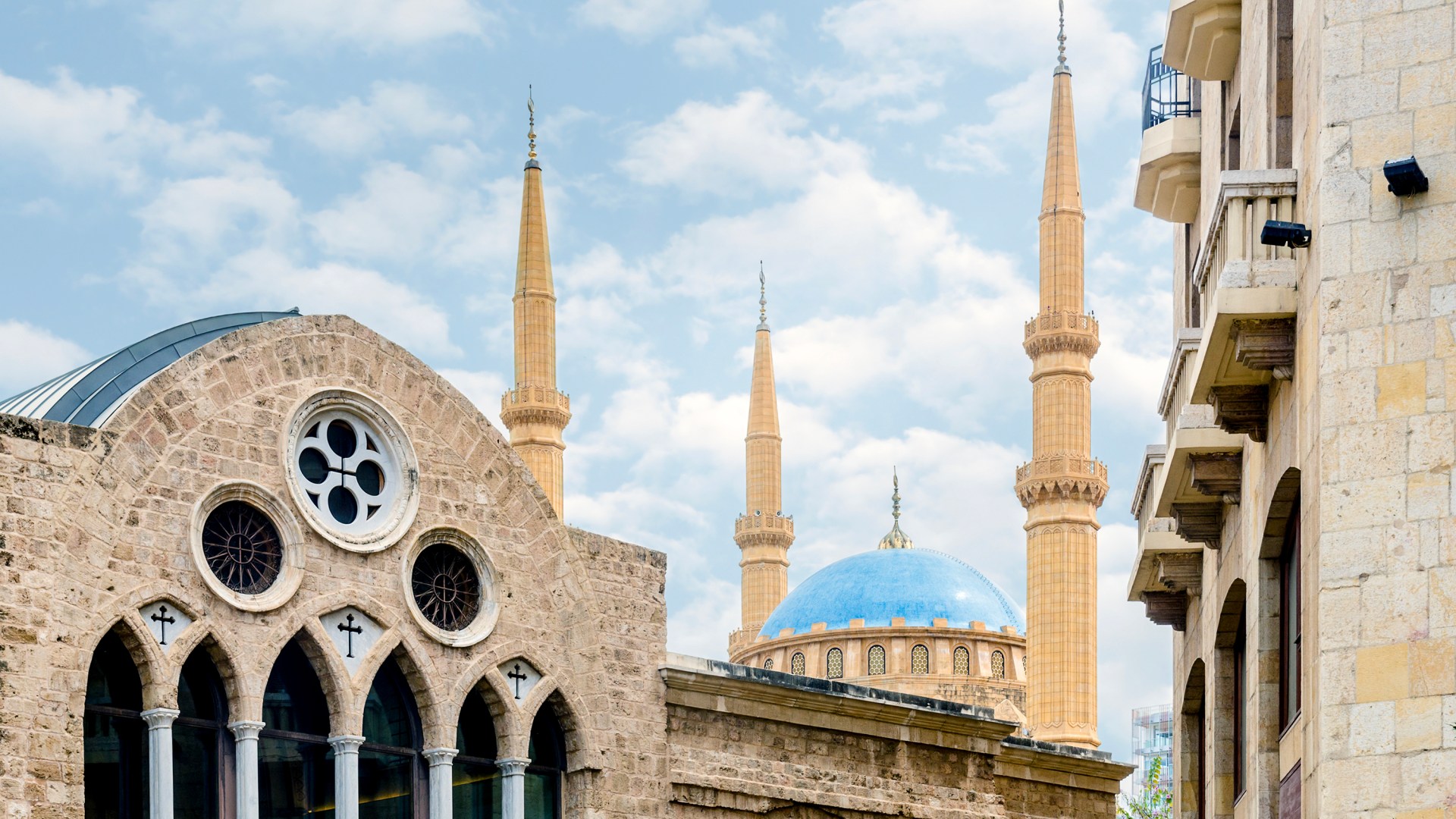
Two Middle East nations share a city named Tripoli.

They share little else, apart from a Phoenician heritage and mutually near-unintelligible dialects of Arabic. One of their starkest contrasts concerns freedom of religion.

Libya arrested six Christians earlier this month for proselytizing after converting from Islam. Lebanon, despite its sectarianism enshrined in politics, allows free movement between religions.

Libya’s Tripoli was commemorated in the official hymn of the US Marines in homage to American intervention on the shores of North Africa. Lebanon’s was an outpost of an eastern Mediterranean–focused American missionary movement that transformed society through gender-inclusive education.

The Italians colonized Libya; the French, Lebanon. Elsewhere, the Middle East is marked by British influence, Ottoman traditions, petrodollar economies, democratic structures, multicultural kingdoms, autocratic republics, and everything in between.

What unites them all is the preponderance of Islam.

But among the followers of Muhammad there is also difference. Some nations are secular; others enforce sharia. Some protect Christian minorities; others discriminate against them. It is difficult to offer a sweeping synopsis—or uniform lessons learned by local Christians.

Yet CT asked four Arab Christian leaders with deep roots in the region to make an attempt. Two currently live abroad; two live in their nation of origin. Yet each represents a space on the spectrum of strategies on how to best live as a Christian in a Muslim society.

One articulation of the spectrum, crafted by theologian Martin Accad, arranges common Christian responses into five categories: syncretistic (the blurring of faiths), existential (the dialogue of diversity), kerygmatic (the preaching of the apostles), apologetic (the defense of the gospel), and polemical (the interrogation of Islam).

The leaders engaged below were not asked to sort themselves accordingly, nor does this landscape article seek to label them. But each was asked the following question:

Whether in a context of oppression or embrace, how should believers in Jesus witness to their faith, keep social peace, and maintain unity with fellow Christians?

Martin Accad:

Accad is an associate professor at Arab Baptist Theological Seminary and the Near East School of Theology in Lebanon. He founded Action Research Associates, focusing on national reconciliation, political change, and a multiple-narratives approach to Lebanon’s history.

Over my past 20 years of involvement in Christian-Muslim relations, I have advocated for a “kerygmatic” posture of dialogue that avoids the temptations of universalism and polemics. Seeking to imitate the preaching of the early apostles, its emphasis is on joyful proclamation in line with the missio dei.

The kerygmatic approach is “supra-religious and Christ-centered.”

As we bear witness to the gospel and invite all into relationship with God through Christ, we do not promote Christianity at the expense of Islam or any other religion. Jesus took a critical stance toward Judaism’s religious symbols, such as the Sabbath, Mosaic Law, and the temple. Even as he was recognized as a rabbi, teacher, and leader of Judaism, any harsh words Jesus spoke were addressed to his peers within the faith, never to those whom the religious institution considered unclean, outcasts, or sinners.

These prophetic acts and attitudes should be our model as we position ourselves toward all religions, including our own. Religions are useful only insofar as they serve the poor and advance justice in our societies. When they become mere vehicles of self-perpetuation, they cease to be of God. We, alongside all with whom we journey on this earth, are called to a path of discipleship with Jesus—becoming more like him—not of conversion to any religion.

The kerygmatic approach is “respectful and loving.”

Our respect for others is steeped in our common humanity, as women and men created in the image of God. And we love all because God created and loves us all. Exhibited toward Muslims, we recognize Islam as a dynamic worldview that manifests itself through a dizzying number of forms and a diversity of manifestations in constant transformation over history and geography.

This is the reality of Christianity and other religions as well.

We do not hold our Muslim neighbor responsible for the hateful acts of any of their coreligionists, nor do we consider an extremist as a spokesperson for the sect to which they claim belonging. Our neighbors, regardless of their religious affiliations, are all potential partners in our quest to live at peace with everyone and to work together for the common good of our societies.

The kerygmatic approach is “prophetic and scientifically honest.”

We are disciples of Jesus who seek to develop understandings and behaviors that are aligned with those of our master, and we invite others on this journey as well. But we do not turn a blind eye to the horrors perpetuated by religious people, both now and in the past, whether from our own or from other socioreligious groups. We take a prophetically critical stance toward such acts, examining critically the religious and nonreligious foundations of all ideologies.

In the past, evangelicals have often been known for their rejection of interfaith dialogue. During the age of the great Western missionary movements, we have been taught to hold staunchly to the primacy of evangelism and conversion. But the world has changed dramatically, as war, migration, and evolving social networks have created a new reality. We now live in unprecedented multireligious and multicultural closeness, in communities often prone to division and conflict.

It is our duty as disciples of Jesus to rethink how we live and work together, faithful to the gospel and committed to human harmony. The kerygmatic approach is meant to address such emerging concerns.
Najib Awad:

Awad is a Syrian American systematic theologian and historian of interreligious thought. Currently an associate researcher at Bonn University in Germany, he formerly directed the PhD program in Islamic Studies and Christian-Muslim Relations at Hartford Seminary in Connecticut.

The answer to this question is highly contextual, not a recipe-like manual that all Christians can mechanically use. But for many, “living one’s faith” means expressing the values of the gospel on a daily basis in both public and private life, as Paul modeled to the Romans and the Philippians. But to be clear, this is not a promotional strategy to market one’s belief, as if it is the best religious merchandise out there.

I invoke this metaphor because I believe many Christians around the world manifest their faith in God’s redemptive revelation in Jesus Christ in these terms. While it might be functional elsewhere, this “living faith” approach does not work in the Middle East.

Here, many Christians follow a pattern of coexistence that is either centered on proselytization or on confrontation. In the first, they aspire to make others become like themselves in a circle of belief. In the second, they are occupied with survival and self-defense. They live as if the other is a “threat to my existence,” rather than “my partner in existence.”

The better approach is to interrelate and symbiotically reciprocate life with other religious believers. The history of the Middle East demonstrates that Muslims, Christians, and Jews all belong existentially, historically, culturally, anthropologically, sociologically, and religiously to the same life setting.

They share the same destiny.

For this symbiosis to succeed, relationship must precede dialogue. In fact, it underpins it as the necessary precondition. To see dialogue as an end result gets things backwards, while using it as a pragmatic tool for evangelism turns it into an arena of intellectual and dogmatic arm-wrestling.

And despite common assumptions, Christians are not a primary target.

Far more Muslims have died and been displaced by regional terrorism, while autocracy and sectarianism encumbers them all. It is counterproductive to imagine a grand religious war. In fact, Muslims and Christians suffer together from the political manipulation of religion, regardless of the faith.

Proper manifestation of Jesus Christ’s mission comes through sharing the fruits of the Holy Spirit with everyone, regardless of their belief. This involves loving the other instead of being fearful; rejoicing in a life of peace instead of being skeptical. Let us remember that Jesus’ main ministry was not about creating a new faith or calling people out of Judaism into a new, so-called “Christianity.” Jesus lived, ministered, died, and rose from the dead—all while belonging to the same Jewish system of belief as those around him.

Therefore, I invite the Christians in the Middle East to appreciate their Muslim compatriots’ system of belief as if Jesus Christ, in the power of the Spirit, is already present and active through God’s mysterious and unfathomable revelatory work. The spirit blows where it pleases, including in them and in their faith. Christians, then, can follow their Lord and Savior in deep relation to Muslims in hope that they are already God’s children.

Harun Ibrahim:

Ibrahim is director of al-Hayat Ministries, broadcasting Christian programming over satellite television to the Muslim world since 2003. Born in Jerusalem to a secular Arab Muslim family, he currently resides in Finland.

If Christians in Muslim societies wants to share their faith, the reality is that they absolutely can do it—just don’t come close to Islam. So what you see are faithful believers who resemble a cat circling hot meat, being indirect and saying nothing that would risk offending their neighbors. This comes from fear, for if they were to say on the street that Muhammad is not a prophet—it might work once or twice, but then result in beheading. Islam is a violent religion.

I don’t condemn them; in their position I don’t know what I would do.

Some Christians therefore resort to good works—winning favor and perhaps hoping Muslims might ask them questions about their faith. But Jesus never started with a social project; his miracles served to support his spoken message.

When questions come, Christians are already adept at apologetics. Muslims have criticized the Bible and everything about us for the last 1,400 years, and in defending your faith you learn the right answers. But this cannot be all we do.

Within the context of friendship—and media—polemics can be appropriate. Muslim critiques of Christianity give us the right to respond exactly the same, if done with wisdom. Poking holes in Islam can provoke people to search for the truth.

I do not intend to make trouble; the guidance of the Holy Spirit is necessary.

But when asked what we think of their prophet, we can say first that he is not mentioned in the Bible. That he can be your prophet, but not mine. If they are coming to us first, this is better than our poking. And the sincerity of their questioning can be stimulated through our daily conduct. Christians must be generous, visit frequently, win trust, and indeed do good works. But we must never water down our faith.

Unfortunately, 95 percent of the criticism we get at al-Hayat comes from fellow Christians. “You are harming us,” they say, “and they will kill us.” I reply that Muslims persecuted you before our channel, and they will do so after we are gone. But our brothers and sisters misunderstand us—we do not attack; we speak the truth in love. Muslims must see believers presenting Christ, even if the local context says we must not shout.

But we have our own laundry to wash also. Church planters begin well with an intention to reach unreached peoples, and then wind up pivoting to reach the Orthodox and Catholic. Who said these communities do not have the truth of the Bible? We have to stop fishing in the fridge, so to speak, for many traditional churches have won far more Muslims to Jesus than the Protestants.

In some ways, these converts have it easier in North Africa than other regions where the Christians are an accepted minority. As the minority of our minority, their concerns about security and persecution weigh heavily upon the rest, who cannot embrace them publicly. Oddly enough, as a Muslim-background believer myself, I find myself frequently welcomed in all sorts of churches. They don’t say it, but I feel the sense from most Christians is this: Finally, we got one of them.

Bashar Warda:

Warda is the Chaldean Catholic Archbishop of Erbil, and founder of his city’s Catholic University and Maryamana Hospital, in the Kurdistan region of northern Iraq.

Over the centuries since the arrival of Islam in Mesopotamia (today’s Iraq), the ability to publicly witness to a gospel which invites discipleship has been continuously narrowed by the constraints of Islamic teaching and rule of law. Even today, Iraq’s constitution remains explicitly based in sharia law, and its allowance of other religions outside Islam consists essentially of a limited freedom to practice within a tightly constrained community. To say that “freedom of religion” exists in Iraq and similar countries—as understood in the United States—is fundamentally untrue.

Instead, our freedom of religion should be viewed as essentially a discretionary tolerance from Islamic rulers towards the minority “other,” such as Christians or Yazidis, that can be subjectively restricted according to the mood of the Islamic authorities at the time.

In all cases, proselytizing of Muslims is prohibited, usually violently so. In cases where Muslims do pursue conversion to Christianity, it is almost always accompanied by a subsequent need to flee their homes due to real fears of violent retribution. It is within this fundamental context that we must consider the Christian ability to witness to the gospel beyond its private practice within the church or home.

Christianity in Iraq has therefore developed what could best be referred to as “evangelization by example.” We Christians can outwardly demonstrate our Christian mission by serving others in a nonthreatening, nonproselytizing manner. In this way, it might give them pause to think about our commitments and motivations, displayed in the provision of humble and charitable service to the entire community. This is why in Iraq, and elsewhere in the Middle East, so many schools and hospitals are still operating with some type of Christian affiliation. We do what we can within this space to faithfully live out our Christian mission, engaging in indirect evangelization.

People in the West will realize that this does not equate with the freedom of religion as they understand it. But to do more would certainly be met with a violence that would likely spread dangerously and cause real harm to many uninvolved innocent people—including Muslims. Great prudence is required, not reckless conduct.

But another form of damage to witness comes through the divisions amongst our Christian community. While our known historical schisms have plagued us for centuries, in the last few decades we see new divisions from forms of faith coming from outside the region. Many deeply held views have their own degree of validity, and the solution lies in our continual and respectful dialogue. But deliberate efforts to proselytize within the Christian community is not only detrimental to our ecumenical unity, but also to our common witness toward Muslims.

And then, in cooperation, it is through service to the greater society that we Christians have our only effective means of providing any form of evangelization in much of the Middle East today. We pray this demonstrates not only our clear intention to live in peace, but also the truth and substance of our Christian faith.


News

Saddleback Asks Southern Baptists to Overturn Disfellowship Decision

Vote will take place at the SBC annual meeting in June.

Teaching pastor Stacie Wood and lead pastor Andy Wood at Saddleback Church

Teaching pastor Stacie Wood and lead pastor Andy Wood at Saddleback Church

Christianity Today May 16, 2023
Allison Dinner / AP

Saddleback Church wants to keep its place in the Southern Baptist Convention (SBC).

The California megachurch—once one of the biggest in the denomination—plans to appeal the SBC’s move to disfellowship Saddleback for appointing women as pastors.

Saddleback is among three churches that will make their case before Southern Baptists at their annual meeting in New Orleans next month. The body can vote on whether to overturn the previous decision and allow Saddleback back into “friendly cooperation” with the SBC or to let the decision to remove the church stand.

The SBC Executive Committee, which is in charge of denominational business outside of the annual meeting, disfellowshipped Saddleback and five other churches with women pastors in February—the first time churches have been forced out for that reason. The congregations had until Monday to state their intention to appeal at the June 11–14 gathering.

“SBC bylaws plainly outline the process for churches determined to be not in cooperation with the Convention to appeal their cases before messengers cast their votes,” said David Sons, the chairman of the SBC Executive Committee and a pastor in South Carolina. “Since this is the first time in SBC history for this particular item of business to come before the Convention, it’s important for everyone coming to New Orleans to be prepared and informed about the process.”

A representative from each appealing church will be given three minutes to make their case. The credentials committee, which makes recommendations for churches that are out of alignment with the SBC, will be given three minutes to respond before the vote. The other appealing churches are Fern Creek Baptist Church in Louisville, Kentucky, and Freedom Church in Vero Beach, Florida.

Saddleback, famously founded and led by Rick Warren until his retirement last summer, came under scrutiny after ordaining three women in May 2021. The ordinations reflected Warren’s shift on the issue.

“I actually had to change because of Scripture. Culture could not change me on this issue. Anecdotes could not change me on this issue. Pressure from other people would not change me on this issue,” Warren said earlier this year. “What changed me was when I came into confrontation with … scriptures nobody ever talked about that I felt had strong implications about women in ministry,” including the Great Commission.

Pushback from some Southern Baptists intensified last year when Warren’s successor, Andy Wood, brought on his wife Stacie Wood as a teaching pastor. And last week, Saddleback named one of the women ordained two years ago, Katie Edwards, as campus pastor at its Lake Forest location.

The Baptist Faith and Message, the SBC’s statement of faith, says, “While both men and women are gifted for service in the church, the office of pastor is limited to men as qualified by Scripture.”

Last year, the convention debated at its annual meeting whether the line implicitly referred to lead and senior pastor roles, or any role with that title. Southern Baptists, proudly an association of independent and locally led churches, also challenged whether the SBC has consistently enforced that congregations adhere to every position in the statement.

At the time, Warren spoke from the floor to encourage the SBC to continue to provide autonomy to local churches and focus on the work of evangelism.

After Saddleback was disfellowshipped three months ago, Warren opened up to CT editor in chief Russell Moore about how he disagreed with the decision, saying, “We should kick out churches for sin. We should kick out churches that harm the testimony of the convention. This isn’t harming the testimony of anybody. And it’s what’s a disputable issue, as Paul says in Romans 14.”

Warren also said he’s changed his position on women in ministry, based on his understanding of the Great Commission and the New Testament.

Weeks after the decision to disfellowship Saddleback in February, Andy Wood quipped that it was his second time getting “kicked out” of the SBC; his former congregation, Echo Church in Sacramento, had decided to cut ties with the denomination over the same issue.

This time, the disfellowship move was made publicly and drew national attention given Saddleback’s prominence. Leaders at Saddleback also had some interaction with the credentials committee to explain their position in hopes of remaining part of the SBC.

On a podcast with Carey Nieuwhof back in March, Andy Wood said the church had not yet decided whether to appeal the SBC decision, but leaders were in prayer over it. He affirmed that the church was committed to including both men and women in pastoral roles—a position they saw as both “open handed” and rooted in Scripture.

“I can see the unifying component of it, of empowering both men and women, doing it in a loving way, non-feisty, and even not feeling like we have to defend ourselves when we do it,” he said. “I don’t feel like every time I obey God I need to give a defense for why I obey God and do what he asks me to do.”

As of last December, the church assigned pastoral titles to all women in pastoral roles.

“It felt incongruent, or almost hypocritical, to have a woman serving in the same position, a counterpart of a male, but then the male is called pastor but the woman is called minister or director,” Stacie Wood said.

As teaching pastor at Saddleback, a position she was given by Warren and the church’s elders, she preaches about once a month.

Warren, a fourth-generation pastor who founded Saddleback in 1980, was recently appointed the honorary chancellor of Spurgeon’s College in London. In April, he published a new book, Created to Dream.

Theology

Can You Be Born Again Without ‘Feeling’ It?

Contributor

Like Francis Wayland, some of us may doubt our religious conversion experience.

Christianity Today May 16, 2023
Illustration by Abigail Erickson / Source Images: Unsplash

Evangelicalism has always emphasized the necessity of personal conversion through a born-again experience in which the Holy Spirit supernaturally changes a person’s heart.

From the 18th century to the present, many evangelical churches have required a personal testimony of conversion as a prerequisite for church membership. And most of the time, this involves a personal experience of divine transformation.

But what happens if someone doesn’t have this kind of transformative experience? What if a person believes not because of any perceived religious encounter but simply because of a reasoned conviction about the truth of God’s declarations? Are such individuals really saved? And even if so, can they still consider themselves evangelical Christians?

This was the dilemma faced by Francis Wayland (1796–1865), an ordained Baptist minister and early 19th-century president of Brown University. He never had what he considered to be a born-again experience—and for the president of a leading Baptist college in the 1800s, that was a problem.

I briefly encountered Wayland in my study of early 19th-century American antislavery activism, but I only recently realized that this opponent of slavery and professor of “Christian evidences” also struggled with assurance of his salvation because of lacking what he considered an authentic born-again experience.

For much of his early life, Wayland believed such an experience was required to become a Christian. After all, he had grown up steeped in the evangelical theology of Jonathan Edwards in a Calvinist Baptist home. He believed true conversion required a supernaturally wrought change of one’s affections and will. And like many evangelicals of his day, he believed this change manifested in a conviction of sin followed by a sudden sense of bliss.

For Wayland, the conviction came—but not the ecstatic experience.

Wayland grew up going to church and learning theological truth, and he was never a profligate sinner by conventional worldly standards. He continued to attend church after leaving home, and he lived what his evangelical contemporaries would have considered an upstanding moral life. By his own account, he also fully believed the claims of Jesus and the theological doctrines of Christianity.

And yet he realized in his final year of medical school that he was living for himself rather than for God. “When my purposes were crossed, my spirit, as I well remember, rose against the government of God,” he wrote. “I knew that had there been any universe to which I could have fled, where God did not reign, I would at once have gone thither.”

In other words, he discovered he had no real love for God. In his pursuit of success in his medical studies, he found he was living for his own interests rather than for God’s priorities.

As he reflected on this, he suddenly realized how spiritually hazardous his secret enmity with God was. “I believed all that the Bible said of my condition and my danger,” Wayland wrote. “Jesus Christ came to save sinners; yet I had never sought his forgiveness.”

He therefore resolved to seek God in the way that he had been taught to do as an evangelical Calvinist in the 1800s—that is, to spend hours in concerted prayer until God in his sovereign grace chose to save him.

Wayland therefore opened his Bible and spent the entire day doing nothing but reading scripture and praying. Nothing happened. So, he tried again the next day. And yet he still felt no discernible change in himself—no sense of assurance or feeling of a supernatural entrance of the Holy Spirit into his heart. He tried again for a third day but still saw no results.

He eventually had to return to his daily activities and medical college studies, but he resolved that in his spare time he would read only scripture and Christian books. He attended church with more enthusiasm. He even went to a revival meeting. He now had a love for other believers that he had never experienced before, as well as a new concern for the lost and a desire for others to believe in Jesus. He “loved the doctrines of the gospel” in a way that he never had before. And he had a sorrow for his earlier life of secret rebellion against God.

But he did not consider any of these new desires and emotions as indicative of the conversion experience he expected. Instead, when he reflected on his faith, he felt it was based entirely on reason—and therefore could not be the result of the Holy Spirit’s direct work.

“I could not believe that the light which had gradually dawned upon my soul was anything more than what was taught by the precepts of men,” Wayland wrote. “Everything in religion seemed to me so reasonable, that all which I felt seemed to arise from the mere logical deductions of the intellect, in which the heart, the inmost soul, had no part.”

He believed in the existence of God based on the evidence of design from nature. He believed that the Bible came from God and that Jesus really had risen from the dead after being crucified—based on historical evidence and logical deduction. And based on the evidence of biblical prophecy and the testimony of the gospel writers, he believed that Jesus was indeed the divine Son of God who had given his life for sinners.

Given these beliefs, he thought it was only logical that he should trust Jesus for salvation and live his life for God rather than for his own selfish desires. From there, it was only logical that he now “earnestly desired” the salvation of others who were lost. It was logical that he should seek the company of other believers and devote himself to worshiping the Lord and finding joy in such activity.

But since all of this was so logical, was it possible that he had arrived at such beliefs solely through his own intellect—meaning it was not really a saving faith at all since, according to him, it was not produced by the Holy Spirit?

“I could not deny that there had been a change in me, but the change had been so reasonable [that is, produced through reasoned reflection] and so slight in degree, that I could not be a child of God,” he reasoned.

And since he had never experienced the divine heart transformation he sought, Wayland was convinced that he was still lost—a thought that terrified him.

It took another Baptist minister to convince Wayland that he really had experienced a divinely produced regeneration. Wayland did believe and had been changed, the minister argued. And if that was the case, then Wayland had truly been converted and received the Holy Spirit—regardless of whether he came to saving faith through reasoned reflection or a dramatic experience.

Wayland eventually admitted that the minister was right. He would have preferred a more direct experience that would have given him greater assurance, but God “in mercy disappointed me, and made me willing to accept his grace in any manner that he chose to bestow it.”

Yet in his older years, Wayland continued to wrestle with recurring doubts about his own salvation, because he could not honestly point to a single moment when the Holy Spirit entered his heart and changed his life.

Even with his supposed moment of conversion as a young medical student, he said, “everything was gradual, and seemed to have proceeded in the line of logical deduction. The precise time when a moral change took place in my character I cannot determine.”

Since that time, he wrote, “I have had many seasons of religious declension and revival; I have been harassed with many doubts of my state before God, and have rarely attained to that full assurance of faith which is the privilege of so many of the disciples of Christ.” He repeatedly prayed for such assurance, but it never came.

Instead, Wayland resolved to live a life of obedience and submission to the Lord. For decades, he taught Brown University’s class on “Christian evidences.” (This, of course, was an era when Brown, like several other Ivy League schools, was still a Christian college.) If he could not find assurance in his own experience, he could nevertheless find objective, nonexperiential grounds to know that God was real and had revealed himself in Jesus Christ—and that those who trusted in Jesus could be assured of God’s promises.

In talking with his students and acquaintances, he also came to realize that there were many more people like himself than he had first supposed—people, that is, who had grown up in evangelical homes and wanted to serve the Lord but who felt they never had an experience of salvation. Oftentimes, their spiritual counselors encouraged them to seek the Lord through prayer and contrition in the way that Wayland had, in hopes that such an encounter would come.

But Wayland advised a different course. Instead of continuing to seek after an experience that may never come, people simply needed to believe the gospel and do the things God said to do—not to earn a sense of assurance through good works but to serve the kingdom with the confidence that God has accepted them and that this is what God wants them to do.

Wayland came to see that God could work through reason just as much as through experience and that, in God’s sovereign grace, not everyone would receive a feeling of the miraculous in their lives. Some people are blessed with a dramatic conversion or a sense of peace. Others, like himself, may never have such an experience and so constantly struggle with the temptation to believe that their faith could not be genuine.

Wayland could not give an exact date for his conversion. He could not say with confidence that he felt the Holy Spirit living within him in any sort of experiential way. He could not say that his own faith in Christ transcended reason. But he could say that he loved the Lord and wanted to give up everything to follow Jesus. As Wayland said, “If I know my own heart, I do really with pleasure submit myself and all that I have to God.”

And if that was true, he decided, it must mean he really had been born again.

Personally, I found it reassuring to encounter someone like Wayland in my research, since I, too, have faced similar struggles. While I can give some sort of testimony of salvation, in moments of honesty I’m forced to admit that I don’t always find my experience very convincing.

Like Wayland, my connection to God has usually seemed so logical that it’s tempting to wonder whether it was produced by the Holy Spirit or was instead a counterfeit faith produced by my own reasoned efforts. And if my faith in Christ or confidence in my salvation were dependent entirely on my own experience, I would feel as lost as Wayland did—especially after seeking the Lord and feeling no sense of assurance.

But Wayland’s testimony is a reminder that evangelical Christians who sincerely love the Lord and are humbly surrendering themselves to God’s won’t always have the religious experiences their theology might predict. God’s promise of salvation and regeneration does not rest on our experience but on something much more objective, as Wayland discovered.

Wayland chose to believe the promises of God in Scripture—and in the end, that was enough. I have no doubt that he truly was “born again,” even if he did not perceive it at the time.

Daniel K. Williams is a professor of history at the University of West Georgia and the author of Defenders of the Unborn: The Pro-Life Movement Before Roe v. Wade.

Theology

When Police Arrive at Your Church’s Door

As persecution worsens in China, an urban house church leader offers guide for perseverance and preparation.

Christianity Today May 15, 2023
Edits by Christianity Today / Source Image: Getty

Editor’s note: China’s unregistered (non-government-sanctioned) urban churches have been called “house churches” or even “underground churches” for years. Yet this has become something of a misnomer, as many have actually congregated in high-rise offices, with Sunday morning church attendance reaching up to several hundred people. At least that was the case 10 years ago, during what in hindsight we would now call a golden age of urban church growth in China. After 2018, the government’s persecution of these congregations grew harsher, and in many instances, they banned churches from gathering. Even before the pandemic, members dispersed into small groups and worshiped and watched recorded sermons in homes, going back to the literal “house church” mode. Today, Christians who have persisted in worshiping together in larger congregations deal with harassment by police or “religion administration” people. This letter by an urban house church pastor in China on how to face such persecution was originally written in Chinese and published on The Gospel Coalition’s (TGC) Chinese site. Christianity Today thanks TGC for permitting us to translate it into English and publish the English version.

Dear brothers and sisters in Christ,

One morning when you arrive at your church, you might be surprised to discover many uniformed people in the building. Some might be angry and speak viciously. Others might address you nicely, almost beseechingly. Others may be expressionless but carry themselves with a businesslike attitude. Regardless of their demeanor, you know that something has happened. Your church is being persecuted.

Not every instance of persecution may be so dramatic. The trouble could happen between the landlord and the street administration office. It could occur after the pastor was summoned to the police station. However it might happen, it may shock you to the point of not knowing how you can help your church’s leaders face this crisis or how you yourself might respond.

Perseverance in persecution

That the church experiences persecution in this world is nothing new. Our Lord has continually reminded us that because the world hates Christ, it will persecute those who follow Christ. Though the crime of “disrupting societal order by holding illegal religious gatherings” listed on the police’s summons may be fabricated, as Christians we ought to know that the true gospel will inevitably cause trouble all over the world (Acts 17:6).

In John 15:19–21, our Lord tells us:

If you belonged to the world, it would love you as its own. As it is, you do not belong to the world, but I have chosen you out of the world. That is why the world hates you. Remember what I told you: “A servant is not greater than his master.” If they persecuted me, they will persecute you also. If they obeyed my teaching, they will obey yours also. They will treat you this way because of my name, for they do not know the one who sent me.

In fact, we can say that it is inevitable that the true church experiences this. This is not because we have done something wrong (though we will be accused of many crimes). It is because the world loves itself and hates those from heaven, and the church of Christ belongs not to this world but to the kingdom of heaven. It is the representative and embassy on earth of the kingdom of heaven. Therefore, being persecuted by this world is inevitable and something we should rejoice at: It proves that we belong to Christ, not to the world.

Second, 1 Peter 1:6–7 says, “In all this you greatly rejoice, though now for a little while you may have had to suffer grief in all kinds of trials. These have come so that the proven genuineness of your faith—of greater worth than gold, which perishes even though refined by fire—may result in praise, glory and honor when Jesus Christ is revealed.” The Bible calls such persecution “all kinds of trials” because God uses these opportunities to purify his church.

Persecution gives each person an opportunity to consider his or her faith: Why do I follow Christ at such great risk? Do I truly believe in an eternity more important than this life and for which I ought to live? Am I truly a sinner who would be judged by God in hell, that I need Christ’s salvation? Can Christ truly save me? Our Lord has said that those who have not truly relied on Christ will, in the face of trials, “have no root. They believe for a while, but in the time of testing they fall away” (Luke 8:13). Trials are the touchstone of our faith. While trials reveal to nominal believers that they do not actually believe, they show true believers that their faith is reliable, encouraging them to have even greater faith in Christ.
Finally, James 1:12 tells us, “Blessed is the one who perseveres under trial because, having stood the test, that person will receive the crown of life that the Lord has promised to those who love him.” And, again, 1 Peter 1:6 says, “In all this you greatly rejoice, though now for a little while you may have had to suffer grief in all kinds of trials.” These remind us that grief is temporary but that joy will be eternal. Persecution is temporary, and most of us will live longer than the persecution lasts. (If we look at the last period of serious persecution in history, we find that it was merely 20 years from the start of the Three-Self Movement to the end of the Cultural Revolution.) The kings and authorities on earth are temporary, but the true King who holds authority is forever. Though the church might face temporary difficulties, we will all have the opportunity to see the glory of Christ’s kingdom.

How to help

As members of the church, Christians can strive to support the efforts that elders and deacons put toward being able to continue gathering, serving, and pastoring. You can start here:

First, be prepared for instability. For a long time to come, you may not have a regular meeting venue, which means that your Sundays will not be as comfortable as in the past. It may not be as close to where you live; there may not be cheap and convenient food and drink options nearby; you may not find coffee or a convenience store; you may only be able to watch a sermon by a two-dimensional preacher on a screen… The discomfort experienced by many other faithful saints you may also experience in part or in whole.

Second, be prepared to serve. People are needed to help transfer venues, set up temporary meeting places, or move documents and pianos… If you have rarely or never served the church in an onsite manner, or if you have rarely or never put your own time and effort toward the church’s worship, then these opportunities are now prepared for you by the Lord. If a Christian thinks, I only need to wait for the notice and then show up at the new meeting place, he should repent and make changes. It is not merely one member who is being persecuted; it is the whole of Christ’s body. The whole body must mobilize to treat with honor the weaker members.

Third, be prepared to give. These changes typically signify financial loss: The landlord might end the lease, there are moving costs, and renting a new venue has its cost as well. These costs were perhaps not in your church’s original financial plan. If you have never contributed your own offerings or often forget to give, this is a reminder from God to contribute.

Fourth, be prepared to submit to the leadership. Elders and deacons are finite humans and are not immune to fallibility, so we don’t obey blindly. But since we have chosen the elders and deacons of the church through the Holy Spirit, we should trust those “of good repute, full of the Spirit and of wisdom” (Acts 6:3, ESV), even if at the time their decisions may seem unwise to you or they cannot please everyone in response to each event.

Fifth, be prepared to pray. Pray over each Sunday’s peace, pulpit, teaching, ministry, and gathering. Pray also for church leaders and encourage them, because they too, like you, have never experienced this kind of persecution and are worried, even anxious over it.

Being faithful in persecution not only trains our own faith but also encourages other members and leaders of the church. Therefore, strive to faithfully participate in every Sunday gathering, because you never know when such opportunities will be gone. Every Sunday might be the last Sunday you can gather in person.

We must treasure the opportunity to love one another, connect with one another, and receive spiritual pastoring as members of the church body. If you chat with other members at church, chat about spiritual matters, because you can talk about all other matters at all other times through other tools. If you see visitors at church, share the gospel with them so that they might have the opportunity for eternal life, because they might not be able to come the next time. If you have not regularly attended gatherings in the past—or attended gatherings but did not love other members in the church well—then this Sunday is your opportunity for repentance. Let the church be filled with the Spirit. And let each minute you spend at church be filled both with the gospel and with love for Christ’s body.

Your pastor, with love in Christ.

Joshua Hsieh received a master of divinity from Trinity Evangelical Divinity School and currently serves as pastor at a Baptist church in China.

193182

Translation by Christine Emmert.

Theology

Christians Worry About Getting Trampled Like Grass in Sudan Conflict

The African country has seen conflict and coup over and over, but this time, says historian Christopher Tounsel, believers are right in the middle of it.

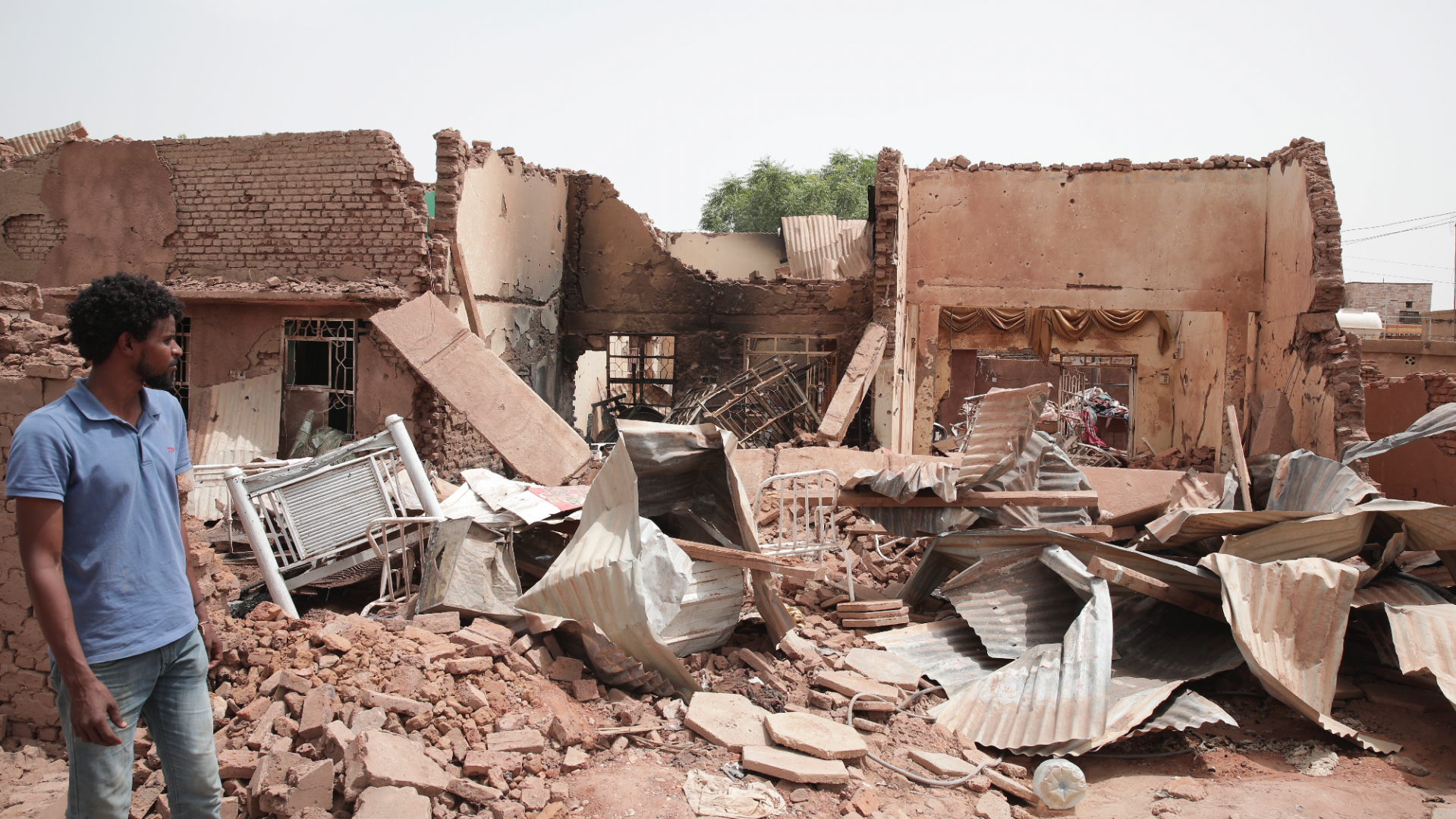
A man surveys the damage to a home in Khartoum as the fighting in Sudan continues.

A man surveys the damage to a home in Khartoum as the fighting in Sudan continues.

Christianity Today May 15, 2023
AP Photo/Marwan Ali

Shells rocked the Sudanese capital of Khartoum on Sunday, with no signs of abating even after a full month of fighting. Across the Nile, gunmen attacked a church in Omdurman, injuring a Coptic priest and four others. Each side of the conflict blamed the other, according to Reuters, and the fighting continued.

Representatives of the warring factions have been brought to the negotiating table in Saudi Arabia to discuss a ceasefire. So far, neither side seems willing to accept concessions.

According to Christopher Tounsel, a historian who writes about Christianity in Sudan and South Sudan, the churches in the capital are praying fervently for an end to the violence. Even for believers used to living in political peril, navigating the current conflict will be no easy task.

Are Christians taking sides in this conflict in Sudan?

There’s an African proverb that says when elephants fight, the grass gets trampled. This is one of those situations.

Throughout Sudan’s modern history, Christians have been faced with governments that have tried to impose Islam as the state religion and not allow them the freedom to worship. So the Christians there have thought a lot about what it means to be good citizens and faithful citizens in tough situations, what Christian duty to an oppressive state looks like.

But now they’re faced with this problem, what does it mean to render to Caesar what is Caesar’s when it’s not clear if there is a Caesar, if there are two Caesars, or none that have any legitimacy? What is the Christian obligation? To wait it out? To leave? To fight for a third option? It’s a classic question that has been posed in a range of contexts in church history, but it’s urgent in the Sudan right now.

How have Christians in Sudan answered that question in the past? What do the range of theological options look like?

Sudan became an independent state in 1956 and tried to forge itself as an Arab and Islamic nation. The Anglican Church took the position that God calls us to be good citizens and the state is put there by God, almost as an extension of the sovereignty of God, and that doesn’t mean it can’t do anything wrong, but our duty really is to be good citizens.

The Catholics took the position that when the state contradicts the will of God, we are called to open resistance to the state. Catholics participated in antigovernment speech, printed newspapers and pamphlets, got involved in strikes, and in some case even joined armed resistance movements.

Today, you have lots more groups, including Pentecostals, Jehovah’s Witnesses, and the Egyptian and Ethiopian Coptic churches. That means there are more people who have developed different approaches.

During the Second Sudanese Civil War, you had people using a martial theology against Omar al-Bashir, who was in power from 1989 to 2019. Spiritual warfare was completely infused in the discourse and the Exodus story became very important to people. The idea of a Moses who leads us out of Egypt—oppression—was essential to the way many people thought about the separation and independence of South Sudan.

There was also this very deep fascination with Isaiah 18, because of a connection Christians made to the prophecy concerning Cush. In this prophecy Isaiah talks about people in Cush experiencing a period of trial and tribulation, but God would ultimately deliver them, and they would present gifts to God on Mount Zion. Many Sudanese Christians believe this prophecy was explicitly talking about Christians in South Sudan. This became a biblical framework and even impetus for the civil war.

In the north, though, you didn’t hear Christians calling publicly for the removal of Bashir. The focus was on human rights, and this kind of became the main theme for Christians in the public discourse. It was human rights and the issue of the freedom of religion as a human right that must be protected.

So far, in this conflict, I haven’t seen a lot of theology or any specific partisan readings of Scripture. Mostly people are asking for prayer.

For those who have been watching closely, is the current conflict surprising?

Unfortunately, it is not completely surprising. Sudan has been independent since 1956, and it’s had a military government for over half of that history. There have been a lot of coups. Off the top of my head, Sudan had a coup in 1958, a revolution in 1964, a coup in 1969, an attempted coup that failed in 1970, a coup in 1983, and Omar al Bashir came to power in a coup in 1989. Then he was overthrown in a coup in 2019, then there was a coup in 2021, and now this in 2023.

The only thing that makes this moment kind of different for Christians is the level of destruction and formalized violence within the capital Khartoum itself. For Christians this is especially concerning because Christians are a tiny minority within the Sudan—only 5.4 percent of the entire population—but Khartoum is home to most of the country’s Christians. From that perspective, Sudanese Christians are right in the middle of this conflict.

When Bashir was forced out in 2019, did it seem, for a moment, like there was another option? Something besides more military men, more authoritarian control?

It did. For Christians in particular it was a hopeful moment. Sudan’s civilian cabinet marked Christmas as an official holiday for the first time in 10 years. So that was pretty big. After the civilian-led transitional government was installed, the new constitution that was signed technically included protections of the right of freedom of belief and worship. That was just on paper, but it did raise some hopes.

By 2023, even before this conflict, the reality for Christians was very bad. CT reported earlier this year that Sudan ranked as No. 10 on Open Doors World Watch List.

For Sudanese Christians, the specter of oppression always looms. Both of these men leading the two factions in this current conflict, Abdel Fattah al-Burhan and Mohamed Hamdan “Hemedti” Dagalo, have historical ties to Bashir. He’s gone, but the specter is still there.

Both of the contending leaders are different versions of the same thing?

Right. That’s why some Christians are upset the US and the UN are pushing them to negotiate, because that can give them a certain level of legitimacy—which might end the conflict but not leave the Sudanese Christians in a better position.

The negations that are going on right now seem really focused on how to keep the doors to humanitarian aid open. How can we avoid a catastrophic human rights crisis? But the talks going on in Saudi Arabia now are not aiming at, like, what would we like to see Sudan be like in the long term?

The one option that has not really been tried in recent Sudanese history is a civilian-led government where there’s a free and fair election and there’s religious freedom. The best possible road ahead is for the civilians to have a chance to run things.

Does that feel like a real possibility?

We do have very recent precedent of civilians taking the streets in an organized way and saying, “no more.” So while 2019 seems, in some ways, ages ago now, it’s still just four years ago. It’s not ancient history.

The US, in the long term, is invested in the well-being of Sudan because of what that would mean for the region that has really struggled to establish functioning democracies, and what it would mean for international politics, too. Sudan and Ukraine are part of the same story. Russia has sought to insulate itself from the impact of sanctions by accessing the gold in Sudan, so there’s a way in which Sudan plays a key role in the war in Ukraine.

There’s also a Sudanese diaspora worldwide. There’s a big Sudanese community in Australia, in Saudi Arabia, and even Omaha, Nebraska. The more that these voices can be heard, the better.

I think there’s also a glimmer of hope today because there are still civilian organizations in Sudan. Despite the fact these two strong men are at war, civil society is not dead within the country.

Is there a way Christians can play a role in building a better Sudan, a society that’s not only not at war with itself but also flourishing?

Being complete real, where I think Christians can play a role—from Christianity Today to all the Christians who pray and churches in Sudan and Christian nonprofits there—is to just not accept that it has to be this way. Shine a light on what is happening, but never accept that this is just the way it is in Africa.

I do worry the mainstream reporting is very much framing this conflict as another example of Africa as a place of corruption and chaos that is beyond redemption. As believers, we don’t have to accept that.

Inkwell

Shell Station, Tennessee

Inkwell May 15, 2023

It was the ravage of the scene that shocked:
the concrete torn by trees and ragged grass,
red guts of fuel pumps over splintered glass,
the wreckage clawed by climbing vines and mocked
by moth and rust. There in concentric rings
obscene graffiti spelled out every sin.
(The smell of something even worse within.)
It’s like we saw into the death of things.
But what about the ruins I can claim?
What of the loves that I have let decay,
the hand withheld, the times I didn’t say
I’m sorry, didn’t pray for you by name?
We leave shell stations, call them what you will.
Neglect is the unkindest way to kill.

Kelly Scott Franklin is a poet and professor.

News

As Churches Offer Refuge, Sudanese Christians Refine Theology of War

“Already but not yet” takes on new meaning as violence scatters believers from Khartoum to corners of Sudan where biblical application has long been lived.

Smoke rises in Khartoum, Sudan, amid clashes between the Sudanese Armed Forces and the paramilitary Rapid Support Forces (RSF) on May 5, 2023.

Smoke rises in Khartoum, Sudan, amid clashes between the Sudanese Armed Forces and the paramilitary Rapid Support Forces (RSF) on May 5, 2023.

Christianity Today May 12, 2023
Ahmed Satti / Anadolu Agency / Getty Images

Hajj Atiya, an elderly Sudanese woman living in Khartoum, was already ill.

And then the war started.

“The planes bombed from above; the bullets were flying below,” she said. “We stayed in our house, afraid, while all outside was boom, boom, boom.”

All she had in the house was flour to bake bread. At least she had that.

Mariam, who came to Khartoum from the Nuba Mountains to get medicine, went several days without water. And then a bomb hit the neighboring building, which collapsed on her own.

“Whenever the airplanes disappeared overhead, we ran outside in search of food,” she said. “But we had to hide behind buildings to avoid the gunfire, with corpses strewn on our right and left.”

An unnamed doorman had it still worse.

“For ten days we couldn’t leave our home,” he said. “The shops are closed, and soldiers are in the streets.”

Every Sudanese of means in his Kafouri neighborhood of Khartoum had left town at the first sign of violence, which began April 15. He and the other guards were left behind to protect the properties. But when the doorman called to ask for money or help, the building owner hung up on him.

Mariam found someone willing to provide transport out of the capital. But she couldn’t afford the 50-cent fare. All she had was oil and soap.

Atiya had only one option left.

“I prayed to God: Save us,” she said. “God answered, and someone came to take us away.”

Somehow, each escaped with their families 85 miles southeast to Wad Madani. Atiya found a place to rest under a tree. Mariam spent the night on the street. But each now numbers among the 122 families staying in two local evangelical schools, with dozens more sleeping in the city’s churches.

“The war is ongoing, and the people keep coming,” said Edward Hussein, an evangelical pastor. “The situation is difficult, and it is only getting worse.”

Only scant support has come from abroad. But local believers donated funds, food, and beds from their own homes. Until now, every arriving family has been given an aid package that includes lentils, flour, sugar, oil, tea, and soap.

But for how long?

“If the situation continues, what can we do?” asked Habil Thomas, country director for Nigeria-based Calvary Ministries. “God is the only one who can intervene as we pray for peace in Khartoum and all Sudan.”

So far, Wad Madani has been spared.

Located three hours from Khartoum along the banks of the Blue Nile, the capital of Gezira state governs an agricultural center once anticipated to become a new breadbasket of Africa. While development has stalled, the abundance of crops and relatively lower cost of living—coupled with employment opportunities on the farms—has drawn many here to safety.

Because Khartoum is destroyed.

“If the fighting doesn’t stop, it will be a humanitarian crisis,” said Ezekiel Kondo, Anglican archbishop of Sudan. “Nobody can help anyone else here, because all are helpless.”

His residence in All Saints Cathedral was situated one block from the Khartoum airport, where the army and its once-partnered Rapid Support Forces (RSF) both maintained bases. As a deal with civilian politicians neared agreement, the two generals turned on each other. Each was wary that stipulated military reform would favor his rival.

Both served under the previous Islamist president, Omar al-Bashir.

In the ensuing battle, the cathedral premises were stormed by the RSF, which damaged both buildings and automobiles. Kondo had to walk 90 minutes with his family to find safer quarters in the capital. They are now 15 people in a 3-bedroom apartment, cooking the little they have over firewood.

From his isolation, he encourages his Anglican clergy with an unexpected verse from Isaiah 43: “See, I am doing a new thing! … I am making a way in the wilderness and streams in the wasteland” (v. 19).

As for the flock, many are traversing the wilderness. Some have settled in the affiliated Episcopal church in Wad Madani, while others have landed in cities such as Port Sudan and Kassala, where there is no fighting, or Gadarif, three hours east of Wad Madani toward the Ethiopian border.

But many aim to eventually reach the Nuba Mountains or even South Sudan.

“There is no help we can give them, from the church or the people,” said Sami Rahal, pastor of the Presbyterian church of Gadarif, one of eight denominations in the city. “Those who have money are donating some, but it won’t last more than one or two weeks.”

There are about 40 people sleeping in his church; he doesn’t know the numbers in the others. But several contacted him ahead of time before they came, seeking shelter from the evangelical family.

His message centers on Psalm 23: “Though I walk through the valley of the shadow of death, I will fear no evil” (v. 4).He explains that God has given the displaced a way out of death into eternal life, just as those fleeing Khartoum have escaped the war with their this-world lives.

But Rahal has a different verse for the rest of the country.

“God wants to send a message to the north of Sudan,” he said. “Those who sow the wind shall reap the whirlwind.”

This passage from Hosea 8:7 is echoed by Jesus and, for Rahal, represents judgment on the people of Khartoum. From the calm of the capital, they watched the violence perpetrated against Darfur and the Nuba Mountains for decades, as if it were a soap opera.

Arab Muslim leadership oppressed darker-skinned fellow Muslims while calling Christians outright infidels, he said. Now the military brass has turned on each other, even though Khartoum residents never believed the distant fighting could happen there.

Now it has.

“We are not happy about it, because there are innocents among them,” said Rahal. “But in God’s wisdom, this could be a moment of deep transformation in Sudanese attitudes toward war, racism, and discrimination.”

Wad Madani Youth for Christ representative Sabet Adam spoke similarly, comparing the situation in Sudan to the times of Habakkuk. Powerful leaders exploited the poor, with injustice rampant. Long did the people cry out to God, awaiting his deliverance.

Then as now, the Lord used the ungodly to deliver it.

“We may not anticipate God’s ways of administering justice,” Adam said. “But justice will assuredly come.”

But by far the passage quoted by most Sudanese pastors interviewed by CT came from Matthew 24: “Nation will rise against nation, and kingdom against kingdom” (v. 7). The two feuding generals are a modern fulfillment, they say, encouraging believers that God warned them in advance—and that he is near.

Abdalrahim Musa, professor of New Testament at Nile Theological College, linked local interpretation with the parallel passage in Luke 21: “When you see Jerusalem being surrounded by armies … flee to the mountains” (vv. 20–21). Many of Sudan’s Christians originate from South Kordofan along today’s border with South Sudan.

In a region beset by war, their Nuba Mountains have been a beleaguered refuge.

During the period of joint British-Egyptian governance of Sudan, he explained, foreign missionaries and evangelical Copts evangelized the then-animist peoples of the south. And as colonial administration spread, churches were built for English officials and Coptic Orthodox merchants and tradesmen, as well as for migrating believers.

These houses of worship now provide emergency refuge.

But many also reinforce the distinct Sudanese theology of war, Musa said. As Christians in the Nuba Mountains hid in caves from air force bombardment, they developed an application of parousia—the “already, but not yet” presence of God’s kingdom—that saw end times predictions in their own backyard. Many rebels found Christ after reading these scriptures and then became ministers.

The theological point is to stay faithful despite suffering.

“War is not strange to us,” Musa said of his fellow southern believers. “But now they hope that the people of Khartoum will understand.”

One woman, who fled from the capital to Wad Madani, asked forgiveness for their ignorance, he related. Other leaders spoke of similar apologies.

Musa—as did nearly all sources—conveyed his remarks in a voice recording over WhatsApp, as the internet connections in Sudan are too weak and unstable for direct communication. Banks and Western Union provide only intermittent service, preventing most donations from arriving from his affiliated US-based Arabic Bible Outreach Ministry.

Having also relocated to Wad Madani for safety, Musa highlighted the background praise music before joining the believers worshipping in Hussein’s church. Before the conflict, it drew about 200 people for services. The influx of displaced families has nearly doubled it.

“We want God’s will for Sudan, and he knows why this war has happened,” Hussein said. “But we pray it will be the last one.”

But others are angry—and call it God’s justice.

Fouad Barakat has another explanation.

“Many people say this is God’s punishment on the Sudanese people,” said the Presbyterian pastor in Wad al-Bashir, a suburb of Khartoum. “But it is instead our fallen nature that causes people to strive for power.”

Rafat Samir, however, quoted from John 9: “Who sinned, this man or his parents, that he was born blind?” (v. 2).Such speculation, said the chair of the Evangelical Community Council, gets ahead of God’s eventual revelation of his good will.

Still, he acknowledged the suffering of southern Christians.

“Our country is full of the blood of our brothers from Darfur and the Nuba Mountains,” Samir said. “They are innocent and kind, but like Job, we have no idea what will happen at the end.”

He pointed to Deuteronomy 23, however, to find space to anticipate the curse of war becoming a blessing. God is good, and perhaps like Europe, Japan, and Rwanda, Sudan will eventually be rebuilt.

Spiritually, it may already be underway—as seeds are sown by believers throughout the region. Evidence comes from across the border in Aswan, as the five evangelical churches in the southernmost city of Egypt rally to host Sudanese refugees.

Four guesthouses receive up to 100 people per day, most looking to transit onward to Cairo. The World Food Program and other international aid agencies are present, helping the Egyptian government process over 70,000 Sudanese and other foreigners so far.

Residence is given freely to Christians, and all arrivals are offered free transportation from the bus stop 45 minutes away. Muslims are provided with help to find local accommodation to fit their budgets—welcome help after many were exploited, forced to pay $500 simply to get to the Egyptian border.

From Sudan’s Wadi Halfa, after a days-long processing of paperwork, another bus took refugees by ferry across Lake Nasser, landing in the Pharaonic city of Abu Simbel. After another nearly four-hour bus ride to Aswan, many were “astonished” to find Christians waiting to receive them, asking how they could serve.

Over 3,000 received this expression of God’s love.

“It touched a lot of people that the church was there,” said Joachim Paesler, director of the Evangelical Mission in Upper Egypt, which oversees Aswan’s charitable German hospital, founded more than a century ago. “And Muslims said, ‘No one in our country helped us, but you have.’”

From Gadarif, Rahal sees evidence as well.

“The war is exposing the truth about political Islam, that it is not suitable to manage the country,” he said. “And many Muslims are changing their view about the religion as well, giving us an opportunity to bring them to Christ.”

Some young people in his city have already converted, while others turn to atheism. But as the generals tear Khartoum apart—even as they are currently negotiating ceasefires—Rahal, like many others, closed his reflection with a cherished verse from Romans 8: “God works all things together for good” (v. 28).

“The evil we see now in all the killing and destruction will give way to God’s salvation purposes,” said Rahal. “And Sudan, thereafter, will be better than before.”

News

Southern Baptists Lost Nearly Half a Million Members Last Year

Yet baptism and attendance numbers continue to recover from pandemic declines.

Christianity Today May 12, 2023
Vince Fleming / Unsplash

The Southern Baptist Convention (SBC) saw its largest membership decline in more than a century last year, and church attendance has not rebounded to pre-pandemic levels, even though a significant surge in baptisms has Baptists optimistic.

Reported SBC church membership fell from 13,680,493 in 2021 to 13,223,122 last year, according to the Annual Church Profile released this week by Lifeway Christian Resources.

The nation’s largest Protestant denomination continued its slow, steady decline, down from a peak of 16.3 million in 2006. But it hasn’t seen an annual decrease this big in more than a century, when an exodus of Black churches followed the Civil War.

The total number of SBC churches in 2022 came in at 46,614—down less than 1 percent from 47,198 the previous year. Church attendance increased more than 5 percent to 3,804,665. Still, that is well below the SBC’s pre-pandemic average of 5.3 million in 2019.

One area of promise in the latest statical report was baptisms, Southern Baptists’ key statistical measure of evangelistic progress.

The 180,177 people baptized at Southern Baptist congregations 2022 marked a 16 percent increase over 2021. As with attendance, however, that was still below pre-COVID levels. The SBC reported 235,748 baptisms in 2019, 31 percent more than last year’s total.

“I think I speak for most Southern Baptists when I say that I care about people, not numbers. Numbers are valuable to the degree that they give us a checkup on how well we are serving people in Christ’s name,” said SBC president Bart Barber, pastor of First Baptist Church in Farmersville, Texas. “In this case, increases in attendance and baptisms are good. They celebrate the accomplishment of the very ways we said that we wanted to care for people by sharing the gospel in our 2016 resolution ‘On Evangelism and Soul-Winning.’”

The decrease in church membership “is more difficult to analyze,” he said. “It may very well be that our membership numbers have declined because we are pursuing the ways we wanted to care for our inactive members in our 2008 resolution ‘On Regenerate Church Membership and Church Member Restoration.’”

That resolution urged churches “to maintain accurate membership rolls for the purpose of fostering ministry and accountability among all members of the congregation.”

This year’s annual report, released by Lifeway Research, was drawn from the 69 percent of SBC churches that submitted data. Scott McConnell, executive director of the SBC’s research arm, thinks more accurate membership rolls may indeed be a factor in the membership decrease.

“Much of the downward movement we are seeing in membership reflects people who stopped participating in an individual congregation years ago and the record keeping is finally catching up,” McConnell said. “Membership totals for a congregation immediately reflect additions as well as subtractions due to death or someone removing themselves from membership. But many congregations are slow to remove others who no longer are participating.”

Still, the report left some analysts asking if the SBC’s current trajectory is sustainable. No, says Ryan Burge, a political scientist at Eastern Illinois University who tracks data on American religion.

While SBC church membership has declined since 2006, the number of baptisms annually exceeded the number of members lost until recently. But since 2019, members lost have exceeded total baptisms each year, according to Burge’s analysis. In 2012, there were three baptisms for every member lost. A decade later, there were 2.7 members lost for every baptism.

“That math just ain’t mathing,” Burge wrote. “No denomination can sustain losses like the SBC is experiencing and not be fundamentally changed.”

There were bright spots in the SBC’s latest statistical report. Among them: financial giving and small group attendance.

Total undesignated receipts at Southern Baptist churches topped $9.9 billion in 2022, a nearly 2 percent increase from 2021. That figure also represents an increase from the pre-pandemic level of $9.6 billion in 2019.

Small group participation in Southern Baptist churches increased nearly 4 percent to 2.3 million. Yet that figure, like worship attendance, remains below the pre-COVID level of 3.2 million in 2019.

Data from some individual states also offered encouraging signs. Nationally, Southern Baptist congregations averaged one baptism for every 73 church members. In Iowa, however, the ratio was one baptism for every 15 church members. Iowa also was among only a handful of states where Southern Baptist church attendance exceeded total church membership.

Tim Lubinus, executive director of the Baptist Convention of Iowa, said strong college ministry and a trend away from church membership help explain his state’s outlying numbers.

“We have very strong collegiate ministry here, and students often attend without joining,” Lubinus said. Additionally, “people don’t value joining a church as a member as much as they could or should or have in the past. They participate and feel like a member when they haven’t actually gone through a membership process.”

Lubinus takes the overall reported declines in the SBC with a grain of salt. When dwindling churches close their doors, he said, that can cause dozens or even hundreds of people to disappear from Southern Baptist membership rolls even though church attendance hasn’t been at that level in years. He isn’t sure precisely why the SBC is declining in membership and churches, but he said working to make disciples is a more productive use of time than poring over the stats.

“Our response is the same as if the report was positive,” he said. “Tomorrow morning, we need to be faithful in our work to proclaim the gospel, to love our neighbors, and to disciple our churches. To try to put our finger on the problem is probably more unhelpful than actually spending our time discipling people and sharing our faith.”

Barber agrees, and he’s optimistic about the SBC’s future.

“This much seems certain,” he said, “continued increases in attendance and baptism will, if this trend continues, leave us little room to worry about the long-term future of our church membership numbers.”

David Roach is a freelance reporter for CT and pastor of Shiloh Baptist Church in Saraland, Alabama.

News
Wire Story

Methodist Bishop Wants to ‘Stop Talking About Disaffiliations’ After 2,800 Churches Leave

Council of Bishops sets out to refocus on the UMC congregations that stay after 2023.

United Methodist bishops and delegates praying together before a vote at the 2019 General Conference.

United Methodist bishops and delegates praying together before a vote at the 2019 General Conference.

Christianity Today May 12, 2023
Courtesy of Paul Jeffrey/UMNS

United Methodist bishops have proposed a five-day meeting of the denomination’s global decision-making body, the General Conference, in May 2026.

The announcement comes at the end of the Council of Bishops’ spring meeting last week in Chicago and a weekend that saw hundreds of United Methodist churches in the United States leave the denomination.

The 2026 General Conference would focus on re-establishing connection within the United Methodist Church, lamenting, healing and recasting the mission and vision for the mainline denomination after years of strife over the ordination and marriage of its LGBT members, according to a press release published Monday (May 8) on the Council of Bishops’ website.

Delegates to the General Conference also would consider a more regional governance structure to better support the remaining denomination, which currently numbers about 30,000 U.S. churches.

“I admit to you I’m eager to get past all this. I want us to stop talking about disaffiliations,” Bishop Thomas Bickerton, president of the Council of Bishops, said during the bishops’ meeting, which ran April 30 to May 5.

“I’m worried genuinely that we’ve spent more time on those that are leaving than focusing our energy on those who are staying.”

Delegates to the 2020 General Conference meeting had been expected to consider a proposal to split the denomination over its disagreement on sexuality and help create a new, theologically conservative denomination called the Global Methodist Church. That would allow the United Methodist Church to change language in its Book of Discipline that bars same-sex marriages and LGBT clergy.

When the 2020 meeting was postponed a third time for pandemic-related reasons, the Global Methodist Church went ahead and launched last year. To date, about 2,000 churches have joined the new denomination.

More recently, United Methodists’ top court, the Judicial Council, ruled that the General Conference meeting set for April 23 to May 3, 2024, in Charlotte, North Carolina, should be considered the postponed 2020 meeting. Because those meetings must be held once in four years, the court also ruled that the denomination must hold another meeting afterward to take the place of what would have been the 2024 meeting before the next regularly scheduled session in 2028.

The bishops’ request to hold that meeting in May 2026 now goes to the Commission on the General Conference to set the date.

Meanwhile, over the weekend, at least seven annual conferences met to approve disaffiliation requests from more than 300 churches within their boundaries. The number will likely go up as final votes are still being tallied from the Western North Carolina conference, according to United Methodist News Service.

To date, at least 2,804 churches have left the United Methodist Church since 2019—up from 2,000 at the end of last year—according to UMNS. That’s when a special session of the General Conference approved a disaffiliation plan allowing churches to vote to leave over “reasons of conscience” related to sexuality, while keeping their properties if they pay certain pensions and apportionments.

More disaffiliations are expected as annual conferences hold their regular meetings this summer. Some have scheduled special sessions later this year expressly to approve requests from their churches to disaffiliate.

The disaffiliation plan sunsets on Dec. 31, and Bickerton told the Council of Bishops last week that the new year would begin a “period of jubilee” for the denomination.

“This season of disaffiliations must come to a close if we ever hope to refocus our attention on the mission and ministry opportunities that are before us. This has been our work, is our work, but cannot remain our work,” he said.

Books

J. K. Rowling’s Witch Hunts Put Us on Trial

What our anger towards this controversial cultural figure reveals about us.

Christianity Today May 11, 2023
Illustration by Mallory Rentsch / Source Images: Getty / Unsplash

This piece was adapted from Russell Moore’s newsletter. Subscribe here.

Back in the early- to mid-2000s, I would guest-host a Christian talk radio program from time to time, and I learned a lot from the experience. One thing I discovered is that two issues, more than any others, would prompt rage from the listeners calling in.

One of those subjects was any critique of Christian romance novels. And the other was any positive assessment of Harry Potter.

I said to a friend at the time, “I’m never talking about Harry Potter again; it brings out crazy.” Ah, for those innocent days of youth! I could never have imagined what would happen when the whole country turned into a call-in talk radio show. I thought the days were long past when I would even have occasion to talk about Harry Potter again—until today.

In the past several weeks, three friends—all from different social spheres—recommended that I listen to a new podcast documentary series, The Witch Trials of J. K. Rowling, hosted by Megan Phelps-Roper (an exile from the infamous Westboro Baptist Church). The series traces how Rowling, the author of the Harry Potter novels, became an incendiary object of rage by two very different communities in two very different times.

Twenty years ago, conservative evangelical Christians were the ones trying to ban Rowling’s books, painting her as a threat leading the next generation into witchcraft and occult practices. Many believed that narrating the life of a wizard training to practice magic would lead Christian kids to want to emulate it. But that wasn’t the only danger—some felt that the very presence of Harry Potter books could be a gateway to the satanic.

These days, Rowling is still denounced as a devilish influence, but usually from the Left rather than the Right. She’s been outspoken against the kind of gender theories that would diminish “women” as a biological category. At a time when at least some culture-making institutions are going to great pains to change their wording to “pregnant persons” or “menstruating persons” rather than “women,” her views are strikingly out of step.

Many in the LGBT community see her as the embodiment of “trans-exclusionary radical feminists,” or TERFS for short. Her outspoken views, they say, exemplify a bigotry that disrespects and maybe even endangers transgender people.

Rowling has said she has no issue with transgender people—only with the idea that there’s no substantive difference between a trans-woman and a woman.

Many conservative Christians of twenty years ago had sincere, good-faith reasons to be worried about the Harry Potter series. I reject occultism and real witchcraft too; I just don’t think fantasy and fictional magic lead to it.

Likewise, many on the Left who are angered by Rowling today are arguing in sincerity and good faith. Most of us who may have sharp theological differences on the transgender debate don’t want to see people bullied, harassed, or left alone in suicidal despair.
But on their own, these sorts of good-faith disagreements rarely lead to “witch trials,” whether literal or metaphorical. That level of targeted attack requires what journalist Amanda Ripley calls “conflict entrepreneurs”—those who can leverage someone else’s fear and anxiety for their own gain.

The typical pattern of such attacks is to suggest that the people on the “other side” are not just wrong; they are inhuman and powerful and will soon take everything you love away from you. Once this is established, all avenues of debate and persuasion are off the table. All that’s left is to “fight fire with fire” by silencing them before they silence you. In one’s mind, it becomes a battle of good versus bad, or of Gryffindor versus Slytherin.

That’s why we see calls for banning books, whether from right-wing parents screaming at school board meetings or from left-wing activists chanting on picket lines. Because, regardless of the books or ideologies being targeted, the language used by their adversaries indicates not just that the ideas in these books are wrong or lead to bad things—but that the very existence of the ideas themselves is an act of aggression.

These sorts of witch trials may suppress ideas for a while, but they never ultimately achieve what those stoking them want them to do. They can also hurt a lot of people.

An entire generation of evangelical youth heard some pastors and church leaders tell them that Dumbledore was a slippery slope to Baphomet. But what happened when they saw that wasn’t true? Ultimately, they realized their elders missed a crucial part of the Christian imagination—George MacDonald’s fairy stories, C. S. Lewis’s Narnia, and J. R. R. Tolkien’s Middle-earth, for instance.

They eventually saw that some of these fictional stories of witches and wizards, spells and incantations, were far more Christian than talk radio.

Others grew up assuming that what they saw in their childhood contexts was representative of 2,000 years of Christianity and began questioning their leaders’ legitimacy: “If I can’t trust these people to understand how to approach Harry Potter books, how can I trust them to teach me the Bible? How can I trust them to explain the meaning of life, forgiveness of sin, or life after death?”

Some of these young people then went looking for answers in whatever group they deemed to be the opposite of the book burners—and in some cases ended up in another group of book burners.

Now, the same pattern is playing out on the illiberal Left. On the question of whether gender is part of the givenness of created human nature or a spectrum of countless alternatives, is any and every person who disagrees with them truly a bigot—whose views, whenever articulated, are an inherent act of violence?

If so, what happens when their children or grandchildren grow up to realize that their leaders’ definition of a violent cauldron of bigotry fits not just virtually all of Christianity—Catholic, Orthodox, and Protestant—but also every other major world religion and nearly every human society, past or present?

But that’s where the danger of this type of witch-trial discourse really lies.

Most conservative Christians in my talk radio days didn’t really think that Gandalf and Dumbledore were equivalent to Simon Magus or the Witch of Endor. They didn’t truly believe that Mr. Tumnus, with his horns and hooves, was the devil. But few people wanted to say that—because who wants to get hounded as an occultist by the person in the next pew?

A lot of progressives, even in the LGBT rights movement, privately believe there are problems with putting young children on puberty blockers. But they find it easier to just be quiet on the subject for fear of being exiled as bigots.

Political scientist John G. Grove observed in National Affairs that extreme illiberal “wokeness” and extreme illiberal “anti-wokeness” are remarkably similar. He points to the “post-liberal” thinkers on the Right who argue that authoritarian Hungary—where about 10 percent of the population regularly attend worship—is a model for “Christian civilization.”

He writes, “This idea of enforcing the outer signs and symbols of religion bears striking resemblance to the kind of coerced virtue signaling that makes woke causes appear to be universally accepted, even by those who don’t truly believe the dogma.”

But saying whatever shibboleths need to be said to stay in your herd is a poor substitute for original thought. Doing so represents a dangerous lack of the literal meaning of integrity—of “holding together.”

By contrast, Jesus referred to a kind of inner and outer congruence when he said “Let your ‘Yes’ be ‘Yes,’ and your ‘No,’ ‘No’” (Matt. 5:37, NKJV) and when he warned against performing outward displays of devotion “to be honored by others” (Matt. 6:2). Even when it comes to the gospel, one must “declare with your mouth, ‘Jesus is Lord,’ and believe in your heart that God raised him from the dead” (Rom. 10:9, emphasis mine). Our inner belief and outward confession must be aligned and connected.

Lacking this kind of integrity can lead us to give up on debate, argument, and persuasion. Ultimately, it can lead us to join the mob in calling out the witches from among us, even when we can see there are none—just fallen, fallible, wrong-headed people like us. And once that happens, it’s a short trip from Hogwarts to Salem.

I think we can do better than that.

Russell Moore is the editor in chief at Christianity Today and leads its Public Theology Project.

Apple PodcastsDown ArrowDown ArrowDown Arrowarrow_left_altLeft ArrowLeft ArrowRight ArrowRight ArrowRight Arrowarrow_up_altUp ArrowUp ArrowAvailable at Amazoncaret-downCloseCloseEmailEmailExpandExpandExternalExternalFacebookfacebook-squareGiftGiftGooglegoogleGoogle KeephamburgerInstagraminstagram-squareLinkLinklinkedin-squareListenListenListenChristianity TodayCT Creative Studio Logologo_orgMegaphoneMenuMenupausePinterestPlayPlayPocketPodcastRSSRSSSaveSaveSaveSearchSearchsearchSpotifyStitcherTelegramTable of ContentsTable of Contentstwitter-squareWhatsAppXYouTubeYouTube