News
Wire Story

After Another Kidnapping, Many Haitian Christians Can’t Travel, Work, or Worship Safely

The threat of gang violence around Port-au-Prince continues to disrupt ministry.

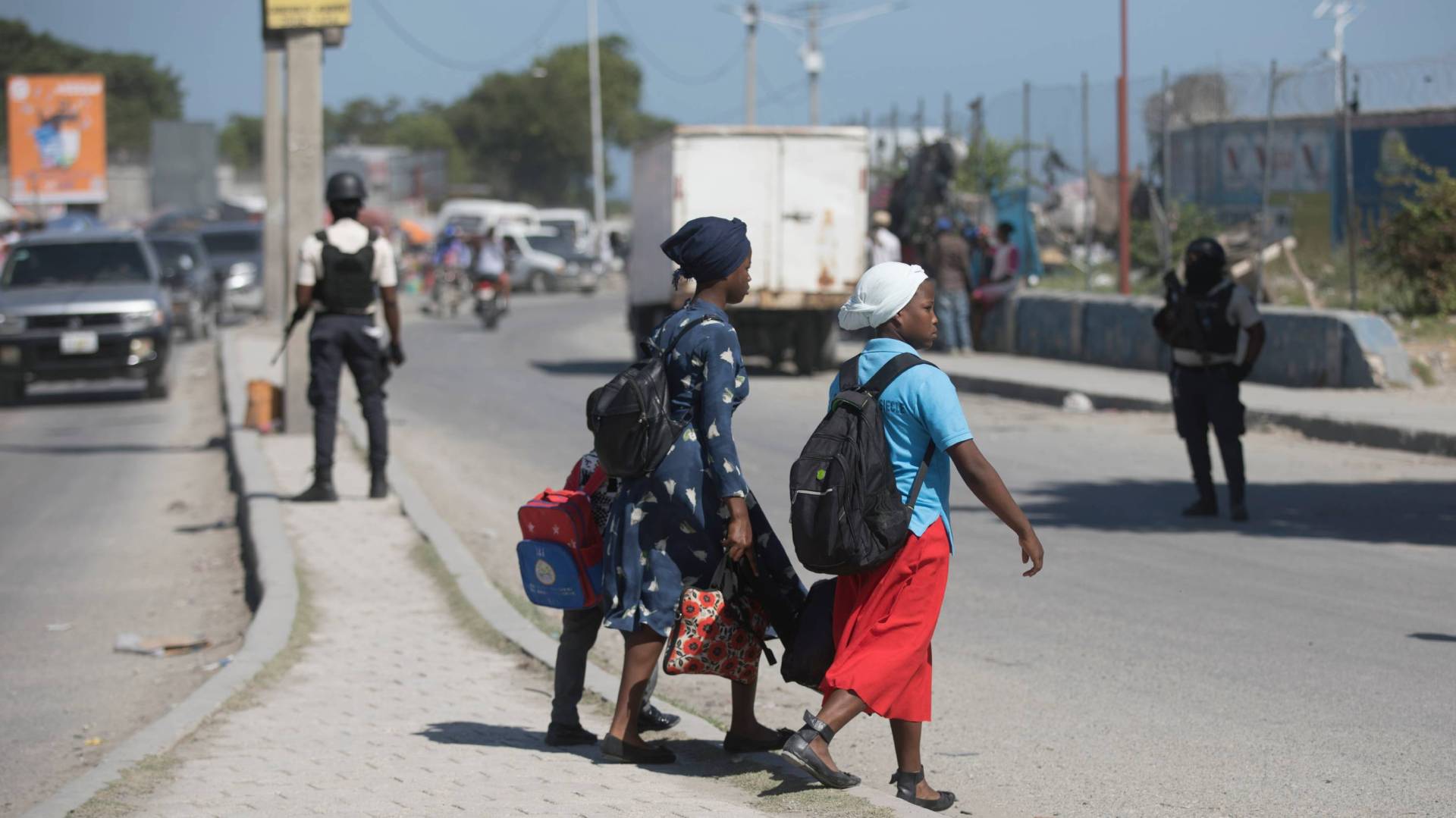
Police patrol the streets in Port-au-Prince, Haiti.

Police patrol the streets in Port-au-Prince, Haiti.

Christianity Today August 7, 2023
Odelyn Joseph / AP

Pastor Samson Doreliens ministers “right in the middle of the violence in Port-au-Prince,” the site of the July 27th kidnapping of an American nurse and her daughter who remain missing.

The 600 active congregants of the Evangelical Baptist Mission of South Haiti (MEBSH) Church of Cote Plage are torn by the gang violence that has overtaken the city, Doreliens told Baptist Press.

“Some are drawn closer to God because they believe it is God only who can do something to take the pain away,” he said of the congregation. “Others are discouraged, questioning why God is letting all kinds of things happen to the country: violence, natural disasters, etc.”

Florida Baptist Haitian Fellowship President Jackson Voltaire helped organize the Baptist Missionary Confraternity of Haiti (Confraternitè Missionaire Baptiste d’Haiti) (CMBH), a convention of hundreds of churches spread across six regions there.

Those in the Western Region including Port-au-Prince worship under tremendous safety risks, he said, while those in rural communities can minister more freely.

“They hold worship services with a great deal of difficulty,” he said. “But thank God that’s happening mainly in the metropolitan areas where Port-au-Prince is. In that region, the Western Region, we have hundreds of churches operating, but again … with great difficulty.”

Attendance has dropped at the MEBSH Church of Cote Plage, Doreliens said, where many members have lost their jobs or simply can’t travel to work amid the violence. Sunday offerings are donated to the poor and widows.

Churches have reduced the frequency of worship services and Bible study and have cancelled evening events. Community outreach continues only with the risk of pastors being kidnapped or shot, Voltaire said, but many remain hopeful. “Out of the many conversations I have with the pastors,” Voltaire told Baptist Press, “and not only with the pastors, I would say the Haitian people in general, they are very hopeful. And if you consider it, the country cannot go any lower than the way it is now.”

In addition to such highly publicized kidnappings as that of El Roi Haiti ministry nurse Alix Dorsainvil and her daughter, numerous kidnappings occur daily in the capital city, Voltaire said. Gangs who control the city typically kidnap residents for ransom while pressuring families to remain silent.

Dorsainvil, a nurse who relocated from New Hampshire to work for the ministry whose director is her husband, is being held under a $1 million ransom, area residents told the Associated Press.

El Roi Haiti continues to pray for Dorsainvil’s release as the US State Departments and others actively seek her freedom.

“Many tears have been shed this week but we, together with our team, are working and praying continuously to bring them home safely, and we continue to hold onto hope,” the ministry blogged August 3.

“We are so thankful for the very knowledgeable and experienced professionals God has brought together to complete the task of securing their freedom.”

While Haiti remains under a “do not travel advisory” from the US State Department, Voltaire said many pastors look forward to the day when Southern Baptists can return to Haiti.

“There’s hope because God is in Haiti as well. And I am sure that there are things that the Haitian people themselves need to do,” Voltaire said, referencing 2 Chronicles 7:14.

He encouraged Southern Baptists to be patient and be prepared to return to Haiti when violence subsides.

“As far as the CMBH, as far as the Florida Haitian Baptist Fellowship, we are organizing ourselves in a way that whenever God allows the missions to resume, when the greater Southern Baptist family is ready to come to Haiti, they will come to a much better, more productive environment where we can do ministry and really impact that side of the island for the Lord.”

News

Britain’s ‘Soul Survivor’ Generation Grapples with Mike Pilavachi Scandal

Amid an investigation, Christians are wondering: Did a popular youth leader’s “vulnerability and self-deprecation” avert skepticism and accountability?

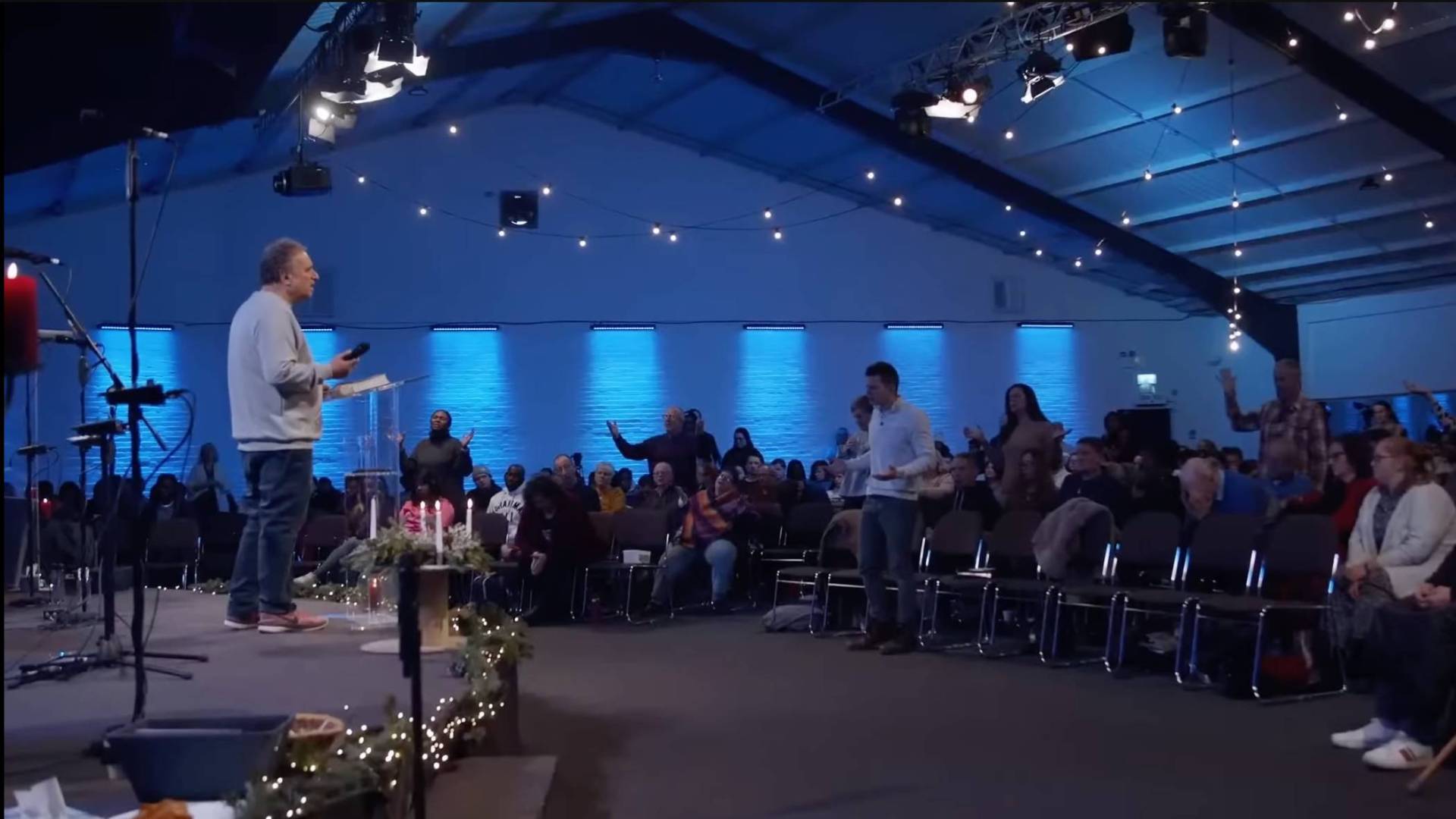
Mike Pilavachi at Soul Survivor Watford

Mike Pilavachi at Soul Survivor Watford

Christianity Today August 4, 2023
Screengrab / Soul Survivor

The last Soul Survivor festival, led by popular British evangelist Mike Pilavachi, marked the end of an era.

What began as a gathering of around 2,000 young people at a campsite in southwest England had grown into a movement of tens of thousands, with 32,500 people—mostly teens—attending the final event in 2019.

Pilavachi was the founder and figurehead of Soul Survivor and the driving force behind a movement that had embraced charismatic gifts and inspired a generation of young Brits to pursue Christianity in an age when the country’s churches struggled to retain teenage worshippers.

Before this year, the first line in a recent statement from the youth ministry charity Youthscape would have read as a tribute to his legacy: “Mike Pilavachi’s influence is such that a significant proportion of Christians in the UK and beyond will feel some connection to the ministry of Soul Survivor.”

Instead, it was a warning. As the Church of England conducts a safeguarding investigation into allegations against Pilavachi, Youthscape issued a 2,600-word guide to help leaders respond.

“This news is likely to be disorientating,” the charity wrote. “It could be causing us to question memories or experiences of the festivals we hold dear. We might feel disappointed, angry, or betrayed hearing that someone we trust is under investigation in this way.”

Pilavachi’s case comes as the church faces growing scrutiny over its safeguarding policies and response to abuse, with a string of leaders facing accusations spanning decades.

The claims against Pilavachi first became public in May, when British media published accounts from men who said Pilavachi massaged, straddled, and wrestled with them and others as teens.

Some had been involved in a gap-year program as interns. Alleged victims also described the emotional torment of falling out of favor with Pilavachi, an influential ministry leader.

“Young men were being picked up then discarded year after year. Like me, they would leave feeling like it was them who had messed up,” one said. “Mike had the power to break your career … The only doors that would open for you were the ones that he opened for you to go through. For a teenager, it was emotionally devastating.”

It is unclear what spurred the reporting of allegations to the Church of England this year. The church initially described the allegations as “non-recent,” but the qualifier was later removed. Some said that concerns had been raised as early as 2004.

Pilavachi resigned in July from his church, Soul Survivor Watford, seeking “forgiveness from any whom I have hurt,” but declined to comment further.

Pilavachi was ordained in the Church of England in 2012. The allegations against him follow high-profile cases of clergy who have used their position to abuse boys and young men in church. A few years ago, evangelical leader Jonathan Fletcher, who had served for 30 years at Emmanuel Church, Wimbledon, faced allegations of massages and naked beatings. A review of the church’s handling of his case underscored the risk of spiritual abuse by church leaders, noting that “the issue of consent requires further legislative scrutiny in contexts where there is a significant imbalance of power and/or status and/or age, including in a religious context.”

Pilavachi began his ministry as a youth leader at St. Andrew’s Church, a charismatic evangelical church in Chorleywood. He opened a café—Dregs—to reach young people. That ministry grew into a congregation of its own, Soul Survivor, which opened at a warehouse in nearby Watford.

While the average churchgoer in the United Kingdom is over 60, Soul Survivor Watford bucked Anglican trends and stereotypes. It was a congregation full of teens, led by high-energy lay leaders like Pilavachi. The vicar at St. Andrew’s, the Rt. Rev. David Pytches, was Pilavachi’s mentor and the church maintained a connection to Soul Survivor.

In Watford, the two pastors who led alongside Pilavachi—Andy Croft and Ali Martin—have known Pilavachi since they were teenagers. Croft, Soul Survivor’s senior pastor, was one of Pilavachi’s interns, while Ali Martin, assistant pastor, participated in a leadership and discipleship program after attending the first festival in 1993. Both were suspended in June, with a statement from Soul Survivor stating that this related to “concerns over the handling of allegations.”

The response to the allegations against Pilavachi has reflected the silos within the broader Church of England—charismatic evangelicals were immediately shocked and shaken by the news and some Anglicans were unaware of Pilavachi’s ministry at all.

Within the Church of England, charismatic revival, with its emphasis on baptism with the Holy Spirit and spiritual gifts such as speaking in tongues, has been a major influence in recent decades. The Archbishop of Canterbury is among those shaped by it. But it has not been universally welcomed. Some Anglicans are sympathetic to Joseph Butler, the 18th-century bishop of Bristol, who told John Wesley that “the pretending to extraordinary revelations and gifts of the Holy Ghost is a horrid thing, a very horrid thing.”

The debate came before the Church of England’s General Synod in 1981, with critics concerned that the charismatic movement was divisive and represented a “flight from the rational and intellectual.” But it was also celebrated for having transformed parishes, making worship “warm, vibrant and meaningful for many Christians who had previously felt coolness and aridity.”

In Pilavachi’s case, his ministry was heavily influenced by John Wimber, the American Vineyard leader and “signs and wonders” evangelist who made his first of several trips to the UK in 1981.

In the same year that the Synod was debating the charismatic movement, this American visitor was having a dramatic impact on leading evangelical parishes in the country, including St. Andrew’s in Chorleywood, his first stop.

The vicar, David Pytches, said there was “holy chaos,” with people falling down in the pews. A later visit transformed life at Holy Trinity, Brompton, home of the Alpha course, and now a major church-planting force in the Church of England.

Pilavachi’s first encounter occurred two years later in 1983, when Wimber addressed a worship conference in London. Pilavachi recalled in his book For the Audience of One being “totally unhinged” by the singing. “I spent a whole part of the week just crying and sniffling my way through songs … Many of the songs were incredibly simple and yet totally intimate. As I worshipped, I found healing for my soul. Intimacy set me free.”

In the years to come, this approach to worship would become central to Soul Survivor’s ministry. Soul Survivor has served as a stable for musicians worldwide, including Matt Redman and Tim Hughes. (Last month Redman commented on the Pilavachi allegations, revealing that he had “experienced first-hand the harmful behaviors that have been described.”)

If music was one part of Wimber’s impact, the other was a theology that democratized supernatural ministry. Among Wimber’s mottos was “Everyone gets to play.” This was the approach that Pilavachi adopted in ministry, preaching that the gifts of the Holy Spirit were for all of God’s people, and encouraging young people to pray for one another accordingly.

While he was careful to speak about the dangers of “hype” and encouraged simple prayers and waiting on God, this ministry could have dramatic outward effects from crying to shouting and falling down. It was also a key part of what drew young people to Soul Survivor.

“Soul Survivor is one of the most tangible times where I have been able to meet with God and have seen other people meet with God,” one young festival-goer told the Church Times at the final 2019 gathering.

On stage, Pilavachi was a captivating speaker, combining an easy informality and deadpan wit—often entailing self-deprecating confessions—with passionate exposition of Scripture and unabashed accounts of his own relationship with Jesus. In many ways, he defied expectations of Christian celebrity leaders.

In My First Trousers, a book on growing in faith that is part-memoir, Pilavachi described himself as a “swollen-bellied and gently maturing afro-haired bloke from Harrow,” a London suburb.

In the same book, he wrote that it was “vital that we Christians perform regular safety checks on ourselves,” adding that his own friends “know I want them to tell me anything they notice about my attitudes or behaviour which worries them.”

“Mike was not thought to be a Christian celebrity,” wrote Lucy Sixsmith, a PhD student at the University of Cambridge, in a blog reflecting on her own experiences of Soul Survivor.

“Vulnerability, self-deprecation: that was Mike’s thing … Mike’s audiences heard about the brokenness in his youth that led him to Jesus, the bouts of depression that hit during and after the summer festivals, his loneliness, his occasional habit of hiding from his friends … Soul Survivor seemed to be the genuine article. Mike Pilavachi did not seem to be a Christian celebrity.”

She went on to suggest that “vulnerability could be toxic, a place to hide, a way to deflect scepticism: if a Christian celebrity sends himself up or strategically reveals some struggle or other, we all ask fewer questions about what power he has in fact, for all his gentleness.”

Hers is one of a growing number of stories being shared online of Soul Survivor and Pilavachi. Former staff members, interns, congregation members, and festival-goers have turned to the internet to process their memories and thoughts amid the Church of England’s investigation. This has included reflections that have gone beyond the specific allegations to explore the nature of charismatic ministry.

In its guide to healthy discussions with young people, Youthscape suggests, “If the allegations are true, it doesn't undermine everything that happened at the festivals, programmes or church … If you have had an experience of God through Soul Survivor, and this seemed real to you, you don't have to abandon it, whichever humans were involved in leading at the time.”

But others have questioned this. Luke Larner, an Anglican priest who served on the “prayer and prophecy team” at the summer festivals, has asked: “What if the intense experiences, what if the incredible emotional highs of being in a big top with thousands of other young people, what if the overwhelming desire to be something bigger than ourselves, what if hearing a ‘mission from God’—what if it wasn’t real? What if it wasn’t God? What would that mean?

While Christians await the report, it is these accounts that are driving discussion within the Church of England about what happened at Soul Survivor and what the implications are for youth ministry and safeguarding in the future.

Though some had never heard of Pilavachi, they have now, and with so many of the church’s youngest worshippers having experienced his ministry, they are forcing the conversation beyond its silos.

Ideas

What If Churches Ask for More and No One Says Yes?

Staff Editor

Jake Meador has a provocative proposal for reversing dechurching. But it may not be that simple.

Christianity Today August 4, 2023
Pearl / Lightstock

More than 1 in 10 Americans—around 40 million of us—stopped attending church in the last 25 years.

New research using cell phone location data suggests weekly church attendance (defined as 36 weeks of the 47 studied) is at just 3 percent. And even where church attendance has rebounded since pandemic shutdowns, congregational involvement still lags.

A shift of this scale is impossible to ignore, but it’s certainly possible to misunderstand.

What if there’s an explanation we’ve overlooked, asked author and Mere Orthodoxy editor Jake Meador at The Atlantic last week—a reason apart from the usual headline-making factors like church corruption, abuse, and theological differences?

Drawing on The Great Dechurching, a forthcoming book from pastors Jim Davis, Michael Graham, and Ryan P. Burge, Meador argues that “the defining problem driving out most people who leave is … just how American life works in the 21st century.”

Everyone is busy. Job hours are long and unpredictable. Finances are precarious. The kids have soccer. The baby’s not sleeping through the night. The grandparents need more help around the house. A friend is visiting. I’m tired.

“Contemporary America simply isn’t set up to promote mutuality, care, or common life,” Meador summarizes, so we’re “lonely, anxious, and uncertain of how to live in community with other people.” Forever in the red on time and energy, we don’t spare any of our resources for church.

If that’s true, a church’s first impulse might be to make membership easier, to demand less of overbusy congregants so they’ll still show up. But maybe “the problem isn’t that churches are asking too much of their members,” Meador proposes, “but that they aren’t asking nearly enough.”

It’s a provocative idea, and on Instagram and the network formerly known as Twitter, Atlantic readers were duly provoked. Though the article acknowledged the role of “religious abuse and more general moral corruption” in dechurching, social media comments highlighted these factors again and again, often in connection to evangelicals’ politics, insisting Meador was missing this more fundamental point.

“Child abuse? Cover-ups? Multi-billion-dollar organizations that pay no taxes? Lies, racism and hypocrisy?” said one Instagram reply with hundreds of likes. “Nah … you’re right … we’re just ‘too busy.’”

If Meador and his less-generous readers (and, likely, nonreaders) are talking past each other, perhaps it’s because Meador assumes a conviction that not everyone shares: that for all its difficulties—practical, relational, and ethical—church is necessary and good.

I share this conviction too. But if I set it aside, I can see why Meador’s argument would fail to persuade not only those who hate the church for its sins but also those who feel little to nothing about church at all.

Meador’s vision of “asking more,” it’s important to note, is overwhelmingly relational. It’s less about doing more than about being more to each other—rejecting the standard American life, atomized and in thrall to workism from kindergarten on. He argues that the church could become a thicker “community marked by sincere love,” a stronger “safety net in the harsh American economy,” and a consistent reminder that humans are more than the many entries in our calendars.

Yet even this proposal of an increased demand from our local church “may seem like a tough sell in an era of dechurching,” Meador admits. “If people are already leaving—especially if they are leaving because they feel too busy and burned out to attend church regularly—why would they want to be part of a church that asks so much of them?”

His answer is that Christians need, as always, to be transformed (Rom. 12:1–2). In our context, he argues, we should become the sort of people who reject a too-busy life in which church is just another item on our to-do list—one frequently left unchecked: “We could be a witness to another way of life outside conventionally American measures of success. Churches could model better, truer sorts of communities, ones in which the hungry are fed, the weak are lifted up, and the proud are cast down.”

We certainly could, and I agree with him in principle. But this logic works in practice only if we’re already committed to the notion that attending church is necessary and good, that it’s worth sticking around—including when we don’t particularly feel like staying.

Without that foundational assumption, we probably won’t be willing to say yes even if our church were to start asking more of us. Why take the kids out of soccer to make time for small group unless small group matters so much more? We won’t be disposed to do more with church and, crucially, to do less outside church unless we’re already deeply committed to the unique importance of church.

And I don’t think most professing American Christians are. Four days after the Atlantic article, The Wall Street Journal published an examination of middle-aged Americans’ disproportionate decline in church attendance over the last three years. Its data supports Meador’s argument, but its interviews evince this assumption gap I’ve described.

“When you got faith, you got faith,” one interviewee, Marlon Eddins, told the Journal. “I just don’t think going every Sunday makes you who you are.”

But that’s just it: For Christians, going every Sunday significantly does make you who you are. Extenuating circumstances aside, routine participation in communal Christian life is the primary location of our worship and discipleship. It shapes our personalities, our social lives, our attention, and our desires.

And if you don’t think about church this way—if it’s merely an optional gathering that can be regularly skipped in favor of nice weather or a ball game on TV, as polling shows it is for many Americans—then when your church asks for more, your answer will likely be a tired “nah,” if you bother to reply at all.

There’s something of a chicken-and-egg problem here: If church doesn’t ask enough of you to inspire real commitment, you won’t think it’s that important. But if you don’t think church is that important, it can’t realistically ask enough of you to make you really commit.

Perhaps, following Meador, the church should simply ask more of us anyway and leave the rest up to God who gives the increase (1 Cor. 3:6). And maybe, whatever happens, there are two reasons to hope.

First, if you’re disappointed over the church’s failures, it means you have some investment in the church. The fact that those commenters on Meador’s post are angry means at least they aren’t indifferent. And second, even when we are indifferent, apathetic, or overscheduled—even when we’re very mediocre followers of Jesus, seeds choked with worries in thorny American ground (Matt. 13:22)—God can still make us grow.

Bonnie Kristian is editorial director of ideas and books at Christianity Today.

News

Turkish Christians Turn to Tabitha for Earthquake Relief—and Resurrection

Six months after disaster, the biblical Dorcas raised from the dead by Peter inspires Protestant generosity—just as she modeled for the early church.

Ruins of a church in Turkey after the earthquake (left) and artwork depicting Tabitha, also known as Dorcas, being raised from the dead by Peter (right).

Ruins of a church in Turkey after the earthquake (left) and artwork depicting Tabitha, also known as Dorcas, being raised from the dead by Peter (right).

Christianity Today August 4, 2023
Illustration by Christianity Today / Source Images: AP Images / WikiMedia Commons

Exhausted and emotionally spent at the end of a full week surveying the damage from Turkey’s massive earthquake last February, Ali Kalkandelen needed hope. As chairman of his nation’s Association of Protestant Churches (TeK), he felt the weight of responsibility to help his colleagues in 27 affected congregations.

Eventually, he found a template for moving forward in the biblical figure of Tabitha.

Scattered over 11 cities in a geographic area the size of England, local Turkish Christian leaders had already launched into service, supported by the larger body of 186 affiliated churches with aid, funds, and volunteers.

Kalkandelen set out from Istanbul, encouraging colleagues in Antakya, Adiyaman, and three other cities. He traversed ruined highways, lamented collapsed buildings, and tried to take stock of the task of relief.

Last on his list was Kahramanmaraş, for a personal visit. His father’s home had been destroyed, and he went to check in on his many relatives there.

And there in the rubble flitted a small piece of paper.

Upon inspection it was a page from a Turkish Bible, from 2 Corinthians 1. He read verse 3–4: Praise be to … the God of all comfort, who comforts us in all our troubles, so that we can comfort those in any trouble.

The slip of paper was all the more moving because, among the population of half a million people, the city had no church and no known Christians.

“I read it with my wife, and we started weeping,” said Kalkandelen. “God was talking to his church in Turkey.”

Six months later, alongside trauma counseling and spiritual care, TeK provided 7,500 tents, 27,000 outfits of clothing, and over one million meals to those displaced by the earthquake. And to compensate for the destroyed infrastructure, TeK made available three tons of drinking water, 7,000 diapers, and 146 tons of coal for winter heating.

To do so required organization.

With previous natural disasters in Turkey, the church had always played a role in relief. But with experts warning that another earthquake was likely to hit Istanbul within a few years, Kalkandelen wanted a standing response. By April he had gathered leaders from the affected areas, linking them with TeK elders from across the country.

Searching for an appropriate name, the six-person committee took note of Tabitha in Acts 9. Also known as Dorcas, she hailed from Joppa—modern-day Jaffa outside Tel Aviv—and was known for her good works and charity, especially in sewing clothes for area widows. When she died, the believers called for Peter, and he raised her from the dead.

Kalkandelen recalled his scrap of paper and the shell-shocked faces of the earthquake survivors. He has delivered us from such a deadly peril, and he will deliver us again, says verse 10. On him we have set our hope.

The Tabitha committee has since met biweekly, coordinating between TeK leadership, local churches, and the Turkish government. Communicating with donors from abroad, it prepares reports and ensures financial transparency. And it approves new projects for aid, discerning how God will guide their next steps.

But there is a deeper sense of resurrection, Kalkandelen senses. Why was there a Bible in Kahramanmaraş? One hundred years ago, the city had a strong Armenian Orthodox presence. Today, nearby TeK congregations have found a local man who has welcomed them. As they serve through his network, Kalkandelen wonders, might unknown believers emerge in a rebirth of the church?

“Every believer we talked to thought they were going to die [during the earthquake], but now we feel they were raised again to serve and comfort the nation,” he said. “These verses fit the Tabitha name.”

He didn’t know how right he was.

Turkish Protestants interviewed by CT appreciated the biblical example of Tabitha, but none had a personal connection to her story or sense of her regional importance.

Three churches in Palestine are named after St. Tabitha, while her feast day is commemorated by Orthodox and Catholic churches worldwide on October 25. The Lutheran and Episcopal denominations also celebrate her on the liturgical calendar.

With the flow of the many-streamed river of almsgiving, you watered the dry earth of the needy, states the Orthodox liturgy. Glory to Christ whom you followed as a true disciple and a spotless lamb!

Tabitha is the only woman in the Bible specifically labeled a disciple.

Celebrated as the patron saint for tailors and seamstresses, her burial site is still a place of pilgrimage today. The first recorded visit was made by an Italian traveler from Piacenza in 560 A.D., but as early as the fourth century she was depicted on sarcophagi in France, heralded as a maternal patron.

“A widow who enjoys sufficiently robust health,” wrote Basil of Caesarea, commending Tabitha, “should spend her life in works of zeal and solicitude.”

Scholars say that early church fathers took a skewed view of widows, warning against their reliance on charity. But the sarcophagi coincide with a change in attitude, with Tabitha becoming an exemplar of the Christian family in its social legitimization as it moved beyond Jewish circles to include Gentiles.

One sarcophagus depicts characters with clearly foreign dress, indicating non-Jewish recipients of her aid.

A study of local names in the ancient port city of Joppa indicates a mixed population that included Gentiles from Alexandria, Cyrenaica, and Cappadocia. The cloth industry was dominated by women, so it is likely Tabitha was at least a small business owner.

Some scholars have speculated that the upper room where her dead body was prepared for burial may have been the meeting place of the local church. Following her resurrection, many people believed in the Lord (Acts 9:42).

“It was not her house that proclaimed her wealth,” wrote St. John Chrysostom, “but the bodies of widows furnished with dress, and their tears that were shed.”

In the biblical text, scholars say Tabitha plays a linking role in the progression of salvation to Gentiles. Having been summoned to Joppa, Peter resides in the house of Simon the Tanner, wherein he has his vision of ceremonially unclean food. God commands him to eat, and then immediately Cornelius the centurion calls for him from Caesarea.

One sarcophagus depicts one of Tabitha’s widows kneeling, reaching out to touch the hem of Peter’s garment. It recalls the scene of the bleeding woman, doing the same to Jesus.

Commentators also describe Tabitha’s name as a key to understanding one of Jesus’ most obscure teachings. If your eye is good, he says in Matthew 6:22, your whole body will be full of light.

Tabitha means “gazelle,” an animal cited for its keen eyesight, which ancient Jews and Christians associated with a charitable spirit. In the original Hebrew of Proverbs 22:9, for example, the word rendered as “generous” translates more literally as the “bountiful eye,” which is blessed as it gives to the poor. Chrysostom wrote that “her name matched her character,” while Bede the Venerable also noted the apt symbolism.

“She who had conferred upon suffering widows the assistance for living,” wrote St. Cyprian of Carthage, “deserved to be recalled to life by the petition of widows.”

As Turkish Christians hope for their church today.

Together with the small number of Protestants in Turkey, the overall Christian community numbers about 380,000 citizens among a Muslim population of 80 million. But Antakya used to be ancient Antioch—one of the five primary centers of the faith, where believers were first called Christians.

Just so, the Turkish church today is also being “recalled to life.” Believers in modern-day Antakya keep the spirit of Antioch alive.

“The apostles did what Jesus did, and the Tabitha committee is full of modern-day apostles,” said Ilyas Uyar, an elder in the Protestant Church Foundation of Diyarbakir. “We want to raise people from the dead by extending our hand to them.”

Though not a member himself, Uyar gathered the statistics of all aid distributed. Relief flows primarily through the two hubs of Antakya and Adiyaman, where TeK has set up service centers that have become places of ongoing fellowship for Muslims and Christians alike.

He is especially proud of their work with neighborhood children, freeing mothers—some of whom are now widows—to rebuild life after their homes were destroyed. Through church generosity, the kids now have over 14,000 donated toys to play with.

Partnering indirectly with the churches is First Hope Association (FHA), the Turkish Protestant NGO that secured permission for Samaritan’s Purse to administer a field hospital in Antakya. Over 8,000 patients were treated through the end of March, when it yielded the facility to the ministry of health.

A small team of Americans remains on the ground, supporting the maintenance of 120 mobile hygiene units—complete with shower, sink, and toilet—for up to a year.

But having distributed thousands of tents for emergency shelter, FHA board chairman Demokan Kileci is now identifying the next phase of aid.

“Containers are not coming fast enough,” he said. “Tents will not work well with the coming winter cold.”

In the meantime, there is the summer complication of snakes and scorpions. Addressing both issues, FHA has so far installed 170 corrugated steel units, each measuring 225 square feet, with two living quarters and a bathroom. Ongoing projects include building two schools to serve up to 120 K–12 students each, and two kitchens to provide 300 meals per day for those with celiac disease and diabetes.

As a Christian organization, Kileci said they take every natural opportunity to speak about Jesus. But while church leaders told CT after the earthquake that it would be at least six months until there can be non-exploitative gospel outreach, he said that time is still not yet.

Containers could make the difference.

“Once families feel they are settled and can breathe a little, then maybe we can discuss spiritual matters,” Kileci said. “But we will see God’s miracles more and more in the coming months.”

Some agencies have already left the affected areas, causing people to wonder why Christians are still there—who they then ask for prayer. Other agencies are pushing an Islamic message, and people are getting sick of it, he said. Meanwhile, the government is doing “the best it can” to restore services, but with experts warning there may yet be two years of ongoing tremors, few people can return to life as normal.

For Christians, “normal” includes an emerging sense of solidarity.

Back in 2018, then-TeK leader Behnan Konutgan joined Orthodox and Catholic Turkish leaders to launch Christianity: Fundamental Teachings, a 95-page guide on essential doctrine, distributed through the Bible Society. Whereas there has been tension between the historic churches and evangelical believers, Konutgan stated the joint project has helped dispel “90 percent” of ecumenical distrust.

There are other hopeful signs of Christian unity in the country. Since the earthquake, the interdenominational SAT-7 media and satellite TV ministry has produced the first two episodes in a series of four hour-long Turkish documentaries, to highlight the cooperation between sects as it chronicles the state of every damaged and destroyed church building. And TeK, largely composed of converts from Islam, will continue the same, helping all denominations without distinction.

Then many will give thanks on our behalf for the gracious favor granted us, Kalkandelen recalls from his slip of paper, in answer to the prayers of many (2 Cor. 1:11).

Just as with the widows of Acts 9 and their beloved patron.

“The good works of the historic church in Turkey can help raise the church anew, through us, its new apostles,” he said. “And once raised, Tabitha did as she did before—serve.”

News

What the US Can Learn from PEPFAR

Researcher Deborah Birx, former head of the now-embattled Bush program, thinks US churches can fight diseases like African churches fought HIV/AIDS.

Deborah Birx is the former head of PEPFAR and the White House's COVID-19 response.

Deborah Birx is the former head of PEPFAR and the White House's COVID-19 response.

Christianity Today August 3, 2023
Courtesy of the Bush Center / Edited by CT

Physician Deborah Birx has led the US government’s effort against HIV/AIDS for decades . An army colonel who worked on HIV/AIDS and vaccine research, she went on to lead the Centers for Disease Control and Prevention’s arm of the President’s Emergency Plan for AIDS Relief (PEPFAR). She later led PEPFAR itself as the US Global AIDS Coordinator.

Starting at the beginning of the pandemic in 2020, she served as the head of the US coronavirus response under President Donald Trump. Through her many White House briefings, she became famous for her variety of scarves. Birx is a graduate of Houghton College, a Wesleyan school in New York that is part of the Council for Christian Colleges and Universities.

CT interviewed Birx in June, before the current political fight over PEPFAR’s reauthorization became more heated. The program’s five-year renewal now faces pro-life opposition. As a senior fellow now at the nonprofit Bush Center, Birx can’t argue for or against particular legislation. But she shared what she thinks US faith communities can draw from the success of PEPFAR.

PEPFAR is credited with saving 25 million lives from HIV/AIDS, and is perhaps the most successful global health program in US history. From your 19 years working on PEPFAR, do you have specific ideas from the program that are translatable to the US?

HIV, malaria, and tuberculosis are the deadly diseases in Africa. But America has its own deadly diseases—diseases of despair and loss of hope. And that’s where the church plays such an outsized role in bringing hope back to the community.

I think we could learn a lot from PEPFAR in the United States on how to do our healthcare delivery better. With HIV/AIDS, we have to remember that when there was nothing, faith-based organizations [in Africa] were there doing palliative care. And long after the HIV pandemic is well controlled, they will still be there, evolving with the needs.

We can utilize what we saw and learn to tackle opioids, to tackle obesity in the United States—in a cost-effective way. I think people right now are sitting back and waiting for the federal government. And I’d like to remind everybody that before there was money, there were churches and communities holding their hands and supporting those families.

In this moment in time, where we no longer really have health care in our rural areas, we do still have churches.

So what do churches in the US do beyond bringing meals to people who are sick?

PEPFAR was all about saving lives and getting treatment to individuals. But we were also about—and are about today—preventing new infections. And to prevent new infections, you have to work with people on behavioral change. That’s what we need in order to battle what I say are the pandemics in the United States, like obesity and prediabetes.

When I came to engage in COVID-19, the United States had not experienced implementing a pandemic response. But we had spent the last 20 years successfully implementing a pandemic response in sub-Saharan Africa.

What I uncovered in the United States is a very medicalized, individualized approach that carries its own stigma. There is a lot of stigma that keeps people from screening for preventive issues—getting their A1C early and knowing if they’re at risk for prediabetes. If we don’t recognize the role of community groups and churches, we’re going to continue to be one of the top obese and prediabetic countries in the world.

Trusted individuals delivering those messages in a supportive way can really change minds. I think because it doesn’t cost a lot of money, people think, “Oh, well, it won’t really have an impact.”

You just mentioned stigma around doing certain preventative health care in the US, but that’s a word we’re accustomed to hearing with HIV/AIDS. One story that hasn’t been told very often is how African churches helped reduce stigma around AIDS. How did that happen?

I started working in Africa in 1998, before President Bush’s announcement of PEPFAR and before the Global Fund. And I can’t tell you what a devastation that was, with losing whole communities. Churches could see the reality on the ground because they were holding 10, 20, 30 funerals in a community in a weekend. The churchgoers spent all their time going to funerals. They could see the devastation of HIV and knew that it had to come out into the public where people could talk about it.

It was important in the community of faith to care for and to comfort, and to provide palliative care and food at the household level. And so churches were the soldiers of dispelling stigma and discrimination, because they were willing to go into the homes and pray with those who were dying, and provide sustenance and community support to those families.

When the church leads in compassion for others and shows the community that they can also engage, it changes everything.

PEPFAR has been around 20 years. Have you seen any new generation of faith-based people in the US be interested in the program?

I haven’t.

What are your concerns, if any, about this reauthorization battle?

It’s important to proactively remind people about the core values on which PEPFAR was established. Not promoting prostitution, not promoting or endorsing abortion—that has always been part and parcel of PEPFAR implementation at the partner level. But when things change and executive orders change, people aren’t sure.

It was so astute of President Bush and the architects of PEPFAR to understand that for big problems, you need a big tent. PEPFAR has been successful because everyone could see themselves in the program. It was my job when I was leading PEPFAR, and it’s the leadership’s job today, to make sure that everybody sees themselves in the program.

PEPFAR has never turned a blind eye to anything. We like to know what’s going on and we like to fix those things.

Are there parts of PEPFAR you think should change?

The structure that is in the reauthorization has not only been successful, which is clearly evident in the 20-year results, but it also is a new way of doing business that frankly, all of our foreign assistance should model. Each federal agency has unique talents, but no agency has 100% of the talent. And I think having all agencies involved in PEPFAR with leadership outside of those individual agencies allows it to really have accountability and transparency. Reauthorization maintains the critical structure and the annual reporting that is necessary. Data collection is critical in constantly evaluating the success of your program.

If you go on pepfar.gov, you can see the data that’s updated quarterly. Now try to go in and find quarterly obesity data across the United States! If you’re only looking at obesity every three years or every five years, there’s no way you can understand whether any of the programs you’ve put on the ground are having an impact or not.

And so I think there’s a lot of lessons to be learned. I hope everybody takes a step back and realizes we’re stronger together—Republicans, Democrats, Muslims, evangelicals—because in the end, we care about our communities, and our communities are not monolithic.

This interview has been edited and condensed for length.

Theology

True Change Is a Matter of the Heart

The Christian gospel is meant to transform our whole person—our emotions as much as our thoughts.

Christianity Today August 3, 2023
Kevin Toval / Pexels

This piece was adapted from Russell Moore’s newsletter. Subscribe here.

Once when I was preaching in a church that’s more on the “decently and in order” side of Christian liturgy, my host warned me that one woman there was a lot more demonstrative than the rest of the congregation. “There are certain songs we sing that make her start crying and waving her hands,” he said. “And that’s fine. We just want to make sure that we don’t move into a kind of emotionally driven worship.”

I know what he meant. I wonder, though, whether that woman’s “emotionalism” might just be closer to biblical application than the to-do list of action items at the end of the Bible study she’d just attended.

Whether it means starting out at a new church or Bible study or signing up for a gym membership or yoga class, most people at some point sense a need to change their lives. Most of us in ministry want to see “changed lives” or “transformed” people. The question is, How do people actually change?

That question has lingered with me since I read an article by Simeon Zahl in The Mockingbird magazine on the reigning “theories of change” at work in American church life. Zahl outlines several of these theories. Most start with an assumption about where the actual problem is before offering a way to “fix” that problem.

The theory Zahl sees as most typical in evangelical congregations is a “Christian information” approach. Some would question just how widespread this model is, given the constant (and real) concerns about anti-intellectualism and the “scandal of the evangelical mind” in American Christianity.

To be sure, a Christian information theory of change could include highly cerebral, abstract lectures on theology or philosophy. But more often, this approach is highly practical. Seeing a lack of knowledge as the root problem, it seeks to argue through a particular biblical passage or worldview, followed by a time of “application” that suggests ways the listeners can put the new principles to work in their lives.

Zahl contrasts this theory with a model of “sacramental participation.” Here, the primary driver of change is not the information embedded in the sermon but the practices embedded in the Lord’s Table or in baptism. A third model involves gearing a worship atmosphere toward a highly cathartic emotional experience, by which one leaves transformed.

In contrast, Zahl argues for what he calls an “Augustinian theory of change.” This one assumes that “human beings are driven not by knowledge or will but by desire. We are creatures of the heart, creatures of love.” He further argues that the human heart is highly resistant to change, often blocking direct attempts to alter it.

To make his point, Zahl asks us to recall a time when we’ve tried to change someone’s mind about politics through rational arguments or—even worse—to talk a person out of pursuing someone he or she has fallen in love with.

Very early in my ministry, I was taken aback by a man who could recite all the relevant biblical passages about the dangers of adultery and the importance of marital fidelity but who sat in my office—with his wife and new baby—waving all of that aside as he told me he was leaving his marriage for someone else. “I’ve fallen in love,” he said, with a shrug that seemed to imply, What is there left to say?

That’s why, Zahl argues, “extracting practical advice for Christian living” won’t overcome fallen human resistance to judgment and law. It’s also why, he contends, Pentecostals—whatever shortcomings they may have—tend to be more effective at seeing lives turned around. “The intransigence of the human heart is the fundamental problem of Christian ministry,” he writes. “The Spirit of God traffics in emotion and desire.”

While I probably wouldn’t agree with all the specifics of Zahl’s Luther-like law/gospel framework, I believe he’s completely right that actual transformative change happens at a much deeper level than intellect or willpower. That’s why much of the criticism of “overly emotional” worship services can miss the point.

Some with a more cynical bent may conclude that tears flowing from people’s eyes and hands aloft in a crowd of singing worshipers are just emotional fluff—what sociologists might call “collective effervescence,” akin to singing “Sweet Caroline” at a Red Sox game or crowd surfing at a nightclub. But what if God actually designed us to connect to one another—and to the deeper places of our own hearts—that way?

Zahl’s larger argument entails the idea that spiritual practices, Bible reading, scriptural sermons, Christian service, the sacraments, and so on are indeed shaping people—including at the level of desire and emotion. But he says that “we can do all this only once our hearts have already changed enough that we desire to engage in the practice.”

“No one will develop a transformative and durable new practice of prayer unless they fundamentally want to and want to enough to carry them through life’s inevitable obstacles,” he writes. “As Jesus told us, you must change the tree first, then the right fruit will follow (Matt. 12:33–35). Focus on the heart, and the practices will follow; focus on the practices alone, and we’re back to the brick wall.”

Instead of practical tips, doctrinal axioms, or syllogisms, Zahl recommends that we embrace “technologies of the heart” that speak the “strange electric language” of the psyche. He asks us to consider how much more powerful stories and art and music are than ideas alone. The Bible is all of this and more—stories, psalms, poems, parables, arguments, reasons, and exclamations of wonder.

C. S. Lewis famously wrote that he planned Narnia to “steal past those watchful dragons” that we put around our hearts. We try to protect ourselves by numbing our hearts to the familiarity of the Christian story. And yet there are moments when our defenses drop—and we are jarred by hearing in the words of Scripture sung, recited, taught, or just read the Voice that summons, “Come, follow me.”

At the most cynical time of my life, I found myself undone just by hearing the words of “Jesus Loves Me.” This I know. And I could give a thousand reasoned arguments why the Bible tells me so—and why the Bible can be trusted to tell the truth.

But the deeper part of me had forgotten it—couldn’t really believe it to be true. When I heard it again that day, it hit with a different force. I was overwhelmed, just for a moment, with the truth of the words. “Jesus really loves me.”

Only sometimes do we truly perceive how God is reaching us at that deeper place of the heart. We can’t engineer it or manufacture it. But we also shouldn’t ignore it or squelch it.

Maybe the recovering drug addict in the pew in front of you sobs when he sings “Amazing Grace” because he knows how lost he once was. Or maybe singing “Amazing Grace” is what changed him enough to want to be found.

Maybe the Christian whose emotion embarrasses her church in worship is just seeking an emotional dopamine hit. Or maybe what she’s doing is losing all the self-censoring image maintenance that keeps her from crying out “Abba, Father!”

Maybe underneath all of that, there’s a Holy Spirit who still changes lives.

Russell Moore is the editor in chief at Christianity Today and leads its Public Theology Project.

Religious Liberty Doesn’t Have to Make Polarization Worse

If it’s done right, it can actually make it easier for us to live together.

Christianity Today August 3, 2023
Illustration by Mallory Rentsch / Source Images: WikiMedia Commons

Americans support religious liberty—in general. But they are deeply polarized about how far the natural and constitutional right of individuals to respond to their conceptions of the divine should extend. And unfortunately, Americans tend to be reluctant to extend religious liberty broadly to views they find unsympathetic.

I think that’s sad. Religious liberty is for everyone and should be cherished by all. It’s also ironic, as I argue in my new book, Religious Liberty in a Polarized Age, because historically, the central social purpose of religious liberty was to reduce the fear and anger people feel when they’re threatened with penalties for living according to their religious commitments.

Fear and anger produced cycles of violent retaliation in 16th and 17th century Europe among Protestants and between Catholics and Protestants. In response, Americans embraced principles of religious liberty. The founding father James Madison called it the “true remedy” for the “disease” of religious conflicts and their threat to “the health and prosperity” of the nation.

Today’s conflicts between progressives and conservatives are, thankfully, less violent. Yet we also see cycles of coercion, fear, resentment, and retaliation. We also live in an age when people’s response to “ultimate concerns” vary greatly and are often understood in opposition to each other. Progressives sometimes seek to compel conservative religious people or groups to support same-sex marriages or transgender procedures, in violation of their consciences. Conservative Christians sometimes seek to secure privileges for Christianity, forcing acknowledgements from those who aren’t Christian. And minority religions, notably Islam and Native American faiths, often find their religious practices sharply curtailed, surveilled, and treated with suspicion.

Religious liberty can be an answer to the polarization that pushes people further and further into opposing, hostile camps. It can counter cycles of fear and retaliation in a society where people believe different things. But to achieve this, religious liberty must have three features.

First, it must be strong. It must protect people’s ability not just to hold beliefs but to live them out consistently. This has to include public settings, including schools, social services, and the workplace.

Second, religious liberty must be equal for all faiths. Religious liberty is only meaningful if it protects those who need protection. This includes religious conservatives, when people are hostile towards them. And it includes Muslims, Sikhs, Jehovah’s Witnesses, and everyone else.

Finally, religious liberty must consider other important, competing interests, including nondiscrimination interests. Protecting religious liberty will reduce suffering and fear, but not if it goes so far as to allow serious impositions on others. With careful analysis, courts, legislatures, and administrative bodies can reach conclusions that maximize these goals.

There is developing evidence that strong religious liberty can command bipartisan support if it’s even-handed and sensibly defined and defended. Scholar and advocate Asma Uddin, who emphasizes that Muslims and evangelicals have common interests in religious liberty, describes how political scientist Andrew Lewis surveyed 1,100 respondents in 2018 on whether they’d support a provider’s right to refuse to design a cake for a same-sex wedding.

Liberals opposed that right, Lewis found—but less so when first presented (“primed”) with a Muslim truck driver’s claim to refuse to deliver beer or alcohol. They were more receptive to the evangelical claim, in Uddin’s words, “once they saw the issue through the perspective of the Muslims’ religious freedom case.” Once they saw, that is, that the same principle defends a minority with whom they sympathize.

Support for religious liberty claims also grows when the key limiting facts of cases are made clear. For example, with respect to small businesses and same-sex weddings, the Public Religion Research Institute asks respondents broadly whether businesses should be able “to refuse to provide products or services to gay or lesbian people” and finds, unsurprisingly, that clear majorities of up to 65 percent “have consistently opposed” that refusal. But when the Becket Fund asks whether a vendor can refuse a specific wedding-related activity—for example, an Orthodox Jewish restaurant declining to cater a reception or a website designer declining to create a wedding site—it finds that around 70 percent support religious liberty. And the claims in the real cases involve specific services. Those who went to court did, in fact, provide other “products and services to gay or lesbian people.”

There’s other evidence that religious liberty can command broad support even in this present period of polarization. The last year has seen two encouraging cases of religious-liberty bipartisanship.

First, bipartisanship prevailed when Congress passed the Respect for Marriage Act in December 2022. The act protects same-sex civil marriages, requiring states to recognize marriages contracted in another state. That’s an insurance policy for same-sex couples who feared the Supreme Court might overrule its Obergefell decision, which held that states must recognize same-sex marriages. Simultaneously, the act protects religious organizations with objections to gay marriage. It makes clear that it does not diminish their rights or their eligibility for government benefits; it also acknowledges that traditional beliefs about sex and marriage rest on “decent and honorable” premises and are “due proper respect.” Congress protected same-sex marriages and went on record rejecting the equation of beliefs in male-female marriage with racist beliefs against interracial marriage.

Some religious conservatives found these protections insufficient and opposed the act. But opponents, I predict, will end up using these provisions to bolster protection for their own organizations.

Second, a unanimous Supreme Court held this June that federal law requires employers to accommodate workers’ religious practices unless the accommodation causes “substantial” costs or disruption to employer operations. The decision, Groff v. Dejoy, rejected a much weaker standard that many courts had articulated for decades. Groff will strengthen protection for all faiths: Christians or Jews objecting to Sabbath work, Muslims seeking reasonable breaks to perform daily prayers, Sikhs or others seeking to wear beards or religious headdress. The case involved a Christian, but the holding will effectively protect the religious practice of many, many people, including those from the faiths most marginal in society. It’s exactly the kind of ruling that enables us to live together, though we have significant differences.

Of course, there remain many cases of sharp division. Bipartisanship on the Court broke down in 303 Creative v. Elenis, where the 63 majority held that website designer Lorie Smith could refuse to provide websites for same-sex weddings while providing them for male/female weddings. Because Smith’s customized wedding sites would celebrate the particular marriages, the Court said, requiring her to create sites for same-sex weddings would unconstitutionally compel her to speak inconsistently with her beliefs or else give up significant business.

The decision is correct, although analyzing it requires some care. In weighing First Amendment and nondiscrimination interests, my book argues, courts and legislatures should provide broad protection for religiously-grounded nonprofits. Such organizations give notice of their religious commitments to prospective clients or employees, and in most cases those persons can find alternatives.

Small businesses providing ordinary goods and services also deserve protection, because people have a strong interest in living consistently with their beliefs in their workplaces or professions, which occupy much of their time, energy, and identity. But protections must be narrower and carefully defined. It’s also important that all people have access to goods and services without the constant insecurity that providers may refuse them. And refusals may happen more often because ordinary commercial providers, unlike religious entities, do not inherently give notice that their beliefs may affect their provision of goods or services.

So commercial exemptions, I argue, should be limited to small businesses, personally involving the individual believer who objects only to a specific practice and not to serving LGBT people in general, where there are ample alternative providers. In these cases, the First Amendment interests are at their strongest and the nondiscrimination interests far from their strongest.

Smith fit that category. The state stipulated that she would provide expressive, customized websites celebrating the particular couple’s marriage; a nondiscrimination rule would force her to speak in conflict with her beliefs. The state also stipulated that she would provide non-wedding websites for LGBT clients, and that there were “numerous” alternative wedding-site providers.

Smith rightly prevailed. But commercial exemptions must be carefully defined, and the Court’s opinion fell short in a couple of ways. One significant example: Because Smith sued before she entered the wedding business, there was no full litigation record on the extent of expressiveness in her work, only the stipulations that it would be “expressive” and “custom-tailored.” That hampers drawing lessons for what’s “expressive” in future cases, such as for a wedding-gown or jewelry designer.

Moreover, although there were ample alternative providers, the Court did not expressly say this was necessary to the holding. The issue might matter in rural areas with limited providers, where one refusal could significantly limit a couple’s access to certain wedding services.

303 Creative is correct, but later decisions may have to qualify some passages to ensure it doesn’t undercut nondiscrimination laws broadly.

Nondiscrimination rules with significant religious exemptions can protect both sides in our polarized debates and reduce their sense of threat. The Respect for Marriage Act teaches that I’m more likely to achieve protection for my side’s claims if I also make room for the other side’s. Conservatives can support equal treatment of LGBT people in many contexts (employment, housing, commercial services) without agreeing with the behavior. Progressives can support religious freedom in many contexts without agreeing with conservative views.

Transgender-equality laws are complicated by other issues: effects on women’s sports and domestic-violence shelters, as well as medical interventions before adulthood. But religious-freedom concerns need not block the enactment of core nondiscrimination laws—if, and only if, there are significant religious exemptions.

In this and other ways, religious liberty can again serve its historic purpose of reducing suffering, fear, resentment, and conflict.

Thomas C. Berg has advocated for religious liberty for evangelical Christians and other faiths for three decades. He teaches at the University of St. Thomas School of Law (Minnesota), where he directs the Religious Liberty Appellate Clinic.

News

Died: Carmel Jones, Black Banker for British Pentecostals

With a vision of Jesus, he started a credit union that enabled dozens of churches to buy buildings.

Christianity Today August 2, 2023
Pentecostal Credit Union

As far as anyone knows, Carmel Jones started the only financial institution in the history of Great Britain that began with a religious vision. But if Pentecostals aren’t supposed to start credit unions based on dreams about Jesus speaking to them on a church roof, no one ever told him.

“I had no one to guide me but God,” Jones said.

Jones, a Church of God in Christ minister who founded the Pentecostal Credit Union (PCU) in 1979, died on July 22 at the age of 85. He started the credit union so that Black pastors would have access to capital to buy churches. Today, it is the second largest in Great Britain, with about 2,000 members and nearly nine million pounds in deposits (the equivalent of about $11 million in the US).

The PCU has financed the purchase of dozens of church buildings, providing homes for some of the most prominent Black Pentecostal congregations in the UK, including the Assemblies of the First Born Church, the New Testament Assembly, New Testament Church of God, and Rauch City Church.

“He was the church’s Black banker!” said John and Penny Francis, co-leaders of Rauch City, in an interview with Premier Christianity. Their multisite London church “started with Reverend Carmel Jones, who gave us our first mortgage when our high street bank turned us down.”

Delroy Powell, bishop of the New Testament Assembly, recalled Jones as a “disruptive visionary,” who was far ahead of his time, figuring out how to use the financial system to benefit Black Christians.

Jones was born in Jamaica in 1936 in the Bye-berry district of St. Elizabeth Parish. He was the fifth of six children born to Roslyn Samms and Arthur Jones, a small farmer.

His mother raised him in the Anglican Church, Jones recounted in his self-published autobiography, where he served as an acolyte. His father put him to work, and when Jones was 17, gave him a choice of going to the United States or England. He chose England, and sailed to London in August 1955.

The 17-year-old Jones immediately went to work in the UK, starting as a checker with the railroad. He earned a little more than six pounds per week (the equivalent of about $250 today). He scraped by and also sent his mother about 40 percent of his income every month. He repaid the money his father had spent sending him to England, too, learning important lessons about loans and how much a little access to capital could be life-changing.

Adjusting to British life was not always easy for Jones. One Sunday after he first arrived, he went to an Anglican church near where he lived. As the service began, he noticed the other parishioners did not seem to be paying attention to the prayers and Scripture reading.

“I saw them looking straight at me,” he later wrote. “I couldn’t understand it until the vicar came up to me. He said, ‘Sir, thank you very much for coming. But my congregation is a bit uncomfortable with a Black person in their midst.’”

Jones didn’t know it, but the church was associated with the famous “Clapham sect” of Anglican evangelicals, which inspired men such as William Wilberforce to advocate for social reform, including the abolition of slavery. Two centuries later, when a change in immigration policies brought a lot of citizens of former colonies to live and work in Great Britain, Christians in Clapham did not want to worship next to Black people. (The church apologized in 2020.)

Jones left and, after that, stayed away from white Christians. For a while, he wouldn’t have anything to do with church. He got a new job at Decca Record Company, working in the music publisher’s factory, starting as a pipe fitter’s assistant and working his way up to assistant foreman.

He met a young woman named Iveline who had arrived from Jamaica a year after he did. He immediately fell in love with her and told a friend, “There goes my wife.” One year and eight months later, he married her.

Jones went to church with Ive but did not consider himself a Christian or interested in Christian things until an encounter with an evangelist in 1959. Standing at a crossroads under an elm tree, as Jones later recalled, the evangelist started up a conversation with Jones about his wife. Wasn’t she beautiful? Wasn’t she wonderful? Didn’t he think she was a gift from God?

God was good! Jones should worship him, the evangelist said.

That night Jones had a dream he was back in Jamaica outside the Anglican church he grew up in. Jesus was holding out a hand and pointing into the church.

When he woke up, Ive was sitting by the side of the bed. Jones hugged her and told her he was now a sinner saved by grace. He joined the Church of God in Christ, his wife’s Black Pentecostal church.

As a born-again Christian, Jones continued to be led by dreams. Once, he apologized to his wife after he dreamed that Jesus told him he hurt her. Another time, he made an important decision after he dreamed he discussed it with an angel.

The most impactful dream, though, was the one where Jesus met him on a roof.

The whole thing started with an article in The Sun, titled “Who can start a Credit Union?” The idea struck a chord with Jones. It reminded him of a historic practice in Jamaica called “pardner,” where people pooled their money and loaned it to each other. Elsewhere in the Caribbean, African diaspora communities call it “esusu,” “susu,” and “box hand,” a kind of cooperative savings and loan system.

Jones saw that something like that would really benefit Black Pentecostals in Great Britain. Few of the churches had their own buildings, despite growing, thriving, and multiplying. The pastors would apply for loans at the banks, and they would always get turned down. They often had to rent social halls, cleaning up the messes left by Saturday night dances.

“Boy oh boy,” Jones recalled, “beer cans and bottles and, even worse, people being sick all over the place. Then said I, ‘Lord, Your people deserve better than this. Help me to help ourselves.’”

A credit union could be the answer to that prayer. He sent off for the rule book and got it in the mail. Then he read it for six weeks, carrying the book with him everywhere. Every Saturday night, after ferrying people home from various church services and fellowship events in a commonly-shared Pentecostal minibus, Jones would go to the building where his church was meeting, let himself in, and pray until about 2:30 a.m.

He did that every week for six weeks.

“Lord,” he said, “you know how your people are touchy when it comes to money. … Speak to me, reassure me, and let me hear loud and clear that I have your permission and blessing to go ahead.”

After the sixth week, he went home at 2:30, went to bed, and had a vision of Jesus. He was standing, majestically robed, on the roof of the church. Jones was up there with him, with the credit union rule book in his left hand.

“Then he said unto me,” Jones recalled, “‘What is that in your hand?’ I said, ‘The rules, sir.’ He said to me, ‘Go your way and do what is laid on your heart, and I will be with you.’”

Jones started the credit union in October 1979. Twenty-one people met in the Jones home, signing up as members, each contributing one pound and twenty pence.

Not everyone loved the idea, though. Some preferred older ways of pooling money, without any debt. Others said Black people couldn’t be trusted to repay their loans and the credit union would bring disgrace on the Pentecostal community.

“When it fails, as it surely will, it will bring the entire Pentecostal Church organisation into disrepute,” one Black minister told Jones.

“Are you saying that I am going to fail?”

“Yes,” the minister said, “because Black people always fail, especially where money is involved.”

Jones didn’t believe that, though. He didn’t accept it. The following year, at age 44, he left Decca Record and went to work full-time as a banker for Black church people.

By the end of the decade, the Pentecostal Credit Union had moved out of the Jones’ house and into a three-story building. And it continued to grow. Soon Jones was also asked to help the development arm of the Credit Union League of Great Britain (now known as the Association of British Credit Unions), work with researchers at numerous universities studying how to provide more access to capital in underserved communities, and advise the World Council of Credit Unions. In 1991, he was honored by the Queen with a Member of the Order of the British Empire award.

“We based our trust in our Christian brothers and sisters that they would repay back the monies without any fuss or bother,” Jones . “Trust was the driving order of the deal.”

By 2009, the credit union had 740 members and not a single record of default. Then the PCU ran into trouble when one church decided it was going to discontinue payments until it could renegotiate the terms.

“Satan, that wicked one, refused to pay any more of the loan,” Jones said.

In the midst of the dispute, someone reported to the Financial Services Authority (FSA) that Jones had been working around rules put into place in the early 2000s. The FSA decided credit unions could only make loans to individuals, not organizations like churches. The PCU, however, had decided to make a loan to a church but record it, on the books, as a loan to individuals at that church. An investigation later found at least one of those individuals didn’t know they had a loan in their name.

The FSA reprimanded Jones sharply and censured the credit union, calling the unlawful loan “disgraceful.”

Jones, for his part, acknowledged what he had done and took responsibility. He said he was frustrated with the regulation that wouldn’t allow him to help churches, which was the whole point of the credit union in the first place. So he came up with what he called a “creative loan.”

“I knew what I was doing was wrong,” he later wrote, “but my peace of mind was that I did not defraud the credit union of one penny, or any one of the whistle blowers.”

Prominent members of the credit union said that even though the church had stopped paying back the “creative loan,” they didn’t hold anything against Jones. They didn’t really think he’d done anything wrong.

“I am sorry that the creative ways by which Reverend Jones was able to assist us and others has landed him in trouble with the Financial Services Authority,” said John Francis of Rauch City Church. “Reverend Jones is a good man.”

Jones resigned in 2012 at age 76, and the FSA decided not to fine him.

In 2020, the credit union that he founded celebrated its 40th anniversary. The new leadership at the PCU praised him for his foresight and innovation. Many leaders in the Black Pentecostal community joined in celebrating his legacy.

“Jones’ deep insight in marrying the black majority Pentecostal church with the concept of credit unions has provided a powerful and positive influence,” PCU chair Leslie Laniyan wrote. “He harnessed and built upon the belief that the route to inclusion for black communities in this country was an economic one.”

Jones is survived by his wife, Ive, and their two daughters, Elaine and Lorna. He is predeceased by a son named Lionel. A funeral will be held at Rauch City Church in London on August 15.

Theology

How Horror Uncovers Our ‘Holy’ Hypocrisy

Sometimes the blatant evils portrayed in scary movies and shows can reveal the more subtle sins within us.

Christianity Today August 2, 2023
Illustration by Mallory Rentsch / Source Images: Getty / Unsplash

There’s been a fascinating upward tick in the horror genre’s popularity lately, especially among young people.

Just two decades ago, drama was by and large the most popular genre for TV and movies. But a 2022 Deloitte study found that Gen Z’s third favorite genre is horror, just one percentage point less than action, with comedy at number one. The genre’s popularity extends beyond Gen Z: Among American adults, 71 percent of those under the age of 35 say scary movies are enjoyable (compared to only 23 percent of those aged 65 and over). That said, I’m among the 29 percent of young adults who don’t like scary movies.

Paranormal horror manifests the unseen reality of spirits and demons beyond my control, making it hard for me to brush my teeth without feeling like something is watching. Gothic horror affirms that what was done in the past can haunt me. Slashers make me question human beings’ capacity for evil, making everyone suspect. In short, horror movies are horrifying to me precisely because they spotlight the darkest parts of the human heart and of the world, and I don’t always want to be reminded of that. And like many Christians, I wonder how watching horror movies and shows can be edifying.

But given horror’s current cultural moment, some believers have made compelling defenses for the genre: Horror can speak to the supernatural reality of the world, demonstrate the power to overcome evil, and become an evangelistic tool to reach unbelievers. Recent popular shows like Midnight Mass are praised for their “thoughtful and thorough critiques of religion.” In fact, nearly every one of the top horror movies of all time deal with some kind of Christian theme or portray a Christian character. One article goes so far as to call horror movies “the last mainstream vestige of religion in pop culture.”

After watching season one of Netflix’s Wednesday—the streaming giant’s most popular English-language series of all time, which has just been renewed for a second season—I have come to realize another potential benefit of horror: its ability to reveal and help us discern what is truly good and evil.

In the show, we meet the iconic Wednesday Addams, dressed all in black, morosely stating her love for guillotines and her revulsion to color. In the memorable opening scene, she drops bags of live piranhas into the swimming pool as an act of vengeance against bullies. She is distinctly unhuggable, has a loyal severed-hand sidekick, and plays with deadpan face that most somber of instruments: the cello.

But Wednesday’s dark disposition quickly fades from focus when actual atrocities begin to emerge at her school, Nevermore, and the surrounding town. Each episode reveals the show’s true villains and monsters: the violent racism of the Puritan Joseph Crackstone and the utter deceit of the trusted character who is later revealed as the Hyde.

I was watching Wednesday when I first read Flannery O’Connor’s The Habit of Being. In a letter to a friend, the Catholic writer protests the negative literary reviews of her famous collection of stories, A Good Man Is Hard to Find, saying, “When I see these stories described as horror stories I am always amused because the reviewer always has hold of the wrong horror” (emphasis added). That is, her readers balked at the gruesome murders and dark plots while missing the more perilous terrors of a Christianity that ran only skin-deep. It was far easier for them to point out O’Connor’s literary specks than to realize her stories were meant to reveal planks of sin in the eyes of cultural Christianity.

O’Connor’s influential “Southern Gothic” stories often uncovered the pharisaic sins of purported Christians. According to Jessica Hooten Wilson, among O’Connor’s favorite subjects are “people pretending to be who they’re not, and people using others for pawns even when they think it’s toward a positive end.” And Wednesday’s villain, the puritanical Crackstone, is just such a character—a product of the horror genre’s gothic past and its allusions to Christian symbols, culture, and ideas.

As with O’Connor, the unmasking of hypocrisy is a signature of Tim Burton, who directed Wednesday as well as movies like Edward Scissorhands and The Nightmare Before Christmas. In Burton’s movies and shows, our cultural sense of good and evil is repeatedly turned on its head. The chipper teacher with the wide red smile is revealed as the villain, the mutilated man with scissors for hands is the one with the tenderest heart, and the Pumpkin King turns out to be a greater lover of humankind than Santa Claus.

As believers, we see how Burton’s movies reveal the cracks in the veneer of the seemingly nice and familiar, and to show how those we’ve dismissed as beyond salvation are ripe with redemptive possibility. In other words, as O’Connor’s and Burton’s works illustrate, dark media has a unique ability to unmask our hidden hypocrisy, whether it be in our culture, our churches—or in ourselves.

In his article for Image, Nick Ripatrazone quotes James Baldwin on his reflections for The Exorcist, which hit American cinema in 1973, saying that “in some measure I encountered the abyss of my own soul.” The prophet Jeremiah likewise mourns the human heart as being “deceitful above all things and beyond cure” (17:9). To glimpse “the abyss” of our own souls could be our saving grace.

And if recent studies accurately reflect the state of the church today, the mirror horror holds up before us is necessary. In 2022, IPSOS and the Episcopal Church’s Jesus in America study discovered that non-Christians largely see Christians as hypocritical (50%), judgmental (49%), and self-righteous (46%). There’s a reason why Jesus addressed religious hypocrisy—neglecting to practice what one preaches—by instructing people to take the planks out of their eyes before pointing out the specks in others’.

The Pharisees were the most respected religious leaders in society, but Jesus called out their hypocrisy, hardheartedness, and self-righteousness. He told stories and issued challenges that left his audience confused and uncomfortable and he hung out with the kinds of sinners the Pharisees most judged and disliked. Like O’Connor and Burton, Jesus recognized that the most insidious evils are sometimes not the most obvious, like the dirty insides of an outwardly clean cup—and that the clean white home may really be a tomb with whitewashed walls (Matt. 23:27).

In Romans 1, Paul dishes on the dirt inside that cup: envy, strife, deceit, and maliciousness. He calls out gossips, slanderers, and haters; he calls out insolence, boastfulness, foolishness, and heartlessness, with a judgmental attitude as the penultimate vice. Paul’s list deals chiefly with sins that can mostly be hidden in the heart. In many horror movies and shows, these hidden sins manifest outwardly in characters—the maliciousness that lurked beneath is drawn to the surface on the screen.

Sometimes, these monsters and villains can lead us to reflect on the monstrous and villainous sins hiding in our own hearts. Or we can learn how society views us through the way these Christian characters are portrayed in media—and let it make us more aware of the impact our witness has on the world.

Darker works like Burton’s movies or O’Connor’s short stories have helped me see my hypocritical tendencies—how I can put on a smiling façade toward my neighbors and then turn around and speak badly of them, how I can be praying for my children one moment and then turn and shout angrily at them the next. By watching a character enact the hidden sins of my heart, I see the ways I need Jesus.

Lest the reader misunderstand me—guillotines, murders, and torture are not good or beautiful things in themselves. Indeed, much of the horror genre can take us deeper into evil and fear. We must not be naïve but wisely discern what is appropriate and what should be avoided. And just as Paul exhorted early believers regarding whether it was okay to eat food sacrificed to idols (Rom. 14:1–8), we must also be communally minded in our choices to consume scary media. Sometimes, it’s better avoided.

But the horror genre at its best, especially when it critiques Christianity, can help us dispel any illusions that believers are without sin. The apostle John warns us that “if we claim to be without sin, we deceive ourselves and the truth is not in us” (1 John 1:8). When we encounter the true horrors in our midst, we’ll find Christ waiting there to convict us of the ways our lives have not matched our words. He may also lead us to lament our sins and the sins of our culture. Above all, he may use what is frightening and eerie—not just in the world or on the screen but in our very hearts—to send us fleeing into his arms.

Christian theologian Richard Mouw once commented that the grotesque gargoyles carved into the stone of some medieval churches are a reminder that “the power of the Evil One is still with us” (for, as C. S. Lewis’s The Screwtape Letters makes clear, the best tactics of our enemy are those that make us forget he is there). Sometimes “visible reminders of the Enemy’s presence” can help us in our spiritual struggles and deepen our faith.

Perhaps artifacts of the horror genre like Wednesday and O’Connor’s stories can serve as cultural gargoyles for our time, leading us to humble repentance and sincere faith. As the poet Jeanne Murray Walker writes,

“I embrace you, piece of absence / that reminds me what I will be, / all dark some day unless God / rescues me, oh speck / that might teach me yet to see.”

Maybe the specks on the screen and the planks in our eyes can, in the final measure, help us cling more genuinely to Jesus—becoming prophetic words that bring us back to the Cross.

Just like in Jesus’ day, Christians today can be easily distracted by all the “wrong horrors.” And while showing what is beautiful and good can often help us see the right horrors, sometimes we need the gruesome and the gory—like a gargoyle on the church roof—to make us aware of the evils in the mirror that are closer than they appear.

Sara Kyoungah White is a copy editor for Christianity Today.

Ideas

International Anti-Persecution Strategies Are Failing Nigerian Christians

How the efforts of global advocacy groups depend on the capacity of local leaders.

Coffins are prepared for burial during a funeral service for 17 worshippers and two priests, who were allegedly killed by Fulani herdsmen in Nigeria.

Coffins are prepared for burial during a funeral service for 17 worshippers and two priests, who were allegedly killed by Fulani herdsmen in Nigeria.

Christianity Today August 2, 2023
Emmy Ibu / Contributor / Getty

Every November, churches around the world dedicate a Sunday for the International Day of Prayer for the Persecuted Church (IDOP).

Unfortunately, it is slightly misnamed—reflecting the significant corrections needed for our efforts in advocacy on its behalf. It should be the International Day of Prayer with the Persecuted Church.

But it also needs an additional adjective.

Christian, secular, and government-led religious freedom advocacy has increased in the last decade, not least with the impetus of the Trump administration. The results, however, remain elusive. Religious minorities continue to face adversity, scapegoating, discrimination, and violence.

We need to renew our understanding of how we can enact change in countries of persecution, so that Christian advocates can remove the severe constraints that impact their ability to witness, make disciples, and live out God’s calling on their lives. After a visit to Nigeria last year, I believe there are three steps that need to be taken for this to happen.

The first step is the creation of well-resourced and professional institutions.

In my five years of interaction with local believers, I have observed that they are not yet equipped to research, document, and report on human rights abuses. Many Western groups advocate for—but not with—Nigerian Christians, while local ministries are generally invited only to co-sponsor statements written by foreigners.

The Christian Association of Nigeria, the most representative national Christian body, is active and vocal. But it lacks the thorough reporting and policy recommendations that can properly influence government actions and inform external lobbying.

Terrorist attacks on church communities are well-known, as well as the widespread violence by armed Fulani herdsmen and bandits. As in most countries facing widespread human rights violations, the UN lacks proper access and must rely on credible NGOs to feed it with information.

But in recent months, two international Christian advocacy organizations shared with me their frustration at the lack of verifiable data on persecution. And similarly, a United Nations official told me that without proper documentation, the UN is unable to advocate for security protection.

Therefore, the official said, the 2020 Trump administration decision to designate Nigeria as a “Country of Particular Concern” (CPC)—reversed the following year by Biden—was simply a political act.

In consultation with the Association of Evangelicals in Africa, the Nigeria Evangelical Fellowship is taking initial steps to address this deficiency. Last November, I attended their consultation on Islamic radicalization and the resulting insecurity that plagues Christians across the continent. Our aspiration is for these bodies to build long-term capacity to produce human rights reports, similar to those published by the alliances in India and Turkey.

The second step is building national momentum for change.

The cause of Christians is won primarily by appealing locally to the authorities, before advocating internationally against them. By working through the national courts, building a movement to address injustices, and proposing credible solutions, believers can lay the groundwork for a genuine and sustainable redress by their government.

Nigerian church leaders told me: "We met with President Trump. We worked with his administration. But they failed to influence our country for the better.” They emphasized that they were not critical of the US, but that their expectations were misplaced. Upon reflection, they cited their need to pursue change domestically, however insurmountable the challenges may seem. There are no shortcuts.

During my five years of work in Geneva, I have witnessed a world that is drifting apart, in which human rights—including religious freedom—are deemphasized in favor of energy, trade, and global alliances. The solution is to reach across geopolitical divides to build networks in which local Christian leaders are the key voices who inform and authorize international advocacy, primarily as a complement to their own domestic efforts.

The third step is to advocate beyond the issue of persecution.

Time and time again in Scripture, we see God acting on behalf of those who are oppressed. Our brothers and sisters in Christ around the world suffer persecution—sometimes because they are Christians, but other times due to the breakdown of law and order.

Last January, I spoke with Bishop Arkanjelo Wani Lemi, secretary general of the Evangelical Alliance of South Sudan. Due to the proliferation of weapons in his nation, land disputes between cattle herders and farmers frequently end in bloodshed. But he told me that the conflicting actors are both primarily Christian tribes—faith does not play a role in the violence.

Whether applicable to Nigeria or not, this shows it is not necessary to link Fulani herders to Muslim extremists to keep its Christian farmers on our agenda for advocacy.

Effective efforts must address policies for security sector reform and arms control, as well as the broader underlying causes of violence—government corruption, economic development, and inadequate access to health and education services. And as evangelicals, we inevitably need to advocate for reconciliation and peace.

Many groups are doing their best to report the statistics of persecution—but without development of the three steps listed, too often they fall on the deaf ears of officials in international bodies.

As an example, last February the Observatory of Religious Freedom in Africa (ORFA) issued a report on Nigeria. It was praised as an important tool that proves Christians are disproportionately targeted by local violence, and was cited to advocate for the reinstatement of Nigeria on the US CPC list. Colleagues recommend that I use it in my upcoming report to the UN.

Unfortunately, it does not provide information on the government response to these attacks, nor does it say what that response should be. It also does not disaggregate the data by actor, whether jihadist, herder, or criminal bandit.

As such, the report falls short in providing sufficient evidence of the scope of the problem. It neglects addressing the Nigerian government’s shortcomings and fails to give recommendations for action tailored to each offending actor. And it does not suggest locally viable solutions, instead appealing to the international community. A more comprehensive report would allow the UN and other nations to lobby on behalf of better security.

But it also misses the tragedy of southern displacement. As my visit to Nigeria ended, I asked the pastor driving me to the airport about his personal story. His mother, father, and whole family were forced from their ancestral lands, and now struggle to make ends meet in the capital, Abuja.

“What happened?” I asked with compassion but somewhat reluctantly, because the church consultation had saturated me with stories of violence by Islamist or Fulani armed groups, primarily in the northern and Middle Belt states.

“Oil spills,” he replied. “We lost everything.”

Farming and fishing communities in Southern Nigeria lost their water sources and saw the destruction of their way of life because of oil and gas extraction.

Nigerians displaced by such man-made disasters are no less worthy of our love, compassion, and advocacy than those driven out of their villages by terrorist violence. Nor can we claim that the message of the gospel is hindered by one form of displacement, and not by another.

I encourage Nigerian Christians to invest in the indigenous capacity necessary to set a full human rights agenda, steering international advocacy in accordance with rigorous standards, diplomatically precise language, and professionally measured benchmarks. The cost to hire local staff and develop robust institutions compares similarly to what some US-based advocacy groups spend on public relations and communication, and Nigeria’s large Christian denominations can also afford to contribute.

And once we drop the exclusive “religious” factor of analysis, our eyes will open to many more Christians in need of our advocacy—in Nigeria, Africa, and the world at large. Then, in robust and comprehensive solidarity with the body of Christ, we can change the language of IDOP to the International Day of Prayer with the Suffering and Persecuted Church.

Wissam al-Saliby is the director of the Geneva office of the World Evangelical Alliance, which advocates with the United Nations for human rights and religious freedom on behalf of national evangelical alliances in over 140 countries.

addApple PodcastsDown ArrowDown ArrowDown Arrowarrow_left_altLeft ArrowLeft ArrowRight ArrowRight ArrowRight Arrowarrow_up_altUp ArrowUp ArrowAvailable at Amazoncaret-downCloseCloseellipseEmailEmailExpandExpandExternalExternalFacebookfacebook-squarefolderGiftGiftGooglegoogleGoogle KeephamburgerInstagraminstagram-squareLinkLinklinkedin-squareListenListenListenChristianity TodayCT Creative Studio Logologo_orgMegaphoneMenuMenupausePinterestPlayPlayPocketPodcastprintremoveRSSRSSSaveSavesaveSearchSearchsearchSpotifyStitcherTelegramTable of ContentsTable of Contentstwitter-squareWhatsAppXYouTubeYouTube