Books
Review

Darwin’s Dirty Secret Lives On

A recent book on evolutionary theory fails to reckon with the social side of natural selection.

Christianity Today May 11, 2023
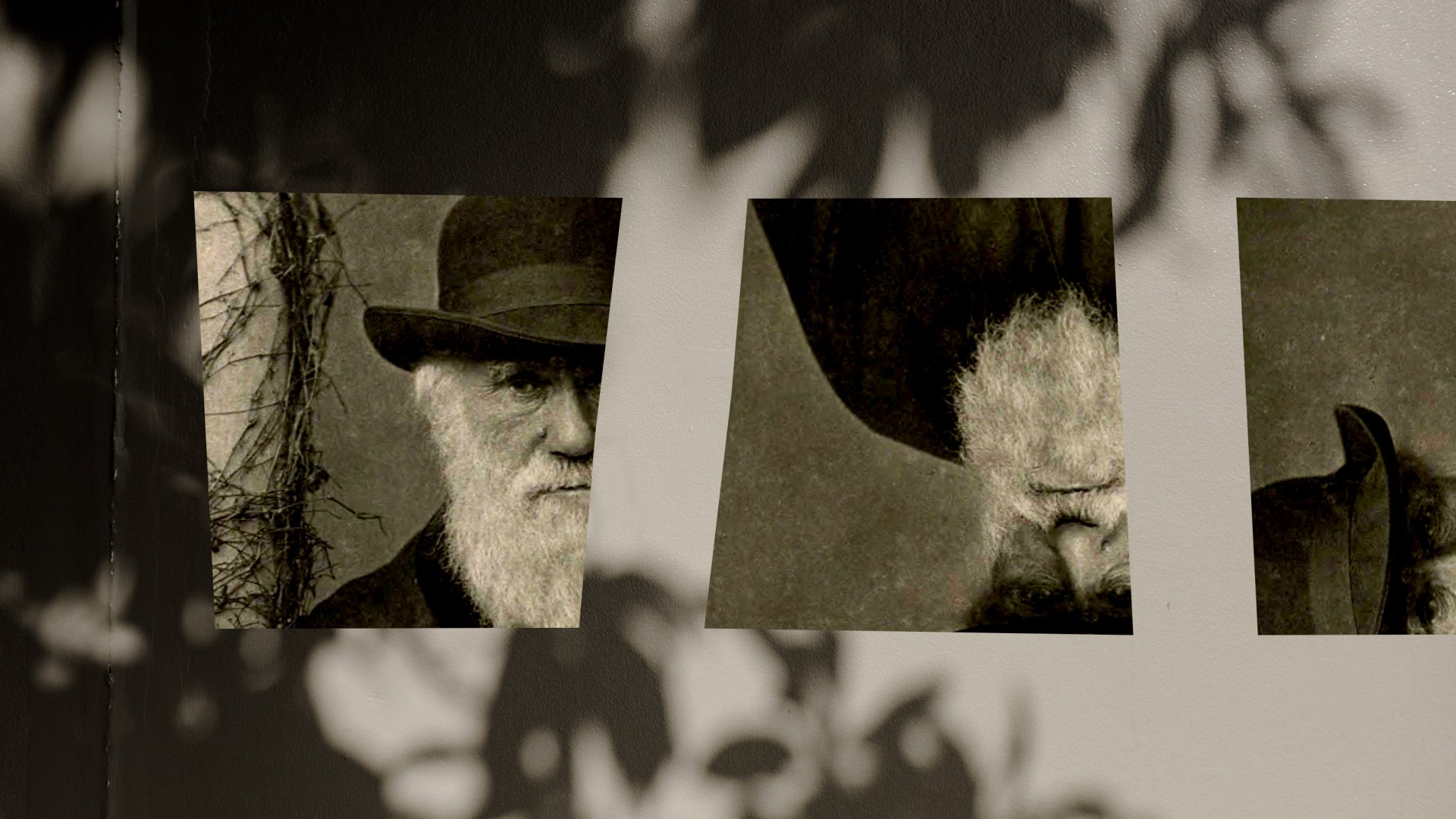
Illustration by Mallory Rentsch / Source Images: WikiMedia Commons / Unsplash

In 1904, thousands of indigenous people were brought to the St. Louis World’s Fair to be put on public display. Scientists offered them as examples of lower stages of human evolution. Some were even presented to the public as “missing links” between humans and apes.

A Voice in the Wilderness: A Pioneering Biologist Explains How Evolution Can Help Us Solve Our Biggest Problems

Two years later, an African named Ota Benga was exhibited in a cage next to an orangutan in the Bronx Zoo primate house. The display attracted hundreds of thousands of visitors. It also drew protests from Black and white clergy. Black minister James Gordon attacked the presentation for propagandizing on behalf of Darwinian evolution, which he regarded as “absolutely opposed to Christianity.”

“Neither the Negro nor the white man is related to the monkey, and such an exhibition only degrades a human being’s manhood,” he declared.

Scientific and cultural elites, meanwhile, saw nothing wrong.

Leading evolutionary biologist Henry Fairfield Osborn of Columbia University praised the zoo exhibit, while The New York Times complained it was “absurd to make moan over the imagined humiliation and degradation” of Benga. The Times took special umbrage at Gordon’s skepticism of evolution: “The reverend colored brother should be told that evolution, in one form or other, is now taught in the text books of all the schools, and that it is no more debatable than the multiplication table.”

Only recently have many members of the scientific community begun to grapple with evolutionary biology’s disturbing past. Last year, the science journal The American Naturalist published an article acknowledging that “the roots of evolutionary biology are steeped in histories of white supremacism, eugenics, and scientific racism.”

This fraught history helps explain why biologist Joseph L. Graves Jr. reports in his recently published book that he was “the first African American to earn a PhD in evolutionary biology.”

The work is titled A Voice in the Wilderness: A Pioneering Biologist Explains How Evolution Can Help Us Solve Our Biggest Problems (Basic Books). Part autobiography and part polemic, it recounts the author’s powerful personal story of how he overcame the obstacles of racism to pursue a successful career in biology. His various struggles—including the death of his younger brother from AIDS contracted as a hospital doctor—are raw and affecting.

But A Voice isn’t simply about Graves’s backstory. It also addresses the broader social, political, and cultural problems that America faces. The author offers a way to meet these formidable challenges: by leaning into evolutionary theory and its wide-ranging implications.

Given current debates, a fresh take on evolution and its implications is certainly timely. Over the past decade, increasingly sophisticated scientific challenges to Darwin’s theory have proliferated. In 2016, England’s Royal Society—one of the most august scientific bodies in the world—convened evolutionary scientists from around the globe to rethink how evolution works. Why? Because a fair number of biologists are recognizing the inadequacy of the Darwinian mutation-selection mechanism to explain how the major features of life developed.

Alas, Graves doesn’t grapple with these new developments, preferring to present the evolution debate through the trope of Christian fundamentalism versus science. He caves to stereotypes that say only ignorant or religiously motivated people raise questions about evolution.

By doing so, he misses all the current conversations going on in biology and related fields. Science is rife with fresh debates about teleology, design, and purpose. The old dichotomy of evolution versus creation has increasingly given way to competing versions of evolutionary theory and the re-emergence of design-based science.

Graves’s writing is equally unsatisfying in its exploration of social and metaphysical questions raised by Darwin.

To his credit, he acknowledges the role that social Darwinism, eugenics, and racism played in the history of evolutionary biology. One of the best parts of the book is his takedown of scientific racism and his effort to disentangle evolutionary biology from its past. For example, he critiques misguided efforts to tie variations in IQ to race and DNA, pointing out that “evidence supporting a differential genetic foundation for racialized intelligence has never been found.”

Less successful is Graves’s overly protective effort to airbrush Darwin out of the picture. He’s correct in arguing that Darwin didn’t invent racism and even opposed slavery. Nevertheless, he avoids grappling with how the 19th-century thinker played a pivotal role in the development of scientific racism and related evils like eugenics.

In The Descent of Man, Darwin claimed that the break between humans and apes fell “between the negro or Australian [aborigine] and the gorilla.” In his view, Blacks were the closest humans to apes. He also argued that the differences in mental faculties “between the men of distinct races” were “greater” than the differences in “mental faculties in men of the same race.”

As Nigerian scholar Olufemi Oluniyi has pointed out, Darwin’s writings “clearly demonstrate that by ‘barbarous,’ ‘inferior,’ or ‘lower’ peoples, he usually meant dark-skinned people. The terms ‘highly civilised’ or ‘superior’ he applied to Caucasians.”

Darwin offered a seemingly plausible scientific rationale for racial inferiority. According to him and his supporters, we should expect races to have unequal capacities, because natural selection will evolve different traits for different populations based on their survival needs. These ideas unquestionably helped solidify and spread scientific racism.

As evolutionary biologist Stephen Jay Gould writes in Ontogeny and Phylogeny, “biological arguments for racism may have been common before 1859,” when Darwin published On the Origin of Species, “but they increased by orders of magnitude following the acceptance of evolutionary theory.”

Seeking to absolve Darwin, Graves largely blames the origin of scientific racism on those in history who believed in “special creation.” To do so, he cherry-picks Christians who claimed that God created different races. But he misses the fact that such “polygenist” views contradict orthodox Christian teaching. A plain reading of Genesis 1:27 (“So God created mankind in his own image”) and Acts 17:26 (“From one man he made all the nations”) makes clear that God created one human race, all in his image, and all descended from a single couple (Gen. 3:20).

Far from promoting racism, biblical passages on the special creation of humans give Christians a foundation to argue for the equality of all. They inspired Christian abolitionists like Olaudah Equiano, Albert Barnes, J. D. Paxton, and Theodore Weld.

Two other features of A Voice in the Wilderness may also give some readers pause. The first one concerns Graves’s invective against those who hold views different than his own—political conservatives in particular. For example, he compares Donald Trump with Stalin and Hitler. He attacks “the insane logic of capitalism.” And he too easily labels his opponents as “white supremacist[s]/fascist[s].”

Whatever the merits of Graves’s scientific and political perspective, his language is likely to strain bridges rather than build them.

Second, Graves’s autobiographical story hampers his message. By his account, he became an atheist after reading two authors. One was Karl Marx. The other was Charles Darwin. He says reading Darwin “raised monumental theological questions in my mind concerning the nature of God” and made him “militantly atheistic.” Graves does not regard his experience as exceptional: “I am a member of the community of professional evolutionary scientists, most of whom are … atheist.”

Unlike his colleagues, Graves found a road back to faith of a certain kind. What he embraced post-Darwin was not the Bible-believing faith of his parents. In fact, he came to view Scripture as a fallible document that “evolved naturally across time,” and he embraced old-style higher criticism like the discredited “documentary hypothesis” of the Pentateuch. He also rejected historic biblical teachings about sex and gender. For Graves, this “progressive” Christianity seems to be the only viable form of faith in light of Marx and Darwin.

Altogether, A Voice in the Wilderness serves as a cautionary tale. At times, it movingly portrays the struggles of a Black man facing racist oppression as he pursues his passion for science. This part of the story deserves more attention. At other times, however, Graves’s story is less compelling. He glosses over the negative impact of evolutionary theory on Blacks and other minorities and ignores new developments in biology that raise questions for textbook Darwinism.

On the social and political front, Graves lacks charity toward his opponents. And his personal faith journey is a story of fracture and biblical infidelity. In the end, A Voice in the Wilderness speaks a distinct and memorable message. Unfortunately, it’s unlikely to lift up the valleys or make the rough places smooth.

John G. West is vice president of Discovery Institute and director of the documentary Human Zoos: America’s Forgotten History of Scientific Racism. Eric M. Wallace is a biblical scholar and president of Freedom’s Journal Institute for the Study of Faith and Public Policy (FJI).


Church Life

Evangelicals Are Delaying Having Children. Are We Missing Out?

Motherhood has been a boon to my work, not a drain.

Christianity Today May 11, 2023
Illustration by Mallory Rentsch / Source Images: Getty

So, let’s get this straight. You two were the mistakes?” My twin sons looked quizzically at their high school teacher, who was joking good-naturedly. He explained that he, too, was a caboose child, born years after his older siblings. “Did your parents give you the talk yet, about how a surprise is different from a mistake?”

Sixteen years ago, our three children were all nearly school-age, and I was planning a return to graduate school. We gave away the crib, the car seat, and the baby gear. But plans are malleable in the hands of God, and it wasn’t six months that I was pregnant again—with twins.

There are no “mistakes” in God’s kingdom economy. Still, the “surprise” took some getting used to. Five children were a spectacle, especially in the aisles of Costco. Yet now the long days have become short years. Our “surprises” have grown into leg hair, survived braces, and attended their first high school homecoming dance. To say that my heart grows heavy counting the time remaining with them is to understate the grief entirely.

For the last 22 years, motherhood has been so many things for me. A limit. A lasting vulnerability. But also, a gift. I’d like to argue for choosing motherhood—as it’s possible.

A Wall Street Journal-NORC poll published this spring showed an alarmingly precipitous decline in certain “traditional” American values. According to the research, over the span of four short years, Americans cherish patriotism, having children, religion, and community involvement less than they once did. (Professional pollster Patrick Ruffini noted it was likely the 2019 numbers had been inflated by “social desirability bias.” Respondents’ answers might not have represented reality as much as the perception they wanted to construct.)

Here’s what we do know: the birth rate in the United States is declining. It’s often assumed this decline represents our waning desire for children, but researchers from the University of North Carolina and The Ohio State University disagree. Their data indicates that Americans between the ages of 20–24 want as many children as desired historically. However, it does seem people today are putting off the task of raising children—and as they do, the ideal number of children shrinks.

The postponement of parenthood may be owed to a variety of different factors. “There is not a lot of support for parents in the US, and young adults face a lot of challenges—student loan debt, the high cost of housing, job insecurity—that may lead them to delay, or maybe even give up on, having children,” said Karen Benjamin Guzzo, professor of sociology at the University of North Carolina at Chapel Hill and director of the Carolina Population Center.

The anxieties about parenthood today are real: economic uncertainties, ecological crisis, fears of inadequacy for such a consequential task. Whether evangelicals have shared these fears isn’t clear, but in recent years, evangelicals have joined the broader culture in having fewer children and having them later.

I don’t believe the good life is littered with diapers and juice boxes. Participation in the kingdom of God is fully enjoyed by the married and unmarried, the childless and child-full. Still, it’s worth saying to young married women (while engaging the modern calculus about adding to their family): “Children are a heritage from the Lord, offspring a reward from him.” (Ps. 127:3).

In my conversative evangelical upbringing, it was a cultural assumption that I would marry and have children. Though it wasn’t my parents’ sentiment, I heard others in our church context talk about marriage and motherhood as the highest callings a Christian woman might undertake (never mind how many that left out). As a high school junior, I was sent “on scholarship” by another church family to attend a Bill Gothard seminar. Among other extrabiblical principles he preached, Gothard argued it was inadvisable for mothers to work outside the home.

I was never won over to the most fundamentalist views of women’s roles. Still, as a young mother, it was constantly impressed upon me that the task of raising my children required all the devotion I could muster. I attended a year-long church parenting class taught by a woman who admitted, on the first day, that her husband had forbidden her to attend medical school. When the subject of working outside of the home came up late in the year, she proposed a simple method for discerning whether our lives were in proper balance: did we know how much milk was in the fridge?

Now I can confidently say these messages about motherhood were unhelpful. Wrong.

Motherhood has never been the sole measure of my life. Still, I want to call this part of my life good, especially in a culture where children are often perceived as threats to professional ambition, as financial liabilities, as environmental recklessness. I want to say to women today: if it’s possible, risk on this. It will be worth it.

I confess that when my children were younger, I struggled to see beyond the constraints that children imposed upon my life. As a writer, I was reminded, over and over, about the successful creatives who limited their exposure to interruption by limiting the number of children they had, if they had any at all.

But to do it over again, I would have cherished those noisy days more. I would have noticed that my children were the ones who made it possible for me to write. It was they who baptized me into the concrete world of wonder, they who helped me pay closer attention to a world “shining like shook foil.” As a mother, I lost one kind of life and gained another in its stead.

Recently, when I was studying Psalm 1, I was reminded of how little I cultivated a countercultural version of the good life when I was in my twenties and thirties. The psalm pictures the flourishing human life as a healthy tree: “Whatever it produces thrives.” According to the commentary in the Jewish Study Bible, it’s explained that “living to a ripe old age and having many children is the biblical idea of a successful life.”

Maybe ripe old age is what you need to fully appreciate this ancient wisdom.

I have written less and less about motherhood over the years. When my children were much younger, it felt as if motherhood were happening to me and my body alone. Now I can see we’ve been in this together, that along with my husband, I have helped build the history they now inhabit.

I have not been the mother I prayed and planned to be. I suppose no mother is. Like everyone, I return again and again to the grace available to me in Jesus Christ: to the one who writes redemption stories with all our lived rough drafts.

“Grace,” writes James K.A. Smith in How to Inhabit Time, “is overcoming. Not undoing. Not effacing. Not regretful, but overcoming.” Smith reminds us that God’s eternal work is accomplished in history and in time.

My mistakes as a mother couldn’t have been prevented—because wisdom can’t be had all at once. To be sure, part of the wisdom I lacked early on was appreciation, both for the formation I would gain as a mother and for the children I would raise and enjoy.

“There is something scandalous,” Smith continues, “about the way God takes up this contingency in our lives—all of it, even the heartbreak and sorrow, the evil and injustice—and forges it into this singular life that is mine, that is me.” Grace turns surprises into serendipities, mistakes into gifts. It makes me me, makes my children them.

I am more than a mother—and yet never less.

Jen Pollock Michel is a podcast host, speaker, and author of five books, including In Good Time: 8 Habits for Reimagining Productivity, Resisting Hurry, and Practicing Peace (Baker Books, 2022).

News

How an Oklahoma Death Penalty Case Shook Up Evangelical Views on Execution

Richard Glossip was set to be lethally injected this month. His case is sowing doubt in the system.

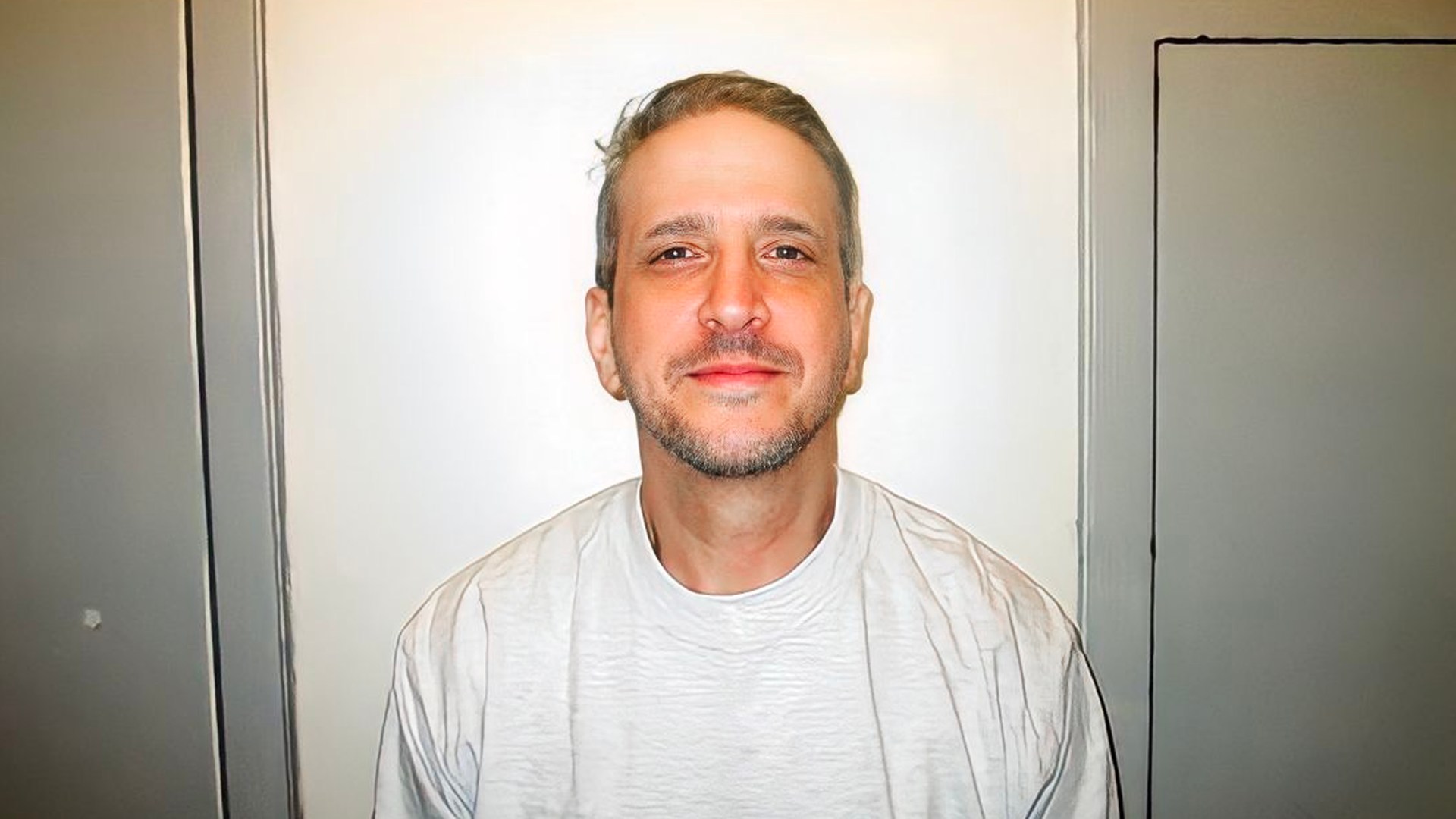
Richard Glossip has had nine execution dates.

Richard Glossip has had nine execution dates.

Christianity Today May 10, 2023
Oklahoma Department of Corrections

Key Updates

February 25, 2025

The US Supreme Court vacated Richard Glossip’s death sentence and murder conviction, saying Glossip was “entitled to a new trial.” The ruling was 5-3 with Justice Neil Gorsuch recused from the case. 

The court found that the conviction rested on the credibility of one key witness, Justin Sneed, and that prosecutors failed to disclose that he had lied in his testimony in a way that would have undermined his credibility. 

It’s unusual in the recent history of the Supreme Court, especially in its current political makeup, to vacate the murder conviction of someone on death row. The prosecuting office in Oklahoma had earlier agreed that the Supreme Court should hear Glossip’s appeal, and acknowledged that it had made errors in the prosecution. 

January 25, 2024

The US Supreme Court this week agreed to hear Richard Glossip’s case that his conviction should be vacated, after halting his execution in May 2023. The high court rarely grants such cases from death row prisoners, but this case is unusual in that the prosecution, the Oklahoma attorney general, agreed with Glossip that the court should take up the case. In the state’s filing with the high court, it confessed “error” in the case and said as a result that executing Glossip would be “unthinkable.” If the Supreme Court had declined the case, Glossip’s execution could have moved forward. The court will likely hear the case in its fall term.

May 10, 2023

For the ninth time, Richard Glossip had an execution date in Oklahoma—this one was set for May 18. He’s been up for execution enough times that conservative Christians in the state have learned about the mishandling of his case, and some are starting to question the death penalty itself.

Last Friday, the US Supreme Court halted Glossip’s execution while it considers whether to hear procedural challenges. In what appears to be an unprecedented move, the state attorney general—whose office ordered the execution—joined Glossip in asking the court for a stay of his execution.

If the court declines to take up his case, the pause immediately goes away, and the state can move forward with the execution.

The case concerns the 1997 murder of motel owner Barry Van Treese, who was bludgeoned to death with a baseball bat. Justin Sneed admitted to the murder, but in a plea deal to avoid the death penalty he testified that motel employee Richard Glossip hired him to carry out the attack. Sneed received a sentence of life in prison, while Glossip was convicted and sentenced to death.

Van Treese’s family has said in previous statements that Glossip’s execution would provide them with “a sense that justice has been served.”

For decades the case has ping-ponged through appeals courts and before parole boards. Glossip has had three last meals—fish and chips, pizza, and a burger and a strawberry milkshake. One of his executions was called off minutes before he was scheduled to be injected.

The case has Christians in the state wrestling with the death penalty, mostly because they perceive a corrupt system that can’t render justice.

“I would still like to believe in capital punishment,” Oklahoma Rep. Kevin McDugle told CT. McDugle, a staunchly conservative Republican and a Christian, began investigating Glossip’s case about four years ago and found numerous problems. “Biblically I’ve gone back and forth and said, ‘My goodness, where do I stand on this?’ Personally I’m getting to the point—if we can’t get the process right, if there’s a chance of us killing an innocent man, then we can’t do it.”

McDugle said he’s received just four negative calls from constituents over his questioning of the death penalty: “Minds are changing because of cases like this.”

Brett Farley, the director of the Oklahoma Catholic Conference, has worked on the Glossip case alongside evangelical pastors.

“We have called our evangelical brothers and sisters to join us in denouncing the death penalty as inconsistent with biblical principles,” Farley told CT. “They’re slowly and surely beginning to do that.”

He sees the most change in attitude about the death penalty among younger Republican legislators, who have watched the state’s botched executions the past few years. In 2014, Oklahoma carried out the execution of Clayton Lockett with a sedative that didn’t work. Lockett died over the course of 45 minutes, writhing against his restraints.

Oklahoma has the highest per capita rate of execution in the US since the US Supreme Court began allowing executions again in 1976. The state has executed 112 people, while 10 on death row have been exonerated. The chairman of the state parole board, Adam Luck, resigned in part because of recent death penalty cases, including Glossip’s, and says he now has “persistent questions about the death penalty.”

“Oklahoma doesn’t have a good track record!” McDugle said. “How is that process not killing innocent people? … If they kill Glossip, every bill I run will be a death penalty bill.”

Glossip’s case has problems. His first conviction was vacated, and then he was convicted again in a second trial. But a later review found that evidence in the case had been destroyed and that Sneed, the key witness, had privately discussed recanting his testimony and had coaching from prosecutors to “match the evidence,” an independent report said.

The basis for conservative Christian skepticism about the death penalty in the state comes from the problems with the way the case has been handled, rather than theological ideas about people being image-bearers of God or Jesus preaching nonviolence.

Aaron Griffith, historian and author of God’s Law and Order: The Politics of Punishment in Evangelical America, said that when American Christians change their minds to oppose the death penalty, it’s often because they see “so many instances of failure of the application of the system.”

Sometimes death penalty skepticism also comes from a political suspicion of big government. That might not get evangelicals to the point of repealing the death penalty, but they might push for a moratorium on executions, as has happened in Ohio.

Less often, Griffith said, Christians may begin opposing the death penalty for theological reasons, like adopting a view of the sanctity of life that includes both the unborn and those on death row. Or they “become aware of fellow Christians on death row.”

If “God is restoring and redeeming people on death row,” he said, then executing the person is possibly undoing “the powerful work of God in a person’s life, or the potential work God might do.”

“This is true in the Glossip case as well,” he added. “This is a fellow Christian.”

Matthew Arbo wishes there were better Christian arguments in favor of the death penalty, even though he opposes it.

As a former professor at Oklahoma Baptist University, Arbo knows people who have worked on the Glossip case, and he finds support for the execution is often based simply in an idea of “retaliation.” If Christians support capital punishment “in the unfiltered, unhesitant way that it has been [supported] … it is worth additional faithful interrogation.”

Looking at the Glossip case, he said he noted some growth of skepticism toward the death penalty in certain evangelical communities, but that it was “very slow and very gradual.”

“Not too many go all the way [in opposition],” he said. “There’s an appetite for that form of punishment.”

Oklahomans voted the death penalty into the state constitution in 2016, with 66 percent of the vote. A 2021 poll in the state showed 64 percent in favor of the death penalty (with 41 percent strongly favoring, much higher than the national average). In 2023, the same polling firm found that half of Oklahomans (51%) favored life without parole over the death penalty.

Nationally, the number of executions has been declining as public support has declined, but most Americans still favor it as a form of punishment.

Protestant support for the death penalty has been relatively steady over the last decade, according to Pew Research surveys. In surveys, white evangelicals have always been the religious demographic with the most support for capital punishment.

In the 1970s, the National Association of Evangelicals (NAE) advocated for the death penalty, seeing it as just payback and a deterrent for “horrendous crimes.” In 2015, the NAE changed its stance to say that Christians could make ethical arguments both for and against the death penalty. That shift may also reflect a more racially diverse evangelicalism, where other demographics are less supportive of capital punishment.

Last week, the day before the Supreme Court halted Glossip’s execution, Christian leaders joined McDugle and other Republican legislators at a press conference about Glossip. State Rep. J. J. Humphrey, a Republican, was wrestling with his views on the issue in real time.

Humphrey, who previously worked in the state Department of Corrections, said, “Nobody is a more outspoken supporter of the death penalty than me.”

“I thought there’s no way this person could be sent to death and be innocent,” he said. “I still support the death penalty, but I’m shaken because of what I’ve seen of our system. … I don’t know where I stand, to tell you the truth.”

Pastor John-Mark Hart, pastor of Redemption Church in Oklahoma City who joined the press conference, noted that “it would be a positive evil to kill a person who is not guilty of this crime … how many innocent people are we willing to kill in order to preserve this system?”

Hart signed a letter, titled Christ and Capital Punishment, with 25 other Christian leaders of churches (including Presbyterian, Baptist, and Nazarene) in Oklahoma calling for a moratorium on the death penalty in the state, “given the current reality of our state’s criminal justice system, our shared convictions regarding the sanctity of human life, and the proper function of state power.” The letter now has 300 signatures from leaders in Oklahoma.

Standing beside Hart was Demetrius Minor, a Black pastor who leads Conservatives Concerned About the Death Penalty and described himself as pro-life. Minor noted that executions, especially of the wrongfully convicted, “only continue a cycle of violence.”

McDugle closed the press conference with prayer: “Dear Heavenly Father, give Oklahoma grace and mercy. All have sinned and fallen short. Lord, put us on the right path to do the right thing. … Allow us a pathway to correct our judicial system. In Jesus’ name I pray, Amen.”

News

Registered Sex Offender Continued to Minister to Chi Alpha Students

Some Texas pastors supported and involved a man they knew was convicted of child sex abuse. Now more victims are coming forward.

Daniel Savala

Daniel Savala

Christianity Today May 10, 2023
Edits by Christianity Today / Source Image: Courtesy of XA and The Lions Den

Update (June 5, 2023): The man at the center of a sexual abuse scandal that has rocked Chi Alpha campus ministries in Texas is now in jail. Daniel Savala was arrested on Friday and charged with continuous sexual abuse of a young child. His arrest comes two weeks after a former chapter leader at Baylor University—Chris Hundl—was charged for bringing two boys to Savala’s sauna to masturbate in 2021 and 2022. In Texas, the crime carries a sentence of 25 years to life in prison without parole.

Update (May 24, 2023): Eli Stewart, the College Station, Texas, pastor who promoted Daniel Savala as a mentor and teacher, was dismissed by his church this week after an investigation. Mountain Valley Fellowship said Stewart “had fallen into sinful practices unbecoming of the office of a pastor and that he had neglected his duty to protect his flock from a known predator, both of which disqualify him from ministry.” Eli Gautreaux, Chi Alpha’s district director, and Johnny Hauck, of the UTSA chapter, have also stepped down during the investigation.

Over the past 30 years, well over a hundred men involved in Texas chapters of the campus ministry Chi Alpha have seen Daniel Savala naked.

At Savala’s house in Houston, he invited them to strip down and talk about spiritual issues in his sauna. He offered his bed to overnight guests while sleeping in the buff. And at least 13 men reported that Savala molested or raped them while they sought his spiritual advice as college students, according to a new online forum collecting victims’ stories.

Savala, 67, doesn’t hold an official title with Chi Alpha, isn’t employed by the organization, and isn’t credentialed by its denomination, the Assemblies of God.

But former members of Chi Alpha say a network of pastors leading chapters at several Texas colleges viewed Savala as a mentor and spiritual guru, supporting him and sending their students to his house—even after Savala was convicted of child sexual abuse and registered as a sex offender a decade ago.

Victims are speaking up to call out those who continued endorsing Savala and put students at risk. Officials with Chi Alpha and the Assemblies of God had previously been warned about Savala’s status and activity, but because he didn’t have an official role, they couldn’t—or didn’t—stop it.

A website for victims who were groomed and abused by Savala launched in April, and last week, the Texas A&M student newspaper The Battalion broke the story and covered the claims that some Chi Alpha leaders knew Savala’s background but still involved him in their ministry.

The decades of allegations against Savala extend into the present day. One parent reported that last year his minor son was invited into Savala’s sauna, and another obtained a restraining order in March to block Savala from contacting her children.

Two Texas pastors who connected their Chi Alpha students with Savala initially responded to the recent news by saying that Savala was a “master manipulator” and that they were shocked by the revelations.

Their churches, each with close ties to local Chi Alpha chapters, have since removed them from their positions and launched investigations. The Assemblies of God district in North Texas has stepped in to see if other credentialed ministers may have also been “in violation.”

For a small group of victims and family members who have tried to sound the alarm on Savala for several years, these moves—along with the attention over the past few weeks—are signs that people may finally be listening.

“The hope I have is that God loves us so much he won’t allow sin to stay hidden anymore in this organization,” said Ron Bloomingkemper Jr., who launched the website “XA and the Lion’s Den.” Until now, he shared his testimony of being groomed by Savala under the username Gideon.

Bloomingkemper, 50, sees the latest calls for accountability as part of a movement for revival and restoration. He lives in suburban Houston and learned that local college students were still meeting with Savala but struggled to convince others that Savala posed a risk. While reading the Book of Nahum, Bloomingkemper was struck by a passage in his study Bible about how God uncovers and exposes “every secret thing.” He was inspired to speak up and offer a platform for fellow victims.

Bloomingkemper attended Sam Houston State University (SHSU) in Huntsville, Texas, about an hour north of Houston, and belonged to the Chi Alpha chapter there in the mid-1990s.

Chi Alpha—the Greek abbreviation for christou apostoloi, or “Christ’s ambassador”is a coed ministry focused on mission and discipleship among college students. The Assemblies of God sponsors chapters on 275 campuses and connects them with churches and leaders in its movement.

Sam Houston’s Chi Alpha chapter was the largest in the country and was lauded as a model for growth; it launched 30 new campus plants under the direction of its longtime leader Eli Gautreaux, now the district director for Chi Alpha in New Mexico and South Texas.

Many of the students and leaders at SHSU went on to serve at Chi Alpha chapters at other colleges (including Rice University, the University of Texas at San Antonio, and A&M)—spreading Savala’s influence, particularly among schools in driving distance of Houston.

Eli Stewart was part of the Chi Alpha pastoral team at SHSU before relaunching a Chi Alpha chapter and planting a church at Texas A&M University, in College Station, in 2017. Stewart had known Savala since childhood, when the minister would come up from Texas during the summer months to serve at his church in Alaska.

Savala wasn’t employed full time by any church or organization, but he got by on the trust and generosity of friends in ministry, who would invite him to work with youth and, in turn, sponsor his housing, meals, travel, and other expenses.

Stewart defended Savala when he faced allegations from men who said Savala abused them as children at Clover Pass Community Church in Ketchikan, Alaska, between 1995 and 1997. In 2012, Gautreaux and Stewart tried to recruit fellow Chi Alpha leaders to petition the judge by saying Savala posed “zero risk” of “harming anyone,” according to a letter written at the time (pdf).

Savala was indicted on 11 counts, pleaded guilty to one in a plea deal, and was released after a 90-day stint in prison. The timing of the crime in the 1990s allowed him to evade harsher mandatory sentencing laws, but he still was required to register annually as a sex offender—a designation that would come up with any background check (not to mention a basic Google search).

Gautreaux and Stewart continued to take groups to visit Savala’s home even after his conviction and sex offender status; several Chi Alpha alumni who posted on the online forum said they inherently trusted Savala because Gautreaux and Stewart (“the Eli’s”) did.

He was an unmarried, older mentor in the realm of student ministry, referred to as Papa Daniel, Uncle Daniel, or even “God’s vagabond.” Savala was known for his stacks of books, love of reading, speaking in maxims, and deep sense of holiness.

Bloomingkemper remembers hearing Savala called “the holiest man alive.” In a 2018 conference talk, Stewart doesn’t name Savala but recounts how “the Lord brought this man, this angel” to his church when he was nine, and “I saw a soul in communion with its Maker.”

Savala was cited on certain Chi Alpha chapter websites and social media beyond 2013, and students would visit on “mission trips” to work on Savala’s home, garden, and backyard apartment. Those who met with him for spiritual guidance, according to Bloomingkemper, were encouraged to leave a donation inside a book at his house.

On April 23 of this year, Stewart addressed the ongoing allegations against Savala from the pulpit of his Assemblies of God church, Mountain Valley Fellowship in College Station, Texas.

“A major influence in my life has turned out to be a master manipulator,” he said. “We have received major allegations that he is a wolf that has preyed on the innocent, pure-hearted and trusting. Recent testimonies have revealed this man, Daniel Savala, to be an active predator.”

The following week, Stewart and two elders involved in Chi Alpha at Texas A&M were placed on leave. A statement from Mountain Valley said it had learned of “some major allegations against our Pastor and grievances against our church.”

The Assemblies of God district in North Texas told CT in a statement that it is investigating the allegations that Stewart “knowingly allowed” a registered sex offender to be involved with Texas A&M Chi Alpha and Mountain Valley Fellowship, and it’s also reviewing “whether any other credentialed ministers in our District may have violated the expected requirements of ministers regarding this situation.”

The Battalion spoke with a member of Mountain Valley Fellowship who contacted law enforcement over his teenage son’s interactions with Savala last year. The father wrote on the victims’ forum that his son met Savala at the church’s youth group at age 13, the two texted each other, and his son went to visit Savala’s home in Houston with his small group leader, where all three sat in a sauna together in towels.

“I love my Church family but my family is hurt, angry, concerned … but we are thankful our story isn’t anywhere near as bad as others,” he wrote.

Meanwhile, leaders at Gateway Fellowship—an Assemblies of God congregation that partners with Chi Alpha at the University of Texas at San Antonio (UTSA)—heard from Savala’s victims within their own congregation and investigated the situation internally.

“On April 18, 2023, I was first made aware through personal accounts that select Chi Alpha leaders had knowledge that [Savala] was a self-confessed and convicted sex offender but still promoted this man and/or brought select college-aged students to this man’s house, where they were introduced to him and later hurt or abused,” lead pastor John Van Pay said in an announcement to his congregation on Sunday. “One of our primary jobs as pastors is to protect the church. Anyone who had knowledge this man was a convicted sex offender and failed to disclose to the church and others is wrong.”

The church accepted the resignation of its teaching pastor, Kyle Volkmer, who was involved in SHSU’s Chi Alpha as a student and was part of the team that launched Chi Alpha at UTSA.

On April 22, Volkmer posted a statement on Savala, “urging all that knew him to stay away from him” and standing with Savala’s victims. He wrote that he was “personally shocked and in great grief” but “actively working with others and law enforcement to get to the truth of it all.”

Van Pay told the church that Volkmer was “subject to church discipline for failure to communicate and duties related to his role to protect the flock of God.” He said that Volkmer resisted the church’s restoration plan. Gateway also pulled its funding from Chi Alpha ministries with ties to the Savala allegations, advised the UTSA leader Johnny Hauck to temporarily step down, and stopped using a small group resource by Volkmer that quoted Savala.

The Battalion reported that an attorney representing multiple Savala victims notified university leaders at A&M, UT, the University of Houston, Rice, and Texas State last month about Savala’s ties with Chi Alpha chapters at their schools and his patterns of abuse.

In the past week, CT reached out to five men who were reported to have maintained relationships with Savala and took students to see him. None agreed to answer questions.

Two of them, including Eli Gautreaux, shared a statement saying they were “heartbroken” by the allegations and “While [Savala] was not an Assemblies of God minister or Chi Alpha staff, we mourn with everyone affected by the actions he took against students.”

Bloomingkemper told CT that he had contacted leaders with Chi Alpha and the Assemblies of God, including Gautreaux and the denomination’s district superintendent Tim Barker, after learning of Savala’s 2012 conviction the following year.

Years later, people who knew Savala from Alaska reached out to Assemblies of God leaders once they saw on social media that the man who preyed on children in their congregation was still being promoted by pastors in Texas.

“We trusted that churches would do background checks. We naively thought that since he was on the sex offender registry, they would cut ties,” said Olivia Wolf. She met Savala through the church in Ketchikan as a student and knows many of the “Alaska boys” who were groomed and abused by him, some of whom are family.

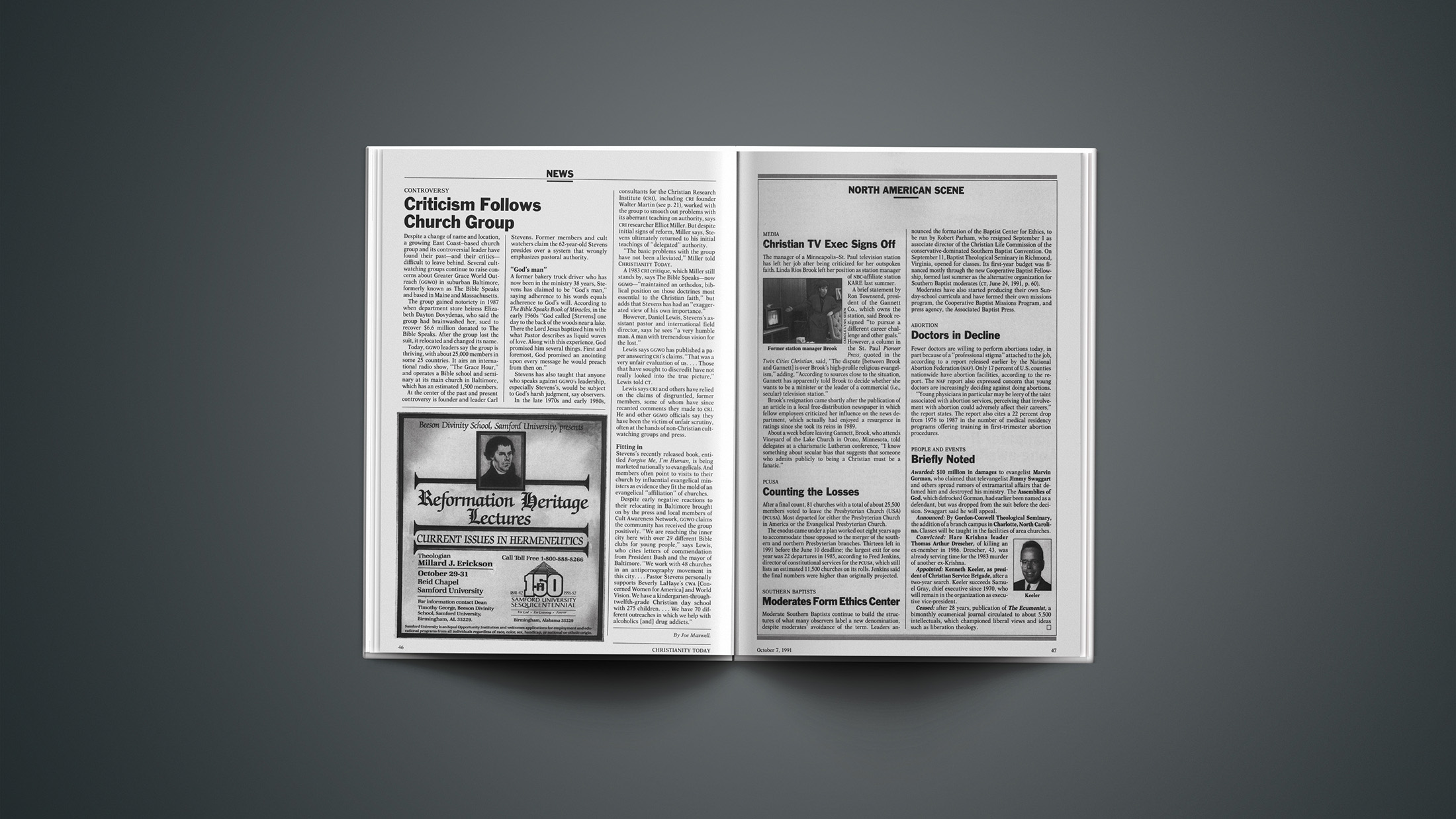
Despite a change of name and location, a growing East Coast—based church group and its controversial leader have found their past—and their critics—difficult to leave behind. Several cult-watching groups continue to raise concerns about Greater Grace World Outreach (GGWO) in suburban Baltimore, formerly known as The Bible Speaks and based in Maine and Massachusetts.The group gained notoriety in 1987 when department store heiress Elizabeth Dayton Dovydenas, who said the group had brainwashed her, sued to recover .6 million donated to The Bible Speaks. After the group lost the suit, it relocated and changed its name.Today, GGWO leaders say the group is thriving, with about 25,000 members in some 25 countries. It airs an international radio show, “The Grace Hour,” and operates a Bible school and seminary at its main church in Baltimore, which has an estimated 1,500 members.At the center of the past and present controversy is founder and leader Carl Stevens. Former members and cult watchers claim the 62-year-old Stevens presides over a system that wrongly emphasizes pastoral authority.“God’S Man”A former bakery truck driver who has now been in the ministry 38 years, Stevens has claimed to be “God’s man,” saying adherence to his words equals adherence to God’s will. According to The Bible Speaks Book of Miracles, in the early 1960s “God called [Stevens] one day to the back of the woods near a lake. There the Lord Jesus baptized him with what Pastor describes as liquid waves of love. Along with this experience, God promised him several things. First and foremost, God promised an anointing upon every message he would preach from then on.”Stevens has also taught that anyone who speaks against GGWO’s leadership, especially Stevens’s, would be subject to God’s harsh judgment, say observers.In the late 1970s and early 1980s, consultants for the Christian Research Institute (CRI), including CRI founder Walter Martin (see p. 21), worked with the group to smooth out problems with its aberrant teaching on authority, says CRI researcher Elliot Miller. But despite initial signs of reform, Miller says, Stevens ultimately returned to his initial teachings of “delegated” authority.“The basic problems with the group have not been alleviated,” Miller told CHRISTIANITY TODAY.A 1983 CRI critique, which Miller still stands by, says The Bible Speaks—now GGWO—“maintained an orthodox, biblical position on those doctrines most essential to the Christian faith,” but adds that Stevens has had an “exaggerated view of his own importance.”However, Daniel Lewis, Stevens’s assistant pastor and international field director, says he sees “a very humble man. A man with tremendous vision for the lost.”Lewis says GGOW has published a paper answering CRI’s claims. “That was a very unfair evaluation of us.… Those that have sought to discredit have not really looked into the true picture,” Lewis told CT.Lewis says CRI and others have relied on the claims of disgruntled, former members, some of whom have since recanted comments they made to CRI. He and other GGWO officials say they have been the victim of unfair scrutiny, often at the hands of non-Christian cult-watching groups and press.Fitting InStevens’s recently released book, entitled Forgive Me, I’m Human, is being marketed nationally to evangelicals. And members often point to visits to their church by influential evangelical ministers as evidence they fit the mold of an evangelical “affiliation” of churches.Despite early negative reactions to their relocating in Baltimore brought on by the press and local members of Cult Awareness Network, GGOW claims the community has received the group positively. “We are reaching the inner city here with over 29 different Bible clubs for young people,” says Lewis, who cites letters of commendation from President Bush and the mayor of Baltimore. “We work with 48 churches in an antipornography movement in this city.… Pastor Stevens personally supports Beverly LaHaye’s CWA [Concerned Women for America] and World Vision. We have a kindergarten-through-twelfth-grade Christian day school with 275 children.… We have 70 different outreaches in which we help with alcoholics [and] drug addicts.”By Joe Maxwell.

Wolf told CT she and others knew that Eli Stewart, who had gone to their church, continued to side with Savala. She said what they didn’t expect is that so many others with Chi Alpha would go along with him, rather than challenging his judgment or taking action to restrict Savala’s participation.

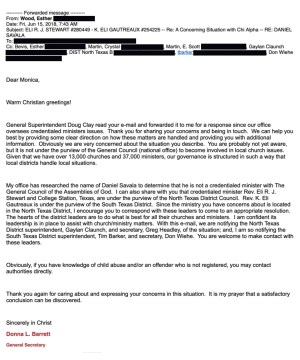
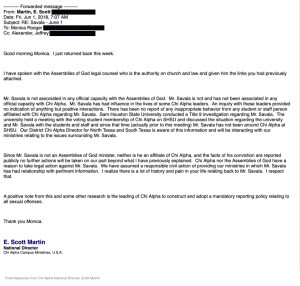
Emails obtained by CT indicated that Assemblies of God general superintendent Doug Clay, Chi Alpha national director E. Scott Martin, and Barker in South Texas all received a 2018 message “Re: A Concerning Situation with Chi Alpha” that called out Savala’s involvement through Stewart and Gautreaux.

At the time, the denominational office referred the concerns to the Texas districts and reiterated that Savala was not credentialed with the Assemblies of God.

Martin wrote that there had been “no report of any inappropriate behavior” from Savala, but also said Savala had been the subject of a Title IX investigation at Sam Houston and would no longer be around.

He offered assurance that Chi Alpha ministries with these unofficial ties to Savala would be provided “pertinent information” and that the organization would “construct and adopt a mandatory reporting policy relating to all sexual offenses.”

Yet students continued to connect with him through Chi Alpha, unaware that the man was a sex offender.

“I gave them a clear-cut opportunity, like, ‘Here is a clear predator,’ and they did nothing,” said Monica Roeger, who sent the emails to officials five years ago. A former Chi Alpha member in Oregon, Roeger knew Savala and the reports of his abuse through friends from Alaska.

“I want to be hopeful, but I don’t know what that looks like,” she told CT last week. “I want people to be safe.”

The Assemblies of God North Texas District, which includes Stewart’s church, said in a statement that it has mandatory training for employees and volunteers who work with children and youth and encourages “all churches who are a part of our voluntary fellowship to do the same.”

The Alaska man whose report resulted in Savala’s prosecution spoke to The Battalion about the abuse he experienced through his teen years, when the minister would undress and masturbate in front him, encourage him to masturbate, and invite him for sleepovers.

“All the way through my teenage years, this continued with a core group of young teenage boys and myself,” the former Clover Pass churchgoer said. The paper said another victim and a youth pastor at the time of the trial, Clint McClennan, confirmed the man’s account.

Kevin Gould, a retired Christian and Missionary Alliance pastor who connected Savala to the Clover Pass church after working with him in Europe, told CT he had been unaware of any allegations against Savala before or since the incidents in Alaska.

Bloomingkemper’s story of being groomed by Savala resembles many others that have been shared on the online forum he launched.

Some Chi Alpha students, even in the Texas schools that had connections to Savala, said they hadn’t heard of him or met him. But those who were introduced remember him being talked up as a holy and wise man and saw it as a special privilege to get to visit him.

Google Maps’ image of his home in Houston shows a rounded front door and façade covered in vines. Behind was a two-story garage apartment that had been nicknamed the “Upper Room.” On the forum, a University of Houston student said he and others had been living there up until a few weeks ago.

Chi Alpha groups continued to come to the house during the year and half he lived on the property. “I got used to seeing a lot of random guys around the house pretty much all the time, as groups from other XAs in Texas would often visit Daniel to help out with the house renovation,” he wrote.

In mid-April, Savala had warned the college students living there about “spiritual slander” and lies about him that would be used against Chi Alpha. The student wrote that even then Savala didn’t disclose his sex offender status; he found out by Googling Savala’s name.

Savala lives in the same place where Bloomingkemper hung out with him 25 years ago when he sought his advice as a young believer. Savala told him not to worry about his struggles with porn and masturbation, going as far as using a code word (“relax”) to recommend he masturbate. Bloomingkemper was taken aback when he called Savala for help one day and Savala recommended they “masturbate together.”

In the forum posts, victims recount being coerced into masturbation, masturbated by Savala, or sexually assaulted. Nearly all said they had been groomed by seeing Savala naked at his house—one even described an attempt by Savala to reclaim the “naked and unashamed” status in the Garden as “biblical justification”—and discussing masturbation. Some of the abuse allegations were reported as having taken place during the years immediately after Savala’s conviction, when he would have still been under probation.

Multiple former Chi Alpha students posted about how Savala recommended thinking about God or reading a book about God right after watching porn. Some alleged that Stewart also endorsed masturbation in his private counsel. (Stewart did not reply to an email request to comment for this story.) One victim of Savala’s, a former small group leader at SHSU Chi Alpha, wrote, “I allowed him to convince me that watching pornography was not a sin so long as we did it the ‘right way.’”

Beyond the alleged grooming and abuse, Savala’s teachings contradict the Assemblies of God’s stance on pornography and sex, as it names chastity as a “consistent ideal for sexual experience” outside of marriage, and its bylaws list porn use as a cause for disciplinary action.

“The teachings and practices of the Assemblies of God stand in strong opposition to the teachings and practices espoused by Mr. Savala, especially as it relates to issues surrounding sexual purity and moral transgressions,” a spokesperson for the Pentecostal denomination said in a statement.

Savala’s behavior, as described by his victims to CT and in forum posts, fits with a pattern among male perpetrators who groom boys and young men for abuse. Research shows they often have more victims than those who abuse girls and that their victims often don’t recognize or report the abuse for 20 or 30 years.

“The job of the offender, the groomer, is to normalize the conduct. … In the context of religion, the religious figure often incorporates a spiritual or biblical theme to explain or justify what they’re doing,” said Victor Vieth, chief program officer for the Zero Abuse Project. “There’s a type of purity culture where it’s like, ‘We men are so tempted by sex that we need to talk about it all the time. Confess to me your sexual thoughts and desires. Confess to me if you masturbate this week.’”

Beyond Savala, the forum posts describe a bigger issue with nudity among groups of young men and groups of young women in Texas Chi Alpha chapters, including flashing, skinny dipping, going topless at sleepovers, and spending time naked in saunas. Former members from UTSA quoted an unofficial mantra that “nudity brings unity.” (The experiences aren’t universal; Roeger, who was involved in Chi Alpha in Oregon, doesn’t remember any focus on masturbation or any activities involving nudity among her chapter.)

The allegations around Chi Alpha’s ties to Savala come less than a year after a Chi Alpha pastor in Corpus Christi, Texas, was arrested and charged with child sexual abuse. He has pleaded not guilty, and the case is awaiting trial.

In College Station, the story of Savala’s ties to its Chi Alpha chapter and Mountain Valley Fellowship broke less than two weeks after the student paper covered spiritual and sexual abuse allegations at another local congregation, Christland Church.

“Is this just another church scandal? No, this one is different,” said Bloomingkemper, who spent 11 months praying with a small group before launching the XA and the Lion’s Den website.

Since it went live on April 23, it’s drawn around 800,000 pageviews, according to Bloomingkemper. Keeping up with it is taking over his days. But he said he’s never felt closer to God.

Bloomingkemper believes the recent disclosures and calls for accountability represent a powerful opportunity for restoration for leaders in Chi Alpha.

“They’re saying, ‘We’re praying for purity and revival,’” he said. “Well, what do you think this is? He’s cleansing his church.”

Theology

No School Left Behind: Why All Education Is Public

Private, state, and charter schools all contribute to the common good. Our debates should reflect that.

Christianity Today May 10, 2023
GlenJ / Getty

Ever since COVID-19 gave parents a direct Zoom feed into the challenges faced by the public education system in North America, there’s been growing momentum for policy change. Even The Economist, often skeptical of school choice, recently reported on the “new wave” of education reform. The movement has intensified, with debates about critical race theory increasingly becoming the focus of legislation and litigation.

Oklahoma recently pushed the debate into new territory with a proposal for a Catholic charter school primarily funded by taxpayers.

“The key question in this case is not whether a charter would help or harm local education,” writes Charles Russo for The Conversation, “but whether explicitly religious instruction at charter schools is constitutional.”

As debates continue, those in favor of school choice argue that enabling parents to select the best school and curricula for their children is a logical expression of the ancient principle in loco parentis. In the context of schooling, the Latin phrase means teachers act on behalf of parents and answer to them.

An alternate, more practical argument is that competition between schools produces better accountability, greater innovation, and more options that a public education monopoly is hard pressed to match.

Those opposed to school choice typically argue that a single public education system provides greater equality for all students and helps overcome class, religious, and other social distinctions. In their view, a uniform education ensures no child is left behind.

While this side of the debate avoids any suggestion of “indoctrination,” the National Education Association tweeted last November that “educators love their students and know better than anyone what they need to learn and to thrive.” They are enthusiastically opposed to the principle of in loco parentis.

However, the politics of education hinge on a false dichotomy between public and private spheres. The framing itself is unhelpful. In advancing the debate, we need to celebrate choice and diversity in education, both inside and outside government-run institutions. All schools serve the public and contribute to the common good, and our systems should reflect that.

As a parent and a professional, I’ve never been a neutral observer to this debate. I was raised in a community that valued Christian education. While all but my elementary education took place in the public school system, as a father, I chose independent options and was prepared to pay for them. My time at Cardus Education also reflects my views. I served as the original program director for Cardus, which has become a leader in studying educational pluralism.

As an advocate for this pluralistic approach, I believe that every form of education, including government-run schools, should in theory enable parental rights. But in our current system, parents often have to opt out of public institutions to achieve meaningful expression of those rights. That’s a huge flaw.

Part of the remedy is redefining public schooling to include all education that contributes to the commonwealth. When we use the term education system, we shouldn’t think about a single network of schools (government-run or otherwise) where “private” ones lie outside that space. Instead, we need to see all schools as participating in the development of the next generation of workers, neighbors, and voters who will together build a flourishing society.

Christians are among the many groups with a vested interest in seeing private education folded into public systems. We want faith-learning integration in the classroom, and we want that integrated approach to be legitimated, not marginalized.

Practically, what would it look like to reframe the debate? Beyond the paradigm shift in our thinking and conversations, pulling on a few policy levers would make an outsized difference.

First, end redlining in public school districts by opening boundaries between schools. Second, don’t prohibit the growth of public charter schools. They allow innovators to meet localized needs. Third, use mechanisms like education savings accounts (ESAs) to provide opportunity for more students (especially the socioeconomically disadvantaged) to access independent or faith-based schools. And, finally, use ESAs or tax-credit programs to support the work happening in the fastest-growing school sector: homeschooling.

There’s little doubt that education is changing significantly. Advocates of independent education celebrated 2021 as “the year of school choice,” with 18 separate initiatives passed that year. The movement isn’t without struggle, however. School choice promoters recently faced setbacks in Texas and Georgia even as they celebrated victories in Iowa, Utah, and Arkansas.

It will take time to see the impact of these policy reforms, but we can get a sneak peek by studying initiatives that have been in place for decades. The city of Milwaukee, for example, has two 5-star rated schools with significant turnaround stories.

At St. Marcus Lutheran, which was near closing in 1998, vouchers made it possible to increase enrollment over time from 100 students to about 1,000. The school serves a primarily African American community in North Milwaukee. The private Christian school Augustine Prep, which started in 2017 in the predominantly Latino South Side, will soon be educating up to 2,400 students. Since its opening, the surrounding community has seen a significant decrease in crime rates.

In the midst of these developments, groups on both sides of the issue continue to cultivate public support for their causes. But making any progress will be difficult unless we move beyond binary debates into a new, inclusive space.

As I watch the conversation from my perch at Cardus, I am more and more convinced that the key to meaningful change involves replacing the framework of public-versus-private with an overall respect for each other’s diverse methods of serving the common good.

Ray Pennings is the executive vice president of the nonpartisan think tank Cardus.

Books
Excerpt

Moses Was Bicultural Like Me

God chose a Hebrew raised as an Egyptian to lead his people out of slavery.

Christianity Today May 9, 2023
WikiMedia Commons

I was six when I found out my sister and I didn’t have the same father. I was six when I realized that someone could be married more than once. I was six when I started asking questions about how families are made and how they fall apart.

Tell Me the Dream Again: Reflections on Family, Ethnicity, and the Sacred Work of Belonging

Tell Me the Dream Again: Reflections on Family, Ethnicity, and the Sacred Work of Belonging

Tyndale Momentum

240 pages

$17.35

I stood at the edge of our narrow kitchen, hours after I’d gone to bed. We’d been woken by earthquakes often since moving there, but this time only familiar voices were shaking.

All I heard clearly was my sister, Cathy, saying, “I’m going to move back to the States to live with my dad.”

To this day, I struggle to remember the weeks after that night. I don’t know what I said to my sister or what my sister or my parents explained to me the next morning. I remember what Cathy wore at the airport when she left: a black and white herringbone coat that went to her ankles.

I watched her leave, and with barely an ounce of understanding about what was happening or why, I believed it was all my fault.

When we returned home, I went straight to Cathy’s teenage room. In the past, she hadn’t allowed me inside. But that day, in the aftermath of losing her, I sat there for hours looking for clues. I read through her school notebooks and studied her handwriting, gripping everything in my lap as if someone or something might come at any moment to snatch it all away.

After that, much of my childhood was spent alone, playing with dolls in the basement playroom.

Weather permitting, my mom sometimes let me wander around the neighborhood on foot or by bicycle. For such a big city, Tokyo is safe. I wandered on busy sidewalks and empty streets, always alone, always on the outside looking in. I grew familiar with the view from the other side of the glass.

Those four years of living overseas as a kid, and especially the time after my sister left, provided training in silent observation, teaching me to become someone who notices things.

I think Moses was also someone who noticed things.

Moses was forty when he began to publicly connect with his ethnic identity. In the book of Exodus, we get a glimpse into his story, starting when his life was spared by being adopted into an Egyptian royal family. We don’t get much detail about what it would have been like for Moses, an Israelite, to be raised by Egyptian royalty, but I imagine he must have had a wide range of emotions bound up within his embodied, dual-cultured life. When he saw an Egyptian man mistreating a Hebrew slave, he reacted in anger and took the Egyptian man’s life.

It would be another forty years in the wilderness—in a completely different culture—before we hear about Moses wrestling with his own identity.

As a new father, Moses named his firstborn son Gershom, meaning “foreigner,” because Moses had been a “foreigner in a foreign land” (Exod. 18:3). I can imagine how heavily the weight of foreignness must have fallen on Moses’ shoulders—heavily enough to wrap his son’s identity in that significant part of his own. Hello, my name is Sojourner and Stranger.

He named his next son Eliezer, saying, “The God of my ancestors was my helper; he rescued me from the sword of Pharaoh” (Exod. 18:4). One son carried the weight of Moses’ foreignness. Another son carried the remembrance of God’s rescue as Moses ran away from home.

Moses’ story is full of familial fracture, loss, loneliness, wandering, brokenness, and dual-cultured struggles, but also about a God who pursued him—not after all these colliding details were resolved, but right in the middle of them. His ancestors, his cultural identity, his faith, and his own relationship with God are woven together with the making of his own family and the generations to come.

When I see Moses’ fear and rage, and the way he ran away, I see myself. When I read about his encounter with a God he didn’t yet know and his hesitation and insecurity over following God’s lead, I remember my own hesitation and hiding.

When I consider his worry that no one from his birth culture would listen to him or believe him, despite his being well spoken and successful in the Egyptian culture he was adopted into (Acts 7:22), I can relate. When I imagine his feelings of being in between worlds and cultures, I feel a little closer to whole.

I wonder about when Moses was forced to leave his sister because of the brokenness and sin of others. I think about how Pharaoh’s hard heart and narcissistic leadership must have traveled into Moses’ story. Did Pharaoh mock him for the ways he resembled the Hebrews instead of the Egyptians?

No matter how assimilated he was, his birth culture would have spoken through his skin color, his hair texture, and the shape of his eyes. I am sure he would have been lonely. His privilege and his assimilation into Egyptian culture separated him from his birth culture; his origin and his irrevocable Hebrew ties separated him from his adoptive culture.

It’s liberating for me to realize Moses wasn’t asked to deny his ethnic and cultural identity to know God and lead others. In fact, it was the opposite. His ability to understand both Hebrews and Egyptians meant he was uniquely qualified to lead a diverse group of people into the future. He was able to carry tensions and consider angles that others might not naturally think about.

When God first introduced himself to Moses through a burning bush, he announced that he was the God of Moses’ father, meaning his Hebrew father (Exod. 3:6). God connected the dots of Moses’ life, starting with his birth culture, and named himself from that reference point. Moses was forced to leave his family of origin because the systems of the world he lived in would not support him or a family like his.

He was a target, yet God made a way for him to flourish in a culture that initially wanted to crush him. Throughout Moses’ journey, he lived in a liminal, in-between space. There was nowhere he could go, no identity he could choose for himself—every space contained loss and grief. No matter how far he fled, every place led him back to his two worlds: the one he was born into and the one he was raised in.

We carry the stories of our families alongside God’s intentional redemption of those stories. Moses named his first son “foreigner,” and Gershom would indeed become a stranger and sojourner. But the redemption reflected in his second son’s name would also lead all of us strangers and sojourners into the knowledge that we’re not alone.

God uses our family names and stories, even the shameful parts, to guide us to shalom.

Tasha Jun is a biracial Korean American who writes about faith, cultural and ethnic identity, and living with a shalomsick ache. Tasha lives in the Midwest with her husband and three kids.

Adapted from Tell Me the Dream Again: Reflections on Family, Ethnicity, and the Sacred Work of Belonging by Tasha Jun. Copyright © 2023. Used by permission of Tyndale House Publishers, a Division of Tyndale House Ministries. All rights reserved.

News

Estonia Seminary Unites War-Weary Russians and Ukrainians in Christ

Baltic Methodist Seminary offers a rare safe space to Slavic foes.

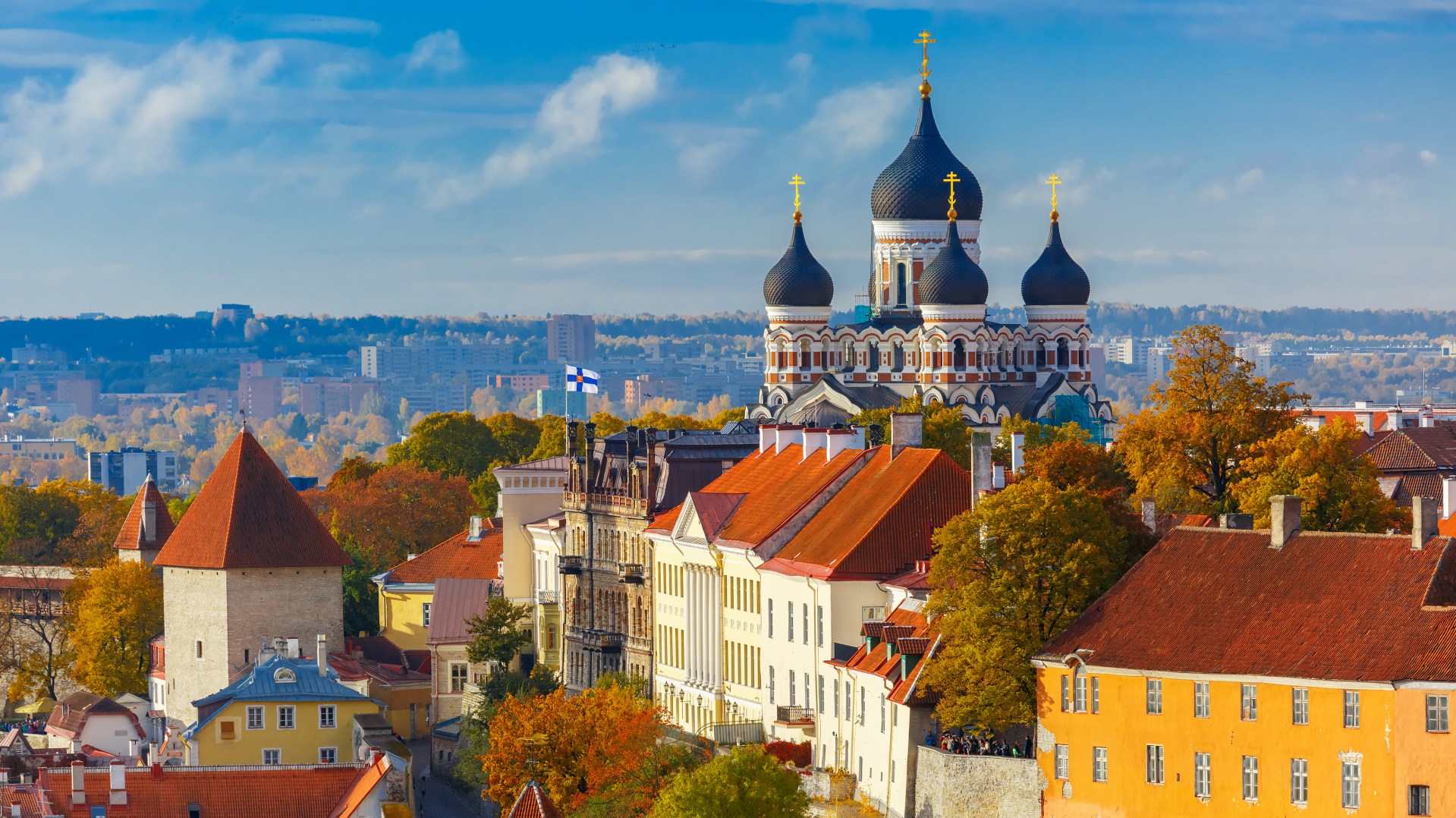
Tallinn, Estonia

Tallinn, Estonia

Christianity Today May 9, 2023
KavalenkavaVolha / iStock / Getty Images Plus

Since Russia’s invasion of Ukraine last year, few European institutions have welcomed both Slavic foes. A rare example is found right on the border, in a nation that wonders if it might be next.

Estonia, the northernmost of three small former Soviet republics on the Baltic Sea, immediately rallied in support of Ukraine. Given that Russia’s aggression began on February 24—coinciding with Estonia’s date of independence, first proclaimed in 1918—some wondered if it was a deliberate message.

The initial blitzkrieg toward Kyiv reminded Estonians of the Soviet occupation of the 1940s. Politicians donned blue and yellow ribbons; military brass sent weapons and aid. Citizens, including the 1 in 4 with Russian ethnicity, reacted to the atrocities in horror.

But as many universities closed their doors to students from Russia and allied Belarus, one evangelical institution bucked the trend. Baltic Methodist Theological Seminary (BMTS)—fully united with the national stance condemning the war—insisted instead on the unity of Christ.

“We did not hang a Ukrainian flag, but held a joint prayer of lament,” said Külli Tõniste, BMTS president. “Preservation of community is more important than an outward show of patriotism.”

Founded in 1994 and accredited by the state, the Methodist seminary hosts students from neighboring Latvia, nearby Finland, the United States, Israel, Nigeria, and Ghana. But it was the caldron of Russians, Belarusians, and Ukrainians—43 percent of the student body—that could have proved to be a tinderbox.

Yet sensing confusion and insecurity among many, Tõniste—an Asbury Theological Seminary alumna with a PhD from the London School of Theology—assured all students that her door was open to hear their stories. The Ukrainian refugee from Mariupol. The Estonian whose grandfather was killed by the Soviets. And the Russian of mixed family with Ukrainians who doesn’t know what to believe.

“Once admitted,” she said, “our students are safe with us.”

Graduates of Baltic Methodist Theological Seminary outside Tallinn Methodist Church

One example is Philip Kharchenko, a first-year student from Russian ally Belarus. A physical education teacher back home, he was “shocked” at the invasion—as initially all his colleagues were as well. But as his school and nation rallied behind Moscow, he felt increasingly uncomfortable.

Having long felt called to ministry, he found a home in Estonia.

“I thought they wouldn’t let me in,” he said. “But I am glad to be here, surrounded by people studying the Bible—it opens up a whole new experience of God.”

He has made quick friends with Russians and Ukrainians alike, comparing similar words in each of their languages. And at the annual Christmas celebration—which raised $1,600 for sister seminaries under fire—he watched in admiration as other Russian and Belarusian students included a Ukrainian-language song among their multi-language holiday medley.

Then all joined in an African-led dance.

“In the non-Christian world, I see great separation between peoples,” said Kharchenko. “But at seminary, our borders just dissolve.”

Two months later, it took administrative resolve to ensure this.

Simultaneous translation into Estonian, Russian, and English permits not only a diverse student body but also a diverse faculty. But as the one-year anniversary of the war approached, a visiting professor from Moscow—over Zoom—began to talk politics.

Among his complaints was the potential expansion of NATO into Ukraine. Estonian students responded negatively and some called on the seminary to take action against him. Estonia, which shares a 183-mile border with Russia, joined the European Union (EU) and North Atlantic alliance in 2004, and is keen on its defense.

Tõniste defended academic freedom, while the seminary’s academic dean addressed it privately.

“Our students need education, not indoctrination,” she said, adding there have been no further controversies. “We demonstrated the values of our society against a closed system like Russia, giving them space to think differently than they otherwise might.”

A retreat for BMTS students impacted by war at Camp Wesley in Latvia.

Estonia ranks third in the 2022 Cato Institute Index of Human Freedom.

Last month, the nation reconstituted its pro-Europe government following parliamentary elections decisively won by the incumbent center-right Reform Party of Kaja Kallas, Estonia’s first female prime minister. Tõniste is among her many supporters, and esteems egalitarian church ministry in the continent’s largest Methodist seminary.

But the war has rattled the largely secular nation.

Home to 1.3 million citizens, only 29 percent of Estonians claim a religion. Lutherans are the largest Protestant denomination with 8 percent, while Methodists, present since 1907, constitute only 1,400 people. Orthodoxy, meanwhile, is the largest faith at 16 percent, divided between a larger branch affiliated with Moscow and a smaller church related to Constantinople.

All belong to the Estonian Council of Churches, and cooperate well.

But Tõniste said that Moscow’s propaganda, alongside feelings of social disenfranchisement, has caused about 15 percent of the Estonian population to become pro-Russia. And following Russian Orthodox Patriarch Kirill’s statement that those who died in the invasion would receive forgiveness of sins, the Estonian government reportedly pressured the Russian Orthodox Church’s local affiliate to distance itself from his remarks.

One student spoke of a “cancel culture” emerging in the nation.

“Everything changed on February 24,” said a second-year BMTS student. “I suspect it is because I am Russian.”

Arriving in Estonia four years ago, he requested anonymity because of the sensitivity of the situation—both locally and at home. When he enrolled in the seminary, he received an official student stipend from the Estonian government. After the war, it was not renewed.

He then went to apply for a job, and the hiring manager turned him away rudely. But with sanctions applied against Russia, the sophomore’s family cannot send him money through the banks. And amid nationwide mobilization, he fears returning home.

He makes ends meet doing freelance video editing.

“I have almost enough for food, rent, and tuition, but I know God will provide,” said the Pentecostal student. “Fortunately, we have a wonderful Christian community, where everything is good.”

He refers to his church—led by a Ukrainian pastor—as well as the seminary. Among the 90 percent who receive a scholarship to reduce the $2,700 yearly tuition, he benefited from extra funds raised this year to support refugees and sanctions-affected students. But beneath the surface of friendly interactions, he senses a barely noticeable tension—both in his youth group and among his seminary peers.

It might just be him, he admits. But they don’t talk about the war.

The introspective student doesn’t want to “trigger” anyone—amid his own regret. The invasion upended his sense of national pride, as if he caught his own father doing wrong. But he is confused also by the Ukrainian response, embodied by a visiting preacher.

Living alone, the student was asked to share his apartment with his local pastor’s friend—both originally from Donetsk on the front line of fighting. The three-month stay did not go well.

They discussed politics, scripture, and pacifism. The Ukrainian guest said he would take a gun to defend his land. The Russian student responded that while the government has a right to defend itself, the best choice for a believer is to flee or resist nonviolently.

Conversation escalated, and the frustrated preacher retorted in anger that all Russians are bad. In the end they shook hands, parting ways but able to accept one other as fellow believers.

Which has been the key to life at BMTS.

“Our president told us, ‘We will stand with you until the end,’” said the future graduate. “I have great appreciation for that opening speech.”

It was still tough for Inna Prysiazhniuk, a third-year student from Ukraine.

“It was hard to publicly identify as Ukrainian, a nation in so much pain,” she said, as her brother-in-law serves on the front lines. “Everyone here was super supportive. But I would avoid saying so, if I could.”

The burden weighed so heavily that she emotionally withdrew from life—including seminary relationships. Having lived in Estonia the past seven years, the 33-year-old former bioresource engineer watched warily as societal tensions rose with the influx of Ukrainian refugees. Beginning in 2017 and escalating rapidly since the invasion, most Estonians welcomed them heartily. But many locals chafed at the jobs lost to cheaper labor, while others resented the rise in prices due to the war.

At 19 percent, Estonia suffers the fourth-highest rate of inflation in the EU.

The problem was not with fellow Christians. Prysiazhniuk’s multicultural Pentecostal church in Tallin emphasized reconciliation as it focused on principalities and powers, not persons. Seminary staff offered “huge support,” while Russian classmates received her with “open arms.”

But torn internally by the hatred in her heart, she kept her distance.

“I prayed for peace and forgiveness from Day One of the war, but internally it took so long,” said Prysiazhniuk. “I’m not a robot; the pain is there.”

Since the start of the new term last fall, she has been more engaging. She sees the guilt and shame of Russian students, and expressed her concern as two friends prayed to avoid mobilization during an upcoming trip home. Her own prayers for love have been answered, as she has intentionally sought out new students to welcome.

God has changed her heart, she said.

“We have one Lord and must be above politics,” Prysiazhniuk said. “At seminary, our nationalities are kept secondary, and this is exactly what I needed.”

Tõniste has worked hard to make it so.

But after previously assuming it, the war helped her recognize that the student body had severe cultural differences, and these needed to be embraced. Russian evangelicals rarely discuss politics in public, while many Ukrainians wear it on their sleeve. Estonians are proud of their democratic accomplishments, while Belarusians lament the lax morality of the West.

Tõniste reminds that Christian values uphold Europe, and the individual autonomy that spawns widespread relativism is a price of liberty. Consequently, at the seminary everyone’s story is heard, and their national complexity is recognized—but right and wrong are emphasized throughout.

It is the classic campus ethos of the liberal arts.

“The informal education students receive from each other is just as valuable as our curriculum of theology,” Tõniste said. “Estonians know about life under occupation, and how much better it is to be free.”

Editor’s note: CT now offers select articles translated into Ukrainian and Russian.

You can also now follow CT on Telegram: @ctmagazine (also available in Chinese and Russian).

Theology

Western Classics Exclude Me. But Christ Can Redeem Them.

As an Asian American, God’s great story helps me value literature that often leaves me out.

Christianity Today May 8, 2023
Darwin Vegher / Unsplash

Last year, I began reading Herman Melville’s Moby Dick. At first, I was swept away by Ishmael’s beautiful descriptions of his passion for the sea. But I grew increasingly uncomfortable in chapter two, when Ishmael accidentally stumbles into a Black, presumably Christian, worship service.

He shockingly describes the gathering as a “great Black Parliament sitting in Tophet” (another name for hell) and the preacher as “a black Angel of Doom.” In the next chapter, we meet the Native American character Queequeg, whose first words are “Who-e debel you? … you no speak-e, dam-me, I kill-e,” before he is promptly labeled as a cannibal.

What do we do with racist passages in classic books like this—especially as readers of color?

As a lifelong lover of books, I heartily applaud that many Christians seem to have a vested interest in preserving and championing classic Western literature.

In On Reading Well and various articles, Karen Swallow Prior writes about how good books can help cultivate our virtues. Similarly, Jessica Hooten Wilson has said that books help us to be holier. They can sharpen our worldview and help us develop empathy. Reading good books can, as Philip Ryken writes, sanctify our imaginations and nourish our love for beauty; it can even help us be more effective teachers, preachers, and leaders.

As a nonwhite Christian, however, I find that most discussions of reading classic Western literature today either fail to acknowledge or only tangentially mention two difficult truths.

First, even if a book is not overtly racist, readers of color must inevitably reckon with the hostility, condescension, and suspicion toward people of other races that permeated the historic periods in which much of these classic authors lived.

Melville and Dickens, Brontë and Byron, Twain and Tolkien were all embedded in cultures that subjugated entire continents of people to slavery and imperialism. It is simply not enough to tell a reader of color that these were bygone times, for we know better than anyone else that racism still exists today.

The second truth about much of English literature—which is difficult to reconcile with the first—is that it is a part of our Christian past. From Chaucer to Joyce, Christianity is baked into many of the plots, themes, and characters of numerous classic works of the West.

On the one hand, this makes the reading of classics an enlightening tool for believers. Kathleen Nielson writes that “Christians should read classics, because classics tell our story. At the most recognizable level, many Western literary classics tell our Christian story in various ways because they emerge from cultures shaped by Christianity.”

For readers of color, however, the “Christian story” is more problematic.

Aside from the fact that Western literature often ignores the full story of early Christianity’s flourishing in Africa, Asia, and the Middle East, the classics also tell (or do not tell) of periods of slavery and lynching, discrimination and othering, dehumanizing mass incarceration and barred entry, often enacted by those who considered themselves devout believers of the faith.

And although the global face of Christianity has changed drastically since then, for readers of color, the very cultures that deny us are also the historic stewards of the religion that saves us. Thus, classic English literature is at once a dagger and an enigma to me—as well as a beloved passion that plays at my deepest heartstrings.

For example, Emily Dickinson, a devout Christian and a poet I love dearly, writes in “His oriental heresies”: “His oriental heresies / Exhilarate the Bee, / And filling all the Earth and Air / With gay apostasy.” In this poem, her image of what it means to be “oriental” implicates both a heresy and an exhilaration, a kind of thrilling, mildly threatening “apostasy.”

Her views are telling of the times, which often cast Asian women as exotic subhuman beings. In The Making of Asian America, Erika Lee describes how the first-recorded Chinese woman arrived in the United States in 1834, when Dickinson would have been four years old. Nineteen-year-old Afong Moy was kept in a re-created “Chinese Saloon” exhibit for eight hours a day.

Visitors would pay money to watch Moy use chopsticks and marvel at her “national costume” and tiny bound feet. Later, when she grew older, she was sold to a circus before disappearing from history. It is reasonable to assume that many of the visitors to the “Chinese Saloon” exhibit were Christian, given the historical records of the time.

One such record is from Alexis de Tocqueville, who visited the US in the 1830s and remarked, “There is no country in the whole world in which the Christian religion retains a greater influence over the souls of men.”

Of course, classic literature is much more than its racist contexts and passages. But failing to acknowledge the difficult and complicated truths of our past, we can come across as tone-deaf in an increasingly diverse landscape.

If we are to defend the classics, we must also answer the difficult question of why nonwhite readers, particularly Christians, should keep reading them.

In his discussion about the cross of Jesus, Reading While Black author Esau McCaulley asks, “What is God’s first answer to black suffering (and the wider human suffering and the rage that comes alongside it)? It is to enter it alongside us as a friend and redeemer. The answer to black rage is the calming words of the Word made flesh.”

That incarnation touches even the pages of classic Western literature. I believe that through books like these, we can train our eyes to look the past square in the face. We can use our theological imaginations to envision Jesus sitting beside us as we read the great literary works of the past—weeping with us, angry along with us, loving humanity with us.

Before we can examine what this means, we must realize that discussions about classic literature and its racist problem are not new. Many readers today, Christian and non-Christian alike, have thrown out classic works for this very reason.

For example, some have perceived classic children’s literature like Tin Tin in the Congo, Peter Pan, and Little House on the Prairie as “threats to the moral development of youngsters not yet desensitized to the seductions of neocolonialist apologetics.” The solution has been to rename awards, ban books, and discontinue titles, stirring up flurries of controversy.

On the other end of the ideological spectrum, conservative Christians are party to various bills—like those in Wyoming, Oklahoma, and Tennessee—that propose to charge librarians for stocking certain books, prohibit books on topics like sexual identity, and remove books that include nudity or curse words.

Whether they are too “neocolonialist” or, on the other hand, too “woke,” many books are in the hot seat today. An article in The New York Times says that “parents, activists, school board officials, and lawmakers around the country are challenging books at a pace not seen in decades.”

But I would argue that a curious thing happens when thoughtful Christian readers engage with “dangerous” literature, even those written in blood-stained times.

In her essay “Reading Racist Literature” for The New Yorker, Elif Batuman describes the rewarding experience of watching a play called An Octoroon—which is an empowering modern reworking of a racist melodrama from 1859 called The Octoroon. Its problematic name was “a forgotten word once used to describe nonwhite people in the same terms as breeds of livestock.”

Batuman asks a rhetorical question: “What do you do with your mixed feelings toward a text that treats as stage furniture the most grievous and unhealed insult in American history—especially when you belong to the insulted group? … How do you rehabilitate your love for art works based on expired and inhuman social values—and why bother?”

She continues, “It’s easier to just discard the works that look as ungainly to us now as ‘The Octoroon.’ But if you don’t throw out the past, or gloss it over, you can get something like ‘An Octoroon’: a work of joy and exasperation and anger that transmutes historical insult into artistic strength” (emphasis added).

As Batuman writes in another essay when discussing Leo Tolstoy’s Hadji Murat and Anna Karenina, these reworked stories can “reveal different truths from different points in space and time, perhaps even destabilizing the structures it once bolstered.” She continues that it’s almost as though “the meaning of the novel itself could, and would, keep changing.”

In other words, such retellings often have the power to change the classic works themselves.

One excellent example is Jean Rhys’s Wide Sargasso Sea, written from the perspective of Bertha, the woman in the attic of Charlotte Brontë’s Jane Eyre—who is described only through her unhappy husband Rochester’s words as being born in Spanish Town, Jamaica, and having Creole heritage.

In holding a microphone to Bertha’s voice, Rhys, as a colonized woman herself, reshapes the very narrative of Jane Eyre. Wide Sargasso Sea shows that classic literature is not static but alive.

Joseph S. Walker calls Rhys’s retelling a “re-vision” that “changes the nature and possible readings” of the classic work because it “speaks from the margin, and in so doing changes the center.”

Our very act of reading as Christians of color conjures up the dead of history and continues their unfinished conversations. We not only speak from the margins, but we can also change the very center. And in the process, we participate in Jesus’ work—of making all things new, of restoring the dignity of all peoples, and of moving toward true forgiveness.

Readers of color can revise condemnable narratives not only through our retellings but also simply through our reading and our presence.

When I read Jane Eyre in high school and encountered the scene where Rochester puts on blackface, our class’s conversation was transformed simply because my Black classmates were in the room. Their perspectives shaped my reading of the text and shape it still.

We see history, literature, and the world more clearly when nonwhite eyes read the books of the past. Our story as humanity is made more whole when historically colonized and marginalized peoples wade into the streams of classic Western literature with our eyes wide open—because there are some things that only we can see.

In this way, the pages of classics can point more clearly to the Great Story that will someday be told not just in one language by one people but by people from every nation, tribe, and tongue.

The gospel is, after all, a story that is interwoven through all of history. To believe in Jesus Christ is to believe that he can one day redeem even history’s most painful and ugliest parts. We can have hope that the Lord is doing that even now.

Karen Swallow Prior has written that Aristotle considered literature to be a training ground for the emotions. And for Christian readers of color, classic literature becomes another kind of training ground: practice in forgiveness.

For us, this work of forgiveness is not a sentimental exercise. Rather, growing in love for our neighbors through the pages of old books is splintery and, at times, excruciating work—much like carrying a cross.

It is uncomfortable and difficult, and it isn’t for everyone. But for those who can endure it, the pages of great books give us a front-row seat to wrestling with one of the greatest questions of life: What does it mean to love and forgive our enemies?

If we want to know the true story of Christianity, we must remember that Jesus was not fair-haired, white, and English like the Pevensies in C. S. Lewis’s The Chronicles of Narnia. He was a poor, dark-skinned Middle Eastern man, more like the character Shasta in that same work. Jesus spent his life not in the palaces of imperial Rome but in the subjugated slums of Galilee among an occupied people. He lived a life well acquainted with sorrow and rejection.

The same Jesus who is with us in the pages of Melville is with us when a guy at the mall shouts racist obscenities. He is not afraid of our questions. He sees our hurt. And perhaps most importantly, he will not leave things the way they are.

In every racist remark or characterization found in classic literature, the tides turn when we realize that the real Jesus is standing in the margins—quietly suffering alongside readers of color and transforming the very center of the world.

This knowledge changes the way we read.

I cringe whenever people discuss the value of literature in terms of measurable, utilitarian outcomes. Should we read the classics only if they make us more virtuous and effective leaders? Should we support literary works only if studies show that they increase our intelligence or focus?

Many of us love literature most of all because we find it beautiful. In Rembrandt Is in the Wind, Russ Ramsey writes that beautiful words, like beautiful art, take “the pursuit of truth past the accumulation of knowledge to the proclamation and application of truth in the name of caring for others. Beauty draws us deeper into community.”

He continues, “We ache to share the experience of beauty with other people, to look at someone near us and say, ‘Do you hear that? Do you see that? How beautiful!’”

Great literature speaks to us of eternity. It can make us yearn for God and deepen our vision for our current reality. It can open our ears to cultural resonances across history and cultivate in us a humility of time and place.

I am immensely thankful for the authors who forged a path for writers of color today: Toni Morrison, Langston Hughes, and Amy Tan, just to name a few. I encourage my white Christian friends to explore not only these classics but also the vast and growing number of books written by nonwhite writers today, as well as classics in non-Western cultures.

May our reading help us love the real people around us. May we learn to humbly express the words of C. S. Lewis, “My own eyes are not enough for me; I will see through those of others.”

Some literature will not survive the time jump into our modern era. But to embalm every problematic tome in the tombs of the ivory tower would be our loss. If a work of literature is truly a classic, it will break the cycle of injustice by subversively lending itself to our theological imaginations, to our re-visionings, and to our participation in Jesus’ work of making all things new.

Then perhaps these reimagined works of literary art can, in the words of Miroslav Volf, become “a bridge between adversaries instead of a deep and dark ravine that separates them.”

For this to happen, Christian readers of color must stay in the rooms where classic Western literature is being discussed. These books still have something to say—and some of these things can be said only through us.

Sara Kyoungah White is a Korean American writer and editor. She has a BA in English literature from Cornell University and currently serves as the senior editor for the Lausanne Movement.

Videos

Free Webinar: Asian American Identity and the Church

Join CT and Seminary Now on May 18 for a conversation about the intersections of Asian American faith and culture.

Christianity Today May 8, 2023

Editor’s Note: Watch the video recording of this event here.

Like a sweeping photographic mosaic, the story of the United States is told by a multitude of smaller stories from the various races, ethnicities, and cultures that form our one nation. In May we celebrate Asian American and Pacific Islander Heritage Month, and it brings with it opportunities to discover stories of achievement, survival, and faith from AAPI communities across the nation.

On May 18, at 2 PM EDT, CT is partnering with Seminary Now to host an informative and thought-provoking online conversation on the intersections of Asian American identity and faith. Featuring a panel of influential leaders who are at the forefront of Christian ministry in the church, academia, and the public square, this interactive webinar will spotlight the stories of Asian American Christians, deepen your knowledge of Asian American culture, and unpack key challenges facing Christian leaders in Asian American spaces.

Join panelists Nikki Toyama-Szeto (Christians for Social Action), Jay Kim (Analog Church), Sabrina S. Chan (InterVarsity Christian Fellowship), Raymond Chang (Asian American Christian Collaborative), and moderator Kayla Maysong Vue (Seminary Now) as they engage these relevant themes of faith, culture, and identity.

Click here to register for this free webinar.

Books
Review

Christian Faith Was Jackie Robinson’s Haven in a Heartless World

A new biography offers an intimate account of his spiritual life, on and off the baseball field.

Christianity Today May 8, 2023
Edits by Christianity Today. Source: Pictorial Parade / Staff / Stringer / Archive Photos

Jackie Robinson, the first African American to play in the modern era of Major League Baseball (MLB), is undoubtedly one of the most significant cultural figures in the history of professional sports. Fittingly, his remarkable life has inspired a number of excellent books aimed at diverse audiences.

Strength for the Fight: The Life and Faith of Jackie Robinson (Library of Religious Biography (LRB))

The starting point for reading about Robinson ought to be his fantastic memoir, I Never Had It Made, published in 1972 just days after his sudden death at age 53. In it, Robinson details the extraordinary challenges he faced as an agent of integration. And it offers equally keen insights into the man himself, particularly his life after baseball as he tried to balance family, business, and civil rights activism on his own terms.

Relying heavily on the letters of Robinson’s wife, Rachel, Arnold Rampersad’s 1997 Jackie Robinson: A Biography offers more nuanced details on Robinson’s upbringing in Southern California and his often-strained family life. The year before Robinson’s death, his son Jackie Robinson Jr. died in a car accident after struggling for years to overcome substance abuse issues related to war wounds suffered in Vietnam in 1965. Rampersad’s account of Robinson’s life is also a work of genuine literary merit crafted by one of the best biographers of the late-20th century.

Several excellent children’s books, too, have been written about the pioneering baseball star. Most impressively, Frank J. Berrios and Betsy Bauer’s My Little Golden Book about Jackie Robinson explains Robinson’s significance in an understandable and age-appropriate manner for young readers.

More recently, Kostya Kennedy’s True: The Four Seasons of Jackie Robinson (2022) delves into the transformative impact of four years in Robinson’s life, both as a player and in retirement. Kennedy’s book, more clearly than any other, makes evident the degree to which Robinson’s life was under a microscope from the moment he integrated minor league baseball in Montreal in 1946 (the year before he broke MLB’s color line with the Dodgers) until days before his 1972 death when he threw out the first pitch at a World Series game.

Ed Henry’s excellent 42 Faith (2017) opened the door to exploration of Robinson’s spiritual life and how it shaped his choices as both a public and private figure. Released at roughly the same time, Michael Long and Chris Lamb’s Jackie Robinson: A Spiritual Biography (2017) grounds its rendering of Robinson’s faith in the child rearing of his deeply pious mother, Mallie McGriff Robinson.

Straight and narrow

Historian Gary Scott Smith has built onto the wing of the Jackie Robinson library that Henry, Long, and Lamb started to erect a few short years ago. In Strength for the Fight, part of Eerdmans’s Library of Religious Biography series, Smith offers a more intimate account of Robinson’s spiritual life than was previously known. Rooted in previous books on his subject, Smith’s book is both a work of synthesis and a triumph of original research that casts a distinct analytical eye on Robinson’s religious life.

While Robinson hardly hid his faith under a bushel basket, he shared his views publicly in a more restrained fashion than many charismatic Christian athletes have in recent decades. Smith illustrates this sensibility by calling upon his subject’s frequent and typically sedate speeches to congregations and church groups, reflecting his mainline Protestant roots in the Methodist church. Robinson spoke calmly about the viciousness he often faced as baseball’s first modern African American player, frequently comparing his experiences to those of Job. Many African Americans who heard Robinson speak could relate to such indignities as they went about their own everyday lives.

Smith places Robinson’s Christianity firmly within the ecumenical sensibilities of 1950s and 1960s mainline Protestantism. In this cultural space, a consensus developed around the need for what Smith terms “social amelioration.” Robinson exemplified the spirit of the time, showing great comfort in both Black and white churches. The straight and narrow of the Christian life was Robinson’s haven in an often-heartless world.

It was also a pathway to social progress and to breaking down seemingly impassible barriers, as Robinson demonstrated time and again during his public life. He desegregated not only Major League diamonds but also housing and public accommodations in many of the cities to which he traveled. He desegregated corporate boardrooms as an executive for Chock full o’Nuts coffee. Such boundary-crossing appeal made him an attractive target for both Republicans and Democrats, who vied for his political allegiances.

For Robinson, politics were personal and rooted in his spirituality. As Smith shows, Robinson’s political and religious thinking was shaped in no small way by Karl Downs, his pastor at Scott United Methodist Church in Pasadena. Downs was just seven years older than Robinson, and the pair developed something of a big brother–little brother relationship. Downs had been schooled in a social gospel-infused theology at Atlanta’s Gammon Theological Seminary. He believed the church had a duty to redeem the wayward institutions of the world, a duty Robinson came to recognize as an essential part of the Christian life. But they believed such reform needed to be pursued within the constraints of basic Christian decency.

From an early age, Robinson was one to turn the other cheek, even while enduring discrimination in his hometown of Pasadena, feeling like an outsider on the predominately white University of California, Los Angeles campus, and facing all manner of enmity and exclusion as he traveled the country as a professional baseball player. Upon retiring after the 1956 season, Robinson became more active in politics, favoring the art of persuasion in the social gospel tradition over direct or militant action. He served as president of the United Church Men, an organization of roughly 10 million Protestant and Orthodox Christian men founded by the National Council of Churches, which threw its spiritually informed weight behind the civil rights movement.

Politically independent

Though formally a Republican, Robinson displayed a decided political independence when it came to issues of civil rights and Black empowerment. Residing in New York State, Robinson stood shoulder to shoulder with Republican leaders like John Lindsay and Jacob Javits, whose bona fides as advocates for racial equality were evident. The former Brooklyn Dodger gave staunch support to the presidential aspirations of Nelson Rockefeller, New York’s liberal Republican governor. He was disappointed when his party nominated Barry Goldwater, who opposed federal civil rights legislation, in 1964—and again in 1968, when he perceived Richard Nixon shifting away from support for civil rights. As a result, he openly supported Democratic presidential candidates: incumbent president Lyndon Johnson in 1964 and Hubert Humphrey in 1968.

While Strength for the Fight is a consistently interesting and informative read, its strongest sections are the ones focused on Robinson’s life after baseball. Robinson’s prowess as a mover and a shaker is evident, as are the subtle ways he infused his religious sensibilities into his efforts at social reform. To some extent, Strength for the Fight seems like old wine in new vessels, but the familiar turf on which it treads has yet to be covered with the distinct analytical eye that Smith brings to Robinson’s life and faith.

Clayton Trutor teaches history at Norwich University in Vermont. He is the author of Loserville: How Professional Sports Remade Atlanta—and How Atlanta Remade Professional Sports and the forthcoming Boston Ball: Jim Calhoun, Rick Pitino, Gary Williams, and College Basketball’s Forgotten Cradle of Coaches.

Apple PodcastsDown ArrowDown ArrowDown Arrowarrow_left_altLeft ArrowLeft ArrowRight ArrowRight ArrowRight Arrowarrow_up_altUp ArrowUp ArrowAvailable at Amazoncaret-downCloseCloseEmailEmailExpandExpandExternalExternalFacebookfacebook-squareGiftGiftGooglegoogleGoogle KeephamburgerInstagraminstagram-squareLinkLinklinkedin-squareListenListenListenChristianity TodayCT Creative Studio Logologo_orgMegaphoneMenuMenupausePinterestPlayPlayPocketPodcastRSSRSSSaveSaveSaveSearchSearchsearchSpotifyStitcherTelegramTable of ContentsTable of Contentstwitter-squareWhatsAppXYouTubeYouTube