News

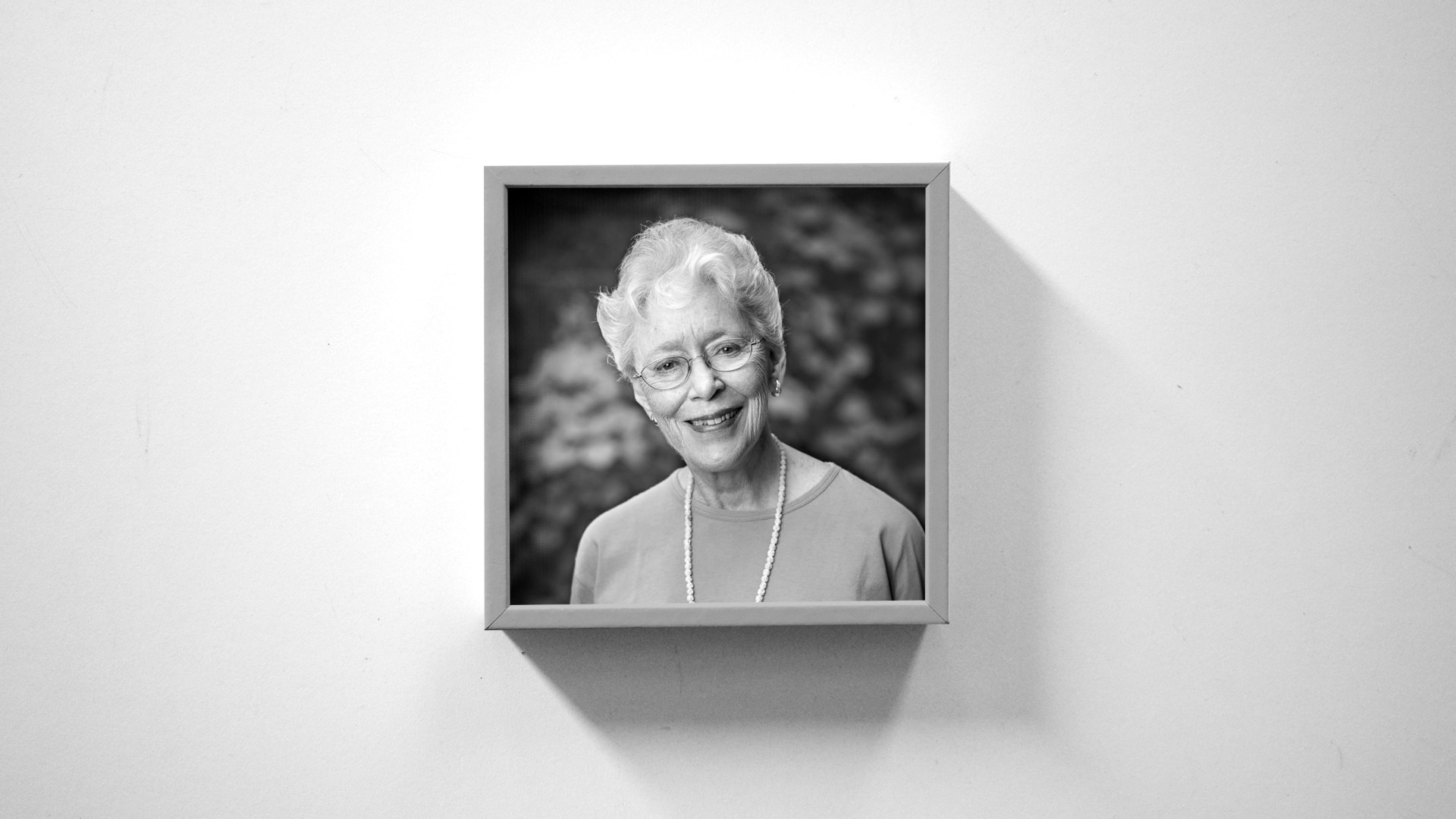
Died: ‘The Hiding Place’ and ‘The Cross and the Switchblade’ Coauthor Elizabeth Sherrill

“She knew how to tell a story with power.”

Christianity Today June 6, 2023
Elizabeth Sherrill / edits by Rick Szuecs

Few evangelicals know Elizabeth Sherrill’s name. But because of her, they know David Wilkerson, Brother Andrew, Corrie ten Boom, and dozens of other modern men and women who overcame by faith. Working closely with her husband John, she reported, wrote, and edited some of the most compelling, popular, and widely influential accounts of contemporary Christians on bookshelves today.

Sherrill had “an uncanny knack for always touching the heart strings,” according to the late Pentecostal leader Jack W. Hayford. She wrote more than 2,000 articles for Guideposts and coauthored more than 30 nonfiction titles. She founded Chosen Books with her husband and edited and published numerous Christian bestsellers, including Chuck Colson’s Born Again, Don Basham’s Deliver Us from Evil, and Bilquis Sheikh’s I Dared to Call Him Father.

Sherrill died in Massachusetts on May 20. She was 95.

“I marveled at the way the books she touched … inspired readers toward belief,” Jeff Crosby, president of the Evangelical Christian Publishers Association, told Publishers Weekly. “Elizabeth’s gifts as a manuscript stylist, editor, and publisher were enormous. She knew how to tell a story with power.”

Sherrill “found a perfect calling,” according to Rick Hamlin, former executive editor of Guideposts, “in coaxing stories out of others and then helping them share their highly personal accounts of God at work in their lives.”

She was born Elizabeth Schindler in Los Angeles, California, on February 14, 1928. She was raised in Scarsdale, New York, in what she recalled was a cold, nonreligious home with parents who got upset when she had any emotions. Her father, a private investigator, thought she should just be happy with what he had provided. Her mother believed “emotions were private affairs and nice people said only nice things.”

“I yearned for heart-to-heart talks,” Sherrill later wrote. “I wanted Mother to ask me not what had happened at school, but how I felt about it. … A gulf of mutual disapproval opened between us.”

Sherrill left home at 19, sailing to Europe on the Queen Elizabeth to attend school at the University of Geneva. During the crossing, a World War II veteran who was five years older than her and had served in the Italian campaign caught her eye. He called her “Tibs” or “Tibby.” Four months later, she and John Sherrill were married in Switzerland.

The couple returned to the United States in 1950—with Elizabeth pregnant and John determined to become a writer.

After struggling for a year as a freelancer, John found a job with a new religious magazine launched by the popular preacher Norman Vincent Peale. Guideposts was an eight-page publication dedicated to stories about the power of faith. Peale, who was writing the Power of Positive Thinking at the time, didn’t really care which faith, as long as it was positive, transformative, and a great story. Neither did John Sherrill. As he confessed to Peale during his interview, his father was a theologian but he himself was not religious. Peale decided that was perfect and hired him to work alongside editors Leonard and Catherine Marshall LeSourd.

John brought his work home and Elizabeth started to edit it. She had a gift for clear prose and clean structure that made his stories better. Within a few months, John convinced Guideposts to hire Elizabeth too, and from that point on they were inseparable collaborators who wrote with one voice.

Sherrill ghostwrote many of her early pieces, telling famous people’s stories of faith under their names, in their personas, but in her distinct style. In one piece as Alfred Hitchcock, for example, Sherrill wrote about “a day of judgement” in the famed director’s early career, before Rear Window, Psycho, or The Birds. “It was almost as if God deliberately delayed success to show me that my efforts at controlling the future were not in His scheme of things,” she wrote as Hitchcock. “I thank Heaven daily that tomorrow does not belong to any man. It belongs to God.”

Sherrill and her husband did not personally have that kind of faith, though. As she described it later, they loved good stories, but had “mountains of intellectual objections” to the idea that Jesus could be Lord and Savior.

Things changed when John was diagnosed with cancer. He had surgery and seemed to be recovering, but then it came back. Catherine LeSourd, his fellow editor at Guideposts, used that opportunity to ask him a question: “Do you believe that Jesus was God?”

Driving home, he stopped at a stop sign and turned to Sherrill.

“I believe that Jesus is God,” he said. “Why do they call it a leap of faith? Alright, I’m going to make that leap.”

The second surgery was successful, and while he was in the hospital recovering, John had a mystical experience of Christ as a glowing light in his room.

Sherrill affirmed her husband’s newfound faith and the incredible impact it had on his life. But she didn’t feel it herself. She was struggling with a clinical depression that completely immobilized her in her mid-20s.

She had always had what she thought of as “attacks,” when she would take a “sudden plunge for no reason into a bottomless sadness.” In 1955, she was overcome with the feeling and went up to a small room in their partially finished attic and locked herself inside.

“And there I lay,” she later wrote, “curled on a cot, the door locked on the world, while a succession of babysitters covered the hours that John was at work.”

Sherrill felt a paralyzing sense of failure. And then when she reminded herself that she was a successful writer, happily married, with two lovely children and another much-wanted baby on the way, she would start to berate herself for being ungrateful, neurotic, and not feeling like she was supposed to feel.

“That’s the terror of depression, the dark mystery that distinguishes it from sorrow,” Sherrill wrote. “Depression can throw its gray pall over us when the sun is brightest.”

John took her to a psychiatrist, who put on her on some medication that helped her achieve a “shaky equilibrium.” The doctor also helped her start talking about her childhood, and how her parents had dealt with her emotions. He told her she had internalized her parents’ rejection.

In an effort to deal with these deep psychic wounds, she turned to religion.

“For the first time in my life I began to read the Bible,” she said. “A new world opened before me! A loving God, visions of strength and joy beyond my wildest hopes. … I can accept myself—delight in myself—because, the Bible tells me, God made me for himself, and can use all the particulars of my history for good. The very things I like least about myself, indeed, may be those he values most.”

Sherrill joined her husband as a member of an Episcopal church. She never stopped suffering attacks of depression, but they grew less frequent and more bearable in time.

When she was doing well, Sherrill loved chasing stories. One time she and John were visiting friends in Boston, for example, and they saw a headline in the newspaper that said, “Man Buried Alive.” The story included the man’s name and the hospital where he’d been taken, and the Sherrills abandoned their vacation, rushed over, and convinced him to let them write his story.

The Sherrills similarly found David Wilkerson through a thirdhand rumor about a Pentecostal preacher who was successfully evangelizing violent gang members in New York City. They produced several pieces about him for Guideposts before deciding they had enough for a book and wrote The Cross and the Switchblade. It was published by a secular press in 1963 and sold 11 million copies in the first 10 years.

The Sherrills’ follow-up book, about a Dutch Christian taking Bibles to Christians in Communist-controlled countries, was also a smash hit. God’s Smuggler sold 10 million copies.

If two bestsellers seemed like a fluke, the couple then wrote a third: The Hiding Place. Sherrill heard Corrie ten Boom talk about losing her family in the Nazi concentration camps, and even though she didn’t understand Dutch, she found the way ten Boom talked incredibly compelling. Here was the next story, an account not only of fighting the Nazis and surviving but also forgiving. It was a story of how faith could overcome even the Holocaust.

Sherrill’s writing relationship with ten Boom was sometimes difficult, though. When they sat down, Sherrill kept asking for detailed descriptions of places and people and ten Boom could only talk in abstractions.

It was, Sherrill would later recall, “like trying to get a blind man to describe the colors of a garden he'd once walked in.”

‘Corrie,’ I would say, ‘describe Mr. Koornstra who got you those extra ration cards.’

‘He was a very brave man.’

‘I know. But what did he look like? Was he tall? Short? Thin—fat? Bald? Did he have a beard?’

‘And with that tone of finality that only Dutch-accented English can convey: ‘He was a man.’

Sherrill found additional sources who could fill in the details, and the book came out in 1971. At the last minute, the Sherrills decided to pull out of their publishing contract and produce the book themselves. They founded Chosen Books and released The Hiding Place as their first title. It sold more than 50 million copies. The book’s most recent appearance on the evangelical bestsellers list was in early May 2023.

When Christianity Today collected a list of the top 50 books that shaped evangelicals in the 20th century, the Sherrills were named more frequently than C. S. Lewis, Billy Graham, J. I. Packer, Phillip Yancey, Tim LaHaye, John Piper, or James Dobson. They occupied three spots on the list and were the editors behind a fourth.

“John and Elizabeth Sherrill may be the most influential Christian authors you know nothing about,” CT reported. “Their specialty: testimonials to the power of God’s Spirit. And, it seems, bestsellers.”

The couple’s most personal testimony of the power of the Holy Spirit came with the publication of They Speak with Other Tongues. The book started as a journalistic investigation of the charismatic movement, but became something different when John started speaking in tongues, which he understood to be a supernatural gift from God.

“It was the floodgate opened,” John later said. “The syllables were all there, ready-formed for my use, more abundant than my earthly lips and tongue could give shape to.”

Sherrill had the same experience later, receiving “a spontaneous outpouring of a heavenly tongue” and speaking in a “fluent and beautiful prayer language.”

The wrote the book together under John’s name and from his first-person perspective. It played a major role in popularizing the charismatic movement and the idea of speaking in tongues among evangelicals.

“Is epochal too strong a word?” asked Ben Kinchlow, cohost with Pat Robertson of The 700 Club. “I think not.”

The couple continued to write, edit, and travel together until John died in 2017. They were planning a trip for their 70th anniversary when he passed. Sherrill received the Kenneth N. Taylor Lifetime Achievement Award from the Evangelical Christian Publishers Association the following year. She accepted it for both of them.

Sherrill is survived by her three children, John Scott Sherrill, Donn Hardwick Sherrill, and Elizabeth Flint, along with eight grandchildren and seven great-grandchildren.

A memorial service was held on June 3 at St. John the Evangelist Episcopal Church in Hingam, Massachusetts.

“We know she is alive in God’s hands,” the priest, Sarah D. Máto, told the friends and family gathered to mourn. “She was very sure of this. She is living in the very place that God prepared just for Tib. Maybe [with] a gold typewriter, who knows?”


John Onwuchekwa Joins CT Team as Director of Leadership Resources

Atlanta-based preacher, author, and entrepreneur will expand the ways CT serves pastors and church leaders.

John Onwuchekwa

John Onwuchekwa

Christianity Today June 6, 2023
Photo by Yvette Glasco / Courtesy of John Onwuchekwa

Christianity Today has hired Atlanta-based author, preacher, and entrepreneur John Onwuchekwa as director of leadership resources. In this role, Onwuchekwa will cast a broader vision to engage and equip pastors and other church leaders in new ways. He will also lead the continual development of content and strategy for CT’s existing church resources, which include influential brands such as Church Law & Tax, PreachingToday.com, and SmallGroups.com. He joined the company on April 24.

Before joining CT, Onwuchekwa compiled a busy and wide-ranging résumé. A graduate of Dallas Theological Seminary, he was one of the founding pastors of Cornerstone Church, as well as cofounder of Portrait Coffee—both in the Historic West End of Atlanta. (“I started the coffee business to empower people in a community that was an opportunity desert,” he says.) The industrious preacher also served as the codirector for content and coaching for the Crete Collective, an organization aimed at strengthening gospel works in distressed and neglected Black and brown communities. He is the author of Prayer: How Praying Together Shapes the Church and We Go On: Finding Purpose in All of Life’s Sorrows and Joys.

“John Onwuchekwa is one of the strongest Christian leaders in America today,” says CT editor-in-chief Russell Moore. “His grounding in Christ and the Scriptures combined with his astounding combination of gifts in preaching, teaching, mission, justice, church leadership, entrepreneurship, and mentoring make him the perfect choice to lead CT Resources into a new future. John is widely respected and widely loved. I am excited to work with John and am elated to have him on our team.”

CT’s editorial chief of staff Joy Allmond adds, “The addition of John to our staff is going to transform the ways we serve the church and its leaders. Along with the many gifts he brings to the table, John’s pastor’s heart and entrepreneurial spirit bring unique and powerful value to CT. It’s going to be exciting to watch how his perspective and experiences inform the vision for CT’s resources ministry.”

Onwuchekwa, the American-born son of Nigerian immigrants, calls himself “a deeply committed storyteller” whose preaching, writing, and entrepreneurship are designed to uplift the often-forgotten lives of those living in society’s margins. He views the call to CT as an exciting next step in his ministry journey.

“I was gripped by [CT president and CEO] Timothy Dalrymple’s vision to elevate the sages and storytellers of the global church,” Onwuchekwa says. “I left pastoring after 16 years because I sensed a vague call to spend more time creating resources and telling stories to that end. I’m excited about creating resources that center the concerns, stories, and even faces of people that have been marginalized for so long—especially in a world where Christianity is becoming increasingly marginalized. There’s a wealth of wisdom to be learned by centering the concerns and lessons of those who have had to lead from the margins for so long. I’m excited to make that work central to what I do and even more central to Christianity Today.”

Onwuchekwa will continue to reside in Atlanta, where he lives with his wife, Shawndra, and their daughter, Ava.

For media inquiries pertaining to this story, please contact media@christianitytoday.com.

Christianity Today was founded by Billy Graham in 1956. In the nearly 70 years since that time, it has served as a flagship publication for the American evangelical movement, serving the church with news, commentary, and resources. An acclaimed and award-winning media ministry, CT elevates the storytellers and sages of the global church. Each month, across a variety of digital and print media, the ministry carries the most important stories and ideas of the kingdom of God to over 4.5 million people all around the planet.

News

Seafarer Ministries See Spiritual Needs in Rough Economic Waters

Merchant marines are still struggling, body and soul, after COVID-19 and supply chain disruptions.

Christianity Today June 6, 2023
Spencer Platt/Getty Images

Gary Roosma can attest to the challenges of organizing a worship service onboard a cargo ship.

It’s a complicated process, reaching out to the rotating cast of captains aboard the ships in the Port of Vancouver, for a congregation of sailors who may or may not even want to gather.

But experience has taught him it’s a worthwhile effort.

He remembers one officer who accosted him with a question.

“Where were you yesterday?” the man said. “We needed you yesterday.”

When Roosma asked why, the sailor explained there was a horrible storm at sea and the captain had sent him to do something on the deck as the waves crashed around them. As he held onto a rail, a massive wave hit the ship and carried the man overboard, out to the open sea.

“I knew I was dead,” the seafarer told Roosma. “All I could think of was ‘Lord, please watch over my family.’ And then I prayed, ‘It would be really nice if you would save me too.’”

At the instant he prayed, the man recalled, a rope brushed across his chest, and he grasped it and held on with every ounce of his strength. He dislocated his arm, but his life was spared.

“We need a service onboard this ship,” the man said, and Roosma, a chaplain at the Port of Vancouver with the Christian Reformed Church (CRC) Ministry to Seafarers agreed to lead them in prayer and worship that day.

Roosma was reminded, yet again, of the point of this unusual ministry. As the psalmist said in Psalm 107, “They that go down to the sea in ships, that do business in great waters; these see the works of the Lord, and his wonders in the deep” (vv. 23–24, KJV). Seafarer ministry chaplains are called to point that out to the men and women working on cargo ships.

Seafarers’ ministries are not new. They’ve been around since the 19th century, and there are now hundreds like the one in Vancouver in ports around the world. Those involved in these ministries say the need has felt especially urgent in recent days, as the shipping industry goes through rough waters, taking a toll on merchant marines.

The shipping industry has always been turbulent, but the challenges in recent years have been especially difficult. COVID-19 restrictions required many seafarers to work longer hours and receive less shore time. Supply chain issues have impacted the world economy, leading to cost spikes and subsequent drops that impact sailors’ livelihoods. Amid all that uncertainty, they’ve also had to cope with the ripple effects of the Russian-Ukraine war.

A 2022 Review of Maritime Transport put out by the United Nations Conference on Trade and Development was aptly named Navigating Stormy Waters.

“In an increasingly unpredictable operating environment,” the report said, “future shipping costs will likely be higher and more volatile than in the past.”

Where most people see “shipping delays” and “economic uncertainty,” maritime ministry chaplains see the people impacted—men and women from around the world trying to provide for their families in a dangerous profession that changes constantly. Each huge vessel transporting cargo around the globe and sustaining the world economy is also temporary home to about 21 souls.

“There are so many hidden workers in economies around the world,” said Jason Zuidema, who lives in Montreal, Quebec, and is currently general secretary for the International Christian Maritime Association and executive director of the North American Maritime Ministry Association. “They are the kind of people we should say thank you to.”

More than 80 percent of the world’s international goods are shipped by sea. But few people grasped the importance of ships to international trade until they saw how delays at ports suddenly wreaked havoc.

“Shipping is a great bellwether,” Zuidema said. “You can basically see what’s happening economically by seeing what’s happening with ships.”

That means the economic challenges that ripple out from the shipping industry directly hit merchant marines. COVID-19, in particular, was very hard on seafarers.

“Seafarers are a hearty group who enjoy each other’s company while on board, but social isolation has impacts on people’s mental well-being and social well-being,” Zuidema said. “These political or economic or health issues have very direct impacts on their lives and livelihoods.”

Even in normal times, though, this job is very spiritually demanding. Because seafarers are away from home for months at a time, it’s hard to be spiritually fed. Internet access is unpredictable at best at sea, so the people working on cargo ships aren’t able to depend on church online or join in worship through Zoom.

For the ministers to seafarers, there are challenges too. Like hospital and airport chaplains, they often cannot establish sustained relationships with the people they minister to. They meet people and try to minister to them in that particular moment, and then they’re gone.

“So many of the most special ministry moments in my life were done for people I don’t even know their names and I never met them again,” Zuidema said. “It can wear people out, and keeping pace with all that is a joy but also a prayer request.”

Sometimes the contact the ministers have with seafarers’ lives seems so insignificant that they really have to have faith that what they do matters. Zuidema remembers, for example, once helping a sailor from India set up an email account. In the moment, it felt more like tech support than the reason he’d gone into ministry. But he met that man again, years later, and the man expressed a deep, deep gratitude.

“It was something that was just … so small to me,” Zuidema said. “For him, this was a reminder … of that one time when he went ashore in Montreal, Canada, and got a tool that served him for the rest of his life.”

Ministering to seafarers can be very practical. Many ministries have helped with access to COVID-19 vaccines and connected sailors with internet or the personal necessities they need after a long time at sea. Offering seafarers that kind of help, though, regularly opens a door to discuss deeper needs.

“We try every time we interact with the sailors to minister to them spiritually,” said Ray Hanna, port chaplain at Lighthouse Harbour Ministries in North Vancouver.

Once that door is open, Hanna said, the chaplains reach an incredible range of people with varied spiritual needs. Hanna estimates that about half of the seafarers that he interacts with are Filipino. Many of them carry a Bible to sea but say they don’t read it very much.

“Instead of having the Word of God nominally in your head or in your dresser drawer,” he encourages them, “it’s time to open it up and read it.”

Other sailors don’t have Bibles and don’t know anything about the gospel.

“I’ve talked to many Chinese seafarers that tell me they’ve never heard the name of Jesus,” Hanna said. “The only name that saves and they’ve never even heard his name. I get goosebumps when I have the opportunity to tell them about the Savior.”

Books

Nominate a Book for the 2024 Christianity Today Book Awards

Instructions for publishers.

Christianity Today June 6, 2023
Pixabay / Pexels

Dear Publisher,

Each year, Christianity Today honors a set of outstanding books encompassing a variety of subjects and genres. The CT Book Awards will be announced in December at christianitytoday.com. They also will be featured prominently in the January/February 2024 issue of CT and promoted in several CT newsletters. (In addition, publishers will have the opportunity to participate in a marketing promotion organized by CT’s marketing team, complete with site banners and paid Facebook promotion.)

Here are this year’s awards categories:

1. Apologetics/Evangelism

2a. Biblical Studies

2b. Bible and Devotional

3a. Children

3b. Young Adults

4. Christian Living/Spiritual Formation

5. The Church/Pastoral Leadership

6. Culture and the Arts

7. Fiction

8. History/Biography

9. Marriage and Family

10. Missions/The Global Church

11. Politics and Public Life

12a. Theology (popular)

12b. Theology (academic)

Nominations:

To be eligible for nomination, a book must be published between November 1, 2022 and October 31, 2023. We are looking for scholarly and popular-level works, and everything in between. A diverse panel of scholars, pastors, and other informed readers will evaluate the books.

Publishers can nominate as many books as they wish, and each nominee can be submitted in multiple categories. There is a $40 entry fee for each title submitted in each category. To enter your nominations, please click on this link and follow the prompts. (Note: You will be directed to upload a PDF of each book you wish to nominate.)

Finalist Books:

If your book is chosen as one of the four finalists in any category, we will contact you and ask that you send a copy of the book directly to the four judges assigned to that category. We will provide mailing addresses for each judge.

Deadline:

The deadline for submitting nominations is Monday, July 31, 2023.

Any questions about any aspect of the process? Email us at bookawards@christianitytoday.com.

Thank you!

Christianity Today editors

Theology

Welcome, Visitors! Here’s Our Church’s Take on Sex.

Hospitality demands that some things be clear from the start.

Christianity Today June 5, 2023
Illustration by Christianity Today / Source Images: Unsplash

As Canadians living in Austin, Texas, my wife and I have a sign on our front door that reads, “Please take off your shoes.” The Northern experience of slush, grit, and mud, as well as a few years spent living in Japan, made us committed to the goodness of shoeless indoor living. (Slippers and indoor shoes allowed.)

We hung the sign several years into our time in Austin. After more than a few awkward greetings—an effusive welcome coupled with quick instructions about our footwear convictions—we decided that clarity was a necessary part of hospitality.

This same connection between clarity and hospitality has come to inform our practice in church as well, especially on the topic of marriage and sexuality.

As part of the Anglican Church of North America (ACNA), our church’s position is clear: We hold that God’s desire for faithful conjugal sexuality happens in the context of a covenant marriage between one man and one woman. But as a particular church in Austin seeking to embody the welcome of God in Christ, conveying that message is more difficult. Our community draws people who are surprised and even pained by this counter-cultural teaching.

I’m not totally sure why our small church often attracts people with more left-of-center perspectives. Part of it relates to the area of the city we’re in, where a lot of young families and professionals come to live. Part of it is simply generational, as these millennial and Gen Z Christians grapple with the legacy of their particular traditions.

For some in our community, the church’s teachings on marriage impinge on the most intimate and personal areas of their life. What does it look like for their own sexuality to be conformed to the image of Christ? For others, these issues affect their posture toward family members, friends, neighbors, and colleagues.

As the rector of this congregation, I’ve had several challenging conversations related to marriage and sexuality. My own insufficiencies and knowledge gaps feel most acute in the area of pastoral care. How do I hold forth the grace and truth of Jesus? How do I hold forth the historic teachings of the church in a hospitable way?

While talking over several months with one gentleman in our church who identifies as queer, I realized that, even after extensive discussions, what I referred to as “the traditional perspective on marriage” had not landed with him as meaning “the marriage of male and female.” That moment of clarification was painful and disorienting for him. After a few more conversations, he left our church—a place where he’d been making friendships, forging connections, and feeling loved.

My pastoral engagement of that situation might draw criticism from readers. Some will see it as a failure inherent to the traditional position—the natural outcome of its exclusionary and discriminatory nature. As someone fully convinced of the traditional position, I don’t agree. Instead, I see my shortcoming as a failure of hospitality, and by that I mean, a failure to be clear.

In the same way that my wife and I decided to put a sign on our front door to avoid confusion, I’ve become convinced that clearly stating what our church teaches on marriage and sexuality is necessary in our context. Among those we welcome and minister to, that clarity is an act of care.

I don’t mean that sexuality is a regular topic of our preaching, or that it’s part of the “barking” posture Alan Jacobs has identified as “the sheepdog’s view.” But when the issue arises, as it did not too long ago in a sermon series on Romans, we address it head-on. We do the same when the text of Scripture speaks to racial justice, creation care, or care for the unborn.

In our efforts to be clear with people, we’ve also created a “white paper” of sorts—a summary of what the church teaches and why, with specific responses to common objections or points of confusion. The document also sketches out some of our pastoral approaches more generally.

Our hope is that the position paper, imperfect though it is, serves as an act of hospitality by providing openness about our views. We make the paper available to those in our community who inquire, and we also share it as part our membership process at the church.

We have a number of people in our church who question or even disagree with our teaching. But many of them have expressed appreciation for the forthright way we’ve talked about the issue, and they’ve found a place in our community nonetheless.

Recently, one parishioner who’s unconvinced by the historic position told me he appreciated our willingness to let the “weirdness of the Christian position” stand. With the beloved slogan “Keep Austin Weird” so pervasive in our city, maybe that comment shouldn’t be surprising!

I’m glad that he and others continue to stay in our community and give our views a hearing, even though their disagreement is significant and consequential. It’s better for them to know the vision and convictions that animate our pastoral care and teaching.

The same goes for those who identify as sexual minorities. Within the context of a newer church like ours, I struggle with the common temptation to so heavily emphasize “enfolding” people that I end up downplaying any uncomfortable, countercultural, or burdensome teaching.

The danger of a “bait and switch” is real. The better path, however, is to be clear in a spirit of humility and kindness.

The traditional view of marriage as a sacramental, creative, and covenanted union between male and female is God’s gift and was arguably abandoned by the church long before the question of same-sex marriage rose to the fore. This original vision is worth expressing, clearly and without apology. It’s beautiful and challenging for us all—a good the church can offer in a world of estrangement and disposable relationships. It invites us together to celebrate the gospel with our bodies. And it calls us not only to agree with God’s design but also to confess and proclaim it.

In the biography Augustine of Hippo, author Peter Brown describes how the intellectual climate of the bishop’s time required him to openly refute particular pagan beliefs. In Brown’s view, Augustine might have preferred to devote his energies and gifts to other ends. But the cultural pressure around Christians in Hippo “could not be ignored.”

At our church in Austin, I feel a similar imperative in the context of marriage and sexuality. As a pastor, I believe doctrines worth holding to are also worth talking about and declaring (with great care, of course). For most of our parishioners, the issue is paramount. It can’t be ignored without cost. And addressing it takes courage, humility, and discernment.

I know many other pastors are in the same boat. But how do we go about it, exactly? Here are a few things I’m learning about how to hospitably address sexual ethics:

First, make it personal.

“[Sexual minorities] are not a problem for experts and theologians to solve,” says Melinda Selmys in Sexual Authenticity. “They are, first and foremost, the face of Christ, marginalized, bullied, misunderstood, spit upon and rejected, and absolutely beloved of God.”

As you seek to articulate the historic vision of marriage and sexuality, keep in mind the particular members of your church who are most challenged and affected by this teaching. If you can’t think of any, then you might consider voices you can listen to from a distance.

As our church continues to grow in its ability to convey Scripture’s teachings on this issue, our ministry philosophy has been informed by writers from a wide variety of disciplines and perspectives.

Second, be ready to grow.

Our white paper exists as a living document. That doesn’t mean the teaching of the church is up for grabs, nor does it mean that I foresee my own convictions ever changing. If that ever happened, I’d resign rather than seek to lead our church into a different set of beliefs. And yet, I have so much to learn when it comes to pastoral care and the concrete implications of Christian sexual ethics.

In our rapidly changing culture, these questions will only continue to grow. How does the church respond to the same-sex married couple with children who have encountered Jesus for the first time? How does the body of Christ care for those who’ve transitioned from one gender to another? What does participation in the local church look like for those who are unconvinced by the church’s historic teaching?

These are questions that continue to challenge me and the local body I serve. In my own learning process, I’ve sought to frame my preaching and teaching on this topic as an invitation to further conversation.

Finally, tell the truth.

Quoting actor James Cagney, the playwright David Mamet exhorts aspiring actors to “find your mark, look the other fellow in the eye, and tell the truth.” That’s good advice for the pastoral vocation as well. The historic teaching of the church on marriage is not likely to become more palatable in our culture, at least during my lifetime. It will likely continue to be “on the wrong side of history.” And it will likely only get harder to embody grace and truth on this topic.

Yet, as an expression of hospitality, pastors and churches must clearly and consistently articulate the church’s long-standing vision. Doing that requires reading and listening. It requires putting ideas to paper. And it requires humble courage—something I often feel lacking in.

Rather than “finding our mark,” as Mamet exhorts, we can rest in the knowledge that Christ has been revealed. He is our mark, and we can abide in his sovereignty and grace. In that place, the other imperatives still remain: Look other image bearers in the eye. And with the profound humility of Jesus, tell the truth.

Do it as an act of hospitality. Do it as an offering of God’s good gift.

Peter Coelho is the rector of Church of the Cross in Austin, Texas.

News

Christian and Missionary Alliance Will Ordain Women

Ministers may now use the title “pastor” regardless of gender.

Consecrated Christian worker Joy Cochran addresses the CMA annual conference during a debate about calling women pastors.

Consecrated Christian worker Joy Cochran addresses the CMA annual conference during a debate about calling women pastors.

Christianity Today June 5, 2023
Christian and Missionary Alliance video screengrab

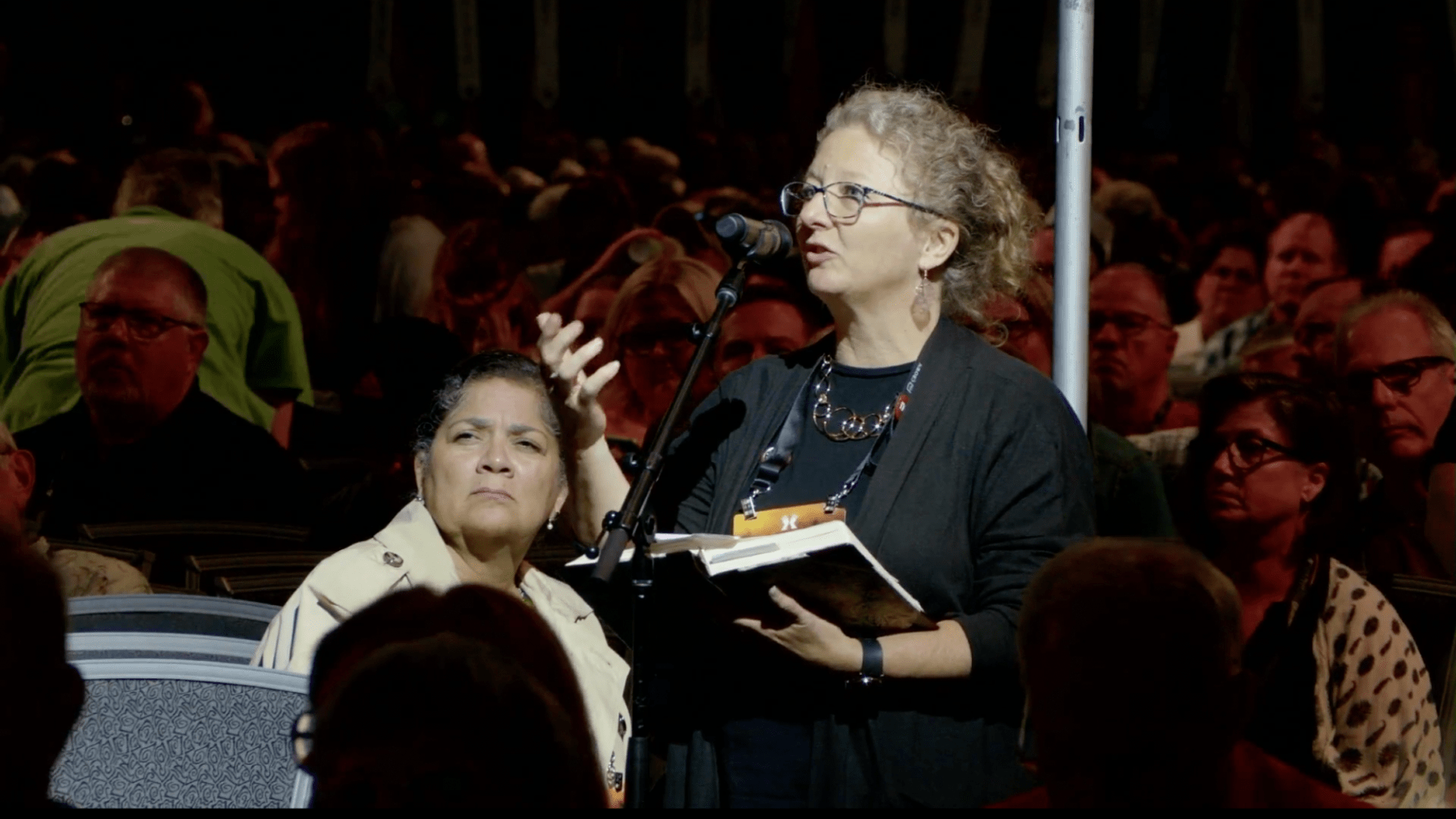
The Christian and Missionary Alliance (CMA) has decided to ordain women and allow them to carry the title of “pastor.” More than 60 percent of the denomination’s delegates approved the two changes at the Alliance’s general council in Spokane, Washington, last week, after four years of official discussion and debate.

John Stumbo, president of the Alliance, supported the changes but also urged the gathered delegates to respect different interpretations of the New Testament verses on church leadership.

“Do not think that just because someone disagrees with your biblical position that they don’t love the Word of God, honor the authority of the Word of God, and hold true to its core teachings,” he said. “Everyone I’ve spoken to across the country has come with a thoughtful position. … We have the right, privilege, and necessity of having a mutual respectability for each other.”

Stumbo said the Alliance, which includes about 2,000 churches in the United States, needs unity, but not uniformity. Churches that accept the ordaination of women and those that don’t can work together to proclaim the gospel.

“A deeper life and missions movement—that has always been the Alliance at its best, experiencing the fullness of Jesus within us, the heart change of Christ within us, that sends us on mission to the world,” he said.

The denomination has trained both men and women for that mission to the world, but the women were previously “consecrated,” not ordained, and were told they should not use the title of pastor. Some women testified during the biannual conference that calling themselves “Consecrated Woman of God” and using the acronym CWG creates unnecessary confusion.

“When I go to the hospital and I show my credentials, they look at me,” Leida Matias, a chaplain in Puerto Rico, told the gathered delegates. “They don’t have a clue what the letters mean. Then I have to say, ‘I am a pastor.’”

Explaining the distinctive Alliance terminology gets in the way of doing ministry, a number of CMA women said. Worse, it seems to diminish their calling.

“Being ordained would make my life a lot easier as a military chaplain, not having to make the big long explanation,” said US Air Force chaplain Krista Lain. “But it’s so much more than that. I am called to join God in raising up a vast army from dry bones by the breath of the Holy Spirit. … I know I have angel armies backing me up. But I wonder, do I have the Alliance family backing me up?”

Some CMA churches already use the title of pastor for women in ministry. They have pointed to ambiguity in the denomination’s governing documents and the longer history of women in ministry in the Alliance. Founder A. B. Simpson insisted that women be trained to preach when he started Nyack Bible College (now Alliance University), and one of the first students to win a preaching prize at the New York school was a woman. Simpson wrote that women are “under certain limitations” and so are “not called to exercise ecclesiastical authority,” but he also supported and encouraged women to become Bible teachers, evangelists, branch presidents, and executive board members.

Rob Bashioum, the lead pastor at Salem Alliance Church in Oregon, told the conference that his congregation was started by a woman 102 years ago. When she asked Simpson to send a pastor, he sent another woman to lead the fledgling church. Today the congregation has 25 people on staff with the title of pastor, and 14 of them are women.

“I believe this recommendation affirms the early practices of the Alliance and the intentions of our founder,” Bashioum said. “Our women are exceptional, and without them we would not see the kingdom advance like we have.”

The conference also heard from vocal opponents to the changes. Some expressed concern that the Alliance was turning its back on the wisdom of previous generations who didn’t think women should be called pastors.

“Is this saying that the men and the councils of previous generations were somehow less spiritual women haters and weren’t as godly?” asked Doug Birr, pastor of Campbellsport Alliance Church in Campbellsport, Wisconsin. “Now we’ve arrived at having people who are progressive and able to be spiritual?”

Others warned that ordaining women would inevitably lead to a liberal slide and, eventually, denominational decline. They pointed to the examples of mainline churches, such as the Episcopal Church, the Presbyterian Church (USA), and the United Methodist Church, which began to lose members after they ordained women.

“This motion serves to destroy the role of men in the body of Christ and the authority that God has given to the shepherds in the Word of God,” said Paul Taylor, pastor of Discovery Alliance Church in Missoula, Montana. “We must face the hand of God and removal of his blessing.”

One consecrated woman spoke against the changes. Sandy Rose, whose husband is pastor of Living Hope Alliance Church in Huron, South Dakota, said the “biblical pattern” is that “men carry a greater level of authority.” That didn’t mean consecrated women were inferior to ordained men, she said, just that they had a different role, just like Jesus has a different role in the Trinity than God the Father, and submits to the Father, but is still fully equal.

“I think that titling women as pastors is going to have a long-term negative effect on our denomination,” Rose said.

Several men went out of their way to say they respected the women in the Alliance and believed they really were called to ministry—they just shouldn’t be called pastors.

“I want to fully affirm the calling, the gifting, and the ministry of women in this room and throughout the Alliance,” said Don Wiggins, former North Central District superintendent. “I can make that distinction in my heart and I believe many of us in the room can do that as well.”

The council delegates voted 1,008–588 to ordain women. They voted 1,025–592 to allow churches to call ordained women pastors. The conference also voted to reaffirm the Alliance position that elders can only be men. The lead pastors of Alliance churches are required to be elders, so that role will also be reserved for men. The rule change only applies to Alliance churches and ministries in the United States, and churches will not be required to hire women if they don’t want to.

The denomination cannot be neatly categorized as either “complementarian” or “egalitarian,” Alliance vice president Terry Smith told CT. Rules about church leadership are considered a secondary issue.

“What really makes our heart pound fast is mobilizing more people to ministry,” he said. “That’s kind of the heart of who we are.”

After voting for the change on June 2, the Alliance delegates gathered in the evening to worship together. They started with a CMA song written the week before the COVID-19 pandemic hit the US in 2020.

“All of you for all the world / All we have no holding back,” the delegates sang, paraphrasing Simpson’s summation of the commitment of the Alliance. “All of you for all the world / All we have no holding back.”

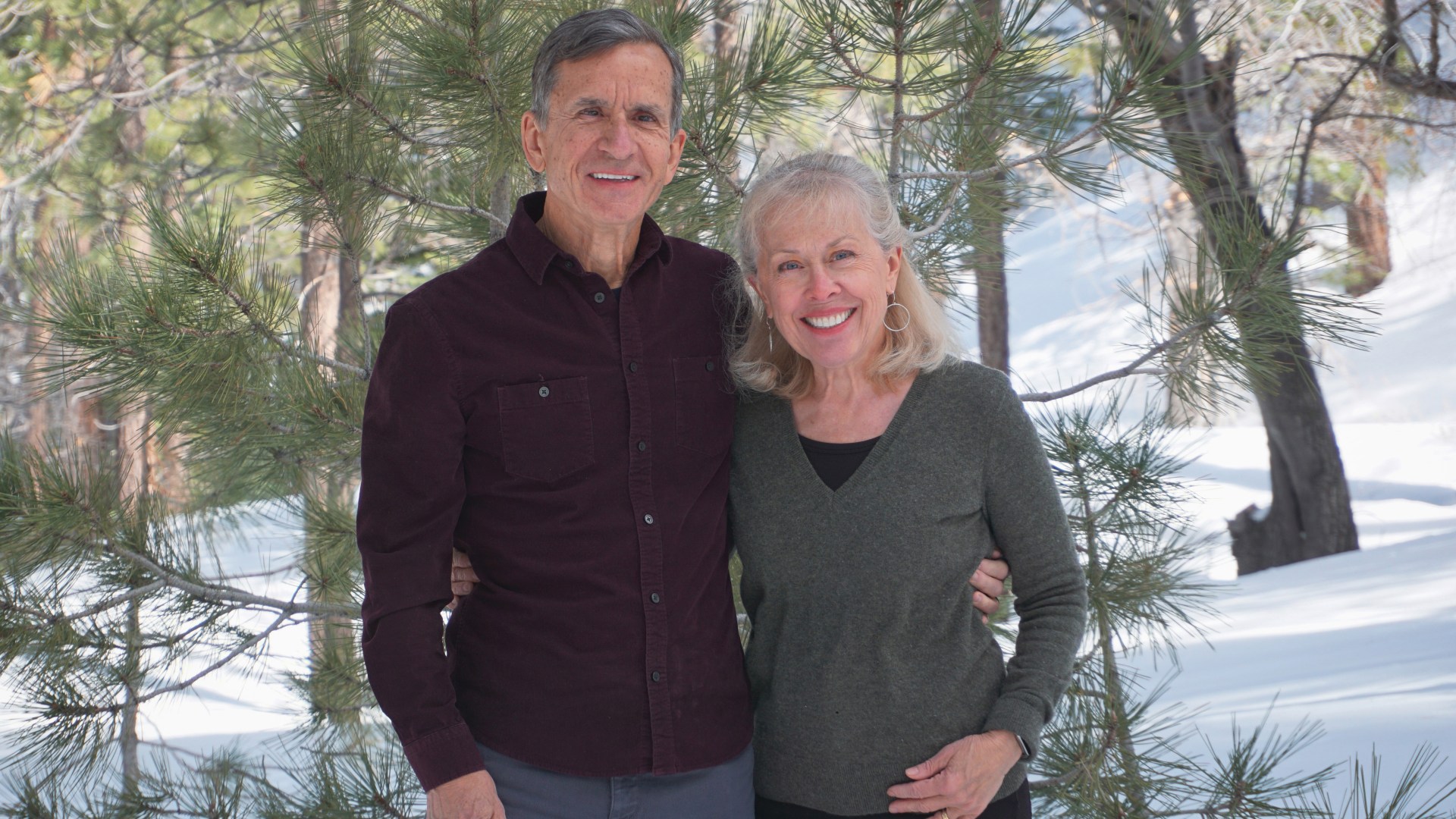
Glenn and Annette Pearson Want Christianity Today to Outlive Them

“There’s a truthfulness and integrity—yet compassion—in what CT does for the global church.”

Glenn and Annette Pearson Want Christianity Today to Outlive Them
Photo courtesy of Glenn and Annette Pearson

Glenn Pearson taught himself to play accordion when he was six. “I don’t admit this to many people. Advertising yourself as an accordion player doesn’t exactly generate a lot of party invitations,” he jokes.

Soon after, he also picked up cello and clarinet. In college, he learned guitar. About a month before he became a Christian, he tried harmonica, an instrument that he saw as supporting the “guy walking alone in the woods” image he aspired to. Then he met Jesus.

“God seemed to have those two things—my faith and my harmonica chops—grow in tandem,” he said.

Later in his 20s, Glenn served with Cru as director of Santa Fe, an internationally traveling band of nine musicians, where he specialized in blues and bluegrass harmonica. He couldn’t help but notice the violinist who was assigned to manage the band. Her name was Annette, and within a year they married.

There was something in the air, Glenn jokes, as six of the team members became engaged to each other within two weeks.

While Glenn hailed from Syracuse University, Annette came from Wheaton College, where she was inspired to join Cru to use her teaching degree overseas. That dream morphed into joining the campus ministry’s music ministry as a violinist before her group was disbanded and she moved to her role with Santa Fe.

Annette had grown up on a Bible college campus in New Jersey before her family moved to Michigan.

“At the age of five, I distinctly remember knowing that I didn’t have Jesus in my heart and needed to invite him in,” she said.

Most of Glenn’s childhood on Long Island was spent navigating an emotionally abusive household—an account he shared in CT’s April 2023 issue. What little he learned about religion—not God—came from his family’s involvement with a Unitarian fellowship group.

“There was no appreciation for Jesus as anything other than a wonderful man and an unfortunate teacher who died,” he said.

Even after Glenn and Annette left Cru, Glenn’s music stayed an important part of his life. While the family lived in Georgia, he frequently played in church events, did some recording projects, and joined a bluegrass band that traveled to Moscow on a missions trip. Their first concert was at the Moscow Conservatory of Music. They assumed that their audience would be too “highbrow” to appreciate their genre.

“But they loved us. We had classically trained music students following us all around the city,” he said.

The mentorship component of Cru has stayed present in Glenn’s life. In recent years, he’s mentored dozens of younger men, something he calls a key part of his legacy.

“Mentoring these young men takes what God has taught me and helps them to see that whatever they’re experiencing is an understandable feeling,” he said. “I want them to know that I’m on their side—and so is God. I want to hear what they have to say, but if one of them needs to rethink something, I’m not afraid to help them adjust that thinking in light of scriptural principles. But this is only after I’ve earned that right.”

Annette taught middle-school science for 19 years, where she tried to bring her faith, as appropriate, into the classroom.

“Since I retired, through my ministry of hospitality, the Lord has brought several women across my path who were at difficult crossroads. I’ve had the privilege of walking with these women and helping them hear God’s voice,” she said.

Glenn and Annette have been CT subscribers for decades. Glenn says, “It takes me way too long to get through an issue and I still have a hard time not reading every article because they’re all so great.”

They always look forward to each issue. Annette particularly enjoyed the December 2022 Bono cover story.

“Bono’s experience was so different from mine. From my earliest days, at every turn I was surrounded by missionaries, Bible professors, and Christian instruction,” said Annette. “Bono’s experience was much more organic, and he found his faith in the context of his mother’s death and political chaos. What a man of God he is as he brings his faith into his music and his activism.”

Glenn gushed about January/February 2023 book awards issue.

“There are 15 categories of books there, and I’ve been introduced to so many really good books that relate to something either I’m learning myself or wanting to communicate to other people. CT’s Book Awards are a tremendous resource to learn about the best of new Christian material.”

Annette and Glenn have been CT Sustaining Partners for a few years now, but they recently decided to include CT in their will through The 1956 Society. Part of that decision came from the courage and integrity they see from CT and its leadership.

“Especially recently, I have seen CT willing to be bold, take a stand, and even call out the errors of its own history,” Glenn said. “That speaks volumes of the credibility and the integrity that flows through the whole ministry. We’ve appreciated this over the years, and we wanted to do our little part to support CT’s future.”

This current state of the church is something that Annette sees as troubling.

“When you look at the generation that follows our generation, we’ve lost so many of them. It’s because we haven’t been honest, we haven’t faced the truth, we haven’t given them the tools to think critically and biblically about the issues that are impacting the church and our ability to reach the world.”

The answer begins with character, Annette says, something that she has consistently admired about CT.

“I keep going back to integrity and compassion. I believe a courageously honest voice within evangelicalism can speak to this generation, and I believe that CT is that voice now and can be long into the future,” she said. “Glenn and I want to support CT through our will, because we think it is one of the most important bastions of biblical truths and perspectives for the church around the world. CT breaks through the all the various subcultures, and through CT we want to leave a lasting impact.”

In the moments when the American church feels especially discouraging, “we need to be able to rejoice with the way God is working around the world,” she said.

“There’s a truthfulness and integrity—yet compassion—in how CT elevates and reports on the global church. If there’s some way we can help that happen in the generations to come, we would be proud,” Annette said. “Through all of CT’s resources, they are equipping global leaders and pointing them to God. And I can’t think of anything more important than that.”

Hearing these stories and ideas of Christians around the world offer the fuel for something Glenn finds all too rare these days: optimism.

“Years ago, I read the quote, ‘The church was God’s idea,’” said Glenn. “Basically, you can look around at the doom and gloom, the sin and destruction, and all the negative trends, but God’s not going to let the church die. He created the church. He loves the church. Yes, we need to address our problems, but we also know God is still—and will always be—in control.

“That is the perspective that I’m reminded of when I read CT.”

Morgan Lee is global media manager at Christianity Today.

Church Life

Miracles, Self-Reliance, False Teaching: COVID-19’s Impact on Cambodian Churches

Cut off from the world, Cambodian churches emerged with new opportunities and challenges.

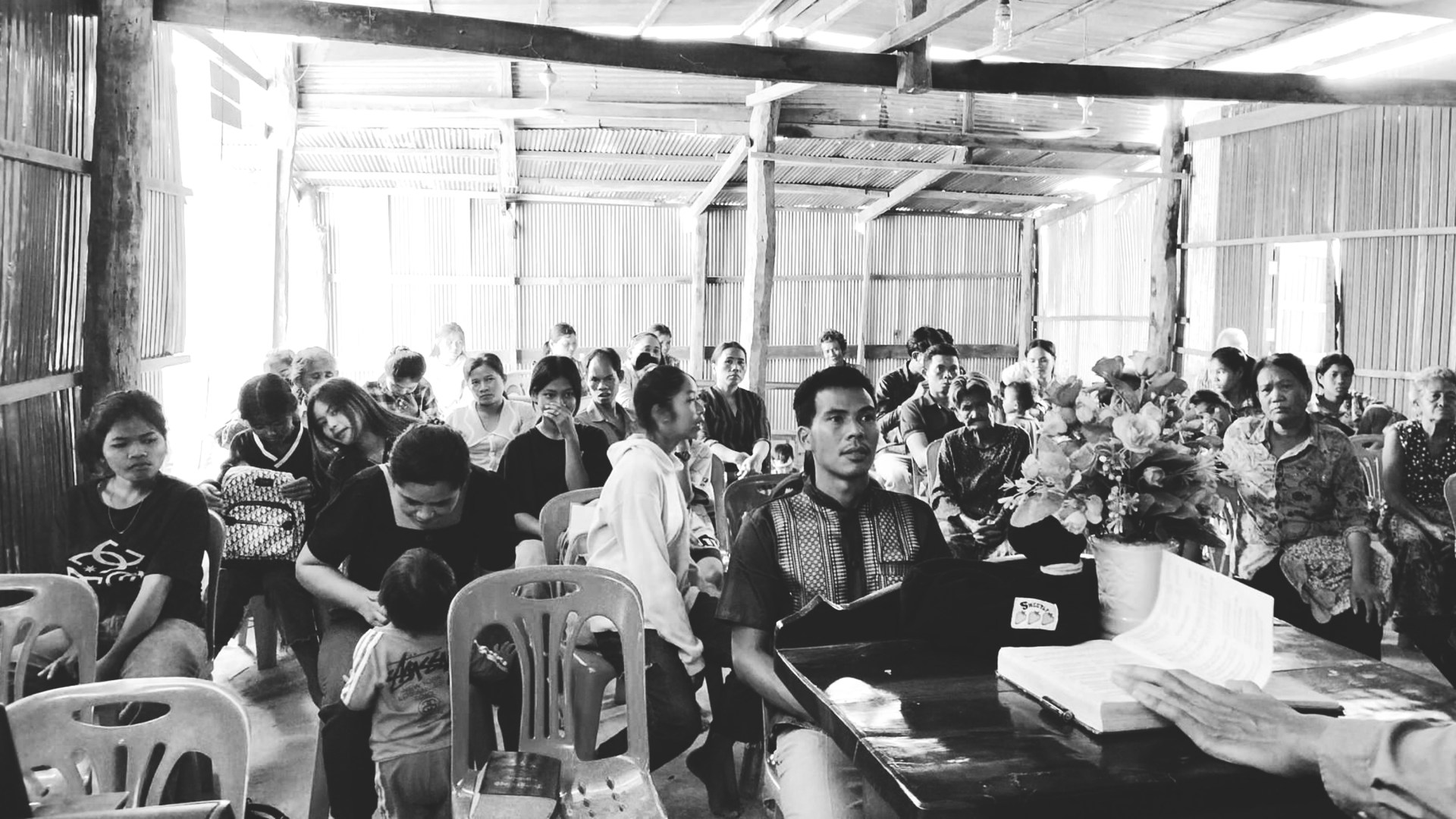
Church service in Cambodia

Church service in Cambodia

Christianity Today June 2, 2023
Courtesy of Pastor Phearum Eam / Edits by Christianity Today

When the world locked down in early 2020, orders to Cambodia’s thriving garment factories dropped, shutting down factories and leaving more than 50,000 people jobless. The Cambodian government’s quick action kept COVID-19 at bay that year, yet the economic impact was devastating for many.

A COVID-19 outbreak in February 2021 led to several months-long lockdowns, where freedom of movement was limited in the worst-hit areas. Only authorized personnel could pass the police barricades that blocked off each zone. Much of life in the Southeast Asian country from education to job security was deeply affected.

Cambodian Protestants, which make up 1 to 2 percent of the population in the predominantly Buddhist country, have also seen their lives turned upside down since the pandemic. Churches that relied on foreign missionaries and funding were suddenly cut off. With churches closed, believers turned to online resources only to be led astray by false teaching. They struggled with isolation and addictions while stuck in their homes.

Yet the pandemic also opened up new opportunities: Churches learned to be more self-reliant, stepping up to provide food for impoverished neighbors, teach them about hygiene, and tell them about the hope they have in Jesus. They also learned to use the internet to record and share sermons—something foreign in a country that only started having reliable internet in the past decade—to reach more people.

CT spoke with five Christians in Cambodia—from a lay pastor in the factory district of the capital of Phnom Penh to a pastor of a small house church situated near the border of Thailand—about how the pandemic impacted their church and changed their ministry:

Timothy Aehk, lay pastor and prayer leader at New Hope Phnom Penh:

Our church is in Stueng Mean Chey (a poor, densely populated neighborhood where factory workers lived). There was a lot of need there. The pastors spent a lot time during the pandemic visiting church members. We were already outward-focused and involved in outreach, so we continued caring for the community and neighbors by meeting physical needs.

The emphasis on being a light for Christ became stronger during COVID-19. People around us were dying, and several members became very ill. Death became more of a reality. We realized we do not know when we will die or how much time we have left, so we need to use it for the gospel. We are not promised tomorrow.

Our church shrank because many members are factory workers. They lost their jobs during the pandemic and returned to the province where there were fewer restrictions. They had to find work with extended family on their farms. Several have not returned because they have not recovered from the economic implications of COVID-19.

We used social media to livestream worship and sermons. However, most people liked the social aspect of a corporate gathering and have returned once we could meet in person. Caring for communities during the pandemic and our livestream brought more people to our church and allowed us to create more small groups that gather in new parts of town.

Tep Ro, designer at ACTION Cambodia and member of Fruits of Christ Church in Kandal Province in southeast Cambodia:

My church was founded by Korean missionaries who left at the beginning of the pandemic. They had made members dependent by giving them food and paying for things like school fees. So some people attended because they were incentivized by money rather than to be a part of the body of Christ and learn about God. When they left, so did some church members.

Without the missionaries, our Cambodian pastor no longer received a salary, but he continued to serve the community with his finances. He gave out laundry detergent and hand sanitizer. And when the lockdowns made it so we could not gather, he visited members regularly.

However, the most negative impact on our church was that false teaching slipped into the church due to social media. Some pastors claimed divinity, some taught syncretism, others made end-times predictions. It caused a divide in my family. They scattered to different churches once restrictions were lifted. I addressed the problem with the head pastor, but he remained focused on maintaining unity, which came at the cost of the truth. Members left anyway.

At ACTION Cambodia, my coworkers and I worked to battle the false teaching. J. D. Crowley, a missionary in Cambodia, wrote a book in Khmer and English called True Religion & Counterfeit Religion. It was published to help protect the local church. We put out resources and videos for people to understand how to filter biblical truth.

Phearum Eam, pastor of New Life in Christ Church in Banteay Meanchey Province in northwest Cambodia:

Here in the rural area, there was little COVID-19. However, finances shifted as people lost their jobs. We are on the border of Thailand, where most people work. They could not go back across the border once the pandemic hit.

Everyone continued to regularly attend church, except for two Sundays when a few community members got COVID-19 and the village chiefs asked us not to meet those weeks. I shared sermons online for those weeks, but not everyone could join since many church members do not own phones or know how to use technology. If they had a phone, they shared it with three to four others to listen together.

The church also took up offerings for the people most in need. The poor farmers and migrant workers were in so much debt and unable to pay back loans. As I taught about loving our neighbors, our members stepped up to help others. Some members bought rice to share.

We witnessed miracles too. None of the followers of Christ caught COVID-19. They would go to the markets and get food to share with others, yet they never got sick.

I regularly reminded the church that God cares for us and longs for a personal relationship. When the pandemic came, people realized God wanted to know them as individuals, not only in groups. (Due to lower literacy rates in rural Cambodia, Christians rely on weekly gatherings that include testimonies, teaching, and corporate prayer to inform their understanding of God.)

It was the most positive shift I saw during this time. While some people were busy and worked on Sundays, most learned to make time daily to meet with God.

David Manfred, country director of Christian & Missionary Alliance (C&MA) Cambodia in Phnom Penh:

C&MA works closely with the Khmer Evangelical Church (KEC), which includes about 220 churches consisting of house churches, as well as more traditional churches. In the early days of the pandemic, the KEC saw one of the most fruitful times in our history as we started 21 new church groups. The first year of COVID-19 was a time of openness to the gospel. Fear and uncertainty gripped Cambodians, and they began to notice dynamic church leaders passionate about loving the people in their communities.

A miraculous healing in Anlong Veng, near the border of Thailand, resulted in 11 new church plants. Kong, a man known for his violent temper, was badly injured when the wall of a charcoal oven collapsed on him. After several clinics were unable to help, he asked his wife to take him to her church. The local pastor prayed for him and he was healed. Immediately, Kong went from village to village sharing his testimony and calling others to follow Christ. Not only did people witness his physical healing, but they saw the change in his character. (Kong later died in a car accident in 2022.)

Another miracle was that of the 50 C&MA missionaries in Cambodia, none left due to the pandemic. Due to the placement of the churches throughout the country, we were uniquely positioned to help the communities around us. Partnering with the Christian NGO World Relief, the KEC leaders went to thousands of homes to train them on basic hygiene. Their presence and knowledge alleviated many fears.

Since the pandemic ended, the love of the church leaders for their communities in a time of need drew many new people to the church and led to more than 20 new church plants. The verse that resonated throughout this time was Ephesians 3:20–21: “Now to him who is able to do immeasurably more than all we ask or imagine, according to his power that is at work within us, to him be glory in the church and in Christ Jesus throughout all generations, for ever and ever!”

Bora Chheang, translator at ACTION Cambodia and member of Redemption in Christ Church in Phnom Penh:

COVID-19 did not change much of our church’s focus because missionaries had planted our church to stand independently. Because the zone where our church is located allowed more freedom of movement, we were able to take supplies and food into areas that our sister churches could not access. We assisted our fellow Christians who could not leave their homes.

We already ran outreaches, classes, and kids’ clubs in several communities. The pandemic opened the door for more activities in areas we had not been able to reach. The same programs remained in place but could only meet with 10 people or fewer to abide by the local restrictions and rules.

We focused on using resources to help neighbors and surrounding communities. The pandemic gave us an open door to people who were previously more hostile or ambivalent to the gospel.

One significant change was that COVID-19 helped the Khmer church learn to use social media and technology. Before, we relied on outside sources, including teaching and writing by foreigners, but during the pandemic, the local church started recording teaching and preaching, which they could share and use in the future. Before the pandemic, ACTION Cambodia had started to take local pastors’ sermon notes and turned them into articles. The pandemic restrictions made them speed up the process so local believers could access more materials.

Yet not all of COVID-19’s impact on the church was positive. Being at home all day with unlimited access to phones and technology and very little outside influence created problems: People were more easily indoctrinated by false doctrine. Pornography addiction increased, especially among the youth.

Since the pandemic began, my view of the church did not change. The church is still about the body of Christ. Zoom is not the church; it cannot replace gathering. Having technology available was better than nothing, but to be a true church, it needs to be in person. As it says in Hebrews 10:24–25 (ESV), “Let us consider how to stir up one another to love and good works, not neglecting to meet together, as is the habit of some, but encouraging one another, and all the more as you see the Day drawing near.”

Nothing goes to waste in God’s economy. God is and was still at work, despite COVID-19. He uses all of it for his glory.

News

What Happens When Christians and Muslims Translate Scripture Side by Side

Evangelicals in Chad are celebrating unexpected partnerships—and new converts—from recent projects in minority languages.

Christianity Today June 2, 2023
Marco Di Lauro / Getty Images

The Bible translation ministry unfoldingWord has engaged churches across countries and cultures, but a recent project in Chad brought a new dynamic to their work: The majority of the translators were Muslim.

“We can’t take credit for having thought this up or made this strategy,” said Eric Steggerda, field operations manager for unfoldingWord, which partnered in the Central African nation with the Church Growth Project of Chad (Projet Croissance des Eglises au Tchad), or PCET.

“God brought this together in a way that created an open door that neither one of us really expected would be as effective as it was,” Steggerda said. “What we learned was that this is actually a very effective way to bridge a gap with Muslims. Bible stories are understandable.”

Muslims make up a little over half the population in Chad, and Arabic and French are the two official languages, though most people speak a variant called Chadian Arabic.

PCET identified 10 minority languages they wanted to translate and held informational workshops to recruit participants for the translation projects.

A Chadian evangelical involved with PCET—who asked that his name be withheld due to fear of violence in response to the work in Muslim communities—told CT that many initially attended the translation workshop because they were interested in the pay.

But Christians noticed that Muslims quickly latched on to the projects for reasons beyond the financial incentive. PCET and unfoldingWord were clear that the materials for translation would be Christian, but Muslim participants saw some of the stories, such as those about Abraham, as part of their religion, too.

The Chadian communities that lack Christian materials in minority languages are unlikely to have the Qur’an in their local language either, according to Steggerda.

When working with language groups with few believers or new believers, unfoldingWord recommends starting with a set of about 50 stories that take translators through the Bible to build a solid understanding of God’s Word before translating Scripture passages themselves.

Many of those stories the Qur’an narrates differently, such as the creation account, or doesn’t include at all, such as the parable of the Good Samaritan. As the Muslim translators worked through the New Testament parable, Steggerda noticed that they were particularly eager to discuss the questions that went along with it.

Another reason Muslims were interested in translating Christian material was how the project affirmed the significance of their languages.

“Many of these languages are struggling for importance in the world, as it were. There’s not much that’s actually in their mother tongue, so they rejoice when they find things that are, because it really speaks to them of the importance of their language,” Steggerda said. “Of course, anything in the mother tongue resonates in the heart better than other languages, so they’re very receptive to the idea of the Bible stories, for example, translated into their mother tongue.”

A full Bible translation for Chadian Arabic, the language spoken by the majority in the country, was completed in 2019, with copies delivered to three locations in Chad by Mission Aviation Fellowship in 2021. There are more than 100 local dialects and languages, and in rural areas, people are less likely to speak or read in French, one of the official languages.

The question that arises from involving non-Christians in translation projects, especially those who don’t have degrees or expertise in translation work, is whether the translations will be linguistically and theologically sound.

UnfoldingWord focuses on church-based translation and believes non-Christians can help develop quality translations—while also learning about Scripture themselves. The training process has translators start with easier Bible stories to learn the basics and then move on to key passages before working on entire books of the Bible, with additional training and direction along the way.

Translations are done in teams, so each individual’s translation is checked by another group member and then by the group as a whole. Even with these processes in place, the trainers noticed that translators sometimes struggled with stories that clearly contradict Islamic doctrine. In Chad, PCET brought in pastors to check each group’s translations to guard against theological errors.

The translations are also shared in each community to glean feedback in specific contexts and as a way to proclaim the gospel.

The translation project in Chad started in 2018 but was slowed amid recent civil unrest, including the assassination of the Chadian president in 2021. As PCET continues to translate and share the new materials, leaders say they have seen God reach people through the project. Two of the Muslim translators have converted to Christianity through the translation process. People in unreached communities have turned to Christ as well, including some Muslim leaders.

In one area, the local team met with several fundamentalist imams who were skeptical about the project at first. After seeing the stories in their language, the imams let the team present them to the community at large. They urged the team to come back and continue presenting whatever translated materials they could.

In another village, Steggerda recounted, the chief was very sick when the team visited. They prayed for him to recover in the name of Jesus, and he was miraculously healed. The man committed his life to Christ and urged his entire village to be receptive to the translated materials and consider what the team had to say.

PCET supports the converts in these villages after the translation projects are complete.

“There’s a 50-person missionary network now established through this organization [PCET] that’s spread out and was assigned to these different language groups,” Steggerda said. “When a convert is made in one of these villages through the translation testing process, they are turned over to the associated missionary and sponsoring church for discipleship.”

In one Muslim community, where previous missionary efforts had failed, PCET leaders wanted to try again with the new materials translated into their local language, the Chadian leader told CT.

“We just followed the voice of the Holy Spirit and went to the community, with the elders and the leaders. We projected the videos and audio [of the translations], and the result we obtained there was very great,” he said. “Immediately after we left, the missionary that was posted there planted churches, and he baptized over 10 people in December.”

“People are getting enthusiastic about hearing the gospel of Christ for the first time in their own language.”

One reason these translation projects have been such effective evangelistic tools is that they let the unreached see that the gospel isn’t just for those in the West.

“People have a lot of assumptions toward Christianity. To them, Christianity is a Western product,” the Chadian leader explained. “When they can listen to Word of God in their own language, that changes the narrative.”

In Chad, the next phase of translation features sets of Scripture passages that help build theological knowledge. Though the makeup of the translation teams is ultimately left to local partners, unfoldingWord recommends using believers from the second phase onward.

UnfoldingWord’s approach contrasts with the established model of Bible translation, where highly educated translators are deployed to learn a language and then create a new translation. The organization’s president, David Reeves, said both approaches are needed to continue to reach all peoples of the earth.

“God has blessed and needs to continue to bless [the established model], because we can’t finish this without them finishing what they started,” Reeves said. “What the emerging model is doing is going into places that are some of the hardest left on the planet and mobilizing a much bigger workforce to be able to accomplish this [translation work].”

The PCET leader and his team know the truth of this firsthand, as they witness more unreached people hearing the gospel in their language for the first time.

“The Great Commission is the business of the Lord Jesus in partnership with the Holy Spirit. We sow the seed, and the Holy Spirit waters the seed,” he said. “We are praying we’ll see the first fruits of our labor.”

Ideas

The Spiritual Battle of Teen Screen Time

Staff Editor

Kids’ addictions to their phones isn’t a legislative issue. It’s a discipleship one.

Christianity Today June 2, 2023
Illustration by Abigail Erickson / Source Images: Getty

As summer fast approaches, likely so will increased screen time as school lets out. But new data and a bipartisan consensus that phones are bad for kids may give parents pause.

A growing body of research, though certainly not indisputable, has pointed out that smartphones with unfettered access to the internet and social media have serious negative effects for younger users, particularly teenage girls. At the end of May, Surgeon General Vivek Murthy issued a formal warning and report about the effects of social media on child and teen mental health.

Since 2012, as smartphones were integrated into every part of our lives—and as that integration became an ever-earlier childhood milestone—youth mental health has plummeted. Teen anxiety, depression, and even suicidal ideation have all tracked eerily well with this technological shift.

As a society, we plopped Pandora’s box into the hands of 15-year-olds. Good luck, kiddos! Go wild. Instead, they became distraught, disconsolate, and utterly unwilling to give up their phones.

Two primary “solutions” to this problem have emerged: parental responsibility or government regulation. Both have obvious appeal. But both will likely ultimately prove inadequate—if not counterproductive—to the task at hand. No one family can entirely fix the kids and phones problem, but neither can Congress. In each case, the scale of the solution is wrong. And the place we have the best chance of getting the scale right is the local church.

The case for parental responsibility is simple and compelling. A responsible parent, knowing about the consequences of tobacco use, wouldn’t supply her child with cigarettes. A Christian parent, aware of spiritual formation, habits, and sin, wouldn’t buy his kid a membership to a pornography site. Likewise, knowing what we increasingly know about smartphones and social media, advocates of this solution say, “Maybe don’t let your kid have an iPhone?”

In one sense, they’re not wrong. Most underage children don’t need a smartphone, certainly not before the later teenage years, when driving and jobs and college begin. Simpler devices offer workarounds for the safety features many parents want, like location tracking and basic calling or texting, and a laptop is better for any academic or professional use.

But refusing to give your teenager a smartphone—let alone taking one away after you’ve given it—is nowhere near simple. It’s what social scientists call a collective action problem, as social psychologist Jonathan Haidt has explained. If you could ban every teenager from smartphones and social media, they’d all be better off. But if you can ban only your kid, she’ll almost certainly fare worse than before, because what you’ve effectively done is grounded her from half or more of her social life.

Technically, it’s not a punishment, but it will still feel like one. She’ll miss all the inside jokes and spontaneous hangouts and the constant, casual hum of the group chat. The inevitable charge that you’re “being mean” and “ruining my life” and “exasperating me” (Ephesians 6:4 was a go-to verse in my teenage years) will actually be pretty fair. That’s a lot to miss.

But what about a national regulation?

“Lawmakers can enact transformative change almost overnight—if they have the will to act,” Sen. Josh Hawley (R-Mo.), a prominent advocate of this approach, argued in The Washington Post in February. “And I can think of at least one nonpartisan issue that deserves this kind of urgency: protecting children online. We should start by establishing an age requirement of 16 for social media.”

What Hawley’s article neglected to mention, though, is that most social media sites—and certainly all the big ones, including TikTok, Instagram, Snapchat, Facebook, and Twitter—already have a minimum user age. It’s 13, and it’s set by an extant federal law that has been on the books for more than two decades.

It doesn’t really work. The minimum is toothless, as anyone familiar with the social media habits of the 12-and-under set knows. On the internet, nobody knows you’re a kid. Yet raising the minimum age and giving it a real bite would come with problems of its own. Hawley’s suggestion is to “require real age verification processes” enforced by occasional federal audits. Per legislation he’s introduced, that would mean giving social media sites your legal name, date of birth, and, crucially, “a scan, image, or upload of government-issued identification.”

The privacy risks are glaring—imagine the boon this would be for mass surveillance by Washington and unsavory foreign governments alike, to say nothing of hackers, identity thieves, and other criminals. Then there’s the danger to free speech. ID verification would end online anonymity for those who lack the tech-savvy to venture into darker corners of the web.

In fact, the constitutional concerns are serious enough that this idea might well be killed in court. “Mandating age verification means that every user will be forced to hand over identifying information before accessing lawful content, or speaking, on social media—a chilling proposition that courts will strike down as easily as they have in the past,” Ari Cohn, a First Amendment lawyer, told Reason (where I am a contributor).

Maybe other regulatory proposals will emerge with fewer legal and practical downsides, but I’m not optimistic. That’s partly because of the sorry array of ideas currently on offer. It’s also partly because state prohibition of highly desirable products is often unsuccessful if not downright catastrophic, because mental agreement that phones are bad for kids frequently fails to translate to any real behavioral change, and because teenagers are great at getting around unwanted limits.

That brings us to the church. Unlike the federal government, a local congregation is small enough that a no-smartphones-for-kids agreement can be realistically implemented and enforced, and of course there are no constitutional constraints on this kind of voluntary, communal rule of life. And unlike a single family, a local congregation is big enough that parents wouldn’t be left to tackle this problem alone and teenagers wouldn’t be isolated from a social center all their friends enjoy.

Of course, this kind of congregational pact wouldn’t be a panacea. Most of us have friends and family outside our local church, which means many parents would still have to contend with competing norms among school friends, cousins, neighbors, and so on.

It would also require a seriousness about committing to a church-wide standard of behavior that many congregations simply do not have. Legalist, fundamentalist, Luddite—you’d hear it all, because this is a legitimately difficult proposal in our culture.

That difficulty is exactly why it’s worth considering. A congregational smartphone policy is a very 21st-century way to carry each other’s burdens and “do good to all people, especially to those who belong to the family of believers” (Gal. 6:2, 10). But the novelty of the burden makes it no less heavy. These little ones need help to bear it (Luke 17:1–2). Like many spiritual disciplines, the local church could be uniquely positioned to offer that help.­­

addApple PodcastsDown ArrowDown ArrowDown Arrowarrow_left_altLeft ArrowLeft ArrowRight ArrowRight ArrowRight Arrowarrow_up_altUp ArrowUp ArrowAvailable at Amazoncaret-downCloseCloseellipseEmailEmailExpandExpandExternalExternalFacebookfacebook-squarefolderGiftGiftGooglegoogleGoogle KeephamburgerInstagraminstagram-squareLinkLinklinkedin-squareListenListenListenChristianity TodayCT Creative Studio Logologo_orgMegaphoneMenuMenupausePinterestPlayPlayPocketPodcastprintremoveRSSRSSSaveSavesaveSearchSearchsearchSpotifyStitcherTelegramTable of ContentsTable of Contentstwitter-squareWhatsAppXYouTubeYouTube