Books
Review

Jesus Is the Path to Flourishing. Can the Buddha and Confucius Be the Beginning?

God’s truth revealed in ancient Chinese philosophies can help in evangelism and apologetics.

Christianity Today February 22, 2023
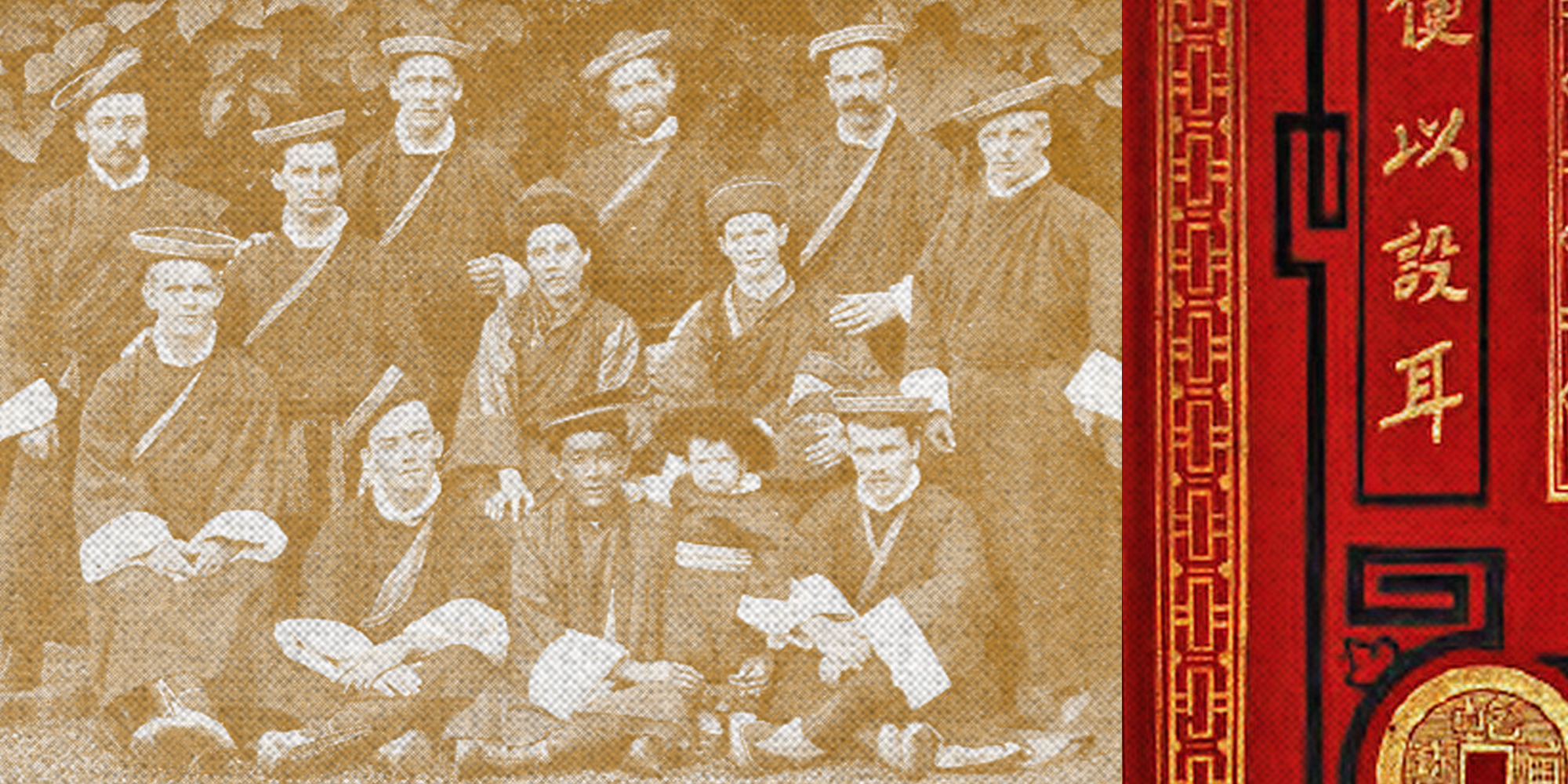
Illustration by Mallory Rentsch / Source Images: WikiMedia Commons / Getty

Confucianism and the Bible agree: Humans are capable of discerning basic moral principles, such as what is good and evil, and we should choose good through our conscience, or general revelation.

Jesus: The Path to Human Flourishing: The Gospel for the Cultural Chinese

Jesus: The Path to Human Flourishing: The Gospel for the Cultural Chinese

Graceworks

142 pages

$11.84

Moreover, Paul acknowledges our struggle and hardship in not doing what we want to do and doing what we don’t want (Rom. 7:15–20) because the Christian worldview believes humans have a fallen nature.

But this biblical view of humanity is harder for those with Confucian values to come to grips with. Their worldview says that humans are basically good and that through education and hard work they should be able to conquer weakness.

I’Ching Thomas’s book, Jesus: The Path to Human Flourishing, provides valuable insights into three ancient belief systems: Daoism, Buddhism, and Confucianism. It demonstrates how many of God’s truths, which Chinese people have observed and applied from general revelation, can be understood through these ancient Chinese beliefs and acknowledged when sharing the gospel with people of Chinese descent.

Thomas, a Malaysian Chinese author and speaker who focuses on Christian apologetics in Eastern contexts, hopes to not only share the gospel with the Chinese but also answer the question of why the gospel is necessary for them, as they possess a rich history in their cultural faith traditions.

While charting points of continuity and discontinuity between Christianity and these ancient traditions, Thomas emphasizes that familiarity with this cultural landscape and how it interfaces with Scripture will prove helpful for people who seek to evangelize or develop their faith in this particular context.

Engaging age-old philosophies

Thomas unpacks the Daoist, Buddhist, and Confucian belief systems inherent in Chinese culture that serve as the main contributors to Chinese core values. Her book makes evident that knowing the core beliefs of the Chinese allows us to find greater commonalities between the gospel and their culture, which will enable more conducive and effective evangelistic efforts.

In essence, all three belief systems rely on human effort to attain salvation. In Confucianism, one may develop into a sage-like noble man, or junzi (君子), whose behavior is characterized by virtues like benevolence and righteousness. In Buddhism, one strives to become enlightened and attain nirvana. In Daoism, the goal is to be immortal.

As the book examines these ancient belief systems, it explains how Chinese worldviews have been shaped by each one and how they have contributed to modern-day values that are manifested in daily life.

For instance, Buddhism introduced the concept of reincarnation to the Confucian idea of ancestral veneration. Reincarnation led to the understanding that people could escape hell and take on “good” bodies in their next lives, depending on the quality of their past decisions and actions. Ancestral veneration involves showing respect to deceased ancestors who are thought to “live” on as spirits that can influence what goes on in the real world.

Consequently, when Christians tell their (non-Christian) parents that they cannot perform rites to honor their ancestors, they violate the Confucian virtue of filial piety, upsetting their parents’ beliefs in reincarnation and the afterlife.

Filial piety not only has a bearing on Chinese attitudes toward their ancestors. It also plays out in the Chinese cultural value of respecting and honoring one’s elders. This is most evident during the Lunar New Year, where many Chinese recognize the importance of spending time with relatives and the need to be kind and respectful to them during this festive period, regardless of how frustrating they may be.

Buddhism, Daoism, and Confucianism, Thomas says, were easier to incorporate into the Chinese context compared to more prescriptive beliefs like Christianity. Buddhism is not a canonical religion, while Christianity is canonical as well as exclusive. Confucianism was seen as practical, relating to everyday life and providing society with structure in a time of upheaval. Daoism fit into the traditional Chinese culture of harmony in terms of its dualistic yin and yang beliefs, where yin represents feminine energy and yang represents its counterpart, masculine energy.

Ironically, before these belief systems permeated Chinese thought and worldviews, the Chinese originally believed in an omnipotent, personal God who ruled the world, Thomas writes.

Delving into biblical truth

Along with thoughtful introductions to these belief systems, Thomas also explains how they lead to achieving human flourishing in the Chinese mindset.

Chiefly, she does this by comparing Daoism, Buddhism, and Confucianism’s notions of a good life to the biblical reality of shalom, as defined by Cornelius Plantinga in Not the Way It’s Supposed to Be: A Breviary of Sin:

The webbing together of God, humans, and all creation in justice, fulfillment, and delight is what the Hebrew prophets call shalom. … In the Bible, shalom means universal flourishing, wholeness, and delight—a rich state of affairs in which natural needs are satisfied and natural gifts fruitfully employed, a state of affairs that inspires joyful wonder as its Creator and Savior opens doors and welcomes the creatures in whom he delights. Shalom, in other words, is the way things ought to be.

Responding to common virtues that Chinese people hold, Thomas gives modern-day examples of weaknesses that Confucianism, Buddhism, and Daoism cannot adequately address or remedy. It is here that she demonstrates how biblical faith answers questions of good and evil, life and death, and ethics.

For example, Confucius believed that humans were flawed because of a bad environment but couldn’t account for what made the environment bad to begin with. This is where his knowledge of the corruption of humanity is correct but incomplete—and where this knowledge can be used to introduce the special revelation of Scripture and the Son of God in the person of Jesus Christ to help us flourish.

Preaching the gospel effectively

Jesus: The Path to Human Flourishing offers a fascinating introduction to basic Chinese belief systems and how they manifest today, even when they may not be followed explicitly. It demonstrates an apologetic approach to convince the Chinese people that their culture may not always conflict with Christian beliefs and that Christianity is not just a “foreign” religion.

Confucianism may no longer be the “state religion” in China, but filial piety and investing in education are strong core values that many Chinese people still have. Philosophical discussions on how to be truly human, or how to be a noble man as Confucius taught, are still very practical in daily life.

Similarly, not many Chinese people today will claim to be Daoist, but a significant number have been strongly influenced by the Daoist arts or hold strong beliefs in the efficacy of Chinese medicine.

Acknowledging these influences as well as the strengths and weaknesses of Chinese culture, Thomas presents several important aspects to keep in mind when sharing the gospel: the deep desire to maintain harmonious relationships and dealing with shame and guilt, self-sufficiency, and practicality.

We can not only address the desire of the Chinese to flourish by highlighting areas of convergence when we share about Christ but also weave their beliefs from general revelation with the shalom of the Bible. Doing so can help them realize that Jesus is the path to the human flourishing they desire.

Thomas’s book is helpful for Christians who evangelize to Chinese people, are looking for an introduction to the history of Chinese belief systems, and are involved in contextualization.

Colleen M. Yim has served as a professor at Jordan Evangelical Theological Seminary and an adjunct at Biola University. She has been involved in cross-cultural work since 1991.

A previous version of this book review was published on ChinaSource.

News

Southern Baptist Convention Disfellowships Saddleback Church

Four other congregations with female pastors were also determined to be not in “friendly cooperation” with the SBC, as well as one removed over its abuse response.

Stacie and Andy Wood at Saddleback Church

Stacie and Andy Wood at Saddleback Church

Christianity Today February 21, 2023
Allison Dinner / AP

One of the country’s biggest and best-known megachurches, Saddleback Church, is no longer a part of the Southern Baptist Convention (SBC) after bringing on a female teaching pastor last year.

Saddleback was among five churches with female pastors who were deemed “no longer in friendly cooperation” with the denomination at a meeting of the SBC Executive Committee in Nashville on Tuesday.

The Lake Forest, California, congregation ordained three women from the stage in May 2021, a decision that rattled some Southern Baptists who believe the role of pastor is reserved for men. Then last year, Saddleback selected Andy Wood as Rick Warren’s successor and the church’s lead pastor, and his wife Stacie Wood came on as a teaching pastor.

Warren responded to calls for the SBC to cut ties with his church at the convention’s June 2022 annual meeting, held in Anaheim, California. “Are we going to keep bickering over secondary issues,” he said, “or are we going to keep the main thing the main thing?”

At the time, the credentials committee—the group tasked with recommending whether to disfellowship a particular church—hadn’t come to a decision on Saddleback, saying it wasn’t clear if the SBC’s statement of faith restricted women from any position doing pastoral work or with a pastoral title, or if it just applied to the senior pastor.

“I could talk to you all about what I believe about the gift of pastorate as opposed to the office of pastorate, but I’m not here to talk about that,” Warren remarked, spending most of his time at the mic reflecting on his decades-long history with the SBC.

This week, the committee recommended Saddleback be disfellowshipped, saying the church “has a faith and practice that does not closely identify with the Convention’s adopted statement of faith, as demonstrated by the church having a female teaching pastor functioning in the office of pastor.”

According to the Saddleback website, Stacie Wood has preached in Sunday services three times since her husband was commissioned in September 2022.

Hours after the decision, Warren posted on Instagram, saying, “Friends worldwide: We're so touched by your love! Kay & I love you back! We'll respond to #SBC in OUR time & our way thru direct channels,” going on to list his reach through newsletters, radio, and social media, where the Purpose-Driven Life author has 11 million followers.

https://www.instagram.com/p/Co8eUgcvAmW/

The Executive Committee approved the decision, also cutting ties with two churches that have female senior pastors (New Faith Mission Ministry in Griffin, Georgia, and St. Timothy’s Christian Baptist in Baltimore, Maryland) and two churches that have female lead pastors (Calvary Baptist in Jackson, Mississippi, and Fern Creek Baptist in Louisville, Kentucky).

“As stated in the Baptist Faith and Message Article VI, the SBC holds to the belief that the office of pastor is limited to men as qualified by Scripture,” said Executive Committee chairman Jared Wellman in a statement. “These churches have been valued, cooperating churches for many years, and this decision was not made lightly. However, we remain committed to upholding the theological convictions of the SBC and maintaining unity among its cooperating churches.”

The credentials committee also recommended a single church—Freedom Church in Vero Beach, Florida—be disfellowshipped for issues related to its response to sexual abuse. Despite a growing awareness of sexual abuse in the denomination, the SBC has only acted to remove a handful of congregations since 2020, the majority of whom knowingly employed a registered sex offender as pastor. Others have been disfellowshiped for their stances on LGBT and racial issues.

Churches who lose their place in cooperation with the SBC are no longer able to send voting messengers to its annual meeting, but they can appeal the decision. The next SBC annual meeting is scheduled for New Orleans in June.

Culture

‘Jesus Revolution’ Director: ‘We’re at the Forefront of a Return to God’

Director Jon Erwin discusses his inspiration for the film and how history might be repeating itself today.

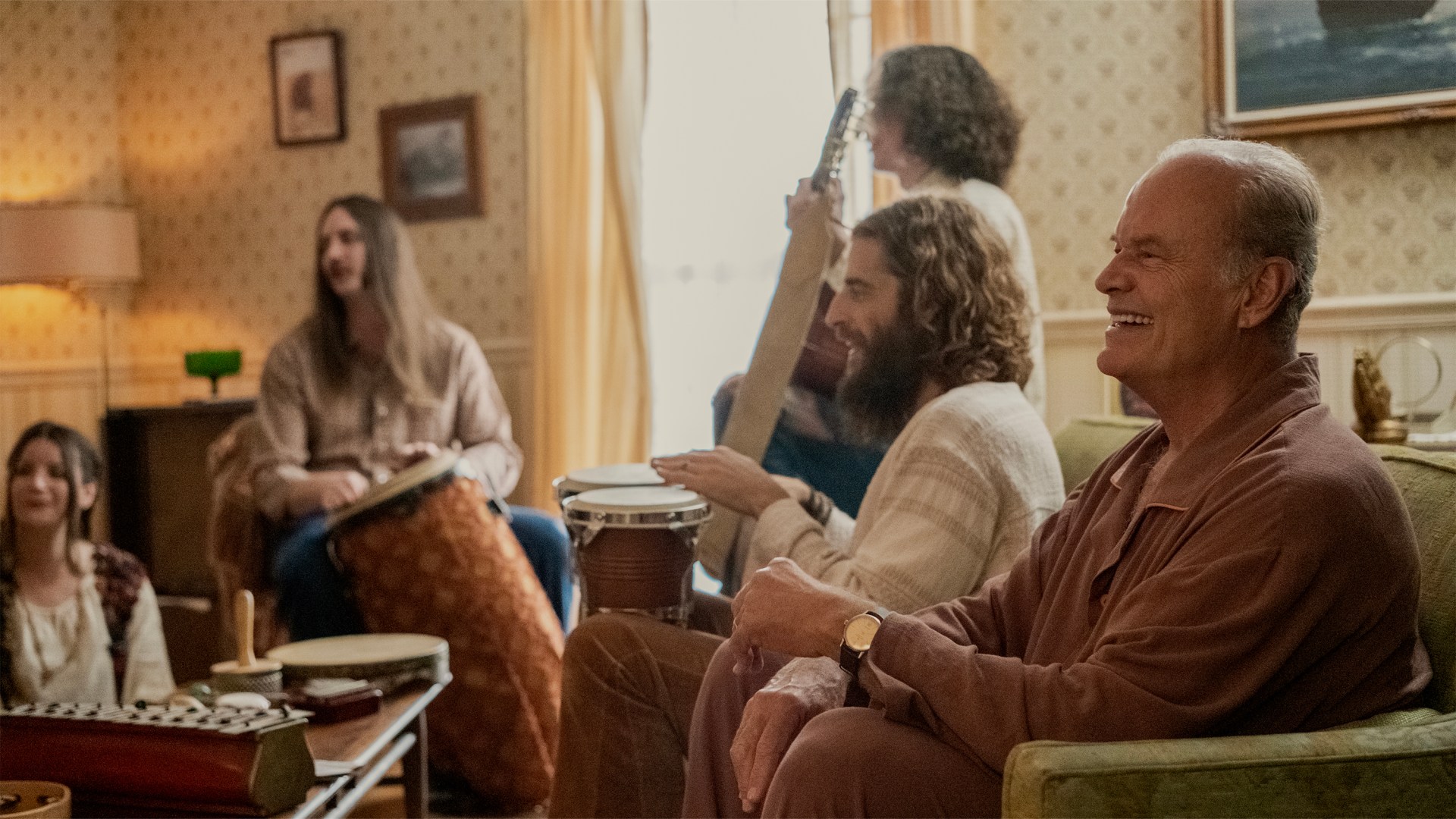
Jonathan Roumie as Lonnie Frisbee and Kelsey Grammar as Chuck Smith in Jesus Revolution.

Jonathan Roumie as Lonnie Frisbee and Kelsey Grammar as Chuck Smith in Jesus Revolution.

Christianity Today February 21, 2023
Photo by Dan Anderson / © 2023 Lions Gate Entertainment

Most people today wouldn’t associate Christians with hippies, but the two have more in common historically than you might think. The new film Jesus Revolution explores how these cultures overlap, how thousands of hippies came to know the Lord—becoming “Jesus People”—and how many of them went on to write popular Christian music.

Without sugarcoating the facts, director Jon Erwin maintains that the gospel can bloom in the unlikeliest of places. In the 1960s and ’70s, when the hippie movement was in full force, hundreds of thousands of people went to Southern California to become “Jesus People.” Time magazine called it a “Jesus Revolution”—a miracle hiding in plain sight.

Erwin has made a career out of the road to Christ. His films portray God working in mysterious ways and in tumultuous places such as an abortion clinic (October Baby) or an equality march (Woodland). He thrives off the tension between fraught situations and characters searching for faith. He usually works with his brother, Andrew, but this time he partnered with Brent McCorkle as his codirector.

Over the course of seven years, the pair kept this film in the back of their minds as they worked on other projects but finally decided to explore the reasons why this movement spoke to them so clearly. The result is one of the most compelling movies I’ve seen this year, and one of the most unlikely stories I’ve seen, maybe ever. Jesus Revolution seems about as believable as a Pixar flick—but as Erwin reminds us, “This actually happened!”

How did you first come across this story?

I first came across the Time magazine [issue], which came out [five years] after the “Is [God] Dead?” [issue]. I wanted to know what happened in those [five years], what changed in the culture? When I finally read the story—which can’t be found online—I couldn’t believe what I was reading. It was a miracle!

How do you make Christian movies accessible for a wider audience?

We’re entertainers first. I want to make you laugh; I want to make you cry. There’s a lot of humor in the movie because of the performances and the whole “squares vs. hippies” thing. But underneath all of that, there’s this universal message about hope. That’s what’s so interesting about it. It’s set in the church; it’s called Jesus Revolution; it’s about a spiritual awakening in America. And yet people who have no affiliation to Christianity love this story.

When a movie becomes popular in America, all kinds of people want to be part of the conversation. I can’t wait for people who have no connection to Christianity—or to any sort of religious beliefs—to watch Jesus Revolution. One of the great things about movies is that they can show you a point of view you’ve never encountered. Movies are this wonderful, vicarious experience where you live through the eyes of someone else for two hours. There’s an opportunity here for people who don’t understand Christianity to see life through a new lens.

Do you think we’re having a Jesus Revolution right now?

Within the entertainment industry specifically, I think there’s an uprising on the behalf of Christianity. I think there’s a resurgence in belief and a sudden increase in spirituality in America, even though church attendance is going down. You can feel an undercurrent of something going on in the industry, in emerging talent, and in a lot of people who usually stay silent. Titans of the industry are now putting God in their work, and it’s an exciting moment to be in the business.

We’re at the forefront of a return to God. The harder things get and the more we need answers, the more we’re going to get movies about Christianity. I can’t think of another time people hated each other this much. It reminds me of what was going on when this movie takes place, in the 1970s. That’s why I can definitely see another one of these movements happening.

Were there any movies that influenced you?

Absolutely! There’s always movies that inspire what I’m making. Jesus Revolution is almost a love letter to Cameron Crowe, specifically to Almost Famous. I love that movie’s sense of relentless, rebellious optimism. I love Crowe’s spirit, the spirit of those classic coming-of-age stories that grapple with difficult issues but do so in a way that values hope and kindness.

What do you hope to do next?

I have a lot of plans. There’s so much opportunity right now. The more audiences support these movies, the more of these we get to make. I’m really immersed in the story of David and in the stories of flawed people, because I’m one of them. People are craving entertainment that is complex and able to be seen and enjoyed by the whole family. So it’s fun to try and make each movie better and better. That way they can be seen by more and more people.

We’ve only scratched the surface on what faith-based entertainment can be. We’re dreaming big and trying to think of what movies we can do that no one else can do. We’re wondering, How can we make the Bible a cinematic universe? How can we put more emphasis on collaboration? I can’t wait to see where those questions take us.

Asher Luberto is a film critic for L.A. Weekly, The Playlist, The Progressive, and The Village Voice.
Theology

Lent Is Not a Vibe

Staff Editor

Even our most beautiful rituals and reflections can’t bring relief from the reality of death.

Christianity Today February 21, 2023
Edits by Christianity Today / Source Image: Getty

I started going to Ash Wednesday services when I was working in New York City, in an office a few blocks from the Cathedral of St. John the Divine. From the sidewalk, the cathedral is intimidating, all filigree and turrets. Inside, though, it’s intimate, quiet, and dark, save for a little light filtered through its rose window.

I went to the cathedral only on special occasions like Ash Wednesday, when the professional choir would sing polyphony and spirituals and Gregorian chants. It was astoundingly beautiful, that music—perfectly tuned and perfectly in time, slipping through the incense and the jewel-toned light. I cried in the pew, got my cross of ashes, and went back to work.

Was it wrong to look forward to a service about a subject—my sin, my death—that I was supposed to face with fear and trembling? Maybe. But how could I help it?

It was the same as when we sang requiems and dirges in my college choir, learning the Latin words for loss and telling the story of the Crucifixion in coloratura. In the Howells Requiem, in Bach’s St. Matthew and St. John Passions, death moved the choir, and death moved our audience. We’d accept our applause, file from the concert hall, and head off to the afterparty, relieved of a burden we didn’t know we were carrying.

This kind of catharsis isn’t an uncommon experience, even among Christians. There can be a strange beauty in the difficult and the macabre, in silence and penitence. “Lent is my favorite season,” a friend recently told me. “Well, not my favorite. That’s the wrong word. You know what I mean.” And I did. “I’m looking forward to Lent,” said another. That’s not wrong, per se. Many of us crave the intimacy with God that can arise in this intentional season of fasting and prayer and almsgiving.

But it’s also true that those of us who tend toward the contemplative (or the mopey) can find Lent suited not just to our spiritual longings but to our aesthetic preferences as well. The psalms of lament, the silences, the flickering candles, the purple, even the shadowy swoop of ashes against a forehead are all, well, pretty.

If we’re not careful, Lent in the life of the church can be like a John Keats ode, a tragic play, or a sad song: there to provide emotional release. When the darkness is done, when the art is finished, life gleams. A loud Manhattan avenue is suddenly brilliant after a dim hour in the cathedral.

Death no longer abstracted

Last year, I was the one providing the Ash Wednesday music. Our small church in Silicon Valley meets not in a cathedral but in a modest, rented sanctuary whose side doors are often thrown open to the sun. Unlike my fleeting relationship with St. John the Divine, I am part of the life of this congregation. The ashes in the bowl are made from the fronds of the palms we waved the year before.

From our place on the stage, my husband and I sang our way through the service. We offered a few hymns and a chant. Others gave readings and prayers. Then, it was time for the imposition. My husband strummed some plaintive chords. From my vantage point on the stage, I watched my fellow congregants, only 15 of them, form a line and approach the altar.

Now there’s a beautiful sight: a community in Christ engaged in tradition, shuffling up a carpeted aisle by candlelight. The guitar music set the scene. There was a lilt to the rector’s words, a poignancy to the cool night air coming through the windows. And I had the perfect view, facing the line of penitents, able to see their somber faces, the dark lines drawn with a finger.

But suddenly, nothing about what we were doing seemed beautiful in the least. This wasn’t death rendered in art. This wasn’t death covered in incense. This wasn’t death abstracted, a meditation I could hold at arm’s length.

When you are in the midst of death, there is nothing poetic about it.

As I heard our rector say each person’s name and then provide the reminder—“James, Lisa, Joel, you are dust, and to dust you shall return”—I looked at their eyes, downcast, their foreheads blackened with ash. All of these people are going to die.

Really, him? And her? And him too? Some were old and some were young, some were sick and some were well. The loss of these particular people was, suddenly, overwhelming: not theoretical but specific, and devastating. I knew which teas she kept in a jar and the taste of the persimmon cookies she made. I knew his laugh, his particular style of prayer. I knew the theological questions they wrestled with and what they did on the weekends and their spiritual gifts, the ways they shaped our collective life.

The loss of each one would be far from an “easeful Death” of which we were already “half in love,” as John Keats put it. It would be bad. Very bad. When my husband stopped his playing for a moment, leaning down so the rector could reach his forehead, I held my breath. Him too?

Remembrance

Ash Wednesday not as a private meditation but as a communal practice; Ash Wednesday in a place I lived rather than a place I visited: This was the remembrance I needed. Watching my brothers and sisters receive their ashes, I recalled, with horror, what death was really like when you experienced it as a mourner. It wasn’t the poignant plot twist in an opera or the tritone in an orchestral score, the carpe diem drama that made life worth living. Death was always an abomination.

In the aftermath of past losses, I’d laid on the ground and wept, suffered stomach pain that wouldn’t resolve, obsessed over regrets and missed opportunities, gritted my teeth, really suffered. When you are in the midst of death, there is nothing poetic about it. It can’t be aestheticized, can’t be made meaningful, even by our most beautiful rituals and reflections and works of art. There is, really, no catharsis to be had. When the woman with the persimmon cookies and the man with the laugh and the man with the questions and the man with the guitar are gone, they’ll be gone.

At least, for now. At least, here. The best sacred music gestures at what’s truly beautiful, beyond any earthly loveliness.

“There is a balm in Gilead,” the choir sang in the cathedral. “World, get out, let Jesus in!” thunders the bass in my favorite St. Matthew aria. Yes, let him! He’ll wipe every tear, bind up every wound, reunite and restore, offer a truer transfiguration than anything we could make to cope with our mortality.

In his new earth, I guess we might not have sad songs at all. That loss would be well worth it.

Kate Lucky is senior editor of audience engagement at Christianity Today.

Theology

Three Black Women Who Preached With the Power of the Holy Spirit

What Zilpha Elaw, Julia Foote, and Sojourner Truth taught me about God’s “withness.”

Christianity Today February 21, 2023
Illustration by Mallory Rentsch / Source Images: WikiMedia Commons

A Methodist woman in Albany, New York, didn’t want to go hear Zilpha Elaw preach. For one thing, Elaw was a woman, and that seemed “unbecoming.” To make matters worse, Elaw was Black, and that violated a sense of propriety and decorum. She didn’t want to go. But her husband persuaded her, and when she heard Elaw preach, she was convicted by the power of the Holy Spirit.

As Elaw recorded in her memoirs, the woman experienced a “quickening,” and “the word was effectually sown in her heart.” She experienced a kind of illumination and was able to read the Scriptures in a way she never had before. For Elaw, that was critical evidence of the work of the Spirit. “The Scriptures become as a new volume,” she wrote, and “develop new and surprising truths to the regenerate soul.” It is almost as if the person reading the Bible is reading alongside God—reading with the Spirit.

As I have read and studied the theology of Black women preachers in the 19th century, I’ve been struck by their pneumatology, their understanding of how the Holy Spirit breathes and blows in the lives of believers. Again and again, women like Elaw bore witness to the withness of the Spirit.

The term withness is not one that 19th-century Black women pastors would use. Yet this idea is demonstrated in their theology and in their lives and ministries. Alfred North Whitehead, a mathematician writing in the 1920s, used the word withness to speak of the body as the source and beginning of knowledge. Relying on the philosophies of David Hume and Rene Descartes, he was trying to interrogate our common understandings of how we know what we know. He argued we know things not just with our minds but with our entire bodies.

But the term can also be applied helpfully to the work and ministry of the Holy Spirit. The power, presence, and promise of the Holy Spirit means that the Spirit is always with us. The Holy Spirit is never far off but is in the world, actively working to reconcile us to one another through Jesus Christ. In John 14:16–17, Jesus promises to send the Spirit as an advocate to live with and guide the disciples. The Scripture also says the Holy Spirit helps Christians bear witness to the trials we face and God’s presence in them. In Romans 8:26, Paul says “the Spirit helps us in our weakness, for we do not know how to pray as we ought, but that very Spirit intercedes with groanings too deep for words” (NRSVUE).

Nineteenth-century Black women preachers in the United States exemplified and testified to the Spirit’s withnessing in their own lives. Facing the perils of racism, sexism, and even potential enslavement, their preaching testified both to a God who knew their suffering intimately and still called them blessed and to the Holy Spirit’s withness.

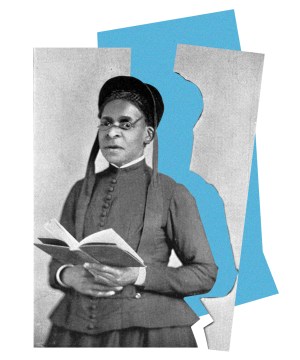
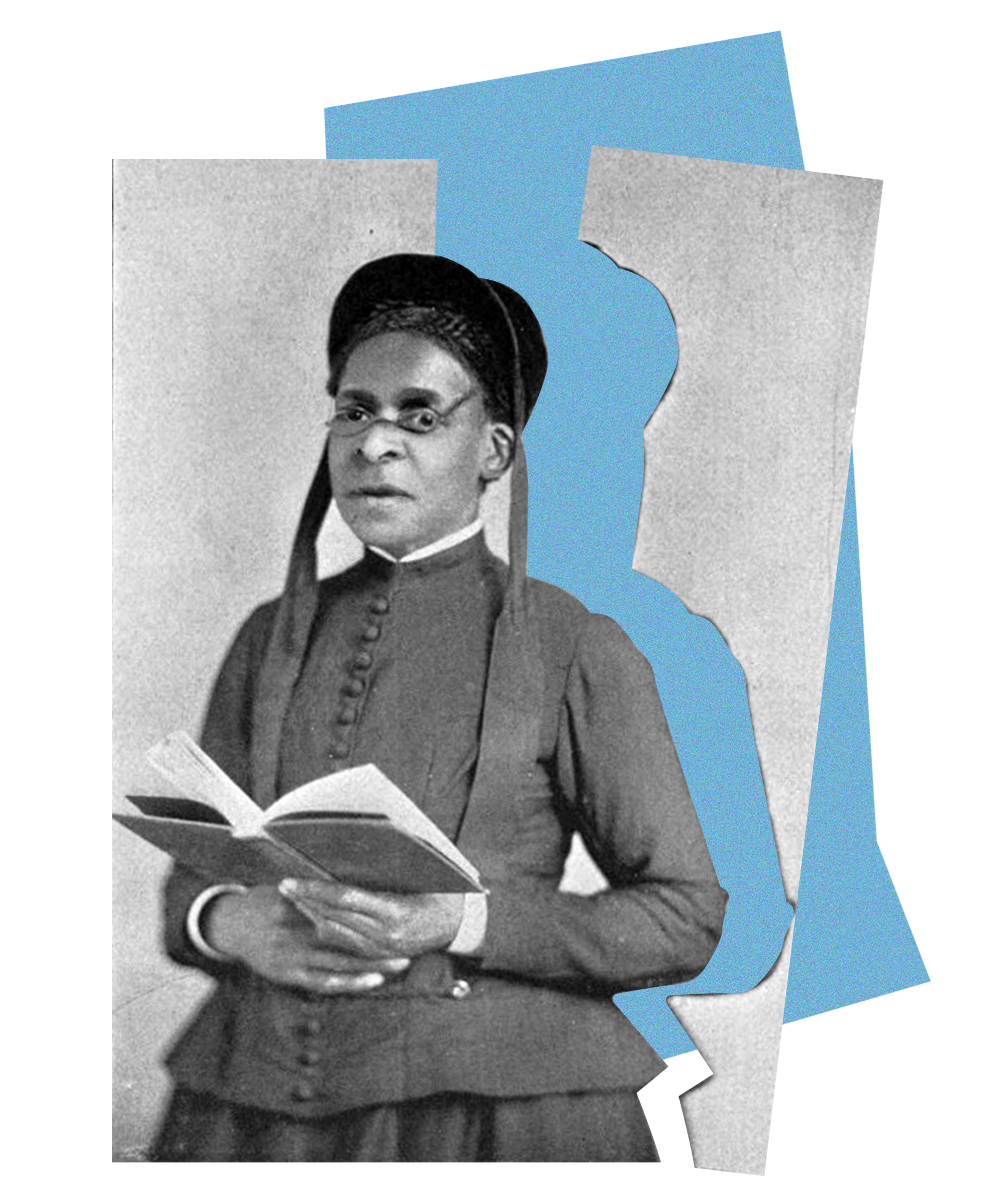
Zilpha ElawWikiMedia Commons / Edits by CT
Zilpha Elaw

For Zilpha Elaw, the Spirit’s withness enabled her to preach against all odds, making space for her in a world that denied her humanity. Born in Pennsylvania in 1790, she was an itinerant Methodist minister, preaching as far north as rural Maine, where there were no Black people for miles, and as far south as Virginia, where she ran the real risk of being enslaved. When the Spirit led her to preach in England, British Methodist churches mentioned the presence of “The Black Woman,” not even noting her name. Nonetheless, she preached widely, drawing crowds.

Sometimes, her words were even able to convict the hearts of those who did not see her as fully human. Once in Alexandria, Virginia, for example, she preached to a crowd of enslavers. They thought it “strange” that a Black woman could teach the “enlightened proprietors the knowledge of God”—and even stranger that “in the spirit and power of Christ,” she “drew the portraits of their characters, made manifest the secrets of their hearts, and told them all things that ever they did.”

One historian points out this particular turn of phrase—“all things that ever they did”—is a reference to John 4:29, where when Jesus encounters the Samaritan woman at the well, she comes to believe in him and testifies to her neighbors. In the King James Version, the woman says, “Come, see a man, which told me all things that ever I did: is not this the Christ?”

The Holy Spirit within Elaw enabled her to speak hard truths to people considered educated and wealthy—people who had no doubt heard many more-refined sermons from people who gone to seminary and earned respectability along with their degrees. Yet she was able to preach with a power that convicted, by the withness of the Holy Spirit. The Holy Spirit inspired Elaw, even in her precarity and vulnerability, to proclaim the gospel to powerful white men who enslaved and brutalized people who looked like her.

The Spirit’s withness catapulted another woman into itinerant ministry in the years before the Civil War. Julia Foote did not originally believe women could be called to preach. As she wrote in her autobiography, published in 1879, she had “always been opposed to the preaching of women, and had spoken against it” until she had a mystical vision of the Trinity. In the vision, God the Father asked her if she would go wherever she was sent, Jesus washed her and gave her a new robe, and the Holy Spirit gave her fruit to eat. God told her she had everything she needed to preach the gospel. After that, she began to actively evangelize. She became one of the first female elders in the African Methodist Episcopal Zion Church and practiced a biblical exegesis that insisted on her humanity and the humanity of the people to whom she ministered.

Unlike Elaw, Foote didn’t preach to white people very often. At one white church where she was invited to preach early in her ministry, the congregation was segregated by race, and she refused to speak. The Holy Spirit would not accept such barriers and neither would she. The gospel was free for everyone. When she did find a place to preach, she noted the church was overfilled with people desperate to hear the good news.

Julia FooteWikiMedia Commons / Edits by CT
Julia Foote

In another case, Foote was traveling by boat overnight and went to sleep in the ladies’ cabin. A white man came in and, seeing Foote, threw a temper tantrum. He demanded she get up and leave because, as a Black woman, she was not considered a lady. Foote pretended to sleep as he ranted and raved, drawing the attention of the captain, who also implored Foote to rise. She decided, though, as she later wrote, that she thought “it best not to leave the bed except by force.” Both men eventually gave up bothering her, and she remained in her bed the rest of the night.

The Holy Spirit’s withness gave her strength to stay put so she did not acquiesce to the demands of white supremacy. For her, the Holy Spirit’s withness taught her and empowered her to say no to the ways “of the world.”

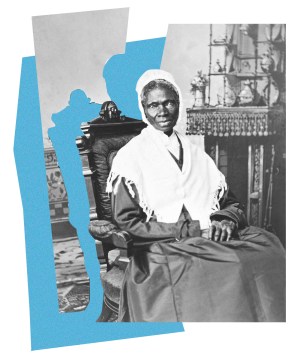
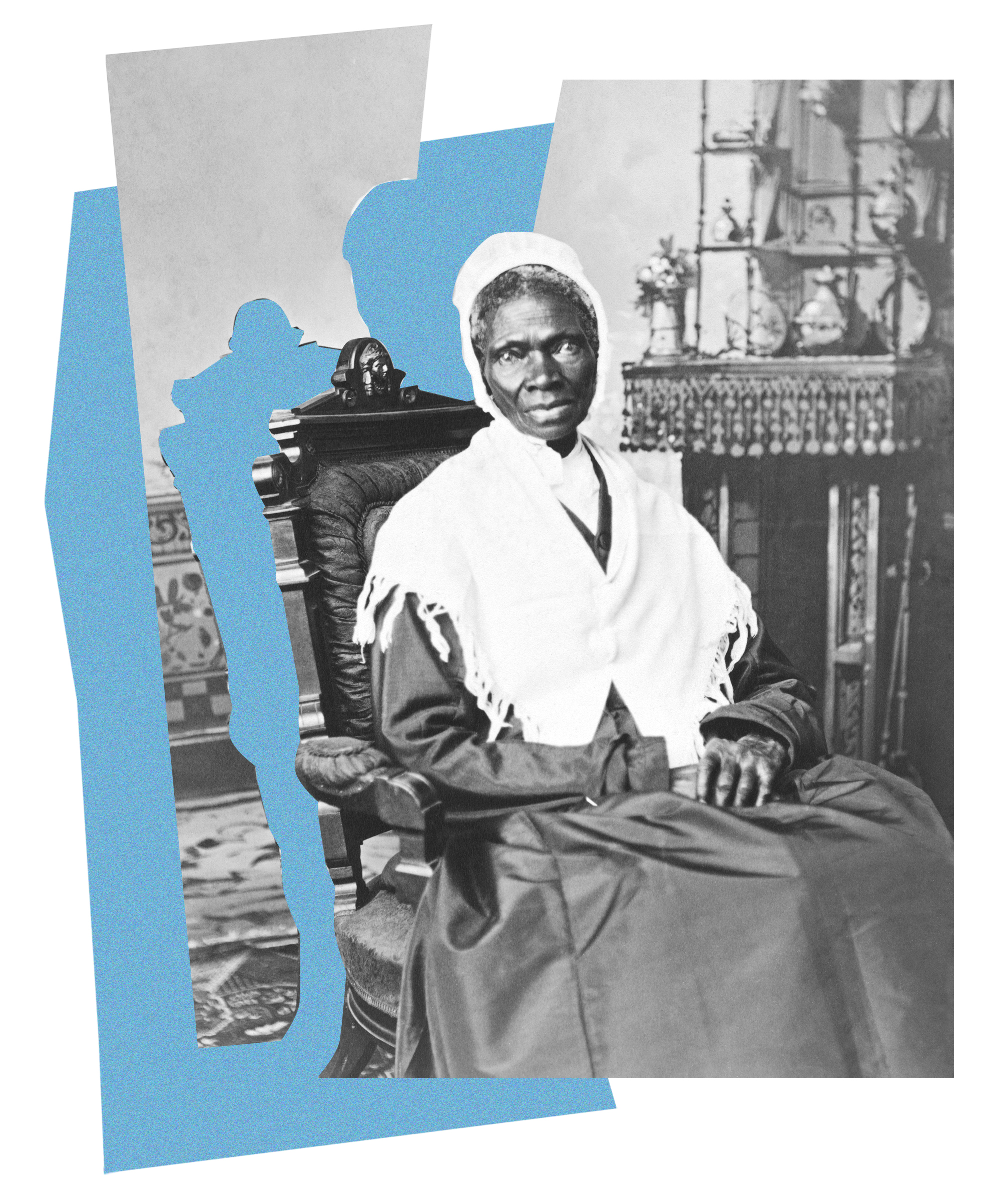
Sojourner Truth’s understanding of the Spirit as withness came from her childhood. Born Isabella Baumfree sometime around 1797, she was raised enslaved on a small farm in Dutch-speaking New York. Her first spiritual experiences came through her mother, known affectionately as “Mau Mau Bett.” Her mother taught her “there is a God, who hears and sees you” and she should “go to God in all her trials, and every affliction.” Truth understood from an early age that God was with her, even as she was beaten.

Empowered by this knowledge, before New York required manumission, she walked from her bondage with her infant daughter.

She found fellowship with several faith communities along the way and eventually ended up in New York City. Here, in midlife, as she served impoverished urban communities, she felt God’s call to preach and lecture. She knew her family and friends would be hesitant about it, so she kept it a secret as she packed only what she could carry in a pillowcase. When she departed, she announced her name was no longer Isabella but Sojourner and explained that “The Spirit calls me … and I must go.”

Truth understood the witness of God, guiding her. The Spirit led her to bear testimony to the cruelty of enslavement, fight for women’s suffrage, speak with Abraham Lincoln, tend to the wounded in the Civil War, and preach to a crowd of 1,200. The Spirit’s withness showed her that every person was a child of God and that God cared about the whole self—body, mind, and soul.

Sojourner TruthWikiMedia Commons / Edits by CT
Sojourner Truth

We know, of course, that God’s character does not change. But the Spirit moves, and by that power, people change. It is common today to view change as a sign of weakness, but in the preaching of Black women in the 19th century, change was a testament to God’s strength and the transformation wrought by the Spirit’s withness.

Truth, Foote, and Elaw all saw how the prophetic and the pastoral are deeply connected, as the Spirit simultaneously calls out sin, changes hearts, comforts the repentant, and opens “regenerate souls” to “new and surprising truths” about the Good News of God’s reconciliation. Many, I think, respond at first like that woman outside Albany who thought Elaw’s preaching would be unbecoming. But like her, we too can be quickened by the Spirit and experience that divine withness if we will listen to the teaching and testimony of these Black women preachers from American history.

Kate Hanch is a pastor at First St. Charles United Methodist Church in Missouri. She has an MDiv from Central Baptist Theological Seminary and a doctorate from Garret-Evangelical Theological Seminary. She is the author of Storied Witness: The Theology of Black Women Preachers in 19th-Century America.

News

Died: Christian Atsu, Ghana Soccer Star who Praised God in Everything

The Premier League winger known for his faith was killed in the earthquake in Turkey.

Christianity Today February 20, 2023
Serena Taylor/Newcastle United via Getty Images/edits by Rick Szuecs

Christian Atsu kicked his last goal on February 5. He ran up to the soccer ball and slammed it with his deft left foot, shooting it past 10 opposing players and a goalie in the fifth minute of extra time. The ball found the back of the net, breaking a 0-0 tie and lifting his team to euphoric victory.

Atsu was a long way from the dirt-and-rock pitches where he learned to play barefoot in Ghana. But through all the changes—from poverty to professional soccer, international fame playing for Ghana, the highs and lows of the British Premier League, and then a new challenge with this team in Antakya, Turkey—he held fast to his faith.

“God’s power has to be manifested in my life for people to see how far he has brought me,” Atsu once told a reporter. “The Bible says it is not by our hard work. … It is not just by my hard work, though I am working hard, but it is the will of God, the grace of God, that has brought me this far.”

The day after he scored the winning goal, February 6, Atsu’s apartment building collapsed in the 7.8 earthquake that reduced the ancient city of Antioch to rubble. He went missing for nearly two weeks. On Saturday, February 18, authorities finally confirmed Atsu was one of the tens of thousands who died in the disaster.

In Newcastle, where Atsu played for four years as a winger and helped the team win promotion to the Premier League, fans applauded him for a full minute before a game on Saturday. Television showed his wife and two young children crying in the stands as 52,000 people in the stadium sung out his name.

“It’s just devastating—he’s 31,” said Johnny Ferguson, Atsu’s pastor at Hillsong Newcastle UK. “One thing I remember Christian being really passionate about was politics in Ghana. He had a real vision to do some good and give back to his community.”

As Atsu’s body was flown back to his hometown on the coast of West Africa, the president of Ghana issued a statement mourning his passing.

“Ghana football has lost one of its finest personnel and ambassadors,” President Nana Akufo-Addo said. “May his soul rest in the Bosom of the Almighty until the Last Day of the Resurrection when we shall all meet again. Amen.”

Christian Atsu and his twin sister, Christiana, were born to Immanuel and Afiko Twasam in Ada Foah on January 10, 1992. Immanuel was a poor fisherman who struggled to catch enough fish in the mouth of the Volta River to provide for his and Afiko’s 10 children. The family’s situation grew direr when Immanuel died in 2004.

At 12 years old, Atsu blamed himself for his father’s death. If he had been working and making money instead of studying at a soccer academy, he said, perhaps the family could have paid for medical treatments.

His father’s final charge to him, however, was to worship God and always use his talents to better humanity. The best way he knew to do that was to keep playing soccer.

“Jesus is the best thing that ever happened in my life and I give thanks to my parents for how they brought me up to know Jesus,” Atsu later explained. “I’m inspired by God who gives me strength each and every day to move forward in my football career. … It will be difficult [to be successful] but you will because God is your strength.”

Five years after his father died, Atsu left Ghana to play professional soccer for FC Porto—the top soccer team in Portugal. He stayed on the bench but then was loaned out to Rio Ave in 2011, where he scored for the first time in a professional game at age 17 and was named the team’s player of the year.

Atsu struggled to adjust to Portugal—“Everything was different,” he said—but he met and fell in love with his wife, and his playing improved rapidly. In 2012, he started playing for Ghana’s national team, earning recognition from the international soccer press. The following year, he signed with Chelsea and moved to the UK to play in the Premier League. The West London club decided not to put him on the pitch, though, and instead loaned him out to a series of lower-league teams.

At the same time, Atsu achieved fame in Africa playing for Ghana in the World Cup and the Africa Cup of Nations. His celebrity rose, but he continued to prioritize his faith. When he traveled with the national team, he shared a room with defender Jonathan Mensah, also a committed Christian, and the pair frequently prayed and worshiped together.

“In the night we have to praise God,” Atsu said, “and when we wake up, we have to thank God.”

Like other Christian athletes, Atsu prayed to win and be successful. But he also believed that God should be praised at all times, in all circumstances.

“What if my football [career] doesn’t work, does that mean that God didn’t listen to my prayers?” he once said. “No. It doesn’t mean that. What is important is that we know God is always there to worship. Even if we fail in our career, we will not be shaken in our belief in God.”

In 2016, Atsu moved from Chelsea to Newcastle, signing a four-year contract for a reported £6.2 million (about $8.4 million). When the then 24-year-old soccer star moved to Newcastle, he and his family started going to the local Hillsong. The church was already attended by several professional soccer players and known, locally, for running a sports program from refugee kids. There were numerous African immigrants in the congregation, including an older couple from Ghana who greeted Atsu like family.

“The first time I came, I loved it so much,” Atsu said. “I felt like I was home.”

In one long interview he gave about his experience at the church, Atsu said the congregation was really the one place in public where he felt himself. He worshiped God like he did as a child at his parents’ house and in private with other believing soccer players.

“In the house of God, I’m normal,” he said. “I’m here to worship God.”

Encouraged by the church and the memory of his father’s charge to better humanity, Atsu started working with Arms Around the Child in 2017. He served as an ambassador for the nonprofit and raised money to help them build a school for orphans in Ghana. His efforts funded the purchase of land and a foundation in 2019, and he personally financed much of the construction. Currently, the school is near completion, according to Arms Around the Child, but still needs paint and school supplies. Fans are organizing to finish the work.

Atsu also gave to help children who had been forced to work have the chance to go back to school, and he quietly contributed funds to the CrimeCheck Foundation to release people from prison. In 2019, he paid thousands of pounds to release a 62-year-old woman serving a sentence for stealing less than $2 worth of grain to feed her family.

When his philanthropy attracted press attention, British reporters suggested he was generous because of his personal experience with poverty. Atsu corrected them. It wasn’t that, he said. He was motivated by his faith.

“This is the will of God for every man—for every man to help his friend, help those really poor in need,” Atsu said. “It is not because of what I’ve been through that is making me do it, no. You have to help your friend when he is in trouble. You have to love your neighbor as yourself.”

Atsu continued to live and worship in Newcastle when he went to play soccer for Hatayspor FC in a newly formed Turkish league in 2022. His luxury apartment in Antakya, like most of the ancient city where followers of Jesus were first called Christians, was reduced to rubble in the February 6 earthquake. There were false reports and false prophecies that raised hopes he had survived, but a pair of his shoes was found by rescue workers on February 14, and his death was confirmed a few days later.

Atsu is survived by his sister, wife, two sons, and a daughter.

News

TIU Announces Plans to Move Undergrad Program Online

Facing enrollment declines, the Illinois university ends in-person and residential learning, except for Trinity Evangelical Divinity School and its law school in California.

Trinity International University

Trinity International University

Christianity Today February 20, 2023
Screengrab / TIU YouTube

When hundreds of college students at Trinity International University (TIU) pack up their dorm rooms at the end of the semester in May, they won’t be coming back to the suburban Chicago campus. Athletes won’t suit up in their white and blue Trojan uniforms anymore. Undergrads won’t get to study together in the library, share meals in the dining hall, or experience other rhythms of campus life.

TIU announced on Friday plans to move its undergraduate program fully online following the end of the semester, among the first Christian colleges to shut down in-person learning as a result of the “new reality” facing higher ed.

“We know this new direction will be unwelcome news for some, but we believe this course of action will enable us to better serve the global church more effectively,” said TIU President Nicholas Perrin and Board of Regents chair Neil Nyberg in a statement announcing the change.

The Deerfield, Illinois, institution—which includes a graduate school and law school in addition to an influential evangelical seminary, Trinity Evangelical Divinity School (TEDS)—will continue to offer in-person education through its divinity school in Illinois and law school in California.

TIU’s media release characterized the discontinuation of its residential undergraduate program as a “transformational strategy” that will “position the University for long-term growth, industry leadership, and continued academic excellence.”

Like higher education institutions across the country, TIU–and its seminary–have seen consistent enrollment declines over the last 20 years. As of last fall, the school had 356 full-time undergrad students on campus.

Friday’s announcement comes almost a year after TEDS cut nearly $1 million in spending since the number of full-time students at the evangelical seminary dropped 44 percent in 20 years. The cut in spending involved the elimination of at least seven faculty positions. At the time, TIU said that budget reduction was the first part of a three-phase process of “creating efficiencies.”

Last year’s cuts and other reductions saved the seminary $920,000 annually, CT reported in April, or about 6 percent of what it spent on operations in the 2021–2022 school year. Spokesman Chris Donato previously stated that the decision was not the result of a catastrophic financial situation, saying TEDS was “taking proactive steps from a position of financial prudence.”

The school has not revealed how many positions will be affected by moving undergrad and grad school programs online; TIU’s website says layoff notices will go out to staff by Wednesday, February 22.

“As Trinity’s president, I also promise that in the midst of this transition we will do everything within our power to aid and assist any of our highly valued staff who are adversely affected by these decisions,” Perrin said.

Donato told CT that going into this school year, the administration didn’t anticipate making the move to end in-person undergrad education at TIU: “It was not apparent until late January 2023 that … enrollment declines were continuing rather than abating.”

Next week, students who want to enroll elsewhere rather than continue their degree online are invited to a transfer fair involving other Christian colleges in the area, such as North Park University and Judson University. They have also been offered counseling services to help process the news.

The challenges in today’s college landscape span across evangelical higher ed and date back to before COVID-19. Sixty-five percent of schools affiliated with the Council for Christian Colleges Universities (CCCU) saw traditional undergraduate enrollment drop between 2014 and 2018. Higher education experts also predict many schools will fall off a “demographic cliff” in 2025 and beyond, as the pool of potential college students shrinks because of declining birthrates.

For those evangelical schools that are experiencing growth, many credit the expansion of their online programs.

Abilene Christian University, affiliated with the Churches of Christ, has seen five consecutive years of enrollment growth and now 32 percent of the school’s nearly 6,000 students are online. Thirty percent of the 1,700 students at Northwestern College, a Dutch Reformed school in Iowa, are online. And at Indiana Wesleyan University, there are three times more students logging on to class on the internet than there are visiting the Marion, Indiana campus.

College presidents and administrators at such schools believe this is one of the best ways to overcome enrollment challenges, while also increasing the availability of Christian education and widening their school’s impact. Critics, on the other hand, say online degrees undercuts quality and worry these programs may diminish a Christian liberal arts education.

Last week’s news hit the TIU community hard, with just three months before the semester ends. Parents of current undergraduate students expressed frustration with the decision to end residential and in-person learning in comments on Facebook; alumni offered their prayers that the shift would allow the school to be more effective, as leaders suggested.

“This abrupt announcement fits a pattern with Perrin’s leadership where cuts and major changes to the curriculum are announced quickly and without sensitivity towards those affected,” said Madison Pierce, one of the two departing professors named publicly last year, who joined Western Theological Seminary. “I continue to pray for my alma mater and its leadership with the hope that it regains its place as a prophetic space within evangelicalism.”

In an email sent to Trinity students on Friday, President Perrin said the move online was part of “remaining laser focused on our ‘why.’” He cited the need to reimagine Trinity’s current paradigm, noting enrollment challenges, economic instability sparked by the pandemic and the rising costs of providing residential education.

“We understand that these decisions, while providing long-term vitality, have significant short-term implications,” Perrin said. “I recognize this letter will not answer all your questions, but we intend to provide additional details in the coming days through regular communications, chapels, special gatherings, and other forums.”

In addition to ending in-person undergraduate education at TIU and moving Trinity College and Trinity Graduate School fully online by fall 2023, the institution also decided to close Camp Timber-lee. The Wisconsin camp has lost $2.8 million since it was given to TIU by the Evangelical Free Church in America in 2016.

News

Indonesia’s Worst Police Scandal Involves Christians. Leaders Assess the Implications.

As former police general Ferdy Sambo gets death sentence for murder coverup, four Christians reflect on how to live faithfully under corrupt authorities.

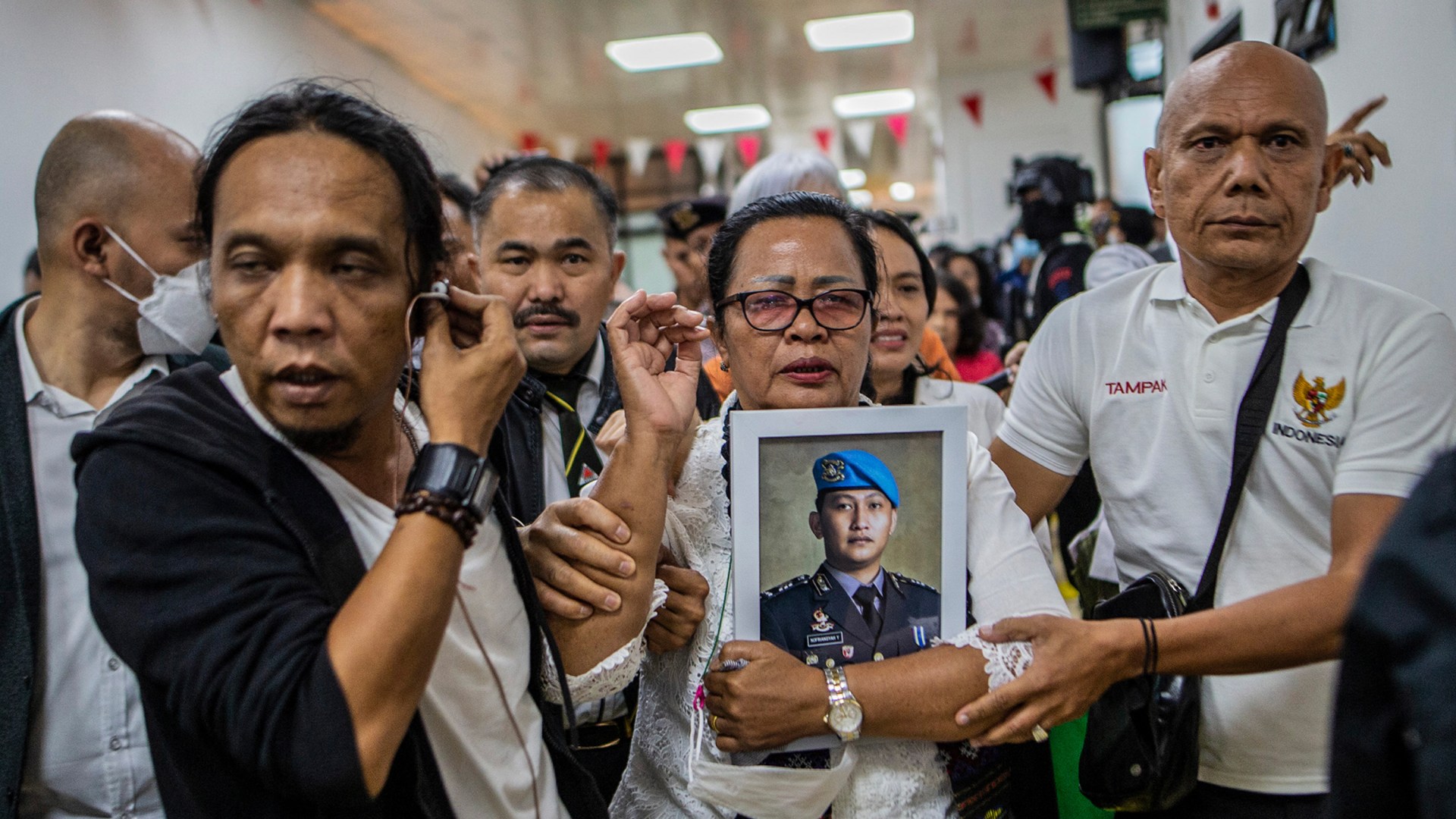
Rosti Simanjuntak (center), mother of late Brigadier Yosua Hutabarat, holds a picture of her son after former head of the internal affairs for Indonesia's national police Ferdy Sambo was sentenced to death during a verdict hearing in Jakarta.

Rosti Simanjuntak (center), mother of late Brigadier Yosua Hutabarat, holds a picture of her son after former head of the internal affairs for Indonesia's national police Ferdy Sambo was sentenced to death during a verdict hearing in Jakarta.

Christianity Today February 20, 2023
Aditya Aji / Getty

For the past year, Indonesians have been fixated on a murder trial involving a high-level Christian police general. Last week, the South Jakarta District Court sentenced former police general Ferdy Sambo to death for ordering and covering up the murder of his bodyguard, Brigadier Nofriansyah Yosua Hutabarat, who Sambo claims sexually assaulted his wife.

Initially, Sambo claimed Hutabarat died in a shootout with the police general’s aide, Richard Eliezer, in his home. Yet Hutabarat’s family became suspicious after police attempted to stop them from viewing his body. Eliezer later admitted that he shot Hutabarat under direct orders from Sambo. Sambo then put a bullet into his bodyguard’s head, Eliezer said.

The murder case is considered the worst scandal in the history of the Indonesian police force and has deteriorated the public’s trust in the police. Dozens of police officers were involved in the cover-up and have since been dishonorably discharged. A poll from October 2022, during Sambo’s trial, found that public trust in the police had dropped to 53 percent from 80 percent a year earlier. Other incidents—including the police’s aggressive use of tear gas in the deadly soccer stadium stampede last October, police corruption cases, and a spate of extrajudicial killings—have led to widespread cynicism.

Complicating the matter, Sambo, Eliezer, and Hutabarat all happen to be Christians in the Muslim-majority country.

CT asked four Indonesian Christians how believers should respond when placed under corrupt authority, as in the case of Eliezer, and as citizens in a country where police scandals are common. They also discussed how the Sambo case impacts public perceptions of the police and Christians, as well as how Christians can rightly view the police and encourage accountability to combat abuse of power.

Lotnatigor Sihombing, lecturer in ethics and leadership at Amanat Agung Theological Seminary in Jakarta

As Christians, members of society, and citizens, we view the police as an instrument of the state that has authority. Therefore, police officers must obey the law in order to protect the people and give the public a sense of security. However, their rights and obligations must be balanced, as that is a basic form of justice. When they deviate from the authority given by the state, they must be held responsible for their actions as they have sworn an oath based on their religion and belief before God.

In the Bible, the sin most often mentioned is the violation of justice. Any sin is a violation of justice, be it distributive justice, vindictive justice, or legalist justice. Even in Ecclesiastes 3:16, it is written, “In the place of judgment—wickedness was there, in the place of justice—wickedness was there.” Therefore, Christian police officers, prosecutors, judges, and lawyers must truly fear God, the source of justice, and uphold justice. Likewise, Christians in any position should not become bribers and lawbreakers.

In Eliezer’s case, we can’t fully understand the position and situation he was in at the time. Later he collaborated with the police (known in Indonesia as a justice collaborator), a valuable decision that must be respected. It meant that Eliezer knew what he was doing was wrong. Killing is a wrong action because it negates and eliminates existence. The Lord created something from nothing, while killing annihilates what already exists. Therefore, killing is an act against God, an atheistic act. Of course, the fact that Sambo and Eliezer are Christians can make non-Christian people judge, “Wow, Christians or non-Christians—they’re all the same.” Indeed, we all need God’s grace.

Jesuit priest Franz Magnis-Suseno, philosopher, theologian, and an expert witness in Eliezer’s trial, in Jakarta

The murder of junior police officer Hutabarat by a high-ranking Indonesian police officer is one of the dirtiest police crimes in Indonesian history. The fact that both the victim and the accused are Christians is undoubtedly very embarrassing for Christians, although the media hasn’t commented much on this. It has reinforced public opinion that our police are corrupt. We need to expose and fight corruption in all dimensions.

Every human being is accountable for his or her actions, even those in leadership positions. We expect our leaders to be trustworthy, to put the common good before their interest, and to conscientiously obey the law. Leaders who break the law must be punished more harshly than ordinary citizens.

In the case of Eliezer, the obligation to obey orders ends when what is commanded is evil. This is one of the most fundamental moral norms that an evil command must never be obeyed. The Nazi slogan “Befehl ist Befehl (An order is an order)” was deeply immoral. However, when Eliezer still carried out the order to shoot Hutabarat, it does not suffice to pronounce Eliezer guilty. As a young officer, he was educated in the police culture of unquestioningly obeying the direct commands of high-ranking officers. Without any opportunity to think or talk it over, Eliezer’s legal and moral culpability may be close to zero.

Tiurma M. Pitta Allagan, lecturer at the Faculty of Law, University of Indonesia in Jakarta

The police force is an instrument of the state assigned to serve the community. Without making any distinction whether the police are Christians or not, we should see them as sinful humans. It means that even the police can make mistakes because they are not free from sin. As public officials, they need the prayers of the saints to survive and protect the interests of Christians and other minority religions. The greater a person’s responsibility, the greater the accountability demanded. The responsibility of police officers is not only to adhere to the written rules but also to the norms and morals observed in the society they serve.

Eliezer’s actions are difficult to evaluate because of his position as a submissive police officer within a special division led by Sambo. He has received training as a police officer in the internal affairs division of the Indonesian National Police, where the ethics and rules integrated into his heart and mind are distinct from most people’s. I’m also not sure that he became a justice collaborator because he is a Christian. But I see that his conscience is still awake. In this case, Eliezer’s conscience coincides with Christian values. No one will ever know whether these considerations were due to Eliezer’s Christian values, except him and God.

We can support accountability and transparency by working with nongovernmental organizations (NGOs) and the ombudsman or writing a research article about this case. Hopefully, we can view Sambo’s case as a warning that officials are sinful human beings. Staying in the top ranks and protecting the interests of the Indonesian people, including the interests of Christians, is not easy.

Yakub Tri Handoko, founder of the Indonesian Apologetics Movement (API) and Grace Alone Ministry (GRAMI), lecturer, pastor at the Reformed Exodus Community (REC) in Surabaya

Every Christian should take any sin seriously. Love and forgiveness should never be used as an excuse to overlook misconduct. The gospel isn’t only about grace but also about the truth (John 1:14). Justice should be served.

Any public misconduct committed by a high-profile Christian will surely cast a bad impression on Christianity. It is especially true in the context of Indonesia as a Muslim-majority nation. I think our society will associate the murder case more with the police culture in Indonesia as it’s no longer a secret that corruption is rampant in this institution. However, it will undoubtedly reduce the persuasive power of Christianity. It’s unsurprising that for some people and in some contexts, evangelism is more difficult than ever.

Eliezer’s case is very unfortunate. He was under enormous pressure. No one should oversimplify the situation he found himself in. However, fear of leaders should not hinder our obedience to God. Respect for leaders doesn’t mean blind loyalty.

When a leader forces us to perform certain actions that contradict the moral law in our hearts or the teachings of the Bible, we have the right to disobey. The apostles taught us that we must be more obedient to God than to other people. Several faith heroes from the Old Testament also provide good examples, such as Daniel and his friends or the prophet Elijah. Risks and dangers are often inevitable for followers of Christ.

Christians should speak out about the urgency for more serious efforts to prevent abuse of power. Church leaders should also make their congregations aware that abuse of power occurs in various forms, even in homes and churches. Local churches should deliberately make their churches safe for everyone from abuse of power. In short, we should be more active in pursuing justice in various contexts.

In the end, the truth of God’s Word from Acts 5:29 serves as a reminder that resonates loudly for us: “We must obey God rather than human beings!”

With reporting assistance by Ivan K. Santoso.

Theology

Parkinson’s—The Gift I Didn’t Want

I’ve spent years writing about pain and suffering. Now I’ll spend years learning how to live with physical disability.

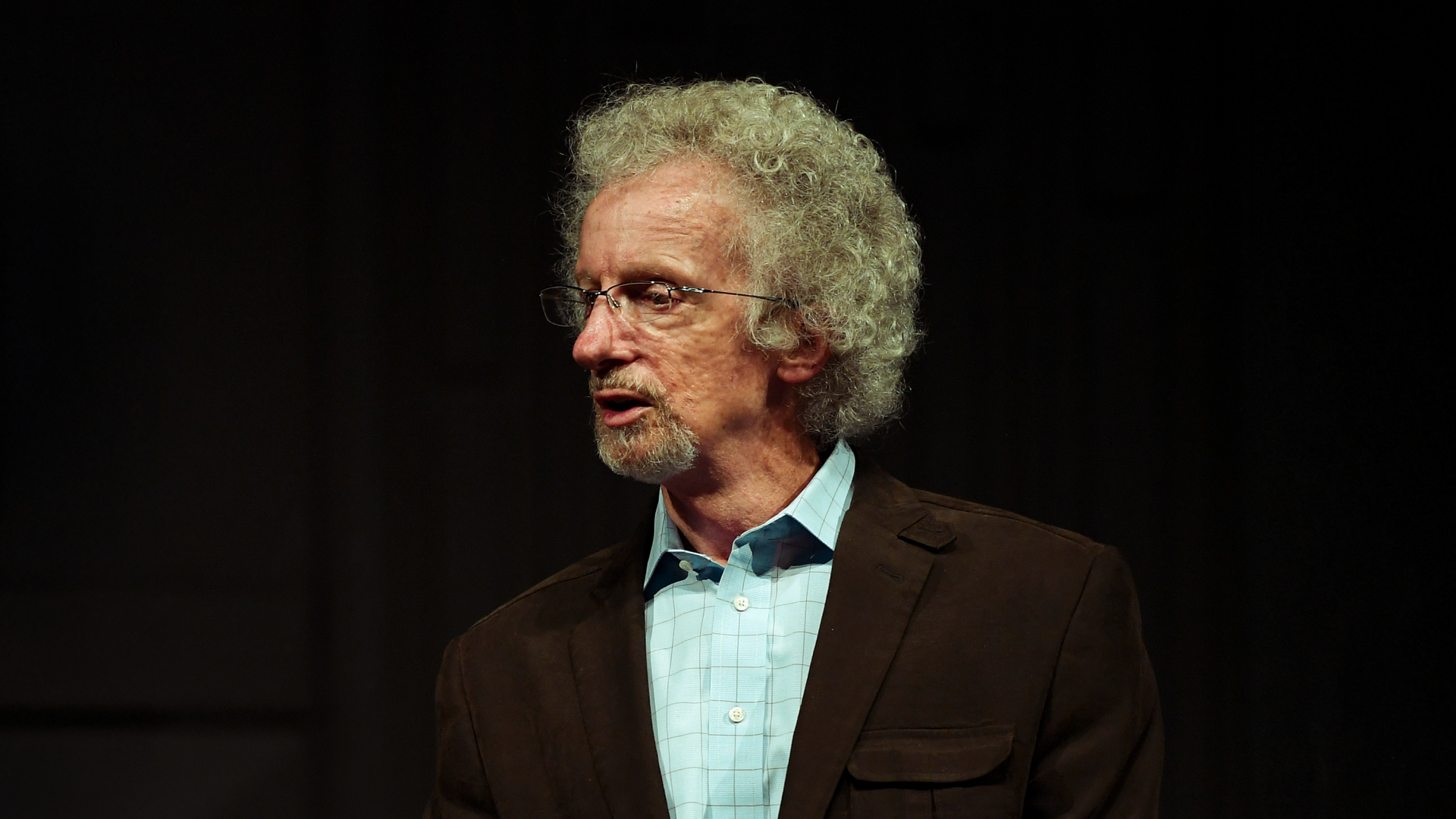
Photo of christian author Phillip Yancey
Christianity Today February 20, 2023
Joe Amon/MediaNews Group/The Denver Post via Getty Images / Edits by CT

In my memoir, Where the Light Fell, I tell the saga of my older brother, in whose shadow I grew up. Marshall was blessed with an off-the-charts IQ and preternatural musical gifts, including absolute pitch and an auditory memory that enabled him to play any music he’d ever heard.

Everything changed in 2009 when a stroke cut off blood flow to his brain. One day he was playing golf; two days later he lay in an ICU ward, comatose.

Only a rare type of brain surgery saved Marshall’s life, and thus began his new identity as a disabled person. In a reprise of childhood, it took him a year to learn to walk and more years to speak sentences longer than a few words. He plugged away, working with a useless right arm and a speech condition called aphasia. Now he proudly wears a T-shirt that says “Aphasia: I know what to say but I can’t say it.”

From my brother, I learned the challenges of disability. The vexation of being unable to get words out. The indignity of needing help with simple activities like taking a shower and getting dressed. The paranoia of knowing friends were making decisions about him behind his back.

In public, strangers averted their gaze, as if he did not exist. Only children were forthright. “Mom, what’s wrong with that man?” they’d say before being shushed; bolder ones approached his wheelchair directly to ask, “Can’t you walk?”

The frustrations grew so great that Marshall researched how many Valium and Ambien pills it would take for him to kill himself, then downed them all with a quart of whiskey. His suicide attempt failed, thank God, and he ended up in a psych ward. Since then, he has gradually rebuilt his life, aided by many hours of therapy, and now manages to live on his own and drive an adapted car.

A year ago, while skiing in Colorado, I gave clear instructions for my legs to turn downhill, and they disobeyed. Instead, I slammed into a tree, breaking my boot and ski and badly bruising my left calf. Strange. My brain had given orders, and the legs simply ignored them.

Over the next few months, other symptoms appeared. My walking gait and posture changed. My handwriting, already small, grew even tinier and sloppier. Some nights I had mild hallucinations while sleeping. I made many more mistakes when typing on a computer keyboard. My miserable golf game became even worse. I mentioned one possibility to my primary care physician, who replied, “You’re in great shape, Philip. You can’t have Parkinson’s disease.” (Always get a second opinion.)

By last fall, I was living in a time warp. Tasks like buttoning a shirt took twice as long. I felt as if some slow-moving, uncoordinated alien had invaded my body. When other people began noticing, I knew I had to get checked out medically.

In my insurance network, no neurologist was available for six months. So I changed insurance plans to one with a wider network and leaned on a friend to get me into her state-of-the-art facility connected with a university. Last month they confirmed a diagnosis of Parkinson’s, a degenerative disease that disrupts connections between brain and muscles. I began a dopamine-based treatment along with physical therapy.

As I informed a few close friends, I feared that now I had acquired a new label: not just Philip but Philip-with-Parkinson’s. That’s how people would see me, think of me, and talk about me.

I wanted to insist, “I’m still the same person inside, so please don’t judge me by externals such as slowness, stumbling, and occasional tremors.” In fact, I coined a new word—dislabeled—in protest. I had seen others judge my brother by his cane and withered arm and shyness to speak, unaware of the complex and courageous human being who exists behind the screen of those externals.

Then, less than a week after my diagnosis, reality forced its way in. As if to prove nothing had really changed, I decided to try the new sport of pickleball, kind of a cross between tennis and Ping-Pong. Within five minutes I dove for a ball, stumbled, and pitched forward. Any reflex to break my fall kicked in too late, and I landed face-first on the hard surface.

Waiting in a packed emergency room for eight hours, I realized that I had undeniably joined the motley crew of injured and disabled people who visit such a place on a Wednesday night. I’m not dislabeled after all.

From now on, I will be making adjustments. No more leaping from boulder to boulder on one of Colorado’s 14,000-foot mountains. No more kamikaze runs on a mountain bike. Ice skating? Probably not. And definitely no more pickleball!

In a compressed preview of aging, disability means letting go of ordinary things that we take for granted. I shouldn’t even climb stairs without using a handrail, and walking is my safest form of exercise—as long as I pick my feet up and don’t shuffle. Just as I’ve had to slow my pace when walking alongside my brother, now others must slow their pace for me.

A friend who heard my news sent me a reference to Psalm 71, which leads with these words: “In you, Lord, I have taken refuge; let me never be put to shame.”

Although the poet wrote in very different circumstances—harassed by human enemies rather than a nerve disease—the words “let me never be put to shame” jumped out at me. Other psalms (see 25, 31, and 34) repeat the odd phrase.

A measure of shame seems to accompany disability. There is an innate shame in inconveniencing others for something that is neither your fault nor your desire. And a shame in having well-meaning friends overreact—some may treat you like a fragile antique and complete your sentences when you pause a second to think of a word.

Though still experiencing only mild symptoms, already I anticipate shame over how these may worsen: drooling, memory gaps, slurred speech, hand tremors. Warning sign: The other day I opened a newsletter and mistakenly read “Daily Medication” instead of “Daily Meditation.”

Shame can sometimes goad to action. After my diagnosis, six friends wrote that they had observed something unsound about me but didn’t mention it. Only two risked being as blatantly honest as a child. During a restaurant dinner, one said to me, “Have you got the slows, Philip?”—earning a look of reproof from his wife. Another, more blunt, asked, “Why are you walking like a decrepit old man?” Those two comments spurred me to intensify my search for a neurologist.

“Do not cast me away when I am old; do not forsake me when my strength is gone,” Psalm 71 adds. That prayer expresses the silent plea of all disabled persons, a group that now includes me. The CDC calculates that 26 percent of the US population qualifies as disabled. Now that I have joined them, I try to look past the externals—as I do instinctively with my brother—to the person inside.

In the first month of my own acknowledged disability, I have become more self-conscious, which can be both good and bad. I do need to pay close attention to my body and my moods, especially as I adapt to medication and learn my physical limitations. I need to find a safe and challenging exercise routine. Yet I don’t want to obsess over one part of my life or let this disease define me.

Time magazine recently ran an essay by a disability activist who has written a book on “Disability Pride.” A newly vocal generation wears the disabled label as a badge of honor. Members of the deaf community, for example, scorn such euphemisms as “hearing impaired” and refuse medical procedures that might restore their hearing.

In contrast, I admit I would be delighted to have Parkinson’s magically removed from my life. I would hold a pill bonfire, cancel my order for a cane, and dust off my climbing gear. However, I don’t have that option—and perhaps the disability activists are simply focusing on accepting the reality that some things can’t be changed.

Although I still cringe at the awkward euphemism “differently abled,” I better understand it now. The phrase points to the fact that life is patently unfair and that people are unequal in their abilities. My brother was once able to play piano concertos while I was still struggling to master scales. Compared to Tom Brady or Venus Williams, we’re all athletically disabled. And though Parkinson’s may eliminate some of my favorite physical activities, I can enjoy others that a quadriplegic may envy.

No two human beings have the same set of abilities, intelligence, appearance, and family backgrounds. We can respond to that inequity with resentment—or somehow learn to embrace the gifts and “disabilities” unique to ourselves.

In my writing career, I have interviewed US presidents, rock stars, professional athletes, actors, and other celebrities. I have also profiled leprosy patients in India, pastors imprisoned for their faith in China, women rescued from sex trafficking, parents of children with rare genetic disorders, and many who suffer from diseases far more debilitating than Parkinson’s.

Reflecting on the two groups, here’s what stands out: With some exceptions, those who live with pain and failure tend to be better stewards of their life circumstances than those who live with success and pleasure. Pain redeemed impresses me much more than pain removed.

This latest twist in my life involves a disease that could prove incapacitating or perhaps a mere inconvenience; Parkinson’s has a wide spectrum of manifestations. How should I prepare?

I was privileged to know Michael Gerson, a Washington Post columnist and White House speechwriter who lived with Parkinson’s for years before succumbing to cancer. A colleague said of him, “At the peak of his career, he used his influence to care for the most vulnerable, spearheading the campaign to address AIDS in Africa. When he was at his lowest point physically, he never complained but focused on gratitude for the life he had lived.”

That is my prayer. After a bumpy childhood, I’ve had a rich, full, and wonderful life with more pleasure and fulfillment than I ever dreamed or deserved. I have an omnicompetent wife of 52 years who takes my health and well-being as a personal challenge.

Sixteen years ago, when I lay strapped to a backboard with a broken neck after an auto accident, Janet drove through a blizzard to retrieve me. Already she was mentally redesigning our house in case she needed to prepare for life with a paralytic. She shows that same selfless, fierce loyalty now, even as she faces the potentially demanding role of caregiving.

My future is full of question marks, and I’m not unduly anxious. I have excellent medical care and support from friends. I trust a good and loving God who often chooses to reveal those qualities through his followers on earth.

I have written many words on suffering and now am being called to put them into practice. May I be a faithful steward of this latest chapter.

Philip Yancey is the author of many books including, most recently, the memoir Where the Light Fell.

Church Life

Rupert Clarke: The Medical Missionary on the Tibetan Plateau

The British doctor established hospitals for Tibetans and called on Chinese Christians to care for the souls of the ethnic group.

Christianity Today February 20, 2023
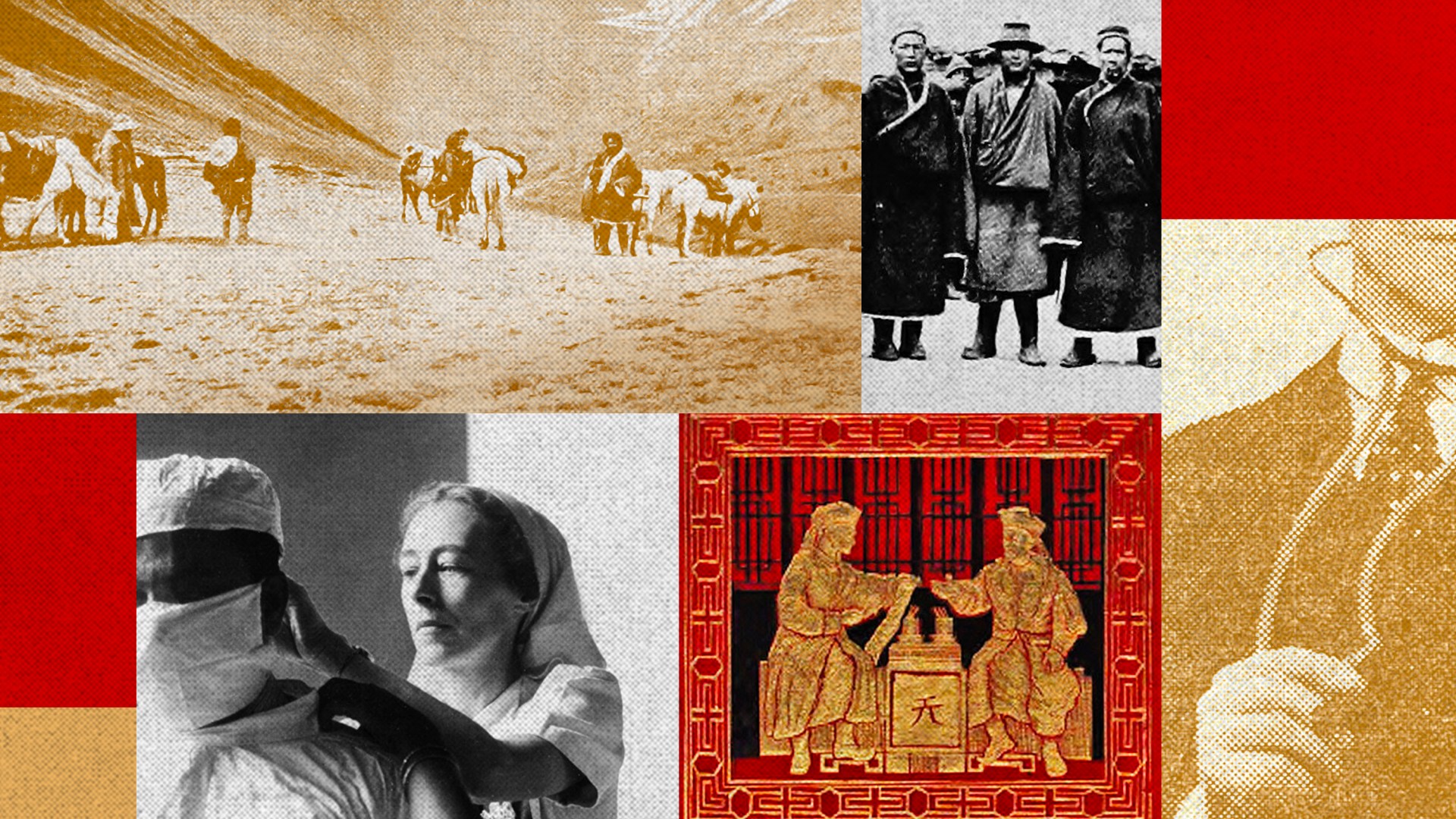
Illustration by Mallory Rentsch / Source Images: WikiMedia Commons

In the early 20th century, the gates of Tibet were still tightly shut to Christian missionaries.

The people who lived across the Tibetan Plateau were devout believers in Tibetan Buddhism. One out of every four adult males was a lama (monk). At that time in history, infectious diseases such as syphilis, leprosy, smallpox, plague, and diphtheria were rampant. Due to the lack of medical care, the only method of prevention was to isolate the sick, even to the point of casting them out of the community for life.

A good number of missionaries from the China Inland Mission (CIM) hoped to share the gospel with Tibetans. But because they could not enter Tibet, they could reach Tibetans only through neighboring provinces. As early as 1918, missionaries Harry French Ridley and Frank D. Learner began spreading the gospel in Qinghai Province. By the end of the 1940s, there were an estimated 200 believers in eastern Qinghai, but few to no Tibetans among them.

That would eventually change. Also in the 1940s, a CIM missionary served in medical missions among the Tibetans in Gansu and Qinghai Provinces: the English medical doctor Rupert Clarke.

During Clarke’s youth, he often stayed at his grandmother’s Victorian manor, where the family would gather several times a day for prayer and where attending church on Sunday was a given. Although biblical knowledge filled young Clarke’s mind and he lived in a rule-abiding manner, he lacked the assurance of salvation in his heart.

This continued until he attended university and joined a Christian fellowship. There he met fellow students Robert A. Pearce and James Cecil Pedley. Pearce and Pedley felt that while Clarke had the appearance of being a Christian, he had not tasted the joy of salvation, so they often prayed for him. When Clarke read one of the books they lent him, he finally realized that the assurance of salvation rests on God’s promises, not on human efforts. What he needed was trust in Jesus. He knelt by the bedside and welcomed Jesus into his heart with Revelation 3:20. He never looked back.

Clarke went on to study in medical school. During the summer of his third year, he contracted mumps that confined him to bed in his grandmother’s home. During that time he read the book A Thousand Miles of Miracle in China, which details the dangerous trek of the Glover family, missionaries who were taken from Shanxi to Shanghai during the Boxer Rebellion. Clarke was deeply moved and began to care about the needs of people in China.

Lanzhou Hospital

Pearce and Pedley joined the CIM in 1931 and 1935 respectively and served in the Lanzhou Hospital of Gansu as well as the affiliated leper hospital. Many of the Tibetans in the leper hospital came to believe in Jesus. The two missionaries continually wrote to encourage Clarke, and his burden for the Tibetans deepened daily. Finally, Clarke joined CIM’s Tibetan medical missions team and went to serve in Lanzhou, Gansu Province.

By 1941, Clarke’s work in the Lanzhou Hospital was making progress. In the same year, the CIM invited him to join the work of the medical missionary team in Zhongwei, which was five days’ travel into the neighboring province of Ningxia. Clarke arrived in Zhongwei but had come down with severe hepatitis and was yellow all over. The CIM immediately sent nurse Jeannette Barbour to take care of Clarke.

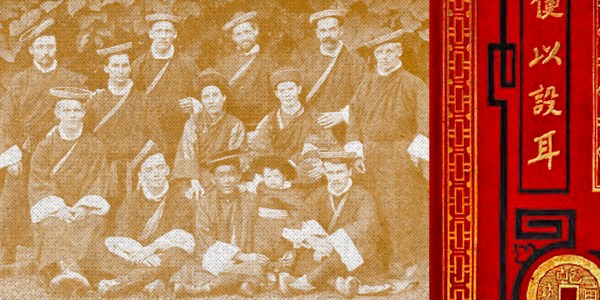
China Inland Mission workers in Tatsienlu in 1898.Illustration by Mallory Rentsch / Source Images: WikiMedia Commons
China Inland Mission workers in Tatsienlu in 1898.

Barbour was born in Rhodesia (Zimbabwe) and trained as a nurse in Edinburgh, Scotland. She had just recently joined CIM at the time. Under Barbour’s careful care, Clarke quickly began improving but had to remain in Zhongwei as he recovered. A month later he was healthy enough to bike back to Lanzhou. By then, he had already quietly become engaged to Barbour, though they had to wait to marry until she had served a full two years and passed her language exams according to CIM rules. On January 14, 1943, the two held their wedding in Lanzhou, by the shores of the iced-over Yellow River.

In 1944, after the end of World War II, Clarke was in charge of CIM’s hospital in Lanzhou city. At the end of 1946, the couple returned to England and South Africa on home assignment, and CIM sent Alfred James Broomhall to take over the medical work in Lanzhou.

Many Tibetans sought medical care at the Lanzhou Hospital and the affiliated leper hospital, and large numbers of them had to travel for weeks and even months. Han Chinese were generally unwilling to share a room with Tibetans, so the hospital set up wards specifically for Tibetans. The records of 1947 show that at least 80 Tibetans stayed at the hospital. Patients who required long-term care were often transferred to standard wards, and some of them had to stay for months. The Tibetans who were accepted and received medical care were thankful, but no missionary was available to share the gospel with them in the Tibetan language.

Hualong Medical Station

For many years, the CIM had planned to open a small hospital in Qinghai Province so the Tibetans spread across Qinghai could hear the gospel. In 1948, Clarke sent out a plea to his supporters back in the UK: Because of the lack of medical staff, the plan for a Qinghai hospital was on hold, and he was praying and planning fervently for God to send workers from the East and the West to serve the Tibetans.

In early 1948, Clarke returned to China after home assignment, but CIM was still unable to open the Qinghai hospital due to a lack of workers and resources. Right at that time, the board of the Holy Light School received aid from the “China Aid Team” and gifted the Lanzhou Hospital a large number of medical supplies left by the American military, allocating three tons of supplies to Hualong in Qinghai Province. CIM immediately reassigned workers and sent a local doctor as well as four nurses to the medical work in Qinghai Province. Clarke’s dream of many years to set up a medical station at Hualong was finally realized.

Hualong lies south of Xining city, near the boundaries of Qinghai and Gansu Provinces. It sits 10,000 feet above sea level and has thin air. The ground is unfrozen only four months of the year, and only in August is there no snow. For Clarke, transportation was challenging, but he was optimistic, adaptable, and unfazed by obstacles. Nothing was too difficult for him. On one occasion, his car’s fuel pump broke down. Clarke pulled his stethoscope out of his medical bag, held the gas can on top of the car, and guided the gas through the tube of the stethoscope and into the engine. The car was fixed, and he could continue on his way.

On July 5, 1948, Hualong Clinic officially opened. Dignified Buddhist lamas and monks and influential Muslim imams lived among the people in Hualong. Clarke and his fellow workers began handing out gospel tracts in Chinese and Arabic in the city.

In 1949, Rupert and Jeannette, who was pregnant with their first baby, moved and settled in Hualong. The couple was of the same mind—unafraid of hardships, all for the sake of serving the Lord of their lives and the Tibetans whom they loved.

They grew the clinic into a facility that they named Holy Light Hospital, with 20 beds. That same year, they saw as many as 3,590 patients and performed 160 surgeries. Jeannette held their newborn son, Humphrey, in one hand and carried out her nursing duties with the other.

Word of the hospital and Clarke spread far and wide. People said, “This foreign doctor is very good to Tibetans, treating them the way he treats Han Chinese.” Sometimes traveling for weeks, Tibetans and lamas came on horses, on yaks, or on foot in large groups to seek medical treatment. When they arrived at the hospital, they would hear the gospel for the first time, undergo surgery, recover, and joyfully return home with a New Testament or gospel pamphlets.

The beds were often full. Sometimes patients had to leave before they were fully recovered to make space for more seriously ill people flooding in. There were simply not enough beds. Up to 20 or 30 patients might be squeezed on the heated brick bed reserved for the relatives. But Clarke thought that serving Tibetans was “a great deal” because they had a strong will to live and were grateful. Clarke particularly hoped that Han Chinese Christians would join in sharing the gospel as well. In the 1950 issue of CIM’s China’s Millions journal, Clarke wrote:

Many Han Chinese Christians have been called by the Lord to spread the gospel to Tibetans, yet sadly are not willing to put in the work to learn the language. In this area there are some Han Chinese who can speak Tibetan. If God should shine upon them, they would surely do his work. Life here has many hardships, but they can earn a living as doctors (there are no doctors yet among the Tibetans) while spreading the gospel to the Tibetans.

What excited Clarke even more was that a clan in the mountains of Tibet had sent someone to visit and invited him to start a hospital where they lived. They even promised to supply a house and everything he might need. Naturally Clarke was ready to go right away, but it was not to be.

Evacuating from China

In December 1950, under dire circumstances, CIM’s leadership decided to fully withdraw from China. By January 1952, only 33 of CIM’s 620 missionaries remained stranded in China, including the Clarke family.

In June 1951, Chinese officials charged Clarke in Hualong court with many crimes, the most severe of which was being a spy for Western countries. Of course, Clarke firmly denied this. His wife and children were permitted to leave, but the officials imprisoned Clarke and confiscated the Bible in his bag. Yet he quietly sang, “The Lord is my shepherd; I shall not want.” Over 40 prisoners—many of them Muslim—filled the cell, and there was nowhere to sit but the ground.

Traveler on the Tibetan Plateau.Illustration by Mallory Rentsch / Source Images: WikiMedia Commons
Traveler on the Tibetan Plateau.

Clarke was later released but held under house arrest in Hualong Hospital, cut off from the outside world. To keep his body and mind strong, he insisted on walking three miles daily in the hospital courtyard, along with a weekly ten-mile walk, so that if he should be released one day, he would have the strength to walk to Xining. Clarke was later transferred to Xining and held at CIM’s missionary center.

In the afternoon of July 20, 1953, Clarke and Robert Arthur Mathews (another CIM missionary in northern China serving Mongolian people) arrived in Hong Kong by train and were the last two CIM missionaries to leave China. Arnold J. Lea, overseas director of CIM, wrote the following conclusion in the 1951 issue of China’s Millions:

The process of withdrawing from China has been much longer than we had expected… But the Lord has brought all our workers out. Although they have experienced great dangers and have been under great pressures, our workers are unharmed and in healthy spirits. Through such trials, we have grown in our faith and patience.

The Communist government shut down the Hualong Hospital in 1950, marking the end of the missionary era to evangelize the Tibetans in Gansu and Qinghai. However, in the same year, two CIM couples (George and Dorothy Bell of Canada and Norman and Amy McIntosh of New Zealand) baptized two Tibetan women “who possessed a true faith in Jesus Christ.” Then Tibetans in India reported the joyful news that a group of Chinese Han Christians shared the gospel with Tibetans in Labrang (a Tibetan town in southern Gansu), “resulting in 20 professions of faith.”

In today’s China, reaching the Tibetan people with the gospel is still extremely difficult and sensitive. But more Han Christians are involved in evangelizing diaspora Tibetans in Chinese provinces outside Tibet. It is our prayer that the Spirit that inspired Rupert Clarke doubly inspires Chinese Han Christians today and that they will take the baton to share Christ’s love to Tibetans.

Translation by Christine Emmert

Apple PodcastsDown ArrowDown ArrowDown Arrowarrow_left_altLeft ArrowLeft ArrowRight ArrowRight ArrowRight Arrowarrow_up_altUp ArrowUp ArrowAvailable at Amazoncaret-downCloseCloseEmailEmailExpandExpandExternalExternalFacebookfacebook-squareGiftGiftGooglegoogleGoogle KeephamburgerInstagraminstagram-squareLinkLinklinkedin-squareListenListenListenChristianity TodayCT Creative Studio Logologo_orgMegaphoneMenuMenupausePinterestPlayPlayPocketPodcastRSSRSSSaveSaveSaveSearchSearchsearchSpotifyStitcherTelegramTable of ContentsTable of Contentstwitter-squareWhatsAppXYouTubeYouTube