News
Wire Story

Josh Butler Resigns as Pastor Following TGC Article Backlash

The “Beautiful Union” author said the conversation around his book took an intense toll on his Tempe, Arizona, church.

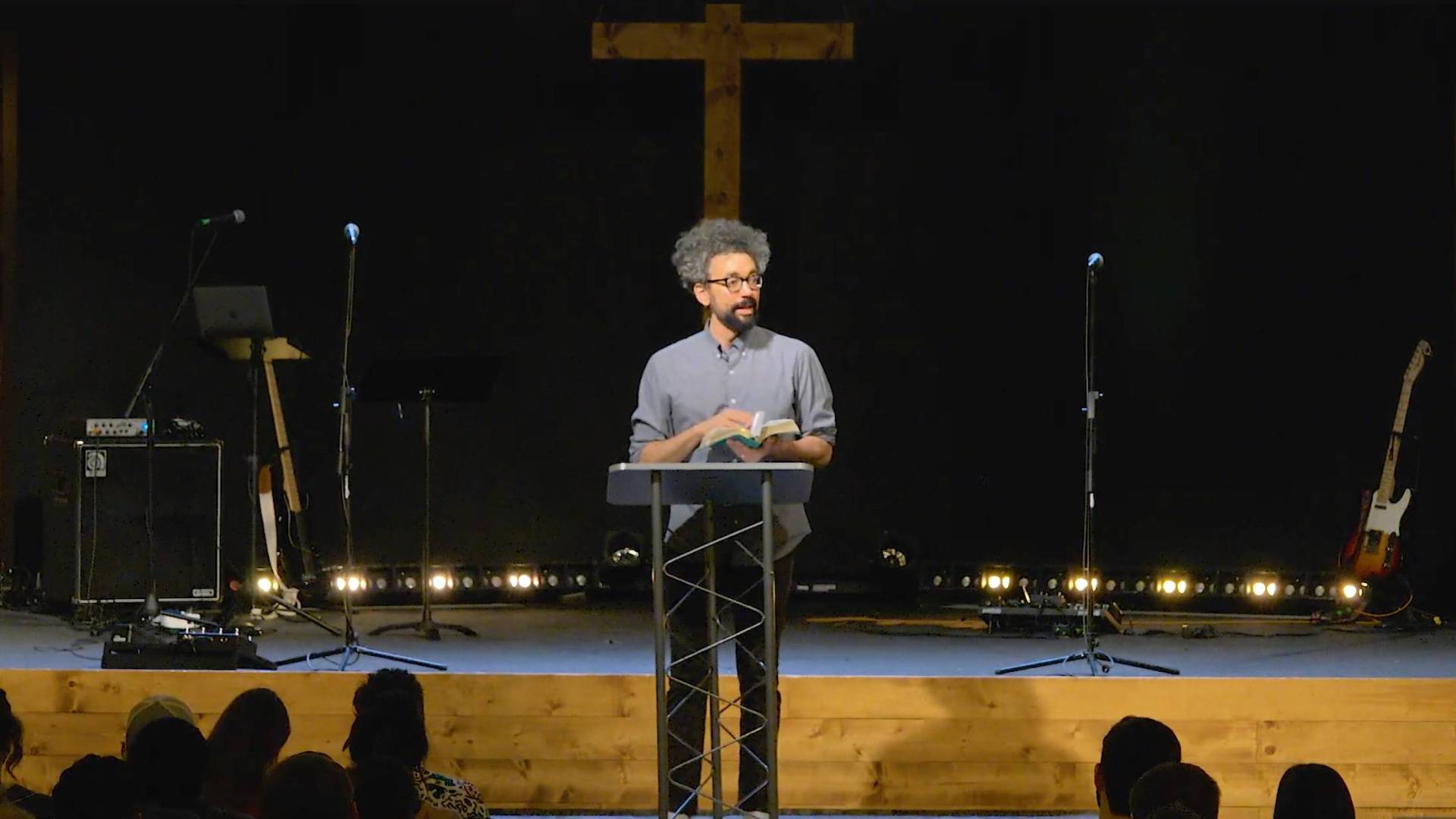
Josh Butler at Redemption Church

Josh Butler at Redemption Church

Christianity Today May 4, 2023
Screengrab / Redemption Church

An evangelical Christian pastor and author whose book on the theology of sex caused a furor online earlier this spring resigned Wednesday from the leadership of his Arizona megachurch.

“We have found ourselves in an impossible situation,” Joshua Butler wrote to members of Redemption Church in Tempe in announcing his resignation. A copy of the letter was posted on social media. His photo and bio no longer appear on the church’s website.

Butler’s new book, Beautiful Union, which argues that “God’s vision for sex” explains the meaning of life, was controversial even before it was released in April.

In March, an excerpt of the book appeared on the website of the influential church resource organization The Gospel Coalition. In the excerpt, titled “Sex Won’t Save You (But It Points to the One Who Will),” Butler offered repeated descriptions of sexual intercourse in spiritual terms, most of them characterizing sex as a man bestowing a holy gift to a woman and comparing that to the relationship of Jesus and the church.

“She gladly receives the warmth of his presence and accepts the sacrificial offering he bestows upon the altar within her Most Holy Place,” wrote Butler. “Similarly, the church embraces Christ in salvation, celebrating his arrival with joy and delight.”

The excerpt led to public outcry, claiming Butler’s writing contained not only bad theology but an oversexed view of religion centered on male pleasure. While the excerpt did quote from the New Testament’s Letter of Paul to the Ephesians, theology professor Beth Felker Jones, among others, argued Butler had missed the point of the passages he addressed.

“But the piece does not dig into Ephesians, paying close attention to the text,” wrote Jones. “Instead, it turns into a rhapsody over a very male-centered experience of sexual intercourse.”

The Gospel Coalition removed the article days after it was posted, replacing it with an apology and a note that Butler had resigned as a fellow with the Keller Center for Cultural Apologetics, a project of The Gospel Coalition, named for popular author and retired pastor Tim Keller. Butler’s ties to the center amplified the controversy over the book.

In his church resignation letter, Butler said “the toll of this controversy on many of our staff and leaders this month has been intense.” Butler and other elders at the church decided it would be best for him to step down, according to the letter.

Resigning, he said, would allow him to take part in “public conversations” about his book without harming the church.

Those public conversations have taken place even as Butler contemplated his resignation. He continued to promote the book on his personal website, publishing another article related to the book, titled “The Ethics of Contraception,” that also created controversy.

“A condom dams up the ‘river of life,’ preventing its life-giving waters from reaching the opposite shore,” Butler wrote. “With a diaphragm, a barrier is placed at the most intimate point of contact, preventing a full reception of the gift within the generative holy space of the womb.”

Butler also said he would be revising a future printing of the book in light of feedback he has received and he would be available to speak with church members who felt angered or hurt because of the controversy.


Theology

How to Improve Your Odds for a Successful Marriage

If you’re dating seriously, don’t slide into a life-long commitment. Decide on it.

Christianity Today May 4, 2023
Illustration by Rick Szuecs / Source images: Envato

A substantial number of practicing Christians believe that living together before marriage is a good idea—at least 41 percent, by one estimate. Although far more nonreligious people believe the same thing (88%), 41 percent is not a small group, and it’s likely growing over time.

A recent report from the Institute for Family Studies surveyed people who married for the first time in the years 2010 to 2019. My colleague Galena Rhoades and I found conclusions similar to those of past studies: Patterns of cohabitation before marriage remain associated with higher odds of divorce.

What people often miss is the inertia that comes with moving in together. In essence, cohabiting couples are making it harder to break up before nailing down their commitments. Many of them get stuck in a relationship they might otherwise have moved on from.

Consistent with our theory of inertia, we find that couples who moved in together before engagement were 48 percent more likely to end their marriages than those who cohabited only after getting wed or at least engaged. We also show that moving in together for “relationship testing” or financial convenience is associated with higher risks for divorce.

In light of this research, Christians contemplating marriage may wonder what they can do to improve their odds of staying married. Relationship advice is cheap and easy to come by. But this latest research suggests that certain steps and precautions will improve the likelihood of staying together “’til death do us part.”

First, don’t believe the hype that living together is good for your relationship.

Although conservative Christians are less likely than most to cohabit before marriage, many do. Given that most men and women believe it can increase their chance for marital success, the practice is highly tempting. But there’s very little evidence that living together in advance improves the odds of an enduring marriage. By contrast, there’s a lot of evidence that it complicates that goal.

In defiance of cultural trends, couples should consider the traditional path: engagement first, then marriage, then moving in together. Those steps help ensure clarity about the commitment you’re making as you move forward into a shared life. They also give you a clearer decision line that separates your life before marriage and after it.

Slow down. Timing and sequence can get you on the right relationship path.

There are benefits to going slowly as a relationship develops. Super slow? No. Some couples wait years and years to get married, long after they know what they want the future to look like. That approach can bring its own problems—for example, entering marriage without the joy and energy of a shared commitment.

Why is it important not to rush things? Two people need time to learn more about each other, clarify expectations and beliefs, and develop their relationship in a community of family and faith. In too many relationships, both partners believe they’re on the same page about marriage when they’re not. It takes time to get clarity. Some Christians move too fast toward marriage because they’re abstaining from sex and want to get to, well, everything. But they miss a lot of what they need to see.

How slow should you go? It depends. I often tell people they should see a person through at least four seasons. For most, though, one year is on the shorter side of things. Similarly, a long engagement can be valuable. It gives the couple a chance to practice a high level of commitment and “try on” being publicly devoted to each other with marriage as the goal. And it often draws out challenges that can make or break the relationship.

Decide; don’t slide.

A commitment involves making a choice to give up other choices. It’s a decision—and one that should be based on good information. But surprisingly few relationships follow this basic model. An important study on cohabitation showed that people tend to slide into living together, with no discussion about it and no decision reflecting commitment.

We see a similar lack of intention in how men and women communicate. We live in the age of ambiguity. Partners often avoid being candid with each other, perhaps in the naïve belief that if they don’t express their desires, they’ll hurt less if the relationship fails. But, of course, that rarely works. While it’s not a good idea to have “the talk” on a first or second date, don’t avoid deeper discussions when things change and become serious.

Candor is especially important because dating partners often have very different levels of commitment. You don’t want to find that out after you’ve said “I do.” By talking things through with a potential spouse, you leave less room for misunderstanding, and you’re more likely to bring mutual intention to a lifelong promise.

This “deciding” approach doesn’t guarantee success in a relationship, nor does sliding into it mean you’re doomed. But, on balance, more marriages would last if partners got their signals clear long before making life-altering transitions.

Don’t move in together to test the relationship.

If you want to find out if the person you’re dating is a good fit, you can do that without moving in. Take a relationship education course. Talk about what a future together would look like. See if you’re compatible by dating for a longer period of time. Take time to experience your partner in different social settings. Pay attention to how you feel with this person and how he or she treats others. And ask trusted friends, family members, and pastors what they think.

If you currently live with your partner, put in the hard work of figuring out where you are headed. Study the relationship and its challenges. Talk openly and clearly about expectations. Don’t avoid asking hard questions. Ambiguity is not your friend. Seek input from others you trust, including pastors, lay leaders, and wise friends. Get information, support, and wisdom wherever you can find it. And finally, use all available resources.

Any couple with a serious commitment can explore the many books, online resources, workshops, and therapy services that were created to support them. Here are some suggestions:

Books:

Consider reading The Five Love Languages: The Secret to Love That Lasts by Gary Chapman, Reconnected: Moving from Roommates to Soulmates in Your Marriage by Greg and Erin Smalley, or A Lasting Promise: The Christian Guide to Fighting for Your Marriage by me and my colleagues—Daniel Trathen, Savanna McCain, Milt Bryan—as well as other books on relationships and marriage preparation.

Premarital training or counseling:

Evidence suggests that premarital training and counseling services may help prevent marital problems, so look for premarital support in your area. Your local church can be a great resource as well. The pastors or lay leaders in your faith community may offer helpful guidance.

For couples facing problems, find help sooner than later. Too many people wait too long before getting professional support. And if you’re in a relationship you’re not sure about, see a counselor on your own who might help you get perspective.

Workshops for couples:

Although still rare, more and more churches provide marriage and relationship workshops (as do various community agencies). These educational workshops can help couples strengthen their connection and commitment. You can also find rigorously tested online programs for couples. They’re not coming from a Christian perspective, but nonetheless they are solid programs.

OurRelationship is an online relationship education program based on a popular, effective couple therapy approach. Find it at our relationship.com.

ePREPis an online program founded on the decades of work in the Prevention and Relationship Education Program. Find it at lovetakeslearning.com.

Look for other online resources as well.

The team at PREP Inc.—full disclosure: I am co-owner—produces a variety of resources to help people succeed in their most important relationships, including a four-minute video that’s based on our research, available on YouTube: “Relationship DUI—Are You Sure You’re in Love?” This video explains the risks of going too fast and getting locked in too quickly. It’s a fantastic video to share with a friend.

The Institute for Family Studies also offers relevant resources. A few years ago, my colleague Galena Rhoades and I authored a public report titled Before “I Do” on how premarital experiences are associated with relationship quality after marriage.

Church community:

There’s a lot of talk these days about loneliness and isolation. It’s a serious problem. Research suggests that couples, too, are less and less likely to be in community with others and more prone to be “alone together.” That’s not the best path for your marriage.

But there is good news. If you are not involved in a church community, you can be. One of the best ways to protect your marriage—and your own well-being—is getting connected to others who can root for you and your marriage, pray with you, and be there as you travel the road ahead. You can also support and encourage others in a similar position.

If you’re an “alone together” couple, find a place where you and your mate (or mate to be) can develop in a community, and start to pursue a fuller, more meaningful life. It’s one of many ways that the two of you can decide, not slide, into your future.

Scott Stanley is a research professor in the psychology department at the University of Denver and a senior fellow at the National Marriage Project at the University of Virginia and the Institute for Family Studies.

Theology

On Tucker Carlson and the Fear of Being Replaced

Christians who seek the wrong kingdom will dread the wrong apocalypse.

Christianity Today May 4, 2023
Illustration by Sarah Gordon / Source Images: Jason Koerner / Stringer / kyoshino / E+ / attaphong / iStock / Getty

This piece was adapted from Russell Moore’s newsletter. Subscribe here.

“I only get an hour a week; Tucker gets five.” I’ve heard a sentiment along these lines countless times from evangelical pastors—although they sometimes replaced “Tucker” with “Laura” or “Sean” or another Fox News cable host.

After his firing by the network, Tucker Carlson no longer has five hours a week. But his legacy ought to tell us just how much the church has secularized. Nowhere is this clearer than in the kind of replacement theory embraced by so many Christians.

Originating on the white nationalist fringes, the “great replacement theory” holds that “globalist” elites are seeking to replace white Americans with Black and brown immigrants from around the world. At the 2017 “Unite the Right” rally in Charlottesville, Virginia, for instance, the alt-right crowd chanted, “You will not replace us; Jews will not replace us.”

This view was made mainstream by Carlson, perhaps more so than by any other figure, because he promoted extreme voices few others would. When others would hint in the direction of the great replacement theory, Carlson would explicitly articulate it, even arguing that immigrants were making the country “dirtier.”

Many Christians have never heard of the great replacement theory and never watch Carlson or any other cable news commentator. Yet they can find themselves changed by the great replacement theory’s vibe, if not its explicit content. That’s because the most significant carrier of conspiracy theories such as this one is not cognitive but limbic. What’s needed is a general stance of fear about an existential threat—like the threat of being replaced.

Two years ago, commentator David Frum argued that there actually is a great replacement happening, but not the one popularized by Carlson and others. Frum said, “The most politically important ‘great replacement’ underway in the United States is the ‘replacement’ of conservative Christians by their own liberal and secular children and grandchildren.”

Frum’s argument should come with lots of caveats and qualifications. Like for those who say that demographic change with increased minority populations would lead to a permanent progressive majority in the United States, some naively assume that secularization trends will mean the end of religion—especially of conservative Christianity.

For all sorts of reasons, this is not the case. But Frum is correct that one of the most seismic generational changes over the past 20 years is the rise of the “nones,” referring to those with no religious affiliation. And the younger we go on the generational chart, the sharper the decline of religious self-identification, worship attendance, and other metrics.

One reason American Christians are in a state of denial about these realities is that so many are sorting themselves into the wrong “us.” Every blood-and-soil form of fear-based identity politics thrives on defining us in terms of visceral categories like race, tribe, or nationality. This assumes a blatantly social Darwinian view of what human communities are or can be.

The problem for Christians is that the gospel contradicts this ideology at its very root.

If “Christianity” for you is white and American, then it is not only out of step with the Bible; it is also precisely the kind of religion that almost every chapter of the New Testament explicitly repudiates as carnal and pagan.

The gospel situates us in a whole new story—one based on the promise God made to Abraham (Rom. 4; Gal. 3:1–9). If the church is just another way for humans to protect their gene pools, then Jesus was a fraud from his first sermon onward (Luke 4:25–27). If the blood-and-soil nationalists are correct about what defines success, then the crowds were right to call out for a leader like Barabbas instead of Jesus (John 18:40).

But Jesus and his apostles gave us an entirely different vision of how we and us are ultimately defined. The apostle Paul is in sync with the rest of the New Testament canon when he reveals that “here there is no Gentile or Jew, circumcised or uncircumcised, barbarian, Scythian, slave or free, but Christ is all, and is in all” (Col. 3:11).

Once we lose that biblical sense of “we-ness” overall, any threat to the places where we do catch rare glimpses of it is considered an ultimate threat—capable of destroying “us” completely. If we have misplaced hopes, we will have misplaced fears. When we seek the wrong kingdom, we will fear the wrong apocalypse.

That sense of paralyzing fear can also fuel the loss of the next generation. If the only choices we offer are secularization and paganization, we shouldn’t be surprised that they choose one or the other. Moreover, our children will find it very hard to connect a scared and anxious church with a Jesus who perspired not a drop before the leaders of the Roman Empire but sweat blood before the face of God (Luke 22:44).

The implicit but faulty logic is that if we teach a generation to fear many things, they will at least fear the things they ought to. But it doesn’t work that way. When my generation was taught that rock music included hidden “backward masked” satanic messages, this did not lead us to become more discerning about cultural narratives. And when we found out this wasn’t true, it only taught us to wonder what other of our elders’ fears were imagined or fabricated.

But if Jesus is right that our ultimate belonging comes not by our flesh but through the Spirit (John 3:3–8), then none of us can consider our present or potentially future siblings in Christ scary or “unclean.” If we really believe in the unstoppable advance of God’s kingdom, then we will be known by our joy and peace—not by our fear and loathing.

Cable television hosts come and go, but there will always be people who try to make us find our identity in the wrong places and our enemies in the wrong people. They want us to be afraid so we will look for someone or something to fight for us. The great replacement theory is bad for democracy, but it is even more poisonous to the church.

The church will go on into the future, even in America. And it will probably be led then by the very people we are told to fear now.

Russell Moore is the editor in chief at Christianity Today and leads its Public Theology Project.

Church Life

The ‘Route Runners’ Are Coming to America. Are Chinese Churches Ready?

Chinese Christians reflect on the challenges and opportunities that the new immigration trend presents for evangelism.

Christianity Today May 3, 2023
Illustration by Rick Szuecs / Source images: Envato

Thousands of migrants from mainland China are trying to enter the United States illegally through various countries in Latin America. The desperate “route runners” (走线者 in Chinese) are deeply disillusioned and dissatisfied with the political and economic realities of today’s China. They desire to flee the country but lack the capital or ability to seek legal immigration by investment or as skilled professionals.

The migrants occupy lower socioeconomic levels in China. To migrate to the US, they fly to a South American country that does not require a visa for visiting Chinese citizens, then cross the dangerous mountains and deserts of the American continent, avoiding border police and trafficking mobs, hoping to smuggle themselves across the US-Mexico border into the US and then apply for political asylum. The success rate of such “route running” is usually low, carrying a high risk of denial of entry, deportation to China, or even loss of life.

Although the number of people in this group is small (3,855 Chinese migrants crossed the Darién Gap in the first three months of 2023 according to a Wall Street Journal report), it has caught attention from Western and overseas Chinese media because of the desperate and extreme measures these “runners” employ to flee to the US.

A new wave of immigration quietly rises

This group of border – crossers is only part of a new wave of Chinese immigrants. In the last two or three years, during the COVID-19 pandemic, a new term has quietly become popular on Chinese social media: 润 (run), along with its derivatives run xue (润学, the study or philosophy of run) and run chao (润潮, the wave of run). The Chinese pinyin for 润 is “run,” so it is a homophonic pun meaning “to flee” or “to run away from” China and to immigrate to developed countries such as the US, European nations, Australia, and Japan.

Behind this new wave of flight are disillusioned Chinese people, desperate for better economic prospects and more freedom in today’s China, suggested a Radio Free Asia (RFA) report. Even though nationalism, patriotism, and anti-American, anti-Western sentiments have grown in recent years under Xi’s rule, these dissident Chinese citizens are choosing to “vote with their feet” to “feel safe, be free and be a normal human being.”

While many of the Chinese who unobtrusively migrated before the pandemic were economic elites or successful professionals, the most recent cohort is a less educated, more grassroots assemblage, possessing fewer resources. But whether it is through wealth, skill, or the more desperate “route running,” the new wave of Chinese immigration is changing the composition of the Chinese population in the US.

Chinese immigration history and the Chinese church in the US

In his presentation at the annual mission conference of the Chinese Bible Church of Howard County, Maryland, Yeou-cherng Bor, president of the Chinese ministry Ambassadors for Christ, pointed out that the development of the Chinese church in America has been closely linked to the history of Chinese immigration to the US. It was intertwined with the Chinese Exclusion Act (enacted in the 1850s and repealed after WWII) and the arrival of Chinese students and scholars from Hong Kong, Taiwan, and Southeast Asia in the second half of the 20th century, who established Bible study groups and fellowships on university campuses across the US.

After the Tiananmen Square Incident in 1989, a large number of students and scholars from mainland China immigrated to the United States, and a wave of “conversion fever” rose among them, gradually increasing the proportion of believers and leaders of mainland background in American Chinese churches. In the first two decades of the 21st century, another wave of students from mainland China, mostly from well-off families, arrived on the doorstep of the Chinese church. Campus ministry and returnee ministry have continued to play an important role in the diaspora mission of the Chinese church. (“Returnees” are those who came to the US to study or work for a period of time and then returned or planned to return to China.)

Because of this historical background, in the decades before the COVID-19 pandemic, the Chinese churches and fellowships in the US were predominantly composed of intellectuals or professionals, and Chinese church evangelism and missions corresponded with this reality. For example, evangelistic sermons or seminars often started with the Big Bang (i.e., the relationship between science and Christianity), and church training for Christians frequently discussed Christian testimony and calling in the professional marketplace.

Challenges and opportunities for Chinese churches

The new group of immigrants from mainland China is very different from Chinese immigrants of the past decades. Are Chinese churches in the US aware of this new trend? Do they have plans to adapt mission strategies and approaches in response? Several Chinese church and ministry leaders in the US told CT they are paying attention to the new challenges and opportunities this trend brings to the evangelism and mission of diaspora Chinese churches and are already thinking about corresponding church initiatives.

Agnes Tan, editor in chief of Behold magazine of Overseas Campus Ministries, said that the Chinese church she is involved with in California was established and led by scholars and students from Hong Kong and Taiwan in its early years, so it may not have recognized the new wave of immigration. But recently the church has been giving open seminars on topics that address the needs of new Chinese immigrants (such as how to help their children apply for admission to American universities). Tan believes that such activities are a “good outreach attempt,” but she would like to see the church “reexamine the needs of the new wave of Chinese immigrants, adjust its outreach and discipleship strategies, rekindle its passion for evangelism.”

Other leaders agree that the new trend is a good reminder for the Chinese church’s missionary strategy. “Chinese churches that are predominantly intellectual need to … broaden their mission boundaries and engage in near-cultural and cross-cultural missions, in addition to continuing to reach out to professionals, students, and visiting scholars (which is basically same-culture mission),” said Rumin Zhang, an elder and evangelist at Rutgers Community Church in New Jersey.

Zhang gave a few examples from his church’s ministry.

“Our church used to have ministry helping illegal immigrants and Chinese restaurant workers and, in recent years, has started to reach out to Indian, Jewish, and Muslim immigrants in the community,” he said. “Hopefully, in the near future, the church will also pay special attention to the new route runners and do evangelism to pay the debt of the gospel to our fellow Chinese.”

Daode Chen, a Southern Baptist pastor in Los Angeles, told CT that in his own church’s area, Chinese Christians “do notice more new immigrants coming.” From the pulpit, Pastor Chen himself has encouraged his congregation to “seize the moment” to reach out to the new immigrants. But he also believes it will be a challenge, because “in the past, the congregation was relatively unitary, mostly composed of intellectuals or middle-class professionals, whereas the new immigrants have a more diverse background. It will bring a challenge to pastoral care and the way brothers and sisters with different social status and education levels get along under the same church roof.”

To meet such challenges, Chen reminded diaspora Chinese Christians “to raise their cultural quotient for the sake of evangelism and to actively participate in the church’s community service ministry to help new immigrants.” He has also noticed that some believers in his church have spontaneously set up “organic modes of reaching out to new immigrants,” such as running English-learning classes and organizing hikes and Chinese dancing classes.

Pastor I-Ming Huang of the West Houston Chinese Church in Texas believes that family ministry to help the new immigrants “will be an excellent opportunity for evangelism.” The Chinese church can show its concern for its neighbors by providing legal and other counseling services to new immigrants or by encouraging Christians to open their homes to welcome and build friendships with new immigrants in the community. “In response to the needs of new immigrants, our established family ministry and pre-evangelism work will need to make adjustments, especially for these recent route runners. The church must figure out new ways to minister to them.”

Charlie Wang, the Chinese congregation pastor of CrossPoint Church in Chino, California, reminds the Chinese church to become more aware of, understand, and get familiar with the “ecology niche” of the recent Chinese immigrant community. A concept developed by Harvard Chinese studies scholar Philip A. Kuhn, “ecology niche” is about “the mode of existence, main livelihood skills, and community structure of immigrants in a particular historical period and in a particular natural, social, and economic environment,” Wang explains.

“It helps the Chinese church to generate ministries appropriate to the new group of immigrants so that they can receive practical care and pastoral care and the church can bring them the benefit of the gospel,” Pastor Wang said. He also reminds us that even before this new wave, the Chinese church needed to think about mission and discipleship strategies for Chinese people from different cultural backgrounds:

Indeed, the Chinese church has long been made up of brothers and sisters from culturally diverse backgrounds who differ because they come from very different places—mainland China, Hong Kong, Taiwan, and Southeast Asia. Even in the places where they used to live, there are cultural differences due to geographical and ethnic diversity and urban-rural differences. There are also cultural differences between the first, “1.5,” and second generations of immigrants in the Chinese church.

Chinese churches need to strengthen their understanding of “unity in diversity,” which the Bible has rich teachings on, and Chinese pastors need to improve their ability to pastor congregations of diverse cultural backgrounds.

Sean Cheng is CT Asia Editor.

News
Wire Story

North Carolina Baptists Offer Vacant Church Buildings to Refugees

Christians are helping address affordable housing shortages by opening up their spaces to families from Afghanistan and elsewhere.

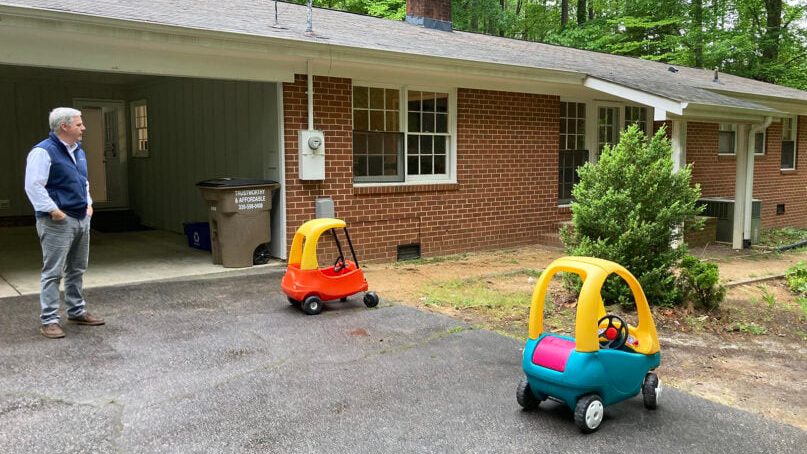
Randy Carter, pastor of Temple Baptist Church in Durham, North Carolina, standing outside a house for refugees.

Randy Carter, pastor of Temple Baptist Church in Durham, North Carolina, standing outside a house for refugees.

Christianity Today May 3, 2023
Courtesy of Yonat Shimron at Religion News Service

With the US withdrawal from Afghanistan nearly two years ago, religious congregations across the country began extending an embrace to refugees.

Partnering with resettlement agencies, they helped families escaping war and political turmoil settle into homes, find jobs, learn English and acclimate to life in the US.

Now, in a corner of North Carolina, a group of Baptist churches has begun to deepen that support by retrofitting vacant church-owned buildings—often homes—for refugee housing.

Organized through the Cooperative Baptist Fellowship of North Carolina but open to any religious congregation, a new initiative encourages churches to refurbish church-owned parsonages, office buildings, youth clubhouses, or single-family homes and make them available to refugees or humanitarian parolees for a nominal fee.

“It’s increasingly difficult to find affordable housing for refugees,” said Marc Wyatt, a missionary who founded the Welcome House Community Network. “Churches have physical property and buildings that are underutilized. Rethinking the use of those buildings for housing is our vision.”

Last Saturday, the network held its first housing and hospitality summit with 210 congregational leaders—mostly from North Carolina—wanting to learn more about how to use vacant church properties to minister to refugees.

The conference made plain twin realities: A glut of underutilized church properties and a severe shortage of affordable housing for newly arrived refugees with few means.

So far, about a dozen churches in North Carolina’s Triangle region, anchored by Raleigh, Durham and Chapel Hill, have retrofitted ancillary buildings for use by refugees. In all, about 40, including churches in Virginia, Tennessee and Texas, have joined the Welcome House network.

They include First Baptist Church in Hillsborough, which is housing a seven-member Afghan family in its parsonage, and Temple Baptist Church in Durham, which owns a ranch-style home a few yards away from its sanctuary where an eight-member family from Congo is now staying.

Churches typically charge the families $10 a day to cover the cost of utilities and otherwise provide hospitality and connection.

“A lot of (church) folks like to clean and prep the house,” said Randy Carter, pastor of Temple Baptist. “Some people like to work in repairs or on the yard. A small group of folks are more engaged with the family itself.”

Until recently, many of these church-owned homes had been used by pastors or foreign missionaries on leave. Increasingly, they have stood vacant.

The surge of refugee and humanitarian parole programs under the Biden administration has made affordable housing an urgent need.

Since he took office in January 2021, Biden’s administration has reversed Trump-era restrictions on immigration to the United States. The boost in refugee admissions includes some 300,000 Ukrainians who have arrived in the United States fleeing war with Russia, more than all the people from around the world admitted through the official US refugee program in the last five years.

The Welcome House churches partner with one of 10 US refugee resettlement agencies working to house the immigrants. Those agencies are often scrambling to provide affordable housing for refugees, most of whom come to the US penniless or after yearslong stays in refugee camps. The State Department typically provides only three months’ housing costs, and families must quickly find jobs to stay afloat.

“The rate of arrivals is faster than we can find long-term housing,” said Adam Clark, executive director of World Relief in Durham, one of the resettlement agencies working in North Carolina. “There has to be a temporary housing piece for this to work.”

Clark said some refugees are placed in an extended stay hotel or an Airbnb until housing is found. But those are expensive and they quickly exhaust the government’s minimal housing subsidy.

In most cases, church-owned properties are used on a temporary basis—up to 90 days—at which point the resettlement agencies typically locate to more permanent housing.

But some churches, such as Hayes Barton Baptist Church in Raleigh, which owns three residential homes near its church building, are also renting out properties to refugees on a longer-term lease.

Two of those homes are now occupied by refugee families—one from Morocco and one from Afghanistan (a third house is being renovated). The families pay rent at below fair market value, typically no more than 30 percent of the family’s monthly income.

“We have assets that are sitting here and there are people coming into our community that need housing,” said Kristen Muse, senior associate pastor at Hayes Barton Baptist. “Our congregation is a generous congregation and when they see the needs, they want to reach out and use what we have for the glory of God.”

Both families staying at Hayes Barton’s church homes are Muslim and do not attend church services. But the point of the housing is not to proselytize anyway, Muse said. Instead it’s to extend a welcome. One of the refugee children attends the church’s preschool, and the church keeps in touch and helps support the family as needs arise.

The initiative comes at a time when many older churches are rethinking how to repurpose unused buildings for the common good and at the same time cast a sustainable vision for the future.

Housing refugees is emerging as one solution—one that fits in with many churches’ larger mission of welcoming the stranger.

“How do we do what God wants us to do?” said Randall Austin, a member of First Baptist Church in Hillsborough, which started offering its parsonage to refugees nearly two years ago. “This is a tangible way.”

Theology

Getting Out of Bed Is an Act of Worship

Especially when you face the mundane burdens of enduring suffering while living with mental affliction.

Christianity Today May 2, 2023
Cottonbro Studio / Pexels

In 2 Corinthians 1:8, Paul confesses that at one point he suffered so much affliction that he “despaired of life itself,” which is a remarkable statement—and not the kind of declaration you would expect from one of the greatest apostles of Christ.

But despairing of life is a surprisingly common sentiment in Scripture. The prophet Elijah asks God to take his life (1 Kings 19:4). Job laments that he was not immediately “carried straight from the womb to the grave” (10:19). The preacher of Ecclesiastes (4:2–3) and the prophet Jeremiah (15:10) similarly wished they had never been born.

Whether the reason for such distress is religious persecution, personal loss, evil’s prevalence in the land, or the burden of being a prophet of God, despairing of life is not an abnormal experience.

We see similar trends today. According to the CDC, the rate of suicide among males aged 15–24 rose 8 percent in 2021, and according to Mental Health America, over 20 percent of adults are experiencing a mental illness.

There are several possible explanations for these rising rates of mental affliction—but for those who are suffering, there is a much more immediate question: Why get out of bed only to endure such mental misery?

While it may seem morbid to ask such a question, it’s necessary for us to have an answer.

Life is filled with joy and beauty, but at one time or another, each of us will face the challenge of mental suffering. For some of us, it will take the form of a diagnosed mental illness. For others, it will come in the form of life’s many travails. We do a great disservice to one another by recognizing mental suffering only when it has an official diagnosis.

But such anguish is bound to come at some point in our lives—even for God’s children, as Scripture shows us. Christians are not immune. And it may come to such an extent that we despair of life itself. When that day comes, we’ll need an answer. We’ll need to know why getting out of bed to face the day is worth it. Some of us will have to answer that question anew every day.

Thankfully we live at a time when the stigma of mental illness has been dramatically reduced, but I think most of us still suffer alone. It may be socially acceptable to share your mental health status on social media, but the intimate experience of suffering remains hidden. It is always your suffering, in your heart and head.

And I think a great many of us keep our pain locked up, not wanting to trouble the world with our problems. Even if you get help from mental health professional (which I highly recommend), the practitioner cannot make the choice to get out of bed for you. He or she can give you tools and medications to assist, but in the end it’s always you and God and the choice.

So, why get out of bed?

Even when it feels like a burden, your life is a gift from God—a gift he created and sustains moment by moment in an infinite act of love. The goodness of this gift does not depend on how we feel or what we experience. But our challenge is to live out that gift each day, even amid our mental suffering.

Rising out of bed to face the day and to bear the mundane burden of living with mental illness or facing the acute suffering of life’s troubles is an act of worship. It declares the goodness of life in defiance of the Fall. It is a spiritual act of presenting your body as a living sacrifice, pleasing to the Lord (Rom. 12:1).

Sometimes your mind and the world will lie to you. They will insist on the meaninglessness of life. They will insist that there is no joy, peace, or hope. And in such moments, we might cry out like Elijah, “I have had enough, Lord” (1 Kings 19:4). But rather than chastise Elijah for his weakness or lack of hope, the Lord sent an angel to feed Elijah in the wilderness.

That is the God we serve: a God who prepares a table in the wilderness for those who feel hopeless. And sometimes you find yourself at that table.

But when you choose to rise out of bed each day, you also set a table for your neighbor. You declare with your being and actions that life itself is good. Whether you like it or not, your life is a witness that testifies to the goodness of God. So, when we embrace our existence, we testify loudly to our neighbors, “Get up and eat” (1 Kings 19:7).

There is hope. God has not—he does not—forsake us.

For many of us, rising out of bed will at times take a herculean effort. But it is precisely in these moments when our witness is most profound. We take on the burden of mental affliction, because we know that at the center of our existence is not hopelessness and suffering but grace—God’s grace.

We act based on that grace even when our hearts feel only hopelessness. And when our neighbors see us rising up to affirm the basic goodness of life, they are reminded that their lives are good too.

Unfortunately, some of us will experience periods of such acute suffering that getting out of bed is unimaginable. In those times, we must come to rely on the help of others to carry us.

One of the most sacred acts of mercy we can offer is the willingness to lift one another up when we have lost all hope. This can come in the form of sending an encouraging text message or sitting with someone who is in despair—or even giving a hug.

And the grace you receive when one of your neighbors carries you will one day be transfigured into the grace you extend to others when they need to be carried.

Acknowledging the reality that all of us will suffer mentally at some point in life does not diminish the beauty of life. It is precisely in our moments of hopelessness that we can most powerfully testify to the beauty of life by getting out of bed.

One day the suffering will pass—maybe today, maybe tomorrow, but certainly in eternity with God. But for now, our duty is to live out the truth that our created existence was and is a loving act from a God of grace.

O. Alan Noble is Associate Professor of English at Oklahoma Baptist University and author of several books, including On Getting Out of Bed: The Burden and Gift of Living.

Theology

UK Coronation Remains Religious, Even if the Country Isn’t

With King Charles’s ceremony, Christians debate the theology of the monarchy and celebrate a unique opportunity for public witness.

Christianity Today May 2, 2023
Chris J Ratcliffe / Getty Images

Last year, a Washington Post journalist interviewed Ian Bradley, a professor of cultural and spiritual history here in the United Kingdom, about the accession of King Charles III to the throne. The reporter remarked, “For a country which is so secular and where so few go to church, you sure mention God a lot.”

It’s a fair comment. As monarch, King Charles is not only the head of state for the UK but also the Defender of the Faith (a title given to King Henry VIII by the pope in 1521 before the king’s famous break with the Roman Catholic Church) and Supreme Governor of the Church of England.

When he is crowned this week in Westminster Abbey, he will be anointed with holy oil by the Archbishop of Canterbury while the choir sings “Zadok the Priest,” an anthem used in every coronation since 973 that draws on the anointing of Solomon by the priest Zadok in 1 Kings.

“It is the coronation more than any other event that underlines the sacred nature of the United Kingdom monarchy,” writes Bradley in his book God Save the King: The Sacred Nature of Monarchy. “At their coronations kings and queens are not simply crowned and enthroned but consecrated, set apart and anointed, dedicated to God and invested with sacerdotal garb and symbolic regalia. Here, if anywhere, we find the divinity which hedges the throne.”

All of this will take place in a country in which, as a recent census revealed, fewer than half the population describe themselves as Christian. The Church of England’s own statistics suggest that just 1.5 percent of the population attend a weekly service, while a 2018 British Social Attitudes survey found that 43 percent of us “never or practically never” attend a religious service.

For many of the millions who watch the coronation on television, it will likely be the first church service they’ve observed in years, or possibly ever. Even those who do attend church will probably need to rely on the BBC’s commentary to comprehend exactly what is underway; for most of us, it will be the first coronation of our lifetimes.

It’s the “spectacle” that will matter to most people, suggests Linda Woodhead, the F. D. Maurice professor in moral and social theology at King’s College London. “They will enjoy the sense of tradition, the ritual.”

Westminster Abbey, the setting for every coronation since 1066, is home to the shrine to Edward the Confessor, a king made a saint by the pope in 1161. King Charles will be crowned in Saint Edward’s Chair, which dates back to 1300, and will receive regalia dating back to the 17th century.

There is plenty here to appeal to a society drawn to Game of Thrones, Harry Potter, and The Lord of the Rings, in which “the popular imagination is fed and touched by stories of chivalry, knightly derring-do, and mystical magic,” Bradley suggests.

Yet, at its heart, the coronation is a deeply religious ceremony. In fact, the UK’s is the only monarchy in Europe to retain a religious coronation. While the liturgy has evolved over the centuries, the key elements remain those from more than a thousand years ago, when in 973 two bishops walked King Edgar to the center of Bath Abbey to be anointed by Saint Dunstan.

An account of the service, which took place on Pentecost, was recorded by a monk in A.D. 1000. The congregation gathered, he explained, “that the most reverent bishops might bless, anoint, and consecrate him, by Christ’s leave, from whom and by whom the blessed unction of highest blessing and holy religion has proceeded.”

In King Charles’s coronation, he too will be presented to the people, who will show their support by declaring “God save King Charles.” He will take the oaths written for the 1689 coronation. He will be anointed by the Archbishop of Canterbury with holy oil symbolizing the pouring out of God’s grace in the Holy Spirit—a moment deemed so sacred that it will take place behind a screen.

https://twitter.com/RoyalFamily/status/1652219505488084995

He will then be bestowed with regalia: emblems of royalty that culminate in the crown. Those gathered will then pay homage to the new monarch before Holy Communion is taken.

For some in the UK, all this is simply derisory. When BBC Radio 4 recently discussed whether the anointing should be hidden from the television cameras, one prominent journalist suggested that this was “wonderfully silly.” Last year, the National Secular Society argued that the “overwhelmingly Anglican” traditions would be “deeply incongruent with the increasingly pluralist and secular society.”

The UK’s is the only monarchy in Europe to retain a religious coronation.

Yet polling does not indicate a popular outcry. A survey by the think tank Theos in 2015 found that fewer than 20 percent of people thought that a Christian coronation would “alienate” people of non-Christian faiths, or no faith, from the ceremony. Most thought that it should be Christian.

Exactly what is understood by this remains an interesting question. When Charlotte Hobson, a PhD candidate at Lancaster University, showed interviewees footage of the 1953 coronation before asking them about their views on the next one, she was struck that most of them didn’t perceive the ceremony as a religious event. She was left wondering whether it is the sense of tradition that people now view as sacred, even when they no longer recognize its religious roots.

Establishment and entitlement

Among the oaths that King Charles will take is a vow to “maintain and preserve inviolably the settlement of the Church of England, and the doctrine, worship, discipline, and government thereof, as by law established in England.”

It’s a reminder that we are a country with an established church, with the monarch serving as its supreme governor since Henry VIII’s break with the Catholic church in the 16th century. Clergy in the Church of England take an oath of allegiance to the sovereign. The separation of church and state, so fundamental to the United States constitution, remains “an alternative vision” in the UK, as Baptist theologian Nigel Wright wrote in a recent article.

For Stephen Backhouse, this is a settlement that requires theological scrutiny. As a lecturer in social and political theology at St. Mellitus, a large theological college in England, he increasingly found working for the Anglican Church “untenable,” he says, citing Jesus’ directive against oath taking and binding yourself to earthly principalities.

With a doctoral thesis on Kierkegaard’s critique of Christian nationalism (a CT book award winner), Backhouse regards the Church of England as “fundamentally a nationalist church” and believes the religion that King Charles will pledge to uphold “bears very little resemblance to the New Testament Jesus movement.”

He sees the coronation as a “huge nostalgic exercise” for Christians who grieve for a time when “Christians were in charge,” the equivalent of American Christians who revere the flag or the Constitution. “Underneath it is the deeply engrained entitlement to rule the culture.”

The separation of church and state remains “an alternative vision” in the UK.

Backhouse recommends applying the “Martian test” to the service. “If a Martian was watching the coronation service, you’d ask them what [they would] learn about English religion. And they’d say, ‘Well, it looks like they worship the king.’ And I’d say, ‘Yeah, you’re right.’”

Even some who take the oath of allegiance have their qualms. A former bishop in the Church of England, Pete Broadbent, describes himself on Twitter as a “Republican” (anti-monarchist). Jarel Robinson-Brown, a young priest and a citizen of both Britain and Jamaica, called the oath “a necessary compromise for me to fulfill the call God had placed on my life.”

His relationship with the monarchy is colored by the history and legacy of the British Empire.

“The symbolism of a leader who submits to God and who on behalf of God quietly governs God’s people can be hugely powerful, but the idea that God sanctions earthly power is troublesome,” said Robinson-Brown. “It feels like the perpetuation of an imperialist anti-Black power to see a monarch crowned in a country that has failed to deal adequately with its past, in a Britain which has less and less reason to be called ‘Great.’”

For him, the most powerful part of the service is the giving of the ceremonial sword, with the instruction to “do justice, stop the growth of iniquity, … [and] help and defend widows and orphans.”

For some Christians, the coronation is an opportunity for mission, a chance to awaken the latent religiosity of the British people. Hope Together, a charity dedicated to evangelism, produced a series of resources suggesting that the coronation is “an ideal time for us as the church to point to the kingship of Jesus, the ultimate King of Kings.”

Since Easter, the Church of England has been releasing daily prayers, encouraging prayer for the king and queen, the royal family, and the nation. How far these will gain traction is difficult to say. In his book Coronation, the historian Sir Roy Strong notes that the archbishops of the 20th century all saw the coronation as “a vehicle whereby to bring spirituality back to the people,” adding that “it was a quest which ended in failure.”

Loving service

Perhaps one challenge is that the theology of monarchy is so rarely explored in our churches. If you attend a Church of England congregation, you will be used to praying for monarchs but probably less familiar with the theological justifications for their existence. At a recent lecture, Jamie Hawkey, canon theologian at Westminster Abbey, observed that there was no “clear-cut doctrine of monarchy in the Bible.”

When the people of Israel requested a king, Samuel was “displeased.” God declared, “They have rejected me as their king” and asked him to convey a warning about the tyranny that may follow (1 Sam. 8:6–9). And what about Jesus’ topsy-turvy hierarchy in which the first shall be last and the last first? How do we square that with a ceremony featuring priceless jewels, in which the great and the good of the land pay homage to a man born into the country’s social elite?

Ian Bradley argues that the Old Testament presents kingship as the “divinely appointed answer” to chaos, based on a “three-way covenant between God, king, and people.” When the congregation at Westminster Abbey shouts “Long live the king!” they will be echoing what the Israelites uttered when Saul was presented to them (1 Sam. 10:24).

Throughout history, both monarchs and the church leaders who served them have sought to draw on Old Testament models of royalty. When Edward VI was crowned at age nine, the then Archbishop of Canterbury, Thomas Cranmer, is believed to have compared him to Josiah in the Old Testament: a young ruler bringing vital religious reform.

When it comes to the New Testament, Bradley acknowledges that Jesus’ kingship might seem to render human kings “redundant, or indeed idolatrous.” For some Christians, particularly those with more left-wing political views, the royal family is emblematic of inequality in the UK.

Bradley suggests that, rather than rejecting the institution of monarchy, Jesus established a new model for it, “patterned on his own royal attributes of righteousness, justice, mercy, wisdom, peace, humility, and sacrificial service.”

Perhaps the strongest impression the late queen made was as a public servant—steadfastly, even sacrificially, performing her duty through a seemingly relentless schedule of visits. It’s an idea that the current king and the Church of England are keen to emphasize. When members of the press were introduced to the liturgy for this week’s service, they were told that the “overarching theme” would be that of “loving service,” in emulation of that offered by Jesus.

In a break with tradition, a young chorister will welcome King Charles to the abbey “in the name of the King of kings,” to which the king will reply, “In his name, and after his example, I come not to be served but to serve.”

The code name for the planning of the current coronation was the “Golden Orb.” It’s a reference to the spherical object bestowed upon the monarch with the instruction: “Receive this Orb, set under the Cross, and remember always the kingdoms of this world are become the kingdoms of our Lord, and of his Christ.”

Evangelicals and ‘every conviction’

Before King Charles’s vow to “maintain and preserve” the church, Archbishop of Canterbury will explain the church’s modern understanding of this committment: that the Church of England will “foster an environment in which people of all faiths and beliefs may live freely.” The king will pray aloud, asking God to grant “that I may be a blessing to all thy children, of every faith and conviction.”

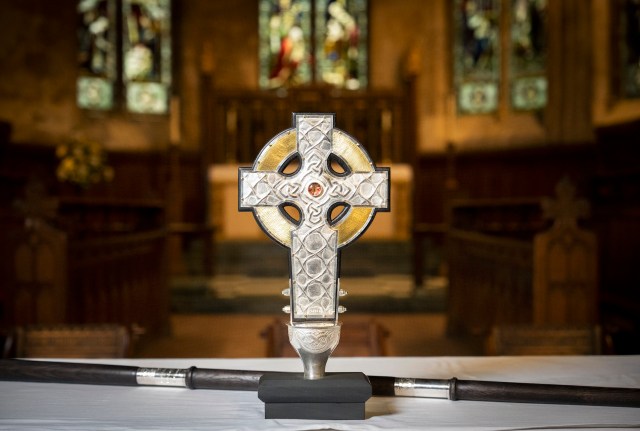
A visible sign of rapprochement will be the newly made Cross of Wales, incorporating fragments said to be from the cross on which Jesus was crucified, used in the procession.

The Cross of Wales will lead the coronation procession at Westminster AbbeyChristopher Furlong / Getty Images
The Cross of Wales will lead the coronation procession at Westminster Abbey

The fragments were a gift from Pope Francis—a gesture that would have been unimaginable to some of King Charles’s antecedents. Among the church leaders who will pronounce a blessing on the king will be the Roman Catholic Archbishop of Westminster.

But what of evangelicals, including those outside the Church of England? In the 19th century, one nonconformist contrasted the Old Testament coronation of Rehoboam, conducted with “no bishops … in a quiet, religious manner, and with as little expense as possible” with the “silly, childish, contemptible ceremonies that are practiced in modern times.”

In a reflection for Baptist Times last year, theologian Nigel Wright quoted Thomas Helwys—one of the founders of the first Baptist congregation on English soil and a champion of the separation of church and state—who argued that, “The King is a mortal man, and not God, therefore he hath no power over the mortal souls of his subjects to make laws and ordinances for them [in religion] and to set spiritual Lords over them.” Helwys died in prison in 1616, a victim of religious persecution under King James I.

George Gross, a research fellow at King’s College London and an expert on the history of coronations, suggests that while some may have been “uncomfortable with elements of the service,” evangelicals have historically been able to make their peace with it.

“The Protestant world bought into the service less perhaps because of the service itself but more because this was trumping the Roman Catholics,” he explains. He also points to evangelical influences over the centuries, from the presentation of the Bible to the monarch, to a focus on having it in English rather than Latin—a central tenet of the Reformation here in England—and the prominence once given to the sermon.

Today, there’s a sense among Baptists “that our Englishness, our Britishness, is tied up with the monarchy,” said Andrew Goodliff, lecturer in Baptist history at Regent’s Park College, University of Oxford. “I don’t think there is generally a massive feeling that we want to undo that.”

Baptists would still hold to the principle of separation of church and state championed by Helwys, he said. But he’s not aware of a “groundswell voice or noise around disestablishment. I think that perhaps reflects where we are as a nation now, that any sense of public witness … I think Baptists will be supportive of.”

Change and continuity

While it would be an exaggeration to say that the nation is in a state of pitched excitement around the coronation (a recent YouGov poll found that 64 percent of people didn’t care about it much, if at all), there remains broad support for the monarchy. Around two-thirds believe that it should continue, a figure that is even higher among practicing Christians.

In Charles III, the UK will have a king vocal about his own Christian faith and interest in all matters spiritual. In his first Christmas speech, he described visiting the Church of the Nativity in Bethlehem, telling the nation, “It meant more to me than I can possibly express to stand on that spot where, as the Bible tells us, ‘The light that has come into the world’ was born.”

His commitment to Christianity and its ties to the Holy Land is evident in another innovation to the coronation service: The holy oil used in the anointing was created using olives harvested from the Mount of Olives and consecrated at the Church of the Holy Sepulchre in Jerusalem.

Other changes to the service point to a keen desire to acknowledge how different society is from the one that greeted his mother 70 years ago. The Times newspaper has hailed this coronation as “a beacon of inclusion and diversity.” Faith leaders from different religions will join in the procession into the abbey.

The first Bible reading will be given by Prime Minister Rishi Sunak, a Hindu, while many of the precious items bestowed on King Charles will be presented by members of the House of Lords from other faith traditions. Also presenting will be the Bishop of Dover, Rose Hudson-Wilkin, the Church’s first Black woman bishop, who grew up in Jamaica.

Change is in the air, but so is continuity. More than a thousand years since King Edgar was crowned, we will watch a monarch swear to uphold the law with justice and mercy.

It’s a tradition we shouldn’t hold lightly, historian George Gross suggests. “To have them do that when we’ve got war on European soil, where rulers are breaking the rule of law, I think speaks volumes about British tradition,” he says. “I think for a monarch to swear to that is still something relevant in the 21st century, even when you’ve got what is a very medieval service.”

He suggests that marriage is a useful model for those seeking to understand the ritual. “There are vows; there is a ring. … And it is witnessed by the people and by God. You’ve got this sense of contract or covenant. … Before anything else happens, the audience is asked, ‘Do you recognize this person to be king or queen?’ Now at no point in history has anyone said, ‘No! Bring me another one!’ But it’s still important it happens, that they are asked.”

For the first time in history, the invitation to welcome the king will be extended worldwide. Where once it was the Peers—the social elite—who were invited to pay homage, the 2023 coronation will introduce the “Homage of the People.” The Archbishop of Canterbury will invite everyone in the abbey, and all those watching and listening around the world, to declare that they will “pay true allegiance” to King Charles.

It’s a recognition of a point made by Alfred Blunt, a bishop in the 1930s, who observed that “far more important than the King’s personal feelings are to his Coronation, is the feeling with which we—the people of England—view it. Our part of the ceremony is to fill it with reality, by the sincerity of our belief in the power of God to over-rule for good our national history, and by the sincerity with which we commend the King and nation to his Providence.”

Gross observes, “If people don’t buy into the thing, if they don’t tune in to watch and if at the end of if they don’t feel anything, then it just won’t have worked.”

There are those who are confident that Britain will feel something. Ian Bradley, for example, believes that today “the emotional and experiential are valued as much as the rational, and the importance of symbol, ritual, mystery, and magic is being rediscovered and reaffirmed.”

There are others for whom it will raise centuries-old questions about power and the church’s relationship to it. And there will be plenty who tune in, with a cup of tea, to see the Crown Jewels sparkle.

In the meantime, many Christians will continue to pray for our new king, in the knowledge that when a church sings “Veni Creator Spiritus” (Come, Creator Spirit), as every coronation choir has since the 14th century, nobody really knows what’s going to happen.

Madeleine Davies is senior writer at the Church Times in London and author of Lights for the Path: A Guide Through Grief, Pain, and Loss.

News

Religious Freedom Violations Go West

Annual watchdog report expands to Latin America, continues to cite China, Iran, and Saudi Arabia among 28 nations restricting minority faiths.

Riot police prevented Nicaraguan bishop Rolando Alvarez from leaving a church building in Matagalpa to preside at a mass as part of a “prayer crusade” on August 4, 2022 following the closure of several Catholic media outlets and allegations of harassment.

Riot police prevented Nicaraguan bishop Rolando Alvarez from leaving a church building in Matagalpa to preside at a mass as part of a “prayer crusade” on August 4, 2022 following the closure of several Catholic media outlets and allegations of harassment.

Christianity Today May 2, 2023
STR / AFP via Getty Images

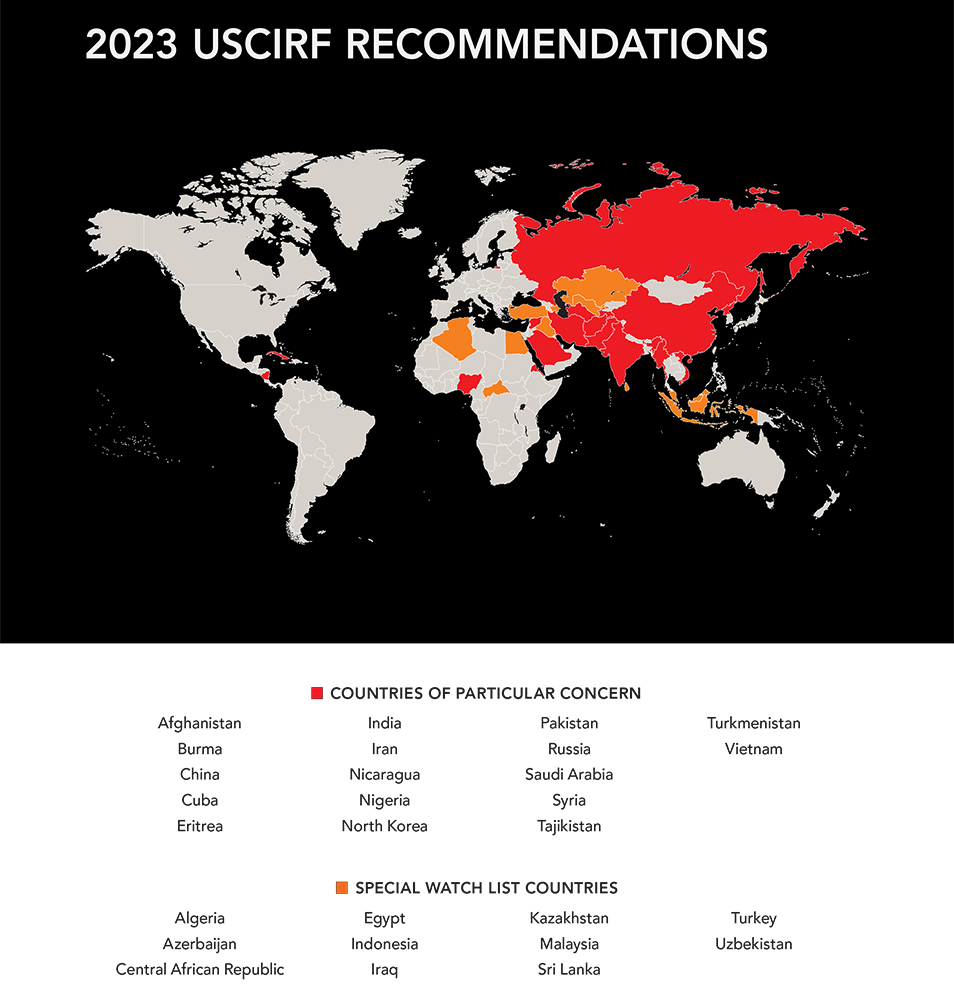
While longstanding offenders in Asia and the Middle East remain epicenters of persecution, Latin America and Europe occupy more space in an annual chronicle by the US Commission on International Religious Freedom (USCIRF).

For the first time, Cuba and Nicaragua are labeled Countries of Particular Concern (CPC), according to the independent watchdog. Its 2023 report also makes special mention of the religious rights of indigenous communities in Mexico, Chile, and Colombia. And France, Germany, and Ukraine are highlighted as examples where minority believers have suffered for their faith.

The report’s greatest emphasis, however, is monotonously familiar.

The commission recommends the US State Department relist Burma (Myanmar), China, Eritrea, Iran, North Korea, Pakistan, Russia, Saudi Arabia, Tajikistan, and Turkmenistan as CPCs, in addition to Cuba and Nicaragua. Afghanistan, India, Nigeria, Syria, and Vietnam were recommended for additional designation.

Violations in these nations are “systematic, egregious, and ongoing.”

USCIRF chair Nury Turkel highlighted Iran in his opening remarks. The nation brutally represses its minority communities, he said, and this past year cracked down on protestors peacefully demonstrating against mandatory hijab laws.

Mahsa Amini, who died in custody, was the feature image of the 2023 report’s cover.

“USCIRF is disheartened by the deteriorating conditions for freedom of religion or belief in some countries,” said Turkel. “We strongly urge the Biden administration to implement USCIRF’s recommendations.”

These include listening to the independent commission.

The report expressed “great disappointment” that India and Nigeria were not included in the State Department’s designations last December. Nigeria has been recommended since 2009, and was briefly designated a CPC by the Trump administration in 2020 before being removed by the Biden administration the following year. Syria has been recommended since 2014, India since 2020, and Afghanistan since 2022.

But USCIRF praised President Joe Biden for elevating the two new Latin American offenders, which the commission had labeled as Special Watch List (SWL) nations since 2004 and 2019, respectively.

This year, Sri Lanka was added for the first time as a SWL nation, with Azerbaijan, Egypt, Indonesia, Iraq, Kazakhstan, Malaysia, Turkey, and Uzbekistan additionally recommended to the State Department. Algeria and the Central African Republic were confirmed in their current SWL designation. (USCIRF takes no position on Comoros, a current SWL nation.)

Violations by these 28 nations collectively occupy 56 of the report’s 98 pages.

Some pastors say Operation Rescue’s long-running protests have sparked revival in the city’s evangelical churches.A sign greets travelers heading south through America’s heartland into Wichita, Kansas: “Visit Wichita, a beautiful surprise.” But when Operation Rescue (OR) accepted the city’s invitation this summer, its citizens and churches experienced a real shock. They may never be the same.Wichita provided an ideal target for OR’S “Summer of Mercy” campaign, an effort to close down the city’s three abortion clinics, including one run by Dr. George Tiller. One of the largest providers of abortions in the country, Tiller advertises his clinic nationally, offering what many doctors refuse to perform: third-trimester abortions. During more than six weeks of protest, some 2,500 were arrested, as the campaign gained national media coverage.But what started on July 14 as a campaign against abortion in the city has become much bigger than that, say local church leaders.Signs Of Revival“There is a sense of revival in this town like I have never seen before,” says Joe Wright, senior pastor of Central Christian Church, an evangelical congregation of about 1,600.Wright chooses his words carefully. But he and others point to a crucial meeting as evidence of renewal among many of Wichita’s 500 churches: the gathering of more than 80 evangelical pastors—prompted in part by a sense of shame and repentance for not opposing abortion more actively prior to OR’S arrival—for two days and a night of prayer and fasting.Many of the pastors had never before talked, much less prayed, together. In fact, the pastors say, Kansas is the only U.S. state never to host a Billy Graham crusade, mainly because of an inability to get churches to work together.But the picture was different last month in the small convention room at the Wichita Plaza Hotel. There, pastors of churches with over 1,000 members knelt with leaders of country congregations from Wichita’s outskirts. Visitors sensed a solemnity in the room as many pastors wept together in prayer.“There was repentance like I’ve never seen before, …” says Wright. “I think it will stick.”Moreover, in a city of 300,000 long considered to be racially divided, four black pastors participated in the gathering, and members of the group confessed sins of racism to one another.“We still have some moral problems in this city that need the total attention and leadership of the pastors,” says Gene Williams, senior pastor of First Church of the Nazarene. Following the prayer meeting, the pastors’ group published a written statement and promised regular gatherings and efforts to change Wichita.Williams, like Wright, has reservations about some of OR’s methods. But he also sees revival in what is happening. “It is almost like an alarm went off,” he says. “They [OR] awakened a sleeping giant. For that, I am grateful.”The change in Wichita’s spiritual climate came slowly over about a month. Just about two weeks after OR came to town, pastor Michael Leichner stood before some 300 worshipers gathered on Sunday at his Assemblies of God church in Maize, a small farm town several miles outside Wichita. “I’m against breaking the law!” he said, and the place erupted in “Amens!”Leichner and his church were, like most of the evangelical churches in Wichita, being forced to face abortion in a new way. But they were undecided about civil disobedience.Two Wednesdays later, after being with the pastors, Leichner returned to his pulpit on a Wednesday night with a new report. “God is using OR,” he said, again prompting a hearty “Amen!” Leichner and other pastors now say that even those pastors and laypeople who don’t agree with their tactics owe OR a debt of gratitude.“When you can get the Baptists and the Presbyterians and the Nazarenes and the Pentecostals and Assemblies of God all together in the same room, something is going to happen,” Leichner told his congregation. “God is doing some miraculous things!”Behind The ScenesAt press time, as the campaign was finishing its sixth week, both rescuers and court officials were stepping up their activities. Prolife demonstrators began forcing their way through gates to block clinic entrances. And organizers were planning what they hoped would be the largest prolife rally in the history of Kansas, featuring several prominent Christian musicians who had volunteered to perform.At the same time, federal Judge Patrick Kelly ordered the arrest of OR leaders: Spokesman Pat Mahoney was arrested as he arrived in Wichita’s airport, and national president Keith Tucci was taken into custody as he finished an interview at a local Christian radio station.Beyond the media spotlight, however, there were other surprising elements to the Wichita story.• When Larry Weber, an evangelical Christian and manager of the Wichita Plaza Hotel, offered OR cut rates, the organization virtually turned the Plaza into its campaign headquarters. At one point, Weber said, Wichita’s city manager threatened him with arrest for “conspiracy to break the law” by renting rooms to OR. But he defended his actions by saying he had handled OR as he would any other convention.Out-of-town rescuers occupied from 60 to 120 rooms a night. For more than 30 straight nights, 600 to 800 people gathered in one large convention room for worship, prayer, and pep talks.• For the eight years Linda Hale has run the local Pregnancy Crisis Center, she has never been able to maintain more than eight to ten trained sidewalk counselors, who attempt to dissuade women from entering abortion clinics and to keep their babies. But a few weeks after OR’s arrival, OR leaders invited locals who wanted to learn to be sidewalk counselors to a church for an evening training session. Hale arrived a little late.“Over my shoulder was the sanctuary, and I could hear praise and worship going on,” she recalls. Thinking the crowd inside was a church service, she asked a friend where the trainees were. The friend pointed to the sanctuary. “When I walked through those doors, I stood weeping and weeping,” Hale says. An estimated 250 had signed up for training.• Caught in the center of the controversy is Reformation Lutheran Church (ELCA), which Dr. Tiller attends. His daughter was married there on August 10, during the height of the antiabortion protests. Among the 300 people present were plain-clothes police and security guards.Joel Thomas Schmalz, one of two pastors at the church and a self-described “evangelical conservative” who is “prolife,” says Tiller does not seem to be “experiencing stress or strain” from the protest.However, the issue has stirred the congregation. One Wednesday-night church meeting was disrupted by about 12 prolife demonstrators, who began preaching against abortion. In the long run, however, Schmalz says OR’s presence has gotten church members on both sides of the issue talking and could promote better understanding among members.As for Tiller, says Schmalz, “There is no way that I could question the sincerity of Dr. Tiller’s Christian faith. He and his wife and children are active and well-informed theologically.”Or RevitalizedThe long-running protest in Wichita has effectively thrust Randall Terry and Operation Rescue back into the national debate on abortion. In early 1990, mired in debt after losing a court battle with the National Organization for Women, Terry shut down OR’s national office in Binghamton, New York. Some thought the group was out of business for good. (CT, Mar. 5, 1990, p. 32).But OR reorganized, keeping a small national office and emphasizing local and state affiliates. They decided to try a new strategy, concentrating all their energies and numbers on stopping the abortion industry in one town. As ORsees it, it has been a staggering success.Terry and other OR leaders have been thrust into the media spotlight, and they were heartened by an opinion from the U.S. attorney general’s office that questioned Judge Kelly’s handling of the Wichita case.Nevertheless, OR has garnered critics in Wichita. A second group of about 23 local pastors, primarily from mainline churches, issued its own statement denouncing OR’s methods and saying OR’s opposition to abortion “does not define the Christian religion.”A poll taken by the Wichita Eagle in August reported that 60 percent of respondents from 483 households “strongly disagree” with OR’s methods, compared to about 12 percent that “strongly support” them. The poll said 30 percent of Wichita residents believe abortion should be legal “under any circumstances,” and 57 percent support abortion “under certain circumstances.” Almost 62 percent said their opinion was strengthened in favor of “abortion rights” due to OR’s presence.Terry and other OR leaders say that while changing people’s opinions about abortion is important, it has never been their primary goal. That goal, they say, is “saving preborn babies,” and they cite, as of August 12, 27 women who they say were persuaded to carry their pregnancies to full term.Terry adds that as the abortion fight goes from the federal courts to the state level, OR plans to conduct more campaigns like the one in Wichita. As for revival in Wichita, Terry says, “It is too early to say what will happen.… This could be looked at as a major turning point in church history in America, or it could be just a blip on the screen. Part of that depends on us.”By Joe Maxwell in Wichita, Kansas.Mayor in the Middle
Few have felt the heat of Wichita’s summer like Mayor Robert Knight. A United Methodist evangelical who lists Billy Graham and Francis Schaeffer among his heroes, the 50-year-old official is in charge of the police force that has made more than 2,500 arrests. And in part, he is responsible for the two-day pastors’ prayer meeting spawned by the antiabortion protests that some say could be the beginning of revival in the city. Some of the pastors initially visited Knight, and he urged them to call other pastors together.


Others in Wichita, however, including the local newspaper, have criticized Knight as being unable to enforce law and order due to his personal views. Knight disagrees.


“I have sworn to God to uphold the laws of this land and nation,” he says. “It is my view that the laws have to be enforced in a civil way. I’ve gotten criticism for that.”


Instead of using several officers to haul individual “rescuers” off, in most cases Knight has allowed the rescuers to take “baby steps” to a police bus, during which police walk with those being arrested and process them. Knight says the procedure assures no officer or protester will be hurt.


The long-running abortion protest in his city is not the first moral battle Kansans have known, Knight says. The state helped stem the tide of slavery in the mid-1800s. Slavery proponents from Missouri faced off against New England abolitionists who migrated to Kansas in a precursor to the Civil War.


“There is a strong moral wind that blows through our state,” he says. “I believe that that is our strength.”


Like many others in the church community, Knight believes his city may be on the brink of revival. “If you were to have suggested to some of these pastors five weeks ago that they would be saying and participating in some of the things they are today, they would have said, ‘You are mad.’ ”

Created by the 1998 International Religious Freedom Act (IRFA), USCIRF credited the Biden administration for continuing to prioritize religious freedom around the world.

In March 2022, the State Department imposed additional sanctions on Myanmar after determining the Southeast Asian nation committed genocide against the Muslim Rohingya people. In April, Biden signed into law the permanent reauthorization of the Global Magnitsky Act, providing government authority to sanction individuals for their human rights violations. And in September, the heightened admissions cap for refugees was maintained at 125,000, with special Temporary Protected Status given to Afghan nationals living in the US.

USCIRF asked the Biden administration to further strengthen such commitment.

One example given was waivers to sanctions. Though designated as CPCs, Pakistan, Saudi Arabia, Tajikistan, and Turkmenistan received no consequence for their violations against minority faiths.

USCIRF also asked Biden to appoint a religious freedom expert to the National Security Council, as demanded by the IRFA. The commission also requested an assessment of transnational repression, with China, Iran, Saudi Arabia, and Uzbekistan listed as offending nations that monitor and restrict their citizens’ freedom abroad. And of Congress, it recommends passage of the 2022 bipartisan Stop Helping Adversaries Manipulate Everything (SHAME) Act, prohibiting lobbying on behalf of foreign adversaries.

China was specifically identified, the only listed nation receiving additional comment in its country section. All nine commissioners compared Beijing today with the Soviet Union at the height of the Cold War, calling it “unthinkable” any reputable US firm could take the communist nation as a client.

Of Russia today, the atrocities in Ukraine have only made its religious freedom record worse. Local religious leaders who failed to back the invasion were forced to flee, while at least 15 Ukrainian clerics were kidnapped and 20 killed in the first six months of the war. And the United Nations has documented over 100 religious sites damaged in the fighting.

But the report did not spare Ukraine either, nor other allied European nations.

USCIRF spoke of “serious concern” that Kyiv might ban the Orthodox church ecclesially linked to Moscow, despite its pronouncement of spiritual autonomy. France and Switzerland banned the Muslim hijab in certain locations. And Germany, Spain, and Italy were cited for incidents of vandalism against minority faiths.

But of the Western Hemisphere, the report spoke of threats to the “holistic nature” of indigenous belief through the appropriation of ancestral lands and the extraction of natural resources. Yet traditional leaders were also guilty of violating the religious freedom of individuals in their communities when they exhibit faith commitments outside the majority structure.

At the state level, such violations demanded CPC status for Cuba and Nicaragua. In the former, conditions worsened considerably as the Caribbean island’s communist government sought to impose “total dominance” over religious life. And the latter’s designation derived from the Central American nation’s autocratic turn and increased repression against its Catholic church.

But not all violations come from state actors. USCIRF recommended the redesignation of seven Muslim groups—al-Shabaab, Boko Haram, Hay’at Tahrir al-Sham, the Houthis, Islamic State in the Greater Sahara, Islamic State in West Africa Province, and Jamaat Nasr al-Islam wal Muslimin—as Entities of Particular Concern.

Yet Muslim nations were also praised along with countries in Europe and Latin America that made strides against antisemitism—efforts that comprised the only positive theme in this year’s report. USCIRF highlighted the United Arab Emirates, Argentina, and Bosnia, among others, for various steps taken to combat the otherwise alarming resurgence of antisemitism around the world.

But American leadership, however insufficiently, remains attentive.

“Throughout the past year, the US government continued to condemn abuses of religious freedom and hold perpetrators accountable,” said Abraham Cooper, USCIRF vice chair. “We urge Congress and the executive branch to implement the recommendations in USCIRF’s 2023 Annual Report, to further advance this universal, fundamental human right.”

News

Khartoum Churches Damaged as Sudan Descends Closer to Civil War

As foreigners evacuate, Sudanese Christians remain caught in the crossfire of rival generals.

Smoke rises in Khartoum, Sudan on May 1 as clashes continue between the Sudanese Armed Forces and the paramilitary Rapid Support Forces (RSF).

Smoke rises in Khartoum, Sudan on May 1 as clashes continue between the Sudanese Armed Forces and the paramilitary Rapid Support Forces (RSF).

Christianity Today May 2, 2023
Ahmed Satti / Anadolu Agency / Getty Images

Sudan’s most Christian neighborhood is under attack.

Collateral damage amid severe clashes between the army and its previously partnered militia, churches in the Bahri district of the capital Khartoum and surrounding areas have witnessed the worst of the past three weeks of fighting.

The Evangelical Presbyterian church suffered a fire as munitions exploded in a nearby market. The Coptic Orthodox church was struck by a rocket. And All Saints Anglican Cathedral was occupied by militant forces.

Over 500 people have been killed, with more than 4,000 injured.

“The situation is very serious,” said Ismail Kanani, general secretary of the Sudanese Bible Society. “I am trapped in my house, without power and water.”

Prices for food and fuel are skyrocketing, electricity supply has been cut off in much of the capital, and hospitals have been looted and are barely operating. A three-day truce has been agreed—and violated—to allow civilian escape and embassy evacuations.

Almost all Christians have left the area, said Abdalrahim Musa, director of the Evangelical Cultural Center of the Khartoum Presbyterian church. An eyewitness to the carnage, like many other Christians he fled three hours south to Wad Madani, an area relatively distant from the conflict.

But in their absence, he hears reports of widespread looting of their properties.

They are not the only ones displaced. More than 100,000 people have fled Sudan, according to the United Nations, with an additional 334,000 displaced within the country.

Foreign governments have frantically sought to evacuate their citizens. Under cover of armed drones, the US organized a land convoy for 300 Americans and other nationalities to the Red Sea city of Port Sudan. From there, many board a boat to Saudi Arabia for relocation elsewhere.

It is more difficult for Sudanese—and sometimes exploitative. One family stated it was stuck at the Egyptian border, unable to pay the $40,000 fare demanded for crossing.

While there is no collected list of Christian casualties, three family members of the guard at Musa’s center were shot in the head, presumably caught in the crossfire. Two children from his church were also killed, as was his elderly Orthodox neighbor.

Also a professor of New Testament at Nile Theological College (NTC), Musa mourned the passing of three members of his seminary student’s family, who died when part of their roof collapsed upon them, hit by a mortar shell.

Fighting began on April 15, but had been months in the making.

A once-promising popular revolution deposed the three-decade autocratic rule of president Omar al-Bashir in 2019, ushering in a democratic transition. A joint military-civilian sovereign council was established, which oversaw removal of Islam as the state religion and repealed the death penalty for apostasy.

But in 2021, General Abdelfattah al-Burhan and his vice president, Mohamed Hamdan Dagalo, leader of the Rapid Support Forces (RSF), deposed the civilian prime minister in a coup. Demonstrations exploded again, as the international community froze its promised financial assistance.

An already struggling economy collapsed further, with aid groups providing humanitarian support to one-third of the population of 46 million. But in late March, civilian parties signed a new framework agreement to re-establish the democratic transition, with power pledged to transfer by early April.

Negotiations postponed the final agreement a few days, and then indefinitely. The sticking point was military reform, with Burhan intent on integrating the RSF—Bashir’s former personal guard—into the regular army within two years. Dagalo insisted on ten.

And then the clashes started.

Both forces have over 100,000 fighting members, with the army superior in air power, bombing RSF urban encampments. But the RSF is more battle tested, having served as a mercenary force in Yemen, and has bases spread throughout Sudan.

“Once you leave your house,” stated an anonymous Open Doors research expert on East Africa, “you're not sure whether you can come back alive.”

A Sudanese, the expert related that Christians previously had cautious hope that their situation would improve, but are now fearful of another religious dictatorship.

Dagalo has tried to position himself accordingly.

“We are fighting against radical Islamists who hope to keep Sudan isolated and in the dark, and far removed from democracy,” he tweeted. “We will continue to pursue Al-Burhan and bring him to justice.”

Following their partnership in the coup, Burhan sidelined or arrested democratic activists, while repopulating the governing infrastructure with Islamist bureaucrats from the Bashir era.

But Dagalo’s democratic credentials are also to be doubted, as the RSF is reported to have led the intermittent but steady crackdown on demonstrations. The most egregious assault killed over 100 people in 2019, as reformists called for both military men to be held accountable.

Both were also active in Darfur, where war crimes led to Bashir’s indictment by the International Criminal Court. And each has international ties in a larger geopolitical struggle for influence in east Africa.

“Christians do not trust either side,” said Musa. “Their real fear is a return to the recent history of violations against their rights and properties.”

He identified both figures as part of the old regime. But Dagalo’s violations extended also to Christian areas in the southern Nuba Mountains, he said. And Burhan rose to power on the back of the popular uprising, but undermines it through his reliance on the religious power base of Bashir.

But one Christian leader, requesting anonymity, has a preference.

“Both are rejected,” he said. “But in the event of the victory of the Sudanese army, the Islamic movement will return to power.”

Aida Weran sees it as a false choice.

“Both generals are two faces of the same coin when it comes to implementing root Islamic rule,” said the NTC academic officer, who has relocated to the nearby city of Omdurman. “But ultimately, religion is just a superficial means of manipulating citizens for greater economic and political control.”

On the whole, said the Open Doors source, Christians lament there is no civilian partner. Whoever wins from the military will be unlikely to back improvements to religious freedom and human rights, while Islamists are taking the opportunity to preach the evils of democracy in favor of sharia law.

“Unless the military are told to go back to their barracks and leave the administration of civilian government,” he stated, “the situation in Sudan will not improve soon.”

The Association of Evangelicals in Africa is “deeply concerned.”

“We believe in the power of prayer,” read its joint statement with the World Evangelical Association (WEA), “and urge the church to intercede for Sudan during this difficult time.”

But whatever the Islamist protestations of the combatants, Noha Kassa said there is no religious element to this struggle. The deacon at Bahri’s Evangelical Presbyterian Church joined the WEA and the World Council of Churches in their emphasis on prayer, offering her own.

For the families displaced from their homes, unable to return.

For the sick and injured who cannot find medical care.

For the poor and those trapped inside, lacking food.

For those who lost a loved one, to have God’s comfort.

“Pray for all of this to stop soon,” said Kassa. “And for all who have lost hope, that they might find it again.”

One source spoke of three evangelical schools, providing emergency shelter.

“The church is not prepared for such disasters,” he said. “We hope that the global church will continue to pray for Sudan.”

For now, Christians feel under pressure. Musa asks for international organizations to help rebuild the churches. Kassa asks God for life to return to normal. For his part, Kanani reflects upon Galatians 6:10, and asks for prayer that is mindful of all.

His wife and son made it to Cairo. He remains behind in a safe location.

“War does not differentiate between the people,” Kanani said. “Please continue to pray for the people of Sudan—especially the Christians.”

Church Life

Our Aging Politicians Are a Warning to the Church

Trusting the next generation to take our places is an act of faith.

Christianity Today May 1, 2023
Illustration by Mallory Tlapek / Source Images: Getty

This piece was adapted from Russell Moore’s newsletter. Subscribe here.

Sitting in the coffee shop, I overheard two women at the next table talking politics. I expected to hear the typical red versus blue partisan talking points, but I was wrong. They were talking about age. “I don’t ask for much,” said one woman with a sigh. “I just hope whoever’s hand is on the Bible at the end of it all isn’t wearing a MedicAlert bracelet.” I don’t know whether these women were Democrats, Republicans, or Independents. They didn’t give away who would get their votes. They were just lamenting the fact that the frontrunners of both major parties are hovering somewhere around 80 years old.

By the end of the next presidential term in 2028, current president Joe Biden, who announced his reelection campaign this week, would be 86, and Donald Trump would be 82. The woman sighed again, asking, “Don’t we have anybody younger than these two?” Her question applies to far more than a presidential campaign. Democratic senators are concerned about the prolonged absence of 89-year-old Sen. Dianne Feinstein (D-Calif.), some of them speaking on background about what they perceive as her cognitive decline. Chuck Grassley (R-Iowa), a dean of the Senate who was reelected in 2022, is also 89. A few years ago, when I brought a group of Southern Baptist pastors to meet with some senators, Grassley kicked things off by complaining about how loud the drums were at his Baptist church back home. Despite polls showing that most people agree with the two women in the coffee shop, next year’s campaign does seem—barring a health event—to be about choosing which octogenarian will lead the country for the next four years. While not much can be done about that as a country, the situation should prompt us to reflect on how to avoid a similar scenario as a church.

One primary concern people whisper to me (but won’t say out loud) is how badly generational transfer in the church is going. The congregations I’m most concerned about are not those that struggle to pay their bills. Rather, it’s the congregations whose pews are still full and budgets are met but whose attendees are mostly baby boomers. For those churches, the coming collapse will be sudden, based simply on human biology if nothing else. Ironically, some of this is due to the way we’ve devalued the elderly. How many times have we seen church leaders, well beyond retirement age, cling to their positions, sometimes with life-or-death desperation?

At times, this stems from their egos, of course—from the idea that they are indispensable to the work. But more often, the struggle to stay feels like life or death to them. For many, their entire sense of worth is anchored in their relevance, so they see the end of their ministries as an end to their purpose. To them, retirement feels like death. In many cases, this is because we’ve conformed to a modern culture that defines people by their perceived usefulness. As the poet David Whyte once observed, we tend to notice only the people who are running at the same velocity as we are. That’s quite a difference from a biblical view. Take the life of Jacob alone: a storyline that starts with his scheming to steal a blessing from his dying father and ends with his blessing his own sons and grandsons (Gen. 27; 48–49). This hardly makes sense, even to those of us who are committed, longtime Christians. We think of blessing merely in psychological terms. While we’d like to have the previous generation’s affirmation, it’s hardly worth dressing up in goatskins to seem like a hairy brother. In the biblical account, though, blessing matters immensely. Even in their dying moments, elderly fathers and mothers were not has-beens but an essential part of building up the community for the years to come. When we lose that mindset, those who are afraid of being has-beens will do almost anything to keep being “still-ares.” In many cases, what they want is not to hold onto a position itself but to be seen at all—to still count by having something to contribute. Paradoxically, the marginalization of the old leads to a form of gerontocracy. A second reason for our awkward generational transition in the church is the reverse: the way we’ve devalued the young. I’m on multiple college and university campuses in any given week. Even when most of my time is spent with students of no religious affiliation, I seek out my fellow evangelical Christians from among the student population, often in various campus ministries. Usually (like we did about five times just in the last week), we have wide-open question-and-answer times. And without exception so far, I can predict exactly what the questions will be. The students rarely ask me Christian worldview questions about various culture-war skirmishes. They virtually never ask me theological boundary questions such as Calvinism versus Arminianism or complementarianism versus egalitarianism. The questions they ask most often generally fall into two categories: (1) How do I pray, and (2) how do I read the Bible? On the one hand, this is immensely encouraging. After all, Jesus’ first disciples asked him these same questions—and he was eager to answer them. What we call the Lord’s Prayer was a response to the first query. And Jesus’ conversation on the road to Emmaus, immediately after his resurrection, was a response to the second. These two questions are foundational, and the next generation wants to know the answers. They want to be followers of Jesus. But on the other hand, such questions often reveal that these young Christians feel they have no one else to ask. Many say that they want mentors but don’t know how to find them. “It’s just awkward,” the young Christian might say. “Walking up to someone and saying, ‘Will you be my mentor?’ feels like asking, ‘Will you be my friend?’” Over the centuries, the church has had (but in many ways has lost) the mechanisms to keep mentorship—and, with it, generational transfer of leadership—from being awkward. Indeed, much of the New Testament epistles deal with precisely that: how an older generation can pour itself into the next. No matter how you translate the Hebrew and the Greek Scriptures, the words “You kids get off my lawn!” just aren’t there. When it comes to leadership, we seem to have fallen into a pattern of overreacting to the last bad thing. For years, right alongside their pleas for people to come to faith or to “rededicate” their lives to Christ, many church services included appeals for people to say whether God was calling them to “full-time Christian service.” As some have argued, this could make it seem like the only “really serious” Christians were those who became pastors or missionaries, leaving out the breadth of ways people can serve the Lord in “secular” vocations. That’s true enough. But when is the last time you heard a church specifically ask whether God might, in fact, be calling someone there to preach the Word or carry the gospel to the nations? Questions like that do more than just prompt younger people to ponder whether they are experiencing such a call. They also spark the rest of the congregation to realize that all of us are mortal—that the way God’s kingdom advances is by one generation equipping the next, empowering them for the task. Just as with parenting a new generation, this means that we allow for manageable crises. A new generation learns partly by messing things up—and by then having older men and women around to help them learn the reasons for the mishaps, to get up, and to do better the next time. Generational transfer is seldom smooth and direct. God disrupts. And consider Jacob, who reversed the blessings of the first- and second-born when speaking blessings over Joseph’s sons, Manasseh, and Ephraim. Every generation includes those who are suddenly changed, who shake up the advance of the community all for the better. Yet even then, the apostle Peter needed Cornelius; Augustine needed Ambrose; C. S. Lewis needed the other Inklings. To revalue both the old and the young, we must start the same way: by learning to say to both, “We need you.” And we do. The country cannot do much about whether the next president will be 80-something. But not so with the church. We can avoid becoming the sort of place where the only ones who remember how to move forward are those afraid of being replaced. A church that knows how to trust a new generation is a church that knows how to trust the faithfulness of a promise-keeping God. The everlasting arms still hold us up—and there’s no MedicAlert bracelet on them.

Russell Moore is the editor in chief at Christianity Today and leads its Public Theology Project.

addApple PodcastsDown ArrowDown ArrowDown Arrowarrow_left_altLeft ArrowLeft ArrowRight ArrowRight ArrowRight Arrowarrow_up_altUp ArrowUp ArrowAvailable at Amazoncaret-downCloseCloseellipseEmailEmailExpandExpandExternalExternalFacebookfacebook-squarefolderGiftGiftGooglegoogleGoogle KeephamburgerInstagraminstagram-squareLinkLinklinkedin-squareListenListenListenChristianity TodayCT Creative Studio Logologo_orgMegaphoneMenuMenupausePinterestPlayPlayPocketPodcastprintremoveRSSRSSSaveSavesaveSearchSearchsearchSpotifyStitcherTelegramTable of ContentsTable of Contentstwitter-squareWhatsAppXYouTubeYouTube