News

Died: Brother Andrew, Who Smuggled Bibles into Communist Countries

Founder of Open Doors said he wasn’t an “evangelical stuntman” but a faithful Christian following the leading of the Spirit.

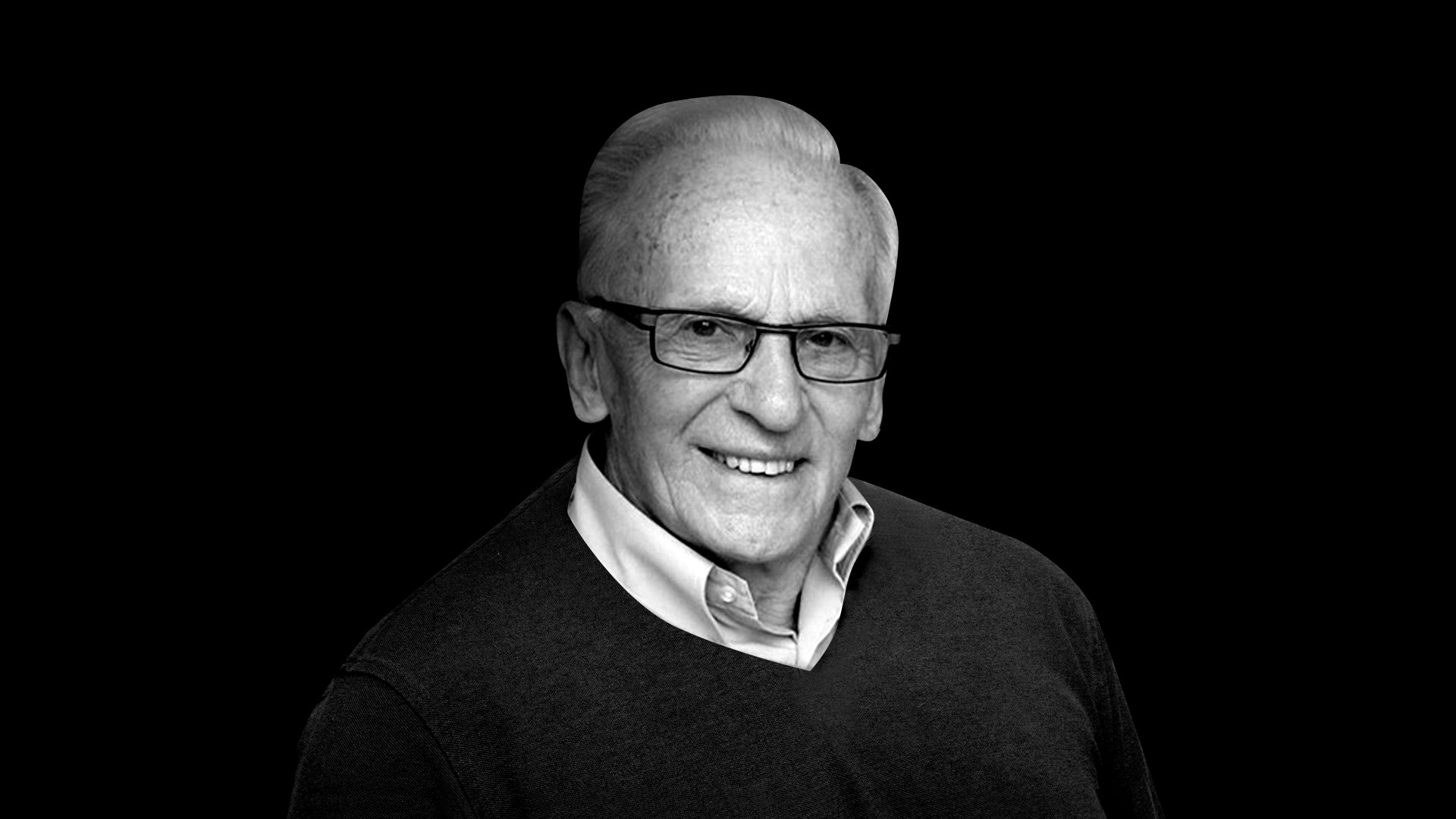
Brother Andrew (Anne van der Bijl), known as "God's smuggler"

Brother Andrew (Anne van der Bijl), known as "God's smuggler"

Christianity Today September 27, 2022
Courtesy of Open Doors / edits by Mallory Rentsch

Editor’s note: Read or share in Portuguese and other languages via the yellow links above.

Anne van der Bijl, a Dutch evangelical known to Christians worldwide as Brother Andrew, the man who smuggled Bibles into closed Communist countries, has died at the age of 94.

Van der Bijl became famous as “God’s smuggler” when the first-person account of his missionary adventures—slipping past border guards with Bibles hidden in his blue Volkswagen Beetle—was published in 1967. God’s Smuggler was written with evangelical journalists John and Elizabeth Sherrill and published under his code name “Brother Andrew.” It sold more than 10 million copies and was translated into 35 languages.

The book inspired numerous other missionary smugglers, provided funding to van der Bilj’s ministry Open Doors, and drew evangelical attention to the plight of believers in countries where Christian belief and practice were illegal. Van der Bijl protested that people missed the point, however, when they held him up as heroic and extraordinary.

“I am not an evangelical stuntman,” he said. “I am just an ordinary guy. What I did, anyone can do.”

No one knows how many Bibles van der Bijl took into Poland, Czechoslovakia, Yugoslavia, East Germany, Bulgaria, and other Soviet-bloc countries in the decade before the success of God’s Smuggler forced him into the role of figurehead and fundraiser for Open Doors. Estimates have ranged into the millions. A Dutch joke popular in the late 1960s said, “What will the Russians find if they arrive first at the moon? Brother Andrew with a load of Bibles.”

Brother Andrew
Brother Andrew

Van der Bijl, for his part, did not keep track and did not think the exact number was important.

“I don't care about statistics,” he said in a 2005 interview. “We don’t count. … But God is the perfect bookkeeper. He knows.”

Van der Bijl was born in the Netherlands in 1928, the son of a poor blacksmith and an invalid mother. He was 12 when the German military invaded the neutral country in World War II, and he spent the occupation, as he recounted to John and Elizabeth Sherrill, hiding in ditches to avoid being pressed into service by Nazi soldiers. When famine hit the Netherlands in 1944, van der Bijl, like so many Dutch people, ate tulip bulbs to survive.

After the war, van der Bijl joined the Dutch army and was sent to Indonesia as part of the colonial force attempting to quash the Indonesian struggle for independence. He was excited about the adventure until the shooting started and he killed people. By his own account, van der Bijl was involved in the massacre of an Indonesian village, indiscriminately killing everyone who lived there.

He was haunted, after, by the sight of a young mother and nursing boy killed by the same bullet. He started wearing a crazy straw hat into the jungle, hoping it would get him killed. Van der Bijl adopted the motto, “Get smart—lose your mind.”

He was shot in the ankle and started reading a Bible his mother had given him during his convalescence. After he returned to the Netherlands, he started compulsively going to church, and in early 1950, he surrendered himself to God.

“There wasn’t much faith in my prayer,” van der Bijl said. “I just said, ‘Lord if you will show me the way, I will follow you. Amen.’”

Van der Bijl committed his life to ministry and went to Scotland to study at the Worldwide Evangelization Crusade’s missionary school in 1953. Speaking to Christianity Today in 2013, he remembered one critical lesson from a Salvation Army officer who was teaching about street evangelism. The older man said most would-be evangelists give up too soon, since the Holy Spirit has only prepared the heart of one person out of 1,000.

“Instantly my heart revolted. I said to myself, ‘What a waste,’” van der Bijl recalled. "Why go and spend your energy on 999 who were not going to respond? God knows it and the devil knows it and he laughs because after the first 1,000 people I give up in despair.”

He determined he would ask God to guide him to the one person who was ready for the gospel. Instead of spending his time calculating and strategizing, he would follow the guidance of the Spirit.

A short time later, he felt God speak to him through Revelation 3:2: “Wake up! Strengthen what remains and is about to die.” Van der Bijl understood he was supposed to go support the church in Communist-controlled countries. In 1955, he took a government-controlled tour of Poland but snuck away from his group to visit underground groups of believers. On a second trip to Czechoslovakia, he saw that churches in Communist countries needed Bibles.

“I promised God that as often as I could lay my hands on a Bible, I would bring it to these children of his behind the wall that men built,” van der Bijl later recalled, “to every … country where God opened the door long enough for me to slip through.”

Brother Andrew in Yugoslavia

In 1957, he made his first smuggling trip across the border of a Communist country, entering Yugoslavia with tracts, Bibles, and portions of Bibles hidden in his blue Volkswagen. As he watched the guards search the cars in front of him, he prayed what he would later call “the Prayer of God’s Smuggler”:

“Lord, in my luggage I have Scripture that I want to take to your children across this border. When you were on Earth, you made blind eyes see. Now, I pray, make seeing eyes blind. Do not let the guards see those things you do not want them to see.”

Van der Bijl followed his early success in Yugoslavia with more trips and eventually even smuggled Bibles into the Soviet Union. He recruited other Christians to help him, and they developed strategies for avoiding the attention of border guards and secret police. Sometimes the smugglers would travel in pairs, disguised as honeymooning couples. Sometimes they would use out-of-the-way border crossings. They would experiment with different ways of hiding Scripture in their small, inconspicuous cars. Always, they would follow the leading of the Spirit, and no one was ever arrested.

Bible smuggling was criticized by a number of Christian organizations, including the Baptist World Alliance, the Southern Baptist Foreign Mission Board, and the American Bible Society. They considered it dangerous—especially for the Christians living in Communist countries—and ineffective. Sensational stories were good for raising money, the critics alleged, but little else.

Cold War historians have debated the impact of Bible smuggling on Communist regimes. Francis D. Raška writes that it was “probably significant,” but “evidence of the exploits is shaky, and prone to exaggeration and personal aggrandizement.” There is at least some evidence that the KGB kept close tabs on van der Bijl’s activity and may have had informants inside his network, according to Raška.

Brother Andrew
Brother Andrew

After the success of God’s Smuggler, van der Bijl left smuggling to other less famous Christians. He shifted his attention to fundraising for Open Doors and ministry opportunities in Muslim countries. When the United States invaded Afghanistan in 2001 and Iraq in 2003, he became an outspoken critic of American evangelicals’ support for the war on terror. Christians, he said, could only put their trust in military intervention if they had given up faith in missions.

When speaking to American audiences in the early 2000s, van der Bijl regularly asked Christians if they had prayed for Osama bin Laden, leader of al-Qaeda. When US forces killed bin Laden in 2011, he expressed sadness.

“I believe everyone is reachable. People are never the enemy—only the devil,” van der Bijl said. “Bin Laden was on my prayer list. I wanted to meet him. I wanted to tell him who is the real boss in the world.”

At the time of his death, the ministry van der Bijl founded was helping Christians in more than 60 countries. Open Doors distributes 300,000 Bibles and 1.5 million Christian books, training materials, and discipleship manuals every year. The group also provides relief, aid, community development, and trauma counseling, while advocating for persecuted Christians around the globe.

When asked if he had any regrets about his life’s work, van der Bijl said, “If I could live my life over again, I would be a lot more radical.”


News

Orphan Forced from Christian Home Highlights Islamic Ban on Adoption

Egypt sees surge in foster care applications, though still insufficient, while Christians denied custody due to sharia law.

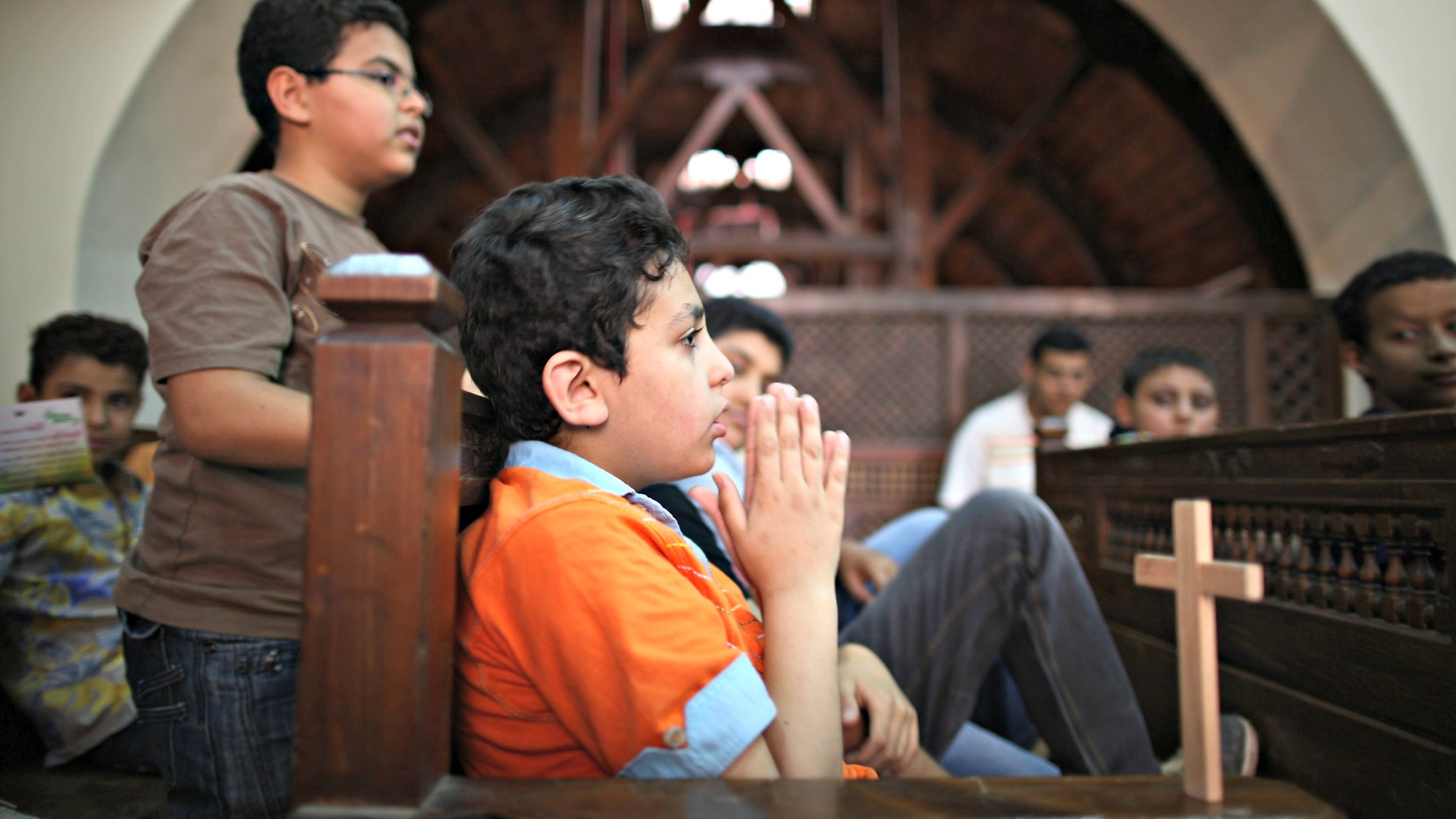
Coptic children attend a religious class at The Hanging Church in Cairo, Egypt.

Coptic children attend a religious class at The Hanging Church in Cairo, Egypt.

Christianity Today September 27, 2022
Peter Macdiarmid / Getty Images

Four years ago, Shenouda was an infant found at the door of a Coptic church. Today, renamed Yusuf, the boy is found in a state-run orphanage. In between lies the care of a priest, the devastation of a Christian family, and a sectarian bureaucracy undergoing partial reform.

Egypt is home to a Dickens-like tragedy.

“Adoption is not legal in Egypt,” said Nermien Riad, executive director of Coptic Orphans. “There is no possibility it will happen as known in the Western world.”

The boy’s family name and location have been kept anonymous as a cautionary measure, as reported by the Coptic publication Watani. Likely left by an unwed mother, the child was found by a Coptic priest who presented him to the couple, infertile for 29 years.

They took him into their home, obtained a birth certificate as if he was their own, and raised him with love and devotion. They gave him a Christian-signifying first name, honoring the prior Coptic Orthodox pope, and per Egyptian naming custom the four-generation quadrilateral was completed with the names of the doting father, grandfather, and great-grandfather.

All was idyllic, until a jealous niece realized the impact on her inheritance.

Egypt’s Islamic-based law, seeking to preserve lineage, prohibits taking another’s child as one’s own. The niece reported the couple to the police, who investigated. The prosecution determined there was no blood relation, but also no ill will.

The father signed a paper stating he found the child “on the street,” likely to shield the priest’s involvement. But though the case was dropped last February, the boy was taken to an orphanage. With no papers to prove his ancestry, he was assumed to be a Muslim—and thus forbidden to live with a Christian family—and given the religiously neutral name Yusuf, the Arabic equivalent of Joseph.

The desperate parents protested: What Muslim would leave their unwanted child at a church? Denied, they were even forbidden from visiting him in the orphanage. Their applications for employment at the facility were turned down.

According to the Ministry of Social Solidarity, Egypt has 11,000 children in institutional care. According to a 2016 study by UNICEF, the United Nations agency for children, the total number of Egyptian children with at least one parent dead is 1.2 million.

Not all of them have a sad ending.

“It turned out better than I could’ve ever hoped for,” said Rasha Mekki, who discovered Egypt’s kafala program in her mid-40s following 20 years of IVF treatments. She visited orphanages over the course of a month, filled out the government paperwork, and came home with Mostafa.

Kafala means “sponsorship” in Arabic, somewhat akin to foster care.

Today, Mekki lives with her husband and not-quite-son in San Francisco where she runs Yalla Kafala, a nonprofit founded in 2020 to promote “adoption” in Egypt. Its goal is an orphan-free Egypt by 2030.

She is less ambitious than the Egyptian government, which set 2025 as its target date to close all orphanages in the nation due to widespread child abuse, neglect, and overcrowding. Reforms in 2020 allowed single, divorced, and unmarried women over the age of 30 to apply for kafala, and lowered the level of education necessary to one spouse holding a high school diploma.

Last year, further reforms allowed a partial name change. After consulting with the Cairo-based al-Azhar, the foremost center of scholarship in the Sunni Muslim world, the Egyptian government permitted sponsoring parents to give the child the father’s name in the second position of the quadrilateral, or the family name in the fourth position—but not both designations.

Combined with a storyline on kafala by the popular “Why Not?” Egyptian miniseries, applications surged to 2,700 in 2021, the highest number ever. Yet still far from the total number in need, as many orphans are seen as the unwanted children of sin and suffer severe social stigma.

Even from those willing to try: One couple, after taking in a child through the kafala system, returned the three-year-old girl after the wife got pregnant.

Another advocate chided orphanages in general, though acknowledging their workers do their best.

“She will be brought up by foster ‘mothers’ who are employed to care for her, who are overworked and underpaid,” said Yasmina El Habbal, a single woman in her mid-40s, posting her experience raising Baby Ghalia on her public Facebook page. “‘Mothers’ who will leave to get married, and be replaced.”

Mekki is working to remind Muslims that caring for orphans—Muhammad was one himself—is a great deed in Islam. And though the formal rules of inheritance exclude the kafala child, sharia law permits any number of “gifts” to be given while the parents are alive. Additionally, their will may specify up to one-third of any inheritance distributed after their death be given to other than their legal heirs.

Breastfeeding a kafala child, furthermore, removes the prohibition on the non-family mixing of sexes, allowing women to keep their heads uncovered after a sponsored boy matures.

Raymond Ibrahim, writing for Coptic Solidarity, was critical. Citing Muslim narratives, he related how the prophet of Islam adopted Zayd, an orphan believed to be the fourth person to accept the faith. But the practice became forbidden when Zayd divorced his wife and Muhammad thereafter married her. Kafala took its place, and precedent was established.

And Christians are among the modern victims.

“The reason Shenouda and his family were targeted is because of their Christian faith,” Ibrahim wrote. “The child—whose background is unknown—was being raised as a Christian, and it is this that has caused the state to act.”

Some critics say the Egyptian government should not have such a right. Article 3 of Egypt’s constitution permits Christians and Jews to govern their own personal status issues—such as marriage, divorce, and inheritance—according to their religious traditions.

“If we subject this matter to the religious concept, adoption is permissible in Christianity, though the opposite in Islam,” said Youssef Talaat, legal advisor for the Protestant Churches of Egypt (PCE). “But the current law does not have articles related to it.”

Talaat represented the PCE alongside the Coptic Orthodox and Catholic churches to present a new unified personal status law before the government. Completed last year, it is expected to be discussed in the upcoming session of parliament, though due to Egypt’s sharia-based prohibition—with kafala as the alternative—adoption (tabenni) is not included within the new text.

Coptic lawyer Naguib Suleiman wants the parliament to amend the proposed family law further, and it is reported some members will lobby to allow adoption for Christians.

Until then, where will orphans go?

“In the absence of a legal framework, civil society organizations have to step in and fill the void,” said Riad. “Our work prevents the Shenouda situation from happening.”

Coptic Orphans, founded in 1988, works in about 800 towns and villages throughout Egypt. Currently serving 9,000 orphans, the organization states it has helped prevent 35,000 children from entering institutionalized care.

A 2017 article in the academic journal Trauma, Violence, and Abuse surveyed 23 studies over 20 years, involving a total of over 13,000 children. Those raised in foster care experienced “consistently better experiences and less problems” than those in orphanages.

As an example, in 2009, American Scientist published research on 136 children in Romania. At 3.5 years, only 18 percent raised institutionally demonstrated secure attachments to their primary caregiver. But 49 percent of those in foster care did so, and 65 percent of those in the general community.

Working in cooperation with church-affiliated orphanages, Coptic Orphans aims to place the vulnerable in the care of relatives. And Riad clarified that most orphans in the Christian network’s care are not fully such: 95 percent of beneficiaries have a mother. But when the father dies, gets imprisoned, or otherwise disappears, the family is often plunged into poverty.

Even in cases where the mother passed away also, the extended family network steps in, buttressed by Coptic Orphans’ financial assistance. It makes kafala unnecessary, and the government does not need to be involved. And in the rare cases when parentage is unknown, the church will quietly place the child with a family.

Spiritual care is also provided. “Typically, it is the priest who places the child within a family,” said Riad. “They know their community, and the necessary provisions, better than any case worker could.”

Riad praised the efforts of the government to expand and promote kafala. But she wonders how Egypt will be able to care for all the children, should plans proceed to close the orphanages.

Yet just as the nation’s Christians once had to skirt the law to build churches until reform occurred, she hopes adoption will become included in the legal revisions. And not just for the rare examples like Shenouda, but for all Coptic children in need of care.

“Families are ‘adopting’ informally already, in the shadows,” Riad said. “If there is legalization for Christians, that would be ideal.”

News

Survey: Today’s Evangelicals More Likely to Welcome the Stranger

New research shows a marked shift in attitudes about refugees and immigration reform compared to 2015, and experts have a few ideas why.

Children join in an arts program at Mission Adelante, where Carla Flores is the children's ministry director.

Children join in an arts program at Mission Adelante, where Carla Flores is the children's ministry director.

Christianity Today September 27, 2022
Alex Ruybalid / Courtesy of Mission Adelante

Carla Flores was nervous to stand in front of a suburban evangelical congregation and share her experience as the child of undocumented immigrants.

Born in Mexico and raised since she was a toddler in Kansas City, Kansas, the 26-year-old children’s ministry leader is one of over 3 million “Dreamers” in the US, meaning her status is legal but uncertain. During her recent presentation at this church on the other side of town from her own, some churchgoers drilled her for details about her life, while others responded warmly and volunteered for ministry in her immigrant community.

Flores’s experience reflects a bigger shift in US evangelical views on immigration.

Some polls in the past have shown white evangelicals in particular were opposed to pathways to citizenship and accepting refugees. But the latest survey from Lifeway Research—coming as an unprecedented wave of Afghan refugees settle in the US and Dreamers remain in limbo—indicates that evangelicals’ support for immigrants and immigration reform has grown significantly.

Evangelicals are more open to welcoming refugees and offering paths to citizenship for undocumented immigrants than they were in 2015, the last time Lifeway polled on the issue. Now 77 percent of self-identified evangelicals are “strongly” or “somewhat” in favor of a path to citizenship, up from 61 percent who said “yes” seven years before. Among those who attend worship at least weekly, 82 percent were in favor.

Evangelicals by a wide majority and across all ethnicities said they would support bipartisan immigration reform, defined as increasing border security and establishing a process for undocumented immigrants to apply for citizenship if they paid a fine, passed a criminal background check, and completed other requirements (a path to citizenship similar to the one supported by the US Conference of Catholic Bishops).

https://datawrapper.dwcdn.net/oKDsu

A higher percentage of evangelicals also cited the Bible as their top influence on their immigration views compared to 2015, although it is still in third place after “friends and family” and “the media.”

In the 2022 survey, 70 percent of evangelicals overall, and 68 percent of white evangelicals, agreed that the US has a moral responsibility to accept refugees. That contrasts sharply with a widely cited statistic from 2018, when Pew Research Center data showed only 25 percent of white evangelicals said the US had a responsibility to accept refugees, the lowest of any demographic in the US. In 2017, white evangelicals by a large majority supported President Donald Trump’s ban on Syrian refugees entering the country.

“I’ve had that Pew stat thrown at me lots of times,’” said Matthew Soerens, the US director of church mobilization and advocacy for World Relief. World Relief and the Evangelical Immigration Table commissioned the Lifeway survey in 2015 and 2022. He never felt like that low number matched up with the evangelical support for refugees he saw in his work.

In the question this year, the Lifeway researchers decided to include a definition of a refugee under US law: “someone fleeing persecution due to specific factors such as their race, religion, or political opinion.”

Other data would support a shift in evangelical attitudes. World Relief, the humanitarian arm of the National Association of Evangelicals, is one of the approved refugee resettlement agencies for the US government. During the chaotic August evacuation from Afghanistan last year, the organization gained 3,000 new donors, a 1,500 percent increase over the same period the previous year.

That outpouring from individuals and churches for domestic refugee and immigration ministry continued after the Afghan evacuation. Giving for the fiscal year which ended September 30, 2021, was double that of 2020. So far this fiscal year, its giving for domestic ministries has surpassed that 2021 number.

The survey report doesn’t explain why views shifted.

“I would hope it has to do with learning and faithful witness over time,” said Jeren Rowell, the president of Nazarene Theological Seminary in Kansas City, Missouri. This week the seminary hosted an immigration event for pastors, with presentations from a Ugandan who had been tortured for his political views and fled to the US for asylum as well as from Flores, the Dreamer. Rowell added that people’s attention has shifted away from immigration too, which may help lower the temperature of the conversation about it.

Soerens thinks that the welcome of Afghan and Ukrainian refugees to the US this past year had a lot to do with more welcoming views on refugees. He noted that there is currently not negative news coverage on refugees like there was with Syrian refugees.

“I think the Afghanistan crisis helped a number of conservative people understand how difficult our immigration system is,” said Soerens.

Christians trying to help desperate Afghans escape often found no solution, even if they knew Afghans met strict qualifications for visas. Now Soerens said more people might understand that the trouble for Afghans is “true for other nationalities as well.”

On immigration too, Soerens used to hear questions during his church visits about immigrants taking jobs from Americans, but he hasn’t heard that kind of question in a long time. “We can’t find enough people to do all the jobs in this country,” he said. The survey supported that anecdote, with fewer self-identified evangelicals saying they saw immigrants as a drain on economic resources than in 2015.

https://datawrapper.dwcdn.net/teXcB

Dreamers build relationships in churches

Flores was born in Mexico, but her undocumented parents brought her to the United States when she was just a few years old. Her dad picked peaches in South Carolina, and her mom moved to Kansas City, Kansas, where she grew up.

When Flores was a teenager, the Obama administration introduced the Deferred Action for Childhood Arrivals (DACA) program which allowed people like Flores, Dreamers, to receive work permits and protection from deportation. It allowed her to go to college and then to work, though she remains in uncertainty. Every two years she files fingerprints, paperwork, and does background checks to renew her DACA status.

Dreamers do not currently have a path to permanent legal status in the US, though most Americans support them staying. A 2020 survey from Politico/MorningConsult, showed 72 percent of evangelicals said Dreamers should be allowed to stay in the country. Measures to resolve their status have stalled in Congress.

Flores remains anxious about her status in the only country she knows, but she is focusing her attention working at her church, Mission Adelante, in Kansas City. She was raised nominally Catholic but became evangelical after going to the youth group at Mission Adelante as a teenager.

Last October when she spoke at a suburban evangelical church doing an immigration workshop, she told her story to the room. The experience was “tough,” she said because the audience “had already a negative connotation of what DACA was, or who Dreamers were,” she said. During the question-and-answer time, she had to go into detail about how she paid taxes and health insurance.

“It was definitely vulnerable for me to share all of that,” Flores said. One person asked about whether her parents were still around, their immigration status, and whether they were working, which made her nervous. “I didn’t want to put my parents in a position to get hurt.”

But though the event felt a little hostile, afterward she had one older man reach out and tell her that he was honored to hear her story and that it helped him understand what it was like to be a Dreamer. Another man from the event started volunteering with her ministry.

“It was new for him to go over to my side of town, to be around the kids in my community,” she said. “It helps you see a face to something. Usually, we read something or hear about something, and we’ll dismiss it.”

Lifeway added a question this year about whether people taking the survey had been involved in a ministry to serve refugees or immigrants. Of those who had ever served in a ministry to immigrants, 77 percent agreed that Christians have a responsibility to assist immigrants, “even if they are here illegally,” compared to 48 percent of those who hadn’t ever served in a ministry. That may show a correlation without a causation, if people who serve in immigrant ministry are already a self-selected group with positive views on immigrants.

Evangelicals’ views historically go back and forth

Ulrike Elisabeth Stockhausen, in the 2021 book The Strangers in Our Midst: American Evangelicals and Immigration from the Cold War to the 21st Century, notes the “complex and at times contradictory attitudes that evangelicals have espoused on undocumented immigrants and refugees” in the decades since World War II.

Evangelicals provided the infrastructure and volunteers for refugee resettlement from those fleeing communism in the 1960s, 1970s, and 1980s, welcoming Cubans to Soviet refugees. They supported legalization for undocumented immigrants in the 1986 law signed by President Ronald Reagan, the Immigration Reform and Control Act. But they became more hardline about illegal immigration in the 1990s.

In 2012, evangelical leaders from a wide range of groups including conservative ones like Focus on the Family, signed a statement of support for immigration reform, that included respecting the dignity of immigrants, the rule of law, border security, and establishing a path to citizenship.

But immigration reform has stalled over and over. World Relief is tracking some smaller policy changes that may come up this Congress, like a bipartisan bill on legal status for temporary farm workers.

For more than a decade, Soerens has traveled the country to do events at churches on immigration. Because the church attendance of self-identified evangelicals has been decreasing, especially after the pandemic, he worried that the 2022 numbers on evangelical attitudes toward immigrants might be worse than 2015. But after seeing the survey, and in particular the growth of influence of the Bible in evangelical views on immigration, he was encouraged.

“I’m not satisfied with it … but I told my wife, ‘I feel like the last 10 years of my life have not been totally in vain,’” he said.

Methodology

Of the total pool of about a thousand evangelicals surveyed, 49 percent of the sample considered themselves conservative, 35 percent considered themselves moderate, and 13 percent considered themselves liberal or progressive.

Some of Lifeway’s questions from 2015 to 2022 shifted from requiring a “yes or no” answer to “strongly agree, somewhat agree, strongly disagree, somewhat disagree,” options, which could have affected how the percentages changed from 2015 to 2022.

The survey this year interviewed evangelicals who self-identified as evangelical and those who strongly agreed with four statements of evangelical belief, like that the Bible is the highest authority and that salvation comes through Jesus Christ alone. The 2015 survey was based only on self-identified evangelicals.

That new breakdown between belief and self-identity helped show significant differences. More evangelicals by belief saw new immigrants as an opportunity for evangelism than did self-identified evangelicals.

News

Multifaith Panel to Evaluate Homeland Security Church Protections

Christian, Jewish, Muslim, and Sikh clergy will advise government on funding and other solutions.

Police tape blocks off the scene of a shooting at the Geneva Presbyterian Church on May 15, 2022 in Laguna Woods, California.

Police tape blocks off the scene of a shooting at the Geneva Presbyterian Church on May 15, 2022 in Laguna Woods, California.

Christianity Today September 26, 2022
Mario Tama / Getty

The Department of Homeland Security has announced the appointment of a new, 25-member faith-based advisory council to assist Secretary Alejandro Mayorkas in finding ways to protect houses of worship.

The council consists of Christian, Jewish, Muslim and Sikh clergy plus some law enforcement and nonprofit faith group leaders.

The safety of religious congregations has been a growing concern for a decade—since the shooting at the Oak Creek, Wisconsin, Sikh temple in 2012. It was followed by the massacre at Emanuel AME in Charleston, South Carolina, a mostly Black congregation, in 2015; the killing of nearly two dozen worshipers at First Baptist Church in Sutherland Springs, Texas; the killing of 11 Jews at the Tree of Life synagogue in Pittsburgh in 2018.

And those are only the most notable mass killings. Other acts of violence, include the 2017 and 2019 firebombings of mosques in Victoria, Texas and Escondido, California.

The council is expected to help the department evaluate the effectiveness of existing security-related programs and improve coordination and sharing of threat and security-related information.

The Federal Emergency Management Agency, an agency of the Department of Homeland Security, has a Nonprofit Security Grant Program that provides federal funds for nonprofits and houses of worship to beef up security on their premises.

Funding for the program was increased to $250 million in 2022, up from $180 million in 2021. But not all houses of worship that apply get the grant. This year, just over half of the 3,470 applications received were approved, the Jewish Insider reported. Several religious groups are advocating for $360 million in funding in 2023.

The advisory council’s mission will be broader than advocating for more money through the grant program, said Rabbi Jonah Dov Pesner, director of the Religious Action Center of Reform Judaism, who was appointed to the council.

“I don’t think we’re going to pay our way out of the crisis of white supremacy and violent antisemitism and too many guns in too many hands,” he said. “This is not just about more security cameras. We have to get to the root of these questions.”

Sunday night marks the start of the Jewish High Holy Days, beginning with Rosh Hashana, the Jewish New Year. The holidays draw the highest attendance at synagogues across the country. While services in the last two years saw lower attendance because of the coronavirus pandemic, Jewish leaders are expecting a return to record attendance this year. With that comes a degree of anxiety about security.

“There’s a sense of both joy and return and renewal and fear,” Pesner said.

Earlier this year a gunman entered a Colleyville, Texas, synagogue and took several congregants hostage as he demanded the release of a person in prison. The congregants and their rabbi managed to escape and the gunman was killed by an FBI hostage rescue team.

Mosques and predominantly African American churches face their own threats.

This is not the first council to address the issues. Salam Al-Marayati, president of the Muslim Public Affairs Council, said he served under a previous Homeland Security advisory council during the Trump administration. He was also appointed to the new council.

“Part of the experience is understanding what other communities are going through,” said Al-Mayarati.

For example, not everyone will be served well by a large law enforcement presence, Pesner said.

“There’s a real danger of overpolicing and of policing in such a way that does harm to communities of color that have historically been on the wrong end of overpolicing,” Pesner said. “We have to be thoughtful and sensitive to all those who are suffering from violence and make sure policing and security are appropriate to the threat.”

The advisory council’s first meeting will take place online Oct. 6.

Pastors

The Pandemic Destroyed My Certainty—Or Was It God?

Ongoing disruption exposed my ministry idols, helping me see the work of the kingdom.

Illustration by Daniel Liévano

This fall marks my 24th year of leading Imago Dei Community in Portland, Oregon, and my 34th year in ministry. I thought I had seen all that ministry could throw at me, from the early days of fighting over pews versus chairs to the seeker-sensitive movement, which some translated as selling out the Bible. I’ve watched pastors fall; ministries fail; and the worst scandals that money, sex, and power can bring occur in the bride of Jesus. Still, the pandemic and all that’s followed have been by far the most tension-filled, challenging years of my ministry. And I know I’m not alone.

The pandemic revealed the inadequacies of many tried-and-true ways of measuring our ministry health. I had thought I was driving a Jet Ski but realized I was steering a barge. Regardless of how quickly I wanted to change directions, the thing just wasn’t built to do so. The pressure and stress of this unprecedented time also exposed the condition of my soul and emotional life as a leader. I realized to my shame that I had strategized too much and prayed too little.

In the midst of these moments of pain, I began to see how desperately I needed a dramatic disruption in my leadership. Please don’t hear me saying I am thankful for the pandemic, because I am not. It was awful for many people and ministries on a number of levels. But in the same way God redeems our pain and uses it for good, I can see ways he is using the disruption caused by this crisis to move me and others closer to where we should have been pastoring all along.

Competition to collaborate

In Imago’s earliest days, when I was planting the church out of my living room, few ministry thinkers formed me as deeply as Eugene Peterson. I read all his books, listened to every class he taught at Regent, and absorbed everything I could about his contemplative approach to the vocation we share. I didn’t just like Eugene; I needed him. I was terrified I would fail as a church planter, and that fear drove me to work hard and produce results.

I needed Eugene because I am hardwired for mission in ways that have, at times, been pretty dysfunctional. As our church plant grew, a strong movement formed among the churches in Portland. Pastors developed great relationships with each other. But beneath that comradery, I struggled to shake my underlying desire to compete—to be the city’s fastest-growing church, to be the largest urban church, to adopt every biblically solid and culturally intelligent strategy available.

If I heard a pastor was getting traction with prayer every day at 6 a.m., I would think, Can I pull that off? If I learned people left my church to go to a newer plant that focused more on the gifts of the Spirit, I would strategize ways to make room for charismatic gifts in our service. Sure, I had never even been to a charismatic church, but that didn’t stop me from fantasizing about revival breaking out in our community and people lining up around the corner to get in on the Spirit’s work.

Jekyll and Hyde were vying inside my pastoral self. I loved what God was doing in these other great leaders, and I honestly wanted more prayer and more of the Spirit’s work in our midst. But I was also jealous.

Then the pandemic happened. Because we had worked on building unity before this, a group of Portland pastors quickly began gathering online for weekly Zoom meetings. We realized we needed each other—not just to figure out the state and local guidelines for gatherings but also in other ways we hadn’t before.

I soon realized I had a lot to learn from these men and women. We all did. Churches helped each other get their services online. We created a fund for congregations in the hardest-hit area of Portland that needed extra resources to make it through those early months of the crisis.

We borrowed ideas and prayed for one another. I realized I needed to adopt ideas I originally rejected from a pastor with a polar-opposite philosophy and style of ministry. So I shifted from Jekyll-and-Hyde jealousy to a brotherly humility and asked to borrow great ideas from another faithful pastor in a time of need. Something significant was changing inside me.

My previous aspirations to “win” at ministry seemed small and petty in the shadow of this growing movement of God’s kingdom. I recognize now that even if my church reached 50,000 people, in a metro area of 2.5 million, that wouldn’t make much of a dent. But if every one of the churches in Portland flourished and became what Jesus intended, the impact would be exponentially greater.

In God’s kingdom, churches are meant to collaborate in service of the King, not build competing kingdoms for themselves. At least in my own ministry, the stress of the pandemic revealed idols of competition that Jesus in his mercy replaced with holy collaboration.

Certainty to creativity

Prior to COVID-19, if you had asked me how we were doing as a church, I would have talked about things like people coming to faith and ways we were reaching into our community. But inside my heart, I would have centered on our budget and attendance. Despite all the good things we do in the city and people finding Jesus, at the end of the day, they don’t determine whether I have to cut staff or whether the board will question my leadership when attendance slips. Money and attendance are the weak points in my ministry. When they’re up, I feel good. When they’re down, ministry feels really hard.

During the months of quarantine, we couldn’t gather in person, run programs in homes, or give as we had year after year for decades. I felt more vulnerable than I did when Costco ran out of toilet paper. I started wondering if those old metrics that felt so reliable—in many ways, the most easily tracked objective measurements of ministry vitality—actually created a false sense of certainty.

Certainty is often an illusion in a life of faith, especially for a pastor. We preach sermons, organize small groups, create leadership teams for kids, and try to reach out to our neighbors, but we fund the whole thing by passing the hat or its digital equivalent. Since we don’t sell or produce anything, we can’t increase sales or production when times are bad. Every single person engages our ministry voluntarily. They worship voluntarily, give volun- tarily, serve voluntarily, and sometimes leave voluntarily and silently.

Pastoring is by its very nature vulnerable. Yet I was shocked by how much more vulnerable the pandemic made me feel. I knew this new moment required a different, more creative way of measuring church health. Really, it showed me my confidence in easily measurable metrics of success had been misplaced in the first place.

The false certainty of weekly giving

Like many churches, our general budget struggled during the first year of the pandemic. Meanwhile, we saw an outpouring of generosity for a COVID-19 relief fund we started. Rather than measuring only general-budget giving, we decided that gauging our congregation’s overall level of generosity would offer a much more accurate picture of the church’s spiritual health. This required some creativity.

We started measuring both the money coming into the church’s general budget and the money going out in the relief fund.

We also started factoring in people’s acts of service. Throughout the pandemic, as needs surfaced and were vetted through a network of nonprofits, we connected people to meet those needs. When we discussed congregational generosity, we stopped thinking only in dollars and cents.

Over this past year, I also stopped looking at the weekly giving numbers. Not entirely—I have wondered about them more than a few times, and our executive pastor shares those details with me when I ask. But I no longer track them on a weekly basis or use them as my main indicator of congregational generosity.

When we began to focus on generosity and not just the weekly giving numbers, the Spirit birthed a new muscle of trust in my faith. If God could bring us through the past two years, I could trust him with this year as well. And he has shown me the fruit of generosity birthed by the Spirit in our community. Slowly I am learning to place my certainty in something bigger than the weekly offering for our financial security.

The false certainty of Sunday attendance

Attendance was another golden calf I had valued too highly for too long. I subconsciously treated discipleship like a binary choice. Who was at church on Sunday, and who wasn’t? Who was involved in small groups, and who was missing?

But during the pandemic, I began to ask, What if every person who engaged with us online, in person, through a podcast, on Instagram or Facebook, or by another form of outreach was entering the orbit of our discipling community? And if so, what would I want those people to experience?

The pandemic unlocked my creative energy and helped me break through old thought barriers. All of a sudden, what felt like a barren wasteland of absence became a wide-open field of possibility. I decided to explore a much bigger mission field with countless “front doors” that are not connected to the building.

With the false idol of in-person attendance busted and my understanding of congregational participation expanded beyond the walls of our building, I started imagining our facility as more than just a box to gather people on Sundays. Since church buildings were empty during lockdown, how else could they be used to minister to people?

That question led to a number of churches becoming drop-off centers for donated supplies for foster families. Other churches became daycare centers for parents who didn’t have the choice to stay home and whose kids couldn’t be left alone.

In September 2020, we experienced a series of uncontained forest fires outside Portland. Our facilities became places where meals were cooked and supplies were dropped off and distributed. And since then, even as people have returned to in-person services on Sunday mornings, I’m more aware than ever of how our space might be used the other six days of the week.

The need for certainty will drive us to false idols of control, but creativity will lead us to embrace the ways of the kingdom. The pandemic was a severe but gracious way in which God began to crush my need for control and birth a new pathway of creativity.

The speed of vision or the pace of the flock?

Right now I am experiencing a serious clash between my ingrained leadership values and Jesus’ kingdom values. We are in an awkward time where what has been is gone and what is going to be has not quite arrived yet. We are in a liminal space that I find highly uncomfortable.

I am wired to create vision and inspire the church toward that vision. But after two and half years of watching all my ministry plans get shattered by the next variant or unforeseen cultural issue, I am weary of casting a vision for the future when people in my church know I have no clue what’s coming.

In this liminal space, people in my community have big desires but small capacity. Their minds and hearts want to do more, but their anxiety, stress, and emotions call it quits before they even start. This is one reason why the shepherding gift is so needed right now. We have glorified visionary leaders with entrepreneurial skills in the church for so long that many people see shepherding as secondary. But when you go to the ER, you’re not hoping to run into a visionary CEO; you want a skilled nurse or doctor—someone with the patience and skill set to care for you and walk with you through what might be a long healing process.

Jesus is replacing my desire to make people run at the speed of my vision with a desire to walk at the pace of a wounded community. Jesus walked at the speed of the slowest sheep. Do I want to walk alongside him as he leads the church or power walk ahead of him to do my own thing?

Over the past two years, people have suffered. They have lost loved ones, jobs, and even relationships over politics. Single people have lived in painful isolation, and families have struggled to get by. And suddenly we are expecting them to dust themselves off and act as if everything is normal again. Is that what Jesus is truly asking of us and our people?

If I am honest, much of the vision I’m seeking for our congregation is just my attempt to get us out of this awkward liminal space. I want people to feel like everything is normal again. But it is not, and that is okay.

So I am trying to lead at the pace of my community, limping through this transitional moment like the rest of the world. If Jesus is willing to walk that way, then maybe I should be too. Because the kingdom of Jesus is not a sprint toward comfort. It is an eternal reign that is breaking in slowly, patiently, but surely as Jesus makes all things new.

Rick McKinley is the lead pastor of Imago Dei Community in Portland, Oregon. His latest book is Faith for this Moment: Navigating a Polarized World as the People of God.

This article is a part of our fall CT Pastors issue. You can find the full issue here.

Pastors

Rebuilding Church Community: What’s Actually Working?

Pastors respond.

Source images: Christina Morillo / Fauxels / Jopwell / William Fortunato / Pexels

One ongoing impact of the pandemic is that, today, pastors find themselves shepherding congregations that are more divided and more relationally distant. How can ministers cultivate deep, authentic fellowship in congregations struggling with superficial or polarized relationships? Pastors are trying out both new and time-tested ways to rebuild authentic community in their churches. Here, pastors from across North America share what’s actually working in their congregations.

Mix Things Up

I transitioned to a new church during the pandemic and quickly observed three groups of people: those who were already in a deep community (with no room for others to join), those who attended church but were not part of a community, and those who were church-shopping and looking for a community. A word God gave me was gather, so we started an event called Gather Together where we created space for people from these three different groups to build community organically over a shared activity. Volunteers hosted dinners in their homes. It was a beautiful event where people of all ages and ethnicities gathered together and quickly dove into deep conversations. Many met people they would’ve been unlikely to have dinner with and decided to continue to gather regularly.

Lydia Choi, associate pastor, Bethany Community Church in Seattle, Washington.

Emphasize Love of Neighbor

I have single-mindedly repeated to my congregation that although we each come to Jesus in a personal way, our faith is not just about the individual. I put it this way: The Christian faith is not just about you; it’s about us. From the time of Micah, who called his people to do justice, love mercy, and to walk humbly with God, to Jesus who commands us to “love the Lord your God with all your heart, soul, and mind” and to “love your neighbor as yourself,” we are called to work for the common good of all people. We need to regain this love, even more so at a time of great polarization. I’ve been preaching, “Love God and neighbor. You will be doing all that God requires of us.”

Mike Maroney, minister, First Presbyterian Church in Chatham, Ontario, Canada.

Prioritize Play

After the past few years, our congregation had grown anxious, disparate, and deadly serious. To move toward a more integrated and joyful fellowship, we needed to rediscover rhythms of playfulness. So we took advantage of our Southern California weather and purchased outdoor activities to place around the church patio—Ping-Pong, gaga ball, and Spikeball. And we provided easy opportunities to eat together as often as possible. From doughnuts after worship to communal meals following Communion services (the taco cart is very popular), sharing stories over food helped bond us across partisan divides and renew us after pandemic exhaustion.

Courtney Ellis, associate pastor, Prebyterian Church of the Master in Mission Viejo, California.

Offer Short-term Opportunities

In the fall of 2021, we started a 10-week-long midweek gathering including a meal, Bible study, and prayer time. The format was very well received, with 50 percent of the congregation attending. So we did another 10-week session in the spring, from February through April, finishing before Holy Week. By God’s grace, this format has been fabulous at bringing us together around God’s Word. It has also been effective in providing several new families an opportunity to become better integrated into our church community. We don’t know how long this format will serve our congregation well, but it is just right for this season of our life together, and we’re hosting another 10-week session this fall.

Greg Starr, pastor, New Life Church of Hershey in Pennsylvania.

View Preaching as Pastoral Care

The pandemic initially highlighted the corrosive effects of technology on community. The rapid proliferation of livestreams extended our reach, but it also amplified congregants’ consumeristic approach to worship. The antidote, we discovered, is to embrace the fact that preaching has always been a form of pastoral care. In times of shared crisis, empathic preaching helps a disconnected and polarized community name common experiences, anxieties, and pains. Placed within the uniting story of God’s redeeming work in Christ, especially in crisis, such preaching remains a powerful tool of community building.

John Lee, senior pastor, Bethel Christian Reformed Church in Sioux Center, Iowa.

As Leaders, Embrace Hope

The immense pressures caused by pandemic challenges and other difficulties highlighted my need to personally embrace hope and to disperse it throughout our community. Our hope is in Jesus. And we know ultimately his kingdom will come and his will shall be done on earth as it is in heaven. So, I had to learn fresh ways to take the hope of the eternal and apply it to the temporal. Using technology, preaching, prayers, stories, and other applications, we learned—and are learning—how to take the hope that Jesus offers for our tomorrow and bring it into our today.

Mark Strong, lead pastor, Life Change Church in Portland, Oregon.

Share Meals and Build Unity

In my small congregation, we usually have lunch together after our services. Sharing meals gives us a very real experience of the Revelation 7 picture of “a great multitude … from every nation, tribe, people and language.” We had to put these on hold due to the pandemic, and the feeling that we had lost something important was palpable. We were able to resume them about a year ago, and more than anything else, these meals together have given us a sense of being “back to normal.” Our meals together reinforce the biblical teaching that church is about relationships more than it is about services, programs, and activities. It helps us maintain the perspective that Jesus values our unity more highly than he does many of the things that threaten to divide us.

Steven Barrett, senior pastor, Christ the Rock Fellowship in Worcester, Massachusetts.

This article is a part of our fall CT Pastors issue.
You can find the full issue here.

Pastors

In Our Pandemic-Scarred Churches, God Is Making All Things New

A look inside our fall issue of CT Pastors.

Illustration by Daniel Liévano / Edits by Christianity Today

As we drove through northern Arizona’s Coconino National Forest during our family road trip this summer, we found ourselves unexpectedly and unnervingly close to an active wildfire. Plumes of smoke alerted us to hot spots nearby where fire crews worked to contain the blaze. We occasionally saw flames spreading among the ponderosa pines near the roadside as we traveled. We gazed sadly at areas of the forest that were completely blackened, now populated only by charred, barren trunks.

It looked like death—and the fire certainly brought danger and loss. But for a ponderosa pine forest, fire can also bring life. What looks like destruction can actually be crucial to the ecosystem’s life cycle, as low-intensity fires clear out the underbrush and enrich the soil with nutrients. Other ecosystems are similar; in fact, wildfire’s intense heat is necessary to release some seeds from their resin coating and activate other seeds from their dormancy. The source of destruction can also be a catalyst for new life.

Of course, wildfires that are too frequent or too intense can utterly decimate forests. They don’t always lead to new life; sometimes they do simply mean desolation.

The pandemic’s negative impacts on the church over the past two and a half years are obvious, from drastically reduced attendance to devastating financial impacts to high levels of burnout among pastors. For some, the impacts have been so severe that pastors have left the ministry and churches have closed permanently.

Yet signs of fresh growth abound.

In a recent survey of CT Pastors readers, many highlighted the joy of community being renewed in homes and fellowship halls as church members eat together and linger to enjoy one another’s company. Others described reenergized times of corporate prayer and worship. Several reported a sense of renewal in serving together to address local needs.

In this issue, we explore God’s regenerative work in his church. Church leaders share effective ways they’re working to rebuild deep fellowship. Portland pastor Rick McKinley describes how losing many normal markers of ministry success has driven him toward a more kingdom-focused approach. Pete Scazzero discusses the opportunity in this moment for deep discipleship and shares insights for raising up new leaders. Other articles highlight how pastors are taking on today’s unique ministry challenges, from grappling with ghosting to preaching to polarized congregations.

Though God spoke these words to people in different circumstances than ours, I believe Isaiah 43:19 holds an invitation for us: “See, I am doing a new thing! Now it springs up; do you not perceive it? I am making a way in the wilderness and streams in the wasteland.” Our God, who makes all things new (Rev. 21:5), is at work, growing and nourishing his church. May we join the Gardener in tending his work in the wilderness.

This article is a part of our fall CT Pastors issue. You can find the full issue here.

Pastors

What We Lose When We Livestream

Do our online viewers truly realize what they’re missing?

Source Images: Ismael Paramo / Nathan Mullet / Unsplash

When churches were in lockdown during the initial phase of the pandemic, many pastors turned to livestreaming as a temporary stand-in for in-person worship services. Churches began delivering disembodied gatherings to congregants’ homes. It seemed like a good idea at the time. It was certainly better than nothing.

But here’s the rub: What most of us assumed would be a few weeks morphed into months, then traversed well beyond a year. What began as a provisional alternative became a comfy habit.

Livestreaming certainly has benefits: It’s convenient, far-reaching, and accessible. So even after gathering in person became feasible again, many pastors retained the online service option. But livestreamed church has a shortcoming that far outweighs its benefits: It is pseudo-fellowship. It provides the appearance of relationship without the genuine depth that comes from proximity. It encourages the notion that nearness is nonessential.

I do believe livestreaming has value in some contexts, such as ministering to homebound congregants or those who may be immunocompromised. But today, many Christians who do not have such concerns have grown so accustomed to livestreaming church that they view it as a viable alternative to a weekly trek to the sanctuary.

As my ministry colleagues and I have debated different views on livestreaming Sunday services, we’ve narrowed our focus to a single question: Why does the local church need to assemble in person? I believe Luke provides a four-fold answer in his description of the first-century church: “They devoted themselves to the apostles’ teaching and to fellowship, to the breaking of bread and to prayer” (Acts 2:42). These four practices suffer when live-streaming permanently replaces the proximate fellowship of the saints. Do believers choosing online services realize what they’re missing?

The Apostles’ Teaching

Treating the study of God’s Word as an academic exercise—like viewing an online lecture or TED Talk—is a disservice to divine revelation. Believers are participants in Scripture’s proclamation during a Sunday service. This act is communal; it does not occur in isolation. And though only one person is speaking, sermons are meant to be conversations; ideally, they provoke dialogue and reflection within the body. Receiving the “apostles’ teaching” is not merely viewing a good speaker online; it is opening our hearts to God’s self-disclosure. Watching sermons in isolation should be only a temporary fix. We need to directly encourage our church members not to neglect the corporate context in which God’s Word thrives. As God’s people, we are disciples in community who together listen to and relish in what God has said.

Fellowship

Analyst Marshall McLuhan coined the adage “The medium is the message.” The internet has redefined relationships; we’ve grown accustomed to calling utter strangers “friends” and neglecting the unique value of proximate community. For the early church, the meaning of fellowship was clear: the gathering of an encouraging community in which one could be truly known (Heb. 10:25). Every week at church, I welcome individual congregants. We speak to each other, and I see their facial expressions and body language. These nonverbal messages are nearly invisible in an online medium. But when Christians gather in person, we see what is unspoken. It’s harder to hide heartache or suppress joy. In-person nearness enables fellow believers to see you and participate in your seasons of mourning or rejoicing (Rom. 12:15). This need is best met in proximate community.

The Breaking of Bread

The passage of time has not been kind to “the breaking of bread.” Efficient Communion services have normalized wafers and plastic thimbles of grape juice. But in the first century, Communion occurred as part of a meal. Eating together was cherished and intimate. While our churches certainly value the symbols of Christ’s broken body and shed blood, the importance of our participation in this remembrance is often obscured. When church members reduce the Lord’s Table to a mere formality, it is no surprise that in-person gatherings lose out to online simulcasts. But recognizing Communion as an act of grace that repeatedly embodies the assault on Christ’s body, which he endured for us, helps our congregants understand the significance of gathering to receive it together. We are gathering not to observe a legalistic formality; we are gathering to exemplify Jesus’ sacrifice.

Prayer

On the day of my conversion, I was asked, “Will you accept Jesus as your personal Lord and Savior?” I appreciate this sentiment, but individualizing salvation in this way can diminish our sense of communal identity. Scripture repeatedly emphasizes prayer in community, such as corporate pleas and repentence (2 Chron. 7:14). The early church recognized the need to partake in this sacred act together. When believers assemble, prayer empowers us in a unique way. Through corporate prayer, the local church can seek God’s direction, surrender to his sovereignty, and jointly lean on the power of the Holy Spirit. To be sure, there is an important personal component to prayer, but it should never come at the expense of the Sunday gathering that knits praying believers together.

Missing Out

I’m not suggesting churches need to abandon online services altogether, but pastors must think strategically about how to offer this ministry without promoting it as a replacement for attending church. One strategy we’ve used is to post the service video during the week rather than streaming it live. Another approach is to run the previous week’s service during the Sunday time slot; viewers still have a Sunday morning option but also realize they’re missing out on participating in the assembly. Feeling like they’re missing out can nurture virtuous jealousy.

Though livestreaming was a godsend early in the pandemic, this stopgap measure cannot fully replace the assembled local church. As pastors, we know this—but many of our people need to hear us say it. We minister to our online viewers if we urge them to attend in person.

We gather for the apostles’ teaching, the breaking of bread, fellowship, and prayer; these are the biblical characteristics of corporate worship. Rather than encouraging believers to “go to church” via screens, may we directly and repeatedly invite them to the gathering where they can embody the church.

Brandon Washington is the pastor of preaching and vision at The Embassy Church in Denver. He is the author of A Burning House (Zondervan, 2023).

This article is a part of our fall CT Pastors issue. You can find the full issue here.

Pastors

Forget Charisma. Look for the Weak and the Slow.

Pete Scazzero discusses how pastors can identify and train healthy leaders.

Courtesy of Pete Scazzero

Pete Scazzero hosts the Emotionally Healthy Leader podcast and is the author of several books, including The Emotionally Healthy Leader and Emotionally Healthy Discipleship . Scazzero founded New Life Fellowship Church in Queens, New York, where he served as senior pastor for 26 years. Matthew LaPine, a Christian minister and writer on mental health, spoke with Scazzero about a pressing challenge pastors are facing today: recruiting and developing leaders in their congregations.

Pastors are feeling overstretched and emotionally exhausted, and many have asked CT how to raise up and train leaders in their churches in this moment. Is this the right question to be asking right now?

I do think it’s the right question. Every leader needs to be asking that question: How do I develop and raise up leaders?

We’re called to equip the saints for the work of the ministry. This is a huge task right now. Almost all the churches I have talked to have lost 20 to 40 percent of their people. And the folks who are in the room are new. So you’re starting over as you build relationships with a lot of new people. This takes a lot of time—years actually.

But there is some prior work that has to be done. First, we can only develop leaders out of who we are before we lead out of what we say and do. We cannot give what we do not possess. Because pastoring is so demanding right now, we need to attend to God’s work in us. We need to be replenishing the soil of our person so that we’re leading out of a cup that’s overflowing. Maybe that means spending days alone with God, developing a rule of life, getting a spiritual director, getting into therapy, doing some kind of advanced training. You need to assess: What do I need?

Second, this moment is calling for a more robust spiritual formation and discipleship. COVID-19 should be a wake-up call. In the past couple of years, many people have told me that they realized the superficiality of their discipleship, that small groups were not enough. We can no longer say that everything is fine because we have a crowd of people in the room.

The way we have measured success numerically is so inadequate. We have to cultivate spiritual maturity and integrate emotional health. We cannot separate them. It’s a time of humility, curiosity, and openness about our limits.

This will also involve accepting our humanity, accepting grief and loss. We tend to medicate ourselves through addictive behaviors. We deny, suppress, and minimize sorrow.

Accepting grief and loss will reorient how we measure success. If you are standing, if you love Jesus, if you are pointing people to him as the hope of the world, then you’re a booming success. I don’t care if there are just five people in the room. You’re doing wonderful. Relax.

In Emotionally Healthy Discipleship, you discuss the importance of developing “a theology of weakness.” What do you mean by that, and why is it so essential?

A theology of weakness very simply is that God himself came into the world weak; the very nature of the Incarnation is weak. Jesus could have come with great worldly power, but he did not. He invites us into a loving relationship with him, never demanding it.

We need leaders who integrate a theology of weakness into their discipleship. A lot of people are weary. A theology of weakness is going to refresh them and give them perspective. Something has ended, but God’s on the throne. He’s doing something new. He is doing a work in us. We can be okay without having to control everything.

There’s an invitation here into silence, to stillness, and to waiting on God. If we’re just living off another big worship event or we need to get juiced up by worship on Sunday like it’s going to carry us for the week, that’s just not enough. We’ve got to make disciples.

The question is, How do I recruit and develop leaders? How do I make disciples who are serious? Start with yourself and begin to bring in some of the missing pieces to really take your people into a depth where they’re deeply changed by Jesus.

If pastors commit to this sort of discipleship, what will its fruit be in five to ten years? And how does it contrast with a hasty approach that anxiously strives to get attendance numbers back?

If you just want to get your numbers back, I don’t think you’re going to develop mature disciples. That was not Jesus’ strategy. He invested himself in leadership development of 12, and three within the 12, and one didn’t work out. It was really hard, but long range, it worked.

We are not called to build a crowd; we are called to build a church. And we build a church by making disciples.

If we invest in people well, the growth is organic; it’s bottom up. I don’t have to manufacture it or strive to make it happen. If we’ll slow down and actually begin investing in people, we’ll find that God is working.

I spent my early years in ministry “making it happen.” I was doing programs and growing the church numbers. I was watching it very closely. But it wasn’t organic, bottom-up, from-the-soil growth.

The biblical image of growth is agriculture. It is seasonal. It’s slow but powerful. And it is always God who brings fruit. We only create the conditions for people to connect with Jesus and to grow; God’s going to meet them.

Pastors of small congregations face unique challenges in developing leaders as they grapple with the stress of viability and limited numbers of potential volunteers. How is recruiting and developing leaders different in small churches versus big churches?

We’re always looking for the same qualities, whether it is a big, small, or midsize church. We’re looking for people who are faithful, available, and teachable. The bigger challenge is creating the space where you can actually do this work. We have so many urgent things that pull at us, so that we don’t have time to actually invest in people.

My wife and I always ran a group in our basement. Every year, we chose 12 to 18 people. We hosted the group, investing three hours every other Sunday night. We also did weekends together. It was very intensive. But God blessed us with many leaders and pastors that emerged out of that basement over the years.

I think it’s more difficult in a large church, believe it or not. The demand is greater for you to keep the machine going. Seek Jesus and get free from all those tentacles pulling you to be this functionary , this programmatic person that fills a role. Discipleship requires the nitty-gritty of incarnation with people.

The characteristics faithful, available, and teachable sound to me like a wide net. But how do people get into your basement? How can pastors choose whom to invest in?

It’s people who are led to be developed by you. There are many great churches, ministries, and leaders in our city. There are people who offer a lot more than I do. But God brings certain people who actually want to be with me. It’s always a miracle, isn’t it? But I’m looking for that.

Jesus chose 12 people from nowheresville who didn’t look like much. But they were willing to learn and go anywhere with Jesus. People like this are hungry, not just teachable. They are eager.

I’m not looking for charisma. I’m really not. I can tell you story after story of “charismatic leaders” that did not work out because so many other things were missing, like teachability, humility, or openness. But there were many people I never expected to become significant leaders, yet they did because their character became so extraordinary. They led out of their character more than their gifting.

I want to talk about the risks of recruiting leaders, especially in smaller church contexts. When should you not hire or not recruit a leader? How do you backpedal from a mistake on that?

Once a person is in a position, it is challenging to get them out of that position. If possible, you want to do a pilot or probation period. You want to get to know them in advance, doing just some of that job if possible. The nice thing about a smaller church is that there are a lot more opportunities for that.

Don’t just give people a title so they will do something. That’s dangerous. You’re stewarding and giving people power. So you want to be careful that they’ve got the humility and teachability to be in that position.

But if you’ve gotten someone into a position that’s not right for them, you owe it to them and to the church to have an honest conversation, respectfully and kindly. To do “Christian nice” is not loving. Figure out a way to get them out of that position, because it is your mistake, not theirs. But when their identity or false self is tied to that position, wow, that’s hard.

The most difficult part of leadership is the risk and challenge of mobilizing people into positions of power. And in some ways, it is more difficult in a small church because when a person leaves or is removed, it reverberates through the body.

A quarter of the church could be related to them!

Exactly! So you want to be very careful. Remember: A church is a family system. You, as a point leader, are trying to cultivate a healthy family system. You need to be always thinking of that. You want to release people to serve slowly. It is better to have nobody in a position for now than to fill it with someone who may not be God’s person.

It takes thought; it takes prayer. It takes a slow-down spirituality. There is no fast church. A church that has boomed to a few thousand people in a year only has a crowd; they don’t have a church. Building a church is a slow birthing process. You can’t rush it.

Pushing for speed comes out of your flesh. So often, that’s coming from your shadow. When I’m rushing, I know something is wrong inside me, that I’ve stepped out of loving union with Jesus.

I’ve got this little test now: I ask myself, Am I relaxing in Jesus? If I’m hurrying, if I’m rushing, if I am giving quick opinions and talking too much, then I know I’m not relaxing in Jesus. When you’re not relaxing in that place with Jesus, then you make a lot of mistakes.

You end up with a lot of what we call “dirty pain.” We’ll always make mistakes because we’re imperfect. But there is clean pain and dirty pain. With dirty pain, you’re rushing; you’re not thoughtful; you’re not prudent, not taking time like you should.

Clean pain is the suffering that comes with the gospel. Or it might be when someone quits on you or someone you develop goes to lead at another church. And that’s good. It is just suffering that comes from following Christ, especially as a leader.

What biblical encouragement would you offer pastors in this season?

First Corinthians 15:58: “Therefore … stand firm. Let nothing move you. Always give yourselves fully to the work of the Lord, because you know that your labor in the Lord is not in vain.”

There are times when everything in you wants to quit. You think, I just can’t go on. I’ll do anything. I’ll work at minimum wage. There is something to be said about staying faithful during times when you can’t feel anything, when it’s a valley, when it’s a dark night of the soul, when there’s not a lot of fruit on the tree, like in Habakkuk chapter 3.

My encouragement to pastors and leaders is this: Stay with Jesus. Serve as a leader. There’s a suffering that comes with that. But I promise you that God’s going to meet you. Hang in there through those times when you feel like everything in you wants to quit. Stay with it and get resourced so that you have something to give out. You’ll look back later and say, “The most transformative times in my life came out of my failures, setbacks, and when I thought that everything was going backward.” Stay with God, because he’s doing something in you and through you.

This article is a part of our fall CT Pastors issue. You can find the full issue here.

Pastors

Ghosted Again? Pastors Respond to Disappearing Congregants

Church leaders are seeking fresh ways to prevent “backdoor exits” and adapt to shifting membership.

Edits by Christianity Today. Sources: Getty / Zhengshun Tang / Alexandra Pavlova / Yifei Fang / Tanes Ngamsom

The membership packet for new congregants at Cross City Church in Columbus, Ohio, is pretty straightforward. There’s a section enumerating the church’s “essential doctrines,” including creedal beliefs like the Trinity and the saving work of Jesus on the cross. There’s a section about church leadership and discipline, explaining the church’s process when a member sins.

And there’s a curious section under membership, “How to Be Sent Out or Leave the Church”:

There are many ways in which God calls His children out of one spiritual family into another. Physical moving, leading to a new mission and disagreement are all ways in which He moves His children. All these may happen without sin and with a full and righteous leading of the Spirit. … We pray and ask the members of Cross City to be prayerful, honest and communicate concerns, offenses, hopes, ideas and convictions in an early fashion, rather than allowing them to fester in isolation and cause division, hurt, or other ungodly effects within God’s family.

Cross City is part of the Evangelical Free Church of America, but church leadership came up with the idea for this section themselves.

Despite having a written policy against ghosting, pastor Scott Burns said the majority of people who’ve left over the church’s 11-year history departed without notice. “They just get quiet,” he said. “And one week turns into four, which turns into six.”

Pandemic shifts, along with rising political and social divisions, have made ghosting a major problem for pastors across the country. Across demographics, US adults are less likely to attend church than they were two years ago, according to the American Family Survey. While some slowly came back from shutdowns and pandemic restrictions, Pew Research Center reported in March 2022 that the return to church had plateaued. Odds are, if they were coming back, they’d be back by now.

Even before the pandemic, church membership wasn’t stagnant, and pastors knew not to take it personally when congregants left. The natural bends and twists of life—relocations, college attendance, job changes, deaths—mean all church bodies turn over with time. Yet the quiet, unexpected departures leave a lingering sting. With all the recent upheaval, it’s a feeling that’s become harder to ignore.

At Concord Church in Dallas, pastor Bryan Carter said attendance at Sunday gatherings is only about 65 percent of what it used to be, while online gatherings have grown by 400 percent. It’s hard to know who left for good, who moved online, and who joined.

Two years into the pandemic, pastors like Burns and Carter are eager to create a church culture that discourages ghosting in the first place.

A time to seek and a time to lose

Ghosting is dating parlance. It means to go radio silent in the middle of a budding online romance. In that world, to reach out to a “ghost” is bad form—it’s desperate or creepy. So this isn’t the perfect analogy for those who leave a church body with no word.

When members or regular attendees leave a church without explanation, pastors have a few choices, but all come with sensitivities. If you ignore departures, you risk overlooking potential problems in the church that prompted people to leave.

If you reach out to follow up with leaving congregants, you risk exacerbating hurt feelings on both sides. Even asking questions could put pressure on the former members, implying leaders are angry or against them.

Many pastors are burdened to reach out to leavers, whether to make sure the church didn’t cause harm or to extend a shepherd’s crook to the wayward, just as the shepherd in Jesus’ parable of the lost sheep in Matthew 18 left his 99 to seek the one that “wandered off.”

Darryl DelHousaye is chancellor of Phoenix Seminary and was a longtime pastor at Scottsdale Bible Church, a 7,500-person congregation. He doesn’t remember learning about how to deal with “ghosters” in seminary; nor does Phoenix Seminary cover it in any official curriculum. He called that a potential blind spot.

DelHousaye said his protocol at Scottsdale Bible was to reach out to families who ghosted. “I would call them and say … ‘Where are you guys worshiping?’” Most people were shocked to hear from him “but grateful,” he said.

For pastors of megachurches, reaching out to ghosters might sometimes mean contacting people they’ve never really gotten to know. At Concord Church, Carter said he hasn’t fully implemented a good system to address what he calls the church’s “backdoor” exits. Part of his challenge as the pastor of a 2,500-attender church is recognizing when someone leaves.

“We have two indicators for Sunday attendance: giving and childcare,” he said. The church tracks both, which should make it easier to notice a sudden absence. But the huge popularity of their online services during COVID-19 has made it more difficult to know whether someone has stopped attending altogether or is just attending virtually.

It’s harder to leave unnoticed at smaller congregations, but people still exit without explanation.

Paul Risler is the pastor of Central Avenue United Methodist Church in Athens, Ohio. It’s a rural church with about 200 members. For Risler, reaching out to someone who has ghosted means touching base with someone he almost definitely knows and whose absence can’t go unnoticed among the congregation.

“I used to be more intimidated by those conversations,” Risler said. But he can’t avoid them. Leaving Central is baked into the church’s context: It’s located in the middle of Ohio University’s main campus, and around half his congregation is college students.

During the pandemic, Risler noticed the same thing Carter in Dallas did: The online-only services gave members the option to “tour” other churches online.

Risler said the option for college students in particular to virtually attend services elsewhere—including churches shepherded by nationally known pastors—proved too tempting to avoid. Many college students never returned to Central. “We lost our junior and senior class, basically,” Risler said.

When the church identifies departing congregants, Risler said he’s committed to reaching out for “exit interviews.”

“I just want to make sure that the reason they’re leaving isn’t because we harmed them or sinned against them or that there isn’t something we can fix,” he said.

Burns said part of what makes ghosting so deeply hurtful for pastors is that it means those who left secretly—even for understandable reasons like starting a new job or moving away—chose to do it without prayer and guidance from their church family.

“If the people are strong in Jesus and they find our church not a good home to be at … that’s a concern,” he said. “Is that our preaching? Is it the way we lead things? That’s hard.”

Carter said after the pandemic he’d like to implement a protocol of making “care calls” to people who’ve left without word. Instead of trying to stem the tide of ghosters, he’s going further upstream: He wants to create a church culture that discourages ghosting in the first place. “We’ve seen [ghosting] before,” he said. “We think part of it is we weren’t calling people to a higher mission.”

A time to break down and a time to build up

In an area as transient as Scottsdale, a rapidly growing city where families and young adults move in and away with unique frequency, DelHousaye used the phrase “come, grow, go” to describe the pattern of people inevitably leaving his church.

DelHousaye said when pastors don’t hold their congregants “loosely” enough—when they cling to church growth and demand loyalty from members—they unwittingly encourage ghosting.

“If people are going to be loyal, they tend to be more loyal if they realize they’re there by choice and not by manipulation,” DelHousaye said. “We made it so that you didn’t have to be afraid to tell people you were leaving,” he said of his “come, grow, go” philosophy. In fact, he said when he heard of a new church plant coming to town, as long as he believed it was “biblically solid,” he’d ask the planting pastor to share his vision from the pulpit and invite people to join him.

Burns in Columbus is trying to create a similar culture in his small Ohio congregation. “You should be able to trust that the church is not desperate to have you,” he said. “Otherwise, you shouldn’t be going to that church.”

The key for each pastor to create such a culture, DelHousaye said, is remembering whose church it is—not the pastor’s.

“If Jesus wrote a letter, it wouldn’t be to Scottsdale Bible Church,” he said. “It would be the letter to Arizona, to Utah, to Galatia, to Ephesus … It’s the church of Jesus Christ. It’s not my church.”

Carter in Dallas said his strategy to prevent ghosting is to encourage deep connection: “Here’s the deal. If somebody is worshiping, if they’re giving, if they’re serving, if they’re in a small group, the likelihood of their ghosting is low.”

Carter’s goal is to train 300 new small-group leaders this year. That includes leaders for online small groups, which meet virtually and are part of his strategy to prevent even digital ghosting. He wants to communicate that “going” to church online or even just sitting in the pews each Sunday isn’t enough. “We’re trying to say your commitment to Christ is not fulfilled until you’re helping other people grow in their journey with him,” he said.

Risler at Central has come to the same conclusion. He said pastoring a church body of mostly mobile college students has forced him to get creative about getting people connected and serving in the church quickly. Even official church membership is not a major focus at Central.

“We try to get people ‘onboarded’ pretty quickly,” he said. “So people are serving … and then kind of at the end is our membership commitment.” The idea is that connection breeds investment, which makes leaving without a trace harder.

For everything a season

Every year, Risler shares what he calls the Post-it story with his congregation. Early in his tenure, he and his team were doing a “SWOT analysis,” an organizational tactic that explores a team’s strengths, weaknesses, opportunities, and threats.

Risler wrote “transience” on a Post-it, intending to stick it in the Weakness column. His children’s ministry pastor misunderstood and placed it under Strength. They had a back-and-forth, but she won him over.

“We’ve been given this opportunity to give people Christ, to have them experience biblical community,” he said. “We’re given this short period of time, and we don’t know how long that’s going to be. So we really have learned to try to maximize that opportunity as much as we can.”

Risler said that’s Central’s reality. It’s also, it turns out, the story of the church.

Maria Baer is a CT contributing writer based in Columbus, Ohio.

This article is a part of our fall CT Pastors issue. You can find the full issue here.

Apple PodcastsDown ArrowDown ArrowDown Arrowarrow_left_altLeft ArrowLeft ArrowRight ArrowRight ArrowRight Arrowarrow_up_altUp ArrowUp ArrowAvailable at Amazoncaret-downCloseCloseEmailEmailExpandExpandExternalExternalFacebookfacebook-squareGiftGiftGooglegoogleGoogle KeephamburgerInstagraminstagram-squareLinkLinklinkedin-squareListenListenListenChristianity TodayCT Creative Studio Logologo_orgMegaphoneMenuMenupausePinterestPlayPlayPocketPodcastRSSRSSSaveSaveSaveSearchSearchsearchSpotifyStitcherTelegramTable of ContentsTable of Contentstwitter-squareWhatsAppXYouTubeYouTube