Theology

Ron Sider Was the Real Deal

As a friend of the late seminary professor, I saw up close his deep character and life-long care for the disenfranchised.

Ron Sider

Ron Sider

Christianity Today August 1, 2022
Edits by Christianity Today / Source Image: WikiMedia Commons

For 15 precious years, Ron Sider was my colleague at Palmer Seminary of Eastern University, just outside of Philadelphia. One of the most passionate voices for defending the vulnerable, he broke negative stereotypes of evangelicals—as well as some conservative evangelicals’ negative stereotypes of social justice.

I first heard of Ron when New Testament scholar Gordon Fee declared that Rich Christians in an Age of Hunger was one book every North American Christian should read.

Gordon was not given to exaggerated book endorsements, so as a college student, I saved up my coins and bought a used copy. I had recently been reading 40 chapters of the Bible a day, so I was very familiar with the book’s recurrent message about caring for the poor. As I read Rich Christians, I was struck: Here was an author who genuinely paid attention to Scripture’s emphasis on this theme.

Eventually, I discovered that Ron also advocated for racial justice and challenged apartheid, even at a time when those stances were still controversial among many white evangelicals in the United States.

Ron was always ready to learn. His commitment was not to a specific economic theory but rather to helping people in need. In that spirit of humility, he adjusted his approach to particular economic solutions in revised editions of Rich Christians. His PhD was in Reformation history, not global economics.

I knew less about economics than he, so I wouldn’t have known the difference had he not told me later why he made the revisions. His initial approach to economics needed adjustment, he told me, but still, he hoped people would remember that he and his colleagues were right about apartheid.

Some of the more extreme critics complained that Ron’s handling of Scripture’s demands about the poor were “Marxist.” Apparently, they had never really read him, never really read the Bible, or were themselves more committed to economic or political agendas than to the Bible.

Ron’s loyalty was to Scripture. He was no more radical than John Wesley or Charles Finney (and certainly far less radical than Saint Anthony and Saint Francis).

As I once pointed out to him, he was much more conciliatory than the biblical figures of Amos; Jeremiah; John the Baptist (Luke 3:11); and, most important of all, the Lord Jesus, who said we cannot be his disciples unless we surrender all our possessions (Luke 12:33; 14:33).

Although Ron was often associated with the evangelical Left, he remained consistently pro-life and insisted that the church should maintain biblical sexual ethics. I’m pretty sure that he and I didn’t always vote the same way, despite our agreement on ethics, but I never doubted that his vote was informed by his biblical conscience.

In conversation, I found him ready to embrace what he saw as the best solutions from either side of today’s (tragically polarized) political aisle, and he maintained contacts on both sides of that split. He always remained the consistent evangelical Anabaptist that he was—living simply and sacrificially and working on behalf of the needy. The 2013 book of essays dedicated in his honor is fittingly titled Following Jesus: Journeys in Radical Discipleship.

Despite stinging criticisms, Ron refused to surrender what he found in Scripture. One of our former students, Michael Jordan—now dean of the chapel at Houghton College—put it this way in a Facebook post:

Dr. Sider stubbornly insisted that Christians should act for change on issues of systemic injustice not despite our religious convictions, but because of them. It made him thoroughly inconvenient to every cause, because he refused to be anyone’s useful idiot: he opposed abortion on demand and white flight with equal ferocity; he told us to listen to the Global South both about marriage and about American imperialism.

Ron humbly came alongside the global church and was eager to learn from fellow Christian leaders around the world. He spoke about totalitarian regimes in Latin America (whether right-wing or Marxist), apartheid in South Africa, the martyrdom of Christians in Nigeria, global hunger, health care access, and environmentalism.

I will confess that, for a while, I thought he was just being trendy on environmental issues. However, after learning about South Pacific Christians whose homes are being destroyed by rising sea levels, as well as my wife’s experiences with oil pollution in Africa, I was soon convinced that this issue, too, had a human face. Ron was more prescient than I.

His impact on the North American church is particularly notable. He bridged long-standing gulfs by speaking to many evangelicals about social justice—a passionate concern of many mainline churches—and speaking to much of the mainline church about evangelism—a passionate concern of many evangelicals. He refused to let our cultural polarizations blind us to sides of Scripture that were uncomfortable for us.

At a time when I felt torn apart by my respective commitments to being theologically evangelical, experientially charismatic, and part of the Black church, there were no better guides for me than my senior colleagues, Ron Sider and Samuel Escobar. Ron respected and welcomed everybody’s gifts in the body of Christ, and he wanted to bring together the best of them.
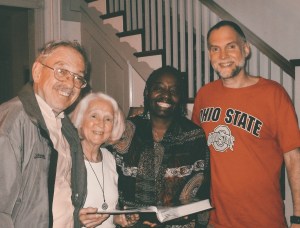
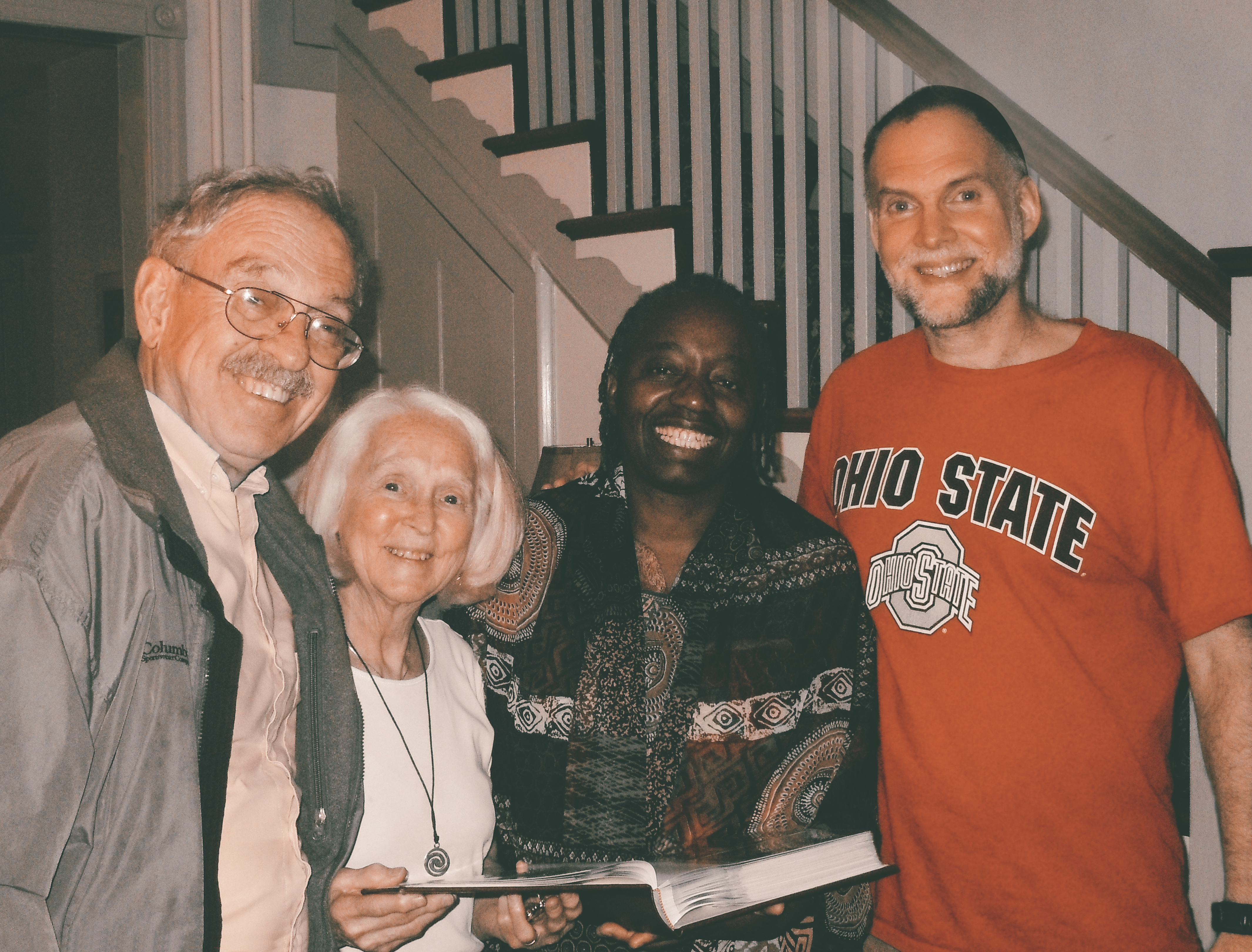
Left to right: Ron Sider and his wife, Arbutus, with Médine and Craig Keener c. 2011, at the Siders' home.Courtesy of Craig Keener
Left to right: Ron Sider and his wife, Arbutus, with Médine and Craig Keener c. 2011, at the Siders’ home.

I met Ron in person when I was a PhD student involved with the organization he founded, then known as Evangelicals for Social Action (now Christians for Social Action). In part through Ron’s support and encouragement, I ended up at Eastern Seminary (now Palmer Seminary of Eastern University).

Although he was already a respected Christian leader with demands on his time, he took me under his wing by encouraging and advising me. When we differed in our exegesis of the “least of these” passage in Matthew 25, Ron humbly and graciously honored my interpretation by mentioning it as a respectable alternative view.

He was a genuine activist—always doing his best to help people in need. Through senator Rick Santorum’s office, he even helped me get my wife, Médine, to the US after the events of 9/11 slowed down the immigration process. Many others could tell similar stories of Ron’s eagerness to engage, network, and mentor. (Ron’s dear wife, Arbutus, a counselor, also helped me with posttraumatic stress from some past events.)

After 15 years of working with him at Palmer Seminary, I moved to Asbury Seminary (where I teach now). But leaving him was one of the many reasons I found that transition difficult, even though we stayed in touch.

The impact he made on me, on his students and readers, and on North American evangelicalism is hard to overestimate.

When I was doing my PhD at Duke University, the objections to Christianity I heard from undergraduates were not the traditional ones I was trained to answer. They accused the Christian faith of being racist, sexist, and imperialist. However, Ron’s life and legacy have consistently challenged all of those perceptions.

Given some of the similar concerns voiced by today’s growing movement of young “nones,” I believe that wider acknowledgement of Ron’s voice could have helped prevent much of that hemorrhaging.

I miss you, dear brother. I will see you on the other side.

Craig Keener is F. M. and Ada Thompson Professor of Biblical Studies at Asbury Theological Seminary.

Ideas

Nicky Gumbel’s Fitting Farewell to HTB Church: ‘The Best Is Yet to Come’

Contributor

Retirement sermon and celebration of Holy Trinity Brompton vicar and Alpha Course pioneer reminds us that good and faithful servants still exist.

Pippa and Nicky Gumbel

Pippa and Nicky Gumbel

Christianity Today July 31, 2022
Courtesy of HTB Church

What does a lifetime of fruitful public ministry look like? Last Sunday, Holy Trinity Brompton (HTB) tried to answer this question in a video montage marking the end of Nicky Gumbel’s 46 years of leadership at the London multisite church.

Images of people whose lives had been impacted by the senior pastor and author flashed across the screen as one incredible statistic after another scrolled past: 30 million people introduced to the Christian faith through the Alpha Course, across 140 countries and 170 languages; 2 million people fed spiritually by a Bible reading app; and 2 million meals delivered during the pandemic from HTB alone.

The July 24 video was a fitting homage to a nowadays unusual career, spanning almost five decades in the same congregation. It is rare in Anglican churches in the United Kingdom for a trainee leadership position to last more than the minimum requirement of three years, with many moving regularly to the next parish. But Nicky sat under the tutelage of HTB’s then senior leader, bishop Sandy Millar, for 19 years. He was 49 years old when he took over the church, and admitted to uncertainty about it all—feeling both too young and too old to do so.

Humility is carved into Nicky’s resume. He likes to remind people that he did not start the Alpha course he is most famously associated with. Before it was transformed into the world’s most widely-used and effective evangelistic tool, it already existed as a short course to help believers ground their faith. Nicky once admitted to me that he had been resistant to Alpha going online during the pandemic; however, when he saw how effective it was, he was excited, quoting a favorite line from G. K. Chesterton: “In order to stay the same you have to change.”

Nicky is clearly an innovator and an entrepreneur, but at heart he is an enthusiastic evangelist and a servant leader. A few days before delivering his final sermon at HTB last Sunday, he completed leading his 96th consecutive Alpha course. This is just the tip of the iceberg when it comes to his involvement in practical, personal service and his willingness to talk with and, perhaps more importantly, listen to others. As a result, his last sermon included story after story from the Alpha group that had just ended.

I have seen firsthand Nicky’s genuine interest in—and inclusion of—those around him. In my work with refugees and newcomers to the UK, he was one of the first senior church leaders to back a welcome initiative for tens of thousands of arrivals from Hong Kong during the COVID-19 pandemic. When the British armed forces relocated thousands of Afghani families, before long I was hearing that Nicky was among the volunteers spending time with evacuees being temporarily accommodated in hotels not far from HTB.

He did this without any fuss or fanfare, and when I asked him about it afterwards, he referred back to his own family history—which included Jewish relatives who had escaped from Germany in the Second World War to the UK (with the help of Albert Einstein, no less).

As Nicky stepped up to the front of the sanctuary following the video montage, he did so with his wife Pippa at his side. Having shared much of their public ministry, it was clear that she would be as much of a loss to the church as her husband.

I was curious to hear what Nicky would say in his last sermon to a congregation he has served longer than most of its members have been alive. Would he offer any insights into his success at a time when it seems that most prominent church leaders end their careers in scandal or in burnout rather than in celebration?

Nicky’s chosen text was from Paul’s farewell to the Ephesian elders in Acts 20, but his resounding theme was one that punctuates the whole of Scripture: “The best is yet to come.”

There it is again: that wonderful humility. Nicky is not expecting to leave a hole at HTB, nor giving the impression that he is abandoning a sinking ship. He is not secretly hoping that everything will fall apart when he’s gone, thereby ensuring that he is associated with the church at its pinnacle of success.

Not at all. He seems eager to see the church flourish without him. He has nothing but praise and hope for the congregation as he hands it over to Archie Coates, a former trainee at HTB who has been leading a church plant in Brighton. Nicky is moving on to develop some innovative programs to support other emerging leaders, particularly those marginalized by racism, elitism, sexism, and agism. Above all, Nicky entrusts the church to the God he has devoted his life to serving and worshiping.

I join with HTB in thanking God for Nicky’s ministry: for his dedication, perseverance, warm and gracious humility, and unwavering ambition to see the good news of Jesus faithfully and clearly communicated in word and deed. In this time of great leadership turmoil within the church, it is right and good for us to celebrate those who make it to the finish line and inspire others to follow suit.

Krish Kandiah is director of Sanctuary Foundation.

Theology

Faithful Orthodoxy Requires Reading Widely

Evangelicals should humbly learn from all Christian tradition—yet many are ignorant or suspicious of pre-Protestant theology.

Christianity Today July 29, 2022
clu / Getty

Recently, one of my students asked me how long I’ve been teaching theology. “Ten years,” I said. And as I walked back to my office and sat down at my desk, a question hovered in my head: What have I left my students with after a decade?

In my self-centeredness, I had assumed I was the one bestowing the gift of knowledge to my students. But in truth, one of the best things I have done is send my students into modern ministry’s stormy seas with time-tested wisdom from an experienced crew from church history.

The longer I teach, the more I resonate with C. S. Lewis’s admonition, “The task of the modern educator is not to cut down jungles but to irrigate deserts.” And yet there remains notable deserts in the world of seminary education, particularly when it comes to incorporating large swaths of Christianity’s Great Tradition.

Years ago, as a PhD theology student at a Protestant seminary, I was handed a list of required reading. Out of 128 books, only three of them (!) were by premodern authors (written from the first century to the 15th century).

Even when I crossed into history with my degree, seminars skipped from the church fathers to the Reformers, only to progress into American history. And since half—yes, half—of church history lies in the Middle Ages, this gap in my education felt like a Grand Canyon. So, I petitioned the school to invent my own independent study of medieval theology and history.

Has anything changed today?

Christopher Cleveland chronicles how evangelical seminaries sought to replace liberal with conservative theologians, and in the process—due to either neglect or avoidance—“a generation of evangelical scholars arose who had no serious acquaintance with the classical categories of theology developed in Patristic, Medieval, and Reformed orthodox thought.”

As Protestants, many of us were taught that everything started off grand in the early church but then the church entered the “Dark” Ages. Thankfully, the Reformers turned the lights back on and established the true church that had been lost since the days of the apostles.

We mistakenly believe the Reformers pursued a total, radical break with the past—a rebellion that started a new church—rather than seeking to renew the one, holy, catholic, and apostolic church.

The practical implications of this mindset are serious: Most Protestants today have no idea what occurred in the church for nearly a thousand years. Yet they are confident of one thing: Whatever did occur during the premodern era is not worth our time and can only corrupt Christianity.

This is the mindset of many everyday churchgoers, which ultimately trickles down from the preaching in the pulpit. And since most pastors are trained in seminaries, the source of the problem is often in the outlook of Protestant academic institutions.

Those outside the evangelical vortex looking in often ask how this could happen. Many of them attended secular institutions where such a chasm is unthinkable. I wish I could say the oversight is merely administrative, but it is not. Ideas, after all, have consequences.

So, how do we change course? The answer has everything to do with humility.

We all know C. S. Lewis from his famous book Mere Christianity, which emphasized his staunch commitment to orthodoxy—that is, classical Christianity—as nonnegotiable.

Yet many forget that in the middle of this classic apologetic, Lewis spends two whole chapters retrieving the intricacies of the Nicene Creed and its doctrine of eternal generation. He also wrote a preface to one of the great works of Christian history, On the Incarnation by the eastern church father Athanasius.

Lewis advised—no, pleaded—with moderns in his generation to read more old books. He did so not because these premodern authors were without foibles. Every generation has its blind spots. But their blind spots are not always our blind spots.

“None of us can fully escape this blindness, but we shall certainly increase it, and weaken our guard against it, if we read only modern books,” said Lewis. “The only palliative is to keep the clean sea breeze of the centuries blowing through our minds, and this can be done only by reading old books.”

For instance, Lewis often ruminated on the God-centered vision of medieval theology, which he considered an antidote to the disenchanted cosmos of skeptical modernism so prevalent in his day. As Jason Baxter points out in his recent book, Lewis believed it was “his duty to save not this or that ancient author, but the general wisdom of the Long Middle Ages, and then vernacularize it for his world.”

Under the threat of modernism’s disenchanted cosmos, Lewis had no patience for the chronological snobbery of his day. Fearful such a skepticism could undo Christian orthodoxy itself, Lewis considered such pretentiousness not only ignorant but ungodly.

And so should we.

Summoning tradition is not a badge for those who think they know everything. Quite the opposite: It requires the humility to stop talking—obsessed as we are by our own voices—and to listen instead.

“Tradition refuses to submit to the small and arrogant oligarchy of those who merely happen to be walking about,” said G. K. Chesterton in Orthodoxy. Chesterton and Lewis alike called on their generation to humble themselves and listen to the “democracy of the dead.” If not, the church could only slide into heresies, new and old.

Many of our forefathers in the faith had a similar mindset—including the leaders of the Protestant Reformation.

At the time, Rome accused the Reformers of being novel and thus heretical—lumping them together with the radical sectarians of their day. Such radicals considered the church lost in darkness from the time of the apostles until the radicals arrived. They claimed to believe only in the Bible and spurned ancient thinkers. The radicals considered themselves alone to be the true church.

The Reformers were furious at the hubris of the radicals and frustrated at being mistaken for them. Unlike the radicals, the Reformers were not rebels and revolutionaries bent on dividing the church—schismatics at heart. From the beginning, their intention was to renew the church, arguing Rome had no monopoly on claiming catholicity.

As I explain in The Reformation as Renewal, the Reformers constantly appealed to Scripture, yet they justified their interpretation of it by invoking theologians of the past. Scripture was their final court of appeal, but it was not their only authority; they believed the church was accountable to the creeds, which keep the church faithful to the biblical witness itself.

And while they expressed serious critique of Rome on doctrines like salvation and sacraments, they also voiced agreement on numerous other doctrines. Doing otherwise would have thrown their orthodoxy into question, only confirming Rome’s accusation.

Reformation expert Richard Muller makes a sobering point: “The Reformation altered comparatively few” of the major doctrines of the Christian faith.

Doctrines like salvation and the church needed serious correction. However, doctrines as central to Christianity as “God, the trinity, creation, providence, predestination, and the last things were taken over by the magisterial Reformation virtually without alteration,” says Muller. Virtually without alteration—will the real Protestantism please stand up?

Not only did our Protestant fathers continue retrieving the theology of the church fathers, but they were more indebted to the medieval scholastics—including Thomas Aquinas—than is often assumed.

Few theologians in the history of the church perpetuated the biblical, orthodox doctrines of God and Christ with such astute precision as Aquinas.

Because of this, I often bring up Aquinas in my course on the Trinity at the evangelical seminary where I teach. Each year students report back to me with excitement that they have made an ironic discovery: They find Aquinas far more orthodox on the Trinity than some contemporary evangelicals.

But one afternoon, I walked into my class and found on my podium a giant rosary, crucifix and all—with a note that read, “For Dr. Barrett.” The message was clear: A professor who assigns Aquinas must be a closet Roman Catholic.

I would have laughed had I not felt so sorry for this anonymous student. Are we so insecure as Protestants that we cannot benefit from one of the greatest minds in the history of the church—particularly on a doctrine as essential as the Trinity—simply because we may disagree with him on soteriology and ecclesiology?

Even our Reformation forefathers were secure enough in their Protestant convictions to critically appropriate Aquinas in innumerable areas—from biblical interpretation to the attributes of God, from the Trinity to ethics and eschatology. Reformed theologians not only wielded Aquinas against Roman Catholics, but Michael Horton has shown that many of them were even more Thomistic than their opponents.

Modern evangelical theologians who avoid Aquinas will often draw from Protestant Scholastics like the Puritan thinker John Owen. And yet the Protestant Scholastics’ method and theology were faithful to biblical orthodoxy precisely because they were students of Aquinas.

These connections are so undeniable that Crossway, an evangelical publisher, will publish a multivolume set on Thomas Aquinas for Protestants—written by a team of Protestant authors.

At the end of the day, we’re not looking to enshrine Aquinas or any other thinker. Rather, we will listen critically but with humility as Aquinas unveils timeless, transcendental insights that serve to recover the eternal goodness, truth, and beauty of God in our disenchanted world.

Evangelicals, with all our modern proclivities, often like to act as judge, separating the “good guys” from the “bad guys” of Christian history—which serves only to venerate the former and eliminate the latter. This approach to history is ruthless in idolizing and canceling historical figures.

Such a mindset not only encourages a divisive sectarianism—where, eventually, no one is considered the true church except us—but also lacks empathy. We are unable to understand the complexity of people, movements, institutions, and entire epochs of the past, let alone learn from them. Behind this judgmentalism hides our own insecurities, agendas, and platforms.

As the saying goes, people are always afraid of what they do not know. And this fear of the unknown, masked in a rhetoric of hostility, translates into the classroom of tomorrow’s Christian leaders, which further trickles down to influence our laypeople.

I recently had a conversation with a young person deeply discouraged by today’s evangelicals—that is, evangelicals-turned-fundamentalists indifferent to or suspicious of all things premodern—who wondered whether the evangelical church has any real historical roots to offer anymore.

If the evangelical leaders of today cannot follow the lead of their Protestant forefathers and claim the church catholic—with a small c, meaning “universal”—the next generation will find a church that can.

And while changing course will be anything but easy, I believe we must begin with the cure prescribed by Lewis to keep the clean sea breeze of orthodoxy blowing through our minds.

Matthew Barrett is the author of Simply Trinity: The Unmanipulated Father, Son, and Spirit (Baker Books), associate professor of Christian theology at Midwestern Baptist Theological Seminary, and host of the Credo podcast.

News
Wire Story

Seattle Pacific University Sues Washington State Over LGBT Hiring Investigation

School claims attorney general is “interfering in the religious decisions of a Christian university.”

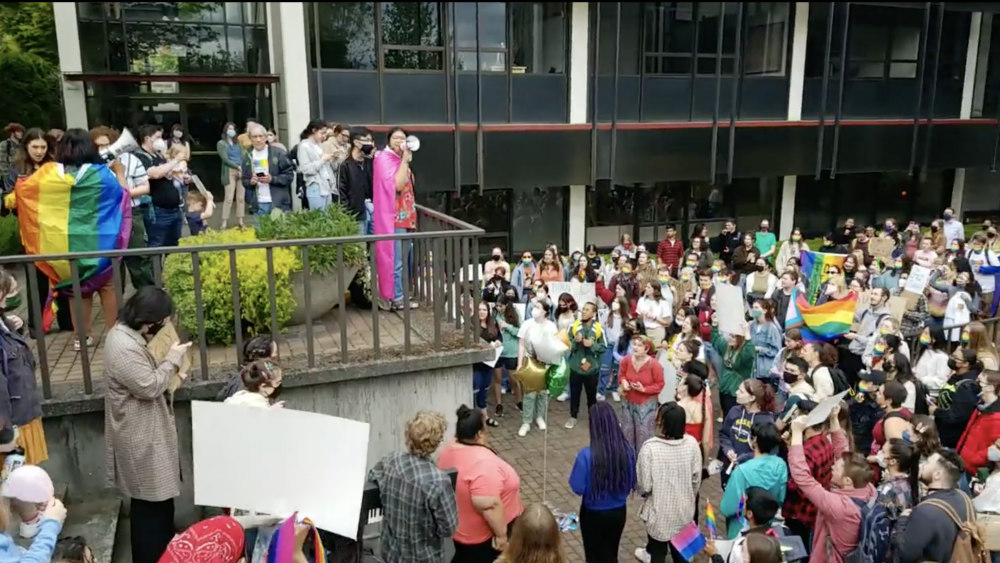
Students chant "We want gay faculty, we want gay staff" at Seattle Pacific University.

Students chant "We want gay faculty, we want gay staff" at Seattle Pacific University.

Christianity Today July 29, 2022
Screengrab / Jeanie Lindsay / Twitter

Seattle Pacific University, a private school associated with the Free Methodist Church, was the site of daily protests for more than a month earlier this summer as students challenged a school policy that prohibited the hiring of LGBT people. Dissenting students called the policy homophobic and discriminatory.

Now, the university says its rights are being violated by Washington state Attorney General Bob Ferguson, whose office launched an investigation into the school’s hiring practices.

Seattle Pacific University is suing Ferguson, claiming his probe aims to influence the university “in its application and understanding of church teaching,” according to the claim filed Wednesday, July 27, in US District Court for the Western District of Washington. The university is represented by Becket Fund for Religious Liberty.

Becket Senior Counsel Lori Windham, in a statement, said Ferguson singled out the university “because of its Christian beliefs, demanding information about the school’s religious hiring practices and employees.” She said the university is asking a federal court to stop him from “interfering in the religious decisions of a Christian university seeking to remain true to its faith and mission.”

Ferguson’s office did not respond to an email requesting comment.

Students and others fighting against the hiring policy said in a statement that the lawsuit shows “the university is still painting a portrait of a school that is being persecuted by outside forces for practicing their faith.”

“We know this is not an issue of religious freedoms; rather it’s an issue of the people in power failing to uphold the university’s commitment to it’s own community.”

At issue is the school’s employee lifestyle expectation policy that states, in part, that “employees are expected to refrain from sexual behavior that is inconsistent with the University’s understanding of Biblical standards, including cohabitation, extramarital sexual activity, and same-sex sexual activity.”

The controversy began after an adjunct nursing professor filed a lawsuit in January 2021, accusing the university of refusing him job opportunities because of his sexual orientation. Four months later, the university’s faculty in April 2021 took a vote of no confidence in its board of trustees after members of the board declined to change the hiring policy. The faculty also sought for the university to drop its statement on human sexuality. In the aftermath, a campus work group was assigned to study the issue and in May 2022 presented its recommendations. That’s when the board of trustees chose to retain the policy.

Students then staged a more than monthlong sit-in beginning in late May.

It’s believed students asked Ferguson to take legal action against the university’s board of trustees, according to the suit. Ferguson’s office sent a letter to the university, demanding “prompt production of voluminous and sensitive internal information on the University’s religious policies and their application to any and all faculty, staff, and administrators,” the complaint reads.

According to the complaint: “The letter clearly indicates that the attorney general considers ‘prohibiting same-sex marriage and activity’ to be in violation of the law … The First Amendment protects the ability of religious organizations to follow the teachings of their faith on marriage and sexual relationships outside marriage, and to maintain policies consistent with those beliefs.”

The university notes in the complaint that Free Methodists “believe sexual intimacy is a gift from God and is a great blessing in the sanctity of marriage between one man and one woman.”

Ferguson’s probe, the complaint reads, infringes on the university’s First Amendment right “to govern itself according to religious principles, frame its policies and doctrine, and select its employees and leaders according to those religious principles without government interference.”

If the school were to change its employment policies to allow hiring Christians in same-sex marriages, the university “would be automatically disaffiliated from the Free Methodist Church” and “no longer be a denominational institution,” according to the lawsuit.

News

Died: Carey Latimore IV, Historian who Held Up Black Christians’ Unshakable Faith

He saw African American history as a “window into the essence of the gospel.”

Christianity Today July 29, 2022
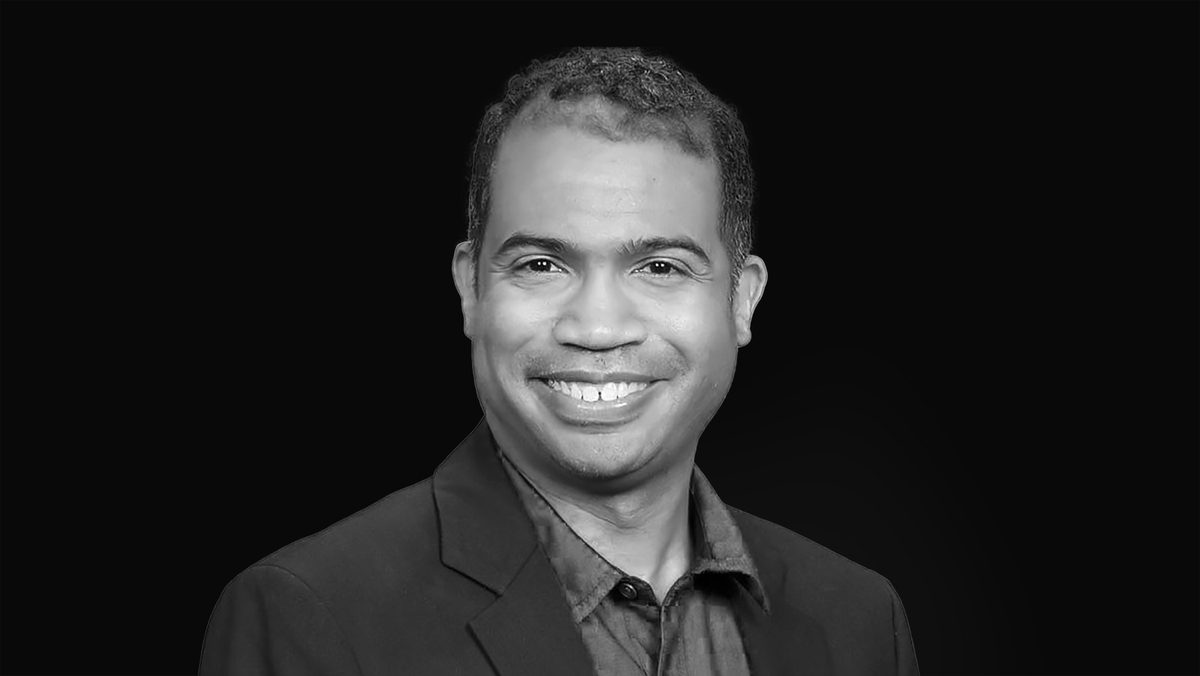
Carey Latimore / Trinity University / edits by Rick Szuec

Carey Latimore IV, a Baptist minister and a historian who studied how Black people persevered by faith, died unexpectedly on Tuesday at the age of 46.

Latimore was a beloved professor at Trinity University, in San Antonio, Texas, where he taught on the African American experience. Students were drawn to his enthusiasm and were frequently found in his office, discussing what they were learning in his classes and in the research projects he organized, like an oral history of race relations in San Antonio.

Latimore also actively found ways to bring his scholarship to the public. He appeared frequently on local TV, started a civil rights institute in downtown San Antonio before the pandemic, worked with the Alamo Citizen Advisory Committee, and wrote devotionals for Our Daily Bread.

In the last few years, he became an important resource for those seeking to understand the significance of Juneteenth, the holiday celebrating the end of slavery in America. Latimore was especially adept at explaining the religious significance and encouraging Christians and the church to embrace Juneteenth.

“I think Black people in their faith were kind of presenting a mirror and a window into the essence of the gospels that many people have forgotten or left behind,” he told Rasool Berry, pastor of The Bridge Church in Brooklyn, New York, on the Christianity Today podcast Where Ya From? “On Juneteenth, people start talking about what we can be, what we can do. What we have done. It’s an inspiring moment because we think of the possibilities.”

The people who worked with Latimore were shocked by the news of his death. They mourned both loss of a public scholar and a personal friend.

“He led with his head and his heart,” said San Antonio TV news anchor Steve Spriester. “It is the ultimate understatement to say that Carey Latimore will be missed.”

When his death was announced at a Alamo Citizen Advisory Committee meeting, people gasped, according to the San Antonio Express-News.

“He was able to hear all sides and try to bring us to a stronger place,” Aaronetta Pierce, one of three chairs of the committee that was working to expand, improve, and complicate the history recounted at the Alamo as part of a $400 million makeover. “I hope that as we continue in this project, we take Carey with us, and his thoughts, and that some part of him helps us to get to the place where we have to get to in order to have a shared history and project.”

Latimore was born in Saluda, Virginia, in 1976, a rural community about 18 miles upriver from where the Rappahannock empties into the Chesapeake Bay. His father, Carey Latimore III, owned a fiberglass repair shop, fixing semi trucks that Latimore, as a child, imagined driving across America.

“I loved the huge rigs,” he once told the Trinity student newspaper. “Traveling the country, hanging out at truck stops and hearing the stories, and using a CB radio. Wow—just wow.”

While Latimore could only dream of the oral histories offered up at truck stops, he started to notice the stories that were told at the family’s Antioch Baptist Church, the oldest Black church in the county, founded right after the Civil War. Latimore’s mother, Ann Stephens Latimore, directed the choir, and during Black history month, the church sang spirituals and acted out the stories of great Black Christians from history.

Latimore learned how many Christians like his mother “grew up in the underbelly of the Jim Crow South” but persevered by faith. Latimore said his mother, who died in 2018, “boldly proclaimed the gospel of Jesus Christ her entire life.”

Latimore began to study this history more seriously in college. He attended Rappahannock Community College and then the University of Richmond, where he majored in history. Latimore then went on to graduate studies at Emory University, writing his doctoral dissertation on how free blacks in the Richmond area experienced the end of slavery.

In 2004, Latimore took a position in the history department at Trinity. He told administrators that he had prayed about it and believed God wanted him to be there.

Latimore quickly connected with students and threw himself into teaching. He won the school’s most prestigious faculty award for his success as a mentor.

“I love listening to students. I love interacting with students. And doing projects with students as well,” he said.

Latimore also became an active member of Mount Zion First Baptist Church, a prominent National Baptist Convention congregation that played a notable role in the civil rights movement. Latimore, ordained at his childhood church in Virginia, served Mount Zion as an associate minister.

According to those who worked with him, Latimore’s call as a minister and his work as a historian were deeply integrated.

“His being a Baptist minister was really central to everything, “almost as if his professorship satellited out from that, because it informed how he did everything,” said Donna Guerra, who worked with Latimore on an archival project. “He was very beloved.”

Latimore started writing more about Black Christians and their faith during the pandemic, working on a popular book that would recount the histories of lesser known African Americans and drawing devotional lessons from their lives. Working on it was, at times, a religious experience. On his Facebook page, he described how the Holy Spirit was guiding him and how he was moved, writing about civil rights leader Mary McLeod Bethune, to worship God.

“As I sit in my seat typing notes of her life,” he wrote, “I feel an urge to get out of my seat and lift my hands to heaven and praise God.”

Our Daily Bread published Unshakable Faith: African American Stories of Redemption, Hope, and Community at the start of 2022. The book starts with Cyrus Bustill, who was freed from slavery in New Jersey before the American revolution, and preached to free blacks about the importance of forgiving enslavers and recognizing God, not benevolent white people, as the true author of freedom. It continues, recounting a chronology of committed Christians sustained through faith down to Chance the Rapper, who described his 2016 mixtape “Coloring Book” as the declaration of a Christian man.

“To be American and Black. Faith has been the glue that ties our twoness,” Latimore wrote. “Unshakable faith has sustained us in this struggle. The faith stories of our ancestors provided the rocks from which our pillars of faith are secured. … We must invite the Holy Spirit to guide us to greater wisdom and toward redemption.”

Latimore and his wife, Almie Pachoco-Latimore, recently built a house outside San Antonio. They planned to surround it with flower gardens. The cause of his death has not been stated.

Latimore is survived his wife, his sisters Kimberly and Kerri, and his father Carey Latimore III. Trinity is planning a memorial service for the fall.

News

Beyond Pope’s Apology, Indigenous Christians Carve Own Path to Healing

Recovering languages and contextualizing theology help Canada’s First Nations communities reconcile faith and culture after residential schools made them “hate the name of Jesus.”

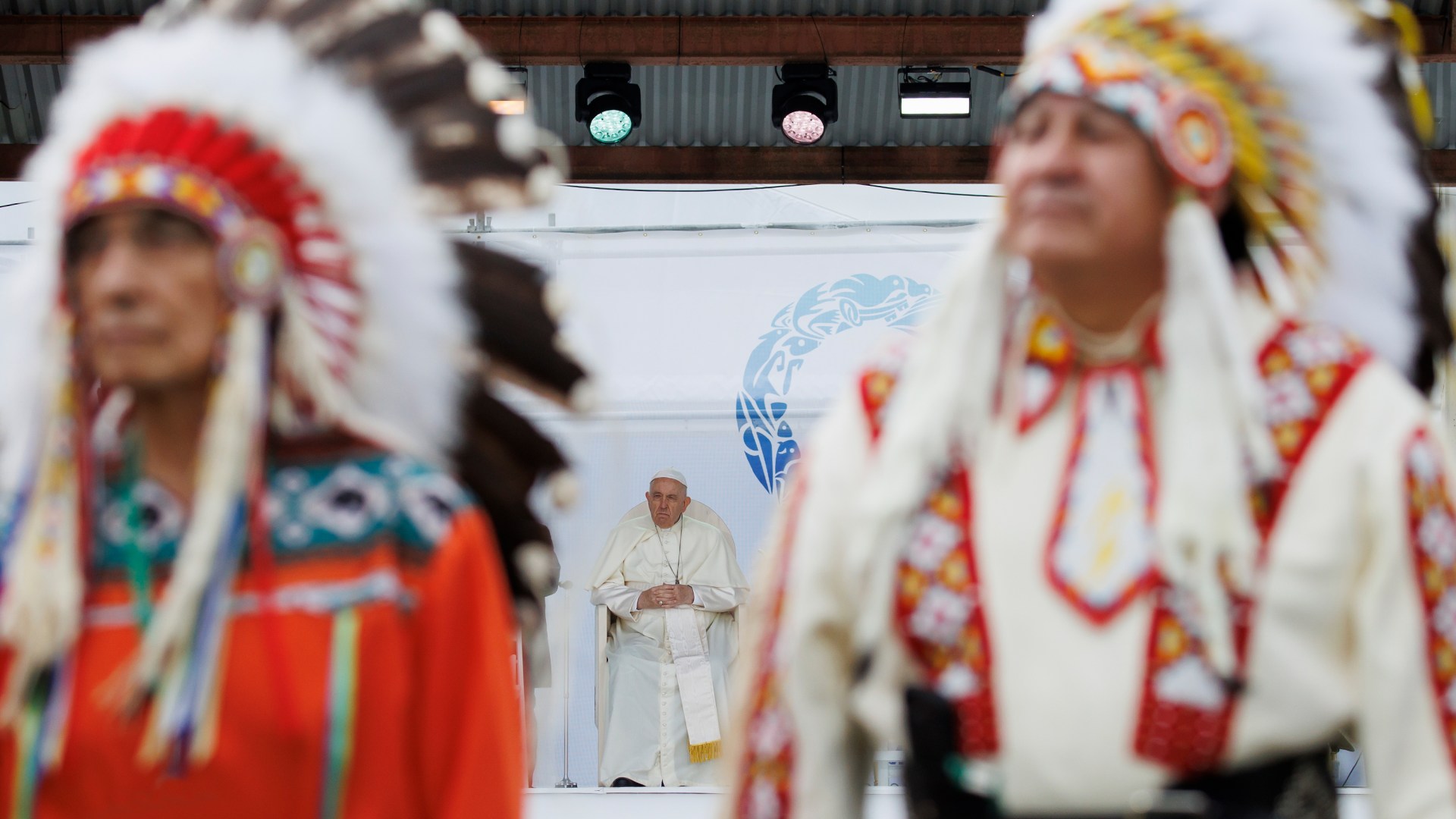
Pope Francis before his apology for the treatment of First Nations children in Canada's Residential School system.

Pope Francis before his apology for the treatment of First Nations children in Canada's Residential School system.

Christianity Today July 29, 2022
Cole Burston / Stringer / Getty

Three weeks before Pope Francis visited Canada to apologize for the church’s involvement in indigenous residential schools, Christina Dawson’s church in Vancouver, British Columbia, burned down.

The fire was eerily reminiscent of the more than 50 churches that were defaced or destroyed across the country a year ago, weeks after the discoveries of the remains of residential school students began making international headlines.

This month’s fire started in a back alley on July 6, according to Dawson. By the next morning, the church’s two-story building was completely ravaged. Fire inspectors are still investigating the incident to determine whether the blaze was deliberately set.

Dawson is from the Nuu-chah-nulth Nations on the western end of Vancouver Island. She serves as lead pastor of Street Church, which is part of the Foursquare network of churches in Canada. Its pastoral team are all alumni of First Nations Bible College.

The pope’s apology has galvanized Dawson’s desire to share Christ with other indigenous peoples. “I find it more urgent than ever to find a new building [for my church],” she said.

“What the priests and nuns at these residential schools did to us was evil,” Dawson said. “But the worst thing they did to us: They made us indigenous people hate the name of Jesus.”

https://twitter.com/davidpball/status/1545074250536497152

A mixed reception

On Monday (July 24), Francis apologized for the Catholic church’s role in setting up Canada’s residential schools and perpetuating decades of abuse against First Nations, Inuit, and Métis children.

The pope’s weeklong trip to Canada came on the heels of a visit by indigenous leaders to the Vatican in late March.

Speaking in Spanish at Maskwacis, Alberta—the site of the former Ermineskin Residential School, which was operated by Roman Catholic missionaries from 1895 to 1975—Francis acknowledged the “physical, verbal, psychological, and spiritual abuse” that children suffered at residential schools.

Beginning in 1831, more than 150,000 of these children attended residential schools. And although the last school closed in Saskatchewan in 1996, the trauma of being forced to relinquish their cultural traditions, languages, and practices continues to pervade generations of indigenous peoples.

At Maskwacis, Francis kissed a bright red banner displaying the names of 4,120 children who had died in residential schools and issued a plea for forgiveness for the “deplorable evil”:

I am sorry. I ask forgiveness, in particular, for the ways in which many members of the Church and of religious communities cooperated, not least through their indifference, in projects of cultural destruction and forced assimilation promoted by the governments of that time, which culminated in the system of residential schools.

About two-thirds (63%) of indigenous peoples in the country identify themselves as Christian, according to a 2011 poll by Canada’s National Household Survey. More than half are Catholic and the rest are Protestant or Orthodox.

Indigenous evangelical leaders in North America both witnessed and experienced myriad responses to the papal apology, ranging from anger and grief to gratefulness and relief.

“My initial thought was that we don’t need another apology. We need an apology that is lived out,” said Susan McPherson Derendy, who is Nehiyaw-Swampy Cree and teaches theological education through an indigenous lens to First Nations Christians. “But some felt that many residential school survivors and their families needed to hear it.”

Shari Russell, a consultant for the Salvation Army’s Indigenous Ministries, is from the Yellow Quill Nation in Saskatchewan. Her older sisters were sent to Catholic residential schools.

“I have some sadness as my sisters have journeyed on to the other side. This would have been helpful for them to hear,” she said.

Terry Wildman, who is Ojibwe and Yaqui and the US-based director of spiritual growth and leadership at InterVarsity’s Native Ministries, expressed gratitude for the pope’s apology while also recognizing that it had stirred up controversy.

“This doesn’t complete anything, but it opens new doors for further conversation and feedback from indigenous peoples,” he said.

An enduring grief

Last summer, the discovery of numerous unmarked graves on the sites of former residential schools in Kamloops, British Columbia, and Marieval, Saskatchewan, horrified the world—their existence evidence of the 25,000 First Nations students who never returned home.

“I know the weight of the burden of grief that our indigenous peoples carry, as I have personally experienced it myself through the loss of my son,” Dawson said.

Dawson’s son was killed three years ago. In moments when the pain has been too great for her to carry, she has called on Jesus for help. Her Christian faith is something she hopes she can share with other indigenous persons she encounters on the street who have suffered similar losses.

Street Church has served its community for 29 years and has run services on Sundays, Wednesdays, and Fridays to reach out to the homeless in its vicinity. During the pandemic, the congregation moved from offering food services to providing care packs for visitors, who heard praise and worship songs and testimonies about God while receiving physical nourishment.

As she awaits the fire investigators’ findings, Dawson is looking for a new ground-floor location for Street Church in the Downtown Eastside, one of the city’s poorest areas with one of the largest urban populations of First Nations people across Canada (and where the original church was located). Being there means her church is well poised to reach out to those who are experiencing prolonged suffering brought on by the residential school system.

Hidden benefits

Many of the indigenous leaders interviewed by CT said that Canadian evangelicals are often dismissive of or indifferent toward the atrocities committed against indigenous peoples.

“Many evangelicals say their denomination didn’t run a residential school,” said Russell. “But they need to recognize that the Doctrine of Discovery has permeated the church and its theology. We need to recognize our own ethnocentrism and racism.”

Samantha Martin-Bird, who works for a nonprofit that addresses inequities confronting indigenous young people, grew up in an evangelical church setting and now lives and worships in Thunder Bay, Ontario. The citizen of Peguis First Nation in Manitoba cited King David making amends for Saul’s wrongdoing (2 Sam. 21:1–14) as an illustration of how evangelicals might still be held accountable.

“Evangelicals tend to think mainly about their own personal sin or wrongdoing,” she said. “But in this story, the whole community suffered harm and experienced famine because someone (Saul) who had already died broke a treaty [with the Gibeonites]. David was not related to Saul, but he was still asked to make it right.”

Denominations like the Christian Reformed Church in North America (CRCNA) have followed in David’s footsteps. Canadian CRC congregations committed to several initiatives from the Truth and Reconciliation Commission’s 94 calls to action, including championing equity in education and educating the laity on this history.

“Even though the CRC didn’t run a residential school, we are beneficiaries of the colonial system that the residential schools represented,” Mike Hogeterp of the CRCNA’s Centre for Public Dialogue told CT last year.

Since 1994, the Evangelical Fellowship of Canada (EFC) has worked to strengthen its ties with the indigenous community. They formed a task force in 1995 to create educational resources for churches. More recently, the EFC presented a paper, “Stewarding Sacred Seeds,” at NAIITS’ 2020 symposium, which outlined seven commitments that were subsequently adopted. These included recommitting to the Reconciliation Proclamation, reviewing existing church resources, repudiating the idea of neutrality on issues pertaining to indigenous justice, and developing a theology of stewardship of land and creation.

“To come alongside Indigenous sisters and brothers is to listen and ask questions,” wrote EFC president Bruce J. Clemenger last year. “When we own the shame of what was done in this land to our neighbours and their ancestors, we will be motivated to pray and seek healing for our country.”

Reimagining education

One area that indigenous Christian leaders are investing in as they journey toward reconciling faith and culture is the field of theological education.

Last July, Russell was seconded to Indigenous Pathways, a nonprofit charitable organization incorporated in Canada and the United States that works globally to improve the future of indigenous peoples through training, community engagement, and formal education.

Part of this work includes her role as associate director at NAIITS (formerly the North American Institute for Indigenous Theological Studies). The indigenous learning community offers MA and PhD programs that encourage the development of written work around biblical and theological themes from indigenous perspectives.

Derendy attended church as a child and teenager, left the faith, and returned in her 20s. A prayer and counseling session she attended in the mid-1990s helped her see herself “as a Cree child of Creator God, as opposed to the negative and toxic stereotypes [of indigenous women] that were a part of societal conditioning.” What Dakota elders later said to her—that God’s will for them was to be good Dakota men—was also pivotal in confirming her journey of faith and providing her with greater guidance and direction.

Today Derendy is Keeper of the Learning Circle at the Sandy-Saulteaux Spiritual Centre in Beausejour, Manitoba, where she is working to implement a curriculum that reflects a decolonized, indigenized approach to theology. The center trains and equips people for indigenous leadership roles in the United Church of Canada and elsewhere.

Indigenous leaders are also embarking on efforts to contextualize the gospel through language recovery.

Last summer, Wildman and his team, made up entirely of North American indigenous people, published the First Nations Version of the New Testament. The decision to publish it in English, he said, was intentional.

“Boarding and residential schools have been very successful in taking our languages from us,” said Wildman, who grew up in Michigan and now lives in Arizona on the traditional lands of the Pima and Tohono O’odham. “Less than 10 percent of us can read our own language. We wanted to take this colonial language, make it serve us, and incorporate wordings and idioms that are more Native-friendly.”

Feedback on the First Nations Version from both indigenous and nonindigenous believers has been “phenomenal,” in Wildman’s words. Just this week, he signed another contract with InterVarsity Press to translate Psalms and Proverbs, slated for publication in 2024.

For Dawson, reconnecting with the language of her culture is key to processing the trauma she experienced. “I wish I could learn my language [more]. I know very little,” she said.

Martin-Bird said that evangelicals should invest in the efforts to revitalize indigenous languages in response to their erasure. Reading the Bible in Ojibwe, Hebrew, and English, she said, is a practice that has enabled her to develop a greater love for Scripture and a deeper appreciation for its richness and complexity.

While she did not feel disconnected from her indigenous identity, she described it as “fractured” due to the church’s colonizing influence. An example of this, she said, is that she is not fluent in Cree or anishinaabemowin (the Ojibwe language). But exploring beloved Bible stories—such as Abraham sacrificing Isaac in Genesis 22 and the account of Jesus’ birth in Matthew—in Ojibwe during Lent and Advent was enriching.

“I wanted to sift through familiar stories and see how different they felt [in another language],” she said.

Looking ahead

In the view of these indigenous evangelical leaders, the grief that persists and the depth and breadth of what they ache to accomplish do not negate opportunities for celebration.

This August, the Salvation Army will host a Celebration of Culture and Pow Wow in Pine Lake Camp, Alberta, where indigenous peoples will have a place to celebrate their heritage and faith.

“Years ago, the church would not have allowed this. Now they’re sponsoring it,” Russell said.

To her, the fact that a Christian ministry is organizing this event gives her hope for the evangelical church at large. “Churches ought to look at how they teach and educate clergy and congregations about what has happened and how we can begin to live in right relationship with one another,” she said.

“The gospel story of Jesus brings life and wholeness. Bringing about and seeing that redemption happen is something I hope and long for.”

News

Died: Ron Sider, Evangelical Who Pushed for Social Action

Author of “Rich Christians in an Age of Hunger” argued poverty was a moral issue.

Ron Sider

Ron Sider

Christianity Today July 28, 2022
Edits by Mallory Rentsch

Ronald J. Sider, organizer of the evangelical left and author of Rich Christians in an Age of Hunger, died on Wednesday at 82. His son told followers that Sider suffered from a sudden cardiac arrest.

For nearly 50 years, Sider called evangelicals to care about the poor and see poverty as a moral issue. He argued for an expanded understanding of sin to include social structures that perpetuate inequality and injustice, and urged Christians to see how their salvation should compel them to care for their neighbors.

“Salvation is a lot more than just a new right relationship with God through forgiveness of sins. It’s a new, transformed lifestyle that you can see visible in the body of believers,” he said. “Sin is a biblical category. Given a careful reading of the world and the Bible and our giving patterns, how can we come to any other conclusion than to say that we are flatly disobeying what the God of the Bible says about the way he wants his people to care for the poor?”

Sider was a key facilitator of the born-again left that emerged in the 1970s. But he lived to see American evangelicals largely turn away from concerns about war, racism, and inequality. He continued to speak out, however, and became, as a Christianity Today writer once described it, the “burr in the ethical saddle” of the white evangelical horse.

His landmark book, Rich Christians in an Age of Hunger, inspired generations of young Christians, selling 400,000 copies in nine languages. CT ranked it as one of the most influential evangelical titles of the 20th century, right after J. I. Packer’s Knowing God and Kenneth Taylor’s The Living Bible.

Rich Stearns, president emeritus of World Vision, called Sider “a great Christian soul and a passionate justice warrior.” Adam Russell Taylor, the president of Sojourners, said he was “was a longtime friend and ally” and “a tireless proponent of peace and justice.” Both referenced the impact of Sider’s book on their lives.

https://twitter.com/RichStearns/status/1552725169268961280

Sider was born in Fort Erie, Ontario, in September 1939. Raised on a 275-acre farm, his father was a farmer and a pastor in the Brethren in Christ Church, an Anabaptist and Wesleyan tradition that combined concern for holiness, a commitment to peace, and a literalist reading of the Sermon on the Mount.

Sider was the first in his family to pursue higher education, but he carried with him the conviction that Christian faith was not merely intellectual assent: True faith should shape your whole life.

He studied history under Christian apologist John Warwick Montgomery at Waterloo Lutheran University in Ontario and then went to Yale University to study the Reformation with historian Jaroslav Pelikan. Sider wrote his dissertation on Andreas Karlstadt, a contemporary of Martin Luther who renounced academic titles, wore peasants’ clothes, and preached simplicity in the church.

Sider was learning to embrace a similar radicalism in his own life. Instead of living with the other graduate students at Yale, he found a home for his young family on the edge of a Black neighborhood in New Haven, Connecticut. Then he moved to the center of the African American community, where he mourned with his neighbors when Martin Luther King Jr. was assassinated in 1968 and became involved with the local struggle for civil rights. When he wasn’t reading Latin and German for his dissertation, Sider helped Black activists register voters and recruited Yale’s InterVarsity students to join him.

After graduating, Sider took a position teaching at Messiah College’s Philadelphia campus and then at Eastern University’s Palmer Theological Seminary. He moved to the African American neighborhood in Germantown and focused his classes on racism, war, and poverty.

Sider also became more politically active. He campaigned for George McGovern, founding Evangelicals for McGovern to rally support for the anti-war senator from South Dakota who was maligned by his many opponents as the candidate for acid, amnesty, and abortion.

According to historian David Swartz, Evangelicals for McGovern was the first evangelical group after 1945 to support a presidential candidate. Religious Right groups such as the Moral Majority and Christian Coalition had not yet organized, and though many prominent leaders such as Billy Graham supported President Richard Nixon, evangelical politics at that moment seemed “up for grabs.” Sider, along with people like Tom Skinner, Jim Wallis, and Richard Mouw, wanted to grab it. They believed Christians who loved Jesus and hated sin should exert their political will to oppose the war in Vietnam, law-and-order politics, and economic policies that aggravated poverty.

After McGovern’s landslide loss, Sider organized a group of about 50 to meet in a YMCA basement in Chicago before Thanksgiving 1973. They wrote a declaration of “evangelical social concern.”

“We acknowledge our Christian responsibilities of citizenship,” it said. “Therefore, we must challenge the misplaced trust of the nation in economic and military might—a proud trust that promotes a national pathology of war and violence with victimizes our neighbors at home and abroad. We must resist the temptation to make the nation and its institutions objects of near-religious loyalty.”

In 1977, Sider published Rich Christians, arguing that poverty is a moral and not just economic issue. Christians who take the Bible seriously should oppose wealth inequality, he said, and see the injustice of the social structures that benefit powerful people at the expense of the poor.

“Hunger and starvation stalk the land,” he wrote. “The problem, we know, is that the world’s resources are not evenly distributed. North Americans live on an affluent island amid a sea of starving humanity.”

Evangelical Christians had long preached against some of the sins that lead to poverty, such as alcohol abuse. But they had ignored others, when condemnation would mean corporate responsibility.

“If God’s word is true, then all of us who dwell in affluent nations are trapped in sin. We have profited from systemic injustice,” Sider wrote. “We are guilty of an outrageous offense against God and neighbor.”

The book was sharply criticized by Christian Reconstructionist Gary North, who accused Sider of being a “guilt manipulator,” and Christian worldview philosopher Francis Schaeffer, who said Sider had succumbed to secular humanism and focused too much on society’s material problems.

The book nevertheless found an eager audience of evangelicals. It was especially popular among InterVarsity students and at campus ministries across the US and abroad. Rich Christians was translated into German, Dutch, Portuguese, Japanese, and Korean, and continued to circulate among left-leaning Christians for decades.

“Sider became a spark plug,” according to a 1992 CT profile, “among a small group of evangelicals who were interested in social and political issues, most of whom were young, well educated, highly idealistic, and shared a concern for social and racial justice and simple living.”

Sider founded Evangelicals for Social Action (now Christians for Social Action) in 1978. Hopes, however, for a strong progressive evangelical movement were soon swamped by the popularity of Ronald Reagan and the successes of the Religious Right. Republican leaders actively courted white evangelicals, finding common causes on issues from the Supreme Court to the local school board. Meanwhile, leading Democrats—many of whom found Jimmy Carter’s moralism judgmental and offensive—avoided or dismissed religious concerns and religious voters.

Nonetheless, Sider continued speaking and writing about evangelical moral concerns, including popular books on simple living and historic studies of the early church’s holistic pro-life teaching. Evangelicals for Social Action lobbied for sanctions on apartheid South Africa, launched the Evangelical Environmental Network, and campaigned for higher fuel-efficiency standards on automobiles.

Sider also protested American support for Latin American dictators in the 1980s and opposed the Gulf War in 1991 and the US invasion of Iraq in 2003.

“Sider refused to isolate abortion from issues of violence & injustice, urging conservative evangelicals to be ‘completely pro-life,’” wrote historian Brantley Gasaway. “Sider’s career seems bittersweet. … a bitter reminder of what modern evangelical politics might have but did not become.”

Sider continued to cry out to evangelicals from the wilderness into the 2020 election, when he edited a collection of Christian political essays called The Spiritual Danger of Donald Trump.

He said he published the book “with deep sadness and persistent hope,” calling American Christians across the political spectrum to demonstrate their “commitment to truth, respect for opponents, and willingness to negotiate reasonable bipartisan compromise.” Writers in the collection included former CT editor in chief Mark Galli, evangelical philosopher Michael Austin, theologian Samuel Escobar, and former Republican Congressman Reid Ribble.

“We believe that Christians can make a huge contribution to preserving a good future for our children and grandchildren,” Sider wrote, “by praying for God’s guidance, submitting unconditionally to biblical principles about truth, justice, and moral integrity, and faithfully applying these biblical principles in all our political decisions.”

https://twitter.com/ChristianSocAct/status/1552755929942212608

In March 2021, he announced he had an aggressive form of bladder cancer and that he would be starting radiology and chemotherapy treatments. Sider said he was praying for 10 more years to live, but also kept singing a hymn from his childhood:

Peace, peace, wonderful peace,
Coming down from the Father above!
Sweep over my spirit forever, I pray,
In fathomless billows of love!

“We at Christians for Social Action feel the loss of this humble, kind, and prophetic man,” said Nikki Toyama-Szeto, the organization’s executive director. “As the initial surprise passes, we hold deep gratitude for the big and small ways that Ron bore witness to God’s heart, and how he always showed us a fuller picture of what it means to follow Jesus.”

Toyama-Szeto said in a statement that as Sider worked on his autobiography, “he was unafraid of death, confident that an even better story awaited him.”

On July 28, Sider’s son Ted shared on Facebook and Substack that his father had died suddenly of a cardiac arrest and asked followers to “please join our family in grieving for him.”

He is survived by his wife of 59 years, Arbutus Lichti Sider, and three children.

Theology

Could the Climate Crisis Make Religion Even Crazier?

Extreme weather changes can prompt people to seek out extreme solutions and saviors.

Christianity Today July 28, 2022
Illustration by Mallory Rentsch / Source Images: Mic Narra / Unsplash / DKAR Images / Getty

This piece was adapted from Russell Moore’s newsletter. Subscribe here.

After several weeks of heat waves all over the world, I’m finding that the first thing I end up talking with anyone about, no matter where the person is from, is the weather. And then, almost every time, the conversation turns to how “crazy” and angry everything seems right now—whether in the world, the nation, or the church.

What if those two conversations turn out to be strangely related? That’s the argument of a new book, Climate, Catastrophe, and Faith: How Changes in Climate Drive Religious Upheaval, which has prompted me to ask some different questions about what’s next for the church.

The book caught my attention because it was written by Baylor University historian Philip Jenkins, whose insights have proven themselves repeatedly. When the consensus seemed to be that the world was headed toward an inevitable secularization, Jenkins pointed to the data to show us what was happening with the surge of Christianity in the Global South.

When others downplayed secularization in an American context, Jenkins warned—and was proved right—about the emergence of the religiously unaffiliated, often called the “nones.” And now Jenkins asks us to pay attention to something else most of us have not noticed: that a changing climate just might change religion.

In making his case, Jenkins points to world history regarding climate-driven crises. Some, of course, have referenced previous epochs of warming and cooling to suggest that our current climate situation is merely cyclical, not caused substantially by human activity. Jenkins does not hold this view but instead accepts the reality of human-driven climate disruption.

We can, he says, predict some of what is to come based on what we’ve seen before. There are implications for housing, food supply, migration, population density, geopolitical tensions, and so on—but Jenkins points out that the implications also reach to religion.

For Jenkins, understanding religion in a historical sense means understanding crisis, because crises often prompt religious change. Yet even a crisis rarely happens all at once, he writes. Sometimes changes under the surface go unnoticed for long periods of time and then accelerate quickly.

Think of the decline of the Roman Empire, for instance, followed by its seemingly sudden collapse—and think of the way that event prompted Augustine’s City of God.

Often, Jenkins argues, religious transformations happen in times of stress and anxiety. Sometimes such crises have benefited religion—prompting people to reconsider their priorities and their dependence on God and one another in light of their felt mortality. At other times, though, crises have prompted waves of apocalyptic enthusiasm, messianic cults, and societal conflict.

This is where Jenkins draws from historical precedent and offers some warnings that might make us wince.

He contends that catastrophes and upheavals, including those prompted by climate, often result in an uptick in conspiracy theories and scapegoating. When food or land or jobs become scarce, someone will almost always arise to suggest who is to blame. Jenkins further demonstrates that riots, civil wars, militia movements, persecutions, and pogroms have arisen out of these sorts of conspiracy theories.

And, he writes, these groups typically “define themselves in religious terms and justify themselves by attacking not just rival faith communities but also other members of the same faith who are seen as deviant or less committed. Attitudes and actions that would once have been unthinkable gain mass support at a time of hunger, social stress, and political breakdown.”

As I read this, I immediately wondered how much more conspiracy theorizing and scapegoating we could take. And by “we,” I’m referring specifically to the United States and Bible Belt evangelical Christianity, not to the world and human society at large. Almost every church, family, friend group, and even some marriages seem to be under stress by the sorts of conspiracy theories and culture wars generated by social media conflict.

Foreign policy analyst Andrew Bacevich argues in his recent book, After the Apocalypse: America’s role in a World Transformed, that the pervasive sense that things are falling apart or coming undone is not just a feeling.

The events of 2020 in particular, Bacevich maintains, were indeed apocalyptic: from the plague of a viral pandemic to economic volatility to extreme weather to political institutions that seemed to be breaking down. In his view, these events pointed to the four horsemen described in Revelation 6 and what they are said to convey.

“Rancor, pestilence, want, and fury: These are the Four Horsemen comprising our homemade Apocalypse,” he writes. “Each exposed weakness and rot in institutions whose integrity Americans had long taken for granted. Each caught members of the nation’s reigning power elite by surprise.”

Could extreme weather make this far worse? Jenkins argues it could—and not just in those regions most directly affected. What happens, he wonders, when a migration crisis means waves of refugees and exiles who will “bring their memories of parched ground, failing cities, and dying landscapes”? Jenkins suggests history shows us that apocalyptic realities tend to prompt people to look for messiahs.

“A society constantly rent by extreme forest fires or dustbowl conditions, where famous cities are sinking under the waves, offers ample opportunities for preachers and prophets of all shades,” he writes.

Jesus, of course, warned of this precise dynamic.

He spoke of wars and rumors of wars, of political breakdown as nation rises against nation, of “famines and earthquakes in various places.” Contrary to some prophecy-mongers of the past, Jesus explicitly said he was warning us not of the actual endpoint of history but of “the beginning of birth pains” that will happen throughout the time between his first and second comings (Matt. 24:6–8).

These natural and political upheavals, Jesus predicted, would be accompanied by religious communities split apart as “many will turn away from the faith and will betray and hate one another” (24:10). The love of many, he foretold, would “grow cold” (24:12). And against this backdrop, Jesus said, there would always be people falsely claiming to be messiahs who could fix it all (24:5, 11).

Jenkins writes that a warming world might just prove secularization experts definitively wrong—those who forecast “the end of religion within a century or two, a near-literal death of God.” Such forecasts are rooted, after all, in the assumption that the world is becoming like Sweden—an affluent, upwardly mobile society of stable institutions, relative economic prosperity, and technological progress.

Right now, though, Jenkins argues, the “most vulnerable parts of the planet are already suffused in faith, and those religious beliefs and values can only grow in the face of worldly disaster.”

Yet to Jenkins, this is not necessarily good news for those of us who long for a revival of gospel Christianity. These upheavals have often led people, as Jesus warned, to find cults and leaders with easy answers who assign blame and promise a way out with various types of prosperity gospels.

However, as Jenkins and several other observers of contemporary religion note, religious cults are on a distinct downturn, even with all the uncertainty all around us. Instead, what we see now is a secularization, even of apocalyptic sects.

In a Patheos column this week, historian Daniel K. Williams examines the widespread Bible Belt phenomenon of white Southern Protestants who no longer attend church—and there are a lot of them. Williams writes: “If ‘lapsed evangelical Protestant’ were a denomination, it would be by far the largest religious body in the South.”

But again, contrary to the myths of progressive secularization, Williams mines the data to show that these “de-churched” evangelicals are not becoming like the Swedes or even like de-churched cradle Catholics from the northeastern US.

Their politics haven’t changed (except for becoming more extreme), and neither has their sense of religious identity. The data show that they are liberalizing, to be sure, but only on the specific sins they want to commit—especially when it comes to premarital sex.

“When people leave church, they retain the moralism—at least insofar as it pertains to other people—but lose the sense of self-sacrifice and trust in others,” Williams writes. “They keep their Bible, their gun, their pro-life pin, and their MAGA hat, but also pick up a condom and a marijuana joint and lose whatever willingness they had to care for other people in community.”

Studies show that these de-churched Protestants are far more hyperindividualistic, cynical, and distrustful of others, Williams continues, and are more likely to believe that most people take advantage of others. They are also much more likely to be lonely, angry, disconnected, and suspicious of institutions.

When the church is raptured from a person’s life and all that’s left are culture wars, the result is not good. It’s almost as though we were always meant to live and worship and serve in community—serving a Christ who is inseparable from his body and the gospel.

But when that isn’t the case, it becomes an environment in which all kinds of would-be messiahs can step in, peddling all sorts of alternative gospels. If life feels like an apocalypse, people will seek out prophets in the wilderness who will point the way home.

If, in fact, extreme weather and other challenges are in our future, we could experience trends that accelerate all the factors leading to further anger, instability, and disconnection—even in places where the churches used to be the center of the community.

Now, it may be that none of these worst-case scenarios come to pass as some technological advance or political solution averts them all. Yet even if these challenges do come, the Spirit may work through them to draw us to him and one another, even as the crisis of famine prompted the prodigal to return to his father’s house (Luke 15:14–18).

But in any case, the call is for all of us not to give in to disconnection, anger, or cynicism but to hold fast to a gospel that matches all our apocalypses with an Apocalypse of its own. Whether the world is hot or cold, we must be a church that refuses to be lukewarm when it comes to the One we worship, the church we serve, and the people around us.

Whatever the future holds, we can remember that on this side of hell, it’s never too hot for faith, for hope—and, above all, for love.

Russell Moore leads the Public Theology Project at Christianity Today.

Books
Review

The Gospel Is the Giver of Salvation, Not Just the Gift

Too often, our (mis)understanding of the Good News devalues a vital, life-shaping, world-changing relationship with God himself.

Christianity Today July 28, 2022
Illustration by Christianity Today / Source Images: WikiMedia Commons / Karolina Grabowska / Pexels

When I was a teenager, my church trained the youth on door-to-door evangelism. We would knock on a door and ask the person, “How confident are you that you are going to heaven when you die?” Most people were not 100 percent sure, and this opened an opportunity to share what Jesus had done for them. At the time, I would have summarized the main message of the Bible like this: You can avoid hell and go to heaven if you pray the sinner’s prayer, accept Jesus into your heart, and go to church. As far as I knew, that was the gospel.

You Need a Better Gospel: Reclaiming the Good News of Participation with Christ

You Need a Better Gospel: Reclaiming the Good News of Participation with Christ

Baker Academic

208 pages

$14.19

Klyne Snodgrass, a theologian and New Testament scholar, probably had someone like me (or at least the 16-year-old me) in mind as he wrote You Need a Better Gospel: Reclaiming the Good News of Participation with Christ. Snodgrass’s basic argument is that too many Christians and churches—even pastors (who should know better)—have bought into a cheap and counterfeit gospel. The real message of salvation, he claims, is not about going to heaven or claiming a get-out-of-jail-free card but about knowing Christ himself, the Giver as well as the Gift.

Those who have studied Paul’s theology will quickly recognize that Snodgrass stakes his claim on a particular theory about Paul’s understanding of salvation. Some scholars favor a justification-by-faith emphasis, focusing on the language and imagery of imputation (the transfer of Christ’s righteousness to sinners) and the appeasement of God’s wrath. Others highlight the victory of Christ over evil or, in Pauline parlance, over “sin and death.”

Snodgrass, for his part, identifies with those who center the idea of participation in Christ. (It’s unclear why Snodgrass’s subtitle references participation with Christ rather than employing the traditional language of in Christ; the change doesn’t seem to carry special significance.) At its core, the participation approach is relational. It is about finding one’s identity and place “in Christ,” safely in his kingdom, and thriving in living communion with the Messiah.

A theological shot in the arm

Before getting into the substance of the book, I want to say a few words about the style. Snodgrass is a widely respected biblical scholar best known for writing an excellent volume on interpreting Jesus’ parables (Stories with Intent) and for advocating for women in ministry, especially within his denomination, the Evangelical Covenant Church.

This book, You Need a Better Gospel, does not read like a traditional academic book. There are very few footnotes, direct engagement with current scholars is limited, and the tone is more conversational. Chapters are short (about 10–15 pages apiece), and the intended audience is pastors and everyday Christians. This is not a systematic theology of the gospel but rather a theological “shot in the arm” from an academic expert who has been around for a while and has seen how faulty Christian teaching and a cheap gospel have affected the church.

The book’s 11 chapters aren’t grouped into specific sections, but they appear to flow in this way: Chapters 1–3 get at the concept of participation and why it is crucial to the gospel. Chapters 4–9 cover a spectrum of biblical texts from the Old and New Testaments, and the final two chapters revisit the importance of participation theology for the Christian life.

Right off the bat, Snodgrass begins with the problem: “We have offered a deficient, inept, and inert gospel that in the end is not even a gospel, not good news.” He indicts the church for preaching and living out a cheap gospel that doesn’t lead to meaningful and lasting change. Snodgrass is upfront about his own understanding of the gospel. Early in the book, he offers a brief portrait of participation theology that emphasizes God coming to sinners in the incarnate Son of God, defeating evil, and bestowing the Spirit to create a new community with God and with one another.

On the same page, Snodgrass offers a one-sentence summary worth quoting in full: “God is for you, even if you are a worthless, amoral twit, and through Jesus he invites you to live with him to become who you should be.” There are four pieces to this statement that we can make explicit: (1) We are sinners, broken and selfish, (2) God still cares about us, (3) Jesus came to save us and change us, and (4) he does this through a transformative relationship.

As Snodgrass explains, faith is not about checking doctrines off a mental list in the hopes of getting into heaven. Conversion isn’t a one-time purchase of a religious product, like buying a new fridge or car. It is the surrender of a whole life to God and the commitment of a whole life to participating in the life of God. Snodgrass understands the Greek word pistis (which is typically rendered as “faith” in English Bible translations) as a relational word, one that suggests living in solidarity with someone, participating in community together, and experiencing a vital intertwining of lives.

At times, Snodgrass’s discussion is overly simplistic. He doesn’t go out of his way, for instance, to explain that pistis can mean many things depending on the context. But he is right to argue that for New Testament writers like Paul, faith language is inherently social and involves commitment, loyalty, friendship, and deep interpersonal engagement. If Christians get “faith” wrong, treating it as primarily cognitive and passive, they will fail to live out the true gospel. They become mere consumers of the gospel product, not the world-shapers the Messiah desires them to be.

Lest anyone think participation theology is a late voice to the conversation on Paul, Snodgrass notes how theologians from as early as the beginning of the second century (like Ignatius) have pulled on this thread. The list includes names many Christians will recognize, like Augustine, Thomas Aquinas, and even Martin Luther (who is often associated with justification by faith). For example, Snodgrass quotes Luther as saying that a “Christian lives not in himself, but in Christ and in his neighbor. Otherwise he is not a Christian.”

Participation theology, then, has been around since the very beginning of Christian theology, and Snodgrass argues that it is high time the church recovers its centrality and importance. It is not simply that the church would benefit from participation theology but that the church needs it.

In the middle chapters of the book, Snodgrass argues that participation theology is found throughout the whole Bible. In the Old Testament, for instance, it appears as God forms his own people (Israel). Jesus models it in his relationship with his disciples. Paul’s writings include many “in” statements (in Christ, in the Lord, in God, etc.). But the most obvious examples come in illustrations from the Gospel of John: Think of the vine and the branches (15:1–10), the bread and water of life (6:25–59; 4:7–14), and friendship with Christ (15:13–15). The bottom line, for Snodgrass, is that oneness with God is not a theological preference of one biblical author but the primary conception of God’s saving work through the whole of Scripture.

In chapter 10, Snodgrass observes that often the Bible’s participation theology is expressed in metaphors that try to capture a mysterious and ineffable concept using language and images familiar to our everyday lives. Sometimes communing with God is likened to eating and drinking, with ingestion representing a fusion of substances: “Taste and see that the Lord is good” (Ps. 34:8), for example, or “I am the bread of life” (John 6:35). Another image is that of dwelling in God or God dwelling in and with the believer (John 1:14; Heb. 3:6). Using many different terms and expressions, the biblical writers continually pointed to the same thing: salvation and the Good News as knowing God and being known by God, through and through.

A passionate plea

I really enjoyed reading You Need a Better Gospel. I found myself nodding in agreement with Snodgrass again and again as I progressed through the book. I have only two minor critiques. First, he has a habit of using us or we for the people he charges with having a bad theology and gospel. We have bought into an irrelevant gospel, he might say. Or we shouldn’t preach only about going to heaven. Or we need to learn about participation theology.

I kept wondering, Who exactly is this we ? Is it the American evangelical church? Is it a generational group, like the baby boomers or Gen X? In some ways, Snodgrass’s casting of one wide net kept his argument tidy and straightforward, but it also gives the impression of lumping all Christians into one theological category. And it made me wonder: Would Kenyan Pentecostals identify with Snodgrass’s indictments? Asian Methodists? What about Mexican immigrant Catholic churches in the United States? More concrete examples of the false gospel may have helped readers conceptualize whom Snodgrass was talking about and to.

My second concern is related. At times, Snodgrass’s description of the problem with our current gospel seemed vague. He would have been well served, I think, to lay out the range of views on Paul’s theology early in the book, so that readers could compare them and better understand how the individualistic, going-to-heaven view became so widespread and dominant. Snodgrass briefly addresses some of this later in the book (in chapter 8), but by then it seems too late.

These concerns notwithstanding, Snodgrass offers a concise and passionate plea for Christians to (re)discover a big, beautiful gospel that is relational, transformative, and relevant to life in the here and now. It’s worth repeating that the true gospel of Scripture proclaims, in Snodgrass’s words, that “God is for us and draws us into solidarity through Christ so that we live with God and are engaged in the purposes of God.” If you, or someone you know and love, needs a better gospel, I urge you to hear Snodgrass out.

Nijay K. Gupta is professor of New Testament at Northern Seminary. His forthcoming book is 15 New Testament Words of Life: A New Testament Theology for Real Life.

Hot Takes Don’t Belong in Church

Crafting public political statements can detract from the church’s true call.

Christianity Today July 27, 2022
Illustration by Mallory Rentsch / Source Images: Stevica Mrdja / EyeEm / Getty

Is the church going to make a statement?”

“Are you going to speak out?”

“What does the church have to say about this?”

These are text messages I have received since 2016 following various political events. Some of them filled me with excitement (because I did have something to say), others filled me with dread (because I had nothing to say), and others filled me with confusion (because I wasn’t sure what was going on).

Fifteen years ago, when I started in pastoral ministry, I was expected to refrain from commenting on political issues. Now, my congregation expects that I comment on every political issue. If pastors don’t make a public statement in reaction to the news, we’re not doing our jobs.

The pastor and the church sit in a strange place. Pastors often function as mediators of the Word for the lives of their congregants. But this has been twisted. In a time of political obsession, pastors and churches are no longer “mediators” of a mystery but public relations representatives for the American church.

Many look to the church to provide and maintain a favorable public image of God or to take a hard stance in an increasingly polarized world. We likely chose our church because of shared values; so we want our pastors to tell us how we are feeling and to reflect our feelings back to us—to say what we cannot say. Many of our expectations come from a misunderstanding of what the church is and what the pastor’s role should be.

Public relations serve to maintain image and brand. Those in PR are interested in supplying a kind of language that satisfies a consumer—the public. Public relations firms spin messaging to convince someone of something that (most often) does not exist but should.

In today’s landscape, we hear “what the Chipotle founder has to say about gun violence” or about “Bass Pro Shop’s commitment to anti-racism.” Like the political statements of corporations, we look to our church’s social media accounts, seeking a finely crafted statement that matches the capitalist model of placating our emotions to drive our pecuniary interests.

The church is many things: a body, a bride, and a family, as well as a social organization, religious institution, and community hub. It is also a lot more. But it might be important to consider what the church is emphatically not: a PR representative.

We can consider these questions: What do I expect of my church and why? Is our local congregation required to articulate the emotional moment we (and millions of others) are experiencing?

As a pastor, I respond to current events because I want my people to know I live in the same confusing and painful world as them. To love and disciple my people, I want to acknowledge our shared, bizarre reality. And yet, I also sense a drift from my calling as I am often expected to comment on every news item that comes into our feeds. Here are a few ways I have come to think about tackling headlines from the pulpit.

First, the church bears witness of Christ’s life and resurrection but is ultimately presented to Christ himself (Eph. 5:27). True churches that serve the purposes of Jesus do not maintain an image; they announce the good news of the resurrection of Christ. “Spin” for a church would be sin.

The Resurrection shapes how we might think about any given event. There are new events that we will speak about, but there is nothing new the church can say that it has not already been saying for 2,000 years: Christ has died, Christ is risen, and Christ will come again.

Second, crafted political statements can actually remove us from our work. So long as we are creating a palatable statement for social media or Sunday’s sermon, we are not praying, worshiping, or organizing ourselves for meaningful action. But in today’s culture, the appearance of morality is more important than moral actions, and speaking is more highly valued than praying.

While the church is not a media firm, it is a meaningful community that gathers to worship and sit under preaching. We gather to cry out to God—to seek his forgiveness as we live in a sinful country, to ask for his provision and wisdom when we are lacking them. And we organize efforts to bless our cities with a lasting effect toward justice, not just temporary resonance.

Pastors are also different from celebrities or social influencers. Like heads of corporate brands, pastors are often viewed as “thought leaders” and “representatives” of Christianity. As celebrities mention their disgust over police violence or abortion, it makes many wonder, Shouldn’t my pastor say something as well? But this fundamentally misunderstands the pastor’s shepherding and teaching role.

The pastor differs from the celebrity in that he or she is a teacher of God’s Word, a steward of a mystery (1 Cor. 4:1–2). The pastor is there to pass down what has been told to him or her (2 Tim. 1:13; 2:2; 3:14). Pastors are not in churches primarily to “offer some thoughts” on any given subject; they are there to announce a message that is not their own.

Pastors do not get to “say what we think” about any given thing or present a new idea we’ve been contemplating. We declare something we have heard (1 Cor. 15:1–4). We communicate an idea that did not originate in our brains or online but on the highways of Judea. That is, the primary mode of a pastor is “delivery” or “witness” (1 Cor. 11:23; Acts 1:6–8). The PR firm massages their message to make it palatable. The pastor takes the message and hands it over with as few blemishes as possible.

The pastor certainly delivers this word to a particular people in a particular place. Paul handed the message to the Corinthians while James witnessed in Jerusalem. Corporations and celebrities craft statements for the world, but the pastor speaks and teaches to Ephesus or Antioch—a particular place that requires specific terms, tones, and emphases.

Good pastors are slow to speak, while effective celebrity personalities are first to prove they are insightful and aware. For the celebrity, to not say anything is to allow the “other side” to win, but the careful pastor knows that silence is sometimes God’s most effective language.

Those who ask us to say something immediately after an event assume that speaking first is always the right thing. But the Bible makes several strong warnings about speaking quickly or first (Prov. 18:17; James 1:19) and instructs us to be “prudent” (Prov. 10:19; 12:23; 17:27).

Ecclesiastes says we will all experience “a time to be silent and a time to speak” (Ecc. 3:7). As a shepherd, the pastor exists to care for the flock (1 Pet. 5:2–3)—which means the pastor must listen before he or she speaks. The PR firm crafts a statement immediately. The pastor bends an ear: “What is happening here? What am I not understanding?” This type of response is pastoral to any event, from an election to a divorce.

There are, of course, many times to speak. Scripture is unabashed in its denunciation of all kinds of evil. The prophetic literature is ridden with full rebukes against sexual immorality, idolatry, and oppression of the poor. But the prophets spoke full of the Holy Spirit, driven by a “divine pathos,” as Abraham Heschel says, rooted in communion with the living God. And they were often told to seek silence because silence is one of God’s dialects (Isa. 30:15; 41:1; Hab. 2:20; Lam. 3:26).

It is from this posture of communion with God and our congregation that we take seriously our call of discipleship. Our churches need instruction for how to respond faithfully. But this takes so much more work than a statement. This involves teaching, leading our people in collective prayer, and exhorting them toward righteousness and humility as a way to respond to the terrors of this world.

Chris Nye is a pastor in Silicon Valley, a doctoral student at Duke University’s Divinity School, and the author of several books, including A Captive Mind: Christianity, Ideologies, and Staying Sane in a World Gone Mad (Wipf & Stock, 2022).

Speaking Out is Christianity Today’s guest opinion column and (unlike an editorial) does not necessarily represent the opinion of the publication.

Apple PodcastsDown ArrowDown ArrowDown Arrowarrow_left_altLeft ArrowLeft ArrowRight ArrowRight ArrowRight Arrowarrow_up_altUp ArrowUp ArrowAvailable at Amazoncaret-downCloseCloseEmailEmailExpandExpandExternalExternalFacebookfacebook-squareGiftGiftGooglegoogleGoogle KeephamburgerInstagraminstagram-squareLinkLinklinkedin-squareListenListenListenChristianity TodayCT Creative Studio Logologo_orgMegaphoneMenuMenupausePinterestPlayPlayPocketPodcastRSSRSSSaveSaveSaveSearchSearchsearchSpotifyStitcherTelegramTable of ContentsTable of Contentstwitter-squareWhatsAppXYouTubeYouTube