Theology

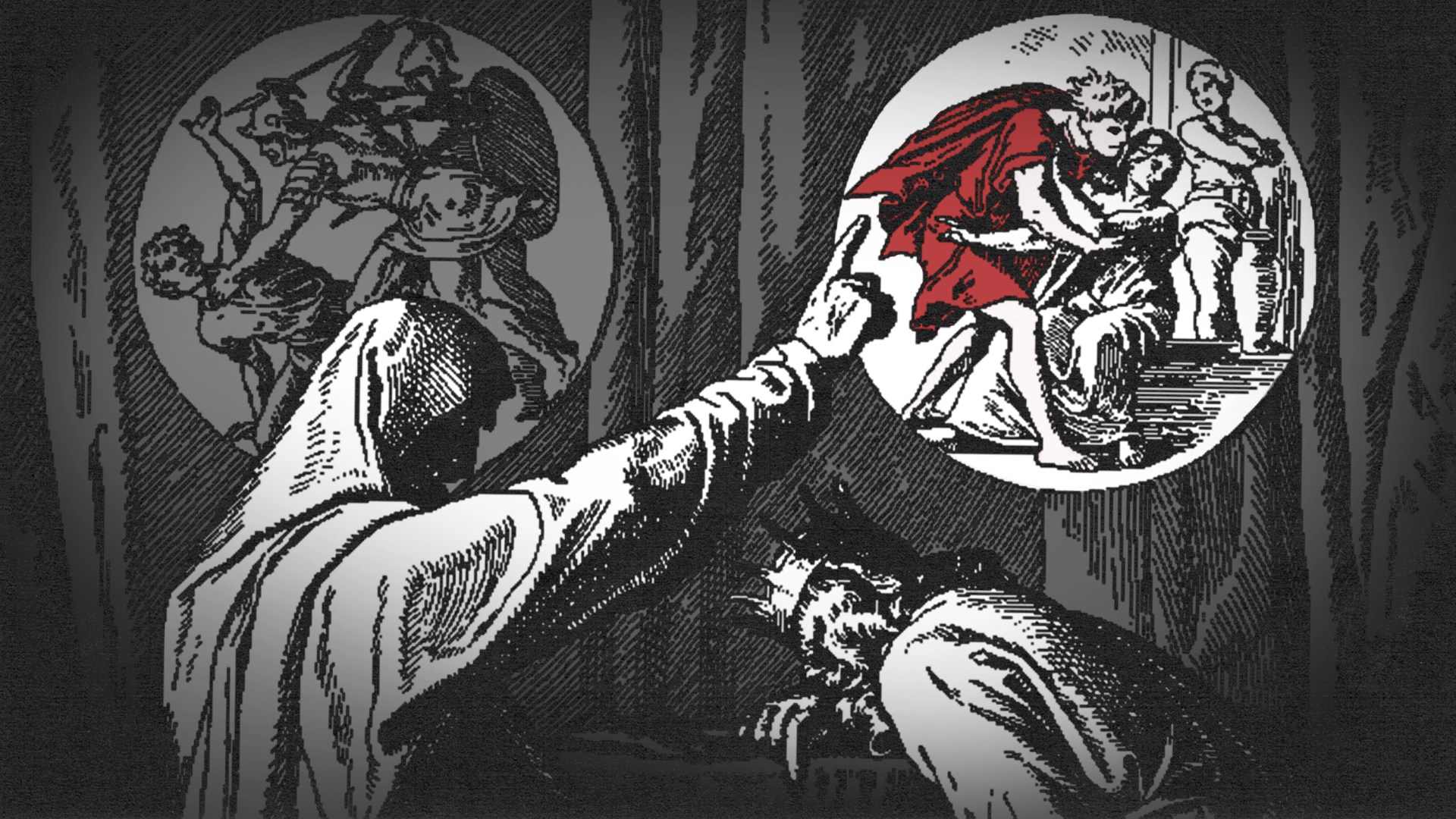
Blame David, Not Bathsheba. The Prophet Nathan Did.

In the Book of Samuel, three key voices say he’s the guilty one, not her.

Christianity Today July 18, 2022
Edits by Christianity Today / Source Image: WikiMedia Commons

The story of David and Bathsheba has a lot of gaps. It's a brilliantly told narrative that requires us to draw conclusions based on what we already know. The downside to this sophisticated mode of storytelling is that readers will make unjustified assumptions to fill in the gaps.

As Sara Koenig notes in Bathsheba Survives, the history of this passage’s interpretation makes a fascinating case study of how each generation thinks about sexuality.

Today is no exception.

In the age of #metoo and #churchtoo, the conversation is trending again on Twitter. (As far as I can tell, #sbctoo sparked this latest round.) Once again, various personalities are arguing that David committed adultery, not rape, or vice versa.

Those arguing that David committed adultery often try to pin blame on Bathsheba for bathing in public, thereby seducing David, while those arguing that David raped her point to the uneven power dynamics between them.

But here’s the problem: We think of “adultery” as consensual by definition, while the Bible defines it as the responsibility of the male head of the household to keep his hands off his neighbor’s wife (Ex. 20:14).

That doesn’t mean a woman can’t sin sexually. However, the Ten Commandments are addressed to men by default. They were called to restrain their strength for the sake of community.

It’s hard to think of another Old Testament story that fits the bill more precisely. Bathsheba is literally David’s neighbor’s wife, which means she’s totally off limits to him.

She’s also off limits because of David’s warfare practices.

We learn in 1 Samuel 21:4–5 that he prohibited sexual relations during battles or “missions” from the king. The rule was meant to maintain ritual purity so that soldiers could carry out the divine will.

In those days, battles were considered religious. That’s why Uriah refuses to go to his wife when he answers David’s summons. He shows more restraint when drunk than David does when sober—for the sake of the men’s mission, and to show solidarity with them.

By contrast, David fails to take the mission seriously. He doesn’t lead the troops in battle. Instead, he stays home and preys on the “war widow” next door. He violates Uriah’s marriage covenant, which the narrator reminds us of by repeatedly calling her “the wife of Uriah.”

The incident could be called adultery only in the sense that both David and Bathsheba were married, not in the modern sense of consent. The one difference between this case and Amnon’s violation of his half-sister Tamar (described a few chapters later) is that neither of the latter two was married.

Otherwise, the stories are parallel: He saw; he wanted; he took. But still, some will ask, “Didn’t Bathsheba seduce him?”

The first thing to note is that she is not bathing on the roof (2 Sam. 11:2). It’s David who is on the roof—a normal place to be in the cool of the evening. He ought to be at war with his men, but nevertheless, there he is, bored.

Why is she bathing where he can see her? In David’s day, the city had no indoor plumbing. Bathing normally happened in public.

If Bathsheba is bathing in a public pool, then, she can hardly be implicated for immodesty. And if she’s bathing in the courtyard of her own home, her bath is more private than normal. In fact, the text never says that she was naked.

Isn’t nakedness an obvious inference? Not necessarily. We lived for two years in the Philippines and regularly visited a crowded Muslim neighborhood with no indoor plumbing. Despite rather strict notions of modesty, men and women found ways to scrub clean under adequate cover (usually generous tube skirts for both men and women).

A public approach to hygiene may be foreign to many of us, but it’s quite common in some areas of the world.

This was no ordinary bath, either. She was purifying herself ritually following menstruation (2 Sam. 11:4). This practice indicates that she was a pious keeper of Israelite purity law (and also that she was not already pregnant, which is important to the question of parentage). David’s sexualization of her religious hygiene should raise an eyebrow or two.

David summons her. Does she have a choice? Her husband and her father are both soldiers under his command. No one can refuse the king.

Bathsheba’s only words in the entire story are “I’m pregnant.” David has put her in a predicament: If her husband returns and finds her pregnant, she could be stoned for adultery. But the situation is not her fault, and David knows it.

David’s Plan A is to bring Uriah home from the front to make love to his own wife. It’s still early in her pregnancy, so Uriah may later think it’s his own child. When he piously refuses to come, David has him killed and takes Bathsheba into his harem.

For me, the clincher is this: The narrator is unequivocal in blaming David (2 Sam. 11:27). The prophet Nathan is unequivocal in blaming David (2 Sam. 12:1–12). And Bathsheba is never chastised.

Yes, she loses her son, but that loss is never characterized as her punishment. She suffers for David’s sin, as subjects always do when their leader is recalcitrant.

Pinning the blame equally on Bathsheba ignores how God assesses the story through Nathan. It ignores the culture of the city of David. And it ignores the clear exegetical signals throughout the chapter.

For David, as for every Israelite, the neighbor’s wife is like a daughter to be protected, not an experience to be collected. David knows Bathsheba is unavailable. But this doesn’t deter him in the least. Like a predator, he summons her. He’s come to believe that because he has power, he can have whatever he wants when he wants it.

To me, the most shocking part of the story comes after the murder of Uriah, when David tells his commander, Let this matter not be evil in your eyes (2 Sam. 11:25). David attempts to redefine his own behavior as acceptable.

If David had been king of any other ancient Near Eastern kingdom, his actions would have been unremarkable. Kings could do whatever they wanted. But this wasn’t any other kingdom; it was Israel. And David’s power was not absolute, nor did he make the rules. Yahweh did.

Nathan the prophet makes absolutely clear that the king had done evil in God’s sight (2 Sam. 12:9). His rebuke lands squarely on David. And David knows he’s in the wrong.

David’s response is simply I have sinned against YHWH (v. 13). Standing at a crossroads, he offers no defense, no equivocation, no excuses. He’s been caught in the act. He takes sole responsibility, repents, and chooses a better path forward.

In other words, he too affirms that he’s the guilty one.

When I reflect on the narrative, I often wonder whether it’s fair to call it “the story of David and Bathsheba.” Naming her implies cooperation where the text claims nothing of the sort. At the very least, we should call it “David and the Wife of Uriah”—or “David and Uriah,” since the showdown is clearly between these two men.

The ongoing debate about this story shows the importance of returning to a text again and again, attending to its details, and remaining open to the possibility that we have missed or misconstrued something.

Reading with others is essential to that process. We all miss things, because we’re all embedded in communities that have shaped what we notice and what we don’t. Sometimes our failure to realize this impairs our ability to see what’s right in front of us.

In this case, Bathsheba deserves another look.

Carmen Joy Imes is associate professor of Old Testament at Biola University and the author of Bearing God’s Name: Why Sinai Still Matters (InterVarsity Press).

News

South Carolina Protects Doctors Who Decline Procedures on Religious Grounds

It’s the third state to give medical professionals legal backing for refusing to perform treatments such as gender transition.

Christianity Today July 18, 2022
Daniel Sun / Lightstock

Christian doctors in three states now have legal protections if they choose not to participate in certain medical procedures based on their religious conscience.

Most recently, South Carolina Gov. Henry McMaster signed into law last month a bill protecting medical practitioners from lawsuits or job loss for declining to perform various medical procedures that go against their religious or moral views. The law does not protect against emergency procedures.

Religious conscience protection laws for health care providers passed in Arkansas and Ohio in 2021. Another went before the legislature in Florida earlier this year.

“We had a number of instances of individuals and doctors being pressured and coerced to participate in medical procedures that violated their conscience,” said Aaron Baer, president of the Center for Christian Virtue, which lobbied for the Ohio law.

Some common practices that these laws have affected include various procedures undergone for the sake of gender transition, end-of-life care, contraception, and abortion.

The Ohio version of the law[TM1] went into effect last September. Under the provision, “a medical practitioner, health care institution, or health care payer has the freedom to decline to perform, participate in, or pay for any health care service which violates the practitioner’s, institution’s, or payer’s conscience as informed by the moral, ethical, or religious beliefs or principles held by the practitioner, institution, or payer.”

The Center for Christian Virtue helped draft the clause and built off a preexisting policy from the Ohio State University providing similar protections that the statewide policy brings to their employees. South Carolina’s version of the law, the Medical Ethics and Diversity Act, was drafted earlier this year on the heels of Ohio and Arkansas

A similar rule was unveiled by the US Department of Health and Human Services (HHS) in 2019, as the Trump administration aimed to expand a policy to allow religious health care workers to refuse providing care on the grounds that it violated their personal beliefs. (Some conscience protections were already in place; under the 1973 Church Amendments, institutions and individuals receiving federal funds in health care have not been required to provide abortions.)

However, this rule was blocked by federal courts after a number of lawsuits, and then the Biden administration announced plans to pull the proposed HHS policy.

In a story from NPR, Alex Duvall, a Christian family physician who practices in South Carolina, said he couldn’t condone treatments including giving hormone therapy to transgender patients, and he’s relieved that he can no longer be sued or fired by abiding by his religious beliefs in his work.

It’s a battle of conscience, Duvall told NPR. “It doesn’t mean you don't care about patients and love patients or want to do your best for them.”

As gender transition and transgender patient care have become more common, some Christian medical professionals have expressed concern that they will be penalized if they do not provide such procedures.

“Our fear, as an organization, is we had a temporary reprieve under the Trump administration,” said Dr. Jeffrey Barrows, the Christian Medical and Dental Associations’ senior vice president of bioethics and public policy, in a 2021 CT article. “We are very concerned and expect that we’ll have an increase in lawsuits and threats against our members and other Christian health care professionals if they do not perform some of these surgeries, prescribe cross-sex hormones, or prescribe puberty blockers.”

The HHS issued guidance in March that explains that attempts to restrict access to gender-affirming care could violate section 1557 of the Affordable Care Act. The guidance comes after the HHS announced in 2021 that the antidiscrimination protections within section 1557 also apply to sexual orientation and gender identity. Two lawsuits, one in Texas and one in North Dakota, have opposed the policy on behalf of Christian hospitals and doctors.

Those opposed to the state laws have argued that they provide grounds for doctors to deny LGBT patients necessary care. The American Civil Liberties Union (ACLU) of South Carolina said the state’s bill would “legalize discrimination.” A group of 50 medical practitioners also asked the governor to veto the bill.

Baer says that the Ohio law received widespread support both inside and outside the evangelical community.

“It’s been a year now that this bill has been on the books, and no one has been denied medical services that they need,” Baer said. “But what this does is ensure doctors can’t be forced to do something that violates their beliefs.”

Church Life

More Cremations Mean Fewer Chances to Grieve Together

With church funerals and burials no longer the norm, pastors hope to restore occasions to gather and remember.

Christianity Today July 18, 2022
Illustration by Rick Szuecs / Source image: Pavel Danilyuk / Pexels

Surging cremation rates are upending traditional practices around death, as more people opt out of traditional church funerals and some skip communal experiences of grief altogether.

Randy Anderson, who has worked in funeral homes in Alabama for over 30 years, tells the story of a widow who chose to forgo a funeral for her husband, instead cremating his remains and keeping the ashes at home. Then every few months, she’d bump into acquaintances who would ask how he was doing.

Frustrated by awkward conversations reopening her grief, the wife called a local funeral home to plan a funeral service three years later. More than 300 people attended the ceremony.

If trends hold, more than half of Americans who die this year will be cremated, compared to just 4 percent in 1960. The proportion is expected to reach nearly 80 percent by 2040, according to the National Funeral Directors Association (NFDA).

Families who chose cremation are less likely to gather together with others: 38 percent do not host a service, compared to 35 percent who offer a memorial service and 27 percent who provide a casket and viewing prior to cremation.

“There is a myth that if you have no service and move along, the grief will go away,” said Anderson, who serves as president of the NFDA.

But like the widow with the delayed funeral, people need to grapple with death alongside fellow mourners. “Grief shared is grief diminished,” he said.

Many choose cremation for economic reasons: An average funeral with burial and viewing is $7,848 compared to a direct cremation at $2,300. It’s also more convenient, as geographically dispersed families need flexibility to delay the service or to gather in a different location. The COVID-19 pandemic has only accelerated trends toward cremation and eliminating funeral services.

And just as fewer Americans marry in churches, fewer are choosing to be buried in church graveyards. Cremation continues to grow in popularity as America becomes increasingly secular.

These changing demographics are impacting the traditional role of the funeral for Christians, as a rite of passage to mourn the dead and to place individual lives within a larger, hope-filled narrative: Christ has died; Christ has risen; Christ will come again.

Shifting views on cremation

Christians have historically resisted cremation because of a high view of the body as God’s creation and because of the doctrine of the Resurrection.

David Jones, professor of Christian ethics at Southeastern Baptist Theological Seminary, wrote that burial “most visibly depicts the gospel message, most clearly communicates the hope of future bodily resurrection, and most plainly expresses the promise of an eternal physical existence.”

But a growing number of Christians are widening their views on the disposition of earthly remains while acknowledging the rich symbolism of burial and resurrection.

“There is not a lot of New Testament evidence to negate cremation as a practice,” said Brian Croft. “God made Adam from dust, so it’s not true that God can’t recreate people from cremation.”

Croft, a Southern Baptist pastor in Kentucky, began a ministry called Practical Shepherding after doing 200 funerals in 15 years.

As Christians’ views on cremation are evolving, so are cultural views around death. Previous generations were surrounded by death in ways that modern generations are not. They lived before antibiotics and open-heart surgeries, saw high rates of childhood mortality, and observed the cycle of life firsthand on farms. These were the generations that washed and prepared their dead, laid them out at home for a wake, and later carried them to the church for a funeral and burial.

But in recent decades we have found a way to keep death at arm’s length, according to Tim Perry, a theologian in the Wesleyan Church who authored the book Funerals: For the Care of Souls.

“In the past humans learned to deal with grief by dealing with the body,” he said. “But since the 1950s, we have figured out ingenious ways to not deal with the body, and as a result we are not good at dealing with grief.”

He sees no theological barrier to cremation but advocates that churches and pastors grow in their understanding of death and grief to help shepherd their members through the process.

If a member merely “makes a phone call and two hours later picks up ashes in a box, that practice is pastorally suspect,” said Perry, who has worked in funeral homes in addition to roles in ministry.

He believes there are theological and psychological benefits to viewing bodies as our ancestors did, whenever possible. There are ways to accomplish this, like an open-casket viewing, that still allow for cremation to follow.

In fact, he points to the United Kingdom as a model. Because of space constraints, UK churches have fully accepted cremation and have woven it into funeral services. Mourners assemble at the crematorium chapel as the casket is brought in. And after the service ends and mourners have paid their final respects, the cremation begins.

Telling the truth about death

In 2016, Perry uprooted his family to move back to Shawville, Quebec, as his father lived out a terminal cancer diagnosis. The process of walking with his father through the end of his life revealed the power of supportive church family, according to Perry.

“I was not alone, my dad was not alone, and he was among people where his suffering made sense,” he said.

This connection to the church held true after his father’s death as well, as Perry relied on liturgy to plan his father’s funeral service.

“Liturgy gives us words so we are not left alone, having to make things up for ourselves,” said Perry. “Liturgy gives us the grammar to tell the truth about ourselves and humanity—a person has died, and we commit them to God’s mercy and judgment, before we return to the land of the living.”

As an example, he shares a prayer for funerals from the Anglican Church of Canada: “Father of all, we pray to you for those we love but see no longer. Grant them your peace; let light perpetual shine upon them; and in your loving wisdom and almighty power, work in them the good purpose of your perfect will, through Jesus Christ our Lord. Amen.”

Perry advocates that churches incorporate the reality of death into worship and life more regularly. This could include teaching a biblical theology of death in Sunday school, hosting an All Souls’ Day service where congregants who died in the past year are honored, or inviting a funeral director to talk about funeral planning.

“We should make this universal experience a part of our common life so it’s not the thing we are surprised by,” said Perry.

Leaving a legacy

One challenge cremation presents is how to create a permanent marker of remembrance for the departed. Though urn gardens, columbaria, and burial are options, many forego creating a permanent resting place for cremated remains.

This can be a missed opportunity, according to Steve Bezner, senior pastor of Houston Northwest Church in Texas. “In Scripture, tombs are significant markers that say, ‘This was an important place in the life of this person.’”

Though churches and cemeteries are historically intertwined, it is now more common for cemeteries to exist apart from churches. “The divorce of the cemetery from the church building proper has precipitated this change [of minimizing permanent markers],” said Bezner. “When they are connected, it tells you that your death, if you are a believer, is inseparably tied to your faith.”

As a 50-year-old church without a cemetery, Houston Northwest Church is now beginning to consider how to accommodate aging founding members.

“They want to tie their earthly legacy to this place,” said Bezner. “It says to their children and grandchildren, ‘This person invested their life for the gospel in this particular place.”

Located in a developed area without land for a cemetery, Houston Northwest Church is considering installing an urn garden. “I think that would be a beautiful thing,” said Bezner.

Pastors are called to help congregants at all stages of life and death. For Brian Croft, attending a spate of poorly preached funerals led him to start his Practical Shepherding ministry, which equips pastors in areas ranging from leadership to bereavement. The ministry was birthed out of his conviction that too few pastors are equipped to comfort the grieving and the sick.

“The two most important places to do ministry are the hospital room and the funeral home,” said Croft. “That’s where people are confronted with their humanity and mortality, the things we spend most of our lives pretending don’t exist.”

It is there that pastors are able to engage their members and reach people beyond the church’s doors, a necessary task within a culture that shrinks at the thought of death. Whether grieving families choose cremation or burial, pastors offer the same hope–that Christ has defeated death.

“Though death is our common enemy and our common destiny, it is God who writes the first and last word over our lives,” says Perry. “This is the good news of the gospel.”

Ideas

The Struggle for Sri Lanka’s Second Birth

Christians have served well as our society fell apart amid economic crisis. But we still have work to do.

Sri Lankan protesters wave flags and chant slogans after taking control of Prime Minister Ranil Wickremesinghe's office compound amid the ongoing economic crisis on July 13, 2022 in Colombo.

Sri Lankan protesters wave flags and chant slogans after taking control of Prime Minister Ranil Wickremesinghe's office compound amid the ongoing economic crisis on July 13, 2022 in Colombo.

Christianity Today July 16, 2022
Abhishek Chinnappa / Getty Images

Chaotic scenes unfolded before an incredulous world last weekend in an Indian Ocean island the size of West Virginia yet with a population ten times larger. Since July 9, global media outlets have been running lead stories on the dramatic social ferment in Sri Lanka.

A massive citizen mobilization pushed President Gotabaya Rajapaksa, the most powerful Sri Lankan leader since the days of the country’s ancient kings, to unceremoniously leave by a back door to escape the wrath of hundreds of thousands of protesters that came calling at his presidential palace this past Saturday. He fled Wednesday out to deep sea aboard a naval vessel, to the Maldives on board a military jet, then to Singapore on a commercial airline. From there he sent his belated resignation Thursday, which enabled some closure so that the nation could look to rebuild from here.

Lonely Planet listed this middle-income country and tropical tourist hotspot as the world’s best nation to visit in 2019. Later that year, Rajapaksa became president by a landslide. He used his military background to great effect to coerce the masses haunted by still-fresh memories of the horrific Easter attacks of April 2019. In less than three years, though, he succeeded in presiding over a catastrophic economic collapse that defies belief.

Experts call it a man-made humanitarian disaster caused by a deadly cocktail of ego, corruption, and reckless government policies in the face of the pandemic. By January, Sri Lanka ran out of foreign reserves and became incapable of sustaining essential imports or servicing its international debt obligations. By April, the Central Bank officially announced that the second-strongest Asian economy of 1948 was effectively bankrupt.

By June, the official inflation rate was reported to be 54.6 percent, but on the ground the situation is much worse. A loaf of bread that cost 60 rupees a year ago is now sold at 190 rupees. Rice, the country’s staple, has gone up by 140 percent, and wheat flour prices by 400 percent. I just returned from talking to someone who felt fortunate to have obtained three liters of petrol for his motorbike after staying in a fuel line for over 72 hours day and night. For millions of farmers, traders, factory owners, and artisans, the lack of fuel has leveled a deathblow to their means of income. It has also kept schools and universities closed for months and has badly hit essential services like transport and health care.

Doctors at the largest children’s hospital have reported that they are seeing alarming numbers of undernourished pregnant women, and several hospitals have suspended routine surgeries due to the unavailability of essential drugs.

The aragalaya or “political struggle” began on March 1, when a handful of conscientious and determined citizens decided to stand each evening at the street corner a few meters from our seminary, holding candles and placards in silent protest. They were calling out President Rajapaksa and the government he had staffed with family members to resign on account of the immense suffering being inflicted on millions of Sri Lankans. He responded with a televised address in which he admitted that many of his policy decisions had been fatally flawed but held on to a bizarre logic that he could not possibly leave office as a “failed president.”

Soon similar protests sprang up all over the country, leading to the first massive march on the president’s private residence on April 1. When the police and military were ordered to violently crack down on the peaceful protesters and arrest dozens, hundreds of members of the Bar Association showed up pro bono to represent those arrested and to secure their release on bail. It was clear that wider civil society was being inspired and galvanized to get behind the movement. The protesters then moved to set up a semipermanent site downtown at Galle Face. The name they playfully called it—Gota Go Gama (Gota Go Village)—is now world renowned.

One characteristic of the struggle has been its remarkable egalitarianism. Sri Lanka is a country of rich diversity, whose post-independence history has sadly been marred by class, ethnic, and religious conflicts and an unyielding majoritarianism. Despite being the oldest democracy in Asia, we are not used to a social space where everyone—young and old, poor and rich, people of faith and no faith, Sinhalese, Tamils, Muslims, and Burghers—can have an equal voice and share a common aspiration for a better future.

Paradoxically, however, the misery of our circumstances has had a soul-cleansing effect on our national consciousness. We are now more aware of our relatedness and interdependence, and are ready to celebrate our diversity. This is what makes me hopeful that now we may have our second chance at independence.

A church of the soil

Where is the church in all this? How does Christian discipleship play out in the public square?

Christianity has had a long history in Sri Lanka. The oldest Christian traditions that survive to the present—Roman Catholic, Dutch Reformed, and other Protestants—go back to successive waves of European colonization under the Portuguese, Dutch, and the British, beginning in A.D. 1505. Yet historical sources attest to the presence of viable Christian communities on the island from as early as the fourth century A.D. The clearest evidence of this early Christian presence is in the sixth-century Christian Topography by world traveler Cosmas Indicopleustes, who wrote, “In the Island of Taprobane (Ceylon), there is a church of the Christians, and clerks and faithful.”

Sadly we hear nothing more of this sixth-century “church of the Christians.” Unlike other ancient Christian communities that thrived in South Asia, the church in Sri Lanka slips quietly out of existence. And 20th-century Sri Lanka witnessed the only instance of church numbers declining in a non-Muslim nation in the global south. The total Christian population declined from 10 percent in 1911 to 7.6 percent in 1981. While reverse conversions and large-scale migration by traditional Christian families may provide pragmatic explanations, this unfortunate trend of church decline was the inevitable result of theological liberalism and Christian complacency that had set in from the end of the 19th century.

But the early 1980s marked a major turning point in the prospects of the Sri Lankan church. The 1981 national census records the bottom of Christian decline. Between 1953 and 1981, the Sri Lankan population grew by 83 percent from 8 million to almost 15 million. During the same period, the Christian community grew only by 56 percent. However between 1981 and 2012, when the overall population grew by 37 percent (from nearly 15 million to more than 20 million), the Christian numbers kept up, growing by 37 percent also.

What factors account for the changed pattern of the Christian demographic?

Two significant trends were set in motion from the early 1970s: a recovery of confidence in the authority of Scripture, and a renewal of passion for the proclamation of the gospel.

Pentecostal and charismatic church movements lent great strength to a renewed conviction that the good news of salvation in Jesus Christ must be made known to everyone. Indigenous movements led by pioneer workers from local churches shared the life-transforming message of Christ with people who had previously been ignored. They were supported by organizations such as Campus Crusade and its Jesus Film teams. The faithful words of these trailblazers backed by a simple lifestyle, spiritual gifts, and prayer gradually resulted in significant numbers coming to faith.

This was accompanied by a renewed confidence in the authority of Scripture. Ministries like Youth for Christ equipped hundreds of young people to become diligent students of the Bible and encouraged them to become loyal members in the local church. Bible camps and conferences and evangelical seminary education soon became standard fare for a community that was rediscovering the excitement of a living faith. These vital ingredients prepared the Sri Lankan church to be proactive and responsive in the face of some of the gravest challenges that would unfold over the next four decades.

One was the devastating civil war between the government and the Tamil separatist movement. Having started in 1983, the longest-running civil war in Asia ended 26 years later in 2009. During these decades, evangelical Christians were forced to grapple with how faith related to the constant reality of violence, insecurity, displacement, human rights abuses, deprivation, and every form of human need. It was possible to see how the proclamation of the good news and the practices that flowed out of a life shaped by the gospel were complementary Christian actions.

A major spinoff of the civil war was the launching of Sri Lanka Unites (SLU) to promote reconciliation among young people of all ethnic and religious communities. Founded by a dynamic young Christian, SLU has influenced thousands of high school youth from all backgrounds and from every part of the country to think in terms of diversity, equality, and peace—with such extraordinary success that the movement has now been replicated in a dozen countries from Sierra Leone to the US. It cannot be a coincidence that the language celebrating diversity used at SLU programs over the years has been echoed by so many in the aragalaya movement.

A second major challenge faced by the church was unprecedented persecution that began in the early 1990s. Fueled by extreme ethnoreligious Buddhist movements, it picked up momentum so that initial discriminatory sentiments against Christians quickly escalated to allegations of unethical conversion, full-on confrontations, attacks on pastors and believers, arsons of church properties, and even a couple of incidents of martyrdom.

Again, this situation became an opportunity for the maturing of the Sri Lankan church, this time bringing about a unity and collaboration not seen before. It was the experience of persecution that opened the church to a new sense of interdependence, including a committee—formed with Catholic and Anglican bishops together with charismatic and Pentecostal pastors—working diligently to stave off some of the graver dangers of rising persecution.

Thus upon reflection, we can see how God’s purpose of Christian maturity has graciously played out through the travails of the church in Sri Lanka. “You know that the testing of your faith produces perseverance. Let perseverance finish its work so that you may be mature and complete” (James 1:3–4).

Signs of Christian maturity

How, then, has the church showed a biblically mature response in the context of Sri Lanka’s most recent crisis?

1. By speaking truth to power: Denominational leaders and Christian politicians, journalists, lawyers, and academics have been prominent among the vocal critics of corrupt officials and their ill-advised policies. The Roman Catholic Cardinal Malcolm Ranjith is today one of the most trusted voices in the country on account of his bold and sustained condemnation of the injustices by the Rajapaksa regime.

2. By participating in solidarity with the struggle: Throughout the agitations that led to the resignation of the Rajapaksa family from the high posts they held in government, the church played a prominent role: whether by standing with the protesters in Gota Go Gama or by organizing its own silent protests, conducting prayer meetings, and being part of important interreligious forums.

3. By serving the needs of those most affected: Millions in Sri Lanka have entered a long period of economic hardship. Increasing numbers are facing shortages of food and medicine. It is heartening to see how Christian families and churches are spontaneously responding to the emergency. For example, my local Methodist church has been giving out weekly cooked lunches for several weeks and it doesn’t take more than a few minutes for the hundred or so lunches to be gratefully received. Another team in the church runs a Community Cupboard, collecting dry rations from church members, sorting them, and distributing them to the poor in the community. People line up as early as 5 a.m. to make sure they will be within the 200 beneficiaries given some help that week.

4) By contributing to governance and nation building: It is most important to note that in recent years—and certainly during this crisis—Christian voices have been disproportionately prominent in crucial dialogues within the legislature, with foreign governments, and with international news agencies. Abraham Sumanthiran and Eran Wickramaratne are two influential legislators who left lucrative careers (as a senior lawyer and a CEO of a major bank, respectively) to enter parliament out of a clear Christian commitment to work for social justice. They are today among the most trusted parliamentarians for their integrity and credibility.

Transformations still pending

As much as the church’s witness at this time of crisis has been largely positive and encouraging, there are still some key areas that Sri Lankan Christians will do well to address.

1. The sacred-secular divide that is still alive and well: Many are familiar with this global anomaly where Christians learn to live by an invisible line of partition between some aspects of God’s world and others. In this way of thinking, matters like church attendance, Bible study, and prayer are “sacred” and mandatory for believers. But one’s choice of a job, social justice activity, engagement in society, and concern for the environment are viewed as “secular” and unsuitable for Christians. This unbiblical dualism has stunted the discipleship of many passionate believers and kept them from following the call of Christ to be in the world even as they are not of it.

2. The distortion of prosperity teachings and celebrity-style Christian leaders:This too is a global phenomenon that has imperceptibly spread among urban communities and into the places where pioneer missionaries had established first-generation church communities. Lacking solid biblical teaching, enthusiastic Christians are drawn by the promise of divine blessing if they pledge an uncritical loyalty to an “anointed” man or woman of God. In a country now rocked by economic woes, the contradiction posed by these false teachers’ distortions of the gospel cannot be overstated.

3. A receiving orientation rather than a giving mindset: I like to call this a fixation on the plea of the Macedonian man in Paul’s vision: “Come over … and help us” (Acts 16:9). Sri Lanka has for centuries been a missionary-receiving church. Many Christians here struggle to see how taking care of our own affairs is our responsibility. Sending Sri Lankans as missionaries to bless other nations is a concept conspicuous by its absence in the church here. We would do well to remember another plea by the Macedonian churches: not to ask for help for themselves but to entreat Paul that they might sacrificially give toward the churches in Judea (2 Cor. 8:1–5).

Many around the world look at Sri Lanka today and are understandably appalled. But on July 9, I saw a battered people set out with an unimaginable resolve, their deep pain and frustrations tempered by their commitment to the endgame. As I joined that heaving mass of humanity all the way to the gates of the President’s House, I remembered I was there as an ambassador of Christ. And it wasn’t just me. Here and there, I recognized the clergy of various churches in their clerical garb and the Catholic nuns scattered in the melee: “As you sent me into the world, I have sent them into the world” (John 17:18).

Like the years that led to independence from Britain in 1948, this too may get worse before it gets better. A new Sri Lanka is struggling to be born. The struggle this time is for independence from ethnoreligious majoritarianism, divisive politics, and crippling corruption. The process that leads to a safe delivery is fraught with danger and may be painful and messy. Yet it’s a joy to see the church with her sleeves rolled up and ready to assist.

Ivor Poobalan, PhD, is prinicipal of Colombo Theological Seminary in Sri Lanka.

Ideas

Blessed Are the Political Peacemakers

Staff Editor

Experts warn political violence is coming. Christians can look to Scripture, not the American Revolution, for guidance.

Christianity Today July 15, 2022

The seventh hearing of the congressional committee investigating the sedition at the Capitol on Jan. 6, 2021, was much about violence: who did it, who encouraged it, who knew it was coming yet did not intervene.

“The crucial thing is the next step: What this committee, what all of us, will do to fortify our democracy against coups, political violence,” said Rep. Jamie Raskin (D-Md.) toward the end of the hearing. Political violence, he said, is “the problem of the whole country now.”

Raskin is far from alone in raising alarm about the possibility of political violence—seeking political ends through violent means instead of normal, peaceful processes like voting, running for office, lobbying, or protest.

“We know from other countries that have descended into really serious political violence that this is a trajectory, and we’re on it,” researcher Rachel Kleinfeld warned in a Washington Post article Monday. “We’re actually pretty far advanced on it.”

Kleinfeld said we could see rising right-wing militia violence as well as violence from a “disaffected left.” She ominously projected that the “percentages of Americans endorsing violence are approaching Northern Ireland’s Troubles at their height in 1973.”

(The scale of this kind of political violence can vary widely, from an individual’s attack to a revolution, but the Troubles are a good example of what many anticipate happening in the US—“episodes of violence were largely localized, and in the background” yet normal life continued though “everyone was more fearful and depressed.”)

There’s reason to be skeptical of the survey results she’s likely referencing; for example, some who may tell a pollster “violence against the other party [is] at least a little okay” may also be far from willing to commit such violence themselves.

But “the mouth speaks what the heart is full of” (Luke 6:45). There’s no denying Kleinfeld’s point that Americans’ political rhetoric and animosity has worsened in recent years. Maybe Kleinfeld is right that we “need to realize that paramilitary groups could become a normal part of our political life.” Maybe political violence is on the way. Christians should have nothing to do with it.

You might believe that goes without saying, but there are two reasons I think it needs to be explicitly stated.

One is due to the current reputation of American evangelicals in much of mainstream media. Pundits and experts warning about the risk of right-wing political violence often include a mention of Christianity, Christian nationalism, and/or white evangelicals. Kleinfeld, for instance, argued that Russia is giving “a White, Christian, traditional hierarchy, very masculine, led by a strongman” model of politics, which is attractive to some on the antidemocratic US right.

This association makes sense to many Americans because of the proliferation of Christian symbolism among the crowd that stormed the Capitol, the record-high support former President Donald Trump consistently received from self-described evangelicals, and the Christian nationalist rhetoric from Republican figures like Rep. Marjorie Taylor Greene of Georgia. If this is not how we want our compatriots to think of us, unequivocally rejecting political violence is a good place to start.

The second reason is that I worry American Christians’ conception of acceptable political violence is too much shaped by our history and beliefs as Americans—particularly our understanding of the American Revolution as a laudable example of political violence—and not enough shaped by what Jesus taught about violence while living in a society with a far more brutal government than our own.

With Fourth of July festivities wound down, consider what we’re celebrating in the Revolution. There are serious complaints in the Declaration of Independence, but taxation was a prominent concern—without representation, yes, but also at declining rates we would now find laughably low. Is that a good enough reason for Christians to kill Christians?

That’s a lot of what the Revolution was, after all: Christians killing Christians over political issues. And maybe with hindsight of more than two centuries we judge it a positive outcome. Or maybe—examining the ability of other ex-British colonies to gain independence without war, or even the history of England’s abolition of slavery compared to our own—we don’t.

I could talk myself in circles on the subject, but I can’t come around to saying it was right for Christians to kill other Christians over tax rates. I can’t come around to it because I can’t square it with what Jesus said about violence, especially in the Sermon on the Mount:

I tell you, do not resist an evil person. If anyone slaps you on the right cheek, turn to them the other cheek also. And if anyone wants to sue you and take your shirt, hand over your coat as well. If anyone forces you to go one mile, go with them two miles. … You have heard that it was said, “Love your neighbor and hate your enemy.” But I tell you, love your enemies and pray for those who persecute you, that you may be children of your Father in heaven. (Matt. 5:38–41, 43–45)

Christians have debated the implications of these verses and others like them (John 18:36; Rom. 12:17–21; Eph. 6:12) for millennia, and I know my conviction that Jesus here is calling us to nonviolence isn’t universally shared among faithful followers of Christ.

For a long time, I didn’t share it either. I believed the pacifist interpretation to be too strange and hard and impractical. Eventually, however, I concluded Jesus had already spoken plainly; it was simply a command I did not want to hear. And an important realization, as I changed my thinking, was that Jesus was speaking in a violent political context.

We use “turn the other cheek” and “go the extra mile” metaphorically to describe interpersonal strife. Jesus used them literally, speaking to an audience at real risk of physical abuse by an occupying power—in fact, a government that did not offer them any of the outlets for peaceful political expression we have available to us.

There’s a lot wrong with our government and politics, but by global and historical standards, we enjoy remarkably free, functional, and democratic governance. If Jesus told his original hearers to eschew violence in favor of peaceful, surprising, and potentially self-sacrificial behavior, how much more should that command apply to us?

In that light, even if you interpret these verses differently than I do, perhaps you can see the gap between what the American Revolution says about political violence and what Jesus says about it. And if we can’t see that gap, or if we find ourselves spinning scenarios in which we’d be justified doing violence over politics—harming our neighbors and hating our enemies because we did not get the president or policy we wanted—perhaps our minds have been conformed to the Revolution more than the mind of Christ (Rom. 12:2; 1 Cor. 2:14–16).

Perhaps political violence is indeed coming to America, but it should not be by Christian hands.

Ideas

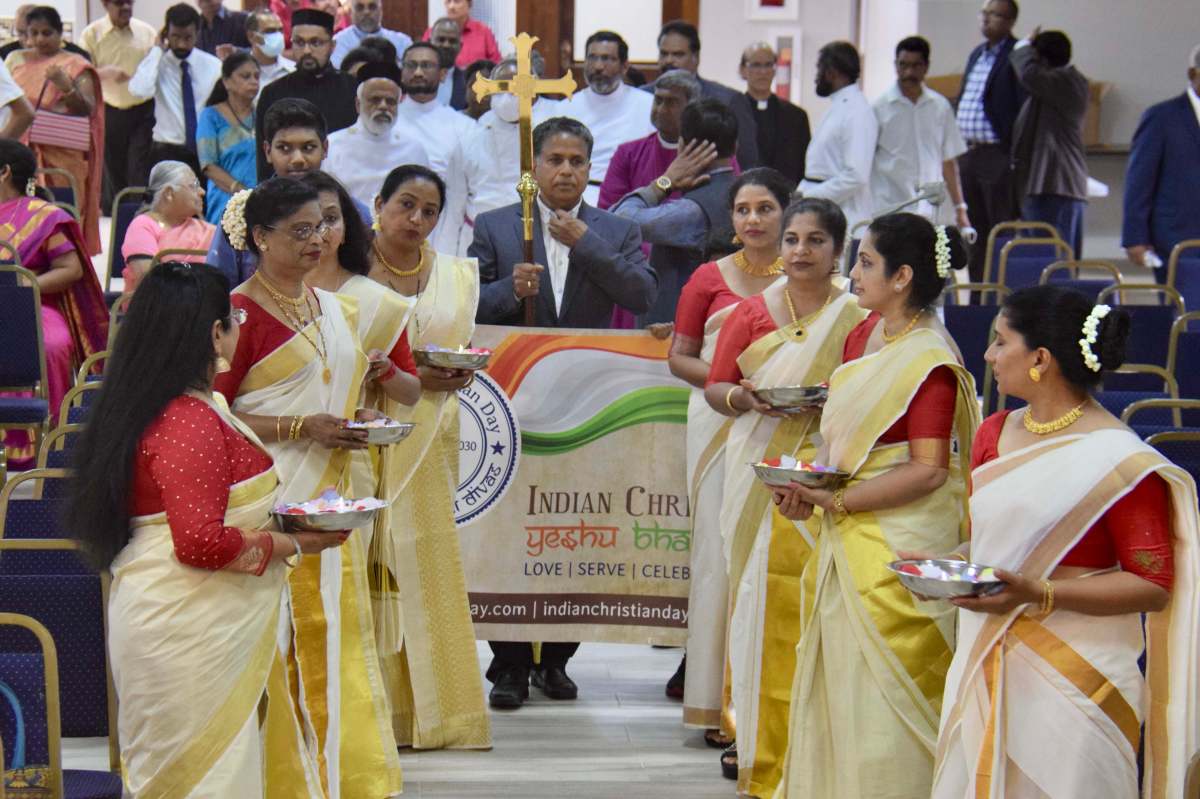
Indian Christian Day Uses Martyrdom of Apostle Thomas to Unite the Diaspora

One in five Indian Americans is now Christian. But they remain divided by language, doctrine, and generation.

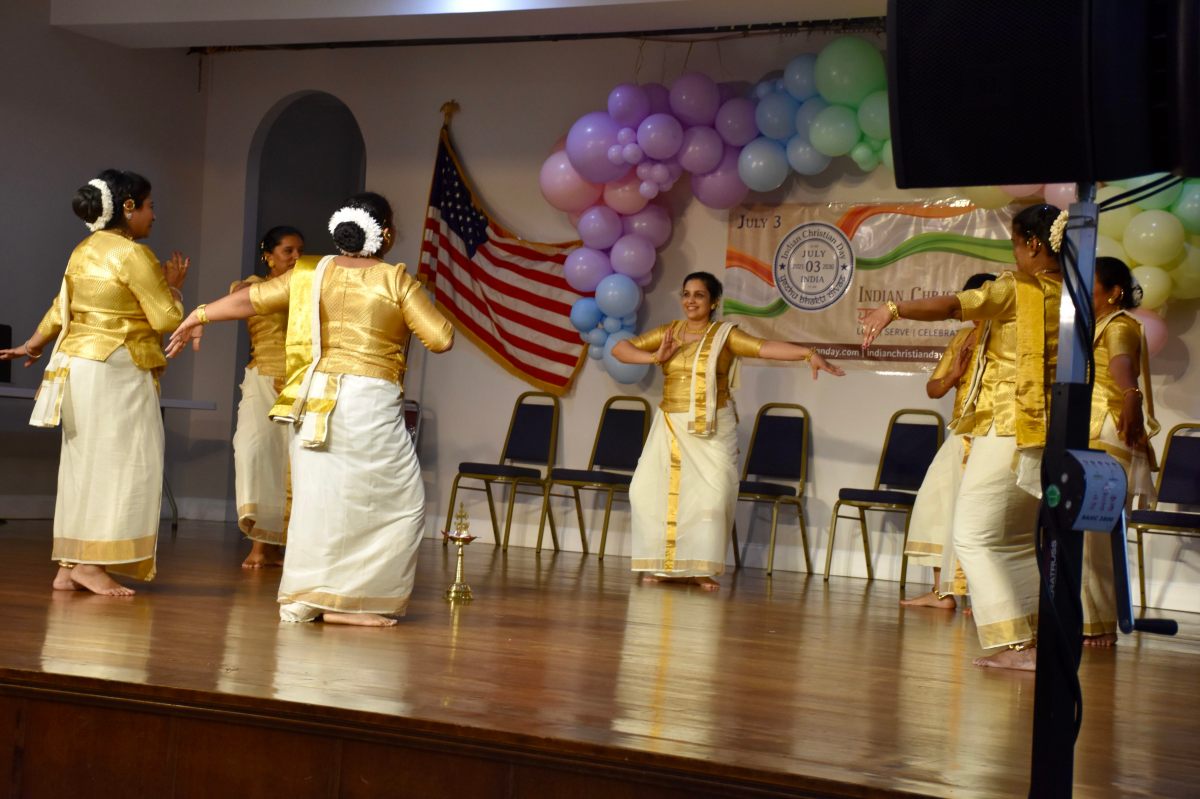
Indian Christian Day celebration in New York on July 3, 2022.

Indian Christian Day celebration in New York on July 3, 2022.

Christianity Today July 15, 2022
Courtesy of FIACONA

July 3 has long been observed as Saint Thomas Day, commemorating the death of the apostle considered by many to be the patron saint of India.

Now it is also celebrated as Indian Christian Day (Yeshu Bhakti Divas), an annual opportunity for Jesus followers of Asian Indian origin to preserve their distinctive identity and their global presence by uniting across their many languages, denominations, regions, customs, and creeds.

This month, ICD celebrations were carried out in cities across India, including New Delhi, Mumbai, Chennai, and Bengaluru, as well as Indian diaspora locations around the world, including New York, Philadelphia, Washington, Dallas, San Francisco, London, Durban, and Singapore. This Saturday (July 16), Indian Christians in the Chicago region will gather for an evening of ethnic worship and prayer at Wheaton College, led by Indian worship leader Vijay Benedict from Mumbai.

Last year, the grassroots organizers chose the martyrdom of Thomas, one of the 12 disciples of Jesus, to celebrate the ancient heritage and rich legacy of Christianity in India because the ancient Syrian Christian community of India traces its origin to the apostle. And it’s not just Catholics that revere Thomas. So does my own reformed evangelical denomination, the Mar Thoma Syrian Church.

According to reliable traditions and well-known Christian historians, Thomas came to the Malabar Coast in Kerala in A.D. 52 and was martyred near Chennai in Tamil Nadu in A.D. 72. Thus, this month marks the 1,950th anniversary of his martyrdom in southern India.

Followers of Jesus Christ have lived in the Indian subcontinent for nearly 2,000 years. They have lived in peace and harmony with their diverse religious neighbors and have played a significant role in the making of modern India—especially their contributions in the fields of education, healthcare, literacy, social development, and women empowerment.

Expand to view slideshow of Indian Christian Day celebration in New York.Courtesy of FIACONA
Expand to view slideshow of Indian Christian Day celebration in New York.

The ICD celebrations, coordinated in the US by the Federation of Indian American Christians in North America (FIACONA), are designed to display the enormous diversity of Indian Christians—ranging from languages to doctrines, denominations, and generations—while also serving as a uniting force across their differences.

Also, Indian Christian Day stresses the fact that Christianity reached India before Europe and North America, counteracting the false narrative that Christianity is a Western religion as propagated by some Hindutva fanatics. ICD events express solidarity through acts of worship, love, and service, including a series of charity projects to serve India’s poor and marginalized.

Since US immigration reforms in 1965, Indian Christians have been a steady stream of new immigrants coming to American shores. Currently, nearly 1 in 5 of the nation’s 5.1 million Indian Americans is Christian, amounting to a million fellow believers. More than 1,500 Indian immigrant churches have been established in North America. The Global Diaspora Institute of the Wheaton College Billy Graham Center is currently conducting research to better understand this stream of American Christianity, which is the most educated and wealthiest immigrant group in the US and brought with it one of the oldest Christian traditions in the world.

However, Indian American churches are established along the lines of language and denomination and often do not interact with each other. Most churches remain generational, since most second-generation Indian American Christians leave the churches they grew up in. It is of the utmost importance to bring all these groups together to realize their collective strength and to unleash their missional potentials to serve their adopted homeland, ancestral lands, and all peoples everywhere.

The Chicagoland event alone will gather together Malayali Anglicans, Tamil Pentecostals, Telugu Baptists, Hindi-speaking Mennonites, Goan Catholics, Gujarati Methodists, second-generation evangelicals, and more.

Indian Christian Day celebration in New YorkCourtesy of FIACONA
Indian Christian Day celebration in New York

ICD events have generated a remarkable sense of unity among Indian Christians of diverse backgrounds by celebrating the truth of the history and heritage of the Christian faith in India. Since last year when ICD was launched, more churches are collaborating and open to learning from each other of their common immigrant church issues. Seeing their leaders share a common stage, brushing aside differences in languages and doctrines, ignites a greater spirit of togetherness among Indian diaspora Christians.

It’s also a potent reminder that American Christianity is diasporic at its core. Christianity is not native to this continent; it was brought here by immigrants. Wave after wave of migrants from different shores of the world have brought their distinctive culturalized Christianity, and over many decades and generations their interaction with each other and their regions of heritage have remade American Christianity continually. The more global we are and the more globally connected we are, the more globally relevant our faith will be.

One could even argue that Christianity is more native to India than to the United States!

Sam George, PhD, is director of the Global Diaspora Institute at the Wheaton College Billy Graham Center and a Lausanne Movement catalyst for diasporas. Of Asian Indian St. Thomas Christian heritage, he has authored or edited a dozen books, including a three-volume series on Asian Diaspora Christianity (Fortress Press 2021).

Church Life

Post-Roe America Needs a Forward-Looking Church

The way pro-life Christians care for vulnerable women and children testifies about the coming kingdom.

Christianity Today July 14, 2022
Illustration by Christianity Today / Source Images: Rasmus Svinding / Mbardo / Pexels

This piece was adapted from Russell Moore’s newsletter. Subscribe here.

In the aftermath of the Supreme Court’s Dobbs v. Jackson Women’s Health Organization overturning Roe v. Wade, some people are wondering who’s up and who’s down in terms of getting or claiming power.

And while those kinds of people are usually the loudest, they don’t represent most people who are asking the question “What do we do to carry a pro-life vision into caring for women and children in crisis in our communities?”

For others, the question itself is the problem.

Critics will point out that many of the states most likely to restrict abortion (such as the plaintiff in this case, my home state of Mississippi) also have high rates of infant mortality, higher likelihood of women dying in childbirth, and higher rates of hunger and poverty. They will also emphasize that these states often have the thinnest social safety nets for people in poverty or without health insurance.

Like many others, churches are asking, “How do we care for these women and children?” But those with a cynical view of pro-life Christians see this as a deflection from the issue of government policies that would benefit poor and struggling women and their children—those most vulnerable to the abortion industry.

For some, the cynicism comes from seeing the abortion debate as only a strategy to motivate voters. But the typical pro-life Christian asking about the next steps of ministry is quite likely already working to serve such women and children—whether by giving financial assistance, helping to get children out of the foster care system, or repairing families torn apart by substance abuse.

Typical pro-life Christians are almost never the people “owning” their political or cultural opponents on social media. After all, they’re usually engaged in persuading others to see the value of vulnerable human life and to not give in to the “solutions” offered by the abortion industry or the pressure of a boyfriend or husband or parents who want the “problem” just to go away.

Pro-life believers involved in this work don’t demonize the women they seek to persuade; they serve them.

In any given community, I almost never have to look in different places to find the people who lead the day-by-day work of on-the-ground pro-life ministry and those who help orphaned or hungry children. The same goes for those who care for refugees and immigrants in need of clothing or shelter and who help women escape abusive situations.

Those calling attention to the vulnerable are almost always the very ones who are serving them and equipping others to do the same—and they usually transcend the expected tribal boundary markers to do so.

The cynics might say, “Yes, but that’s not nearly enough,” and that would be fair.

Some people who oppose social safety nets for the poor of various kinds will say, “If the churches were doing their job, we wouldn’t need the government or society to get involved.” In response, the cynics will point to the data—that even if every church were doing everything possible, we would not eradicate poverty—to suggest that such talk is about charity, not policy.

Even aside from such skepticism, the church wanting to care for the poor might look at the same charts and wonder, What can we really do to change any of this? This sense of despair can then lead to inaction and inward focus.

But neither despair nor cynicism is seeing the issue rightly.

Indeed, we need policy changes to better care for vulnerable women and children. Policies like this, radically different in approach, are coming from such divergent sources as democratic socialist Elizabeth Bruenig and Republican U.S. senator Mitt Romney. The merits of these and many other policy reforms will be debated along prudential lines, determining whether they can deliver on the help they promise.

The longer term, though, will require more than even the best solutions policy can bring. It will require convicted consciences that care for the vulnerable people in need—both born and unborn.

Church ministries that help women find alternatives to abortion, assist those women in caring for their children, combat poverty and homelessness, and reform an overburdened and often malfunctioning foster care system are—first and foremost—about serving individual lives.

The key pro-life insight is that a life’s worth is not about power, “viability,” or state of dependence. Each life is, as the saying goes, an entire world. But it is also important to understand the way such care shapes and forms our consciences to pay attention to those we might otherwise keep invisible.

Eboo Patel would not agree with me on the abortion issue, but he does understand how social reform movements work. In his new book, We Need to Build, Patel makes the case that civic institutions at the local level can lead to change at the national level.

He points out the example of Jane Addams’s Hull House, which cared for the poor and immigrants on the West Side of Chicago around the turn of the 20th century. Through Hull House, Patel argues, Addams not only cared for thousands of people, many of them children, but she also led the house to be a kind of “laboratory” that showed the rest of the world what was possible.

“For virtually every problem that they discovered in Chicago, they modeled a concrete solution,” Patel writes. Those who thought adolescents in such environments were doomed to delinquency and crime saw how Hull House changed young people’s lives.

Those who expected people to gather only in saloons saw a different model. Those who thought different ethnic groups or classes could not find common ground saw those tensions overcome at Hull House. Those who thought women didn’t have the intellect to lead saw a thriving example of Addams doing just that.

The fact that local presence can shape consciences by modeling a different reality should not surprise us as Christians. The late theologian (and Christianity Today’s first editor in chief) Carl F. H. Henry argued that the church is called not just to evangelical proclamation but also to evangelical demonstration. The church, he argued, is to “mirror in microcosm” what the future kingdom of God will be like.

“Never is the church more effective in doing so than when she provides a living example in her own ranks of what new life in Christ implies, and never is she more impotent than when she imposes new standards on the world that she herself neglects,” Henry wrote. “A social ethic is not some kind of bureaucratic imposition by the church upon the world, but a mirroring to the world of the joys and benefits of serving the living God.”

That’s what the church of the New Testament did in caring for widows—not just those of the majority culture but those of Greek heritage too (Acts 6:1–7). James, the brother of Jesus, sought justice for the vulnerable poor being harmed (James 5:1–6) and called for the church to embody a picture of the coming kingdom in which the poor are equal heirs by faith (2:1–14). This starts, James wrote, with a choice as seemingly trivial as who sits where in church.

There is real power in churches who not only call the government to do its job in protecting the most vulnerable among us from the womb outward—but who also embody what it means to love in both word and deed those others classify as “problem pregnancies” or “burdens on society.”

Of course, no church can do everything. And learning how to serve people effectively involves failing and persevering in the search for what works. But a church that lives out a pro-life vision consistently and self-sacrificially will be a catalyst—not only for saving and serving countless lives, but also for awakening and reshaping many consciences in the long term.

Russell Moore leads the Public Theology Project at Christianity Today.

News
Wire Story

Archaeologists Uncover First-Known Depictions of Jael and Deborah

The ancient mosaics, identified by the biblical heroine’s telltale tent stake, were discovered during a synagogue excavation in Galilee.

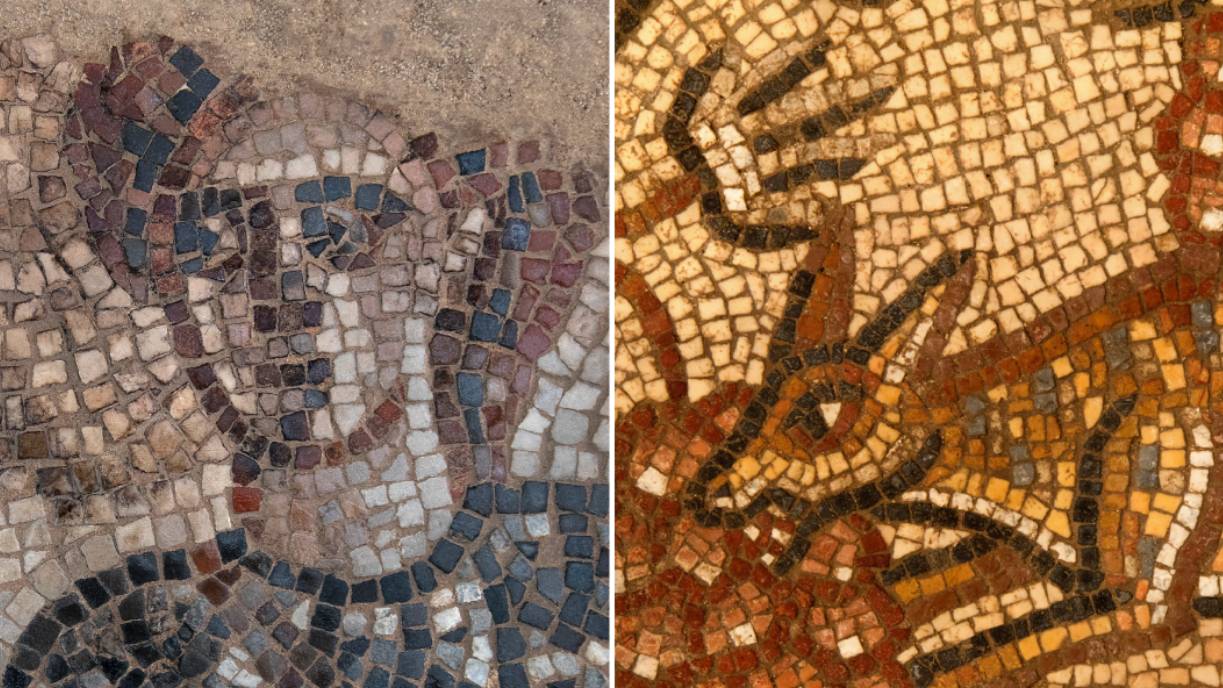
Panels in the synagogue’s floor mosaic included Israelite commander Barak (left) and a fox eating grapes (right).

Panels in the synagogue’s floor mosaic included Israelite commander Barak (left) and a fox eating grapes (right).

Christianity Today July 14, 2022
Jim Haberman / UNC University Communications

The earliest known depiction of biblical heroines Jael and Deborah was discovered at an ancient synagogue in Israel, the University of North Carolina at Chapel Hill announced last week. A rendering of one figure driving a stake through the head of a military general was the initial clue that led the team to identify the figures, according to project director Jodi Magness.

“This is extremely rare,” Magness, an archaeologist and religion professor at UNC-Chapel Hill, told Religion News Service. “I don’t know of any other ancient depictions of these heroines.”

The nearly 1,600-year-old mosaics were uncovered by a team of students and specialists as part of The Huqoq Excavation Project, which resumed its 10th season of excavations this summer at a synagogue in the ancient Jewish village of Huqoq in Lower Galilee. Mosaics were first discovered at the site in 2012, and Magness said the synagogue, which dates to the late fourth or early fifth century, is “unusually large and richly decorated.” In addition to its extensive, relatively well-preserved mosaics, the site is adorned with wall paintings and carved architecture.

The fourth chapter of the Book of Judges tells the story of Deborah, a judge and prophet who conquered the Canaanite army alongside Israelite general Barak. After the victory, the passage says, the Canaanite commander Sisera fled to the tent of Jael, where she drove a tent peg into his temple and killed him.

The newly discovered mosaic panels depicting the heroines are made of local cut stone from Galilee and were found on the floor on the south end of the synagogue’s west aisle. The mosaic is divided into three sections, one with Deborah seated under a palm tree looking at Barak, a second with what appears to be Sisera seated and a third with Jael hammering a peg into a bleeding Sisera.

Magness said it’s impossible to know why this rare image was included but noted that additional mosaics depicting events from the Book of Judges, including renderings of Sampson, are on the south end of the synagogue’s east aisle. According to the UNC-Chapel Hill press release, the events surrounding Jael and Deborah might have taken place in the same geographical region as Huqoq, providing at least one possible reason for the mosaic.

“The value of our discoveries, the value of archaeology, is that it helps fill in the gaps in our information about, in this case, Jews and Judaism in this particular period,” explained Magness. “It shows that there was a very rich and diverse range of views among Jews.”

Magness said rabbinic literature doesn’t include descriptions about figure decoration in synagogues—so the world would never know about these visual embellishments without archaeology.

“Judaism was dynamic through late antiquity. Never was Judaism monolithic,” said Magness. “There’s always been a wide range of Jewish practices, and I think that’s partly what we see.”

These groundbreaking mosaics have been removed from the synagogue for conservation, but Magness hopes to return soon to make additional discoveries. The Huqoq Excavation Project, sponsored by UNC-Chapel Hill, Austin College, Baylor University, Brigham Young University, and the University of Toronto, paused in 2020 and 2021 due to the pandemic and is scheduled to resume next summer.

News
Wire Story

Search Firm: No Systemic Abuse at Saddleback Successor’s Former Church

Elders stand by incoming pastor Andy Wood after follow-up review.

Christianity Today July 14, 2022
YouTube screenshot / Echo Church

Leaders of one of the nation’s largest and most prominent congregations say their new pastor has been cleared of allegations of abuse at his previous church.

In June, Andy Wood, pastor of Echo Church, a multisite church based in San Jose, California, was named the new pastor at Saddleback Church and the successor to founding pastor and bestselling author Rick Warren.

After the announcement, former staffers at Echo raised concerns about the culture at the church, calling it unhealthy. At least one former staffer referred to Wood as abusive. Questions were also raised about Wood’s decision to have disgraced megachurch pastor Mark Driscoll, founder of the now defunct Mars Hill Church in Seattle, speak at a leadership conference Wood runs.

Wood, his former church, and Saddleback have repeatedly denied any allegations of abuse.

On Monday, Saddleback’s elders sent an email to the congregation of more than 20,000, saying a follow-up investigation by Vanderbloemen, a Christian executive search firm, had cleared Wood. They also said the church had hired a separate firm, Middlebrook Goodspeed, to review Vanderbloemen’s work.

“The team at Vanderbloemen interviewed former employees, former volunteers, peers, and current employees to ask them about their experiences with Andy,” Saddleback elders wrote, citing the two firms. “The sample can be said to be thorough. After our work, we concluded there is no systemic or pattern of abuse under Andy’s leadership, nor was there an individual that we felt was abused.”

The Vanderbloemen report will not be made public, according to a church spokesperson.

Monday’s statement was the second announcement church elders have made backing Wood. Saddleback will move forward with plans for Wood to begin as the new pastor in September, according to the elders. Wood and his wife, Stacie, who will serve as a teaching pastor, recently moved to Southern California, according to the church.

Warren plans to retire in early September.

“We will now turn our attention to planning a celebration of Pastor Rick and Kay’s unprecedented 43-year ministry, and then welcoming Pastor Andy, Stacie, Caedmon, Sammy, and Karis as our newest members of the Saddleback Family,” the elder statement said, referencing the couple and their children.

Echo Church has required former staffers to abide by a confidentiality policy, which is designed to “guard against gossip, sharing passwords publicly, sharing sensitive data, etc. and cultivate a healthy culture,” Grace Tran, director of marketing and communications for Echo Church, told Religion News Service in an email.

When asked repeatedly if former staff members are still bound by the confidentiality policy, Tran did not answer, saying instead that former staffers should talk to Vanderbloemen.

The Saddleback elder statement did not specifically address the culture at Echo Church but did refer to a conflict that occurred at that church, adding that while “disappointment and hurt are not the same as abuse,” they still wanted to act with compassion.

Elders also cited Saddleback’s role in founding a Christian 12-step program known as Celebrate Recovery, which helps people deal with “every kind of hurt, abuse, wound, mistreatment, addiction, or other hurtful issues.”

“We know that we must minister in the REAL world, not the IDEAL world,” the elders wrote. “In our broken world, there will always be conflict, disagreements, and disappointments, so recovery and reconciliation in relationships will always be needed.”

Stacie Wood’s planned role at the church as a teaching pastor may cause trouble for Saddleback in the future. The congregation is part of the Southern Baptist Convention, which bars women from serving in the role of pastor. The megachurch’s status in the convention was already under review after Saddleback ordained three women staffers as pastors last year. Having women preach during worship services is also controversial among Southern Baptists.

Warren made a surprise appearance at the denomination’s annual meeting last month. After he spoke, the committee reviewing Saddleback’s status said it needed more time to make a decision.

Books
Excerpt

My Husband Died Suddenly in the Wilderness

As his widow, I live with grief every day. But I also live in the Good Shepherd’s grip.

Christianity Today July 14, 2022
Chris Meaney / Unsplash

One early morning on our family vacation, my husband, Rob, left our campsite for a long hike in the backcountry of Mount Rainier National Park. He and his hiking partner set out on the trail excited and energized for the path ahead. Both loved hiking and knew how to do it well.

Being in the outdoors was Rob’s favorite way to recreate and connect with God. But his cold and lifeless body returned to the trailhead late that afternoon, airlifted by a helicopter out of the wilderness. That day, marked on the calendar as a highlight of our family trip, became the most sorrowful of our lives.

In a moment, my world changed forever. I am still dumbfounded at the swiftness of death’s destructive work. Rob’s passing ushered me into a harsh and lonely landscape of loss. His sudden, tragic passing erased my plans for the future and set my feet at the trailhead of a new, unwanted path.

For the rest of my days, I will walk with grief. I will travel down a trail nobody wants to take.

I never knew deep grief until I lost Rob. I had suffered other losses but none that broke me so profoundly, none that rearranged the entire order of my life. I will admit, from the very beginning, I have been a reluctant traveler on this new path of sorrow.

Left with four children to raise alone, there is not a moment I do not long for the life I lived before. Rob and I enjoyed 17 imperfectly wonderful years of marriage. Our life together was deeply satisfying. We shared the same passions and dreams. He loved me with all his heart, and I adored him.

As Sorrow and Suffering have beckoned me forward on this grief journey, like Much-Afraid in Hannah Hurnard’s classic book Hinds’ Feet on High Places, I have cried out to Jesus, “I can’t go with them. … I can’t! I can’t! O my Lord Shepherd, why do you do this to me? How can I travel in their company? It is more than I can bear.”

And yet, here I am. I have survived the moment I thought would be the death of me too. I have come to embrace grief as my companion, even if every day I long for her departure. I live in the valley of the shadow of Rob’s death, and yet I also choose to lift my eyes beyond this daily darkness toward horizons that promise flourishing. I have vowed to myself, “I will not die but live, and will proclaim what the Lord has done” (Ps. 118:17).

When I consider the things Rob left behind when he died, the list grows long. Rob left friends, colleagues, and a job in which he found purpose. He left parents and siblings and an extended family who loved him very much. He left our children and me alone to forge a path forward without him.

Rob’s tragic death ended his life in its prime and brought death to our family in its blossoming years. Never again would our sons enjoy Dad as coach for Little League. Never again would his voice rise in a hearty cheer above the crowd at a 4-H competition or dance recital. Our dreams of retirement and empty nesting would never come to be.

When I returned home from his memorial services that summer, from a road trip that had ended in grief, I discovered a little bar of Irish Spring soap on the shelf in my shower. We’d left it behind when we packed for the road. It was too small to be worth bringing along. Rob never returned to use it again. Even his soap he’d left behind.

These losses do not tell the whole story, however, for Rob also left behind a legacy of words. As a journalist and author, Rob made his career in writing. He wrote about business and faith, humanitarian aid and finance. And in what has become an unexpected, exquisite gift, he also wrote about dying.

Early in our marriage, Rob wrote a book called The Art of Dying. His journalistic curiosity and deep faith led him to work in a funeral home. He joined a hospice organization and became a volunteer, visiting with terminally ill patients on the weekends.

In the course of writing the book, Rob discovered that for the last 200 years, death had shifted out of public view. In recent years, most people have died behind closed doors in nursing homes or hospitals. Few families, communities, and churches have attended well to dying people. Few people have prepared for death—their own or those they loved.

For most, until they experienced the death of a close friend or family member, on-screen deaths in movies and video games—broken down into pixels and distanced by the ability to hit the off button—were the only ones they knew.

As Rob worked shifts at the funeral home, he saw similarly poor preparation in those who grieved. Because death was pushed into the shadows, grief was too. Nobody knew what to do, so few people did anything at all. Employers asked bereaved workers to return quickly to their jobs, and communities and churches continued their programs and services as usual.

Rob saw hurting people regularly encouraged to pull themselves together and move on. He saw dying and grieving people struggle in a culture that simply didn’t understand.

His writing about death profoundly shaped our early marriage. I edited The Art of Dying, and over many nights throughout the years, Rob and I talked about dying. Even though we were young, we discussed our end-of-life choices; we outlined our desires and knew each other’s wishes. We compiled our end-of-life documents and bought life insurance. We were committed to being a death-literate couple.

Knowing this, many people have asked me if I was prepared for Rob’s death. I always tell them yes and no. Even though his death came as a surprise, I knew what he wanted. So when he died, I simply executed his wishes to the best of my ability.

Yes, I was prepared. And yet, nothing can prepare you for the agonizing loss of a loved one.

By way of analogy, you can read a biography of Rachmaninoff and listen to hours of his symphony recordings. You can sit in scholarly seminars and engage in discussions of his works. You can know everything there is to know about his music. But as you sit before the piano, your fingers lightly settled on the keys, you find you cannot play a single note of his Piano Concerto No. 2. Not even a bar.

Even with all your knowledge, your brain, heart, and fingers do not know the score. To play, you must learn the notes. And the only way to learn is to practice—in real life.

That’s how I’ve found my grief journey to be: picking through the weeds, bushwhacking through the forest, hunting for signs I was headed in the right direction and trying to learn this new terrain of sorrow. Grief has been a painful education. I’ve had to learn as I go, fumbling and trembling along the way.

From what I have seen, I believe a person can acquire the skills to grieve well. While each loss is unique, I don’t believe we need to stumble blindly along the path of sorrow. Grief brings deep darkness, but we can learn how to navigate it in ways that make our pain more bearable.

As believers, we can face death and grieve with full confidence. Our lives are in the strong and tender grip of our Good Shepherd. Grief may walk with us our whole lives, but our Savior does too.

Clarissa Moll is an award-winning writer, podcaster, and the author of Beyond the Darkness: A Gentle Guide for Living with Grief and Thriving after Loss.

Adapted from Beyond the Darkness by Clarissa Moll. Copyright © 2022. Used by permission of Tyndale House Publishers, a Division of Tyndale House Ministries. All rights reserved.

Apple PodcastsDown ArrowDown ArrowDown Arrowarrow_left_altLeft ArrowLeft ArrowRight ArrowRight ArrowRight Arrowarrow_up_altUp ArrowUp ArrowAvailable at Amazoncaret-downCloseCloseEmailEmailExpandExpandExternalExternalFacebookfacebook-squareGiftGiftGooglegoogleGoogle KeephamburgerInstagraminstagram-squareLinkLinklinkedin-squareListenListenListenChristianity TodayCT Creative Studio Logologo_orgMegaphoneMenuMenupausePinterestPlayPlayPocketPodcastRSSRSSSaveSaveSaveSearchSearchsearchSpotifyStitcherTelegramTable of ContentsTable of Contentstwitter-squareWhatsAppXYouTubeYouTube