Theology

Blessed Are Those Who Mourn Suicide

Caring for people in pain requires a rich theology of suffering.

Christianity Today September 28, 2022
Illustration by Mallory Rentsch / Source Images: WikiMedia Commons / Pexels

According to the World Health Organization, 703,000 people die by suicide each year.

In 2020, “suicide was the twelfth leading cause of death overall in the United States. … [In addition, suicide] was the second leading cause of death among individuals between the ages of 10–14 and 25–34, … and the fourth leading cause of death among individuals between the ages of 35 and 44.”

Although churches are becoming more sensitive to suicide issues, the topic has at times been limited to concerns over salvation and damnation. If a person takes his or her own life, will that person go to heaven?

We’re not equipped to fully answer that question, of course. Jesus is the only one who has the power of divine judgment. And more importantly, debating someone’s eternal fate misses a larger opportunity. Suicide is the heartbreaking cry of “My Father, why have you forsaken me?” As believers, we have a chance to meet those who feel forsaken and be Christ to them.

Put another way: Our theology of salvation matters. But at least initially, our theology of suffering matters more, in terms of caring for those in our congregations who are thinking about ending their own lives.

As an aspiring sociology scholar, I spent four months of undergrad studying this issue for a research project at the University of Oxford. One of the key questions I wanted to ask was “How should theodicy—or making sense of suffering from a Christian perspective—inform our approach to suicide?”

“When analyzing the preponderance of cases of suicide beyond physician-assisted death, one is faced with the formidable role of mental illness, a factor that Christian theologians have often downplayed,” writes Elizabeth Antus, a pioneer scholar at the intersection of suicide and theology.

In her scholarship, she turns in part to German theologian Johann Baptist Metz, who provides a promising perspective for a theology-and person-centered dialogue on the topic. His theodicy is all about learning to live in solidarity with those who suffer.

“In my view,” writes Metz in A Passion for God: The Mystical-Political Dimensions of Christianity, “there is one authority recognized by all great cultures and religions: the authority of those who suffer. Respecting the suffering of strangers is a precondition for every culture; articulating others’ suffering is the presupposition of all claims to truth. Even those made by theology.”

Metz wants to see people in the church embrace an open posture that allows them to lament and be in community with those dealing with suicide. He views this victim-sensitive theodicy as a liberating practice that allows Christians to ask God their raw, anger-filled questions.

“Even Christian theology, drawing on its doctrine of creation, cannot eliminate the apocalyptic cry, ‘What is God waiting for?’” writes Metz. “Not even Christian theology can allow Job’s question to God, ‘How long yet?’ to fall silent in a soothing answer. Even Christian hope remains accountable to an apocalyptic conscience.”

Antus, who teaches in the theology department at Boston College, argues that Metz offers a “theology more hospitable to suicide victims.”

In Christ, all of us are free to cry out to God and ask why—whether we have haunting thoughts of our own or know someone else who’s been suffering. After all, at the very center of the gospel story is a God who experiences suffering.

“For the Christian, who believes in the crucified and risen Messiah, suffering is always meaningful,” writes Kathryn Greene-McCreight, author of Darkness Is My Only Companion: A Christian Response to Mental Illness. “It is meaningful because of the One in whose suffering we participate, Jesus.”

As we think about suicide in the context of the Christian life, then, we can take comfort knowing that God sympathizes with human anguish.

He calls us to do the same with those around us. As his ambassadors, the worst thing we can do is shy away from tough conversations and perpetuate narratives of shame and guilt. The best thing we can do is learn about suicide, provide resources for those struggling, and lament with them in their pain.

A person-centric theodicy liberates us to hear deep cries of anguish, especially in the context of suicide. The more we humanize this issue in the church, the more we can be like the one who came to suffer among us: Christ himself.

Mia Staub is the content manager at Christianity Today. This piece was adapted from an essay originally published at the Scholarship and Christianity in Oxford website. Published with permission.

Church Life

Do Chinese Worship Songs Sound Too Much Like Pop Hits?

Five praise music songwriters on how they handle criticism, work together, and seek to reach Gen Z through their work.

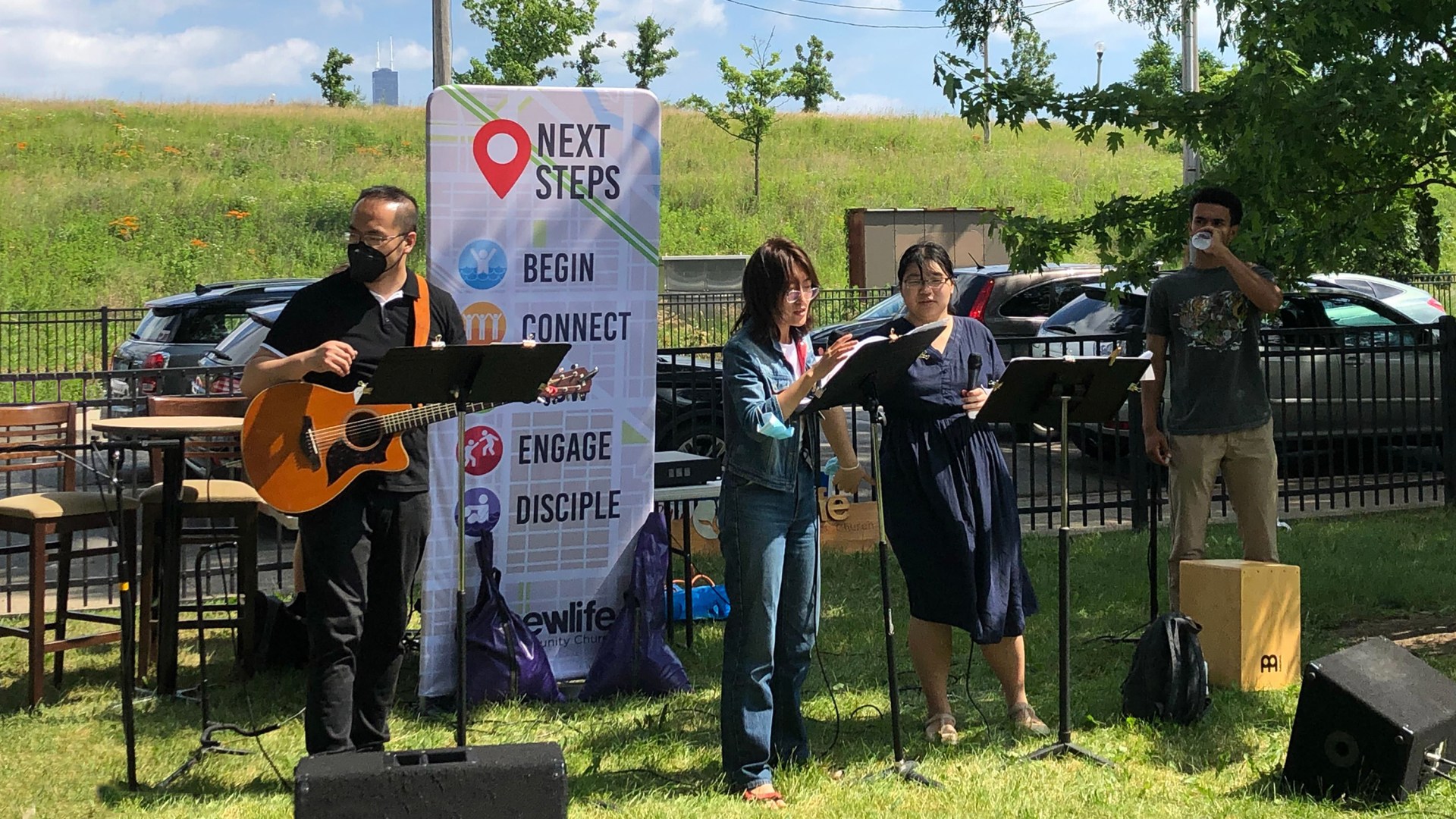
Cui Yu (first from left) and Jane Hao (second from left) leading outdoor Sunday worship of New Life Community Church Bridgeport

Cui Yu (first from left) and Jane Hao (second from left) leading outdoor Sunday worship of New Life Community Church Bridgeport

Christianity Today September 27, 2022
Courtesy of Sean Cheng

When Chinese Christians around the world worship God through music, chances are they’re singing a translated Western hymn or a hit by established worship music creators Stream of Praise (赞美之泉), Heavenly Melody (天韵合唱团), or Clay Music (泥土音乐). Several worship songwriters are interested in adding something that better reflects the tastes of young people.

Jiang Shaolong, Cui Yu, Jane Hao, Chen Ming, and Luan Xin all grew up in China before moving to the United States for college or graduate work and share a passion for Chinese worship songwriting and ministering to the next generation. They are enthusiastic about using their songwriting talents to help deepen the faith of the Chinese students and young professionals they pastor or mentor. With the exception of Chen, who studied music at a conservatory, all of them are self-taught musicians.

Jiang pastors the Chinese-speaking congregation of New Life Community Church Bridgeport, in Chicago, and offers spiritual mentorship to Jing Ji Huo (The Burning Bush), which also includes Hao and Yu, the band’s leader. Chen Ming and Luan Xin are both campus ministers. (Ming works with the diaspora Chinese ministry Ambassadors for Christ.)

These young Chinese praise songwriters—all of whom are in their 30s and 40s, years below the average Chinese church leader—recently spoke with CT about why they felt compelled to write new Chinese worship songs and how they handle commentary that their music is too inspired by pop.

Why did you want to create new Chinese praise songs?

Jiang: I was called by God to serve a Chinese church made up mostly of young Chinese students and young professionals. We worship with songs translated from English as well as songs written by other Chinese songwriting teams, and we’re grateful for the Chinese songs we already have. But I still have the desire to create new songs in our own language.

Just as we often say that prayer is as necessary to Christians as breathing, singing and worshiping are as natural to Christians as eating and drinking tea. I love Chinese food and tea culture, and I have the gift of cooking and making tea. So in my ministry, I cook and make tea for the young Chinese brothers and sisters and seekers in our church. This is a down-to-earth way of ministry that also allows me to use my gifts. The same is true for writing praise music.

Before I became a Christian, I loved playing guitar and tried to make music, and I was interested in Chinese literature. Now when I look back, I feel that God had already prepared me for the calling of hymn writing.

Chen: To be honest, I’m not sure how capable I am of writing Chinese praise music. But I come from a musical background and have had professional training in music. I am equipped with a theological education, and in my understanding, praise music composition is a good exercise and expression of personal worship to God and reflection on faith.

As a campus minister, I also consider it an important ministry for me to use creative writing as a way to encourage brothers and sisters and to help them reflect and practice their faith. So, praise music writing is really a part of my ministry.

What do you feel is the most difficult part in your creative process of praise music writing?

Cui: Finding the balance between serving the church and self-expression. A person who writes Christian songs naturally wants to use the best words and phrases to express their innermost and deepest thoughts and feelings. If they can find an understanding audience, they will be happy. But if not, they are not willing to go against their original intention and express a voice that is not their own, just to suit the aesthetics of those around them.

On the other hand, God has also called us to serve the church. Sometimes our works may be so focused on self-expression that they are difficult for the congregation to understand. We want our works to be comprehensible, to move, encourage, inspire, and comfort people and ultimately help them mature in their faith and get closer to God. If we write praise songs that only serve to express and move ourselves but lose the function of communal worship, they will not have real value.

Chen: I used to be a pop songwriter, so writing music isn’t the hardest part for me. Rather, I find it challenging to create lyrics, which are the main carrier of the message. I have yet to create the kind of lyrics with layers and depth that I idealize.

Can you share an example of your spiritual experience in worship music creation?

Hao: The first praise song I wrote was called “New Life.” Its chorus came to me one day while I was praying. I was deeply struggling that day, feeling greatly disappointed and disgusted with myself. But during the prayer God showed me what I looked like in His eyes—a person who had been renewed by the blood of Jesus, with a life guided by the Holy Spirit.

I just went with what moved me and typed the lyrics down on the computer. The process of writing that song was a devotional experience for me, allowing me to realize in prayer that God had given me a new life so I could live a life that was no longer wrapped up in sin. Even though I still have weaknesses, God sees me as flawless and beautiful in Jesus.

When working with each other, how do you handle the conflicts that come from differences in personal styles or preferences?

Chen: Usually we have some common basic principles for writing praise songs, such as theological rigor and clarity of the gospel message. It’s healthy if we argue over issues involving these principles and keep a serious, rigorous approach to song creation. But we need to be patient and flexible about differences outside of these principles and respect personal style and preferences to the greatest extent possible.

Luan: We are taught that Christians should practice submitting to one another. But in the artistic matter of making music, it is often very difficult to compromise. It is difficult to “submit to one another” when there are many differences of opinion on the style of the arrangement. When that happens, our approach was to revise it over and over again to try to make it as satisfying as possible for teammates with different preferences. I remember one time we wrote 27 versions of one song!

Chinese Christians often criticize modern Chinese worship songs for sounding like pop songs. How do you view tradition and innovation in songwriting?

Cui: I actually encourage us to look at all kinds of Chinese worship songs today with an open and appreciative heart. Even if they sound like pop music, I don’t dismiss them easily. These kinds of songs may be suitable for many young and new Christians. They can be used to encourage young Christians in their spiritual growth in a musical language they can quickly accept. It takes time for them to mature in their musical choices.

A spiritual elder once shared with us that intergenerational ministry is also, in essence, a form of cross-cultural mission. It requires us to minister to the younger generation in a culture and language that is familiar to them. If you force your own generation’s culture and language on them, you will create a cross-cultural barrier for your ministry.

Of course, we can’t just stop with songs. Worship music should be rich in content and form because God’s grace and his works in our lives are rich. We need to allow the art form that is worship songs to express this richness as much as possible. Music is capable of providing an infectiousness that words cannot provide. We should not abandon traditions, yet we need to create Chinese worship music that belongs to our time and also contains profound theological connotations.

Chen: I think we need to look at lyrics and music separately. In terms of lyrics, I personally think that the lyrics of many Chinese worship songs that are currently popular in Chinese churches are indeed rather monotonous and repetitive, as if they were created by using a formula. The theology often lacks rigor and orthodox.

But in terms of tunes, there are actually many historical Western hymns that use the melodies of popular songs of the era. The tunes of those works possess the characteristics of being memorable, easy to learn, and easy to sing. This is a good thing. But the role of lyrics in hymnody is primary, and the creation of lyrics needs to be done with more care, to an extent that it should even be seen as preparing a sermon that needs to be finely crafted word by word.

Luan: Much of modern Chinese worship music is not really like pop songs. The problem is that the music is boring, the tunes are unpleasant, and the musicianship lags behind that of pop songs. Many unbelievers can hum a few lines of “Amazing Grace” or “Joy to the World” because the Christians back then made the hymns popular by achieving a high standard of music. My hope is that Christians today are able to produce worship music of a musical standard that rivals the popular music of their contemporaries.

This requires both innovation and an inheritance of tradition. I myself will experiment with different styles of modern music—I wrote probably the first hard-rock style and the first metal-style Chinese worship songs ever. But the lyrics we write should tell the story of the ancient gospel, just like those classic Western hymns did. That is inheriting the tradition.

Jiang: Inheriting tradition is not the same as copying Western Christian music. Since we are writing lyrics in Chinese, we should also write them with the unique beauty and rhythm of the Chinese language. I have tried to write lyrics in a more elegant style similar to Tang poetry and Song lyrics in ancient Chinese literature. I think that modern Chinese lyrics can be written to be easily understood, but they can also pursue the literary beauty and gracefulness of the traditional Chinese language.

Improving the quality of composing requires greater professionalism. After we had been composing for a while, we were able to see shortcomings in our music. I intentionally became friends with some experienced, professional music producers and asked them for advice. We asked them to help us improve the orchestration and harmonization, record and do some professional treatment for the songs we composed, and also give us some training in music production. Since we are called by God to write worship music, we have to do it professionally and try to make a good product. Not only the lyrics and music should be good, but professionalism is also part of the calling.

News

Died: Brother Andrew, Who Smuggled Bibles into Communist Countries

Founder of Open Doors said he wasn’t an “evangelical stuntman” but a faithful Christian following the leading of the Spirit.

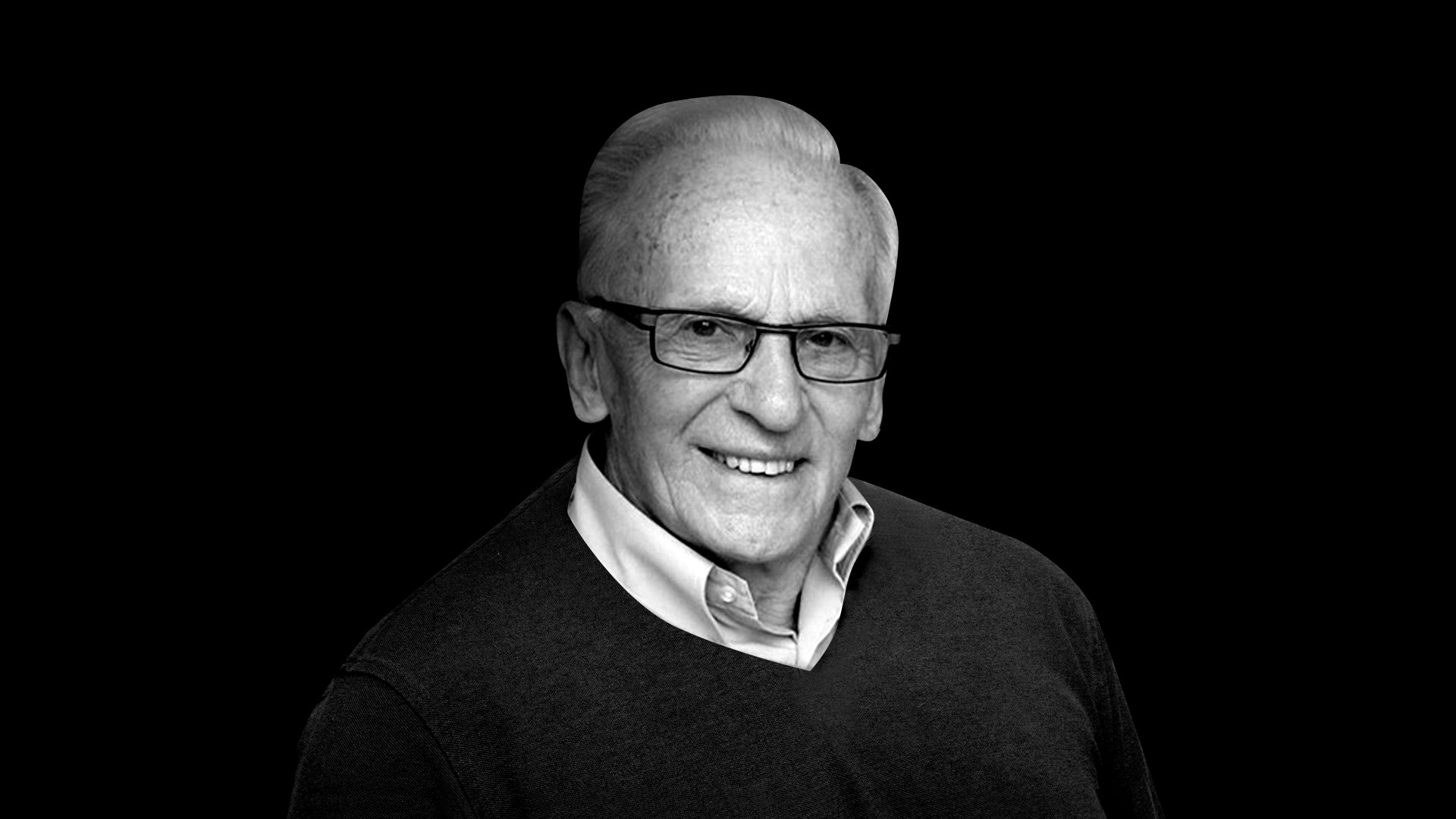
Brother Andrew (Anne van der Bijl), known as "God's smuggler"

Brother Andrew (Anne van der Bijl), known as "God's smuggler"

Christianity Today September 27, 2022
Courtesy of Open Doors / edits by Mallory Rentsch

Editor’s note: Read or share in Portuguese and other languages via the yellow links above.

Anne van der Bijl, a Dutch evangelical known to Christians worldwide as Brother Andrew, the man who smuggled Bibles into closed Communist countries, has died at the age of 94.

Van der Bijl became famous as “God’s smuggler” when the first-person account of his missionary adventures—slipping past border guards with Bibles hidden in his blue Volkswagen Beetle—was published in 1967. God’s Smuggler was written with evangelical journalists John and Elizabeth Sherrill and published under his code name “Brother Andrew.” It sold more than 10 million copies and was translated into 35 languages.

The book inspired numerous other missionary smugglers, provided funding to van der Bilj’s ministry Open Doors, and drew evangelical attention to the plight of believers in countries where Christian belief and practice were illegal. Van der Bijl protested that people missed the point, however, when they held him up as heroic and extraordinary.

“I am not an evangelical stuntman,” he said. “I am just an ordinary guy. What I did, anyone can do.”

No one knows how many Bibles van der Bijl took into Poland, Czechoslovakia, Yugoslavia, East Germany, Bulgaria, and other Soviet-bloc countries in the decade before the success of God’s Smuggler forced him into the role of figurehead and fundraiser for Open Doors. Estimates have ranged into the millions. A Dutch joke popular in the late 1960s said, “What will the Russians find if they arrive first at the moon? Brother Andrew with a load of Bibles.”

Brother Andrew
Brother Andrew

Van der Bijl, for his part, did not keep track and did not think the exact number was important.

“I don't care about statistics,” he said in a 2005 interview. “We don’t count. … But God is the perfect bookkeeper. He knows.”

Van der Bijl was born in the Netherlands in 1928, the son of a poor blacksmith and an invalid mother. He was 12 when the German military invaded the neutral country in World War II, and he spent the occupation, as he recounted to John and Elizabeth Sherrill, hiding in ditches to avoid being pressed into service by Nazi soldiers. When famine hit the Netherlands in 1944, van der Bijl, like so many Dutch people, ate tulip bulbs to survive.

After the war, van der Bijl joined the Dutch army and was sent to Indonesia as part of the colonial force attempting to quash the Indonesian struggle for independence. He was excited about the adventure until the shooting started and he killed people. By his own account, van der Bijl was involved in the massacre of an Indonesian village, indiscriminately killing everyone who lived there.

He was haunted, after, by the sight of a young mother and nursing boy killed by the same bullet. He started wearing a crazy straw hat into the jungle, hoping it would get him killed. Van der Bijl adopted the motto, “Get smart—lose your mind.”

He was shot in the ankle and started reading a Bible his mother had given him during his convalescence. After he returned to the Netherlands, he started compulsively going to church, and in early 1950, he surrendered himself to God.

“There wasn’t much faith in my prayer,” van der Bijl said. “I just said, ‘Lord if you will show me the way, I will follow you. Amen.’”

Van der Bijl committed his life to ministry and went to Scotland to study at the Worldwide Evangelization Crusade’s missionary school in 1953. Speaking to Christianity Today in 2013, he remembered one critical lesson from a Salvation Army officer who was teaching about street evangelism. The older man said most would-be evangelists give up too soon, since the Holy Spirit has only prepared the heart of one person out of 1,000.

“Instantly my heart revolted. I said to myself, ‘What a waste,’” van der Bijl recalled. "Why go and spend your energy on 999 who were not going to respond? God knows it and the devil knows it and he laughs because after the first 1,000 people I give up in despair.”

He determined he would ask God to guide him to the one person who was ready for the gospel. Instead of spending his time calculating and strategizing, he would follow the guidance of the Spirit.

A short time later, he felt God speak to him through Revelation 3:2: “Wake up! Strengthen what remains and is about to die.” Van der Bijl understood he was supposed to go support the church in Communist-controlled countries. In 1955, he took a government-controlled tour of Poland but snuck away from his group to visit underground groups of believers. On a second trip to Czechoslovakia, he saw that churches in Communist countries needed Bibles.

“I promised God that as often as I could lay my hands on a Bible, I would bring it to these children of his behind the wall that men built,” van der Bijl later recalled, “to every … country where God opened the door long enough for me to slip through.”

Brother Andrew in Yugoslavia

In 1957, he made his first smuggling trip across the border of a Communist country, entering Yugoslavia with tracts, Bibles, and portions of Bibles hidden in his blue Volkswagen. As he watched the guards search the cars in front of him, he prayed what he would later call “the Prayer of God’s Smuggler”:

“Lord, in my luggage I have Scripture that I want to take to your children across this border. When you were on Earth, you made blind eyes see. Now, I pray, make seeing eyes blind. Do not let the guards see those things you do not want them to see.”

Van der Bijl followed his early success in Yugoslavia with more trips and eventually even smuggled Bibles into the Soviet Union. He recruited other Christians to help him, and they developed strategies for avoiding the attention of border guards and secret police. Sometimes the smugglers would travel in pairs, disguised as honeymooning couples. Sometimes they would use out-of-the-way border crossings. They would experiment with different ways of hiding Scripture in their small, inconspicuous cars. Always, they would follow the leading of the Spirit, and no one was ever arrested.

Bible smuggling was criticized by a number of Christian organizations, including the Baptist World Alliance, the Southern Baptist Foreign Mission Board, and the American Bible Society. They considered it dangerous—especially for the Christians living in Communist countries—and ineffective. Sensational stories were good for raising money, the critics alleged, but little else.

Cold War historians have debated the impact of Bible smuggling on Communist regimes. Francis D. Raška writes that it was “probably significant,” but “evidence of the exploits is shaky, and prone to exaggeration and personal aggrandizement.” There is at least some evidence that the KGB kept close tabs on van der Bijl’s activity and may have had informants inside his network, according to Raška.

Brother Andrew
Brother Andrew

After the success of God’s Smuggler, van der Bijl left smuggling to other less famous Christians. He shifted his attention to fundraising for Open Doors and ministry opportunities in Muslim countries. When the United States invaded Afghanistan in 2001 and Iraq in 2003, he became an outspoken critic of American evangelicals’ support for the war on terror. Christians, he said, could only put their trust in military intervention if they had given up faith in missions.

When speaking to American audiences in the early 2000s, van der Bijl regularly asked Christians if they had prayed for Osama bin Laden, leader of al-Qaeda. When US forces killed bin Laden in 2011, he expressed sadness.

“I believe everyone is reachable. People are never the enemy—only the devil,” van der Bijl said. “Bin Laden was on my prayer list. I wanted to meet him. I wanted to tell him who is the real boss in the world.”

At the time of his death, the ministry van der Bijl founded was helping Christians in more than 60 countries. Open Doors distributes 300,000 Bibles and 1.5 million Christian books, training materials, and discipleship manuals every year. The group also provides relief, aid, community development, and trauma counseling, while advocating for persecuted Christians around the globe.

When asked if he had any regrets about his life’s work, van der Bijl said, “If I could live my life over again, I would be a lot more radical.”

News

Orphan Forced from Christian Home Highlights Islamic Ban on Adoption

Egypt sees surge in foster care applications, though still insufficient, while Christians denied custody due to sharia law.

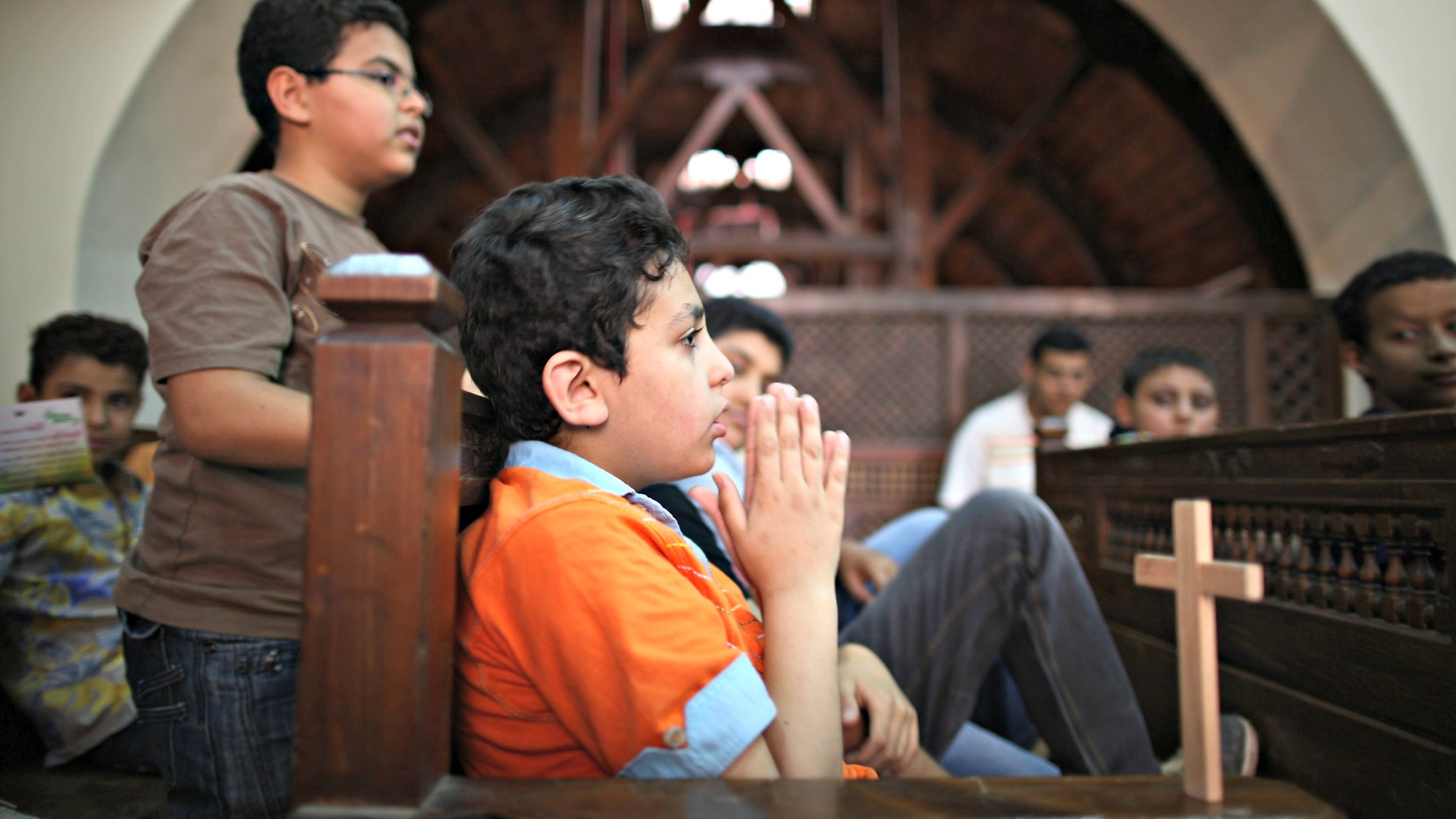
Coptic children attend a religious class at The Hanging Church in Cairo, Egypt.

Coptic children attend a religious class at The Hanging Church in Cairo, Egypt.

Christianity Today September 27, 2022
Peter Macdiarmid / Getty Images

Four years ago, Shenouda was an infant found at the door of a Coptic church. Today, renamed Yusuf, the boy is found in a state-run orphanage. In between lies the care of a priest, the devastation of a Christian family, and a sectarian bureaucracy undergoing partial reform.

Egypt is home to a Dickens-like tragedy.

“Adoption is not legal in Egypt,” said Nermien Riad, executive director of Coptic Orphans. “There is no possibility it will happen as known in the Western world.”

The boy’s family name and location have been kept anonymous as a cautionary measure, as reported by the Coptic publication Watani. Likely left by an unwed mother, the child was found by a Coptic priest who presented him to the couple, infertile for 29 years.

They took him into their home, obtained a birth certificate as if he was their own, and raised him with love and devotion. They gave him a Christian-signifying first name, honoring the prior Coptic Orthodox pope, and per Egyptian naming custom the four-generation quadrilateral was completed with the names of the doting father, grandfather, and great-grandfather.

All was idyllic, until a jealous niece realized the impact on her inheritance.

Egypt’s Islamic-based law, seeking to preserve lineage, prohibits taking another’s child as one’s own. The niece reported the couple to the police, who investigated. The prosecution determined there was no blood relation, but also no ill will.

The father signed a paper stating he found the child “on the street,” likely to shield the priest’s involvement. But though the case was dropped last February, the boy was taken to an orphanage. With no papers to prove his ancestry, he was assumed to be a Muslim—and thus forbidden to live with a Christian family—and given the religiously neutral name Yusuf, the Arabic equivalent of Joseph.

The desperate parents protested: What Muslim would leave their unwanted child at a church? Denied, they were even forbidden from visiting him in the orphanage. Their applications for employment at the facility were turned down.

According to the Ministry of Social Solidarity, Egypt has 11,000 children in institutional care. According to a 2016 study by UNICEF, the United Nations agency for children, the total number of Egyptian children with at least one parent dead is 1.2 million.

Not all of them have a sad ending.

“It turned out better than I could’ve ever hoped for,” said Rasha Mekki, who discovered Egypt’s kafala program in her mid-40s following 20 years of IVF treatments. She visited orphanages over the course of a month, filled out the government paperwork, and came home with Mostafa.

Kafala means “sponsorship” in Arabic, somewhat akin to foster care.

Today, Mekki lives with her husband and not-quite-son in San Francisco where she runs Yalla Kafala, a nonprofit founded in 2020 to promote “adoption” in Egypt. Its goal is an orphan-free Egypt by 2030.

She is less ambitious than the Egyptian government, which set 2025 as its target date to close all orphanages in the nation due to widespread child abuse, neglect, and overcrowding. Reforms in 2020 allowed single, divorced, and unmarried women over the age of 30 to apply for kafala, and lowered the level of education necessary to one spouse holding a high school diploma.

Last year, further reforms allowed a partial name change. After consulting with the Cairo-based al-Azhar, the foremost center of scholarship in the Sunni Muslim world, the Egyptian government permitted sponsoring parents to give the child the father’s name in the second position of the quadrilateral, or the family name in the fourth position—but not both designations.

Combined with a storyline on kafala by the popular “Why Not?” Egyptian miniseries, applications surged to 2,700 in 2021, the highest number ever. Yet still far from the total number in need, as many orphans are seen as the unwanted children of sin and suffer severe social stigma.

Even from those willing to try: One couple, after taking in a child through the kafala system, returned the three-year-old girl after the wife got pregnant.

Another advocate chided orphanages in general, though acknowledging their workers do their best.

“She will be brought up by foster ‘mothers’ who are employed to care for her, who are overworked and underpaid,” said Yasmina El Habbal, a single woman in her mid-40s, posting her experience raising Baby Ghalia on her public Facebook page. “‘Mothers’ who will leave to get married, and be replaced.”

Mekki is working to remind Muslims that caring for orphans—Muhammad was one himself—is a great deed in Islam. And though the formal rules of inheritance exclude the kafala child, sharia law permits any number of “gifts” to be given while the parents are alive. Additionally, their will may specify up to one-third of any inheritance distributed after their death be given to other than their legal heirs.

Breastfeeding a kafala child, furthermore, removes the prohibition on the non-family mixing of sexes, allowing women to keep their heads uncovered after a sponsored boy matures.

Raymond Ibrahim, writing for Coptic Solidarity, was critical. Citing Muslim narratives, he related how the prophet of Islam adopted Zayd, an orphan believed to be the fourth person to accept the faith. But the practice became forbidden when Zayd divorced his wife and Muhammad thereafter married her. Kafala took its place, and precedent was established.

And Christians are among the modern victims.

“The reason Shenouda and his family were targeted is because of their Christian faith,” Ibrahim wrote. “The child—whose background is unknown—was being raised as a Christian, and it is this that has caused the state to act.”

Some critics say the Egyptian government should not have such a right. Article 3 of Egypt’s constitution permits Christians and Jews to govern their own personal status issues—such as marriage, divorce, and inheritance—according to their religious traditions.

“If we subject this matter to the religious concept, adoption is permissible in Christianity, though the opposite in Islam,” said Youssef Talaat, legal advisor for the Protestant Churches of Egypt (PCE). “But the current law does not have articles related to it.”

Talaat represented the PCE alongside the Coptic Orthodox and Catholic churches to present a new unified personal status law before the government. Completed last year, it is expected to be discussed in the upcoming session of parliament, though due to Egypt’s sharia-based prohibition—with kafala as the alternative—adoption (tabenni) is not included within the new text.

Coptic lawyer Naguib Suleiman wants the parliament to amend the proposed family law further, and it is reported some members will lobby to allow adoption for Christians.

Until then, where will orphans go?

“In the absence of a legal framework, civil society organizations have to step in and fill the void,” said Riad. “Our work prevents the Shenouda situation from happening.”

Coptic Orphans, founded in 1988, works in about 800 towns and villages throughout Egypt. Currently serving 9,000 orphans, the organization states it has helped prevent 35,000 children from entering institutionalized care.

A 2017 article in the academic journal Trauma, Violence, and Abuse surveyed 23 studies over 20 years, involving a total of over 13,000 children. Those raised in foster care experienced “consistently better experiences and less problems” than those in orphanages.

As an example, in 2009, American Scientist published research on 136 children in Romania. At 3.5 years, only 18 percent raised institutionally demonstrated secure attachments to their primary caregiver. But 49 percent of those in foster care did so, and 65 percent of those in the general community.

Working in cooperation with church-affiliated orphanages, Coptic Orphans aims to place the vulnerable in the care of relatives. And Riad clarified that most orphans in the Christian network’s care are not fully such: 95 percent of beneficiaries have a mother. But when the father dies, gets imprisoned, or otherwise disappears, the family is often plunged into poverty.

Even in cases where the mother passed away also, the extended family network steps in, buttressed by Coptic Orphans’ financial assistance. It makes kafala unnecessary, and the government does not need to be involved. And in the rare cases when parentage is unknown, the church will quietly place the child with a family.

Spiritual care is also provided. “Typically, it is the priest who places the child within a family,” said Riad. “They know their community, and the necessary provisions, better than any case worker could.”

Riad praised the efforts of the government to expand and promote kafala. But she wonders how Egypt will be able to care for all the children, should plans proceed to close the orphanages.

Yet just as the nation’s Christians once had to skirt the law to build churches until reform occurred, she hopes adoption will become included in the legal revisions. And not just for the rare examples like Shenouda, but for all Coptic children in need of care.

“Families are ‘adopting’ informally already, in the shadows,” Riad said. “If there is legalization for Christians, that would be ideal.”

News

Survey: Today’s Evangelicals More Likely to Welcome the Stranger

New research shows a marked shift in attitudes about refugees and immigration reform compared to 2015, and experts have a few ideas why.

Children join in an arts program at Mission Adelante, where Carla Flores is the children's ministry director.

Children join in an arts program at Mission Adelante, where Carla Flores is the children's ministry director.

Christianity Today September 27, 2022
Alex Ruybalid / Courtesy of Mission Adelante

Carla Flores was nervous to stand in front of a suburban evangelical congregation and share her experience as the child of undocumented immigrants.

Born in Mexico and raised since she was a toddler in Kansas City, Kansas, the 26-year-old children’s ministry leader is one of over 3 million “Dreamers” in the US, meaning her status is legal but uncertain. During her recent presentation at this church on the other side of town from her own, some churchgoers drilled her for details about her life, while others responded warmly and volunteered for ministry in her immigrant community.

Flores’s experience reflects a bigger shift in US evangelical views on immigration.

Some polls in the past have shown white evangelicals in particular were opposed to pathways to citizenship and accepting refugees. But the latest survey from Lifeway Research—coming as an unprecedented wave of Afghan refugees settle in the US and Dreamers remain in limbo—indicates that evangelicals’ support for immigrants and immigration reform has grown significantly.

Evangelicals are more open to welcoming refugees and offering paths to citizenship for undocumented immigrants than they were in 2015, the last time Lifeway polled on the issue. Now 77 percent of self-identified evangelicals are “strongly” or “somewhat” in favor of a path to citizenship, up from 61 percent who said “yes” seven years before. Among those who attend worship at least weekly, 82 percent were in favor.

Evangelicals by a wide majority and across all ethnicities said they would support bipartisan immigration reform, defined as increasing border security and establishing a process for undocumented immigrants to apply for citizenship if they paid a fine, passed a criminal background check, and completed other requirements (a path to citizenship similar to the one supported by the US Conference of Catholic Bishops).

https://datawrapper.dwcdn.net/oKDsu

A higher percentage of evangelicals also cited the Bible as their top influence on their immigration views compared to 2015, although it is still in third place after “friends and family” and “the media.”

In the 2022 survey, 70 percent of evangelicals overall, and 68 percent of white evangelicals, agreed that the US has a moral responsibility to accept refugees. That contrasts sharply with a widely cited statistic from 2018, when Pew Research Center data showed only 25 percent of white evangelicals said the US had a responsibility to accept refugees, the lowest of any demographic in the US. In 2017, white evangelicals by a large majority supported President Donald Trump’s ban on Syrian refugees entering the country.

“I’ve had that Pew stat thrown at me lots of times,’” said Matthew Soerens, the US director of church mobilization and advocacy for World Relief. World Relief and the Evangelical Immigration Table commissioned the Lifeway survey in 2015 and 2022. He never felt like that low number matched up with the evangelical support for refugees he saw in his work.

In the question this year, the Lifeway researchers decided to include a definition of a refugee under US law: “someone fleeing persecution due to specific factors such as their race, religion, or political opinion.”

Other data would support a shift in evangelical attitudes. World Relief, the humanitarian arm of the National Association of Evangelicals, is one of the approved refugee resettlement agencies for the US government. During the chaotic August evacuation from Afghanistan last year, the organization gained 3,000 new donors, a 1,500 percent increase over the same period the previous year.

That outpouring from individuals and churches for domestic refugee and immigration ministry continued after the Afghan evacuation. Giving for the fiscal year which ended September 30, 2021, was double that of 2020. So far this fiscal year, its giving for domestic ministries has surpassed that 2021 number.

The survey report doesn’t explain why views shifted.

“I would hope it has to do with learning and faithful witness over time,” said Jeren Rowell, the president of Nazarene Theological Seminary in Kansas City, Missouri. This week the seminary hosted an immigration event for pastors, with presentations from a Ugandan who had been tortured for his political views and fled to the US for asylum as well as from Flores, the Dreamer. Rowell added that people’s attention has shifted away from immigration too, which may help lower the temperature of the conversation about it.

Soerens thinks that the welcome of Afghan and Ukrainian refugees to the US this past year had a lot to do with more welcoming views on refugees. He noted that there is currently not negative news coverage on refugees like there was with Syrian refugees.

“I think the Afghanistan crisis helped a number of conservative people understand how difficult our immigration system is,” said Soerens.

Christians trying to help desperate Afghans escape often found no solution, even if they knew Afghans met strict qualifications for visas. Now Soerens said more people might understand that the trouble for Afghans is “true for other nationalities as well.”

On immigration too, Soerens used to hear questions during his church visits about immigrants taking jobs from Americans, but he hasn’t heard that kind of question in a long time. “We can’t find enough people to do all the jobs in this country,” he said. The survey supported that anecdote, with fewer self-identified evangelicals saying they saw immigrants as a drain on economic resources than in 2015.

https://datawrapper.dwcdn.net/teXcB

Dreamers build relationships in churches

Flores was born in Mexico, but her undocumented parents brought her to the United States when she was just a few years old. Her dad picked peaches in South Carolina, and her mom moved to Kansas City, Kansas, where she grew up.

When Flores was a teenager, the Obama administration introduced the Deferred Action for Childhood Arrivals (DACA) program which allowed people like Flores, Dreamers, to receive work permits and protection from deportation. It allowed her to go to college and then to work, though she remains in uncertainty. Every two years she files fingerprints, paperwork, and does background checks to renew her DACA status.

Dreamers do not currently have a path to permanent legal status in the US, though most Americans support them staying. A 2020 survey from Politico/MorningConsult, showed 72 percent of evangelicals said Dreamers should be allowed to stay in the country. Measures to resolve their status have stalled in Congress.

Flores remains anxious about her status in the only country she knows, but she is focusing her attention working at her church, Mission Adelante, in Kansas City. She was raised nominally Catholic but became evangelical after going to the youth group at Mission Adelante as a teenager.

Last October when she spoke at a suburban evangelical church doing an immigration workshop, she told her story to the room. The experience was “tough,” she said because the audience “had already a negative connotation of what DACA was, or who Dreamers were,” she said. During the question-and-answer time, she had to go into detail about how she paid taxes and health insurance.

“It was definitely vulnerable for me to share all of that,” Flores said. One person asked about whether her parents were still around, their immigration status, and whether they were working, which made her nervous. “I didn’t want to put my parents in a position to get hurt.”

But though the event felt a little hostile, afterward she had one older man reach out and tell her that he was honored to hear her story and that it helped him understand what it was like to be a Dreamer. Another man from the event started volunteering with her ministry.

“It was new for him to go over to my side of town, to be around the kids in my community,” she said. “It helps you see a face to something. Usually, we read something or hear about something, and we’ll dismiss it.”

Lifeway added a question this year about whether people taking the survey had been involved in a ministry to serve refugees or immigrants. Of those who had ever served in a ministry to immigrants, 77 percent agreed that Christians have a responsibility to assist immigrants, “even if they are here illegally,” compared to 48 percent of those who hadn’t ever served in a ministry. That may show a correlation without a causation, if people who serve in immigrant ministry are already a self-selected group with positive views on immigrants.

Evangelicals’ views historically go back and forth

Ulrike Elisabeth Stockhausen, in the 2021 book The Strangers in Our Midst: American Evangelicals and Immigration from the Cold War to the 21st Century, notes the “complex and at times contradictory attitudes that evangelicals have espoused on undocumented immigrants and refugees” in the decades since World War II.

Evangelicals provided the infrastructure and volunteers for refugee resettlement from those fleeing communism in the 1960s, 1970s, and 1980s, welcoming Cubans to Soviet refugees. They supported legalization for undocumented immigrants in the 1986 law signed by President Ronald Reagan, the Immigration Reform and Control Act. But they became more hardline about illegal immigration in the 1990s.

In 2012, evangelical leaders from a wide range of groups including conservative ones like Focus on the Family, signed a statement of support for immigration reform, that included respecting the dignity of immigrants, the rule of law, border security, and establishing a path to citizenship.

But immigration reform has stalled over and over. World Relief is tracking some smaller policy changes that may come up this Congress, like a bipartisan bill on legal status for temporary farm workers.

For more than a decade, Soerens has traveled the country to do events at churches on immigration. Because the church attendance of self-identified evangelicals has been decreasing, especially after the pandemic, he worried that the 2022 numbers on evangelical attitudes toward immigrants might be worse than 2015. But after seeing the survey, and in particular the growth of influence of the Bible in evangelical views on immigration, he was encouraged.

“I’m not satisfied with it … but I told my wife, ‘I feel like the last 10 years of my life have not been totally in vain,’” he said.

Methodology

Of the total pool of about a thousand evangelicals surveyed, 49 percent of the sample considered themselves conservative, 35 percent considered themselves moderate, and 13 percent considered themselves liberal or progressive.

Some of Lifeway’s questions from 2015 to 2022 shifted from requiring a “yes or no” answer to “strongly agree, somewhat agree, strongly disagree, somewhat disagree,” options, which could have affected how the percentages changed from 2015 to 2022.

The survey this year interviewed evangelicals who self-identified as evangelical and those who strongly agreed with four statements of evangelical belief, like that the Bible is the highest authority and that salvation comes through Jesus Christ alone. The 2015 survey was based only on self-identified evangelicals.

That new breakdown between belief and self-identity helped show significant differences. More evangelicals by belief saw new immigrants as an opportunity for evangelism than did self-identified evangelicals.

News

Multifaith Panel to Evaluate Homeland Security Church Protections

Christian, Jewish, Muslim, and Sikh clergy will advise government on funding and other solutions.

Police tape blocks off the scene of a shooting at the Geneva Presbyterian Church on May 15, 2022 in Laguna Woods, California.

Police tape blocks off the scene of a shooting at the Geneva Presbyterian Church on May 15, 2022 in Laguna Woods, California.

Christianity Today September 26, 2022
Mario Tama / Getty

The Department of Homeland Security has announced the appointment of a new, 25-member faith-based advisory council to assist Secretary Alejandro Mayorkas in finding ways to protect houses of worship.

The council consists of Christian, Jewish, Muslim and Sikh clergy plus some law enforcement and nonprofit faith group leaders.

The safety of religious congregations has been a growing concern for a decade—since the shooting at the Oak Creek, Wisconsin, Sikh temple in 2012. It was followed by the massacre at Emanuel AME in Charleston, South Carolina, a mostly Black congregation, in 2015; the killing of nearly two dozen worshipers at First Baptist Church in Sutherland Springs, Texas; the killing of 11 Jews at the Tree of Life synagogue in Pittsburgh in 2018.

And those are only the most notable mass killings. Other acts of violence, include the 2017 and 2019 firebombings of mosques in Victoria, Texas and Escondido, California.

The council is expected to help the department evaluate the effectiveness of existing security-related programs and improve coordination and sharing of threat and security-related information.

The Federal Emergency Management Agency, an agency of the Department of Homeland Security, has a Nonprofit Security Grant Program that provides federal funds for nonprofits and houses of worship to beef up security on their premises.

Funding for the program was increased to $250 million in 2022, up from $180 million in 2021. But not all houses of worship that apply get the grant. This year, just over half of the 3,470 applications received were approved, the Jewish Insider reported. Several religious groups are advocating for $360 million in funding in 2023.

The advisory council’s mission will be broader than advocating for more money through the grant program, said Rabbi Jonah Dov Pesner, director of the Religious Action Center of Reform Judaism, who was appointed to the council.

“I don’t think we’re going to pay our way out of the crisis of white supremacy and violent antisemitism and too many guns in too many hands,” he said. “This is not just about more security cameras. We have to get to the root of these questions.”

Sunday night marks the start of the Jewish High Holy Days, beginning with Rosh Hashana, the Jewish New Year. The holidays draw the highest attendance at synagogues across the country. While services in the last two years saw lower attendance because of the coronavirus pandemic, Jewish leaders are expecting a return to record attendance this year. With that comes a degree of anxiety about security.

“There’s a sense of both joy and return and renewal and fear,” Pesner said.

Earlier this year a gunman entered a Colleyville, Texas, synagogue and took several congregants hostage as he demanded the release of a person in prison. The congregants and their rabbi managed to escape and the gunman was killed by an FBI hostage rescue team.

Mosques and predominantly African American churches face their own threats.

This is not the first council to address the issues. Salam Al-Marayati, president of the Muslim Public Affairs Council, said he served under a previous Homeland Security advisory council during the Trump administration. He was also appointed to the new council.

“Part of the experience is understanding what other communities are going through,” said Al-Mayarati.

For example, not everyone will be served well by a large law enforcement presence, Pesner said.

“There’s a real danger of overpolicing and of policing in such a way that does harm to communities of color that have historically been on the wrong end of overpolicing,” Pesner said. “We have to be thoughtful and sensitive to all those who are suffering from violence and make sure policing and security are appropriate to the threat.”

The advisory council’s first meeting will take place online Oct. 6.

News

Southwestern Seminary President Resigns

The successor to Paige Patterson cites “reputational, legal, and financial realities” as he moves on to an IMB role.

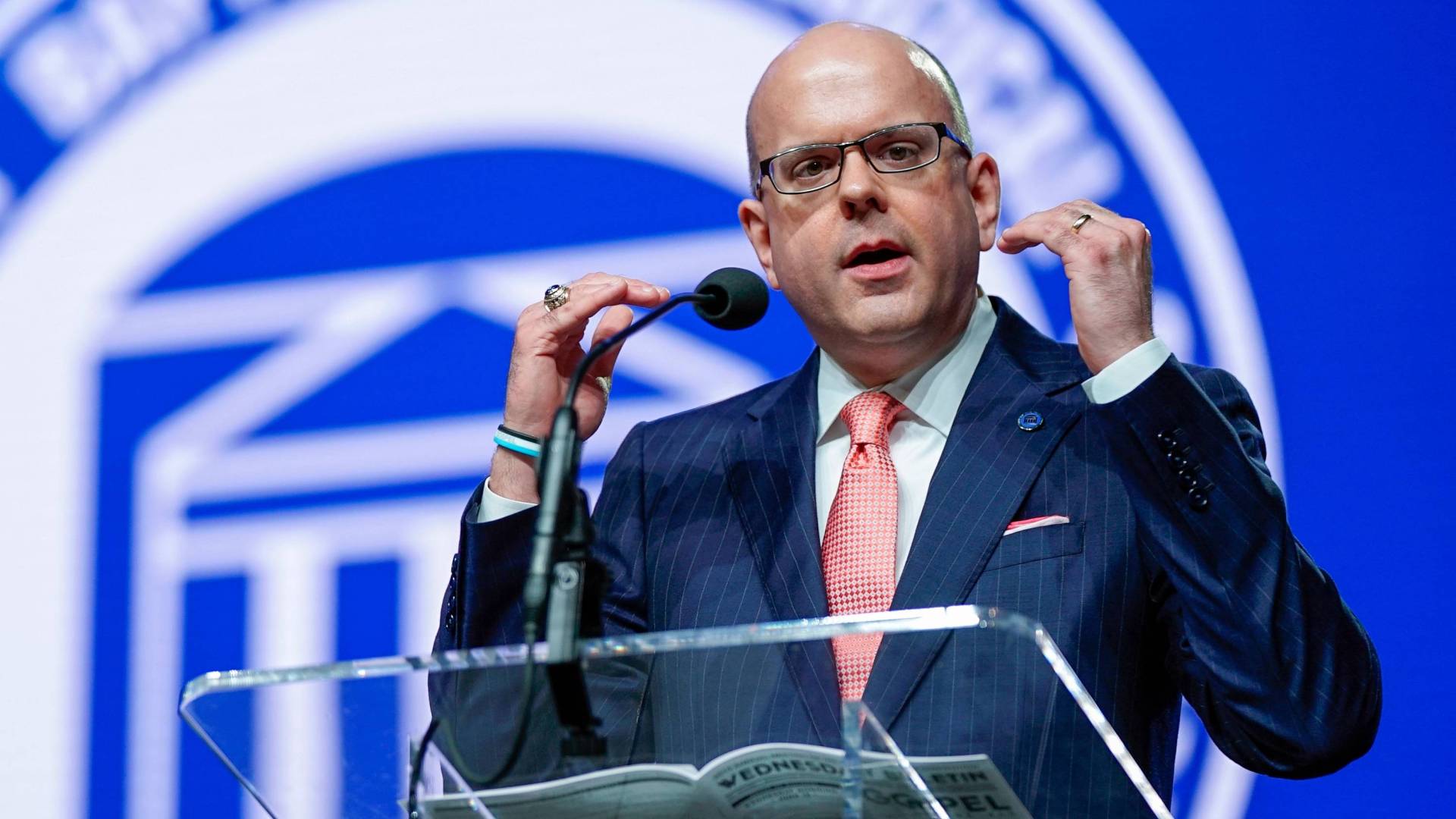
Adam Greenway

Adam Greenway

Christianity Today September 23, 2022
Baptist Press

Adam Greenway has resigned as president of Southwestern Baptist Theological Seminary three and a half years after he succeeded fired president Paige Patterson.

Greenway stepped down during a trustee meeting on Thursday and will take a role at the Southern Baptist Convention (SBC)’s International Mission Board, according to a statement from the seminary.

O. S. Hawkins, retired president of the SBC financial services entity GuideStone, will lead the school in the interim. (Update: On September 27, the trustees adjusted plans to have David Dockery—who was a theology professor and special consultant to Greenway—serve as interim president and Hawkins as senior advisor and ambassador-at-large. Dockery was previously president of Union University and Trinity International University/Trinity Evangelical Divinity School.)

Greenway said in a statement:

These days are incredibly challenging in the life of our denomination. They are also challenging times for academic institutions, particularly theological seminaries. In February 2019, Carla and I accepted the call to come back “home” to Southwestern Seminary with an understanding of these challenges, but also with the strong desire to be part of the solution.

What we failed to appreciate was the enormity of the reputational, legal, and financial realities that would welcome us to the Dome—only to be compounded by a global pandemic unlike anything we have ever experienced before.

We have done our best to serve Southern Baptists by helping position our seminary for the future, but much, much work remains to be done. Nevertheless, in the Providence of God we sense a release from our duties here.

Since assuming the presidency at Southwestern, Greenway worked to establish a new era at the Fort Worth, Texas, school, removing stained glass windows commemorating Patterson and other Conservative Resurgence leaders from the school’s chapel and initially making cuts to “recalibrate.”

It hasn’t been a quiet tenure. On top of ongoing litigation around Patterson’s response to abuse, disputes with the previous leadership at Southwestern lingered under the new administration. Last year, the seminary sued to restore donations that were diverted away when Patterson left and called out the former president for taking its property.

At the start of the pandemic, Southwestern cut programs, laid off faculty and staff, and pulled from its endowment for budgetary reasons. Some of the departures have been contentious, including longtime preaching professor David Allen, who left this year.

But in Greenway’s report to the convention at the 2022 annual meeting, he did not indicate any financial woes. Instead, he said, “The Lord is blessing Southwestern Seminary and Texas Baptist College in many ways. The Lord is indeed doing a marvelous work on Seminary Hill.” Greenway announced two fully funded endowed chairs at $2 million each.

According the SBC Book of Reports, Southwestern’s budget grew from $32.6 million during the first year of Greenway’s presidency to $37.3 million for this school year. The school more than doubled its revenue from its endowment, up to $4 million, while also tripling its revenue from private gifts, up to $3.7 million.

But the school was pulling in less money from tuition ($14.7 million in 2019 to $13.1 million in 2022) as enrollment declined. According to the Association of Theological Schools (ATS), the seminary had the full-time equivalent of 1,414 graduate students in 2019, 1,306 in 2020, and 1,105 last year.

By that count, Southwestern is currently the fourth-largest SBC seminary, behind Southern Baptist Theological Seminary, Midwestern Baptist Theological Seminary, and Southeastern Baptist Theological Seminary.

At Greenway’s previous post at Southern, he grew enrollment as dean of the school of evangelism. He has graduate degrees from both Southern and Southwestern, where he met his wife.

Several major Southern Baptist leaders, including Southern’s president Albert Mohler and GuideStone’s O. S. Hawkins, applauded Greenway’s selection, experience, and theological convictions when he was named Southwestern’s president.

“In a time where there are voices wanting to sow seeds of discord and disunity and dissension and division all across our landscape, I want you to know that your seminary in Fort Worth, Texas, desires to be an instrument of healing and reconciliation, of Gospel-advance, working to bring people together under a ‘big-tent’ vision of commitment to a high view of Scripture, confessional fidelity, the Great Commission, and cooperation,” Greenway told the SBC in 2021. “This vision was the heartbeat of our founder, B.H. Carroll, and we remain steadfastly committed to seeing that vision fulfilled in our day.”

He said he sees his new position at the International Mission Board as “not a departure from but a continuation along the journey God has always had us walk.”

News

COVID-19 Church Restrictions Justified, New Zealand Court Rules

Twenty-four pastors and one imam lose argument that the rules designating worship “high risk” violated their religious rights.

Christianity Today September 23, 2022
Christians protesting pandemic lockdowns in New Zealand.

New Zealand’s High Court has ruled that government officials were not acting unlawfully when they restricted and regulated religious services during the COVID-19 pandemic. The court acknowledged that rules curtailed the protected right to “manifest religious beliefs” but deemed that allowable in a health emergency.

Starting in December 2021, the New Zealand government limited religious gatherings to 100 vaccinated people or 25 unvaccinated people. Face masks were also required if the house of worship shared the site with any other groups. The government’s director-general of health, Ashley Bloomfield, deemed religious gatherings “high risk” because of the presence of elderly and immune-compromised people.

Some religious leaders complained the restrictions were reminiscent of Nazi Germany, and one was briefly jailed for refusing to comply.

Twenty-four Christian pastors and one Muslim imam sued Chris Hipkins, the minister for COVID-19 response, and Bloomfield, claiming the regulations violated their religious freedom. The New Zealand Bill of Rights Act 1990 (BORA) says that "every person has the right to manifest that person’s religion or belief in worship, observance, practice, or teaching, either individually or in community with others, and either in public or in private.”

Justice Cheryl Gwyn ruled, however, that though the COVID-19 rules did restrict religious freedom, that was justified by the need to reduce the risk to public health during a pandemic. The right to manifest religious belief is protected, but not absolute. According to the International Covenant on Civil and Political Rights, also signed by the United States, religious freedom can be limited in the interests of public safety, health, or morals.

The New Zealand ruling contrasts with what a number of other courts have decided. In the United States, Scotland, Switzerland, and Chile, restrictions have been found unlawful, either because they violated protections of religious freedom or because they treated religious gatherings differently than secular ones.

New Zealand religious historian and media commentator Peter Lineham told CT the New Zealand churches’ argument was a “direct mirror” of John MacArthur’s Grace Community Church in California and similar cases that won in the US.

“It is mighty hard for churches to realize that they are risky places,” Lineham said.

Lineham is not surprised the New Zealand churches lost. Ideas about the separation of church and state are less deeply embedded than they are in the US, and the right to exercise religion is understood to exist “in a context of a range of human rights which often jostle with each other,” Lineham said.

During the trial, Christian scholars debated whether the health regulation amounted to excommunication, with the state taking for itself the power to say who could or couldn’t attend church. Theologian Matthew Flannagan, a high school teacher in Auckland and a teaching member of Orewa Community Church, one of the churches involved in the suit, argued it was. He told CT it amounted to a serious infringement on religious freedom.

“We were segregated,” Flannagan said. “We could not fellowship together. The restrictions made it practically impossible.”

Paul Trebilco, a New Testament professor at the University of Otago, disagreed.

“The unvaccinated are not actually being ‘removed’ or ‘excommunicated’ from any congregation,” he told the court. “The number of other believers who are part of a particular congregation with whom they can interact is being limited. They are still part of the congregation, albeit not able to interact with all other members for a time.”

According to Lineham, this was a pivotal argument in the case. The churches needed to prove that that they were being prevented from being the church.

“Trebilco rightly shows us that the argument that Christians must meet at all times in order to be the church is flawed,” he said.

Ninety-five percent of eligible New Zealanders are vaccinated. It is estimated that a disproportionate number of unvaccinated people—perhaps as many as 10 percent—are Christian.

The nation’s largest churches complied with the regulations. Megachurches, including Arise Church and City Impact Church, switched everything online in December and January. Both churches complained about the regulations, though, and questioned whether the government was right to do what it was doing.

“While we appreciate the importance of public safety and wellbeing in response to the pandemic and continue to respect the current measures, we do have significant concerns about the potential temporary and permanent restrictions for religious activities and faith-based gatherings based on the vaccination status of church congregants,” said City Impact founder Peter Mortlock. “Such restrictions would have a major impact on the mental, emotional and social health and wellbeing of thousands of people that call City Impact Church their church.”

Even as restrictions eased by Easter (though were not completely lifted until September), some religious leaders questioned whether the regulations made any difference in combating COVID-19.

“I don’t think there were any achieved benefits—it was disproportionate,” said Jonathan Grant, one of four priests at St. Paul’s, a 1,000-member Anglican church in Auckland. “I think it was out of kilter with the rest of the world.”

Grant, one of the 25 who sued, led smaller services during the pandemic so worshipers would not have to show proof of vaccination. The church also offered online services.

Not all evangelical leaders in New Zealand share these concerns, though.

Grant Harris, senior pastor at Windsor Park Baptist, an Auckland church with 1,500 people, agreed with the ruling.

“I was invited to be part of the case,” he said. “I declined. I agree with the court.”

COVID-19 restrictions made things hard, he said. But they did not prevent him or his congregation from manifestation of religious belief.

“As far as our freedom of religion, that was not curtailed at all,” Harris told CT. “We all knew it was a temporary measure. We were still free to worship; we just couldn’t meet in one environment, and we just had to be creative.”

Alan Vink, who spent 23 years pastoring Baptist churches, said he also thought the regulations were warranted.

“Extreme times require extreme measures,” he said. “Church is more than a Sunday meeting.”

Vink is also critical of the pastors who have sued the government, calling it “grandstanding” and “a waste of time.” He said he worries more about the ongoing impact of the pandemic on the church.

“In the cities, people are nervous about going back to church,” Vink said. “Thirty percent are not going back.”

COVID-19 mandates—including face mask requirements at indoor venues such as shops and schools and on public transport—were removed this month.

News

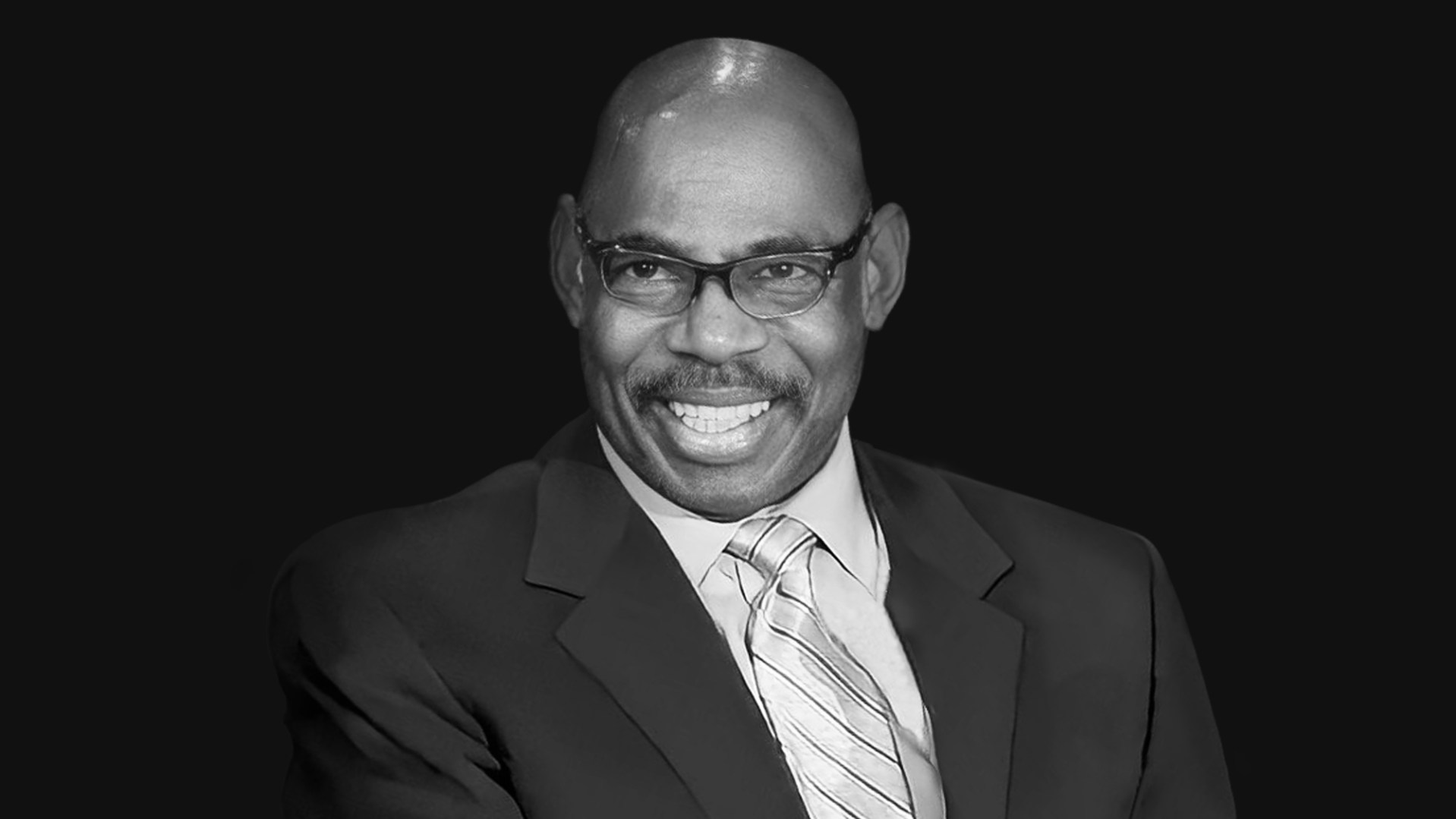
Died: Herb Lusk II: ‘Praying Tailback’ Who Gave Up Football for Ministry

First NFL player to kneel and thank Jesus in the end zone said caring for souls and helping people in poverty were more meaningful than fame.

Christianity Today September 22, 2022
Greater Exodus Church / edits by Rick Szuecs

Herb Lusk II went down in history on a Friday night in August 1977.

The tailback for the Philadelphia Eagles caught an easy toss from the quarterback, tucked the football into the crook of his arm, slipped between a knot of players on his left, and sprinted 70 yards down the field to score a fourth-quarter touchdown. Then, in the end zone, in front of 48,000 yelling fans, he got down on one knee and prayed.

According to the official record keepers, he was the first to do that in the National Football League. He bowed his head, said, “Thank you, Jesus,” and that was history.

But Lusk, who died on Monday at age 69, insisted to the end of his life that that wasn’t the most important day of his professional football career. The most important was the second day of training in 1979, when he woke up in his dorm room and said, “I can’t play football.”

“Man,” his teammate said from the other bed, “this is only the second day of camp.”

“For you,” Lusk said. “For me it’s the last day.”

He was done with football. He was going to be a Baptist minister.

The coach tried to talk him out of it. So did his dad, who was himself a Baptist minister. His father got on the phone and argued more people would see Lusk pray in an end zone than would ever lay eyes on him in a pulpit.

“Dad, I don’t think that’s enough anymore,” Lusk recalled saying. “I woke up in the dorm room and I knew it was over for me. I could feel the Lord’s call.”

Lusk quit football that day and committed himself to ministry. He became a dynamic, powerhouse pastor who turned a dying, debt-burdened congregation into a vibrant community of faith and a vital Philadelphia institution.

“It wasn’t a step down, going from the NFL to the church,” he once told Philadelphia Daily News columnist Ray Didinger. “It was a step up. My work is now eternal. I’m caring for people’s souls. That’s more important than carrying a football.”

Focused on football

Lusk was born in Memphis on February 19, 1953. He was named Herbert Hoover after his father, who was born in 1929, the year the Republican president was elected. In 1961, H. H. Lusk Sr. and his wife Bettye moved their family to Seaside, California, on Monterey Bay. The elder Lusk took a position as pastor of Bethel Missionary Baptist Church, and Bettye taught at the high school before she became the first Black principal. (Today, a wing of classrooms is named for her.)

Growing up, Lusk focused almost entirely on football. There was school and church and friends and girls. There was the tumult of the outside world—the assassination of Martin Luther King Jr., the rise of the Black Power movement, the war in Vietnam, and the end of the military draft the month before he turned 20. He thought sometimes about becoming a minister like his father. But mostly, there was football.

He went to California State University, Long Beach, in 1974 and quickly set himself apart as someone with an incredible talent for running a football down a field. His senior year, he ran 1,596 yards. Lusk led the Pacific Coast college league in rushing yards, rushing attempts, rushing touchdowns, yards from scrimmage, touchdowns from scrimmage, and overall touchdowns.

That same year, he started kneeling in prayer after each touchdown. He got a nickname for it: the “praying tailback.”

He said that sometimes at school the next day a student would ask him if he really believed in God, and it gave him a chance to witness for the gospel.

End zone celebrations were controversial in the 1970s. The National Collegiate Athletic Association banned spiking the ball, which led to touchdown dances in college and then professional football. Some fans booed the first time they saw wide receiver Elmo Wright, “the father of the end zone dance,” high stepping in a game between the Kansas City Chiefs and the Houston Oilers. As it became more common, white sports columnists wrote derisively about “those jitterbug dances” ruining the spirit of the game.

In recent years, kneeling on the field in protest (Colin Kaepernick) or prayer (Tim Tebow) has attracted a lot of attention and generated endless arguments between fans. When Lusk did it, though, people just thought it seemed like something Lusk would do.

“I don’t remember it as shocking or anything like that,” one teammate later said. “We just took it as, ‘That’s Herb.’ We knew he was a religious man, and this is who he was.”

“Toss 48”

Lusk went pro in 1976. He was drafted by the Eagles in the 10th round.

He didn’t score any touchdowns the first year, and his most memorable play was a game-losing fumble. But then, in ’77, when the quarterback called “Toss 48” in a game against the New York Giants, he ran those 70 yards and finally made a touchdown.

A few sports reporters asked him about the prayer, afterward. Why hadn’t they seen him do that before? He told them he hadn’t had the opportunity.

“I wasn’t trying to draw attention to myself. This was just a moment between me and God,” Lusk said. “All I say is ‘Thank you.’ He knows what the thanks is for. We’ve been conversing a long, long time.”

Lusk quit two years later when he felt God tell him it was time. He said he was really tempted to stay, but he knew he couldn’t.

He was ordained at First African Baptist Church in Philadelphia in 1980 and became an associate minister. He went back to school and started studying for a master of divinity at Reformed Episcopal Theological Seminary, which was nearby. He took a steep pay cut but said it was okay because of the faithful support of his wife, Vickey Vickers, an Ebony magazine model who grew up three blocks from Lusk and attended his father’s church.

In 1982, the former football player accepted a call to Greater Exodus Baptist Church in North Philadelphia. It was a dwindling congregation in a crumbling, pigeon-infested Episcopal building that was more than 100 years old. The deacons told him there were about 18 active members of the congregation, $400 in the bank, $200,000 in debt, and seven buckets of water in the building every time it rained. The church was less than five miles from the Eagles’ stadium.

Lusk accepted the call and threw himself into the work of the ministry.

“I’m the pastor, the administration, and the janitor,” he said a few years later. “We’re not exactly overstaffed.”

With his energy and commitment and God’s blessing, the church slowly grew. By the early 1990s, he could count on about 500 people showing up to Sunday services. Some of the people in the pews were football players from his old team: Reggie White, Randall Cunningham, Seth Joyner, Herschel Walker, and others.

He helped them find ways to make their success seem meaningful and, with their financial support, launched numerous social programs to care for Philadelphia’s poor. In 1993, the church gave away $18,000 of food at Christmas.

“People talk about running backs [and] quarterbacks having vision of the field,” Reggie White said. “He had a vision of life.”

Lusk once explained that for his church, the main focus was Jesus, but “it’s hard to talk to a person about Jesus when they’re hungry or when they’re depressed or when they don’t have a job.”

Champion for compassionate conservatism

He started a nonprofit, People for People, to help alleviate poverty. He solicited donations from major corporations and received support from PNC Bank, Coca Cola, and Microsoft. The nonprofit took over the former traffic court building and started a charter school, a daycare, a youth mentoring program, several job training programs, and a community event center. There was also a summer reading program, afterschool care, and even a community development credit union.

Lusk personally pushed CEOs to each support five families on welfare, and one year the nonprofit organized a banking camp to teach inner-city children about banking, with the financial sponsorship of Penn Mutual.

“As long as I don’t have to compromise the gospel,” Lusk said, “I’ll play the game.”

His inventive efforts to care for the poor caught the attention of compassionate conservatives, who hoped to reform government welfare programs through public-private partnerships. World magazine editor Marvin Olasky, who coined the term compassionate conservative, said that Lusk was “a vision of the future.” George W. Bush called him “a general in the army of compassion.”

In 2000, Lusk was invited to speak at the Republican National Convention. He backed Bush for president and gave a rousing speech supporting faith-based initiatives and “putting faith to action.”

After Bush was elected, Lusk became one of the advisers of the program. People for People received $1.44 million in government funds to support the work they were doing and expand with a housing program, a community technology center, and another mentoring program.

Left-wing commentators cried foul, arguing this violated the separation of church and state and Lusk was trading his religious authority for cash. Black people also criticized Lusk, saying he was being used by the Republican Party.

Lusk laughed them off. He continued to preach, grow the church to about 2,000, and develop new ways to help the community. Insiders in Philadelphia politics said whether they agreed or not, they couldn’t deny Lusk was effective.

“People were always talking about the programs they were going to start in North Philly, and almost none of them ever did,” Maurice Floyd, a former city commissioner and well-known political consultant, once said. “Reverend Lusk was different. When he said he was going to do something, he actually did it.”

Philadelphia magazine called him “the driving force behind some of the most effective social service programs in the city.”

Nothing without Christ

But for most, Lusk’s politics wasn’t what they remembered. They remembered him as the man who raced 70 yards in 1977 and then prayed in the end zone. When other players started doing that, he began getting occasional calls from reporters who wanted him to recall that day.

A few weeks before he died, Lusk told The Deseret News that people often assumed he was praying to win, but he was praying because he was thankful and wanted to be a better witness.

“I think people have a misconception that religion doesn’t belong in sports,” he said. “There are people who have said, ‘Wait a minute now, are we playing football or are we in church?’ My answer to that is we do nothing without Christ. We do nothing without our faith. We take it everywhere with us.”

Lusk died at home from cancer. He is survived by his mother, Bettye; his wife, Vickey; daughters, Danuelle Cedrick and Laiah David; and son, Herb Lusk III.

Theology

I Could Sing This Bridge Forever, If It’s an Antiphon

Modern worship music can seem awfully simple. But it has a vital role to play, especially when paired with Scripture.

Christianity Today September 22, 2022
Verdigris Photography / Lightstock

If you spend any amount of time in churches that have a notable proportion of people under the age of 40, you’ll hear the genre of music called “modern worship.” The chords are simple, the melodies are exceedingly singable, the sentiments are sincere, and the lyrics are brief.

Like all genres, modern worship has individual examples of real quality, and this week I was in the car singing along with one—Elevation’s 2018 song “Worthy”—that has many merits. I would gladly lead a congregation in it myself, if only to sing this theologically exemplary couplet:

“It was my cross you bore / So I could live in the freedom you died for.”

But as I sang along with the recording, I couldn’t help feeling, not for the first time, that it was incomplete and just a bit thin on its own.

This is not something I feel about a related genre I’ve spent a lot of time studying and, as a worship musician, leading: the choruses of Black Gospel that emerge out of the tradition called the Negro spiritual.

These songs, too, tend to have very short texts. But because they are anchored in the incomparable spiritual depth of the Black church and because they very often pack a great deal of musical subtlety into a seemingly simple musical package, they can sustain a great deal of repetition and only increase in their expressive and formative power. The greatest spirituals—like “I Want Jesus to Walk with Me”—can and will be sung for a lifetime and beyond.

Not so much with modern worship. There is something bite-sized about these pieces, which we sing so enthusiastically for a year or three but then lose interest in. And yet I do love singing them, even if after seven repetitions of the bridge—not an exaggeration in the case of “Worthy”—it seems like we’ve been chewing for quite a long time on quite a small piece of Wonder Bread.

What to do with these emotionally pure, musically simple, short pieces?

Well, what I have been doing for years as a worship musician is not using them alone. I almost always pair a modern worship song with a longer text, alternating between congregational singing of a song with congregational reading (while continuing an instrumental bed underneath). Matt Maher’s “Lord, I Need You” with a reading of Psalm 121. Bethel Music’s “Our Father” with the entire text of Hebrews 11. United Pursuit’s “Not in a Hurry” with the opening responses and confession of sin in the Book of Common Prayer’s service of morning prayer.

In this format, the emotional simplicity of the song resonates in glorious ways with complex and challenging texts, especially the biblical psalms—which were, of course, originally songs themselves. Over and over I have found this combination is far, far more powerful an expression of worship than either text or song by itself.

Singing along in my car this week, I realized that we’ve had a name for these worship songs all along, though the word is unfamiliar outside high liturgical traditions.

They are antiphons—which the Oxford English Dictionary defines as “a short sentence sung or recited before or after a psalm or canticle” (the canticles being largely other biblical instances of poetic and sung prayer, like the Song of Simeon in Luke 2). The purpose of an antiphon is to give the congregation a way to frame their own response to the biblical prayer. Just like modern worship music, antiphons often draw their vocabulary more or less directly from phrases of Scripture.

Antiphons are not complete prayers—they are brief invitations to reflect more deeply on the content of complete prayers. They are not hymns, either, which typically take singers on an extended journey through some aspect of Christian experience or belief. They are quite literally choruses, the gathered response of the people to a longer and more involved text.

This is what we’re engaging when we sing most modern worship music—beautiful, simple antiphons.

The only problem is that in many churches and worship settings, we are only singing antiphons. We are not reading, chanting, or singing the psalms themselves. We are not attending to long passages of biblical text. Nor, in many settings, are we pairing the choruses with hymns, which would require but also reward reflection and attention.

All we are singing are short texts and extremely simple tunes—too short and too simple to truly express or form a full life of Christian prayer.

This realization that modern worship is almost all antiphons, all the time, has been incredibly helpful to me. It explains why I love many songs in the modern worship genre: They are the antiphons of my Christian life and—thanks to the music distribution mechanisms of popular culture—millions of others’ lives as well. I don’t want to stop singing them.

But it also explains why, after a contemporary worship service composed of four to five antiphons plus a long sermon, I feel like something essential has been missed and something important is not being cultivated or formed in us.

It also points to a deficiency in many liturgical churches, like my own Anglican and Methodist traditions, which have maintained congregational reading of the psalms but do not take advantage of music’s power to deepen the response to that text.

In my own worship leadership, I’ve gravitated (without realizing it) to a solution that was in the Christian tradition all along: putting these choruses in their proper place, surrounding and undergirding the congregation’s attention to the deep texts (and maybe also tunes) of the Christian story. When we sing these choruses before and after and in the midst of the reading of relatively complex texts, they are incredibly valuable pathways to genuine Christian worship.

So let’s keep singing these songs. But let’s sing them as the antiphons they really are.

Andy Crouch is partner for theology and culture at Praxis.

addApple PodcastsDown ArrowDown ArrowDown Arrowarrow_left_altLeft ArrowLeft ArrowRight ArrowRight ArrowRight Arrowarrow_up_altUp ArrowUp ArrowAvailable at Amazoncaret-downCloseCloseellipseEmailEmailExpandExpandExternalExternalFacebookfacebook-squarefolderGiftGiftGooglegoogleGoogle KeephamburgerInstagraminstagram-squareLinkLinklinkedin-squareListenListenListenChristianity TodayCT Creative Studio Logologo_orgMegaphoneMenuMenupausePinterestPlayPlayPocketPodcastprintremoveRSSRSSSaveSavesaveSearchSearchsearchSpotifyStitcherTelegramTable of ContentsTable of Contentstwitter-squareWhatsAppXYouTubeYouTube