Ideas

Why We Preach for Proper Names

Contributor

The local church is small and placed for a reason.

Illustration by Jared Boggess / Source Images: Getty

The first time a pastor ever made me cry out of frustration was when I was 18 years old and working as an intern at a megachurch. I proposed that I spend the summer focusing on about 10 middle school girls, intentionally developing relationships with them.

“Just 10?” the pastor responded, berating me for wasting his time on a small vision. He wanted to be wowed by numbers and metrics. He wanted not just a small group of girls to know Jesus more deeply but a revival where hundreds would be baptized.

This pastor, while I disagree with him, isn’t uniquely evil. He was simply influenced by ill-formed impulses in evangelicalism to grandiosity and efficiency. But we as a church need to rediscover the goodness of smallness and particularity. If we do not, we are in danger of trading depth for shallowness and discipleship for spectacle.

Arguably the most important institution in America today is the local church. And one of its most important and prophetic callings in our moment is to remain, characteristically, local—that is, committed to a particular people in a particular place.

Wendell Berry said that the things we “love tend to have proper names.” We cannot love the church or the world abstractly. Instead, when we preach and minister to others, we must learn to do so for people with proper names in a place with a proper name.

Jesus’ ministry is the ultimate example of embracing smallness and particularity. “The glory of Christianity is its claim that small things really matter and that the small company, the very few, the one man, the one woman, the one child are of infinite worth to God,” wrote former archbishop of Canterbury Michael Ramsey. “Our Lord devoted himself to a small country, to small things and to individual men and women, often giving hours of time to the very few or to the one man or woman.”

He continued: “Our Lord gives many hours to one woman of Samaria, one Nicodemus, one Martha, one Mary, one Lazarus, one Simon Peter, for the infinite worth of the one is the key to the Christian understanding of the many.”

When I read the Gospels, it seems that if Jesus wanted to quickly reach the masses with his message, he wasted a lot of time. Ramsey notes how, like us, Jesus lived in “a vast world, with its vast empires and vast events and tragedies.” Yet, he lived most of his life in obscurity, and even once his public ministry began, he spent the majority of his time with a small group of people or alone in prayer.

Though he did preach to large groups, from a strategic growth perspective—when one considers the amount of time Jesus spent sitting with a very few and not out healing, rebuking, preaching, teaching, or wowing the crowds with miracles—our Lord’s ministry seems positively inefficient.

One of the chief temptations of our digital age is to aim our ministry at those outside the church and to preach to those outside the sanctuary. I heard from one friend that their church began streaming online worship during the pandemic but now plans on offering it broadly for everyone for decades to come. The expressed reason for doing so? They discovered their services garnered a “national audience.”

But disciples are not usually formed in a mass “audience.” They must have proper names.

A sermon is an act of love, not punditry. Preaching flows, in part, from sitting across from a church member over coffee, from pastoral care and counseling, from hospital visitation, and from walking the streets of a particular city and neighborhood.

In general, discipleship is only possible if we know real people and their struggles, needs, and paths of growth. To seek a national platform is to subtly center church on a worship experience—which becomes a performance akin to a rock concert or a TED talk—as opposed to being an embodied local community, living life together, gathered around Word and sacrament.

The quiet, small, and slow work of local churches and pastors witnesses to a different way of being in a world that often embraces the loud, the big, and the efficient. This patient work follows Jesus in seeing and affirming the infinite worth of the one, whom he knows and calls by name.

Ideas

Can We Resurrect Expertise?

Staff Editor

Suspicion of and pride from authority figures are not virtues.

Illustration by Sarah Gordon / Source Images: Belterz / jimeone / Андрей Глущенко / Getty

Mask mandates have ended in most parts of the United States. Stay-at-home orders are done. But the skepticism of expertise that the past two years of COVID-19 taught us won’t easily depart.

Many officials and experts tasked with crafting public health guidance and scientific innovations comported themselves admirably. But others did not. They made politicized judgment calls and dubbed them capital-S Science, behaved with scandalous hypocrisy, and misled the public with noble lies. That duplicity was harmful to more than physical health. It harmed the public reputation of expertise itself.

The death of expertise, as Atlantic writer and former Naval War College professor Tom Nichols argues in a book by that name, “is not just a rejection of existing knowledge.” It is “more than a natural skepticism toward experts,” whom he defines as those possessed of “an intangible but recognizable combination of education, talent, experience, and peer affirmation.”

Rather, Nichols says, “I fear we are witnessing the death of the ideal of expertise itself, a Google-fueled, Wikipedia-based, blog-sodden collapse of any division between professionals and laypeople, students and teachers, knowers and wonderers.”

Nichols reports hearing stories from experts of all sorts—from academics to plumbers and electricians—who regularly find themselves arguing with uninformed or misinformed laypeople convinced they know just as much or more than the expert.

It happens to pastors, too. “One of my best friends is a pediatrician,” Derek Kubilus, a Methodist minister in Ohio, told me by email, “and we often lament together that we are both experts in fields where we are expected to help people who already consider themselves to be experts!”

The trouble is that we need expertise. Modern life can’t run without it. Though sometimes the layperson is right and the expert is wrong, the uneducated—or Google-educated—guess is often worse, and it is hubris to think otherwise. But it’s easy to doubt with all the failures of authorities we’ve witnessed, including within the church.

We have no shortcut around our need for virtue. Experts and nonexperts alike must pursue humility and respect.

For nonexperts, this means we ought not to behave like the proverbial fools who “despise wisdom and instruction” (Prov. 1:7), assume their own intuition is correct (12:15), and scorn prudent advice (23:9).

As a practical matter, that requires adjusting our expectations to make room for expert fallibility. No expert has perfect knowledge or can always communicate or apply their knowledge perfectly. Some failure is inevitable, and revision after learning is a good thing. It demonstrates trustworthiness, not unreliability, because expert knowledge should increase over time, and experts should change their advice as that happens.

We should welcome those updates, for—as Proverbs bluntly says—“whoever hates correction is stupid” (12:1) and “leads others astray” (10:17).

For experts in any field, the task is to make it easier to trust true expertise. Experts have no right to tell noble lies—or any lies—to nonexperts or to technocratically control the behavior of other adults. Humility for an expert means realizing it is not their right or responsibility to determine what information the public is capable of handling well—what complex truths nonexperts can be trusted to know.

Experts can have hubris, too. With expertise comes the prideful temptation to “love the place of honor at banquets and the most important seats in the synagogues” (Matt. 23:6), a desire Jesus says we should expunge from ourselves, for we “have one Instructor, the Messiah,” and “those who exalt themselves will be humbled, and those who humble themselves will be exalted” (vv. 10–12).

Wielded aright, expertise springs from “being made in the image of a knowing God,” as Christian writer Samuel D. James has mused. “Humility to sit under this kingdom economy is the key to resurrecting a culture of trust—and with it, a flourishing, mutually beneficial age of experts.” Particularly in an age as complex and confused as ours, that is a flourishing we need.

This essay is adapted from Untrustworthy by Bonnie Kristian, ©2022. Used by permission of Brazos Press.

News

‘Canceled’ John Crist Has a New Book, Tour, and Comedy Special

The Christian comic brings his downfall into his new releases, while victims say they’re still waiting for repentance.

John Crist in 2019

John Crist in 2019

Christianity Today June 20, 2022
Jason Kempin / Getty Images

The aftermath of the scandal that shook John Crist’s career has become part of his comedy, turning his lessons learned into new material and his experience with “cancel culture” into a punch line.

This month, the popular Christian comedian released a full-length special on YouTube and announced a book due out in October. His debut Netflix special and his first book were pulled after a 2019 Charisma investigation uncovered a pattern of manipulation and sexual harassment of female fans.

Since returning to the stage and social media, Crist has discussed his downfall and four-month stint in rehab, even making off-the-cuff references to his alleged misconduct.

During a performance in February 2022, for example, a woman shouted at the stage from the audience. Crist responded, “Love you, girl!” before pretending to catch himself. “That’s how I got in trouble last time,” he joked. He posted the clip to his YouTube channel and social media, where he has built a fan base of millions through jokes and satire rooted in evangelical culture.

In a Q&A last weekend, the comedian also told his 1.1 million Instagram followers that he “wrote a book in 2019 but then I got canceled rip.” Crist said his upcoming book—Delete That: (and Other Failed Attempts to Look Good Online)—will recount the story from his perspective.

The idea of establishing a national peace institute got a boost in 1783 from President George Washington. But it was only in 1984—after nearly 150 previous congressional attempts to create such an agency had failed—that the U.S. Institute of Peace was approved.
The institute has been active since April 1986. And last month, Samuel Lewis, the former U.S. ambassador to Israel, became the agency’s new president.
The Peace Institute is a federally funded, nonprofit agency created to promote “scholarship, education, training, and the dissemination of information about the peaceful management of international conflicts.” In its fall report, the agency says it is ready to work toward becoming “an important and respected force in achieving a more peaceful world.”
Studying Peace
The institute divides its activities into three categories: grants to finance peace studies and projects; a fellowship program to research peace issues; and a series of special institute projects. Since its founding, the institute has approved more than 50 grants totaling about .7 million.
Lewis said he would like to see the agency begin teaching American diplomats “better techniques for being peacemakers and mediators.” Lewis served as assistant secretary of state in the Ford administration, and as ambassador to Israel in the Carter and Reagan administrations. He is credited with playing a key role in Arab-Israeli negotiations, including the Camp David Accords.
“I felt during those [diplomatic] experiences that we had a lot to learn about how we play our role,” he said. “… The institute is a unique and exciting new institution which can help to fill some of that gap.”
A delicate diplomatic task for the institute itself is maintaining a nonpartisan image. Conservatives within the Reagan administration were not enthusiastic about the agency’s establishment, viewing it as a “left-of-center liberal cause.” Many liberals initially expressed concern about the conservative backgrounds of some of the presidentially appointed board members and the presence of ex-officio members such as former Defense Secretary Caspar Weinberger. So far, however, the institute has managed to avoid being cast in any particular ideological mold.
Religious Support
In the 1970s, several religious groups urged Congress to approve the agency.
Christian College Coalition president John Dellenback served on the congressional commission that recommended the institute. Said Dellenback: “I earnestly hope Congress will continue to fund [the institute], realizing it has brought into being a small child that needs time to grow to take its place as a constructive, strong instrument to help bring about peace in the world.”
Two clergymen serve on the institute’s 15-member board of directors: Sidney Lovett, president of Advisors Unlimited in New Hampshire, and Richard John Neuhaus, director of the Center on Religion and Society in New York. Neuhaus said he believes the institute will “encourage a more intense and more reflective involvement by churches and church-related institutions in the whole discussion of war and peace.”
Skeptics continue to doubt whether the institute will bring about any concrete moves toward peace. But Lewis disagrees.
“It is certainly true that the Institute of Peace is not going to bring universal peace to the world,” he said. “… I’m afraid that from the earliest years of biblical history, violent conflict between nations and within nations has been the norm, and I don’t suppose that unless man’s nature changes it’s likely to be eradicated. But I do think … we can help to bring a less conflict-ridden world by learning better about how conflict is contained, managed, and sometimes eliminated.”

Crist has blamed his “own horrific choices” and apologized for disappointing followers when he had to step away to address “sexual sin and addiction struggles” and get sober. He hasn’t publicly acknowledged the women who say they were hurt by his behavior, however, and victims and their advocates say he has not apologized.

Crist’s new book was announced last Friday and shares a similar take on social media image management as the unpublished title from 2020 (the former was called Untag Me). Its description reads:

In Delete That, Crist takes responsibility for his actions, offers some reflections on how to do better, and encourages us all to stop capitulating to the fear of “But what will they think?!” Instead, this book offers a bold invitation to stop curating life and start living it … one Nickelback concert at a time.

Crist posted on Instagram on Saturday that it would include his perspective on getting canceled but wrote that “im a white male so my perspective is wrong.” The 38-year-old also said that fans can read about “the first ever sex scandal that involved no sex.”

Promoting the book on his podcast last week, Crist recalled how his PR team told him they didn’t need know what happened if he had been drinking in a hotel room with a woman since “you’re kind of already guilty even if nothing happened.”

“I lived my entire life to delete and manicure everything, and then everybody found out everything about me,” he said on Net Positive, the podcast he launched in May. “And I found out that they still liked me, and that changed my whole life.”

Crist’s new book is from a secular imprint, Penguin Random House’s Crown Forum, while the previous one was set to be published by its Christian subsidiary WaterBrook.

Despite the references to getting canceled, Crist maintains a robust Christian fan base and has been back on tour since 2021, performing back-to-back nights of sold-out shows in some cities. His new special on YouTube has nearly three quarters of a million views, and he’s slated to tape another in Dallas this week.

Crist has discussed how he expected to be rejected by Christian fans after rehab but the opposite happened. He now sees their continued support as an extension of God’s acceptance.

“You guys have shown me a love that I have never experienced in my life,” he said in a March 2021 Instagram story thread, reflections that he later repeated in his comedy set. He also had a bit comparing motherhood to being in rehab.

Fans celebrate his vulnerability and Christian testimony in bringing up the darkest times of his life publicly. But some have continued to call Crist to repent and step down from the stage, including victims who say he’s “literally profiting” off their trauma.

Around the launch of his June 1 YouTube special, advocates challenged Christian podcaster Annie F. Downs for promoting Crist on Instagram and celebrating her friendship with him; Downs removed the post and apologized.

Multiple women have come forward in the past couple years with stories alleging predatory behavior, abuse, and manipulation. One wrote, “One of my greatest fears when all this happened was that he would disappear and then come back like nothing happened.”

Within months of getting out of rehab, Crist was back to performing bits and funny videos on social media. The following year he was touring nationally. Only this time, he wasn’t performing in megachurches but traditional comedy venues.

“When I got canceled, no one really knew what to do. I’m obviously still a believer, but we just don’t perform in churches. But that seems fair. A lot of the criticism of me is fair,” Crist said in an interview in January. He implied that he shouldn’t be held to the same standard as a pastor and suggested that saying he shouldn’t work anymore would be “unfair.”

Based on his material, Crist attracts the same evangelical, Southern audience—people who get all the cultural references from a homeschooled preacher’s kid and former Chick-fil-A employee.

During his latest special, filmed at the Lyric Theater in Birmingham, the crowd completed Bible verses at his prompting and sang “Father Abraham” together. “Put the arms down! That’s why people are scared to come to church,” he said.

While on tour, Crist has done an Instagram series visiting and “reviewing” local churches, including some outside his tradition, such as a Greek Orthodox service. He recently shared clips from a visit to Lakewood Church, where he bought a T-shirt in the gift shop.

His social media videos resemble the kind of content Crist did earlier in his career, joking about dads, pastors, fast food, sports, and stereotypes of “basic” white women.

Crist appeared at Turning Point USA’s Americafest at the start of the year, a segment cohosted by Alex Clark, who said she dated the comedian back in 2018. They discussed conservative women’s appearance and how comedy and politics are both approaches to igniting cultural change.

“Cancel culture and the #MeToo movement came first and hardest and only for comedians,” he said, “because comedians will tell you the truth in a way that exposes you.”

Theology

The Last Gift My Father Gave Me

A surprising encounter with my dad, Jesus, and Jerry Seinfeld opened a door to long-awaited healing.

Christianity Today June 17, 2022
Illustration by Mallory Rentsch / Source Images: Yevgen Romanenko / Mohd Kafii Isa / Sarawut Aiemsinsuk / EyeEm / Getty

Last April, I found myself sobbing unexpectedly and uncontrollably while sitting in a barbershop for a haircut. It was the first time I’d really wept since my father passed away a month earlier.

I’ve had a complicated relationship with grief.

Six years before, I left vocational church ministry. I resigned from a church I’d helped plant 15 years earlier, a church I thought I’d retire from. But conflict and unhealthy leadership had wreaked havoc on my soul, and it was time to go.

In the intervening years, I found myself sitting on couches, in armchairs, and in Zoom rooms with various counselors and spiritual directors, trying to process my emotional and physical exhaustion.

“I’m anxious,” I’d say.

“You have grief work to do,” they’d reply.

“I can’t sleep,” I’d say.

“You have grief work to do,” they’d reply.

“I’ve lost the eagerness to work hard and build things. That’s not like me,” I’d say.

“You have grief work to do.”

I remember one day in particular sitting in my friend Bob’s office. A caring and generous soul, Bob had sat with me for untold hours by then. Our session ended like every other. “How’s your grief work going?”

I slumped in my chair and looked over at the fountain sculpture he had hanging on his wall. Water poured across from layer to layer, like barrels tumbling down levels in Donkey Kong. This question always felt like the barrel I couldn’t avoid. I shook my head and blurted out, “I don’t know what the hell that even means.”

Bob has this subtle, almost imperceptible smirk when he knows he’s hit a nerve. “Tell me about the last time you wept over any of this.”

I wasn’t sure I had, I told him. He nodded. “Consider why, and we’ll pick up here next time.”

In his book The Sermon on the Mount and Human Flourishing, biblical scholar Jonathan Pennington argues for a shift in our thinking about two words found in the Beatitudes chapter—makarios and telios. If you get these right, he says, “the rest falls in place; get it wrong, and the whole thing falls apart.”

Telios appears in Matthew 5:48: “You must be telios as your Father is telios.” Most English translations render it as “perfect,” but Pennington argues that the word has important ties to the Hebrew word “shalom.”

Shalom is often rendered as “peace,” but peace is passive—implying the absence of conflict—while shalom is active. Shalom is a sense of wholehearted relationship with God and an awareness of the goodness in his care and rule of the world.

This also ties into the concept of Sabbath—the rest of God. Translating telios as “perfect” makes Matthew 5:48 an ethical command, while rendering it as shalom invites us into wholehearted relationship with God and rest in him. It’s a vision of grace.

He makes a similar argument for reframing makarios—a word that appears earlier and repetitively in the Beatitudes as “blessing.” But both Pennington and fellow New Testament scholar Scot McKnight see a broader idea in connection with Greek philosophy.

In Sermon on the Mount, McKnight writes that “the entire history of the philosophy of ‘the good life’… is at work when one says, ‘Blessed are…’ Thus, this swarm of connections leads us to consider Aristotle’s great Greek term eudaimonio, which means something like happiness or human flourishing.”

In Pennington’s translation of the Beatitudes, he makes the connection directly: “Flourishing are the poor in spirit because the kingdom of heaven is theirs.”

Pennington goes on to reframe Christ’s invitation in the Sermon on the Mount. Rather than seeing the Beatitudes as a new law, declared from on high like the Ten Commandments, it presents a new vision of the good life that is found through Jesus in the kingdom of God.

Dallas Willard often referenced the kingdom as the “upside-down world”—where we discover that true shalom is found in a life entirely inverted from our expectations: poverty of spirit, humility, persecution, and—critical to me—mourning.

My dad fell in January of 2021. It wasn’t a major thing; he felt dizzy and sort of melted to the floor. A month later, my mom texted the rest of our family that he was lethargic and mentally checked out. He went to the hospital that night, and we worried he’d had a stroke. But the scans came back negative.

This began a whirlwind of him spending about two weeks in the hospital, where COVID-19 restrictions kept most of us from visiting him. I only got to see him once—my brother and I talked to him over the phone through a glass window. I don’t think he even knew we were there.

About two weeks in, on his 75th birthday, he took some blood tests, and their results warranted a body scan. That’s when they found the cancer. It was everywhere, and his overactive immune system was attacking his mind. Within a week, he was gone—and my family spent just a few minutes with him the day before he died, as he fought for his final breaths.

He died on a Sunday, his memorial service was held on Wednesday, and life resumed on Thursday.

A month later, I was sitting in that barbershop when a jar of Barbicide caught my eye—the glowing blue disinfectant used to clean the stylist’s scissors and comb. I remembered a scene from Curb Your Enthusiasm, where Jerry Seinfeld and Larry David talk about their fear of germs. Jerry says he likes to keep his pens in Barbicide, and an extended riff between the two of them follows.

The scene was a throwback to exchanges from Seinfeld between Jerry and George Costanza—a character based on Larry David. As often happened on the show, Jerry couldn’t keep a straight face. He and Larry grinned and laughed through every line.

That day, I laughed a little under my breath and mask. Then I thought of my dad.

In high school, we would watch Seinfeld reruns over dinner and new episodes on Thursday nights. We lived with the TV on—and my dad would talk through every show, repeat jokes right after they happened, or if he’d seen something before, he’d tell you a joke was coming moments before it did.

Remembering the Curb scene, I thought, “I should text him when I get out of here.” But that thought froze in midair. He was gone. An anchor point for 41 years of my life had been untied and I was floating in zero gravity.

The laugh under my breath became louder and Jamie—who had been my barber for years—thought I was laughing at the story she’d been telling me about fishing for leopard sharks.

But then the tears started to break through the laughing, and I began to fall apart. She took a step back as I slumped over in my seat and sobbed. Heat rose in my face and neck as I thought about the dozen or so people in the shop who were wondering why a grown man was crying over a haircut.

I sat up, made eye contact with Jamie, and rasped, “My dad just died.”

She stood still for a long moment before nodding in recognition. “Mine too. About a year ago. It hits like this a lot. Over and over.”

Jonathan Pennington translates Matthew 5:4 as “Flourishing are the mourners because they will be comforted.” That day evoked a kind of comfort, and something in me began to crack open.

There’s a finality to the death of a loved one that cuts through abstraction. Life is unalterably different. In accepting the loss of my dad and the disorienting way it came about, I found an understanding of grief that cascaded backwards into my memory.

This incredible sense of loss—loss of a shared dream, of a community, of friendships—had finally found a place to settle in my heart. It was worthy of tears, but it is also held in tension as I wait for the making-new of all things Christ has promised.

As I grieved my father, I learned to grieve other things I’d failed to grieve in the past—and somehow that grief made me feel whole.

My dad loved Jesus, and I know the day will come when I see him again. But in losing him—and especially losing him the way we did—he helped me step into a different way of life, making sense of a complicated and soul-rattling decade.

The last gift my father ever gave me was the gift of grief. And in embracing it, I found a new understanding of what it means to flourish—the first glowing embers of true shalom.

Michael Cosper is the senior director of podcasts at Christianity Today.

Theology

Summer Solstice Reminds Us of God’s Grace to All

Why it matters that the Lord lets the sun rise on both the evil and on the good.

Christianity Today June 17, 2022
Mathieu Bigard / Unsplash

This Tuesday, the sun will hang in the sky over the Northern Hemisphere for what is colloquially known as the “longest day of the year.” In reality, the sun’s position will be no different than usual, but our perception of it will be different owing to the earth’s tilt on its axis as it orbits the sun.

Where I live in the mid-Atlantic, we’ll enjoy over fourteen hours of sunlight, but for those at the farthest reaches north—in places like Svalbard, Norway—the sun will simply never set. (Folks in the Southern Hemisphere will enjoy the same phenomenon six months later when the seasons change.) Traditionally, the summer solstice has been a time of celebration, bonfires, and revelry—inspiring stories like Shakespeare’s A Midsummer Night’s Dream and even the placement of architectural wonders like Stonehenge and the Great Pyramid of Giza.

For many pagan cultures, midsummer was a time of ritual and sacrifice as humans worshiped the sun as the source of life. But there’s a difference between worshiping the sun and worshiping by the sun. And surprisingly, at least to our modern sensibilities, Scripture invites us to the latter. Psalm 19—the psalm that tells us that “the heavens declare the glory of God”—calls attention to the sun’s orbit as it traces a path across the sky. The author likens it to an athlete running around a racetrack:

It rises at one end of the heavens
and makes its circuit to the other;
nothing is deprived of its warmth. (v. 6)

For the psalmist, the arc of the sun’s orbit (the same orbit that makes the summer solstice both possible and predictable) reveals something of God’s character. Elsewhere, the Scripture alludes to the role of the sun’s orbit in delineating “signs and seasons” (Gen. 1:14–19, NKJV)—while the consistent passage of the seasons tells of the faithfulness of God himself. As the Lord promises Noah after the flood,

As long as the earth endures,
seedtime and harvest,
cold and heat,
summer and winter,
day and night
will never cease. (Gen. 8:22)

Finding theological truth in natural phenomena may feel odd to modern readers—and perhaps it might even smack of paganism—but this hermeneutic falls squarely within the tradition of natural theology or general revelation.

The natural world is one of the primary ways God has revealed himself to humanity since the beginning of time. And so, while we’re more accustomed to knowing God through holy texts and prophetic utterances, saints throughout history have found him through his creation. In the early 13th-century hymn “Canticle of the Sun” (based on Psalm 104), Saint Francis of Assisi worships God via the greatness of the sun:

Most High, all powerful, good Lord,
Yours are the praises, the glory, the honor,
and all blessing.
To You alone, Most High, do they belong,
and no man is worthy to mention Your name
Be praised, my Lord, through all your creatures,
especially through my lord Brother Sun,
who brings the day; and you give light through him.
And he is beautiful and radiant in all his splendor!
Of you, Most High, he bears the likeness.

But general revelation also carries a kind of warning, reminding us of where we stand in relationship to our Creator. As much as we might minimize our helplessness or try to escape the uncomfortable truth of our dependence, the natural world has a way of snapping us back to reality. When Job’s friends chide him for blaming God for his suffering, Job reminds them that even animals know their well-being rests in the hands of the Creator. “Ask the animals, and they will teach you, or the birds in the sky, and they will tell you; or speak to the earth, and it will teach you, or let the fish in the sea inform you. Which of all these does not know that the hand of the Lord has done this? In his hand is the life of every creature and the breath of all mankind” (Job 12:7–10). We simply cannot escape the testimony of creation: We are dependent creatures whose only hope is in our Creator. As we approach the summer solstice, our earth circling around a blazing mass of glory, I can’t help but think about how fragile our life on this planet is. Just the right tilt of the axis, just the right distance, just the right length of orbit—all sustained by the One who first set it in motion and maintains it in a continual act of creation.

In light of all this, I understand why people have worshiped the sun. I understand how easy it would be to see the sun itself as your source of life, to realize how dependent we are on its rays and respond accordingly. But our dependence is only half the story. The natural world—the sun specifically—also reveals the goodness and grace of the God on which we depend. Returning to Psalm 19, David suggests that God’s glory is like the sun’s heat: “nothing is deprived of its warmth” (v. 6). God’s presence pervades every nook and cranny of the earth. It “goes out into all the earth … to the ends of the world” (v. 4).

But even as God generously reveals himself as the source of our lives, he also shows himself to be generous—and this grace changes us. In the Sermon on the Mount, Jesus appeals to the sun’s orbit to teach a new ethic of the kingdom of heaven. As children of our Father, he says, we must love not only our neighbors but also our enemies and pray for those who persecute us. And we must do this because this is what our Father does.

Our Father “causes his sun to rise on the evil and the good, and sends rain on the righteous and the unrighteous” (Matt. 5:45). He doesn’t differentiate between those who deserve the warming rays of the sun and those who don’t; he extends the grace of life to all—even to those who resist or hate him. When we feel the glow of the sun on our faces, when we feast under its lengthening rays, we remember that our lives are sustained by its warmth in very real and practical ways. The energy that shines from heaven allows plants to grow and sustains all those who call this earth home. That light falls on everyone—regardless of whether we love and worship the Creator or not—and it is the same light that instructs us in his ways. When self-reliance and ingratitude tempt us to forget the source of life (Jer. 5:24), we pray that God’s kindness will, like the sun, continue to shine on us and lead us to repentance. We pray that we will be open to what this light teaches us and that we will be made more like our Father in heaven—a Father so rich and so kind that the rays of his love permeate the whole earth, so that nothing can be hidden from them.

Hannah Anderson is the author of Turning of Days, All That’s Good, and Humble Roots: How Humility Grounds and Nourishes Your Soul.

News

Synod Votes to Simplify, Clarify Cross-Borders Relationship of the Christian Reformed Church

Task force proposal promises to help US and Canadian congregations work together more easily.

A delegate addresses proposed changes to structure of the relationship between Christian Reformed Churches in the US and Canada.

A delegate addresses proposed changes to structure of the relationship between Christian Reformed Churches in the US and Canada.

Christianity Today June 17, 2022
Screengrab / CRC Synod 2022

What’s the relationship between the Christian Reformed Church in North America in Canada and the Christian Reformed Church in North America in the United States?

It’s complicated.

The Christian Reformed Church in North America (CRC) is single denomination. But legally it exists as two separate entities—one incorporated in Michigan, the other north of the border. Bound together by faith and history, they carry out their work through joint ministry agreements.

How the two operate in unison can be a bit confusing even for those within the churches.

“There is a lot of fog in the system, and it is hard to figure out what is expected and how we can move forward for the benefit of the church,” said Albert Postma, newly appointed transitional Canadian executive director. The Structure and Leadership Task Force (SALT) Report—presented for approval at the CRCNA Synod 2022 and formally passed on Wednesday, June 15—will hopefully add some clarity to the relationship and help the Canadian churches comply with recent changes in nonprofit tax law. Its recommendations include:

  • Clarify ecclesiastical, ecumenical, and synodical responsibilities between countries.
  • Clarify governance responsibilities and interrelationships between boards of directors and advisers in Canada and the United States.
  • Clarify the administrative responsibilities between countries.
  • Clarify ministry responsibilities between countries.
  • Affirm that joint ministry agreements will be approved by relevant governing authorities.
  • Affirm the process of developing and overseeing joint ministry agreements.

The task force is also recommending adjustments to the leadership structure, including the establishment of an office of general secretary.

Postma will be key to carrying the denomination through the coming transitions. Chris deWinter, who chaired the search team that recommended Postma for the position, believes Postma’s experience as a classis renewal leader and pastoring a church in Ontario have made him a good bridge builder. He describes Postma as a synthesizer and a collaborator.

“Those are two skill sets that we need right now, especially in the Canadian office and the work going on,” deWinter said. “He is able to pull all kinds of things together and collaborate with a team.”

Postma said he hopes the changes in the next few years are more than bureaucratic. He really wants to help the denomination figure out what it means to be a binational community of churches and clarify areas of independence and interdependence.

He believes there are benefits to being binational. Part of his job is to help local pastors see what they are.

“The big picture, overall hope, and what I would want to work towards is that every church and church leader and pastor is able to say that they are better off because they are part of this denomination,” Postma said. “I really think the Christian Reformed Church is a good denomination. It’s worth investing in. It’s worth being part of.”

The discussions that Postma are stepping into are certainly not new. It’s something the CRCNA has grappled with for decades.

The Christian Reformed Church was first established in the US in 1857, and while there were a few churches that were seen as missionary outposts in Canada over the years, it wasn’t until a large wave of immigration from the Netherlands to Canada after the Second World War that significant growth happened in the country. US churches helped with the establishment of those churches.

Today there are about 250 CRC churches in Canada and approximately 850 in the US. American citizens frequently pastor Canadian churches and many Canadian citizens pastor in US churches. Legal changes in Canadian tax law, requiring Canadian citizens have control over charitable funds donated by Canadians, prompted review of the relationship across the border, which is also frequently agitated by cultural differences.

The bureaucratic structures have sometimes led to uneasy communication and cooperation.

“It’s easy to only feel a burden and forget some of the great things God is doing right now through us and in us,” Postma said. “I really hope that we can not forget those things.”

Churches are sharing the gospel, discipling Christians, developing leaders, and welcoming refugees. The US and Canadian churches work together through joint ministry agreements that allow them to act as one while they stay within the legal parameters in their respective countries.

These agreements detail everything from the ministry purpose and goals to the resources, staff, and budget. This can include congregational ministries such as Faith Formation, Disability Concerns, Pastor Church Resources, and Safe Church, as well as missions.

In the past, joint ministry agreements were a little more “soft,” said Terry Veldboom, who worked for the CRC in Canada for 35 years in various administrative and finance roles and recently wrapped up a term as the interim executive director.

He said it’s always been a challenge to make sure their agreements met the legal requirements and also facilitated coordinated ministry, but he believes the approved changes will help in both areas.

“Over the last year, we established a new set of joint ministry agreements for all of our cross-border joint activities. They’re much more detailed and solid,” he said.

Now that they’ve got a good handle on the adjusted Canadian legal and governance framework, Veldboom believes there are other questions that need to be addressed on the sociopolitical side. Cultural differences, for example, have often been an issue. CRC churches in Canada tend to be more social-justice minded than those in the US, he said.

As an example, he notes that in Canada, indigenous issues are front and center, but they barely register as a concern in the US.

Can those differences be overcome?

“That’s the question of the hour,” Veldboom said.

He said there are lots of arguments for staying united and many believe that the areas they have in common are greater than those that separate them.

In that sense, Veldboom sees Postma’s appointment as a positive. He believes Postma’s experience with local churches has given him a sense of what things are like on the ground. At 38 years old, Postma is also at an age where he can be seen as someone who can relate to both younger and older generations.

Both Veldboom and Postma hope that by properly dealing with these differences, the CRCNA can come away stronger and richer by intentionally looking at differences in context or culture and what is essential for denominational unity.

“It’s a pain, but sometimes things that add challenge also give us an opportunity to live into those challenges and grow through them,” Postma said.

News

After Annual Meeting, Southern Baptists Begin the Hard Work of Abuse Reform

Survivors sensed a godly shift as messengers approved plans and their new president put sexual predators “on notice.”

Southern Baptist Convention’s 2022 annual meeting

Southern Baptist Convention’s 2022 annual meeting

Christianity Today June 17, 2022
Jae C. Hong / AP

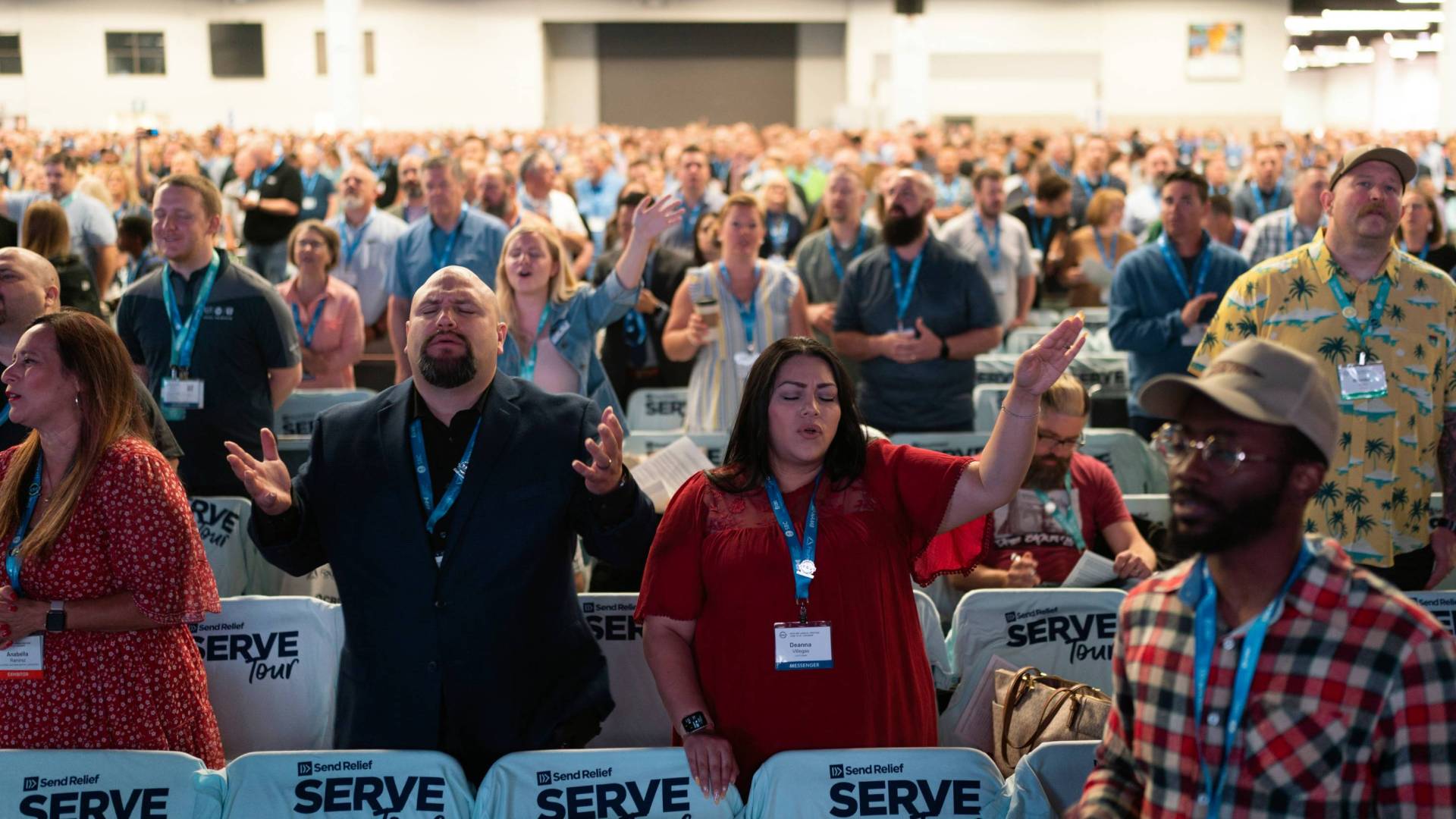
Southern Baptists sang slow and low, “Lord, have mercy on me,” in the cavernous meeting hall where they apologized for their failure to care for survivors and approved long-awaited measures designed to keep predatory pastors and irresponsible churches out of the convention.

Tiffany Thigpen attended the annual meeting in Anaheim, California, with fellow abuse survivors Jules Woodson and Debbie Vasquez­—their names familiar to many Southern Baptist pastors from news coverage, social media, and last month’s abuse report.

After her 20 years of fighting and advocating, Thigpen finally saw a shift. She described “God on the move” in the denomination where survivors had been disbelieved, vilified, and ignored over and over.

This time, Southern Baptist leaders named them from the stage of the 12,000-person gathering to applause. The hall included a special room for survivors, staffed by a team of trauma-informed counselors.

Attendees spoke to them, thanked them for coming, and tucked teal ribbons in their nametags as a sign of support. And, most importantly, the majority voted in favor of abuse reform and in solidarity with survivors every chance they got.

Thigpen said when the messengers—delegates from Southern Baptist churches—raised their ballots in the air to approve recommendations resulting from last month’s abuse investigation, it felt like those seated in the rows of chairs around them were looking to them as if to say, “This vote is for you.”

“It’s a victory in so many ways, because people’s hearts changed, and that’s something only God can do,” said Thigpen, who was groomed and attacked by her pastor over 30 years ago only to be dismissed by prominent SBC leaders who had known of his previous misconduct.

Now, abuse survivors and Southern Baptists leaders wait to see whether the momentum and historic stances will result in meaningful change in the nation’s largest Protestant denomination.

The 2022 convention publicly lamented the harm its inadequate responses have caused survivors like Thigpen over the years, including “our institutional responses, which have prioritized the reputation of our institutions over protection and justice for survivors.” The SBC also strengthened its position against sexual abuse by pastors, saying such behavior is not just sinful but should be criminalized in every state.

Southern Baptists also took the first steps toward a system to identify abusers in ministry and keep them from moving from flock to flock, voting almost unanimously in favor of launching a new database.

“Survivors will look back on this moment and see every single ballot raised in the air, and they’ll say, ‘That was me being believed. That was the impact that I made because I didn’t give up,’” said Rachael Denhollander, a survivor-advocate, attorney, and consultant on the task force that oversaw the recent investigation of the SBC Executive Committee. “And the survivors that come after them look at those ballots and say, ‘I have a place to speak up now.’”

While the report from the outside firm Guidepost Solutions had a long list of suggestions—including a permanent entity to oversee abuse reports, compensation for survivors, a memorial in their honor, and a ban on nondisclosure agreements—the task force ended up putting just two recommendations before the messengers this week: the creation of the database as well as a new task force to oversee further reforms, including improving the process for reporting churches that cover up abuse.

The new task force will look at the other recommendations and make a recommendation next year on whether or how to adopt them.

Christa Brown, a longtime advocate whose story was central to the investigative report, was disappointed that after ensuring such a transparent investigation, the task force “pulled its punches” for the sake of SBC polity and didn’t recommend more dramatic changes from the start. After reviewing the recommendations ahead of the meeting, she told CT she was “perhaps more disheartened than ever.”

https://twitter.com/ChristaBrown777/status/1536868904043048960

Yet Jules Woodson is leaving Anaheim encouraged and hopeful that the initial decisions will spur significant change in the long run. She expects that the database—something survivors like Brown spent 15-plus years calling for—will be a powerful mechanism for keeping abusers out of Southern Baptist pulpits.

And it can work under the SBC’s current structure of autonomous churches. The convention voted in 2019 to explicitly require cooperating churches “not act in a manner inconsistent with the convention’s beliefs regarding sexual abuse.” So far, the credentials committee, which evaluates reports of SBC churches in violation of denominational standards, has recommended disfellowshipping only a few churches that knowingly hired registered sex offenders. With the new “Ministry Watch” database, the committee could also view employing pastors on the list as evidence that a church has disregarded its position against abuse, Woodson said.

An independent body would oversee Ministry Watch, taking reports from churches as well as individuals and prompting third-party inquiries if necessary. Pastors or other ministry workers would be listed if they were found to be credibly accused of abuse through a conviction, civil judgment, confession in a nonprivileged setting, or “preponderance of evidence” in an investigation.

Leaders haven’t put a timeline on the launch of the database, but it’s the first priority for the new abuse reform implementation task force, which could gather as early as next month.

“How does a shepherd talk to another shepherd to make sure a wolf doesn’t get in there?” said Bruce Frank, the pastor who chaired the task force overseeing the investigation. “That’s really what the database is supposed to do.”

Frank was hesitant to celebrate. He called the reforms the “bare minimum” and said they should have been done 15 years ago or more. When he addressed the convention on Tuesday, the North Carolina–megachurch preacher explained that it was long past time to act—that if the SBC did not humble itself to repent, it should be prepared to be humiliated by God.

“It’s going to cost a lot,” he told the convention, whose relief arm already pledged $4 million to cover initial reforms. “It’s not going to cost nearly as much as survivors have paid. It’s not going to cost nearly as much as the stain on the name of Jesus Christ when the largest Protestant denomination doesn’t care for people as we can or even as well as the secular organizations do.”

Bart Barber, the newly elected president of the SBC, will appoint the new task force in charge of implementing changes and reporting back to next year’s convention with further recommendations. Barber, a rural Texas pastor and Southern Baptist historian, was seen as the candidate with the stronger record of standing with survivors.

The biggest barrier to abuse reform in the SBC remains its polity, which doesn’t allow the denomination to oversee or dictate how individual churches are run. A minority of Southern Baptists fear that the small steps taken this year already threaten that structure.

But Barber believes reform can take place within SBC polity and that it could even be a strength. He wants to use its setup against serial abusers who tried to take advantage of the lack of hierarchical oversight in the SBC.

“Our decentralized polity can become, rather than a hunting ground in which predators brutalize their prey, a place where sexual predators are put on notice that the tables have turned and where the hunter is now the hunted,” he told reporters on Wednesday. “Predators have realized the vulnerabilities of our system. It is time for Southern Baptists to realize how nimble and resilient our Baptist polity can be, to put sexual predators on notice that Southern Baptist churches are a dangerous place for them.”

Back in 2019, Barber was among a group of Southern Baptists lobbying for a Texas state law that, now passed, gives churches the legal right to disclose credible sex abuse allegations so pastors with abusive pasts won’t sneak into other congregations.

The convention this year called for strengthening laws against pastors who groom and sexually abuse congregants, putting such violations in the same category as doctors, counselors, and those in other positions where victims are not in an equal position to consent.

Southern Baptists agreed to “encourage lawmakers in every state to pass laws that would provide consistent definitions and classification of sexual abuse by pastors, as sexual abuse committed by pastors constitutes a clear abuse of authority and trust.” At least nine states already have such laws.

Griffin Gulledge, a Georgia pastor who suggested the resolution on criminalizing clergy sexual abuse, said pastors who abuse members of their flock should bear legal consequences rather than merely confessing a “moral failing” and resigning.

Frank said the messengers’ decision last year to approve an investigation into the Executive Committee was them “kicking down the door” to allow for the moves they saw this year around abuse reform—and, God willing, widespread cultural change in the years to come.

GRACE (Godly Response to Abuse in the Christian Environment) said it was hopeful that the SBC’s actions would lead to meaningful reform but noted that the hard work comes next—in actually implementing the changes in SBC churches and seminaries.

Some changes will come voluntarily as state conventions, seminaries, and churches review and improve their own training around abuse. From the start, the new task force is meant to be a resource for abuse prevention and trauma-informed care.

https://twitter.com/juleswoodson11/status/1537569776377028610

Woodson referred to the decisions made this week as putting Southern Baptists on the “right path” and going in the right direction for the kinds of more robust reforms survivors would like to see.

For a long time, Thigpen, like many other advocates, had no reason to hope that that change was coming. Since the early 2000s, when she began speaking out publicly about the abuse she had reported a decade before, all she knew was the uphill battle of trying to get leaders to believe her and actually do something.

With the decisions made at this year’s annual meeting, the Florida native is allowing herself to imagine what it would be like to not have the burden of SBC abuse dominate her life.

“There’s a part of me that would like to have a life outside advocacy,” said Thigpen, adding that she is expecting her first grandchild this summer. “I just pray that they move that ball forward, and maybe we can rest.”

History

Why White Evangelicals Should Claim John Brown

We’ve forgotten what Charles Spurgeon knew: He was radical because of the Bible and his soul is marching on.

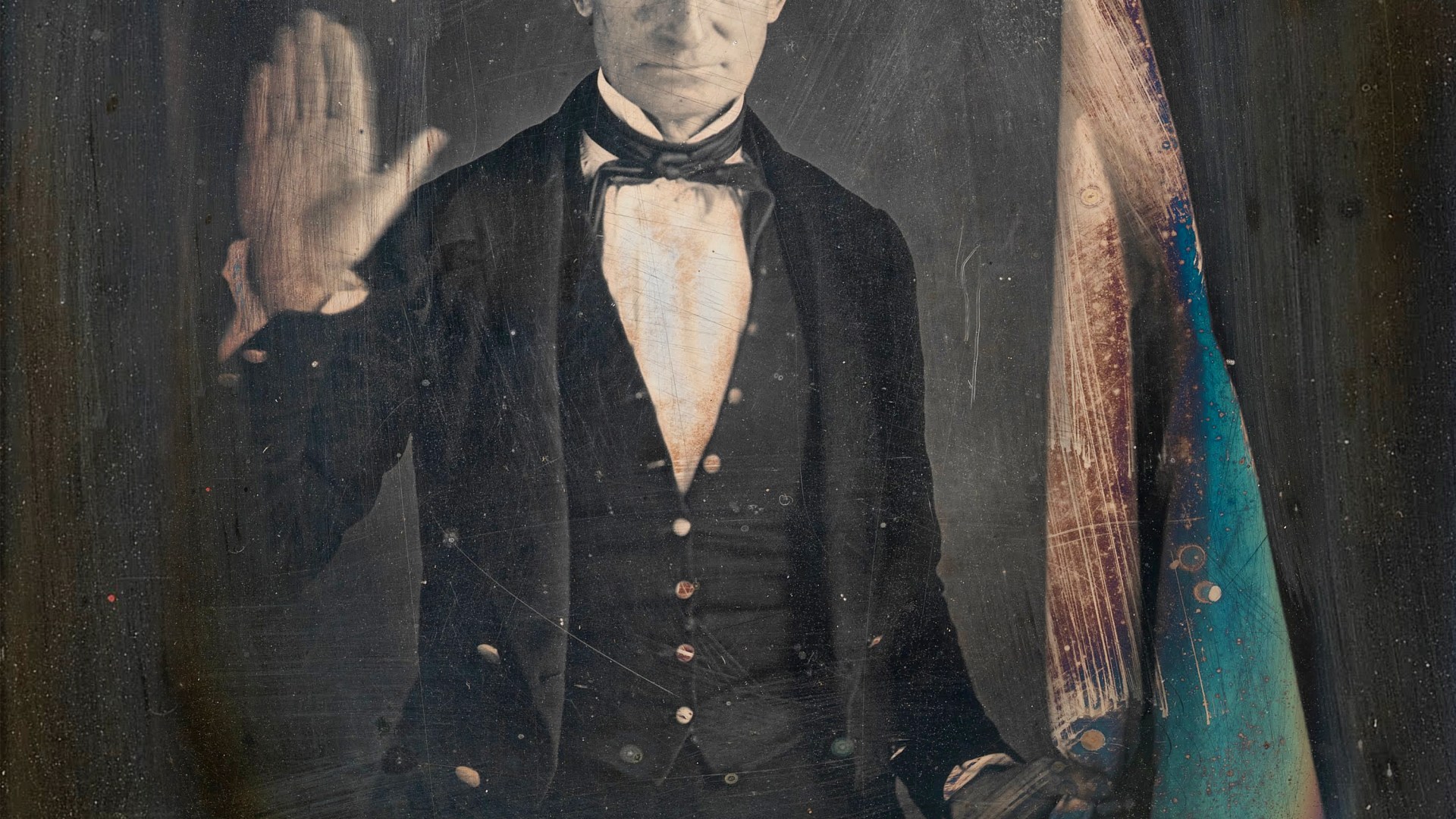
John Brown holding the flag of Subterranean Pass Way, his militant counterpart to the Underground Railroad, c. 1846–1847.

John Brown holding the flag of Subterranean Pass Way, his militant counterpart to the Underground Railroad, c. 1846–1847.

Christian History June 17, 2022
Augustus Washington / WikiMedia Commons

John Brown is one of the most controversial figures in the history of the United States. For some he’s a moral hero. For others, a monster.

The white abolitionist who turned to violence in an attempt to end chattel slavery in America has become a kind of bellwether for views on racial justice. One thing that has often been lost in the long tussle over the meaning of Brown, however, is his deeply evangelical faith.

Brown testified clearly to his own conversion, and he prayed that those around him would know “the grace of God through Jesus Christ.” He continually held up the Bible as the authoritative Word of God, the supreme written norm by which God binds the conscience. He urged people, “Be determined to know by experience as soon as may be, whether Bible instruction is of Divine origin or not,” convinced that if they tested the Scripture, they would discover the truth.

Brown remains controversial today. But as a white evangelical who has studied and written about his last days, those who were with him, and his religious life, I find myself hoping evangelicals will rediscover him. We could reclaim his legacy as a fervent believer who models a profoundly radical social ethic without ever wavering from his firm commitment to biblical authority.

That is to say, I dream that John Brown’s soul might march again.

His attempt to liberate enslaved people by violence failed, and he was hanged in Virginia in 1859. But throughout the war years, it seemed his spirit brooded over the divided nation. The playful soldier’s ditty about John Brown’s body “a moldering in the grave” was inexplicably taken up by soldiers and slaves alike—transformed into a raw but rousing song that invoked the evangelical extremist as the very spirit of liberty.

At the same time, “John Brown” became a curse in the mouths of white Southerners and his name made white liberals blush. Indeed, one of those liberals, Julia Ward Howe, was so put off by the abolitionist’s evangelical militancy that she conjured more respectable lyrics for “John Brown Song.” She “fixed it,” from her perspective, with the high-minded Unitarian anthem “The Battle Hymn of the Republic.”

Even today, there often is no middle ground when it comes to John Brown. In the more than 160 years since his death, the divide between his critics and his admirers often has fallen along lines of race, and sometimes politics too, although Brown has had admirers and detractors both Black and white, liberal and conservative.

Among white people, Brown was widely dismissed by the early 20th century. As American society backpedaled from the idea of Black people becoming full citizens, Brown’s reputation couldn’t help but decline. Whites in the North celebrated reunion with whites in the South and tacitly agreed to talk about the soldiers’ honor and bravery and set aside the actual issues that had separated patriots and traitors.

Slavery itself was sentimentalized in this era, with lots of popular rhetoric and images of “mammies” and “piccaninnies.” Those who benefited from the system of white supremacy were depicted sympathetically, while those who defended it were imagined to be noble.

Meanwhile Brown, who hated slavery more than he loved his own life, was portrayed as insane.

Black Americans, on the other hand, always kept a place for Brown at the table of honored memory. Frederick Douglass recalled how Brown was not only a friend of abolition, but he seemed shockingly free of the prevailing prejudices of the day. Many avowed white opponents of slavery, such as evangelist Charles Finney, condemned the institution while still insisting on racial segregation, even dividing revivals, as if it were wrong for Black people to respond to the same altar call as white people.

One place that Brown is not perceived as a brother, notably, is in evangelical history. I have yet to see one survey of Christianity in America that devotes space to Brown, or any account of evangelicalism that includes him.

In my old copy of The New International Dictionary of the Christian Church, the entry declares Brown’s “violent acts were glorified by the abolitionist extremists,” and in a later iteration of the book Who’s Who in Christian History, he is omitted altogether. As an evangelical biographer of Brown, I believe both are a mistake.

At the time of Brown’s failed attempt to end slavery by force, his faith was recognized. Those who opposed slavery for biblical reasons and shared Brown’s commitments to Christ and Scripture hailed him as one of their own. During his incarceration in Virginia, he received sympathetic letters from Calvinist clergy and laity, including the notable Covenanter pastor Alexander Milligan, who later served as chaplain at large to the Union troops during the Civil War. He was called “A Prisoner of Jesus Christ” in the Congregational publication the New York Independent.

After his death, Brown was hailed in many sermons across the North. One of those sermons, “Dying to the Glory of God,” was preached by the Wesleyan minister Luther Lee, who afterward addressed a large outdoor meeting at Brown’s graveside near Lake Placid, New York.

Perhaps the most remarkable recognition of the evangelical soul of John Brown comes from the world-famous preacher Charles Spurgeon. In 1860, shortly after the abolitionist was hanged, Spurgeon wrote to The Christian Watchman & Reflector to counter rumors that he was allowing US publishers to redact statements about slavery from his sermons to make them more palatable to American readers.

Spurgeon said he hadn’t addressed slavery, because he was preaching in Great Britain where it was illegal. But his position should be clear: He would not partake of Communion with a slaveholder, and were a slaveholder to come into his neighborhood, that man would receive a mark “that he would carry to his grave, if it did not carry him there.”

If that violent response reminded anyone of Brown, Spurgeon had no qualms about the comparison. Brown was “immortal in the memories of the good in England,” he wrote, adding, “In my heart he lives.”

John Brown
John Brown

Brown won the admiration of some other evangelicals as well, including Russell Conwell, the Baptist clergyman who founded Temple University in Philadelphia and became the namesake of Gordon-Conwell Theological Seminary.

In the 20th century, the minister Clarence E. Macartney, one of the main leaders with J. Gresham Machen of the conservative side of the fundamentalist-modernist division in the Presbyterian church, cited Brown numerous times in his sermons. He even worked to preserve one of Brown’s jailhouse letters, giving it to Geneva College’s archival collection.

These evangelicals were right to see Brown as one of them. He was raised in a devout Congregational home in Ohio’s Western Reserve, sat under the preaching ministry of a Presbyterian pastor, and was trained in the Westminster Shorter Catechism. He professed faith in Christ at 16 years old. After conversion he became, as he later wrote, “ever after a firm believer in the divine authenticity of the Bible” and “became very familiar & possessed a most unusual memory of its entire contents.” Indeed, biblical quotations fill almost every page of his correspondence.

Despite efforts on the part of some historians to portray him as heterodox, Brown’s Calvinism was conventional, more influenced by the Puritans of yesteryear than by the novelties of New England Theology. What distinguished his Christianity from that of some in America (then and now), was a thorough dedication, as he once put it, “to better the condition of those who are always on the under hill side.” This activism was deeply evangelical and deeply shaped by his theological beliefs.

Writing of his youth, Brown recalled how he had witnessed a white man beating a Black child with an iron shovel. He said he could not help but ask himself if God was not also the father of the victim of that atrocious violence. His answer was yes, and that shaped the rest of his life.

As a teenager, Brown briefly considered studying for the ministry in New England, but an uneven primary education and chronic inflammation of his eyes discouraged these aspirations. Yet his commitment to Christian faith never wavered. This is perhaps most clearly seen in his relationships with his children, several of whom rejected Christianity as young adults.

When his namesake declared himself a spiritualist in 1853, Brown dashed off a six-page tour de force of Scriptures, from Old to New Testament, including Jeremiah’s appeal, “Turn, O backsliding children saith the Lord.” To another apostate son, Brown wrote, “I do not feel ‘estranged from my children,’ but I cannot flatter them, nor ‘cry peace when there is no peace.’”

After embarking on his antislavery campaign in 1857, he gave a Bible to his youngest daughter, Ellen. Inside he wrote, “May the Holy Spirit of God incline your heart in earliest infancy to receive the truth in the love of it and to govern your thoughts, words and actions by its wise and holy precepts.”

Another place Brown’s evangelical sentiments come through clearly is the words he wrote in his last days. After being sentenced to death, he wrote to his sisters, “Can you believe it possible that the scaffold has no terrors for your own poor, old unworthy brother? I thank God through Jesus Christ my Lord it is even so.”

Two days before he was hanged, Brown wrote a long letter to his family, declaring how he had been “travailing in birth” for them, praying that none would “fail of the grace of God through Jesus Christ, that no one of you may be blind to the truth.” Urging them to take up the Scriptures as their “daily & nightly study,” he appealed that they would not rely on their “own vague theories framed up” instead of the Word of God.

“Oh,” he appealed, “do not trust your eternal all upon the boisterous Ocean without even a Helm or Compass to aid you in steering.”

Brown was forced by his impending death to consider whether the plan to take up arms to destroy slavery had been a mistake. Had he failed? To answer, he turned again to faith.

“I believe most firmly that God reigns,” he wrote to a clergyman from death row. “I cannot believe that anything I have done, suffered or may yet suffer, will be lost to the cause of God or of humanity. … I now feel entirely reconciled to that … for God’s plan was infinitely better.”

One may, of course still question Brown’s tactics and the way he put his faith into action in “Bleeding Kansas” and the raid on Harpers Ferry. I think the evidence shows that he was not driven, as has so often been alleged, by crazed bloodlust or violent megalomania.

Indeed, Brown was actually “averse to the unnecessary shedding of blood,” according to a New York Times account from the time, and ordered his raiders to exercise great care lest innocent civilians be harmed. The only antislavery reporter to cover the abolitionist’s last days, an undercover journalist for the New York Tribune, characterized Brown’s plan as the “rescue of a great number of slaves,” arguing he had no interest in maintaining “a warlike position in Virginia for any definite period of time.”

When a jury of slaveholders found him guilty of insurrection, Brown rejected it, declaring in court that he had no such aim. One of his sons claimed that the intention with the raid was not to kill white slaveholders and spark a violent uprising, but “open the way for slaves in increasing numbers to escape from their masters.” Brown hoped that, given a chance, people in bondage would flee. If enough of them did, that would “render slavery uncertain and unprofitable.”

The first draft of history, however, was mostly written by the proslavery press. The initial interpretation of Brown’s actions was crafted by people who believed that “all men are created equal” was a lie.

I have found that much of the real story of John Brown has thus been lost to caricature and partisan interpretation, a selective reading of history that withholds the same considerations often granted to other figures in Christian history.

Perhaps we might reconsider the words of Preston Jones, who once wrote in CT: “Because Christian readers, writers, or teachers of history know that sin infects everything, they are able to exercise charity, compassion, and understanding toward historical figures who made vast errors.”

Of course, I do not believe John Brown’s “errors” were “vast” in comparison to white Christians who secured the shackles of the slave, fought to suppress native peoples, and enforced racial oppression. But I do think we could ask ourselves why Brown cannot at least receive the same charity that evangelicals have extended to others who were, as they say, “men of their time.”

In our time, white evangelicals seem to be in dire need of good examples of people who were transformed by their faith to rise above pedestrian racism—because, not in spite of, their unshakable commitment to the authority of Scripture. Why not John Brown? Why not the most esteemed white man in Black history?

“Wherever there is a right thing to be done,” Brown liked to say, “there is a ‘thus saith the Lord’ that it shall be done.”

Surely that’s a spirit that should go marching on.

Louis A. DeCaro Jr. is professor of Christian history and theology at Alliance Theological Seminary and the author of several books on John Brown. He also hosts the podcast John Brown Today.

Ideas

Evangelicals Can Agree: We’re Women, not ‘Bodies with Vaginas’

Staff Editor

To verbally dismember women is denigration, not inclusion.

Christianity Today June 17, 2022
Illustration by Mallory Rentsch / Source Images: Alexander Krivitskiy / Vika Kirillova / Pexels

When the Supreme Court’s draft decision in Dobbs v. Jackson Women’s Health Organization leaked in early May, a tweeted response from the American Civil Liberties Union had a curious omission: It listed groups the ACLU said would be disproportionately harmed by the end of Roe v. Wade (1973), but it didn’t mention women.

And this wasn’t the ACLU’s first foray into treating women as the-sex-who-must-not-be-named. The organization likewise marked the one-year anniversary of the death of Supreme Court Justice Ruth Bader Ginsburg by tweeting out a pro-choice quote painstakingly—and painfully—edited to erase all mention of women.

Nor is the ACLU alone in this new verbal habit. As a comprehensive New York Times report detailed this month, “women” has fallen into deliberate disuse by other activist groups, like Planned Parenthood and NARAL Pro-Choice America; by medical organizations, like the American Medical Association, the American Cancer Society, the Cleveland Clinic, and The Lancet (a medical journal); and by government agencies, like municipal and state health departments, the Centers for Disease Control and Prevention (CDC), and the Office of Management and Budget (OMB).

Instead, these institutions and others, including many media outlets, are using phrases like “birthing persons,” “pregnant people,” “breastfeeding people” (or even “chestfeeding people” who make “human milk”), “cervix owners,” “people with eggs,” “uterus havers,” “those without a prostate,” “menstruators,” and “bodies with vaginas.”

If you’ve not heard those phrases before, that’s because this is all very, very new. Writing in The Atlantic in defense of saying “pregnant women,” journalist Helen Lewis notes that the phrase “pregnant people” was essentially nonexistent in the English language before the 1970s. Its usage spiked in the past decade, as advocates made the case for changing our terminology for women and mothers on grounds of inclusivity for transgender and nonbinary people.

The other phrases are even newer, and unless you’ve been pregnant in the last three or four years—during which time this language has become increasingly common in medical facilities, books, online resources, and the ever more ubiquitous apps that guide women through pregnancy and the postpartum phase—you may never have encountered these terms.

If that ACLU tweet is any indication, however, the impending Dobbs decision will make the new terms impossible to miss. Some reactions to the ruling will again neglect to mention women as a key population it affects, and reactions to those reactions will be supercharged by the recent release of a provocative new documentary, What Is A Woman?, from commentator Matt Walsh. And knowing that debate is coming gives Christians the opportunity to prepare how we might respond to this confusion in our culture.

Having come of age, politically, amid culture war battles about sexuality and, theologically, amid debates over egalitarian and complementarian views of women, I sympathize with anyone wary of wading into yet another controversy on gender. Yet this is an issue on which evangelicals need not be divided. Regardless of our views on biblical gender roles, Christians can agree: We’re women, not “bodies with vaginas.”

Until quite recently, it went without saying that reducing people to their reproductive organs or function was obviously, viscerally derogatory—an insult to the basic human dignity Christians ground in passages about our creation in the image of God (Gen. 1:27), about honoring one another (1 Pet. 2:17) and caring for the vulnerable (Psa. 82:3), about the equality of all people, “male and female,” in Christ (Gal. 3:28).

Labeling women by a single body part is the stuff of lewd catcalls that make you walk a little faster and hope yelling is all he’ll do. It smacks of old-school misogyny, and it’s telling, as Lewis observes, that there’s no comparable linguistic shift for men: “[W]e don’t talk about ‘ejaculators’ or ‘testicle havers’ dominating the Texas legislature. We don’t note that only sperm-shooters have ever been president of the United States.” If those phrases sound absurd, their female analogues should, too.

To thus verbally dismember women, to call us bodies instead of people, to define us by the physical ways in which we are not men—this is denigration, not inclusion. The anatomical terms in particular set the stage for an unsettling anthropology, one in which we’re either nothing but our bodies (as in “bodies with vaginas”) or else strangely alienated from them, the “owner” or “haver” of their pieces. Both options are inadequate visions of humanity, lacking the historic Christian balance of understanding people as both body and spirit, “both creaturely and divine.”

None of that is to suggest doctors and other medical providers shouldn’t adjust their phrasing to be kind and prudent in caring for their patients, including those who don’t identify as women (or, for that matter, as men). But it is to say that using compassionate and appropriate words in a specific relationship, clinical or otherwise, does not require writing women out of our language. It does not require making awkward or even degrading terms the norm on pain of accusation of bigotry.

The same consideration that might occasionally prompt use of more neutral language should far more often lead us to simply say “woman"—in grace and truth to speak of half of humankind as fully human. For Christians, however else our thinking around women is divided, that we are women is a point on which we can agree.

Theology

For Christians, Juneteenth Is a Time of Jubilee

Observing Juneteenth as a national holiday affirms what we believe about our faith and our freedoms.

Christianity Today June 16, 2022
Go Nakamura / Stringer / Getty

I was never taught about Juneteenth growing up.

I was born and raised in Philadelphia, the “cradle of liberty,” in Pennsylvania—which was the first state to end slavery with the Gradual Abolition Act of 1780. Philly was one of the major stops on the Underground Railroad, thanks to the abolitionism of the Quakers, and the home of Richard Allen’s Free African Society.

And while slavery was abolished in Pennsylvania more than 80 years before the Civil War began, I always thought of the Emancipation Proclamation as the document that ended slavery in America.

It wasn’t until years later when I heard of a woman named Ms. Opal Lee, who walked halfway across the country at 89 years old to advocate for Juneteenth to become a national holiday, that I discovered a history I had never learned in school.

Over two and a half years passed between President Abraham Lincoln’s Emancipation Proclamation and when the first of those enslaved in Texas tasted freedom: 900 more days of being separated from family and forced to work under the threat of violence and death.

But the question remains, why does Juneteenth matter to the church?

The times set aside to celebrate and reflect reveal what matters to society then, now, and in the future. For instance, Pilgrims in early America set apart “days of thanksgiving” to express gratitude to God for his providential grace—a tradition that was formalized into the national calendar in 1863 with Abraham Lincoln’s official proclamation of Thanksgiving Day “to heal the wounds of the nation” divided by war.

But an even earlier civically inspired sacred tradition was inadvertently established less than a year prior on December 31, 1862—when congregations of Black Christians gathered for “Watch Night” services on what they called “Freedom’s Eve.”

Black churches across the country met to worship, pray, and thank God for the freedom that came to their brethren on January 1, 1863, when the Emancipation Proclamation went into effect. But it would be another two years after the first Watch Night service before this proclamation of freedom became a reality in the last holdout state of Texas.

The arrival of Union troops in Galveston, Texas, was a watershed moment in the nation’s history and included thousands of Black soldiers—some recently freed themselves—who had joined the military unit. The next day, General Gordon Granger announced General Order No. 3: an “absolute equality of personal rights and rights of property between former masters and slaves.”

The news spread like wildfire, and nicknames for the day proliferated as well: Emancipation Day, Freedom Day, Juneteenth, and so on. When I discovered that one of the first names given to the commemoration was Jubilee Day, the significance for the church was brought home like a preacher dramatically coming to the sermon’s conclusion.

Like the national healing sought through the tradition of Thanksgiving, Juneteenth would likewise provide a day of healing to millions of Americans who had much reason to give thanks: those who were set free and those allies of abolition who fought for their freedom.

Described in Leviticus 25, Jubilee was an Old Testament festival to be observed every 50 years to honor the Lord by forgiving debts, releasing fellow Israelites from bondage, and even restoring tribal lands. The name came from the exultant joy that naturally accompanies such a momentous occasion.

That these newly emancipated Americans referred to the day as Jubilee meant they understood their deliverance not only in a physical sense but also in a spiritual sense—no doubt seeing connections between their liberation and God’s deliverance of Israel from over 400 years slavery in Egypt.

They also perceived that marking time to honor Christian virtues has value even if the dates originate in secular and civic contexts. Jesus’ instruction for his disciples to pray “Your kingdom come, your will be done, on earth as it is in heaven” (Matt. 6:10) was an invitation for them to participate in God’s advancement of the kingdom of heaven’s appearance on earth.

It is always good for Christians to celebrate freedom. The end of the evil institution of slavery in our midst is valuable and valid no matter how messy and incomplete it is. There’s a renewal possible with a celebration such as Juneteenth—it’s a reminder of where we’ve been and hopefully where we’re going.

The apostle Paul instructed the church in Rome to “rejoice with those who rejoice; mourn with those who mourn” (Rom. 12:15), and Juneteenth provides a unique national moment to do both. We can “rejoice with those who rejoice” because freedom is a good gift from God that honors the image-bearing nature of humanity.

We can celebrate with those who point to that day as the beginning of their families making a life for themselves.

And yet it’s also an invitation to “mourn with those who mourn” because it provides an opportunity to reflect on the tragedy of American slavery that ensnared millions and denied the dignity and worth of untold numbers of fellow human beings who perished while under its oppression.

Expressing both jubilation and lament reminds us of Paul’s admonition in Romans 14:5–6: “One person considers one day more sacred than another; another considers every day alike. Each of them should be fully convinced in their own mind. Whoever regards one day as special does so to the Lord.”

Celebrating Juneteenth is not a mandate, but it is a meaningful moment for us to experience together, just as Thanksgiving and Watch Night aren’t mandates but opportunities.

Many African Americans like me don’t know a specific date when our ancestors were freed. Although our nation’s population includes millions of people whose descendants are just a few generations removed from those who were enslaved or enslavers, we have not previously made time in our civic calendar of traditions to collectively reflect on the history of slavery and emancipation and its importance today.

Juneteenth gives us that opportunity. It is a historical reminder that invites us to continue “to proclaim freedom for the captives” (Isa. 61:1; Luke 4:18)—just like the apostle Paul encouraged the church in Corinth to reflect on Israel’s history: “Now these things occurred as examples to keep us from setting our hearts on evil things as they did” (1 Cor. 10:6).

If we let it, Juneteenth is a time to learn from stories we don’t typically hear and seek understanding about how our past has impacted our present circumstances.

Juneteenth can also deepen our theological understanding that God cares about the soul and the body. In a moment when the church is so divided about the future, we can find common ground and understanding.

We learn from our national holidays—Watch Night, Thanksgiving, and Juneteenth—that God still gives us much to rejoice, lament, and learn as we gather year after year. And as we reflect on our journey together as Americans and followers of Jesus, we gain a heart of wisdom, understanding, and joy.

When Jesus read from Isaiah 61, he declared that he had come “to proclaim the year of the Lord’s favor” (Luke 4:19)—that in him, the Jubilee promises of holistic deliverance were fully manifest.

Jesus demonstrated this by healing the body and soul of the poor, the captives, the blind, and the oppressed—but he ultimately revealed it in his death and resurrection, promising to raise to life whoever believes in him. Jesus himself is our Jubilee.

The connection between faith and freedom is what led me recently to journey to Texas and learn more of the history of Juneteenth on a personal level. The result is a new documentary titled Juneteenth: Faith & Freedom.

Likewise, many of those emancipated in Texas in 1865 saw God as the ultimate source of their deliverance. In fact, after talking to the descendants of those emancipated on the first Juneteenth, I discovered that many of them still serve in the same churches where their forebears first celebrated their newfound freedom.

I believe Juneteenth is something for which the whole church can say “Amen!”—and I pray we continue to experience more of the freedom and faith Jesus offers us as we celebrate.

Rasool Berry is the content developer and partnership liaison at Our Daily Bread Ministries and is a teaching pastor at the Bridge Church in Brooklyn, New York. You can watch his journey in the new documentary Juneteenth: Faith & Freedom here.

Apple PodcastsDown ArrowDown ArrowDown Arrowarrow_left_altLeft ArrowLeft ArrowRight ArrowRight ArrowRight Arrowarrow_up_altUp ArrowUp ArrowAvailable at Amazoncaret-downCloseCloseEmailEmailExpandExpandExternalExternalFacebookfacebook-squareGiftGiftGooglegoogleGoogle KeephamburgerInstagraminstagram-squareLinkLinklinkedin-squareListenListenListenChristianity TodayCT Creative Studio Logologo_orgMegaphoneMenuMenupausePinterestPlayPlayPocketPodcastRSSRSSSaveSaveSaveSearchSearchsearchSpotifyStitcherTelegramTable of ContentsTable of Contentstwitter-squareWhatsAppXYouTubeYouTube